One of the month’s more interesting London opera events…
Oedipa & Lucia Lucas present:
‘Binary Optional’ Camden People’s Theatre, 58-60 Hampstead Road, Euston, London, NW1 2PY, England
Thurday 25th & Friday 26th May 2017, 9.00pm – information
From the press release, spliced with a little more research:
“Oedipa collaborates with the extraordinary female baritone Lucia Lucas (Wuppertaler Bühnen, Deutsche Oper, Chicago Opera Theatre) on an evening of song in transition: from masc to femme, classical to queer and oppression to freedom.
“A freelance opera singer based in Germany (who has previously held full-time contracts with the Badisches Staatstheater, Kalsruhe, Theater und Orchester Heidelberg and the Deutsche Oper, Berlin), Lucia Lucas is a strong dramatic baritone specializing in Verdi roles, and has sung roles including Ford in ‘Falstaff’, Iago in ‘Otello’, Escamillo in ‘Carmen’, Le Grand-Prêtre in ‘Samson et Dalilah’, Jochanaan in ‘Salome’, Alberich in ‘Das Rheingold’, Thoas in ‘Iphigenie en Tauride’, Figaro in ‘Le nozze di Figaro’, Leporello and Giovanni in ‘Don Giovanni’, Mephistopheles in ‘Faust’, Don Pizzaro in ‘Fidelio’ and Nick Shadow in ‘The Rake’s Progress’.
“Beyond this, Lucia is one of the small but growing number of transgender woman performing significant operatic roles (a list of singers which includes Breanna Sinclairé and Emily De Salvo, whose own unusual range covers baritone to soprano). As Lucia commented in an interview in ‘Slipped Disc’ a couple of years ago, “I am performing all of the same things. Still singing angry old men on stage, but fringe projects have also started appearing as possibilities”. ‘Binary Optional’ is one such project – singing Bizet, Britten, Wagner, Purcell and Adams, flirting with Sarah Vaughan and ‘Rocky Horror’, Lucia draws on her experience singing classical repertoire across the world to tell her incredible story and celebrate the fluidity and plurality of gender in opera.
“Oedipa is the alter ego of writer/director Finn Beames (who’s dedicated himself to working “against the male perspective”) and a diverse range of varying collaborators. As Oedipa, groups of artists create and produce live performances in theatre, opera and related forms, often with an emphasis on music.
“Based in London and working internationally, Finn won the 2015 Genesis Future Directors Award at the Young Vic for his production of Man: 3 Plays by Tennessee Williams in the Clare theatre. He also holds the 2015 Lina Bo Bardi Fellowship, granted by the British Council for research into the eponymous Brazilian architect and the creation of a piece of theatre. For his own company, bodycorps, he recently directed a sold-out run of a new opera about depression, funded by The Wellcome Trust and ACE. Finn has commissioned further new work for bodycorps, including a musical based on The Sorrows of Young Werther. In 2014 Finn wrote, directed and designed a new music theatre work for the London Sinfonietta with composer Gavin Higgins, which they are currently expanding into a triptych. Finn is a director/librettist on the Jerwood Opera Writing Programme at Aldeburgh Music, and a member of the Young Vic Directors Network and Lincoln Center Theater Directors Lab in New York.”
Ensemble In Process presents:
Ensemble In Process: Americuration (featuring Zubin Kanga, Marsyas Trio, Jonathan Russell, Seth Bedford & Maria Fiore Mazzarini) IKLECTIK, Old Paradise Yard, 20 Carlisle Lane, Waterloo, London, SE1 7LG, England
Monday 15th May 2017, 7.30pm – information
Formed just under a year and a half ago, Ensemble In Process has progressed from being a small chamber ensemble (formed to compete in Nonclassical‘s annual Battle of the Bands Competition) to being a multiple-direction contemporary music project. Now straddling London and New York – and planning performances, programming and networking across the UK, America, Europe and the wider globe – they have a particular focus on helping contemporary composers without sufficient UK resources to achieve performances of their work within the UK.
Participating are the three members of the Marsyas Trio – pianist Zubin Kanga, flautist Helen Vidovich and cellist Valerie Welbanks – and violinist Maria Fiore Mazzarini (plus Seth Bedford and Brian Mark, performing voice and piano respectively on some of their own works and on those of others).
Programme:
Steve Reich – Vermont Counterpoint (for flute & tape)
Timo Andres – At the River (for piano)
David Lang – Killer (for violin & electronics)
Ian Dicke – Get Rich Quick (for piano & fixed media) (UK premiere)
Seth Bedford – Three Cabaret Songs (for piano & voice) (UK premiere)
George Crumb – Vox Balaenae (for electric flute, cello and amplified piano)
Jonathan Russell – Assorted Past (for piano)
Missy Mazzoli – Isabelle Eberhardt Dreams of Pianos (for piano & video installation)
Ryan Brown – Bedside Manner (for flute & cello) (UK premiere)
Brian Mark – Lucid Dreaming (for flute & cello) (world premiere)
Michael Gordon – Light is Calling (for violin)
Steve Reich – Piano Counterpoint (for piano & electronics)
Regarding the future, Brian claims that “Ensemble In Process… will be a rotating vehicle with respect to size, instrumentation, and nature of specific programming. Eventually, it will also feature a special annual transatlantic event, which will become a six-hour concert marathon that will take place between London and select US cities via live streaming. After its debut concert and the first year of operation, Ensemble in Process… will eventually launch into an annual series of multiple diverse concerts and other exciting outreach activities.”
Meanwhile, here are soundclips and video examples for the concert programme (where I could find them…):
* * * * * * * *
A little under two weeks previously, there’s another Kammer Klang session at Café Oto, presenting an evening of London loft music on the ground floor again. This time, the concert has a particularly strong theatrical tinge, though not necessarily in a conventional manner.
strong>Kammer Klang presents:
Scenatet performs Matt Rogers + David Helbich + Yshani Perinpanayagam performs Benjamin Oliver + Slips DJs Café Oto, 18-22 Ashwin Street, Dalston, London, E8 3DL, England
Tuesday 2nd May 2017, 7.30pm – information here and here
The Fresh Klang performance this month is a new keyboard duet by Benjamin Oliver ‘Mr. Turquoise Synth’, which “explores how the contrasting sonorities of the piano (acoustic) and synth (low memory electronics) and modes of production (human/computer agency) can be combined and juxtaposed. Initially the duet partners are isolated but gradually become entwined in a playful and dynamic relationship.” It’ll be performed as a solo by pianist/keyboard player Yshani Perinpanayagam (Del Mar Piano Trio, Rambert Dance Company, and ‘Showstopper! The Improvised Musical’) and features both the venue piano and a bespoke one-bit pulse synthesiser designed by chiptune jazzer Blake Troise (Protodome).
Brussels-based philosopher-composer David Helbich (perhaps best known for his ‘Belgian Solutions‘ project, which spots, photographs and documents various frequently absurd-but-human fixings and methods) goes beyond the territory of being a conceptual musician in order to explore and share along the very faultline which separates musical concepts from non-musical concepts. It’s worth noting that David is the kind of composer who chooses to write for air guitar. Having dispensed with instruments, sound and multi-media trappings, what he’s mostly now interested in is the audience, with whom he will be performing one of his “No Music” sessions,
“No Music is no music, but still a musical experience. No music, still for your ears. Since 2010 I have worked on scores for pieces that could be performed right at the spot, in whatever context, as long as one could freely use both hands and had two functioning ears. The pieces offer notated situations of organised listening and simple ear manipulations. I understand the this material more as a practice than as a series of composition, even though they can appear as such. Pieces appear in printed form as well as in spontaneous performances or entirely set theatrical or concert performances. These interventions are entirely personal and therefore not so much interactive as “inner-active”, self-performative. The reader as the performer as the listener.”
Below is an example from a performance in Brussels.
In between, there’s Scenatet – an ensemble working under the remit of “art music theatre in unusual spaces” and generally works with younger Danish composers, creating cross-genre performances involving elements of drama and “happenings” as well as music. Though the ensemble consists of twelve permanent musicians, for this concert, they’ll be down to a trio of Vicky Wright (clarinet), Mina Fred (viola) and My Hellgren (cello) in order to perform the world premiere of Matt Rogers‘ ‘Weep At The Elastic As It Stretches’ The piece is an attempt to “embody the attitudes and spirit” of N.F. Simpson’s 1958 absurdist play ‘A Resounding Tinkle’, which “ask(s) that we rejoice in all manner of unexpected objects, situations and concepts, taking great delight in the most categorical of descriptions and in a complete lack of distinction between the mundane and the exotic.”
This month’s Kammer Klang DJ set is provided by Tom Rose and Laurie Tompkins, the people behind the London/Berlin record label Slip (which specializes in “exploratory work which negotiates the fringes of new instrumental and electronic music” and is heavily involved with site-specific live events from instrumental performances through to club nights).
Programme:
Fresh Klang: Benjamin Oliver – Mr. Turquoise Synth
Matt Rogers – Weep at the Elastic as it Stretches (world premiere)
David Helbich – No Music (a performative rehearsal)
DJs: Slip
William Howard writes “Throughout my professional career I have enjoyed working with composers and commissioning new works. While I was preparing to record my album of romantic love songs for piano, I started wondering what their contemporary equivalents might sound like. I thought many composers might not take to the idea of writing a piano ‘love song’, with its suggestions of a romantic genre, but almost every composer I approached reacted with great enthusiasm. Since love is a theme common to music across the world and across the centuries, I realised that a collection of twenty-first century piano love songs could provide a perfect introduction to the different musical languages of living composers, especially for listeners who come to new music somewhat reluctantly.”
This is the outcome.
Hoxton Hall/Spitalfields Music presents:
William Howard & Judith Weir: ‘Love Music?’ Hoxton Hall, 130 Hoxton Street, Hoxton, London, N1 6SH, England
Wednesday 26th April 2017, 7.30pm – information
“How do today’s composers write about love? Join pianist William Howard and composer Judith Weir, Master of the Queens Music, to explore a fascinating selection of new piano pieces expressing different aspects of love through different musical styles.
“This is an informal evening with contributions from several composers. Questions and feedback from the audience will be welcome.”
Having selected the concert pieces, William’s just commented“they are all very different in character, mood and level of difficulty and offer a fascinating taster menu of different ways in which composers approach writing music of a very personal nature. ‘Camille’ by Joby Talbot is dedicated to his eight-month-old daughter, Robert Saxton’s ‘For Teresa’ is dedicated to his wife. Richard Reed Parry’s ‘Fast Cloud’ is a fantasy of swirling fast notes, Pavel Zemek Novák’s ‘Little Song of Love and Mercy is a spiritual reflection. The two winning pieces of my composing competition are also very contrasted. Chia-Ying Lin‘s ‘Chanson Perpétuelle’ describes “the kind of love which is everlasting and constantly renewed over time” in an imaginative sound world of crystalline textures, while Freddy Viner‘s ‘Herz an Herz’ is an unashamedly romantic piece evoking the spirit of Wagner. The concert will end with Cheryl Frances-Hoad‘s glorious tribute to Dusty Springfield.”
Programme (in no particular order):
David Knotts – Album Leaf
Chia-Ying Lin – Chanson Perpétuelle (winner, Over 25 category)
Pavel Zemek Novák – Little Song Of Love And Mercy
Richard Reed Parry – Fast Cloud
Robert Saxton – For Teresa
Joby Talbot – Camille
Frederick Viner – Herz an Herz (winner, Under 25 category)
Cheryl Frances-Hoad – Love Song For Dusty
It’s a pity that there doesn’t seem to be a chance of hearing the runner-up pieces (Simon Mawhinney’s ‘ Daniel Josiah is Sleeping ‘, Nathan James Dearden’s ‘love holds me captive again’, Samuel Cho Lik Heng’s ‘Arbophillia’ and Daniel Fardon’s ‘Saudade’) but perhaps they’ll surface at some point. Meanwhile, William has a couple of follow-up Love Songs concerts scheduled:
(venue t.b.c), London, Monday 26 June 2017, 7.30pm – including world premieres of piano love songs by Bernard Hughes, Howard Skempton and Judith Weir (was to have taken place at the Forge – check William’s Facebook page for updates)
Three more imminent classical-plus events in London – plus one in Dublin – featuring various ensemble and solo artists (some of whom also compose) stretching the boundaries of form and texture.
* * * * * * * *
Nonclassical presents:
Nonclassical:Workers Union Ensemble + SoundKarD + DJ Ben Vince The Victoria, 451 Queensbridge Road, Hackney, London, E8 3AS, England
Wednesday 12th April 2017, 8.00pm – information
“Join us in Dalston for performances by Workers Union Ensemble and SounDKarD with DJ sets by Ben Vince. Plus locally sourced craft beers and massive burgers! Includes two world premieres by Paul Whitty and Helen Papaioannou.
“Workers Union Ensemble are a talented and exciting New Music ensemble who originally came together in 2008 whilst studying at Guildhall School of Music and Drama. Their line-up is Anna Durance (oboe), Edward Pick (piano), Ellie Steemson (saxophone), Mercedes Carroll (double bass), and Caz Wolfson and Joley Cragg (percussion); all conducted by Ben Oliver.
“SounDKarD are Sarah Dacey (soprano), Kate Halsall (piano, keyboards) and Duncan Macleod (electronics, sound design, composing). They have worked together in various guises, including voice and piano, voice and electronics, harpsichord and electronics and as part of Galvanize Ensemble projects Happenstance and Galvanize for Hack the Barbican.
“Both ensembles programme new work alongside existing or flexible repertoire.”
Duncan McLeod – No Man Is An Island Amber Priestley – Flowers
Kate Halsall (arranger) – Wooden Trees (after John Cage/Laurie Anderson/The Beatles) Ryoko Akama – Con de Structuring Iain Chambers – I Became Mermaid Catherine Lamb – Lineshadow Paul Whitty – (new work – world premiere)
Helen Papaioannou recently revealed some of the details of her new piece in an interview on the WUE website – “‘Backscatter’ is a sort of mottling of sounds and notes which are bounced, echoed or split between individual players or subgroups. This hangs around short lines and motifs that churn into mechanistic loops, exploring different colours and textures within the ensemble… As in many of my recent works, particularly ‘Splinter’ (2016), the piece is built around hocketing. My fascination with hocketing lies partly in the interpersonal thrill & playfulness of coordinating patterns between two or more people. In recent pieces of mine this interleaves with an exploration of cueing and game strategies.” The full interview is here.
Here are a few preexisting versions of some of the other pieces:
* * * * * * * *
IKLECTIK Art Lab presents:
Quataurus Rex IKLECTIK, Old Paradise Yard, 20 Carlisle Lane, Waterloo, London, SE1 7LG, England
Thursady 13th April 2017, 7.30pm – information here and here
“Quataurus Rex are a London-based string quartet of colleagues and friends who formed in London – the members are Amy Heggart and Sophie Cameron (violins), Alison D’Souza (viola) and George Hoult (cello). Individually they have performed throughout the UK in venues such as the Royal Albert Hall and Royal Festival Hall with orchestras and artists including the London Philharmonic Orchestra, BBC Symphony Orchestra, Skepta, Lady Leshurr and Laura Mvula.
“This night will feature a range of works for string quartet, electronics and loop machine crossing genres from contemporary classical to folk and electronic.”
Here’s a quick taste of the Crumb piece, as performed by the Kronos Quartet:
* * * * * * * *
Two concerts at the end of the month reveal and celebrate a pair of releases from the Irish experimental classical label Diatribe Records. The Dublin date features work by both Benjamin Dwyer and Darragh Morgan; the London date features Darragh alone.
Benjamin Dwyer/Darragh Morgan – The Complex Dublin, 15 Little Green Street, Dublin, D7, Ireland, Friday 28th April 2017, 8.00pm – information here and here
Darragh Morgan – IKLECTIK, Old Paradise Yard, 20 Carlisle Lane, Waterloo, London, SE1 7LG, England, Saturday 29th April 2017, 8.00 pm – information
“Benjamin Dwyer‘s’s music is forged from an intensive amalgamation of technical, improvisatory and interpretative elements. Experienced at the intersection of performance, gesture and compositional praxis, his music is further enriched through its deep immersion in ritual and symbol. His works have been performed worldwide by renowned musicians and ensembles.
As a classical guitarist and a major exponent of contemporary music and free jazz, Dwyer performs worldwide and has appeared as soloist with all the Irish orchestras, the Neubrandenburg Philharmonic (Germany), the Santos Symphony Orchestra (Brazil), the VOX21 new-music ensemble, the Callino Quartet (UK) and the Vogler String Quartet (Germany). He is a member of Barry Guy’s Blue Shroud Band and TIN (the UK-based Transdisciplinary Improvisation Network). Chiefly informed by continental philosophy, and post-colonial and feminist theory, Dwyer has also written extensively on music exploring themes such as Irish art music, the intersections of performance and compositional practice, improvisation, the classical guitar, and music as myth and symbol.
Originally premiered in November 2011, Benjamin’s ‘Umbilical’ is a composition for amplified Baroque violin, double-bass, harpsichord and tape, based on the myth of Oedipus but viewed from the perspective of his lover and mother Jocasta. The work was originally staged as a mixed-media event involving audio-visual content and Japanese Butoh dance. This month’s restaging will be performed by the same three live musicians who’ve been associated with it from the start – Barry Guy (double bass), Maya Homburger (Baroque violin) and David Adams (harpsichord).
“Darragh Morgan has emerged as one of Europe’s leading violinists, having achieved international recognition as both soloist and chamber musician. He has frequently appeared at major international festivals in many of the world’s most prestigious halls.
Darragh Morgan: ‘For Violin And Electronics’
“As a chamber musician, he has collaborated with artists such as Thomas Ades, Emmanuel Pahud, Joanna MacGregor, Nicholas Daniel and John Tilbury. As a highly active and renowned interpreter of contemporary music, he has worked with and premiered the music of many of the most important composers of our time including Arvo Part, John Tavener, Gavin Bryars, Howard Skempton, Michael Nyman, Gerald Barry and Michael Finnissy. He has led Ensemble Modern, London Sinfonietta, Musik Fabrik, Birmingham Contemporary Music Group and was a member of the acclaimed Smith Quartet from 2005-2011. He is currently the violinist in the Fidelio Trio.
Punters at Café Oto will tell you that the beloved Dalston art pit sells a variety of craft beers. To my knowledge, none of them are made with singing yeasts. Next month, that might change.
The centrepiece of this month’s Kammer Klang activities at Oto are the Living Instruments – “musical instruments based on microorganisms, built by a team including classically trained musicians and professional and hobbyist scientists” – which are making their British debut following their world debut at Le Bourg, Lausanne and an appearance in Darmstadt at the 2016 International Summer Course for New Music. Initiated by Swiss DIY-biology open lab Hackuarium as a low-tech, low-cost, open source interdisciplinary research project, they’re being presented and performed by the Swiss-Anglo ensemble We Spoke, who’ll be triggering the lifeforms and interpreting their output.
Both ensemble and organisms are taking up residence at Café Oto for five days, incorporating a public exhibition, a two-day composer’s workship culminating in a free performance, and a headlining slot on the April Kammer Klang bill. Here’s more on the science and method behind the project:
“Performers will stimulate fermentation bubbles, paramecia, moss, visualised radioactive traces and other curiosities of nature, their activity and data converted into sound via sensors. The nature of the instruments allows the performers to engage with them interactively, and the cyclic behaviour of the living objects is reflected musically in rich grooves and rhythmic patterns.”
Control devices featured include the Mossphone (which monitors the physical reactions of moss when it’s touched, and interprets them as analogues to “singing, snarling, murmuring or growling”), the yeast-driven Bubble Organ, the bacteriological marshal-and-track Paramecia Controller and the iPadPix app (part Geiger counter, part cloud chamber, part drum machine), in conjunction with the Virtual Soprano instrument controller (which translates facial movements into music). Some of the chemical and biological actions will be projected onto screens as a visual accompaniment.
The Living Instruments in action
The composer’s workshop (with ten places available to those who can send a CV and a couple of sentences outlining their interest in the project) gives composers a crash-course in the workings of the organisms and their control devices, plus the opportunity to compose and fine tune a piece using the control software, to be presented to the public on the Monday night concert.
* * * * * * * *
Also playing at Kammer Klang are twentieth/twenty-first century classical specialists Explore Ensemble, made up of soloists associated with the Royal College of Music. They’ll be playing two pieces: both of them by composers whose lives were unfairly cut short, and both of whom were associated with the evolving-timbre-over-time school of spectral music.
“In Latin, “talea” means “cutting,” and in Gérard Grisey’s ‘Talea’, an initial idea is gradually excised—elements removed and others taking their place. In two parts played without pause, the work is intended to — in the composer’s words — “express two aspects or, more precisely, two auditory angles of a single phenomenon.” But his concise description feels inadequate to describe the experience of hearing the score. ‘Talea’s power comes from its examination and illumination of an overtone cycle, a phenomenon integral to Grisey’s output (and spectral music in general).
“Somehow when one hears the ensemble (flute, clarinet, violin, cello and piano) illuminating Grisey’s argument, it feels like being exposed to one of life’s basic building blocks—like grasping at DNA and holding it in your hands. The five players alternate between moments of great ferocity (especially in the piano), and those of eerie quietude — at times almost as if everything has been shut down completely; at others, sounds emerge like soft groans from the earth itself. The timbres float, hover, barge into your brain, recede, reform themselves, take you hostage. As the scurrying of the first part calms down in the second, the waters reform, interrupted by various phenomena, until a kind of miraculous climax occurs near the end. Bit by bit, the violinist states the overtone scale with a thrilling baldness—as if everything previously had been building toward this moment—before the violinist repeats the scale again, and this time the sequence is abruptly cut off.”
The second piece is ‘Domeniche alla periferia dell’impero’, composed by Fausto Romitelli (a student of Grisey’s who took strong inspiration from both him). The piece – the second section of which is dedicated to Grisey and his fellow Spectralist Hugues Dufourt – was worked out in various versions between 1996 and 2000 prior to Romitelli’s untimely death from cancer. Again, I’ve lifted a little text from the Talea Ensemble pages to illustrate the nature of his work:
“Romitelli’s music is a collage of styles that defy classification; his work drawing from all corners and incorporating timbres associated with psychedelic rock music and spectral harmony. From screaming electric guitar and electronics to sensual textures, his music is fresh and innovative in the contemporary canon. At times, his hellish sound-world evokes nightmarish and hallucinatory qualities that inspire a visceral listening experience.”
The composer himself once laid his methods out as follows: “At the centre of my composing lies the idea of considering sound as a material into which one plunges in order to forge its physical and perceptive characteristics: grain, thickness, porosity, luminosity, density and elasticity. Hence it is sculpture of sound, instrumental synthesis, anamorphosis, transformation of the spectral morphology, and a constant drift towards unsustainable densities, distortions and interferences, thanks also to the assistance of electro-acoustic technologies. And increasing importance is given to the sonorities of non-academic derivation and to the sullied, violent sound of a prevalently metallic origin of certain rock and techno music.”
Examples of both pieces below, plus excerpts of Explore Ensemble performing another Romitelli piece, ‘Professor Bad Trip’:
This month’s Fresh Klang item is provided by London-based percussionist Wai-Nok Angela Hui, one of the percussion finalists in the BBC Young Musician of the Year 2010 and a performer with the BBC Symphony Orchestra as well as a soloist and chamber musician. She searches for the unexplored possibilities between classical music, musical theatre and art, and collaborates with artists, poets and painters, incorporating a multitude of instruments and styles.
She’ll be performing ‘Aphasia’ by Mark Applebaum– a demanding physical/philosophical performance piece written for hand gestures synchronised to pre-recorded sound. (The latter is based on thousands of edited and transformed vocal samples originated by baritone Nicholas Isherwood, from sung notes, musical phrases and intoned numbers in a variety of language through to drones, lip smacks and hiccups). Here’s an excerpt from Camille Brown’s ‘Stanford Report’ essay on the original work, plus a video of Applebaum himself performing it.
“While the piece was inspired by a conversation between Isherwood and Applebaum, the idea to write a piece for a mute singer with hand motions was Applebaum’s own “obsession.” His intention was to have Aphasia come across as a metaphor for “expressive paralysis,” something that unnerves him every time he “confronts the terror of composing a new piece.” So how does one go about the paradox of writing a composition for a performance that has no form of verbal communication or written words?
“Applebaum began by collaborating with Isherwood to produce the sounds, a collection of three hours of Isherwood singing. The singing consisted of “a bunch of crazy sounds – very strange things I asked of him.” From there Applebaum isolated individual samples and transformed his selections radically through computer processes. The result, he said, “was a garbled voice of sorts.” Applebaum then choreographed “a kind of invented nonsense sign language” to accompany the now otherworldly sound sequence. Based on everyday activities, the gestures were recorded as a written musical score, using icons with names such as “give me the money” and “Post-it Notes.”
“These gestures, each of which are described in detail in the work’s appendix, are intended to reflect the composer’s fascination in “absurdity that seems to be the consequence of tedious, obsessive attention to ridiculous things.” Or, in other words, how bizarre the actions of our mundane routine of activity seem when they are examined out of context… The fast-paced and unexpected nature of Aphasia in performance that gives it charm and broad appeal. Since the piece is so far removed from what is recognized as common musical practice, it is equally accessible to music experts and novice listeners alike. As Applebaum points out, “Kids love it. So do people who need a break from conventional modes of expression.”
This months’ Kammer Klang DJ set is provided by Neu Records, an independent label which, last year, released We Spoke’s album ‘Different Beat’ (featuring the music of Fritz Hauser). Based in Barcelona, the label is devoted to recording contemporary music in surround and 3D formats, as well as providing a platform for interaction between international composers and performers of the highest level.
Programme summary:
Fresh Klang: Mark Applebaum – Aphasia (performed by Wai-Nok Angela Hui)
Explore Ensemble performs:
Gérard Grisey – Talea (for violin, cello, flute, clarinet, and piano) (performed by Explore Ensemble)
Fausto Romitelli – Domeniche alla periferia dell’impero (for four instruments) (performed by Explore Ensemble)
Living Instruments (UK premiere – presented and performed by We Spoke Ensemble & Hackuarium)
DJs: Neu Records
Full dates:
Living Instruments Composers’ Workshop – Café Oto, 18-22 Ashwin Street, Dalston, London, E8 3DL, England, Friday 31st March 2017, 12.00pm-7.00pm & Monday 3rd April 2017, 12.00pm-7.00pm – information here and here
Living Instruments Exhibition – Café Oto, 18-22 Ashwin Street, Dalston, London, E8 3DL, England, Saturday 1st April 2017, 11.00am-8.00pm – information here and here
Living Instruments free performance (featuring outcomes of Composers’ Workshop) – Café Oto, 18-22 Ashwin Street, Dalston, London, E8 3DL, England, Monday 3rd April 2017, 8.00pm – information here and here
Kammer Klang (We Spoke & Living Instruments + Explore Ensemble + Wai-Nok Angela Hui)- Café Oto, 18-22 Ashwin Street, Dalston, London, E8 3DL, England, Tuesday 4th April 2017, 7.30pm – information here and here
“Why does the world need a Piano Day? For many reasons, but mostly, because it doesn’t hurt to celebrate the piano and everything around it: performers, composers, piano builders, tuners, movers and most important, the listener.” – Nils Frahm, Piano Day founder)
This year, Piano Day is on the 29th of March. I did a pretty exhaustive guide to last year’s event – I doubt that I’ll go to the same lengths this year (if you’re interested, have a look at the official site), but here are a couple of upcoming concerts related both to that and to its tinkly little brother, World Toy Piano Day eleven days earlier on 18th March.
Xenia Pestova presents:
Xenia Pestova: Non-Piano IKLECTIK Art Lab, ‘Old Paradise Yard’, 20 Carlisle Lane, Lambeth, London, SE1 7LG, England
Saturday 18th March 2017, 8.30pm – information
Xenia is also one of the several pianists performing at the Daylight Music Piano Day concert at the start of April.
Arctic Circle presents:
Daylight Music 251: Piano Day with Sophie Hutchings + Arthur Lea + Xenia Pestova + Lorenzo Masotto Union Chapel, Compton Terrace, Islington, London, N1 2UN, England
Saturday 1st April 2017, 12.00pm – free event (suggested donation: £5.00) – information
“For centuries, people have found joy in playing, and listening to, the piano. Nils Frahm thought this beloved instrument should be honoured, and launched Piano Day in 2015. Daylight Music will be joining in the worldwide celebrations with a special concert of piano delights — including performances from Sophie Hutchings, Arthur Lea, Xenia Pestova and Lorenzo Masotto. From John Cage interpreted on toy piano, to retro rhythm’n’blues and southern soul to post-classical reflection from the other side of the world.”
There’s plenty going on at the three-day mid-March Sheffield Classical Weekend, with the city permeated with music including many old and new favourites. Among what’s on offer are two different performances of Arvo Pärt’s ‘Fratres’ (one by a wind band, one by a host of strings), two Dreams of China concerts covering formal Chinese classical compositions) and a host of choral shows (the classic monk’s-debauchery of Orff’s ‘Carmina Burana’ via Schubert’s ‘Mirjam’s Siegesgesang’ and Brahms’ ‘Ziguenerlieder’, through to a variety of pops choirs.) Though I’d advise checking out the entire, pleasingly diverse programme, here are my own brief and subjective picks from it, if you’re interested.
* * * * * * * *
Oliver Coates & cellists: ‘Canticles of the Sky’ – Kelham Island Museum, Alma St, Sheffield, S3 8RY, England, Saturday 18th March 2017, 3:30pm & 5.00pm – information
“A UK premiere featuring star cellist Oliver Coates (Radiohead, ‘Under The Skin’ and ‘There Will Be Blood’). Olly and a host of cellists will surround the Kelham Island audience and lift you skyward with this ethereal and dreamy work from Pulitzer and Grammy-winning composer John Luther Adams. Also featuring extracts from J.S Bach’s Cello Suites.”
* * * * * * * *
Five Choirs: Sounds From Heaven – St Marie’s Cathedral, Norfolk Row, Sheffield S1 2JB, England, Sunday 19th March 2017, 2:30pm – information
“Perched around the sides of the excellent acoustic space within the Cathedral Church of St Marie, five Sheffield chamber choirs – Abbeydale Singers, Sheffield Chamber Choir, Sterndale Singers, Sheffield Chorale and Viva Voce – will “create a swoonsome heart-lifting soundscape of song.” As well as old and new choral standbys by John Tavener, Arvo Pärt, Felix Mendelssohn and others, the concert will include the premiere of ‘Kraal’ a commission for five simultaneous choirs written by Jenny Jackson (a member of Sheffield’s own contemporary composer collective, Platform 4).”
* * * * * * * *
More music fostered by Platform 4 will be popping up a few times over the weekend. Flautist Rachel Shirley performs “a selection of colourful and inventive works for flute, piano, blown bottles and saxophone“; there’s an evening date at Yellow Arch Studios with players from Sheffield Music Academy, performing the collective’s own “imaginative cutting-edge compositions”. There’s a “mind-bending” collaboration with Opera On Locationin which “stories are turned upside down and endings become beginnings in (a) selection of operatic palindromes, where the music is the same both backwards and forwards… featuring Paul Hindemith’s short opera ‘Hin Und Zurück’ (‘There And Back’), plus new bitesize and puzzling pieces…” Platform 4 also contribute the cello-and-electric keyboard piece ‘Upright Stance’ to be performed alongside Shostakovich’s Cello Concerto at Oliver Coates’ concert with Sheffield Music Hub Senior Schools.
Opera On Location with Platform 4 – Upper Chapel, Norfolk Street, Sheffield, S1 2JD, England, Friday 17th March 2017, 8:30pm – information (contains strong and sexually explicit language – recommended for 18+)
Rachel Shirley: ‘Hooting & Drinking’ – Channing Hall @ Upper Chapel, Norfolk Street, Sheffield, S1 2JD, Saturday 18th March 2017, 3.30pm – information
Oliver Coates & Sheffield Music Hub Senior Schools: ‘From The Heart: Shostakovich’ – City Hall Ballroom @ Sheffield City Hall, Barkers Pool, Sheffield, S1 2JA, England, Sunday 19th March, 12:00pm – information
Platform 4 with Sheffield Music Academy – Yellow Arch Studios, 30-36 Burton Road, Neepsend, Sheffield, S3 8BX, England, Sunday 19th March 2017, 6:30pm – information
Each of these mini-concerts sets one of Boulez’s first three Piano Sonatas against another piece. ‘The Conflict And The Passion’ pitches ‘Piano Sonata No. 1’ against Beethoven’s Kreutzer Sonata in a study of thwarted passions. ‘Deconstruction & Digitalisation’ presents the classical deconstruction of ‘Piano Sonata No. 2’ and the electro-acoustic contrasts of ‘Anthemes II’. ‘Choice And Chance’ (the only one of the concerts to feature two Boulez compositions) offers ‘Piano Sonata No. 3’ and the clarinet-and-orchestra piece ‘Domaines’, contrasting a piece in which major options are available to the performer and one which is considerably more ordered and regimented.
The series opens on Friday with a special Boulez-inspired concert in which “the avant-garde becomes child’s play… primary school children from across the city explore the curious frontiers of contemporary electronic music and present the results of their musical experimentation.”
Sound Laboratory:
‘Computer Music’ – Firth Hall @ University of Sheffield, Western Bank, Sheffield, S10 2TN, England, Friday 17th March 2017, 1:30pm – information
‘The Conflict & The Passion’ – Upper Chapel, Norfolk Street, Sheffield, S1 2JD, England, Saturday 18th March 1:30pm – information
‘Deconstruction & Digitalisation’ – Upper Chapel, Norfolk Street, Sheffield, S1 2JD, England, Saturday 18th March 3:30pm – information
‘Choice and Chance’ – Upper Chapel, Norfolk Street, Sheffield, S1 2JD, England, Saturday 18th March 5:00pm – information
* * * * * * * *
Among the Chinese-inspired events is one in which Chinese and European chamber music merge as celebrated guzheng zither soloist Xia Jing teams up with The Fidelio Trio (Darragh Morgan on violin, Adi Tal on cello and Mary Dullea on piano). They’ll be presenting a concert of brand-new musical premieres – Gao Ping’s ‘Feng Zheng’ (‘Kite’), Jeroen Speak’s ‘Silk Dialogues 7’, Dylan Lardelli‘s ‘Shells’, and ‘Time Bends In The Rock’ by Sheffield-based composer Dorothy Ker.
In addition, there’s a variety of pop-up performances across the three days, featuring abbreviated sets by event headliners plus showings by small instrumental and vocal groups. It’s an open-minded spill moving out from classical forms to embrace folk, alt.chamber and other kinds of music.
One promising set of contributors are Manchester quintet Kabantu, who’ve thankfully dropped their previous name Project Jam Sandwich and who also “throw away the rulebook to bridge countries and cultures, creating an exuberant and joyful soundworld… vocal harmonies from South Africa coalesce with everything from Celtic reels and Brazilian samba to Balkan folk music and beyond.” Featuring violin, guitar, cello, double bass and percussion in addition to voices, they’re playing a pop-up show but also two separate consecutive-but-entirely-different sets at Yellow Arch Studios.
Classical by Night – Kabantu @ Yellow Arch Studios, 30-36 Burton Road, Neepsend, Sheffield, S3 8BX, England, Sunday 19th March 2017, 6.30pm & 9:30pm – information here and here
As well as composers ranging from Grieg to Takemitsu, these three upcoming London gigs take in trolls, moths, David Bowie, extended fiddles and oboes, and just a tiny hint of saw abuse. Let’s have a look and listen.
* * * * * * * *
Kammer Klang presents:
Klara Lewis + Phaedra Ensemble (performing Leo Chadburn) + Christopher Redgate + John Uren + Holodisc DJs Café Oto, 18-22 Ashwin Street, Dalston, London, E8 3DL, England
Tuesday 7th March 2017, 7.30pm – information here and here
From the Kammerers (supplemented by a few text raids from here and there)…
“In our second show of 2017 we are joined by Klara Lewis, the critically acclaimed sound sculptress who has performed in clubs and art galleries around the world. Lewis builds her work from heavily manipulated samples and field recordings, creating a unique combination of the organic and the digital. Klara’s second album ‘Too’ was released in 2016 on Editions Mego to great acclaim. She will be performing with Nik Colk Void, an experimental electronic recording artist who is one part of Factory Floor (an alliance with Gabriel Gurnsey) and one-third of Carter Tutti Void (with former Throbbing Gristle members Cosey Fanny Tutti and Chris Carter). Coming from an English art school background, and an education that was decidedly non-musical in nature, Nik’s work is as conceptual as it is visceral – exploring the out-regions of pushing and manipulating sound (via modular synthesis, extended guitar techniques and vocal processing), and collaborating with contemporary visual artists such as Haroon Mirza and Philippe Parreno.
“We are also joined by Phaedra Ensemble, whose performances explore the spaces between classical, experimental and contemporary music. Phaedra brings together some of London’s most exciting musicians to curate programmes with new collaborations, reinterpretations of well-known modern works and forgotten classics. Its members have a strong intuition for genre-crossing and interdisciplinary work, often in collaboration with artists from other disciplines. This month Phaedra will perform ‘The Indistinguishables’, a 2014 string-quartet-and-electronics work by Leo Chadburn. Leo is a composer and performer of experimental and electronic music, gallery music and (as Simon Bookish) avant-pop. ‘The Indistinguishables’ works through a cycle of seventy names of UK moth species, each accompanied by a chord or phrase, like a fleeting soundtrack to these evocative words. The recordings are triggered by the quartet, so the pacing of the pauses and resonances is under their control, part of their ensemble dynamic.
“Phaedra will also be performing this month’s “Fresh Klang” work, which is from British composer John Uren. ‘A few weeks after David Bowie’s death in January 2016, Dr Mark Taubert, a palliative care doctor based in Cardiff, wrote an open letter to Bowie, posthumously thanking him for the soundtrack he had provided to his life, his dedication to his art, and the inspiration he was, and continues to be, for others also facing end-of-life illnesses. Retweeted by Bowie’s son, Duncan Jones, Mark’s letter has gone on to have a huge impact, and has been recited at several Letters Live events by Jarvis Cocker and Benedict Cumberbatch. John collaborated with Mark for this composition, combining a recording of Mark reading his own beautiful letter with fragile strings and electronic timbres; acting as a cushion for Mark’s words to drift across.
“The distinguished oboeist Christopher Redgate will perform his own work ‘Multiphonia’. Since his time as a student at the Royal Academy of Music, he has specialised in the performance of contemporary oboe music. Now the Evelyn Barbirolli Research Fellow at the Royal Academy of Music and a Fellow of the Royal Academy of Music, Christopher (in collaboration with Howarth of London) has redesigned the instrument. He performs exclusively on his creation, the Howarth-Redgate 21st Century Oboe, which offers extended capability for twenty-first-century music including microtones, multiphonics, extended range and electronics.
“There will also be DJ sets from the people behind British experimental music label Holodisc.”
Programme:
Fresh Klang: John Uren – Her Own Dying Moments (performed by Phaedra Ensemble)
Leo Chadburn – The Indistinguishables (performed by Phaedra Ensemble)
Christopher Redgate – Multiphonia (for solo oboe)
Klara Lewis + Nik Colk Void – improvised set
* * * * * * * *
South and slightly west, here are a couple of interesting-looking duo shows at the 1901 Club in Waterloo – picked out from the rest of the venue’s busy schedule by dint of having interesting instrumentation, interesting juxtapositions, or the promise of new pieces being premiered.
* * * * * * * *
Hattori Foundation presents:
Hattori Foundation Rush-Hour Recital: Tomos Xerri & Claire Wickes 1901 Club, 7 Exton Street, Waterloo, London, SE1 8UE, England
Thursday 16th March 2017, 6.00pm – information
Outstanding contemporary harpist and Riot Ensemble member Tomos Xerri performs regular duet concerts with English National Opera’s principal flautist Claire Wickes (who also plays as guest principal with most of the big London orchestras, as well as the São Paulo Symphony). Here’s one of those shows – one of the Hattori Foundation’s showcase concerts, nicely timed for the Waterloo homeward-bounders.
While Claire and Tomos will be playing a set of established pieces by Takemitsu, Debussy, Piazzolla and American tonal hero Lowell Liebermann (as well as a sonata by the distinguished twentieth-century British polymath William Alwyn), they are both strong enthusiasts for contemporary music, and are premiering a new composition by Trinity Laban alumnus Liam Mattison (a recent partipant in the LSO’s Panufnik Composers Scheme).
Look out, too, for any mention of Tomas’ upcoming musical-saw-and-electronics project… which at the moment seems to be more of a tingling promise than anything concrete. If any more evidence shows up, I’ll blog it myself.
1901 Club presents:
Elisabeth Turmo & Elena Toponogova: “Two Journeys” 1901 Club, 7 Exton Street, Waterloo, London, SE1 8UE, England
Friday 17th March 2017, 6.30pm – information
This is a musical celebration of two cultures, Norwegian and Russian, performed by Norwegian violinist Elisabeth Turmo and Siberian pianist Elena Toponogova. Both are recent or imminent Masters graduates from the Royal College of Music, with growing international reputations. Elizabeth has performed as a soloist with the Arctic Philharmonic, the Oslo Chamber Orchestra, the Toppen International Festival Orchestra and the Barratt Due Symphony Orchestra; while Elena has performed as a chamber musician and soloist across the United Kingdom, Russia and Germany.
Already tagged as “conveying the stormful temperament of a northern Norwegian” in her concert performances, Elisabeth is also an up-and-coming exponent of the hardingfele, or “Hardanger fiddle” – the thin-wooded Norwegian violin with additional sympathetic strings which is traditionally used for folk dances and church processionals, and which bridges the gap between Norway’s ecclesiastical life and its supernatural mythology (by way of “troll-tunings” and Robert Johnson-esque myths about music lessons from the Devil).
Several hardingfele pieces will be performed as part of the concert set. I doubt that these will include a solo arrangement of Michael Grolid’s recent ‘Ouverture’ (as played here two years ago by Elizabeth and Barratt Due’s Symphony Orchestra) but I’ve included it in lieu of her having posted up any other recordings with the instrument.
Having bowed, hummed and carolled their way back into action with last September’s ‘Dronne’ album, plus a few end-of-the-year gigs, art-pop-touched chamber ensemble North Sea Radio Orchestra are casting a garland of assorted luminous live dates across England and Wales this year – starting in March, and continuing through April, July and September.
In keeping with their liking for ecclesiastical reverb, which suits their churchy acousti-tech sound (described recently as “sitting in a special place somewhere between Neu! and Arvo Pärt”), most of these gigs are taking place in current or former places of worship, some converted into community centres or arts spaces or (in the case of the Cardiff show) into acoustic recording studios.
St Paul’s Church, 55b Chapel Road, Worthing, BN11 1EE, England, Saturday 11th March 2017, 1.30pm (with Crayola Lectern) – information here and here
Gresham Centre @ St Anne & St Agnes Church, Gresham Street, Barbican, London, EC2V 7BX, Friday April 28th 2017, 7.30pm (with William D. Drake) – information here and here
Sacred Trinity Church, Chapel Street, Salford, M3 5DW, England, Saturday 15th July 2017, 4.30pm (with William D. Drake) – information here and here
Acapela Studio @ Capel Horeb, Heol Y Pentre, Pentyrch, Cardiff, CF15 9QD, Wales, Saturday 23rd September 2017, 7.30pm – information here, here and here
The Worthing show (a fundraiser for MIND) features a support slot for Chris Anderson’s rumpled, brass-dabbed domestic/psychedelic song project Crayola Lectern, while the London and Salford dates have William D. Drake in tow (playing a solo piano set, which may or may not focus on the kind of instrumental studies collected on his ‘Yews Paw’ album).
There’s another Drake solo show taking place mid-tour in Greenwich, London – another solo piano set (details below). For news of Bill’s concurrent song tour – much of it a two-hander with another singer-songwriter friend, Stephen EvEns – check back on my earlier blog post from the 15th.
There are still some tickets remaining for this coming Wednesday’s son-et-lumiere concert by vocal ensemble ORA at the Cutty Sark on the Greenwich waterfront. Sadly, they’re not siting themselves under the ship’s famous copper hull – so I’ll still have to wonder what that might have done for the acoustics – but the ship’s studio theatre, embedded in the framework of the lower hold, should provide enough atmosphere of its own. (At the very least, you could think of it as an upmarket Thekla.)
While the concert will feature various Renaissance choral masterpieces – including several by Greenwich’s most famous composing son, Thomas Tallis) eight brand new pieces will be receiving their world premiere, in keeping with ORA’s belief that we’re entering a second golden age of choral composition. Five of these will be using Tallis works as a compositional springboard, while the other three take inspiration from other Renaissance creations and translations.
Richard Allain presents his own reflection on Tallis’ cantus firmus ‘Videte Miraculum’ which echoes and develops the original’s musical ingredients (including plainsong, false relations, polychoral writing and an antiphonal diffusion of one of the opening harmonies).
Alec Roth’s ‘Night Prayer’ is a “macaronic” answer to Tallis’ plainsong hymn ‘Te lucis ante terminum’: a triple treatment in which Latin and English versions of the text run in parallel both to each other and to a wordless vocalese interpretation of the plainsong, each with its own appropriate and different rhythmic approach.
Ken Burton’s ‘Many Are The Wonders’ is a layered “gospel-influenced reflection (in) traditional and contemporary choral styles” on Tallis’ ‘Loquebantur’, drawing creative inspiration from the original’s “fluid jazz-like motion, interspersing of solo and group, the false relations in Tallis’s harmonies… akin to the ‘bluesing’ of notes in gospel music, and of course the subject matter – the Day of Pentecost, as recorded in Acts chapter 2, which describes a mighty rushing wind filling a room and those present simultaneously declaring the wonders of God in different languages – (which) gave much scope for painting a musical picture.”
Before studying under Robert Sherlaw-Johnson and Francis Pott (and long before a career including work as soundtrack composer and cello-playing mainstay for North Sea Radio Orchestra), Harry Escott was a young chorister at Westminster Cathedral chorister. Having recently returned to choral music (this time as a composer), Harry’s contributing ‘O Light of Light’, a salute to Tallis motets and in particular a development of ‘O Nata Lux’, from which he’s “borrowed a handful of melodic clippings and some of my favourite harmonies… to create a piece that, I hope, amplifies my interpetation of ‘O Nata Lux’: a heartfelt plea to be accepted into heaven at the end of life on earth.”
Frank Ferko’s ‘Reflection on Thomas Tallis’ If Ye Love Me’ is another piece founded on a Tallis motet, but this time feeding the work through “updated forms of modality” and “a twenty-first century aural prism”, dividing the choir between four-voice Tallisian counterpoint and the harmonically-compressed tone-clusters approach more familiar from the works of Béla Bartók, Charles Ives, Lou Harrison and Cecil Taylor.
Jonathan Dove’s ‘Vadam et circuibo’ builds on the first eight bars of Counter-Reformation composer Tomas Luis de Victoria’s epic motet ‘Vadam et circuibo civitatem’, twirling out a more frenzied interpretation of the original.
The enthusiastic, cleverly irreverent polystylist Kerry Andrew (who performs experimental folk music as You Are Wolf, as well as working with a capella trio Juice, “joyfully anarchic jazz/classical/rock collective”DOLLYman and jazz-folk sextet Metamorphic) offers her setting of ‘Archbishop Parker’s Psalme 150’ using “(a) basic verse form which begins to be pulled apart by the choir, all the while aiming to retain a feel of rowdy celebration. The setting is in the ‘vulgar tongue’ (e.g, that dreadfully uncouth Middle English) and has quite a peculiar form that I tried to reflect in the musical rhythm. I do imagine that this is sung by slightly drunken sixteenth-century peasants, happy to be singing in their own language.”
Onetime Birtwistle student John Barber – who now divides his time between classical compositions, his acclaimed avant-folk-pop band Firefly Burning and the Woven Gold singing project (which unites refugees and asylum seekers with established British jazz and classical musicians) – provides a setting of the “flower-amongst-thorns” text ‘Sicut Lilium’ (offsetting the Renaissance-era Antoine Brumel setting which may or may not also be performed at the concert) John’s explanation of his own interest in the central image is that “to me it suggests that you can’t have faith without doubt and you can’t have love without the possibility of losing it.”
Most if not all of these pieces will have been recorded for ORA’s upcoming third and fourth albums (following last year’s double-whammy of their William Byrd-inspired collection ‘Upheld By Stillness’ and their Savonarola-influenced collation of Renaissance Miseres, ‘Refuge From The Flames’). Both of these new recordings will be launched as part of the event.
Emre Engin & Jennifer Hughes: ‘A Journey to the Musical Plateaus’ 1901 Arts Club, 7 Exton Street, Waterloo, London, SE1 8UE, England
Thursday 1st December 2016, 6.30pm – information
With this 1901 Club chamber recital, violinist Emre Engin quietly caps the first phase of an exciting international career (which began with his studies at the Uludag University State Conservatory in Anatolia, Turkey, and has moved through the Royal College of Music in London and the Manhattan School of Music in New York to his current status as in-demand, prize-winning London-based soloist, trio leader and educator). As well as music by Bach, Prokofiev and Paganini, the concert includes the world premiere of Emre’s own first significant composition ‘A piece for violin and piano (in memoriam of an unborn child)’.
Emre is accompanied by another prize-winning musician – pianist Jennifer Hughes. A Park Lane Group Artist and cross-Europe performer specialising in duo accompaniment and piano songs, Jennifer (reknowned for her skill as a supportive musician) also coaches work at the Royal College of Music, Aldeburgh Young Musicians, New Virtuosi Mastercourse and Voksenåsen Summer Academy.
Programme:
Johann Sebastian Bach – Solo Sonata No.2 in A minor (incorporating the Fuga by Alfred Schnittke)
Emre Engin – A piece for violin and piano (in memoriam of an unborn child) (world premiere)
Nicolò Paganini – Caprice No.15
Sergei Prokofiev – Violin and Piano Sonata No.2 in D major, Op.94bis
* * * * * * * *
Curated Place/Moving Classics & Psappha present:
Psappha Soloists: ‘Metallics’
St Michael’s Church, 36-38 George Leigh Street, Ancoats, Manchester, M4 5DG, England
Saturday 3rd December 2016, 7.30pm – information
Several of the players from Manchester contemporary classical ensemble Psappha congregate in their hometown for a concert of current music. “Featuring emerging composers alongside established twentieth century greats the programme has been curated to showcase Psappha’s virtuoso musicians in an eclectic mix of music that – along with tape and electronics – explores the sonorities of each individual instrument. The centrepiece of this performance is the world première of Stylianos Dimou‘s ‘Metallics’, in which acoustic sounds undergo electronic transformation resulting in the assembly of sonic twins.”
Below is a videoclip of an Psapphas renderings of one of the pieces on the bill, to give you an idea of how the concert will run. As for the Stylianos Dimou piece, here’s a soundclip of an earlier, recently-recorded ensemble piece which probably has little to do with the form and execution of ‘Metallics’ but which does provide a window on his “conception of structure as a fluid and sculpted entity that can be conceived as a byproduct of microscopic manipulation of the timbral and gestural dimensions of music” expressed via “blurred sonorities, harmonic fluidity and gestural formation.”
Back down in London, various musicians from the Philharmonia Orchestra are playing a pair of evening/late-night shows at Brasserie Zédel. While the big January show’s already sold out, tickets are still available for a couple of smaller December shows featuring subdivisions of the orchestra.
The first of the two shows offers “a unique opportunity to hear members of the cello section in this late night show in an eclectic mix of music, imbued with virtuosity, soaring melodies and infectious dance rhythms”, featuring pieces by Mozart, Wagner, Nicolò Paganini and Astor Piazzola, as well as the lesser-known but compositionally prolific German cellist-composer Julius Klengel (who produced hundreds of etudes and solo works for the instrument during his late nineteenth/early twentieth-century lifetime). The concert will also feature a newer piece by Philharmonia-affiliated contemporary British composer Richard Birchall – ‘Viral’, a five-minute cello quartet.
Live At Zédel presents:
Philharmonia Orchestra cello section Brasserie Zédel, 20 Sherwood Street, Soho, London W1F 7ED, England
Friday 9th December 2016, 10.00pm – information
Live At Zédel presents:
Members of the Philharmonia Orchestra Brasserie Zédel, 20 Sherwood Street, Soho, London W1F 7ED, England
Tuesday 13th December 2016, 7.00pm – information
The Riot Ensemble presents:
The Riot Ensemble: ‘The Viola in my Life’ The Forge, 3-7 Delancey Street, Camden Town, London, NW1 7NL, England
Monday 21st November 2016, 7.00pm – information
“Led by a core group of seven musicians, The Riot Ensemble programme a wide array of the new music from across the globe, connecting people to great contemporary music and collaborating with a prestigious roster of guest artists in musician-led and organised performances. One of the few emerging ensembles in the UK to regularly commission and perform music by international emerging composers, they present the young composers they commission alongside exciting and established music from Bach to Birtwistle.
“This performance – The Viola in my Life’ – features Riot’s new Artistic Board Member Stephen Upshaw, who programmed this concert alongside fellow rioters Sarah Mason & Claudia Maria Racovicean.”
Programme:
Mark Simpson – New Work for Solo Viola (world premiere) Morton Feldman – The Viola in My Life 3 (for viola and piano) Mark Bowden – Hoist (for solo percussion) Jack Sheen – Each One Cancels Out the Last (for viola, piano and tape) (world premiere) Anna Meredith – Flex (for solo percussion) Tigran Mansurian – Duet (for viola and percussion) (UK premiere)
“Venezuelan virtuoso pianist Clara Rodríguez joins forces with TangOpera Duo to mark the centenary of her compatriot, composer Antonio Estévez (1916-1988) with a concert showcasing his works for piano and voice as part of a vibrant programme of piano pieces by some of the giants of Latin American classical music, including the seminal Argentine composer Alberto Ginastera (Argentina) (1916-1983), who also celebrates his centenary this year.
“Antonio Estévez is one of the most important Venezuelan composers of the 20th century, known especially for his ‘Cantata criolla’ and ‘Mediodía en el llan’o, recorded by the Simón Bolívar Youth Orchestra in 2008. A leading light of the Parisian-Venezuelan avant garde, Estévez’s music stands out for its rare beauty and profound originality. In Clara Rodríguez, Estévez has a longstanding ambassador for his legacy – her successful campaign to establish his output on the ABRSM 2015-2016 exam syllabus saw his music performed by thousands of pianists in the UK.
Heard here alongside some of Latin America’s most famous composers, such as Villa-Lobos (Brazil) and Cervantes (Cuba), this event places Estévez firmly amongst the panoply of Latin America’s ‘great’ composers. If you are unfamiliar with his music, this programme will be a revelation.”
Programme:
Antonio Estévez – 17 Piezas infantiles
Antonio Estévez – Songs (Selection)
Heitor Villa-Lobos – Bachianas brasileiras No. 4 (Selection)
Heitor Villa-Lobos – Ciclo brasileiro (Selection)
Alberto Ginastera – Three Argentinean Dances
Alberto Ginastera – Dos canciones Op. 3
Ignacio Cervantes – Three Cuban Dances
Federico Ruiz – Encuentro de Antonio y Florentino
Performers:
Clara Rodríguez – piano
TangOpera Duo – soprano & piano
William Roberts – actor
Timothy Adès – translator-poet
A couple of instrumental or near-instrumental shows in London this week – intent and textural, electric and hidden, bubbling underground.
* * * * * * * *
EFG London Jazz Festival presents:
Future Currents IKLECTIK, Old Paradise Yard, 20 Carlisle Lane, Waterloo, London, SE1 7LG, England
Tuesday 15th November 2016, 8.00pm – information
IKLECTIK/band press release below (tweaked and interfered with, as usual):
“Future Currents is the electric guitar ensemble formed by composer/improviser Alex Roth with the aim of exploring the full range of the guitar’s sonic potential and contributing to a redefinition of the instrument’s role in twenty-first century experimental music.
Future Currents: ‘Future Currents’ EP
“Bringing together three of the UK's most acclaimed improvising guitarists – Alex himself, Chris Montague ( of “Motorhead meets Mingus” jazz-rock trio Troyka) and Chris Sharkey (formerly part of both trioVD and Acoustic Ladyland, currently working solo as Survival Skills and as part of the Shiver trio) -the ensemble creates new music of extremes: expansive soundscapes informed as much by composers like Morton Feldman, Frank Zappa, Olivier Messiaen and Richard D. James as by pioneering guitarists such as Fred Frith, Robert Fripp, Ben Monder, Marc Ducret and Bill Frisell.
“As its name suggests, Future Currents’ self-titled debut EP (featuring post-production by fellow guitarist Matt Calvert of Three Trapped Tigers), encapsulates a sense of existing in multiple tenses simultaneously (the
“now” and a projected “then”); but ‘Future Currents’ also connotes electricity – one of the defining elements of the ensemble’s sound. Further extending this theme, the track titles reference scientists and mathematicians who have made significant contributions to our understanding in this (or a related) field.”
This concert is a launch gig for the EP, which will also include screenings of short films by Morgan Beringer, including his illuminated sine wave video for the track ‘Fourier’.
* * * * * * * *
On Thursday, there’s a repeat London date for the loomingly beautiful music of Rothko and the spellbindingly expansive improv trio Ghost Mind…
Trace Recordings presents:
Rothko + Ghost Mind Servant Jazz Quarters, 10a Bradbury Street, Dalston, London, N16 8JN, England
Thursday 17th November 2016, 7.30pm– information
Though anchored in every sense – musical, textural, timbral, compositional and organisational – by Mark Beazley’s strata-laying post-punk bass guitar tones, the lineup of Rothko has shifted and reshaped over the years; like a restless colony creature (or, indeed, a restless artist’s colony). Sometimes it’s just Mark, painting bleak but beautiful low-frequency soundpaintings in a hundred hues of grey and grit; sometimes it’s Mark and another bassist, or a small wall of bassists; sometimes it’s Mark plus appended art-rock or post-rock band, adding flute, guitar, violin, drumkit, glockenspiel or whatever.
Currently and confusingly, Rothko are managing to be two, but in three senses. There’s the project’s ongoing two-man lineup; then there’s the fact that there are two simultaneous and different versions of the lineup, operating in an amicable parallel. One of these is Mark plus recurring other-bass foil Michael D. Donnelly, instrumental and enmeshed; the other is Mark plus Band Of Holy Joy frontman Johnny Brown, who are releasing the first collection of their work next Monday as the album ‘A Young Fist Curled Around A Cinder For A Wager’.
It’s the Beazley/Brown lineup that’s playing at Servant Jazz Quarters, launching the record. From what I can gather, they’re a performative duo of Mark’s assertive, layered bass-scapes and Johnny’s spoken-word poetry; vivid, brutally honest evocations of childhood in a harsh, post-industrial rural community. Live, they’re augmented by the projected imagery of longtime Band of Holy Joy collaborator Inga Tillere, whose work taps into feelings of loss and dislocation, and whose photos of battered shacks and sheds (like ghosts of habitation) makes up the bones of the new album’s artwork. More is evolving at the current ‘…Young Fist…’ microsite.
(UPDATE – since I originally posted this, the album’s title track has surfaced on both Bandcamp and Soundcloud, so here it is…)
As for Ghost Mind, they’re a Cheltenham-based metaphysical quartet, a spin-off from long-running experimental group Cheltenham Improvisers Orchestra. Three playing members – Jon Andriessen on guitar and effects, Pete Robson on assorted trumpets and horns and Stuart Wilding on allsorts percussion – join forces with a fourth, conceptual member collated from found sounds and field recording atmospheres (gathered from around the planet, many of them from centres of human habitation) and characterised, for purposes of both performance and communion, as a kind of world consciousness.
It’s a high-faluting idea, which would drift into worthy pomposity in the wrong hands. When explored by a trio of such particular sensitivity and skill in interacting both with each other and with the tapes, it’s revelatory: simultaneously bringing the world in through the window while summoning up three other ones from within via the gateways of unfettered musical exploration, and somehow managing to blend all four into the same flowing movement.
For a fuller exploration and expansive dip into the soundworld of Ghost Mind (plus sundry bits of Rothko background, music and history), have a read of my preview for their shared gig at IKLECTIK back in June of this year. Alternatively, immerse yourself in the Ghost Mind concert recording below.
Some quick news on an interesting-sounding concert tomorrow, which I’ve only just picked up on:
Irish Heritage presents:
Daire Halpin & Jean Kelly: David Wallace’s ‘London Irish Reflections’ The Forge, 3-7 Delancey Street, Camden Town, London, NW1 7NL, England
Monday 14th November 2016, 7.00pm – information
‘London Irish Reflections’ is a new song-cycle for soprano, acoustic and electric harps and electronics, which merges two distinct art music traditions – Western classical and traditional Irish – and which is based on the reflections and insights of the London Irish community. The piece came about through Cork-born cousins and musicians Daire Halpin (soprano) and Jean Kelly (harp) commissioning a piece from a Kilkenny-born musical polymath (composer, pianist, conductor and dancer David Wallace) in order to explore their interest in the diverse and sometimes contradictory experiences of those, like themselves, who’d emigrated from Ireland to London.
Thought up by a four-person creative team, all of them London Irish (with the fourth being ‘Guardian’ journalist and deputy business/consumer affairs editor Dan Milmo), the piece expanded into a communal musical reflection on the experience of Irish immigration to London within current living memory. Drawing on Dan’s interviews with attendees at the Southwark Irish Pensioners project, it was supplemented by similar discussions with family members and friends within the London Irish community, including Dan’s conversations with members of the Bloomberg group ‘Paddy Chat’ and a swathe of people ranging from working artists to manual labourers who laid the foundations of the London Tube train network to the chief executives of several major London firms.
The song cycle is structured around various themes – including displacement and belonging – which surfaced as common shared threads within Dan’s various interviews, with the words of the interviewees have been rearranged to both form and inform multi-perspective reflections throughout the piece. Dan comments “I found a lot of the discussions at the Pensioners Project very moving because the interviewees had so many fascinating stories to tell about themselves but they had never been recorded.”
Jean confesses that “we were moved by the tales of hardship endured by the audience members – a generation of Irish emigrants who arrived in London in the 1950s and ’60s. The comparison to our own trouble-free, racism-free experience of moving to London was shocking to me, and I came away feeling that I owed a huge debt to this group of people who contributed so much to change the attitude towards Irish people in Britain, and who allowed my transition from Cork to London to be so smooth.” However, ‘London Irish Reflections’ actively celebrates the community’s experience as much as dwelling on its hardships. Daire adds “being an emigrant myself, I found a lot of the literature focused on the darker, tragic side of life as an emigrant. I wanted to explore the experiences of other emigrants and find a way to share our stories so we can reach out to the many, many people whose lives have been touched by emigration.”
David Wallace adds: “I have tried to create a sound world for each of the bodies of text that allows the message behind the text to really shine through. Working with both concert and electric harps helped to create a contrast in sound world that the text seemed to contain, one where the old and the new collide with the same agenda: the sense of loss at having to relocate.”
* * * * * * * *
For something slightly similar and imminent – musically different but based around community vox pops (admittedly the pre-Brexit voices of depressed communities in southern England) – you could compare and contrast this with Billy Bottle & The Multiple’s ongoing roadshow ‘The Other Place‘, which rolls into London next Sunday. This has also reminded me of ‘I Could Read The Sky’, the 1999 Nichola Bruce film on the London Irish emigrant experience, which was soundtracked (with typically mournful rhapsody) by Iarla Ó Lionáird. I’ll have to dig that one out again…
Tomorrow I turn forty-six. About half of those years have been spent as an on-and-off writer, scrambling round the edges of music and music culture, attempting to understand this great amorphous art form with its thousands of doors and voices. I had a sombre, or at least a serious, preamble planned: one of those reflective commentator essays that you see on many of the more literate blogs. I threw it away.
Instead (and in keeping with what ‘Misfit City’ has been up to for most of the year), here’s a particularly long garland of gig notices. It’s not here to illustrate any particular school of thought, being the usual melange of tastes and forms – jazz, folk, art-punk, acoustic singer-songwriter, prog, performance art, drone, classical fusion and lush noise. It’s that particular kind of broad, inconsistent, credibility-trampling aural palette which (back when I started doing this in the mid-’90s), wasn’t suggested much outside of the pages of ‘Organ’ or the less austere corners of ‘The Wire’, or indeed ‘Misfit City’; but which now seems to be almost a mainstream stance.
Some other day – perhaps some other birthday – will be the right time for an essay or a grand declaration. If I’ve got a point to make right now (if only by implication and example), it’s that at a tired, fairly battered forty-six I’m still curious, still enthusiastic, still in the business of learning; at a time and place in life which might otherwise ossify my tastes and reduce music to just another commodity or flattened signifier. Spread out over this post are details on concerts, all of them in England, all of them scattered across my birthday. There’s no way I could attend all of them, even with an entirely free hand, but all of them attract me; and at any one of them you’d have found me leaning against a wall, pen and pad in hand, taking notes, looking for new thoughts.
I’ve already posted about the iamthemorning/Tim Bowness teamup for the iO Pages festival, but I can’t really squeeze in the flight to the Netherlands. (Besides, I’m catching them in London on Monday). I’ve also posted about the evening’s Hallkvist/Taylor/Goller/Hayward jazz-fusion show (plus a side order of Charlie Stacey) at the Lambeth art incubator of IKLECTIK, as part of an update on Charles Hayward’s burst of late-year shows. Since that one’s in London, it’s a more likely option for me; but also down at IKLECTIK, in the early afternoon, London jazz incubator Jazz Nursery will be joining in with the ongoing EFG London Jazz Festival in order to present a couple of young bandleaders with relatively accessible projects.
Well, why not start there – start mellow…
Guitarist Nick Costley-White has a trio featuring Conor Chaplin on double bass and David Ingamells on drums and offers fresh, swinging takes on Jerome Kern and Cole Porter (with the leader described by ‘Jazz News’ as “a classy player with an elegant and subtle way with a good tune”). Bassist Mark Lewandowski (“sonorous, fluent… an indispensable part of our scene” – ‘London Jazz’) sets aside his busy calendar as a sideman to compose for and lead a quartet of American drum legend Jeff Williams (Stan Getz, Lee Konitz, Joe Lovano etc) as well as tenor saxophonist Tom Challenger (Brass Mask, Wedding Music, Dice Factory, Ma) and pianist Liam Noble (Stan Sulzman, Bobby Wellins, many records as leader).
Jazz Nursery/EFG London Jazz Festival presents:
Nick Costley-White Trio + Mark Lewandowski Quartet IKLECTIK, Old Paradise Yard, 20 Carlisle Lane, Waterloo, London, SE1 7LG, England
Saturday 12th November 2016, 2.30pm – information
It looks as if this particular Mark Lewandowski band is too new to have been recorded, but here’s a clip of the Costley-White Trio at work:
* * * * * * * *
Were I up in the north-west I’d be listening to something entirely different, tempted by ‘Liberate yourself from my vice like grip’, the R.D. Laing-inspired exhibition/concert/happening that’s playing at Islington Mill in Salford. Set up by contemporary art organisation Broken Grey Wires, it’s part of their scheme to create safe psychological spaces for people with various mental health issues; to use art as “a facilitator for recovery… to encourage people to make something special for themselves”, following Laing’s own suggestion that “madness need not be all breakdown. It may also be break-through.”
(Yep – I know how to relax on my own special days.)
For the musical component, co-curators Fat Out have put together a typically eclectic and Mill-ready line-up of mostly local bands. Included are soundscaping folk-indie/jazz-shoegaze performance artists Mother, psychedelic folk-rock jam-jivers The Yossarians and colourful, blippy post-punk femme/art/pop troupe ILL (proudly strident champions of “disobedient noise” who believe in “creating music until something tingles, and performing dance noise until something bleeds”, and who were namechecked in ‘The Guardian’ today as one of the fifty new pop projects shaping the future). Also on the bill are ambient improvisers Andy Or Jenny, the “atavistic” Berlin-based Welsh looptronica singer Bruxa | Cosa, and landscape-ghosting Peak District ambient-pop duo Shield Patterns.
For the ongoing exhibition BGW have brought in various artists who explore mental health, gender, identity and subjective reality in their work (Lizz Brady, Robert Good, Amy Mizrahi, David Sheery, Kirsty Harris, Paul Kindersley, Jared Pappas-Kelley, Alexander Storey Gordon) all of whom raise so many questions, options and ways of seeing that I’d go on for ages trying to clumsily summarise them. Instead, I’d suggest that you follow them up on Facebook through the second info link below…
Broken Grey Wires & Fat Out present:
‘Liberate yourself from my vice like grip’ Islngton Mill Arts Centre, James Street, Salford, M3 5HW, England
Saturday 12th November 2016, 6.00pm – information here and here
* * * * * * * *
If I were in Durham, I could make up for missing one-man post/math/trip-hop band Steve Strong‘s set of simultaneous guitar-loops/drums/electronic-noise hybrids at Wakizashi last month, by catching up with him up at his Empty Shop show in Durham – alongside the trepidatious post-hardcore of Plymouth four-piece Patrons and the blitzing sentimental charge of Derby trio Merrick’s Tusk (currently touring their melodic, heart-on-sleeve half-emo rock around the country). While I was at it, I could feel as if I was contributing more to the community than just the usual couple of hours of head-nodding. (See more about the constructive, cohesion-building Empty Shop ethos here.)
Sapien Records Ltd/Empty Shop presents:
Steve Strong + Patrons + Merrick’s Tusk Empty Shop HQ, 35c Framwellgate Bridge (above ‘Ciao Ciao’), Durham, DH1 4SJ, England
Saturday 12th November 2016, 8:00 pm – information here and here
India McKellar
If in Sheffield, I’d probably be in a softer mood, heading over to the Regather co-op for one of their cosier gigs: the second of the recently-established acoustic evenings run by local cello/voice/guitar folk duo Captives On The Carousel.
This week (in addition to the Carouselers usual warm starting set), the night’s playing host to two other Sheffield-area singer-songwriters – India McKellar, whose previous adventures on piano, as a traditional Celtic harpist and as a onetime prog-rocker have set her up well for her matured, quietly captivating role as Laurel-Canyon-by-way-of-West Riding adult songwriter; and rootsier Drake-and-Jansch-inspired guitar-and-banjo picker Carl Woodford.
Captives on the Carousel present:
Captives Vol. 2: India McKellar + Carl Woodford + Captives On The Carousel Regather Works, 57-59 Club Garden Road, Sheffield, S11 8BU, England
Saturday 12th November 2016, 7.30pm – information
* * * * * * * *
Alice Zawadski
Back in London, I’d also be tempted (were it not already sold out) by Alice Zawadski’s Joni Mitchell evening down at Brasserie Zedel. I’m not keen on the institution of the average cover version, and embarrassingly average covers of Joni songs are the bane of many an acoustic evening: honeytraps for earnest women with guitars who cover them reverently, winsomely and really badly. Every time, I picture Joni seething in the audience, her notorious strongmindededness in full bullish effect: snarling at the women onstage, cursing them out for skipping her weird tunings, for ignoring the orchestral conception behind the compositions, or for just sugaring the fine vinegar.
This one might well be different, for several reasons. One is that Alice already comes with acclaim, experience and enough background to serve the songs – extensively trained in both jazz and classical skills, a violinist and arranger as well as a singer, she’ll be thinking on maybe as many levels as Joni herself. Another is that her gig partner and pianist Jamie Safiruddin has racked up time and plaudits accompanist and/or musical director with prime British jazz, ballad and folk interpreters Ian Shaw, Claire Martin and Barb Jungr and Ben Cox, as well as pop adventures with Will Young (plus he already has Joni-form, having “played Edith And The Kingpin with exquisite poise” according to ‘The Arts Desk’).
A third reason is that this is primarily a jazz gig; Jamie and Alice joined by Seafarers saxophonist Matthew Herd, bassist Conor Chaplin (strolling over from the earlier Costley-White trio show), drummer and Conor’s Fabled buddy and drummerWill Glaser. No matter how many copies of ‘Blue’ you pitch at my head, I’ll always maintain that Joni was at her original best when diving into jazz, interweaving with Wayne Shorter and Jaco Pastorius as her words kaleidoscoped, her notes ached and flexed and the potential in the arrangement spanned and fanned. Alice is promising Joni’s most well-worn hits and folky standards (‘Big Yellow Taxi’, ‘A Case of You’, ‘Woodstock’) but also “lesser-known gems from throughout her long and fruitful back-catalogue”, and it’s not always that you get the chance to hear someone dipping into the more challenging territories of ‘Hejira’, ‘The Hissing Of Summer Lawns’ or ‘Don Juan’s Reckless Daughter’.
Here are the details for anyone who’s a better ligger/doorstaff wheedler than I am; and below that’s a clip of Alice at work with saxophonist Joe Wright on a song which, even if it’s not quite Joni, shows what her mind and approach could be bringing to the Mitchell catalogue.
Jamie Safiruddin & Alice Zawadski
The Crazy Coqs @ Brasserie Zedel, 20 Sherwood Street, Soho, London, W1F 7ED, England
Saturday 12th November 2016, 9.00pm – information
* * * * * * * *
As for me, I can only guarantee that I’ll be in one particular place tomorrow. At noontime I’ll be in the Union Chapel, at one of the Daylight Music shows which I constantly plug here but all to often have to miss. Accompanied by family (and perhaps even a few unexpected friends), I’ll be down there listening to the soft, distracted keyboard songs of Ed Dowie; watching the charming and daffy Dutch folk-pop trio SnowApple delight and dazzle an audience in a fizz of swapped instruments, leapt genres, blended voices and eye-catching outfits; taking in the interstitial battered-pop moments from Boy And a Balloon‘s Alex Hall; and finally immersing myself in the ringing, humming chamber-ensemble arrangements of Craig Fortnam’s North Sea Radio Orchestra as they navigate (in a bright-toned weave of nylon-strung guitar, bassoon, strings, keyboards and voice) between the Britten-esque and the kosmische, between gurgling Vernon Elliott and sighing Robert Wyatt, between the hopping pulse of downtown minimalism and the Anglican warmth of a Wiltshire harvest festival.
Maybe Daylight shows are at the cuddlier end of what interests me within this blog; but it’s also fair to say that, out of everything covered here, perhaps the rambling, all-points Daylight positivity reflects ‘Misfit City’s own attitude best of all. And in a similar spirit… say hello if you see me there.
Arctic Circle presents:
Daylight Music 238: North Sea Radio Orchestra + Snowapple + Ed Dowie + Boy & A Balloon Union Chapel, 19b Compton Terrace, Islington, London, N1 2UN, England
Saturday 12th November 2016, 12.00pm – free event (suggested donation: £5.00) – information here and here
A quick sprint, and some quicker comments, through some imminent (and not-quite-so-imminent) classical performances about to take place in the Smoke. (One day I’ll get all of this stuff up well in advance. One day…)
* * * * * * * *
Shadwell Opera presents:
‘Erwartung/Twice Through The Heart’ Hackney Showroom, Hackney Downs Studios, Amhurst Terrace, Hackney, London, E8 2BT, England
Friday 4th & Saturday 5th November 2016, 7.30pm – information here
“A disused mine. You mime.
“The same sentence. The sound gets stuck.
“Life. Life.
“Shadwell Opera present a dazzling double-bill of one woman psychodramas: ‘Erwartung’ by Arnold Schoenberg and ‘Twice Through The Heart’ by Mark-Anthony Turnage. Separated in the writing by ninety years, these two monodramas (both to words by female librettists, Marie Pappenheim and Jackie Kay) break apart and reconstitute the mind of an isolated woman in extraordinary stream-of-consciousness narrations.
“Directed by Shadwell Opera’s artistic director Jack Furness and associate director Celine Lowenthal, and conducted by musical director Finnegan Downie Dear, this programme will feature the role debuts of the exciting operatic talents Madeleine Pierard and Kate Howden.”
Here’s a little more information, courtesy of the ‘Planet Hugill‘ classical music blog (which tipped me off to the fact that these were being performed).
“Schoenberg’s ‘Erwartung’ was written in 1909 with a libretto by Marie Pappenheim, but had to wait until 1924 to receive its first performance when Alexander Zemlinsky conducted it in Prague. Schoenberg said of the work ‘In ‘Erwartung’ the aim is to represent in slow motion everything that occurs during a single second of maximum spiritual excitement, stretching it out to half an hour.’
“Mark-Anthony Turnage’s ‘Twice Through The Heart’ was written between 1994 and 1996, and revised subsequently and received its first performance in 1997. The libretto, by Jackie Kay, is based on a 1992 poetry documentary which she had written for the BBC.”
* * * * * * * *
rarescale presents:
‘Contraventions – new music for contrabass flute’ with Carla Rees IKLECTIK, Old Paradise Yard, 20 Carlisle Lane, Waterloo, London, SE1 7LG, England
Saturday 5 November 2016 (workshop 4.00pm-7.00pm; concert 8.00pm) – information
“UK-based low flutes player Carla Rees tours a concert of new music for contrabass flute and electronics. The contrabass flute is a rare instrument, most usually found in flute choirs, but in this programme it takes on a new solo persona. It is both impressive in sound and size, and complimented by electronics this concert will be a sonic delight of rarely heard music. The concert will feature premiere performances of several new pieces, including music by Matthew Whiteside, Piers Tattersall, Benjamin Tassie and Michael Oliva.
“Carla is the artistic director of rarescale (an ensemble which exists to promote chamber music repertoire for low flutes), and director of low flutes publishing company Tetractys. She has been working closely with Michael and Matthew along with other composers who are writing new works for the tour.
“From 4.00pm to 7.00pm there will be a workshop for composers to explore writing for the contrabass flute. Composers are invited to bring sketches or new works to try out (scores can also be submitted to Carla in advance), and all their questions about the instrument will be answered during the afternoon. The entry fee for the workshop includes entry to the concert.”
* * * * * * * *
As part of the fourth London Festival of Bulgarian Culture, the organisers of the Ethical Society and Sunday Concerts at Conway Hall are putting on three chamber music concerts, which they’re calling “a musical journey along the Danube: through Bulgaria and beyond.” Each of these will feature at least one Bulgarian work (alongside other items from the classical repertoire which have at least a glancing connection with the country or the river) and be performed primarily by British-based Bulgarian musicians plus compatriots from abroad and sympathetic colleagues from Britain and elsewhere.
To be honest, if you took the players out of the equation, the Bulgarian connection would be tenuous. Leaving aside the fact that the universality of the Haydn, Schubert, Brahms and Mozart pieces chosen for the programme has almost rendered them a common world possession, the inclusion of works by the Hungarian Dohnányi, the Czechoslovakian Drdla and the intensely Czech Dvořák and Smetana means that the concerts fade into an amorphous Danubian appreciation of late classical and romantic string music, perhaps with some of its attention towards eastern Europe, but with its centre still fixed on Vienna or Prague rather than Sofia. Only two actual Bulgarian composers are having their works performed – lynchpin twentieth-century classicist/folk integrator Pancho Vladigerov (whose conscientious approach and assured pedagogy made him the mentor to most post-war Bulgarian composers) and contemporary British-Bulgarian composer Dobrinka Tabakova (whose 2002 trio ‘Insight’ is being played during the first concert). In other respects, representation of the home side is pretty slim. No Emanuil Manolov, no Alexandra Fol, no Georgi Atanasov or Albena Petrovic-Vratchanska.
Admittedly, these choices are partly down to the instrumentation and tone chosen for the concert – piano and string pieces from duo to quintet; accessible classical-melodicism; the warmer, more positive folk-culture-inspired end of small-state nationalism. Quibbles aside, it’s a good opportunity to hear the Vladigerov pieces (beloved Bulgarian staples which don’t tend to travel much outside the country) and the diverse pedigree of the players contributing to this collective and cooperative effort is encouraging and heartening, as well as impressive. Should be a good set of shows.
London Festival of Bulgarian Culture: Concert 1 Conway Hall, 25 Red Lion Square, Bloomsbury, London, WC1R 4RL, London
Sunday 6th November 2016, 5:30 pm – information here and here
Programme:
Pre-concert talk by pianist and music commentator Michael Round (at 5.30pm in the Brockway Room)
Franz Joseph Haydn – Piano Trio in G Hob.XV:25 ‘Gypsy’
František Drdla – Souvenir & Serenade in A major
Dobrinka Tabakova – Insight (for string trio)
Fritz Kreisler – La Gitana & Schön Rosmarin (for violin and piano)
Franz Schubert – Quintet in A D667 ‘Trout’ (for string quartet and piano)
Performers:
Julita Fasseva, 2016
Evgeniy Chevkenov (violin – Professor at Richard Wagner Conservatoire, Vienna)
Devorina Gamalova (viola – Professor at Birmingham Conservatoire)
Alexander Somov (cello – Principal cellist at Strasbourg Philharmonic)
Simon Callaghan (piano – Artistic director of Conway Hall Sunday Concerts)
Julita Fasseva (double bass – member of Royal Flemish Philharmonic)
London Festival of Bulgarian Culture: Concert 2 Conway Hall, 25 Red Lion Square, Bloomsbury, London, WC1R 4RL, London
Sunday 13th November 2016, 6:30 pm – information here and here
Programme:
Ernö Dohnányi – Serenade for string trio Op.10
Bedřich Smetana – Macbeth and the Witches (for solo piano)
Pancho Vladigerov – Bulgarian Rhapsody ‘Vardar’ Op.16
Johannes Brahms – Piano Quintet in F minor Op.34
Pavel Minev (violin- Soloist of Moscow State Philharmonic)
Ivo Stankov (violin – Artistic director of LFBC)
Alexander Zemtsov (viola – Professor at Guildhall School of Music)
Guy Johnston (cello – Winner of ‘BBC Musician of the year’ competition),
Ashley Wass (piano – Laureate at Leeds International Piano Competition)
London Festival of Bulgarian Culture: Concert 3 Conway Hall, 25 Red Lion Square, Bloomsbury, London, WC1R 4RL, London
Sunday 20th November 2016, 6:30 pm – information here and here
Programme:
Wolfgang Amadeus Mozart – Sonata for Violin and Piano in B flat K454
Pancho Vladigerov – Piano Trio Op.4
Antonín Dvořák – Piano Quintet in A Op.81
Performers:
Ludmil Angelov, 2016
Dimitar Burov (violin, Head of Strings at Harrow School, programme supervisor)
Yana Burov (violin, Leader of ‘Inspirity’ String Quartet)
Michael Gieler (viola, Principal at Royal Concertgebouw Orchestra),
Gerard Le Feuvre (cello, Director of Kings Chamber Orchestra)
Ludmil Angelov (piano, Laureate of International Chopin Piano Competition)
At opposite ends of the month, here are the latest examples of two regular and recurring London gigs with their roots in classical music but navigating (especially in the case of Kammer Klang) its rewarding outer margins and potential associations.
* * * * * * * *
Kammer Klang presents:
Ayan-ool Sam + 12 Ensemble + Camilla Isola + Carrier Records DJ set Café Oto, 18-22 Ashwin Street, Dalston, London, E8 3DL, England
Tuesday 1st November 2016, 8.00pm – information here, here and here
Headliner Ayan-ool Sam is an acclaimed xöömeizhi, or master of xöömei throat singing (the traditional droning polyphonic music of the Tuva republic in southern Siberia: solo vocalisations developed to mimic and revere both animate and inanimate sounds from nature, in line with the region’s ancient animism). He’s a former student of “xöömeizhi’s xöömeizhi” Kongar-ool, half of Alash Ensemble (with Bady-Dorzhu Ondar), and a frequent throat-singing competition winner whose garlands range from being voted this year’s People’s Xöömeizhi of the Republic of Tuva to gaining the nickname of “Golden Throat” from banjo ace and prolific world music collaborator Béla Fleck. He’ll be performing traditional xöömei as counterpart and capstone to the rest of the evening’s repertoire and explorations.
Having spent the earlier part of the year in Iceland for a HEIMA artistic residency (as well as providing the musical backbone for Max Richter’s ‘Vivaldi Recomposed’ project in Paris), orchestral duodecet 12 Ensemble are back in their London hometown for this show. Considered to be London’s foremost un-conducted string orchestra, they’ve recorded and are currently readying a debut album for next year, featuring works by William Walton, Johns Woolrich and Tavener, and the young British composer Kate Whitley (you can see the group performing her piece, ‘Autumn Songs’, below). Previously, 12 Ensemble were Ensemble in Residence for two years at the Forge in Camden, collaborating with several international artists including the tenor Nicky Spence, the pianist Mei Yi Foo and the violist Simon Rowland-Jones. On this occasion, they’ll be performing works by Alex Hills and Ruth Crawford Seeger.
Alex Hills is a London-based contemporary composer with a growing reputation for his “interesting and considerable gifts” (Tempo). His recent album of chamber compositions ‘The Music Of Making Strange‘ showcases his interest in diverse elements including spectralism, experimental chamber and punk rock. A performance of one of its pieces, ‘Knight’s Move’, is below.
The Hills piece receiving its world premiere tonight is ‘OutsideIn’, which takes inspiration from E. A. Abbott’s classic 1884 novel ‘Flatland‘ (a geometric and philosophical satire). ‘Flatland’ is a recurring source of ideas for Alex – another such piece, a choral work named after the book, can be downloaded for free here. Discussing his interest in “‘flat’ musical worlds”, Alex explains “in a two-dimensional world, a highly complex ‘inside’ would be quite invisible from the ‘outside’, yet to a hypothetical three-dimensional being staring down from above, that same inside would appear completely different.”
Regarding ‘OutsideIn’, Alex continues by describing the piece as “an attempt to think about the relationship between a soloist and an ensemble (a concerto?) in spatial terms. Rather than an ensemble acting as an accompanist to a virtuosic soloist, or a discursive, dialogue-like relationship between them, I place the soloist inside or outside the ensemble’s sound (or the ensemble in or out of the soloist’s)… ‘In’ and ‘out’ also imply boundaries and a centre, which on the one hand are made physically by the ensemble in a horizontal way, with the soloist in the centre and the other two most prominent instruments (first violin and double bass) at the edges, and also by how the musical lines move in register (vertical musical space), initially continually drawn inwards towards a centre of gravity, then at the end of the piece escaping away from that centre outwards.” Alex gives credit for further inspiration to the “virtuosity, imagination and creative freedom” of 12 Ensemble violinist and longtime Hills collaborator Aisha Orazbayev, who’ll be the featured soloist for the premiere.
A valued contemporary and fellow traveller to American modernists such as Charles Ives and Henry Cowell, Ruth Crawford Seeger was a self-taught composer pioneering a specifically American brand of dissonant, meta-mystical music. Among the elements feeding into this were Ruth’s early fascination with the atonal, innovative and highly personal mysticisms of Alexander Scriabin and her own friendship with the poet Carl Sandburg (who was the almost exclusive source of the texts she set to music, although she also carried out a self-translated, twelve-tone setting of the Bhagvad Gita). Her own pugnacious, assertive modernism was further tempered by her studies with musicologist and theorist Charles Seeger, whose concept of “dissonant counterpoint” became a major element in her work and whose cultural Marxism she came to share (leading her into an increasingly missionary devotion to curating American folk music, at the expense of her own composing) and whom she married in 1931 (at a stroke, becoming the stepmother of future folk music hero Pete Seeger).
Ruth’s late return to focussing on her own compositions (after years of selflessly serving and propogating the folk songs of others) was cut short by her death from cancer at the age of fifty-two, although not before she’d delivered a final Suite for wind quintet which incorporated everything she’d learned across her musical life; from post-tonal pluralism, American serialism and Russian-inspired mysticism to her later immersion in folk. Obscured by the reputations of her male contemporaries for many years, Ruth’s work and reputation (particularly that of her 1930s work) has been being revived. 12 Ensemble will be performing her 1931 ‘Andante for string quartet’: a key Crawford Seeger piece whose carefully structured technical dissonances do not deny its growing tragic melody line. Ruth herself valued the latter to the extent that she rearranged the piece for orchestra seven years later, in the hope that the larger arrangement and a skilled conductor would bring out the embedded line to greater effect. Here’s a taste of the original quartet version:
The Fresh Klang act for November is dancer, choreographer and performance artist Camilla Isola, a Trinity Laban graduate in her early twenties at the start of what promises to be an interesting career. She’ll be premiering a brand new solo work which, like the Alex Hills piece, draws on ideas and inspirations from ‘Flatland’, exploring dimensional states and the physical dilemma of the body. One of her previous pieces is shown below:
DJs from Carrier Records (the seven-year-old New York improv, experimental and contemporary classical label who released the Alex Hill album mentioned above) will see out the remaining gaps in the evening.
* * * * * * * *
SOLO presents:
SOLO 02: Daniel Pioro
Crypt of @ St Andrew Holborn, 5 St Andrew St, Holborn, London, EC4A 3AB, England
Friday 25 November 2016, 7.00pm – information
The intimate concert recital series SOLO – showcasing unusual works for solo instruments from early music through to new commissions – returns with a showcase in the vaulted crypt of St Andrew Holborn from acclaimed violinist Daniel Pioro.
As player, commissioner, leader and active champion of new music, Daniel’s experience is broad and assertive. He’s a member of innovative chamber ensemble CHROMA, current leader of the Fibonacci Sequence, and the former leader of the London Contemporary Orchestra (with whom he’s played, amongst other pieces, the ‘Triple Concerto’ by Radiohead polymath Jonny Greenwood and Schnittke’s notorious ‘Concerto Grosso No. 1’). He’s worked as a soloist or ensemble player with the Orchestra of St Johns Smith Square (Mozart’s ‘Sinfonia Concertante’, John Woolrich’s ‘Capriccio’), the BBC Philharmonic (Colin Matthews’ ‘Violin Concerto’, Thomas Adès’s ‘Concentric Paths’) and the London Sinfonietta. Daniel has also forged close musical working and performance relationships with a variety of contemporary dancers and with author Michael Morpurgo.
For this concert, Daniel will celebrate and share his eclectic tastes via a set list including “everything from the intricacies of Heinrich Ignaz Franz von Biber’s ‘Passacaglia for Solo Violin’ to the mind-bending repetitions of ‘Knee Play No. 2′ from Philip Glass’ extraordinary opera ‘Einstein on the Beach’.” Also on the set list is ‘Elsewhere’ by Edmund Finnis (a violin-and-reverb piece which Daniel debuted at St Johns Smith Square in June this year), works by American composers La Monte Young and Pulitzer Prize-winning Caroline Shaw (of ACME and Roomful Of Teeth) and the world première of a new piece by SOLO curator Alex Groves. There’ll also be another as-yet-unspecified baroque violin piece: this time by eighteenth-century composer-performer Nicola Matteis, an emigre virtuoso once reknowned throughout Georgian London, subsequently forgotten as a composer until the late twentieth century. (This performance will restore some of his music to its old haunts.)
No doubt there’ll be a more detailed set list emerging shortly, when tickets go on sale.
There may still be tickets left for the “glut of experimental and cross-genre artists” descending on Bristol this weekend for the two-day, twenty-band Wakizashi music festival.
The shared brainchild of two Bristolian gig engines – PROBO Titans (who incubate and deliver bi-monthly rock, pop and experimental gigs) and Harry “Iceman” Furniss (restless jazz cornetter and leading fringeman within the Avon jazz underground), Wakizashi offers an exciting, intimate and intelligent spill of psychedelia, noise, post-punk, math rock, jazz strains, electronica and much more.
PROBO Titans & Harry Iceman Furniss present:
Wakizashi Festival:
– Get The Blessing + Hysterical Injury + Twin + Iyabe + Iceman Furniss Quartet + Human Bones + Charivari + Luui + Saltings (Saturday)
– Knifeworld + Edward Penfold + Evil Usses + Milon + Halftone + Drone Soul + Rafael Dornelles Trio + Uther Modes + Perverts (Sunday) The Old Malt House, Little Ann Street, Bristol, BS2 9EB, England
Saturday 22nd & Sunday 23rd October 2016 – starts 1.00pm, Saturday – information here and here
Harry Furniss makes the most of his own involvement by appearing with his Iceman Furniss Quartet. His flowing cornet leads punk-art jazz moves over dogged springy bass rhythms and shuddering No Wave electric-curtain guitar (care of Danny Le Guilcher from Dynamite Pussy Club, whose other career as a printmaker seems to have literally rubbed off on his playing).
Further jazz directions are provided by Saturday’s headliners Get The Blessing (founded sixteen years ago over a mutual appreciation of Ornette Coleman,) provide rumbling, doomy trip-hop-tinged jazz-rock. They boast a rhythm section of art-rock/trip-hop/drum & bass go-to-men Clive Deamer and Jim Barr (who between them have kept the pulse going for Portishead, Radiohead, Hawkwind, Peter Gabriel and Roni Size) plus saxophonist Jake McMurchie (of Michelson Morley) and trumpeter Pete Judge (Eyebrow and Three Cane Whale), with another Portisheader, Adrian Utley, sometimes guesting on guitar. Their music brings along some of the flash and flair of jazz pioneers, but also the sense of being trapped in a small room with a lumbering, powerful inscrutable beast – with an equal chance of being either impressed or squashed.
Post-punk bass/drums/voice duo Hysterical Injury have a toe in the improv scene and a touch of folk. Their recent press tagging as some kind of “better version of Savages” belies the hovering thoughtfulness and the gentle dignity in their music beyond the softly roiling industrial bass textures. Singing bassist Annie Gardiner has a way with the writing and delivery of a surreal, conceptually suggestive lyric which baffles and entrances.
There’s something similarly compelling about the voice of Sophie Dawes, who sings for Iyabe further down the bill. As it was with missing-in-action Delicate AWOL singer Caroline Ross, Annie and Sophie’s voices and words are clear, weightless and elusive – keeping you listening while you try to figure out the messages and hidden narratives floating past in slow streams of isolated moment and fleeting detail.
Regarding Iyabe – considering that they’re a five-piece, they sound remarkably skeletal. Soft pings, drum clicks, bass shadows. At their most expansive, they’re a pencil-sketch ghost of Seefeel’s dub-rock dreaminess: other tracks are a hypnotic rain-drip of slowly growing consciousness. Recent moves towards alliances with remixers, further fleshing out the band’s sound, may point the way forward: but, as with Hysterical Injury, there’s already plenty in place.
Two more of Saturday’s bands provide further dispatches from rock’s dissolving, dreamier side. The mystery brainchild of Christelle Atenstaedt, Twin’s drawn-out one-woman Gothpop offers a wealth of detail in its hypnotic overlaid folk drones and its reverberant, tangled-roots guitar chug, which seems to reference both Cranes and Sandy Denny. With electric cello adding occasional extra texture to a droning, crashing armoury of blood-stained guitar fuzz, Bath-based post-rockers Charivari have a sombre lysergic depth; plus a repertoire of zurna-like Mediterranean melodies to add to their gloaming-murmurs, their evenstar twinkles and their post-Mogwai cascades of noise.
Begun as a solo project by Andrew Cooke (inspired by ancient ghost stories and the concept of the English eerie), Saltings has evolved into a three-piece drone collective. Andrew (plus string players Liz Muir and Caitlin Callahan) gradually unveil an occult soundtrack full of marine and maritime references, maybe as much inspired by Andrew’s origins in the port of Dublin as by the current trio’s Bristol harbouring. Sampler-moulded sounds (noise-grates, hull-knocks, whistles, water-throbs and motors) are enfolded with double bass and cello parts – whispered, minimal elegies for the undetermined; or baleful shadings; or queasy, discombobulated, John Adams-styled loops both shaken and slurred.
The sole hip hop representative on the bill, Luui, rolls out complex, constantly unfolding raps over seductively silky, time-flexed instrumental samples: slurred, narcotic Rhodes piano doodles, bits of glowing solo jazz guitar smeared into something blunted and sinister. Arced out in short, enveloping doses – most of his tracks are over and done in a couple of minutes – it’s both intimate and claustrophobic: a growing autumnal darkness, a slowly moiling confusion.
As Luui harmonises with himself (in subtle dischords), his flow folds over and over onto itself like piling lava, journeying from memories of childhood cheeriness into an increasing broody adult disaffection, shot with regrets, spiked with quick vicious jabs of obscenities and flashes of temper. As with the best, most unsettling confessional rap, you get a crooked window onto Luui’s unresolved world, see him wrestle with his conscience and his instincts and, though you see a little too much of him for comfort, for a while you’re matching breath with him too.
Initially known for upbeat Lou Reed drawls larded with guitar fuzz, Human Bones now seem to be moving towards a languorous cardboard-box take on Americana. Multi-instrumental looper Steve Strong, meanwhile, has set himself up as a one-man trip hop/math rock band, in which much of the emphasis seeming to be on the drum rhythm. See below for his Godspeedian live take on a grim, violent found story of road anarchy, in which his hopeful, orderly and dreamy guitar introduction gives way (under the growing brutality of the tale on tape) to the controlled heat of a drum beat through which he seems to be trying to slough off the increasing horror.
* * * * * * * *
It’s an odd festival indeed in which Knifeworld (Sunday’s headliners) are virtually the straightest act on the bill. That this is the case says plenty about Wakizashi, but it also says something about where Knifeworld are at the moment. Currently cruising on self-created, sunny psychedelic uplands, the London octet are enjoying a period of relative bliss and (for now) a more familial creative approach, as Kavus Torabi starts to share more of the writing with the crew of expert instrumental heads who make up his band. But if Knifeworld are the closest that the festival comes to pop, it’s still a zestfully spiked pop – brazen and crenellated, filled with monkey panache, their tunes still running exuberantly out of the ears with loopy spirals of melody and unexpected double-backs. If Henry Cow had woken up one morning and decided to steal a march on The Flaming Lips, they couldn’t have done much better than this.
More lysergic hints string through the day via the sleepy, lo-fi acidic pop of Edward Penfold, whose songs and instrumentals halo the everyday with a softly vibrating warmth. Sometimes they hint at a might-have-been Syd Barrett; one who ducked the madness and fled away to a healing West Coast hideaway, sending missives back to Cambridge in a rested, sprawling hand; faint blue ink on pale blue paper. On the other side of the coin are The Evil Usses – a deconstructive, fiercely humorous No Wave jazz-rock quartet, who share some of Knifeworld’s brassy exuberance but take it over the escarpment and down into a stomping, seven-league-booted Beefheart country.
As with Saturday, two fringe full-jazz groups will be taking the stage. Led by saxophonist Dino Christodoulou, Milon are a mostly acoustic quartet, edging into something more speaker-warping via Neil Smith’s electric guitar and Pasquale Votino’s judiciously over-amplified double bass: Eager Legs sounds like Charles Mingus being pursued down a stuck groove by a bounding ball of Sharrock/McLaughlin electric guitar grit, with Dino keeping one hand on the wheel by some riffling, ruffling Coltrane-ish sax lines. While the Rafael Dornelles Trio might have Brazilian roots, don’t expect samba or even Tropicália: electric guitar, bass and drums are aiming for somewhere far more heatedly lyrical and direct. Tunes like Slave’s Escape and Indigenous Mass grab you straight from the title and power off in muscular, quick-sprung directions, with a fierce and formidable vigour (plus a buccaneering hint of the knife).
Saltings’ double bass player Caitlin Callahan returns as one-quarter of part-improvising, part-compositional, female quartet Halftone, alongside two similarly-inclined Bristolians (violinist Yvonna Magda, flautist Tina Hitchens) and a London ally (cellist Hannah Marshall). Formed earlier this year, the foursome play an unsettling, absently beautiful post-classical music evoking wind in the trees, unresolved conversations and difficulties around corners.
Drone Soul boast about their “sheer bleak nihilism” and stake a claim to the abrasive post-punk heritage of The Pop Group. At least part of that’s true – the post-punk bit, anyway – but I’d bat away the nihilistic posturings. This music might be on the dark and cavernous side, but it’s illuminated with a vivid energy which belies the band’s collective grizzliness. If they’re bringing you news of falling buildings or collapsing people, they’re doing it with an exuberant dark snarl. Think of Iggy Pop in-yer-face, think Suicide’s assault-by-sine-wave; and also give a little credit to a lost Bristol band, Lupine Howl, whose gonzo millenial motorik finds a fresh echo here.
Rhodri Karim – the Welsh-Arabian heart of Uther Modes – used to be a mournful pop scientist, making his name with sepulchural computer-pop songs which bobbed gently at the juncture of philosophy, physics and bedsit soul. More recently he’s swapped this for a new kind of songcraft, strapping up a bass guitar and pulling in other musicians. Now he reels out shifting part-sombre part-jazzy mutters, winding slate-grey but sensual vocals around echoing guitar curlicues; like a fresh breed of post-rock which refuses to stagnate and instead flexes its muscles and goes haring around the park.
While he can sometimes be found paddling around in the warm, shallow pools of downtempo electronica, Traces will shake the drips off his feet once he’s warmed up enough. His studio recordings are fine, but it’s his live improvisations that show him at full strength. They’re heart-warmingly intimate and cheery stretches of pick-you-up synthery – like an enthusiastic half-drunken 2am conversation between Max Tundra and Guy Sigsworth, following which they track down Jean-Michel Jarre, drag him away from his pyramids and lasers and force him back into a kitchen full of analogue keyboards. From tabletop synth noodles to Pong blip and cheekily squirting techno, a cunning wonkiness prevails without diminishing the music’s straightforward ambition. Traces sometimes labels it “devotional”, and I’m not entirely sure that he’s joking.
Finally, there’s the fall-apart electronic gagpunk of Perverts, with their squalling songs about angry muppets and guilty onanists; their one-finger clickstab of synth drums; their beady-eyed sampler-shreddings of lachrymose film music. I guess that they’re there to remind musicians and punters alike not to take it all too seriously. It’s just that they’re staring me out a little too intently. On record, at least, Perverts deliver their spoofs and squibs with a crazed and chilly eye: a brattier Residents with a crappier laptop; a young digital Punch waiting to knock everything down.
More by chance than design, today’s preview post (for Saturday 15th) covers both sides of the Atlantic.
I’ve been following (and tracing back) the career of singer/songwriter Trevor Wilson for a while now – from his cross-genre experiments at Bennington College to his scatter of solo records and his more recent work steering the eerie/joyous glee-pop unit Anawan. Having opted to leave New York (after one last concert in his Brooklyn base), he’s now upped sticks to North Carolina and settled in the “art mecca” city of Asheville, where he’s wasted little time, not just putting down roots but making them work. Details on his first post-New York concert below:
Trevor Wilson + Jackson Emmer + Michael Chinworth
‘The Back 40’, 60 Craggy Avenue, Asheville, North Carolina, 28806, USA
Saturday 15th October 2016, 6.30pm – free event (donation suggested) – email for more details
Trevor says “after some months of finding my way around, I’m very excited to announce my first performance here. Remarkably, I will be joined by none other than Anawan members Ethan Woods and Michael Chinworth, as well as two new singing partners, Jeremiah Satterfield and Laura Franke. Michael will perform a set, and so will Jackson Emmer, one of my oldest and dearest friends. This will all happen in a backyard farm just through the woods from my house in West Asheville. It will be an outdoor, bonfire-style concert, and we’ll convene at 6:30 to chit chat and snack. I’ll be performing some Anawan material with Ethan and Michael, as well as some new material with Laura and Jeremiah.”
The new material may or may not relate to Trevor’s upcoming new album ‘Sour Songs’ which he describes as featuring “the most direct, pop-oriented, and fun tracks I have ever created. They’re based around the keyboard, and a lot of them feature electronic beats. It’s definitely a departure, but it feels honest, and really connected to where I am at right now. I truly can’t wait to share them with you.”
Meanwhile, here’s an appropriately rural clip from a few years ago, featuring Trevor singing in the fields (albeit up in Vermont), plus an Anawan video from around the same time.
* * * * * * * *
On the same Saturday, back in London, it’s another day and another Daylight Music show. Following last week’s organ-and-voice extravaganza, the Daylighters continue to happily mull over ten years of presenting everything from electronic bleeps to uke-toting folkies via unusual instruments and classical inroads. This week leans more towards the latter…
Arctic Circle presents:
Daylight Music 236: Emily Hall + Ryan Teague + Resina + Lucy Claire Union Chapel, 19b Compton Terrace, Islington, London, N1 2UN, England
Saturday 15th October 2016, 12.00pm – free event (suggested donation: £5.00) – information
Emily Hall writes contemporary and avant-pop-slanted takes on the classical song cycle, instrumental narrative and opera. This has led her into commissions for (among others) London Sinfonietta, London Symphony Orchestra, BBCNOW, the Brodsky Quartet and Opera North. It’s also led to collaborations with the likes of the English author Toby Litt (who co-wrote her song-cycle on the diverse “everyday wonder and lurking fear” nature of motherhood, ‘Life Cycle’ – see the excerpt above) and Icelandic poet/occasional Bjork lyricist Sjón, who crafted the words for her haunting trio opera ‘Folie à Deux’.
The latter begins with a man singing an awed paean of worship to an hillside electricity pylon and goes on to explore the consequence of a religious frenzy being transmitted from one person to another, and a relationship in isolation succumbing to the weight of a wild delusion. It’s scored for two singers and a pair of harps (one acoustic, the other electromagnetic) and you can listen to it in full below.
There’ll probably be samples of these plus Emily’s other works in the Daylight showcase. She will be accompanied by Khoros Choir and by classically-inclined singer-songwriter Ana Silvera. Emily has also helped to invent a triggering instrument-cum-mobile, which fits in a suitcase, so with any luck she might be bringing that along too.
Bristolian multi-instrumental composer/producer Ryan Teague has followed a gradually developing path from his minimalist electronic roots which has incorporated classical, electronic, acoustic and soundtrack work and approaches learned from all these fields (as well as from gamelan, a form which informed his ‘Storm Or Tempest May Stop Play’ piece premiered last year at Daylight Music).
Ryan’s upcoming album, ‘Site Specific’ features full-band music pulling in influences from impressionistic early-’70s electric jazz. His performance on Saturday sees him accompanied by bass clarinettist Gareth Davis, electric pianist/synthesizer player Dan Moore and drummer Mark Whitlam.
Karolina Rec is an Warsaw-based cellist and composer working with improvisation and texture under the project name of Resina. In addition to her own work, she’s been involved with several Polish bands and projects including Kings of Caramel, Cieslak and Princess, Nathalie And The Loners, and Anthony Chorale. Here’s a little of her textured post-classical performance looping:
There will also be contributions by composer-performer Lucy Claire. She’s a late addition and there’s not much news on exactly what she’ll be doing. Her work stretches from soundscapes and soundtrack to deeper and more involved contemporary classical works, so she might be performing anything from a between-acts soundscape to a tape-and-keyboard piece to stints on the in-house pipe organ and piano. Here’s a taste of some of what Lucy does:
* * * * * * * *
In the evening, Lithuanian-born singer-songwriter/kanklės player Jausmė and novelistic folkie Sian Magill return to south London’s Magic Garden, following up their show back in July.
Jausmė + Sian Magill
Heavenly Sunday Folk @ The Magic Garden, 231 Battersea Park Road, Battersea, London, SW11 4LG, England
Sunday 16th November, 9.00pm – free event – information
The last time Jausmė was here, she was duetting with cellist Nicole Collarbone. This time, she’s on her own. Although she usually labels her songcraft and instrumentalism (voice and kanklės, plus the occasional effects pedal) as “urban etherealism”, and generally lets it fall somewhere between its Baltic roots and her adopted home of Milton Keynes (when she’s not guesting on other people’s techno and sub-bass tracks), she’s billing this Saturday’s music as “soul, jazz and folklore”. This either means that she’s found a new smoothed-out direction for her psaltery songs, or uncovered a new twist. Come and see. Meanwhile, here are two of her songs played out on the grasslands. (The second one might provide some explanation…)
Building on what looks like a fruitful gig friendship with Jausmė, Sian Magill brings more of her detailed folk songs into play – immaculate and quietly smouldering; modern-traditional; emotion-soused but steeped in intelligence.
Helen Grime Day Wigmore Hall, 36 Wigmore Street, Marylebone, London, W1U 2BP, England
Saturday 15th October 2016, 1.00pm/6.00pm/7.30pm – information
Wigmore Hall is devoting a whole day to the work of Scottish composer Helen Grime, who’s about to begin her term as the Hall’s first female composer-in-residence for the 2016/2017 and 2017/2018 seasons.
An hour-long early afternoon concert will be entirely devoted to Helen’s chamber music, played by a five-piece ensemble of strings, oboe and piano. There’ll be two sets of instrumental works originally inspired by fine art minatures – ‘Three Whistler Miniatures’ (triggered by Helen’s encounter with James Whistler’s chalk and pastel drawings in Boston’s Isabella Stewart Museum) and ‘Aviary Sketches’, influenced by the mysterious ‘assemblage boxes’ of American artist and sculptor Joseph Cornell. There’ll also be performances of Helen’s ‘Oboe Quartet’, and her string duo ‘To See The Summer Sky’, plus the British premiere of the piano and oboe duo ‘Five North Eastern Scenes’. (Here’s a version of the Whistler piece…)
From the press release: “Helen Grime’s ‘Seven Pierrot Miniatures’ (NB – a companion piece to Schoenberg’s ‘Pierrot Lunaire’) project the composer’s uncanny feeling for instrumental tone colours and textural contrasts, whilst her ‘Clarinet Concerto’ (to be played by soloist Mark van de Wiel) is a study in virtuosity that grows more meditative as it unfolds. Oliver Knussen and Elliott Carter have been formative influences in Grime’s career; her duo ‘Embrace’ picks up the duos in Knussen’s delightful ‘Songs without Voices’, and the Carter duo, written for Knussen’s 50th birthday, mirrors this.” There’ll also be a performance of Leoš Janáček’s woodland fantasy ‘Concertino’.
There are two takes on two of those Grime pieces below:
In between the concerts, at 6.00pm, Helen will give a forty-five minute talk.
Helen Grime – Three Whistler Miniatures (for piano, violin & cello)
Helen Grime – Aviary Sketches (after Joseph Cornell) (for violin, viola & cello)
Helen Grime – To see the summer sky (for violin & viola)
Helen Grime – Five North Eastern Scenes (for oboe & piano) (UK première)
Helen Grime – Oboe Quartet (for oboe, violin, viola & cello)
(evening concert:)
Helen Grime – Embrace (for Bb clarinet & C trumpet)
Helen Grime – Seven Pierrot Miniatures (for piccolo, bass clarinet, piano, viola & voice)
Oliver Knussen – Songs without Voices Op. 26 (for flute, cor anglais, clarinet, horn, piano and string trio )
Helen Grime – Clarinet Concerto (for clarinet, piccolo, contrabassoon, harp & strings)
Elliott Carter – Au Quai (for bassoon and viola)
Helen Grime – Luna (for piccolo, oboe/clarinet, E-flat clarinet, horn, percussion & piano)
Leoš Janáček – Concertino (for piano, two violins, viola, clarinet, French horn and bassoon )
Incidentally, Helen has recently announced her first new work as part of the residency, which will be a piano concerto for Huw Watkins and Birmingham Contemporary Music Group. This will be premiered at the hall in March 2017. In the meantime, here’s a dip into yet another Grimes piece (her acclaimed orchestral work ‘Near Midnight’, which already seems to be working its way into the repertoire…)
* * * * * * * *
If you’re interested in hearing Helen’s ‘Aviary Sketches’ twice in one month, the The Coriolan String Trio are including it in their Conway Hall concert a couple of weeks after Helen Grimes Day, sandwiched in between two pieces of established classical repertoire…
Conway Hall Sunday Concerts presents:
Coriolan String Trio + Adam Brown Conway Hall, 25 Red Lion Square, Bloomsbury, London, WC1R 4RL, London
Sunday 30th October 2016, 5:30 pm – information
From the Conway Hall publicity mailshot – “The Coriolan String Trio combines the forces of chamber musicians from two renowned chamber groups, with a thirst for exploring and expanding on the repertoire for String Trio. As founding members of the Finzi String Quartet, viola player Ruth Gibson and violinist Sara Wolstenholme performed internationally, broadcast and recorded together until 2012. Until 2012, Robin Michael was cellist in the critically acclaimed Fidelio Trio for over ten years, with an extensive discography and premiering over a hundred new works for the genre. Since first meeting in 2013, all three have enjoyed collaborating through Wye Valley Chamber Music Festival and projects at Kings Place, London.”
Programme:
Ludwig van Beethoven – String Trio in G Op.9/1
Helen Grime – Aviary Sketches (after Joseph Cornell)
Wolfgang Amadeus Mozart – Divertimento in E flat K563
As a bonus, “at a pre-concert recital at 5.30pm, guitarist Adam Brown will perform solo, presenting varied dance forms from across Latin America. Performed works will be recorded on a forthcoming album that will include dynamic new arrangements and exciting first recordings.” No extra details on that, but here’s Adam performing a take on a Jimmy van Heusen classic…
* * * * * * **
In between the previous two shows, The Ligeti Quartet are touring their interesting ‘Fellow Travellers’ programme at a couple of English venues.
From the Forge website:
“The Ligeti Quartet – consisting of violinists Mandira de Saram and Patrick Dawkins, viola player Richard Jones and cellist Val Welbanks – is dedicated to performing modern and contemporary music, commissioning new works, and engaging a diverse audience. Formed in 2010, they were united by their fascination with the music of György Ligeti, and have since established a reputation as leading exponents of new music.
“The title of this programme and the opening piece, ‘Fellow Traveler’, suggest socio-political and Cold War connotations. The pieces of music you will hear at this concert refer in various ways to tensions and freedom, unity through eclecticism – relevant themes in the month before the US presidential election. The concert is built around two major works by Samuel Barber and Dmitri Shostakovich, contemporaries who in this programme represent classics of the mid-20th century USA and USSR. Their music was related in language but written under very different circumstances; Barber composed his quartet in the prime of his life, buoyed by the artistic perks of The New Deal; Shostakovich wrote of his fear of mortality, in the grips of terminal illness and under Soviet scrutiny.”
The concert also includes quartet works by the polystylistic pioneer Alfred Schnittke, the polymathic jazz-and-classical composer John Zorn (from a set of intricate, witty compositions inspired by the rules and forms of sadomasochism), and the premiere of a new Duke Ellington-inspired quartet composed by another jazz musician, Laura Jurd (who’s also on tour this month).
Programme:
John Adams – Fellow Traveler
Alfred Schnittke – String Quartet No. 3
Samuel Barber – String Quartet in B minor, Op. 11
John Zorn – Cat O’Nine Tails
Laura Jurd – Jump Cut Shuffle (world premiere)
Dmitri Shostakovich – String Quartet No. 13, op. 138
The Forge, 3-7 Delancey Street, Camden Town, London, NW1 7NL, England, Monday 17th October 2016, 7:00 pm – information
In addition, the Quartet will be playing another show at the end of the month, in Aberdeenshire (as part of the ongoing Scotland-wide Sound Festival). This show will feature a different set, although one which illustrates the Quartet’s interests and preoccupations with modern and twentieth-century music.
Tomorrow, London’s Union Chapel begins a celebration of a number of things (its performance acoustic, its appeal to a diverse body of musicians and audiences, its innovative cultural spirit, and not least its grand 1877 pipe organ) via the ‘Organ Reframed’ mini-festival. A three-day four-concert occasion, it “release(s the organ) from its traditional roots with a varied programme of film, intimate solo sets, ensemble improvisations and large scale commissions. This festival of experimental music will challenge perceptions and show this extraordinary instrument in a new light.”
* * * * * * * *
Organ Reframed: James McVinnie/Irene Buckley/Robert Ames/Laura Moody perform new live score for ‘Nosferatu’ Union Chapel, 19b Compton Terrace, Islington, London, N1 2UN, England
Friday 7th October 2016, 7.00pm – information
Her latest such commission is for ‘Organ Reframed’ – a new score for F. W. Murnau’s ‘Nosferatu (A Symphony of Horror)‘ – “an iconic film of the German expressionist cinema, and one of the most famous of all silent movies (which) continues to haunt — and, indeed, terrify — modern audiences with the unshakable power of its images. By teasing a host of occult atmospherics out of dilapidated set-pieces and innocuous real-world locations alike, Murnau captured on celluloid the deeply-rooted elements of a waking nightmare, and launched the signature ‘Murnau-style’ that would change cinema history forever.”
The film will be screened with a live performance of the score carried out by a quartet ensemble: leading New Music pipe organist James McVinnie, viola player Robert Ames (co-artistic director and conductor of the LCO), polystylistic cellist Laura Moody (see multiple past ‘Misfit City’ posts for more on her), and Irene herself contributing live electronics. To give you a hint of what it might be like, here’s an excerpt from Irene’s ‘…Joan Of Arc’ score, back in 2012:
* * * * * * * *
Daylight Music 235: Organ Reframed – Lætitia Sadier + Emilie Levienaise-Farrouch + Kieran Brunt + Angèle David-Guillou + Adrian Crowley + Gill Sandell + Ed Dowie + William D. Drake Union Chapel, 19b Compton Terrace, Islington, London, N1 2UN, England
Saturday 8th October 2016, 12.00pm free event (suggested donation: £5.00) – information
The second concert in the series is a free (or donation-based) lunchtime show run in conjunction with Union Chapel regulars Daylight Music, offering “a stripped-down approach… eight sets of artists and accompanists across different genres and styles. These musicians, singers and composers — who are at various stages of their careers — will explore the very physical relationship between voice and pipes: in many cases, for the first time.”
Performers will include three Franco-London women who specialise in avant-pop/dream-pop/classical crossovers of one kind or another – Stereolab/Monade’s Lætitia Sadier (who, four days earlier, will have been part of Miles Cooper Seaton’s ‘Transient Music’ ensemble at Café Oto), Angèle David-Guillou (of Klima and Piano Magic), and electro-acoustic film soundtracker Emilie Levienaise-Farrouch. Also involved is frequent Daylight guester Ed Dowie (usually a purveyor of genteel avant-parlour-pop, having passed through Brothers in Sound, Redarthur and The Paper Cinema).
The Daylighters specialise in late and interstitial additions to already interesting bills. This concert is no exception, with a bumper set of extra guests signing up and recently being unveiled. Joining in alongside the people I’ve already mentioned are Irish singer-songwriter Adrian Crowley (who specializes in what might be described as a baroque-minimal pop style), singer Kieran Brunt (who divides time between classical choral and solo projects and his pop band Strange Boy), multi-instrumental folk singer Gill Sandell (previously of Emily Barker & The Red Clay Halo) and singer-songwriter/general keyboard magician William D. Drake (once a Cardiac, now a baroque-pop solo artist with his own cross-era style – as with Laura Moody, see plenty of previous posts…).
Given the varied pop, folk, rock and classical stylings involved (and some of the signature tones of the musicians involved) it’s not clear whether there are going to be specific collaborations or mashups involved, or whether everyone’s playing solo/bringing their own backup. It’s also unclear as to whether the pop culture/pop music side of things will be honoured by Farfisa, Hammond or even Lowrey organs onstage to share musical space with the grand pipe organ; although given the emphasis on “the very physical relationship between voice and pipes”, I’m guessing perhaps not. (NOTE – since I posted that, I’ve found out that Angèle David-Guillou will be playing a new organ-and-voiceloops composition called ‘Too Much Violence’; that there will be at least one duet from Emilie Levienaise-Farrouch and Kieran Brunt; that Ed Dowie has a couple of covers and one new piece; and that the Daylighters are scouring the Twittersphere looking for a last-minute pump organist. Knowing them, they’ll find one…)
* * * * * * * *
Organ Reframed: ‘Spire’ featuring Charles Matthews + Fennesz + Philip Jeck + Simon Scott + Claire M. Singer + John Beaumont + The Eternal Chord Union Chapel, 19b Compton Terrace, Islington, London, N1 2UN, England
Saturday 8th October 2016, 6.00pm – information
Spire is an ongoing concert series for organ and electronics, curated by Mike Harding (creative producer of the Touch organisation (which covers musician promotions, licensing, mentoring and everything but the business of being a record company association) and by dedicated organist and keyboardist Charles Matthews (one of those exemplary musicians whose work spans everything from church services and teaching to a globetrotting concert schedule and advanced curatorship). Now into its twelfth year, and with sixteen concerts plus four CD recordings behind it, Spire returns to Union Chapel to link up with ‘Organ Reframed’.
Music played at previous Spire events has included the ancient, salvaged fourteenth-century organ manuscript The Robertsbridge Codex (the oldest surving keyboard score in the world) and twentieth-century pieces such as ‘In Nomine Lucis’ (by the pioneering and mystic single-pitch/multiple-approach composer Giacinto Scelsi), Henryk Gorécki’s ‘Kantata’, Liana Alexandra’s ‘Consonances III’ and André Jolivet’s ‘Hymne à l’Universe’. The series has also premiered new works by resident Spire composer Marcus Davidson (such as ‘Opposites Attract’ and ‘Standing Wave’), as well as improvisations and collaborations by its associated musicians.
Spire also takes into account the architectural qualities of the church organ: how our perception and experience of it is coloured by its monolithic size, volume and presence compared to other instruments. As Mike and Charles put it, “the organ has the greatest frequency range of any acoustic instrument, but this is rarely exploited; the unique sound of the mechanical organ has often been limited and controlled and Spire aims to liberate it from its history without denying that history… combining organ works ancient and modern (while) other performers use the organ and organ works as a basis for their own compositions, using piano, voice, record players, samplers and other electronic devices.”
Past Spire performers have included laptop-and-guitar noisescaper Fennesz and turntablist/electronicist Philip Jeck, both of whom are joining Charles Matthews for performances this time round. Also joining in are newer Spire associates – Simon Scott (Slowdive drummer, multi-instrumentalist, sound ecologist and deep listener) and John Beaumont (whose life within Anglican church and choral music has seen him rise from treble chorister at Wakefield to tenor songman at York Minster and continuing work in London’s great cathedrals and abbeys, alongside his current work as a “story tenor” mingling classical repertoire with a bardic sensibility). Also joining in is Union Chapel’s organ director and artistic director of ‘Organ Reframed’, Claire M. Singer – a musician, composer and cross-media artist whose work extends from composition to installation via live performance, mostly based around organ, cello and electronics.
Among other pieces, the programme will feature a performance of Spire mainstay ‘The Eternal Chord‘, a Mike Harding-originated conceptual and improvised organ piece which “can take anything from eight minutes to eternity” and which is open to any number of players from a duo upwards. There have been eleven iterations of the piece so far, of which two can be heard below, including one from last year at the Union Chapel.
* * * * * * * *
Organ Reframed: Five new commissions for James McVinnie & the London Contemporary Orchestra Union Chapel, 19b Compton Terrace, Islington, London, N1 2UN, England
Sunday 9th October 2016, 6.30pm – information
Having already helped to open the festival (via their contribution to the ‘Nosferatu’ live score), James McVinnie and Robert Ames return for the final concert in which James joins forces with the London Contemporary Orchestra (conducted/facilitated by Robert) to premiere five new contemporary classical or classical fusion works.
There’s not much information on the new piece by Mark Fell although it’s likely that it’ll be droning, mathematical and algorithmic (in keeping with his existing work, which is infused with electronica and club music ideas and further informed by his extension into the worlds of moving image, dance, text and son-et-lumiere). Similarly, all I can tell you about acoustic/electronic/theatrical composer Alex Groves‘ piece is that it’s called ‘On Colour’ and is six minutes long. Some pointers towards what to expect might come from Alex’s previous piece ‘Patience’ (for viola da gamba and organ), premièred as part of the Daylight Music series at the Union Chapel back in December 2014. (There’s some footage of that show below. I’m hoping that it’s Alex’s piece…)
There’s no doubt that one composer who’ll have no problems filling the Chapel with grand sound is Craig Armstrong, whose music has been well known to a popular audience since the 1990s thanks to his use of luscious, near-decadent massed strings and club beats (as well as his work on hefty-selling records by Massive Attack. Madonna and U2 plus film soundtracks including ‘Far From The Madding Crowd’, ‘Plunkett & Macleane’ and Baz Luhrman’s ‘Romeo + Juliet’).
Almost at the other end of the spectrum is collagist-composer, cultural commentator and musical wit Caroline Haines, who records (as Chaines) for the small Berlin arts label Slip Imprint and has put out a series of restless, splice-styled, information-packed music packages in which everything from sound sources to manufacturing materials has an integral significance. When she chooses to be, Catherine is also a spirited piss-taker, using her existing methods of collagery and radio broadcast (up to and including the comedy sketch show). For evidence, see ‘WUB’, her quick and merciless takedown of pretentious, dishonest conservatoire slummers who parasitize other more media-friendly musical forms without comprehension, respect or indeed much genuine interest.
Dropped hints suggests that Caroline will be performing alongside the orchestra herself: other hints suggest that her contribution is a version of ‘OST‘ (last years’ hallucinogenic audio portrait of the north-east English industrial imprint). I’m guessing that for her second large-scale premiere with LCO (following August’s Curtain Call concert) her restless mind will have come up with something else.
American-born/Berlin-based composer and violist Catherine Lamb has a taste for adding liminal electronics and an interest in “exploring the interaction of elemental tonal material and the variations in presence between shades and beings in a room.” Her approach is inspired by Hindustani classical music and the just intonation system (with added influences from her studies with James Tenney and Michael Pisaro). Catherine’s ‘Organ Reframed’ piece is ‘Cumulus Totalitas’ – possibly a sister piece to ‘Curvo Totalis’, her “meditation on sound” premiered last month in New York by percussion-and-piano quartet Yarn/Wire.
Although the evening’s billed as five pieces, it seems that there’ll be a bonus from the LCO’s recent repertoire in the shape of the thirteen-minute string orchestra piece ‘Between Rain’. Composed by Edmund Finnis (whose work flows from the luminously minimal to frenetically eerie orchestral jousts) this will be being performed for the first time since the LCO premiered it at Imogen Heap’s 2014 Reverb festival at the Roundhouse, although it’s not clear whether Edmund’s tweaked it since then to include an organ part.
At each event, you’ll also be able to hear sound artist Bill Thompson’s installation ‘A Knowing Space’, which “explores the idea of resonance using durations and timings derived from prime numbers as well as the pitches of organ pipes. The installation is played through seven organ pipes, using transducers that vibrate and fill the space.” Here’s an early taste:
You can also catch ongoing discussion about the whole ‘Organ Reframed’ event at the Facebook page…
Two Los Angeles composer-experimentalists – Laura Steenberge and Michael Winter – flit between two London art-music venues at the end of this week, joining forces for a two-part concert.
Mira Benjamin presents:
‘Open… and perhaps not yet fully formed’ (with Laura Steenberge and Michael Winter)
Part I – IKLECTIK, Old Paradise Yard, 20 Carlisle Lane, Waterloo, London, SE1 7LG, England, Friday 7th October 2016, 7.30pm – information here and here
Part II – Hundred Years Gallery, 13 Pearson Street, Hoxton, London, E2 8JD, England, Sunday 9th October 2016, 3:30pm – information here and here
The two visiting musicians make an interesting and complementary pair. Laura’s linguistic training backs up her musicality and instills a curiosity about the roots of communication, with her ‘Chant Etudes’ series attempting to recreate or recapture a “deep past, when the idea of a musical instrument was not yet fully formed.” Making and playing rudimentary part-salvaged instruments (which combine standard recorder or trumpet mouthpieces with flexible metal or plastic piping), Laura blows and sings into them while also whirling them, combining simple and complex harmonies from instrument and voice while participating in a sound which she partially controls and partially doesn’t. It conflates ideas of natural wind sound, air-hung instruments which play without human intercession (such as Aeolian harps) and human attempts at music making which suggest both the pre- and post-industrial. There’s a mystical element too, as Laura deliberately searches out “the secret vibrations hidden among the controlled tones.”
As for Michael, he’s more computationally-minded: setting out his algorhythmic pieces via scores involving minimal standard notation, or minimal graphical cues, or succinct but meticulous lines of text, and drawing structural elements from other disciplines (science, architecture, mathematics, different art fields). Both concerts will feature a performance of Michael’s ‘for Sol LeWitt’ – a text score piece for solo glissando and four sustained tones, which on these occasion will be performed with at least one amplified/processed violin. (Perform it yourself, right now, using any available sound source, from the instructions here – otherwise, cop a listen to the slow-evolving version below).
Four London-based players are joining in on both occasions, fanning the event out out into a loose potential sextet. Two of these are avant-garde violinists – prepared-instrument/improv doyenne Angharad Davies; microtonal specialist Mira Benjamin. The remaining two are objects-and-electronics player John Lely and fellow object botherer/roving conceptualist/sometime pianist Tim Parkinson.
I’m being more than a little glib and flippant in my descriptions here. Just think of them as being like the tabs in a pop-up book, something which you pull out to unfold the details what these assorted players really do – a cascade of directions and deconstructions springing off from the music and situations they engage with. Many of the ensemble are also active encouragers or curators of New Music – Mira through the vigorous commissioning and nurturing of new compositions, as well as serving as the impresario for these two ‘Open…’ shows; others through running various performance nights in LA or London (Michael’s experimental institution the wulf.; the ‘Music We’d Like to Hear‘ series which John and Tim run with Marcus Trunk).
In addition, two ‘Music We’d Like to Hear’ semi-regulars – double bass player/onetime Oxford ImproviserDominic Lash and cellist/Apartment House founder Anton Lukoszevieze – will join in for the second concert. (Anton will be playing John Leles’ self-descriptively-titled ‘The Harmonics of Real Strings’).
* * * * * * * *
Beyond the pieces I’ve mentioned before, the programmes vary between the concerts, although the general brief is “simple processes and open forms.” One inclusion will be another Michael Winter piece (the rhythmic three-line drone-counterpoint process ‘tergiversate’). Another will be a second John Leles composition, ‘All About the Piano’, in which the initial piano lines are recorded onto a series of dictaphones as they’re played, and are then replayed later on in lo-fi over the top of later lines. (This enables the piece’s history to repeat – the first time as grace, the second time as what sounds like a distant, distracting coterie of ice cream vans.)
Tim Parkinson will be contributing two brand-new pieces – ‘No. 4’ and ‘No. 5’ – about which he’s not provided any information. Having recently composed an almost actionless opera with a combined orchestra-pit-cum-stage-set of trash and rubble, without any music (bar stolen snippets of Handel and Rossini as performance bookends), and which mostly consists of the performers wading through the wreckage, he’s arguably the most playful of the composers contributing to ‘Open’. Expect anything; and then expect to see that anything dismantled.
Outside of music sourced by the ensemble members themselves, ‘Open…’ will see a performance of one of the Circular Music piano pieces by Swiss composer Jürg Frey (a member of the Wandelweiser Group, who pursue a John Cage-inspired integration of silence and humble reticence into composition). ‘Circular Music part 6’ is part of a series in which Frey seems to have been skirting around the avant-garde composer’s fear of (or suspicion of) virtuoso cliché or cultural determinism – aiming instead to naturally compose something which is both starkly simple and, at the same time, significant.
In an interview with Sheffield record label Another Timbre, Frey expanded on this by talking about how he was “looking to find a confidence in chords, dyads and single notes… I hope that accordingly they will resonate with confidence. This applies to every material, whether stones or a piano, but with the piano it seems to be more challenging because of the clarity of the material and how the instrument itself suggests it should be used.” (Full interview text here, while one of the other Circular Music pieces is linked below.)
The last piece confirmed for the concert (although there should be others) is ‘Another’, by Christian Wolff: conceptual composer, final survivor of the Cage-led New York School of experimental classical, a muso-political provocateur in step with Cornelius Cardew, and an avowed influence on both Tim Parkinson and John Leles. ‘Another’ isn’t a piece I can actually find in Woolf’s catalogue. It may well be a version of his floating, fragmentary but surprisingly lovely nine-minute electric guitar piece ‘Another Possibility’, which is and was a response to a 1966 piece which Woolf’s friend Morton Feldman had composed for him to perform on electric guitar (despite Woolf’s own unfamiliarity with the instrument).
Woolf would later recall the process of making ‘The Possibility Of A New Work For Electric Guitar’ as “we immediately set to work, (Feldman) at the piano, playing a chord: “can you do that?” I could. “How about this?” With some contortions (the guitar was laid flat so I could better see what I was doing – I’m not a guitar player, and this way I could finger and pluck with either hand), yes.”This?” Not quite. “Now” (with changed voicing, or a new chord)? Yes. And so on, until he had made the piece. Tempo was slow and dynamics soft, the structure dictated by the amount of time we were able to concentrate on the work. The sound, the chords or single notes, were reverberations set off by his (characteristic) piano playing, feeling for a resonance, then confidently transferred to the guitar within that instrument’s capacities (sometimes adding one of its particular features, the ability to make small slides with a vibrato bar).” Woolf only performed Feldman’s composition three times before both guitar and the manuscript were stolen from his car the following year – but he’d subsequently use the memory of the lost piece for inspiration.
Incidentally, three years after Woolf composed ‘Another Possibility’ (and some forty years after the theft), a recording of the stolen Feldman score was recovered, and it was subsequently transcribed and put back into the repertoire. The full story is here, and you can compare the two related pieces below – ‘Another Possibility’ via an interesting effect-sprinkled performance (Andy Summers-gone-avant-garde) by Swiss omin-guitarist Gilbert Impérial, and the original Feldman ‘…Possibility…’ in a straight, reverent reading by Japanese classical/electric crossover player Gaku Yamada.
* * * * * * * *
Here’s a quick rundown of ‘Open…’ again.
Performers:
Laura Steenberge (objects and voice)
Michael Winter (guitalele, objects, electronics)
Mira Benjamin (violin)
Angharad Davies (violin)
John Lely (objects, electronics)
Tim Parkinson (piano, objects)
Dominic Lash (double bass – Part 2 only)
Anton Lukoszevieze (cello – Part 2 only)
Programme:
Part 1 includes:
Laura Steenberge – The Chant Etudes
Michael Winter – for Sol LeWitt
John Lely – All About the Piano
Jürg Frey – Circular Music No. 6
Tim Parkinson – No.4 (2016) & No.5 (2016)
Part 2 includes:
Laura Steenberge – The Chant Etudes
Michael Winter – tergiversate
John Lely – The Harmonics of Real Strings
Michael Winter – for Sol LeWitt
Christian Wolff – Another
Kammer Klang presents:
Miles Cooper Seaton & ensemble + Distractfold Ensemble + Martyna Poznańska + Monocreo DJs Café Oto, 18-22 Ashwin Street, Dalston, London, E8 3DL, England
Tuesday 4th October 2016, 8.00pm – information
The word on Miles (again): “For over a decade, (his) work has defied genre and discipline, spanning immersive ambient installations, intimate sets in sacred spaces and festival stages from Los Angeles to Tokyo – as a solo artist, with his own band Akron/Family and as a member of Michael Gira’s Angels of Light. Their common thread is the raw emotional charge that infuses every performance with incendiary energy, leaving listeners hyper-sensitised to their own feelings and bodies, to each other and to the world around them.”
For this particular concert, Miles will be presenting the British premiere of ‘Transient Music #2’, performed by a seven-piece ensemble featuring an enviably broad set of musicians from varied traditions. In addition to the two Italian musicians who’ve been his right-hand men for the whole of his residency over the previous week (singer/guitarist Tobia Poltroneri, percussionist Alessandro Cau), he’ll be joined by post-rock/art-pop heroine Laetitia Sadier (Stereolab, Monade), by Oliver Coates (curator, cross-discipline collaborator and principal cellist in several prominent orchestras), by multi-instrumentalist Cathy Lucas (Orlando, Vanishing Twin, School Of Hypnosis, Earth Moon Earth) and by Japanese-French throat-singer/flautist Maïa Barouh.
Describing his ‘Transient Music’ series as “an evolving composition for modular ensemble”, Miles adds “music as an art form is truly realised when it is perceived. It is reciprocity that gives it life. Given this fact, it is the field of perception or awareness that is the context in which a composition is experienced. Though we have a visceral and instinctual relationship with music as primordial utterance, our modern experiences of music are often bound more to the intellectual barriers we place around sound in order to compartmentalise and understand its intention.
“Transient Music aims to engage the intuitive or pre-descriptive space that exists in the gap between experience and understanding. Members of the ensemble are given principal guideposts and cues that relate to their own cosmologies in order to encourage the cultivation of a spontaneous and empathetic awareness. This awareness is then activated sonically and energetically, and finally made manifest as a collective gesture of inclusivity as the tonal field gradually extends to the perceiver.”
Further information on the others playing at the event:
Manchester-based Distractfold are a contemporary music ensemble who “specialise in performing instrumental, electro-acoustic and mixed chamber music from the twenty-first century. Founded by composers/artistic directors Mauricio Pauly and Sam Salem with clarinettist Rocío Bolaños, violinist Linda Jankowska, cellist Alice Purton and viola player Emma Richards, Distractfold have presented over forty concerts around the world since 2011 and became the first British ensemble to be awarded to the prestigious Kranichstein Prize for Interpretation at the 47th International Summer Course for New Music, Darmstadt.” The ensemble will be joined by an associate – the young electric guitarist Daniel Brew (Beats & Pieces), with technical director Constantin Popp offering technological support.
The Distractfold programme includes an “ecstatic” piece by the Australian composer Liza Lim, who establishes her compositional ideas around a nexus of “Australian Indigenous aesthetics; Asian ritual forms and performance practices… Sufi poetics of bewilderment, loss, communion and ecstasy; and the textilic arts of weaving and knot-making as a cross-modal technology for thinking.”
Distractfold will also be presenting British premieres of new works by Mauricio Pauly and Sam Salem. Both pieces were originally premiered this year, back on 7th August in Darmstadt (as part of the 48th International Summer Course for New Music) and display the differing approaches of the two Distractfold directors – Mauricio concentrating on ensemble music with unorthodox lineups plus “amplification, performative electronics and prefabricated sounds”, while Sam concentrates on more mixed-media work founded on “the sounds of urban environments (and) specific geographical location(s)… aspir(ing) to illuminate and explore the hidden musicality and beauty of his geographical subjects, as well as his own relationship to his environment as both a source of inspiration and musical material.”
Bookending the evening will be individual sets by Berlin-based cross-disciplinary artist Martyna Poznańska and by DJs from the Milton Keynes record label Monocreo. Using field recordings, writing, composition and visual material including video and photography (plus her background in linguistics, Spanish literature and sound art), Martyna explores “the processes of remembering and forgetting, growth, decay and transformation” via installation and performance work. Monotreo’s releases, based around the remit of “sound art and outer limits”, have included recordings of post-punk and rhythmic electronic music as well as graphic scores.
Performers:
Miles Cooper Seaton + ensemble
Distractfold Ensemble
Martyna Poznańska
Monocreo DJs
Programme:
Martyna Poznańska – unspecified work for ‘Fresh Klang” programme
Mauricio Pauly – Charred Edifice Shining, for amplified string trio (2016) (UK premiere)
Liza Lim – Inguz (Fertility), for clarinet in A and violoncello (1996)
Sam Salem – Untitled Valley of Fear, for three object operators, tape and video (2016) (UK premiere)
Miles Cooper Seaton: Transient Music #2 (UK premiere)
Monocreo DJ set
Here’s a set of examples of other work by the composers and performers involved, including one from a previous Oto appearance:
A couple of interesting (and very different) elisions between music and theatre, plus a solo gig…
* * * * * * * *
Currently engaged in providing live cello for Jocelyn Pook‘s score to the current Globe Theatre production of ‘Macbeth’, audaciously accomplished cellist and singer-songwriter Laura Moody (see passim) is also doubling down at Waterloo to perform in BAZ Productions‘ performance piece ‘dreamplay’.
BAZ Productions present:
‘dreamplay’ The Vaults Theatre @ The Vaults, Arch 236 Leake Street, London SE1 7NN, England (use the Launcelot Street entrance off Lower Marsh)
Saturday 10th September 2016 to Saturday 1st October 2016 (Tuesday to Saturday 7.30pm; Saturday matinees 3pm; BSL Performance on Saturday 24th September) – information here
A reworking of and response to August Strindberg’s classic proto-expressionist work of the same name (and scripted by BAZ director Sarah Bedi and the performers), the piece features “a mysterious woman (who) arrives on Earth, intent on uncovering the truth about human suffering. Her dream-like quest leads her through shifting landscapes and into contact with a host of disturbing characters as she searches for the ever elusive Door, behind which she is certain the answer lies … Can she discover the unconscious truth and return home?” (Sadly, ‘dreamplay’ is already halfway through its run – if I’d known about it earlier myself I’d have posted about it sooner…)
Direct from Laura: “I appear as a variety of characters, as part of a wonderful cast of five, performing all the music I’ve created for the show live. I also give my acting debut! I’m really delighted that just a few days into opening my music/soundscape for ‘dreamplay’ has been nominated for an Off West End Theatre Award for best sound design.
“Played out in the tunnels underneath Waterloo Station, ‘dreamplay’ is an immersive, challenging piece that casts you, the audience, as the dreamer and leads you through a labyrinth of scenes, images and situations prompting fundamental questions about humanity. I, for example, finished opening night contemplating how exactly I had managed to acquire quite so many inexplicable bruises on my limbs and HP sauce on my bow. Such are the mysteries that await you, and many more…”
Once ‘dreamplay’ is finished, Laura will be performing one of her intermittent London solo gigs – an hour-long song set with no support act – at City University..
City University presents:
Laura Moody
Music Department @ City University, Northampton Square, Finsbury, London, EC1V 0HB, England
Tuesday 11th October 2016, 7.00pm -free event requiring ticket reservations – information here
To whet the appetite for this, here are a couple of videos shot back in June at the Dartington Estate during Laura’s gig there, in which she duets with Adem on a version of her song We Are Waiting (and on Adem’s own Love And Other Planets).
* * * * * * *
Earlier in the year, Keir Cooper (who’s previously graced this blog as guitarist and composer for noisy experimental jazz-rockers A Sweet Niche) teamed up with fellow theatremaker and physical performer Rose Biggin to create the performance piece ‘Badass Grammar’, in which Keir’s blistering guitar is paired with Rose’s dynamic pole dancing in an hour-long dialogue of ideas.
Rose and Keir describe ‘Badass Grammar’ as “sexy, smart, witty as houses and obviously featur(ing) big bold dance and electric guitar duets.” A longer description suggests “a theatrical collaboration between a pole dancer and a guitarist, a composition in exploded view. With a mischievous agenda, the performance invites in the mucky subjects of shame, power and privilege. And takes them dancing. Peering down at the nuts and bolts, the muscle and bone. The pole dislocated, the guitar unfretted. Sparkling, witty, savage, fabulous: we draw on the invisible histories of our disciplines and are building a new one. Starting now. Come with us.”
Following its initial performances at The Yard, ‘Badass Grammar’ is being revived for Camden People’s Theatre as part of the annual Calm Down Dear festival of feminist performance.
Calm Down Dear #4 presents:
‘Badass Grammar: A Pole/Guitar Composition in Exploded View’ Camden People’s Theatre, 58-60 Hampstead Road, Euston, London, NW1 2PY, England
Wednesday 5th & Thursday 6th October 2016, 9.00pm – information(presented in a double bill with ‘40 Days Of Rain‘ on the 5th)
Below, there’s a brief and tintinnabulating minute-and-a-half-long excerpt from Keir’s score – spilling, mercurially elusive guitar-noise shapes passing through hard rock distortion and riffing, and refracted as if glancing off the chromed mirrors of the pole podium. Some of the music from this and other theatre work should eventually surface on his proposed ‘Bodies‘ album, which will incorporate Keir’s guitar-and-effects-pedal contributions to collaborations with assorted artists across a variety of live dance and performance disciplines (including “strip punk” and flamenco).
In an expositionary piece written for Bellyflop Magazine back in May (and which you can read in full here) Rose and Kier present and explore some of the implications of their show; not ducking around the “massive inflatable grey elephant that comes tied to every pole” in the form’s inescapable ties to sex work, but raising other questions in response, including “are women to be judged harder if you don’t like their job?… What if I’m actually one of many feminists on the pole? Does that mean I can be listened to yet? Or still spoken for?”
As they state, “we’re making a show. It’s pole dance, which is sometimes sexy, and came from strip clubs. It’s also live electric guitar, which is often a lot of willy-waggling. It’s a show about shame, power and privilege. Let’s see what happens.
“Pole is a very visible arena for tensions around women’s bodies, women’s work, shame, power and privilege. Far from a casual choice – it is impossible not to be political when near this object… When we discuss our performance with folks, somebody will ask if Keir is pole dancing and Rose is playing the guitar. Sometimes this is asked as a joke – when it’s a joke, it’s always asked by a man. But sometimes it’s a genuine artistic question, and as such it’s a valid one.
“The short answer is no, because artistically, we’ve decided it would be pretty boring to watch people doing something they’re terrible at. (For an hour.) But the longer answer is no, because we think it is more interesting to utilise the forms from where we are and examine how it came to be that we got here. And what we will do now…”
I’ll just pinch from one more source to add a bit of extra colour. Here’s Rose’s irreverent, practical list from her ‘Badass Grammar’ article in ‘Standard Issue’ magazine, detailing what she’s learnt from the form…
A quick reminder/primer for this week’s London concert paying tribute to the late British composer Jonathan Harvey and concentrating on his love for a cappella choral music:
* * * * * * * * *
BBC Singers: ‘Other Presences: The Music of Jonathan Harvey’ LSO St Luke’s, 161 Old Street, St Luke’s, London, EC1V 9NG, England
Friday 23rd September 2016, 7.30pm – information here and here
“Haunting, spiritual, ecstatic: Jonathan Harvey’s music blurs the boundaries between east and west, body and soul. Its lucid, bell-like resonances and pioneering use of electronics will take you on a journey into new and transformative worlds.
“’Mortuos Plango, Vivos Voco’ is an electro-acoustic masterpiece. Spinning sonorities ring out as it blends sound samples of a cathedral bell and the voice of a chorister. The looped, harmonised trumpet parts in ‘Other Presences’ weave sounds that echo the music of Tibetan Buddhist purification rituals. ‘Forms Of Emptiness’ sets the vivid flashes of joy in poetry by e.e cummings against a Buddhist Sanskrit chant, creating moments that feel transient and scarcely real.
“Experience Harvey’s compelling music alongside Britten’s virtuosic cantata ‘A.M.D.G.’ and a new work by Wim Henderickx, whose music reflects his fascination for eastern sound-worlds and philosophies.”
Benjamin Britten – ‘A.M.D.G. Op.17’ (Ad Majorem Dei Gloriam)
Jonathan Harvey – ‘Mortuos Plango, Vivos Voco’
Jonathan Harvey – ‘I Love The Lord’
Jonathan Harvey – ‘The Annunication’
Jonathan Harvey – ‘Other Presences’
Wim Henderickx – ‘Blossomings’ (world premiere)
Jonathan Harvey – ‘Forms Of Emptiness’
Jonathan Harvey – ‘How Could The Soul Not Take Flight’
There’s more on the Wim Henderickx piece in a post penned by the composer himself at ‘Classical Diary’. In it, Wim discusses the interest in Buddhism and spirituality which he shared with Jonathan Harvey, and which led to his composing ‘Blossomings’ as both a salute to Harvey and a triptych setting of texts from different and parallel religious traditions, starting with eighteenth century Tibetan Buddhism (‘From the blossoming lotus’ by Jigme Lingpa), twelfth century Christianity (Hildegard of Bingen’s ‘Holy Spirit’) and 13th century Islam (Jalāl ad-Dīn Muhammad Rūmī’s poem ‘O love’ (text by Rumi). As well as going deeper into the significance of the chosen texts, Wim also comments on the musical structure of the piece, with its inspirations of Tibetan open-air ceremonial music, its use of mixed choir performing multiple functions, the double bell trumpet employed by the soloist as commenter and introducer, and the way in which optional electronics “create a sonorous background of the harmonic material sung by the choir (and) give the work a spatial effect.”
Meanwhile, here are versions of some of the other material on the concert programme, drawn from a variety of sources:
Swoon. /swo͞on/ A verb. To be emotionally affected by someone or something that one admires; become ecstatic. Here are some people and things that make me swoon. #swoon #swoonage


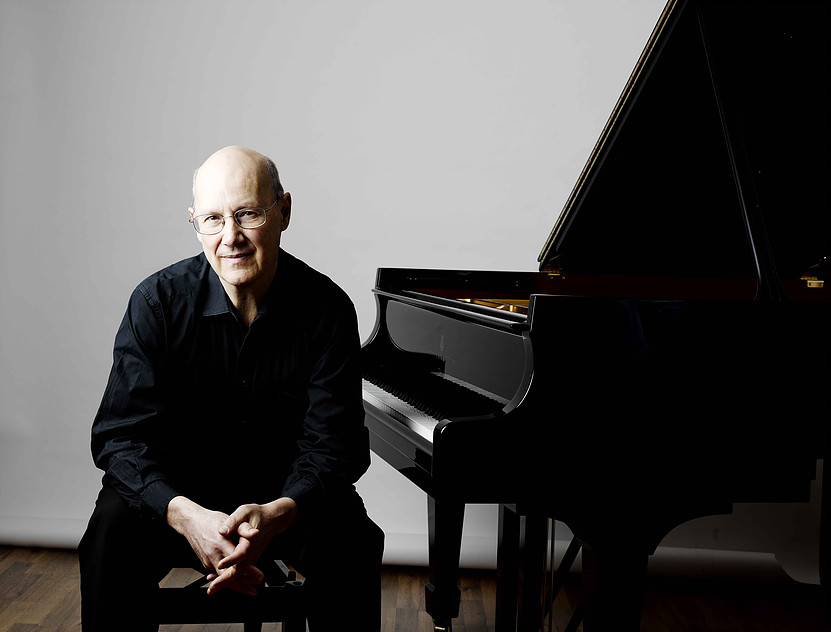


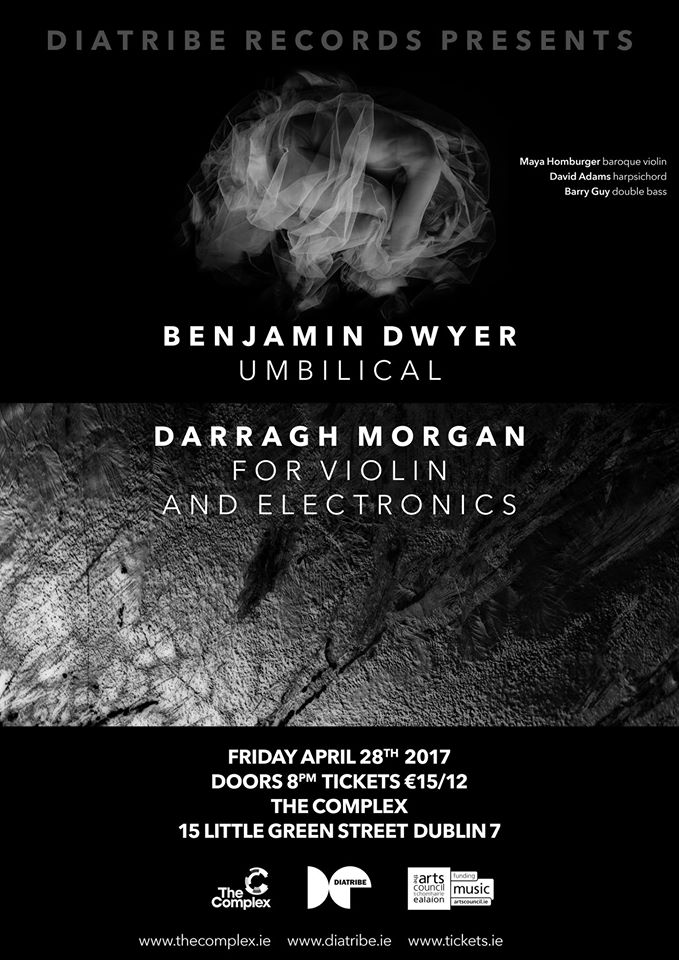

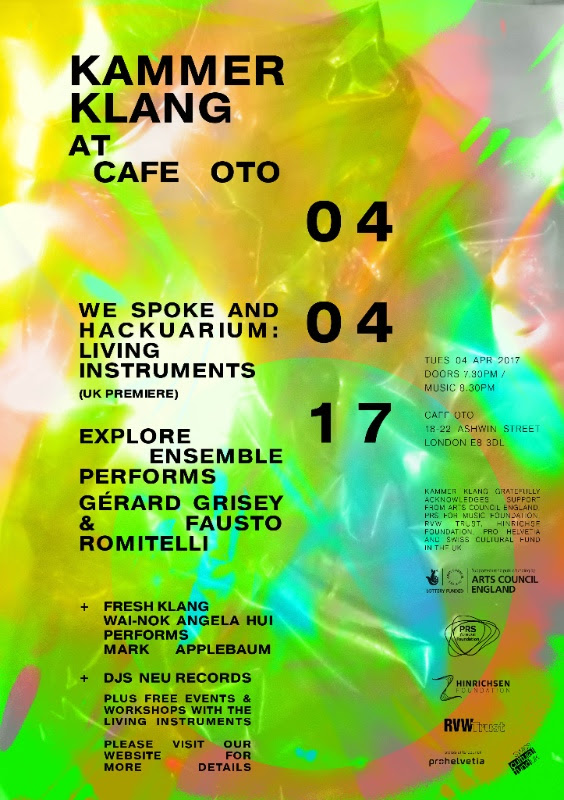
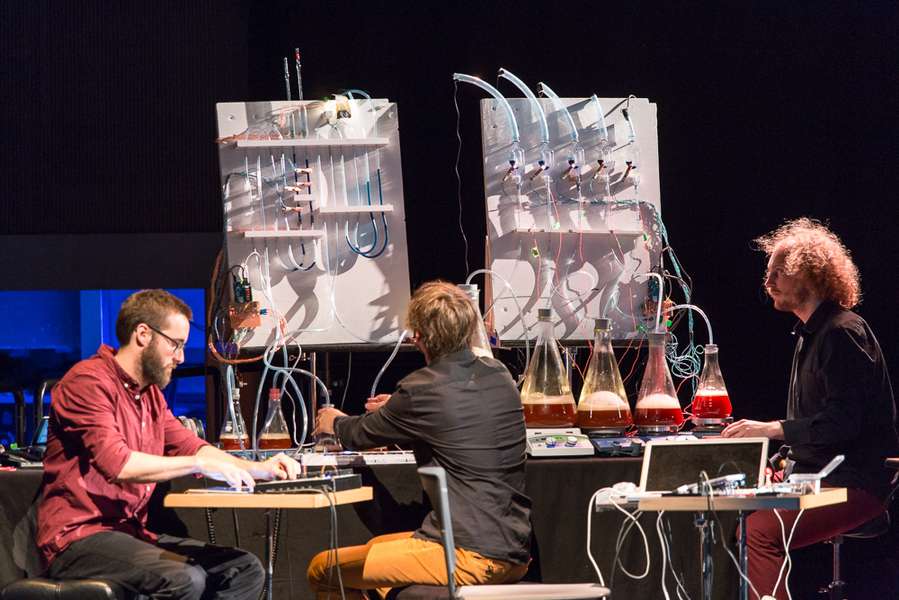




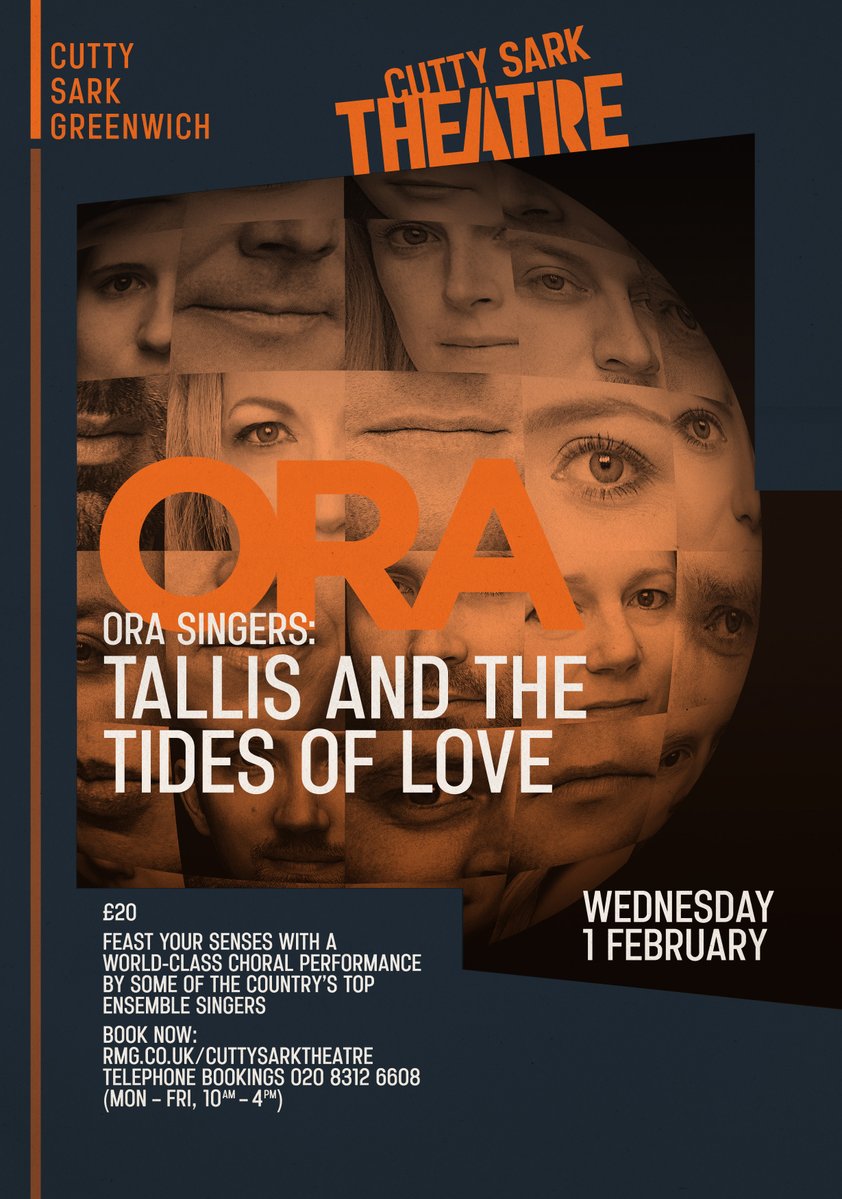
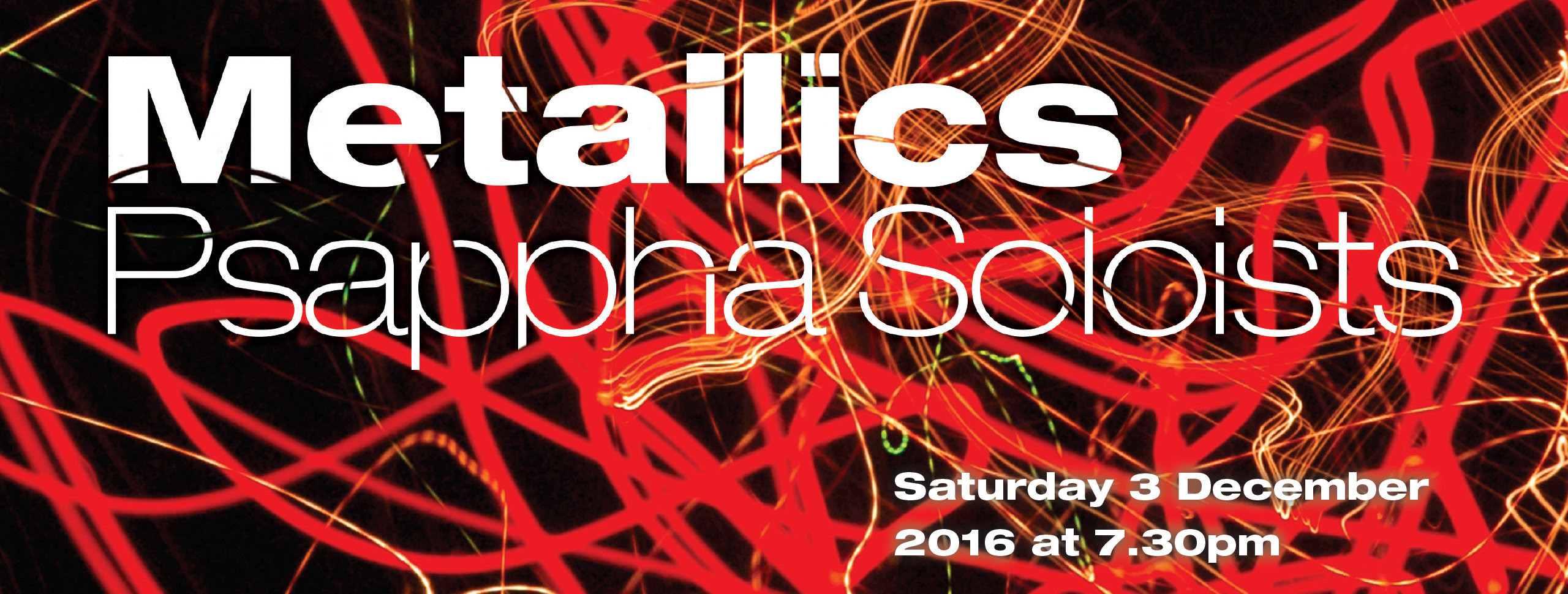


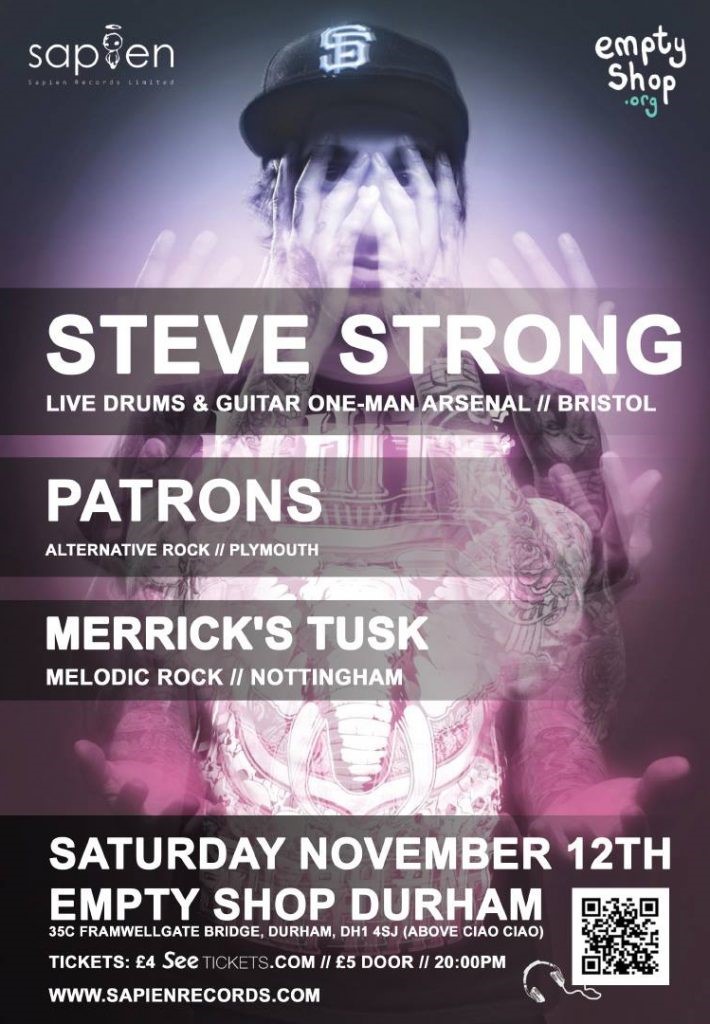


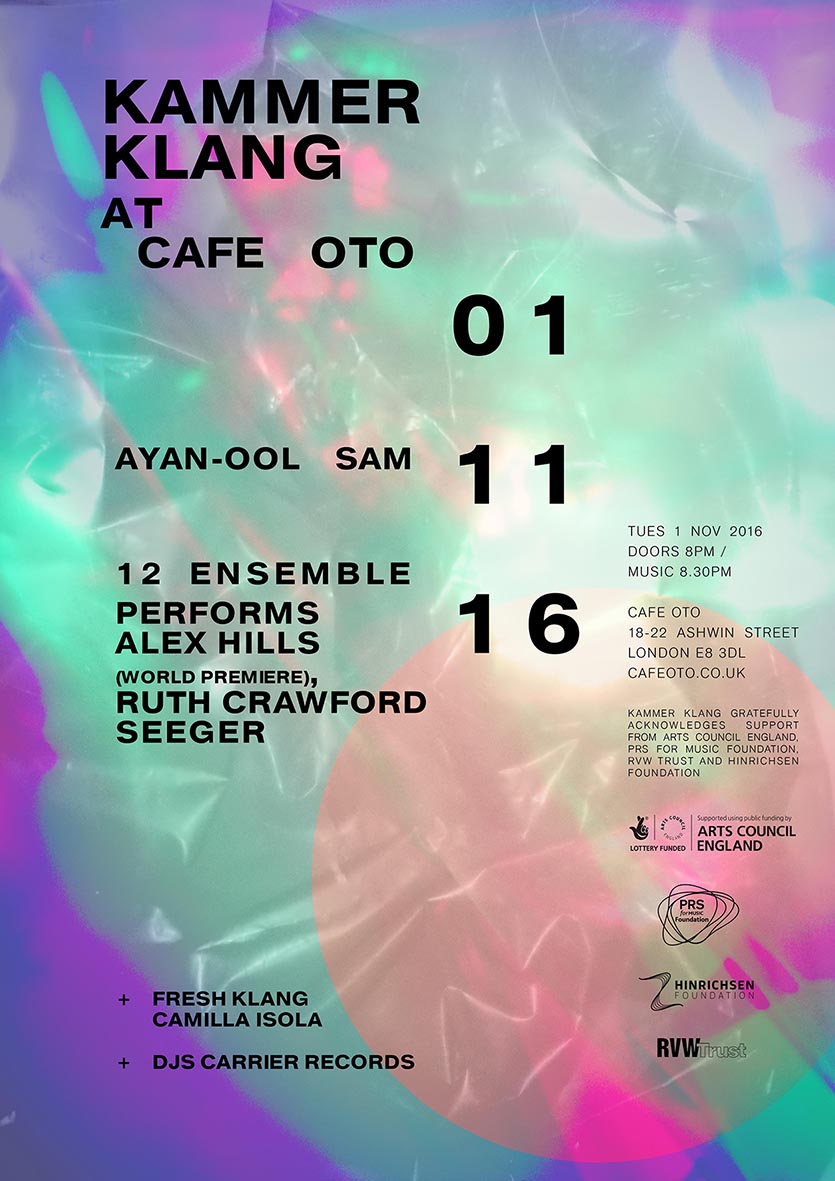




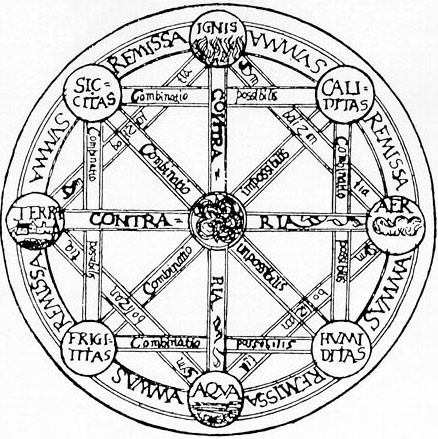



 Misfit City