Here’s some close-to-the-event news about an imminent avant-garde, fringing-on-noise event in Hackney; plus news on one of the oddest upcoming tours that I’ve ever had the pleasure of previewing in here.
* * * * * * * *
St John Sessions present:
Morton Subotnick + Kevin Drumm & Jason Lescalleet + Áine O’Dwyer St John at Hackney Church, Lower Clapton Road, Clapton, London, E5 0PD, England
Tuesday 1st November 2016, 7.00pm – information here and here
Full description scrounged from various press releases:
“Innovators and sonic architects come together for a St John Sessions performance.
Morton Subotnick is a true electronic pioneer who has worked extensively with interactive electronics and multi-media performance (often in collaboration with his wife, vocal virtuoso Joan La Barbara). With Pauline Oliveros and Ramon Sender, Subotnick co-founded the San Francisco Tape Center, an influential cultural organisation and electronic music studio. The Centre was instrumental in the invention and development of the Buchla synthesizer and was, in turn, a fundamental influence on all electronic music that followed.
“Subotnick is an innovator in works involving instruments and other media, including interactive computer music systems. Most of his music calls for a computer part, or live electronic processing; his oeuvre utilizes many of the important technological breakthroughs in the history of the genre. Tonight, Subotnick performs a solo set on the Buchla synthesizer – undulating, moving and almost psychedelic.
“Preceding this performance, we are pleased to present the debut UK performance from Kevin Drumm and Jason Lescalleet. Emerging from Chicago’s improvised music scene during the 1990s, Kevin became one of the world’s pre-eminent prepared guitar players, later expanding his work to include electroacoustic compositions and live electronic music made with laptop computers and analog modular synthesizers. His early recordings contain mostly sparse, quiet sounds; recent works have been more loud and dense. For twenty years, Jason has been making electro-acoustic sound work, using all manner of source material to engage listeners in both site and narrative by providing a rich and physical sense of place. Two formidable musicians and performers in their own right, their collaborative releases on Erstwhile Records create a soundworld that is at turns beautiful and terrifying, comprising ambient recordings and brooding drone.
“Irish musician Áine O’Dwyer creates chance- and improvisation-based compositions, and has performed widely as a solo artist on harp, organ and various objects, and also regularly performs with United Bible Studies, Charlemagne Palestine and Mark Fry. Her album of improvised church organ music, ‘Music for Church Cleaners’ (released on MIE last year), received critical acclaim. Here, she brings her idiosyncratic approach to composition to sacred space once more.”
* * * * * * * *
You might not have thought that a person could still bring what’s essentially a party trick into culture houses and make a career of it; but if so, Judy Dunaway is proving you wrong…
“Judy Dunaway performs avant-garde compositions and free improvisations on amplified latex balloons played as musical instruments. She is known internationally as a ‘virtuoso of the balloon.’ She plays a variety of shapes and sizes of balloon instruments, each with its own special qualities, pushing the extremes of both pitch range and artistic limits. Her large rubbed ‘tenor’ balloon gives Jimi Hendrix’s guitar a run for the money and her giant balloon pulsates into the depths of the subaudio. Her abstract music and sounds are difficult to equate with other forms, depending upon the perception of the individual like the images seen in fire or clouds.”
Below are a couple of videos – one of which is an overview of Judy’s techniques and approaches as regards her ballooning skills (including audience interaction), and one in which she performs uninterrupted.
I’ll admit that (as with most friction-based instrumentation which leans over the borderline into readymade art) listening to this kind of material can end up as a test of endurance in which your mileage and tolerance, plus the outcome, may vary. As far as I know, no-one’s yet tried to tune and tour a scraped blackboard. Yet ultimately, Judy’s commitment to this kind of music making is fascinating. No one-trick pony, she also worked as a guitar-toting singer-songwriter on other occasions up until 1995; but she’s entirely serious about ballooning – publishing papers on her approach, making points about microtonality, and collaborating with string quartets on serious avant-garde compositions. Having mastered a variety of dextrous noise-making techniques which drive the amplifed latex into flexible, cunningly-controlled roars and squeals, she invites us to reconsider a balloon (quite legitimately) as an “orb-shaped string”.
On the other hand, she’s also integrated vibrating dildos into her balloonwork (in one case via a piece called Flying Fuck), so there’s clearly a downtown New York sense of humour at work as well.
Full dates for the European Solo Balloons Tour below:
Axis Arts Center, Cheshire Campus, Manchester Metropolitan University, Crewe Green Road, Crewe, CW1 5DU, England, Tuesday 1st November 2016, 7.30pm – information
Café Oto, 18-22 Ashwin Street, Dalston, London, E8 3DL, England, Thursday 3rd November 2016, 8.00pm – information
Mex im Künstlerhaus, Sunderweg 1, 44147 Dortmund , Germany, Saturday 5th November 2016, 8.00pm – information
Academy of Fine Arts, Raciborska 37, Katowice, Poland, Tuesday 22nd November 2016
Spektrum, Bürknerstraße 12, 12047 Berlin, Germany, Thursday 24th November 2016
Urban Rituals Festival @ Le Chapelle des Brigittines, Petite rue des Brigittines, 1000 Brussels, Belgium, Saturday 26th November 2016, 8.30pm – information
I’m not even going to pretend that there’s a connecting thread within this post – it’s just a roundup of Friday and Saturday gigs while I try to fit some more updates into what’s going to be a busy August outside of the blog.
It seems that my rant about ersatz brass bands and the appropriation of Northern British folk forms earlier in the month has borne some fruit, or at least generated some kind of knock-on effect. I’ve just been emailed about Dennis, an eight-piece “folk pit-pop & colliery brass band” from Hetton-le-Hole in the minelands of County Durham, who claim heirdom to “a working class cultural heritage and community spirit.” and who are playing a free gig in London on Friday. In many ways they’re a sugared-tea version of ascerbic ‘80s Hullensians The Housemartins – a soul-touched ‘60s guitar pop, with the soul horn section transmogrified into the distinctively mournful, dusty sound of a pit head brass ensemble.
While some of that comparison’s on point – they’ve certainly got the tunes, and spring even more directly from the culture, with even the guitarists learning pit brass back in primary school prior to an apprenticeship in indie – Dennis do lack the Housemartins’ explicit political bite. There’s little of the gadfly lyrical attacks, or an equivalent to Paul Heaton’s upfront socialism and targeting of privilege and exploitation. Instead, much of their ethos is expressed via their visual identity. Artwork and videos are festooned with mining and trade union banners and footage of workers’ marches, while some clips make use of elderly retirees in mining town social clubs (notably, the latter are invited to join in with the singing, instead of being treated either as craggy scenery or as crushing embarrassments).
Outwardly, Dennis seem to deal in softer topics – more personal, adolescent or universal, or more diffuse folky sing-alongs – but a quick closer look reveals an undercurrent of glowingly nostalgic communalism (the band are veterans of fundraisers and community support events), and lyrics which hanker back, obliquely, to community spirit and mutual help. Perhaps more will be revealed on their debut album ‘Open Your Eyes’, due at the start of September when they’ll be playing on home turf at Northumberland’s Coquetfest.
Over in the North-West, Lancaster psych-punk five piece Three Dimensional Tanx are playing a hometown gig on Saturday. With Stooges, Can and Velvet Underground comparisons in the bag, they’re following a pretty clear lineage: personally, I’m also hearing Question Mark and the Mysterians plus the garage rock end of the Sy Barrett Floyd; while other songs beat relentlessly at the forehead like Suicide or embark on long, stewed musical journeys.
What I like about this band is the dogged way in which they conduct themselves, and the way in which they seem to have colonised this particular Lancaster pub – circling around in its schedule like a persistently returning comet and playing several sets each time, as if pushing themselves through an arts lab. Turning the show into a five-decker lysergic sandwich, North-Western vinyl archivist Sie Norfolk (Sunstone Records/Psych Fest) will take slots before and after the band as well as during a break between sets, playing a “psychedelic dance party” from his record collection. If they’re going to continue to make this thing a regular event, I hope that they succeed in turning it into a psychedelic node, feeding more mindstretcher bands into and through Lancaster and beyond.
Three Dimensional Tanx + DJ Sie Norfolk The Golden Lion, 33 Moor Lane, Lancaster, LA1 1QD, England
Saturday 20th August 2016, 9.00pm – information
* * * * * * * *
Staying in choppy psychedelic waters, the Rocket Recordings label has an eight-band concert back down in London, hosted (inevitably) by those persistent stewards of noise at Baba Yaga’s Hut. Many of the names are familiar – certainly to the dedicated noisies who follow the Hut and swing hard with ‘The Quietus’ – but for those who might not know them so well, here’s a quick primer.
As Baba Yaga favourites, Teeth Of The Sea keep popping up in here: a craggy yet celebratory electro-psychedelic throb from a full-band rock lineup embracing techno, polytextured brass, analogue synthwarp, tough corners of metal, and dance imperatives that span Chicago clubs and mud-sodden English field parties. Meanwhile, Necro Deathmort were among the electro-industrialists running rampant at at Cafe Oto last October: an all-out banger project which swings like a macabre wrecking ball across the borders of hard techno, blootered industrial electronica and doom metal. This year’s album ‘The Capsule’ takes a step into the scuzzy pack-ice of dark ambience: glowering, and majestically dour.
An explicitly magickal Anglo-French-Swiss trio of Mark Wagner, Heloise Zamzam and Olmo Uiutna, the spiritually/psi-ritually-inclined H.U.M. played at April’s Gnod Weekender. Back then I described them as a “psychic cross-cultural art coven”, creating consciousness-expanding installation-cum-ritual sound performances via chants, drones and drums, with both the music and Mark’s improvised narratives drawing on cybernetics, the occult, sound visualisations, and ancient alchemical ideas. They also like Rimbaud, Artaud, Colombian shamans and the Gallic pop of Francois Hardy, which makes for one hell of an art-sprawl.
Both Housewives and Anthroprophh showed up in ‘Misfit City’ only the other day, as participants in the current Sax Ruins/Massicot tours – the former an amelodic No Wave-inspired noise quartet, the latter a trio led by a sludge-guitar hero balancing “fifty years of psychedelic culture and esoteric art” on his shoulders.
That leaves Gum Takes Tooth, Kuro and Coldnose. Two of these, at least, are two-person teamings. Gum Takes Tooth are drummer Thomas Fuglesang and singer/synth-player/electronoise generator Jussi Brightmore, who pursue a rhythmic communion with their audiences inspired by psychedelic rituals and sound-system block parties (their recent single, Bone Weapon, sounds like a choral mass conducted inside a floor polisher). Kuro is a new project uniting bass guitarist Gareth Turner (an Anthroprophh contributor and half of Big Naturals) with French amplified violinist Agathe Max (a classical music escapee who’s been making improvised sonic textural music for two decades). As for who Coldnose are, nobody seems to know. Perhaps they’re just an idea to fill up the poster. Perhaps they’ll simply coalesce on the day.
Baba Yaga’s Hut presents:
Rocket Recordings All Dayer (featuring Teeth Of The Sea + Gum Takes Tooth + Necro Deathmort + Housewives + Anthroprophh + H.U.M + Kuro + Coldnose) Corsica Studios, 4-5 Elephant Road, Elephant & Castle, London, SE17 1LB, England
Saturday 20th August 2016 – information
There’ll also be barbeques and beer, the latter an Intergalactic Pale Ale devised by Rocket label people in collaboration with London hopsmasters Brewage à Trois. Yep, there’s a signature beer for psych-happy London heads now…
I shouldn’t let it bother me, but I was worried that the recent slew of clean acoustic nu-folk gigs which I’ve been covering were making this blog look a bit too cosy. It’s perversely comforting to find that the electronic ends of things can be just as cute.
Eden Grey presents:
CV FREQS London New River Studios, Ground Floor Unit E, 199 Eade Road, Manor House, London, N4 1DN, England
Sunday 31st July 2016, 2:00 pm to 11:00 pm – free event (suggested donation: £5.00) – information here, here and here
Hosted by Eden Grey (a budding classical composer whose life changed when she fell in love with electro and dubstep), CV FREQS appears to be a globetrotting all-day modular synth meet. Since Eden’s move to London, it’s begun to base itself more in the city: the last one, back in May, was down on the south bank at IKLECTIK, while this month it’s pitching up in a different riverbank locale in the north. CV FREQS starts off by defining itself as covering “innovations in modular synthesis design, focusing on Eurorack format, custom synthesisers and embracing the DIY spirit” but rapidly gets excited and starts enthusing about being “a wonderfully cacophonous event focusing on the tools that are ideal for sound design and music creation.” and ends up frothing about “a carnival of soundwaves and control voltages”. As if it were a soundclash – or a picnic – attendees are invited to bring their own synths and speakers along.
Apparently, it would also be nice if you could bring a table. Never mind soundclashes. This is starting to sound like a church jumble sale in Hampshire, albeit one that’s about to go all sonic-bacchanalia.
At root, this is part encounter group and part informal trade show in which hardened or nascent electronicians can wander around, trying out and picking up those innocuous-looking, technoporn-titled hardware or software plugins which bring joy to a sound-masher’s heart (and a battery of warped noises to their woofers). This is where to get previews and demonstrations of convulsion generators, wavefolders, stargigglers, deflector shields, quantimators, proton gabblers, spectral devastators, squishmagogs and source-of-uncertainty modules plus all of the other gizmos that sound as if they’ve sprouted from a game of ‘Elite’ back in 1983 along with a starship cargo of Ceti rabbits and Baltah’sine Vacuum Krill. Yes, really – I only made a couple of those names up.
Cheap geek-to-geek shots aside, CV FREQS is the kind of event which quietly – and effectively – changes a musician’s life. Wandering around in the crowds at the show there’ll be at least one nascent electronic musician about to finally finds the device, devices or piece of advice which unlock the doors to a new technique: the key to making them sound or work like themselves rather than a follower. Gaining the right implement, the right process, the right move – it’s probably more important than gaining a hero. That’s something to remember the next time I’m tempted to make a smutty joke about ring modulators.
As a bonus that’s far more than a simple sideshow, attendees have the chance to see a range of modular synth performers in action, beyond the straight demos. The range available might not compete with a festival in terms of numbers, but would easily match one in terms of sonic breadth. This is heightened by the fact that many of these players aren’t just end-users but genuine solder-and-code sonic innovators, building or programming the tools which they use.
Finlay Shakespeare from Future Sound Systems offers spacey zap-crackle-and-pop dancetronica, while Colloid (the performance alter-ego of Ginko Synthese’s Jan Willem Hagenbeek) pursues “an ongoing search for noises, clicks and evolving sounds… deep drones with uplifting arpeggios and cut up beats.” Jan doesn’t mention the squiggling, lapping clouds of avant-garde piano (perhaps because they don’t fit the twangy modular remit), but they’re a significant part of the puzzle as well. The rapid-fire music of Gregg Wilson is stimulating, cheeky and mischievous: a typical piece sounds like an argument between at least eight bits of blipping, boing-ing minimalism, and is likely to turn into a massed affectionate chiptune brawl-cum-pub singalong.
Dedicated improviser, software-synth guru and former Ticklish man Phil Durrant will be bringing along his Sowari Modular project for its debut live performance. A spinoff from his Trio Sowari (in which he usually plays with saxophonist Bertrand Denzler and percussion/device-fiddler Burkhard Beins), this setup sees Phil experiment with Sowari ideas alone with his synth. Also playing is Iran-born, London-based polydisciplinary artist Pouya Ehsaei, for whom music is one of a number of interlocking forms (among other qualification, he’s got a music doctorate for the University of York, a prime training ground for contemporary classical and experimental musicians). On 2014’s ’There’ – his first record under his own name – Pouya analysed and reflected both the ancient and recent history of his birth country by processing and pulverising samples of traditional Iranian music (including two Ahmad Shamloo prison poems) to tap into culture and repression, melancholia and rage. On this occasion, however, he’s more likely to be playing as his Seated Figure project – ambiguous analogue techno which juxtaposes an eerie mix of springiness, queasy pitch-and-key shifts, and a baleful solitary tone.
It’s not entirely clear who Deep Learning are, but the clues point towards a full or partial teamup of two trios – the Sydney-based electronic/noise/pop/“fantasy beat” band PVT (whose Richard Pike recently relocated to Britain), the London-based Hrím (singer Ösp Eldjárn, programmer/Brian Eno sidekick Cherif Hashizume, and singer/multi-instrumentalist Anil Sebastian of London Contemporary Voices and assorted Imogen Heap projects)- and Merkaba Macabre (a.ka. Steven McInerney, founder of the Hackney Film Festival and the Psyché Tropes experimental record label). The three tracks below will either point the way towards the collaboration, or completely misguide us.
Throughout the event, Newport audio-visualist duo Form Constants (Ginko‘s synth tinkerer and circuit-bender Aidan R. Taylor and video artist Kim Da Costa, who call themselves “a plethora of electrified grit for the senses”) will be using their self-built video synths to run “hypnotic light bands” around the venue. As for Eden Grey, there’s no evidence that she’s going to be actually performing at the party she’s throwing, but my guess is that she won’t be able to resist. Whether or not that’s true, here’s a taste of some of her recent work (in the techno vein, though she’s also been known to put a post-Wendy Carlos spin on Erik Satie).
A couple of London experimental gigs for the coming week, briefly explored:
* * * * * * * *
The Horse Improvised Music Club presents:
Noel Taylor/Asaf Fleischmann/Ulf Mengersten + Adam Bohman Text Quartet + Antonio Cunzo/Joe Wright/David Stockard/Tony Hardie-Bick IKLECTIK, Old Paradise Yard, 20 Carlisle Lane, Waterloo, London, SE1 7LG, England
Tuesday 5th July 2016, 8.00 pm – information
Three small-group performances from the South Bank London improvisers’ hub; following, in part, their tradition of putting well-known improvisers together with lesser-known ones.
The opening act is a scratch quartet of rising Aberdonian jazz saxophonist Joe Wright and Carrickfergus-based percussionist David Stockard with pianist Antonio Cunzo and Chapman Stick player Tony Hardie-Bick. (While it always gives me a lift to see a Stick pop up anywhere in music, since I’ve always loved its clipped-but-singing polyphonic tones, Tony also seems to have the most interesting backstory within the quartet. From being Sham 69’s keyboard player during the late ‘80s, he’s moved from backing up other people’s punk polemics to spending most of his time as a software instrument developer, coaxing new levels of performance interaction out of touchscreens and wearable tech. As a performer, he’s been known to drag his protesting Stick flex-first across gallery floors, an art-punk flourish which I guess is a change from the cloud of warm jazzy reverence which usually surrounds the instrument.)
Veteran London acoustic-noise’n’objects performer Adam Bohman takes the middle slot with his Adam Bohman Text Quartet, completed by Adrian Northover, Sue Lynch and Hutch Demouilpied. While Adrian and Sue are usually saxophonists (working together in David Petts’ Remote Viewers and Hogcallin’) and Hutch is a trumpeter and sound designer, it looks as if everyone’s working with voice this time.
There’s not much information on this other than that it’s a text piece, but some guidelines might come from Adam’s work on “talking tapes” during the late ‘70s and early ‘80s – lo-fi audio collages which ranged from spontaneous dictaphone observations (Adam discovering and illustrating the ordinary and mundane anew, in slurred Dada-esque tones) to ludicrous cartoon vocal pieces. The ‘Music and Words’ collation of these odds-and-sodes was described as “a laugh-out-loud avant garde album” and later releases were even funnier, pushing into prank-and-sketch territories like a splicing of Bob Cobbing with a one-man Pete’n’Dud. Have a listen to When A Man (in which a trio of growling Adams parody both bozo masculinity and thunder-throat action-film trailers, like a squad of querulous Daleks bloated on bright orange corn snacks), or White Sauce Without For Those Who Don’t (Adam’s cutup account of a single Christmas, chopped across with assorted literary, musical and familial distractions).
It is, of course, thirty years on from all of this, so you might get something far more sombre. Since the Quartet are performing something called “the Robin’s Nest Revisited Vocal Quartet”, I wouldn’t bet on it..
The last act of the evening are a trio connected to large-scale improvising institutions in two European capitals. Longstanding improv clarinettist Noel Taylor (Splatter, London Improvisers Orchestra, plenty more) will be playing with Ulf Mengersten (a double bass mainstay of Berlin Improvisers Orchestra) and pianist Asaf Fleischmann.
* * * * * * * *
Hominid Sounds presents:
Mark Dicker + Guncleaner + Johnny Broke + tbc New River Studios, Ground Floor Unit E, 199 Eade Road, Manor House, London, N4 1DN, England
Thursday 7th July 2016, 8:00 pm – information here and here
To celebrate the release of Mark Dicker‘s new tape ‘Frog Eggs’, London experimental label Hominid Sounds are putting on “a night of clangs and bangs.” There’s a gradually expanding bill for this, featuring various electronic noisemakers and beat-glowerers from the more unruly edge of London electronica. Mark himself (the man “responsible for the noise behind (the recently deceased)Palehorse“ is headlining, bringing “supersonic modular-synth slow jams” (for a little more on Mark and how he thinks, there’s a ‘Quietus’ interview here). So far, he’s being supported by “clanging, banging techno noise project”Guncleaner (featuring two members of secretive, elusive London heavy math-rockers Nitkowski) and by “improvised, analogue-synth acid techno” act Johnny Broke (initially a solo project by Shitwife‘s Wayne Adams, which now seems to have expanded and welcomed one half of north London noiseniks Death Pedals). More performers to be confirmed…
I’ve not got much information or workable noises for this concert. For starters, I only bounce around on the outside of this particular musical scene (like a stray static spit in the mix); It also seems clear that it’s a lineup of sound-artists in deliberate flux and change, demonstrating very different faces to their usual output; and even by noise music’s usual enclosed standards, information on this show seems to be insiders-only. So you’ll need to just attend and take a chance on what it might be like.
I did succeed, however, in pulling up a little recent Johnny Broke-ism and a Dicker track from early last year, so here they are:
Boosting the signal for some experimental/eclectic gigs in London this coming week…
* * * * * * * *
Machinefabriek ( photo by Pieter Jan Minnebo)
IKLECTIK presents:
Machinefabriek + Graham Dunning & Colin Webster IKLECTIK, Old Paradise Yard, 20 Carlisle Lane, Waterloo, London, SE1 7LG, England
Thursday 16th June 2016, 8.00pm – information
“Machinefabriek is the alias of Rutger Zuydervelt, whose music combines elements of ambient, noise, minimalism, drone, field recordings and electro-acoustic experiments. His pieces can be heard as sonic environments for the listener to dwell in. Finding tension in texture, tone and timing, the result can be very minimalistic at first glance, but reveals itself upon closer listening. The devil is in the details. Rutger has collaborated (on record and/or live) with numerous artists including Colin Webster, Jaap Blonk, Aaron Martin, Peter Broderick, Frans de Waard, Steve Roden, Michel Banabila, Dead Neanderthals and Gareth Davis, amongst many others.
“The duo of Graham Dunning & Colin Webster perform improvised music avoiding conventional playing of their respective instruments. Graham Dunning uses a single turntable with dubplates of field recordings, dentistry tools and other objects to create crackling textures, tones and disjointed noise. On saxophone, Colin Webster uses a range of techniques to bring a palette of percussive and textural sounds, drawn tones, and raw, searing blasts. The duo have recorded 3 albums, with their 4th out in May on Tombed Visions, and have also recorded a collaboration with tuba player Sam Underwood.”
* * * * * * * * *
An evening of assorted collective noises:
D503 present:
‘Mechanical Dreams Along the River’: Echoes… Leytonstone + Norvoir + Precocious Mouse + Shabash + D503 + Noteherder & McCloud New River Studios, Ground Floor Unit E, 199 Eade Road, Manor House, London, N4 1DN, England
Friday 17th June 2016, 7:30 pm – information here and here
“Echoes… Leytonstone is a solo project from James Shearman, interested in hypnagogia and inspired by musicians like Nadja, The Angelic Process and Birchville Cat Motel – ambient and ethereal dronegazing, minimal bellowing cave music.
“Norvoir is an ambient/drone project by Sam Saljooghi, using his guitar to slowly build and create vast atmospheric soundscapes from which you can immerse yourself in through his use of delay, reverb and looping.
“Precocious Mouse will be performing a new live iteration of the ‘seance’ project. Using a combination of generative, microsonics and found sound, the experimental/electronic/glitch piece explores themes of communication and alienation.
“A secret rendezvous of witches and sorcerers, characterized by orgiastic rites, dances and feasting and using violin, piano and noise, Shabash brings spirits of the deep forests and multidimensional realms, allowing different worlds to meet and journey together.
“D503 are Nicola Serra (beats, synthesizer, percussion) and Francesco Garau (guitars and manipulations), a North London-based duo aiming to explore drone, techno and industrial by using primitive and minimal sounds.
“Noteherder & McCloud undertake investigations. A thick grey soup of electronic noise and field recordings enlivened by some remarkable soprano sax playing from Chris Parfitt. We watch from dark corners where synthesisers struggle against illegal parameters.”
* * * * * * * *
Finding out everything that’s happening at a event at central London eclecti-night Scaledown always tends to be a last-minute matter, but here’s what was scheduled a working week before the latest show…
The Orchestra Pit presents:
Scaledown #119: V A L V E + Haymanot Tesfa + Frank E. & JK-ee (Lonesome Cowboys From Hell) + Mark Braby + Ed Dowie The King & Queen, 1 Foley Street, Fitzrovia, London, W1W 6DL, England
Friday 17th June 2016, 7:30 pm – information here and here
“Coming up this month we have:
“V A L V E is a progressive/avant-garde sound project from Knifeworld’s Chloe Herington, featuring an ever-morphing line up of conspirators and collaborators and rather a lot of bassoons, saxophones and found sounds.
“The beloved singer and artist Haymanot Tesfa brings her lyre to enchant us with songs of Ethiopia, ancient and contemporary, fresh and traditional.
“Yee-haw…. last year we put out the call for some cowpunk, and this coming Friday we get the grits courtesy of Frank E. & Blind ‘Gentleman’ JK-ee, two of the low-down psycho-reprobates that are Lonesome Cowboys From Hell. They will be regaling Scaledown with tales of family strife and cross-country travellin’ life.
“Co-Scaledown host Mr Mark Braby will perform one short story, one or two wee rhymes, two songs and an improvisation which will last until Duane the intern informs him that he has to stop.
“Ed Dowie has been making music since the late 1990s, firstly as one third of Parlophone’s Brothers in Sound, then later a solo act under the name Redarthur. After a five-year hiatus which he spent living in University libraries & music technology labs making strange bleeps, he returned to the music industry to join The Paper Cinema, a puppetry/animation/theatre/music hybrid (that tours both internationally & in Hackney). Now performing and recording under his own name, he makes music which fuses experimental techniques with melodic aspirations.”
In some respects Gnod – who are curating, and playing at, an extended gig in London this weekend – are a dubby Salfordian reflection of Godspeed You! Black Emperor. They share certain working methods – a collective, leaderless initiative springing from communal warehouse living; a passionate ethos of anti-establishment, anti-authoritarian feeling expressed in vast, cavernous and primarily instrumental musicscapes; an atmosphere sourced from circulating cultural-economic ghosts of deprivation and stagnation.
As regards the music itself, the parallels shift a little. Though both bands use drones and scattered, marginal snippets of speech, Gnod’s approach is a good deal broader and looser than Godspeed’s blend of classical/minimal string austerity and wind-tunnel punk rage, seeding itself from a variety of persistently underground forms. In the stew are industrial dance music, noise rock and anarchic dub; mystical hippy staples of overtone chanting and psychedelic ritual music (stripped of their frivolous navel-gazing associations and brought back to their mind-opening sources); free jazz; and a swathe of aural art-punk collagery (the latter of which, in Gnod form, recalls apocalyptic Godspeedian end-of-days graffiti, an approving response to Linder Sterling’s sharp visual comments on consumerism, and diary notes from besieged squats and hermit bedsits).
Other information is there if you choose to dig it up. We know that Gnod are from the other Islington – that liminal corner of Salford in the elbow of the River Irwell between the rails, the university and the skeletons of light industry, where the Islington Mill Arts Centre (in which the band live and work) has flourished since the mid-‘90s. We know that multi-instrumentalists and producer-theorists Chris Haslam and Paddy Shine have been in the band from the start: we know that the other two current members happen to be Marlene Ribeiro and Alex Macarte. We know that what seems to be dozens of others (but might be the same six people in a constant shuffle of personae) phase in and out of the band according to need, whim and inspiration; and that these include Manchester improv saxophonist David McLean, journeyman keyboard player John Paul Moran and drummer Chris Morley (once of Welsh experimental rockers Klaus Kinski, now propelling no-wave’d punk-funkers target=”_blank”>Queer’d Science).
We also know that the hybrid steam of subcultural influences and spirit of resistance that boils off from all of these ingredients is winning Gnod awestruck acclaim. ‘The Quietus’ (increasingly the British tastemaker as regards bands negotiating that slippery margin between absolute chthonic obscurity and cultural penetration) has not only sung their praises but been seduced into actually recording with them; while digging into Gnod’s web of ongoing connections and activities shakes up all kinds of other possibilities. The Gnod network of fellowship stretches across Europe and encompasses ever-roving Can singer Damo Suzuki, billowing gonzoid sample-psych from the late ‘80s (revived arsequake veterans Terminal Cheesecake sport former Gnoddist Neil Francis as their current frontman), classic British post-punk (via The Monochrome Set and The Blue Orchids), Louise Woodcock’s multi-media feminist art and a Catalonian psychedelic scene which gives a new meaning to Spanish castle magic (a few years ago, Gnod teamed up with Barcelona’s Black Bombaim as “Black Gnod”).
Having been casting out recordings since 2009, Gnod came up to speed with the beefy-but-spectral ecclesiastic dubgrind of 2011’s ‘INGNODWETRUST’ (following up with 2012’s ‘Science & Industry’, a sort of post-industrial ‘Sketches of Spain’ for trumpet, drones, ironscrape guitar haze and indistinct female declamations). They’re currently best known for 2014’s mammoth 110-minute ‘Infinity Machines’, in which their instincts for mood and social challenge came into focus. For that album, Gnod returned to (scorched) earth and conjured up a classic post-war Mancunian landscape of bones, threat and concrete; marrying a bleak Joy Division grind and deadzone chimes with knell-beating Rhodes piano, distorted boomings like rusting gasholders being beaten into dub drums, and aghast chemtrails of free sax which sounded like black-sailed galleons creeping up the Ship Canal and advancing into the Irwell. Amidst the grindings and slithering drones and the pollutant-smeared sleet, vocal samples of resistance and disquiet gave shape to a dawning and outspoken atmosphere of scepticism; in Breaking The Hex, they finally unleashed an eleventh-hour blast of dub/punk/sax/noise rebellion, while the title track was a harmonium keen over dark sonic bubbles.
While it didn’t wear its manifesto in the shape of a set of placardable lyrics, ‘Infinity Machines’ was a work of Salford shamanism, spitting the city’s ongoing gentrification back into its own face. Since then, Gnod have refused to simply rework it – instead they’ve allowed the feelings that inspired it to lead them naturally into new forms. Last year’s ‘Mirror’ album was written on tour in a slew of traveller’s energy and impacted by destructive mental turbulence within the Gnod circle: inspired in part by rage at government austerity programs which apparently declared war on the poor) propelled the band away from grand studioscapes and into a raw, live feel. It’s more personalised, its anger and alienation borne on pendulous and discombobulated noise-punk anti-grooves. Hands slam onto instruments and slip beats; the music flares into outright rage rather than stern painterly stews. Amidst the overtone vocals and chants, there’s persistent raw yelling; while the soundscapes have shifted towards slowed sirens, and a dragging, coshing pace: a clear early Swans influence.
Baba Yaga’s Hut presents:
Gnod Weekender, part 1: Gnod + Blood Sport The Lexington, 96-98 Pentonville Road, Islington, London, N1 9JB, England
Saturday 9th April 2016, 8.00pm – more information – tickets Gnod Weekender part 2: Locean + Water + Futuro de Hierro + H.U.M + Dwellings + Negra Branca + Arkh Wagner + Ayn Sof The Lexington, 96-98 Pentonville Road, Islington, London, N1 9JB, England
Sunday 10th April 2016, 3.00pm to 11.00pm – more information – tickets
Much of all of the above is going to come together over the course of this weekend, in which Gnod and a host of like-minded friends bring their collective approach to the current homestead of quirky London rock.
Saturday sees a full Gnod performance, supported by Sheffield trio Blood Sport, whose spindly and aggressive style is a ghostly, glassy-toned, black-sun approximation of Afrobeat and soukous. As for what Gnod themselves might be doing, the grind and gnarl of ‘Mirror’ might be their current output but they have a history of changing state and presenting an expectant audience with something unexpected: so be prepared for anything which reflects their history and their potentials (up to and including party blowers, possibly).
Sunday’s afternoon-to-late-night show features Gnod side projects and assorted friends in an eight-hour orgy. Some feature current Gnod members. Paddy Shine’s immersive “tantric vocal loop” project Ayn Sof will be opening the show; Dwellings is founder and bass player Chris Haslam doing hard-beat industrial electronica – dull-thud compulsive flesh beats, like the woody rattle of an early S&M loom, played in tandem with dank gothic synth drones. Negra Branca is a Marlene Ribeiro project, expanding on the “melodic and tonal dreamscapes” which she plays as part of the main band, full of squashy analogue synth shapes and temple-goddess vocals.
In Arkh Wagner, Alex Macarte (one of the more directly mystical Gnod members, if his online talk is anything to go by) teams up with Mark Wagner, a London-based multi-disciplinary artist and cybernetic mysticist, whose working practices are steeped in “cymagick” (a visualization of sound which takes in invisible and occult connections and “the vibratory nature of all things”). Their track Turn Off Your Mind (a narrative backed by a deepening pulse-chime in a confusion of noise surf) is a meditation on staring into the void, and on going too far out.
Mark Wagner’s also taking the stage as one-third of H.U.M. (or “Hypnotic Ultrasonic Magick”), a merging with two similarly shamanic noisemakers from Bristol’s ZamZam Records (these being the enigmatic surnameless H, or “Heloise”, who slipped into Bristol six years ago from a French fine arts background and has since been bewitching audiences with gigs that fall somewhere between installation and ritual and take place in caves, swimming pools and sundry found space, and fellow émigré and ambient droner Uiutna, originally from Switzerland but making her own way in the Bristolian avant-garde). H and Uiutna relocated to France recently but return to England for this event. H.U.M. present themselves as a kind of psychic cross-cultural art coven, citing “alchemical practice, incantation, chanting, drones, ritual drumming, French variété” as both inspiration and activity… although “French variété” is also on the list, so either a showbiz tinge or a sliver of hidden humour has been worked deep into the atmospheres. Here’s a clip of them in action:
Over in Barcelona, multi-instrumentalist, producer and happeneer Víctor Hurtado is the core of a “magic-inspired” scene of ritual psychedelic music. First coming to notice as the man behind acid-assemblage unit Qa’a (a richly detailed stew of lysergic rock and Nurse With Wound noise-and-texture garnishing), he’d soon diversify into a greater spontaneity with Huan (a project which he describes as “animalistic pulsations… almost like a living organism, that is at times sick, dying or excited”). Having collaborated with Jochen Arbeit, Steven Stapleton and more recently with Chris Haslam in the “monolithic, rhythmic, repetitive”Ordre Etern, Victor is bringing his Futuro de Hierro project to London for the Gnod Weekender. His latest musical pathway, it’s an outgrowth of his interest in more extreme and violent forms of electronic dance (such as speedcore and gabba) fused with techno, music concrete and a heightened psychedelic sensibility, featuring “disjointed rhythms” and “destroyed sounds, sonic detritus and live sound manipulation.”
All-female “art-carnage” troupe Water are another part of the Venn diagram which Gnod inhabit. Specifically, they represent the circles which intersect Manchester’s visual arts and multimedia, and the Devi Collective which coalesced around the Mill to commemorate and interpret last year’s William Burroughs centenary. Citing Throbbing Gristle, Wu-Tang Clan’s Rza and “well-witch horror scores” as creative spurs, they’re currently a five piece of multi-media “queen bee” Louise Woodcock, spoken-word poet/noise-guitarist Laura Bolger, visual artists Amy Horgan and Rachel Goodyear, and Emma Thompson (usually encountered as a DIY/punk/experimental gig promoter).
Soundcloud clips reveal something sounding like post-industrial Maenads: eerie threadlike female choruses and Laura’s dub-echo declamations seeping through a freeform background of womb-bass, malfunctioning engine drones, clanks and whistles, piston hisses, machine scrapes and tekiah blasts. The involvement of at least three women from a visual arts background – plus some striking photos – suggests that there’s a spectacle involved. Evidence of lengthy Water performances inspired by Aleister Crowley, by séances and by water rituals suggest that they’re fascinated with rite, summoning and form in a way which spans primordiality, Greek legend and map-fixes on esoterica ranging from Renaissance art to the present day. All of it slips through the fingers if seized on second-hand: it seems as if Water are an experience best soaked up live.
Laura Bolger reappears to add smeared, dreamlike vocals and narrations to the final act on the bill, Locean – another full-on Irwellian music collective in the Gnod and Devi orbit (sharing both Louse Woodcock and sometime Gnod tapesman/ranter Neil Francis). Offering another queasy grinding ride of driving punk-psych, noise improvisations and punk wail, their mantric sound binds The Velvet Underground, Mother Gong, Bauhaus and an abrasive Fall-esque groove in with bass-echo and wheel-rim guitar. As with Gnod and Water, they’re technically minimal but build up to a grand scale with their scratching, multiplying sonic detail: Laura’s words and musings, floating on the sound-wash like scraps of diaries and manifestos, ranges from odd and oblique polemics to numinous childhood memories.
As I post this, tickets are still available. If you’re spending most of your time trapped in London’s gravity well, this might be your best chance for a while to get something of that Islington Mill atmosphere and inspiration, and to beat along with Gnod’s dark-toned, troubled yet committed heart.
The third and last of a stream of Baba Yaga gigs this week dips us into dub, dub poetry and eerie electronica stews…
Baba Yaga’s Hut presents:
Roger Robinson & disrupt + School House Cafe Oto, 18-22 Ashwin Street, Dalston, London, E8 3DL, England
Saturday 27th February 2016, 8.00pm – more information
In recent years, Hackney-born/Trinidad-raised poet and vocalist Roger Robinson has probably been best known for his work as one-third of King Midas Sound (in which he works with eclectic dub/jazzcore/dancehall/grime producer Kevin Martin and Japanese artist/singer Kiki Hitomi). However, he’s led a peripatetic solo career since the early ‘90s: starting out as a spoken-word performer, he’s written and performed a number of acclaimed one-man shows, toured the world on behalf of the British Council and released books of poetry. Since 2004 there have been solo musical releases and mixtapes including the spoken-folk album ‘Illclectica’ and collaborations with or reworkings of music by Oneohtrix Point Never, Ryuichi Sakamoto, William Basinski and Alva Noto.
Roger’s most recent work (set in 2011 at the time of the London riots, and partially achieved by lone walks around his sometime base of Brixton, improvising dub poetry into a dictaphone) is last year’s ‘Dis Side ah Town’ album – a detailed work of study and reportage on the impact, distortions and erasures of change and gentrification, with Brixton observed both in its own right and as a signifier for similar distortions in London and the rest of the world (read Neil Kulkarni’s recent ‘Quietus’ interview with Roger for more background on this).
Production work on the album was handled by disrupt – a.k.a. Jan Gleichmar, an East German computer-music whizz who grew up on the Soviet side of the Berlin Wall and progressed through assorted home-made dance stylings (variously Detroit techno, digital hardcore, gabba and electronica) before settling on digital dub as his expression of choice. Co-boss of the Leipzig-based dub/reggae netlabel Jahtari for over a decade, Jan started off on a cheap laptop but currently achieves his sound with homemade electronic gear, being interested in the textural and process effects of antique microchips and manual voltage control.
Tonight, Jan and Roger will be performing together in London for the first time, delivering live material from or informed by ‘Dis Side ah Town’ and bringing Roger’s observations and warnings back home.
The support act is School House, a solo project by Manchester composer Peter James Taylor (once the baritone guitar player for Bletchley noise-rock project Action Beat, now known for his distortion-rich, Branca-esque massed-guitar works exploring custom tunings, extended techniques and graphic notation).
School House provides Peter with opportunities to explore other areas. Although the project’s first release, ‘Soft Focus’, explored a spooky, textured minimalism using customised Yuri Landman guitars, last year’s ‘Herd’ album moved into electronic instrumentation, concentrating on glitch-rhythms and software drones while keeping some of the layers of guitar texture for what Peter describes as “roiling, gaseous and slow-moving nocturnal dread.” It’s this latter side of School House which will be on display tonight, accompanied by suitable visuals.
* * * * * * * *
Here’s news from east London on “an eclectic night of math rock, experimental rock and progressive rock”…
Most of the text below is by the promoter or other people, so links are provided where they’re due:
Theo is Sam Knight, a one-man-band from London who puts on an astonishing performance. His Soundcloud bio says “taut, chugging guitar loops layer up with frenetic tapping patterns that interweave in spiralling complexity before near sub-atomically precise, powerhouse drumming clatters and builds each song into juggernaut of riffs and rhythms. To achieve something like this recorded is one thing, but to see Theo perform live is quite another as each song blurs into the next and the dazzling guitar and drum acrobatics leave jaws sagging on the faces of all who bear witness to the talent on offer.”
Battleship Grey are an experimental rock four-piece from London who combine highly melodic, powerful vocal melodies with innovative, forward-thinking rhythms and sounds. Drama-rock threesome Ex Libras(who’ve shared a bill with them) have commented “they toy with experimental ideas in a way that is the opposite of pretentious because they always seem to be about the groove or the way the music pulsates. It is music after all right? It isn’t an equation, it isn’t a painting, yet they are math and art-rock and dance-y all at the same time. Head. Explode.”
Olympians describe themselves as “a band that lives half in Norwich and half in London. We have two guitars, a bass, some drums, a glockenspiel, two keyboards and a trumpet. The next instrument we plan to buy is a vibraphone. We hope you like our songs.” A few years ago, multimedia obscure-music platform ‘Rightchordmusic‘ said “their sound is hard to pin down, with math rock roots, fused with barber-shop ‘Spring Offensive’ esque harmonies and plenty of instrumentation and experimentation. It’s a soaring piece of harmonious yet downbeat melancholic pop that gets better with ever listen. We’re smitten.”
Sounds and visions provided above. Draw your own conclusions.
* * * * * * * *
More shortly – Eddie Parker, Project Instrumental, and an even-more-typically-loose-than-usual Daylight Music show…
From where I’m standing, it’s looking like a mostly noisy and left-field week. Here’s the first bit of it…
* * * * * * * *
More News from Nowhere presents:
More News from Nowhere #4 – Simon Bookish + Sharon Gal + Deathcount in Silicon Valley The Victoria, 186 Hoe Street, Walthamstow, London, E17 4QH, England
Wednesday 24th February 2016, 8.00pm – more information
From the organizers:
“More News From Nowhere – Walthamstow’s regular night of new and interesting music – returns with a double headline performance.
“Experimental vocalist Sharon Gal is a widely respected figure on London’s improvised and avant-garde music scene – she’s worked with Steve Noble, David Toop. Steve Beresford and Thurston Moore amongst others, and is a founder of Resonance FM.
“Simon Bookish, the alter-ego of performer/composer Leo Chadburn, fuses his classical training and experimental leanings with electronic instrumentation and a pronounced pop sensibility. He’ll be performing his latest release – ‘Red And Blue’, released this January (“a collision between digitally-processed brass and distorted synthesizer drones; atonal electronic pop and drifting field recordings; spoken word and unearthly vocalisations” inspired by the ‘special relationship’ between the US and UK governments during the Cold War) as well as a new version of his ‘Trainwreck’ project from 2007.
“Support comes from Walthamstow’s own Deathcount in Silicon Valleyaka MNFN friend and co-conspirator Andi Nixon, who makes “ominous frazzled sci-fi scores” and will be performing his tribute to the film ‘Scanners’.”
* * * * * * * *
For the following three nights, there are three Baba Yaga’s Hut events in a row. Here’s notes on the first two, with the first one being something for lovers of scuzzed-up song…
Baba Yaga’s Hut presents:
Joe Gideon + John J. Presley
Corsica Studios, 5 Elephant Lane, London, SE17 1LB, England,
Thursday 25 February 2016, 8.00pm – more information
This week sees the return to live action of Joe Gideon, who first came to attention in 2002 as leader of Americana-tinged post-rockers Bikini Atoll (which also featured his sister Viva on keyboards). Joe and Viva went on to form the critically acclaimed brother/sister avant-blues duo Joe Gideon & The Shark, in which Joe clanked trash guitar and drawled absurd, witty tales in Beatnik slang while Viva drummed, mixed in keyboards and beats, and layered a spooky background of looped vocals.
Two acclaimed albums later – 2009’s ‘Harum Scarum’ and 2013’s ‘Freakish’ – Joe and Viva have parted ways. While Viva busies herself with different musical work (including an appearance with Loose Meat for ‘Inside The Sun‘) and acting in video games (having won an award for her work in reconstructive crime tale ‘Her Story‘ last year), Joe’s continued his own work with a solo album – ‘Vice Versa’, recorded and released in 2015 with an all-star squad of Jim Sclavunos (Bad Seeds) on drums, Ed Harcourt on keyboards and Duke Garwood on horns. Jim’s stayed in the live band: following a London debut back in November and a guest spot at a Lee Hazelwood tribute, they’re back for a second full live show at Corsica Studios.
Support comes from John J. Presley, the Walsall-born songwriter and guitar who feeds his own take on freeform storytelling blues through a mess of noisy downtuned guitar, alternate tunings and drones (backed up with drums, Rhodes piano and harmonium.)
The second show features more outright noisiness; it’s a more typically Baba Yaga-esque soup of psychedelic noise, sludge and hints of prog…
With a new record poised for launch at the start of March, long-established Liverpudlian psykraut space-rockers Mugstar are headlining the show. Their dour-dark mantra instrumentals wed lugubrious organ drones and Morricone/Labradford-ian guitar parts with guttering smears of noise, while occasional distant snatches of speech or song flicker into hearing like tiny, frayed, long-ago rags impaled on endless wire fences.
Originally, Steve Gullick’s flinty moodists Tenebrous Liar were scheduled as the first support band. Their decision to split up last November has cleared the way for some gig-sullying from Henge. These London psych-sludgers belch out hanging, polluted, noise clouds through which singer Loz Chalk delivers his scratched, timorous, and fearful yells, his ankles enmired in dragging pace and guitar fry.
For my money, the most interesting band of the night is the one that’s opening the show. Elusive Liverpudlians Cavalier Song are Henge friends and tourmates (having played with them in Nottingham and London earlier in this month), have occasionally rolled out tracks on Soundcloud over the past five years, and released their debut album ‘Blezards’ only last month, delivering “soundtracks to earth, man and machine, the outdoors, the indoors and constant shift.” Sitting on a cusp between Swans and King Crimson (both of whom they claim are influences), they sound like a prog band in which the brain hemispheres are falling away from each other. Some pieces clench and raise the tension in their dissonances, their rapid rhythmic and dynamic transformations, while others engage in tearing, shifting Frippish drones. Panic, chaos and a liberated excitement loom as possibilities among the brutal rips of guitar, the resonating overtones and the low-hanging atmospherics; yet the band lean on – and sustain – that moment when form and skills of structure and rapid response still remain.
Other noise bands simply plod and accumulate: Cavalier Song sway and shift; light-footed knife-fighters, their eyes and attention flicking this way and that while keeping a deadly focus. Sod it. Make sure you turn up early. This is how it’s meant to be done.
More on the third Baba Yaga night, and a little more, shortly…
If you’re in or around Brighton this weekend with kids on your hands, and if you quite like the idea of them growing up to be lateral-thinking and freaky (I’d quite like that myself), here’s an all-ages event for you at a local community centre. No booze on offer, but you can bring your own.
Blurt date back to 1979, when restless self-styled “colonial brat” Ted Milton (by then in his mid-thirties) became disillusioned with his longstanding work as a professional puppeteer, which his restless and non-conformist spirit had been increasingly warping into audience-alienating Jarry-esque provocateur moves. Forming a Situationist rock trio presented a better opportunity for him to realize his aims for spontaneous expression, incorporating his neophyte Ornette Coleman-inspired sax playing, his improvised dancing and his spoken-word poetry (inspired by the Beats, the 1960s Liverpool scene and the Soviet school).
A strange mixture of sharp existentialist grit and whimsical Dada self-indulgence, Blurt have been out on a limb of their own ever since. Post-punk veterans who possess deeper roots in 1960s consciousness expansion and anti-authoritarianism, they joined the post-punk scene through chance, time and circumstance rather than affinity. Their music is a mixture of simple, jabbing musical figures and nail-tight drumming, with space for Ted to declaim or improvise freely on top. Now in his seventies, he’s still declaiming, dancing and blowing at the front of a lineup which currently features guitarist Steve Eagles and drummer Dave Aylward.
In support are a collection of kindred-spirit Brightonians offering a variety of music from the straight to the out. At the straighter end, The Sticks provide cheery, spindly country-garage, but beyond that things become a little more eccentric.
Coming across like the Sylvanian Families as abducted by Captain Beefheart, The Glugg perform in animal masks and sound like a threshing querulous lo-fi blues disaster that can’t be bothered to get out of bed. Variously described as “a local industrial complex” and “a noise-punk charter team” their racketing guitar, china-pig organ and wino vocals stumble over saxophone, harmonica, biscuit-tin drums and broken-telegraph slide in a welter of fake spaghetti themes and disintegrating rhythms.
Completing the bill, husband-and-wife tape-and-voice duo Dylan Nyoukis and Karen Constance make an appearance in their intermittent Dada-sound-experimentalist Blood Stereo guise. They’re like a Krautrock take on Ligeti: eerie sonic backdrops merge with pastoral electronic squiggles (a touch of the Cluster-ine), panting/yammering vocal sounds and carefully-recorded disruptions of function (violins with cello strings, incomplete mechanisms).
* * * * * * * *
Back in London, there’s still a few tickets left for this one…
Baba Yaga’s Hut presents:
Terminal Cheesecake + Taman Shud + Khünnt The Lexington, 96-98 Pentonville Road, Islington, London, N1 9JB, England
Saturday 20th February, 8.00pm – more information
Terminal Cheesecake were amongst the protagonists in the “arsequake” movement of the late ‘80s and early ‘90s in which chaotic bass-heavy British and European bands, inspired by the acid-juddered noisework and unhinged stage shows of American hardcore acts like Butthole Surfers or Jesus Lizard, grabbed that noisy baton and vigorously rammed it upwards through sampling, dub, hip hop and homegrown psychedelia. Standing out even amongst the hedonism and loud-living of their contemporaries for an exceptionally druggy, “fools at the gates of excess and wisdom” image (and sometimes falling foul of venue chains who didn’t appreciate their orgiastic performances and following), the band originally ground to a halt in 1995 – a mixture of too many chemical indulgences, not enough appreciation.
Since 2013, they’ve been back in action, with original-run members Russell Smith, Gordon Watson and John Jobbagy joined by Head Of David’s bass player Dave Cochrane (and with original fried howler Gary Boniface replaced by a contemporary psychedelic voyager, Gnod’s Neil Francis). Having played their own part in influencing a host of younger bands and musicians on the current psychedelic noise movement, the band are reaping the fruit of their original work- new concert opportunities, collaboration options, the pride of an actual living legacy.
Terminal Cheesecake have taken a lot of stick for their silly name, both then and now, but to me it encapsulated many of the qualities of arsequake: often ludicrous and tongue-in-cheek, yet stubbornly committed to art even to the point of ruination. The fact that they nicked that name from a list of fictional bands, cooked up in a spoofing mood by neo-psychedelic outlier Nick Saloman, somehow fits in with their plunderphonic psych ethos.
Monickers aside, it’s the music that speaks. With one foot enmired in rockabilly and ’60s psych and the other in the east London 80s scene that also birthed Bark Psychosis, M.A.A.R.S and A.R. Kane (and with the whole band effectively face-down, staring into a chaos pool) Terminal Cheesecake were exemplars of arsequake’s instincts and wildness, and the sloppy, overwhelming guitar noise of their early years was ameliorated on later recordings (most notably 1990s ‘Angels In Pigtails’ with its multi-levelled production approach of layers, samples, psychedelic loops and unusual instrumentation). The current band favours a return to the guitar stewings, but whether they’ve been thundering down a primitive or a sophisticated route there’s little doubt as to TC’s integrity regarding making a constructive racket, blowing open envelopes, or creating an atmosphere of free and uninhibited options at the rougher end of psychedelia.
Support comes from necro-psych band Taman Shud, who trail their influences and comparisons like heavy cerements (Killing Joke, “Hawkwind meets the Birthday Party”). With that doomy screech of hoarse vocal delivering lyrics of ziggurats and arcane diabolism and their taste for distorted grandeur and crashing rock guitars, they sound like an appointment with murder down at the end of a winding street, under crumbling Turkish battlements and harsh Mediterranean stars.
Dragging open the gates for the evening are Newcastle supergroup (or infragroup) Khünnt, whose members also play in various interrelated Toon heavy bands, predominantly power trio Blown Out and concrete-psych quintet Pigs Pigs Pigs Pigs Pigs Pigs Pigs Pigs. If Taman Shud lean towards the grand, Khünnt deliberately aim low. Theirs is an agonised, droning, thickened-trickle of a noise, a browned-out early Swans slithering into an oppressive doom-metal crush, Steven Palmer’s chord-shredding ghoul howls entangled with guitar riffs like dying hands clutching at a sewage outfall. The umlaut is important, too. Don’t ignore the umlaut.
Increasingly, Sunday night in these listings seems to be the night for jazz – or near-jazz. Something accessible’s going on in Crouch End, just down the road from ‘Misfit City’; something spikier’s in preparation at the Vortex over in Dalston; and a thousand miles away in Warsaw, an old favourite’s taking a new step.
In order of proximity, then..
The Chris Laurence Quartet with guest Henry Lowther (Sunday Night Jazz @ The Supper Room, Hornsey Town Hall Arts Centre, The Broadway, Crouch End, London, N8 9JJ, UK, Sunday 6th December 2015, 8.00pm) – £11.00 – information – tickets
For several decades, Chris Laurence has skilfully straddled the worlds of British jazz, British classical and British popular music without compromising his artistry in any of them. He’s played double bass on tracks by Elton John, Sting or David Gilmour and spent many years as principal double bassist with the Academy of St. Martin in the Fields and the London Bach Orchestra; but the prime outlet for his melodic, propulsive playing has always been jazz, whether he’s been working in controlled explosions with free-jazz drummer Tony Oxley or in more measured compositional jazz space with Kenny Wheeler, John Taylor or John Surman.
His own Chris Laurence Quartet has been active since the mid-2000s, with the other three members being vibraphonist Frank Ricotti (a longtime Laurence collaborator and bandleader in his own right, as well as being a British percussion-session legend) and past/present Loose Tubes players John Parricelli (guitar) and Martin France (drums). Their lone album to date – 2007’s ‘New View’ – includes Laurencian takes on compositions by Wheeler, Surman, Taylor, Stan Sulzmann, Joni Mitchell and Andy Laverne. As well as featuring guest appearances from Norma Winstone, it also showcases the interplay of Chris’ vigorous bass playing and the subtle implicatory musicianship of his cohorts.
For this particular concert, Henry Lowther (whose five-decades-plus career of playing has seen him grace work by Mike Westerbrook, Gil Evans, Talk Talk, John Dankworth and many others including various jazz orchestras) will be guesting on trumpet. The Quartet is playing as part of a brief Three Sundays of Inspirational Music season at Hornsey Town Hall, which concludes on the 6th and features various jazz, baroque and classical performances.
Deemer + Survival Skills (LUME @ The Vortex Jazz Club, 11 Gillett Square, Dalston, London, N16 8AZ, UK, Sunday 6th December 2015, 7.30pm) – £11.00 – information – tickets
The next concert’s billed as “a special evening of improvised music with electronics” and hangs onto whatever jazziness it has by its fingertips alone: but if you’re interested in creative spontaneous music, don’t let that put you off in the slightest.
Deemer is the brain-child of Merijn Royaards and Dee Byrne. Deemer started life in 2006 as a weekly improvisation/electronics session in a warehouse in Hackney Wick. The project has since evolved into an installation/performance based electro-acoustic two-piece orchestra, whose aural narratives are created within fluid frameworks that map a trajectory in time, but leave the sonic textures and compositions entirely free and undetermined. Deemer employ, among other things, alto saxophone, analogue electronics, tape, transducer microphones/speakers to instantly compose, activate space, and blur the boundaries between free jazz and sound installation. They are releasing their debut album ‘Interference Patterns’ on Monday 7th December on the new LUME record label, Luminous.
Survival Skills is the solo project of Chris Sharkey (trioVD, Acoustic Ladyland, Shiver). It has no fixed instrumentation but the music is often comprised of various processed layers created in real time by hardware including synths, sequencers, cassette recordings, vocals and guitar – the results have been described as “a lo-fi vision of mangled techno, where beats cluster and stumble in their fight for dominance; a highly intriguing piece of noise art…” (‘Data Transmission‘).
Noise of Wings (Staromiejski Dom Kultury, Rynek Starego Miasta 2, 00-272 Warsaw, Poland, Sunday 6th December 2015, 7.00pm) – 20 zł – information – tickets on the door, one hour before concert
Saxophonist Ray Dickaty has travelled a long way in twenty-odd years – both geographically (Liverpool and London, via assorted world tours, to Warsaw) and musically (British avant/alt-rock with Spiritualized, Moonshake and Gallon Drunk, then the brutal jazzpunk of Solar Fire Trio, and his current work as an improviser). Now embedded deep in experimental jazz (plus a host of projects around the Warszawa Improvisers Orchestra) he’s stepping out as a frontline composer. For Noise Of Wings, Ray twins his tenor sax with that of Maciej Rodakowski, adding avant-garde double bass player Wojtek Traczyk and polygenre drummer Hubert Zemler to form a quartet playing “inside and outside” Ray’s own written pieces.
Though the project’s influences and ingredients come from Terry Riley, Ornette Coleman, “mediaeval darkness”, drone culture and Albert Ayler free-forming, Ray claims that the final results“are not free jazz blowout music; this is a carefully considered sonic palette… It may be considered dark ambient jazz, with a hint of contemporary classical: melodic and yet full of interesting twists and turns… The saxes are pushed to their limits sonically and all the time the volume is kept down.” The project is still too young for me to be able to provide any sonic evidence, but this December gig at Warsaw’s Staromiejski Dom Kultury is being pitched as “a very special concert in a very special sounding room” and will be recorded live for rapid release.
* * * * * * * *
Bringing up that last Warsaw gig reminds me that I’ve been trying to look further afield than London for news on interesting concerts, in attempts to escape the complacent gravity of the capital and my own complacence as a born-and-bred Londoner. The results can be rewarding, and although I don’t want to spend all my time as a gig-advertising service, there’s definitely some satisfaction involved in supporting people’s efforts to foster and promote interesting music away from the biggest cities and media hubs. The flipside, though, is an occasional feeling that I’ve started doing this too late.
Take this Was Ist Das? concert, for instance – the latest effort by an enthusiastic promoter and instigator of rare noise in West Yorkshire, but also the final effort. The story might not have quite such a sad ending – this thing’s coming to an end not due to disillusionment but because of the promoter emigrating – but it’s still a shame to see a gig series wink out of existence in a place where it will be missed. All the more reason to catch this particular concert before the end…
Skullflower + Tor Invocation Band (Was Ist Das? @ Inkfolk @ Machpelah Mill, Station Road, Hebden Bridge, HX7 8AU, UK, Sunday 6th December 2015, 8.00pm) – price t.b.c – information – tickets on the door
The final Was Ist Das? gig before I emigrate to America and there’s only one way to go out….with a bang.
Formed in 1987, Skullflower emerged from the Broken Flag noise scene but with a sound far more guitar-driven than most of their peers. Their intense sonic assaults have been influential on such bands as Bardo Pond and Godflesh. Band leader Matthew Bower has worked with many of the leading lights of the UK underground such as Vibracathedral Orchestra, Richard Youngs, Ramleh and Colin Potter.
Tor Invocation Band is a nebulous, international unit of seasoned improvisers. As given to the light as to the dark, their exploration of space, sound, noise and sacred spaces. The exact line-up is yet to be completely confirmed but if it is what I hear it is… Well, don’t turn up late. It seems like the perfect way to end it all, with our ears ringing!
Further information – this gig’s part of the Inkfolk December gathering, sprawling from 3rd 6th December. I think that the Tor Invocation Band may have something to do with the group of improvising musicians associated with Tor Press (who run various psychedelic.drone.folk.metal.noise Tor Bookings events in Todmorden Unitarian Church a few miles from Hebden Bridge, but I can’t be sure. Meanwhile, Skullflower have the following comment on the whole affair – “On the Sixth of December we will descend on Hebden Bridge to evoke the Dakshini Force and build altars of Set/Guedhe in the Werewolf Universe with that shadow stuff that their bible calls ‘the Darkness of Aegypt’. Driving over the moors to the Calder Valley, I have seen, the world cloaked in mist below me, and only a few plateaus, like islands, left, as if the world were drowned, cleansed.” With the minimum of tweaking, that’s the band’s Christmas card written too.
Glib jokes apart, publicizing this last gig has made me feel both sad and inspired. I’m increasingly feeling that this kind of concert (not in terms of genre, but in terms of hope and pluck – small and hopeful endeavours) is what I should be plugging more. So – best of luck to the mysterious Was Is Das person as he sets up again in America, and an open and obvious invitation to everyone else: if any of you are reading this and trying to run small, committed gigs of interesting music somewhere, please get in touch.
There were too many gigs this week to fit into the last post – go back there for details on assorted chamber music, folk, sample pop and the Anawan gigs in New York (one of which spills over into the weekend). For my usual erratic pick of what’s on over this coming weekend, keep reading.
* * * * * * * *
Daylight Music 209 – James McVinnie, Mara Carlyle, Liam Byrne + HART (Union Chapel, Compton Terrace, Islington, London, N1 2UN, UK,12.00pm) – free (suggested donation £5.00) – information
World famous organist James McVinnie makes the perfect partner for the Union Chapel’s 200-year-old Henry Willis organ. In the spirit of Christmas, James has invited his closest musical chums to share the stage with him: Mara Carlyle, Liam Byrne and HART. Together, they’ll be presenting some of their own music and doing arrangements of hidden gems and forgotten carols.
Organist James McVinnie was Assistant Organist at Westminster Abbey between 2008 and 2011 (playing for both regular and special services as well as directing the Abbey’s world-famous choir) and has held similar positions at St Paul’s and St Albans Cathedral. He appears on numerous recordings of vocal and choral music and, as a continuo player, he has appeared at most European early music festivals. In parallel to this, he is internationally renowned both as a soloist and a collaborator in new music whose boundless approach to music has lead him to collaborations with some of the world’s leading composers and performers. David Lang (winner of the 2008 Pulitzer Prize in music), Martin Creed (winner of the 2001 Turner Prize), Richard Reed Parry (Arcade Fire), Shara Worden (My Brightest Diamond), Pee Wee Ellis, Max de Wardener, Mara Carlyle and Bryce Dessner (The National) have all written works for him. He is a member of Bedroom Community, the Icelandic record label and close-knit collective comprising like-minded, yet diverse musicians from different corners of the globe. ‘Cycles’, his debut release of music written for him by Nico Muhly was released on this label in 2013 to widespread critical acclaim. 2016 will see releases of music for organ by J S Bach and Philip Glass.
Originally from Shropshire and now living in London, Mara Carlyle is a singer-songwriter, an arranger and electronic orchestrator, and a player of both ukelele and musical saw. The child of musical parents (with whom she played in assorted folk projects from childhood) and the product of classical training, she’s also the possessor of an eclectic taste as much enthused by A-Ha and Amerie as by Henry Purcell.Initially known as a guest singer on a succession of Plaid albums between 1997 and 2001, she released her first solo album in 2004. Mara’s own work blends her operatic voice with classical structures, torch jazz and electronic flourishes. In addition to her own original material, she specialises in interpretations and adaptations from the classical, baroque, Romantic and modern-classical canon including works by Handel, Purcell (Dido’s Lament), Robert Schumann (whose Ich Grolle Nicht was the basis of her single I Blame You Not), Walford Davies and Jacques Offenbach. Since 2014 she’s been part of the presenting team on Late Junction. Mara is currently in the process of recording her third album.
Liam Byrne divides his time between playing very old and very new music on the viol. With the firm belief that baroque music can be vibrant and expressive on its own terms, Liam’s solo work regularly explores lesser known corners of the 16th and 17th century repertoire. For several years he was a member of Fretwork, and has also toured and recorded with the Dunedin Consort, The Sixteen, Le Concert d’Astrée, i Fagiolini, Concerto Caledonia, and the viol consorts Phantasm and Concordia, among many others. Liam’s interpretative curiosity has also led him to work increasingly with living composers, and he has had new solo works written for him by Edmund Finnis, Nico Muhly, Valgeir Sigurðsson and others. Beyond the realm of classical music, he has worked with a wide variety of artists including Nils Frahm, Matthew Herbert, Martin Parker and The Hidden Cameras. He has played a significant musical role in the creation of several large-scale operatic works: Damon Albarn’s ‘Dr Dee’, Shara Worden’s ‘You Us We All’ , and Valgeir Sigurðsson’s ‘Wide Slumber’ . In 2015 he will undertake a new project with Belgian ensemble Baroque Orchestration X and Icelandic musician Mugison. Liam plays a 7-string bass viol by John Pringle, a 6-string bass by Marc Soubeyran, and a treble viol by Dietrich Kessler, which is graciously on loan from Marc Soubeyran.
Described as possessing “one of the most noteworthy male voices of the last twenty years,” (‘For Folk’s Sake‘), singer/songwriter Daniel Pattison trades under the project name of HART. Featuring elements of dream-pop, folk, avant-garde psychedelic rock, electronica and contemporary classical songcraft, his debut EP ‘Songs Of The Summer’ (featuring string arrangements from Nico Muhly) was released in October this year).
Playing in-between on this weeks festive edition will be singer songwriter Harry Strange, a singer-songwriter from London currently working on his first EP.
If all of that sounds too genteel, the same evening brings this triple-legend concert of experimental and industrial music heroes (also in a church). Putting this one on is a real point of pride for the organisers, who describe it as “a dream line up for us as we are all very heavily influenced by each of these artists. It will be an amazing show and the last one of 2015 from us.” I’ve just seen that tickets for the concert are selling out even as I post this – so move fast.
Roadmaking equipment onstage, self-invented instruments, performers who refuse to conform even to standard roles of getting onstage and playing…if any or all of this sounds familiar (or even the kind of thing that’s mentioned in ‘Misfit City’ every other week) it’s because Faust set the blueprints at the start of the 1970s, or at least brought them into the world of popular music. An inspiration for innumerable questioning music-makers for over forty years, the band (or, more accurately, the collective event which calls itself Faust) have maintained the same sense of spontaneity, constructive pranking, rude assertion and open-ended possibilities throughout an erratic and frequently interrupted existence.
Initially assembled and pitched (by record producer/journalist-philosopher Uwe Nettelbeck) as a counter-cultural boy band for the lucrative but conservative German record market in 1970 – as if they were a Hamburg take on The Monkees – Faust showed their true avant-garde colours immediately and deliberately. Only a rock band in the very loosest sense of the word (perhaps only their electric instrumentation, amplification, time of emergence and love of rough immediacy really plugs them into the genre), their music has combined free improvisation, garage-band jamming, a pre-punk inspiration-over-technique aesthetic and a distinctly Dada perspective. Stories about perverse, inspired experimentation and behaviour in the face of an increasingly bewildered and irritated music industry have passed into legend: rebellions which seem, for once, to have been essential and genuinely inseparable from the band’s music creation (even from their very existence). Today’s Faust may be mining a tradition rather than breaking new ground, but even as the original members pass through their sixties and into their seventies they retain their commitment to the methodology they unearthed.
To be honest with you, I’ve got only the faintest idea about which of the parallel current incarnations of Faust (each featuring various different original members) is playing in London this coming week, although the evidence is pointing towards a grouping of Zappi W. Diermaier/Jean Herve Péron/Maxime Manac’h/Uwe Bastiansen). The members themselves seem particularly unconcerned: Péron has never much concerned himself with rules and (in an eminently readable interview with ‘The Quietus’) founding organist/noise-marshaller Hans Joachim Irmler from the other main faction has confessed “our idea was that all six original members could be Faust but there should never be two Fausts at the same time. It was an agreement but the version of Faust based around Diermaier, Péron and [Amaury] Cambuzat broke the rules, in a way. It took a little while for me to get used to it but now I think… ‘Why not?!'” If they don’t mind, maybe we shouldn’t either. Increasingly, Faust is of more an idea than a band, per se – or perhaps it’s best to call them a travelling opportunity, an open mind; a self-contained performance space.
For three decades and over fifty releases, sonic collage project and “purveyor of sinister whim to the wretched” Nurse With Wound (predominantly the work of Steven Stapleton) has been drawing directly on nearly every musical genre imaginable, mixing them up via tape loops, samples and whichever methods work to illustrate Stapleton’s curiosity and sense of humour, itself influenced by surrealism, Dada and absurdism (which explains why John Cage, filched easy-listening and snatches of kosmiche could be rubbing shoulders on any given NWW track). The project’s music is also informed by Stapleton’s keen visual and fine-art sensibilities, reflecting his other work as painter and sculptor.
Originally the key figure in transgressive 1980s power electronics band Whitehouse, William Bennett has been exploring “Afro-noise” under the Cut Hands moniker since 2008. The project is heavily inspired by William’s fascination with Haitian vaudou, deploying Central African percussion in radical new ways and generating an intense sound unrivalled in its physical and emotional intensity. In a recent interview with ‘Self Titled‘, William has commented “with Cut Hands, one of the original intents was to try and achieve the same kinds of emotional transformation through polyrhythmic percussion where once words were used… I confess there is a bit of a crazy, beardy New Age composer trying desperately to break free.”
* * * * * * * *
If you’re in Winchester that night, rather than in London, and you fancy a bit of budget-imaginarium fun, I can point you towards this…
Tom Slatter (Heart Of Saturday Night @ The Art Café, 2 De Lunn Buildings, Jewry Street, Winchester, Hampshire, SO23 8SA, UK, Saturday 5th December 2015, 7.30pm) – free (donations encouraged) – information
This is Tom’s last gig of the year (although he’s got a few lined up for both London and Brighton in early 2016) and it’s free entry, though a hat might be passed around at some point for donations – possibly the topper which Tom is famous for wearing while he delivers his Victoriana prog songs.
I might as well requote my quick description of Tom from a few months ago, since he’s cheerfully seized on at least part of it for himself – “Tom describes his work as “the sort of music you’d get if Genesis started writing songs with Nick Cave after watching too much ‘Doctor Who'”, while one of his occasional collaborators, Jordan Brown of airy London prog-poppers The Rube Goldberg Machine, calls him “a sci-fi storyteller with a penchant for odd time signatures and soundscapes.” Both descriptions ring true but fail to pinpoint the cheerfully pulpy weird-fiction exuberance of Tom’s work as a one-man band. He’s a man not just happily out of his time, but making a virtue of it – a latter-day Victorian street-theatre barker with a guitar promising tales of mystery, imagination, ‘orrible murders and bloody great waving tentacles.”
For a second opinion, try this from ‘The Progressive Aspect‘ – “Tom is an engaging singer with a resonant voice and an unorthodox songwriter whose songs push the boundaries of what can be expected from the solo acoustic guitar troubadour, straying into the darkest of corners. There is a strange mind at work here but one that makes for a compelling and fascinating listen.”
Recorded and live tasters below…
* * * * * * * *
Meanwhile, over in Brighton, there’s something for the psychedelic crew:
The Real Music Club is delighted to present an intimate night of highly eclectic music.
Within Inspiral Trio, three current members of Gong explore their harmonious musical synergy. Dave Sturt (bass guitarist and composer) has worked with Gong, Bill Nelson, Steve Hillage, Jade Warrior and Cipher. His solo album ‘Dreams & Absurdities’ will be released on Esoteric Antenna on October 30th. Ian East (sax/woodwinds player and composer) has worked in multiple genres, from Gong to Balkanatics. Ian is currently producing a solo album to be released in 2016. Kavus Torabi (guitarist, singer and composer) has worked with Cardiacs, Gong, Knifeworld, Guapo and Mediavel Baebes – much of his work can be found on his own label, Believers Roast. Solo sets from each man (with Kavus promising some acoustic renditions of tunes from the forthcoming Knifeworld album in his one) will be followed by an improvised set from all three players together. Come and enjoy a tasteful melange of solo and triadic creations from these unique musicians.
The Fibroid Nebulae was formed by Damned/Sumerian Kyngs keyboardist Monty Oxymoron after opening the Real Music Club’s ‘Drones4Daevid’ gig in February 2015. The band consists of Monty (keyboards and vocals), Francesca Burrow (vocals, sax, clarinet and keyboards), Dave Berk (of Jonny Moped) on drums and vocals, Andy Power (Sumerian Kyngs) on bass and the Real Music Club’s own Gregg McKella (Paradise 9/Glissando Guitar Orchestra/Peyote Guru/Gregg & Kev) on synthy bits, vocals, guitar and glissando guitar. The Fibroid Nebulae play offbeat tracks and fuse their own styles and quirks with some lo-fi groove psychedelia, ambient sounds and Krautrock – taking in Soft Machine, Gong, Neu! and Pink Floyd along the way!
A few posts ago, I covered Nonclassical and their various post-classical mashups. I’ve just cottoned on to the fact that they’re back with another one.
Inspired by Martinů (Czech Centre London + Nonclassical @ The Forge , 3-7 Delancey Street, Camden Town, London, NW1 7NL, UK, Wednesday 21st October 2015, 7.30pm) – £10.00/£12.00
‘Inspired by Martinů’ juxtaposes selected parts of the oeuvre of 20th century Czech composer Bohuslav Martinů (whose 125th birth anniversary we’ll celebrate in December this year), with London’s contemporary classical scene as represented by artists around the acclaimed Nonclassical label.
For this concert, Nonclassical founder, composer and DJ Gabriel Prokofiev (on laptop) will be joined onstage by piano virtuoso Lada Valešová, violin wunderkind Tereza Anna Přívratská (of Jubilee Quartet) and vibrant mezzo-soprano Lucie Špičková. They will be carrying out a unique attempt to reimagine Martinů’s most influential chamber pieces by creating real-time improvised soundtracks, avant-garde audiovisual installations and once-in-a-lifetime musical reworks.
Full details on and tickets for the event are here, with the Facebook page here. Nonclassical have been kind enough to point us towards a Martinů cheat sheet. I’ve probably plugged this a little too late for anybody else to enter the Martinů remix competition, but here’s the information on that if you’re interested. Here too is a video clip in which Nonclassical’s Eleanor Ward explaining some of the ideas behind both Nonclassical itself and the remix project.
As a fuller taste of Martinů, here are clips of part of one of his violin sonatas and a live performance of his Fantasie for theremin, oboe, string quartet and piano.
* * * * * * * *
Meanwhile, Daylight Music are setting aside the acoustic rock’n’folk songwriters for a week in order to take one of their occasional forays into contemporary classical fusion. Read on…
The Iskra String Quartet (their name meaning “a spark” – to ignite) is a London-based collaborative group of string players who enjoy making music together regardless of genre. The quartet has had a particularly strong relationship with Icelandic composer Johann Johannsson, whose music they’ve toured extensively across Europe: a particular highlight being a set of performances of Johannsson’s ‘The Miners’ Hymns’ in collaboration with American artist film maker Bill Morrison.
As sometime pop performers, Iskra has worked closely with pianist/composer Olafur Arnalds, with The xx (on the ‘Coexist’ album and on Jamie xx ‘s score for the ‘Tree Of Codes’ ballet) and with Radiohead (creating a string quartet remix of The Reckoner from ‘In Rainbows’) as well as with Vampire Weekend, Sufjan Stevens, Benjamin Francis Leftwich, Katie Melua, Duke Special and My Brightest Diamond. Recently they performed as a trio alongside The Lone Bellow on ‘Later…with Jools Holland’. Within the world of film and theatre soundtracks, Iskra have collaborated with composers Dustin O’Halloran, David Julyan (with whom they performed for the 177th Daylight Music concert in November 2014) and Alex Baranowski (on the twice-BAFTA- nominated film ‘McCullin’ and for Sir Nicholas Hytner’s National Theatre production of ‘Hamlet’ starring Rory Kinnear).
Iskra’s first release was the three-track ‘Discoveries & Inventions’ EP in 2010. Their forthcoming album, ‘Iskra’ (1613 Recordings, October 2015) celebrates their tenth anniversary and features contributions from composers previously linked with the group (Johann Johannsson, Olafur Arnalds, Alex Baranowski, David Julyan) as well as new composer collaborators (Peter Gregson, Luke Anthony, Paul Frith and Isobel Waller-Bridge).
Working as Minotaur Shock, Bristol-based David Edwards first made a name for himself nearly fifteen years ago via albums and EPs of wide-screen pastoral folk-tinged electronica incorporating field recordings and other instances of nature-love (he once released an EP with a title that might have been lifted from a birdwatching manual.) Of his five albums since 2001, the most recent is 2012’s ‘Orchard’ for which he returned to his original record label Melodic following a two-album stint with 4AD. ‘Orchard’ also saw him returning to the use of acoustic instrumentation (strings, flutes, clarinets) in addition to his own electronics, drums and “weedy acoustic guitar”. He has a previous connection with Iskra – his 2008 composition ‘Accelerated Footage At Night’ (originally released on the ‘Amateur Dramatics’ album) was rearranged and performed by the quartet on ‘Discoveries & Inventions’.
As a composer,Isobel Waller-Bridgehas worked primarily in television and theatre and film (she won the Best Composer award at 2014’s Underwire Film Festival for her score for Claire Oakley’s film ‘James’, and has scored multiple plays performed in venues across the UK). Her work spans a wide range from large scale orchestral music to experimental to folk, and has been performed in concert halls across Europe, USA and the UK (sometimes by a mixed ensemble of her own combining acoustic strings with piano, minimal sounds and electronics).
Her ‘Music For Strings‘ album, featuring six symphonic works for large string orchestra (including Untouched By A Storm, during which the orchestra divides into twenty separate string parts), was released in April this year. Isobel has recently been commissioned to write a ten-minute “cosmological” work to score projection-mapping of the story of the universe onto Durham Cathedral as part of the Lumiere Festival in November.
A special additional guest, Angus Macrae, will be playing piano at points during the afternoon. These will be in a similar vein to the pieces found on ‘Awake’, the debut EP released by Angus this year, which featured intimate piano improvisations with a backdrop of spiralling tape delays, distant voices and deep analog synthesisers.
Like Isobel, Angus is a composer-musician best known for his soundtrack and theatre work, having composed for a wide range of productions at venues in London and Edinburgh; for short films including this year’s ‘Interlude’ (winner of the 2015 Sci-Fi London 48 hour film challenge), ‘The Listener’, ‘Way Out’ and the documentary ‘On Guardian Mountain’; and for dance works including Wayne Parsons’ ‘Meeting’ and Tamsin Fitzgerald’s ‘Lucid Grounds’ (the latter in collaboration with Alex Baranowski.) A follow up to ‘Awake’ is currently in development with a planned release in late 2015.
Up-to-date info on this particular Daylight Music afternoon is here.
* * * * * * * *
I first saw Pierre Bensusan many years ago at the Union Chapel. Although he was supporting fellow guitarist Antonio Forcione (who’s a master not only in terms of staggering technique but also in terms of showmanship), he more than held his own against the headliner’s prowess. Bensunan didn’t and doesn’t play with that hand-spinning percussive flash that’s in vogue with many acoustic fingerstyle guitarists, then and now (including Forcione and Jon Gomm, above). He didn’t need to. Instead he offered a deep, communicatory and involved playing style with a depth and complexity all of its own, drawing from his own French-Algerian-Sephardic background and broad listening, interweaving a host of simultaneous techniques from traditional to jazz to neo-acoustic, and spinning out polyphonic melodies as sun-warmed and vivid as a Mediterranean afternoon. He was a pleasure to hear.. and he’s back in London for three dates this coming week.
Pierre Bensusan (The Half Moon, 93 Lower Richmond Rd, Putney, London SW15 1EU, London, UK, Sunday 25th to Tuesday 27th October 2015, 8.00pm) – £10.00/£12.00
Here’s the tour blurb…
The “Mozart of Guitar” is back in the UK. Over the past forty years, fingerstyle acoustic guitar virtuoso Pierre Bensusan has taken his unique blend of world, Celtic, jazz and folk inspired music to all corners of the globe. Winner of the 2014 Independent Music Award in the Live Performance Album category for his triple live album ‘Ecore’ Pierre is recognized as one of the great guitar players of the 21st century. Described as a “genius” by the likes of Jon Gomm and ‘Melody Maker’, immortalised by the tune ‘Bensusan’ written in tribute by the late Michael Hedges, and referenced as an important inspiration to many other great musicians, Pierre Bensusan is a one-of-a-kind artist whose music transcends genre and time.
“How the guitar would want to sound if it could play itself” … in Pierre’s music there is an uninhibited sense of musical freedom and expression, a sense of something both playful and serious, otherworldly yet right here right now. His “manner” of playing defies classification – crossing world, classical, jazz, traditional, folk and more. None can be isolated as simply “world music”, “Celtic”, “Arabic” or “French”; rather, they represent our world in its current state, a world sharing itself, fusing cultures together in ways we have never experienced. Not to be missed!
* * * * * * * *
The final October gig previews are coming up shortly, plus the first November ones…
It’s a good week for acoustic guitar. It’s a good week for interfacing modern classical and electronica; or for catching some Montreal drama from a couple of Arcade Fire alumni. But first of all…
Workin’ Man Noise Unit + Casual Nun + Knifedoutofexistence (Baba Yaga’s Hut @ Birthdays, 33-35 Stoke Newington Road, Dalston, London N16 8BJ Monday 19th October 2015, 7.30pm) – free
Three grimy, wirey helpings of noise rock.
Rolling out of Reading in a skewed spray of Stella lager and caffeine headaches, headlinersWorkin’ Man Noise Unithave been hailed as the closest thing that England will ever come up with as an answer to Rocket From the Tombs. I’d hoped that whoever said that actually meant Peter Laughner’s Pere Ubu-spawning proto-punks (rather than making a Rocket From The Crypt typo) and to be fair, it’s near enough: while much of it is base-level punk/trash-blues rammed ’til it bleeds with blue-collar howling, the band’s nightmarish conviction and their overlaid sweep of jet-engine and sawmill-shear noise guitar is a little Tombs-esque, and pretty impressive.
Credit where it’s due – they’ve impressed noise-shaman Julian Cope enough to get a slot playing at one of his book launches, they’ve turned out a mean Black Sabbath cover EP, and their logo is an incontinent, blind-drunk logger-turned-chainsaw-murderer. Berkshire might not be where you’d usually go to pick up a raw chunk of backwoods ire, but the Unit are looking to change all of that.
Second on the bill, Casual Nun are a more spaced-out alternative to the Unit’s sonic savagery, offer something less straightforwardly brutal and a little more mysterious. The Londoners’ songs are looser-limbed, smudged with an echoing grind, concrete-blues riffs full of muscle-ache, and hallucinating echo-vocals. The result sounds like a kind of psychedelic hard labour: a tripping chain gang wearing to skin and bone. You could imagine men made up entirely of skinny elbow-and-knee joints, all linked together by bruises.
If one-man agony factory Dean Robinson-Saunders – a.k.a. Knifedoutofexistence – doesn’t end up onstage under a horrible, guttering post-supernova bloodlight, then something’s gone wrong. Merging the burnt-out ends of power electronics and sparse slow-motion grindcore to worrying effect, his songs sounds like a man bent under jet-black clouds, shouldering a sledgehammer and a headful of horrors and slowly, painfully demolishing the ruined hovel he’s hiding in. Compelling anti-heroics.
Up-to-date event information is here, and tickets are here – though, just to reiterate, this is a free gig. You can come and damage yourself gratis.
* * * * * * * *
Here’s information on the first of the week’s acoustic guitar gigs:
Jon Gomm & Matt Stevens (The Jazz Café, 5 Parkway, Camden Town, London, NW1 7PG, UK,Wednesday 21st October 2015) – £15.00
Born in Blackpool and now based in Leeds, Jon Gomm is one of Britain’s top percussive-fingerstyle guitarists, creating drum sounds, basslines and twisting melodies all at the same time from a single acoustic guitar. He’s also one of the few such guitarists worldwide who primarily applies those polyphonic skip, tap and slap skills to songwriting rather than to pure instrumental pieces, drawing his inspiration from assorted sources from Robert Johnson to Radiohead.
Born to a family deeply involved in music, Jon grew up in a household where touring musicians lodged on the understanding that Jon would get a guitar lesson out of the arrangement, meaning he received one-to-one instruction from the likes of BB King and Jack Bruce. A player since two and a songwriter since six, Jon’s been releasing records since 2003’s ‘Hypertension’ but is best known for Passionflower, a song which went viral on YouTube three years ago. It’s still a great showcase for what he does, so here it is again:
Though he doesn’t seem to have been formally credited yet, Matt Stevens is playing support. Increasingly a ‘Misfit City’ regular, Matt is a critically acclaimed guitarist and composer from North London. For his solo gigs, he uses a battered acoustic guitar and multiple layered lines of texture and counterpoint achieved via a loop pedal, plus variety of propulsive playing techniques and a fervent omnivorous musical mind steeped in everything from folk music to progressive rock to punk and process music (I wrote about one such performance here). Following three self-released albums (and a number of EPs and live recordings), Matt signed with Esoteric/Cherry Red Records to deliver his fourth album, 2014’s well-received ‘Lucid’ (which featured expanded instrumentation from members of King Crimson, Knifeworld, Chrome Hoof and Frost*).
Matt is also one-quarter of the acclaimed garage/prog/punk collective quartet The Fierce & The Dead, who are now two albums into their career and increasingly gaining attention across a broadening fanbase. Perhaps it’s partially due to this band’s success that Matt has announced that his next few acoustic gigs will be his last for the foreseeable future. In that case, this is the second-to-last gig (the other, in Rotherham, has already sold out) so this is your last chance – for now – to see the original Stevens method live. There’s a taste of it below…
Colin Stetson & Sarah Neufield + Klavikon (Baba Yaga’s Hut @ The Dome, 2A Dartmouth Park Hill, Tufnell Park, London N19 5QQ, UK,Thursday 22nd October 2015, 7.30pm) – £15.00
Catch it while you can – Montreal instrumentalists Colin Stetson and Sarah Neufield are playing what may well be one of their last duo gigs for a while before each returns to solo work. Best known to the general public via their contributions to Arcade Fire (and, to a lesser extent, Bell Orchestre), Colin and Sarah have been collaborating as a separate act for three years; culminating in this year’s ‘Never Were The Way She Was’, an instrumental concept album loosely based on “the life of a girl who ages slow as mountains”.
Eschewing looping and overdubs (though not timbral processing), both their studio recordings and live performances rely on carefully textured and timed interactions between Colin’s saxophones and Sarah’s violin (with assorted clarinets, cornet, French horn, flute and vocalisations also available as part of the palette plus Colin’s repertoire of breath-and-key noise, multiphonics, circular breathing and pitching tricks) If this sounds like familiar free improvisation territory – esoteric squeaks and clacks, mostly of interest to other improvising musicians – believe me, it isn’t. Colin and Sarah’s shared musical sense and composing chemistry is dramatic, tuneful and thoroughly accessible – a quest inside a pair of instrument cases and through a batch of effects pedals, ranging around the world and stewing together a thrilling mixture of elements from Arabic to Australian, Appalachian to Balkan via electricity, wood, cane and weather.
The results have thrilled avant-rock fans, jazz aficionados and more casual listeners alike. Delivered with majestic gusto, conviction and wit, a glittering, brooding spectrum of melodies, timbres and vivid musical associations emerge from the duo’s creative chemistry. Bass and tenor saxophones rendering chopped and screwed club sub-bass, skirling smokewalls and Chicago jazz inventions; the ghosts and progeny of old folk airs called up by bow and string; frowning, intricate dark-toned instrumental builds recalling Godspeed, King Crimson or The Dirty Three; and as an annealing factor, some of that Montreal dusk (ominous, hinting at past or future breakdown, but so fertle for inducing mood and edge). It’s a real pleasure to see two musicians walk shoulder-to-shoulder into the deeps and return with something so right.
Playing in support is Klavikon – Leon Michener’s one-man project which applies higher technology to the Cowell/Cage tradition of prepared-piano, amplifying and treating the signal via various pickups and real time analogue processing, and involving both serious and tongue-in-cheek playing-mechanism inventions which include a robot dog. Aleatoric ideas from Stockhausen and Cage fuse with electronic dancefloor work including “cascading batteries of percussion, sub-basses and abstract soundscapes” – see below.
Up-to-date gig information is here, and tickets are here.
“More accomplished musicians have a loud argument about what ‘jazz’ even is these days,” say Chaos Theory Promotions. Their Jazz Market evenings continue to provide space for such arguments, and here’s another one…
The Geordie Approach + A Sweet Niche (Chaos Theory Promotions present The Jazz Market @ The Sebright Arms, 33-35 Coate Street, London, E2 9AG, UK, Friday 9th October 2015, 8.00pm) – £5.00/£7.00
The Geordie Approach is possibly the oldest secret from three internationally renowned musicians who’ve been working together for over ten years. It features acclaimed Leeds guitarist and producer Chris Sharkey (Acoustic Ladyland/Shiver/TrioVD), and Norwegian musicians Petter Frost Fadnes and Ståle Birkeland, best known for playing sax and bass respectively in Stavanger Kitchen Orchestra. This uncompromising and experimental trio pursues music within loose improvisational structures, adding a surprisingly broad range of flavours to their overall sound world.
The trio has a reputation for adapting and utilizing their performance space in an extremely effective and engaging manner. Birkeland, Frost Fadnes and Sharkey produce musical elements that often are contradictory in shape, moving between melody and noise, ambient grooves and abstract textures. They have performed across Europe, Japan and the UK in churches, art galleries, improvisation clubs, squats, abandoned tobacco houses, jazz festivals, concert halls and flamenco clubs. Each performance is a unique experience.
We hail the return of jazz punk trio A Sweet Niche to The Jazz Market after a seriously impressive performance in 2013. Band composers Keir Cooper and Oliver Sellwood (on guitar and saxophone respectively) explore an aesthetic of intricate rhythms & song-structures within a punchy energetic rock band format.
The nature of their collaboration is unique; Keir is an award-winning non-academy artist and Oliver is an award-winning PhD composer and academic. Despite their two tangential angles of experience, they have a shared musical vocabulary honed over nearly two decades. With new album ‘EJECT’ on the way in 2016 (and the recent addition of Big Beat Manifesto drummer Tim Doyle to the band), it’s high time we pulled these performers out of the murky underworld they reside in.
Tickets are available from here, and up-to-date information is here.
* * * * * * * *
There’s another Baba Yaga’s Hut evening on the same night as the Oto gig, this time concentrating on various noise-rock angles (from the reformatting of classic rock to the restructuring of sound to the straightforward joy of a gibbering hardcore racket.) See below.
Variously from Somerset, Watford and London, six-piece Hey Colossushttps://www.facebook.com/heycolossus have spent a decade gradually becoming alt.rock darlings thanks to their journey through assorted doomy noise rock avenues. Their current recipe involves slowing down and narcotising their alleged classic rock influences (Fleetwood Mac is one of those cited) via psychedelic echo and a certain post-rock dourness. It works well too – much of the time they sound like a guttering Led Zeppelin on strong cough mixture, or feed crunching brass-riff processionals and Stooge-esque whomps through an amber-toned ‘Piper at the Gates of Dawn’ filter.
I suspect that the concept of supergroups doesn’t fit into noise-rock and post-hardcore. Nonetheless, Brighton’sLower Slaughter does sort of fit into that category, uniting people better known for other bands (bass player Barney Wakefield for Shudder Pulps, guitarist Jon Wood for “harsh party music” outfit Fat Bicth, Max Levy for vertiginously nervy singing in King Of Cats) and welding them together into a noisy, queasy-confident, raw-scream whole.
Creating hypnotic drones and grooves via two guitars and tom-centric drumming, Nottingham quartet Kogumaza have their feet in sludge metal and in post-rock; but while the latter’s become an increasing predictable and conservative genre Kogumaza have set out to reclaim some of its earlier, more inventive ideas (such as the lapping sonics of Seefeel) via their fourth member, live sound mixer Mark Spivey, who brings in dub-inspired approaches and old tape-looping techology to further manipulate and displace the band’s sound both live and on record. Fond of collaborations and split releases, they’ve also been known to bring in an unexpected banjo (although they probably won’t tonight).
As ifNecro Deathmort‘s name didn’t tell you enough about them, over an eight year career they’ve released albums called ‘This Beat Is Necrotronic’ and ‘Music Of Bleak Origin’ (although more recent albums have seen a shift towards a less morbid and more science-fictional outlook. Dark electronica festival veterans with a drone, doom and noise approach, the project entangles electronic instrumentalist AJ Cookson (The Montauk Project, Medes, Sol Invicto) with Matthew Rozeik (guitarist from post-metal/post-prog band Astrohenge). Their music rises from gurgling boneyard beats, medical-equipment breakdowns, squishy miasmas and faux-sax drones towards something ruined and regal – a grand deathbed vision.
Sharing Necro Deathmort’s current tour is Berlin-based dubstep/noise/electro fusilladeer DeadFader – memorably described as “chainsaw-step” by Baked Goods Distribution (who went on to rave about how the project coughs up “the most seismic grooves imaginable” and that the music “sinks its teeth into your arm and refuses to let go”). I can’t top that as a description right now – have a listen below and see if you agree with it.
Joining Necro Deathmort and DeadFader for the London date are Cementimental. Everything I can dig up about these guys is a barking blur of ludicrous disinformation: almost the only lucid facts coughed up from their promotional flotsam is that they’re led by a “noisician” called Dr. Age (or Tim Drage, who may or may not have a daytime/surface job in cute Lego animations) and have been doing “harsh noise, circuit-bending, rough music since 2000AD”. The Dr. is supported by a cast of obscure and possibly imaginary characters – a guitarist called Toru, a part-time turntablist, a man called Mrs Columbo (who handles the incoherent screaming), and “additionalists” called Murray the Eel and Sir Concord Discount (the latter’s a “rock goblin”). Maybe this makes Centimental sound like the joke band on the bill, and there’s plenty of humour in what they do (a couple of early tracks were called Too Long and Merzbow It Ain’t, while a more recent one’s called Commendable Amputation of an Excessive Gargoyle), but the fact remains that they’ve been going for nearly half again as long as their gigmates. Draw your own conclusions.
On the Thursday, there’s a Cafe Oto convening of music from Cairo, Bristol and Montreal, running in parallel to events in Egypt and Lebanon and covering a broad variety of influences and outcomes.
Maurice Louca + John Bence + Sam Shalabi (Café Oto, 18-22 Ashwin Street, Dalston, London, E8 3DL, UK, October 8th 2015, 8.00pm) – £12.00/£14.00
Cafe Oto, in collaboration with Thirtythree Thirtythree and Nawa Recordings, bring you the second edition of the five-part event series entitled ‘Labyrinths’ (or ‘Mātāhāt’ in Arabic) and based in London, Cairo and Beirut over October and November.
Maurice Louca is an Egyptian musician and composer born in Cairo where he lives and works. As well as being the co-founder of the bands Bikya, Alif and Dwarves of East Agouza, he lends his sound to numerous projects, composing for theatre, film and contemporary art. Inspired by many influences, from psychedelic to Egyptian shaabi, his second album ‘Benhayyi Al-Baghbaghan (Salute the Parrot)’, released on Nawa Recordings in November 2014, shattered the confines of musical and cultural labelling and was dubbed by many as a game-changer for the region’s bustling independent music scene. Amidst his collaborations and inconspicuous touring across Europe and the Arab world in the last few years, Louca has sought a richer and much more complex sound. ‘Benhayyi Al-Baghbaghan’, the fruit of such intense reinvention and a departure from his first solo album ‘Garraya’, is a work that leaves ample space for fluidity and improvisation, paving the way for unique live renderings.
From a family background rich in classical pedigree and firmly embedded in Bristol’s forward-facing electronic music culture, John Bence has pooled a breadth of influence scarcely credible for a composer only entering his second decade, and now he is starting to put his inspiration into live and recorded motion. As a producer he is already thinking ten steps ahead, often incorporating voice or home recorded percussion into his cyclical technique of scoring, recording, manipulating, re-scoring and re-recording in waves, creating heady, intoxicating ripples of harmony and noise. An obscure snippet of dub-plate drone under a previous moniker was enough for Nicolas Jaar, who instantly approached him about a release on his Other People label. Six months on, ‘Disquiet’ was released – a masterful hybrid of classical and electronic clocking in at a tantalising ten minutes. More, much more, is coming. Mercurial, elusive and of seemingly limitless imagination, John Bence is rising to the surface.
Sam Shalabi is an Egyptian-Canadian composer and improviser living between Montreal, Quebec and Cairo, Egypt. Beginning in punk rock in the late 70s, his work has evolved into a fusion of experimental, modern Arabic music that incorporates traditional Arabic, shaabi, noise, classical, text, free improvisation and jazz. He has released five solo albums (including ‘On Hashish’- a musical mediation on German writer Walter Benjamin; ‘Osama’, an audio collage on Arabophobia in the wake of 9/11; and his most recent ‘Music for Arabs’), five albums with Shalabi Effect (a free improvisation quartet that bridges western psychedelic music and Arabic Maqam scales) and three albums with Land of Kush (an experimental 30-member orchestra for which he composes). He has appeared on over sixty albums and toured Europe, North America and North Africa. Recent projects include the release of the sixth Shalabi Effect album, a duo album with Stefan Christoff, two albums on the Italian label Sagittarius with Beirut, Turkish and Egyptian musicians and a tour in the eastern U.S with Alvarius B (playing solo oud). He is also releasing ‘Isis and Osiris’ (a new composition for oud and electronics) on Nashazphone as well as releasing an album with The Dwarves of East Agouza (a Cairo based trio with Maurice Louca and Alan Bishop) while currently working on his sixth solo album.
Tickets and up-to-date information are here and here.
Here’s a quick signal booster (or, perhaps more accurately, noise booster) for the debut Mutations festival coming up in Brighton at the end of November. (The press release just came in from Stereo Sanctity today). Note that tickets go on sale in the middle of this week, and that there’s only a thousand tickets. I’ve just seen a Facebook counter suggesting that 330 people have already committed themselves to tickets. Move fast.
Mutations is a new multi-venue inner city festival in Brighton, England, born out of last years acclaimed DRILL:BRIGHTON. With Wire’s touring project moving onto the next urban sonic assault, co-curators One Inch Badge decided the time was right for a forward thinking, annual, artist-lead festival that would be static to Brighton on the last weekend of November
Spanning two days and nights on the 28th and 29th November with an incredibly intimate capacity of just 1,000, Mutations is a music-lover’s event. Alongside the music you can also expect pop-up record fairs, poster art exhibitions, photography and more.
Mutations is a creative mass of genre hybrids and expression, delivering some of the most inspiring, creative and interesting music the world has to offer; a host of other national and international acts including genuinely alternative rock, aggressive noise, experimental house, singer-songwriters, doom metal, electronica, drone, experimental folk and various other experimental sounds.
In the sensual slo-mo video for ‘Bottle Rocket Butterfly’ a long-limbed, model-glossy woman rotates on a rope swing, or inside a net. Circus glamour, catwalk slink, passive heat – Nocturne Blue is clearly aiming for all of these things. The musical sideline of video artist Dutch Rail, it curves and strokes its own well-toned musical hips, a perfect solipsistic pearl. I don’t know whether to admire its sheen or to stay quiet and watch it stalk – slap-bang – straight into a doorframe.
Though it’s honed for club play, there’s a strong affinity for the more polished, aloof side of art-pop here – and despite Nocturne Blues’ Los Angeles origins, the project rapidly settles into a European home. All is textural – there’s a sultry, light-stepping beat; there’s bass rumble, silk-vapours and distant, tearing fuzz. Left to themselves, parts build and crystallise. A lone, calculated antique synth pyrographs a wheeling electronic line – a ‘70s nod to psychedelic German sequencing, or to Pink Floyd’s ‘On The Run’. There’s a little echo of centrozoon’s evasive, bumpy pop phase in here: appropriate, as Markus Reuter guests on stacked layers of touch guitar, building himself a stepped, dissolving tower of bluesy bass growls, ambient hums and looped Europop trills. There’s a pinch of Summer-and-Moroder disco trance, as well as a dash of Bowie’s Berlin.
‘Bottle Rocket Butterfly’ also bears a passing, slowed-down resemblance to ‘Only Baby’, no-man‘s criminally-ignored dance-floor symphony from 1993. Yet where no-man blazed with an urgent sexual heat beneath their violins-and-cream sophistication, Dutch prefers to sit alone crushing grapes against his palate and murmuring rapturously to us about the taste. Both songs sing about breath and imply transcendence; both involve a shadowy other around which to wrap emotion (in one of his purpler patches, Dutch asserts “the sweetest flowers bloom late at night / but you and I were born to break free into the light..”). Ultimately, however, the Nocturne Blue trail is a solo journey, with Dutch dreaming of an explosive transformation while describing slow, langorous circles around his own stalled obsession. “My eyes may never see the sun / Paper-thin, don’t know where I’ve been / Sleepwalking circles into what I might become,”, he murmurs.“My darkest deeds, my secret needs / A thousand fingers feeling every possibility. / I was crawling down, digging around, / diving deep to dreams within my dreams.” But he emotes so softly, with so much of an immaculate and poised façade, that he makes any dirt and frustration feel as smooth as patent leather.
* * * *
Doldrums are equally club-bound, but far more ostentatiously fucked-up. Their sound is twentieth-century pre-millennial angst of the kind that just won’t go away and get smoothed down – a Montreal hybrid of dirty warehouse techno, KAOSS pad tangents and the spattering, visual-art-inspired synth-pop of Grimes and co. ‘Hotfoot’ is a knocking bit of electronic rabble-rousing, filled with splurging ripped-speaker synth-bass, sundry distortions and barking vocals. A couple of tussling rhythm tracks battle it out in stop-time. The main riff sounds like a plastic bottle, tuned to baritone, being kicked around in an elevator. Rather than an elevating rush, the breakdown is a numbing blurt of hooting overload. In its dull, hopeless tyranny, it could be the klaxon announcing that another reactor has just hit meltdown.
Meanwhile, tousle-topped frontman/turntablist/sound-smearer Airick Woodhead drawls on about “keeping up an unnatural pace”, “sleeping in, in the age of unrest,” and “vampires who can’t compete.” Watch your back. While ‘Hotfoot’ does send you careening around the room in a wild spurt of dance energy, flailing your elbows and heels, it’s also manic and asocial. “If I can’t pull myself back up, I’m gonna go deeper down in the mud,” warns Airick, scribbling himself notes which he immediately shreds and tosses. “Hey problem, spin around. / Don’t stop smiling ’til you hit the ground.”
It’s not just his punky sneer which gives the song its edge. It’s the death-disco sentiments: a party gone sour, nihilistic, borderline cannibalistic as Airick spits “my best friends all see me drown / my best friends all – c’mon – talk about it.” Halfway through, he’ll implore “Lady, won’t you come and swallow me?”, as if he’s courting Death for a final blowjob. Certainly he seems resigned to the fatal gravity well he’s worked himself into. “Guess I can’t pull myself back up, / I couldn’t grow deeper down any further / Fit right in, make some friends…/ fall asleep in the deep end.” He’s going to go down dancing, or nodding, or with some kind of hopeless swagger.
* * * *
After that, it’s something of a relief to change gears with some elegant Manchester progressive rock, courtesy of We Are Kin. Though it’s easier to be prog now than it used to be, those bad old off-the-peg snarkings about adolescent hang-ups on fairies and hobbits still sometimes hang around like a bad smell. I’d argue that what prog (especially British prog) actually tends to get hung up on is Victoriana. Shuddering flamboyantly on the cusp of romanticism and modernism, it often lolls back into the former, taking comfort in or shape from the trappings of an industrious imperial world in which even the mass-produced now seems to have to hearkened back to hand-craftsmanship, and in which running your hand over an antique street railing in the here-and-now triggers a kind of time-travel.
We Are Kin seem to fit into the same latterday Britprog school as Big Big Train – nostalgic for a history drawn from dips into books and museums and bits of folk history while quietly assembling its meaning on their own; building flesh around paper skeletons and guide pamphlets and tales handed down from elderly relatives. This isn’t as immediately credible as rattling history’s cage with upfront arguments about the present, but although it’s a gentler approach it’s not automatically naïve. Emblems and preoccupations of Victorian times still wash back and forth through the Western psyche in slicks of gold leaf or grime – empires of one kind or another, ideas about the deserving or unworthy poor, innovations and the turnover of new elites.
Prog musicians, like novelists, sometime lie on the wash of this wave and see where it takes them. ‘Home Sweet Home’ seems to be an overture to just this kind of journey. We Are Kin’s superstructure might be 1970s antique (a stately, tuneful Genesis sway of velvet-curtain Mellotrons, small bridges of jazz chording, the bowed and angular interplay of shifting time signatures and guitar escapements) but their intent might not be. Over three brief, lilting verses, singer Hannah Cotterill and lyricist Dan Zambas are describe three settlements – plains village, sea town, valley city – each with its own character and rhythm, its own buildings and way of life. In another sense, they might be describing the same place, or at least the same culture, swelling as history passes. Its buildings grow larger, casting greedy looming shadows. The ease of sustainable trade metastasises into a grotesque over-stimulated scrabble.
All right, the language is, ever-so-slightly, fairytale Gothic – but fairytales and fables work because they pare down the vital into simple, memorable lines. Through the fountains and courtyards (and the stone houses, with their “dwellers”) you can still see us, you can still see now, rocked by the same currents and the same shocks. If twenty-first century austerity really is 1930s repression revisited, and we’re sleepwalking back into repeating old history, prog’s retrofitted antiquarian stylings might have a place in telling the old stories and delivering the new warnings. If this is a taste of a longer tale, I’d like to hear more of it.
Nocturne Blue: ‘Bottle Rocket Butterfly’
Nocturne Blue (no barcode or catalogue number)
Stream-only single (released 12th January 2015)
Doldrums: ‘Hotfoot’
Sub Pop Records (no barcode or catalogue number)
Download/stream single (released 13th January 2015)
We Are Kin: ‘Home Sweet Home’
Bad Elephant Music (no catalogue number or barcode)
Download-only single (released 12th January 2015)
Get them from:
Nocturne Blue: ‘Bottle Rocket Butterfly’ – Bandcamp or iTunes.
Doldrums: ‘Hotfoot’ – Bandcamp; stream-only audio at Soundcloud, stream-only video at YouTube; or order from Sub Pop as part of ‘The Air Conditioned Nightmare’ album.
We Are Kin: ‘Home Sweet Home’ – Bandcamp (pay-what-you-like download).
Swim Mountain: ‘Love On Top’ – stream-only at Soundcloud.
A skilled and flexible working guitarist since the early 1970s (travelling through punk, post-punk, pub rock, rhythm-and-blues and progressive rock in no particular order), John Ellis has never curdled as a musician. What he’s avoided doing up to now is making a player’s album. Generally he’s been content to tweak a song’s architecture as a team member (in The Vibrators and the mark two Stranglers) or as a flexible, innovative sideman (delivering fanged electric churn for Peters Hammill and Gabriel, or airship noises and roaring-Twenties fanfares for Judge Smith). Even when left to his own devices, he’s stayed away from guitar heroics – often, away from the guitar itself. He’s fermented semi-ambient hubbub for art galleries, filtered Victorian Japonisms through electronica, and taken strides into multimedia, but left the protracted strutting and soloing alone.
On ‘Sly Guitar’, however he returns to (and lays into) his main instrument with a sharp-clawed and swaggering stylishness. It’s the kind of performance that suggests he’s ripped the tail-fin off a 1950s Cadillac and carved a new guitar from it. Things are different this time. In some respects, the key to appreciating ‘Sly Guitar’ is knowing about John’s participation in a 2007 art prank, when he helped to fake a lost Hendrix rendition of the Welsh national anthem. While this particular stunt got his playing onto ‘Newsnight‘ – and was originally a joke about co-opting celebrities into random causes – viewed from here, it’s as much about the puckish and gleeful enjoyment which John gets out of playing guitar. Aspects of Ellis wit might show up on the records he’s worked on (qv. the intuitive bite of those Hammill albums, his thoughtful tricks with Smith, or the raw horse-laughs in his own rare solo songs), but a sense of liberated fun doesn’t always make it across. On ‘Sly Guitar’ it does.
I said “player’s album” – I’m also suggesting that this is the record on which John Ellis finally lets it all hang out. That’s a little misleading. Discreetly virtuosic yet always understated, John’s technique is marked out by the lean, sharp economy he’s learned from years of punk and art-rock. There are also plenty of examples of his taste for bouncing around inside delay units, and for the blocky synthwork and drum loops explored on 2008’s ‘Map of Limbo’. The music’s also liberally slathered with John’s beloved EBow sustainer, transforming notes into assorted hoots and stuttering violin chugs, or pulling them out into taffee-lengths.
These in turn blend in with ideas from all over the place. Fun notwithstanding, John’s art-school training consistently underlies his current approach (one track, with all irony intact, is called I Remember Futurism). He picks up odds-and-ends from the fashions and fads he’s seen pass by and reinterprets them with a playful magpie interest. The results blend an edgy and brittle flair with fastidious design, offset with a mischievous, practical form of musical adapt-and-reclaim.
Many of the tunes on ‘Sly Guitar’ have much in common with old pop-instrumental albums. There are tinges of Joe Meek and of perky surf-guitar capsules from the ’60s; and of those meticulous prog-tinged jingles from the ’70s. But this is just part of an overall collage effect which plucks inspiration from Hendrix, Hank Marvin and John Williams, from Robert Fripp and John Martyn; even from the likes of Fred Frith and Henry Kaiser. It also suggests that over the years John has copped a listen to everything from ‘No Pussyfooting’ and ‘Temple Head’ to On-U Sound and Moby. At the least, he’s caught their echoes as they’ve seeped through airwaves or were circulated alongside technology.
Certainly John’s thinking hard about latterday pop and accessibility; insistent club beats and nods to old crowd-pleasers drive much of the album. Pieces like Levitation and the eleven-minute title track sit on funk grooves with sleek flicks of rhythm guitar and curved, humming chromium lead lines. Snappily and space-ily rendered, the latter are recorded close enough to hear the speaker cones jumping and flattening while wellings of EBow sustain stack up behind like a pile of moonlit clouds. In the chop’n’chat of Farud Gets Electricity, John mixes a Latin loop and a dash of Stray Cats rockabilly into the recipe. Futuro’s leisurely boom-bat, wood-clack beat and clipped industrial framing recall a slimline version of Tackhead’s industrial hip-hop. Making the most of the album’s pop-up digital production sheen, it’s fleshed out by jawharp synth boings and fake horn stabs; its smoulder-point guitar lines hanging in the middle distance like burning ropes.
The beats may be familiar, but the tweaked and ruffled electrophonic timbres which John uses to build up the tunes are less so. Pedalo is as rhythmic as anything else on the record (gliding atop a cavernous trip-hop loop and cracking dub snare) but its body is made up of a mongrel set of slotted-in guitar voices – fanfare tones of firefly and conch; power-growls of distorted fuzz; a pitch-shifted shrill of parade melody teetering on top. All of these come together in spite of themselves, an ill-matched platoon who’ve learned to march in step. Under a skywriting blast of EBow sustain, I Remember Futurism interweaves a rippling set of arpeggios, passing them between a calm sky-blue organ and a guitar which sounds like a harp made of iron girders.
Embedded deep in the mix of the latter are the tinkling, caught-up accents of Brazilian cymbals and bells, and other pieces probe even deeper into worldbeat. Walking in the footsteps of Jon Hassell’s Fourth World Music, and of Transglobal Underground, John brews up vividly staged polycultural blends in which the frowning lines between ethnology and fraudulence, sympathy and exploitation might perhaps blur into irrelevance. His cyborg guitar tones counterpoint the eerie ornamented leaps of the Middle Eastern music he sources, undercutting its spiritual passion with impressionist sound-builds recalling insect swarms, oppressive heat, or the spine-crawling sense of secret surveillance. Hollowing out a Nile processional (on Don’t Be Misled By Your Eyes), he repacks it with drilling mosquito sounds, duetting Arabian slide lines and choral synths. The leisurely Levantine trip-hop of Flies elevates a souk-call vocal sample like a dreamy kite, but then subtly pollutes it with hovering swarms of static guitar buzz.
These last are much like the withering drones employed by Robert Fripp on ‘Exposure’ back in 1979, painting threatening sonic portraits of decaying industrial landscapes. You could only speculate as to whether John’s applying these same ominous atmospherics to the torn cities of the Arab spring; the idea hangs heavy. Initially The Bowl Maker of Lhasa (framed by temple bells and further baleful Frippish insect buzzes and pitch-collapses) sounds as if it’s going to do something similarly politicized for Tibet. However, it rapidly returns to clear hip-hop and funk sources – the sleek dancing duel between stinging clean guitar and EBow whistle, the playful way it lifts and reshapes a sly quote from ‘Freddie’s Dead’ in the middle of its drum-machine swing. While there are a few left-field touches (such as a timbral shift which refracts the familiar street beats into something with a twist of copper and stained glass), perhaps it’s better just to enjoy the imaginative, enthusiastic sound-painting; and not to over-freight the pieces with too much extra meaning.
The remaining tracks, though, bypass the club beats for a deeper exploration of John’s textural art-rock side. The brief roundabout of Echoplexing presents a bone-and-wood clatter of choppily-strummed flamenco guitar: echoing off to the sides of the soundfield, it joins stinging treble guitar lines and zipping insect sounds, stitched together by a child-chant organ part. The loop-and-splay Infanta shows John at his purest both as player and as music processor. Dialling up a sparkling silvery electric guitar tone, he begins the tune with Spanish classical inflections nestled in a sharp snappy reverb before abruptly leaving them to pulse and circle inside a loop-hang while he gets on with other business. He goes on to juggle a section of Hendrix jinks and transfigured rock’n’roll quotes; a countrified oud tone; elegant touches of shading, slurring and EBow elisions; a razor buzz bouncing in the background.
Elsewhere, March Of The Kitchen Taps floats a cluster of hovering, uneasy guitar parts (floats, wails and squeals) against swishing electronics like ventilation fan-blades, and against massed samples of metallic taps and bangs which flutter, slice and nail the pulse down. Cue jokes about everything-and-the-kitchen-sink: Crow On A Dying Dog eggs these on further, blending even more twiddling kitchen metals with a bagful of plastic electronics – bass twangs, burbling random-pitched vocalise, synthesized big-band swing and blaring horn-guitar parts. As a flight of sampled rooks flap past, it sounds like a weird and wilful collision between suitcase synth-pop and bleak mediaeval soundtracks.
It’s these particular pieces, in fact, that seal both the fate and triumph of ‘Sly Guitar’. Forks and taps aside, it is a kitchen-sink album: one which flea-jumps enthusiastically between slick beats and toy noises, easy funk and experimental chop-suey, clippable music and idiosyncratic personal sketches. John may have finally turned in his “player’s” album, but even this far along in the game he refuses to play it straight. Dipping in and out of formalism and fooling around, coursing around plug-ins and unravellings, he’s turned in an album which celebrates and fans out his plurality as a musician. Having mastered a humble, low-key chameleonic wilfulness – in which the appropriate art and the immediate idea directly shapes the method – he’s let it become part of him, even when he’s flexing free.
John Ellis: ‘Sly Guitar’
Chanoyu Records, CHA002
CD/download album
Released: 6th May 2013
The second part in Darkroom’s ‘Fallout’ trilogy ( a set of interwoven concert travelogues) sees the unorthodox dark-ambient trio shrink to fit circumstances: recorded over the course of four gigs in Cambridge between spring 2000 and spring 2001, ‘Fallout 2’ records their first period of work as a duo. With singer Tim Bowness temporarily absent from the group, the five lengthy live tracks see Darkroom’s sound now built up entirely from Andrew Ostler’s infinitely malleable, polluted volume of electronic sounds and Michael Bearpark’s massed, heaven-and-hell loop guitars.
Subtracting the singer should have meant removing the human face from Darkroom’s activities. It should have forced their music – which was already suffused with hanging menace, dense atmospherics and chaotic leanings – further down the road to alienation. In fact, the opposite is true. Minus those fragmentary Bowness sighs, whispers and melodic wails, Darkroom do relinquish part of their edge of romance and distress. But they also dispense with the intimations of human disintegration, morbidity and panic which Tim’s beautifully tortured vocal tones brought to the project.
In his absence, Darkroom is able to relax and experiment with a two-way balance instead of the three-way teeter they’d thrived on previously. Os and Michael sit back and play off each other – not in unison, but in a dialogue of occasional crossings and of deceptive, mock-disengaged responses. As with ‘Fallout One‘, the two-man Darkroom continue to embrace instinctive wandering noise-stews rather than art-rock discipline.
For this album, at least, these are gentler brews: one even begins with a serene duet of heaven-scented loop guitar and a windblown squiggle of pink noise, rather than the warning tones of before. Released from some of his duties as textural foil to Tim, it’s Michael who now gives the music its anchors: cyclic calling phrases, humming confections of layered Frippertronic-like loops, space-echoed licks, sometimes a sound like someone wrenching their way out of a giant metal tank. Os – as usual – takes responsible for most of the layers of sonic detail and for the most drastic directional shifts within Darkroom’s ever-restless improvisations.
Os’ increasing plunderphonic tendencies (linking and threading pieces with snippets of international radio conversation, Cambridge choristers or muezzin calls) prove that behind his responsibilities for the main body of Darkroom’s sound, he’s also the joker in the pack, dialling up effects and textures from a vast trick-bag of electronic sounds which he then sloshes across the speakers and leaves to evolve. His rhythms, too, betray a sense of cool, amused mischief. He’ll stitch in trails of techno beats, or hijack a piece five-and-a-half minutes in with jazzy cymbals and toms drenched in flapping dub treatments. He’ll even drop in the occasional comedy drum-wallop to accompany some blooping synth sounds he appears to have stolen off a kiddy-ride in a shopping center. Inscrutable humour aside, Os also assembles a remarkable variety of more solid elements to flesh out Darkroom’s randomness: imposing psychedelic cadences, static veils and suggestive electrophonic shapes.
Though Michael Bearpark’s playing still owes a debt to Robert Fripp (via his “Bearatronics” loops and his occasional digressions into trumpet-guitar), he’s far less formally-minded. While you could also draw parallels to the mangled roots sounds used by David Torn, Michael is a far more reticent, distant and watchful guitarist: less flamboyant, but similarly eclectic. Across the album, he comes up with the kind of junkyard guitar that Marc Ribot would be proud of; or treats us to yanks and scrabbles of twanging guitar in the vein of Henry Kaiser or Fred Frith. He unwinds collapsing, Spanish-guitar-style electric rolls; or feeds in the Bill Frisell-influenced ghost-country minimalism that he’s increasingly stamped onto Darkroom music. Os responds with gusty, gauzy swirls of noise, or busies himself chopping up the sound even as Michael enriches it.
It’s co-operation of a kind, I suppose. Sometimes the Bearpark/Os interplay is gloriously subtle. More often, they’re engaged in a game of reverse-chicken in which they seem to be seeing just how far they can wander from each other’s playing before Darkroom collapses, adding a kind of free-jazz risk to the elements of illbience, Krautrock and musique concrete that already flourish in the group’s sound. Darkroom’s apparent abstract shapelessness (more accurately their indifference to, and boredom with, the monotonous formality of much electronic music) seems to put a lot of people off. However, their loosely-knit and liberated music still has few rivals or peers in electronica.
Darkroom: ‘Fallout 3’
Tim Bowness returns for ‘Fallout 3’ which at first listen sounds as if it could be pegged as the kinder, gentler Darkroom. This seems an unlikely label. Nonetheless, the album initially seems something of a let-up from Darkroom’s unsettling dark-ambient explorations.
As the group’s main studio-flexer, Os exerts most of the active control over the emerging music. On this occasion, he does this by taking more of those Darkroom live recordings and drastically remixing them. Drawn from two of the mid-2000 Cambridge gigs which initiated ‘Fallout 2’ (plus four other gigs between 1999 and 2000 in Cambridge and London), ‘Fallout 3’ is tagged as “a celebration of the art of post-production” and compresses their rich, chaotic improvised sprawl into a thickening wall of noise. This is Darkroom as jelly, rather than their usual coils of prismatic vapour. In the process, it displays a side of the group which might appeal better to ambient-music aficionados and art/noise acolytes (those who’ve so far proved immune to, or unconscious of, Darkroom’s brooding wide-open power).
The art-rock richness of Tim’s keening, beautiful-agony vocal was previously something of a scene-stealer – especially when it reached heights of drama which recalled Peter Hammill at full tilt. This time it drifts faintly through the mix like a displaced ghost. Half-obscured, half-dreamy, its physical presence fades to a livid imprint. As for the industrial-melodic textures of Michael’s guitars (and his layered MiniDisc manipulations), these have sunk even deeper than before into the fabric of Darkroom sounds, as have most of the drum loops. The most audible Darkroom instrumentation to be heard on ‘Fallout 3’ is the humble studio fader and the reverb unit, teasing their way through the music and rebuilding detail.
Turned right down, ‘Fallout 3’ sounds like the smooth-peanut-butter option compared to the crunchier varieties of ‘Fallout One’ and ‘Fallout 2′. Turned up, though, the music piles upwards inexorably; like a thick fluid shot through with veins of displaced voices. Sometimes these voices belong to Tim, processed almost beyond recognition to become muttering crowds or alien choirboys. Sometimes they’re radio voices stroked out of the ether by Os’ continuing casual interest in plunderphonics. Those little instrumental dialogues and monologues that used to weave through Darkroom pieces have been melted down too. Everything played becomes food to feed this new amorphous monster.
The result is that, more than ever, Darkroom’s music has the amnesiac, dissolving qualities of oceans. Powerful and ever-massing, and strangely indifferent to the repercussions of its nature. The sound itself, for what it’s worth, is closer to dry land if perhaps not stable ground. That continuously-rumbling, near-geological depth of soundfield and the thick “angry-earth” quality to the sound brings this reinvented Darkroom closer to the relentless, tectonic grind of Robert Hampson’s dark-ambient process music in Main. Like Main’s, the pieces on ‘Fallout 3’ are much of a muchness. All are slightly differing curves on a line mostly heading in one direction, arcing beyond post-rock to the land of out-rock. There’s far less of the more identifiable tendencies of the past – nowhere near as much of that Fripp-&-Eno-swimming-in-Lee-Perry’s-galactic-fishtank feel. The always diffuse identities of the Darkroom players are now barely there at all. The music has turned them inside out.
Consequently this is seventy-five minutes of impressive and utter liquefaction that’s still– identifiably – Darkroom, and which also enables them to thumb an invisible nose at past accusations of formlessness. Even when their musical substance is reduced to something as intangible as this, Darkroom’s baleful and beautiful intent remains intact: a long way beyond the easy trance to which most electronic acts are finally reduced. Darkroom’s vision is still inexplicable and alien. It’s also still undeniable.
Neither kinder nor gentler, then. Just even more seductively suffocating and inscrutable.
Darkroom: ‘Fallout 2’ & ‘Fallout 3’ Burning Shed (no catalogue numbers or barcodes)
CD-R/download albums
Released: 01 January 2002 (‘Fallout 2’) & 1st February 2002 (‘Fallout 3’)
What becomes evident while listening to ‘Koursk’ is the kernel of oblique, detached anger which beads at its heart. The abrasive vigour of noise music – its refusal to comply to melody, to conventional narratives and aesthetics of order, even to most standards of beauty – can give it a predictable free pass into total self-indulgence. It’s good to hear something in this musical vein which hints at a moral core, at least for a while.
Recorded over a five-year period, Érick d’Orion’s baleful album mingles a stern, clinical brutality with unexpected gaps for breathing. A veteran of avant-garde noisemaking since the mid-’90s (via Napalm Jazz, morceaux_de_machines and entanglements with Otomo Yoshihide, Evan Parker and the like) Érick has based the core of his album on “the fatality of a place, or concept.” In effect, he’s created a kind of philosophical haunting.
Erick’s ground-zero meme is Koursk, out of which he plots and illustrates two fateful iterations. For those who don’t know their eastern European history, Koursk (or Kursk) is an ancient, iron-rich city and region of mid-Russia. During World War II, it saw the biggest and bloodiest tank battle in history, sprawling over a month’s duration as the Red Army ground itself to Pyrrhic shards and mince against the Wehrmacht. Under the spades of the defending Russians, the Kursk hills were gouged by thousands of miles of trenches and tank-crippling ditches, while Soviet air-raids pelted the Panzer supply lines. The Soviets triumphed and the Germans were halted, but at the cost of enormous losses of Russian men and machines – all thrown relentlessly into the meat-grinder by Marshal Zhukov and his colleagues in order to defend the motherland.
Fifty-seven years later (and nine years post-Soviet, in 2000) a second Koursk hit the worldwide news – a flagship Russian Federation nuclear submarine, named after the original grim victory. Following explosions in its torpedo chamber, the ‘Koursk’ plunged helplessly to the bottom of the sea. While the crew’s relatives panicked, the Russian authorities rejected international rescue assistance (on the grounds of military secrecy), covered up the disaster, bungled four successive days of rescue attempts and finally accepted help too late. Everyone on board the submarine was long dead by then. Initially, the Russian Admiralty claimed that the crew of the ‘Koursk’ had all perished within minutes of the disaster. It emerged later that many of them had stayed alive and conscious long enough to see the air run out and the water rush in, and that some of them had even had time to write farewell notes for their loved ones. The cause of the explosion was finally traced to a faulty, antiquated torpedo, retained for budget reasons. No one was ever punished or prosecuted – instead, the government spent most of its efforts on condemning the Russian media for negative coverage of the disaster.
Far away from these painful events, it’s easy to moon vacuously about the curse of Koursk, or to make similarly dimwitted puns. It’s also easy to discern a more accurate pattern – a coincidental collage of Russian bloody-mindedness, or of that contradictory mixture of material ruthlessness, fatalism and (in its conspicuous burn-up of lives and resources) jaw-dropping pseudo-potlatch that often characterised Stalinism and Warsaw Pact history. However much personal tragedy was involved, Zhukov and his comrades considered those thousands of burnt-out tanks and crisped bodies littered over the hills of Koursk Oblast in the summer of 1943 to be the necessary dues to be paid for protecting the nation. Given the attritional nature of Hitler and Stalin’s struggle for Russia, perhaps the generals had a point; even if the sheer scale of the death and appalls us in more parsimonious, less blindly patriotic days. It’s less easy to defend the fate of the submarine – first wrecked by institutional incompetence, then clumsily (and unsuccessfully) sacrificed to the public image of Putin’s Russian Federation.
With all of that considered, Erick doesn’t deliver explicit or directly moral judgements on either event nor on any continuum which they might share. Instead (bar that striking cover image of a half-submerged submarine in a welter of blood-streaked water), the details are in the sounds he shapes. Becquerels, for example, is a humming shroud: bassy drones hiccupping, a persistent drizzle of midrange noise. The noise drips and dribbles in, backed by distant grinds and rumbles, circular mechanical gnaws. There are implications here of badly-tuned mechanisms, of radiation slopping into compartments where it doesn’t belong. Chop-ins of explosive industrial drumkit noise become venting spurts; the engine-sounds periodically burst out in short-lived, ominous overruns. The last section is a beautiful warble, smashed into by bursting cogs. There’s no joy in the viciousness on display. There’s just a sense of carelessness being observed and documented, as Erick etches an acidic sonic portrait of breakdown which crowds out and overwhelms personal space, erasing people.
If Becquerels is a bitter salute to the submarine, the nine-plus minutes of Kursk Assault presumably pays tribute to the battle. A square wave tank growl, throbbing its way over random rises and dips and flats, becomes a wash of indiscrimate information leveled out to a crammed, rumpled buzz. Barely distinguishable behind this (in effect, crushed and obscured by the charging machinery) is a folk tune on droning pipes, possibly a Russian volynka. Throughout, scattered vocal syllables are chopped in like broken radio conversation. At the end, a tight cycle of looped pipes and data grind stutters round and round, like something trapped on a wheel.
As with Bequerels, there seems to be a moral edge to the noises here. It’s nothing to do with structured condemnation, nor with redemption. Instead Erick offers a baleful account in sound of the misery of people forced into combat, inside machines that they can’t trust to keep them safe, relying on other people who will let them down or spend them like poker chips. There’s an undercurrent of cramped and sweaty fear in these tones – men crammed into claustrophobic cockpits, waiting for the shells to burst through; men trapped in a crippled steel bottle, fathoms down, listening to the hull shear and the water gush in. The blattering sound also cocks a bitter snook at parade ground pomp. Here, war (and the Cold War) is just an impersonal, perilous sludge.
However, having registered his abstracted judgements, Erick retreats from his implicit moralism to explore different implications. The glitchy thud and staccato arpeggios of Steam And Speed suggest techno, as if Érick was building an impressionist, impasto sketch of a nightclub out of a mulchy bucket of cast-off industrial noises. The namesake being nodded to in the eleven-minute György is presumably György Ligeti, as vocal organum pitches move around behind radio whines and whoops and pell-mell machinery clashes, with disruptive cuts in the piece marked by static spits. After five minutes Érick folds a small choir into the mix, a sampled motet: after that, a man’s voice singing soft and deep and casual. The Ligeti references sift in as the piece moves on – the violent pitch shifts applied to the choir, mimicking Ligeti’s own unsettling choral runs: the deep-buried cosmic skitters buried deep in the mix in the final minutes, beneath the deep and pitchless drone.
Two remaining tracks reference a pair of lurid and controversial art-house films, both of which engaged in studies of morality and nihilism; but if Erick was intending to carry the studies over he’s done so in forms too obscure to plumb. The brief interlude of Man Bites Dog – a flat drone, a squeal and squiggle of static, a hint of hyper-compressed conversation – is straightforward but cryptic (or possibly encrypted). The ugly sibilant shiver of Bad Lieutenant – the album’s longest piece – is a dirty judder of mosquito hiss, behind which slow passes of electrophonica swell like slowed vox-humana organ stops slowed. A gentle pink noise churn runs through the piece, implying slow floods and propellers revolving; there’s a passage of steam-sound, tinny distorted vocal murmurs and dub echoes; an unsettling sweep of what sounds like electrified mice scrabbling and twittering. Later, birdsong echoes over a propeller churn like a shipwreck survivor’s memory – ordnance bangs and mechanical scurf play us out.
The last of this could be a recapitulatory visit to the ‘Koursk’s watery grave, or it might not. Bad Lieutenant has spawned a number of remixes that fail to illuminate a moral dimension: ignoring the context, they simply play with the noises. Martin Tétreault’s mix trims the piece down to a three-minute commodity , gaming it with a tattoo beat of drum-static. Of the two bonus remixes on the download version, Nicholas Bernier’s ten-minute effort retains more of the length but screebles everything with a silvery download skitter and needling, proggy synth cascades like a vintage Galaxians invasion. Robin Fox’s shorter five-minute mix concentrates on adding the missing rhythmatic elements: there’s a faint hip-hop influence in the thudding bass drum and the cut-up bursts of dynamic sound which feed its cat-walking impetus.
What these latter tracks and their reinventions don’t offer are any human conclusions. For a while, listening to this album opened up a window (a questioning and undermining of brute and impersonal power, itself expressed in brute power) which ultimately closed too soon. The noise artistry is impeccable, but I’m left feeling pulled up short: drawn in by a buzzing lasso to ponder a message which fades away too early under the racket.
Érick d’Orion: ‘Koursk’
Érick d’Orion (self-released, DOR 2013, no barcode)
Download-only album
Released: 21st January 2013
Maybe it’s due to simply not being on the right label (they’re homed neither at Warp Records nor at Rephlex, nor at any of the other established electronica houses who provide a credible passport to attention). Maybe it’s the frustration of continually bouncing, disregarded and unloved, off the defense radar at ‘The Wire’. Maybe it’s simply the usual difficulties regarding working on and playing an abstract, thickly electronic music with even fewer anchors than most of the buzzing, bleeping efforts in that particular field.
Whatever it is, while the mightily amorphous Darkroom should have been a serious avant-garde cult act by now. Instead, they’ve been in retreat since their initial late ‘90s rising and since those times when they brought their galactic rumble-and-wail to some of the artier club-nights around London. It’s dispiriting – but at least this has been a strategic retreat rather than slinking off, defeated, to lick their wounded diodes.
Darkroom remain active, particularly in their native Cambridge. They still haunt basements, galleries and art-house cinemas whenever they can, recording hours and hours of live material. They’re still more or less unknown: but they’ve been making the most of this anonymity. At least it allows them to continue to explore their own unsettling take on ambient music, unencumbered by the demands of the more familiar electronica clubs or by any micro-cultures other than their own. The ‘Fallout’ trilogy (of which this is the first installment) is the result.
These recordings present an unadulterated Darkroom, live and in the raw – a sound of boiling sea-stuff, of natural chaos, of expansively stewing noise. They’ve abandoned the song experiments and the more disciplined, streamlined aspects of their previous album ‘Seethrough‘ in order to embrace more of the chaotic, massy, polytextural wanderings that they touched on in their ‘Daylight’ debut. Each of the tracks on ‘Fallout One’ is functionally numbered: One to Seven. None are graced with any more of a name, nor indeed any more clues of any kind. There are no sine-wave surfing references, no snippets of French or intimations of disturbance, no jokes (unless you count the press release name-checking both Photek and Satan). There aren’t even any nods to the collective’s old Samuel Beckett fetish.
Darkroom don’t guide anymore. They drift remotely through their music with a mixture of utter authority and confusing haphazardness, stirring ideas in and spinning them out. You can’t place yourself with this music: you can only live with it. Any associations which you care to make are now entirely your own.
‘Fallout One’ also emphasizes an increasing musical dominance by Andrew Ostler, the keyboard-and-programming corner of the Darkroom triangle. Freshly returned from his solo project Carbon Boy, Os brings back plenty – he adds a glut of shortwave radio voices; he disrupts Darkroom’s light-footed beats and breaks them up into free-jazz stumbles. His relentless mutations of dense electronics regularly distort and destroy any settled landscapes that the group might have settled on. Lurking in the background, Michael Bearpark concentrates on turning his guitar into a slow-hand blur of inscrutable forbidding noise. When he’s not doing that he’s building up a succession of aquamarine loops, sounding like a coldly psychotic take on Michael Brook.
By comparison, singer Tim Bowness seems more displaced than ever. Already abstract, whenever his vocals appear now they take the form of shocked, drowning, incoherent whoops and keens, half-submerged in the swirl of choking ambience and psychedelic space echo which his collaborators are cooking up. As ever, the effect is similar to the contorted vocal tapestries of Tim Buckley’s ‘Starsailor’. This time, though, Bowness sounds as if he’s gradually being sucked down a black hole, protesting all the way. It’s a far cry from the measured, beautifully-finished art-pop tones and diction of his day-job in no-man. Still, he seems to thrive on the chance to unleash this kind of utterly unguarded noise.
Caught as live as this, Darkroom’s music is more disorientating and disturbing than it’s ever been before on album. Though always too lushly endowed with timbre and detail to be unrelentingly hostile, it offers little in the way of chill-out calm or methodical reassurance. Even the gentler tracks such as Three or Four regularly see Darkroom’s more pastoral landscapes bent out of shape. A desperate, looping Bowness mantra of “say” will be overcome by data squirts and snippets of Gregorian chant; a hum of guitar will be scratched over by a violently juddering, reedy electronic screech; clicking needles will have a strange banana-boat yodel stretched across them.
Throughout, Os’ sculpting of the sounds induces sonic meltdown. Hiccups of sounds, whale song, a mutilated loop of geothermal Mellotron or a dignified broadcaster’s voice will all be sucked up, shredded and blown out, or brought round and round like a small corpse flattened onto a moving tyre. In their collision of the beautiful, the horror-inducing and the plain distorted, Darkroom offer nothing easy. ‘Fallout One’ is music for dissolving cities – a cool-headed, unconditional embracing of confusion.
Darkroom: ‘Fallout One’
Burning Shed (no catalogue number or barcode)
CD-R/download album
Released: 01 January 2001
Over in the pleasant and temperate Canadian climes of Victoria, Eric Hogg sometimes strolls the streets and sometimes makes noise. Perhaps he dreams of being under dental sedation, indulging himself in some grand and streaky nightmares of colour-bleed and sound-warp. A salubrious environment isn’t necessarily a bar to a sinister imagination.
Then again, while it’s certainly unsettling, is the shivering noise music Eric produces as Cthulhu Detonator necessarily sinister? And what are nightmares, anyway, if they’re not creativity fracking its way simultaneously through the subconscious and the known in search of new fuel? I’m guessing that whenever Eric does go walking, he’s chewing over everything he’s heard both recently and years ago, waiting for something to engage fully with the teeth in his brain.
The choice of project name mixes demolition tech with H.P. Lovecraft. This is worth remembering. At its fringes, genre music is increasingly morphing into cheerfully-tailored geek accessory, so this could have been superficial fantasy horror-noise – vat bubbles, flailing tentacles, steampunk sound effects and a comic-book feel. Actually, Cthulhu Detonator’s music springs from the well-corroded, confrontational gully worn by power electronics, making the most of sonic distressage and sample-flaying. However, Eric gives a wide berth to the more regressive, narcissistic elements of power electronics (the psychopathic posturing, the violent fixations and the taste for hate-politics, the desire to transgress and incur repulsion). He takes the noise, not the rage. He doesn’t turn over bodies, just sounds. Beneath the razor squeals and data blurts, there’s a lot of composed thought going on.
Just to finally lay those Lovecraft associations to rest – besides the name, the only other Lovecraft link here is one single piece, At The Mountains Of Madness. This is also a tenuous link at best: Eric makes no obvious attempts to reconstruct the narrative of the horror story whose title he’s borrowed, just using the latter as a springboard for scene setting. As on the rest of the album, he sets up an instrumental language and then corrupting it into something else via intensive sound processing. For At The Mountains Of Madness, it’s a simple-as-possible drum solo, mostly concerted, mostly stumbling hits. Drums and struck metal percussives are crushed and milled; the former crudely distorted, the latter phased into smears. A determinedly uncooperative beat gives way to a rabble-rousing tom whack broken up by jittered glassy echoes and crazed, triggered reverb. It has the contradictory feel of a wall of noise that’s made mostly of gaps, with the sharp attack of drum hits setting up anticipation of the scrunching decay that follows. Soundfields pop violently in and out of hearing: sometimes you can hear a click track bleeding through, providing something to rebel against.
Infernal Machine is part hellish, but almost conversational. Drawing on a source which sounds much like a squealing guitar on maximum tube scream, Eric chops it into whoops and squeaks by some jackhammering processing which swings in a pendulum arc across the soundfield smudging and seducing the sounds as it goes. Halfway in the electrophonic squeals are replaced by a gracefully screaming choir (courtesy of a multi-tracked guest, Fairen Berchard), which echoes down a long tunnel. Cross the Static Ocean resembles an elderly printer grind, looped and sealed up in a bobbing storm of hurtling white noise. Eric gets the most out of it – sweeping across its frequencies, digging out hisses and tenor grinds, cutting and pasting around the soundfield, making it strangely beautiful. (There’s also an abstract humour at play here – one moment even sounds like a freight train doing the Charleston while no-one is looking.)
As so often with noise music, what often makes a Cthulhu Detonator piece involving is where you can see the process of its developing impurity – whether you’re looking for the sound sources or the corrupted concepts. Some pieces sound close to classical music. While it’s not entirely clear where its gently blaring, tottering source sounds came from, Transmit.Disintegrate ends up sounding like a baroque trumpet chorale filtered and echoed through a roaring stonework gullet, gently billowing and swirling as it goes on its journey. Blinding White Light starts its life as a dramatic sequence of interminably held organ chords; as if Eric’s raiding stock Hammer Horror music for battles with the Devil. He runs this piece of Gothic corn through the harrow-blades of distortion until it melts into a sirening phase of shuddering pink-misting noise: you can feel the higher pitches being squashed flat onto the bass, like tissue onto iron. Towards the end it’s simply shifting between two simple but uncomfortably-matched chords; a jammed apocalypse.
Somewhere, the party is also being crashed by dance music. Initially, Rise Automatons has something in common with fluttering dubstep. You might consider beats to be crucial for this, but they’re missing. However, here are the swooping bassiness, the teasing rewinds, the timestretch; and Eric’s overdriven scribbling sounds like turntable scratches. But it doesn’t last: the structure collapses and is crumpled into a confusion of vengefully buzzing flies and feedback whoops. At one point, a dead TV whistle sneaks underneath the violent editing and panning.
Chrome Leviathan – bizarrely – appears to be based on a deep-funk lick, although it’s one that’s being carried on a gnarled data burst and surrounded by crash processing and the occasional clatter of glass fragments. It certainly owes something to the old Hank Shocklee noise-as-rhythm riff idea – playing with two hip-hop accented riffs before it’s done – although the exaggerated panning at the end is pure noise disruption. The party continues on Lava Box , where a catchy clapping pulse rhythm is applied to an indeterminate, squelched buzz. There’s a clear head-bobbing intent here, as rhythmic parts bop along inside the squish with an unselfconscious physicality that could as easily be slamming hip-hop or heavy metal. Eventually all of the mashed noise is left to bubble by itself – the rhythms, ultimately, don’t become a tyranny.
Two further pieces reassert the subtler powers of ambient noise and sound-pictures. On Womb, the main constituent ingredient is a discreet drive-along hum – like a small car on a lonely mountain road, but amplified up to the level of landscape. In the mid-ground, slow enveloping organ chords appear, so large and yet so quiet that they’re all but out of the image. All you can hear are the small details on their sky-covering surfaces – the sound-curve of their undersides and their strangely comforting overtones. Radio voices, none of them distinguishable, sprinkle this cloudy arch. There’s a dirty serenity to it all, an intimation of clear air and solitude, lightly misted with the pollution of noise and incursion.
Atom Thresher – the last track on the album, and in many respects the most industrial – heads back to smaller scenes and more claustrophobic concepts. Deep flapping interference spatters static around a bowl-shaped drone: a third sound layer adds a klaxoning extensor buzz; a fourth, the sound of machinery clanking and extracting. Whatever’s being milled out here is invisible; but the working sound eventually falls out into Geiger counter pops, and at the very end a short decisive silence.
After this series of journeys and pictures, the question of the inspirational process remains – the disjunction between comfortable surroundings and an output of rough-textured noise. Maybe the keynote of making this kind of music in a pleasant climate (rather than in a crappy recession town full of blocked-off hopes and angry knuckleheads) is that it’s simply less pressured, less draining, more fun; and that this in turn shapes the music. Certainly, as industrial music goes, Cthulhu Detonator doesn’t appear to be aimed helplessly into a corner and buzzing with rage; nor does Eric shut down his human responses and slip into a bleak hover-mode. Instead he shapes the rags, bones and hanks of his sources into something which is, if not necessarily hopeful, at least alive and active; and involved with itself.
Cthulhu Detonator: ‘Infernal Machines’
Cthulhu Detonator (no catalogue number or barcode)
Download-only album
Released: 2nd November 2012
Perhaps the passage of time forces a shape on what used to be abstract, giving it some meaning. Perhaps Darkroom just got tired of toying with slow nebulae and with clouds of diffused adrenalin and panic. At any rate, the Cambridge dark-ambient duo (now based around Hertfordshire) are changing. Their first full-release album since 2002’s ‘Fallout 3‘ sees them producing a very different music from the leashed chaos of their first decade. Those looming, passive-aggressive electronic thunderheads and those forbidding razor-smears of guitar are easing into a sweeter mood.
There’s also the question of how that passage of time works the same effect on people as it does on bands. In many respects, watching Darkroom evolve has been like watching – in extreme slow motion – the unknotting of a glower. Whatever the image, there’s always more to electronica artists than their boxfuls of clicks and drones or their “take-it-or-leave-it” detachment from their completed music, for which the finely-honed details of a recording (rather than the performance within) is the ultimate statement. For Darkroom, perhaps this is closer to the surface than most. The group has rarely, if ever, been sought out for interview, but anyone who’s taken the trouble to talk to them has encountered soft-spoken yet determined men keeping a tremendous exploratory brainpower in reserve. While no-man singer Tim Bowness was part of Darkroom (howling wordless imprecations and grand voice fragments, a guttering horror-struck Lucifer tumbling through a churn of collapsing stars) much of this emphasis fell on him. With Tim long-since melted out of the picture, any such curiosity has to move in on the remaining Darkroom pair and what they might be bringing in.
It becomes more interesting, for example, that synth lynchpin Os programs (as Expert Sleepers) innovative sound modules and methods for other musicians to pursue, and cooks up lighting effects for video gaming at the point where it bleeds into video art; or that guitar-broiler Michael Bearpark’s sinewy textural playing is a flipside to his day-job in cutting-edge computational chemistry. While this kind of hard science hasn’t obviously dictated the form of Darkroom (generally they’ve surrendered to the unknown rather than tried to map it) it does seems that ideas of coloration, reaction, chemical excitement and chiaroscuro are built into the group at a deep and evolving level.
When I originally reviewed ‘Fallout 3’, I toyed with the idea of a kinder, gentler Darkroom, in which the pressured frowns and disorientations of their earlier music relinquished its forbidding edge. Here, this comes to pass. While they’re not exactly rolling over to have their bellies tickled, Darkroom have, in their way, mellowed. A decade into their work, they’ve stopped overwhelming us with gigantic, impenetrable sonic proofs and begun welcoming us with musicality. Though star-stuff is still implied, and they’ve kept much of their cosmic scale and atmospherics, they’ve switched off most of their former barrage of hostile radiation. What comes through now are blushes and bobs of warmth, a new appreciation of carefully worked detail. With Michael’s recent embrace of acoustic guitars (and the deployment of drummer Andrew Booker as a new group foil) we also get the sound of physical velocity, friction and fingerprints; of hands on sticks, gut and wood as well as electronic triggers. Where they once engaged in perpetual fall, now they roam.
Their 1999 album ‘Seethrough‘ (an unexpected collection of songs recorded while Tim Bowness was still on board and tugging them back towards his own musical heartland) originally seemed like a blip in Darkroom’s career. Listening to the camouflaged melodies and song structures sliding past in ‘Some Of These Numbers…’ suggests that with or without Tim some seeds might have been planted them for later emergence. Bar the vertiginous, unsettling loll of Insecure Digital (a teetering reminder of Darkroom’s roots in echoing noise and psychedelic dub) the music here sounds as if it comes from the heart and not from the more obscure sets of glands. Mercury Shuffle, in particular, rides on a soft and subtle ballad-chord sequence, inspiring rippled melodics. Booker, in his most prominent moment on the record, provides a subtle shuffle from which to launch Os’ rhapsodic faux-CS-80 synth buzz and Michael’s batwing-rises of screech-guitar. Beyond the drowsy interplay, the backgrounds show Darkroom at their gentlest: a riffling submarine twang, or space-rock-tinged Americana with a touch of Bill Frisell (and, perhaps more than a couple of echoes of Red River Valley).
While Darkroom have generally been open about their enjoyment of 1970s prog and fusion, and of 1980s pop (as well as the 1990s electronica boom which they both sprang from and dodged) it’s becoming more evident in the sounds they choose and the structures they etch. Album opener The Valley of Ten Thousand Smokes revisits some aspect of the group’s original brutal beauty – a brow-furrowed mumble of baleful sound, its hooded swamp-dragon guitar tones move foggily over a bass-drum thud that’s part hip-hop and part dream-course, as if some of the trancier elements of Pink Floyd’s Echoes were cheek-to-cheeking with the Aphex Twin. Yet it’s also more structured than they’d have allowed themselves before: more painstakingly orchestrated. Treated guitar parts flash over the lip of the tune’s leading edge like a handful of blades, sounding in the deep like Wagner horns or mingling Delta slide with digital interrupts.
A whole rackful of ideas are bound into the album’s title track, which travels from electronics fluttering around elegant classical-styled guitar harmonics via a subtly slowhanded Bearpark melody and bouncing Eurotrance suggestions from Os. These in turn thin out into a post-rock brew of expressive but hidden guitar and a succession of themes, each beautifully suggestive but barely touched upon. They’re like the points of a mathematical iceberg, nudged and smoothed by equally brief musical salutes (an aerial Fripp burn, a little Talking Heads funk) and, towards the end, the crash and hiss of sea-breakers.
While they’re shyly opening out this fan-spread of influences, Darkroom also reveal a new skill: that of touching on and drawing on the times and tones which inspire them without ever getting stuck to them. My Sunsets Are All One-Sided simultaneously revisits the rootless, reborn feel of very early jazz-fusion (before the pulls of groove and tradition dragged it back to something more predictable) and the creeping 1950s curiosity of the European avant-garde. Here’s a gentle Stockhausen toy-chime, eventually discovering its own little medley of small tunes. Here’s a lighthouse-revolve of guitar swells. Here’s a move, by degrees, from Zawinul to Hammer; to a point where a ‘Miami Vice’ bass-synth pulse and subtle Booker cymbalwork grounds Michael’s leaf-fall guitar work, and a shuffling batter of electronic funk is shadowed by the jingle of a roller toy.
Cuddling up with the light celestial touches of ’70s chamber-soul while filtering them through carefully-reserved 1990s arrangements, No Candy No Can Do also hints at the diaphanous mid-’80s tundrascapes on Cocteau Twins’ ‘Victorialand’. Twinkly flechettes of electric piano, slow spins of programmed glitter-dust and a watery Booker shuffle provide the shape, with a countrified psychedelic guitar patrolling the hazy horizon. Hints of dub, apparently played on a toy organ, even makes links to the frayed and contemplative Birmingham exotica of Pram.
The key to Darkroom’s transformation is in Michael’s work on acoustic nylon and steel-string guitars, which bring him down from his cruising altitudes and up from his witches-brew textural bubbling and leave him bare-armed at Darkroom’s forefront. On Two Is Ambient, he’s hooking out a Spanish guitar clang, looping against his own electric drones, warbles and wah-wah cycles and against Booker’s industrial snare and tight cymbals. The latter pulls in yet another layered Bearpark, this one exploring a stepping probing bass sound (begun on the low nylon strings, fretbuzz and all, and ending up somewhere in cavernous double bass territory). Os seems to be both manipulating these sounds with one hand and pushing again them with the other: presumably it’s him who’s responsible for the final chromatic crash and pink noise weirdout. Similarly, it’s Os who throws up the gelid synth-wobble, string-section cycles and speed-oscillation pranks in Chalk Is Organised Dust – a necessary wildcard foil to the loping, snapping drums (part Bill Bruford and part Can) and the snatches of blues, classical double-stops and jazz-bass ostinato which Michael’s now feeding into the tune (as if for ten years he’s been a hostage virtuoso, now finally set free of his leg-irons and running off in a kind of fluid hobble).
Turtles All The Way Down concludes the album on a dry joke. The title’s from Stephen Hawking, via any number of sources. It covers infinite regression (handy for loopers), desperate mythologizing and arguments stretched thin. The music itself is fired off from on the abstract coil of a steel-strung guitar lick in which jazz, blues, minimalism and an awkward all-ways dash combine in a way which would’ve raised a sour grin from John Fahey. This quickly moves into a gnarly munching electric drone, ghostly post-rock keyboards and spacious drum clatter. It’s a last-minute hollowing out of what’s gone before, the sounds and atmospherics recalling the anxious small-hours cruises of Bark Psychosis (sliding past the red lights at 3am, somewhere close to home but never in a stranger place).
It’s as if Darkroom have suddenly stopped, shaken awake, and reminded themselves not to let us settle into too much comfort. Much of the music on ‘Some Of These Numbers Mean Something’ may have dropped out of the previous interstellar char-and-chill in order to embrace a more human-scaled and earthbound warmth. Darkroom aren’t forgetting that the inhuman extremes are still there, waiting indifferently just outside the envelope.
Darkroom: ‘Some Of These Numbers Mean Something’
Burning Shed, BSHED 0408 (5060164400059)
CD/download album
Released: 3rd October 2008
Swoon. /swo͞on/ A verb. To be emotionally affected by someone or something that one admires; become ecstatic. Here are some people and things that make me swoon. #swoon #swoonage

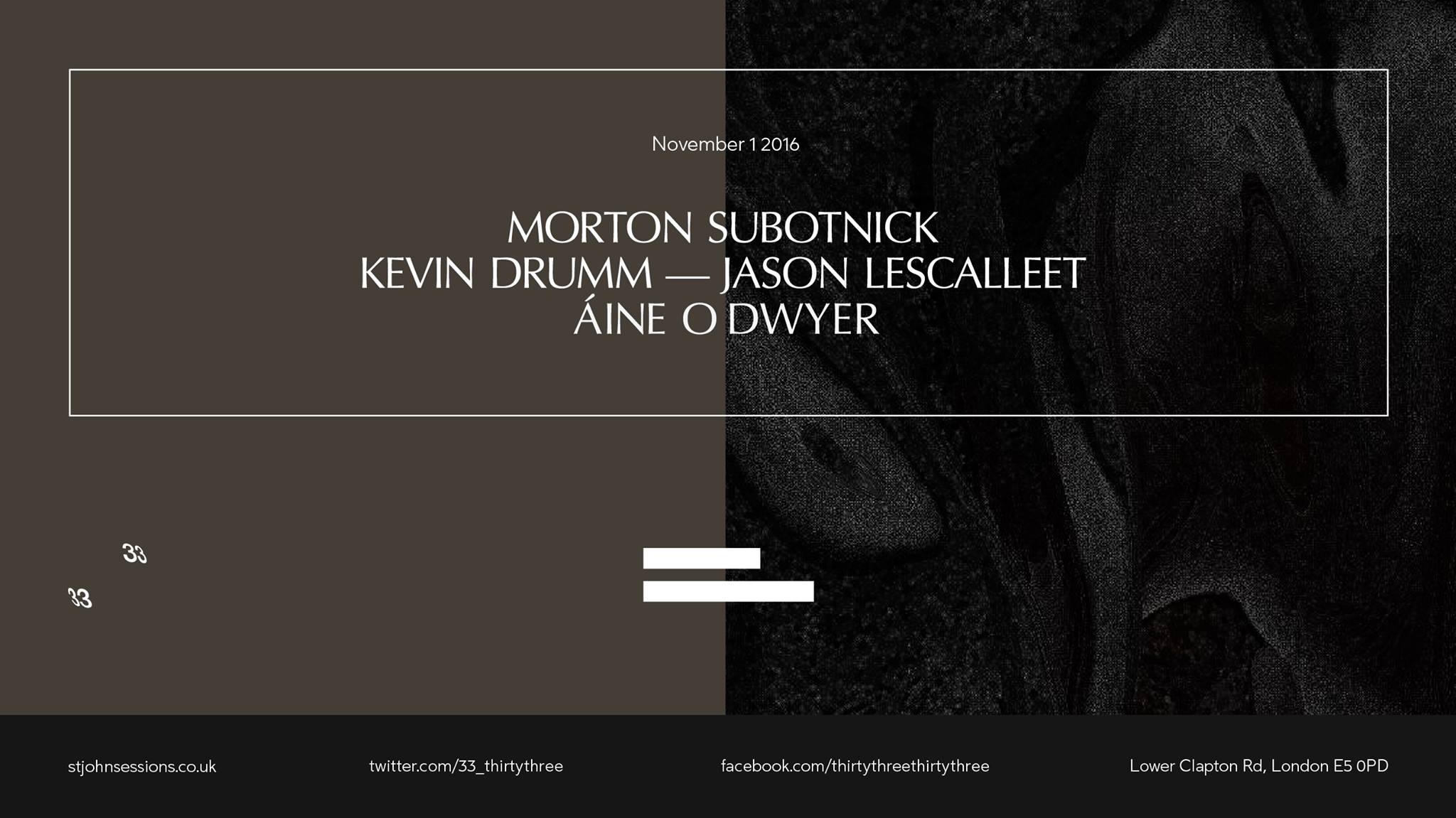

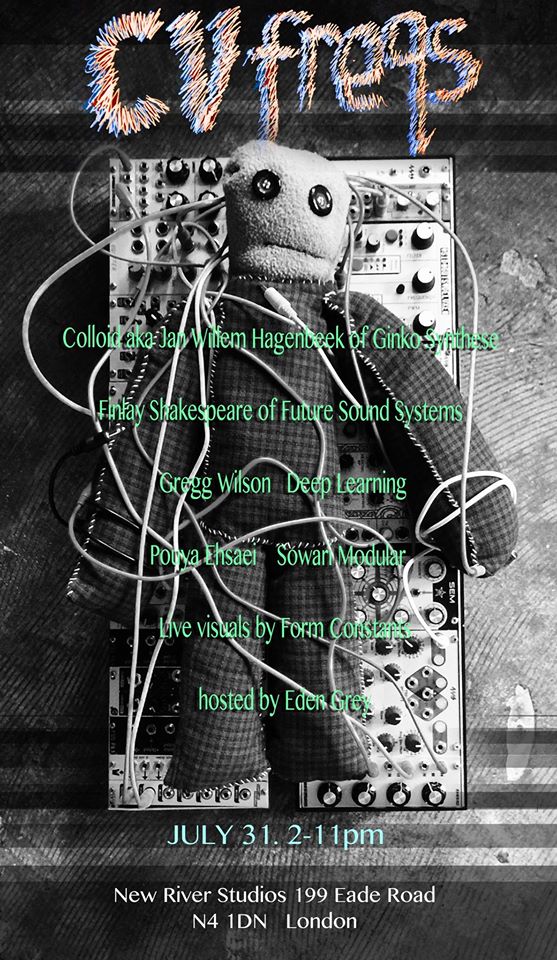
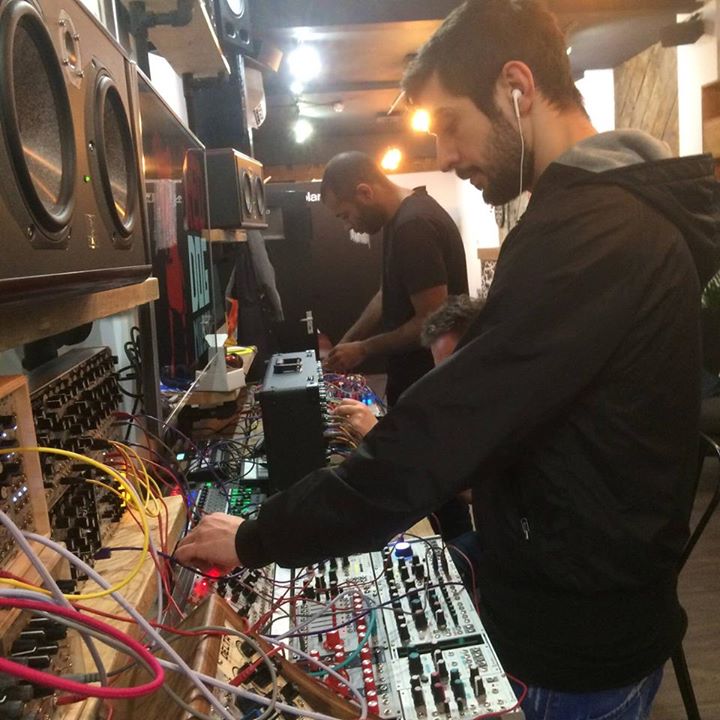
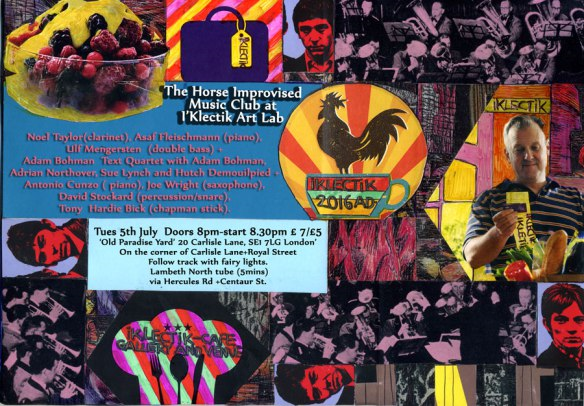

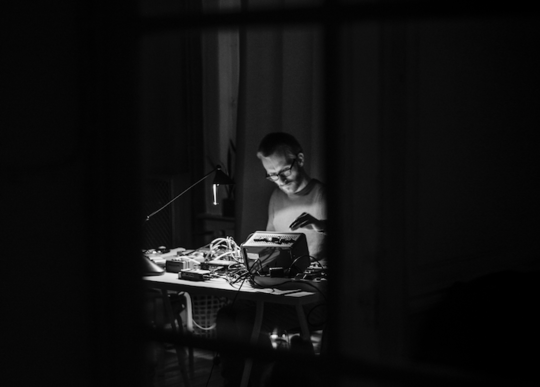
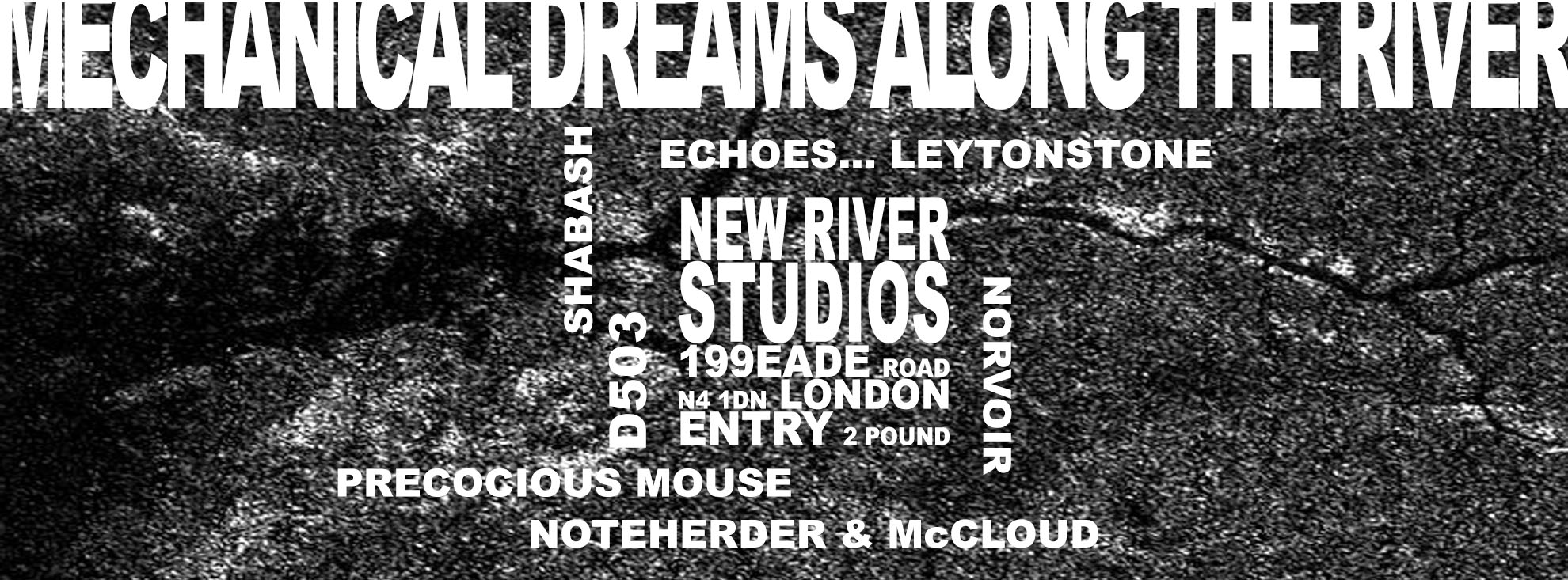
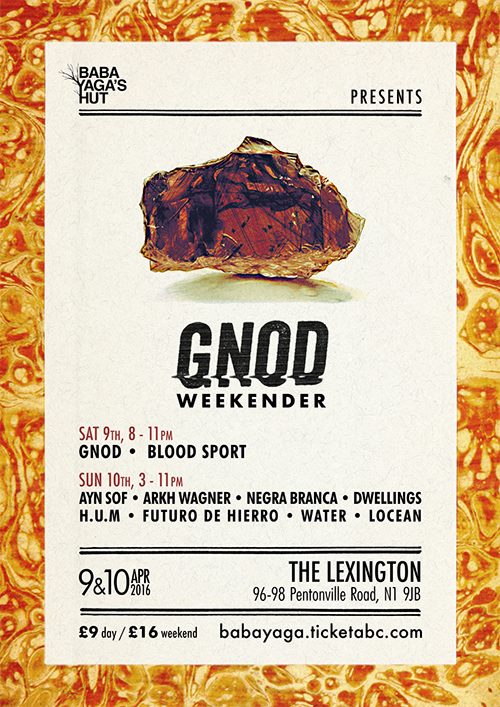


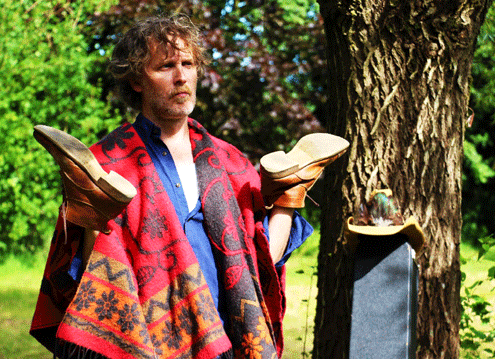


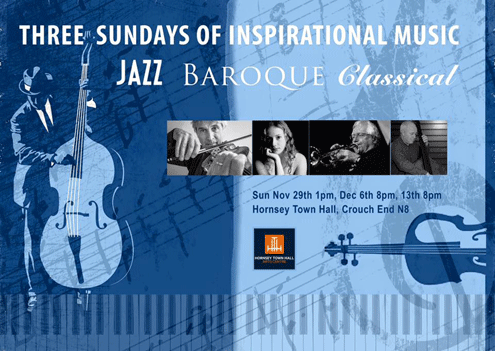
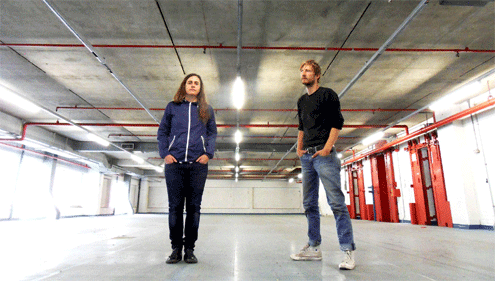


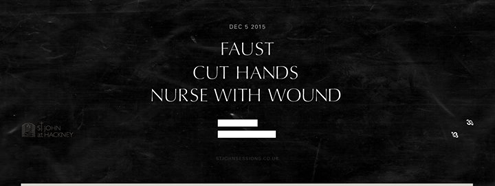




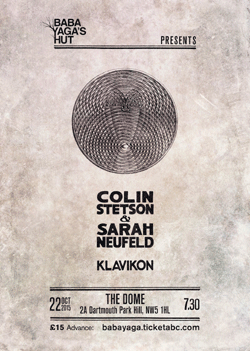
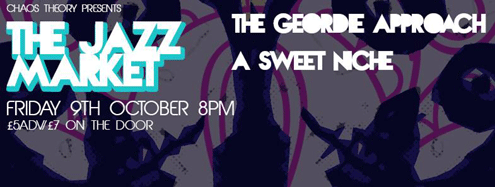







 Misfit City