Archive | chamber music RSS feed for this section

November 2016 – upcoming London classical/post-classical gigs – ensemble work, throat-singing and dance with Ayan-ool Sam, 12 Ensemble and Camilla Isola at Kammer Klang (1st); a baroque-to-now SOLO performance by violinist Daniel Pioro (25th)

29 Oct

At opposite ends of the month, here are the latest examples of two regular and recurring London gigs with their roots in classical music but navigating (especially in the case of Kammer Klang) its rewarding outer margins and potential associations.

* * * * * * * *
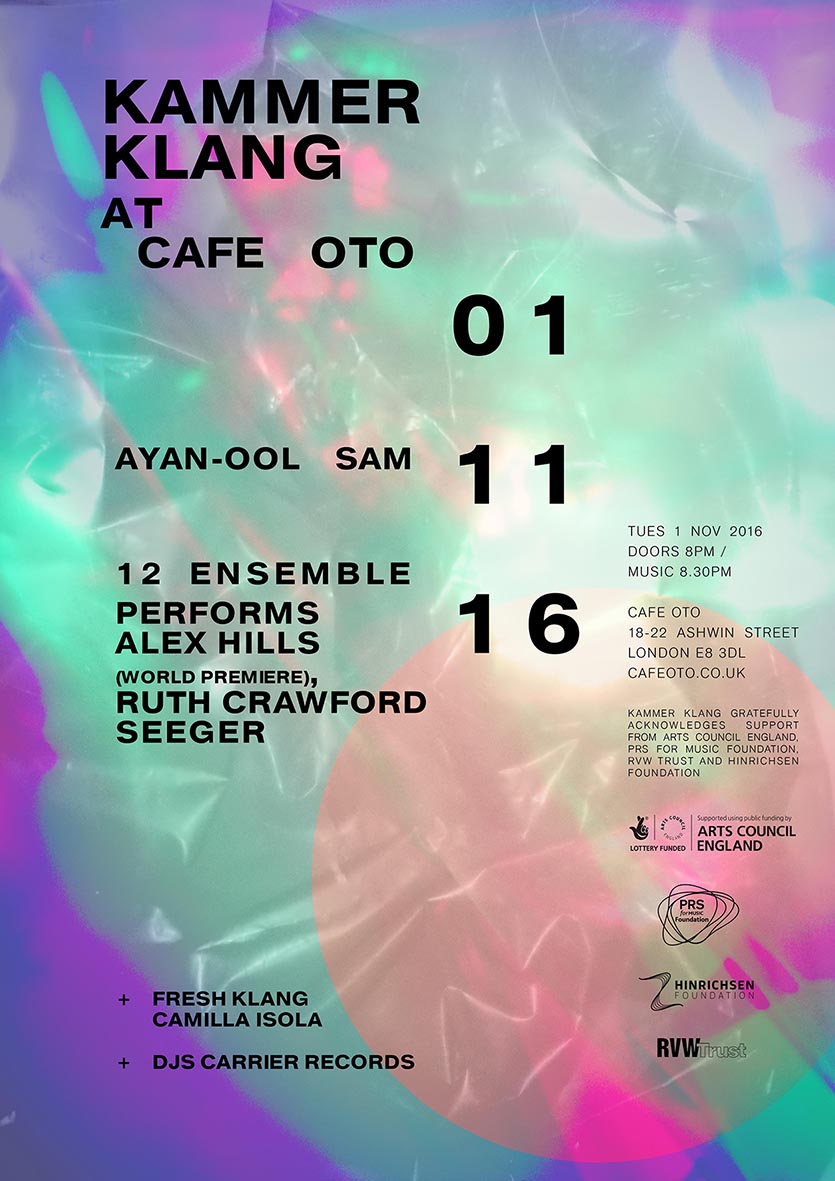
Kammer Klang, 1st November 2016Kammer Klang presents:
Ayan-ool Sam + 12 Ensemble + Camilla Isola + Carrier Records DJ set
Café Oto, 18-22 Ashwin Street, Dalston, London, E8 3DL, England
Tuesday 1st November 2016, 8.00pm
– information here, here and here

Headliner Ayan-ool Sam is an acclaimed xöömeizhi, or master of xöömei throat singing (the traditional droning polyphonic music of the Tuva republic in southern Siberia: solo vocalisations developed to mimic and revere both animate and inanimate sounds from nature, in line with the region’s ancient animism). He’s a former student of “xöömeizhi’s xöömeizhi” Kongar-ool, half of Alash Ensemble (with Bady-Dorzhu Ondar), and a frequent throat-singing competition winner whose garlands range from being voted this year’s People’s Xöömeizhi of the Republic of Tuva to gaining the nickname of “Golden Throat” from banjo ace and prolific world music collaborator Béla Fleck. He’ll be performing traditional xöömei as counterpart and capstone to the rest of the evening’s repertoire and explorations.


Having spent the earlier part of the year in Iceland for a HEIMA artistic residency (as well as providing the musical backbone for Max Richter’s ‘Vivaldi Recomposed’ project in Paris), orchestral duodecet 12 Ensemble are back in their London hometown for this show. Considered to be London’s foremost un-conducted string orchestra, they’ve recorded and are currently readying a debut album for next year, featuring works by William Walton, Johns Woolrich and Tavener, and the young British composer Kate Whitley (you can see the group performing her piece, ‘Autumn Songs’, below). Previously, 12 Ensemble were Ensemble in Residence for two years at the Forge in Camden, collaborating with several international artists including the tenor Nicky Spence, the pianist Mei Yi Foo and the violist Simon Rowland-Jones. On this occasion, they’ll be performing works by Alex Hills and Ruth Crawford Seeger.

 
Alex Hills is a London-based contemporary composer with a growing reputation for his “interesting and considerable gifts” (Tempo). His recent album of chamber compositions ‘The Music Of Making Strange‘ showcases his interest in diverse elements including spectralism, experimental chamber and punk rock. A performance of one of its pieces, ‘Knight’s Move’, is below.


The Hills piece receiving its world premiere tonight is ‘OutsideIn’, which takes inspiration from E. A. Abbott’s classic 1884 novel ‘Flatland‘ (a geometric and philosophical satire). ‘Flatland’ is a recurring source of ideas for Alex – another such piece, a choral work named after the book, can be downloaded for free here. Discussing his interest in “‘flat’ musical worlds”, Alex explains “in a two-dimensional world, a highly complex ‘inside’ would be quite invisible from the ‘outside’, yet to a hypothetical three-dimensional being staring down from above, that same inside would appear completely different.”

Regarding ‘OutsideIn’, Alex continues by describing the piece as “an attempt to think about the relationship between a soloist and an ensemble (a concerto?) in spatial terms. Rather than an ensemble acting as an accompanist to a virtuosic soloist, or a discursive, dialogue-like relationship between them, I place the soloist inside or outside the ensemble’s sound (or the ensemble in or out of the soloist’s)… ‘In’ and ‘out’ also imply boundaries and a centre, which on the one hand are made physically by the ensemble in a horizontal way, with the soloist in the centre and the other two most prominent instruments (first violin and double bass) at the edges, and also by how the musical lines move in register (vertical musical space), initially continually drawn inwards towards a centre of gravity, then at the end of the piece escaping away from that centre outwards.” Alex gives credit for further inspiration to the “virtuosity, imagination and creative freedom” of 12 Ensemble violinist and longtime Hills collaborator Aisha Orazbayev, who’ll be the featured soloist for the premiere.

A valued contemporary and fellow traveller to American modernists such as Charles Ives and Henry Cowell, Ruth Crawford Seeger was a self-taught composer pioneering a specifically American brand of dissonant, meta-mystical music. Among the elements feeding into this were Ruth’s early fascination with the atonal, innovative and highly personal mysticisms of Alexander Scriabin and her own friendship with the poet Carl Sandburg (who was the almost exclusive source of the texts she set to music, although she also carried out a self-translated, twelve-tone setting of the Bhagvad Gita). Her own pugnacious, assertive modernism was further tempered by her studies with musicologist and theorist Charles Seeger, whose concept of “dissonant counterpoint” became a major element in her work and whose cultural Marxism she came to share (leading her into an increasingly missionary devotion to curating American folk music, at the expense of her own composing) and whom she married in 1931 (at a stroke, becoming the stepmother of future folk music hero Pete Seeger).

Ruth’s late return to focussing on her own compositions (after years of selflessly serving and propogating the folk songs of others) was cut short by her death from cancer at the age of fifty-two, although not before she’d delivered a final Suite for wind quintet which incorporated everything she’d learned across her musical life; from post-tonal pluralism, American serialism and Russian-inspired mysticism to her later immersion in folk. Obscured by the reputations of her male contemporaries for many years, Ruth’s work and reputation (particularly that of her 1930s work) has been being revived. 12 Ensemble will be performing her 1931 ‘Andante for string quartet’: a key Crawford Seeger piece whose carefully structured technical dissonances do not deny its growing tragic melody line. Ruth herself valued the latter to the extent that she rearranged the piece for orchestra seven years later, in the hope that the larger arrangement and a skilled conductor would bring out the embedded line to greater effect. Here’s a taste of the original quartet version:


The Fresh Klang act for November is dancer, choreographer and performance artist Camilla Isola, a Trinity Laban graduate in her early twenties at the start of what promises to be an interesting career. She’ll be premiering a brand new solo work which, like the Alex Hills piece, draws on ideas and inspirations from ‘Flatland’, exploring dimensional states and the physical dilemma of the body. One of her previous pieces is shown below:

https://vimeo.com/176446734
 
DJs from Carrier Records (the seven-year-old New York improv, experimental and contemporary classical label who released the Alex Hill album mentioned above) will see out the remaining gaps in the evening.

* * * * * * * *

SOLO presents:
SOLO 02: Daniel Pioro
Crypt of @ St Andrew Holborn, 5 St Andrew St, Holborn, London, EC4A 3AB, England
Friday 25 November 2016, 7.00pm
information

The intimate concert recital series SOLO – showcasing unusual works for solo instruments from early music through to new commissions – returns with a showcase in the vaulted crypt of St Andrew Holborn from acclaimed violinist Daniel Pioro.
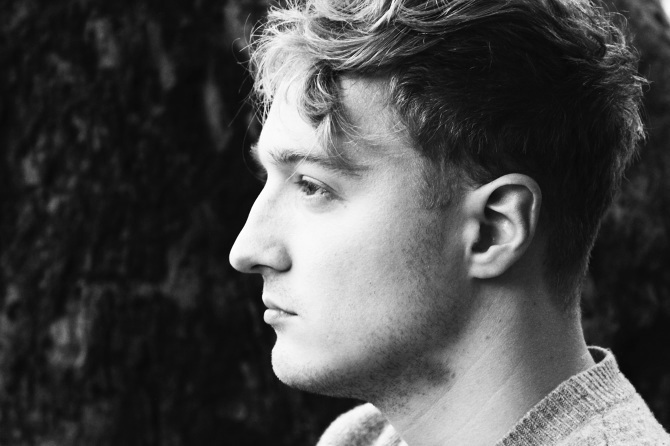
Daniel Pioro, 2016 (photo © Claire Shovelton)

Daniel Pioro, 2016 (photo © Claire Shovelton)

As player, commissioner, leader and active champion of new music, Daniel’s experience is broad and assertive. He’s a member of innovative chamber ensemble CHROMA, current leader of the Fibonacci Sequence, and the former leader of the London Contemporary Orchestra (with whom he’s played, amongst other pieces, the ‘Triple Concerto’ by Radiohead polymath Jonny Greenwood and Schnittke’s notorious ‘Concerto Grosso No. 1’). He’s worked as a soloist or ensemble player with the Orchestra of St Johns Smith Square (Mozart’s ‘Sinfonia Concertante’, John Woolrich’s ‘Capriccio’), the BBC Philharmonic (Colin Matthews’ ‘Violin Concerto’, Thomas Adès’s ‘Concentric Paths’) and the London Sinfonietta. Daniel has also forged close musical working and performance relationships with a variety of contemporary dancers and with author Michael Morpurgo.

For this concert, Daniel will celebrate and share his eclectic tastes via a set list including “everything from the intricacies of Heinrich Ignaz Franz von Biber’s ‘Passacaglia for Solo Violin’ to the mind-bending repetitions of ‘Knee Play No. 2′ from Philip Glass’ extraordinary opera ‘Einstein on the Beach’.” Also on the set list is ‘Elsewhere’ by Edmund Finnis (a violin-and-reverb piece which Daniel debuted at St Johns Smith Square in June this year), works by American composers La Monte Young and Pulitzer Prize-winning Caroline Shaw (of ACME and Roomful Of Teeth) and the world première of a new piece by SOLO curator Alex Groves. There’ll also be another as-yet-unspecified baroque violin piece: this time by eighteenth-century composer-performer Nicola Matteis, an emigre virtuoso once reknowned throughout Georgian London, subsequently forgotten as a composer until the late twentieth century. (This performance will restore some of his music to its old haunts.)

No doubt there’ll be a more detailed set list emerging shortly, when tickets go on sale.
 

November 2016 – upcoming gigs – electronics and harps and balloons – Morton Subotnick + Kevin Drumm & Jason Lescalleet + Áine O’Dwyer in London (1st); Judy Dunaway’s inflatable European tour (1st to 30th)

28 Oct

Here’s some close-to-the-event news about an imminent avant-garde, fringing-on-noise event in Hackney; plus news on one of the oddest upcoming tours that I’ve ever had the pleasure of previewing in here.

* * * * * * * *

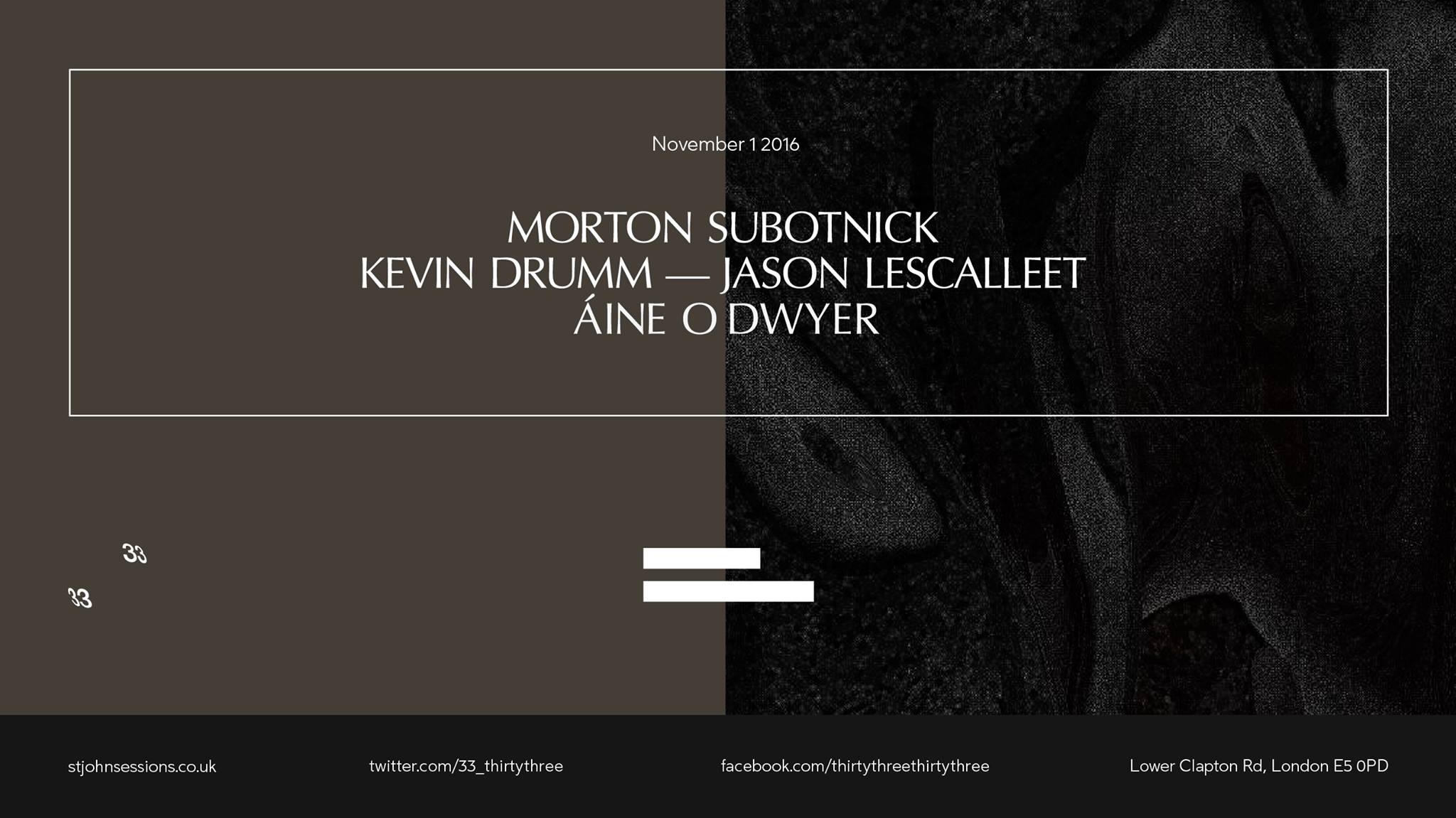
Morton Subotnick + Kevin Drumm & Jason Lescalleet + Áine O'Dwyer at St Johns Hackney, 1st November 2016

St John Sessions present:
Morton Subotnick + Kevin Drumm & Jason Lescalleet + Áine O’Dwyer
St John at Hackney Church, Lower Clapton Road, Clapton, London, E5 0PD, England
Tuesday 1st November 2016, 7.00pm
– information here and here

Full description scrounged from various press releases:

“Innovators and sonic architects come together for a St John Sessions performance.

Morton Subotnick is a true electronic pioneer who has worked extensively with interactive electronics and multi-media performance (often in collaboration with his wife, vocal virtuoso Joan La Barbara). With Pauline Oliveros and Ramon Sender, Subotnick co-founded the San Francisco Tape Center, an influential cultural organisation and electronic music studio. The Centre was instrumental in the invention and development of the Buchla synthesizer and was, in turn, a fundamental influence on all electronic music that followed.

“Subotnick is an innovator in works involving instruments and other media, including interactive computer music systems. Most of his music calls for a computer part, or live electronic processing; his oeuvre utilizes many of the important technological breakthroughs in the history of the genre. Tonight, Subotnick performs a solo set on the Buchla synthesizer – undulating, moving and almost psychedelic.


“Preceding this performance, we are pleased to present the debut UK performance from Kevin Drumm and Jason Lescalleet. Emerging from Chicago’s improvised music scene during the 1990s, Kevin became one of the world’s pre-eminent prepared guitar players, later expanding his work to include electroacoustic compositions and live electronic music made with laptop computers and analog modular synthesizers. His early recordings contain mostly sparse, quiet sounds; recent works have been more loud and dense. For twenty years, Jason has been making electro-acoustic sound work, using all manner of source material to engage listeners in both site and narrative by providing a rich and physical sense of place. Two formidable musicians and performers in their own right, their collaborative releases on Erstwhile Records create a soundworld that is at turns beautiful and terrifying, comprising ambient recordings and brooding drone.


“Irish musician Áine O’Dwyer creates chance- and improvisation-based compositions, and has performed widely as a solo artist on harp, organ and various objects, and also regularly performs with United Bible Studies, Charlemagne Palestine and Mark Fry. Her album of improvised church organ music, ‘Music for Church Cleaners’ (released on MIE last year), received critical acclaim. Here, she brings her idiosyncratic approach to composition to sacred space once more.”


* * * * * * * *

You might not have thought that a person could still bring what’s essentially a party trick into culture houses and make a career of it; but if so, Judy Dunaway is proving you wrong…

Judy Dunaway, 2016

“Judy Dunaway performs avant-garde compositions and free improvisations on amplified latex balloons played as musical instruments. She is known internationally as a ‘virtuoso of the balloon.’ She plays a variety of shapes and sizes of balloon instruments, each with its own special qualities, pushing the extremes of both pitch range and artistic limits. Her large rubbed ‘tenor’ balloon gives Jimi Hendrix’s guitar a run for the money and her giant balloon pulsates into the depths of the subaudio. Her abstract music and sounds are difficult to equate with other forms, depending upon the perception of the individual like the images seen in fire or clouds.”

Below are a couple of videos – one of which is an overview of Judy’s techniques and approaches as regards her ballooning skills (including audience interaction), and one in which she performs uninterrupted.


I’ll admit that (as with most friction-based instrumentation which leans over the borderline into readymade art) listening to this kind of material can end up as a test of endurance in which your mileage and tolerance, plus the outcome, may vary. As far as I know, no-one’s yet tried to tune and tour a scraped blackboard. Yet ultimately, Judy’s commitment to this kind of music making is fascinating. No one-trick pony, she also worked as a guitar-toting singer-songwriter on other occasions up until 1995; but she’s entirely serious about ballooning – publishing papers on her approach, making points about microtonality, and collaborating with string quartets on serious avant-garde compositions. Having mastered a variety of dextrous noise-making techniques which drive the amplifed latex into flexible, cunningly-controlled roars and squeals, she invites us to reconsider a balloon (quite legitimately) as an “orb-shaped string”.

On the other hand, she’s also integrated vibrating dildos into her balloonwork (in one case via a piece called Flying Fuck), so there’s clearly a downtown New York sense of humour at work as well.

Full dates for the European Solo Balloons Tour below:


October/November 2016 – upcoming gigs – Pierre Bensusan’s autumn tour of Britain and Ireland (30th October to 20th November)

26 Oct

Pretty much a year to the day since his last appearance in London, French-Algerian acoustic guitar master Pierre Bensusan is returning to town this Sunday for the start of a British and Irish tour. The tour will be taking in a delightfully broad sweep of venues both grand and humble, rowdy and formal, from pubs and multi-utility community rooms to concert halls. Most of them will have little in common at the start of the show. By the end, they’ll all be sharing the particular warmth which Pierre brings to his expansively intimate music and performances.

World music’s an often-abused term, especially when you can see crude joins within it. Yesterday’s exotic-record discovery shopped and slopped onto whichever beats selling; or the sound of one particular city’s overbearing acquisitiveness, engulfing and pickling the music of its immigrants rather than fostering it. Pierre’s music is an example of how you can revitalise and justify the term. I’ve spoken before about the French-Algerian-Sephardic background which gave him a head start as regards polycultural vision, but perhaps what he actually embodies is the mixed grain of musical acceptance: the travelling tunes and the more intangible freight of cultures soaking and blending into his playing without strain. Neither jazz nor folk nor Spanish classical, neither rai nor chaabi, nor flamenco (old or new), it nonetheless contains all of these – a translucent, fully-realised and seamless chamber-acoustic melange, played softly and without affectation.


Full tour dates below:


October/November 2016 – upcoming gigs – a European tour for string trio improvisers In The Sea (25th October to 23rd November)

21 Oct

From late October to late November, improvising string trio In The Sea are out on a European tour taking in the Netherlands, England, Scotland, France, Switzerland, Italy and Austria.

Comprising three French-Canadian musicians – veteran cellist and singer/ranter Tristan Honsinger, double bass player Nicolas Caloia and violinist Joshua Zubot – their music’s a raucous and brainy mashing and grinding of box-battering extended classical techniques, transmigrated hot jazz swing, jaunty folk dances and texts declaimed in conversational squawks. It’s full of both swarming bow torture and tunefulness, continually flickering over the line between impetuous noise and structured, harmonious discipline: something fostered and nurtured by the enthusiastic understanding running between all three players.


Information on the tour dates is variable (some of it’s only up in sketchy details right now) but here’s what I have at time of posting:

  • Oorsprong @ Plantagedok, Dokzaal, Plantage Doklaan 8-12, 1018 CM Amsterdam, Netherlands, Monday 24th October 2016, 7.00pm
  • The Horse Improv Club @ IKLECTIK, Old Paradise Yard, 20 Carlisle Lane, Waterloo, London, SE1 7LG, England, Tuesday 25th October 2016, 8.00pm (with Adam Bohman/Adrian Northover/Hutch Demouilpied/Sue Lynch)information
  • Safehouse @ The Verdict, 159 Edward Street, Brighton, BN2 0JB, England, Wednesday 26th October 2016, 8.00pm (with Gus Garside/James Parsons + The Wildcard Quartet)– information here and here
  • Xposed Club @ Francis Close Hall, University of Gloucestershire, Swindon Road, Cheltenham, GL50 4AZ, England, Friday 28th October 2016, 8.00pm (with Mike Adcock & Pete Robson)information
  • The Old Hairdressers, 23 Renfield Lane, Glasgow, G2 6PH, Scotland, Saturday 29th October 2016, 8.00pm (with Bravest Boat + Richard Youngs)information
  • Sproggits @ Wharf Chambers, 23-25 Wharf Street, Leeds, LS2 7EQ, England, Monday 31st October 2016, 8.00pm
  • Fizzle @ The Lamp Tavern, Barford Street, Birmingham, B5 6AH, England, Tuesday 1st November 2016, 7.30pm
  • Terminus, 7 Avenue Gare, 57200 Sarreguemines, France, Thursday 3rd November 2016
  • Off-Bar, Offenburgerstrasse 59, Basel 4057, Switzerland, Friday 4th November 2016
  • Jazzatelier Ulrichsberg, Badergasse 2, 4161 Ulrichsberg, Austria, Saturday 5th November 2016, 8.00pm
  • Misterioso Jazz Club @ Das Institut, Elisabethenstrasse 14a, 3. Stock, 8004 Zürich, Switzerland, Tuesday 8th November 2016, 8.00pm
  • La Nef, Rue Saint-Hubert 17, 2340 Le Noirmont, Switzerland, Thursday 10th November 2016
  • Cafè des Arts di Coucourda Luca, Via Principe Amedeo 33, 10123 Torino, Italy, Saturday 12th November 2016
  • Machito, Via Argentero 4/G Torino (piazza nizza), Torino, Italy, Sunday 13th November 2016
  • Musique Rayonnante @ Centro di Ricerca Musicale @ Angelica, Via San Vitale 63-67,40125 Bologna, Italy, Tuesday 15th November 2016, 8.30pm
  • Kulturforum Villach, Postgasse 6 9500 Villach, Austria, Thursday 17th November 2016
  • Hybrida, Tarcento, Italy, Friday 18th November 2016
  • Limmitationes @ Gasthaus Rudolf Pummer, 7561 Heiligenkreuz im Lafnitztal, Obere Hauptstraße 11, Lafnitztal, Austria, Saturday 19th November 2016, 7.00pm (with Trio 876 & Jean Demey)information
  • Fluc Praterstern 5, A-1020 Wien, Austria, Wednesday 23rd November 2016

There’s a little information about some of the support acts and bill sharers. In London and Brighton, there’ll be sets by what are effectively the house improv bands. At the Horse Improv Club, it’ll be the free array of Adam Bohman (amplified objects), Adrian Northover (sax/electronics), Hutch Demouilpied (trumpet/flute) and Sue Lynch (tenor sax/clarinet). At Safehouse, it’ll be the duo of Gus Garside (double bass and electronics) and drummer/percussionist James Parsons: there’ll also be a performance by The Wildcard Quartet, Safehouse’s usual four-piece of randomly selected names from the Brighton improv community. (For two Wildcard examples, see the murky video clip I’ve trawled up below, plus the rather more viewable one under that…)


At Cheltenham’s Xposed Club, In the Sea will be supported by the piano duo of Mike Adcock and Pete Robson. In Glasgow, they’re part of a three-act show – the other two acts being Glaswegian-Bradfordian exploratory collective Bravest Boat (longstanding guitar duo Stevie Jones and Jer Reid, plus viola player/singer Aby Vulliamy, trombonist George Murray and violinist Rafe Fitzpatrick) and the quixotic, master-of fuzzy-genre voyager Richard Youngs (whose list of collaborators and fellow-sparkers stretches from Jandek to Skullflower and Acid Mothers Temple, and whose work frequently features soft songs with avant-garde interruptions).


Later on in the tour – in the Austrian town of Lafnitztal, close to the Hungarian border – In The Sea will be playing on a bill with the “close, loose” trans-European Trio 876 (featuring Italian avant-jazz percussionist Marcello Magliocchi, Belgian total-voice artist Jean-Michel van Schouwburg and Swiss violin master Matthias Boss). For the latter, expect a quick, febrile and knowing shuffle of everything from structured tunes, mouth sputters, blind charges, yodelling, singing and elements from both “logic and fantasy”: in other words, a full gamut. Belgian double bassist Jean Demey will be guesting, rendering the trio a full quartet for this particular evening – but for original trio action, see below.


October 2016 – upcoming gigs – this weekend’s Wakizashi music festival in Bristol – two days of underground allsorts (22nd, 23rd)

19 Oct

Wakizashi Festival, Bristol, 22nd & 23rd October 2016There may still be tickets left for the “glut of experimental and cross-genre artists” descending on Bristol this weekend for the two-day, twenty-band Wakizashi music festival.

The shared brainchild of two Bristolian gig engines – PROBO Titans (who incubate and deliver bi-monthly rock, pop and experimental gigs) and Harry “Iceman” Furniss (restless jazz cornetter and leading fringeman within the Avon jazz underground), Wakizashi offers an exciting, intimate and intelligent spill of psychedelia, noise, post-punk, math rock, jazz strains, electronica and much more.

PROBO Titans & Harry Iceman Furniss present:
Wakizashi Festival:
– Get The Blessing + Hysterical Injury + Twin + Iyabe + Iceman Furniss Quartet + Human Bones + Charivari + Luui + Saltings (Saturday)
– Knifeworld + Edward Penfold + Evil Usses + Milon + Halftone + Drone Soul + Rafael Dornelles Trio + Uther Modes + Perverts (Sunday)
The Old Malt House, Little Ann Street, Bristol, BS2 9EB, England
Saturday 22nd & Sunday 23rd October 2016 – starts 1.00pm, Saturday
– information here and here

Harry Furniss makes the most of his own involvement by appearing with his Iceman Furniss Quartet. His flowing cornet leads punk-art jazz moves over dogged springy bass rhythms and shuddering No Wave electric-curtain guitar (care of Danny Le Guilcher from Dynamite Pussy Club, whose other career as a printmaker seems to have literally rubbed off on his playing).


Further jazz directions are provided by Saturday’s headliners Get The Blessing (founded sixteen years ago over a mutual appreciation of Ornette Coleman,) provide rumbling, doomy trip-hop-tinged jazz-rock. They boast a rhythm section of art-rock/trip-hop/drum & bass go-to-men Clive Deamer and Jim Barr (who between them have kept the pulse going for Portishead, Radiohead, Hawkwind, Peter Gabriel and Roni Size) plus saxophonist Jake McMurchie (of Michelson Morley) and trumpeter Pete Judge (Eyebrow and Three Cane Whale), with another Portisheader, Adrian Utley, sometimes guesting on guitar. Their music brings along some of the flash and flair of jazz pioneers, but also the sense of being trapped in a small room with a lumbering, powerful inscrutable beast – with an equal chance of being either impressed or squashed.


Post-punk bass/drums/voice duo Hysterical Injury have a toe in the improv scene and a touch of folk. Their recent press tagging as some kind of “better version of Savages” belies the hovering thoughtfulness and the gentle dignity in their music beyond the softly roiling industrial bass textures. Singing bassist Annie Gardiner has a way with the writing and delivery of a surreal, conceptually suggestive lyric which baffles and entrances.


There’s something similarly compelling about the voice of Sophie Dawes, who sings for Iyabe further down the bill. As it was with missing-in-action Delicate AWOL singer Caroline Ross, Annie and Sophie’s voices and words are clear, weightless and elusive – keeping you listening while you try to figure out the messages and hidden narratives floating past in slow streams of isolated moment and fleeting detail.

Regarding Iyabe – considering that they’re a five-piece, they sound remarkably skeletal. Soft pings, drum clicks, bass shadows. At their most expansive, they’re a pencil-sketch ghost of Seefeel’s dub-rock dreaminess: other tracks are a hypnotic rain-drip of slowly growing consciousness. Recent moves towards alliances with remixers, further fleshing out the band’s sound, may point the way forward: but, as with Hysterical Injury, there’s already plenty in place.


Two more of Saturday’s bands provide further dispatches from rock’s dissolving, dreamier side. The mystery brainchild of Christelle Atenstaedt, Twin’s drawn-out one-woman Gothpop offers a wealth of detail in its hypnotic overlaid folk drones and its reverberant, tangled-roots guitar chug, which seems to reference both Cranes and Sandy Denny. With electric cello adding occasional extra texture to a droning, crashing armoury of blood-stained guitar fuzz, Bath-based post-rockers Charivari have a sombre lysergic depth; plus a repertoire of zurna-like Mediterranean melodies to add to their gloaming-murmurs, their evenstar twinkles and their post-Mogwai cascades of noise.


Begun as a solo project by Andrew Cooke (inspired by ancient ghost stories and the concept of the English eerie), Saltings has evolved into a three-piece drone collective. Andrew (plus string players Liz Muir and Caitlin Callahan) gradually unveil an occult soundtrack full of marine and maritime references, maybe as much inspired by Andrew’s origins in the port of Dublin as by the current trio’s Bristol harbouring. Sampler-moulded sounds (noise-grates, hull-knocks, whistles, water-throbs and motors) are enfolded with double bass and cello parts – whispered, minimal elegies for the undetermined; or baleful shadings; or queasy, discombobulated, John Adams-styled loops both shaken and slurred.


The sole hip hop representative on the bill, Luui, rolls out complex, constantly unfolding raps over seductively silky, time-flexed instrumental samples: slurred, narcotic Rhodes piano doodles, bits of glowing solo jazz guitar smeared into something blunted and sinister. Arced out in short, enveloping doses – most of his tracks are over and done in a couple of minutes – it’s both intimate and claustrophobic: a growing autumnal darkness, a slowly moiling confusion.


As Luui harmonises with himself (in subtle dischords), his flow folds over and over onto itself like piling lava, journeying from memories of childhood cheeriness into an increasing broody adult disaffection, shot with regrets, spiked with quick vicious jabs of obscenities and flashes of temper. As with the best, most unsettling confessional rap, you get a crooked window onto Luui’s unresolved world, see him wrestle with his conscience and his instincts and, though you see a little too much of him for comfort, for a while you’re matching breath with him too.


Initially known for upbeat Lou Reed drawls larded with guitar fuzz, Human Bones now seem to be moving towards a languorous cardboard-box take on Americana. Multi-instrumental looper Steve Strong, meanwhile, has set himself up as a one-man trip hop/math rock band, in which much of the emphasis seeming to be on the drum rhythm. See below for his Godspeedian live take on a grim, violent found story of road anarchy, in which his hopeful, orderly and dreamy guitar introduction gives way (under the growing brutality of the tale on tape) to the controlled heat of a drum beat through which he seems to be trying to slough off the increasing horror.


* * * * * * * *

It’s an odd festival indeed in which Knifeworld (Sunday’s headliners) are virtually the straightest act on the bill. That this is the case says plenty about Wakizashi, but it also says something about where Knifeworld are at the moment. Currently cruising on self-created, sunny psychedelic uplands, the London octet are enjoying a period of relative bliss and (for now) a more familial creative approach, as Kavus Torabi starts to share more of the writing with the crew of expert instrumental heads who make up his band. But if Knifeworld are the closest that the festival comes to pop, it’s still a zestfully spiked pop – brazen and crenellated, filled with monkey panache, their tunes still running exuberantly out of the ears with loopy spirals of melody and unexpected double-backs. If Henry Cow had woken up one morning and decided to steal a march on The Flaming Lips, they couldn’t have done much better than this.


More lysergic hints string through the day via the sleepy, lo-fi acidic pop of Edward Penfold, whose songs and instrumentals halo the everyday with a softly vibrating warmth. Sometimes they hint at a might-have-been Syd Barrett; one who ducked the madness and fled away to a healing West Coast hideaway, sending missives back to Cambridge in a rested, sprawling hand; faint blue ink on pale blue paper. On the other side of the coin are The Evil Usses – a deconstructive, fiercely humorous No Wave jazz-rock quartet, who share some of Knifeworld’s brassy exuberance but take it over the escarpment and down into a stomping, seven-league-booted Beefheart country.


As with Saturday, two fringe full-jazz groups will be taking the stage. Led by saxophonist Dino Christodoulou, Milon are a mostly acoustic quartet, edging into something more speaker-warping via Neil Smith’s electric guitar and Pasquale Votino’s judiciously over-amplified double bass: Eager Legs sounds like Charles Mingus being pursued down a stuck groove by a bounding ball of Sharrock/McLaughlin electric guitar grit, with Dino keeping one hand on the wheel by some riffling, ruffling Coltrane-ish sax lines. While the Rafael Dornelles Trio might have Brazilian roots, don’t expect samba or even Tropicália: electric guitar, bass and drums are aiming for somewhere far more heatedly lyrical and direct. Tunes like Slave’s Escape and Indigenous Mass grab you straight from the title and power off in muscular, quick-sprung directions, with a fierce and formidable vigour (plus a buccaneering hint of the knife).


Saltings’ double bass player Caitlin Callahan returns as one-quarter of part-improvising, part-compositional, female quartet Halftone, alongside two similarly-inclined Bristolians (violinist Yvonna Magda, flautist Tina Hitchens) and a London ally (cellist Hannah Marshall). Formed earlier this year, the foursome play an unsettling, absently beautiful post-classical music evoking wind in the trees, unresolved conversations and difficulties around corners.


Drone Soul boast about their “sheer bleak nihilism” and stake a claim to the abrasive post-punk heritage of The Pop Group. At least part of that’s true – the post-punk bit, anyway – but I’d bat away the nihilistic posturings. This music might be on the dark and cavernous side, but it’s illuminated with a vivid energy which belies the band’s collective grizzliness. If they’re bringing you news of falling buildings or collapsing people, they’re doing it with an exuberant dark snarl. Think of Iggy Pop in-yer-face, think Suicide’s assault-by-sine-wave; and also give a little credit to a lost Bristol band, Lupine Howl, whose gonzo millenial motorik finds a fresh echo here.


Rhodri Karim – the Welsh-Arabian heart of Uther Modes – used to be a mournful pop scientist, making his name with sepulchural computer-pop songs which bobbed gently at the juncture of philosophy, physics and bedsit soul. More recently he’s swapped this for a new kind of songcraft, strapping up a bass guitar and pulling in other musicians. Now he reels out shifting part-sombre part-jazzy mutters, winding slate-grey but sensual vocals around echoing guitar curlicues; like a fresh breed of post-rock which refuses to stagnate and instead flexes its muscles and goes haring around the park.


While he can sometimes be found paddling around in the warm, shallow pools of downtempo electronica, Traces will shake the drips off his feet once he’s warmed up enough. His studio recordings are fine, but it’s his live improvisations that show him at full strength. They’re heart-warmingly intimate and cheery stretches of pick-you-up synthery – like an enthusiastic half-drunken 2am conversation between Max Tundra and Guy Sigsworth, following which they track down Jean-Michel Jarre, drag him away from his pyramids and lasers and force him back into a kitchen full of analogue keyboards. From tabletop synth noodles to Pong blip and cheekily squirting techno, a cunning wonkiness prevails without diminishing the music’s straightforward ambition. Traces sometimes labels it “devotional”, and I’m not entirely sure that he’s joking.


Finally, there’s the fall-apart electronic gagpunk of Perverts, with their squalling songs about angry muppets and guilty onanists; their one-finger clickstab of synth drums; their beady-eyed sampler-shreddings of lachrymose film music. I guess that they’re there to remind musicians and punters alike not to take it all too seriously. It’s just that they’re staring me out a little too intently. On record, at least, Perverts deliver their spoofs and squibs with a crazed and chilly eye: a brattier Residents with a crappier laptop; a young digital Punch waiting to knock everything down.


October 2016 – upcoming London gigs – ‘Organ Reframed’ covers all manner and method of pipes and sounds at Union Chapel (7th-9th)

6 Oct

Tomorrow, London’s Union Chapel begins a celebration of a number of things (its performance acoustic, its appeal to a diverse body of musicians and audiences, its innovative cultural spirit, and not least its grand 1877 pipe organ) via the ‘Organ Reframed’ mini-festival. A three-day four-concert occasion, it “release(s the organ) from its traditional roots with a varied programme of film, intimate solo sets, ensemble improvisations and large scale commissions. This festival of experimental music will challenge perceptions and show this extraordinary instrument in a new light.”

* * * * * * * *

Organ Reframed, 7th-9th October 2016

Organ Reframed: James McVinnie/Irene Buckley/Robert Ames/Laura Moody perform new live score for ‘Nosferatu’
Union Chapel, 19b Compton Terrace, Islington, London, N1 2UN, England
Friday 7th October 2016, 7.00pm
information

Known for multiple theatre, dance and film projects – as well as for orchestral works such as ‘Stórr’) and her live work in the electronic/improv fields via Crevice (with Elaine Howley and Roslyn Steer) and Wry Myrhh (with Ellen King) – composer Irene Buckley has written a number of live film rescorings. These have included one for Carl Dreyer’s ‘The Passion of Joan of Arc’ and one for Jean Epstein’s ‘The Fall of the House of Usher’.

Her latest such commission is for ‘Organ Reframed’ – a new score for F. W. Murnau’s ‘Nosferatu (A Symphony of Horror)‘ – “an iconic film of the German expressionist cinema, and one of the most famous of all silent movies (which) continues to haunt — and, indeed, terrify — modern audiences with the unshakable power of its images. By teasing a host of occult atmospherics out of dilapidated set-pieces and innocuous real-world locations alike, Murnau captured on celluloid the deeply-rooted elements of a waking nightmare, and launched the signature ‘Murnau-style’ that would change cinema history forever.”

The film will be screened with a live performance of the score carried out by a quartet ensemble: leading New Music pipe organist James McVinnie, viola player Robert Ames (co-artistic director and conductor of the LCO), polystylistic cellist Laura Moody (see multiple past ‘Misfit City’ posts for more on her), and Irene herself contributing live electronics. To give you a hint of what it might be like, here’s an excerpt from Irene’s ‘…Joan Of Arc’ score, back in 2012:


* * * * * * * *

Daylight Music 235: Organ Reframed – Lætitia Sadier + Emilie Levienaise-Farrouch + Kieran Brunt + Angèle David-Guillou + Adrian Crowley + Gill Sandell + Ed Dowie + William D. Drake
Union Chapel, 19b Compton Terrace, Islington, London, N1 2UN, England
Saturday 8th October 2016, 12.00pm
free event (suggested donation: £5.00) – information

The second concert in the series is a free (or donation-based) lunchtime show run in conjunction with Union Chapel regulars Daylight Music, offering “a stripped-down approach… eight sets of artists and accompanists across different genres and styles. These musicians, singers and composers — who are at various stages of their careers — will explore the very physical relationship between voice and pipes: in many cases, for the first time.”

Performers will include three Franco-London women who specialise in avant-pop/dream-pop/classical crossovers of one kind or another – Stereolab/Monade’s Lætitia Sadier (who, four days earlier, will have been part of Miles Cooper Seaton’s ‘Transient Music’ ensemble at Café Oto), Angèle David-Guillou (of Klima and Piano Magic), and electro-acoustic film soundtracker Emilie Levienaise-Farrouch. Also involved is frequent Daylight guester Ed Dowie (usually a purveyor of genteel avant-parlour-pop, having passed through Brothers in Sound, Redarthur and The Paper Cinema).

The Daylighters specialise in late and interstitial additions to already interesting bills. This concert is no exception, with a bumper set of extra guests signing up and recently being unveiled. Joining in alongside the people I’ve already mentioned are Irish singer-songwriter Adrian Crowley (who specializes in what might be described as a baroque-minimal pop style), singer Kieran Brunt (who divides time between classical choral and solo projects and his pop band Strange Boy), multi-instrumental folk singer Gill Sandell (previously of Emily Barker & The Red Clay Halo) and singer-songwriter/general keyboard magician William D. Drake (once a Cardiac, now a baroque-pop solo artist with his own cross-era style – as with Laura Moody, see plenty of previous posts…).

Given the varied pop, folk, rock and classical stylings involved (and some of the signature tones of the musicians involved) it’s not clear whether there are going to be specific collaborations or mashups involved, or whether everyone’s playing solo/bringing their own backup. It’s also unclear as to whether the pop culture/pop music side of things will be honoured by Farfisa, Hammond or even Lowrey organs onstage to share musical space with the grand pipe organ; although given the emphasis on “the very physical relationship between voice and pipes”, I’m guessing perhaps not. (NOTE – since I posted that, I’ve found out that Angèle David-Guillou will be playing a new organ-and-voiceloops composition called ‘Too Much Violence’; that there will be at least one duet from Emilie Levienaise-Farrouch and Kieran Brunt; that Ed Dowie has a couple of covers and one new piece; and that the Daylighters are scouring the Twittersphere looking for a last-minute pump organist. Knowing them, they’ll find one…)

Daylight Music 235, 8th October 2016

* * * * * * * *

Organ Reframed: ‘Spire’ featuring Charles Matthews + Fennesz + Philip Jeck + Simon Scott + Claire M. Singer + John Beaumont + The Eternal Chord
Union Chapel, 19b Compton Terrace, Islington, London, N1 2UN, England
Saturday 8th October 2016, 6.00pm
information

Spire is an ongoing concert series for organ and electronics, curated by Mike Harding (creative producer of the Touch organisation (which covers musician promotions, licensing, mentoring and everything but the business of being a record company association) and by dedicated organist and keyboardist Charles Matthews (one of those exemplary musicians whose work spans everything from church services and teaching to a globetrotting concert schedule and advanced curatorship). Now into its twelfth year, and with sixteen concerts plus four CD recordings behind it, Spire returns to Union Chapel to link up with ‘Organ Reframed’.

Music played at previous Spire events has included the ancient, salvaged fourteenth-century organ manuscript The Robertsbridge Codex (the oldest surving keyboard score in the world) and twentieth-century pieces such as ‘In Nomine Lucis’ (by the pioneering and mystic single-pitch/multiple-approach composer Giacinto Scelsi), Henryk Gorécki’s ‘Kantata’, Liana Alexandra’s ‘Consonances III’ and André Jolivet’s ‘Hymne à l’Universe’. The series has also premiered new works by resident Spire composer Marcus Davidson (such as ‘Opposites Attract’ and ‘Standing Wave’), as well as improvisations and collaborations by its associated musicians.

Spire also takes into account the architectural qualities of the church organ: how our perception and experience of it is coloured by its monolithic size, volume and presence compared to other instruments. As Mike and Charles put it, “the organ has the greatest frequency range of any acoustic instrument, but this is rarely exploited; the unique sound of the mechanical organ has often been limited and controlled and Spire aims to liberate it from its history without denying that history… combining organ works ancient and modern (while) other performers use the organ and organ works as a basis for their own compositions, using piano, voice, record players, samplers and other electronic devices.”

Past Spire performers have included laptop-and-guitar noisescaper Fennesz and turntablist/electronicist Philip Jeck, both of whom are joining Charles Matthews for performances this time round. Also joining in are newer Spire associates – Simon Scott (Slowdive drummer, multi-instrumentalist, sound ecologist and deep listener) and John Beaumont (whose life within Anglican church and choral music has seen him rise from treble chorister at Wakefield to tenor songman at York Minster and continuing work in London’s great cathedrals and abbeys, alongside his current work as a “story tenor” mingling classical repertoire with a bardic sensibility). Also joining in is Union Chapel’s organ director and artistic director of ‘Organ Reframed’, Claire M. Singer – a musician, composer and cross-media artist whose work extends from composition to installation via live performance, mostly based around organ, cello and electronics.

Among other pieces, the programme will feature a performance of Spire mainstay ‘The Eternal Chord‘, a Mike Harding-originated conceptual and improvised organ piece which “can take anything from eight minutes to eternity” and which is open to any number of players from a duo upwards. There have been eleven iterations of the piece so far, of which two can be heard below, including one from last year at the Union Chapel.


* * * * * * * *

Organ Reframed: Five new commissions for James McVinnie & the London Contemporary Orchestra
Union Chapel, 19b Compton Terrace, Islington, London, N1 2UN, England
Sunday 9th October 2016, 6.30pm
information

Having already helped to open the festival (via their contribution to the ‘Nosferatu’ live score), James McVinnie and Robert Ames return for the final concert in which James joins forces with the London Contemporary Orchestra (conducted/facilitated by Robert) to premiere five new contemporary classical or classical fusion works.

There’s not much information on the new piece by Mark Fell although it’s likely that it’ll be droning, mathematical and algorithmic (in keeping with his existing work, which is infused with electronica and club music ideas and further informed by his extension into the worlds of moving image, dance, text and son-et-lumiere). Similarly, all I can tell you about acoustic/electronic/theatrical composer Alex Groves‘ piece is that it’s called ‘On Colour’ and is six minutes long. Some pointers towards what to expect might come from Alex’s previous piece ‘Patience’ (for viola da gamba and organ), premièred as part of the Daylight Music series at the Union Chapel back in December 2014. (There’s some footage of that show below. I’m hoping that it’s Alex’s piece…)


There’s no doubt that one composer who’ll have no problems filling the Chapel with grand sound is Craig Armstrong, whose music has been well known to a popular audience since the 1990s thanks to his use of luscious, near-decadent massed strings and club beats (as well as his work on hefty-selling records by Massive Attack. Madonna and U2 plus film soundtracks including ‘Far From The Madding Crowd’, ‘Plunkett & Macleane’ and Baz Luhrman’s ‘Romeo + Juliet’).

Almost at the other end of the spectrum is collagist-composer, cultural commentator and musical wit Caroline Haines, who records (as Chaines) for the small Berlin arts label Slip Imprint and has put out a series of restless, splice-styled, information-packed music packages in which everything from sound sources to manufacturing materials has an integral significance. When she chooses to be, Catherine is also a spirited piss-taker, using her existing methods of collagery and radio broadcast (up to and including the comedy sketch show). For evidence, see ‘WUB’, her quick and merciless takedown of pretentious, dishonest conservatoire slummers who parasitize other more media-friendly musical forms without comprehension, respect or indeed much genuine interest.

Dropped hints suggests that Caroline will be performing alongside the orchestra herself: other hints suggest that her contribution is a version of ‘OST‘ (last years’ hallucinogenic audio portrait of the north-east English industrial imprint). I’m guessing that for her second large-scale premiere with LCO (following August’s Curtain Call concert) her restless mind will have come up with something else.

American-born/Berlin-based composer and violist Catherine Lamb has a taste for adding liminal electronics and an interest in “exploring the interaction of elemental tonal material and the variations in presence between shades and beings in a room.” Her approach is inspired by Hindustani classical music and the just intonation system (with added influences from her studies with James Tenney and Michael Pisaro). Catherine’s ‘Organ Reframed’ piece is ‘Cumulus Totalitas’ – possibly a sister piece to ‘Curvo Totalis’, her “meditation on sound” premiered last month in New York by percussion-and-piano quartet Yarn/Wire.

Although the evening’s billed as five pieces, it seems that there’ll be a bonus from the LCO’s recent repertoire in the shape of the thirteen-minute string orchestra piece ‘Between Rain’. Composed by Edmund Finnis (whose work flows from the luminously minimal to frenetically eerie orchestral jousts) this will be being performed for the first time since the LCO premiered it at Imogen Heap’s 2014 Reverb festival at the Roundhouse, although it’s not clear whether Edmund’s tweaked it since then to include an organ part.

Event co-sponsors ‘Drowned In Sound‘ have an interview with Robert Ames expounding on this part of the project.

* * * * * * * *

At each event, you’ll also be able to hear sound artist Bill Thompson’s installation ‘A Knowing Space’, which “explores the idea of resonance using durations and timings derived from prime numbers as well as the pitches of organ pipes. The installation is played through seven organ pipes, using transducers that vibrate and fill the space.” Here’s an early taste:


You can also catch ongoing discussion about the whole ‘Organ Reframed’ event at the Facebook page

event-20161007to09-organreframed-2
 

October 2016 – upcoming London gigs – two-part experimental concert from Laura Steenberge, Michael Winter and friends at IKLECTIK and Hundred Years Gallery (7th & 9th)

5 Oct

Two Los Angeles composer-experimentalists – Laura Steenberge and Michael Winter – flit between two London art-music venues at the end of this week, joining forces for a two-part concert.

‘Open… and perhaps not yet fully formed’, 7th & 9th October 2016Mira Benjamin presents:
‘Open… and perhaps not yet fully formed’ (with Laura Steenberge and Michael Winter)

  • Part I – IKLECTIK, Old Paradise Yard, 20 Carlisle Lane, Waterloo, London, SE1 7LG, England, Friday 7th October 2016, 7.30pm – information here and here
  • Part II – Hundred Years Gallery, 13 Pearson Street, Hoxton, London, E2 8JD, England, Sunday 9th October 2016, 3:30pm – information here and here

The two visiting musicians make an interesting and complementary pair. Laura’s linguistic training backs up her musicality and instills a curiosity about the roots of communication, with her ‘Chant Etudes’ series attempting to recreate or recapture a “deep past, when the idea of a musical instrument was not yet fully formed.” Making and playing rudimentary part-salvaged instruments (which combine standard recorder or trumpet mouthpieces with flexible metal or plastic piping), Laura blows and sings into them while also whirling them, combining simple and complex harmonies from instrument and voice while participating in a sound which she partially controls and partially doesn’t. It conflates ideas of natural wind sound, air-hung instruments which play without human intercession (such as Aeolian harps) and human attempts at music making which suggest both the pre- and post-industrial. There’s a mystical element too, as Laura deliberately searches out “the secret vibrations hidden among the controlled tones.”

 
As for Michael, he’s more computationally-minded: setting out his algorhythmic pieces via scores involving minimal standard notation, or minimal graphical cues, or succinct but meticulous lines of text, and drawing structural elements from other disciplines (science, architecture, mathematics, different art fields). Both concerts will feature a performance of Michael’s ‘for Sol LeWitt’ – a text score piece for solo glissando and four sustained tones, which on these occasion will be performed with at least one amplified/processed violin. (Perform it yourself, right now, using any available sound source, from the instructions here – otherwise, cop a listen to the slow-evolving version below).


Four London-based players are joining in on both occasions, fanning the event out out into a loose potential sextet. Two of these are avant-garde violinists – prepared-instrument/improv doyenne Angharad Davies; microtonal specialist Mira Benjamin. The remaining two are objects-and-electronics player John Lely and fellow object botherer/roving conceptualist/sometime pianist Tim Parkinson.

I’m being more than a little glib and flippant in my descriptions here. Just think of them as being like the tabs in a pop-up book, something which you pull out to unfold the details what these assorted players really do – a cascade of directions and deconstructions springing off from the music and situations they engage with. Many of the ensemble are also active encouragers or curators of New Music – Mira through the vigorous commissioning and nurturing of new compositions, as well as serving as the impresario for these two ‘Open…’ shows; others through running various performance nights in LA or London (Michael’s experimental institution the wulf.; the ‘Music We’d Like to Hear‘ series which John and Tim run with Marcus Trunk).

In addition, two ‘Music We’d Like to Hear’ semi-regulars – double bass player/onetime Oxford Improviser Dominic Lash and cellist/Apartment House founder Anton Lukoszevieze – will join in for the second concert. (Anton will be playing John Leles’ self-descriptively-titled ‘The Harmonics of Real Strings’).


* * * * * * * *

Beyond the pieces I’ve mentioned before, the programmes vary between the concerts, although the general brief is “simple processes and open forms.” One inclusion will be another Michael Winter piece (the rhythmic three-line drone-counterpoint process ‘tergiversate’). Another will be a second John Leles composition, ‘All About the Piano’, in which the initial piano lines are recorded onto a series of dictaphones as they’re played, and are then replayed later on in lo-fi over the top of later lines. (This enables the piece’s history to repeat – the first time as grace, the second time as what sounds like a distant, distracting coterie of ice cream vans.)


Tim Parkinson will be contributing two brand-new pieces – ‘No. 4’ and ‘No. 5’ – about which he’s not provided any information. Having recently composed an almost actionless opera with a combined orchestra-pit-cum-stage-set of trash and rubble, without any music (bar stolen snippets of Handel and Rossini as performance bookends), and which mostly consists of the performers wading through the wreckage, he’s arguably the most playful of the composers contributing to ‘Open’. Expect anything; and then expect to see that anything dismantled.

Outside of music sourced by the ensemble members themselves, ‘Open…’ will see a performance of one of the Circular Music piano pieces by Swiss composer Jürg Frey (a member of the Wandelweiser Group, who pursue a John Cage-inspired integration of silence and humble reticence into composition). ‘Circular Music part 6’ is part of a series in which Frey seems to have been skirting around the avant-garde composer’s fear of (or suspicion of) virtuoso cliché or cultural determinism – aiming instead to naturally compose something which is both starkly simple and, at the same time, significant.

In an interview with Sheffield record label Another Timbre, Frey expanded on this by talking about how he was “looking to find a confidence in chords, dyads and single notes… I hope that accordingly they will resonate with confidence. This applies to every material, whether stones or a piano, but with the piano it seems to be more challenging because of the clarity of the material and how the instrument itself suggests it should be used.” (Full interview text here, while one of the other Circular Music pieces is linked below.)


The last piece confirmed for the concert (although there should be others) is ‘Another’, by Christian Wolff: conceptual composer, final survivor of the Cage-led New York School of experimental classical, a muso-political provocateur in step with Cornelius Cardew, and an avowed influence on both Tim Parkinson and John Leles. ‘Another’ isn’t a piece I can actually find in Woolf’s catalogue. It may well be a version of his floating, fragmentary but surprisingly lovely nine-minute electric guitar piece ‘Another Possibility’, which is and was a response to a 1966 piece which Woolf’s friend Morton Feldman had composed for him to perform on electric guitar (despite Woolf’s own unfamiliarity with the instrument).

Woolf would later recall the process of making ‘The Possibility Of A New Work For Electric Guitar’ as “we immediately set to work, (Feldman) at the piano, playing a chord: “can you do that?” I could. “How about this?” With some contortions (the guitar was laid flat so I could better see what I was doing – I’m not a guitar player, and this way I could finger and pluck with either hand), yes.”This?” Not quite. “Now” (with changed voicing, or a new chord)? Yes. And so on, until he had made the piece. Tempo was slow and dynamics soft, the structure dictated by the amount of time we were able to concentrate on the work. The sound, the chords or single notes, were reverberations set off by his (characteristic) piano playing, feeling for a resonance, then confidently transferred to the guitar within that instrument’s capacities (sometimes adding one of its particular features, the ability to make small slides with a vibrato bar).” Woolf only performed Feldman’s composition three times before both guitar and the manuscript were stolen from his car the following year – but he’d subsequently use the memory of the lost piece for inspiration.

Incidentally, three years after Woolf composed ‘Another Possibility’ (and some forty years after the theft), a recording of the stolen Feldman score was recovered, and it was subsequently transcribed and put back into the repertoire. The full story is here, and you can compare the two related pieces below – ‘Another Possibility’ via an interesting effect-sprinkled performance (Andy Summers-gone-avant-garde) by Swiss omin-guitarist Gilbert Impérial, and the original Feldman ‘…Possibility…’ in a straight, reverent reading by Japanese classical/electric crossover player Gaku Yamada.


* * * * * * * *

Here’s a quick rundown of ‘Open…’ again.

Performers:

Laura Steenberge (objects and voice)
Michael Winter (guitalele, objects, electronics)
Mira Benjamin (violin)
Angharad Davies (violin)
John Lely (objects, electronics)
Tim Parkinson (piano, objects)
Dominic Lash (double bass – Part 2 only)
Anton Lukoszevieze (cello – Part 2 only)

Programme:

Part 1 includes:
Laura Steenberge – The Chant Etudes
Michael Winter – for Sol LeWitt
John Lely – All About the Piano
Jürg Frey – Circular Music No. 6
Tim Parkinson – No.4 (2016) & No.5 (2016)

Part 2 includes:
Laura Steenberge – The Chant Etudes
Michael Winter – tergiversate
John Lely – The Harmonics of Real Strings
Michael Winter – for Sol LeWitt
Christian Wolff – Another
 

October 2016 – upcoming gigs in London – more avant-classical/experimental ensemble work as new Kammer Klang season opens at Café Oto with Miles Cooper Seaton, Distractfold Ensemble and Martyna Poznańska (4th October)

30 Sep

Heading off the end of his Kammer Klang-sponsored Oto residency, Miles Cooper Seaton moves seamlessly into headlining the first concert of the Kammer Klang 2016/2017 season.

* * * * * * * *

Kammer Klang, 4th October 2016Kammer Klang presents:
Miles Cooper Seaton & ensemble + Distractfold Ensemble + Martyna Poznańska + Monocreo DJs
Café Oto, 18-22 Ashwin Street, Dalston, London, E8 3DL, England
Tuesday 4th October 2016, 8.00pm
information

The word on Miles (again): “For over a decade, (his) work has defied genre and discipline, spanning immersive ambient installations, intimate sets in sacred spaces and festival stages from Los Angeles to Tokyo – as a solo artist, with his own band Akron/Family and as a member of Michael Gira’s Angels of Light. Their common thread is the raw emotional charge that infuses every performance with incendiary energy, leaving listeners hyper-sensitised to their own feelings and bodies, to each other and to the world around them.”

For this particular concert, Miles will be presenting the British premiere of ‘Transient Music #2’, performed by a seven-piece ensemble featuring an enviably broad set of musicians from varied traditions. In addition to the two Italian musicians who’ve been his right-hand men for the whole of his residency over the previous week (singer/guitarist Tobia Poltroneri, percussionist Alessandro Cau), he’ll be joined by post-rock/art-pop heroine Laetitia Sadier (Stereolab, Monade), by Oliver Coates (curator, cross-discipline collaborator and principal cellist in several prominent orchestras), by multi-instrumentalist Cathy Lucas (Orlando, Vanishing Twin, School Of Hypnosis, Earth Moon Earth) and by Japanese-French throat-singer/flautist Maïa Barouh.

Describing his ‘Transient Music’ series as “an evolving composition for modular ensemble”, Miles adds “music as an art form is truly realised when it is perceived. It is reciprocity that gives it life. Given this fact, it is the field of perception or awareness that is the context in which a composition is experienced. Though we have a visceral and instinctual relationship with music as primordial utterance, our modern experiences of music are often bound more to the intellectual barriers we place around sound in order to compartmentalise and understand its intention.


“Transient Music aims to engage the intuitive or pre-descriptive space that exists in the gap between experience and understanding. Members of the ensemble are given principal guideposts and cues that relate to their own cosmologies in order to encourage the cultivation of a spontaneous and empathetic awareness. This awareness is then activated sonically and energetically, and finally made manifest as a collective gesture of inclusivity as the tonal field gradually extends to the perceiver.”

Further information on the others playing at the event:

Manchester-based Distractfold are a contemporary music ensemble who “specialise in performing instrumental, electro-acoustic and mixed chamber music from the twenty-first century. Founded by composers/artistic directors Mauricio Pauly and Sam Salem with clarinettist Rocío Bolaños, violinist Linda Jankowska, cellist Alice Purton and viola player Emma Richards, Distractfold have presented over forty concerts around the world since 2011 and became the first British ensemble to be awarded to the prestigious Kranichstein Prize for Interpretation at the 47th International Summer Course for New Music, Darmstadt.” The ensemble will be joined by an associate – the young electric guitarist Daniel Brew (Beats & Pieces), with technical director Constantin Popp offering technological support.

The Distractfold programme includes an “ecstatic” piece by the Australian composer Liza Lim, who establishes her compositional ideas around a nexus of “Australian Indigenous aesthetics; Asian ritual forms and performance practices… Sufi poetics of bewilderment, loss, communion and ecstasy; and the textilic arts of weaving and knot-making as a cross-modal technology for thinking.”

Distractfold will also be presenting British premieres of new works by Mauricio Pauly and Sam Salem. Both pieces were originally premiered this year, back on 7th August in Darmstadt (as part of the 48th International Summer Course for New Music) and display the differing approaches of the two Distractfold directors – Mauricio concentrating on ensemble music with unorthodox lineups plus “amplification, performative electronics and prefabricated sounds”, while Sam concentrates on more mixed-media work founded on “the sounds of urban environments (and) specific geographical location(s)… aspir(ing) to illuminate and explore the hidden musicality and beauty of his geographical subjects, as well as his own relationship to his environment as both a source of inspiration and musical material.”

Bookending the evening will be individual sets by Berlin-based cross-disciplinary artist Martyna Poznańska and by DJs from the Milton Keynes record label Monocreo. Using field recordings, writing, composition and visual material including video and photography (plus her background in linguistics, Spanish literature and sound art), Martyna explores “the processes of remembering and forgetting, growth, decay and transformation” via installation and performance work. Monotreo’s releases, based around the remit of “sound art and outer limits”, have included recordings of post-punk and rhythmic electronic music as well as graphic scores.

Performers:

Miles Cooper Seaton + ensemble
Distractfold Ensemble
Martyna Poznańska
Monocreo DJs

Programme:

Martyna Poznańska – unspecified work for ‘Fresh Klang” programme
Mauricio Pauly – Charred Edifice Shining, for amplified string trio (2016) (UK premiere)
Liza Lim – Inguz (Fertility), for clarinet in A and violoncello (1996)
Sam Salem – Untitled Valley of Fear, for three object operators, tape and video (2016) (UK premiere)
Miles Cooper Seaton: Transient Music #2 (UK premiere)
Monocreo DJ set

Here’s a set of examples of other work by the composers and performers involved, including one from a previous Oto appearance:


September 2016 – upcoming London gigs – free (in all respects) Miles Cooper Seaton & Friends residency at Café Oto (26th-30th)

23 Sep

Over the last four days of September, Miles Cooper Seaton (one limb of the Akron/Family trio, and as of the last three years a roaming solo artist) is setting up home in Café Oto. He’s there for an exploratory residency which should cover the whole range of his work – from spontaneous musical narrative to immersive ambience, intimate songwriting performance, outright improvisation and explorations of sacred space (both constructed and induced).

All of this should draw on Miles’ mixed heritage of freak-folk and post-hardcore experimentalism, his interest in spiritual and “functional” music (from post-European choirs to pre-Colombian chants), as set against personalised songwriting, and the “visceral, confrontational and humanist values” which he formed on his journey through the worlds of countercultural art and punk rock, as well as encounters and collaborations with the likes of Hamid Drake, Michael Gira, Keiji Haino, William Parker and the Sun Ra Arkestra.

As it happens, you’re invited along too.


Kammer Klang presents:
Miles Cooper Seaton & Friends Residency
Oto Project Space @ Café Oto, 18-22 Ashwin Street, Dalston, London, E8 3DL, England
Monday 26th to Friday 30th September 2016, 10.00am-6.00pm (plus evening shows)
– free events – information

Here’s what Miles himself said as part of the announcement (interruptions and asides added by me afterwards):

“After being asked by Kammer Klang to perform as part of their series (…more on that later…), the idea came up to spend time in Cafe Oto’s Project Space. I was immediately attracted by the opportunity to engage the atmosphere where I would be staging ‘Transient Music’, as I consider the piece to be so deeply about the place where it occurs. Maybe the work itself is about building a context to inhabit, a temporary home inside the deluge of messages and impressions. In any event, applying that same schema onto a residency appealed to me.

“Recently, work has led me to spend the majority of my time in Italy with musicians and artists local to the cities and villages I visit. Two of the many people I have met along the way who have informed, inspired or facilitated the continued development and understanding of the nature of this work are Alessandro Cau (promiscuously collaborating improvising/experimental percussionist and timbre researcher) and Tobia Poltroneri (Veronese singer, songwriter and guitarist for C+C=Maxigross, as well as curator of Lessinia Psych Fest). They will join me at the studio at their leisure to work on what seems interesting.

“Daily, the door will be open for intervention, sonic and otherwise, from the surrounding neighbourhood and what-or-whomever compels itself in our direction.

“There will also be two evening events in the Project Space. In addition to Cau and Poltroneri performing solo, I will perform some works in progress, and more will be announced…

“Perhaps we will manifest a well-tuned collective psychic environment that fosters lateral approach, favors a whim, and provides fertile soil for the tangents that eventually result as (in this case artistic) innovation. Perhaps nothing will happen and we’ll just enjoy the time together. Either way, time will pass.”

At least some of the promised events and activities have solidified now. As stated, throughout the whole residency there’s the opportunity for anyone to drop into the studio space and join the creative process between eleven in the morning and seven at night. At eight in the evening on Wednesday 28th, Miles, Alessandro and Tobia will deliver a triple set of intimate solo performances; and for the whole of Thursday 29th they’ll be exploring Western, African and Cuban forms during an all-day drop-in improvisation session featuring local guest musicians (with the day intended for listening, and the night intended for dancing).

All of this is free to attend. Whether or not you’re booze-bribeable, there’s free beer available to help sustain the atmosphere.

Here’s some additional performance and interview footage of Miles, to add to the understanding.


September 2016 – upcoming London classical gigs – BBC Singers perform Jonathan Harvey tribute, also featuring music by Benjamin Britten and a Wim Henderickx premiere (23rd)

18 Sep

A quick reminder/primer for this week’s London concert paying tribute to the late British composer Jonathan Harvey and concentrating on his love for a cappella choral music:

* * * * * * * * *

BBC Singers: ‘Other Presences: The Music of Jonathan Harvey’
LSO St Luke’s, 161 Old Street, St Luke’s, London, EC1V 9NG, England
Friday 23rd September 2016, 7.30pm
– information here and here

Other Presences - The Music of Jonathan Harvey“Haunting, spiritual, ecstatic: Jonathan Harvey’s music blurs the boundaries between east and west, body and soul. Its lucid, bell-like resonances and pioneering use of electronics will take you on a journey into new and transformative worlds.

“’Mortuos Plango, Vivos Voco’ is an electro-acoustic masterpiece. Spinning sonorities ring out as it blends sound samples of a cathedral bell and the voice of a chorister. The looped, harmonised trumpet parts in ‘Other Presences’ weave sounds that echo the music of Tibetan Buddhist purification rituals. ‘Forms Of Emptiness’ sets the vivid flashes of joy in poetry by e.e cummings against a Buddhist Sanskrit chant, creating moments that feel transient and scarcely real.

“Experience Harvey’s compelling music alongside Britten’s virtuosic cantata ‘A.M.D.G.’ and a new work by Wim Henderickx, whose music reflects his fascination for eastern sound-worlds and philosophies.”

Performers:

BBC Singers – choir
Martyn Brabbins – conductor
Marco Blaauw – trumpet
Sound Intermedia – electronics

Programme:

Benjamin Britten – ‘A.M.D.G. Op.17’ (Ad Majorem Dei Gloriam)
Jonathan Harvey – ‘Mortuos Plango, Vivos Voco’
Jonathan Harvey – ‘I Love The Lord’
Jonathan Harvey – ‘The Annunication’
Jonathan Harvey – ‘Other Presences’
Wim Henderickx – ‘Blossomings’ (world premiere)
Jonathan Harvey – ‘Forms Of Emptiness’
Jonathan Harvey – ‘How Could The Soul Not Take Flight’

There’s more on the Wim Henderickx piece in a post penned by the composer himself at ‘Classical Diary’. In it, Wim discusses the interest in Buddhism and spirituality which he shared with Jonathan Harvey, and which led to his composing ‘Blossomings’ as both a salute to Harvey and a triptych setting of texts from different and parallel religious traditions, starting with eighteenth century Tibetan Buddhism (‘From the blossoming lotus’ by Jigme Lingpa), twelfth century Christianity (Hildegard of Bingen’s ‘Holy Spirit’) and 13th century Islam (Jalāl ad-Dīn Muhammad Rūmī’s poem ‘O love’ (text by Rumi). As well as going deeper into the significance of the chosen texts, Wim also comments on the musical structure of the piece, with its inspirations of Tibetan open-air ceremonial music, its use of mixed choir performing multiple functions, the double bell trumpet employed by the soloist as commenter and introducer, and the way in which optional electronics “create a sonorous background of the harmonic material sung by the choir (and) give the work a spatial effect.”

Meanwhile, here are versions of some of the other material on the concert programme, drawn from a variety of sources:


September/October 2016 – film time – Dutch Uncles’ Robin Richards performs live score for ‘Birdsong: Stories From Pripyat ‘ in Manchester, Stockport and Salford (30th September, 6th-7th October); Scalarama Glasgow screens Cardiacs’ ‘Maresnest’ concert movie with live solo show from Kavus Torabi (22nd September)

17 Sep
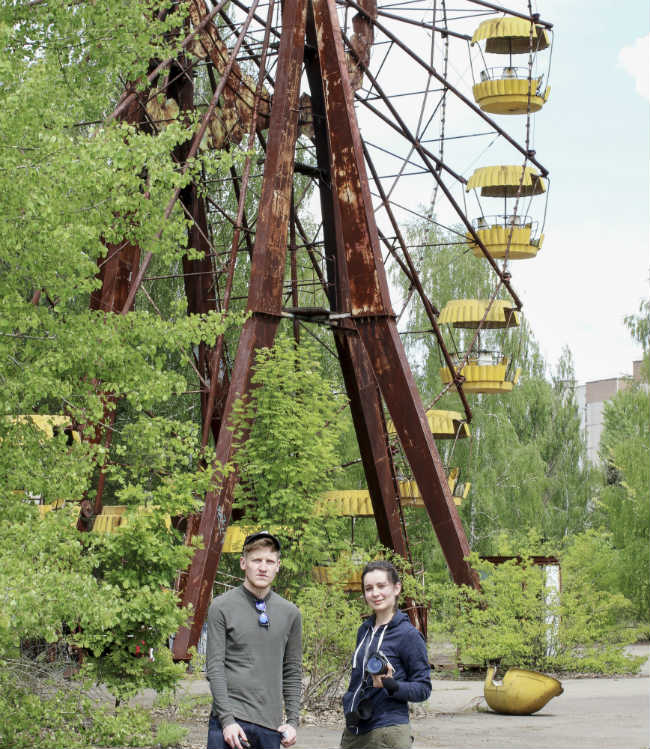
Still from 'Birdsong' (Pripyat Palace of Culture)

Still from ‘Birdsong’ (Pripyat Palace of Culture)

In a couple of weeks’ time, Robin Richards (bass guitarist and driving force in Stockport art-poppers Dutch Uncles, and cross-disciplinary composer on the not-so-quiet) unveils the latest in his growing series of film collaborations, via three screenings and live score performances in the Manchester area.

“An amusement park in the Ukrainian city of Pripyat was due to be opened on the 1st May 1986, but the Chernobyl nuclear disaster occurred just a few miles away on 26th April. The park’s owners opened the park for a couple of hours the following day for the people of Pripyat before the city was evacuated. Eerie images of the deserted Pripyat Amusement Park now permeate the visual representation of the city’s desolation.

“Robin Richards: “Since hearing about the trips young evacuees from Pripyat and neighbouring towns made to my hometown Stockport as part of charity programmes over the last twenty-five years, and reading personal accounts of those affected by the catastrophic nuclear disaster I have wanted to create an art piece depicting the stories, whilst also addressing environmental and scientific dimensions. I am fascinated by the gestural vocabulary of film and its relationship to the formal properties of musical composition. I want to push beyond the notion that music should always be in service to visual narrative, and explore the possibilities of music’s power to create and transform meaning.”

Still from 'Birdsong' (Pripyat ferris wheel)

Still from ‘Birdsong’ (Pripyat ferris wheel)

“The resulting piece, comprising a forty-minute original film and live score with chamber ensemble will be performed at related venues in North West England in late 2016, coinciding with the 30th anniversary of the disaster. A screening of the film with recorded score is programmed as part of an exhibition in Kiev in late October 2016.

“Combining the immediacy and energy of live musical performance with the visual impact of film, ‘Birdsong: Stories from Pripyat‘ aims to revisit a dramatic and devastating historical event using personal and scientific narratives to draw out the tensions and truths at play in our collective, cultural memories of this unfathomable event. This cross-artform project brings together original contemporary classical composition with film to explore an historic event through storytelling, montage and archival footage.

Robin Richards’ forty-minute score incorporates first-hand testimonies of evacuees and liquidators from Ukraine and Belarus, while Clara Casian’s filmmaking process is underpinned by nuclear research, and incorporates found and archival footage with original material filmed on location in Ukraine. The pair made a four-day research trip to the Chernobyl exclusion zone in May 2016 to meet with local artists, filmmakers and historians, collect original footage and archival material. The narrative arc of the film follows the journey of people with first-hand experience of the disaster, as personal records and testimonies are interwoven with original material. Music enters into a continuous dialogue with film as part of a nuanced artistic process, designed to evoke the experiences of people from Pripyat and their recollections of the evacuation and the cleaning process following the 1986 disaster.”

The piece will premiere as the highlight of HOME’s Artist Film Weekender in Manchester, followed by a second performance in Stockport’s historic art deco cinema The Plaza and a third at the University of Salford. Dates below:

Each night also features another showing, performance or event.

The University of Salford performance will also feature a question and answer session with Robin and Clara (also billed as a music-and-film masterclass with Robin, who’s an alumnus of the University’s Music course, having graduated in 2011 with a first-class honours degree, the Elgar Howarth Composition Shield and the Award for Innovative Audience Engagement).

The Manchester performance will be preceded by the showing of another Robin Richards-scored film, ‘Wizard’. Directed by Nick Middleton, this is “a short film about magic and madness”, which premiered earlier in the month at The Smalls film festival in Shoreditch, London.

The Stockport performance will be accompanied by ‘Celluloid History Songs’, by Anglo-African Mancunian singer-songwriter Josephine Oniyama: a “spellbinding… live multimedia performance against a backdrop of historical footage drawn from the North West Film Archive held at Manchester Metropolitan University, and edited by filmmaker Kim May of Asta Films. The specially-commissioned songs were influenced by scenes of Northerners at leisure, taken from the archive’s many inspiring images of industrial working-class people, young and old, discovering ways to spend their new leisure time.” This work was previously performed at HOME’s 2015 launch event, in tandem with Robin’s own previous soundtrack engagement (a new score for Pal Fejos’s 1928 silent New York romance ‘Lonesome’).

Update, 22nd September 2016 – Robin has just shared a recording of one of the ‘Birdsong’ soundtrack pieces. As he describes it, it’s “inspired by the liquidators working on the Chernobyl nuclear plant after the disaster. The liquidators were civil and military personnel called upon by the Soviet Union in to clean, burn and bury contaminated areas and materials around the power plant. The first part of this section is based on archival footage of the liquidators cleaning and digging in 1986, with the rhythmic jostling of the strings representing the movement of the workers, and the deep synthesisers representing the overriding radiation. The second part is inspired by the testimonies of four liquidators we interviewed in Borispol during our trip to Ukraine in May this year; their memories of the clean up and the years that followed the disaster.”


* * * * * * * *

Scalarama screening of 'Maresnest' (poster stencil image by Abe Peachment)

Scalarama screening of ‘Maresnest’ (poster stencil image by Abe Peachment)

A little earlier in the month – as part of September’s ongoing Scalarama film festival – there’ll be a public showing of the Cardiacs’ concert film ‘Maresnest’ in Glasgow.

Organisers Luminous Monsters call ‘Maresnest’ “the greatest concert movie ever made! Recorded one glorious afternoon at the Salisbury Arts Centre in 1990, ‘Maresnest’ captures all of the manic intensity and joyous delirium of one of the UK’s, nay, the world’s finest bands. Theres nothing quite like Cardiacs at full force. ‘Maresnest’ takes Cardiacs kaleidoscope-prog and ultra-pop impossibility and gives it a fiery hoof up the colon. From the bruising, nigh-industrial intro through the perilous frenzy of To Go Off And Things to the sustained climax of unlikely minor hit Is This The Life?, this is delirious, potent stuff, the sound of wild ideas obsessively woven from flesh and wire and moments.”

While this isn’t exactly a once-in-a-lifetime showing – the film was disinterred from VHS purgatory to be reissued and released on DVD three years ago – there are three extra selling points. The first is that the event is another of those fundraisers for the much-needed medical rehabilitation of Cardiacs’s life-mauled Tim Smith (see plenty of past ‘Misfit City’ posts for more on this particular story). Another is that the event also features a solo set from the band’s onetime guitarist Kavus Torabi (these days better known for Knifeworld, for exuberant radio hosting and for an ongoing role as the post-Daevid Allen frontman for Gong), who’ll be performing “songs of extreme loveliness and brilliance.”

The last is that Luminous Monsters are quite right about the value of ‘Maresnest’. It’s one of the great rock concert films, comfortably up on the same level with the likes of ‘Stop Making Sense’, ‘Tourfilm’, ‘The Last Waltz’ and ‘Sign ‘O’ The Times’. Capturing the band live in 1989 – then, as ever, inhabiting a murky cult status which could nonetheless draw thousand-strong crowds – it also caught them at a particularly turbulent time. The one-off seven-piece version of their close and familial lineup, as featured in the film, featured a guesting recent departee plus a new recruit and a pair of longstanding mainstays who’d both soon be gone from the band. Cardiacs shows were already volcanically energetic events, laced with disturbing performance-art overtones in which the band played at being frightened, stubborn children at odds with the perplexing and fascinating world around them. The fact that the aforementioned recent departee was Tim’s soon-to-be-ex-wife Sarah, and that the show was teetering on the edge of disaster due to equipment breakdowns and raw nerves, added an extra frisson of tension and imminent madness to this particular concert.

Fortunately, the band rose both to and above the occasion – pulling a powerful, massing set out of this chaotic fuel, and it was all caught on tape. Though ‘Maresnest’ is laced with and interrupted by additional faux-found footage from backstage (in which, in nightmarish glimpses, the band continue to act out disturbing dysfunctional and childlike personae; like ‘Blue Remembered Hills’ being wrenched out of shape by David Lynch) it’s ultimately about the music – which is ecstatic, churning, and strangely shamanic, tapping into a distorted British sub-mythology of old war films, children’s television and everyday ritual, and whipping it up into an ambiguous apotheosis for a delighted crowd.


Luminous Monsters present:
Scalarama 2016: ‘Cardiacs – All That Glitters is A Maresnest’ + Kavus Torabi (live set)
The Old Hairdressers, 23 Renfield Lane, Glasgow, G2 6PH, Scotland
Thursday 22nd September 2016, 7:30pm
– information here, here and here

It’s been a good month for Cardiacs-related news: more of that coming along shortly. Meanwhile, for more info on Scalarama’s ongoing events around the UK (and at the festival’s outpost in Spain), click here.
 

September 2016 – upcoming London classical and classical fusion gigs – Kimiko Ishizaka’s completion of Bach’s Art of Fugue at St Johns Smith Square (23rd); Ayako Fujiki launches ‘brightwater’ at the 1901 Arts Club and St Olave’s Hart Street (28th & 29th)

15 Sep

Here’s a quick scoot around a pair of London classical gigs coming up this month from two very different Japanese pianists – one specialising in pure yet innovative interpretations of baroque masterpieces, the other using romantic keyboard works as a springboard towards her own neo-romantic classical-fusion compositions.

Once again, most of what I’ve got here is press-release turnover…

* * * * * * * *

Kimiko Ishizaka (photo © Philippe Ramaker)

Kimiko Ishizaka (photo © Philippe Ramaker)

Kimiko Ishizaka: ‘J.S. Bach: ‘Die Kunst der Fuge, BWV 1080′. Completed.’
St John’s Smith Square, Smith Square, Westminster, London, SW1P 3HA, England
Friday 23rd September 2016, 6.30pm
information

“A mesmerizing completion of one of the most challenging
keyboard works of all times. Confronting the ultimate tragedy of music history, German-Japanese pianist Kimiko Ishizaka, (renowned for her highly-praised, best-selling recordings of Bach), presents her completion of Bach’s unfinished masterpiece, ‘Die Kunst der Fuge’, BWV 1080.

“Upholding the musical logic of Bach, yet offering an expressive response, Kimiko’s approach was based on a thorough study of all preceding fugues, coupled with a conviction that Bach would have concluded with something powerful, dramatic, expressive and architecturally true to the existing musical structures. Premiered in March 2016 in Cologne, Germany, ‘Die Kunst der Fuge, komplett’ comes to the UK for the first time this September.


“Kimiko’s sound production is strongly influenced by her success as a competitive athlete and her exploration of the physical mechanisms that are responsible for creating any given sound on the piano. Never listening to other pianists’ recordings, Kimiko takes inspiration purely from her own imagination. Her history also involves recording Bach’s ‘Goldberg Variations’ in 2012 as part of her Open Goldberg project – this was the first recording to be fan-funded, open source and completely free. Her 2015 release of ‘The Well-Tempered Clavier’, also fan-funded, was a number-one best-selling commercial success and is regarded by some critics as their favorite recording of the work.”

* * * * * * * *

If you’d prefer something lighter, then there’s always the option of seeing Ayako Fujiki in a couple of shows right at the end of the month. There’s a clip of her below, in concert, performing one of her more fusion-based projects – admittedly, the New Age minimalism might not be everyone’s cup of tea (and yes, I do mean you, occasional reader who drops in sometimes because I also cover noise-rockers playing in various throat-cellars). But I’ve got to admit that I like the way Ayako simultaneously handles a concert grand, a cherry-red workstation and a backslung white keytar, all whilst resisting the urge to throw a set of glammy Rick Wakeman shapes.


Ayako’s upcoming London concerts showcase a more acoustic, neoclassical side to her music. While it might be touched and partially shaped – like much crossover work – by its composer’s work in advertising and incidental soundtracking (the associated video has the air of a fashion-shoot, with Ayako making much of both her personal beauty and her sense of poise and presentation), the music retains its own airy substance. In some respects, it’s similar to the neo-romantic Chopin-esque compositions which made David Lanz a New Age star in the 1980s (even as he steered well clear of that genre’s more insipid failings). More details on Ayako’s work and inspirations follow:

Ayako Fujiki @ 1901 Club, 28th September 2016“A virtuosic Japanese pianist born in Tokyo, and a concert performer from the age of seven, Ayako Fujiki was influenced by the riches of European culture and fell in love with the energy and diversity of Spanish classical music. She chose to move to the vibrant and eclectic city of Barcelona to study under renowned pianists such as Alicia de Larrocha (one of the greatest pianists of the twentieth century, and also the first Spanish artist to win the UNESCO prize).

“Still based in Barcelona, Ayako continues to explore the duality between Japanese and Mediterranean heritage and culture. Combining her rigorous classical background with contemporary taste and technique, Ayako finds inspiration in romantic, world, minimal, electronic and even Japanese contemporary epic music.


“Having established herself as a leading classical concert performer on the Spanish music scene, and having released three albums interpreting work by other composers from Schubert to Debussy to Granados), Ayako’s current release ‘brightwater’ allows her to engage on a more personal creative level through the development of her own compositions. She has previously composed orchestrated pieces with piano and a variety of other instruments for films, advertising and documentaries, incorporating classical and electronic musical techniques.

Ayako Fujiki @ St Olaves Hart Street, 29th September 2016“‘brightwater’ comprises pieces written for solo piano, two pianos and piano trio. It was recorded in Barcelona with contributions from Cristian Chivu (violinist and concertmaster of the Orquesta Sinfónica de Barcelona y Nacional de Cataluña) and Cristoforo Pestalozzi (lead cellist in the Symphony Orchestra of the Gran Teatre del Liceu). The album propels the listener through a unique combination of cultures.

“Contributing to the established chronicle of musicians and composers taking inspiration from nature, the album offers Ayako’s reflections on the transience of landscapes, forests, rippling water and broken stones: capturing the beauty of eroded nature, she translates the slow but persistent effect of the natural elements on rocks and trees.”

The two London dates are as follows:

  • 1901 Arts Club, 7 Exton Street, Waterloo, London, SE1 8UE, England, Wednesday 28th September 2016, 5.00pm (album launch event)information
  • St. Olave Hart Street, St Olave’s Hart Street, 8 Hart Street, City of London, London, EC3R 7NB, England, Thursday 29th September 2016, 1:05pminformation

* * * * * * * *

Incidentally, and returning to the subject of keytars – if anyone’s interested in the idea of an eighteenth-century version, there’s one being played here…


September 2016 – upcoming London gigs – Penny Rimbaud’s musical Wilfred Owen evening at the Horse Hospital and the ‘Songs of Separation’ female folkstravaganza at King’s Place (both 9th)

31 Aug

Here’s some more upcoming September shows in London – a musical setting of First World War poems down at the Horse Hospital courtesy of parts of the Crass family, and an all-star, all-female folk meet at Kings Place to celebrate the collective indigenous folk music of Scotland and England (nice to see some fellow feeling there).

Sadly, both of these concerts are on the same night, so choices will need to be made – unless you take a good look at the timings and figure that you can make the best of both, via a gruelling sprint or rapid Tube ride between Russell Square and the upper reaches of Kings Cross…

* * * * * * * *

Penny Rimbaud recites the Works of Wilfred Owen, 9th September 2016Penny Rimbaud recites the Works of Wilfred Owen (with Kate Shortt & Liam Noble)
The Horse Hospital, The Colonnade, Bloomsbury, London, WC1N 1JD, England
Friday 9th September 2016, 7.00pm
information

A couple of notes from the event blurb:

“As part of the exhibition ‘Under The Changing Light: The Landscapes of The Somme’ (consisting of photos by Toby Webster), Penny Rimbaud recites the works of Wilfred Owen with Kate Shortt (cello) and Liam Noble (piano).

Penny Lapsang Rimbaud was born in south-west London. He is a poet, writer, philosopher, painter, and musician. He was formally a part of the performance art groups Exit and Ceres Confusion. In 1977 he co-founded the anarchist punk band Crass with Steve Ignorant, which disbanded in 1984. From then up until 2000 he devoted himself to writing. He returned as a performance poet working with Australian saxophonist Louise Elliot, as well as a wide variety of other jazz musicians as the group L’Académie Des Vanités.”

Regarding Penny’s accompanists, both Kate Shortt and Liam Noble have previous Rimbaud form. Both have collaborated with him in L’Académie Des Vanités forebear Last Amendment – itself formerly the Crass Collective or Crass Agenda performance art group, set up as a post-split arrangement enabling former Crasseurs to work together without either over-commodifying their ex-band’s name or being restricted by its form.

Liam needs little introduction to those who’ve seen his spiky, droll playing across the British jazz scene over the last two decades (initially playing with Stan Sulzmann, John Stevens, Harry Beckett and Bobby Wellins, latterly leading his own projects or collaborating with Christine Tobin). So far, Kate is arguably less well-known; but her witty multi-instrumental singer-songwriter contributions to contemporary British cabaret have drawn comparisons to both Victoria Wood and Jim Tavares. Her Crass connections, continued membership of L’Académie Des Vanités and willingness to provide more sober aspects to events like this one demonstrate that she’s by no means cocooned in the cabaret box.

As for Penny himself – a lifelong anarcho-libertarian and punk hero who was initially inspired by an unlikely literary combination of Ernest Hemingway, Henrik Ibsen and Walt Whitman – there’s plenty to say on the varied subject of Crass and his work in and out of it. This is generally handled by better counter-culture historians than myself. If you’re new to Penny (or to Crassage in general), here’s a fairly good place to start, courtesy of ‘The Quietus’…

* * * * * * * *

Kings Place Festival 2016 presents:
‘Songs of Separation’: Eliza Carthy + Karine Polwart + Mary Macmaster + Kate Young + Hannah James/Hazel Askew/Rowan Rheingans (Lady Maisery) + Jenn Butterworth + Jenny Hill + Hannah Read
Hall One @ Kings Place, 90 York Way, Kings Cross, London, N1 9AG, England
Friday 9th September 2016 – 9:45pm
information

From the Festival promotional info:

“In June 2015, ten of Scotland and England’s leading female folk musicians joined forces to explore the rich musical, cultural and linguistic heritage of the two countries. What emerged is one of the landmark collaborative folk albums of recent years, Songs of Separation.

Various Artists: 'Songs Of Separation'

Various Artists: ‘Songs Of Separation’

“‘Songs of Separation’ is an outstanding collaboration between ten of Scotland and England’s leading female folk musicians. Devised and recorded in just six days, on the fairytale Hebridean Isle of Eigg, the musicians explored the rich musical heritage of the two countries, drawing on their respective and collective musical experiences and crafting something both new and very special.

“Celebrating the similarities and differences in our musical, linguistic and cultural heritage, and set in the context of a post-referendum world, the work aims to evoke emotional responses and prompt new thinking about the issue of separation as it occurs in all our lives. The collection of traditional and original songs aims to get to the heart of what we feel when we are faced with a separation; linking us both to previous generations who shared the same human experiences and responses to separation, and to generations that will follow. The horizons of the project are already evolving and speak as much about connection, as they do about separation.

“The album was launched in January 2016, with a sell-out tour and received exceptional reviews from the music press and musicians alike. Opportunities to experience ‘Songs of Separation’ performed live are rare… and unmissable.


“A richly evocative and quietly provocative collection of traditional and newly composed songs, the artists behind this album include two of the most celebrated contemporary voices on the UK folk scene, England’s Eliza Carthy (fiddle, percussion) and Scotland’s Karine Polwart (tenor guitar, Indian harmonium); two boundary-breaking Scots, Mary Macmaster of The Poozies (harp) and Kate Young (fiddle); Hannah James (accordion, percussion), Hazel Askew (flute, melodeon, harp) and Rowan Rheingans (banjo, fiddle, viola) from the award-winning English ensemble Lady Maisery; Jenn Butterworth (guitar) and Jenny Hill (double bass), brilliant backline players who have worked across both the English and Scottish trad scenes; and Hannah Read (fiddle, guitar), a New York-based musician and singer who spent much of her childhood on the Isle of Eigg.”

This is the last ‘Songs Of Separation’ concert of the year, with previous 2016 performances having occurred at assorted festivals (Celtic Connections, Dumfries and Galloway Festival of Arts, Cardiff’s Festival of Voice, the Cambridge Folk Festival) as well as shows in Edinburgh, Stroud, Didcot and Bury. The project is ongoing, with recent developments including onstage collaborations with schoolchildren and mythology-inspired plans for field recordings, among other ideas.
 

September 2016 – upcoming London gigs from Julián Elvira, rarescale, Katsuya Nonaka and Ute Kanngiesser (1st, 6th, 10th, 11th) – post-classical chamber music, premieres and improvisations for assorted flutes, shakuhachi, blowables, cello, etc. (Plus Katsuya’s London film premieres.)

27 Aug

Here’s news on four upcoming shows in London during early September, two of which are brought to us by flute-centred ensemble rarescale

* * * * * * * *

Julián Elvira, 1st September 2016

Crasmusicas presents:
Julian Elvira presents ‘Blowing’
The Barge House, 46a De Beauvoir Crescent, De Beauvoir Town, London, N1 5RY, England
Thursday 1st September 2016, 7.00pm
– information

Spanish musician Julián Elvira is the principal flautist with Banda Sinfónica Municipal de Madrid. He’s also the developer of the Pronomos flute – a carefully considered redesign of the existing orchestral instrument, designed to improve its ability to cope with the microtonal and enhanced timbral demands being brought to bear on it by contemporary music. His solo show, ‘Blowing’, is “a unique performance of improvised music exploring the sonic qualities of different flutes and pipes. The sounds of the traditional instruments are manipulated and transformed, creating a music experience that moves from ancient to ultra modern sonorities.”


* * * * * * * *

rarescale, 6th September 2016

rarescale: “Falling Out Of Cars”
The Forge, 3-7 Delancey Street, Camden Town, London, NW1 7NL, England
Tuesday 6th September 2016, 7.30pm
information

Direct blurb from the press release:

“In the final concert of its 2016 season, rarescale presents new chamber works for flutes (including low flutes and baroque flute) with piano, guitar and electronics. New works by Steve Kilpatrick, Jonathan Pitkin and Yfat Soul Zisso receive their first performances, and pianist extraordinaire Xenia Pestova presents solo works by Ailis Ni Riain and Ed Bennett. This programme promises a broad range of repertoire, from the simple elegance of Laurence Crane’s ‘Erki Nool’ to the extended techniques of Scott Miller’s ‘The Frost Performs its Secret Ministry’.”

Performers:

Carla Rees – flutes
David Black – guitar
Xenia Pestova – piano
Michael Oliva & Scott Miller – electronics

Programme includes:

Steve Kilpatrick – ‘Falling Out of Cars’ (world premiere)
Jonathan Pitkin – ‘Multi(poly)phonie’s (for quarter-tone alto flute & guitar) (world premiere)
Scott Miller – ‘Anterior/Interior’ either/and/or The Frost Performs its Secret Ministry
Yfat Soul Zisso – new work (world premiere)
Laurence Crane – ‘Erki Nool’
Ailís Ní Ríain – (unspecified work)
Ed Bennett– ‘Bright White Lights’
Daniela Fantechi – (unspecified work)


The new Pitkin composition is “a short but wide-ranging piece (which) pushes both instruments in unexpected directions in order to play with conventional expectations of foreground and background, melody and accompaniment, and monody and polyphony.” I couldn’t find any information on the new Daniela Fantechni piece, and rarescale haven’t specified which Ní Ríain item might be on the list, but I’ve made a few educated guesses below (as well as including an Yfat Soul Zisso flute piece which might point the way towards her new one).

https://vimeo.com/141547512
https://vimeo.com/177103766

 
* * * * * * * *

Rarescale @ IKLECTIK, 10th September 2016

IKLECTIK presents:
Scott Miller & Carla Rees with Julian Elvira & Katsuya Nonaka
IKLECTIK, Old Paradise Yard, 20 Carlisle Lane, Waterloo, London, SE1 7LG, England
Saturday 10th September, 6.30pm
information


Scott Miller‘s ‘Anterior Exterior’ – see above – is one of the pieces which might be being performed at the Forge show. This particular performance is taken from ‘Devices and Desires‘, the album which he and rarescale partner Carla Rees released in 2012.

This side of their music will be reflected in the week’s second rarescale-related gig, down in Lambeth at IKCLECTIK. A combined sponsor’s sales pitch and evening of spontaneous creation (put together in association with Kingma System Flutes and Kyma Electronics), the show will provide “a demonstration of contemporary and traditional flutes, electronics improvisation systems and their potential for collaboration and innovation”. This will incorporate a “Devices and Desires” set in which Carla and Scott improvise with two special guests.

The first of these guests is Julián Elvira, still around following his solo show earlier in the week. The second guest, Katsuya Nonaka, is a particularly diverse creative character. A traditionally trained player of the shakuhachi flute, he’s also a member of The Seppuku Pistols, whose gimmick (playing alleged “Edo era” punk on traditional Japanese instruments while toying with Japanese ultra-nationalist imagery) might make them a broad-batingly provocative art project… or might not.

Outside of such stunts, Katsuya’s polymathic approach spills over into his other jobs and occupations – rice farming, translation, skateboarding, cartooning and illustrating, and film directing. He has happily combined three of these – the skating, the shakuhachi and the filmwork – in his short ‘Future Is Primitive‘ documentary investigating his view of the connections between and shared pressures brought to bear on both ‘board and bamboo flute (which will be receiving its London premiere the same week, on 9th September at House of Vans, in the tunnels beneath Waterloo station).


* * * * * * * *

IKLECTIK presents:
Katsuya Nonaka & Ute Kanngiesser
IKLECTIK, Old Paradise Yard, 20 Carlisle Lane, Waterloo, London, SE1 7LG, England
Sunday 11th September, 8.30pm
information

In fact, it’s a particularly busy week for Katsuya Nonaka. As well as the previous two events of his that I’ve mentioned (plus the follow-up screening of ‘Future is Primitive’ at Dalston’s Doomed Gallery on 13th September) he will be playing another IKLECTIC show on the 11th, this time with London-based German improvising cellist and sometime AMM member Ute Kanngiesser, whose musical approach is devoted to “unscripted” music and who specialises in a “layered” approach.

As far as I know this is a first musical meeting for this particular pairing. I’m not sure that there are that many embeddable samples which I can treat you too as a preview; but here’s a clip of Ute’s eerie prolonged cello harmonics for the curious…


July 2016 – video premiere – North Sea Radio Orchestra’s cover of Robert Wyatt’s ‘The British Road ‘

27 Jul

It’s nice to have a ‘Misfit City’ premiere once in a while. This is the brand new video clip for The British Road, North Sea Radio Orchestra‘s cover version of a Robert Wyatt song. It’s from NSRO’s new album ‘Dronne’ which is coming out on the band’s own label The Household Mark on 9th September. The song itself will be out as a download single on August 5th: the video’s another genius pocket production by Chaos Engineers.


Singalong time:

Those foreigners are at it again
When will they learn to fight like our men?
There’s nothing new under the mirror
And it’s time for one more bedtime story
Get beauty sleep for morning glory
How can I rise if you don’t fall?

Robert Wyatt originally recorded The British Road for his 1985 album ‘Old Rottenhat’: it’s also on the ‘Mid Eighties’ compilation. It’s part of a set of songs composed in “a conscious attempt to make un-misusable music” which was done in the face of covertly (or nakedly) aggressive right-wing politics appropriating or co-opting songs for cheerleading or for broadcast padding. The song itself is a typically cryptic Wyatt threading of oblique satire and Dada-jazz playfulness over a friendly, ever-so-slightly plaintive melody, taking glancing swipes at petty nationalism and irritable torpor as it rolls along. (If you’re weary of all of the recent Brexit sabre-rattling and bottlecough, it’s a real restorative.)

North Sea Radio Orchestra: 'Dronne'

North Sea Radio Orchestra: ‘Dronne’

The NSRO take on The British Road immediately bears their own stamp. Elements are blended in from early English airs to Germanic-electronic organ haze; there are dewdrop metallophones and passionate bird-flight string parts; there’s budding pastoralism charged with bursts of motoric minimalism; and there’s a kernelled heart in Craig and Sharron Fortnam’s softened everyperson vocals, ever-so-slightly shaded by a touch of Wyatt Cockney. It originally stems from a 2014 concert night performance of Wyatt’s music for the Nuits de Fourviere Festival in Lyon, which Craig was invited to direct and arrange. As well as producing both this and other NSRO arrangements of assorted Wyattisms, the event had a profound effect on Craig’s approach to the rest of ‘Dronne’:

“Being the composer and producer has led to me having total control over all aspects of making NSRO records. This way of working is, of course, a double-edged sword, as spontaneity and inspiration can be lost under all that control. Robert Wyatt seems to tread the line between the two with great skill, incorporating lots of elements of chance into his albums. Re-working his songs while trying to maintain freedom within the arrangements has been a great inspiration while making ‘Dronne’. This record features lots of improvising which I have edited and manipulated; certain accidents within have been left intact – these elements of chance are a real antidote to the necessary microscoping and control-freakery needed to create NSRO records.”

If you’re interested, French experimentalist Pascal Maupeu recorded another version of this song six years ago, under his Mop Meuchiine alias – part grinding industrial underpass music, part Krautrock ice-cream van, part rough-edged chamber ensemble (while still finding space for a banjo). Here it is.

If you can’t wait to get your hands on ‘Dronne’, you can pre-order it now from Rough Trade, Piccadilly Records, iTunes and Amazon.

For more ‘Misfit City’ coverage on North Sea Radio Orchestra and its related bands (including some very early NSRO work indeed), click here.
 

July 2016 – upcoming London gigs – Roger Goula at Foyles’ and Servant Jazz (20th, 28th); Dedalus Ensemble play the Machines of John White (20th)

18 Jul

Classical/electronica fusion composer Roger Goula will be performing at two London shows this month in order to promote his upcoming new album ‘Overview Effect’ – the first full-length release on the new Cognitive Shift record label (a joint venture between experimental pop label One Little Indian Records and commercial soundtrack music publishers Manners McDade).

Cognitive Shift & Foyles Bookshop present:
Roger Goula
The Auditorium @ Foyles, 107 Charing Cross Road, London, WC2H 0DT, England
Wednesday 20th July 2016, 7.00pm
information

Cognitive Shift & Chaos Theory Promotions present:
Roger Goula
Servant Jazz Quarters, 10a Bradbury Street, Dalston, London, N16 8JN, England
Thursday 28th July 2016, 7.30pm
information


On both occasions, Roger will be performing material from both ‘Overview Effect’ (due in September) and from the preceding limited edition EP ‘Something About Silence’ (which came out in March and featured remixes by Christian Löffler and Phaeleh). ‘Overview Effect’ is inspired by “the psychological phenomenon experienced by astronauts when viewing Earth from a distance, allowing them to see the entire planet surrounded by the endless black void of space. This can cause a cognitive shift in the minds of the astronauts, giving them a completely new perspective on life, Earth and humanity.”

Here are soundclips of the original and remixed versions of Roger’s piece ‘Awe’, as featured on ‘Something About Silence’ – nearly nine minutes of grand minimalist adagio conflating the methodology of sophisticated dance electronica with the slow, sparse development and atmospherics of the post-Morton Feldman California school (as exemplified by the work of composers such as Jim Fox), the gradual looped layering of Gavin Bryars (on works like ‘Jesus’ Blood Never Failed Me Yet’) and the holy minimalism of Henryk Górecki. Its growing arrangement steers simple modular elements towards a greater elegiac nature. Building upwards from sub-bass and clarinet and string harmonics, it adds strata of violas, then violins; developing a faster pulse and a skitter of electronic rhythm at the midpoint, with minimalist cross rhythms from the higher strings. The end sees a return of cone-rattling sub-bass, and a sudden jerk into silence as if waking.


It’s true that the latterday minimalist film scorer’s tricks are all in place; but those moving musical blocks are weighty, and the visual suggestions arresting and entirely in tune with the orbital view of the album concept. Placed back into the electronic dance world (remixed and transmogrified by classically-trained house/dubstep/electronica musician Phaelah) it becomes a stately, velvety downtempo effort; more mechanical; its squiggling monophonic crenellations stamped out as sequenced mirror-glints and chinking trance parts.


The Auditorium show is a full public event, while the Servant Jazz Quarters show is predominantly a music industry showcase (although there are twenty places available to the general public.

* * * * * * * *

On the subject of more mechanised forms of composition…

Dedalus Ensemble

‘The Machines Of John White’: Dedalus Ensemble + guests
Cafe Oto, 18-22 Ashwin Street, Dalston, London, E8 3DL, England
Wednesday 20th July 2016, 8.00pm
information

John White had to wait until the mid-1960s to really make his name as a composer and conceptualist. Originally emerging in the late 1950s, with a powerful traditional-classical pedigree behind him, he was a student-turned-professor at the Royal College of Music he’d studied under Elizabeth Lutyens and Bernard Stevens and, from early childhood, had been on the end of a chain of person-to-person musical tutelage which he could trace back to Brahms. Already a fluent composer (and moonlighting as the conductor of various West End musicals) his growing involvement with the British avant-garde led to his development of “machines”. These were small and charming compositions based on various ordering systems (such as change-ringing patterns or numerical arrays), which, like industrial-age technology, performed considered and deliberately-limited functions.


While John’s described these works as “the result of a fully thought-out process rather than (something) subject to the changeabilities of inspiration” that doesn’t wholly capture their nature. Process-based they may be (a domestic English response to New York minimalism), but they also capture some of his personal qualities including the crucial leavening effects of his gentleness and humour (qualities which came in handy while sidestepping some of the more dour, Marxist/Maoist preoccupations of his avant-garde colleagues).


From the duets to the larger chamber works, there’s a sense of amiable workplace conversation to the White’s machines – like workmates managing to express both affection and connection despite their limited repertoire of gestures, tropes and local cliches; or like the chat of cartoon engines (it’s enjoyable to compare his compositions to the artful tootling of Vernon Elliott’s children’s TV scores.) Humour and irreverence certainly permeated pieces like “Drinking & Hooting Machine” (a text based score for musicians sipping from and blowing across bottles of “a favourite drink”, in which the potential for cheery drunken chaos increases depending on rehearsal time, length of cycle and opportunities for encore). John’s involvement with the Promenade Theatre Orchestra (the 1969 ensemble he formed with Hugh Shrapnel, Christopher Hobbs and Alex Hill) provided the opportunity to perform complex music on toy devices and outdated instruments, folding modernism back in on itself with Dada-ist irreverence and mischievous English whimsy while channelling serious intent through the fun.

“The PT Orchestra! The Orchestra YOU can afford for that extra special occasion! Restful reed-organs, tinkling toy pianos, soothing psalteries, suave swanee whistles, jolly jaw harps – NO noisy electronics! (Just the job for that lazy Sunday afternoon!) All musical material guaranteed thru-composed – NO hit-or-miss improvisation!” – Michael Nyman


Celebrating John’s eightieth birthday, Montpellier ensemble Dedalus Ensemble will be performing a selection of the machines at Café Oto. A collective in which every musician collaborates in the orchestration and interpretation, they specialise in flexible scores from across the United States and in European New Music from the 1960s to today. Noted champions of contemporary American experimental music, the Ensemble has premiered works by Tom Johnson, Christian Wolff, Alvin Lucier, Phill Niblock, Frederic Rzewski, James Tenney before French audiences.” (Here’s a clip of them performing James Saunders’ ‘things you must do, rather than must not do’ at the ‘Coïncidences – Music we’d Like to Hear’ festival at The Forge back in 2012.)


For what it’s worth, I’ve got my own John White memory. He once turned up at Alquimia’s Electronicage concert series at the Spitz in 1999, a time when I had no idea when he was. Young-old elderly, besuited, neat and tidy, he had the amiable, comfortable air of a specialist on a home visit. He was carrying a medium sized suitcase, which he opened up and laid out to reveal a set of little readymade devices. He wound them up, pressed their buttons, set them off, and watched benignly as they ticked, clonked and squeaked through a small machine work of their own; then closed up the suitcase, waved and departed – a genteel, dining-room carney. Here’s twenty further minutes covering his world and his history.


To close, here’s a clip of a John White piano sonata in performance. If anything in what I’ve written above suggests that he’s a playful charlatan who threw his original skills away for art-prankery, this will prove otherwise. One of the hundred-plus sonatas he’s written (in addition to many more pieces of music in many other fields) it’s an enthusiastically busy, tuneful and melodically sophisticated romp in which both his humour and his extensive musical ancestry are fully to the fore.


July 2016 – upcoming London gigs – The Fidelio Trio play Beethoven, Dvořák and Schoenberg and talk to us (19th)

17 Jul

A very quick post regarding an upcoming free London show from the Fidelio Trio – sadly, they’re not playing any of the original repertoire which they’ve commissioned over the years, but if you’re interested in hearing them take on music from the established canon from classical to Romantic through to the brink of chromatic modernism, and if you’re interesting in getting a formal chance to conversing with the kind of small ensemble which does invite commissions, this might suit you.

Rhinegold LIVE presents:
The Fidelio Trio
Conway Hall, 25 Red Lion Square, Bloomsbury, London, WC1R 4RL, London
Tuesday 19th July 2016, 6:15 pm
– free event – information here and here

“The ‘virtuosic Fidelio Trio’ (Sunday Times) are Darragh Morgan, violin, Adi Tal, cello and Mary Dullea, piano. Shortlisted for the 2016 Royal Philharmonic Society Music Awards – one of the highest recognitions for live classical music-making in the UK – they perform diverse repertoire internationally, broadcast regularly on BBC Radio 3, RTÉ Lyric FM, WNYC, NPR and in 2010 were featured in a Sky Arts documentary.

Champions of classical and contemporary alike (and with a string of new commissions to their name), this recital will explore some of the trio’s favourite repertoire. Join us and experience the on-stage chemistry which caught the attention of this year’s RPS Ensemble Award jury.

The evening starts with a drinks reception at 6.15pm, with the concert starting at 7.00pm. The concert is followed by an informal Q&A which will be conducted by Kimon Daltas, editor of Classical Music magazine.”

Programme:

Ludwig van Beethoven: Piano Trio in D major Op. 70 No. 1 ‘Ghost’ – I. Allegro vivace e con brio
Antonín Dvořák: Piano Trio No. 4 in E minor Op. 90 ‘Dumky’ – I. Lento maestoso – Allegro quasi doppio movimento
Arnold Schoenberg (arr. Eduard Steuermann): Verklärte Nacht

If you’re interested in hearing how the trio take on brand new repertoire, here are some clips of them in action, presenting debut live premieres of John Buckley’s 2014 ‘Piano Trio’ (from 2014) and Scott Wilson’s ‘Head Neck Chest Four Five Six Thing’ (from March this year).


July 2016 – upcoming gigs in London and Sunderland – end-of-the-season for Daylight Music with Cecil Sharp House Choir, Lisa Knapp, Hermes Experiment, David Julyan and John Potter (9th); the live-soundtracked premiere of Somme-and-Mackem documentary ‘Asunder’ with Field Music, Royal Northern Sinfonia, Warm Digits and The Cornshed Sisters (10th)

6 Jul

This weekend, in London, mostly-unplugged afternoon Daylight Music will bow out for the summer with a distinctly maritime-toned concert – and one which features another choir as the headlining act. I’ve been tempted to give Daylight’s organisers a bit of stick for their interest in choirs this season, but it makes no more sense than ribbing them for liking performers with acoustic guitars. While, for me, the scratch-choir-does-pop-hits musical meme gets too cosy too quickly, Daylight has done its level best to vary the choral diet, with this week’s headliners delving back into deeper folk roots (and the other acts on the bill ranging out across nautical atmospheres and underwater imaginings).

At the other end of the country, in Sunderland, film-makers have teamed up with art-rockers, bleepers, folk singers and community consciousness to create a picture of the First World War’s impact on a thriving north-eastern community. Keeping true to their inspirations, they’re premiering their work there. We Southerners will have to wait, and quite rightly too.

* * * * * * * *

Daylight Music 231

Daylight Music 231 – Cecil Sharp House Choir + Lisa Knapp + The Hermes Experiment + David Julyan & John Potter
Union Chapel, 19b Compton Terrace, Islington, London, N1 2UN, England
Saturday 9th July 2016, 12.00pm
– free/pay-what-you-like event (suggested donation: £5.00) – information

“Known for its unique, spirited and moving a cappella renditions of traditional songs from the British Isles (and occasionally beyond), Cecil Sharp House Choir is one to catch. Helmed by inspirational choir leader, Sally Davies (and open to any confident singer able to hold a tune, learn by ear and be keen to perform), the choir performs regularly at Cecil Sharp House and at a host of other venues and events including the Southbank Centre, the Roundhouse, the House of Commons and the Oslo Musikkfest.

“Singer and fiddle player Lisa Knapp burst onto the scene in 2007 with her much lauded debut album ‘Wild & Undaunted’, which contained refreshing interpretations of traditional folk songs peppered with highly distinctive original pieces. Numerous appearances across BBC Radio and BBC4’s Christmas TV folk song extravaganza followed, as well as a performance tribute to the late Lal Waterson for BBC Electric Proms. Further recordings (made in collaboration with her musician/producer husband Gerry Diver) have included the EP ‘Hunt The Hare – A Branch of May’ and 2013’s ‘Hidden Seam’ album. Lisa’s BBC work continued with Radio 4’s acclaimed ‘Shipping Songs‘ in 2015 (musing on the extraordinary sounds from far-off places on the Shipping Forecast), and it’s this which should inform her July Daylight appearance, which features a duo performance with Gerry Diver and a song sung with the Cecil Sharp House Choir.

“Park Lane Group Young Artists 2015/16 and winners of Nonclassical’s Battle of the Bands 2014, The Hermes Experiment is a contemporary classical music quartet comprising harpist Anne Denholm, clarinettist Oliver Pashley, soprano Héloïse Werner and double bass player Marianne Schofield. Their performance style has been hailed as “meticulously nuanced, witty and chic” by The Times, while The Evening Standard has acclaimed their “whole new expressive world.” Capitalising on their deliberately idiosyncratic combination of instruments, the ensemble regularly commissions new works, as well as creating their own innovative arrangements and venturing into live free improvisation. So far, the ensemble has commissioned thirty-one different composers at various stages of their careers. The ensemble also strives to create a platform for cross-disciplinary collaboration and they recently created a ‘musical exhibition’ with photographer Thurstan Redding. Future plans include a residency at Aldeburgh Music in September 2016 developing a new interpretation of Shakespeare’s The Winter’s Tale with director Nina Brazier and composer Kim Ashton.

“The Hermes Experiment’s Daylight performance this weekend will be a marine-themed set first performed in 2014 (and recently revived at a Park Lane Music Group concert at St John’s Smith Square earlier in the year), at which they performed Giles Swayne‘s ‘Chansons dévotes and poissonneuses (Devout and Fishy Songs)’, a setting of three piscatorial poems by French Symbolist Georges Fourest. Whether they’ve got time for some of the other songs for the St Johns set – Kate Honey‘s ‘Predator Fish’, Freya Waley-Cohen‘s ‘Oyster’, Josephine Stephenson‘s ‘tanka’ – remains to be seen.

“As the fourth act, David Julyan (a film composer best known for his collaborations with Christopher Nolan on Memento’ and ‘The Prestige’, as well as for horror movie ‘The Descent‘) will be teaming up with John Potter (of ambient project The Music Of What Happens) in order to create a live sea soundscape.”

* * * * * * * *

Field Music/The Royal Northern Sinfonia/Warm Digits + The Cornshed Sisters
‘Asunder’ – film premiere with live score
Sunderland Empire Theatre, High Street West, Sunderland, SR1 3EX, England
Sunday 10th July 2016, 2.30pm and 7.30pm
information

“Northumbrian art poppers Field Music (with the Royal Northern Sinfonia and electronic duo Warm Digits) are set to perform a newly commissioned live score to accompany ‘Asunder’, a film telling the tale of the North East’s involvement in the Battle of the Somme (one of the most horrific battles in World War One) through largely unknown personal experiences. The collaboration marks the Battle’s centenary. Royal Northern Sinfonia will be conducted by Hugh Brunt, Artistic Director of the London Contemporary Orchestra (and Radiohead collaborator). Sunderland folk quartet The Cornshed Sisters will also perform an a cappella rendition of traditional Wearside folk tune The Rigs of Sunderland Fair.


“‘Asunder’ brings together the stories and images of the past with music from the present to tell a poignant and relevant story of what happened to a typical British town during the First World War, with virtually all of the its men abroad fighting and all of its women and children left behind. The North East was in the front line, thanks to its shipyards and munitions factories.
Through the stories of half a dozen people from Tyneside and Wearside, ‘Asunder’ uncovers just what life was like on the home front – with bombs falling on Britain for the first time, conscientious objectors sentenced to death, and women working as doctors, tram conductors and footballers, some of them (God forbid) wearing trousers.

“The story begins in the pre-war Edwardian golden era when cricket, football and rugby boomed, and aeroplanes and cars pointed to a bright new future – only for this progress to be horrifically reversed through the early years of the war. This culminated on 1st July 1916 in the Battle of the Somme, when British, French and German forces began one of the most traumatic battles in military history. Over the course of just four months, more than one million soldiers were captured, wounded or killed in the Battle, a confrontation of unimaginable horror.

“The story is told through a beautiful film carefully crafted by documentarist Esther Johnson using archive and newly filmed footage, and narrated by Kate Adie (with Alun Armstrong as the voice of the ‘Sunderland Daily Echo & Shipping Gazette’). 

“‘Asunder’ will premiere at the Sunderland Empire on 10th July before touring at selected venues around the country (dates to be confirmed).

“Field Music’s David Brewis says of the commission:

“The chance to write something completely new and play it with an orchestra doesn’t come around very often. And as we heard about the plans for the film, the idea of telling a more complete story about our home town and how the war affected it was very appealing. There’s nothing quite like hearing a full orchestra right in front of you and if we get it right, then the balance between what you see and hear on screen and what you see and hear from the musicians should be spectacular. One of the other things which intrigued Peter (Brewis) especially about this project was our love of the orchestral music from that period. Stravinsky’s ‘The Rite of Spring’ premiered in 1913, Schoenberg’s ‘Pierrot Lunaire’ in 1912. Bela Bartok and Maurice Ravel were composing, as was Claude Debussy, so it was a time of huge change in harmony and composition and we’ve dipped into that period for inspiration a lot.”

“Writer and ‘Asunder’ creative director Bob Stanley comments:

“For me, ‘Asunder’ is an opportunity to work with a group I’ve admired from afar for years, Field Music, and one of my favourite documentary makers, Esther Johnson, as well as a group I only discovered last year but are one of the most thrilling electronic acts in the country, Warm Digits. The premiere will be a truly unique event – the combination of a live score to a new film featuring some incredible archive footage and fascinating local stories, along with the other events going on inside and outside the Empire should be a really memorable day, and I hope one that people will be talking about for years to come. I want everyone who sees it to take pride in the region’s unique history and to feel they can help to build its future.”


July 2016 – upcoming and ongoing gigs – some pickings from the Frome Festival, west of England (1st-10th)

2 Jul

While I missed the chance to plug the Sin Eater Festival a few weeks ago, I’m just about in time for the modest fireworks which herald the Frome Festival in Wiltshire.

I’m too late to plug the opening party (in which Frome’s own electro-poppers Sweet Machine shared a bill with psychedelic synth-cabarettier, rock biographer and all-round performance character Alan Clayson); I don’t have much to say about the festival’s big-draw act Reef (currently enjoying a new revival of their original ‘90s revival of 70s blues-rock); and I feel sorry that the free gig by “ukular fusion” band The Mother Ukers doesn’t involve furious Mahavishnukulele jazz shredding (instead of being a variation on banjo-happy rockgrass covers). But there’s plenty more on offer, so here are a few other things picked out from the billing.

It’s by no means everything on offer (the festival’s full of visual art, talks and theatre; there’s plenty more jazz and classical; and there’s a show by Billy Bragg which will probably take care of itself) but these represent the bits-between-the-bits which are closest to ‘Misfit City’s natural constituency (if such a thing exists).

* * * * * * * *

The Magical Folk Garden @ The Archangel, 1 King Street, Frome, BA11 1BH, England
Tuesday 5th-Friday 8th July 2016, 7.30pm each night
– information: Tuesday 5th / Wednesday 6th / Thursday 7th / Friday 8th

At the upstairs room at the Archangel pub, The Magical Folk Garden continues to turn itself into an annual institution with a series of cushion-strewn/standing-room-only unplugged gigs, creating a “euphonious forest of folk and contemporary acoustic music from some of the UK’s finest talents.” It’s all pretty well-scrubbed and tasteful – there’s nothing to scare the horses here. That said, a few of the performers might own horses, and some might whisper them; while a few might go all ‘Poldark’ and ride off on one, bareback and bare-chested, a honey-coloured guitar bouncing up and down on the withers (it all probably depends on the state of the booze and the pollen count).

The Tuesday show features two Bath acts – lit-pop cello-and-guitar duo The Bookshop Band and romantic solo-balladeer Tom Corneill – plus the sunny pure-pop/psychedelic fizz of Trowbridge’s The Pigeons.


The Wednesday show has a band-backed performance from Frome’s Al O’Kane (a gravel-and-honey country-blues-folker who, with his mix of rolling American roots guitar and British mysticism, can come across as a one-man ‘Led Zeppelin III’). Also playing are Alex Taylor (bouncy, jazz-and-funk-tinged, broadening his sound and filling out his pockets with pedals and loops) and young songwriter Emma Shoosmith, whose output has ranged from thoughtful folkified Taylor Swift covers to the lilting ska-tinted song shown below.


The Thursday show has a chamber-folk air. Bookshop Band multi-instrumentalist Beth Porter returns with her own augmented-string quartet band The Availables and her own clutch of intricate literary songs. Also on board are the strings, percussion rustles and detailed guitar of Rivers Of England (fronted by Rob Spaulding) who, although they take on some pretty familiar modern folk tropes, land them in an interesting marginal territory in which the early-’70s John Martyn and the early-’80s Julian Cope sit down to exchange lines and tips. The bill’s completed by the lost-boy charm of Avebury singer-songwriter (and Nick Harper protégé) George Wilding with his warm, abstracted songs of distraction and heartbreak (simultaneously soothing and haunting).


The Friday folk-final involves wayward Bristol-and-Bath folk septet The Cedar. Beth Porter makes her third Magical Folk Garden appearance of the week as the band’s cellist, alongside five other musicians. Playing a variety of instruments and implements (from guitar, glockenspiel, viola, organ and ukulele to calculator, screwdriver, musical and tri-square) they weave Neil Gay’s slightly distracted songs into a musical fabric that’s sometimes Belle-&-Sebastian communal, sometimes music-school precise, and sometimes as frayed as a scrap-basket oddment.

The rest of the evening gently mixes Western with Western. Accompanying herself on guitar, baritone ukulele, harmonium or shruti box, Bradford-on-Avon’s Jess Vincent delivers a set of original country-folk songs with a sound and demeanour that’s seen her compared to both Iris DeMent and Kate Bush. Evening openers Ali George and Ruby Brown do their own take on Gram-and-Emmylou duets, filtered through Ali’s trunkful of original English folk/clawhammer guitar songs.


* * * * * * * *

The town’s Rook Lane Chapel arts centre is hosting plenty of events. These two in particular caught my ear:

Snowapple
Rook Lane Chapel, Bath Street, Frome, BA11 1DN, England
Thursday 7th July 2016, 7:30pm
information

Snowapple is an outstanding female harmony trio from Amsterdam who draw on folk, classical and chanson influences, in unique, charming and beautiful arrangements of original songs. Having sold out the Granary for the last two years, Snowapple have earned a reputation all over Europe and the US, and this year appear in the perfect setting of Rook Lane Arts.”

Praying For The Rain
Rook Lane Chapel, Bath Street, Frome, BA11 1DN, England
Friday 8th July 2016, 8.00pm
information

From the blurb: “Known for their dynamic and compelling live performances, Praying For The Rain blend contemporary folk, Celtic and world music with irresistible rhythms, memorable melodies, beautifully crafted vocals and inspired musicianship. Their music brings to mind a modern blend of Crosby, Stills and Nash, Robert Plant, to Fleet Foxes and the Dave Matthews Band, creating a truly uplifting experience. Following last year’s sell out concert, Praying for the Rain return to Rook Lane for Frome Festival 2016. Expect an exhilarating night of high energy, movement and wonderfully engaging songs.“

I’m sure I remember Praying For The Rain from when I was a regular at Martyn Swain’s wonderful Dreamhouse acoustic nights, a refuge of warm bohemian chic and unplugged music alongside the Splash Club in scuzzy mid-’90s Kings Cross. These were the same shows at which I was delighted by up-close performances from Marcy Detroit, Simons Warner and Whitaker and many more… there’s a little bit about Dreamhouse here, since someone’s been writing a crowdfunded book about the Splash years (and you can still pitch in to help it). Dreamhouse was the kind of night where you could expect table candles and belly dancing interludes most weeks; but during their own slot, Praying For The Rain completely overflowed the little Water Rats stage with finger-cymbals, accordions, cellos, cirrus-band harmonies and what seemed like about ten people on whispering percussion, temporarily transforming the place to a full-on New Age folk temple.

Although they seem rather more bluesy and straightforward-rootsy than I remember through the gauzes of memory, it’s good to see that they’ve lasted the twenty-year distance and garnered themselves a new up-to-date list of comparisons.


* * * * * * * *

Over at the Granary, there’s a semi-unplugged triple bill and a visit from a ‘Misfit City’ favourite.

Three Is The Magic Number presents:
Three Corners + Molly Ross + Gum Girl
The Granary @ The George Hotel, 4 Market Place, Frome, BA11 1AF, England
Friday 8th July 2016, 8.00pm
– free/pay-what-you-like

Regular Frome-and-Wiltshire unplugged night Acoustic Plus takes on a new identity for this three-act bill of “original songs, haunting vocals, mesmeric music” celebrating a diversity of approach via three different acts. Molly Ross offers fledgling piano pop touches on folk and R&B; Three Corners (with their roots in 1980s new-wavers The Impossible Dreamers, and featuring ex-Dreamers Nick Waterhouse and Caroline Radcliffe) play sparse, questing songs around more of a loose blues-and-jazz-informed tip; but the one I find most interesting is the dreamy beat’n’texture pop of Gum Girl.


Arch Garrison
The Granary @ The George Hotel, 4 Market Place, Frome, BA11 1AF, England
Saturday 9th July 2016, 8.00pm
– information http://cheeseandgrain.ticketsolve.com/shows/873554307

As Arch Garrison, North Sea Radio Orchestra mastermind Craig Fortnam and Stars In Battledress‘ James Larcombe explore gentle, intricate psychedelic folk: partly gentle clean chapel tones, partly kosmische textures, partly chalk-ridge geomancy. A duo of Craig’s nylon-strung acoustic guitar and James’ assorted keyboards (organ, monosynth, harmonium and piano), their two albums’ worth of songs have enabled Craig to bring the smaller and more personal songs he writes to life, when they don’t fit the grander feel of NSRO. Their ‘Will Be A Pilgrim‘ album was one of my favourites of 2014 – an unexpected gem of small voice and thinking space. Support comes from local favourites Dexter’s Extra Breakfast, playing Dave Clark’s soft-petalled and “Weltschmerzian” songs of middle-aged reflection.


* * * * * * * *

John D Revelator
The Griffin, 25 Milk Street, Frome, BA11 3DB, England
Saturday 9th July 2016, 8.00pm
– free event

At the Griffin, John D Revelator will be bringing along their dark-tinged acoustic swamp-pop for a free show. Even if there’s not actually such a thing as the “Somerset Levels delta”, they’ll lie to their last tooth and their last busted guitar string trying to persuade you that it does exist.


* * * * * * * *

Towards the end of the festival, the second of Frome’s two substantial concert halls is offering two very different performances on the same day. One is a post-lunchtime concert of vividly Catalonian Spanish classical music from the twentieth century; the other is an evening show of polymusical fusion from an all-star collective trio.

Elena Riu & Clara Sanabras: ’A Taste Of Spain’
Cooper Hall @ Selwood Manor, Jacks Lane, Frome, BA11 3NL, England
Saturday 9th July 2016, 1.00pm
information

Pianist Elena Riu and singing multi-instrumentalist Clara Sanabras (the latter on voice, harp, oud, charango and guitar) perform selections from the ‘Songs & Dances’ of Catalan impressionist/miniaturist composer Federico Mompou and the ‘Spanish Dances’ of his compatriot Enrique Granados, interspersed with Clara’s performances of the original Catalan folk songs on which Mompou drew.

Birdworld
Cooper Hall @ Selwood Manor, Jacks Lane, Frome, BA11 3NL, England
Saturday 9th July 2016, 8.30pm
– information http://cheeseandgrain.ticketsolve.com/shows/873554308

“Birdworld is made up of musicians Adam Teixeira (drums/percussion), Gregor Riddell (cello/electronics); and Alex Stuart (guitar). The project came about when Gregor and Adam met during self-directed Banff Creative Residencies where they discovered a shared interest in blending electronic and acoustic sounds. Since Adam moved to the UK in 2014 they have continued to develop BirdWorld, adding Alex along the way. Combining their artistic voices as both instrumentalists and composers, the trio will showcase each members original compositions arranged specifically for this unique musical exchange. Creating a unified sound that blends the inspirations of modern jazz, world music, contemporary classical, rock and electronic music in a rare concert setting.”

Here’s a video of the original two-piece in action, to give you two-thirds of an idea of what might be on offer.


June 2016 – upcoming London gigs – rarescale (Carla Rees & Michael Oliva) perform Pauline Oliveros, Ligeti Maderna, Thea Musgrave and others at IKLECTIK (19th); Douglas Finch’s ‘Inner Landscapes’ concert at the Forge (20th); Douglas Finch & Bobby Chen at the Reform Club (29th)

17 Jun

Three contemporary classical concerts coming up in London between now and the end of the month, including a number of premiere performances of new pieces.

* * * * * * * *

rarescale @ IKLECTIK, 19th June 2016

IKLECTIK presents :
rarescale (Carla Rees & Michael Oliva)
IKLECTIK, Old Paradise Yard, 20 Carlisle Lane, Waterloo, London, SE1 7LG, England
Sunday 19th June 2016, 8.00pm
information

Programme:

Piers Tattersall – Analogue
Michael Oliva – Bereft Adrift
Pauline Oliveros- Bye Bye Butterfly
György Ligeti – Artikulation
Bruno Maderna – Music su due dimensioni
Dan Di Maggio – Same Old Monsters
Thea Musgrave – Narcissus

Performers:
Carla Rees (flute & bass flute)
Michael Oliva (electronics)

rarescale is a flexible-instrumentation contemporary chamber music ensemble which exists to promote the alto flute and its repertoire. Its artistic director, Carla Rees, is a UK-based low flutes specialist – player, arranger and the director of music publishing company Tetractys. She plays Kingma System flutes and works frequently in collaboration with composers to develop new repertoire and techniques: she’s also released five records with rarescale‘s in-house record company.

rarescale‘s composer-in-residence, Michael Oliva, also performs regularly with the ensemble in the UK, Europe and the United States. Originally trained as a biochemist, Michael is now a composer with a fondness for writing operas and music for electronics and woodwind. In addition he runs madestrange opera, a company dedicated to producing new forms of the genre for modern audiences, including Michael’s own multimedia operas ‘Black & Blue’, ‘Midsummer’ and ‘The Girl Who Liked To Be Thrown Around’. Michael also teaches composition with electronics at the Royal College of Music, where he is Area Leader for Electroacoustic Music, and runs the termly “From the Soundhouse” series of concerts of electronic music.

Here’s a video of an earlier rarescale performance.

* * * * * * * *

Douglas Finch – Inner Landscapes CD Launch
The Forge, 3-7 Delancey Street, Camden Town, London, NW1 7NL, England
Monday 20th June 2016, 7:00 pm
information

From the Forge’s press release:

Douglas Finch (photo by David Yeo)

Douglas Finch (photo by David Yeo)

Douglas Finch, described as “a true virtuoso” (‘The Independent’), is best known for his innovative and imaginative approach to performance, and for helping to revive the lost art of classical improvisation in concert. As a pianist (winner of the silver medal at the Queen Elisabeth International Competition in Brussels in 1978) and improviser, Finch has already recorded extensively – most recently with the saxophonist Martin Speake, but also with The Continuum Ensemble for NMC and Avie.

“This event celebrates the first ever CD recording of Douglas Finch’s piano and chamber music. ‘Inner Landscapes: Douglas Finch – Piano and Chamber Music 1984-2013’ was recently released on the Prima Facie label. The music was selected from Finch’s catalogue of over forty works, which range from piano, chamber ensemble, orchestra and theatre music to the soundtracks for five feature-length films. The evening will include a performance of selected works from the recording, played by Lisa Nelsen (flute), Aleksander Szram (piano) and Mieko Kanno (violin). Each ticket includes a complimentary glass of wine and a copy of the CD.”

Douglas himself will also be performing, playing “a short piece which is not on the CD, as well as an improvisation to mark the occasion, based on themes that you suggest on the night.”

* * * * * * * *

Bobby Chen & Douglas Finch, Reform Club, 29th June 2016

June 2016

Reform Club Lunchtime Concerts presents:
Douglas Finch and Bobby Chen: Two Pianos (Four Hands)
Reform Club, 104 Pall Mall, Westminster, London, SW1Y 5EW, England
Wednesday 29th June 2016, 12pm
information

Later in the month, Douglas Finch will also be performing with fellow pianist and regular duet partner Bobby Chen at a lunchtime show at the Reform Club. In addition to a performance of Rachmaninov’s ‘Suite for Two Pianos, Op 5 no 1′, they’ll be premiering one of Douglas’ own compositions, provisionally titled ‘Hapsburg Burlesques – Fantasy Transcriptions on Der Rosenkavalier, Mahagony and Other Elegies’ and working around variations on Strauss, Beethoven and others.

This is almost certainly to be a formal club event with a dress code and restricted access to non-members, so be sure to email and enquire about tickets in advance using the link above. Meanwhile, here’s a sample of Douglas’ improvisations and “instant variations”.


June 2016 – upcoming London gigs – four for Saturday 18th (Glass, Matthew Bourne, Darren Morris, and The Leaf Library at Daylight Music; Tanya Tagaq soundtracks ‘Nanook of the North’ at the Forge; Rock Candy Girlz & Malcolm Bruce at MAP Studio Café; the Pussywarmers at Wilton’s)

16 Jun

An interesting London Saturday is coming up, with music ranging from shattering electronic jazz to faintly worrying lounge music and psychedelic pop; pipe organ explorations to Inuit vocalese; transfigured electropop to sing-alongs and drone-strumentals… with the odd dancing gorilla and shocking pink hairpiece showing up too.

More below…

* * * * * * * *

Daylight Music 228, 18th June 2016

Arctic Circle presents:
Daylight Music 228 (‘Electric Dreams’): Glass + Matthew Bourne + Darren Morris + The Leaf Library
Union Chapel, 19b Compton Terrace, Islington, London, N1 2UN, England
Saturday 18th June 2016, 12.00pm
– free event (suggested donation – £5.00) – information

“Daylight Music goes electronic this week with three superb acts.

“Rising pop duo Glass are set for big things in 2016. Their spectacularly roaring body of work and captivating live shows have seen them hotly tipped as ‘ones to watch’ by The Maccabees, Huw Stephens and Tom Robinson. Jessica Winter’s haunting, enunciated vocals and Scott Rimington’s other-worldly guitar break-outs meet to create a language all of its own, underpinned with pummeling grooves, meticulous synth lines and addictive ear-worm hooks. Today they’ll be playing an acoustic set.

“With a reputation as a fearlessly unpredictable pianist and composer, multi-award-winning musician Matthew Bourne is a passionate explorer of sound, possessed of a burning desire to make music on anything old, broken or infirm. Renowned for his intensely personal and sometimes confrontational solo work, his uncanny ability to balance delicacy and virtuosity – while establishing a close affinity with his audience – have become hallmarks of his concert performances. He has his fingerprints on a huge number of projects, having worked with artists as diverse as John Zorn, Annette Peacock, Nils Frahm, Nostalgia 77, Broadway Project, and Amon Tobin.

In the last year, Matthew set up a studio in his rural West Yorkshire home in order to capture the spontaneous moments of inspiration his concerts have become famed for. With a nod to the pioneering work of Annette Peacock and Paul Bley, he has turned his considerable talents to the world of analogue synthesisers; arming himself with an arsenal of vintage electronics, tape delays and a creaky harmonium alongside his trusty piano and cello, and preparing for a period of intense and varied activity in his own name after many years of collaboration. Growing from improvised live performances, new compositions have taken shape in the studio as Bourne explored and moulded the vast sonic possibilities of voltage-controlled oscillators.

“The seed for this project was planted when Matthew acquired an uncooperative 1982 Memorymoog, having it painstakingly modified and upgraded by Rudi Linhard in Germany. Created without the use of computers or sequencers, ‘moogmemory’ is the first album to be recorded using only the Lintronics Advanced Memorymoog. This process also served as a pathway to another of his current projects, ‘Radioland: Radio-Activity Revisited’, a visceral live audio/visual experience created to mark the 40th anniversary of Kraftwerk’s seminal Radio-Activity album. In collaboration with electronic composer Franck Vigroux and installation artist Antoine Schmitt, ‘Radioland…’ sees him pushing his work with synthesisers into uncompromising new territory, as earth-shattering bass frequencies are contrasted with moments of eerie near-silence.

“The intriguing Darren Morris worked as a producer and musician for twenty years (with the likes of David Holmes, Tim Goldsworthy, Ashley Beedle) and he’s currently touring with former Beta Band-er Steve Mason. He’s been performing live as a professional musician for over fifteen years, playing keyboards, synths, and bass with a variety of artists including Gabrielle, Sugardaddy (side project of Groove Armada’s Tom Findlay), and Robin Hitchcock. He has a background in improvisation, working alongside many well-respected and influential players on the London improv scene such as Veryan Weston, Hugh Metcalfe, Sibyl Madrigal, Lol Coxhill, Gail Brand, Jon Edwards and Mark Sanders. Today, Darren will be playing the Chapel’s glorious 125-year old Henry Willis organ.”

Just noting that Darren isn’t a stranger to this particular instrument… Here’s the outcome of one of his previous encounters, plus an explanation:


“(This) started out as a ninety-minute improvisation, performed on the amazing organ that lives in the Union Chapel Islington. I was just zoning into the instrument and the building it breathes in, traveling through various pockets of 20th century western concert music, modal ’50s jazz, glimpses of Sun Ra, Terry Riley, daydreaming of space and psychedelic films here and there. The recording wasn’t anything special but it was easy to get sucked back in on listening back. I haven’t been able to leave it alone. For a few weeks I’ve been chipping away at it, adding a sort of electronic orchestra of synthesizers and string machines. I hope this album can make you believe it was all there at that moment, being recorded and witnessed. Maybe I’ll get this space orchestra together one day and return to the Union Chapel for a rather extraordinary gig. Hope you can be there!”

Back to the press release:

“There’ll also be improvised electronics from The Leaf Library, whose drone-pop love songs are particular Daylight favourites. If that wasn’t enough watch out for a special appearance by The Action Men who will bring their EU-topian roboto dance vision to our stage.”


* * * * * * * *

Tanya Tagaq @ The Forge, 18th June 2016

Tigmus and The Nest Collective present:
Tanya Tagaq in concert with ‘Nanook of the North’
The Forge, 3-7 Delancey Street, Camden Town, London, NW1 7NL, England
Saturday 18th June 2016, 7.30pm
– information here and here

“Award-winning Inuit vocalist Tanya Tagaq, known for her intense, evocative style based on traditional throat singing, performs a live accompaniment to Robert Flaherty’s controversial 1922 silent film Nanook of the North. Joined by percussionist Jean Martin and violinist Jesse Zubot, Tagaq reclaims the film’s images of life in an early twentieth-century Inuit community in Northern Quebec. This is not an experimental performance to be missed.

“Commissioned by the Toronto Film Festival, Tagaq’s work with Nanook began with a sonic exploration of the film’s imagery. With her own sense of the sounds of places shown in the film, she transforms its images, adding feeling and depth to what is a complex mix of poignant representations and racially charged clichés. The film, one of the world’s first major works of non-fiction filmmaking, is rife with contradictions. Flaherty lived and worked with Inuit communities for many years, and yet he included staged scenes of buffoonery and feigned Inuit ignorance of modern technology and accoutrements.”

Tanya’s own comments on the project:

“Everyone will take what they want from it. I have no intention of spoon feeding people what they need to know. Yet, hopefully, via coaxing and innuendo and emotion, I can elevate people’s consciousness of Inuit culture, and of culture in general. I can take a small bite out of the underground racism against Inuit and Aboriginal people. I have faith that if people are educated about what’s actually happening, and if people believe, it can be fixed. But you have to acknowledge the bad to sprout the good.”

* * * * * * * *

MAP Live Lounge, 18th June 2016Rock Candy Management present:
MAP Live Lounge: Rock Candy Girlz + Malcolm Bruce
MAP Studio Café, 46 Grafton Road, Kentish Town, London, NW5 3DU, England
Saturday 18th June 2016, 7.30pm

Saturday Live Lounge at MAP Café is a regular night of eclectic live music. It’s hosted by Rock Candy Girlz, a three-piece West London band featuring members of ‘90s charting band Amazulu who do “quirky interpretations of classic songs” in a lively glammed-up fashion. I’m usually left cold by this kind of Scissor Sisters thing – the crowd-pleasing cover versions, the high-camp glow, the pink wigs etc (although I’m a secret slut for dressing up) – but the Girlz’ wit and roguery win me over. Here they are doing a Kylie Minogue cover. Underneath that is a trailer for the first Live Lounge, sans glad rags, which shows that some people aren’t remotely slowed, subdued or suppressed by middle age. Good on them. If I could muster half of this kind of charisma, people would be falling over themselves to read the blog.


Their special guest this week is multi-instrumentalist and classic rock scion Malcolm Bruce, son of Cream’s Jack Bruce and grafter in a number of different musical zones (rock, jazz-rock, folk) since his mid-teens. It’s hard not to talk about Malcolm without reference to his dad, since Malcolm’s musicality reveals some of the genetic and cultural debt he owes to Jack. They share a similar singing voice (a forceful high-rise tenor which ranges from pugnacious to yearning), and Malcolm paid some of his dues as the guitarist in Jack’s band. Also, he can – and sometimes does – work some of the same musical seams that his father did.

However, Malcolm’s Soundcloud page reveals him as a softer, more intimate songwriter and interpreter than Jack was – touched by a more lucent strand of Celtic romanticism (as with Brian Kennedy, Van Morrison, Paul Buchanan), annealed by a touch of the sensibilities of another great ’60s white rhythm-and-blues star (Steve Winwood) and counterbalanced with judicious dashes of technical smarts and abilities (an accomplished acoustic folk guitarist, he’s also a lyrical, Satriani-esque electric hard rock player with arena sensibilities). Here are a couple of tracks from an EP he’s putting together for a Pledge Music crowdfunder goodie, as an enticement to help record his forthcoming album. One’s a straight folk lovesong, another’s a version of Purcell’s ‘Dido’s Lament’.


Regarding the latter, it’s tough to go up against some of the existing pop versions which this beautiful tune has spawned over the years (including grand, soaring counter-tenor renditions from Klaus Nomi and Jeff Buckley, and the heart-melting voice-and-piano folk version Barbara Dickson and Troy Donockley performed on ‘Full Circle’) but Malcolm approaches his own arrangement with pluck and honesty. It’s also a tricky task to switch between baroque lute elegance and full-blooded pomp rock – let alone fold a brand new anti-war song into the second half – without resulting in a hamfisted mess. Yet somehow Malcolm manages to pull it off and cover all of the necessary bases.

* * * * * * * *

Babel Festival of Literature & Translation presents:
The Pussywarmers
Wilton’s Music Hall, 1 Graces Alley, Whitechapel, London, E1 8JB, England
Saturday 18th June 2016, 9.00pm
information

This in from Wilton’s:

The Pussywarmers bring you a lively mixture of music from the dope’n’glory jazz era of the mid-1920s. With horns, upright bass banjo and many more acoustic instruments, they have a wild and dusty character… plus trumpets. Cosmically bound to their Hungarian ladyfriend Réka, spasmodically accompanied on their travels by unpredictable trumpeters, The Pussywarmers – originally from the Mediterranean district of Switzerland – have spread their credo all over the continent. Indeed, audiences of all ages have fallen under their spell – a charming and obscure concoction of melodies that stubbornly eludes all attempts at a definition but which is leaving ever more gig-goers indefinably warmhearted.”

This doesn’t actually cover the half of it. What it doesn’t mention is this band’s teasing, wayward unknowability; their honey-sliding psychedelic atmospheres (like a half-cut Mamas & The Papas if they’d been woozily rebounding from the Haight); their playful lack of embarrassment and their apparent attachment to the Dada of their hometown. All of this can be seen in the video for their song ‘Young Men Living’, which blends Freud, Godard and Melanie Klein into three minutes and forty-three second of messy-play picnic.

If you’d prefer something less psychosexual, the video for Sunrise sees the band dancing blankly across Swiss hilltops in colour-bleached film stock; which, to a Brit, is going to look like a teasing ’70s memory from childhood forays onto BBC2. (Then again, if you’re not wanting something psychosexual, perhaps you shouldn’t be checking out a group called The Pussywarmers…)

The band is appearing as part of the tenth Babel Festival of Literature & Translation, described as “(a) unique border-crossing event (with) its own special brand of linguistic hospitality… a celebration of voices, rhythms, linguistic diversity, creolisation and hybridisation.” Usually based in Switzerland, it’s celebrating its decennial in London and at Wilton’s instead, bringing a day of “readings from writers and translators spanning China, Mexico, Poland, Bosnia, Switzerland and the USA.” . Full info on the whole event is here if you fancy making a fuller day of it.
 

June 2016 – upcoming gigs in London – Henryk Sienkiewicz plays ‘New Music for Solo Horn’ at IKLECTIK (14th)

12 Jun

New Music for Solo Horn, 14th June 2016It seems that I’ve been missing a lightly-promoted season of classical music at IKLECTIK, apparently run by oboist and composer Catherine Pluygers (also the director of London New Wind Festival). To compensate, here’s some quick notification of an upcoming concert there in a couple of days: one which ties in with the LNWF’s various ethos of encouraging music for wind instruments, of showcasing contemporary wind repertoire and of showcasing music by female composers.

Catherine Pluygers presents:
New Music for Solo Horn: Henryk Sienkiewicz
IKLECTIK, Old Paradise Yard, 20 Carlisle Lane, Waterloo, London, SE1 7LG, England
Tuesday 14th June 2016, 7.30pm
information

Programme:

Graham Williams – Brief Message
David Winkler – Concerto Piece for Horn & “Orchestra”
Ken Davies – Brain Fantasies for Horn & CD
Annette LeSiege – Shadow Dancer
Ian Wilson – She Passes…Passes…Passes By
Peter Maxwell-Davies – Sea Eagle (for solo horn)
Catherine Pluygers – Post Horn (world premiere)

Performer:

Henryk Sienkiewicz – solo horn


(Ken Davies – ‘Brain Fantasies’ – excerpt)

In addition to the Pluygers premiere, the programme includes nods to two composers who’ve died in recent years: Peter Maxwell-Davies (who left us in March this year) and Annette LeSiege (who died in 2012). While it’s not hard to find versions of Peter’s ‘Sea Eagle’ online – see above – it’s considerably harder to find representations of Annette’s work, something which is still too often the case with female composers, and is part of what the LNWF was set up to compensate for. As my own small effort toward redressing the situation, I’m re-sharing the LeSiege tribute piece circulated on Soundcloud at her memorial: ‘When All That’s Left Of Me Is Love, Give Me Away’, which was composed by Annette’s student René Martinez, setting a poem by Merrit Malloy read by Adria Firestone.


June 2016 – upcoming gigs – North Sea Radio Orchestra play London and Salisbury (12th, 26th) with Daisy Chute and William D. Drake (and maybe some other people…)

30 May

After a four-year hiatus (punctuated only by a brief 2014 showing at a Robert Wyatt tribute evening in France) North Sea Radio Orchestra – the pocket alt.chamber ensemble formed by husband-and-wife art-rock refugees Craig and Sharron Fortnam – are returning to action with a couple of warm, low-key English shows in London and Salisbury during June.

North Sea Radio Orchestra, 2016

North Sea Radio Orchestra, 2016

Based around Craig’s aerial compositions (propelled by a fine lattice of nylon-string guitar or gestural piano) and fronted by Sharron’s grand, pealing mezzo-soprano, NSRO emerged fifteen years ago via a series of church concerts in the City of London. A familial, twenty-strong English-gala-on-legs, sporting a rugged/ragged choral section, they blended the feel of a market-town classical festival with the more omnivorous preoccupations of world-city musicians flitting between concert halls, experimental rock clubs and eclectic podcasts.

Notoriously, Craig’s tune-sense drew on a romantic-futurist melding of Britten, Zappa, Vaughan Williams, Peter Warlock, traditional and psychedelic folk, Victorian poetry and the bassoon-laden locomotional soundtracks of Smallfilms’ Vernon Elliott: while the musician-and-singer pool drew not only on moonlighting classical and film-score people, but also on London art-rockers with broad skills and wide-open ears. In retrospect, there are some superficial similarities not just between the NSRO and one of their clearest equivalents – the Penguin Cafe Orchestra, who enjoyed a comparable tidy balance between cosmopolitan genres and methods – but also between the NSRO and that ongoing wave of enjoyable pop-up community choirs who roll around with Beach Boys, Bjork and Pulp songs stuffed in their pockets. Certainly both of the latter share a “get-up-and-do-it” communal warmth which endear them to audience, plus a pleasing lack of collegiate polish (the NSRO’s choral parts managed to be disciplined and soaring and loveably rough’n’baggy, while Sharon’s lead singing has muscled in on uncolonized areas between classical diva, ’60s coffee-house folk and Yorkshire punk).

Having said that, the NSRO have always been a more serious endeavour, treating their inspirations and ongoing creative paths with a discreet and earnest gravity; something typified by their third album’s pre-hiatus digression into a more compacted style, in which minimalist and Krautrock influences subsumed their initial romanticism (and in which self-penned lyrics of connection, loss and retreat replaced their earlier settings of Tennyson and Blake).

Today’s NSRO are a more streamlined affair than they once were: a compact mostly-instrumental nonet with Sharron’s voice still to the fore. Many members may have gently fallen away (if not too far away), but most of the original players remain in place alongside the Fortnams. Percussionist Hugh Wilkinson, organist/monosynther James Larcombe, string players Harry Escott and Brian Wright, and Luke Crooks and Nicola Baigent on reeds are still all on board, Despite being absent for these shows (he’ll be back in the autumn) the ensemble’s newest recruit, percussionist and viola player Stephen Gilchrist, fulfils the usual NSRO criteria of strolling or scrambling across genre lines: as “Stuffy” Gilchrist, he’s best known for thrashing the drums behind Graham Coxon or Art Brut, or for doling out his pop-eyed alt.rock as Stuffy/the fuses or Stephen Evens.)

These new shows should contain material from the NSRO’s upcoming fourth album ‘Dronne’, due out in early September. The first signs of the album came from a minute-and-a-half of dreamy domestic phase music uploaded to their Facebook page back in January (see above). Various other hints which have seeped out suggest a further change of course, perhaps influenced by the inspired psychedelic folk course which Craig and James Larcombe have been following with their parallel project Arch Garrison . In James’ words: “the new NSRO album’s amazing – in my opinion rather further down the psychedelic avenue, particularly the long instrumental title track. The song we’ve recently done a video for (‘Vishnu Schist’) is without a doubt my new favourite NSRO song… I’ve been listening to it loads. There’s a Robert Wyatt cover on it too, which is lovely.”

Regarding the gigs…

Tigmus presents
North Sea Radio Orchestra + Daisy Chute
The Forge, 3-7 Delancey Street, Camden Town, London, NW1 7NL, England
Sunday 12th June 2016, 1.30pm
– more information here and here

In support at the Forge is Daisy Chute. Though she’s undoubtedly best known as one-quarter of glossy-teen pop/classical fusion queens All Angels, Daisy vigorously and actively pursues a broad sweep of additional music including theatre, education and modern folk. In addition to her frontline work as a singer, she’s an accomplished composer, arranger, orchestrator and multi-instrumentalist (guitar, piano, ukelele, banjo and pixiphone), and a member of varied other bands including Camberwell folk-pop quartet threeandme. On this occasion she’s going out under her own name, singing a set of self-penned folk-and-jazz inspired songs and fronting a quartet of Tristan Horne (cello), Will Collier (double bass) and Zara Tobias (harmonium and backing vocals).


* * * * * * * *

Salisbury Arts Centre presents:
Transplant Music Night: North Sea Radio Orchestra + William D. Drake + special guests
Salisbury Arts Centre, Bedwin Street, Salisbury, SP1 3UT, England
Sunday 26th Jun 2016, 8.00pm
more information

This one’s billed as “a special night of music to accompany Salisbury Arts Centre’s ‘Transplant’ exhibition” (more on that in a moment…) For this show, the support act is onetime Cardiacs member William D. Drake, who forged his own belated solo career alongside NSRO’s (simultaneously putting in time in the latter as both choir singer and occasional composer/pianist). Building on from his interest in Early Music, his stint as the classically-inspired keyboard wildcard amongst Cardiacs’ polystylistic punk tumult and his subsequent immersion in rootsier work, Bill has developed his own idiosyncratic approach to songwriting: baroque, playful and soulful. It’s culminated in his latest – and greatest – album, ‘Revere Reach’, which lovingly threads folk, rock, classical and mythic elements together in a compelling and timeless act of musical bridging.

There are also additional “special guests” mentioned on the bill. This could mean anything; but it’s worth speculating on location, on confirmed attendees and on similar associations including the ‘Transplant’ exhibition itself:

promo-mattcuttssculpture2016“Celebrating the interconnectedness between art forms emerging from the festival scene and the joy of being outdoors in nature, ‘Transplant’ brings together sculpture, image, music, poetry and living plants. Forming the heart of the exhibition, Matt Cutts’ wooden sculptures sit in ‘fields’ of wild flowers and trees. Accompanying them are huge batik paintings by Sarah Jones reflecting the beauty of trees. A soundtrack for the exhibition has been created from new music and field recordings by Sarah Jones and William D. Drake. The exhibition opens on Midsummers Eve (Tuesday 21st June) for a 6-8pm viewing, prior to the exhibition proper running from the 22nd to the 25th.”

Citing the fond connections between the world of Cardiacs and that of Salisbury is a pretty easy game. Not only have many former Cardiacs members and affiliates (the Fortnams included) ended up living around Salisbury, but the band recorded their reknowned ‘All That Glitters Is A Mare’s Nest’ concert film in the Arts Centre itself seventeen years ago. Bill Drake’s contributions to both Transplant concert and exhibition further binds the worlds together, but a closer look reveals yet more links. A long time ago (before the batiks), Sarah Jones was Sarah Smith, blowing a puckish saxophone and frail silvery backing vocals in Cardiacs. Before that, she was Sarah Cutts; born into an artistic Forest of Dean family and sister to Matthew Cutts, who himself put in a long stint as a Cardiacs roadie before returning to his sculpting work.

Sarah Jones

Sarah Jones

Whatever the main intentions, it’s clear that a nodding, benevolent Cardiacs spectre looms over the whole event, sealed by the nature-saturated green-fuse inspirations which collectively permeate the artworks of Transplant, North Sea Radio Orchestra’s pastoral heart, and the undergrowth of Cardiacs songs (with their fascination with life and damp and greenery). It could, in fact, be part of one of the ever-more regular waves of Cardiacs-related activity which ripple through English crannies and corners each year in the band’s absence, keeping alive their loving and cheerfully prickly approach to music, friendship and existence (see also the upcoming ‘Whole World Window’ benefit gig in Preston next month, which I’ll flag up again later in the summer). It may give some clues as to who else might turn up; or it might not.

However, I’ll leave any speculation there. Moving back to certainties, here are a few video clips of NSRO in the past – from their choral triumphs to their airborne or churchbound meditations – to pave the way for whatever they’ve got ready for us now.


June 2016 – upcoming gigs – picking through BBC Music Day

29 May

BBC Music Day

The annual BBC Music Day comes up this year and this week on Friday 3rd June. It’s a generally beneficial nation-building exercise in typical BBC style, informed by magazine-style news, middle-range tastes and light entertainment. Much of what’s on is comfortably communal – plenty of light music choirs, familiar regional touches of brass and pipes.

In all fairness, there’s plenty here to like. There’s a scheme organising gentle live shows in hospitals throughout Scotland and England. There’s a focussing on church bell ringings around the country which is free of gimmick and simply lets the art speak for itself (emphasising both its national status and its localism). There’s the ‘Take It To The Bridge‘ programme, during which the nation’s bridges will be briefly overrun by symbolic musical meetings, community choirs, time-travelling orchestras and local songwriters.

Twelfth Doctor with guitar

Sadly not joining in with any time-travelling orchestras…(© BBC 2015)

There’s also a strong sense of that other nation – the one which the BBC still encourages in the face of rumbling political dissatisfaction, manipulation and discomfort. It might be a non-partisan wash of generic English, Scottish, Welsh and Irish decency which doesn’t offer much to scare the horses, doesn’t break a sweat breaking new ground, and doesn’t ultimately provide much event-by-event challenge; but it should still be applauded for at least trying to encourage common ground and (at a time when art is being squeezed out of schools) a culture of engagement with music. For the full programme – and for British readers who want to find out exactly what’s going on in their region – check the links above.

For what it’s worth, I’ve been sifting through the programme with my jaundiced, picky eye and selecting out what I feel are some of the more unusual or rewarding events dotted around the comfy musical quilt (more or less in order of occurrence), starting in the middle of another festival in Hay-on-Wye…

BBC Radio 3 Live/Hay Festival presents:
Hay Festival Guitar Jam with Morgan Szymanski
Friends Café @ Hay Festival Site, Dairy Meadows, Brecon Road, Hay-on-Wye, HR3 5PJ, Wales
Friday 3rd June 2016, 9.30am

BBC Music Day - Get Playing!“Prior to his Radio 3 Lunchtime Concert (a collaboration with the Cremona String Quartet at 1.00pm, and already sold out) classical guitar ace Morgan Szymanski will be inviting amateur guitarists to join him for a morning guitar jam. Help create and perform a brand new piece for a hundred guitarists to be featured in the concert. Morgan will lead you through the process, whatever your level, from beginner to advanced. The event includes a special master class from Nitin Sawhney on playing the guitar.”

Unlike the walk-up nature of most of the other events listed here, a Hay Festival ticket is required for this one.

In Cambridge…

BBC Radio Cambridgeshire presents:
English Pocket Opera vs. Imperial & K.I.N.E.T.I.K
Silver Street Bridge, Silver Street, Cambridge, CB24 5LF, England
Friday 3rd June 2016, 11.30am

English Pocket Opera will be performing on a punt through the waterways of Cambridge. As they approach Silver Street bridge the opera will be joined by a local ‘BBC Introducing’ hip-hop duo Imperial & K.I.N.E.T.I.K, on top of the bridge. Hip-hop and opera will merge to create a brand new sound.”

Christ, this one could be a car-crash in multiple senses. I mean, it’s hard enough to handle a Cambridge punt at the best of time – it’s an unhappy marriage of Newton and Zen – let alone try to synchronise it with anything else. Still, given the sunny, positive and playful nature of both sets of musicians involved (don’t expect a collision of ‘Wozzeck’ and Kanye), let’s give them the benefit of the doubt… and just to put it into perspective, I‘m an appalling puntsman and these guys know their music.


In Nottingham…

Afro Therapy, 3rd June 2016Can’t Stop Won’t Stop presents:
Afro Therapy: featuring Jourdan Pierre Blair + Ella Knight + Early Bird + Garton + D Dot + others tbc
Rough Trade Nottingham, 5 Broad Street, Nottingham, NG1 3AJ
Friday 3rd June 2016, 7.00pm

“Live music and DJs will be putting music of black origin in the spotlight. Unsigned and independent artists Ella Knight, beat maker Early Bird, and MCs Garton, D-Dot and Jourdan Pierre Blair (the last better known as Jah Digga) will represent a range of R’n’B and hip hop styles with a British stamp on global music. This free event is open to people over the age of 14.”

I’ve got to say that – for all of the community ethos being trumpeted elsewhere – this show is probably the most proactively street-level event on a day which needs to be about everyone in the country, not just people who like choirs and crumpets. (I’m not trying to bitch here; I just… noticed.) Here’s a run of video and soundclips for most of those involved.


Sheffield also deserves credit for working outside the comfy box…

A Law Unto Ourselves, 3rd June 2016

Yellow Arch Studios present:
A Law Unto Ourselves: The Eccentronic Research Council (featuring Maxine Peake) + The Death Rays of Ardilla + Sieben + The Third Half
Yellow Arch Studios, 30-36 Burton Road, Neepsend, Sheffield, S3 8BX, England
Friday 3rd June 2016, 7.30pm
– free event – more information

This is probably the most experimental event of the lot: an opportunistic but rewarding live spotlight on Sheffield’s unique independent music scene. There should have been more events like this dotted up and down the country – not necessarily with an experimental pop thrill, but emphasizing local current indigenous music which could only have happened in particular towns and at this particular time. All respect is due to Sheffield musicians, to the Yellow Arch venue and to curator Sophie Toes for taking the trouble to spot this challenge and rise to it.

Probably the biggest draw for A Law Unto Ourselves are the headliners – The Eccentronic Research Council, barbed and crafty exponents of their own scenic and sample-heavy “library/soundtrack, experimental, folkloric/non-populist pop”. They’ll be accompanied by their own established muse and mouthpiece – Maxine Peake (actress, declaimer, proud overturner of complacent applecarts) – and are the most questioning act across Music Day, bringing a touch of dissent, argument and the British radical tradition into its general cosiness. In support are spaced-out and (literally) brotherly garage-rock duo The Death Rays of Ardilla, Sieben (a.k.a. beater, plucker, tickler and layerer of voice and violin Matt Howden) and The Third Half (a duo who combine and alternate harp, celeste, guitar and voice in “twenty-first century neo-pastoral rare groove”).

ERC


There will also be DJ sets from representatives of some of Sheffield’s other interesting underground or experimental bands – spooky lysergic-child-song folksters Antique Doll, progtronicians I Monster, psychedelic country-and-western band The Cuckoo Clocks – plus one from Sophie Toes herself. There’s limited capacity for this show, so early arrival is recommended to avoid disappointment.

* * * * * * * *

In Bristol…

Charles Hazlewood and the British Paraorchestra
Colston Hall, Colston Street, Bristol, BS1 5AR, England
Friday 3rd June 2016, 8.00pm

“After the success of last year, the ground-breaking British Paraorchestra, the world’s first professional ensemble of disabled musicians, return to Colston Hall to perform for BBC Music Day. The group is headed up by Charles Hazlewood, a genuine pioneer and innovator in the world of classical music. In a unique show, the Paraorchestra will be joined on-stage by performers from Extraordinary Bodies, the professional integrated circus company and partnership between Cirque Bijou and Diverse City. The combined effect of The British Paraorchestra and Extraordinary Bodies playing ‘In C’ by composer Terry Riley, promises to be cathartic and uplifting. The aural equivalent to climbing inside a giant lava lamp.”

On spec, this may sound like a case of worthiness over content – but while it’s true that (despite the Riley) the Paraorchestra plays its fair share of light-ent pop transcriptions to sugar the pill, albeit in its own way – it’s also worth noting that the ensemble isn’t just about the state of bodies. The Paraorchestra also explodes a lot of ideas about how an orchestra might work, in terms of instrumentation and approach: likewise, Extraordinary Bodies has plenty of challenges and delight to offer. See below:


…and finally…

Shaun the Sheep

Aardman Animation/Colston Hall/Bristol Museums present:
Shaun the Sheep’s Vegetable Orchestra
Studio 2, The M Shed, Princes Wharf, Wapping Rd, Bristol BS1 4RN, England / Colston Hall, Colston Street, Bristol, BS1 5AR, England
Friday 3rd June 2016
Workshops and rehearsals at Studio 2: 10.15am, 11.15am & 12.15pm (tel: 0117 352 6600 for details)
Veg Orchestra Finale! featuring Shaun the Sheep and his Vegetable Orchestra at Colston Hall: 1.40pm

“In celebration of BBC Music Day and Aardman’s 40th anniversary, children are invited to join Shaun the Sheep and become part of his Vegetable Orchestra for a live performance at Colston Hall. (There will also be an Aardman birthday singalong and cake presentation.) There will also be pre-performance workshops at M Shed to decorate your veg instruments and learn how to play your part, all set to the ‘Shaun The Sheep’ theme tune. Workshops presented by Farmer characters & Shaun himself, it’s ‘flock ‘n’ roll’ for all ages and all set on Mossy Bottom Farm!”

Sorry. For a variety of reasons (parenthood, humour, a taste for experimentalism and a love of everything Aardman-esque) I just couldn’t bloody resist that last one… and it turns out that the foremost practitioners of the vegetable orchestral art are as cheerfully experimental and conceptual as anything else I tend to feature in here…


April 2016 – upcoming gigs – two types of British folk tour: Michael Chapman and Moulettes, plus a menagerie of support acts (United Sound of Joy, Richard Moss, Marcus Bonfanti, The Brackish, The Horse Loom, Dirty Old Folkers, Colour Trap)

19 Apr

Two British tours start this week, reflecting – in their way – very different aspects of British folk music.

Recently celebrated by ‘Mojo’, Michael Chapman isn’t just one of the sturdiest and most independent of the singer-songwriters coming out of the homegrown British folk revival of the 1960s: he’s also one of the last acoustic guitar masters standing from the generation which included Bert Jansch, Davy Graham and John Renbourne (all of whom are now gone). His playing reveals a fascination with Southern blues, folk, slide and ragtime jazz styles (all of which he’s mastered), while his pursuit of sound and setting has drawn him towards drones, delay, and loop effects (all of which he’s used as an adjunct to his unadorned playing, rather than as a replacement or distraction). As a singer and songwriter, there are parallels with J.J. Cale; and, rightly or wrongly, I can also hear echoes or anticipations of fellow Cale devotee Mark Knopfler in there, in terms of the husk, the fingerpicking clarity and the unprecious observational skills. (For what it’s worth, the two are connected by time in Leeds and both shared, however fleetingly, original Dire Straits drummer Pick Withers, whose jazz-influenced drummer kept the band both grounded and textured in the days before stadiums and weariness).

Here’s the press release for the upcoming tour:

“2016 marks noted guitarist & songwriter Michael Chapman’s 75th birthday and fifty years since he went on the road professionally in 1966. To coincide with the celebrations, Michael’s new instrumental album, ‘Fish’ has just been released on US imprint Tompkins Square & is already gathering much praise. To mark this important milestone in his life and career Michael Chapman tours in the UK as part of a stripped-back trio also featuring two longstanding allies – pedal steel guitarist BJ Cole (whose association with Chapman goes back a long, long way to the early 1970s) and Sarah Smout on cello (Chapman’s favourite musical instrument, which many fans will recall featured strongly on his classic 1970 album ‘Fully Qualified Survivor’.). The trio will be playing material from Michael’s incredible five-decade performing history as well as some new and experimental music.”


Dates are as follows:

A diverse set of interesting support acts are showing up at points during the tour, reflecting both the breadth of Michael’s musical references and the way in which venue promoters feel that they can successfully fit others around him on a bill. At Blackburn, the evening will be opened by Richard Moss: Lancashire singer-songwriter, fingerstyle guitarist, mandolin player and member of Anglo-Malaysian guitar duo Squirrels In Space, Irish music band Drop The Floor and the Union Street Country Dance & Ceilidh Band. At the Sinderhope show, support comes from hardcore punk escapee turned folk-baroque guitarist Steve Malley, otherwise known as The Horse Loom.


At the first gig of the tour (up in Hull), it’s Bristolian post-punk/psych/jazz band The Brackish who sound like an artfully spilled bookshelf of three decades worth of vinyl. Their muscly, slightly boggled tone mixes in urban blues, Ventures-tinged surf tunes, Frank Zappa air-sculptures and a few of Captain Beefheart’s broader brushstrokes (plus a tooth-in-the wind guitar edge which recalls the rawest work of Adrian Belew, at his analogue-screaming decennial point midway between Zappa and King Crimson).


* * * * * * * *

Although they’re also a product of the British folk tradition, Moulettes come from a different angle – one which is more fanciful and playful, in which authenticity is less the Holy Grail and more of a switchable ingredient. Like Rose Kemp, their take on folk draws on heavier sounds and on nearly fifty years of extraordinary, fanciful rock music. A Moulettes song comes at you like a dose of multi-instrumental chamber prog, adding cello, bassoon and autoharp to the guitars, bass and drums and the triple-decker lead vocals. Their storytelling itch, sense of mischief and enjoyment of each other’s company just glows out of both of these video clips below:


Dates are as follows:

  • The Brook, 466 Portswood Rd, Southampton, SO17 3SD, England, Thursday 21st April 2016
  • The Cellar, Frewin Court, Oxford, OX1 3HZ, England, Friday 22nd April 2016
  • Islington Assembly Hall, Upper Street, London, N1 2UD, England, Saturday 23rd April 2016, 7.00pm (with United Sounds Of Joy)
  • Exchange, 72-73 Old Market Street, Bristol, BS2 0EJ, England, Sunday 24th April 2016
  • The Apex, 1 Charter Square, Bury Saint Edmunds, IP33 3FD, England, Tuesday 26th April 2016
  • The Dark Horse, Alcester Road, Moseley, Birmingham, B13 8JP, England, Wednesday 27th April 2016, 7.00pm (with Marcus Bonfanti + The Dirty Old Folkers)more information
  • The Musician, 42 Crafton St West, Leicester, LE1 2DE, England, Thursday 28th April 2016
  • The Mash House, Hastie’s Close, 37 Guthrie Street, Edinburgh, EH1 1JQ, Scotland, Friday 29th April 2016 (with Colour Trap)more information
  • The Duchess, Stonebow House, The Stonebow, York, YO1 7NP, England, Tuesday 3rd May 2016 (support tbc) – more information
  • The Greystones, Greystones Road, Sheffield, S11 7BS, England, Wednesday 4th May 2016
  • Band On The Wall, 25 Swan Street, The Northern Quarter, Manchester, M4 5JZ, England, Thursday 5th May 2016 (support t.b.c.) – more information
  • The Convent, Convent Lane, Stroud, GL5 5HS, England, Friday 6th May 2016more information
  • The Tolmen Centre, Fore Street, Constantine, near Falmouth, TR11 5AA, England, Saturday 7th May 2016, 7.30pmmore information

As with Michael Chapman, the support slot arrangements fan out over a diverse range of styles: in fact, even more diverse than the Chapman tour. The London gig features United Sounds Of Joy, the slow-burn sensual pop-noir duo reuniting Michael J. Sheehy and Alex Vald (who, during the 1990s, alternately spat savage vindictive rock filth or crooned a creased and seedy London romanticism with Dream City Film Club).


At Birmingham, support comes from straightahead London blues guitarist Marcus Bonfanti and from wisecracking locals The Dirty Old Folkers (who describe themselves as “a Viz comic, being narrated by the Pogues” and deliver a raucous, sometimes smutty set which might be good-time but which still draws heavily on bad times and working-class resilience).


In Edinburgh, Moulettes are joined by local trad-indie rockers Colour Trap, who look back to golden-age British rock and Britpop scenes of the ‘60s and ‘90s.