Daylight Music (London’s best regular free gig series – family-friendly, but never letting that spoil or limit its sense of curiosity and enquiry) sprouts back into action again mid-month for its 2018 autumn season. The gigs in the September set are a typical Daylight melange: art-pop, roots pop, electro-acoustica, folk-pop, post-classical, Kouyate griot and ambient electronica.
* * * * * * * *
The 15th September show features The Cornshed Sisters, Mesadorm and Kadialy Kouyate.
“The Cornshed Sisters are four singer-songwriters based in Tyne and Wear, who weave together pop, folk, ballad and protest music into a unique and distinctive style. Drawing on a palette of solo and harmony vocals and a blend of acoustic and electronic instruments, they convey their stories with sensitivity and humour.
“Formed in Bristol in 2015, Mesadorm is the new collaborative project of Blythe Pepino, formerly of London art pop trio Vaults. Debut album ‘Heterogaster’ is based around ideas of family, sex, trust and disconnection, using layered rich vocal harmonies to represent these issues, resulting in a truly special and original sound.
“Kadialy Kouyate is a musician, a singer songwriter inspired by the West African Griot repertoire. Born into the great line of Kouyate Griot in Southern Senegal, Kadialy’s mesmerising kora playing and singing style have been appreciated in many prestigious venues as both a soloist and in different ensembles.”
* * * * * * * *
The 22nd September show features The Left Outsides, Sister Cookie and Albecq.
“The Left Outsides (Alison Cotton and Mark Nicholas) are a wife/husband duo based in London. Their atmospheric, hypnotic songs echo Nico’s icy European folk, pastoral psychedelia and chilly English fields at dawn. Their recent album, ‘All That Remains’ album continues to achieve deserved critical acclaim, having been placed as folk album of the month in ‘The Guardian’ during May and receiving regular plays on BBC6 Music and WFMU in the USA.
“Sister Cookie is a fixture of the vintage and retro music scenes in London. Having absorbed different genres of music throughout her formative years, from the juju, highlife, reggae and soul records favoured by her mother to the jazz LPs in her father’s collection, she developed a lasting passion for jazz and the blues, together with a unique sound and charisma.
“Albecq is the project of three London-based experimental artists and composers – Angus MacRae, James Jones, and Thom Robson. The collective was formed in late 2016 based on a love of vintage synths, unhurried free-flowing soundscapes, and the pioneering ambient expeditions of Basinski and Stars Of The Lid.”
The 29th September show is the collective concert ‘The Sea At The End Of Her String’, showcasing the work of four post-classical female composer/performers on FatCat Records’ 130701 imprint: Resina, Emilie Levienaise-Farrouch and Shida Shahabi. (As previously posted, this last gig is part of a late September tour which also takes in Brighton, Bristol and Faversham.)
“Resina is the alias of Karolina Rec, a cellist and composer based in Warsaw, Poland. A compulsive live artist, Karolina’s style is primarily characterized by personal language of improvisation and alternative approach to melody.
“Emilie Levienaise-Farrouch is an award-winning French pianist/composer currently living in London. Spanning film score, bespoke composition and sound design, her work is connected by its high quality and its evocative, meticulous craft – a common sensibility of elegant, instinctual composition.
“Shida Shahabi is a Swedish-Iranian pianist/composer and is currently based in Stockholm. She has made site-specific sound installations, plays in bands and writes music both solo and for dance, film, theatre and fine art contexts. Her debut album is set for release in 2018.”
* * * * * * * *
All gigs are at the usual place – Union Chapel, 19b Compton Terrace, Islington, London, N1 2UN, England – and are free, but chuck a fiver in the bucket to keep things going. Dates below:
Daylight Music 287: The Cornshed Sisters + Mesadorm + Kadialy Kouyate – Saturday 15th September 2018, 12:00pm – information
Daylight Music 288: The Left Outsides + Sister Cookie + Albecq – Saturday 22nd September 2018, 12:00pm – information
Daylight Music 289: The Sea at the End of Her String: Resina + Emilie Levienaise-Farrouch + Shida Shahabi, Saturday 29th September 2018, 12:00pm – information
Details on October Daylight concerts to follow in due course…
In Cambridge on, the 15th, there’s a repeat performance for Ana Silvera’s ‘Oracles’ song cycle, following its appearance at the South Bank Centre back in July, where Ana was bolstered by a Kate Church/Alice Williamsondance film, a folk-jazz string trio, piano, percussion and the multi-instrumental/singing skills of Listenpony’s Josephine Stephenson. The Cambridge show’s stripped down (just Ana and Josephine this time, and perhaps the dance film) but should still deliver. Beautifully crafted and sung, it’s an Anglo-Portuguese meditation and discussion of familial bereavement (Ana’s mother and brother) and of the shifting landscapes of migration. Originally conceived to have a choral sound and scape, it draws “on folk tales and myths to chart a transformative journey from profound grief to tentative acceptance.”
The last time around, I suggested that it was “a wide-spectrum take on adult pop without a trace of that genre’s unnecessary blandening: an as-it-happens assessment of the dramatic personal shifts in position following the loss of both loved ones and of the relationship one has with them while they’re alive. What I’ve heard of it so far suggests a similar vivacity as her songs elsewhere on album or in her theatrical work – vividly characterized narratives of internal reflection and of landscapes both physical and emotional, mingling detailed, nakedly honest personal verbal imagery and an influx of Portuguese folk feel in a way which makes (Ana) sound a little like an Iberian Jane Siberry.”
In London on the 27th, Norwegian singer Susanna Wallumrød plays her only British show of 2018. Originally – during the mid-Noughties – her ghostly, questioning, sighing vocal originally fronted The Magical Orchestra’s Nordic-jazz/ambient-pop reinventions of assorted pop, country and rock standards. Since then she’s moved on to other collaborations – with holy-meditative jazz pianist Tord Gustavsen; with boundary-running song experimentalist Jenny Hval; and in particular with baroque harpist Giovanna Pessi (who’s contributed to three of her seven solo albums). Along with violinist Sarah-Jane Summers and accordionist Frode Haltli, Giovanna will be performing at this London concert, which showcases Susanna’s newest album ‘Go Dig My Grave’.
Post-Magical Orchestra, Susanna’s kept up her role as re-interpreter. While the majority of her solo albums (up to and including 2016’s consummate ‘Triangle’), have featured her own songs, her ongoing work is littered with cool-toned covers, reworkings, reframings. Songs by Sandy Denny, Thin Lizzy, ABBA, Prince, Nico, Will Oldham and others were cultivated on 2008’s ‘Flower Of Evil’; while her 2011 collaboration with Giovanna and fellow baroque/Early Music musicians Marco Ambrosini and Jane Achtman provided parallel takes on Nick Drake, Henry Purcell and Leonard Cohen.
‘Go Dig My Grave’ builds on this inquisitive, restaging impetus, with Susanna’s original pieces cheek-by-jowl with her takes on “Charles Baudelaire to Joy Division, English folk to American blues, a seventeenth-century lament by Purcell to Lou Reed’s Perfect Day” , all blended with “echoes of traditional music, baroque classics and dark ambient sounds.” It’s a project of timeshifts: or, more accurately, of superimposed time, in which songs and stylings of different eras interpenetrate and merge in spellbinding manner.
Dates:
Ana Silvera: ‘Oracles’ – The Junction, Clifton Way, Cambridge CB1 7GX, England, Saturday 15th September 2018, 7.00pm – information here and here
Susanna Wallumrød: ‘Go Dig My Grave’ – Rich Mix, 35- 47 Bethnal Green Road, Shoreditch, London, E1 6LA, England, Thursday 27th September 2018, 7.00pm – information here and here
* * * * * * * *
In between – on 19th September, in London – there’s the second in Hoxton’s ongoing ‘Hear Her Sounds’ evenings; a semi-acoustic live event in a small space, with cocktails, vegan snacks, all-female lineups and organisers/initiators The Butterfly Wheel as regulars, aimed at supporting emerging female musicans. (The first one slipped my attention back in July. That was a shame, featuring as it did Margot Weidemann’s desert-sparse psych-folk project Daisy Oracle and the “twist(ing) song structure(s), striking hallucinatory lyrics, and unexpected radiophonic sounds” of former Joanna And The Wolf frontwoman Johanna Glaza.)
Alongside the Wheel-ers, mandolinist/singer/loop-stationeer Imogen Bliss played support at The Mantis Opera’s August gig last month at Paper Dress. Now, as then, you can expect to hear her weaving together songs from the East and the West: delivering slender, sparkling arrangements of old pop hits from hither and yon, plus original songs and layered one-woman folk chorales with Romani, Armenian and Balkan origins.
A few examples are below, along with a couple from by billmate Mary-Grace Dineen. A south-east Londoner, Goldsmiths graduate and sometimes session multi-instrumentalist, Mary’s output as singer-songwriter seems to vary between zippy, polyrhythmic jazz-coustica reminiscent of Eva Abraham, Roberta Flack (or, more recently, Gabriela Eva) and sour-sweet Lauryn Hill-esque pop-reggae. Her lyrics betray restlessness, compassion and a conversational impatience with the unresponsive and the inert. It seems she’s been quiet for a few years; now she’s coming out to play again.
As for The Butterfly Wheel, they’ll be bringing their Gothic romance, their ritual chant and their vocal flair. Previously I’ve sniped a bit about the duo’s showy, overtly flowery mysticism; their self-hype, their claims of originality and experimentalism despite a transparent debt to Early Music-toting Goth-tinged forebears like Dead Can Dance or Miranda Sex Garden. But when the hype is done, and they get down to business, they do bring a new flavour to that ripe old stew.
Reading beneath the lush electrophonic drones and the climbing priestess incantations, you can draw that personal touch out of their songs like long strands of myth-soaked twine – those places where they’ve taken old bronze-age stories, boiled them down to their most archetypal juices and then infused a latterday consciousness, an active female note of resistance, a little #TimesUp and sky-father toppling amidst the bones and sinews. When I hear that peeping through, I’m sorry that I bitched…
The Butterfly Wheel and MOVI present:
Hear Her Sounds: An Evening of Live Female-Led Music featuring The Butterfly Wheel + Mary-Grace Dineen + Imogen Bliss Matters of Vinyl Importance, 163 Hoxton Street, Hoxton, London, N1 6pJ, England
Wednesday 19th September 2018, 6.30pm – information here and here
When I think of musicians citing the mystical, revolutionary poetry of Yeats or Blake, I’m likely to think of assorted classic rock fops; or young white literate/ dissolute pretenders fitting the pair in between their Rimbaud and Verlaine namedrops. The Libertines loved Blake; as have a swathe of musicans ranging from stadium botherers Robert Plant, Richard Ashcroft and U2 to dedicated underground upsetters like The Fugs, Duglen and Coil. Further delving turns up quotings and reverent steals by Pet Shop Boys and Bloc Party, plus the fact that Blake himself was a songwriter. As for Yeats, Joni Mitchell has set him to music, as has Van Morrison: the Hold Steady met him at a party in Chicago Seemed Tired Last Night, Bright Eyes quotes him in Four Winds; and from her debut album, Sinead O’Connor’s devastating Troy reshapes and reclaims his ‘No Second Troy’.
As for those who take on both, there’s North Sea Radio Orchestra with their sweet folk-tonedchamber music settings. More prominently, there’s Patti Smith, who shook Blake-and-Yeats vision out into her early punk poetry and has kept it upever since. Then there’s Patti’s ardent acolyte, Mike Scott of The Waterboys, who’s kept both by him on his travels: snarling about Blakean tigers and savage earth hearts on his debut album, capping ‘Fisherman’s Blues’ by fusing Yeats fairy tales with New York minimalism and Irish chamber-folk, and devoting a whole album to Yeats-isms twenty-three years after that.
What I’m getting at is that Blake-and-Yeats setters and expressers, in music, tend to be storm-tossed white romantics… with the music to match. Bar guesting singers here and there (including some formidable soul wailers), Phaze Theory are certainly white, are probably romantics, and may well be storm-tossed, but it’s initially a surprise to encounter their own take on this particular poetry; working it as a collective muse for a band that, while it calls its music art rock, has more in common with reggae, dub and the glowering Dark Magus electric wrack of Miles Davis in the early ‘70s.
Around in various forms since 2014, they’re led by a questing mystic of a tuba player, Christopher Barrett. Their conservatoire backgrounds and well-schooled chops belie their strange geological ferocity, stemming from an interest in Britain’s occult traditions and how these break through into sounds and words. Dedicated to “exploring the vastness of the musical cosmos” they lay claim to “roots in the deep grooves of the earth and the city and our branches reaching to the stars… we seek to free your feet, open your heart and liberate your spirit.”
In tone and intent, and at full heat, they’re an unexpected outpost of New Weird Britain, set in a jazzier wilderness in which Marco Quarantotto’s echoed drums, Tal Janes’ gnarled heavy guitar and in particular Barrett’s rumbling, adroit, effects-burnished electric tuba (which shifts seamlessly from bass to horn parts, sometimes with no immediate break) probe and scald across a foreboding, eerie terrain of post-industrial brambles, Tannoy vocals and perhaps a little Hendrix crunch. Compare and contrast their troubling, hallucinatory take on The Song of Wandering Aengus (recorded with Manchester singer Rae Jones) with the polished, melodious elegance of the Waterboys version above.
Currently collaborating with London rhythm-&-blues/Southern soul singer Arthur Lea, this imminent end-of-the-month gig at the Vortex is part of their ongoing process of bringing their music back to London and England after a brief Californian shift. Back to the grime but also back to the original fertility, I guess.
Phaze Theory The Vortex Jazz Club, 11 Gillett Square, Dalston, London, N16 8AZ, England
Tuesday 28th August 2018, 8.00pm – information here and here
Details on a show this coming Sunday in one of the smallest, most enchanting venues in Kent (Margate’s Tom Thumb Theatre), featuring an mostly-female bill with three different projects (all adventurous; all, in their way, visionary).
* * * * * * * *
I feel as if I’ve covered V Ä L V E what seems like innumerable times this year. Reedswoman/composer Chlöe Herington’s synaesthesia-slanted experimental music project has spent a year or so evolving into a live collective trio of herself, harpist Elen Evans and bass/synth player Emma Sullivan. Previously known for her bassoon, clarinet and saxophone contributions to Chrome Hoof and Knifeworld (and more recently to The Lindsay Cooper Songbook and Hirvikolari), Chlöe’s solo work has involved shed-tinkering as she builds unlikely instruments from scratch and scrap; and the pulling in of compositional ideas from medical charts, found patterns and (literal) rubbish.
On record, the results have percolated around the realms of electric art-rock experimentalism (post-Zappa, post-Henry Cow), parping chamber wind music intimacy, playfully baffling bouts of improv and bewildering schematics. Live, V Ä L V E has mutated further, drawn on by Chloe’s interest in finding out how to trigger her audience’s minds with an evolving toolkit of sensory input, and by the different dynamic of three women involved in discovery together (happy bouts of lateral thinking, plus moments when they combine in obliquely touching bouts of harmonizing song). It’s a winning combination that’s taken the band all the way to airplay on BBC Radio 3’s ‘Late Junction’ – care of ‘The Quietus’s John Doran – and to the Barn stage at the Supernormal festival.
Formerly with abstract noise-blues trio Shield Your Eyes, guitarist/bass-drum booter/occasional vocalist Stef Ketteringham now works alone. His improvised solo music is a guttering, chattering, restlessly emotive take on exploded electro-acoustic blues, integral to which is his brawling, brutal and fearless guitar technique.
Elastic and vocal, with a gutting-knife timbre, its passing similarities to the pitch-bend avant-howls and tremolo-purrs of Henry Kaiser and David Torn is probably pure coincidence. Stef’s wildly gestural guitar-playing sounds like an instinctive discovery: more punk than professorial, bursting from his gut via his heart to tell its shattered, hollered, mostly wordless stories and personal bulletins without the constraint of manners or moderation. For all that, it’s still got the skeleton of blues rules – the existential moan, the bent pitches and percussive protest that demand attention and serve notice of presence.
Guitar in hand, Scottish singer-songwriter Lily Buchanan usually fronts and voices interesting south London pop-punkers The Graphites (who in turn were formerly her solo project The Graphite Set). The Graphites’ lilting jig rhythms, their echoes of girl groups and Lily’s subtly unorthodox song-structures (recalling both Chrissie Hynde and Nico, but with an understated elliptical focus that’s all Lily’s own) put them several cuts above the competition.
This is hardly surprising: Lily’s work springs out of both folk music and a life spent painting. But while many art-school music spinoffs are happy to lose themselves in arrogant vagueness, vacuity and sonic scurf, Lily’s half-spoken songs make much of their clarity of line; their deceptive ability to digress and orbit while never truly losing sight of the core matter, casting new light on it with each pass.
All by herself this evening, Lily will be performing something new – “a series of folk songs inspired by her recent intrigue into collecting sea fauna.” She’s being billed here as “Lily Of The Graphites”. Such a shame that’s not the actual project name. There’s not enough courtly allotropic geology in the world.
Meanwhile, here are a couple of Graphites songs…
NFA presents:
V Ä L V Ē + Stef Ketteringham + Lily of The Graphites Tom Thumb Theatre, 2 Eastern Esplanade, Cliftonville, Margate, Kent, CT9 2LB, England
Sunday 29th July 2018, 7:00 pm – information here, here and here
A distorted rootsy evening, first, at Paper Dress in east London. Léscines have been stirring up and churning out mongrel reggae-rock, cartoon Americana and scrawny blues licks for about five years now, throwing in a touch of psychobilly noir and webbed folk. Jay Fraser’s joyously unhinged songwriting pulls in a palette of people and extra instrumentation from banjo to brass, Wurlitzer organ to djembe, and songs about wolves, crows, border country, assorted dooms. If Ted Hughes and Nick Cave had run away to be cowboys, shared a bottle of toxic mescal together and then co-written a stark children’s book a couple of days later, it might have ended up a little like this. With a new album in the can and expected soon, they’re headlining with gusto.
Expansive rock-tinged folk group Crooked Weather hail from east Yorkshire. Their multi-instrumentalism, and their willingness to take a song idea for an introspective yet expansive run, has seen them compared to The Incredible String Band; but perhaps that’s a bit of a stretch in the wrong direction. For better or for worse, Crooked Weather conspicuously lack several of the ISB’s more outrageous qualities, both good and bad (the saucer-eyed eclectic musical grabbing, the eccentric psychedelic perspective, the baffling sectional song-mozaics… the poisonous family antagonism).
Instead, they’re a soberer breed of folk mystics – content not to burn out their inspirations, and to be diverse while being careful with their craft. It’s difficult to imagine them vanishing down the Scientology manhole, or losing shedloads on money on theatre dance projects. Searchers they may be, but they keep their vision handy and controlled; like a lens tucked away into a pocket, always available to focus in on a subject.Though they’re prepared to pursue a history or a batch of intimations to the horizon, Crooked Weather are less inclined to drop over the edge into another country.
Crooked Weather’s fellow east Yorkshire band, “deathblues collective”Rivers Johansson & The Deemed Unrighteous (at one time “compiled of a villain, a heathen, and a velvet doll” and apparently still “God-fearin’ nectophiles”), are coming down from Hull, bringing their gutter slide, buzzsaw punk bass and preacher warnings of imminent doom. Also racing into place is Seamus Hayes, a.k.a Oscar Mic dubbed “the freakish love-child of The Beastie Boys and Little Richard, birthed at a grunge orgy” and bringing assorted busker-hip-hop ideas to the stage with his verbal flow, his cartoon-spattered guitar, his pedal-board and his beatboxing.
Roundtable Collective presents:
Paper Dress Vintage Takeover: Léscines + Oscar Mic + Crooked Weather + Rivers Johansson & The Deemed Unrighteous Paper Dress Vintage Bar & Boutique, 352a Mare Street, Hackney, London, E8 1HR, England
Thursday 26th July 2018, 7.45pm – information here and here
* * * * * * * *
About twenty minutes walk from ‘Misfit City’, Crouch End-based recorders and artist developers BOX Recording Studios are coaxing their clients out into the nearby, freshly-refurbished pub for performances this coming Friday.
London-based Danish-Cypriot singer-songwriter Alexia Chambi is just twenty years old, but has already fitted in six years of round-the-world travel, This in turn inspires her footloose songs, with their tussles between fluid freedom and rooting oneself, and her dark-toned jazz guitar. Following previous collaborations with Ralph Taylor and Hotel Avra, Alexia will be releasing her debut solo EP, ‘Bolivia’ in the autumn. Juice You (below) may well be on it. Meanwhile, Tommy Hill (a.k.a. William.) floats in the space between singer-songwriter guitar rock and contemporary R&B, his beat-slink punctuated by bursts of flammable fretboard. He, too, has an EP due for release later this year.
Two members of London urban rockers Tom Bright & The Dynamite – lead singer/songwriter Tom Bright and lead guitarist Jared Rood are also playing. It’s unclear whether they’re going to be working separately or whether this is going to be a two-piece Dynamite: meanwhile here’s the parent band playing a couple of their pieces, demonstrating their upfront protest songs and their growling skimming of the edge of folk punk. A grain of Rory McLeod, a dash of Richard Thompson or Tom Robinson; perhaps a twist of Jason Feddy.
A key member of Bruce Wooley and Andy Visser’s “modular space-age pop ensemble”Radio Science Orchestra, Charlie Draper is a British specialist in the gestures and techniques needed to control the antique electronic whoops of theremin and ondes Martenot. He’s played with just about every theremin/ondes-requiring orchestra and ensemble in the country. Come and hear him extract various classical and pop tones from each of the instruments. German-based beatmaker Johnny Crooks is also going to be playing a separate set of his own aural confections.
BOX Recording Studios presents
BOX Live: Alexia Chambi + Charlie Draper + Jared Rood + Johnny Crooks + Tom Bright + William. The Harringay Arms, 153 Crouch Hill, Crouch End, London, N8 9QH, England,
Friday 27th July 2018, 7.30pm – information here and here
John Doran of ‘The Quietus’ wrote a pithy, on-the-nose article a while back about the ongoing corruption of big music festivals, lambasting them as “unsatisfying money hoovers designed to deplete your bank account for minimal return… a heavily branded and patronisingly over-mediated experience – with little in the way of the rough round the edges, unexpected, challenging or genuinely exciting experience that makes being a music fan worthwhile; just a massive spoonfed dose of the ubiquitous, the hyped and the monolithically popular.”
As a follow-up punch, John slashed a hole in the backdrop in order to expose the ethics behind the festival business: how, even as you’re frolicking in a ludicrously overpriced facsimile of countercultural free-spiritedness, your ticket money wriggles its way into the war chests and “shockingly regressive campaigns” of suspect billionaires intent on crushing any genuine counterculture that’s little more than a cheery mask on a product, funding a host of life-killing causes including anti-LGBTQ, anti-union and anti-immigration initiatives. Unsurprisingly, he concluded “personally I’d sooner go to a smaller, more grass-roots independent festival and have a clutch of genuinely odd, uplifting, joyous and memorable experiences on a smaller, freer scale.” He lists plenty of smaller, more conscientious festivals which might better suit your ethics or your conscience – Supersonic, End of the Road, many more. Modestly, he didn’t mention ‘The Quietus’s own efforts .
I might lack John’s edge, but I’ll still say amen to all that. There’s also always the option of going further off the map, seeking out festivals beyond the tents’n’burgers belch. I’ve covered some such here… Marchlands’ annual musical/theatrical celebration of reaching across borders and understanding history; the composer-driven London New Wind Festival; New York’s wonderfully brainy and diverse Ecstatic Music Festival. On a more domestic level, there’s next month’s Whole World Window 2 in Preston, raising urgent money for psychedelic hero Tim Smith’s health care while also functioning as a focussing lens for assorted rock and pop acts existing in a rowdy, complex continuum outside ot the mainstream. The staunchest supportive and communal ethics, unsurprisingly, still hover around punk events, those pass-around-a-donation-bucket battles for big values in small places (I might often be bored by the music, but I profoundly admire the commitment and the generosity of spirit).
* * * * * * * *
As regards the coming week, Gloucestershire’s EppyFest – just a week away now – is the epitome of a pocket festival. Now heading in its seventh year, it also pretty much defines “boutique”. Its amiably knitted-together selections of psychedelic rock and pop, folk, electric and acoustic chamber music and accomplished instrumentalist is undeniably cosy, but in the right way – unashamed and unaggressive, slightly specialised while toting an inclusive audience ethic. There’s a rosy English glow to it, alright, but not the kind which shoulders out differences while indulging a truculent and moneyed bucolic fantasy. The Eppyfest England is one which is comfortable in itself, but not too smug to look outwards: mostly white, but not bleached and angry. In the best sense and intimation, it’s a liberal parish.
The Friday lineup, starting in the evening – is the briefer concert, with just two sets of performers. The headliners are the current and ongoing version of cosmic-rock libertine troupe Gong, still romping along after the death of founding holy prankster Daevid Allen. This isn’t the first time there’s been a post-Allen Gong: percussionist Pierre Moerlen floated a de-hippified mid’-70s jazz-rock version around Europe which had little to do with Allen’s mischievous space rock parables, while the band’s original feminine-mystiquer Gilli Smyth led a sporadic Mother Gong version at points in the ’80s. This, however, is the first Gong that’s been a direct continuation of Allen’s work: thumbing its collective nose at his departure from music and from life, and mourning him by celebrating his ethos.
This Gong iteration is helmed by delightfully wayward, larger-than-life Anglo-Persian prodigy (and ‘Misfit City’ favourite) Kavus Torabi, who established himself as one of the premier, most open-eared British psychedelic talents while with The Monsoon Bassoon and Cardiacs, has continued it with Knifeworld and Guapo, and who has in effect been rehearsing for Gong leadership for the whole of his musical life. Expect the same applecart-overturning riffs, the mingled brass and electric strings, the space-dust party atmospheres. The old firm’s still a family.
In support, Liverpudlian guitarist Neil Campbell is arguably one of the most gifted musicians still unknown to the general public. An omnivorous stylistic polymath, he’s mastered contemporary classical, progressive rock, jazz and assorted other styles to the point in which he can pass seamlessly between and through them; and he comes trailing awestruck references from guitar scholars and crossover music master musicians alike. Working off nylon- and steel-strung acoustic guitars (with a chain of echoes, loop pedals and other processors) he creates detailed, fiery electro-acoustic tapestries when playing solo: given the opportunity, he’ll also roll out orchestral concerti, small ensemble pieces, vital building-block contributions to the larger works of other, and site-specific concerts in venues of all kinds.
North Sea Radio Orchestra headline Saturday’s seven hours of music – as ever, they draw together Anglo-pastoral classical, a stolen kiss or two of folk melody, crossover chamber music and English art-rock. (They’ve covered Robert Wyatt, as well as old Christmas carols and Vernon Elliot). Sixteen years in, they’re a little smaller and tighter than they used to be – the choir is long gone and the ensemble streamlined, with most of the Victorian poetry settings consigned back to the bookshelf in favour of more personal lyrics of chalkhills and children, lost loved ones and the make-do-and-mend of life.
They’re still a quietly enchanting proposition, gently webbed together by a deceptive fragility, a village-singer tone and Craig Fortnam’s elegant compositions, and they grow ever more comfortable in themselves as the years pass. From German kosmische, they bring in that cosmic powerplant throb: from Frank Zappa and Canterbury, the somersaults of harmony and tinkle of xylophone (with the lyrical coarseness and silly whimsy gently steered out of the picture); from English chamber music, the gentle green ache. All soft borders, all subtle mind.
Second down the bill is Doris Brendel. The Vienna-born multi-instrumentalist daughter of concert-piano legend Alfred Brendel, she originally made her mark in ‘90s neoprog and underground AOR providing vocals, guitar, sax and flageolet to The Violet Hour: when that didn’t last, she applied herself to whatever was going while cultivating her own records in her own time. She’s refined her earlier approach, but what you get now is still pretty much what you got then – a singer who can go from a dream-folk murmur to a gutsy rhythm-and-blues blast, who puts on an assured show of muscular rock and costumed pizazz. An old-school rock chick, but one who’s taken control and honed it to excellence. There might be differences in tone, but latter-day ladyrockers like She Makes War and Ciara Clifford might look to her and immediately see a spiritual older sister.
Via a shifting gambler’s hand of interrelated projects – and a proven ability to survive practical and artistic disruption – the persistently thoughtful Oxford prog-rock collective Sanguine Hum have explored music for nearly twenty years now. In many respects, they’re a back-to-first-principles prog-initiative. Rather than constructing vast vanity pieces (as if to impress their aspirational Mellotronic forebears), the Hum are based very much in a lush’n’lambent ’70s pop mode – as least as much Neil Young, Steely Dan or David Bowie as Genesis, Zappa or Canterbury – which they can then wilfully and logically expand to bigger and broader things (engulfing and building upon later influences such as Boards Of Canada along the way).
For this acoustic-slanted EppyFest slot, lead singer/guitarist Joff Winks and keyboard player Matt Baber (the latter fresh from last month’s release of his “ambient prog minimalism” solo album ‘Suite For Piano and Electronics‘) will play as a duo; exploring at least one track from each of the project’s scattered albums and personae, with new material as a bonus.
Electric chamber group Firefly Burning were to have held the middle of the bill but had to pull out. To replace them, in comes a harder noise in the shape of the explosive wit, ominous chording and multi-layered songwriting of London’s Thumpermonkey. I described them a while back as “the missing link between Peter Hammill and Neal Stephenson”: a tag which they really seemed to like, so let’s run with it. A motley crew of brainiacs, meticulators and fast friends with their heads in lofty places and their toes sunk in dirty post-metal, they have the kind of esoteric preoccupations (and the wherewithal to communicate them) which encourage interest rather than eye-rolling and detachment. Unshamedly weird-fictional, the songs have covered Nigerian email fraud, Aztec hauntings, bizarre medical conditions and Victorian explorers amongst many other topics, all via a rich filter of literary and cinematic techniques and dark, sophisticated humour.
As for the music, Thumpermonkey play within that increasingly rare strata of hard rock in which there’s room to breathe, think, listen and explore beauty as well as nail down a predatory riff. Michael Woodman sings like an athletic college don moonlighting as an operatic priest, while his cohorts Ben, Sam and Rael construct a moving fortress, observatory and interdimensional vessel for him to stand on. They’re the kind of band that either make you proud to be curious, or will magnetize your brain into a state of curiosity. In effect, they’re the ‘Infinite Monkey Cage’ of British post-prog and we’re bloody lucky to have them.
Bristolian progressive-grunge rockers Lord Of Worms cite Meshuggah, Soundgarden, Tool and Ufomammut as influences, and there’s certainly some roiling springy punktone bass and restless post-hardcore rhythmic shifts in the mix. Their folk lilts and Zoie Green’s burnished-silver vocals simultaneously tie them into a tradition of female-fronted folk-rock acts like Renaissance and The Morrigan. Judge for yourselves…
Like Sanguine Hum, Dutch/American crossover prog poppers Fractal Mirror will be playing under reduced circumstances as regards personnel, but probably not in terms of the music. While the band can rely on the assistance of Echolyn polymath Brett Kull, among others, in the studio, this live date will just feature their core duo of singer/guitarist/keyboard and recorder player Leo Koperdraat and lyric-writing drummer Frank Urbaniak. Expect intimate expansions on their recipe of dove-soft Mellotronics and pastoral post-Porcupine Tree moods, with their hidden freight of darker, reflective lyrics.
Sonic Bond Promotions & The Epileptic Gibbon Podcast present:
EppyFest 7: North Sea Radio Orchestra + Gong + Neil Campbell + Sanguine Hum + Doris Brendel + Thumpermonkey + Lord Of Worms + Fractal Mirror St Margaret’s Hall & Annex, Coniston Road, Hatherley, Cheltenham, Gloucestershire, GL51 3NU, England
Friday 27th July 2018, 7.00pm – information here and here Saturday 28th July 2018, 1.00pm – information here and here
* * * * * * * *
It would be stupid of me to represent EppyFest as some kind of absolute template for festivals. It’s its own little Gloucestershire gem, it has its context and its taste-palette, and while it’s a fine refresher there’s far more to contemporary music – to a nourishing cultural diet – than even a thoughtful slipped-weekend like this one can provide.
What I am advocating is a spreading of its care-filled cottage ethos; its preference for building a relatively equal, mutually supportive community of performers and audients in a warm and humble space, rather than driving a rush of drainable, soakable human cattle through the money-mill. Events like this are worth the seeking-out, worth the effort that goes into their creation. Go find some. Go make some. Come tell me about them.
While my previous post on London alt.opera festival Grimeborn 2018 dealt with many of its obvious heavy-hitters (including the revivals of Turnage’s ‘Greek’, Britten’s ‘Rape of Lucretia’ and Ethel Smyth’s ‘The Boatswain’s Mate’, plus its premieres of Keith Burstein’s ‘The Prometheus Revolution’ and a slew of BAME/female-originated one-acters), there’s plenty more to the season. First of all, let’s take a quick look at the reconfigurations.
Most boldly, Opera Louise’s ‘Teenage Bodies’ takes on ‘Membra Jesu Nostri’ – Baroque composer Dietrich Buxtehude’s seven-song five-voice cantata on the body of Christ. In a corkscrew dive from the sacred to the secular, director/lyricist Julien Chavaz, choreographer Oliver Dähler and music director Jérôme Kuhn rework it as a meditation on puberty and development, mixing live music, physical movement and new text. I’m assuming that the original Biblical listing of “feet, knees, hands, sides, breast, heart, and face” have either been replaced or restored to the carnal. Equally, perhaps they’ve turned into a politicized view of the relationship and power dynamics between young and old bodies. The publicity photos and videos show what seems to be a Theatre of Cruelty classroom with an elderly man and several younger figures cavorting around each other. It could signify anything. At any rate, it’s one of the best-equipped operas in the festival, complete with small orchestra.
For ‘A Fantastic Bohemian: The Tales of Hoffman Revisited’, Opera MIO & Co-Productions take Jacques Offenbach’s rollicking Victorian fantasy opera ‘The Tales of Hoffman’ and turn it into an Anglo-Spanish immersive theatre piece spread across three spaces, kitting out the Arcola as Mexico City during the 1940s (during its Golden Cinema Age). The original score will be interspersed with bursts of Mexican danzón, all of the music being played by a four-piece band of piano, cello, clarinet, and violin.
In turn, Romani polymath and Romany Theatre Company head Dan Allum has rewritten Bizet’s ‘Carmen’ as ‘Carmen The Gypsy’, setting it within the contemporary British traveller community and highlighting both anti-Romani racism (“when the outside world thinks you’re scum, can you ever be free?”) and Carmen’s own struggle to liberate herself from “a brutal husband and the shackles of tradition.” This reworking features original Gypsy songs played live on guitar, drum, violin and accordion, plus staged cage fighting (presumably replacing Bizet’s bullfighting) and, as with many RTC productions, a combined English and Romani libretto.
Baroque tradition meets contemporary minimalist theatre in Ensemble OrQuesta’s straighter revival of Francesco Cavalli’s ‘Xerse’, directed by Marcio da Silva. The company triumphed last year with their production of Armide, and return with this dramatic comedy of “jealousy and unfulfilled love” set in the royal court of Persia (with a company of eleven singers, baroque violins, cello, lute and harpsichord).
Milly Forrest
For repertoire shows, The Opera Box’s compilation piece ‘Recitals’ (performed by soprano Milly Forrest and pianist Alastair Chilvers) features “new spins” on pieces by Richard Strauss, Hugo Wolf, Vincenzo Bellini, Franz Liszt, Francis Poulenc, and Joseph Haydn. In ‘Onegin & Tatiana’, Opera Company director Guido Martin-Brandis presents “an award-winning cast explor(ing) the dramas and psychologies of Alexander Pushkin’s immortal characters”. Centred on the character of Tatiana Onegin (and focussing on female desire, fantasy and personal upheavale) it features music from Tchaikovsky’s Eugene Onegin, plus additional songs by Strauss, Fauré, Massenet, Barber and Schubert.
The remaining pieces might be heading away from the opera template, but seem to be aimed at pulling in both children and the classical-averse, providing entry points to musical drama. Children are catered for via a return appearance by Melanie Gall, with her acclaimed anthropomorphic kids theatre shows about musical animals winning through against the odds (‘Opera Mouse’ quotes Puccini and Mozart, while the scat-happy ‘Jazz Cat’ is built around the music of Harry Woods, Louis Armstrong and Robert Johnson.)
A more adult-orientated jazz evening arrives with Nancy Hitzig and Cat Foley’s ‘Swing Sister Swing’ “a cabaret-inspired show celebrating female choreographers, kick ass musicians and pieces created and inspired by jazz-greats” (a trinity of Ella Fitzgerald, Nina Simone and Billie Holiday). It’ll be performed by Nancy and Cat themselves with fellow dancers Christine “Tine Machine” Gatchalian, Katie Stotter, Benjamin Cook and Stephen Atemie and European champion chorus-line The Dixie Dinahs, and with recorded and live music by Katie. “Through lindy hop, swing dance, vintage burlesque, song and comedy, performers will explore what it means to be a in a partnership and alone.”
All performances at Arcola Theatre, 24 Ashwin Street, Dalston, London, E8 2DJ, England.
Dates:
The Opera Box presents ‘Recitals’ – Thursday 26th July 2018, 7.30pm – information here and here
Nancy Hitzig & Cat Foley present ‘Swing Sister Swing’ – Sunday 29th July 2018, 4.00pm & 8.00pm – information here and here
Melanie Gall presents ‘Opera Mouse’ – Wednesday 1st August 2018, 11.00am – information here and here
Melanie Gall presents ‘Jazz Cat’, Wednesday 1st August 2018, 2.00pm – information here and here
Opera Louise presents ‘Teenage Bodies’ – Thursday 2nd August 2018, 7.30pm – information here and here
Opera MIO & Co-Productions present ‘A Fantastic Bohemian: The Tales of Hoffman Revisited’ – Saturday 4th & Saturday 11th August 2018, 2.30pm / Sunday 5th & Sunday 12th August 2018, 4.00pm – information here and here
Guido Martin-Brandis presents ‘Onegin & Tatiana’ – Monday 13th & Tuesday 14th August 2018, 8.00pm – information here and here
Romany Theatre Company presents ‘Carmen the Gypsy’ – Wednesday 22nd to Saturday 25 August 2018, 8.00pm / Saturday 25 August 2018, 3.00pm – information here and here
Ensemble OrQuesta presents ‘Xerse’ – Friday 24th to Sunday 26th August 2018, 7.30pm – information here and here
London’s mockingly-titled ‘Grimeborn’ festival (based at Dalston’s Arcola Theatre) stages opera with a difference: pocket budgets, but broad-field coverage and bold new work both in terms of staging and composition. Amongst the body of work being offered up this summer are premieres (Keith Burstein’s ‘The Prometheus Revolution’ and the cluster of diverse new works which make up ‘Mozaic’); revivals (most prominently the Arcola’s own new productions of Britten’s ‘Rape of Lucretia’ and Mark-Anthony Turnage’s ‘Greek’, but also including Ethel Smyth’s ‘The Boatswain’s Mate’, Gaetano Donizetti’s ‘Lucia di Lammermoor’ and ‘Rita’, and Maurice Ravel’s ‘L’Heure Espagnole’); plus reconfigured Offenbach and Buxtehude, some mixed’n’themed repertoire concerts, kids shows, infiltrations of jazz and rock theatricals and the first British performances of the “occult, surrealist rock-opera extravaganza” ‘Elephant Steps’.
* * * * * * * *
Dealing with the new material first: Fulham Opera are premiering ‘The Prometheus Revolution’, the first new opera by composer/librettist Keith Burstein since his anti-War On Terror work ‘Manifest Destiny’. The latter blew up a pile of controversy at the 2005 Edinburgh Fringe with its suicide bomb-vest scenes, its agit-prop metaphysics and its pungent criticism of Western motives, and eventually led to a wrangle over free speech and alleged promotion of terrorism at the Royal Courts of Justice.
‘…Prometheus…’ looks set to extend at least some of the ideas behind ‘Manifest Destiny’. Like the earlier piece, it’s a politically-heated metaphysical examination of where we are as a society, and what we might do about it, It’s set in an alternative present which closely mirrors our own, with democracy decaying into corrupt war-mongering authoritarianism and economic meltdown, with a peace movement “standing between tyranny and chaos, (although) they too are cleft by internal struggles”. Inspired by the 2012 Occupy Movement’s “99% versus the 1%” ideology, it’s billed as a “dark parable” of “star-crossed lovers, rebellion and revolution against the backdrop of a corrupt political class… shot through with pathos and ironic humour.”
As with ‘Manifest Destiny’, you can also expect more of the vigorously tonal Burstein approach to music and tunes, with a post-Britten-and-Berg score additionally “laced with the sounds of vaudeville, Broadway musicals and pop ballads.” It’s arranged for piano and singers: you’ll have to imagine the intent of a full hovering orchestra.
* * * * * * * *
Using a mixture of live and recorded music, the Mozaic Opera Showcase stages new works by black and British Asian opera creators (and, it seems, female ones) drawing on stories “yet to be seen and heard in contemporary Britain… from West Africa to Armenia to ancient China and beyond” and encouraging us to “hear opera traditions from around the world mixed with jazz, Chinese orchestra, edgy contemporary classical and more.” Three days of workshops aimed at “empowering BAME artists and associates to create new, diverse operas” will be followed by two days in which six such works are presented.
As well as the new ‘Red Seed’ (by rising theatre polymath Sayan Kent), there’ll be Hoc Opera’s production of ‘Occō’s Eternal Act’ by composer Daniel Saleeb and librettist Oge Nwosu. A ‘Huit-Clos’-ian chamber drama for five singers and eight players(previously staged at the Barbican and the V&A) its titular Occō is “trapped in a purgatorial space peopled with four significant characters from his life. He can’t escape them so he makes them perform, over and over again, for his imaginary audience…”
From Sheffield, West African-inspired theatre company Utopia are bringing down their’Pied Piper of Chibok’. Composed by eclectic Anglo-Nigerian composer Juwon Ogungbe, who balances Western opera with Afro-jazz and pop (and with a libretto by Ariya director/writer/producer Olusola Oyeleye), it conflates the European legend of the Pied Piper of Hamelin with the horrific real-life story of the Chibok schoolgirls in Nigeria who were kidnapped by Boko Haram.
The Myaseen Collective is presenting ‘1000 Songs’, a collaboration between visually-slanted harpist/singer/composer Cevanne Horrocks-Hopayian and multi-instrumental singer Ziazan (who’s providing the libretto). In this “story we’re gradually going to tell” (which appears to explore the interrelated contemporary rise of neo-fascism and of woman-silencing), a woman “escapes a mob attack and locks herself away. She speaks to no-one but her tame nightingale, until she forgets how to speak – and only sings.”
Film, television and theatre composer Ruth Chan, known for everything from Ghost Orchestra to work with Dario Marianelli and the RSC) makes several contributions. There’s a revival of her 2014 mini-opera ‘Rain’, a collaboration with librettist Elaine Ruth White, in which Barry, the threatened head of an incompetent English water company gets into profound, potentially life-changing conversation with his Sudanese cleaner Asha (a woman from a region “where women have to walk miles to polluted streams and wells, risking the dangers of rape and death to fetch water for their families”).
Also being performed is Ruth’s ‘Between Constellations’ on which she worked with librettist Zoë Palmer (Musical Rumpus) and dramatist Jennifer Farmer. This was a semi-finals winner in Pittsburgh Festival Opera’s ‘Fight For The Right‘ initiative, “a global commissioning competition for female composer and librettist teams to create original music dramas inspired by themes of girls and women transforming their lives through education.”
Finally, Ruth’s also contributing a revival of ‘Turandot Reimagined’ – a partly-Mandarin, Yuan Dynasty-set version of Puccini’s opera (which she’s re-arranged to a new libretto mostly by Simon Wu)/ It was originally staged three years ago by Tête à Tête, in association with Portsmouth’s New Theatre Royal and the SOAS Silk and Bamboo Chinese Instrument Ensemble. Hopefully the latter will be up and involved again for the Dalston performance…
* * * * * * * *
Elsewhere, current events and undercurrents are making their presence felt on the Arcola’s two homegrown revivals. Benjamin Britten’s ‘The Rape of Lucretia’ has been in the general repertoire since its 1946 premiere, but the new Arcola version (directed by Julia Burbach of the Royal Opera House, who’s recently made a mark with revelatory productions of ‘Madama Butterfly’ and ‘Tosca’) links its story of decadence, virtue and ravishment to the outrage and repercussions around the #MeToo movement. (The press release reads “in Rome, 510 BC, Lucretia is sought out in the night by the prince Tarquinius. In Dalston, 2018 AD, a man and woman invite you to watch a re-enactment.” I’m not sure where they take it from there…)
Since its own arrival in 1988, Mark-Anthony Turnage’s four-handed multi-character piece ‘Greek’ has also made its own mark on the repertoire. For this year’s Arcola version, original adapter and stager Jonathan Moore returns to direct. It’ll be interesting to see how the piece has aged. Its old, seething vision of the East End (based around Steven Berkoff’s bare-knuckled, gutter-mouthed reimaging of the Oedipus legend) may have been slightly blurred and dissolved by the odd bedfellows of gentrification on the one hand and white flight, but it’s world of territorial café kings and hair-curling working-class invective should have kept some of its dramatic power intact regardless, calling up memories of the 1979 Winter of Discontent and the imminent, bloody birth of the Thatcher era.
The second of Fulham Opera’s two Grimebourne offerings is a piano-and-voices, Italian-language, contemporary-setting version of Gaetano Donizetti’s ‘Lucia di Lammermoor’ – the repertoire staple (with its famous “mad scene”) of a woman ground up between the feuding rages of men. Perhaps it’s tied in with the fresh feminist reading of ‘The Rape Of Lucretia’, but if operatic narratives of tragic and tormented women (being ravished and/or losing their battles) just gets your goat, you might prefer to see another Donizetti piece, ‘Rita’, appearing as half of an Opera Alegría double bill (with Maurice Ravel’s ‘L’heure espagnole’). Both pieces showcase, via new libretto translations by Lindsey Bramley (who’ll also be performing the piano accompaniment), strong female opera characters possessing both wit and agency. In ‘Rita’, the fiery landlady of an Italian inn and her intimidated husband Peppe find the already fragile state of their marriage further tested by the arrival of her first husband, previously presumed dead. In ‘L’heure espagnole’, Concepción (the cheerfully unfaithful wife of a Toledo clockmaker) embarks on a farcical day of attempts to smuggle her assorted lovers into her bedroom, each wedged into the case of a grandfather clock…
Likewise, you might enjoy ‘The Boatswain’s Mate’. Revered by feminists and musicologists alike for her determination, her musical daring and her fullhearted involvement in the Suffragette movement, Edwardian-era composer Ethel Smyth wrote and staged several of her own operas. Dating from 1914, ‘The Boatswain’s Mate’is a battle-of-the-sexes comedy set in a Margate to which “young and old alike have flocked… for summer loving, healthy air and strolls on the promenade. But, at a quiet pub set back from the seafront, the landlady has a nuisance on her hands. She’s confronted with a suitor who simply won’t take ‘no’ for an answer. When he comes up with a last-ditch plan to win her heart, our formidable heroine gives him more than he’d bargained for…”Spectra Ensemble present a rare revival set during the 1952 coronation and the height of post-war seaside culture, scored for voices and a piano/cello/violin trio (and celebrating, in part, the hundredth anniversary of female suffrage in Britain).
I’ll close the first bit of the preview with a quick look at Patrick Kennedy Phenomenological Theatre’s European premiere/fiftieth anniversary staging of ‘Elephant Steps’, a total theatre work from composer Stanley Silverman and librettist Richard Foreman (whose New York theatrical adventures have been described as “disorientation massage” and in which “music, light, images, movement, graphics, films, incense, machinery, props and performers are incorporated into a spectacular mix.” The first of seven alternative operas which Foreman and Silverman wrote together between 1968 and 1990, ‘Elephant Steps’ is a bizarre night journey following the ailing Hartman, apparently under malign spiritual attack from the suspect guru Reinhardt as he seeks to free himself, is strongarmed into false confessions, and is guided by mysterious Elephant-Angels. Silverman’s eclectic score includes elements of rock, ragtime, madrigals, Roma violins and Rodgers & Hammerstein, while Foreman’s words and concepts make an intoxicating stew of film noir, surrealism, paranoia and dream-logic imagery (all mixed with Kennedy’s new staging inspired by David Lynch, Salvador Dali and Jean Cocteau).
* * * * * * *
More Grimeborn to follow in a later post… meanwhile, here are the dates for the shows listed above. All performances at Arcola Theatre, 24 Ashwin Street, Dalston, London, E8 2DJ, England.
Arcola Theatre presents ‘The Rape of Lucretia’ – Monday 23rd to Monday 30th July 2018, Wednesday 1st to Saturday 4th August 2018, times t.b.c – information here and here
Spectra Ensemble presents ‘The Boatswain’s Mate’ – 30th July to 1st August 2018, 8.00pm – information here and here
Opera Alegria presents ‘Rita’ & ‘L’Heure Espagnole’ – 3rd & 4th August 2018, 8.00pm / 5th August 2018, 5.00pm – information here and here
Fulham Opera presents ‘The Prometheus Revolution’ – 7th, 8th, 10th August 2018, 7.00pm – information here and here
Arcola Theatre presents ‘Greek’ – 8th to 18th August 2018, times t.b.c. – information here and here
Fulham Opera presents ‘Lucia di Lammermoor’ – 9th & 11th August 2018, 7.00pm – information here and here
Mosaic Opera Collective presents ‘Mosaic’ Creative and Produce-orial Workshops – Monday 13th, Tuesday 14th and Wednesday 15th August 2018, 10.00pm to 6.00pm – information here
Mosaic Opera Collective presents ‘Mosaic’ Showcase 1 (‘Red Seed’/’Rain’/’Occō’s Eternal Act’/’Pied Piper of Chibok’) – Thursday 16th & Friday 17th August 2018, time t.b.c. – information here
Mosaic Opera Collective presents ‘Mosaic’ Showcase 2 (‘Between Constellations’/’Turandot Reimagined’/’1000 Songs’) – Monday 13th, Saturday 18th & Sunday 19th August 2018, time t.b.c. – information here
Patrick Kennedy Phenomenological Theatre presents ‘Elephant Steps’ – 20th to 22nd August 2018, 7.30pm – information here, here and here
Having recently celebrated a year of gig-staging, as well as a growing reputation for broad thinking and clever band picking, Multi-Storey are back next week with seven hours worth of Saturday night music, reasoning “we don’t know about you, but having only a few short hours for a gig never sits quite right with us. So we took a lineup of bands that have blown us away, and blew it up to tremendous proportions. Turbulent corridors of endless interlocking rooms full of inventive sounds await you – picture that one corridor from the intro to Scooby Doo, except each door is a band, I guess.”
Get to it, meddling kids…
Spivvish, Horrors-compared pop dramatists Sistertalk headline: one of those bands so young (and possibly so strategic) that they’ve not slapped any tunes online yet. Still, rumours emerge from the live gigs – talk of saxophones and backing singers, a “serene and sensual” stage presence. I’m hearing hints about “ghoulish keyboards”, “deliciously confident” and “melodramatic stories with a menacing undercurrent” from DIY Magazine, along with rumours of “suave ‘60s suits” and “genre bending at its most excellent (from) psychedelic, post-punk and the experimental” from ‘Clash Music’. On spec, they sound like a post-punk Cockney Rebel with a twist of goth and Roxy glam: in practice, they’re probably something else. I’m particularly interested in the storytelling: the feeling of greater substance emerging through the stylistic signifiers.
New Cross-ers Thidius (led by sister-and-brother Izzy and George Risk) may offer a tingling dream-dub pop, but rather than the usual post-Banshees/post-Lush trudge they instead choose to sneak and skip across a songscape infused by Latin pop and yé-yé, while blowing some of the sleep-dirt off it. It’s the gaps which are crucial – the warm spaces within the rhythms, the little games of silence and hopscotched accents, the shifting play of beats underneath the songs (and the slightly rubbery lyrics) which light them up. Meanwhile, Thidius continue to play with instrumental ingredients which, within pop, have always travelled under a shifting light of cool and uncool – Fender Rhodes, echoed jazz chords on guitar, the discreet touches of post-‘80s drum pads. Their debut EP ‘Rush You’ is four years old: this evening’s performance might show us what the band have learned since then.
The evening has a definite air of classic pop recipes undergoing various remixes. Certainly it seems as if recent re-evaluations of yacht-rock has left its mark, with Fleetwood Mac and George Benson showing up in the mix of influences under the glossy, part-ambient surface of Birmingham indie-pop quartet Chartreuse (alongside that of the cruise-ier elements of mid-‘70s Pink Floyd and the bluesy folk-soul of John Martyn).
Meanwhile, Sunken initially recall the retrofitted trip-hop of Portishead (and not a little of the delicacy of the latter’s underrated peers Mandalay). They’ve got a nice line in shifting accents and little swoops of rhythmic spacing; in dreamy soul and jazz memories filtering from turntable to ear to brain and to re-emergence. Seventeen-year-old singer Poppy Billingham delivers watchful, slightly detached little-black-dress murmurs in a perfectly pitched and angled voice. Backed by the band’s swathes of after-hours melody, she’s already full of finesse, singing ambiguous statements of will (or of love) which aren’t quite pleas and aren’t quite demands; they’re more statements of what’s necessary, or what’s happening regardless of intent. Wise before their time, Sunken still refuse to preach musically or lyrically: preferring instead to embody a contradictory mix of lethargy and sharp lucidity with Poppy keeping a poised distance, as if she’s looking down a long spiral staircase at the machinations and desires being played out in the ballroom below.
More detached ambiguity comes from London “collective of angels”A House In The Trees, who produce contemporary electronic pop with a strong visual streak; not just in the motion-study video they’ve produced for recent song Summertime, but in their increasingly fluid, subtly dysfunctional arrangements. From tentative, stiffer beginnings four years ago, they’ve turned into a smooth channel for hypnagogic studio/headphone simmers. Lazy-toned songs slide unconsciously or imperceptibly into haunted ones. Duality and disassociation are accented by setting sped-up backing vocals against protracted drawn-out beats and slowed-down guitar arpeggios; or by the way in which the alternating male and female voices offer not even the hint of a duet, but stay encapsulated in their own cool, heavy-lidded solipsism.
The aforementioned Summertime evokes the gravity-drag of heat against the bliss of sun, the sensuous delight of season warmth against the sudden shock of a murderous gunshot. Don’t Fall Asleep takes hold of the sonic fabric of a slow jam and pulls it out of shape… like fingers through oil paint, like a willing slither into narcosis or the slow loll into a Dutch angle. How this works live is anyone’s guess. Somehow they’ll have to draw us into their sound while refusing to touch us: an impersonal, unsettling seduction at a mask party.
The evening isn’t all strolls through pop. A completely different experience is offered by The Mantis Opera, synth-and-guitar-rock purveyors of Allister Kellaway’s wide-awake brain music. I’ve previously described them as “avant-prog keeping watch from under a dream-pop veil” with Allister’s lyrics wrangling their way through “themes of resistance, logic, language and compliance with the air of a man trying to bring intellectual rigour to the pub, grabbing at the misty answers before the closing bell rings.” Their complex but clearly-delineated thinking tunes (with the bustle of a busy engine room underneath, and a superstructure bristling with antennae) should go hissing through the pop atmospherics like a particle beam through silk. Also on the bill are LL Burns, another underbubbler band from the Brixton scene. Led by the Morrissey brothers, they provide “brooding atmospheric electric soul noir”: a romantic Big Easy feel from south London, their whiskey-and-heat Americana balladeering like a less vicious Michael J. Sheehy.
DJ-ing is provided by “the mysterious collective who, just this once, go by the name “4/4 Grilled“… out of hiding for one night only, but until then their identity remains a secret”. There’ll also be a slew of in-venue artwork and ‘zine business from ‘Delinquent Magazine‘, ‘Cool Brother‘, ‘Spit Tease‘, ‘Saxon Zine‘ and ‘This Must Be For You‘.
Multi-Storey presents:
HighRise 2.0: Sistertalk + A House In The Trees + Thidius + The Mantis Opera + Chartreuse + LL Burns + Sunken The Moth Club, Old Trades Hall, Valette Street, Hackney, London, E9 6NU, England
Saturday 21st June 2018, 5.00pm – information here and here
More news shortly on another imminent Multi-Storey event…
Bar his efforts in assembling a performance of Terry Riley’s ‘In C’ under the Brooklyn Bridge last year, not enough has been heard from Liam Singer since he released his gorgeously limpid ‘Arc Iris’ album in 2013. In fact, he’s quit New York City and moved upstate to Catskill, where he’s now co-running HiLo – a combined cafe, bar, art gallery, and performance space. New responsibilities, however, haven’t stemmed his musical flow. Two imminent shows (one at HiLo and one in his old Brooklyn stomping grounds) mark this month’s release of his fifth album, ‘Finish Him‘, on Birdwatcher Records.
Centred on his piano and the sweet murmur of his voice, Liam’s previous records brought in strings, glass harmonicas and spectral studio reverb; the clink and clatter of gamelan and prepared instruments, Morton Feldman namedrops, and women’s voices shading into birdsong. They sketched out a sharply etched dreamworld which seemed to take place in and on the towns, roads and headlands of a permeable New England coastline – one in which ancient mythology and personal headspace interpenetrated, and danced their way up and down from the seabed to the constellations. Either that, or they evoked loft life in an idealised, slightly antiquated boho New York or upscale university town – Art Deco bannisters, rumpled stockings discarded by elusive free-spirited lovers; mannered speech, books on the Harlem Renaissance.
It was pop, but pop over which Steve Reich and the aforementioned Feldman presided as occasional guardian angels (as did Henry Cowell and Shaker music), amidst a papery flutter of old books and wallpaper witnessings, and of dust being blown off enthralling junk-shop discoveries. Longtime co-producer Scott Solter likes to link it to “Edward Gorey and the Brothers Quay“. The descriptions may sound precious, but the songs aren’t. No showboater, Liam is nonetheless one of those singers whose tones gently, subtly shift and refract between wonder, melancholy, wry self-deprecation and ecstacy: a caster of light upon things, rather than a hoarder or showcaser. The folding of literary and mythical references into his songs – and their subtly eclectic instrumentation – may bring him comparisons to Elliott Smith (especially in terms of the intimate delivery) and to Sufjan Stevens; but to me he’s a far more gentler character, bringing a human fragility and self-awareness to his steps in and out of a numinous music realm. A bit like an American William D. Drake, perhaps; though minus the occasional overt music-hall flourishes.
That said, ‘Finish Him’ (described as “a coming-out party”) sees Liam changing tack. Now he’s fully, publically embracing influences he’s previously only hinted at – predominantly colourful 1980s art pop “from a time when traces of the Baroque and avant-garde began to seep into the margins of the mainstream alongside the iconic synths, gated reverbs and big hair.” The science-fiction bacofoil-meets-CGI video, drum machine and layered synths of pilot single Test Tone determinedly sets out this new stall – like Wes Anderson simultaneously taking on ‘Tron’ or one of those Saturday afternoon space operas – and while new tracks like The Devil and I Want To See Sparks are less immediately brash, they’ve set aside some of the diaphanous sound of previously-on-Liam in favour of grander, brighter colourings, scrim-sweeps of noise, and bolder narratives about the struggle between selfishness and connection, the booting over of applecarts.
If there’s a new parallel, it’s the latterday work of Paddy McAloon – the revealing of extra bite and sharp points behind the musical meringue, the emergence of perspective and bone-deep feeling that comes with age and gravity taking more of a hold. The magic and mists are still there, just with a little more lightning.
Main support at both shows comes from Liam’s friends in the “lullanoise” project Sontag Shogun, who travel the world and bring back armfuls of noise and aural capturings of different places and times, only to re-knit them into ambiguous/meaningful post-minimalist mood pieces of piano and soundscape. Evoking or manufacturing memories filled with beauty and displacement, they produce music which is part hypnagogic tape, part four-dimensional postcard or souvenir.
For the Brooklyn show, the core Shogun trio (pianist Ian Temple, laptop/field recordings manipulator Jesse Perlstein and tapesman/oscillator operator/microphonist Jeremy Young) are “reformatting and outfitting” the band with a string quartet (thus forming the Sontag String Ensemble) and are playing “all new music, marrying improvisational and experimental sound with composed string arrangements by Ian.” For the Catskill show, they’re reverting to the trio format.
Each of the two shows will be bolstered by another instrumental set, each by a different guitarist/composer. In Brooklyn, it’s Alexander Turnquist, whose instrumental reflections on nature and philosophy blend virtuosic twelve-string acoustic fingerstyle with studio-based electronic noise aesthetics, producing a melodious state-shifting thunder of folk baroque/New Acoustic stringwork and reverberant processing which perhaps makes him the heart of an imaginary triangle between Michael Hedges, John Fahey and Jim O’Rourke.
Alexander’s counterpart at the Catskill show is Tim Mislock, whose use of simple electric figures and slow, ebbing ambient-country pulses… renders him more similar to Britain’s Rob Jackson or to a Nashville-saturated Robert Fripp, while also dipping into the lonesome romantic post-rock minimalism of Explosions In The Sky. His current album ‘Now Is The Last Best Time’ is “a heartfelt ode to (his) mother, who over the course of the past decade, has been the primary caregiver to her husband and Mislock’s stepfather; as he slowly fades into the ever-present silence of Alzheimer’s disease.” It’s a project encompassing love, regret, compassion and drift, and you can feel all of them in every note.
Dates:
Liam Singer + Sontag String Ensemble + Alexander Turnquist – Wonders Of Nature, 131 Grand Street, Williamsburg, Brooklyn, New York City, New York 11249, USA, Thursday 12th July 2018, 8.00pm – information here and here
Liam Singer + Sontag Shogun + Tim Mislock – HiLo Catskill, 365 Main Street, Catskill, New York 12414, USA, Friday 13th July 2018, 8.00pm – information here
The last Society Of Imaginary Friends Soiree for the summer is cartwheeling into view. I smashed two or three of their Beat-y burbles together to bring you this:
“Friday 6th July is our 21st Century Avant Garde Soiree at Karamel, N22. We have in store for you a magnificent exploration of 21st Century new and experimental music with incredible performers already lined up. The fabulous, supremely talented Jennifer Bliss Bennett will be performing master composer Martin Gaughan’s pieces for voice and bass viol: a must hear. There’ll be an appearance from the one-and-only Dekay Ex (queen of the underground urban music arena, virtuosic battle rapper superstar) with guest musician Gerard; and brand new dark intriguing soul music from Stone Deep.
“The multi-talented Darren and Isobel Hirst will be performing as the fascinating, spellbinding duo Outre Dan Steele, and the amazing William Summers (Circulus, Princes In The Tower, Mediaeaval Baebes and innumerable period/Baroque ensembles) will be performing 20th century recorder music. Plus us, the Society Of Imaginary Friends, and that’s just for starters. Delicious vegan food and unbelievably free entry.”
Society of Imaginary Friends presents:
21st Century Avant Garde Soiree: Society Of Imaginary Friends + Jennifer Bliss Bennett + Dekay Ex + Stone Deep + Outre Dan Steele + William Summers Kabaret @ Karamel Restaurant, The Chocolate Factory 2, 4 Coburg Road, Wood Green, London, N22 6UJ, England
Friday 6th July 2018, 7.30pm – information here and here
A few examples of the evening’s entertainment:
* * * * * * * *
There’s no August Soiree (since the Society will be either on holiday or concentrating on their appearances at the Green Gathering festival in Chepstow), but there should be more of these evenings in the coming autumn.
However, you can make up for their upcoming London summer absence with an evening of music and video hosted by Cos Chapman’s Rude Mechanicals, and taking place in a onetime Dalston dance school turned into arty pub and hangout space…
“The art-rock inspired Rude Mechanicals have been compared to Nick Cave, The Tiger Lillies, early Roxy Music and Can and described as post-punk, swamp blues and dark cabaret – altogether creating a music that was best be described by Tom Robinson (on BBC6) as “wild, wicked weirdness… a little bit Flying Lizards, a little bit Native Hipsters and a great deal like nothing you’ve heard before…” The evening will feature the premiere of MHG Music Videos’s animated video for Rude Mechanical’s ‘Paperwork’.”
Meanwhile, here’s something a little older…
“Originally hailing from Birmingham, John Callaghan is an unusual songwriter and performer of thoughtful and spiky electronica. His self-directed video for ‘I’m Not Comfortable Inside My Mind’ aired on MTV. His live performances are energetic and imaginative, and range from one-man auto-karaoke shows to specially-written dancefloor sets. Recent well-received shows have included London’s Spitz, Ginglik and Electrowerks, Cambridge’s Portland Arms, Crystal Palace Bowl and last year’s jaunt around Germany, including Berlin’s Club 103 and Bar 25 and Hamburg’s Golden Pudel. He is 173cm tall, weights 73kg and has a blood pressure of 110/60Hg.”
“Hypnotique is a thereministe, electronic musician and auteur based in London whose lyrical subjects range from the apocalypse, post-feminism, erotic narrative and allotments. She’s performed solo shows at Edinburgh Fringe, worked with Gong and The Heliocentrics, toured the Amazon and annoyed Simon Cowell. She’ll be performing her live sound design for Georges Méliès 1902 film ‘Voyage de la Luna’ (‘Trip to the Moon’)…” …which she’s previously and recently also done at a Colliding Lines film evening: find out more about that here.
“Described last year as “a thing of disquieting dark beauty rolling in through a ghostly fog on timeless ripples whose ebbing wash peels back the years to reveal a vintage crafted in archaic folk tongues” by Mark Barton of ‘The Sunday Experience‘ (and, by ‘The Wire’ as a writer of “coarse and beautifully heavy songs (betraying) hallmarks of folk, metal and classical without subscribing to any particular tribe”), Rotten Bliss is the violent, warm and weird visions of London based avant-garde electric cellist and vocalist Jasmine Pender. Equally inspired by the wild physicality of Jacqueline du Pre and the shrieking glory of a cello played through FX pedals, Rotten Bliss packs diverse influences into an elemental voyage of outer-limits FX-laden drones, weird folk and sound art, raging from tender a capella lyrical fantasies through to ecstatic nihilism.
“Jasmine performs regularly around London, also playing in 11th Hour Adventists (with Jowe Head, ex-Swell Maps) and False Echo (with Tim Bowen, ex-Chrome Hoof) and has toured England, France, Germany, Austria and the Czech Republic. Her debut album, ‘The Nightwatchman Sings’, was released in October 2017 on the Reverb Worship label.”
Also on hand for the inbetween bits are DJs Enri, Blue and MJ Ultra, and Rude Mechanicals are bribing any advance tickets buyers with the promise of a “free unique, special edition CD and badge”.
Rude Mechanicals present:
‘Paperwork!’ – featuring Rude Mechanicals + John Callaghan + Hypnotique + Rotten Bliss + DJ Enri + DJs Blue & MJ Ultra Farr’s School Of Dancing, 17-19 Dalston Lane, Dalston, London, E8 3DF, England
Friday 13th July 2018, 7.30pm – information here and here
‘Oracles’ – the BASCA-nominated song-cycle by Anglo-Portuguese singer-songwriterAna Silvera – already has a seven-year history. Created more or less in parallel with her debut album ‘The Aviary’ (and originally a choral piece for the NEC choir at the Roundhouse), it’s now returning this month, freshly re-arranged for Ana and small vocal/instrumental ensemble, for a full album release and the first of two 2018 live shows.
A response to the pain of intimate family bereavement, ‘Oracles’ “draws on folk tales and myths to chart a transformative journey from profound grief to tentative acceptance.” In some senses it’s a wide-spectrum take on adult pop without a trace of that genre’s unnecessary blandening: an as-it-happens assessment of the dramatic personal shifts in position following the loss of both loved ones and of the relationship one has with them while they’re alive.
What I’ve heard of it so far suggests a similar vivacity as her songs elsewhere on album or in her theatrical work – vividly characterised narratives of internal reflection and of landscapes both physical and emotional, mingling detailed, nakedly honest personal verbal imagery and an influx of Portuguese folk feel in a way which makes her sound a little like an Iberian Jane Siberry.
For the live performance, Ana’s six-piece band features her co-arranger – Listenpony curator and singing multi-instrumentalist Josephine Stephenson – plus a wealth of folk-jazz talent in the shape of the string trio of Jasper Høiby on double bass, Alice Zawadzki on vocals and violin, and Alice Purton on vocals and cello, plus Will Barry on piano and percussion.
The concert will feature “specially arranged new songs” for the first half and a full run through ‘Oracles’ for the second: the latter including a specially commissioned dance film by Royal Ballet/’Random Acts‘ director/dancer Kate Church and art director Alice Williamson.
Ana Silvera – ‘Oracles’ Purcell Room @ Southbank Centre, Belvedere Road, Waterloo, London, SE1 8XX, England
Wednesday 4th July 2018, 8.00pm – information here and here
* * * * * * * *
From where she’s standing in her life right now, Holly Penfield can reach out in both directions to touch the passionate, large-lunged ingenue singer of her youth and the salty life-loving veteran she’s transforming into. Of course, she’s got a longer, bolder reach than most. Once tagged as “David Bowie meets Liza Minelli” by a surprised and wrongfooted Simon Cowell, she’s a classic torch-pop singer with a stunning voice who’s also both blessed and cursed with an upsetter’s drive. These days, as she rebounds from twenty years as a leading international cabarettier in order to return to her own songs, it’s more of a blessing.
Raised in San Francisco (and a veteran of the 1980s LA pop scene with the scars to prove it) Holly spent much of the ‘90s writing and performing the psychodramatic one-woman pop show ‘Fragile Human Monster’ in London and elsewhere. A show with such troubled and intense undercurrents that it eventually blew itself apart, it’s now spawned a return… but under very different circumstances. The whirling mirror-glass synths and saxophones of the old days have been replaced by a gritty post-Americana rock band (which growls, gnaws and struts through her songs like a Cash or Waits ensemble) while Holly herself has mostly forsaken standing behind a keyboard (except for when a grand piano ballad calls for that set of skills).
It’s funny, sad, uplifting and stirring all at once. Once the very embodiment of storm-tossed waif and precarious survivor, Holly’s now a wiser and much happier woman. She still absolutely owns the stage, though, helping herself to a big dollop of the jazz and blues flavourings which shaped her initial development, playing a dash of ukulele and engaging in some zestful shimmying (and some delightfully ludicrous party outfits, worn with wit and flair – it seems as if her recent steps away from cabaret involved at least one sly step back).
What hasn’t changed is the quality of her singing, and of her songs. While old FHM standards like Misfit, The Last Enemy, puddle-of-grief ballad Stay With Me, and slinking fingersnapper You Can’t Have The Beauty Without The Beast have shed skins and made the transition to the new show, Holly’s also been dipping into a trunk of neglected and mostly previously unheard work, including the tremendous state-of-the-world song Confessions (based around a lyrical hook she once dangled in front of an intrigued Joni Mitchell) and the vivacious Tree Woman (a more recent effort in which she vigorously embraces both her own ageing and the resilience that comes with it).
Holly Penfield’s Fragile Human Monster Show
Crazy Coqs @ Brasserie Zédel, 20 Sherwood Street, Soho, London W1F 7ED, England
Monday 9th July 2018, 9.15pm – information here
Since 2005, annual London concert series Music We’d Like To Hear has been offering “three concerts on three Fridays” curated by composers John Lely and Tim Parkinson, and performed in a City of London church. The 2018 season begins on the first Friday of July.
“Catherine Lamb’s prismatic music is becoming better known in the UK. In this programme we present her 2010 piece ‘nodes, various’, an early work in her continuing exploration of the behaviour of frequencies throughout an open space.
“The remarkable work of Swiss composer Hermann Meier (1906–2002) has been gaining attention following a recent exhibition and symposium at the Hochschule der Künste, Bern. As far as we know, this may well be the first presentation of Meier’s direct and uncompromising music in the UK. Thanks to the assistance of Meier’s archivist Marc Kilchenmann, we present ‘Klavierstück 1968’ alongside a realisation of ‘Flecken’, a 1980 work of cluster fields and static blocks of sonic material for eight electronic sound sources.
“Perhaps best known as a composer of operas, Robert Ashley composed his flute concerto ‘Superior Seven For Barbara Held’ in 1988. After releasing a version with MIDI orchestra on New World Records, Ashley toured a live version. Thanks to the assistance of Mimi Johnson and Tom Hamilton, we have reassembled the score of this beguiling and mysterious work for this concert.”
Previously performed versions of three of the four pieces:
* * * * * * * *
The second concert, on 13th July, showcases four solo or duet works for which (in two cases) the composer is on hand to perform (and which, in all cases, are too recent or rare for me to be able to offer soundclips).
“We are very fortunate to be joined by Laura Steenberge from Los Angeles, who leads a performance of some of her ‘Byzantine Rites’, a rich ongoing collection of performance pieces for music and actions drawn from fascinations with myth and ritual.
“The second half of the concert features the UK premiere of ‘Music for Boxes’ by Norwegian composer Gyrid Nordal Kaldestad, an arresting sonic environment created in close collaboration with violinist Mira Benjamin.” (Gyrid herself will be performing the electronic half of the duet.)
“As a first interlude to these sets, keyboard players Francesca Fargion and Tim Parkinson give a rare performance of Kevin Volans’ ‘Matepe For Two Harpsichords’, a 1980 work which the South African composer has referred to as “invented folklore”, marrying African and European techniques and aesthetics.
“Our second interlude is an exquisite 1971 piano miniature performed by Francesca, ‘Variations’ by Michael Parsons, who celebrates his 80th birthday this year.”
* * * * * * * *
The third and final concert, on 20th July, features acclaimed New Music ensemble Apartment House playing four works for string quartet.
“Johanna Beyer (1888–1944) is chiefly known today as the composer of one of the first electronic works, 1938’s ‘Music Of The Spheres’. She was one of the most colourful and individual voices of the early American avant-garde, yet long under-represented in concert programming. Recently, though, Beyer’s work has been enjoying a renaissance. This evening’s selection is ‘String Quartet No. 2’ from 1936.
“Georgia Rodgers’ shimmering ‘Three Pieces For String Quartet’ is a 2015 work supported by the Sound and Music Embedded Scheme, and premiered by the Bozzini Quartet at Woodend Barn, Banchory, Scotland for their Composer’s Kitchen project.
“We are delighted to commission a brand new work from Maya Verlaak, curator of the Post Paradise concert series in Birmingham, which has exploded onto the scene in recent years with fascinating programmes of new sounds and voices.
“To end the 2018 series, there’s a performance of Canadian composer Martin Arnold’s 1997 reinvention of the string quartet – ‘Contact; Vault’. With its long, delirious melody and quiet intensity, this singular work will play us out as the sun sets on this summer’s selection of music we’d like to hear.”
Again, some previous performances…
* * * * * * * *
All concerts take place at St Mary-at-Hill, Lovat Lane, City of London, London EC3R 8EE, England.
Dates and links:
Music We’d Like To Hear 2018 I (featuring The Mark Knoop Supergroup) – Friday 6th July 2018, 7.00pm – information here and here
Music We’d Like To Hear 2018 II (featuring Laura Steenberge, Gyrid Nordal Kaldestad, Mira Benjamin, Francesca Fargion and Tim Parkinson) – Friday 13th July 2018, 7.00pm – information here and here
Music We’d Like To Hear 2018 III (featuring Apartment House) – Friday 20th July 2018, 7.00pm – information here and here
Small, dignified assertions – often backed by blazing indignation. Discreet steps and consolidations, keeping one’s powder dry and one’s skills honed. A land claimed by determination and inches. During the period covering the Victorian era up until the First World War, the fight for women to get their concert music taken seriously was one of stamina rather than spectacle; of battles fought mostly against fathers and propriety and a condescending musical establishment, and mostly behind closed doors. The struggle for space for women to compose in and to be considered ran alongside – and in some cases intermeshed with – struggles for other suffrages.
Today, with the work of women like Judith Weir and Tansy Davies now respected and filling concert halls – Conway Hall looks back at some of their British forebears during leaner and stonier years for female composers, in a concert celebrating those women’s work and Conway Hall’s own part in encouraging it, perhaps retrospectively mining some commonality of purpose from the assorted voices and perspectives (carried in pieces that range from the parlour music which most composing women were restricted to, up to a string quartet by the redoubtable Ethel Smyth, Suffragette and prolific composer of assorted works from solo pieces to full-blown choral works and operas).
“The Sunday Concerts at Conway Hall have been running since 1887, previously under the name of the South Place Sunday Popular Concerts, making it the longest running series of its kind. This concert will celebrate the special platform that South Place offered to women musicians during the first thousand concerts between 1887 and 1927.
“Victorian London was a difficult place for women to carve a successful career as musicians, particularly composers. However, during this forty-year period a wealth of opportunities emerged. South Place made an important contribution to these improvements by programming a still-small, but significant, number of women composers – many more than appeared at similar concerts in the capital. Their works were programmed alongside famous international composers as well as other lesser-known contemporary British composers, thus offering audiences of the day a unique and diverse breadth of repertoire for their Sunday evening entertainment.
“All of the works in this one-off concert were written by British women and were performed in the early years of the chamber music concerts. Most of the music has been rarely performed since, despite being popular in its day and still offering compelling sounds to a modern audience. For further insights into the history of the concerts, the women and their music, Jessica Beck (a Ph.D student at the Royal Northern College of Music, who’s been researching and blogging about the women in the concert, from the records at Conway Hall) will be giving a free pre-concert talk at 5.30pm.”
A few preview versions of pieces in the programme, plucked from various times:
Conway Hall Sunday Concerts presents:
‘The Women Musicians of Conway Hall’s Past’ Conway Hall, 25 Red Lion Square, Bloomsbury, London, WC1R 4RL, London
Sunday 24th June 2018, 6:30 pm – information here and here
* * * * * * * *
The evening’s cellist, Gabriella Swallow has her own one-woman concert coming up in early mid-July, when she teams up with Alex Groves‘ ‘SOLO’ concert series.
Performing in Handel’s music room at Handel & Hendrix In London (formerly the Handel House Museum) she’ll be playing contemporary works by Kaija Saariaho and Helmut Lachenmann, improvisations on baroque works, and delivering the world première of a new Alex Groves piece.
SOLO presents:
SOLO 05: Gabriella Swallow Handel & Hendrix In London, 25 Brook Street, Mayfair, London, W1K 4HB, England
Thursday 12th July 2018, two concerts (6:30pm & 8:30pm) – information here, here and here
Since 2010, performance ensemble The Society Of Strange & Ancient Instruments – led by Clare Salaman – have “explore(d) a repertoire that ranges from folk songs and earthy dances to high art music from the eighteenth century and before, as well as newly composed pieces.”
Initially a violinist, Clare’s also mastered diverse related instruments including nyckelharpa, hardanger fiddle, medieval vielle and hurdy gurdy, and has also attracted other multi-instrumentalists into the group – mediaeval winds player Ian Harrison (on pipe and cornett, whistle, pipes, shawm, tabor and tambourine as well as singing), Jon Banks on harp, gittern, Baroque guitar and percussion (shading eastwards into santur, qanun and santouri) and Arngeir Hauksson (theorbo, cittern and gittern, Renaissance guitar, lute, saz, hurdy gurdy, percussion). Also on board are Liz Kenny (lutes and guitars), Alison McGillivray and Liam Byrne (viols and lirone); and the ostensibly more narrowly specialised players in the ensemble (harpist Jean Kelly, guitarist Clara Sanabras, harpsichordist Terence Charlston, singing citternist Jeremy Avis and bassist Peter McCarthy) all have extended interests, be they “unusual large string bass instruments”, electric harps, ouds, neglected antique keyboards or just raising a tambourine or voice. Even the ensemble’s dancer Steven Player is an occasional lutenist.
Acting in part as a meeting point for people interested in these out-of-the-mainstream instruments, the Society also puts on themed shows in which to showcase them: revivals of three of the latter have been recently announced.
Conceived by Clare, ‘Sound House’ is “inspired by Francis Bacon’s investigations into the magical properties of sound,” and “presents music of the seventeenth century played on extraordinary instruments within an intriguing modern context. Although Francis Bacon, 17th century philosopher, statesman and visionary, is widely regarded as the father of modern science, his investigations into the nature of sound are little known. He was intrigued by seemingly magical effects like echoes and sympathetic vibration and sought to explain them through a series of experiments in, and observations of, sound.
“Combining modern sound technology with ancient instruments, The Society of Strange and Ancient Instruments explore the aural illusions that so intrigued Francis Bacon and our 17th century forbears with fresh interpretations of 17th century music linked to each other by newly composed pieces.”
A five piece lineup of Clare, both Jons, Alison and Jean (bolstered by narrator Terence Wilton) play unusual and historically appropriate instruments including Jon on Gothic harp, Jean on “the jangling bray harp”, Alison on “the mysterious violone and the little known viola bastarda”, and Clare on a strange conical cello/wooden-horn hybrid, the tromba marina or “nun’s trumpet” (common between the 1500s and 1800s but fallen since then into the memory hole of outmoded instruments).
The Society has this to say about their other current show, ‘The Ministry Of Angels’ – “Angels have played a part in human consciousness for as long as we can remember. Their roles in the life of mankind are various; they appear as guardians, counsellors, guides, judges, and interpreters and cross barriers of culture, language, religion and geography. Many are a force for good but there are also fallen angels, angels of death and others who are spirits of wrath, destruction, confusion and vengeance.
“In this programme we explore music associated with angels, the maverick and fallen as well as the divine and perfect. Playing some of the instruments that appear in descriptions and depictions of angels through the ages, as well as other strange and ethereal sounding instruments, we present traditional tunes, dances, songs and carols in a celebration of these heavenly and occasionally diabolical beings.”
It sounds like a mixture of the occult, the New Age crystal shop and the Hallmark card: although probably much more rewarding than any of them.
Dates:
‘Sound House’ – St George’s Bristol, Great George Street (off Park Street), Bristol, BS1 5RR, England, Friday 15th June 2018, 7.30pm – information here and here
“Earth is the cradle of humanity, but one cannot live in the cradle forever…” – Konstantin Tsiolkovsky
It’s been a highly productive year for emerging Trinity Laban composer John Sturt. His ‘Pulsar’ (for cello and percussion) premiered at the college back in February, several vocal works were also premiered the same month up at the Old Royal Naval College chapel in Greenwich, and his string quartet ‘Volatilis’ will getting its continental European premiere in Switzerland in July.
This month he’s premiering his largest work to date, at the college’s Laban Building in Deptford. Responding to the concept of the colonisation of space, ‘Beyond The Cradle of Humanity’ is a larger scale work for orchestra, chorus and narrator. I can’t tell you much more about it beyond that, or providing the video clip above. There are some five-year-old pre-Laban synthesized symphony demos over on John’s Soundcloud page (along with his cute and deceptively clever experimental faux-muzak effort ‘Space-Lift Waiting Room‘). However, this summer John is also releasing his first record – ‘The Cloths of Heaven: The Vocal Work of John Sturt’ – with a preliminary taster available below: and perhaps this, plus the Soundcloud clip of his church choral work ‘Breaking of the Bread’, are better pointers to what ‘…Cradle…’ might be like.
John Sturt: ‘Beyond the Cradle of Humanity’ World Premiere
Studio Theatre @ Laban Building (Trinity Laban University), Creekside, Deptford, London, SE8 3DZ, England
15 June 2018, 6.00pm – information here
* * * * * * * *
Sticking with Trinity Laban for a moment: three days later, a gang of composers and musicians from the college will be showcasing their own music at a free concert in Nunhead.
“Inspired by Easter eggs hidden in video games, twelve composers attempt to hide references, clues and secret messages within newly written pieces of music performed by three fantastic ensembles. These ensembles will also be performing music of their choice, in response to their newly written works. Come and celebrate the start of the summer and the end of exams!”
Event organiser Mikey Parsons explains “most Trinity Laban student events take place on campus at the student union bar. We were frustrated by this, because it meant that only other students or teachers generally saw our work. I also personally was frustrated by the formalities observed in a classical music setting. My background is in performing with rock bands in pubs: I prefer the laid-back atmosphere there and wanted to organise a concert of our work that was for all intents and purposes the same vibe as a rock gig in a pub. In the future I want to organise gigs that feature rock bands and classical groups on the same bill. I’d love to see a string quartet open for a punk band!
“The groups playing at the Ivy House are a brass quintet, a vocal sextet and a mixed group (flute, clarinet, baritone sax, percussion and guitar). We divided the twelve composers across the three groups. The brass and vocal groups are also going to choose some repertoire in response to their new pieces: it’s an opportunity to bring some of their music into a fresh context.
“The theme was inspired by video game easter eggs. My first easter egg was the one in ‘Grand Theft Auto 3’ where you find a hidden area and there’s a sign saying something like “You weren’t supposed to be able to find here”. The thing I enjoy about them the most is the looking for them. For example – when I wrote the brief and sent it to the composers, I told them that I had hidden an easter egg in the message. Some of them went crazy trying to find it and one in particular spent a whole weekend on it, re-reading the message! In the end none of them got it but they came up with some interesting theories. I found it fascinating that they would spend time on a simple piece of text like that, and that they would read all kinds of messages out of it that I hadn’t intended at all.
“So what I’m hoping to achieve with the audience at this concert is the same focused attention of trying to work out what the music is trying to say, feeling delighted when discovering a reference to something, and perhaps coming up with their own theories as to what the answer could be.”
Despite being forthcoming about motivations and inspirations, Mikey’s not sent me composer names and work titles yet. I’ll post some up in a later edit if I get the chance…
Porcine Moth Promotions presents:
‘Hidden Messages: Contemporary Music’ The Ivy House, 40 Stuart Road, Nunhead, London, SE15 3BE, England
Monday 18th June 2018, 7.30pm – information here
In between, there’s the second in the ongoing run of “composer portraits” at west London’s Print Room, presented by ritual-and-timbre-focussed chamber group The Octandre Ensemble.
Frank Denyer is an interesting contemporary classical contradiction (and marketer’s nightmare) – he’s a dedicated composer, musical thinker and ethnomusicologist who, in spite of having always written for “strange combinations of instruments” including non-Western ones, has declared a lack of interest in hybridization or crossover work. He’s specialised in a knack for acoustics and timbre, for interest in quietness or in “radical melody”, and – according to ‘The Strad’, music with a “semi-theatrical, almost ritualistic atmosphere”; but while he’s composed for non-Western instruments such as shakuhachis and ocarinas, it’s been primarily for their opportunities of tone-colour and readily-available microtonal pitches rather than for cultural histories, which he respects but makes no effort to ape.
Clarifying Frank’s position, the late fellow musicologist Bob Gilmore‘s introduction to the Denyer website asserts that his work “suggests that all instruments bear the imprint of the tradition of which they are a part, whether that tradition be nascent, mature or decaying, and that at the beginning of the twenty-first century we cannot afford to be complacent about which musical traditions we consider to be ‘ours.’…his concern with musical instruments can also be seen as a metaphor for the larger question of what can be salvaged, artistically, from the chaos of civilization as we begin our new century.”
In a 2007 interview with ‘Paris Transatlantic’, Frank himself stated that “many composers seem happy with the inherited traditional models of music making, albeit with the occasional minor modification, but for me, in the rapidly transforming social environment we find ourselves in, this seems woefully inadequate. We urgently need a fluidity that will allow a multiplicity of new models of musical collaboration to emerge.”
For this concert, Octandre and guests will perform an hour’s worth of Denyer music (plus interval) spanning from 1972 to 2017. ‘Screens’ (composed in 2017 and being performed by EXAUDI soprano Juliet Fraser plus violin, viola and two percussionists), requires four “visually arresting dressing screens to conceal performers” as well as elements of stage lighting; while 1983’s ‘After The Rain’ (for shakuhachi, three ocarina players, percussion and violin) is “a work of unique beauty… inspired by Denyer’s experience of the breathtaking regeneration of the Kenyan landscape after an extended drought.”
The other pieces in the programme includes some of Frank’s early ’70s pieces – the bass flute quartet ‘Quick, Quick the Tamberan is Coming’; ‘Unison 1’ (for female voice, two flutes, violin and viola) and ‘Hanged Fiddler’ (for violin, sustaining instrument – in this case, viola – and percussion), while his twenty-first century work is also represented by ‘Two Voices and Axe’ (for female voice, male voice, violin, viola, flute, double bass, and doubled percussion).
As with the other Way Out East sessions, the composer will be discussing his work in a pre-concert interview, and socialisation with the musicians afterwards is encouraged.
Way Out East: Composer Portraits presented by Octandre Ensemble – Frank Denyer Print Room @ The Coronet, 103 Notting Hill Gate, London, W11 3LB, England
Sunday 17th June 2018, 5.00pm – information here and here
A couple of posts ago I was grumbling vaguely about ‘Misfit City’ getting too rarefied, cubbyholed and white. If I’m absolutely honest, that’s probably my default setting – the subcultural narrowness, that is, not the complaining. Part of the point of the blog is to expand my own musical education: it’s a process of broadening my outlook and involvement as a listener. Still, I’m well aware that I frequently travel and listen more like a toy fisherman in a novelty clock – rotating in a small circle around an established axis while flicking out a line for what must often seem more like show than anything else.
Gratifyingly, a new gig’s hoving into view at the end of the coming week involving two of the acts I’ve previously covered – one outright punk, the other convoluted RIO techprog – rubbing up against hip-hop, textured ‘tronica and avant-soul-pop. On the same day, an indie-slanted choral group duck the spell of Britpop-grunge covers by investigating David Axelrod alongside an Americana band and a showing by Gallo-Anglo lounge-pop queen Lætitia Sadier. Sometimes you don’t have to force or hanker after cross-pollination: sometimes it comes to you, unprompted.
* * * * * * * *
From promoters Multi-Storey:
“We’ve actually made it to our first birthday and it’s all down to the amazing people who have played, danced, and generally been friendly and encouraging at our shows! We’ve had an absolute pleasure meeting and listening to some of the most thrilling new bands both from London and further afield over the past 365 and a bit days, so we thought that a big monstrous party/gig/exhibition with some of our favourites would be the perfect way to round off a wonderful year. We want to say thanks to those who have been so helpful, say hi to some new friends, and toss ourselves around like a sentient salad. We’ll be joined at one of our favourite venues by an eclectic and spectacular line-up of our favourite and most exciting new acts, which we will be announcing over the next few weeks. Get yourself a ticket for a late night with unexpected levels to it, and some fantastic music that you never knew existed – stay tuned for announcements!”
Multi-Storey presents:
‘Multi-Storey’s 1st Birthday Party’ featuring Worst World Problems + Augustus + Tony Njoku + Elsa Hewitt + The Mantis Opera + Socket Bethnal Green Working Men’s Club, 42-46 Pollard Row, Bethnal Green, London, E2 6NB, England
Saturday 9th June 2018, 9.00pm – information here and here
Announcements have duly arrived. Up in the headliner slot, Worst World Problems are a new hip-hop collective. On the evidence of their mini-album ‘Tape One’ their sound’s a blend of chilly ‘80s synthpop nightscapes, data-bus drift and exhausted, hooded, sore-heeled rapping. Inevitable ‘Mezzanine’ and Drake comparisons ensue: there’s that same draggled, overcast feel in the sad ambient production billows and the flow, but WWP take it even further. Their raps feel like echoes around corners, anti-brags, collarbone murmurs from introspective three-quarters-broken boys feeling reamed out and deadened by romantic disintegrations. You feel that at some point they’re going to blow themselves out with a sigh.
Augustus is producer/drummer/keyboard player Gus Lobban, who for the past four years has mixed and dispensed cheery ice-cream-flavoured Anglo-J-pop with Kero Kero Bonito, more recently upping the fuzz-rock/stage-school urchin content. I’m not sure what he intends for this solo appearance, but here’s KKB’s recent Only Acting single: pick out his contributions if you can. Here, the breakdown sounds like a literal breakdown: he might still be surfing the shockwave.
Anglo/Nigerian/cosmic artiste Tony Njoku writes and sings eccentric, thread-fine, vulnerable electro/sort-of-soul, reflecting a young life spent mostly in “grey areas”. Beneath his papery falsetto, slide-clicking trap beats and silly-putty analogue synthwork align with lyrics about origami swans, seraphim and care-powered balloons. African tin-can beats are sideswiped by colossal dance drones and billowing symphonic modular-synth stackings. Pick-out piano fragments leans against rice-paper inserts of gospel tones. It’s psychedelic, but it’s a long way from the muscularity of P-Funk or The Temptations: Afrodelic in hue, it’s also untrammelled by cultural confines.
Imagine a set of constellatory echoes of David McAlmont and Arca; of Wayne Coyne and Frank Ocean; of Jackie Shane and Ahnoni; even bits of Jon Anderson and Arthur Russell. Gossamer and guts. As for Tony himself, his music comes with the feeling that he’s unhitching from as many enforced identities and narratives as he’s clambering onto: as if he’s escaping in plain sight.
“Electronic – lo-fi – avant garde – experimental – singer-songwriter – ambient – if there is one thing I am not, I know that it is pop… catchy nonetheless.” The releaser of a series of cassette albums (rising to a prolific swell in 2017), Elsa Hewitt creates assorted soft and mesmeric musical shapes on samplers, loopers, guitars or pianos; or on captured, folded sounds; or with banked and buried voices. It’s electronica of a kind, but without the matter-of-fact construction – this stuff sounds genuinely collaged and soft-sculptural, its cycles and processes and dream-pop sibilances ready for flexion or redeployment at any time. Some of her work is like chiming cartoon birdsongs, some of it like knitted cirrus or a cove-caught sea of whispering mouths. There are plenty of loopers and glitchers about, but few who can make their work sound so organic and subtly potent.
If you missed my original summary of The Mantis Opera late last month, I suggested that they “fused Henry Cow, Battles and early Scritti Politti…. Guitarist, singer and electronics meddler Allister Kellaway… delivers his stirring, challenging constructions via a full electro-experimental synth-rock band, voicing a collection of “avant-garde grumbles” via a multiplicity of synth sounds and colliding pop tones. If this sounds inaccessible and snooty, it isn’t. It’s just that the tunes arrive in complicated cascading splinters, many parts urging in parallel towards an out-of-sight coda, while a dreamily precise atmosphere prevails: avant-prog keeping watch from under a dream-pop veil.
“The pieces themselves display an ambitious, orchestral thinking – Reykjavik, for example, is less a guitar clang with lofty ambitions and more of a cerebral/visceral string quartet piece transposed for rock band. Allister’s winding, philosophical lyrics, meanwhile, are very reminiscent of Henry Cow and of Rock in Opposition preoccupations, dissecting as they do themes of resistance, logic, language and compliance with the air of a man trying to bring intellectual rigour to the pub, grabbing at the misty answers before the closing bell rings.”
As regards emergent punkers Socket, I’ve previously summed them up as “female-fronted firecrackers (who) don’t worry about anything like (angry, disenfranchised boredom and frustration), specialising in a hell-for-leather guitar pelt with capacious Lust For Life drumming and barely controlled chant-yelling.” That’s probably a bit reductive. For a start, they’re female-founded and female-focused as well as female-fronted (with unassuming, supportive drummer Morgan the only bloke in the lineup).
Read the ‘Beautiful Freaks’ interview here for more insight into the intertwining (or lack of it) of their band work with their assorted Fine Art and game music studies and the happy melding of schooled and unschooled musicality within the band. I suspect that you’ll get more out of that than you will out of this Bandcamp posting.
Adding to the texture, there’s offstage artwork, writings and chat from grassroots rock zines/nascent promoters ‘See You Mate – Yeah, See You Mate‘, and ‘Some Might Say‘, and from activist/theatre person Maya Harrison, with more to filter in in due course.
Their first project is a songbook version of David Axelrod’s 1970 jazz-funk cantata ‘Earth Rot’… and when I say jazz-funk, I’m not talking slap-grooves and plastic synth burbles, but the close-harmony vocalising in swagged cadenzas, twang-pocketed funk basslines, a pushing saxophone backed by a battery of brass. Strangely overlooked at the time of its original release on record (apparently down to it being too much of a leap out of Axelrod’s existing groove), it’s a vaulting, stained-glass show of an album: an early venture into pop-culture ecology drawing on Old Testament text and Navajo legend, celebrating the planet and chiding humans for the mess they’re making of it. The music’s now been transcribed for voice, by ear, by Arthur Sajas of Gabelt, ÉPÉE and Syd Kemp (who also serves as HAHA’s conductor).
This will be the work’s second performance, following its debut outing at Servant Jazz Quarters in February – yes, that slipped my notice too. This one doesn’t have to slip yours. Here’s a brief clip of HAHA Sounds Collective warming up, plus a taste of the original album.
Ostensibly an Americana band, Blueprint Blue actually use Americana’s moods, tones and characteristics to add coloration to what are otherwise very British songs about weather, walking and mild disappointments – the kind which might appear on the mimsier kind of folk-pop album, or which would have been half-smothered in noise or feedback on first-generation shoegazer records a quarter-century ago. Like a mixed bag of British players before them (including Gomez and Mark Knopfler, but more recently Acadian Driftwood and Horatio James) they’ve certainly mastered the sonic signifiers of American roads and roadhouses; but that’s not enough to fully inhabit the form.
The trouble with Americana is that the further you are from the situations which shaped its tones and subjects (and an ocean’s breadth doesn’t help with this), the more it starts sounding like a tinkle in a hollowed-out theatre. If you’ve got to pay tribute you’ve also got to pay dues, or fake it more convincingly. Songwise, at least, Blueprint Blue need some more grease on their axles; some more heartache and heartstring damage; some more blown-away shacks and more chances to sit dripping angry tears into their johnnycakes. Otherwise, it’s going to be a life of striving to be just a bit more like Mojave 3.
There may come a time when Lætitia Sadier isn’t associated, first and foremost, with Stereolab. I hope so. It’s not that there wasn’t, or isn’t, plenty to admire about her former band – just to pick out a few things, there was their unabashed musicality and willingness to draw on broad varieties of tone or reference; their matter-of-fact bilinguality and ready play of ideas; and the fact that they actually managed to revisit their varied roots and to somehow advance and transmute them (something of a holy grail achievement for many musical projects, but rarely achieved). But I, for one, am glad that her post-‘Lab work (with Source Ensemble and others) has unshackled her from that post-Velvets/post-motorik/brainiac-garage pulse: the rhythm cliche that blights so many otherwise promising acts; presses them out into two unforgiving dimensions; makes those who should be innovators and developers into enmired followers.
Lætitia’s set is either an evening opener or a middle-of-the-bill event, so I don’t know whether she’s brought along the Source Ensemble for accompaniment (for all I know, many of them may be in HAHA), or whether this is going to be a chance to hear her alone and independent/unencumbered. Either way, I hope it offers us the chance to hear her as she truly is now – a belatedly great French folk singer, although one neither bonded to the obligations of traditions or the past, nor restricted from broader conceptual and textual pallettes. In effect, an embodiment of a folk impulse reborn into the current age – with all of its opportunities for research and reflection and fresher global instincts – and let loose to create.
Despite their unfortunate no-show last month, cineastes and sonicnambulistic encouragers Colliding Lines bounce back with another evening of films and music, this time pairing the Edwardian fantasias of early French cinema with a variety of new accompaniments including Theremin-ery, object-scrabble, dry downtempo post-classical songcraft, Rhodes-and-sax jazz and screebling noise.
* * * * * * * *
Colliding Lines present:
‘Reanimation: Phantasmagoria’ – featuring Georges Kaplan Presents… + Hypnotique + Alexander Carson + Far Rainbow New River Studios, Ground Floor Unit E, 199 Eade Road, Manor House, London, N4 1DN, England
Wednesday 6th June 2018, 8.30pm – information here and here
“This month we explore the phantasmagoria of 1900’s sci-fi and fantasy films – the magic of hand-tinted films, retro futurism and early special effects, scored live by four different artists.
Films:
• ‘Voyage de la Luna’ (‘Trip to the Moon’), 1902.
• ‘Le Royaume des Fées’ (‘The Kingdom of the Fairies’), 1903.
• ‘L’Album Merveilleux’ (‘Wonderful Album’), 1905.
• ‘Les Tulipes’ (‘The Tulips’), 1907.
• ‘La Grenouille’ (‘The Frog’), 1908
• ‘Le Spectre Rouge’ (‘The Red Spectre’), 1907.
“The programme features the work of film pioneers and stage magicians Georges Méliès and Segundo de Chomón, whose innovations in narrative and visual filmmaking are considered among some of the most influential in film history.
“We are excited to introduce the following soundtrack artists:
“Georges Kaplan Presents… are a musical duo hailing from London’s gnarled and twisting streets, who in all things take their cue from their leader Georges Kaplan. A man of infinite mystery, very little is known about Georges’ true identity save for his love of a hot tempo and a predilection for strong bourbon. Forever on the run, with only his wits to keep him alive he always knows how to stay ahead of the game. A hustler? A master manipulator? A mere shadow? No one can say, although those who claim to know him best simply marvel at his impeccable taste and incalculable talent in outwitting any would-be detractors.
“Hypnotique is a thereministe, electronic musician and auteur based in London whose lyrical subjects range from the apocalypse, post-feminism, erotic narrative and allotments. She’s performed solo shows at Edinburgh Fringe, worked with Gong and The Heliocentrics, toured the Amazon and annoyed Simon Cowell. For this performance she collaborates with electronics and experimental legend Cos Chapman, founder of the Rude Mechanicals. His recent work has included a performance at Berlin Musitecfest and live sound design for dance-theatre in Taipei.
“Alexander Carson is a neoclassical downtempo composer and songwriter based in London. Carson has previously spent the better part of seven years as the lead singer, and songwriter for genre-fluid quintet Wooden Arms. His debut single ‘Lovers’ was released on the 4th of May via Round Table Records.
“Far Rainbow were formed in London in 2014 by Bobby Barry and Emily Barnett, two old friends from Brighton. Improvising using drums, electronics, and whatever random household objects they can extract a noise from, Far Rainbow approach their arsenal of intonarumori as if they were alien artefacts or ritual paraphernalia, operating according to recursive logics only partly comprehensible.”
Here are videoclip versions of the films being shown, with a variety of tintings and existing soundtracks (from classical to noise-rock and irritating French voiceovers…)
The first full week of June sees a three-in-a-row set of London gigs combining the contemporary classical and the outright experimental.
The Kammer Klang season bridging 2017 and 2018 now comes to its summer close with a double ensemble show featuring the unconventional trio of Oliver Coates (cello), Eliza McCarthy (piano) and Tom McKinney (banjo), and Neil Luck‘s ARCO quartet (Neil on voice and objects, joined by fellow composer/squib-box founder/ vocalist Adam de la Cour, violinist Chihiro Ono and viola player Benedict Taylor).
The Coates/McCarthy/McKinney trio will be playing chamber music by American composer Laurie Spiegel, who divides her time between professional programming and automation and writing the original music which the other two activities both inform and fund. Along with Suzanne Ciani, she’s a precursor of many latterday women immersed in and shaping music tech, such as Holly Herndon.
Once a leading light of the New York New Music scene, Laurie distanced herself from it just as it hit its public heyday in the early ’80s, having come to believe that it had sacrificed artistic integrity in favour of pumping out a readily consumable project. Since then, working for or in collaboration with various giant American communication technology firm, she’s followed her own interactive/algorithmic-inspired path primarily on electronic instruments, ranging from the Buchla synthesizer to early software synths or samplers. Among other things, she’s the conceiver and programmer of Music Mouse, mid-’80s compositional software with a “built-in knowledge of chord and scale convention and stylistic constraints” in order to encourage those who use it to think about other musical factors.
Despite Laurie’s usual focus on electronic sound production and methodology (plus its expansion into visual components), she began her musical life very much as an acoustic player – self-taught on mandolin, banjo and guitar, later moving on to lute – and has continued to write for traditional acoustic instruments either solo or in groups, and it’s this area of her work that gets an airing at this particular Kammer Klang. Seems it’s difficult to dig up examples of her acoustic work on Youtube, so instead here’s a quick, rare clip of her playing guitar followed by the New Music USA documentary from four years ago which it’s taken from, investigating Laurie’s work in broader terms (including the concept of her as a “grassroots technologist”).
Accompanied by a video work by Anders Bigum with Neil Luck, ARCO will be performing the British premiere of Neil’s new work ‘Live Guy Dead Guy’. One of Neil’s fields, loosely speaking, is musical theatre, but not of the ‘Oklahoma!’ or ‘Hamilton’ side. Rather, it’s peculiar, sometimes comical or unsettling interactions between live musicians and noisemakers, performance artists and (sometimes) whoever happens to be present in the venue at the time. One of his previous pieces, ‘Submission (Rear Naked Choke)’, is scored for “guitarist and stagehand”, while his choral work ‘PA’ features a standard choir plus speaker but also “optional audience participation”.
‘Live Guy Dead Guy’ has been described as“a batty display of his thoughts around digital identity and avatars.” Here’s a baffling clip from his earlier, similarly-themed lo-budget experimental work ‘Perfect Geek’, in which “a prodigal son returns home from Silicon Valley to visit his traditional Danish parents… he’s brought his fiancé with him; a digital avatar he’s programmed himself. Using a sort of reverse motion-capture/bad-puppet performance technique the scene classical contemporary post-digital fears via jarringly conspicuous non-digital means.”
The opening Fresh Klang item will be a solo cello performance (by Oliver Coates) of ‘Gate, gate’ by emerging synaesthetic British composer Alexia Sloane, whose inspirations are “nature, philosophy and psychology. She also enjoys exploring the setting of texts from a wide range of cultures and languages. Her method of composing involves very strongly imagining the pitches she wishes to be played or sung both melodically and harmonically away from any instrument. She writes the pitches down in Braille music and then dictates them to an amanuensis. The use and effect of silence in music fascinate her, perhaps as a result of her love of Buddhism.”
Here’s her earlier ensemble piece ‘Colour’ from the 2016 Aldeburgh Young Musicians apprentice weekend.
Kammer Klang presents:
Oliver Coates/Eliza McCarthy/Tom McKinney play Laurie Spiegel + Neil Luck/ARCO + Oliver Coates plays Alexia Sloane Café Oto, 18-22 Ashwin Street, Dalston, London, E8 3DL, England
Tuesday 5th June 2018, 7.30pm – information here, here and here
* * * * * * * *
The following night, there’s a launch concert for Nonclassical‘s new EP release – ‘Outside The Lines – Vol. 2’.
“The ‘Outside The Lines’ series showcases new and emerging artists, bringing interesting, boundary-pushing music to the fore, and spanning the breadth of the new classical music scene in London and beyond. Curated by radio DJ, tastemaker and all-round musical adventurer Nick Luscombe, the EP celebrates the diverse breadth of new classical music being created in scenes in London and beyond.
“A selection of artists from the EP will perform live, alongside sets by Nonclassical DJs. There’s a new work by Midori Komachi for violin and field recordings, plus a new composition by Zoë Martlew for cello and tape performed by Cecilia Bignall – both of which will be performed live, alongside other artists and sets by Nonclassical DJs.
“Also featuring contributions from singing cellist Anyanna Witter-Johnson, percussionist Beth Higham-Edwards, cellist Gabriella Swallow, and composers Freya Waley-Cohen and Charlotte Harding, the release is available for streaming and download from 8th June. It’s an EP full of artists that are bending the rules and finding their voice – artists that aren’t afraid to colour outside the lines. Enter the secret bookcase at the back of The Victoria in Dalston to join us for the launch party.”
There’s not much more information on the EP just yet, so here are some previous pieces and performances by some of the associated composers and performers:
Nonclassical presents:
Outside the Lines #2 EP Launch: Anyanna Witter-Johnson + Cecilia Bignall + Beth Higham-Edwards + Gabriella Swallow etc. (playing Midori Komachi, Zoë Martlew, Freya Waley-Cohen, Charlotte Harding etc.) The Victoria, 451 Queensbridge Road, Hackney, London, E8 3AS, England
Wednesday 6th June 2018, 8.00pm – information here, here and here
* * * * * * * *
…and the evening after that, Club Inégales continues its Song Of Songs sequence (I’m a bit disappointed that I’ve missed the existence of the preceding ones…)
“…Drawing inspiration from Middle Eastern and Asian poets such as Rumi and Khalil Gibran, and that exceptionally sensual chapter in the Bible ‘The Song of Solomon’, our house band and talented guests will be celebrating music and poetry that expresses love and devotion, in both human and mystical ways.
“In the fourth of five shows, we are very lucky to be showcasing the talents of Jenni Roditi‘s The Improvisers’ Choir, who recently won the Non-Classical Battle of the Bands Competition. They are truly impressive, and we can’t wait for them take us on spontaneous journeys of vocal invention from our Euston HQ.
“As always, our ever-adventurous house band Notes Inégales will be on hand to help bring both artists’ exciting sonic explorations to life. As always, there’ll be delicious food from Taste of India available on the day, and free WiFi.”
Club Inégales presents:
Jenni Roditi & The Improvisers’ Choir Club Inégales, 180 North Gower Street, Euston, London, NW1 2NB, England
Thursday 7th June 2018, 7.00pm – information here and here
With the cake-crumbs and echoes just settling on the last of Daylight Music’s May shows, it’s time to look forward to their June ones – a treasure-trove of contemporary folk, pop, drones, chamber music, mambo, samplescapes, chanson, and classical and soul fusions. Dip deep.
* * * * * * * *
“The 2nd June show features Pieter Nooten, Moon Gangs and Blasio Kavuma.
“Pieter Nooten is a Dutch musician and composer best known for his work with the legendary Clan Of Xymox. Over the course of his varied career in music, he has produced numerous dance, ambient and avant garde records. He will perform songs from his long-awaited new album ‘Stem’.
“Moon Gangs is the solo project of BEAK>’s keyboardist William Young. His music mixes analogue synth loops with foreboding, cinematic drones, heavily influenced by teenage years spent playing Commodore 64 games and listening to film scores like ‘Terminator’.
“Blasio Kavuma is a London-based composer, arranger and curator. He has recently completed a collaboration with visual artist Gina Southgate involving live visual responses to his music, and he currently has a residency with dance company Wayward Thread. Drawing from a range of musical traditions, his music is full of rhythmic vitality and stylistic versatility, and is committed to championing forward-thinking music that is accessible to a wide audience.
* * * * * * * *
“The 16th June show features She Makes War, Garance & The Mitochondries and Chaouche.
“Making a welcome return to Daylight Music, She Makes War (a.k.a. multi-instrumentalist, producer and visual artist Laura Kidd, blending urgent indie rock with melancholy torch songs) previews new material from her fourth album, which is due for release in September 2018.
“Garance & The Mitochondries pairs Garance Louis (an extrovert, eccentric composer, singer and accordionist) with a band who mix Venezuelan mambo and psychedelic folk with the melancholy softness of post-musette songwriting. The result is a fresh, new way of interpreting the tradition of French chanson. Garance has busked her way across the world, travelling through New Orleans, Brazil, Portugal and Italy with her accordion in hand, and her adventures are documented in her songs.
“The music of Bristol-based singer/musician/producer Chaouche has been described as “heartbreaking and spine tingling hymns” by ‘Wonderland’ magazine. Her delicate piano playing features prominently and is bolstered by balanced production of her own massed vocals, programmed drums, sub-bass, cello, violin and an obsession with reverb and delay.
* * * * * * * *
“The 23rd June show features Sans Soucis Experience, Alisha Sufit and Malin Andersson.
“Sans Soucis Experience is a fusion soul collective of musicians based in London. Coming from different countries and meeting in the heart of Europe, they bring together a shared love for their own folk music, blending Central African and European influences and border interests in hip-hop, jazz and soul for this acoustic performance.
“Alisha Sufit was the singer/songwriter with the pioneering British psychedelic folk band Magic Carpet, who released an album of the same name in 1972 on the Mushroom label. The album is now highly sought after. British guitarist Davey Graham wrote “her voice, full of love, soars and swoops, her lyrics full of keen observation and tender comment.” Alisha also sang and recorded with Amorphous Androgynous, and has recorded four solo albums.
“Swedish singer-songwriter Malin Andersson grew up close to nature, and her songs reflect the sound of the wilderness and honest Scandinavian simplicity. Her style of gentle fingerpicking guitar playing, mixed with contemplative lyrics and evocative melodies, has gained considerable support outside her homeland.
* * * * * * * *
“The final June show, on the 29th, features Henning Fuchs, Takeo Toyama and Kate Ellis.
“Film composer Henning Fuchs will perform ‘A New Beginning’, a performance that combines live music and live sampling together with sound artist Patrick Muller and visual artist Sven Mücke. This bewitching performance celebrates silence and stillness of the mind. Silence is never solely the end. It is also always the beginning of something new. This idea is reflected throughout the composition.
“Discordant harmonies and fast-changing beats are the trademark of the sound variations of pianist Takeo Toyama. His innovative digital compositions for analogue instruments have attracted considerable attention. After recording five full-length albums, he has now started to arrange tracks for various artists, TV shows and animations. He is also in great demand as a composer for modern dance choreographies.
“Cellist Kate Ellis is dedicated to the performance and exploration of all things with the shiny label of new music. Kate is the Artistic Director of Crash Ensemble, and a member of the Taquin Experiments, Yurodny and Fovea Hex.”
* * * * * * * *
As usual, all gigs are at Union Chapel, 19b Compton Terrace, Islington, London, N1 2UN, England and are free, though it’s good form to donate a fiver on the way in or out. Dates below:
Daylight Music 283: Pieter Nooten + Moon Gangs + Blasio Kavuma, Saturday 2nd June 2018, 12:00pm – information
Daylight Music 284: She Makes War + Garance & The Mitochondries + Chaouche, Saturday 16th June 2018, 12:00pm – information
Daylight Music 285: Sans Soucis Experience + Alisha Sufit + Malin Andersson, Saturday 23rd June 2018, 12:00pm – information
Daylight Music 286: Henning Fuchs + Takeo Toyama + Kate Ellis, Saturday 30th June 2018, 12:00pm – information
North Sea Radio Orchestra are bringing their chamber-fusion sound to south London as part of the Lambeth Readers & Writers Festival. They’re a leafy and lambent confection of strings, reeds, nylon-strong guitar, boutique post-Stereolab keyboards and softened brass, fronted by the heartfelt disparate vocals of husband and wife team Sharron and Craig Fortnam (one a clarion carol, the other a papery whisper-croon).
Given the Festival’s context, they might pull out a few of the pieces with which they initially made their name a decade-and-a-half ago – garlanded, illuminated settings of Thomas Hardy, William Blake and Alfred Lord Tennyson. Either way, come for an evening which merges English country-garden airiness with German experimental rock boffinry and Zappa-styled tuned-percussion tinkles. Regular gigmate and sometime NSRO contributor William D. Drake was scheduled for a support slot, but since an injury put him out of action for the summer, he’s had to pull out. There may or may not be a suitable replacement.
There’s a tenuous but true link between NSRO and Yumi Hara’s Half The Sky project. On top of the existing ties of friendship, they’re both mostly-acoustic chamber music projects with prominent bassoon and an electric experimental rock component; both focus predominantly on a single composer; both lean (implicitly or explicitly) towards the ‘70s Canterbury scene and sound.
However, where NSRO has a core of sweetness Half The Sky is decidedly umami. Set up to curate, recreate and perform the work of the late Lindsay Cooper (and specialising in the repertoire she put out for the groups Henry Cow, News From Babel and Music for Films) theirs is a knottier, more querying sound: a winding road full of debate and pointings, animated but affectionate.
There have been shifts in the band recently. While Yumi continues on keyboards and lever harp alongside co-founder/former Cow drummer Chris Cutler, and singer Dagmar Krause was added as the primary vocalist for last year’s European dates, the band now features John Greaves on bass and keyboards and Tim Hodgkinson on reeds and lap steel, bringing its ex-Cow member count up to four (with Chlöe Herington still on hand to add more assorted reeds). They’ve kept the fifty-fifty male/female player ratio which reflected their original title, but have now taken up the more sober, less whimsical name of Lindsay Cooper Songbook. This will be the debut of the new crew, but here’s video of various previous lineups of the band in action in London and Japan…
The evening also features three support sets drawn from the ensemble. Making their British debut, The Watts unites Yumi Hara with Tim Hodgkinson and Chris Cutler in a post-Cow trio. John Greaves adds a solo performance of his own songs on voice and piano, and Chlöe Herington (following the development of her VALVE project into a collective female trio which, in some respects, echoes Lindsay’s work with FIG) will be returning to her own solo roots with music for bassoon and electronics. If there are any gaps left, staunch ‘Organ’-ista Marina Organ will be filling them with her DJ set, drawing on the horde of fringe-rock and experimental records she plays on her Resonance FM show.
Lindsay Cooper Songbook + The Watts + John Greaves + Chlöe Herington + DJ Marina Organ Café Oto, 18-22 Ashwin Street, Dalston, London, E8 3DL, England
Saturday 16th June 2018, 7.30pm – information here and here
There’ll be a second chance to catch them this summer – at the Zappanale in Bad Doberan Germany on 21st July. For those who missed my Lindsay summary last time, here’s a trimmed version:
“Long before the knot of current pop-culture wrangling over women’s control over the music they make, (Lindsay) was plugging away in her own corner, striving (and ultimately succeeding) for much the same thing in the often arid and unforgiving spaces of British art rock, improv and jazz… Pinning down the nature of a woman’s work in art – or women’s work in general – is not always an easy thing, nor even desirable. Even the most positive intentions can produce more restrictive categories, more unwanted boxings and demands to conform.
“In the case of Lindsay, whose career always foregrounded honest effort and end product over personality showboating, and which was tinted by doubt and determination, it’s probably best to concentrate mostly on the mind behind the music: to listen to the querying voice coming through. Operating over a set of times in which both contemporaries and colleagues had a tendency towards answers and stances, stated in both bald pronouncements and modernist-baroque ornamentations, she opted to bring a more questioning tone which nonetheless carried some of its possible answers in both action and presentation.
“Hers was a polymathic but purer musicality: an instrumental voice which voyaged alongside others’ often harsher pronouncements, détournements and doctrines and drew from them while never being subject to them, and which always kept a gentler, more accommodating side open to allow growing space and to consistently rebuild… She was responsible for most of the piled jazzy grandeur of the second side (of Henry Cow’s ‘Western Culture’) finding previously unexplored links between the music of New York, Canterbury and Switzerland)…
“In the late ’70s Lindsay had already formed the witty, subversive Feminist Improvising Group, or FIG (which) not only enabled previously sidelined female voices onto the improv scene but deliberately upturned expectations as to what such a scene could achieve. FIG were spontaneous, mutually supportive and – just as importantly – funny. With a strong and personal rooting in lesbian, class-based and feminist activism (plus parallel feelings of sidelining and denial on the part of others) but a suspicion of dogma, they expressed frustration and political challenge by drawing on a collective sense of the absurd and of the sympathetic… Men carped, frowned and cold-shouldered; women laughed, argued and sometimes welcomed; the group members continually challenged their own sense of self and role; but the work itself sounds joyously unshackled – something I would have loved to have been around to see…
“Post-Cow and FIG, Lindsay ran her own Film Music Orchestra to create and record arthouse soundtracks (often working in cinematic cahoots with Sally Potter). She rejoined Chris Cutler for the 1980s post-Marxist art-song project News From Babel (in which) Chris’ social and political musings would make a happier marriage with the pop-cabaret end of Lindsay’s music. She also contributed to the counter-cultural jazz colours of various Mike Westbrook and John Wolf Brennan bands, played with Pere Ubu ranter David Thomas, worked in theatre and (in the ’90s) composed a more formal chamber music which nonetheless retained the edge and inquiring spirit of her work in avant-rock and political art. She’d collaborate with Potter again for the Cold War song cycle ‘Oh, Moscow’ in the late ’80s, to which Chris Cutler also contributed. If encroaching multiple sclerosis (which had privately dogged her throughout her post-Cow career) hadn’t dragged her into early retirement in the late ’90s, there would have been more.
“(Lindsay Cooper Songbook) provide a welcome re-introduction to Lindsay’s work, performed by committed people whose sympathy with Lindsay Cooper’s music is absolute. However, they should also be viewed as a window onto the wider career of a quietly remarkable woman whose death in 2013 forced a premature coda onto the work of a mind whose personal humility had been more than balanced by its nimbleness, thoughtful and flexibility. Come along to these concerts and hear some of that mindwork and heartwork come alive again.”
Some interesting technological, electronic, sociological collisions are coming up in London this month and next month.
* * * * * * * *
If you’re fascinated by art and technology but find either or both too crowded by aggressive/patronizing male ownership and entitlement, or if you just like the idea of different viewpoints and identities being brought to bear on the world of geektech, you might find the following an interesting opportunity…
“WITCiH (Women In Technology Creative Industries Hub) is hosting a party to celebrate the making of its podcast pilot episode, featuring Irish composer/producer and “latterday Delia Derbyshire” Hannah Peel (whose work includes the Rebox musical box project, collaborations with John Foxx and membership of The Magnetic North, and whose analogue-synth-cum-brass-band project ‘Mary Casio: Journey to Cassiopeia’ recently headlined at the newly refurbished Queen Elizabeth Hall). There will also be an interactive audio-visual performance with AV duo Output Arts and WITCiH co-founder Bishi, featuring the former’s immersive installation Storm, which “recreates the thrill and excitement of watching a storm as it moves from dark and foreboding to booming explosions of light as the gale approaches” and which was previously seen at Enchanted Parks in Gateshead.
“This is an ideal opportunity to get together with artists and professionals in the creative tech industries. Science, technology, engineering & mathematics (STEM) have always had an intimate relationship with the arts; and WITCiH (Women In Technology Creative Industries Hub) aims to explore & expand our knowledge of women working at that intersection – past, present & future. WITCiH is female-focused but is gender inclusive, welcoming to all people throughout the spectrum of gender and identity.
“WITCiH aims to educate and inspire people through an understanding of women and non-binary people in tech, set in an historical context; and to highlight, celebrate and showcase women currently working in technology with a clear focus on creativity and the arts. Founded by interdisciplinary musician/artists and audio-visual performers Bishi and Matthew Hardern (a.k.a. Glamorre), WITCiH is an online and real world platform for ideas, research, performance, creation & networking.”
Previous WITCiH events in last year’s Winter Salon series have featured Bishi herself, Empress Stah (the aerial artist, cabaret performer, show producer/director and Peaches collaborator) and media artist Aphra Shemz, who “(seeks) to express herself through radical new technologies, abstraction, interactivity and light, (exploring) the way in which we might use these tools to imagine what the role of art could be in the future.” WITCiH are currently “looking for sponsorship to produce an entire series, so any ideas of how we could achieve this are very welcome.” If you’ve got any, get in touch and get stuck in.
WITCiH and Bishi present:
WITCiH Podcast Listening Party The Barge House, 46a De Beauvoir Crescent, De Beauvoir Town, London, N1 5RY, England
Wednesday 30th May 2018, 8.00pm – information here
* * * * * * * *
A week later, a group of people led by space designer Tuo Lin are decking out Bloomsbury’s house-of-weird The Horse Hospital for what organiser Rica Zhu is claiming will be “a unique synth/electronic music show with a stunning visual journey. We bet it’s gonna be a magic time of synth electronic music you have never experienced before! Three musicians are ready to refresh your ears by using some special instruments with multiple synthesisers to take you to a neo synth world! The venue is also installed like a light-reflecting crystal especially for the interaction of the synth music and full of interesting experimental elements. So, what are you waiting for? Let’s fly to the electronic galaxy!”
That may sound a little gushy, perhaps even a tad huāpíng, but the music itself suggests otherwise. Handling the noises, textures and tunes are Yoshiki Ichihara (maker of jittery, bubbling cave/chemical tank music), “relaxed bass-focussed dance” specialist Sam Hostettler (who also creates immersive sub-bass rollscapes) and Przemysław Trzaska (who makes wombadelic firework electronica as Crowstep). Given the Horse Hospital’s already trippy architecture – rooms which burst off a set of long ramped floorways, originally built to lead horses to the upstairs section, and sharing space with a collection of archive fashion costumes – plus the promise of crazed crystallinity, you can expect a delightfully disorientating evening.
Rica Zhu presents:
Synth 2.0: Yoshiki Ichihara + Sam Hostettler + Przemysław Trzaska The Horse Hospital, The Colonnade, Bloomsbury, London, WC1N 1JD, England
Thursday 7th June 2018, 7.30pm – information here, here and here
* * * * * * * *
In the middle of June, down at the DIY Space, they’re sketching out something broad and absorbing which will investigate and defy interconnectivity and its impact on art and music-making. So far, only the bare bones of the concept have been made public. Here they are:
“NowHere is an event series focusing on post-internet music and art. We invite emerging artists to collaborate together, creating one-off multimedia performances inspired by the internet but will not be shareable online. To do so, mobile phones won’t be allowed in this event.
“The Internet is a huge simulating machine through which everything is reproducible. Will the content of the performance and our experience still be original and valuable when it can be copied over and over again? We want to raise and discuss this question with our artists and audiences through this event. We want to create a commonplace in the middle of virtual and physical reality, bringing music and arts from nowhere on the internet to now here, a physical space where celebrating improvised performance emerged from the intimate connection between artists and audiences.”
No news on who’s creating and performing here yet – I’ll try to put up an update closer to the time. As with all DIY Space events, this is a members-and-guests only event, so if you’re going be sure to sign up for your two-quid annual membership deal here first.
Sadteabag Ltd. presents:
‘NowHere_0000000000000001’ (lineup t.b.c.) DIY Space For London, 96-108 Ormside Street, South Bermondsey, London, SE15 1TF, England
Sunday 17th June 2018, 7.00pm – information here and here
Although they were a ‘Misfit City’ mainstay for a number of years, it’s been a while since I’ve put up any previews for Daylight Music‘s free Saturday noontime concerts at the Union Chapel. Blame this on the slapdashery that passes for “method”, back here at ‘Misfit City’ HQ; blame concentration or distraction by other things, but for goodness’ sake don’t blame Daylight Music themselves.
I suppose that it might be possible for a regular attender to sometimes feel as if you’ve had enough of Daylight’s particular cosiness – that warm wooly-sweatered whimsicality, the cake stall, or the feeling that you might just crack if you see another community choir singing alt.pop cover versions. But ultimately it’s churlish to take swipes at them for the side trappings when what really counts is the musing intelligence and the well-honed curatorial instincts underneath the family-friendly fuzz. In the end, there are precious few regular gigs in London that can match Daylight for unassuming stealth education: few that will host a baroque quartet alongside rustling sampledelia, set guileless acoustica off against arch indie, season your ears with sudden rushes of Baltic sound or pipe organ interludes; introduce you to musicians and songwriters who leave you astonished and blinking about the fact that you’ve never heard of them before; and all the while balancing the kiddie-friendly with the uncompromising and actually pulling it off. There are few gigs that are just so plain generous.
So, without more ado, here’s a quick signal-boost for the first few gigs of their imminent summer season…
* * * * * * * *
“The 12th May show features Green Seagull, respectfulchild and Twenty Three Hanging Trees. Green Seagull are the latest band to burst out of London’s burgeoning neo-psych scene. Their harmony-laden baroque/freakbeat sound draws upon influences such as the Left Banke, the Kinks and the Association. respectfulchild is the solo instrumental project of Gan from Saskatoon on Treaty 6 Territory. Their music is electronic in nature while being acoustically created, building experimental ambient soundscapes through slow progressions of meticulous improvisation. Their sound has been likened to Brian Eno, Nils Frahm and Owen Pallett.
“Twenty Three Hanging Trees is the meditative modular synth exploration project of Xavier Watkins (Fuzzy Lights/Violet Woods/Red Red Eyes.) The project’s progression from hazy guitar drones to electronic-based explorations with dusty, contemplative tonalities has been a transformative one. Learning to express himself with synthesis was like learning a new language, each step having to be carefully planned and executed so as to maintain the fragile equilibrium created. While 2016’s ‘Nocturne’, released on the Sacred Tapes label, had a contemplative, embryonic stillness, 2017’s ‘Prémonitions’ has a deeper, more emotional heart, tempered by subtle rhythmic buzzing, shimmering oceanic drones and solemn arcs of melody.
* * * * * * * *
“The 19th May show features Firestations, Seán Mac Erlaine and Hatchie. Firestations are an alt-pop band who write simple songs then paint over them with drones, vocal harmonies, electronica and unusual rhythms. Their second album ‘The Year Dot’ has recently released by Lost Map Records. Séan MacErlaine is a Dublin-based woodwind instrumentalist, composer and music producer, recognised as one of Ireland’s most forward-thinking creative musicians. His work intersects folk, free improvisation, jazz and traditional music.
Hatchie is the world of Harriette Pilbeam. To hear her music is to step inside her mind; a dreamy landscape where cascading synths, jangling guitars, propulsive rhythms and white noise undulate beneath undeniable and irresistible pop melodies. This will be a special acoustic set.
* * * * * * * *
“The 26th May show features Vesperados, Guastalla Quartet and Marcus Corbett. Award-winning composer and jazz musician James Brady first formed Vesperados in 2011, bringing together musicians to explore African, Caribbean and Latin American influences in jazz through original music. Formed in 2013, The Guastalla Quartet brings together musicians from the finest conservatoires in Europe to form a chamber music group dedicated to the exploration of the string quartet repertoire from its roots to as yet unwritten works. Between them, they have performed at world-famous venues including the Royal Albert Hall, Wigmore Hall, Konzerthaus Berlin, Katara Opera House and the National Concert Hall of Taiwan.
“The Guastalla Quartet will also join Vesperados for an octet set during their performance: the use of strings will allow the full expression of rich jazz harmony alongside the rhythmic engine of Vesperados’ Latin-infused grooves.
“Completing the lineup, Marcus Corbett is a singer, acoustic guitarist and composer based between the UK and Pune, Maharashtra, India. He has been studying Indian classical music and working with musicians in India for over 10 years, skillfully combining the worlds of Indian classical and British folk music and producing a string of albums. He will perform with one of his key Indian collaborators, Tabla maestro Nitin Gaikwad.”
* * * * * * * *
As ever, all gigs are at Union Chapel, 19b Compton Terrace, Islington, London, N1 2UN, England and are free, though it’s good form to donate a fiver on the way in or out. Dates below:
Daylight Music 280: Green Seagull, respectfulchild + Twenty-Three Hanging Trees, Saturday 12th May 2018, 12:00pm – information
Daylight Music 281: Firestations, Seán Mac Erlaine + Hatchie, Saturday 19th May 2018, 12:00pm – information
Daylight Music 282: Vesperados, Guastalla Quartet + Marcus Corbett, Saturday 26th May 2018, 12:00pm – information
First things first: the murmuring, brass-dappled Crayola Lectern trio are making their way up for a rare London gig in the middle of May, followed by a Brighton launch show for the new Crayola Lectern album, ‘Happy Endings’, at the start of June. The vehicle for Chris Anderson’s tidal, sometimes melancholic, often softly funny songs – low-key dramas of reflection, resignation and not-quite acceptance – they’re powered by his piano, Al Strachan’s sleepy cornet and percussion and Brighton uberdrummer Damo Waters’ parallel skills on keyboards.
It’s not been confirmed yet who’s joining in at Brighton, though the whispers are that it’ll be someone – or several someones – drawn from Chris’ Brighton psychedelic circles, which includes driving psych-rock ensemble ZOFFF, Kemper Norton (more on whom shortly), CLOWWNS and Spratleys Japs. However, the London bill has its two support acts.
Psych-pop journeyman Joss Cope, armed with his strongest project yet (last year’s ‘Unrequited Lullabies’) will be along for the ride. I recently described the album as “a luscious living-room tranche of psych-pop with a sharp wit; dappled with dextrous pop guitars, carousel prog, fake horns and laps of Mellotron”. Live, you may get a little less of the texturing, but you’ll still get the songs: chatty, wry commentaries on a world wobbling off the rails. The Rt. Rev. Jennifer Husband also happens to be Nick Howiantz, who otherwise divides his time between running Brixton Hill Studios and fronting sporadic, noisy Brighton psych-pop rompers Ham Legion. I’ve no idea about what’s behind the genderswapping ecclesiastical mask, but he/she/they are being tagged as a “veritable modern day Syd Barrett”, so come along and see whether that’s a claim worth claiming or whether it falls interestingly wide of the mark.
Dates:
Servant Jazz Quarters, 10a Bradbury Street, Dalston, London, N16 8JN, England, Wednesday 16th May 2018, 7:30pm (with Joss Cope + The Rt. Rev. Jennifer Husband) – information here, here and here
The Rose Hill, 70-71 Rosehill Terrace, Brighton, BN1 4JL, England, Friday 1st June 2018, 8.00pm (support t.b.c.) – information here
* * * * * * * *
I was talking about Crayola – and William D. Drake – only a few posts ago, as regards their Worthing fundraiser for Tim Smith on 19th May. A week before that, both of them (in various permutations) will be joining another Tim fundraiser – this one an all-dayer in Coombe Bissett, nestled in the Wiltshire chalk downs south-west of Salisbury.
‘A Spring Symposium’ is the brainchild – or heartchild – of onetime Cornish folkie Emily Jones, who’s now joined the cluster of Cardiacs family musicians living around Salisbury. Her own songs of seal-wives, haunted bungalows, witchery and other glimpses beyond the vale will be part of the event, alongside contributions from various other characters well-known to Cardiacs followers or to aficionados of certain weird-folk, Rock in Opposition and hauntological camps.
Emily’s near-neighbours, Craig and Sharron Fortnam of North Sea Radio Orchestra, will be taking part in various permutations. Craig will be bringing along his Arch Garrison duo with James Larcombe, singing soft songs (on gut-strung acoustic guitar and buzzing organs and monosynths) about long walks, lost brothers, ancient roads, dogs, death and bereavement and the various gentle tug-of-wars between family and necessary solitude, compromise and truthfulness, art and earning. Craig and Sharron will both be playing in a second reunion of Lake Of Puppies, the rollicking, affectionate acoustic-psychedelic folk-pop band they formed with avuncular ex-Cardiac and alternative keyboard virtuoso William D. Drake over twenty years ago. During the mid-‘90s they’d play regular small gigs around London; bobbing up with their bouncy songs of life, good humour and growing things, like a rosy apple in a tub. Sadly, they went their separate and amiable ways after only a few years and no more than a couple of rough demos. Having reconvened in the summer of 2013 (for a lovingly received appearance at the Alphabet Business Convention), they promptly disappeared again, but have been working out a long-delayed debut album on the quiet. Some of that ought to show up at this concert. See below for a couple of dashes of their particular flavour. Large Life might be billed as Bill’s, but it’s Puppies to the bone, and their 2013 set from Salisbury should give you an idea as to how they are now.
I’ve already mentioned the Crayola Lectern set; there’ll also be one from Bob Drake (the onetime 5uus and Thinking Plague guy currently bouncing around the country on a tour of his own). Sit at Uncle Bobby’s feet; listen to his electric guitar jangle, pop and change its mind every other mid-phrase; and take in some loveably bizarre constantly changing one-minute songs about sinister meerkats, experiments gone wrong, and the way in which assorted eldritch beasts from dark dimensions annoyingly disrupt your life, your shopping and your evening’s relaxation. If Ogden Nash, Fred Frith, Roald Dahl and Neil Young had all crept up to H.P. Lovecraft’s house one larky summer’s evening with a pint of moonshine and some tall tales – and really made him laugh – it would have sounded something like this.
While there may be a couple of extra guests showing up as a surprise, the Symposium roster is formally rounded off by Kemper Norton and by Libbertine Vale – the former an electro-acoustic folk-culture miner of music and landscapes, (armed with instruments, electronics and field recordings to remap both physical terrain and song terrains), the latter the Omnia Opera/7shades singer who’s revealed herself as a rebel Midlands folkie, digging deep into the more macabre corners of the folk-song catalogue and coming back with “uncomfortable songs about death, a capella sqwarking that will kill or heal your ears, dependent on your disposition.” It’s tough to track Libby down on the web, but here’s a bit of Kemper.
There’s only ten days to go ‘til the event, but there’s still time to arrange to get there. There’ll be cakes and ale, there’ll be vegetarian food; Tim Smith himself will probably be in attendance, and Emily’s suggested that you caravan-camp out on the chalk downs. If this English May makes its mind up (and settles for being a good springsummer), it all ought to be lovely.
Emily Jones presents:
A Spring Symposium: Lake of Puppies + Crayola Lectern + Arch Garrison + Bob Drake + Kemper Norton + Libbertine Vale + Emily Jones Coombe Bissett Village Hall, Shutts Lane, Homington Road, Coombe Bissett, Salisbury, Wiltshire, SP5 4LU, England
Saturday 12th May 2018, 2.00pm – information here, here and here
It’s always nice to have free events bob into view, even if it’s at short notice. Into my face blows a excitable new balled-up missive from operatic art-pop auteurs and eclectic monthly salon curators Society of Imaginary Friends. Once I’ve opened it, smoothed it out and vigorously curry-combed it for loose grammar and punctuation, I’m offered a remarkable selection of goodies: a webbing of poetry and musicality which links together Shakespeare, The Jesus & Mary Chain, psychedelic folk troupe Circulus, Black Box Recorder, Rosa Mota, autism, X-Ray Specs and vegan cuisine.
I’ll let him/her/them do the talking:
“I was taking the escalator over the hill… hang on… something’s burning… It’s our Beltane Birthday Soiree on the 4th May!!! The extraordinary Alfie Thomas (SOIF has hit a very significant number of earth years… Oh, what a dancing dragon of a party we have in store for YOU… Yee…
“Hah!!! Our star-studded night includes the fantastic John Moore (Black Box Recorder, Expressway and Jesus & Mary Chain) performing a couple of his hits from his new album ‘Knickerbocker Glory’ (“couched in shimmering rock, Sixties girl-group pop and even a touch of operatic soprano on Anne of a Thousand Days, this is a literary pop gem” – ‘The Times’) – guess who the operatic soprano is? Punk legend virtuosic saxophonist John Glyn (X-ray Specs and Wreckless Eric) will be astounding us with his magical improvisation, weaving his beautiful tones with the incomparable virtuosic guitarist Richard Bolton. Their inspiration is the vibe of the night: we all have a part to play in creating something totally original.
“The beautiful, soulful Magdalena Grabher will be looping her intricate musical motifs to create ethereal soundscapes and gorgeous songs; the wonderful highly acclaimed poetess Lady Amy Neilson Smith and master of woodwind Sir William Summers (Circulus, Princes in the Tower) will be astounding us with their Shakespearian-inspired set.
“Award-winning spoken-word performer Cian Binchy will be making us think (catch him before he takes his sell out show ‘MADHOUSE re:exit’ to Manchester for a month), urban punk goddess I Am Her will be performing songs from her brand new album; the superb Math Jones will be sharing his Beltane musings; welcoming to the Soiree mystery new poet Charlie and author Samuel Bates. Special guest DJ t.b.a, and special birthday songs from Society Of Imaginary Friends. Fabulous vegan cuisine by Roger and Kathy – it is also Roger’s birthday!! So much to celebrate. FREE ENTRY: Looking forward to seeing you there… xxx”
Society of Imaginary Friends presents:
Beltane Birthday Soiree: Society Of Imaginary Friends + John Moore + John Glyn & Richard Bolton + Magdalena Grabher + William Summers & Amy Neilson Smith + Cian Binchy + I Am Her + Math Jones + Charlie + Samuel Bates + others t.b.c. Kabaret @ Karamel Restaurant, The Chocolate Factory 2, 4 Coburg Road, Wood Green, London, N22 6UJ, England
Friday 4th May 2018, 7.30pm – information here
Swoon. /swo͞on/ A verb. To be emotionally affected by someone or something that one admires; become ecstatic. Here are some people and things that make me swoon. #swoon #swoonage


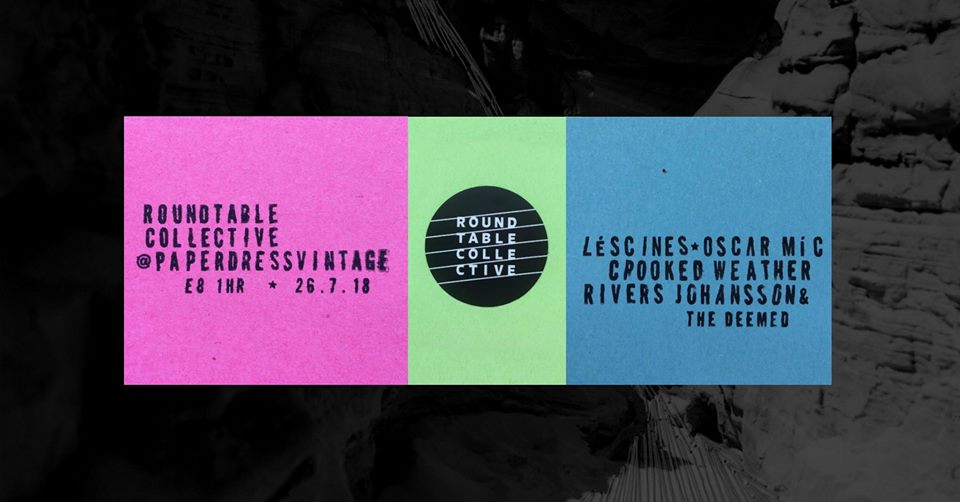
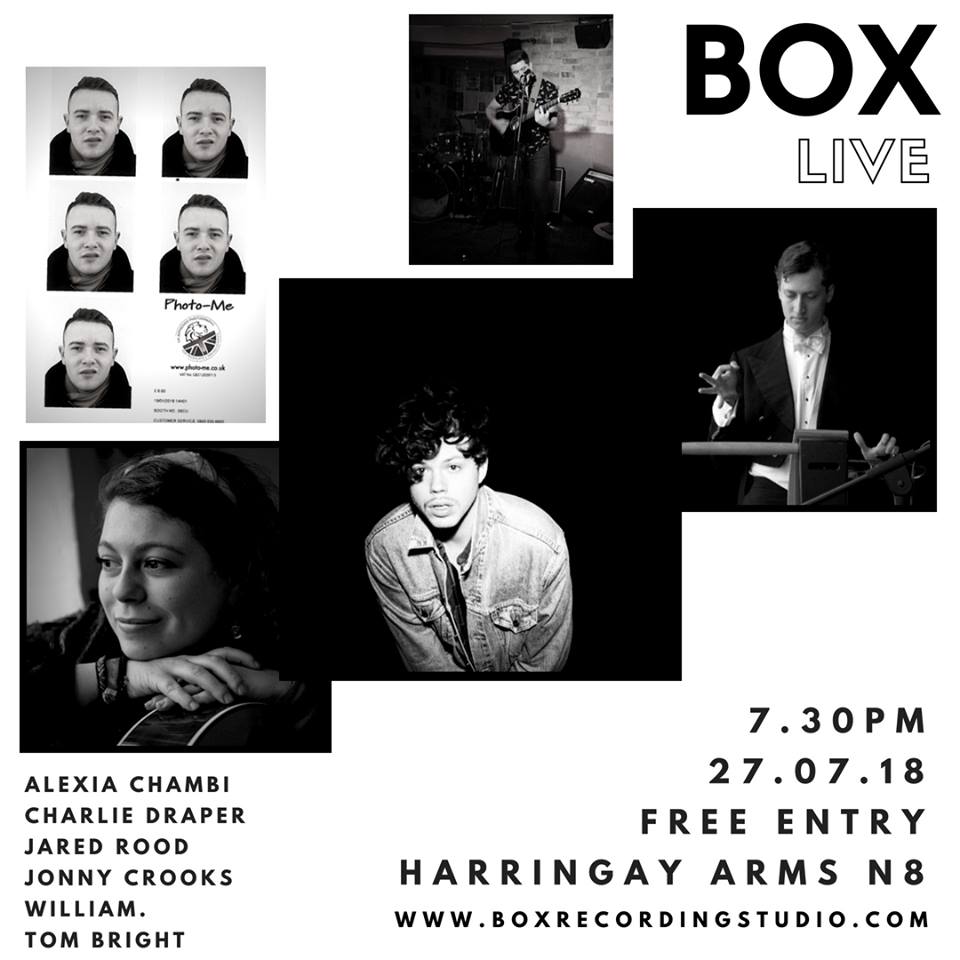
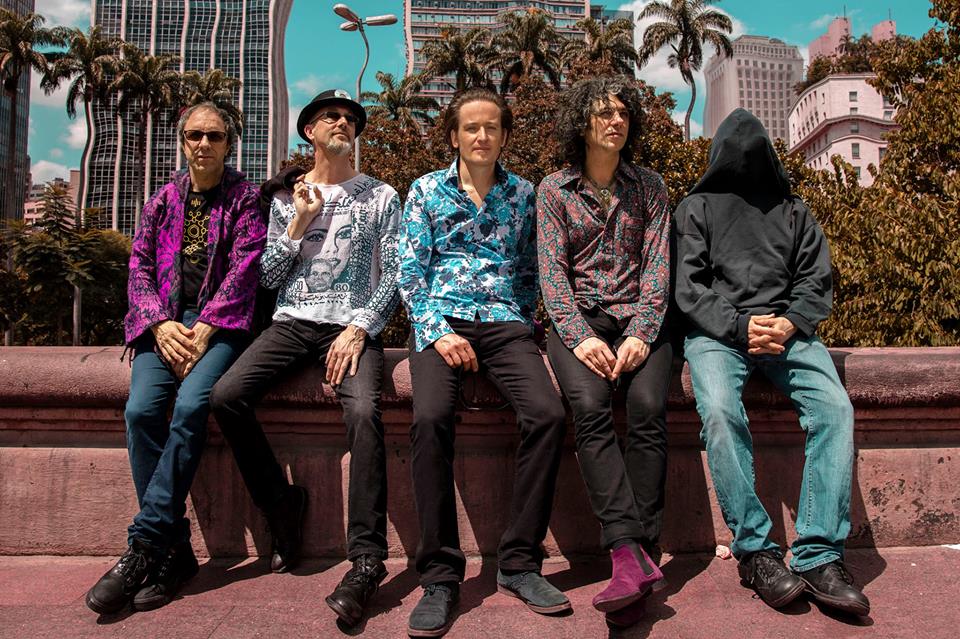


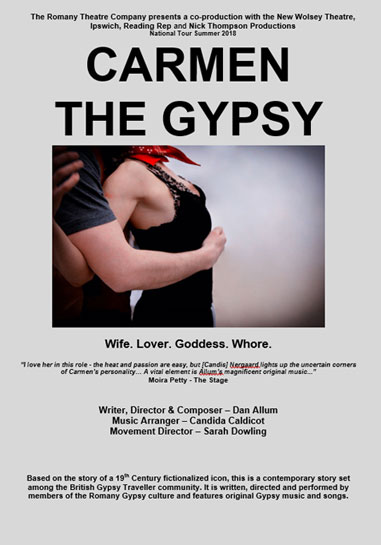
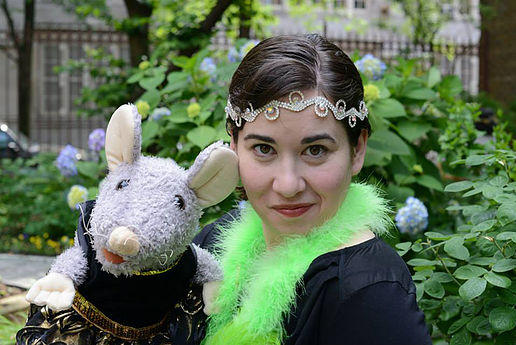
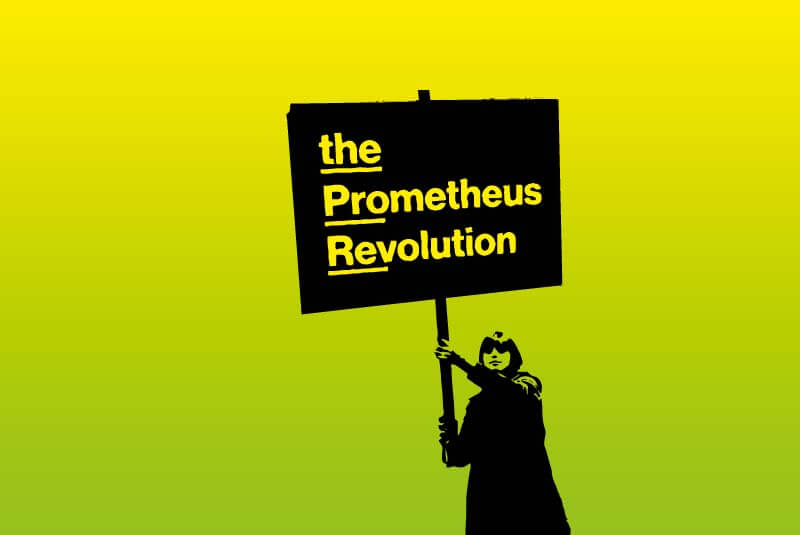
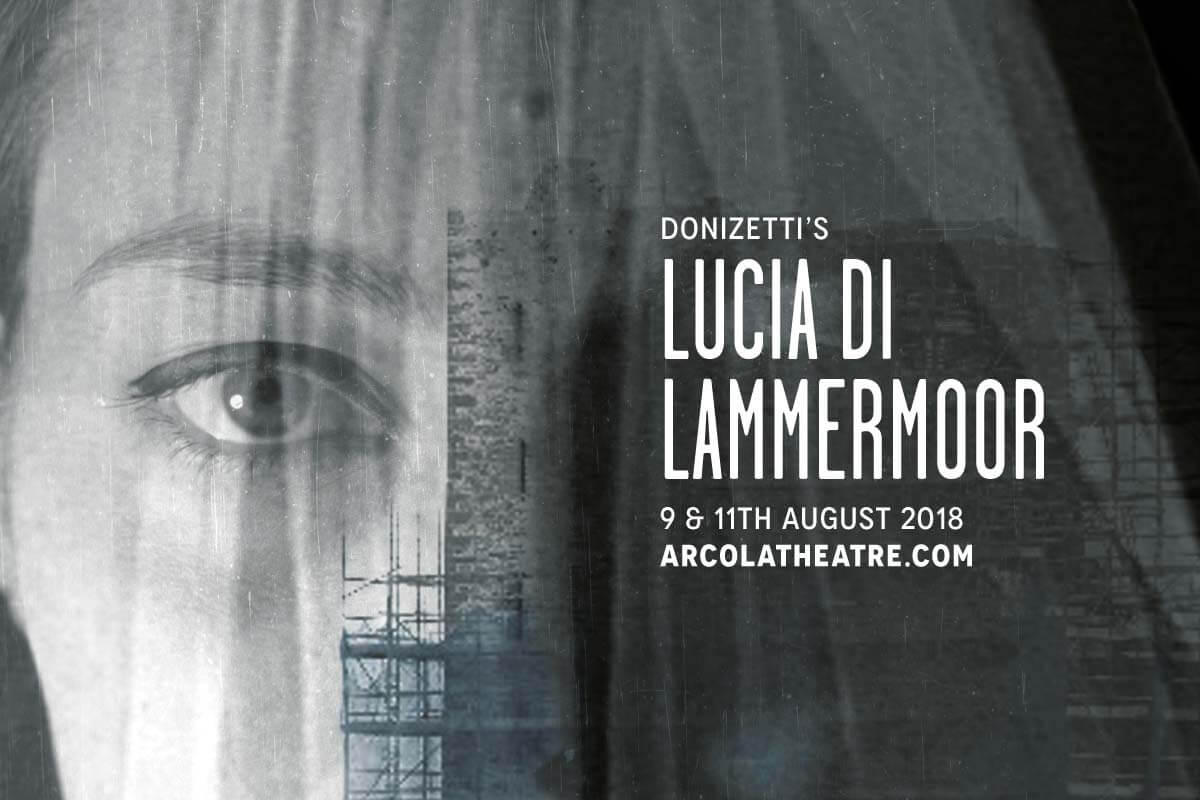
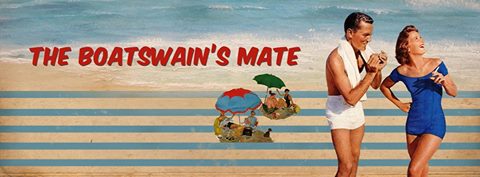
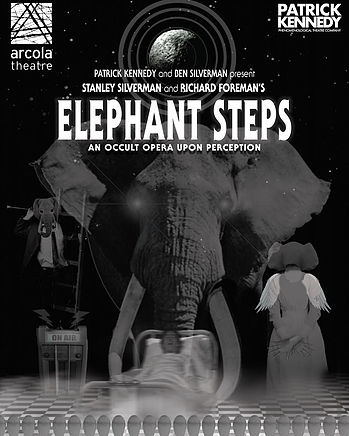




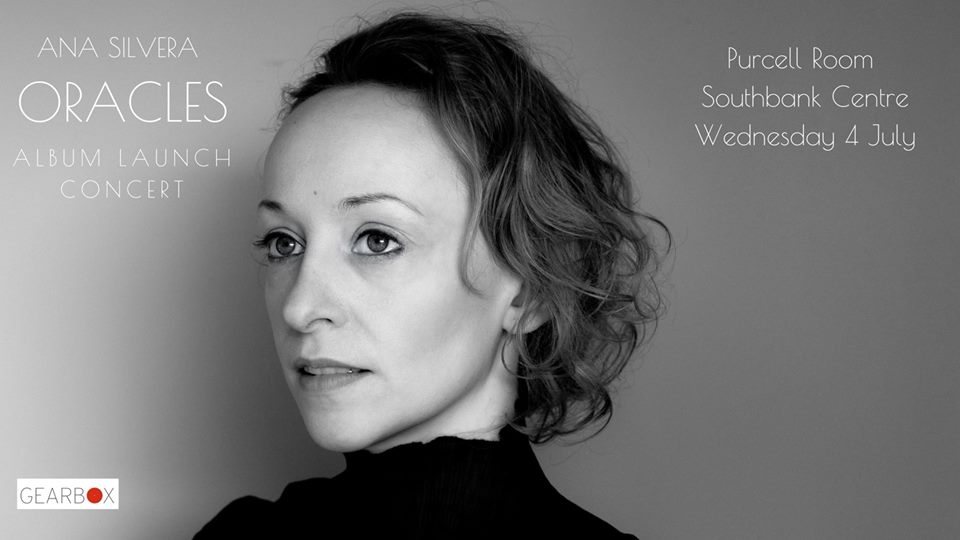







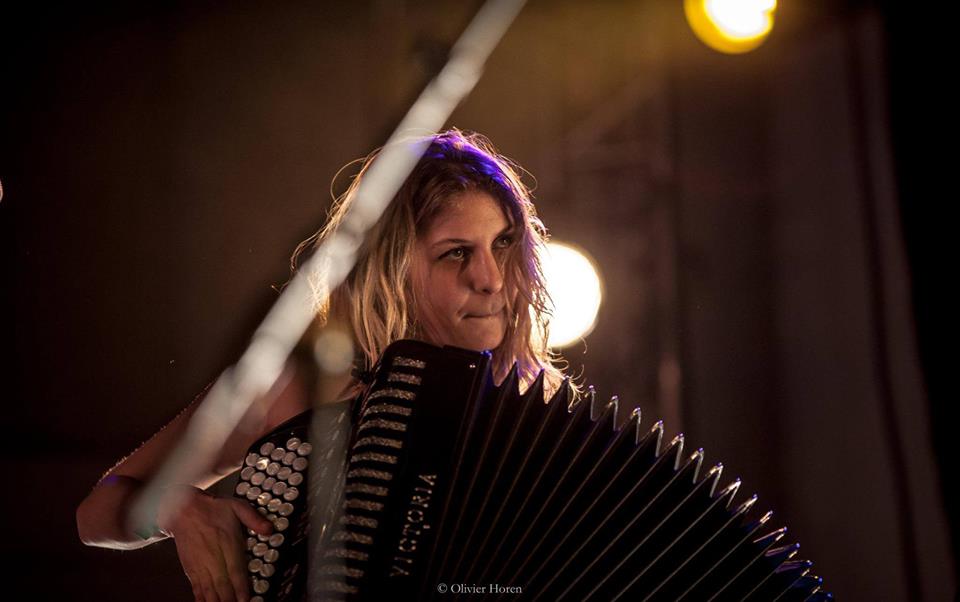
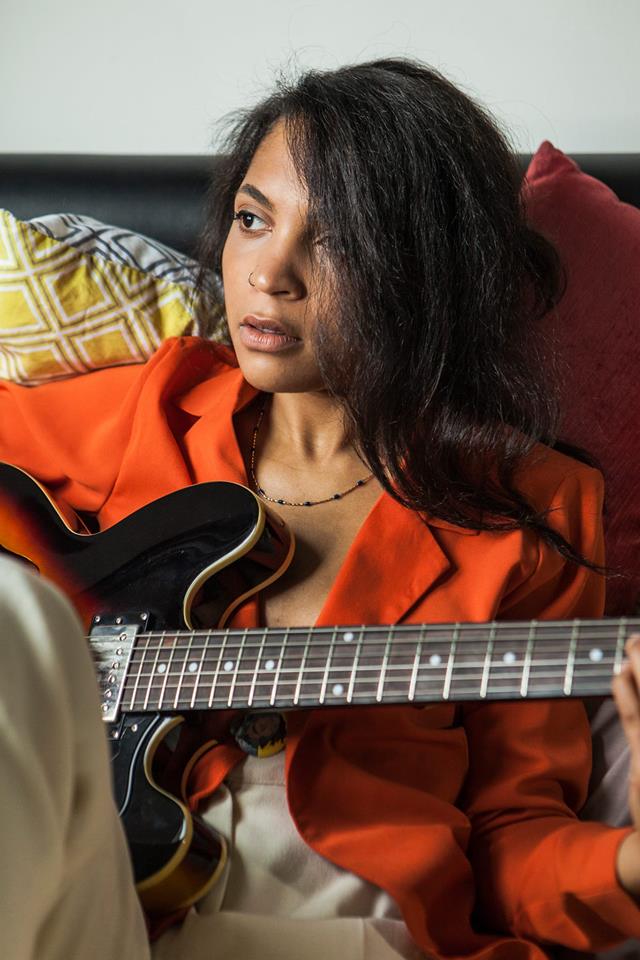
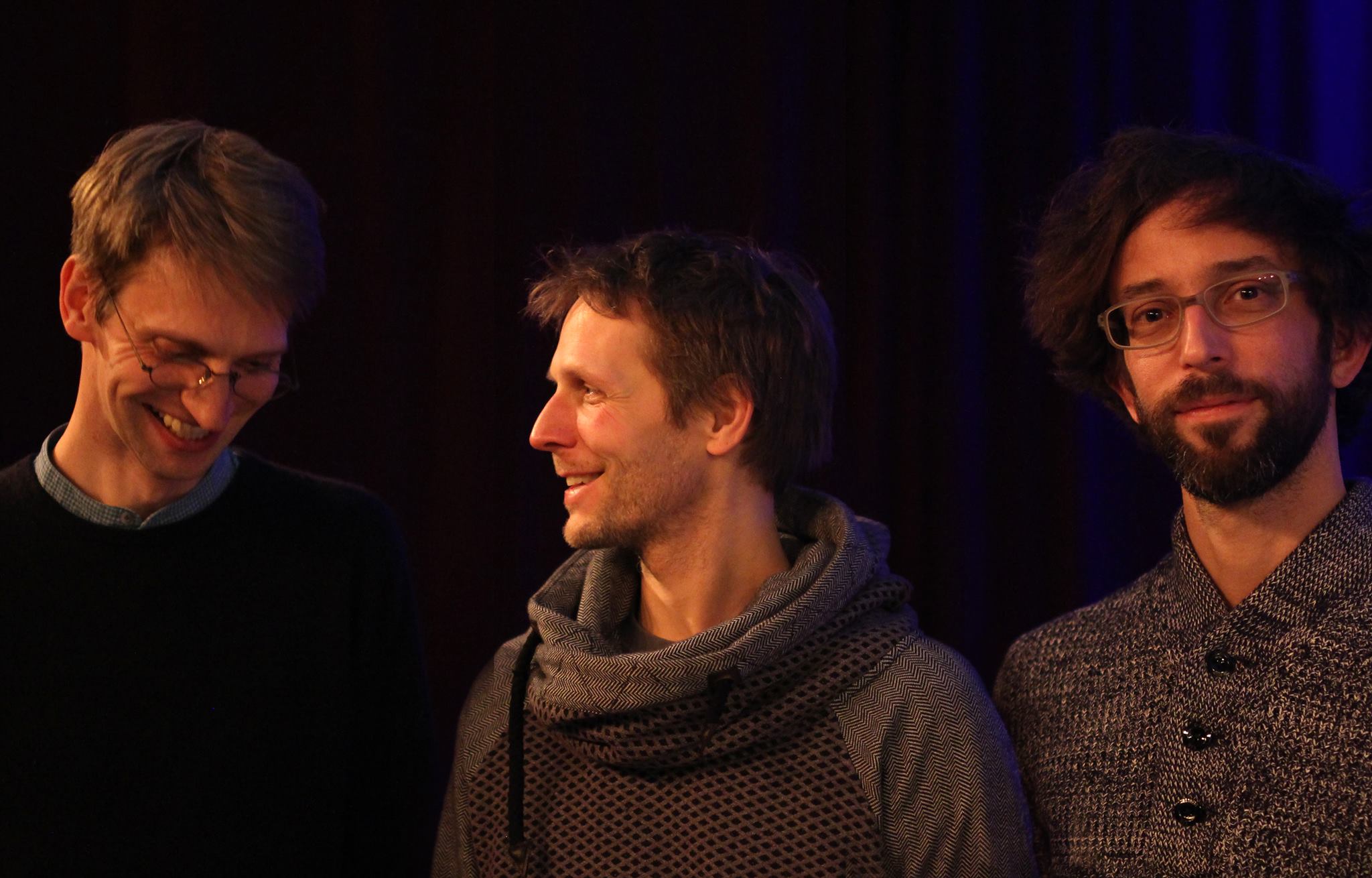


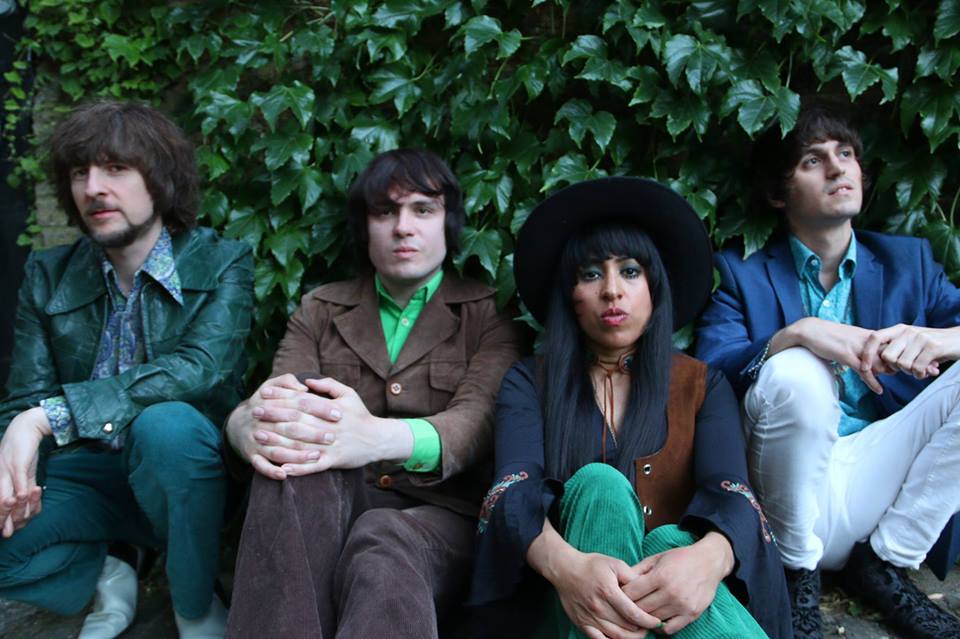


 Misfit City