Tag Archives: London (England)

May 1997 – live album reviews – King Crimson’s ‘Epitaph: Live in 1969’ (” maybe only rivalled, in their day, by The Doors at their peak”)

10 May

King Crimson: 'Epitaph: Live in 1969'

King Crimson: ‘Epitaph: Live in 1969’

With guitarist Robert Fripp as the only constant factor (he once memorably described himself as not so much the leader as “a kind of glue”), King Crimson have negotiated the peaks and troughs of a three-decade career in rock music and at least six distinct and differing incarnations. In the process, they’ve become one of those bands carrying a distinctly hazy reputation.

Where to place them? Not with the evergreen Beatles, Stones or Byrds; or with the narcotic, perversely cynical tradition of the Velvet Underground. Not in punk’s vigorous righteousness, or New Wave’s beat-smarts; or in the ever-credible European avant-rock field. Not even in old-school retro-rock (you won’t find Oasis ripping off one of their riffs). Outside of the healthy Crimson cult, the 1994 description in an LA newssheet (“prog-rock pond scum, set to bum you out”) seems to sum up the rough consensus. To many, King Crimson are and always will be one of the dinosaurs, if not the rotten egg that spawned the whole prog-rock movement. They’re pretentious, ludicrous, and sexless Mellotron fondlers; or they’re just a little too damn strange and perverse, winning your friendship only to kick you in the shins the next moment. Or they just don’t fit onto your party tape. Whatever.

‘Epitaph’ spearheads the series of archive live recordings which are just starting to sluice down the conduit of Fripp’s self-propelled record company (Discipline Global Mobile), each accompanied by the oft-prickly but ever-passionate guitarist’s commentary on the time, place and ethics of Crimson activity. Fripp’s hopes are obviously set on a fairer deal from history, or at least on providing a chance to reassess King Crimson in all of its painfully evolving forms.

His rogue-academic sleevenotes – witty and painstaking, pedantic and enlightening – might play a big part in reinstating this hidden legacy; but the superb “digital necromancy” of DGM engineer David Singleton is equally vital. On ‘Epitaph’, entrusted with the oldest and most variable Crimson live recordings, Singleton has spliced incomplete recording reels together to recreate concerts; wrestled listenable (even impressive) live sound from crumbling BBC master reels; and coaxed atmosphere and clarity from second-generation sound-desk recordings, unwanted overdubs, even crappy home recordings from interference-dogged radio broadcast.

But beyond the Frippertations, and even with the static and the eccentric degrees of muffling, ‘Epitaph’ is a welcome display of the power of the very first King Crimson. This is the band which bowled over Jimi Hendrix, who once approached Fripp saying “shake my left hand, man: it’s closer to my heart.” This is also the group who recorded 1969’s pivotal ‘In the Court of the Crimson King’, then gouged a magnificent trail of dates across Britain and America before fissioning at the end of the year. A band which original frontman Greg Lake still describes as being “without fear.” Perhaps it was the briefly-potent whiff of Faerie which fluttered around English psychedelia at the time, but King Crimson felt itself pervaded by something extraordinary and supernatural (which the members jokingly referred to as “the good fairy”). Of the five original Crims, only Fripp has subsequently regained the same artistic heights which he did here. Yet even he considers this version of the band to be particularly special, embodying a time when “music leant over and took us into its confidence.”

It’s certainly true that on ‘Epitaph’ King Crimson seems to be drawing from something beyond its members. Those mousy young English boys making shyly urbane stage announcements are also those inspired, demonic note-hammerers who are deforming your speakers by brute force. Racking rock’s power up several notches beyond any previous record, King Crimson swarmed like warrior ants through careering unison choruses and stabbing staccato assaults. Here you’ll hear pastoral flute pieces and folk ballads juxtaposed with brain-curdling electrics, jazz effects that scurry from lounge-y hokeyness to bebop and free-fired whiteouts. You’ll also hear the sound of Wagner and Bartok being wrung dry. Unlike many subsequent prog outings, King Crimson provided the feeling that, rather than being cuddled up to, classical music’s cage was being rattled until it screamed.


Fripp’s guitar playing is the closest thing that King Crimson have ever had to a trademark sound. Here, though, it’s merely part of the ensemble – it was an approach which was applied far more to underpinning the band’s hefty array of textures and sonics than to taking on the guru trappings it would later assume. And it was up against formidable, if beneficial, competition. Yet to become the self-satisfied face of ELP, a pre-pomp Greg Lake was already achieving a career best. Michael Giles was providing an object lesson in how to drum with subtle, taut complexity and economy rather than bombast, yet simultaneously make yourself unmissable.

Seen from the here and now, the overwhelming musicality of Ian McDonald is a particular shock. A few years later he’d be reduced to providing Foreigner with a horribly diluted version of Crimson’s hybrid sounds, but here he’s untouchable. His robotic Mellotron orchestras were a benchmark in violent grandeur – as structurally stressed and queasy as sailing ships, and played with demented intensity. Hearing him stabbing and slamming the ‘Tron into an inferno of junked but coherent string-death noise on Mars is little short of a revelation. As are the moments when he leads the band on a blazing, wailing saxophone that strained towards Albert Ayler’s fierce free jazz rather than British dance-bands or pirated Stax records.

Off in the wings, Peter Sinfield is the silent participant here – only audible in the odd buzz (since his then-revolutionary stage lights also affected the speakers). However, he was also present in the ornamental lyrics which – even at their most floridly Victorian and romantic – got to grips with the contradictions implied in the music and in the civilisation of its time.


The four BBC radio session recordings display a group already far more ambitious than even the ’60s norm – maybe only rivalled, in their day, by The Doors at their peak – and a good deal more haunted in outlook. 21st Century Schizoid Man is still one of the most calculatedly vicious pop songs ever – a ‘Mad Max’ duelling-car of a piece, studded with flails, razor blades and serpentine instrumentation – and one of the notable occasions on which Sinfield’s flamboyant verbosity hit the mark on every line. The inflated stateliness of In the Court of the Crimson King’s title track, soaked in mediaeval imagery (jesters, witches and all), may well have given the green light to every sub-Gothic fantasy that would blight prog during the ’70s. But here it still looms sad, bad, blood-soaked and as steeped in pitiless history as the Tower of London – a heavy, tattered tapestry of the creeping and destructive blights that come with civilisation. Lake delivers it with a wounded and disaffected majesty.


For all their pomp and ceremony, their purple filters, King Crimson were as political as any of their contemporaries. It seems odd to hear a group featuring the notoriously abstemious Fripp singing “let’s all get stoned” on their unexpected, woozy but ballsy cover of Donovan’s Get Thy Bearings. But Crimson – a band with strong working-class roots, despite the bourgeois tag prog-rock was to be lumbered with by punk revisionists – identified themselves far more with the ’60s counter-culture (drugs notwithstanding) than they did with the establishment. On one concert recording, Fripp pointedly dedicates Schizoid Man to Spiro Agnew. The shadows of Altamont’s rude awakening, Vietnam’s ongoing barbarities, and the precarious threat to a future Utopia are all present in the bleak scary screech of the band’s wilder moments and in the epic mourning of their ballads. Of which Epitaph itself takes the crown – ageless, with Fripp’s watchful guitars rolling out acoustic swathes and quietly brimming electric tears, Mellotrons sweeping across like opera house curtains, and Lake singing with trepidation into the face of an uncertain future.


The concert recordings stem from that first, final, fatal American tour, including the ’69 Crimson’s last bow in its entirety (the concerts at San Francisco’s Filmore West just before both McDonald and Giles quit). As expected, magnificent string-drenched versions of Epitaph and a couple of overwhelming breakneck runthroughs of Schizoid Man rear their heads; but you also get earlier, raw versions of evolving new material.


Drop In is a version of The Letters (the Jacobean nightmare from ‘Islands‘) with a different lyric. But the violent emotional sentiments remain the same – the form is lazy bluesy pop, the words are typically detached, sardonic Crimson menace. “Why don’t you just drop in, / and let the game begin? / You wished you’d learned to play, / and lived to die another day. / The rules you pick and you choose. / The odds are stacked for you to lose.” The music has a far nastier focus. Chopped and diced, riff-stamping, the sneer of McDonald’s deadly tenor sax and Giles’ explosive, spasmodic bop drums bring it closer to the level of a Coltrane scream.


A Man, a City would later evolve into Pictures of a City. Here, you can hear King Crimson attempting to blend New York’s pitiless industry with a Hieronymous Bosch nightmare, via a lurching Gothically-proportioned snarl of R’n’B sax riffs and metal-tearing guitar. On the road, their painstakingly written rock texts were transformed by interpretation and improvisation (from McDonald and Giles in particular). Though the results were inescapably lofty and English – and also rigidly stark – they make an interesting parallel to the electrified jazz-scapes Miles Davis and Tony Williams were pursuing on ‘In a Silent Way’ and ‘Lifetime’, or which John McLaughlin had already carved into for ‘Extrapolation’.


At Filmore West, in the home of the hippy movement, King Crimson opened up with In the Court of the Crimson King, lacing English roses into Haight-Ashbury hair. Typically, this was a sly and malevolent seduction to soften them up for the full Schizoid onslaught. Perhaps as an adjunct to this, Crimson also showed more of their softer, more fragrant side. Travel Weary Capricorn was one of their few moments of hippyish peace: a fragment of boppy Traffic-y pop, with Lake almost scatting and McDonald’s blissy jazz flute darting and scurrying like Herbie Mann over the band’s deconstructing, half-melted bluesiness.


Although Mantra shows its age (pleasant kaftan-y stuff with, admittedly, some ravishing flute solos – bits of it would later show up on Exiles), Travel Bleary Capricorn has them accidentally anticipating the post-modern dissections of the ’90s as they turn, briefly, into an improvising lounge act. Spanish guitar wobbles while McDonald pisses about on the Mellotron presets (cheesy piano and lounge rhythms), as King Crimson pay a quizzical visit back to their hideous apprenticeships in hotel dance groups, army bands and cabaret backings. Right from the start, Fripp’s humour was always a tad elliptical, and his glimpses into a future of “chance and hazard” are often surprising in retrospect.

But what you’ll remember most is the head-crunching power and violence in their improv treatments of Gustav Holst’s ‘Mars’. Each version builds from a gentle bass and drum throb, with McDonald unwinding the harmonies out of the dark, bloodied guts of a Mellotron. Growing ever more loud, staccato and harsh, the theme is psychotically smacked against the back wall; and ends up in blistering ray-gun effects over the stabbing, splintering, deafening unison riffs – the first sighting of thrash-classical. You can hear the seeds of math-rock, Mogwai/Slint crunch, and Foetus-style orchestral-industrial here; and The Young Gods clearly owe Crimson everything.


What must those stoned California hippies have made of it, with their storybook pictures of England? It must have been like being stomped into the ground by a full-armour cavalry charge, just when you were expecting Maid Marion to give you an apple. Listen back to Crimson’s second, post-split album ‘In the Wake of Poseidon’, and you can catch a persistent flutter of Frippish hands clutching at the memories of that jaw-dropping tour.

Some music takes years to fade. For all its baroque bloodiness, this still sounds freshly minted. A remarkable rediscovery.

King Crimson: ‘Epitaph: Live in 1969’
Discipline Global Mobile, DGM 9607A (5 028676 900252)
CD-only double live album
Released:
6th May 1997
Get it from: (2020 update) Burning Shed
King Crimson online:
Homepage Facebook Twitter MySpace Soundcloud Tumblr Last FM Apple Music YouTube Vimeo Deezer Google Play Pandora Spotify Tidal Instagram Amazon Music
 

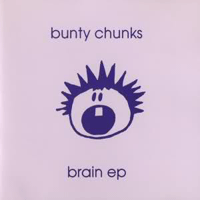
November 1996 – mini-album reviews – Bunty Chunks’ ‘Brain Ep’ (“violent eccentricity and an atmosphere of coded warning”)

16 Nov
Bunty Chunks: 'Brain Ep'

Bunty Chunks: ‘Brain Ep’

A bizarre, triple-jointed noise, ‘Brain Ep’ is twenty-two minutes worth of sixteen razor-honed two-minute songs. Any band of indie stoners could copy this note for note, slow it down by two-thirds and still end up with enough music for three years of releases. Bunty Chunks slam it all out at once. They’re probably one of the only groups who could deliver you a full concept album using only a split 7-inch with Napalm Death. And the Ep is short for Epilepsy.

So what kind of band would name themselves after a dismembered issue of a long-defunct girl’s comic? Well, theirs is a sound of seriously intense stunt guitar, twitchy hardcore tub-bashing and voice-of-doom Valkyrie vocals from Lisa Bailey. It’s as if Steve Vai (during his Zappa tenure, not his metal stardom) had skidded on the soap during bathtime, crashed through the window dripping and naked as a newborn, and finally fallen splat through next door’s roof, straigh into the middle of a women-only workshop of opera lessons. (Yeah, well, things like that happen to me most weeks…) I could also suggest L7 doing a jigsaw with Wire, Slapp Happy being forced to speak after being shut away and mainlining espresso for a solid month, or a Public Image Ltd. lineup with a Zappa complexity fetish. Otherwise there don’t seem to be many precedents for Bunty Chunks’ music. Which is a shame, because then life would be a lot more interesting than it actually is.

‘Brain Ep’ delivers a fruit salad stunt-punk, where the guitar weaves ridiculously complicated loops as Lisa vomits up hairball blasts of surrealist rhetoric. These in turn are decorated with scattered ad-slogans, one-liners and dismembered moments of sharp poetry. Seemingly taking as much influence from random cartoons and Rorschach blots as from real life, Bunty Chunks lean heavily into a disturbed world of childlike imagination and often topple into ludicrous playroom weirdness. Songs sport titles like Dog Made of Foam, Kojak Ring of Confidence or Fly Away Sausage Boy. Lisa’s lyrics are full of sinister, comical transformations: feet turn into chickens, stirrup pumps hurl abuse, and even Pavarotti reveals a hideous alter-ego. Yet there are stories in there too (embedded in the word-rashes) even if they do seem to have been tied in knots by a Turkish masseur and forced through a shattered kaleidoscope.

Lisa’s unstoppable voice – iron-hard and utterly committed, with a car-alarm urgency – is key to this. Taking what could otherwise be colourful whimsy, she pushes it out sounding like no-nonsense observation. She can navigate the paranoid mutterings and memories of a vagrant (in Hobo) or hurl out chattering expressions of rage at the demands of scrounging friends and partners (in Pay Up Ape). Similarly, she can also handle the put-upon fretting that sizzles in The Cat Tooth; the feverish dreams of mortality and aging in We Grow Up With Bones; and all of the bizarre characters that these songs suggest are marching in and out of her memory and life like a plague of amorphous, opportunistic aliens. (“Years later I would say I realise then, the only thing you can sell and still own… he was not a cripple, but he could pretend to be like no other.”)

While there’s little variety in her arresting, confrontational tone, its sheer conviction nails Bunty Chunks’ apparent flights of fancy down hard to the tarmac, rendering them as gritty as life in a rotting tower block. Despite the hallucinatory feel of the band’s songs, her edge gives them a visionary clarity. Lisa’s simultaneously the person who urgently buttonholes you for attention in the wasteland, and the woman who’s guarding and watching at the door, keeping a hard eye on the inside and the outside. Balanced between violent eccentricity and an atmosphere of coded warning, ‘Brain Ep’ comes across like a lifetime of very tricky parallel-dimension social work, carried out in a city of grotesques.

Considering that they’re the ones who got us into this, Bunty Chunks make pretty good guides to get us through. This in spite of the fact that they’ve junked verse-chorus-verse, and you’d better come in strapped up for a relentless (sometimes irritating) barrage of storm-tossed notes. But it’s worth the visit. At the very least you get to see Lisa and the other ‘Chunks playing with giddy intent: within sight of a million tunes yet never settling on any particular one, with eyes and ears stretched far too wide open to settle for anything as simple as boy-meets-girl. “Brain ep convulsions.” You said it, Lisa. Fits for a queen. So where’s the sixty-minute triple album, then?

Bunty Chunks: ‘Brain Ep’
Noiseburger Records, NB5 (5019148710073)
CD-only mini-album
Released: 1996

Buy it from:
Long deleted – look for this second-hand.

Bunty Chunks online:
LastFM

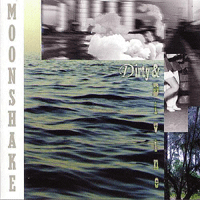
October 1996 – album reviews – Moonshake’s ‘Dirty and Divine’ (“like ghost trains – whistling and rattling across the room”)

10 Oct
Moonshake: 'Dirty And Divine'

Moonshake: ‘Dirty And Divine’

Even as a small chunk of mid-’90s London rediscovered how to swing and posed for Time Magazine, life carried on as usual for most of the rest of us. The weeks of quiet desperation, the litter in the corners, the urges and the grinds that don’t match up. While the Britpop scene whooped it up in the happening neighbourhoods, Moonshake were sitting up late with whitened knuckles in rented high-rise rooms, or prowling the mean streets spitting out stories.

Moonshake’s intensely visual songwriting and soundcraft always seemed born of hard-boiled cinematic overload. On 1994’s stunning ‘The Sound Your Eyes Can Follow’, lead ‘Shake Dave Callahan rubbed the unsparing urban soul-mining of The The up against The Young Gods’ overpowering walls of sampled sound, and beat both of them for sheer grit and presence. Determinedly guitar-free, taking their cornered-rat savagery from Callahan’s paint-stripping sneer and Raymond Dickaty’s ferocious arsenal of treated saxes and flutes, Moonshake’s harrowing street-literature songs were heavily sample-textured: but they travelled light and fast, drawing on tooth-rattling, uptight, Can-inflected dub grooves. They were twenty-first-century urban blues, as tough and unyielding as steel wire. Most importantly, sound was everywhere: cramming into the ears, surrounding the head with a blurred, terrifying out-of-scale world.

For some, the methodology of post-rock has served as an excuse to get lost, to unshackle yourself from precision, swallow your own guitar, womb yourself up in universal sonic tissue and drop out of language altogether. For Moonshake, it goes the other way. Callahan’s bitter, precise, dramatic language – shading his harsh sorties into hard-times lives with a poetic flair reminiscent of a punk Dickens, or of Brecht and Weill – is central. It’s just that rock instrumentation is too imprecise, too blunt to do it justice. Post-rock possibilities, and the overwhelming landscapes regurgitated by samplers is the only sensible framework for the way this band captures the world. Moonshake songs are like ghost trains – whistling and rattling across the room on forbidding, chilling loops of warped and mangled sampled sound, whirling you through a clatter of noise; dropping you into the thick of things; fucking with your sense of placement and angles, and thrusting gritty reality into your face.

‘Dirty And Divine’ is – at first hearing, anyway – more modest in its scope than ‘The Sound Your Eyes Can Follow’, That album lunged out of the speakers and went for your throat, both the epic stinking script and score for a vast, hideous film about the downside of the London experience. In comparison, ‘Dirty And Divine’ is more Mike Leigh to its predecessor’s Terry Gilliam. The ram-raided orchestra samples are pared back in favour of metallic whooshes and industrial-sump bubbling; Dickaty’s been given a free rein to mutate himself into an ensemble of mangled brass and breath. Centrally, Callahan’s songwriting emphasis has narrowed down. The clank and snap of Cranes sets the agenda, capturing the ebb and flow of a locked-down, clock-watching workforce in widescreen: “the builders are earning their daily bread / and they make sure they eat it every day at one o’clock… / The housewife’s dreams evaporate / as her husband’s nightshift ends at eight.”

Yet ‘Dirty And Divine’ also provides the backdrop for rebellions against the timeclock and the grind. Most of the album homes in on the stories of individuals. Where previous songs were a pageant of strain, entrapment and stagnation (a whore and her regulars, a protracted divorce) this record deals with what happens when frustration breaks out and escalates into quests for further, greater stimulation. The chance-addict of Gambler’s Blues gropes for a chance to be empowered, to face a challenge he can respect (“sometimes I pluck order out of the form – / I slack for a moment, the moment is gone”) but pays the price anyway: “I’m a gambler, and sometimes I lose, / but the kick’s in the playing, not paying the dues. / Always an offer I cannot refuse, / always a time-bomb I cannot defuse.”

In Exotic Siren Song, a young man hits the wide world for a perilous life of opium-dens, brothels and high stakes, keeping company with gun-runners and fraudsters, dodging pirates and police. Initially rejoicing at the chance to live by his wits, he ends up jaded, complaining “nothing now is really new.” The adrenalin-hooked petty crook on Up For Anything lives by his instincts and his appetites – “I’ll balance on the balcony, twenty-one floors high, / swinging from the vapour trails, ropes in the sky… / I can’t count the conquests and I can’t tell the time.” The buzz is still strong enough for him to dismiss the damage that will come, when “in ten year’s time I’ll be the boy with the mashed potato body. / All this champagne living on beer money, / out among the bumper-car people who never say sorry.” His counterpart, the elusive criminal in House On Fire (think Nine Inch Nails meets ‘Badlands’) has perfected the art of living on the edge. His wife may break under police questioning, his invisibility may evaporate and the law pounce on him, but he’s already working on plans for manipulating his fellow jailbirds.


He’s the exception – in most songs the downslide is never far away. Throughout the album, speed and appetite are portrayed as a drive that becomes a monkey on the back. Yet while it lasts it’s a hell of a ride. Another of Callahan’s savage stress-head characters snarls: “You’re too open, and you’re too easy. / When I’m out, I do as I damn well pleasey… / The only light I need sweeps through the window… / Keeping a monster comes in handy. / Hard candy…” To stop and think in this rolling, callous world is to invite despair.

To do him credit, Callahan unflinchingly represents this as well, offering up a couple of his most intimate songs. The make-or-break musings of Nothing But Time ponder the next step (“now I come to a fork in the road”) and weigh up possibilities: “Shall I cause some destruction that none shall understand, / undyke my finger and flood the whole land?… / I let you go and then you come back. / Shall I pick at your nature until you react?” Ultimately, plans are left perpetually hanging in weary, lonely resignation (“I’ve got my own design for something quite grand… / You can appreciate even if you don’t understand,”) all wrapped in rolling Arabian horns and the gonging sound of empty vessels.

Too late. The Taboo (swathed in flugelhorn and rippling harpstrings) surfaces at the end of the album: the last moment of awful drunken clarity before the final fall. It’s a lament for the loss of honesty – for the lost ability to be vulnerable and unveil the tender truth of yourself. Cards should be on the table, but no-one will make the move. “If I were to be really careful, / and take pride in everything I do, / I would show you what ‘really’ is – / and I can’t, ‘cos it’s taboo.” The seasick backing music swirls: vision flattens. The loved one recedes across the table, behind a wall of well- worn gambling chips and smeared shot-glasses. “If I were to show you how I feel, / would you call me blue? / If we could reach out and touch each other? / But we can’t, ‘cos it’s taboo.” Almost touching, but out of sight. House wins.

This album is a brutally compassionate mausoleum to burnout, made from raw words and cracked sinews. Lay those dusty dreams to rest.

Moonshake: ‘Dirty And Divine’
C/Z Records/World Domination Records, WDOM028CD (5032059002822)
CD-only album
Released: 4th October 1996

Buy it from:
Various suppliers, or second-hand.

Moonshake online:
Facebook MySpace Last FM

October 1996 – live reviews – The Blue Nile + Sinéad Lohan @ The Palladium, London, 8th October

10 Oct

Wait in any given place for a long time and reckon up the odds. Which are you more likely to see passing by – Bigfoot, Lord Lucan, or a member of The Blue Nile? The chances are about equal each way.

In a business that thrives and surfeits on over-exposure, The Blue Nile only sidle into view when they absolutely have to. In fourteen years of tenuous existence, this reclusive biz-shy Glaswegian trio has offered up no more than three short albums of exquisite ambient Celtic soul; stripping away the armour of the heart with cheap drum machines, breathing synths and skeletal guitars, and the scalded, mournful grace of Paul Buchanan’s desperately romantic deep-tenor voice, leaving us flat on the floor and then departing so quietly we don’t hear the door shut.

While they’ve had stiff competition from Kate Bush and Scott Walker in the stakes for lying quietly in the long grass, sometimes The Blue Nile are out of view for so long that they seem no more than the shadows of our own heartbreaks. Three phantoms whom we can fill with the overflow of our ruined, hopeless good intentions and the agonising rush of a love with nothing and nowhere to ground itself on. Every now and then, though, they surface – as they have tonight – put out a record, and those shadows take on flesh.

But first we have Sinéad Lohan; a Cork lass with beaded hair, a salving murmur of a voice, and the composure of a marble Madonna figurine. From out of nowhere to the grandiosity of the Palladium, and still she’s not batting an eyelid as she delivers her soft thrumming folky songs to a warm reception. She even invites questions, and gets them. She has that atmosphere that some quietly private people have, the stillness that invites fascination.

From up here her eyes seem sleepy, focussed inwards, and her songs are the same, ripples of feeling reflected in still pools that make you feel like a privileged eavesdropper. All of this and the quietness makes her seem like an Irish Tanita Tikaram without the air of lazy resentment. After she’s left the stage, I realise I can’t actually remember what any of the songs were about, but the impressions of the emotions involved remain etched lightly on my imagination. She’s as subtle and strong a carver as smooth river water.

After seven years out of the public eye, most bands would return to the stage in a blaze of glory. The Blue Nile don’t even turn the lights out properly first as they slope onstage like reluctant supply teachers. I mistake them for roadies until I recognise Paul Buchanan’s pained, elegant features among the men fumbling to pick up the instruments, all but flinching at the applause and the eyes trained on them. But it’s something they’ll have to deal with.

For all of their heart-stricken loneliness, The Blue Nile carry a very special feeling of empathy and homecoming around with them. Literally, in some respects: tonight’s audience ripples with the voices of Glaswegian emigres. And when one Scots voice, brought to a pitch of excitement, calls out “Glasgow Celtic!” it’s followed as fast as a counterpunch by a Rangers fan’s disgusted “fuck off!” Rather than a slit face, this results in a ripple of laughter and recognition around the auditorium. There are wry, self-conscious chuckles from the band as they finally launch into the Van Morrison-gone-synth-pop chug’n’whoop of Body and Soul.

All of this civility (and this nod to a respectable musical touchstone) prompts the question. Have The Blue Nile, for all their cult status, ended up as another branch of hoary pop tradition for the impeccably adult? Certainly they shy away from sarky pop irony, and they’ve a sheepish but determined commitment to presenting their songs unvarnished by gimmicks. Don’t even try looking for Pet Shop Boys cleverness here.

And then there’s the impeccable cleanliness of their sound – the clipped white-gold ring of it, the slow stretch of the falling-evening keyboards, even the live drums compressed to stiff Linn thuds… Or, on the other hand, the occasional hints of country in the songs from the new ‘Peace At Last’ album and how Stay’s heartbroken synth pointillism develops from a Scottish electro-pop lament to a finale with suspicious hints of rockabilly or hoedown. And, of course, there’s the way Paul’s huge voice draws from Frank Sinatra’s warm cocooning sound, rather than any from any obvious rock source.

Sinatra, though, never sounded this touched; this blown through by overpowering feelings. Even behind the theatrics of his saddest songs there was a man preening in his power; the guy who was laughing now; the honorary Mob capo whose very tone was a muscle. Behind these songs are a man who winces; who knows the scuffed concrete in the buildings he walks past will outlive him. Who’s haunted by the moments where decisions rest before they fall into becoming facts, and who’s never short of melody but is often stripped of words. And who, on this occasion, is swigging Lemsip by the gallon to beat off a vicious cold. It brings the vulnerability of The Blue Nile’s songs into sharper focus.

But then they’ve never suggested that the business of being adult is supposed to be easy, or even make much sense. ‘Peace At Last’ made that as explicit as anything ever is in the Blue Nile universe – a middle-aged album (Paul Buchanan turned forty while recording it) which showed youthful, domestic and spiritual certainties past their flush and breaking down into a unflattering mirror of doubts and shaky illusions. A new testing ground after their landscapes of young men’s fears had slipped away back into the years. While The Blue Nile don’t go so far as to drag middle-aged trappings – such as chipped crucifixes or well-dusted-yet-unloved three-piece suites – onstage with them, they wouldn’t need them. The words to these songs swim to the surface in flashes; brief snatches and sketches of anguished images that settle into the heart’s eye as if their places had been waiting for them forever.

A couple of songs from 1989’s peerlessly lovelorn ‘Hats’ album illustrate this – Over The Hillside fumbles through the burden of day-to-day failure and the pull away from home; Headlights On The Parade sees Paul lose himself in night-haunted reverie, borne on by the serpentine romantic curve of the melody over the mechanistic drumming. Tonight’s rendition of Happiness, a song already riven by doubt (“Now that I’ve found peace at last, / tell me, Jesus, / will it last?”) has to replace the soaring black gospel chorus that boosts it on record with three uneasy white men murmuring into shared mikes. You wouldn’t have thought that it could reach the same hymnal level, but it does, albeit becoming more of a private prayer.

Another ‘Hats’ classic, The Downtown Lights, has the transcending, unresolved journey-feel of a crying fit; heart-stricken keyboard swells giving way to beautifully sad reflection and back again, rising to a frantic crescendo of loss. The atmospheric abstractions of A Walk Across The Rooftops don’t give away much in the way of clues, but they do give a night-time stroll a tint of darkest foreboding.

And Family Life just overwhelms – a mid-life crisis set to song. Echoes of Tom Waits, Randy Newman and crumbling Hollywood Christmases coming together in the heartbroken drunken pleas of a man whose marriage is unravelling, whose boyhood innocence is rising to ask bewildered questions. Paul, singing like a man suddenly and shockingly shrunken, plays the role to the hilt. But there’s no storytelling, no plot; just feelings and the alcohol dissolving reasoning down to more questions and a blurred, blundering comprehension. “Say, you know, / no honeymoons, / just separate chairs in separate rooms. / Jesus, please, / make us happy sometime – / no more shout, / no more fight…” As the last scraps of piano dissolve in the hush, the frenzied applause seems to spray tears of recognition and relief.

It’s still as un-showbiz as you can get. All of these emotions are being let off on a very tight leash. The magisterial Robert Bell doesn’t crack his stern kirkman’s expression all evening, whether he’s forcing compelling crabbed funk lines out of a bass, keening his rare backing vocals into Buchanan’s mike, or crouched cross-legged onstage beating out patterns from the tiny synth in his lap. Over on stage right, P.J. Moore plays with an abstracted serenity as the Blue Nile’s bare, effective colorations flood out from his keyboards. The supplemental three on drums, guitar and synths play with their heads slightly bowed – more quiet men. So it’s the hunched, embarrassed Buchanan that’s the reluctant centre of attention; muttering wry Glasgow “let’s-get-this-over-with” asides between the songs, but singing his heart out of his chest and punching it up at the sky every time the music rises.

I guess that even with embarrassment weighing at his coat-tails, he can’t help it. There’s often a desperate strand of hope-against-hope in The Blue Nile. The near-delirious Sentimental Man ascends out of a jumble of chippy funk facets to hit gospelly heights; the intently energised strum of Tomorrow Morning rushes towards the light as if Buchanan was trying to beat the pain off by hurtling towards hope. Tinseltown in the Rain – which belts along as if it was the peak of some uncompleted Glaswegian street-opera – bursts up to a plateau of emotion, aggressive certainty struggling with a sense of doom. (“do I love you? Yes, I love you! / Will we always be happy-go- lucky?… / But it’s easy come, and it’s easy go. / All this talking – / talking is only bravado”) before exploding in a carillon of stammering, tear-jerking guitar.

And on Saturday Night you can feel the blessed surge of relief at a simple romance – “an ordinary girl” hymned with a incredulous delight, an everyday date turned into a haven from the wracked, exhausting, damn-near-religious romantic angst of the Nile songbook – turning out right for once. As the last swooning joyous chimes mount the air, I hear a ecstatic voice screaming “Yes!”. It’s my own. I can’t help it either.

Later, Bell and Moore take up positions at the synths on each side of the stage, waiting to play Easter Parade. White-clad, calmly watching each other for the cue, they have the assured and tranquil air of surgeons waiting to lay on the hands and bring out the pain. Then the song comes – plangent clutchings of piano, gushes of night-breeze synth and Buchanan singing of being alone in a rapt crowd, carried along like a solitary bubble in their exhilaration. And the empathy is summoned up and floods through us like medicine.

They can still touch the pressure points of the soul like no-one else. In another few months they’ll be hiding from us again, but that touch is going to stay with us until they feel able to venture out into the world again, blinking with trepidation at the looming feelings waiting to catch them.

The Blue Nile online:
Homepage Facebook Twitter MySpace Soundcloud Last FM Apple Music YouTube Deezer Google Play Pandora Spotify Tidal Amazon Music

Sinéad Lohan online:
Facebook MySpace Last FM Apple Music YouTube Deezer Google Play Pandora Spotify Amazon Music
 

September 1996 – album reviews – No-Man’s ‘Wild Opera’ (“fraying the edges of beauty to reveal a poignant discontent”)

11 Sep
No-Man: 'Wild Opera'

No-Man: ‘Wild Opera’

Late hours. Some velvety-dark bar in a city somewhere. Black décor, with sweeps of curved white delineating the spaces between floor and ceiling. Nearly deserted but for the last human fixtures, fixed to their bar stools, sunk in their own little drunken universes. Forefront: an ex-couple in an alcove, locked in mutual antipathy; maybe a month past the sharp, splintering anger of the break-up, yet now attempting to divine the reason why. He’s trying to explain.

“We talked for such a long time / That it seemed to mean a lot. / I was yours, and you were mine…”

Pause, just long enough for him to light a cigarette. The lighter clicks like a cocked pistol. Unyielding eyes meet again.

“Then the feeling stopped.”

No-Man aren’t singing about heaven and sunsets any more. Not that they ever did, exactly. For all of the limpid, luminescent, swooning beauty of past albums, there was always something rather darker going on under there. 1994’s rhapsodic, magnificent ‘Flowermouth’ (graced and expanded by chamber jazz, by majestic Robert Fripp guest solos by and creamy violins) concealed tales of anguished stagnation and defeat, the sharp edges of lovers’ memories, the simple and inescapable pain of being left behind. And No-Man have always chosen to orbit at the point where an absolute beauty intersects with a resonant pain. On ‘Wild Opera’ (their first album for 3rd Stone since the lingering death of their relationship with One Little Indian), these feelings have never been closer to the surface. Here are a procession of characters in extremis glimpsed for a moment through our veils of indifference, illuminated briefly by No Man’s peculiar mixture of compassion and alienation.

They make an odd couple, do the No Man pair. Steven Wilson is the technological wunderkind, crafting all round evolutionary pop wonder with fluent guitars and samples, sensuous beats and expansive sonic backgrounds. Tim Bowness is the baleful and reluctant dark star on the horizon breathing a chilly, beautiful wind of song across the people enmeshed in the gorgeous, sad eyed arches of songs that No Man put together. Between them they’re putting together some of today’s finest art pop, poised somewhere between Tricky, The Blue Nile, Robert Wyatt, Portishead’s ‘Dummy’ crossed with Scott Walker’s alarmingly skewed ‘Tilt’.

With ‘Wild Opera’ you pretty much get the lot. The ghostly, reflective atmospheres and introspection of trip hop. A sound as deep, lonely and full of frightening possibilities as 3a.m on a city backstreet. Jazz noise (pings of death knell Rhodes, hovering cymbals) mixing it up with blasting or whispering rock, and sliding up to sampleadelic dance impetus. Classy yet eloquently, exquisitely understated songwriter pop which never strays into mawkishnessness or worthy stodge. Violent, abrasive industrial dance, as on the bellowing rush of Radiant City or the jagged confusions of Infant Phenomenon. Delayed by a couple of years, in many respects ‘Wild Opera’ is closer to the sleekly disruptive post-rock efforts of Laika, Moonshake or Disco Inferno than it is to the elegantly-mannered theatrical art pop of No-Man’s beginnings or to the luxuriant high-end dance-pop of their One Little Indian years. And with the continued involvement of Fripp plus Richard Barbieri and Mel Collins (frequently via sampler cut-ups), you get the exploratory edge of the best progressive/evolutionary rock.

And all of this is fraying the edges of beauty to reveal a poignant discontent. Though Taste My Dream is a nod to familiar, naked No Man love balladry (a curve of soft tears and piano chords), such simple and direct love is rare on “Wild Opera” compared to its more dangerous flipsides. Pretty Genius is a trip-hop sigh of desire merging with a sense of disaster, its object (“you could lose your little mind, / never knowing what to find… / Don’t hide beneath the covers / don’t sit around…”) as likely to disintegrate as inspire.

To a background of ghostly Badalamenti swing and haunted vibes, Sheeploop sketches a portrait of a calculating, defensive, free floating swinger (“this loving is easy, this loving is free, this loving demands no part of me”), while laying bare the losses sustained with withdrawal from commitments (“you never know how people grow, become a part of something…”). Housewives Hooked On Heroin – the unlikely-titled single – is like a sliver of glass through the heart, a backhanded slap in the face of contentment which few others could pull off (excepting Andrew Eldritch, perhaps). It’s not about drugged out drudges, but millionaires growing listless in their air conditioned capsules; aging artists selling empty platitudes to complicit audiences; and a seething, jaded resentment turning towards perversity.

Rooting around too deeply in this shadowy, suspicious world throws up disturbing questions. Libertine Libretto (imagine Trent Reznor masterminding a jazz rock quartet while Tim’s clenched vocal scatters a string of broken, filmic images in the foreground) spews out a slew of fragmented, desperate Hollywood stories (“Arthur sheds his pheromones in fifteen thousand mobile homes / In the grip of grand emotion, Julia drowns in tanning lotion”). On Sinister Jazz, Tim pounds the streets alone chased by a swarm of disconnected, dysfunctional, fatal memories: “Wendy got it in the throat, Linda died in Alan’s coat, you read it all in Brian’s note… Robert lost the plot in Greece, the Jesus Army stole your niece, but all you ever do is eat.” The past is a foreign country – vivid, shocking, and now impossible to touch (“You’re never going home.”).

On Time Travel in Texas, horror-struck mellotron strings and flutes drift through a desert wind over a bone-scraping dub beat and scourging divebombing guitar. A soprano flutters tattered amnesiac rags of sound: Tim is either murmuring dazed recollections, grubbing thoughts out of the void (“all I can remember, that noise in my ear / and then there was silence / and then there was fear”) or bellowing a terrified lament in the background. You never know exactly what’s going on, but you know something’s coming to the surface, and that it will wreak havoc when it emerges. The last sounds on the track are a wail, a crash of bass piano, a string of hysterical sobs…

If all of this sounds like dead-end miserablism, think again. Like Radiohead, No-Man have a fascination for looking into the void. Like Radiohead, they save us from utter despondency by redemptively beautiful melodies and a passionate, irresistable concern for the state of the human being. In the end, they suggest that any choices leading us to disaster are ours alone, rather than mewling about the burden laid on us by a malicious world. On ‘Wild Opera’, it’s self deception that bites the hardest – as Wilson’s guitars belch and roil acidicly, My Rival Trevor lays bare the vacuum residing in the hometown stud, the masterly lady-fucker whose bedroom assurance is just so much short-term gymnastics as he “bids for beauty unknown, kills the seeds he has sown, always ends up alone.”. On Dry Cleaning Ray (musically, Massive Attack playing catch with a nifty organ sample from Dave Stewart’s Egg), the subject’s a wannabe who hasn’t yet realised that he’s aged into a never was, a working stiff whose dreams have become shopworn routines. “It’s the same old thing / it’s the same old shit. / Thirty years without a hit.”

Notably, No-Man are not above asking themselves similar questions. Once tagged as “conceivably the most important British group since The Smiths”… “Maybe there’s more to life than just writing songs. / Maybe not,” Tim muses on My Revenge On Seattle (which swims along on an exquisite shimmer and strum of acoustic guitar, a sleepy chatter of blushing Reichian keyboard pulse). Steamrollered by the grunge boom of the early ’90s and by brutal record industry politics, their reaction is one of hope: “My revenge on Seattle / I retreat from the battle. / Won’t you stay?”. A response that manages to be dignified, witty and touching all in one, and with a ravishing melody to clinch it.

No fat lady sings. Things change, things continue, some things disappear. Deep into the late hours, No Man continue to shine a captivating light on it all.

No-Man: ‘Wild Opera’
3rd Stone Ltd, STONE 027CD (5023693002729)
CD-only album
Released:
9th September 1996

Get it from: (2020 update) Original album best obtained second-hand or from Burning Shed; ‘Wild Opera’ was reissued as a deluxe expanded edition in 2010, also available from Burning Shed.

No-Man online:
Homepage, Facebook, Twitter, Soundcloud, Last.fm, YouTube, Instagram, online store, Apple Music, Deezer, Spotify, Amazon Music

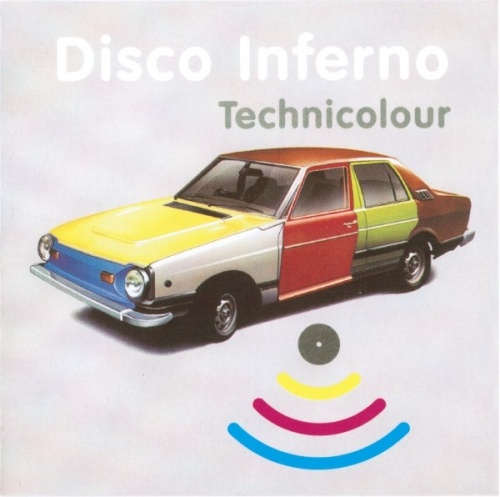
August 1996 – album reviews – Disco Inferno’s ‘Technicolour’ (“a poignant, if a touch unsatisfactory, monument to a band who did a most remarkable thing”)

5 Aug

Disco Inferno: 'Technicolour'

Disco Inferno: ‘Technicolour’

They were going to change the world with their world‑weary lyrics, noisy guitars and random artillery of samples.

As the USA brings us an ever more inventive and experimental range of post‑rock bands, it is sobering to reflect that, whether you like that all‑embracing genre‑heading or not, the UK could not sustain such a futuristic leap in pop music for long. Disco Inferno, Bark Psychosis, Seefeel, Insides and their ilk were just a temporary blip in the inexorable rise of ’60s revivalism.

Disco Inferno, in particular, had the cruellest of brief careers. Picked up and lauded by the likes of ‘The Wire’ and ‘Mixing It’, and used as a constant token of their superior musical taste by ‘NME’ and ‘Melody Maker’ journalists (a secret for them to keep and drop into reviews as an esoteric influence) Disco Inferno didn’t stand a chance of taking their unique vision to where they wanted it to be: the pop world.


This album nearly became the great “lost” work ‑ curtailed by the demise of the band, publishing difficulties made it uncertain if ‘Technicolour’ would ever see the light of day. Finally released months later, it stands as a poignant, if a touch unsatisfactory, monument to a band who did a most remarkable thing. Whilst producing truly “experimental” music, they didn’t forget the need for (well, it’s almost heresy to some chin‑stroking musical aesthetes) emotionally‑involving lyrics and a damn good melody.

So, for a sampladelic band, the opening two tracks scare the sheep with noisy guitar abandon. The title track, blasts in with a none‑more‑guitar‑and‑distortion start, but the unique invention soon creeps in ‑ a shuddering rhythm supplied by car horns, dog barks, shouts and breaking glass. A collision between The Art Of Noise and the glycerine melodies of The Lightning Seeds, with an end result comparable to late‑’80s Wire. Things Move Fast lives up to the title, and is a delirious noise‑guitar and beat‑fuelled rush through modern society. It ends with a sample of rapturous crowd noise. Truly, these guys lived in hope ’til the last.


I’m Still In Love reasserts DI’s passionate belief that a tender love song and futuristic sound could be combined: Ian Crause devoting himself to someone as they seal themselves away from the harsh iniquities of the world outside, with fireworks exploding and crackling during the exhilarating noise‑upon‑noise of the chorus. Lovely.

Sleight Of Hand is another hymn to the jaded view of the world as seen through Crause’s eyes ‑ “and once you see the sleight of hand / it’s never the same. / Once you see the cards are marked / it’s all in the game.” It’s the adult version of realising Santa Claus is actually your father dressed up in a red coat and cotton wool, pissed on cheap sherry. We’ve all been there. The feather cushion is provided by the swirling, tumbling harps, heavenly harmonies and chiming synth‑drums ‑ straight out of the ’70s ‑ in the chorus.


Don’t You Know is a sample sequel to Footprints In Snow from the band’s stunning 1994 album, ‘DI Go Pop’. This tine the rhythm is provided by the sound of heels on pavement, surrounded by the ethereal and enveloping electronica that features on so many of DI’s utterly entrancing slower tracks ‑ it really is best described by the contradictory term “acoustic sampledelia”. It’s a truly indefinable sound that I have only heard once before: in the unforgettable work of AR Kane in the late ’80s, another band who sounded like they were piecing together from the music and sound elements of a nuclear event. That is the spirit of Disco Inferno.


It’s A Kid’s World was the “big” single. That’s irony, by the way. It’s based on that Lust For Life drum intro. Kids’ TV themes ‑ ‘Doctor Who’, ‘Playschool’ ‑ are plundered for samples. There are even self‑referential samples from earlier DI tracks. It’s a veritable junkshop of found sounds. By any other standards, a triumph. By Ian Crause’s standards, this sounds like an attempt to produce what people expect post‑modern sampledelia to sound like ‑ knowingly ironic, dischordant brain music for ‘Wire’ readers and other musical eggheads.

But it lacks the tangible human emotions of most of the group’s material, unlike When The Story Breaks, which is perhaps the closest DI get to pop music for the twenty‑second century. The clattering synthetic drum breaks, harsh electronic ambience and (of all things) a sequence played on a touch‑tone telephone shows that some attention had undoubtedly been paid to the ten‑fledgling sound of drum’n’bass but applied to their melodic song‑based outlook.


Similarly, Can’t See Through It is almost a Blue Nile sound for the ’90s, a beautifully hushed marriage of natural acoustics and electronics. But more than anything, it is a song that sounds broken and exhausted. The lyrics state Crause’s dilemma at Disco Inferno’s situation: utter belief in the musical path they are following (“nothing can touch us / ‘cos everything in us / is digital cold”), but clear frustration that they’re not getting their vision across (“I can’t see through it / There’s no way back / I can’t get home…”).


It’s a lyrical concern that is developed in the final track. Devastating emotion soaked into its words, Over And Over is by far the most simply-recorded track Disco Inferno ever did ‑ just Crause’s voice, a guitar and a haunting drone in the background (more acoustic sampledelia…) It’s pure assumption, but it sounds like it was performed solo, after the split. The lyrics are undeniably concerned with the band’s demise ‑ “So many plans, so little time, / I can’t shake the feeling I’ve watched it all back from the end / Every missed chance and mistake / I hear when we’re playing / Forever in my head.” The man obviously lived for this project. It’s our loss that we didn’t sign up to it in droves.

I, for one, sincerely hope that Ian Crause and Disco Inferno soon find that they can’t bear not to present their music to the world, whether in a reformed group or a new set‑up (rumours abound of a new Crause band called Floorshow…). Perhaps the musical environment will be right this time ‑ more open minds, more adventurous listeners. Well, you live in hope. But it would be a tragedy for Disco Inferno to enter the files of Great Lost Hopes populated by Furniture, Kevin Rowlands, Bark Psychosis and… insert your own choice here.


Ian Crause’s last words on Over And Over are “it’s always, it’s always the same. / It’s never the way that you dream, / it’s never complete…” Disco Inferno, RIP.

(review by Vaughan Simons)

Disco Inferno: ‘Technicolour’
Rough Trade Records, R4102 (5022781204106)
CD‑only album
Released: 22nd July 1996

Get it from: (updated 2018) pick up the reissue (on vinyl and CD) from One Little Indian.

Disco Inferno online:
Homepage Facebook MySpace Last FM

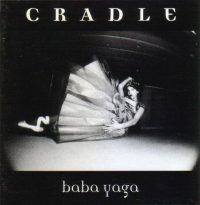
July 1996 – album reviews – Cradle’s ‘Baba Yaga’ (“infinite shades of smoke rather than supernovae”)

1 Jul
Cradle: 'Baba Yaga'

Cradle: ‘Baba Yaga’

Three years ago, towards the end of an especially fraught Levitation concert, singer/guitarist Terry Bickers finally gave vent to his dissatisfaction, announcing to an astonished audience “oh dear, we’ve really lost it, haven’t we?” He bailed out of the band immediately afterwards, effectively scuppering two years of new progressive explorations, and disappeared to God knows where. Some said hermitages, some said a reclusive existence in Brighton. Rumours began to circulate about name changes, new ways of approaching music, and finally a new band called Cradle, which surfaced with an obscure one-off single called Earth Belly, played with Canterbury-techno act Ultramarine and disappeared again before we’d had time to blink, off to spend two years incubating and recording this debut.

According to Bickers, Cradle is not so much a band as a way of doing things, a loose musical collective of shifting personnel which changes depending on what the music needs. Perhaps this is just his way of saying that, following the tensions of Levitation, he doesn’t want to work within a formal band structure. Although Cradle does centre around Bickers – he’s the only person who plays throughout – you can never quite pin him down as the leader of the other five contributors, the most prominent of whom is singer Caroline Tree. It helps that while most of the music retains a Bickers flavour, it’s entirely the same as before. Compared to the eerie guitar attack of his days in The House of Love, or the head-expanding maximal space-prog of Levitation, Cradle is a definite retreat – music coming from a distant dusk-lit field or a big shadowy attic. There’s still some of the same eerie Bickers guitar textures, there’s still the Levitation fixation on hypnotic minimalist riff cycles and a childlike sense of wonder, but Cradle is introverted, quiet; infinite shades of smoke rather than supernovae.

The songs are slower, more influenced by the threads of Early and mediaeval music, perhaps; the turbulent anxiety of previous years is now leashed. It enables the beauty previously swathed in alarm to emerge. The ethereal Gifts of Unknown Things is the loveliest thing Bickers has ever done – Clannad meets ‘Ummagumma’ in a sort of Gregorian trance-rock, layers of harp-like guitars, the noise of birdsong and a distant helicopter, the swooning voices of Terry and Caroline delicately harmonising and overlapping. Baby Heart is a ravishing, rambling love ballad, relaxed to the point of disjointedness; sleepy Hammonds, piano and woozy acoustic guitars. The Clangers and the Moomins has the same slo-mo aquamarine instrumental grace as Fleetwood Mac’s Albatross or Adrian Belew‘s underwater instrumental Ballet for a Blue Whale. Consequences echoes George Harrison’s Indian-inflected mantra pop, while Immortal goes for jumpier prog rhythms, although its amoeboid atmosphere soon boils them down to a psychedelic jam with Tree hoots and mumbles over the top.

Although a darker sense of damage occasionally rears its head (most obviously on the spooky, funereal Home, where Bickers turns his book on the world and burrows into his own soul), for the most part ‘Baba Yaga’ is meditative, reflective and – in a deserted-city kind of a way – pastoral. A healing record, although as with all healing records it has its undercurrents of pain and wrongness; ambient-ish; sometimes lovely… not mellow.

Still, the album’s got its flaws, and all too often the sticking point is Caroline Tree. She rocks the Cradle boat for half of the record: where other Cradle-ers would pull together, she obstinately pulls away, and those songs with her firm stamp on them tug the group in a none-too-successful alternative direction. The clanging New Wave/psychedelic cross of Second Nature sounds like Elastica gone hippy; while In the Forest may celebrate flower-children running naked in the woods, but Caroline comes across more as Siouxsie Sioux than Sally Oldfield or Melanie. Then there’s Goodnight Eloise’s gooey fantasy of jellyflowers, trees of dreams, gingerbread men and paddling in stardust, set to a cobwebby space-blues chug. The sound of Caroline’s icy, unyielding voice declaiming childlike verses about cloud, trees, bread and peaches over Hammond organs and fizzing Bickers guitars is disorientating in the extreme – you feel as if you’re being set up for a sarcastic sucker punch which never arrives. Black Tea is no more than a slavish imitation of PJ Harvey’s granite-y swamp-blues, down to the last raddled moan.

Despite the hippy lyrics, Tree seems iron-willed and probably thinks that her wilful contrary hold on Cradle steers the project towards diversity; but instead she tends to run it aground, chasing ideas and idols without any genuine understanding of how to achieve her ideas, and scattering laboured spiritual references everywhere to no great effect. Bickers, meanwhile, seems to exude wide-eyed otherworldly mysticism as part of his everyday life. The result is an uneven and misshapen album lurching between churchy minimalist proggiedelia and whichever heroine or bit of aggressive New Agery that Tree’s decided to emulate that week. It has its brilliant moments, but this Cradle is far from balanced yet.

For now, there’s a happy ending. Chloe’s Room, the album’s final sixteen-minute epic, unifies the Tree and Bickers strand and works. Guitars, Mellotrons, organs and drums make a luminous fog around Tree’s gentle whispers – a ghostly two-chord thrum, a dream-mist of psychedelic textures, part Set the Controls for the Heart of the Sun, part The End, and a fair part Lewis Carroll (since they’ve raided his ‘Hunting of the Snark’ as lyrical fuel for the journey. Space-rock me to sleep.

Cradle: ‘Baba Yaga’
Ultimate Records, TOPPCD 042 (5018791600564)
CD/double vinyl album
Released:
1st July 1996
Get it from: (2020 update) Best obtained second-hand.
Cradle (Terry Bickers) online:
Homepage Facebook YouTube
Additional notes: (2020 update) Cradle was a short-lived band and didn’t survive for long. Terry Bickers remains musically active with a variety of projects, most visibly a reformed House of Love, Americana band Montana Rain and an ongoing collaboration with ex-Adorable frontman Pete Fij.

June 1996 – live reviews – Francis Dunnery @ The Borderline, Soho, London, 1st June (“bursting at the seams with music”)

4 Jun

From the moment he first strides gawkily on stage, grinning from ear to ear, Francis Dunnery radiates joyful energy. On last year’s low-profile British acoustic tours he was cautiously sticking his head up over the parapet to find out, to his surprise and delight, that he hadn’t been forgotten. This year it’s different. Perhaps it’s the success he’s finally been garnering in other corners of the world, or perhaps the reasons are closer to the heart, but Frank’s gotten a second wind and new fire. With a vengeance.

There’s less of the jokes this time around. Now, he’s bursting at the seams with music, so much that there’s less time for chat. As before, he’s armed with just an acoustic guitar (plus a cheap fuzzbox for those moments when only a dirty burst of distortion will do) but he makes both of them deliver as much as any full band would as he blasts straight into the positivity avalanche of I Believe I Can Change My World to kick off an evening drawing mostly from the new ‘Tall Blonde Helicopter’ album, his simplest and most joyous work to date.

Although he’s started playing fluent solos again – with a newly haphazard glee – the irrepressible energy with which he once drove It Bites is now harnessed to less cosmic, more essential ends and powered by faith rather than amplifier wattage. So are the songs. The raucous, overdriven joy-and-salvation of The Way Things Are; Grateful and Thankful’s humble confessional folk; the breezy Latin-flavoured pop of Rain or Shine; and the brand new Crazy Little Heart of Mine which has everyone yelping along to the scatting chorus like a pack of blissed-out Muppets.

True, there’s one moment of comparative darkness: Frank’s raw, stormy lament for his father, Feel Like Kissing You Again. As he dives into a wrenching, angry acoustic solo, shredding savagely at his own technique, he parades through trademark Dunnery riffs and those infamous looping fretboard licks, but now with a scalding discontent. It’s as if he’s saying “all of this skill… but still I couldn’t do anything to save him.” For a moment, some of the old pain comes through, and I find myself holding my breath…

For the most part, though, the concert is given over to the positivity spilling from Frank’s mouth in the “universal laws” which he’s declaiming from the stage – part Californian New Age-ery, but several more parts blunt northern-English honesty. Somehow he manages to restore faith in those old positive-thinking clichés; perhaps this is because, in this little subterranean music club, they don’t come across as corny arena-rock “put-cha-hands-tu-getha” sentiment, but as the testament of a man who’s won the war against his own dark side, making the pinwheeling, euphoric In My Dreams and the fragile unconditional devotion of Sunshine ring all the truer.

But it’s not just the smaller venues that are making Dunnery shows more intimate. It’s three-hundred-odd people packing the floor and clogging the stairs, still singing along to the anthemic moments like Everyone’s a Star and Still Too Young to Remember… but as if they were at a front-room party rather than a football stadium. It’s smaller things, like people filling in missing vocal harmonies. Or Frank extending his guitar audience-ward to let a fan strum a final chord; asking our opinion on a new riff; or bringing a child onstage (his nephew Charlie) to help out with singing Little Snake. It’s the wistful generosity of Good Life. It’s the people who, to Frank’s astonishment, already know the brand-new single B-side Just a Man and can sing along with its family-of-man message, joining him in flicking the finger at the bigots.

Most of all, though, it’s the new feeling that Francis Dunnery exudes: the feeling that he and all of us no longer have to be imprisoned in guilt and sin, that we can all be forgiven. Homegrown has somehow lost its sourness and emphasises freedom. He delivers the sly have-your-cake-and-eat-it self-portrait of The Johnny Podell Song with such a disarming mix of laddish swagger and rueful self-awareness that its roguishness is more irresistible, more forgivable then before. Conversely, its savagely witty and acerbic flipside Too Much Saturn is played much more gently than expected.

Perhaps it’s this same sense of redemption which induces Frank to perform a sparkling, beautifully appropriate cover of Peter Gabriel‘s Solsbury Hill – one of the several moments tonight that suggests a rapprochement with his proggie days. More It Bites material is being woven back into his setlist, too. Here’s a snatch of the old Tapboard extravaganza Reprise popping up in American Life in the Summertime; there’s a brief snippet of I’ll Meet You in the Spring sneaking into Still Too Young to Remember. More obvious and touching is a complete version of the acoustic version of Yellow Christian, which surfaced on a couple of dates last year; although the biggest surprise of the evening is Frank’s brief resurrection, out of the blue, of Once Around the World. Even if, in the end, he goes no further than the pastoral intro… to gleeful yells of “chicken!” from an audience that still remembers all the words. He grins. No problem – it’s all his music now, and if it feels right, why not play it?

And it does feel right. Francis Dunnery’s stubborn sticking to his guns, through right and wrong, is finally beginning to pay off both inside and out. He’s practically glowing up there. “Absolutely fuckin’ refuse to go under,” he exhorts from the stage, “and you can do absolutely anything you want to.” Another simple message. And – tonight at least – worth much more than a fifteen-minute suite.

Francis Dunnery online:
Homepage Facebook Twitter MySpace Soundcloud Bandcamp Last FM Apple Music YouTube Vimeo Deezer Google Play Pandora Spotify Tidal Instagram Amazon Music
 

May 1996 – EP reviews – No-Man’s ‘Housewives Hooked on Heroin’ (“turning away from the light to embroil themselves in a polluted twilight”)

30 May
No-Man: 'Housewives Hooked on Heroin' EP

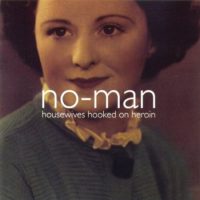
No-Man: ‘Housewives Hooked on Heroin’ EP

Mumsy cover art, titillating tabloid title and five tracks of wilful wrongfooting? For their first new material in two years, No-Man are not relying on the comforts of familiarity. Compared to the ornate, orchestrated silkiness of their first three albums, the No-Man sound of ’96 is much more confrontational. Bigger, noisier, dirtier; a swamp rather than a garden; these aesthetes are turning away from the light to embroil themselves in a polluted twilight.

‘Housewives Hooked on Heroin’ is the baleful first single from the forthcoming ‘Wild Opera‘ album – downbeat, low-key, opening on a bed of twangy guitar and suffocated electric piano chimes like a smog-ridden dawn over Las Vegas. A disaffected gasp of vocal pans over a landscape of weathered, weary icons – ageing pop starts, Howard Hughes – before enormous sour guitars slide in and drag it into a rolling chorus with the deathly beat-driven wallop of Sisters of Mercy. “Not even housewives hooked on heroin / could match my appetite for sin…”

No-Man come on like a flattened, ever-so-slightly Gothic Bowie, full of the empty hunger which you get on those evenings when there’s nothing you want to do, the heat’s pressing down and the light of day is stained by a sodium glow. Fittingly, Scanner’s Housewives Hooked on Methadone remix recasts the song in a fuzzy cloud of radio static, sirens and dusky synths hovering over a dry, frenetic junglist beat. I do miss his usual trademark dialogue samples, though, snatched illicitly from hidden conversations on mobile phones. Perhaps the housewives were on hold that evening.

If you’re already missing the thought of that departed beauty, No-Man do allow a nod to their more recent past with Where I’m Calling From, another fragile, obscure No-Man ballad connecting the stagnation of the earthbound and isolated with the loneliness of the stars. Tingling Robert Fripp Soundscapes meld with a limpid Steven Wilson Stars Die melody and the bitter, uncertain comment of Ian Carr’s reedy trumpet. Tim Bowness sings as if encapsulated in a phone box, wheeling through the outskirts of the Milky Way, making one final disaffected farewell call. “Where I’m calling from, you wouldn’t want to know…/ Where I’m calling from, you wouldn’t want to go.” A dog barks suddenly in the middle of all of this – it’s like the real world trying to get a last foothold in this dangerous reverie.

But that’s about as familiar as it gets. The spidery twitch of Hit the Ceiling (written and recorded, from start to finish, in one hour) hurls the spontaneous risks of current No-Man working strategies straight into our faces. Breakneck rattling drum track, skeletal guitar and the reverberating coloratura of a disembodied diva – Halloween in the attic of the Paris Opera. Urban Disco deepens their dance content with a dystopian shadowy blur of suffocating beats and whispering, glancing lyrical swipes at the self-satisfaction of hedonism, leaving the solipsis of previous No-Man behind in order to flit like a malevolent ghost around the cigarette-ends of the high life.

The ‘Wild Opera’ overture has been played. People seduced by the warm caresses of ‘Flowermouth’ and ‘Heaven Taste’ look set to be in for a rude awakening, but an interesting trip.

No-Man: ‘Housewives Hooked on Heroin’
3rd Stone Ltd, STONE 026CD (5023693002651)
CD-only EP
Released:
28th May 1996

Get it from: (2020 update) Original EP best obtained second-hand or from Burning Shed; Housewives Hooked on Heroin appears on No-Man’s ‘Wild Opera’ album, while Urban Disco reappeared on the ‘Dry Cleaning Ray’ mini-album. All of the EP tracks bar Housewives Hooked on Methadone were included on the 2010 double CD remaster of ‘Wild Opera’.

No-Man online:
Homepage, Facebook, Twitter, Soundcloud, Last.fm, YouTube, Instagram, online store, Apple Music, Deezer, Spotify, Amazon Music

March 1996 – live reviews – Robert Fripp’s South Bank Soundscapes @ Queen Elizabeth Hall foyer, South Bank, London, 10th March (“more challenging abstractions than Fripp’s ever attempted before”)

12 Mar

'Now You See It...':  Robert Fripp Soundscapes, 10th March 1996

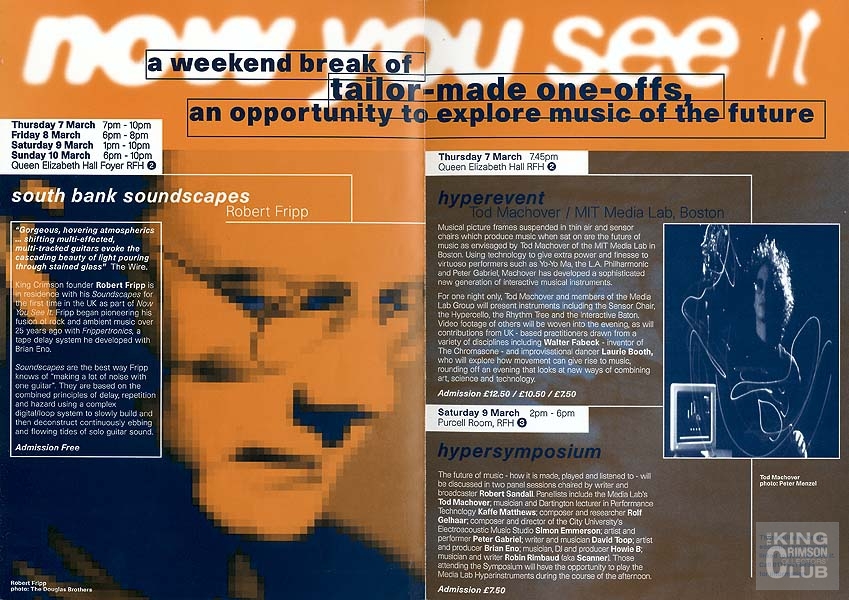
‘Now You See It…’: Robert Fripp Soundscapes, 10th March 1996

Tucked against a curving concrete wall, under a sweep of plate-glass windows, there’s the familiar stool with a beautiful rock-fetishist’s dream of a Les Paul guitar, flanked by rack-mounted gizmos like a gaggle of worshipful Artoo Detoos and a flat henge of volume pedals and multi-purpose stomp-boxes. Over to the right, David Singleton sits at the mixing desk, quite the portrait of the calm fixer for the artist’s determined leaps. Arranged in a long staggered curve in front of the opposite wall, lining the long walk between the entrance and the Purcell Room, are at least eight tall speaker cabinets. Occasionally in residence is the sleek, compact form of Wimborne’s most formidable musical son.

These Soundscapes are part of the ‘Now You See It…’ season of contemporary performance art, sharing the building with the Hypermusic Symposium (in which Peter Gabriel, Brian Eno, David Toop and others debate the future of music, and people nervously finger such unorthodox instruments as literally musical chairs and picture frames or the Interactive Baton) while avant-garde dance groups hijack the Purcell Room and stick the audience on the stage, and (less happily) over at the Lyric Theatre in Hammersmith an appallingly pretentious bunch of Euro-thespians do a vandalistic mixed-media Schubert performance.

In these surroundings, Robert Fripp‘s increasingly out-there journeys in solo sound fit in surprisingly well, both physically and intellectually. When a squadron of incredibly young women in bare feet and little black dresses trot busily past (every quarter of an hour, on the dot) to meet their cues in a back-to-front theatre piece next door, it seems inexplicably appropriate. Tonight – Sunday 10th – is the fourth of Fripp’s residencies, a mere four-hour performance compared to the rear-numbing six- and even ten-hour marathons he’s performed earlier in the week. Some people have returned, regardless. Within that length of time, anything could happen: the music that Fripp claims to channel rather than compose could lead him anywhere.

Soundscapes, the successor to the layered sound-loops of Frippertronics, is a major leap forwards, sideways, anyways from its progenitor: the digital technology stores his patterns and transforms his tones to the point where there isn’t a single recognisable Crimsonic guitar sound to be heard all evening. In effect, Fripp and Singleton are playing a wholly new collective instrument, a community of speakers, desk, guitar and digital cyberspace. The end results are a swathe of overlapping, opposing electrophonic voices, sometimes beautiful and sometimes disturbing – polytextural hums; a sound like a seventy-foot high piece of glass being torn like cloth; wailing, spectral swells like American freight trains blowing a blue whistle into a desert of ghosts; aquatic, gem-faceted calls of a Loch Ness Monster; tingling pianistic or xylophonic ringing; squiggling crystal-bat chitters. It emerges as a sound that’s on the brink of being recognisable, somewhere deep down in the soul… but not quite.

As it rolls on, evolving like strata, burying what’s come before like the march of ages, you may find it impossible to concentrate on (four hours is a long time) but it saturates your mind regardless: you’ll sure as hell be thinking differently. While I’m here, I meet somebody who ascribes near-mystical powers to the first Soundscapes album, ‘A Blessing of Tears’ – “any pain you have, any problem, it will heal it…” Even on the basis of what I’m personally experiencing in the music tonight (the rollers, breakers, capricious tides and immense flickering lulls of an alien sea under a midnight-blue sky, occasionally rent by sheets of violet lightning and mile-wide twists in the current… I think I’m in for a night on the ocean wave) I can believe him. This isn’t New Age pretty-stuff.

And so the Soundscapes are installed, piece by lambent unsettling piece, more challenging abstractions than Fripp’s ever attempted before. But most of the people here seem to have missed the point – sitting deferentially in the arc of chairs facing Robert and his little cliffs of winking lights, watching him silently manipulate his gold-top Les Paul or peer into his effects racks, they pay a silent tribute. This isn’t how to do it. When Fripp calls what he does “Soundscapes”, he means it literally. There’s a fifth element in that communal instrumentation: three-dimensional space. Each of the eight speakers arranged in an arc behind the audience is fed by a slightly different sound source. Walking slowly back and forth across the foyer, one passes in and out of phase with the sounds: a different listening angle provides a different piece, an ability and opportunity to concentrate on a different section of the Fripp orchestra. Music to literally explore.

I feel a bit of a fool, though, pacing up and down the floor to curious glances from the audience; it’s not quite the same as hanging around, in gig-approved fashion, with a drink in your hand and lunging up and down gently to your favourite song. Mind you, the rest of the audience are behaving exactly in the way you’d expect at a Fripp-related gig or an art installation. Here are a couple snogging vigorously, French-kissing amidst the unsettling washes of the music; three rows in from the front, a man appears to have passed out, lolling over the back of his chair with his wide-open mouth pointing wetly at the ceiling. Music to intoxicate? Perhaps: it ignores standard musical dimensions in a way that one only otherwise hears in the most deliriously spaced-out Lee Perry dubscapes, although the notoriously drug-free Fripp looks more composed than I’ve even seen him before.

'Now You See It...':  Robert Fripp Soundscapes, 10th March 1996 (programme)

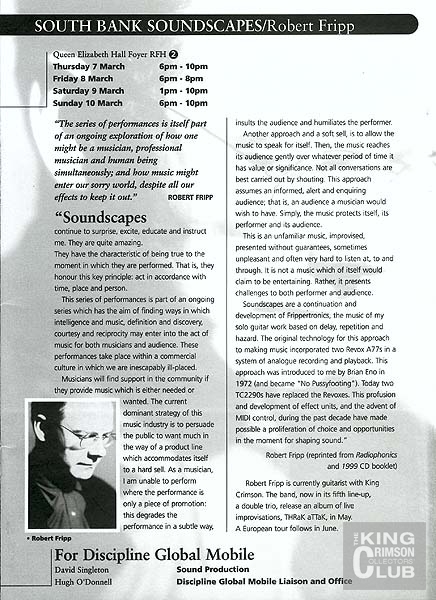
‘Now You See It…’: Robert Fripp Soundscapes, 10th March 1996 (programme)

But then perhaps once the music slips beyond the control of his fretting fingers, flexing feet and console-fondling fingers, it ceases to be his responsibility anyway. The nature of Soundscapes is such that Fripp’s very presence can become little more than a trigger. Turn away at the wrong time and you’ll turn back to find the guitar leaned against the stool and Fripp gone, sipping at a cup of coffee over by the mixing desk as the music wreathes onwards without him, or wandering out through the audience to check a corner of the sound. It’s a little disturbing when, conversing quietly and walking around the circuit of speakers to experience the different sounds, one comes within six inches of Fripp padding lightly in the opposite direction, close enough for you to sense the implacability of his will, pushing at the realms of the possible like a smooth arrowhead.

The element of hazard plays its role too. Sometimes, amongst the layers of harmonic tissue that Fripp is laying down, a mismatch occurs. Or a part decays too soon, or a speaker refuses to cooperate with the vision, and the musical organism is deformed, loses balance, develops cancer. At such times Fripp shrugs in frustration and looks over to Singleton, or out to the audience in the only acknowledgement he ever gives them, lets go of the guitar with palms turned upwards in the universal gesture of helplessness. The music thins out and he begins to build his organism again.

This continues for four hours: time to get several drinks, chat quietly in the background, arrange assignations with other musicians and writers, even formulate whole arguments about what we’re seeing (in other words, make our own contributions to the Soundscape ambience), and still not miss out on the crystallising veils of sound that drift around the foyer, perplexing this evening’s Mozart concertgoers, putting thoughtful expressions on the faces of the cloakroom attendants as it numbs their resistance. At the end, Fripp puts the guitar down, as he’s done so many times before during the evening, and walks slowly away to vanish down the passageway leading to the dressing rooms. The applause that follows his retreating back is sincere, but oddly unfocussed, as if the audience is unsure whether they should be applauding him or the air that’s been buoying up the music and carrying it around like a whispered ritual, I catch the train home, as I usually do; things seem just a touch sharper than normal. Soundscapes don’t so much take you to another world as grant you a shimmering new lens to experience this one through.

Robert Fripp online:
Homepage Facebook Twitter MySpace Soundcloud Bandcamp Last FM Apple Music YouTube Vimeo Deezer Google Play Pandora Spotify Tidal Instagram Amazon Music
 

March 1996 – live reviews – Tori Amos @ Royal Albert Hall, Knightsbridge, London, 9th March (“the Raisin Girl is not communicating”)

11 Mar

It shouldn’t be like this. Call Tori Amos kooky, pretentious, over-precious, almost anything you like – but don’t call her boring. Not possible. A woman whose mouth and piano strive to out-motor each other, a torrent of perverse creativity, a handful of sharp pins in satin – Tori is riveting even when she’s being irritating.

So why am I spending so much time – up here in the balcony seats – bored? Why the itching urge to check my watch, when on previous tours I’ve been hanging on the edge of my seat?

The reason is that tonight the Raisin Girl is not communicating. Webbed up in the twinkling Santa’s-grotto lights of her stage set, leaning hungrily into her piano or capering over the keys of her harpsichord, Tori is playing resolutely inwards. Hips raked backwards, fingers thundering out melody, head and neck curved to the hovering mike, her face is turned out to us with that familiar elfin, ever-so-slightly ruthless expression. Despite the thrumming love emanating out to her from the capacity crowd, despite the on-stage company of Steve Caton and the soft, sly voices of his textural guitar, she’s never seemed so alone.

For someone who’s opened herself up to us as much as Tori has, this is sad. It’s particularly sad when you consider that she’s playing in Britain, the country that cradled her when she was the unknown émigré and winced as it took the charged barbs of ‘Little Earthquakes’ to its heart. At certain gigs you can feel the heart of the audience, as if it were one huge collective animal. Here, as at all of the Tori Amos gigs I’ve been to, it feels like the love borne for someone you know intimately, quietly, unreservedly.

Tori, though, is having none of it. We sit patiently through some of her recent interminable doodlings (Little Amsterdam is not longer slinky, just tedious; Not The Red Baron is beauty in search of obscurity) and specks of nonsense (the pointless verbal confetti of Space Dog). She plays on. This year, she’s not responding.

No, it’s not blandness that she’s offering us. The fury in her songbook is served well: a scorching rampage through Precious Things with a carnal girl-growl, a twitchy Crucify. The demanding sarcasm of Leather and the tingling, surfing buzz of Cornflake Girl (in which Caton kicks up a silvery storm of rhythm guitar) kick in with that familiar strength. But the sharing that used to set Tori apart from the herd… gone. That grueling romantic break-up with her engineer and onetime confidante Eric Rosse; the red-tinged and ruthless period which spawned the ‘Boys For Pele’ album; both seem to have left her wired and defensive. There have been too many considered steps back from the poised-tenterhook tenderness of Silent All These Years (which, significantly, she doesn’t play tonight.

Maybe this is why Bells For Her – previously a trembling inward coil of twisted, conflicting love played out on a treated piano – has somehow changed into a horrifying banshee curse now that she’s conjuring it out of her harpsichord. Maybe this is why few songs tonight sound as flat-out relished as the vicious, vampiric Blood Roses; why the more restrained snarl of Doughnut Song falls flat; why her infamous, languorous cover of Smells Like Teen Spirit (still missing that essential final verse, but this time with a capricious insert from ‘South Pacific’) seems like a letter abandoned too soon. Oh denial, oh denial.

Tori can still touch and be touched, though. We’re reminded of this in a mutually terrifying moment, one that we’d rather have avoided. Her first-person rape account, Me And A Gun, brings an absolute silence down into this huge hall – and a sense of stretched, time-slowing horror. Suddenly, about four-fifths of the way through, she stops. Dead. Her hand moves to her face in a movement that seems to take forever. A century passes – a terrifying gap into which our attention tumbles. Then she pulls herself together, finishes the song. Swallows the last word, stumbles offstage into darkness and tears.

At a time when she’s professing the most arrogant creative strength, Tori actually seems to be – more than ever before – walking wounded. Despite an assured China, the encores fail to restore confidence. Putting The Damage On trembles and falters; the love-regrets in Baker Baker now seem as detached as a pallid watercolour. Sweet Dreams breaks off as she drums out the rhythm on the lid of the harpsichord and the words slump out of her memory. A harmonium finale of Hey Jupiter is broken-backed, limping off-pitch, beaten down beyond the point of hope. She may have claimed to grab the perverse power of the volcano goddess – from here, it looks as if it’s burning her up from within.

But… so much love filling that enormous Victorian barn. If only she could have brought herself to reach out and accept it.

Tori Amos online:
Homepage Facebook Twitter MySpace LastFM

The Royal Albert Hall online:
Homepage Facebook Twitter

February 1996 – album reviews – Fruit’s ‘Hark At Her’ (“this bold, brash, noisy, fun, emotional tour‑de‑force”)

2 Feb

Fruit: 'Hark At Her'

Fruit: ‘Hark At Her’

Fruit is Patrick Fitzgerald (and friends). He, for those who care about such things, was the vocalist with the sadly underrated ‑ and sadly no more ‑ Kitchens Of Distinction, a trio of rather serious‑looking young men producing doomily arty, swirling guitar rock. (Digression: while Fruit is a terrific ‑ and more fun ‑ project, the Kitchens shouldn’t have been mercilessly dropped by One Little Indian. So much for the eclectic, egalitarian indies! OLI should get it together ‑ they dumped both No‑Man and Kitchens, unwilling to give them a little leeway to produce their own music. Basically, they now just exist to market Bjork. Idiots.)

So, as Kitchens Of Distinction… er… got out of the kitchen, Patrick set about producing this bold, brash, noisy, fun, emotional tour‑de‑force of (mainly) gay life. From the start, he was working against the prevailing musical current ‑ Fruit’s debut single, an evocation of gay life and death called The Queen Of Old Compton Street (not included here) came out in the same week as Oasis’ Live Forever. Such irony made me laugh until I choked.

Let Patrick educate you. Proceedings open with What Is Fruit?, sounding like one of The Fall’s chuck‑it‑all‑in‑the‑mix takes on crunchy guitar dance‑pop, but with a brighter sensibility from the start. Exotic voices and foreign tongues fly thick and fast with their interjections to that essential question. “Films, actors, addicts, vermin, / Friends, filth ‑ everyone I’ve ever met” ‑ out of the ghetto and all around us ‑ “not forgetting the two coppers in the kitchen.” This is gleeful and exuberant. Hell, the bright pop mix is even down to Pascal Gabriel.


Pleasure Yourself continues the fun, with much the same thrilling electric‑guitars‑plus‑electronics backing, as Patrick cheekily suggests: “Take my pleasure seriously / So come on baby and pleasure me / While you pleasure yourself.” Its wonderful directness can’t be avoided, and the same is true of Sally’s Car. To a ‘Diamond Dogs’‑era Bowie glam feel, Patrick remembers: “In Sally’s car we go too far… / lying on the back seat watching the meteors from Mars.” No, if you want subtlety, forget it. Then they drive away ‑ “put the roof down, turn the noise up.” Oh, come on! It’s corny, yes, but whoever your sexual partner, you’ve known that feeling.


But hey, if this is all getting too happy for you…

Starring Relationship ‑ featuring yet more dialogue, partly from Lush’s gleeful harpy Miki Berenyi ‑ is Patrick sounding as frankly pissed off as you always wish you could get when, at a party, you’ve got trapped into a corner with some misery of a person sitting on the stairs, bending your ear. “Don’t want to hear about your fucking relationship / The way you feel when he doesn’t think of you… / Just deal with it!” Patrick has got every whinging item of complaint in such talk nailed down and, to a soundtrack of suitably scratchy, edgy guitars, he’s spitting them all back at you ‑ with added bile.


The two central tracks of the album are not only the most musically dissimilar, but display the two sides of the gay experience. Prowler features the star‑shooting, to die‑for harmonies of David McAlmont: to a smooth late‑night soundtrack of lush acoustic guitars, husky organ and reedy trumpet, he and Patrick celebrate freedom and the opportunity to practice one’s desires without fear. It’s glorious. Through the music the sound of thunder breaks into the sweaty heat of a summer’s night outdoors. Such freedom is Shangri‑La…


The other side of the coin is Leather Jacket. To a Tricky‑ish soundtrack of kettle drums and nervously plucked guitars, Patrick relates an absolutely terrifying tale of gay‑bashing on the street. With increasing terror, he repeats the central line: “I hear the zip of his leather jacket / See the flashing of gun metallic…” The lads want to bash him up to impress their girlfriends, while he desperately prays to be spirited away by clicking his Doc Martened heels three times. Last time now: “I hear the…” Gunshot.


But there’s a reprise. Over the returning kettle drums, a certain Paul McGlone narrates his memories of a karate‑kicking and beating from two scum. Paul’s a survivor, though. He’s got the right idea. He wants justice ‑ to identify them in a police station‑‑and simple revenge ‑ the humane solution of a bullet through their heads. What with Lorne Burrell’s lethally camp, RuPaul‑ish delivery of a threat to kick the bully boys into paradise, the message is clear: the survivors are waiting…


The final track, Scatter Me, ends with death. Though these funerals of young men, AIDS victims, are now all too common – the same songs are sung, the same careful sideways looks to see who’s noticeably losing weight ‑ the proud defiance is still there: “The dead are so loud / Their monuments are so proud.” As he looks up to heaven and sees all the souls gazing down, Patrick’s naked, almost scarred voice surges with power and defiant strength, over a bare acoustic guitar and water effects.


So many voices and so many words, sung and spoken, populate this album that, at times, the music does rather take second place and search for a personality among many differing styles. But what the hell, this is such an amazing walk through relationships and experiences that such a criticism is unimportant for a fun project, a masterful achievement and a life‑defining catalogue of all those highs and lows.

(review by Vaughan Simons)

Fruit: ‘Hark At Her’
One Little Indian Records, TPLP75CD (5 016958 029524)
CD-only album
Released: January 1996

Get it from:
(2018 update) Out-of-print – best obtained second-hand, or downloaded from Bleep.

Fruit (Patrick Fitzgerald/Stephen Hero) online:
Homepage Facebook Twitter Soundcloud Bandcamp Last FM YouTube

December 1995 – live reviews – Anna Palm + Mandalay @ Upstairs at The Garage, Highbury, London, 20th December (“as full of explosive energy as a pan of popping corn… / …stately, kaleidoscopic and coolly hallucinatory”)

22 Dec

Oops. I’ve come to what I thought was a serious, arty gig to find exotic scarves hanging from the ceiling and a little green-nylon Christmas tree sitting in the corner. What with this, the candle-lit tables and the cheerful little greetings flyers under said tree, I get the feeling that I’ve crashed someone else’s Christmas party.

This particular party’s being thrown by violinist-turned-singer-songwriter Anna Palm, known for a journey that started with busking in Covent Garden and Chelsea and went on to a stint with acoustic punk-folkers Nyah Fearties, a handful of albums and singles on One Little Indian, and support contributions to a variety of artists from YesSteve Howe to New Wave synth poet Anne Clark, ascerbic dream-pop realists Kitchens of Distinction and avant-Goth experimentalist Danielle Dax. It’s an interesting resume. Well, I hate to bad-mouth my hostess, and maybe it’s unfair to judge an artist from an event coming across very much as a fun gig, but I’m decidedly underwhelmed. Despite an indie all-star band (with various members of The Farm, Loop Guru and Kitchens of Distinction taking time out to back her up) she fails to shine.

It’s not as if she doesn’t try: a Violet Elizabeth figure in a frilly little-girl party dress, she’s as full of explosive energy as a pan of popping corn, exhorting people onto the floor to dance, singing with verve (if not always great pitch) and sawing acrobatically at her violin. But the band is under-rehearsed and scrappy, falling apart much too often. Anna’s songs, too, lack individuality and the delivery to make them memorable. A shame, as when she sets bow to strings some spirited and slyly lovable playing emerges.

Anna’s obviously a good player, but as far as being a singer-songwriter goes she still doesn’t seem to know what to do with herself. File under “needs work” and leave it at that for now. However, the mess does yield up one unexpected delight – a dance-groove version of Kites, compelling and grin-inducing, with Anna’s riotous violin scurrying over an early-’90s style baggy beat and the whole thing carrying a strong hint of I Will Survive. A novelty, perhaps, but it’s good to see Simon Dupree’s old hippy hit hopping onto a modern groove and feeling right at home. These particular Kites really fly. I wonder if the Shulman brothers (who notoriously hated their early Dupree-ism despite its success) might ease up and grin and bop along if they were here to hear this.

The real reason why I’m here is a duo called Mandalay, hiding further down the bill: it’s the new project by multi-instrumentalist and electronica aceSaul Freeman, who used to perform a similar role as half of the band Thieves alongside stratospheric singer David McAlmont. Thieves are long (and acrimoniously) split now, with what would have been their debut album a little uncomfortably repackaged as the stunning McAlmont debut (and if you haven’t heard that, you missed one of the most vitally progressive pop records of 1994).

Now Saul is quietly rematerializing, in partnership with singer Nicola Hitchcock, to reclaim some of his lost thunder. But although it shares the glittering crystalline texture of Thieves’ songs, Mandalay’s music is nowhere near as easy. As with Thieves, Cocteau Twins should be mentioned (especially when listening to the effects-swallowed guitars of Enough Love); so too should the frozen sadness of Portishead (especially on the chilly trilling of Enough Love). but Mandalay is more involved and intricate than either. These are multi-dimensional songs, Nicola’s frail but enthralling vocal melodies elevated from the ground on staggeringly complex musical architecture courtesy of interlocking blurry sequencers, obsessively repeating samples and eerie guitar treatments. Saul stands impassively amongst his host of computers and effects racks, gazing absently down at his guitar and its network of pedals. Every now and again he’ll tap and flick at the strings and a second later a whole web of music will swell from the speakers.

Mandalay’s style – stately, kaleidoscopic and coolly hallucinatory – is best exemplified by the silvery net of sampled vocals, the stabbing kick drum and the harmonica-skank guitar of More Than Venus: Nicola’s whispering Bush-y enunciation gives the perky melody an awkward, appealing sensuality. Walk By the Sea rumbles by on an ominous 3/4 riff, double-looped spiral claustrophobia and panic-pitch piano plinking. The Waiting gives full reign to Saul’s subtle space-age guitar work: cunningly-placed “brang”s and attenuated bell-notes amongst the fabric of a languorous techno-warble.

There’s plenty of pop in this (and, despite the duo’s clear and ineluctable whiteness of manner as well as appearance, more than a helping of trip-hop) but Mandalay are also decidedly post-rock. They’re part of the astonishing movement which also includes Moonshake, Laika and the late-lamented Disco Inferno, and which junks the conventional hierarchies of rock instrumentation in favour of the uncanny textures of digital sampling and electronic ensemble processing. This might not sound appealing to the traditionalists out there, but believe me, Mandalay are much more than noodling experimentalists. Try to think of their songs as angst-under-amber, refracted into confusing multiples by an unearthly light. Unsettling but beautiful pop for an uncertain info-saturated future. You want progression? It’s happening here.

Anna Palm online:
Homepage Facebook MySpace Last FM YouTube Spotify Tidal Amazon Music

Mandalay online:
Last FM Apple Music YouTube Deezer Google Play Spotify Amazon Music

Additional notes: (2020 update) Anna Palm now lives and occasionally performs in Stroud. Mandalay recorded two albums for V2 Music before splitting in 2002: both Nicola Hitchcock and Saul Freeman have continued intermittent solo careers.

December 1995 – live reviews – Gordon Haskell @ The Unplugged Club, Bloomsbury, London, 7th December (“one mockingly rolled eye peering out to capture the madness and to look out for an escape route”)

9 Dec

Not even a minute into the show, and we hear it. He looks thoughtfully out at the mixed crowd and speaks. “I can usually tell whether an audience is going to be good or bad.” A pause. “Good night!” And then he lets it rip. That laugh – an untrammelled, hiccupping whoop of unbalanced joy, teetering on the edge of losing it. You may have heard in on King Crimson‘s ‘Lizard’, twitched into hysteria by studio electronics, a lone human voice in the sick, surreal circus. Twenty-five years on, in this intimate little acoustic club, it sounds like the redemptive, rueful peal of a free man, acknowledging the potholes of disaster that dog our footsteps in this world and cause some of us to drop into madness.

Strange to think that this grizzled and animated figure, eyes twinkling benevolently beneath a battered hat that’s the last word in Bohemian chic, is Gordon Haskell – singer with King Crimson for nine studio-bound months back in 1970. At an age where most ex-proggies are still squeezing themselves into the glad-rags and going through ever-more lifeless motions in small theatres, Haskell is donning comfortable clothes, picking up his acoustic guitar, playing tiny little places anywhere and enjoying himself. To tell the truth, the Crimson connection is misleading. All of that was a long time ago now. Gordon’s profile may have been lower than a bug’s belly since then, but now he’s swinging back into action with a vengeance… and he’s in better artistic shape than most of his more financially successful contemporaries.

Not only does he possess a brilliantly gutsy guitar style and a voice so rich and earthy that you could grow potatoes on it. but he has a bagful of excellent songs to offer. He now writes and plays like a combination of John Martyn and Leon Redbone, with a huge measure of the rawer joys of John Lee Hooker and Richard Thompson. He takes the vibrancy and gleeful survivor’s power of deep blues and blends it with an irreverent, eccentric, classically English strain of absurdism. Like the young Peter Gabriel, he takes his stand against the hostility of the world with a disarming, cunning humour, one mockingly rolled eye peering out to capture the madness and to look out for an escape route. It’s all as warm as a closely-held candle on a winter’s night… and as liable to suddenly scorch your fingers.

Thinking back to ‘Lizard’, one wonders what kind of more lively, organic record would have emerged had Robert Fripp and Peter Sinfield given Gordon a crack at the songwriting rather than just dovetailing his voice into their meisterwerk. There’s a vague hint of Sinfield’s verbal adventurousness in Haskell’s songs, although thankfully none of the attendant pretensions. The Hooker-like Wang Bang World captures life’s grim tendency to overrun us, but revels in a tumble of savagery and joking; conversely, Pelican Pie could be just a blur of absurdist imagery were it not for the beady-eyed thread of social critique running through it.

Haskell’s between-song banter may be a mixture of oddball wisdom and Eddie Izzard goofiness (“may you be blessed with many goats!”) but the humour in the songs is by no means pointless, pretentious silliness. Rather, Haskell’s a knowing jester holding his own and laughing in the face of life’s terrifying chaos. Hanging By a Thread (dedicated, tonight, to Fred West) is a mordantly hilarious parade of murderous, fatalistic comedy: “Gentle Jim got life for chopping up his wife / – said he needed warmth for the winter.”

The lack of preciousness is what really makes him great, though – he’s not out to prove to us what a clever musician he is. Sure, each song has enough teeth and gold to make us think about it, but it’s Gordon’s sheeer verve and ecstatic gutsiness that wins the audience over, captured in the luxuriant salaciousness of Chilli Chilli, the throbbing jungly blues of Test-Drive or the voodoo swamp-stomp of Alligator Man, a roaring clapalong portrait of the ruthless predatory wheeler-dealer, the sheepskin-coated hoodlum-salesman who’s becoming a spectre of the times.

Like those old bluesmen, Haskell knows how life and death, humour and horror walk side-by-side and share the same streets, and his work is not short of tenderness as well as carnality. The love song All My Life rasps like Louis Armstrong, and I Don’t Remember It Like This shows an Ian Anderson verve as it examines the misleading, misframed photos in the history of love: “whatever love is, it’s in the thrill of your kiss / and I don’t remember it like this.” There’s a real feel to the soulful sorrow of Tortured Heart and in the wry shrug of Mail Order Love, which mixes an organic bluesy swing with a handful of dissatisfied plastic metaphors, romance gone synthetic. The philosophical break-up song Go Tell Sarah is part goodbye, part lie, part promise.

In a dash of sheer music-hall, he tips his hat and beams at us with real pleasure, inviting us in to share both the fear and the laughter on his perspective on life. The return of Gordon Haskell is going to offer the scene a welcome dose of warmth, and 1996 could well be his year. A lost star is returning to dispense a special kind of mischievous twinkle.

Gordon Haskell online:
Homepage Facebook Twitter MySpace Soundcloud Last FM Apple Music YouTube Deezer Google Play Pandora Spotify Tidal Amazon Music
 

November 1995 – live reviews – David Sylvian’s ‘Slow Fire – A Personal Retrospective’ @ Royal Festival Hall, Southbank, London, 4th November (“self-effacing chameleonics”)

6 Nov

David Sylvian: 'Slow Fire - A Personal Retrospective' 4th November 1995

David Sylvian: ‘Slow Fire – A Personal Retrospective’ 4th November 1995

With former Japan leader David Sylvian, a show or an album is rarely as simple as being just a show or an album. Since 1983 he’s swum in and out of focus on a collection of artistic cross-fertilisations (sombrely beautiful songs albums, collaborative ambient vaguenesses, art installations): a shadowed, near-invisible chameleon with an enigmatic past ranging from over-exposed greasepaint-and-trash glamour to composer-effacing sound-sculpture. Tonight’s show – given extra weight by its ponderous title of ‘Slow Fire’ – is billed as a solo retrospective plus work in progress. Given Sylvian’s occasional tendency to enmire himself in inconsequential sound-tapestries, this could be grim. But the reality of ‘Slow Fire’ is more straightforward. Since we last saw him, touring with Robert Fripp, David Sylvian (like so many progressive artists) has decided to re-examine himself, unplugged.

With any contemporary electric musician, this is a risk: for Sylvian, much more so. The man now best known, post-Japan, for wall-to-wall electronic shrouding spends most of tonight perched on a stool behind a classical guitar. It’s the old rebirth scenario: once a travelling encrypter of decadent European and subtle Oriental sensibilities, Sylvian’s currently settled down into domestic bliss in America with a new wife (Prince protégé Ingrid Chavez), a new accent (decidedly transatlantic) and – judging by the credits on the appallingly pretentious programme – a guru. This would explain the brilliant white kaftan (has Jon Anderson missed any clothes recently?) and the four-cornered bowing as he takes the stage.

Though he’s dropped a few clues about an acoustic direction on recent recordings (on the Sylvian/Fripp B-side Endgame, for example), accepting Sylvian as an acoustic musician is not so easy. That marvellous voice, deep and rich as fortified honey, is still there, but over the years he’s made so much mileage out of his electrophonic atmospheres that his actual songs have been able to camouflage any flaws within the soundcraft.

The often disappointing collaboration with Fripp laid bare the aridity that Sylvian songs can often shrink into – tonight, Jean the Birdman is tricky and interesting but (even with a ludicrous attempt at scat singing) ultimately uninvolving, and there’s nothing like an acoustic performance for exposing juicelessness. Unsurprisingly, material from Sylvian’s song-centric 1987 album ‘Secrets of the Beehive’ fare well (the lilting menace in the folk-premonitions of The Boy with the Gun, a magnificent Orpheus and a hushed Waterfront) as do the few treasured songs from the Rain Tree Crow project: a reverberant Every Colour You Are, and a version of Blackwater which releases the song’s submerged country elements.

There are even one or two surprises during the guitar set, such as a rich rendition of Before the Bullfight and the shocking reinvention of keystone Japan hit Ghosts. From the beatless, icy original, Sylvian turns it into a wry Latin pop-inflected shrug of acknowledged doubt, Gilberto Gil meets Scott Walker. Even more shockingly, it works. But material from the schizophrenic ‘Brilliant Trees’ era has a tougher time making the jump to simple gut strings. Twitchy artiness such as Red Guitar and a limp Pulling Punches stumble out as embarrassing feynesses. Weathered Wall becomes a dull drone when denied the support of Jon Hassell‘s vaporous trumpet. With his shamanic atmospheric arrangements missing, too much of Sylvian’s once-epochal material is revealed as mere spectral verbiage, irresistibly crooned but superficially moodist. “Words with the charlatan,” mutters someone next to me, sarcastically.

It’s when he’s at the keyboard, with renewed access to a broader range of textures, that Sylvian delivers real magic – the rueful piano balladry in September and Earthbound Starblind, or the swathes of synth around the frozen pain and stone tears of Damage. When he allows himself the luxury of backing tapes, the dream deepens. A medley of Maria and Rain Tree Crow sees him keening over a wafting mist of chilling ambience punctuated by a ghostly chuckle. The First Day (graced with a wisp of taped Fripp skysaw) is as lushly majestic as ever. The deep dark indigo melancholy of Let the Happiness In acquires a meditative drum loop along with the shadowy orchestras of synth: it becomes hymnal, filling the great yearning emptiness at its heart with a sense of renewal, of return and redemption. It’s at moments like these that faith returns, and we can remember the subtle yet profound impact that Sylvian’s music has made in the past.

The trouble is that that was the past; and that the present is looking decidedly lumpen. The keyboard is also where Sylvian unveils his new material. For work in progress, it seems suspiciously complete… and already possesses a distinct form. A piano version of Tim Hardin’s It’ll Never Happen Again is the touchstone, with the interminable Ingrid’s Wheels and the rambling I Do Nothing (the latter most notable for its repeated, listless “alleluia”s) sketching Sylvian’s way forwards. Dusky, Americanised ballads with a strong element of that empty piano-bar pomposity that’s invariably damned with the kiss-of-death tag “quality songwriting”. Superficial sheen generating superficial applause. It’s difficult to escape the thought that David Sylvian’s self-effacing chameleonics have finally led him into a trap, a territory where he can no longer find his own face, where he will blur into a line of indistinguishable piano-song hacks whose albums will receive polite plaudits and gather dust on the lower shelves, where the fire will slow to a flicker.

The old Japan acolytes queue up tonight to touch the hem of King David’s gown. He smiles and bows like a bashful messiah. I can appreciate his showman’s smoothness… but I’ve lost my faith. I have a horrible suspicion that despite the handful of wonderful moments held to the light this evening, the shaman has swapped his books and his wisdom for a Cadillac, and the tin drum which once sounded out a musical challenge has just stopped beating.

David Sylvian online:
Homepage Facebook Twitter Soundcloud Last FM Apple Music YouTube Vimeo Deezer Google Play Pandora Spotify Tidal Amazon Music
Additional notes: While there’s no footage available for the London ‘Slow Fire’ show, you can get an approximation of it from footage of the Bari show from the same tour, in Italy, which is compiled here.
 

October 1995 – live reviews – Organ presents Poisoned Electrick Head + Sleepy People @ The Monarch, Chalk Farm, London, 17th October (“another little banquet of progressive strangeness”)

20 Oct

Another little banquet of progressive strangeness is being laid on for us by those fine people at ‘Organ’ – unusual nourishment, as usual.

Newcastle’s Sleepy People are another from the expanding pool of bands under the giddy influence of Cardiacs. Those beloved warning signs are present: bizarre stares, a manic focus on the sort of music that ransacks your brain while it entertains you, frantic stop-start rhythms, and an obsessive love of cramming: cramming enough melodics for forty songs into the space of one, squeezing a whole orchestra’s-worth of sound into the kitchen-sinker of a rock band’s line-up. They don’t exactly look like your average clutch of prog-rockers, either. Two sane-looking people handling the rhythm section, some unholy cross between Bernard Cribbins and Sparks’ Ron Mael on synth, two impassive women doubling-up flutes and backing vocals, a singer who looks like the monster under Suede’s bed and a dead ringer for Uncle Fester Addams chopping away on guitar. More tea, Vicar?

The music itself starts out as Hammer Horror prog-punk and veers off to uncharted places: foggy treated flutes, yelping digressions, hallucinated carousel tunes, folk-classical suites composed by crazed cartoonists. I try and fail to write down coherent descriptions. The closest analogy to Sleepy People’s music is the glorious noise which you get when you knock over the music cupboard and everything falls out. If you can imagine that full-tilt chaos with intent and lunatic melodies, you’re halfway there. They announce songs with cheery, cosy titles like Home is Where Your Telly Is and Mr Marconi and His Unusual Theory, and they could write about paint drying and make it sound like the most fantastically surreal thing in the world. A band to cure the terminally bored.

We’re not out of Hammer Horror territory yet. Accompanied by hymnal keyboard invocations, a trio of fearsome skeletal masks take the stage and grin out at us. Poisoned Electrick Head have materialised. The singer (whom, for reasons best known to himself, chooses to travel under the name of Pee) comes skipping up through the audience in a devil mask, a sprightly little Old Scratch in a business suit. But although the masks may be other-worldly, the music is less so.

In contrast to Sleepy People’s cut’n’paste barrage of demented chops, Poisoned Electrick Head stick to a more familiar recipe of chunky geometric hard rock (not too far from prog metal, but light on the flashy virtuoso posing and stronger on the roughneck oil and grime), flavoured with a spicing of Hawkwind space rock and topped off with the kind of hooky, brassy keyboard spurts favoured by Devo (or by Asia, if they’d ever had a sense of humour). It’s diesel-powered music, sometimes close to biker territory, but always with wild colour and imagination spinning it clear of grease-pit stodgery and into far more delightful zones. The odd thrash-cello sound, thundering piano ostinato or blazing Marillion-style keyboard lick doesn’t hurt, either.

Just ask the people romping away down at the front. Poisoned Electrick Head are sturdily and definitely rock: but they’re also marvellously, bewilderingly poppy and absurdly danceable. Pee’s manic, acrobatic presence and cunning, theatrical vocals are a major part of the appeal. Even with the devil mask off, he may look a little Satanic; but this is a sly friendly off-duty Mephistopheles, here to give us a conspiratorial wink in a bar after working hours, and to tell us exactly how much we’ll be swindled in the end when we sell our souls.

Some such diabolical bargain might have gotten PEH their excellent songbook, though; packed with raucous intelligent liveliness and sardonic strangeness. Angular stalks through Amsterdam nightlife, songs about doublespeak or the infiltrations of technology. Crowd hysteria is reserved for the scathing Snobs, an urban class-driven savaging of privilege and pretention along the cartwheeling lines of Marillion’s Garden Party, complete with an assortment of silly noises of the patent Zappa kind.

As a genre, contemporary prog can get so humourless sometimes that it’s a rare delight to discover a band that can be funny, smart, sexy and a bit prog. If Poisoned Electrick Head were a motorbike, they’d be one of those sinister James Bond practical joke-machines – faster, brighter and gleamier than the competition, yet full of all sorts of deadly surprises; capable of dealing out mayhem with impeccable comic timing. Unmissable stuff.

Poisoned Electrick Head online:
Homepage Facebook MySpace Soundcloud Last FM YouTube Vimeo Spotify Amazon Music

Sleepy People online:
Facebook Bandcamp Last FM YouTube Amazon Music
 

September 1995 – live reviews – B. J. Cole & The Transparent Music Ensemble + Billy Currie & Blaine L. Reininger @ Upstairs at the Garage, Highbury, London, 20th September (“a classical dissection of folk, like Irish airs meeting New York minimalism… / …a beautiful translucent sound”)

23 Sep

A definite whiff of conservatoire rock tonight. Viola player Billy Currie used to be in Ultravox,: nowadays he looks more like an Irish pub musician, but his music has taken a more interesting turn, as has his choice of collaborators. Former Tuxedomoon violinist and occasional singer Blaine L. Reininger – with his unnerving bespectacled stare, lugubrious ironic drawl, Zappa face-fuzz and impeccable suit – looks like a college professor whom you wouldn’t allow near the children, and draws most of the attention this evening.

This unlikely pair perform a set of serious brow-furrowed John Cale-y string duets with a flavour of compressed folk, using an endearingly cheap sequencer to expand the instrumentation: clave and sweep piano program on Bittersweet, digital string orchestra on Overcast. On The Reach of Memory, sparse piano clumps, drum program and synth bass kicks into Currie and Reininger’s apparent take on Appalachian mountain music. The Thin End of the Wedge sees Reininger on trashy art-rock guitar for a Velvet Underground feel.

Their music has a strange, detachedly astringent feel; a classical dissection of folk, like Irish airs meeting New York minimalism. A sense of towering expression repressed, amplified, by Reininger’s menacing suavity: the set highlight is The Green Door, in which Reininger sings words from a documentary on schizophrenia to a strong melody over sparse drum program and organ. Seems wholly appropriate. I’m impressed, but I feel a little queasy.

In contrast, pedal steel guitarist B.J. Cole is a ridiculously normal-looking guy with a peculiar past. Back in the ’70s he was the leader of Cochise (probably the only prog/psychedelic band based around pedal steel) and subsequently explored psychedelic country music in 1973 on his ‘New Hovering Dog’ album. Over the years since then, he’s been the ubiquitous sideman and sessioneer to everyone who wants an open-minded pedal steel approach, from The Orb to Björk to Procul Harum to Scott Walker, and in particular John Cale. Since 1989 he’s also been leading this occasional band; the Transparent Music Ensemble, an ambient-flavoured chamber music quintet also featuring keyboards, cello, percussion and violin prodigy Bobby Valentino, best known for his London country music stardom.

Cole’s Transparent Music is a sedate, relaxing experience, pleasantly beautiful and unfussy, far too laid-back to be pretentious. Reflective melodic strings tie in with his steel lines, keyboards support gently, percussion shades rather than impels. Some people point out Brian Eno as the inventor of ambient music: others such as Cole know that it goes back to the days of Satie and Debussy, both of whole expressed ambient intentions long before the days of synths and tape loops, wishing to create music that merged with the tinkle of cutlery. Works by both are played tonight, along with a version of Ennio Morricone’s Once Upon a Time in the West, a slow cloudy cover with Cole’s ringing pedal steel dreaming out the tune.

Transparent Music is unselfconsciously universal: if something fits in with that softly lustrous sound, Cole and co. play it and let someone else draw up the distinctions if they’ve got nothing better to do. The original pieces stream neatly into place alongside the classics: Indian Willow’s choppy subterranean strings, Promenade & Arabesque’s pizzicato accents. Throughout, Cole’s steel pines and slides gracefully. That is, when he hasn’t MIDI-processed it into another sound – sad film-noir saxophone on Adagio in Blue to contrast with Valentino’s passionate classical violin, or the fluting electronic sounds on Easter Cool counterpointing the piano and bass drum.

It isn’t exactly music to stir the blood. What it is is very accomplished classy atmosphere music, a beautiful translucent sound whose function is just to exist and to please. That may sound superficial, but if so it’s a refined and civilised pleasure of superficiality. Gentle classics stroked with electricity and with a sense of ambient context, reclaiming the sector where popular instrumental and classical cross, and with no hint of elevator music. Easy listening with a brain. Satie and Debussy would have approved.

B. J. Cole online:
Homepage Facebook MySpace Last FM Apple Music YouTube Deezer Spotify Tidal Amazon Music

Billy Currie online:
Homepage Facebook Twitter MySpace Last FM Apple Music YouTube Deezer Pandora Spotify Tidal Amazon Music

Blaine L. Reininger online:
Homepage Facebook Twitter MySpace Soundcloud Bandcamp Last FM Apple Music YouTube Vimeo Deezer Google Play Pandora Spotify Amazon Music
 

September 1995 – album reviews – No-Man’s ‘Heaven Taste’ (“indefinable sensations of love, conflict and suppressed (yet dizzy and overwhelming) sensuality”)

19 Sep
No-Man: 'Heaven Taste'

No-Man: ‘Heaven Taste’

B-sides are usually one of two things, Either they’re extra padding for a single release, using old material and pointless alternate versions; or they’re an artist’s playground, a place to have fun, to try out whims, to work out the ideas forbidden by the commercial and aesthetic demands of an album.

No-Man‘s B-sides and off-cuts tend to follow the latter path, and on ‘Heaven Taste’ some of them have been salvaged from an unwarranted obscurity. Those turned off by the dance-bolstered poppier leanings of No-Man albums may find this release a more palatable prospect. Dating from points between the ‘Lovesighs’ era of late 1991 and the ‘Flowermouth’ sessions of mid-’93, the five tracks on ‘Heaven Taste’ document No-Man’s dreamy, atmospherically lush side: a step on from the bedroom experiments on the band’s obscure might-have-been-debut (‘Speak: 1988-89’), they illustrate in greater – if hazier – detail No-Man’s position as thoughtful straddlers of the popular and the avant-garde, of art and heart. They explore further possibilities in Steven Wilson‘s instrumentation and sound worlds; touch the traces of feelings never completed clarified; and swim in the familiar No-Man territory of vague and indefinable sensations of love, conflict and suppressed (yet dizzy and overwhelming) sensuality.

‘Long Day Fall’ opens proceedings in ravishing style with the sound of playing children and Ben Coleman‘s impossibly lush violin cadenzas. Wilson builds up pointillistic, ringing instrumentation on synth, piano and echoing guitar as the violin ducks, soars, dives and cries around Tim Bowness‘ sensuous vocal reverie. Lyrics call up a languorous summer dusk, chants and the glow of wine in a long luxurious moment of sustained beauty. It’s one of those definitive No-Man pieces: avant-garde undercurrents, pop-balladry romance, electric synthesis and classical wood all meshing together, one of the original trio’s finest moments.

The following ‘Babyship Blue’ (originally spotted as an instrumental on the original ‘Flowermix’ cassette) offers a somewhat less mannered emotional landscape. A muted, shattering computerised dub groove pounds under the paired, other-worldly voices of Wilson’s seagull guitar and the calling wah-wah tones of Coleman’s electric violin. Bowness sings a lost romantic fragment of lyrics before breaking into a distorted, aching chant of “it’s all I can do not to scream for you…” Wind-chimes tickle, synths waft, and we’re left with the faint taste of a distant yearning; another No-Man hunger that’s just out of reach.

The knotted tension of ‘Bleed’ (originally a swishing and threatening violin-heavy B-side on the ‘Sweetheart Raw’ EP) makes its new remodelled appearance in a much more densely orchestrated form. The violin is banished in favour of a cyclone of circling synths and atmospheres; a slow-motion hurricane around the dry rattlesnake hiss of percussion. Bowness’ shadowy lyrics dissect the slow burn of an argument (“tell the truth, and tell it ‘til it makes me bleed. / Stretch your mouth and let your words fall over me… / Talk to me – I’ll bleed a little more for you. / Take the chance to watch red rise / from the white of my / wild, wild eyes”), shuddering through a chorus of desperate, confused denial (“No fight, no blame,. / No dream, no gain. / No try, no fame. / Blame, / blame, / blame…”) before the piece pulls itself up short only to charge full tilt into a ferocious industrial techno throb. Under the battering drums, undulating analogue-synth bass and muscular barks, Bowness’ distorted voice chants out destructive litanies – “I want you near me, / I want to feel free / to forget my history, / to destroy my memory…” The helpless fury of a passionate relationship writ large in dizzying music.

Sitting like an oasis in the middle of the record is a delicate reading of Nick Drake’s ‘Road’, opened out into a soft, caressing walk-rhythm. Stepping outside of his own hazy portraits for once, Bowness sings sweet, deep and velvety while Wilson accompanies on delicate piano, little ornamentations of guitar and the constant pattering loops of a frame drum: it all fades out over caressing lullaby “hey”s. After the dark dream passions of the previous songs, the elegant passivity of ‘Road’ comes as a luxurious respite: No-Man reduced to a simplicity in which their own sensitivity carries the song into dream territory far more effectively than any studio bombast would.

Finally, there’s ‘Heaven Taste’ itself; a 1992 instrumental from the ‘Painting Paradise’ EP on which Wilson’s ambient tendencies are given full reign. Bowness (credited on the original release with “saintly restraint” as well as the title) steps out of the picture to let Wilson and Coleman link up with Steve Jansen, Richard Barbieri and Mick Karn for twenty-one minutes of gentle celestial groove – part Steve Reich, part David Cross, part Westminster Abbey at dusk. Over Jansen’s steady meshwork of percussion, Wilson and Barbieri’s keyboards and samplers shine like distant lights, sing quiet little piano arpeggios and submarine melodies, summon up little muted choirs and envelop the piece in wintery, intimate chords.

Karn slides in two-thirds of the way through, first to add breathy whispers of treated saxophone and then to elasticate matters with stretchy fretless bass and querulous reedy lines on dida. Coleman, meanwhile, bows elongated calling melodies on electric violin. It’s as remote and comforting as the blanket of stars across the night sky, and about as unchanging: quite beautiful, and reassuringly unepic. The music gently goes where it pleases, riding upon the subtlest of grooves, winding down and fading out to the softest of twinkling finales.

So there you are: a No-Man record to dream to. ‘Heaven Taste’ offer a revisiting of softer, gorgeously luminescent scenery from No-Man’s more quietly beautiful territories, building up a lambent impression which the band are likely to rudely shatter with their next album, the wilfully experimental and unsettling ‘Wild Opera‘. But then, that’s No-Man for you. Poised coolly but uneasily between conflicting planes of commerce and innovation, between chartbound hummability and artistic credibility, and unwilling to nail their colours to any single mast. And we’re all the luckier for it.

No-Man: ‘Heaven Taste’
3rd Stone Ltd, STONE 027CD (5023693002729)
CD-only album
Released:
18th September 1995

Get it from: (2020 update) Original album best obtained second-hand; ‘Heaven Taste’ was also remastered and reissued in 2002.

No-Man online:
Homepage, Facebook, Twitter, Soundcloud, Last.fm, YouTube, Instagram, online store, Apple Music, Deezer, Spotify, Amazon Music

September 1995 – live reviews – Shriekback + Holly Penfield @ Upstairs at the Garage, Highbury, London, 6th September (“a few degrees different… / …madly danceable but bursting with wild and intriguing approaches”)

9 Sep

Holly Penfield, delayed by technical problems, is not having a great night. For those who haven’t previously seen the Diva of Dysfunction, this is maybe not an ideal introduction to her unnerving songbook of emotional explorations, cramped as it is into a shortened set-time opening for Shriekback.

Nonetheless, as she sings out her heart and wrings the notes out of her synth, her quality shines through as she leans on the more conventional songs of her standard set – the vulnerable unwindings of ‘Parts of My Privacy’; the clarion-blast of ‘Calling All Hearts’; the stormy tribute to city derelicts in ‘Over the Edge’. The long frozen yearn of ‘Stay with Me’ is as potent as over; the climactic anthem and disintegration of Misfit still jolting and captivating. Tonight she may seem only a few degrees different from most mainstream songwriting women; but they’re important degrees.

Shriekback may be familiar to those of you who’ve followed the career of XTC. Lubricious singer and frontman Barry Andrews was once part of that band, although now (shaven-headed and muscular in black singlet and leather trousers) he looks more like an escapee from Right Said Fred. Watchers of the ’80s alternative scene might also remember the band as being artily plastic white funkers – during the time when Dave Allen and Carl Marsh made up a fierce creative triumvirate alongside Andrews – but they’ve changed quite a bit since then. Thronging the stage like a post-civilisation white road tribe from ‘Mad Max’ or Circus Archaos (and always seeming to be twice as numerous as they actually are) Shriekback still play what could be described as funk, but it’s a mutated progressive variant: still madly danceable but bursting with wild and intriguing approaches.

The instrumentation has something to do with it. A vast array of percussion instruments played by the entire band, like a mongrelised salsa troupe, include – in addition to the standard kit, congas and bongos – giant mutant tambourines, Arabian dumbeks, Irish bodhrans, cymbal-clappers and what looks like an array of motor springs on a huge chunk of wood. Guitarist Lu Edmonds has dumped his six-string in favour of a couple of electrified Turkish instruments – the cümbüs (apparent bastard child of a banjo and a twelve-string guitar) and the saz (like a bouzouki with moveable frets) – chopping and rolling out subtly different parts. The bassist loops and taps on a full-toned fretless. Courtesy of Mark Raudva, didgeridoo and mandolin both make appearances during the evening. Barry himself plays accordion as if he’s wrestling with a giant python, and somehow manages to extract an eerie sound for a wired-up tree root.

Funky it may be, but “get down y’all” is not on the agenda. Shriekback are progressive funk barbarians with a cunning primitivist edge, as happy with a sort of savage pagan sea shanty or primal drum throb as with a Prince-ly groove. Stately, it isn’t. The wild percussive stomp that opens proceedings is as far from po-faced art seriousness as you can get, and they possess the super-greasy compulsive rhythms of the dirty end of prime funk. Their sheer enjoyment and eclectiveness in the ingredients they brew into their music marks them down as yet another oddball manifestation of the progressive spirit…. and who said barbarians had to be dumb? There’s a roiling intelligence in evidence throughout their set. Barry Andrews has always played the hooligan-intellectual card really well, and he’s not stopping now.

Shriekback follow a different and ever-so-slightly alien logic in the way that they look at the world. You can see this in the list of “un”-things in ‘Un-Sound’ (“unacceptable, unreliable, unheard”) or in the semiotic question/percussion barrage of ‘Signs’, in which traffic signs, car logos and football graffiti are all part of one great rush of urban information which you need to understand and to decode for survival. All of it comes to the fore on the didgeridoo-led nightmare parable ‘Captain Cook Said’, in which Barry narrates the story of Cook’s omen-ridden first meeting with indigenous Australians back in the eighteenth century and of the destructive force of the civilisation which he trailed behind him – “we’re here to transmit the virus called the future…” Some XTC cleverness emerges, too, in the wryly cynical ‘Pond Life’ and in the hard rhythm’n’blues/country-inspired wallop ‘Seething’, with its fierce accordion.

All of this plus the fact that you can dance to this band without having to leave your brain at home. On all counts, Shriekback deliver. If you occasionally need to let the smart barbarian out of yourself, there are few better bands available to help you do it.

Shriekback online:
Homepage Facebook MySpace Soundcloud Tumblr Last FM Apple Music YouTube Vimeo Deezer Google Play Pandora Spotify Tidal Instagram Amazon Music

Holly Penfield online:
Homepage Facebook Twitter Last FM Apple Music YouTube Deezer Google Play Spotify Tidal Instagram Amazon Music

September 1995 – live reviews – Kate St. John @ DreamHouse @ The Water Rats, Kings Cross, London, 5th September (“like finding a pearl in the Sunday teacups”)

8 Sep

Kate St. John is best known as reedsperson to the stars: whenever someone wants a solo oboe on a rock record, she’s usually the one who gets the call. In her time, she’s been a member of The Ravishing Beauties, of Dream Academy and of the collective Channel Light Vessel (which also boasted Bill Nelson and Roger Eno). Now there’s the solo project – an apparently gorgeous album called ‘Indescribable Night’ and a four-piece acoustic band in which her voice and reeds are joined by guitar, viola and fretless bass.

What with her past work and the sessions for the likes of Julian Cope, we’d expect her to launch into a crazy and beautiful atmosphere project. But what Kate seems to be into right now is a featherlight fusion of classical, lounge jazz and blues – ‘Green Park Blues’ being the most obviously successful example tonight. A love of the French chanson tradition shows itself as well, in the summery ‘Paris Skies’ and in Kate’s choice of cover version tonight (Francoise Hardy’s ‘Le Premiere Bonheur de Toujours’).

This comes as quite a surprise (positioned as it is in the midst of a DreamHouse evening of intense contemporary rock singer-songwriters with guitars, but Kate and co. are unfailingly tasteful: beautiful arrangements played impeccably to form a sort of mildly fusion-flavoured chamber music. One can’t help thinking, though, that it’s a pretty tame world for such musicians to be installing themselves in. It all just floats along gracefully on leisurely viola shapes and restrained guitar, with Kate’s wispily pretty voice bathing in nostalgic warmth. And then she places an oboe, a cor anglais or an alto sax in her mouth, and out comes this phenomenally beautiful sound which stops you dead in your tracks and sets hunger in your soul…

It’s like finding a pearl in the Sunday teacups: sheer beauty reduced by finely-crafted but over-genteel surroundings. Kate St. John’s musicality needs a more passionate setting than this, a possibility hinted at by the ethereal mediaeval vocalising of ‘There is Sweet Music’ with its heart-stoppingly lovely cor anglais. But until then, at least we have this fine quartet. Many of you may be intrigued by this tasteful breed of crossover music: if so, I’d advise you to seek out the album. I myself am left wondering what it would take for such a phenomenal thread of music to be allowed freedom from the cosiness of café memories and to fly liberated, soaring to the heights that each and every one of tonight’s reed solos hints at.

Kate St. John online:
Homepage Facebook MySpace Bandcamp Last FM YouTube Deezer Pandora Spotify Instagram Amazon Music
Additional notes: (2020 update) Kate St. John spends most of her time supervising film music these days – if you want to listen to the album which this music came from, it’s available on Bandcamp.

June 1995 – EP reviews – The Monsoon Bassoon’s ‘Redoubtable’ (“inventive, and with an inquisitiveness which we haven’t heard over this side of the fence for many years”)

14 Jun
The Monsoon Bassoon: 'Redoubtable' EP

The Monsoon Bassoon: ‘Redoubtable’ EP

Currently sparking off in the recesses of the British underground, thriving with the punks and the noiseniks and far away from the picturesque lands of the boutique prog record labels, are a clutch of bands who are causing a highly enjoyable confusion amongst a growing number of people via a combination of odd rhythmic and tonal complexities, a taste for exotic textures, a yen for close-packed melodies and a knowledge of more than three chords. Worried by this, the Genre Police have attempted to flag them down, caution them and pigeonhole them in a little index, but when they attempt to slap labels onto them they find that the labels have a tendency to fit poorly and to lose their shape.

The milieu of these bands is the contemporary equivalent of the late ’60s seeding ground for progressive rock, and one of the best of them is The Monsoon Bassoon, which grew up like a little seed of bewildered hope out of the ashes of Plymouth death-metal band Die Laughing to mutate into this far more nutritious form (as heard on this tasty little four-tracker). Aside from the mathematical skill of some of the guitar playing, and an occasional tendency to knock you flat with a wallop of ferocious lawnmower riffing, there’s little of the directly metallic about the band now. There is, however, a good deal more of that underground breed of progressive guitar music that owes little to ‘Supper’s Ready’ and more to the convoluted dystopian vistas of British and American art rock – strict minimalism packed with dense little tunes; peculiar Fred Frith froth; XTC edge; smidgins of concentrated Beefheart alternative folky weirdness; Mercury Rev’s fluting, blissfully twisted noodling-from-another-planet.

To these ears, though, the strongest influences are some of the most inspired moments of King Crimson – the ‘Discipline’ years in the tendency of Dan and Kavus’ guitars to jangle into gamelan patterns at the drop of a hat, and the sour-jazz mayhem of ’21st Century Schizoid Man’ in Sarah’s wild-and-lofty Ian-McDonald-meets-John-Zorn woodwinds (no-one in this band seems to use surnames…)

Certainly ‘Bullfight in a China Shop’ and ‘Tokhmeh’ have that ‘Discipline’-ary ‘Frame by Frame’/’Neal and Jack and Me’ chime to them. The former’s tight, cheerfully lopsided instrumental webwork comes over like Steve Reich through Guitar Craft, with a weird pop sugaring and a Brufordian snare twitch: there are verbally-coleslawed lyrics about dry-cleaning and shellfish, and a tootling flute to scatter bright sunshine everywhere. ‘Tokhmeh’ is similar but sedater; Sarah’s flute pealing up and down a fistful of weird tuttis and fugues, a bit closer to the ‘I Advance Masked’ projects. More light-hearted than Crimson-ics, maybe not as forceful either; but just as inventive, and with an inquisitiveness which we haven’t heard over this side of the fence for many years.

One gets the feeling that the Fripp himself would approve. For years he’s been caustic in his dismissal of the time-locked prog scene and its ever-hopeful copies of the monster ’70s acts. This band are much closer to being the heirs of his mind. Influenced by Crimson they may be, but they aren’t to be found in a drawer marked “Epitaph Retreads”, or helping Peter Sinfield restore a Gothic tapestry. Despite their chirpier aspects, The Monsoon Bassoon have their feet planted firmly in the harder, scuzzier, post-punk ’90s underground, and play accordingly. The grinding, throbbing, bottom-heavy ‘Digger’ starts out like a grunge version of ‘Twist and Shout’ before the rasp of clarinet and increasingly eccentric guitar turn it into a rolling, roiling hybrid of ‘Red’ and early Cardiacs. ‘Café Bazaa’ churns up the previous gamelan chameleonics with a nastier thrash-monster edge held over from Die Laughing days but leavened by a mutinous pop-urchin bounce and yammering text overload from their barking voices, spattering non-sequiturs all over the place.

One to add to Cardiacs, Gorky’s Zygotic Mynci and Poisoned Electrick Head as current dispensers of refurbished progressive medicine. Get yourself a dose.

The Monsoon Bassoon: ‘Redoubtable’
Org Records, ORGAN 013 (no barcode)
Cassette-only EP
Released:
1995
Get it from: (2020 update) Rare, and best obtained second-hand.
The Monsoon Bassoon online:
MySpace Soundcloud Last FM YouTube Spotify Amazon Music

January 1995 – live reviews – Francis Dunnery @ Jongleurs, Camden Town, London, 26th January (“a fair dose of confessional, thankfully laced with warm, wry humour”)

28 Jan

“My name is Francis, and I’m an alcoholic.”

The former frontman of It Bites stands before a packed house, nervous and naked. In musical and personal terms, at least – this is a stripped-down gig, just Francis Dunnery and accomplice Ashley Reaks on acoustic guitars in an ‘Unplugged’-style attempt to relaunch Dunnery in the UK after a four-year absence. It’s also an opportunity for Dunnery, without the constraints or comforts of a band, to confront his British audience with utter honesty about who he is.

We get his new songs, but we also get a fair dose of confessional, thankfully laced with warm, wry humour. At times, the atmosphere is like that of a stand-up comedy performance; Dunnery regaling a warm, welcoming and adoring audience with tales of his drunken days, the horrors of becoming one of the “rock arseholes” whom he detests, the pros and cons of sobriety and how it relates to the choosing of curtains, and the ups and downs of romance. (He also claims, implausibly, to have a werewolf’s cock, but probably the less said about that the better…)

So he’s back. It’s an intimate homecoming, really, with none of the posturing one associates with a rock gig. I mean, when was the last time you saw someone opening their show, as Dunnery does, by making a cup of tea? Then again, he never had the self-importance of the average proggie, even when he was twisting out great looping spirals of glossy pin-sharp progressive pop with It Bites in their heyday; and when he seemed to be trying to reconcile his own friendly Cumbrian bluntness and plainspeaking with the musical tightrope act he was pursuing at that time. The present-day Dunnery is a troubadour, a man who’s returned to the basic portable song that can still enchant even when cut down to the most skeletal arrangements.

He’s older, wiser and a touch more cynical (as evidenced on the wry precis of the music industry that is American Life in the Summertime, blessed with a compulsive tune plus satirical lyrics about the Californian stardom dream, and dedicated tonight to the record company girls), but his sense of compassion and honesty sees him through. Much of tonight’s set comes from his recent second solo album ‘Fearless’, in which he moves into smooth (but indisputably off-beat) pop-rock, much of which is quite suited to tonight’s format. The beautifully poignant Good Life, executed solo, is a perfect goodbye song. Painful, celebratory, tantalisingly unresolved, and making the most of Dunnery’s high soul-grained vocal tone, it gets one of the biggest cheers of the night, leaves wistful echoes in the heart, and ranks with the best of any of his past work.

Recent, neglected single What’s He Gonna Say certainly gains added sleepy poignance of its own by being stripped down. It’s spoilt, however, by Dunnery throwing in a twiddly accelerating solo line in an inappropriate bit of technical flash: a rare lapse of taste meaningless to the song and to the evening. Fade Away and Heartache Reborn fare better; sad in a joyous kind of way, filled with rue, warmth and self-realisation, little chronicles of the interweaving of life and love.

A superb electric player, Frank has yet to find his own voice on acoustic guitar. He solos throughout the evening in a bizarre, terse, hybrid style of blues and Spanish classical with a heavy attack. Sometimes the results are striking, occasionally they’re just pointless. But then, he has recently reinvented himself from being a guitar hero who sings to a singer who plays guitar. On this tour, his songs mean infinitely more than his guitar playing.

The mournfully jaunty Homegrown and the resurrected It Bites strutter Underneath Your Pillow both work surprisingly well, surviving the loss of their skilful arrangements on record and given a more intimate tinge by the simple interplay of guitars. Feel Like Kissing You Again, now revealed as a tribute to Dunnery’s late father, is a vertiginous blanket of strumming; unsettling and bleak, Frank delivering a heartfelt, keening vocal and pulling off a harsh, minimal and twangingly abstract solo with impossible note-bends shooting off like snapping heartstrings.

To close, there are a few more lookbacks at It Bites. A quick nugget of the acoustic flourish The Big Lad in the Windmill, and a final acoustic benediction of wonky-lyric’d rock ballad Still Too Young to Remember (roared back at him by a clubful of joyous voices); and then Dunnery’s gone. No encores, despite the roaringly enthusiastic calls that carry on long after the club plays loud funk music at us in an effort to cue us into getting the hell out of there. Still, we can but hope that we won’t have to wait four years until the next gig. And we can marvel at the fact that even when all of the gloriously flashy musical settings of the It Bites era are removed, we’re still left with a fine songwriter.

Welcome back, Mr Dunnery. We missed you, fella.

Francis Dunnery online:
Homepage Facebook Twitter MySpace Soundcloud Bandcamp Last FM Apple Music YouTube Vimeo Deezer Google Play Pandora Spotify Tidal Instagram Amazon Music
 

September 1994 – album reviews – The Milk & Honey Band’s ‘Round the Sun’ (“pollen-soaked brightness”)

30 Sep
The Milk & Honey Band: 'Round The Sun'

The Milk & Honey Band: ‘Round The Sun’

Life in Levitation appears to have been pretty intense. It wasn’t just the careening violence of that band’s supercharged stew of indie-metal and psychedelia (which usually brought to mind eerie and sickly dawn comedowns, or bloated nebulae savaging each other in a chilly night-sky) but the personal cost as well. Five equally creative underground rock musicians – each with hungry histories behind them – yoked together into a single band and choosing an open-ended approach, then unexpectedly exploding into semi-celebrity across the British indie-rock circuit.

Excesses of talent and volatility (and too much “too much” in general) inspired Levitation, but also wore it down. In particular, the sudden and very public departure of the band’s doggedly wayward frontman Terry Bickers in summer ’93 seemed acrimonious enough to raise blisters. Perhaps this is why whenever Levitation’s keyboard player Bob White stepped away from the band for a breather of his own, the music that he produced had such pollen-soaked brightness to it. Compared to Levitation’s soaring, guttering galactic frenzies, The Milk & Honey Band feels more like waking up in a warm barn in the woozy heat of an August afternoon, knowing that there’s just enough of the summer left for you to relax into.

Collected together as a full album, these songs float together gracefully and lazily. Despite the communal, homespun suggestions of the name, Bob is on his own here – producing and playing absolutely everything from the shakers to the luscious layered guitars. He seems more than happy to be carrying all the weight. Of course, he’s made it easier for himself by making Milk & Honey Band music so softly buoyant: an easygoing psychedelia with a nostalgic undertow. ‘Round The Sun’ is pervaded by a sunny West Coast feel, with banks of multi-tracked Bobs murmuring in cloudy harmonies.

There’s an illuminated sting to Not Heaven’s punchy rhythm, but listen to that glorious coda as the guitars slide deliciously over each other – a sensual Moebius strip of sound. A trio of pastoral guitars in Raining, set against a gentle downpour, recall Peter Green. Mandolins ring tenderly on Out Of Nowhere. The slow, sleepy, rumple of the title track builds on rich and majestic layers of spliffed-up guitars and harmonium; Bob lovingly croons “feels like life has put the world in your arms” amidst touches of melodica and tingling vibraphone. Even a digression into pelting distorted rock-out for Another Perfect Day (which sounds like an agreeably tranquillized Bob Mould) is haloed with positivity.

West Coast syrup and sunshine aside, the Milk & Honey Band is also as English as chips in newspaper. Often it could be a never-was memory of imaginary childhood holidays. Something remembered by a happier Syd Barrett, perhaps – saved from drowning, and lost in a contented swirl of dope smoke as he hangs out with an equally relaxed Andy Partridge.

Two rogue Milk & Honey Band instrumentals also anchor themselves to an endearing shabby gentility, like fading Edwardian seaside pavilions going quietly to seed in the dying sunlight. The first of these, Tea (sweetened with organ, glockenspiel and fake clarinet), summons up sepia memories of elderly swinging dance-bands. The snatch of elegant minimalism on Pier View (shifting interlocking waltzes of piano and synth oboe) isn’t a million miles away from the  more mannered moments of  Penguin Café Orchestra’s chamber-music joys.

Still… beyond the simple humming pleasures, there’s a subtle tinge of melancholy. It’s intangible, like a barely-there sense of the mistakes you’ve not yet realised that you’ve made. On Puerto, hazy recollections from family holidays – train journeys, shapes made by a father’s hands – are just flakes of memory, snapshots of times that are gone. Only the cavernous darkness of Light – slow drums booming, guitars like giant creaking girders; a smudgy, apprehensive fog of vocals – points back towards Levitation’s broiling stress.

Yet there are hints that the warmth in which The Milk & Honey Band sits is a resting place which must be eventually left behind; or a long-ago photograph in which the colours will eventually turn wan and wear away. Listening past the folky, bluesy cats-cradle of clean-picked guitars (recalling the Stones in wasted lament on Wild Horses) you’ll hear Bob singing softly about blood on his hands that won’t wash away. Elsewhere, he gently pleads “Take a lot of stupid noise / and try to understand the words that I say.”

It’s as if he’s aware that the time available for understanding is short: circumscribed by circumstance, and with far too much human frailty getting in its way. Presumably, fraught energies will be beckoning again sometime soon. In the meantime this album is here, as floaty and comforting as a hammock-ride – and as vulnerable.

The Milk & Honey Band: ‘Round the Sun’
Rough Trade Records, R3572 (5022781203574)
CD/vinyl/download album
Released:
29th September 1994
Get it from: (2012 update) Download from Burning Shed; CD is long-deleted and best looked for second-hand.
The Milk & Honey Band online:
Facebook Twitter MySpace Bandcamp Last FM YouTube Vimeo Pandora Spotify Amazon Music
 

May 1994 – live reviews – Django Bates’ Delightful Precipice at London Jazz Festival @ The Bloomsbury Theatre, Bloomsbury, London, 17th May 1994 (“behind the whimsy lies the mind of a genius, or a sadist. Probably both.”)

19 May

Time to open your eyes a little wider, ‘cos something strange is stirring in the home counties…

Those of you familiar with Bill Bruford’s Earthworks will be aware of the contribution made by one Django Bates on keyboards, tenor horn and compositional skills. If you’ve done your homework, you’ll also know that he and Earthworks’ brilliant saxophonist Iain Ballamy originally worked together in the anarchic and thoroughly enjoyable Loose Tubes, a jazz big band who sounded like a joyous drunken party in a brass instrument factory.

If you’re really keeping up with Bates’ freewheeling progress, you might also know that he has his own big band in the form of the seventeen-piece Delightful Precipice, featuring Ballamy and several other Loose Tubes-ers such as flautist Eddie Parker, clarinettist Dai Pritchard, saxophonists Julian Arguelles and Steve Buckley… well, a large chunk of the current British jazz scene, when it comes down to it. Certainly half of the musical population of London, clutching various brass and woodwind implements, seems to have ambled amiably onstage along with the flamboyant Bates. While this lot might not have the profiles of the Courtney Pines of this world, they’re probably doing more to extend the boundaries of innovative music. With Earthworks, Bates breaks new ground and moves the landscape around; with Delightful Precipice, he teeters teasingly on a thrilling new brink (as suggested by the title of tonight’s opener, ‘Tightrope’).

It’s certainly brinksmanship of a high order. From the first notes, I’m transfixed by the music Bates and co. are producing: all of you who speak knowledgeably of the complexities of prog bands should lend an ear to Delightful Precipice, and get an earful of Django Bates’ muse. It’s a rich, densely textured experience; this is music so complex and ferociously intelligent that I feel as if it’s forcing entry to my skull. Pressed back in my seat as the music powers on, rushing through my mind like irresistible floodwaters, I’m firstly overwhelmed by the sheer substance of it. Later, as it shows no sign of letting up, I feel my reluctant slow little brain being gently forced into activity; it’s like slowly being woken up, given a massage and a pep talk. This is music so cerebral that it even brings your mind up to speed.

‘Tightrope’ opens the show in slamming clusters of notes like being punched to death by brass, before the band gently finger-snap their way into ‘Armchair March’, a melancholy Bates-y stomp with long peals of English brass band sound (a Loose Tubes trademark). The following ‘Fox Across the Road’ is a menacing, darkly harmonic undulation, sliced up by samples of screeching car brakes, speech, beeps and horn toots, and savaged by Mike Mondesir’s slap-bass breaks.

Bates cuts an eccentric figure onstage – curly-headed, immaculately stylish and handsome, spinning around behind his keyboard or pulling out a hunting horn for a quick blast. His ironic smile, plus the reams of music manuscript spilling over the keyboard and the musing, other-worldly humour of his between-song comments give him the air of some elegantly mad professor, a Lewis Carroll of the jazz scene. He dedicates the handclappy lunacy of ‘Ice is Slippery’ to his sporting heroine, Tonya Harding. ‘The Loneliness of Being Right’ features a lengthy chunk of free-association gibberish (“Bud Freeman Hardy Willis… do not forsake me, oh my Darjeeling tea…”)

But don’t be fooled. Behind the whimsy lies the mind of a genius, or a sadist. Probably both. His music manages to balance both an astounding inventiveness and enough humour to keep us listening to it. There is the considerable problem that a poor sound mix renders his keyboard all but inaudible, but the guy still seems to be everywhere – dancing and conducting his ferociously complicated arrangements, playing behind his back, waltzing through ‘Queen of Puddings’, generally having a good time.

The second half of the show is more accessible than the dense and demanding first, opening with Eddie Parker’s breezy big-band rush ‘Exeter – King of Cities’, a carefree musical evocation of the Devon summer. We also get ‘Glad Afrika’, a revamp of Bates’ Loose Tubes standard ‘Sad Afrika’ translated into “happy stylee” in celebration of the end of apartheid. It’s a glorious burst of happy-sad brass, a cartwheeling piece rolling through chorale to cacophony and ending up in a great soft resolution.

Almost impossible to top; but Bates manages it when he straps on his tenor horn and walks out from behind his keyboard to deliver a reading of Earthworks’ ‘Candles Still Flicker in Romania’s Dark’ which reduces the original to a pale, ineffectual shadow. His horn playing is phenomenal, sputtering and spiralling, clutching at heaven and breaking hearts, devastatingly sad and angry. The band – as previously noted, a sterling group of musicians and no mere wallpaper backing – also excel themselves in their sudden subtlety on the wispy pulses of the chordal background.

For closers we get the hyper-percussive artillery of ‘Martin France at Seven-and-Three-Quarters’ (with the aforementioned drummer going to town on his rig electronics) and the wry musing on disappointment, ‘You Can’t Have Everything’, in which Bates and his horn break up the glumness by invading the audience. Plus, as an encore, there’s another of Bates’ grabs at incorporating different musical forms into his art – this time, it’s the noble English football chant, fused alongside some heavy rock wallop into the raucous ‘Discovering Metal’. I’m treating to the spectacle of the arty Bloomsbury audience gleefully yelling along to “woah-oh, oh oh oh!” like a bunch of benevolent hooligans.

Bates comments, as he shuffles the music for ‘You Can’t Have Everything’, that the fate of the modern British jazzer is to be famous for two weeks and then to be dropped by the record company. “Only joking,” he goes on. “The fact is that there is a British jazz scene, as long as we all make it happen.” Well, Delightful Precipice can provide us with a whole evening’s worth of reasons why we should.; and I’d urge you to become familiar with their arguments. Wit, technique, complexity and another jump forward in the universe of jazz. To think that this is happening in England!

Django Bates online:
Homepage, Facebook, Twitter, MySpace, Bandcamp, Last.fm, Apple Music, YouTube, Vimeo, Deezer, Spotify, Tidal, Amazon Music

The Bloomsbury Theatre online:
Homepage, Facebook, Twitter

SWOONAGE

Swoon. /swo͞on/ A verb. To be emotionally affected by someone or something that one admires; become ecstatic. Here are some people and things that make me swoon. #swoon #swoonage

Post-Punk Monk

Searching for divinity in records from '78-'85 or so…

theartyassassin

...wandering through music...

Get In Her Ears

Promoting and Supporting Women in Music

Die or D.I.Y.?

...wandering through music...

Music Aficionado

Quality articles about the golden age of music

THE ACTIVE LISTENER

...wandering through music...

Planet Hugill

...wandering through music...

Listening to Ladies

...wandering through music...

ATTN:Magazine

Not from concentrate.

Xposed Club

improvised/experimental/music

The Quietus

...wandering through music...

I Quite Like Gigs

Music Reviews, music thoughts and musical wonderings

furia log

...wandering through music...

The Recoup

SINCE 2013: Books and books and books and books and occasionally other things

A jumped-up pantry boy

To say the least, oh truly disappointed

PROOF POSITIVE

A new semi-regular gig in London

Gapplegate Classical-Modern Music Review

...wandering through music...

When The Horn Blows

...wandering through music...

:::::::::::: Ekho :::::::::::: Women in Sonic Art

Celebrating the Work of Women within Sonic Art: an expanding archive promoting equality in the sonic field

Ned Raggett Ponders It All

Just another WordPress.com weblog

FLIPSIDE REVIEWS

...wandering through music...

Headphone Commute

honest words on honest music

The One-Liner Miner

...wandering through music...

Yeah I Know It Sucks

an absurdist review blog

Obat Kanker Payudara Ginseng RH 2

...wandering through music...

poplifer.wordpress.com/

Waiting for the gift of sound and vision

Good Music Speaks

A music blog written by Rich Brown

Do The Math

...wandering through music...

Archived Music Press

Scans from the Melody Maker and N.M.E. circa 1987-1996

The World's Worst Records

...wandering through music...

Soundscapes

...wandering through music...

OLD SCHOOL RECORD REVIEW

Where You Are Always Wrong

FRIDAY NIGHT BOYS

...wandering through music...

Fragile or Possibly Extinct

Life Outside the Womb

a closer listen

a home for instrumental and experimental music

...wandering through music...

Life Just Bounces

...wandering through music...

Lucid Culture

JAZZ, CLASSICAL MUSIC AND THE ARTS IN NEW YORK CITY

Aquarium Drunkard

...wandering through music...

eyesplinters

Just another WordPress.com site

NewFrontEars

...wandering through music...

FormerConformer

Striving for Difference