This week finds me ill, exhausted, busy and needing to catch up with things outside the blog – and hence unable to go into the usual detail. Consequently, the usual semi-coherent stammering of recommendations is being cut short. I’m just going to offer a few quick notes and pointers to my picks from this London weekend’s explosion of interesting concerts, and will let you catch up with them yourselves.
On Saturday, Laura Cannell‘s hosting her ‘Memory Mapping’ afternoon at Daylight Music, including an improvised duet between herself and fellow alt.violinist Angharad Davies, the coastline sound creations of former ‘Wire’ writer Jennifer Lucy Allan and what looks like a Charles Hayward piano piece which may or may not be a song cycle. I’ve already previewed that here a few weeks ago (complete with sounds and visions), so go back and have a look.
At the same time, an incredible wealth of acoustic, folk and international-indigenous music talent will be riding into east London for two twinned and overlapping Nest Collective events at the same impressive Dalston venue – St Mark Church, a grand Early English Gothic Revival pile sometimes described as “the East End’s cathedral”.
Beginning in the morning, the Song Collectors Collective Gathering celebrates and presents the people who conserve rare oral culture within their communities in Britain, Ireland and beyond; and explores ideas spinning off from that. This year it features (among others) storyteller Hugh Lupton, tireless folk archivists Doc Rowe and Paul Wilson, ethnomusicologists Angela Impey and Shzr Ee Tan, and ethnobotanist Sarah Edwards. Topics explored will include song collecting in South Sudan and Taiwan, Doc’s vast archive of unseen videos of Britain’s great traditional singers, political-musical activism on the internet, and “plant knowledge collected with the Songman”.
Starting up in the afternoon is Unamplifire – a jaw-dropping seven-hour assemblage of international folk talent which, at a better time, would warrant a whole post to itself. Traditional and curated music from England, Ireland, Eastern Europe and West Africa, Okinawa and Taiwan, both pure and cross-pollinated; with encompassed styles including griot, London psych-folk and deep-probing acoustic pop and instrumentation including kora, whistles, violins, acoustic guitars, electronics and – above all – the human voice in all of its diversity. For the full list of Unamplifire players, take a look at the details below.
Having successfully transferred from north-east London to west London, Tuesdays Post are staging another gig of electronic-slanted progressive/improvisational music on Saturday evening. This week, founder/regular Georgina Brett picks up her voiceloops to engage in a pair of superbly cluttered duets. One of these will be with Jono Podmore (the theremin, delay and ring modulator–wielding Metamono member and Kumo mastermind, who’s promising to bring along an extra selection of intriguing technological gizmos), and another with electro-acoustic instrument inventor Tom Fox (creator of the Springything, the Multi-Dronemachine and the Twitter-triggered Hummingbird). Tom will also be appearing as one-third of improvising experimental textural noise trio YOAF (the other two thirds being Jon Saunders and Tim Yates). Interactive visuals will be provided by Hanzo.
Baba Yaga’s Hut (who haven’t featured in ‘Misfit City’ for a while, thanks to buggered-up mailing list problems) are also doing the honours with two interesting sounding gigs over the weekend. Each of them features what’s becoming a regular Baba Yaga format: an intriguing well-known underground import plus a home-grown Baba regular.
The first of these is an electro/beat fest with long-lived New Jersey hip-hoppers Dälek (whose dense, industrially-slanted noise-stew has annoyed purists and thrilled listeners since 1998) and edge-of-the-seat electronicists Necro Deathmort whose tangled fusion of doom metal, droning dystopian science-fiction synth noise and free-jazz echoes sees them flit like plague mosquitoes from genre to genre. The second is a free showcase for all-female Finnish trio Olimpia Splendid (whose Can-like psychedelic grooves, dogged dour-skew riffing and growly babydoll vocals have been gathering them plenty of attention over the last couple of years) and London pagan “aggrocultural punktronicist” trio Snapped Ankles (the ones who dress up in striking topiary costumes as wild woodwoses, swaying behind various customised instruments like giant hedge carvings while picking out noisy ritual rhythms and post-rural, post-industrial chanting).
All of this going on… and I’m too knackered to drag myself to any of it. The story of my year, really.
Addresses, links, times etc below.
The Nest Collective presents:
Song Collectors Collective Gathering 2016 St Mark Church Dalston, St Mark’s Rise/Colveston Crescent, Dalston, London, E8 2LJ, England
Saturday 26th November 2016, 10.30am to 6pm – information
Arctic Circle presents:
Daylight Music 240: Laura Cannell presents “Memory Mapping”: Laura Cannell + Charles Hayward + Mythos Of Violins + Jennifer Lucy Allan Union Chapel, 19b Compton Terrace, Islington, London, N1 2UN, England
Saturday 26th November 2016, 12.00pm – free event (suggested donation: £5.00) – information
The Nest Collective presents:
Unamplifire 2 St Mark Church Dalston, St Mark’s Rise/Colveston Crescent, Dalston, London, E8 2LJ, England
Saturday 26th November 2016, 4.00pm to 11.00pm – information
Baba Yaga’s Hut presents:
Dälek + Necro Deathmort Corsica Studios, 4-5 Elephant Road, Elephant & Castle, London, SE17 1LB, England
Saturday 26th November 2016, 7.00pm – information here and here
Tuesdays Post present:
YOAF + Jono Podmore + Tom Fox & Georgina Brett The Muse Gallery, 269 Portobello Road, Ladbroke Grove, London, W11 1LR, England
Saturday 26th November 2016, 7.30pm – information here and here
Baba Yaga’s Hut presents:
Olimpia Splendid + Snapped Ankles Birthdays, 33-35 Stoke Newington Road, Stoke Newington, London N16 8BJ – free event (but sign up for tickets) – information here and here
The Riot Ensemble presents:
The Riot Ensemble: ‘The Viola in my Life’ The Forge, 3-7 Delancey Street, Camden Town, London, NW1 7NL, England
Monday 21st November 2016, 7.00pm – information
“Led by a core group of seven musicians, The Riot Ensemble programme a wide array of the new music from across the globe, connecting people to great contemporary music and collaborating with a prestigious roster of guest artists in musician-led and organised performances. One of the few emerging ensembles in the UK to regularly commission and perform music by international emerging composers, they present the young composers they commission alongside exciting and established music from Bach to Birtwistle.
“This performance – The Viola in my Life’ – features Riot’s new Artistic Board Member Stephen Upshaw, who programmed this concert alongside fellow rioters Sarah Mason & Claudia Maria Racovicean.”
Programme:
Mark Simpson – New Work for Solo Viola (world premiere) Morton Feldman – The Viola in My Life 3 (for viola and piano) Mark Bowden – Hoist (for solo percussion) Jack Sheen – Each One Cancels Out the Last (for viola, piano and tape) (world premiere) Anna Meredith – Flex (for solo percussion) Tigran Mansurian – Duet (for viola and percussion) (UK premiere)
“Venezuelan virtuoso pianist Clara Rodríguez joins forces with TangOpera Duo to mark the centenary of her compatriot, composer Antonio Estévez (1916-1988) with a concert showcasing his works for piano and voice as part of a vibrant programme of piano pieces by some of the giants of Latin American classical music, including the seminal Argentine composer Alberto Ginastera (Argentina) (1916-1983), who also celebrates his centenary this year.
“Antonio Estévez is one of the most important Venezuelan composers of the 20th century, known especially for his ‘Cantata criolla’ and ‘Mediodía en el llan’o, recorded by the Simón Bolívar Youth Orchestra in 2008. A leading light of the Parisian-Venezuelan avant garde, Estévez’s music stands out for its rare beauty and profound originality. In Clara Rodríguez, Estévez has a longstanding ambassador for his legacy – her successful campaign to establish his output on the ABRSM 2015-2016 exam syllabus saw his music performed by thousands of pianists in the UK.
Heard here alongside some of Latin America’s most famous composers, such as Villa-Lobos (Brazil) and Cervantes (Cuba), this event places Estévez firmly amongst the panoply of Latin America’s ‘great’ composers. If you are unfamiliar with his music, this programme will be a revelation.”
Programme:
Antonio Estévez – 17 Piezas infantiles
Antonio Estévez – Songs (Selection)
Heitor Villa-Lobos – Bachianas brasileiras No. 4 (Selection)
Heitor Villa-Lobos – Ciclo brasileiro (Selection)
Alberto Ginastera – Three Argentinean Dances
Alberto Ginastera – Dos canciones Op. 3
Ignacio Cervantes – Three Cuban Dances
Federico Ruiz – Encuentro de Antonio y Florentino
Performers:
Clara Rodríguez – piano
TangOpera Duo – soprano & piano
William Roberts – actor
Timothy Adès – translator-poet
An English sandwich view of the weekend, with two West Country acoustic events mingling jazz, folk and post-folk framing the usual mixed-genre Daylight Music show in London.
* * * * * * * *
Frome’s Cooper Hall has a tradition of St Cecilia’s Day concerts crossing cultures and musical genres, as well as a growing relationship with the Norwegian arts scene. This Saturday, they blend both aspects.
St Cecilia’s Day Concert – The Norwegian Connection: 1816 (Wenche Losnegård &Audun Ellingsen) Cooper Hall, Selwood Manor, Jacks Lane, Frome, BA11 3NL, England
Saturday 19th November 2016, 7.30pm – information
“1816 was the year without a summer. 1816 is also a collaboration – a new Norwegian alternative pop band consisting of two renowned and experienced jazz musicians.
“Wenche Losnegård is a singer, songwriter, arranger and conductor with a broad span of musical interests ranging from contemporary classical, improvisation and jazz. Educated at the Norwegian Music Academy and having received numerous awards including the state scholarship in 2010-11, she now sings in the Norwegian jazz-folk acapalla trio Eplemøya Songlag (with whom she has released two critically acclaimed albums). Audun Ellingsen is a versatile double bass player working within and beyond the boundaries of jazz. After studies at Leeds College of Music he moved back to Norway and established himself on the Norwegian scene, recording and performing with various acts such as Froy Aagre, Kenny Wheeler, Andy Sheppart and Nils Petter Molvaer: he has also released two critically acclaimed albums with his own compositions with the band Audun Automat.
“Some years ago Wenche and Auden met in the dim jazz clubs of Oslo and started experimenting with the instrumentation of a bass and vocal duo. “The Year Without a Summer” inspired the name, the sound and the lyrical universe of the project – a rich, dark-sounding breed of jazz-influenced chamber pop both stripped down and richly layered. Later cello and drums were added to the palette, the former provided by Gregor Riddell (the Solstice Quartet member and composer who’s collaborated with Radiohead and Björk and more recently been a part of BirdWorld, who played at this year’s Frome Festival) and the latter by Erik Nylander (Ola Kvernberg Trio, Kirsti Huke Quartet).
“Building on the band members’ broad musical background, the 1816 live performance is captivating experience: the band wishes to comfort and disturb, please and torment, expressing music with depth and quality that can reach wide, but at the same time, leave little room for audiences to feel indifferent.”
Released on the Scandinavian Record Label, Vilje, 1816’s first single ‘The Message’ is based on a reinterpretation of treasured Norwegian poet Inger Hagerup and came out on the 14th of October. I can’t embed it here, but you can listen to it on the 1816 Soundcloud page.
* * * * * * * *
Arctic Circle presents:
Daylight Music 239: Woodpigeon, Cevanne & Crewdson + More Is More Union Chapel, 19b Compton Terrace, Islington, London, N1 2UN, England
Saturday 19th November 2016, 12.00pm – free event (suggested donation: £5.00) – information
Although original headliners Woolly Mammoth have had to pull out, the Daylight show goes on with indie pop collective Woodpigeon moving up to pole position. Centred around the songs of Mark Andrew Hamilton, they perform wise, liquid, breathy pop with tones of country and folk, rumbling with patience, pianos and perspective shifts. In Mark’s tunes and lyrics you can hear shades of the grit of Johnny Cash, the pointed, sighing regret of Boo Hewerdine, and the steel-cored romantic realism of Michael J. Sheehy – always ready to distil a single phrase from a cold, hard truth; always ready to chronicle the kind of love that will twist in your hands and bite you.
Cevanne & Crewsdon is a proudly eccentric/eccentronic partnership between Anglo-Armenian singer/harper/composer Cevanne Horrocks-Hopayian and electronic musician/instrument builder and musician Hugh “Crewdson” Jones.
Mixing all kind of influences from Renaissance to Maqam to the strange sonorities she heard during a phase of childhood deafness, Cevanne’s got a diverse portfolio of commissions and projects, ranging from the London Symphony Orchestra’s Panufnik Scheme to a Celtic harp duo, radio drama, and work as resident composer at Handel House and 575 Wandsworth Road. In his Deptford home, Crewdson hotwires old acoustic instruments, video game controllers, toys and other found items into fascinating hybrid electro-acoustic noisemakers and sound manipulators, or designs experimental wearable instrumentation: when not at work on his own projects and recordings, he plays live with Matthew Herbert and Hello Skinny and has remixed for the likes of Brownswood, Four Tet, Accidental, Sunday Best and Ninja Tune.
Together (with shades of the working methods of Hugh Davies and of Fripp & Eno), Cevanne & Crewdson create their own extraordinary sonic world, spinning together folk and electronics using their voices, Cevanne’s harp and Crewdson’s invented electronic instruments (including the concertronica, the sonic bonnet and perhaps even the MIDI motorcycle handlebars)
More Is More are three accomplished young saxophonists and a percussionists, collating pop and jazz culture melodies and snippets, improvising grooves, and jamming them all for fun. The confluence of two great watery places – New Orleans, and Deptford. Simple as that. See below for one of their spontaneous original tunes, and for a crowd-pleasing live mashup (including bits of Toto and the ‘Star Wars’ cantina theme).
The usual in-between sets are handled, this week, by self-taught solo pianist Matt Stewart-Evans who releases post-modern romantic instrumentals on 1631 Recordings and hovers in the same soft, soundtrack-friendly zone as Brambles, Dustin O’Halloran, Nils Frahm and Max Richter.
“For over ten years the Nest Collective has been London’s way to experiencing folk, world and new music, creating a community that seeks unique sonorous experiences in unusual spaces. This weekend, they’re delighted to present a magical, intimate, sit-down lo-fi post-folk gig with The Nightjar and Ys.
“Drawing influence from the lo-fi wooze of Grouper, the stark and poignant balladry of Diane Cluck and the deft compositions of Colleen, The Nightjar (Jez Anderson, Mo Kirby, Sarah Ricketts, and Pete Thomas) use close-harmonies, tight-interlocking guitars, deep bass and an intense lead vocal to paint fragile, haunting landscapes. Originally conceived as a close-harmony vocal trio, a collaboration with South London producer Kams brought them to the attention of Boiler Room’s Joe Muggs. The following viral Boiler Room debut brought 2015’s ‘The Nightjar’ EP plaudits from nearly seventy thousand underground music fans, as well as the accolade of airplay on Radio 3’s ‘Late Junction’.
“A successful crowd-funding campaign convinced them of the existence of an audience for their dream-like, ethereal songs of hope, loss and disaster. In the autumn of 2015, The Nightjar relocated to a farmhouse in rural Portugal to begin their first full-length offering. Due in February 2017, the album received early support from Mercury-nominee Sam Lee who subsequently booked them for Cambridge Folk Festival and Shambala. 2016 tours of France, Germany and the UK, saw audiences brought to a stand-still by the raw intensity of their performance, bringing them a reputation as a must-see live band.
“In support are Anglo-New Zealander folk trio Ys, who embroider intricate harmonies, dark melodies and glittering guitar and banjo into heart-beating folk. Beautiful and compelling, their songs carry as lightly as they feel deeply. Songwriter Holly Dove met English vocalist Katie Riddle on the Melbourne music scene in 2013 and the duo have been playing together ever since, enjoying New Zealand and Australian summer music festivals before heading northwards early last year.
“Recently joining forces with Bristolian folk musician and banjo player, Rosie Garrard, the trio have developed a deeper and more vibrant sound with three-part harmonies and banjo lilts. Drawing on traditional English and Celtic folk as influence, they unearth original material and traditional songs as you’ve never heard before. Ys will lead you down the garden path and move you deep and good.”
For Cardiacs fans (plus any interested fans of psychedelic folk, multi-mood cut-up pop and perhaps a touch of Rock In Opposition) even if the Spratleys Japs show I posted about earlier is sold out, there’s still room in the audience for when William D. Drake fits in a final couple of shows for 2016, and for when various Knifeworlders help American avant-rocker Bob Drake to touch down in London.
(Yes, two Drakes. A coincidence. It’s not actually family, but it’s sort of familial anyway…)
* * * * * * * *
I’ve written plenty about William D. Drake over the months and years, to the extent that I sometimes wonder whether I’ve written myself out. So instead, I’ll rummage through the immediate press kit clippings written by other people, which hail him as “one of the most gifted and diverse composers of the modern age”, “a master of both modern classical piano composition and of experimental popular music” and the possessor of “a unique and prodigious skill as a composer and arranger of complex, intelligent and eccentric musical psychedelia; creating a cornucopia of diverse melodic styles whilst playing a plethora of keyboards and synthesizers.”
The same one-sheets heap praise on his music – “an homage to lost music of the past, whilst taking a very English approach to composition which touches on the work of Robert Wyatt and Peter Hammill”, “weaving layers of textured melody with rock undertones… journey(ing) through the surreal and psychedelic, telling curious tales with sideways humour” and “jerk(ing) wildly from the gloriously epic to the intimately prophetic.”
PR to die for, really: and yet none of it mentions the other main draw, which is the warmth. Many attempts to bridge rock, folk and classical builds on pomp and posturing which verges on the desperately anxious, as if in dread of some grand and booted critic rising up, kicking down a cardboard set, pointing at the cowering artist and bellowing “naked! Fraud!” Others (especially from the classical side) skate around the business of integration by ironing half of the ingredients flat before inserting them – an ostentatious patina of orchestral papier-mache; or stiff, ungenerous impressions of rock beat and noise (or communal folk storytelling) fed into an ensemble piece with looseness of rhythms and fervency of engagement extracted.
Bill, in contrast, approaches it all with a laugh: the music’s all manuscript on the same rough paper, to be shuffled and interpreted for pleasure, or a rough tasty stew cooked up from memory, free to be meddled with and added to. For all of the impressive content and heart, it keeps its amateur edge in the best possible way -the enthusiasm of putting a family puzzle together; of teaching your nephew a song you’ve found in a street market; of suddenly remembering something intricate, odd, charming and half-forgotten from your childhood, then tracking it down to the back of a cupboard and finding that not only does it still work, it fits in beautifully with something else you’re working on.
This also translates to the shows. At a Bill gig, it sometimes feels if everyone’s crammed cheerfully into a slightly messy Edwardian parlour, eating jam with a spoon. Or, according to those press sheets, you get “a feast of gorgeous instrumentation, masterful piano, ancient grinding hurdy-gurdy, harmonium, clarinet, guitar, drums… topped with growly vocals and angelic choral singing.” I can vouch for that too.
Meanwhile, here’s a range of Bill pieces (probably over-familiar to ‘Misfit City’ readers, but what the hell) – a waltzing live-in-the-studio session full-band jaunt, a larky official video full of theatrical gestures and in jokes, and last month’s seizing of the Union Chapel’s grand Willis organ for a song of shipwreck.
It looks as if the London gig will be just Bill plus band, but the Preston show features a couple of guest slots. Paul Morricone is best known for his work as the more prolific and dramatically brooding of the two songwriting brothers in Huddersfield rock dramatists The Scaramanga Six, who “lurch wildly from dark and lurid ballads to visceral punk tinged psychedelia.” In recent years, Paul has taken to occasional acoustic solo gigs in which he sings songs from the twenty-year-old Scaramanga back catalogue (with its tales of fools, brutes and people stuck in between the two) and sometimes tries out unreleased, unrecorded and work-in-progress songs for size. See below for a full forty-minute set from such a gig, as well as a growling stop-start hard-math-pop burst from the third act on the bill – Burnley band All Hail Hyena!, who promise “a selection of frenetic psych-pop frenzies, intersected with melodic brilliance, punctuated by attitude and melting into rapture. A seething mass of unpredictability which will leave your brain reeling like a fish on a hook.”
They Eat Culture @ The New Continental, South Meadow Lane, Preston, PR1 8JP, England, Friday 18th November 2016, 8.00pm (with Paul Morricone + All Hail Hyena!) – information here and here
The Forge, 3-7 Delancey Street, Camden Town, London, NW1 7NL, England, Wednesday 1st December 2016, 7.30pm (no support)- information
* * * * * * * *
Bob Drake’s last appearance in London (as far as I know) was a startling, affectionate and consensual stage invasion at the very start of a Knifeworld gig at Bush Hall. Clad in the surprisingly convincing snow-white bear suit he’s made famous from capering behind the drumkit at Thinking Plague gigs, he seized the mike and propelled what was already set to be a triumphant show up to a different level of vim and laughter.
It’s in keeping with what the man does. A veteran of the more rattling, curious end of American prog (not only with the Plague but with 5uus, his own Cabinet of Curiosities and plenty more), Bob’s equipped with all of the production nous and polyinstrumental expertise to act as his own ensemble on record; but he balances his impressive technical skill with just the right dose of lo-fi get-it-done-now irreverence to hit that elusive sweet spot between prog precision and friendly spontaneity. In doing so, he not only gives himself space to indulge an affably friendly musicality but knocks down any of the strict confining fences which might restrict both his freedom and the warm buzz of his audience’s involvement. If something off-beat and of-the-moment isn’t happening at one of Bob’s gigs, then it’s something that’s missing: or to put it another way, if something isn’t going slightly wrong, then the gig’s not going right.
This has nothing to do with prog spoofery, or comedy rock. It’s got more to do with Bob’s records and shows being intricate shaggy-dog (or perhaps shaggy-bear) stories in which the digressions on the journey, the ragged human edges and distractions, are more important than awe-inspiring structures or a revelatory destination. There’s plenty of nifty fingerwork – and plenty of irregular musical gems and twists that probably took more work and planning than he’s letting on – but what seems to matter the festooning of structure with invention… and with humour, the key to knowing that the moment is here and now, and knocks against expectation and time, and that a laugh isn’t necessarily a punchline, but the acknowledgement of an enthusiasm shared.
There are plenty of little musical signposts to point the way to Bob – there’s Yes (he got into all of this through a fascination with Chris Squire’s high-stepping buzz-bomb basslines), Henry Cow (for deliberately imperfect noise, and for toppling eagerly over the edge of the comfort zone in search of adventure), Stateside folk and bluegrass (plus the baroque Americana of The Beach Boys), the swivelling dial of midwestern classic rock radio and the mix-and-match repertoire of the zillion bar bands he played in on the way up; and probably the shadow of Zappa. There are other islands in the soup which may be coincidental – the convoluted indie rock of Guided By Voices, the fact that some of his songs sound like a ragged Jellyfish, or as if he’s roughed up an English cabaret star in a trucker’s joint; the possibility that his time in Los Angeles engineering hip hop tracks may have reinforced his interest in cut’n’paste textures. Yet ultimately Bob is Bob; moment by moment; grabbing hold of what’s there, spinning out what comes. Here are a few examples, including a snippet of a Cabinet of Curiosities gig where the theatre of the furry absurd is in full effect.
For this particular show (presented with fondness by Knifeworld’s resident reed avant-gardist Chlöe Herington), you just get Bob and his acoustic guitar – skill, repertoire and atmosphere probably more than compensating for the lack of a full band. In support is Kavus Torabi, fresh off a Gong tour, also feeding his songs through an acoustic – plus the unknown but immediately intriguing quality of Beetles, featuring ever-restless London avant-garde popsters Laila Woozeer and Tom O.C. Wilson, and who play “intricate, skeletal pop songs influenced by Regina Spektor, Lennon and McCartney and Kurt Cobain.” All of this is happening in a little basement room in a Kings Cross bar, so if you want to get a place there before a hundred London freaks swoop, get a move on.
Chlöe Herington presents:
Bob Drake + Kavus Torabi + Beetles The Harrison, 28 Harrison Street, Kings Cross, London, WC1H 8JF, England
Friday 9th December 2016, 7.00pm – information
Two more London jazz gigs, from two very different generations of musician, in two very different venues…
* * * * * * * *
FuMar MAP Studio Café, 46 Grafton Road, Kentish Town, London, NW5 3DU, England
Thursday 17th November 2016, 8.00pm– information
“FuMar is a saxophone and piano duo based in Paris. Phil Furneaux and Krys Markowski have been friends for over forty years (meeting on their first day at Manchester University) and started playing together in 2010, using Skype and Ohmstudio for remote collaborations. After performing their first concerts in 2012, the duo released their debut album ‘Lanercost Sessions’ in 2015, followed by a tour of France. The FuMar repertoire is rooted in jazz (and, more recently, classical) but stays bluesy, funky and mellow with a constant dialogue between piano and sax. The band has the philosophy that “music is a transmission of emotion” and attempts to develop pieces that journey between melancholic and happy, comforting and unexpected, allowing the audience to experience a range of emotions during their concerts.
“FuMar’s second album, ‘The Lanercost Sessions 2’ (recorded, like its predecessor, in the fourteenth-century Priory at Lanercost in Cumbria) was released a few months ago, back in September. FuMar use this venue due to its acoustic qualities, which make the notes played “hang in the air.” Moving on from the first all-covers set of the first ‘Lanercost Sessions’, this album is a mixture of FuMar’s own compositions and some interpretations of emotive classical tunes – Satie’s ‘Gymnopédie No 1’, Gabriel Fauré’s ‘Après un rêve’ – and a couple of Latin-American Cuban classics (Antonio Jobim’s Bach Meets Bossa and Mongo Santamaría’s Afro Blue). It also features the duo’s own free adaptation of Beethoven’s final string quartet (Op. 131), based on a study and extrapolation of the first eight bars extended into floating chordal improvisations.”
* * * * * * * *
As I type this up, guitarist Alex Roth’s London gig at IKLECTIK (with his Future Currents avant-guitar trio) is taking place. His bandmate in Blue Eyed Hawk, trumpeter-composer Laura Jurd – herself in the middle of a tour with her electric quartet Dinosaur – plays a date at the end of the week. As with the Future Currents gig, it’s part of the ten-day EFG London Jazz Festival, but this particular gig – at the Royal Festival Hall – is on a much larger scale (certainly ensemble-wise)…
“Formerly known as the Laura Jurd Quartet, a new band awakens from the jaws of extinction. They are Dinosaur and they join the BBC Concert Orchestra tonight to give you an evening of fiery sonic experimentation and abstraction.
Dinosaur, 2016
“Trumpeter, composer, bandleader and BBC Radio 3 New Generation Artist Laura Jurd has a passion for “making things up” and today’s concert opens with her new “Work for orchestra & Dinosaur”, combining influences from both classical and jazz music.
“We also hear a new work by Norwegian Tuba player Daniel Herskedal who defies the conventions of his instrument. He pushes the boundaries both technically and sonically, creating spellbinding and mesmerising sounds. He’ll be performing with his trio (also featuring pianist Eyolf Dale and percussionist Gard Nilsen)
A couple of instrumental or near-instrumental shows in London this week – intent and textural, electric and hidden, bubbling underground.
* * * * * * * *
EFG London Jazz Festival presents:
Future Currents IKLECTIK, Old Paradise Yard, 20 Carlisle Lane, Waterloo, London, SE1 7LG, England
Tuesday 15th November 2016, 8.00pm – information
IKLECTIK/band press release below (tweaked and interfered with, as usual):
“Future Currents is the electric guitar ensemble formed by composer/improviser Alex Roth with the aim of exploring the full range of the guitar’s sonic potential and contributing to a redefinition of the instrument’s role in twenty-first century experimental music.
Future Currents: ‘Future Currents’ EP
“Bringing together three of the UK's most acclaimed improvising guitarists – Alex himself, Chris Montague ( of “Motorhead meets Mingus” jazz-rock trio Troyka) and Chris Sharkey (formerly part of both trioVD and Acoustic Ladyland, currently working solo as Survival Skills and as part of the Shiver trio) -the ensemble creates new music of extremes: expansive soundscapes informed as much by composers like Morton Feldman, Frank Zappa, Olivier Messiaen and Richard D. James as by pioneering guitarists such as Fred Frith, Robert Fripp, Ben Monder, Marc Ducret and Bill Frisell.
“As its name suggests, Future Currents’ self-titled debut EP (featuring post-production by fellow guitarist Matt Calvert of Three Trapped Tigers), encapsulates a sense of existing in multiple tenses simultaneously (the
“now” and a projected “then”); but ‘Future Currents’ also connotes electricity – one of the defining elements of the ensemble’s sound. Further extending this theme, the track titles reference scientists and mathematicians who have made significant contributions to our understanding in this (or a related) field.”
This concert is a launch gig for the EP, which will also include screenings of short films by Morgan Beringer, including his illuminated sine wave video for the track ‘Fourier’.
* * * * * * * *
On Thursday, there’s a repeat London date for the loomingly beautiful music of Rothko and the spellbindingly expansive improv trio Ghost Mind…
Trace Recordings presents:
Rothko + Ghost Mind Servant Jazz Quarters, 10a Bradbury Street, Dalston, London, N16 8JN, England
Thursday 17th November 2016, 7.30pm– information
Though anchored in every sense – musical, textural, timbral, compositional and organisational – by Mark Beazley’s strata-laying post-punk bass guitar tones, the lineup of Rothko has shifted and reshaped over the years; like a restless colony creature (or, indeed, a restless artist’s colony). Sometimes it’s just Mark, painting bleak but beautiful low-frequency soundpaintings in a hundred hues of grey and grit; sometimes it’s Mark and another bassist, or a small wall of bassists; sometimes it’s Mark plus appended art-rock or post-rock band, adding flute, guitar, violin, drumkit, glockenspiel or whatever.
Currently and confusingly, Rothko are managing to be two, but in three senses. There’s the project’s ongoing two-man lineup; then there’s the fact that there are two simultaneous and different versions of the lineup, operating in an amicable parallel. One of these is Mark plus recurring other-bass foil Michael D. Donnelly, instrumental and enmeshed; the other is Mark plus Band Of Holy Joy frontman Johnny Brown, who are releasing the first collection of their work next Monday as the album ‘A Young Fist Curled Around A Cinder For A Wager’.
It’s the Beazley/Brown lineup that’s playing at Servant Jazz Quarters, launching the record. From what I can gather, they’re a performative duo of Mark’s assertive, layered bass-scapes and Johnny’s spoken-word poetry; vivid, brutally honest evocations of childhood in a harsh, post-industrial rural community. Live, they’re augmented by the projected imagery of longtime Band of Holy Joy collaborator Inga Tillere, whose work taps into feelings of loss and dislocation, and whose photos of battered shacks and sheds (like ghosts of habitation) makes up the bones of the new album’s artwork. More is evolving at the current ‘…Young Fist…’ microsite.
(UPDATE – since I originally posted this, the album’s title track has surfaced on both Bandcamp and Soundcloud, so here it is…)
As for Ghost Mind, they’re a Cheltenham-based metaphysical quartet, a spin-off from long-running experimental group Cheltenham Improvisers Orchestra. Three playing members – Jon Andriessen on guitar and effects, Pete Robson on assorted trumpets and horns and Stuart Wilding on allsorts percussion – join forces with a fourth, conceptual member collated from found sounds and field recording atmospheres (gathered from around the planet, many of them from centres of human habitation) and characterised, for purposes of both performance and communion, as a kind of world consciousness.
It’s a high-faluting idea, which would drift into worthy pomposity in the wrong hands. When explored by a trio of such particular sensitivity and skill in interacting both with each other and with the tapes, it’s revelatory: simultaneously bringing the world in through the window while summoning up three other ones from within via the gateways of unfettered musical exploration, and somehow managing to blend all four into the same flowing movement.
For a fuller exploration and expansive dip into the soundworld of Ghost Mind (plus sundry bits of Rothko background, music and history), have a read of my preview for their shared gig at IKLECTIK back in June of this year. Alternatively, immerse yourself in the Ghost Mind concert recording below.
Tomorrow I turn forty-six. About half of those years have been spent as an on-and-off writer, scrambling round the edges of music and music culture, attempting to understand this great amorphous art form with its thousands of doors and voices. I had a sombre, or at least a serious, preamble planned: one of those reflective commentator essays that you see on many of the more literate blogs. I threw it away.
Instead (and in keeping with what ‘Misfit City’ has been up to for most of the year), here’s a particularly long garland of gig notices. It’s not here to illustrate any particular school of thought, being the usual melange of tastes and forms – jazz, folk, art-punk, acoustic singer-songwriter, prog, performance art, drone, classical fusion and lush noise. It’s that particular kind of broad, inconsistent, credibility-trampling aural palette which (back when I started doing this in the mid-’90s), wasn’t suggested much outside of the pages of ‘Organ’ or the less austere corners of ‘The Wire’, or indeed ‘Misfit City’; but which now seems to be almost a mainstream stance.
Some other day – perhaps some other birthday – will be the right time for an essay or a grand declaration. If I’ve got a point to make right now (if only by implication and example), it’s that at a tired, fairly battered forty-six I’m still curious, still enthusiastic, still in the business of learning; at a time and place in life which might otherwise ossify my tastes and reduce music to just another commodity or flattened signifier. Spread out over this post are details on concerts, all of them in England, all of them scattered across my birthday. There’s no way I could attend all of them, even with an entirely free hand, but all of them attract me; and at any one of them you’d have found me leaning against a wall, pen and pad in hand, taking notes, looking for new thoughts.
I’ve already posted about the iamthemorning/Tim Bowness teamup for the iO Pages festival, but I can’t really squeeze in the flight to the Netherlands. (Besides, I’m catching them in London on Monday). I’ve also posted about the evening’s Hallkvist/Taylor/Goller/Hayward jazz-fusion show (plus a side order of Charlie Stacey) at the Lambeth art incubator of IKLECTIK, as part of an update on Charles Hayward’s burst of late-year shows. Since that one’s in London, it’s a more likely option for me; but also down at IKLECTIK, in the early afternoon, London jazz incubator Jazz Nursery will be joining in with the ongoing EFG London Jazz Festival in order to present a couple of young bandleaders with relatively accessible projects.
Well, why not start there – start mellow…
Guitarist Nick Costley-White has a trio featuring Conor Chaplin on double bass and David Ingamells on drums and offers fresh, swinging takes on Jerome Kern and Cole Porter (with the leader described by ‘Jazz News’ as “a classy player with an elegant and subtle way with a good tune”). Bassist Mark Lewandowski (“sonorous, fluent… an indispensable part of our scene” – ‘London Jazz’) sets aside his busy calendar as a sideman to compose for and lead a quartet of American drum legend Jeff Williams (Stan Getz, Lee Konitz, Joe Lovano etc) as well as tenor saxophonist Tom Challenger (Brass Mask, Wedding Music, Dice Factory, Ma) and pianist Liam Noble (Stan Sulzman, Bobby Wellins, many records as leader).
Jazz Nursery/EFG London Jazz Festival presents:
Nick Costley-White Trio + Mark Lewandowski Quartet IKLECTIK, Old Paradise Yard, 20 Carlisle Lane, Waterloo, London, SE1 7LG, England
Saturday 12th November 2016, 2.30pm – information
It looks as if this particular Mark Lewandowski band is too new to have been recorded, but here’s a clip of the Costley-White Trio at work:
* * * * * * * *
Were I up in the north-west I’d be listening to something entirely different, tempted by ‘Liberate yourself from my vice like grip’, the R.D. Laing-inspired exhibition/concert/happening that’s playing at Islington Mill in Salford. Set up by contemporary art organisation Broken Grey Wires, it’s part of their scheme to create safe psychological spaces for people with various mental health issues; to use art as “a facilitator for recovery… to encourage people to make something special for themselves”, following Laing’s own suggestion that “madness need not be all breakdown. It may also be break-through.”
(Yep – I know how to relax on my own special days.)
For the musical component, co-curators Fat Out have put together a typically eclectic and Mill-ready line-up of mostly local bands. Included are soundscaping folk-indie/jazz-shoegaze performance artists Mother, psychedelic folk-rock jam-jivers The Yossarians and colourful, blippy post-punk femme/art/pop troupe ILL (proudly strident champions of “disobedient noise” who believe in “creating music until something tingles, and performing dance noise until something bleeds”, and who were namechecked in ‘The Guardian’ today as one of the fifty new pop projects shaping the future). Also on the bill are ambient improvisers Andy Or Jenny, the “atavistic” Berlin-based Welsh looptronica singer Bruxa | Cosa, and landscape-ghosting Peak District ambient-pop duo Shield Patterns.
For the ongoing exhibition BGW have brought in various artists who explore mental health, gender, identity and subjective reality in their work (Lizz Brady, Robert Good, Amy Mizrahi, David Sheery, Kirsty Harris, Paul Kindersley, Jared Pappas-Kelley, Alexander Storey Gordon) all of whom raise so many questions, options and ways of seeing that I’d go on for ages trying to clumsily summarise them. Instead, I’d suggest that you follow them up on Facebook through the second info link below…
Broken Grey Wires & Fat Out present:
‘Liberate yourself from my vice like grip’ Islngton Mill Arts Centre, James Street, Salford, M3 5HW, England
Saturday 12th November 2016, 6.00pm – information here and here
* * * * * * * *
If I were in Durham, I could make up for missing one-man post/math/trip-hop band Steve Strong‘s set of simultaneous guitar-loops/drums/electronic-noise hybrids at Wakizashi last month, by catching up with him up at his Empty Shop show in Durham – alongside the trepidatious post-hardcore of Plymouth four-piece Patrons and the blitzing sentimental charge of Derby trio Merrick’s Tusk (currently touring their melodic, heart-on-sleeve half-emo rock around the country). While I was at it, I could feel as if I was contributing more to the community than just the usual couple of hours of head-nodding. (See more about the constructive, cohesion-building Empty Shop ethos here.)
Sapien Records Ltd/Empty Shop presents:
Steve Strong + Patrons + Merrick’s Tusk Empty Shop HQ, 35c Framwellgate Bridge (above ‘Ciao Ciao’), Durham, DH1 4SJ, England
Saturday 12th November 2016, 8:00 pm – information here and here
India McKellar
If in Sheffield, I’d probably be in a softer mood, heading over to the Regather co-op for one of their cosier gigs: the second of the recently-established acoustic evenings run by local cello/voice/guitar folk duo Captives On The Carousel.
This week (in addition to the Carouselers usual warm starting set), the night’s playing host to two other Sheffield-area singer-songwriters – India McKellar, whose previous adventures on piano, as a traditional Celtic harpist and as a onetime prog-rocker have set her up well for her matured, quietly captivating role as Laurel-Canyon-by-way-of-West Riding adult songwriter; and rootsier Drake-and-Jansch-inspired guitar-and-banjo picker Carl Woodford.
Captives on the Carousel present:
Captives Vol. 2: India McKellar + Carl Woodford + Captives On The Carousel Regather Works, 57-59 Club Garden Road, Sheffield, S11 8BU, England
Saturday 12th November 2016, 7.30pm – information
* * * * * * * *
Alice Zawadski
Back in London, I’d also be tempted (were it not already sold out) by Alice Zawadski’s Joni Mitchell evening down at Brasserie Zedel. I’m not keen on the institution of the average cover version, and embarrassingly average covers of Joni songs are the bane of many an acoustic evening: honeytraps for earnest women with guitars who cover them reverently, winsomely and really badly. Every time, I picture Joni seething in the audience, her notorious strongmindededness in full bullish effect: snarling at the women onstage, cursing them out for skipping her weird tunings, for ignoring the orchestral conception behind the compositions, or for just sugaring the fine vinegar.
This one might well be different, for several reasons. One is that Alice already comes with acclaim, experience and enough background to serve the songs – extensively trained in both jazz and classical skills, a violinist and arranger as well as a singer, she’ll be thinking on maybe as many levels as Joni herself. Another is that her gig partner and pianist Jamie Safiruddin has racked up time and plaudits accompanist and/or musical director with prime British jazz, ballad and folk interpreters Ian Shaw, Claire Martin and Barb Jungr and Ben Cox, as well as pop adventures with Will Young (plus he already has Joni-form, having “played Edith And The Kingpin with exquisite poise” according to ‘The Arts Desk’).
A third reason is that this is primarily a jazz gig; Jamie and Alice joined by Seafarers saxophonist Matthew Herd, bassist Conor Chaplin (strolling over from the earlier Costley-White trio show), drummer and Conor’s Fabled buddy and drummerWill Glaser. No matter how many copies of ‘Blue’ you pitch at my head, I’ll always maintain that Joni was at her original best when diving into jazz, interweaving with Wayne Shorter and Jaco Pastorius as her words kaleidoscoped, her notes ached and flexed and the potential in the arrangement spanned and fanned. Alice is promising Joni’s most well-worn hits and folky standards (‘Big Yellow Taxi’, ‘A Case of You’, ‘Woodstock’) but also “lesser-known gems from throughout her long and fruitful back-catalogue”, and it’s not always that you get the chance to hear someone dipping into the more challenging territories of ‘Hejira’, ‘The Hissing Of Summer Lawns’ or ‘Don Juan’s Reckless Daughter’.
Here are the details for anyone who’s a better ligger/doorstaff wheedler than I am; and below that’s a clip of Alice at work with saxophonist Joe Wright on a song which, even if it’s not quite Joni, shows what her mind and approach could be bringing to the Mitchell catalogue.
Jamie Safiruddin & Alice Zawadski
The Crazy Coqs @ Brasserie Zedel, 20 Sherwood Street, Soho, London, W1F 7ED, England
Saturday 12th November 2016, 9.00pm – information
* * * * * * * *
As for me, I can only guarantee that I’ll be in one particular place tomorrow. At noontime I’ll be in the Union Chapel, at one of the Daylight Music shows which I constantly plug here but all to often have to miss. Accompanied by family (and perhaps even a few unexpected friends), I’ll be down there listening to the soft, distracted keyboard songs of Ed Dowie; watching the charming and daffy Dutch folk-pop trio SnowApple delight and dazzle an audience in a fizz of swapped instruments, leapt genres, blended voices and eye-catching outfits; taking in the interstitial battered-pop moments from Boy And a Balloon‘s Alex Hall; and finally immersing myself in the ringing, humming chamber-ensemble arrangements of Craig Fortnam’s North Sea Radio Orchestra as they navigate (in a bright-toned weave of nylon-strung guitar, bassoon, strings, keyboards and voice) between the Britten-esque and the kosmische, between gurgling Vernon Elliott and sighing Robert Wyatt, between the hopping pulse of downtown minimalism and the Anglican warmth of a Wiltshire harvest festival.
Maybe Daylight shows are at the cuddlier end of what interests me within this blog; but it’s also fair to say that, out of everything covered here, perhaps the rambling, all-points Daylight positivity reflects ‘Misfit City’s own attitude best of all. And in a similar spirit… say hello if you see me there.
Arctic Circle presents:
Daylight Music 238: North Sea Radio Orchestra + Snowapple + Ed Dowie + Boy & A Balloon Union Chapel, 19b Compton Terrace, Islington, London, N1 2UN, England
Saturday 12th November 2016, 12.00pm – free event (suggested donation: £5.00) – information here and here
Originally hailing from Saint Petersburg, iamthemorning is the partnership of self-taught, progressive-rock-inspired singer Marjana Semkina and meticulously-taught classical pianist Gleb Kolyadin; it’s also what happens when their conflicting backgrounds and sympathetic musicalities merge. Using pick-up ensembles of classical and rock musicians, they stage their music in multi-media chamber shows; swelling out to small orchestral arrangements, efflorescent electric guitar and tape inserts. Whenever this isn’t possible, they’ll strip themselves back to a string-augmented quartet. When that‘s not possible either, they’ll revert to the original duo, trusting in Gleb’s virtuosic St. Petersburg Conservatory piano skills to cover (or at least intimate) the orchestral role behind the lustrous drama of Marjana’s voice.
Marjana and Gleb’s burnished, budded musicality shows a clear affinity with the British literary mythoscape. Their burgeoning pre-autumnal songs certainly possess, amongst other things, tints of English and Breton-Celtic folk and a certain pre-Raphaelite glow; recalling, on a surface level, that billowing school of female-fronted prog-folk which includes Renaissance or Mostly Autumn (or, on the arresting death-lays which bookend this year’s ‘Lighthouse’ album, the glimmering Celtic feytronica of Caroline Lavelle). All of this probably had a lot to do with ‘Lighthouse’ scooping up ‘Prog’ magazine’s Album of the Year award for 2016.
Chamber-prog is the term the band themselves choose, and the one that’s usually applied to them. Tagging them with the prog label, however (complete with all of the blowsy, blustering AOR associations which got gummed to it during the 1980s), seems a little reductive. iamthemorning‘s meticulous immersion in advanced harmony and arrangement puts them square into the tradition of florid electro-acoustic neoromantics – the densely skilled ones who own a strong affinity to the tail-end of Romantic music but arrive several generations too late; the ones who often fall into prog by default, through a love of rock amplification and of what happens when song meets electric surge). Consider the dogged grand orchestralism thundered out by Robert John Godfrey in The Enid. Consider Kerry Minnear, slipping his haunting yet sophisticated quiet-man ballads through the busy humour of Gentle Giant (referencing romanticism and modernism as he did so: deeper rills through the romping). Consider the late Keith Emerson and how (behind ELP’s circus vulgarities and rollicks through baroque, Bach and barrelhouse) he too maintained a fascination for the rich harmonic and melodic upheaval where romanticism meets modernism; capturing it in his brash adaptations of Ginastera and Rodrigo, and listening towards the eastern European strains of Mussorgsky, Janáček and Bartók.
This last, in turn, brings us to Gleb and his own deep immersion in the likes of Stravinsky (there are videos of him playing ‘The Rite Of Spring’ and clearly adoring it); one of the reasons why, however much an iamthemorning song may slip along like a scented bath, there’s always more shading and detail in its depths. The other reason is Marjana’s growing determination to back the petal-sheened sonic prettiness and concert-hall glamour with more profound psychological resonance, turning the ‘Lighthouse’ concept into a diary of mental illness and the struggles to survive it. The band might still be in the early stages of establishing a lyrical and conceptual maturity to match the breadth of their musicality, but there’s plenty of space and opportunity to do this. The currents of invention under the lush surface slickness, and the clear willingness of Gleb and Marjana to challenge each other and to grow together, make iamthemorning a band to watch.
Tim Bowness, on the other hand, has been through much of this already, having persistently edged and developed his visions from the turbulent romantic moodism of his earlier work to his current, exquisitely-honed portraits of human vulnerability. Forced in part by increasingly long gaps in the open musical marriage of his main band no-man, he’s been demonstrating himself, step by step, to not be merely a band singer blessed with a rich, poignant whisper of a voice and a sharp sense of understated lyrical drama, but a formidable solo artist with a mind for matching and fusing together diverse sounds and musical elements.
Erstwhile/ongoing no-man partner Steven Wilson may get more of the plaudits these days, but Tim’s growing list of solo albums are every bit as good. Bridging Mark Hollis with Mark Eitzel, Robert Wyatt with David Sylvian and Peter Gabriel with Morrissey, they work off a confidently-expanding sonic palette of spiky caressing art-rock guitar, luxuriant keyboard and drum work, strings and atmospherics. As ever with Tim, the subject matter is tender and bleak – including thwarted ambitions, the shaping and stripping of love by time and mortality, and (increasingly) shades of the north-western landscapes and dilemmas to which Tim owes his own initial artistic formation.
While he’s currently brewing a welter of projects (including a long-overdue second duo album with Peter Chilvers, the resurrection of his angsty 1980s Mersey art-pop quartet Plenty, and assorted work with Banco de Gaia, contemporary classical composer Andrew Keeling and Happy The Man’s Kit Watkins), Tim’s main focus is his still-in-progress fourth solo album, ‘Third Monster On The Left’. This is sounding like his most ambitious project to date: a conceptual musical memoir centring on the backstage thoughts of a fictional, fading classic-rock musician, awash in the garden and graveyard of talent that was the 1970s. For ‘Third Monster On The Left’, Tim promises (as part of the context-appropriate crafting) a more explicit version of the progginess that’s always fed into his art pop since the beginning: specifically, “the harmonic richness and romanticism of 1970s Genesis, and the Mellotron-drenched majesty of early King Crimson.”
All of this makes the declared prospect of a Bowness/iamthemorning set of collaborative “shared bill, shared songs” concerts an interesting one. There’s already a connection via Colin Edwin, who’s played bass for both of them. On this occasion, Tim will be bringing along band regulars Michael Bearpark (guitar), Stephen Bennett (keyboards) and Andrew Booker (electronic drums) plus returning cohorts Steve Bingham (violin, loops) and Pete Morgan (bass). Some or all of these will be pulling double duty backing iamthemorning, alongside whoever Gleb and Marjana brings along. What’s most intriguing, though, is what this hand-in-hand teamup is going to bring out in both parties. Beyond the luxuriant tones, there’s useful artistic tinder in their differences, their similarities, and their internal contradictions alike.
At its best, there ought to be push-and-pull. Tim’s austere taste for unvarnished modernism and stark realism is ever compromised by a sensual greed for the textures of romance: Gleb and Marjana swim in an ocean of effusive orchestral indulgence, but now want to grap stone and dirt. He’ll give them an exquisitely pained art-pop ballad, pared clean of fairytale delusions and as slender as a greyhound; they’ll polish and expand it back into dreamscape. They’ll give him a perfumed Edwardian garden: he’ll slouch in, with his Beckett and Kelman paperbacks, to lay a grit path. He’ll bring out their darker, less-resolved deep chords. They’ll bring out his blushes.
The odds are fair that they’ll make a collective attempt at the title track from ‘Lighthouse’ (though they’ll probably not risk a medley with the no-man epic of the same name). I’m also hoping for a Gram-and-Emmylou-shaded prog harmony on Tim’s heart-breaking Know That You Were Loved; or perhaps a morningification of Dancing For You. We’ll see…
* * * * * * * *
iamthemorning with Tim Bowness:
IO Pages Festival @ Poppodium DRU Cultuurfabriek, Hutteweg 24a, 7071 MB Ulft, Netherlands, Saturday 12th November 2016, 2.30pm (with Gazpacho + Anekdoten + Lesoir + Marcel Singor + A Liquid Landscape + Anneke van Giersbergen) – information here and here
Bush Hall, 310 Uxbridge Road, Shepherds Bush, London, W12 7LJ, England, Monday 14th November 2016 – information here and here
Immediately after the Bowness shows, iamthemorning embark on three more shows on their own in the Netherlands – details below. Depending on which one you attend, you could see the band in any one of its three main playing configurations.
Hedon, Burg Drijbersingel 7, 8021 DA Zwolle, The Netherlands, Wednesday 16th November 2016, 8.00pm(chamber gig with violin & cello) – information
De Pul, Kapelstraat 13, 5401 EC Uden, The Netherlands, Thursday 17th November 2016, 9.00pm(duo gig) – information
Patronaat, Zijlsingel 2, 2013 DN Haarlem, The Netherlands, Friday 18th November 2016, 7.30pm(full band gig) – information
“Man with drumkit and nerve available. Works well on his own, but can work with anyone from virtuoso level to raw newbie. Will also travel, though being in the right place is essential.”
Charles Hayward – drummer, songwriter, improviser; patron saint of South London spontaneity. Creator, humble communitarian and sharer. Kit-and-tapes driver for avant-rockers This Heat and Camberwell Now! during the ‘70s and ‘80s; more recently, the curator-enabler of experimental multi-media events such as Accidents & Emergencies. Internationally reknowned but publically anonymous go-to bloke for musical support and thrilling upset. A musician who goes out and does.
Here are four separate upcoming instances of Charles Hayward in the act of doing: all taking place this month or next month. As good a hook as any to hang a ‘Misfit City’ post off.
* * * * * * * *
London EFG Jazz Festival presents:
Hallkvist/Taylor/Goller/Hayward + Charlie Stacey IKLECTIK, Old Paradise Yard, 20 Carlisle Lane, Waterloo, London, SE1 7LG, England
Saturday 12th November 2016, 8.00pm – information here and here
“The Swedish musician Samuel Hällkvist was given the ‘Jazz in Sweden’ award in 2010. It caused some controversy at the time because Samuel is a guitarist who doesn’t fit comfortably into the template of Scandinavian jazz. Nordic brooding is not his style at all. Instead Samuel brings unsurpassed wizardry to the use of effects pedals, which he deploys with great discretion and aplomb. He has toured extensively in Scandinavia, other parts of Europe and Japan, as well as touring the UK in 2012, where he performed with Yazz Ahmed, Denys Baptiste and Gary Crosby.
“Samuel is joined on this occasion by a carefully selected cast, featuring Ruth Goller (the bass guitarist of Acoustic Ladyland), the wonderful Charles Hayward on drums (This Heat etc.) and free improviser Noel Taylor on bass clarinet. The ensemble is a combustible blend of elements which promises high-energy rhythmic patterns awash with thunderous beats of drum and bass, and surmounted with the languorous, rich tones of bass clarinet.
“Charlie Stacey first popped into the jazz scene when he was featured on UK television as a child prodigy. In 2012, still a teenager, he reached the semi-finals of the Montreux Jazz Piano Competition. Since then he has performed at festivals around the world. Stacey’s tastes range from Keith Jarrett to Sun Ra and Albert Ayler – stir these ingredients together into a swirl of mood and pianistic virtuosity: that’s the unique sound of Charlie Stacey.”
* * * * * * * *
The Xposed Club presents:
Charles Hayward + Phosphene The Xposed Club @ Francis Close Hall, University of Gloucestershire, Swindon Road, Cheltenham, GL50 4AZ, England
Friday 18th November 2016, 8.00pm – information here and here
“Charles Hayward‘s ‘(begin anywhere)’ is a new project centred around songs performed at the piano, a sequence of betrayal, paranoia, subterfuge, opening out into resistance, hope and humanity, interweaved with sound events, drums, spoken word, performance. Stark, minimal arrangements; an unexpected departure.
“Phosphene is the name Glasgow-based artist John Cavanagh has worked under for his solo music-making since 2000. In that time, there have been three full-length Phosphene albums, featuring collaborations with Lol Coxhill, Bridget St. John, Raymond McDonald, John McKeown (1990s/Yummy Fur), Isobel Campbell, Bill Wells and others. John is also a a member of the duo Electroscope, along with Gayle Brogan (Pefkin) and the more recently formed Sonically Depicting, with Ceylan Hay & friends. He is also known as a radio presenter & contributor, voice-over artist, author of a book on the Pink Floyd album ‘The Piper At The Gates Of Dawn’, producer of records/occasional record label operator and organiser of music nights at Glasgow’s Sharmanka Kinetic Gallery.”
* * * * * * * *
Arctic Circle presents:
Daylight Music 240: Laura Cannell presents “Memory Mapping”: Charles Hayward + Mythos Of Violins + Hoofus + Jennifer Lucy Allan Union Chapel, 19b Compton Terrace, Islington, London, N1 2UN, England
Saturday 26th November 2016, 12.00pm – free event (suggested donation: £5.00) – information
“The Arctic Circle At Ten celebrations continue courtesy of experimental fiddle and recorder player Laura Cannell, bringing together musicians whose work is both spontaneous and deeply inspired by their surroundings. Using real and imagined memory, ideas are mapped internally and externally and turned into atmospheric, moving and unexpected performances.
“Charles Hayward gives a solo performance of his piano piece (begin anywhere)…” – see the Xposed Club bit for more on that. Also note that Charles and Laura play together in the Oscilanz trio (with Ralph Cumbers of Bass Clef/Some Truths), creating new music by exploding, recombining and reinterpreting the music of twelfth-century composer and polymath Hildegard Von Bingen, in a web of drums, trombone, violin, recorders, singing and electronics. (There’s a clip of them below, for context.)
“Mythos Of Violins is the experimental violin work of Laura Cannell and Angharad Davies, creating new works inspired by location and memory and “puzzling over the unsconcious or conscious effect of place on the creative development of an artist.” ‘The Scotsman’ reviewed their performance at Glasgow University Chapel earlier in April this year as “hypnotic… they made judicious use of the venue as they circled the pew-bound audience, unfurling a tapestry of intense scratches and squeals – as if the cloisters had been infested by an attack of rabid rats – fused with discordant prettiness and yearning hints of Celtic folk.” Laura and Angharad will be performing a special piece inspired by the Union Chapel. Laura will also be performing a solo set of her own.
Jennifer Lucy Allan – former online editor of ‘The Wire’ (and still running their Resonance FM radio show), as well as being the co-runner of experimental record label Arc Light Editions – will be weaving rural and industrial soundscapes through this very special event (possibly including evidence of her ongoing research project on fog horns).” Also to have played was Hoofus, a.k.a. Andre Bosman, an electronic musician based in coastal Suffolk. Focused on live performance, emergence and improvisation, Hoofus uses drifting oscillators, overlapping frequency modulation, ragged percussion and a sense of tactile interaction between performer and machines to create music of wayward eerie wonder. Drawing on ideas of edgelands and peripheries and the intersecting of wilderness with urban/industrial spaces, Hoofus explores the uncanny beauty of the intangible, the occult and the arcane seeping through into the post-industrial 21st century world of reason and corporate compliance. Unfortunately he won’t be performing them here this time around – maybe next time?
* * * * * * * *
The Jimmy Cake present:
Charles Hayward + The Jimmy Cake + Percolator Bello Bar, Portobello Harbour, Saint Kevin’s, Dublin 6, Ireland
Saturday 10th December 2016, 8.00pm – information
For this December show, Charles heads up an evening of “loud instrumental space-prog-post-apocalypse rock”. There’s no word on what he’s specifically doing, but I’m guessing it’s a return to the furious drums, the disruptive tapes and the man-in-the-moment vocals of his main improvisation style.
Event organisers The Jimmy Cake are sixteen-year instrumental veterans of Irish instrumental rock. Over five albums under the leadership of keyboard-playing main-brain Paul G. Smyth they’ve employed banjos, clarinets, strings and brass – mixing Chicagoan post-rock, European space rock and Canterbury prog with the happysad fiddle-and-whistle uplift of Irish music sessions – or lurked behind gonging walls of noise and synth. Fast friends with Charles already (he guested at their previous annual show, prompting his invite back for this one), they’ve also backed Damo Suzuki – a set of influences and associations which should make their intentions, impulses and credibility clear.
When they’re clicked into “simple” mode, Waterfordian trio Percolator bounce and sing-song like an appealing, easily-approved indie-pop mix of The Stooges, Television, and Pavement influences, with additional craic courtesy of the chatty vocal rapport between drummer Eleanor and fuzz-sliding, odd-angles guitarist Ian. When they pull out the remaining stops on their organism and get more complicated, they transform into something much more remarkable – one of the few bands who can appropriate that lazy “sounds like My Bloody Valentine” tag – or have it foisted on them – and not disgrace it. The wilder tracks on their last EP, ‘Little Demon’ are whirlwinds of biplane-crash guitar drones, road-hammering motorik drums and bass surges. They sound like so much more than a rock trio – virtual unknowns already able to capture the wheeling cosmic dizziness of a full-on King Crimson soundscape or the pre-apocalyptic glower of a Gnod blur-mood as well as the microtonal shear of Kevin Shields.
They might be performing in Bloomsbury , but their heart’s in Soho. You can’t get away from it.
I once started writing a set of time-travelling stories about Soho, and one day I may go back to them. If so, it might be difficult not to write Jeremy Reed into them. Poet locum and unruly novelist, with fifty-odd books behind him, both his work and his person is soused in the atmosphere, possibilities and ramifications of this particularly disobedient district of London. For my lifetime and his, it’s been the haunt of artists, drunks, liars, king-queens, agreeable rascality and disagreeable visionaries. Even in its current state of snarling retreat, slowly losing a civil war against the clammy, sterilizing encroachment of central London gentrification, chain shops and absentee renting, it’s still the part of town where you’re most likely to see an inexplicable marching band or dishevelled unicorn.
A Firewords Display presents:
Jeremy Reed & The Ginger Light The Horse Hospital, The Colonnade, Bloomsbury, London, WC1N 1JD, England
Saturday 5th November 2016, 7.30pm – information
Dating back to 2012, The Ginger Light is a collaboration between Jeremy and Itchy Ear, a.k.a. Covent Garden loftbird Gerald McGee: an electronic music producer, film buff and keen, self-starting soundtracker who adds spectrally-energised EDM and electronica backings to footage from the likes of brutal nightmare-noir ‘Kiss Me Deadly’, Jean Genet’s steamy men’s-prison reverie ‘Un Chant d’Amour’ and the differently-dreamy 1903 film of ‘Alice In Wonderland’. Working live from a laptop, Gerald complements Jeremy’s word salvos with sound layers too detailed and active to be described as simple backdrops.
Like the poems they lift and wreathe, Gerald’s soundscapes are multilayered time-travel textures: archaeological digs pulling up mongrel music memories from London’s strata of music and broadcast history. Ladbroke grove dub-echoes, Carnaby pop and basement jazz; psychedelic acid-rock distortions from the UFO or Portobello Road. Ominous Throbbing Gristle reverberation and corrosive washes from the old Hackney squats. Floating ghostly sound effects, like snippets of radio drama caught on a forty-year rebound.
As for Jeremy, he plays his own role to the hilt. Blurring confessor and transgressor, impressionist chronicler and flagrant charlatan, he’s a figure of arch and wasted glamour, as if Quentin Crisp had woken up one morning transformed into Jim Morrison. A Soho fixture since the mid-’80s, he’s a onetime protege of Francis Bacon; hailed as the real poetic deal by past literary titans (Seamus Heaney, J.G. Ballard and Edmund White – two of whom compared him to Rimbaud and one to Bowie’s Thomas Newton, the Man Who Fell to Earth) and by living pop-poetry shapers (Bjork, Richard Hell, Pete Docherty).
He delivers his own poems in a voice like London sleet – a heavy-lidded, lead-cadenced drone; lisping and compellingly monotonous, burnished by rich and antiquated RADA tones and by a seething incantatory Peter Hammill flair. In the psychic autopsy of talent’s fragility in ‘Soho Johnny’; you can detect echoes of the Beats and of the exploding perspective of the ‘60s; in his calling-up and collaging of spirits including Derek Jarman and Jack the Ripper, those of cut-up broadsheets and psychogeography; in his accounts of shoplifters and dissidents adrift in the changing junk-raddled backwash of city trade, commerce and exploitation, there are looming narcotic Blakean myths.
A career-long celebrator of the transgressive, ignored and cast-aside, Jeremy’s becoming not only a poet locum for Soho, but something of a genius loci: declaiming the neighbourhood’s crumpled, contemplative, spontaneous amorality like the last pub-bard standing. In consequence, he himself seems to be succumbing to being fixed in time, representing qualities being swept away as Crossrail opportunities and predatory investment force them out. Like the Wood Green soiree happening the previous night, he’s edging towards becoming one of those fragile something to enjoy while you still can. Here he is, rouged and alert, alongside Gerald and delivering a Ginger Light performance earlier this year: keeping the vision breathing.
Following a period spent spawning, recording, dispersing around the country, essaying the odd solo gig or micro-festival appearance, and carrying out whatever grim and murky business keeps them afloat in between shows and records, the various members of The Scaramanga Six have reconvened for a couple of autumn dates in southern England.
Still stubbornly insisting on being a quartet (one which won’t refund a third of your ticket price, so don’t ask) and still possessed of the most ferocious fraternal-twin-brother glower since the heyday of the Kray brothers, the Six continue to mine a rich and rewarding seam of murky kitchen-sink rock drama: like a small belligerent family of pub singers who’ve rushed the stage, mugged the house band and grabbed the mike in order to settle a few scores and tell a few hard tales in public. With Tony Bennett, The Cramps, The Stranglers, Cardiacs and Pixies amongst their crowd of musical influences (the sartorial ones include Moss Bros funeral directors, glam rock queens, small town wide boys and absinthe dandies), they’re still toting around last year’s album ‘The Terrifying Dream’, a collection of songs based on skull-rattling nightmares (some of which may not have anything to do with being asleep).
I’ve always liked the Six, right for the time I first encountered them and got the opportunity to dub them one of the country’s “most timely” rock bands – expressing inflated smalltown-British bile and huff with better tunes than anyone else. Fourteen years later, you’d have thought that they’d have lost that particular title; and it’s true that their ebullient theatricality has allowed them to sidestep strict reality any time they like. (As far as being state-of-the-nation signifiers goes, they were always more ‘League of Gentlemen’ than ‘This is England’.) But as long as there’s a supply of twisted romantics with alarming habits, touchy self-deluders going off the rails, and sinister broody men as likely to harm themselves as much as others, the Scaramanga Six will have material to juggle with and ram home; and whenever it runs short, they’ll fill the gaps with bullish tales of self-reliance in adversity (who says their Yorkshire base hasn’t rubbed off on them?) or one of bass-player Steve’s gonzo rockabilly bawl-alongs. God knows what they’re making of the poisonous post-Brexit seethe. It’ll probably provide them with enough inspiration for a double album.
The Barn @ The Railway Inn, 3 St. Pauls Hill, Winchester
SO22 5AE, England, Saturday 5th November 2016, 8.00pm(with A Formal Horse + The Bitch) – information here and here
Pure Rawk @ The Black Heart, 2-3 Greenland Place, Camden Town, London, NW1 0AP, England, Saturday 12th November 2016, 7.00pm(with The Fiascos + Zen Motel) – information here and here
The two shows this month bounce off different aspects and intimations of the Six. At Winchester the emphasis seems to be on art rock. The main support coming from sparkly Southampton band A Formal Horse, whose continually flexing music tosses math and prog ideas around under Hayley McDonnell’s crystal clear folk voice, a bounding conceptual glitterball. I couldn’t find out anything about the other support band, The Bitch, but with a name like that it’s unlikely that they’ll be playing detailed chamber-folk or be led by a woman with a concert harp (although, on second thoughts, it would be wonderful if they were…)
In contrast, the London show and supports – courtesy of promoter Pure Rawwk – are absolute Sunset Strippery. The Fiascos describe themselves, variously as “filthy punk rock’n’roll from The Cronx, south London”, “Motörhead in a sweet shop” and “Social Distortion playing to get out of jail. They feature former members of Spizzenergi and the Brijitte West band, plus ubiquitous go-to-drummer Robin Guy (the onetime Rachel Stamp/Sack Tricker who’s filled in for everyone from Sham 69 to Rancid, Faith No More and The Bay City Rollers). Gleefully trashy and explosive Essex hard-rockers Zen Motel (pals with the Wildhearts) open the show with a rare acoustic set.
In both cases, the Six are likely to be glowering at the top of the bill and bringing the weight; like elder brothers, or dangerous uncles.
Those frowning former commercial and light industrial blocks in Wood Green have been enjoying a change of function in recent years as the area gradually, awkwardly morphs into a London art hub (while rents and avaricious developments continue to push the city artists and shoestring events out of the near-east-and-centre). I’m guessing that this will only accelerate, with the artier spaces around the backstreets near the library and the old gasometers acquiring glossier licks of gentrification as the money follows. At the moment, it’s hovering in the grey area between pop-up and plush: for now, slightly outré things can still happen.
One such thing has been happening for a few years now, with the astonishingly assured art-pop quartet Society Of Imaginary Friends running musical soirees at the high-rep vegan eaterie Karamel Café (as they do in other venues dotted around London – Soho, Clerkenwell, Kingston – and occasionally in the Orkney Islands). It’s taken me a while to catch up with them.
Society Of Imaginary Friends presents:
‘Time Saturated Soiree’: The Astronauts + Taktylos + Society Of Imaginary Friends + Beth Jones + Marius French + Nighmar Ascousky + Onjdrew DJ set Kabaret @ Karamel Restaurant, The Chocolate Factory 2, 4 Coburg Road, Wood Green, London, N22 6UJ, England
Friday 4th November 2016, 8.00pm – free entry – information
Frequently tinged with some degree of rebel rhetoric and counterculture spirit (albeit dappled, in turn, by outright theatricality), on this occasion the Soiree makes a tongue-in-cheek grab for the occult aspects of British daylight saving. “As the clocks go back, we celebrate together the extraordinary gift of an extra hour of life from the God Chronos. Of course this means that not only do we have an extra hour in bed on Sunday but an extra hour is also available to enjoy our Time Saturated Soiree on 4th November. We will feature artists abundant in time and time signatures of the non linear variety.”
Society Of Imaginary Friends are curating from somewhere in the middle of the bill. I’m surprised that I haven’t found out about them before, since they’re right up my alley – dramatic song stories and glam-chanson-prog-folk operas which can be as smooth as mountain lakes or tossed around like cartoon galleons (that is, when they’ve not turned inwards and intimate, for creepy journeys into the shadowy nooks of the house or the cupboard under the stairs).
Orkney-born singer Louise Kleboe, (who recently wowed an audience at Organ Reframed in a teamup with William D. Drake) serves as powerful female voice and figurehead. The music (drawing on Orcadian lays and Balkan jags as much as it does English art pop and psychedelic folk) is underpinned by a constantly flexible electro-acoustic palette of piano, accordion, guitar and violin; plus sundry keyboard samplers which cough up sleight-of-eardrum aural tricks and tinkles to take us deeper into the band’s conceptual toybox. Kate Bush would be an obvious comparison; so, too, would a braver Goldfrapp; you could also stir in the Gothic intimations of Danielle Dax (if not so much of the thorny racket) and add shades of the overt theatrical danger which Holly Penfield has brought to both her singer-songwriter work and her cabaret shows.
Below are two Society songs – the smoothly rhapsodic The Moors (something to draw in and caress the New Agers) and The Easy Way (to grab them by the lapels and flip them over for a shakedown). The fact that the latter can slip into a video cut from footage of Elem Klimov’s harrowing war film ‘Come and See’ – and thrive there – speaks volumes about its own strident power.
In line with the soiree theme, the Society will be presenting a miniature new temporal project of their own. “The briefest of rock operas – ‘On The Third Stroke’, based on the life and times of Ethel Jane Cain, the very first speaking clock, (‘glamorous and exact, the living embodiment of precision… she sat between the tick and the tock… swinging in the hammock strung between the Sun and the Moon…’, as ‘The Idler Magazine’ put it.” No preview samples are available, unfortunately, but here’s that original clock with that original voice…
Society guitarist Brian O’Lenehan puts in double duty on this concert, since he also plays in skeletal-spacey instrumental fusion band Taktylos. The Society hail them as “live from the event horizon”: a little more helpfully, the ‘Guardian’ describes them as “Philip Glass meets Soft Machine”.
It’s a fair description of a band in which a collection of London musicians – the others being journeying drummer Tom Cambata, wind-synther Rod Arran, German keyboard player Chris Bihlmaier and bass guitarist David Rees – seem to gingerly and painstakingly align their ingredients (squishy late-‘70s fusion tootles, pared-back guitar shapes, mathematical percussion arrangements) into place as if they were jellied blocks of unstable explosive, rather than chunks of musical conversation. I’m not sure whether the resulting minimalist leanings are the results of being tentative or of attempting to dab a tune into shape with the fewest and most economical strokes (like a Japanese ink drawing). Still, assuming that Taktylos don’t go roaring off down more standard bulked-up jazz-fusion lines in the future, they’ve got themselves a potentially interesting niche.
Topping the bill (I think) are the most recent iteration of The Astronauts – longstanding post-punk absurdists spun off from onetime new town Welwyn. Formed in 1981 (and, despite langours, never quite gone since then), they’ve sometimes had to singlehandedly hold up the town’s early ‘80s anarcho-punk reputation, standing defiant and crooked to the “affluent deadzone” qualities into which the place has sleepwalked. It’s kind of de rigeur to include ‘Rock & Reel’s description of front man/last man standing Mark Astronaut as “the post-punk Dylan of Welwyn Garden City” and add that certain people also risk a Prestwich verbal maiming by mentioning him in the same breath as Mark E. Smith.
He’s actually much more straightforward than either (perhaps “a kitchen-sink Robert Calvert” might be a better description). As for the band, while they never quite match the driving, morphing truculence of The Fall they’re accomplished post-punk chameleons – flicking between West Coast punks or hippies within the same few bars, suddenly huddling in dank subways with the young Paul Weller, or morphing into a studiously awkward Zombies as they back Mark’s singular satellite-town vision.
This particular evening may be bolstered with actor, autism ambassador and mordant performance poet Cian Binchy dropping by for a return appearance; meanwhile, Nighmar Ascousky (hyperactive polymath, Soiree evening regular, fantasy geek and friendly Laveyan Satanist) will be taking time out from his acting, modelling, painting, film-making and singing work in order to deliver some “shock and awe” poetry (and perhaps just take the opportunity to sit down for a while). Beyond that the evening starts to rampage further into the astrological and mystical, with returning “fabulously, beautiful, talented, rising star singer/songwriter Beth Jones“ representing the sun, and “supremely talented multi-instrumentalist Marius French“ covering the same task for the moon. There’s a chance of further off-the-list performers; and there’s a DJ set until the early morning.
Regarding Beth and Marius – they might be gigantic talents, or even catalysts for sympathetic magic; but I can’t find more information on either of them anywhere. Those glowing references could all be hype, or the Society could be lining up a genuinely impressive bill. The chances are that it’ll be the latter, since the roll-call of previous Soiree performers is a delightful array of present-and-correct, past-blasts and future shinings. Just to give a partial picture, past shows have included music contributions from William D. Drake (the endearing grand-and-gawky ex-Cardiac keyboard wizard); harpsinger Sheila Moyan; Virginia Plain (a.k.a Nick Watkinson, cross-dressing ex-frontman of late-’70s power-pop heroes The Jags); psychedelic keyboards warrior Kosmic Troubadour; Kirsten Morrison (rising folk-baroque queen and Lene Lovich ally); and woodwind player William Summers (who’s had Circulus, The Loki Broken Consort and Princes In The Tower in his bagful of bands). The same run of shows have had recitation, chats and rants from (among others) Camden rapper Lid Lid, poets Keleigh Wolf, Ernie Burns and Gabriel Moreno, and ‘New Internationalist’ artivist/activist/commentator Jamie Kelsey Fry.
Best to enjoy this kind of thing while it lasts. Who knows – it might not be long before occasions like this are pushed out by encroaching cash and a tidal wave of karaoke salsa; but even if that turns out to be so, I don’t think the Society will take it lying down. They’re irrepressible. We’d see them pop up somewhere else, soiree in tow; somewhere where they were least expected.
* * * * * * * *
Meanwhile, showing no signs of slowing down (and still in residence in long-gentrified central Islington), Daylight Music returns after its half-term break.
Arctic Circle presents:
Daylight Music 237: Revere + Alasdair Maclean + Colm Mac Con Iomaire Union Chapel, 19b Compton Terrace, Islington, London, N1 2UN, England
Saturday 5th November 2016, 12.00pm – free event (suggested donation: £5.00) – information
Slightly tweaked press release:
“When it comes to influences, Revere has had a firmly open-door policy over their fifteen years of existence, incorporating chamber pop, dance music, post rock and progressive elements into their trademark wall of sound, garnering a great live reputation for their multi-layered wall of sound. After fifteen years, two albums, nine EPs and a clutch of singles (and with around fifty musicians having passed through the band), they’re amicably calling it quits, with the current and final six-piece choosing to play their last British show at Daylight Music.
(For fans of occasion, the actual last ever Revere show is a Dutch farewell at Vessel 11 in Rotterdam on 3rd December).
“In the middle of the bill is a set by Alasdair Maclean, singer, songwriter and guitarist for legendary band The Clientele, who formed a long time ago in the backwoods of suburban Hampshire (initially playing together as kids at school, later rehearsing in a thatched cottage remote from any kind of music scene but hypnotized by the magical strangeness of Galaxie 500 and Felt and the psych pop of Love and the Zombies). Alasdair still recalls a pub conversation where the band collectively voted that it was OK to be influenced by surrealist poetry but not OK to have any shouting or blues guitar solos. From that moment on, they put their stamp on a kind of eerie, distanced pure pop, stripped to its essentials and recorded quickly to four-track analogue tape.
Instantly identifiable, The Clientele sound like no one else, although they are cited as an influence by bands as diverse as Spoon, Panda Bear, The War on Drugs and the Fleet Foxes. It’s been said that the greatest bands always create their own individual sound; The Clientele have gone one further and created their own world.
“In a crowded field of outstanding Irish fiddle players and interpreters of traditional music Colm Mac Con Iomaire is unique. From school trad band Kila and street busking to wildly popular days playing fiddle with The Frames, his voice is unmistakably his own and his music bears distinctive creative hallmarks which have as much to do with his personality and character as with his impressive technical mastery, musical authority and exquisitely expressive playing. Almost twenty years ago Colm struggled to describe his early attempts at composition and made a distinction between ‘tunes’ and ‘music’. With his father’s people coming from the Irish-speaking Conamara Gaeltacht, Colm learned ‘tunes’ (the dance music which makes up much of the instrumental repertoire in Irish traditional music) and sean nós unaccompanied singing; on his mother’s side there was classical instrumental ‘music’ on the violin and piano. The creative tension between these two notions produced a player, composer and film score arranger who seems always to have been aware and inspired by the dualities in his musical and cultural world.
“During the late nineties Irish broadcaster TG4 offered Colm opportunities to write scores for film, allowing him to allowed him to progress and mature as an orchestrator of his own compositions. The compositions Colm made for these productions came from an interior place whose deep roots lay in traditional Irish music but also in an older way of life and thought, consciously mediated through his personal life lived out in the contemporary space. The title for Colm’s first solo album ‘The Hare’s Corner/Cúinne an Ghiorria’ signified not only an acknowledgement of the importance of that old culture but also an urgent plea for ‘the hare’s corner’ in contemporary culture… a still place where space and time are set aside for something beautiful for its own sake. The title of his second, ‘And Now the Weather’, refers to the introduction to the final item on radio and tv news bulletins, viewed as a means of keeping the distress of reality at bay: it is a title riven with irony.”
At opposite ends of the month, here are the latest examples of two regular and recurring London gigs with their roots in classical music but navigating (especially in the case of Kammer Klang) its rewarding outer margins and potential associations.
* * * * * * * *
Kammer Klang presents:
Ayan-ool Sam + 12 Ensemble + Camilla Isola + Carrier Records DJ set Café Oto, 18-22 Ashwin Street, Dalston, London, E8 3DL, England
Tuesday 1st November 2016, 8.00pm – information here, here and here
Headliner Ayan-ool Sam is an acclaimed xöömeizhi, or master of xöömei throat singing (the traditional droning polyphonic music of the Tuva republic in southern Siberia: solo vocalisations developed to mimic and revere both animate and inanimate sounds from nature, in line with the region’s ancient animism). He’s a former student of “xöömeizhi’s xöömeizhi” Kongar-ool, half of Alash Ensemble (with Bady-Dorzhu Ondar), and a frequent throat-singing competition winner whose garlands range from being voted this year’s People’s Xöömeizhi of the Republic of Tuva to gaining the nickname of “Golden Throat” from banjo ace and prolific world music collaborator Béla Fleck. He’ll be performing traditional xöömei as counterpart and capstone to the rest of the evening’s repertoire and explorations.
Having spent the earlier part of the year in Iceland for a HEIMA artistic residency (as well as providing the musical backbone for Max Richter’s ‘Vivaldi Recomposed’ project in Paris), orchestral duodecet 12 Ensemble are back in their London hometown for this show. Considered to be London’s foremost un-conducted string orchestra, they’ve recorded and are currently readying a debut album for next year, featuring works by William Walton, Johns Woolrich and Tavener, and the young British composer Kate Whitley (you can see the group performing her piece, ‘Autumn Songs’, below). Previously, 12 Ensemble were Ensemble in Residence for two years at the Forge in Camden, collaborating with several international artists including the tenor Nicky Spence, the pianist Mei Yi Foo and the violist Simon Rowland-Jones. On this occasion, they’ll be performing works by Alex Hills and Ruth Crawford Seeger.
Alex Hills is a London-based contemporary composer with a growing reputation for his “interesting and considerable gifts” (Tempo). His recent album of chamber compositions ‘The Music Of Making Strange‘ showcases his interest in diverse elements including spectralism, experimental chamber and punk rock. A performance of one of its pieces, ‘Knight’s Move’, is below.
The Hills piece receiving its world premiere tonight is ‘OutsideIn’, which takes inspiration from E. A. Abbott’s classic 1884 novel ‘Flatland‘ (a geometric and philosophical satire). ‘Flatland’ is a recurring source of ideas for Alex – another such piece, a choral work named after the book, can be downloaded for free here. Discussing his interest in “‘flat’ musical worlds”, Alex explains “in a two-dimensional world, a highly complex ‘inside’ would be quite invisible from the ‘outside’, yet to a hypothetical three-dimensional being staring down from above, that same inside would appear completely different.”
Regarding ‘OutsideIn’, Alex continues by describing the piece as “an attempt to think about the relationship between a soloist and an ensemble (a concerto?) in spatial terms. Rather than an ensemble acting as an accompanist to a virtuosic soloist, or a discursive, dialogue-like relationship between them, I place the soloist inside or outside the ensemble’s sound (or the ensemble in or out of the soloist’s)… ‘In’ and ‘out’ also imply boundaries and a centre, which on the one hand are made physically by the ensemble in a horizontal way, with the soloist in the centre and the other two most prominent instruments (first violin and double bass) at the edges, and also by how the musical lines move in register (vertical musical space), initially continually drawn inwards towards a centre of gravity, then at the end of the piece escaping away from that centre outwards.” Alex gives credit for further inspiration to the “virtuosity, imagination and creative freedom” of 12 Ensemble violinist and longtime Hills collaborator Aisha Orazbayev, who’ll be the featured soloist for the premiere.
A valued contemporary and fellow traveller to American modernists such as Charles Ives and Henry Cowell, Ruth Crawford Seeger was a self-taught composer pioneering a specifically American brand of dissonant, meta-mystical music. Among the elements feeding into this were Ruth’s early fascination with the atonal, innovative and highly personal mysticisms of Alexander Scriabin and her own friendship with the poet Carl Sandburg (who was the almost exclusive source of the texts she set to music, although she also carried out a self-translated, twelve-tone setting of the Bhagvad Gita). Her own pugnacious, assertive modernism was further tempered by her studies with musicologist and theorist Charles Seeger, whose concept of “dissonant counterpoint” became a major element in her work and whose cultural Marxism she came to share (leading her into an increasingly missionary devotion to curating American folk music, at the expense of her own composing) and whom she married in 1931 (at a stroke, becoming the stepmother of future folk music hero Pete Seeger).
Ruth’s late return to focussing on her own compositions (after years of selflessly serving and propogating the folk songs of others) was cut short by her death from cancer at the age of fifty-two, although not before she’d delivered a final Suite for wind quintet which incorporated everything she’d learned across her musical life; from post-tonal pluralism, American serialism and Russian-inspired mysticism to her later immersion in folk. Obscured by the reputations of her male contemporaries for many years, Ruth’s work and reputation (particularly that of her 1930s work) has been being revived. 12 Ensemble will be performing her 1931 ‘Andante for string quartet’: a key Crawford Seeger piece whose carefully structured technical dissonances do not deny its growing tragic melody line. Ruth herself valued the latter to the extent that she rearranged the piece for orchestra seven years later, in the hope that the larger arrangement and a skilled conductor would bring out the embedded line to greater effect. Here’s a taste of the original quartet version:
The Fresh Klang act for November is dancer, choreographer and performance artist Camilla Isola, a Trinity Laban graduate in her early twenties at the start of what promises to be an interesting career. She’ll be premiering a brand new solo work which, like the Alex Hills piece, draws on ideas and inspirations from ‘Flatland’, exploring dimensional states and the physical dilemma of the body. One of her previous pieces is shown below:
DJs from Carrier Records (the seven-year-old New York improv, experimental and contemporary classical label who released the Alex Hill album mentioned above) will see out the remaining gaps in the evening.
* * * * * * * *
SOLO presents:
SOLO 02: Daniel Pioro
Crypt of @ St Andrew Holborn, 5 St Andrew St, Holborn, London, EC4A 3AB, England
Friday 25 November 2016, 7.00pm – information
The intimate concert recital series SOLO – showcasing unusual works for solo instruments from early music through to new commissions – returns with a showcase in the vaulted crypt of St Andrew Holborn from acclaimed violinist Daniel Pioro.
As player, commissioner, leader and active champion of new music, Daniel’s experience is broad and assertive. He’s a member of innovative chamber ensemble CHROMA, current leader of the Fibonacci Sequence, and the former leader of the London Contemporary Orchestra (with whom he’s played, amongst other pieces, the ‘Triple Concerto’ by Radiohead polymath Jonny Greenwood and Schnittke’s notorious ‘Concerto Grosso No. 1’). He’s worked as a soloist or ensemble player with the Orchestra of St Johns Smith Square (Mozart’s ‘Sinfonia Concertante’, John Woolrich’s ‘Capriccio’), the BBC Philharmonic (Colin Matthews’ ‘Violin Concerto’, Thomas Adès’s ‘Concentric Paths’) and the London Sinfonietta. Daniel has also forged close musical working and performance relationships with a variety of contemporary dancers and with author Michael Morpurgo.
For this concert, Daniel will celebrate and share his eclectic tastes via a set list including “everything from the intricacies of Heinrich Ignaz Franz von Biber’s ‘Passacaglia for Solo Violin’ to the mind-bending repetitions of ‘Knee Play No. 2′ from Philip Glass’ extraordinary opera ‘Einstein on the Beach’.” Also on the set list is ‘Elsewhere’ by Edmund Finnis (a violin-and-reverb piece which Daniel debuted at St Johns Smith Square in June this year), works by American composers La Monte Young and Pulitzer Prize-winning Caroline Shaw (of ACME and Roomful Of Teeth) and the world première of a new piece by SOLO curator Alex Groves. There’ll also be another as-yet-unspecified baroque violin piece: this time by eighteenth-century composer-performer Nicola Matteis, an emigre virtuoso once reknowned throughout Georgian London, subsequently forgotten as a composer until the late twentieth century. (This performance will restore some of his music to its old haunts.)
No doubt there’ll be a more detailed set list emerging shortly, when tickets go on sale.
Here’s some close-to-the-event news about an imminent avant-garde, fringing-on-noise event in Hackney; plus news on one of the oddest upcoming tours that I’ve ever had the pleasure of previewing in here.
* * * * * * * *
St John Sessions present:
Morton Subotnick + Kevin Drumm & Jason Lescalleet + Áine O’Dwyer St John at Hackney Church, Lower Clapton Road, Clapton, London, E5 0PD, England
Tuesday 1st November 2016, 7.00pm – information here and here
Full description scrounged from various press releases:
“Innovators and sonic architects come together for a St John Sessions performance.
Morton Subotnick is a true electronic pioneer who has worked extensively with interactive electronics and multi-media performance (often in collaboration with his wife, vocal virtuoso Joan La Barbara). With Pauline Oliveros and Ramon Sender, Subotnick co-founded the San Francisco Tape Center, an influential cultural organisation and electronic music studio. The Centre was instrumental in the invention and development of the Buchla synthesizer and was, in turn, a fundamental influence on all electronic music that followed.
“Subotnick is an innovator in works involving instruments and other media, including interactive computer music systems. Most of his music calls for a computer part, or live electronic processing; his oeuvre utilizes many of the important technological breakthroughs in the history of the genre. Tonight, Subotnick performs a solo set on the Buchla synthesizer – undulating, moving and almost psychedelic.
“Preceding this performance, we are pleased to present the debut UK performance from Kevin Drumm and Jason Lescalleet. Emerging from Chicago’s improvised music scene during the 1990s, Kevin became one of the world’s pre-eminent prepared guitar players, later expanding his work to include electroacoustic compositions and live electronic music made with laptop computers and analog modular synthesizers. His early recordings contain mostly sparse, quiet sounds; recent works have been more loud and dense. For twenty years, Jason has been making electro-acoustic sound work, using all manner of source material to engage listeners in both site and narrative by providing a rich and physical sense of place. Two formidable musicians and performers in their own right, their collaborative releases on Erstwhile Records create a soundworld that is at turns beautiful and terrifying, comprising ambient recordings and brooding drone.
“Irish musician Áine O’Dwyer creates chance- and improvisation-based compositions, and has performed widely as a solo artist on harp, organ and various objects, and also regularly performs with United Bible Studies, Charlemagne Palestine and Mark Fry. Her album of improvised church organ music, ‘Music for Church Cleaners’ (released on MIE last year), received critical acclaim. Here, she brings her idiosyncratic approach to composition to sacred space once more.”
* * * * * * * *
You might not have thought that a person could still bring what’s essentially a party trick into culture houses and make a career of it; but if so, Judy Dunaway is proving you wrong…
“Judy Dunaway performs avant-garde compositions and free improvisations on amplified latex balloons played as musical instruments. She is known internationally as a ‘virtuoso of the balloon.’ She plays a variety of shapes and sizes of balloon instruments, each with its own special qualities, pushing the extremes of both pitch range and artistic limits. Her large rubbed ‘tenor’ balloon gives Jimi Hendrix’s guitar a run for the money and her giant balloon pulsates into the depths of the subaudio. Her abstract music and sounds are difficult to equate with other forms, depending upon the perception of the individual like the images seen in fire or clouds.”
Below are a couple of videos – one of which is an overview of Judy’s techniques and approaches as regards her ballooning skills (including audience interaction), and one in which she performs uninterrupted.
I’ll admit that (as with most friction-based instrumentation which leans over the borderline into readymade art) listening to this kind of material can end up as a test of endurance in which your mileage and tolerance, plus the outcome, may vary. As far as I know, no-one’s yet tried to tune and tour a scraped blackboard. Yet ultimately, Judy’s commitment to this kind of music making is fascinating. No one-trick pony, she also worked as a guitar-toting singer-songwriter on other occasions up until 1995; but she’s entirely serious about ballooning – publishing papers on her approach, making points about microtonality, and collaborating with string quartets on serious avant-garde compositions. Having mastered a variety of dextrous noise-making techniques which drive the amplifed latex into flexible, cunningly-controlled roars and squeals, she invites us to reconsider a balloon (quite legitimately) as an “orb-shaped string”.
On the other hand, she’s also integrated vibrating dildos into her balloonwork (in one case via a piece called Flying Fuck), so there’s clearly a downtown New York sense of humour at work as well.
Full dates for the European Solo Balloons Tour below:
Axis Arts Center, Cheshire Campus, Manchester Metropolitan University, Crewe Green Road, Crewe, CW1 5DU, England, Tuesday 1st November 2016, 7.30pm – information
Café Oto, 18-22 Ashwin Street, Dalston, London, E8 3DL, England, Thursday 3rd November 2016, 8.00pm – information
Mex im Künstlerhaus, Sunderweg 1, 44147 Dortmund , Germany, Saturday 5th November 2016, 8.00pm – information
Academy of Fine Arts, Raciborska 37, Katowice, Poland, Tuesday 22nd November 2016
Spektrum, Bürknerstraße 12, 12047 Berlin, Germany, Thursday 24th November 2016
Urban Rituals Festival @ Le Chapelle des Brigittines, Petite rue des Brigittines, 1000 Brussels, Belgium, Saturday 26th November 2016, 8.30pm – information
Here’s something for a London Halloween. In all honesty, I’m not sure what it is yet. I’ll try to work it out as we go along.
Mr Bowler presents:
‘Music To Be Murdered By’
The Crazy Coqs @ Brasserie Zedel, 20 Sherwood Street, Soho, London, W1F 7ED, England
Sunday 30th & Monday 31st October 2016 (4.00pm & 7.00pm Sunday, 7.00pm Monday) – information
Multi-media music and dance team Mr Bowler are bringing a “sexy, slick, seductive and thought-provoking” show to the Zedel’s glamorous Art Deco basement just off Piccadilly Circus, promising their audience “a treat for both their ears and eyes” and “a thirst for comedic murderous thoughts”.
I do know that this is not the first time that they’ve done this and gotten away with it.
I know that it involves “lights out”. I know that it’s named after a macabre easy-listening album which Alfred Hitchcock put out towards the end of the ’50s, and that Mr Bowler somehow dug up the old Master of Suspense to narrate the show (more likely via the edit suite than the ouija board).
I know that ‘Music To Be Murdered By’ is intensely choreographed, working around a close-to-the-bone male/female dynamic and reversal of power; that the score is “classical” and the mood “seductive”. I also know that there are original songs written and performed by DriscAL, the dark-cabaret/slashing-rock crossover duo of James O’Driscoll and Alexia Leontiou-McAvoy (whose ‘People Conversation Occupation’ album sounds like a little like Shirley Bassey marshalling The Cramps into grand kitchen-sink drama, and who might be tugging the show towards its apparent flipside, ‘Music To Be Haunted By’).
Within Bowlerdom, Alexia doubles as Mrs Boa (or Mrs Bower), who might be the troupe’s dark mascot, their frontwoman or possibly their dominatrix. To be honest, this is where things get a little murky.
Other than what’s above, I know nothing.
Let’s face it, I don’t know what’s in there. I’m out of clues. We’re going down into that cellar blind.
Well, there’s one more thing. Here’s a lengthy snippet of the Bowlered hordes in action. That will give us some idea of their aesthetic… or when and how they’re going to strike.
Pretty much a year to the day since his last appearance in London, French-Algerian acoustic guitar master Pierre Bensusan is returning to town this Sunday for the start of a British and Irish tour. The tour will be taking in a delightfully broad sweep of venues both grand and humble, rowdy and formal, from pubs and multi-utility community rooms to concert halls. Most of them will have little in common at the start of the show. By the end, they’ll all be sharing the particular warmth which Pierre brings to his expansively intimate music and performances.
World music’s an often-abused term, especially when you can see crude joins within it. Yesterday’s exotic-record discovery shopped and slopped onto whichever beats selling; or the sound of one particular city’s overbearing acquisitiveness, engulfing and pickling the music of its immigrants rather than fostering it. Pierre’s music is an example of how you can revitalise and justify the term. I’ve spoken before about the French-Algerian-Sephardic background which gave him a head start as regards polycultural vision, but perhaps what he actually embodies is the mixed grain of musical acceptance: the travelling tunes and the more intangible freight of cultures soaking and blending into his playing without strain. Neither jazz nor folk nor Spanish classical, neither rai nor chaabi, nor flamenco (old or new), it nonetheless contains all of these – a translucent, fully-realised and seamless chamber-acoustic melange, played softly and without affectation.
Full tour dates below:
The Half Moon, 93 Lower Richmond Road, Putney, London, SW15 1EU England, Sunday 30th October 2016, 8.00pm – information
The Half Moon, 93 Lower Richmond Road, Putney, London, SW15 1EU England, Monday 31st October 2016, 8.00pm – information
Komedia, 44-47 Gardner Street, Brighton, BN1 1UN, England, 1st November 2016, 7.30pm – information
Well… another busy Saturday if you’re in London or the Home Counties. Sorry – despite the past weekend’s splurge on Bristol, I need to pick up on more of my coverage of events outside of the south-east. In the meantime, though, there’s these…
* * * * * * * *
Chaos Theory Promotions presents:
Jazz Market: Vels Trio + Adam Betts + Sneaky New River Studios, Ground Floor Unit E, 199 Eade Road, Manor House, London, N4 1DN, England
Saturday 29th October 2016, 7.30pm
“We’ve got some stunning gigs coming up for all tastes, and this one is no exception. The Jazz Market at New River Studios features world-class musicians bringing us their brands of electronica, math rock, jazz, hip hop, fusion and serious grooves.
“After we saw the three young experimental jazz musicians of Vels Trio playing with Mouse On The Keys and Luo for Small Pond, we knew we needed more. Born out of collective obsession, emotion and improvisation, Vels Trio sculpt contagiously frenetic composition, channelling ingrained deep grooves, progressive soundscapes and contemporary hip hop productions. A band to challenge the psyche of jazz lovers and curious, broadminded and savvy music lovers.
“Adam Bettsis the drummer behind phenomenal math rock pioneers, (and Brian Eno’s favourite experimentalists) Three Trapped Tigers. Watch Adam flawlessly play intricate beats to perfection, while triggering his pre-programmed instruments live via Ableton: his appropriately titled album ‘Colossal Squid’, recorded in one live take, is out at the end of November, with a single out in October.
“Sneaky (an extraordinary upright bassist who plays a gorgeous instrument designed by Mo Clifton, who also designed one for Lamb bassist Jon Thorne), was classically trained on double bass and cello and completed a music degree before getting involved with Manchester’s club scene alongside musicians like James Ford of Simian Mobile Disco, Mr Scruff, Andy Votel and Mark Rae. After moving in with DJ, turntablist and beatsmith Peter Parker, various jam sessions led to them forming the unlikely band Fingathing, playing with beats, basslines and electronics to make ultimately danceable music.
“After seven years of worldwide touring, three albums, several singles and EPs released through Grand Central and Ninja Tune records, Sneaky moved to Berlin in 2007 to further his musical inspiration and has been making his solo mark ever since… ‘Feel Like A King…Pluck A String’ was released in 2009 on the Big Chill Label and follow up ‘Feel Like A Remix’ in 2010. Whether you’re after impeccable playing or a headnoddingly groovy beat, Sneaky and accompanying drummer Gianpaolo Camplese will deliver.”
* * * * * * * *
Tuesdays Post present:
Tuesdays Post: Lucid Brain Integrative Project + PREHISTO’ZIK + Georgina Brett The Muse Gallery, 269 Portobello Rd, Ladbroke Grove, London, W11 1LR, England
Saturday 29th October 2016, 7:30pm – information
“Emmanuel Reveneau is a French artist involved in music, video and theatre, whose work is deeply informed by self-organization theories, situationism and irony. As The Lucid Brain Integrative Project, he currently uses self-designed looping software, Noundo, to improvise wacky atonal groovy soundscapes influenced by free jazz and and the Canterbury scene. Emmanuel headlined at the Y2K International Live Looping Festival (Santa Cruz, California) in 2014 and curates loop festivals in France since 2013, notably the Loop Jubilee series.
“Before being a clarinetist, Nelly Meunier was an archaeologist: ever since, she has been searching for links between past and present. She currently plays with the collective Orkestronika and the circus company Tewhoola (amongst others) as well as developing her solo project PREHISTO’ZIK, in which she makes her own instruments (based on actual archaeological and ethnological knowledge) and loops them with a RC505 to create ancestral landscapes. As she puts it: ‘In music sets of PREHISTO’ZIK, I try to create an anachronistic mixture: one side is the looper, modern ethnocentric equipment of occidental culture, and the other side the timeless and universal sounds of materials like clay, wood, stone, bone.’
“Georgina Brett’s music is created using her voice and effects pedals, creating instant choirs of sound, often in an hypnotic style. Georgina’s music adheres to some avant-garde principles, using harmonious parameters instead of the more dissonant style of its post WWII exponents. Georgina’s music is also gradually becoming a great vehicle for more experimental work, delving into expressive work which plays with the rich world of the media, politics and history using matrices, semiotics and phonetics. Her latest release, ‘The Eclipse Collaborations’, is an album featuring sixteen collaborative pieces: Georgina’s work also features in the recent movie ‘The Killings of Tony Blair’.”
* * * * * * * *
Finally, various Tigmus-affiliated artists (on tour or fancying a one-off) coalesce in Oxford for an evening of latterday folk directions.
Tigmus presents:
The Travelling Band + A. Dyjecinski + Arch Garrison + The Great Western Tears The Bullingdon, 162 Cowley Road, Oxford, OX4 1UE, England
Saturday 29th October 2016, 7.00pm – information
Manchester indie-folkers The Travelling Band are on an eighteen-date tour to celebrate ten years of existence and to map out future directions following the departure of founding guitarist Steve Mullen. The band have spent much of 2016 touring as support act and backing band to American country-rock singer Lissie.
The band’s main guest here (as on all current tour dates) is London-based Canadian A. Dyjecinski, frontman for garage-rockers Dracula Legs and current purveyor of gnarly backwoods alt.Americana: his debut solo album ‘The Valley Of Yessiree’ is out on The Travelling Band’s own label Sideways Saloon.
A gentler Anglo-psychedelic approach is offered by Arch Garrison, the compact song vehicle of North Sea Radio Orchestra‘s Craig Fortnam, who’s been singing nylon-string guitar songs about lost people, childhood and chalkhill psychogeography for two albums now. Usually accompanied by the knowing baroque-modern keyboard stylings of James Larcombe, on this occasion Craig’s playing solo and acoustic.
The opening slot on the show is taken by Oxford acoustic-country duo The Great Western Tears, augmented by pedal steel player Kurt Hamilton and backup harmoniser Fern Thornton. Expect an authentic dip into American roots music and the Ameripolitan ethos (or as authentic as you can get in Oxfordshire), citing Steve Earle, Willie Nelson, old time country tunes and late ’60s West Coast acoustica as its inspiration.
This coming week, dEUS singer Tom Barman and saxophonist Robin Verheyen launch a European tour for their art-rock/narrative-tinged jazz band TaxiWars, taking in the Netherlands, England, France, Germany, Austria and Belgium.
Completed by two of Robin’s fellow New York-based Belgian jazzmen (double bass player Nicolas Thys and rising drummer Antoine Pierre) and partially inspired by Tom’s tendency to immerse himself in old Blue Note and Impulse label records when on dEUS downtime, TaxiWars have a motile smooth/gruff sound. They focus on structures, scenes and subleties rather than solos; taking sparks and smoulders from Charles Mingus, Art Blakey, Max Roach, Pharoah Sanders and Artie Shepp (while, on the pop side, padding after the demi-monde restlessness of Morphine and Prince). The band’s second album, ‘Fever’, came out earlier this month.
Dates:
L’Aeronef, Avenue Willy Brandt 168, Centre Commercial, 59777 Euralille, Lille, France, Tuesday 25th October 2016, 8.00pm(with Red) – information
Latest Music Bar, 14-17 Manchester Street, Brighton, BN2 1TF, England, Wednesday 26th October 2016, 8.00pm(with guests t.b.c.) – information
Servant Jazz Quarters, 10a Bradbury Street, Dalston, London, N16 8JN, England, Thursday 27th October 2016, 8.00pm (+ guests t.b.c.) – information
Cultuurcentrum Evergem, Weststraat 31, 9940 Sleidinge, Evergem, Belgium, Saturday 29th October 2016, 8.00pm(with Rudy Trouvé + Mauro Pawlowski) – information
Bitterzoet, Spuistraat 2, 1012 TS Amsterdam, Netherlands, Sunday 30th October 2016, 8.00pm – information
TivoliVredenburg, Vredenburgkade 11, 3511 WC Utrecht, Netherlands, Monday 31st October 2016, 7.00pm – information
013 Poppodium, Veemarktstraat 44, 5038 CV Tilburg, Netherlands, Tuesday 1st November 2016, 9.00pm – information
For most of the dates the band seem to be playing alone (in jazz-friendly mid-to-late night sets), but some of the gigs feature guest performers in support slots. What’s happening at their two English shows remains a bit of a mystery, even a handful of days beforehand. For the tour debut in Lille, they’re supported by Red, the lo-fi Franco-Americana project by genre-restless experimental musician Olivier Lambin, featuring what he refers to variously and obscurely as “unprivate blues” containing ingredients like “hack analog electro, wooden guitar, the noises of planets and stars.” (On record, much of it sounds like home recordings interpenetrated by eerie and slightly disturbing sonic moods, offsetting the gentleness of the singing with a disreputable, disassociative air. I’ve no idea how he’ll work that kind of grubby magic live…)
Back in Belgium, TaxiWars’ show at Evergem will also feature solo sets from two of Tom Barman’s dEUS colleagues – the band’s early-‘90s guitarist Rudy Trouvé and its current-but-soon to-depart guitarist (and Evil Superstars frontman) Mauro Pawlowski. Rudy promises “an intimate set interrupted by animation… something between classic singer-songwriter action and a ‘70s evening with slides”, while Mauro isn’t promising anything in particular besides “new and old work in a crisp, casual and funny way”. However, the two men (both promiscuously-collaborating Belgian art-music veterans who’ve played together extensively in both Love Substitutes and Kiss My Jazz) are holding out the prospect of a collaborative duet – perhaps in the line of their duet set in Oude Beurs at the start of the month. Tasters from both Rudy and Mauro are below.
Rudy will reappear for three of TaxiWars’ four appearances at Belgium’s multi-town, multi-venue Autumn Falls festival, in which he’s playing support again as part of regular improvising trio Tape Cuts Tape. A collaboration with Lynn Cassiers and Eric Thielemans, they’re now onto their third record of kosmiche-and-dub-inspired drone-grooves, re-wrangled baroque chamber influences, spacious experimental sound-stagings and unexpectedly tender tunefulness.
The first of the Autumn Falls shows (in Brussels) also sees TaxiWars sharing the bill with some serious jazz talent. There’ll be a set from the award-winning young Italian jazz trombonist Gianluca Petrella – since he’s playing solo, expect a set with copious loops, processing and effects. There’ll also be one by Swiss-born/Brooklyn-based pianist, composer and improviser Sylvie Courvoisier, featuring her trio with drummer Kenny Wollesen and bass player Drew Gress (a lineup which, in addition to Sylvie’s prolific work as a leader or co-leader, encompasses work with Sonny Stitt, John Zorn, Cab Calloway, Tim Berne, Jack DeJohnette, Tom Waits, Norah Jones, Bill Frisell and Ellery Eskelin).
From late October to late November, improvising string trio In The Sea are out on a European tour taking in the Netherlands, England, Scotland, France, Switzerland, Italy and Austria.
Comprising three French-Canadian musicians – veteran cellist and singer/ranter Tristan Honsinger, double bass player Nicolas Caloia and violinist Joshua Zubot – their music’s a raucous and brainy mashing and grinding of box-battering extended classical techniques, transmigrated hot jazz swing, jaunty folk dances and texts declaimed in conversational squawks. It’s full of both swarming bow torture and tunefulness, continually flickering over the line between impetuous noise and structured, harmonious discipline: something fostered and nurtured by the enthusiastic understanding running between all three players.
Information on the tour dates is variable (some of it’s only up in sketchy details right now) but here’s what I have at time of posting:
Oorsprong @ Plantagedok, Dokzaal, Plantage Doklaan 8-12, 1018 CM Amsterdam, Netherlands, Monday 24th October 2016, 7.00pm
The Horse Improv Club @ IKLECTIK, Old Paradise Yard, 20 Carlisle Lane, Waterloo, London, SE1 7LG, England, Tuesday 25th October 2016, 8.00pm(with Adam Bohman/Adrian Northover/Hutch Demouilpied/Sue Lynch) – information
Safehouse @ The Verdict, 159 Edward Street, Brighton, BN2 0JB, England, Wednesday 26th October 2016, 8.00pm(with Gus Garside/James Parsons + The Wildcard Quartet)– information here and here
Xposed Club @ Francis Close Hall, University of Gloucestershire, Swindon Road, Cheltenham, GL50 4AZ, England, Friday 28th October 2016, 8.00pm(with Mike Adcock & Pete Robson) – information
The Old Hairdressers, 23 Renfield Lane, Glasgow, G2 6PH, Scotland, Saturday 29th October 2016, 8.00pm(with Bravest Boat + Richard Youngs) – information
Hybrida, Tarcento, Italy, Friday 18th November 2016
Limmitationes @ Gasthaus Rudolf Pummer, 7561 Heiligenkreuz im Lafnitztal, Obere Hauptstraße 11, Lafnitztal, Austria, Saturday 19th November 2016, 7.00pm(with Trio 876 & Jean Demey) – information
Fluc Praterstern 5, A-1020 Wien, Austria, Wednesday 23rd November 2016
There’s a little information about some of the support acts and bill sharers. In London and Brighton, there’ll be sets by what are effectively the house improv bands. At the Horse Improv Club, it’ll be the free array of Adam Bohman (amplified objects), Adrian Northover (sax/electronics), Hutch Demouilpied (trumpet/flute) and Sue Lynch (tenor sax/clarinet). At Safehouse, it’ll be the duo of Gus Garside (double bass and electronics) and drummer/percussionist James Parsons: there’ll also be a performance by The Wildcard Quartet, Safehouse’s usual four-piece of randomly selected names from the Brighton improv community. (For two Wildcard examples, see the murky video clip I’ve trawled up below, plus the rather more viewable one under that…)
At Cheltenham’s Xposed Club, In the Sea will be supported by the piano duo of Mike Adcock and Pete Robson. In Glasgow, they’re part of a three-act show – the other two acts being Glaswegian-Bradfordian exploratory collective Bravest Boat (longstanding guitar duo Stevie Jones and Jer Reid, plus viola player/singer Aby Vulliamy, trombonist George Murray and violinist Rafe Fitzpatrick) and the quixotic, master-of fuzzy-genre voyager Richard Youngs (whose list of collaborators and fellow-sparkers stretches from Jandek to Skullflower and Acid Mothers Temple, and whose work frequently features soft songs with avant-garde interruptions).
Later on in the tour – in the Austrian town of Lafnitztal, close to the Hungarian border – In The Sea will be playing on a bill with the “close, loose” trans-European Trio 876 (featuring Italian avant-jazz percussionist Marcello Magliocchi, Belgian total-voice artist Jean-Michel van Schouwburg and Swiss violin master Matthias Boss). For the latter, expect a quick, febrile and knowing shuffle of everything from structured tunes, mouth sputters, blind charges, yodelling, singing and elements from both “logic and fantasy”: in other words, a full gamut. Belgian double bassist Jean Demey will be guesting, rendering the trio a full quartet for this particular evening – but for original trio action, see below.
There may still be tickets left for the “glut of experimental and cross-genre artists” descending on Bristol this weekend for the two-day, twenty-band Wakizashi music festival.
The shared brainchild of two Bristolian gig engines – PROBO Titans (who incubate and deliver bi-monthly rock, pop and experimental gigs) and Harry “Iceman” Furniss (restless jazz cornetter and leading fringeman within the Avon jazz underground), Wakizashi offers an exciting, intimate and intelligent spill of psychedelia, noise, post-punk, math rock, jazz strains, electronica and much more.
PROBO Titans & Harry Iceman Furniss present:
Wakizashi Festival:
– Get The Blessing + Hysterical Injury + Twin + Iyabe + Iceman Furniss Quartet + Human Bones + Charivari + Luui + Saltings (Saturday)
– Knifeworld + Edward Penfold + Evil Usses + Milon + Halftone + Drone Soul + Rafael Dornelles Trio + Uther Modes + Perverts (Sunday) The Old Malt House, Little Ann Street, Bristol, BS2 9EB, England
Saturday 22nd & Sunday 23rd October 2016 – starts 1.00pm, Saturday – information here and here
Harry Furniss makes the most of his own involvement by appearing with his Iceman Furniss Quartet. His flowing cornet leads punk-art jazz moves over dogged springy bass rhythms and shuddering No Wave electric-curtain guitar (care of Danny Le Guilcher from Dynamite Pussy Club, whose other career as a printmaker seems to have literally rubbed off on his playing).
Further jazz directions are provided by Saturday’s headliners Get The Blessing (founded sixteen years ago over a mutual appreciation of Ornette Coleman,) provide rumbling, doomy trip-hop-tinged jazz-rock. They boast a rhythm section of art-rock/trip-hop/drum & bass go-to-men Clive Deamer and Jim Barr (who between them have kept the pulse going for Portishead, Radiohead, Hawkwind, Peter Gabriel and Roni Size) plus saxophonist Jake McMurchie (of Michelson Morley) and trumpeter Pete Judge (Eyebrow and Three Cane Whale), with another Portisheader, Adrian Utley, sometimes guesting on guitar. Their music brings along some of the flash and flair of jazz pioneers, but also the sense of being trapped in a small room with a lumbering, powerful inscrutable beast – with an equal chance of being either impressed or squashed.
Post-punk bass/drums/voice duo Hysterical Injury have a toe in the improv scene and a touch of folk. Their recent press tagging as some kind of “better version of Savages” belies the hovering thoughtfulness and the gentle dignity in their music beyond the softly roiling industrial bass textures. Singing bassist Annie Gardiner has a way with the writing and delivery of a surreal, conceptually suggestive lyric which baffles and entrances.
There’s something similarly compelling about the voice of Sophie Dawes, who sings for Iyabe further down the bill. As it was with missing-in-action Delicate AWOL singer Caroline Ross, Annie and Sophie’s voices and words are clear, weightless and elusive – keeping you listening while you try to figure out the messages and hidden narratives floating past in slow streams of isolated moment and fleeting detail.
Regarding Iyabe – considering that they’re a five-piece, they sound remarkably skeletal. Soft pings, drum clicks, bass shadows. At their most expansive, they’re a pencil-sketch ghost of Seefeel’s dub-rock dreaminess: other tracks are a hypnotic rain-drip of slowly growing consciousness. Recent moves towards alliances with remixers, further fleshing out the band’s sound, may point the way forward: but, as with Hysterical Injury, there’s already plenty in place.
Two more of Saturday’s bands provide further dispatches from rock’s dissolving, dreamier side. The mystery brainchild of Christelle Atenstaedt, Twin’s drawn-out one-woman Gothpop offers a wealth of detail in its hypnotic overlaid folk drones and its reverberant, tangled-roots guitar chug, which seems to reference both Cranes and Sandy Denny. With electric cello adding occasional extra texture to a droning, crashing armoury of blood-stained guitar fuzz, Bath-based post-rockers Charivari have a sombre lysergic depth; plus a repertoire of zurna-like Mediterranean melodies to add to their gloaming-murmurs, their evenstar twinkles and their post-Mogwai cascades of noise.
Begun as a solo project by Andrew Cooke (inspired by ancient ghost stories and the concept of the English eerie), Saltings has evolved into a three-piece drone collective. Andrew (plus string players Liz Muir and Caitlin Callahan) gradually unveil an occult soundtrack full of marine and maritime references, maybe as much inspired by Andrew’s origins in the port of Dublin as by the current trio’s Bristol harbouring. Sampler-moulded sounds (noise-grates, hull-knocks, whistles, water-throbs and motors) are enfolded with double bass and cello parts – whispered, minimal elegies for the undetermined; or baleful shadings; or queasy, discombobulated, John Adams-styled loops both shaken and slurred.
The sole hip hop representative on the bill, Luui, rolls out complex, constantly unfolding raps over seductively silky, time-flexed instrumental samples: slurred, narcotic Rhodes piano doodles, bits of glowing solo jazz guitar smeared into something blunted and sinister. Arced out in short, enveloping doses – most of his tracks are over and done in a couple of minutes – it’s both intimate and claustrophobic: a growing autumnal darkness, a slowly moiling confusion.
As Luui harmonises with himself (in subtle dischords), his flow folds over and over onto itself like piling lava, journeying from memories of childhood cheeriness into an increasing broody adult disaffection, shot with regrets, spiked with quick vicious jabs of obscenities and flashes of temper. As with the best, most unsettling confessional rap, you get a crooked window onto Luui’s unresolved world, see him wrestle with his conscience and his instincts and, though you see a little too much of him for comfort, for a while you’re matching breath with him too.
Initially known for upbeat Lou Reed drawls larded with guitar fuzz, Human Bones now seem to be moving towards a languorous cardboard-box take on Americana. Multi-instrumental looper Steve Strong, meanwhile, has set himself up as a one-man trip hop/math rock band, in which much of the emphasis seeming to be on the drum rhythm. See below for his Godspeedian live take on a grim, violent found story of road anarchy, in which his hopeful, orderly and dreamy guitar introduction gives way (under the growing brutality of the tale on tape) to the controlled heat of a drum beat through which he seems to be trying to slough off the increasing horror.
* * * * * * * *
It’s an odd festival indeed in which Knifeworld (Sunday’s headliners) are virtually the straightest act on the bill. That this is the case says plenty about Wakizashi, but it also says something about where Knifeworld are at the moment. Currently cruising on self-created, sunny psychedelic uplands, the London octet are enjoying a period of relative bliss and (for now) a more familial creative approach, as Kavus Torabi starts to share more of the writing with the crew of expert instrumental heads who make up his band. But if Knifeworld are the closest that the festival comes to pop, it’s still a zestfully spiked pop – brazen and crenellated, filled with monkey panache, their tunes still running exuberantly out of the ears with loopy spirals of melody and unexpected double-backs. If Henry Cow had woken up one morning and decided to steal a march on The Flaming Lips, they couldn’t have done much better than this.
More lysergic hints string through the day via the sleepy, lo-fi acidic pop of Edward Penfold, whose songs and instrumentals halo the everyday with a softly vibrating warmth. Sometimes they hint at a might-have-been Syd Barrett; one who ducked the madness and fled away to a healing West Coast hideaway, sending missives back to Cambridge in a rested, sprawling hand; faint blue ink on pale blue paper. On the other side of the coin are The Evil Usses – a deconstructive, fiercely humorous No Wave jazz-rock quartet, who share some of Knifeworld’s brassy exuberance but take it over the escarpment and down into a stomping, seven-league-booted Beefheart country.
As with Saturday, two fringe full-jazz groups will be taking the stage. Led by saxophonist Dino Christodoulou, Milon are a mostly acoustic quartet, edging into something more speaker-warping via Neil Smith’s electric guitar and Pasquale Votino’s judiciously over-amplified double bass: Eager Legs sounds like Charles Mingus being pursued down a stuck groove by a bounding ball of Sharrock/McLaughlin electric guitar grit, with Dino keeping one hand on the wheel by some riffling, ruffling Coltrane-ish sax lines. While the Rafael Dornelles Trio might have Brazilian roots, don’t expect samba or even Tropicália: electric guitar, bass and drums are aiming for somewhere far more heatedly lyrical and direct. Tunes like Slave’s Escape and Indigenous Mass grab you straight from the title and power off in muscular, quick-sprung directions, with a fierce and formidable vigour (plus a buccaneering hint of the knife).
Saltings’ double bass player Caitlin Callahan returns as one-quarter of part-improvising, part-compositional, female quartet Halftone, alongside two similarly-inclined Bristolians (violinist Yvonna Magda, flautist Tina Hitchens) and a London ally (cellist Hannah Marshall). Formed earlier this year, the foursome play an unsettling, absently beautiful post-classical music evoking wind in the trees, unresolved conversations and difficulties around corners.
Drone Soul boast about their “sheer bleak nihilism” and stake a claim to the abrasive post-punk heritage of The Pop Group. At least part of that’s true – the post-punk bit, anyway – but I’d bat away the nihilistic posturings. This music might be on the dark and cavernous side, but it’s illuminated with a vivid energy which belies the band’s collective grizzliness. If they’re bringing you news of falling buildings or collapsing people, they’re doing it with an exuberant dark snarl. Think of Iggy Pop in-yer-face, think Suicide’s assault-by-sine-wave; and also give a little credit to a lost Bristol band, Lupine Howl, whose gonzo millenial motorik finds a fresh echo here.
Rhodri Karim – the Welsh-Arabian heart of Uther Modes – used to be a mournful pop scientist, making his name with sepulchural computer-pop songs which bobbed gently at the juncture of philosophy, physics and bedsit soul. More recently he’s swapped this for a new kind of songcraft, strapping up a bass guitar and pulling in other musicians. Now he reels out shifting part-sombre part-jazzy mutters, winding slate-grey but sensual vocals around echoing guitar curlicues; like a fresh breed of post-rock which refuses to stagnate and instead flexes its muscles and goes haring around the park.
While he can sometimes be found paddling around in the warm, shallow pools of downtempo electronica, Traces will shake the drips off his feet once he’s warmed up enough. His studio recordings are fine, but it’s his live improvisations that show him at full strength. They’re heart-warmingly intimate and cheery stretches of pick-you-up synthery – like an enthusiastic half-drunken 2am conversation between Max Tundra and Guy Sigsworth, following which they track down Jean-Michel Jarre, drag him away from his pyramids and lasers and force him back into a kitchen full of analogue keyboards. From tabletop synth noodles to Pong blip and cheekily squirting techno, a cunning wonkiness prevails without diminishing the music’s straightforward ambition. Traces sometimes labels it “devotional”, and I’m not entirely sure that he’s joking.
Finally, there’s the fall-apart electronic gagpunk of Perverts, with their squalling songs about angry muppets and guilty onanists; their one-finger clickstab of synth drums; their beady-eyed sampler-shreddings of lachrymose film music. I guess that they’re there to remind musicians and punters alike not to take it all too seriously. It’s just that they’re staring me out a little too intently. On record, at least, Perverts deliver their spoofs and squibs with a crazed and chilly eye: a brattier Residents with a crappier laptop; a young digital Punch waiting to knock everything down.
There’s a little time to mention this weekend’s Whispers & Hurricane’s neo-folk/experimental pop gig in north London. Straight cut’n’paste from Chaos Theory below, plus the usual clips and videos.
Chaos Theory Promotions presents:
Whispers & Hurricanes: T E Morris (final ever UK show) + Raf & O + Weikie New River Studios, Ground Floor Unit E, 199 Eade Road, Manor House, London, N4 1DN, England
Saturday 22nd October 2016, 7.30pm – information
“This edition of Whispers & Hurricanes is a very special one indeed, as T.E. Morris joins us at for his last ever UK solo show, and simultaneously/belatedly launches his fourth and final full-length solo album ‘Newfoundland’. As the multi-instrumentalist, vocalist and songwriter behind critically acclaimed cult post-rock band Her Name Is Calla (with a career spanning well over a decade, extensive tours across Europe alongside such renowned acts as R.M. Hubbert and Willy Mason) he has more than twenty releases to his name, including soundtracks for film and novel, and television credits with Warp Films. Following ‘Newfoundland’ (out via Robot Needs Home Recordings) he’ll be turning his focus to new creative endeavours and future commitments with Her Name Is Calla.
“‘Newfoundland’ is a truly fitting release to mark this momentous juncture in T.E. Morris’ musical journey. Recorded at home in Leeds, and in Brno in the Czech Republic, Tom has enlisted the talents of several world class musicians to record this astoundingly beautiful album. A poignant, elegant, yet dark composer, it will be an honour to finally work with T.E. Morris and have him join us to celebrate his ultimate work.
“Raf & O, a duo from south east London, have created a buzz with exciting performances of their unique detailed avant-pop, fusing electro/acoustic drums, vocals, synths and acoustic FX guitar. We’ve previously heard them perform music from their second album ‘Time Machine’ (which was in FACT Magazine’s top 10 albums of 2014), but now Raf & O are back after the release of split EP ‘Sonnet 62/ Ink’ with Grace Jones collaborator Robert Logan, and their third album ‘Portal’.
“Receiving wide critical acclaim (including praise by David Bowieʼs pianist Mike Garson for their unique interpretation of Bowie’s song Lady Grinning Soul and having performed at some grandiose venues including the Queen Elizabeth Hall, this is a chance to catch the duo in a more intimate setting.
“A colleague of T.E. Morris’ in Her Name Is Calla, Adam Weikert (a.k.a.Weikie) also performs powerful solo acoustic music, laden with foot stomping and heart tugging originals. Switching back and forth between banjo, piano and guitar the pace never slows, as he performs a comprehensive overview of the many facets of folk and its modern connotations. His poetry is steeped in Americana, but with an ear for modern songwriting and production techniques.
“We love his album ‘Murder Came Before The Word’, so are keen to see his live performance of his wonderful sounds.”
I last encountered Phaeleh when he was remixing Roger Goula’s ‘Awe’ earlier in the year. The one-time dubstep pioneer (and classical music escapee) has been busy with his own work in the meantime, building on his assured swirl of garage, folk, trip hop, orchestral detail and bass appetite. His two shows this week – in London and in his Bristolian home base – will see him working through his back catalogue and dropping hints at forthcoming new music.
The Pickle Factory, 13-14 The Oval, Bethnal Green, London, E2 9DU, England, 7.30pm (with special guest t.b.c.) – information here and here
The Small Horse, 15 Small Street, Bristol, BS1 1DE, England, Thursday 20th October 2016, 8.00pm (with support t.b.c.) – information
Special guests are promised for both shows, but no solid details have been provided (even now, with just a few days to go). Mysterious, strategic night collisions…
* * * * * * * *
The following day (across the road, at Pickle Factory’s parent venue Oval Space) Emancipator Ensemble will be kicking off a five-date English tour. Since his beginnings as a restless teenage multi-instrumentalist in Oregon, Douglas Appling has spent a decade inside the Emancipator monicker, developing nicely-sheened downtempo EDM sound-cruises which agglutinate hip-hop, chamber-classical and world music elements into their smooth fuselages. It’s all put together to travel well, and it does – grand post-hippy, post-air-travel voyages of glittering aspirational dreams which skim clouds and chase sunrises across the globe, and which play as well in Athens, Greece as in Athens, Georgia. Well, if the world’s going to continue to collapse into snarling armed camps, we might as well dream where and when we can.
Having previously toured his work accompanied by violinist Ilya Goldberg (reflecting his own early grounding in classical violin), Doug’s recently been performing with his four-piece Emancipator Ensemble. This features himself on programming and guitar, Ilya on violin, Colby Buckler on drums and Mub Fractal on bass – a man who sounds as if he sprung fully formed and groomed from a trippy effects plugin (though you’ll usually find him playing Motown garage pop in Portland’s Brownish Black).
Following his last sold-out London show earlier in the year, Doug returns to debut the Ensemble in five towns across the country:
Oval Space, 29-32 The Oval, Bethnal Green, London, E2 9DT, England, Thursday 20th October 2016, 7.30pm (with Makeness) – information
Concorde 2, Madeira Drive, Brighton, BN2 1EN, England, Friday 21st October 2016, 7.00pm (with Calico) – information
Motion, 74-78 Avon Street, St Philips, Bristol, BS2 0PX, England, Saturday 22nd October 2016, 6.30pm – information
The Corporation, 2 Milton Street, Sheffield, S1 4JU, England, Sunday 23rd October 2016, 6.30pm (with Fly On Byrd, Fly On) – information
Belgrave Music Hall, 1A Cross Belgrave Street, Leeds, LS2 8JP, England, Monday 24th October 2016 (with Majik + Luo) – information
In London, world-techno act Makeness are down from Scotland to provide Emancipator Ensemble with a support slot of their spacious, aerial downtempo tunes (informed by a love of Detroit techno, Afrobeat and disco, though there’s more than a little of the jazzy Elysian funk of Prince & The Revolution in there too). In Brighton, support comes from Calico (it’s a little unclear who this is, but it might be the Utrecht-based house and techno DJ).
In Sheffield, the Ensemble have a more left-field selection of opener – instrumental post-metal band Fly On Byrd, Fly On – although the teaming makes sense when you listen to the Byrd tracks (their silver-mirror noise elation polished to smooth and shining blocks of sound which fit in smoothly with the Ensemble’s impressionistic and aspirational tone). In Leeds, the Ensemble top a bill including dreamy London R&B/pop duo Majik. They also get to meet a British reflection of themselves in the shape of Luo – originally the solo brainchild of Brightonian sound engineer and electronician Josh Trinnaman, but now expanded to a four-piece live band of bass, guitar, sundry technology and a hyperactive hummingbird-flutter of drums (entwining strands of post rock and mid-‘90s drum & bass as well as rushing electronica).
Clips from just about everyone listed above are here for the chewing-over…
More by chance than design, today’s preview post (for Saturday 15th) covers both sides of the Atlantic.
I’ve been following (and tracing back) the career of singer/songwriter Trevor Wilson for a while now – from his cross-genre experiments at Bennington College to his scatter of solo records and his more recent work steering the eerie/joyous glee-pop unit Anawan. Having opted to leave New York (after one last concert in his Brooklyn base), he’s now upped sticks to North Carolina and settled in the “art mecca” city of Asheville, where he’s wasted little time, not just putting down roots but making them work. Details on his first post-New York concert below:
Trevor Wilson + Jackson Emmer + Michael Chinworth
‘The Back 40’, 60 Craggy Avenue, Asheville, North Carolina, 28806, USA
Saturday 15th October 2016, 6.30pm – free event (donation suggested) – email for more details
Trevor says “after some months of finding my way around, I’m very excited to announce my first performance here. Remarkably, I will be joined by none other than Anawan members Ethan Woods and Michael Chinworth, as well as two new singing partners, Jeremiah Satterfield and Laura Franke. Michael will perform a set, and so will Jackson Emmer, one of my oldest and dearest friends. This will all happen in a backyard farm just through the woods from my house in West Asheville. It will be an outdoor, bonfire-style concert, and we’ll convene at 6:30 to chit chat and snack. I’ll be performing some Anawan material with Ethan and Michael, as well as some new material with Laura and Jeremiah.”
The new material may or may not relate to Trevor’s upcoming new album ‘Sour Songs’ which he describes as featuring “the most direct, pop-oriented, and fun tracks I have ever created. They’re based around the keyboard, and a lot of them feature electronic beats. It’s definitely a departure, but it feels honest, and really connected to where I am at right now. I truly can’t wait to share them with you.”
Meanwhile, here’s an appropriately rural clip from a few years ago, featuring Trevor singing in the fields (albeit up in Vermont), plus an Anawan video from around the same time.
* * * * * * * *
On the same Saturday, back in London, it’s another day and another Daylight Music show. Following last week’s organ-and-voice extravaganza, the Daylighters continue to happily mull over ten years of presenting everything from electronic bleeps to uke-toting folkies via unusual instruments and classical inroads. This week leans more towards the latter…
Arctic Circle presents:
Daylight Music 236: Emily Hall + Ryan Teague + Resina + Lucy Claire Union Chapel, 19b Compton Terrace, Islington, London, N1 2UN, England
Saturday 15th October 2016, 12.00pm – free event (suggested donation: £5.00) – information
Emily Hall writes contemporary and avant-pop-slanted takes on the classical song cycle, instrumental narrative and opera. This has led her into commissions for (among others) London Sinfonietta, London Symphony Orchestra, BBCNOW, the Brodsky Quartet and Opera North. It’s also led to collaborations with the likes of the English author Toby Litt (who co-wrote her song-cycle on the diverse “everyday wonder and lurking fear” nature of motherhood, ‘Life Cycle’ – see the excerpt above) and Icelandic poet/occasional Bjork lyricist Sjón, who crafted the words for her haunting trio opera ‘Folie à Deux’.
The latter begins with a man singing an awed paean of worship to an hillside electricity pylon and goes on to explore the consequence of a religious frenzy being transmitted from one person to another, and a relationship in isolation succumbing to the weight of a wild delusion. It’s scored for two singers and a pair of harps (one acoustic, the other electromagnetic) and you can listen to it in full below.
There’ll probably be samples of these plus Emily’s other works in the Daylight showcase. She will be accompanied by Khoros Choir and by classically-inclined singer-songwriter Ana Silvera. Emily has also helped to invent a triggering instrument-cum-mobile, which fits in a suitcase, so with any luck she might be bringing that along too.
Bristolian multi-instrumental composer/producer Ryan Teague has followed a gradually developing path from his minimalist electronic roots which has incorporated classical, electronic, acoustic and soundtrack work and approaches learned from all these fields (as well as from gamelan, a form which informed his ‘Storm Or Tempest May Stop Play’ piece premiered last year at Daylight Music).
Ryan’s upcoming album, ‘Site Specific’ features full-band music pulling in influences from impressionistic early-’70s electric jazz. His performance on Saturday sees him accompanied by bass clarinettist Gareth Davis, electric pianist/synthesizer player Dan Moore and drummer Mark Whitlam.
Karolina Rec is an Warsaw-based cellist and composer working with improvisation and texture under the project name of Resina. In addition to her own work, she’s been involved with several Polish bands and projects including Kings of Caramel, Cieslak and Princess, Nathalie And The Loners, and Anthony Chorale. Here’s a little of her textured post-classical performance looping:
There will also be contributions by composer-performer Lucy Claire. She’s a late addition and there’s not much news on exactly what she’ll be doing. Her work stretches from soundscapes and soundtrack to deeper and more involved contemporary classical works, so she might be performing anything from a between-acts soundscape to a tape-and-keyboard piece to stints on the in-house pipe organ and piano. Here’s a taste of some of what Lucy does:
* * * * * * * *
In the evening, Lithuanian-born singer-songwriter/kanklės player Jausmė and novelistic folkie Sian Magill return to south London’s Magic Garden, following up their show back in July.
Jausmė + Sian Magill
Heavenly Sunday Folk @ The Magic Garden, 231 Battersea Park Road, Battersea, London, SW11 4LG, England
Sunday 16th November, 9.00pm – free event – information
The last time Jausmė was here, she was duetting with cellist Nicole Collarbone. This time, she’s on her own. Although she usually labels her songcraft and instrumentalism (voice and kanklės, plus the occasional effects pedal) as “urban etherealism”, and generally lets it fall somewhere between its Baltic roots and her adopted home of Milton Keynes (when she’s not guesting on other people’s techno and sub-bass tracks), she’s billing this Saturday’s music as “soul, jazz and folklore”. This either means that she’s found a new smoothed-out direction for her psaltery songs, or uncovered a new twist. Come and see. Meanwhile, here are two of her songs played out on the grasslands. (The second one might provide some explanation…)
Building on what looks like a fruitful gig friendship with Jausmė, Sian Magill brings more of her detailed folk songs into play – immaculate and quietly smouldering; modern-traditional; emotion-soused but steeped in intelligence.
Helen Grime Day Wigmore Hall, 36 Wigmore Street, Marylebone, London, W1U 2BP, England
Saturday 15th October 2016, 1.00pm/6.00pm/7.30pm – information
Wigmore Hall is devoting a whole day to the work of Scottish composer Helen Grime, who’s about to begin her term as the Hall’s first female composer-in-residence for the 2016/2017 and 2017/2018 seasons.
An hour-long early afternoon concert will be entirely devoted to Helen’s chamber music, played by a five-piece ensemble of strings, oboe and piano. There’ll be two sets of instrumental works originally inspired by fine art minatures – ‘Three Whistler Miniatures’ (triggered by Helen’s encounter with James Whistler’s chalk and pastel drawings in Boston’s Isabella Stewart Museum) and ‘Aviary Sketches’, influenced by the mysterious ‘assemblage boxes’ of American artist and sculptor Joseph Cornell. There’ll also be performances of Helen’s ‘Oboe Quartet’, and her string duo ‘To See The Summer Sky’, plus the British premiere of the piano and oboe duo ‘Five North Eastern Scenes’. (Here’s a version of the Whistler piece…)
From the press release: “Helen Grime’s ‘Seven Pierrot Miniatures’ (NB – a companion piece to Schoenberg’s ‘Pierrot Lunaire’) project the composer’s uncanny feeling for instrumental tone colours and textural contrasts, whilst her ‘Clarinet Concerto’ (to be played by soloist Mark van de Wiel) is a study in virtuosity that grows more meditative as it unfolds. Oliver Knussen and Elliott Carter have been formative influences in Grime’s career; her duo ‘Embrace’ picks up the duos in Knussen’s delightful ‘Songs without Voices’, and the Carter duo, written for Knussen’s 50th birthday, mirrors this.” There’ll also be a performance of Leoš Janáček’s woodland fantasy ‘Concertino’.
There are two takes on two of those Grime pieces below:
In between the concerts, at 6.00pm, Helen will give a forty-five minute talk.
Helen Grime – Three Whistler Miniatures (for piano, violin & cello)
Helen Grime – Aviary Sketches (after Joseph Cornell) (for violin, viola & cello)
Helen Grime – To see the summer sky (for violin & viola)
Helen Grime – Five North Eastern Scenes (for oboe & piano) (UK première)
Helen Grime – Oboe Quartet (for oboe, violin, viola & cello)
(evening concert:)
Helen Grime – Embrace (for Bb clarinet & C trumpet)
Helen Grime – Seven Pierrot Miniatures (for piccolo, bass clarinet, piano, viola & voice)
Oliver Knussen – Songs without Voices Op. 26 (for flute, cor anglais, clarinet, horn, piano and string trio )
Helen Grime – Clarinet Concerto (for clarinet, piccolo, contrabassoon, harp & strings)
Elliott Carter – Au Quai (for bassoon and viola)
Helen Grime – Luna (for piccolo, oboe/clarinet, E-flat clarinet, horn, percussion & piano)
Leoš Janáček – Concertino (for piano, two violins, viola, clarinet, French horn and bassoon )
Incidentally, Helen has recently announced her first new work as part of the residency, which will be a piano concerto for Huw Watkins and Birmingham Contemporary Music Group. This will be premiered at the hall in March 2017. In the meantime, here’s a dip into yet another Grimes piece (her acclaimed orchestral work ‘Near Midnight’, which already seems to be working its way into the repertoire…)
* * * * * * * *
If you’re interested in hearing Helen’s ‘Aviary Sketches’ twice in one month, the The Coriolan String Trio are including it in their Conway Hall concert a couple of weeks after Helen Grimes Day, sandwiched in between two pieces of established classical repertoire…
Conway Hall Sunday Concerts presents:
Coriolan String Trio + Adam Brown Conway Hall, 25 Red Lion Square, Bloomsbury, London, WC1R 4RL, London
Sunday 30th October 2016, 5:30 pm – information
From the Conway Hall publicity mailshot – “The Coriolan String Trio combines the forces of chamber musicians from two renowned chamber groups, with a thirst for exploring and expanding on the repertoire for String Trio. As founding members of the Finzi String Quartet, viola player Ruth Gibson and violinist Sara Wolstenholme performed internationally, broadcast and recorded together until 2012. Until 2012, Robin Michael was cellist in the critically acclaimed Fidelio Trio for over ten years, with an extensive discography and premiering over a hundred new works for the genre. Since first meeting in 2013, all three have enjoyed collaborating through Wye Valley Chamber Music Festival and projects at Kings Place, London.”
Programme:
Ludwig van Beethoven – String Trio in G Op.9/1
Helen Grime – Aviary Sketches (after Joseph Cornell)
Wolfgang Amadeus Mozart – Divertimento in E flat K563
As a bonus, “at a pre-concert recital at 5.30pm, guitarist Adam Brown will perform solo, presenting varied dance forms from across Latin America. Performed works will be recorded on a forthcoming album that will include dynamic new arrangements and exciting first recordings.” No extra details on that, but here’s Adam performing a take on a Jimmy van Heusen classic…
* * * * * * **
In between the previous two shows, The Ligeti Quartet are touring their interesting ‘Fellow Travellers’ programme at a couple of English venues.
From the Forge website:
“The Ligeti Quartet – consisting of violinists Mandira de Saram and Patrick Dawkins, viola player Richard Jones and cellist Val Welbanks – is dedicated to performing modern and contemporary music, commissioning new works, and engaging a diverse audience. Formed in 2010, they were united by their fascination with the music of György Ligeti, and have since established a reputation as leading exponents of new music.
“The title of this programme and the opening piece, ‘Fellow Traveler’, suggest socio-political and Cold War connotations. The pieces of music you will hear at this concert refer in various ways to tensions and freedom, unity through eclecticism – relevant themes in the month before the US presidential election. The concert is built around two major works by Samuel Barber and Dmitri Shostakovich, contemporaries who in this programme represent classics of the mid-20th century USA and USSR. Their music was related in language but written under very different circumstances; Barber composed his quartet in the prime of his life, buoyed by the artistic perks of The New Deal; Shostakovich wrote of his fear of mortality, in the grips of terminal illness and under Soviet scrutiny.”
The concert also includes quartet works by the polystylistic pioneer Alfred Schnittke, the polymathic jazz-and-classical composer John Zorn (from a set of intricate, witty compositions inspired by the rules and forms of sadomasochism), and the premiere of a new Duke Ellington-inspired quartet composed by another jazz musician, Laura Jurd (who’s also on tour this month).
Programme:
John Adams – Fellow Traveler
Alfred Schnittke – String Quartet No. 3
Samuel Barber – String Quartet in B minor, Op. 11
John Zorn – Cat O’Nine Tails
Laura Jurd – Jump Cut Shuffle (world premiere)
Dmitri Shostakovich – String Quartet No. 13, op. 138
The Forge, 3-7 Delancey Street, Camden Town, London, NW1 7NL, England, Monday 17th October 2016, 7:00 pm – information
In addition, the Quartet will be playing another show at the end of the month, in Aberdeenshire (as part of the ongoing Scotland-wide Sound Festival). This show will feature a different set, although one which illustrates the Quartet’s interests and preoccupations with modern and twentieth-century music.
Tomorrow, London’s Union Chapel begins a celebration of a number of things (its performance acoustic, its appeal to a diverse body of musicians and audiences, its innovative cultural spirit, and not least its grand 1877 pipe organ) via the ‘Organ Reframed’ mini-festival. A three-day four-concert occasion, it “release(s the organ) from its traditional roots with a varied programme of film, intimate solo sets, ensemble improvisations and large scale commissions. This festival of experimental music will challenge perceptions and show this extraordinary instrument in a new light.”
* * * * * * * *
Organ Reframed: James McVinnie/Irene Buckley/Robert Ames/Laura Moody perform new live score for ‘Nosferatu’ Union Chapel, 19b Compton Terrace, Islington, London, N1 2UN, England
Friday 7th October 2016, 7.00pm – information
Her latest such commission is for ‘Organ Reframed’ – a new score for F. W. Murnau’s ‘Nosferatu (A Symphony of Horror)‘ – “an iconic film of the German expressionist cinema, and one of the most famous of all silent movies (which) continues to haunt — and, indeed, terrify — modern audiences with the unshakable power of its images. By teasing a host of occult atmospherics out of dilapidated set-pieces and innocuous real-world locations alike, Murnau captured on celluloid the deeply-rooted elements of a waking nightmare, and launched the signature ‘Murnau-style’ that would change cinema history forever.”
The film will be screened with a live performance of the score carried out by a quartet ensemble: leading New Music pipe organist James McVinnie, viola player Robert Ames (co-artistic director and conductor of the LCO), polystylistic cellist Laura Moody (see multiple past ‘Misfit City’ posts for more on her), and Irene herself contributing live electronics. To give you a hint of what it might be like, here’s an excerpt from Irene’s ‘…Joan Of Arc’ score, back in 2012:
* * * * * * * *
Daylight Music 235: Organ Reframed – Lætitia Sadier + Emilie Levienaise-Farrouch + Kieran Brunt + Angèle David-Guillou + Adrian Crowley + Gill Sandell + Ed Dowie + William D. Drake Union Chapel, 19b Compton Terrace, Islington, London, N1 2UN, England
Saturday 8th October 2016, 12.00pm free event (suggested donation: £5.00) – information
The second concert in the series is a free (or donation-based) lunchtime show run in conjunction with Union Chapel regulars Daylight Music, offering “a stripped-down approach… eight sets of artists and accompanists across different genres and styles. These musicians, singers and composers — who are at various stages of their careers — will explore the very physical relationship between voice and pipes: in many cases, for the first time.”
Performers will include three Franco-London women who specialise in avant-pop/dream-pop/classical crossovers of one kind or another – Stereolab/Monade’s Lætitia Sadier (who, four days earlier, will have been part of Miles Cooper Seaton’s ‘Transient Music’ ensemble at Café Oto), Angèle David-Guillou (of Klima and Piano Magic), and electro-acoustic film soundtracker Emilie Levienaise-Farrouch. Also involved is frequent Daylight guester Ed Dowie (usually a purveyor of genteel avant-parlour-pop, having passed through Brothers in Sound, Redarthur and The Paper Cinema).
The Daylighters specialise in late and interstitial additions to already interesting bills. This concert is no exception, with a bumper set of extra guests signing up and recently being unveiled. Joining in alongside the people I’ve already mentioned are Irish singer-songwriter Adrian Crowley (who specializes in what might be described as a baroque-minimal pop style), singer Kieran Brunt (who divides time between classical choral and solo projects and his pop band Strange Boy), multi-instrumental folk singer Gill Sandell (previously of Emily Barker & The Red Clay Halo) and singer-songwriter/general keyboard magician William D. Drake (once a Cardiac, now a baroque-pop solo artist with his own cross-era style – as with Laura Moody, see plenty of previous posts…).
Given the varied pop, folk, rock and classical stylings involved (and some of the signature tones of the musicians involved) it’s not clear whether there are going to be specific collaborations or mashups involved, or whether everyone’s playing solo/bringing their own backup. It’s also unclear as to whether the pop culture/pop music side of things will be honoured by Farfisa, Hammond or even Lowrey organs onstage to share musical space with the grand pipe organ; although given the emphasis on “the very physical relationship between voice and pipes”, I’m guessing perhaps not. (NOTE – since I posted that, I’ve found out that Angèle David-Guillou will be playing a new organ-and-voiceloops composition called ‘Too Much Violence’; that there will be at least one duet from Emilie Levienaise-Farrouch and Kieran Brunt; that Ed Dowie has a couple of covers and one new piece; and that the Daylighters are scouring the Twittersphere looking for a last-minute pump organist. Knowing them, they’ll find one…)
* * * * * * * *
Organ Reframed: ‘Spire’ featuring Charles Matthews + Fennesz + Philip Jeck + Simon Scott + Claire M. Singer + John Beaumont + The Eternal Chord Union Chapel, 19b Compton Terrace, Islington, London, N1 2UN, England
Saturday 8th October 2016, 6.00pm – information
Spire is an ongoing concert series for organ and electronics, curated by Mike Harding (creative producer of the Touch organisation (which covers musician promotions, licensing, mentoring and everything but the business of being a record company association) and by dedicated organist and keyboardist Charles Matthews (one of those exemplary musicians whose work spans everything from church services and teaching to a globetrotting concert schedule and advanced curatorship). Now into its twelfth year, and with sixteen concerts plus four CD recordings behind it, Spire returns to Union Chapel to link up with ‘Organ Reframed’.
Music played at previous Spire events has included the ancient, salvaged fourteenth-century organ manuscript The Robertsbridge Codex (the oldest surving keyboard score in the world) and twentieth-century pieces such as ‘In Nomine Lucis’ (by the pioneering and mystic single-pitch/multiple-approach composer Giacinto Scelsi), Henryk Gorécki’s ‘Kantata’, Liana Alexandra’s ‘Consonances III’ and André Jolivet’s ‘Hymne à l’Universe’. The series has also premiered new works by resident Spire composer Marcus Davidson (such as ‘Opposites Attract’ and ‘Standing Wave’), as well as improvisations and collaborations by its associated musicians.
Spire also takes into account the architectural qualities of the church organ: how our perception and experience of it is coloured by its monolithic size, volume and presence compared to other instruments. As Mike and Charles put it, “the organ has the greatest frequency range of any acoustic instrument, but this is rarely exploited; the unique sound of the mechanical organ has often been limited and controlled and Spire aims to liberate it from its history without denying that history… combining organ works ancient and modern (while) other performers use the organ and organ works as a basis for their own compositions, using piano, voice, record players, samplers and other electronic devices.”
Past Spire performers have included laptop-and-guitar noisescaper Fennesz and turntablist/electronicist Philip Jeck, both of whom are joining Charles Matthews for performances this time round. Also joining in are newer Spire associates – Simon Scott (Slowdive drummer, multi-instrumentalist, sound ecologist and deep listener) and John Beaumont (whose life within Anglican church and choral music has seen him rise from treble chorister at Wakefield to tenor songman at York Minster and continuing work in London’s great cathedrals and abbeys, alongside his current work as a “story tenor” mingling classical repertoire with a bardic sensibility). Also joining in is Union Chapel’s organ director and artistic director of ‘Organ Reframed’, Claire M. Singer – a musician, composer and cross-media artist whose work extends from composition to installation via live performance, mostly based around organ, cello and electronics.
Among other pieces, the programme will feature a performance of Spire mainstay ‘The Eternal Chord‘, a Mike Harding-originated conceptual and improvised organ piece which “can take anything from eight minutes to eternity” and which is open to any number of players from a duo upwards. There have been eleven iterations of the piece so far, of which two can be heard below, including one from last year at the Union Chapel.
* * * * * * * *
Organ Reframed: Five new commissions for James McVinnie & the London Contemporary Orchestra Union Chapel, 19b Compton Terrace, Islington, London, N1 2UN, England
Sunday 9th October 2016, 6.30pm – information
Having already helped to open the festival (via their contribution to the ‘Nosferatu’ live score), James McVinnie and Robert Ames return for the final concert in which James joins forces with the London Contemporary Orchestra (conducted/facilitated by Robert) to premiere five new contemporary classical or classical fusion works.
There’s not much information on the new piece by Mark Fell although it’s likely that it’ll be droning, mathematical and algorithmic (in keeping with his existing work, which is infused with electronica and club music ideas and further informed by his extension into the worlds of moving image, dance, text and son-et-lumiere). Similarly, all I can tell you about acoustic/electronic/theatrical composer Alex Groves‘ piece is that it’s called ‘On Colour’ and is six minutes long. Some pointers towards what to expect might come from Alex’s previous piece ‘Patience’ (for viola da gamba and organ), premièred as part of the Daylight Music series at the Union Chapel back in December 2014. (There’s some footage of that show below. I’m hoping that it’s Alex’s piece…)
There’s no doubt that one composer who’ll have no problems filling the Chapel with grand sound is Craig Armstrong, whose music has been well known to a popular audience since the 1990s thanks to his use of luscious, near-decadent massed strings and club beats (as well as his work on hefty-selling records by Massive Attack. Madonna and U2 plus film soundtracks including ‘Far From The Madding Crowd’, ‘Plunkett & Macleane’ and Baz Luhrman’s ‘Romeo + Juliet’).
Almost at the other end of the spectrum is collagist-composer, cultural commentator and musical wit Caroline Haines, who records (as Chaines) for the small Berlin arts label Slip Imprint and has put out a series of restless, splice-styled, information-packed music packages in which everything from sound sources to manufacturing materials has an integral significance. When she chooses to be, Catherine is also a spirited piss-taker, using her existing methods of collagery and radio broadcast (up to and including the comedy sketch show). For evidence, see ‘WUB’, her quick and merciless takedown of pretentious, dishonest conservatoire slummers who parasitize other more media-friendly musical forms without comprehension, respect or indeed much genuine interest.
Dropped hints suggests that Caroline will be performing alongside the orchestra herself: other hints suggest that her contribution is a version of ‘OST‘ (last years’ hallucinogenic audio portrait of the north-east English industrial imprint). I’m guessing that for her second large-scale premiere with LCO (following August’s Curtain Call concert) her restless mind will have come up with something else.
American-born/Berlin-based composer and violist Catherine Lamb has a taste for adding liminal electronics and an interest in “exploring the interaction of elemental tonal material and the variations in presence between shades and beings in a room.” Her approach is inspired by Hindustani classical music and the just intonation system (with added influences from her studies with James Tenney and Michael Pisaro). Catherine’s ‘Organ Reframed’ piece is ‘Cumulus Totalitas’ – possibly a sister piece to ‘Curvo Totalis’, her “meditation on sound” premiered last month in New York by percussion-and-piano quartet Yarn/Wire.
Although the evening’s billed as five pieces, it seems that there’ll be a bonus from the LCO’s recent repertoire in the shape of the thirteen-minute string orchestra piece ‘Between Rain’. Composed by Edmund Finnis (whose work flows from the luminously minimal to frenetically eerie orchestral jousts) this will be being performed for the first time since the LCO premiered it at Imogen Heap’s 2014 Reverb festival at the Roundhouse, although it’s not clear whether Edmund’s tweaked it since then to include an organ part.
At each event, you’ll also be able to hear sound artist Bill Thompson’s installation ‘A Knowing Space’, which “explores the idea of resonance using durations and timings derived from prime numbers as well as the pitches of organ pipes. The installation is played through seven organ pipes, using transducers that vibrate and fill the space.” Here’s an early taste:
You can also catch ongoing discussion about the whole ‘Organ Reframed’ event at the Facebook page…
Swoon. /swo͞on/ A verb. To be emotionally affected by someone or something that one admires; become ecstatic. Here are some people and things that make me swoon. #swoon #swoonage

 On Saturday, Laura Cannell‘s hosting her ‘Memory Mapping’ afternoon at Daylight Music, including an improvised duet between herself and fellow alt.violinist Angharad Davies, the coastline sound creations of former ‘Wire’ writer Jennifer Lucy Allan and what looks like a Charles Hayward piano piece which may or may not be a song cycle. I’ve already previewed that here a few weeks ago (complete with sounds and visions), so go back and have a look.
 At the same time, an incredible wealth of acoustic, folk and international-indigenous music talent will be riding into east London for two twinned and overlapping Nest Collective events at the same impressive Dalston venue – St Mark Church, a grand Early English Gothic Revival pile sometimes described as “the East End’s cathedral”.
 Having successfully transferred from north-east London to west London, Tuesdays Post are staging another gig of electronic-slanted progressive/improvisational music on Saturday evening. This week, founder/regular Georgina Brett picks up her voiceloops to engage in a pair of superbly cluttered duets. One of these will be with Jono Podmore (the theremin, delay and ring modulator–wielding Metamono member and Kumo mastermind, who’s promising to bring along an extra selection of intriguing technological gizmos), and another with electro-acoustic instrument inventor Tom Fox (creator of the Springything, the Multi-Dronemachine and the Twitter-triggered Hummingbird). Tom will also be appearing as one-third of improvising experimental textural noise trio YOAF (the other two thirds being Jon Saunders and Tim Yates). Interactive visuals will be provided by Hanzo.
 Baba Yaga’s Hut (who haven’t featured in ‘Misfit City’ for a while, thanks to buggered-up mailing list problems) are also doing the honours with two interesting sounding gigs over the weekend. Each of them features what’s becoming a regular Baba Yaga format: an intriguing well-known underground import plus a home-grown Baba regular.


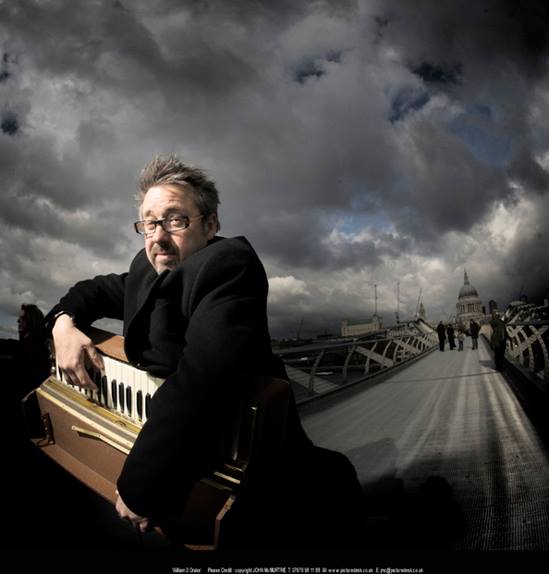
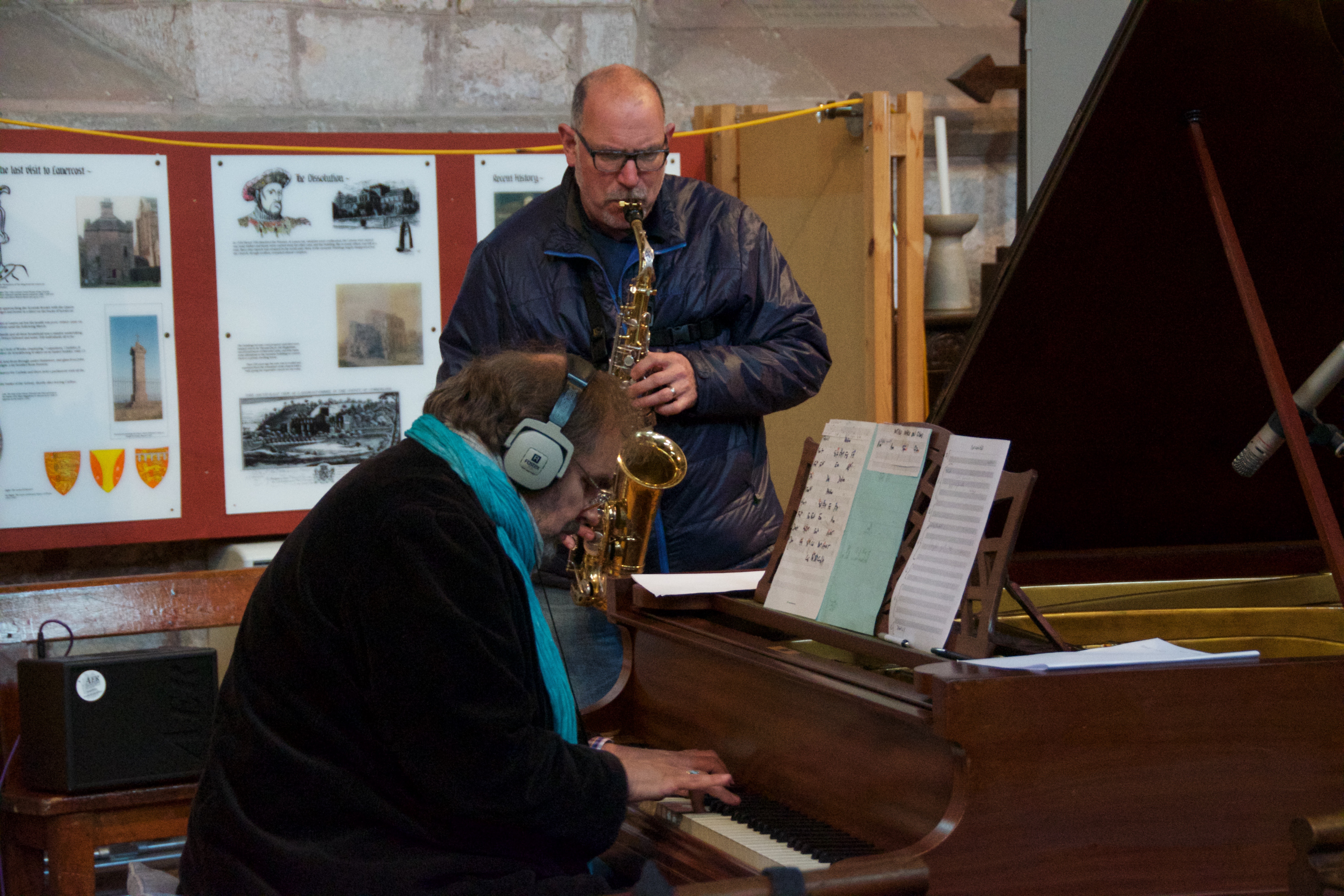
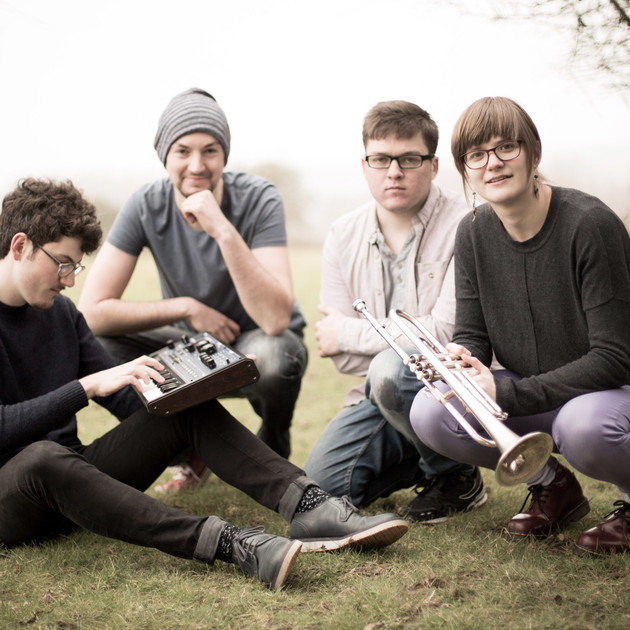


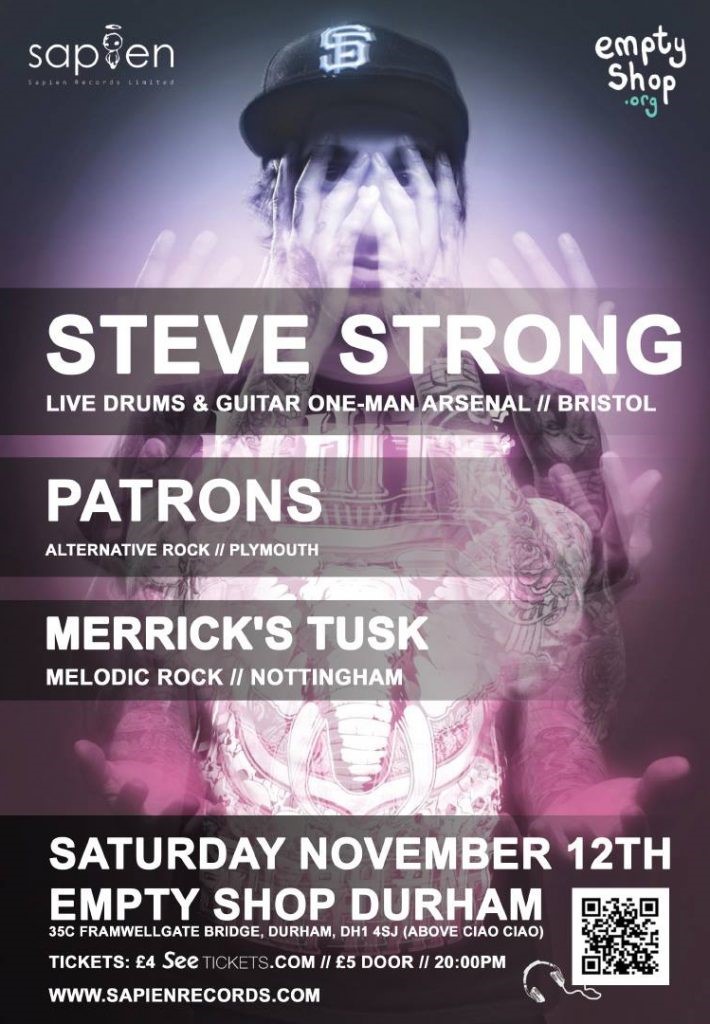


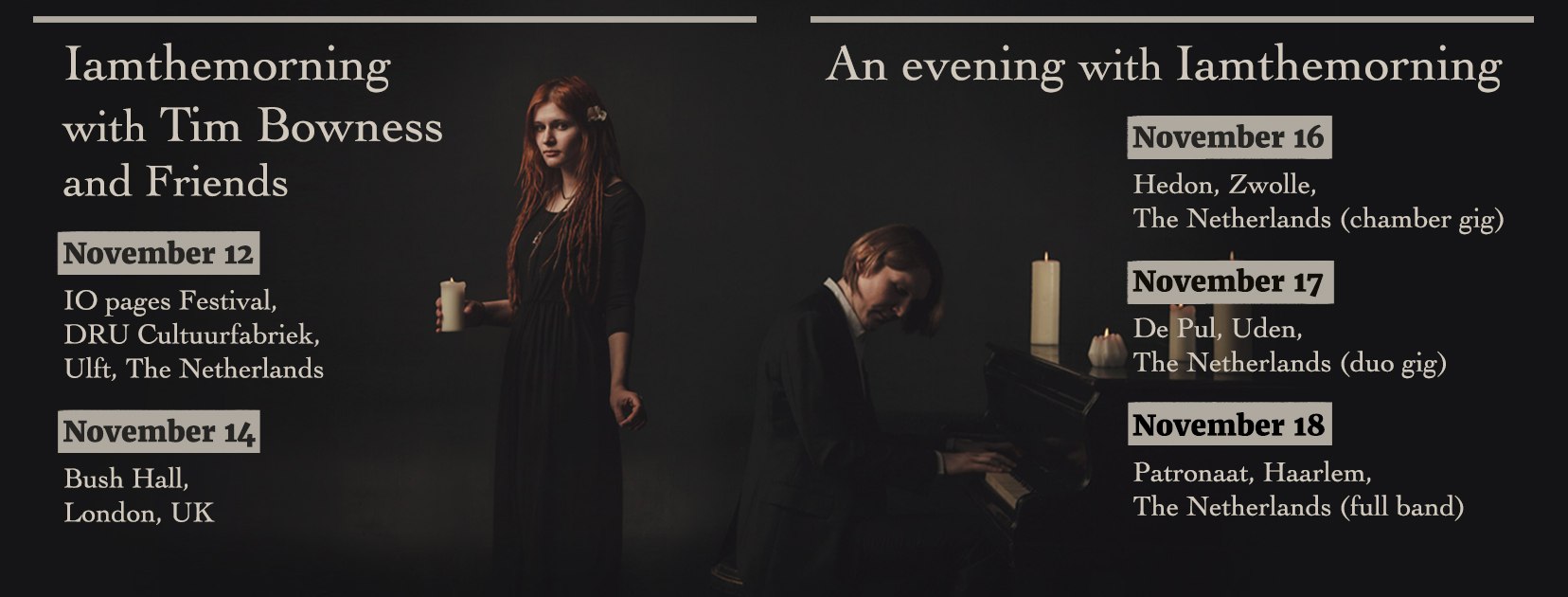
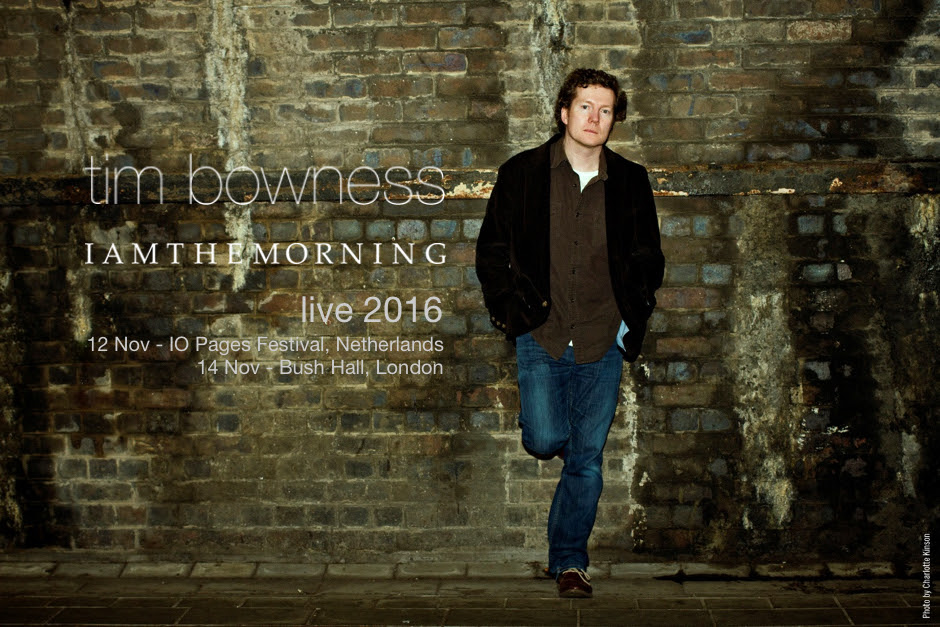

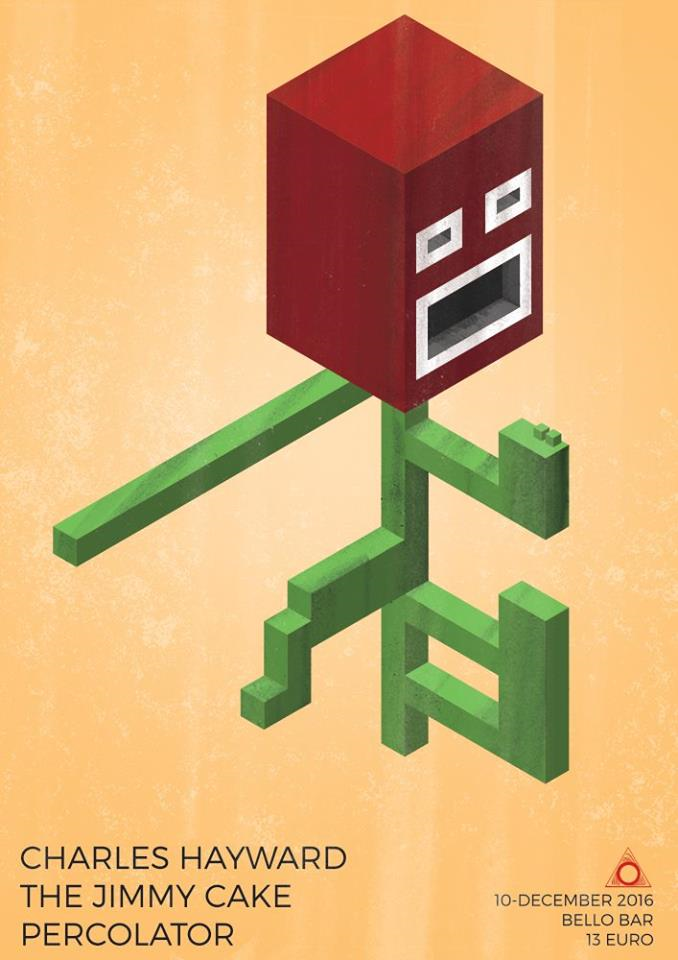
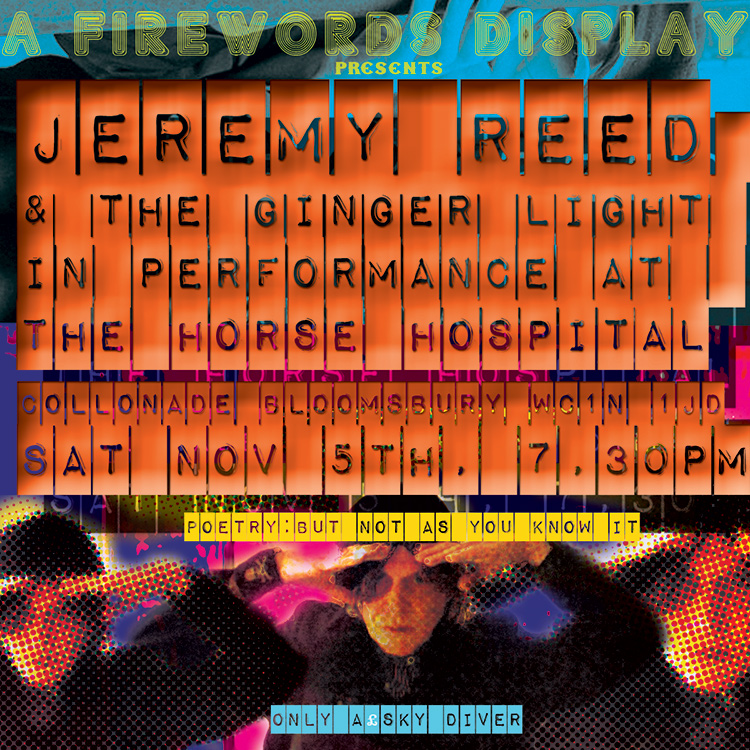

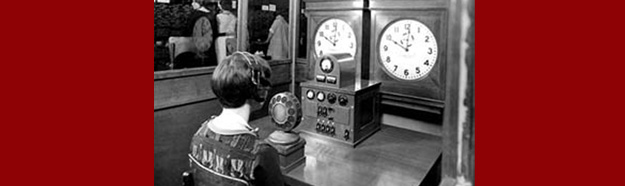
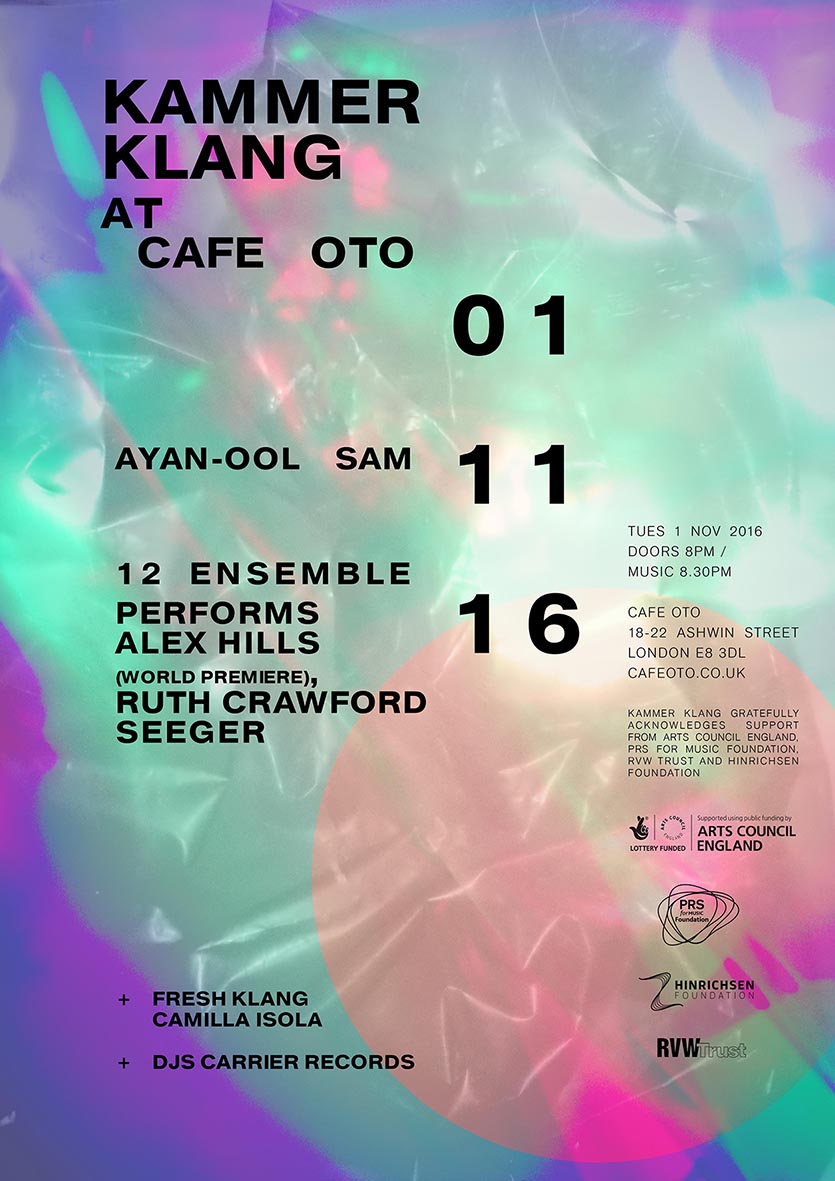
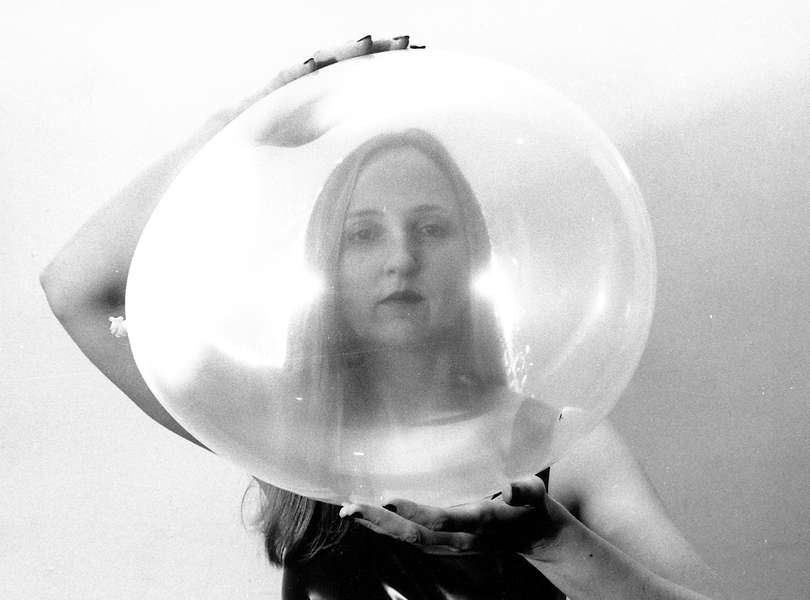
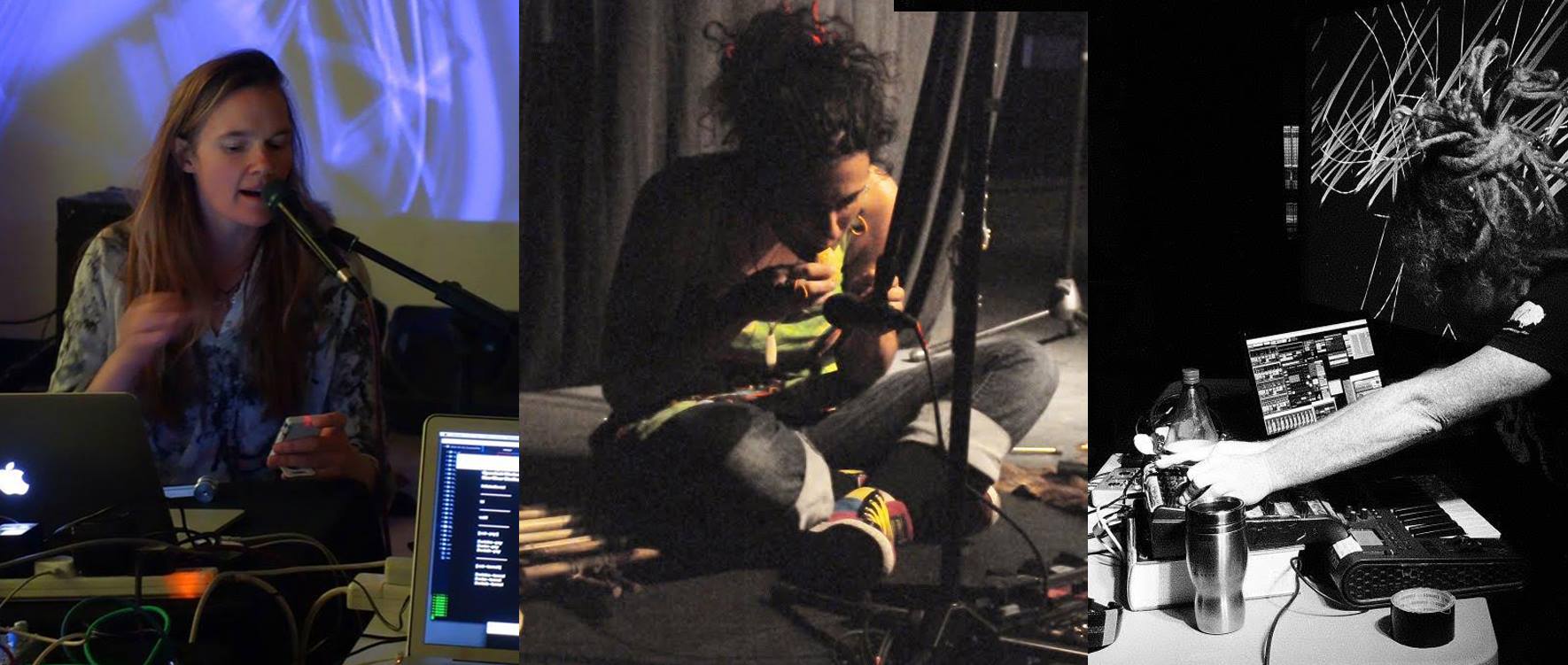




 Misfit City