Archive | punk rock RSS feed for this section

December 1997 – album reviews – Cynical Smile’s ‘Stupas’ (“it’s what’s firing off underneath the distortion that counts”)

1 Dec
Cynical Smile: 'Stupas'

Cynical Smile: ‘Stupas’

It often occurs to me, while watching a punk band play or having my ears pinned back by the roar of a punk record, how much drive is vibrating within such narrow confines. Such motivation compressed into such a rigid structure, number balls clattering in violent frustration in the rigged rock lottery machine. How there’s so much rebellion and desire for expression nailing itself down to fast 4/4, power chords and punishing speed when it should be expanding outwards.

Hearing Cynical Smile‘s debut album brings this idea back to me again. Southend punks they may be, but rattling around in “Stupas” are the seeds of something far more interesting than another moshing four-piece crammed into a Transit van. They’re usually compared to Rage Against the Machine, which is about equal parts helpful and bollocks. All right, they’re multi-racial (singer Ed is black, the other three white) and they have a similar luxurious, lunging approach to their in-your-face riffing. But though Matt Shears’ bullscraper guitar does test the edges of the envelope, there’s little in it to suggest the punk-Belew experiments of Tom Morello, and Ed’s spitting vocal is less brattish and polemical than that of Zack de la Rocha. Cynical Smile have less texture than Rage Against the Machine; their big advantage, though, is that they’re a lot less irritating. Both bands have a broader reach than most of their contemporaries: but Cynical Smile’s is, crucially, born of instinct rather than craft. It’s what’s firing off underneath the distortion that counts.

This Cynical Smile isn’t a smirk: it’s a snarl, “the grin on a shotgun.” The thrumming didge-drone on The Circle builds up into a roar – “You got to make a stand as they try to control ya… / I get ripped off again… / Let the ritual begin” – and they stalk out of the garage to test themselves against a harsh, booby-trapped world; whether it’s illustrated in Stitch’s aggressive con-man swagger, the way When Friends Become Enemies waltzes around Ed’s paranoid suspicions (“Enemies will get straight to you / when friends become enemies. / Your hopes won’t bring them back… / and if you die they’ll kill you again”), or how Killing Bugs growls “why am I trying to make sense out of things you don’t believe? / Don’t even think of wanting me to go – ‘cos I was leaving. / …I know you and see through you: your ignorance is my shield.”

This time though, fighting the fight leads the band out onto further musical limbs. Gunga Din’s basic bolshiness sounds like a junior Bad Brains (“move! move aside!”), and the eye- rolling power-riffing and punk-funk bass pops of Scum throb and crash like Living Colour’s hardcore experiments on the neglected ‘Stain’. Live 4 mixes hip hop (in the voice and rhythms) with Nirvana squalls, making the most of Matt Russell’s growling Billy Gould bass boings, Dan’s swat-splash of drumming and Shears’ sneaky bit of jazzed-up guitar. Even Feeling Retarded (with Tony Maddocks’ sea-monster backing vocals upping the hardcore) switches rapidly through a series of quick-change modes.

At the peak of Cynical Smile’s battling, their music is at its most balefully triumphant. On Methadone, Ed frothes and sneers against junkie delusions, as the riff yells like an alarm – “you justify; you wanna lie. / You justify to die. / “No, these things will not change me” – you feel it take control” – and finally, witheringly, he sketches a junkie death in broad slashes. “I can’t feel my body, I can’t choose my eyes, I don’t hear them screaming, my brain starts to die. / Left on the block of pain, someone else to take the blame. / You think you’re all different / but you’re fucking well the same.” Shear’s bizarre solo kicks the song into a Van der Graff Generator-shaped finale: a melange of voices, sounds and murmurs swarm around the life support bleeps that inevitably stretch out into the long continous goodbye tone.

With a whine of lonely data, Limbo follows Cynical Smile’s battling logic to a philosophical extreme, locking Ed into an existential battle. “I try to touch, I try to grasp, / …feels like nothing there, a vacuum of air. / …Book me in young, before you kill me: / tear out my soul before you leave me, / make sure I don’t get up when you knock me down – / build yourself a condo in limbo…” The guitar drops out, letting the hushed bass and drums etch a bleak picture on their own.

But they finish with a battered victory. Give Up the Ghost struggles valiantly against the draining of life from fighting bodies, as Shears’ guitar rings out like Keith Levene’s: “They called… / No, the time is not today! / I know it’s killing me…” Though ‘Stupas’ will probably be just the ticket for those in love with the sweat and flail of the moshpit, it drops hints of something greater.

Cynical Smile: ‘Stupas’
Org Records, ORGAN 035CD
CD-only album
Released:
1st December 1997
Get it from: (2022 update) Last.fm, Tidal, Spotify, Amazon Music – CD best obtained second-hand.
Cynical Smile online:
Homepage, Last.fm, Spotify
Additional notes: (2020 update) This was Cynical Smile’s only full album.
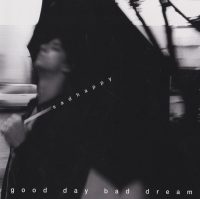
July 1997 – album reviews – Sadhappy’s ‘Good Day Bad Dream’ (“a contemporary progressive group that’s unafraid to mingle technique, horror, street-smarts and a mordant, lethal wit”)

4 Jul

Sadhappy: 'Good Day Bad Dream'

Sadhappy: ‘Good Day Bad Dream’

The voice on the telephone chuckles. “Sure, it all made sense to me. You just burn it out, past the pain. / Sure it’s all toxin: you just work it out of your system.” Somewhere between a Berklee College education, an Olympia punk statement and the world of woodshed ravings you’ll find this – rolling down a quiet highway like a fatal fog-wall.

For their fourth album, the alliance of drummer/sample mangler Evan Schiller and bassist/spoken-word freak Paul Hinklin has convulsed yet again to install a new Sadhappy lineup. Out goes eccentric Critters Buggin/Tuatara sax player Skerik. In comes Michael Manring, ’90s bass guitar genius, for a very different approach to the power trio. Two basses might sound like a recipe for disaster – ‘Jazz Odyssey’ doubled up, or cheesy slap-funk duels. Sadhappy get around this by realising the implicit power in the timbre of the bass guitar: the added resonance, the volcanic rumble it’s impossible to ignore, the sheer booty-shaking body. And they go for it full-bloodedly. In the resulting low-end carnage, saxes and guitars are not missed.


A lot of this is to do with Manring, who’s rivalled only by Tony Levin, Victor Wooten and Doug Wimbish as a contemporary redefiner of bass guitar. Not content with just a jaw-droppingly dextrous technique (whether grooving fingerstyle, slapping, tapping, or picking), he’s as liable to mutate melodies by abrading them with an EBow and/or in-flight retuning. And, as you’d expect, ‘Good Day Bad Dream’ is a treasure box of bass sounds – the levitational noises on Lost in Bass; the chainsaw punk rumble on Maintenance Pissed and Chronic Subsonic Tonic; the multitracked interplay of worming harmonics, chunky strums, and wolf-wails on The Kitchen Sink. But it’s no mere technique-fest.


Yes, for the most part it’s instrumental. And at its most basic (Home Lobotomy Kit, Honeymoon Deathbed) it tugs us through a darker edged and more credible fusion revamp via Hinklin’s brutally precise twanging, growling basslines, Schiller’s clattering, tight as a mantrap drums, and Manring’s distorted, storming, articulate leads. And there’s a strong element of the roaring hybrid of thrash, fusion and left field virtuosics that fuelled Manring’s last album ‘Thonk’, recorded as an attempt to escape his inconvenient reputation as a jazz-leaning New Age muso. But in meeting the streetwise intelligence of Schiller’s drumming and Hinklin’s sardonic New Music/punk’n’sarcasm influences, Manring’s restless and complex musicality has completed its journey away from the New Age racks.


‘Good Day Bad Dream’ emerges from this as an album blending multiple strands of modern electric music with surprising success. It’s an overlapping low end approach of eerie smoggy textures, wrapping up art punk, weird funk, jazz, dark ambience, sampledelia, progressive rock, sound massage, and a dash of psychological sewage. The trio nod to Mingus, the smouldering dark star of modern jazz, with a strutting and dextrous cover of his sarcastic II b.s. With the fifteen minutes of deathly textures and world-swallowing bass oceanics on The Death of Webern, they’ve got that scary isolationist-ambient game sown up too.


Evan Schiller’s light touch throughout ensures that the band are never bogged down. Within The Kitchen Sink’s light-fingered ostinatos, King Crimson riff choirs and E bow calls, his precise percussion approach rings, swooshes, crashes and drops out to leave perilous canyons in the texture of the music. On SBD, he shines with an array of sparse metallic taps and lethally timed buzz-rolls under a lowering cloud of bass, a dark canopy of wails and murmurs through which Manring winds skeletal insect-trails of overdriven bass, twisting and skirling like cyborg bagpipes.
……………………………………..


But the key to Sadhappy’s success in reaching out beyond the fusion ghetto is Paul Hinklin’s acidic humour, which lurks somewhere in the triangle between Tom Waits, Frank Zappa and Bill Hicks. In the recurring, repulsive figure of Oscar (a forty-nine-year-old backwoods Beavis with a voice like a plastics bonfire), he gives Sadhappy their own all-American idiot guide, a lottery sweepstake winner with “money comin’ out of his ass” swaggering over a racket of bellowing grunge-garage art rock riffs. His new rich man’s horizons lead him only as far as the porn racks at the general store, or to the bar; a coarsened American Dreamer content to do nothing more than wallow in his own filth and boast about it (“Yeah, you gotta work for the rest of your life: I own the streets I piss in!”).


On False Information – a sort of post-Laswell take on a ‘Remain in Light’ groove, burrowing through post-rock and hip hop en route – Hinkler offers us a lighter look at the aches and absurdities of the modern human condition. “All the guilt, all the shames, all the blames, / all the payments that you pay for crimes you never even committed, / never even thought of – what’s up with that?”. Schiller’s pin-sharp sample-heavy beats jab and dodge like a lethal flyweight boxer as Hinklin’s sardonic voice chuckles at enlightenment: “You see past everything and you say, this is just me plus garbage. Hell, if I couldn’t see the garbage, then I would be the garbage. Thank God I can tell I’m not the garbage. “‘Scuse me, honey. I have to take myself out to the trash. What is truly me will come back to dinner. It’ll just be me minus garbage.””


Sometimes though, the humour goes darker. In the harsh fable of Hammering Man, the townsfolk turn out to watch the unveiling of a statue: “a testament to the nameless brave, to the unselfish, the holy slaves. The ones who gave their bodies and minds to the army, the ones that gave themselves to the might of the all powerful industrial machine. The ones that had made America strong, the ones that had made America beautiful. The ones that, through no fault of their own, had turned it into a wasteland.” Small wonder that the statue crumbles, toppling to pin the spectators to the earth.


In the brooding dusky groovescape of Oscar Gets Laid, we get to see a younger Oscar, callow and innocent, rubbing up for the first time against the world that’s going to corrupt him. Manring’s mixture of rattling ominous echoes and scritching, coppery industrial harmonics send a shiver down the spine, as Hinklin’s murmured vocals explore paranoia and fascination down the back alleyways of the mean streets – malevolent shadows, and the breath of heroin ghosting out of the skins of hookers. At last: a contemporary progressive group that’s unafraid to mingle technique, horror, street-smarts and a mordant, lethal wit.


It’s also one that’s firmly rooted in the present, soaking up the lessons of grunge, dance, and sampler culture, while still playing the arse off all comers. Even if ‘Good Day Bad Dream’ sometimes strains the limits of its excellence by being just a little too diffuse, too dependent on fusion fallback, Sadhappy move through their music with assurance, imagination, presence and a brutal vigour. And that’s an all too rare combination.

The smile on the face of a charming, constructive killer.

Sadhappy: ‘Good Day Bad Dream’
Periscope Recordings, PERISCOPE RECORDINGS CD04 (7 96873 00042 0)
CD/download album
Released: 2nd July 1997

Get it from: (2020 update) Original CD printed in a run of 1,000 – CD and download best obtained from Bandcamp.
Sadhappy online:
Homepage Bandcamp Last FM YouTube Vimeo
Google Play Spotify Amazon Music
 

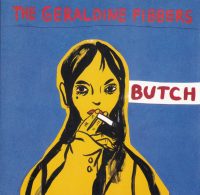
July 1997 – album reviews – The Geraldine Fibbers’ ‘Butch’ (“a uninhibited maelstrom of ferocious guitars that lash like electrified hair… black humour in spades, but the Fibbers’ brand of fucked-up country keeps the ravaged heartland heartstrings and sour juice intact”)

3 Jul

The Geraldine Fibbers; 'Butch'

The Geraldine Fibbers; ‘Butch’

Various riot-on grrls and drama queens, once they’ve tired of punking up girl-group lisping, like to play with those oh so challenging images of junkies and whores. Well, good luck, kids. Play nicely. But while you try on the roles like they’re attention grabbing prom dresses, Carla Bozulich has genuinely Been There, Done That during her own harrowing past. And she’s brought back a mass of bone-breaking songs with her on her voyage back from the brink. And her band, The Geraldine Fibbers, bring them to life the way a flamethrower brightens up, oh, any social gathering where plenty of flammable frills are clustered together. Wake up time, you pretty things.

Oh yes. See them run for cover.

Whoever’s heard the previous Fibbers album, ‘Lost Somewhere Between the Earth and My Home’, will have an idea of what to expect. Except that ‘Butch’ is to its predecessor what ‘Nevermind’ is to ‘Slippery When Wet’. Maybe it’s the recruitment of new guitarist Nels Cline, or maybe it’s just Carla finally diving full into the fray with both feet; but ‘Butch’ is a uninhibited maelstrom of ferocious guitars that lash like electrified hair, bass that booms like an iceberg smacking up the side of the Titanic, spasms of frenetic voodoo drumming and Jessy Greene’s violin flaying the skin off any ear that’s left unflattened.

Oh, and Carla’s voice. Emmylou Harris channeling Diamanda Galas doesn’t come halfway to this. As sharp and as powerful as a swung shoulderblade, as pointed as a knitting needle driven through the brain. The raw power of someone who’s lived through enough not to give a flying fuck about what anybody else thinks.


Of course in Fibberworld the fucks are probably flying. Like fists. Airborne, fast, rolling over; brutal, biting, clawing like rabid eagles. Sex permeates this album like river water in Ophelia’s bridegown, and while there’s a wild exhilaration to it, it’s never far from violence, meted out by Carla herself or by one of the other stark shadowy characters who ripple through her songs like sharks in a blood trail. There’s been nothing like this since that crack of psychic thunder that was the first Throwing Muses album twelve years ago. And if you’ve always missed that original, wantonly possessed Kristin Hersh since she mellowed into first a college rock icon and then an eldritch acoustic housewife, Carla beckons with a sharply bevelled fingernail and a mouthful of mercilessly shredded woman-words.

You think “Muses”, you think “X”; you think “Hole with talent instead of just posturing”; you think “early Velvets on nightmare acid, and with Nico convulsing out of that Teutonic cool for once.” And you also think country music, which soaks the fabric of “Butch” and ferments their Los Angeles punk hearts. But this is no joker’s cowpunk. It’s got black humour in spades, but the Fibbers’ brand of fucked-up country keeps the ravaged heartland heartstrings and sour juice intact.

Folks Like Me’s wooden, honky-tonk four-four has the inevitable slippery lap steel and plaintive weave of fiddle, the queasy bends of guitar and voice. But this is a tale of life off the highways, in the darkest and most twisted woods: Tammy Wynette via ‘Deliverance’ and ‘Angel Heart’. This time, the woman who can’t stand by her man comes of strange and sinister stock (“My heart wants to remain what I’ve become… / There’s no word for this where I come from”) and she knows that the idyll must end before her own blood catches up with her: “Your Lord knows I don’t want to leave here. / I’d like to stay in this little house and provide for you / and if I knew I’d only be risking my own life, / I’d stay until they came and struck me dead, / but I couldn’t stand to see them hurt a hair on your sweet head…”


Pet Angel gives us an American Gothic waltz with lyrics infested by wild wood romance and ‘Twins Peaks’ owls: “You cradle my body in sweetness and warmth, and a sweet wind blows through the trees… / The rain cracks the sky like tears of joy… makes mischief in her hair.” Love and death are inextricably combined (“You are my sunshine, I pull the drapes shut tight. / It’s curtains for you, goodbye. / The cat’s in the bag, the bag’s in the river, / the river makes me cry”), and out here, murder’s as natural as prayer: “To you, to you, straight up to you, / into your charitable hands/ Take care of him, Jesus, I know you’ll do what’s best / Lay his wicked soul to rest.”


Carla’s worldview is nightmarish, constantly under attack, with even the sun joining in with the warfare – on California Tuffy, she announces “a ball of light comes down / to bite me on the ass, the legs, the breasts / I’m falling from my nest.” And the answer is a swipe back with all the claws out, claiming “Yes I am just a tart, a heart on stilts. / Pick the flower and it will wilt, / to die in bliss, for a greedy lover’s kiss” before stinging back with a flail of electric noise and “you will never get my heart.” Toy Box is brutally, near unbearably graphic, a hall of distorting mirrors and wartime dispatches from the sex trade – “My shell on top of your knotty fist / with a speculum shoved up my cunt after hours… / For one lousy minute she felt like a queen. / I stand her naked at attention. Is this my only skill?”


Then there’s the metal hammering of I Killed the Cuckoo, as guitars screech, text goes through the mincer, fate and conflict body-slam in illegible shards. “The clock is dead for once and for all / until the next time I run in with you… / Lay me lower than I prayed for sweety heart… / In the end you crash into a milk truck. / I can see it in the tea leaves: you’re fucked.” In Arrow to My Drunken Eye there’s a flicker of incestuous horror in the warning “don’t be caught with your nightie mussed / and if you are questioned don’t tell them what we’ve discussed.”


Maybe it’s for respite from the rage, but scattered through ‘Butch’ are doorways to elsewhere as the band sink the odd claw into the avant-garde. There’s the drowned fairground ghosting of Heliotrope; or the venomous ambient murk enveloping Claudine’s New Orleans lurch, full of knuckly hideous life, like facehuggers trying to clamber out of a gumbo. And there’s a blood pulsing, amyl nitrate cover of Can’s You Doo Right – enough to scare the gloves off Holger Czukay and have aseptic contemporary Krautrock boys bricking it en masse.


However, it’s always Carla’s songs that snatch the attention; and rightly so. Here’s a reckless and merciless imagination at work, exploring the fragility of an ageing drag queen on the title track (“pushin’ thirty five under an answer blanket”) who’s “always a much prettier bird than any old girl bird… / Shades of light green, deep blue and just a touch of rouge / It’s funny how easy it is to lose / And all you’re left with is chaos and a dirty face.” Or diving into chaos with Seven or In 10 as she explodes around the body of a enemy lover, abandoning control and bringing down a foe with her: “I’ve gotta little trick for you. / I can split in two / or in seven / or in ten / little friends on whom I can depend… / We told you not to get inside our head or in our bed. / You wanna own this dish so you can eat it any time you wish… / Not so fast, fucker!”


But even as Carla delivers a full on primal punk scream of “you might think I hate you!”, she offers us no straight answers. Well, there aren’t any. Part of the impact of ‘Butch’ is that whatever Carla’s had to go through, she’s now so well adapted to it that you can’t imagine her living away from it. The world’s often built on chaos and violence; Carla’s found out more about that than most; and she’s now too much a part of it to ever escape. But if she’s ambiguously intertwined with the hand that beats, she’s also biting it ’til it bleeds.


Roll up the sunroof, mount rocket launchers on the beach buggy and hit Venice Beach with your anger clenched in your fist. Run down any fucker that gets in your way. It’s a sun ripped jungle out there, full of dangerous fruit. California dreaming will never be the same again.

The Geraldine Fibbers: ‘Butch’
Virgin Records America Inc., CDVUS 133 / 7243 8 44629 2 5 (724384462925)
CD-only album
Released:
1st July 1997
Get it from: (2020 update) Best obtained second-hand or streamed.
The Geraldine Fibbers online:
Homepage Facebook Twitter MySpaceBandcamp Last FM YouTube Vimeo Deezer Pandora Spotify Amazon Music
Additional notes: (2020 update) The Geraldine Fibbers split up after ‘Butch’. Carla Bozulich and Nels Cline went on to form Scarnella; more famously, Nels eventually joined Wilco. Carla now has a solo career as well as working with her band Evangelista.
 

November 1996 – EP reviews – Pram’s ‘Music for Your Movies’ (“profundity stretched over that soap-bubble surface”)

18 Nov

Pram: 'Music for Your Movies'

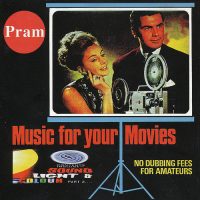
Pram: ‘Music for Your Movies’

A tangible relief. You know when you treasure a band whose very awkwardness is their spur to genius? And you dread the day when they inevitably develop, move on, make that breakthrough? How you torture yourself with wondering exactly how they’re going to sell out, which part of their off-the-wall wonder is going to be sloughed off like an old coat or an outgrown friend? And how wonderful (and how rare) it is, when they make that leap while still swinging all of that weird and precious baggage.

Over four albums and assorted spring showers of invention, Pram have made music which sounds like daydreams captured in rented rooms and played on dolls-house instruments. Tinkly, tiny and exquisite: beautifully fragile songs, with profundity stretched over that soap-bubble surface. Music recorded in the kitchen sink during those sparkling times an hour or so before noon or dusk sets in; dusted by trumpets and cobwebs, and licked by ebbtides of slide guitar. They’ve got only the flakiest of reference points – tranquillised ’50s lounge-music echoes, say; or the ferment of polycultural Birmingham nightclubs; or Can’s immersive and unlikely groove; or the deliquescing pop of Syd Barrett’s Pink Floyd on See Emily Play (it’s that sustained, wobbly organ, and that obstinate un-rock twitchiness to Daren Garratt’s drumming: free-jazz leanings, or dodgy-but-compelling technique?). They’ve none of the portentousness of yer Sylvians or Cures, and none of the slackitudes of post-rockers: nor the inhumanity of those ambient characters who sound as if they’re wearing their eyeballs back-to-front. Pram’s music has always been winningly human: frail, sensual, intimate, and very lovely.


The last time we heard from them (on ‘Sargasso Sea’), Pram had drifted aground and drew wonder even from that, rattling like a wind-harp as they moulded music out of disappointment, sleep and stranded hearts. On ‘Music for Your Movies’, they’ve kept their home-made clatter and every scrap of their inventiveness, but have tightened up their pop. Everything falls into place now instead of merely stumbling together, weaving in delicate threads of dub, drum’n’bass, cinema organ. Rosie’s voice, though still weary conversationalist rather than acrobatic diva, has a new bounce and a lilt to it. And her lyrics (while still existing in the reverie that the white page lends so many poems, crucially detaching them from registering as real life) have a new zest.


There’s something celebratory about these songs. The Sargasso that trapped is now a playground for her to transform with enchantment in Sea Jungle’s free-floating love song, while Silver Nitrate celebrates the transforming imaginative power of film as a feminist liberation: “The woman who discovered light / was dazzled by her ingenuity /…With silver nitrate she could make time wait / she could gather all of her hopes and her dreams and make them her destiny / …and spun her thoughts like spiders webs / and with these delicate chains was set free.” On Eggshells it might be Rosie who suffers, locked out from her lover by his own absorption in his past wounds, but she’s the stronger, the more loyal, despite her exposure. Only Carnival of Souls sees Rosie failing to escape the net of her own entrapments, with figures from her past parading through her sleeping head (“feels like I’m living / in a zombie movie”).


Pram have already made stagnation seductive. Now, wheels oiled, they’re rolling forward to explore the waking world. Lucky world.

Pram: ‘Music for Your Movies’
Duophonic Super 45s, DS45-CD15 (5024545032727)
CD/vinyl EP
Released:
18th November 1996
Get it from: (2020 update) Best obtained second-hand.
Pram online:
Homepage Facebook Twitter MySpace Bandcamp Last FM Apple Music YouTube Deezer Google Play Spotify Tidal Amazon Music
 

August 1996 – album reviews – Disco Inferno’s ‘Technicolour’ (“a poignant, if a touch unsatisfactory, monument to a band who did a most remarkable thing”)

5 Aug

Disco Inferno: 'Technicolour'

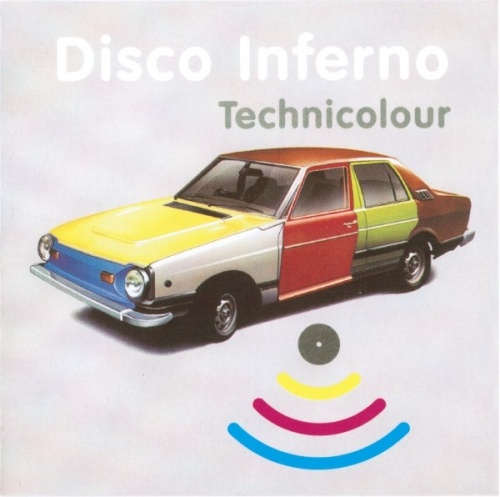
Disco Inferno: ‘Technicolour’

They were going to change the world with their world‑weary lyrics, noisy guitars and random artillery of samples.

As the USA brings us an ever more inventive and experimental range of post‑rock bands, it is sobering to reflect that, whether you like that all‑embracing genre‑heading or not, the UK could not sustain such a futuristic leap in pop music for long. Disco Inferno, Bark Psychosis, Seefeel, Insides and their ilk were just a temporary blip in the inexorable rise of ’60s revivalism.

Disco Inferno, in particular, had the cruellest of brief careers. Picked up and lauded by the likes of ‘The Wire’ and ‘Mixing It’, and used as a constant token of their superior musical taste by ‘NME’ and ‘Melody Maker’ journalists (a secret for them to keep and drop into reviews as an esoteric influence) Disco Inferno didn’t stand a chance of taking their unique vision to where they wanted it to be: the pop world.


This album nearly became the great “lost” work ‑ curtailed by the demise of the band, publishing difficulties made it uncertain if ‘Technicolour’ would ever see the light of day. Finally released months later, it stands as a poignant, if a touch unsatisfactory, monument to a band who did a most remarkable thing. Whilst producing truly “experimental” music, they didn’t forget the need for (well, it’s almost heresy to some chin‑stroking musical aesthetes) emotionally‑involving lyrics and a damn good melody.

So, for a sampladelic band, the opening two tracks scare the sheep with noisy guitar abandon. The title track, blasts in with a none‑more‑guitar‑and‑distortion start, but the unique invention soon creeps in ‑ a shuddering rhythm supplied by car horns, dog barks, shouts and breaking glass. A collision between The Art Of Noise and the glycerine melodies of The Lightning Seeds, with an end result comparable to late‑’80s Wire. Things Move Fast lives up to the title, and is a delirious noise‑guitar and beat‑fuelled rush through modern society. It ends with a sample of rapturous crowd noise. Truly, these guys lived in hope ’til the last.


I’m Still In Love reasserts DI’s passionate belief that a tender love song and futuristic sound could be combined: Ian Crause devoting himself to someone as they seal themselves away from the harsh iniquities of the world outside, with fireworks exploding and crackling during the exhilarating noise‑upon‑noise of the chorus. Lovely.

Sleight Of Hand is another hymn to the jaded view of the world as seen through Crause’s eyes ‑ “and once you see the sleight of hand / it’s never the same. / Once you see the cards are marked / it’s all in the game.” It’s the adult version of realising Santa Claus is actually your father dressed up in a red coat and cotton wool, pissed on cheap sherry. We’ve all been there. The feather cushion is provided by the swirling, tumbling harps, heavenly harmonies and chiming synth‑drums ‑ straight out of the ’70s ‑ in the chorus.


Don’t You Know is a sample sequel to Footprints In Snow from the band’s stunning 1994 album, ‘DI Go Pop’. This tine the rhythm is provided by the sound of heels on pavement, surrounded by the ethereal and enveloping electronica that features on so many of DI’s utterly entrancing slower tracks ‑ it really is best described by the contradictory term “acoustic sampledelia”. It’s a truly indefinable sound that I have only heard once before: in the unforgettable work of AR Kane in the late ’80s, another band who sounded like they were piecing together from the music and sound elements of a nuclear event. That is the spirit of Disco Inferno.


It’s A Kid’s World was the “big” single. That’s irony, by the way. It’s based on that Lust For Life drum intro. Kids’ TV themes ‑ ‘Doctor Who’, ‘Playschool’ ‑ are plundered for samples. There are even self‑referential samples from earlier DI tracks. It’s a veritable junkshop of found sounds. By any other standards, a triumph. By Ian Crause’s standards, this sounds like an attempt to produce what people expect post‑modern sampledelia to sound like ‑ knowingly ironic, dischordant brain music for ‘Wire’ readers and other musical eggheads.

But it lacks the tangible human emotions of most of the group’s material, unlike When The Story Breaks, which is perhaps the closest DI get to pop music for the twenty‑second century. The clattering synthetic drum breaks, harsh electronic ambience and (of all things) a sequence played on a touch‑tone telephone shows that some attention had undoubtedly been paid to the ten‑fledgling sound of drum’n’bass but applied to their melodic song‑based outlook.


Similarly, Can’t See Through It is almost a Blue Nile sound for the ’90s, a beautifully hushed marriage of natural acoustics and electronics. But more than anything, it is a song that sounds broken and exhausted. The lyrics state Crause’s dilemma at Disco Inferno’s situation: utter belief in the musical path they are following (“nothing can touch us / ‘cos everything in us / is digital cold”), but clear frustration that they’re not getting their vision across (“I can’t see through it / There’s no way back / I can’t get home…”).


It’s a lyrical concern that is developed in the final track. Devastating emotion soaked into its words, Over And Over is by far the most simply-recorded track Disco Inferno ever did ‑ just Crause’s voice, a guitar and a haunting drone in the background (more acoustic sampledelia…) It’s pure assumption, but it sounds like it was performed solo, after the split. The lyrics are undeniably concerned with the band’s demise ‑ “So many plans, so little time, / I can’t shake the feeling I’ve watched it all back from the end / Every missed chance and mistake / I hear when we’re playing / Forever in my head.” The man obviously lived for this project. It’s our loss that we didn’t sign up to it in droves.

I, for one, sincerely hope that Ian Crause and Disco Inferno soon find that they can’t bear not to present their music to the world, whether in a reformed group or a new set‑up (rumours abound of a new Crause band called Floorshow…). Perhaps the musical environment will be right this time ‑ more open minds, more adventurous listeners. Well, you live in hope. But it would be a tragedy for Disco Inferno to enter the files of Great Lost Hopes populated by Furniture, Kevin Rowlands, Bark Psychosis and… insert your own choice here.


Ian Crause’s last words on Over And Over are “it’s always, it’s always the same. / It’s never the way that you dream, / it’s never complete…” Disco Inferno, RIP.

(review by Vaughan Simons)

Disco Inferno: ‘Technicolour’
Rough Trade Records, R4102 (5022781204106)
CD‑only album
Released: 22nd July 1996

Get it from: (updated 2018) pick up the reissue (on vinyl and CD) from One Little Indian.

Disco Inferno online:
Homepage Facebook MySpace Last FM

July 1996 – album reviews – Eyeless In Gaza’s ‘All Under The Leaves, The Leaves Of Life’ (“rings the sonic changes track by track”)

25 Jul

Eyeless In Gaza: 'All Under The Leaves, The Leaves Of Life'

Eyeless In Gaza: ‘All Under The Leaves, The Leaves Of Life’

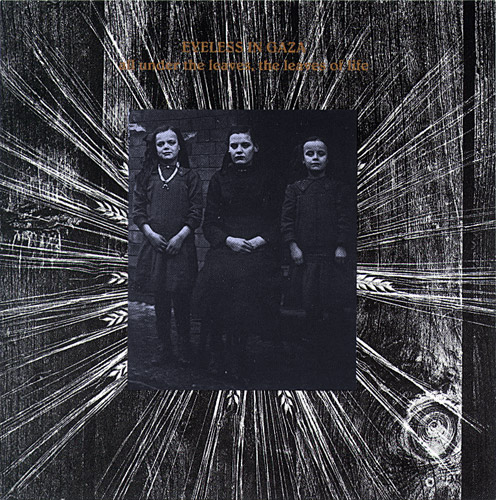
Still undimmed after years of following a winding path from visionary post-punk to surreal pop, and through to a beautiful breed of semi-ambient outsider-folk, Eyeless In Gaza continue to blossom in their triumphant 1990s renaissance. They’re also as restless as ever – following soon after their ‘Bitter Apples‘ album (with its sustained autumnal mood) ‘All Under The Leaves, The Leaves Of Life’ rings the sonic changes track by track.

Indeed, Eyeless seem as happy to draw on their post-punk past as they are to explore the ghostly folk that’s left an impressive stamp on their recent music. Monstrous Joy opens the album and… God help us, it’s 1981 again! Joy Division bass rumbles, spindly single-note synths, buzzingly active electronic drums. Yet despite the timewarp, this is no Xerox copy of those years. Instrumentally, it’s a skilfully layered slice of pop atmospherics: lyrically, emotions are conveyed much more directly. Gone are the allusions to nature, but the atmosphere holds a definite frost in the air – “here is a sorrow that owns me, here is a sorrow that speaks.”


Struck Like Jacob Marley (despite the Dickensian title, a highly contemporary standout) does nothing to ease the chill. Led by rumbling bass guitar and defiantly noisy and distorted electric guitar, the lyrics are upfront advice to a friend consumed by cynicism – “it’s almost as though you have no positive view / and the old warmth is going, even though you don’t wish it to.” Hard words.

Meanwhile, the sonic adventures just keep on coming. Fracture Track is a mesmerising and bloody assault on the Eyeless sound. A violently struck, hypnotic rhythm guitar riff is blasted on all sides by discordant drones and buzzes: there are no drums, yet it sounds huge, and Martyn Bates pushes out a harsh-edged, ferocious vocal. “Blasted and blinded to chaos… / riding an animal hatred… / forcing such a numb and wasting path for you to blithely tread.” The violent and nihilistic imagery only adds towards making this the darkest, most fearsome track Eyeless In Gaza have ever recorded.

The traditional Leaves Of Life, as arranged by Eyeless, sounds like a less wasted Flying Saucer Attack turned on their heads. The vocals and spartan folk acoustics take place up close, whilst the unsettling ambience – provided mainly by startlingly severe treatment and distortion of electric guitars and other electrical interferences – scares the life out of you in the background. Gothic folk at its best. And trip-hop? Well, OK, nearly. Answer Song And Dance definitely possesses a dark, nervous trip-hop undercarriage, with a slow, menacing beat, cool electronic sheen and Martyn’s vocals relayed through digital effects and compression: more experiments in new sound are going on here.


Three Ships, another arrangement of a traditional piece, is perhaps the most reassuringly familiar Eyeless In Gaza track here, comprising a solo vocal over Peter Becker’s long churchy organ notes (“all the black keys”, as they once called it). Even here, though, the second part of the track becomes subject to the unsettling aural sculptures of pervasive otherworldly drones, sonic interferences and sinister electronic pulses. It sounds like a late 90’s version of one of the frankly peculiar little improvised instrumentals that have littered Eyeless B-sides and rarities in the past: but, satisfyingly, it’s an example of technology finally catching up with the duo’s ambitious musical vision, so that they can finally express their experimental sides to the full.


It’s tempting to see this album as the second side of the coin flipped by ‘Bitter Apples’ last year. If the former was the familiar world of acoustic alchemy, natural imagery and the avant-folk song, then ‘All Under The Leaves…’ sees Eyeless In Gaza striking out for new challenges: testing their own musical limits, and casting off the gauze of allusion and allegory to put forward sometimes difficult lyrical statements directly. And while, on ‘Bitter Apples’, vibrant colours were all around and there was a last gasp of summer’s warmth, ‘…Leaves…’ is winter-cold. Challenging, but ultimately beautiful when viewed in the harshest of frosts.

Since unexpectedly bursting back into life in 1993, Eyeless In Gaza have been immensely prolific. But as their continuing string of albums in the comeback sequence show, quality has remained high: and Bates and Becker’s desire to move forward and experiment – while retaining Eyeless’ essential character – remains intact and proud.

(review by Vaughan Simons)

Eyeless In Gaza: ‘All Under The Leaves, The Leaves Of Life’
Ambivalent Scale Recording, A‑SCALE 021 (5 021958 463025)
CD‑only album
Released: 19th July 1996

Get it from:
(2018 update) original CD and 2009 Cherry Red Records reissue best obtained second-hand.

Eyeless In Gaza online:
Homepage Facebook MySpace Soundcloud Tumblr Last FM

November 1995 – album reviews – Eyeless In Gaza’s ‘Bitter Apples’ (“an autumnal album in the most inspiring way”)

30 Nov

Eyeless In Gaza: 'Bitter Apples'

Eyeless In Gaza: ‘Bitter Apples’

After seventeen years on the wildest, furthest reaches of contemporary music, Eyeless In Gaza’s time may finally have come. With the British music scene proclaiming itself as boundary-free, cross-pollination of styles is the name of the game. Experimentation is the byword. Ears are open to new sounds.

Eyeless, of course, have been doing it for ages – from industrial electronics through early-80’s sparse electronic punk, bedsit acoustic folk, a stab at a big pop sound and experiments with mechanistic ambience. Then a seven-year abeyance followed by a shock return with the modern dance-pop of ‘Fabulous Library’ and by ‘Saw You In Reminding Pictures’ (an album of improvised, cinematic, ambient songs and atmospheres). Yet all, thanks to Martyn Bates’ distinctive, expressive voice and Peter Becker’s endlessly inventive musical collages, recognisably Eyeless In Gaza.

Much of Europe has been in on their greatness for years. Now that they have returned it is time that Britain listened in; particularly as, since Eyeless reformed, their career has been no nostalgic re-run of past styles, but a body of work that has engaged with the best of them in the camp marked “pre-millennial boundary-breaking zeitgeist experimentation”. Or something.


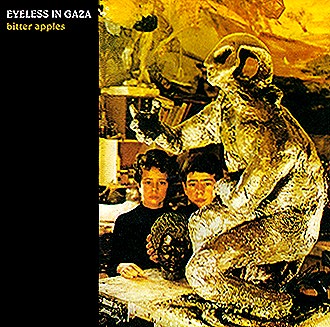
Following the head-expanding soundscape world of ‘Saw You In Reminding Pictures’, ‘Bitter Apples’ comes announced as a return to song structures and a live folk feel (acoustic guitars, bass, drums). The matured Eyeless In Gaza are now reinventing the brand of avant-folk song first heard on their Drumming The Beating Heart album over a decade ago. Lyrics such as those on Bushes And Briars immediately announce the folk influence – “through bushes and through briars / I lately made my way / all for to hear the young birds sing / and the lambs to skip and play.”

But any hint of preciousness about such a style is dispelled by the ghostly a-capella treatment of Bates’ voice, treated with vocal effects that make him sound like a possessed changeling, wrapped in his own tingling harmonies. Martyn Bates’ voice is unique – expressive in hushing to a sense of menace, or delicate and weary, or surging with the power to hit the rafters. He occasionally retains a slight rasp, an edge, to his voice from the first punk-inflected vocals of early Eyeless. A comparison? Impossible.


Year Dot demonstrates how Eyeless In Gaza can produce powerfully rhythmic, surging music from the basis of harsh acoustic riffs, Martyn letting his voice roam over the melodies with unfettered power. But technology is not anathema to such natural surroundings, though – the track closes in a sharp crescendo of electronic interference. Contemporary experimentation mixes it further with avant-folk on Jump To Glory Jane – zither passages are built upon bursts of white noise, klaxons, and improvised wordless vocal harmonies as just another instrument in the delicate construction. It’s a perfect demonstration of the duo’s implicit feel for building such atmospheres, and sets the tone for much of the rest of the album.

Perhaps the central track, though, is To Listen Across The Sands: powerful and urgent, built upon a crashing electronic drum pattern remorselessly pushing the rhythm forward and echoing the lyrical theme of listening to “all the mad, crashing waves.” The song would seem to be an allegory for a journey through a stormy life – “listen across the sands / to the waves drifting where you stand / and all their voices swallowing your life.” A theme that is returned to, lyrically and musically, on the title track. To an up-tempo soundtrack of syncopated guitar and percussion (plus a star appearance from a keyboard relic in Peter Becker’s armoury of sounds – the Wasp), nature’s imagery is once again summoned to describe the unpleasant aspects of life we sometimes have to wade through. “Such a bitter harvest, such a windfall falling that I can’t move… / all that I taste wastes me away – all that I’m succoured by and living on… / bitter apples…”

This is an autumnal album in the most inspiring way – new invigorating cooler winds provoking the falling leaves and scudding clouds. And Eyeless in Gaza are long-overdue for rediscovery, yet still ripe. Pluck.

(review by Vaughan Simons)

Eyeless In Gaza: ‘Bitter Apples’
Ambivalent Scale Recording, A‑SCALE 020 (5021958453026)
CD‑only album
Released: autumn 1995

Get it from:
(2018 update) original CD best obtained second-hand. There was a 2011 reissue on Hand/Eye Records which might be easier to find.

Eyeless In Gaza online:
Homepage Facebook MySpace Soundcloud Tumblr Last FM

October 1995 – live reviews – Organ presents Poisoned Electrick Head + Sleepy People @ The Monarch, Chalk Farm, London, 17th October (“another little banquet of progressive strangeness”)

20 Oct

Another little banquet of progressive strangeness is being laid on for us by those fine people at ‘Organ’ – unusual nourishment, as usual.

Newcastle’s Sleepy People are another from the expanding pool of bands under the giddy influence of Cardiacs. Those beloved warning signs are present: bizarre stares, a manic focus on the sort of music that ransacks your brain while it entertains you, frantic stop-start rhythms, and an obsessive love of cramming: cramming enough melodics for forty songs into the space of one, squeezing a whole orchestra’s-worth of sound into the kitchen-sinker of a rock band’s line-up. They don’t exactly look like your average clutch of prog-rockers, either. Two sane-looking people handling the rhythm section, some unholy cross between Bernard Cribbins and Sparks’ Ron Mael on synth, two impassive women doubling-up flutes and backing vocals, a singer who looks like the monster under Suede’s bed and a dead ringer for Uncle Fester Addams chopping away on guitar. More tea, Vicar?

The music itself starts out as Hammer Horror prog-punk and veers off to uncharted places: foggy treated flutes, yelping digressions, hallucinated carousel tunes, folk-classical suites composed by crazed cartoonists. I try and fail to write down coherent descriptions. The closest analogy to Sleepy People’s music is the glorious noise which you get when you knock over the music cupboard and everything falls out. If you can imagine that full-tilt chaos with intent and lunatic melodies, you’re halfway there. They announce songs with cheery, cosy titles like Home is Where Your Telly Is and Mr Marconi and His Unusual Theory, and they could write about paint drying and make it sound like the most fantastically surreal thing in the world. A band to cure the terminally bored.

We’re not out of Hammer Horror territory yet. Accompanied by hymnal keyboard invocations, a trio of fearsome skeletal masks take the stage and grin out at us. Poisoned Electrick Head have materialised. The singer (whom, for reasons best known to himself, chooses to travel under the name of Pee) comes skipping up through the audience in a devil mask, a sprightly little Old Scratch in a business suit. But although the masks may be other-worldly, the music is less so.

In contrast to Sleepy People’s cut’n’paste barrage of demented chops, Poisoned Electrick Head stick to a more familiar recipe of chunky geometric hard rock (not too far from prog metal, but light on the flashy virtuoso posing and stronger on the roughneck oil and grime), flavoured with a spicing of Hawkwind space rock and topped off with the kind of hooky, brassy keyboard spurts favoured by Devo (or by Asia, if they’d ever had a sense of humour). It’s diesel-powered music, sometimes close to biker territory, but always with wild colour and imagination spinning it clear of grease-pit stodgery and into far more delightful zones. The odd thrash-cello sound, thundering piano ostinato or blazing Marillion-style keyboard lick doesn’t hurt, either.

Just ask the people romping away down at the front. Poisoned Electrick Head are sturdily and definitely rock: but they’re also marvellously, bewilderingly poppy and absurdly danceable. Pee’s manic, acrobatic presence and cunning, theatrical vocals are a major part of the appeal. Even with the devil mask off, he may look a little Satanic; but this is a sly friendly off-duty Mephistopheles, here to give us a conspiratorial wink in a bar after working hours, and to tell us exactly how much we’ll be swindled in the end when we sell our souls.

Some such diabolical bargain might have gotten PEH their excellent songbook, though; packed with raucous intelligent liveliness and sardonic strangeness. Angular stalks through Amsterdam nightlife, songs about doublespeak or the infiltrations of technology. Crowd hysteria is reserved for the scathing Snobs, an urban class-driven savaging of privilege and pretention along the cartwheeling lines of Marillion’s Garden Party, complete with an assortment of silly noises of the patent Zappa kind.

As a genre, contemporary prog can get so humourless sometimes that it’s a rare delight to discover a band that can be funny, smart, sexy and a bit prog. If Poisoned Electrick Head were a motorbike, they’d be one of those sinister James Bond practical joke-machines – faster, brighter and gleamier than the competition, yet full of all sorts of deadly surprises; capable of dealing out mayhem with impeccable comic timing. Unmissable stuff.

Poisoned Electrick Head online:
Homepage Facebook MySpace Soundcloud Last FM YouTube Vimeo Spotify Amazon Music

Sleepy People online:
Facebook Bandcamp Last FM YouTube Amazon Music
 

September 1995 – live reviews – Organ Night: Lake of Puppies + The Monsoon Bassoon + Fear of Fear @ The Monarch, Chalk Farm, London, 19th September (“music to spin the brain like a top”)

24 Sep

Just across the road, the great decaying wheel of the Roundhouse is housing Cirque Surreal and Wakeman with Wakeman. Over here, in the less salubrious surroundings of the Monarch, a collection of various punks, proggies and other wonderful low-lifers (including myself) are cramped together to check out some rather lower-profile musicians. Somehow, I think we’ve got the better deal.

This is ‘Organ’ Night, so we’re guaranteed a rich feast of music from all directions, as exemplified by opening act Fear of Fear, whose Metallica-meets-PJ-Harvey take on the punk/funk thing is tight and excellent. But judging by the overwhelming number of Alphabet Business Concern T-shirts filling the room, plus Bic Hayes hanging around near the bar, it’s a pretty safe bet that tonight is going to have a strong Cardiacs flavour. And yes, those unjustifiably obscure prog/punk/music-hall eccentrics do have a lot to answer for as regards the shape of this evening. Some of the seeds they’ve sown during their lunatic nine-album career are springing up with a vengeance in this little Camden pub.

The Monsoon Bassoon are a real brain-skewing treat, and a demanding one. Their music has those Cardiacs components of mind-boggling tempo changes, raucous crashing melodies and cheerful gibberish in Cockney/Estuarine English (although they’re originally from Plymouth, so my ear must be out of tune). The War Between Banality and Interest is a fine example, a Cardiacs-type tossed rhythmic salad so perkily crazed that it makes ‘Larks’-period King Crimson sound like James Last. Aside from Cardiacs and King Crimson, The Monsoon Bassoon show an affinity with the wilder American side of things: the “anything goes” spirit of Captain Beefheart and (to pick a more recent example) Mercury Rev. The double voice-and-guitar team of Kavus and Dan, Sarah’s voice, flute and clarinet, and the rhythm section of Laurie and Jim offer us song titles to die for and music to spin the brain like a top.

How is it that they can play songs so insanely complex yet so insanely catchy? Five hundred hooks and time changes in each four-minute burst, it seems. And how can they play it with such unflappable cheerfulness, Kavus in particular finding the time for some Who-style scissor jumps? Forget it… just stand back and have your mind tickled… Oh, comparisons? well, if I must…

Some simplified examples: Bullfight in a China Shop is a stretchy boogie in 5/4 with Mercury Rev flute, Leyline PLA is like a crunchy thrashy Schizoid Man played by an unholy alliance of The Buzzcocks and Ian Anderson with the odd lick of harmonised Queen guitar. Bright Lucifer goes from a cataclysmic snare-roll opening to Cardiacs-meets-‘Thrak’ mayhem, while Aladdin mates Frame by Frame with Living in the Past. Tokmeh has elements of that wandering Frippy gamelan sound of the ’80s, but ends up as the sound of five instruments dancing separate dances to a common end – a freaky fugue. And that’s where The Monsoon Bassoon are at. A pure, wild, Dionysiac musicality with a roguish five-fold intelligence kicking it into gear: hung up on no scene, naturally sparking and kinking. Let them into your life and watch your world take on brighter, loopier colours.

Headlines Lake of Puppies have a more direct link to Cardiacs – they’re led by William D. Drake, who was formerly Cardiacs’ keyboard player, And yes, it does show – although the anarchic musical mayhem which is one of the central Cardiacs characteristics is absent here, Drake’s new band share that specifically English eccentricity. In fact, they take it down a few notches and on a few steps. If Cardiacs’ Tim Smith is the intense, slightly scary motormouth maniac on the rural bus, Bill is his refined elder cousin who restricts his own lunacy to deranged sessions on the tennis court. Lake of Puppies are like Cardiacs exhuming the ghost of Noel Coward for tea on the lawn: all summery waltzes, genteel harmonies from Bill and from singing bassist Sharron, easy-going nylon-string guitar (from Craig) and the cosy burr of baritone sax and clarinet. Kevin Ayers could get a mention on the influences list, as could the Kate Bush of Coffee Homeground.

All of this is not as harmlessly cuddly as it sounds. Although the lyrics are difficult to make out amidst the weaving melodies, I get the impression that Lake of Puppies are singing about trickier subjects than crustless sandwiches. There’s the occasional burst of noise when Bill abandons his piano for fuzzy organ and the band launch into gutsy cyclonic roaring, and the music is just too complex and cerebral to be entirely cosy. But in the prog environment of today – where bands tend to be either sickly, prissy and pompous or thrashily confrontational and noisy – Lake of Puppies stick out as a sunnily listenable and enjoyable alternative. And I wouldn’t be surprised if all of that gentility was a Trojan horse for something gloriously warped… definitely one to check out again.

Keep it up, ‘Organ’!

Lake of Puppies online:
Homepage Facebook Last FM

The Monsoon Bassoon online:
MySpace Soundcloud Last FM YouTube Spotify Amazon Music

Fear of Fear online:
(no online presence)

Additional notes: (2020 update) Lake of Puppies didn’t last very long, with various bandmembers going on to The Shrubbies, North Sea Radio Orchestra and Quickspace while William D. Drake eventually started a solo career. There have been a couple of Lake of Puppies concert reunions over the years, with the latest one being at 2018’s ‘Spring Symposium‘. The Monsoon Bassoon lasted until 2001, with Kavus Torabi moving on to a multitude of projects including Knifeworld, Guapo, Cardiacs, Gong, The Utopia Strong and a solo career, while Laurie Osborne moved into dubstep with Appleblim. Daniel Chudley Le Corre also has an intermittent solo career. Several former Monsoon Bassoon members occasionally reunite in sea-shanty band Admirals Hard. I have no idea what happened to Fear of Fear.
 

September 1995 – live reviews – B. J. Cole & The Transparent Music Ensemble + Billy Currie & Blaine L. Reininger @ Upstairs at the Garage, Highbury, London, 20th September (“a classical dissection of folk, like Irish airs meeting New York minimalism… / …a beautiful translucent sound”)

23 Sep

A definite whiff of conservatoire rock tonight. Viola player Billy Currie used to be in Ultravox,: nowadays he looks more like an Irish pub musician, but his music has taken a more interesting turn, as has his choice of collaborators. Former Tuxedomoon violinist and occasional singer Blaine L. Reininger – with his unnerving bespectacled stare, lugubrious ironic drawl, Zappa face-fuzz and impeccable suit – looks like a college professor whom you wouldn’t allow near the children, and draws most of the attention this evening.

This unlikely pair perform a set of serious brow-furrowed John Cale-y string duets with a flavour of compressed folk, using an endearingly cheap sequencer to expand the instrumentation: clave and sweep piano program on Bittersweet, digital string orchestra on Overcast. On The Reach of Memory, sparse piano clumps, drum program and synth bass kicks into Currie and Reininger’s apparent take on Appalachian mountain music. The Thin End of the Wedge sees Reininger on trashy art-rock guitar for a Velvet Underground feel.

Their music has a strange, detachedly astringent feel; a classical dissection of folk, like Irish airs meeting New York minimalism. A sense of towering expression repressed, amplified, by Reininger’s menacing suavity: the set highlight is The Green Door, in which Reininger sings words from a documentary on schizophrenia to a strong melody over sparse drum program and organ. Seems wholly appropriate. I’m impressed, but I feel a little queasy.

In contrast, pedal steel guitarist B.J. Cole is a ridiculously normal-looking guy with a peculiar past. Back in the ’70s he was the leader of Cochise (probably the only prog/psychedelic band based around pedal steel) and subsequently explored psychedelic country music in 1973 on his ‘New Hovering Dog’ album. Over the years since then, he’s been the ubiquitous sideman and sessioneer to everyone who wants an open-minded pedal steel approach, from The Orb to Björk to Procul Harum to Scott Walker, and in particular John Cale. Since 1989 he’s also been leading this occasional band; the Transparent Music Ensemble, an ambient-flavoured chamber music quintet also featuring keyboards, cello, percussion and violin prodigy Bobby Valentino, best known for his London country music stardom.

Cole’s Transparent Music is a sedate, relaxing experience, pleasantly beautiful and unfussy, far too laid-back to be pretentious. Reflective melodic strings tie in with his steel lines, keyboards support gently, percussion shades rather than impels. Some people point out Brian Eno as the inventor of ambient music: others such as Cole know that it goes back to the days of Satie and Debussy, both of whole expressed ambient intentions long before the days of synths and tape loops, wishing to create music that merged with the tinkle of cutlery. Works by both are played tonight, along with a version of Ennio Morricone’s Once Upon a Time in the West, a slow cloudy cover with Cole’s ringing pedal steel dreaming out the tune.

Transparent Music is unselfconsciously universal: if something fits in with that softly lustrous sound, Cole and co. play it and let someone else draw up the distinctions if they’ve got nothing better to do. The original pieces stream neatly into place alongside the classics: Indian Willow’s choppy subterranean strings, Promenade & Arabesque’s pizzicato accents. Throughout, Cole’s steel pines and slides gracefully. That is, when he hasn’t MIDI-processed it into another sound – sad film-noir saxophone on Adagio in Blue to contrast with Valentino’s passionate classical violin, or the fluting electronic sounds on Easter Cool counterpointing the piano and bass drum.

It isn’t exactly music to stir the blood. What it is is very accomplished classy atmosphere music, a beautiful translucent sound whose function is just to exist and to please. That may sound superficial, but if so it’s a refined and civilised pleasure of superficiality. Gentle classics stroked with electricity and with a sense of ambient context, reclaiming the sector where popular instrumental and classical cross, and with no hint of elevator music. Easy listening with a brain. Satie and Debussy would have approved.

B. J. Cole online:
Homepage Facebook MySpace Last FM Apple Music YouTube Deezer Spotify Tidal Amazon Music

Billy Currie online:
Homepage Facebook Twitter MySpace Last FM Apple Music YouTube Deezer Pandora Spotify Tidal Amazon Music

Blaine L. Reininger online:
Homepage Facebook Twitter MySpace Soundcloud Bandcamp Last FM Apple Music YouTube Vimeo Deezer Google Play Pandora Spotify Amazon Music
 

September 1995 – live reviews – Shriekback + Holly Penfield @ Upstairs at the Garage, Highbury, London, 6th September (“a few degrees different… / …madly danceable but bursting with wild and intriguing approaches”)

9 Sep

Holly Penfield, delayed by technical problems, is not having a great night. For those who haven’t previously seen the Diva of Dysfunction, this is maybe not an ideal introduction to her unnerving songbook of emotional explorations, cramped as it is into a shortened set-time opening for Shriekback.

Nonetheless, as she sings out her heart and wrings the notes out of her synth, her quality shines through as she leans on the more conventional songs of her standard set – the vulnerable unwindings of ‘Parts of My Privacy’; the clarion-blast of ‘Calling All Hearts’; the stormy tribute to city derelicts in ‘Over the Edge’. The long frozen yearn of ‘Stay with Me’ is as potent as over; the climactic anthem and disintegration of Misfit still jolting and captivating. Tonight she may seem only a few degrees different from most mainstream songwriting women; but they’re important degrees.

Shriekback may be familiar to those of you who’ve followed the career of XTC. Lubricious singer and frontman Barry Andrews was once part of that band, although now (shaven-headed and muscular in black singlet and leather trousers) he looks more like an escapee from Right Said Fred. Watchers of the ’80s alternative scene might also remember the band as being artily plastic white funkers – during the time when Dave Allen and Carl Marsh made up a fierce creative triumvirate alongside Andrews – but they’ve changed quite a bit since then. Thronging the stage like a post-civilisation white road tribe from ‘Mad Max’ or Circus Archaos (and always seeming to be twice as numerous as they actually are) Shriekback still play what could be described as funk, but it’s a mutated progressive variant: still madly danceable but bursting with wild and intriguing approaches.

The instrumentation has something to do with it. A vast array of percussion instruments played by the entire band, like a mongrelised salsa troupe, include – in addition to the standard kit, congas and bongos – giant mutant tambourines, Arabian dumbeks, Irish bodhrans, cymbal-clappers and what looks like an array of motor springs on a huge chunk of wood. Guitarist Lu Edmonds has dumped his six-string in favour of a couple of electrified Turkish instruments – the cümbüs (apparent bastard child of a banjo and a twelve-string guitar) and the saz (like a bouzouki with moveable frets) – chopping and rolling out subtly different parts. The bassist loops and taps on a full-toned fretless. Courtesy of Mark Raudva, didgeridoo and mandolin both make appearances during the evening. Barry himself plays accordion as if he’s wrestling with a giant python, and somehow manages to extract an eerie sound for a wired-up tree root.

Funky it may be, but “get down y’all” is not on the agenda. Shriekback are progressive funk barbarians with a cunning primitivist edge, as happy with a sort of savage pagan sea shanty or primal drum throb as with a Prince-ly groove. Stately, it isn’t. The wild percussive stomp that opens proceedings is as far from po-faced art seriousness as you can get, and they possess the super-greasy compulsive rhythms of the dirty end of prime funk. Their sheer enjoyment and eclectiveness in the ingredients they brew into their music marks them down as yet another oddball manifestation of the progressive spirit…. and who said barbarians had to be dumb? There’s a roiling intelligence in evidence throughout their set. Barry Andrews has always played the hooligan-intellectual card really well, and he’s not stopping now.

Shriekback follow a different and ever-so-slightly alien logic in the way that they look at the world. You can see this in the list of “un”-things in ‘Un-Sound’ (“unacceptable, unreliable, unheard”) or in the semiotic question/percussion barrage of ‘Signs’, in which traffic signs, car logos and football graffiti are all part of one great rush of urban information which you need to understand and to decode for survival. All of it comes to the fore on the didgeridoo-led nightmare parable ‘Captain Cook Said’, in which Barry narrates the story of Cook’s omen-ridden first meeting with indigenous Australians back in the eighteenth century and of the destructive force of the civilisation which he trailed behind him – “we’re here to transmit the virus called the future…” Some XTC cleverness emerges, too, in the wryly cynical ‘Pond Life’ and in the hard rhythm’n’blues/country-inspired wallop ‘Seething’, with its fierce accordion.

All of this plus the fact that you can dance to this band without having to leave your brain at home. On all counts, Shriekback deliver. If you occasionally need to let the smart barbarian out of yourself, there are few better bands available to help you do it.

Shriekback online:
Homepage Facebook MySpace Soundcloud Tumblr Last FM Apple Music YouTube Vimeo Deezer Google Play Pandora Spotify Tidal Instagram Amazon Music

Holly Penfield online:
Homepage Facebook Twitter Last FM Apple Music YouTube Deezer Google Play Spotify Tidal Instagram Amazon Music

February 1995 – album reviews – Laundry’s ‘Blacktongue’ (“a scuffed, brooding black-iron hybrid”)

20 Feb
Laundry: 'Blacktongue'

Laundry: ‘Blacktongue’

Pity the aging hardcore punk purists. They’ll talk about the punk wars they fought in order to kill off prog rock, but they forgot that little pockets on each side of a war have a tendency to learn each others’ languages and swap cigarettes during lulls in the battle. Or that invaders tend to crossbreed with the invaded. In Britain at the beginning of the ’80s, the likes of Magazine and Cardiacs drew prog rock ambition back into punk energy. Over in the States in the ’90s, the second coming of punk was spearheaded by Kurt Cobain – a Robert Fripp fan. You can shout and proclaim your Year Zeroes all you like, but you can’t kill knowledge or the desire to grow.

Hence, in the here and now, the appearance of bands such as Laundry. Like the lunatic punk/prog/funk/freak metal band Primus (with whom they share their astonishing drummer Herb Alexander), they hail from the fertile Bay Area scene in northern California and have roots in art punk bands Grotus and Sordid Humor. But they’ll just as readily admit to drawing from European prog and art rock such as Can and King Crimson as from the usual suspects; the terrifying electro negativism of the likes of Nine Inch Nails, plus strange post-punk/psych experimentalists like Butthole Surfers. Laundry’s deep black, forbidding music (using similar instrumentation to the later, stripped down versions of King Crimson) plants itself in that dark and hellish area in which “alternative” and “prog” seem must suited to meet and surprise each other.

Musically at least, it’s an unselfconscious blend – a scuffed, brooding black-iron hybrid of ‘Discipline’ rock gamelan, gruff Nomeansno hardcore force, and Pearl Jam histrionics. The latter comes courtesy of former Sordid Humor drummer Toby Hawkins’ snarling Vedder esque baritone, while guitarist Tom Butler chops out minimal metal riffs or a Fripp-like mixture of metallic rending noises and compellingly ugly solos. The real strength, though, is in the rhythm section: Herb swaggering around his drums like a funkier, fluider Bill Bruford and the remarkable Ian Varriale playing phenomenally dirty, polyphonically funky basslines on the Chapman Stick (which has so long been considered an instrument for jazz technicians and art rock eggheads that it’s a revelation to hear it sounding as raw as it does here).

Despite the strong musicality of the players, this is far from an airy prog trip. This Laundry seems to be where the darkest, dirtiest stains on the soul are scoured out, or are wrung out by the mangle. The oppressed, threatening, dissatisfied feel of grunge, which forced a seething dysfunctional contemporary rage into the mainstream, still casts a long shadow over contemporary American rock; and Laundry are very much part of that.

And how. Toby Hawkins (although he seems to have escaped Trent Reznor’s pathological need to actively shock or destroy the sensibilities of his audience) is consumed by the sort of fuck-up negativity that even the most confrontational of hardcore bellowers or the darkest of grungers would find difficult to relate to. Recurrent images of disgust, physical and mental sickness pervade ‘Blacktongue’: Alice in Chains were a barrel of laughs by comparison. The harsh, paranoid sexual fable of the title track and the grinding depression/sedation rant of ‘Misery Alarm’ are just two examples: the fantastical psychosis of ‘Monarch Man’ (prefaced by colossal distorted cat purring) lays colourful musings of twisted beauty over a tortuously funked up Crimson-ic march, while the angel messenger in ‘Skin’ brings only word of freezing, disease, and sexual loathing.

Not light-hearted stuff by any means, and the unremitting bleakness of the album does tell against it. While the music draws on fury and darkness to swell its compulsive strength, the lyrical content – reading like notes from an agonised, hopeless therapy session – displays an unrelenting despair, misery and withdrawal from human life, without the leavening of humour and compassion that make such thoughts palatable. Consequently, many a ferocious burst of taut musical excitement is dragged down by the millstone of Hawkins’ suicidal roar.

There are some moments of relief, however. If you’re into the pattern side of Laundry’s music, there’s the disconnected Stick geometries of ‘Monkey’s Wrench’. If you’re looking for redemption in song, there’s ‘Canvas’, in which Hawkins (backed by Butler’s lilting arpeggios) breaks out of his doomy caterwauling to discover the possibilities of art therapy and achieve a measure of peace. “Try to make sense of your shadow, paint a picture of the way it should be, colours arranged carefully…/ Inside the frame on the wall, paint your heart under a waterfall / paint your world the way it should be, so you can understand what you see.”

Generally, though, Laundry are more interested in dysfunction than healing. And despite Hawkins’ self-flagellating attempts to build significance out of the topic, it takes the wit of a guest to really get things moving. “I can’t stand it for anyone to be more awkward, self hateful, stupid, or inappropriate than I am” crackles the sardonic, telephone relayed voice of Bay Area artist Don Bajema on ’19’. Over a marvellous brooding thudding riff (a slower, darker ‘Thela Hun Ginjeet’), Bajema unwinds his cynical but concerned ideas: deliberate awkwardness, withdrawal and self humiliation may be his only logical response to and defence against a sick and ridiculous world, but it’s simultaneously an unwanted mask against those he truly loves, “the last people I would want to see me like this…” A disturbing confession, but one that rings so true that it’s easily the moment that makes the album.

Will Laundry clean up? Dubious – even deep-dyed grungers will have trouble with their uncompromising grimness and suspicion of anything approaching a tune; and Toby Hawkins’s obsession with depression and psychosis comes across all too often as self-indulgent droning and ranting, without the redemptive melodies of Nirvana or Pearl Jam. What draws the band out of this trough of misery is their brutal power, their brooding energy and the masterly rhythmatism of Varriale and Herb: the powerful spine of the music which tugs them towards the darker, unforgiving end of progressive rock, towards Hammill-esque heart-crushing and 21st century schizophrenia. Flawed and muddied by defeatism it might be, but ‘Blacktongue’ is still a potent (if still no more than potential) statement from a band in waiting.

Laundry: ‘Blacktongue’
Mammoth Records/Prawn Song Records, MR0098 2 (35498009822)
CD-only album
Released:
20th February 1995
Get it from: (2020 update) Best obtained second-hand.
Laundry online:
MySpace Last FM YouTube Spotify Amazon Music

SWOONAGE

Swoon. /swo͞on/ A verb. To be emotionally affected by someone or something that one admires; become ecstatic. Here are some people and things that make me swoon. #swoon #swoonage

Post-Punk Monk

Searching for divinity in records from '78-'85 or so…

theartyassassin

...wandering through music...

Get In Her Ears

Promoting and Supporting Women in Music

Die or D.I.Y.?

...wandering through music...

Music Aficionado

Quality articles about the golden age of music

THE ACTIVE LISTENER

...wandering through music...

Planet Hugill

...wandering through music...

Listening to Ladies

...wandering through music...

ATTN:Magazine

Not from concentrate.

Xposed Club

improvised/experimental/music

The Quietus

...wandering through music...

I Quite Like Gigs

Music Reviews, music thoughts and musical wonderings

furia log

...wandering through music...

The Recoup

SINCE 2013: Books and books and books and books and occasionally other things

A jumped-up pantry boy

To say the least, oh truly disappointed

PROOF POSITIVE

A new semi-regular gig in London

Gapplegate Classical-Modern Music Review

...wandering through music...

When The Horn Blows

...wandering through music...

:::::::::::: Ekho :::::::::::: Women in Sonic Art

Celebrating the Work of Women within Sonic Art: an expanding archive promoting equality in the sonic field

Ned Raggett Ponders It All

Just another WordPress.com weblog

FLIPSIDE REVIEWS

...wandering through music...

Headphone Commute

honest words on honest music

The One-Liner Miner

...wandering through music...

Yeah I Know It Sucks

an absurdist review blog

Obat Kanker Payudara Ginseng RH 2

...wandering through music...

poplifer.wordpress.com/

Waiting for the gift of sound and vision

Good Music Speaks

A music blog written by Rich Brown

Do The Math

...wandering through music...

Archived Music Press

Scans from the Melody Maker and N.M.E. circa 1987-1996

The World's Worst Records

...wandering through music...

Soundscapes

...wandering through music...

OLD SCHOOL RECORD REVIEW

Where You Are Always Wrong

FRIDAY NIGHT BOYS

...wandering through music...

Fragile or Possibly Extinct

Life Outside the Womb

a closer listen

a home for instrumental and experimental music

...wandering through music...

Life Just Bounces

...wandering through music...

Lucid Culture

JAZZ, CLASSICAL MUSIC AND THE ARTS IN NEW YORK CITY

Aquarium Drunkard

...wandering through music...

eyesplinters

Just another WordPress.com site

NewFrontEars

...wandering through music...

FormerConformer

Striving for Difference