More songs brought out of the woods in a bloody enormous bucket, then? A bucket that’s small enough and big enough to hold the moon and all the stars in the night sky, in one drink of water…
‘Hazel’ is a single, of sorts. It’s a little taste of Spratleys Japs, the youngest bud on the twisty family tree of Cardiacs. If you believe some of the yarns being spun about them, then they’re a cunning trans-Atlantic bud, gene-splicing Cardiacs’ abrasive brand of psychedelia (in which punk squawk and London brick-ends collide with a particularly rowdy mediaeval minstrels gallery) with singing urchin Jo Spratley and a gaggle of American high-desert rockers called the Rev-Ups. If you believe some of the other rumours, the hybrid songs that resulted were recorded in a spooky little shack deep in damp, spidery New Forest darkness: head Cardiac Tim Smith going outlaw as he pulled them all together with an audience of rats and a tenuous umbilical of dodgy power lines. Hence my strange intro back there. Hence the babbling.
(Anyway, Cardiacs lie. It’s best to remember that.)
Regardless of rats or forests, Hazel sounds neither young nor American. It’s a stately, ghostly, mouldering-castle fanfare – tear-blown strings, brass, kettle-drums and harps. It wheels massively in the sky like a planetarium show, or booms out low and ponderous like a ritual march. Just as it seems to have settled into its dinosaur vastness, it’s halted by the tiniest thing… Jo’s child-size voice, squished and distorted to a ghost-broadcast tinniness. She sounds seasick, she sounds strained and flattened as wallpaper; and she’s keening out a desperate minimal anti-tune from some dusty corner, words smeared beyond recognition. Everything (bar a shimmering, failing wall of high Mellotron) just stops – dead. Then the Jo-ghost fades, nervous guitars stir the air, and the orchestra pours in again. It’s the same tune, but transmuted somehow from its original pomp into something overwhelmingly compassionate. Then it all happens again. Then it happens no more. What they’re getting at defies the workings of my brain; but it digs up my emotions, as if it’s forking up mulch.
Two other songs – Curfew and the sleepy, knotted Secret, both voiced scratchily by Tim – are closer to the usual Cardiacs bashes. They clamber, jagged and monkey-like, around the whole-tone scale. They’re like folk songs forgotten in the womb, carrying a scolding kind of order in their baroque keyboard structures and the little child-choir voices. Perhaps they deal with more complete stories, on a more human scale: one of the Gothic scenarios which bubbles up is about a woman desperately trying to muffle a pealing bell, using her own body to hold off her husband’s execution. But it’s elsewhere that Spratleys Japs are really active on the borders of instinct: where they’re at their most stimulating. No answers. Exposure. A little fear. Good medicine?
A jarring change of gear after the spooky grandeur of Hazel, Home is just upsetting. There’s not much to it – just some captured seconds of studio chatter during which Jo breaks down into a panic attack, whimpering and gulping like a scalded child. Tim and sundry other SpratJaps leave the tape rolling, heartlessly, as they prepare for the next song. It’s intrusive, it’s claustrophobic, it’s horribly naked. It could well be a prank. But along with Hazel, it does get to the back-ways of the heart. Sometimes Spratleys Japs do this with a soothe, sometimes with a jolt, but they do it as if they’re twitching a curtain aside to reveal something outside the normal angle of view: something beautiful, terrifying or wondrous, but unquestionably there. Something which changes you just by being seen.
Spratleys Japs: ‘Hazel’
All My Eye And Betty Martin Music, AME CD002 (502127203848)
CD-only EP
Released: 2001
Interbreeding the subliminal and the upfront, German ambient duo centrozoon first showed up in 2000 with the self-camouflaging, superbly effective ‘Blast‘. Icy and transformative (an album of elusive, subtle yet uncompromising music for a dissolving world), it was a deliberate hollow grail; an eerily crafted emptiness masking or bypassing outright emotion. The occasional fragmentary synth-pop hiccup broke this rule and humanised the duo (like a brief giggle or fart in the meditation), but ‘Blast’ was mostly all hints and invisible statements – a ghost-impression of grandiosity, a sumptuous erasing.
The six tracks of the follow-up, ‘Sun Lounge Debris’ (put out on the quick-release art-rock label Burning Shed rather than, like ‘Blast’, on the more impassively arty DiN) turn out to be the product of a single day’s recording. With ambient groups being what they are, and the rapidly diminishing returns of minimal textures, it’d be fair to expect a series of belated out-takes. Markus Reuter and Bernhard Wöstheinrich could have exposed themselves as blanded-out or hopelessly jumbled: at best re-treading the magnificent, displaced atmospherics of ‘Blast’. Fortunately, centrozoon’s taste and inspiration are very much intact, and they’ve added some healthy lust and humour to the mix.
Admittedly, ‘Sun Lounge Debris’ doesn’t have the quiet and eerie impact of ‘Blast’. The disordered-lifestyle title makes that implicit, whether the centrozooners are suggesting a J.G. Ballard dystopia or simply admitting that they, too, sometimes like to lie around in a mess of crisps, magazines and tanning lotion. The music – disparate and different in its swatch of moods – also indicates that centrozoon aren’t prepared to plough that same impeccable furrow as they did on their debut. In certain respects, ‘Sun Lounge Debris’ resembles a collection of miscellaneous objects picked up on a bright afternoon. However, any randomness is rapidly offset by the connective, collective intelligence which centrozoon exhibit, and by their clear eagerness to develop from their previous wintry and self-absenting perfection and move towards questions and delicate musical quirks.
‘Sun Lounge Debris’ pieces come, roughly speaking, in pairs. Two of the tracks, ‘Tales of Children in Trees’ and ‘Harvest Girls’, reveal depths (or, more accurately, widths) to centrozoon which have previously gone unnoticed. More on those later. The two remaining pairs take inspiration from the texture-based constructions of ‘Blast’ but move the ideas elsewhere.
From the throwaway ironic/pedantic titles, one of these ambient pairs suggests game-playing at work; toying with expectations. ‘This One Will Please You’ could’ve been a ‘Blast’ outtake, were it not for its warmth – it’s a cosmic Mistral, entirely composed of atmosphere, thoroughly sunny and swimmy. The second – the displeaser – is darker, but where ‘Blast’ suggested urban dissolution (chilliness, shapes of buildings yielding to vapour) ‘This One Won’t Please You’ implies some more rural outlines. More forbidding than its brother, it possesses a similar softness: perhaps a musical impression of the darkness hollowed out beneath the forest roof. The sinister side is provided in a sense of waiting for something unknown, something as yet unshaped in the mind’s eye.
Less cohesive – but bolder – than the ‘Please’ tracks, another pair of centrozoon experiments jolts the project into more radical dynamics. ‘In Sable Orbit’ is the most immediately striking of the two. As mushroom clouds of pipe-organ sounds are put through the MIDI wringer, pitches are set afloat in choppy spasms so that they billow in a vast and giddy skyward swell: a scrap of Messaien nightmare trapped in a Zeppelin. ‘Several Chilled Wives’ follows the same approach with a little less alarm. Beyond its lazy, inexorable and monstrous lurches a circular harmony reveals itself, like the boundary of a horizon.
In almost all of these it’s unclear as to which noises are coming off Markus’ heavily processed and looped Warr Guitar and which emanate from the voice-banks of Bernhard ‘s synthesizers. In spite of their very different musical motivations – Bernhard spontaneous and iconoclastic, Markus scholarly and studied – both centrozooners are able to morph together without an evident join, as they did for much of the frosted blend of ‘Blast’. ‘Harvest Girls’ – one of the two serious centrozoon digressions on the album, and the one that gives ‘Sun Lounge Debris’ its explosive, bliss-struck opening – is very different, and shows us what happens when centrozoon let themselves fall open into those two halves.
It’s revealing. While Bernhard blots an immense, swirling, stained-glass flange noise from his keyboard onto the sky, Markus lets rip with a richly melodic overdriven buzz of solo – an ecstatic Robert Fripp whoop. This is the polar opposite to his usual textural playing, with its concealing nature – this is a lusty, ascending and liberated firework spray of rock tensions, as healthy and randy as a summer party. The nasal-toned scurries and wails are closer to the excitement of Vaughan Williams’ ‘Lark Ascending’ or to Joe Satriani’s triumphal histrionics then they are to more expected influences like Fripp or of Trey Gunn, with their devotional dissonance. The joy is unfeigned, but unashamedly synthetic in its plastic textures: you can hear centrozoon revelling in the fact. In response to Markus’ blaze of guileless prog-rock romanticism, Bernhard sends a cheesy synth-pad of concerto strings rebounding off the clouds. Apparently intent on mutilating any of the dodgy presets which he can entice out of his gear, he also offers up an undulating bass synth boom plus a taffy-stretched swathe of electronica which sounds like an evaporating glass harmonica.
‘Harvest Girls’ could be centrozoon trying on the bristly mantle of rock piggery and loving it; but ‘Tales of Children in Trees’ propels them forward into the world of dance. Those smooth swirls of ambience and the synth chuckles could have come from anywhere else in their ambient past and present, but they’re all tossed on a hustle of jazz breakbeats: a thinking pummel, assured and dominant. As an album closer, it suggests that centrozoon are already off their loungers and in fervid motion. If you came by to relax and slob out, you’re already too late. Next chapter engaging…
centrozoon: ‘Sun Lounge Debris’
Iapetus Records/Burning Shed (no catalogue number or barcode)
CD-R/download album
Released: 21st February 2001
Porcupine Tree have had a funny time of it in their decade of existence. Maybe they asked for it: psych-rock underground heroes with a pipeline to rave, then prog hopefuls loudly damning the prog scene, then heading determinedly towards an indie sector that’s unprepared (to put it mildly) for music and musicians of their ilk. But their journey’s maintained its upward curve free of busts and inner bust-ups; and the sidelines and brother projects thronging round them – No-Man and Jansen Barbieri Karn’s art-pop, Bass Communion‘s ambient electronic gubbins, Ex-Wise-Heads’ world music, even IEM’s scraggly Krautrock and plunderphonic cut-ups – show that Porcupine Tree are no stick-in-the-mud rockers, and that between them they’ve got a mind that flies far and wide across the musical landscape.
I reckon, though, that were you to cut the Porkies’ headman Steve Wilson open right down to the core and take a look at his heart, you’d find “songs” written on it in flowing, joined-up writing. And for ‘Lightbulb Sun’ (as with its equally song-heavy predecessor ‘Stupid Dream’), Wilson’s made a pronounced effort to finally yank his band clear of that neo-Pink Floyd, instrumental tag that’s dogged them for years. The extended melodic jams of old have taken a back seat to sharply-wrought melodic pop songs; and the rackety Hillage/Khan riffery of that abrasive 4 Chords That Made a Million single sits oddly on an album that’s as distinctively English as cucumber sandwiches. By the river. In Winchester. Plus with Dave Gregory welcomed into the production proceedings (mostly for string arrangements but, one suspects, in general spirit as well) large parts of ‘Lightbulb Sun’ harken towards XTC’s English pastoralism.
Although any XTC guile which might’ve adhered to these wistful songs of love and lost summers has been filtered out en route. Last Chance To Evacuate Planet Earth Before It Is Recycled plays at mixing the first stirrings of adolescent love with the grandiose deathwish of the Heaven’s Gate cult, but it gets no more ambitious than that. Directness is the hallmark of ‘Lightbulb Sun’ – perhaps the title track (about a sick schoolboy coddled and recuperating in bed, enthralled with the unreality of fever vision) has a drug subtext with lines like “I’ll only take medicine if it’s followed by sweets”, but it’s just as likely to be no more than it seems.
Episodes of childhood that stick in the memory are as much part of the thoughtful nostalgia anchoring the album as the retrospective daydreaming of Where We Would Be (ending on a bewildered-but-wiser note of “strange how you never become / the person you see when you’re young”). Or the lover’s angst in songs like Feel So Low; in which our Steven, playing that “who breaks the wounded silence first?” game, loses outright (although it was probably worth it to hear that string quartet cry with you, Steve).
And though it has its dark side, ‘Lightbulb Sun’ is a record that welcomes little gushes of warmth. The sound’s warmer than anything Porcupine Tree have tried before: with a big fresh drum sound plus acoustic guitars, banjos and hammer dulcimers to change the previous clean space-rock to something more homespun. Wilson’s electric guitar heroism’s not as overwhelming as before, though reaching new expressive peaks. There’s room for Turkish and African lutes from bassist Colin Edwin‘s collection, and the infamous Richard Barbieri spends more time on classic keyboards like the Rhodes, Hammond and Mellotron than he does on cooking up his unearthly synth textures. Also, with Wilson’s urges towards futurism and post-rock held back this time, the band concentrate on banging out songs that’ll move people instead of just critics (ahem).
The late flowering of Steve Wilson’s pure songwriting (in strong evidence on ‘Stupid Dream’, a hard fact on this follow-up) is producing gentle gems. Like the immaculate acceptance of love’s end on Shesmovedon, an acoustics-driven sigher with a chorus harmony (over which any of our neo-classic British rock bands would bite their fingers off rather than admit they couldn’t do it themselves – hello Ocean Colour Scene! hello Noel!) Or the majestic yet soft-sung healing touch of The Rest Will Flow, sweeping along on a flood of heart-gladdening strings. At the other end, the snakey and resentful undertones of Hatesong (a polite pissed-off English hiss, evil fretless bass and eardrum punches being swung nearby) and the eerie, let’s-pretend-things-are-better fairground tune of How Is Your Life Today?, rotating on carousels of piano and Barbieri calliope effects. On these, Wilson sounds spooked and heartsick – deserted in the yawning void of an empty house and too stricken to even pick up the mail.
Songs like these seem far more rewarding than backsliders like the lengthy Russia On Ice, which risks catapulting the band straight back into the “baby Floyd” box: being a bit of a ‘Mope On You Sulky Diamond’, long prog touches and all. Porcupine Tree are beyond this wielding of obvious weightiness now. Singing about houses and failing handholds instead of stars and corrupted sermons often means the songs go deeper, and if this means Wilson and co are domesticated and lost to the cosmic fraternity, so be it. I prefer them like this, under the changing sun rather than swirling in inner space chasing a dubious light up their own navels.
Porcupine Tree: ‘Lightbulb Sun’
Snapper Music/K-Scope, SMASCD827 (6 36551 28272 7)
CD-only album
Released: 22nd May 2000 Get it from:Burning Shed Porcupine Tree online:
For someone with such a reputation for being ramshackle, unpredictable, accidental, awkward (insert your favourite anti-star adjective here) and so on, that there Badly Drawn Boy doesn’t half make polished pop records when he wants to.
The Boy – Darren Gough, when he’s out of uniform – positively thrives on that kind of early Beck slacker/random “just rolled out of bed and made this record” image that wins over the crowds of reluctant punka-monkeys, for whom professionalism’s a suspicious word at best. Doesn’t change the fact that his last single (Once Around the Block) sounded suspiciously like that Latino swing that used to punctuate ‘Sesame Street’ and made you want to check if he had an Astrid Gilberto LP hidden under his battered old mixing desk underneath all the crumpled tape and cigarette butts. Most of the similarly-touted Manc alt-rockers Doves back him up on this one, and guess what? it does sound like a slightly crumpled take on mid-’70s soul-pop. Sort of like Hall & Oates refried for that crate-digger’s Latin funk angle plus a New York thrift-shop feel.
I like it – it’s hard not to enjoy all those vintage sounds bouncing up and down together like a smiling, sweaty block party – but it’s becoming a little difficult not to see Badly Drawn Boy as a lovable cottage-industry faker of slightly worn urban folk. Or as someone who likes smudging his own messy fingerprints on the records in a ‘Mojo’ buried-treasure box. OK, perhaps I’m being a little unfair. Bottle of Tears seems to restore your faith in the boy Gough’s image – a slightly Beta Band-style stoned skiffle, loaded up with boo-bams and other things that go clonk and with all the recording levels cheekily whacked up to a crunchily chewable wall of treble. There’s a bit of hoodlum science on the menu too. Wrecking the Stage is a yobbish rockabilly riff slamming headfirst into some sampler boffin’s cut-up experiment, so you get to hear big stoopid guitar and drums duking it out with primitive electronic froth and a colossal roll of psychedelic bell tones.
There is some kind of split genius here – on the one hand, for postmodern pop pastiche; on the other, for mating cheery tunes with outrageously back-to-front “who gives a fuck?” production. But as regards that carefully-constructed image of the lovable neighbourhood eccentric stumbling brilliantly into music, the game’s well and truly up. There’s a mainstream pop talent here dressing down for effect; and if he’s trying to disguise that with silly hats and goofy chuckles, methinks the Boy doth protest too much.
Inter: ‘Radio Finland’
It’s been a long time since Inter‘s ‘National Paranoia’ showed up (with its coltish Wonder Stuff-y bite), but here comes the follow-up single, straight down the turnpike. ‘Radio Finland’ is slyly anthemic: smoother, laced with chimey Celt-rock chords, stronger on the skat hooks and harmonies, but it’s another “we’ve already discovered that rock delusions suck” songs, worldly-wise behind the “da doo da da dit”s. As lines like “every hour of every day / I’ve got a direct line into your brain” lock horns with self-referential gibes like “what a show, but you’re nothing new”, Inter seem to be deconstructing and sending themselves up before they’re even under scrutiny.
The venomous sideswipe of You Lose shows they can still muster simple brat bile when they want to: perhaps when they hit the big time they’ll’ve gone full circle and gotten all naive and sellably arrogant again. But You Can Always Depend On Me, brazening out the confessions of a self-aware blunderer, suggests there’s fat chance of that – “I’ve wasted my potential trying hard to sound too sincere / and I don’t wanna get myself in deeper saying things you don’t want to hear / …I’m way too shameless to ever get it right.” In Inter’s songs, pop bursts out in tuneful flash-flowers of ballsy resistance. The good new is that even if they have rooted their sound in The Wonder Stuff, they’ve also matched the Stuffies’ tuneful urchin aggression and cracklingly sharp lyrics too. Nice to see a set of heirs that don’t let the old firm down for once.
Porcupine Tree: ‘4 Chords That Made a Million’
A side effect of Porcupine Tree‘s inexorable rise to the forefront of British psych-rock has been the consensus that’s set into their previously unbounded music. But they can still surprise us. Last year it was the dry wit of the ‘Piano Lessons’ single: this year it’s something less subtle, but still a jump away from the strummed ’70s friendly psych-anthems which Steven Wilson comes up with on an average day.
At the root, ‘4 Chords That Made A Million’ still stomps along with big mainstream boots on. But the sound is something new for them: aggressive raga-rock riffs with guitar wails like huge bloodstained battle-axes and a brutally cynical adventurist swagger to it that’s more ‘Definitely Maybe’ than ‘Wish You Were Here’. The effect’s a sort of explosive post-Anokha heavy metal: laden with tabla lines and drones, and with Richard Barbieri spurting out dirty synth lines like someone spunking up into a pot of orchids. The subject matter’s the one thing that unites arena-rock and punk lurkers – that standard disaffection with the biz. “Another moron with a chequebook / will take you out to lunch, who knows? / He will tell you you’re the saviour / and then he’ll drop you like a stone.” Mind you, what does it mean when you’re writing lyrics about the futility and emptiness of arena-rock and you then do your level best to set them in a full-on mosher of an arena-rock crowd pleaser? Has Wilson gone all Manic Street Preachers “we’ll have our cake but claim we’re dieting” on us, all of a sudden?
The B-sides are more familiar Tree twiglets. Disappear is almost unplugged, Wilson’s lazy swirl of flyaway harmonies, licks of luscious sombre wah and the blissful final surge of organ, Mellotron and drums notwithstanding. And it’s another fame story, this time the tale of someone wilfully giving up on the threshold: “I gatecrashed parties and just stood and stared / I moved to London and stayed in all year… / You’ll be famous and I’ll disappear. / I erase myself again.”
In Formaldehyde sounds like one of Radiohead’s disintegrating nearly-ballads fed through Camel: a lovely, helpless, descending Wilson melody to match the boring, frustrating pain of a decaying love. The sonic decorations, an enchanting swirl of dulcimer scratches and NASA blips, enhance a prime piece of trademark Porcupine Tree gliss-guitaring sky-glide. But while back in the ’70s this kind of psychedelic lament would’ve accompanied spliffed-out stargazing, here it’s soundtracking the miserable chill that settles into comfy middle-class apartments as they crumble into broken homes and even the drugs become unsatisfying toys. “Dust in the kitchen – coffee pot, microdot. / Now we are constant: / talking less, breeding stress.”
Perhaps it shows just how everyday the psychedelic has become today (with an acid trip in every other advert), but it also shows that, whatever spaceman noises and Big Rock Issues Porcupine Tree want to play with, they can still bring themselves off the spangly podium and home to the heart when they need to.
Badly Drawn Boy: ‘Disillusion’
XL Recordings/Twisted Nerve, TNXL005CD (6 34904 10052 0)
CD/10″ vinyl single
Released: 3rd May 2000 Get it from:(2020 update) Original single best obtained second-hand; Disillusion appears on the debut Badly Drawn Boy album ‘The Hour of Bewilderbeast’. Badly Drawn Boy online:
Inter: ‘Radio Finland’
Yoshiko Records, YR 002 CDS002
CD/7-inch vinyl single
Released: 8th May 2000 Get it from:(2020 update) Original single best obtained second-hand; Radio Finland appears on the lone Inter album ‘Got My Nine’. Inter online:
Porcupine Tree: ‘4 Chords That Made A Million’
Snapper Music/K-Scope, SMASCD111/SMAXCD111/SMAS7111 (6 36551 21112 3)
CD/7-inch vinyl single
Released: 2nd May 2000 Get it from:(2020 update) Original single best obtained second-hand: ‘4 Chords That Made a Million’ is included on Porcupine Tree’s ‘Lightbulb Sun’ album, while the others made it onto the ‘Recordings’ compilation. Porcupine Tree online:
Cardiacs/Camp Blackfoot: ‘Cardiacs Meet Camp Blackfoot’ EP
You already know Cardiacs, or you ought to. They’re that gang of besuited gentlemen from Chessington, Kingston and Milton Keynes – upsetters of pop rules known for busting out of tight waistcoats, with a sound like an explosion in a fairground repair shop. And who specialise in hatefully brilliant singles midway between masochism and ecstacy, as pleasurable as scratching a really luxurious, pestilential itch.
‘Sleep All Eyes Open’ doesn’t let that line of guilty pleasures down, tying knots in Super Furry Animals and The Glitter Band to make a glammy mess of noisy guitars and monkey-gland logic. Here’s something that really enjoys how gloriously dumb-to-the-max it is – listen to those handclaps, and that dum-dum riff bouncing its knuckles along the ground. Yet it evolves fast, ideas yomping around, running off into ever-more crowded angles and arguments while Tim Smith yelps like a circusful of trampolining dogs. Cardiacs always cram their songs to bursting point but never lose any of it to blind alleys or prog meandering. And if I still haven’t a clue what they’re singing about, I think there’s something in the back of my head which does, whooping and waving a flag whenever I hear them let something like this out of the box.
The five-year-old bonus tracks (from the mind-boggling ‘Sing to God’ album) haven’t worn badly either. ‘Dirty Boy’ hammers and claws through seven minutes of huge black-metal guitars and ends up flailing against the wall in an ecstatic stuck groove of wailing choir and electric-shock organ. Foundling is a mediaeval creak of sleep, death and aching men’s feet, worthy of Robert Wyatt. Finally, there’s a celebratory, singalongaTim instrumental mix of ‘Insect Hooves on Lassie’ – and that’s so tuneful it could get a corpse up and idiot-dancing within seconds. These guys are old enough to be Blur’s granddads, for God’s sake – how come they still make almost any other British rock group sound half-hearted and half-asleep?
Camp Blackfoot, hanging onto the other half of this EP, grab the challenge with both hands and a ravening mouthful of teeth. It says here that they’ve chewed their way out of the corpse of Thirteen Ghosts (Oxford’s finest in thrash-improv… hmmm), and they don’t bother with all that business of the dichotomy between social discipline and chaotic emotions. They just hit the record button and scream. A belting mixture of howling-for-vengeance free-jazz saxes, prog-from- hell and hardcore trash-blues comes tumbling out onto the carpet and burns a huge hole in it. Somewhere, Lester Bangs is laughing his head off.
If you wanted to hear serious avant-garde psychobilly locked into a no-holds-barred deathmatch with art-noise, you’ve come to the right place. Ruins forcibly manhandling the Blues Explosion into a blender wouldn’t even come close to the shredding monster-movie music of ‘The Blue Hood’; while ‘The Other Giaconda’ is what might’ve happened had King Crimson ever really exploded onstage in squalling Stooges style, neurotic precision blowing the safety valve a foot deep into the ceiling. And ‘The Red Mist’ tops the lot- squiggly Morricone noises that burst into enormous barbed- wire riffing and an epically hallucinating murder song, a weird doomed narrative which sees a desperate man’s mutter rising to a horrified scream: “The street melts under my feet… I’m drowning in a boiling sea of salt,/ faces are ugly / I – Mother of God!”
Songs to crash your car to, and the soundtrack to strutting away from the blaze looking cooler than ever. Not really something that works with Coldplay, I think.
Cardiacs/Camp Blackfoot: ‘Cardiacs Meet Camp Blackfoot’
Org Records, ORG 056CD (5 028151 010568)
CD-only EP
Released: 12th July 1999 Get it from:(2020 update) Limited edition of 1,000 – best obtained second-hand. Cardiacs online: Camp Blackfoot online:
You could say that The Monsoon Bassoon are like three train-tracks converging on a single set of points. Going full-tilt on the first is a savage, grinning, tuneful thing from that edgy end of indie-rock that spawned Pixies or Shudder To Think – one eye a gimlet, the other a Catherine wheel. Riding the second, there’s a rigorous interlocking mechanism poised like a mantis: its lifeblood a nerve-pumping mix of math-rock mesh and prog rock verve. Careening along the third track is a thrashing shotgun wedding of baroque black metal and head-fuck psychedelia, steam spurting out of every joint. High speed. Impact imminent. This could be messy.
In fact, it ends up as something wonderful. Where there should’ve been mangled smoking fragments strewn across the neighbourhood, an ornate and brand-new beast is racing ahead. Gleaming gears whirling, showering fat sparks – taking on the stodgy, mulchy, rotted-down state of guitar rock and carving an intricate furrow through it, smashing exuberantly through fences en route. Ten tracks of delirious celebratory intricacies, and explosive rock detonations, ‘I Dig Your Voodoo’ rejoices unashamed in the sheer excitement of motion. If you could fix it so that a tropical rainstorm blasted through a double reed, you’d probably end up with this kind of melodious shrapnel.
The very thought of latterday psychedelic rock can prompt a checklist: druggy sonic syrup, honeybee harmonies, static songs, ad-infinitum wobbly jamming… Forget that. Instead, and for starters, imagine a roller-coasting XTC arguing their way down the corkscrew. Imagine Gorky’s Zygotic Mynci if they’d been shorn of their Brian Wilson fixation, off their heads on chaos theory and frantically shagging a stapling machine. In The Monsoon Bassoon two duelling slashing guitars, a fat-geared-but-light-footed rhythm section and three urchin-meets-starchild singers (Sarah Measures, Dan Chudley and Kavus Torabi) fractalise their songs into manic battling melodies. There are pop hooks aplenty, generally on the verge of turning into egg-whisks and grappling irons: there’s an alphabet soup of puzzling riffs, quirks and blissful deranged woodwind. If the band are clearly enthralled by their own avid craftmanship, they’re also firing up their gloriously twisted tunes with gritty, testifying zeal, running the shoe-leather off the soul-punk poseurs.
Even so, managing to bag an NME Single of the Week with each of their three singles so far must have been as vividly strange for the Bassooners as their songs are to everyone else. At a time when artier British tastemakers generally save their praise for musicians across the Atlantic – Flaming Lips and Pavement, Jim O’Rourke, Godspeed, Dave Pajo and his ever-unwinding adventures – left-field rockers over here are rarely given many sniffs of approval. While there are some exceptions, the Bassoon doesn’t fit the gaps in the sorter. They lack the 1960s classic-pop castellations of the aforementioned Gorky’s, or Super Furry Animals; nor do they have the latter’s comfortable indie pounding and canny dilution of experimental juices: nor do they ever resort to those sullen, reductive punk-gang posturings with which Mogwai feel they need to justify their own rugged sound-paintings. Operating right off the critical and commercial radar, driven by a stubborn and guileless enthusiasm, the Monsoon Bassoon give off the impression of a band mounting an unexpected coup which is as much of a surprise to them as it is to everyone else.
That said, a shortage of ambition – or of sheer bloody cheek – is the last thing that this band need to worry about. With joyous, inspirational disregard for their own dignity, The Monsoon Bassoon blow the lid off the whole shebang in a well-overdue explosion – and the last that I heard, it was still heading skywards. When ‘The King of Evil’ kicks in at Mach 3 (with its interweaving jitterbug melodies and Sarah purring her foxy way along the switch-backing melody) and when it closes in a welter of rough’n’ready choral excitement, giant celebratory chords and the sound of Kavus and Dan’s guitars utterly losing it, screaming in delight… you can hear liberation. This is rock music flowering into shape without the usual restrictions on decreed shape, or on fashion manifesto; and it’s all the better for it, yelling “fuck you, get out of my way!” while in the same breath flashing a brilliant grin and adding “but you can come too.”
There are left-field forebears to spot, for sure. Beyond the Naked City reed-punk and the manic gearshifting, there’s a chainmail of intent and disciplined guitar patterns (equal parts Television and Henry Cow) while their zeal for distressed chords and textures would do Sonic Youth proud. Blue Junction – in which meticulous chamber-minimalism suddenly explodes into New Wave thrash – anchors them to Steve Reich, as does their ‘Magic Roundabout’ way with a circling riff. Sometimes the band resemble a younger, more hyperactive King Crimson (those revolving guitars, Sarah’s daredevil flutes and reeds, the way the music booms back and forth between celestial minimalism and bellowing, screaming blasts of red-hot air) yet they have more of a sense of sheer fun and active dynamism. The lunatic shadow of Cardiacs walks alongside them too – unsurprisingly, as it’s Tim Smith’s jaggedy production that’s trimming off any of the album’s residual cuteness, feathering the guitars with a swarming shiver, and turning the music into a multi-coloured paintbomb blowing up in a garage.
But The Monsoon Bassoon are very much their own people – sporting their irrepressible pop edge; spin-drying their surreal, prismatic lyrics into motion-blurs; bouncing melodies off a riot-ballet of pummelling rhythms. The band’s collective readiness to go from ragged pop coo to thrash to heavy prog to freak-noise – all at the flick of a wrist – ensures that nothing has time to go stale. They could be strafing and racing, relentlessly hammering a metallic riff to death until it haemorrhages rainbows, as they do on The Constrictor and Commando. Or (as on ‘Soda Pop and Ash’) they could be fattening a snakey wisp of wistful melody on those knotty guitars and skewering your attention through your third eye. Or – as on the fragmentary, wonder-struck ‘Volcano’ – they could be sliding off the edge of the world, pupils dilated, as a lone glissando guitar scribbles hazy colour across the sky. Whichever way they go, a brainstorm of invention is guaranteed to hit you in the ears at just the right moment, spinning the music into a fascinating new course.
‘Wise Guy’ was the first of their singles to wear a bizarre groove in London indie-radio playlists and has lost none of its ability to set your head dancing. Six minutes of choppy pop (as if they’d collided the best bits of ‘Red’, ‘Fear of Music’, ‘Living in the Past’ and ‘Paranoid Android’ to audaciously tuneful effect), it periodically explodes like axe-heads coming through hotel-room doors, twirls pirouettes, and leaps up to a trumpeting, triumphant, speaker-melting fanfare. Kavus, Dan and Sarah babble about uncut diamonds and flashbulbs and gravity gone bored; about digging (perhaps into trouble, probably into revelation), and about “three silver sixes” (which might be about dice, and might be about something more occult). Both wild and meticulous, the music races away into a game of pouncing, quick swap grooves and joshing body-slams. Through the flashes, the song’s actual meaning is more elusive, more felt than voiced; it flirts around you and threads its way into your instincts, dancing on giddy splinters as it does.
Yet in spite of the tangled, giddy innocence their enthusiasm suggests, there’s more to the Monsoon Bassoon than just adrenalin art or an agreeably scrambled psychedelic circus. As their leaf-storm of lyrics tumbles by, it leaves scratches of faith, fear, things seen from the corners of eyes and in the corners of souls. Flashes of purgatory, intimations of danger – “lovely tornado, / who is such a fucking laugh, / turns up on my turf… Like glass I may crack. / Unlike glass I’ll not be replaced.” The menace lurking in the places where a glittering chord can’t hurl illumination. It’s all of a piece with the band’s fizzing, open spirit of inquiry: it’s the other side of the receiver. Their journey offers fractured glimpses of disturbing places – a kaleidoscopic stream of raw life-jolts, bad comedowns, metaphysical jitters and naked feelings all fusing together.
It takes guts and risk to walk the Bassoon’s kind of wayward line, to let yourself be carried along in the impulses of creating this music’s headlong rush. Towards the end of the gloriously-titled Fuck You Fuck Your Telescope, there’s a panicked, repeating wail of “wake up teetering everyday.” On Blue Junction the music bursts from serenity into pulsing frenzy as soon as Kavus blurts “he was out of the country and down on his luck / when you came out laughing and I came unstuck.” Among the chopping riffs and lofting spirals of ‘Best of Badluck 97’, Kavus is seething and licking wounds. “I broke my neck to kiss her / The year this mother went up to 11. / Saddle-sore and still there’s more… / No sword of iron ever struck such blows. / Such a swarm of death, self-centred I… / Inside I’m six foot deep.” Shortly afterwards, the whole group carols “and I can’t catch up, / and I can’t wake up, / and I won’t grow up, / and I can’t stand up” as if their collective backs are against the wall, and all that they can do is sing the threat away: a harmony of defiance.
The forbidding tones of ‘In the Iceman’s Back Garden’ (slow, pagan, cathedralline), closes the album like a shower of luminous earth hitting a coffin lid. It’s the sort of epic you’d expect from a band stuck into their fourth album, grown-up, newly spiritual and eager to wrestle with the indifferent savagery of the universe. A world away from the vivacious peekaboo of ‘Wise Guy’, it’s no less impressive. If the former was a firework display, ‘…Iceman’ is the glow on the lip of a volcano, showing that The Monsoon Bassoon are just as effective when rooted to the planet and letting something dark and troubling seep through them to the surface. It starts off as dark embers, slowly fanned and building up to destroying flame: an enormous iron clang, then a foreboding clarinet, intoning over the top of a massive, bells-of-doom guitar lattice that’s enough to send most of the Goth bands of the world running home to mother. And this time there’s an almost religious terror in the vocals – a fierce song commemorating the end of something as it has been known before, and tinged with fear as to what will happen next.
The voices and lyrics are murky, mysterious, entranced. Faces, dirt, hair, stars, cries and eyes creep out of the word-darkness – little clues. In one of the few clear moments, they’re keening “He won’t dare…” There are a few moments of tumbling vocals, slashing guitars and urgent reeds during which the whole thing seems to whirl: then the guitars flail and the clarinet screams as a fierce, beautiful, terrible light pours down from above. A final, desperately beautiful chant, then they beat our hearts to death with a riff the size of the sky before bursting into a stream of starry feedback that sweeps all before it. If the apocalypse is going to be this beautiful, roll on Doomsday.
Stubborn, ludicrous, gloriously eccentric; ‘I Dig Your Voodoo’ is all these things: but it’s also one of the bravest, most exciting British rock albums of its time… by a long twisty neck. Jumping the tracks with style and a vengeance.
The Monsoon Bassoon: ‘I Dig Your Voodoo’
Weird Neighbourhood Records, WNRS4 (5 024545 078428)
CD-only album
Released: 7th June 1999 Buy it from: Best obtained second-hand. (Note, April 2013 – Believers Roast plan to reissue this along with the rest of the Monsoon Bassoon catalogue at some point in the next few years.) The Monsoon Bassoon online:
As Porcupine Tree straighten out their more obviously exploratory aspects and firm up into a more solid rock configuration, Steven Wilson seems concerned to show us that although his psychedelic prog band is solidifying, it’s not becoming rigid. After last year’s live album ‘Coma Divine‘, here’s ‘Metanoia’: a collector’s set of band improvisations from the rehearsal studio during the making of ‘Signify’.
Obviously intended to illustrate the possibilities which the band’s music has while it’s still at the point of wide-eyed, newborn naivety, it’s also a window into the band’s uncensored enjoyment of music-making. At the beginning of Mesmer III you can hear drummer Chris Maitland enthusing like a schoolboy – “Brilliant, Richard… That’s really evil!” – while Richard Barbieri unwraps a particularly ominous electronic texture from his mysterious lash-up of analogue synths. Compared to the carefully-honed concert expansions of ‘Coma Divine’ (allowing the band to play out loud without ever getting too self-indulgent), ‘Metanoia’ takes Porcupine Tree’s live freedom off in a different direction, where the only limitations (or necessary brakes) are the musicians’ awareness of those specific moments in time.
Mesmer II is the most confident (and consequently least yielding) of the improvs. It begins as a Frippish guitar fanfare over Prince-style boom-bat drums; it gradually psyches itself up into more familar Porcupine Tree planetarium music, with orrery twinkles and rolls from Barbieri. But it’s an exploration in which the influences seem to have blended naturally into the moment – a good sign.
Of most obvious interest to regular Porcupine Tree followers will be the Metanoia I/Intermediate Jesus medley, featuring a first draft of the Intermediate Jesus instrumental from ‘Signify’. This version emerges out of a typical raw Porkies atmospheric. Dreamy, swampy psych-rock fragments flicker in and out of a quiet power-station ambience: Colin Edwin‘s small, arching bass hook becomes the keel over which Wilson decorates the distance with echo-guitar details. The music eventually settles down into a dark-tinged, broody, space-psych flavour with a backwash of drowsy sonic fabric: reminiscent of the beautiful golden haze which U2’s Eno-assisted ‘Unforgettable Fire’ revelled in, in between the rock hits. At this point, still uncertain of itself, the music of Porcupine Tree has an uncontrived innocence to it; something that’s rare anywhere in the current prog canon, let alone in their own history.
Mesmer I builds from minimal, grudging soundscapes of cymbal tones, electrosculpture and flanged guitar effects. Eventually, it’s been shaped into a disjointed groove (a gawkier, rockier take on ‘In A Silent Way’, maybe) up to the point where it’s hit U2 funk and a dance-groove recalling Porcupine Tree’s own ‘Voyage 34’. Here, Barbieri’s inventiveness plays foil to the brasher edge of Wilson’s stadium-rock guitar flourishes, brushing in and out of the mix with scratchily tender gusts of electronics like the wet coronas around streetlights. Metanoia II, like its predecessor, is anchored by a little Edwin bass hook around which Maitland lays haphazardly tremorous drumming, Wilson a fragmentary glissando, and Barbieri abuses his wibbling VCS3 in full On the Run tradition. This piece will subsequently (a) blossom lyrically and (b) accelerate into a kind of soft-edged speed-metal, with the same sort of instinctive flow as Porcupine Tree’s own ‘Moonloop’.
It’s Mesmer III/Coma Divine, though, that allows Porcupine Tree to insinuate themselves into the improvising tradition. “Do something completely different” suggests a restless Wilson. Time out for meditation – and already Steven is bored… Someone fiddles with a shortwave radio but, ending up with dull afternoon cut-ups, abandons it. Behind tiny touches from a dormant rhythm section, the band start to induce shifting planes of sound. A Barbieri noise (an orchestra haunting a train tunnel) ebbing in and out; hardly there, like kettle steam. A suspicion of an introverted ’70s jazz-rock, melted down in ’90s solvent, draining out in a Barbieri wing-flutter. A section which has the lonely looping meander of Bark Psychosis‘ Bloodrush. At last, a return to a very soft take on the band’s psych-rock drift, Wilson’s guitar trailing over rocking-chair drum and bass, transparent synth swathing a shroud of narcosis around it. A band usually lumped in with Marillion and Gong has just paid visits to the post-rock haunts of Tortoise, Labradford and beyond, without contrivance, drawing up natural sound from the source. When they finish, it’s like the shift in reality at the end of a sleepwalk.
As an afterthought, there’s Milan – Porcupine Tree out of the studio and captured in conversation during one of those bleached, interminable spare moments on tour. They’re uncomfortable, travel-blurred, in unfamiliar suits and ineptly trying to organise their Italian meal. In the “gastronomic capital of the world… known for its joi-de-vivre,” they’re ill-at-ease, messed around, trying to cope, teasing each other. “I just feel stupid,” is the final aggrieved statement of the album – a moment of Spinal Tap bathos to counter the explorations elsewhere. Displaced from normal patterns, they’re forced to improvise again, in the way we all have to. They’re surviving.
Porcupine Tree: ‘Metanoia’
Delerium Records/Chromatic Records, CHRM 003 (no barcode)
10-inch vinyl-only double album
Released: December 1998 Get it from:(2020 update) Original vinyl version best obtained second-hand; album was later reissued on CD. Porcupine Tree online:
In reality, the music room at The Falcon is a tumbledown concrete box shoved out onto a bit of waste ground. Right now, though, we could easily imagine it transformed by our collective warmth, enwebbed with flowered arbors and the hum of big lovable insects.
This is good. The air’s alive with a warm, fireside excitement and the sound of a zillion Christmas triangles. Up on stage, Tim Smith has just flicked us one of his weird little opening-envelope smiles. Bill Drake – goateed and woolly-hatted, somewhere between pharoah and trainspotter – settles in behind his keyboards, half-in and out of the parallel universe he normally inhabits. Someone bleats like a sheep. Everyone laughs. Sarah Smith – unreservedly sexy and wholesome, like a fairytale milkmaid – readies her saxophone, smiles mischievously.
As they make a showing for the first time in years, The Sea Nymphs bring us the same sense of unguarded wonder that we’d get from watching some obscure and exquisite little beast uncurl itself from hibernation or hatch out of a chrysalis. There’s that, and there’s their uncanny ability to awaken the sort of love that I haven’t felt sweep through a concert for ages. We’re crammed in shoulder-to-shoulder – on any other day, we’d be the usual indie-rock cattle, and we’d feel it. This time, it feels more like being a step away from holding hands.
It’s as if we’re all buoyed up on a long curving wave of sea-songs, swimming keyboards, children’s play-rhymes; of twinkle-fingered piano, folk fragments, and pale running saxophones; plus Edward Lear, Edward Gorey, and all the other unguarded wistful subconscious flickers that may (or may not) inform The Sea Nymphs’ music. Somehow, they’re managing to remove the tarnish that’s caked onto the joy that we’ve almost forgotten: that straightforward joy at being alive. Because this is music that disarms and rebuilds somehow – it’s ducking aside from the panicky hurtle of London neurosis that’s going on outside, and taking us with it.
This may seem a woolly cop-out; as if I’m just burbling. The truth is that The Sea Nymphs, in work and in performance, seem to be offering a mystery of creation that doesn’t bear too much thinking about. Too much breakdown won’t break the spell – it will just ease you out of it, painlessly, like a splinter; into the cold again. And that’s something which you don’t want to happen. Within Sea-Nymphs-space, we’ve all found a place in which we very much want to be. We want to rest in the anchoring embrace of Tim’s warm and rounded basslines, to cotton on to how the querying melody-hop of Little Creations sounds like a baby making its very first connections. We want to enjoy the unselfconscious way Sarah rejoices in striking a gong, as if she was dusting a clock.
As the tipsy near-waltzes sway around the air, as Tim, Sarah and Bill’s voices twine and alternate (from naked and frayed harmonies to scratchy yelps, to impossibly sweet helium coos) we’re given the opportunity to pig out on a different kind of instinct than that triggered off by the standard lash of rebellious rock noise. There’s something baptismal in that sound – the little lilts of Shaping The River, the cries of “sponge me clean again” vaulting over a chunky acoustic strum. Maybe it’s something to do with a natural, maternal comfort. The key line of Blind In Gaiety And Leafy In Love is “she smells just like you and she smells just like me”, while Appealing To Venus stretches out a begging hand to an absent goddess, pleading “dwell among the people. / Come back to us, we need you.”
Maybe – behind the celebratory music and those rosettes of voice and exhilarated sax, lofting toward the ceiling – the vulnerable flutter at the heart of it all is the fears. Fears at the treacherous terrain of potential fuck-ups and traps, opening up like a dirty promise before newborns as they begin their blundering pilgrimages onward from birth through a childhood and adulthood of busts and confusions. “Back to square one… / large as life and twice as natural… / Let’s not reinvent the wheel; open that can of worms…”
Still. Here and now Sea Nymphs restore our openness – our willingness to ride our curiosity. For a brief time, at least, it becomes our strength again; and when, in Mr Drake’s Big Heart, the band tell us “something’s going to happen today”, we all feel as if we’re a part of it. After tonight, at the very least, we’ll have been able to say that we were together for a while, and it was good.
Hallelujah. David Francolini, Laurence O’Keefe and Christian “Bic” Hayes – refugees from the indie/prog/psych collision of Levitation – have quietly regrouped as Dark Star. Listening to their superb debut EP somehow makes the whole painful Levitation saga (all those spats, frustrations and blown hopes) worthwhile. But while Levitation ran, jumped, shook rooms, dazzled, and finally shattered, Dark Star – a power’n’glory trio that’ll rip off your head and return it to you all lit up and twice the size – take every bit of that energy, aim it, and channel it on course.
So what would happen if someone took British underground psych-rock as a foundation, then scanned the heights of British ’90s indie for what it had to offer? If they took Primal Scream’s panoramic hallucinatory peak, the funky drummer grace of The Stone Roses on ‘Fool’s Gold’, Radiohead’s lacerating skill and intensity, Spiritualized‘s on-off blinks of revelation, the waves of transporting guitar frenzy The Verve dealt in when Ashcroft cut out the rock-god schtick, and then fused it all together? And – unbelievably – got it right? They’d get this.
‘Graceadelica’ itself storms right out at you full-tilt, laced with detail, power and adrenalin quakes. Bic’s ghostly guitars are everywhere – chittering in the midground, weaving sensuous smoky patterns and Cocteaus star-clusters beyond, sketching spare cascading melodies upfront, then suddenly exploding into your ear in a storm of shocked echo over Francolini’s immaculate power-funk drumming. And it’s about memory barbed and refracted by mystery: someone stalking the city with a incredible secret to recover. “I must have hit the floor, / some dark uncertain hours before /…Those half familiar streets / were swimming underneath my cobwebbed feet. / My aching bones were dry, / a skeleton beneath the lead-grey sky. / Yeah, it’s all coming back to me now… maybe too late.” Pounding the pavement, finding a pathway to the key. “Feels like I’m walking over water, / subhuman urban messiah. / Slow-bound for church of the neon, / my resurrection’s in a glass on the bar…”
The title track carries off the prize for grace and scope, but the whole EP is a fistful of brilliant flares criss-crossed with human fragility. The heavy-metal bullet of ‘Crow Song’ – like PJ Harvey fucking Ted Hughes on Metallica’s drum riser – is haunted, a hapless killer’s nightmare. O’Keefe’s supple, astonishing basswork oozes power, but the song itself is flinching from guilt (“Hope you don’t mind, but if I let you in – no-one must know, no-one must know”) and the unfolding of terrible rituals: “You see, he speaks to me in sleep: and I don’t like what he says. And when I wake I find another feather, just next to me on the pillow…”
On ‘New Model Worker’, Bic’s voice is both tannoy-sneer and humble plea, the guitars a cataclysmic swing between grinding industrial filth and tiny, tender, praying filaments. “Season’s cycle’s turning overtime, and I’m a new model worker with too much on the mind. / There’s nothing to decide, there’s nowhere here to hide. / And just to breath in; the future becomes what’s left behind.” ‘Solitude Song’, hovering over a huge depressive plunge, refuses to deny anything – “There’s nothing wrong with you / (“I’m sorry, Doctor”) / You’re acting like a fool (“Well, someone’s got to…”) “. Instead, it’s braved out, and they jerk your tears out while they howl for strength “until the cloud’s gone, and we’re through… / Laugh when it’s over.”
Dark Star have only just started, and already they’re way better than Levitation ever were. Unless they blow out that revealing light again. Like Levitation, Dark Star are possessed of such power that they could as easily shake the world or tear the muscles off their own bones. Top marks for effort and promise, lads, but don’t let the frenzy buck you off this time. ‘Gracedelica’, at least, is an object lesson in how to ride the bastard over the horizon and back.
Dark Star: ‘Gracedelica’
EMI Records Ltd/Harvest Records, CDEM523/10EM523 (724388615822)
CD/vinyl EP
Released: 26th October 1998
Get it from: (2020 update – best obtained second-hand) Dark Star online:
Mogwai: ‘No Education=No Future (Fuck the Curfew)’ EP
Mogwai – Glasgow’s “young team” of guitar noise-puppies – are just drawing out of their teens, but they’re already two-and-a-half albums old, and tour veterans. The name’s appropriate – in the sleeve photos they may look a little cute and fresh-faced to an twenty-seven-year-old codger like me, but if ‘No Education…’ is any indication, they do change into something far scarier at night. (They beat Hanson’s burbling Ewoks, anyway).
The punch-card stabs of guitar are pure Slint, but whereas Slint would lay muttered, emotional stories over their six-stringed dots and dashes, Mogwai are vocal-free and rely on pure, bullish emotion as walloped out by plectrum and drumstick. The explicit political rage of the EP’s title isn’t spat out in teen-punk slogan songs, nor in Prodigy chants. It’s carried in the rushing up against the front of the beat: it’s in their surges against the decay of sound. It’s in the faith (which they share with Sonic Youth and My Bloody Valentine) in big dirty noise over a mediocre world. The politics are in the sound.
Perhaps it’s because of the sparse, distant, classical-in-rebellion melodies from Luke Sutherland’s guesting violin, but Xmas Steps carries an odd resemblance to King Crimson‘s Larks Tongues In Aspic. It emerges from a soft interlocking hush of irregular rolls of bass and barely-there guitars (similar to the tension-gatherings of Bark Psychosis) then rises – nerves preparing for the clench – to a building, slashing crescendo and an eventual scrubbing, screeching roar of amp-shredding overdrive and machine-gun spurts of snare, before unclenching its fists and subsiding down into peace again, calmed by the mothering voice of the violin. It nods to Neu!’s jerky rhythms of robot-thrash as much as to Slint or Crimson, but, crucially, it’s warmer than any of them. You can hear the exact moment when strummed guitars, under growing pressure, begin to rebel and distort. Towards the end there’s a papery bang of noise; perhaps an amp blowing up from suppressed rage and cutting across the quiet wind-down.
After Xmas Steps the other two tracks seem like little brothers, but maintain the interest. Rollerball’s a sort of classical Krautrock etude. Soft guitar figures, sub-audible tinkles of piano off on the fringes, rough points of drum decoration: the final sound is of the lads downing instruments and strolling out of the studio, and it’s as much a part of the piece as any of the notes were. Small Children in the Background lays its sleepy guitar glints over a glassy fuzz-trail. It rises, almost orchestral, to an emotional peak, then cuts out to small and precious ensemble playing as sensitive as an eyelash. Whispers of voice lap back and forth at the front of the mix.
Without words, without direct vocals, without even an individual signature to each player, Mogwai’s music is oddly impersonal… but still, somehow, powerfully emotional. As they glower out from behind their clanking guitars, they might place themselves among the Glasgow arties, but in fact they’re in another place altogether. They’ll hate me for mentioning the “prog” word, but – in the best sense – it’s there in the music already. They’re already far closer to the intensely shaped, angular expressionism of Rothko, Henry Cow or The Monsoon Bassoon than they are to The Delgados’ Velvet Undergound impressions or to Bis’ synthesised pogo-sticking.
At the moment, they’ve got all the dynamics, all the expressive intensity they need – all they need now is the technique, and they’ll break through to that level their music is yearning towards. Expect great things from them by the time they hit twenty-five. ‘Til then, the least we can do is to lift the curfew on them.
Mogwai: ‘No Education=No Future (Fuck the Curfew)’ Chemikal Underground Ltd., CHEM026CD (5 020667 342652)
CD-only EP
Released: 29th June 1998 Get it from:(2020 update) Original EP best obtained second-hand; download available from Chemikal Underground Mogwai online:
There’s something about the ‘Appealing to Venus’ EP which sounds incredibly ancient. Not dated, as such – for all its leanings towards progginess, it’s nothing passe or stilted, and any awkwardness is an integral part of the charm. No, it’s the murky timelessness and pre-tech fragility of the songs. It’s music in the trembling, bewildered nude; emerging from its shell of strength to blink in the light. To voice, in a halting manner, its own concerns, as the bright lights and brash neon of the pop scene whirl around it, uncomprehending.
Not that it’s come from nowhere. The Sea Nymphs are an (almost) acoustic alter-ego for the manically electric and intense Cardiacs: a mass of scrawny acoustic guitars, ‘Rock Bottom’ harmoniums, mellotrons and melodicas, baroque Black Death keyboards, crumhorn saxes and touchingly scratchy singing. Cardiacs’ convoluted songs have always had threads of Early Music woven into them. With The Sea Nymphs, we get to wind back along those threads and see where they lead.
These four tracks (salvaged from the Nymphs’ criminally ignored debut album) exorcise, or exercise, Cardiacs’ curiosity about pre-pop. You can hear old folk melodies seeping into Low Church music, shreds of sea-shanties and work-song, ramshackle European fragments existing independently of the blues or classical traditions… the bits that pop forgot, in other words. Though compared to, say, Dead Can Dance’s lordly, haughty take on Early Music, The Sea Nymphs sound as if they’ve crawled their ungainly way out of a Vincent Ward peasant odyssey of quivering, shipwrecked dreams and prayers.
Listening to the reedy, march-y slog of careening organs, plodding piano and parping synth on the title track, you hear a heartbreakingly wistful devotion. In the giant cathedral boom of Up in Annie’s Room, string synths smear the shuddering air around Tim’s cracked, lost, voice, swallowing it up in a churchy swamp of sound. He sounds as if he’s trying to outshout a God who’s cold and indifference to his vulnerable defiance. The mediaeval shawm-sneeze of God’s Box – fifty people on comb, paper and bells – seems lighter, The Sea Nymphs – flotsam and jetsam but its skipping ward against evil (“God’s good, the Devil is bad – he always gives me money,”) sounds ambiguous in Sarah’s blank, gauzy, little-girl vocals. “Never Setting Things on Fire, / never bad,” she sings, as if considering her options.
It’s left to the exquisite Shaping the River (in which a lilting falsetto choir sways, shanty-like, behind watery spangles of piano) to bring us something to warm our bared hearts. A work-song, something shared; a relationship with nature even as you alter it: “River in the middle of / Nowhere / Three of us suck on its heart, / and its head. / …Plant the heart, all from the heart / … only in the heart.”
The skeletal bonus tracks – lifted from even older tapes by Mr & Mrs Smith & Mr Drake (the prototype Nymphs) – pull us further into blurry pasts. There’s Bill’s gentle, bemused Camouflage, a twelve-tone sprig on Syd Barrett’s nursery-rhyme legacy. The meandering but intensely purposeful tone poem Little Creations clambers like a drunken squirrel from branch to branch, complete with manuscript rustling and equipment fumbling. Hymn rounds everything off; a live bootleg of Tim blinking over an austere organ sound, a pagan taking his first faltering steps into the chapel. These songs, too, have that unnervingly ancient-but-ageless quality; the same indefinable, painful, yet suspect innocence that haunts the songs of Robert Wyatt or Elizabeth Fraser.
Which all means that The Sea Nymphs are both as frail and damp as a newborn, and as old as the hills. Just listening to them pulls you back that much closer to the original greenwood, little shoots cracking their way out of your hidden memories.
The Sea Nymphs: ‘Appealing to Venus’
Org Records Ltd., ORGAN 044CD (5 028151 010445)
CD-only EP
Released: 1st June 1998 Get it from:(2020 update) Original EP best obtained second-hand. Appealing to Venus, God’s Box, Up in Annie’sRoom and Shaping the River all appear on the eponymous debut album by The Sea Nymphs (available as a download from The Alphabet Business Concern), while Little Creations and Camouflage appear on the lone eponymous album by Mr & Mrs Smith and Mr Drake. Hymn is in fact a Cardiacs song used as an early 1980s set closer: the version here was recorded at the 1984 Stonehenge Free Festival and appears nowhere else apart from on bootlegs. The Sea Nymphs (Cardiacs) online:
In the eleven years that he’s been developing it, Steven Wilson has guided his Porcupine Tree project along a path of sinuous, gentle, considered swerves. We’ve seen it emerge from a clutch of playful one-man bedroom-band attempts to emulate the psychedelic heroism of the Gong/Floyd/Hillage/Can era, and go on to flirt with the wide-eyed double dawn of acid-house and rave while dipping in and out of experimental sonic abstractions. Eventually it established itself as a full-figured four-man contemporary rock group, and today’s band is a much sleeker, more professional thing than its origins suggested. Solid and melodic, rocking effortlessly, drawing on the pellucid visions of psychedelic sound and the soaring space-blues solos of ‘Wish You Were Here’, reweaving them into the starfield sweeps of ’90s rave and trance-techno, and allowing them to blossom out of the heart of spectral English pop and folk dreams.
Wilson has an ambiguous, on-off relationship with progressive rock. One month he’ll be asserting himself as the British prog scene’s lone saviour amongst a swill of sub-Genesis, the next rebranding his work as “modern rock” among the likes of The Verve, Korn or Mansun. Something which belies the simple truth that Porcupine Tree are, in essence, a contemporary prog-rock band. But if so, they’re one which is practising what the scene ought to be practising. They’re leaning to past traditions of impeccable extended musicianship and structural ambition, but eschewing podgy FM blandness and looking instead to contemporary musical motifs, technologies and methodologies.
That said, 1996’s ‘Signify’ was almost too accomplished. Sixty-odd minutes of polished, grooving songs and sleek instrumental blowouts that went down like a little pinch of manna with a worldwide prog audience, but which also ensured the Porkies’ ascendency at the expense (to this reviewer, at least) of their warmth and their mutable possibilities. ‘Coma Divine’ redresses the balance a bit – not just by being a particularly good live album (driving performances, captured with crystal clarity) but by showing what the band can be like when removed from Wilson’s zealous studio-bound quality control. Recorded during the band’s Italian tour in 1997, it captures them in ripping form, tearing through the likes of ravening distorted acid-rocker Not Beautiful Anymore and the stabbing, mathematical Neu!-style thrash of Signify, expounding on the dreamy rock tone-poem of The Sky Moves Sideways, and delivering a poised, hypnotic Radioactive Toy to an ecstatic audience.
Porcupine Tree draw frequent Pink Floyd comparisons, invited by the band’s preference for atmosphere and solid construction over any temptations to proggy twiddles and busyness. And also by the cushioning synthesizers, Wilson’s quiet vocals and his protracted, articulate bluesy guitar leads. When you hear them live, the parallels don’t hold nearly as much water. Floyd have never really rocked out with such intensity as this band, and have always possessed a certain English stolidity which Porcupine Tree avoid (in spite of Wilson’s nonchalant approach to front-man duties). Waiting – previously no more than a Tree-by-numbers single – is reborn here, jauntified by Wilson’s jangling electric twelve-string. And even if The Sleep of No Dreaming strays dangerously near to the despised neo-prog (it’s just a little too close to a half-hearted ‘Dark Side of the Moon’), Wilson’s unusually raw wail on the chorus gives the live version all the authority it needs.
It’s the live freedom offered to other members of the band that makes the most difference. Colin Edwin‘s fretless bass, reliable but uninspired on record, becomes a looming stretchy presence on ‘The Sky Moves Sideways’. When he steps on his mutron pedal, he’s more Bootsy Collins than Roger Waters. Dislocated Day (always one of the Tree’s most thrilling moments) gets a huge boost from his interaction with Chris Maitland‘s hissing cymbals and turbocharged drums, the rhythm section taking the song and running with it. Although it’s keyboardist Richard Barbieri who proves to be the Tree’s ace-in-the-hole when he’s let off the leash. He matches Wilson blast for blast as he wrenches blistering melodies, frayed foaming tones and astonishingly vocal burbles out of his armoury of old analogue synths; or embraces the band in a sea of marble-sheened electronics.
And while Wilson’s guitar takes centre stage, it’s Barbieri’s utter mastery of sonics which gives Porcupine Tree their robe of starlight as – at their most liberated – they swell through the long, trancey second section of Waiting, the mesmerised improvisations that extend Radioactive Toy. Or the highlight of ‘Coma Divine’: a beautifully fluid journey through Moonloop which evolves through honey-warm ambience, glittering astronomical detail, guitar explorations that sleepwalk and levitate, to the final joyous rampage through spacey, ornamental, Ozrics-y riffing at the climax. Splendid.
Porcupine Tree: ‘Coma Divine’
Delerium Records, DELEC CD 067 (5 032966 096723)
CD-only album
Released: 20th October 1997 Get it from:(2020 update) Original CD best obtained second-hand; expanded 2016 double CD edition available from Burning Shed. Porcupine Tree online:
There’s classic and there’s Classic. I guess you could say that “classic” refers to whatever emerges from the past and underpins the future, something that becomes part of the way things are done, things are thought. Something that is there, to be tapped into. Archetypes.
On the other hand, there’s “Classic”. A sort of snob’s trademark; a lovingly-restored, polished artifact from the past, like fleets of Model T Fords puttering around a private racetrack in 1998. Something you can buy, like horse-brasses or fake-Tudor house frontage. Hired vintage suits.
That’s why it will always be utterly incomprehensible to me how The Verve are compared to Oasis; are hangers-on in that awful Weller/Ocean Colour Scene/Creation band circle of “friends of Oasis”. A scene where all inspiration has been submerged in encroaching conservatism; where authenticity is no more than off-the-peg habit; where you imagine that by thieving the possessions and the poses of the great, you can become great. A beggar’s court of stained carpets, grubby heirlooms… and “Classic” songwriting. You would’ve thought that by now The Verve would’ve wiped the sleep from their eyes, taken an incredulous look around themselves at that pack of plodding duffers, and buggered off out of there.
Look, with this mighty album, The Verve are well clear of that paltry, inflated “Noelrock” equation. The battle for greatest guitar rock album of ’97 was between Radiohead’s ‘OK Computer’ and ‘Urban Hymns’. While Radiohead’s more experimental approach has created an album for the exposed and overloaded pre-millennial soul, arguably this album is pure music for the timeless, stripped heart. Songs, surging choruses, swelling strings, drenched in emotion. Yes, it is a “classic rock” thing. Yes, the basic shapes are extremely familiar, even timeworn sometimes. Yes, guitars do swagger between romantic and pugnacious, and lads still sing out the untidy facets of their rough-diamond hearts. But even with all this, it’s still somehow an album of the moment.
And while I defy any intelligent person to listen to Don’t Look Back In Anger without bursting into derisive laughter, Richard Ashcroft and the rest of The Verve seem somehow able to plug directly into the genuine classic rock tradition. You know, that one which Noel Gallagher can only wear like a little boy swiping his parents’ clothes, waddling into the front room with sleeves flapping a foot below his hands and shoes dangling around his tiny feet – “Look at me! I’m a grown-up too!”
Enough of that. Leave it behind. The Verve have, whether they’ll acknowledge it or not. ‘Urban Hymns’ may ease its broad shoulders into certain well-known-and-namechecked spaces: The Rolling Stones, Lennon, Hendrix, The Doors, a hint of Pink Floyd in ’69 or ’71, The Stone Roses… But there’s more to this than the aspirations of a bunch of Wigan pub-rockers. A lot more.
Bitter Sweet Symphony, of course, everyone knows by now. But hold on, this is a piece of systems music if I’ve ever heard one. (Um, aren’t you supposed to be going on about Northern Soul like everybody else, Col? – ED.) The strings sequence slides in (courtesy of Andrew Loog Oldham’s orchestral version of the Stones’ The Last Time) complete with bells (bells! glorious!), the staccato drum pattern motors off… and, basically, that’s it. The structure builds subtly, but there’s no real bridge or chorus. Ashcroft leads the melody by weaving around and harmonising with the band’s hypnotic spatial groove. The video had the feel just right – put the track on headphones, follow the walking-pace rhythm, and you immediately Do The Ashcroft. Tunnel vision, walking straight ahead, oblivious. Magical.
Both here and throughout ‘Urban Hymns’, the crucial ingredient is in the detail. Behind the familiar riffage, behind Ashcroft’s raw and tender delivery, there stretches a vast depth of sound, like a field of stars seen from high above. And Nick McCabe lives in this space, manipulating a guitar like Van Gogh’s ‘Starry Night’ paintbrush: moans, swooshes, calls, swathes of colour and musical dialogue. It’s easy to see why The Verve could not be such a magical band without him. Most lead guitarists stick to one spot, on stage or one record: but McCabe seems to be fucking everywhere, cut loose from gravity, from his body, from everything. It’s a bit “Floyd”, a bit “Jimi”, a bit space-rock, but it’s always intensely, dynamically involved; never adrift in a haze of selfish narcosis.
Space And Time, though, swaps the lush atmospherics for a more straightforwardly guitar-based sound with an anthemic chorus, but still parades Ashcroft’s insecurity like a beacon for those with similar feelings: “I just can’t make it alone.” Within weeks, then, this track will have established itself as a rallying call to legions of insecure fans. Just wait and see. And, yes, one could be cynical about such identification with mere pop songs, but how many artists wouldn’t sell their soul for such emotional power? Many bands have one such song (Sit Down, A Design For Life). The Verve have just written virtually a whole album of them.
Sonnet utilises, not for the only time on this album, a romantically lush, almost country sound. A simple electric rhythm guitar and tinkling piano accompany the verses, before the full Verve power blooms in the life-affirming chorus – “Yes, there’s love if you want it…”
The Drugs Don’t Work is the massive morning comedown after what seemed to be the best night of your life – chemically enhanced, of course – and you’ve realised that you can’t block everything out, no matter how hard you try. Beautiful strings, subtly countrified lead from McCabe, Ashcroft’s emotionally affecting vocal – this song is so finely constructed, with an ear for peaks and lows, that it already has the feel of a timeless standard that’s always existed within some heavenly rock canon. It also contains one of the most eloquent avowals of unstinting, devoted love that I’ve ever heard in my life – “If heaven falls, I’m coming too / Just like you said / ‘You leave my life, I’m better off dead.'” Make no mistake, this is one song that’s gonna feature in those 3-a.m.-highly-emotional-end-to-a-party situations for years to come.
But it’s not all dark nights of the soul. “Happiness, / more or less, / it’s just a change in me. / Something in my liberty… / But I’m a lucky man…” – Lucky Man is a song of hope and thanks for the crowd to sing, too. Another classic melody, performed by this oddly timeless band – another strings-laden track where The Verve perform with subtle, understated grace. Unlike so many other bands who witlessly drag in a string section to add a touch of authenticity, The Verve understand the dynamics of strings and orchestra and throughout the album they perfectly complement the sound rather than compete with it.
Well, look, if this is getting too romantic, lush and orchestral… the thumping intro to The Rolling People leads into a swaggering Doors-style guitars’n’rhythm assault. This song also allows greater opportunity for Nick McCabe to let fly on lead guitar, proving again that he’s as skilled in delicate atmospherics as well as able to play with great power. On Neon Wilderness (on which he takes the lead writing credit) he takes The Verve back to the ambient rock of ‘A Storm In Heaven’ as he builds stately shifting ice-floes of guitar submerged in the band’s watery echoes and Ashcroft’s vocals appear to free-associate in a waking dream.
The album’s only weak link is This Time, the only track that noticeably breaks the medium-slow tempo. It attempts an awkward mix of The Verve’s new melodicism with a “guitar-dance” feel (shuffling percussion, treated vocals, funky guitars, you know the score) but in contrast to the rest of the album’s majestic assurance it just sounds directionless, with Ashcroft’s most loose-limbed lyrics just filling up space. Better baggy, basically. It would have been a revelation in 1991; now, it just sounds like one of The Verve’s few concessions to their own nostalgia.
Come On, the final track, is the rawest we hear The Verve on ‘Urban Hymns’. Powerfully self-assured and confident, it is a barrage of full-on band attack, rock guitars leading the charge plus the return of the “Mad Richard” of the band’s fledgling years – holding forth, shouting, challenging (and frankly, probably talking bollocks) atop the sonic attack. Glorious it is too. “Come along with our sound / Let the spirit move you…” Indeed.
This is one of the few times recently where rockers with an eye on the past have come up with its substance as well as its shape. As Come On, and the album itself, spirals noisily towards its climax (there is one hidden track, a swelling soundscape of studio clatter, radio interference, feedback, a crying baby and a haunting deliquescent guitar line: as if The Verve have grabbed so much inspired sound from nature that it demands to be given birth to, song or no song) the scale and magnitude of what The Verve have achieved in the past thirteen tracks all gets a bit much for “Mad Richard” as he shouts out “Fuck you! This is a myth!” That’s what I heard, anyway.
I hope that’s what he says. It should be what he says. Against all odds, a mythical, legendary album.
(review by Col Ainsley)
The Verve: ‘Urban Hymns’
Virgin Records/Hut Recordings, CD HUT 45 (7 24384 49132 1)
CD/cassette album
Released: 29th September 1997
Should I name a shrub? Probably a blackberry bush on this occasion. Convoluted, stubborn, furnished with tricky little thorns so that you have to be careful how you approach it… but also blessed with tangy little knots of piquant fruit which make the effort and the odd scratch worthwhile.
The Shrubbies are yet another branch of the Cardiacs family tree. Here, Sharron Saddington and Craig Fortnam (both of whom have done time in Lake of Puppies, William D. Drake‘s genteel “acoustiCardiacs” band) are joined by two bona fide ex-Cardiacs, Dominic Luckman and Sarah Smith. Unsurprisingly, the influence of Cardiacs (or their original acoustic Sea Nymphs alter-ego) has left its mark on the music. Here are four complex and leaping songs, swinging through an adventure playground of sophisticated eccentric harmony based around Craig’s dextrous gut-strung acoustic guitars and Sharron’s fluffy chirrup – although it’s Sarah’s sax and keyboard riffs, as fat and jolly as laughing Buddhas, that you tend to remember.
But Cardiacs music is clenched, neurotic, compulsively driven. Listening to the Shrubbies is much more of a relaxing activity: more like bouncing up and down on a deep springy pile of autumn leaves. This is sort of like The Sundays might sound if Kevin Ayers was in the driving seat: innocent but wise as a tuned-in child listening to the wind, with a dollop of Caravan/Canterbury breeziness stirred in alongside a seasoning of Early Music and kitchen-folk singalong. It reminds me of nothing so much, though, as great lost London hopes The Wise Wound, some of whose visionary acoustic/psychedelic outlook they share.
Excepting the surreal, Barrett-ised Sabled Fur, these songs tap directly into nature, caught up in the passage of seasons (Carefree Clothes) while mainlining jumpy sap for hormones, and fascinated by the moment (Perfect Present, with its mariachi keyboards and sax). Most of all, they’re driven by the sheer animal spark of life, in particular on the intricate spiny Body Cried Alive with its dark stretchy Mellotron riffs and epiphany of survival: “spiral down to the ground / like a seed that flies through the air / and affix myself to the ground / crying I am alive! alive!”
Small and marvellous; like the delicious shudder in the daylight when the sun and the clouds do their dance-of-the-seven-veils thing.
The Shrubbies: ‘The Shrubbies’ Merlin Audio, MER97028CD (no barcode)
CD-only EP
Released: 20th September 1997 Get it from: (2020 update – original EP is best picked up second-hand; all tracks reappeared on The Shrubbies’ lone 1999 album ‘Memphis in Texas’, from which all of the soundclips here are taken and which you can still download or order from Bandcamp). The Shrubbies online:
Oh, it’s good to find a record company with a sense of humour! A couple of years after Bark Psychosis disappear in a puff of defeated resignation at never having pushed their unique and challenging musical vision sufficiently to the public, 3rd Stone release the second compilation of singles, B‑sides and versions from a band who only ever released one album. ‘Game Over’ contains a substantial amount of material that appeared on ‘Independency’ (a previous collection of early tracks) and offers merely two rare pieces ‑ one a dispensable, Robbie The Robot‑style cover of Wire’s Three Girl Rhumba ‑ thus fleecing the decidedly underground (i.e., small) fanbase that is utterly devoted to the band’s memory.
But seeing as it is the miraculous Bark Psychosis, and any memorial is welcome… rant over.
During their brief career, Bark Psychosis elicited some comparison with Talk Talk. The latter, having begun as a semi‑manufactured New Romantic band, increasingly became wilfully experimental and their music sounded as if it was becoming more and more harrowing and emotionally exhausting to produce. The difference is… Bark Psychosis’ music started out sounding as if it was an emotional and intellectual purge that was driving its players to collapse. Not being star names, the rumoured tales of exhaustion, near‑nervous breakdowns, walk‑outs and splits that accompanied the recording of their only album, ‘Hex’, remain, perhaps thankfully, little known. Truly, this was sadly meant to be a band that shone brightly but burned out quickly.
Significantly, then, this compilation opens with virtually the only Bark Psychosis material that followed ‘Hex’ ‑ the single Blue. As a final milestone, not to mention headstone, it is unsatisfactory. An exercise in New Order balladry, gleaming electronics and Hooky‑style guitar in place, the only traces of BP’s supreme weirdness and atmosphere exist in the overwhelming blasts of data‑noise/DJ scratching in the breaks between verses. But it does provide a great opportunity to read between the lines. Was this an attempt to get airplay? A last sigh of exhausted resignation? An attempt to lighten the mood of a band in its death throes? A pointer towards Graham Sutton’s new drum’n’bass persona of Boymerang? Wonderfully cynical speculation, but who knows? Blue is poignant, but nothing more.
Apart from an unsatisfying, muted live take of Pendulum Man ‑ which, instead of burning ominously like the album version, appears to have been recorded under a thick layer of cotton wool ‑ A Street Scene is the only track on ‘Game Over’ to have been taken from ‘Hex’. As such, echoing that album’s minimal‑jazz late‑night Talk Talk feel, it doesn’t really fit here: otherwise, it’s as remarkable a mood‑song as ever. The heavy motoring bass drives the track through dark, deserted streets, as brass and oboe reflect the rushing orange blurs of streetlamps overhead. The romance of the city, in music ‑ it’s an urban thing, you understand.
What ‘Game Over’ arguably does well, from the viewpoint of a Bark Psychosis novice, is introduce crude “types” into the wide range of their material. I Know is one of their rare, perfect acoustic numbers that always succeed in standing on the edge of falling apart. Even with the aching whalesong that drifts in and out of the echoes of voice and acoustic guitar, this is perfect walking‑home‑through‑the‑city‑at‑4:30‑a.m. music. Graham Sutton even gives a tired little sigh at the end. Aaah. Sob.
On the more ethereal side of things, Bloodrush is a slow‑burning, hesitant track, like a school of luminous deep‑sea jellyfish heading for home. Every time the translucent guitar or Sutton’s hushed multi‑tracked voice finally breathe life into aching melodies, all of the elements evaporate into the air again, too overcome and exhausted to continue. Finally the band find it within themselves to build an impossibly lovely, tearstruck flicker of melody, with shimmering waves of percussion as a mournful lyric repeats: “You never stop, never learn…”
BP were also a very rhythmic bunch, but they toyed with the beat and weaved in and out of it. Manman, though, is the most metronomic it gets. Deep vocals, pulsating electronics, sturm‑und‑drang guitars. A little (whisper it) Goth‑like. An urban nightmare ‑ a midnight ride on an out‑of‑control tube train…
It’s Murder City out there. Where did all the haze and hush go? To show how adaptable they could be, the beast of BP unleash a nine‑minute thrash with minimalist pauses. The unhuman thing is how precise it is. Unlike thrash, it is almost emotionless (no criticism) and glacial. Every moment of guitar clang, distortion and drum thud seems mathematically programmed ‑ in this sense, the closest comparison is the precision rock of the similarly late, lamented God Machine. Murder City is rage and frustration, but utterly and terrifyingly controlled. (We can, therefore, forgive the fact that the track ends with something quite close to a drum solo).
However, Scum is the masterpiece, as well as the major occasion on which Bark Psychosis finally managed to bring forth superlatives from the music press, not least at the audacity of releasing a twenty‑one minute single featuring four distinct “movements” (this was 1992, before post‑rock and the return of experimentation. Before Tortoise’s Djed. Just think about that). The first few minutes rely on minimal atmospherics. Silence plays the lead instrument. Then a simple, welling guitar chord. A distinctly loose, jazzy drum pattern. Sutton’s hushed vocal. You feel relaxed, familiar with the surroundings. But then a disturbing, incredible drone grows, mingling with a thousand voices all talking at once. You are almost physically pushed away from the centre of the music. Stop. The reassuring anchor of the original music returns. Then it all happens again. Drone. Voices. Drone. Voices. Sound upon Sound upon Sound. Help.
That’s just the first thirteen minutes. The last eight offer a relatively relaxing atmosphere. Thanks.
We have to be honest, I suppose. What boundaries remained for Bark Psychosis to break? If we find BP’s music so emotionally overwhelming to listen to ‑ no, scrap that, to take part in ‑ can we really expect them to have gone on pushing ever further? My cruel reply is “yes” ‑ there’s no‑one else following their lead.
Game Over. Game? You call that a game?
(review by Vaughan Simons)
Bark Psychosis: ‘Game Over’ 3rd Stone Ltd., STONE 031CD (5 023693 003122)
CD-only compilation album
Released: 26th May 1997
Get it from: (updated 2018)Adasam, or second-hand.
In the world of contemporary pop music, I thought ‑ hell, we all thought ‑ we had the equation worked out. Electronica = The Future. Trad Guitar Rock (Oasis + Kula Shaker + Cast + Ocean Colour Scene) = The Past. But State Of Grace, a Northampton electro‑ambient quartet now on their third album, are here to prove otherwise. It’s electronic, yes, but it’s also as retro and dated as Noel Gallagher’s Beatles pastiches.
Conspiracy is a six‑part concept track… or rather, it’s an obvious way to become immediately suspicious about an album just by looking at the track listing. (Six‑part concept tracks issue a subliminal message to me. That message is “run away!”). Part 1, Forest Fields Forever is horribly slick‑sounding trance, complete with weedy female vocal and obligatory ethnic voice sample. The parts seem often to be linked by ambient wind and water effects… oh no, sorry, that was Part 2. I dozed off for a moment. Part 3 (Single Spies) tries to be Dubstar, but with Sarah Simmond’s ultra‑forgettable voice and gibberish lyrics, plus powder‑puff electronics, it makes Dubstar sound like Nine Inch Nails. Part 4, Noel Street Blues, ups the tempo to a sleek techno and, by including the sampled combination of a warbling operatic diva, more generic‑ethnic wailing and an accordion, momentarily arouses some interest. But by this point I didn’t know which part I was listening to. It all continued in this insipid vein for a number of years, by which time I’d lost the will to live.
Perfect And Wild is more suffocatingly polite techno‑pop, with the joyful addition of a twee slide guitar. Still, as so often on this album, the awful lyrics offer a laugh. “And when love is calling / Like an open book” ‑ look, I’m sorry, but books don’t call; they’re inanimate objects! So innocuous and bland is this music that you could walk round supermarkets to its accompaniment.
Now where was I? I need a dozen eggs, some margarine, a packet of mini chicken kievs… oh, sorry. Right, then. Er, Sea‑Saw. Oh, mild trip‑hop. Sarah tries to sing with a lazy, underwater vibe, but only ends up sounding as disinterested as I am, like she’s about to drop off to sleep. And will somebody please alter that bloody drum machine pattern! Now! (If you think I’m losing patience, you’re right).
Be afraid. Be very afraid, for there are three versions of the track Hello on this album (they obviously place great faith in the song‑‑poor, deluded souls). This version, subtitled Fall Out The Lions (eh? Your guess is as good as mine…), is musically somewhat engaging: mournful violins and a rising/falling keyboard sequence over brushed electronic drums. But the words are more sixth-form gobbledegook: “In the silence / the colour is an island. / Fall out the lions, / take everybody with you.” What? Still, the chorus is one to join in on – “Is it so? Hello, hello. / Is it so? / Hello, hello.” Poetry, utter poetry.
Version two of Hello is a remix by Jack Dangers of Meat Beat Manifesto. To a clattering beat and a phased dub keyboard, plus Meat‑treated vocal, it all manages to sound at least vaguely contemporary, whilst hardly essential. Version three (gosh, you can have too much of a good thing, can’t you?) is an Aphex Twin‑style remix‑‑it dismisses all the elements of the original track save for a ghost of the vocals, and constructs a stomping bass‑heavy techno track. By now, it is so far from State Of Grace’s original that it hardly belongs to them at all. Consequently, it’s the best thing on the album.
Rose II begins and ends in an oozing of tepid ambience, but would potentially be an affecting minor‑chord‑laden melody if it hadn’t been subjected to another sheen of bland synthesizers and, worst of all, whining treated electronic guitar. By now, lost somewhere in a maddening nightmare, praying for this album to end, I suddenly sense a name appearing before me. M…? M…? M… M‑… M‑Mike Oldfield?! Jesus, it does ‑ it sounds like bleedin’ Mike Oldfield!! (Worse than that, Vaughan. It sounds like late ’80s Mike Oldfield, the stuff that not even Oldfield fans seem to have any more… ‑ PROG ED.)
State Of Grace are awfully, horribly dated. They are trying to be some sort of combination of modern ambient techno ‑ for which the music sounds simply too out‑of‑date‑‑and the pristine machine pop of, say, Propaganda… yet lacking that group’s excellent song constructions. The lyrics are abysmal, too. The hip new title State Of Grace would like to have conferred on them ‑ electronica ‑ is redundant. This is, being as kind as possible, what used to be known in the pop world as “electronic music”, which would firmly date it as being pre‑1987’s acid‑house revolution.
But let’s not be kind. Let’s be unkind. This is out‑of‑date, bad europop, bad trance, bad electro‑prog… get the idea?
I don’t want it in my universe.
(review by Vaughan Simons)
State Of Grace: ‘Everyone Else’s Universe’
3rd Stone Ltd., STONE 028CD (5023693002828)
CD‑only compilation album
Released: 28th April 1997
Get it from: (2018 update) best obtained second-hand.
A tangible relief. You know when you treasure a band whose very awkwardness is their spur to genius? And you dread the day when they inevitably develop, move on, make that breakthrough? How you torture yourself with wondering exactly how they’re going to sell out, which part of their off-the-wall wonder is going to be sloughed off like an old coat or an outgrown friend? And how wonderful (and how rare) it is, when they make that leap while still swinging all of that weird and precious baggage.
Over four albums and assorted spring showers of invention, Pram have made music which sounds like daydreams captured in rented rooms and played on dolls-house instruments. Tinkly, tiny and exquisite: beautifully fragile songs, with profundity stretched over that soap-bubble surface. Music recorded in the kitchen sink during those sparkling times an hour or so before noon or dusk sets in; dusted by trumpets and cobwebs, and licked by ebbtides of slide guitar. They’ve got only the flakiest of reference points – tranquillised ’50s lounge-music echoes, say; or the ferment of polycultural Birmingham nightclubs; or Can’s immersive and unlikely groove; or the deliquescing pop of Syd Barrett’s Pink Floyd on See Emily Play (it’s that sustained, wobbly organ, and that obstinate un-rock twitchiness to Daren Garratt’s drumming: free-jazz leanings, or dodgy-but-compelling technique?). They’ve none of the portentousness of yer Sylvians or Cures, and none of the slackitudes of post-rockers: nor the inhumanity of those ambient characters who sound as if they’re wearing their eyeballs back-to-front. Pram’s music has always been winningly human: frail, sensual, intimate, and very lovely.
The last time we heard from them (on ‘Sargasso Sea’), Pram had drifted aground and drew wonder even from that, rattling like a wind-harp as they moulded music out of disappointment, sleep and stranded hearts. On ‘Music for Your Movies’, they’ve kept their home-made clatter and every scrap of their inventiveness, but have tightened up their pop. Everything falls into place now instead of merely stumbling together, weaving in delicate threads of dub, drum’n’bass, cinema organ. Rosie’s voice, though still weary conversationalist rather than acrobatic diva, has a new bounce and a lilt to it. And her lyrics (while still existing in the reverie that the white page lends so many poems, crucially detaching them from registering as real life) have a new zest.
There’s something celebratory about these songs. The Sargasso that trapped is now a playground for her to transform with enchantment in Sea Jungle’s free-floating love song, while Silver Nitrate celebrates the transforming imaginative power of film as a feminist liberation: “The woman who discovered light / was dazzled by her ingenuity /…With silver nitrate she could make time wait / she could gather all of her hopes and her dreams and make them her destiny / …and spun her thoughts like spiders webs / and with these delicate chains was set free.” On Eggshells it might be Rosie who suffers, locked out from her lover by his own absorption in his past wounds, but she’s the stronger, the more loyal, despite her exposure. Only Carnival of Souls sees Rosie failing to escape the net of her own entrapments, with figures from her past parading through her sleeping head (“feels like I’m living / in a zombie movie”).
Pram have already made stagnation seductive. Now, wheels oiled, they’re rolling forward to explore the waking world. Lucky world.
Pram: ‘Music for Your Movies’
Duophonic Super 45s, DS45-CD15 (5024545032727)
CD/vinyl EP
Released: 18th November 1996 Get it from:(2020 update) Best obtained second-hand. Pram online:
A bizarre, triple-jointed noise, ‘Brain Ep’ is twenty-two minutes worth of sixteen razor-honed two-minute songs. Any band of indie stoners could copy this note for note, slow it down by two-thirds and still end up with enough music for three years of releases. Bunty Chunks slam it all out at once. They’re probably one of the only groups who could deliver you a full concept album using only a split 7-inch with Napalm Death. And the Ep is short for Epilepsy.
So what kind of band would name themselves after a dismembered issue of a long-defunct girl’s comic? Well, theirs is a sound of seriously intense stunt guitar, twitchy hardcore tub-bashing and voice-of-doom Valkyrie vocals from Lisa Bailey. It’s as if Steve Vai (during his Zappa tenure, not his metal stardom) had skidded on the soap during bathtime, crashed through the window dripping and naked as a newborn, and finally fallen splat through next door’s roof, straigh into the middle of a women-only workshop of opera lessons. (Yeah, well, things like that happen to me most weeks…) I could also suggest L7 doing a jigsaw with Wire, Slapp Happy being forced to speak after being shut away and mainlining espresso for a solid month, or a Public Image Ltd. lineup with a Zappa complexity fetish. Otherwise there don’t seem to be many precedents for Bunty Chunks’ music. Which is a shame, because then life would be a lot more interesting than it actually is.
‘Brain Ep’ delivers a fruit salad stunt-punk, where the guitar weaves ridiculously complicated loops as Lisa vomits up hairball blasts of surrealist rhetoric. These in turn are decorated with scattered ad-slogans, one-liners and dismembered moments of sharp poetry. Seemingly taking as much influence from random cartoons and Rorschach blots as from real life, Bunty Chunks lean heavily into a disturbed world of childlike imagination and often topple into ludicrous playroom weirdness. Songs sport titles like Dog Made of Foam, Kojak Ring of Confidence or Fly Away Sausage Boy. Lisa’s lyrics are full of sinister, comical transformations: feet turn into chickens, stirrup pumps hurl abuse, and even Pavarotti reveals a hideous alter-ego. Yet there are stories in there too (embedded in the word-rashes) even if they do seem to have been tied in knots by a Turkish masseur and forced through a shattered kaleidoscope.
Lisa’s unstoppable voice – iron-hard and utterly committed, with a car-alarm urgency – is key to this. Taking what could otherwise be colourful whimsy, she pushes it out sounding like no-nonsense observation. She can navigate the paranoid mutterings and memories of a vagrant (in Hobo) or hurl out chattering expressions of rage at the demands of scrounging friends and partners (in Pay Up Ape). Similarly, she can also handle the put-upon fretting that sizzles in The Cat Tooth; the feverish dreams of mortality and aging in We Grow Up With Bones; and all of the bizarre characters that these songs suggest are marching in and out of her memory and life like a plague of amorphous, opportunistic aliens. (“Years later I would say I realise then, the only thing you can sell and still own… he was not a cripple, but he could pretend to be like no other.”)
While there’s little variety in her arresting, confrontational tone, its sheer conviction nails Bunty Chunks’ apparent flights of fancy down hard to the tarmac, rendering them as gritty as life in a rotting tower block. Despite the hallucinatory feel of the band’s songs, her edge gives them a visionary clarity. Lisa’s simultaneously the person who urgently buttonholes you for attention in the wasteland, and the woman who’s guarding and watching at the door, keeping a hard eye on the inside and the outside. Balanced between violent eccentricity and an atmosphere of coded warning, ‘Brain Ep’ comes across like a lifetime of very tricky parallel-dimension social work, carried out in a city of grotesques.
Considering that they’re the ones who got us into this, Bunty Chunks make pretty good guides to get us through. This in spite of the fact that they’ve junked verse-chorus-verse, and you’d better come in strapped up for a relentless (sometimes irritating) barrage of storm-tossed notes. But it’s worth the visit. At the very least you get to see Lisa and the other ‘Chunks playing with giddy intent: within sight of a million tunes yet never settling on any particular one, with eyes and ears stretched far too wide open to settle for anything as simple as boy-meets-girl. “Brain ep convulsions.” You said it, Lisa. Fits for a queen. So where’s the sixty-minute triple album, then?
Bands are volatile, and when people form them they need to deal carefully with the possibility of a built in death sentence. It happens, and it can leave scars. All over the world, sitting quietly in little bedsits, are former musicians still shattered by the breakup of their first and only band.
Conversely, some bands seem to shrug off splits and explosions as if they’d been no more than sneezes. During their on again/off again three-decade career, Yes have been no strangers to such events. The fallout from the innumerable bust-ups and drop-outs now seems to obscure the band for three years out of every five, ensuring they don’t so much keep jumping on the reunion bandwagon as never being quite stable enough to get off the damn thing in the first place.
After years of mostly being stadium pop-rockers (albeit tremendously accomplished, envelope-pushing ones), as of 1995 Yes are back to the extraordinarily popular 1970s lineup which held sway in arenas and stadia. High-pitched Accrington-seraph singer Jon Anderson, epic bassist Chris Squire and heavy-deft drummer Alan White have brought two of the other ’70s members back into the fold (eclecti-guitarist Steve Howe and ultra-flamboyant keyboardist icon Rick Wakeman). Despite the lofty title, though, the ‘Keys to Ascension’ double album is basically a holding exercise while Classic Yes glue themselves back together again. It’s an attempt to catch up on whatever ground may have been lost during fifteen years enmired in a Los Angelis rocker’s honeytrap with one foot jammed firmly in the AOR arenas.
So… there’s (two and a half hours) of live Yes classics from the ’70s, taken from the San Luis Obispo concerts earlier this year in which Yes took it to a smaller-scale theatre stage. Give or take a bit of backdrop projections, these were devoid of the band’s previous synaesthesic live trappings of lasers, revolves, or Roger Dean crystal outcroppings – for the most part, Yes just let the music speak for itself. There’s also about half a disc of new music appended onto the end. The odds aren’t on the project being a classic, but what it does look like is a fine and overdue opportunity to re-evaluate Yes, after they’ve spent twenty years in the critical doghouse as the target for any stroppy reviewer with a chip on his shoulder about being a middle-class honky under all of his street talk. Yes have perpetrated their fair share of folly, but that’s not the whole story by any means.
If you’re already properly familiar with Yes music – complex, electric and revelatory when it hits its peak – then you’ll know what to expect, and you get it in spades. Fragile their alliance may be (Anderson has often compared the band to a football team of pushy talents needing to be marshalled, as opposed to a mythic rock gang or sentimental brotherhood) but they’re sounding better than they have for ages. Apart from Wakeman’s dodgy new digital keyboard sounds – if you’re going for that full-on classic-prog majesty, it’s essential that you should also go for some blurry 1970s warmth – the Yes sonic armoury has been reinvigorated. Squire’s grinding sinewy bass is roaring back with a vengeance, and Howe’s back in the saddle with his elegant yet fiery mongrelised guitar styles. The rhythms still kick and charge like a mule on a diet of angel dust and Dada; many of Anderson’s baffling lyrics and fluting vocals are still a mystical jumble of tossed salad word-sounds, and the whole band’s playing as a unit again at long last.
If you’re not familiar with Yes – or if you’ve been suckered by all of that self-righteous punk bullshit about the worthlessness of the prog bands – there’s enough wonder on here to make you reconsider their legacy. For a start, ‘Keys to Ascension’ is laden with blazing melodies even in its most convoluted moments. It confirms Yes’ love for a mighty pop tune, as evidenced in the resurrection of their driving, pinwheeling and elaborately vibrant cover of Paul Simon’s America or on the surprise revisitation of 1978’s hymnal ballad Onwards (drawn from Squire’s formative experiences as part of an English cathedral choir, and rearranged here as an acoustic display of Yes’ uplifting harmonies).
As ever, Yes’ musical peaks sound timeless. Despite their flashy/esoteric/unpalatable reputation, during their first wind, they were actually a mainstream band: ferociously musical pop lovers with a weird streak who were restless to blow open the envelope and expand the possibilities, but who were always too abstractly sensual and romantic to tie in with modernism or the politics of underground music culture. That said, they were busily transgressing musical boundaries in a way that the mainstream is only now daring to attempt again.
Siberian Khatru remains a bucketing roar of jazzy harmonies and of splintered time and space; Anderson’s welter of images spurt like one of J.G. Ballard’s crystallised rivers. In the soaring, furious ritual of Awaken, hovering pouncing piano leads into a stark sunrise ceremony dominated by Anderson’s ascending liturgies and Howe’s guitar hurling itself upwards in an assault on the mountains. An interlude of Wakeman’s sedate celestial church organ, before another push upwards by the ensemble leaves Anderson triumphant on the summit, singing his faith into a clear sky. Monolithic, esoteric fantasia perhaps, but it strikes as many complex emotional chord as it does musical ones. It might not work as clear literature or as the amplified folk music of the classic songwriters, but this is nonetheless spiritual music in its ambitions and effect, ultimately serving a greater aim than to merely showcase the virtuosity of Yes members.
Elsewhere, there’s the rhythm-and-blues-meets-skywatchers coil of Starship Trooper; and the inevitable Roundabout. The latter in particular is despatched with the usual Yes flair – glitteringly elegant classical guitar, corkscrewing Hammond organ, Anderson’s joyfully kaleidoscopic lyrics and the best bass line which no one’s yet ripped off for a dance track. There’s even a chunk of that infamous folly ‘Tales from Topographic Oceans’ which (even if it does sound far bittier than everything else on the record) has been reclaimed from an overcooked mush of windy symphonic chanting and has become a sort of wobbly musical dragon kite. It’s still unwieldy and inescapably over-ambitious (Yes attempted to net the whole world and its metaphysical forces with that particular album, and they didn’t succeed) yet now there’s an odd grace and buoyancy to it. And that’s something I never thought I’d catch myself saying.
So far so good. But if Yes are to be taken seriously as a contemporary creative force then current work’s got to be taken into account. And listening to the new tracks can’t help but set a few alarm bells ringing. For a start, it sounds as if Yes are attempting to arbitrarily erase the intervening seventeen years since this line-up last played together, and to go back to the glitzy tail-end-of-first-generation prog they were doing in 1979 just when the rot first set in (and when cocaine, disco and attempts to steal a march on New Wave first began to interfere).
Right now, they seem to be writing off the stadium rock years led by former guitarist (and broad-spectrum producer-pop enthusiast) Trevor Rabin as if they were a temporary embarrassment, while simultaneously ditching everything which they learnt from those years. Into the bin goes the multi-track layering, MTV rock hooks and chart-teasing love songs. Out of the setlist and onto the shelf goes their early ’80s mega-hit Owner of a Lonely Heart. Also, it also seems as if Yes have gone from attempting to please the commercial market to attempting to indulge the 1970s fanbase. (Yes, choose your own route to potential artistic death, lads. Well done.)
The new tracks are indubitably a stopgap to keep those fans happy, pulling out all of the expected Yes ingredients. Classical guitar web-work, tight ensemble soloing; a structure as convoluted and precariously balanced as an orchid, dashes of classical structures and jazz harmony and an exploded concept that’s at least five times as big and bright as the world around it.
The problem is that Yes no longer sound haunting: they sound haunted. By their own past, no less. Hearing them continual harking back to ‘Topographic’ ambitions (fucking hell, you’d’ve thought they’d’ve learnt their lesson the first time round), dredging up old circus tricks and even incestuously close cousins of old riffs, one’s forced to think of an old acrobat slathering himself with liniment to handwalk the high wire in front of a cheering audience of young rivals and comeback rubberneckers… and then forgetting to wipe his hands before he takes hold of the rope.
Be the One kicks off with all the peak Yes joyousness, but sinks rapidly into baroque burbling and inflated pomp, Anderson’s melodies stretched to breaking point over slabby slices of ’70s seriousness. At nineteen minutes and seven sections, That, That Is sets itself up to be today’s Yes epic: and it nearly succeeds, with Chris Squire’s slithery bass riff capturing the blazing driven rush of On The Silent Wings Of Freedom and the whole swishing along in a set of colourful swerves you’d never have imagined could’ve come from a bunch of fifty year olds. Taking on contemporary concerns of crack in the cities and gang warfare, as if they were conscious hip hoppers, Yes conspicuous fail to do anything more to dress them up in cosmic flash and hurl them into orbit along with all of their old giant fish props and Roger Dean spacecraft.
It’s a bit like watching the Pope and all his cardinals trying to wrest control of a street football match. Anderson’s probably sincere, but he should leave this sort of thing to the hip hop nation… or at least to people who don’t point to New Age therapy as the obvious solution. Much ado about something important, achieving nothing despite its densely packed music. “Disjointed, but with purpose…” Yeah, Jon. You wish. Trying to force this flimsy, gaudy conceptual sheath onto a much knottier and uglier problem comes across as foolish at best, and as actively insulting at worst.
A prime old mixed bag then. There’s enough wanton brilliance on here to remind us of just what, in their chequered past, made Yes such a fantastic band and such a strong fusion of musical forces. There’s also enough rancid old codswallop to remind us just what insufferable heights of folly they can reach when they turn off their bullshit detector. Same old story… and it’s worrying that the codswallop counter is pointing more at the new stuff than at the old. But Yes’ often-naïve but unashamedly, sometimes transformatively beautiful light is shining brighter these days; and that’s definitely something to be glad about.
Where now, though?
Yes: ‘Keys to Ascension’
Castle Communications/Essential Records, GAS 0000417 EDF (5 017615 841725)
CD-only double album
Released: 28th October 1996 Get it from:(2020 update) Best obtained second-hand. Yes online:
Late hours. Some velvety-dark bar in a city somewhere. Black décor, with sweeps of curved white delineating the spaces between floor and ceiling. Nearly deserted but for the last human fixtures, fixed to their bar stools, sunk in their own little drunken universes. Forefront: an ex-couple in an alcove, locked in mutual antipathy; maybe a month past the sharp, splintering anger of the break-up, yet now attempting to divine the reason why. He’s trying to explain.
“We talked for such a long time / That it seemed to mean a lot. / I was yours, and you were mine…”
Pause, just long enough for him to light a cigarette. The lighter clicks like a cocked pistol. Unyielding eyes meet again.
“Then the feeling stopped.”
No-Man aren’t singing about heaven and sunsets any more. Not that they ever did, exactly. For all of the limpid, luminescent, swooning beauty of past albums, there was always something rather darker going on under there. 1994’s rhapsodic, magnificent ‘Flowermouth’ (graced and expanded by chamber jazz, by majestic Robert Fripp guest solos by and creamy violins) concealed tales of anguished stagnation and defeat, the sharp edges of lovers’ memories, the simple and inescapable pain of being left behind. And No-Man have always chosen to orbit at the point where an absolute beauty intersects with a resonant pain. On ‘Wild Opera’ (their first album for 3rd Stone since the lingering death of their relationship with One Little Indian), these feelings have never been closer to the surface. Here are a procession of characters in extremis glimpsed for a moment through our veils of indifference, illuminated briefly by No Man’s peculiar mixture of compassion and alienation.
They make an odd couple, do the No Man pair. Steven Wilson is the technological wunderkind, crafting all round evolutionary pop wonder with fluent guitars and samples, sensuous beats and expansive sonic backgrounds. Tim Bowness is the baleful and reluctant dark star on the horizon breathing a chilly, beautiful wind of song across the people enmeshed in the gorgeous, sad eyed arches of songs that No Man put together. Between them they’re putting together some of today’s finest art pop, poised somewhere between Tricky, The Blue Nile, Robert Wyatt, Portishead’s ‘Dummy’ crossed with Scott Walker’s alarmingly skewed ‘Tilt’.
With ‘Wild Opera’ you pretty much get the lot. The ghostly, reflective atmospheres and introspection of trip hop. A sound as deep, lonely and full of frightening possibilities as 3a.m on a city backstreet. Jazz noise (pings of death knell Rhodes, hovering cymbals) mixing it up with blasting or whispering rock, and sliding up to sampleadelic dance impetus. Classy yet eloquently, exquisitely understated songwriter pop which never strays into mawkishnessness or worthy stodge. Violent, abrasive industrial dance, as on the bellowing rush of Radiant City or the jagged confusions of Infant Phenomenon. Delayed by a couple of years, in many respects ‘Wild Opera’ is closer to the sleekly disruptive post-rock efforts of Laika, Moonshake or Disco Inferno than it is to the elegantly-mannered theatrical art pop of No-Man’s beginnings or to the luxuriant high-end dance-pop of their One Little Indian years. And with the continued involvement of Fripp plus Richard Barbieri and Mel Collins (frequently via sampler cut-ups), you get the exploratory edge of the best progressive/evolutionary rock.
And all of this is fraying the edges of beauty to reveal a poignant discontent. Though Taste My Dream is a nod to familiar, naked No Man love balladry (a curve of soft tears and piano chords), such simple and direct love is rare on “Wild Opera” compared to its more dangerous flipsides. Pretty Genius is a trip-hop sigh of desire merging with a sense of disaster, its object (“you could lose your little mind, / never knowing what to find… / Don’t hide beneath the covers / don’t sit around…”) as likely to disintegrate as inspire.
To a background of ghostly Badalamenti swing and haunted vibes, Sheeploop sketches a portrait of a calculating, defensive, free floating swinger (“this loving is easy, this loving is free, this loving demands no part of me”), while laying bare the losses sustained with withdrawal from commitments (“you never know how people grow, become a part of something…”). Housewives Hooked On Heroin – the unlikely-titled single – is like a sliver of glass through the heart, a backhanded slap in the face of contentment which few others could pull off (excepting Andrew Eldritch, perhaps). It’s not about drugged out drudges, but millionaires growing listless in their air conditioned capsules; aging artists selling empty platitudes to complicit audiences; and a seething, jaded resentment turning towards perversity.
Rooting around too deeply in this shadowy, suspicious world throws up disturbing questions. Libertine Libretto (imagine Trent Reznor masterminding a jazz rock quartet while Tim’s clenched vocal scatters a string of broken, filmic images in the foreground) spews out a slew of fragmented, desperate Hollywood stories (“Arthur sheds his pheromones in fifteen thousand mobile homes / In the grip of grand emotion, Julia drowns in tanning lotion”). On Sinister Jazz, Tim pounds the streets alone chased by a swarm of disconnected, dysfunctional, fatal memories: “Wendy got it in the throat, Linda died in Alan’s coat, you read it all in Brian’s note… Robert lost the plot in Greece, the Jesus Army stole your niece, but all you ever do is eat.” The past is a foreign country – vivid, shocking, and now impossible to touch (“You’re never going home.”).
On Time Travel in Texas, horror-struck mellotron strings and flutes drift through a desert wind over a bone-scraping dub beat and scourging divebombing guitar. A soprano flutters tattered amnesiac rags of sound: Tim is either murmuring dazed recollections, grubbing thoughts out of the void (“all I can remember, that noise in my ear / and then there was silence / and then there was fear”) or bellowing a terrified lament in the background. You never know exactly what’s going on, but you know something’s coming to the surface, and that it will wreak havoc when it emerges. The last sounds on the track are a wail, a crash of bass piano, a string of hysterical sobs…
If all of this sounds like dead-end miserablism, think again. Like Radiohead, No-Man have a fascination for looking into the void. Like Radiohead, they save us from utter despondency by redemptively beautiful melodies and a passionate, irresistable concern for the state of the human being. In the end, they suggest that any choices leading us to disaster are ours alone, rather than mewling about the burden laid on us by a malicious world. On ‘Wild Opera’, it’s self deception that bites the hardest – as Wilson’s guitars belch and roil acidicly, My Rival Trevor lays bare the vacuum residing in the hometown stud, the masterly lady-fucker whose bedroom assurance is just so much short-term gymnastics as he “bids for beauty unknown, kills the seeds he has sown, always ends up alone.”. On Dry Cleaning Ray (musically, Massive Attack playing catch with a nifty organ sample from Dave Stewart’s Egg), the subject’s a wannabe who hasn’t yet realised that he’s aged into a never was, a working stiff whose dreams have become shopworn routines. “It’s the same old thing / it’s the same old shit. / Thirty years without a hit.”
Notably, No-Man are not above asking themselves similar questions. Once tagged as “conceivably the most important British group since The Smiths”… “Maybe there’s more to life than just writing songs. / Maybe not,” Tim muses on My Revenge On Seattle (which swims along on an exquisite shimmer and strum of acoustic guitar, a sleepy chatter of blushing Reichian keyboard pulse). Steamrollered by the grunge boom of the early ’90s and by brutal record industry politics, their reaction is one of hope: “My revenge on Seattle / I retreat from the battle. / Won’t you stay?”. A response that manages to be dignified, witty and touching all in one, and with a ravishing melody to clinch it.
No fat lady sings. Things change, things continue, some things disappear. Deep into the late hours, No Man continue to shine a captivating light on it all.
No-Man: ‘Wild Opera’
3rd Stone Ltd, STONE 027CD (5023693002729)
CD-only album
Released: 9th September 1996
Get it from:(2020 update) Original album best obtained second-hand or from Burning Shed; ‘Wild Opera’ was reissued as a deluxe expanded edition in 2010, also available from Burning Shed.
Three years ago, towards the end of an especially fraught Levitation concert, singer/guitarist Terry Bickers finally gave vent to his dissatisfaction, announcing to an astonished audience “oh dear, we’ve really lost it, haven’t we?” He bailed out of the band immediately afterwards, effectively scuppering two years of new progressive explorations, and disappeared to God knows where. Some said hermitages, some said a reclusive existence in Brighton. Rumours began to circulate about name changes, new ways of approaching music, and finally a new band called Cradle, which surfaced with an obscure one-off single called Earth Belly, played with Canterbury-techno act Ultramarine and disappeared again before we’d had time to blink, off to spend two years incubating and recording this debut.
According to Bickers, Cradle is not so much a band as a way of doing things, a loose musical collective of shifting personnel which changes depending on what the music needs. Perhaps this is just his way of saying that, following the tensions of Levitation, he doesn’t want to work within a formal band structure. Although Cradle does centre around Bickers – he’s the only person who plays throughout – you can never quite pin him down as the leader of the other five contributors, the most prominent of whom is singer Caroline Tree. It helps that while most of the music retains a Bickers flavour, it’s entirely the same as before. Compared to the eerie guitar attack of his days in The House of Love, or the head-expanding maximal space-prog of Levitation, Cradle is a definite retreat – music coming from a distant dusk-lit field or a big shadowy attic. There’s still some of the same eerie Bickers guitar textures, there’s still the Levitation fixation on hypnotic minimalist riff cycles and a childlike sense of wonder, but Cradle is introverted, quiet; infinite shades of smoke rather than supernovae.
The songs are slower, more influenced by the threads of Early and mediaeval music, perhaps; the turbulent anxiety of previous years is now leashed. It enables the beauty previously swathed in alarm to emerge. The ethereal Gifts of Unknown Things is the loveliest thing Bickers has ever done – Clannad meets ‘Ummagumma’ in a sort of Gregorian trance-rock, layers of harp-like guitars, the noise of birdsong and a distant helicopter, the swooning voices of Terry and Caroline delicately harmonising and overlapping. Baby Heart is a ravishing, rambling love ballad, relaxed to the point of disjointedness; sleepy Hammonds, piano and woozy acoustic guitars. The Clangers and the Moomins has the same slo-mo aquamarine instrumental grace as Fleetwood Mac’s Albatross or Adrian Belew‘s underwater instrumental Ballet for a Blue Whale. Consequences echoes George Harrison’s Indian-inflected mantra pop, while Immortal goes for jumpier prog rhythms, although its amoeboid atmosphere soon boils them down to a psychedelic jam with Tree hoots and mumbles over the top.
Although a darker sense of damage occasionally rears its head (most obviously on the spooky, funereal Home, where Bickers turns his book on the world and burrows into his own soul), for the most part ‘Baba Yaga’ is meditative, reflective and – in a deserted-city kind of a way – pastoral. A healing record, although as with all healing records it has its undercurrents of pain and wrongness; ambient-ish; sometimes lovely… not mellow.
Still, the album’s got its flaws, and all too often the sticking point is Caroline Tree. She rocks the Cradle boat for half of the record: where other Cradle-ers would pull together, she obstinately pulls away, and those songs with her firm stamp on them tug the group in a none-too-successful alternative direction. The clanging New Wave/psychedelic cross of Second Nature sounds like Elastica gone hippy; while In the Forest may celebrate flower-children running naked in the woods, but Caroline comes across more as Siouxsie Sioux than Sally Oldfield or Melanie. Then there’s Goodnight Eloise’s gooey fantasy of jellyflowers, trees of dreams, gingerbread men and paddling in stardust, set to a cobwebby space-blues chug. The sound of Caroline’s icy, unyielding voice declaiming childlike verses about cloud, trees, bread and peaches over Hammond organs and fizzing Bickers guitars is disorientating in the extreme – you feel as if you’re being set up for a sarcastic sucker punch which never arrives. Black Tea is no more than a slavish imitation of PJ Harvey’s granite-y swamp-blues, down to the last raddled moan.
Despite the hippy lyrics, Tree seems iron-willed and probably thinks that her wilful contrary hold on Cradle steers the project towards diversity; but instead she tends to run it aground, chasing ideas and idols without any genuine understanding of how to achieve her ideas, and scattering laboured spiritual references everywhere to no great effect. Bickers, meanwhile, seems to exude wide-eyed otherworldly mysticism as part of his everyday life. The result is an uneven and misshapen album lurching between churchy minimalist proggiedelia and whichever heroine or bit of aggressive New Agery that Tree’s decided to emulate that week. It has its brilliant moments, but this Cradle is far from balanced yet.
For now, there’s a happy ending. Chloe’s Room, the album’s final sixteen-minute epic, unifies the Tree and Bickers strand and works. Guitars, Mellotrons, organs and drums make a luminous fog around Tree’s gentle whispers – a ghostly two-chord thrum, a dream-mist of psychedelic textures, part Set the Controls for the Heart of the Sun, part The End, and a fair part Lewis Carroll (since they’ve raided his ‘Hunting of the Snark’ as lyrical fuel for the journey. Space-rock me to sleep.
Cradle: ‘Baba Yaga’
Ultimate Records, TOPPCD 042 (5018791600564)
CD/double vinyl album
Released: 1st July 1996 Get it from:(2020 update) Best obtained second-hand. Cradle (Terry Bickers) online: Additional notes:(2020 update) Cradle was a short-lived band and didn’t survive for long. Terry Bickers remains musically active with a variety of projects, most visibly a reformed House of Love, Americana band Montana Rain and an ongoing collaboration with ex-Adorable frontman Pete Fij.
Mumsy cover art, titillating tabloid title and five tracks of wilful wrongfooting? For their first new material in two years, No-Man are not relying on the comforts of familiarity. Compared to the ornate, orchestrated silkiness of their first three albums, the No-Man sound of ’96 is much more confrontational. Bigger, noisier, dirtier; a swamp rather than a garden; these aesthetes are turning away from the light to embroil themselves in a polluted twilight.
‘Housewives Hooked on Heroin’ is the baleful first single from the forthcoming ‘Wild Opera‘ album – downbeat, low-key, opening on a bed of twangy guitar and suffocated electric piano chimes like a smog-ridden dawn over Las Vegas. A disaffected gasp of vocal pans over a landscape of weathered, weary icons – ageing pop starts, Howard Hughes – before enormous sour guitars slide in and drag it into a rolling chorus with the deathly beat-driven wallop of Sisters of Mercy. “Not even housewives hooked on heroin / could match my appetite for sin…”
No-Man come on like a flattened, ever-so-slightly Gothic Bowie, full of the empty hunger which you get on those evenings when there’s nothing you want to do, the heat’s pressing down and the light of day is stained by a sodium glow. Fittingly, Scanner’s Housewives Hooked on Methadone remix recasts the song in a fuzzy cloud of radio static, sirens and dusky synths hovering over a dry, frenetic junglist beat. I do miss his usual trademark dialogue samples, though, snatched illicitly from hidden conversations on mobile phones. Perhaps the housewives were on hold that evening.
If you’re already missing the thought of that departed beauty, No-Man do allow a nod to their more recent past with Where I’m Calling From, another fragile, obscure No-Man ballad connecting the stagnation of the earthbound and isolated with the loneliness of the stars. Tingling Robert Fripp Soundscapes meld with a limpid Steven Wilson Stars Die melody and the bitter, uncertain comment of Ian Carr’s reedy trumpet. Tim Bowness sings as if encapsulated in a phone box, wheeling through the outskirts of the Milky Way, making one final disaffected farewell call. “Where I’m calling from, you wouldn’t want to know…/ Where I’m calling from, you wouldn’t want to go.” A dog barks suddenly in the middle of all of this – it’s like the real world trying to get a last foothold in this dangerous reverie.
But that’s about as familiar as it gets. The spidery twitch of Hit the Ceiling (written and recorded, from start to finish, in one hour) hurls the spontaneous risks of current No-Man working strategies straight into our faces. Breakneck rattling drum track, skeletal guitar and the reverberating coloratura of a disembodied diva – Halloween in the attic of the Paris Opera. Urban Disco deepens their dance content with a dystopian shadowy blur of suffocating beats and whispering, glancing lyrical swipes at the self-satisfaction of hedonism, leaving the solipsis of previous No-Man behind in order to flit like a malevolent ghost around the cigarette-ends of the high life.
The ‘Wild Opera’ overture has been played. People seduced by the warm caresses of ‘Flowermouth’ and ‘Heaven Taste’ look set to be in for a rude awakening, but an interesting trip.
No-Man: ‘Housewives Hooked on Heroin’
3rd Stone Ltd, STONE 026CD (5023693002651)
CD-only EP
Released: 28th May 1996
Get it from:(2020 update) Original EP best obtained second-hand or from Burning Shed; Housewives Hooked on Heroin appears on No-Man’s ‘Wild Opera’ album, while Urban Disco reappeared on the ‘Dry Cleaning Ray’ mini-album. All of the EP tracks bar Housewives Hooked on Methadone were included on the 2010 double CD remaster of ‘Wild Opera’.
Another little banquet of progressive strangeness is being laid on for us by those fine people at ‘Organ’ – unusual nourishment, as usual.
Newcastle’s Sleepy People are another from the expanding pool of bands under the giddy influence of Cardiacs. Those beloved warning signs are present: bizarre stares, a manic focus on the sort of music that ransacks your brain while it entertains you, frantic stop-start rhythms, and an obsessive love of cramming: cramming enough melodics for forty songs into the space of one, squeezing a whole orchestra’s-worth of sound into the kitchen-sinker of a rock band’s line-up. They don’t exactly look like your average clutch of prog-rockers, either. Two sane-looking people handling the rhythm section, some unholy cross between Bernard Cribbins and Sparks’ Ron Mael on synth, two impassive women doubling-up flutes and backing vocals, a singer who looks like the monster under Suede’s bed and a dead ringer for Uncle Fester Addams chopping away on guitar. More tea, Vicar?
The music itself starts out as Hammer Horror prog-punk and veers off to uncharted places: foggy treated flutes, yelping digressions, hallucinated carousel tunes, folk-classical suites composed by crazed cartoonists. I try and fail to write down coherent descriptions. The closest analogy to Sleepy People’s music is the glorious noise which you get when you knock over the music cupboard and everything falls out. If you can imagine that full-tilt chaos with intent and lunatic melodies, you’re halfway there. They announce songs with cheery, cosy titles like Home is Where Your Telly Is and Mr Marconi and His Unusual Theory, and they could write about paint drying and make it sound like the most fantastically surreal thing in the world. A band to cure the terminally bored.
We’re not out of Hammer Horror territory yet. Accompanied by hymnal keyboard invocations, a trio of fearsome skeletal masks take the stage and grin out at us. Poisoned Electrick Head have materialised. The singer (whom, for reasons best known to himself, chooses to travel under the name of Pee) comes skipping up through the audience in a devil mask, a sprightly little Old Scratch in a business suit. But although the masks may be other-worldly, the music is less so.
In contrast to Sleepy People’s cut’n’paste barrage of demented chops, Poisoned Electrick Head stick to a more familiar recipe of chunky geometric hard rock (not too far from prog metal, but light on the flashy virtuoso posing and stronger on the roughneck oil and grime), flavoured with a spicing of Hawkwind space rock and topped off with the kind of hooky, brassy keyboard spurts favoured by Devo (or by Asia, if they’d ever had a sense of humour). It’s diesel-powered music, sometimes close to biker territory, but always with wild colour and imagination spinning it clear of grease-pit stodgery and into far more delightful zones. The odd thrash-cello sound, thundering piano ostinato or blazing Marillion-style keyboard lick doesn’t hurt, either.
Just ask the people romping away down at the front. Poisoned Electrick Head are sturdily and definitely rock: but they’re also marvellously, bewilderingly poppy and absurdly danceable. Pee’s manic, acrobatic presence and cunning, theatrical vocals are a major part of the appeal. Even with the devil mask off, he may look a little Satanic; but this is a sly friendly off-duty Mephistopheles, here to give us a conspiratorial wink in a bar after working hours, and to tell us exactly how much we’ll be swindled in the end when we sell our souls.
Some such diabolical bargain might have gotten PEH their excellent songbook, though; packed with raucous intelligent liveliness and sardonic strangeness. Angular stalks through Amsterdam nightlife, songs about doublespeak or the infiltrations of technology. Crowd hysteria is reserved for the scathing Snobs, an urban class-driven savaging of privilege and pretention along the cartwheeling lines of Marillion’s Garden Party, complete with an assortment of silly noises of the patent Zappa kind.
As a genre, contemporary prog can get so humourless sometimes that it’s a rare delight to discover a band that can be funny, smart, sexy and a bit prog. If Poisoned Electrick Head were a motorbike, they’d be one of those sinister James Bond practical joke-machines – faster, brighter and gleamier than the competition, yet full of all sorts of deadly surprises; capable of dealing out mayhem with impeccable comic timing. Unmissable stuff.
B-sides are usually one of two things, Either they’re extra padding for a single release, using old material and pointless alternate versions; or they’re an artist’s playground, a place to have fun, to try out whims, to work out the ideas forbidden by the commercial and aesthetic demands of an album.
No-Man‘s B-sides and off-cuts tend to follow the latter path, and on ‘Heaven Taste’ some of them have been salvaged from an unwarranted obscurity. Those turned off by the dance-bolstered poppier leanings of No-Man albums may find this release a more palatable prospect. Dating from points between the ‘Lovesighs’ era of late 1991 and the ‘Flowermouth’ sessions of mid-’93, the five tracks on ‘Heaven Taste’ document No-Man’s dreamy, atmospherically lush side: a step on from the bedroom experiments on the band’s obscure might-have-been-debut (‘Speak: 1988-89’), they illustrate in greater – if hazier – detail No-Man’s position as thoughtful straddlers of the popular and the avant-garde, of art and heart. They explore further possibilities in Steven Wilson‘s instrumentation and sound worlds; touch the traces of feelings never completed clarified; and swim in the familiar No-Man territory of vague and indefinable sensations of love, conflict and suppressed (yet dizzy and overwhelming) sensuality.
‘Long Day Fall’ opens proceedings in ravishing style with the sound of playing children and Ben Coleman‘s impossibly lush violin cadenzas. Wilson builds up pointillistic, ringing instrumentation on synth, piano and echoing guitar as the violin ducks, soars, dives and cries around Tim Bowness‘ sensuous vocal reverie. Lyrics call up a languorous summer dusk, chants and the glow of wine in a long luxurious moment of sustained beauty. It’s one of those definitive No-Man pieces: avant-garde undercurrents, pop-balladry romance, electric synthesis and classical wood all meshing together, one of the original trio’s finest moments.
The following ‘Babyship Blue’ (originally spotted as an instrumental on the original ‘Flowermix’ cassette) offers a somewhat less mannered emotional landscape. A muted, shattering computerised dub groove pounds under the paired, other-worldly voices of Wilson’s seagull guitar and the calling wah-wah tones of Coleman’s electric violin. Bowness sings a lost romantic fragment of lyrics before breaking into a distorted, aching chant of “it’s all I can do not to scream for you…” Wind-chimes tickle, synths waft, and we’re left with the faint taste of a distant yearning; another No-Man hunger that’s just out of reach.
The knotted tension of ‘Bleed’ (originally a swishing and threatening violin-heavy B-side on the ‘Sweetheart Raw’ EP) makes its new remodelled appearance in a much more densely orchestrated form. The violin is banished in favour of a cyclone of circling synths and atmospheres; a slow-motion hurricane around the dry rattlesnake hiss of percussion. Bowness’ shadowy lyrics dissect the slow burn of an argument (“tell the truth, and tell it ‘til it makes me bleed. / Stretch your mouth and let your words fall over me… / Talk to me – I’ll bleed a little more for you. / Take the chance to watch red rise / from the white of my / wild, wild eyes”), shuddering through a chorus of desperate, confused denial (“No fight, no blame,. / No dream, no gain. / No try, no fame. / Blame, / blame, / blame…”) before the piece pulls itself up short only to charge full tilt into a ferocious industrial techno throb. Under the battering drums, undulating analogue-synth bass and muscular barks, Bowness’ distorted voice chants out destructive litanies – “I want you near me, / I want to feel free / to forget my history, / to destroy my memory…” The helpless fury of a passionate relationship writ large in dizzying music.
Sitting like an oasis in the middle of the record is a delicate reading of Nick Drake’s ‘Road’, opened out into a soft, caressing walk-rhythm. Stepping outside of his own hazy portraits for once, Bowness sings sweet, deep and velvety while Wilson accompanies on delicate piano, little ornamentations of guitar and the constant pattering loops of a frame drum: it all fades out over caressing lullaby “hey”s. After the dark dream passions of the previous songs, the elegant passivity of ‘Road’ comes as a luxurious respite: No-Man reduced to a simplicity in which their own sensitivity carries the song into dream territory far more effectively than any studio bombast would.
Finally, there’s ‘Heaven Taste’ itself; a 1992 instrumental from the ‘Painting Paradise’ EP on which Wilson’s ambient tendencies are given full reign. Bowness (credited on the original release with “saintly restraint” as well as the title) steps out of the picture to let Wilson and Coleman link up with Steve Jansen, Richard Barbieri and Mick Karn for twenty-one minutes of gentle celestial groove – part Steve Reich, part David Cross, part Westminster Abbey at dusk. Over Jansen’s steady meshwork of percussion, Wilson and Barbieri’s keyboards and samplers shine like distant lights, sing quiet little piano arpeggios and submarine melodies, summon up little muted choirs and envelop the piece in wintery, intimate chords.
Karn slides in two-thirds of the way through, first to add breathy whispers of treated saxophone and then to elasticate matters with stretchy fretless bass and querulous reedy lines on dida. Coleman, meanwhile, bows elongated calling melodies on electric violin. It’s as remote and comforting as the blanket of stars across the night sky, and about as unchanging: quite beautiful, and reassuringly unepic. The music gently goes where it pleases, riding upon the subtlest of grooves, winding down and fading out to the softest of twinkling finales.
So there you are: a No-Man record to dream to. ‘Heaven Taste’ offer a revisiting of softer, gorgeously luminescent scenery from No-Man’s more quietly beautiful territories, building up a lambent impression which the band are likely to rudely shatter with their next album, the wilfully experimental and unsettling ‘Wild Opera‘. But then, that’s No-Man for you. Poised coolly but uneasily between conflicting planes of commerce and innovation, between chartbound hummability and artistic credibility, and unwilling to nail their colours to any single mast. And we’re all the luckier for it.
No-Man: ‘Heaven Taste’
3rd Stone Ltd, STONE 027CD (5023693002729)
CD-only album
Released: 18th September 1995
Get it from:(2020 update) Original album best obtained second-hand; ‘Heaven Taste’ was also remastered and reissued in 2002.
Currently sparking off in the recesses of the British underground, thriving with the punks and the noiseniks and far away from the picturesque lands of the boutique prog record labels, are a clutch of bands who are causing a highly enjoyable confusion amongst a growing number of people via a combination of odd rhythmic and tonal complexities, a taste for exotic textures, a yen for close-packed melodies and a knowledge of more than three chords. Worried by this, the Genre Police have attempted to flag them down, caution them and pigeonhole them in a little index, but when they attempt to slap labels onto them they find that the labels have a tendency to fit poorly and to lose their shape.
The milieu of these bands is the contemporary equivalent of the late ’60s seeding ground for progressive rock, and one of the best of them is The Monsoon Bassoon, which grew up like a little seed of bewildered hope out of the ashes of Plymouth death-metal band Die Laughing to mutate into this far more nutritious form (as heard on this tasty little four-tracker). Aside from the mathematical skill of some of the guitar playing, and an occasional tendency to knock you flat with a wallop of ferocious lawnmower riffing, there’s little of the directly metallic about the band now. There is, however, a good deal more of that underground breed of progressive guitar music that owes little to ‘Supper’s Ready’ and more to the convoluted dystopian vistas of British and American art rock – strict minimalism packed with dense little tunes; peculiar Fred Frith froth; XTC edge; smidgins of concentrated Beefheart alternative folky weirdness; Mercury Rev’s fluting, blissfully twisted noodling-from-another-planet.
To these ears, though, the strongest influences are some of the most inspired moments of King Crimson – the ‘Discipline’ years in the tendency of Dan and Kavus’ guitars to jangle into gamelan patterns at the drop of a hat, and the sour-jazz mayhem of ’21st Century Schizoid Man’ in Sarah’s wild-and-lofty Ian-McDonald-meets-John-Zorn woodwinds (no-one in this band seems to use surnames…)
Certainly ‘Bullfight in a China Shop’ and ‘Tokhmeh’ have that ‘Discipline’-ary ‘Frame by Frame’/’Neal and Jack and Me’ chime to them. The former’s tight, cheerfully lopsided instrumental webwork comes over like Steve Reich through Guitar Craft, with a weird pop sugaring and a Brufordian snare twitch: there are verbally-coleslawed lyrics about dry-cleaning and shellfish, and a tootling flute to scatter bright sunshine everywhere. ‘Tokhmeh’ is similar but sedater; Sarah’s flute pealing up and down a fistful of weird tuttis and fugues, a bit closer to the ‘I Advance Masked’ projects. More light-hearted than Crimson-ics, maybe not as forceful either; but just as inventive, and with an inquisitiveness which we haven’t heard over this side of the fence for many years.
One gets the feeling that the Fripp himself would approve. For years he’s been caustic in his dismissal of the time-locked prog scene and its ever-hopeful copies of the monster ’70s acts. This band are much closer to being the heirs of his mind. Influenced by Crimson they may be, but they aren’t to be found in a drawer marked “Epitaph Retreads”, or helping Peter Sinfield restore a Gothic tapestry. Despite their chirpier aspects, The Monsoon Bassoon have their feet planted firmly in the harder, scuzzier, post-punk ’90s underground, and play accordingly. The grinding, throbbing, bottom-heavy ‘Digger’ starts out like a grunge version of ‘Twist and Shout’ before the rasp of clarinet and increasingly eccentric guitar turn it into a rolling, roiling hybrid of ‘Red’ and early Cardiacs. ‘Café Bazaa’ churns up the previous gamelan chameleonics with a nastier thrash-monster edge held over from Die Laughing days but leavened by a mutinous pop-urchin bounce and yammering text overload from their barking voices, spattering non-sequiturs all over the place.
The Monsoon Bassoon: ‘Redoubtable’
Org Records, ORGAN 013 (no barcode)
Cassette-only EP
Released: 1995 Get it from:(2020 update) Rare, and best obtained second-hand. The Monsoon Bassoon online:
Swoon. /swo͞on/ A verb. To be emotionally affected by someone or something that one admires; become ecstatic. Here are some people and things that make me swoon. #swoon #swoonage

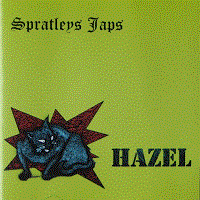


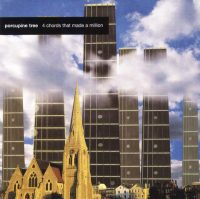
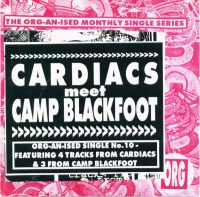
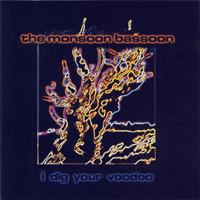
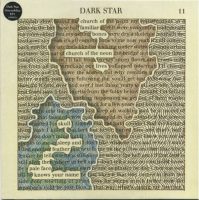
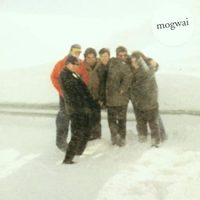
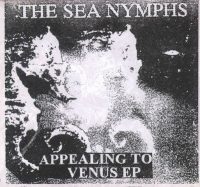
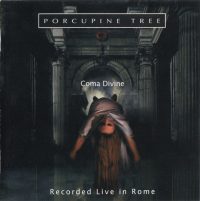
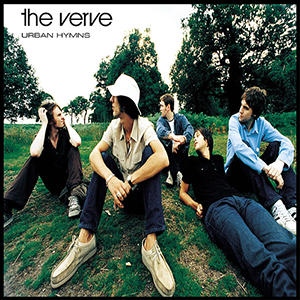



 Misfit City