And October rushes on, with a couple of Baba Yaga’s Hut shows…
Sax Ruins + Richard Pinhas (Baba Yaga’s Hut @ Corsica Studios, 4-5 Elephant Road, London, SE17 1LB, UK, Monday 12th October 2015, 7.30pm) – £11.00
Ruins (in both their original configuration and their various spinoffs) are among the best-known and most influential of Japanese experimental rock bands, with their complex rhythmic ideas and expression stretching across progressive rock, Rock in Opposition, jazz and punk. Founded in 1985, their stretchy, power-flurried drums-and-voice/bass guitar/nothing else approach has been described as “a palace revolt against the established role of the rhythm section” and set the initial format for any number of loud-bastard bass-and-drums duos.
Since 1994 they’ve also run assorted noise-rock and improv collaborations including Ronruins (a romping trio alliance with multi-instrumentalist Ron Anderson) and longstanding hook-ups with Derek Bailey, Kazuhisa Uchihashi and Keiji Haino. Post-2004, Ruins has given way to Ruins-alone: a solo project in both practical and actual terms, with Tatsuya Yoshida (Ruins’ drummer, jabberer, main composer and only consistent member) opting to tour and record solo as a drums-and-tapes act.
Active since 2006, Sax Ruinsis yet another iteration of the Ruins concept – a musical tag team in which Yoshida spars happily with Nagoya-based saxophonist Ryoko Ono of Ryorchestra (an all-round improviser steeped in jazz, rock, funk, rhythm & blues classical and hip hop. Their recordings are “extremely complex with irregular beats, frequent excessive overdubbing, and restructured orchestration. The result sounds like a big band playing progressive jazz hardcore. For live performance of Sax Ruins they make hardcore sound like a huge band by full use of effects, also incorporating improvisation. Their shows unfold as a vehement drama.” For further evidence, see below.
Composer, guitarist and synthesizer player Richard Pinhas has often laboured under the reductive tag of “the French Robert Fripp”. This is unfair to him; he may have begun as an admirer of both Fripp and Brian Eno, but whatever he’s learned from them he took in his own direction. Starting out in the early ‘70s with a Sorbonne philosophy doctorate, a keen interest in speculative science fiction and a brief stint heading the post-Hawkwind psych outfit Schizo, Pinhas went on to lead the second-generation progressive rock band Heldon for four years between 1974 and 1978.
Geographically and conceptually, Heldon sat bang in the ‘70s midpoint between the artier end of British prog, the proggier end of British art-pop and the chilly sequenced robo-mantras of German electronics. Initially inspired by King Crimson, Eno and Tangerine Dream, they also shared both musicians and ideas with Magma, and at times squinted over the Atlantic towards Zappa and Utopia: no passive followers, they always brought their own assertive, inquiring spin to the party. (A late ‘90s revival version of the band brought in the psychedelic punk and techno imperatives of the dance movement).
Since Heldon, Pinhas has pursued an ongoing and diverse solo career. It’s taken in collaborations with Scanner, Peter Frohmader, Merzbow, Råd Kjetil Senza Testa, Wolf Eyes and Pascal Fromade, plus assorted words-and music projects involving speculative writers and philosophers such as Maurice Dantec, Philip K. Dick, Gilles Deleuze, Norman Spinrad and Chloe Delaume (these include the cyberpunk-inspired Schizotrope). When performing solo, Pinhas uses a loops-layers-and-textures guitar approach which parallels (and to some ears, surpasses) the densely processed and layered Soundscapes work of his original inspiration Fripp. I guess it’s most likely that he’ll employ this at Corsica Studios on the 12th (although as Tatsuya Yoshida has been another of Pinhas’ collaborators over the years, perhaps you might expect another spontaneous team-up…)
Up-to-date info on the concert is here, with tickets available here.
* * * * * * * *
On the Saturday evening, Baba Yaga’s Hut is running another gig, much of it apparently based around the noise-and-sludge projects which record at south London’s Dropout Studio in Camberwell. I’ve got to admit that I’m quite ambivalent about the hit-and-miss nature of noise-rock – I suspect that it’s too much of a haven for charlatans, and if I can’t drag out anything interesting to say about the noise they produce bar a slew of reference points, then what am I doing if not reviewing my own boredom? – but I like BYH’s omnivorous, ambitious and sharing attitude as promoters, so I’m happy to boost the signal on this one.
Sex Swing + Early Mammal + Casual Sect (Baba Yaga’s Hut @ The Lexington, 96-98 Pentonville Road, Islington, London, N1 9JB, UK, Saturday 17th October 2015, 8.00pm) – £7.00
Sex Swing are “a drone supergroup” featuring South London noisenik Tim Cedar (one of Dropout Studio’s owner/producers, previously a member of both Ligament and Part Chimp), Dethscalator’s Dan Chandler and Stuart Bell, Jason Stoll (bass player with Liverpool kraut-psych band Mugstar) and skronkophonist Colin Webster. On aural evidence, they inhabit a post-Can, post-Suicide hinterland of hell, spring-echoed and tannoy-vocaled – a sinister quotidian landscape of blank anomie and oppression; a Los Alamos penal colony haunted by uranium ghosts, ancient Morse telegraphs, metal fatigue and the zombie husks of Albert Ayler and Ian Curtis. (Well, that’s certainly someone’s perfect birthday present.)
Described variously as raw power, psych-blues, primitive lysergia and threatening backwoods jams, Early Mammal are another Dropout-affiliated Camberwell band. They’re a stoner rock three-piece who’ve drawn further comparisons not just to latterday stoner crews like White Hills or Uncle Acid & The Deadbeats, or to predictable perennial touchstones like Captain Beefheart and Hawkwind parallels; but also to broody Harvest Records psych (Edgar Broughton and the ‘Obscured by Clouds’ Pink Floyd), Irmin Schmidt and (a rare and welcome cite, this) the grand dramatics of Aphrodite’s Child (the late-‘60s Greek prog band which skirted the 1966 Paris riots and served as an unlikely launch pad for both Vangelis and Demis Roussos).
Past incarnations have seen Early Mammal stir in some “Turkish-flavoured synth”, but the current lineup is a power trio of ex-Elks guitarist Rob Herian and 85bear’s Ben Tat and Ben Davis, adding baritone guitar and drone box to the usual guitar/bass/drums array.
I’m less sure about the south London/Dropout associations as regards Casual Sect, who seem to be north-of-the-river people; but, armed with their own hardcore noise-punk, they’ll either clatter away like wind-up toys or belly-sprawl on great bluffs of surly noise. They seem to love both citing and mocking conspiracy theory, so I’ll let them yell away on their own behalf – see below…
Up-to-date info on this gig is here, and tickets are available from here.
While I’m not particularly happy with the fact that time and concentration opportunities are mainly restricting me to posting up gig news at present, there are side benefits. One of these is to go on virtual tours of my own, finding out (via tour schedules) where music is still happening in this time of chopped budgets and closed venues. If I’m covering musicians who play in out of the way places, or out-of-the-way venues, I get to find out even more – drawing myself out of my London-centric knowledge or a focus on big-gig places. I get to discover pubs, restaurants or found spaces in which people are still fanning musical sparks or maintaining a tradition instead of just selling up for luxury flats. I find this heartening.
Theo Travis
Theo Travis has just announced an English tour for his Double Talk quartet, promoting their new album ‘Transgression’. Over the past decade, Theo’s made a name for himself as a musician who slips particularly easily and unfussily between genres. While he’s become the go-to saxophonist for British progressive and psychedelic rock and legacy fusion as well as for assorted ambient projects, he’s also achieved this without denting his impressive if understated jazz credentials. Double Talk – Theo on saxophones/flutes/ambitronics loops, plus Mike Outram (guitar), Pete Whittaker (Hammond organ) and Nic France (drums) – puts him together with three similarly flexible, fuss-free musicians.
Between them, the four can collectively boast involvement with some heavy-duty transatlantic jazz names (Nucleus, Loose Tubes, Tim Garland, Norma Winstone, Herbie Mann, John Etheridge, Slim Gaillard, Martin Speake), but also some serious engagements with rock (David Gilmour, Steven Wilson, The Wonder Stuff, Catherine Wheel), soul and dance (Bill Withers, Working Week), loop work with Robert Fripp and Steve Lawson, drum-and-bass with Photek, contemporary classical with Harvey Brough, and excursions into country and kids’ music. Having straddling all of these approaches via the application of talent and open-mindedness (and, crucially, a lack of preciousness), all four bring the same qualities and the lessons learned to Double Talk’s music – an airy English merge of fast-moving quizzical tunes, omnivorous jazz vocabulary and breezy humour bouncing on a solid chassis, but with the ability to move purposefully into open meditational territory and to stop and smell the fresh air whenever necessary.
The new tour starts on Saturday and crops up hither-and-yon until January next year – and here are the dates:
Jazzlive @ The Crypt, St. Giles Church, Camberwell Church Street, Camberwell, London, SE5 8JB, UK – Saturday 26th September 2015
The Eagle Tavern, 24 High Street, Rochester, Kent, ME1 1JT, UK (afternoon performance at 1.00pm) – Sunday 4th October 2015
Arts Depot, 5 Nether Street, North Finchley, London, N12 0GA, UK – Saturday 30th January 2016
* * * * * * * *
Closer to home for me, there’s the opportunity to discover a new set of promoters and their club nights. On this occasion it’s Baba Yaga’s Hut, who’ve been ferreting away for years on the fringes of some of the (once) cheaper, artier and edgier London districts without me hearing about them before. I think I’ll be mentioning them again, as their mashed-up roster of latterday hard-psychedelia, noise bands, alternative pop and assorted fence-vaulters certainly interest me. For now, here’s just one of their upcoming gigs, which is happening this coming Tuesday:
Death & Vanilla + Lust + T.Edwards (DJ) (Baba Yaga’s Hut @ Corsica Studios, 4-5 Elephant Road, London, SE17 1LB, UK, Tuesday 29th September 2015, 7.30pm) – £9.00/£10.00
Swedish dream-poppers Death & Vanilla have moved some way away from the psychedelic lounge-pop of their debut releases (in which they had a similar sepia-sampler sound to ’90s British post-rockers such as Broadcast and Pram, or even the cunning rush of Laika). These days they’re a tad more musically pointed and direct – positioning themselves straight in front of you, catching your eye and flipping open little musical doors as if they were some kind of musical advent calendar. In some respects, they sound like a more relaxed version of The United States Of America, the late ’60s experimentalists (part distracted folk carnival, part avant-garde tape effects) who arguably grandfathered and grandmothered the likes of Broadcast in the first place, albeit a little more smoothed out and hazy. They themselves offer “hands in the dark” and “Kraut-lullabies” as other labels which we can use. Check out a couple of their more recent songs below.
In support are multinational London-based quintet Lust, who’ve evidently looked back to those mid-’90s dream pop ideals of girl-group coos and quilted waves of balmlike guitar noise and decided, perhaps, to try to do it all better. With a sixty/forty girl/boy split, the instrumentation shared across genders, and Anna Haara Kristoferson, Moa Papillon and Andrea Muller singing in a creamy and hypnagogic triple-blend as they play, you can indulge happy memories of Lush (just one consonant shift away), Slowdive and My Bloody Valentine. You can also note that Lust seem a little cannier and calculated than Kevin Shields, Emma Anderson and co – not contrived as such, but perhaps a little more on-the-ball as regards their sense of pop music. The rills of ‘Loveless’ might never be far away, but neither is the songwriting suss of ‘Rumours’ and the directness of The Shirelles… or the option to go all gloriously New Romantic in a video. Take a look and a listen…
One “T. Edwards” is listed as playing as DJ for the night – I suppose that there’s a reasonable chance that this is man-of-all-seasons-and-many-instruments Terry Edwards, but you’ll have to find this out by yourselves.
Tickets available here, while up-to-date information is here.
Coming up – October events. It’s damn well snowballing…
Although there are still some September gigs to flag up, here’s advance notice of four interesting concerts in early October for those of you who are interested in the amorphous terrain between jazz, balladry, art pop and ambient electronica. (Just straight press release stuff – the analysis will have to wait for another time, although I’ve also stuck a few review links in where I’ve covered these musicians before…)
Two of the world’s leading solo bass guitarists together on one stage.
Crossing musical boundaries and blowing listeners’ minds for over thirty years, Jonas Hellborg is one of the great innovators of the bass guitar. From the pyrotechnic flamboyance of his early solo electric albums, to his unique exploration of the richness and depth of the acoustic bass guitar, Jonas has changed the way people think about – and play – the bass. Whether as a solo artist, or collaborating with many of the most respected names in music, from John McLaughlin to PiL, Ginger Baker to Shawn Lane, Jonas’ signature sound and uncompromising creative philosophy have produced an unparalleled body of work, mostly on his own Bardo label. Lauded by press and public alike, this is a rare opportunity to hear Jonas up close in the UK.
Steve Lawson is one of the most celebrated solo bassists in British music history – early in his career, he opened for Level 42 on their first Greatest Hits comeback tour, placing his unique take on melodic looping-based live performance in front of tens of thousands of bass aficionados. Fifteen years of regular gigging across the UK, Europe and the US have solidified his place as a leading exponent of solo bass. Steve’s sound-world borrows liberally from electronica, jazz, pop, rock, ambient and experimental music, to form a sonic fingerprint as compelling as it is unique. Following on from two years of wide-ranging collaboration, playing alongside musicians as diverse as Reeves Gabrels and Beardyman, Andy Gangadeen and Divinity, (and with the imminent release of his twelfth and thirteenth all-solo albums – on the same day!) Steve is back with fresh explorations pushing the notion of what the bass can be in the twenty-first century. (Here are a couple of ‘Misfit City’ reviews of earlier Steve Lawson records for those who’ve not read/heard them -‘Not Dancing For Chicken‘ and ‘Conversations‘).
Full dates, details and links:
Tower of Song, 107 Pershore Rd South, Cotteridge, Birmingham, B30 3EL, UK, Sunday 4th October 2015 – £10.00, tickets here.
The Vortex Jazz Bar, 11 Gillett Street, Dalston, London, N16 8AZ, UK, Monday 5th October 2015 – price t.b.c. – contact venue for tickets.
Left Bank Leeds, The former St Margaret of Antioch Church, Cardigan Road, Hyde Park, Leeds, LS6 1LJ, UK, Tuesday 6th October 2015 – £10.00, tickets here.
* * * * * * * *
Tim Bowness/Peter Chilvers/David Rhodes/Theo Travis (Chapter in association with Burning Shed @ Chapter, Market Road, Canton, Cardiff, Wales, CF5 1QE, UK, Saturday 3rd October 2015, 7.00pm) – £15.00
A unique combination of atmospheric music and songs performed by the following four British art-pop, jazz and textural music mainstays:
Tim Bowness is vocalist/co-writer with the band no-man, a long-running collaboration with Steven Wilson. He has also worked with Richard Barbieri (Porcupine Tree, Japan), Peter Hammill, Judy Dyble (ex-Fairport Convention), Roxy Music’s Phil Manzanera and others. He has released three solo albums – ‘My Hotel Year’ (2004), ‘Abandoned Dancehall Dreams’ (2014) and ‘Stupid Things That Mean The World‘ (2015).
Peter Chilvers is a frequent collaborator with Brian Eno (including co-creating the hugely successful app Bloom), Underworld’s Karl Hyde and Tim Bowness, Chilvers has become known for his innovative work with generative apps and imaginative use of electronic textures. (Here’s a review of ‘Thin Air‘, an album Peter did with Michael Bearpark many years ago).
David Rhodes is one of the world’s most respected and inventive guitarists, having worked extensively with Peter Gabriel as well as with Kate Bush, Talk Talk, Scott Walker, Japan, New Order, Paul McCartney and Blancmange, amongst many others. David has also released two solo albums (2010’s ‘Bittersweet’ and 2014’s ‘The David Rhodes Band’) and was a founding member of the influential post-punk band Random Hold.
Saxophonist and flautist Theo Travis (making his Chapter return after performing with the cinematic/musical crossover project Cipher) has an international reputation as one of the stars of the contemporary UK jazz scene. Travis has more recently emerged as a key figure in the progressive and art rock sphere, working with David Gilmour, Robert Fripp, David Sylvian, Porcupine Tree, Steven Wilson, Bill Nelson, Gong, Soft Machine Legacy, Bill Bruford, Harold Budd and more. He has recently released his ninth solo album ‘Transgression’ (and here’s a review of an earlier one).
The evening is presented by Burning Shed, the online label and store founded by Bowness and Chilvers with Pete Morgan that has become a global specialist in progressive, ambient/electronica and art rock music. As well as releasing works on its own imprint, amongst others, Burning Shed hosts the official online stores for Panegyric (King Crimson, Yes), Ape (Andy Partridge, XTC, The Milk & Honey Band), Jethro Tull, Kscope (Porcupine Tree, Sweet Billy Pilgrim), Thomas Dolby, All Saints (Brian Eno), Medium Productions (Jansen, Barbieri and Karn), Gentle Giant and Roxy Music’s Phil Manzanera. The label has recently expanded into book publishing, and at this concert musician and author Anthony Reynolds (perhaps best known as the former frontman of Jack) will be signing copies of his Burning Shed Publishing book, ‘Japan – A Foreign Place (The Biography 1974-1984)’.
More information here, and tickets available here.
Here’s the second of two previews for the first week of September, this one covering the weekend which has just arrived. Four gigs on Saturday (from post-classical to garage rock, from Afrobeat and kosmiche-influenced art pop to Canterbury-inspired lo-fi, from witty post-prog to Southern rock) and a chamber jazz gig on Sunday.
* * * * * * * *
After ten years of putting on post-classical club nights in east London, some way outside the heart of the British classical establishment, the Nonclassical organisation gets to play in the centre – a festival role, a high-profile corporate sponsorship, ads on the Tube and all. Come and judge whether they’re changing the game or being absorbed (beneficially or otherwise) into the belly of the beast. Whichever way this is going, the concert itself looks fascinating.
Nonclassical Club Night (Deloitte Ignite Festival @ Paul Hamlyn Hall, Royal Opera House, Covent Garden, London, WC2E 9DD, UK, Saturday 5th September 2015, 8.00pm) – £10.00
Nonclassical label leader Gabriel Prokofiev (a polystylist composer with a background in electroacoustic work whose works include a Concerto for Turntables & Orchestra, an “orchestral remix” of Beethoven’s Ninth and production work on hip hop, grime, and electro records) will be performing at the event, as will five-string-electric-cellist/composer/technologist Peter Gregson (whose adventures in sound include film soundtracking, multiple premieres of newly composed work plus three albums of original compositions, and a “data sonification” of Twitter).
Also performing will be the amplified prepared-piano artist Klavikon (a.k.a. Leon Michener, who uses various pickups, real time analogue processing and playing-mechanism inventions including a robot dog to fuse aleatoric ideas from Stockhausen and Cage with electronic dancefloor work including “cascading batteries of percussion, sub-basses and abstract soundscapes”); the “post-a-cappella” group Juice Vocal Ensemble (whose voicework encompasses everything from classical sources to hip hop, Irish folk, close-harmony vocal jazz and the experimental approaches of Meredith Monk and of Björk’s ‘Medúlla’), and Gabriel’s DJ collaborator Mr Switch.
There will also be a collaboration between classical soprano Sarah Dacey and the “Tendons” music theatre project initiated earlier this year by Holly Lowe and Nwando Ebizie. Based around harp, spoken word, performance art and electronics while mingling repertoire work with improvisation, this draws on and expands two modern classical pieces (Salvatore Sciarrino’s ‘L’addio a Trachis’ and John Cage’s ‘Dream’) plus the ‘Siciliano’ from Bach’s ‘Sonata in E flat’ and was premiered in June at the Nonclassical Downtown Loft Concert at The Russet in Shacklewell – one of the label’s ongoing attempts to encourage a London equivalent of the New York loft-music scene of the ‘70s and ‘80s.
* * * * * * * *
If you prefer to have your brain tickled by other means, Group Therapy are presenting what they call a night of “good ol’-fashioned noise rock” down at an east London art-rock stronghold.
Trojan Horse + Thumpermonkey + Godzilla Black (Group Therapy@ The Sebright Arms,33-35 Coate Street, London, E2 9AG, United Kingdom, Saturday 5th September 2015, 8.00pm) Entry £7 otd £5.50 advance
What this actually seems to be is a night mixing a sharp-minded self-aware take on post-progressive rock and a rollicking contemporary version of what my local library used to call “popular instrumental”, and would stick in a rack alongside James Last and The Shadows (from which, long ago, in the early days of my musical education, I’d pull out the likes of Mike Oldfield, Sky and Vangelis’ ‘Heaven and Hell’, and later the raging electric jazz raga of David Torn’s ‘Cloud About Mercury‘ – ten years later, I’d might been using it to catch the Deodato lounge revival). But if my comment makes the gig sound as if it’s in any way mild or lounge-friendly or mild, think again. This is very much a rock evening and it’s explicitly clear that this night’s crop of bands have soaked up Boredoms, Swans, Big Black, Sonic Youth and The Melvins alongside any Genesis or King Crimson which they might have imbibed. It’s just that it’s refreshing to be able to go along to one of those gigs, with that label, and not encounter yet another bunch of predictable art-punks posing with their distortion pedals and their feedback zones while reheating old daydreams about free jazz and No Wave…
I’m bitching. I don’t like doing that. Let’s have a look at the bands on the bill.
Manchester’s Trojan Horse are post-prog omnivores with tuneful hearts and a refreshing lack of shame. While their records pillage, digest and absorb a wide diet from Pink Floyd to James Brown to The Kinks to the 13th Floor Elevators, they also use their appetites to build their own muscle and identity – one through which they filter a broad, contemplative awareness of British and Mancunian history and how it soaks through into the lives of present-day people (although you don’t need to analyse that in order to enjoy one of their rambunctious gigs).
Simultaneously theatrical and punk-lean, Thumpermonkey can stake a claim to being one of the smartest British bands this side of Everything Everything (with whom they share a geeky brainiac quality driven home by vigorous, tuneful force). Couched in a crunching but colourful hard-rock vein with big pinches of post-hardcore and prog, their dramatic convoluted stalk-and-punch compositions are playful but melodious and rewarding. You can bang your head to a Thumpermonkey song, but you can also think to it. In Michael Woodman (a man like a knowing fusion of Peter Hammill, Nick Cave and Peter Blegvad) they’ve also got a frontman who’s one of the best singers and cleverest current lyricists in rock, delivering allusive and elusive barrages of sly wordplay in a resonant rock-operatic voice.
Finally, the big, bold, brazen sound of Godzilla Black lands precisely midway between No Wave and pin-sharp easy-listening film themes, or between James Black and the John Barry Seven, with rollicking drums, tight stunt brass (and yes, all right, distortion and computer sleet). They also play at a blistering, speaker-pummelling volume, so maybe there’s something in that noise rock description).
Headlining, Nottingham’s Canteloupe offer an omnivorous mix of pop, Krautrock, Afrobeat and disco. London’s Barringtone (featuring former Clor frontman Barry Dobbin) continue to pursue their motoric English art pop in the wake of the ‘Fever Head’ single. From Bradford, Gurglez blend what their neighbours Jumbo Records call “the power of prog, the drama of opera and the AOR grooves of the 70’s… poetic moments à la Terry Durham and free-jazz à la Nice” and “(turn) them on their head with a kind of left of field madness that Zappa would be proud of” (which, to these ears. also makes them sound more than a little like Sleepy People…) There should also be one more act to be added, which you can find out about in due course with the other gig information here and here.
* * * * * * * *
If you’d prefer something a little looser (or, as a clincher, something that was free to get into) for Saturday night, there’s this literally free-for-all concert taking place in the middle of Hackney and hosted by Sound Events Solutions, who have also provided the summary…
The Little Things + Alkatraz + Picturebox + Marianne Hyatt + Pit Ponies (Sound Events Solutions @ Bohemia Hackney, Unit 2, Bohemia Place, Mare Street, Hackney, London, E8 1DU, United Kingdom, Saturday 5th September 2015, 7.45pm) – free
With The Little Things it’s funk, and then it’s 70s New York new wave alt-rock, and then it’s pop, but it’s all seamless and it’s funky and cool as fuck – an uncanny indie-ish dance party band that just never suck no matter how much they flirt with mass appeal.
Alkatraz provide the psychotic reactions and spontaneous psychedelic combustions of trippin’ psychedelic garage rock.
Picturebox (centred around home-recordist Robert Halcrow) are leading lights (and probably the main constituents) of Canterbury Lo-Fi, a new clandestine pop movement encapsulating all the charm but none of the noodling of the legendary old Canterbury Scene. When Halcrow sings a song like Ruth Bakes A Cake, he is neither being ironic nor twee nor coquettishly kitchen-sink. There is a light-hearted, profoundly uncynical love for humanity running through his lyrics that can sometimes remind you of the way Syd Barrett used to sing about the lost idea of simple kindness. Special things don’t always hit you over the head with a mallet, and neither will Picturebox. But you just never know, sometimes a movement can start with an instrumental named in allusion to a little hi-fi shop next to a supermarket car-park in Canterbury, some heartfelt tributes to pop stars, and lots of tea and cake.
Frontwoman of (variously) Dragstripper, Temple of Sound, Anarchistwood and Country Dirt, MarianneHyatt is a London-based deep southern songstress from Austin Texas. She’s equal parts Patsy Cline, Janis Joplin and Jim Morrison, has sung with The Frogs at ATP, with Bill Callahan at Meltdown Festival and played a late-night pickup in Richard Linklater’s ‘Slacker’. She writes and plays platonic lovesongs to sexworkers, country reggae odes to schizophrenic madames and protest tunes to natural disasters… a walking triumph of lost causes and no-longer living legends.
Pit Ponies are renegades from Naughties rockney/post-punk/knees-up beer boys Corporal Machine & The Bombers, fusing ‘90s indie with pissed pub fights and ‘70s pub-rock. (In spite of this preamble, they’ll actually be playing an acoustic set.)
After all of this, on Sunday, there’s jazz via the return of the LUME evenings via the Vortex. Blurb for the first evening is below.
Mark Pringle’s A Moveable Feast & Rebecca Nash (LUME @ The Vortex Jazz Club, 11 Gillett Square, Dalston, London, N16 8AZ, UK, Sunday 6th September 2015, 7.30pm – £10.00
A Moveable Feast is a group led by jazz pianist Mark Pringle (a Peter Whittingham Award winner for the year 2015, following in the footsteps of previous recipients Gwilym Simcock, Trish Clowes and Elliot Galvin). Heavily inspired by time spent studying in Paris in 2013, the music draws on multiple cultural influences, containing themes of nature, wildlife, literature, the chaos of cities, the lives of people who inhabit them, woodland creatures and strange beasts… This autumn sees the group undertaking a national tour to promote the release of their album, ‘A Moveable Feast’, on Stoney Lane Records.
Featuring a twelvetet line up of strings, horns and rhythm section, the group explore Mark’s music with great freedom of approach, resulting in music that is eclectic, adventurous and highly unique. The band are Mark Pringle (piano), Percy Pursglove (trumpet), Chris Young (alto saxophone), Dan Searjeant (tenor and alto saxophones, flute), Alicia Gardener-Trejo (bass clarinet, baritone saxophone, alto flute), Ben Lee (electric guitar), James Banner (double bass) and Euan Palmer (drums), plus a string quartet of Christine Cornwell, Sarah Farmer, Megan Jowett and Lucy French.
Rebecca Nash‘s music, written with the intention of creating a new cohesive sound, blends together all the things she loves about music. Most important is a sense of purpose, identity and beauty. It is inspired by many musical influences which primarily include jazz musicians such as Pat Metheny and Wayne Shorter but also other styles too, such as electronica and folk music. Rebecca’s own style, rooted in the contemporary jazz genre, blends acoustic and electronic elements with strong melodies, underpinned by dense harmonies and unusual grooves with the aim of creating one overall soundscape.
This latest project is Rebecca’s first as a bandleader, and all of the music performed is original material from her forthcoming album, due to be recorded later this year. Tonight she leads a small group with herself on piano, Percy Pursglove on trumpet, Matt Fisher on drums, and Chris Mapp on bass guitar.
More information on the event is here, with tickets available here.
There’s a wealth of new gigs coming up in London in the first week of September – here’s the first of a couple of whistle-stop preview for some of the ones which caught my interest. I’ve missed Monday and Tuesday. Starting with some relative softness on Wednesday…
Ralegh Long + The Left Outsides (Parallel Lines @ St Pancras Old Church, Pancras Road, Kings Cross, London, NW1 1UL, UK, Wednesday 2nd September 2015, 7.30pm) – £8.25
A piano balladeer with soft rich baroque pop tendencies, Ralegh Long’s been compared to Alex Chilton, Todd Rundgren, Laura Nyro and Nick Drake… and not without cause. His debut album ‘Hoverance’ was released earlier this year, and at this concert he’ll be joined not only by his usual band but by the strings, horns and whatnot of A Little Orchestra. In support, there’s the acid-folk duo The Left Outsides, affiliated to both The Eighteenth Day Of May and Of Arrowe Hill. To find out what both acts sound like, see below.
* * * * * * * *
On Thursday, things are louder…
Guapo + Hirvikolari (The Quietus @ The Lexington, 96-98 Pentonville Road, London, N1 9JB, UK, Thursday 3rd September 2015, 7.00pm) £8.00
Over a twenty-year career experimental rockers Guapo have explored their own open-ended, constantly-altering takes on noise/jazz/psychedelic rock, Magma-esque Zeuhl and Rock In Opposition (via several roiling and transformative line-up changes attracting, turn by turn, some of the most talented London players). The latest version of the band – perennial Guapo drummer Dave Smith, guitarist Kavus Torabi and keyboard player Emmett Elvin (both also of Knifeworld) and new bass guitarist Sam Warren (also of Thumpermonkey, more of whom tomorrow) – will be launching and performing an extended version of their new album ‘Obscure Knowledge’. On this occasion Guapo will be augmented to a quartet by guest woodwind player Michael York.
Playing support are trumpet-and-modular-synth duo Hirvikolari, a spinoff project from psychedelic rockers Teeth Of The Sea featuring Sam Barton and Mike Bourne. They were recently hailed by Luke Turner (of event promoters/multi-media…. ‘The Quietus’) as “a gorgeous, transportive wander across a luminous veldt, taking in grubby techno and hinting at Coil’s ‘Musick To Play In The Dark’ via a tripping colliery band, falling down an unguarded shaft after being led astray by Jon Hassell.”
Up-to-date gig information is here, and some soundclips are below – also courtesy of ‘The Quietus’ is the Hirvikolari set recording, taken from their summer appearance at the Raw Power festival in Tufnell Park earlier this year.
* * * * * * * *
On Friday, Facemelter are presenting a triple-feature heavy evening in Camden, while progressive rock veterans Curved Air are playing a special gig in Fulham.
Tacoma Narrows Bridge Disaster + Opensight + Sumer, (The Facemelter @ The Black Heart, 2-3 Greenland Place, Camden, London, NW1 0AP, United Kingdom, Friday 4th September, 7.30pm) – £6.00 advance, £8.00 on the door
Tacoma Narrows Bridge Disaster are a brilliant atmospheric post-metal band who’ve risen early in the UK’s underground scene and with an audience spanning the edges of metal, prog and post-rock. Now back with the original lineup that won them their international audience (and fresh from performing at ArcTanGent) they launch their third album ‘Wires/Dream\Wires’, three years after releasing the hugely acclaimed ‘Exegesis’. Originally from Colombia,Opensight are an ambitious band fusing metal with the vintage, grainy feel of 70s prog. Their launch of their new EP ‘Ulterior Motives’ will appeal to fans of all genres. Gig openers Sumer are a self-styled post-prog band with interesting riffs, soaring vocal melodies and catchy hooks. They have risen with seemingly unstoppable force and with every reason, as anyone who attended the packed launch of their album ‘The Animal You Are’ last September will remember.
All of the above is a slightly-tweaked Facemelter summary: some album tasters are below, and tickets are available here.
Curved Air (Under The Bridge, Stamford Bridge, Fulham Road, Chelsea, London, SW6 1HS, UK, 4th September 2015, 7.00pm) – £18.00
Though they’re best known for a single classic rock radio staple – Back Street Luv, which might suggest to the casual listener that they were briefly a British Jefferson Airplane – Curved Air began life as a genuinely innovative band. While the presence and tone of singer Sonja Kristina (the band’s only constant member) has always tied the band in with folk music and the rock siren tradition, founder members and key composers Darryl Way and Francis Monkman were classically-trained enthusiasts of psychedelia and the ecstatic minimalism of Terry Riley – hence the cascading Hendrix-and-microtones violin roar of Vivaldi on the band’s first album ‘Air Conditioning’.
Despite a remarkable start, differences of opinion, susceptibility to fluctuating musical styles and plain bad luck meant that Curved Air subsequently staggered from lineup to lineup and from image to image. With Way slipping in and out of the band over the years, and Monkman a relatively early casualty of disagreements (though a frequent if brief returnee), many the original ideas were lost in transit. Nonetheless, versions of the band have existed on and off ever since, with Curved Air currently anchored by Kristina, original drummer Florian Pilkington-Miksa and guitarist Kirby Gregory (from the second main lineup).
For this particular gig, Darryl Way will be making an appearance on violin and the band will – for the first time ever – be playing early masterpiece ‘Air Conditioning’ in its entirety, although they’ve also promised to perform from their entire repertoire up until the present day. The concert will be recorded and filmed for a commemorative DVD release. Tickets available here.
* * * * * * * *
Tomorrow, more on Saturday’s stretch of gigs, from garage bands to chamber jazz to art-pop to post-classical…
My part of London’s being gradually gentrified. I’m noting the warning signs – the launderettes being replaced by redundant fresh-fruit emporiums, estate agents proliferating even as the street drinkers melt away; the rough-and-ready Irish pub that’s suddenly been boarded up and now waits to became a sandwich outlet. Even the looming black tower block which dominates the district and which once housed the capital’s most brutal social security offices (leading to it being roundly cursed in song by New Model Army) is being stripped down to white bone and built up into luxury homes, yesterday’s painful memories now smothered under today’s property bubble.
Waiting for the next rent rise – the one which might well bump me out of the neighbourhood in search of new roots – I guess that I can console myself with what seems to be a coincidental side effect. The neighbourhood’s also hosting more interesting gigs, with an influx of art rock, post-progressive and psychedelic evenings nudging aside the garage bands. If this is gentrification, I can at least live with that side of it: Tim Bowness playing down the road at the end of the month, and fresh bursts of tone-colour lighting up Tufnell Park junction on a regular basis. Which leads me to the following…
LITE + Knifeworld + Axes (Pink Mist @ The Dome, 2a Dartmouth Park Hill, Tufnell Park, London, NW5 1HL UK, Wednesday 19th August 2015, 7.00pm) – £12.00
On August 19th Tokyo instrumental math heroes LITE return to London for a special one-off show at The Dome. A mainstay in the Japanese charts and something of an institution in their homeland, LITE released ‘Approaches 4‘ – six new live recordings including a new track called Balloon – for free download on May 19th. They’ll be joined by shape-shifting psych impresarios Knifeworld. Led by former Monsoon Bassoon/Cardiacs man Kavus Torabi, the London based octet have been hailed by everyone from ‘The Guardian’ to ‘Rock Sound’ to ‘The Line Of Best Fit’ to ‘Drowned In Sound’ and back again. And then there’s Axes, who in ‘Glory’ released one of the best math rock records of the last ten years. All three bands are on the same bill, for £12, which is pretty damned amazing.
Please note that there are age restrictions on this gig – there’s a lower age limit of fourteen, and under-sixteens must be accompanied by an adult, so trainee adolescent psychonauts should take note (or take a fake ID). Up-to-date information on the gig is available here, while tickets are available here.
(UPDATE – whoops. I only posted this twelve hours ago, and suddenly the whole gig has been transferred to The Lexington instead – up-to-date and ongoing details here – though hopefully not because some moneyed flashmob’s now opening a craft brewery on the site of the luckless Dome…)
More British psychedelic/post-progressive rock is out on the road at the same time, since former Oceansize and current British Theatre frontman Mike Vennart (also known for putting extra guitar flail into the live lineup of Biffy Clyro) is playing a couple of warm-up gigs for his appearance at the ArcTanGent Festival with music from his solo album ‘The Demon Joke’. ArcTangent has nearly sold out now (though you might still be able to grab one of the last tickets if you head over to the website now) but I’m plugging the other gigs now for the benefit of anyone within running distance.
The Vennart live band features two other former Oceansizers (Richard “Gambler” Ingram and Steve DuRose) plus drummer Denzel Pearson. Support comes, variously, from Mike and Gambler themselves (as British Theatre, who’ve just released their first new music in three years – a free download single called ‘Cross The Swords‘ which I’ll be reviewing shortly), Colchester alt.rock songwriter Christie Isaac and assorted last-minute Leicestrians (ask the promoter).
Vennart + British Theatre + guests (Robot Needs Home @ Firebug Bar, 25 Millstone Lane, Leicester, UK, Wednesday 19th August 2015 – 7:00pm) £10 – info and tickets here.
Vennart + Christie Isaac (Colchester Arts Centre, Church Street, Colchester, Essex, CO1 1NF, UK, Thursday 20th August 2015 – 7.30pm) £11 – info and tickets here.
You could also set aside some time in the autumn to catch Vennart’s week-long British tour in November, apparently the last of their gigs for some time (after this, Mike and Gambler will immerse themselves in recording a full album as British Theatre). Knifeworld will return as support on this tour, with the third act on the bill being Mancunian “turbo-prog” duo Cleft who encourage you to think of them as “a machine that compresses fourteen minute songs down to three minutes.”
Bodega Social Club, 23 Pelham Street, Nottingham. NG1 2ED, UK, Monday 23rd November 2015
Bush Hall, 310 Uxbridge Rd, London, W12 7LJ, UK, Tuesday 24th November 2015
The Deaf Institute, 135 Grosvenor Street, Manchester, M1 7HE, Wednesday 25th November 2015
King Tut’s, 272a St Vincent St, Glasgow G2 5RL, UK, Thursday 26th November 2015
The Hop, 19 Bank Street, Wakefield, West Yorkshire WF1 1EH, UK, Friday 27th November 2015
A couple of tastes of Knifeworld and Cleft follow. If I’m going to be fiddling while Rome burns, I can’t imagine better company.
More quick London gig news – art rock, post-rock, electronica, and a dash of classic New York downtown.
Rumour Cubes + Dresda + kontakte @ The Facemelter (The Black Heart, 2-3 Greenland Place, Camden, London, NW1 0AP, UK, Friday 7th August, 7.30pm – £8.00/£6.00)
Sumptuous instrumental and electronic post-rock from ex-Glastonbury and ArcTanGent Festival performers, plus a UK debut.
Post-rock veterans Rumour Cubes have been spreading tentacles of ambient, soaring soundscapes across the globe, catching people’s attention with their classical and electronic nuances, attention to the finest details and unassuming political statements embedded in their writing. Their work with poets and film-makers has allowed them to create a multi-media experience and has propelled them to performances at Glastonbury, ArcTanGent and a support slot for Sólstafir; while their albums ‘The Narrow State’ (2012) and ‘Appearances Of Collections’ (2014) received wide critical acclaim.
Celebrating their tenth anniversary this year, Dresda hail from Genova, Italy, and will be driving over to make their UK debut. Their music is intricate, dense and introspective yet gloriously cinematic. They have several well-received releases under their belts, including soundtracks for critically acclaimed Italian independent movie ‘The Krolevsky Case’, and the short movie ‘La lingua del disordine’. In 2009, they were featured on the Italian DVD edition of the Canadian documentary ‘RIP! A remix manifesto’, distributed by Feltrinelli Real Cinema nationwide.
Conceived in 2005 from a string of old 4-track demos and further realized via a labyrinth of digital workstations and computer software, kontakte blend organic instrumentation within an electronic and hypnotic framework of programmed beats and pulsing synths. Pooling influences such as Godspeed You! Black Emperor, Mogwai together with Brian Eno, krautrock and shogaze sounds, this duo manages to perfectly blend shimmering electronics and ethereal melodies. They have too many releases to name and have been remixed by many visionaries including Tim Holmes of Death In Vegas, Chris Olley of Six By Seven and Russell. M. Harmon.
There might also be tickets remaining for the performance of Arthur Russell’s Instrumentals early in the following week. This is a repeat visit of a show that’s been on and off the road at various points around the world since 2012 and which last visited London via Cecil Sharp House earlier this year… so if you missed it before, now’s your chance.
Visions presents: Arthur Russell’s Instrumentals, directed by Peter Gordon @ Visions Festival (Oval Space, 29-32 The Oval London, Bethnal Green, London, E2 9DT, UK, Monday 10th August, 7.30pm – £21.50 plus booking fee)
For those of you who don’t know about Arthur Russell’s turbulent, productive (and sadly curtailed) life, he was a vigorous participant within the downtown New York music scene between the mid-1970s and early 1990s. Having studied as an avant-garde cellist and composer, he rebelled into Manhattan nightlife, vigorous cross-fertilization and event curation. Russell rubbed up against Fluxus, disco, avant-garde theatre, New Wave and no-wave, making the most of the breadth of the prolonged New York creative ferment of the times, feeding his assorted roots and collisions into music of his own.
During the last decade of his life Russell wrote and performed voice-and-cello songs – predominantly solo but employing loops, echo and sundry effects. In these, he synthesized all that he’d learned into what were perhaps his most personal and accessible works. These are probably what he’s best known for now, thanks to the more prominent releases of albums such as ‘World Of Echo’ and ‘Another Thought’, but they’re only one aspect of his work
A notorious perfectionist reknowned for agonised work gestations (and who left hundreds of pieces uncompleted at his death) Russell nonetheless completed what was, at the time a remarkably bold, broad and modern array of work from orchestral pieces and theatre music to forays into electro-pop and dance music under project names including Dinosaur (for ‘Kiss Me Again’) and Loose Joints (‘Tell You Today’). Today this kind of equivalence and eclecticism is more commonplace in the orchestral or ensemble work of composers such as John Zorn, Django Bates, Anna Meredith or Tansy Davies. In the 1970s, though, Russell was a pioneer, notoriously shocking the staider elements of his avant-garde classical audience with ‘24-24 Music’ (a contemporary classical piece equating the pulses and disciplines of New York minimalism with those of disco music).
Coming from the zone of Russell’s talent which drew most on his contemporary classical roots, ‘Instrumentals’ is an example of his chamber music, Dating from the late ‘70s, it was initially conceived as a forty-eight hour piece, its duration far exceeding even the infamously massy protracted works of Morton Feldman. Versions of the work were performed over the years, and a selection of excerpts appeared on a Disques du Crepuscule release in the mid-‘80s.
The piece as it stands owes much to Russell’s friend Peter Gordon, a fellow eclectician from the 1970s downtown scene and Russell’s bandmate in The Flying Hearts and Gordon’s own ongoing Love Of Life Orchestra. Gordon worked closely on the original performed version, assisting on keyboards, arrangement and notation. Two decades after Russell’s death in 1992, Gordon brought a new version of ‘Instrumentals’ back to The Kitchen (Russell’s old home venue in Manhattan. Following the initial sold-out performance in March 2012, Gordon has periodically revived and toured the new arrangement. The performance at Oval Space will feature several members of Russell’s original ensemble, and will also feature photographs by Yuko Nonomura which were projected during the original 1975/78 Manhattan performances of ‘Instrumentals’.
Next week sees the first gig (for some time) for one of the most interesting of current British rock bands; some high-gloss cabaret; and the start of a psychedelic pop roadshow travelling around the UK. Read on…
Thumpermonkey don’t get as much attention as they deserve. It’s possible that this is because they don’t seem to take things seriously, addressing almost everything with a skewed and multi-levelled sense of cryptic grand-baroque geek humour. Just to illustrate this – a current work-in-progress Thumpermonkey song is “something which we’re calling Giraffes, which includes some vague narrative about doing a conga during an asteroid-based extinction-level event.” One of their older albums is called ‘Chap With The Wings, Five Rounds Rapid’ – a wry kill-the-monsters line filched from ‘Doctor Who”s laconic and unflappable Brigadier. In the same spirit as that reference, I’d suggest that while they are serious about what they do, they’re not necessarily serious about the way they do it – like many of my favourite things.
If what I’ve written so far leads you to expect strained, fey, sub-Zappa wackiness, then think again. Both in the flesh and on record, Thumpermonkey are a brooding and atmospheric proposition – seriously musical, travelling from blitzingly heavy quasi-metal riffs to spidery post-rock, from threshing post-hardcore to theatrical mane-tossing prog at a moment’s notice while Michael Woodman’s grand edgy vocals and complex multi-levelled lyrics ride on top like an arcane mahout with an arched eyebrow. They’ve been called “a sustained victory for intuitive cross-pollination” by ‘Prog’ magazine and every gig they play confirms this particular accolade. Here they are playing 419 (a song which at first appears to be one of their more delicate offerings, revealing its intensities later).
The other two bands on the bill are less well known to me, but aren’t short of blurb:
The Earls Of Mars are probably the most original thing you’ll hear all year. At their heart, the band are a ’70s-influenced rock band bringing together jazz, prog, space rock, doom and blues and forming it into a barking mad noise that you’ll either get or you won’t. If you don’t get it then close the door on your way out of the spaceship, as those of us who want to stay are off on a fantastical journey to who-knows-where, with The Earls Of Mars steering the ship. Enjoy the trip, ladies and gentlemen, as it’s going to be a fun ride.
Ham Legion‘s noisy lo-fi pop is punctuated with proggy outbursts, psychedelic breakdowns and passages of cod-metal joy. Tangy and tart guitar, egg noddle bass lines and light crispy drums are smothered in gooey boy/girl harmonies. Eat in or take away. For fans of Cardiacs, Deerhoof, They Might Be Giants, Split Enz, Heavy Vegetable.
Judge for yourselves – here are the videos for the Earls’ ‘Astronomer Pig’ single from last year, followed by some footage of a Ham Legion gig in Brighton a couple of years ago. As for tickets, they’re available here.
* * * * *
The day after the Thumpermonkey gig, Holly Penfield plays one of her biggest gigs of the year…
Holly Penfield sings Judy Garland, The Hippodrome Casino, Cranbourn Street, Leicester Square, London, WC2H 7JH, UK, Friday 31st July 2015, 8.00pm) – £15.00 and upwards
Following a triumphant debut last year, Holly returns to the London Hippodrome, singing the songs of the legendary Judy Garland in her own inimitable style. Holly will be joined by her musical director Sam Watts and his magnificent seven-piece band. An unmissable evening for Holly and Judy fans alike, set in the glorious Matcham Room, located inside the Hippodrome Casino – formerly known as The Talk Of The Town, this is the venue of legends and home to Judy’s final London concerts.
Longer-term readers will know that I got to know Holly years ago via her own original ‘Fragile Human Monster Show‘ and the ‘Parts Of My Privacy’ album (which I wrote about ages ago – that review’s due a revamp and remount, I think). Both of those, though original songwriter pop, had their own theatrical and psychodynamic aspects which pointed towards Holly’s current work in vivid cabaret (and, latterly, as half of swing revivalists The Cricklewood Cats). As for Holly’s interpretations, she can and does cover cute showbiz camp and heart-tugging pathos within the same performance – you can see a couple of examples below.
Up-to-date information on the Judy concert is here and here, while tickets are available here. A mischievous part of me fancies swapping the audience from Holly’s show with the one from the Thumpermonkey/Earls/Ham Legion gig, and vice versa. I suspect that they all might enjoy it more than they’d expect to…
* * * * *
On the same night that Thumpermonkey and co. play, The Luck Of Eden Hall are over from Chicago to play the first of two London gigs, launching a Kickstarter-funded UK tour which will take them to a wide array of venues and mini-festivals around England, Scotland and Wales, accompanied by a shifting cast of local psych heroes, left-field blues artists and quirky alt.pop shoegazers.
As for the headliners, you can expect clear-voiced, well-made classic pop beset by sudden gusts of psychedelic blizzarding. The Luck Of Eden Hall remind me of the drawn-out trucker-and-motorist tussle in ‘Duel’ – they come across like a more sombre Neil Finn or Andy Sturmer being stalked, dogged and sideswiped by Hawkwind, Ride or ‘Saucerful’-era Pink Floyd. Here’s a little evidence:
If your musical instincts include any crate-digging, hoarding or hunter-gathering aspects, you could try checking out the Independent Label Market this Saturday, 11th July, at Old Spitalfields Market in east London. I got my own heads-up about this via The Carvery, who say:
We will be representing a strong and eclectic mix of labels we work with… There will be a limited amount of stock hand picked by each label at a reduced price for one day only. Expect releases and limited edition items from Sofrito, Tropical Discotheque, Matsuli Music, Numero Group, Five Easy Pieces, Names You Can Trust, Bastard Jazz, Paradise Bangkok, Rhythm Section, High Focus, Faux Discx Records, ALTER, NICE UP! Records and Reggae Roast.
No, I know none of these labels. Expect many others, plus other mastering companies and record manufacturers, to be there on the day selling independent-label music at bargain prices. For anyone who attends, the event is likely to be an education in itself. It starts at 11am, goes through until 6 in the evening.
Later on, but not very far away, there’s this…
Tom Slatter + jh (The Chapel, St Margaret’s House, Old Ford Road, London, E2 9PL, UK, Saturday 11th July, 7.30 pm)– free
Disarmingly, Tom describes his work as “the sort of music you’d get if Genesis started writing songs with Nick Cave after watching too much ‘Doctor Who'”, while one of his occasional collaborators, Jordan Brown of airy London prog-poppers The Rube Goldberg Machine, calls him “a sci-fi storyteller with a penchant for odd time signatures and soundscapes.” Both descriptions ring true but fail to pinpoint the cheerfully pulpy weird-fiction exuberance of Tom’s work as a one-man band. He’s a man not just happily out of his time, but making a virtue of it – a latter-day Victorian street-theatre barker with a guitar promising tales of mystery, imagination, ‘orrible murders and bloody great waving tentacles.
This gig’s an acoustic show, with Tom mostly playing versions of songs from his recent ‘Fit The Fourth‘ album (out on Bad Elephant Music last month). Part of me hopes that he’ll take his taste for Victoriana a step further and rig himself up like a phoney spiritualist – little bits of prestidigitation, a tambourine between the knees, plus additional instruments and sound effects triggered by fishing line attached to thighs and elbows. We probably won’t get all of that, but what we will get is a performer who’s blissfully committed to the inherent fun and theatricality of his material. Something to treasure. Here he is at play in the video for his recent single, ‘Some Of The Creatures Have Broken The Locks On The Door To Lab 558’ (for better or worse, the title says it all), plus another video taken from an acoustic show he did amidst the wheels, pistons and cams of the London Museum of Water & Steam down at Kew Bridge.
Playing support is Tom’s fellow Bad Elephanteer jh in a similar acoustic slot, promoting his ‘Morning Sun‘ compilation and the upcoming Bad Elephant release of his back catalogue. With the soul of a confessional busker but the expansive sound-draping instincts of an electric-Eden acid rocker, jh (on record, at least) is the missing link between Joe Strummer and Roy Harper with a touch of prog pastoral thrown in. Live and unplugged, he’s likely to be wirier and relying on his narratives to hold your attention. Personally, I warm to a man who can write an eighteen-minute Anglo-prog epic (complete with Michael Caine references and conversational swearing) and call it ‘Making Tea Is Freedom’.
Up-to-date info on the concert should be here, while tickets can be reserved here (as I post, there are twenty-nine left).
On the following Tuesday, William D. Drake follows up last Sunday’s launch gig in Brighton for his new ‘Revere’s Reach’ album with a second launch gig in London. I’ve been putting up plenty of posts about his exuberant music and its clever, affecting mash-up of folk, rock and classical; its beguiling nonsense, its striking beauty and its deceptive humanity. Expect a few more of those shortly. Support comes from a rare appearance from Stars In Battledress (the Larcombe brothers’ cryptic, witty psychedelic folk duo – read an account of them onstage here) and the mysterious Steven Evens, about whom I know nothing (update – ah, it’s a new incarnation of Stuffy Gilchrist!). Current event info is here, tickets are here, and the basic info plus a brace of videos are below.
William D. Drake + Stars In Battledress + Stephen Evens (The Lexington, 96-98 Pentonville Road, N1 9JB, London, UK, Tuesday 14th July, 7.30 pm)– £11.00
UPDATE, JULY 13th – sadly, the William D. Drake gig has had to be postponed due to bereavement. I’ll repost about it once it’s been rescheduled.
This weekend you could choose some unorthodox transplanted Americana, or some equally unorthodox English nooks and crannies. Or (as long as you were somewhere around London or Brighton) you could feasibly enjoy both of them, given that you’ve got more than twenty-four hours to cover the fifty miles between the options. (It’s bright. It’s hot. Enjoy the weekend out. Go on…)
First, the Saturday show in London…
Daylight Music 196: Piney Gir + Rodney Branigan + Player Piano, with Gemma Champ (Union Chapel, Compton Terrace, Islington, London, N1 2UN – Saturday 4th July, 12pm to 2pm)
Blurb follows…
July brings an American Independence day special to Daylight Music.
Piney Gir hails from the American Midwest, home of wide-open plains with sunflowers that go on as far as the Earth curves. The “you’re not in Kansas anymore” jokes never wear thin, because Piney embraces her heritage bringing it with her to the UK, where she’s lived in London for over a decade now (yes, she does have a sparkly red shoe collection and yes, she wears a lot of gingham). She is celebrating the recent launch of her sixth album ‘mR hYDE’S wILD rIDE’, released on Damaged Goods Records on June 8th.
Texan guitar virtuoso Rodney Branigan is a multi-intrumentalist who learned to play in Austin, perform in Los Angeles, craft songs in Nashville and put it all together in London. His current album ‘Sketches.’ (written on the road in China, India, Europe, the US and the UK) reflects this diversity, combining laid-back blues and acoustic folk with undertones of rock, flamenco, classical, bluegrass and jazz. His lyrics have an abundance of imaginative substance to them that eclipse many of his songwriting peers. With vocals compared to Jeff Buckley and playing compared to Rodrigo Y Gabriela, the album has been written, arranged and recorded around his renowned ambidextrous live performance.
Player Piano is the musical vessel of Jeremy Radway, a refugee from Indianapolis, USA (home of Kurt Vonnegut, Jr., after whose first published book the group was named). On his previous EP ‘Into The Dark’ (released on the Fife-based Fence Records label), there was a mix of rich strings and glam-pop pomp, inspiring the ‘Sunday Times’ to write “evoking solo-Lennon string arrangements, the unfettered creativity of early Bowie and the Walker Brothers, and the vocal plangency of Chris Martin and Rufus Wainwright, it tugs at the heartstrings and ensnares you with the scope of its ambition.” Radway continues to explore new sounds and forms, trading strings for synths and moving in a more upbeat progressive direction, still staying grounded in melody and harmony. He’ll be releasing his new album ‘Radio Love’ this summer on State51 Records (home to gUiLLeMoTs and Psapp),
In between, Gemma Champ will play melodies jammed full of stars and stripes; and yes, there will be cookies!
Free entry, but donations are (as ever) encouraged.
********
On Sunday, down in Brighton, there’s this…
William D. Drake/Crayola Lectern/Heavy Lamb (Komedia Studio Bar, 44-47 Gardner Street, Brighton, BN1 1UN, UK, Sunday 5th July 2015, 7.30pm – £7.00)
Bill Drake (the onetime Cardiacs keyboard player turned baroque-solo singer-songwriter) celebrates the mid-June release of his new album ‘Revere Reach’ with what promises to be a typically joyous concert, unfolding new/old sounding original songs both complex and sweet, rampant keyboarding, hurdy-gurdys and assorted friends. A couple of examples are below.
In support is Crayola Lectern – Chris Anderson’s songwriting project which sweeps from solemn cellar melancholia to a flickering psychedelic noon via piano, trumpet and shimmering electronics. See these…
Also playing support are Heavy Lamb, a self-styled “loud demented pop” band. See below for a demo track and for a video of them playing a joyfully received Spratleys Japs cover at the Alphabet Business Convention earlier this year.
Shiver, The Fierce And The Dead, Alex’s Hand @ The Facemelter (The Black Heart, 2-3 Greenland Place, Camden, London, NW1 0AP, UK, Friday 3rd July, 7.30pm – £8.00/£6.00)
A night of insane math rock, prog, jazzcore and experimental riffs from some of Europe’s finest.
Shiver are the latest group from Acoustic Ladyland and TrioVD guitarist and producer Chris Sharkey. The trio have been challenging audiences perceptions of music for just over a year, sitting as comfortably at EFG London Jazz Festival as they have when headlining the PX3 stage at ArcTanGent Festival. Stretching the span of instrumentation and the imagination, this trio flits between solid, head-nodding riffs, ambient spaces and frantic electronic cacophony. Tonight they will be playing new material from their recently released third album.
The Fierce & The Dead are a hugely respected and critically acclaimed noisy pronk four-piece from London. Their precise musicianship and schizophrenic, immensely complex, yet catchy music has earned them headline slots all over the UK. Featuring internationally renowned guitarist, loop artist, blogger and all-round independent music guru Matt Stevens, TFATD have shared the stage with bands including PHILM, Knifeworld, Thumpermonkey, Anathema, Cleft and Lost in the Riots. Tonight they will premiere unheard material from their upcoming EP.
Formed in Seattle a few short years ago, experimental four-piece Alex’s Hand subsequently relocated to Berlin and have been wreaking havoc on Europe’s DIY noise, post-punk and garage ever since. They’ve shared the stage with MoRkObOt, which must have been a bizarre evening. As at home on stage as they are playing avant garde installations (such as 24 hour festival Avant Garden) in a punk squat in Berlin, this will be their first venture to the UK.
I should put in a particular word for Alex’s Hand here, having watched them grow and sprawl over the past few years along a meandering but inspiring path from arch art-pop parodists to noisy song-brawlers and most recently to a kind of spontaneous noise-prog ensemble. There are a few ‘Misfit City’ reviews of their earlier material – one for ‘Madame Psychosis‘ and one for ‘This Cat Is A Genius‘. Although I’ve not covered Shiver yet, I do also have reviews of early Fierce & The Dead material (here and here), as well as a look at the band’s Matt Stevens playing a solo slot.
******
If you’d rather spend a free evening with Uncle Frank, The Spiders of Destiny are playing another London gig of Zappa music on the same day. As ever, expect some of London’s most accomplished art-rockers to work their way back and forth through the Zappa catalogue. The Deptford venue they’re playing this time has plenty of history, whether under its current name, its old monicker of The Oxford Arms or any other title it’s enjoyed over several hundred years. If you don’t spot Frank’s ghost leaning on the sound desk and having an appreciative smoke, you could try looking out for the ghosts of Dire Straits or Christopher Marlowe instead… Up-to-date details here or here, with two-as-yet unnamed bands to be added to the bill.
The Spiders of Destiny (The Birds Nest, 32 Deptford Church Street, London, SE8 4RZ, Friday 3rd July 2015 – 7.30pm, free)
********
Looking further ahead, Tim Bowness is out on a very brief tour in August, playing a handful of dates in England and Poland to promote his imminent album ‘Stupid Things That Mean The World’ as mentioned last month. His band features his usual cohorts of Andrew Booker (drums – also of Sanguine Hum), Michael Bearpark (guitar – Darkroom, Henry Fool), Stephen Bennett (keyboards – Henry Fool) and the more recent recruit Colin Edwin (bass guitar – Porcupine Tree).
The Lousiana, Wapping Road, Bathurst Terrace, Bristol, BS1 6UA, UK, Tuesday 25th August, 7.00pm – tickets here and here.
The Boston Music Room, 178 Junction Road, London, N19 5QQ, UK, Wednesday 26th August, 7.00pm – £17.00 – tickets here and here.
Ino Rock Festival, Theatre Letni, Inoclaw, Poland, Saturday 29th August – 35.94 euros – tickets here (other acts at the festival are Fish, Motorpsycho, State Urge and Millenium).
Playing support at the Bristol and London gigs will be Improvizone, the flexible live-ambient improvising collective led by Bowness band drummer Andrew Booker. The rest of the Improvizone lineup looks as if it will be drawn from the current Bowness band (Michael Bearpark is a frequent Improvizoner) so perhaps you should expect the same band playing in two very different configurations. Up-to-date news will be here.
*****
Levitation: ‘Meanwhile Gardens’ (2015 issue)
Another follow-up from last month – there’s now a release date from Flashback Records for the lost Levitation album ‘Meanwhile Gardens’. Mark Burgess of Flashback posted the following on the Facebook fan page for the band’s lost recordings yesterday:
There is at last a provisional release date for ‘Meanwhile Gardens’. 23rd October 2015! Pre-orders will be available in due course from the Bandcamp site and elsewhere. The album is now with the pressing plant, but the lead time on the vinyl is long (pressing plants are straining under the pressure of so much vinyl at the moment, hence the provisional nature of the release date). You should all give yourselves a pat on the back and raise a toast to this group because without this page it might never have happened. Thank you all for your enthusiastic support!
Usually I’ve got pin-sharp memories of where and when I saw a band play. The one occasion when I saw The Kenny Process Team is an exception. I’ve got next to nothing. A scruffy black cube of a room somewhere, with guitar leads and primary-colours gaffa on the floor; a small-kit drummer ticking away with a pair of bisected sticks. A guitarist and bass player sit on amplifiers or boxes, playing with the whiskery, matter-of-fact precision of master joiners shaping their umpteenth wooden cabinet. A second guitarist stands off to one side, with a flowing sheaf of dreadlocks. The lone black guy in an otherwise white quartet, he almost looks as if he’s been teleported in from a reggae backline but his eyes, wary and committed, tell a different story. Clearly engrossed in the music, he plays blunt, abbreviated questioning lines against the rolling machinery of his bandmates; their mixture of Fifties-twang and conversational Fred Frith art-rock arpeggios, of lean spare proggy lines a-tilt on the wave tube.
As regards the rest of it, I remember nothing. Not the stairs up or down to the venue, nor where it was. “Somewhere in London” is the best I can do. Otherwise, this little memory exists in a cell of its own – a room floating in a void, a space that existed purely as a setting for the music. I certainly wasn’t drunk, nor under the influence of anything stronger than a semiquaver. I may well have been slightly hypnotised by the Team’s cramped fluidity, the crystallising complexities jagging up from simple bases. Bar a single, rare record, the band themselves have sometimes seemed to have vanished down a black hole. Even the web only offers the smallest scraps on them. While I only encountered them once, they apparently played together for eighteen years. Perpetually on the sidelines? Deliberate masters of self-effacement, only really coalescing for gigs?
Seeing a different iteration of The Kenny Process Team pop up around a decade later for a Club Integral gig, therefore, is quite surprising, although everyone concerned has probably been hiding in plain sight. I guess that they won’t have been the invisible band to everyone (and, in particular, not the more knowledgeable people who are likely to make up a Club Integral audience) – but if, like me, you remember the Team as an oblique one-night encounter which snagged in your memory, here’s an opportunity to catch up.
Blurb follows…
Club Integral presents “A Thousand Butterfly Skeletons” featuring Bing Selfish & The Windsors, élan, Andrew Ford and Ragmatic (The Others, 6-8 Manor Road, Stoke Newington, London, N16 5SA, UK, Friday 26th June, 8.00 pm – price £5.00/£3.00 concession)
In an exciting one-off performance, fabled DIY pioneer and visionary misanthrope Bing Selfish is joined by micro-lounge minimalist rock quartet The Windsors. From the early eighties Bing Selfish has followed his own unique path, assisted on the journey by a plethora of maverick musicians from Jim Whelton, Rob Storey, through to Bill Gilonis and Chris Cornetto. Drawing from the well of European avant-garde sensibility, from the Symbolists to the Situationists, coupled with relentless punning and sardonic rhyming, Bing has built his own parallel world, defiantly in opposition to 21st century neo-conservative capitalism, and mainstream musical consurism. Many magazines, records, radio shows and films later he still stands upon the stage, and he’s still seriously pissed off. Chris Cutler has described him as “a phenomenon in the galaxy of songsters today” while ‘The Wire’ has hailed him as “an intuitively sharp lyricist with few peers.” More pungently, Options USA has imagined his character as “a self-pitying drunk, a self-loathing homosexual, a bitter poli-sci professor, or all of the above.”
The Windsors rose from the ashes of the legendary Kenny Process Team, described by Eugene Chadbourne as “forward-looking electric guitar music with a rock base, (stylistically) somewhere between the precision control of surf rock groups such as the Ventures and the almost classical compositions Captain Beefheart.” The new group (Simon King – guitar, Tom Murrow – drums, Matthew Armstrong – bass, and Phil Bartai – keyboards) play intricate, driving instrumentals composed by Kevin Plummer with the band. This is a one-off chance to hear them apply their genius for deftness, intricacy and dynamic arrangement to the anarchic poesy of Bing’s song catalogue.
élan is the kosmische muzik side-project of Dave Tucker (The Fall, London Improvisers Orchestra, Charm School) and friends. He is joined by Matt Chiltern (Spork) on bass, and Ed Lush (Test Dept. Spork) on drums and percussion. Expect krautrock.
Ragamatic is Reiner Heidhorn, a sitar-and-electronics musician from Weilheim in Germany. The music is a result of Reiner’s many years studying classical Hindustani music whilst simultaneously making electronic music. With an emphasis on ragas from northern India, played in the style of master sitar player Vilyat Khan, Reiner locates the natural meeting point between Indian classical music and contemporary electronics.”
Projections by Rudapinka, aka Inga Tillere.
Andrew Ford is also playing – details to be circulated later.
More information on the concert and on other Club Integral events is here.
If you’d prefer something a little more straightahead, then another option is to catch The Many Few playing on the same night, promising to “edify and exultate your earballs and eyedrums with our own original guitar-drum-and-vocal shenanigans… on an optimistically lovely Friday Juneful night coming soon, in the company of assorted fellow groovesters.”
(Headliners t.b.c.) + Purple Implosion + The Many Few + Halcyon Days (Bugbear @ The Dublin Castle, 94 Parkway, NW1 7AN, London, UK, Friday 26th June, 7.30pm – £7.00/£5.00)
I covered some early Many Few demos some years ago, offering assorted comments and insults on their witty, slightly wonky songcraft which the band still seems to remember with affection. As for other descriptions, Bugbear settles for “kitchen-sink lo-fi indie-pop with female/male harmonies and vocal sharings over some Smiths meets McCarthy C86 type backing. Some interesting twists and turns. A bit of The Monochrome Set, something of Yeah Yeah No and stuff like that.” (The Bugbears go on to quote a bit of the ‘Misfit City’ review a bit later on – or, rather, misquote it. It’s a bittersweet world, writing about indie-pop.)
Also on the bill are Halcyon Days (“hooky electro-pop with a nod to 80’s pop but with an electro interface more akin to New Order off-shoot Electronica”) and Purple Implosion (“another great band mixing spiky post-punking punk-funk with counter-cultural garage-birthed rock’n’roll featuring out-there frontman antics.. but always pretty damn danceable.”) In addition, there’s also an unconfirmed headline act. Probably Kate Bush again, or perhaps The Sonic Jewels. You’ll just have to go along and hope, I suppose.
Here are the details on this weekend’s Daylight Music event in London…
Daylight Music 193: Jo Mango + The Great Albatross + Circle Meets Dot (Union Chapel, Compton Terrace, Islington, London, N1 2UN – Saturday 13th June, 12pm to 2pm)
Glasgow-based multi-instrumentalist Jo Mango’s second album ‘Murmuration’ was released in 2012 to great acclaim. This wonderfully wistful album combined unique selections from Jo’s eclectic musical instrument collection, with inspiration from her adventures: travelling the world as a member of Vashti Bunyan’s band; her experiences completing a Doctorate in Musicology; her collaborations with David Byrne, Devendra Banhart, Coco Rosie, Teenage Fanclub and Admiral Fallow amongst others.
The Great Albatross is the indie music project of singer/songwriter A. Wesley Chung (formerly of Boris Smile). The project was formed in Glasgow, Scotland in 2011 and consists of an expansive, international list of contributors and collaborators. The project has performed both in the US and UK, including both days of the 2013 Count Your Lucky Stars/Topshelf Records SXSW showcase in Austin, TX. The Great Albatross have performed alongside the likes of Into It. Over It., Admiral Fallow, Miaoux Miaoux, Jo Mango, Owen, Joan of Arc, Empire! Empire! (I was a lonely estate), Joie de Vivre, and Football, Etc.
Sparking with the energy of a brand new meeting of minds, Circle Meets Dot is an emerging collaboration between Wesley Chung of The Great Albatross and Jo Mango. Soaring summer melodies steeped in California sunshine meet cloudy-day Scottish literary lyricism
Ed Dowie will be providing some light bird music in between the acts today/on Saturday. Using his mouth, his keyboard, some Max/MSP twiddlings and a whole host of bird recordings, he hopes to soundtrack the audience’s toilet and coffee breaks, as well as providing a backdrop to some cardboard bird spotting around James Cubitt’s beautiful building. Ed has been making music since the late 1990s, firstly as one third of Parlophone’s Brothers in Sound, then later a solo act under the name Redarthur. After a 5-year hiatus which he spent living in University libraries & music technology labs making strange bleeps, he returned to the music industry to join The Paper Cinema, a puppetry/animation/theatre/music hybrid (that tours both internationally & in Hackney).
Free entry, but donations are (as ever) encouraged.
Or if you’re in Rome, looping guitarist Matt Stevens is playing a house concert in the Batteria Nomentana district in the evening. As it’s a private gig, public information is scarce, but tickets and details are available here. For an earlier account of Matt in action, here’s a live review of his appearance at Roastfest from a few years ago. Matt will be performing again in the UK shortly with The Fierce & The Dead – more details on that soon.
Firstly, here’s the newest video from Tim Bowness, promoting the lead single from next month’s ‘Stupid Things That Mean The World’ album. The Great Electric Teenage Dream features a cut’n’paste scratch effort built up from fragments from the Prelinger archive.
While I’m limbering up for a big William D. Drake catchup (reviews of this month’s ‘Revere Reach’ album and its predecessor ‘The Rising Of The Lights’), here’s the uproarious Chaos Engineers video from the former’s lead single. ‘Distant Buzzing’ features appearances, on- or off-video, from assorted Drake associates – the Larcombe Brothers (from Stars In Battledress), Dug Parker (from North Sea Radio Orchestra), Stuffy Gilchrist and many others…including a certain sordid, waxy tyrant from the 1980s. And a donkey.
Finally, do you ever hear anyone complaining bitterly that all of the artistry has gone out of rock vocals? If so, play them this video of Thumpermonkey‘s Woody recording voicework for the band’s upcoming album, and watch a grin breaking like sunrise across their face. (I don’t cover Thumpermonkey enough in this blog. That’s going to change.)
Here’s some quick info on upcoming gigs in early June which I’ve heard about – all of them in London.
Over the last couple of years, Westminster Kingsway College has established itself as one of the capital’s finest homes for quirky art-rock – by which I don’t mean student hobby bands thrown together for campness or for ironic prankery, but a rich, complex, committed electric music spanning the range between gutter-punk and flouncing prog via metal, jazz, folk, avant-gardening and anything else which gets melted down into the stew. Here’s one of those gigs that proves the point.
A Formal Horse + Ham Legion (Westminster Kingsway College, 211 Gray’s Inn Road, London, WC1X 8RA, Tuesday 2nd June, 6.30pm)
A Formal Horse is a new progressive rock quartet based in Southampton. Although the band’s sound is difficult to pinpoint, their dense instrumental passages are reminiscent of King Crimson and Mahavishnu Orchestra, whilst Francesca Lewis’ lead vocals evoke the whimsical surrealism of the 1970s’ Canterbury scene. Wonky melodies and serene vocals over a brutal sound – their music keeps you on your toes. However, A Formal Horse go beyond simply regurgitating the music of their predecessors. With influences as diverse as Bartók and Bon Iver, the band prove that there is still much territory to be explored in the field of British progressive rock.
In June 2014, the band released their debut EP, which was recorded by Rob Aubrey (IQ, Transatlantic). They went on to perform at London’s Resonance Weekend alongside Bigelf and Änglagård, and were described by Prog Magazine as a “festival highpoint”. Since, they have shared stages with Knifeworld and Lifesigns, cementing their position at the forefront of the British progressive scene.
Ham Legion spent 2014 honing their sound and developing a storming live show. You can expect a collision of beaming up beat power pop, grinding metal outbursts, dramatic changes of mood, sudden passages of twistingly epic prog then moments of restrained delivery and somber reflection. They are striking out in 2015 with the release of their debut album towards the end of the year.
Olga Stezhko (the far-thinking Belarusian classical pianist whose ‘Eta Carina’ album impressed me so much last year) has two London concerts coming up in the first fortnight of the month. The second’s likely to be an all-access crowd-pleaser. Given its charity fundraiser status, I’m not sure whether the first is likely to feature or indulge any of Olga’s intriguing conceptual preoccupations with Scriabin, Busoni, cosmology and early twentieth century consciousness, but even if it isn’t it’s a great opportunity to see a fine musician at work in a grand location.
Programme not revealed – free admission, donations requested.
EC4 Music in aid of The Prince’s Trust (Barbican Hall, Tuesday 9th June, 7:30pm – 9:30pm)
The choir and orchestra of London-based EC4 Music return for their seventh fundraising concert in aid of The Prince’s Trust with a stirring selection of music from both sides of the Atlantic.
Programme:
Leonard Bernstein – Overture from ‘Candide’
Aaron Copland – Appalachian Spring
George Gershwin – Rhapsody in Blue
Vaughan Williams – Serenade to Music
Leonard Bernstein – Chichester Psalms
Eric Whitacre – Water Night
Hubert Parry – Blest Pair of Sirens
Performers:
EC4 Music Choir and Orchestra
Tim Crosley – conductor
Olga Stezhko – piano
Claire Seaton – soprano
Roderick Morris – countertenor
Thomas Herford – tenor
Adam Green – baritone
Tickets available here – prices from £10.00 – £35.00 plus booking fee.
Some of London’s most active art-rockers are brewing up a free Zappa homage in Croydon at around the same time. Details below:
The Spiders of Destiny play Frank Zappa (The Oval Tavern, 131 Oval Road, Croydon, CR0 6BR, Saturday 6th June, 8:30pm)
Great googly moogly! On June 6th, nine-piece tribute band Spiders Of Destiny come to The Oval Tavern to play a marathon set of music by the late, great Frank Zappa. Featuring world class performers with a sense of humour from notable prog/alternative bands such as: Knifeworld, Perhaps Contraption, Pigshackle, Medieval Baebes, The Display Team, Hot Head Show, Poino, Spiritwo, First, A Sweet Niche and more. So polish up your zircon-encrusted tweezers, trim your poodle, learn the mudshark dance and join us as we propagate the conceptual continuity instigated by one of the masters of modern music.
More info here – this gig is FREE ENTRY but there will be a donations jug doing the rounds during the intermission.
Anyone with an interest in David Bowie, rock history, cabaret, electropop and all of the other things that get swept up into Bowie’s art should head to Soho on Thursday 11th June for A Bowie Night at Gerry’s Club, at which pianist and writer Clifford Slapper launches his book ‘Bowie’s Piano Man: The Life of Mike Garson‘ (which also has its own Facebook page).
As well as readings and signings there will be performances of Bowie songs from avowed fans Danie Cox (from “flock-rockers” The Featherz), Ray Burmiston (of ’80s heroes Passion Puppets), club siren Katherine Ellis (Freemasons, Ruff Driverz, Bimbo Jones etc.) and acoustic singer Jorge Vadio. There’ll also be a performance from a longtime ‘Misfit City’ favourite – London balladeer, Brel translator and onetime ‘Pirate Jenny’s’ host Des de Moor, who’ll presumably be singing his Bowie-gone-chanson interpretations from his ‘Darkness and Disgrace’ show. (I’m particularly pleased to see that Des is back onstage. It’s been a long time.)
More on the book below, and more on Gerry’s Club here.
“It is pointless to talk about his ability as a pianist. He is exceptional. However, there are very, very few musicians, let alone pianists, who naturally understand the movement and free thinking necessary to hurl themselves into experimental or traditional areas of music, sometimes, ironically, at the same time. Mike does this with such enthusiasm that it makes my heart glad just to be in the same room with him.” – David Bowie
Mike Garson has played piano on sixteen David Bowie albums, including Aladdin Sane, with his celebrated piano solo on its title track, Diamond Dogs, Young Americans, 1. Outside and Reality. He has also played live with Bowie on countless tours and shows, and remains his most long-standing and frequent band member.
For some time Clifford Slapper has been working very closely with Garson to write a book which explores the life of this extraordinary and eccentric modern musician. It documents in detail how as a pianist he was catapulted overnight from the obscure world of New York’s avant-garde jazz scene to a close and long connection with Bowie. In addition, Garson is recognised as a classical virtuoso, a jazz master and one of the world’s greatest exponents of improvisation. He has also recorded and performed live with other rock legends such as the Smashing Pumpkins and Nine Inch Nails. All of this is covered by this first ever biography of Mike Garson.
Its starting point was several days of in-depth and frank conversation with Garson himself, and covers a wide range of themes which will be of interest to all Bowie fans, but also to anyone with a passion for music, social history or the process of creative inspiration. Input has also come from many interviews with those who have worked with him over the years, including Earl Slick, Trent Reznor, Sterling Campbell, Reeves Gabrels, Dave Liebman and many others.
I’m really out of the loop – I didn’t even know that Gryphon were playing, let alone touring. If I’d known, I’d have blogged about it earlier (and perhaps saved up for a ticket).
Gryphon are a wonderful band – a serious-minded but no-bullshit bassoon-and-crumhorn-toting electric folk/prog oddity with a perfect and elegant focus. They seemed to come about almost by accident in the early ’70s, as if a group of matter-of-fact mediaeval music scholars had suddenly been caught up on a lolling tongue of rock and taken off for a ride for a few years. I’ve not seen them play since 2009, when after thirty-one years they finally put on a reunion at the Queen Elizabeth Hall. In a lone concession to rock theatre, reed player Brian Gulland turned up in a Wild Man of Borneo barnet and matching beard, and had the latter shaved off with a straight razor during the encore. Otherwise it was a straight demonstration that it was Gryphon’s music which had always mattered – inclusive, always choosing the deft path over the clotted, as clear as a bell and never overblown. They promised us a new album, but went quiet about that very quickly: at least they’re still up for playing.
If you’ve not already committed to something else for tomorrow’s London evening (and I know I’ve already pitched you two other options in the past week) do go along, but don’t just take my word for it. Here’s Organ’s typically gonzo-rapturous take on the band and the tour. I couldn’t agree with them more.
Gryphon are on tour, this is a very very good thing, Gryphon are gloriously beautiful, they’re like Bagpuss or strawberry jam on toast, they’re like every good thing from back there when all was good, pipe organs and tank engines and crumhorn-wielding and jousting and as cool as f. And tomorrow is the final night of their rather unexpected current tour – It has been a long time coming and so it is with enormous pleasure that we announce the Gryphon “None the Wiser” tour. – Gryphon bring their unique blend of English prog, refined folk and mediaeval warmth to London’s Union Chappel
Gryphon is the oldest and the newest thing – a legendary British band that’s as exhilarating, energetic, unpredictable and addictive now as it was when the band last toured, in the 1970s. At that time, no-one could pigeonhole Gryphon. The band appeared on BBC Radios 1, 2…
Just because I’m likely to be stuck indoors for the next fortnight doesn’t mean that you have to be. Some interesting gigs are coming up in – mostly in London, I’m afraid – but just in case any of you are London-based, here are some ideas to see you through until June.
First of all, there are two free Daylight Music events over the weekend. Running eclectic free gigs that span from cosy to experimental, and from classical to folk to noise-pop, Daylight Music have been a Misfit City favourite for a long time. See here for reviews of previous events in September and October 2013 and in January 2014; and see below for details on the upcoming concerts…
Join us for a weekend of music with artist travelling from Los Angeles, Wales and Spain to dazzle you. And while you’re reading this, have a listen to a special mix by Ex-Easter Island Head.
Daylight Music 190: Winter Villains + Poppy Ackroyd + Jon DeRosa (Union Chapel – Saturday 23rd May, midday to 2pm)
The new Spring Season kicks off with a name to watch; Poppy Ackroyd is a classically trained pianist and violinist who weaves delicate, atmosphere music by manipulating and multi-tracking sounds from just those two instruments. On the same week, you can hear Cardiff’s Winter Villains and their intricate chamber pop music (the duo were nominated for the Welsh Music Prize in 2013) and Jon DeRosa from the USA, whose new album ‘Black Halo’ is out via Rocket Girl on 25 May. Hannah Lawrence plays some usual and some unusual melodies on the Henry Willis organ in between this week. Full details here.
Colleen with Ex-Easter Island Head (LSO St Luke’s – Sunday 24th May 7.30pm)
A double bill of musicians renowned for manipulating your expectations as much as they do their instruments; creating hypnotic minimalist music from simple arrays of strings, percussion and even just vocals. Colleen mixes acoustic instruments with electronic sampling techniques to create rhythmic, lyrical folk-pop songs. Her new album Captain of None will focus on a melodic repertoire, with fast-paced tracks rooted by prominent bass lines and her instruments of choice, the treble viola da gamba and her voice. Liverpool-based Ex-Easter Island Head turn the electric guitar on its head, to compose physical, droning soundscapes.
Next up, on Bank Holiday Monday there’s an afternoon-and-evening free concert in Bethnal Green, promoted by unplugged specialists Smile Acoustic (who are new to me, but seem very welcoming). Far too many different acts to summarize quickly – although I do recognise Matt Finucane, who first came to my attention doing anti-pop with Empty Vessels years ago and who’s now matured (though he probably wouldn’t use the word) into a sinister songwriter and a horror/science fiction writer. Read on…
SmileAcoustic: Tasting Menu Bank Holiday Special (Rich Mix – Monday 25th May, 4pm onwards)
Smile Acoustic has been making many friends, and all our friends seem to make great music… so we thought it high time for a get together. An extra long weekend requires extra entertainment after all! So we present a feast of flavours, in our first ever Tasting Menu. Full information here.
Yes we’re cramming in a ridiculous amount of talent into an additional late afternoon show, as well as our usual evening gig. An incredible array of original songsters will be gracing the stage, with a line up that takes us all the way from banjo to beatbox. Free entry as ever, as is the cake. See you there!
On Friday 29th May, in west London, UK Music for Nepal are putting on a classical music benefit aiming to raise ten thousand pounds for the victims of the earthquake. It’s mostly performances of Romantic and Baroque work (by Chopin, Rachmaninoff, Brahms, Bach, Liszt and Fauré), but with a few outbreaks of early twentieth century modernism via some Scriabin pieces, plus a world premiere of a new piano work by composer Keith Burstein (a onetime Romantic Futurist and still an ongoing champion of latterday tonal music – see here for a long-ago review of his first String Quartet). It’s also got a striking array of performance talent – see below…
Gala Concert for Nepal (St Barnabas Church, Ealing, London, Friday 29th May, 7.30pm)
Programme:
Johann Sebastian Bach – Chorale Prelude “Nun Komm die Heiden Heiland” BMV 659
Frédéric Chopin – Polonaise-fantaisie in A flat major, Op.61
Gabriel Fauré – Sicilienne, Op.78
Gabriel Fauré – Élégie, Op.24
Aleksandr Scriabin – Etude in D# minor Op.8 No12
Aleksandr Scriabin – Nocturne for Left Hand
Sergei Rachmaninov – Cello Sonata in G minor, Op.19
Franz Liszt – Consolations, S.172
Sergei Rachmaninov – Prelude in G minor Op. 23 No. 5
Johannes Brahms – Variations on a theme by Paganini (Book 1)
(and a world premiere by composer Keith Burstein)
Tickets available here – prices from £20.00 to £50.00.
Also on Friday 29th May there’s the latest London gig by Knifeworld, part of a five-date English tour also taking in Manchester, York, Bristol and Brighton (as mentioned a few posts back). Expect an evening of explosive, tuneful and corrugated art rock played with the vigour of a soul revue and the complexities of a ’70s prog band. For the York gig, they’re supported by motorik rockers Muttley Crew and for the London gig by bounding art-rockers Barringtone (ex-Clor) and Cesarians. The Brighton gig is a Tim Smith benefit gig at which they’re supported by prog-poppers Ham Legion, the mysterious M U M M Y (a brand new project by Cardiacs affiliates Jo Spratley and Bic Hayes) and self-styled bitter and twisted songwriter Stephen Evens (who says of himself that “the songs are beautiful and the words are horrible. I don’t know why you don’t think that’s a good thing…”).
Finally, on Saturday 30th May at 8pm there’s what’s billed as “a night of fun and frolics” at the Wanstead Tap (a craft beer shop in Forest Gate which doubles – or quadruples – as café, bar and performance space). The main attraction is John Ellis (the former Peter Hammill, Stranglers and Peter Gabriel guitarist whom ‘Misfit City’ last encountered via his ‘Sly Guitar‘ album). John’s solo gigs are rare, but he’s something of a master of post-punk art-rock guitar, so well worth seeing. Also on the bill are “post-punk electronic balladeers” Cult With No Name and Kamelia Ivanova (who’s either highly mysterious or needs to fix his or her Facebook page). See below for the flyer.
I can tell I’ve not kept my eye on the ball – nothing makes a person feel less alert than suddenly finding that three of his favourite musical projects (plus one new recent favourite and one older interest) are suddenly pouncing out new releases and. I step out for a moment, for another writing project, and someone moves all of the furniture around.
The Duke Of Norfolk: ‘A Revolutionary Waltz’
So… let’s start with news of fresh work from The Duke of Norfolk, a.k.a transplanted Oklahoman folkie Adam Howard, now resident in Edinburgh. He’s currently offering a free single – A Revolutionary Waltz – in part-promotion, commenting “I am launching a Kickstarter project in two weeks to fund the making of a live video EP, and would like to give you this recording in the meantime. It’s just a wee sonic experiment, but I hope you enjoy it!”
If you’re wondering whether there’s a Scottish Nationalist tie-in here, given recent political events in Britain, Adam’s adopted hometown, and that beautifully sympathetic and country-tinged setting of Robbie Burns’ Ae Fond Kiss on which he duets with Neighbour, think otherwise. In fact, this song is a darker cousin to An Evening Waltz (from his 2013 album ‘Le Monde Tourne Toujours’): a foreboding meditation on the inexorable turn of fate’s wheel, tying together three histories of power, betrayal and fall. Despite its timeless trad-folk lyric, Adam’s busking roots (and the lusciously acoustic sound of much of his other material) it’s also a rough-and-ready take on digital folk, either demo-rough or intended to display Adam’s other roots in sound design. A clipped electrophonic waltz picks its way across a murky psychedelic smudge and a droning feedback pibroch: its characters sea-waltz to the grim, dry beat of a hand drum and a scattering of cowrie-shell percussion. It’s well worth a listen. As for progress on the Duke Of Norfolk video Kickstarter campaign, it’s probably best to keep tabs on his Facebook page.
Cardiacs: ‘Guns’
Following the success of their double vinyl LP reissue of 1995’s ‘Sing To God‘ album, Cardiacs are doing the same with its 1999 follow-up, ‘Guns’. While it’s not the magnificent sprawler that ‘Sing To God’ is, ‘Guns’ offers a more concise take on the pepper-sharp 1990s Cardiacs quartet that featured Bob Leith and gonzo guitarist Jon Poole alongside the band-brothers core of Tim and Jim Smith. As Cardiacs albums go it’s an even brasher beast than usual, hiding its gnarly depths under brass-balled upfront confidence and strong seasonings of glam-bang, pell-mell punk, whirring Krautrock, and jags of heavy metal looning.
‘Guns’ is also one of the most obscure Cardiacs works. Drummer Bob joined Tim on lyric duties, helping to turn the album’s words into a dense hedge-witch thicket of allusion and play, in which typically naked Cardiacs preoccupations (dirt, wartime, suspicion, indeterminate life and death) are tied up into an almost impenetrable web, driven along by the music’s eight-legged gallop. The fact that Tim and Bob were slipping in random borrowings from ‘English As She Is Spoke‘, a notoriously bungled Victorian phrasebook with its own wonky and unintentional poetry, only added to the tangle.
You can pre-order the ‘Guns’ reissue here for end-of-June shipping. It’s a single vinyl record, with no extra thrills or treats, but does come with the promise of beautiful packaging and pressing. You can expect to hear news on more Cardiacs reissues over the next few years. The current plan is to reissue the band’s whole back catalogue on vinyl after years of exile (predominantly spent huddled exclusively on iTunes).
Meanwhile, see below for a taste of ‘Guns’ magnificent oddness. Here’s the grinding drive of Spell With A Shell (which encompasses the lives of pets, the terror and wonder of transformation, and the cruelty, loneliness and confused loyalties of childhood). Here’s a collision of outsider folk and reggae in Wind And Rains Is Cold (via a fan video of clips from ‘Night Of The Hunter’, from which Cardiacs frequently filch scraps of lyric). Finally, here’s the scavenged, scratchy prog of Junior Is A Jitterbug with its prolonged and celebrated unravelling coda.
Cardiacs: ‘Day Is Gone’
For those without turntables, there’s been a relatively recent CD reissue of Cardiacs’ 1991 EP ‘Day Is Gone’ – which I somehow managed to miss when it was first announced – and which includes the original three B-sides (No Bright Side, Ideal and concert favourite Joining The Plankton). This is from the pre-‘Sing To God’ lineup: another quartet but with Dominic Luckman on drums and, ostensibly, Bic Hayes on second guitar (prior to his explosive stints in Levitation and Dark Star, and to his current position etching dark psychedelic guitar shadings in ZOFFF).
Actually, since this was a time of shuffle and change in the band it’s unclear as to whether Bic or Jon Poole is providing the extra galactic bangs and shimmerings on the EP. However, for Day Is Gone itself the attention should be on Tim Smith’s grand bottle-rocket of a solo, capping what’s both one of Cardiacs’ most autumnal songs and one of their most headrushing cosmic efforts – a bout of November skygazing gone bright and vivid. See below for the original video in all of its low-budget saucer-eyed glory, and pick up the CD here.
Cardiacs: ‘Heaven Born And Ever Bright’
Note also that a couple of other early-‘90s Cardiacs recordings have made it back on CD in the past six months. ‘Heaven Born And Ever Bright’ (the parent album for Day Is Gone) shows Cardiacs at their brightest and bashing-est, but hiding a wounded heart. ‘All That Glitters Is A Mares Nest’ – the recording of a raucous 1990 septet concert at the Salisbury Arts Centre – was both the last hurrah of the 1980s lineup (with carousel keyboards, saxophone and half-a-scrapyard’s-worth of percussion rig) and, for my money, is also one of the greatest live rock recordings ever made. See if you agree.
Cardiacs: ‘All That Glitters Is A Mares Nest’ (2014 reissue)
‘Mares Nest’ also made a welcome resurfacing on DVD a couple of years ago – see below for a typically quaking example of the band in action. It’s also worth repeating that all of the profits from the recording sales continue to go towards palliative care and physical therapy for Tim Smith, who’s still engaged in the slow painful recovery from his crippling stroke of 2008.
Knifeworld: ‘Home Of The Newly Departed’
Meanwhile, Knifeworld – who feature an ex-Cardiac and, while being very much their own eclectic and tuneful proposition, carry a certain continuation of the Cardiacs spirit along with them – have collated early, interim and now-unavailable tracks onto a full-length album, ‘Home Of The Newly Departed’. The seven tracks (dating from between 2009 and 2012) bridge the space between their ‘Buried Alone: Tales of Crushing Defeat’ debut and last year’s tour-de-force ‘The Unravelling’.
If you want to read my thoughts on the original releases, visit the original ‘Misfit City’ reviews of the ‘Dear Lord, No Deal’ and ‘Clairvoyant Fortnight’ EPs from which six of the tracks are taken. (I’ve just had a look back myself and discovered that I’ve previously described them as a band who could drag up exultation with their very fingernails, as starchildren weighed down by dark matter, as possessing “a knack of dissecting difficult feelings via swirling psychedelic sleight-of-hand” and as “an almighty and skilful art-rock mashup, with horns and bassoons poking out of it every which-way and strangely kinking, spiraling spines of rhythm and harmony locking it all together.” I must have been pretty excitable, on each occasion.)
Alternatively, have a look at the videos below. Also, if you’re in England during the end of May, the band (in full eight-person glory) are out on a short tour featuring the debut of new music.
Tim Bowness: ‘Stupid Things That Mean The World’
With his erstwhile/ongoing no-man bandmate Steven Wilson going from strength to strength as a solo act, Tim Bowness also continues to concentrate on work under his own name – sleek, melancholy art-pop with a very English restraint, fired with a desperate passion and shaded with subtleties and regrets. His third album, ‘Stupid Things That Mean The World’, is due for release on July 17th; barely a year after his last effort ‘Abandoned Dancehall Dreams’ (one of my own favourite records of 2014).
If it ain’t broke, don’t fix it. ‘Stupid Things That Mean The World’ features the ‘Abandoned…’ core band of Tim plus his usual cohorts Michael Bearpark, Stephen Bennett, and Andrew Booker, and on spec sounds as if it’ll be a smooth progression and development from the previous album. It also features guest showings from three generations of art rock (Phil Manzanera and Peter Hammill; David Rhodes and Pat Mastelotto; Colin Edwin, Bruce Soord, Anna Phoebe and Rhys Marsh) and string arrangements by art-rock-friendly composer Andrew Keeling.
Expect a typically Burning Shed-ish range of format options: the double CD mediabook edition (with companion disc of alternate mixes and demos including an unreleased no-man demo from 1994), and LP versions in either black vinyl or transparent vinyl (CDs included with each). Pre-ordering gets you a downloadable FLAC version of the 5.1 mix, plus the usual cute postcard. Sorry – I have no early tasters for ‘Stupid Things…’, but here’s a taste of one of the slower, lusher tracks from ‘Abandoned Dancehall Dreams’ for the benefit of anyone who missed it last year.
Earlier on, while discussing Cardiacs, I briefly mentioned Bic Hayes and his time in Levitation. For those of you who are unfamiliar with them – or who weren’t around in early ’90s Britain to witness their brief, Roman candle of a run – they were a band who eagerly fused together an enormous sound, leashing and running with a frenzied and energized take on psychedelic rock, driving post-punk noise and earnest, distressed chanting from their singer, the former House of Love guitar star Terry Bickers. Sadly, they’ve become best known as the springboard by which Terry catapulted himself first into frontmanhood, then into the uncharted and finally (via some tortured decisions and unfortunate outbursts) into the obscure.
In truth, Levitation were an equal conspiracy of five. As well as Terry and Bic, there was Robert White (a baby-faced free-festival veteran and secret-weapon multi-instrumentalist, who’d later lead The Milk & Honey Band), an undersung alt.rock bass hero called Laurence O’Keefe and David Francolini, an astounding and slightly demonic drummer who could run the gamut from pattering rain to pneumatic drill in a single roll round his kit (and who, within Levitation, had the perfect opportunity to do so). Fuelled equally by inspiration, drugs and sheer hard work, they strived for three intense years while living on the outside of their skins, and briefly came close to making some very unfashionable sounds current again.
While they were certainly a “head” band – hippy punks who joined floating threads of British counter-culture, spontaneity and resistance together – it’s vital to remember that Levitation were never your average festival band. They were never complacent, never entitled. More Yippie than trustafarian, they seemed (Bickers, in particular) to be desperately chasing revelations just over the rim of the horizon. Their ethos and experience was best summed up – or, more accurately, caught in a passing flare – in a lyric from their song Against Nature ), with Terry choking out “there is an answer, but I’ve yet to find out where” over a raging foam of guitars. Fingers (and not a few minds) got scorched along the way. In May 1993, it culminated in Terry’s wracked, brutal self-ejection from the band – in a spurt of slogans and despair – during a concert at the Tufnell Park Dome, just a short walk from Misfit City’s current home.
There have been some reconcilations since then (not least Bic, David and Laurence reuniting in the wonderful but equally short-lived Dark Star five years afterwards) but there have been no reunion, and no-one has ever seemed to want to go back. However, on Monday this week – Record Store Day 2015 – the Flashback label released the first Levitation music for twenty years – ‘Never Odd Or Even’, a vinyl-only EP containing three tracks from the band’s lost 1992 album ‘Meanwhile Gardens’ (these being Never Odd Or Even, Greymouth and Life Going Faster). More information is here, although if you want to pick up one of the five hundred copies you’d better find your nearest participating British record store here: they might have some left. (There’s an earlier version of the title track below, in perhaps a rawer form.)
I’ve described ‘Meanwhile Gardens’ as a lost album, which isn’t strictly true. Although the record was recorded prior to Terry’s explosive departure, there was life after Bickers, For just over a year, singer Steve Ludwin took on the frontman role; during this time the band took it upon themselves to partially re-work the album with Ludwin’s vocals rolled out firmly over Terry’s. The resulting version of ‘Meanwhile Gardens’ was only released briefly in Australia. Following the split of the Ludwin lineup and the final end of the band, it’s always been regarded (rightly or wrongly) as something of a bastard appendix to the Bickers-era albums.
The happier news is that, following up ‘Never Odd Or Even’, Flashback are about to give ‘Meanwhile Gardens’ its own new lease of life with the active collaboration of the original lineup (including Terry Bickers). The album’s original vocals have been restored, the songs polished to satisfaction and a final tracklisting agreed upon. Although former album tracks Graymouth and Life Going Faster have been ceded to the ‘Never Odd…’ EP, the 2015 version of ‘Meanwhile Gardens’ keeps four of the tracks familiar from the Ludwin version (Food For Powder, Gardens Overflowing, Even When Your Eyes Are Open and the vaulting soar of King of Mice) and adds five songs previously only available via bootlegs (Bodiless, Imagine The Sharks, Evergreen, I Believe, Burrows and Sacred Lover). Apparently, it’ll be out sometime in “summer 2015” as a single CD and limited-edition double LP, each coming with gatefold sleeve and new artwork by original Levitation cover artist Cally.
It’s probably best to keep track of progress on the ‘Meanwhile Gardens’ release here; but meanwhile here’s the Bickers version of Even When Your Eyes Are Open (the last single the band released before he quit) and a bootleg-sourced version of the startling post-psychedelic stretchout Burrows – just to whet the appetite.
In the sensual slo-mo video for ‘Bottle Rocket Butterfly’ a long-limbed, model-glossy woman rotates on a rope swing, or inside a net. Circus glamour, catwalk slink, passive heat – Nocturne Blue is clearly aiming for all of these things. The musical sideline of video artist Dutch Rail, it curves and strokes its own well-toned musical hips, a perfect solipsistic pearl. I don’t know whether to admire its sheen or to stay quiet and watch it stalk – slap-bang – straight into a doorframe.
Though it’s honed for club play, there’s a strong affinity for the more polished, aloof side of art-pop here – and despite Nocturne Blues’ Los Angeles origins, the project rapidly settles into a European home. All is textural – there’s a sultry, light-stepping beat; there’s bass rumble, silk-vapours and distant, tearing fuzz. Left to themselves, parts build and crystallise. A lone, calculated antique synth pyrographs a wheeling electronic line – a ‘70s nod to psychedelic German sequencing, or to Pink Floyd’s ‘On The Run’. There’s a little echo of centrozoon’s evasive, bumpy pop phase in here: appropriate, as Markus Reuter guests on stacked layers of touch guitar, building himself a stepped, dissolving tower of bluesy bass growls, ambient hums and looped Europop trills. There’s a pinch of Summer-and-Moroder disco trance, as well as a dash of Bowie’s Berlin.
‘Bottle Rocket Butterfly’ also bears a passing, slowed-down resemblance to ‘Only Baby’, no-man‘s criminally-ignored dance-floor symphony from 1993. Yet where no-man blazed with an urgent sexual heat beneath their violins-and-cream sophistication, Dutch prefers to sit alone crushing grapes against his palate and murmuring rapturously to us about the taste. Both songs sing about breath and imply transcendence; both involve a shadowy other around which to wrap emotion (in one of his purpler patches, Dutch asserts “the sweetest flowers bloom late at night / but you and I were born to break free into the light..”). Ultimately, however, the Nocturne Blue trail is a solo journey, with Dutch dreaming of an explosive transformation while describing slow, langorous circles around his own stalled obsession. “My eyes may never see the sun / Paper-thin, don’t know where I’ve been / Sleepwalking circles into what I might become,”, he murmurs.“My darkest deeds, my secret needs / A thousand fingers feeling every possibility. / I was crawling down, digging around, / diving deep to dreams within my dreams.” But he emotes so softly, with so much of an immaculate and poised façade, that he makes any dirt and frustration feel as smooth as patent leather.
* * * *
Doldrums are equally club-bound, but far more ostentatiously fucked-up. Their sound is twentieth-century pre-millennial angst of the kind that just won’t go away and get smoothed down – a Montreal hybrid of dirty warehouse techno, KAOSS pad tangents and the spattering, visual-art-inspired synth-pop of Grimes and co. ‘Hotfoot’ is a knocking bit of electronic rabble-rousing, filled with splurging ripped-speaker synth-bass, sundry distortions and barking vocals. A couple of tussling rhythm tracks battle it out in stop-time. The main riff sounds like a plastic bottle, tuned to baritone, being kicked around in an elevator. Rather than an elevating rush, the breakdown is a numbing blurt of hooting overload. In its dull, hopeless tyranny, it could be the klaxon announcing that another reactor has just hit meltdown.
Meanwhile, tousle-topped frontman/turntablist/sound-smearer Airick Woodhead drawls on about “keeping up an unnatural pace”, “sleeping in, in the age of unrest,” and “vampires who can’t compete.” Watch your back. While ‘Hotfoot’ does send you careening around the room in a wild spurt of dance energy, flailing your elbows and heels, it’s also manic and asocial. “If I can’t pull myself back up, I’m gonna go deeper down in the mud,” warns Airick, scribbling himself notes which he immediately shreds and tosses. “Hey problem, spin around. / Don’t stop smiling ’til you hit the ground.”
It’s not just his punky sneer which gives the song its edge. It’s the death-disco sentiments: a party gone sour, nihilistic, borderline cannibalistic as Airick spits “my best friends all see me drown / my best friends all – c’mon – talk about it.” Halfway through, he’ll implore “Lady, won’t you come and swallow me?”, as if he’s courting Death for a final blowjob. Certainly he seems resigned to the fatal gravity well he’s worked himself into. “Guess I can’t pull myself back up, / I couldn’t grow deeper down any further / Fit right in, make some friends…/ fall asleep in the deep end.” He’s going to go down dancing, or nodding, or with some kind of hopeless swagger.
* * * *
After that, it’s something of a relief to change gears with some elegant Manchester progressive rock, courtesy of We Are Kin. Though it’s easier to be prog now than it used to be, those bad old off-the-peg snarkings about adolescent hang-ups on fairies and hobbits still sometimes hang around like a bad smell. I’d argue that what prog (especially British prog) actually tends to get hung up on is Victoriana. Shuddering flamboyantly on the cusp of romanticism and modernism, it often lolls back into the former, taking comfort in or shape from the trappings of an industrious imperial world in which even the mass-produced now seems to have to hearkened back to hand-craftsmanship, and in which running your hand over an antique street railing in the here-and-now triggers a kind of time-travel.
We Are Kin seem to fit into the same latterday Britprog school as Big Big Train – nostalgic for a history drawn from dips into books and museums and bits of folk history while quietly assembling its meaning on their own; building flesh around paper skeletons and guide pamphlets and tales handed down from elderly relatives. This isn’t as immediately credible as rattling history’s cage with upfront arguments about the present, but although it’s a gentler approach it’s not automatically naïve. Emblems and preoccupations of Victorian times still wash back and forth through the Western psyche in slicks of gold leaf or grime – empires of one kind or another, ideas about the deserving or unworthy poor, innovations and the turnover of new elites.
Prog musicians, like novelists, sometime lie on the wash of this wave and see where it takes them. ‘Home Sweet Home’ seems to be an overture to just this kind of journey. We Are Kin’s superstructure might be 1970s antique (a stately, tuneful Genesis sway of velvet-curtain Mellotrons, small bridges of jazz chording, the bowed and angular interplay of shifting time signatures and guitar escapements) but their intent might not be. Over three brief, lilting verses, singer Hannah Cotterill and lyricist Dan Zambas are describe three settlements – plains village, sea town, valley city – each with its own character and rhythm, its own buildings and way of life. In another sense, they might be describing the same place, or at least the same culture, swelling as history passes. Its buildings grow larger, casting greedy looming shadows. The ease of sustainable trade metastasises into a grotesque over-stimulated scrabble.
All right, the language is, ever-so-slightly, fairytale Gothic – but fairytales and fables work because they pare down the vital into simple, memorable lines. Through the fountains and courtyards (and the stone houses, with their “dwellers”) you can still see us, you can still see now, rocked by the same currents and the same shocks. If twenty-first century austerity really is 1930s repression revisited, and we’re sleepwalking back into repeating old history, prog’s retrofitted antiquarian stylings might have a place in telling the old stories and delivering the new warnings. If this is a taste of a longer tale, I’d like to hear more of it.
Nocturne Blue: ‘Bottle Rocket Butterfly’
Nocturne Blue (no barcode or catalogue number)
Stream-only single (released 12th January 2015)
Doldrums: ‘Hotfoot’
Sub Pop Records (no barcode or catalogue number)
Download/stream single (released 13th January 2015)
We Are Kin: ‘Home Sweet Home’
Bad Elephant Music (no catalogue number or barcode)
Download-only single (released 12th January 2015)
Get them from:
Nocturne Blue: ‘Bottle Rocket Butterfly’ – Bandcamp or iTunes.
Doldrums: ‘Hotfoot’ – Bandcamp; stream-only audio at Soundcloud, stream-only video at YouTube; or order from Sub Pop as part of ‘The Air Conditioned Nightmare’ album.
We Are Kin: ‘Home Sweet Home’ – Bandcamp (pay-what-you-like download).
Swim Mountain: ‘Love On Top’ – stream-only at Soundcloud.
Despite the underlying wildness of her songwriting, Marika Hackman appreciates and makes use of the power of restraint. Previous songs such as Bath Is Black and Itchy Teeth have revealed a compelling songwriter with a cool fascination for messy play, for psychological dirt and guilt and the wracked physicality of the uneasy soul. That she doesn’t scream these things out adds to her power. Her cool, polished folk tones deliver her surreal, slithering insights and her deft, subtle analyses with the same thoughtful poise, whether she’s chiding or sharing, empathizing or emphasizing.
Underneath the spooky Latinesque folktronica groove of ‘Animal Fear’ (full of Shankar-ish string wails and spaghetti western gunshots) a menstrual werewolf subtext is swirling. Part ‘Ginger Snaps’ and part ‘Being Human’, it embraces blood and feminity, bandages, and the helpless stink of male terror. “I’ve been weeping silent like a wound. / Would you stitch me up or let the blood soak through, / watching my world turn from white to blue?” She sings as if she might be dying; she sings as if to a lover or a brother; but she’s never really pleading, never wholly dependent. She sits inside her transforming body and watches the changes come; watches the fumblings of her companion with the same half-resigned curiosity. “Look into my eyes and convince us both that I’ll last through the night; / I could land on my feet if I tried. / I’ve never jumped a chasm so wide / and made it to the opposite side. / Even now as we’re standing here, / I can see the doubt in your eyes, / I can smell the animal fear.”
The song is a tender, chiding mixture of vulnerability and disappointment, but its observations are shot through with self-awareness. “I was not a heavenly child,” admits Marika, “savage, with a temperament wild.” As the song travels through the changes, it blends into acceptance, a new understanding bleeding through in flashes (“oh, my body trembling… / and teeth… / I won’t bite.. / Sweet too soon, treacherous night.”) We don’t get to find out how this ends, but even as Marika (now more initiate than invalid) murmurs “she calls my name” you’re left with her finely-honed sense of self. Under the fur and nipples, under the wracking pain, an image emerges of a woman who may wander but will never be truly lost.
* * * *
Tanya Tagaq – a Canadian Inuit throat singer – also seems to have some empathy with this kind of lycanthropic humanity. She’s recently delivered a forthright cover of Pixies’ ‘Caribou’ like a tundra bolero with violins and horns, picking up on its occult hints and dreams of a changed, more animal life outside the city and slinging it back with an Inuit twist and the bloody-minded wit of a hard-bitten outdoorswoman. Tanya first came to broader attention a decade ago (thanks to her four-song turn on Björk’s ‘Medúlla’), and has continued to work her way into Western musical awareness via work with the Kronos Quartet and Mike Patton. This kind of collaborator choice suggests a determination to broaden and involve her music rather than dilute it. With last year’s award-winning Canadian success for her ‘Animism’ album, she’s pitched to continue making breakthroughs on her own terms.
‘Uja’ confirms this. A trailer single for a broader overseas release of ‘Animism’, it has something in common with previous deeply-involved folktronic endeavours such as or Foxout! and Mouth Music. It might mate and merge with electronic beats in longstanding worldbeat fashion, but rather than pandering to easy tastes it’s a stirring textural affair, deliberately pitched between ritual and pounding. It feels like an Arctic club night with all of the technology freezing round the edges and only kept functional by fierce body-warmth.
Log-clock ticks, harsh electronic reverb, and a ragged fabric of synth-noise and incisive drumming make up a base and a blanket. Over, under and around this Tanya works in multiple layers of percussive hum-grunts, drawls, gasps, seal barks and harmonic growls. Occasional shamanic interjections in Inuit (sliding in over the top like a wake-up call filtering through sleep) might be terse warnings, defiant fuck-you statements or camouflaged jokes at the expense of Anglo monolinguals. With Tanya being an assertively political artists and performer, they could be any or all. If I’m the butt of the joke, though, I can take it this time. ‘Uja’ made the blood jump in my feet and in my temples.
* * * *
London/Angeleno good-time band Swim Mountain retrofits, but in an easier, breezier way. They cover Beyoncé’s ‘Love On Top’ like someone flirting under a blanket, musical lines and instrumental parts wriggling under the surface like coy, excited limbs. As he showed on the debut Swim Mountain EP last autumn, head Swimmer Tom Skyrme is very good at disguising fairly limitd resources under a swelling, lucid-dream production style. He claims to have put this one together on a whim, belatedly falling in love with the song’s bravura modulations and ‘80s-inspired peppiness.
Personally, the Beyoncé diva-juggernaut leaves me cold. Despite her well-honed skills and precision vocals, much of what I see is branded, sub-Madonna acquisition and media powder-puffing (if she is the twenty-first century Madonna, we’ve all gone beige) so it’s interesting to hear the song outside her wind-tunnel of glamour. Tom’s lightly buttered, lysergic popcorn-soul take makes no attempt to match the ceiling-bumping, helium balloon assertiveness of the original. The pace is agreeable ‘70s midtempo; the wah-guitar plays peekaboo; the boinking bass comes sheathed in a tight reverb. The phaser button adds a gentle, sexy yawn; Tom’s warm nasal drawl (just on the likeable side of bland) dawdles amiably on the swooping paths Beyoncé cut, making no attempt to match her commanding calisthenics. A cloudy puff of keyboards fills the gaps, like a lazy pink smoke-bomb.
Previous Swim Mountain stylings have mostly recalled the stoned, sleeting Byrds guitar of ‘Five Miles High’: this one sounds like what Arnold Layne might have become if Syd Barrett had drunk deep on Memphis soul before he rolled another one, or like a more nappy-headed tie-dyed version of the Clarke/Duke Project. It’s all a little throwaway (despite the unexpected ending, which scrambles down an unexpected dip and clunks like a plastic lyre) but it’s lovingly crafted throwaway; a sugar basket which takes less time to eat than it does to admire. Plus I do like the way that Tom’s mix rolls out individual delicate moments for our attention, as if his faders were the sliding drawers in a jeweller’s desk.
Marika Hackman: ‘Animal Fear’
Dirty Hit Records (no barcode or catalogue number)
Download-only single (released 9th January 2015)
Tanya Tagaq: ‘Uja’
Six Shooter Records (no barcode or catalogue number
Stream-only single (released 6th January 2015)
Swim Mountain: ‘Love On Top’
Swim Mountain (no barcode or catalogue number)
Stream-only single (released 7th January 2015)
Both as year and as song, ‘2015’ is another fitful emergence for Enfield polymath Glen Byford – poet, photographer, digital trinketer, small-time maker and on-off DJ. In the past, he’s put out his original music (anxious water-tank electronica, skinny-wistful glitch tunes, poppy plunderphonics and disillusioned spoken-word bedsit blurts) under the cover names of Hunchbakk or Giles Babel. As of this year, all projects seem to have merged under the Babel label and shrunk down to their most skeletal: or perhaps that’s just how it feels under a January hangover.
Peeling off and discarding his usual quilt of samples, the perpetually uncomfortable Glen distractedly slung this one together on an iPad app while reading and watching television – as if he was working behind his own back and didn’t want to catch himself at it. It’s downbeat, clipped and telegrammatic – budget-tronica pows and zips; a knocking and near-undanceable beat; minimal decoration. Rather than opting for best hopes and public drive, he chooses to sit back and take the poison pill – “Another new year, and another January of good intentions. / Another January of new perceptions, misconceptions that things could change.”
The music, though, seems to disagree – glitching and flipping into a rumble of double-time, or shoving the voice to the back of the drawer like an unwanted sock. Meanwhile, Glen fidgets between hope and cynicism (“This year will be my year – / yeah, just like last year, / and just like every year,”)and represents that year with a brief collage of Playstation chip music, pings and trills, mutters, and incongrous hip hop samples of block party shouts and cheering crowds (“we have a party, right?… I tell you what we do…” Uncertain inspirations reign. Glen pads, tentative and barefoot, around his room.
* * * *
Shot of Hornets: ‘Elvis is Dead?’
In the time that Glen would take to roll over twice and go back to sleep, Shot of Hornets would have squeezed five quick changes into a song. Apparently not much older than 2014’s Christmas wrapping-paper, this band’s blocky, power-oozing pounce-and-trap tones suggests a much longer-established band: they mingle math-metal’s block-feints with hot funk spaces, thrash riffs with anthemic grunge righteousness, but never entirely pin themselves to anything. When he’s not bursting into hardcore screams, the soulful wreck of singing drummer Conor Celahane’s vocals are reminiscent of gospel-tinged hard-rock heroes King’s X (as are the clotted, meaty guitar wails of his brother Dan), but there’s just as much of Megadeth’s grand irritation in the stew as well.
Elvis is Dead? is a shape-changing dust-off about nothing more specific than uncertainty, vague disappointment and finding the pieces to pick up. The King himself only shows up in a desultory moan about Spotify (so I’m guessing that there’s something being said about the commodification and shrinkage of cultural heroes here), but generally the song sees the band gathering together their compass-bearings and firing off the odd sarcastic broadside. “So here we are now, / no better and no worse off, / in the same world as everyone else,” notes Conor, going on to confess “I have a number of doubts.”
The music is sinewy and jumpy beneath the roaring guitar, and every couple of minutes, there’s a change – a glide of softer melody, a shift into death growls, a barrage of bouncing swipes and screams. “The first prize for gift of the gab / goes straight to you / how d’you feel about that?” Conor yells before the song turns anthemic, finding both the funk and its final feet. (“Turning my back on ignorance, turning my back on selfish people, turning my back on ignorance and lies.”) In a final riff-bout, the rhythm hurtles and rebounds like an evil-minded squash ball. Promising. Let’s see what they do when their concentration settles.
* * * *
Even compared to the other prog juggernauts of the ’70s, King Crimson aren’t given much credit for contributing to the classic songbook. Given the various song-gems lurking in their back catalogue, this is unfair. It probably owes more to Robert Fripp’s unfortunate (and somewhat unfair) reputation as a lofty demon headmaster, verbally withering casual listeners from his lectern before immolating them with sprays of burning guitar sludge – an image which does his Bowie collaborations no harm, but which drags his main band down like a concrete overcoat. The fact remains that outside of slavish interpretations from neo-prog bands, as far as Crimson cover versions go there’s been little more than a speckling.
In the past few years, though, this has changed significantly. In 2011, The Unthanks transformed Crimson’s Starless into a haunting Northumbrian chorale. The year before, Symbolyc One ripped 21st Century Schizoid Man to ominous ribbons and recombined them for Kanye West’s ‘Power’. A year before that, Maynard James Keenan of Tool snarled his way through a pure Schizoid Man cover for The Human Experimente (It was impressive, in an art-metal way, although personally I’m keener on Johnny G’s lo-fi delta-blues version from 1982).
I Talk to the Wind, however, is probably the closest King Crimson has to a standard. A ghostly, semi-existential folk song from their first album, it’s already attracted several reinterpretations. Italian new-wavers Violet Eves did a respectfully mournful and elegant cover in 1985; Camper Van Beethoven and Eugene Chadbourne tore up a hilarious country-punk version in 1987. Probably the most famous version is Opus III’s techno-house take from 1992 (complete with New Romantic Gilliam-cum-Dali fantasy video, mashing up ‘Dune’, ‘Logopolis’ and ‘The Man Who Fell to Earth’ as Kirsty Hawkshaw’s androgynous glam-waif stalks, slinks and smoulders her way around a desert lodge).
For their own version, Heylel have chosen to recapture some of the original Crimson’s sumptuousness. Serving as a coda to the Red Giant sequence on the epic prog/folk/metal of their ‘Nebulae’ album, their take on I Talk To The Wind is solemn and sealed. The ceremonial pace, the full-scale orchestral tremble, the fathoms of shoegaze-guitar shudder and the solemn, Gilmourian guitar solo render it inter-generationally grand: touching on the string-swoons of Craig Armstrong or Sinatra’s orchestras, the stadium turbulence of ‘The Wall’ and the mournful psychedelic drones of Spiritualized or Slowdive. The video suggests that they’re heading up the live sessions in the Black Lodge from ‘Twin Peaks’.
Yet the original song is a small, lonesome beast – lyrical flute, a gentle fug of guitar, a pre-ELP Greg Lake singing the melancholy words with a vulnerable humility that he’d never show again. Heylel singer Ana Batista keeps this in mind. Her vocal might be full of assured, implicit soul-pop power, but she’s never tempted to let rip, never loses sight of that original restraint: and, restored to a waking dream, the song’s allowed to settle over us once again.
Giles Babel: ‘2015’
Hunchbakk (no catalogue number or barcode)
Download-only single (released 1st January 2015)
Shot of Hornets: ‘Elvis is Dead’
Shot of Hornets (no catalogue number or barcode)
Download-only single (released 1st January 2015)
Heylel: ‘I Talk To The Wind’
Heylel (no catalogue number or barcode)
Download/streaming single (released 7th January 2015)
Get them from:
Giles Babel: ‘2015’ – Bandcamp (pay-what-you-want)
Shot of Hornets: ‘Elvis is Dead’ – Bandcamp (pay-what-you-want)
Heylel: ‘I Talk To The Wind’ – Bandcamp or iTunes (as part of ‘Nebulae’ album)
You must have heard this one before. Alan Moore’s told a version, so has Groucho Marx. So have many others as the tale creeps down the years, gathering new clothes to wrap its bones in. Here’s another version.
One afternoon a doctor receives an unexpected patient – a middle-aged man, cheeks slack and jaw unshaven, creeping shyly into the consulting room where he sits, quivering, on the chair. His shoulders are hunched as if expecting a blow to fall. He wrings his battered hat in his hands and stammers that his world is imploding, that he feels that he cannot face a cruel present and uncertain future; that his body and mind are suffering and he doesn’t think that he can go on. The doctor is tempted to say “cheer up, it may never happen,” but restrains himself. It’s not purely out of professionalism – there’s something in his visitor’s muddy eyes that suggests that such flippancy would be more than cruel. Then the doctor has an idea. He puts on his most comforting, most reasonable voice. “What you need, my friend, is laughter. Here, I know the very thing for you. The great clown Grock is playing in town tonight – go and buy a ticket. He will make you forget your worries and your terrors.” The man says nothing for a moment, then, as he rises to leave, his eyes fill with terrible wounded tears. “But Doctor,” he stammers. “I am Grock…”
Chewing over this old chestnut has put me in mind of Knifeworld’s leader Kavus Torabi – a musician who’s spent years stuck fast in the guts of cult appeal but who’s suddenly starting to look a little ubiquitous. Steps upward via bigger cult bands (to Gong via Cardiacs and Mediaeval Babes) have helped him here. So, too, have his vigorous radio-show hostings and his eccentric, affectionate charm, belatedly recognised by a horde of magazines and webzines. So too, the frequency with which his lanky frame, explosive hairdo and glowing enthusiasm rock up at and around London gigs. By now, he’s well on his way to becoming a public personality – a vivacious, goofy, black-dandelion star with an infectious grin and throaty chuckle, whose career (to a new fan) would seem to have burst upwards in a series of random turns and innocent accidents.
The flipside of this is that he’s become something of a beloved clown, and it could have sunk him. Flying in the face of anxious rock pomposity and its accelerated quest for significance, Kavus openly refers to his work as “funny-music”. For two decades, on-and-off, he’s been releasing swarms of supercharged tatterdemalion art-rock songs (in which Canterbury whim grapples with Chicago nerve while spinning cogs of power-pop, psychedelia, prog and folk joust with reed-crammed avant-garde blares and slamming flashes of heavy metal) and ices this wild cake with baroque psychedelic imagery turned into a daffy, tongue-in-cheek juggling act. Upfront and loveable, Kavus will always bring accessibility and charm to the musical tumult behind him; but his oddball image has sometimes resisted and obscured deeper engagement. There’s a risk that his growing audience won’t grow with him; that when they listen to the ornate, shaggy-lantern rock of Knifeworld’s 2009 debut album ‘Buried Alone…‘ they might hear only its knotty playfulness, its busy collisions. While revelling in Knifeworld’s bird-flipping refusals to be either meat-and-potatoes rock or polished narcissistic artfulness, they’ll miss the emotive depths which wind beneath the band’s fairground-dazzle surface. Instead, they’ll be demanding constant cheery Kavus looning while they augur their own vague Phineas Freakears rebellions from the flyaway whorls in his barnet.
All in all, ‘The Unravelling’ – with its crucial shift in tone and weight – has arrived right on time. Kavus’ funny-music mask needs to crack. His entertainer face needs to blanch a little. He can’t remain the cute bastard child of Daevid Allen and Tom Baker forever.
That said, there’s little to suggest that Knifeworld’s second album is a calculated attempt at growing up, or at brushing away frivolity. Neither is it a “poor-me” album of mid-life crises or bleats about B-list fame. (Nor, in case you were worrying, are there any arch, camped-up traces of sad clown.) Instead, ‘The Unravelling’ seems to have formed out of sheer necessity. Its aches, fears and stalking black dogs have been cast out into the open by compulsive honesty and irresistible pressure. While undercurrents of darkness have snaked through the band’s colourful fantasias before, they’ve always been couched in fragmented word-games and arcane disguises – late-night fears sprouted a psychedelic froth of in-jokes, and tales of betrayal and shortfalls would spread and mutate into Ancient Mariner epics. Kavus was constantly hedging his bets; hanging little baubles of angst and honesty in his jagged, branching tunes like Christmas decorations. No more. Finally, he’s stopped the tease, stopped the sleight-of-hand and the fucking fan-dance.
What he’s revealing now is engaging, intimate and entirely human. At times, it’s heartbreaking. “My friends call out to me, / but I’m not home too many times,” he confides, on the very first song, swelling to a sudden pitch of raw hurt. “So some escaped or reproduced and some just fell apart. / Why? / Why did you grow those teeth in your heart?” At its roots, ‘The Unravelling’ is about love and vulnerability. It’s about feeling naked and thin-skinned at the mercy of dreadful forces of fate and irrationality, of memory and error. In its most reflective moments, it’s about the painful process of accepting the wounds. “Every passing year,” laments Kavus. “I feel those icy fingers poking me.”
Perversely, he’s singing about this while fortified by his biggest, most accomplished band yet. The current Knifeworld lineup is a solid brass-and-reeds-bolstered eight-piece – capable of fierce King Crimson snarls, elastic Shudder To Think bounds, sidesteps into complex harmonic spaghetti (a la Henry Cow) and rapid shifts of time signature or dynamic, but also possessing the immediate poise of a finely-honed pop band. Where on spec they ought to sprawl, they’re actually dead on-point. That extra cannonade of saxophones and Emmett Elvin’s wandering, watchful keyboards are as tight as an old-school soul revue. Musically, they’re brimming with confidence and simmering power: just listen to them charge their way through Don’t Land On Me like a progged-up John Barry Orchestra, deliver a pummelling but light-footed jazz-metal barrage on The Orphanage, or spice a vocal or string arrangement with an ingenious Kate Bush twist. Often they stop just short of swagger.
Some Knifeworld tics and tropes remain the same. Still present and correct are the proud eclecticism and visceral drive beneath the ornamentation; the vocal interplay between Kavus’ rusty earnestness and Mel Woods’ cool matter-of-fact tones; the naval tang of shanty and sea-song that soaks deep into the band’s marrow along with the rock-in-opposition and bristling prog. Yet the sound, formerly wayward and freewheeling, has been squeezed and sharpened by Kavus’ new preoccupations. Just as the lyrics have been pared from puzzle to pith, the vaulting chambers of psychedelic echo have been reduced to a tighter space (as if Gong had suddenly fallen under Joy Division’s shadow) and the tuneful sprawl has narrowed down to sinews and bones. Despite all of Knifeworld’s brassy collective strength, a miasma of unease hazes their horizon. It’s as if the whole octet – amps, guitars, horns, bassoon and all – are hurrying fearfully along the rim of a weakened dam. As if they’ve never felt so fragile, so ungainly and as likely to stumble… and it’s a long, long way down.
This is hardly surprising. In song terms, everything that Kavus has previously lived with but toyed with or danced around has finally reared up and shaken off the frills and protection. By his own account, ‘The Unravelling’ was inspired by ripples of pain in and around his own life and his tight-knit friendships in the last few years – solid bonds dissolving, unexpected savage blows from out of the darkness, free spirits tumbling into madness while the chickens come home to roost as vultures. Unsettling noises lope alongside several tunes – scrapes, friction-screeches or skeletal rattles; watch-ticks, muted footfalls and knocks – like eerie fellow travellers or frightened ghosts haunting dingy rooms, huddled in corners or stumbling, stricken; trying to stay unnoticed; afraid to live. Ominous bad-trip lyrics and phrases creep from song to song as eyes are shuttered, blocked off or sprout hideously from bare skulls; as hands hold secrets to be fumbled, dropped or cherished.
All of the trauma may or may not have settled to echoes now, but the music is still caught in the teeth of the drama. The Orphanage’s quick-flail riffing (packed with panicky staircases of crowded saxophone) frames a brief and bitter lyric of introverted desperation and disgusted intimacy, primed to implode, while the grand album opener I Can Teach You How To Lose A Fight bellies with muscular, operatic disquiet. Esther Dee’s guesting soprano dips and soars – a Valkyrie figurehead – while Knifeworld arc through star-peppered space and oncoming storms like the Flying Dutchman, and Mel delivers a portrait-in-flashes of a relationship wrenched off course by suspicions, resentments and absences. (“You’ll sleep alone, / bet I don’t get the chance / to watch it every night I’m home. / That halo won’t have far to drop, / ‘til it becomes a noose, /and I’m not gonna break you loose, no. / So steep inside my room, / when I’m not there, / too many times. / A witch-hunt for a bed, / uncover all my plan.”) In choral passion, and over explosive minefield rhythms, the band beat their hearts against the swelling poison – “every fight you lose, that breaks over us. / All the fights that you lost from the start, / unravelled something inside of you. / Every tooth you grew, that bites into us.” Even in Don’t Land On Me’s prog-Bolan/James Bond swagger (which bursts from thunder into light via great cruising stretches of acoustic guitar, dreamy verses and flashes of gospel ecstacy), Kavus unpacks bald moments of emotion. Confession, guilt and disconnection intertwine with his lysergic reveries of dream cities, withering stars, and the jolt of awakening. “Inside your dying sun, and you never caught me out. / Inside you’re dying, son. / Broken, unfound, there is only one thing I find – / we ran aground when I wouldn’t make up my mind.”
Back when he was a fresh-eyed twentysomething – wrangling guitars in The Monsoon Bassoon, and hatching ideas that would blossom again in Knifeworld – Kavus wrote a song called The Best Of Badluck 97. Wrapped in cryptic legends of iron swords and bitten hands, It covered a particular annus horribilis that sprawled and stank across the lives of him and his friends: band splits, broken romances, fallings-outs and other youthful horrors. Sixteen years on, history repeats with a fearful weight. In ‘The Unravelling’s eerie centrepiece (a haunted jig of snake-slide bass and revolving Rhodes piano) Kavus cites it directly – and with bitter rueful nostalgia – while nightmares of ruination and frightened statues take hold and things claw their way out of the garden. “That cursed year that caused the great divide. / …when we all regrouped it felt so different then, / like something had been lost, something had died. / Chemicals, craziness and confusion, / betrayals in between another’s thighs. / But I’d trade all I have to be right back there now, / ‘cos the skulls we buried have regrown their eyes.”
As a counterpart, Knifeworld deliver a bittersweet tribute to survival and thwarted hopes on Destroy The World We Love. “Oh well, it always ends up underground, then. / The best minds and all of that were going down,” sings Kavus. “The years that passed between, / unravelled all our dreams.” As the band thread and weave an intricate psychedelic cobweb (majestic crabbed guitar lines, Steve Reich wind cycles and delicate glock’n’Rhodes chimes) he muses over what’s been lost and what’s been salvaged: “I kind of miss all the madness, / I kind of miss the way we were, but, / for all the loss and the sadness, / me and you we made it through, / me and you we made it. / So we can never replace it, / and it’ll never come again, but / we got so close I could taste it.”
One particular story looms high above this knot of sorry tales – that of fallen Cardiacs leader Tim Smith, Kavus’ friend, onetime boss and profound inspiration. Although the man was shattered and silenced by a set of devastating strokes six years ago, his musical presence haunts ‘The Unravelling’, from its singalongs and switchbacks to the complex contrary rigging of its songcraft. His painful absence inspires the album’s two most involving songs, in which Kavus’ mingled love and grief burst into plain view. (“In my dreams still, you’re just like you were, you’re just fine. / In my waking, you are never out of my mind.”)
Travelling from exultation to dismay, and showcasing Knifeworld in all of their delicious tunefulness and irritation, Send Him Seaworthy is a coded parable of Tim Smith’s fall. Chloe Herington’s bassoon (increasingly, Knifeworld’s hotline to avant-garde classical rigour) lofts in stern spiny hogbacks above welters of nautical metaphor, as a jaunty sea-song is stretched and corrugated into proud crenellations, surging somewhere between the Sloop John B and Henry Cow. As the band defiantly fly their Cardiacs flag (“most set sail in the usual way, / and always stand to reason, / never set themselves ablaze. / Our proud galleon that sails today, /just dwarves the other vessels, / cuts through the waves,”) Kavus pursues his melody into every cranny and corner, as if hoping that he’ll find Tim tucked away in one of them, grinning and healed. “Enlisted men hit the waves again, / I can’t adjust the rudder – man overboard! / I never knew you’d capsize, my friend, /I said you were my brother, / I thought you’d be restored.” At the height of the drama, emotion capsizes the metaphor. Kavus drops all of the nautical play for an agonised real-life account of his own. “On the telephone at four AM, you said you wanted to stay. / It came as no surprise, ‘cos you were always that way. / I made up your bed and went back to mine. Yeah, I drifted but then, / when you never showed, how could I have known you’d never show up again?”
These same cold awakenings gnaw at This Empty Room Once Was Alive. A haunted, minimal hole-in-the-hull, this is a close cousin to Japan’s Ghosts: a stripped and eerie confessional in which a bass-less, drum-less, de-horned Kavus shivers outside the protection of his band. Only Emmett’s rippling dream-clock of Rhodes and Mel’s spectral harmony are there to keep him company against the night sounds and the early hours as he stares at the wall, “too terrified to sleep in case / the dreams in which you’re walking come, / that find me woken, staring at my pillow, / broken, spent, undone.” A background of ominous grinds and creaking scrapes suggest crumbling houses or rotting ship-hulks, or a slow, stranded disintegration of worth and significance. “When the curtain draws, / and buried all are we, / would this have made a difference? / And in the afterlife, / a gaudy purgatory,/ would we still remember?”
Then, with a strummed and beautiful sigh of cuatro strings, Kavus lets it all loose: a direct address to his broken friend, the words scraping against his teeth, full of profound sadness, sorrow and an acceptance of fear finally laid bare. “All I am is frightened / I’ll forget just what we had, / and all I am is scared / to cast what’s left of my mind back. / My dear friend, my sweet captain, / I can’t find the words to tell you, / just how deep the hole you left behind you when you fell became. /Around in circles limps this crippled horse that I’m still riding, / while old friends ring me up to ask me where have I been hiding?” At last he hits rock bottom… or, perhaps, ‘Rock Bottom’, as some of Robert Wyatt’s fluid account of transformative feeling is echoed here too, laving the sadness – that feeling of stun and shift; the sense of wonder, and of the human connection which redeems the disaster.
It’s that last which is going to save us, if anything will. Happy endings aren’t simply gifted to people: Kavus is sad enough and wise enough not to cheat and deny these bleak experiences he’s sung about (nor the marks they’ve scored onto people) by painting a smiley face over them. Instead, he leaves warmer points to glow inside the darker corners of these songs; bright crumbs of hope for us to gather up, those scraps that weren’t torn or whirled away. Destroy The World We Love patches some resolution and consolation into both its pealing Kavus guitar solo (which blends humility and dented heroism) and its warm, ghostly bind of a-capella – “Back in my room again, / I can’t remember when / you put to sleep my wars, /and turned my life to yours.”
To wrap up ‘The Unravelling’, I’m Hiding Behind My Eyes provides a bittersweet post-apocalyptic reverie. With cycling acoustic guitar and brittle piano flourishes, and a suppurating cosmic bleed as a backdrop, the song trudges away from the self-made wreckage as in brief, knotty breaks of guitar and horns, the band levers itself off the ground and puts itself back together. In soft and ashy tones, Kavus and Mel weigh up the losses, loyalties and shortfalls; accept them; then make a ragged plea for forgiveness, acceptance and something better. “Heavens fall, across the room, across the world, / After all we’ve lost… / If I fell into your arms, into your world, / could I dwell in your universe, / universe? / Even now I can’t begin to form the words, / to tell you how you’re my everything, / everything. / Worlds collapse, heavens fall, / and after all there’s really only us now.”
There’s no need to be a Grock (trapped in yourself, baling out hollow laughs to an audience that can’t really see you) nor a lost space cadet, out on your own and burned by your own dreams. In the end, ‘The Unravelling’ puts the remains of its battered faith behind compassion, and suggests that we can cede our own pain and finally surrender to our better natures simply by surrendering to each other, being ready to feel each other’s pain and being transformed by it. “Passing through this world of shadows, / I’m in love with you. / I’ll erase this world alive behind my eyes, / to spend my days in your universe.” That last word repeats and repeats to the fade, a hopeful mantra to the last.
Knifeworld: ‘The Unravelling’
Inside Out Music, 0506 858 (5052205068588)
CD/vinyl album
Released: 22nd July 2014
Assuming that you’ve not heard about this yet (I still have the sneaking suspicion that the majority of my readers are ahead of me as regards news)…
…that prolific, poly-instrumental singer-songwriter/critical darling Sufjan Stevens is reissuing one of his earliest and oddest albums. Originally released by Asthmatic Kitty back in 2001, ‘Enjoy Your Rabbit’ was reissued a couple of days ago (June 24th) on limited-edition deluxe vinyl and as a download.
On initial hearing, ‘Enjoy Your Rabbit’ doesn’t sound much like the work with which Sufjan later made his name. Despite the man’s reputation for assured eclectism, it seems out-of-place and unexpected – very different from the concept albums in which he codified his life and thoughts into the hopes, dreams and terrains of American states; or from his baroque-ified folk-Americana (in which you were as likely to hear a cor anglais as a banjo or harmonium); or from his combining of original film and symphony music for ‘The BQE’; or even his battery of Christmas albums.
Recorded during Sufjan’s first stint in New York, it’s almost entirely electronic – a fizzing post-modern cut-up built from digital work station noises, samples and tweaks of live sounds (including stray guitars, organs, the brassy lather of Tom Eaton’s trumpet and prelingual vocals from Liz Janes and Sufjan himself). There’s a running theme via the Chinese zodiac and its twelve-year cycle, each year of which lends its name to a track (Year Of The Dragon, Year Of The Rat and so on), although Sufjan muddies the waters with two extra pieces – the title track and The Year Of Our Lord. (Given his professed Christianity, the latter is as likely to be sincere as it is to be a tongue-in-cheek gag: given the nature of the album, it’s probably both.)
Over to his label, Asthmatic Kitty, for a fuller explanation (as Asthmatic Kitty appears to have a staff of two, one of whom is Sufjan, you can be pretty sure that this is a definitive statement):
“Departing from the singer-songwriter format of his first Asthmatic Kitty album, ‘A Sun Came’, this collection of fourteen colourful instrumental compositions combines Sufjan’s noted gift for melody with electronic sounds to create an unusually playful and human – not to mention humane – electronic experience. First released in 2001 on CD, 2014 — the Year of the Horse — brings the original recording back as a double-LP set, the first disc clear and the other left to fortune. And no one can foresee who will receive one of two very special boxes of fortune cookies, containing fortunes penned especially for this occasion by Sufjan himself.
‘Enjoy Your Rabbit’ is the most underrated and overlooked album in Sufjan’s discography. It contains in capsule form what he would later unpack into more palatable music. There are flashes of ‘Michigan’ and ‘Illinois’ in Year Of Our Lord, Year Of The Ox and Year Of The Dog, and shadows of ‘Age Of Adz’ in the darkest moments of Year Of The Boar, Year Of The Snake or Year Of The Dragon. ‘Enjoy Your Rabbit’ is a harbinger. A precursor. A wink in the eye before the slight. You should have listened in the first place. We’ll forgive you though, because when an album is only available in wasteful jewel-case CD, how cool can it be? Jewel-cases are so 1998. But now that it’s in multi-colored limited-edition gimmick-ridden vinyl, you have no excuse. ‘Enjoy Your Rabbit’, which Sufjan wrote and recorded in the innocence of a pre-9/11 2001, is Sufjan’s best work because it is Sufjan at his least self-aware.
In an alternate reality, Sufjan never made ‘Michigan’ or ‘Seven Swans’ or ‘Illinois’; he kept making electronic freakout albums like ‘Enjoy Your Rabbit’ in obscurity, until perhaps he just gave up and stayed in graphic design and some pitying barely-afloat label re-released ‘Enjoy Your Rabbit’ and sold a few dozen copies to a few scattered part-time record store employees. But here we are in this reality, where ‘Michigan’ is slated for an energy drink commercial, ‘Illinois’ is a backdrop to a pensive montage in a kickstarted blockbuster movie, and ‘Enjoy Your Rabbit’ is relegated to a drunken purchase at Amazon.com.
Here at Asthmatic Kitty, where we often ignore reality as it’s presented, ‘Enjoy Your Rabbit’ is one of our most played records. We find ourselves in the small company of ballet choreographers, quartets, and occasional internet reviewers, but there should be more of us. So, as if we were in that alternate universe where “Sufjan” is more likely the name of a ‘Game of Thrones’ character than an indie star, we hope you’ll give this record a chance now that it’s available as vinyl. It is just as genius as anything Sufjan has released since. Everything’s been downhill since.”
To my own cranky ears, ‘Enjoy Your Rabbit’ is a fascinating, skillful blip in Sufjan’s career – a rare chance to see his singular talent from a specific angle. It’s a little similar to your first encounter with Frank Zappa’s cascading Synclavier cut-ups if all you’d previously heard was his catalogue of hairy, horse-laugh rock cabaret numbers about groupie misdemeanours and middle-America caught napping and dribbling. Another comparison is Adrian Belew’s 1986 one-off ‘Desire Caught By The Tail‘ – a snarling, abstract career swerve from a musician who’d previously satisfied his avant-garde leaning by blowing spacey textures and barnyard/traffic sound effects through art-rock songs, but was now sitting down with a crude guitar synth (plus a jumble of pedals and assorted things to hit with a stick) in order to create uncompromising Picasso-Hendrix shapes at heavy-metal volume. Did someone say ‘Metal Machine Music’? Not quite, although there are moments of crushing noise on ‘Enjoy Your Rabbit’ which recall Lou Reed’s own Marmite effort.
One thing which can be said for certain is that ‘Enjoy Your Rabbit’ is a breathtakingly playful record which nonetheless exhibits Sufjan’s extraordinary breadth of influences and compositional skills. If you listen closely, his subsequent ways of building a song are all already present and correct. Though they’re sheathed and blurred within the blip-glitching video-Pong noises, Tibetan bells and drunken brass band textures of Year Of The Monkey, they’re definitely there: it’s a song, voiced with all the oddness of a Charles Ives let loose on a sampler.
Speaking of Zappa, some prime bogus pomp shows up on Year Of The Snake and Year Of The Boar. Amongst the larking bass-harmonium reed drone and the razzing fizz of Sufjan’s electronics, some weighty blimpery waddles and patters. I could have sworn that Year Of The Boar even quotes ‘The Phantom Of The Opera’ at one point. Sufjan’s certainly not slow to drop in a ‘Mission Impossible’ quote on the album’s title track, which is otherwise the odd song out – an angular, dissonant line of Rock-In-Opposition guitar fuzz joined by a cavalcade of pushy racket and chiptune burble.
As for the Chinese component, it’s not clear whether this is a gimmick (like Sufjan’s subsequent tall tales of a “50 States” concept project) or another little metajoke which he’s balled up and sent sailing over our heads. Scattered sparingly across the record, Mannar Wong adds some genuine spoken Chinese. In and around certain pieces, trilled Chinese melodies bump up against European string quartet tunes or (as on Year of the Tiger) flute around cabaret vocalese and bells over thudding shadow-tones. But at least as much is drawn through and worked in from other sources: Sufjan’s first years in the thick of New York’s cosmopolitanism must have been a greedy feast for his ears. Steam-organ and No Wave whomp, carefully orchestrated, collide with early-Genesis prog flourishes. Sewer-pulsations meet Bontempi organs and sample-heavy vocal murmurs, folded into Latin pop melodies. Silvery Krautrock turns into dinky, glitch-mauled castle music on Year Of The Rat. For Year of the Sheep, Sufjan turns the music into a battle between pulp and celestial. Against the birth-of-the-world vocalise which he and Liz Janes knit together, animal sounds yawp and rampage – angry pregnant elephants, excited pterodactyls.
Rat
The thirteen-minute Year Of The Horse – the piece on which Sufjan could really have come unstuck – instead shows him in full control: sustaining and mutating schools of ideas at greater length, like a post-techno Mike Oldfield. Despite its mongrel elements and its sense of hazard sources, over the course of its journey (minimalist piano figure in trio with vibrating mechanical sounds and out-of-focus kettledrums; panpipe-riffles marshalling around industrial squashing-tones; a finale of glitched/phased/near-atonal signal twitches), it’s not so dissimilar to those carefully-structured stretches of ‘Tubular Bells’ or ‘Ommadawn’ back in the 1970s. Not that Sufjan would necessarily agree: his time at New York’s New School (which he was attending while he wrote this album) would have exposed him to any number of inspirations from chance heroes to masters of structure. What’s clear is that under the capering and restless sonics, great swathes of ‘Enjoy Your Rabbit’ display Sufjan’s bedrock talent and the solidity of his musical placings. It’s a cliché that a single work by one artist can hold as many ideas as another artist’s entire career, but this is one of those cases where the old saw is true. I’ve heard plenty of electrophonic records eking out a single concept or a sparse few, albeit successfully. ‘Enjoy Your Rabbit’ makes most of them sound like lazy sketches.
You should judge for yourselves, though – this wasn’t supposed to be a review. You can get your copy of the album from Asthmatic Kitty or Bandcamp (both fixed-price vinyl or download) or from Noisetrade (pay-what-you-like download-only). For the possibility of fortune cookies, I’m guessing that you should pester Asthmatic Kitty directly. If you want the additional option of ordering a vinyl twosome of ‘Enjoy Your Rabbit’ and Osso String Quartet’s ‘Run Rabbit Run’ as a thirty-dollar special offer… well, that’s another thing to talk to Asthmatic Kitty about.
The second Knifeworld album, ‘The Unravelling’ is due out on 21st July on Inside Out Music. Featuring the full-on, brassed-up octet version of the band which made their debut on the Stabbing A Dead Horse tour and the ‘Don’t Land On Me‘ single, the album should bring Knifeworld’s intricate psychedelic pop splatter (with its rotating riffs, clambering harmonies and hyperactive ornamentation) to the bigger audience that it deserves. Three British live dates to support the album follow in September – more details here. (UPDATE, August 2014 – since writing this preview I’ve reviewed the album.)
Knifeworld: ‘The Unravelling’
It sounds as if it’s been a tough journey to get the album in place. Knifeworld frontman and prime mover Kavus Torabi often comes across as an irrepressible freak puppydog, effervescent with a universal enthusiasm, but anyone who’s taken note of the title to Knifeworld’s debut ‘Buried Alone (Tales Of Crushing Defeat)’ and dipped deeper into the album (or read the ‘Misfit City’ review from a few years ago) will know that all of that fizz, Frith and apparent freakery mask thoughtfulness, vulnerability and a man who sometimes struggles to fit all of life’s fragments into place. ‘The Unravelling’ is inspired by a catalogue of what Kavus describes as “hopelessly grim, sad and heartbreaking events seemed to unfold all around me. Friends were diagnosed with incurable diseases, sectioned and imprisoned. Or worse. My once happy, enlightened, beautiful circle of radical, free-thinking freaks seemed to be collapsing and falling apart. I didn’t think the joy or craziness would come to an end. My previous experience of tragedy and bad luck seemed marginal in the light of what seemed to be occurring. Yet, somehow, in spite of it all everyone just gets through it.”
Kavus goes on to comment “I’d never channelled ‘real stuff’ so overtly into my music before. Although previously most of my lyrics had been autobiographical, I had always put in enough obfuscation and ambiguity to render them a little more abstract. I suppose I took a dim view of being so blatant, it felt a bit like crying in public.This time round the words seemed to write themselves and I felt loath to change them regardless of how uncomfortable they made me feel. I felt like it would be a disservice to what was happening and what I was trying to achieve. ‘The Unravelling’ has been, by a long way, the most difficult album I’ve yet made.”
If this makes the album sound as if it will be a dispiriting slog to listen to, don’t believe it. Take a look at the video for ‘Don’t Land On Me’, above; also note that Kavus promises an even greater commitment to the exhilarating, omnivorous rock music approach which he brought to the previous Knifeworld releases and to his earlier work (in the 1990s) with The Monsoon Bassoon. As he puts it: “When music can be about everything, can be whatever glorious, fucked up, kaleidoscopic, fantastical, bizarre shape you want, can sound like anything you’re able to think up and bully people into playing; when it can steal from everywhere and still sound unique, can be mysterious, unexplainable; when it can sound like the subconsciousness left to run wild, like the sky has cracked open and the very cogs of the Universe have been revealed… why would anyone choose to make it about so little?” Amen to that.
Key to the grim events that inspired ‘The Unravelling’ mournful undertow was the 2008 felling (by heart attack and stroke) of Kavus’ friend, inspiration and onetime employer Tim Smith, the leader of Cardiacs. Much of Kavus’s impassioned rant about music’s potential could cite Tim’s work as a model, and over the years plenty has been written about Tim and Cardiacs in various versions of ‘Misfit City. Plenty more will be written – for the moment check out the review of the ‘Leader Of The Starry Skies‘ tribute album, in which a dazzling variety of musicians from all over the place poke around inside Tim’s back catalogue, reinvent it and illuminate it (all to raise funds for Tim’s ongoing rehabilitation – he survived his ordeal, but it will be a long road back).
Cardiacs: ‘Sing To God’
Also, if you’re a vinyl buyer, you could consider picking up the upcoming heavy vinyl reissue of Cardiacs’ ‘Sing To God’ album, out on July 14th. Originally released in 1995, it’s often been hailed as Cardiacs’ finest work. That’s up for debate. What’s not up for debate is the album’s joyous variety, its tremendous dynamic sweep, and its tooth-rattling tunefulness. If you want the ‘Mojo’ metaphor, ‘Sing To God’ is Cardiacs’ ‘White Album’ – a double effort, bursting with ideas and playfulness, with little sign of any anxiety that the group might burst their bag or lose their identity in broadening out as far as they could go. Songs could reference unusual heartbreaks, the trenches of the Somme, the world-views of dogs and children, football sirens, even being shat on by a bird. Across the album the music crash-zoomed into and over Beatles, Tallis, scissors, Faust, thrash-metal, Zappa, egg-beaters, Mellotronics, Gong even a kind of punk-Mahler guitarchestra while still remaining true to Cardiacs’ urchin-squawk, love of crashing noise and heaving, fractured pop-sense. (By all accounts, it was also much more fun to make than ‘The White Album’ was.)
The press release gets it right:
“Whatever superlatives previously applied to Cardiacs music: psychedelic, epic, strange, otherworldly, terrifying, magnificent, spectral, progressive, weird; were expanded into technicolour, re-imagined in four dimensions and attached to the tail of a rocket with the release of this magnum opus. ‘Sing To God’ was the realisation of everything that had been inside Tim Smith’s head since birth. And what a realisation. ‘Sing To God’ was devastating. Nearly 20 years since this CD was originally released it is time to realise this beauty on double gatefold heavy vinyl. And so it has been done.”
Go find out for yourself – the vinyl reissue should be available from here before too much longer. (UPDATE, August 2014 – the reissue is now into a second pressing.) For tasters, consider the three ‘Sing To God’ tracks below.
(Actually, one of the earliest and best-known reviews in the original ‘Misfit City’ covered this album. I’ve been meaning to post it back up for a while, but it probably needs some rewriting first. I suspect that the entire Cardiacs back catalogue warrants piece-by piece reviewing. Right, that’s now on the to-do list…)
I keep a regular eye on the ‘Organ’ blog. In the good old, grim old days of print, paste, photocopy and crude HTML, ‘Organ’ was a big inspiration for ‘Misfit City’. While there’s been a lot of turbulent water under the bridge since then, and though Sean Worrall – he who is ‘Organ’ – claims his days of animated gonzo reviewing are long past, the current blog is still a great source of news and rapid-fire information/reaction regarding music, the London art scene, occasional politics and whatever other related thoughts are passing through Sean’s head. Some time (when I’m feeling even more solipsistic than usual) I might write some more about ‘Organ’ and ‘Misfit City’ and the 1990s, although I suspect that few people can pronounce better on Sean and his singular range of experiences than he can himself. (I’m hoping that he writes a proper memoir one of these days.)
Right now, here’s something I picked up from ‘Organ’ late last week and am sharing now: it triggers a different kind of nostalgia.
Johnny Parry Orchestra: ‘An Anthology Of All Things’
Today, the Johnny Parry Orchestra release their second album ‘An Anthology Of All Things’. I first became aware of Johnny in 2002 when, as a solo act, he sent his debut album ‘Break Your Little Heart’ to the original incarnation of ‘Misfit City’. At the time ‘Misfit City’ was going down with all hands (ie, me) and so despite all best intentions and protestations, the album just sat on my shelf. I think it’s still there. I owe it to Johnny to revisit it properly sometime.
Fortunately (for my conscience, anyway), being neglected by me hasn’t hurt Johnny in the slightest. In the intervening twelve years he’s continued to work on and release music from his base in Bedford, steadily building himself up from solo dream-popster to trio leader, then becoming a small-ensemble boss and eventually expanding to the role of orchestral maestro. Now moving with assurance within the world of substantial arts grants, community music and event concerts, the latter-day Johnny Parry composes, arranges and conducts on a large scale and has worked with musical names as diverse as Talvin Singh, Michael Nyman, Seb Rochford and Beth Orton as well as Turner Prize-winning artist Martin Creed. Not bad for someone whom in 2002 was wandering Toronto amidst the wreckage of a record contract, seeking solace and inspiration from the city’s buskers. If life handed him a lemon, he certainly went on to grow lemon groves.
‘An Anthology Of All Things’ is Johnny’s second orchestral/choral album – funded by Bedford Creative Arts, it features (in addition to the JPO) the Bedford Arts Choir and soprano Donna Lennard. Already gaining comparisons to Benjamin Britten – albeit a Britten with a strong pop leaning – it’s very much community-shaped, with Johnny drawing his settable texts from lyrics donated (consciously or otherwise) by the Bedford public. The video excerpts below should demonstrate how this works. The first of these (for the sixth movement) is the result of Johnny soliciting and assembling original romantic testaments from friends, including couples, about their own feelings:
The second video is for the fifth movement, which gleans its text from the dedications on park benches in and around Bedford:
Some of the remaining movements are inspired by reflections on Bedford historical figures and childhood heroes, plus the town’s memories of the Second World War: others draw on more general or abstracted themes such as the human body, the elements of narrative, the components of travel and “youthful boundary defiance”. Here are a few more snippings from the press release:
“A captivating small town experience that has a far wider resonance… magnificent, masterful and sweepingly heart-warming, and performs a velvety emotional cut and paste approach. It dares to be huge and expansive but retains a deeply personal core which carries the intimate, often evocative thoughts and statements that are at times uncomfortable, innocent, whimsical and on occasions playfully risqué.”
The album can be ordered directly from here (though you’ll need to use PayPal)
While I’m beating myself up a little for not keeping up with obligations, here’s something from someone else whose work I need to keep up with more regularly. Matt Stevens is no stranger to ‘Misfit City’ – see this review of him threshing up a lively storm at Roastfest a few years ago with just an acoustic guitar, loops, a pedalboard and plenty of bearish enthusiasm. Likewise, there are a couple of reviews of his early work with the collaborative band The Fierce & The Dead (here and here), an outfit which has grown from a trio of interesting polystylistic rock dabblers into a roaring garage-prog quartet with a shaggy, behemoth sound to it.
Matt Stevens: ‘Lucid’
First and foremost, though, Matt is a ceaselessly enthusiastic solo artist, and in March he released his fourth solo album ‘Lucid’. Compared to his earlier solo work, it’s more of a band record, predominantly based around Matt’s friends and contemporaries in British art-rock (Stuart Marshall from The Fierce & The Dead and Charlie Cawood from Knifeworld are the rhythm section for most of the record, while sundry other Fiercies, Knifeworlders, Trojan Horses, Guapo-sians and Chrome Hoofers also make a showing – hello Emmett Elvin, Nick Duke and Kev Feazey). However, it also draws from latterday prog via Jem Godfrey (of Frost*), dark ambience from Helicopter Quartet‘s violinist Chrissie Caulfield, and cosmic jazz in the shape of Lorenzo Feliciati of Naked Truth, who may or may not be responsible for the presence on the album of his NT bandmate Pat Mastelloto, the increasingly ubiquitous and inventive King Crimson drummer who’s become something of a touchstone for art-rock crossovers. (Mysterious vibraphone player Jon Hart is also on board but, as always, wherever he’s coming from is anyone’s guess.)
Matt himself describes ‘Lucid’ as:
“a significant step up from the previous albums. It’s inspired by a bit of a dark time, but hopefully it’s an uplifting record… all the players really were outstanding. It’s a record that reflects my love of Jesu and Celtic Frost as much as the Mahavishnu Orchestra and King Crimson or even Peter Gabriel and I’m really proud of it. If you’re not going to take risks and try and do something interesting what’s the point?”
The preview video below (which has been out for a few months now) should give you some idea of what Matt’s aiming for. If you like what you hear, the album’s out on Esoteric Antenna Records and you can get it either from Burning Shed or Cherry Red.
Swoon. /swo͞on/ A verb. To be emotionally affected by someone or something that one admires; become ecstatic. Here are some people and things that make me swoon. #swoon #swoonage

 Sax Ruins + Richard Pinhas (Baba Yaga’s Hut @ Corsica Studios, 4-5 Elephant Road, London, SE17 1LB, UK, Monday 12th October 2015, 7.30pm) – £11.00


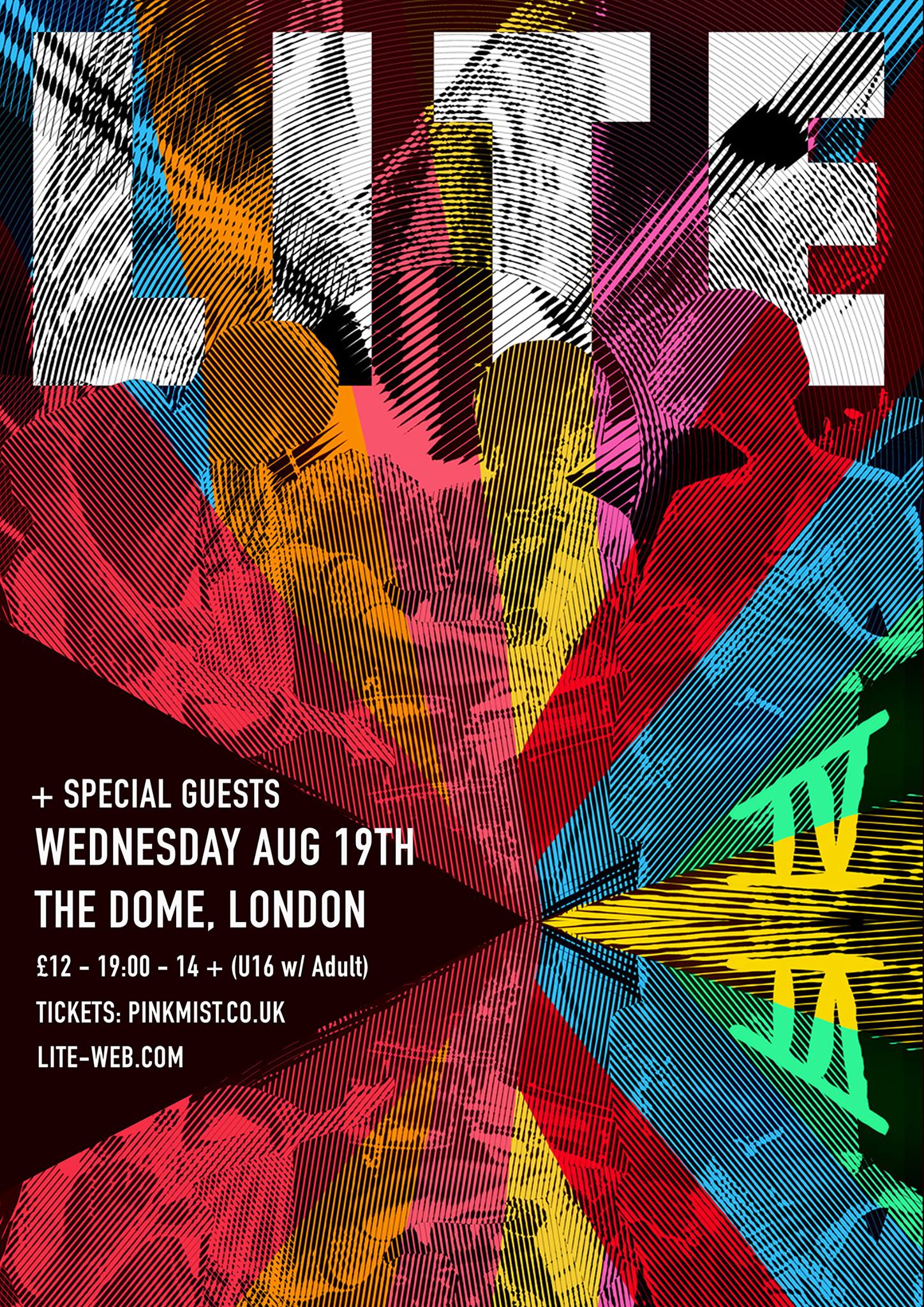


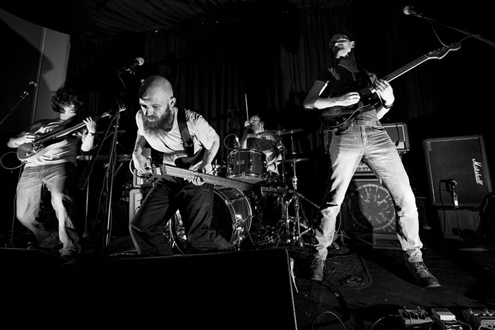
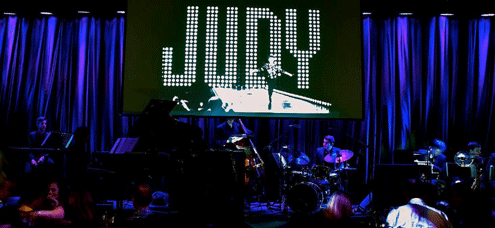
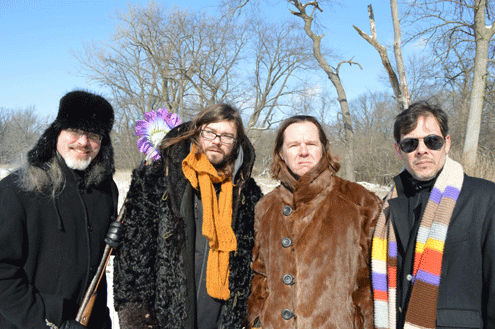
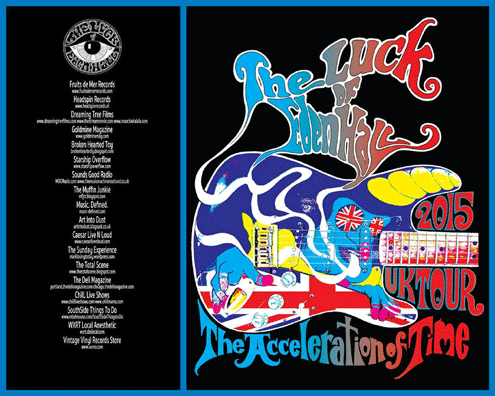
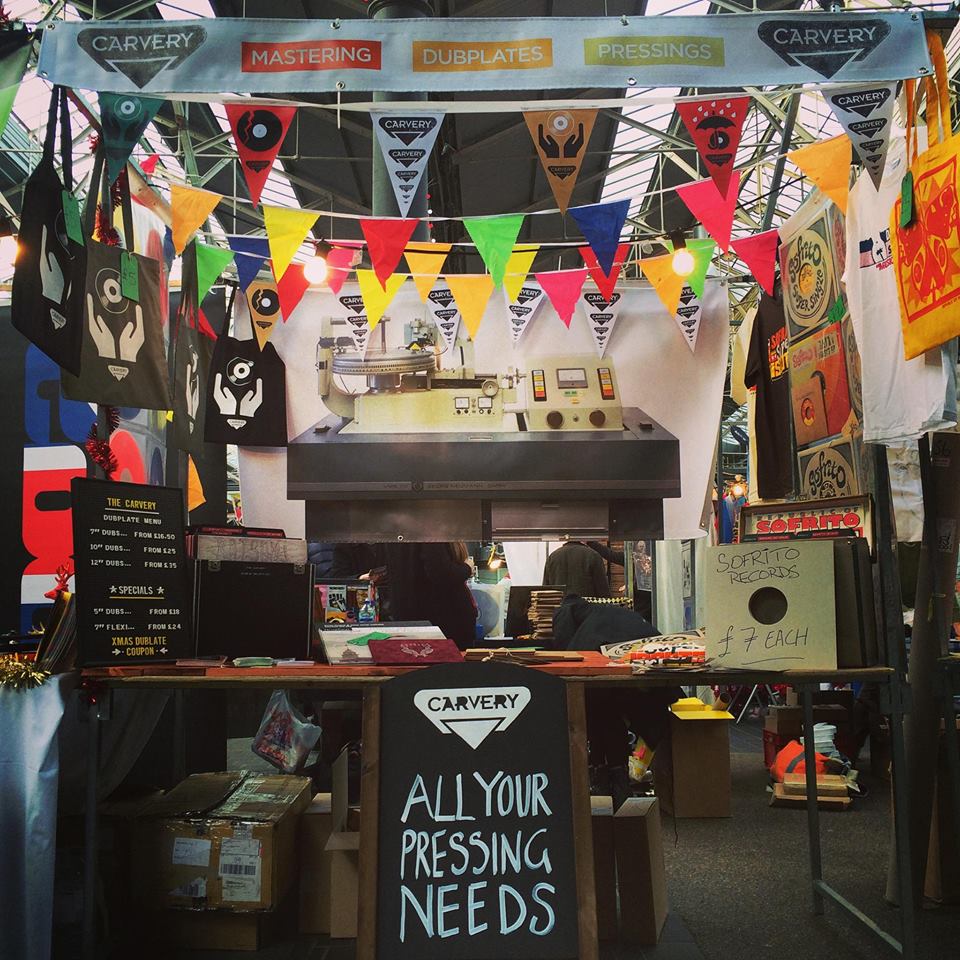
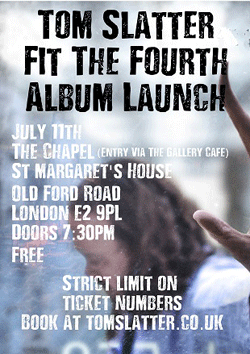
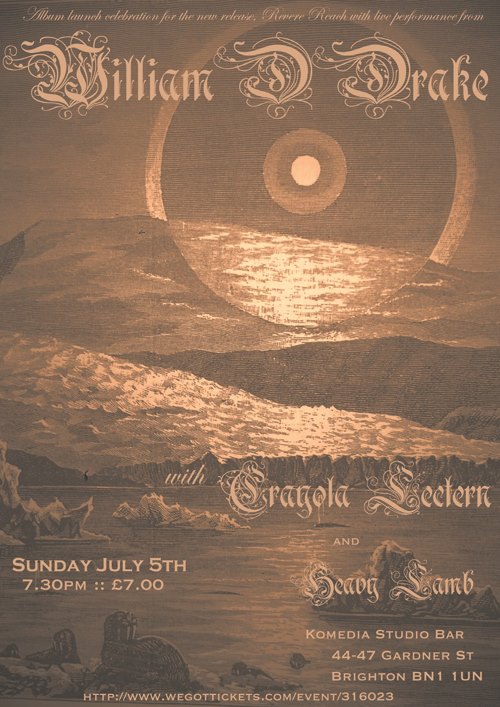

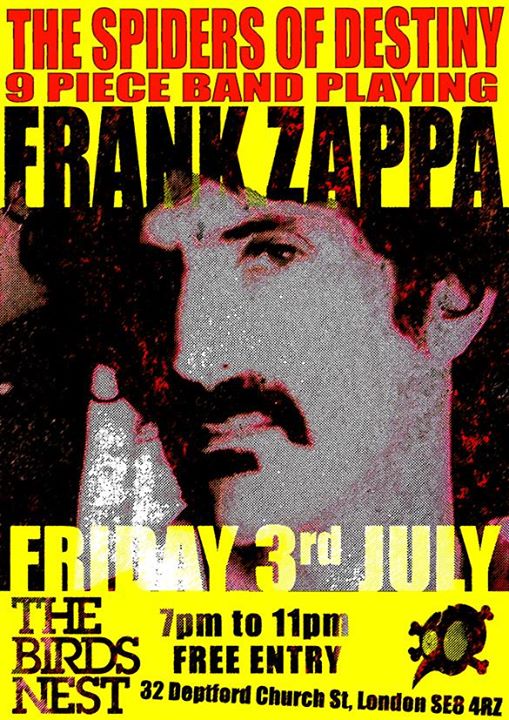
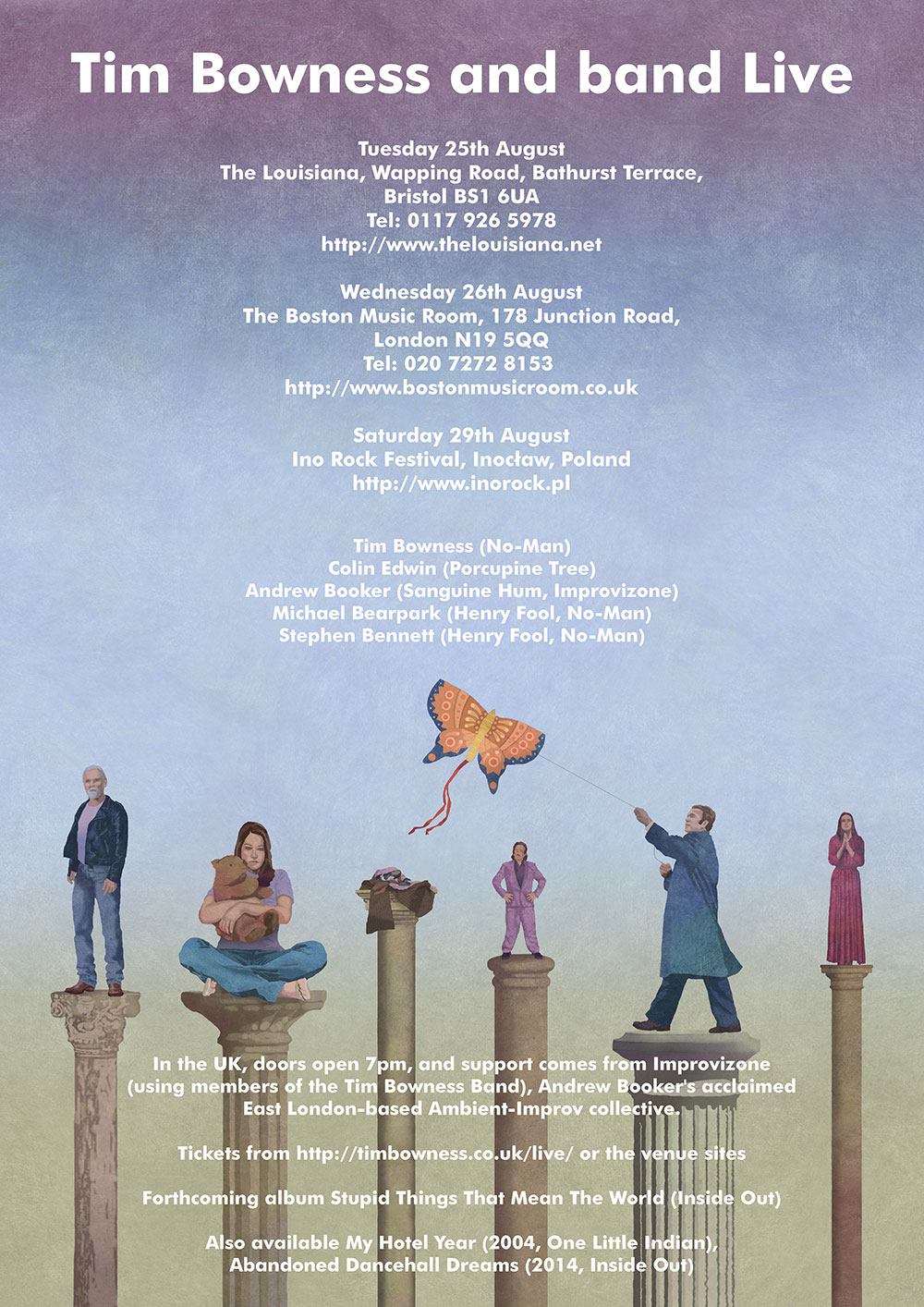

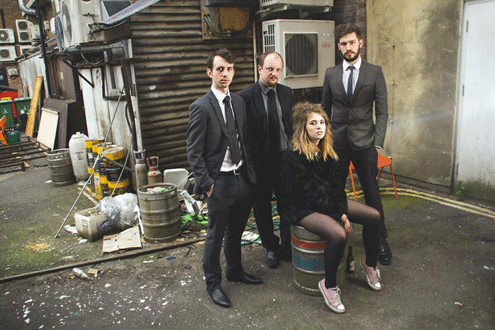

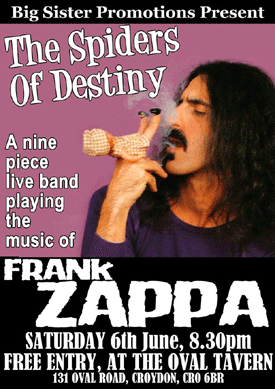

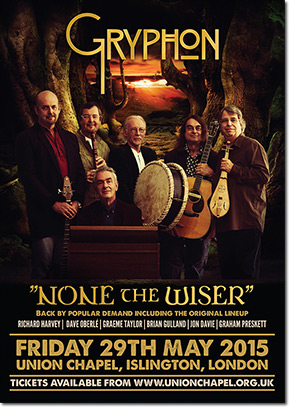

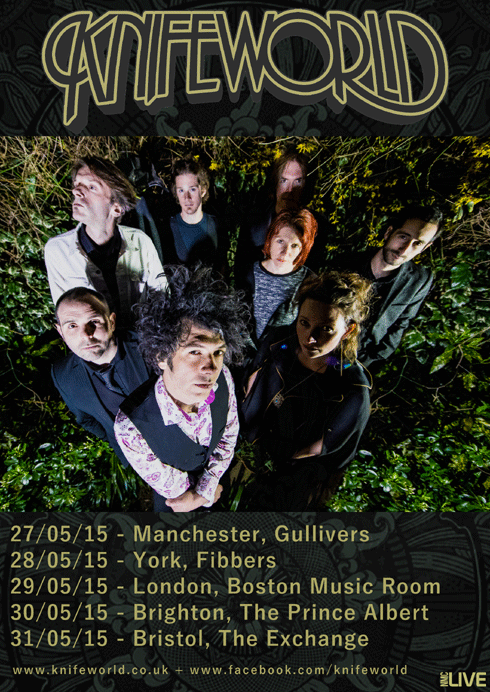




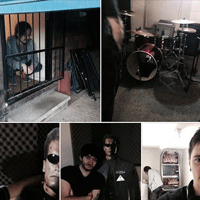


 Misfit City