Archive | heavy metal RSS feed for this section

January 2015 – single & track reviews – Marika Hackman’s ‘Animal Fear’; Tanya Tagaq’s ‘Uja’; Swim Mountain’s ‘Love on Top’

9 Jan

Despite the underlying wildness of her songwriting, Marika Hackman appreciates and makes use of the power of restraint. Previous songs such as Bath Is Black and Itchy Teeth have revealed a compelling songwriter with a cool fascination for messy play, for psychological dirt and guilt and the wracked physicality of the uneasy soul. That she doesn’t scream these things out adds to her power. Her cool, polished folk tones deliver her surreal, slithering insights and her deft, subtle analyses with the same thoughtful poise, whether she’s chiding or sharing, empathizing or emphasizing.

Underneath the spooky Latinesque folktronica groove of ‘Animal Fear’ (full of Shankar-ish string wails and spaghetti western gunshots) a menstrual werewolf subtext is swirling. Part ‘Ginger Snaps’ and part ‘Being Human’, it embraces blood and feminity, bandages, and the helpless stink of male terror. “I’ve been weeping silent like a wound. / Would you stitch me up or let the blood soak through, / watching my world turn from white to blue?” She sings as if she might be dying; she sings as if to a lover or a brother; but she’s never really pleading, never wholly dependent. She sits inside her transforming body and watches the changes come; watches the fumblings of her companion with the same half-resigned curiosity. “Look into my eyes and convince us both that I’ll last through the night; / I could land on my feet if I tried. / I’ve never jumped a chasm so wide / and made it to the opposite side. / Even now as we’re standing here, / I can see the doubt in your eyes, / I can smell the animal fear.”

The song is a tender, chiding mixture of vulnerability and disappointment, but its observations are shot through with self-awareness. “I was not a heavenly child,” admits Marika, “savage, with a temperament wild.” As the song travels through the changes, it blends into acceptance, a new understanding bleeding through in flashes (“oh, my body trembling… / and teeth… / I won’t bite.. / Sweet too soon, treacherous night.”) We don’t get to find out how this ends, but even as Marika (now more initiate than invalid) murmurs “she calls my name” you’re left with her finely-honed sense of self. Under the fur and nipples, under the wracking pain, an image emerges of a woman who may wander but will never be truly lost.

* * * *

Tanya Tagaq – a Canadian Inuit throat singer – also seems to have some empathy with this kind of lycanthropic humanity. She’s recently delivered a forthright cover of Pixies’ ‘Caribou’ like a tundra bolero with violins and horns, picking up on its occult hints and dreams of a changed, more animal life outside the city and slinging it back with an Inuit twist and the bloody-minded wit of a hard-bitten outdoorswoman. Tanya first came to broader attention a decade ago (thanks to her four-song turn on Björk’s ‘Medúlla’), and has continued to work her way into Western musical awareness via work with the Kronos Quartet and Mike Patton. This kind of collaborator choice suggests a determination to broaden and involve her music rather than dilute it. With last year’s award-winning Canadian success for her ‘Animism’ album, she’s pitched to continue making breakthroughs on her own terms.

‘Uja’ confirms this. A trailer single for a broader overseas release of ‘Animism’, it has something in common with previous deeply-involved folktronic endeavours such as or Foxout! and Mouth Music. It might mate and merge with electronic beats in longstanding worldbeat fashion, but rather than pandering to easy tastes it’s a stirring textural affair, deliberately pitched between ritual and pounding. It feels like an Arctic club night with all of the technology freezing round the edges and only kept functional by fierce body-warmth.

Log-clock ticks, harsh electronic reverb, and a ragged fabric of synth-noise and incisive drumming make up a base and a blanket. Over, under and around this Tanya works in multiple layers of percussive hum-grunts, drawls, gasps, seal barks and harmonic growls. Occasional shamanic interjections in Inuit (sliding in over the top like a wake-up call filtering through sleep) might be terse warnings, defiant fuck-you statements or camouflaged jokes at the expense of Anglo monolinguals. With Tanya being an assertively political artists and performer, they could be any or all. If I’m the butt of the joke, though, I can take it this time. ‘Uja’ made the blood jump in my feet and in my temples.

* * * *

London/Angeleno good-time band Swim Mountain retrofits, but in an easier, breezier way. They cover Beyoncé’s ‘Love On Top’ like someone flirting under a blanket, musical lines and instrumental parts wriggling under the surface like coy, excited limbs. As he showed on the debut Swim Mountain EP last autumn, head Swimmer Tom Skyrme is very good at disguising fairly limitd resources under a swelling, lucid-dream production style. He claims to have put this one together on a whim, belatedly falling in love with the song’s bravura modulations and ‘80s-inspired peppiness.

Personally, the Beyoncé diva-juggernaut leaves me cold. Despite her well-honed skills and precision vocals, much of what I see is branded, sub-Madonna acquisition and media powder-puffing (if she is the twenty-first century Madonna, we’ve all gone beige) so it’s interesting to hear the song outside her wind-tunnel of glamour. Tom’s lightly buttered, lysergic popcorn-soul take makes no attempt to match the ceiling-bumping, helium balloon assertiveness of the original. The pace is agreeable ‘70s midtempo; the wah-guitar plays peekaboo; the boinking bass comes sheathed in a tight reverb. The phaser button adds a gentle, sexy yawn; Tom’s warm nasal drawl (just on the likeable side of bland) dawdles amiably on the swooping paths Beyoncé cut, making no attempt to match her commanding calisthenics. A cloudy puff of keyboards fills the gaps, like a lazy pink smoke-bomb.

Previous Swim Mountain stylings have mostly recalled the stoned, sleeting Byrds guitar of ‘Five Miles High’: this one sounds like what Arnold Layne might have become if Syd Barrett had drunk deep on Memphis soul before he rolled another one, or like a more nappy-headed tie-dyed version of the Clarke/Duke Project. It’s all a little throwaway (despite the unexpected ending, which scrambles down an unexpected dip and clunks like a plastic lyre) but it’s lovingly crafted throwaway; a sugar basket which takes less time to eat than it does to admire. Plus I do like the way that Tom’s mix rolls out individual delicate moments for our attention, as if his faders were the sliding drawers in a jeweller’s desk.

Marika Hackman: ‘Animal Fear’
Dirty Hit Records (no barcode or catalogue number)
Download-only single (released 9th January 2015)

Tanya Tagaq: ‘Uja’
Six Shooter Records (no barcode or catalogue number
Stream-only single (released 6th January 2015)

Swim Mountain: ‘Love On Top’
Swim Mountain (no barcode or catalogue number)
Stream-only single (released 7th January 2015)

Get them from:

Marika Hackman: ‘Animal Fear’ – Soundcloud stream or iTunes (as part of ‘We Slept At Last’ album)
Tanya Tagaq: ‘Uja’ – Youtube stream; or Six Shooter Records store or iTunes (as part of ‘Animism’ album)

Swim Mountain: ‘Love On Top’ – stream-only at Soundcloud.

Marika Hackman online:
Homepage Facebook Twitter Soundcloud Last FM YouTube

Tanya Tagaq online:
Homepage Facebook Twitter MySpace

Swim Mountain online:
Facebook Twitter Soundcloud

January 2015 – single & track reviews – Giles Babel’s ‘2015’; Shot of Hornets’ ‘Elvis is Dead’; Heylel’s ‘I Talk to the Wind’

7 Jan
Giles Babel: '2015'

Giles Babel: ‘2015’

Happy new year. How’s your irresolution?

Both as year and as song, ‘2015’ is another fitful emergence for Enfield polymath Glen Byford – poet, photographer, digital trinketer, small-time maker and on-off DJ. In the past, he’s put out his original music (anxious water-tank electronica, skinny-wistful glitch tunes, poppy plunderphonics and disillusioned spoken-word bedsit blurts) under the cover names of Hunchbakk or Giles Babel. As of this year, all projects seem to have merged under the Babel label and shrunk down to their most skeletal: or perhaps that’s just how it feels under a January hangover.

Peeling off and discarding his usual quilt of samples, the perpetually uncomfortable Glen distractedly slung this one together on an iPad app while reading and watching television – as if he was working behind his own back and didn’t want to catch himself at it. It’s downbeat, clipped and telegrammatic – budget-tronica pows and zips; a knocking and near-undanceable beat; minimal decoration. Rather than opting for best hopes and public drive, he chooses to sit back and take the poison pill – “Another new year, and another January of good intentions. / Another January of new perceptions, misconceptions that things could change.”

The music, though, seems to disagree – glitching and flipping into a rumble of double-time, or shoving the voice to the back of the drawer like an unwanted sock. Meanwhile, Glen fidgets between hope and cynicism (“This year will be my year – / yeah, just like last year, / and just like every year,”)and represents that year with a brief collage of Playstation chip music, pings and trills, mutters, and incongrous hip hop samples of block party shouts and cheering crowds (“we have a party, right?… I tell you what we do…” Uncertain inspirations reign. Glen pads, tentative and barefoot, around his room.

* * * *

Shot of Hornets: 'Elvis is Dead?'

Shot of Hornets: ‘Elvis is Dead?’

In the time that Glen would take to roll over twice and go back to sleep, Shot of Hornets would have squeezed five quick changes into a song. Apparently not much older than 2014’s Christmas wrapping-paper, this band’s blocky, power-oozing pounce-and-trap tones suggests a much longer-established band: they mingle math-metal’s block-feints with hot funk spaces, thrash riffs with anthemic grunge righteousness, but never entirely pin themselves to anything. When he’s not bursting into hardcore screams, the soulful wreck of singing drummer Conor Celahane’s vocals are reminiscent of gospel-tinged hard-rock heroes King’s X (as are the clotted, meaty guitar wails of his brother Dan), but there’s just as much of Megadeth’s grand irritation in the stew as well.

Elvis is Dead? is a shape-changing dust-off about nothing more specific than uncertainty, vague disappointment and finding the pieces to pick up. The King himself only shows up in a desultory moan about Spotify (so I’m guessing that there’s something being said about the commodification and shrinkage of cultural heroes here), but generally the song sees the band gathering together their compass-bearings and firing off the odd sarcastic broadside. “So here we are now, / no better and no worse off, / in the same world as everyone else,” notes Conor, going on to confess “I have a number of doubts.”

The music is sinewy and jumpy beneath the roaring guitar, and every couple of minutes, there’s a change – a glide of softer melody, a shift into death growls, a barrage of bouncing swipes and screams. “The first prize for gift of the gab / goes straight to you / how d’you feel about that?” Conor yells before the song turns anthemic, finding both the funk and its final feet. (“Turning my back on ignorance, turning my back on selfish people, turning my back on ignorance and lies.”) In a final riff-bout, the rhythm hurtles and rebounds like an evil-minded squash ball. Promising. Let’s see what they do when their concentration settles.

* * * *

Even compared to the other prog juggernauts of the ’70s, King Crimson aren’t given much credit for contributing to the classic songbook. Given the various song-gems lurking in their back catalogue, this is unfair. It probably owes more to Robert Fripp’s unfortunate (and somewhat unfair) reputation as a lofty demon headmaster, verbally withering casual listeners from his lectern before immolating them with sprays of burning guitar sludge – an image which does his Bowie collaborations no harm, but which drags his main band down like a concrete overcoat. The fact remains that outside of slavish interpretations from neo-prog bands, as far as Crimson cover versions go there’s been little more than a speckling.

In the past few years, though, this has changed significantly. In 2011, The Unthanks transformed Crimson’s Starless into a haunting Northumbrian chorale. The year before, Symbolyc One ripped 21st Century Schizoid Man to ominous ribbons and recombined them for Kanye West’s ‘Power’. A year before that, Maynard James Keenan of Tool snarled his way through a pure Schizoid Man cover for The Human Experimente (It was impressive, in an art-metal way, although personally I’m keener on Johnny G’s lo-fi delta-blues version from 1982).

I Talk to the Wind, however, is probably the closest King Crimson has to a standard. A ghostly, semi-existential folk song from their first album, it’s already attracted several reinterpretations. Italian new-wavers Violet Eves did a respectfully mournful and elegant cover in 1985; Camper Van Beethoven and Eugene Chadbourne tore up a hilarious country-punk version in 1987. Probably the most famous version is Opus III’s techno-house take from 1992 (complete with New Romantic Gilliam-cum-Dali fantasy video, mashing up ‘Dune’, ‘Logopolis’ and ‘The Man Who Fell to Earth’ as Kirsty Hawkshaw’s androgynous glam-waif stalks, slinks and smoulders her way around a desert lodge).

For their own version, Heylel have chosen to recapture some of the original Crimson’s sumptuousness. Serving as a coda to the Red Giant sequence on the epic prog/folk/metal of their ‘Nebulae’ album, their take on I Talk To The Wind is solemn and sealed. The ceremonial pace, the full-scale orchestral tremble, the fathoms of shoegaze-guitar shudder and the solemn, Gilmourian guitar solo render it inter-generationally grand: touching on the string-swoons of Craig Armstrong or Sinatra’s orchestras, the stadium turbulence of ‘The Wall’ and the mournful psychedelic drones of Spiritualized or Slowdive. The video suggests that they’re heading up the live sessions in the Black Lodge from ‘Twin Peaks’.

Yet the original song is a small, lonesome beast – lyrical flute, a gentle fug of guitar, a pre-ELP Greg Lake singing the melancholy words with a vulnerable humility that he’d never show again. Heylel singer Ana Batista keeps this in mind. Her vocal might be full of assured, implicit soul-pop power, but she’s never tempted to let rip, never loses sight of that original restraint: and, restored to a waking dream, the song’s allowed to settle over us once again.

Giles Babel: ‘2015’
Hunchbakk (no catalogue number or barcode)
Download-only single (released 1st January 2015)

Shot of Hornets: ‘Elvis is Dead’
Shot of Hornets (no catalogue number or barcode)
Download-only single (released 1st January 2015)

Heylel: ‘I Talk To The Wind’
Heylel (no catalogue number or barcode)
Download/streaming single (released 7th January 2015)

Get them from:
Giles Babel: ‘2015’ – Bandcamp (pay-what-you-want)
Shot of Hornets: ‘Elvis is Dead’ – Bandcamp (pay-what-you-want)
Heylel: ‘I Talk To The Wind’ – Bandcamp or iTunes (as part of ‘Nebulae’ album)

Giles Babel/Hunchbakk online:
Homepage Facebook Twitter MySpace Soundcloud Bandcamp

Shot of Hornets online:
Facebook Bandcamp

Heylel online:
Homepage Facebook Bandcamp YouTube

January 2010 – EP reviews – Orders of the British Empire’s ‘Rebuild (“bulge-eyed romantic ear-splitters, about to pop a vein”)

5 Jan
Orders of the British Empire: 'Rebuild' EP

Orders of the British Empire: ‘Rebuild’ EP

Orders Of The British Empire wear some pretty evident, pretty well-known influences upfront. These North London bandmates are avowed disciples of Mogwai, of Pelican and of Oceansize – and it shows.

While OBE are members of the broad church of instrumental post-rockers, they operate at the brutal, crunchy, masculine end of the genre. In other words, the one which relies on a bristly bromance between hardcore punk, hurricane-textured shoegazery and epic heavy metal, all reconfigured for sensitive guys with tattoos. It’s the side of post-rock which brings most of the previously-despised rock muscle roaring back in; and which (while abhorring and deleting the spotlit solos and preening, cocksure singing) is rammed full of guitars which fret, bulge and wail like a man who’s undergoing an apocalyptic religious conversion but who’s also reduced to frantic speechless hand-gestures to explain just how he feels.

There’s certainly enough of the hallmarks of this art-brute school of sound. There are the melancholy guitar arpeggios which cloudburst into sleet-storms of frantically scrubbed strings and distortion sprays. There are the hush-to-shriek dynamics and the clear evidence that everyone involved can play like a demon, but have had to carefully weave and duck their skills past the frowns of the punk police (or perhaps their own vestiges of punk embarrassment). There are the Godspeed You Black Emperor digressions into dry-boned countrified vistas, suggesting poisoned prairies under oil-smeared skies. There’s the sneaking feeling that this kind of music should just bite the bullet and call itself “psychedelic metal”, if that didn’t throw up unfortunate thoughts of a saucer-eyed Ozzy Osbourne chanting and dribbling blood down his kaftan.

So – not terribly original at root, and building heavily on what’s gone before. Yet what saves OBE (and then some) is that their hearts are as upfront as their debts. To a man, they’re bulge-eyed romantic ear-splitters, about to pop a vein in the service of expression. Their decision not to include a singer means that all of that passion feeds magnificently into their churning hands. The guitars bypass the pitfall into neurotic stiffness which often plagues post-rock: instead, they play with the suppleness and flex of tormented blues. The drums pace and clamour at the back like a fierce and loving sergeant – not just keeping time, but chivvying each of the other instruments.

Admittedly, the other payback is that their music is stadium-sized, and dazzled by its own overwhelming importance. The wordless songs march under fierce manifestos (Rebuild With Gunpowder), namecheck mythical serpents and Earth-hammering asteroids (Apophis Reigns) and cast up, without a hint of self-consciousness, questions for everyday existential heroes (What Would You Do). Even so, OBE have delivered up a striking, accomplished opening statement – especially as, rather than being a squad of pierce-festooned hardcore athletes with scalp-locks, they turn out to be a bashful-looking crew of soft-lipped boy-men.

There’s much to savour on ‘Rebuild’. Partly, it’s the sonic excitement, with the fluttering intro thrums and emotional math-riffing of Rebuild With Gunpowder; or the gushes of deep, disgruntled pink noise which swell under the increasingly frantic What Would You Do, like the breath of a sleeping giant. The multi-part Apophis Reigns boasts a spectacularly emotive flow of Western desert chords and ear-scouring guitar boil; the lapping lake-music of Roundabouts offers comparative simplicity and a clear view into the band’s romanticism, bypassing the epic storminess.

All things said, it’s refreshing when a band who, on first count, seem so derivative can in fact be so transformative – and so soon. Swerving aside from simple tribute, OBE rapidly become flushed with their own life and their own fascinations.

Orders Of The British Empire: ‘Rebuild’ EP
Big Cartel/Bandcamp
CD/download EP
Released: 1st January 2010

Get it from:
Big Cartel or Bandcamp

Orders Of The British Empire online:
Facebook MySpace Bandcamp

July 2003 – album reviews – Show-Yen’s ‘Show-Yen’ (“the precision roar of a squad of slick hand-tooled motorcycles”)

30 Jul

An instrumental power trio from Kyoto, Show-Yen attempt a twenty-first century take on complex fusion rock. Balancing earnestly between early ’90s metal heroics and formal ideas drawn from ’70s art-rock and the stiffer end of jazz-rock, Yasuhiro Nishio and his bandmates encounter mixed results in trying to reconcile them. Yasuhiro, the bandleader, leans towards ersatz Joe Satriani guitar skills and facility in his own melodic, theatrical playing. The band as a whole cup the juggernaut blues-metal legacy of Cream in one hand and embrace the stern compressed minimalism of King Crimson’s ‘Red’ with the other, with digressions into classical guitar and Hendrixian sustain. All accomplished; all, still, a little too over-familiar.

In too many respects the album ends up as a classic rock guitarist’s solo project in all but name, with all of the posturing highs and lows of its kind. Drummer Masanobu Tonomura is a cheerful accompanist, and Hiroaki Fujii provides solid fretless bass, often erupting into the kind of chorused slithering which suggests he’s plotting an escape into full-blown jazz-fusion. Yet neither do more than underpin Yasuhiro’s music. The album sinks, swims, but more often flounders over the guitarist’s wavering levels of inspiration and originality.

This is a shame, as Yasuhiro is a fluent and accomplished musician. When he’s on form, he’s several cuts above the clumsy cut’n’paste standards of neo-prog: his blending of sources is smooth and instinctive. Several core Show-Yen pieces will press the buttons of staunch classic rockers. Much of the album offers the precision roar of a squad of slick hand-tooled motorcycles, but some of the other tones and textures involved suggest that someone’s slipped a little acid and a handful of smart-pills into the petrol tank. On the cruising riff of Network Broken, the entire band sounds groovy and assured, with Yasuhiro even inspired to add a little disruption via Frippish yells of burning guitar. Reallusion’s chugging, businesslike metal riff is cut with haughty descending decorations of Crimsonic phrasing; there are breaks for classical arpeggios; and Yasuhiro pulls off a neat compositional trick of cross-cutting into full-blown Gary Moore blues descends crammed with articulate wah-wah wails.

Yet on the other hand pieces like Move Up or the flashy, jolly Ran sound like little more than ambling, melodic instrumental metal cast-offs. Parade, with its neo-classical tones and cute clarion fanfare, might aim to unite Rush flourishes and latterday math-rock precision: the final result sounds more like a listless chew through the pops-orchestra end of classical rock. While Yasuhiro can readily summon a breezy classical-rock style for these moments (not far off what the perpetually underrated Kevin Peek aimed for with Sky) this sits badly with the hard-rock bristle elsewhere.

Attempts at carrying off something weightier – via the five-part piece Asels – results in sixteen minutes of strolling through some over-familiar galleries. In predictable succession Show-Yen offer up an electro-classical guitar study, some Curved Air toccata-rock (with uninspired rhythm parts slogging under distorted lead guitar breaks and flanged bass responses) and a mid-paced trudge through Crimsonic metal. The final destination is a kind of Hoagy Carmichael dinner-jazz, highlighting melodic bass lines and clean, sleepy guitar. Part-way through, Yasuhiro tosses in a solo slice of twirling, gut-strung hammer-ons (echoing Van Halen’s Spanish Fly). The ultimate result is that of a bitty, end-of-term music showcase: not the seamless gelling of unlikely elements that marks the best prog.

Show-Yen’s problem is that whenever they aim for committed musical context, they always end up in a historical echo-chamber. Bouncing around inside prog-fusion consensus, they’re voluble and skilled in their instrumental focus; yet those stylistic limitations they work within so earnestly also render them voiceless. Tellingly, the band pass this debut album off as some kind of conceptual work, yet refuse to provide story, background or even a suggested listening order. They claim that listeners can create their own sequence and story, then immediately contradict themselves by stating that instrumental music renders any narrative composition irrelevant.

A sense of pointless backtracking, of feet being fallen over and ideas imploding under the weight of inverted rock pretensions, is overwhelming. If it is all an oblique joke, it’s particularly annoying given that Show-Yen can obviously think and do more. When they let their inner hairy beast break through the schooling and the canonical salutes – and when they properly churn (rather than simply milk) their technical skills – everything works better.

Driving jazz inflections and visible thinking are all on display in Fu-Ga with its appealing back-and-forth march of mirrored chords. On Ominous Footsteps II, Show-Yen take a tip from the flattened fifth. Their dark flashy rock explorations now not just a showcase for technique but the generator of a pleasing structural puzzle: it’s built on short menacing low-register pulses, from which Hiroaki’s bass guitar gradually escapes as the piece progresses. Lucifer’s Child shows them grabbing their mid-’70s Crimson fetish whole-heartedly, but letting it fire them up. Yasuhiro leads in and out with endpieces of complex Frippish picking (hitting a feverishly cramped pitch), but ultimately slams the band headlong into a crushing, sticky stoner wah-wah riff over which his car-bumping lead phrases crash down. This is where the band really starts to work – where the method meets the moment.

Show-Yen, then. Deserving of being taken seriously, so long as they start taking themselves seriously. How often do you get to say that about a rock band and genuinely mean it?

Show-Yen’:’Show-Yen’
Musea, FGBG 4406.AR
CD/download album
Released: 22nd July 2003

Buy it from:
Musea.

Show-Yen:
Homepage MySpace LastFM

February 2003 – live reviews – House of Stairs label launch concert (evening 2) featuring William D. Drake, Cheval de Frise, Stars in Battledress and Miss Helsinki @ The Arts Cafe, Toynbee Hall, Aldgate, London; plus Delicate AWOL @ 93 Feet East, Shoreditch, London, both 17th February 2003 (“East End might mean left-field tonight…”)

19 Feb

Less than a week ago, the House of Stairs label put on their Camden launch gig at the Underworld: Max Tundra DJ-ed, filling the gaps with a spicy and witty mix of art-rock, prank techno and pop buzz. But tonight we’re out east in the pizza, pine and paintings environment of the Arts Café for the second, “quiet” gig – and Richard Larcombe is de-facto man-on-the-muzak, even as he bustles about setting up for his turns in two of tonight’s bands. Eerie shapes and twists of music waft through the busy air: the chatter at the bar is underscored by the filtering eeriness of Messiaen and the swooping rattling studio gulps of Boulez. East End might mean left-field tonight.

Miss Helsinki, bless them, display more pop bones in their body. Popping up from the wreck of the much-lamented Monsoon Bassoon, they feature both of the Bassoon’s singing guitarists (Dan Chudley and Kavus Torabi) plus the increasingly ubiquitous Larcombe on bass and harmonies. But they’ve lost both a drummer and Kavus’s keyboard-playing brother Bobak in the last month: and so it’s a stripped-down-and-unplugged Helsinki trio playing for us tonight, both aided and hindered by a backing tape. It’s only their third live appearance.

Frustratingly, they’re still lolling like a tall layer cake whipped out of the oven too soon. There’s something to be said for a bit of engaging pop roughness; and for Torabi’s endearing habit of boggling like Tom Baker at the end of a tricky lick. But although Miss Helsinki’s ambitions are clear, they’re still struggling to reach them. They have a tough act to follow, of course. One of the few bands to unite the approval of both London proggies and the NME, The Monsoon Bassoon wrapped a broad spectrum of ingredients (including Naked City, King Crimson and Shudder to Think) into their explosive, racing psychedelic rock.

Though Miss Helsinki retain some of those flavours, they’ve pastoralised them: the bursts of unusual chording and rampant arpeggiating are still there, but the thrashing intensity has been replaced by a sunny warmth and they’ve obviously settled on Andy Partridge as their guardian angel. But Helsinki music is a good deal more complex and demanding than XTC’s, straining the abilities of Chudley and Torabi’s affable, unvirtuosic boy-next-door voices as they hop over the cheerfully convoluted melodies like tap-dancing cats on a hot tin roof.

Despite this – and despite the fluffed notes and stumbles over the over-detailed backing tapes – ‘I Felt Your Arms Around Me’ is a bright little gem of spiky-haired art-pop, powered by the same giddy celebration of the best Monsoon Bassoon songs. Kavus (air-punching and doing triumphant kicks from his guitar stool) obviously knows it. ‘Surf’s Up’ – featuring a repeated chant of “silhouettes you know from fire” – takes them to places last touched by the psychedelic folk-science of Gastr del Sol; and the romping cowboy-pop of ‘Rodeo’ (“the world seems drunk, with a stetson in place”) ensures that they finish on a note of charm and enthusiasm. Miss Helsinki are a long way from filling the Bassoon’s busy shoes, but the signs are good.

With Miss Helsinki, Richard Larcombe is a deft, understated bass player. With his own band Defeat the Young – backed up by brother James – he steps up to become a witty, elegant frontman with tales of social absurdity and romantic scrapes. But tonight, for Stars in Battledress (an equal-partnership duo of both Larcombe brothers), he takes a step sideways. Up onstage, he cuts a quieter, more sober figure than he does with Defeat the Young. His sophisticated social-jester persona is mostly absent. His ready wit is intact, but here it’s diffused – more musing in its nature, leaning on subtle insinuations and surreal impressions rather than crackling wordplay. It’s also tinted with a peculiar, guarded English melancholy, and there’s an unsettling sense of loss and submission behind Richard’s refined and aristocratic drawl. “Blessed are all with vision unswerving. / Don’t watch me weep – go back to sleep…”

On Richard’s guitar – round about where people usually paste their dude-rock logos or political slogans – there’s a beautifully executed painting of a mallard duck, apparently snipped from a spotter’s guide. It’s appropriate. Stars in Battledress’ drifting tapestries of songscape take place in a watery never-land England of ponds and rivers and thin blue children, posh academies and school gymnasiums, the rituals of government offices and the embarrassments of public speaking; Cambridge water-meadows distorted by a lysergic autumnal haze. Someone in the audience mutters that Stars in Battledress are the best argument he’s ever witnessed against a public school education. I think he’s failing to press past the immaculate antique sheen of their surface. Theirs is a ghostly watercolour world of ruefully suppressed emotions with a tidal tendency to seep back up. Part Evelyn Waugh, part Syd Barrett and part Sea Nymphs.

James – strumming and fondling snowfall arpeggios from his piano and contributing apple-bright harmonies – provides most of Stars in Battledress’ colours, picking up on his brother’s words and extending them outwards in rippling classically-inspired musical inventions. Richard plays some understated, skeletal guitar and trundles a harmonium through the queasy distress signal of ‘Haunted Hotel’, but mostly he stays out at the front, clasping the mike stand like a sad, dapper figurehead. There’s a break from this in the roaring-’40s guitar-waltz of ‘Hollywood Says So’, as Richard delves hilariously into ludicrous showbiz gaudiness (“drive fast cars, play guitars, win prizes / – girls in every port, in all five sizes”) but ends up spat out in a wad of comic bitterness. (“I’ve been over-directed, I’ve been cut in one take. / I’m a dated two-reeler that no-one will make.”) Their cryptic finale – the hummed, valedictory ‘Women from the Ministry’ – hovers in the mind like the flicker of antique cinema light, images of lost houses, withered photographs.

Cheval de Frise are… plain remarkable. Bare to the waist and sporting Trotsky glasses, Vincent Beysselance studies his drumkit with a jazz warrior’s eye, his lean expression and sculpted moustachios lending him the air of a razor-sharp beatnik. Guitarist Thomas Bonvalent looks as if the Taliban have booted him out for excessive zeal. Sporting an enormous bushy chest-length beard, battered clothes and an expression of sincerely crazed intensity, he’s twitching visibly even before he plays a note. His nylon-string acoustic guitar has been modified – or de-modified, with both the sound-hole and the pre-amp controls crudely and defiantly smothered with duct tape. As he plays, biting on a pick, his face seethes beneath his beard.

“Pastoral acoustic mathcore” was what someone wrote on the Cheval de Frise packet. Ah ha, ha, ha – I don’t think so. Pastoral acoustic mathcore would be very nice – perhaps a Guitar Craft picking exercise, pared down by post-punk minimalism and softened by visions of green fields. Are Cheval de Frise like that? No. For the first seven minutes or so, Cheval de Frise seem absolutely demented. After that – and once the broken seizures of drumming and the intricate splatterwork of guitar has had time to get to work on your brain and your reflexes – you start to understand. Although your body will make the connection before your mind does.

Right from the off, Bonvalent’s playing is disturbingly wild; slamming down obsessively on a single note or isolated interval, or spasming music up, down or across the neck of the guitar. Beysselance’s drumming is a boiling whirl of ideas and instincts, acted out with a brinksman’s forcefulness, with enough breakneck substance both to keep the duo’s momentum and to craze it with brilliant stress fractures. People cram to the edge of the Arts Café’s tiny stage, swaying like a wheatfield in a whirlwind, and yelping approval.

Behind the apparent free-scene chaos, Cheval de Frise have serious intentions. The drums have their melodies as well as their upheavals, and although Bonvalent’s open-mouthed drooling visage suggests a man in terminal acid psychosis, he frequently rips into hyperspeed, hypertonal spirals of intense picking which John McLaughlin would be proud of. Every now and again, in the midst of a free section, the two Friseurs exchange a quick cue-ing glance and then slam into perfect alignment, calling a rigorous Zappa-style composed music module up out of memory. Bonvalent’s playing might often parallels the spewing, disjointed clicking noises of the post-Derek Bailey improv school, but the musician he’s really closest to is the iconoclastic lo-fi jazz rebel Billy Jenkins. Deliberately or not, Cheval de Frise ‘s music is a hyperactive flamencoid strain of Jenkins’ “spass” approach – a slew of intense musicality in which ugly sounds, wrong notes, anti-technique and smash-ups in timing and phrasing are as part of the great spontaneous inspiration as skill, structure, complex ambition or the beautiful moment.

It is, also, an intensely devotional music, as burningly thrilling as Nusrat Fateh Ali Khan’s qu’waali shriek, a gospel choir tearing the roof off the sucker, or the closer-to-God whirling of a Sufi dervish. Bonvalent’s physical abandonment (at points close to ecstatic convulsions) is religious in its intensity. As pieces skid to a halt, he bobs his head thankfully to the audience, smiling and almost moved to tears. If it’s like that onstage, it’s not that much less intense down here. Being up close to music this inspirationally driven raises the hairs on the back of the neck. When Cheval de Frise finally peel off their instruments and stumble into the crowd, the feel of the audience unclipping themselves from their joyful tenterhooks is like a dam bursting.

I don’t envy William D. Drake – a onetime Cardiac songwriter with a joyous genteel-gone-berserk keyboard style – for having to follow that. But I’m going to have to leave him to it, as I’m double-booked for gigs this evening; and so I have to slip out of the Arts Café to stride the Spitalfields half-mile or so over to 93 Feet East, to see Delicate AWOL on a rare London visit. I’ll just have to promise to catch up with the Drakey magic next time he plays… I will, really…

93 Feet East turns out to be an over-pleased-with-itself Brick Lane bar, milking the wobbly momentum of trendy Shoreditch Twattery while it still lasts. It also has the rudest security staff I’ve ever met. Not five minutes after the music stops, they’re in your face; all but digging their chins into your shoulders, dangling heavy barrier chains in one hand with the bored and arrogant stance of animal stockmen, yelling at you to move out. Regular punters must really want to come back to this place.

It’s a sorry way to end an evening, especially after Delicate AWOL have been exercising their luminous charm on you. Walking in on the band mid-flow, the first thing I see is Caroline Ross joyfully bouncing tiny beaters off the keys of her little glockenspiel. Its fairy tingles resound in the air as the rest of the band keep up a stiff-swung groove behind her. Delicate AWOL have been drawing connections between Latinate ’70s fusion and limpid Tortoise-school indie art-rock for a few years now. These days – extended from a guitar-rock indie four-piece to a more ambitious sextet featuring Ben Page’s swishing textural synths, Jo Wright’s Chet Baker-ish trumpet commentary and Ross’ own multi-instrumental enthusiasm – they’re in a much better position to cook up their jazzified stew.

Inevitably, the enchantingly gamine Ross is the focus, smiling beatifically from beneath her shaggy russet bob and swapping between percussion, flute and thoughtful slide guitar. There’s also her soft spring-thaw of a voice: a gentle but commanding stroke to soothe the ruffling from the craggier guitar of husband Jim Version and the dogged Can-ish rhythm-section circling of Michael Donelly and Tom Page. Rising above the hum and the wind-rattle of ‘That Terminal’s Down’, brushing against the reedy melancholia of a melodica, drawling through a sleepy-lidded chant of “your breath goes slow”, she’s hypnotic, bringing a hint of Scottish lullaby into Delicate AWOL’s sleepy mix. Alongside the Pram-like tinkles and kitchen-table craftsmanship, the woozy instrumental Americana of ‘The China-Green Prairie Tribunal’, the southern-border dance-steps of ‘Broken Window in a Mexican Bank’ and the doughnut-bulging space-groove they hop into for ‘The Rolling Year’.

One of Delicate AWOL’s greatest strengths is their ability to wander open-armed between these varied inspirations without ever inducing the suspicion that they’re simply trying to fill their basket with crowd-pleasing nuggets. Their intelligence is of the gentle kind – simply enjoying their explorations rather than ticking them off on a list and practising their traveller’s poses afterwards. Surprising, this takes them further than a ruthless musical ambition would – as does the way they flit disarmingly between other-worldliness and neighbourly charm, most evident in Version’s professorial enthusiasm and Ross’ affectionate, amused handling of fans and hecklers alike.

Even in the grubby concrete shell of an average indie-circuit venue, Delicate AWOL can get a campfire atmosphere going. A rewarding thing on a cold February night, especially with the impatient rattle of a chain behind you. If I ended up being treated like cattle, at least I got to spend half-an-hour home on the range beforehand.

Cheval de Frise online:
Homepage, Facebook, Soundcloud, online store, Last.fm, Apple Music, YouTube, Deezer, Spotify, Amazon Music

Stars in Battledress online:
Homepage, Facebook, Twitter, MySpace, Soundcloud, Bandcamp, Last.fm, Apple Music, YouTube, Deezer, Tidal, Spotify, Amazon Music

Miss Helsinki online:
(2022 update – no links available. See Kavus Torabi and Daniel Chudley Le Corre)

Delicate AWOL online:
MySpace,Last.fm, YouTube, Spotify, Amazon Music, Wikipedia entry

House of Stairs online:
(2022 update – there are no longer any web pages for the House of Stairs label, although there is a discogs.com page)

February 2003 – live reviews – House of Stairs label launch concert (evening 1) featuring Nøught, Foe and Defeat the Young, The Underworld, Camden Town, London, 12th February 2003 (“the Underworld fills with familiar London pronk and math-rock faces”)

13 Feb

Well-worn jokes about “first steps” line up at my door, to be kicked aside. Let’s not goof about. As the House of Stairs label throws its musical launch party, the Underworld fills with familiar London pronk and math-rock faces, fans and musicians grinning at each other as if it was the first day of a school trip. The still-friendly fragments of The Monsoon Bassoon, the occasional Cardiac, plus those particular paying punters who materialise like the genie of the lamp at the faintest hint of a twitchy rhythm or a whole-tone scale blasted out of a loud guitar.

For once, the records being played between the bands nudge and tickle the audience’s mind rather than simply provide aural cud to chew in the interval. When you’re lucky enough to have avant-prog, lo-fi techno wunderkind Max Tundra on hand to do your DJ-ing for you, you get more than the usual jukebox package – Peter Gabriel songs mingle with prank cut-ups of Tony Blair speeches, hilarious jungle-electronica renditions of ’80s pop hits, and ear-opening art-rock oddities whipped from rare vinyl. Priceless from any perspective.

Defeat the Young are the most literate – or literary – members of the House of Stairs stable by a country mile. They’re also the most demanding listen. Richard Larcombe‘s wit is complex and arch; his melodies are crenellated and mediaevalesque, pumped out of harmoniums, sharp-fingered guitars and hurdy-gurdies. Also, while there’s a distinctly proggy kink to his music (like Kevin Ayers cuddling up with Gentle Giant or William D. Drake), he’s drawn more to Havelock Ellis and Groucho Marx than to Tolkien or Carlos Castenada. Thank God for that. A faux-Edwardian English Zappa with highbrow kinks might not be to everyone’s taste. But it’s infinitely better than being subjected to another charlatan wrapped in suspect mysticism and stale denim.

Like a skilful card-trick, Larcombe’s wicked sense of humour also works best up close. In the cavernous rock cellar of The Underworld, he seems out of place – squinting against dim lighting in a venue more accustomed to thrash-metal and ska-punk than to his own rampantly sophisticated English stylings. I always seem to come up with flower metaphors whenever I try reviewing Defeat the Young. Tonight, the phrase is “hothouse flowers”. With two nouveau-metal bands roaring up from behind them, I’m worrying over whether the rarified and sophisticated humour in DTY’s music will wilt in this blunter setting. But they try hard, displaying a determined refusal to compromise. A long, scene-setting introduction (involving virtually the entire plot of The Marx Brothers’ ‘Duck Soup’) sprinkles conceptual theatrics back into the agenda, while (at the other end of preciousness) Jodie Scott’s feedback-heavy guitar adds some belligerent beef to the sound.

Still, it’s not until ‘Nothing from Something’ that things really get moving, as Larcombe gets to grips with his maze-y rake’s progress, bringing some deceptively drawling wit to bear. By ‘Natural Cash’ he’s in ebullient form, punching the air while his feet cycle his pedal harmonium and his lime-tinted vocal quicksteps adroitly through the tricky pitches. Propelled by his perverse and wayward imagination, he guides us through a risque world of sepia photos, elegant penmanship, social theorising and sexual quirks, all couched in a shower of beautiful golden language. Tonight wasn’t really quite his night, but Richard Larcombe is undoubtedly a major talent. He’s already way out there in that field where the erudite spectre of Oscar Wilde grabs the twisty bones of art-rock for a feverish waltz (and for a good snog, if it’s lucky).

The gap between Defeat the Young and the harder-rocking shapes of the rest of the evening should have been bridged by the violent, mordantly comical dada-metal of Lapsus Linguae, but for reasons unknown, they’ve had to stay in Glasgow. The evil smirks and the transmogrified Iron Maiden t-shirts remain north of the border tonight, to infest the queasy nightmares of pub-rockers who’d rather be dreaming of Joe Elliott. So it’s straight on to Foe – whose drummer Paul Westwood hardly gets a break from his turn on the drums and hammer dulcimer for Defeat the Young before he’s clambering back behind the kit for his main band.

If a change really is as good as a rest, he doesn’t need the break – the light percussive touch he uses for Defeat the Young has no place in Foe. Pop-eyed, Westwood lashes his way through this set like an escaped convict desperately hurdling fences. Jason Carty and Crawford Blair thread the gaps in his drumming with rapid intricacies of guitar and bass – a constantly shifting and jerking formation, pouncing in multiple directions. They’re not so much a power trio as a pared-down swarm. One part Don Caballero, one part double-duo King Crimson, and one part higher mathematics, Foe’s music sounds as if it’s been threshed out in cold areas of the brain until it finally lost its temper and exploded. Yet – Westwood’s controlled, wide-eyed intensity aside – Foe themselves are calm, observing their music and keeping it ticking busily until the time comes to dive in with all six feet for a burst of sudden violence.

Sounds familiar? Consciously or otherwise, the all-instrumental Foe parallel the current Crimson’s cerebral-metal approach, apart from refusing to sweeten it with the occasional pop tune. Blair’s grinding bass is as brutal and pitiless as a giant clock ticking, but also carries their complex whole-tone melodies up and down the scale and across the contorting tempi. Carty’s metallic creative/disruptive guitar acts as dissector and illustrator – raiding the harmony and timing of each piece and asking the tricky questions before rocking out into triumphant predatory riffs, pulling the whole band into line with it. Sometimes Foe hurtle like speed-metal Rock in Opposition; sometimes they spend a couple of seconds pinging and pulsing like free-jazzers; sometimes they slam into unyielding hardcore for a few bars.

“How do I play this again?”, yells a mock-baffled Carty, during a break in the action. He’s chuckling – he does remember it, but it’d be easy to get lost in the wanton folds and traps of this music. It’s a real lark’s tongue-twister; more Cuneiform than uniform. In spite of that, there’s a woman dancing in the front row. Incredibly, she’s performing a delighted bump and grind to Foe’s music – her pelvis and body twirls and undulates in perfect time to their constantly altering rhythms. So much for this being brain-only music.

She turns out to be the girlfriend of Nøught‘s drummer. Which explains a lot. Nøught themselves emerge onstage shadowed by conflicting reputations. They’re not actually a House of Stairs band at the moment, but they could be so easily. For evolutionary rockers, grumbling hopefully over their CD players, Nøught are a beacon band – assimilating the instrumental ideas of King Crimson, John McLaughlin and R.I.O., then marrying them to the urgency and directness of punk, grunge and hardcore. But their constant line-up and instrumentation changes (perhaps driven by James Sedwards’ need to bring a variety of tools and voices to his music) have tended to scupper the band and dip it into inactivity rather then renew its energy. Today’s Nøught are a conventional rock power trio plus keyboards, dispending with the second guitarists or Theremins of past live outings. They could be an octet with triangles, euphoniums and bagpipes next week and it wouldn’t surprise me too much. I’d just be happy so long as they kept playing, and stopped disappearing.

Sedwards himself is surrounded by guitars. Two of them are impeccably-finished Les Pauls mounted on flat racks, their strings prepared with objects and blocks (as if John Cage had infiltrated Yes ‘ road crew.) But his guitar of choice is the trashy, rhomboid Fender Jaguar: a Kurt Cobain favourite. It tells you a lot about his approach. Yes, Nøught do like to make a lot of noise. Sedwards’ reticent, un-rocking look (like a young Rowan Atkinson) belie his talents as a fierce, assertive guitarist. And then some. Nøught’s music leaps out of his guitar in a series of bucketing, challenging jumps: a boggling harmonic steeplechase, leaving few notes untouched. Imagine quickfire origami, performed with steel sheets, and you get some idea of how Nøught work.

Their raciness also brings to mind King Crimson’s ‘Red’ gone mutant mariachi. There’s constructive dissonance a-plenty – Sedwards revels in throwing flamboyant, startling chords into his majestic grand designs, catching us off guard. On record, Sedwards revels in the use of choppy strings and blazing big-band brass, and though there’s nothing of that here, there’s been a renaissance in the keyboards department. That muscular undercurrent of organ (triumphant chords supporting the widening paths of guitar and wiry, driven bass) brings an unexpected rhythm’n’blues feel back to the music. Touches of Hendrix or Muddy Waters roots to blend in with the Fripp roars, the John McLaughlin jumps and the Sonic Youth smashes, bringing a different grittiness to Nøught’s aggressive playing. The band has never sounded so human, so assured – and it’s a good balance to those industrial moments when Sedwards assaults his flat-mounted guitars with drumsticks or runs the screams of whirling power-drill chucks through the pickups. Whatever else Nøught’s downtime has provided, it’s brought them a sense of roots and placement that was so lacking in the wall-of-noise incarnation that rattled the walls of venues a year or so ago.

This is an undersung gig, to be sure – a half-full (though comfortable) Underworld suggests that half of the art-rock community in London haven’t even heard about the concert – but there’s a definite sense of homecoming heroes to this one. Good foundations for a strong new house of deserving players, I hope.

Nøught online:
Homepage, Facebook, MySpace, Soundcloud, Last.fm, Apple Music, YouTube, Deezer, Qobuz, Tidal, Spotify, Amazon Music

Foe online:
MySpace, Bandcamp, Last.fm, Amazon Music

Defeat the Young online:
(2022 update – no links available. See Lost Crowns.)

Max Tundra online:
Homepage, Facebook, Twitter, Soundcloud, Instagram, Mixcloud, Bandcamp, Last.fm, Apple Music, YouTube, Deezer, Tidal, Spotify, Amazon Music

House of Stairs online:
(2022 update – there are no longer any web pages for the House of Stairs label, although there is a discogs.com page)

December 2002 – album reviews – Various Artists: ‘House of Stairs Volume 1: Useless in Bed’ compilation (“happily balanced on the rougher brinks and fringes”)

4 Dec

Various Artists: 'House of Stairs Vol. 1 - Useless in Bed'

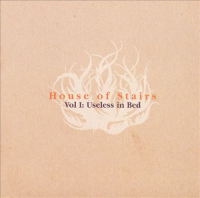
Various Artists: ‘House of Stairs Vol. 1 – Useless in Bed’

Placing yourself on faultlines, rather than easily marketable turf, brings risks but inspiration – ask a San Franciscan. That the three London art-rock bands who originally set up the House of Stairs label (The Monsoon Bassoon, Geiger Counter, and Ursa) have all now split or mutated into something else is perhaps proof of both.

Regardless, ‘Useless In Bed’ – the first House of Stairs release – is a declaration of brotherhood. Compiling the work of musicians dwelling on various faultlines (though still mostly centred on London art-rock, it also takes in music from Chicago, Atlanta and Bordeaux), it both defines the edges of prog, jazz, art-rock, hardcore, electronica, folk, improv and noise rock, or encourages people to spill across them.

 
Hard-rocking math-proggers Foe – sprung from the wreckage of Geiger Counter – offer the most urgent track. ‘Triangulator’ is full of furious refracting guitar lines over Crawford Blair’s piano-growl of bass. For six minutes it swings, chops, drops down trapdoors, executes perverse King Crimson leaps between mordantly grim chords, and savages minor keys like The 5uu’s on far too much coffee. Geiger Counter’s posthumous statement is ‘Drink Your Milk’ – less obviously wired than ‘Triangulator’, it still carves up its grunge-y math riffs with heavy enthusiasm, embracing sweeter interludes of short-lived luminous peace as it does so. Nouveau Metal is spreading…

The Monsoon Bassoon‘s own posthumous offering is a explosive and complicated song from when their mingling of Henry Cow and gamelan-Crimson art-rock ran full tilt into their love of American alt.rockers like Shudder To Think. The psychedelic squeal of guitars on ‘Stag’ marches from plateau to jagged plateau in a skirl of trippy flute and meshing riffs, held together by the band’s tight discipline.

 
These days various Bassooners have regrouped in Miss Helsinki, who deliver a sparkling piece of progressive pop called ‘I Felt Your Arms Around Me’. Less surreal than most Bassoon confections, it’s still an acid-flavoured love song whose rattling good XTC jangle and tootling clarinets don’t stop it hurtling delightedly into a complex, storm-tossed middle section in which they see just how much you can rock the train without slinging it off the rails.

 
If you’d prefer to stick with the Bassoon’s skronkier legacy, Chicago’s Sweep the Leg Johnny are still juggling that torch. With the superb ‘Only in a Rerun’, they’re obviously on a roll – it’s a rich mixture of harsh Schizoid Man tones and flamboyant jazz-metal attack from the raw husky wail of Steve Sostak’s alto sax and Chris Daly’s bloodthirsty roar of guitar, tossing Sostak’s airy vocal like a bull tossing a skinny matador. Slewing between dEUS busyness and violent post-Slint minimalism, this is a rough bareback ride to put a wicked smile on your face.

 
Manic Glaswegian pranksters Lapsus Linguae provide ‘Olestra (There’s Only One Drinking Fountain in Heaven)’. A stab of theatrical art-metal somewhere between Faith No More and Beck (with a Resident eyeballing it from the director’s chair) it has all you need to storm the castle of pomp. There’s a man called Penelope Collegefriend singing in a rampant bellow like a punk Freddie Mercury; there’s an inexplicable strings break and a rolling piano line continually chopped off with guillotine precision; there are namechecks for Hermann Hesse and Charlton Heston, and choicely bizarre lyrics like “More I eat, the hungrier I feel – / I lick menus, ignore the meals.”

 
Holding up the genteel-er proggie end are the whimsical and witty projects of the Larcombe brothers. With ‘Sand (Blowing About)’, Stars in Battledress provide a beautiful dance of fluent piano and autoharp: but beyond the divertimento prettiness, James Larcombe leads the duo through eddies of suggestive Debussyan chords.

Richard Larcombe goes on to turn in a conceptual tease on Defeat the Young‘s wonderful ‘I’m Ruining Something’ – an absurdist essay on the corruptions of power which blends Gentle Giant with Lewis Carroll and Stravinsky. Larcombe greets his ensemble of actors, trombone, and full-blown operatic chorus as a lounge-lizard lord of misrule, sighing a manifesto of playful destruction in his arch, refined tones. “I’m recognised as your one sovereign Lord Protector / Trust me – I’ve learned of your country by tape and slide projector. / Each day I’ll go out of my way to spoil, deface and tarnish, / like he who ruins carpentry by swapping glue for varnish.” Oboe, piano and hammer dulcimer float in a dreamy arrangement like an August haze. Apparently there’s a whole album’s worth of this story in the Larcombe shed – ‘The Golden Spike’ – and it’s only one of their dastardly plans.

Both of House Of Stairs’ lo-fi electronica boffins seem to grab inspiration from bargain-bucket electrical goods. Desmotabs create an appealing Stylophone fanfare buzz on ‘Gaseous Exchange at the Alveoli’, let their drum machine go nuts and assault a heart monitor, and squiggle some demented Mini-Moog solos before the entire track melts like a Dali model. Max Tundra (the Frank Zappa of the techno world) continues his marvellous and bizarre mission to fuse hardcore dance music with prog rock. ‘Life in a Lift Shaft’ equals Desmotabs buzz-for-buzz while festooning tough and hilariously uptight Tundra beats with jittery robot piano and fat sub-bass from the tar-pits. Alarm-clocks fly past on tiny wings trying to take bites out of the zany, sunny tune.

The free-er bands – as usual – have a harder time. Gnarly bass-and-drums duo Guapo can be the missing link between ‘Red’ and Ruins when they want to be. However, their grinding ‘Pharoah’ – despite Dave Smith’s excellent Brufordian snarework – is mostly as subtle as a flying breezeblock. Dragging large chunks of pyramid across the desert and insisting that you appreciate each tortuous step, they occasionally snap, shoot off the flywheel and go ape with some fearsome tattoo riffs. Hardcore acoustic fusioneers Cheval de Frise hop up and down with impatience on ‘Chiendents’, banging their heads against their own lo-fi envelope, manically coiling up tighter and tighter acoustic guitar scrabbles against the tussling drums. Compression to destruction, breaking out in wild slashes.

 
And finally there’s the hardcore department, with the recently defunct Ursa demonstrating why they’ll be a sad loss to the British heavy scene. Avoiding hardcore’s usual fixed, deafening riffage and reductive howling, ‘The Blooding’ begins with a studied ponderousness and heaviness which gives way to an inspiring controlled demolition. Galloping punked-up Iron Maiden guitar runs charge under giant toppling riffs, the band dodging falling masonry via nifty turn-on-a-dime spins while losing none of their brute power. American Heritage, likewise, execute proggie timeswitches with rapid and brutal thrash flair, their sound a bleak, bare cliff of thick guitar noise. It’s anyone’s guess as to why they’ve called their track ‘Phil Collins’ – it’s an unlikely tribute, whether it’s aimed square at the Genesis drumstool or at the white-soul crowdpleaser.

 
Anyhow… here’s a house of many doors, happily balanced on the rougher brinks and fringes and demonstrating the breadth of personalities camped out in even one small part of today’s art-rock community. Admirable.

Various Artists: ‘House of Stairs Volume 1: Useless in Bed’
House of Stairs, HOS001 (5030094077829)
CD-only compilation album
Released: 2nd December 2002
Get it from:
(2020 update) best obtained second-hand
 

August 2002 – live reviews – Prong + Needleye + Foe @ The Underworld, London, 22nd August 2002 (“pin-sharp vintage thrash, bridge-girder hardcore tunes and even a couple of sandpaper-throated singalongs”)

24 Aug

Watching from a sparsely attended moshpit, it strikes me that Foe are an uncommonly serene rock band, especially for a metalfest like this one. It’s partly the demeanour. Stage right, Jason Carty with guitar, looking like a slightly-built Viking who’s opted for books and meditation instead of battleaxe. Stage left, the looming ox-powerful figure of bassist Crawford Blair, with the blank, heavy-lidded poise of the expert craftsman at work on his five-hundredth perfect replica. Only Paul Westwood – lashing at the drums with pop-eyed concentration – seems to have read the metal-frenzy rulebook, expressing enough frantic urgency to cover for all of his bandmates’ apparent dispassion.

To be fair, it’s a dispassion that’s illusory. Foe care profoundly about what they do, sending long clean jags of rippling twelve-tone math-metal out into the air. Each Foe piece seems to have been built out of a spasming DNA helix, infallibly convulsing and tearing off in a new direction every fifteen seconds. Time signatures and pitches leap about like fleas. In half a minute alone, King Crimson, Naked City, Henry Cow and Dillinger Escape Plan appear in the music, tip a hat, and disappear again. The overall impression, though, is of the passionate serenity (that word again) and protracted seriousness of a Frank Zappa guitar solo, mapped out on graph paper and rearranged for post-punk power-metal trio. Crawford reluctantly delivers comments between songs, as if his arm’s being lightly twisted by an offstage manager. One song’s apparently called Pick On God for a Good Laugh.

Dolled up to the nines, the London metal crowd line the Underground’s upper terrace and look on. Black clothing which creaks; carefully-selected offensive t-shirts. Cleavage and translucence for the girls, studs and sculptured hair for almost everyone; black-and-white goth paint here and there. Puzzled looks almost everywhere, as Foe continue their intricate, tone-carving wranglings. All of the metal regalia, though, is outshone by a single Foe fan in a homemade melange of furry lite-pastel artificial fabrics, a choker made of luminous toys, trousers made from railwaymen’s safety vests, and (the crowning glory) a Hello Kitty rucksack. It’s as boldly twisted as any of Foe’s shape-shattering melodies. A couple of new converts scuttle into the moshpit, as the numbers click into place and joyful grins break across faces. It’s tough getting this kind of rocket science across to an audience.. but there are always more free agents to pick up.

Click. Next.

“All right, fuckers, we’re Needleye!” bawls a hefty bloke with mascara, a shoulder-length sweep of black Silkience hair and a mysteriously off-white jutting broom of Catweazle beard. Unlike Foe, Needleye have no intention of letting the music do all the talking. Four stretched-out men do their best to look roof-scrapingly tall while decked out in swarms of tattoos, PVC, scalplocks, leather and the kind of satanic Pharoah beards you suspect they’ve swiped from Slayer’s make-up cupboard. Plus there’s one wraith-thin possible-ladyboy in black-metal corset, pancake and black lippy, scowling down at a stack of technology while jabbing and tweaking it with the sadistic, nipping fingers of a bully at a girl’s school.

The boxes respond with a counter-barrage of ripping samples, clamorous plane-crash textures, and Uzi drumbeats. There’s no actual drummer. Drummers just aren’t lean and scary enough any more. There are some green “alien” lights, though. And some angular guitars that have to be played with a convulsive whole-body flick, like grain bending in the wind while in the throes of an epileptic fit.

The music? Fear Factory-style cyber-thrash, if you hadn’t guessed already. Head Needler Duncan Wilkinson vomits up phlegm-wads of incomprehensible words from his pancreas, presumably before Cannibal Corpse can go in after them with their nice new bonesaw. Two guitarists make noises like sheet-metal presses on nasty speed, while a space station goes berserk in the background. There is much lunging up and down.

The next half-hour is filled by relentless music that hogs the air like a swarm of flies. As yet another identical piece lifts off from the stage and barrel-rolls over the bouncing audience, I suddenly realise what’s been nagging me about the unvarying tempos, the constant machine-gun beat spray, the static web of guitar thunder. Those frozen and unyielding dynamics, the way nothing whatsoever changes throughout Needleye’s set… For all of the tortured rage and costume drama being acted out in the electro-terrorism onstage, this is actually about reassurance. This is ambient music for headbangers.

(At some point during Needleye’s ranting, I get introduced to a woman who makes sculptures of toilets out of chocolate. Somehow this makes sense. It’s that kind of an evening.)

After the theatrics, watching returning metal veterans Prong is almost like watching B.B. King. Actually, that’s not too far off. Underneath their muscular, knowing thrash assault is more healthy hot space than you’d expect. I keep having R’n’B flashbacks: like Aerosmith before them, Prong have a healthy sprinkling of the other black music to them. There’s swing and swagger behind their raucous noise (more than a few moments are closer to Cameo than to Metallica), which leaves some healthy breathing room in the music between their crushing riffs.

And compared to Needleye’s painstaking obsession with image, this band pay no more than basic-black, sufficiently shaggy attention to the metal uniform. With sixteen years of changes behind him, singer/guitarist Tommy Victor is the only remaining original Prong member: and with the band’s links to darker musicians like Killing Joke and Swans now consigned to the past (guitarist Monte Pittman’s most recent gig was with Madonna), they’re able to bathe a little more in mainstream American metal. If it rocks, don’t glitz it.

If there’s a little more compromise to Prong’s music than there was back in the days when they were thrash-metal spearheads, it’s a compromise made entirely with their fans and no-one else. As the atmosphere of the now-packed Underworld begins to build up to New-Year’s-Party level, Tommy makes no attempt to conceal how much he’s enjoying himself. He’s the first man I’ve ever seen deliver those crypt-rattling hardcore/death metal vocals with a broad grin (instead of gurning in agony as if undergoing brutal rectal surgery), and he revels in bringing his Cockneyfied punk singing-accent back to its hometown.

Sweeping through a long set that draws on pin-sharp vintage thrash, bridge-girder hardcore tunes and even a couple of sandpaper-throated singalongs, Prong are as comfortable as they are tight. A band with enough history, and enough of a grasp of history, to relax into the flow and enjoy their snug place in the pulse of tradition. There’s more than one route to serenity.

Prong online:
Homepage Facebook Twitter MySpace Soundcloud Bandcamp Last FM Apple Music YouTube Deezer Google Play Spotify Tidal Instagram Amazon Music

Needleye online:
Homepage MySpace Soundcloud Last FM Spotify

Foe online:
Facebook MySpace Bandcamp Last FM Amazon Music
 

September 1998 – EP reviews – Blowholy’s ‘Psalm 666’ (“a very young Trent Reznor chasing Tony Iommi down an endless cobbled alley”)

11 Sep
Blowholy: 'Psalm 666'

Blowholy: ‘Psalm 666’

For all the wild promo bluff (foaming descriptions of “’70s hell-riffing axe-gods having lo-fi nervous breakdowns whilst being sodomised by Satan’s own sampler under a layer of time-warped filth and modulated interference waves”) it’s easy to pin this one down. It was only a matter of time before someone copped on to the possibilities of fusing the rhythmical extremity of drum’n’bass junglism with the punch and theatrical flair of heavy metal. Strangely Brown (Blowholy’s one-man noise army) aims to be at the front of the queue to mate two musics more obsessed than most with extremity and big bangs.

If you can imagine a very young Trent Reznor chasing Tony Iommi down a narrow, endless cobbled alley, you’re halfway to imagining Blowholy. Knife-life guitar-riffs – pure Deep Purple and Black Sabbath, cored from their early ’70s pomp – ride on glittering junglist axles with a witchy, wiry vocal wound over the top. Electro-rattle meets bludgeon riffola – simple as that. Ministry did something similar with industrial techno at the start of the ’90s, and it’s fair to say that Blowholy owe them something. However, much of this EP springs from a distinctly British brand of humour and resentment.

Some of this is pulled from punk, some from the anarchic spirit of resistance in the free festivals, and some from the brutal rained-on sarcasm of the English cynic. Riding way back in the mix, crushed and distorted to a thin buzz, Strangely’s tones have a lip-smacking relish to them. He’s a rebellious and gleefully smart-arsed underdog, spitting out slap after slap to familiar targets, but with a engaging vigour. On the titular Psalm 666, he tears straight into consumerism (“Just buy what you’re told, / you are what you own. / Just do what you’re told and you’ll never be alone,”) and its pernicious work at frightening individuals into conformism. As with the metallic riffing, the song’s righteous punk disdain is tinged with Sabbath-style heavy-metal demonics (“Strip away the inane and just one voice remains. / It’s so subliminal, the devil’s own marching call: / ‘Come on, come on, come on, come on now, / fit in, fit in, fit in with the crowd’…”).

While Do As You’re Done By initially sounds more like personal revenge (“God, it gets me high to see the realisation dawn. / At last you’re facing someone you should really not have scorned!”) it’s more of a general roasting of the brainwashed – “I’ve had you here a year but you just never seem to learn. / So now it’s time to find out just what makes your flywheel turn. / If I open up your head I’ll see your tiny poisoned mind / I’m not expecting much, but I will see what I can find.” Beneath the occasional dungeon lyrics, it isn’t schoolboy sadism that drives Strangely: it’s ire at the smug, or the sheeplike, or the pretentious. ‘Dig Your Own’ (which mixes in some Mike Patton-style brat-rapping and a fistful of psychotically wiggling sax samples from Naked City) rips enthusiastic holes in some swell’s ballooning ego. “Claiming to bring the ultimate coup, / only to say what we already knew. / You’re going on so fast that you bring your own disaster. / En route from god to bastard, / so big; could not be vaster. / You’re going on so fast that it could never, ever last you…”

Scene & Herd charges back to the big unison Black Sabbath riffs, taking a sniff at speed-garage while it’s there. The dance elements are better integrated, wrapped in a grinning, glistening embrace with the guitars. This time, Strangely takes his knife to bandwagon-jumpers whose opportunism outstrips their knowledge or sincerity. “In all you do, it’s only you that you want to please… / There is no credence to the so-called words of wisdom that you sell. / But who can tell?” With great pleasure, he pronounces sentence: “It’s your fate to emulate / the world you think you have escaped / but merely aped.”

All well and good, but once the trick of drum’n’bass/metal fusion has become familiar, you do start hankering after some new tricks. Luckily, there’s Iconoplastic (Tzawai), in which Blowholy take a step on from the initial hybrid and produce something much more interesting. The power-riffing electric guitars are gone this time (occasionally replaced by scrabbles across a dislocated acoustic) and the stripes of waiting vacuum and rushing, balefully-textured noise stretched across the shuddering beat are more along the unrelenting sampledelic lines of Moonshake, Muslimgauze or The Young Gods than anything that finds its natural home in ‘Kerrang!’. The ominous Arabic samples (courtesy of Chalf Hassan) merge with the lo-fi percussive impulse, a jihad strike-force speeding across the sands. Meanwhile, the sardonic word-dancing has reached new levels of acidity. “Here we go again, with your self-important jive / about how you made a difference filling empty lives… / Well, it’s such a bed of roses with your collection of pet psychoses. / So tormented, like you meant it. / Oh, such a sensitive man!”

Blowholy are halfway there – they’re on the right track, but if they’re to become as musically interesting as the Naked City and Mr Bungle tracks they sample, they need the courage to consistently extend their own envelope. In other words, more Iconoplastics. But at least the drum’n’bass/metal crossover floodgates have been thrown open. That shaggy, long-in-the tooth rock monster has grown itself a new skeleton and is about to road-test it.

Blowholy: ‘Psalm 666’
Ketamine Leper Music, KETCDS 01 (no barcode)
CD-only EP
Released: 1998

Buy it from:
Best looked for second-hand, although CD versions will be extremely rare. Some tracks can be downloaded from Soundcloud as part of the ‘Church Bizarre’ album.

Blowholy online:
Homepage Facebook Soundcloud

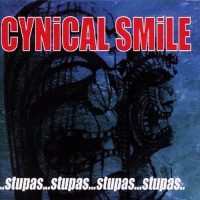
December 1997 – album reviews – Cynical Smile’s ‘Stupas’ (“it’s what’s firing off underneath the distortion that counts”)

1 Dec
Cynical Smile: 'Stupas'

Cynical Smile: ‘Stupas’

It often occurs to me, while watching a punk band play or having my ears pinned back by the roar of a punk record, how much drive is vibrating within such narrow confines. Such motivation compressed into such a rigid structure, number balls clattering in violent frustration in the rigged rock lottery machine. How there’s so much rebellion and desire for expression nailing itself down to fast 4/4, power chords and punishing speed when it should be expanding outwards.

Hearing Cynical Smile‘s debut album brings this idea back to me again. Southend punks they may be, but rattling around in “Stupas” are the seeds of something far more interesting than another moshing four-piece crammed into a Transit van. They’re usually compared to Rage Against the Machine, which is about equal parts helpful and bollocks. All right, they’re multi-racial (singer Ed is black, the other three white) and they have a similar luxurious, lunging approach to their in-your-face riffing. But though Matt Shears’ bullscraper guitar does test the edges of the envelope, there’s little in it to suggest the punk-Belew experiments of Tom Morello, and Ed’s spitting vocal is less brattish and polemical than that of Zack de la Rocha. Cynical Smile have less texture than Rage Against the Machine; their big advantage, though, is that they’re a lot less irritating. Both bands have a broader reach than most of their contemporaries: but Cynical Smile’s is, crucially, born of instinct rather than craft. It’s what’s firing off underneath the distortion that counts.

https://youtu.be/_LCqJABbYMI

This Cynical Smile isn’t a smirk: it’s a snarl, “the grin on a shotgun.” The thrumming didge-drone on The Circle builds up into a roar – “You got to make a stand as they try to control ya… / I get ripped off again… / Let the ritual begin” – and they stalk out of the garage to test themselves against a harsh, booby-trapped world; whether it’s illustrated in Stitch’s aggressive con-man swagger, the way When Friends Become Enemies waltzes around Ed’s paranoid suspicions (“Enemies will get straight to you / when friends become enemies. / Your hopes won’t bring them back… / and if you die they’ll kill you again”), or how Killing Bugs growls “why am I trying to make sense out of things you don’t believe? / Don’t even think of wanting me to go – ‘cos I was leaving. / …I know you and see through you: your ignorance is my shield.”

https://youtu.be/l6z691xuRwM

This time though, fighting the fight leads the band out onto further musical limbs. Gunga Din’s basic bolshiness sounds like a junior Bad Brains (“move! move aside!”), and the eye- rolling power-riffing and punk-funk bass pops of Scum throb and crash like Living Colour’s hardcore experiments on the neglected ‘Stain’. Live 4 mixes hip hop (in the voice and rhythms) with Nirvana squalls, making the most of Matt Russell’s growling Billy Gould bass boings, Dan’s swat-splash of drumming and Shears’ sneaky bit of jazzed-up guitar. Even Feeling Retarded (with Tony Maddocks’ sea-monster backing vocals upping the hardcore) switches rapidly through a series of quick-change modes.

https://youtu.be/c2-kqc-7US0

At the peak of Cynical Smile’s battling, their music is at its most balefully triumphant. On Methadone, Ed frothes and sneers against junkie delusions, as the riff yells like an alarm – “you justify; you wanna lie. / You justify to die. / “No, these things will not change me” – you feel it take control” – and finally, witheringly, he sketches a junkie death in broad slashes. “I can’t feel my body, I can’t choose my eyes, I don’t hear them screaming, my brain starts to die. / Left on the block of pain, someone else to take the blame. / You think you’re all different / but you’re fucking well the same.” Shear’s bizarre solo kicks the song into a Van der Graff Generator-shaped finale: a melange of voices, sounds and murmurs swarm around the life support bleeps that inevitably stretch out into the long continous goodbye tone.

https://youtu.be/wzLM2DHSGKw

With a whine of lonely data, Limbo follows Cynical Smile’s battling logic to a philosophical extreme, locking Ed into an existential battle. “I try to touch, I try to grasp, / …feels like nothing there, a vacuum of air. / …Book me in young, before you kill me: / tear out my soul before you leave me, / make sure I don’t get up when you knock me down – / build yourself a condo in limbo…” The guitar drops out, letting the hushed bass and drums etch a bleak picture on their own.

https://youtu.be/flZBkbiUSO4

But they finish with a battered victory. Give Up the Ghost struggles valiantly against the draining of life from fighting bodies, as Shears’ guitar rings out like Keith Levene’s: “They called… / No, the time is not today! / I know it’s killing me…” Though ‘Stupas’ will probably be just the ticket for those in love with the sweat and flail of the moshpit, it drops hints of something greater.

Cynical Smile: ‘Stupas’
Org Records, ORGAN 035CD
CD-only album
Released:
1st December 1997
Get it from: (2022 update) Last.fm, Tidal, Spotify, Amazon Music – CD best obtained second-hand.
Cynical Smile online:
Homepage, Last.fm, Spotify
Additional notes: (2020 update) This was Cynical Smile’s only full album.

September 1995 – live reviews – Organ Night: Lake of Puppies + The Monsoon Bassoon + Fear of Fear @ The Monarch, Chalk Farm, London, 19th September (“music to spin the brain like a top”)

24 Sep

Just across the road, the great decaying wheel of the Roundhouse is housing Cirque Surreal and Wakeman with Wakeman. Over here, in the less salubrious surroundings of the Monarch, a collection of various punks, proggies and other wonderful low-lifers (including myself) are cramped together to check out some rather lower-profile musicians. Somehow, I think we’ve got the better deal.

This is ‘Organ’ Night, so we’re guaranteed a rich feast of music from all directions, as exemplified by opening act Fear of Fear, whose Metallica-meets-PJ-Harvey take on the punk/funk thing is tight and excellent. But judging by the overwhelming number of Alphabet Business Concern T-shirts filling the room, plus Bic Hayes hanging around near the bar, it’s a pretty safe bet that tonight is going to have a strong Cardiacs flavour. And yes, those unjustifiably obscure prog/punk/music-hall eccentrics do have a lot to answer for as regards the shape of this evening. Some of the seeds they’ve sown during their lunatic nine-album career are springing up with a vengeance in this little Camden pub.

The Monsoon Bassoon are a real brain-skewing treat, and a demanding one. Their music has those Cardiacs components of mind-boggling tempo changes, raucous crashing melodies and cheerful gibberish in Cockney/Estuarine English (although they’re originally from Plymouth, so my ear must be out of tune). The War Between Banality and Interest is a fine example, a Cardiacs-type tossed rhythmic salad so perkily crazed that it makes ‘Larks’-period King Crimson sound like James Last. Aside from Cardiacs and King Crimson, The Monsoon Bassoon show an affinity with the wilder American side of things: the “anything goes” spirit of Captain Beefheart and (to pick a more recent example) Mercury Rev. The double voice-and-guitar team of Kavus and Dan, Sarah’s voice, flute and clarinet, and the rhythm section of Laurie and Jim offer us song titles to die for and music to spin the brain like a top.

How is it that they can play songs so insanely complex yet so insanely catchy? Five hundred hooks and time changes in each four-minute burst, it seems. And how can they play it with such unflappable cheerfulness, Kavus in particular finding the time for some Who-style scissor jumps? Forget it… just stand back and have your mind tickled… Oh, comparisons? well, if I must…

Some simplified examples: Bullfight in a China Shop is a stretchy boogie in 5/4 with Mercury Rev flute, Leyline PLA is like a crunchy thrashy Schizoid Man played by an unholy alliance of The Buzzcocks and Ian Anderson with the odd lick of harmonised Queen guitar. Bright Lucifer goes from a cataclysmic snare-roll opening to Cardiacs-meets-‘Thrak’ mayhem, while Aladdin mates Frame by Frame with Living in the Past. Tokmeh has elements of that wandering Frippy gamelan sound of the ’80s, but ends up as the sound of five instruments dancing separate dances to a common end – a freaky fugue. And that’s where The Monsoon Bassoon are at. A pure, wild, Dionysiac musicality with a roguish five-fold intelligence kicking it into gear: hung up on no scene, naturally sparking and kinking. Let them into your life and watch your world take on brighter, loopier colours.

Headlines Lake of Puppies have a more direct link to Cardiacs – they’re led by William D. Drake, who was formerly Cardiacs’ keyboard player, And yes, it does show – although the anarchic musical mayhem which is one of the central Cardiacs characteristics is absent here, Drake’s new band share that specifically English eccentricity. In fact, they take it down a few notches and on a few steps. If Cardiacs’ Tim Smith is the intense, slightly scary motormouth maniac on the rural bus, Bill is his refined elder cousin who restricts his own lunacy to deranged sessions on the tennis court. Lake of Puppies are like Cardiacs exhuming the ghost of Noel Coward for tea on the lawn: all summery waltzes, genteel harmonies from Bill and from singing bassist Sharron, easy-going nylon-string guitar (from Craig) and the cosy burr of baritone sax and clarinet. Kevin Ayers could get a mention on the influences list, as could the Kate Bush of Coffee Homeground.

All of this is not as harmlessly cuddly as it sounds. Although the lyrics are difficult to make out amidst the weaving melodies, I get the impression that Lake of Puppies are singing about trickier subjects than crustless sandwiches. There’s the occasional burst of noise when Bill abandons his piano for fuzzy organ and the band launch into gutsy cyclonic roaring, and the music is just too complex and cerebral to be entirely cosy. But in the prog environment of today – where bands tend to be either sickly, prissy and pompous or thrashily confrontational and noisy – Lake of Puppies stick out as a sunnily listenable and enjoyable alternative. And I wouldn’t be surprised if all of that gentility was a Trojan horse for something gloriously warped… definitely one to check out again.

Keep it up, ‘Organ’!

Lake of Puppies online:
Homepage Facebook Last FM

The Monsoon Bassoon online:
MySpace Soundcloud Last FM YouTube Spotify Amazon Music

Fear of Fear online:
(no online presence)

Additional notes: (2020 update) Lake of Puppies didn’t last very long, with various bandmembers going on to The Shrubbies, North Sea Radio Orchestra and Quickspace while William D. Drake eventually started a solo career. There have been a couple of Lake of Puppies concert reunions over the years, with the latest one being at 2018’s ‘Spring Symposium‘. The Monsoon Bassoon lasted until 2001, with Kavus Torabi moving on to a multitude of projects including Knifeworld, Guapo, Cardiacs, Gong, The Utopia Strong and a solo career, while Laurie Osborne moved into dubstep with Appleblim. Daniel Chudley Le Corre also has an intermittent solo career. Several former Monsoon Bassoon members occasionally reunite in sea-shanty band Admirals Hard. I have no idea what happened to Fear of Fear.
 

SWOONAGE

Swoon. /swo͞on/ A verb. To be emotionally affected by someone or something that one admires; become ecstatic. Here are some people and things that make me swoon. #swoon #swoonage

Post-Punk Monk

Searching for divinity in records from '78-'85 or so…

theartyassassin

...wandering through music...

Get In Her Ears

Promoting and Supporting Women in Music

Die or D.I.Y.?

...wandering through music...

Music Aficionado

Quality articles about the golden age of music

THE ACTIVE LISTENER

...wandering through music...

Planet Hugill

...wandering through music...

Listening to Ladies

...wandering through music...

ATTN:Magazine

Not from concentrate.

Xposed Club

improvised/experimental/music

The Quietus

...wandering through music...

I Quite Like Gigs

Music Reviews, music thoughts and musical wonderings

furia log

...wandering through music...

The Recoup

SINCE 2013: Books and books and books and books and occasionally other things

A jumped-up pantry boy

To say the least, oh truly disappointed

PROOF POSITIVE

A new semi-regular gig in London

Gapplegate Classical-Modern Music Review

...wandering through music...

When The Horn Blows

...wandering through music...

:::::::::::: Ekho :::::::::::: Women in Sonic Art

Celebrating the Work of Women within Sonic Art: an expanding archive promoting equality in the sonic field

Ned Raggett Ponders It All

Just another WordPress.com weblog

FLIPSIDE REVIEWS

...wandering through music...

Headphone Commute

honest words on honest music

The One-Liner Miner

...wandering through music...

Yeah I Know It Sucks

an absurdist review blog

Obat Kanker Payudara Ginseng RH 2

...wandering through music...

poplifer.wordpress.com/

Waiting for the gift of sound and vision

Good Music Speaks

A music blog written by Rich Brown

Do The Math

...wandering through music...

Archived Music Press

Scans from the Melody Maker and N.M.E. circa 1987-1996

The World's Worst Records

...wandering through music...

Soundscapes

...wandering through music...

OLD SCHOOL RECORD REVIEW

Where You Are Always Wrong

FRIDAY NIGHT BOYS

...wandering through music...

Fragile or Possibly Extinct

Life Outside the Womb

a closer listen

a home for instrumental and experimental music

Bird is the Worm

New Jazz: We Search. We Recommend. You Listen.

...wandering through music...

Life Just Bounces

...wandering through music...

Lucid Culture

JAZZ, CLASSICAL MUSIC AND THE ARTS IN NEW YORK CITY

Aquarium Drunkard

...wandering through music...

eyesplinters

Just another WordPress.com site

NewFrontEars

...wandering through music...

FormerConformer

Striving for Difference