Archive | experimental/avant-garde rock RSS feed for this section

December 1998 – album reviews – Porcupine Tree’s ‘Metanoia’ (“the possibilities which the band’s music has while it’s still at the point of wide-eyed, newborn naivety”)

27 Dec

Porcupine Tree: 'Metanoia'

Porcupine Tree: ‘Metanoia’

As Porcupine Tree straighten out their more obviously exploratory aspects and firm up into a more solid rock configuration, Steven Wilson seems concerned to show us that although his psychedelic prog band is solidifying, it’s not becoming rigid. After last year’s live album ‘Coma Divine‘, here’s ‘Metanoia’: a collector’s set of band improvisations from the rehearsal studio during the making of ‘Signify’.

Obviously intended to illustrate the possibilities which the band’s music has while it’s still at the point of wide-eyed, newborn naivety, it’s also a window into the band’s uncensored enjoyment of music-making. At the beginning of Mesmer III you can hear drummer Chris Maitland enthusing like a schoolboy – “Brilliant, Richard… That’s really evil!” – while Richard Barbieri unwraps a particularly ominous electronic texture from his mysterious lash-up of analogue synths. Compared to the carefully-honed concert expansions of ‘Coma Divine’ (allowing the band to play out loud without ever getting too self-indulgent), ‘Metanoia’ takes Porcupine Tree’s live freedom off in a different direction, where the only limitations (or necessary brakes) are the musicians’ awareness of those specific moments in time.

Mesmer II is the most confident (and consequently least yielding) of the improvs. It begins as a Frippish guitar fanfare over Prince-style boom-bat drums; it gradually psyches itself up into more familar Porcupine Tree planetarium music, with orrery twinkles and rolls from Barbieri. But it’s an exploration in which the influences seem to have blended naturally into the moment – a good sign.


Of most obvious interest to regular Porcupine Tree followers will be the Metanoia I/Intermediate Jesus medley, featuring a first draft of the Intermediate Jesus instrumental from ‘Signify’. This version emerges out of a typical raw Porkies atmospheric. Dreamy, swampy psych-rock fragments flicker in and out of a quiet power-station ambience: Colin Edwin‘s small, arching bass hook becomes the keel over which Wilson decorates the distance with echo-guitar details. The music eventually settles down into a dark-tinged, broody, space-psych flavour with a backwash of drowsy sonic fabric: reminiscent of the beautiful golden haze which U2’s Eno-assisted ‘Unforgettable Fire’ revelled in, in between the rock hits. At this point, still uncertain of itself, the music of Porcupine Tree has an uncontrived innocence to it; something that’s rare anywhere in the current prog canon, let alone in their own history.


Mesmer I builds from minimal, grudging soundscapes of cymbal tones, electrosculpture and flanged guitar effects. Eventually, it’s been shaped into a disjointed groove (a gawkier, rockier take on ‘In A Silent Way’, maybe) up to the point where it’s hit U2 funk and a dance-groove recalling Porcupine Tree’s own ‘Voyage 34’. Here, Barbieri’s inventiveness plays foil to the brasher edge of Wilson’s stadium-rock guitar flourishes, brushing in and out of the mix with scratchily tender gusts of electronics like the wet coronas around streetlights. Metanoia II, like its predecessor, is anchored by a little Edwin bass hook around which Maitland lays haphazardly tremorous drumming, Wilson a fragmentary glissando, and Barbieri abuses his wibbling VCS3 in full On the Run tradition. This piece will subsequently (a) blossom lyrically and (b) accelerate into a kind of soft-edged speed-metal, with the same sort of instinctive flow as Porcupine Tree’s own ‘Moonloop’.


It’s Mesmer III/Coma Divine, though, that allows Porcupine Tree to insinuate themselves into the improvising tradition. “Do something completely different” suggests a restless Wilson. Time out for meditation – and already Steven is bored… Someone fiddles with a shortwave radio but, ending up with dull afternoon cut-ups, abandons it. Behind tiny touches from a dormant rhythm section, the band start to induce shifting planes of sound. A Barbieri noise (an orchestra haunting a train tunnel) ebbing in and out; hardly there, like kettle steam. A suspicion of an introverted ’70s jazz-rock, melted down in ’90s solvent, draining out in a Barbieri wing-flutter. A section which has the lonely looping meander of Bark Psychosis‘ Bloodrush. At last, a return to a very soft take on the band’s psych-rock drift, Wilson’s guitar trailing over rocking-chair drum and bass, transparent synth swathing a shroud of narcosis around it. A band usually lumped in with Marillion and Gong has just paid visits to the post-rock haunts of Tortoise, Labradford and beyond, without contrivance, drawing up natural sound from the source. When they finish, it’s like the shift in reality at the end of a sleepwalk.


As an afterthought, there’s Milan – Porcupine Tree out of the studio and captured in conversation during one of those bleached, interminable spare moments on tour. They’re uncomfortable, travel-blurred, in unfamiliar suits and ineptly trying to organise their Italian meal. In the “gastronomic capital of the world… known for its joi-de-vivre,” they’re ill-at-ease, messed around, trying to cope, teasing each other. “I just feel stupid,” is the final aggrieved statement of the album – a moment of Spinal Tap bathos to counter the explorations elsewhere. Displaced from normal patterns, they’re forced to improvise again, in the way we all have to. They’re surviving.

Porcupine Tree: ‘Metanoia’
Delerium Records/Chromatic Records, CHRM 003 (no barcode)
10-inch vinyl-only double album
Released:
December 1998
Get it from: (2020 update) Original vinyl version best obtained second-hand; album was later reissued on CD.
Porcupine Tree online:
Homepage Facebook Twitter MySpace Soundcloud Bandcamp Last FM Apple Music YouTube Vimeo Deezer Google Play Pandora Spotify Tidal Instagram Amazon Music
 

November 1998 – album reviews – Cloud Chamber’s ‘Dark Matter’ (“unsettling beauty with an element of wild and joyous fear”)

20 Nov
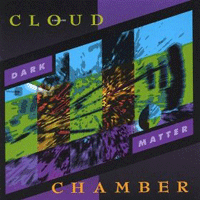
Cloud Chamber: 'Dark Matter'

Cloud Chamber: ‘Dark Matter’

A cloud chamber is a device for measuring the existence of the intangible. Physicists use them – mapping out the paths that subatomic particles trace through a vapour, studying nuclear reactions and inferring the presence of other particles. There’s something about that last bit I particularly like: inferring the existence of something. Something you can only detect, or believe in, by seeing how it affects something else.

Cloud Chamber (with the capitals) is an improvising group allowing the convergence of several other exotic particles – these being guitarist Barry Cleveland, space-age bass guitarist Michael Manring, cellist Dan Reiter, percussionist Joe Venegoni and Michael Masley, who coaxes sounds out of a more esoteric set of instruments (panpipes, gobek, gobeon and the cymbalom dulcimer). Having come together as part of the Lodge improv evenings in Oakland, California following stints with employers as diverse as Michael Hedges, the Oakland Symphony Orchestra, Ry Cooder and Garbage (plus exploits in journalism and dance theater), Cloud Chamber’s collective past suggests that what they’re likely to condense together will be suckling blissfully on an inspiration of mind and music, devoid of barriers.

More accurately, outside of barriers. When listening to improvised music you’re all too often shoved back on your arse by the force of several musicians protesting their individuality as forcefully as possible, and playing off each other with all the subtlety of dodgem cars. Cloud Chamber, on the other hand, have nothing to do with ego. The fivesome’s music emerges like the interplay of ocean currents; a process of continual organic movement to which the musicians respond as if they’re no more than implements of a guiding force.

And that’s how it needs to be – the compound music that Cloud Chamber produce is as precarious and demanding as improv demands, but to release the life in that music it’s necessary for the musicians to let it play through them. Manring (a driving and devastatingly gifted bassist, as his solo records and work with Sadhappy testifies) keeps any hero-glitter under a bushel of humility here. He takes a step back, becoming just one of many element in the condensate: no more dominant then Reiter’s troubled, graceful cello or Venegoni’s poised rattlebag. Cleveland lurks in the background with his chameleonic guitar (playing a skeletal pattern of notes, a swarm of bees, a steel-shack sound, or an unknown language). Masley strokes and strikes gorgeously glassy shard-notes out of his cymbalom with his bowhammers and thumb-picks.

Patterns and presences take shape out of nothingness, drift around on the edge of perception, then suddenly and deeply solidify, impressing themselves on you as if they’ve been there for years. Half-familiar fragments of music (bits of Eastern European string quartet, Chinese and Asian music, a riff from King Crimson’s The Talking Drum) reveal themselves with an enigmatic smile while they’re well on the way to becoming something new.

This is also very beautiful music: though it’s a strung-out, unsettling beauty with an element of wild, joyous fear. The exquisite Blue Mass manifests itself like light twisting through a stained-glass prism, anchored on Reiter’s perplexing, precariously emotional cello calls above which the group fashion a soft, high night-sky of singing steel sounds. Radiant Curves is all looping contrails.

On Solar Nexus, singing bass guitar and cello interweave as Masley plucks and bows his cymbalom overhead: Cleveland’s guitar flies in out of left-field over popping, sliding, shadowy bass shapes, and everything ends in glittering, mirror-surfaced screams. As a listener, you become increasingly spooked and enchanted at the presences these sounds suggest. It feels like being stalked by the Easter Island statues in a swirling fog; or like hearing the sudden ring of an unknown voice in the haunted wind that cuts through high-tension wires overhead.

This disquietude doesn’t come from conflict. These musicians don’t battle each other. The thoughtful interview they provide in the booklet, and the watchful grace they exhibit in their interaction, amply proves the opposite. But something in the music that comes out of their alliance seems to suggest a rapt, fearful awe at the size and diversity of the cosmos; and that’s not just in the astronomer’s titles which the pieces sport.

Some music changes the way you see the world, and this is a full hour’s helping. Not so much a Big Music as a small music, something retreating into the details and filaments of unconfirmed suspicions. This could be in the rhythmic imperative of the baleful four-note Pink Floyd-ian riff in The Call, worried at by the rat-scurrying strings, space-gypsy fiddling and Manring’s anxious Jaco-in-retreat fingerwork. Or it could be in the cat’s-cradle of scrapes and rockets on cello, mingling with cymbalom mantras, on Full of Stars. Here, a tangle of miscellaneous alien squawks is surrounded by collapsing glassy percussion, fractured-tree bass noises and Cleveland’s guitar-talk, finally washing up on the shores of Chinese classical music.

The most obvious Cloud Chamber ever get is on the sketchy world-funk of Dithyramb. This is like an exploded version of the fake ethnography crafted by Byrne and Eno on ‘My Life in the Bush of Ghosts’, or by Rain Tree Crow, and passes into a high, stretched-out passage of cello and bass sustain. Travelling alongside, Cleveland’s mounting guitar journeys from sketching out cirrus cloud to lovely Vini Reilly-esque pointwork. But this is a rare moment of innocence and cheer. Much more characteristic is the air-on-a-G-string improv that bedrocks Ursa Minor, setting up tensions between pluck and sustain, between the percussive cello and phased, rapping bass; between the ominous restlessness of free open passages and the querulous, demanding blue notes of the cello solo.

The final (and untitled) experiment leaves no tone resolved – winding cello, seagull distortions and an irregular, antsy wash of noise. You’re left feeling that Cloud Chamber have dismantled the scenery between us and the infinite, leaving us losing track of time, of solidity. Falling through the world. Suddenly turning around to find the whole colossal starry wonder of the universe at your back, and thrilling with a terrible flinch of delight.
Somehow Cloud Chamber are picking up on something that most of us miss: revealing something unseen by reacting to it. Hearing ‘Dark Matter’, you feel as if you’ve been allowed to watch the ambiguous wonder of something changing, and changing decisively – a presence inferred – and that you’ve been allowed to be part of it.

Science, or magic? Doesn’t matter. Live within it.

Cloud Chamber: ‘Dark Matter’
Supersaturated Records, SUPERSATURATED 001
CD/download album
Released: 11th November 1998

Get it from:
CD Baby or iTunes.

Cloud Chamber (Barry Cleveland) online:
Homepage Facebook Twitter MySpace

October 1998 – EP reviews – Dark Star’s ‘Graceadelica’ (“a fistful of brilliant flares criss-crossed with human fragility”)

28 Oct

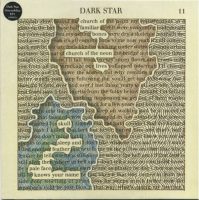
Dark Star: 'Graceadelica' EP

Dark Star: ‘Graceadelica’ EP

Hallelujah. David Francolini, Laurence O’Keefe and Christian “Bic” Hayes – refugees from the indie/prog/psych collision of Levitation – have quietly regrouped as Dark Star. Listening to their superb debut EP somehow makes the whole painful Levitation saga (all those spats, frustrations and blown hopes) worthwhile. But while Levitation ran, jumped, shook rooms, dazzled, and finally shattered, Dark Star – a power’n’glory trio that’ll rip off your head and return it to you all lit up and twice the size – take every bit of that energy, aim it, and channel it on course.

So what would happen if someone took British underground psych-rock as a foundation, then scanned the heights of British ’90s indie for what it had to offer? If they took Primal Scream’s panoramic hallucinatory peak, the funky drummer grace of The Stone Roses on ‘Fool’s Gold’, Radiohead’s lacerating skill and intensity, Spiritualized‘s on-off blinks of revelation, the waves of transporting guitar frenzy The Verve dealt in when Ashcroft cut out the rock-god schtick, and then fused it all together? And – unbelievably – got it right? They’d get this.

‘Graceadelica’ itself storms right out at you full-tilt, laced with detail, power and adrenalin quakes. Bic’s ghostly guitars are everywhere – chittering in the midground, weaving sensuous smoky patterns and Cocteaus star-clusters beyond, sketching spare cascading melodies upfront, then suddenly exploding into your ear in a storm of shocked echo over Francolini’s immaculate power-funk drumming. And it’s about memory barbed and refracted by mystery: someone stalking the city with a incredible secret to recover. “I must have hit the floor, / some dark uncertain hours before /…Those half familiar streets / were swimming underneath my cobwebbed feet. / My aching bones were dry, / a skeleton beneath the lead-grey sky. / Yeah, it’s all coming back to me now… maybe too late.” Pounding the pavement, finding a pathway to the key. “Feels like I’m walking over water, / subhuman urban messiah. / Slow-bound for church of the neon, / my resurrection’s in a glass on the bar…”


The title track carries off the prize for grace and scope, but the whole EP is a fistful of brilliant flares criss-crossed with human fragility. The heavy-metal bullet of ‘Crow Song’ – like PJ Harvey fucking Ted Hughes on Metallica’s drum riser – is haunted, a hapless killer’s nightmare. O’Keefe’s supple, astonishing basswork oozes power, but the song itself is flinching from guilt (“Hope you don’t mind, but if I let you in – no-one must know, no-one must know”) and the unfolding of terrible rituals: “You see, he speaks to me in sleep: and I don’t like what he says. And when I wake I find another feather, just next to me on the pillow…”

On ‘New Model Worker’, Bic’s voice is both tannoy-sneer and humble plea, the guitars a cataclysmic swing between grinding industrial filth and tiny, tender, praying filaments. “Season’s cycle’s turning overtime, and I’m a new model worker with too much on the mind. / There’s nothing to decide, there’s nowhere here to hide. / And just to breath in; the future becomes what’s left behind.” ‘Solitude Song’, hovering over a huge depressive plunge, refuses to deny anything – “There’s nothing wrong with you / (“I’m sorry, Doctor”) / You’re acting like a fool (“Well, someone’s got to…”) “. Instead, it’s braved out, and they jerk your tears out while they howl for strength “until the cloud’s gone, and we’re through… / Laugh when it’s over.”

Dark Star have only just started, and already they’re way better than Levitation ever were. Unless they blow out that revealing light again. Like Levitation, Dark Star are possessed of such power that they could as easily shake the world or tear the muscles off their own bones. Top marks for effort and promise, lads, but don’t let the frenzy buck you off this time. ‘Gracedelica’, at least, is an object lesson in how to ride the bastard over the horizon and back.

Dark Star: ‘Gracedelica’
EMI Records Ltd/Harvest Records, CDEM523/10EM523 (724388615822)
CD/vinyl EP
Released: 26th October 1998
Get it from:
(2020 update – best obtained second-hand)
Dark Star online:
Facebook MySpace Last FM Apple Music YouTube Deezer Spotify Amazon Music
 

October 1998 – album reviews – Michael Manring’s ‘The Book of Flame’ (“to get on the good foot while booting great clusters of noise about with the other”)

15 Oct

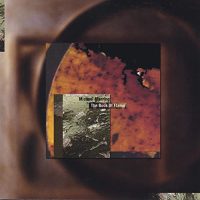
Michael Manring: 'The Book of Flame'

Michael Manring: ‘The Book of Flame’

If you’re already at the top of the tree, technique-wise – as Michael Manring is – you risk losing yourself in the skill, reheating old ideas with the energy you should be using to take yourself somewhere new. Thankfully, Manring’s smarter than that.

The meticulous, mellifluous bass guitarist who flowed his way through graceful jazz/New Age composites a decade ago has evolved into a much broader musician. His central playing style (a clean blend of Jaco Pastorius’ near-vocal virtuosity and the late Michael Hedges’ percussive contrapuntal bounce) remains intact, as do his harmonically dense tapping skills and fondness for stretching things out with the EBow sustainer. But having evolved a wider arsenal of bass noises – giant distorted trunks of feedback, fretboard noise, infinite-sustain drones, occasional On-U-Sound-a-like dub effects – he’s put them to compositional use, pushing out the envelope that way.

‘The Book of Flame’ continues the process begun on 1994’s ‘Thonk’: despite its good points, essentially a reaction record jumping vigorously into noisy heavy-metal fusion to ensure Manring wasn’t tagged with the “dextrous-wimp” label. Subsequent band work – dystopian prog-funk with Sadhappy, jazz-metal with Attention Deficit, more spacious experimental improv with Cloud Chamber – has seen Manring developing the side of his playing that looks towards “why” rather than “how”.

Though ‘The Book of Flame’ uses familiar colleagues (Michael Masley; Tim Alexander; Oregon reedsman Paul McCandless) as well as a few unfamiliar ones, it’s emphatically a solo album, with two-thirds of the tracks exclusively Manring-performed. And it’s his timeliest album to date, the one best attuned to its contemporary contexts. Although he hasn’t abandoned playing for computers and pure beat-science, Manring has discovered samplers, dance methodology and loop-culture with a vengeance, and battened onto them ravenously.


Having said that, there are enough real-time bass solos to satisfy technique-junkies: as usual with Manring, extending the instrument’s parameters. The Fire Sermon – executed on Manring’s ten-string bass, each string individually tuned – sounds like a squad of Terminators tap-dancing down a Busby Berkeley stairway, red eyes twinkling, chromium top hats waggling aloft. La Sagrada Familia hangs slippery fretless shapes in tuneful, trapeze-act harmonics patterns; and blurs from sustained notes to clusters of aggressive tapping (similar to Red Right Returning from 1992’s ‘Drastic Measures’). And there’s an echo of Stanley Clarke’s pluck’n’pop on No Wontons for Elvis, mingling athletic bluesiness with impossible tangles of contrapuntal squeaks.

Best of all is The Book of Living and Dying, a beautiful memorial and tribute to the late Hedges in the shape of a mournful lilting tune which shoots off to Hedges’ aspirant, meteor-popping celestial heights but then pulls itself back with a lump in its throat. But these are pretty much a sideline to the real business of ‘The Book of Flame’, which is to get on the good foot while booting great clusters of noise about with the other.


While there’s a lot of sonic experimentation on hand, this is also Manring’s most danceable record yet, with a set of busy tunes that shake their booties over cheeky, compressed, Prince-flavoured funk grooves with that tight, offhanded boom-blat rhythm. Adult Content/Brief Nudity has that, when it’s not breaking step into narcotic stumble-shuffling trip-hop ambience. Manring’s gang of basses converse with each other and McCandless’s bass clarinet, which explores and comments like Johnny Hodges taking the air in Paisley Park. Theseus in the Rains never entirely loses its hand-clappy purple groove-chat, even when Manring brings in skirling EBowed whines, percussive string bangs like abused filing-cabinets, and an assemblage of scrapes, pops and whines like an ailing flying saucer.


The approach goes furthest on Your Ad Here, which sets out like Adhan from ‘Thonk’ (high and low EBow drones like pipes and ney-flutes), but soon develops the legs of a tinny hip-hop beat. Manring exchanges singing Prince-y riffettes (descending from high plucked bass) and sharp, contrasting beat-science breakdowns – earthquake-wobbles, psychedelic space-echoes, drum shadows and computer noise. Closer to Tackhead than to Stu Hamm, anyhow, and with a similar dystopian flavour to its irresistible dance impulses.


‘The Book of Flame’ also sees Manring’s compositional and arranging diversity at its peak. Most misleading track award goes to The Adamski Photographs, both straight and twisted. Dave Tweedie’s violent heavy-Cobham drumming and the belligerent Allan Holdsworth-ish choruses could’ve tied it down to mainstream fusion, but Manring’s bass attacks (sputtering, clattering, playing a solo like someone molding tarmac) and the jarring groove (centred on Barry Gurley’s lurching, Thelonious Monk piano) ensure otherwise. In contrast, Ephemeris is a clean, almost inhumanly perfect two-minute phase of cyclical process music. A duo of basses playing in rolling, cascading minimalist harmony: each moving in and out, in-step, in a build-and-fade composition like a jazzed-up take on Philip Glass.


Booming swells of sustained cosmos-bass open The Book of Lies: an undulating atmospheric weave of drillbit melodies, tight clusters of clipped Jaco harmonics and thrumming prayer-like vocal groans before Alexander’s thunderous upfront drumming drags in Manring’s distorted heavy-metal lead bass, spluttering into all kinds of squealing feedback. And eventually it falls to Dromedary to bridge all the previous directions together: a framework of heavy funk and kitchen-sink-contents percussion regularly kicked in by distorted noisecore riffs and outer-space sample weirdness, around which Manring darts bubbling, talkative solo lines.


Accessible, yet challenging – and far too open-ended/minded to settle into the role of self-conscious masterpiece – ‘The Book of Flame’ is the best evidence yet of Michael Manring’s importance. Juggling high art and down-to-earth fun, he’s evolved from a rarified treasure into a broader pleasure, and seems set on the road to continue that way for a long time.

Michael Manring: ‘The Book of Flame’
Alchemy Records Ltd., ALCD 1015 (607387101520)
CD-only album
Released:
13th October 1998
Get it from: (2020 update) CD best obtained from large online dealers or second-hand.
Michael Manring online:
Homepage Facebook Twitter MySpace Bandcamp Last FM Apple Music YouTube Vimeo Deezer Google Play Pandora Spotify Instagram Amazon Music
 

October 1998 – live reviews – ‘The Sound Of Satellite’ (featuring Sand, Lucha Libre, Yossarian, Karamazov, Heavy Q) @ Notre Dame Hall, London, Friday 9th October (“The Young Gods meet ‘Rugrats’…”)

13 Oct

This time, I’ve done it.

For once, I’ve arrived on time… and Notre Dame Hall is so empty that I reckon I’m going to be outnumbered by the bands. Above me, a glitterball spins very, very slowly. Off to stage-right, a slide is projected onto the wall back-to-front. Smoke drifts across from the other side of the stage, as if one of the boxes of gear has quietly caught fire. Horace Andy plays over the sound system. I’ve never noticed that squirmy edge to the sweetness of his voice; or how well it suits embarrassment.

No. It doesn’t go on like that. In fact, and independently of tonight’s acts, it ends up as one of the friendliest concerts I’ve been to in ages. But that first half-hour – of me as the lone non-label person in the house – gives me an idea of the risk which labels like Satellite take on whenever they put a night like this together. If you’re a mainstream label with a nice little crop of pushable guitar pop bands, and you want to hire out some dedicated pub for a concert party: well, fine, you’re probably onto a winner. If, alternatively, you’re a small label best known for fringe electronica such as Fridge, Rothko, and Add N To X (one of whom is DJ-ing tonight) and you’re hiring this big cinematic ballroom… then you must be trying not to sneak nervous, sidelong glances into the looming face of failure.

When I befriend Pete, the Satellite house photographer, he tells me that as soon as tonight is finished they’re taking the whole thing – lock, stock and barrel – over to Paris, to repeat the concert. Within the day. Gluttons for punishment. Or people who believe in what they have to offer.

* * * * * * * *

What they offer (or unleash) first is Heavy Q, whom I know from a single truly bizarre piece of experimental vinyl. He/she/it/they?… He. One Japanese guy, Lee Young Sin, in a glitterscaled wrestlers mask, hunched over a pair of samplers as if preparing to split them in half by sheer willpower (one of them, appropriately, is labelled “Quasimidi”). We’ll see him later as part of Lucha Libre, the other members of whom are tracing his every move with Handycams.

What he’s up to right now is squeezing out slice’n’dice anti-dance music as the hall begins to fill up; a scary dead-funk cyborg strop interspersed with cut-ups of Japanese telly chatter and cheering. At one point a sampled announcer burbles a bit of plain English – “breaking the earth for us tonight” – with the cheesy enthusiasm of someone who knows the next bit of hype which they can stick in their arm will be along in another few minutes. That same hysterically enthusiastic announcer will be weaving in and out of Lee’s music like a persistent hiccup; a glassy, untrustable ringmaster to his sonic circus.

Heavy Q’s second piece is a randomised assault of backbreaking drum sounds; drum’n’bass minus the calming balance of the bass. His third is a children’s chant, slapped up against a deathly brutal industrial tom rattle. As he moves over to rummage on his table of electronic debris, the sound runs on without him, mutating into Bollywood singsong, strangled by tortured electronics. By the end of it, Lee has turned himself into a vast, vulgar techno-god statue on top of the table. Arching back and moaning a deep thick bass vocal into his microphone, he’s almost at one with his sampler. He drinks from a sparkle ray-gun; he adjusts his electronics like he’s tying his shoelaces. Throwing a sarcastic cock-rock pose, he waves a theremin aerial around at phallus height.

Is this the answer to the problem of the personality void in electronica? Living up to the gigantic sonics by taking onto yourself the aspects of a monster movie?

* * * * * * * *

Talking of the personality void… things are working out contrary to expectations. At any given unpretentious, good-time indie gig, I’ll be out in the cold, a blip on the doorlist among self-satisfied strangers. Here, on a night that ought to smack of exclusive club, a night which you’d expect to exclude, I’m making ceaseless cheerful conversation. Buoyed by camaraderie, I and my new friends agree that, in contrast to Heavy Q’s theatrics, Karamasov have the slightly bored, stiff look of too many art-scene bands.

Perhaps it’s that old cliche of Teutonic cool: half of the band is genuinely German (guitarist/cellist Johannes von Weizsacker and stately blonde percussionist Berit Immig), while the London half (bassist Harry Rambaut and synth player Adam Stewart) aren’t exactly Essex ravers. Certainly their music’s lodged in European post-rock cool rather than Pacific rim commercial frenzy, their set opener wheeling along on Harry’s sproingy pre-jazz bass, Jonathan’s phased guitar scrub, and a lonely, farting-Dalek riff on Moogbass. They look at each other as if they’re setting up lab equipment; or preparing John Cage’s piano, like good little acolytes. Their second piece is something from the chillier end of Stereolab‘s science school, albeit with a few sniffs of quiet humanity appended. Echo-slapping cello effects, and skinny Moog squirts something like Philly soul strings, sketched and autopsied. The cello scrapes like a worn wheel; Berit’s oddly heavy-metal drumming is rookie-tense, but snaps tight regardless. On the beady-eyed Roadsnack, she switches to spiky organ against Jonathan’s piano-ping guitar.

Out on the floor, meanwhile, we’re waiting for them to enjoy themselves. I know, I know; there’s a certain credibility to that kind of icily unmoved, Euro-scientific music creation. But… Karamasov come across so much better when they drop it, hang out, and just play. It’s probably not intentional, but Uneven Surface sounds something like Genesis’ Watcher Of The Skies filtered through Faust. Hmmm. ‘The Wire’ would have a fit; but the bass stabs and drum riffs are received with joy by the Satellite audience. Happy Hour ain’t the Housemartins (which would’ve been interesting, come to think of it), but sounds more like Neu! reinventing lounge music, as Berit tinkles out melodies on the vibraphone. Most welcome of all is a piece I didn’t catch the name of, in which the increasingly impressive Berit sings in a detached Nico murmur (not unlike Elizabeth K.’s interjections for Eyeless In Gaza) over a tune not unlike a relaxed cross between Levitation and A.R. Kane (with a bit of the brisk arty hoppiness of a warmer German band, F.S.K).

During the next interval, the DJ plays Egg and Soft Machine rather than some fearsome tranche of blunt improv. A definite feeling of thaw is in the air.

* * * * * * * *

Yossarian turns out to be both a band (two keyboardists out of a ’50s B-movie and a drummer) and a bald mad-scientist character, looking not unlike Alan McGee. This is Tim London – Yossarian’s prime human body. In a previous life, he was the slightly warped pop brains behind Soho (if you remember the Smiths-sampling ‘Hippychick’, not that there was much else).
These days he’s wrapping his cortex round far artier pop shapes. One piece – all drones, cymballine drums and organ – sounds like Mark Hollis knitting together Labradford and Spiritualized; a chorus of “I will call, and you will come” and an unexpected blaze of harmonica. Other pieces sound like late ‘60s Scott Walker sitting down hard on late ‘80s Pet Shop Boys, and others…

Vocoders, yet! Those pained machine voices are back, along with Air-style pretty melodies served with an avant-garde hiss and a cheesy Bontempi beat under the flagrant detail. What is this nut trying to morph into and sell to us now? E.L.P.? The Glitter Band? By the time I’ve decided that it’s a sort of electronica ‘Parklife’ with car-crash keyboards, he’s exploring bleak Bowie ‘Low’-ies and hitching them up onto Prodigy-style wall-of-fire beatoramas like an erupting Las Vegas volcano.

All of a sudden, I see Tim London revealed as electronic art’s own John Shuttleworth, and relax a bit. It’s an impression carried in his archness, in his taste for a classically creaky lounge-pop tune, his self- conscious anti-cool (“I’ve never played in that time signature before”, he drawls), his total deadpan approach to the ridiculous or to any intimations of hubris, and most of all in the way that, having thrown electronics at us all evening, he encores by – get this – playing the spoons. Respect is due. My old man’s a Cyberman an’ all that.

* * * * * * * *

Osakan noisefreak-fusioneers Lucha Libre have bigger hats than anyone else. They also have bigger presence, taking the stage like EMF used to do. They possess a double-brass frontline – one capering trombonist leader (Teruhiko Heima) in a Kiss ‘Destroyer’ T-shirt; one surreally dignified sax player (Akifumi Minamimoto). There’s also a transplanted heavy metal core in the shape of Takashi Sakuma, a sampler-wielding guitarist with long tartan shorts, a serious Van Halen fixation, and one of those hilariously literal Japanese sweatshirts. This one reads “Pretty Tough Sport”. Finally, they have a digital heart on frantic overdrive – everyone except drummer Jun Tsutusui seems to be doubling on synth.

By their seventh number their bassist (Lee Young Sin, back in a different guise) is walking on his hands and playing the synth with his head amidst a hurricane of Coltrane-meets-Black-Sabbath saxophone. Before that, we’ve been privy to a Donington’s-worth of heavy-metal axe abuse; a swelter of industrial goofing and salsa horns; and a stage act best described as The Young Gods meet ‘Rugrats’. We’ve also, as a responsible audience, totally turned around received notions about arty label nights by absolutely loving it to bits and yelling for more, as the twit from ‘Melody Maker’ shakes his head and frets about missing ‘Friends’. Lucha Libre continue their delightful murder of cool regardless.

Now they sound like ships coming into a drunken docking on Mars – big trombone blurts, the rattle and squiggle of electronic timepieces, and phenomenal yowls and divebombs from the metal kid. Now they’re on a big, spacious, tricky funk beat: Akifumi an oasis of reedy calm as a funky harpsichord riff pops up from keyboardist Soichi Murota and the band head into the slabby, tottering, Theremin-ized jazz-funk of the ‘We Have No Our Groove’ single. Next, they pull out in order to plait Led Zeppelin into the ‘Mission Impossible’ theme.

By the encore, Teruhiko is hammering out a torn tom tattoo on a commandeered chunk of Jun’s drumkit. Stuck horn drones giggle at him; the sax thrashes – squalling and wailing – in a cauldron of frenzied bop, and Takahashi fires Heavy Q’s abandoned raygun into his guitar pickups. It’s like seeing a particularly extrovert software virus trash your screen, in blazes of grinning colour. As they settle into a long final lope, razzing trombone carrying the melody over the clipped sax and Durutti guitar picking, the air inexplicably fills with a powdery scent of flowers. This is some sort of Lucha Libre Japanese magic, I guess: the sort of thing which that passionately confused nation throws up so well.

* * * * * * * *

With a massive wall of dry-ice fog and a sound like Satan belching (it’s some sort of conch, in fact), Sand prepare to close the evening. A massive mound of frizzy dreadlocks hoves into view and starts growling Andean death-metal at us. Crops wither within a three-mile radius.

This thing is – to stretch the Trades Description Act a little – Sand’s singer. Whether it’s possible to declare a force of nature part of your band is a matter for Sand and their lawyers. They used to be called Germ, which is an understatement and a half. They should have been Epidemic. To put Sand into perspective, they are something of a return to normality after Lucha Libre’s mad playground display, even if they do both feature upfront trombone. Sand are also, by far, the most assured band on tonight – elastic harmonic bass from John Edwards, the precise touches on Rowan Oliver’s looping drums, the wash of ravishing electro-gale off Tim Wright’s keyboards: a bit like Rain Tree Crow with a trombone, but only if they’d been fronted by David Sylvian’s monster-from-the-Id. This is something which the Sonic Youth-style drumsticked drone guitar and the ‘Bitches Brew’ mute on Hilary Jeffery’s trombone only accentuates.

The monster on vocals – whose name is, apparently, George – evidently knows harmonic overtone chanting. His reverberating rasp blends in with the trombone’s blare, the slipping geological sample and the Bruford threes which Rowan is now shooting off the top of his kit. The mike slips deeper into that mane of dreads. From the unseen mouth the Devil pukes noise, sprawling and rolling: echoes of Diamanda Galas, balled’n’bassed up, or of Magma. If many of the smooth dream-rock tones of Sand suggest a vigorous muscle-flexing tone-up, that voice feels like being rolled hard in the gravel afterwards. Among other things, Sand offer a crushing world-music for the ever-so-slightly masochistic.

“You can dance to the next one,” comments band spokesman Hilary, draining the spit from his trombone as John brings on a double bass to play… well, some salsa from hell; the guitar and keyboard filling up the spaces in the music with an inspired patina of drone-trash. As another Sand piece forms (a reedy melodica, skullclick percussion, a lost wail from Mr Mountain as the band traverses a flat, disturning plain of atonal movement) you wonder whether this band would ever really make you want to dance. Why should you want them to, when instead you can suffer the perverse enjoyment of feeling Sand twitch the crust of the earth from under your feet?

* * * * * * * *

I don’t care. The liberating, socialising force of dance was the one aspect of electronic music that was ignored tonight; possibly because it was redundant. In between writing my notes I’ve filled my ears, had a doughnut, leafed through vinyl stalls, and spent an evening in the belly of the art-beast, chatting away to some of the nicest people I’ve met in ten years of making up gig numbers.

I finally let my tired eyelids swell, and turn my weary ankles homewards. Satellite are packing up, engrimed with cigarette smoke and fired up on the warmth of the evening, making ready to ship it all across the Channel to the City of Light.

This time, I don’t fear for them.

Sand online:
Homepage

Lucha Libre online:
Homepage

Yossarian online:
Homepage

Karamazov online:
Homepage

Heavy Q Connection online:
Homepage

Satellite Records online:
Homepage

(2018 update – after twenty years, it’s no surprise that most of those bands and projects have long since ended. Post-2001, Satellite Records was mostly reabsorbed into its ongoing parent label, Soul Jazz; and the Satellite, Yossarian, Lucha Libre and Heavy Q links above connect only to discographies. Yossarian’s Tim London (a.k.a. Tim Brinkhurst) now works as a film-maker, as a music lecturer at the British & Irish Modern Music Institute in Birmingham, and as producer, most notably with Young Fathers. The members of Karamazov are still friends and collaborators, working together in various combinations in The Chap and Omo. Sand also continues in various forms and names, generally helmed by Tim Wright and Hilary Jeffery. It’s unclear what’s become of the members of Lucha Libre, although saxophonist Akifumi Minamimoto did also put some time in with “jazz/R.I.O. progsters” Djamra. Meanwhile, Notre Dame Hall ended four decades of musical history covering beat pop to punk to avant-gardery in 2001, when it became first the Venue theatre and then the Leicester Square Theatre.

Oh – and sorry about the lack of pictures. When I got friendly with Satellite’s photographer, it clearly didn’t include me blagging post-concert photos out of him.)

July 1998 – album reviews – G.P. Hall’s ‘Marks on the Air’ (“a rough’n’ready homemade ethos”)

20 Jul

G.P. Hall: 'Marks On The Air'

G.P. Hall: ‘Marks On The Air’


On ‘Marks On The Air’ (an album of live recordings from concerts in London and Wiltshire), the eccentricity and affections of British experimental guitarist G.P. Hall is presented wide open and unashamed.

To make the record, Hall teamed up with binaural recording whiz Mike Skeet. It’s Skeet’s voice you can hear bookending the concert – running up stairs and heading down in lifts, describing his surroundings with the nattering enthusiasm of a ‘Playschool’ presenter, and popping any remaining hopes of arty detachment. Still, it somehow adds to the warmth of the atmosphere which Hall’s live playing induces. Apart for the oddly truncated applause and the removal of Hall’s shy, uncontrived audience chat, it’s as close to one of his concerts as you’re going to get without leaving your home. Skeet’s superb recording techniques (his binaural miking technology directly mimicking the listening experience of ears on a human head) presents this music in the enveloping, directly tactile environment it requires.
Compared to the more assured sonic constructions you’ll find on a Hall album, ‘Marks On The Air’ is less sophisticated and more risky, but it’s equally ambitious. Skeet’s interjections aside, this is a one-man show. It relies entirely on how much Hall can get out of his hands and his immediate music loops while still keeping an audience entertained. With four separate speaker stacks, an assorted collection of guitars and effects pedals, and the armoury of unorthodox guitar-abusing sundries which he uses as playing implements (bows and battery fans, crocodile clips and Velcro, toy cars and electric razors), Hall is at least well-armed to do that, Even the clean, dated, digital rattle-and-thunk of his 1980s rhythm box lends the enterprise an endearing extra dimension of naivety.

Hall’s pictorial – even painterly – approach to music is consistent throughout. New England Woods is cut from the same lambent aural cloth which Hall made his own with Spirit Sky Montana – swelling curtains of sounds midway between country steel guitar and cello parts strolling and dallying in a soft adagio. Docklands attempts to recreate the brazenly lively colourfulness of a polluted industrial sunset – the shambling drums falling lopsided, the whooshing saw-sounds and lemon-sharp guitar echoes pressing out the shape of the skyline.

Live, however, Hall can be tempted away from his more elegant pastoral confections and into heavier statements. The impressionistic heavy metal of City Signals and Uncharted Territory both offer searing and swaggering chromium-blue lead lines, plenty of echoed backings and slow rolling pummels of drum-sound. Rippling, prolonged ambient humming and field recordings of indistinct conversation fill the gaps, like smog pouring into a heat-haze. For the tremendous scrunch of Flying Ants, Hall turns to his six-string bass and his flamenco knowledge. The result sounds like an over-scaled Gypsy guitar played with helicopter blades for fingernails. A delightfully yobbish take on the form, it flicks between tremendous chocolate-y gurgles of sound and (when Hall kicks in the distortion pedal) impenetrable hedges of distorted overload.
Much of this music is punctuated by clipped and plunking programmed synth-bass lines. Outside of mid-’80s chart hits, these ought to sound cheap and unpleasant. Instead, they fit surprisingly well into Hall’s musical sketches of the grubbier side of cities. They can be as brash and tacky as scattered burger boxes at your feet; as the failing neon signs and fly-by-night minicab firms gummed onto and into frowning old brickwork. On Flying Ants, they’re just appealingly cyborg. On Figments Of Imagination – where they’re working alongside metallic wails, hand-pumped stutters of echo and the rattle of crocodile clips – they add to the rough’n’ready homemade ethos of the music.

The hypnotic On Every Life (A Little Rain Must Fall) goes further into the wilderness. Nodding to Native American rhythm patterns, it calls up the feel of a parched Arizonan desert view. The delicate whine and rush of the guitar patterns swap between impressions of the dry, red heat and dust and of the shocking whiteness and colours of the tasselled fragments of cloud. Notes call and repeat, tranced out. Towards the end there’s a moment when it all stops. All but a faint swirling echo, as if the whole desert was looking upwards; and then the mass of sound crams back in again, like a cloudburst.

Best of all, perhaps, is the build- up of The Lonely Road, coalescing sustained, sorrowful coats of sound and small factory noises. Tinges of ambient-blues embrace a tired old worker’s knotted muscles at the end of the day. Part of the human focus comes in via the twanging, Frisell pluck’n’pang of Hall’s guitar. It’s capped, however, by the endearingly rough burst of busker’s harmonica which he wafts over the floating sorrow. Brave and defiant, it’s answered in kind by the elephant-trumpet of a rotary-saw sound.

Despite the odd bit of bluster, ‘Marks On The Air’ goes further towards expressing Hall’s gently appealing emotional nakedness as player and creator. What he sometimes loses in the grace stakes, he gains back in honesty and sympathy. There are a couple of unselfconscious, winning little cameos of “tiny music” which could have come from a children’s theatre. Drum sounds pop and clatter against the clipped melody and zither-blues intonation of Chinese Firecrackers. Suvi’s Little Crickets is built out of simple yet exquisite acoustic child-song patterns, which regularly rests while Hall circles a boxful of mechanical insects, chirping peacefully, around his microphone. Further hints into the private man are suggested by the deep pulsing chant of Alcharinga (in which guitars are abandoned altogether, in favour of throat-singing through an old answering machine mike). Marks On The Air itself is a long, mournful study on classical guitar – swept back and forth in eddies of echo, resigning itself beautifully to its own impermanence.

G.P. Hall manages to be many things. The garage player amongst the avant-garde; the warm-hearted soft touch among the arthouse players. The naive wonderstruck kid in the crowd of post-adolescent posers, the transfigurer of the straight, and the benevolent ghost in the machinery. Not a bad set of credentials, at that.

G.P. Hall: ‘Marks On The Air’
Future Music Records, FMR CD46-V0997 (7 86497 26442 1)
CD-only album
Released: 15th July 1998

Buy it from:
G.P. Hall homepage or Future Music Records

G.P. Hall online:
Homepage Facebook Twitter MySpace Bandcamp YouTube

July 1998 – EP reviews – Darkroom’s ‘Carpetworld’ (“swathed in contradiction… one long, haunting slab of sonic terrorism”)

15 Jul

Darkroom: 'Carpetworld' EP

Darkroom: ‘Carpetworld’ EP

Darkroom come swathed in contradiction: daytime shoppers on the sleeve, savage nightlife in the music. And no credits, though apparently it’s another one of those confounded No-Man offshoots ‑ don’t these bloody people ever sleep or anything? Evidently not, if the tracks on this single serve as an example of the sounds pulsating through their brains.

Carpetworld itself breaks all the rules ‑ the rules that say you can’t put vocals and lyrics recalling Soft Cell‑era Marc Almond over churning, vicious Frippish guitar ambience and hard‑as‑nails mechanoid beats falling somewhere between jungle and hardcore techno. A knife in the side of the rave generation’s blissout, it’s elegant in its brutality (“taking a twirl with your best friend’s girl, while the rest of the gang torch Carpetworld”), hovering in tatty clubs and observing the rituals of nihilism unfold as the backwash of bad E and the not-so-gentle ’90s poison the clubbers’ dreams.

Dance darkhorse it might be (it doesn’t run with any obvious scene, and fuck knows which playlist it’ll fit on in the increasingly segregated world of dance radio) but this is still cutting‑edge contemporary, with absolutely no fluffiness and Tim Bowness spitting out lyrics the likes of which we’ve never heard fall from his previously poetic mouth ‑ “Have useless sex with your ugly ex… / You velvet‑sneakered chancer, you broken-fist romancer…” as the beats flutter like a death’s head moth trapped in the throat. I’ll stay well out of the disturbing urban nightmare Darkroom are living in, but I’ll happily live it vicariously through their warped imaginings. Dante’s disco inferno.

After that, the Carpetwarehouse reworking does lacks a certain spontaneity. The original sounds like it’s literally fallen together in a paranoid improv session after a thoroughly unpleasant experience: This – apart from simply not being different enough – simply sounds like Darkroom have tried too hard at the atmospherics. OK, the beats are even more frenetic and Bowness achieves something he’s previously never managed in previous recordings: i.e., sounding fucking terrifying as his distorted voice rasps out the repeated mantra “I’m coming after you!” If you ever thought, from listening to No-Man’s work, that you could have that Bowness chap in a fight ‑ think again… Nonetheless, one does yearn for a battering, bloody remix from the diseased mind of Jim ‘Foetus’ Thirlwell, or Aphex Twin.

But, hell, Darkroom’s maverick genius still encompasses enough space for much more roaming, ambient trips. Daylight, in particular. Tim Bowness (like Martyn Bates) has always had one of those voices that are perfect to use as an instrument integral to a piece such as this, weaving magical wordless nothings in and around underwater tones and splashes of electronica. Anchoring this thoughtful pause from drifting off into inconsequentiality, a beautifully melodic bass riff and eerily clattering percussion ‑ like the echoing sound of camera shutters ‑ keep proceedings somewhere near planet Earth.

Ardri, though (nonsensical title ‑ always a bad sign), reeks too much of late ’70s/early ’80s ambient ‑ the kind of stuff the BBC would choose to soundtrack beautiful nature footage. Look, it’s a personal thing ‑ until someone out there finds even a slightly new direction with ambient (and I would certainly not rule Darkroom out of this), then the only sounds that interest me are the ones that either completely chill me out, or those that make the hairs on the back of my neck rise. This final track (like too much else in the field) gets my mind wandering after the first minute and thinking “So? What’s next?”

So, a downbeat end to a marvellous debut from Darkroom. Buy it for the title track and (whatever my gripes) for the remix, and just treat them as one long, haunting slab of sonic terrorism. Brilliant.

(review by Col Ainsley)

Darkroom: ‘Carpetworld’
3rd Stone Ltd./The Halloween Society, HAL 8001CD (5023693800158)
CD-only EP
Released: 6th July 1998

Buy it from:
(2018 update) This is now one of the rarest Darkroom releases – best obtained second-hand or from iTunes.

Darkroom online:
Homepage Facebook Twitter MySpace Soundcloud BandcampLastFM

June 1998 – EP reviews – Mogwai’s ‘No Education=No Future (Fuck the Curfew)’ (“the politics are in the sound”)

30 Jun

Mogwai: 'No Education=No Future (Fuck the Curfew)' EP

Mogwai: ‘No Education=No Future (Fuck the Curfew)’ EP

Mogwai – Glasgow’s “young team” of guitar noise-puppies – are just drawing out of their teens, but they’re already two-and-a-half albums old, and tour veterans. The name’s appropriate – in the sleeve photos they may look a little cute and fresh-faced to an twenty-seven-year-old codger like me, but if ‘No Education…’ is any indication, they do change into something far scarier at night. (They beat Hanson’s burbling Ewoks, anyway).

The punch-card stabs of guitar are pure Slint, but whereas Slint would lay muttered, emotional stories over their six-stringed dots and dashes, Mogwai are vocal-free and rely on pure, bullish emotion as walloped out by plectrum and drumstick. The explicit political rage of the EP’s title isn’t spat out in teen-punk slogan songs, nor in Prodigy chants. It’s carried in the rushing up against the front of the beat: it’s in their surges against the decay of sound. It’s in the faith (which they share with Sonic Youth and My Bloody Valentine) in big dirty noise over a mediocre world. The politics are in the sound.

Perhaps it’s because of the sparse, distant, classical-in-rebellion melodies from Luke Sutherland’s guesting violin, but Xmas Steps carries an odd resemblance to King Crimson‘s Larks Tongues In Aspic. It emerges from a soft interlocking hush of irregular rolls of bass and barely-there guitars (similar to the tension-gatherings of Bark Psychosis) then rises – nerves preparing for the clench – to a building, slashing crescendo and an eventual scrubbing, screeching roar of amp-shredding overdrive and machine-gun spurts of snare, before unclenching its fists and subsiding down into peace again, calmed by the mothering voice of the violin. It nods to Neu!’s jerky rhythms of robot-thrash as much as to Slint or Crimson, but, crucially, it’s warmer than any of them. You can hear the exact moment when strummed guitars, under growing pressure, begin to rebel and distort. Towards the end there’s a papery bang of noise; perhaps an amp blowing up from suppressed rage and cutting across the quiet wind-down.


After Xmas Steps the other two tracks seem like little brothers, but maintain the interest. Rollerball’s a sort of classical Krautrock etude. Soft guitar figures, sub-audible tinkles of piano off on the fringes, rough points of drum decoration: the final sound is of the lads downing instruments and strolling out of the studio, and it’s as much a part of the piece as any of the notes were. Small Children in the Background lays its sleepy guitar glints over a glassy fuzz-trail. It rises, almost orchestral, to an emotional peak, then cuts out to small and precious ensemble playing as sensitive as an eyelash. Whispers of voice lap back and forth at the front of the mix.


Without words, without direct vocals, without even an individual signature to each player, Mogwai’s music is oddly impersonal… but still, somehow, powerfully emotional. As they glower out from behind their clanking guitars, they might place themselves among the Glasgow arties, but in fact they’re in another place altogether. They’ll hate me for mentioning the “prog” word, but – in the best sense – it’s there in the music already. They’re already far closer to the intensely shaped, angular expressionism of Rothko, Henry Cow or The Monsoon Bassoon than they are to The Delgados’ Velvet Undergound impressions or to Bis’ synthesised pogo-sticking.

At the moment, they’ve got all the dynamics, all the expressive intensity they need – all they need now is the technique, and they’ll break through to that level their music is yearning towards. Expect great things from them by the time they hit twenty-five. ‘Til then, the least we can do is to lift the curfew on them.

Mogwai: ‘No Education=No Future (Fuck the Curfew)’
Chemikal Underground Ltd., CHEM026CD (5 020667 342652)
CD-only EP
Released:
29th June 1998
Get it from: (2020 update) Original EP best obtained second-hand; download available from Chemikal Underground
Mogwai online:
Homepage Facebook Twitter MySpace Soundcloud Bandcamp Last FM Apple Music YouTube Vimeo Deezer Google Play Pandora Spotify Tidal Instagram Amazon Music
 

April 1998 – album reviews – G.P. Hall’s ‘Steel Storms & Tender Spirits’ (“grand painterly instincts”)

7 Apr

G.P. Hall: 'Steel Storms & Tender Spirits'

G.P. Hall: ‘Steel Storms & Tender Spirits’

Despite the luminous loveliness of much of his music, the career of style-hopping guitarist G.P. Hall hasn’t been smooth (even by the uneven standards of the experimental music he dips in and out of). Regardless, ‘Steel Storms & Tender Spirits’ shows that he’s still up for taking a gamble.

A trust-risking double-album package, clearly intended to emphasize his dynamic musical dialectic, it also highlights the tension between his experimental side and his taste for romantic melody. There’s one disc of rough treatment (industrial noise-layering, screaming electricity) and one of ear-stroking pastoralism (the natural sound of wood and air, tickled by occasional breaths of spectral electronics). However, with Hall being who he is, the two ideas tend to bleed back together: in some cases, maybe more than was intended.

The ‘Steel Storms’ half of the set features a wealth of Hall’s “industrial sound sculptures”. Layered compositions played on his stock of prepared-and-processed guitars (via plectrum, fingertips, battery fans, velcro and more), they also make cunning use of assorted noise-makers ranging from scavenged autoharps and scrap metal to oven racks and household bricks. Texture is the predominant element in the music, but a surprising tunefulness and dark melodies often penetrate in the form of solemn classical adagios. It’s these which underpin the clattering chains, metallic rasps and harmonics of Industrial Sights, or the billowing clouds of rolling fragmented piano and wrenching distortion in Eye Saw It 2.

There’s an impressive documentary flamboyance at hand, too. When the insistently ringing, collapsing-steel groan-tones of Tsunami blend with both close-up atonal jangles of autoharp and with distant, skinny guitar-string shivers, the visual qualities of Hall’s music are particularly clear. Some of his work here wanders out to a distant edge. Two tracks in particular, Steel Storms and Steel Landscape, are almost wholly abstract – musical testaments to metal fatigue and the disorientating feel of post-industrial spaces. Grumbling, malignant loops and glittering boils of guitar drown in swills of rattling shard-metal and bass-drum booms. The pieces are laced with elephantine bursts of distortion; and with brief, dying surfacings of chemical-corroded blues playing.

Throughout, Hall’s grand painterly instincts tug the sound closer towards beauty – however twisted – than towards flat and impersonal horror. A whole album of such Hall industrialisms would be something to treasure. Unfortunately, ‘Steel Storms’ is continually gate-crashed by other sides of his musical personality. On River Flow, he revives one of his signature approaches: fluent Spanish guitar over detailed rolls of textural soundscaping. It’s as lovely as ever, but it’s misplaced here; and it’s anybody’s guess as to what Gypsy Gathering (a virtually straight piece of flamenco) is doing on the record.

In cases like these, Hall’s distracted eclecticism undermines the original intent of ‘Steel Storms’. Worse comes when that willing, stubborn naivety which lies at the heart of his music (giving it both its emotional strength and its core of idealism) becomes diluted into reproducing other people’s cliches. Since the mid-’90s, Hall has been an enthusiastic miner of his past work, dicing up his out-of-print albums to recombine their contents in new sequences. Often this has worked out well, juxtaposing his newer, tuneful solo tapestries with older, intriguing avant-jazz duets, trios and quartets (often featuring sundry members of Isotope, Gilgamesh or Nucleus). Unfortunately, on this occasion he’s pulled up some dross along with the gems.

Perhaps Hall’s work in library music during the lean years is to blame. He’s too interesting a musician to produce stock blandness (and even his failures have moments of interest) but on a record with a purpose, these lesser scraps should have stayed on the shelf. Yet several ‘Steel Storms’ tracks come from this lifeless batch, splotched with anonymous moves and tinny keyboard presets. No Man’s Land is drab robotic cop-chase stuff, the kind of thing a particularly cheesed-off Mark Knopfler might clunk out at the dull end of a soundtrack contract. The less said about the appalling Barbed Wire Bop (brittle ‘Seinfeld’ plastic-funk with the tones of a dodgy synth-demo) the better.

Happily, other ‘Steel Storms’ approaches are much more successful, toying fruitfully with the tight blare of fiesta horns, or with a kind of impressionistic stadium rock held together with paper-clips. The rainy-night drive of City Signals funnels determined loose-jointed funk elements through cascades of drumming, a marching-call trumpet leading the tune above Hall’s steel-saw guitar chops. On Docklands, an acoustic guitar explores and ranges over washing licks of soundscape; electric guitars swipe between factory-machine screeches and trumpet blasts; an echoing hip-hop beat – blind, gigantic and mechanical – stumbles through the landscape beyond.

Sometimes, everything comes together. Though centered on the aggressive, questioning rawness of an up-close flamenco guitar, B-E-trayed provides a discreet light-industrial twist to its traditional base, dragging its intermittent sheath of noises back into the realm of the personal. Already bouncing off tricky drumbox beats, it heads into more sinister areas when swarming, echoing drones and bitter laughter flicker across the speakers. At one point, Hall yells cathartically into the soundhole of his guitar.

All interesting, but the industrial theme becomes increasingly tenuous over the course of the record, though it does rally at points. Heavily overdriven cutting-blade sounds return for Fiya, in which blurred polluted riffs meet mournfully defiant Latin horns and gut-strung guitar. On Dancing On Cracking Ice the guitar plays a supporting role to mariachi horns (and to Sam Brown’s exploratory world-rock rattle of percussion), as Hall’s chopping slashing echoes and metal-fatigue string groans lead off into a leisurely Latin funk stretch. Funk is also one of the central elements of Battery Charger, colliding with big-band horns and space-rock as Hall’s snappy twang-melodies and jittering string harmonics are bounced through some serious Ash Ra Tempel echo.

While there’s no shortage of ideas and impressiveness on ‘Steel Storms’, as an album it’s a missed opportunity – too bitty, too unstructured, and not quite ruthless enough to do justice to its theme. You can dive in for the more thrilling patches – and hold your nose at the bad points – but at times it’s the wrong kind of bumpy ride. Fortunately, its companion album compensates for the missteps by being an experience of unqualified and perfectly integrated beauty.

Where ‘Steel Storms’ shows Hall straining after too many things at once, ‘Tender Spirits’ showcases a beautifully focused vision. Dominated by his acoustic playing and by the subtler side of his electrophonic treatments (sometimes heightened by softly resonant brass and drums), it sounds as if it was recorded under a great cool bowl of night sky. It also proves that, however much energy he puts into his experimentalism, he remains a superbly expressive guitarist once the trickery is removed. Here, the wise simplicity and romance at the center of his music come into their own, in full.

Judging by many of the pieces here, classical music lost a fine player and interpreter in Hall when he went left-field, not to mention a fine folk-fusion composer. Listen to those Spanish arpeggios (mournfully meditative on Love Lies Bleeding, restless and subtly unresolved on Slipstreams) or to the singing Irish ballad inflections of Patricia O’Leary. Alternatively, enjoy Hall’s subtle reunion with electricity on Shooting Stars, Ember or Dandelion Clocks. The first two are slow astral wheelers, their notes stroked into long, long, beautifully smudged trails and pining crystalline tubes of sound; the last is chuckling child-music, clean notes bubbled through a sparkling halo of echo.

Hall’s more multi-tracked and constructed compositions fit just as seamlessly into the mood. Some are familiar – here’s another outing for the thrumming bowed-bass winter scenery of Miles From No-Where (White Wilderness), a piece which Hall continually revisits. Similarly, there’s a new version of another favourite, Spirit Sky Montana, in which David Ford’s sleepy flugelhorn and Sam Brown’s slow swish of cymbal pull Hall’s stretched-bell guitar layers and church-music structure up to further heights of passionate serenity. A more ambiguous moment is granted on Incandescence, where a baroque six-string bass is smeared into dark and swollen horn sounds, voicing in shifting minor-key planes, searching for a place to settle.

However, it’s the magnificent Lonely Road which shows Hall at his very best. Loose, hanging drapes of luscious sound, distant detonating percussion, his Spanish guitar upfront again with a heart-tugging melody, and a final DIY touch – this time, a lonely and beautifully frail harmonica part. This is music you could live in. There’s a direct, emotional involvement in G.P. Hall’s work that’s rarely found among experimental musicians – probably because in spite of his gizmos and his taste for modernist expression he connects far deeper with the earthy roots of music than with the narrowed, exclusive intellectual demands of music as a science.

Ultimately, the main reason that ‘Tender Spirits’ is stronger than ‘Steel Storms’ is that in spite of Hall’s fascination with the impact of industrialism on our lives and senses, he knows it’s merely a part of our experience of the world: a relatively recent human-scale derangement overlaying much older terrain and themes. The two superb acoustic pieces which open and close ‘Tender Spirits’ could easily predate the factories, machinery and artefacts that inspire his industrial sound sculptures; both being intimately concerned with human survival within the simpler, starker hostilities of nature itself.

For the majestic impressionist-flamenco study of Sandstorm, Hall’s fingers slither out whips of string noise among the sharp and fluttering notes, conjuring up the flying dust. Sea Sorrow (Lament Of Lewis) is at the other end of the scale: a paean to shipwrecked souls in which Spanish guitar technique merges with a plaintive Celtic air. Within it, bitter bereavement struggles with acceptance and an awareness of continuance. Those who live with the sea are sustained by it and robbed by it, and this feeling lives in the music. As visual as anything Hall comes up with via loops and layers and implements, the plangent tones of this naked acoustic piece shape an image of someone alone and bleak on the headland, staring out at the ambiguous and often-merciless ocean which they must ultimately come to terms with.

It’s true that G.P. Hall’s road is, ultimately, a lonely one – sometimes assured, sometimes erratic, always marginalised. Yet it’s always one which he treads with a stubborn faith – wrong steps and slip-ups notwithstanding – and one that makes him all the more unique.

G.P. Hall: ‘Steel Storms & Tender Spirits’
Future Music Records, FMR CD46-V0997 (786497264421)
CD/download double album
Released: 31st March 1998

Get it from:
Future Music Records (CD only) or Bandcamp (download-only, as two separate albums, ‘Steel Storms‘ and ‘Tender Spirits

G.P. Hall online:
Homepage Facebook Twitter MySpace Bandcamp YouTube

March 1998 – maxi-single reviews – Lo Fidelity Allstars’ ‘Vision Incision’ (“promises to blow our minds wide open, but falls well short of the promise”)

26 Mar

Lo Fidelity Allstars: 'Vision Incision' maxi-single

Lo Fidelity Allstars: ‘Vision Incision’ maxi-single

I had this lot down all wrong at first, I admit it. From the bragging “we’re the greatest” interviews, and the “dance music with real instruments” tag, even the look of the group, I had them down as (god forbid) the new baggy. I was fully prepared to go out and shoot them so I didn’t have to live through the horror that was baggy yet again. But a couple of odd tracks here and there have persuaded me to save my bullets… for now.

Sure, there’s a “real band” sound at the heart of the Lo Fidelity Allstars, but they can manage to make their take on turn‑of‑the‑millennium genre‑defying dance culture a gloriously uplifting thing. Their baggy forerunners (Happy Mondays, Stone Roses) always sounded like they were prevented from gliding to a higher musical plane by having their feet firmly stuck in the field of mud labelled “indie”. The Lo Fi’s, firmly centred on the sampler and decks, don’t have the same problem as they reel off ribbons and streams of sound, rather than chug doggedly away like an old pro dealing with a new fad. But…


Oh, the senseless waste. Vision Incision promises to blow our minds wide open, but falls well short of the promise. Good start, mind. Smooth beats, hedonistic keyboard riff, an infectious soul-diva backing hook, and the matter of the live band sound becomes irrelevant as the track lifts and soars smoothly like the most uplifting house or techno, boasting “As we travel at magnificent speeds around the universe…” At which point the Lo-Fi-s prime weak spot is revealed: Dave The Wrekked Train’s bland Speak’n’Spell vocals. Mashing up randomised texts, as he does on other Lo-Fi-s sonic collisions, they work fine. Faced with actual poetry, they creak like a ground axle. Please, if this is the way he carries on all the time, sack him. He has delusions of being a more hip Mark E. Smith, but ends up just sounding like a London cabbie – a monotone mumble grating over the divine music and pointing up the dreadful rhymes in some of his lyrics.

Perhaps he reckons he’s aiming at the street-level psychedelic lyricism of hip-hoppers like the Wu-Tang Clan: the thing is, those guys sound like they believe the weed-fuelled surreal-o-vision they’re raving about. Dave just sounds embarrassed, as if he’d rather have stayed in his siding and chatted to Thomas The Tank Engine this time around. Consequently, I can’t decide whether this is a successor to Orbital’s Chime for the genre‑busting, cross‑pollinating late ’90s dance scene, or just OMD meeting The Orb in a spot of megalomaniac galactic synthpop. Or, alternatively, the KLF doing Spinal Tap.


The remix is referred to as a “12” mix” ‑ how bloody Eighties. I suspect that, in homage to their record label, this is the Lo‑Fi-s’ attempt at the Big Beat remix. The Late Train has mutated (oh god!) into the slower‑talking brother of The Shamen’s Mr C. for the first part of this extended work‑out. Wisely, they quickly dispense of his services and crank up the heavy beats to provide a real tour de force instrumental for the band. Proving that if you like your beats big and bouncy, then this dissipated bunch can turn their devious minds to that too. The Midfield General Shorter mix is the sparse techno‑electronica version. A mechanistic, simple beat, overlaid by electronic squelches and interferences, as the original track is ripped to shreds and rebuilt, as elements and sequences of the original drift in and out of the mix. Oh, and Train-In-Vain is just a distant, distorted presence, way back in the ether. Wise move, guys.


By this stage, frankly, it’s difficult to tell whether Gringo’s Return To Punk Paste is, in fact, a new track, or yet another radical remix of the original. What it does prove, yet again, is that the Lo‑Fi-s can also turn their hands (deep breath) to a ’90s version of the sounds of early ’80s rap and electro. Skeletal beats and distorted, squelching basslines set the parameters for that unmistakeable sound, aided by some nifty no‑nonsense American speech samples.


Cunning remixes or no, even if feted as the best new band in Britain by ‘Melody Maker’ and handed The Future on a giant silver platter to play with, the Lo Fi’s are still going to bellyflop if they keep expecting that stuff like Vision Incision’s going to justify that reputation. It’s not that they’re talentless rip-off merchants. On the contrary, their sampledelic experimentation – when they’ve taken all the sounds of the world, scrunched them up and run with them – is at least as heart-jumpingly astounding as any other visionary pop cut-ups around, if not more so. Hype or no hype, they can bring the noise with a vengeance. This is a real Quality Street of a band – whatever your favourite tribe in the current cross‑cultural collision, there’s music for you here. And if this is the sort of open‑minded group that all the mess of sounds in the ’90s can produce, then the future is wearing some very cool shades.

But compared to their own mighty One Man’s Fear (the world being slowly and gloriously wrenched to sticky bits by Jim Morrison’s psychotic baby grandchild), this ain’t so much a vision incision as a mere blink. Someone had their eye on nothing more noble than a chart placing when they knocked this lot together. Just cut it out, OK? Show me stars, not hot gas.

(review by Col Ainsley)

Lo Fidelity Allstars: ‘Vision Incision’
Skint Records, SKINT 33CD (5025425503320)
CD/cassette/7- & 12-inch maxi single
Released: 23rd March 1998

Get it from:
(2018 update) best obtained second-hand.

Lo Fidelity Allstars online:
Twitter MySpace Soundcloud Tumblr Bandcamp Last FM

November 1997 – album reviews – Labradford’s ‘Mi Media Naranja’ (“the sound of dust with blues”)

22 Nov

Labradford: 'Mi Media Naranja'

Labradford: ‘Mi Media Naranja’

Last year’s self-titled, scheme-solidifying Labradford album saw the Virginian post-rock doyens – as I put it at the time, playing “perfect pop for Prozac people” via “desert guitars drifting into the night.” As I also said, we seemed all set for a slide into Death Valley, Oops. Except we didn’t end up there after all.

Somewhere on the road along the way, Labradford seem to have pulled in at this little deserted Tex-Mex place called ‘Mi Media Naranja’, where they’ve ambled into the cobwebbed bar, dusted off some country band’s abandoned instruments and decided to record another album, just so that the year’s release schedules won’t forget them in a hurry. And suddenly classic rock seems to be on the agenda. Tunes are heard. Mark Nelson’s picked up a slide guitar, Carter Brown adds electric pianos to his armoury, two string players are brought in. To keep up that arty enigmatic quality, songs are given one- or two-letter titles (a strategy only topped by The Aphex Twin’s use of calx symbols a few years ago) to remove any hint of presupposition on our part. And we’re rolling.


And… it’s not the Allman Brothers (well, do surprise me). But this time, although the funereal pace remains a Labradford constant, the music mostly sounds like Ennio Morricone revamping Pink Floyd’s ‘Obscured By Clouds’, under Michael Nyman’s instructions. S being the perfect example – melancholy Pacific twang-guitar, chilly organ, sobre violas in a Rachel’s manner, and the definitive Labradford touch of a coldly beautiful and crystalline short-wave radio whine (off on the edge of hearing and pinking the edge of the ears, insinuating indifferent, mindless, slightly dysfunctional technology into the sound of the human players). Tinny-edged strings duet with a piquant, ever-so-slightly discoordinated accordion, EQ-ed up for subtle discomfort.


If ‘Mi Media Naranja’ could be summed up in one phrase, it’d be “the sound of dust with blues”: inertia melding with the memory of sadness. Spiritualized might be a handy comparison. But then, so’s Fleetwood Mac’s Albatross – that same tragically sad yet detached Peter Green-style slide guitar shows up on G, as a milk-bottle jingle melds with tinkly Gameboy morse-code squirts, lonely and insulated footsteps scuff in the background, and a Spanish guitar plays like a mantric harp. Nelson’s voice (when it makes an appearance) sounds like it’s travelling through half a mile of cupboard fluff. C is more like Angelo Badalamenti under heavy sedation: an excursion of subterranean Rhodes piano, prayer-bell clinking, and papery flutter.


Compared to the unquiet dreamscapes of ‘Labradford’ , there’s something almost domestic about ‘Mi Media Naranja’: something like the drowse of an abandoned family home during a pollen-y summer. A tinny spinning-top rattle rolls hollowly through I’s midground above watery organ and tides of static, as narcotic sleigh bells nod against four-note guitar. There are distant kiddie voices and sterile, fragile electric strings on WR; and guitar dust-bunnies on V, set against the reverberant pulse of a metal bowl while Nelson whispers a trickle of unsurety through the comforting lap of sound. “Too many give… / These insights will see right through your plans. / At the mouth of the highway tunnel, the decision waits for your next command… / Secret candles still can burn: / is it deep enough? / did you make it deep enough?” In the near-hush, Brown’s piano sketches in what remains of the still air.


P finally closes the sojourn with a dose of Harold Budd meets Hank B. Marvin. Low, sweet Rhodes and three- note piano-note, sustained, furry, quivering organ drones in a shimmery haze, with the dislocated thrummmm of bass against the slow rise of a second organ. You start listening to the album in an abandoned bar. You end it back among the coma patients, in the suffocatingly pure-white sheets of a hospital bed.


Compared to the beautiful frozen grimness of ‘97’s eponymous album, Labradford’s work on ‘Mi Media Naranja’ is a pretty fuzzy, lazy business. But, after a while, it becomes something that makes just as much introverted emotional sense as its predecessor. With these two albums Labradford have floated forwards, pinned between miraculous, lucidly speechless visions… and being lost in the cradle of their own inner fog.

(review by Col Ainsley)

Labradford: ‘Mi Media Naranja’
Mute Liberation Technologies/Blast First Records, BFFP 144CD (5 016027 611445)
CD/download album
Released: 19th November 1997

Get it from:
(2018 update) CD best obtained second-hand, or download from Bandcamp.

Labradford online:
Homepage Facebook MySpace Bandcamp Last FM

October 1997 – live album reviews – Porcupine Tree’s ‘Coma Divine (“driving performances, captured with crystal clarity… showing what the band can be like when removed from Wilson’s zealous studio-bound quality control”)

20 Oct
Porcupine Tree: 'Coma Divine'

Porcupine Tree: ‘Coma Divine’

In the eleven years that he’s been developing it, Steven Wilson has guided his Porcupine Tree project along a path of sinuous, gentle, considered swerves. We’ve seen it emerge from a clutch of playful one-man bedroom-band attempts to emulate the psychedelic heroism of the Gong/Floyd/Hillage/Can era, and go on to flirt with the wide-eyed double dawn of acid-house and rave while dipping in and out of experimental sonic abstractions. Eventually it established itself as a full-figured four-man contemporary rock group, and today’s band is a much sleeker, more professional thing than its origins suggested. Solid and melodic, rocking effortlessly, drawing on the pellucid visions of psychedelic sound and the soaring space-blues solos of ‘Wish You Were Here’, reweaving them into the starfield sweeps of ’90s rave and trance-techno, and allowing them to blossom out of the heart of spectral English pop and folk dreams.

Wilson has an ambiguous, on-off relationship with progressive rock. One month he’ll be asserting himself as the British prog scene’s lone saviour amongst a swill of sub-Genesis, the next rebranding his work as “modern rock” among the likes of The Verve, Korn or Mansun. Something which belies the simple truth that Porcupine Tree are, in essence, a contemporary prog-rock band. But if so, they’re one which is practising what the scene ought to be practising. They’re leaning to past traditions of impeccable extended musicianship and structural ambition, but eschewing podgy FM blandness and looking instead to contemporary musical motifs, technologies and methodologies.

That said, 1996’s ‘Signify’ was almost too accomplished. Sixty-odd minutes of polished, grooving songs and sleek instrumental blowouts that went down like a little pinch of manna with a worldwide prog audience, but which also ensured the Porkies’ ascendency at the expense (to this reviewer, at least) of their warmth and their mutable possibilities. ‘Coma Divine’ redresses the balance a bit – not just by being a particularly good live album (driving performances, captured with crystal clarity) but by showing what the band can be like when removed from Wilson’s zealous studio-bound quality control. Recorded during the band’s Italian tour in 1997, it captures them in ripping form, tearing through the likes of ravening distorted acid-rocker Not Beautiful Anymore and the stabbing, mathematical Neu!-style thrash of Signify, expounding on the dreamy rock tone-poem of The Sky Moves Sideways, and delivering a poised, hypnotic Radioactive Toy to an ecstatic audience.


Porcupine Tree draw frequent Pink Floyd comparisons, invited by the band’s preference for atmosphere and solid construction over any temptations to proggy twiddles and busyness. And also by the cushioning synthesizers, Wilson’s quiet vocals and his protracted, articulate bluesy guitar leads. When you hear them live, the parallels don’t hold nearly as much water. Floyd have never really rocked out with such intensity as this band, and have always possessed a certain English stolidity which Porcupine Tree avoid (in spite of Wilson’s nonchalant approach to front-man duties). Waiting – previously no more than a Tree-by-numbers single – is reborn here, jauntified by Wilson’s jangling electric twelve-string. And even if The Sleep of No Dreaming strays dangerously near to the despised neo-prog (it’s just a little too close to a half-hearted ‘Dark Side of the Moon’), Wilson’s unusually raw wail on the chorus gives the live version all the authority it needs.


It’s the live freedom offered to other members of the band that makes the most difference. Colin Edwin‘s fretless bass, reliable but uninspired on record, becomes a looming stretchy presence on ‘The Sky Moves Sideways’. When he steps on his mutron pedal, he’s more Bootsy Collins than Roger Waters. Dislocated Day (always one of the Tree’s most thrilling moments) gets a huge boost from his interaction with Chris Maitland‘s hissing cymbals and turbocharged drums, the rhythm section taking the song and running with it. Although it’s keyboardist Richard Barbieri who proves to be the Tree’s ace-in-the-hole when he’s let off the leash. He matches Wilson blast for blast as he wrenches blistering melodies, frayed foaming tones and astonishingly vocal burbles out of his armoury of old analogue synths; or embraces the band in a sea of marble-sheened electronics.

And while Wilson’s guitar takes centre stage, it’s Barbieri’s utter mastery of sonics which gives Porcupine Tree their robe of starlight as – at their most liberated – they swell through the long, trancey second section of Waiting, the mesmerised improvisations that extend Radioactive Toy. Or the highlight of ‘Coma Divine’: a beautifully fluid journey through Moonloop which evolves through honey-warm ambience, glittering astronomical detail, guitar explorations that sleepwalk and levitate, to the final joyous rampage through spacey, ornamental, Ozrics-y riffing at the climax. Splendid.

Porcupine Tree: ‘Coma Divine’
Delerium Records, DELEC CD 067 (5 032966 096723)
CD-only album
Released:
20th October 1997
Get it from: (2020 update) Original CD best obtained second-hand; expanded 2016 double CD edition available from Burning Shed.
Porcupine Tree online:
Homepage Facebook Twitter MySpace Soundcloud Bandcamp Last FM Apple Music YouTube Vimeo Deezer Google Play Pandora Spotify Tidal Instagram Amazon Music

September 1997 – album reviews – Tony Harn’s ‘From the Inside’ (“hard-rock directness with intricate layering”)

18 Sep
Tony Harn: 'From The Inside'

Tony Harn: ‘From The Inside’

Tony Harn used to be in Spacematic, a Warrington duo who – had they survived – might’ve carved out a niche for themselves as music history’s only cross between Morrissey and Jeff Beck. Their 1996 demo was an odd and edgy marriage between Dave Harrison’s bleak bedsit lyrics and mournful vocals and Harn’s fluently melodic guitars (which mingled hard-rock directness with intricate layering). Imagine what their gigs might have been like. Two guys onstage in the throes of song and lost to the world – oblivious to the panicky expressions on the faces of their audience, as the tribal reps for the indie depressives and the rock hogs were forced to eye each other nervously across the clubroom floor, clutching their snakebites and beers for support. Ah, social awkwardness rattles its cage. Fine times. And – if they ever existed – gone times.

Parted from Harrison, Harn spent a year left to his own devices and ‘From The Inside’ is the result – an self-released instrumental guitar album which allows him to explore spaces of playing and composing which Spacematic could never have accommodated. Usually, rock guitar solo records are unparalleled opportunities for musical showing-off. While Harn’s got the necessary technical skill (and enough classic rock in his playing) to go for total guitar-hero blowout, ‘From The Inside’ is remarkably modest, and its musicality is expressed with unusual restraint. For instance, the title track’s Brian May explosion of passionate electric pomp and romance, lasts barely over a minute and fades out in a subdued loop of Vini Reilly arpeggios. Harn’s experiments in five- and seven-time are lilting, accessible and lovingly melodic: his lead lines are concise, memorable and authoritative. Acting as his own support musician, his crisp drum programming and sturdy work on bass and keyboards (as integrated as his guitar playing) lend the album a homely sound.

One of the best things about Harn’s playing is that, for all the skill of his fingers, not one note is superfluous or wasted. He’s more likely to sit comfortably on top of a bold tune than to play stuntman; he knows when to let exploration stop, and when to let silence stand. In a musical zone stuffed with supremely accomplished fret-wankers suffering from fingerboard diarrhoea, that’s a rare and cherishable talent. As far as obvious influences go, the above-mentioned Jeff Beck gets a look in (something in the attack, the indisputably British rock stylings); there’s a little of the ’80s Alex Lifeson in the hard-rock digital jangle; and sweet lyrical solos like Mike Oldfield or even Prince. Harn also has a strong touch of Joe Satriani’s out-and-out lyrical tone and way with a melody (most obviously on the sunny rush of Playsafe and Pseudoseven, or the echoing Room One which recalls Satriani’s Circles).

But what ‘From The Inside’ reminds me of most is the pair of albums Andy Summers and Robert Fripp recorded in the mid-80s – ‘I Advance Masked’ and ‘Bewitched’. Harn’s playing has neither Fripp’s intensity nor his academic sternness. Nor does it have Summers’ taste for textures on the guitar synth. But his fondness for the spangly echoes of the delay pedal, his exuberantly climbing note patterns and ear for counter-arranged, bell-toned rhythm-picking lines comes directly from their legacy. In Turning Time, guitars dodge and somersault cheerfully over the rising drones and evolving multiple rhythms. The cycling riff in Pseudopool recalls Talking Heads and I Zimbra: its long sweet smudge of a solo hearken back to Fripp’s New York years.

‘From The Inside’ does have its flaws, the most obvious one being that it carries the predictable symptoms of a guitarist’s showcase. Some pieces show this more blatantly than others (Beat The Bad, for example – a pretty superfluous bit of guitar-rock reggae style). You could also quibble about some slightly cheesy keyboard tones and parts, which pull some compositions a little too far towards travel-show soundtracks. Yet at least they err on the side of cuteness rather than flabbiness, and are essentially there to support the guitar work. Harn can be forgiven these lapses given that plenty of rock guitar soloists choose sixteen minutes of assorted widdly-widdly as a showcase, while his own offering is a well-worked-out album of tunes and interplaying.

In spite of Harn’s knack for those solid tuneful elements, many of the high points of the album come when he slows down and makes shapes. The eerie scrapings and siren wails which set the scene for the title track, for instance. Or Coloursound, in which ringing slow-swelling chords mingle gorgeously with the whispered sample on the voiceover: “Particularly at night, I have this incredible feeling of intense blackness… I mean, I’ve never experienced such darkness…” It could’ve sat comfortably on David Sylvian’s ‘Gone To Earth’, as could its drowsy vapour-trail of a melody.

I’d really love to hear Tony Harn working in a fuller band situation, or with collaborators who’d really bring out the best in him – but this’ll do for now. One of Britain’s finest undiscovered rock guitarists has left his calling-card, and I’d advise you to get in touch.

Tony Harn: ‘From The Inside’
Tony Harn, THCD1 (no barcode)
CD-only album
Released: 1997

Buy it from:
Limited availability – contact Tony Harn for information.

Tony Harn online:
Facebook MySpace YouTube

August 1997 – album reviews – G.P. Hall’s ‘Mar-Del-Plata’ (“ranges with restless compassion across a wide field”)

10 Aug
G.P. Hall: 'Mar-Del-Plata'

G.P. Hall: ‘Mar-Del-Plata’

Still clearing out the accumulated tapes of an inexplicably neglected career, Graham Peter Hall is continuing to come up with the goods. He’s been through thirty years of uneasy development on that rocky, unrewarding terrain between the simple sureties of the rock and roots instrumentalist and the often complacent indulgences of the full-on avant-garde blower. Marginalisation and bad luck might have ensured that he’s received little financial reward – nor has he gained the kind of brittle, precious reputation that marks out the darlings of the art-music intelligentsia – but it has resulted in a stock of lovely, emotive music in its own right.

Certainly Hall has managed to remain one of Britain’s most individual and complete guitarists over that time. Mastering a variety of styles from flamenco to rock to folk and blues, he’s also immersed himself in experimentation via technology – multiple speakers and pedal processors; vast, slow delay loops. Additionally, he draws on a repertoire of bizarre playing techniques and plectrum substitutes (involving battery fans, tiny psaltery bows, electric razors, toy cars and velcro, among others) which reflects the reinvention of guitar function explored by Fred Frith or Keith Rowe. With these methods in place, he’s explored sound through the textural suggestions of his “industrial sound sculptures”. Light industry, that is – Hall’s mimicry is closer to handsaws and governor motors rather than, say, Trent Reznor’s car-crushers and stamping presses.

Yet in amongst this, Hall has somehow never lost the ability to embrace expressive tunes; or to weave a handrail of familiarity into his sonic constructions. Perhaps that’s why ‘Wire’ types don’t seem to go for him; why he doesn’t have the kudos that the likes of Rowe, Frith, Eugene Chadbourne or Glenn Branca enjoy. He can get in your face – or wander off the usual path – with the best of them, but it’s generally in order to touch your sympathies. Ironically, in choosing to express his conservative and traditional side as equally important to (and entwined with) his avant-garde side, he’s gone too far for some.

‘Mar-Del-Plata’ is by far the most accessible and diverse of the compiled albums which Hall has been assembling this decade from deleted vinyl and assorted unreleased tapes. It’s a tour across a loose, but affecting, composing and performing imagination which ranges with restless compassion across a wide field. Sometimes you’re listening to a skittering, wilful flamenco performance. Sometimes it sounds like Cocteau Twins doing home improvements in the Mediterranean. Sometimes it’s the sort of individual, humanistic free improv/New Music result which you’d expect from Frith at his more lighthearted and relaxed, or from Simon H. Fell.

But though the record is full of experimentalism, Hall’s sense of melody is at the forefront – and the predominant voice on ‘Mar-Del-Plata’ is his masterfully expressive Spanish guitar playing. This can usually be found angling over long aching stretches of choral electronic humming, plangent violin and eerie ambient sounds called up from the industrial processors. In some ways it’s like a semi-unplugged take on a Robert Fripp Soundscape, in which guitar textures span out into infinity.

At other times, it takes on the simple directness of a folk tune: a dance of sparkling acoustic lights on Ionian Water, or the staccato accented Latin melodies of Mar-Del-Plata itself, underpinned by a geological murmur of bass. On the final hot gusting of Sierra Morena Dust Storm, the gut strings spit and scatter in rich melody, reaching new heights of sinewy passion. Here, Hall also bows some winnowing textures in his electric guitar accompaniment, using serrated steel bars from his box of implements.

Where technology plays a more direct role, Hall’s humanity doesn’t falter or go under. The hymnal swells of billowing electric warmth on Spirit Sky Montana (somewhere between Bill Frisell’s cinematic romance and David Torn’s eccentric string-warps) are the most beautiful and enveloping sound on the record, tapping deeply into church music and Romantic classical composing. The trickle of wind chimes, langorous piano, and enveloping sighs of Humidity Despair provide a gusting, luxurious impression of a sultry night: it’s lush enough to lean right back into.

Some tracks, fleshed out by Hall’s sound-loops and D.I.Y. treatments, are detailed, impressionistic oil-paintings in music and tone. Deep Blue sounds like someone chainsawing up a frozen Alpine lake, its jangling piano chords and thumping bass a mass of irregularities. The smear of bright spring-loaded colourflow on Charmouth Beach rings beautiful alarm bells. The menacing bass growl of Enigmatic is like a cave-bear thumping around in your dreams: squeaks and rattles from fingerboard and autoharp move around in slow disquiet, enclosed by knocking metal.

Plutonium Alert (in which Hall abandons guitar altogether in favour of soprano sax and the ring of auto-harps) treads similar territory to the ominous King Crimson improvisations from the mid-’70s. It goes for an all-out sensory mix of apocalyptic aftertones: angular bell-sounds and aggressive Grappelli violins entangling themselves with a spasmodically awkward funk rhythm. Weirdest (and most satisfying) of all is Fahrenheit 451 – juddering guitar, saw sounds, the shriek of a whistling kettle, and treble scratching all mix like toxic vapours under heavy pressure, pushing your head back against your rising hackles. Horribly enjoyable.

The scattered effects of the attempt to capture all of Hall’s ideas across a single CD does mean that ‘Mar-Del- Plata’ misses out on the cohesion which would render it excellent, but it’s a close-run thing. The centrepiece – a long-form creation called The Estates – pulls all the elements of the album together. A version of a 1975 long-form composition, it blends the chiming, restless clatter of its improv ensemble with Hall’s own quiveringly angry solo acoustic guitar. The brooding theme of The Estates is the crappiness and autocracy of post-war British urban programming. In thrall to modernism without being able to master it, its utopian vision (heartily botched and compromised) laid down a blight on communities, their architecture and their cohesion wrecked by the same tower blocks and support links designed to improve them.

Hall and co. express the disillusion and neurosis which resulted, with pulses of frustration and alienation hurl themselves against the confines of the music. Dulcimers, clarinets, and a huge array of percussion all seethe and pant over twenty-five minutes of desperate musical invocation; all overhung by the forbidding scrapes and alarm-clangs of two adapted metal piano frames (played like harps with assorted chains, wires, and implements). Hall’s panic-stricken guitar playing conjures the nightmare of a new, fatally-flawed sprawl of roads and buildings: swarming locust-like, unchecked and unconsidered, over beloved landscapes.

Incidentally, in the sleevenotes Hall gives a blood’n’guts description of the struggle it took to assemble and perform The Estates. Apparently, some of the manufactured instruments continue to drift through the art world with a life of their own. The piano frames – still counter-invading the architecture – were last seen as part of a “fire sculpture”. Meanwhile, the piece itself has an additional afterlife as a reflection on Hall’s own love/hate relationship with modernism; his own playing and arrangements echoing and championing the sounds of the traditional past even as they break them up in performance and execution.

As a body of work ‘Mar-Del-Plata’ has its faults – yet judged on its parts (and at its undisciplined best), it’s a touching, passionate and diverse album. Throughout, we get the sort of peek at Hall’s open heart (warts, gooey patches and all) which most experimental musicians, hard-wired into intellectual dryness, would never risk expressing.

G.P. Hall: ‘Mar-Del-Plata’
Future Music Records, FMR CD46-V0997 (7 86497 26442 1)
CD-only album
Released: 12 April 1997

Buy it from:
G.P. Hall homepage or Future Music Records

G.P. Hall online:
Homepage Facebook Twitter MySpace Bandcamp YouTube

July 1997 – album reviews – Barry Black’s ‘Tragic Animal Stories’ (“playing off an all-American goofiness against a frowning European sternness”)

29 Jul
Barry Black: 'Tragic Animal Stories'

Barry Black: ‘Tragic Animal Stories’

When he’s not fronting the infamously shambolic noise merchants Archers of Loaf, Eric Bachmann is apparently found holed up in the practise rooms at North Carolina School of the Arts claiming he’s actually someone else. If ‘Tragic Animal Stories’ is anything to go by he is, in fact, several other people. But if they all want to call themselves “Barry Black” to save time, that’s fine by me. Hi, Barry. What’s in that box you’re clutching, then?

Originally just a collection of soundboard experiments – the sort of thing that’s invariably going to sprout up if you leave a couple of musicians in a room with a new toy – Barry Black has evolved into an after-hours mess-about-with-intent which has previously been graced by such wilful eccentrics as Ben Folds (another guy who thinks he’s three different people) or the Clodfelter brothers from Geezer Lake. For this second album, though, Eric Bachman’s instrumentation and samples are augmented by the enthusiastic mess of Chris Waibach’s drums and tuned percussion, and by Sebadoh producer Bob Weston’s guitar, trumpet and engineering.


Half of ‘Tragic Animal Stories’ is shambling takes on dark loungecore soundtrack cheese, with the other half a collection of sound-puzzles that seem to have been extracted from the gaps between instruments. Eric’s music leans as precariously like a tumbledown shack – as ramshackle and oddly comforting as the spattered bloops of Morse code keyboard that usher in and wave out the album – and floats in a kind of fluid dusky haze, in which movement in any direction is possible as long as you’re not hung up about how fast you get there.

It doesn’t take long for the cheerful schizophrenia of ‘Tragic Animal Stories’ to make itself felt. The Horrible Truth About Plankton goes from being hypnotic and enwebbed in the suffocating, shuddering dust of an organ straight out of a Czech horror film to being relieved by falling-apart slacker-jazz drums and sweet shambling melodies carried on Waibach’s cheerful vibes, and ends up as easy listening on a slight O.D of random tranquillisers. Chimps sounds like Startled Insects in gigglesome mood: mechanical pings and stringy high life guitar jostling with a cabaret wind band (brass and kazoo) and pushing it into ‘Threepenny Opera’ land, complete with wild skinny tremors of Jamie Muir-style xylophone.


The lovely, brave little tune of Slow Loris Lament clambers out of a shambling toybox orchestration, like a lo-fi Rick Wakeman among the Playpeople. A stylophone plays a fanfare over a radio whine. There are barking noises, ticklish steel drums and a bassoon. Don’t waste any time waiting for a hot guitar solo: Slash couldn’t make the session (and there’s a rumour that they’ve still got Joe Satriani locked up in a cupboard off the control room from the time when they opted to wipe off his lines in favour of a triangle track).


As expected, there’s a definite fuck-around element to all this, but thankfully without that wacky “nothing’s serious” sloppy buffoonery that hangs around many lo-fi groups like the gang joker’s B.O. It sounds as if Eric’s involved in a more serious game of his own, playing off an all-American goofiness against a frowning European sternness, arty soundtrack pretensions against musical jokes, flake against pose.


Duelling Elephants comes out like a darker sketch from ‘Carnival of the Animals’ that refused to take itself too seriously, and made a beeline for a cartoon Munich beerhall, dragging the remains of its menace behind it. The oompah bassline and trembling treble of the piano, mingled with close brass and bassoons has the sadistic comedy of Nickelodeon animation, but it also ripples as ominously as disturbed water. Drowning Spider emerges through an antique shellac crackle: walloped piano like Fats Waller having a nervous breakdown and careening off the edge of the recording reel. Iditarod Sleigh Dogs – a scratched rhythm from detuned banjos and tinkly, twitchy, plonky kiddie piano lines – sounds like Eric composed it with his head on upside-down. Cute.


Even with the playfulness, ‘Tragic Animal Stories’ always has its serious side. On When Sharks Smell Blood, dazed front-crawl piano swims and sways to shore, while rakes of ravenous solo and duo cellos wind around it and a deathly creak (a leaning rocking chair? a wind swing door? a murderer’s step on the verandah?) infiltrates the background. For the big picture, there’s the David Torn spaghetti western of Derelict Vultures, starting life with a harsh guitar scratch and limping Morricone melodies from a splitting, tortured, midrange electric guitar and a filtered swoosh of background, until harsh Russian horns take over the melody and pull it off the badlands onto the steppes.


Tropical Fish Revival sounds like Death approaching a lean-to in a Kingston shantytown. Eric’s mournful, indistinguishable sung words (his only vocal performance on the whole album) flutter above his clang of funereal piano, a shabby, heavy-footed drum loop and a fluting, buzzy keyboard flutter. A shimmer of vibrating steel pan reverbs off into the distance, and the light fades with it.


Snail Trail of Tears closes the album with the lullaby sound of a music-box vibraphone and an overdriven guitar drone melody like a stretchy harmonium. It sounds like Pram or Labradford revamping King Crimson‘s Starless on a heavy summer evening. The bass grumbles like a cello. An out-of-phase air extractor noise adds a layer of feathery sound like a heavenly choir, and then it drops away into those Morse bloops again. Over and out.


Small music from another place. I want to go there.

Barry Black: ‘Tragic Animal Stories’
Alias Records, A122 (0 93716 01222 1)
CD/vinyl album
Released:
29th July 1997
Get it from: Alias Records
Barry Black (Eric Bachmann) online:
Homepage Facebook Twitter Soundcloud Bandcamp Last FM Apple Music YouTube Pandora Spotify Tidal Instagram Amazon Music
 

July 1997 – album reviews – Sadhappy’s ‘Good Day Bad Dream’ (“a contemporary progressive group that’s unafraid to mingle technique, horror, street-smarts and a mordant, lethal wit”)

4 Jul

Sadhappy: 'Good Day Bad Dream'

Sadhappy: ‘Good Day Bad Dream’

The voice on the telephone chuckles. “Sure, it all made sense to me. You just burn it out, past the pain. / Sure it’s all toxin: you just work it out of your system.” Somewhere between a Berklee College education, an Olympia punk statement and the world of woodshed ravings you’ll find this – rolling down a quiet highway like a fatal fog-wall.

For their fourth album, the alliance of drummer/sample mangler Evan Schiller and bassist/spoken-word freak Paul Hinklin has convulsed yet again to install a new Sadhappy lineup. Out goes eccentric Critters Buggin/Tuatara sax player Skerik. In comes Michael Manring, ’90s bass guitar genius, for a very different approach to the power trio. Two basses might sound like a recipe for disaster – ‘Jazz Odyssey’ doubled up, or cheesy slap-funk duels. Sadhappy get around this by realising the implicit power in the timbre of the bass guitar: the added resonance, the volcanic rumble it’s impossible to ignore, the sheer booty-shaking body. And they go for it full-bloodedly. In the resulting low-end carnage, saxes and guitars are not missed.


A lot of this is to do with Manring, who’s rivalled only by Tony Levin, Victor Wooten and Doug Wimbish as a contemporary redefiner of bass guitar. Not content with just a jaw-droppingly dextrous technique (whether grooving fingerstyle, slapping, tapping, or picking), he’s as liable to mutate melodies by abrading them with an EBow and/or in-flight retuning. And, as you’d expect, ‘Good Day Bad Dream’ is a treasure box of bass sounds – the levitational noises on Lost in Bass; the chainsaw punk rumble on Maintenance Pissed and Chronic Subsonic Tonic; the multitracked interplay of worming harmonics, chunky strums, and wolf-wails on The Kitchen Sink. But it’s no mere technique-fest.


Yes, for the most part it’s instrumental. And at its most basic (Home Lobotomy Kit, Honeymoon Deathbed) it tugs us through a darker edged and more credible fusion revamp via Hinklin’s brutally precise twanging, growling basslines, Schiller’s clattering, tight as a mantrap drums, and Manring’s distorted, storming, articulate leads. And there’s a strong element of the roaring hybrid of thrash, fusion and left field virtuosics that fuelled Manring’s last album ‘Thonk’, recorded as an attempt to escape his inconvenient reputation as a jazz-leaning New Age muso. But in meeting the streetwise intelligence of Schiller’s drumming and Hinklin’s sardonic New Music/punk’n’sarcasm influences, Manring’s restless and complex musicality has completed its journey away from the New Age racks.


‘Good Day Bad Dream’ emerges from this as an album blending multiple strands of modern electric music with surprising success. It’s an overlapping low end approach of eerie smoggy textures, wrapping up art punk, weird funk, jazz, dark ambience, sampledelia, progressive rock, sound massage, and a dash of psychological sewage. The trio nod to Mingus, the smouldering dark star of modern jazz, with a strutting and dextrous cover of his sarcastic II b.s. With the fifteen minutes of deathly textures and world-swallowing bass oceanics on The Death of Webern, they’ve got that scary isolationist-ambient game sown up too.


Evan Schiller’s light touch throughout ensures that the band are never bogged down. Within The Kitchen Sink’s light-fingered ostinatos, King Crimson riff choirs and E bow calls, his precise percussion approach rings, swooshes, crashes and drops out to leave perilous canyons in the texture of the music. On SBD, he shines with an array of sparse metallic taps and lethally timed buzz-rolls under a lowering cloud of bass, a dark canopy of wails and murmurs through which Manring winds skeletal insect-trails of overdriven bass, twisting and skirling like cyborg bagpipes.
……………………………………..


But the key to Sadhappy’s success in reaching out beyond the fusion ghetto is Paul Hinklin’s acidic humour, which lurks somewhere in the triangle between Tom Waits, Frank Zappa and Bill Hicks. In the recurring, repulsive figure of Oscar (a forty-nine-year-old backwoods Beavis with a voice like a plastics bonfire), he gives Sadhappy their own all-American idiot guide, a lottery sweepstake winner with “money comin’ out of his ass” swaggering over a racket of bellowing grunge-garage art rock riffs. His new rich man’s horizons lead him only as far as the porn racks at the general store, or to the bar; a coarsened American Dreamer content to do nothing more than wallow in his own filth and boast about it (“Yeah, you gotta work for the rest of your life: I own the streets I piss in!”).


On False Information – a sort of post-Laswell take on a ‘Remain in Light’ groove, burrowing through post-rock and hip hop en route – Hinkler offers us a lighter look at the aches and absurdities of the modern human condition. “All the guilt, all the shames, all the blames, / all the payments that you pay for crimes you never even committed, / never even thought of – what’s up with that?”. Schiller’s pin-sharp sample-heavy beats jab and dodge like a lethal flyweight boxer as Hinklin’s sardonic voice chuckles at enlightenment: “You see past everything and you say, this is just me plus garbage. Hell, if I couldn’t see the garbage, then I would be the garbage. Thank God I can tell I’m not the garbage. “‘Scuse me, honey. I have to take myself out to the trash. What is truly me will come back to dinner. It’ll just be me minus garbage.””


Sometimes though, the humour goes darker. In the harsh fable of Hammering Man, the townsfolk turn out to watch the unveiling of a statue: “a testament to the nameless brave, to the unselfish, the holy slaves. The ones who gave their bodies and minds to the army, the ones that gave themselves to the might of the all powerful industrial machine. The ones that had made America strong, the ones that had made America beautiful. The ones that, through no fault of their own, had turned it into a wasteland.” Small wonder that the statue crumbles, toppling to pin the spectators to the earth.


In the brooding dusky groovescape of Oscar Gets Laid, we get to see a younger Oscar, callow and innocent, rubbing up for the first time against the world that’s going to corrupt him. Manring’s mixture of rattling ominous echoes and scritching, coppery industrial harmonics send a shiver down the spine, as Hinklin’s murmured vocals explore paranoia and fascination down the back alleyways of the mean streets – malevolent shadows, and the breath of heroin ghosting out of the skins of hookers. At last: a contemporary progressive group that’s unafraid to mingle technique, horror, street-smarts and a mordant, lethal wit.


It’s also one that’s firmly rooted in the present, soaking up the lessons of grunge, dance, and sampler culture, while still playing the arse off all comers. Even if ‘Good Day Bad Dream’ sometimes strains the limits of its excellence by being just a little too diffuse, too dependent on fusion fallback, Sadhappy move through their music with assurance, imagination, presence and a brutal vigour. And that’s an all too rare combination.

The smile on the face of a charming, constructive killer.

Sadhappy: ‘Good Day Bad Dream’
Periscope Recordings, PERISCOPE RECORDINGS CD04 (7 96873 00042 0)
CD/download album
Released: 2nd July 1997

Get it from: (2020 update) Original CD printed in a run of 1,000 – CD and download best obtained from Bandcamp.
Sadhappy online:
Homepage Bandcamp Last FM YouTube Vimeo
Google Play Spotify Amazon Music
 

July 1997 – album reviews – The Geraldine Fibbers’ ‘Butch’ (“a uninhibited maelstrom of ferocious guitars that lash like electrified hair… black humour in spades, but the Fibbers’ brand of fucked-up country keeps the ravaged heartland heartstrings and sour juice intact”)

3 Jul

The Geraldine Fibbers; 'Butch'

The Geraldine Fibbers; ‘Butch’

Various riot-on grrls and drama queens, once they’ve tired of punking up girl-group lisping, like to play with those oh so challenging images of junkies and whores. Well, good luck, kids. Play nicely. But while you try on the roles like they’re attention grabbing prom dresses, Carla Bozulich has genuinely Been There, Done That during her own harrowing past. And she’s brought back a mass of bone-breaking songs with her on her voyage back from the brink. And her band, The Geraldine Fibbers, bring them to life the way a flamethrower brightens up, oh, any social gathering where plenty of flammable frills are clustered together. Wake up time, you pretty things.

Oh yes. See them run for cover.

Whoever’s heard the previous Fibbers album, ‘Lost Somewhere Between the Earth and My Home’, will have an idea of what to expect. Except that ‘Butch’ is to its predecessor what ‘Nevermind’ is to ‘Slippery When Wet’. Maybe it’s the recruitment of new guitarist Nels Cline, or maybe it’s just Carla finally diving full into the fray with both feet; but ‘Butch’ is a uninhibited maelstrom of ferocious guitars that lash like electrified hair, bass that booms like an iceberg smacking up the side of the Titanic, spasms of frenetic voodoo drumming and Jessy Greene’s violin flaying the skin off any ear that’s left unflattened.

Oh, and Carla’s voice. Emmylou Harris channeling Diamanda Galas doesn’t come halfway to this. As sharp and as powerful as a swung shoulderblade, as pointed as a knitting needle driven through the brain. The raw power of someone who’s lived through enough not to give a flying fuck about what anybody else thinks.


Of course in Fibberworld the fucks are probably flying. Like fists. Airborne, fast, rolling over; brutal, biting, clawing like rabid eagles. Sex permeates this album like river water in Ophelia’s bridegown, and while there’s a wild exhilaration to it, it’s never far from violence, meted out by Carla herself or by one of the other stark shadowy characters who ripple through her songs like sharks in a blood trail. There’s been nothing like this since that crack of psychic thunder that was the first Throwing Muses album twelve years ago. And if you’ve always missed that original, wantonly possessed Kristin Hersh since she mellowed into first a college rock icon and then an eldritch acoustic housewife, Carla beckons with a sharply bevelled fingernail and a mouthful of mercilessly shredded woman-words.

You think “Muses”, you think “X”; you think “Hole with talent instead of just posturing”; you think “early Velvets on nightmare acid, and with Nico convulsing out of that Teutonic cool for once.” And you also think country music, which soaks the fabric of “Butch” and ferments their Los Angeles punk hearts. But this is no joker’s cowpunk. It’s got black humour in spades, but the Fibbers’ brand of fucked-up country keeps the ravaged heartland heartstrings and sour juice intact.

Folks Like Me’s wooden, honky-tonk four-four has the inevitable slippery lap steel and plaintive weave of fiddle, the queasy bends of guitar and voice. But this is a tale of life off the highways, in the darkest and most twisted woods: Tammy Wynette via ‘Deliverance’ and ‘Angel Heart’. This time, the woman who can’t stand by her man comes of strange and sinister stock (“My heart wants to remain what I’ve become… / There’s no word for this where I come from”) and she knows that the idyll must end before her own blood catches up with her: “Your Lord knows I don’t want to leave here. / I’d like to stay in this little house and provide for you / and if I knew I’d only be risking my own life, / I’d stay until they came and struck me dead, / but I couldn’t stand to see them hurt a hair on your sweet head…”


Pet Angel gives us an American Gothic waltz with lyrics infested by wild wood romance and ‘Twins Peaks’ owls: “You cradle my body in sweetness and warmth, and a sweet wind blows through the trees… / The rain cracks the sky like tears of joy… makes mischief in her hair.” Love and death are inextricably combined (“You are my sunshine, I pull the drapes shut tight. / It’s curtains for you, goodbye. / The cat’s in the bag, the bag’s in the river, / the river makes me cry”), and out here, murder’s as natural as prayer: “To you, to you, straight up to you, / into your charitable hands/ Take care of him, Jesus, I know you’ll do what’s best / Lay his wicked soul to rest.”


Carla’s worldview is nightmarish, constantly under attack, with even the sun joining in with the warfare – on California Tuffy, she announces “a ball of light comes down / to bite me on the ass, the legs, the breasts / I’m falling from my nest.” And the answer is a swipe back with all the claws out, claiming “Yes I am just a tart, a heart on stilts. / Pick the flower and it will wilt, / to die in bliss, for a greedy lover’s kiss” before stinging back with a flail of electric noise and “you will never get my heart.” Toy Box is brutally, near unbearably graphic, a hall of distorting mirrors and wartime dispatches from the sex trade – “My shell on top of your knotty fist / with a speculum shoved up my cunt after hours… / For one lousy minute she felt like a queen. / I stand her naked at attention. Is this my only skill?”


Then there’s the metal hammering of I Killed the Cuckoo, as guitars screech, text goes through the mincer, fate and conflict body-slam in illegible shards. “The clock is dead for once and for all / until the next time I run in with you… / Lay me lower than I prayed for sweety heart… / In the end you crash into a milk truck. / I can see it in the tea leaves: you’re fucked.” In Arrow to My Drunken Eye there’s a flicker of incestuous horror in the warning “don’t be caught with your nightie mussed / and if you are questioned don’t tell them what we’ve discussed.”


Maybe it’s for respite from the rage, but scattered through ‘Butch’ are doorways to elsewhere as the band sink the odd claw into the avant-garde. There’s the drowned fairground ghosting of Heliotrope; or the venomous ambient murk enveloping Claudine’s New Orleans lurch, full of knuckly hideous life, like facehuggers trying to clamber out of a gumbo. And there’s a blood pulsing, amyl nitrate cover of Can’s You Doo Right – enough to scare the gloves off Holger Czukay and have aseptic contemporary Krautrock boys bricking it en masse.


However, it’s always Carla’s songs that snatch the attention; and rightly so. Here’s a reckless and merciless imagination at work, exploring the fragility of an ageing drag queen on the title track (“pushin’ thirty five under an answer blanket”) who’s “always a much prettier bird than any old girl bird… / Shades of light green, deep blue and just a touch of rouge / It’s funny how easy it is to lose / And all you’re left with is chaos and a dirty face.” Or diving into chaos with Seven or In 10 as she explodes around the body of a enemy lover, abandoning control and bringing down a foe with her: “I’ve gotta little trick for you. / I can split in two / or in seven / or in ten / little friends on whom I can depend… / We told you not to get inside our head or in our bed. / You wanna own this dish so you can eat it any time you wish… / Not so fast, fucker!”


But even as Carla delivers a full on primal punk scream of “you might think I hate you!”, she offers us no straight answers. Well, there aren’t any. Part of the impact of ‘Butch’ is that whatever Carla’s had to go through, she’s now so well adapted to it that you can’t imagine her living away from it. The world’s often built on chaos and violence; Carla’s found out more about that than most; and she’s now too much a part of it to ever escape. But if she’s ambiguously intertwined with the hand that beats, she’s also biting it ’til it bleeds.


Roll up the sunroof, mount rocket launchers on the beach buggy and hit Venice Beach with your anger clenched in your fist. Run down any fucker that gets in your way. It’s a sun ripped jungle out there, full of dangerous fruit. California dreaming will never be the same again.

The Geraldine Fibbers: ‘Butch’
Virgin Records America Inc., CDVUS 133 / 7243 8 44629 2 5 (724384462925)
CD-only album
Released:
1st July 1997
Get it from: (2020 update) Best obtained second-hand or streamed.
The Geraldine Fibbers online:
Homepage Facebook Twitter MySpaceBandcamp Last FM YouTube Vimeo Deezer Pandora Spotify Amazon Music
Additional notes: (2020 update) The Geraldine Fibbers split up after ‘Butch’. Carla Bozulich and Nels Cline went on to form Scarnella; more famously, Nels eventually joined Wilco. Carla now has a solo career as well as working with her band Evangelista.
 

May 1997 – live album reviews – King Crimson’s ‘Epitaph: Live in 1969’ (” maybe only rivalled, in their day, by The Doors at their peak”)

10 May

King Crimson: 'Epitaph: Live in 1969'

King Crimson: ‘Epitaph: Live in 1969’

With guitarist Robert Fripp as the only constant factor (he once memorably described himself as not so much the leader as “a kind of glue”), King Crimson have negotiated the peaks and troughs of a three-decade career in rock music and at least six distinct and differing incarnations. In the process, they’ve become one of those bands carrying a distinctly hazy reputation.

Where to place them? Not with the evergreen Beatles, Stones or Byrds; or with the narcotic, perversely cynical tradition of the Velvet Underground. Not in punk’s vigorous righteousness, or New Wave’s beat-smarts; or in the ever-credible European avant-rock field. Not even in old-school retro-rock (you won’t find Oasis ripping off one of their riffs). Outside of the healthy Crimson cult, the 1994 description in an LA newssheet (“prog-rock pond scum, set to bum you out”) seems to sum up the rough consensus. To many, King Crimson are and always will be one of the dinosaurs, if not the rotten egg that spawned the whole prog-rock movement. They’re pretentious, ludicrous, and sexless Mellotron fondlers; or they’re just a little too damn strange and perverse, winning your friendship only to kick you in the shins the next moment. Or they just don’t fit onto your party tape. Whatever.

‘Epitaph’ spearheads the series of archive live recordings which are just starting to sluice down the conduit of Fripp’s self-propelled record company (Discipline Global Mobile), each accompanied by the oft-prickly but ever-passionate guitarist’s commentary on the time, place and ethics of Crimson activity. Fripp’s hopes are obviously set on a fairer deal from history, or at least on providing a chance to reassess King Crimson in all of its painfully evolving forms.

His rogue-academic sleevenotes – witty and painstaking, pedantic and enlightening – might play a big part in reinstating this hidden legacy; but the superb “digital necromancy” of DGM engineer David Singleton is equally vital. On ‘Epitaph’, entrusted with the oldest and most variable Crimson live recordings, Singleton has spliced incomplete recording reels together to recreate concerts; wrestled listenable (even impressive) live sound from crumbling BBC master reels; and coaxed atmosphere and clarity from second-generation sound-desk recordings, unwanted overdubs, even crappy home recordings from interference-dogged radio broadcast.

But beyond the Frippertations, and even with the static and the eccentric degrees of muffling, ‘Epitaph’ is a welcome display of the power of the very first King Crimson. This is the band which bowled over Jimi Hendrix, who once approached Fripp saying “shake my left hand, man: it’s closer to my heart.” This is also the group who recorded 1969’s pivotal ‘In the Court of the Crimson King’, then gouged a magnificent trail of dates across Britain and America before fissioning at the end of the year. A band which original frontman Greg Lake still describes as being “without fear.” Perhaps it was the briefly-potent whiff of Faerie which fluttered around English psychedelia at the time, but King Crimson felt itself pervaded by something extraordinary and supernatural (which the members jokingly referred to as “the good fairy”). Of the five original Crims, only Fripp has subsequently regained the same artistic heights which he did here. Yet even he considers this version of the band to be particularly special, embodying a time when “music leant over and took us into its confidence.”

It’s certainly true that on ‘Epitaph’ King Crimson seems to be drawing from something beyond its members. Those mousy young English boys making shyly urbane stage announcements are also those inspired, demonic note-hammerers who are deforming your speakers by brute force. Racking rock’s power up several notches beyond any previous record, King Crimson swarmed like warrior ants through careering unison choruses and stabbing staccato assaults. Here you’ll hear pastoral flute pieces and folk ballads juxtaposed with brain-curdling electrics, jazz effects that scurry from lounge-y hokeyness to bebop and free-fired whiteouts. You’ll also hear the sound of Wagner and Bartok being wrung dry. Unlike many subsequent prog outings, King Crimson provided the feeling that, rather than being cuddled up to, classical music’s cage was being rattled until it screamed.


Fripp’s guitar playing is the closest thing that King Crimson have ever had to a trademark sound. Here, though, it’s merely part of the ensemble – it was an approach which was applied far more to underpinning the band’s hefty array of textures and sonics than to taking on the guru trappings it would later assume. And it was up against formidable, if beneficial, competition. Yet to become the self-satisfied face of ELP, a pre-pomp Greg Lake was already achieving a career best. Michael Giles was providing an object lesson in how to drum with subtle, taut complexity and economy rather than bombast, yet simultaneously make yourself unmissable.

Seen from the here and now, the overwhelming musicality of Ian McDonald is a particular shock. A few years later he’d be reduced to providing Foreigner with a horribly diluted version of Crimson’s hybrid sounds, but here he’s untouchable. His robotic Mellotron orchestras were a benchmark in violent grandeur – as structurally stressed and queasy as sailing ships, and played with demented intensity. Hearing him stabbing and slamming the ‘Tron into an inferno of junked but coherent string-death noise on Mars is little short of a revelation. As are the moments when he leads the band on a blazing, wailing saxophone that strained towards Albert Ayler’s fierce free jazz rather than British dance-bands or pirated Stax records.

Off in the wings, Peter Sinfield is the silent participant here – only audible in the odd buzz (since his then-revolutionary stage lights also affected the speakers). However, he was also present in the ornamental lyrics which – even at their most floridly Victorian and romantic – got to grips with the contradictions implied in the music and in the civilisation of its time.


The four BBC radio session recordings display a group already far more ambitious than even the ’60s norm – maybe only rivalled, in their day, by The Doors at their peak – and a good deal more haunted in outlook. 21st Century Schizoid Man is still one of the most calculatedly vicious pop songs ever – a ‘Mad Max’ duelling-car of a piece, studded with flails, razor blades and serpentine instrumentation – and one of the notable occasions on which Sinfield’s flamboyant verbosity hit the mark on every line. The inflated stateliness of In the Court of the Crimson King’s title track, soaked in mediaeval imagery (jesters, witches and all), may well have given the green light to every sub-Gothic fantasy that would blight prog during the ’70s. But here it still looms sad, bad, blood-soaked and as steeped in pitiless history as the Tower of London – a heavy, tattered tapestry of the creeping and destructive blights that come with civilisation. Lake delivers it with a wounded and disaffected majesty.


For all their pomp and ceremony, their purple filters, King Crimson were as political as any of their contemporaries. It seems odd to hear a group featuring the notoriously abstemious Fripp singing “let’s all get stoned” on their unexpected, woozy but ballsy cover of Donovan’s Get Thy Bearings. But Crimson – a band with strong working-class roots, despite the bourgeois tag prog-rock was to be lumbered with by punk revisionists – identified themselves far more with the ’60s counter-culture (drugs notwithstanding) than they did with the establishment. On one concert recording, Fripp pointedly dedicates Schizoid Man to Spiro Agnew. The shadows of Altamont’s rude awakening, Vietnam’s ongoing barbarities, and the precarious threat to a future Utopia are all present in the bleak scary screech of the band’s wilder moments and in the epic mourning of their ballads. Of which Epitaph itself takes the crown – ageless, with Fripp’s watchful guitars rolling out acoustic swathes and quietly brimming electric tears, Mellotrons sweeping across like opera house curtains, and Lake singing with trepidation into the face of an uncertain future.


The concert recordings stem from that first, final, fatal American tour, including the ’69 Crimson’s last bow in its entirety (the concerts at San Francisco’s Filmore West just before both McDonald and Giles quit). As expected, magnificent string-drenched versions of Epitaph and a couple of overwhelming breakneck runthroughs of Schizoid Man rear their heads; but you also get earlier, raw versions of evolving new material.


Drop In is a version of The Letters (the Jacobean nightmare from ‘Islands‘) with a different lyric. But the violent emotional sentiments remain the same – the form is lazy bluesy pop, the words are typically detached, sardonic Crimson menace. “Why don’t you just drop in, / and let the game begin? / You wished you’d learned to play, / and lived to die another day. / The rules you pick and you choose. / The odds are stacked for you to lose.” The music has a far nastier focus. Chopped and diced, riff-stamping, the sneer of McDonald’s deadly tenor sax and Giles’ explosive, spasmodic bop drums bring it closer to the level of a Coltrane scream.


A Man, a City would later evolve into Pictures of a City. Here, you can hear King Crimson attempting to blend New York’s pitiless industry with a Hieronymous Bosch nightmare, via a lurching Gothically-proportioned snarl of R’n’B sax riffs and metal-tearing guitar. On the road, their painstakingly written rock texts were transformed by interpretation and improvisation (from McDonald and Giles in particular). Though the results were inescapably lofty and English – and also rigidly stark – they make an interesting parallel to the electrified jazz-scapes Miles Davis and Tony Williams were pursuing on ‘In a Silent Way’ and ‘Lifetime’, or which John McLaughlin had already carved into for ‘Extrapolation’.


At Filmore West, in the home of the hippy movement, King Crimson opened up with In the Court of the Crimson King, lacing English roses into Haight-Ashbury hair. Typically, this was a sly and malevolent seduction to soften them up for the full Schizoid onslaught. Perhaps as an adjunct to this, Crimson also showed more of their softer, more fragrant side. Travel Weary Capricorn was one of their few moments of hippyish peace: a fragment of boppy Traffic-y pop, with Lake almost scatting and McDonald’s blissy jazz flute darting and scurrying like Herbie Mann over the band’s deconstructing, half-melted bluesiness.


Although Mantra shows its age (pleasant kaftan-y stuff with, admittedly, some ravishing flute solos – bits of it would later show up on Exiles), Travel Bleary Capricorn has them accidentally anticipating the post-modern dissections of the ’90s as they turn, briefly, into an improvising lounge act. Spanish guitar wobbles while McDonald pisses about on the Mellotron presets (cheesy piano and lounge rhythms), as King Crimson pay a quizzical visit back to their hideous apprenticeships in hotel dance groups, army bands and cabaret backings. Right from the start, Fripp’s humour was always a tad elliptical, and his glimpses into a future of “chance and hazard” are often surprising in retrospect.

But what you’ll remember most is the head-crunching power and violence in their improv treatments of Gustav Holst’s ‘Mars’. Each version builds from a gentle bass and drum throb, with McDonald unwinding the harmonies out of the dark, bloodied guts of a Mellotron. Growing ever more loud, staccato and harsh, the theme is psychotically smacked against the back wall; and ends up in blistering ray-gun effects over the stabbing, splintering, deafening unison riffs – the first sighting of thrash-classical. You can hear the seeds of math-rock, Mogwai/Slint crunch, and Foetus-style orchestral-industrial here; and The Young Gods clearly owe Crimson everything.


What must those stoned California hippies have made of it, with their storybook pictures of England? It must have been like being stomped into the ground by a full-armour cavalry charge, just when you were expecting Maid Marion to give you an apple. Listen back to Crimson’s second, post-split album ‘In the Wake of Poseidon’, and you can catch a persistent flutter of Frippish hands clutching at the memories of that jaw-dropping tour.

Some music takes years to fade. For all its baroque bloodiness, this still sounds freshly minted. A remarkable rediscovery.

King Crimson: ‘Epitaph: Live in 1969’
Discipline Global Mobile, DGM 9607A (5 028676 900252)
CD-only double live album
Released:
6th May 1997
Get it from: (2020 update) Burning Shed
King Crimson online:
Homepage Facebook Twitter MySpace Soundcloud Tumblr Last FM Apple Music YouTube Vimeo Deezer Google Play Pandora Spotify Tidal Instagram Amazon Music
 

February 1997 – album reviews – James’ ‘Whiplash’ (“dabbles in new styles, mostly unsatisfactorily”)

25 Feb
James: 'Whiplash'

James: ‘Whiplash’

When a band have made it, are popular, and their songs are heard in every commercial outlet, a person is simply playing a game of pathetic one‑upmanship if they smugly proclaim: “Oh, I liked them when they were a cult band. They’ve gone all pop now!” These are very sad people.

Ahem. Now…

I liked James when they were a cult band. They’ve gone all pop now. Yes, I admit it. I am a sad person and I claim my five pounds.

In truth, I lost touch with James after ‘Gold Mother’, when they entered the pop stratosphere and those T‑shirts became ubiquitous. My attitude to Sit Down exemplifies my attitude to ‘Whiplash’. Sit Down started life as a strumalong of identification with those who felt alone or slightly dispossessed, insecure. It was re‑released as an epic soundtrack which seemed to command “You WILL Sit Down!!”. And whilst every baggy‑shirted indie kid and raver performed the increasingly meaningless charade of plonking their arses on the stage, that song (and James themselves) sounded, to these ears, like a New Age, slightly more subtle Simple Minds. When my mother chose Sit Down as her favourite song, opined that Tim Booth was “a nice young man” and started asking me which one in the band was “James”, my interest in the band as a pop entity virtually evaporated. (You none‑more‑punk, you! ‑ ED.)


‘Whiplash’ promises much. It is heralded as “a return to form”. For old James fans, this is a pronouncement we’ve heard before. But the opening track, Tomorrow, has the pulsing rhythm, the simplicity and directness, the expanding layers of sound that I so remember were classic James; and so it is better to forget, perhaps, that this song is about three years old and first appeared in embryonic form on ’94’s experimental excursion ‘Wah Wah’. Elsewhere, Lost A Friend features verses with a skeletal musical backing and Booth returning to hitting all those strange half‑note harmonies of old, before breaking into the obligatory big chorus. It’s still James’ version of their Big Music, but it no longer lumbers like an over‑produced fabrication as in recent years. Sadly, trite lyrics like “my TV’s telling me / that all of our money goes into the military” and “I see some soldiers with guns / they are killing for fun / they are killing to entertain me” do not raise my political consciousness one iota. May I call you Bono, Tim?


This album’s biggest problems come where the much‑vaunted contemporary feel exerts itself. There is always an awful doubt when a band returns from a long break saying that they’ve been listening to techno/trip‑hop/drum’n’bass/ambient (or whatever; delete as applicable), and the new masterpiece is produced under these influences. Eighty per cent of ‘Whiplash’ features these dabbles in new styles, mostly unsatisfactorily.

The album’s first single, She’s A Star, is the most startling and perhaps most successful, sounding like Suede-lite. But it lacks Brett Anderson’s detailing of urban degeneration, suburbia and glamorous smack habits. With Suede, She’s A Star would be blackly ironic ‑ she would be a lonely girl in a dead commuter belt, or a wasted junkie. But Tim means it ‑ she really is a “star”. That’s lovely for him and her (whoever she may be), but ultimately rather naive for us.


Go To The Bank is roughly the third song on the album that mentions TVs, so James have obviously spent their time away wisely. Seemingly a diatribe against the evils of money, the lyrics leave a bad taste in the mouth with the repeated line “it all belongs to Caesar…” Is someone rather peeved about recently having to settle a large bill for unpaid taxes, eh? This track and the next, Play Dead, are full of techno effects that ultimately do not go far enough. They dabble in electronica, but still align themselves to typical James nervy strumalongs. But the two styles don’t gel, and they’d be more satisfying as one or the other. Play Dead, in particular, could be one of James’ truly haunting acoustic numbers if it dropped the excess techno zeitgeist baggage: it is one of the few obviously beautiful melodies here.


Greenpeace (oh Tim, do you have to be so fucking obvious? What next? Veggie? ’90s Hippie? Beanbag?) is a dark, slightly rockier take on trip‑hop, alternating between distorted vocals and ambience in the verses and a chorus that feels like it’s built on the bassline of Massive Attack’s Safe From Harm. It is leaden, and rather desperate to show how contemporary it is. Where James once had that aura of being a band of weird but pleasant loners down the end of the corridor, they now come across more like insufferably tedious born‑again Christians; but, as Greenpeace shows, ones who are desperate to prove to the church elders that they are hip and rebellious, and that “this is what the kids are into.”


It’s all so frustrating when elsewhere there’s such a blatant demonstration of the simple, peculiar emotional alchemy that James can muster so well. I’m talking about Blue Pastures, a quiet, near‑acoustic whisper of a coda to ‘Whiplash’s technophilic sprawl. Jim Glennie’s bass rings like a sleepy bell, guitars fill out dark clouds in the sky, and James’ old Patti Smith influences are evoked once more as Booth unwinds the story: someone quietly putting things to rights, then walking out into the snow to die. Their thoughts slow, the ground gets closer. Snow covering. Peace arriving. Fade‑out. Perfection ‑ for once, we respond with tears of compassion and recognition rather than of frustration.


But in the reckoning, this album is a disappointment after the marvellous and underrated ‘Wah Wah’. Which proved that, in the right laid‑back conditions and with the right production influence from Brian Eno (who part‑produced and “interfered” with this one, but evidently not enough), James could come up with the post‑modern experimental pop they so desperately seek on ‘Whiplash’. Chained, often rather clumsily, to the typical James of old, the two styles pull against each other. U2 have managed to cling to the bandwagon by enlisting the best technoheads around. If James want to do likewise, they’d better get someone who can do a better job at improving the rather leaden attempts at electronica on here. Or they can forget the zeitgeist and return to being the pre‑pomposity weirdo folkies still to be glimpsed occasionally.

Which way, Tim?

(review by Col Ainsley)

James: ‘Whiplash’
Mercury Records/Fontana Records, 534 354‑2 (731453435421)
CD/cassette album
Released: 24th February 1997

Get it from:
on general release.

James online:
Homepage Facebook Twitter MySpace Soundcloud Last FM YouTube

November 1996 – EP reviews – Pram’s ‘Music for Your Movies’ (“profundity stretched over that soap-bubble surface”)

18 Nov

Pram: 'Music for Your Movies'

Pram: ‘Music for Your Movies’

A tangible relief. You know when you treasure a band whose very awkwardness is their spur to genius? And you dread the day when they inevitably develop, move on, make that breakthrough? How you torture yourself with wondering exactly how they’re going to sell out, which part of their off-the-wall wonder is going to be sloughed off like an old coat or an outgrown friend? And how wonderful (and how rare) it is, when they make that leap while still swinging all of that weird and precious baggage.

Over four albums and assorted spring showers of invention, Pram have made music which sounds like daydreams captured in rented rooms and played on dolls-house instruments. Tinkly, tiny and exquisite: beautifully fragile songs, with profundity stretched over that soap-bubble surface. Music recorded in the kitchen sink during those sparkling times an hour or so before noon or dusk sets in; dusted by trumpets and cobwebs, and licked by ebbtides of slide guitar. They’ve got only the flakiest of reference points – tranquillised ’50s lounge-music echoes, say; or the ferment of polycultural Birmingham nightclubs; or Can’s immersive and unlikely groove; or the deliquescing pop of Syd Barrett’s Pink Floyd on See Emily Play (it’s that sustained, wobbly organ, and that obstinate un-rock twitchiness to Daren Garratt’s drumming: free-jazz leanings, or dodgy-but-compelling technique?). They’ve none of the portentousness of yer Sylvians or Cures, and none of the slackitudes of post-rockers: nor the inhumanity of those ambient characters who sound as if they’re wearing their eyeballs back-to-front. Pram’s music has always been winningly human: frail, sensual, intimate, and very lovely.


The last time we heard from them (on ‘Sargasso Sea’), Pram had drifted aground and drew wonder even from that, rattling like a wind-harp as they moulded music out of disappointment, sleep and stranded hearts. On ‘Music for Your Movies’, they’ve kept their home-made clatter and every scrap of their inventiveness, but have tightened up their pop. Everything falls into place now instead of merely stumbling together, weaving in delicate threads of dub, drum’n’bass, cinema organ. Rosie’s voice, though still weary conversationalist rather than acrobatic diva, has a new bounce and a lilt to it. And her lyrics (while still existing in the reverie that the white page lends so many poems, crucially detaching them from registering as real life) have a new zest.


There’s something celebratory about these songs. The Sargasso that trapped is now a playground for her to transform with enchantment in Sea Jungle’s free-floating love song, while Silver Nitrate celebrates the transforming imaginative power of film as a feminist liberation: “The woman who discovered light / was dazzled by her ingenuity /…With silver nitrate she could make time wait / she could gather all of her hopes and her dreams and make them her destiny / …and spun her thoughts like spiders webs / and with these delicate chains was set free.” On Eggshells it might be Rosie who suffers, locked out from her lover by his own absorption in his past wounds, but she’s the stronger, the more loyal, despite her exposure. Only Carnival of Souls sees Rosie failing to escape the net of her own entrapments, with figures from her past parading through her sleeping head (“feels like I’m living / in a zombie movie”).


Pram have already made stagnation seductive. Now, wheels oiled, they’re rolling forward to explore the waking world. Lucky world.

Pram: ‘Music for Your Movies’
Duophonic Super 45s, DS45-CD15 (5024545032727)
CD/vinyl EP
Released:
18th November 1996
Get it from: (2020 update) Best obtained second-hand.
Pram online:
Homepage Facebook Twitter MySpace Bandcamp Last FM Apple Music YouTube Deezer Google Play Spotify Tidal Amazon Music
 

November 1996 – mini-album reviews – Bunty Chunks’ ‘Brain Ep’ (“violent eccentricity and an atmosphere of coded warning”)

16 Nov
Bunty Chunks: 'Brain Ep'

Bunty Chunks: ‘Brain Ep’

A bizarre, triple-jointed noise, ‘Brain Ep’ is twenty-two minutes worth of sixteen razor-honed two-minute songs. Any band of indie stoners could copy this note for note, slow it down by two-thirds and still end up with enough music for three years of releases. Bunty Chunks slam it all out at once. They’re probably one of the only groups who could deliver you a full concept album using only a split 7-inch with Napalm Death. And the Ep is short for Epilepsy.

So what kind of band would name themselves after a dismembered issue of a long-defunct girl’s comic? Well, theirs is a sound of seriously intense stunt guitar, twitchy hardcore tub-bashing and voice-of-doom Valkyrie vocals from Lisa Bailey. It’s as if Steve Vai (during his Zappa tenure, not his metal stardom) had skidded on the soap during bathtime, crashed through the window dripping and naked as a newborn, and finally fallen splat through next door’s roof, straigh into the middle of a women-only workshop of opera lessons. (Yeah, well, things like that happen to me most weeks…) I could also suggest L7 doing a jigsaw with Wire, Slapp Happy being forced to speak after being shut away and mainlining espresso for a solid month, or a Public Image Ltd. lineup with a Zappa complexity fetish. Otherwise there don’t seem to be many precedents for Bunty Chunks’ music. Which is a shame, because then life would be a lot more interesting than it actually is.

‘Brain Ep’ delivers a fruit salad stunt-punk, where the guitar weaves ridiculously complicated loops as Lisa vomits up hairball blasts of surrealist rhetoric. These in turn are decorated with scattered ad-slogans, one-liners and dismembered moments of sharp poetry. Seemingly taking as much influence from random cartoons and Rorschach blots as from real life, Bunty Chunks lean heavily into a disturbed world of childlike imagination and often topple into ludicrous playroom weirdness. Songs sport titles like Dog Made of Foam, Kojak Ring of Confidence or Fly Away Sausage Boy. Lisa’s lyrics are full of sinister, comical transformations: feet turn into chickens, stirrup pumps hurl abuse, and even Pavarotti reveals a hideous alter-ego. Yet there are stories in there too (embedded in the word-rashes) even if they do seem to have been tied in knots by a Turkish masseur and forced through a shattered kaleidoscope.

Lisa’s unstoppable voice – iron-hard and utterly committed, with a car-alarm urgency – is key to this. Taking what could otherwise be colourful whimsy, she pushes it out sounding like no-nonsense observation. She can navigate the paranoid mutterings and memories of a vagrant (in Hobo) or hurl out chattering expressions of rage at the demands of scrounging friends and partners (in Pay Up Ape). Similarly, she can also handle the put-upon fretting that sizzles in The Cat Tooth; the feverish dreams of mortality and aging in We Grow Up With Bones; and all of the bizarre characters that these songs suggest are marching in and out of her memory and life like a plague of amorphous, opportunistic aliens. (“Years later I would say I realise then, the only thing you can sell and still own… he was not a cripple, but he could pretend to be like no other.”)

While there’s little variety in her arresting, confrontational tone, its sheer conviction nails Bunty Chunks’ apparent flights of fancy down hard to the tarmac, rendering them as gritty as life in a rotting tower block. Despite the hallucinatory feel of the band’s songs, her edge gives them a visionary clarity. Lisa’s simultaneously the person who urgently buttonholes you for attention in the wasteland, and the woman who’s guarding and watching at the door, keeping a hard eye on the inside and the outside. Balanced between violent eccentricity and an atmosphere of coded warning, ‘Brain Ep’ comes across like a lifetime of very tricky parallel-dimension social work, carried out in a city of grotesques.

Considering that they’re the ones who got us into this, Bunty Chunks make pretty good guides to get us through. This in spite of the fact that they’ve junked verse-chorus-verse, and you’d better come in strapped up for a relentless (sometimes irritating) barrage of storm-tossed notes. But it’s worth the visit. At the very least you get to see Lisa and the other ‘Chunks playing with giddy intent: within sight of a million tunes yet never settling on any particular one, with eyes and ears stretched far too wide open to settle for anything as simple as boy-meets-girl. “Brain ep convulsions.” You said it, Lisa. Fits for a queen. So where’s the sixty-minute triple album, then?

Bunty Chunks: ‘Brain Ep’
Noiseburger Records, NB5 (5019148710073)
CD-only mini-album
Released: 1996

Buy it from:
Long deleted – look for this second-hand.

Bunty Chunks online:
LastFM

November 1996 – album reviews – Labradford’s ‘Labradford’ (“aural massage never sounded so nerve-wracking”)

15 Nov

Labradford: 'Labradford'

Labradford: ‘Labradford’

With two albums already behind them, it’s time to stop lumping Labradford in with Tortoise as the only two notable examples of American post-rock. Post-rock is an uncomfortable catch-all that can’t really adequately describe a spectrum that takes in the noisy Trans Am at one end and the classical minimalism of Rachel’s at the other. And where Tortoise approach from an obviously jazzy direction, Labradford’s methods are ice-cold developments on ambience that now seem to be reaching a creative peak.

When a known band suddenly gives, say, their third album the name of the band (the way one would usually do for a debut), you can generally guess that they’re making a pointed statement of identity and distancing themselves from much of what went before. And – appropriately – ‘Labradford’ is Labradford’s most fulfilling statement so far; showing a fully-developed band consolidating the intriguing (but ultimately frustrating and insubstantial) thumbnail sketches they provided on ‘Prazision’ and ‘A Stable Reference’.

Experiments like the deep sub-frequency bass – straight out of acid house – dropping into the chilling ambience of The Cipher or the dissonant tones that break up the background of Lake Speed are perhaps signs of ears being opened to electronica; although this also leads to a loss of the band’s shared interest in the ancient music and religious plainsong which influenced their earlier albums. And which kept me listening past the point where I’d gotten infuriated by their sheer collegiate lethargy, the way they sounded like something made by people who only got out of bed to turn their Neu! record over.

That spectral and distinctly European quality is missing from this year’s model to be replaced by more obviously technologically produced atmospherics, and better production has separated out the sounds from the claustrophobia of ‘A Stable Reference’. The addition of rhythms, albeit perfunctory and not necessarily conventional drum sounds, makes a big difference to the progress of the pieces. Where previously Labradford songs started, hung in stasis in a foggy air and then disappeared, there is now a definite propulsion, a moving forward. Reassuringly, though, we’re not talking 120 bpm…


For a group dealing in mainly instrumental ambient atmospheres, it comes as something of a joy to come across titles that, for once, bear some relation to the sounds being heard. The first track really does sound like a Phantom Channel Crossing – the most nightmarish vision imaginable of a midnight journey in a tin hulk of a ferry. The engines, the chains, the metallic resonances, the emptiness – all there. Maybe I’m imagining things. Painting my own picture for the sounds I’m hearing.

But if that’s not what Labradford’s all about, then there’s no point. This is a gallery of sound, rather than music. And yes, Midrange really does appear to exist all in that spectrum. It’s claustrophobic. While Mark Nelson’s voice mouths more of his usual indecipherable profundities over the group’s ghostly atmospherics, it is noticeable that more light is seeping into the sonic palette – distant violins and, most distinct from the usual swirling morass, a subtly tapped-out rhythm. It still ends with the growing unease of that Labradford noise, however – the closest description being the amplified sound of air ventilation.


Lake Speed is underpinned by a metronomic, surprisingly insistent bass drum rhythm, like a niggling thought tapping constantly on the wall of your brain. “Like a clock / In pieces / On the floor / I try to fix it fast / So I don’t lose too much time” – and as the clock ticks, all manner of worryingly gentle alarms go off in the background. It gives the impression of a David Lynch piece that is seeking to add to your feelings of paranoia. Aural massage never sounded so nerve-wracking. One of the track’s twisted and elongated effects sounds like a man giving vent to a low, painful scream. It’s buried deep in the mix… but it’s there. How appropriate.


Scenic Recovery retains much of the sound and atmosphere of Lake Speed. But still the thoughts keep churning away inside. The tap-tap-tapping rhythm has altered slightly – suddenly it’s the regular but ineffectual pulse of a coma patient. As the mire of sound envelops you, and tension hangs in the air, a solitary violin carries a melody through the ether. Pico is one of Labradford’s “songs”; rather than just shifting atmospheres. Almost hymnal in its simplicity – a sequence of heartbreaking chords, a melody that is played by a friendly alien on a space-age tin whistle, a barely-there whisper of a vocal and another minimalist, almost endearingly clumsy rhythm. The pace is processional, almost holy.


Oh God, how does one describe The Cipher? It is just there. It exists, like sounds exist even in the most silent of nights. Look, this is the sound of digital and analogue air rustling chains. Ghostly. Calming. It is all of these things. But mostly, it just is.


Battered, the closer, is almost eventful. Delicately balanced on a hesitant mandolin-like guitar, a brightly melodic riff, and with a beep providing the rhythm – coma patients again, nurse – it hits a Cocteaus-like bliss-out at the end. Perfect pop for Prozac people.


The last notes we hear are desert guitars drifting into the night. Death Valley, here we come…

(review by Col Ainsley)

Labradford: ‘Labradford’
Mute Liberation Technologies/Blast First Records, BFFP 136CD (5 016027 611360)
CD/download album
Released: 12th November 1996

Get it from:
(2018 update) CD best obtained second-hand, or download from Bandcamp.

Labradford online:
Homepage Facebook MySpace Bandcamp Last FM

October 1996 – album reviews – Moonshake’s ‘Dirty and Divine’ (“like ghost trains – whistling and rattling across the room”)

10 Oct
Moonshake: 'Dirty And Divine'

Moonshake: ‘Dirty And Divine’

Even as a small chunk of mid-’90s London rediscovered how to swing and posed for Time Magazine, life carried on as usual for most of the rest of us. The weeks of quiet desperation, the litter in the corners, the urges and the grinds that don’t match up. While the Britpop scene whooped it up in the happening neighbourhoods, Moonshake were sitting up late with whitened knuckles in rented high-rise rooms, or prowling the mean streets spitting out stories.

Moonshake’s intensely visual songwriting and soundcraft always seemed born of hard-boiled cinematic overload. On 1994’s stunning ‘The Sound Your Eyes Can Follow’, lead ‘Shake Dave Callahan rubbed the unsparing urban soul-mining of The The up against The Young Gods’ overpowering walls of sampled sound, and beat both of them for sheer grit and presence. Determinedly guitar-free, taking their cornered-rat savagery from Callahan’s paint-stripping sneer and Raymond Dickaty’s ferocious arsenal of treated saxes and flutes, Moonshake’s harrowing street-literature songs were heavily sample-textured: but they travelled light and fast, drawing on tooth-rattling, uptight, Can-inflected dub grooves. They were twenty-first-century urban blues, as tough and unyielding as steel wire. Most importantly, sound was everywhere: cramming into the ears, surrounding the head with a blurred, terrifying out-of-scale world.

For some, the methodology of post-rock has served as an excuse to get lost, to unshackle yourself from precision, swallow your own guitar, womb yourself up in universal sonic tissue and drop out of language altogether. For Moonshake, it goes the other way. Callahan’s bitter, precise, dramatic language – shading his harsh sorties into hard-times lives with a poetic flair reminiscent of a punk Dickens, or of Brecht and Weill – is central. It’s just that rock instrumentation is too imprecise, too blunt to do it justice. Post-rock possibilities, and the overwhelming landscapes regurgitated by samplers is the only sensible framework for the way this band captures the world. Moonshake songs are like ghost trains – whistling and rattling across the room on forbidding, chilling loops of warped and mangled sampled sound, whirling you through a clatter of noise; dropping you into the thick of things; fucking with your sense of placement and angles, and thrusting gritty reality into your face.

‘Dirty And Divine’ is – at first hearing, anyway – more modest in its scope than ‘The Sound Your Eyes Can Follow’, That album lunged out of the speakers and went for your throat, both the epic stinking script and score for a vast, hideous film about the downside of the London experience. In comparison, ‘Dirty And Divine’ is more Mike Leigh to its predecessor’s Terry Gilliam. The ram-raided orchestra samples are pared back in favour of metallic whooshes and industrial-sump bubbling; Dickaty’s been given a free rein to mutate himself into an ensemble of mangled brass and breath. Centrally, Callahan’s songwriting emphasis has narrowed down. The clank and snap of Cranes sets the agenda, capturing the ebb and flow of a locked-down, clock-watching workforce in widescreen: “the builders are earning their daily bread / and they make sure they eat it every day at one o’clock… / The housewife’s dreams evaporate / as her husband’s nightshift ends at eight.”

Yet ‘Dirty And Divine’ also provides the backdrop for rebellions against the timeclock and the grind. Most of the album homes in on the stories of individuals. Where previous songs were a pageant of strain, entrapment and stagnation (a whore and her regulars, a protracted divorce) this record deals with what happens when frustration breaks out and escalates into quests for further, greater stimulation. The chance-addict of Gambler’s Blues gropes for a chance to be empowered, to face a challenge he can respect (“sometimes I pluck order out of the form – / I slack for a moment, the moment is gone”) but pays the price anyway: “I’m a gambler, and sometimes I lose, / but the kick’s in the playing, not paying the dues. / Always an offer I cannot refuse, / always a time-bomb I cannot defuse.”

In Exotic Siren Song, a young man hits the wide world for a perilous life of opium-dens, brothels and high stakes, keeping company with gun-runners and fraudsters, dodging pirates and police. Initially rejoicing at the chance to live by his wits, he ends up jaded, complaining “nothing now is really new.” The adrenalin-hooked petty crook on Up For Anything lives by his instincts and his appetites – “I’ll balance on the balcony, twenty-one floors high, / swinging from the vapour trails, ropes in the sky… / I can’t count the conquests and I can’t tell the time.” The buzz is still strong enough for him to dismiss the damage that will come, when “in ten year’s time I’ll be the boy with the mashed potato body. / All this champagne living on beer money, / out among the bumper-car people who never say sorry.” His counterpart, the elusive criminal in House On Fire (think Nine Inch Nails meets ‘Badlands’) has perfected the art of living on the edge. His wife may break under police questioning, his invisibility may evaporate and the law pounce on him, but he’s already working on plans for manipulating his fellow jailbirds.


He’s the exception – in most songs the downslide is never far away. Throughout the album, speed and appetite are portrayed as a drive that becomes a monkey on the back. Yet while it lasts it’s a hell of a ride. Another of Callahan’s savage stress-head characters snarls: “You’re too open, and you’re too easy. / When I’m out, I do as I damn well pleasey… / The only light I need sweeps through the window… / Keeping a monster comes in handy. / Hard candy…” To stop and think in this rolling, callous world is to invite despair.

To do him credit, Callahan unflinchingly represents this as well, offering up a couple of his most intimate songs. The make-or-break musings of Nothing But Time ponder the next step (“now I come to a fork in the road”) and weigh up possibilities: “Shall I cause some destruction that none shall understand, / undyke my finger and flood the whole land?… / I let you go and then you come back. / Shall I pick at your nature until you react?” Ultimately, plans are left perpetually hanging in weary, lonely resignation (“I’ve got my own design for something quite grand… / You can appreciate even if you don’t understand,”) all wrapped in rolling Arabian horns and the gonging sound of empty vessels.

Too late. The Taboo (swathed in flugelhorn and rippling harpstrings) surfaces at the end of the album: the last moment of awful drunken clarity before the final fall. It’s a lament for the loss of honesty – for the lost ability to be vulnerable and unveil the tender truth of yourself. Cards should be on the table, but no-one will make the move. “If I were to be really careful, / and take pride in everything I do, / I would show you what ‘really’ is – / and I can’t, ‘cos it’s taboo.” The seasick backing music swirls: vision flattens. The loved one recedes across the table, behind a wall of well- worn gambling chips and smeared shot-glasses. “If I were to show you how I feel, / would you call me blue? / If we could reach out and touch each other? / But we can’t, ‘cos it’s taboo.” Almost touching, but out of sight. House wins.

This album is a brutally compassionate mausoleum to burnout, made from raw words and cracked sinews. Lay those dusty dreams to rest.

Moonshake: ‘Dirty And Divine’
C/Z Records/World Domination Records, WDOM028CD (5032059002822)
CD-only album
Released: 4th October 1996

Buy it from:
Various suppliers, or second-hand.

Moonshake online:
Facebook MySpace Last FM

September 1996 – album reviews – John Greaves/David Cunningham’s ‘Greaves, Cunningham’ reissue (“a muted treasure”)

10 Sep

John Greaves, David Cunningham: 'Greaves, Cunningham'

John Greaves, David Cunningham: ‘Greaves, Cunningham’

Too much information.

I’ll own up to being the occasional sad muso, the sort of person who wants to know which guest musician banged the tambourine on the second (unused) take of The Beatles’ Revolution on June 24, 1968, and what colour trousers they were wearing. (Look, it’s a hypothetical. Don’t send your replies).

It’s refreshing, then, to be recommended an album and know little or nothing about the artist. David Cunningham I am familiar with as the person behind The Flying Lizards, purveyors of bizarre‑sounding kitchen‑sink electronics who had a surprise hit in the ’70s with a version of early Motown hit Money, and has since produced much of Michael Nyman’s work. John Greaves? Search me. My excellent editor will no doubt insert a knowledgeable mini‑biog here. I think John Greaves may have been in some way involved in prog. God help us… (Near enough. He used to be in Henry Cow ‑ an enthralling but demanding gang of ferociously complex Maoist art‑rockers in the ’70s ‑ playing bass on revolutionary stuff that was far too twisty to sing over. Perhaps as a reaction, he’s been a song‑albums man ever since. Prog by default, I guess: the difference isn’t as wide as some would like to imply ‑ ED.).

So I didn’t know what to expect. What I found is a delicate and intensely beautiful curio. Totally motionless. Ice cold. Pure electronics, free of the distortion and sampling that we so associate with the form now, and only occasionally breathed upon by natural sounds. And a voice that sings of emotion but remains, almost intriguingly, detached.

The Mirage is a less than promising opening, though. It almost justifies the accusation that much avant‑garde music is simply nice melodies and good singers ruined by someone working randomly through all the programs on their synth in the background. But one is immediately struck by the voice of John Greaves: somewhere between Dominic Appleton of Breathless (and, more famously, This Mortal Coil) and John Cale ‑ appropriately, Greaves is also a Welsh tenor. The sort of voice, frankly, that is only ever heard in art‑rock. It’s heard to great effect on one of the stand‑out tracks, The Magical Building. A beautiful melody and a peculiarly touching analogy ‑ “Oh darling, it’s all so mysterious / The magical building that is us” ‑ despite its unusually clinical feel. Cunningham’s stark, clean electronic backing evokes further This Mortal Coil comparisons.


One Summer allows about the most human emotion on this album. Regret. The harmonies are all‑too‑real in beautifully surrounding Greaves’ voice as he regrets: “Swimming all around and never getting closer / To the one damn thing you knew we needed most…/ In a way, we never happened / In a way, we were never there / In a way, we were phantoms / In a way, we were fish in air…/ In a way, we didn’t care / And there’s nobody left to tell the tale.” If that doesn’t get you weeping over summer love affairs long gone, you are truly heartless.


In between the longer vocal tracks, there are a number of short ambient pieces. Whilst all retain the icy atmosphere of the album, the vocals elsewhere are so stunning one longs for their return. Nevertheless, the instrumentals are arresting in their own way, several of them sharing similarities with the recent work of Jansen and Barbieri; particularly the final track, The Map Of The Mountains, where marimbas play a softly rhythmic motif over an evolving ambient sequence. The Red Sand is a rhythmic instrumental of pulsating piano, percussion, strange dislocated vocal snatches, parping saxes and clarinet. The Other World ‑ due to its instrumentation in particular ‑ proves to be a more substantial interruption to the flow of the songs. The acoustic guitars and saxophone bring a more laid‑back feel when the steel‑cold otherworldly electronics have just got you entranced. One big flaw, though ‑ the sax player is given far too many solos whilst suffering from avant‑garditis. He doesn’t so much play the tune so much as parp strange caterwauling noises. Cheers, mate ‑ do ruin the atmosphere. Anyway…


The Voice returns. The Inside, penned by Greaves alone, is (apart from a recurring, majestic‑bubblegum hook of “oh, baby, oh”) sung entirely in French. So, no, I have no idea what it’s about: suffice to say that it appears an unwritten rule of art‑rock albums that they must feature a track sung in French. Whatever the content, this is an achingly simple torch song, so standard in its verse‑chorus‑verse‑bridge structure that it emerges as a feat of understatement when the temptation to load on the sounds would have been all too easy. The Same Way, also a Greaves‑penned track, is another song about lost love, finding love, insecurity about love ‑ “You could say I’m way off course / You could say I love you.” Indeed, it ends in the same way it began.

This is an album, a muted treasure, to discover as autumn ends. Music for a midwinter morning ‑ intensely cold, but intensely beautiful.

(review by Vaughan Simons)

John Greaves/David Cunningham: ‘Greaves, Cunningham’
Piano, PIANO 506 (604388401024)
CD-only album reissue
Released: 1996

Get it from:
(2018 update) best obtained second-hand.

John Greaves online:
Homepage Facebook Soundcloud Last FM

David Cunningham online:
Homepage Last FM

SWOONAGE

Swoon. /swo͞on/ A verb. To be emotionally affected by someone or something that one admires; become ecstatic. Here are some people and things that make me swoon. #swoon #swoonage

Post-Punk Monk

Searching for divinity in records from '78-'85 or so…

theartyassassin

...wandering through music...

Get In Her Ears

Promoting and Supporting Women in Music

Die or D.I.Y.?

...wandering through music...

Music Aficionado

Quality articles about the golden age of music

THE ACTIVE LISTENER

...wandering through music...

Planet Hugill

...wandering through music...

Listening to Ladies

...wandering through music...

ATTN:Magazine

Not from concentrate.

Xposed Club

improvised/experimental/music

The Quietus

...wandering through music...

I Quite Like Gigs

Music Reviews, music thoughts and musical wonderings

furia log

...wandering through music...

The Recoup

SINCE 2013: Books and books and books and books and occasionally other things

A jumped-up pantry boy

To say the least, oh truly disappointed

PROOF POSITIVE

A new semi-regular gig in London

Gapplegate Classical-Modern Music Review

...wandering through music...

When The Horn Blows

...wandering through music...

:::::::::::: Ekho :::::::::::: Women in Sonic Art

Celebrating the Work of Women within Sonic Art: an expanding archive promoting equality in the sonic field

Ned Raggett Ponders It All

Just another WordPress.com weblog

FLIPSIDE REVIEWS

...wandering through music...

Headphone Commute

honest words on honest music

The One-Liner Miner

...wandering through music...

Yeah I Know It Sucks

an absurdist review blog

Obat Kanker Payudara Ginseng RH 2

...wandering through music...

poplifer.wordpress.com/

Waiting for the gift of sound and vision

Good Music Speaks

A music blog written by Rich Brown

Do The Math

...wandering through music...

Archived Music Press

Scans from the Melody Maker and N.M.E. circa 1987-1996

The World's Worst Records

...wandering through music...

Soundscapes

...wandering through music...

OLD SCHOOL RECORD REVIEW

Where You Are Always Wrong

FRIDAY NIGHT BOYS

...wandering through music...

Fragile or Possibly Extinct

Life Outside the Womb

a closer listen

a home for instrumental and experimental music

...wandering through music...

Life Just Bounces

...wandering through music...

Lucid Culture

JAZZ, CLASSICAL MUSIC AND THE ARTS IN NEW YORK CITY

Aquarium Drunkard

...wandering through music...

eyesplinters

Just another WordPress.com site

NewFrontEars

...wandering through music...

FormerConformer

Striving for Difference