Here are a couple of imminent Brighton events which caught my attention, initially through their connection with a certain strand of south-coast English psychedelia – gently self-exiled, looking outward from the shore, murmurating in open-sky freedom) which spans contact, membership, inspiration or practical fellowship with the likes of Damo Sukuki, The House of Love, Cardiacs, Stereolab, Levitation, the Lewes Psychedelic Festival et al.
That said, the full range of what you eventually get here, along Brighton’s eclectic seafront, seems to sit itself more in other areas: ‘60s pop and Anglo rhythm-and-blues (Love, Traffic, The Walker Brothers), synthpop, European dance music and broken beats, folk-club fingerpicking, slightly eldritch post-punk noise. Everything meets by the sea.
* * * * * * * *
The first of these two gigs takes place in central Brighton’s rock’n’roll boutique hotel, Hotel Pelirocco – two Regency townhouses turned into a glamour warren. Oscillations have been running free nights of electronic/psychedelic music and visuals there since last autumn, inspired by fifty years of assorted countercultures and altered states of mind: I’m only just catching up with this now.
Oscillations presents:
Oscillations V – JØTA + M U M M Y + Maskulin Hotel Pelirocco, 10 Regency Square, Brighton, BN1 2FG, England
Friday 10th March 2017, 7.30pm – free event – information
“JØTA is electronic music producer Peter J.D Mason (half of Becky Becky, one-fifth of Cloud and formerly one-thirtieth of Fence Collective. He improvises electro-space-disco-synth-experimental-Soviet-dance tunes on cheap anal/igital synths inspired by the Soviet space programme of the ’50s and ’60s.
“MUMMY‘s Jo Spratley and Bic Hayes breathe and drink and eat and live with all the other creatures and plants and beings in England near The Sea. They need very little to survive. They dedicate their noise to the vanishing ones and long to slip through the deep with the seal.
“Maskulin provides a versatile collection of content generating modern twist on the beats scene. Expect vibrant combinations of genres from the likes of jazz and soul with modern rap to engineer a sound unique within the Brighton music scene.”
Also on hand are the “mind-melting visual projections” of Innerstrings, the “lumière” side of the son-et-lumière at Lewes Psychedelic Festival. DJ sets come from from the Oscillations organisers themselves and from DJ MessyTrax: “proud owner of one of the largest private collections of Legowelt vinyl in Fiveways… spinning a selection of tunes old and new, including aliases, side projects, collaborations and remixes… essential slam-jack electronics.”
* * * * * * * *
Later in the month, there’s an airier, gentler evening being staged a step or two westward in Hove, at which one of the newer Brighton bands are making their first live appearance.
The Real Music Club presents:
“The Triangulation of the New”: Brother Twain + Gail Storm Edmunds + Jack Pout The Brunswick, 1-3 Holland Road, Hove, West Sussex, BN3 1JF, England
Saturday 25th March 2017, 8.00pm – information here or here
“The name “Brother Twain” has been rumoured and whispered about on the Brighton scene for a few years now, especially amongst fans of legendary Brighton garage band CLOWWNS. The time has arrived for the Rodes brothers, Étienne and Adrien, to launch the band: drawing influences from classic pop, less classic pop, Krautrock, crooners, bluegrass and film music, it’s grown-up-psych-prog-baroque pop (with a love of circular melodies and unexpected chords via guitars, strings and brass).
“Brighton dwellers since the early 2000s, Adrien and Étienne hail from the historic city of Versailles, France. It’s perhaps unsurprising (or inevitable) therefore that their sister went to school with members of Phoenix, and that Nicolas Godin of Air once studied under the benevolent supervision of their father at the Versailles School of Architecture. Adrien previously busied himself with recording under the aliases Topo Gigio and Rec.Tangle for mancunian label Melodic Records, while Étienne joined Stereolab offshoot Imitation Electric Piano (with Simon Johns and Joe Watson) for their second album, before becoming part of CLOWWNS. Most recently, both brothers participated in the live rendition of Tim Smith’s Spratleys Japs album ‘Pony’.
“United by blood and an undying love for a crafty tune (and armed with a long list of tracks written over the last ten years), the Rodes brothers joined forces and got to work in Adrien’s six-meter square studio on the Brighton seafront along with singer/lyricist Miles Heathfield (CLOWWNS, Poppycocks) and drummer Damo Waters (CLOWWNS, Tim Smith’s Spratleys Japs, Electric Soft Parade, Field Music, SLUG), while hired hands played strings and brass. Adrien and Étienne played everything else and everyone chipped in for backing vocals. The Brother Twain debut album has been out since 19th February; this is their debut gig.
“Niece of the late trombone legend Rico Rodriquez, Gail Storm Edmunds grew up heavily influenced by reggae, soul, jazz and blues. Having played sessions and toured all over the world with the likes of Eddie Floyd, Terence Trent D’Arby, Heidi Berry and Sacha Stone, she’s pioneers her own “Hippy Soul” sound, blending her strong, rich, powerful yet classical voice to simple, affective acoustic guitar, meaningful songwriting and a catchy, upbeat, positive style. Though Gail’s original debut album ‘Time Is The Master’ (recorded back in 1999) ended up unreleased – and she subsequently took time out for happy motherhood – she is making a comeback (having played a number of festivals last year) with the upcoming ‘This is Hippie Soul’ EP.
“Jack Pout is a BBC Folk Award-nominated singer/songwriter inspired by the revivalist musicians of the ’60s and ’70s. Jack’s music carries nuances of numerous influences such as John Martyn, Duster Bennett, Bob Dylan and Chris Smither but with an individuality that makes his music inimitably his. In 2015 he released his debut EP “Baksun” and he has just followed that up with the release of ‘Chrono Manual Man’ (an EP of his favourite songs from the ‘40s, ‘50’s, ‘70’s and 2016). Jack continues to play shows across the UK and Europe, playing and hosting stages at numerous festivals: his honest, and often deeply personal, style of writing is married to a love for humour. His live shows are known for their friendly and conversational style with audiences, and feared for his love of puns.”
Tomorrow I turn forty-six. About half of those years have been spent as an on-and-off writer, scrambling round the edges of music and music culture, attempting to understand this great amorphous art form with its thousands of doors and voices. I had a sombre, or at least a serious, preamble planned: one of those reflective commentator essays that you see on many of the more literate blogs. I threw it away.
Instead (and in keeping with what ‘Misfit City’ has been up to for most of the year), here’s a particularly long garland of gig notices. It’s not here to illustrate any particular school of thought, being the usual melange of tastes and forms – jazz, folk, art-punk, acoustic singer-songwriter, prog, performance art, drone, classical fusion and lush noise. It’s that particular kind of broad, inconsistent, credibility-trampling aural palette which (back when I started doing this in the mid-’90s), wasn’t suggested much outside of the pages of ‘Organ’ or the less austere corners of ‘The Wire’, or indeed ‘Misfit City’; but which now seems to be almost a mainstream stance.
Some other day – perhaps some other birthday – will be the right time for an essay or a grand declaration. If I’ve got a point to make right now (if only by implication and example), it’s that at a tired, fairly battered forty-six I’m still curious, still enthusiastic, still in the business of learning; at a time and place in life which might otherwise ossify my tastes and reduce music to just another commodity or flattened signifier. Spread out over this post are details on concerts, all of them in England, all of them scattered across my birthday. There’s no way I could attend all of them, even with an entirely free hand, but all of them attract me; and at any one of them you’d have found me leaning against a wall, pen and pad in hand, taking notes, looking for new thoughts.
I’ve already posted about the iamthemorning/Tim Bowness teamup for the iO Pages festival, but I can’t really squeeze in the flight to the Netherlands. (Besides, I’m catching them in London on Monday). I’ve also posted about the evening’s Hallkvist/Taylor/Goller/Hayward jazz-fusion show (plus a side order of Charlie Stacey) at the Lambeth art incubator of IKLECTIK, as part of an update on Charles Hayward’s burst of late-year shows. Since that one’s in London, it’s a more likely option for me; but also down at IKLECTIK, in the early afternoon, London jazz incubator Jazz Nursery will be joining in with the ongoing EFG London Jazz Festival in order to present a couple of young bandleaders with relatively accessible projects.
Well, why not start there – start mellow…
Guitarist Nick Costley-White has a trio featuring Conor Chaplin on double bass and David Ingamells on drums and offers fresh, swinging takes on Jerome Kern and Cole Porter (with the leader described by ‘Jazz News’ as “a classy player with an elegant and subtle way with a good tune”). Bassist Mark Lewandowski (“sonorous, fluent… an indispensable part of our scene” – ‘London Jazz’) sets aside his busy calendar as a sideman to compose for and lead a quartet of American drum legend Jeff Williams (Stan Getz, Lee Konitz, Joe Lovano etc) as well as tenor saxophonist Tom Challenger (Brass Mask, Wedding Music, Dice Factory, Ma) and pianist Liam Noble (Stan Sulzman, Bobby Wellins, many records as leader).
Jazz Nursery/EFG London Jazz Festival presents:
Nick Costley-White Trio + Mark Lewandowski Quartet IKLECTIK, Old Paradise Yard, 20 Carlisle Lane, Waterloo, London, SE1 7LG, England
Saturday 12th November 2016, 2.30pm – information
It looks as if this particular Mark Lewandowski band is too new to have been recorded, but here’s a clip of the Costley-White Trio at work:
* * * * * * * *
Were I up in the north-west I’d be listening to something entirely different, tempted by ‘Liberate yourself from my vice like grip’, the R.D. Laing-inspired exhibition/concert/happening that’s playing at Islington Mill in Salford. Set up by contemporary art organisation Broken Grey Wires, it’s part of their scheme to create safe psychological spaces for people with various mental health issues; to use art as “a facilitator for recovery… to encourage people to make something special for themselves”, following Laing’s own suggestion that “madness need not be all breakdown. It may also be break-through.”
(Yep – I know how to relax on my own special days.)
For the musical component, co-curators Fat Out have put together a typically eclectic and Mill-ready line-up of mostly local bands. Included are soundscaping folk-indie/jazz-shoegaze performance artists Mother, psychedelic folk-rock jam-jivers The Yossarians and colourful, blippy post-punk femme/art/pop troupe ILL (proudly strident champions of “disobedient noise” who believe in “creating music until something tingles, and performing dance noise until something bleeds”, and who were namechecked in ‘The Guardian’ today as one of the fifty new pop projects shaping the future). Also on the bill are ambient improvisers Andy Or Jenny, the “atavistic” Berlin-based Welsh looptronica singer Bruxa | Cosa, and landscape-ghosting Peak District ambient-pop duo Shield Patterns.
For the ongoing exhibition BGW have brought in various artists who explore mental health, gender, identity and subjective reality in their work (Lizz Brady, Robert Good, Amy Mizrahi, David Sheery, Kirsty Harris, Paul Kindersley, Jared Pappas-Kelley, Alexander Storey Gordon) all of whom raise so many questions, options and ways of seeing that I’d go on for ages trying to clumsily summarise them. Instead, I’d suggest that you follow them up on Facebook through the second info link below…
Broken Grey Wires & Fat Out present:
‘Liberate yourself from my vice like grip’ Islngton Mill Arts Centre, James Street, Salford, M3 5HW, England
Saturday 12th November 2016, 6.00pm – information here and here
* * * * * * * *
If I were in Durham, I could make up for missing one-man post/math/trip-hop band Steve Strong‘s set of simultaneous guitar-loops/drums/electronic-noise hybrids at Wakizashi last month, by catching up with him up at his Empty Shop show in Durham – alongside the trepidatious post-hardcore of Plymouth four-piece Patrons and the blitzing sentimental charge of Derby trio Merrick’s Tusk (currently touring their melodic, heart-on-sleeve half-emo rock around the country). While I was at it, I could feel as if I was contributing more to the community than just the usual couple of hours of head-nodding. (See more about the constructive, cohesion-building Empty Shop ethos here.)
Sapien Records Ltd/Empty Shop presents:
Steve Strong + Patrons + Merrick’s Tusk Empty Shop HQ, 35c Framwellgate Bridge (above ‘Ciao Ciao’), Durham, DH1 4SJ, England
Saturday 12th November 2016, 8:00 pm – information here and here
India McKellar
If in Sheffield, I’d probably be in a softer mood, heading over to the Regather co-op for one of their cosier gigs: the second of the recently-established acoustic evenings run by local cello/voice/guitar folk duo Captives On The Carousel.
This week (in addition to the Carouselers usual warm starting set), the night’s playing host to two other Sheffield-area singer-songwriters – India McKellar, whose previous adventures on piano, as a traditional Celtic harpist and as a onetime prog-rocker have set her up well for her matured, quietly captivating role as Laurel-Canyon-by-way-of-West Riding adult songwriter; and rootsier Drake-and-Jansch-inspired guitar-and-banjo picker Carl Woodford.
Captives on the Carousel present:
Captives Vol. 2: India McKellar + Carl Woodford + Captives On The Carousel Regather Works, 57-59 Club Garden Road, Sheffield, S11 8BU, England
Saturday 12th November 2016, 7.30pm – information
* * * * * * * *
Alice Zawadski
Back in London, I’d also be tempted (were it not already sold out) by Alice Zawadski’s Joni Mitchell evening down at Brasserie Zedel. I’m not keen on the institution of the average cover version, and embarrassingly average covers of Joni songs are the bane of many an acoustic evening: honeytraps for earnest women with guitars who cover them reverently, winsomely and really badly. Every time, I picture Joni seething in the audience, her notorious strongmindededness in full bullish effect: snarling at the women onstage, cursing them out for skipping her weird tunings, for ignoring the orchestral conception behind the compositions, or for just sugaring the fine vinegar.
This one might well be different, for several reasons. One is that Alice already comes with acclaim, experience and enough background to serve the songs – extensively trained in both jazz and classical skills, a violinist and arranger as well as a singer, she’ll be thinking on maybe as many levels as Joni herself. Another is that her gig partner and pianist Jamie Safiruddin has racked up time and plaudits accompanist and/or musical director with prime British jazz, ballad and folk interpreters Ian Shaw, Claire Martin and Barb Jungr and Ben Cox, as well as pop adventures with Will Young (plus he already has Joni-form, having “played Edith And The Kingpin with exquisite poise” according to ‘The Arts Desk’).
A third reason is that this is primarily a jazz gig; Jamie and Alice joined by Seafarers saxophonist Matthew Herd, bassist Conor Chaplin (strolling over from the earlier Costley-White trio show), drummer and Conor’s Fabled buddy and drummerWill Glaser. No matter how many copies of ‘Blue’ you pitch at my head, I’ll always maintain that Joni was at her original best when diving into jazz, interweaving with Wayne Shorter and Jaco Pastorius as her words kaleidoscoped, her notes ached and flexed and the potential in the arrangement spanned and fanned. Alice is promising Joni’s most well-worn hits and folky standards (‘Big Yellow Taxi’, ‘A Case of You’, ‘Woodstock’) but also “lesser-known gems from throughout her long and fruitful back-catalogue”, and it’s not always that you get the chance to hear someone dipping into the more challenging territories of ‘Hejira’, ‘The Hissing Of Summer Lawns’ or ‘Don Juan’s Reckless Daughter’.
Here are the details for anyone who’s a better ligger/doorstaff wheedler than I am; and below that’s a clip of Alice at work with saxophonist Joe Wright on a song which, even if it’s not quite Joni, shows what her mind and approach could be bringing to the Mitchell catalogue.
Jamie Safiruddin & Alice Zawadski
The Crazy Coqs @ Brasserie Zedel, 20 Sherwood Street, Soho, London, W1F 7ED, England
Saturday 12th November 2016, 9.00pm – information
* * * * * * * *
As for me, I can only guarantee that I’ll be in one particular place tomorrow. At noontime I’ll be in the Union Chapel, at one of the Daylight Music shows which I constantly plug here but all to often have to miss. Accompanied by family (and perhaps even a few unexpected friends), I’ll be down there listening to the soft, distracted keyboard songs of Ed Dowie; watching the charming and daffy Dutch folk-pop trio SnowApple delight and dazzle an audience in a fizz of swapped instruments, leapt genres, blended voices and eye-catching outfits; taking in the interstitial battered-pop moments from Boy And a Balloon‘s Alex Hall; and finally immersing myself in the ringing, humming chamber-ensemble arrangements of Craig Fortnam’s North Sea Radio Orchestra as they navigate (in a bright-toned weave of nylon-strung guitar, bassoon, strings, keyboards and voice) between the Britten-esque and the kosmische, between gurgling Vernon Elliott and sighing Robert Wyatt, between the hopping pulse of downtown minimalism and the Anglican warmth of a Wiltshire harvest festival.
Maybe Daylight shows are at the cuddlier end of what interests me within this blog; but it’s also fair to say that, out of everything covered here, perhaps the rambling, all-points Daylight positivity reflects ‘Misfit City’s own attitude best of all. And in a similar spirit… say hello if you see me there.
Arctic Circle presents:
Daylight Music 238: North Sea Radio Orchestra + Snowapple + Ed Dowie + Boy & A Balloon Union Chapel, 19b Compton Terrace, Islington, London, N1 2UN, England
Saturday 12th November 2016, 12.00pm – free event (suggested donation: £5.00) – information here and here
At the start of October, the Daylight Music autumn season continues with a splash of country, a clash of cymbal, and just a dash of kohl…
* * * * * * * *
Arctic Circle presents:
Daylight Music 234: Independent Country + She Makes War + Zoot Lynam Union Chapel, 19b Compton Terrace, Islington, London, N1 2UN, England
Saturday 1st October 2016, 12.00pm – free event (suggested donation: £5.00) – information
Blurbs by Daylight Music, with interjections by me…
“Independent Country are a six-piece band who play country versions of classic indie hits from the ‘80s, ‘90s and 2000s. Hear your favourite shoegazing tunes reimagined with pedal steel, lush three-part harmonies and fiddle.” Sounds as if someone’s taking the Mojave 3 idea and yanking it to the logical ludicrous extreme. Their debut album’s called ‘TrailerParkLife’… Well, at least it’s not another sodding rockgrass band; and Independent Country’s version of an old Jesus and Mary Chain tune (originally from the latter’s oft-slated, synth-pop-slanted ‘Automatic’), pulls off the neat trick of sounding as if it’s the original, rather than the cover. Either they’ve genuinely discovered Jim Reid’s inner roadhouse man, or they’re just really good at putting new blue-denim flesh on pallid British songbones.
“She Makes War is the gloom-pop solo project of multi-instrumentalist, visual artist and all-round polymath Laura Kidd…” whom ‘Misfit City’s covered before, back at the start of August when she did a runaround British tour with Carina Round. Back then I made a few appreciative noises about Laura’s one-woman cottage-industry explorations: dark, brooding song topics sheathed in driven, melodic alt-(but-not-too-alt).rock, and self-directed videos which make the most of her Goth-next-door/folkie looks and still presence. Here’s one of the latter – a semi-animated video for her song Paper Thin, shot in New York and Boston with a comradely guest appearance from Belly’s Tanya Donnelly.
“Zoot Lynam doesn’t just march to the beat of a different drum; he plays a different drum altogether: Zoot’s instrument of choice is the handpan (or “hang”), which is essentially a sci-fi spaceship of a percussion instrument. This is the first time a handpan’s been played at Daylight Music, so come and see it in action!” Web information on Zoot is a little thin on the ground – frankly, there’s not much more to that homepage than a bold stare and a waxed moustache – but it seems that he started to make his name back in the 1990s as an actor via work in various British theatres and voiceover performances in cartoons (I must have heard him thousands of times while my son watched ‘The Willows in Winter’).
I’m guessing that his move into music ties in with his theatre work, since I’ve tracked down odds and ends about live scoring and workshops, and because he comes to his gigs with a reputation as a raconteur. All of the evidence suggests that he’s one of those perpetually youthful, puckish characters existing on the dividing line between theatre and other arts: a stage polymath with a little bit of the mystic or magician to him. It’s a little early in the season, but here he is with something Christmassy on the handpans (to be honest, it’s all that I could find…)
* * * * * * * *
Only a few posts ago, I was writing about Jane Siberry and was musing on other, next-generation musicians who seem to be following the trail Jane beat for a female art pop perspective back in the 1980s (some of whom, apparently guided by a mutual sense of community and affinity, are playing support slots on her ongoing British tour). It seems that I missed another one out.
Tickets are still available for the debut London shows for Flock Of Dimes (the solo project from Wye Oak frontwoman and guitarist Jenn Wasner) in early October. She’ll be playing a lunchtime instore show at Rough Trade East, followed by a full evening show up the road at the Hackney in Victoria. Flock Of Dimes has been developing for the last four years alongside Jenn’s decade-long body of work with Wye Oak (and her occasional ventures into dance pop as half of Dungeonesse. It’s taken until now, however, for Jenn to release a full Dimes album (something which perhaps coincides with her departure last year from her longtime Baltimore home to resettle in Durham, North Carolina). That album, ‘If You See Me, Say Yes’, was released yesterday on Partisan Records, and has been trailed in recent months by a pair of singles, Semaphore and Everything Is Happening Today.
Jenn has described her vision for the former single as the “struggle to communicate with each other, over distances literal and figurative, great and small,” and worked with film directors Michael Patrick O’Leary and Ashley North Compton to create a striking animated video for the song. According to Ashley and Patrick, all involved “wanted to present the tension of reaching out and not being able to touch. Fleeting communication with an outside world, felt but not seen, and Jenn’s interaction with her own double, create a hallucinatory sense of limbo. It creates a solitary confinement, wherein no matter how partnered or joined we find ourselves, those selves, our own best and worst companions, are all we have.”
Fantasies of isolation aside, the current form of Flock Of Dimes sounds liberating and upbeat, with less of the noisy indie mumble of Wye Oak. The project brings her pop melancholy into focus. Wye Oak might have become a poppier proposition in the last few years – 2011’s Spiral single definitely had a touch of the funk – but even Spiral left Jenn echoing in the distance like a mermaid dream, while the same year’s Civilian had more of an indie mumble. In contrast (and maybe on account of Jenn’s earlier dry runs at R&B with Dungeonesse), Semaphore is percolating electronic commercial art-pop in a 1986 Jane Siberry/Peter Gabriel vein, with a dash of country and bursts of beefy funk-roll bassline: qualities shared by Everything Is Happening Today, even if the latter has a more contemporary-sounding, speaker-busting alt.rock distortion halo wrapped around the chorus.
As you’ll gather from the names I’m dropping here, Dimes also has 1980s art pop written all over it – the stadium-scale reverb in which the guitars float and jostle like belfry runaways; the slick electronic technology which sounds as if it’s on the verge of cracking and hatching into a giant ungainly chick; and most of all the sense of an empowered, expressive perspective using all of this sonic trickery to blow open the windows and release the songs. I hate to sound as if I’m trying to ring a band’s death-knell (and I suspect that Jenn’s personal loyalties inform, inspire and justify her musical work as much as anything else) but on record, at least, Flock Of Dimes suggests ways forward for Jenn which Wye Oak simply doesn’t.
Rough Trade East, Old Truman Brewery, 91 Brick Lane, Spitalfields, London, E1 6QL, England, Tuesday 4th October 2016, 12:45pm – information
The Victoria, 451 Queensbridge Road, Hackney, London, E8 3AS, England, Tuesday 4th October 2016, 7.30pm – information
* * * * * * * *
Simon Reynolds: ‘Shock And Awe’
Finally, legendary music writer Simon Reynolds – the man who defined post-rock and re-canonised post-punk, and has striven to contextualise and illuminate every ingredient in contemporary pop (from the most challenging Afro-American sub-bass growl’n’gurgle to the flossiest bit of floating white vanity-froth) has most recently been focussing on glam rock.
“In ‘Shock And Awe…’, Simon Reynolds explores this most decadent of genres on both sides of the Atlantic. Marc Bolan, David Bowie, Roxy Music, Alice Cooper, The Sweet, Gary Glitter, New York Dolls, Sparks, Slade, Suzi Quatro, Cockney Rebel, Iggy Pop, Lou Reed, Mott The Hoople — all are represented here. Reynolds charts the retro-future sounds, outrageous styles and gender-fluid sexual politics that came to define the first half of the seventies and brings it right up to date with a final chapter on glam in hip hop, Lady Gaga, and the aftershocks of David Bowie’s death.”
Faber Social @ The Forge, 3-7 Delancey Street, Camden Town, London, NW1 7NL, England, Wednesday 5th October 2016, 7.00 pm – information here and here
Faber Social @ Home, 2 Tony Wilson Place, First Street, Manchester, M15 4FN, England, Thursday 6th October 2016, 7.00pm – information
All events will also feature a glam rock film screening: there’s no information on what’s playing at Sheffield, but for Manchester it’ll be Ringo Starr’s 1972 T-Rex rockumentary ‘Born To Boogie’ and for London it’ll be a “special curated series” of glam rock videos.
Again, there’s no mention of a sparring partner at Sheffield: but in Manchester Simon will be talking with a fellow ‘Melody Maker’ polymath (journalist, curator, pop historian, film director and St Etienne member Bob Stanley) and in London with ‘Guardian’ pop music critic Alexis Petridis from ‘The Guardian’. Simon Price (a Reynolds friend and contemporary who knows more than a little about the glamour chase and how to spin a polemic on it) will be joining in at London with a guest DJ set.
An interesting London Saturday is coming up, with music ranging from shattering electronic jazz to faintly worrying lounge music and psychedelic pop; pipe organ explorations to Inuit vocalese; transfigured electropop to sing-alongs and drone-strumentals… with the odd dancing gorilla and shocking pink hairpiece showing up too.
More below…
* * * * * * * *
Arctic Circle presents:
Daylight Music 228 (‘Electric Dreams’): Glass + Matthew Bourne + Darren Morris + The Leaf Library Union Chapel, 19b Compton Terrace, Islington, London, N1 2UN, England
Saturday 18th June 2016, 12.00pm – free event (suggested donation – £5.00) – information
“Daylight Music goes electronic this week with three superb acts.
“Rising pop duo Glass are set for big things in 2016. Their spectacularly roaring body of work and captivating live shows have seen them hotly tipped as ‘ones to watch’ by The Maccabees, Huw Stephens and Tom Robinson. Jessica Winter’s haunting, enunciated vocals and Scott Rimington’s other-worldly guitar break-outs meet to create a language all of its own, underpinned with pummeling grooves, meticulous synth lines and addictive ear-worm hooks. Today they’ll be playing an acoustic set.
“With a reputation as a fearlessly unpredictable pianist and composer, multi-award-winning musician Matthew Bourne is a passionate explorer of sound, possessed of a burning desire to make music on anything old, broken or infirm. Renowned for his intensely personal and sometimes confrontational solo work, his uncanny ability to balance delicacy and virtuosity – while establishing a close affinity with his audience – have become hallmarks of his concert performances. He has his fingerprints on a huge number of projects, having worked with artists as diverse as John Zorn, Annette Peacock, Nils Frahm, Nostalgia 77, Broadway Project, and Amon Tobin.
In the last year, Matthew set up a studio in his rural West Yorkshire home in order to capture the spontaneous moments of inspiration his concerts have become famed for. With a nod to the pioneering work of Annette Peacock and Paul Bley, he has turned his considerable talents to the world of analogue synthesisers; arming himself with an arsenal of vintage electronics, tape delays and a creaky harmonium alongside his trusty piano and cello, and preparing for a period of intense and varied activity in his own name after many years of collaboration. Growing from improvised live performances, new compositions have taken shape in the studio as Bourne explored and moulded the vast sonic possibilities of voltage-controlled oscillators.
“The seed for this project was planted when Matthew acquired an uncooperative 1982 Memorymoog, having it painstakingly modified and upgraded by Rudi Linhard in Germany. Created without the use of computers or sequencers, ‘moogmemory’ is the first album to be recorded using only the Lintronics Advanced Memorymoog. This process also served as a pathway to another of his current projects, ‘Radioland: Radio-Activity Revisited’, a visceral live audio/visual experience created to mark the 40th anniversary of Kraftwerk’s seminal Radio-Activity album. In collaboration with electronic composer Franck Vigroux and installation artist Antoine Schmitt, ‘Radioland…’ sees him pushing his work with synthesisers into uncompromising new territory, as earth-shattering bass frequencies are contrasted with moments of eerie near-silence.
“The intriguing Darren Morris worked as a producer and musician for twenty years (with the likes of David Holmes, Tim Goldsworthy, Ashley Beedle) and he’s currently touring with former Beta Band-er Steve Mason. He’s been performing live as a professional musician for over fifteen years, playing keyboards, synths, and bass with a variety of artists including Gabrielle, Sugardaddy (side project of Groove Armada’s Tom Findlay), and Robin Hitchcock. He has a background in improvisation, working alongside many well-respected and influential players on the London improv scene such as Veryan Weston, Hugh Metcalfe, Sibyl Madrigal, Lol Coxhill, Gail Brand, Jon Edwards and Mark Sanders. Today, Darren will be playing the Chapel’s glorious 125-year old Henry Willis organ.”
Just noting that Darren isn’t a stranger to this particular instrument… Here’s the outcome of one of his previous encounters, plus an explanation:
“(This) started out as a ninety-minute improvisation, performed on the amazing organ that lives in the Union Chapel Islington. I was just zoning into the instrument and the building it breathes in, traveling through various pockets of 20th century western concert music, modal ’50s jazz, glimpses of Sun Ra, Terry Riley, daydreaming of space and psychedelic films here and there. The recording wasn’t anything special but it was easy to get sucked back in on listening back. I haven’t been able to leave it alone. For a few weeks I’ve been chipping away at it, adding a sort of electronic orchestra of synthesizers and string machines. I hope this album can make you believe it was all there at that moment, being recorded and witnessed. Maybe I’ll get this space orchestra together one day and return to the Union Chapel for a rather extraordinary gig. Hope you can be there!”
Back to the press release:
“There’ll also be improvised electronics from The Leaf Library, whose drone-pop love songs are particular Daylight favourites. If that wasn’t enough watch out for a special appearance by The Action Men who will bring their EU-topian roboto dance vision to our stage.”
* * * * * * * *
Tigmus and The Nest Collective present:
Tanya Tagaq in concert with ‘Nanook of the North’ The Forge, 3-7 Delancey Street, Camden Town, London, NW1 7NL, England
Saturday 18th June 2016, 7.30pm – information here and here
“Award-winning Inuit vocalist Tanya Tagaq, known for her intense, evocative style based on traditional throat singing, performs a live accompaniment to Robert Flaherty’s controversial 1922 silent film Nanook of the North. Joined by percussionist Jean Martin and violinist Jesse Zubot, Tagaq reclaims the film’s images of life in an early twentieth-century Inuit community in Northern Quebec. This is not an experimental performance to be missed.
“Commissioned by the Toronto Film Festival, Tagaq’s work with Nanook began with a sonic exploration of the film’s imagery. With her own sense of the sounds of places shown in the film, she transforms its images, adding feeling and depth to what is a complex mix of poignant representations and racially charged clichés. The film, one of the world’s first major works of non-fiction filmmaking, is rife with contradictions. Flaherty lived and worked with Inuit communities for many years, and yet he included staged scenes of buffoonery and feigned Inuit ignorance of modern technology and accoutrements.”
Tanya’s own comments on the project:
“Everyone will take what they want from it. I have no intention of spoon feeding people what they need to know. Yet, hopefully, via coaxing and innuendo and emotion, I can elevate people’s consciousness of Inuit culture, and of culture in general. I can take a small bite out of the underground racism against Inuit and Aboriginal people. I have faith that if people are educated about what’s actually happening, and if people believe, it can be fixed. But you have to acknowledge the bad to sprout the good.”
* * * * * * * *
Rock Candy Management present:
MAP Live Lounge: Rock Candy Girlz + Malcolm Bruce MAP Studio Café, 46 Grafton Road, Kentish Town, London, NW5 3DU, England
Saturday 18th June 2016, 7.30pm
Saturday Live Lounge at MAP Café is a regular night of eclectic live music. It’s hosted by Rock Candy Girlz, a three-piece West London band featuring members of ‘90s charting band Amazulu who do “quirky interpretations of classic songs” in a lively glammed-up fashion. I’m usually left cold by this kind of Scissor Sisters thing – the crowd-pleasing cover versions, the high-camp glow, the pink wigs etc (although I’m a secret slut for dressing up) – but the Girlz’ wit and roguery win me over. Here they are doing a Kylie Minogue cover. Underneath that is a trailer for the first Live Lounge, sans glad rags, which shows that some people aren’t remotely slowed, subdued or suppressed by middle age. Good on them. If I could muster half of this kind of charisma, people would be falling over themselves to read the blog.
Their special guest this week is multi-instrumentalist and classic rock scion Malcolm Bruce, son of Cream’s Jack Bruce and grafter in a number of different musical zones (rock, jazz-rock, folk) since his mid-teens. It’s hard not to talk about Malcolm without reference to his dad, since Malcolm’s musicality reveals some of the genetic and cultural debt he owes to Jack. They share a similar singing voice (a forceful high-rise tenor which ranges from pugnacious to yearning), and Malcolm paid some of his dues as the guitarist in Jack’s band. Also, he can – and sometimes does – work some of the same musical seams that his father did.
However, Malcolm’s Soundcloud page reveals him as a softer, more intimate songwriter and interpreter than Jack was – touched by a more lucent strand of Celtic romanticism (as with Brian Kennedy, Van Morrison, Paul Buchanan), annealed by a touch of the sensibilities of another great ’60s white rhythm-and-blues star (Steve Winwood) and counterbalanced with judicious dashes of technical smarts and abilities (an accomplished acoustic folk guitarist, he’s also a lyrical, Satriani-esque electric hard rock player with arena sensibilities). Here are a couple of tracks from an EP he’s putting together for a Pledge Music crowdfunder goodie, as an enticement to help record his forthcoming album. One’s a straight folk lovesong, another’s a version of Purcell’s ‘Dido’s Lament’.
Regarding the latter, it’s tough to go up against some of the existing pop versions which this beautiful tune has spawned over the years (including grand, soaring counter-tenor renditions from Klaus Nomi and Jeff Buckley, and the heart-melting voice-and-piano folk version Barbara Dickson and Troy Donockley performed on ‘Full Circle’) but Malcolm approaches his own arrangement with pluck and honesty. It’s also a tricky task to switch between baroque lute elegance and full-blooded pomp rock – let alone fold a brand new anti-war song into the second half – without resulting in a hamfisted mess. Yet somehow Malcolm manages to pull it off and cover all of the necessary bases.
“The Pussywarmers bring you a lively mixture of music from the dope’n’glory jazz era of the mid-1920s. With horns, upright bass banjo and many more acoustic instruments, they have a wild and dusty character… plus trumpets. Cosmically bound to their Hungarian ladyfriend Réka, spasmodically accompanied on their travels by unpredictable trumpeters, The Pussywarmers – originally from the Mediterranean district of Switzerland – have spread their credo all over the continent. Indeed, audiences of all ages have fallen under their spell – a charming and obscure concoction of melodies that stubbornly eludes all attempts at a definition but which is leaving ever more gig-goers indefinably warmhearted.”
This doesn’t actually cover the half of it. What it doesn’t mention is this band’s teasing, wayward unknowability; their honey-sliding psychedelic atmospheres (like a half-cut Mamas & The Papas if they’d been woozily rebounding from the Haight); their playful lack of embarrassment and their apparent attachment to the Dada of their hometown. All of this can be seen in the video for their song ‘Young Men Living’, which blends Freud, Godard and Melanie Klein into three minutes and forty-three second of messy-play picnic.
If you’d prefer something less psychosexual, the video for Sunrise sees the band dancing blankly across Swiss hilltops in colour-bleached film stock; which, to a Brit, is going to look like a teasing ’70s memory from childhood forays onto BBC2. (Then again, if you’re not wanting something psychosexual, perhaps you shouldn’t be checking out a group called The Pussywarmers…)
The band is appearing as part of the tenth Babel Festival of Literature & Translation, described as “(a) unique border-crossing event (with) its own special brand of linguistic hospitality… a celebration of voices, rhythms, linguistic diversity, creolisation and hybridisation.” Usually based in Switzerland, it’s celebrating its decennial in London and at Wilton’s instead, bringing a day of “readings from writers and translators spanning China, Mexico, Poland, Bosnia, Switzerland and the USA.” . Full info on the whole event is here if you fancy making a fuller day of it.
In 1999 Merz popped up, apparently out of nowhere, with the Many Weathers Apart single. It was delightfully bizarre – there were deck scratches, a warbling rubber-guitar lick, a screaming soul sample. Merz himself was a crowy, androgynous pop squawk riding on a reverbed conga boom as big as the circling horizon. A hippy priest with a boombox, plugged into the metaphysical mainline, he sang in fluttering scraps about separation, connection and rainstorms and somehow tied them all together. The equally out-there follow-up, Lovely Daughter, was a sideswipe at subjugation and exploitation – ostensibly about young brides, but perhaps also about outflanked cultures. It sounded like Anthony Newley trapped in a tropical aviary, sprinkled with reggae-dust while tussling with Prince and Beck. Refreshingly, both songs were modest hits.
A bold debut album followed, on a Sony subsidiary. Merz surrounded the darting, hummingbird heart of his songcraft with paper-chain folk guitar, string orchestras and rain-dewed colliery brass bands, as well as what sounded like tips of the hat to Public Enemy, Sinatra and Van Morrison. He also added psychedelic flourishes, looted with elan, from a range of sources (be they worldbeat, Eurodance, the buccaneering edges of late-‘90s club culture, or acid-fuzzed corners of the Incredible String Band’s cottage). Unfortunately, 1999 wasn’t the best year for innovative eclectic-pop. However unfairly, Merz seemed to be at the tail end of a wave of experimentalists riding in Björk’s cooling wake. In the face of a much bigger wave of Latin disco and lighter entertainment, the hoped-for bigger hits didn’t happen for him. The album sold indifferently, the record deal foundered, and Merz walked. In music business terms that should have been the end of a familiar and often-repeated story. A&R takes a punt on something unusual; it rapidly runs out of steam; and the pet eccentric promptly drops back into obscurity, a footnote for geeks.
For Merz, in fact, all of this was simply one chapter of work; and it hadn’t even been the first chapter. Under his real name, Conrad Lambert, he’d been recording and releasing songs for over a decade before Many Weathers Apart broke cover. Even though that stage monicker turns out to have been a chance appropriation (rather than a nod to Kurt Schwitters), Merz had, from an early age, followed the connective prompts of a Bahá’í upbringing and a personal artistic bent (which had had him picking up the bagpipes as a first instrument at the age of six). His own restless nature spurred him on to early travelling, and would later drive the adult Conrad to make homes from town to town and from country to country. Ultimately, parting company with Sony and with an audience of turn-of-the-millennium hipsters just seems to have been another thing to shrug off. Merz had different things to do. Even if he didn’t quite know what they were yet. Then, as now, open possibilities beckoned… and security was a straitjacket.
As for the obscurity, that’s a matter of perspective. Merz seems to been quietly and steadily embraced by continental Europe (perhaps one of the reasons why he now makes his home in the Swiss Alps). His albums – including last year’s ‘Thinking Like A Mountain’ – are persistently and publically hailed across magazines and online review sites as the welcome surfacings of an inventive, tuneful and touching mind. If, in spite of this, he still remains cult it’s partly because it seems to suit him. Musically, he’s mellowed without slackening. As with Geddy Lee, what was once a strident corvine vocal has matured into a warmer, more human sound without losing its fundamental chirp. Across time he’s delivered songs which might only rarely touch the earth but which flutter and roost in stray corners of the mind for years; from the Northern-brass love-call of Lotus to the offset rhythms and flamenco fairing of Goodbye My Chimera, the melding of baroque harpsichord waltz and bubbling phuture-pop on Dangerous Heady Love Scheme, and the melding of Buckleylalia with blootering, breakneck industrial techno in the recent Ten Gorgeous Blocks.
At the core, today’s Merz is a roaming twenty-first century folk troubadour – centred around voice, a keyboard or laptop and a single fingerpicked guitar, making the most of both local ingredients and things intercepted en route. He’s based around instinctive heart rather than roots, and around spontaneous initiative rather than the solidity of tradition; spurred on by intuitive choices of collaborators, such as British electro-concrète producer Matthew Herbert. His current musical foil, wingman and licensed disruptor is Swiss drummer and sound artist Julian Sartorius, whom Merz met while recording his ‘No Compass Will Find Home’ album, and whom he subsequently allowed to strip out and repurpose his songs to form a further album’s-worth of startling drum-and-vocal renditions
As for his tours, they manage to be both quietly exhilarating and easy to miss. Ducking around and under the radar, they mount a clear challenge to the business of tired pop promotion. He seeks to make concerts – like live art works – unique and permanently memorable to the attendees, taking care over matters like time, place and involvement. In addition to fairly familiar arty venue types (picture galleries, music churches and house concerts), last year’s ‘In Intimate’ tour took in a village chapel, a working-men’s club and an Air Force Legion hall: even a cow barn, a Scottish castle, a yurt, a forest clearing, a railway arch, and a snooker club. This season’s tour isn’t quite as unusual, although it returns to a couple of In Intimate venues (in Middlesbrough and Oswestry). Elsewhere, Merz seems to have gone where he was invited… and made sure that it was either somewhere interesting or somewhere that strives (sprouting rock clubs in transient locations, or the sites of hopeful songwriter nights).
The Green Door Store, 2-4 Trafalgar Arches, Lower Goods Yard, Brighton Train Station, Brighton BN1 4FQ, England, Wednesday 15th June 2016, 7.00pm (with Hayley Ross + Julian Sartorius) – information here and here
Cafe Kino, 108 Stokes Croft, Bristol, BS1 3RU, England, Thursday 16th June 2016, 7.00pm (with Julian Sartorius) – information
Hermon Chapel Arts Centre, Chapel Street, Oswestry, SY11 1LF, England, Friday 17th June 2016, 7.30pm (with Julian Sartorius + The Sound Book Project) – information here and here
The Cumberland Arms, James Place Street, Byker, Newcastle-upon- Tyne, NE6 1LD, England, Sunday 19th June 2016, time t.b.c. (with Julian Sartorius + Christopher Anderson) – information
For many of the shows Merz will be playing as a duo alongside Julian Sartorius, who’ll also be playing a solo drumkit set to open the concert. On some evenings, support acts will be drawn from more straightforward singer-songwriter turf – in Hinckley, sixteen-year-old local open-mic promoter Megan Carlile; in Newcastle, local acoustic bard-of-observations Christopher Anderson; in Brighton, Hayley Ross (who leans towards a classic ‘70s style and expression but with a darker, cruel-hinting edge and occasional bursts of garage rock).
To counterbalance, at Oswestry support comes from the altogether stranger Sound Book Project, a sextet of multimedia artists and musicians (including a pair of Pram members) who use books as noisemakers and instruments – “wound, sprung, strummed, slapped and thrown” as well as being modified or miked-up – in an experimental, slightly fetishistic celebration of the sensuality of bound text as opposed to digital media, and the way in which sounds trigger memories and associations.
Similarly, the opening show at Middlesbrough’s MIMA is somewhat different from the others: it marks the closure of ‘When Now Becomes Then: Three Decades’, MIMA’s exhibition of the work of British abstract/gestural painter and printmaker Basil Beattie. Over two hours spread across the ground floor galleries, Merz will play songs from his repertoire which “allude to Beattie’s paintings both from a visual and spiritual point of view” and promises “a roving and impressionistic solo set.”
Here are a pair of imminent shows showcasing various directions in experimentation (from spiritual politics and improvisation to pop soundscaping and music technology) at two of London’s most undersung but exciting current venues.
* * * * * * * *
IKLECTIK Arts Lab presents:
Firefly IKLECTIK, Old Paradise Yard, 20 Carlisle Lane, Waterloo, London, SE1 7LG, England
Wednesday 8 June 2016, 8.00pm – more information
Firefly is an improvising project led by Barcelona-born singer Cristina Carrasco, whose past work includes jazz, rock, soul and bossa nova. For the past five years Cristina has been working in free improvisation and experimental sound (she’s a recent alumnus of Cleveland Watkiss’ Stardust People’s Choir project, and also studied with voice improvisers Víctor Turull and Inés Lolago) and aims to combine this work with her other career in community arts and education, working towards promoting “equality and social integration, prioritising the idea of music and its benefits as a main element to heal any kind of society.
Cristina describes ‘Firefly’ as “a tribute to the surrender of human capacity. When we connect with our inner sound we are part of the universal vibration, we are in the present moment opening new channels of communication and creating expression. So, welcome to a free improvisation and experimental sound trip, where our soul leads the musical journey.” For this Firefly evening, Cristina will be joined by composer and broadcaster Daniel James Ross (Roddart, Mega Trio, ‘Beethoven Was Wrong‘) on electronics, former Goldie collaborator Justina “J Eye” Curtis on piano, and the remarkable arts-and-culture polymath Ansuman Biswas on percussion.
No soundclips for this one – you’ll just have to guess and attend…
“We take our night of weirdly wonderful new downtempo sounds to one of London’s best new artist community venues, New River Studios. This month sees artists blending electronic production, post-rock and brand new technology.
“Alternative post-rock/pop duo ALMA – a project from Codes In The Clouds members Pete Lambrou and Ciaran Morahan (the former also of Monsters Build Mean Robots) – deploy a loop station, multiple delay pedals, a piano and strings to create a slow-moving, high-flying soundscape of luscious gravitas. Their sound has grasped the heartstrings of many, and led to them recently completing an extremely successful UK tour with Nordic Giants as well as a slot at Mutations Festival alongside Lightning Bolt, Metz, John Talabot and Chelsea Wolfe. At this gig, they’ll be launching their new double A-side single The Lighthouse/While Nothing, featuring remixes by maybeshewill and Message To Bears.
“worriedaboutsatan are a Manchester-based electronica band made up of Thomas Ragsdale and Gavin Miller (also known for their other project Ghosting Season). They incorporate swirling ambient melancholia, skyscraping post-rock guitar atmospherics, dark house and pounding slo-mo techno. Since starting life as a bedroom project back in 2006, the band has always retained a strong DIY ethos, and pride themselves on being very much a live band, rather than just another electronic project with a laptop. They’ve so far shared stages on tours and supports with a diverse array of musicians, such as Ólafur Arnalds, Clark, Dälek, Apparat, Errors, Pantha du Prince, HEALTH, Vessels, and many more.
“Chagall (Chagall van den Berg) is a multimedia vocalist, songwriter and producer from Amsterdam. Singing live, she creates and triggers her rich electronic production, vocal effects and visuals by moving, bending and swaying her mi.mu gloves – wearable “gestural” technology developed with a team including Imogen Heap). Having spent some time on Universal/EMI’s roster, Chagall decided to quit the major label life and now prefers to make her way through Europe’s independent and underground music scene. Her live performance is unlike anything you’ll have witnessed.”
The Pocket Gods (’30 Second Song Set’) + tbc Zigfrid von Underbelly, 11 Hoxton Square, Hoxton, London, N1 6NU, England
Thursday 17th March 2016, 7.00pm – free event – more information
Here’s the chirp – ”London lo-fi indie popsters The Pocket Gods play a free St Patrick’s Day gig in Hoxton, London to promote their groundbreaking album ‘100×30’ – which features one hundred songs, all of which are thirty seconds long and some of which will be featured. Free entry and some great support bands!“
Sweet, isn’t it?
Here’s the rest of the story.
‘100×30’ was released last December. It’s a sharp, timely yet self-mocking broadside aimed at the music industry as a whole, and also at the amorphous greed’n’gratification culture that’s gulping down what remains of it. Masterminding this collection of half-minute jabs are The Pocket Gods – shabby knowing masters of multiple styles, mix’n’matching shreds of chart pop, punk, synth-blurb, soggy psych and outright pisstakes (including Blur, and Dappy from N-Dubz). Sometimes they sound like a back-bedroom Zappa Band operating on cheapjack equipment from a small-town branch of Argos, and sometimes like a more eclectic Half Man Half Biscuit aiming more of their jokes at the towers of power.
Threaded through the whole album is a sense of indignation at the implosion of music as a workable career (“my royalty statement is a thing of wonder, and keeps me in a state of permanent hunger”) and the dismissal of artists who can no longer be counted as fresh and malleable meat. One lyric points out, with sardonic but righteous indignation, “I can write songs about anything, because I’ve lived a little longer”; and there’s quite a bit of moping about the prospect of a future which involves little more than making unwanted music on a laptop. Across the tracks, the subject matter paints a scathing, resolutely unimpressed picture of vulgarity and short-termisms. Songs attack the rent hikes which force music venue closures; lampoon the encroachment of multinational corporate interests into independent business (the entwinement of Orchard and Sony takes a pounding, which – since Orchard is releasing the album – is a particularly fanged move); and pour sarcasm onto side topics like the sorry parade of boss-pleasing reality-TV contestants, the cluelessness of A&R men and the ludicrous table prices at the Brits (apparent sideshows which point towards the bigger problem). The Gods even slag off laptop music and mount a harpsichord-driven assault on the memory of Steve Jobs. So much for the individual being independently empowered by technology.
With the proven flexibility of the Pocket Gods, it’s tempting to assume that the brace of performers elsewhere on the album are just pseudonyms. Not a bit of it. Some – including oddball pop mutterer Michael Panasuk and fuzz-guitar flourisher Brian Heywood – appear to be rogue film, television and library music composers. Two more are former chart stars (Owen Paul and Mungo Jerry’s Ray Dorset, each damn near unrecognisable).Some veer towards cabaret (the semi-genteel, character-vocalled acoustipop of The Low Countries) or sarky contrarian Scottish dolour (Bill Aitken). Others even sound like glossy successes in waiting, including power-popper Katy Thorn, gobby R&B-er Tricey R, immaculate faux-Californian rockers Dead Crow Road, countrified Elvis-alike Osborne Jones, twinkling white-boy hip hoppers Foxgrease and full-bore electropop drama queens Hands Of Industry. The burnished countrified chart-pop of Heywood Moore even sounds as if it could make a killing in the American Bible Belt (sweeping out of the same CCM radio playlists as the likes of Lexi Elisha – not bad for a band that’s actually from Dunstable). None of this seems to stop any of them from joining in. Some of them may be taking a long-delayed, heartfelt chomp at the hand that feeds so grudgingly, or refuses to feed at all; or which they see starving others, from audience to artist, both fiscally and spiritually.
Despite all of this justifiable resentment, it could all turn precious and self-righteous were it not for the jabs of anti-pomposity which the Gods and their friends turn in on themselves (the musician-skewering of ‘Small Town Musos’ and ‘Mac Book Ho’ made me laugh out loud, as did a song about the natural progression from ambitious Radio 1 listener to experienced Radio 2 couch-fogey). There are also the other moments – the flip side to the flipness – in which the half-minute song limit becomes a lesson in how much can be achieved in a short time. John Rowland’s plunderphonics and piano instrumentals; upROAR’s quick echo-laden harp passage, Orb collaborator Another Fine Day’s gorgeous burst of echo-soused kalimba; or when writer and narrator Michael Hingston (who’s already spent two tracks guesting with the Pocket Gods, bidding goodbye to the swelling ranks of closed-down London music venues in a hardbitten wise-barfly drawl) gently blows thirty seconds of tentative, unaccompanied saxophone.
Finally, there’s the persistent realist-absurdist wit of The Pocket Gods themselves – party hosts, project backbone and the only act formally confirmed as performing at the Hoxton gig on Thursday (yes, I was going to get back to that…) Come along to see who else makes it. Meanwhile, you can play through the whole album below; and even buy it (if you feel that that won’t somehow spoil either the joke or the protest).
Baba Yaga’s Hut presents:
Arabrot + Shitwife + Godzilla Black Corsica Studios, 4-5 Elephant Road, Elephant & Castle, London, SE17 1LB, England
Thursday 17th March 2016, 8.00pm – more information
Norwegian noise-rockers Arabrot have spent a decade and a half feeding classical, Biblical, existential and surreal tropes through a grand and gothic avant-rock mangle. As you can imagine from this, both their gigs and records have had an immediate raw-lifed, raw-liver feel to them, despite what ‘The Quietus’ describes as the band’s “velveteen grace”. More recently, group leader Kjetil Nernes spent two years recovering from throat cancer, during which he’s fought off and defeated encroaching death not just via hospital treatment and homestay but by hurling himself back into Arabrot recording and touring. Having admitted that the experience was “as close to real physical and psychological hell as you can go”, Kjetil has spun his reactions into Arabrot’s latest album, ‘The Gospel’, which is suffused with spectres of death, illness and his own defiance.
Shitwife have possibly the most discouraging band name in history – an evil grunt of a handle, a surly trucker’s growl of a monicker. We last encountered them in the listings for a Christmas gig, in which they were described as an “astonishingly brutal drums/laptop/electronics juggernaut fusing rave, death metal, noise and post-hardcore.” As far as I know, they’ve had no reason to mess with that formula in the intervening three months. Here’s a clip of them in action at a different gig last September (just a short walk away from ‘Misfit City’ HQ, not that I knew it) plus a more recent video showing laptop/keyscruncher Wayne Adams engaged in a painting session (and looking far sweeter than he ought to, given that his other band’s called Ladyscraper).
As I’ve said before, Godzilla Black seem to have made themselves into London noise-rock favourites while not actually having much to do with noise-rock at all. Most of the latter’s in the brawling muscle which they apply to their John-Barry-writes-for-Ruins-or-King-Crimson tunes; and in the garnish of hiss and fry lying on top of that muscle, adding a pitch and pinch of disintegration to their drums-and-horns pimp-roll. Otherwise what I’m hearing is spy-movie glamour all the way, albeit gone slightly weird: extra panicky descends and clangings, sax stranglebursts and sampler squeals. Brand new single ‘First Class Flesh’ sounds as if its about some kind of disassociative disorder: singer John McKenzie boggling, all glazed and juicy, about body parts but not actually about bodies (ending up neither sexy nor creepy, but away in a skewed and disfocussed branch-off of both).
As the opening concert of the South East Asian Festival 2015, there’s a performance at the Forge by My Tricksy Spirit, a new musical project which fuses the shimmering sounds of gendér wayang – Balinese gamelan instruments – with dub, electronic, ambient, trip-hop, and psychedelic rock. The Forge’s writeup is below (tweaked a little by me).
My Tricksy Spirit (The Forge , 3-7 Delancey Street, Camden Town, London, NW1 7NL, UK, Monday 26th October 2015, ) – £10.00
Performed on the bronze-and-bamboo “gendér” metallophones which gives the music its name – and featuring intricate, interlocking melodies played with mallets and damped with the wrists – gendér wayang is a subset of Balinese gamelan music. Involving between two and four players (a small number for a gamelan ensemble) it is used in the island’s Hindu rituals including life-cycle ceremonies, temple festivals, purification rituals and cremations (as well as in the sacred wayang kulit shadow-puppet dramas, based on ancient Indian epics).
The My Tricksy Spirit project was started by Nick Gray, who teaches south-east Asian music at the School of Oriental and African Studies at University of London, and who runs the gendér group that forms the basis of the band. Using Ableton Live, several synths and effects, guitar, bass and drums, the music is played through a mixing desk – much like dub – to create an intense psychedelic journey through sound.
Tonight’s band features Nick Gray (violin and vocal), Paula Friar and Rachel Wilcox (gendérs) and four other musicians: Tomoya Forster of Pumarosa (bass guitar, effects, mixing desk), Julian Vickary of General Skank (synthesizer and effects), Charlie Cawood of Knifeworld (bass guitar, sitar, guitar) and Rob Shipster of Buttress Root Drumming (electronics, drums), who also produced My Tricksy Spirit’s upcoming album.
Support comes from electronica/world-house act Wax Wings and from another of Nick Gray’s SOAS gendér wayang ensembles, Segara Madu (who mostly play repertoire pieces from the Balinese village of Sukawati, as taught by the late I Wayan Loceng). More information and gig tickets are here, with the Facebook event page here.
* * * * * * * *
Arguably, there’s not been enough pop or R&B in here recently. Let’s set that straight.
Kill J + Loveless + Maasai (Ja Ja Ja @ The Lexington, 96-98 Pentonville Road, Islington, London, N1 9JB, UK, Thursday 29th October 2015,) – £5.00/£7.00
Straight from the publicity:
Founded in 2009, Ja Ja Ja is the definitive Nordic website and club night celebrating the very best new music emerging from Sweden, Finland, Iceland, Norway and Denmark. Each month at London’s The Lexington, Ja Ja Ja hand-picks the finest emerging talent from the Nordic countries, making sure that only the best music is filtered through to your ears.
KIll J (a.k.a. Julie Aagaard) has been turning heads the past two years with her signature blend of dark experimental pop. A devastating one-two-punch with debut singles Phoenix and Bullet set the blogosphere buzzing, also catching the keen eye of ‘The Guardian’, ‘Indie ‘, ‘Stereogum’, ‘Pigeons and Planes’ and landing airplay on BBC Radio 1 and BBC Radio 6music. Deliciously diverse, the sugary sweet Cold Stone revealed a more innocent and naive side of KIll J, whilst Propaganda burst forth as “a bombastic, fangs-bared snarl at sexism” (‘Stereogum’). There’s more to come too, with an EP promised this fall.
Prominent identities in their own right, Eirik Tillerli and Filip Kollsete teamed up late 2013 to form Norwegian beat crooners Loveless. Following back-to-back remixes, debut single How To Love You was instantly added to national radio. Clocking in excess of 500K streams last year, their music has picked up attention from blogs, magazines and DJs all over the world; also landing them on some of the biggest festivals in Norway, not to mention their own club night in Oslo, Klubb Loveless (where guests include Artful/Artful Dodger and NVOY). New single They Don’t Know was recently hailed Record of the Week on BBC Radio 1xtra, serving the first taste of upcoming project ‘Relationships’.
Maasai is a Stockholm-based duo consisting of Dominique Teymouri and Zackarias Ekelund. Together they create soulful sound landscapes with a cinematic touch and lyrical depths. The pair broke on to the scene with debut single Memories, pulling inspiration from varied and abstract constructs – places, people, surroundings and everywhere in between. Follow-up tracks The Healer and Forgive Me have since held a captive audience; also hinting to the fearless, fragile and all-the-while dreamy atmosphere inhabited by MAASAI’s upcoming debut album – set for release later this year.
Resident DJs Project Fresh Socks are along for the ride in October; having also spun up a storm at Ja Ja Ja’s first club night of the season last week at The Lexington with CHINAH (Denmark), The Fjords (Norway) and Axel Flovent (Iceland).
Up to date information for this particular Ja Ja Ja night is here and tickets are here.
* * * * * * * *
Flapping-in-the-wind time… here’s what looks like a very interesting gig, but the colourful cloud of information around it keeps changing shape. Here we go..
Subterfuge presents Samhain Special/Labiatory New Year’s Eve Party with Rude Mechanicals + NiMBUL + Bad Suburban Nightmare + We Are A Communist + Jane Ruby + Milky Sugar (Subterfuge @ The Others, 6-8 Manor Road, Stoke Newington, London, N16 5SA, UK, Friday 30th October 2015, 7.00pm) – £3.00 to £6.00 and upwards
Run by arch, arty but heartful prank-rockers anarchistwood (whose own ingredients span post-punk cantatas, skeletal lo-fi garage pop, silly voices and quickfire sampler collages), this is the last Subterfuge club night of the year (hence the split between a Halloween/Samhain night and a New Year’s Eve shindig) and promises a fabulous musical sprawl – a right old grab-bag of this and that, in the best way. anarchistwood themselves are playing, though at the moment it’s unclear whether or not they’re teaming up with dysfunctional Chatham polymath and Stuckist art brute Sexton Ming (as the anti-supergroup called Nimbul), or playing as themselves. I guess that whichever way it goes you could expect a roughly equal mix of distracted behaviour, political protest, self-absorbed memory jigsaws and détournements with echoes of Beefheart, Crass, The Raincoats and the high point of a Pride parade. But that’s all it is – a guess.
Compared to Earth and Neil Young at their most dogged and noisy, Dan Hrekow – a.k.a Bad Suburban Nightmare – plays “impossibly slow and melancholic” grunge-drone instrumentals on a minimal setup of distorted guitar and pedals. In violent contrast, Rude Mechanicals play party music for paranoid schizophrenics, fronted by the peroxide-beehive rantings of Miss Roberts (who looks like a doubled-back-drag-queen version of Patsy Stone, and speak-sings like a collision between Dagmar Krause and Holly Penfield), Their songs are rattling hallucinatory-jam sandwiches about sinister neighbours, stand-up arguments and alien mice on the Tube, mixing jazz, punk and cabaret together in equal measures and played with both needle-sharp precision and full glamour oomph.
Of the rest, We Are A Communist provide “trashy guitar-laden sci-fi surf music, with stylophones to boot – a must for Man or Astroman? fans”; onetime Naked Ruby frontwoman (and current Deptford Beach Babes member) Jane Ruby turns up to sing her solo mixture of torch, garage rock’n’roll, flamenco and blues songs with twists of Spanish & Arabic flavours; and Milky Sugar performs “punk go go”… but that’s where I run out of information.
I’ve no actual idea about the order in which everyone’s going on, as the various info and flyers seem to contradict each other: either that or the whole event is morphing too fast for me to keep up with it. Presumably they’re working to some functional anarchist or I Ching method to establish it, or you just turn up and see what happens. Perhaps that’s what they’re doing. Either/and/or DJ Sugarlump SS, DJ KG Lumphead and MC Sadogasm provide some extra noises, punkvertery & Kodek provide visuals, and they’ve got a proactive but generous door price policy – three quid if you’re unwaged, four quid if you’re a student with an NUS card, and six quid if you’re neither but have shown enough commitment to arrive before 9pm. After that, they charge more. More information is here; keep track of developments as best you can on Facebook here; and there’s the usual array of tasters below.
Pausing only to remind you that the last week of October includes two of the Pierre Bensusan acoustic gigs at the Half Moon in Putney (which I mentioned in the previous post), here come the last of my selected London gigs for the month, and the first for the start of November. As ever, it’s just a small sampling of what’s on in town, but it’s what’s caught my attention.
* * * * * * * *
Bitchin’ Bajas + Tomaga + Demian Castellanos (Baba Yaga’s Hut & Hands in the Dark @ Cafe Oto, 18-22 Ashwin Street, Dalston, London, E8 3DL, UK, Monday 26th October 2015, 8.00pm) – £9.00
I’ve heard Chicago trio Bitchin’ Bajas described as “psychedelic easy listening” – presumably by someone who insists on being shouted at in conversation. Despite that swaggering faux-dumb name (the one that makes them sound as if they play manic Tejano to be drowned out by fist-fighting oil workers) they’re more ‘Bitches Brew’ than cathouse. They spin out protracted rhapsodic instrumentals drawing on a variety of introspective, mindful influences and parallels, looking back to the hallowed bucolic trance of Harmonia and Cluster, the ecstatic modular pulses of Terry Riley, the breezy but depthless Pacific cool of West Coast jazz, and perhaps the dissolving pastoralism of Talk Talk. Though they’re multi-instrumentalists, they wear their skills lightly, working wind instruments and mallet percussion into their mists of keyboard and workhorse organ and their landscape of lively rolling, rilling glissandi and drone chords. Sometimes overlapping into ambient electronica, they’re never quite dilute enough to fit into it: even at their most vaporous and transparent, they’re the smoke that never quite fades, the tang that holds your attention. As the clip below shows, they’re perhaps a little too diffuse to work at an open air festival: embraced by the Oto space, they should do just fine.
Synth/sounds looper Tom Relleen and drummer Valentina Magaletti keep in step – just about – as Tomaga, an impressionistic improvising duo drawing on drone music, free jazz and modular synth work hanging off the edge of rock. Simple oscillating melodies percolate loosely over a syncopated jazz lope with hanging coffee-can taps and rattles and shortwave radio whines; sometimes a synth organ hangs by itself, burbling, while the percussion sways and alarms like an approaching freight train. It’s music of preoccupation, with brief flashes of bright sunlight through the pressing focus.
Best known as the figure behind London psychedelic/kosmische projects The Orichalc Phase and The Oscillation, Cornish-born loop guitarist Demian Castellanos steps out under his own name for his most personal work so far. Like Fred Frith or G.P. Hall, Demian’s had a history of playing guitar with implements – paper, cutlery or whatever else came to hand – and feeding the sounds through volume swells and sundry pedals: like Hall, he’s also possessed of a nature-inspired, painterly view of music. For this current work, he’s going back to his formative years of woodshedding as a cottage-bound teenager at the isolated southernmost tip of the British coast; creating rich, portentous and melodious sound layers drawing on early-‘90s shoegaze, on raga and drone, and on echoing, guttering British, Indian, American and German psychedelic influences.
More gig info is here, and tickets are available here.
* * * * * * * *
On the first day of November, there’s a double bill of Japanese heaviness at Corsica Studios.
Zeni Geva (or Zeni Gaiva, depending on how you translate the phonetics – conceptually, it translates as “money violence”) have been around since 1987. Led by guitarist/singer/noise-chopper KK Null, and currently backed up solely by drummer Tatsuya Yoshida to make a quake-strength power duo, they have initial links to legendary noise-Dadaists The Boredoms (and even the venue-destroying pre-Boredoms chaos act Hanatarash, which featured Mitsuru Tabata, until relatively recently Zeni Geva’s second guitarist). You’d expect them to have an abrasive side, and you’d be right. Their default musical setting is one of boiling, barking aggression, with tight and furious knots of threshing machine guitar; their records have savage, sadistic titles like ‘Total Castration’ and ‘Desire For Agony’; their progressive hardcore approach takes assorted forms hostage (aside from the obvious, there’s math and noise rock, psychedelia and death metal in the tangle) and makes them jump like puppets.
And yet, in spite of this, there’s a world of difference between Zeni Geva and your average long-lived heavy-thunderfuck band. It’s mostly in the way they use calm – little, perfectly-formed lacunae of space in between the blurs and blows, bringing their bursts of frenzy into focus (Steve Albini is both fan and sometime collaborator, and you can see why). It’s a terrible cliché to compare Japanese musicians to martial artists, but in this case there’s some substance to it. The brutality is sheer craft rather than an end in itself, every movement seems considered and purely executed; and live, in between each flurry of songblows and each ugly song name, they seem enormously humble, friendly and pleased to be there.
Acid Mothers Temple have taken twenty years to set themselves up as a revered psychedelic institution, but it seems as if they’ve been doing it for much longer, such is leader Makoto Kawabata’s talent for back-engineering himself into the culture. Part of this is down to the way he and his cohorts have mastered the ingredients, including the tearing metallic squalls, mellow blues tracery and starry smears of Hendrixian guitar, the whispering lapping Gong synths, the Pink Floyd mantra riffs and Zappa-esque air sculpture solos, and the zoned-out post-James Brown grooves (with the addition of Japanese chanting and noise-squalls). Much of the rest of it is to do with AMT’s open, overlapping community approach. Their musical impetus has utilised multiple faces and names, from their own simpler reconfigurations (the heavier trippier playing of Acid Mothers Temple & the Cosmic Inferno, the Sabbath-y sludge of Acid Mothers Temple & Space Paranoid) to the friendly absorption or co-opting of contemporaries (Acid Mothers Temple SWR, with Ruins, and Acid Mothers Afrirampo) and of heroes from the original psychedelic generation (the team-up with Daevid Allen and Gilli Smyth as Acid Mothers Gong, and with Mani Neumeier as Acid Mothers Guru Guru). If old heroes are unavailable or disinclined to pool resources, AMT have simply shrugged and continued anyway (such as when they took up hurdy-gurdys and acid folk and briefly became Acid Mothers Temple & the Incredible Strange Band).
If this makes Kawabata and co sound like slick chancers (and even if AMT album titles like ‘Starless and Bible Black Sabbath’ do suggest both avid, nerdy fandom and piss-taking on a Julian Cope level), I’m selling them short. Acid Mothers Temple might be a brand as much as an ethos, but that hasn‘t stopped their project and record-releasing ethics being continually dedicated to possibilities and continuance,rather than simply banking a following (or colonizing someone else’s). Their communal origins may have been two decades behind those of their inspiration but were hardly any less sincere; and their exploration of less obvious musical areas en route (including opera, Terry Riley minimalism, Nepalese folk and southern European Occitan culture) have led them into interesting places and opened further doors to anyone following them.
First and foremost, anyone who’s seen AMT play will vouch to their talent of both mastering their sources and creating music which lives, thrills and involves in the moment. This week’s London concert features the more space-rock inclined Acid Mothers Temple & the Melting Paraiso U.F.O. lineup – probably the easiest entry point to an increasingly rewarding musical world. See below for a full-length concert clip of the band in action.
More gig info is here, and tickets are available here.
* * * * * * * *
Also on the Sunday, it’s time for the monthly LUME gig: more jazz in Dalston…
Tom Taylor/Rob Luft and Cath Roberts/Seth Bennett/Andrew Lisle (LUME @ The Vortex Jazz Club, 11 Gillett Square, Dalston, London, N16 8JH, UK, Sunday 1st November 2015, 7.30pm) – £10.00
For our November Vortex gig, we welcome a duo and a trio to the stage, for a night of improvised music.
Tonight sees the first meeting of a new improvising trio featuring LUME’s co-director Cath Roberts (baritone saxophone), Seth Bennett (double bass) and Andrew Lisle (drums). Andrew is known for being one of the drummers in heavyweight Leeds anarcho-sextet Shatner’s Bassoon, and as a prolific improviser working with a multitude of musicians on the free scene (Colin Webster, Alex Ward, Daniel Thompson, Tom Wheatley and more). Seth leads his own ensembles Nut Club and En Bas Quartet, as well as being involved in many other projects across musical styles including Fragments Trio, Metamorphic and The Horse Loom. He and Cath play together as a duo, as well as in Word of Moth and Cath’s quintet Sloth Racket. In addition to this and her LUME work, Cath also leads Quadraceratops (a septet) and has a duo with guitarist Anton Hunter, Ripsaw Catfish.
The new duo featuring Tom Taylor and Rob Luft is a recent collaboration borne out of a mutual love of improvised music. The music draws attention to the many common features of the two instruments, and mixes high-intensity improvisation with more tender and reflective textures.
A former award-winning classical piano graduate at the Royal Northern College of Music in Manchester, Tom is now a rising British jazz star, having transferred to London in 2009 to pursue a Masters in jazz piano at Trinity College of Music (studying with Simon Purcell, Liam Noble and Nick Weldon). Since then he’s played the main jazz festivals in Manchester and London and Kongsberg Jazz Festival in Norway. He’s a member of the Jack Davies Big Band and of Southbound (both of whom have recorded for V&V Records) and also plays in the collaborative electro-acoustic trio duck-rabbit with saxophonist Joe Wright and double bass player James Opstad. Rob began his career as a jazz guitarist in Sevenoaks, where he took lessons from Mike Outram and turned professional at 15. He has been a mainstay of the National Youth Jazz Orchestra for many years, having been its guitarist since 2010 and having played in the associated NYJO Nonet. He currently co-leads the band Organism and plays with various groups on the London jazz circuit; including positions with Nigel Hitchcock, Gareth Lockrane and the Callum Au Big Band.
Here’s some quick info on upcoming gigs in early June which I’ve heard about – all of them in London.
Over the last couple of years, Westminster Kingsway College has established itself as one of the capital’s finest homes for quirky art-rock – by which I don’t mean student hobby bands thrown together for campness or for ironic prankery, but a rich, complex, committed electric music spanning the range between gutter-punk and flouncing prog via metal, jazz, folk, avant-gardening and anything else which gets melted down into the stew. Here’s one of those gigs that proves the point.
A Formal Horse + Ham Legion (Westminster Kingsway College, 211 Gray’s Inn Road, London, WC1X 8RA, Tuesday 2nd June, 6.30pm)
A Formal Horse is a new progressive rock quartet based in Southampton. Although the band’s sound is difficult to pinpoint, their dense instrumental passages are reminiscent of King Crimson and Mahavishnu Orchestra, whilst Francesca Lewis’ lead vocals evoke the whimsical surrealism of the 1970s’ Canterbury scene. Wonky melodies and serene vocals over a brutal sound – their music keeps you on your toes. However, A Formal Horse go beyond simply regurgitating the music of their predecessors. With influences as diverse as Bartók and Bon Iver, the band prove that there is still much territory to be explored in the field of British progressive rock.
In June 2014, the band released their debut EP, which was recorded by Rob Aubrey (IQ, Transatlantic). They went on to perform at London’s Resonance Weekend alongside Bigelf and Änglagård, and were described by Prog Magazine as a “festival highpoint”. Since, they have shared stages with Knifeworld and Lifesigns, cementing their position at the forefront of the British progressive scene.
Ham Legion spent 2014 honing their sound and developing a storming live show. You can expect a collision of beaming up beat power pop, grinding metal outbursts, dramatic changes of mood, sudden passages of twistingly epic prog then moments of restrained delivery and somber reflection. They are striking out in 2015 with the release of their debut album towards the end of the year.
Olga Stezhko (the far-thinking Belarusian classical pianist whose ‘Eta Carina’ album impressed me so much last year) has two London concerts coming up in the first fortnight of the month. The second’s likely to be an all-access crowd-pleaser. Given its charity fundraiser status, I’m not sure whether the first is likely to feature or indulge any of Olga’s intriguing conceptual preoccupations with Scriabin, Busoni, cosmology and early twentieth century consciousness, but even if it isn’t it’s a great opportunity to see a fine musician at work in a grand location.
Programme not revealed – free admission, donations requested.
EC4 Music in aid of The Prince’s Trust (Barbican Hall, Tuesday 9th June, 7:30pm – 9:30pm)
The choir and orchestra of London-based EC4 Music return for their seventh fundraising concert in aid of The Prince’s Trust with a stirring selection of music from both sides of the Atlantic.
Programme:
Leonard Bernstein – Overture from ‘Candide’
Aaron Copland – Appalachian Spring
George Gershwin – Rhapsody in Blue
Vaughan Williams – Serenade to Music
Leonard Bernstein – Chichester Psalms
Eric Whitacre – Water Night
Hubert Parry – Blest Pair of Sirens
Performers:
EC4 Music Choir and Orchestra
Tim Crosley – conductor
Olga Stezhko – piano
Claire Seaton – soprano
Roderick Morris – countertenor
Thomas Herford – tenor
Adam Green – baritone
Tickets available here – prices from £10.00 – £35.00 plus booking fee.
Some of London’s most active art-rockers are brewing up a free Zappa homage in Croydon at around the same time. Details below:
The Spiders of Destiny play Frank Zappa (The Oval Tavern, 131 Oval Road, Croydon, CR0 6BR, Saturday 6th June, 8:30pm)
Great googly moogly! On June 6th, nine-piece tribute band Spiders Of Destiny come to The Oval Tavern to play a marathon set of music by the late, great Frank Zappa. Featuring world class performers with a sense of humour from notable prog/alternative bands such as: Knifeworld, Perhaps Contraption, Pigshackle, Medieval Baebes, The Display Team, Hot Head Show, Poino, Spiritwo, First, A Sweet Niche and more. So polish up your zircon-encrusted tweezers, trim your poodle, learn the mudshark dance and join us as we propagate the conceptual continuity instigated by one of the masters of modern music.
More info here – this gig is FREE ENTRY but there will be a donations jug doing the rounds during the intermission.
Anyone with an interest in David Bowie, rock history, cabaret, electropop and all of the other things that get swept up into Bowie’s art should head to Soho on Thursday 11th June for A Bowie Night at Gerry’s Club, at which pianist and writer Clifford Slapper launches his book ‘Bowie’s Piano Man: The Life of Mike Garson‘ (which also has its own Facebook page).
As well as readings and signings there will be performances of Bowie songs from avowed fans Danie Cox (from “flock-rockers” The Featherz), Ray Burmiston (of ’80s heroes Passion Puppets), club siren Katherine Ellis (Freemasons, Ruff Driverz, Bimbo Jones etc.) and acoustic singer Jorge Vadio. There’ll also be a performance from a longtime ‘Misfit City’ favourite – London balladeer, Brel translator and onetime ‘Pirate Jenny’s’ host Des de Moor, who’ll presumably be singing his Bowie-gone-chanson interpretations from his ‘Darkness and Disgrace’ show. (I’m particularly pleased to see that Des is back onstage. It’s been a long time.)
More on the book below, and more on Gerry’s Club here.
“It is pointless to talk about his ability as a pianist. He is exceptional. However, there are very, very few musicians, let alone pianists, who naturally understand the movement and free thinking necessary to hurl themselves into experimental or traditional areas of music, sometimes, ironically, at the same time. Mike does this with such enthusiasm that it makes my heart glad just to be in the same room with him.” – David Bowie
Mike Garson has played piano on sixteen David Bowie albums, including Aladdin Sane, with his celebrated piano solo on its title track, Diamond Dogs, Young Americans, 1. Outside and Reality. He has also played live with Bowie on countless tours and shows, and remains his most long-standing and frequent band member.
For some time Clifford Slapper has been working very closely with Garson to write a book which explores the life of this extraordinary and eccentric modern musician. It documents in detail how as a pianist he was catapulted overnight from the obscure world of New York’s avant-garde jazz scene to a close and long connection with Bowie. In addition, Garson is recognised as a classical virtuoso, a jazz master and one of the world’s greatest exponents of improvisation. He has also recorded and performed live with other rock legends such as the Smashing Pumpkins and Nine Inch Nails. All of this is covered by this first ever biography of Mike Garson.
Its starting point was several days of in-depth and frank conversation with Garson himself, and covers a wide range of themes which will be of interest to all Bowie fans, but also to anyone with a passion for music, social history or the process of creative inspiration. Input has also come from many interviews with those who have worked with him over the years, including Earl Slick, Trent Reznor, Sterling Campbell, Reeves Gabrels, Dave Liebman and many others.
The carefree voice sails back: “Too fast to live, but too young to die. / Undertaking, in overdrive.”
Pushuan used to be the model-gorgeous frontman for glam-punks Vago, but apparently all that time he wanted to be a glamorous hybrid of James Hunt and Steve Harley; all gleaming teeth, waggling eyebrows and go-faster stripes. If not, the title track on his debut solo EP is one of the most enjoyable piss-takes I’ve heard in a long time – a perky paean to motoring excess that ought to be on perpetual repeat on Jeremy Clarkson’s Discman.
With the talents of fellow Vago-ist (and onetime Cay member) Ed Sonsino bolstering the music, ‘Va Va Voom!’ has all the bonkers retro thrill of a fat-motored dragster rally: firing pistons every which-way as it wobbles along, and pushing every cheap disco-rocker button in sight with its cheapo drum machine and raunchy guitar. Pushuan adds to the fun by singing half of it like a grease-monkey and the other half in ludicrous, free-associating posh-Biggles rapping – “hot pant, ball-bearing, gasoline, strip-tease, / party here, party there, posh glad rags; / Martini, Pina Baeur, suntan, October flower, / pedal to the metal on booze and fags…” It’s got the same “fuck you, we’re rich” playboy attitude as champagne and charlie served off a hot engine cowling. If it wasn’t so roaringly camp and you weren’t laughing so hard, you’d be firing grenades at it.
Pushuan is, in fact, ‘Absolutely Fabulous’ on wheels and guitars. As much in love with wriggling his way into the in-crowd as he is with reducing the same scene through parody. The wacky agri-punk blast of ‘Cow’ aside (a goodbye kiss to Vago), this well-crammed EP is steeped in gossip-hungry pop and sardonic whispers. Beyond its hilarious analogue-disco gurgle, ‘The Boy with the Best Disco Tits in Town’ (“looking good, and he knows he’s it… / He puts the F.U. back into fun,”) paints a gleeful picture of the heartlessness of tastemakers. “He’s rolling with the homies and he’s got you in sight, / and you’ve got to be fit to keep pace. / But you’ll get nowhere near the sybarites, try as you might, / if he doesn’t like the look of your face.”
In his more rocking guitar-heavy moments, Pushuan picks at the disaffections and discontentments that fester further from the centre. ‘Clothed Coition’ sarcastically breaks down the horrible jaded slither from sex-thrill to sex-chill. “When a blue eye no longer suffices, / when all that comes to mind are a list of vices, / is it something we can use to slide? / Or is your saddle so high you won’t let me ride?” In particular, Pushuan’s advice for the dumped in ‘Specialise’ is fashionista culture par excellence: a “go, girlfriend” moment where the secret weapon turns out to be shoes to kill for. “You want to make him bleat? The answer’s at your feet… / So you lost your stud, went to your best bud, want to drink her blood… / There’s no need to blush: yeah, you’re looking lush. / You can rely upon what you’re standing on… / Taunting like a tart, make a brand new start. / Baby, must be art – when you specialise.”
Maximum bitchy glam magic.
Pushuan: ‘Va Va Voom!’ Bluefire Records, BLU18 (no barcode number)
CD-only EP
Released: April 2001
Get it from:(2022 update) Best obtained second-hand. No download re-release to date.
On last year’s ‘Mathematics’, Dan Black (the voice, face and most of the limbs of The Servant) lifted the lid on a peculiar pop world, fascinated by the chasms between reality and imagination and between formal order and animal madness. ‘Mathematics’ was a dance of numbers, monkeys and peculiar people-watching, jamming in suspicions of murder, deranged Bunuel-ish aristocrats and shopping mall alienation. Unusually, its sonic palette was just as wild as its subject matter. It was as chopped-up and mercurial as it was catchy and danceable, emphasising Dan’s omnivorous sampler as much as his peculiar sneer (thin and venomous, but in its way the wildest and most devil-may-care British pop vocal this side of Billy Mackenzie).
With Chris Burrows now recruited to the project to beef up the guitars, ‘With the Invisible’ hints at being a more conventional follow-up to ‘Mathematics’. In many ways, it is. It’s less extreme, more aligned towards the needs of a guitar band: the sounds are much less wild and varied, with less cunningness required to ensure the gelling of the musical ingredients. Hell, it could almost be Britpop; albeit at the Pulp end as opposed to the Shed Seven end. But I’m not convinced that this means Dan Black has shot his artistic wad. In fact, I’ve a suspicion that where ‘Mathematics’ rattled the cage of the fantastical, ‘With the Invisible’ (right down to the title) documents Dan’s interaction with the everyday – the office jobs, adverts, commuter rushes, conspicuous consumption and car ownership that most of us take on continually and take for granted.
Certainly ‘Biro’ is about sulking in an office, your mind scrabbling desperately for escape either in desk-based sculpture, the limited options of the office party (“wet-look in my hair?”) or violent fantasies – “I just killed my new boss / shut that cock up, with a rock, / non-stop in his face, / and what a smug face.” Inevitably, it concludes “it’s plain to you and it’s plain to me, / there’s nothing for you and there’s nothing for me,” but it has a colourful time getting there.
With that admitted, the next question is how to live under those circumstances, if at all. The brass-pumping ‘Milk Chocolate’ is a rebellion, which finds Dan capering under the motorway next to a blazing bonfire. Systematically, he’s burning all of his possessions from hi-fi to furniture right down to his clothes, trying to shake off the packaging of the modern world. But with “milk chocolate pumping through my heart” the contamination of consumption has already reached to the core of him, leaving him with the logical conclusion of joining his own trash on the fire.
Or not. The bodypopping, Prince-like, bubblegum funk of ‘In a Public Place’ suggests an accommodation, even a brainwave to slake that thirst for stimulation. Art gets made, covertly, in rush-hour. “Among stumbling commuters / I think about each step, / not where I’m trying to get.. / In a limited space, / I try to find a cube for me. / With suble changes of pace, / I move through various densities.” There’s even peace to be found – “watching people move, / they appear to groove / with the invisible.”
For a while, our man seems happy in a formal suit and in step with this world. By the time the White Town-ish synth pop of ‘Driving at Night’ shows up – deliberately tidy – he’s possibly taken it too far. “I try hard to be like I’m in an advert / as we descend upon upon the M1.” Before long, though, The Servant are back to poking holes in the fabric of the world again, trying to expose the workings. In the Jam-versus-hip-hop bust of ‘The Entire Universe’, this happens via rampant, tongue-in-cheek paranoia. “How can I trust my own memory? / Did what I thought I saw before occur?” yammers Dan, almost with relief, as flute shrieks and silvery Indian strings zing off the barking guitars. “How can I trust my own family? / Maybe they’ve lied for years to me.”
By the finale, ‘She Cursed Me’, the music is heading back towards the heady mix of sounds that characterised ‘Mathematics’: ironic tinges mixing with intimate pastiche, music box interludes, bright dreamy shifts of mood and texture with a sharp mind manipulating them. And Dan’s narration has moved well clear of city rules, looking backwards to villagey beginnings, the first stirrings of curiosity (“she cursed me with impatience / and I need to follow clouds,”) and the repercussions of actions (“our conversations by the pond / I wonder if they’re still going on – / swimming on the gluey pool, / around the church and up to the school.”)
The Servant are still marching to their own inner promptings; still bouncing on the shock of impulse. Still the colourful alien probe that’s embedded in the mundane. Keep watching.
The Servant: ‘With the Invisible’
Splinter Recordings, SP003CD (5 038622 102326)
CD-only mini-album
Released: 22nd January 2001 Get it from:(2020 update) CD best obtained second-hand; stream from last.fm. The Servant online: Additional notes:(2020 update) The Servant split up in 2007. Dan Black moved on to a solo career; Trevor Sharpe has played in Deadcuts.
To realise just how good The Servant are, you have to look back a few years and see just how bad they could have been. Back to 1990s Swinging London and the age of the Young British Artists: paint, press and garbage flying everywhere while Damien Hirst, Tracy Emin and co. latched onto the multi-media cow and deliriously milked it for all it was worth. Restaurant tie-ins, TV shows, crappy crazy-golf designs… Anything which took the piss, got attention, built the empire.
British pop – siamese-twinned to art-school anyway – didn’t escape this cross-media surge. A slew of appalling artist/band tie-ins tumbled into the world. Big Bottom, Fat Les (or anything else in which Alex James cosied up to fellow Goldsmiths’ alumni). Various one-of/fuck-offs with conceptual artists barging onstage, messing around or just singing badly in the name of deconstruction or situationism. The original spark for this was Minty, the performance-art-cum-pop band assembled by the late Leigh Bowery – a genius costumier, an infamous artist’s model, an indispensable link between conceptual art and gay clubbing, portraiture and pop trash.
Minty, though, was his one ignominious failure, remaining better known for Nicola Chapman’s transparent dresses (and for Bowery literally shitting on his audience at one fateful concert) than for music or vision. Noisomely cheesy in their calculated obscenity, their attention-grabbing stunts and their sherbety gargling squeak-pop, they left a couple of singles (the childish shock-pop stream of sneering abuse on Useless Man and the paper-thin, bored-with-it-all drone of That’s Nice) which still sometimes pop up in arty DJ sets to remind us all of what was putrid even before it was dead and buried. Two fatal errors doomed Minty. One was their assumption that calling themselves “artists” ensured that art (rather than amplified fads) would come through them; and the other was attempting to plaster conceptual art’s whims onto the surface of pop, like cheap multicoloured cladding.
Servant leader Dan Black – who, like his bandmates Matt Fisher and Trevor Sharpe, was once part of the Minty circus – has obviously learnt from this. With The Servant, Black is smart enough to work from the other way around this time: writing scratchy, catchy songs which actually work, and then twisting their vision from within. Certainly The Servant avoids Minty’s sub-Wildean, cripplingly trashy desire to celebrate the trivial and superficial. Instead of sloppy art-to-pop, ‘Mathematics’ is full of shrewd Bowie’n’Devo-esque pop-to-art. Cleverly constructed songs which nonetheless loll open like burgled cupboards, disarranged and pried into.
It’s constructive criminality, though. Vandalising pop with creative intent, layering it with pop-up samples, buggering about with the implications, enjoying the theatrical interplay of sounds. It’s also the truest British parallel to Beck yet. Dan slithers in and out of sketchy transparent personas; paralleling Beck’s American easiness with his own Home Counties fussiness, Beck’s quirky patchwork of ideas and soul-revue showmanship with a violent jarring of public and private universes and with arch music-hall wit.
Dan himself seems to be constantly hovering, saturnine, above the songs. He’s just that little bit smarter than the music – involved in it but not quite of it. Although his thin nasal sneer of a voice recalls his previous band, this time he’s made sure that his irony has something substantial to grip onto. Teased for his eccentric dancing skills (“an orang-outan body-popping… a monkey who is rocking”), he gleefully makes himself the butt of an old Darwinian joke. “Look darling, it’s our cousins. / Come in and meet the family. / We are eating. / Well, you must join us. / Come on dear, lay another place for the apes and the chimpanzees,” he sings, to the accompaniment of brittle white soul-funk as monkeys cackle feverishly behind him, and broken pianos spin into the breaks.
It’s not just the supercilious servility of the band’s name that’s suspicious. Messing around with perceptions is The Servant’s stock-in-trade. Tuneful and catchy the songs may be, but each one is a mass of elaborately layered confusion in sound and text. Instruments and sounds appear in the wrong places, or squeezed into unusual forms by hip-hop-era sonic tinkering; and airy lyrics are jostled by intrusive sounds. It seems right that Dripping On Your Maths (popper-fuelled disco rhythms mixed up with a particularly wilful string quartet) makes jumpy little attacks on correctness and rationality. “Hunched up poring over graphs – / don’t blink, / just think / of all things and their link,” sings Dan sardonically, like a rebel maths tutor watching his sweating pupil’s tidy equations succumb to chaos. “Is this what you studied for? / A kind of mime, from nought to nine…”
The Servant’s music is a colourful, disturbingly surreal puppet show, in Dan plays the role of head marionette as well as that of chief string- puller. At the same time, he’s violently shaking the scenery with whichever limb is free, in order to reveal the workings of this enclosed world. The masterstroke in this approach is Conversation. It rips off and flips over the infamous Kashmir riff as a starter, but that isn’t all that it flips over. Initially, a kitchen-sink drama (illicit love, a girl making secret trips to a payphone, the delaying of a promised call) promises to develop into a classic little story. Then Dan starts to dismantle it with a cool, sadistic science. “The girl from verse one / Does not exist / Sure, you can feel her hands, but she’s just an idea.”
Toying with both our impatience and that of the luckless, fictional heroine (“Don’t you find the waiting tough / Even when occupied by love / and all that kind of stuff?”), he’s also dropping heavy hints to us that he’s not only the narrator, but the feckless love interest. “The tragedy is that Gary’s me / and it’s 7.40…” When he brazenly admits “If you feel any pain, / well, I’m to blame,” it’s a multiple confession. It’s also a superbly heartless one, with the air of a man pushing models around on a strategy board, or an author invading his own story for reasons of control or revenge. Yet it also pokes hard at our own complicity in the tale, as readers; while helping everything along via a smashing, seductively slithery tune.
More authorial meddling comes free with the supermarket voyeurism of Tangled Up in Headphone Lead. Lazily people-watching from a mall cafe, Dan attempts to divine the personalities of strangers from disconnected clues and cues (rubber marks left by hot shoes, hands running pinlike across tins, peculiar walks). The result’s a distracted, disassociated love song in which the lovers never even meet, and in which affection, confusion and atmospherics become hopelessly intermingled. There’s romantic, summery acoustic guitar, yes; but there’s also alien booms of Scuba breath. Heavenly swells of synth jab jaggedly as Dan’s latest persona meanders from thought to dysfunctional thought: “I wonder how you feel. / I struggle with complex food.” Obviously, he’s a stranger here himself.
The other thrust in ‘Mathematics’ is the creation of artfully sinister images of England. This makes Dan Black the evil quad to the three other recent self-conscious bards of Blighty: Neil Hannon, Richard Larcombe and (the pre-’13’) Damon Albarn. Too Late is an effete-yet-violent English nightmare. It drowses in cello sounds and summery meanders, but it’s also encircled by thunderstorms and by Miranda Sex Garden’s gently menacing backing vocals. “I imported horses from Dubai,” drones the aristocratic narrator. “Like great white sharks, we rode around the local park.. / Like spraying paint we flew across pedestrians…” It’s a decorous rampage with a sticky end; a final fall that’s heralded by a genteel waltz.
If that’s macabre, Walking Through Gardens is positively disturbing. Any song that claims “when my wife died I was happy” (and which talks about a corpse buried in the backyard with the same concern that it shows regarding the installation of a barbeque) is never going to make it onto Our Tune. Blending with echoes of Fred West’s psychotic house-proud callousness and with the pomp of English gardening culture, chaos and horror break through the herbaceous borders. “We’re finally going to get a patio!” announces our hero. Triumphally sweet orchestras and brave trumpet greet the joyful news, but other music is also worming up to meet it: violent surges of drum’n’bass, claustrophobically oppressive bass synths, metallic dripping noises and a meat-mincer of a mix. It’s ‘Ground Force’ versus ‘Blue Velvet’, with Foetus as referee. Guess who’s winning.
Life’s what you make it, and The Servant make it decidedly strange. But it’s been a long time since we’ve had anyone in British pop toying with the paper moons, mining the flutters and lunges of the subconscious, with such wit and danger or with such cunning artfulness.
The Servant: ‘Mathematics’
Splinter Recordings, SP001CD (5 038622 101626)
CD-only mini-album
Released: 24th April 2000 Get it from:(2020 update) CD best obtained second-hand; stream from last.fm. The Servant online: Additional notes:(2020 update) The Servant split up in 2007. Dan Black moved on to a solo career; Trevor Sharpe has played in Deadcuts.
Compare and contrast. A while ago, Bowie – in a last-ditch attempt to prove he’s still relevant, still the musical chameleon of old – clambered aboard the drum’n’bass gravy train. That music’s normally made by lone bedsit technoheads; Bowie tried to do it with a bloated old rock band. Oops. Still, being Bowie, he could always pick up the phone and request the services of Goldie or some other jungle luminary. The end result sounded clumsy and desperate and – pointedly – as if Bowie had no real interest in drum’n’bass, since he kept dragging the music back towards the ever-more-familiar Bowierock. Not good.
On the other hand… Bill Nelson, him from ’70s Bowie contemporaries Be Bop Deluxe (and a man who mostly holed up in an ambient hermitage in Wakefield during the ’80s and ’90s) has also discovered drum’n’bass. A year before Bowie, too, with 1996’s rattlin’ good ‘After The Satellite Sings’, which sounded – unlike Bowie’s studied “so-how-do-I-do-jungle?” approach – like it had been a revelation and release to him, and without surrendering his own musical personality. Call me romantic, but I could imagine the middle-aged Nelson huddled over his radio each evening, tuning through the FM jungle pirate stations, listening in awe to the complex rhythms and then rushing to his music room to apply what he heard.
‘…Satellite…’ was a suave salvo of smartly retrofitted ’50s-accented art-pop with a bloodstream of “quintessentially English” drum’n’bass, if you can imagine such a thing – Nelson’s laid-back vocals (like a cross between David Sylvian and Cabaret Voltaire’s Stephen Mallinder) topping a very compacted sound, curiously lacking bass oomph but loaded with frenetic drum patterns, beatbox-assaulting jungle snares, burbling electronics and witty speech samples, including someone sounding suspiciously like Maggie Thatcher exclaiming “absolutely dazzled!” over the rush of beats. It was cheeky, it was damn cool, and it had a heart beating under its sharp starched creases.
‘Atom Shop’ is the follow-up; a boxload of demos that failed to get enough funding for the full studio treatment. All the better, ‘cos we know that that way lies ‘Earthling’, Bowie lumbering into a clumsy three-point turn and spilling his load. This album’s rougher edges help – not enough to convert a hardcore junglist, but evading the slickness of most crossover efforts. And it continues ‘…Satellite…’s so-quaint-it’s-cool eccentricity, from Nelson’s memories of being in hock to American glamour during his ’50s childhood and art-college ’60s in Yorkshire.
Pulp fiction, Beat writers, cartoons, natty bebop and cars with silver fins are all part of Atom Shop’s dream fabric. It kicks off with Wild & Dizzy’s swirl of trumpet mixups, dry drum’n’bass pulse, chill synths and blue guitar, peppered with ’50s dude voices. And one of the other songs is called Viva Le Voom-Voom, baby. There’s a lot of fanboy energy here: he’s knocking on 50, but Bill Nelson still sounds naïve and sparkling with enthusiasm, bless the old goat.
Though one thing you notice pretty fast is that ‘Atom Shop’ doesn’t have the hurtling clubby drive of ‘After the Satellite Sings’. Train With Fins looks back towards the more drum’n’bassed ‘…Satellite…’ songs like Flipside – fast and clattering upfront snare drum patterns, with a techno twang and banks of horn-like guitars calling up the ghosts of Stax – but, though speedy, it never breaks much of a sweat. Which is also true of Rocket Ship’s sliding jazz/d’n’b snake rattle and Trevor Horn stabs, or Popsicle Head Trip’s Ferry smooch and tight heavy-metal riffs – all mingling through the drum’n’bass dryness, but the beats ain’t so obvious as they could’ve been.
Magic Radio has a light d’n’b push to it, but ends up like The Orb doing Somewhere Over The Rainbow. ‘Atom Shop’ sounds more touched deeply in passing by drum’n’bass, rather than grabbed by it; as if it’s freefalling away with the breakbeat imprint stamped onto the songs, a teacher’s kiss. Here you’ll more often feel the pathways of d’n’b rather than the punch; the points where space has been prepared, the dynamics of the beat, waiting for the kick that never quite comes.
Oddly, though, ‘Atom Shop’s a much blacker album than its predecessor, even if it does sound less like a session on Massive FM. ‘…Satellite…’s most awkward point – the strafing, Fripp-like guitar solos – have been phased out for a bluesier approach. Nelson’s guitar is busy everywhere, and if there’s some of B.B.D.’s fluid finickiness to it, he can also sound like a sample-era John Lee Hooker, or the subtler detailing Hendrix of Little Wing and Up From The Sky. All this is dovetailed into the minimal trip-hop feel taken to the top of the charts by Garbage, Sneaker Pimps et al (especially for the more ominous Girlfriend With Miracles), but Nelson’s got a more developed musical sense.
So everywhere you look, there are things going on: elements of electronica, samples and live instruments in a complex, but never fussy or muso, interweaving. Dobros and slides are all over Pointing At The Moon’s sleepiness, little bits of rural blues and gospel organs jostle into the arrangements; and so do probably all the “s”s in Mississippi too, if you can find ’em. And jazz dances wherever there’s room; trippy Dizzy Gillespie trumpet cascades, cheeky clarinets, even a bit of scat. Bill Nelson’s found, and gone into, the future we’re starting to guess at from our Portishead records and big-beat singles. A glittering, malleable, disorienting wonderland built out of chewed-up scraps of our past and ghosts in the record players. Something which he pins down in the sizzling hip-hop/jazz hybrid of Spinning Dizzy On the Dial when he sings “I’ve seen the luminous stuff of dreams, / I know what’s going down… Awake to all eternity / with the jazziest ghosts in town.”
It’s about a sensibility, I guess, a feeling. Which leaves us with the preoccupations of Nelson’s sighed, sometimes stoned vocals through an album of songs that are mostly poised in dreaminess. ‘…Satellite…’ celebrated the liberation Nelson’s kinetic d’n’b exploits offered him, poked fun at those who thought he might be a little old to join the jungle massive (“I had my sonic youth / When you were lost in ether… / I’ve got nothing to say, and I’m saying it. / Yeah, that’s the stuff for me.”) and had an undercurrent of suspicion at the American dream (“Whither thou goest, America, in thy shiny car in the night?”). But ‘Atom Shop’s more content to bask in sighs about “the way things swing”, “moving stars spun from mirror ball”, “Chet Baker on the lo-hi-fi”, trippy kittens, glamour girls from Mars, and Kerouac’s Dharma Bums. Perhaps he made his point the first time around.
Rest assured that it stays on the right side of Austin Powers, thanks to things like the Beat-rapping on Billy Infinity, the shuffling shoe-drag balladry and springy guitars of She Gave Me Memory, and the way in which My World Spins cooks everything together best – gospel emphasis, lucid little guitar and electric piano strums, pitter-pat drum’n’bass velocity, a Cars-style creaky hipness and Nelson’s determination to keep his head clear: “now everybody’s got their information / but none of it matches mine. / Saints preserve my reputation and keep my thoughts sublime.” The sense of a mind open to new sounds and influences pervades. Before the closing Jetsons-style supermarket jingle, Nelson’s declared himself to be “sending signals and leaving clues / from the hymns of history to the far-future blues.”
And aside from the excitement for the listener, part of the greatness of Nelson’s current trajectory is hearing a rejuvenated art-rocker enjoying exploring startlingly new musical forms and weaving them into his history. Doing it for himself, without a style guru or scenester shoving a batch of 12-inch white labels into his hands, saying “Sample some breaks from this – it’s what the kids are into.” Keep flicking through those FM stations, Mr Nelson…
(review by Col Ainsley)
Bill Nelson: ‘Atom Shop’ Discipline Global Mobile, DGM 9806 (633367980625)
CD-only album
Released: 15th September 1998
Ragga & The Jack Magic Orchestra: ‘Ragga & The Jack Magic Orchestra’
Do I have to do all the usual obvious journalistic crap about Iceland? Do I? Oh, if I must. They eat puffins, or something. They drink tons of cheap alcohol. It’s bloody cold there. It’s dark all winter, light all summer, or something. Magnus Magnússon. Mad elfin pixie Bjork… blah blah blah. Will this do?
Oh, and I have to act surprised that Iceland can produce such great music, and be really patronising about that in particular. Because we British love looking down on small nations, don’t we?
All that gone through, just because two-thirds of Ragga & The Jack Magic Orchestra are Icelandic. Ragga sang You Don’t on Tricky’s ‘Maxinquaye’ album – a track full of filmic strings, soloing flutes and slow shuffling beats -which casts some light on this album. Previously, Ragga and keyboardist Jakob Magnússon were in a successful Icelandic band together; when they ended up in London, Magnússon worked as Icelandic cultural attache while Ragga attended drama school. Later, they formed Ragga & The Jack Magic Orchestra with English sampling wizard Mark Davies from Voices Of Kwahn. With this debut, they bring all these diverse strands of experience together to produce a magical experience. Huge, colourful swathes of sound; music for Disney cartoon castles in the sky.
So – Fairy Godmother opens on a feather-bed of lapping sea, boat-horns, celeste chimes and toybox orchestra that scream “Disney”, before the trip-hop beats are introduced. But the JMO is always very natural, organic-sounding – no harsh electronica scraping here. And Ragga’s voice is a magical thing – Kate Bush in a lower register, with some of Bjork’s expressive stylings. Like Bjork, her lyrics tell strange stories, but she introduces Shot almost matter-of-factly: “I got shot in the head by a man / who had been aiming at me / for many days… / At the moment I got / the paper from my doorstep.” To an almost easy-listening palette of relaxing hues, jazzy woodwind and flutes, she philosophically concludes that “love can hurt…” Well, it would, wouldn’t it?
Daringly, styles keep shifting, track by track: somehow in keeping with the fairy-tale transformations of the lyrics and samples. Passion For Life has a soulful belted-out chorus (Ragga does brazen Broadway as easily as schmaltzy Hollywood), a slow, loping early-hours atmosphere of spooky keyboards and bone-rattles for beats, and brilliantly lifts an evocative passage from Samuel Barber’s ‘Adagio For Strings’ (the music from “Platoon”, if your imagination’s still settled in the cinema after those Disney references). In Where Are They Now? – to surging orchestral strings, keyboard arpeggios and sparse but powerful metallic percussion – Ragga sings a torch-song elegy to the lost children of wars. Even when no lyrics intrude, Ragga’s evocative harmonies over a battalion of drums and stabbing strings are just as emotional.
The mix of folky guitars and flutes, East European violin and pleasantly shuffling beats on Turn It Off remind one of Beth Orton’s marriage of bedsit folk and electronica. Deep Down also has a deceptively simple sound: alternately hushed and passionate vocals over shifting sands of decaying electronics and a barrage of junkshop percussion. It hits a groove and stays there – perfectly. With the fairy-tale assertion that “sometimes I can breathe underwater / Sometimes I can fly around the sky”, Underwater features more Disney-like wonderment: reverberating drones, slippery strings lilting through the melody and expert percussion care of a Steve Jansen/Rain Tree Crow sample fluidly weaving in and around the programmed beats.
Despite its title and distorted electro-beats, Beatbox Controller isn’t some ’90s ode to the DJ/mixer in the manner of Last Night A DJ Saved My Life. The “beatbox” referred to is the heart – “you are my beatbox controller / A telepathic mixer of emotion…” Ragga’s vocals are almost helium-light and, musically, the track sounds like twenty-first century reggae-lite. In an extended coda where he duets with Jacob Magnússon’s improvising keyboards, Mark Davies makes beautiful music out of sampled percussion – this man’s going to be a figure to watch in the world of electronica, to rank alongside DJ Shadow or Howie B.
Indeed, Two Kisses is built on a disconcerting, clattering rhythm track of samples of god-knows-what. Buzzes, radio waves, ghostly fluttering flutes and Eastern pipes are all jammed into the mix. Ragga sings a multi-tracked ethereal chorus and her voice is, at one point, treated to sound – well, er – exactly like a Smurf, to be honest. Weird, peculiar – Laurie Anderson jamming with The Art Of Noise produced by Tricky is about the closest comparison. Close, but nowhere near. So, yes, if weirdness to the point of absurdity overtakes them every so often (Man In The Moon overdoes the lyrics on the wrong side of Kate Bush kooky pop, and the overblown melody reminds one of… Christ! The Thompson Twins!) it’s a price worth paying for the trio’s musical vision.
Music for your fairy-tale nightmares. A perfect accompaniment to drifting away while watching “Fantasia” for the hundredth time, safe in the knowledge that the good witch now works her magic with a sampler.
Touched by the wand of the sorcerer’s apprentice.
(review by Vaughan Simons)
Ragga & The Jack Magic Orchestra: ‘Ragga & The Jack Magic Orchestra’
EMI Records Ltd., CDEMD 1107 (7243 8 56728 2 8)
CD/cassette album
Released: 19th May 1997
Get it from: (updated 2018) buy original CD second-hand, or get the reissued download from Amazon or iTunes.
When a band have made it, are popular, and their songs are heard in every commercial outlet, a person is simply playing a game of pathetic one‑upmanship if they smugly proclaim: “Oh, I liked them when they were a cult band. They’ve gone all pop now!” These are very sad people.
Ahem. Now…
I liked James when they were a cult band. They’ve gone all pop now. Yes, I admit it. I am a sad person and I claim my five pounds.
In truth, I lost touch with James after ‘Gold Mother’, when they entered the pop stratosphere and those T‑shirts became ubiquitous. My attitude to Sit Down exemplifies my attitude to ‘Whiplash’. Sit Down started life as a strumalong of identification with those who felt alone or slightly dispossessed, insecure. It was re‑released as an epic soundtrack which seemed to command “You WILL Sit Down!!”. And whilst every baggy‑shirted indie kid and raver performed the increasingly meaningless charade of plonking their arses on the stage, that song (and James themselves) sounded, to these ears, like a New Age, slightly more subtle Simple Minds. When my mother chose Sit Down as her favourite song, opined that Tim Booth was “a nice young man” and started asking me which one in the band was “James”, my interest in the band as a pop entity virtually evaporated. (You none‑more‑punk, you! ‑ ED.)
‘Whiplash’ promises much. It is heralded as “a return to form”. For old James fans, this is a pronouncement we’ve heard before. But the opening track, Tomorrow, has the pulsing rhythm, the simplicity and directness, the expanding layers of sound that I so remember were classic James; and so it is better to forget, perhaps, that this song is about three years old and first appeared in embryonic form on ’94’s experimental excursion ‘Wah Wah’. Elsewhere, Lost A Friend features verses with a skeletal musical backing and Booth returning to hitting all those strange half‑note harmonies of old, before breaking into the obligatory big chorus. It’s still James’ version of their Big Music, but it no longer lumbers like an over‑produced fabrication as in recent years. Sadly, trite lyrics like “my TV’s telling me / that all of our money goes into the military” and “I see some soldiers with guns / they are killing for fun / they are killing to entertain me” do not raise my political consciousness one iota. May I call you Bono, Tim?
This album’s biggest problems come where the much‑vaunted contemporary feel exerts itself. There is always an awful doubt when a band returns from a long break saying that they’ve been listening to techno/trip‑hop/drum’n’bass/ambient (or whatever; delete as applicable), and the new masterpiece is produced under these influences. Eighty per cent of ‘Whiplash’ features these dabbles in new styles, mostly unsatisfactorily.
The album’s first single, She’s A Star, is the most startling and perhaps most successful, sounding like Suede-lite. But it lacks Brett Anderson’s detailing of urban degeneration, suburbia and glamorous smack habits. With Suede, She’s A Star would be blackly ironic ‑ she would be a lonely girl in a dead commuter belt, or a wasted junkie. But Tim means it ‑ she really is a “star”. That’s lovely for him and her (whoever she may be), but ultimately rather naive for us.
Go To The Bank is roughly the third song on the album that mentions TVs, so James have obviously spent their time away wisely. Seemingly a diatribe against the evils of money, the lyrics leave a bad taste in the mouth with the repeated line “it all belongs to Caesar…” Is someone rather peeved about recently having to settle a large bill for unpaid taxes, eh? This track and the next, Play Dead, are full of techno effects that ultimately do not go far enough. They dabble in electronica, but still align themselves to typical James nervy strumalongs. But the two styles don’t gel, and they’d be more satisfying as one or the other. Play Dead, in particular, could be one of James’ truly haunting acoustic numbers if it dropped the excess techno zeitgeist baggage: it is one of the few obviously beautiful melodies here.
Greenpeace (oh Tim, do you have to be so fucking obvious? What next? Veggie? ’90s Hippie? Beanbag?) is a dark, slightly rockier take on trip‑hop, alternating between distorted vocals and ambience in the verses and a chorus that feels like it’s built on the bassline of Massive Attack’s Safe From Harm. It is leaden, and rather desperate to show how contemporary it is. Where James once had that aura of being a band of weird but pleasant loners down the end of the corridor, they now come across more like insufferably tedious born‑again Christians; but, as Greenpeace shows, ones who are desperate to prove to the church elders that they are hip and rebellious, and that “this is what the kids are into.”
It’s all so frustrating when elsewhere there’s such a blatant demonstration of the simple, peculiar emotional alchemy that James can muster so well. I’m talking about Blue Pastures, a quiet, near‑acoustic whisper of a coda to ‘Whiplash’s technophilic sprawl. Jim Glennie’s bass rings like a sleepy bell, guitars fill out dark clouds in the sky, and James’ old Patti Smith influences are evoked once more as Booth unwinds the story: someone quietly putting things to rights, then walking out into the snow to die. Their thoughts slow, the ground gets closer. Snow covering. Peace arriving. Fade‑out. Perfection ‑ for once, we respond with tears of compassion and recognition rather than of frustration.
But in the reckoning, this album is a disappointment after the marvellous and underrated ‘Wah Wah’. Which proved that, in the right laid‑back conditions and with the right production influence from Brian Eno (who part‑produced and “interfered” with this one, but evidently not enough), James could come up with the post‑modern experimental pop they so desperately seek on ‘Whiplash’. Chained, often rather clumsily, to the typical James of old, the two styles pull against each other. U2 have managed to cling to the bandwagon by enlisting the best technoheads around. If James want to do likewise, they’d better get someone who can do a better job at improving the rather leaden attempts at electronica on here. Or they can forget the zeitgeist and return to being the pre‑pomposity weirdo folkies still to be glimpsed occasionally.
Which way, Tim?
(review by Col Ainsley)
James: ‘Whiplash’
Mercury Records/Fontana Records, 534 354‑2 (731453435421)
CD/cassette album
Released: 24th February 1997
Can you can imagine a sort of cross between ‘Friends’ and a pre-job-market ‘This Life’, in which all the characters appear to be played by close relatives of those odd, unclassifiable, button nosed mammals (what the hell were they, then? bear/possum crossbreeds? doughboys?) who got perpetually stuck with the supporting roles in Disney Club comics?
If so, then you’ll have a fair (if reductionist) idea of Martin Wagner’s ongoing graphic novel ‘Hepcats’. Along with its darker and more tragic sister strip ‘Snowblind’, this warm, witty, compassionate and beautifully drawn adult strip – set on the campus of the University of Texas – follows the fortunes of a small group of students (Erica, Joey, Gunther, and Arnie) and their perpetual struggle of balancing friendships and growing maturity with an acceptable level of fun and the freedom to make mistakes. Sounds familiar? In Martin’s hands it’s both recognisable and sparkling.
Currently celebrating a new linkup with Antarctic Press and the consequent release from the headaches and pitfalls of self publishing, Martin’s just expanded the “Hepcats” world by releasing the first in a set of companion CDs: not so much a ‘Hepcats’ soundtrack as just a set of, as Martin puts it, “damn good songs that seem right at home with Erica and the gang.” But if you’re expecting another college beerkeg singalong album, think again.
Despite the tendency of the Hepcats cast to engage in animated chat as opposed to holing up in their bedrooms brooding over a Walkman, there’s a strong whiff of dark-toned, filigreed, 4AD style introspection to this compilation. It’s the tendency of the bands involved to spice their music with a little darkness, a little ornateness: and as a result ‘Radio Hepcats’ is generally closer to the sombre and unsettling shades of ‘Snowblind’ than the lively sun-washed tints of ‘Hepcats’ itself. Green Day’s pogo party this ain’t: it’s more like Ivo Watts-Russell’s children coming home to roost.
Explicitly, sometimes. The Curtain Society‘s waltzing Ferris Wheel has that familiar sound of twangling Cocteau Twins bass and grumbling spiky washes of guitar under the melancholic push-and-pull vocals. More of those queasy, giggling, Robin Guthrie-ish guitars show up on Siddal‘s Secrets of the Blind, a two parter that swings unexpectedly from chirpy drunken-fairy pop into one of those Cocteaus alien piano ballads that dislocate you from your own consciousness.
And if you’ve ever wondered what a troubled hermit’s answer to the arresting, barren grandeur of Dead Can Dance might be like, look no further than Soul Whirling Somewhere. Unhittable – utterly isolated and beautiful darkwave – drifts up as if from the bottom of a well: Michael Planter’s ashy, yearning voice floating out from its shrouds of tolling Joy Division bass and dark persuasive ambience, which caress and pull it down like water saturating the clothes of a drowner. It lulls you with sepulchral beauty while draining the warmth out of the room: you can all but see ice forming on the speakers.
But let’s not nit-pick. Even if the 4AD pointers can sometimes be pretty self evident, this is – at the very least – an album of heady, winning underground music. They might have some obvious forebears, but the bands on ‘Radio Hepcats’ also possess persuasive and seductive sounds, which are especially welcome in the current atmosphere of half asleep indie and heritage Britpop. With The Red Dots, An April March plunge down into their own thunderous take on guitar heavy dream pop with enough force to squish any of their British shoegazer ancestors (Chapterhouse, Slowdive). This stuff rides on a natural internal dynamic as much as on any phaser pedal setting, and coasts in on a dark thrum of guitar as impersonal and unstoppable as a typhoon.
Martin’s offered us the odd surprise, too. Visible Shivers have the sort of name to suggest more of the same chilly darkwave as Soul Whirling Somewhere but prove, in fact, to have the same sort of Southern States nerviness as their near brothers in name, Shudder to Think. Lo-fi country-flavoured twelve-string jangle pop, complete with plaintive harmonica and plonky bass, which on After Glory prances closer to the Appalachian chirp of Robbie Robertson, Dr Hook or ‘Fables…’-era REM than to the stonecarved artiness of much of the rest of the ‘Radio Hepcats’ broadcast. Then there’s William McGinney‘s ‘Hepcats’-themed snatch of filmic lo-fi piano and synthwork, halfway between ‘Knotts Landing’ and Angelo Badalamenti. And to silence any remaining doubts, there’s two more bands on here – the shimmeringly lovely Mistle Thrush and the ever-magnificent No-Man – who transcend genrework altogether.
Mistle Thrush open the CD with a soulful seduction, giving us Wake Up (The Sleep Song). First it curls into our hearts like a gorgeously soporific Julee Cruise ballad, and then suddenly expands into a huge cathedralline Bark Psychosis space where Valerie Fargione’s voice strips itself of anxious sugar and powers up into a huge, majestic Patsy Cline alto, as if the lump in our throats has finally gulped them into a place more fit for their bewitching talents. Further on, No-Man provide two wildly different and divergent contributions: the industrial, near incomprehensible clatter pop of Infant Phenomenon (which powers along on a rattling log drum beat, offensively dirty guitars and gasped, abstract lyrics), and the all embracing Steve Reich-ian trance funk of Heaven Taste; a sweetly slumbering twenty plus minute ambient monster with a bellyful of twinkling lights, sky tickling violin, leviathan Mick Karn bass and perhaps a couple of bites of Chartres Cathedral.
Martin Wagner’s not only compiled a beautifully-paced compilation album, he’s also given much deserved space to a clutch of very under-regarded bands. And the latest activity on the ‘Hepcats’ site suggests that an even more captivating follow-up compilation is on the way. The whole ‘Hepcats’ affair, both on and off record, is looking like a series well worth tuning in to. Cool for cats and everyone else.
Various Artists: ‘Radio Hepcats’ Antarctic Press, RHCD1 (no barcode)
CD-only album
Released: November 1996 Get it from:(2020 update) Long out of-print, rare, and best obtained second-hand. Originally came free with deluxe edition of “Hepcats” #0. Hepcats online:
Martin Wagner’s Hepcats blog, and online reprints of the original comic at Comic Genesis. Additional notes:(2020 update) Of the artists on this album, The Curtain Society and No-Man are both still active; Visible Shivers enjoyed a ten year career between 1990 and 2000; Mistle Thrush’s Valerie Forgione was later in Van Elk, while Soul Whirling Somewhere’s Michael Plaster resurfaced in Yttriphie and An April March’s Danella Hocevar later worked as Danellatron. William McGinney has divided his time between film music and academia.
Wait in any given place for a long time and reckon up the odds. Which are you more likely to see passing by – Bigfoot, Lord Lucan, or a member of The Blue Nile? The chances are about equal each way.
In a business that thrives and surfeits on over-exposure, The Blue Nile only sidle into view when they absolutely have to. In fourteen years of tenuous existence, this reclusive biz-shy Glaswegian trio has offered up no more than three short albums of exquisite ambient Celtic soul; stripping away the armour of the heart with cheap drum machines, breathing synths and skeletal guitars, and the scalded, mournful grace of Paul Buchanan’s desperately romantic deep-tenor voice, leaving us flat on the floor and then departing so quietly we don’t hear the door shut.
While they’ve had stiff competition from Kate Bush and Scott Walker in the stakes for lying quietly in the long grass, sometimes The Blue Nile are out of view for so long that they seem no more than the shadows of our own heartbreaks. Three phantoms whom we can fill with the overflow of our ruined, hopeless good intentions and the agonising rush of a love with nothing and nowhere to ground itself on. Every now and then, though, they surface – as they have tonight – put out a record, and those shadows take on flesh.
But first we have Sinéad Lohan; a Cork lass with beaded hair, a salving murmur of a voice, and the composure of a marble Madonna figurine. From out of nowhere to the grandiosity of the Palladium, and still she’s not batting an eyelid as she delivers her soft thrumming folky songs to a warm reception. She even invites questions, and gets them. She has that atmosphere that some quietly private people have, the stillness that invites fascination.
From up here her eyes seem sleepy, focussed inwards, and her songs are the same, ripples of feeling reflected in still pools that make you feel like a privileged eavesdropper. All of this and the quietness makes her seem like an Irish Tanita Tikaram without the air of lazy resentment. After she’s left the stage, I realise I can’t actually remember what any of the songs were about, but the impressions of the emotions involved remain etched lightly on my imagination. She’s as subtle and strong a carver as smooth river water.
After seven years out of the public eye, most bands would return to the stage in a blaze of glory. The Blue Nile don’t even turn the lights out properly first as they slope onstage like reluctant supply teachers. I mistake them for roadies until I recognise Paul Buchanan’s pained, elegant features among the men fumbling to pick up the instruments, all but flinching at the applause and the eyes trained on them. But it’s something they’ll have to deal with.
For all of their heart-stricken loneliness, The Blue Nile carry a very special feeling of empathy and homecoming around with them. Literally, in some respects: tonight’s audience ripples with the voices of Glaswegian emigres. And when one Scots voice, brought to a pitch of excitement, calls out “Glasgow Celtic!” it’s followed as fast as a counterpunch by a Rangers fan’s disgusted “fuck off!” Rather than a slit face, this results in a ripple of laughter and recognition around the auditorium. There are wry, self-conscious chuckles from the band as they finally launch into the Van Morrison-gone-synth-pop chug’n’whoop of Body and Soul.
All of this civility (and this nod to a respectable musical touchstone) prompts the question. Have The Blue Nile, for all their cult status, ended up as another branch of hoary pop tradition for the impeccably adult? Certainly they shy away from sarky pop irony, and they’ve a sheepish but determined commitment to presenting their songs unvarnished by gimmicks. Don’t even try looking for Pet Shop Boys cleverness here.
And then there’s the impeccable cleanliness of their sound – the clipped white-gold ring of it, the slow stretch of the falling-evening keyboards, even the live drums compressed to stiff Linn thuds… Or, on the other hand, the occasional hints of country in the songs from the new ‘Peace At Last’ album and how Stay’s heartbroken synth pointillism develops from a Scottish electro-pop lament to a finale with suspicious hints of rockabilly or hoedown. And, of course, there’s the way Paul’s huge voice draws from Frank Sinatra’s warm cocooning sound, rather than any from any obvious rock source.
Sinatra, though, never sounded this touched; this blown through by overpowering feelings. Even behind the theatrics of his saddest songs there was a man preening in his power; the guy who was laughing now; the honorary Mob capo whose very tone was a muscle. Behind these songs are a man who winces; who knows the scuffed concrete in the buildings he walks past will outlive him. Who’s haunted by the moments where decisions rest before they fall into becoming facts, and who’s never short of melody but is often stripped of words. And who, on this occasion, is swigging Lemsip by the gallon to beat off a vicious cold. It brings the vulnerability of The Blue Nile’s songs into sharper focus.
But then they’ve never suggested that the business of being adult is supposed to be easy, or even make much sense. ‘Peace At Last’ made that as explicit as anything ever is in the Blue Nile universe – a middle-aged album (Paul Buchanan turned forty while recording it) which showed youthful, domestic and spiritual certainties past their flush and breaking down into a unflattering mirror of doubts and shaky illusions. A new testing ground after their landscapes of young men’s fears had slipped away back into the years. While The Blue Nile don’t go so far as to drag middle-aged trappings – such as chipped crucifixes or well-dusted-yet-unloved three-piece suites – onstage with them, they wouldn’t need them. The words to these songs swim to the surface in flashes; brief snatches and sketches of anguished images that settle into the heart’s eye as if their places had been waiting for them forever.
A couple of songs from 1989’s peerlessly lovelorn ‘Hats’ album illustrate this – Over The Hillside fumbles through the burden of day-to-day failure and the pull away from home; Headlights On The Parade sees Paul lose himself in night-haunted reverie, borne on by the serpentine romantic curve of the melody over the mechanistic drumming. Tonight’s rendition of Happiness, a song already riven by doubt (“Now that I’ve found peace at last, / tell me, Jesus, / will it last?”) has to replace the soaring black gospel chorus that boosts it on record with three uneasy white men murmuring into shared mikes. You wouldn’t have thought that it could reach the same hymnal level, but it does, albeit becoming more of a private prayer.
Another ‘Hats’ classic, The Downtown Lights, has the transcending, unresolved journey-feel of a crying fit; heart-stricken keyboard swells giving way to beautifully sad reflection and back again, rising to a frantic crescendo of loss. The atmospheric abstractions of A Walk Across The Rooftops don’t give away much in the way of clues, but they do give a night-time stroll a tint of darkest foreboding.
And Family Life just overwhelms – a mid-life crisis set to song. Echoes of Tom Waits, Randy Newman and crumbling Hollywood Christmases coming together in the heartbroken drunken pleas of a man whose marriage is unravelling, whose boyhood innocence is rising to ask bewildered questions. Paul, singing like a man suddenly and shockingly shrunken, plays the role to the hilt. But there’s no storytelling, no plot; just feelings and the alcohol dissolving reasoning down to more questions and a blurred, blundering comprehension. “Say, you know, / no honeymoons, / just separate chairs in separate rooms. / Jesus, please, / make us happy sometime – / no more shout, / no more fight…” As the last scraps of piano dissolve in the hush, the frenzied applause seems to spray tears of recognition and relief.
It’s still as un-showbiz as you can get. All of these emotions are being let off on a very tight leash. The magisterial Robert Bell doesn’t crack his stern kirkman’s expression all evening, whether he’s forcing compelling crabbed funk lines out of a bass, keening his rare backing vocals into Buchanan’s mike, or crouched cross-legged onstage beating out patterns from the tiny synth in his lap. Over on stage right, P.J. Moore plays with an abstracted serenity as the Blue Nile’s bare, effective colorations flood out from his keyboards. The supplemental three on drums, guitar and synths play with their heads slightly bowed – more quiet men. So it’s the hunched, embarrassed Buchanan that’s the reluctant centre of attention; muttering wry Glasgow “let’s-get-this-over-with” asides between the songs, but singing his heart out of his chest and punching it up at the sky every time the music rises.
I guess that even with embarrassment weighing at his coat-tails, he can’t help it. There’s often a desperate strand of hope-against-hope in The Blue Nile. The near-delirious Sentimental Man ascends out of a jumble of chippy funk facets to hit gospelly heights; the intently energised strum of Tomorrow Morning rushes towards the light as if Buchanan was trying to beat the pain off by hurtling towards hope. Tinseltown in the Rain – which belts along as if it was the peak of some uncompleted Glaswegian street-opera – bursts up to a plateau of emotion, aggressive certainty struggling with a sense of doom. (“do I love you? Yes, I love you! / Will we always be happy-go- lucky?… / But it’s easy come, and it’s easy go. / All this talking – / talking is only bravado”) before exploding in a carillon of stammering, tear-jerking guitar.
And on Saturday Night you can feel the blessed surge of relief at a simple romance – “an ordinary girl” hymned with a incredulous delight, an everyday date turned into a haven from the wracked, exhausting, damn-near-religious romantic angst of the Nile songbook – turning out right for once. As the last swooning joyous chimes mount the air, I hear a ecstatic voice screaming “Yes!”. It’s my own. I can’t help it either.
Later, Bell and Moore take up positions at the synths on each side of the stage, waiting to play Easter Parade. White-clad, calmly watching each other for the cue, they have the assured and tranquil air of surgeons waiting to lay on the hands and bring out the pain. Then the song comes – plangent clutchings of piano, gushes of night-breeze synth and Buchanan singing of being alone in a rapt crowd, carried along like a solitary bubble in their exhilaration. And the empathy is summoned up and floods through us like medicine.
They can still touch the pressure points of the soul like no-one else. In another few months they’ll be hiding from us again, but that touch is going to stay with us until they feel able to venture out into the world again, blinking with trepidation at the looming feelings waiting to catch them.
Oops. I’ve come to what I thought was a serious, arty gig to find exotic scarves hanging from the ceiling and a little green-nylon Christmas tree sitting in the corner. What with this, the candle-lit tables and the cheerful little greetings flyers under said tree, I get the feeling that I’ve crashed someone else’s Christmas party.
This particular party’s being thrown by violinist-turned-singer-songwriter Anna Palm, known for a journey that started with busking in Covent Garden and Chelsea and went on to a stint with acoustic punk-folkers Nyah Fearties, a handful of albums and singles on One Little Indian, and support contributions to a variety of artists from Yes‘ Steve Howe to New Wave synth poet Anne Clark, ascerbic dream-pop realists Kitchens of Distinction and avant-Goth experimentalist Danielle Dax. It’s an interesting resume. Well, I hate to bad-mouth my hostess, and maybe it’s unfair to judge an artist from an event coming across very much as a fun gig, but I’m decidedly underwhelmed. Despite an indie all-star band (with various members of The Farm, Loop Guru and Kitchens of Distinction taking time out to back her up) she fails to shine.
It’s not as if she doesn’t try: a Violet Elizabeth figure in a frilly little-girl party dress, she’s as full of explosive energy as a pan of popping corn, exhorting people onto the floor to dance, singing with verve (if not always great pitch) and sawing acrobatically at her violin. But the band is under-rehearsed and scrappy, falling apart much too often. Anna’s songs, too, lack individuality and the delivery to make them memorable. A shame, as when she sets bow to strings some spirited and slyly lovable playing emerges.
Anna’s obviously a good player, but as far as being a singer-songwriter goes she still doesn’t seem to know what to do with herself. File under “needs work” and leave it at that for now. However, the mess does yield up one unexpected delight – a dance-groove version of Kites, compelling and grin-inducing, with Anna’s riotous violin scurrying over an early-’90s style baggy beat and the whole thing carrying a strong hint of I Will Survive. A novelty, perhaps, but it’s good to see Simon Dupree’s old hippy hit hopping onto a modern groove and feeling right at home. These particular Kites really fly. I wonder if the Shulman brothers (who notoriously hated their early Dupree-ism despite its success) might ease up and grin and bop along if they were here to hear this.
The real reason why I’m here is a duo called Mandalay, hiding further down the bill: it’s the new project by multi-instrumentalist and electronica aceSaul Freeman, who used to perform a similar role as half of the band Thieves alongside stratospheric singer David McAlmont. Thieves are long (and acrimoniously) split now, with what would have been their debut album a little uncomfortably repackaged as the stunning McAlmont debut (and if you haven’t heard that, you missed one of the most vitally progressive pop records of 1994).
Now Saul is quietly rematerializing, in partnership with singer Nicola Hitchcock, to reclaim some of his lost thunder. But although it shares the glittering crystalline texture of Thieves’ songs, Mandalay’s music is nowhere near as easy. As with Thieves, Cocteau Twins should be mentioned (especially when listening to the effects-swallowed guitars of Enough Love); so too should the frozen sadness of Portishead (especially on the chilly trilling of Enough Love). but Mandalay is more involved and intricate than either. These are multi-dimensional songs, Nicola’s frail but enthralling vocal melodies elevated from the ground on staggeringly complex musical architecture courtesy of interlocking blurry sequencers, obsessively repeating samples and eerie guitar treatments. Saul stands impassively amongst his host of computers and effects racks, gazing absently down at his guitar and its network of pedals. Every now and again he’ll tap and flick at the strings and a second later a whole web of music will swell from the speakers.
Mandalay’s style – stately, kaleidoscopic and coolly hallucinatory – is best exemplified by the silvery net of sampled vocals, the stabbing kick drum and the harmonica-skank guitar of More Than Venus: Nicola’s whispering Bush-y enunciation gives the perky melody an awkward, appealing sensuality. Walk By the Sea rumbles by on an ominous 3/4 riff, double-looped spiral claustrophobia and panic-pitch piano plinking. The Waiting gives full reign to Saul’s subtle space-age guitar work: cunningly-placed “brang”s and attenuated bell-notes amongst the fabric of a languorous techno-warble.
There’s plenty of pop in this (and, despite the duo’s clear and ineluctable whiteness of manner as well as appearance, more than a helping of trip-hop) but Mandalay are also decidedly post-rock. They’re part of the astonishing movement which also includes Moonshake, Laika and the late-lamented Disco Inferno, and which junks the conventional hierarchies of rock instrumentation in favour of the uncanny textures of digital sampling and electronic ensemble processing. This might not sound appealing to the traditionalists out there, but believe me, Mandalay are much more than noodling experimentalists. Try to think of their songs as angst-under-amber, refracted into confusing multiples by an unearthly light. Unsettling but beautiful pop for an uncertain info-saturated future. You want progression? It’s happening here.
Anna Palm online:
Mandalay online:
Additional notes:(2020 update) Anna Palm now lives and occasionally performs in Stroud. Mandalay recorded two albums for V2 Music before splitting in 2002: both Nicola Hitchcock and Saul Freeman have continued intermittent solo careers.
Swoon. /swo͞on/ A verb. To be emotionally affected by someone or something that one admires; become ecstatic. Here are some people and things that make me swoon. #swoon #swoonage

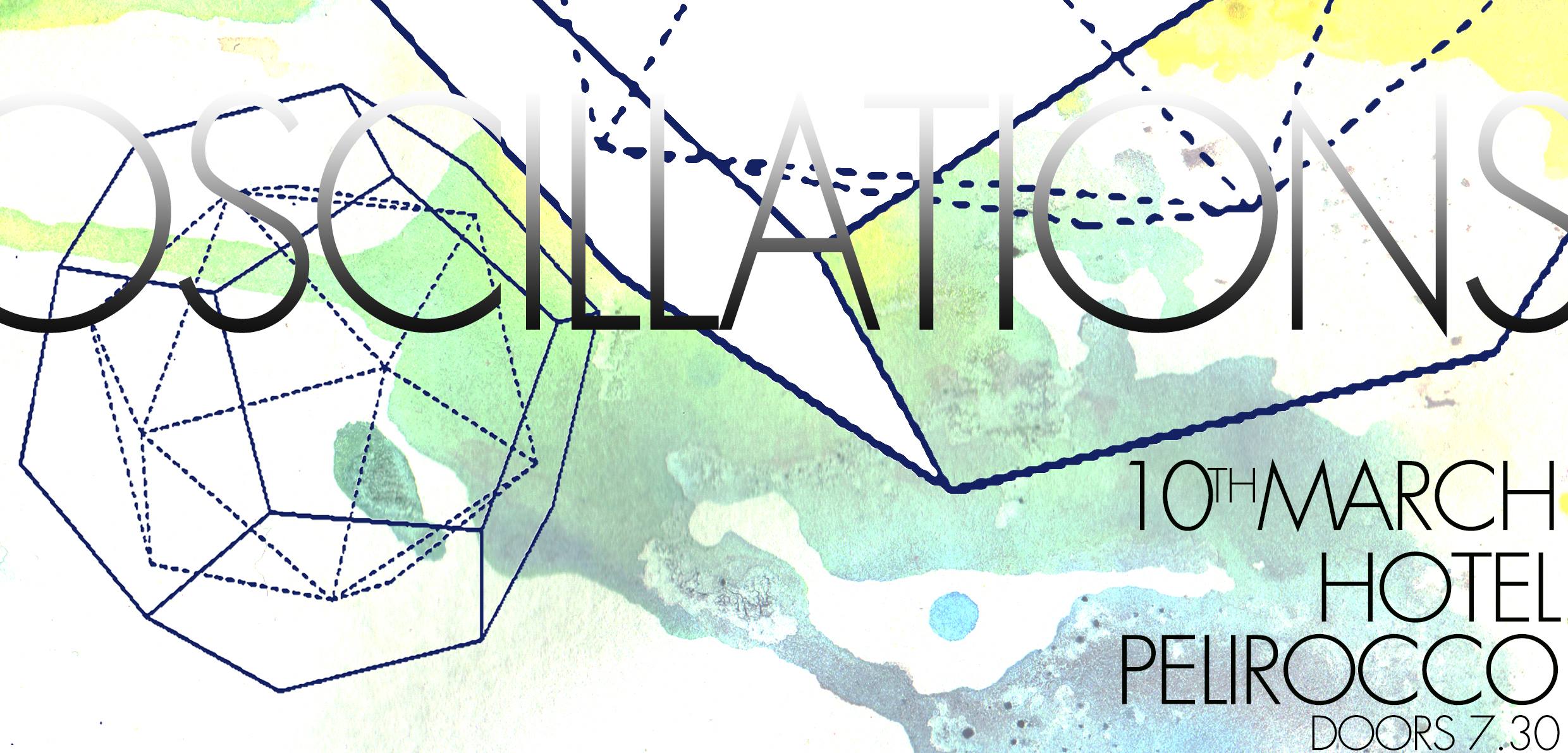
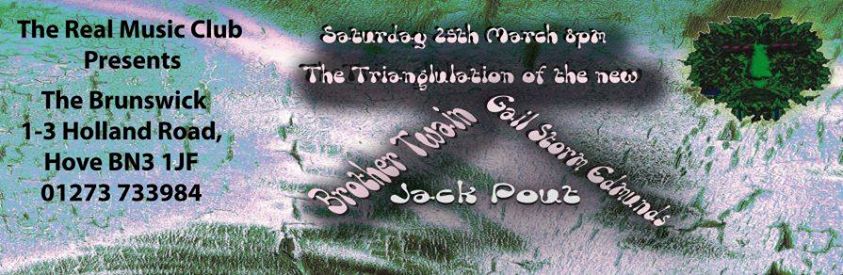


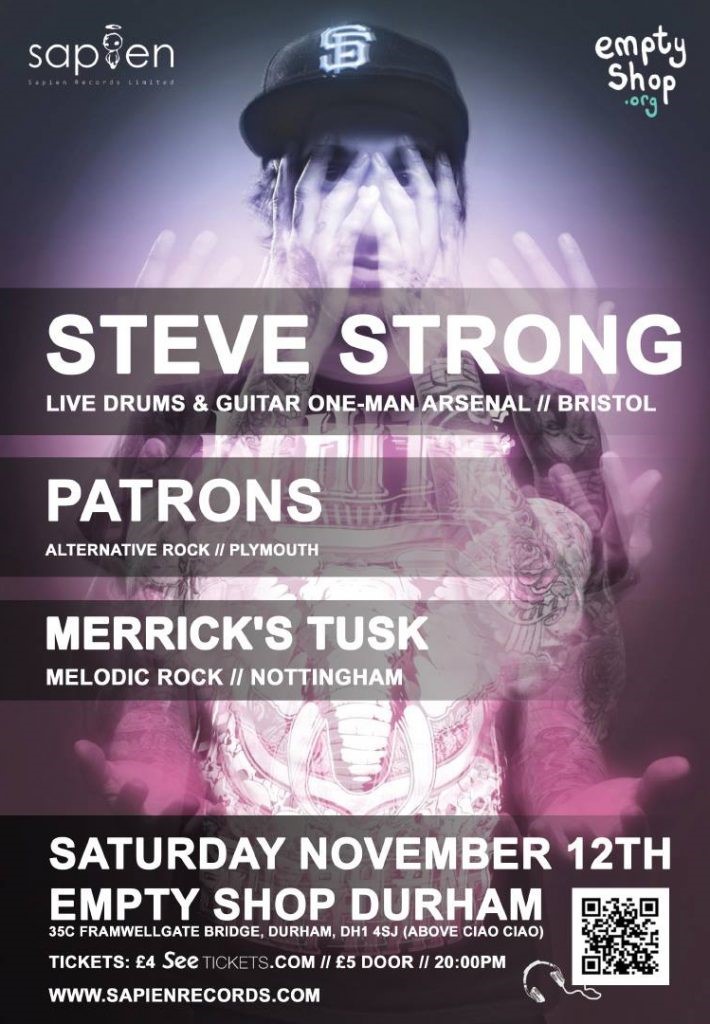









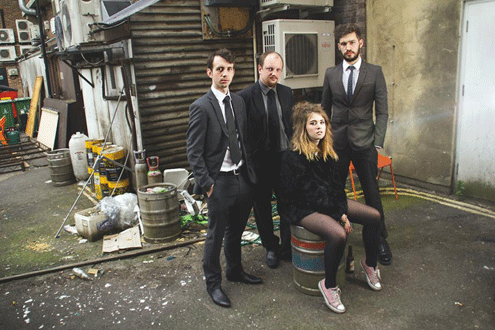

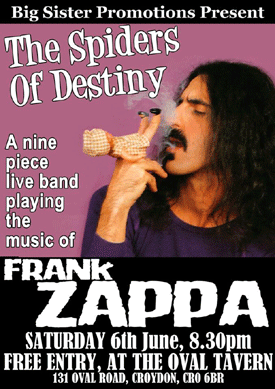






 Misfit City