‘Ghosts At Our Shoulders – The Tradition Unfolds’ featuring Chris Wood + Alasdair Roberts + Kirsty Potts + Stick in the Wheel + Martin Carthy + The Devil’s Interval (Kings Place, 90 York Way, Kings Cross, London, N1 9AG, UK, Thursday 3rd to Saturday 5th December 2015, various times) – various prices (£9.50-£22.50) – information & tickets
“The men have withdrawn and left me alone in a roomful of relics / But they gave me the song, so I carry the song that all men inherit.” – Alasdair Roberts
A series of songwriters and song interpreters inspired by tradition. The rich folk song tradition in these isles is a never-ending well of ideas and sensibilities as well as source material. The traditional canon is often attributed to ‘Anon.’ – a ghost perched on the shoulders of contemporary performers, who carry tradition forward and forge their own paths inspired by that legacy. This series of concerts features some of the most thoughtful and creative interpreters of song, whose unifying focus is the telling of the song. Voices close to the source, acting as a link from the then to the now.
With his work sometimes compared to that of Richard Thompson (though he cites his major influence as ‘Anon.’), Chris Wood is an uncompromising singer, multi-instrumentalist and songwriter whose music reveals his love for the un-official history of the English-speaking peoples, weaving his own contemporary parables into the tradition. His lateral take on the modern world follows an ideological thread from the likes of John Clare and William Blake, and as well as humble hymns and wry observations of the small things in life, his songs have included Hollow Point (a chilling ballad of the shooting of Jean Charles Menezez).
The twenty-year, eleven-album career of Scottish singer-songwriter and guitarist Alasdair Roberts has taken him from the early alt.folk of his Appendix Out project via mingled traditional and self-penned work to his latest, self-titled solo recording, featuring a span of Glaswegian folk talent. He performs songs which are “elliptical and gnomic, direct and personal, romantic and tender” and which have moved from an early economical style (partially inspired by the sparse aesthetic of indie rock) to the complex, esoteric and spiritual work of more recent albums. An enthusiastic and generous collaborator, he’ll be sharing the stage with Kirsty Potts, a singer of traditional Scottish folk for thirty years. Having recorded six albums with the famous folk duo of Alison McMorland (Kirsty’s mother) and Geordie McIntrye, she’s recently released her own long-delayed debut solo album ‘The Seeds of Life’.
Raw and uncompromising London folk quintet Stick in the Wheel record to the sound of sirens and birdsong in their long-rented East End front rooms. Brought up in the thriving culture of working class London and cutting their teeth in its diverse musical landscape, they now bring those influences and attitudes to their traditional music. Across three EPs, multiple festivals and award nominations and the release of their debut album in September this year, their music is as authentic as it comes, capturing a culture that is rapidly disappearing, and is at times brutally honest and grabbing.
Over five decades of a varied career (with Waterson Carthy, Steeleye Span, solo and beyond), Martin Carthy has been one of folk music’s greatest innovators, one of its best loved, most enthusiastic and, at times, most quietly controversial of figures. He’s a ballad singer, a ground-breaking acoustic and electric-guitarist and an authoritative interpreter of newly composed material; always preferring to follow an insatiable musical curiosity rather than cash in on his unrivalled position.
Playing in support of Martin are some of his regular tourmates: recently-reunited vocal group The Devil’s Interval (the teaming of singers Jim Causley, Emily Portman and Lauren McCormick, each of them solo artists in their own right). The group are well-loved for their spell-binding harmonies and passion for captivating story-telling through the medium of traditional song: their three distinctive voices blend beautifully, bringing new life to some of the old jewels of the folk-song canon.
Here’s something for readers in New York who like their art pop. Trevor Wilson of Anawan has been in touch with a welcoming Christmas message as cute, rambling, perky and openhearted as his band is. See below.
Anawan – ‘Having Fun’ show (Briscoe Music Space, 3 Sackett Street, Red Hook, Brooklyn, New York, New York State, USA, Friday 4th and Saturday 5th December 2015, 8.00pm) – $5.00-$15.00 (pay-what-you-want) – information and tickets
“We are doing a huge show on two nights, December 4th and 5th, at our music space in Red Hook, Brooklyn! At the intersection of danger and confidence comes, perhaps, one of the most important reasons for being alive. Sometimes ‘having fun’ is outwardly bold and courageous- motosports – skydiving. Sometimes just going out on a limb and making a joke is the boldest thing you can do in a day- just cracking a smile can take years for some! Love is more bold than any physical challenge- hearts are huge, sometimes mountains, with hiking trails to be lost in, make plans, need more, need less- as my friend Ethan Woods says, “love takes time”. But also, man, love is the funnest thing of all… what’s around the corner? You don’t know!
“The “sound” of fun is loose and electric, sometimes passionate, sometimes flippant. The songs for this very special show include new songs inspired by fun – but don’t expect them to all sound like it… that would be too easy, and what’s the fun in that? In addition to working with my dear historical Anawan members, we’re working with some new folks and doing things in a new way, and that in and of itself is the most palpably fun element of this whole production. It’s going to be a huge ten-piece ensemble playing songs old and new; a rhythm section, string trio, electronics, and the usual Anawan gang. We’ll round the show off with some Anawan standbys as well as a supremely fun song from wa-a-ay back when. I really hope to see you there! I leave NYC at the end of the year to live elsewhere! This is it, guys! Let’s do it! I’m not gonna say it again!
“Tickets are donation based- we won’t turn anyone away- but this will go towards paying the performers and keeping the space warm. Make sure to come by 8.00pm so you do not miss anything. This could make a huge difference in your life! Or it may go on the same as always! See you there!”
Straight into December, then (I’m ignoring the last day of November – it’s done me no favours this year) and before the splurge of upcoming musical Christmas parties, here are some assorted one-off gigs in London. Classical, post-classical and tango nuevo chamber concerts; and a man battering experimental songs out of a piece of beef. That’ll do. Most of these are at the Forge in Camden Town, with one Hackney exception.
* * * * * * * *
The Arensky Chamber Orchestra presents ‘Surround Sound II’ (The Forge, 3-7 Delancey Street, Camden Town, London, NW1 7NL, UK, Tuesday 1st December 2015, 8.00pm) – £12.00 – information & tickets
Since its debut in 2009, The Arensky Chamber Orchestra has established itself as one of London’s most exciting young ensembles, dedicated to revitalising the concert experience with theatrical and brilliant productions of classical music. Led by international prize-winning conductor William Kunhardt, the orchestra’s performances fuse electric performance with lighting design, ‘live’ programme notes delivered from the stage and unusual venue use. The ACO also regularly combine their performances with specially created food and drink menus and commissioned work from other artists, including video DJs, artists, actors and dancers. This will be the Forge’s second immersive ‘in the round’ performance from the Arensky Chamber Orchestra’s brilliant principal players; and on the menu are performances of two of the great string quintets.
Luigi Boccherini’s String Quintet in E major is one of the most famous quintets in the classical repertoire. The timeless melody of its third movement, ‘The Celebrated Minuet’, is woven into popular culture (appearing in ‘The Blues Brothers’ and ‘This is Spinal Tap’ as well as many other contexts). Tonight’s performance is in the original configuration (a conventional string quartet of two violins, viola and cello, plus a second cello as the fifth instrument) but over the years the piece has been rescored for a startling breadth of instruments including organ, mandolin duo, accordion and saxophone.
Franz Schubert’s String Quintet in C was the composer’s last instrumental work (composed during the final weeks of his life) and possibly his greatest accomplishment. It’s most iconic movement is the Adagio – a piece of such sublime tranquility that time seems to stand still throughout. Yet every other movement lives up to this extraordinary standard as well – from the expanse of the opening Allegro to the dazzling scherzo, it is a work of endless invention, radiant and rich sound-worlds and infinite varieties of texture and colour.
* * * * * * * *
The Deco Ensemble (The Forge, 3-7 Delancey Street, Camden Town, London, NW1 7NL, UK, Wednesday 2nd December 2015, 7.30pm) – £10.00 – information & tickets here and here
Established in 2013, The Deco Ensemble performs an eclectic and colourful combination of classical masterpieces, little-known gems and new avant-garde works. Rich in poignant harmonies, bold rhythms and elaborate ornamentations, their exuberant and glamorous repertoire includes works by Gustavo Beytelmann, Yannis Constantinidis, Frédéric Devreese, Ramiro Gallo, Graham Lynch, Astor Piazzolla, Sergei Prokofiev, Maurice Ravel and Anibal Troilo. A quintet of Sabina Rakcheyeva (violin), Bartosz Glowacki (accordion), Ricardo Gosalbo (piano), Rob Luft (electric guitar) and Elena Marigómez (double bass), they also collaborate with many of the world’s most promising and intriguing composers and performers, and write their own arrangements.
The ensemble’s adventurous approach and spirit of fearless exploration has its origins in the music of Piazzolla, re-imagining the Tango Nuevo Quintet which the composer formed during the 1960s in order to lay down the foundations of modern tango writing and to combine classical, jazz and traditional influences. Already the veterans of extensive European touring, Deco Ensemble have performed sellout concerts across Britain and across the breadth of Europe from west to east. Their critically-acclaimed debut album ‘Encuentro’ was released in July 2015.
Programme:
Ramiro Gallo – El último kurdo
Gustavo Beytelmann – Travesía
Astor Piazzolla – Muerte del ángel
Astor Piazzolla – Milonga del ángel
Astor Piazzolla – Tango del diablo
Frédéric Devreese – Passage à 5
Frédéric Devreese – Dream & Tango
Gustavo Beytelmann – Encuentro
Astor Piazzolla – Triunfal
Astor Piazzolla – Oblivion
Ramiro Gallo – Las malenas
* * * * * * * *
Cosmo Sheldrake (Rockfeedback Concerts @ The Forge, 3-7 Delancey Street, Camden Town, London, NW1 7NL, UK, Thursday 3rd December 2015, 7.30pm) – £11.00 – information & tickets
A multi-instrumentalist, an improvising sampler/looper and the crafter of sweet unorthodox earworms, Cosmo Sheldrake has been described as “a relentlessly experimental artist taking organic samples from the world and turning them into dreamy songs.” Certainly his best-known single, ‘Rich’, is a case in point. Its tripping, sunny melodies – apparently moulded from stray chunks of both English folk and contemporary R&B – bob over a rhythm made by tearing meat from a cow carcass.
This kind of experimentation and juxtaposition (the cute tunes and the occasionally slightly-sinister underpinning; the initiation of whimsical but multi-layered musical questions; the rough-and-ready play across a huge musical vocabulary) seems to lie at the heart of what Cosmo does. He’s certainly steeped in music – aside from the wide-spanning instrumentalism (beginning with early days on piano at age four, building upwards and outwards and somehow never stopping), he’s been a founder member of nine-piece polygenre band Gentle Mystics since 2007, and also runs assorted instrumental and beatboxing workshops, plus a choir, in his Brighton hometown. He’s also known for performances in unusual locations including boats, farmyards, laundrettes and public swimming pools; and takes inspiration from the world around him with unfiltered, undifferentiated spontaneity; being as likely to turn out a song about pelicans as he is one about humans.
This week’s show promises to be mostly improvised, intimate and has a pretty small number of tickets, so move fast if you’re interested.
* * * * * * * *
Project Instrumental + Tpongle + Zach Walker + DJ Jesse Bescoby present ‘Built On Bass’ (Hackney Attic, 2170 Mare Street, Hackney, London, E8 1HE, UK, Friday 4th December 2015, 7:30pm) – £6.00 – information here and here – tickets
Project Instrumental bring thrilling performances to unbounded audiences. Bold, imaginative and boundary defying, this virtuosic ensemble strips back the peripherals with their straightforward contemporary approach to create not just concerts, but experiences. For ‘Built On Bass’, they bring together a composer, a sound artist and a visual artist to create a multi-sensory musical environment using sound, electronics and cymatics. Taking a four-hundred year-old form defined by variations against a bass motif, they connect a passacaglia-inspired programme of music written within the last fifty years and create a twenty-first century experience, responding to the written repertoire through live collaborations that explore the physical sensation of sound and auditory-visual interactions.
The world premiere of a commission from composer Robert Fokkens features in an irresistible confluence of timelessness, change, cycles and variance alongside Arvo Pärt’s mesmeric Passacaglia in its version for 2 violins and Dmitri Shostakovich’s powerful Chamber Symphony op.118a. Inspired by and sampling the programmed repertoire, sound artist, producer and DJ Tpongle creates a ‘passacaglia for the present’, weaving a bass thread through the night, culminating in a live electronic set. Zack Walker‘s striking projections will extend the sound experience in space using his live liquid cymatics sculpture, original film content and analog feedback projections to respond to the live musical performance. Ace Hotel Guest DJ Jesse Bescoby rounds the night off with a set exploring the gap between contemporary classical and experimental, independent music. All can be taken with locally produced craft beers and food available to order throughout the evening.
Programme:
Arvo Pärt – Passacaglia
Robert Fokkens – New Commission World Premiere
Dmitri Shostakovich – Chamber Symphony op.118a
Tpongle – Live electronic set
Zach Walker – Live cymatics sculpture
For a glimpse of Zach’s cymatic sculpture work, see below.
* * * * * * * *
Coming up in the next post – Brooklyn art-pop, and a small but significant London folk festival; Over the coming weekend – a man in a top hat sings songs of Victorian-Edwardian never-weres, wild noise in Hackney and Yorkshire, and a couple of spells of jazz… but more on that later.
As promised, here’s the second rundown of people playing Crouch End’s The End Festival here in London this month (in fact, this week). It’s serving as my self-imposed penance for having been stupid enough to have missed the festival’s existence for so many years, especially as it’s been only a fairly short walk from where I live.
In case you’re interested at who’s already played this year, last week’s rundown is here (from math-rock heroes to underground pop hopefuls to assorted folk noises), but here’s who’s performing from tomorrow until the end of next Sunday…
* * * * * * *
The Mae Trio + Patch & The Giant + Elephants & Castles (Downstairs @ The Kings Head,2 Crouch End Hill, Crouch End, London, N8 8AA, UK, Monday 16th November 2015, 7.00pm) – £10.75 – information
Much-garlanded Melbourne chamber-folksters The Mae Trio are a great example of can-do Australian vivacity – three women who juggle multiple instruments (banjo, ukulele, guitar, marimba, violin, cello and bass). While delivering spring-fresh, sparkling three-part harmonies and witty stage banter, they also volley songs at us which merge the whip-smart compassionate edge of Indigo Girls, and the dizzy chatter of The Bush The Tree And Me. Londoners aim plenty of jokes at Aussie visitors, but if they will keep on coming here and showing us up like this… Well, the city’s home-grown alt.folk scene is at least holding its own, since it can produce bands like Patch & The Giant, another gang of multi-instrumentalists (throwing cello, accordion, flugelhorn and violin in with the usual mix) who come up with a ‘Fisherman’s Blues’-era Waterboys mingling of Irish, Balkan and American country influences plus New Orleans funeral-band razz, rolling off heady spirit-in-the-everyday songs for a potential singalong everywhere they go.
The second of the two London bands, Elephants & Castles, might not share the direct folkiness of the rest of the night’s bill (being more of a brash and perky power-pop idea at root, with fat synth and chatty peals of electric guitar) but the band does have an acoustic side (which they might be bringing along on this occasion). Also, a closer look at their songs reveals a strand of outrightly folky protest and character witness, with songs about gentrification, the lot of manufacturing workers and the ordeals and victimhood of Justin Fashanu showing up in their setlist.
* * * * * * *
Howe Gelb (The Crypt Studio,145a Crouch Hill, Crouch End, London, N8 9QH, UK, Monday 16th & Tuesday 17th November 2015, 7.00pm) – £22.00 – information
Tireless alt.country legend and multi-project workaholic Howe Gelb (the frontman for Giant Sand, Sno Angel and Arizon Amp & Alternator) takes in two dates in Crouch End as part of his ongoing tour. The first of Howe’s dates will be solo, but Nadine Khouri (fresh from her Hornsey Town Hall megagig appearance on the preceding Saturday) will be playing support on the 16th, with an extra surprise guest promised at some point in the proceedings.
Romeo Stodart (half of the frontline for familial, Mercury-nominated, cuddly-bear band The Magic Numbers) has been taking time out from his main group to write and sing with Salford soul-pop singer Ren Harvieu as R N R. This performance gives both singers a chance to show us what they’ve come up with. Expect a full-potential set: reinterpretations of both Ren songs and Magic Numbers numbers, reworkings of standards (as defined and chosen by the duo) and the full song fruits of their new partnership. One or two examples of the latter have sneaked out into the public eye previously, so here’s a taste – via YouTube – of what’s on offer.
* * * * * * *
Before the Goldrush presents Green Diesel + Tom Hyatt + Horatio James (The Haberdashery, 22 Middle Lane, Crouch End, London, N8 8PL, UK, Friday 20th November 2015, 8.00pm) – £5.00 – information
Kentish folk-rock sextet Green Diesel happily embrace a spiritual descent from an earlier ‘70s wave of English folk-rockers – Fairport Convention, Mr Fox, The Albion Band, Steeleye Span). As those bands did, they conflate dazzling electric guitar, a mass of acoustic folk instrumentation and a sheaf of traditional tunes mixed in with new songs (“old-fashioned, new-fangled”). In the same spirit, they’re enthusiasts and honourers of the old forms, but are never shy of splicing in others (“a reggae twist into an old sea shanty… spicing up a jig with a touch of jazz funk”) in order to communicate the songs to a fresher and perhaps less reverent audience during one of the frenetic and joyous live gigs which they’re becoming increasingly famous for.
If you’re a bunch of Londoners going for that country-flavoured Neil Young lonesomeness, then you’ll need the conviction, you need a certain selflessness and freedom from posing, and you’ll need the songs. Horatio James have all of this, carrying it off without slipping either into pastiche or into a faux-Laurel Canyon slickness, offering “songs of estrangement, heartbreak and malevolence” floating like dust off a pair of snakeskin boots. A cut-down version of the band charmed me at a Smile Acoustic live session in Shoreditch: the full band ought to be even better.
Tom Hyatt tends to work solo, delivering his clarion tenor voice and songs from behind a propulsive, percussive acoustic guitar or from the stool of a fluid, contemplative piano. There are strains of Tim Buckley and John Martyn in what he does, perhaps a little of the young Van Morrison (and, judging by his taste in covers, a dash of ABBA as well) but with their boozy, visionary slurs and blurs replaced by a clear-headed, clear-witted take on matters. Some might reckon that this was missing the point: if you don’t, Tom – heart and mind engaged – is certainly your man:. At this gig, he’ll be playing with a regular collaborator, cellist Maya McCourt (also of Euro-American folk collision Various Guises and bluegrass belle Dana Immanuel’s Stolen Band).
* * * * * * *
The Apple Of My Eye + Michael Garrett + The August List(SoftlySoftly @ Kiss The Sky, 18-20 Park Road, Crouch End, London, N8 8TD, UK, Sunday 22nd November 2015, 3.00pm) – £4.40/£5.00 – information
Of course SoftlySoftly – who present regular unplugged folky gigs in Crouch End – fit perfectly into the festival, and present one of their acoustic afternoons (which are adults only, for reasons of booze rather than scabrousness) with barely a blip in their stride Offering “folk music for the drunk, the drowned and the lost at sea”, Bristolian-via-London sextet Apple Of My Eye write thoughtful, contemplative alt.folk songs tinged with country harmonies and displacement (mellow but slightly homesick, in the manner of the itinerant and accepting). Michael Garrett is another rising star on the London acoustic scene, usually performing with a backing band of Chums to back up his voice and guitar with viola, cello and cajon although this occasion looks as if it may well be a solo gig. There’s not much of Michael’s open, unaffected songcraft online, although I did find a video of him taking on Paul Simon’s Still Crazy After All These Years, as well as a brief homemade clip of one of his own songs. Husband-and-wife duo The August List belt out a take on Carter-classic stripped country with honey-and-bitter-molasses vocals, shading into occasional rock clangour and odd instrumentation stylophones – hardbitten songs of hardbitten ordinary folk, sometimes driven into cruel situations.
* * * * * * * *
The Feast of St Cecilia: The Memory Band + The Lords Of Thyme + Elliott Morris + The Mae Trio + You Are Wolf + Collectress + Spectral Chorus + DJ Jeanette Leech (Earl Haig Hall, 18 Elder Avenue, Crouch End, London, N8 9TH, UK, Sunday 22nd November 2015, 1.00pm) – £11.00 – information
The second and last of The End’s big gigs is also the festival closer. Apart from The Mae Trio (making a mid-bill return after their Monday performance) it’s a once-only grouping of End talent – “a fitting folk finale, a weird folk all dayer” with a wealth of bands tapping into or springing out of folk forms across the spectrum, plus DJ-ing by Jeanette Leech (scene authority and writer of ‘The Seasons They Change – The Story of Acid and Psychedelic Folk’).
The Memory Band is a folktronica project with a difference. Rather than clothing old or new folk songs in electronic textures, Stephen Cracknell builds new folk pieces up from scratch, assembling them via computer and a virtual “imaginary band” succession of guest players, Instead of smoothing the gaps, though, he makes the most of the eerie collage effect of digital sampling and patchwork. Some Memory Band pieces are familiar guitar and slap hollers with a folk baroque smoky swirl – hard-drive recordings with a trad air. Others are tapescape instrumentals, like an English-folk translation of Bomb Squad hip hop techniques: old-sounding folk airs carried on acoustic instruments against drones and percussion snippets like jingling reins, while backing tracks are made entirely out of ancient tune snatches and Sussex field recordings (hedgerow birds and bleating sheep, tractors, skyborne seagulls, landscape echoes; the tracery of air, wind and sky over downs). The live arrangements may lean more towards the acoustic and traditional style, but if they capture any of the vivid reimaginings of the recorded efforts they’ll still be well worth seeing.
The Lords Of Thyme are what you get when musicians from the wild psychedelic folk cyclone of Circulus decide that they want to slow down a little but go deeper. Joe Woolley, Tali Trow and Pat Kenneally (three Circulus players, former or current – it’s always hard to tell which) bonded with singer Michelle Griffiths over shared musical loves and have gone on to play and record songs which draw and build on the quartet’s steepings in both psychedelic esoterica and better known touchstones: Wizz Jones and Nick Drake, Sandy Denny’s Fotheringay, Nico, Davy Graham, early ’70s prog (Soft Machine and Yes) and even New York post-punk (Television). The results are a shimmering but solid acid-folk songbook, perfect for recapturing the tail-end of a half-imagined, cider-golden summer in these dank November days.
Celtic Connections award-winner Elliott Morris is the kind of young folk musician who makes both his peers and older musicians wince ruefully into their beers. Not only does he play fingerstyle guitar with the dazzling, percussive, ping-pong-match-in-a-belfry attack of Michael Hedges, Antonio Forcione or Jon Gomm, but he simultaneously sings with the controlled passion of a teenaged Martin Furey and writes like a youthful John Martyn. There’s something quite magical here.
Like The Memory Band, Kerry Andrew – who works as You Are Wolf – is a folk reinventor, taking ideas from current technology, leftfield pop, contemporary classical music and spoken word recording and then applying them to folk music. Her current album, ‘Hawk To The Hunting Gone’ is an invigorating cut-up of melodies and Kerry’s extensive vocal and production techniques, sounding like lost ethnology tapes of Anglo-American folk strands from a parallel history.
To call Collectress an alternative string quartet sells them too short – it suggests that the London-Brighton foursome can be summarised as an English take on Kronos. Aside from the fact that that any such position has already been taken (and reinvented, flipped and superseded) by the Smith and Elysian Quartets, Collectress just don’t play the same pattern as regards repertoire or instruments. They’re more of a quartet-plus, with musical saw, keyboards, woodwind, guitar, software, field recordings and singing as much in their armoury as their strings. Citing the Necks, Rachels, Bach and John Adams in their puzzlebox of influences, the group offer four very individual women musicians, a knack for full improvisation, and a sense of narrative that imbues everything from their songs to their suggestive spontaneous pieces.
Finally, Merseyside trio Spectral Chorus seem to have emerged from a post-dole background of disintegration, drifting and life lived one long ominous step away from the black. Their tale of sharing one hovel and a single bed as they honed their craft, living off pawn money from putting their instruments in and out of hock, and of nourishing themselves solely with spare hotel breakfasts from one member’s work as a caterer sounds like a grim joke: in these unsparing days, of course, it could well be true. Now homed at Skeleton Key Records (the Liverpool-based label-of-love set up by The Coral), they’re releasing their spooky semi-hymnal urban folk songs – part Shack and part Brendan Perry – to a waiting world, and there’s evidently enough in the kitty for live appearances too.
* * * * * * * *
And that’s it. More on the End Festival next year, when I’ll know what to expect.
When I was growing up in north London, Crouch End was the “next village over”. It was the place where I went to primary school and first heard song by Neil Young, Steve Winwood and The Kinks (strummed out and sung in assemblies alongside battling hymns from the civil rights movement) and where I began sharpening my hunger for musical knowledge on the rich ranks of vinyl LPs in Hornsey Library. Over the years, I’ve continued to associate the neighbourhood with music – other people’s memories of old art-rock and punk gigs at the Hornsey College of Art; the star traffic through the Church Studio at the bottom of Crouch Hill (owned in turn by Eurythmics and Paul Epsworth), where you might find Erasure or Sisters of Mercy catching a mid-session coffee in the local café; and the Gareth Malone wet-dream of the Crouch End Festival Chorus, a local choir with a national reputation.
That said, Crouch End’s day-to-day music scene has always struck me as lacking. There have been exceptions to the rule – the steady reservoir of blues and roots playing at the Kalamazoo Club; the string of house concerts that Jenni Roditi ran at her loft between 2002 and 2009; more recently, a flowering of rootsy events at the Earl Haig Hall. But generally speaking, Crouch End has always seemed to me to export or traffick in music rather than play it, becoming an increasingly upmarket and bijou neighbourhood where shoppers vastly outnumber giggers; easily eclipsed by the musicality of other London neighbourhoods like Camden Town, Dalston, Shoreditch, even Tooting.
Well, more fool me. It turns out that I’ve regularly been overlooking and missing The End – an annual, musically expansive Crouch End festival that turns all of my gloomy observations about the neighbourhood’s gig shortcomings to dust – at least, for two weeks. As my penance, here’s the first half of an overview of everyone playing at this year’s festival, which starts tomorrow (all ticket details are to be found via the info links or at the festival website).
The festival kicks off with a concert navigating the blurry margins of folk and lo-fi alternative rock, with headliners good enough to warrant a post all of their own. The crepuscular but lovely Lowpineshave been racking up an unending stream of plaudits for their Anglo-Americana atmospherics, which recall old phonographs playing whispered, heartspilling songs in dusty basements, laced with judicious drums, intricate campfire fingerpicking and stargazing whistles of feedback like psychedelic pedal steel lines. Support comes from Oliver Girdler’s one-man lo-fi project Forced Random (which drifts ghostlike from instrument to instrument and from one slow soft-edged song to another) and from Reykjavík folk-rock trio Ylja (initially based around female harmonies and lap-style slide guitar but expanding into a broader palette that encompasses and recalls not just Fairport Convention, early Clannad and Pentangle but also the glowing starfield details of Sigur Rós and 1972 Pink Floyd).
* * * * * * * *
The Fierce & The Dead + a.P.A.t.T + Markers (Downstairs @ The Kings Head,2 Crouch End Hill, Crouch End, London, N8 8AA, UK, Friday 13th November 2015, 7.00pm) – £8.80 – information
The first of several events at The Kings Head hosts assorted sprigs from the thornier of British art-rock. Headlining are prog-punk quartetThe Fierce & The Dead (no strangers to this blog) who bring the rumbling immediacy of their quick-flaring complicated avant-garage instrumentals to the valley for the evening. In support, hazmat-suited Liverpudlian performance art troupe a.P.A.t.T, play “progressive pop that owes as much to Kurt Schwitters and the Chapman Brothers as it does to ABBA and Zappa”, drawing on a shifting tag-team of ‘Pool talent and bring strong flavours of the absurd, the deceptive and the cunning to whatever they do.
Opening the evening, Markers reunites two old friends from the omnivorous ferment of the 1990s London math rock scene – Jodie Cox (Ursa, Narrows, Exes, Rohame and Earth) and Jason Carty (Geiger Counter, Foe, Art Of Burning Water) as two electric guitarists without a singer, a rhythm section, any other instruments or much in the way of signal processing. Expect carefully poised, bare-branching instrumentals somewhere between Slintian maths, precise Fripp and Summers interplay, and the minimum-lines/maximum-impact approach of a Japanese ink painting or minimalist film.
* * * * * * * *
Kate Jackson & The Wrong Moves + Oh800 + YLJA (The Crypt Studio,145a Crouch Hill, Crouch End, London, N8 9QH, UK, Friday 13th November 2015, 9.30pm) – £8.50 – information
Kate Jackson (the former Long Blondes singer (and sometime British Electric Foundation/Heaven 17 collaborator) brings her current band The Wrong Moves to The End. She’ll be playing music from the upcoming “mysterious” album she’s been writing and recording with Bernard Butler over the past six years (though from what I’ve heard of it it’s more assured than mysterious – a muscular, classic pop rock mix with Kate’s big vocals and Bernard’s bright, sometimes startling guitar work).
Also on the bill are Oh800, a currently secretive new supergroup featuring Eoin “Oh Ruin” O’Ruainigh plus members of The Duke Spirit and F.U.R.S. The project is still enough under wraps not to have any tracks available to share, so you’ll just have to guess what they sound like, though it’s possible that the old Oh Ruin ingredients of blues, campfire tunes, Irish folk and fingerpicking will get a look-in. In addition, Ylja will be playing their second support slot of the festival, following the previous day’s appearance with Longpines.
* * * * * * *
Joseph & Maia + Charlotte Carpenter + Annalie Wilson + Storme (Rileys The Ice Cream Café, 32 The Broadway, Crouch End, London, N8 9SU, UK, Friday 13th November 2015, 7.00pm) – £5.50 – information
An intimate gig of classic pop styles in one of Crouch End’s favourite drop-in cafes. New Zealand duo Joseph & Maia headline, playing songs from their debut album ‘Sorrento’ (a record which shows both their indebtedness to American songbook player-writers both old and new – Buckingham and Nicks, Ryan Adams, Paul Simon, Patsy Cline, Noah Gundersen – and their absolute assurance in working the same seams). Armed with a deeper and more ambiguous folk-blues approach, Northamptonshire-born Charlotte Carpenter sings songs of doubt and connection, softly, but with great emotional power held in check (like a surge pushing at a levee).
Rounding out the bill, acoustic festival favourite and all-round performer Annalie Wilson brings straight-ahead conversational, coffee-house songs on piano and guitar: while concert opener Storme (a Swedish singer-songwriter who’s come over to London to develop her songs, reversing the usual trend) is bold and dramatic enough to be a headliner, since her heavy-weather synth-pop aims for the same stadium-friendly altitudes as Florence + The Machine, Chvrches or even the more crowdpleasing moments of Björk .
* * * * * * * *
Becky Arundel + Nora Grefstad + Kloak (Kiss The Sky,18-20 Park Road, Crouch End, London, N8 8TD, UK, Saturday 14th November 2015, 3.00pm) – free
The first of the Saturday gigs is a celebration of young female songwriters. Becky Arundel writes and delivers muscled, determined folk-rock in the Melissa Etheridge vein, moving from unplugged strum to bursting electric explosions. Norwegian singer Nora Grefstad , who generally trades as Noraslittleworld, slides her path midway between Elkie Brooks and Beth Gibbons (offering slightly wonky, jazzy trip-hopped pop or full-diva piano balladry – in each case with a hint of smeared-lipstick, morning-after feeling). While there seem to be plenty of people contributing toKloak, in essence they’re two sassy-wise white girls – Georgia Meek and Gabrielle Mallett – putting together R&B-tinged electropop with a strong flavour of Eartha Kitt (those bent notes and divan stretches; that conversational yawp in the voice).
* * * * * * *
Cortes + Bea Munro + Orfan (ThisIsWIRED @ Rileys The Ice Cream Café, 32 The Broadway, Crouch End, London, N8 9SU, UK, Saturday 14th November 2015, 7.00pm) – £7.70 – information
Showcase night ThisIsWIRED (which, since its initiation in Shoreditch seven years ago has incubated the early budding careers of musicians including Ellie Goulding, Raleigh Ritchie and Michael Kiwanuka) rolls up to a Crouch End ice cream parlour for a north London jaunt. Tonight’s players include crisp power-poppers Cortes and belting 22-year-old ‘60s-rock-siren revivalist Bea Munro; but for my money the likely star in the pack is gig opener Orfan, who uses his multi-instrumental skills to hone captivating yearning songs which touch bases with such odd-bedfellow influences as Nico, Prince and Boo Hewerdine.
In keeping with The End’s origins, peripatetic roots night Before The Gold Rush curate an outright folk & Americana evening. A truly enchanting set looks likely from Farrago, the psychedelic folk vehicle for the lucid, highly literate work of London songwriter Ian Bennett – vivid short stories couched in rich, longing arrangements and with colourful, falling poetic imagery. There’ll be a third appearance by Ylja, perhaps opening up to their lusher dream-folk tendencies. With flavours of honky-tonk and Grand Ol’ Opry, rising festival favourite Frida Wallin brings us the End’s most straightforward country music set to date. (She’s actually Swedish. Don’t let on or anything…)
* * * * * * *
The Battles of Winter + Metro Verlaine + MOSES (The Crypt Studio,145a Crouch Hill, Crouch End, London, N8 9QH, UK, Saturday 14th November 2015, 7.30pm) – £5.50 – information
While Before The Gold Rush keeps the Americana and folk covered for the evening, the people at the Crypt hold down the indie and punk rock side of things. The Battles Of Winter embrace a driving post-punk indie sound compared to Echo & The Bunnymen, Interpol and The Doors. French “pop sauvage” trio Metro Verlaine are noisy electric romanticists inspired by the rush of Patti Smith/Richard Hell punk and the latterday spark of The Kills, as well as drawing on the original poète maudit fury of their namesake. The evening is opened by guttural punky rock’n’roll noise from M O S E S, who draw a London parallel to Wolf Mother and The Subways.
* * * * * * * *
The Wave Pictures + The Oreilles + Victor Lovlorne + Beverly + Pony & Trap + Nadine Khouri + Kindling + Annie Rew Shaw + Ryder Havdale + Kloak + Aphty Khea + Hudson Scott + Esther Joy Lane + others tbc (Hornsey Town Hall Arts Centre, The Broadway, N8 9JJ, London, UK, Saturday 14th November 2015, 7.00pm) – £16.50 – information
The big one. For this concert, at least thirteen performers will be taking up temporary residence in the battered but still beautiful Art Deco rooms of the former Town Hall, running quick-changeover mini-sets in the Supper Room, Committee Room and Council Chambers. Like a spontaneous party, the actual participants and their playing order seem to be in constant flux – as I quickly put this post together, the following seems to be the current setup.
Two bands are down from Yorkshire – The Wave Pictures (rattling Byrds-and-Motown garage-indie from Wymeswold) and teenaged Halifax trio The Orielles (a surf pop band from a landlocked town, teetering on the balance of their love of Riot Grrrl and the la-la-la). From America, buzz-pop Brooklyneers Beverly can’t quite make up their minds over whether to stick with Slowdive or Lush or to hit the accelerator pedal towards Surfin’ USA; pellmell Massachusetts indie-punks Kindling provide some rocket-powered shoegaze pop of their own. From Canada via Berlin, Ryder Havdale of The Mohawk Lodge might or might not come good on his promise to salt the lonesome indie-country rock of his main band with some Berlin-inspired electronics.
Several performers bring in captivating moods and stories. The blend of murmur, smouldering torch and cool eyed-vision in the work of Lebanese-British songcrafter Nadine Khouri has drawn comparisons with Patti Smith, PJ Harvey and Mazzy Star. Athenian-in-London singer Aphty Khea (a.k.a. MantRah) deals in self-produced slow-drag abstract soul and hip hop ideas; Texan gospel choir escapee and human love-wreck Victor Lovlorne in unsettling lo-fi basement ballads in a Will Oldham, Sparklehorse, Beefheart or Redbone vein. Piano singer Annie Rew Shaw mingles Christine McVie melodicism and wit with an eerie ghost-haunted songwriting style.
Of the rest, Kloak make a repeat appearance (this time unplugged) following their slot at Kiss The Sky earlier in the afternoon; Pony & Trap mix crisp girl-about-town rhythm-box funk with buzzy post-punk guitar hooks); and Oxford electropop diva Esther Joy Lane puts in an appearance, as does the elusive and underplugged Hudson Scott (at the moment, just a name on a wobbling list…)
* * * * * * * *
Emma Pollock + Ylja (Earl Haig Hall, 18 Elder Avenue, Crouch End, London, N8 9TH, UK, Sunday 15th November 2015, 8.00pm) – £8.50 – information
The last gig of the week features Scottish alternative rock heroine and onetime Delgados songwriter Emma Pollock, now three records into a solo career as well as being branched out into poly-genre supergroups (The Burns Unit) and socially-minded collective projects (The Fruit Tree Foundation), with her varied collaborations stretching well beyond her bright indie-pop beginnings to involve folk music, theatre work and string quartets. If you’re good, she might play you some songs from her upcoming album ‘In Search Of Harperfield’. Ylja, who by now are starting to look like the End’s house band, will play their fourth and final support slot of the festival at this gig.
* * * * * * * *
That’s all for this week, but I’ll try to put together a rundown of next week’s End gigs over the weekend…
Some more concert dates for the current week. If you’re thinking that these have a definite female slant to them, you’re right. I’m indulging my latent X as well as stretching my perspective.
Holly Herndon expanded A/V show (featuring Mat Dryhurst and Colin Self)+ Jam City + Claire Tolan (Barbican & Rockfeedback present Illuminations @ Oval Space,29-32 The Oval, Bethnal Green, London, E2 9DT, UK, Wednesday 4th November 2015, 7:30pm) – £15.00
Having already made a showing at Liverpool and Bristol during October, peripatetic techno-pop/IDM composer Holly Herndon brings her expanded show to London. This is a full multi-media experience including the usual music, visuals and dance elements but with an interactive component that goes far beyond Holly’s onstage collaborations with programmer/life partner Mat Dryhurst and with interpretative dancer/additional singer Colin Self. In particular, Mat’s adaptive and conceptual SAGA software reaches out beyond the stage to work – consensually – with the audience members’ own browser histories and Facebook content; mixing it all into the visuals (and, potentially, the sounds) as a communal mashup, both representational and communicatory.
Intriguing as this factor is, it’s an adjunct to Holly’s music; which remains the core material of the show. Continually glitched, tweaked and deconstructed, her compositions are a cool, complex, thoughtful and exhilarating mixture. They’re informed by post-classical forms, dance techno, and anthemic synth pop; they utilize experimental textures and broad vocal stylings (from standard singing to semi-voluntary sounds) and they bury philosophical queries deep within their tunes. Holly’s soundwork is as immersive as her stagings, full of implied questions and reflections regarding our access to and immersion in technology and how this affects the way in which we think and express ourselves, leaving comet-trails of information, interaction and yearnings.
All of these additional subtexts and pointers are there if you want them, but Holly is first and foremost a communicating musician, and her pieces are as melodious and accessible as they are multi-layered. Drawing on her ongoing music studies (doctorate level at Stanford) , her time as a precocious and enquiring teenager steeped in the heat and fun of the Berlin club scene, and her work with everything from choirs to customised laptop software, they sometimes sound like particularly complicated pop songs, stuttering their way through myriad changes of attention and focus. Sometimes they sound like accelerated dream-state dances; sometimes like madrigals sung during earthquakes (see Unequal, below). At other times, they’re like the chatter of path-switching in a circuit; or like carefully-directed cultural channel-surfings which quick-step deftly back and forth across a breadth of urban art and experience (from grand opera house to downloads in cramped bedsits). Brain food which encourages you to wander.
Also on the bill are Jam City and Claire Tolan, both of whom share Holly’s interest in interactions and in the results of our being embedded within a dense informational culture, although each has their own way of approaching the situation.
Jam City is the alias of dance-electronica producer and deconstructionist Jack Latham. Though Jack’s background in fashion and “corporate espionage” sounds almost too good to be true, as if it’s been dream-tailored for counter-cultural media discussions and for high-end elitist posing, he doesn’t use it that way. As a musician, he’s evolved from collaging various dubstep tropes towards using his work to develop and express questioning, outright political critiques of neoliberal capitalism (such as the Unhappy single, which explores the dulled angst of online porn consumers while juxtaposing it with riot footage). In the process, Jack’s also developed as a performer – backgrounding the laptops and the passive role of the standard electronica performer in order to retake the stage as guitarist and singer, and delivering a new phase of material described as sounding like “a Prince record constructed from cold, chunky industrial sounds”.
Claire Tolan is an artist, programmer, sampler, writer and soundscaper specializing in autonomous sensory meridian r – a psychological process in which carefully-arranged sound and speech – usually a blend of themed, targeted whispers and quiet diegetic noises (scratches, scuffs, intimate room sounds) – triggers euphoric physical and mental reactions in the listener. With sharp wit, Claire links all of this to new developments in programming and acoustic surveillance technologies, exploring the question of how it might be applied: from simple mood enhancements and healing systems through to neurolinguistics and perception and to the potential manipulation and control of people. Her recent Holly Herndon collaboration Lonely At The Top (see below) might give some clues as to her concert performance. A cosseting monologue, coffee-pot dribbles and the close-up noises of small rooms are interspersed with the rubs and slaps of massage, fingernails ticking on keyboards and screens, and increasingly intimate sounds of hand and mouth: the language, desires and end results of relaxation tapes, executive relief, socially-reinforced senses of entitlement and prostitution blend and overlap to sardonic, disturbing effect.
Information and tickets for the concert are here while the Facebook event page is here. At the end of the month, Holly will also be appearing at All Tomorrow’s Parties at Prestatyn.
* * * * * * * *
There are some similarities between Holly Herndon and Laura Moody – not least an overlap with classical music and a sense of being on the outcrops of songcraft, delving up malleable truths and questions. Yet whereas Holly’s a post-classical theoretician (reconciling her education with her human instincts, and with life outside the college bubble) and works primarily on computer, Laura comes from older and more familiar traditions, and is almost exclusively an acoustic performer. Possessing outstanding talent both as a singer and as a cellist – and able to cover both fields simultaneously, as well as beatboxing and cello-drumming – she pounces into her own music with the terrifying, exhilarating technical skills of a top-drawer classical soloist.
Laura’s songwriting instinct, meanwhile, seem to come from multiple directions at once. Tense twentieth-century string figures (from her earlier years playing avant-garde pieces with the Meredith Monk Ensemble, and her current work with the Elysian Quartet); ancient, eerie folk airs; expressionist opera; P.J. Harvey’s cleaver intensity; the clever, idiosyncratic and individual art pop of a Kate Bush, a Tom Waits or a Bjork. Everything that she delivers sounds immediate, whether it’s the savagely equivocal hormonal take-down of an older man on Creeping Alopecia, the raindrop attenuations of Call This Time Love, or the stormy dissections of love-gone-wrong and betrayal on Turn Away and We Are Waiting.
The live gigs are enthralling wonders: supple switchings between Laura’s own welcoming personality and the performance persona which handles the songs, blurring the line of physicality which separates woman and cello. She’s out on a brief tour now, playing outside London for a few events. Go see for yourselves.
Laura Moody:
The Four Bars, 15 Castle Street, Cardiff, CF10 1BS Wales, UK, Friday 6th November 2015, 8.30pm) – £5.50 –information – tickets
99 Mary Street, Hawk Works, 99 Mary Street, Sheffield, England, UK, Saturday 7th November 2015, 7.30pm) – £4.00-£6.00 – information – tickets
* * * * * * * *
For many female pop musicians, an increasingly outright or explicit public sexuality is both a marketing point and the prime hook. To an extent, this is also true of Jenny Hval. Many people will have initially heard about her thanks to what seemed to be a head-turningly saucy lyric:“I arrived in town with an electric toothbrush pressed against my clitoris.” Curious (and possibly a little numbed by Rihanna, plus memories of lubricious Prince party-funk), many of us will have followed this expecting a licentious slow jam, only to find something very different – the opening line of a mirror-calm songscape of hovering bells, limpid murmurs and breathed-on acoustic guitars which dealt with the secret worlds of strangers within cities and, in particular, their self-reliance.
A polymath whose methods blur as artfully as her perspectives, Jenny doesn’t write songs so much as drop carefully-charged texts and pointers, and then explore and adorn these recitatives with chantlike melodies and poised minimal instrumental textures, pulling them apart and working in and out of the word-rhythms. Her guitars, keyboards and samplers (as well as her heavy-lashed, light-tongued vocals) work like soft-edged sculpting tools. Her lyrics are the lines of resistance.
For both new listeners and previous converts, sexuality remains a prime Hval hook. It’s what we expect to hear from her, although we’ve quickly learnt to appreciate that she turns the expected approaches on their heads and back-to-front. She revels in the unfixed: in the course of a single song, lovers will pass fluidly from mysterious passion to friendship to absence, and between gender, ages, species or state. Even when singing of cupping her own cunt (while cupping the blunt, unadorned and troublesome word itself, delivered throughout her songbook without a hint of shame, taboo or aggression and with a succinct matter-of-fact poise) she’ll let the action lead her somewhere that doesn’t fit the usual expectations and commodities – appreciating its centrality at her body’s core; being inspired to cup in turn a lover’s “soft dick… accepting restlessness, accepting no direction, accepting this fearful wanting that isn’t desire… can we just lie here being?”; or imagining a world of peaceful masturbators (“a million bedrooms with hands softly lulling… without telling anyone, a million ships come alone out on the calmest seas”) while asking, with a sense of disquiet “are we loving ourselves now? Are we mothering ourselves?”
Also running through Jenny’s work (whether entwined with or separate from the sexual themes), are ambiguous accounts of bodily disintegration. Opening her second album ‘Innocence Is Kinky’ with an account of watching online porn, she moves from commodified enervation into an eerie and exultant dream of escape, relinquishing her own body and its passive needs, and finally symbolically destroying the eyes with which she consumes the images. Yet this song and its sisters aren’t quite nightmares. Sometimes they’re triumphs – disassociative fantasies of freedom in which the wrack and ruin seem to be the natural rites of passage of a cool mind walking free, unconcerned, its passions become processes.
Jenny’s writing casts a wide net – violent upsets echoing classic French surrealism; deep-running strands of myth both classical and original (from the “Oslo Oedipus” of Innocence Is Kinky to the dark, quasi-pagan tree-figure in Amphibious, Androgynous that stands as lover, doppelganger and the next phase of self); and musings on the ambiguous trap of language (“the tongue is upon for the restless /An indecipherable alphabet / Each word an island less… And we speak in tongues from part to parts, broke all to parts / From invisible state, to invisible state…”). Most recently, on her latest album ‘Apocalypse, Girl’ the political subtexts have broken cover to become direct challenges (“You say I’m free now, that battle is over, / and feminism is over and socialism’s over. / Yeah, I say, I can consume what I want now..”). So too have preoccupations with ageing and survival (in the breathless narrative of Heaven, surrounded by loops and fractures of cemeteries and childhood choirs, Jenny wrestles with the pull of memory and the drag of mortality) and a increasingly solid approach to identity. “What is it to take care of yourself? Getting paid? Getting laid? Getting married? Getting pregnant? Fighting for visibility in your market? Realizing your potential? Being healthy, being clean, not making a fool of yourself, not hurting yourself? Shaving in all the right places?”
All of the above – the obliqueness and the rapier hits – makes listening to Jenny’s records akin to haunting her apartment at 2am (or some similar time when manners and manneredness come unstuck and the shapes of other truths come walking). I’ve not been fortunate enough to see what her music is like live – though I know that past concert showings have seen her play bolstered with guests or simply alone, surrounded by laptops, devices and ideas. On the five quick dates of her current UK tour, you’ll be able to see for yourselves.
On the Glasgow, Manchester and Bristol dates, Jenny will be joined by her on-off tourmate Briana Marela, a singer-songwriter from the Pacific North-West who’s currently working a string of European tour dates in support of her second album ‘All Around Us’. As you might expect from something recorded in Iceland and co-produced with Sigur Rós associate Alex Somers, ‘All Around Us’ is ghosted and garnished with touches of Hopelandic enchantment (with beautiful smeared, paper-thin sounds intruding on the edge of the mix, like lost amnesiac ghosts or distant pipes), but it’s very much Briana’s inspiration – a luminous, thoughtful work blending layered melodic sample-patches and banking her petal-delicate vocals into choirs and a capella counterpoint.
Though Briana cites Björk, Laura Veirs, Vashti Bunyan and Meredith Monk as influences (she has something in common with Laura Moody, then), I can also hear the same kind of all-round sound-mastery that’s on display and working away in the songs of Imogen Heap; deep-level sonic exploration and sound curation tied to the urge to tell you a story and sing you a straight earworm. In the album’s lead single Surrender I can even hear something of the pure pop of ABBA, while the midnight lushness of the follow-up, Dani, recalls a Julee Cruise ‘Twin Peaks’ ballad.
Though Briana’s voice is soft, it’s never wispy – never insubstantial. If there’s a hint of girl-next-door to what she does, she’s the quiet, observant girl full of thoughts, going her own way but ready to let you walk alongside. Like Jenny, though less explicitly, she explores possibilities of intimacy. Her songs hover carefully on the borderline between selfhood and loneliness, a delicate staking out of possible togetherness, subtly resisting the pressures to put out or submit, to be deformed by needs and expectations (“What does love mean in this day and age? / To me it’s a moment where we resonate at two frequencies close in phase… / It’s not a competition / Everyone has music within them.” ). Meanwhile, the perfectly-pitched American-visionary tone of the album (its hallucinatory fairy-tale sonics, leaflike piano falls and misty country swells) suggests that there’s common ground between Briana’s dream pop and the ostensibly cleaner work of breakthrough CCM-pop singers like Lexi Elisha, which in turn suggests that there’ll be a lot of people who’ll end up liking this.
* * * * * * * *
In between dates with Jenny Hval, Briana Marela will also be joining the bill at another Illuminations concert in London, this one a stew of assorted flavours which also includes the battered Americana of Lift To Experience frontman Josh T. Pearsonand the skewed Tyneside noise-troubadour work of Richard Dawson.
Probably because of the female orientation of this particular post, I’ve got to admit that I’m more intrigued by the youngest act on the bill, and the only other female one. It’s difficult to work out just how tongue-in-cheek the “psychedelic rag-doll sludge-pop” duo Let’s Eat Grandma are, assuming that they’re joking at all. Eyes down, singing from beneath and behind tumbling pre-Raphaelite locks, and tucked into stolen Stevie Nicks dresses, Rosa and Jenny rummage with various instruments like toybox-divers and play songs as if it’s only occurred to them to do so. Two Norwich teenagers who’ve known each other since childhood, they’ve sustained, into near adulthood, that mysterious blankness of two little girls who are ignoring your interruptions to their game. The songs themselves are tangled musical fairy stories, or (as with ‘Eat Shiitake Mushrooms Into Chocolate Sludge Cake’) extended wooden-legged instrumental mantras owing more to Faust or Beefheart: spontaneous-seeming, utterly absorbed in themselves. The band feels like a musical chrysalis twitching what might become an astounding breadth of wing. It’s all to discover.
Although there are still some September gigs to flag up, here’s advance notice of four interesting concerts in early October for those of you who are interested in the amorphous terrain between jazz, balladry, art pop and ambient electronica. (Just straight press release stuff – the analysis will have to wait for another time, although I’ve also stuck a few review links in where I’ve covered these musicians before…)
Two of the world’s leading solo bass guitarists together on one stage.
Crossing musical boundaries and blowing listeners’ minds for over thirty years, Jonas Hellborg is one of the great innovators of the bass guitar. From the pyrotechnic flamboyance of his early solo electric albums, to his unique exploration of the richness and depth of the acoustic bass guitar, Jonas has changed the way people think about – and play – the bass. Whether as a solo artist, or collaborating with many of the most respected names in music, from John McLaughlin to PiL, Ginger Baker to Shawn Lane, Jonas’ signature sound and uncompromising creative philosophy have produced an unparalleled body of work, mostly on his own Bardo label. Lauded by press and public alike, this is a rare opportunity to hear Jonas up close in the UK.
Steve Lawson is one of the most celebrated solo bassists in British music history – early in his career, he opened for Level 42 on their first Greatest Hits comeback tour, placing his unique take on melodic looping-based live performance in front of tens of thousands of bass aficionados. Fifteen years of regular gigging across the UK, Europe and the US have solidified his place as a leading exponent of solo bass. Steve’s sound-world borrows liberally from electronica, jazz, pop, rock, ambient and experimental music, to form a sonic fingerprint as compelling as it is unique. Following on from two years of wide-ranging collaboration, playing alongside musicians as diverse as Reeves Gabrels and Beardyman, Andy Gangadeen and Divinity, (and with the imminent release of his twelfth and thirteenth all-solo albums – on the same day!) Steve is back with fresh explorations pushing the notion of what the bass can be in the twenty-first century. (Here are a couple of ‘Misfit City’ reviews of earlier Steve Lawson records for those who’ve not read/heard them -‘Not Dancing For Chicken‘ and ‘Conversations‘).
Full dates, details and links:
Tower of Song, 107 Pershore Rd South, Cotteridge, Birmingham, B30 3EL, UK, Sunday 4th October 2015 – £10.00, tickets here.
The Vortex Jazz Bar, 11 Gillett Street, Dalston, London, N16 8AZ, UK, Monday 5th October 2015 – price t.b.c. – contact venue for tickets.
Left Bank Leeds, The former St Margaret of Antioch Church, Cardigan Road, Hyde Park, Leeds, LS6 1LJ, UK, Tuesday 6th October 2015 – £10.00, tickets here.
* * * * * * * *
Tim Bowness/Peter Chilvers/David Rhodes/Theo Travis (Chapter in association with Burning Shed @ Chapter, Market Road, Canton, Cardiff, Wales, CF5 1QE, UK, Saturday 3rd October 2015, 7.00pm) – £15.00
A unique combination of atmospheric music and songs performed by the following four British art-pop, jazz and textural music mainstays:
Tim Bowness is vocalist/co-writer with the band no-man, a long-running collaboration with Steven Wilson. He has also worked with Richard Barbieri (Porcupine Tree, Japan), Peter Hammill, Judy Dyble (ex-Fairport Convention), Roxy Music’s Phil Manzanera and others. He has released three solo albums – ‘My Hotel Year’ (2004), ‘Abandoned Dancehall Dreams’ (2014) and ‘Stupid Things That Mean The World‘ (2015).
Peter Chilvers is a frequent collaborator with Brian Eno (including co-creating the hugely successful app Bloom), Underworld’s Karl Hyde and Tim Bowness, Chilvers has become known for his innovative work with generative apps and imaginative use of electronic textures. (Here’s a review of ‘Thin Air‘, an album Peter did with Michael Bearpark many years ago).
David Rhodes is one of the world’s most respected and inventive guitarists, having worked extensively with Peter Gabriel as well as with Kate Bush, Talk Talk, Scott Walker, Japan, New Order, Paul McCartney and Blancmange, amongst many others. David has also released two solo albums (2010’s ‘Bittersweet’ and 2014’s ‘The David Rhodes Band’) and was a founding member of the influential post-punk band Random Hold.
Saxophonist and flautist Theo Travis (making his Chapter return after performing with the cinematic/musical crossover project Cipher) has an international reputation as one of the stars of the contemporary UK jazz scene. Travis has more recently emerged as a key figure in the progressive and art rock sphere, working with David Gilmour, Robert Fripp, David Sylvian, Porcupine Tree, Steven Wilson, Bill Nelson, Gong, Soft Machine Legacy, Bill Bruford, Harold Budd and more. He has recently released his ninth solo album ‘Transgression’ (and here’s a review of an earlier one).
The evening is presented by Burning Shed, the online label and store founded by Bowness and Chilvers with Pete Morgan that has become a global specialist in progressive, ambient/electronica and art rock music. As well as releasing works on its own imprint, amongst others, Burning Shed hosts the official online stores for Panegyric (King Crimson, Yes), Ape (Andy Partridge, XTC, The Milk & Honey Band), Jethro Tull, Kscope (Porcupine Tree, Sweet Billy Pilgrim), Thomas Dolby, All Saints (Brian Eno), Medium Productions (Jansen, Barbieri and Karn), Gentle Giant and Roxy Music’s Phil Manzanera. The label has recently expanded into book publishing, and at this concert musician and author Anthony Reynolds (perhaps best known as the former frontman of Jack) will be signing copies of his Burning Shed Publishing book, ‘Japan – A Foreign Place (The Biography 1974-1984)’.
More information here, and tickets available here.
Here’s a quick signal booster (or, perhaps more accurately, noise booster) for the debut Mutations festival coming up in Brighton at the end of November. (The press release just came in from Stereo Sanctity today). Note that tickets go on sale in the middle of this week, and that there’s only a thousand tickets. I’ve just seen a Facebook counter suggesting that 330 people have already committed themselves to tickets. Move fast.
Mutations is a new multi-venue inner city festival in Brighton, England, born out of last years acclaimed DRILL:BRIGHTON. With Wire’s touring project moving onto the next urban sonic assault, co-curators One Inch Badge decided the time was right for a forward thinking, annual, artist-lead festival that would be static to Brighton on the last weekend of November
Spanning two days and nights on the 28th and 29th November with an incredibly intimate capacity of just 1,000, Mutations is a music-lover’s event. Alongside the music you can also expect pop-up record fairs, poster art exhibitions, photography and more.
Mutations is a creative mass of genre hybrids and expression, delivering some of the most inspiring, creative and interesting music the world has to offer; a host of other national and international acts including genuinely alternative rock, aggressive noise, experimental house, singer-songwriters, doom metal, electronica, drone, experimental folk and various other experimental sounds.
I’m sorry that this is another last-minute posting, but if you’re reading this in or around New York, there might be some tickets left for this concert.
Michael Chinworth & The Rudder Band + Will Stratton + Jonah Parzen-Johnson (Union Hall, 702 Union Street, Brooklyn, New York, NY, USA, Friday August 21st 2015, 7.30pm) – $10.00
Part of the generation from the liberal arts Bennington College which also fostered Trevor Wilson (Anawan, Vocal Ensemble), Tavo Carbone (Horse’s Mouth) and J.J. Beck, Michael Chinworth maintains that group’s indifference to musical boundaries, keeping up a New York tradition of playing (like latterday Arthur Russells) across genres. Exploring his Bandcamp page throws up assorted experiments in cut’n’paste electro-acoustic collages and vocalese plus assorted various college-classical chamber pieces in various contemporary Romantic, minimalist or post-Ligeti forms. On this occasion, he’s following his well-established alternative pop side, performing his own lustrously tuneful take on a Trevor Wilson song cycle – 2013’s ‘Rudder Songs’ – which he’s due to release on album the following day.
‘Rudder Songs’ is in keeping with much of Trevor’s work – simultaneously vague and pointed, obscure and lovely, and often subtly provocative. While never being so obvious as to make a straightforward point, it suggests a unsettled fluidity of sexual identity and choices of vision; providing off-kilter, stream-of-consciousness hymns to unorthodox friendships and the possibilities of city life that nonetheless wilfully and regularly flees to open countryside or the solitary road life. Familiar elements from folk, torch song, soul jazz and psychedelia float alongside each other, recombining at odd intoxicated angles; or explode from straightforward beginnings into thought patterns too complicated for a simple frame to contain.
If you want to compare the Chinworth versions to the Wilson originals (sung and recorded solo at Meredith Monk’s piano, no less) you can find the latter above. Michael’s smooth, Wurlitzer-tickled blue-eyed soul approach might initially seem miles away from Trevor’s wayward and uninhibited performances and whisper-to-caterwaul vocalising (in some respects, it’s like Frank Ocean covering Kevin Coyne or John Cale at their most frothing). Still, if you’re familiar with Michael’s work on Trevor’s songs elsewhere, both the link and the sympathy are clearly intact; and it’s clear that their work together in Anawan (in which both Michael’s voice and Wurlitzer play a key role) paves a way towards Michael’s slant on the Rudder material. Check out his performance in the video for Anawan’s ‘Breaded Me’, below, and then compare it to his versions of a pair of Rudder Songs underneath (one exploring an unusual fissile threesome, the other obliquely fishing in a friend’s thoughts).
In addition to Michael the Rudder Band lineup includes guitar visionary Ben Seretan and fellow Benningtonians J.J. Beck and Matt Scott, plus Trevor Wilson himself on additional keyboards. Re the collaboration, Trevor comments “In many more ways than one, this is a repeat of a much-admired album from 1970, ‘Nilsson Sings Newman’. Harry Nilsson, inspired by the odd, rude composition style of Randy Newman, wanted to take the songs and re-imagine them with his signature vocal layering and general studio beautifying. These two songwriters, equal but so different in their contribution to musical history, united to create this album together without ego, without agenda. (Maybe. I hope.) As I will do (at the concert), Newman plays and sings on Nilsson’s adaptation of his own songs… with another bandleader.
“I think everyone should have the opportunity to do this with their form of expression. Not to get too 3rd-grade-after-school-assignment-y, but seriously, try it out. Ask one of your contemporaries, friends, colleagues if you can ‘cover’ their thing, and have them sit in the passenger seat somewhere during the process. Or the other way around. You’ll both learn a thousand things. Michael has a rare gift of seeing music on its own terms- terms that don’t exist within human realities- and he has certainly shown me things about my compositions that has changed my whole process. The band is sounding great, and I am so happy to be a part of it.”
There are two support acts. Folk songwriter Will Stratton will be playing songs drawn from his five full-length albums; while Jonah Parzen-Johnson (frequently seen as part of New York afrobeat ensemble Zongo Junction) will be bringing his lo-fi music for solo circular-breathing saxophone and analogue synthesizer, described as follows – “Imagine the raw energy of an Appalachian Folk choir, tempered by a lofi, minimal aesthetic inspired by the music of Bill Callahan… (Jonah) has meticulously constructed a world of warm memories remembered in a cold present, as he melds the evocative nature of folk music with the chilling power of experimentalism.” Judge for yourselves at the gig, or via the previews below.
Up-to-date information and tickets for the gig are available here – and if you can’t make it, you can view in on video stream here.
Today the Collection begin a two-month American tour. Veering mostly around the South, the Midwest, the West Coast and the Pacific North-Western states, it takes in (bar a mid-tour rendezvous with the Viper Room in Los Angeles) the kind of intimate, audience-engaging venues I’d love to discover on an American road trip of my own – assorted music bars, small theatres, coffee shops. This is in keeping with the band’s stated ethos – based in Greensboro, North Carolina, the Collection describe themselves less as a band and more of “a community of artists, nurses, farmers, students, and everyone in between doing life together.” According to bandleader David Wimbish, “we don’t want fans, we want family. It’s incredible to us that people would even listen to our music, and it’s so much more important for us to connect with those people than to figure out how to get fans.”
The second Collection album, ‘Ars Moriendi’, was released last summer but only crossed my ears recently via a brief and now-expired Noisetrade offer (you can still go there and pick up a free sampler if you want to). I love discovering inspiring records by accident, and ‘Ars Moriendi’ is one of the more emotionally commanding works I’ve heard for a good while. Swelling up from a core of seven people to as many as twenty-five on record, the Collection dip into rock, folk, gospel, barndance, bluegrass, soul and mariachi. Adding banjo, brass, strings, reeds, autoharps, and didgeridoos to the usual pianos, guitar and drums results in a heady grand-medicine-show of a sound.
This in itself isn’t new. There are plenty of expansive Americana folk-rock ensembles peppered with diverse instrumentation; and (either by coincidence, intent or just common feeling) the Collection echo strains of music which we’ve already heard via The Polyphonic Spree, Arcade Fire, Sufjan Stevens and Guillemots; not to mention The Band and Mercury Rev, or the reedy, distracted, keening tones David shares with Damien Rice. What gives them the Collection their particular edge is the driving verve and commitment with which they play. Despite their hollering utopian tendencies of their singalongs they’re unconcerned with party robes or cute, culty psychedelic trappings. Instead, their music is imbued with communitarian impulses and a fumbling, ever-hopeful sense of personal connections.
Integral to this is the band’s Christianity. Almost every one of David Wimbish’s songs is studded and seeded with Biblical allusions and resonances, yet he’s never rendered complacent and conformist by his faith. Rather, he’s caught up in it – a tender-hearted radical questioning and examining his beliefs, challenging his own conscience and the orthodoxy, compelled to decry the church’s seams of bigotry and exceptionalism whenever he stumbles over them. At the same time, David is clearly fascinated by the church’s central mystery of life renewed, setting it (with some pain and trepidation) against the deaths of friends and family that cut grief-lines into his songs and filter both darkness and weight into the Collection’s music. Like me, you don’t have to actually be a believer to be moved by David’s explorations and exhortations as he travels from exuberance to despair, from buoyant encouragement to audible tear-swallowing. After all, the best Christian music is always a little wracked and cracked: something in which their faith reveals people to themselves, and perhaps a little more of their humanity to others.
On this tour, the Collection will be accompanied by two of their Greensboro compatriots – husband-and-wife duo Daniel and Lauren Goans, a.k.a. Lowland Hum. Fond of the intimacy of house concerts, they ought to make a good foil and complement to the Collection’s inclusive spirit. Hopefully Daniel and Lauren will get the chance to carry out their usual immersive, synaesthesic gig experience – staging and dressing the playing environment with props and essential oil burners, passing out hand-bound lyric books to their audience, and generally eliding the boundaries between the many ways a person can experience a concert.
Lowland Hum get immersed (photo by Griffin Hart Davis)
Even if not, there’s still the music from their eponymous debut album (released in April this year) to consider. ‘Lowland Hum’ is an enthrallingly American art-pop record in which country-duo harmonies and Atlantic folk guitar intertwines with multi-instrumental Portishead/Mandalay trip hop, and in which songs flick unsettlingly between sports arena scale and backyard porch intimacy in the space of a breath. Lyrical preoccupations (fragmented but lucid) span ageing, the shifting internal perspective of growing and growth, or suburban disassociations; or cover the life of Toulouse-Lautrec in ten short scattered lines.
Sharing voices, instrumentation and production between them, Lauren and Dan sometimes seem to phase in and out of each other (as on Rolling And Rolling, a touching first-person meditation on a boy’s budding adolescence on which both singers take turns to voice his slipping thoughts). Similarly, they move through genres like purposeful ghosts. A song like Jack Of Hearts (a study of the dangers of power and charisma) can begin as a country cautionary, fray into psychedelic folk, clatters its sticks into complications and end up as a layered ambient march.
On a couple of dates the Collection and Lowland Hum will be joined by other performers. In Birmingham, Alabama, they’ll be playing with folk-rock trio War Jacket (who describe themselves as both warm and haunted, like their hometown); in San Francisco by Gothic-tinged chamber-pop crooner (and Stephen Merritt collaborator) Jon DeRosa; and in Greely, Colorado by both the Denver art-and-music collective Giants & Pilgrims and the outlaw-country cowpunker Matt Davis.
Full tour dates below:
Ashland Coffee and Tea, 100 North Railroad Avenue, Ashland, Virginia, USA, Thursday 20th August 2015
Hanesbrands Theater @ Milton Rhodes Centre for the Arts, 251 Spruce Street North, Winston-Salem, North Carolina, USA, Saturday 22nd August 2015
Local 506, 506 West Franklin St, Chapel Hill, North Carolina, USA, Sunday 23rd August 2015
The Pour House, 1977 Maybank Highway, Charleston, South Carolina, USA, Monday 24th August 2015
The Camp House, 832 Georgia Avenue, Chattanooga, Tennessee, USA, Wednesday 26th August 2015
Eddie’s Attic, 515 North McDonough Street, Decatur, Georgia, USA, Thursday 27th August 2015
The Nick, 2514 10th Avenue South, Birmingham, Alabama, USA,
Friday 28th August 2015(supported by War Jacket)
The Beatnik, 615 Toulouse Street, New Orleans, Louisiana, USA, Saturday 29th August 2015
Common Grounds, 1123 South 8th Street, Waco, Texas, USA, Sunday 30th August 2015
(House Show), 407 Mignon Lane, Houston, Texas, USA, Monday 31st August 2015(ticketed – apply via link)
Mohawk, 912 Red River Street, Austin, Texas, USA, Wednesday 2nd September 2015
The Viper Room, 8852 West Sunset Boulevard, West Hollywood, Los Angeles, California, USA, Sunday 6th September 2015
Hotel Utah, 500 4th Street, San Francisco, California, USA, Wednesday 9th September 2015(supported by Jon DeRosa)
Fremont Abbey, 4272 Fremont Avenue North, Seattle, Washington, USA, Friday 11th September 2015
Kelly’s Olympian, 426 SW Washington Street, Portland, Oregon, USA, Sunday 13th September 2015
Old Nick’s Pub , 211 Washington Street, Eugene, Oregon, USA, Tuesday 15th September 2015
Reef, 105 South 6th Street, Boise, Idaho, USA, Thursday 17th September 2015
The Dawg Pound, 3550 South State Street, Salt Lake City, Utah, USA, Saturday 19th September 2015
Moxi Theatre, 802 9th Street, Greeley, Colorado, USA, Monday 21st September 2015(supported by Giants & Pilgrims, Matt Davis)
Downtown Artery, 252 Linden Street, Fort Collins, Colorado, USA, Tuesday 22nd September 2015
Hi-Dive, 7 South Broadway, Denver, Colorado, USA, Wednesday 23rd September 2015
The Tank Room, 1813 Grand Boulevard, Kansas City, Missouri, USA, Thursday 24th September 2015
Woven in and out of this tour, Lowland Hum will be playing some separate headlining dates of their own (shared, on one North Carolinan occasion, by church-and-country songwriter Josiah Early).
Horizon Records, 2-A West Stone Avenue, Greenville, South Carolina, USA, Tuesday 25th August 2015
Westmont College, 955 La Paz Road, Santa Barbara, California, Saturday 5th September 2015
Old Orchard Church, 640 Amelia Avenue, Webster Groves, St Louis, Missouri, USA, Saturday 26th September 2015
The Grey Eagle, 185 Clingman Avenue, Asheville, North Carolina, USA, Sunday 25th October 2015 (supported by Josiah Early)
Next week sees the first gig (for some time) for one of the most interesting of current British rock bands; some high-gloss cabaret; and the start of a psychedelic pop roadshow travelling around the UK. Read on…
Thumpermonkey don’t get as much attention as they deserve. It’s possible that this is because they don’t seem to take things seriously, addressing almost everything with a skewed and multi-levelled sense of cryptic grand-baroque geek humour. Just to illustrate this – a current work-in-progress Thumpermonkey song is “something which we’re calling Giraffes, which includes some vague narrative about doing a conga during an asteroid-based extinction-level event.” One of their older albums is called ‘Chap With The Wings, Five Rounds Rapid’ – a wry kill-the-monsters line filched from ‘Doctor Who”s laconic and unflappable Brigadier. In the same spirit as that reference, I’d suggest that while they are serious about what they do, they’re not necessarily serious about the way they do it – like many of my favourite things.
If what I’ve written so far leads you to expect strained, fey, sub-Zappa wackiness, then think again. Both in the flesh and on record, Thumpermonkey are a brooding and atmospheric proposition – seriously musical, travelling from blitzingly heavy quasi-metal riffs to spidery post-rock, from threshing post-hardcore to theatrical mane-tossing prog at a moment’s notice while Michael Woodman’s grand edgy vocals and complex multi-levelled lyrics ride on top like an arcane mahout with an arched eyebrow. They’ve been called “a sustained victory for intuitive cross-pollination” by ‘Prog’ magazine and every gig they play confirms this particular accolade. Here they are playing 419 (a song which at first appears to be one of their more delicate offerings, revealing its intensities later).
The other two bands on the bill are less well known to me, but aren’t short of blurb:
The Earls Of Mars are probably the most original thing you’ll hear all year. At their heart, the band are a ’70s-influenced rock band bringing together jazz, prog, space rock, doom and blues and forming it into a barking mad noise that you’ll either get or you won’t. If you don’t get it then close the door on your way out of the spaceship, as those of us who want to stay are off on a fantastical journey to who-knows-where, with The Earls Of Mars steering the ship. Enjoy the trip, ladies and gentlemen, as it’s going to be a fun ride.
Ham Legion‘s noisy lo-fi pop is punctuated with proggy outbursts, psychedelic breakdowns and passages of cod-metal joy. Tangy and tart guitar, egg noddle bass lines and light crispy drums are smothered in gooey boy/girl harmonies. Eat in or take away. For fans of Cardiacs, Deerhoof, They Might Be Giants, Split Enz, Heavy Vegetable.
Judge for yourselves – here are the videos for the Earls’ ‘Astronomer Pig’ single from last year, followed by some footage of a Ham Legion gig in Brighton a couple of years ago. As for tickets, they’re available here.
* * * * *
The day after the Thumpermonkey gig, Holly Penfield plays one of her biggest gigs of the year…
Holly Penfield sings Judy Garland, The Hippodrome Casino, Cranbourn Street, Leicester Square, London, WC2H 7JH, UK, Friday 31st July 2015, 8.00pm) – £15.00 and upwards
Following a triumphant debut last year, Holly returns to the London Hippodrome, singing the songs of the legendary Judy Garland in her own inimitable style. Holly will be joined by her musical director Sam Watts and his magnificent seven-piece band. An unmissable evening for Holly and Judy fans alike, set in the glorious Matcham Room, located inside the Hippodrome Casino – formerly known as The Talk Of The Town, this is the venue of legends and home to Judy’s final London concerts.
Longer-term readers will know that I got to know Holly years ago via her own original ‘Fragile Human Monster Show‘ and the ‘Parts Of My Privacy’ album (which I wrote about ages ago – that review’s due a revamp and remount, I think). Both of those, though original songwriter pop, had their own theatrical and psychodynamic aspects which pointed towards Holly’s current work in vivid cabaret (and, latterly, as half of swing revivalists The Cricklewood Cats). As for Holly’s interpretations, she can and does cover cute showbiz camp and heart-tugging pathos within the same performance – you can see a couple of examples below.
Up-to-date information on the Judy concert is here and here, while tickets are available here. A mischievous part of me fancies swapping the audience from Holly’s show with the one from the Thumpermonkey/Earls/Ham Legion gig, and vice versa. I suspect that they all might enjoy it more than they’d expect to…
* * * * *
On the same night that Thumpermonkey and co. play, The Luck Of Eden Hall are over from Chicago to play the first of two London gigs, launching a Kickstarter-funded UK tour which will take them to a wide array of venues and mini-festivals around England, Scotland and Wales, accompanied by a shifting cast of local psych heroes, left-field blues artists and quirky alt.pop shoegazers.
As for the headliners, you can expect clear-voiced, well-made classic pop beset by sudden gusts of psychedelic blizzarding. The Luck Of Eden Hall remind me of the drawn-out trucker-and-motorist tussle in ‘Duel’ – they come across like a more sombre Neil Finn or Andy Sturmer being stalked, dogged and sideswiped by Hawkwind, Ride or ‘Saucerful’-era Pink Floyd. Here’s a little evidence:
Shiver, The Fierce And The Dead, Alex’s Hand @ The Facemelter (The Black Heart, 2-3 Greenland Place, Camden, London, NW1 0AP, UK, Friday 3rd July, 7.30pm – £8.00/£6.00)
A night of insane math rock, prog, jazzcore and experimental riffs from some of Europe’s finest.
Shiver are the latest group from Acoustic Ladyland and TrioVD guitarist and producer Chris Sharkey. The trio have been challenging audiences perceptions of music for just over a year, sitting as comfortably at EFG London Jazz Festival as they have when headlining the PX3 stage at ArcTanGent Festival. Stretching the span of instrumentation and the imagination, this trio flits between solid, head-nodding riffs, ambient spaces and frantic electronic cacophony. Tonight they will be playing new material from their recently released third album.
The Fierce & The Dead are a hugely respected and critically acclaimed noisy pronk four-piece from London. Their precise musicianship and schizophrenic, immensely complex, yet catchy music has earned them headline slots all over the UK. Featuring internationally renowned guitarist, loop artist, blogger and all-round independent music guru Matt Stevens, TFATD have shared the stage with bands including PHILM, Knifeworld, Thumpermonkey, Anathema, Cleft and Lost in the Riots. Tonight they will premiere unheard material from their upcoming EP.
Formed in Seattle a few short years ago, experimental four-piece Alex’s Hand subsequently relocated to Berlin and have been wreaking havoc on Europe’s DIY noise, post-punk and garage ever since. They’ve shared the stage with MoRkObOt, which must have been a bizarre evening. As at home on stage as they are playing avant garde installations (such as 24 hour festival Avant Garden) in a punk squat in Berlin, this will be their first venture to the UK.
I should put in a particular word for Alex’s Hand here, having watched them grow and sprawl over the past few years along a meandering but inspiring path from arch art-pop parodists to noisy song-brawlers and most recently to a kind of spontaneous noise-prog ensemble. There are a few ‘Misfit City’ reviews of their earlier material – one for ‘Madame Psychosis‘ and one for ‘This Cat Is A Genius‘. Although I’ve not covered Shiver yet, I do also have reviews of early Fierce & The Dead material (here and here), as well as a look at the band’s Matt Stevens playing a solo slot.
******
If you’d rather spend a free evening with Uncle Frank, The Spiders of Destiny are playing another London gig of Zappa music on the same day. As ever, expect some of London’s most accomplished art-rockers to work their way back and forth through the Zappa catalogue. The Deptford venue they’re playing this time has plenty of history, whether under its current name, its old monicker of The Oxford Arms or any other title it’s enjoyed over several hundred years. If you don’t spot Frank’s ghost leaning on the sound desk and having an appreciative smoke, you could try looking out for the ghosts of Dire Straits or Christopher Marlowe instead… Up-to-date details here or here, with two-as-yet unnamed bands to be added to the bill.
The Spiders of Destiny (The Birds Nest, 32 Deptford Church Street, London, SE8 4RZ, Friday 3rd July 2015 – 7.30pm, free)
********
Looking further ahead, Tim Bowness is out on a very brief tour in August, playing a handful of dates in England and Poland to promote his imminent album ‘Stupid Things That Mean The World’ as mentioned last month. His band features his usual cohorts of Andrew Booker (drums – also of Sanguine Hum), Michael Bearpark (guitar – Darkroom, Henry Fool), Stephen Bennett (keyboards – Henry Fool) and the more recent recruit Colin Edwin (bass guitar – Porcupine Tree).
The Lousiana, Wapping Road, Bathurst Terrace, Bristol, BS1 6UA, UK, Tuesday 25th August, 7.00pm – tickets here and here.
The Boston Music Room, 178 Junction Road, London, N19 5QQ, UK, Wednesday 26th August, 7.00pm – £17.00 – tickets here and here.
Ino Rock Festival, Theatre Letni, Inoclaw, Poland, Saturday 29th August – 35.94 euros – tickets here (other acts at the festival are Fish, Motorpsycho, State Urge and Millenium).
Playing support at the Bristol and London gigs will be Improvizone, the flexible live-ambient improvising collective led by Bowness band drummer Andrew Booker. The rest of the Improvizone lineup looks as if it will be drawn from the current Bowness band (Michael Bearpark is a frequent Improvizoner) so perhaps you should expect the same band playing in two very different configurations. Up-to-date news will be here.
*****
Levitation: ‘Meanwhile Gardens’ (2015 issue)
Another follow-up from last month – there’s now a release date from Flashback Records for the lost Levitation album ‘Meanwhile Gardens’. Mark Burgess of Flashback posted the following on the Facebook fan page for the band’s lost recordings yesterday:
There is at last a provisional release date for ‘Meanwhile Gardens’. 23rd October 2015! Pre-orders will be available in due course from the Bandcamp site and elsewhere. The album is now with the pressing plant, but the lead time on the vinyl is long (pressing plants are straining under the pressure of so much vinyl at the moment, hence the provisional nature of the release date). You should all give yourselves a pat on the back and raise a toast to this group because without this page it might never have happened. Thank you all for your enthusiastic support!
Firstly, here’s the newest video from Tim Bowness, promoting the lead single from next month’s ‘Stupid Things That Mean The World’ album. The Great Electric Teenage Dream features a cut’n’paste scratch effort built up from fragments from the Prelinger archive.
While I’m limbering up for a big William D. Drake catchup (reviews of this month’s ‘Revere Reach’ album and its predecessor ‘The Rising Of The Lights’), here’s the uproarious Chaos Engineers video from the former’s lead single. ‘Distant Buzzing’ features appearances, on- or off-video, from assorted Drake associates – the Larcombe Brothers (from Stars In Battledress), Dug Parker (from North Sea Radio Orchestra), Stuffy Gilchrist and many others…including a certain sordid, waxy tyrant from the 1980s. And a donkey.
Finally, do you ever hear anyone complaining bitterly that all of the artistry has gone out of rock vocals? If so, play them this video of Thumpermonkey‘s Woody recording voicework for the band’s upcoming album, and watch a grin breaking like sunrise across their face. (I don’t cover Thumpermonkey enough in this blog. That’s going to change.)
Here’s some quick info on upcoming gigs in early June which I’ve heard about – all of them in London.
Over the last couple of years, Westminster Kingsway College has established itself as one of the capital’s finest homes for quirky art-rock – by which I don’t mean student hobby bands thrown together for campness or for ironic prankery, but a rich, complex, committed electric music spanning the range between gutter-punk and flouncing prog via metal, jazz, folk, avant-gardening and anything else which gets melted down into the stew. Here’s one of those gigs that proves the point.
A Formal Horse + Ham Legion (Westminster Kingsway College, 211 Gray’s Inn Road, London, WC1X 8RA, Tuesday 2nd June, 6.30pm)
A Formal Horse is a new progressive rock quartet based in Southampton. Although the band’s sound is difficult to pinpoint, their dense instrumental passages are reminiscent of King Crimson and Mahavishnu Orchestra, whilst Francesca Lewis’ lead vocals evoke the whimsical surrealism of the 1970s’ Canterbury scene. Wonky melodies and serene vocals over a brutal sound – their music keeps you on your toes. However, A Formal Horse go beyond simply regurgitating the music of their predecessors. With influences as diverse as Bartók and Bon Iver, the band prove that there is still much territory to be explored in the field of British progressive rock.
In June 2014, the band released their debut EP, which was recorded by Rob Aubrey (IQ, Transatlantic). They went on to perform at London’s Resonance Weekend alongside Bigelf and Änglagård, and were described by Prog Magazine as a “festival highpoint”. Since, they have shared stages with Knifeworld and Lifesigns, cementing their position at the forefront of the British progressive scene.
Ham Legion spent 2014 honing their sound and developing a storming live show. You can expect a collision of beaming up beat power pop, grinding metal outbursts, dramatic changes of mood, sudden passages of twistingly epic prog then moments of restrained delivery and somber reflection. They are striking out in 2015 with the release of their debut album towards the end of the year.
Olga Stezhko (the far-thinking Belarusian classical pianist whose ‘Eta Carina’ album impressed me so much last year) has two London concerts coming up in the first fortnight of the month. The second’s likely to be an all-access crowd-pleaser. Given its charity fundraiser status, I’m not sure whether the first is likely to feature or indulge any of Olga’s intriguing conceptual preoccupations with Scriabin, Busoni, cosmology and early twentieth century consciousness, but even if it isn’t it’s a great opportunity to see a fine musician at work in a grand location.
Programme not revealed – free admission, donations requested.
EC4 Music in aid of The Prince’s Trust (Barbican Hall, Tuesday 9th June, 7:30pm – 9:30pm)
The choir and orchestra of London-based EC4 Music return for their seventh fundraising concert in aid of The Prince’s Trust with a stirring selection of music from both sides of the Atlantic.
Programme:
Leonard Bernstein – Overture from ‘Candide’
Aaron Copland – Appalachian Spring
George Gershwin – Rhapsody in Blue
Vaughan Williams – Serenade to Music
Leonard Bernstein – Chichester Psalms
Eric Whitacre – Water Night
Hubert Parry – Blest Pair of Sirens
Performers:
EC4 Music Choir and Orchestra
Tim Crosley – conductor
Olga Stezhko – piano
Claire Seaton – soprano
Roderick Morris – countertenor
Thomas Herford – tenor
Adam Green – baritone
Tickets available here – prices from £10.00 – £35.00 plus booking fee.
Some of London’s most active art-rockers are brewing up a free Zappa homage in Croydon at around the same time. Details below:
The Spiders of Destiny play Frank Zappa (The Oval Tavern, 131 Oval Road, Croydon, CR0 6BR, Saturday 6th June, 8:30pm)
Great googly moogly! On June 6th, nine-piece tribute band Spiders Of Destiny come to The Oval Tavern to play a marathon set of music by the late, great Frank Zappa. Featuring world class performers with a sense of humour from notable prog/alternative bands such as: Knifeworld, Perhaps Contraption, Pigshackle, Medieval Baebes, The Display Team, Hot Head Show, Poino, Spiritwo, First, A Sweet Niche and more. So polish up your zircon-encrusted tweezers, trim your poodle, learn the mudshark dance and join us as we propagate the conceptual continuity instigated by one of the masters of modern music.
More info here – this gig is FREE ENTRY but there will be a donations jug doing the rounds during the intermission.
Anyone with an interest in David Bowie, rock history, cabaret, electropop and all of the other things that get swept up into Bowie’s art should head to Soho on Thursday 11th June for A Bowie Night at Gerry’s Club, at which pianist and writer Clifford Slapper launches his book ‘Bowie’s Piano Man: The Life of Mike Garson‘ (which also has its own Facebook page).
As well as readings and signings there will be performances of Bowie songs from avowed fans Danie Cox (from “flock-rockers” The Featherz), Ray Burmiston (of ’80s heroes Passion Puppets), club siren Katherine Ellis (Freemasons, Ruff Driverz, Bimbo Jones etc.) and acoustic singer Jorge Vadio. There’ll also be a performance from a longtime ‘Misfit City’ favourite – London balladeer, Brel translator and onetime ‘Pirate Jenny’s’ host Des de Moor, who’ll presumably be singing his Bowie-gone-chanson interpretations from his ‘Darkness and Disgrace’ show. (I’m particularly pleased to see that Des is back onstage. It’s been a long time.)
More on the book below, and more on Gerry’s Club here.
“It is pointless to talk about his ability as a pianist. He is exceptional. However, there are very, very few musicians, let alone pianists, who naturally understand the movement and free thinking necessary to hurl themselves into experimental or traditional areas of music, sometimes, ironically, at the same time. Mike does this with such enthusiasm that it makes my heart glad just to be in the same room with him.” – David Bowie
Mike Garson has played piano on sixteen David Bowie albums, including Aladdin Sane, with his celebrated piano solo on its title track, Diamond Dogs, Young Americans, 1. Outside and Reality. He has also played live with Bowie on countless tours and shows, and remains his most long-standing and frequent band member.
For some time Clifford Slapper has been working very closely with Garson to write a book which explores the life of this extraordinary and eccentric modern musician. It documents in detail how as a pianist he was catapulted overnight from the obscure world of New York’s avant-garde jazz scene to a close and long connection with Bowie. In addition, Garson is recognised as a classical virtuoso, a jazz master and one of the world’s greatest exponents of improvisation. He has also recorded and performed live with other rock legends such as the Smashing Pumpkins and Nine Inch Nails. All of this is covered by this first ever biography of Mike Garson.
Its starting point was several days of in-depth and frank conversation with Garson himself, and covers a wide range of themes which will be of interest to all Bowie fans, but also to anyone with a passion for music, social history or the process of creative inspiration. Input has also come from many interviews with those who have worked with him over the years, including Earl Slick, Trent Reznor, Sterling Campbell, Reeves Gabrels, Dave Liebman and many others.
I can tell I’ve not kept my eye on the ball – nothing makes a person feel less alert than suddenly finding that three of his favourite musical projects (plus one new recent favourite and one older interest) are suddenly pouncing out new releases and. I step out for a moment, for another writing project, and someone moves all of the furniture around.
The Duke Of Norfolk: ‘A Revolutionary Waltz’
So… let’s start with news of fresh work from The Duke of Norfolk, a.k.a transplanted Oklahoman folkie Adam Howard, now resident in Edinburgh. He’s currently offering a free single – A Revolutionary Waltz – in part-promotion, commenting “I am launching a Kickstarter project in two weeks to fund the making of a live video EP, and would like to give you this recording in the meantime. It’s just a wee sonic experiment, but I hope you enjoy it!”
If you’re wondering whether there’s a Scottish Nationalist tie-in here, given recent political events in Britain, Adam’s adopted hometown, and that beautifully sympathetic and country-tinged setting of Robbie Burns’ Ae Fond Kiss on which he duets with Neighbour, think otherwise. In fact, this song is a darker cousin to An Evening Waltz (from his 2013 album ‘Le Monde Tourne Toujours’): a foreboding meditation on the inexorable turn of fate’s wheel, tying together three histories of power, betrayal and fall. Despite its timeless trad-folk lyric, Adam’s busking roots (and the lusciously acoustic sound of much of his other material) it’s also a rough-and-ready take on digital folk, either demo-rough or intended to display Adam’s other roots in sound design. A clipped electrophonic waltz picks its way across a murky psychedelic smudge and a droning feedback pibroch: its characters sea-waltz to the grim, dry beat of a hand drum and a scattering of cowrie-shell percussion. It’s well worth a listen. As for progress on the Duke Of Norfolk video Kickstarter campaign, it’s probably best to keep tabs on his Facebook page.
Cardiacs: ‘Guns’
Following the success of their double vinyl LP reissue of 1995’s ‘Sing To God‘ album, Cardiacs are doing the same with its 1999 follow-up, ‘Guns’. While it’s not the magnificent sprawler that ‘Sing To God’ is, ‘Guns’ offers a more concise take on the pepper-sharp 1990s Cardiacs quartet that featured Bob Leith and gonzo guitarist Jon Poole alongside the band-brothers core of Tim and Jim Smith. As Cardiacs albums go it’s an even brasher beast than usual, hiding its gnarly depths under brass-balled upfront confidence and strong seasonings of glam-bang, pell-mell punk, whirring Krautrock, and jags of heavy metal looning.
‘Guns’ is also one of the most obscure Cardiacs works. Drummer Bob joined Tim on lyric duties, helping to turn the album’s words into a dense hedge-witch thicket of allusion and play, in which typically naked Cardiacs preoccupations (dirt, wartime, suspicion, indeterminate life and death) are tied up into an almost impenetrable web, driven along by the music’s eight-legged gallop. The fact that Tim and Bob were slipping in random borrowings from ‘English As She Is Spoke‘, a notoriously bungled Victorian phrasebook with its own wonky and unintentional poetry, only added to the tangle.
You can pre-order the ‘Guns’ reissue here for end-of-June shipping. It’s a single vinyl record, with no extra thrills or treats, but does come with the promise of beautiful packaging and pressing. You can expect to hear news on more Cardiacs reissues over the next few years. The current plan is to reissue the band’s whole back catalogue on vinyl after years of exile (predominantly spent huddled exclusively on iTunes).
Meanwhile, see below for a taste of ‘Guns’ magnificent oddness. Here’s the grinding drive of Spell With A Shell (which encompasses the lives of pets, the terror and wonder of transformation, and the cruelty, loneliness and confused loyalties of childhood). Here’s a collision of outsider folk and reggae in Wind And Rains Is Cold (via a fan video of clips from ‘Night Of The Hunter’, from which Cardiacs frequently filch scraps of lyric). Finally, here’s the scavenged, scratchy prog of Junior Is A Jitterbug with its prolonged and celebrated unravelling coda.
Cardiacs: ‘Day Is Gone’
For those without turntables, there’s been a relatively recent CD reissue of Cardiacs’ 1991 EP ‘Day Is Gone’ – which I somehow managed to miss when it was first announced – and which includes the original three B-sides (No Bright Side, Ideal and concert favourite Joining The Plankton). This is from the pre-‘Sing To God’ lineup: another quartet but with Dominic Luckman on drums and, ostensibly, Bic Hayes on second guitar (prior to his explosive stints in Levitation and Dark Star, and to his current position etching dark psychedelic guitar shadings in ZOFFF).
Actually, since this was a time of shuffle and change in the band it’s unclear as to whether Bic or Jon Poole is providing the extra galactic bangs and shimmerings on the EP. However, for Day Is Gone itself the attention should be on Tim Smith’s grand bottle-rocket of a solo, capping what’s both one of Cardiacs’ most autumnal songs and one of their most headrushing cosmic efforts – a bout of November skygazing gone bright and vivid. See below for the original video in all of its low-budget saucer-eyed glory, and pick up the CD here.
Cardiacs: ‘Heaven Born And Ever Bright’
Note also that a couple of other early-‘90s Cardiacs recordings have made it back on CD in the past six months. ‘Heaven Born And Ever Bright’ (the parent album for Day Is Gone) shows Cardiacs at their brightest and bashing-est, but hiding a wounded heart. ‘All That Glitters Is A Mares Nest’ – the recording of a raucous 1990 septet concert at the Salisbury Arts Centre – was both the last hurrah of the 1980s lineup (with carousel keyboards, saxophone and half-a-scrapyard’s-worth of percussion rig) and, for my money, is also one of the greatest live rock recordings ever made. See if you agree.
Cardiacs: ‘All That Glitters Is A Mares Nest’ (2014 reissue)
‘Mares Nest’ also made a welcome resurfacing on DVD a couple of years ago – see below for a typically quaking example of the band in action. It’s also worth repeating that all of the profits from the recording sales continue to go towards palliative care and physical therapy for Tim Smith, who’s still engaged in the slow painful recovery from his crippling stroke of 2008.
Knifeworld: ‘Home Of The Newly Departed’
Meanwhile, Knifeworld – who feature an ex-Cardiac and, while being very much their own eclectic and tuneful proposition, carry a certain continuation of the Cardiacs spirit along with them – have collated early, interim and now-unavailable tracks onto a full-length album, ‘Home Of The Newly Departed’. The seven tracks (dating from between 2009 and 2012) bridge the space between their ‘Buried Alone: Tales of Crushing Defeat’ debut and last year’s tour-de-force ‘The Unravelling’.
If you want to read my thoughts on the original releases, visit the original ‘Misfit City’ reviews of the ‘Dear Lord, No Deal’ and ‘Clairvoyant Fortnight’ EPs from which six of the tracks are taken. (I’ve just had a look back myself and discovered that I’ve previously described them as a band who could drag up exultation with their very fingernails, as starchildren weighed down by dark matter, as possessing “a knack of dissecting difficult feelings via swirling psychedelic sleight-of-hand” and as “an almighty and skilful art-rock mashup, with horns and bassoons poking out of it every which-way and strangely kinking, spiraling spines of rhythm and harmony locking it all together.” I must have been pretty excitable, on each occasion.)
Alternatively, have a look at the videos below. Also, if you’re in England during the end of May, the band (in full eight-person glory) are out on a short tour featuring the debut of new music.
Tim Bowness: ‘Stupid Things That Mean The World’
With his erstwhile/ongoing no-man bandmate Steven Wilson going from strength to strength as a solo act, Tim Bowness also continues to concentrate on work under his own name – sleek, melancholy art-pop with a very English restraint, fired with a desperate passion and shaded with subtleties and regrets. His third album, ‘Stupid Things That Mean The World’, is due for release on July 17th; barely a year after his last effort ‘Abandoned Dancehall Dreams’ (one of my own favourite records of 2014).
If it ain’t broke, don’t fix it. ‘Stupid Things That Mean The World’ features the ‘Abandoned…’ core band of Tim plus his usual cohorts Michael Bearpark, Stephen Bennett, and Andrew Booker, and on spec sounds as if it’ll be a smooth progression and development from the previous album. It also features guest showings from three generations of art rock (Phil Manzanera and Peter Hammill; David Rhodes and Pat Mastelotto; Colin Edwin, Bruce Soord, Anna Phoebe and Rhys Marsh) and string arrangements by art-rock-friendly composer Andrew Keeling.
Expect a typically Burning Shed-ish range of format options: the double CD mediabook edition (with companion disc of alternate mixes and demos including an unreleased no-man demo from 1994), and LP versions in either black vinyl or transparent vinyl (CDs included with each). Pre-ordering gets you a downloadable FLAC version of the 5.1 mix, plus the usual cute postcard. Sorry – I have no early tasters for ‘Stupid Things…’, but here’s a taste of one of the slower, lusher tracks from ‘Abandoned Dancehall Dreams’ for the benefit of anyone who missed it last year.
Earlier on, while discussing Cardiacs, I briefly mentioned Bic Hayes and his time in Levitation. For those of you who are unfamiliar with them – or who weren’t around in early ’90s Britain to witness their brief, Roman candle of a run – they were a band who eagerly fused together an enormous sound, leashing and running with a frenzied and energized take on psychedelic rock, driving post-punk noise and earnest, distressed chanting from their singer, the former House of Love guitar star Terry Bickers. Sadly, they’ve become best known as the springboard by which Terry catapulted himself first into frontmanhood, then into the uncharted and finally (via some tortured decisions and unfortunate outbursts) into the obscure.
In truth, Levitation were an equal conspiracy of five. As well as Terry and Bic, there was Robert White (a baby-faced free-festival veteran and secret-weapon multi-instrumentalist, who’d later lead The Milk & Honey Band), an undersung alt.rock bass hero called Laurence O’Keefe and David Francolini, an astounding and slightly demonic drummer who could run the gamut from pattering rain to pneumatic drill in a single roll round his kit (and who, within Levitation, had the perfect opportunity to do so). Fuelled equally by inspiration, drugs and sheer hard work, they strived for three intense years while living on the outside of their skins, and briefly came close to making some very unfashionable sounds current again.
While they were certainly a “head” band – hippy punks who joined floating threads of British counter-culture, spontaneity and resistance together – it’s vital to remember that Levitation were never your average festival band. They were never complacent, never entitled. More Yippie than trustafarian, they seemed (Bickers, in particular) to be desperately chasing revelations just over the rim of the horizon. Their ethos and experience was best summed up – or, more accurately, caught in a passing flare – in a lyric from their song Against Nature ), with Terry choking out “there is an answer, but I’ve yet to find out where” over a raging foam of guitars. Fingers (and not a few minds) got scorched along the way. In May 1993, it culminated in Terry’s wracked, brutal self-ejection from the band – in a spurt of slogans and despair – during a concert at the Tufnell Park Dome, just a short walk from Misfit City’s current home.
There have been some reconcilations since then (not least Bic, David and Laurence reuniting in the wonderful but equally short-lived Dark Star five years afterwards) but there have been no reunion, and no-one has ever seemed to want to go back. However, on Monday this week – Record Store Day 2015 – the Flashback label released the first Levitation music for twenty years – ‘Never Odd Or Even’, a vinyl-only EP containing three tracks from the band’s lost 1992 album ‘Meanwhile Gardens’ (these being Never Odd Or Even, Greymouth and Life Going Faster). More information is here, although if you want to pick up one of the five hundred copies you’d better find your nearest participating British record store here: they might have some left. (There’s an earlier version of the title track below, in perhaps a rawer form.)
I’ve described ‘Meanwhile Gardens’ as a lost album, which isn’t strictly true. Although the record was recorded prior to Terry’s explosive departure, there was life after Bickers, For just over a year, singer Steve Ludwin took on the frontman role; during this time the band took it upon themselves to partially re-work the album with Ludwin’s vocals rolled out firmly over Terry’s. The resulting version of ‘Meanwhile Gardens’ was only released briefly in Australia. Following the split of the Ludwin lineup and the final end of the band, it’s always been regarded (rightly or wrongly) as something of a bastard appendix to the Bickers-era albums.
The happier news is that, following up ‘Never Odd Or Even’, Flashback are about to give ‘Meanwhile Gardens’ its own new lease of life with the active collaboration of the original lineup (including Terry Bickers). The album’s original vocals have been restored, the songs polished to satisfaction and a final tracklisting agreed upon. Although former album tracks Graymouth and Life Going Faster have been ceded to the ‘Never Odd…’ EP, the 2015 version of ‘Meanwhile Gardens’ keeps four of the tracks familiar from the Ludwin version (Food For Powder, Gardens Overflowing, Even When Your Eyes Are Open and the vaulting soar of King of Mice) and adds five songs previously only available via bootlegs (Bodiless, Imagine The Sharks, Evergreen, I Believe, Burrows and Sacred Lover). Apparently, it’ll be out sometime in “summer 2015” as a single CD and limited-edition double LP, each coming with gatefold sleeve and new artwork by original Levitation cover artist Cally.
It’s probably best to keep track of progress on the ‘Meanwhile Gardens’ release here; but meanwhile here’s the Bickers version of Even When Your Eyes Are Open (the last single the band released before he quit) and a bootleg-sourced version of the startling post-psychedelic stretchout Burrows – just to whet the appetite.
News on two long-awaited second albums, both now available for pre-order.
(Brief rant first. Up until now ‘Misfit City’ has avoided reproducing or paraphrasing current news releases, apart from the odd crowdfunding mention. Too many music blogs are rolling shills, just throwing out links and one or two lines of PR blurb – fine if you only want a quick squirt of info, but I prefer to provide something to read and reflect on. Now I’m relaxing my stance: partly because release schedules are moving too fast for me to keep up with them properly, and also because ‘Misfit City’ readers probably appreciate the opportunity to pursue a few things on their own. Hence this first “through the feed” post, passing on and personalising info on promising upcoming releases or events which I’ve heard about. This will flesh out the City’s posting schedules and also allow me to indulge myself as pure enthusiast, minus the more sober and serious responsibilities that come with in-depth reviewing. Having unbent myself a little, I’ve found I’m enjoying it. Wheedling rant over. Now…)
Tim Bowness: ‘Abandoned Dancehall Dreams’
On 23rd June, Tim Bowness releases ‘Abandoned Dancehall Dreams’ on Inside Out Music. I know I wasn’t alone in hoping for Tim to release a new no-man album this year, but thanks to bandmate Steven Wilson’s ongoing commitments to his own solo career, we get this as an alternative: a might-have-been no-man album reworked as a Bowness solo effort. The album features contributions from the no-man live band (including Darkroom‘s Mike Bearpark and Henry Fool‘s Stephen Bennett) plus a scatter of interesting guest players (King Crimson’s Pat Mastelotto, Porcupine Tree’s Colin Edwin, Anna Phoebe from Trans-Siberian Orchestra, composer/string arranger Andrew Keeling).
Those who’ll still miss the presence of Steven Wilson can console themselves by the fact that he’s done the album mix, but it’s always worth pointing out that no-man is an equal partnership for a very good reason – and that Tim’s work outside no-man during the band’s lengthy absences over the past decade has flowered into much broader areas and accomplishments. For ‘Abandoned Dancehall Dreams’, expect plenty of violins, choirs, an edgy croon and some immediate art-rock songs which should effortlessly combine the wracked, the sleek and a very English blend of wryness and longing. One song, The Warm-Up Man Forever, was premiered as a highlight of the no-man tour back in 2012.
A download version comes later, but as regards the solid options the usual Burning Shed boutique format options apply for the pre-order. For turntable worshippers, there’s not only a vinyl version but also a very limited white vinyl edition, both of which come with a free CD version. For musical completists and sleeve-note fans, the double CD version comes with alternate/outtake versions plus remixes by Richard Barbieri, UXB and Grasscut, as well as a nice fat 16-page essay booklet (of the kind I used to write, once upon a time). Sweet. Some live dates follow in July, featuring members of the erstwhile Bowness band, the no-man live band, and Henry Fool (all of whom appear to have morphed together into an overlapping art-rock amoeba). Loop-guitar thresher Matt Stevens and silky Italian art-rockers Nosound appear as support at some dates.
Stars In Battledress: ‘In Droplet Form’
The week before that, on June 16th, sibling duo James and Richard Larcombe – a.k.a Stars In Battledress – release their own second album ‘In Droplet Form’ on Believers Roast. Their debut album was one of 2003’s hidden, intricate gems – a marvellous multi-levelled faux-antique toybox of sepia-ed wit, sophisticated arrangements, sly poetry and clambering harmony. Fans of Neil Hannon, Robert Wyatt, Stephen Merritt and Cyril Tawney should all have had a field day with it, but for a variety of reasons, it remained hidden. (I’m sure that my own wretched inability to complete a review at the time didn’t help…)
Since then Stars In Battledress have only reappeared sporadically, although the brothers have kept busy both separately and together. Both have worked as ensemble members of North Sea Radio Orchestra and of William D. Drake & Friends: James has played keyboards in Arch Garrison and Zag & The Coloured Beads; Richard has kept himself busy with his Sparkysongs project for children, no less of a challenge than keeping cranky art-rock fans happy. Yet absolutely nothing else that the Larcombes do can top the particular magic they cook up when they’re together and completely in control of their own songs.
With an eleven year gap between albums, some of these songs have been around for quite a while. The romping wit of Hollywood Says So, the rambling melodic spikes of Fluent English (an oblique essay on rebellion, Empire, personal misplacement and embarrassment) and the haunting cadences of The Women From The Ministry – all of these were highlights of Battledress sets back in the early Noughties, so it’s lovely to finally have them arriving in recorded form. If you want some idea of what Stars In Battledress are like live, here’s a review of them at Roastfest in 2011. As a taster for the new album, here’s their video for the opening track A Winning Decree (directed by Ashley Jones of Chaos Engineers).
‘In Droplet Form’ is a CD-only release for now, and can be pre-ordered here, with a London album launch (also featuring Arch Garrison and Prescott) downstairs at the Roundhouse on April 13th.
Also in June, the Laura Moody debut album should be appearing. I’m really looking forward to that one too.
Ironically, we often record cover versions to find out – or to show – who we are.
Markus Reuter, for instance, would prefer it if other people could stop telling him who he is. Too many of them are telling him that he’s obliged to be the twenty-first century’s Robert Fripp. They can’t get past his Frippic virtuosity on touch guitar, his past as a Fripp student, or his work with the man’s former King Crimson colleagues (in Stick Men and Tuner). They can’t even get over the fact that these days he plays all of the Fripp parts in the Crimson ProjeKCt…
Ah. Well, all right, but Markus’ vivid success in the sprawling latterday Crimson family shouldn’t have to box in a musician as stubbornly wide-ranging as he is. Yet it does, even though you don’t have to scratch him too deeply to discover that he’s not as enFrippened as he seems. When it comes to willful and wayward yet methodical 1970s virtuosi, Mike Oldfield is kernelled deeper in Markus’ heart than Fripp is. Hence this unexpected and open-armed cover of a long-forgotten Oldfield song, recorded by Markus in cahoots with long-term collaborators Lee and Lisa Fletcher, and demonstrating that Markus deals with more musical colours than just ‘Red’ ones.
A few sketchy parallels can be drawn here. When Oldfield released the original Islands single (back in 1987, towards the uglier end of his Virgin Records contract), he wasn’t entirely sure who he was. Though he’d made his name via intricate, acclaimed confections of multi-instrumental experimental rock, spatial Celtic folk and classical minimalism, by the mid-’80s Virgin had talked him into writing hit-and-miss pop songs dressed up with fat blobs of Fairlight, gated reverb and arena grease. The ‘Islands’ album floundered to cover both poles – a side of lengthy neoclassical fare (heavily spiced with chants, electric flourishes and whirring jazz flute) counterweighted a side of echoing pomp-rock (with straining guest singers and drums like torpid cannons). Even back then, this didn’t age well, despite spawning a vapid video album in which Bonnie Tyler and Kevin Ayers (in ‘Miami Vice’ regalia and power-frosted hairdos) sang and jostled their way through pastel-misted virtual realities and through corny CGI blizzards of New Age totems, ducking flying Tutankhamuns as they went.
At that point Mike Oldfield was pretty lost. Though he’d only stick the situation out for one more album (before rebelling and revitalizing himself via the inspired slice-and-dice music of ‘Amarok’) in 1987 he seemed beached. Islands – the song – ended up a little lost as well. Uniting strands of John Donne, Celtic Big Music and Dream Academy oboe, it could have triumphed over the crash of reverb: with its lyric of loneliness unclenching it could have become one of the decade’s all-join-hands power ballads. It even had Bonnie Tyler singing it, all sandpaper and yodels. What actually happened is that it floated round the middle of various European charts for a while and then sank.
In contrast to the lacquered, divided and ultimately stranded figure that Oldfield cut in the late ’80s, Lee Fletcher comes to Islands knowing himself and knowing what he’s doing. After a decade of quiet self-apprenticeship and networking, the Fletcher sound has blossomed into a rich pool of talented instrumentalists and instrumentation – digital blips to rattling jazz, frosty-fanged art-rock guitars to keening folk and glowing chamber music, choreographed with a mixture of precise delicacy and expansive flair. His auteur-producer take on Islands doesn’t just restore the song’s appeal. As a string quartet jumps from scratchy shellac recording to full live presence alongside uillean pipes and whistle – and as Markus rides happily at the centre of the song, his touch guitar chords and slithers fanning out like a nerve map – it restores the song’s lost Oldfield-ness. This could be as much rebuke as tribute. Either way, there’s the feel of setting things right as well as respecting the source.
There’s a little of the undulant Saharan patter of a Peter Gabriel song (reinforced by Tony Levin’s prowling spring of a bass part). There’s the spirit of an Irish pub session, too (Alan Burton’s pipework recalls other Oldfield moments, such as the haunted morning chills of ‘Ommadawn’ or Paddy Moloney’s warmer dip-ins on ‘Five Miles Out’ and ‘Amarok’). Finally, there’s the third side of the Fletcher|Fletcher|Reuter team – Lisa Fletcher. Compared to Lee or to Markus, it’s less clear whether she knows who she is, musically. More to the point, it’s not even clear whether she thinks its important. She’s the only member of the F|F|R trio who’s got form for actual impersonation (if you don’t believe me, check out her startling Sinead O’Connor impression from an old series of ‘Stars In Their Eyes’) and for now, she’s keeping up that sensuous and welcoming vocal persona with which she helmed Lee’s ‘Faith In Worthless Things‘ last year – a flushed, de-gushed and beautifully controlled Kate Bush mezzo which slips supple invisible fingers round the lyrics, caresses them, and passes on by.
It’s a low-key take compared to Bonnie’s hearts-and-guts original. What matters, though, is that it works: a vocal and a sentiment that’s a welling rather than a sobbing, and far better at catching the quickening thaw that’s being voiced in Oldfield’s lyrics. Beyond the beautiful sound, Lisa remains something of an enigma as a singer and as an adept interpreter – still playing a game of veils in which flashes of other singers, other sentiments distract our curiosity, and behind which she’s drawing out other people’s words and launching them with the subtlest of spins. It makes me wonder what she’ll sound like when she’s singing her own songs. For now, she’s transformed Islands into a shimmering welcome rather than an emotive wrack, and has kept her own mystery as she does it. No easy trick.
Fletcher|Fletcher|Reuter: ‘Islands’
Unsung Records (no catalogue number or barcode)
Download-only single
Released: 10th June 2013
‘Faith In Worthless Things’ was one of 2012’s surprise pleasures. Lee Fletcher’s debut album was the late-blossoming distillation of years of work as engineer and confidant to assorted art-rock musicians, and of even more years absorbing influences and refining them in a budding songwriter’s heart.
What emerged was a sleek, assured and finely-honed planned-patchwork of an album. It pulled in sounds from touch guitars, Uillean pipes, crunchy rhythm loops, ukeleles, powdered trumpets and silky synthesizers; it mused on betrayals, work, bewitchment and people in general; and it drew on a wide but surprising coherent blend of string-quartet chamber pop, soul and trip hop, 1970s Scott Walker, King Crimson-flavoured progressive rock, electronica and Anglo-folk.
While Lee’s firm and expansive vision gave the album both shape and finish, it was also very much a group effort, achieved hand in hand with his singer wife Lisa plus the chameleonic touch guitarist/soundscaper Markus Reuter and a small battalion of interested musicians from around the world. This short album of follow-up remixes keeps that spirit, with a couple of returning collaborators and new reinventors let loose on the tracks.
Only two songs from ‘Faith In Worthless Things’ make it to this particular phase. There’s the title track – originally a humble state-of-the-world address sung by Lisa but dispatched by Lee, people-watching at the railway station in his Devon hometown, and sampling a picture of humanity from its wandering fragments on an ordinary morning. There’s also The Inner Voice, in which Lisa soars on a rich carpet of soul-inspired smoothness; delicately and beadily picking apart matters of confidence and collaboration, while unhitching – scuffed, but quietly determined – from a dragging entanglement. The latter was the album’s obvious single, so it’s interesting to see three different remixers work three different shades of pop out of it.
Of these, Brazilian proggers-turned-clubbers Worldengine offer perhaps the most satisfying reinvention – a slink-and-roll electronica take full of whispering creep, voice fuzz and closed-eye pulse beats. The smooth soul of the original is pared back in favour of odd, gently challenging chording and textures: as if Lisa’s vocal line has been gently unwound from its original branch and wrapped carefully around a new one. Imagine what might happen if David Torn had as much pop clout as Madonna does, and you’ll have some idea of where Worldengine take this.
Two other remixers take The Inner Voice further out, but perhaps with less originality. The mix from German DJ Ingo Vogelmann battles and switches restlessly between its whispering electronic-ambient chamber intro, heavily synthesized cyberpop and a naked acoustic strum. The onetime 4hero cohort Branwen Somatik offers a similarly morphing dance switchback – initially a slightly dubby hip-hop take with an eerie twist, then a transformation to minimally-sheathed soul-pop, finally melting away in a dubby whisper of liquefying beats.
There are no fewer than six versions of Faith In Worthless Things, including a return for Ingo Vogelmann who offers a mix replete with Orb/Jean Michel Jarre-flavoured electronica (strong on the breezy minimalism, and dappled with bits of dub and techno). Adrian Benavides has honed himself an industrial pop version full of collapsing sheet metal and drill bits. Fabio Trentini provides an ambient pop take with an art-pop tweak – part Japan (if the ‘Gentlemen Take Polaroids’ era took precedence) and part Crafty Guitarist. Lee’s words and Lisa’s sweet-but-stately vocals sit, unfazed, in these new cradles.
Having said that, this particular song is less suited to being strapped into dance, and other approaches are preferable. Under his Hollowcreature alias, David Picking seems to realise this; he keeps and highlights the train-swish from the intro, brings Lee’s own warm and pleasant guide vocals to the forefront for half of the time, and comes up with a subtly dubby version of the song’s English pastoral feel. The latter quality is something which Tim Motzer appears to have picked up on too, as he moves Faith In Worthless Things into a more British progressive rock area. This he does via a number of changes – jazz vibraphone, the ghost of a hard-rock riff and eventually a build up into a Pink Floyd blaze replete with Gilmourian guitar. It seems obvious, but there’s some clever sleight-of-hand here: Lisa is metamorphosed cunningly by the new arrangement into a leathered-up rock goddess, all without a change to her vocal part.
Tobias Reber, on the other hand, manages to be both daring and successful in his own mix, taking an unexpected creative risk and pulling it off. He contributes the best of the remixes on offer, as well as the most original. His reconstructive take on the songs sees it unstitched and re-embroidered, re-folded. The song is re-imagined over an uneasy sea-roll of structure. New chording, constructed from the components of the original piece, produces a striking new perspective; a different place from which Lee, through Lisa, can watch the world and see its unsettling currents ripple past and under him.
Each remix, though, gently unbuttons ‘Faith In Worthless Things’ again and reminds us of that collaborative feeling which suffused it. The rolling and friction between Lee’s ideas and where his accomplished collaborators took them – a journey in motion.
Lee Fletcher: ‘The Cracks Within: FiWT Remixes’
Unsung Records (no catalogue number or barcode)
Download-only mini-album
Released: 5th February 2013
That’s a repulsive title for a single. Then again, Dutch Uncles have always been something of an irritant. I mean that in a good way, as it happens. Some of my favourite bands are irritants. Too many bands just want to be stimulants – crude and obvious, they roar in with a snort and a thump, hammering hard on the most obvious buttons. After a while, you just need more and more of it to elicit even a small buzz, and you end up bored and bloated.
An irritant, on the other hand – that does its job of stirring up a reaction in a different way. You can’t ignore it. It focuses the attention, often by making you aware of sensitivities that you didn’t even know you had. Dutch Uncles have always been happy to spike the necessary nerve and keep feeding a pulse into it. If you’re familiar with those dancing, sidestepping cycles of guitar riff which festooned and hiccuped all over their earlier singles (Fragrant, The Ink, Face In) then Fester will sound halfway familiar. If you persuaded Steve Reich to write around eleven Disco Phases, then stacked them up on top of each other, you’d have the basic bones already. It rotates like a carousel full of drunk mathematicians, with Duncan Wallis’ warm alto hoot (still a butter-toffee in a world of cheap smokes) muttering and musing atop the pile.
What’s new for Dutch Uncles is a delightful infusion of art-rock colourings – that bass guitar which thunks like a piano; that bony clink of marimba hook; the guitar which blows and bloozes like a sleepy horn solo. There’s a delicious feeling of confusion and clothes-swapping wrapped into the song: it’s reminiscent of early Roxy Music and their upsetting of texture, of the otherworldly kink of Associates. With Duncan’s tone of repressed and airy hysteria, there’s also got something of the closeted wildness of Sparks (albeit in one of their mellower moods). Dutch Uncles have that nervy theatrical cleverness to them, as if they’re delicately stepping along a rail with ideas dropping out of their pockets and with tell-tales twitching at the corners of their eyes.
I mentioned a song, didn’t I? It’s built into the jittery mosaic of instruments; and it’s a protest, of sorts. “There’s a time to hide everything – the way that you are; where you’ve been. / And the feeling I’ve tried to fight, / pieces I’m left in inside.” In a genteel way, Duncan’s pissed off; chanting “takes me to the bone” as he swats, distractedly, at a lingering pain. Fractured syntax dribbling in his wake, he argues his position and tells his story like a hungover man struggling with a jigsaw. “And the times you cry at everything / for reasons we don’t mean anything. / And the times I hide behind a smile / that says you were right, you were always right.” By the end of his efforts, he’s trying to strip-mine his way into sense by plunging headlong into tongue-twisters (“The worst is hardly, hardly known, / I trust the worst is hard to know. / The worst is hardly, hardly known, / I know the worst is hard to know,”) as the band pound delicately around him. Irritation confuses, scatters against structure: but few things are better at making you feel.
Dutch Uncles: ‘Fester’ Memphis Industries, MI0250D/MI0250S vinyl 7″/download single released: 20th September (download) & 12th November (vinyl) 2012
And he came out from behind the console, and he spread out his dreams.
If you know Lee Fletcher already, it’s probably only in passing: maybe for the handful of mannered electro-pop tracks he and his wife Lisa have put out over the past decade as [halo]. More likely, you’ll know him for his extensive work as producer/engineer with centrozoon, Markus Reuter and with assorted King Crimson spin-offs including Tuner and Stick Men: well-established as a producer and engineer out at the more technical end of art-rock, you’d expect his own current music to be stark, or detached, or both.
It’s not just the question of his choice of colleague: it’s more that people in his position are generally there to get a job done, massaging and harassing slack musicians or their work into proper performance. If they’re of the more creative ilk, they might get to tweak their charges’ output into more original shapes. If they get around to putting out albums, these are likely to be back-to-basics vanity projects or all-star galleries of guest singers and studio flair – bought by fans for the tricks and the rarities, but then left to gather dust. Generally speaking, producers’ own records aren’t supposed to be romantic, aren’t supposed to be involved. Most especially, they’re not supposed to be revealing.
Lee Fletcher clearly has other ideas, and he won’t be doing quite what you expect of him.
Starting with the surface and working in… ‘Faith In Worthless Things’ certainly has the striking richness of sound you’d expect from someone of Lee’s experience. Live strings, wind instruments and solo cameos merge seamlessly with his own intricate programming and panoramic instrumentation in a fine blend of console wizardry and warm acoustic work. Rich and delicate arrangements encompass stirring contributions by guest players from right across the musical spectrum. Among others making their marks, the album boasts broad strokes and fine detail from art-rock guitarists Tim Motzer and Robert Fripp, jazz drift (from trumpeter Luca Calabrese, double bass player Oliver Klemp and drummer Matthias Macht), and sky-curve pedal steel playing from B. J. Cole. Equally memorable moments come when Uillean pipes (courtesy of Baka Beyond’s Alan Burton) and, to particular moving effect, Jacqueline Kershaw’s French horn are woven subtly into the mix, set against sonic glitch and pillowy atmospherics.
If any of this orchestrated, cross-disciplinary lushness suggests other precedents to you, you’re right. Anyone familiar with David Sylvian’s electro-acoustic songscapes in the 1980s (or who subsequently took on the likes of Jane Siberry, Caroline Lavelle or no-man, whose violinist Steve Bingham plays a prominent role here) will recognise the wellsprings and traditions from which ‘Faith In Worthless Things’ draws. Miracles On Trees (a nimble quiltwork canon of touch-guitar, pipes and vocal harmonies suggesting Kate Bush fronting King Crimson) brings in additional strands of clean New Age-y folktronica, while more neurotic, Crimsonic arpeggios are stitched through A Life On Loan. Elsewhere, you’ll find fleeting, delicately organised touches from industrial electronica and dancehall reggae (as if bled in from a wobbling radio dial) and ingredients from Lee’s recent forays into torch song (via David Lynch’s protégée Christa Bell). There’s certainly a strong debt to Scott Walker’s luxuriant orchestral pop work, made explicit via an enthusiastically dreamy cover of Long About Now.
However, much of the sonic recipe is Lee’s own spin on things – a developing and broadening sonic signature which began to unveil itself earlier in the year on GRICE’s Fletcher-produced ‘Propeller’ (which featured many of the same players and a similar production ethos). ‘Faith In Worthless Things’ is also shaped by two featured players in particular – historically, the other two beats of Lee’s musical heart. On touch guitar, Markus Reuter adds a broad catalogue of supporting instrumental parts: textured or clean, rhythmic or melodic, banked-up or solo. While integral to the album’s fabric, his playing also fades skilfully out of the foreground – although he’s constantly present, it’s as if he’s seen only in brief flashes, running through the trees, keeping pace with the sound. Meanwhile, Lisa Fletcher takes centre-stage (as she did with [halo]) to provide almost all of the album’s vocals as well as acting as Lee’s muse and interpreter. She sings even the most painstaking lyric with the cool, classical, adult sensuality of a pop diva who might at any moment slide off her long black concert dress and walk, naked and magnificent, out into the sea.
In spite of all of this sterling support, if you drill down through the music (past all of the tasteful production stylings, the guest players and the ornamentation) you’ll find a songwriter’s album underneath. While his physical voice is present only as a few murmured harmonies-cum-guide vocals dropped across a handful of tracks, Lee Fletcher’s songwriting voice entirely dominates the album. It even has its own particular hallmarks – a sophisticated way with compositional patterns which takes as much from chanson and European music as it does from Anglo-American pop; plus a yen for long, looping melodic journeys across an extended succession of chords. Lyrically he follows the earnest, philosophical musings of prog song-poets such as Peter Hammill; immersing himself in concepts or thoughts and writing his way through them with shades of classic verse, occasionally knocking frictional sparks against the constraints of the surrounding pop music.
There’s an interesting pull-and-push between this ever-so-slightly awkward lyrical grain and Lisa’s glossy-smooth vocals, just enough of a catch and grind to put a polish on the one and a depth on the other. When both Fletchers team up as writers on The Inner Voice, there’s an extra lift, bringing in the kind of hi-concept soul soar you’d have expected from Minnie Riperton or Commodores, or indeed from Janelle Monáe (if the latter’s leant over from a soul background to look into art-pop, the Fletchers seem to be leaning the other way.) The cruising, creamy melody hides some sharp barbs : the song’s partly an elegant kiss-off to a past lover or collaborator, partly a “won’t-get-fooled-again” statement of intent and new faith and intent. “You did me a great favour, in a melancholic way,” sings Lisa, in cool and assured tones. “The lesson learned and actioned for today / is to listen to the inner voice and serve that impulse well./ Have courage in conviction, break the shell.” Gracious in retreat, but along the way a polite yet lethal line of stilettos are being inserted into a turned and oblivious back (like some kind of vengeful acupuncture).
While Lee’s other lyrical concerns occasionally stretch to brooding worksong (“marching up the hill all day, fetching pails of water for the crown / Until the playtime whistle sounds, and blows your hallowed dreams away”) and wide-eyed nature worship (“the seasons are aligning/ Shedding Mother Nature’s silver skin /bringing balance to the timing”) he’s at his best when he’s drifting into the hazy realm of the personal. Part of this touches on the mutability and contradictions of love – its ability, in any given moment, to contain frailty and fears alongside strength, devotion and enrapturement. On The Number, he and collaborator SiRenée set up a picture of the start of intimacy as a phone call into the unknown: “Hello, you’ve reached the number of my secret voice / And though I asked you not to call / Your instinct made the choice… / I knew you’d call, I knew you’d love me… Stranger on the line, I’ve known you always.” Dusted by Luca Calabrese’s sprays of muted Jon Hassell-ish trumpet, SiRenée sings the words in a misty bank of close and teasing harmonies – an enigmatic telephone nymph, she spins a spell of reflected longing as if at any moment she could either become flesh or simply vanish.
At the other end of the scale, where love is sealed and secure (with spouse, friends, family or perhaps all together), there is Life’s A Long Time Short; a Markus Reuter co-write in which an encroaching chill of the knowledge of ageing and death begins to gnaw at that security. “Our time is fleeting – / a love so true is truly painful. / A hurt that’s so divine – / at once the symptom and remedy.” Against a mournful ominous French horn line and a decaying fall of twinkling, dying Reuter touch-guitar chords, the song gradually passes from innocence (“there is no end, all time descends – / the trick is not to care”) to a warning (“there is an end. / Make all amends”) while Lisa sings with a subtle and breathless sense of disquiet, like a flickering ghost. All along, Lee watches with a poignantly shifting mixture of love, devotion and horror. Caught up within the current of time, all he can do is celebrate and confirm the life and value he shares in the now, while watching the inevitable washing-away and mourning coming closer and closer: “And as you grow, / I watch in rhapsody / the miracle you are…/Inside I’m screaming.”
On other occasions, Lee looks further outside, though it’s not always a comfort. Peering at the rapacious dazzle of television and pop media on Is It Me (Or Is It You?) he gets burned for his pains, then frets and growls out a proggy sermon about the callousness of the wider world: “Such a passion for freedom and brutality… / we pillage the living, ever seeking, kiss and telling morality / besieging all senses with apathy.” It’s the album’s title track that provides him with the still point which he needs. Out at the railway station café from dawn till dusk, notepad in hand, he’s watching the universe go about its business. Rails lead away to both possibility and obscurity; travellers move from place to place, passing through crowds while wrapping themselves in solitude; and Lee is “dreaming of the perfect future / tall on tales, and short on truth.”
Here, out in the flow, he plays observer to small, everyday aggravations and hints at family disappointments spawning both small aches and broken-up little personal worlds: “children crying, mothers braying / Fathers absent once again.” Here, too, he finds his sympathy renewed, his understanding broadened: “all at one with situation – / Circumstance breeds condemnation / of our fellow man.” Encompassed by the lives and voyages of others, surrounded by the signs and signifiers of both possibility and stagnation, he comes to a quiet acceptance of human fallibility and connection – “we’re bound by time, though here alone – / many rivers run as one. / Faith to heal the cracks within, / praying for life’s worthless things.” A small and modest epiphany, it’s the heart of the album and the song that binds everything together – including Lee’s divided impulses as skilled producer, exploring songwriter and man with a heart. Affection and anger, dislocation and commonality, families and strangers, nature and the grind, all linked under a lovingly gilded arch of strings, soft voices and soundscapes.
Lee Fletcher: ‘Faith In Worthless Things’
Unsung Records, UR019CD (4260139121021)
CD/download album
Released: 1st October 2012
Less than a week ago, the House of Stairs label put on their Camden launch gig at the Underworld: Max Tundra DJ-ed, filling the gaps with a spicy and witty mix of art-rock, prank techno and pop buzz. But tonight we’re out east in the pizza, pine and paintings environment of the Arts Café for the second, “quiet” gig – and Richard Larcombe is de-facto man-on-the-muzak, even as he bustles about setting up for his turns in two of tonight’s bands. Eerie shapes and twists of music waft through the busy air: the chatter at the bar is underscored by the filtering eeriness of Messiaen and the swooping rattling studio gulps of Boulez. East End might mean left-field tonight.
Miss Helsinki, bless them, display more pop bones in their body. Popping up from the wreck of the much-lamented Monsoon Bassoon, they feature both of the Bassoon’s singing guitarists (Dan Chudley and Kavus Torabi) plus the increasingly ubiquitous Larcombe on bass and harmonies. But they’ve lost both a drummer and Kavus’s keyboard-playing brother Bobak in the last month: and so it’s a stripped-down-and-unplugged Helsinki trio playing for us tonight, both aided and hindered by a backing tape. It’s only their third live appearance.
Frustratingly, they’re still lolling like a tall layer cake whipped out of the oven too soon. There’s something to be said for a bit of engaging pop roughness; and for Torabi’s endearing habit of boggling like Tom Baker at the end of a tricky lick. But although Miss Helsinki’s ambitions are clear, they’re still struggling to reach them. They have a tough act to follow, of course. One of the few bands to unite the approval of both London proggies and the NME, The Monsoon Bassoon wrapped a broad spectrum of ingredients (including Naked City, King Crimson and Shudder to Think) into their explosive, racing psychedelic rock.
Though Miss Helsinki retain some of those flavours, they’ve pastoralised them: the bursts of unusual chording and rampant arpeggiating are still there, but the thrashing intensity has been replaced by a sunny warmth and they’ve obviously settled on Andy Partridge as their guardian angel. But Helsinki music is a good deal more complex and demanding than XTC’s, straining the abilities of Chudley and Torabi’s affable, unvirtuosic boy-next-door voices as they hop over the cheerfully convoluted melodies like tap-dancing cats on a hot tin roof.
Despite this – and despite the fluffed notes and stumbles over the over-detailed backing tapes – ‘I Felt Your Arms Around Me’ is a bright little gem of spiky-haired art-pop, powered by the same giddy celebration of the best Monsoon Bassoon songs. Kavus (air-punching and doing triumphant kicks from his guitar stool) obviously knows it. ‘Surf’s Up’ – featuring a repeated chant of “silhouettes you know from fire” – takes them to places last touched by the psychedelic folk-science of Gastr del Sol; and the romping cowboy-pop of ‘Rodeo’ (“the world seems drunk, with a stetson in place”) ensures that they finish on a note of charm and enthusiasm. Miss Helsinki are a long way from filling the Bassoon’s busy shoes, but the signs are good.
With Miss Helsinki, Richard Larcombe is a deft, understated bass player. With his own band Defeat the Young – backed up by brother James – he steps up to become a witty, elegant frontman with tales of social absurdity and romantic scrapes. But tonight, for Stars in Battledress (an equal-partnership duo of both Larcombe brothers), he takes a step sideways. Up onstage, he cuts a quieter, more sober figure than he does with Defeat the Young. His sophisticated social-jester persona is mostly absent. His ready wit is intact, but here it’s diffused – more musing in its nature, leaning on subtle insinuations and surreal impressions rather than crackling wordplay. It’s also tinted with a peculiar, guarded English melancholy, and there’s an unsettling sense of loss and submission behind Richard’s refined and aristocratic drawl. “Blessed are all with vision unswerving. / Don’t watch me weep – go back to sleep…”
On Richard’s guitar – round about where people usually paste their dude-rock logos or political slogans – there’s a beautifully executed painting of a mallard duck, apparently snipped from a spotter’s guide. It’s appropriate. Stars in Battledress’ drifting tapestries of songscape take place in a watery never-land England of ponds and rivers and thin blue children, posh academies and school gymnasiums, the rituals of government offices and the embarrassments of public speaking; Cambridge water-meadows distorted by a lysergic autumnal haze. Someone in the audience mutters that Stars in Battledress are the best argument he’s ever witnessed against a public school education. I think he’s failing to press past the immaculate antique sheen of their surface. Theirs is a ghostly watercolour world of ruefully suppressed emotions with a tidal tendency to seep back up. Part Evelyn Waugh, part Syd Barrett and part Sea Nymphs.
James – strumming and fondling snowfall arpeggios from his piano and contributing apple-bright harmonies – provides most of Stars in Battledress’ colours, picking up on his brother’s words and extending them outwards in rippling classically-inspired musical inventions. Richard plays some understated, skeletal guitar and trundles a harmonium through the queasy distress signal of ‘Haunted Hotel’, but mostly he stays out at the front, clasping the mike stand like a sad, dapper figurehead. There’s a break from this in the roaring-’40s guitar-waltz of ‘Hollywood Says So’, as Richard delves hilariously into ludicrous showbiz gaudiness (“drive fast cars, play guitars, win prizes / – girls in every port, in all five sizes”) but ends up spat out in a wad of comic bitterness. (“I’ve been over-directed, I’ve been cut in one take. / I’m a dated two-reeler that no-one will make.”) Their cryptic finale – the hummed, valedictory ‘Women from the Ministry’ – hovers in the mind like the flicker of antique cinema light, images of lost houses, withered photographs.
Cheval de Frise are… plain remarkable. Bare to the waist and sporting Trotsky glasses, Vincent Beysselance studies his drumkit with a jazz warrior’s eye, his lean expression and sculpted moustachios lending him the air of a razor-sharp beatnik. Guitarist Thomas Bonvalent looks as if the Taliban have booted him out for excessive zeal. Sporting an enormous bushy chest-length beard, battered clothes and an expression of sincerely crazed intensity, he’s twitching visibly even before he plays a note. His nylon-string acoustic guitar has been modified – or de-modified, with both the sound-hole and the pre-amp controls crudely and defiantly smothered with duct tape. As he plays, biting on a pick, his face seethes beneath his beard.
“Pastoral acoustic mathcore” was what someone wrote on the Cheval de Frise packet. Ah ha, ha, ha – I don’t think so. Pastoral acoustic mathcore would be very nice – perhaps a Guitar Craft picking exercise, pared down by post-punk minimalism and softened by visions of green fields. Are Cheval de Frise like that? No. For the first seven minutes or so, Cheval de Frise seem absolutely demented. After that – and once the broken seizures of drumming and the intricate splatterwork of guitar has had time to get to work on your brain and your reflexes – you start to understand. Although your body will make the connection before your mind does.
Right from the off, Bonvalent’s playing is disturbingly wild; slamming down obsessively on a single note or isolated interval, or spasming music up, down or across the neck of the guitar. Beysselance’s drumming is a boiling whirl of ideas and instincts, acted out with a brinksman’s forcefulness, with enough breakneck substance both to keep the duo’s momentum and to craze it with brilliant stress fractures. People cram to the edge of the Arts Café’s tiny stage, swaying like a wheatfield in a whirlwind, and yelping approval.
Behind the apparent free-scene chaos, Cheval de Frise have serious intentions. The drums have their melodies as well as their upheavals, and although Bonvalent’s open-mouthed drooling visage suggests a man in terminal acid psychosis, he frequently rips into hyperspeed, hypertonal spirals of intense picking which John McLaughlin would be proud of. Every now and again, in the midst of a free section, the two Friseurs exchange a quick cue-ing glance and then slam into perfect alignment, calling a rigorous Zappa-style composed music module up out of memory. Bonvalent’s playing might often parallels the spewing, disjointed clicking noises of the post-Derek Bailey improv school, but the musician he’s really closest to is the iconoclastic lo-fi jazz rebel Billy Jenkins. Deliberately or not, Cheval de Frise ‘s music is a hyperactive flamencoid strain of Jenkins’ “spass” approach – a slew of intense musicality in which ugly sounds, wrong notes, anti-technique and smash-ups in timing and phrasing are as part of the great spontaneous inspiration as skill, structure, complex ambition or the beautiful moment.
It is, also, an intensely devotional music, as burningly thrilling as Nusrat Fateh Ali Khan’s qu’waali shriek, a gospel choir tearing the roof off the sucker, or the closer-to-God whirling of a Sufi dervish. Bonvalent’s physical abandonment (at points close to ecstatic convulsions) is religious in its intensity. As pieces skid to a halt, he bobs his head thankfully to the audience, smiling and almost moved to tears. If it’s like that onstage, it’s not that much less intense down here. Being up close to music this inspirationally driven raises the hairs on the back of the neck. When Cheval de Frise finally peel off their instruments and stumble into the crowd, the feel of the audience unclipping themselves from their joyful tenterhooks is like a dam bursting.
I don’t envy William D. Drake – a onetime Cardiac songwriter with a joyous genteel-gone-berserk keyboard style – for having to follow that. But I’m going to have to leave him to it, as I’m double-booked for gigs this evening; and so I have to slip out of the Arts Café to stride the Spitalfields half-mile or so over to 93 Feet East, to see Delicate AWOL on a rare London visit. I’ll just have to promise to catch up with the Drakey magic next time he plays… I will, really…
93 Feet East turns out to be an over-pleased-with-itself Brick Lane bar, milking the wobbly momentum of trendy Shoreditch Twattery while it still lasts. It also has the rudest security staff I’ve ever met. Not five minutes after the music stops, they’re in your face; all but digging their chins into your shoulders, dangling heavy barrier chains in one hand with the bored and arrogant stance of animal stockmen, yelling at you to move out. Regular punters must really want to come back to this place.
It’s a sorry way to end an evening, especially after Delicate AWOL have been exercising their luminous charm on you. Walking in on the band mid-flow, the first thing I see is Caroline Ross joyfully bouncing tiny beaters off the keys of her little glockenspiel. Its fairy tingles resound in the air as the rest of the band keep up a stiff-swung groove behind her. Delicate AWOL have been drawing connections between Latinate ’70s fusion and limpid Tortoise-school indie art-rock for a few years now. These days – extended from a guitar-rock indie four-piece to a more ambitious sextet featuring Ben Page’s swishing textural synths, Jo Wright’s Chet Baker-ish trumpet commentary and Ross’ own multi-instrumental enthusiasm – they’re in a much better position to cook up their jazzified stew.
Inevitably, the enchantingly gamine Ross is the focus, smiling beatifically from beneath her shaggy russet bob and swapping between percussion, flute and thoughtful slide guitar. There’s also her soft spring-thaw of a voice: a gentle but commanding stroke to soothe the ruffling from the craggier guitar of husband Jim Version and the dogged Can-ish rhythm-section circling of Michael Donelly and Tom Page. Rising above the hum and the wind-rattle of ‘That Terminal’s Down’, brushing against the reedy melancholia of a melodica, drawling through a sleepy-lidded chant of “your breath goes slow”, she’s hypnotic, bringing a hint of Scottish lullaby into Delicate AWOL’s sleepy mix. Alongside the Pram-like tinkles and kitchen-table craftsmanship, the woozy instrumental Americana of ‘The China-Green Prairie Tribunal’, the southern-border dance-steps of ‘Broken Window in a Mexican Bank’ and the doughnut-bulging space-groove they hop into for ‘The Rolling Year’.
One of Delicate AWOL’s greatest strengths is their ability to wander open-armed between these varied inspirations without ever inducing the suspicion that they’re simply trying to fill their basket with crowd-pleasing nuggets. Their intelligence is of the gentle kind – simply enjoying their explorations rather than ticking them off on a list and practising their traveller’s poses afterwards. Surprising, this takes them further than a ruthless musical ambition would – as does the way they flit disarmingly between other-worldliness and neighbourly charm, most evident in Version’s professorial enthusiasm and Ross’ affectionate, amused handling of fans and hecklers alike.
Even in the grubby concrete shell of an average indie-circuit venue, Delicate AWOL can get a campfire atmosphere going. A rewarding thing on a cold February night, especially with the impatient rattle of a chain behind you. If I ended up being treated like cattle, at least I got to spend half-an-hour home on the range beforehand.
Well-worn jokes about “first steps” line up at my door, to be kicked aside. Let’s not goof about. As the House of Stairs label throws its musical launch party, the Underworld fills with familiar London pronk and math-rock faces, fans and musicians grinning at each other as if it was the first day of a school trip. The still-friendly fragments of The Monsoon Bassoon, the occasional Cardiac, plus those particular paying punters who materialise like the genie of the lamp at the faintest hint of a twitchy rhythm or a whole-tone scale blasted out of a loud guitar.
For once, the records being played between the bands nudge and tickle the audience’s mind rather than simply provide aural cud to chew in the interval. When you’re lucky enough to have avant-prog, lo-fi techno wunderkind Max Tundra on hand to do your DJ-ing for you, you get more than the usual jukebox package – Peter Gabriel songs mingle with prank cut-ups of Tony Blair speeches, hilarious jungle-electronica renditions of ’80s pop hits, and ear-opening art-rock oddities whipped from rare vinyl. Priceless from any perspective.
Defeat the Young are the most literate – or literary – members of the House of Stairs stable by a country mile. They’re also the most demanding listen. Richard Larcombe‘s wit is complex and arch; his melodies are crenellated and mediaevalesque, pumped out of harmoniums, sharp-fingered guitars and hurdy-gurdies. Also, while there’s a distinctly proggy kink to his music (like Kevin Ayers cuddling up with Gentle Giant or William D. Drake), he’s drawn more to Havelock Ellis and Groucho Marx than to Tolkien or Carlos Castenada. Thank God for that. A faux-Edwardian English Zappa with highbrow kinks might not be to everyone’s taste. But it’s infinitely better than being subjected to another charlatan wrapped in suspect mysticism and stale denim.
Like a skilful card-trick, Larcombe’s wicked sense of humour also works best up close. In the cavernous rock cellar of The Underworld, he seems out of place – squinting against dim lighting in a venue more accustomed to thrash-metal and ska-punk than to his own rampantly sophisticated English stylings. I always seem to come up with flower metaphors whenever I try reviewing Defeat the Young. Tonight, the phrase is “hothouse flowers”. With two nouveau-metal bands roaring up from behind them, I’m worrying over whether the rarified and sophisticated humour in DTY’s music will wilt in this blunter setting. But they try hard, displaying a determined refusal to compromise. A long, scene-setting introduction (involving virtually the entire plot of The Marx Brothers’ ‘Duck Soup’) sprinkles conceptual theatrics back into the agenda, while (at the other end of preciousness) Jodie Scott’s feedback-heavy guitar adds some belligerent beef to the sound.
Still, it’s not until ‘Nothing from Something’ that things really get moving, as Larcombe gets to grips with his maze-y rake’s progress, bringing some deceptively drawling wit to bear. By ‘Natural Cash’ he’s in ebullient form, punching the air while his feet cycle his pedal harmonium and his lime-tinted vocal quicksteps adroitly through the tricky pitches. Propelled by his perverse and wayward imagination, he guides us through a risque world of sepia photos, elegant penmanship, social theorising and sexual quirks, all couched in a shower of beautiful golden language. Tonight wasn’t really quite his night, but Richard Larcombe is undoubtedly a major talent. He’s already way out there in that field where the erudite spectre of Oscar Wilde grabs the twisty bones of art-rock for a feverish waltz (and for a good snog, if it’s lucky).
The gap between Defeat the Young and the harder-rocking shapes of the rest of the evening should have been bridged by the violent, mordantly comical dada-metal of Lapsus Linguae, but for reasons unknown, they’ve had to stay in Glasgow. The evil smirks and the transmogrified Iron Maiden t-shirts remain north of the border tonight, to infest the queasy nightmares of pub-rockers who’d rather be dreaming of Joe Elliott. So it’s straight on to Foe – whose drummer Paul Westwood hardly gets a break from his turn on the drums and hammer dulcimer for Defeat the Young before he’s clambering back behind the kit for his main band.
If a change really is as good as a rest, he doesn’t need the break – the light percussive touch he uses for Defeat the Young has no place in Foe. Pop-eyed, Westwood lashes his way through this set like an escaped convict desperately hurdling fences. Jason Carty and Crawford Blair thread the gaps in his drumming with rapid intricacies of guitar and bass – a constantly shifting and jerking formation, pouncing in multiple directions. They’re not so much a power trio as a pared-down swarm. One part Don Caballero, one part double-duo King Crimson, and one part higher mathematics, Foe’s music sounds as if it’s been threshed out in cold areas of the brain until it finally lost its temper and exploded. Yet – Westwood’s controlled, wide-eyed intensity aside – Foe themselves are calm, observing their music and keeping it ticking busily until the time comes to dive in with all six feet for a burst of sudden violence.
Sounds familiar? Consciously or otherwise, the all-instrumental Foe parallel the current Crimson’s cerebral-metal approach, apart from refusing to sweeten it with the occasional pop tune. Blair’s grinding bass is as brutal and pitiless as a giant clock ticking, but also carries their complex whole-tone melodies up and down the scale and across the contorting tempi. Carty’s metallic creative/disruptive guitar acts as dissector and illustrator – raiding the harmony and timing of each piece and asking the tricky questions before rocking out into triumphant predatory riffs, pulling the whole band into line with it. Sometimes Foe hurtle like speed-metal Rock in Opposition; sometimes they spend a couple of seconds pinging and pulsing like free-jazzers; sometimes they slam into unyielding hardcore for a few bars.
“How do I play this again?”, yells a mock-baffled Carty, during a break in the action. He’s chuckling – he does remember it, but it’d be easy to get lost in the wanton folds and traps of this music. It’s a real lark’s tongue-twister; more Cuneiform than uniform. In spite of that, there’s a woman dancing in the front row. Incredibly, she’s performing a delighted bump and grind to Foe’s music – her pelvis and body twirls and undulates in perfect time to their constantly altering rhythms. So much for this being brain-only music.
She turns out to be the girlfriend of Nøught‘s drummer. Which explains a lot. Nøught themselves emerge onstage shadowed by conflicting reputations. They’re not actually a House of Stairs band at the moment, but they could be so easily. For evolutionary rockers, grumbling hopefully over their CD players, Nøught are a beacon band – assimilating the instrumental ideas of King Crimson, John McLaughlin and R.I.O., then marrying them to the urgency and directness of punk, grunge and hardcore. But their constant line-up and instrumentation changes (perhaps driven by James Sedwards’ need to bring a variety of tools and voices to his music) have tended to scupper the band and dip it into inactivity rather then renew its energy. Today’s Nøught are a conventional rock power trio plus keyboards, dispending with the second guitarists or Theremins of past live outings. They could be an octet with triangles, euphoniums and bagpipes next week and it wouldn’t surprise me too much. I’d just be happy so long as they kept playing, and stopped disappearing.
Sedwards himself is surrounded by guitars. Two of them are impeccably-finished Les Pauls mounted on flat racks, their strings prepared with objects and blocks (as if John Cage had infiltrated Yes ‘ road crew.) But his guitar of choice is the trashy, rhomboid Fender Jaguar: a Kurt Cobain favourite. It tells you a lot about his approach. Yes, Nøught do like to make a lot of noise. Sedwards’ reticent, un-rocking look (like a young Rowan Atkinson) belie his talents as a fierce, assertive guitarist. And then some. Nøught’s music leaps out of his guitar in a series of bucketing, challenging jumps: a boggling harmonic steeplechase, leaving few notes untouched. Imagine quickfire origami, performed with steel sheets, and you get some idea of how Nøught work.
Their raciness also brings to mind King Crimson’s ‘Red’ gone mutant mariachi. There’s constructive dissonance a-plenty – Sedwards revels in throwing flamboyant, startling chords into his majestic grand designs, catching us off guard. On record, Sedwards revels in the use of choppy strings and blazing big-band brass, and though there’s nothing of that here, there’s been a renaissance in the keyboards department. That muscular undercurrent of organ (triumphant chords supporting the widening paths of guitar and wiry, driven bass) brings an unexpected rhythm’n’blues feel back to the music. Touches of Hendrix or Muddy Waters roots to blend in with the Fripp roars, the John McLaughlin jumps and the Sonic Youth smashes, bringing a different grittiness to Nøught’s aggressive playing. The band has never sounded so human, so assured – and it’s a good balance to those industrial moments when Sedwards assaults his flat-mounted guitars with drumsticks or runs the screams of whirling power-drill chucks through the pickups. Whatever else Nøught’s downtime has provided, it’s brought them a sense of roots and placement that was so lacking in the wall-of-noise incarnation that rattled the walls of venues a year or so ago.
This is an undersung gig, to be sure – a half-full (though comfortable) Underworld suggests that half of the art-rock community in London haven’t even heard about the concert – but there’s a definite sense of homecoming heroes to this one. Good foundations for a strong new house of deserving players, I hope.
Various Artists: ‘House of Stairs Vol. 1 – Useless in Bed’
Placing yourself on faultlines, rather than easily marketable turf, brings risks but inspiration – ask a San Franciscan. That the three London art-rock bands who originally set up the House of Stairs label (The Monsoon Bassoon, Geiger Counter, and Ursa) have all now split or mutated into something else is perhaps proof of both.
Regardless, ‘Useless In Bed’ – the first House of Stairs release – is a declaration of brotherhood. Compiling the work of musicians dwelling on various faultlines (though still mostly centred on London art-rock, it also takes in music from Chicago, Atlanta and Bordeaux), it both defines the edges of prog, jazz, art-rock, hardcore, electronica, folk, improv and noise rock, or encourages people to spill across them.
Hard-rocking math-proggers Foe – sprung from the wreckage of Geiger Counter – offer the most urgent track. ‘Triangulator’ is full of furious refracting guitar lines over Crawford Blair’s piano-growl of bass. For six minutes it swings, chops, drops down trapdoors, executes perverse King Crimson leaps between mordantly grim chords, and savages minor keys like The 5uu’s on far too much coffee. Geiger Counter’s posthumous statement is ‘Drink Your Milk’ – less obviously wired than ‘Triangulator’, it still carves up its grunge-y math riffs with heavy enthusiasm, embracing sweeter interludes of short-lived luminous peace as it does so. Nouveau Metal is spreading…
The Monsoon Bassoon‘s own posthumous offering is a explosive and complicated song from when their mingling of Henry Cow and gamelan-Crimson art-rock ran full tilt into their love of American alt.rockers like Shudder To Think. The psychedelic squeal of guitars on ‘Stag’ marches from plateau to jagged plateau in a skirl of trippy flute and meshing riffs, held together by the band’s tight discipline.
These days various Bassooners have regrouped in Miss Helsinki, who deliver a sparkling piece of progressive pop called ‘I Felt Your Arms Around Me’. Less surreal than most Bassoon confections, it’s still an acid-flavoured love song whose rattling good XTC jangle and tootling clarinets don’t stop it hurtling delightedly into a complex, storm-tossed middle section in which they see just how much you can rock the train without slinging it off the rails.
If you’d prefer to stick with the Bassoon’s skronkier legacy, Chicago’s Sweep the Leg Johnny are still juggling that torch. With the superb ‘Only in a Rerun’, they’re obviously on a roll – it’s a rich mixture of harsh Schizoid Man tones and flamboyant jazz-metal attack from the raw husky wail of Steve Sostak’s alto sax and Chris Daly’s bloodthirsty roar of guitar, tossing Sostak’s airy vocal like a bull tossing a skinny matador. Slewing between dEUS busyness and violent post-Slint minimalism, this is a rough bareback ride to put a wicked smile on your face.
Manic Glaswegian pranksters Lapsus Linguae provide ‘Olestra (There’s Only One Drinking Fountain in Heaven)’. A stab of theatrical art-metal somewhere between Faith No More and Beck (with a Resident eyeballing it from the director’s chair) it has all you need to storm the castle of pomp. There’s a man called Penelope Collegefriend singing in a rampant bellow like a punk Freddie Mercury; there’s an inexplicable strings break and a rolling piano line continually chopped off with guillotine precision; there are namechecks for Hermann Hesse and Charlton Heston, and choicely bizarre lyrics like “More I eat, the hungrier I feel – / I lick menus, ignore the meals.”
Holding up the genteel-er proggie end are the whimsical and witty projects of the Larcombe brothers. With ‘Sand (Blowing About)’, Stars in Battledress provide a beautiful dance of fluent piano and autoharp: but beyond the divertimento prettiness, James Larcombe leads the duo through eddies of suggestive Debussyan chords.
Richard Larcombe goes on to turn in a conceptual tease on Defeat the Young‘s wonderful ‘I’m Ruining Something’ – an absurdist essay on the corruptions of power which blends Gentle Giant with Lewis Carroll and Stravinsky. Larcombe greets his ensemble of actors, trombone, and full-blown operatic chorus as a lounge-lizard lord of misrule, sighing a manifesto of playful destruction in his arch, refined tones. “I’m recognised as your one sovereign Lord Protector / Trust me – I’ve learned of your country by tape and slide projector. / Each day I’ll go out of my way to spoil, deface and tarnish, / like he who ruins carpentry by swapping glue for varnish.” Oboe, piano and hammer dulcimer float in a dreamy arrangement like an August haze. Apparently there’s a whole album’s worth of this story in the Larcombe shed – ‘The Golden Spike’ – and it’s only one of their dastardly plans.
Both of House Of Stairs’ lo-fi electronica boffins seem to grab inspiration from bargain-bucket electrical goods. Desmotabs create an appealing Stylophone fanfare buzz on ‘Gaseous Exchange at the Alveoli’, let their drum machine go nuts and assault a heart monitor, and squiggle some demented Mini-Moog solos before the entire track melts like a Dali model. Max Tundra (the Frank Zappa of the techno world) continues his marvellous and bizarre mission to fuse hardcore dance music with prog rock. ‘Life in a Lift Shaft’ equals Desmotabs buzz-for-buzz while festooning tough and hilariously uptight Tundra beats with jittery robot piano and fat sub-bass from the tar-pits. Alarm-clocks fly past on tiny wings trying to take bites out of the zany, sunny tune.
The free-er bands – as usual – have a harder time. Gnarly bass-and-drums duo Guapo can be the missing link between ‘Red’ and Ruins when they want to be. However, their grinding ‘Pharoah’ – despite Dave Smith’s excellent Brufordian snarework – is mostly as subtle as a flying breezeblock. Dragging large chunks of pyramid across the desert and insisting that you appreciate each tortuous step, they occasionally snap, shoot off the flywheel and go ape with some fearsome tattoo riffs. Hardcore acoustic fusioneers Cheval de Frise hop up and down with impatience on ‘Chiendents’, banging their heads against their own lo-fi envelope, manically coiling up tighter and tighter acoustic guitar scrabbles against the tussling drums. Compression to destruction, breaking out in wild slashes.
And finally there’s the hardcore department, with the recently defunct Ursa demonstrating why they’ll be a sad loss to the British heavy scene. Avoiding hardcore’s usual fixed, deafening riffage and reductive howling, ‘The Blooding’ begins with a studied ponderousness and heaviness which gives way to an inspiring controlled demolition. Galloping punked-up Iron Maiden guitar runs charge under giant toppling riffs, the band dodging falling masonry via nifty turn-on-a-dime spins while losing none of their brute power. American Heritage, likewise, execute proggie timeswitches with rapid and brutal thrash flair, their sound a bleak, bare cliff of thick guitar noise. It’s anyone’s guess as to why they’ve called their track ‘Phil Collins’ – it’s an unlikely tribute, whether it’s aimed square at the Genesis drumstool or at the white-soul crowdpleaser.
Anyhow… here’s a house of many doors, happily balanced on the rougher brinks and fringes and demonstrating the breadth of personalities camped out in even one small part of today’s art-rock community. Admirable.
Various Artists: ‘House of Stairs Volume 1: Useless in Bed’
House of Stairs, HOS001 (5030094077829)
CD-only compilation album
Released: 2nd December 2002
Get it from: (2020 update) best obtained second-hand
On last year’s ‘Mathematics’, Dan Black (the voice, face and most of the limbs of The Servant) lifted the lid on a peculiar pop world, fascinated by the chasms between reality and imagination and between formal order and animal madness. ‘Mathematics’ was a dance of numbers, monkeys and peculiar people-watching, jamming in suspicions of murder, deranged Bunuel-ish aristocrats and shopping mall alienation. Unusually, its sonic palette was just as wild as its subject matter. It was as chopped-up and mercurial as it was catchy and danceable, emphasising Dan’s omnivorous sampler as much as his peculiar sneer (thin and venomous, but in its way the wildest and most devil-may-care British pop vocal this side of Billy Mackenzie).
With Chris Burrows now recruited to the project to beef up the guitars, ‘With the Invisible’ hints at being a more conventional follow-up to ‘Mathematics’. In many ways, it is. It’s less extreme, more aligned towards the needs of a guitar band: the sounds are much less wild and varied, with less cunningness required to ensure the gelling of the musical ingredients. Hell, it could almost be Britpop; albeit at the Pulp end as opposed to the Shed Seven end. But I’m not convinced that this means Dan Black has shot his artistic wad. In fact, I’ve a suspicion that where ‘Mathematics’ rattled the cage of the fantastical, ‘With the Invisible’ (right down to the title) documents Dan’s interaction with the everyday – the office jobs, adverts, commuter rushes, conspicuous consumption and car ownership that most of us take on continually and take for granted.
Certainly ‘Biro’ is about sulking in an office, your mind scrabbling desperately for escape either in desk-based sculpture, the limited options of the office party (“wet-look in my hair?”) or violent fantasies – “I just killed my new boss / shut that cock up, with a rock, / non-stop in his face, / and what a smug face.” Inevitably, it concludes “it’s plain to you and it’s plain to me, / there’s nothing for you and there’s nothing for me,” but it has a colourful time getting there.
With that admitted, the next question is how to live under those circumstances, if at all. The brass-pumping ‘Milk Chocolate’ is a rebellion, which finds Dan capering under the motorway next to a blazing bonfire. Systematically, he’s burning all of his possessions from hi-fi to furniture right down to his clothes, trying to shake off the packaging of the modern world. But with “milk chocolate pumping through my heart” the contamination of consumption has already reached to the core of him, leaving him with the logical conclusion of joining his own trash on the fire.
Or not. The bodypopping, Prince-like, bubblegum funk of ‘In a Public Place’ suggests an accommodation, even a brainwave to slake that thirst for stimulation. Art gets made, covertly, in rush-hour. “Among stumbling commuters / I think about each step, / not where I’m trying to get.. / In a limited space, / I try to find a cube for me. / With suble changes of pace, / I move through various densities.” There’s even peace to be found – “watching people move, / they appear to groove / with the invisible.”
For a while, our man seems happy in a formal suit and in step with this world. By the time the White Town-ish synth pop of ‘Driving at Night’ shows up – deliberately tidy – he’s possibly taken it too far. “I try hard to be like I’m in an advert / as we descend upon upon the M1.” Before long, though, The Servant are back to poking holes in the fabric of the world again, trying to expose the workings. In the Jam-versus-hip-hop bust of ‘The Entire Universe’, this happens via rampant, tongue-in-cheek paranoia. “How can I trust my own memory? / Did what I thought I saw before occur?” yammers Dan, almost with relief, as flute shrieks and silvery Indian strings zing off the barking guitars. “How can I trust my own family? / Maybe they’ve lied for years to me.”
By the finale, ‘She Cursed Me’, the music is heading back towards the heady mix of sounds that characterised ‘Mathematics’: ironic tinges mixing with intimate pastiche, music box interludes, bright dreamy shifts of mood and texture with a sharp mind manipulating them. And Dan’s narration has moved well clear of city rules, looking backwards to villagey beginnings, the first stirrings of curiosity (“she cursed me with impatience / and I need to follow clouds,”) and the repercussions of actions (“our conversations by the pond / I wonder if they’re still going on – / swimming on the gluey pool, / around the church and up to the school.”)
The Servant are still marching to their own inner promptings; still bouncing on the shock of impulse. Still the colourful alien probe that’s embedded in the mundane. Keep watching.
The Servant: ‘With the Invisible’
Splinter Recordings, SP003CD (5 038622 102326)
CD-only mini-album
Released: 22nd January 2001 Get it from:(2020 update) CD best obtained second-hand; stream from last.fm. The Servant online: Additional notes:(2020 update) The Servant split up in 2007. Dan Black moved on to a solo career; Trevor Sharpe has played in Deadcuts.
Radiohead are history. And they know they are: elevated into a pantheon of great expectations and rock landmarks a mere three albums into their career, and somewhat against their own wishes. Like a latterday Pink Floyd crossed with Nirvana (with the universality of both) they’ve had the rock world at their feet. But they’re also fully aware that, like Miles Davis before them, they need to let go of an expected history before they congeal. Embracing the difficult development of their own history by allowing – or forcibly inducing – change to come through.
So it’s goodbye to Old Radiohead’s upfront army of rock guitars, Thom Yorke’s frenzied in-yer-face angst, and those singles scooping at the soul like the hook in the fish’s mouth. And all the talk of the band making a record that mostly junks standard concepts of guitars, lyrics and pure song in favour of Warp Records-style electronica and muttering left-field oddness has turned out to be true.
‘Kid A’ does indeed have no singles and no singalongs – lovesick, punch-drunk or otherwise. It has a bleary, fractalized, impersonal mountain-scape etched out on computer for a cover; a lyrical agenda which is plainest in its absence. And its diverse pieces are deliberately disassociated from each other. Sometimes chill, sometimes as mechanistic as automata moving in a warehouse; all strung-out and scrambled by filters, Pro-Tools or anti-technique. Trusted “recorder” Nigel Godrich plays an odd mixture of Eno and Albini roles, squeezed alongside the band in the producer’s chair. Sometimes you can hear a band member at work, untweaked. More often you can’t. It’s like a set of glass cases enclosing specimens, puzzling specimens of music pulled up and laid out with a firm “that’s what you’re getting – goodbye” sense to it. Anti-pop, not pleasing anyone’s appetite for a snackable chorus.
And already (to filch another Yorke line) the knives are out. Radiohead are busily having their seams ripped open and their functioning organs speared, teased out and compared scrupulously against charts; a list of names marking off the components of ‘Kid A’ track by track. And, increasingly, marking it down. “Charles Mingus, Autechre, Alice Coltrane, Boards of Canada, Aphex Twin…” goes the chant. “Rip-off. Buy the originals. Who the hell do Radiohead think they are?” And yes, none of ‘Kid A’ is as groundbreaking as any of those recorded texts, which Yorke and co readily cite as influences. There’s no element that a student of improv, post-rock, serious electronica or revolution jazz won’t have heard already. But this also means that one of the world’s biggest rock bands have admitted they’re at least as much learners as teachers. Sounds like cause for celebration to me.
In fact it’s other legendary records – the likes of Robert Wyatt’s ‘Rock Bottom’, Scott Walker’s ‘Tilt’ and Robert Fripp‘s ‘Exposure’ – which ‘Kid A’ is most genuinely akin to. Each of these records strives to meet its ends by a mixture of instinct, cold science flushed hot again with consuming passion, and their own secretive internalised logic. It’s a big step going from ‘OK Computer’ (one of the most explicit and upfront records of the ’90s, in which Thom Yorke was a incandescent clench of ego; stubborn, scarred, and railing against the draining fear and indifference of the adult world we’re trained for) to a twenty-first century record which is as weirdly egoless as this one is. An inarticulate speech of the heart via samplers, hazard and evasion.
Significantly, the most memorable and accessible song on ‘Kid A’ (the tear-blown strum and shivering strings of How To Disappear Completely, echoing both King Crimson‘s desperately vulnerable Waiting Man and Walker’s cryptic Patriot) sees Yorke singing softly and acceptingly of the ultimate relinquishment. Drifting away from himself in Dublin, becoming insubstantial, not as a surrender, but as some kind of transcendence. “I’m not here… this isn’t happening,” he sings, a tired relief (and, almost, a kind of love) suffusing his voice as the quivering violins flutter down, snow-like, obscuring the signposts.
It’s the emotional rightness in ‘Kid A’ that finally pulls it clear of the dissectory attacks people are aiming at it. As if the cry of rage that dominated ‘OK Computer’ is now diffused in a temporarily helpless scatter of images and impulses. As if the echo, coming back, has impacted on a band whose foes and fears are now nested in the fabric of the world, who can no longer respond with a simple song.
The fabulously grotesque artwork (a booklet of nightmare kid’s drawings) that lurks, hidden, in the back of the CD tray, gives a little glance into this world. Stick men boot each other in the balls; small mice squeaking copyright signs wander into the maw of a toothy beast growling a trademark; frightened eyes stare out of threatened houses, and Tony Blair’s PR grin is distorted into empty-eyed predatory lust. A nation of grinning little bears end up on the end of people’s forks or balaclava-clad and tooled up with Kalashnikovs, and a screaming parade of vitriolically surreal words march across the pages like circus handbills. Like the doomsday rhetoric of Godspeed You Black Emperor, it’s almost comical… yet it jolts, like the sound of a chisel stealthily tapping at your wall.
And perhaps ‘Kid A’, rather than being the rebel songbook for this world, is the recovery notes for those as cracked by it as ‘OK Computer’ predicted they would be. There’s a terrible surrender and relief about Everything in Its Right Place, freewheeling along on tranquillised electric piano chording with a slipstream of sliced up, gossamer-keening Yorke vocals tangled in its tail. In which two of the few comprehensible lines are “yesterday I woke up sucking on a lemon – yesterday I woke up soaking,” and “what is that you tried to say?” This is disarrangement, dysfunctionality – not order. Yet Yorke seems to realise that this too has its place in a person’s history; and the sheer beauty of his singing throughout implies there’s hope waiting up beyond the dissolution.
About half of ‘Kid A’ ties in with this dissolve. The clinking music-box-meets-hip-hop narcosis of the title track, a nursery lullaby as rendered by an uptight and drier Massive Attack. Yorke’s bass-warped, filtered and generally fucked voice wavers, croons and ties little musical bows in and out of the pernickety beats, while words about “heads on sticks”, “ventriloquists” and “a little white lie” work their way through the dirty pink clouds. Who blinks first? The gaudily humming electro-disco on Idioteque reveals an empty dancefloor grooving away to itself as catastrophe looms. Yorke, in a slurred keen, is spilling out surreal sub-sense like David Byrne on sodium pentothal (“laugh until my head falls off / I swallow ’til I burst… / Women and children first, and children first…”) but sounds ecstatically happy (“here I’m alive, everything all of the time”), and the last sounds on the track aren’t death-booms but an aviary of feverish guitar loops.
The breakdown’s in the motorik groove of The National Anthem, adhesive thumbstains of bass underpinning a brawling rabble of brass that sound fresh from a vigorous drunken debate at Mingus’ Jazz Workshop or the Art Ensemble of Chicago. Yorke’s voice winds out of the airshaft with a lobotomised “everyone around here… everyone is so clear”: later quavering “everyone has got the fear” as the horns become restive, but affirming “it’s holding on… it’s holding on.”
The other half? Anyone’s guess. The smears and rumbles, the webbing of indistinct voices, the gusts of emotion hurtling up towards invisible targets, all blur the picture. The ghostly tundra ring of Treefingers gives away nothing but a deathly peace. The unravelling trip-hop of In Limbo, full of unhitched folk guitar and stutters of echoed organ, is lost somewhere in the subconscious: grumbling “you’re living in a fantasy world” while itself threatened by nightmares of loss and disappearance (“I’m on your side, / nowhere to hide, / trapdoors that open, / I spiral down”), and finally swirling away in a rush of killing reverb as if down an enormous storm drain.
There are a few dud or ill-fitting moments while Radiohead grope in the fog. Morning Bell, for one, where they knock out a scratchy, swamping, insect-buzzing song which sounds like nothing so much as Echo & The Bunnymen shaking with the D.T.s. Or the tribal tom booms, wiry laceration of rhythm guitars and guilt-ridden lyric on Optimistic, harkening back too much to ‘The Bends’ (or the out-of-focus U2 of ‘The Unforgettable Fire’). But the starved boniness renders these hauntingly hollow-eyed stuff, compared to the previous fire. “If you try the best you can / the best you can is good enough,” sings Yorke, with a scratched, dented demeanour belying his words.
The final act is Motion Picture Soundtrack, journeying on an exultant wheeze of harmonium, celestially riffling harps and gusting bass wind as Thom Yorke settles back into love as if he’s settling back into a wrecked old armchair. And it’s love among the trashed – “red wine and sleeping pills / help me get back to your arms. / Cheap sex and sad films / Help me get where I belong.” Querulous (as he protests “Stop sending letters, / letters always get burned. / It’s not like the movies,”), but there’s happy-sad commitment here as he murmurs “I think you’re crazy, maybe… / I will see you in the next life.” Then one last delayed pink gush of electrophonic orchestration, and out.
But it’s in its totality that ‘Kid A’ sinks into your mind. There’s no way it could ever be counted as a flawless record – in fact, it revels in its flagrant imperfection with such a fierce joy (and one born of abstract willpower) that it’s hard to condemn it for that. But it’s a vitally important record for Radiohead; and a rewarding one for the listener.
The peculiar triumph of ‘Kid A’ is the way that it transcends both its own wanton abstractions and Radiohead’s past explicitness to resonate beyond each of them, in the way that an impact on a random strand can shake the whole web. To hear it is to be haunted by the emotional husks of messages long lost and made irrelevant, or by the impressions left by intentions deflected and displaced into half-formed actions and events. To have your mind rippled by the last exhausted breeze from a shockwave far, far away. To be moved by the vibration of history – Radiohead’s history, at any rate – as it passes.
Radiohead: ‘Kid A’
Parlophone, CDKIDA 1 (72435 2959020)/7243 5 27753 4 7 (72435 27753 47)/LPKIDA 1 (724352 959013)
CD/cassette/10-inch double vinyl album
Released: 2nd October 2000 Get it from:(2020 update) buy/download from W.A.S.T.E. Store, Google Play or Amazon Music; stream via Soundcloud, Deezer, YouTube, Apple Music or Spotify Radiohead online:
Porcupine Tree have had a funny time of it in their decade of existence. Maybe they asked for it: psych-rock underground heroes with a pipeline to rave, then prog hopefuls loudly damning the prog scene, then heading determinedly towards an indie sector that’s unprepared (to put it mildly) for music and musicians of their ilk. But their journey’s maintained its upward curve free of busts and inner bust-ups; and the sidelines and brother projects thronging round them – No-Man and Jansen Barbieri Karn’s art-pop, Bass Communion‘s ambient electronic gubbins, Ex-Wise-Heads’ world music, even IEM’s scraggly Krautrock and plunderphonic cut-ups – show that Porcupine Tree are no stick-in-the-mud rockers, and that between them they’ve got a mind that flies far and wide across the musical landscape.
I reckon, though, that were you to cut the Porkies’ headman Steve Wilson open right down to the core and take a look at his heart, you’d find “songs” written on it in flowing, joined-up writing. And for ‘Lightbulb Sun’ (as with its equally song-heavy predecessor ‘Stupid Dream’), Wilson’s made a pronounced effort to finally yank his band clear of that neo-Pink Floyd, instrumental tag that’s dogged them for years. The extended melodic jams of old have taken a back seat to sharply-wrought melodic pop songs; and the rackety Hillage/Khan riffery of that abrasive 4 Chords That Made a Million single sits oddly on an album that’s as distinctively English as cucumber sandwiches. By the river. In Winchester. Plus with Dave Gregory welcomed into the production proceedings (mostly for string arrangements but, one suspects, in general spirit as well) large parts of ‘Lightbulb Sun’ harken towards XTC’s English pastoralism.
Although any XTC guile which might’ve adhered to these wistful songs of love and lost summers has been filtered out en route. Last Chance To Evacuate Planet Earth Before It Is Recycled plays at mixing the first stirrings of adolescent love with the grandiose deathwish of the Heaven’s Gate cult, but it gets no more ambitious than that. Directness is the hallmark of ‘Lightbulb Sun’ – perhaps the title track (about a sick schoolboy coddled and recuperating in bed, enthralled with the unreality of fever vision) has a drug subtext with lines like “I’ll only take medicine if it’s followed by sweets”, but it’s just as likely to be no more than it seems.
Episodes of childhood that stick in the memory are as much part of the thoughtful nostalgia anchoring the album as the retrospective daydreaming of Where We Would Be (ending on a bewildered-but-wiser note of “strange how you never become / the person you see when you’re young”). Or the lover’s angst in songs like Feel So Low; in which our Steven, playing that “who breaks the wounded silence first?” game, loses outright (although it was probably worth it to hear that string quartet cry with you, Steve).
And though it has its dark side, ‘Lightbulb Sun’ is a record that welcomes little gushes of warmth. The sound’s warmer than anything Porcupine Tree have tried before: with a big fresh drum sound plus acoustic guitars, banjos and hammer dulcimers to change the previous clean space-rock to something more homespun. Wilson’s electric guitar heroism’s not as overwhelming as before, though reaching new expressive peaks. There’s room for Turkish and African lutes from bassist Colin Edwin‘s collection, and the infamous Richard Barbieri spends more time on classic keyboards like the Rhodes, Hammond and Mellotron than he does on cooking up his unearthly synth textures. Also, with Wilson’s urges towards futurism and post-rock held back this time, the band concentrate on banging out songs that’ll move people instead of just critics (ahem).
The late flowering of Steve Wilson’s pure songwriting (in strong evidence on ‘Stupid Dream’, a hard fact on this follow-up) is producing gentle gems. Like the immaculate acceptance of love’s end on Shesmovedon, an acoustics-driven sigher with a chorus harmony (over which any of our neo-classic British rock bands would bite their fingers off rather than admit they couldn’t do it themselves – hello Ocean Colour Scene! hello Noel!) Or the majestic yet soft-sung healing touch of The Rest Will Flow, sweeping along on a flood of heart-gladdening strings. At the other end, the snakey and resentful undertones of Hatesong (a polite pissed-off English hiss, evil fretless bass and eardrum punches being swung nearby) and the eerie, let’s-pretend-things-are-better fairground tune of How Is Your Life Today?, rotating on carousels of piano and Barbieri calliope effects. On these, Wilson sounds spooked and heartsick – deserted in the yawning void of an empty house and too stricken to even pick up the mail.
Songs like these seem far more rewarding than backsliders like the lengthy Russia On Ice, which risks catapulting the band straight back into the “baby Floyd” box: being a bit of a ‘Mope On You Sulky Diamond’, long prog touches and all. Porcupine Tree are beyond this wielding of obvious weightiness now. Singing about houses and failing handholds instead of stars and corrupted sermons often means the songs go deeper, and if this means Wilson and co are domesticated and lost to the cosmic fraternity, so be it. I prefer them like this, under the changing sun rather than swirling in inner space chasing a dubious light up their own navels.
Porcupine Tree: ‘Lightbulb Sun’
Snapper Music/K-Scope, SMASCD827 (6 36551 28272 7)
CD-only album
Released: 22nd May 2000 Get it from:Burning Shed Porcupine Tree online:
Swoon. /swo͞on/ A verb. To be emotionally affected by someone or something that one admires; become ecstatic. Here are some people and things that make me swoon. #swoon #swoonage




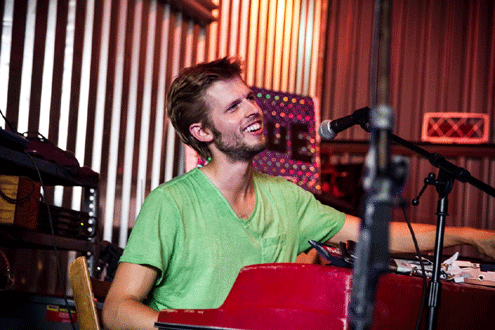


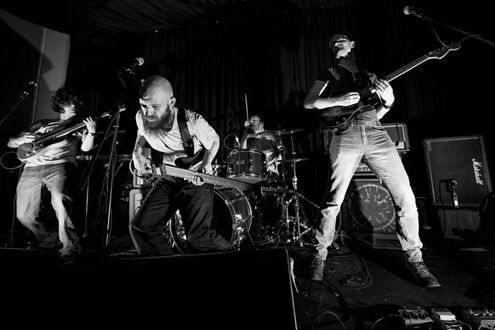
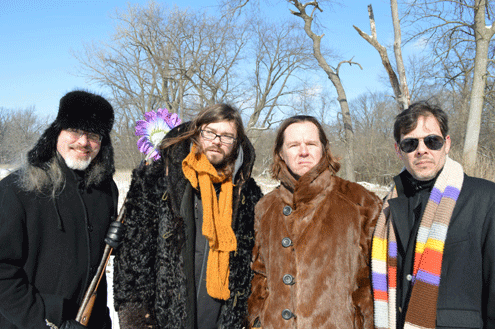

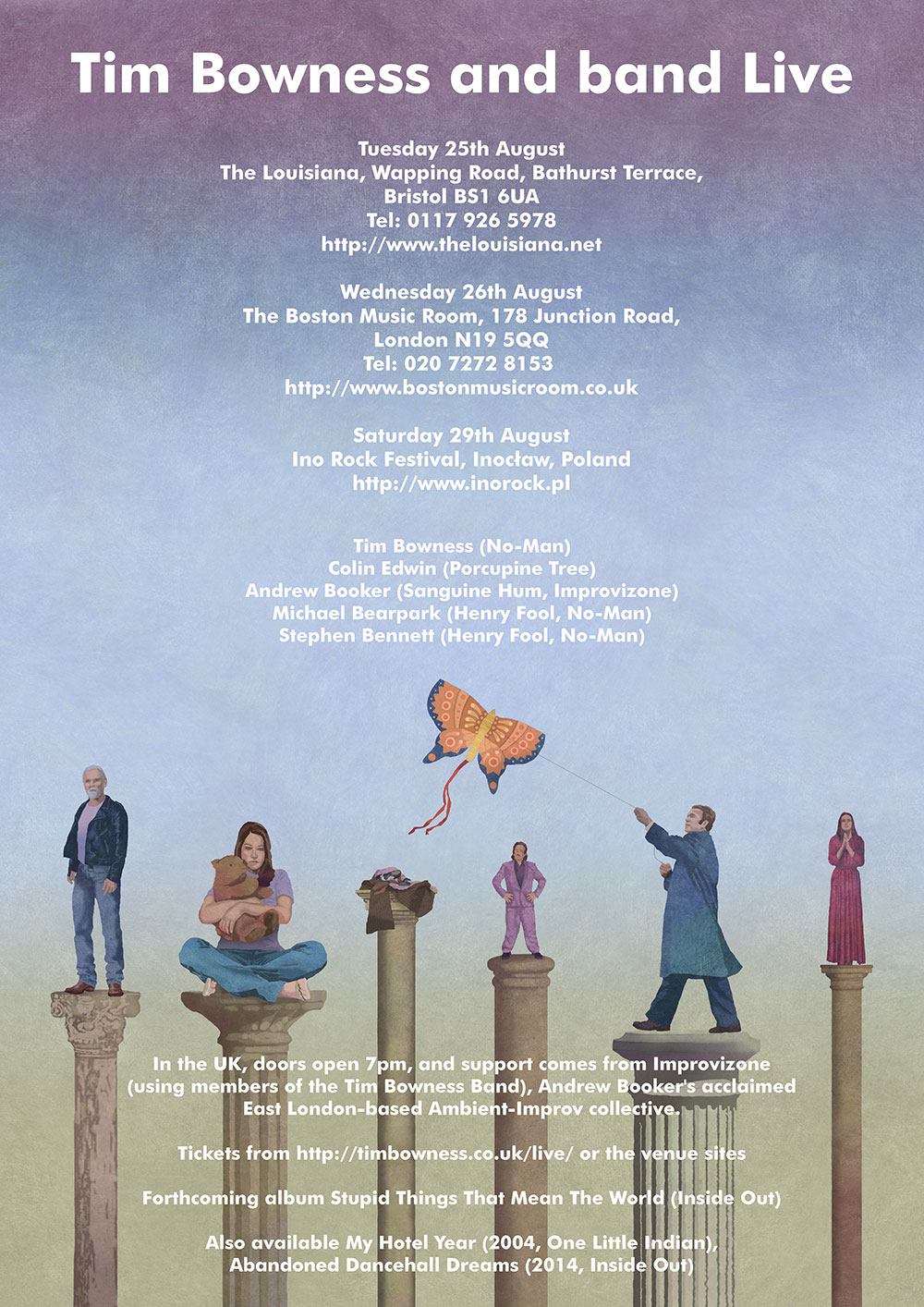


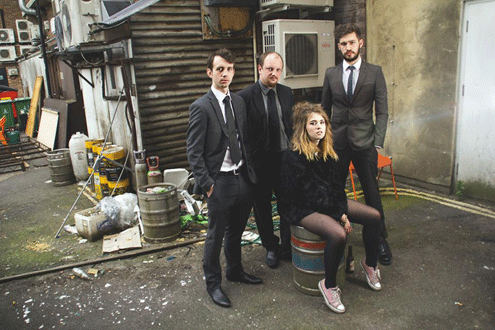

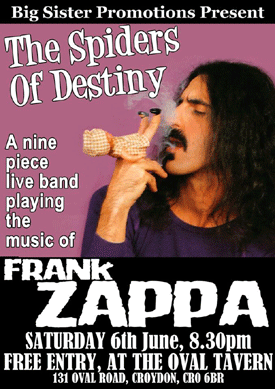
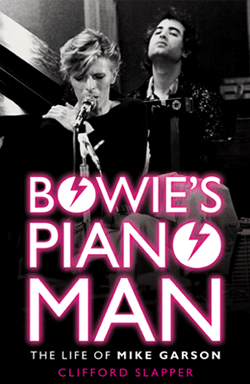
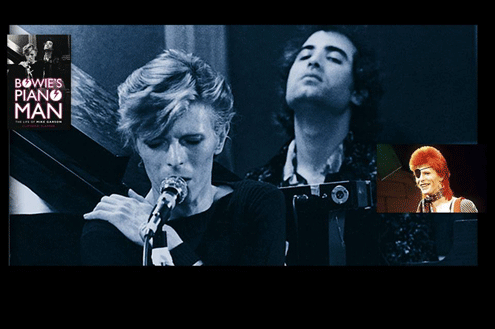








 Misfit City