Until fairly recently, Jorge Arana played guitar and hit keys in Pixel Panda; a precocious, musically omnivorous bunch of Kansas City skronk-punkers. Local heroes, hotly-tipped for the best part of a decade, they quietly called it a day in 2011 but wasted little time in moving on. Jorge’s bass-playing brother Luis stepped up a commercial notch via rising alt.rockers Beautiful Bodies, while other former Pandas can be found mingling psychedelia and hip-hop in Spidermums. As for Jorge, he’s pulled in the final Pandas drummer, Josh Enyart, added bass guitarist Jason Nash to make up a brotherhood of “J”s and stepped over into jazz. Someone in the band had to do it. This is Kansas City, after all – they’ve been shipping jazzmen out and up the river for nearly a century.
Punk roots or not, the Jorge Arana Trio’s serious jazz intent stretches beyond leaving behind quirky band names. Not that this apparent sobriety is absolute. Their debut album title, ‘Mapache’, is Spanish for raccoon, suggesting that the Trio see themselves as determined and adaptable omnivores, thriving on trash where necessary, and prepared to spread mischief around the suburbs if they have to. Some of the immigrant-son, take-no-prisoners fierceness of Pixel Panda has made its way into the new band. The glam racket might have disappeared, but not the stop-start emphasis or the punky crunch. Lester Bangs would have been proud of them.
That said, despite the band’s fierce electric energy there’s less outright skronk here than you might have expected. In fact, there’s less than there was in the Pandas. Instead, the Trio lead a lean, strutting pirouette along a jagged line between lean discipline and a scrawl of energised chaos. If there’s any self-indulgence here, it’s the kind you’d find in freerunning; a rebellious athletic liveliness, bodies pitted against the push-back from concrete mass and city obstacles.
There’s also something of the static, wound-up aura of the very early jazz-fusion bands, huddling among the fragments of busted rules as the ’70s arrived. Free like knife-fighters, trying to save their energies and moments for the right move at the right time but seething with excitement over the open field of opportunities. This latter is mainly in terms of musical tension. Skilled as the Trio are, they retain (for the most part) a clipped-back tyro technique closer to bullish avant-rock playing than to the broader subtler dynamic of jazz. However, their taste for driving syncopations and their bodily hunger for explosions of rhythm make it plain where their musical hearts lie now. Occasional bursts of wordless vocalising – combative, gladiatorial, almost like gang chants – break up or complement the instrumentals. Most of their pieces are short, interrupted, to the point – a quick flare of ideas followed by a watchful silence.
The places which the Trio explore are generally shaped by Jorge’s choice of instrument. Working with Jason’s cement-mixer bass churn and Joshua’s vigorous, spattering drumming, he alternates between electric guitar and electric piano (occasionally swapping mid-tune). Those pieces driven by his hardened, stony chimes of electric piano are more staccato, more turreted. On Bitter Era, Jason devises a ferocious distracted wrap of bass around Jorge – in broken unisons, the Trio thrash out a harsh and excited tattoo around the keyboard clunk. In contrast, I’m An Omnivore could almost be lounge jazz, tootling along happily even as all three musicians wrong-foot us. Each follows a slightly different rhythm, de-synchronising with each other and buckling the sidewalk under the strut.
When the compositions are driven by Jorge’s snaggled-up guitar, the trio work in a looser style: more elasticity, more smudging. Ether gradually whittles a brain-damaged marching riff out of Jorge’s demented squiggles. Peanut Butter works around a tight loop-and-discharge impetus, finally tottering into a wounded wind-down, bleeding off its abandoned velocity as if it were dumping fuel. Thieves Among Us sounds like the aftermath of a car chase. Stuttering away, the band could be clambering out of a canyon, away from the burning wreck of a car, to the accompaniment of headache pulses, dissonant auto-spring sounds and abrupt scrabbles as dazed opponents grab at their feet.
Some of the best moments come when Jorge is juggling instruments. Short & Evil, for example, in which he begins by spotting out ringing, sullen shapes on piano while the bass prowls: later, he’ll rub in crashing cascades of guitar like dislocated banjo-frails. Similarly, Baptize Your Dinner (by some distance the softest song on the record) begins as a passing, minimal sketch on piano, a pail of air and autumnal chordings. Purring like a forest, the drums work around this and transform it to a tolling crescendo, as Jorge steps back in with dabbing slides of tongue-like guitar.
Josh Enyart’s contribution to the Trio shouldn’t be undervalued. While his bandmates’ repertoire of rumble, scramble and tone-slur provide plenty of vocabulary, it’s his drums that give the Trio the fullness of its jazz spirit. He paces the brushes around his snare; adds brief powerful steam-hisses of concerted cymbal; hides polyrhythms in air-pockets for when they’ll be needed, and keeps one hand on the clutch for those quick surges of collective intensity. On Death Mask, he even leads the band: while the bass circles in locked math-rock arpeggios, and the guitar wanders off to dab at colouring chords, Josh’s drums talk in an insistent, assertive jazz language, eventually pulling the other instruments along with them.
Echoes of earlier bands flit distractedly through the music. There are hints of Prime Time and Naked City (in the blaring spirit, at least) while on Nightly Stroll, it’s the junior John McLaughlin of ‘Extrapolation’ (thanks to the dense fierceness of Jorge’s splinter-rough guitar chording and the rock-tattoo drumming, while Jason’s bass slithers after the guitar in search of unisons to stamp down on). Confrontation! briefly offers something of the discomfiting volcanic grooves of the electric Miles Davis band, when Chick Corea ring-modulated his Rhodes piano into dissonant smudges. For Snake In The Grass or Catching Bullets With Your Teeth, it’s the Teutonic jazz-rock of Magma as the trio roar out harsh choral parts over the swinging shifts and over the stuck, angry riffs of the instruments.
In the end, though, the Jorge Arana Trio are very much themselves: tightly wound but loose enough to splatter, viewing their hometown’s jazz through punkish eyes and casting a cartoon mottling across it.
Jorge Arana Trio: ‘Mapache’
Jorge Arana Trio (self-released, no catalogue number or barcode)
Cassette/download album
Released: 26th October 2012
As they totter and lurch through the four songs on their debut EP, Alex’s Hand are almost pure Halloween. It’s not just their affinity for macabre subjects, but their larger-than-life, cartoonish demeanour. They don’t just bring weird to the table – they slap it down on top, like an oversized pair of dirty boots, and then stare you out until you say something about it.
Underneath their gurning and silly pseudonyms there’s some fine musicianship – you’d expect no less from Seattle art-rockers who revere Zappa, The Melvins and The Residents. Yet the band’s prime fuel is atavistic spasms of prehistoric zombie jazz; trainwreck rock-and-roll; jarring faux-boondocks punk. They sound like a wrecked stovepipe hat, or an outgrown tuxedo with the elbows worn shiny: or like a quick rimshot played off the jutting, grimy wrist of a backwoods murderer. The tensions between their darkness, their outright goonery and their twists of clever, carny campery give them their particular flavour. Often, Alex’s Hand come across like a leering, anarchic ‘Muppet Show’ parody of Nick Cave: telling tales of blood and chaos, crawling on all fours, but winking hard as they do so.
As the band roll their parodic, chaotic, travelling-show style along, geek bones sometimes gleam through. On Laura (a spooky, corny ‘Twin Peaks’ tribute) they jog and jerk through a whistle-stop tour of the show’s soap-noir tropes (“stop-light flashing on and off – / ‘there’s a darkness in the woods!’ / A town with so many secrets – / what lies beyond?”). A double-jointed ‘South Park’ scratchalong full of silly voices and 1950s slapback, it chucks the lush narcotic memories of Angelo Badalamenti’s soundtracking unceremoniously out of the side door in favour of a more pointed strangeness. Feedback scrunches around the drum-clatter. Horn-playing guitarist Slurrp blurts out wrecked soul riffs with mottled old bloodstains dried onto the edges. Meanwhile, frontman Doctor Shark stumbles through the song like a disturbed conscience. When he isn’t looning along with the melodrama he’s pulling curtains off the rail, moaning with a barely-tranquillized despair as the tune plays tug-of-war between rock’n’roll perkiness and a wandering moping tonality (all lynchpinned by Slurrp’s startling, randomised guitar solo).
Similarly, the two-and-a-half crash-punk minutes of Robot ply a drunken line between cartwheel, pratfall and purposeful brain damage. Trapped in a tiny shack, the band charge their foreshortened Jesus Lizard riffs back and forth like sore-headed bears. Smacking into walls and roaring out resentful scatterbrained lyrics, they never get further than a ball of confusion. Eventually they crouch and sulk in the middle, smouldering like a burning trashcan and emitting a bastardized King Crimson growl of muttering bass and smeared, squealing guitar.
On the surface this is awkward lunkheadery, but the frustration and dismay is deliberate, self-inflicted – and clearly staged. Imagine an art-rock trio deliberately braining themselves with a tin tray to keep their audience happy. Whether this is all about avoiding straightforward expressiveness or whether Alex’s Hand are on some kind of echt-Brecht trip… that’s less clear. The theatricality certainly allows them to skim some pretty sordid areas, while hiding their sharper songwriting brains in their shoes.
With Stalker, Shark and co. rewrite a ugly tale of abduction and sex-murder as a lachrymose tragedy… but from the murderer’s corner. Drummer Tub skitters away on skeleton percussion; a campfire guitar limps through the chords. While his bass yawps away like cardboard thunder on a travelling-show wagon, Shark blurts out his words like a strangulated Nick Cave. The melody is sweet, lovelorn and memorable, but the jet-black humour is borderline repulsive – “stabbed alone in a room / Crying out, no-one hears you. / You look so lost and afeared – / to him, it’s been a really good year.” Yet a sombre, Lynchian aura of romance hangs over the song. During that moment before the horrible twist, everything seems so much more vivid and alive. “Exit the car, but you look back / and see those trees in the cul-de-sac, / and feel safe on those tracks – / but love has come for you…” The song doesn’t survive its own story either. Disturbing scraping noises and a brief twisted guest guitar solo (from Step Daddy’s Ben Reece) build to a sudden crushing derailment as the dream of love and death violently collapses.
Jaunty and gloomy, Reception picks over homelier horrors – a mire of despondency and addictions – but with Steve Barnes’s beautiful ripples of piano and organ soothing the murk, it’s also the band’s finest hour. With its spectrally pulsing bass and its nighthawk atmosphere, the song comes across like a wrecked and blasted take on Morphine. “Hauling yourself from the reception, / blame it all on depression,” moans Shark, still mooching around mournfully in a shabby coat with his hair in a Robert Smith tousle, clutching a suspicious bottle. “Carted off and then forgotten. / The others refuse that we have a problem. / Drink up – / drugs, self medicate…/ small twist of fate.” A superbly mock-melodramatic, fall-down-drunk guitar solo follows, as if someone had slurred out its name. This is one of those songs that realise that defeat doesn’t usually just drop to rock-bottom and fizzle out, but bumps along on a plateau halfway there, fuelled mostly by bathos. “Like a snail trying to build a home, / the roots don’t last and they end up all alone…” There’s more to Alex’s Hand than big boots, geek jokes and horse-laughs.
Alex’s Hand: ‘Madame Psychosis’ EP
Alex’s Hand (self-released), (no catalogue number)
CD/download EP
Released: 1st October 2012
Still in his early thirties, Joe De Vita’s musical passport is worn and battered, with plenty of stamps and double-backs on it. Previously, this was nothing unusual for a jazz musician, but these days many of them seem to travel smoothly from college to first hire, and then band by band through the swing machine.
Joe’s route-map suggests a more uneven history: checking into and dropping out of music schools across America; mysterious flits from assorted cities; travels through various non-jazz settings (singer-songwriter backup gigs, grindcore bands) en route. Whether he’s releasing music as Shuttlecock or under his own name, Joe’s recordings tend to find him all alone with his guitars, his Casio keyboards and his electronic sound-kit. Is this down to a reluctance to settle into a long-term slot, or perhaps deeper trouble? Time was when this kind of thing was a hallmark of particularly creative jazz musicians: but as Joe’s happy to make the most of it in his own bio, embracing a misfit jazz-punk status, it could just as easily be spin. (Although any musician who’s irreverent enough to release consecutive albums called ‘Reflect’ and ‘Punk Rock Abs’ is worth checking out).
Ancestral Language – a promo single from Joe’s third album ‘Evolution’ – isn’t providing an answer. In itself, it’s pretty accessible – it looks back around forty years to the impressionistic, anticipatory grooves of the late ’60s and early ’70s when Miles Davis, Teo Macero and Weather Report were pushing aside bebop and cool jazz in order to open out a kind of multicultural cosmic funk. Kicking off with a twang of berimbau, it layers up: the patter and slap of frame drums and shakers, the sidelong clunk of a jazz bass, holding its anchor-and-push carefully in reserve; the glint and jags of electric keyboard, restlessly shifting its grip and shifting the chords. If there’s a real band in here, then Joe’s less of the uncomfortable lone gunman than he suggests. If there isn’t, and it’s all software trickery, then at least he has a knack for knowing where all the parts ought to go – at the very least, there’s a full live feel here.
From initial swells of wall-hanging chords, Joe’s guitar eventually takes the lead while staying back. Lurking deep in the mix, distant and bluesy, it has that saxophone-in-a-subway sound: not subdued, but a little cagey. As the tune moves on, more punctuation is worked into the structure – tonks of ever-steadier electric piano, keystroke clinks looped as a digital-age percussion touch. Two-thirds of the way in, Joe begins to wrench gently at his own melodic line, with a promise of further squalls in the evening, but (teasingly) Ancestral Language fades out before we can get that far. A passing curlicue, sprayed onto the wall. Promising.
Joe De Vita: ‘Ancestral Language’ Daddy Tank Records (no catalogue number or barcode)
Download-only single
Released: 25th June 2012
Buy it from:
Free download from Soundcloud. The parent album ‘Evolution’ is available from Daddy Tank Records (CD, limited edition of 100) or Amazon (download)
This profusion of rock power duos – it must be viral. Surgically-reduced, punked-down, jazzed-up, math-rocking or swampy… they seem to be filling plenty of gaps. Pick one of them out, and it’s usually a drum-and-guitar pairing minus the bass, or otherwise a guitarless bass-and-drum coupling. What’s triggering this? The window-rattling scrunch championed by Death From Above 1979? The teasing-twosome model set up years ago by The White Stripes? Basic economics? The old Robert Fripp idea of smaller, mobile, more intelligent units, which in more austere times may exert more of a pull?
Anyway…
Komatu fit – very loosely and fiercely – the last of these options. A drums-and-guitar duo of Finnish rock improvisers, they’ve set themselves up to be as expansive as possible. They seem to use their lack of a bass guitar as a kind of invisible fulcrum: an absence which they can both pull away from and can curve back to compensate for. Having a bass would just pin them down, render them linear; when what they actually want to do is stretch themselves over every possible angle of orbit. In the absence of those root notes – those stolid map-pins of rhythms and root – both and neither of the two musician strive to offer something else, containing their wildness only by a teasing instinct for where the brinksmanship stops.
Komatsu are also unsentimental about naming their music. Most of the time, number placements will do instead, and you can bring your own interpretations to the party. Neither of the duo themselves are inclined to give away much in the way of meaning. The music itself, however, is anything but dispassionate. Even on those occasions when it turns mathematical, the numbers swarm like killer bees, waiting to plunge into brief resolutions and then dance away again.
Unusually, much of the time the lead instrument is Jussi Miettola’s drumkit. Hinting at and ducking around rhythms more often than simply holding them, his distinctive playing is busy, expansive and never less than exciting. It’s almost – but not quite – free jazz. It’s heavy on the sonic possibilities of the top kit with its dryness and its imperative rattle, sometimes bursting into vigorous splatters of bass drum and cymbal; coursing easily between Art Blakey, thrash metal and points in between.
Guitarist Juha-Pekka Linna plunges his guitar into a mass of loops, mechanisms and pulverizing crystallised distortion. The results run a broad gamut between a taut dry rattle (like spasming rockabilly) and a screeching cyclonic blizzard of rotating noise. In spite of this whipped-to-chaos approach, it’s often him who ends up holding Komatsu’s pieces in shape. His loops become binders – circumscribing the duo’s wilder flights, defining their narrow tones and furiously tight patterns.
On the Intro, fractured jazz chords on guitar wrestle with snare-scrabbling free drumming; an initial spideriness which is gradually bolstered and transformed by smudges of trippy, expectant backwards guitar. This in turn suddenly inflates and hunches up in a blur of warm overwhelming fuzz into jubilant, wing-whirring psychedelic noise. As Komatsu move directly on into First, it’s all swapped for a fold-over of psychedelic guitar echo; chattering in the teeth of an imagined gale, billowing itself out of shape. An expert roaming roll around Jussi’s toms adds another dimension of tension.
As Jussi and Juha-Pekka work away at the piece, it escalates into a panning tornado-swirl of layered guitars and rattling drums, brittle and yet overwhelming in its pent-up force. You imagine a man swinging rocks round and round in a bucket, waiting for that instinctive moment when he can open his grip and let everything fly. This never quite arrives, but Komatsu’s cats-cradle of skittering percussion, controlled screech and speeding draglines keeps you hanging in anticipation until that imaginary gale finally, rapidly, falters and dies.
For Second, Komatsu tone down the surge. A West African-inspired walking rhythm, played out on guttural post-punk guitar, tramps on against increasingly furious stick-and-tom rattles burst from the drums: Jussi’s decisive and pointed breaks make a one-sided musical conversation. There’s nearly two-and-a-half minutes of this dynamic sparseness, and then the faintest whisper of sound creeps in and gradually rears up in a veil-sweep of celestial noise guitar. As this grows and billows to hang above the tune, like a grand valance or a deathly Mellotron chord, the mood grows grimmer. Inexorably, the African stroll is overwhelmed by ever-increasing bass smudges. That Mellotronic chord eventually drives the music towards a waiting cliff. They have a certain taste for threat, then.
While much of hard improvisation sounds like a wrestling match (with cascades and grapples of angry notes) Komatsu’s version is more like a stalking, or an illustration of danger. Places once safe begin to flood. Confusing shadows blight the landscape. Situations turn uncomfortable.
Nothing For Money (the only Komatsu song with a name) broods like a dark Western, Juha-Pekka initially restricting himself to giant Morricone-esque guitar pluckings over Jussi’s uncharacteristically miserly, mathematical pick-out of drum parts. A second Jussi, jazzier and looser, plays against himself in the background, filtering dustily through a radio speaker like a memory of easier times. This, too, is gradually overwhelmed. The guitar begins to shucks out backward swells again. The drumming becomes more counterpointed, more belligerent.
With its uncomfortable, weirdly perpendicular funk-clank full of disassociated fragments (drum points, spacebar chinks), Third sounds like hip-hop might have sounded had it been invented and played by Can. It has an alienating quality: a kind of stern party music, pushing you into painful shapes. Juha-Pekka’s main guitar part is squashed flatter than wallpaper. Another of his lines drags a jangling siren motif up and down. With this spiraling in the foreground, a distant heavy-metal grind (colossal, but given quietness by distance) moves into place, by which time the drum parts have turned metallic too. The finale is an unexpected drop-away into fifteen gurgling seconds of distress call.
Fourth is split into two different and distinct parts. The first part draws on avant-garde ideas from contemporary classical ideas – vicious thunks of the lowest possible piano notes; groans and distracted orchestral growls from the guitar processes. These in turn are bled into chance noises: an airy temple-bell dings and chimes, and there’s the clear close-up sound of someone rolling coins or ball bearings around the studio. Some reflective menace is added by baleful post-rock guitar tinges and ear-filling fog-banks of sub-bass.
Suddenly, Jussi explodes into the second part with a tight lash of cymbals and a stream of West Coast power-punk drumming. There’s a scourge of rapid-strum guitar, at thrash-metal intensity, but without the rhythmic restlessness. Bar by bar, it rises up the chromatic scale while subliminal keyboard figures sketch moving arpeggios behind it, before the whole thing finally hits a crash-barrier of static.
On the final track (which, with typical Komatsu insouciance, is just called Last) the boys let their hair down. A skating buzz of static synthesizer serves as a continuo; Juha-Pekka’s wet and warbling science-guitar figures provide something like a melody. Halfway through, the emphasis shifts and the music morphs woozily elsewhere. The synth buzz become a deep bass drone; the guitar patterns become drips in the background, while the melodic role is taken by whooping varispeed notes.
From brood to fun-ride, sometimes two is all you need. There’s certainly not much missing from this fierce bout of inventiveness.
Komatsu: ‘Komatsu’
Komatsu (self released, no catalogue number or barcode)
CD/download album
Released: 24th April 2012
Steve Lawson: ‘Lessons Learned From An Aged Feline – Part 1’
Dedicating an entire album to a cat sounds unforgivably twee, but Steve Lawson really couldn’t care less. He’s probably immune to any such embarrassment, having long fostered an image as The Cuddly Solo Bass Player (This included a stint braving potentially fatal scorn from Level 42 fans, when he played some unmanly support slots to their heroes while wearing angora coats, glitterball T-shirts and heterosexual nail varnish. If he isn’t immune to embarrassment, at least he can claim that that’s something Paul Simonon never had the balls to do.) There’s also solidity to his gesture: the cat in question is Steve’s old and ailing Abyssinian, and Steve himself is a firm believer in the lessons gained from loving our companions (pets included) and learning to accept their ageing and their eventual deaths.
Originally ‘Lessons Learned From An Ancient Feline Pt 1’ was a free companion release for the second Steve Lawson album – ‘Not Dancing For Chicken‘. As such, it’s inevitably less ordered. At the crudest summary, it’s an outtakes-plus kind of release compiling the bits of the ‘…Chicken’ sessions which didn’t fit comfortably onto the main album. Even so it gives a surprisingly effective rough’n’ready look at Lawson’s prolific and wide-ranging talent. The lover of pretty tunes who’s also a serious gear-hound and sound-mangler; the electronic texture looper who’ll groove like Gilberto. The distorted beat-science meddler with a thoroughly un-ironic taste for playing Fly Me To The Moon straight with no chaser or spoiler.
On the easy side, there are a couple of bits of Lawson the Latin lover. The opening One Hip Cat is a twangy Brazilian-style guitar study, allowing him to display some accomplished jazzy chops inside its lazy summery breeziness. There’s a hint of what’s to come via in the shape of the occasional odd drones undercutting the music; drifting in like the suspicion of sharky shadows deep below blue lagoon water. Here Endeth The Lesson is one of Steve’s loop-assisted live collaborations with himself – a duet between a slow Latin rhythm bass with a pillowy tone and a solo fretless bass carrying the tune. The latter (high and tenor-y) sings off into the dusk with an impeccable spacey melodicism, ultimately sliding away into a sleeper’s fade.
Either of these two pieces could have fitted into a summer jazz festival of samba and ice cream, and they’d also have matched those glitterball T-shirts. Two neighbouring pieces definitely couldn’t. Cute names notwithstanding, both Framulous Jam and Evil Harv’s Evil Empire are discombobulated systems music. Like everything else on the album, they’re generated solely by Steve’s bass guitar and effects rack in real time. Unlike the easy-on-the-ear pieces, they sound thoroughly electronic and abstracted.
Evil Harv’s Evil Empire arrays fast and atonal binary-on-off hums, mingling them with suspension-bridge twangs and plucks and snips. Interrupt silences and backward sounds are stewed into the brew, before all is ultimately rendered into a backdrop for some of Lawson’s roaming, unbounded glissandi. In Framulous Jam, harmonic chime-chords are worried gently by electronic interrupts, setting up interesting conflicts between hanging sustain and random blip-jitters. Both could sidle into those earnest meets in obscure juice bars, haunted by men from ‘The Wire’ intent on watching other men frown over gurgling laptops.
Ultimately, the album’s centrepiece is the saccharin-titled but sonically stretching two-parter Sleep Eat Snuggle Repeat. In the first part, angelic traces of sustained E-bow bass – thrillingly vocal – move between foggy front of cold and warm textures, exchanging almost imperceptibly. In echoing caverns beyond, pings ring like stressed piano notes, clocks tick, water drops, wah-pedals disgorge diffuse gushes of sound, and bubble-motors pulse and spurt. Part two builds on the preceding one. A float of sounds and traces are punctuated, now and again, by a giant organ-like roar as the digital stops are eased out. It’s pure abstract indulgence, but mightily effective. It sounds like the dreams of a flea on a whale.
The big joke is that behind the twee titles lurks Steve’s most bizarre album yet, and one which stakes his most effective claim to being a serious experimental musician as well as a family-friendly melody man. What was the most important lesson which Steve Lawson learned from his cat? Why, to move when you least expect it…
Steve Lawson: ‘Lessons Learned From An Aged Feline Pt 1’
Pillow Mountain Records/Bandcamp, PMR 0013(B) (no barcode)
CD-R/download album
Released: 2nd September 2002
Buy it from: Bandcamp, download only. The original release was a CD-R included with early orders of ‘Not Dancing For Chicken’: some copies may be in circulation second-hand.
Steve Lawson’s second solo album shows that he’s taking assured strides in all directions. His relaxed, informal debut (2000’s ‘And Nothing But The Bass‘) was a generous concoction of looped and jazzy bass guitars, vivid electronic textures and welling ambiences. It showed what could happen when benevolent prettiness intermeshes with a generous pinch of sound-warping avant-garde tendencies.
Lawson’s latest solo efforts display a more kaleidoscopic approach while losing none of that endearing friendliness. “Not dancing for chicken” is a war-cry – something to do with buckets of junk food, the waning star of MC Hammer and the fight between commercialism and art. To be honest, Lawson can sit that specific war out. He can mash up sound with the best of them (as he’s done with the French improvisers Franck Vigroux and Jerome Curry), but the warrior/guru moves of the dedicated avant-gardener aren’t really his style. Instead of responding to sickly market pap with ferocious spills of obvious disruption, he marries simple, memorable rivulets of melody to a broad field of sonic treatments. In doing so, he creates music which rather than turning its back and raging will instead sail right in under the commercial radar to tickle people’s senses. If that makes him an armchair revolutionary, at least he’s the kind who offers you the armchair first.
To define this better, one could quote one of his own song titles: Lawson believes in “the virtue of the small.” Sticking to a single-take, bass-guitar-only rule (and pursuing his experiments with sound processors, EBow sustainers and loop technology), he continues to hit the elusive target of making music-for-everyone. Centred on a deft, tuneful and jazzy core, his music avoids the predictable calisthenics of fusion and the stolid members-club beefiness of mainstream jazz and post-bop. Instead, he’s a nifty bantamweight with a remarkable ear for timbral decoration, and an obvious love for his listeners.
No More Us And Them displays this perfectly, showing Lawson at his very best. Cascading curtains of gorgeous submarine texture tumble in waves over particularly poignant fretless bass figures and a questioning melody which hovers marvellously between mourning and hope. By way of contrast, MMFSOG offers a goofy Hawaiian celebration. Lawson squeezes out a typewriter rattle of tabla-styled slap groove before anointing it with layer upon layer of mischievously camouflaged bass sounds. Most notable is the giddy, slippery steel guitar impression, roller-blading precariously across the verses; but there are also cicada choruses, stunt-plane zips of backwards melodies and blankets of Warp-styled electronica burble on offer. Eventually Lawson cheerfully runs the song into the swamp and leaves it there to marinade, taking up more mutant funk on Channel Surfing in which a stupefied, robotic slap line chunters merrily under a pale, ringing line of tumbledown chord arches. Various queasy jazz riffs and funky wriggles squeeze past it as best they may.
Although Lawson delights in cooking up this kind of loop stew, ‘Not Dancing For Chicken’ doesn’t reject tradition. On Regretting The Rainbow (the most complex piece on offer) he employs his six-string contrabass to blend elements of jazz guitar smoothies Martin Taylor and Joe Pass in a luscious and breezy study, steered subtly towards some difficult questions via an intrusion of quizzical harmony. Danny And Mo lets Lawson’s fretless bass and EBow gently sing the praises of underrated British bass heroes: a nice counterbalance to the endless musical tributes to Jaco Pastorius tumbling from other bass players.
A couple of pieces (the relaxed Brazilian lilt of Amo Amatis Amare and the stumble-blues of Tom Waits For No Man) are one-man-band opportunities to fool around with some familiar forms, to Lawsonify them, and to take advantage of some truly appalling puns. Two ballads – Need You Now and Jimmy James – showcase Lawson’s humble-yet-richly-romantic solo tone, as well as his flair for understated counterpoint via a couple of artfully poised loops. The latter (a valediction to a lost friend) moves away from simple Windham Hill prettiness thanks to the eerie fingertip-on-glass textures that circulate behind its warm, sleepy fretless melody.
The stranger music sends Lawson into a different area again. Exit Sandman is a lurking mood piece, a sour work-song riff wafting up into vaporous blue-grey wails of E-bow. No Such Thing As An Evil Face is a ghostly African death-song. The amnesiac Ubuntu is a similar set of waves reaching the beach, Lawson’s backing loops providing tinkling tabla tones and prinking noises like cooling shrapnel.
The finale, Highway 1, brings all of Lawson’s work together. The rich, free-ranging travellers melody sits on gently swinging cradles of clicks, pops and ghost notes and on shimmering shells of chords. It’s carried in turn by a sweet, blues-y wah-tone like a swamp foghorn, then a shimmering ripple of backwards basses, then a sky-borne E-bow wail which flutters like a giant and beautiful moth. Lawson conjures up heat-hazes and mirage-doubles of parts and melody out of his loops pedals, and will-o-the-wisps dance counterpoint but never obscure the relaxed momentum of the tune as it heads onwards to a permanent perfect sunset and fades out; still travelling as hopefully as the smiling man on the bass.
Steve Lawson: ‘Not Dancing For Chicken’
Pillow Mountain Records/Bandcamp, PMR 0013 (no barcode)
CD/download album
Released: 1st July 2002
Talk’s cheap, and so am I… at least, when writing intros. I was going to pursue the “conversation” theme by squeezing in comments of my own about eavesdropping on musicians, or about the Troggs tape, or the language of notes. Then I put all of my smart-arse lines down, and just listened.
There are some records about which it’s difficult to say anything. Much. They crop up when you want to get expansive and to show off: and then you find that you just can’t use them as launch-pads for spectacular rants about the state of music, or the permeability of the soul. They bob beyond clutching fingertips and wagging tongue, deflecting the last-ditch wafts of hype with which you try to lassoo them. They’re critic-killers. And the funniest thing is that you love them for it – for the best reasons (nothing to do with clenched teeth, uptight craftsmanship or sweating in front of paying audiences). ‘Conversations’ is one of those records. Go and buy it. Feel good.
Alternatively, accept that I’ve got to try to explain it anyway: so please humour me for seven hundred more words or so…
Basics, then. ‘Conversations’ is a set of immediate, improvised duets between two British musicians – Steve Lawson (fretless bass guitar, loops) and Jez Carr (piano, small antelope statuettes) – from one of the tasteful/tuneful intersections of jazz and the avant-garde underground. Two sprawling self-penned essays on the CD sleeve reveal a cheerfully anti-heroic approach to improv and to music in general. Lawson and Carr name-check Schoenberg and Yehudi Menuhin, note that “people think that free means ‘out’, when free just means free”, but steer clear of portentousness. Oft-revived improv traits – stoniness, pomposity, randomness, irritating mysticism – are ignored in favour of an earnest, open approach.
The music reflects this. Clean and quietly inspired, it resounds through comfortable air, sharing subtle humour. It makes you think of a friendly hand on your shoulder; not a scuffle in an alley, or six days at the foot of a grouchy guru. If it sent postcards home, they’d be of green hills in ECM-land, or soft-focus shots of Bill Evans’ study. A few pictures of Carla Bley and Steve Swallow’s backyard might be in there too: but from the quiet time, somewhen in late spring, a lull in the heavy blowing season. This sounds pretty, and it is. Ultimately ‘Conversations’ is soft-edged, as relaxed as winding English rivers. It never works up a head of steam when a delicate flow will do instead.
Despite Carr’s Romantic leanings (he owes as much to Chopin as to Evans or Dollar Brand), he doesn’t waste notes, or drown the music in florid chords: and although ‘Conversations’ is built on slick musical technology, it’s not hijacked by it. Lawson (usually a solo performer, with a warped melodic looper’s approach) has all of his digital gizmos and luscious overlaid textures to hand; but he never once swamps Carr with them. For his part, Carr draws as much warmth from a digital piano as others could from a concert grand or from a well-worn-in jazz-club upright (covered in cigarette burns, whisky spills and four-generations-worth of jazzmen’s fingerprints).
Each piece is double-titled, reflecting each players’ viewpoint. Although Carr’s serious-sounding Migration manages to also be Lawson’s flippant Whateverwhatever, the duo maintain remarkable accord as they play. As Lawson and Carr settle readily into light-footed slow-motion melodies or feathery grooves, rich smudges of bass tone or rapt curving anchors of sound are left revolving in the loop pedal waiting for counterpoint with quick, relaxed piano touches. There are plenty of opportunities for hearing the expansive, delicately embracing tones of Lawson’s solo melodies: but for most of the record he provides a low-volume dub menagerie of playful but expressive noises. These sit alongside Carr’s crisp, ever-fresh improvising like an inspired combination of Percy Jones and a New Age Squarepusher.
On Sweet’N’Spiky/Shades Of Creation, Carr outlines ideas of rapt melodic phrases over Lawson’s bedrock riff, leaving our imaginations to fill in the gaps. At his leisure, Lawson fills in gaps we hadn’t actually thought of – via distant scrunches, data streams, balloon pings, gargling clicks and spinbacks, all sitting in the pockets of the tune. Walking rhythms interplay for Whateverwhatever/Migration: Carr’s brittle and determined piano mileposts the journey while Lawson offers squeaky wheels, footsteps and theremin wobbles of bass loop. For 1, 2, 3, 4…/Broken Lead, the bassist offers a fragmentary free-funk undertow, further softened by layers of unorthodox spindly chords and gurgling harmonics as Carr provides bright spins of softly-fingered notes.
Destination Unknown @ Point Of Departure/Drifting Dreaming makes the most of a grand vista of musical space, but does it by filling up as little of the view as possible. Carr plants brave speckles of light on unseen crags while a variety of subtle Lawson noises low like distant cattle, or write backward circles in fizzing firefly textures. Signing off with Closing Statement/At First Sight, Carr opens up into ringing blue ripples of controlled delight. Lawson builds up from E-Bowed foghorning soundscapes, progressing to wah-wobbled groove pulses and shimmering echoed treble tremors. Two-thirds of the way in, the music finally slides gracefully into a straightforward duet. Lawson’s yawning fretless notes cradle an ever-sleepier Carr – though unusual tinges of chording promise colourful dreams. It’s a beautiful closer to an album on which nothing has got in the way of the music. Neither embarrassment, nor aggression, nor flash.
What is truly remarkable about ‘Conversations’ is its easy, generous grace: unobscured by its gadgets, the skills of its players, even the hints implicit in genre and background. Waylaid by catches and self-consciousness, few records of “open” music are truly open. This is one that is.
Steve Lawson/Jez Carr: ‘Conversations’
Pillow Mountain Records/Bandcamp, PMR 0012 (no barcode)
CD/download album
Released: 1st January 2002
Having followed a series of assured, wide-spanning loops passing through jazz, art-rock, prog, ambient electronics and Gong’s fertile psychedelic universe, perhaps it’s time for Theo Travis to come home. Or, perhaps, to build a home.
One of Britain’s finest (yet least precious) saxophonists, Travis has paid tribute to the post-bop traditions of Coltrane and Tyner, blown full improv and racing fusion, played balladeer and pop romanticist, and breathed frost over ambient darkness. ‘Heart Of The Sun’ summarises this breadth on a single album, unifying itself around his compositional variety and the flexible determination of his playing voice. It’s remarkable for the humility and warmth of its approach – partly from Steven Wilson’s beautifully atmospheric mixing (an object lesson in letting jazz studio performances breathe as naturally as live gigs), but more significantly from Travis’ uncomplicated attitude towards allowing music to happen.
A sometimes-unguarded, sometimes-studious musician – who gives his all either way – Travis is also someone who doesn’t need to throw a leader’s weight around. Subtly poised and authoritative, he stands back from the obvious limelight throughout ‘Heart Of The Sun’, allowing his guests (in particular, pearly-toned trumpet veteran Palle Mikkelborg) to illuminate the music, and then gracefully reflecting that light back himself. Grinding no axes, ‘Heart Of The Sun’ sits itself down at the accessible end of jazz, with Travis discreetly polishing his musical breadth to a smooth evanescent ‘Kind Of Blue’ consistency.
His standard quartet members – David Gordon on piano and organ, Andy Hamill on double bass and Marc Parnell on drums – are the album’s backbone (with occasional rhythm section substitutions from Stefan Weeke and Björn Lücker). Theo’s partnerships with these players allow him to exercise some more straightahead jazz moves, via a tenor sax tone blending the polished New York bite of Michael Brecker and Dave Liebman with the earthier strengths of British bluesman Dick Heckstall-Smith: as demonstrated on the velvet-smokey blues of All I Know. On the other hand, the standard crew also raise the stakes on Fast Life, in which Andy Hammill makes the most of his experiences backing contemporary drum’n’bass luminaries like 4 Hero and LTJ Bukem. It’s a nimble, daring demonstration of how clubland’s drum’n’bass beatscapes are both nourished by jazz and able to feed back into it. Hammill, Parnell and Gordon slip and slide through a succession of sleek, exciting, ever-morphing junglist pulses, like Red Snapper in black ties. Travis and Mikkelborg travel cheek to cheek over these flexing surges, quoting mischievously from mariachi and Mission Impossible, Mikkelborg occasionally rinsing the beats in a wash of wah-wah’ed electric trumpet.
It’s also the standard quartet who are behind the very different approach of Northern Lights – texturally, a close cousin to Travis’ dark-ambient work as half of the electronica duo Cipher. His soprano sax (making its only appearance) stands poised in a lonely, bowed-head intro, redolent with melancholia, over Eno-esque dark-water atmospherics. Mikkelborg responds with a silvery, fantastically tender muted melody – comforting and passionate – that comes and goes like caught breaths and compassionate advice above the carpet of Gordon’s Hammond organ, slowly warming and soothing that initial exposed chill.
The quartet – this time augmented by Mystics guitarist Mark Wood, a companion from Travis’ nights in the improv lab – turn in a relaxed yet magnificent performance on Barking Dogs And Caravans. A musical picture of childhood holidays and British holiday camps, it provides Travis’ best melodic solo of the album. But with its friendly air of disarmed tongue-in-cheek pomp, the barrel-organ Hammond figures and Wood’s Frisell-ish lacing of bell-like guitar, it’s also an opportunity for Travis to explore the more unselfconsciously affectionate corners of the British jazz impulse. Here, you can hear the same mingling of warm, pubby matey-ness and superbly expressive playing as found in the Loose Tubes school of Django Bates and Iain Ballamy: particularly when Travis cuts loose with some celebratory, laughing tenor wails.
Elsewhere, British improv-scene tendencies get a look in on That Old Smile: initially a deceptive, straight sounding blues strut driven by Parnell’s haughty cymbal. Wood – using a solid-yet-limber blowtorching tone – moves outward from a supporting position via a series of iridescent bubbles of sound, allying themselves with Gordon’s increasingly shardlike organ, The piece’s impatiently accelerating choruses (and its nods to the excitability of prog) moves to a point where the playing melts, with a dropping silence, into a heated atonal Bitches Brew jam. Inflamed by hissing cymbal work, Wood’s Sonny Sharrock-ish car-crusher guitar explorations utterly displace the saxophone as the heart of an aggressive whirl of mutinous invention.
More extra-curricular activities are represented by Gong guru Daevid Allen. His infamous glissando guitar (a gentle, thrilling shiver of sound, like sheets of luminous rain stroked by fingers of wind) adds an unearthly, spine-prickling element to offset the familiarity in the album’s lone cover – Van Heusen and Burke’s Here’s That Rainy Day. The returning Mikkelborg (on serenely confident flugelhorn) and Travis (in luxuriant, purring ballad mode) handle the traditional melodics, while the subtle icicle colorations of Gordon’s piano and Björn Lücker’s steady click of rimshot mingle with Allen’s eerie distortions of the atmosphere.
More outright subversion of tradition comes with the surreal Last Flight From Twinwood – an impressionistic, pulse-free, last-days-of-Glenn-Miller tribute in which a spectral big-band sound is provided care of multi-tracked Travis flutes and the one-man clarinet ensemble of Stewart Curtis (moonlighting from Kletzmer Groove). Mikkelborg’s delicately wah-ed electric trumpet haunts the music’s open spaces; Travis’ sometimes anguished tenor cuts across them. But the trump card comes in the unrepentant, disincorporated screech and spring-noise of Mark Wood’s distant guitar, a harbinger of failing aircraft machinery…
The sixteen-minute trail of Bass Rock is a final piece of Travis landscape portraiture, tracing a fluent and understated post-bop slide. Its freedom is defined by Stefan Weeke’s beautifully-timed, gliding elisions on double bass and the casually intent whisper of Lücker’s brush-drumming. And also by its cessations into near-silence but for oscillating ambient loops. Here, Gordon’s flickering touches of piano are sometimes the only foil to Travis’ sax – liberated now from discretion or restraint, to cry with a kind of baffled joy into the night. An open-ended homecoming.
Theo Travis: ‘Heart Of The Sun’ 33 Jazz Records, 33JAZZ063 (5020883330631)
CD/download album
Released: 3rd September 2001
Little has changed in Tony Harn’s approach, but the Warrington fusion-rock guitarist has never sounded happier. His lyrical, tightly-controlled hard-rock drive is still set off against tumbling, multi-faceted art-rock arpeggios, plus enquiring shapes and vocalised textures drawn in from the world of modern jazz guitar. But the lightness of touch on ‘Moving Moons’ – and its renewed breadth of expression – makes it his most assured work to date.
This third album seems to be about simply enjoying the flow. Its gently sparkling mood is that of a well-pleased man, leaning sensually into his work. As ever, Harn (playing or programming all the instruments) blends his music without cynicism or self-consciousness about his comfortable sound. The bright, guileless weave of cyclic minimalism, gleaming Factory Records economy and judiciously-employed jazz-prog flamboyance retains Harn in a small, well-kept territory of his own.
You can trace a Pat Metheny legacy in some of those friendly guitar percolations, and that of Vini Reilly in the glittering, spindly-but-intricate echo-box patterns. But the overdriven keens of his lead lines have the affable, comfy edge of a ’70s geezer rocker – good-natured, puppy-rough and serenely blissful. At root, ‘Headstart’ is a Satriani-style rocker, growling from the pit of its sulky, dirty wah-rhythm and attempting to swagger. Yet Harn focuses and soothes it, opening the music outwards and festooning it with reflective pointillistic arpeggios; finally leading it towards inclusiveness and away from posturing.
Compared to the pastoral English flavour of Harn’s previous album ‘Lifebox‘, ‘Moving Moons’ is built on a summery Mediterranean warmth – hot nights of brilliant stars, or energising washes of daylight and bright stucco walls. Although Harn sometimes lets his airy keyboards dominate (especially on the pocket-funk throb of Pulsecode, synth riffs chuckling like contented babies), the pervading sound of the album is acoustic, or near-acoustic. Despite of the squadron of stratospheric rock wails and the sheath of Andy Summers textural swells, what really informs Jackal is Spanish guitar, all tangy attack and tremolo. Anger And Empathy provides a dynamic demonstration of Harn’s experimental side – a slow-motion volcano-burst of bent whammy-bar swells, scrapes and tortured violin-bow noises, all fed through outer-space distortions and echoes. But this too flows forward into another Spanish-styled guitar progression, clean and sweet: and ‘Safe Again’ is full of perky acoustic strumming as Harn takes flight, deliciously chasing his own echo.
Although this strays closer to driving music for the Algarve than it does to Paco Peña, Harn invariably saves the day with his ear for tunes, his knack for beautifully refracted arrangements, or his mastery of unabashed constructive naivety. The marriage of technology and innocence – a rare quality in guitarists – is Harn’s ace card, and a surprisingly effective one.
Moving Moons itself is a fragrant nightscape – tootling synths kissing up to arpeggio guitar and the sound of floats bobbing in reflective water. Sweet meteor trails of guitar-wail arc across the air for a rendezvous with moving cross-rhythms; and more spare, sweet paths of feedback show up on the deliciously lazy study of Standing In The Doorway To Your World. Here, they play over the gently assured structures built up by Harn’s synths and organs, or ease breathlessly across a classical-minimal duo of Reilly-esque clean guitars. Lake Song has Harn orchestrating a duet of twinkling post-punk guitar and hooting ’70s overdrive, the drumbox teased by reggae-tinted bass beneath those double-stopped minimalist patterns.
Generally avoiding the temptation to rampage incessantly across his fretboard, Harn’s drawn instead towards finding and sitting on pretty patterns. Sometimes this gets dangerously close to cuteness – the breezy Bubbleburst, for example, like a chance meeting between Alphonso Johnson and Brian May in the kids’ end of the jazz-rock pool. User One (Moon Two) also lives in the bright-eyed zone, bouncing its swirly jangle of notes against the night sky, keeping them up and moving via its pumping, lightly-whipped funk bass-line.
As a counterweight, Harn addresses his jazz leanings more substantially in a couple of loose fusion ballads. Time For Answers merges swing rhythms, prog assertions and a Django Reinhardt gypsy wriggle, leading them all through to a celebratory duet of guitar and tootling synth. Sixlowdown aims at the jazz pocket through the gaps of another reggae-styled bassline: a bubbling, tripping sway like a mid-’80s Miles Davis ballad, emphasized by the growl of bluesy distortion Harn employs for terse comments from the sidelines, flexing a few John McLaughlin sensibilities.
‘Moving Moons’ sometimes seems a little becalmed within its coasting motions – a touch too happy in its light’n’easy beauty – but with such lovely scenery to glide through, it’s little wonder that Harn’s opting to cruise easily. Ultimately, this time he’s offering beautiful liquid-gold guitar with its shoes kicked off, and whether you choose to join him on the sundeck is your own affair. But he couldn’t be any more welcoming if he tried.
Tony Harn: ‘Moving Moons’
Tony Harn, THCD2 (no barcode)
CD-only album
Released: 2001
One of my small daydreams of alternate pop history involves Clare Torry. Having raised the hairs on the back of my neck with her ecstatic singing on Pink Floyd’s ‘Great Gig in the Sky’, she wouldn’t have slipped away anonymously. She’d’ve gone into the studio with songs for herself and produced at least one album with that voice, that understanding set free. When (on Francis Dunnery‘s ‘Close My Door‘) I first heard Eddy Moran’s arresting wordless vocal soaring skywards – twisting, keening, cracking and surging – I felt that same hair-raising chill. Flashed straight back to the same daydream.
I’m luckier in my dreaming sometimes. Although, for her debut EP as A Girl Called Eddy, she’s not repeating the magnificent Torry-esque splendour that turned my head the first time, Eddy has found other ways to chill me. Her songs could’ve waltzed out of the ’30s, or the ’60s: torch songs set to low glow, fanned into sudden flares by a crack in control. Cool heartbreak in her voice, she’s like a more ambiguous Tracey Thorn. Not someone who’ll glut her despair centre stage: she’s more like someone who you might catch staring at you piercingly from beside the bar, quiet, wise and intent.
‘Fading’ does its bit to draw back the curtains of sorrow. A fragment of Blue Nile lushness, slurs and fake orchestra, it revolves like a ferris wheel trailed by a puff of New Orleans trumpet. Cinematic, but less so than ‘Soundtrack of Your Life’; which – set on capturing the swinging ’60s side of Eddy’s imagination with its bossa lilt and breezy “bah-bah” chorus – doesn’t follow the torch course so closely. But beyond its cigarettes, its memories from film and old photos, its gushes of grand Mellotron and sitars, it has its centre of bereftness. “If ignorance is bliss, then seal it with a kiss, / but it was never supposed to end like this.”
‘Heartache’ – eased along with upright bass, a mascara-slur of brush drums and soft dips of weary piano – brings out the real phantoms of loss. “You’ve seen his face somewhere before. / Now you know for sure / that you can call him heartache – yeah, you can call him that,” Eddy breathes. “Yeah, you can call him heartache – you’ll never get it back.” Ragged memories and the force of erotic imagination are where these particular ghosts live, and Eddy’s well aware of it.
A ghost of another kind haunts ‘Girls Can Really Tear You Up Inside’ – the spectre of a vanished, never-known father. Like the bewildered girl in the song, Eddy simply pieces together scraps. Yet the result is a reverie carrying its own kind of romantic longing – “she’s heard you sing / and that your eyes are very, very, very blue…” In this web of connections and betrayal, there’s as much lurking passion, fear and anticipation as there is in any straight love song. Eddy reveals this, trace by trace, as she rides an elliptical path to its frightened heart, addressing the vanished man as she does so. “Why do you run, / why do you hide / from all you are?” Eddy muses, a dreamy voice of conscience and excitement amongst the traffic noise and the strums of an almost blues-y harpsichord. “You’re just a man, but she could tear you up inside.”
The greatest crack in the cool comes with her take on Stephen Bishop’s ‘The Same Old Tears’, recorded in her Greenwich Village kitchen in a flash of inspiration, with just an acoustic guitar and a divine echo. “Seeing you as an old photograph, it hurts too much to laugh,” Eddy sings, midway between croon, tears and laughter, before soaring off into a beautiful blue plate-cracking keen – “But I’m all right, I’m all right…”
Just for a flash, you see to the knot of the problem, and need know no more. Wanting more is different, of course. Eddy knows this – and, listening to this EP, so do I, now.
Of course, no American musicians ever bear grudges about the demand for fake country bands to fill America’s bars. Nor about the rules of economics and averages, which mean that most professional rock or jazz musicians have to spend a significant part of their career biting their lips while propelling a Formica hoe-down tune towards a beer-splattered dance floor.
William Maxwell’s composition, Bass-ically Country, has nothing to do with this. Nope. It must be a coincidence: the way he keeps pulling his multi-tracked bass guitar out from the cage of those diddly riffs and hilariously plodding walking-blues lines and firing it up into more interesting concepts (a snappy little Stanley Clarke line; a crashing feedback-drenched heavy-metal solo; a dawnlit ambient moment) only to have it yanked back into line and back into the walk.
For about four tongue-in-cheek minutes, you’re getting a portrait of Dreamy Bassist with Ideas locked in combat with Insensitive Band, losing most of the battles but not giving up on the war. Maxwell (generally found playing bass for pan-European/Celtic proggies Tempest) has obviously been there and done that, and is able to laugh at it. Inevitably, Bass-ically Country brings back memories of the late-’80s bass showman Stuart Hamm and his rollicking banjo-slap pisstakes. Some of the aforementioned Dreamy Bassist’s little lines are quite silly, after all, though the naiveté is charming.
In reality, Maxwell’s a much more thoughtful musician than this jokey sketch of bassline frustration suggests. As for dreaming… Well, while the sonic ambitions of his ‘Cardinal Points’ album are sometimes held back by budget (and by too much reliance on predictable synth presets), they’re still very much audible. Deploying his armoury of four-, five-, six- and eight-stringed basses (and backing himself up with some cosy keyboards and percussion), William sets out to explore a typically Western American breadth of music. Melodic electric jazz, New Age, funk-rock, Celtic and light prog influences all gel together. Even the dreaded country music is welcomed into the stew.
Though Maxwell shares Hamm’s taste for transposing classical music onto electric bass, he has a far greater understanding of his source material. His version of Scarlatti’s Sonata In D – baroque harpsichord music arranged for a choir of multi-tracked basses – is particularly impressive. It demonstrates a real understanding of both Scarlatti’s ecstatic mathematics and of that fussy enthusiasm that’s part of the harpsichord sound; while cunningly adding a smidgen of American swing (straight out of Chet Atkins’ Classical Gas). The gently blossoming study of Sweet Dreams (drawing on his early classical guitar training) sees Maxwell pluck a six-string bass with a delicacy and poise John Williams would admire.
Still, technique is a secondary matter on ‘Cardinal Points’. Despite Maxwell’s dexterity, he isn’t offering us a player’s album. He’s as happy when playing a child’s melody or chord wash on synth as he is executing twiddly turnarounds on bass. His true interest is in composition and arranging – his basses are dragooned into illustrating his musical ideas, not flying along on top of them. Rather than pursuing The Great Solo, he spends his time on constructing latticeworks of harmonic chimes, or on an agreeable rumble of conversing fretless and fretted instruments.
The Gold Rush is one of the only moments where Maxwell gives in to any boy-racer super-soloist desires. Fortunately, he does this with jollity instead of arrogance; building himself a piece of music full of skipping strums and curvy chromed planes of distorted EBow sustain, which bounces like an off-road vehicle. Rich Bradley injects a shot of serious jazz, providing a burst of antsy soprano sax (Dave Liebman style) to explode over Maxwell’s heavy popcorn slap. More frequently, ‘Cardinal Points’ sits happily in that comfortably idealised pastoral-prog idiom inspired by bands like Happy The Man or Montreux. Although Carol From An Irish Cabin (its watercolour synths dampening a politely romantic fretless bass) is a step too far towards Windham Hill wallpaper, both The Big Bird and Early Morning Rising follow the path more fruitfully; working in folk melodies and pinches of fuzzy overdriven jazz-fusion to their relaxed, innocent arrangements.
It’s sweet, but not as interesting as the experiments in sparseness, space and counterpoint elsewhere. On Not Tonight I Have A Headache, delicate layers of bass harmonics, thumb pianos and gongs inter-balance each other in a chime of mechanisms; while more basses brew up a blurred but rather beautiful dialogue of growls and stoned-cat noises to rise up behind it. Every Time takes the same kind of chiming bell effects and applies it to a gentrified jazz ballad (with an elastically expressive fretless melody to the fore).
Best of all, there’s the stately (and ever-so-slightly-psychedelic) jazz-rock march of Cardinal Points itself, demonstrating just how much Maxwell prioritizes composing and realizing music over spotlight hogging. Few bass soloists would share their best piece with another top-drawer bassist, let alone two (Harmony Grisman’s sidekick Tami Pallington and the increasingly legendary Michael Manring). Even fewer would make the piece dependent on the subtle collective interaction of all three musicians, rather than on lick-trading.
But that’s exactly what happens here. Pallington builds a silvery canopy of deftly clanging harmonics over Maxwell’s rich twilight orchestration, clarinet-style EBow lines and trick-stepping rhythm. Manring’s own response to Maxwell’s musical hospitality is to turn out one of his finest ever signature melodies – a musing solo slithering luxuriously around the fretboard like a stretching cat in a sunbeam, extending notes into passionate vapour trails via his own EBow. A generous response, it’s one of the high points of a generous album.
William Maxwell: ‘Cardinal Points’
Maxtrix (no catalogue number or barcode)
CD-R only album
Released: 2001
Buy it from:
Best obtained second-hand, or enquire via William Maxwell homepage.
Steve Lawson: ‘And Nothing But the Bass – Live @ The Troubadour’
Apparently, this music is what Steve Lawson makes to entertain friends – who make themself known as such simply by showing up to one of his intimate gigs. These could be in London, Lincoln, or Watford; in France or California; or wherever else Lawson and his little bundle of bass guitars, EBow sustainers and looping devices pitch camp for an evening of playing. Having asserted your friendship by wandering in and sitting down, you can smile to yourself about the way his lush, demonstrative instrumental music manages to cross-reference Frippertronics, Pete Seeger, Jaco Pastorius and Joe Satriani (for starters) without them crashing into each other or crowding him off his own playing stool.
You can also smile – with genuine enjoyment – at the sheer guilelessness of his music. The gauche jokiness of the album title is completely accurate. With one exception, this really is all One Man And His Loops live in front of a small, polite and audibly happy audience. But it shouldn’t be dismissed as cutesy novelty, or as circus tricks with effects pedals. That isn’t the half of it. In London, we’re used to anxiety. Self-exposure from tortured musical artists. Cool-by-numbers checklists. Spotlight-grabbing attitude flexers. Obvious-state-of-minders stapling themselves to credible trends, and sinking with them. Hearing Steve Lawson duck all of this (instead, he quietly focusses on the way music connects across generations, and between person and person) is a sweet shock.
On technical terms alone (if not in finger-thrashing stunt display), Lawson respectably holds his end up alongside American stars of the lyrical bass such as Victor Wooten or Michael Manring. But his work showcases not only prodigious playing talent but also a thorough lack of self-consciousness about engaging with his listeners. Maybe it’s from his previous work, playing with the equally guileless and elfin pop veteran Howard Jones. When you hear Lawson duetting with himself on sprightly children’s-song tunes like The Inner Game and The New Country (wrapping joyously squishy melodies around his looped, nodding, double-stopped riffs) you know you’re not hearing someone who’s concerned about his agenda fitting anyone’s T-shirt, or with the solemn rules at jazz school.
All right – perhaps an over-mellow conflation of two lovable old chestnuts (Chopsticks and Blue Moon) on Blue Sticks is a step too far in this direction. All taste and no meat; too close to a musical life that’s one long function room. Lawson dispatches it with impeccable skill – which is all very nice, but a little worrying in terms of complacency. Far better to hear him feeding twanging threads of Celtic-American folk song and bluegrass, Flecktones-style, into The Virtue Of The Small; and to then observe him splitting off to layer on some luxuriously glutinous improvisations (via serenely wandering fretless and classic-metal distortion). Listening carefully, you might spot momentary nods to other bass players – Chris Squire, Steve Swallow, Alphonso Johnson, Stuart Hamm – who’ve let melodies rumble up from the basement.
Of course, you could just put the notebook down and enjoy tunes like Bittersweet, a fretless-bass-and-piano duet owing a little to Pachelbel’s Canon and as much to Weather Report’s A Remark You Made. Jez Carr’s strums of high, cautiously sweet piano haze this one lightly with blue. Perhaps it’s over-aligned with the fastidious, earnestly white end of New Age jazz, but Lawson’s head-bowed cadences are beautifully poised – natural and regretful.
So far, so immaculate… so ‘Bassist Magazine’. What really opens doors are three pieces in which Lawson ventures into process music, chance-and-hazard and ambient music. Thankfully, it’s closer to Fripp Soundscapes and to post-rock than to the freeze-dried fusion on (for example), those slick early albums by John Patitucci.
On Drifting, the original moonlit ostinato foundations and skirling skybound melodies give way to smears of trembling Frippertronical treble passes – like wheelmarks on cloud – and to trance-techno bubble echoes Lawson somehow wrings out of his bass. The lapping sounds and shimmering harmonic nudges of the gorgeous Pillow Mountain (with its sub-aqua heartbeat) are closer to Mouse On Mars than to any bass guitarring this side of Rothko’s post-rocking odysseys. Here, Lawson EBows strange Chinese string calls out of the beautiful murk. A third piece, Chance, clings on (just) to the right side of disassembly. The sharp attack, or mother-beast rumble, of Lawson’s varied approaches on fretless step in and around the frigidly emotional ECM-inspired bass figure at the heart of it, ghosted with minimal traceries.
It’s with these pieces that we hear Steve Lawson’s audience returning a favour. Moving away from simply bobbing their heads to the happy melodies, they concentrate on listening instead. And all without the man breaking much of a sweat, either. For any instrumentalist, this album would be charming. For Steve Lawson, it’s a showcase punched open at one end. His friends are watching him grow – I suggest that you join them.
Steve Lawson: ‘And Nothing But The Bass – Live @ the Troubadour’
Pillow Mountain Records/Bandcamp, PMR 0011 (no barcode)
CD/download album
Released: 28th August 2000
Apparently what fires Seth Geltman up is Astor Piazolla – fiery, complex, challenging music, stirring feet into instinctive dance. But it’s a stiller, smaller flame that Piazolla has lit in Geltman’s heart. His own songwriting is a more reserved thing altogether. You could compare what Seth Geltman and Thomas Blomster do with Pale Boy to what Stephen Merritt does with Magnetic Fields: “from the brain straight through the heart – the shortest distance”, as Geltman puts it.
Although not as accessible (or Broadway-bound) as Merritt’s, Geltman’s songwriting is similarly sophisticated. It’s cerebral, and sometimes difficult for ears attuned to pure pop. Dark closeted harmonies abound; melodies fade into shadowy doubts rather than aspiring. An air of introversion and dry, wounded carefulness is always present. If Spice Girls had Geltman’s number, they wouldn’t call it. If Stephen Sondheim had it, he might.
Pale Boy’s delicate and mannered debut is loaded with thought and detail. Life is constantly being breathed in by Blomster’s exquisite arrangements: a chamber-orchestra palette of fluttering jazz and flamenco guitars, violins, reeds and brass plus Blomster’s own piano, ever-crisp drumming and knack for tuned percussion. Drawing on latter-day classical, jazz, and the area where the two blend together, this is music fleshed out with the same kind of light, miniaturist detail as Penguin Cafe Orchestra. Seth handles most of the singing himself – his light bloodless voice as untouchable and inflection-free as Leonard Cohen’s and as transparent as blown newsprint.
Although Pale Boy are Denver-based, their spiritual home is European – either an autumnal and imaginary Paris of skating rinks, cafe culture and falling leaves, or the ascerbic Germany that Brecht and Weil knew. Or, perhaps, a hundred points between Moscow and San Francisco where dispossessed Old Worlders with shabby coats and battered instrument cases laid down their baggage and played for a while… Think that. Then factor in a touch of Smog, with trailer parks, shitty hotels and bad teeth replaced by faded, once-grand apartments and battered books. That nails the Pale Boy world as closely as anything.
The other occasional touchstone is Love’s ‘Forever Changes’ – intricate folk strumming, surging orchestras, and dreamy heads running up against barriers. Just A Thought (in which Seth, up to his knees in toil, casts his mind free over slinking brass and woodwind) hints at Aloneagainor in its mingled innocence and frustration – “There’s so much more than the grind every day – / there’s the blue, and the cats, and the letter K. / Far from the chatter and the money hunt, / there’s a thought of an autumn afternoon.”
A darker taste of Love, mingled with twelve-tone operetta, enters Promise Me, shading into a moody resignation: “Promise me obscurity / Turn out the spotlight… / Come and go but never leave. / Let me make my best guess how to ride your slippery lines, / you fleeting joking prayer.” Best of all are the sweet express-train violins, budding trumpets and John Adams throb of It’s Good, the point where Pale Boy succumb to instinct (“Over all this sprawling mess, / rising slow in the abdomen, / taking hold of what we know. / Is this another fine mess / or an opulent waltz in the wrong direction?”) and where a new note of assurance enters Seth’s voice: “Yes, it’s good. / Just sit tight, / wait for light…”
Here and everywhere in this painstakingly adult music you can sense the presence of those cracks and draughts which betray us each time we succumb to the unexpected currents and shamings that toy with stable lives and clean ambitions. “Facts march all over an ordinary day / Paper’s got nothing to say except scandals, sports, atrocities… / Scattered friction everywhere.” The understated title track might bury itself under a forgettable melody, but its vivid lyric (of lost directions, of a hectoring young man engulfed by a stifling fence) penetrates deeper. Acrobat is cutting and unforgiving, a bored audience turning away from a “gaudy little crackpot showing off with all his might” and ignoring him as he heads into his fatal fall. Bossa-nova and muted brass line the music of October Hat, a surreal ballet of a song in which one scribbled sonnet, lost to the sea, signifies one man’s misdirected attempt to capture and circumscribe the sense of his own life.
“Well, you made your point, / and the only audience that mattered never showed up” Geltman murmurs pointedly on Hum In The Clouds. Storm-tossed lounge jazz rolls around him, wrestling with a Reich-ian xylophone, and the debris of divorce bangs into both. “What did you think would happen? Why did you leave so soon? / Do you know how much was missed and lost on those Saturday afternoons?” Throughout the record, mixed feelings and shifting views struggle for dominance; as in Wearing Your Time Out, when patient drudgery gives way to “the corner of your eye / going suddenly awry / after getting lost on lines of reason.”
This ambiguity is best caught in the trio of songs sung by Jeana Dodge. Her restrained classical soprano lends them an affectingly uptight and anxious yearning. The light, mournful marriage waltz of Almost illustrates profoundly thankful love, yet ever-so-slightly sullied by restlessness and defensiveness – “Almost a connection that couldn’t exist. / Almost all I need to subsist.” On Underside Of A Terrible Thought, an unspecified angst is picked apart with determination, disgust and fascination – “Hold it high in the muddy light… / Hold your nose and hold it very tight… / It warms your brain and quickens your blood… / this twisted tangled orphan.” The polite cadences and lullaby-vibraphone of All We’re Left With show compressed resentment seeping from the civilised rubble of a relationship – “Kept my patience, bought the flowers, went to college, put out fires… / brought home bacon, / scrubbed the windows… / and I followed the rules.”
Less successful are attempts at straightforward anger, which only sap Pale Boy of both spirit and tunes. I Hate You greys out into dull minimalism (in spite of precise, venomous lyrics (and Blomster’s poignant arrangement of funeral reeds), and while Ton Of Blue gropes at the lovelorn existential dread of the deepest blues, it only ends up sulking, morose and snappish, in its conservatoire setting. No – Pale Boy’s understated emotions fare better with subtler, yet more complex bonds and empathies. An endearing, awkward eroticism nibbles at the floating, detached spring-dream of Shy Beast. The wistful, tear-jerking strings and muffled brass of I Know What You’re Thinking make it a Scott Walker fall-apart thing. Here, Seth singing at his gentlest. “I know you’ve been drinking / from the oldest hope that ever was. Rising up through your spine, / flowing through the brain and through the heart, the part glowing… / And I know what you’re thinking – / ‘Get me through this jagged night’.”
At the end, Stay Hidden makes a quiet and wary bid for intimacy, with Seth pursuing truth with all the extra senses of the once-bitten. “It leaks its news through unsuspecting clues, / it lies in wait for all of us.” By this time, those cracks and gaps have been assuaged by something. Perhaps it was the still, small sound of a hopeful trumpet. This album’s not for everyone; but if you’ve silently burned, quietly frayed or seen something dear to you stretch out of your gentle grasp, it’ll strike up a little chord in you.
Pale Boy: ‘Pale Boy’
Kale Music, ERG82299 (no barcode)
CD-only album
Released: 18th April 2000
From 1970 to 1972, King Crimson existed as a kind of fragile invalid’s-cat’s-cradle between its two ideas men (guitarist/composer Robert Fripp and lyricist/lights man/presentation polymath Peter Sinfield), with one faithful and exceptionally talented sax’n’flute player (Mel Collins) hanging on philosophically to the bouncing threads.
Perhaps it was a comedown for the band who, only a couple of years previously, had single-handedly redefined British rock music and almost stolen Hyde Park from the Rolling Stones in concert. However, this was still a time when they produced prolifically. Matters weren’t helped by internal conflict and a regular turnover of personnel (lead singers in particular). But despite having already lost key members to ELP (magisterial manchild singer Greg Lake), the sessions world (dazzling but personally wayward drummer Michael Giles) and Foreigner (composer and jack-of-all-instruments Ian McDonald, though strictly speaking he wouldn’t help form the AOR collossi for another few years yet), Crimson soldiered on. And, in the process, came up with some of their most surprising – yet most neglected – music.
King Crimson: ‘Lizard’
Psychologically, ‘Lizard’ has always felt like the oddest King Crimson album. Hurtling out at the tail-end of 1970 (less than a year after ‘In the Wake of Poseidon‘) and with a shroud of silence surrounding its making, it’s like a black hole in King Crimson’s history. No-one involved in the making of ‘Lizard’ seems to talk about it much. The fact that the band started recordings with a brand new vocal/rhythm section (singing bassist Gordon Haskell from Fleur De Lys and ex-Manfred Mann drummer Andy McCulloch), and ended the sessions with both men shot out of the saddle and vanishing before even playing a note onstage, has given the album’s reputation more than a tinge of sulphur and daggers drawn. Haskell still doesn’t talk to Fripp, and his contributions have been ostentatiously removed from Crimson compilations ever since. Silent prickles. Ooh, nasty.
The new remaster provides few clues to the musical politics behind ‘Lizard’, but does throw its obsessive ambition into sharp relief. It’s a remarkable record – the most panoramic thing Robert Fripp ever attempted until he blew up ambient music with his Soundscapes twenty years later. And it’s also the most anti-rock record he’s released to this day; as far from being a “band” album as this particular Crimson were from being a live band.
The music comes in floods of cryptic decoration, riding on the back of Fripp’s dark and abrasive chordal imagination. Both leaders are on intriguingly different form: Fripp mostly leaving his Les Paul untouched and playing devilishly tricky acoustic guitar, Sinfield throwing away most of his clotted Gothic lyric totems in favour of shifting psychedelic parlour tricks. But pride of place goes to semi-detached piano player Keith Tippett, a jazz guerilla who constantly refused Fripp’s offers of joint musical leadership of King Crimson but (for ‘Lizard’, anyhow) seems to have taken it on anyway.
Fripp had produced and played with Tippett’s band Centipede; and the jazzer returns the favour in full measure here, bringing along oboe player Robin Millar, trombonist Nick Evans and cornet player Mark Charig (all reknowned for Soft Machine contributions) to join Mel Collins and himself in expanding King Crimson’s musical voicings. Consequently ‘Lizard’ jangles and loons with a bright, big-band free-jazz sound as the horn section and Tippett’s fulsomely unpredictable pianos joust with Fripp’s gargantuan Mellotron sounds and the blooping cartoon synthesizers. Certain songs – Happy Family in particular, seem to abandon the rigorous Crimson discipline altogether and worry themselves to bits, with Tippett keeping a relaxed but steady grip on the anarchic play.
Peter Sinfield, for his part, stays in an almost domestic realm for the first half of the album. His lyric for the perky Indoor Games is a bizarre Bunuel-meets-Doctor-Seuss poke at the pretentions of bourgeois bohemians, his protagonist barely keeping himself afloat in the showy menagerie of his household. The Cirkus which opens the album is reached in a dream-voyage, a gaudy cruel entertainment which immediately succumbs to stampede and peril. Happy Family is one of the acts which could’ve been performed there – an impossibly tortuous metaphorical tribute to the sorry end of The Beatles. Throughout, Tippett tops every surreal word-twist with another kink in his piano playing.
Tippett, in fact, is far more at home than half of the official Crimsons. Gordon Haskell’s a great bluesy singer; but while sunk in this whirling confection of oboes and exploding pianos, drowning in Sinfield’s crossword puzzle wordplay, he struggles even to be heard (let alone draw meaning out of the songs). Andy McCulloch copes better with music that requires him to jump between drum approaches from jazz hiss to orchestral percussion and military rattle. Still, you can almost hear him furrowing his brow and wondering what the hell all this has got to do with headlining the Marquee Club.
Poor old Haskell – a good guy in a bad position – gets some respite on Lady of the Dancing Waters where they give him a wistful tune with a trombone and a little English clearing to serenade in… only for him to be upstaged by the beautifully husky choirboy vocals of Yes singer Jon Anderson for the next song. At the conclusion of Indoor Games he unleashes one of the most fascinating laughs in rock history – a demented, yelping hiccup of crazed, fearful mirth which the engineer picks up and slaps back and forth across the speakers. It’s all in keeping with the chamber-jazz-on-laughing-gas feel of ‘Lizard’. But it also sounds like a helplessly honest reaction to the horribly sinister undercurrent beneath the playfulness – the oily black saw of Mellotron, the thousand little knives in Fripp’s clean cross-picking and Tippett’s electric piano jabs.
The second half – the Lizard suite itself – is King Crimson’s most ambitious conception up until that point, in which chamber symphonics and iconic mediaeval imagery return to the band’s music again. Prince Rupert Awakes opens the suite with a tragic cryptic ballad: a heraldic Anderson singing over Tippett’s rippling piano, tension intruding from the wind-chimes which ripple the surface of the beauty and from the deliberately discordant Mellotron which flicks ghastly shadows across the daylight.
Although Sinfield’s overcooked poetry is almost impenetrable, there’s substance here. Near-suffocated beneath rococo imagery of temple wax, peacocks and “tarnished devil’s spoons” is a small saga of civilisations clashing in a profitless war. Rather than a tale of heroism, it represents the fear, frenzied mood swings and devastation that war visits on human beings. Bolero (anchored on McCulloch’s half-march/half-dance drumming) starts with a long, lyrically sad oboe line bidding farewell to peace, but soon moves into a jagged desperate revelry, the partying before the fight. Slurring, drunken trombone and sax grab the oboe theme and o roaring off with it as Tippett’s piano becomes steadily more impressionistic and jumpy and Fripp’s Mellotron infuses an uneasy, compromised warmth.
Dawn Song is the morning after: Haskell sings softly and haltingly, to sparse piano and oboe, of broken ploughs and spokeless wheels, and of soldiers “burnt with dream and taut with fear” waiting for the inevitable reckoning of spears and armour. Which duly arrives in Last Skirmish with brutally knotted jazz snare and more typically Frippish minor key riffs, stately and dark – initially on Mellotron, then taken up by harsh baritone sax with a petrified overblown flute dipping and waving above. As battle commences in earnest, bluesier saxes and an enraged elephantine trombone wail alongside a resurgent Fripp guitar and Tippett’s increasingly shattered piano attack.
In the background, Fripp jacks up an initially sweet and civilised Mellotron string part until the pitch is tortured beyond endurance. Then there’s a brief respite (glimmering lucid guitar and distant rills of piano) before the sound of a hue and cry, galloping brass and hunting horn clamour in the most frantic moment yet. Finally, Prince Rupert’s Lament, the wreckage of bodies and hopes on the battlefield afterwards. A tolling bass ostinato, exhausted kettle drum rolls and a distant bagpipe shriek of Fripp guitar, utterly bereft and angry. ‘Lizard’ is over.
Abstract, absurdist and oblique it may be, but if you avoid involving yourself too literally in Sinfield’s wordplay and just allow the music to speak into you, ‘Lizard’ is an album which has plenty to offer. The game-playing cast of its music only adds to its power, puncturing prog pomposity and adding new dimensions of conceptual menace which the band had never previously achieved. At times, it’s like observing a particularly venomous orgy.
As the last part of ‘Lizard’ fades away, Big Top careens out of the silence – a quease-inducing carousel of circus music in which the pitch spirals further up and out of control than ever before, snagging the ensemble players like a Kansas tornado and dragging them off into the unknown skies, still squiggling out treacherous silvery worms of music.
King Crimson: ‘Islands’
Although the ever-underrated ‘Lizard’ now jumps out of the speakers with renewed animation and significance, the real rediscovery from King Crimson’s current reissue phase is 1971’s ‘Islands’.
Long-unavailable on CD, this album was recorded by those Crimsoneers who’d survived the latest falling out (Sinfield, Collins and Fripp) with two new full-time recruits – Boz Burrell and Ian Wallace.
The new boys were grounded in rootsy jazz and rhythm’n’blues. Boz, in particular, seems antithetical to the perceived Way Of Crimson – a brash and commanding singer with scatting tendencies, and perhaps suspicious of Crimson’s grand designs as hatched on prog touchstone ‘In the Court of the Crimson King’ and further honed on ‘In the Wake of Poseidon’ and the formal dementia of ‘Lizard’.
In spite of this, ‘Islands’ is the King Crimson album that’s furthest from the roots heartlands. There is one exception – Ladies of the Road, in which Sinfield turns in a salacious lyric of international groupie action that allows the band to engage in their dirtiest and most gleeful playing ever. Collins roars boozily on dick-grabbing tenor sax; Fripp plays as if his guitar’s strung with Mississippi baling wire and slams down some gloriously sloppy, sleazy little solos; and Boz revels in the rampant bluesy shouting. Even the flute and the fragrant Paul McCartney harmonies in the chorus can’t shake the sweat off this one.
It’s certainly a sharp contrast to The Letters. This is the album’s main sticking point, with aggressively stilted music rescued from Crimson’s early days and a lyric of pure antiquated Jacobean melodrama (poison pens, adultery, madness and suicide) in which sex is the engine of betrayal and degradation.
However, neither of these pieces fairly represent the unprecedented warmth and clarity of intent on ‘Islands’. If the preceding ‘Lizard’ was perhaps Tippett and Sinfield’s album – liberally dusted with the excitement and lawlessness of free jazz and untrammeled purple poetry – ‘Islands’ is most definitely Fripp’s, its scope narrowed down with superb clarity. It’s King Crimson’s simplest album by far, one in which the tunes and the placing of changes and instruments are far more important than complexity or the thrill of clash.
Several ‘Lizard’ buddies – jazz pianist Keith Tippett, Marc Charig on cornet and Robin Millar on oboe – are all along for the album sessions, and ‘Islands’ is also suffused with the warmth, light and mesmeric relaxing qualities of the Mediterranean and Aegean seas, inspired by Sinfield’s travelling. After the demented rush of ‘Lizard’ it’s a much more contemplative work, with Tippett returning to a reflective supporting role and with that Crimson intensity redirected towards knowledge and timing instead of flamboyant theatre. Formentera Lady (introduced by fluttering flute, romantic swirls of piano and the deep bowed chording of Harry Miller’s double bass) sees Sinfield “shadowed by a dragon fig tree’s fan, /rRinged by ants and musing over man”, and that’s to be the central flavour of the album.
Ian Wallace was the perfect drummer for this music – well aware of the jazz and rock heat needed for the Crimson repertoire, but equally capable of the delicate timekeeping needed for the gentler pace of the new material. Formentera Lady ticks along on his hushed bass drum and cymbals, his trickles of wind chime and seed-pod percussion, and Boz’s gentle two-note bass riff. And whatever Boz’s feelings for the material might have been (he’s the prime suspect for having described much of ‘Islands’ as “airy-fairy shit”) he sings Sinfield’s contented landlocked reveries in a nostalgic, light tenor with a surprisingly humble and innocent charm. The gentle pulse of Fripp’s supportive acoustic guitar arrives four-and-a-half minutes in. Greek strings hum in trapezoidal shapes, and when King Crimson’s first familiar slip into the texture of legend arrives it happens seamlessly, cued by “here Odysseus charmed for dark Circe fell”, when guest soprano Paulina Lucas opens her throat for prolonged eerie siren singing, merging with Collins’s explorations on tenor sax.
Equally seamlessly, it gives way – on the rising heat of Wallace’s ride cymbal – to Sailor’s Tale, Fripp’s musical portrait of Odysseus’ doomed navigation between the parallel forces of destruction, Scylla and Charybdis. If Formentera Lady is King Crimson entranced in siesta time, Sailor’s Tale is a slow awakening to peril. Not the Gothic nightmares that the band used to specialise in. This time, what’s central to the piece’s power is the sheer excitement it generates.
Fripp and Collins (the former back on his rich drone of overdriven guitar) play prolonged horn notes off each other above Wallace’s rapid triple-time jazz pulse, reaching a peak at which they split off and howl their own paths – Collins squalling like Ayler or Coltrane, while Fripp prepares to deliver the most colossally dirty solo of his career. Played on a shattering echo like a deranged banjo, it passes through a maelstrom crescendo of hellish Mellotron and frantic cymballing out into free space, disintegrates spectacularly and falls into nothingness. Only the dark primeval bass of Sinfield’s prolonged oceanic synthesizer chords to witness its passing. The hairs don’t settle on the back of the neck for a good few minutes.
The rest of the album returns to the sun- and sea-warmed peace of Formentera Lady. The Song of the Gulls prelude is a small Fripp-written study for Robin Millar’s oboe and polite strings: no more than a serene intro to the album’s title-track finale, bridging the huge stylistic gap between Ladies of the Road and the final resolution of Sinfield’s escape. Islands itself is a subtle compositional triumph: King Crimson’s own miniature ‘Sketches of Spain’, finally proving that they can sustain a gentle and nourishing rhapsody without tweeness or needing to pounce back into violence. Wallace is almost invisible but for a few lightly brushed cymbals, letting Collins’s miraculously tender bass flute and Tippett’s delicately shaded Bill Evans-ish piano set the atmosphere. Fripp abandons guitar altogether to quietly pump a small harmonium (you can hear his feet patiently working the pedals).
Boz sings alone and unaffected, again displaying a surprising empathy for Sinfield’s lyric of separateness yielding to inclusion over time – “grain after grain love erodes / the high weathered walls which fend off the tide… / Equal in love, bound in circles. / Earth stream and tree return to the sea. / Waves sweep the sand from my island, / from me.” Mark Charig’s jazzy, sleepy cornet plays a crucial part, taking up the melody and soaking it in acceptance and the weary joy of homecoming, before a softly swelling finale where sedate and harmonious Mellotron strings lift the ensemble to resolution. “Beneath the wind turned wave, / infinite peace. / Islands join hands / ‘neath heaven’s sea.”
But for a brief hidden track (in which we hear a burst of studio tune-ups and Fripp’s soft Dorset burr patiently instructing the oboe and string players) that’s the end. Incidentally, it was also the end of King Crimson’s “grand design” phase. The core five-piece would briefly tour and squabble (with Peter Sinfield’s departure forever closing the early Crimson songbook) and the rootsy bar-band which lurked in the ‘Islands’ line-up would then honk its way across the States, jettisoning all the Debussy and fragrance of the album as it went.
It would all end in tooth-sucking enmity and anger, with everyone but Fripp abandoning King Crimson in favour of rhythm’n’blues. Boz would even end up thumping bass for Bad Company, which evidently pleased him musically and financially but seems a sorry waste of talent after his showing on ‘Islands’. The next time that Fripp surfaced, he’d be leading a far louder, far more cryptic improvisatory band, which would immediately overshadow his work here. This period of King Crimson’s existence is always outshone by the horns and flurries of the band’s debut years, by the bold and bitter brute minimalism of ‘Red’, by the stalking menace of the European improv years or the poppy art-rock of their New Wave era.
But both ‘Islands’ and its companion ‘Lizard’ – two of the most unusual to emerge from the body of rock – contain some of King Crimson’s best-planned, best executed and most intricately beautiful work, with a unified conceptual scope the bands would never really match again. These reissues bring that buried treasure back to light, revealing an exciting early ’70s meeting point between musical forms that’s been poorly served by an increasing suspect official history. It’s time to put it back on the chart. If more of today’s bands had the same open-minded determination – stumbles and all – that King Crimson exhibit here, we’d be better served ourselves.
King Crimson: ‘Lizard’
Virgin Records Ltd., CDVKCX3 (7243 8 48947 2 6)
King Crimson: ‘Islands’
Virgin Records Ltd., CDVKCX4 (7243 8 48949 2 4 )
CD-only reissue albums
Released: 6th March 2000 Get them from:(2020 update) Both records have now been superseded by 40th Anniversary Editions with new remastering and additional tracks. Current or former versions can be obtained from the King Crimson stores at Burning Shed and the Schizoid Shop. King Crimson online:
Coldness and the lack of feeling – an odd association to make, if you can remember the feel of a fragment of ice held in the intimacy of your mouth or your hand. Something not lacking but, rather, almost too intense; shocking the flesh so that you can only touch it by degrees. Something that slowly changes as it becomes closer to what you are, and is consumed by the process.
By these standards, as well as by immediate impressions, Cipher’s ‘No Ordinary Man’ is a very cold album – it’s something intimate, but in an unusual way. Unquestionably this is beautiful music, but it’s the kind of music which would play in your mind while you lay immobilized on an Arctic snowbank, watching, with a hypnotized joy, the glow of the Northern Lights even as you slipped deeper and deeper into exposure and a chilly coma. Cipher’s music is unadorned, passive, slow and sparse in resolution (if it ever resolves at all) and it’s quiet: but it also has its own burning chill, changing the air around it. Former Jade Warrior Dave Sturt’s minimal, expressive forays on fretless bass float upfront or squash deep valleys into the music. Theo Travis‘ pale and lovely lines on soprano sax and flute hang like solitary albatrosses, beyond the programmed loops and sounds which both men come up with together.
There’s a lot of Nordic-style ECM clarity and mournfulness here: Jan Garbarek is certainly a constant touchstone for listeners, if not necessarily for the players. The slow, measured bleeding-in of Theo’s psychedelic influences (along with Dave’s leaning towards both electronic ambience and Celtic airs) means that there’s more to Cipher’s music than you could find from simply haunting Garbarek’s footsteps from fjord to fjord. However, these additional elements end up tinting the music rather than colouring it. It retains its own arresting static integrity while remaining entirely open to the outside; so that even when such superbly individual guest texturalists as Steven Wilson and Richard Barbieri are linked to the Cipher core they blend in perfectly, adding another layer of ever-so-slightly disturbing atmosphere.
Cipher’s particular skill is to balance lightly and enigmatically on the cusp between that obvious ECM-flavoured tastefulness and the more psychoactive disturbances of dark electronica. As such they constantly, subtly, put the listener on the wrong foot with a delightful unease. Given that it’s a contemporary soundtrack not just to an early Jack the Ripper film but to one by the young Alfred Hitchcock, The Lodger is appropriately creepy. Theo haunts the upper air past the smokily building, menacing wind patterns: Dave offers glassy, melodic spindles of rotating bass.
A Far Cry deliberately undermines associations. The trapped gaiety of a looped-and-buried fairground calliope contradicts the sad, syncopated stagger of backwards tones that makes up the body of the track and underlays Dave and Theo’s unusually intense, bloodshot calling. Dank electronic drips and shades from Richard Barbieri form the environment of Canyon, beneath the dreamy electronic ripples and the drifts of sax and bass. The foreboding swells of Dusk suggest a disturbance just out of memory range, probed in shifting tones.
It’s the panorama of landscapes, both material and psychological, which predominates. Listening to Bodhidharma, with its little glitters of distant guitar, is like watching vapour ascend slowly out of a crater; while it shares something with Robert Fripp’s diaphanous Soundscapes, it’s also the point where unconnected post-rock bands like Labradford and Bark Psychosis suddenly meet, blink away tears and touch. Desert Song, in contrast, dips more obviously towards New Age. In its flamboyance, it recalls the underrated mystic-Mexicana of Alquimia with its extended slow-motion boom of synth and its garnish of throat-singing samples: however, the passionate tug of Rabbi Gaddy Zerbib’s devotional Hebrew vocals pulls it forcefully back into the real world. White Cloud, Blue Sky sees Theo playing bleakly over disintegrating tones somewhere between disturbed wind-chime and the expansive empty-gallery guitar Bill Frisell uses to paint his pictures of America.
The Waiting, though, is pure dreamscape. A simple shaker and cymbal rhythm is joined by Theo’s moody searching sax gliding in the sky. Dave’s tingling gulp of bass swallows at the ground, and a growing textural bristle of ringing tones and alien electronics builds in some blurry area between birdcall and gauze. Eventually all is submerged in a hallucinatory backwards dissolve.
It’s left to the title track (the straightest piece on the album, and also the finale) to bridge the ever-shifting gap between Cipher’s abstraction and their empathy. Essentially a free-floating blue-haze trio of bass, piano and ravishing alto flute, it hearkens back to a clutch of comparisons: Bill Evans, Miroslav Vitous, the spacey world-jazz of Dizrhythmia and – finally – Rain Tree Crow’s pattering, mysterious finale, Cries And Whispers (enclosed as it is both in sensous brushes of electronic air and a distant-walled cavern echo of Eastern-sounding percussion). Far from ordinary, and far from freeze-dried. Cold fingers can stimulate too.
Cipher: ‘No Ordinary Man’
Voiceprint/Hidden Art (HI-ART 5, 60438845732)
CD/download album
Released: 1st October 1999
Since striking out on his own with ‘From The Inside‘ in 1997, Warringtonian guitarist Tony Harn has gone from strength to strength. It’s not that ‘Lifebox’ is all that different from its predecessor. It’s the same recipe of glittering, admirably economical rock guitar arrangements backed up by simple keyboard sounds and lightly-cymballed percussion programming – the sort of thing that would have made Harn a hero of British instrumental rock in the 1970s, or even the ’80s. In the late ’90s, it makes him more of a finely-tuned curio. A guilty pleasure.
Still, being out-of-step with the times has little to do with your innate value; and Tony Harn’s got plenty of that. His concept of melodic rock moving towards a jazz vocabulary has had to pass through a Manchester filter first. There’s a lot of meticulousness and post-industrial reserve here, an underlying balance of sounds and patterns that’s got more to do with Factory-style Futurism than feet-on-monitors and flailing hair. Not that Harn’s cover photo – the purposefully-shaven skull and meaningful gaze – shows hair to flail anyway.
In a nutshell, Tony Harn is what Joe Satriani might have been if he’d had Durutti Column’s sensibilities. His full-blooded melody-metal tone, his tunefulness and his sweet tooth for rock romanticism is reined in by Northern English economies on gesture and gush. Except for a solitary Van Halen moment – a short-lived explosion of devil fingers called Reaction:Release (In One Motion) – all is controlled and thoughtful. Layers of staccato echoed phrasing and delicate flat-picked motifs interplay with tuneful, assured lead lines. Harn’s guitars can chatter and circle busily, or pine away in expressive overdriven wails, all without letting the music lose its well-suspended balance. It can be as dignified as fine civic architecture, or it can roll like a landscape of green English hills. Pastoral, but never pastel; surprisingly serene, but not soporific with it.
And (if all of this isn’t starting to sound too cute) proggy without being boggy. Since the sometimes-perfunctory tunes of ‘From The Inside’, Harn’s developed a well-deserved confidence in taking on longer-form compositions. The fifteen-minute, multi-phase Reaction:Repeat (In Six Motions) bubbles with understated invention – it’s a drawn-out, trance-y rockscape of shifting heroic tunes and dance pulses, bouncing off the same constellations as Porcupine Tree did on ‘Voyage 34’. Split The Sketch jumps from sleepy church music (cavernous swells, sweet-dream melody and the chink and whisper of string noise) into the sort of split-metred riffing and racing arpeggios that Steve Hackett would’ve been happy to set his name to. Blue Blazes doesn’t go for length, but for shimmering detail, weaving tiny repetitive phrases into sky-written spirals around an airborne ripple of synth.
Even if his silvery jazz-inflected chording doesn’t quite qualify these efforts as fusion, Harn’s push towards jazz is becoming easier to distinguish. You can hear him trying out conversations with the themes in Eve Of Obligation; and if you listen beyond the diamante guitars on Pseudotalk, you’ll hear a pretty, melting tune that wants to sit down with a jazz quintet and make friends. But if Harn does move into that world, it shouldn’t be at the expense of the straightforward and joyful way he expresses his melodies – the folkiness of Last Town, the wedding bell tumble of Twelve Years, or how his romantic heart sits self-evidently on his sleeve for Forgotten Summer as his guitars and bass court each other. It shouldn’t be at the expense of digressions into haunting soundscaping such as Dark Age; in which, through organ drift and dreaming guitar sculptures, a girl’s guilt-stricken voice murmurs “I never used to think about it before.”
This, after all, is that rare breed of rock guitar album – one which you play not to worship at the Church of Guitar but to settle into the music’s bright and rapid embrace, and to lean back into it. ‘Lifebox’. A good name for such an unassuming package, spilling out such fertile enthusiasm.
Tony Harn: ‘Lifebox’
Tony Harn, THCD2 (no barcode)
CD-only album
Released: 1999
Buy it from:
Limited availability – contact Tony Harn for information.
Cardiacs/Camp Blackfoot: ‘Cardiacs Meet Camp Blackfoot’ EP
You already know Cardiacs, or you ought to. They’re that gang of besuited gentlemen from Chessington, Kingston and Milton Keynes – upsetters of pop rules known for busting out of tight waistcoats, with a sound like an explosion in a fairground repair shop. And who specialise in hatefully brilliant singles midway between masochism and ecstacy, as pleasurable as scratching a really luxurious, pestilential itch.
‘Sleep All Eyes Open’ doesn’t let that line of guilty pleasures down, tying knots in Super Furry Animals and The Glitter Band to make a glammy mess of noisy guitars and monkey-gland logic. Here’s something that really enjoys how gloriously dumb-to-the-max it is – listen to those handclaps, and that dum-dum riff bouncing its knuckles along the ground. Yet it evolves fast, ideas yomping around, running off into ever-more crowded angles and arguments while Tim Smith yelps like a circusful of trampolining dogs. Cardiacs always cram their songs to bursting point but never lose any of it to blind alleys or prog meandering. And if I still haven’t a clue what they’re singing about, I think there’s something in the back of my head which does, whooping and waving a flag whenever I hear them let something like this out of the box.
The five-year-old bonus tracks (from the mind-boggling ‘Sing to God’ album) haven’t worn badly either. ‘Dirty Boy’ hammers and claws through seven minutes of huge black-metal guitars and ends up flailing against the wall in an ecstatic stuck groove of wailing choir and electric-shock organ. Foundling is a mediaeval creak of sleep, death and aching men’s feet, worthy of Robert Wyatt. Finally, there’s a celebratory, singalongaTim instrumental mix of ‘Insect Hooves on Lassie’ – and that’s so tuneful it could get a corpse up and idiot-dancing within seconds. These guys are old enough to be Blur’s granddads, for God’s sake – how come they still make almost any other British rock group sound half-hearted and half-asleep?
Camp Blackfoot, hanging onto the other half of this EP, grab the challenge with both hands and a ravening mouthful of teeth. It says here that they’ve chewed their way out of the corpse of Thirteen Ghosts (Oxford’s finest in thrash-improv… hmmm), and they don’t bother with all that business of the dichotomy between social discipline and chaotic emotions. They just hit the record button and scream. A belting mixture of howling-for-vengeance free-jazz saxes, prog-from- hell and hardcore trash-blues comes tumbling out onto the carpet and burns a huge hole in it. Somewhere, Lester Bangs is laughing his head off.
If you wanted to hear serious avant-garde psychobilly locked into a no-holds-barred deathmatch with art-noise, you’ve come to the right place. Ruins forcibly manhandling the Blues Explosion into a blender wouldn’t even come close to the shredding monster-movie music of ‘The Blue Hood’; while ‘The Other Giaconda’ is what might’ve happened had King Crimson ever really exploded onstage in squalling Stooges style, neurotic precision blowing the safety valve a foot deep into the ceiling. And ‘The Red Mist’ tops the lot- squiggly Morricone noises that burst into enormous barbed- wire riffing and an epically hallucinating murder song, a weird doomed narrative which sees a desperate man’s mutter rising to a horrified scream: “The street melts under my feet… I’m drowning in a boiling sea of salt,/ faces are ugly / I – Mother of God!”
Songs to crash your car to, and the soundtrack to strutting away from the blaze looking cooler than ever. Not really something that works with Coldplay, I think.
Cardiacs/Camp Blackfoot: ‘Cardiacs Meet Camp Blackfoot’
Org Records, ORG 056CD (5 028151 010568)
CD-only EP
Released: 12th July 1999 Get it from:(2020 update) Limited edition of 1,000 – best obtained second-hand. Cardiacs online: Camp Blackfoot online:
A cloud chamber is a device for measuring the existence of the intangible. Physicists use them – mapping out the paths that subatomic particles trace through a vapour, studying nuclear reactions and inferring the presence of other particles. There’s something about that last bit I particularly like: inferring the existence of something. Something you can only detect, or believe in, by seeing how it affects something else.
Cloud Chamber (with the capitals) is an improvising group allowing the convergence of several other exotic particles – these being guitarist Barry Cleveland, space-age bass guitarist Michael Manring, cellist Dan Reiter, percussionist Joe Venegoni and Michael Masley, who coaxes sounds out of a more esoteric set of instruments (panpipes, gobek, gobeon and the cymbalom dulcimer). Having come together as part of the Lodge improv evenings in Oakland, California following stints with employers as diverse as Michael Hedges, the Oakland Symphony Orchestra, Ry Cooder and Garbage (plus exploits in journalism and dance theater), Cloud Chamber’s collective past suggests that what they’re likely to condense together will be suckling blissfully on an inspiration of mind and music, devoid of barriers.
More accurately, outside of barriers. When listening to improvised music you’re all too often shoved back on your arse by the force of several musicians protesting their individuality as forcefully as possible, and playing off each other with all the subtlety of dodgem cars. Cloud Chamber, on the other hand, have nothing to do with ego. The fivesome’s music emerges like the interplay of ocean currents; a process of continual organic movement to which the musicians respond as if they’re no more than implements of a guiding force.
And that’s how it needs to be – the compound music that Cloud Chamber produce is as precarious and demanding as improv demands, but to release the life in that music it’s necessary for the musicians to let it play through them. Manring (a driving and devastatingly gifted bassist, as his solo records and work with Sadhappy testifies) keeps any hero-glitter under a bushel of humility here. He takes a step back, becoming just one of many element in the condensate: no more dominant then Reiter’s troubled, graceful cello or Venegoni’s poised rattlebag. Cleveland lurks in the background with his chameleonic guitar (playing a skeletal pattern of notes, a swarm of bees, a steel-shack sound, or an unknown language). Masley strokes and strikes gorgeously glassy shard-notes out of his cymbalom with his bowhammers and thumb-picks.
Patterns and presences take shape out of nothingness, drift around on the edge of perception, then suddenly and deeply solidify, impressing themselves on you as if they’ve been there for years. Half-familiar fragments of music (bits of Eastern European string quartet, Chinese and Asian music, a riff from King Crimson’s The Talking Drum) reveal themselves with an enigmatic smile while they’re well on the way to becoming something new.
This is also very beautiful music: though it’s a strung-out, unsettling beauty with an element of wild, joyous fear. The exquisite Blue Mass manifests itself like light twisting through a stained-glass prism, anchored on Reiter’s perplexing, precariously emotional cello calls above which the group fashion a soft, high night-sky of singing steel sounds. Radiant Curves is all looping contrails.
On Solar Nexus, singing bass guitar and cello interweave as Masley plucks and bows his cymbalom overhead: Cleveland’s guitar flies in out of left-field over popping, sliding, shadowy bass shapes, and everything ends in glittering, mirror-surfaced screams. As a listener, you become increasingly spooked and enchanted at the presences these sounds suggest. It feels like being stalked by the Easter Island statues in a swirling fog; or like hearing the sudden ring of an unknown voice in the haunted wind that cuts through high-tension wires overhead.
This disquietude doesn’t come from conflict. These musicians don’t battle each other. The thoughtful interview they provide in the booklet, and the watchful grace they exhibit in their interaction, amply proves the opposite. But something in the music that comes out of their alliance seems to suggest a rapt, fearful awe at the size and diversity of the cosmos; and that’s not just in the astronomer’s titles which the pieces sport.
Some music changes the way you see the world, and this is a full hour’s helping. Not so much a Big Music as a small music, something retreating into the details and filaments of unconfirmed suspicions. This could be in the rhythmic imperative of the baleful four-note Pink Floyd-ian riff in The Call, worried at by the rat-scurrying strings, space-gypsy fiddling and Manring’s anxious Jaco-in-retreat fingerwork. Or it could be in the cat’s-cradle of scrapes and rockets on cello, mingling with cymbalom mantras, on Full of Stars. Here, a tangle of miscellaneous alien squawks is surrounded by collapsing glassy percussion, fractured-tree bass noises and Cleveland’s guitar-talk, finally washing up on the shores of Chinese classical music.
The most obvious Cloud Chamber ever get is on the sketchy world-funk of Dithyramb. This is like an exploded version of the fake ethnography crafted by Byrne and Eno on ‘My Life in the Bush of Ghosts’, or by Rain Tree Crow, and passes into a high, stretched-out passage of cello and bass sustain. Travelling alongside, Cleveland’s mounting guitar journeys from sketching out cirrus cloud to lovely Vini Reilly-esque pointwork. But this is a rare moment of innocence and cheer. Much more characteristic is the air-on-a-G-string improv that bedrocks Ursa Minor, setting up tensions between pluck and sustain, between the percussive cello and phased, rapping bass; between the ominous restlessness of free open passages and the querulous, demanding blue notes of the cello solo.
The final (and untitled) experiment leaves no tone resolved – winding cello, seagull distortions and an irregular, antsy wash of noise. You’re left feeling that Cloud Chamber have dismantled the scenery between us and the infinite, leaving us losing track of time, of solidity. Falling through the world. Suddenly turning around to find the whole colossal starry wonder of the universe at your back, and thrilling with a terrible flinch of delight.
Somehow Cloud Chamber are picking up on something that most of us miss: revealing something unseen by reacting to it. Hearing ‘Dark Matter’, you feel as if you’ve been allowed to watch the ambiguous wonder of something changing, and changing decisively – a presence inferred – and that you’ve been allowed to be part of it.
Science, or magic? Doesn’t matter. Live within it.
Cloud Chamber: ‘Dark Matter’
Supersaturated Records, SUPERSATURATED 001
CD/download album
Released: 11th November 1998
Beats go postal these days. Released by a small British label, The Isolationist is a project uniting American rappers (New York’s elusive Anti Pop Consortium) with producers from London (DJ Primecuts) and London-via-Russia (DJ Vadim); a company of strangers rather than a posse. Perhaps this explains why, by hip-hop standards, it carries a strange chill with it. The rappers fire off into clear, chiming, deathly voids as if they’re carving out the insides of giant floating ice-cubes with the warmth of their breath and the crackle of their thoughts.
There isn’t a comforting funk loop to be found anywhere on this bleak, rolling, night-time piece of vinyl: just the thinnest iciest slivers of the coolest, most spartan jazz, the sidewalk-pounding beats, and the feel of sound slipping back off chrome and concrete. The nod to electronica’s near-autistic Isolationism movement ain’t a hollow one, either. The DJs scratch in their snatches of old-school records and kung-fu soundtracks with the efficiency and flair of unsmiling master butchers. Their beats are audibly frosted; their backdrops are an unfriendly cliff of minimal tonal touches that seems to gaze down at the rappers as if to say “Show me…”. Collaboration may be challenge, but this one’s more of a staring match.
Held up against R’n’B’s e-e-easiness or the violent tag-team dynamics of Wu-Tang-style hardcore, The Isolationist’s modus operandi strikes an intriguingly perverse note – an implied, introverted refusal of cooperation, of support or brotherhood; an alliance of denial. Set against this is the feverishly lyrical excellence of the Anti Pop Consortium: criminally absent from hip-hop’s compilation industry, and perhaps best known in Britain for linkups with Vernon Reid, with Moa and with Attica Blues.
We only get two of them here – Beans and Priest (M. Sayid’s opted to sit this round out) – but for guys spirited out of the city that never sleeps and into Vadim’s glacial dream-darkness, they’re coping well; reeling out cunning, multi-levelled raps like levitating, metaphysical Last Poets on fast-forward, lit by flashes of black science and prophecy, and more likely to namedrop Stephen Hawking than Stagger Lee. And they make their position in hip-hop culture clear, boasting “bombs like voluptuous brown big breasts” and chucking their word-games of empowerment and enlightenment into the silence at the gangsta rap funerals, apparently in the hopes of shaking up a lasting, blooming, conscious golden age.
Pitted against cultural sickness, the A.P.C. are powerful antibodies. On B-side Timeless Void, Priest scorns the inadequacy of “MCs’ band-aids for bullet-holes / under an umbrella for nuclear fallout from toxic water-balloons… / Your flatness and one-dimensional portrayal / is a betrayal / of my legacy” Urging us to “feel free to escape your entrapment: rapwards! / Over your head, hard to catch, like a bouquet made of thorns on a course for the laws of sentiment” he hits prophetic highs with “build and destroy again, restart civilisation from an amoeba / firm believer in perceiving extra-sensory signals, / my insignia the inscription in the clouds at dusk / – the fall of man…”
For Hydrogen Slush itself, Beans slams down the gauntlet with a staggering set of rhymes to scatter light across the wounds on black America’s soul. Some are metaphysical (“your ears are my punching-bag”); some earthy (“a hustla turned horsemeat / befitted the amoeba in a spit-puddle”). Some are poetically ominous – “sunbathing without an ozone layer / the sense you’re burning ants under glass. / UV suffering – no reason to go on, a desire to be by the beating wings but their arms are tired” – and some are consumed by a rage against the breakdown of the spirit: “these things sink deep into the flesh of the tormented: / unity of the ego is shattered, / indiscriminate sensibility debilitated by the winners of impending emptiness”. His words land righteous hyper-literate blows on the nihilistic greed of playa-culture. As cultural champions, they obviously feel there’s more to success than just buying it. Behind them, though, the cold cityscape rolls on.
This EP is like a graffiti artist rolling up his sleeves in front of a cold, stark-white wall, and launching an explosive artistic assault with a bagful of sharp colours. Motormouth MCs versus stonewaller DJs; quick tongues versus clenched teeth; involved dialogue up against cold silences The Isolationist is a bizarre marriage which looks like it’ll lead to some compelling arguments. You’ll find me next door, eavesdropping.
The Isolationist: ‘Hydrogen Slush’
Jazz Fudge Recordings, JFR012 (5030433001263)
10-inch vinyl-only EP
Released: 26th October 1998 Get it from:(2020 update) original vinyl EP best obtained second-hand. Some tracks are downloadable or streamable from Bandcamp and Spotify The Isolationist online:
If you’re already at the top of the tree, technique-wise – as Michael Manring is – you risk losing yourself in the skill, reheating old ideas with the energy you should be using to take yourself somewhere new. Thankfully, Manring’s smarter than that.
The meticulous, mellifluous bass guitarist who flowed his way through graceful jazz/New Age composites a decade ago has evolved into a much broader musician. His central playing style (a clean blend of Jaco Pastorius’ near-vocal virtuosity and the late Michael Hedges’ percussive contrapuntal bounce) remains intact, as do his harmonically dense tapping skills and fondness for stretching things out with the EBow sustainer. But having evolved a wider arsenal of bass noises – giant distorted trunks of feedback, fretboard noise, infinite-sustain drones, occasional On-U-Sound-a-like dub effects – he’s put them to compositional use, pushing out the envelope that way.
‘The Book of Flame’ continues the process begun on 1994’s ‘Thonk’: despite its good points, essentially a reaction record jumping vigorously into noisy heavy-metal fusion to ensure Manring wasn’t tagged with the “dextrous-wimp” label. Subsequent band work – dystopian prog-funk with Sadhappy, jazz-metal with Attention Deficit, more spacious experimental improv with Cloud Chamber – has seen Manring developing the side of his playing that looks towards “why” rather than “how”.
Though ‘The Book of Flame’ uses familiar colleagues (Michael Masley; Tim Alexander; Oregon reedsman Paul McCandless) as well as a few unfamiliar ones, it’s emphatically a solo album, with two-thirds of the tracks exclusively Manring-performed. And it’s his timeliest album to date, the one best attuned to its contemporary contexts. Although he hasn’t abandoned playing for computers and pure beat-science, Manring has discovered samplers, dance methodology and loop-culture with a vengeance, and battened onto them ravenously.
Having said that, there are enough real-time bass solos to satisfy technique-junkies: as usual with Manring, extending the instrument’s parameters. The Fire Sermon – executed on Manring’s ten-string bass, each string individually tuned – sounds like a squad of Terminators tap-dancing down a Busby Berkeley stairway, red eyes twinkling, chromium top hats waggling aloft. La Sagrada Familia hangs slippery fretless shapes in tuneful, trapeze-act harmonics patterns; and blurs from sustained notes to clusters of aggressive tapping (similar to Red Right Returning from 1992’s ‘Drastic Measures’). And there’s an echo of Stanley Clarke’s pluck’n’pop on No Wontons for Elvis, mingling athletic bluesiness with impossible tangles of contrapuntal squeaks.
Best of all is The Book of Living and Dying, a beautiful memorial and tribute to the late Hedges in the shape of a mournful lilting tune which shoots off to Hedges’ aspirant, meteor-popping celestial heights but then pulls itself back with a lump in its throat. But these are pretty much a sideline to the real business of ‘The Book of Flame’, which is to get on the good foot while booting great clusters of noise about with the other.
While there’s a lot of sonic experimentation on hand, this is also Manring’s most danceable record yet, with a set of busy tunes that shake their booties over cheeky, compressed, Prince-flavoured funk grooves with that tight, offhanded boom-blat rhythm. Adult Content/Brief Nudity has that, when it’s not breaking step into narcotic stumble-shuffling trip-hop ambience. Manring’s gang of basses converse with each other and McCandless’s bass clarinet, which explores and comments like Johnny Hodges taking the air in Paisley Park. Theseus in the Rains never entirely loses its hand-clappy purple groove-chat, even when Manring brings in skirling EBowed whines, percussive string bangs like abused filing-cabinets, and an assemblage of scrapes, pops and whines like an ailing flying saucer.
The approach goes furthest on Your Ad Here, which sets out like Adhan from ‘Thonk’ (high and low EBow drones like pipes and ney-flutes), but soon develops the legs of a tinny hip-hop beat. Manring exchanges singing Prince-y riffettes (descending from high plucked bass) and sharp, contrasting beat-science breakdowns – earthquake-wobbles, psychedelic space-echoes, drum shadows and computer noise. Closer to Tackhead than to Stu Hamm, anyhow, and with a similar dystopian flavour to its irresistible dance impulses.
‘The Book of Flame’ also sees Manring’s compositional and arranging diversity at its peak. Most misleading track award goes to The Adamski Photographs, both straight and twisted. Dave Tweedie’s violent heavy-Cobham drumming and the belligerent Allan Holdsworth-ish choruses could’ve tied it down to mainstream fusion, but Manring’s bass attacks (sputtering, clattering, playing a solo like someone molding tarmac) and the jarring groove (centred on Barry Gurley’s lurching, Thelonious Monk piano) ensure otherwise. In contrast, Ephemeris is a clean, almost inhumanly perfect two-minute phase of cyclical process music. A duo of basses playing in rolling, cascading minimalist harmony: each moving in and out, in-step, in a build-and-fade composition like a jazzed-up take on Philip Glass.
Booming swells of sustained cosmos-bass open The Book of Lies: an undulating atmospheric weave of drillbit melodies, tight clusters of clipped Jaco harmonics and thrumming prayer-like vocal groans before Alexander’s thunderous upfront drumming drags in Manring’s distorted heavy-metal lead bass, spluttering into all kinds of squealing feedback. And eventually it falls to Dromedary to bridge all the previous directions together: a framework of heavy funk and kitchen-sink-contents percussion regularly kicked in by distorted noisecore riffs and outer-space sample weirdness, around which Manring darts bubbling, talkative solo lines.
Accessible, yet challenging – and far too open-ended/minded to settle into the role of self-conscious masterpiece – ‘The Book of Flame’ is the best evidence yet of Michael Manring’s importance. Juggling high art and down-to-earth fun, he’s evolved from a rarified treasure into a broader pleasure, and seems set on the road to continue that way for a long time.
Michael Manring: ‘The Book of Flame’ Alchemy Records Ltd., ALCD 1015 (607387101520)
CD-only album
Released: 13th October 1998 Get it from:(2020 update) CD best obtained from large online dealers or second-hand. Michael Manring online:
On ‘Marks On The Air’ (an album of live recordings from concerts in London and Wiltshire), the eccentricity and affections of British experimental guitarist G.P. Hall is presented wide open and unashamed.
To make the record, Hall teamed up with binaural recording whiz Mike Skeet. It’s Skeet’s voice you can hear bookending the concert – running up stairs and heading down in lifts, describing his surroundings with the nattering enthusiasm of a ‘Playschool’ presenter, and popping any remaining hopes of arty detachment. Still, it somehow adds to the warmth of the atmosphere which Hall’s live playing induces. Apart for the oddly truncated applause and the removal of Hall’s shy, uncontrived audience chat, it’s as close to one of his concerts as you’re going to get without leaving your home. Skeet’s superb recording techniques (his binaural miking technology directly mimicking the listening experience of ears on a human head) presents this music in the enveloping, directly tactile environment it requires.
Compared to the more assured sonic constructions you’ll find on a Hall album, ‘Marks On The Air’ is less sophisticated and more risky, but it’s equally ambitious. Skeet’s interjections aside, this is a one-man show. It relies entirely on how much Hall can get out of his hands and his immediate music loops while still keeping an audience entertained. With four separate speaker stacks, an assorted collection of guitars and effects pedals, and the armoury of unorthodox guitar-abusing sundries which he uses as playing implements (bows and battery fans, crocodile clips and Velcro, toy cars and electric razors), Hall is at least well-armed to do that, Even the clean, dated, digital rattle-and-thunk of his 1980s rhythm box lends the enterprise an endearing extra dimension of naivety.
Hall’s pictorial – even painterly – approach to music is consistent throughout. New England Woods is cut from the same lambent aural cloth which Hall made his own with Spirit Sky Montana – swelling curtains of sounds midway between country steel guitar and cello parts strolling and dallying in a soft adagio. Docklands attempts to recreate the brazenly lively colourfulness of a polluted industrial sunset – the shambling drums falling lopsided, the whooshing saw-sounds and lemon-sharp guitar echoes pressing out the shape of the skyline.
Live, however, Hall can be tempted away from his more elegant pastoral confections and into heavier statements. The impressionistic heavy metal of City Signals and Uncharted Territory both offer searing and swaggering chromium-blue lead lines, plenty of echoed backings and slow rolling pummels of drum-sound. Rippling, prolonged ambient humming and field recordings of indistinct conversation fill the gaps, like smog pouring into a heat-haze. For the tremendous scrunch of Flying Ants, Hall turns to his six-string bass and his flamenco knowledge. The result sounds like an over-scaled Gypsy guitar played with helicopter blades for fingernails. A delightfully yobbish take on the form, it flicks between tremendous chocolate-y gurgles of sound and (when Hall kicks in the distortion pedal) impenetrable hedges of distorted overload.
Much of this music is punctuated by clipped and plunking programmed synth-bass lines. Outside of mid-’80s chart hits, these ought to sound cheap and unpleasant. Instead, they fit surprisingly well into Hall’s musical sketches of the grubbier side of cities. They can be as brash and tacky as scattered burger boxes at your feet; as the failing neon signs and fly-by-night minicab firms gummed onto and into frowning old brickwork. On Flying Ants, they’re just appealingly cyborg. On Figments Of Imagination – where they’re working alongside metallic wails, hand-pumped stutters of echo and the rattle of crocodile clips – they add to the rough’n’ready homemade ethos of the music.
The hypnotic On Every Life (A Little Rain Must Fall) goes further into the wilderness. Nodding to Native American rhythm patterns, it calls up the feel of a parched Arizonan desert view. The delicate whine and rush of the guitar patterns swap between impressions of the dry, red heat and dust and of the shocking whiteness and colours of the tasselled fragments of cloud. Notes call and repeat, tranced out. Towards the end there’s a moment when it all stops. All but a faint swirling echo, as if the whole desert was looking upwards; and then the mass of sound crams back in again, like a cloudburst.
Best of all, perhaps, is the build- up of The Lonely Road, coalescing sustained, sorrowful coats of sound and small factory noises. Tinges of ambient-blues embrace a tired old worker’s knotted muscles at the end of the day. Part of the human focus comes in via the twanging, Frisell pluck’n’pang of Hall’s guitar. It’s capped, however, by the endearingly rough burst of busker’s harmonica which he wafts over the floating sorrow. Brave and defiant, it’s answered in kind by the elephant-trumpet of a rotary-saw sound.
Despite the odd bit of bluster, ‘Marks On The Air’ goes further towards expressing Hall’s gently appealing emotional nakedness as player and creator. What he sometimes loses in the grace stakes, he gains back in honesty and sympathy. There are a couple of unselfconscious, winning little cameos of “tiny music” which could have come from a children’s theatre. Drum sounds pop and clatter against the clipped melody and zither-blues intonation of Chinese Firecrackers. Suvi’s Little Crickets is built out of simple yet exquisite acoustic child-song patterns, which regularly rests while Hall circles a boxful of mechanical insects, chirping peacefully, around his microphone. Further hints into the private man are suggested by the deep pulsing chant of Alcharinga (in which guitars are abandoned altogether, in favour of throat-singing through an old answering machine mike). Marks On The Air itself is a long, mournful study on classical guitar – swept back and forth in eddies of echo, resigning itself beautifully to its own impermanence.
G.P. Hall manages to be many things. The garage player amongst the avant-garde; the warm-hearted soft touch among the arthouse players. The naive wonderstruck kid in the crowd of post-adolescent posers, the transfigurer of the straight, and the benevolent ghost in the machinery. Not a bad set of credentials, at that.
G.P. Hall: ‘Marks On The Air’ Future Music Records, FMR CD46-V0997 (7 86497 26442 1)
CD-only album
Released: 15th July 1998
Santa Cruz jazzer Bob Burnett is an oddity, someone who’s ostensibly extremely straight but gets there in a puzzling way. He loves his semi-acoustic guitar – keeps it clean, plays it with an economical and modest Wes Montgomery twinkle – but he’ll dab in a few colours on guitar synth and is also very much into what digital sampling offers the modern composer.
This you’d expect in somewhere like New York City – hip-hop saturated, with digital cut-up/jazz crosstalk from the likes of M-Base or Q-Tip. Coming from Bob, it’s a little less of an obvious path – a transplanted New Jersey-ite now residing in roots-band heaven, he’s played with world-beat bands Kosono and Pele Juju for much of the past decade. With ‘Loops And Lines’ Bob’s giving his sample, hold’n’swing ideas their first recorded outing.
At root, these are pretty cosy ideas. Don’t come in expecting a cross between John Scofield and Disco Inferno, nor yet The Young Gods playing Gil Evans. That living-in-California easiness initially makes ‘Loops & Lines’ sound like an Acid Jazz comedown pleaser. But although the six pieces on the mini-album are sweet enough to be lounge-fare, they’re also lush enough for a lock-in. Bob’s music is refreshingly innocent of guile, but that doesn’t mean that it’s without a dash of wit: a quality which is a precious balance within sampler culture.
Together builds on a moment from John McLaughlin’s Peace One, as the guitarist skips spider-fashion across his low strings: joining in, Bob swings tastefully over the top while Rhan Wilson’s bells and assorted metals mist the edges. Igor plays a similar trick with a few phrases and deep string chops from Stravinsky’s ‘Soldier’s Tale’, Bob adding some Hawaiian lines over the top of the thudding march of deep strings and drums. For Out West he affectionately samples some local-band friends (Pipa & The Shapeshifters) to craft a little bit of Portishead spy music – Adrian Utley’s breed of Duane Eddy twang, with the big stoned swats at the drumkit and the sound of rain sifting down in the background.
Most successfully, there’s Home James in which Bob stitches together a dream jam between himself, Jimi Hendrix, Charlie Parker and John Coltrane. Bright and cheerfully funky, it’s close to an Us3 moment. You expect a laid-back rapper to come strolling in at any moment, with rhymes about strolling by Electric Ladyland with a spliff and a sax case. Instead, what you get sounds more like Bob finding all three legends together at the same Harlem party; each in a separate conversation but still meshing, by happy chance, into a common thread and rhythm. The music – and the falls together with a simple eloquence. Trane throws out a sinous four-note tenor wave from Countdown; Bird counters with a acquiescent call from Night In Tunisia. Somewhere in the background Jimi chips in with a reverberant Band Of Gypsies clang. Bob’s sweet and skinny guitar bubbles throughout the whole thing, chatting merrily away on the breaks.
The only things missing are the “yeah!”s and the punctuation of hand-talk. In fact if it weren’t for the tall (and dead) shadows which that all-star trio cast, Home James would almost convince as a genuine studio jam. Surprisingly, it’s a humble piece: Bob never feels like he’s stealing from his three luminaries, nor as if he’s harbouring vain hopes of cutting them in competition. It’s all about making the links, making a might-have-been occasion; being the helpful guy in the middle.
In fact, on ‘Loops & Lines’ it’s not so easy to work out when, exactly, Bob has got his sampler switched on. He has a remarkably subtle touch as a samplist. In contrast to the way, say, Young Gods or Jesus Jones would proudly ride on the back of a blatant parade of loops, he’s more interested in the seamless interweaving of sample and solo, using temporary digital capture to get more musicians and voices flickering in and out of his virtual band. If, via the magic of samping, he can bring the amicable ghosts of the Johns and the Jimis round to his local bar for a few beers and a blow through one of his tunes, he’s happy.
For instance, Decoy might make use of another Coltrane sample, as well as drawing on snippets of American pop TV themes – ‘King Of The Hill’, ‘Teen Angel’ – but there’s no separation between those inserted elements, the light-footed touches of the live rhythm section, and Bob’s mellow-mischievous guitar skips taking centre stage throughout. The reggae-fied ripple of Lower Nile (the disc’s only cover version) brings back a live band, winds soprano sax through North African melodies… and uses no samples whatsover apart from a few jungle chirps and rustles.
In the end, “Loops & Lines’ is an announcement of relaxed intent; short, sweet and discreet. It’s interesting to indulge the thought of Bob Burnett taking it to slightly wilder climes – maybe coming on like Ronnie Jordan playing over found-sound backdrops. But I get the feeling that he’s happier just stretching loops round the barbeque, shooting the breeze with heroes and friends, providing small glows of warmth rather than burning it up with his music.
Bob Burnett: ‘Loops & Lines’
Bob Burnett, 9801 (no barcode)
CD-only mini album
Released: 1998
In jazz, things move on, and Blowpipe are no exception to this. Father-and-son brass-and-reed players Robin and Andrew Blick joined forces last year, making a mark for themselves last year at the point between hips and heads for their own spin on jazz-meets-clubland, sliding in alongside acid jazz with something a little more sophisticated and challenging.
The enthralling ‘First Circle‘ was the outcome: a rich and rewarding chill-out-and-expand intertwining of busily-bubbling electronica with old-school jazz conversation. Alongside guitarist Paul Reeson and the remarkable electronic sound-weaver Stephen Watkins, the Blicks set up a heartfelt and fertile union of jazz expression and latter-day dance-floor pulse, a tapestry of burbling intelligent techno, deft horn dialogue and fluent electro-acoustic textures. It was a joy to listen to, and its success has been recognised in one direction, at least.
‘Pendulum’ (a hot-on-the-heels follow up to ‘First Circle’) comes after Blowpipe’s deeper welcome into the ongoing club revolution – they’ve played on the new album by drum’n’bass pioneer Grooverider – and a big line-up shake-up. Whether burnt, inquisitive or disillusioned, the Blicks have opted to change the band’s instrumental chemistry. Blowpipe’s armoury of blowables (which already featured the Blicks’ trumpets, saxes, assorted horns and abused pipework) has been expanded by the addition of Nick Reynolds’ harmonica; they’ve also added a steady bass player in Tom Harrison; and there are frequent guest appearances (and stronger links to the jazz world) from saxophonist/flautist John Burgess of the Harry Beckett band and the Tom Bancroft Orchestra. But most crucially, both Reeson and Watkins are now out of the picture (apparently, halfway through recording). Consequently, while half of ‘Pendulum’ is given over to Blowpipe’s previous acoustic/ambient/electronica grace, the other half is shaped by a new and more aggressive club attack.
Of the old school stuff, Airport Woman is the most graceful: a mass of beat-free, blurring big spaces: back-and-forth cello loops, rainy-night muted trumpets, glows of soprano sax and a brief return from Paul Reeson. The Spell is Broken is wrapped in a backwards bassy ostinato (padded up by Tycho Andrews’ wah-guitar) like an orchestra in a North Sea fog, thick hazy air through which Andrew Blick’s trumpet clarion cuts like a lone lighthouse beam. Muting down and vague-ening in the heavy atmosphere, it gently illuminates (above the clanking guitar rhythm and the creak-crunching sonics).
However, this album’s signature is definitely made by the harder breed of Blowpipe pieces, by the post-Grooverider drum’n’bass influences. This could have been a good thing, given that music’s ferociously intelligent, toppy rhythmic attack: the bebop of the club scene. But in practice? Um… maybe not.
The main problem is a loss of that crucial Blowpipe balance. Neither of Stephen Watkins’ on/off successors (Patrick Mosley and Mike Servent) possess any of his subtlety, meaning that the detailed electronic textures of ‘Full Circle’ have been overturned in favour of synth washes and more blatant beats. And while the Blicks remain as eloquent as ever, Nick Reynolds’ harmonica virtuosity is of the tinny, bullying breed: a soulless Mark Feltham cop. Sometimes the new marriage is a happy one, as on Avanti’s drowsy harmonica patina and cloudy brass blankets, mixing it up with breakbeats, Harrison’s Bootsy bass, and Andrew’s cold trumpet motif. But when it’s at its worst, the Blicks seem sidelined within their own project, locked down in the cages of snare drum.
The analogue gut gurgles and video games blippery of Usurper work quite well, as Reynolds’ sharp harmonica riffs mingle with fluent fluttering sax and muted trumpet. But Unravel’s tight fast rattle and saurian bass quakes are overcome by the belting raucous harmonica and brass. Robin Blick’s soprano scribbles too frantically, Andrew’s echoed trumpet sounds busy and sour. The raw power of Scorched Earth’s distorted breakbeat and Harrison Wobble-y bassline can’t make up for the yammering, overbearing harmonica overkill: Reynolds blowing flatulently all over the Blicks’ bitty chips of sax and trumpet and Katherine Blake’s skidding tremolo violin. And School Disco (working title or what?) is just clodhopping: a flatfooted stomp which sounds like it was recorded in an underpass. John Burgess’ guesting flute fights to keep grace going against the dirty swathes of distorted harmonica.
When Reynolds is kept on a tighter leash, things work out much better. On the climactic Phoenix, for example, where Burgess’ bass clarinet and Andrew’s dawning trumpet lines repeatedly criss-cross each other over didgeridoo droning and Robin’s sax hangings. Or on Pendulum itself, which uses power without clumsiness. Rising off a big Bonham-y stomp with overdriven trumpet and giant floppy bass, Robin laces in some ascending saxes and curtains of brass. There’s a guest tenor scrawl from John Burgess: then, amid the whale-song trumpets, an incongruous Scott Walker sample pops up to breathe in bluer air. “The little clocks stop ticking now…” Everything does stop ticking. Everything kicks off again. Marvellously perverse, and a particular highlight on an album which sometimes fails to live up to Blowpipe’s initial promise, reminding us of how good they can be once they’re back in focus.
Blowpipe: ‘Pendulum’
Robot Records, ROB 001 (5019148617297)
CD-only album
Released: 15th May 1998 Get it from:(2020 update) Best obtained second-hand, or streamed. Blowpipe online: Additional notes: Robin Blick now leads Blick Trio; Andrew Blick leads Gyratory System.
When the most wilful, please-yourselves mavericks start winning awards, it ensures that – whether they like it or not – they can never again be quite the young turks they started out as. Whether you dismiss them or embrace them, awards ceremony transmute. They can chuck a bucket of seriousness over the winners, which can either damp them down or inflame them further. Smooth or savage, they’re plucked out of their milieu and put in a position where the loose and buoyant expectations which can hang on an artist will suddenly crystallise and weigh hard.
Django Bates won the Jazzpar Prize – jazz’s Nobel – in 1997. In some ways, dealing with that has been one of his biggest challenges. Bates’ career so far has been notable for his avoidance – mostly – of the company of international names. Instead he’s worked unhindered with his own London-based gang of congenial lunatics.
‘Like Life’ (documenting his Jazzpar performances) is different, placing his inquisitive, loopy and flamboyantly complex music in the hands of relative strangers. Though Bates’ usual quartet Human Chain travelled over with him (forming the core of the Jazzpar version of his Delightful Precipice big band) the remaining personnel were committed Danish jazzers. Fine players, but not in on the joke, if you know what I mean. At the height of Bates’ triumph he could’ve been sunk, had his music proved not to be the sort that can travel outside its own circle.
Happily, it works fairly well. This is most evidently when Bates is working with the fatter, more cohesive sound of the Danish Radio Jazz Orchestra, who’ve toured Gil Evans’ repertoire and lead with a muscular frontline of brash trumpets and an armoury of trombones. The DRJO get to debut most of the new material, displaying a flourishing cabaret flair on the big-Bates favourite Nights At the Circus. They also generally ensure that the album has a more jolly and easygoing tinge to it than was heard on previous Bates bouts.
The aggressive drive that stalks behind the affable cartoonish facade of Bates’ mutant jazz seems to have been mellowed by the experience. By the time he’s leading the big band in convivial pubby chants about tea (on The Importance of Boiling Water), he sounds as if he’s befriended the lot of them personally. This is at its most valuable when he allows his more meditative side to emerge on the reflective, restrained theme of Misplaced Swans. Slow and gawky brass figures emerge in a delightfully vulnerable indigo mood, as a quiet panic attack on guitar sets Bates’ own lyrical, chipped piano solo into sharper focus.
However, that quirky inclusive mischief continues to rule the roost. Once a Penguin, Always a Penguin is a rollicking big-band march, full of the blurp of tubas and invigorating yells of high brass egging them on, laced together by Bates’ gurgling fairground organ. It sounds like Charles Mingus laughing his head off on a helium overdose. The joyous, waltzing Like Life itself is equally enjoyable. It’s a cheerful Ellingtonian argument at the peak of a party, which also draws in Bates’ perennial affection for the pride, pomp and community humour of English pit-brass bands.
Topping the lot is The Strange Voyage of Donald Crowhurst, a twelve-minute Bates epic that pulses along and doubles back like Weather Report fighting over a squid. The real-life Crowhurst faked a round-the-world yacht journey, radio broadcasts and all. Bates was obviously tickled enough by the story to put his own fantastical spin on it. It’s busy and anxious music with a beautifully illustrated edge of self-importance and suppressed hysterical guilt, capturing the grabby energy and sheer panicky hard work that goes into forging. In some respects, it’s an ironic salute from one artist to another; and one which seems appropriate coming from the oddly rootless Bates. Morse-code synths fight the surf; seagulls fly past in chorus; and samples of excited press cameras chop up the earspace.
The Danish version of Delightful Precipice have the tougher job on ‘Like Life’. Shriller, emphasising reeds, flute and more of Bates’ subversive synth attack than their British counterpart, they’re dealing with established Bates repertoire and memories, warts-and-all. Although the pragmatic poise of the band is a novelty in Batesworld, their assured race through Tightrope’s tenterhook cascades (swoops, crowds, stops and quivering tensions) suggests they’re up to the job, but they do have a lot to keep under control.
At one extreme there’s the manic, beaming Irish jig of Peculiar Terms of Intimacy (recovered from the surrealist theatre score for ‘The Third Policeman’). At the other, there’s The Loneliness of Being Right; one of Bates’ most maddening tunes and dedicated to politicians with closed minds. In the latter, a rising, recurrent, hysterical phrase (buried in a thicket of strident and contradictory pointers) runs around like a rat trying to escape from an ever-shrinking maze of mirrors; and it never resolves except if it’s into yet another trap. Mid-way through, Iain Ballamy‘s soprano sax grapples with the unforgiving music, there’s a noise like a chicken being slaughtered, and you start to question the artistic value of irritation.
A warm journey through Armchair March (that catchy riffing tune that makes a virtue out of never getting properly started, but goes to any number of places around the starting blocks) settles things down after the indigestible. But there’s also a run through Bates’ infamously abrasive take on New York, New York. Memories of Sinatra are mugged and buried under an onslaught of cut-up expressionist jazz, hopscotching between melody and cacophony; laden with screaming twisted brass, cartoon sonics, jokes and Bates’ own musing bloke-in-the-shower vocal.
And it’s here that there’s a sudden flash of “what am I doing here?” in Bates’ invention: in the midst of the furious playing and the hard-handed humour, he suddenly sounds sheepish, as if he’s realised it’s time to leave this sort of thing behind. Rampant iconoclast and wag he may be, but winning the the Jazzpar sounds as if it has both changed and proved things for him. Perhaps it’s just the impact of the award, or perhaps the passage of time, but ‘Like Life’ sounds like some kind of turning-point for this brilliant jazz hooligan.
Despite the luminous loveliness of much of his music, the career of style-hopping guitarist G.P. Hall hasn’t been smooth (even by the uneven standards of the experimental music he dips in and out of). Regardless, ‘Steel Storms & Tender Spirits’ shows that he’s still up for taking a gamble.
A trust-risking double-album package, clearly intended to emphasize his dynamic musical dialectic, it also highlights the tension between his experimental side and his taste for romantic melody. There’s one disc of rough treatment (industrial noise-layering, screaming electricity) and one of ear-stroking pastoralism (the natural sound of wood and air, tickled by occasional breaths of spectral electronics). However, with Hall being who he is, the two ideas tend to bleed back together: in some cases, maybe more than was intended.
The ‘Steel Storms’ half of the set features a wealth of Hall’s “industrial sound sculptures”. Layered compositions played on his stock of prepared-and-processed guitars (via plectrum, fingertips, battery fans, velcro and more), they also make cunning use of assorted noise-makers ranging from scavenged autoharps and scrap metal to oven racks and household bricks. Texture is the predominant element in the music, but a surprising tunefulness and dark melodies often penetrate in the form of solemn classical adagios. It’s these which underpin the clattering chains, metallic rasps and harmonics of Industrial Sights, or the billowing clouds of rolling fragmented piano and wrenching distortion in Eye Saw It 2.
There’s an impressive documentary flamboyance at hand, too. When the insistently ringing, collapsing-steel groan-tones of Tsunami blend with both close-up atonal jangles of autoharp and with distant, skinny guitar-string shivers, the visual qualities of Hall’s music are particularly clear. Some of his work here wanders out to a distant edge. Two tracks in particular, Steel Storms and Steel Landscape, are almost wholly abstract – musical testaments to metal fatigue and the disorientating feel of post-industrial spaces. Grumbling, malignant loops and glittering boils of guitar drown in swills of rattling shard-metal and bass-drum booms. The pieces are laced with elephantine bursts of distortion; and with brief, dying surfacings of chemical-corroded blues playing.
Throughout, Hall’s grand painterly instincts tug the sound closer towards beauty – however twisted – than towards flat and impersonal horror. A whole album of such Hall industrialisms would be something to treasure. Unfortunately, ‘Steel Storms’ is continually gate-crashed by other sides of his musical personality. On River Flow, he revives one of his signature approaches: fluent Spanish guitar over detailed rolls of textural soundscaping. It’s as lovely as ever, but it’s misplaced here; and it’s anybody’s guess as to what Gypsy Gathering (a virtually straight piece of flamenco) is doing on the record.
In cases like these, Hall’s distracted eclecticism undermines the original intent of ‘Steel Storms’. Worse comes when that willing, stubborn naivety which lies at the heart of his music (giving it both its emotional strength and its core of idealism) becomes diluted into reproducing other people’s cliches. Since the mid-’90s, Hall has been an enthusiastic miner of his past work, dicing up his out-of-print albums to recombine their contents in new sequences. Often this has worked out well, juxtaposing his newer, tuneful solo tapestries with older, intriguing avant-jazz duets, trios and quartets (often featuring sundry members of Isotope, Gilgamesh or Nucleus). Unfortunately, on this occasion he’s pulled up some dross along with the gems.
Perhaps Hall’s work in library music during the lean years is to blame. He’s too interesting a musician to produce stock blandness (and even his failures have moments of interest) but on a record with a purpose, these lesser scraps should have stayed on the shelf. Yet several ‘Steel Storms’ tracks come from this lifeless batch, splotched with anonymous moves and tinny keyboard presets. No Man’s Land is drab robotic cop-chase stuff, the kind of thing a particularly cheesed-off Mark Knopfler might clunk out at the dull end of a soundtrack contract. The less said about the appalling Barbed Wire Bop (brittle ‘Seinfeld’ plastic-funk with the tones of a dodgy synth-demo) the better.
Happily, other ‘Steel Storms’ approaches are much more successful, toying fruitfully with the tight blare of fiesta horns, or with a kind of impressionistic stadium rock held together with paper-clips. The rainy-night drive of City Signals funnels determined loose-jointed funk elements through cascades of drumming, a marching-call trumpet leading the tune above Hall’s steel-saw guitar chops. On Docklands, an acoustic guitar explores and ranges over washing licks of soundscape; electric guitars swipe between factory-machine screeches and trumpet blasts; an echoing hip-hop beat – blind, gigantic and mechanical – stumbles through the landscape beyond.
Sometimes, everything comes together. Though centered on the aggressive, questioning rawness of an up-close flamenco guitar, B-E-trayed provides a discreet light-industrial twist to its traditional base, dragging its intermittent sheath of noises back into the realm of the personal. Already bouncing off tricky drumbox beats, it heads into more sinister areas when swarming, echoing drones and bitter laughter flicker across the speakers. At one point, Hall yells cathartically into the soundhole of his guitar.
All interesting, but the industrial theme becomes increasingly tenuous over the course of the record, though it does rally at points. Heavily overdriven cutting-blade sounds return for Fiya, in which blurred polluted riffs meet mournfully defiant Latin horns and gut-strung guitar. On Dancing On Cracking Ice the guitar plays a supporting role to mariachi horns (and to Sam Brown’s exploratory world-rock rattle of percussion), as Hall’s chopping slashing echoes and metal-fatigue string groans lead off into a leisurely Latin funk stretch. Funk is also one of the central elements of Battery Charger, colliding with big-band horns and space-rock as Hall’s snappy twang-melodies and jittering string harmonics are bounced through some serious Ash Ra Tempel echo.
While there’s no shortage of ideas and impressiveness on ‘Steel Storms’, as an album it’s a missed opportunity – too bitty, too unstructured, and not quite ruthless enough to do justice to its theme. You can dive in for the more thrilling patches – and hold your nose at the bad points – but at times it’s the wrong kind of bumpy ride. Fortunately, its companion album compensates for the missteps by being an experience of unqualified and perfectly integrated beauty.
Where ‘Steel Storms’ shows Hall straining after too many things at once, ‘Tender Spirits’ showcases a beautifully focused vision. Dominated by his acoustic playing and by the subtler side of his electrophonic treatments (sometimes heightened by softly resonant brass and drums), it sounds as if it was recorded under a great cool bowl of night sky. It also proves that, however much energy he puts into his experimentalism, he remains a superbly expressive guitarist once the trickery is removed. Here, the wise simplicity and romance at the center of his music come into their own, in full.
Judging by many of the pieces here, classical music lost a fine player and interpreter in Hall when he went left-field, not to mention a fine folk-fusion composer. Listen to those Spanish arpeggios (mournfully meditative on Love Lies Bleeding, restless and subtly unresolved on Slipstreams) or to the singing Irish ballad inflections of Patricia O’Leary. Alternatively, enjoy Hall’s subtle reunion with electricity on Shooting Stars, Ember or Dandelion Clocks. The first two are slow astral wheelers, their notes stroked into long, long, beautifully smudged trails and pining crystalline tubes of sound; the last is chuckling child-music, clean notes bubbled through a sparkling halo of echo.
Hall’s more multi-tracked and constructed compositions fit just as seamlessly into the mood. Some are familiar – here’s another outing for the thrumming bowed-bass winter scenery of Miles From No-Where (White Wilderness), a piece which Hall continually revisits. Similarly, there’s a new version of another favourite, Spirit Sky Montana, in which David Ford’s sleepy flugelhorn and Sam Brown’s slow swish of cymbal pull Hall’s stretched-bell guitar layers and church-music structure up to further heights of passionate serenity. A more ambiguous moment is granted on Incandescence, where a baroque six-string bass is smeared into dark and swollen horn sounds, voicing in shifting minor-key planes, searching for a place to settle.
However, it’s the magnificent Lonely Road which shows Hall at his very best. Loose, hanging drapes of luscious sound, distant detonating percussion, his Spanish guitar upfront again with a heart-tugging melody, and a final DIY touch – this time, a lonely and beautifully frail harmonica part. This is music you could live in. There’s a direct, emotional involvement in G.P. Hall’s work that’s rarely found among experimental musicians – probably because in spite of his gizmos and his taste for modernist expression he connects far deeper with the earthy roots of music than with the narrowed, exclusive intellectual demands of music as a science.
Ultimately, the main reason that ‘Tender Spirits’ is stronger than ‘Steel Storms’ is that in spite of Hall’s fascination with the impact of industrialism on our lives and senses, he knows it’s merely a part of our experience of the world: a relatively recent human-scale derangement overlaying much older terrain and themes. The two superb acoustic pieces which open and close ‘Tender Spirits’ could easily predate the factories, machinery and artefacts that inspire his industrial sound sculptures; both being intimately concerned with human survival within the simpler, starker hostilities of nature itself.
For the majestic impressionist-flamenco study of Sandstorm, Hall’s fingers slither out whips of string noise among the sharp and fluttering notes, conjuring up the flying dust. Sea Sorrow (Lament Of Lewis) is at the other end of the scale: a paean to shipwrecked souls in which Spanish guitar technique merges with a plaintive Celtic air. Within it, bitter bereavement struggles with acceptance and an awareness of continuance. Those who live with the sea are sustained by it and robbed by it, and this feeling lives in the music. As visual as anything Hall comes up with via loops and layers and implements, the plangent tones of this naked acoustic piece shape an image of someone alone and bleak on the headland, staring out at the ambiguous and often-merciless ocean which they must ultimately come to terms with.
It’s true that G.P. Hall’s road is, ultimately, a lonely one – sometimes assured, sometimes erratic, always marginalised. Yet it’s always one which he treads with a stubborn faith – wrong steps and slip-ups notwithstanding – and one that makes him all the more unique.
G.P. Hall: ‘Steel Storms & Tender Spirits’ Future Music Records, FMR CD46-V0997 (786497264421)
CD/download double album
Released: 31st March 1998
Swoon. /swo͞on/ A verb. To be emotionally affected by someone or something that one admires; become ecstatic. Here are some people and things that make me swoon. #swoon #swoonage

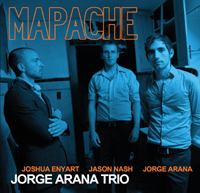


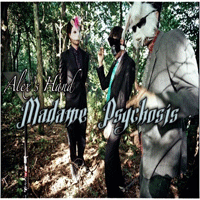



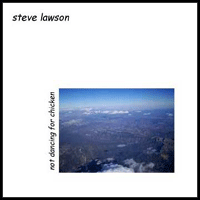
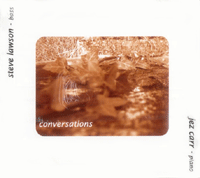

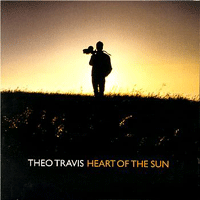

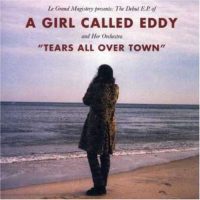
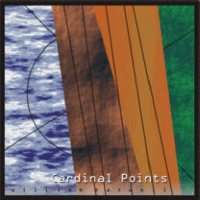
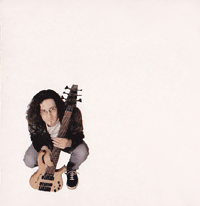
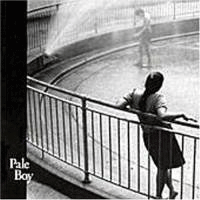
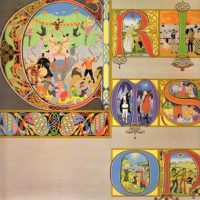
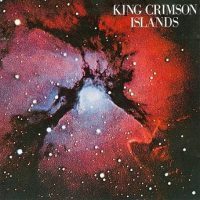


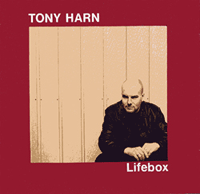


 Misfit City