Archive | instrumental music RSS feed for this section

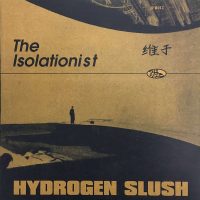
October 1998 – EP reviews – The Isolationist’s ‘Hydrogen Slush’ (“this bleak, rolling, night-time piece of vinyl”)

27 Oct

The Isolationist: 'Hydrogen Slush'

The Isolationist: ‘Hydrogen Slush’

Beats go postal these days. Released by a small British label, The Isolationist is a project uniting American rappers (New York’s elusive Anti Pop Consortium) with producers from London (DJ Primecuts) and London-via-Russia (DJ Vadim); a company of strangers rather than a posse. Perhaps this explains why, by hip-hop standards, it carries a strange chill with it. The rappers fire off into clear, chiming, deathly voids as if they’re carving out the insides of giant floating ice-cubes with the warmth of their breath and the crackle of their thoughts.

There isn’t a comforting funk loop to be found anywhere on this bleak, rolling, night-time piece of vinyl: just the thinnest iciest slivers of the coolest, most spartan jazz, the sidewalk-pounding beats, and the feel of sound slipping back off chrome and concrete. The nod to electronica’s near-autistic Isolationism movement ain’t a hollow one, either. The DJs scratch in their snatches of old-school records and kung-fu soundtracks with the efficiency and flair of unsmiling master butchers. Their beats are audibly frosted; their backdrops are an unfriendly cliff of minimal tonal touches that seems to gaze down at the rappers as if to say “Show me…”. Collaboration may be challenge, but this one’s more of a staring match.


Held up against R’n’B’s e-e-easiness or the violent tag-team dynamics of Wu-Tang-style hardcore, The Isolationist’s modus operandi strikes an intriguingly perverse note – an implied, introverted refusal of cooperation, of support or brotherhood; an alliance of denial. Set against this is the feverishly lyrical excellence of the Anti Pop Consortium: criminally absent from hip-hop’s compilation industry, and perhaps best known in Britain for linkups with Vernon Reid, with Moa and with Attica Blues.

We only get two of them here – Beans and Priest (M. Sayid’s opted to sit this round out) – but for guys spirited out of the city that never sleeps and into Vadim’s glacial dream-darkness, they’re coping well; reeling out cunning, multi-levelled raps like levitating, metaphysical Last Poets on fast-forward, lit by flashes of black science and prophecy, and more likely to namedrop Stephen Hawking than Stagger Lee. And they make their position in hip-hop culture clear, boasting “bombs like voluptuous brown big breasts” and chucking their word-games of empowerment and enlightenment into the silence at the gangsta rap funerals, apparently in the hopes of shaking up a lasting, blooming, conscious golden age.


Pitted against cultural sickness, the A.P.C. are powerful antibodies. On B-side Timeless Void, Priest scorns the inadequacy of “MCs’ band-aids for bullet-holes / under an umbrella for nuclear fallout from toxic water-balloons… / Your flatness and one-dimensional portrayal / is a betrayal / of my legacy” Urging us to “feel free to escape your entrapment: rapwards! / Over your head, hard to catch, like a bouquet made of thorns on a course for the laws of sentiment” he hits prophetic highs with “build and destroy again, restart civilisation from an amoeba / firm believer in perceiving extra-sensory signals, / my insignia the inscription in the clouds at dusk / – the fall of man…”


For Hydrogen Slush itself, Beans slams down the gauntlet with a staggering set of rhymes to scatter light across the wounds on black America’s soul. Some are metaphysical (“your ears are my punching-bag”); some earthy (“a hustla turned horsemeat / befitted the amoeba in a spit-puddle”). Some are poetically ominous – “sunbathing without an ozone layer / the sense you’re burning ants under glass. / UV suffering – no reason to go on, a desire to be by the beating wings but their arms are tired” – and some are consumed by a rage against the breakdown of the spirit: “these things sink deep into the flesh of the tormented: / unity of the ego is shattered, / indiscriminate sensibility debilitated by the winners of impending emptiness”. His words land righteous hyper-literate blows on the nihilistic greed of playa-culture. As cultural champions, they obviously feel there’s more to success than just buying it. Behind them, though, the cold cityscape rolls on.

This EP is like a graffiti artist rolling up his sleeves in front of a cold, stark-white wall, and launching an explosive artistic assault with a bagful of sharp colours. Motormouth MCs versus stonewaller DJs; quick tongues versus clenched teeth; involved dialogue up against cold silences The Isolationist is a bizarre marriage which looks like it’ll lead to some compelling arguments. You’ll find me next door, eavesdropping.


The Isolationist: ‘Hydrogen Slush’
Jazz Fudge Recordings, JFR012 (5030433001263)
10-inch vinyl-only EP
Released:
26th October 1998
Get it from: (2020 update) original vinyl EP best obtained second-hand. Some tracks are downloadable or streamable from Bandcamp and Spotify
The Isolationist online:
MySpace Bandcamp Last FM YouTube Spotify Amazon Music

Anti Pop Consortium online:
Facebook Twitter MySpace Soundcloud Last FM Apple Music YouTube Vimeo Deezer Google Play Pandora Spotify Amazon Music

DJ Vadim online:
Homepage Facebook Twitter MySpace Soundcloud Bandcamp Last FM Apple Music YouTube Vimeo Deezer Google Play Pandora Spotify Tidal Instagram Amazon Music

DJ Primecuts online:
Facebook MySpace Soundcloud Last FM YouTube Deezer Pandora Spotify Instagram Amazon Music
 

October 1998 – album reviews – Michael Manring’s ‘The Book of Flame’ (“to get on the good foot while booting great clusters of noise about with the other”)

15 Oct

Michael Manring: 'The Book of Flame'

Michael Manring: ‘The Book of Flame’

If you’re already at the top of the tree, technique-wise – as Michael Manring is – you risk losing yourself in the skill, reheating old ideas with the energy you should be using to take yourself somewhere new. Thankfully, Manring’s smarter than that.

The meticulous, mellifluous bass guitarist who flowed his way through graceful jazz/New Age composites a decade ago has evolved into a much broader musician. His central playing style (a clean blend of Jaco Pastorius’ near-vocal virtuosity and the late Michael Hedges’ percussive contrapuntal bounce) remains intact, as do his harmonically dense tapping skills and fondness for stretching things out with the EBow sustainer. But having evolved a wider arsenal of bass noises – giant distorted trunks of feedback, fretboard noise, infinite-sustain drones, occasional On-U-Sound-a-like dub effects – he’s put them to compositional use, pushing out the envelope that way.

‘The Book of Flame’ continues the process begun on 1994’s ‘Thonk’: despite its good points, essentially a reaction record jumping vigorously into noisy heavy-metal fusion to ensure Manring wasn’t tagged with the “dextrous-wimp” label. Subsequent band work – dystopian prog-funk with Sadhappy, jazz-metal with Attention Deficit, more spacious experimental improv with Cloud Chamber – has seen Manring developing the side of his playing that looks towards “why” rather than “how”.

Though ‘The Book of Flame’ uses familiar colleagues (Michael Masley; Tim Alexander; Oregon reedsman Paul McCandless) as well as a few unfamiliar ones, it’s emphatically a solo album, with two-thirds of the tracks exclusively Manring-performed. And it’s his timeliest album to date, the one best attuned to its contemporary contexts. Although he hasn’t abandoned playing for computers and pure beat-science, Manring has discovered samplers, dance methodology and loop-culture with a vengeance, and battened onto them ravenously.


Having said that, there are enough real-time bass solos to satisfy technique-junkies: as usual with Manring, extending the instrument’s parameters. The Fire Sermon – executed on Manring’s ten-string bass, each string individually tuned – sounds like a squad of Terminators tap-dancing down a Busby Berkeley stairway, red eyes twinkling, chromium top hats waggling aloft. La Sagrada Familia hangs slippery fretless shapes in tuneful, trapeze-act harmonics patterns; and blurs from sustained notes to clusters of aggressive tapping (similar to Red Right Returning from 1992’s ‘Drastic Measures’). And there’s an echo of Stanley Clarke’s pluck’n’pop on No Wontons for Elvis, mingling athletic bluesiness with impossible tangles of contrapuntal squeaks.

Best of all is The Book of Living and Dying, a beautiful memorial and tribute to the late Hedges in the shape of a mournful lilting tune which shoots off to Hedges’ aspirant, meteor-popping celestial heights but then pulls itself back with a lump in its throat. But these are pretty much a sideline to the real business of ‘The Book of Flame’, which is to get on the good foot while booting great clusters of noise about with the other.


While there’s a lot of sonic experimentation on hand, this is also Manring’s most danceable record yet, with a set of busy tunes that shake their booties over cheeky, compressed, Prince-flavoured funk grooves with that tight, offhanded boom-blat rhythm. Adult Content/Brief Nudity has that, when it’s not breaking step into narcotic stumble-shuffling trip-hop ambience. Manring’s gang of basses converse with each other and McCandless’s bass clarinet, which explores and comments like Johnny Hodges taking the air in Paisley Park. Theseus in the Rains never entirely loses its hand-clappy purple groove-chat, even when Manring brings in skirling EBowed whines, percussive string bangs like abused filing-cabinets, and an assemblage of scrapes, pops and whines like an ailing flying saucer.


The approach goes furthest on Your Ad Here, which sets out like Adhan from ‘Thonk’ (high and low EBow drones like pipes and ney-flutes), but soon develops the legs of a tinny hip-hop beat. Manring exchanges singing Prince-y riffettes (descending from high plucked bass) and sharp, contrasting beat-science breakdowns – earthquake-wobbles, psychedelic space-echoes, drum shadows and computer noise. Closer to Tackhead than to Stu Hamm, anyhow, and with a similar dystopian flavour to its irresistible dance impulses.


‘The Book of Flame’ also sees Manring’s compositional and arranging diversity at its peak. Most misleading track award goes to The Adamski Photographs, both straight and twisted. Dave Tweedie’s violent heavy-Cobham drumming and the belligerent Allan Holdsworth-ish choruses could’ve tied it down to mainstream fusion, but Manring’s bass attacks (sputtering, clattering, playing a solo like someone molding tarmac) and the jarring groove (centred on Barry Gurley’s lurching, Thelonious Monk piano) ensure otherwise. In contrast, Ephemeris is a clean, almost inhumanly perfect two-minute phase of cyclical process music. A duo of basses playing in rolling, cascading minimalist harmony: each moving in and out, in-step, in a build-and-fade composition like a jazzed-up take on Philip Glass.


Booming swells of sustained cosmos-bass open The Book of Lies: an undulating atmospheric weave of drillbit melodies, tight clusters of clipped Jaco harmonics and thrumming prayer-like vocal groans before Alexander’s thunderous upfront drumming drags in Manring’s distorted heavy-metal lead bass, spluttering into all kinds of squealing feedback. And eventually it falls to Dromedary to bridge all the previous directions together: a framework of heavy funk and kitchen-sink-contents percussion regularly kicked in by distorted noisecore riffs and outer-space sample weirdness, around which Manring darts bubbling, talkative solo lines.


Accessible, yet challenging – and far too open-ended/minded to settle into the role of self-conscious masterpiece – ‘The Book of Flame’ is the best evidence yet of Michael Manring’s importance. Juggling high art and down-to-earth fun, he’s evolved from a rarified treasure into a broader pleasure, and seems set on the road to continue that way for a long time.

Michael Manring: ‘The Book of Flame’
Alchemy Records Ltd., ALCD 1015 (607387101520)
CD-only album
Released:
13th October 1998
Get it from: (2020 update) CD best obtained from large online dealers or second-hand.
Michael Manring online:
Homepage Facebook Twitter MySpace Bandcamp Last FM Apple Music YouTube Vimeo Deezer Google Play Pandora Spotify Instagram Amazon Music
 

October 1998 – live reviews – ‘The Sound Of Satellite’ (featuring Sand, Lucha Libre, Yossarian, Karamazov, Heavy Q) @ Notre Dame Hall, London, Friday 9th October (“The Young Gods meet ‘Rugrats’…”)

13 Oct

This time, I’ve done it.

For once, I’ve arrived on time… and Notre Dame Hall is so empty that I reckon I’m going to be outnumbered by the bands. Above me, a glitterball spins very, very slowly. Off to stage-right, a slide is projected onto the wall back-to-front. Smoke drifts across from the other side of the stage, as if one of the boxes of gear has quietly caught fire. Horace Andy plays over the sound system. I’ve never noticed that squirmy edge to the sweetness of his voice; or how well it suits embarrassment.

No. It doesn’t go on like that. In fact, and independently of tonight’s acts, it ends up as one of the friendliest concerts I’ve been to in ages. But that first half-hour – of me as the lone non-label person in the house – gives me an idea of the risk which labels like Satellite take on whenever they put a night like this together. If you’re a mainstream label with a nice little crop of pushable guitar pop bands, and you want to hire out some dedicated pub for a concert party: well, fine, you’re probably onto a winner. If, alternatively, you’re a small label best known for fringe electronica such as Fridge, Rothko, and Add N To X (one of whom is DJ-ing tonight) and you’re hiring this big cinematic ballroom… then you must be trying not to sneak nervous, sidelong glances into the looming face of failure.

When I befriend Pete, the Satellite house photographer, he tells me that as soon as tonight is finished they’re taking the whole thing – lock, stock and barrel – over to Paris, to repeat the concert. Within the day. Gluttons for punishment. Or people who believe in what they have to offer.

* * * * * * * *

What they offer (or unleash) first is Heavy Q, whom I know from a single truly bizarre piece of experimental vinyl. He/she/it/they?… He. One Japanese guy, Lee Young Sin, in a glitterscaled wrestlers mask, hunched over a pair of samplers as if preparing to split them in half by sheer willpower (one of them, appropriately, is labelled “Quasimidi”). We’ll see him later as part of Lucha Libre, the other members of whom are tracing his every move with Handycams.

What he’s up to right now is squeezing out slice’n’dice anti-dance music as the hall begins to fill up; a scary dead-funk cyborg strop interspersed with cut-ups of Japanese telly chatter and cheering. At one point a sampled announcer burbles a bit of plain English – “breaking the earth for us tonight” – with the cheesy enthusiasm of someone who knows the next bit of hype which they can stick in their arm will be along in another few minutes. That same hysterically enthusiastic announcer will be weaving in and out of Lee’s music like a persistent hiccup; a glassy, untrustable ringmaster to his sonic circus.

Heavy Q’s second piece is a randomised assault of backbreaking drum sounds; drum’n’bass minus the calming balance of the bass. His third is a children’s chant, slapped up against a deathly brutal industrial tom rattle. As he moves over to rummage on his table of electronic debris, the sound runs on without him, mutating into Bollywood singsong, strangled by tortured electronics. By the end of it, Lee has turned himself into a vast, vulgar techno-god statue on top of the table. Arching back and moaning a deep thick bass vocal into his microphone, he’s almost at one with his sampler. He drinks from a sparkle ray-gun; he adjusts his electronics like he’s tying his shoelaces. Throwing a sarcastic cock-rock pose, he waves a theremin aerial around at phallus height.

Is this the answer to the problem of the personality void in electronica? Living up to the gigantic sonics by taking onto yourself the aspects of a monster movie?

* * * * * * * *

Talking of the personality void… things are working out contrary to expectations. At any given unpretentious, good-time indie gig, I’ll be out in the cold, a blip on the doorlist among self-satisfied strangers. Here, on a night that ought to smack of exclusive club, a night which you’d expect to exclude, I’m making ceaseless cheerful conversation. Buoyed by camaraderie, I and my new friends agree that, in contrast to Heavy Q’s theatrics, Karamasov have the slightly bored, stiff look of too many art-scene bands.

Perhaps it’s that old cliche of Teutonic cool: half of the band is genuinely German (guitarist/cellist Johannes von Weizsacker and stately blonde percussionist Berit Immig), while the London half (bassist Harry Rambaut and synth player Adam Stewart) aren’t exactly Essex ravers. Certainly their music’s lodged in European post-rock cool rather than Pacific rim commercial frenzy, their set opener wheeling along on Harry’s sproingy pre-jazz bass, Jonathan’s phased guitar scrub, and a lonely, farting-Dalek riff on Moogbass. They look at each other as if they’re setting up lab equipment; or preparing John Cage’s piano, like good little acolytes. Their second piece is something from the chillier end of Stereolab‘s science school, albeit with a few sniffs of quiet humanity appended. Echo-slapping cello effects, and skinny Moog squirts something like Philly soul strings, sketched and autopsied. The cello scrapes like a worn wheel; Berit’s oddly heavy-metal drumming is rookie-tense, but snaps tight regardless. On the beady-eyed Roadsnack, she switches to spiky organ against Jonathan’s piano-ping guitar.

Out on the floor, meanwhile, we’re waiting for them to enjoy themselves. I know, I know; there’s a certain credibility to that kind of icily unmoved, Euro-scientific music creation. But… Karamasov come across so much better when they drop it, hang out, and just play. It’s probably not intentional, but Uneven Surface sounds something like Genesis’ Watcher Of The Skies filtered through Faust. Hmmm. ‘The Wire’ would have a fit; but the bass stabs and drum riffs are received with joy by the Satellite audience. Happy Hour ain’t the Housemartins (which would’ve been interesting, come to think of it), but sounds more like Neu! reinventing lounge music, as Berit tinkles out melodies on the vibraphone. Most welcome of all is a piece I didn’t catch the name of, in which the increasingly impressive Berit sings in a detached Nico murmur (not unlike Elizabeth K.’s interjections for Eyeless In Gaza) over a tune not unlike a relaxed cross between Levitation and A.R. Kane (with a bit of the brisk arty hoppiness of a warmer German band, F.S.K).

During the next interval, the DJ plays Egg and Soft Machine rather than some fearsome tranche of blunt improv. A definite feeling of thaw is in the air.

* * * * * * * *

Yossarian turns out to be both a band (two keyboardists out of a ’50s B-movie and a drummer) and a bald mad-scientist character, looking not unlike Alan McGee. This is Tim London – Yossarian’s prime human body. In a previous life, he was the slightly warped pop brains behind Soho (if you remember the Smiths-sampling ‘Hippychick’, not that there was much else).
These days he’s wrapping his cortex round far artier pop shapes. One piece – all drones, cymballine drums and organ – sounds like Mark Hollis knitting together Labradford and Spiritualized; a chorus of “I will call, and you will come” and an unexpected blaze of harmonica. Other pieces sound like late ‘60s Scott Walker sitting down hard on late ‘80s Pet Shop Boys, and others…

Vocoders, yet! Those pained machine voices are back, along with Air-style pretty melodies served with an avant-garde hiss and a cheesy Bontempi beat under the flagrant detail. What is this nut trying to morph into and sell to us now? E.L.P.? The Glitter Band? By the time I’ve decided that it’s a sort of electronica ‘Parklife’ with car-crash keyboards, he’s exploring bleak Bowie ‘Low’-ies and hitching them up onto Prodigy-style wall-of-fire beatoramas like an erupting Las Vegas volcano.

All of a sudden, I see Tim London revealed as electronic art’s own John Shuttleworth, and relax a bit. It’s an impression carried in his archness, in his taste for a classically creaky lounge-pop tune, his self- conscious anti-cool (“I’ve never played in that time signature before”, he drawls), his total deadpan approach to the ridiculous or to any intimations of hubris, and most of all in the way that, having thrown electronics at us all evening, he encores by – get this – playing the spoons. Respect is due. My old man’s a Cyberman an’ all that.

* * * * * * * *

Osakan noisefreak-fusioneers Lucha Libre have bigger hats than anyone else. They also have bigger presence, taking the stage like EMF used to do. They possess a double-brass frontline – one capering trombonist leader (Teruhiko Heima) in a Kiss ‘Destroyer’ T-shirt; one surreally dignified sax player (Akifumi Minamimoto). There’s also a transplanted heavy metal core in the shape of Takashi Sakuma, a sampler-wielding guitarist with long tartan shorts, a serious Van Halen fixation, and one of those hilariously literal Japanese sweatshirts. This one reads “Pretty Tough Sport”. Finally, they have a digital heart on frantic overdrive – everyone except drummer Jun Tsutusui seems to be doubling on synth.

By their seventh number their bassist (Lee Young Sin, back in a different guise) is walking on his hands and playing the synth with his head amidst a hurricane of Coltrane-meets-Black-Sabbath saxophone. Before that, we’ve been privy to a Donington’s-worth of heavy-metal axe abuse; a swelter of industrial goofing and salsa horns; and a stage act best described as The Young Gods meet ‘Rugrats’. We’ve also, as a responsible audience, totally turned around received notions about arty label nights by absolutely loving it to bits and yelling for more, as the twit from ‘Melody Maker’ shakes his head and frets about missing ‘Friends’. Lucha Libre continue their delightful murder of cool regardless.

Now they sound like ships coming into a drunken docking on Mars – big trombone blurts, the rattle and squiggle of electronic timepieces, and phenomenal yowls and divebombs from the metal kid. Now they’re on a big, spacious, tricky funk beat: Akifumi an oasis of reedy calm as a funky harpsichord riff pops up from keyboardist Soichi Murota and the band head into the slabby, tottering, Theremin-ized jazz-funk of the ‘We Have No Our Groove’ single. Next, they pull out in order to plait Led Zeppelin into the ‘Mission Impossible’ theme.

By the encore, Teruhiko is hammering out a torn tom tattoo on a commandeered chunk of Jun’s drumkit. Stuck horn drones giggle at him; the sax thrashes – squalling and wailing – in a cauldron of frenzied bop, and Takahashi fires Heavy Q’s abandoned raygun into his guitar pickups. It’s like seeing a particularly extrovert software virus trash your screen, in blazes of grinning colour. As they settle into a long final lope, razzing trombone carrying the melody over the clipped sax and Durutti guitar picking, the air inexplicably fills with a powdery scent of flowers. This is some sort of Lucha Libre Japanese magic, I guess: the sort of thing which that passionately confused nation throws up so well.

* * * * * * * *

With a massive wall of dry-ice fog and a sound like Satan belching (it’s some sort of conch, in fact), Sand prepare to close the evening. A massive mound of frizzy dreadlocks hoves into view and starts growling Andean death-metal at us. Crops wither within a three-mile radius.

This thing is – to stretch the Trades Description Act a little – Sand’s singer. Whether it’s possible to declare a force of nature part of your band is a matter for Sand and their lawyers. They used to be called Germ, which is an understatement and a half. They should have been Epidemic. To put Sand into perspective, they are something of a return to normality after Lucha Libre’s mad playground display, even if they do both feature upfront trombone. Sand are also, by far, the most assured band on tonight – elastic harmonic bass from John Edwards, the precise touches on Rowan Oliver’s looping drums, the wash of ravishing electro-gale off Tim Wright’s keyboards: a bit like Rain Tree Crow with a trombone, but only if they’d been fronted by David Sylvian’s monster-from-the-Id. This is something which the Sonic Youth-style drumsticked drone guitar and the ‘Bitches Brew’ mute on Hilary Jeffery’s trombone only accentuates.

The monster on vocals – whose name is, apparently, George – evidently knows harmonic overtone chanting. His reverberating rasp blends in with the trombone’s blare, the slipping geological sample and the Bruford threes which Rowan is now shooting off the top of his kit. The mike slips deeper into that mane of dreads. From the unseen mouth the Devil pukes noise, sprawling and rolling: echoes of Diamanda Galas, balled’n’bassed up, or of Magma. If many of the smooth dream-rock tones of Sand suggest a vigorous muscle-flexing tone-up, that voice feels like being rolled hard in the gravel afterwards. Among other things, Sand offer a crushing world-music for the ever-so-slightly masochistic.

“You can dance to the next one,” comments band spokesman Hilary, draining the spit from his trombone as John brings on a double bass to play… well, some salsa from hell; the guitar and keyboard filling up the spaces in the music with an inspired patina of drone-trash. As another Sand piece forms (a reedy melodica, skullclick percussion, a lost wail from Mr Mountain as the band traverses a flat, disturning plain of atonal movement) you wonder whether this band would ever really make you want to dance. Why should you want them to, when instead you can suffer the perverse enjoyment of feeling Sand twitch the crust of the earth from under your feet?

* * * * * * * *

I don’t care. The liberating, socialising force of dance was the one aspect of electronic music that was ignored tonight; possibly because it was redundant. In between writing my notes I’ve filled my ears, had a doughnut, leafed through vinyl stalls, and spent an evening in the belly of the art-beast, chatting away to some of the nicest people I’ve met in ten years of making up gig numbers.

I finally let my tired eyelids swell, and turn my weary ankles homewards. Satellite are packing up, engrimed with cigarette smoke and fired up on the warmth of the evening, making ready to ship it all across the Channel to the City of Light.

This time, I don’t fear for them.

Sand online:
Homepage

Lucha Libre online:
Homepage

Yossarian online:
Homepage

Karamazov online:
Homepage

Heavy Q Connection online:
Homepage

Satellite Records online:
Homepage

(2018 update – after twenty years, it’s no surprise that most of those bands and projects have long since ended. Post-2001, Satellite Records was mostly reabsorbed into its ongoing parent label, Soul Jazz; and the Satellite, Yossarian, Lucha Libre and Heavy Q links above connect only to discographies. Yossarian’s Tim London (a.k.a. Tim Brinkhurst) now works as a film-maker, as a music lecturer at the British & Irish Modern Music Institute in Birmingham, and as producer, most notably with Young Fathers. The members of Karamazov are still friends and collaborators, working together in various combinations in The Chap and Omo. Sand also continues in various forms and names, generally helmed by Tim Wright and Hilary Jeffery. It’s unclear what’s become of the members of Lucha Libre, although saxophonist Akifumi Minamimoto did also put some time in with “jazz/R.I.O. progsters” Djamra. Meanwhile, Notre Dame Hall ended four decades of musical history covering beat pop to punk to avant-gardery in 2001, when it became first the Venue theatre and then the Leicester Square Theatre.

Oh – and sorry about the lack of pictures. When I got friendly with Satellite’s photographer, it clearly didn’t include me blagging post-concert photos out of him.)

July 1998 – album reviews – G.P. Hall’s ‘Marks on the Air’ (“a rough’n’ready homemade ethos”)

20 Jul

G.P. Hall: 'Marks On The Air'

G.P. Hall: ‘Marks On The Air’


On ‘Marks On The Air’ (an album of live recordings from concerts in London and Wiltshire), the eccentricity and affections of British experimental guitarist G.P. Hall is presented wide open and unashamed.

To make the record, Hall teamed up with binaural recording whiz Mike Skeet. It’s Skeet’s voice you can hear bookending the concert – running up stairs and heading down in lifts, describing his surroundings with the nattering enthusiasm of a ‘Playschool’ presenter, and popping any remaining hopes of arty detachment. Still, it somehow adds to the warmth of the atmosphere which Hall’s live playing induces. Apart for the oddly truncated applause and the removal of Hall’s shy, uncontrived audience chat, it’s as close to one of his concerts as you’re going to get without leaving your home. Skeet’s superb recording techniques (his binaural miking technology directly mimicking the listening experience of ears on a human head) presents this music in the enveloping, directly tactile environment it requires.

Compared to the more assured sonic constructions you’ll find on a Hall album, ‘Marks On The Air’ is less sophisticated and more risky, but it’s equally ambitious. Skeet’s interjections aside, this is a one-man show. It relies entirely on how much Hall can get out of his hands and his immediate music loops while still keeping an audience entertained. With four separate speaker stacks, an assorted collection of guitars and effects pedals, and the armoury of unorthodox guitar-abusing sundries which he uses as playing implements (bows and battery fans, crocodile clips and Velcro, toy cars and electric razors), Hall is at least well-armed to do that, Even the clean, dated, digital rattle-and-thunk of his 1980s rhythm box lends the enterprise an endearing extra dimension of naivety.

Hall’s pictorial – even painterly – approach to music is consistent throughout. New England Woods is cut from the same lambent aural cloth which Hall made his own with Spirit Sky Montana – swelling curtains of sounds midway between country steel guitar and cello parts strolling and dallying in a soft adagio. Docklands attempts to recreate the brazenly lively colourfulness of a polluted industrial sunset – the shambling drums falling lopsided, the whooshing saw-sounds and lemon-sharp guitar echoes pressing out the shape of the skyline.

Live, however, Hall can be tempted away from his more elegant pastoral confections and into heavier statements. The impressionistic heavy metal of City Signals and Uncharted Territory both offer searing and swaggering chromium-blue lead lines, plenty of echoed backings and slow rolling pummels of drum-sound. Rippling, prolonged ambient humming and field recordings of indistinct conversation fill the gaps, like smog pouring into a heat-haze. For the tremendous scrunch of Flying Ants, Hall turns to his six-string bass and his flamenco knowledge. The result sounds like an over-scaled Gypsy guitar played with helicopter blades for fingernails. A delightfully yobbish take on the form, it flicks between tremendous chocolate-y gurgles of sound and (when Hall kicks in the distortion pedal) impenetrable hedges of distorted overload.

Much of this music is punctuated by clipped and plunking programmed synth-bass lines. Outside of mid-’80s chart hits, these ought to sound cheap and unpleasant. Instead, they fit surprisingly well into Hall’s musical sketches of the grubbier side of cities. They can be as brash and tacky as scattered burger boxes at your feet; as the failing neon signs and fly-by-night minicab firms gummed onto and into frowning old brickwork. On Flying Ants, they’re just appealingly cyborg. On Figments Of Imagination – where they’re working alongside metallic wails, hand-pumped stutters of echo and the rattle of crocodile clips – they add to the rough’n’ready homemade ethos of the music.

The hypnotic On Every Life (A Little Rain Must Fall) goes further into the wilderness. Nodding to Native American rhythm patterns, it calls up the feel of a parched Arizonan desert view. The delicate whine and rush of the guitar patterns swap between impressions of the dry, red heat and dust and of the shocking whiteness and colours of the tasselled fragments of cloud. Notes call and repeat, tranced out. Towards the end there’s a moment when it all stops. All but a faint swirling echo, as if the whole desert was looking upwards; and then the mass of sound crams back in again, like a cloudburst.

Best of all, perhaps, is the build- up of The Lonely Road, coalescing sustained, sorrowful coats of sound and small factory noises. Tinges of ambient-blues embrace a tired old worker’s knotted muscles at the end of the day. Part of the human focus comes in via the twanging, Frisell pluck’n’pang of Hall’s guitar. It’s capped, however, by the endearingly rough burst of busker’s harmonica which he wafts over the floating sorrow. Brave and defiant, it’s answered in kind by the elephant-trumpet of a rotary-saw sound.

Despite the odd bit of bluster, ‘Marks On The Air’ goes further towards expressing Hall’s gently appealing emotional nakedness as player and creator. What he sometimes loses in the grace stakes, he gains back in honesty and sympathy. There are a couple of unselfconscious, winning little cameos of “tiny music” which could have come from a children’s theatre. Drum sounds pop and clatter against the clipped melody and zither-blues intonation of Chinese Firecrackers. Suvi’s Little Crickets is built out of simple yet exquisite acoustic child-song patterns, which regularly rests while Hall circles a boxful of mechanical insects, chirping peacefully, around his microphone. Further hints into the private man are suggested by the deep pulsing chant of Alcharinga (in which guitars are abandoned altogether, in favour of throat-singing through an old answering machine mike). Marks On The Air itself is a long, mournful study on classical guitar – swept back and forth in eddies of echo, resigning itself beautifully to its own impermanence.

G.P. Hall manages to be many things. The garage player amongst the avant-garde; the warm-hearted soft touch among the arthouse players. The naive wonderstruck kid in the crowd of post-adolescent posers, the transfigurer of the straight, and the benevolent ghost in the machinery. Not a bad set of credentials, at that.

G.P. Hall: ‘Marks On The Air’
Future Music Records, FMR CD46-V0997 (7 86497 26442 1)
CD-only album
Released: 15th July 1998

Buy it from:
G.P. Hall homepage or Future Music Records

G.P. Hall online:
Homepage Facebook Twitter MySpace Bandcamp YouTube

July 1998 – EP reviews – Darkroom’s ‘Carpetworld’ (“swathed in contradiction… one long, haunting slab of sonic terrorism”)

15 Jul

Darkroom: 'Carpetworld' EP

Darkroom: ‘Carpetworld’ EP

Darkroom come swathed in contradiction: daytime shoppers on the sleeve, savage nightlife in the music. And no credits, though apparently it’s another one of those confounded No-Man offshoots ‑ don’t these bloody people ever sleep or anything? Evidently not, if the tracks on this single serve as an example of the sounds pulsating through their brains.

Carpetworld itself breaks all the rules ‑ the rules that say you can’t put vocals and lyrics recalling Soft Cell‑era Marc Almond over churning, vicious Frippish guitar ambience and hard‑as‑nails mechanoid beats falling somewhere between jungle and hardcore techno. A knife in the side of the rave generation’s blissout, it’s elegant in its brutality (“taking a twirl with your best friend’s girl, while the rest of the gang torch Carpetworld”), hovering in tatty clubs and observing the rituals of nihilism unfold as the backwash of bad E and the not-so-gentle ’90s poison the clubbers’ dreams.

Dance darkhorse it might be (it doesn’t run with any obvious scene, and fuck knows which playlist it’ll fit on in the increasingly segregated world of dance radio) but this is still cutting‑edge contemporary, with absolutely no fluffiness and Tim Bowness spitting out lyrics the likes of which we’ve never heard fall from his previously poetic mouth ‑ “Have useless sex with your ugly ex… / You velvet‑sneakered chancer, you broken-fist romancer…” as the beats flutter like a death’s head moth trapped in the throat. I’ll stay well out of the disturbing urban nightmare Darkroom are living in, but I’ll happily live it vicariously through their warped imaginings. Dante’s disco inferno.

After that, the Carpetwarehouse reworking does lacks a certain spontaneity. The original sounds like it’s literally fallen together in a paranoid improv session after a thoroughly unpleasant experience: This – apart from simply not being different enough – simply sounds like Darkroom have tried too hard at the atmospherics. OK, the beats are even more frenetic and Bowness achieves something he’s previously never managed in previous recordings: i.e., sounding fucking terrifying as his distorted voice rasps out the repeated mantra “I’m coming after you!” If you ever thought, from listening to No-Man’s work, that you could have that Bowness chap in a fight ‑ think again… Nonetheless, one does yearn for a battering, bloody remix from the diseased mind of Jim ‘Foetus’ Thirlwell, or Aphex Twin.

But, hell, Darkroom’s maverick genius still encompasses enough space for much more roaming, ambient trips. Daylight, in particular. Tim Bowness (like Martyn Bates) has always had one of those voices that are perfect to use as an instrument integral to a piece such as this, weaving magical wordless nothings in and around underwater tones and splashes of electronica. Anchoring this thoughtful pause from drifting off into inconsequentiality, a beautifully melodic bass riff and eerily clattering percussion ‑ like the echoing sound of camera shutters ‑ keep proceedings somewhere near planet Earth.

Ardri, though (nonsensical title ‑ always a bad sign), reeks too much of late ’70s/early ’80s ambient ‑ the kind of stuff the BBC would choose to soundtrack beautiful nature footage. Look, it’s a personal thing ‑ until someone out there finds even a slightly new direction with ambient (and I would certainly not rule Darkroom out of this), then the only sounds that interest me are the ones that either completely chill me out, or those that make the hairs on the back of my neck rise. This final track (like too much else in the field) gets my mind wandering after the first minute and thinking “So? What’s next?”

So, a downbeat end to a marvellous debut from Darkroom. Buy it for the title track and (whatever my gripes) for the remix, and just treat them as one long, haunting slab of sonic terrorism. Brilliant.

(review by Col Ainsley)

Darkroom: ‘Carpetworld’
3rd Stone Ltd./The Halloween Society, HAL 8001CD (5023693800158)
CD-only EP
Released: 6th July 1998

Buy it from:
(2018 update) This is now one of the rarest Darkroom releases – best obtained second-hand or from iTunes.

Darkroom online:
Homepage Facebook Twitter MySpace Soundcloud BandcampLastFM

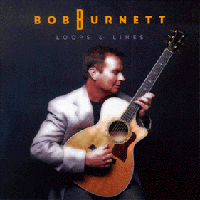
July 1998 – mini-album reviews – Bob Burnett’s ‘Loops & Lines’ (“sample, hold’n’swing”)

13 Jul
Bob Burnett: 'Loops & Lines'

Bob Burnett: ‘Loops & Lines’

Santa Cruz jazzer Bob Burnett is an oddity, someone who’s ostensibly extremely straight but gets there in a puzzling way. He loves his semi-acoustic guitar – keeps it clean, plays it with an economical and modest Wes Montgomery twinkle – but he’ll dab in a few colours on guitar synth and is also very much into what digital sampling offers the modern composer.

This you’d expect in somewhere like New York City – hip-hop saturated, with digital cut-up/jazz crosstalk from the likes of M-Base or Q-Tip. Coming from Bob, it’s a little less of an obvious path – a transplanted New Jersey-ite now residing in roots-band heaven, he’s played with world-beat bands Kosono and Pele Juju for much of the past decade. With ‘Loops And Lines’ Bob’s giving his sample, hold’n’swing ideas their first recorded outing.

At root, these are pretty cosy ideas. Don’t come in expecting a cross between John Scofield and Disco Inferno, nor yet The Young Gods playing Gil Evans. That living-in-California easiness initially makes ‘Loops & Lines’ sound like an Acid Jazz comedown pleaser. But although the six pieces on the mini-album are sweet enough to be lounge-fare, they’re also lush enough for a lock-in. Bob’s music is refreshingly innocent of guile, but that doesn’t mean that it’s without a dash of wit: a quality which is a precious balance within sampler culture.

Together builds on a moment from John McLaughlin’s Peace One, as the guitarist skips spider-fashion across his low strings: joining in, Bob swings tastefully over the top while Rhan Wilson’s bells and assorted metals mist the edges. Igor plays a similar trick with a few phrases and deep string chops from Stravinsky’s ‘Soldier’s Tale’, Bob adding some Hawaiian lines over the top of the thudding march of deep strings and drums. For Out West he affectionately samples some local-band friends (Pipa & The Shapeshifters) to craft a little bit of Portishead spy music – Adrian Utley’s breed of Duane Eddy twang, with the big stoned swats at the drumkit and the sound of rain sifting down in the background.

Most successfully, there’s Home James in which Bob stitches together a dream jam between himself, Jimi Hendrix, Charlie Parker and John Coltrane. Bright and cheerfully funky, it’s close to an Us3 moment. You expect a laid-back rapper to come strolling in at any moment, with rhymes about strolling by Electric Ladyland with a spliff and a sax case. Instead, what you get sounds more like Bob finding all three legends together at the same Harlem party; each in a separate conversation but still meshing, by happy chance, into a common thread and rhythm. The music – and the falls together with a simple eloquence. Trane throws out a sinous four-note tenor wave from Countdown; Bird counters with a acquiescent call from Night In Tunisia. Somewhere in the background Jimi chips in with a reverberant Band Of Gypsies clang. Bob’s sweet and skinny guitar bubbles throughout the whole thing, chatting merrily away on the breaks.

The only things missing are the “yeah!”s and the punctuation of hand-talk. In fact if it weren’t for the tall (and dead) shadows which that all-star trio cast, Home James would almost convince as a genuine studio jam. Surprisingly, it’s a humble piece: Bob never feels like he’s stealing from his three luminaries, nor as if he’s harbouring vain hopes of cutting them in competition. It’s all about making the links, making a might-have-been occasion; being the helpful guy in the middle.

In fact, on ‘Loops & Lines’ it’s not so easy to work out when, exactly, Bob has got his sampler switched on. He has a remarkably subtle touch as a samplist. In contrast to the way, say, Young Gods or Jesus Jones would proudly ride on the back of a blatant parade of loops, he’s more interested in the seamless interweaving of sample and solo, using temporary digital capture to get more musicians and voices flickering in and out of his virtual band. If, via the magic of samping, he can bring the amicable ghosts of the Johns and the Jimis round to his local bar for a few beers and a blow through one of his tunes, he’s happy.

For instance, Decoy might make use of another Coltrane sample, as well as drawing on snippets of American pop TV themes – ‘King Of The Hill’, ‘Teen Angel’ – but there’s no separation between those inserted elements, the light-footed touches of the live rhythm section, and Bob’s mellow-mischievous guitar skips taking centre stage throughout. The reggae-fied ripple of Lower Nile (the disc’s only cover version) brings back a live band, winds soprano sax through North African melodies… and uses no samples whatsover apart from a few jungle chirps and rustles.

In the end, “Loops & Lines’ is an announcement of relaxed intent; short, sweet and discreet. It’s interesting to indulge the thought of Bob Burnett taking it to slightly wilder climes – maybe coming on like Ronnie Jordan playing over found-sound backdrops. But I get the feeling that he’s happier just stretching loops round the barbeque, shooting the breeze with heroes and friends, providing small glows of warmth rather than burning it up with his music.

Bob Burnett: ‘Loops & Lines’
Bob Burnett, 9801 (no barcode)
CD-only mini album
Released: 1998

Get it from:
Bob Burnett.

Bob Burnett online:
Homepage Facebook MySpace Last FM YouTube

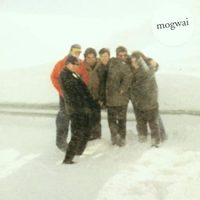
June 1998 – EP reviews – Mogwai’s ‘No Education=No Future (Fuck the Curfew)’ (“the politics are in the sound”)

30 Jun

Mogwai: 'No Education=No Future (Fuck the Curfew)' EP

Mogwai: ‘No Education=No Future (Fuck the Curfew)’ EP

Mogwai – Glasgow’s “young team” of guitar noise-puppies – are just drawing out of their teens, but they’re already two-and-a-half albums old, and tour veterans. The name’s appropriate – in the sleeve photos they may look a little cute and fresh-faced to an twenty-seven-year-old codger like me, but if ‘No Education…’ is any indication, they do change into something far scarier at night. (They beat Hanson’s burbling Ewoks, anyway).

The punch-card stabs of guitar are pure Slint, but whereas Slint would lay muttered, emotional stories over their six-stringed dots and dashes, Mogwai are vocal-free and rely on pure, bullish emotion as walloped out by plectrum and drumstick. The explicit political rage of the EP’s title isn’t spat out in teen-punk slogan songs, nor in Prodigy chants. It’s carried in the rushing up against the front of the beat: it’s in their surges against the decay of sound. It’s in the faith (which they share with Sonic Youth and My Bloody Valentine) in big dirty noise over a mediocre world. The politics are in the sound.

Perhaps it’s because of the sparse, distant, classical-in-rebellion melodies from Luke Sutherland’s guesting violin, but Xmas Steps carries an odd resemblance to King Crimson‘s Larks Tongues In Aspic. It emerges from a soft interlocking hush of irregular rolls of bass and barely-there guitars (similar to the tension-gatherings of Bark Psychosis) then rises – nerves preparing for the clench – to a building, slashing crescendo and an eventual scrubbing, screeching roar of amp-shredding overdrive and machine-gun spurts of snare, before unclenching its fists and subsiding down into peace again, calmed by the mothering voice of the violin. It nods to Neu!’s jerky rhythms of robot-thrash as much as to Slint or Crimson, but, crucially, it’s warmer than any of them. You can hear the exact moment when strummed guitars, under growing pressure, begin to rebel and distort. Towards the end there’s a papery bang of noise; perhaps an amp blowing up from suppressed rage and cutting across the quiet wind-down.


After Xmas Steps the other two tracks seem like little brothers, but maintain the interest. Rollerball’s a sort of classical Krautrock etude. Soft guitar figures, sub-audible tinkles of piano off on the fringes, rough points of drum decoration: the final sound is of the lads downing instruments and strolling out of the studio, and it’s as much a part of the piece as any of the notes were. Small Children in the Background lays its sleepy guitar glints over a glassy fuzz-trail. It rises, almost orchestral, to an emotional peak, then cuts out to small and precious ensemble playing as sensitive as an eyelash. Whispers of voice lap back and forth at the front of the mix.


Without words, without direct vocals, without even an individual signature to each player, Mogwai’s music is oddly impersonal… but still, somehow, powerfully emotional. As they glower out from behind their clanking guitars, they might place themselves among the Glasgow arties, but in fact they’re in another place altogether. They’ll hate me for mentioning the “prog” word, but – in the best sense – it’s there in the music already. They’re already far closer to the intensely shaped, angular expressionism of Rothko, Henry Cow or The Monsoon Bassoon than they are to The Delgados’ Velvet Undergound impressions or to Bis’ synthesised pogo-sticking.

At the moment, they’ve got all the dynamics, all the expressive intensity they need – all they need now is the technique, and they’ll break through to that level their music is yearning towards. Expect great things from them by the time they hit twenty-five. ‘Til then, the least we can do is to lift the curfew on them.

Mogwai: ‘No Education=No Future (Fuck the Curfew)’
Chemikal Underground Ltd., CHEM026CD (5 020667 342652)
CD-only EP
Released:
29th June 1998
Get it from: (2020 update) Original EP best obtained second-hand; download available from Chemikal Underground
Mogwai online:
Homepage Facebook Twitter MySpace Soundcloud Bandcamp Last FM Apple Music YouTube Vimeo Deezer Google Play Pandora Spotify Tidal Instagram Amazon Music
 

May 1998 – album reviews – Blowpipe’s ‘Pendulum’ (“half given over to Blowpipe’s previous grace, half to a new and more aggressive club attack”)

18 May

Blowpipe: 'Pendulum'

Blowpipe: ‘Pendulum’

In jazz, things move on, and Blowpipe are no exception to this. Father-and-son brass-and-reed players Robin and Andrew Blick joined forces last year, making a mark for themselves last year at the point between hips and heads for their own spin on jazz-meets-clubland, sliding in alongside acid jazz with something a little more sophisticated and challenging.

The enthralling ‘First Circle‘ was the outcome: a rich and rewarding chill-out-and-expand intertwining of busily-bubbling electronica with old-school jazz conversation. Alongside guitarist Paul Reeson and the remarkable electronic sound-weaver Stephen Watkins, the Blicks set up a heartfelt and fertile union of jazz expression and latter-day dance-floor pulse, a tapestry of burbling intelligent techno, deft horn dialogue and fluent electro-acoustic textures. It was a joy to listen to, and its success has been recognised in one direction, at least.

‘Pendulum’ (a hot-on-the-heels follow up to ‘First Circle’) comes after Blowpipe’s deeper welcome into the ongoing club revolution – they’ve played on the new album by drum’n’bass pioneer Grooverider – and a big line-up shake-up. Whether burnt, inquisitive or disillusioned, the Blicks have opted to change the band’s instrumental chemistry. Blowpipe’s armoury of blowables (which already featured the Blicks’ trumpets, saxes, assorted horns and abused pipework) has been expanded by the addition of Nick Reynolds’ harmonica; they’ve also added a steady bass player in Tom Harrison; and there are frequent guest appearances (and stronger links to the jazz world) from saxophonist/flautist John Burgess of the Harry Beckett band and the Tom Bancroft Orchestra. But most crucially, both Reeson and Watkins are now out of the picture (apparently, halfway through recording). Consequently, while half of ‘Pendulum’ is given over to Blowpipe’s previous acoustic/ambient/electronica grace, the other half is shaped by a new and more aggressive club attack.

Of the old school stuff, Airport Woman is the most graceful: a mass of beat-free, blurring big spaces: back-and-forth cello loops, rainy-night muted trumpets, glows of soprano sax and a brief return from Paul Reeson. The Spell is Broken is wrapped in a backwards bassy ostinato (padded up by Tycho Andrews’ wah-guitar) like an orchestra in a North Sea fog, thick hazy air through which Andrew Blick’s trumpet clarion cuts like a lone lighthouse beam. Muting down and vague-ening in the heavy atmosphere, it gently illuminates (above the clanking guitar rhythm and the creak-crunching sonics).

However, this album’s signature is definitely made by the harder breed of Blowpipe pieces, by the post-Grooverider drum’n’bass influences. This could have been a good thing, given that music’s ferociously intelligent, toppy rhythmic attack: the bebop of the club scene. But in practice? Um… maybe not.

The main problem is a loss of that crucial Blowpipe balance. Neither of Stephen Watkins’ on/off successors (Patrick Mosley and Mike Servent) possess any of his subtlety, meaning that the detailed electronic textures of ‘Full Circle’ have been overturned in favour of synth washes and more blatant beats. And while the Blicks remain as eloquent as ever, Nick Reynolds’ harmonica virtuosity is of the tinny, bullying breed: a soulless Mark Feltham cop. Sometimes the new marriage is a happy one, as on Avanti’s drowsy harmonica patina and cloudy brass blankets, mixing it up with breakbeats, Harrison’s Bootsy bass, and Andrew’s cold trumpet motif. But when it’s at its worst, the Blicks seem sidelined within their own project, locked down in the cages of snare drum.

The analogue gut gurgles and video games blippery of Usurper work quite well, as Reynolds’ sharp harmonica riffs mingle with fluent fluttering sax and muted trumpet. But Unravel’s tight fast rattle and saurian bass quakes are overcome by the belting raucous harmonica and brass. Robin Blick’s soprano scribbles too frantically, Andrew’s echoed trumpet sounds busy and sour. The raw power of Scorched Earth’s distorted breakbeat and Harrison Wobble-y bassline can’t make up for the yammering, overbearing harmonica overkill: Reynolds blowing flatulently all over the Blicks’ bitty chips of sax and trumpet and Katherine Blake’s skidding tremolo violin. And School Disco (working title or what?) is just clodhopping: a flatfooted stomp which sounds like it was recorded in an underpass. John Burgess’ guesting flute fights to keep grace going against the dirty swathes of distorted harmonica.

When Reynolds is kept on a tighter leash, things work out much better. On the climactic Phoenix, for example, where Burgess’ bass clarinet and Andrew’s dawning trumpet lines repeatedly criss-cross each other over didgeridoo droning and Robin’s sax hangings. Or on Pendulum itself, which uses power without clumsiness. Rising off a big Bonham-y stomp with overdriven trumpet and giant floppy bass, Robin laces in some ascending saxes and curtains of brass. There’s a guest tenor scrawl from John Burgess: then, amid the whale-song trumpets, an incongruous Scott Walker sample pops up to breathe in bluer air. “The little clocks stop ticking now…” Everything does stop ticking. Everything kicks off again. Marvellously perverse, and a particular highlight on an album which sometimes fails to live up to Blowpipe’s initial promise, reminding us of how good they can be once they’re back in focus.

Blowpipe: ‘Pendulum’
Robot Records, ROB 001 (5019148617297)
CD-only album
Released:
15th May 1998
Get it from: (2020 update) Best obtained second-hand, or streamed.
Blowpipe online:
MySpace Amazon Music
Additional notes: Robin Blick now leads Blick Trio; Andrew Blick leads Gyratory System.
 

April 1998 – album reviews – Bass Communion’s ‘Bass Communion’ (“things flirt round the edges of familiarity”)

29 Apr

Bass Communion: 'Bass Communion' ('Bass Communion I')

Bass Communion: ‘Bass Communion’ (‘Bass Communion I’)

The potential for making noise, making our own personalised sound via brain, limb or breath, has always been with us. In the sampler age – where you can trap any sound in a digital jar and then play musical Darwin with it – the option range has hurtled up several levels in the space of half a generation, and the serious sound addict can now personalise any noise no matter who or what the source.

Which brings us to Bass Communion, the latest brainchild of studio wizard Steven Wilson. As if he weren’t busy enough psych-rocking with Porcupine Tree, cult- popping with No-Man, or working out his Kraut/post-rock urges with The Incredible Expanding Mindfuck. Let’s face it, few people are better qualified as a sound-addict.

Bass Communion (no thumpin’, pumpin’ house-music project, despite the suspicious name) is Wilson’s most direct attempt to date at riding this addiction. It’s also his most cryptic and esoteric, in which he rejects his usual battery of synthesizers in favour of the use of sounds “sampled, looped, transposed, layered, filtered, and processed into infinity” via electronic circuitry and sampler exploration. Wilson permits himself occasional real instruments (such as the skinny, echoing Bark Psychosis-style guitar on Drugged), but they sort of stand off to one side, like nervous uncles at parties. This isn’t really their show. For those who only skim the surface of Steven Wilson via the odd No-Man phuture-pop single, or hear the odd Porkies guitar blowout and maybe damn him as a wannabe Dave Gilmour, Bass Communion will come as a beautifully disorientating shock. This music shares secluded room-space with the work of Aphex Twin, Muslimgauze, Oval or Paul Schutze.

It might be a logical extension of Porcupine Tree’s ambient atmospherics or No-Man’s avant-garde leanings, but it’s also a giant leap of pure faith. There are no tunes, cheesy or otherwise. At all. And no attempts to please – there’s no equivalent to Aphex’s Come to Daddy on ‘Bass Communion’. Melodies, if they happen, seem to evolve almost by accident. Harmony is something that occurs occasionally when patterns coincide, rather than something that’s held to. Things flirt round the edges of familiarity, repeat and loop, but don’t so much hold the attention as massage it. When in doubt, it stays quiet. Actually, it’s always in doubt and always quiet, but never entirely at a loss about where to go. Bass Communion is profoundly experimental, but Wilson’s sharp, pop-attuned ear ensures that at least it never paints itself into a corner.


Shopping, the opener, deflects digital coldness from the off via its crackle and fluff of sampled vinyl noise: quiet, but almost drowning out the amnesiac wafts of melody which float, with disassociated loveliness, off to one side of the listening ear. They come in, they go; a wobbly snatch of Bach jumps out at you, trips over, cuts out. From then on, you’re on your own in Bass Communion’s subtly surreal electronic world.


Orphan Coal sounds like night in an abandoned telephone exchange. A clattering can drum pulses its elliptical way around and around. Echoing blips of voice trail after it – a hiccup in the system – and tones flicker irregularly like monitoring lights, going from ice to feather-stroke in seconds. Sheens of sound arch in ghostly fashion overhead: at peace, but disturbing yours. You almost expect HAL 9000 to be keeping a watchful red eye on it all. In which case the slow flood of Sleep Etc. is the digital limbo after the plugs are pulled and the lobotomy comes down, sending tides of electronic fluid trickling across the speakers, rising and implying a slow suffocation. Leafy rustles and long low scraping whale-like groans overlap deep subterranean booms and lost dizzy ringing sounds. Somewhere back in there there are hints of double basses, Rhodes pianos, and Mexican percussion – it could, conceivably, have started off as Wilson chopping up something like Weather Report and reducing it to sonic pulp for a new recipe. Whatever the source, now it sounds like icebergs having prolonged nightmares.


With all the experimentation going on, it’s almost a shame to admit that it’s the two versions of Drugged – apparently the first parts of an evolving sound series – that hit the spot best. How to define them? As “not-duets”, probably. Collaborations with live musicians that aren’t live, aren’t jams, weren’t composed, yet still sound like immediate and co-operative performances even though they’re manipulated and mutated bits of taped sound sent through Wilson’s cloud chamber. The effect is eerie: you feel that if you lent Steven Wilson your soul, he’d hand it back to you within days polished, cleaned and reconditioned, and with a few welcome surprises in the pockets.


On the first Drugged, Theo Travis‘ plaintive soprano saxophone replicates and proliferates, dozens of birdsinging reeds fluttering and fading over the warm upholstery of reverently pastoral organ chords. His playing is the most directly human and emotive on the record, yet here he sounds as if his personality is being melted down even as he makes his mark. There’s somehow something of the swan-song to what he’s doing, as if he and Wilson were carrying out a voluntary, luxuriant suicide pact.


The second Drugged, featuring the celestial guitar Soundscapes of Robert Fripp, is an especially inspired bit of audio piracy: a close cousin to the similar and marvellous Born Simple from No-Man’s ‘Flowermix’. Seven seconds of Fripp lifted from an old No-Man source tape, then refracted through Wilsonian concepts and gizmos for twenty-five minutes of protracted, blissful imagination. Frippophiles might notice that it equals about any genuine Soundscape they care to name: everyone else will be up with Steve ‘n’ Bob, nuzzling the starry skies.

A deep-down indulgence well worth sharing. Filter me another one, bass-boy.

Bass Communion: ‘Bass Communion’ (‘Bass Communion I’)
3rd Stone Ltd., STONE 036CD (Barcode)
CD-only album
Released:
April 1998
Get it from: (2020 update) Bandcamp, Burning Shed or Amazon
Bass Communion:
Homepage Facebook Twitter MySpace Soundcloud Bandcamp Last FM Apple Music YouTube Deezer Google Play Spotify Instagram Amazon Music

April 1998 – album reviews – Django Bates’ ‘Like Life’ (“placing his inquisitive, loopy and flamboyantly complex music in the hands of relative strangers”)

22 Apr
Django Bates: 'Like Life'

Django Bates: ‘Like Life’

When the most wilful, please-yourselves mavericks start winning awards, it ensures that – whether they like it or not – they can never again be quite the young turks they started out as. Whether you dismiss them or embrace them, awards ceremony transmute. They can chuck a bucket of seriousness over the winners, which can either damp them down or inflame them further. Smooth or savage, they’re plucked out of their milieu and put in a position where the loose and buoyant expectations which can hang on an artist will suddenly crystallise and weigh hard.

Django Bates won the Jazzpar Prize – jazz’s Nobel – in 1997. In some ways, dealing with that has been one of his biggest challenges. Bates’ career so far has been notable for his avoidance – mostly – of the company of international names. Instead he’s worked unhindered with his own London-based gang of congenial lunatics.

‘Like Life’ (documenting his Jazzpar performances) is different, placing his inquisitive, loopy and flamboyantly complex music in the hands of relative strangers. Though Bates’ usual quartet Human Chain travelled over with him (forming the core of the Jazzpar version of his Delightful Precipice big band) the remaining personnel were committed Danish jazzers. Fine players, but not in on the joke, if you know what I mean. At the height of Bates’ triumph he could’ve been sunk, had his music proved not to be the sort that can travel outside its own circle.
Happily, it works fairly well. This is most evidently when Bates is working with the fatter, more cohesive sound of the Danish Radio Jazz Orchestra, who’ve toured Gil Evans’ repertoire and lead with a muscular frontline of brash trumpets and an armoury of trombones. The DRJO get to debut most of the new material, displaying a flourishing cabaret flair on the big-Bates favourite Nights At the Circus. They also generally ensure that the album has a more jolly and easygoing tinge to it than was heard on previous Bates bouts.

The aggressive drive that stalks behind the affable cartoonish facade of Bates’ mutant jazz seems to have been mellowed by the experience. By the time he’s leading the big band in convivial pubby chants about tea (on The Importance of Boiling Water), he sounds as if he’s befriended the lot of them personally. This is at its most valuable when he allows his more meditative side to emerge on the reflective, restrained theme of Misplaced Swans. Slow and gawky brass figures emerge in a delightfully vulnerable indigo mood, as a quiet panic attack on guitar sets Bates’ own lyrical, chipped piano solo into sharper focus.


However, that quirky inclusive mischief continues to rule the roost. Once a Penguin, Always a Penguin is a rollicking big-band march, full of the blurp of tubas and invigorating yells of high brass egging them on, laced together by Bates’ gurgling fairground organ. It sounds like Charles Mingus laughing his head off on a helium overdose. The joyous, waltzing Like Life itself is equally enjoyable. It’s a cheerful Ellingtonian argument at the peak of a party, which also draws in Bates’ perennial affection for the pride, pomp and community humour of English pit-brass bands.

Topping the lot is The Strange Voyage of Donald Crowhurst, a twelve-minute Bates epic that pulses along and doubles back like Weather Report fighting over a squid. The real-life Crowhurst faked a round-the-world yacht journey, radio broadcasts and all. Bates was obviously tickled enough by the story to put his own fantastical spin on it. It’s busy and anxious music with a beautifully illustrated edge of self-importance and suppressed hysterical guilt, capturing the grabby energy and sheer panicky hard work that goes into forging. In some respects, it’s an ironic salute from one artist to another; and one which seems appropriate coming from the oddly rootless Bates. Morse-code synths fight the surf; seagulls fly past in chorus; and samples of excited press cameras chop up the earspace.

The Danish version of Delightful Precipice have the tougher job on ‘Like Life’. Shriller, emphasising reeds, flute and more of Bates’ subversive synth attack than their British counterpart, they’re dealing with established Bates repertoire and memories, warts-and-all. Although the pragmatic poise of the band is a novelty in Batesworld, their assured race through Tightrope’s tenterhook cascades (swoops, crowds, stops and quivering tensions) suggests they’re up to the job, but they do have a lot to keep under control.


At one extreme there’s the manic, beaming Irish jig of Peculiar Terms of Intimacy (recovered from the surrealist theatre score for ‘The Third Policeman’). At the other, there’s The Loneliness of Being Right; one of Bates’ most maddening tunes and dedicated to politicians with closed minds. In the latter, a rising, recurrent, hysterical phrase (buried in a thicket of strident and contradictory pointers) runs around like a rat trying to escape from an ever-shrinking maze of mirrors; and it never resolves except if it’s into yet another trap. Mid-way through, Iain Ballamy‘s soprano sax grapples with the unforgiving music, there’s a noise like a chicken being slaughtered, and you start to question the artistic value of irritation.

A warm journey through Armchair March (that catchy riffing tune that makes a virtue out of never getting properly started, but goes to any number of places around the starting blocks) settles things down after the indigestible. But there’s also a run through Bates’ infamously abrasive take on New York, New York. Memories of Sinatra are mugged and buried under an onslaught of cut-up expressionist jazz, hopscotching between melody and cacophony; laden with screaming twisted brass, cartoon sonics, jokes and Bates’ own musing bloke-in-the-shower vocal.


And it’s here that there’s a sudden flash of “what am I doing here?” in Bates’ invention: in the midst of the furious playing and the hard-handed humour, he suddenly sounds sheepish, as if he’s realised it’s time to leave this sort of thing behind. Rampant iconoclast and wag he may be, but winning the the Jazzpar sounds as if it has both changed and proved things for him. Perhaps it’s just the impact of the award, or perhaps the passage of time, but ‘Like Life’ sounds like some kind of turning-point for this brilliant jazz hooligan.

Django Bates: ‘Like Life’
Storyville Records, STCD 4221 (7 17101 42212 8)
CD-only album
Released:
20th April 1998
Get it from: (2020 update) get CD from Storyville Records; download from Apple Music and Google Play; stream from Deezer and Spotify.
Django Bates online:
Homepage, Facebook, Twitter, MySpace, Bandcamp, Last.fm, Apple Music, YouTube, Vimeo, Deezer,  Spotify, Tidal, Amazon Music

April 1998 – album reviews – G.P. Hall’s ‘Steel Storms & Tender Spirits’ (“grand painterly instincts”)

7 Apr

G.P. Hall: 'Steel Storms & Tender Spirits'

G.P. Hall: ‘Steel Storms & Tender Spirits’

Despite the luminous loveliness of much of his music, the career of style-hopping guitarist G.P. Hall hasn’t been smooth (even by the uneven standards of the experimental music he dips in and out of). Regardless, ‘Steel Storms & Tender Spirits’ shows that he’s still up for taking a gamble.

A trust-risking double-album package, clearly intended to emphasize his dynamic musical dialectic, it also highlights the tension between his experimental side and his taste for romantic melody. There’s one disc of rough treatment (industrial noise-layering, screaming electricity) and one of ear-stroking pastoralism (the natural sound of wood and air, tickled by occasional breaths of spectral electronics). However, with Hall being who he is, the two ideas tend to bleed back together: in some cases, maybe more than was intended.

The ‘Steel Storms’ half of the set features a wealth of Hall’s “industrial sound sculptures”. Layered compositions played on his stock of prepared-and-processed guitars (via plectrum, fingertips, battery fans, velcro and more), they also make cunning use of assorted noise-makers ranging from scavenged autoharps and scrap metal to oven racks and household bricks. Texture is the predominant element in the music, but a surprising tunefulness and dark melodies often penetrate in the form of solemn classical adagios. It’s these which underpin the clattering chains, metallic rasps and harmonics of Industrial Sights, or the billowing clouds of rolling fragmented piano and wrenching distortion in Eye Saw It 2.

There’s an impressive documentary flamboyance at hand, too. When the insistently ringing, collapsing-steel groan-tones of Tsunami blend with both close-up atonal jangles of autoharp and with distant, skinny guitar-string shivers, the visual qualities of Hall’s music are particularly clear. Some of his work here wanders out to a distant edge. Two tracks in particular, Steel Storms and Steel Landscape, are almost wholly abstract – musical testaments to metal fatigue and the disorientating feel of post-industrial spaces. Grumbling, malignant loops and glittering boils of guitar drown in swills of rattling shard-metal and bass-drum booms. The pieces are laced with elephantine bursts of distortion; and with brief, dying surfacings of chemical-corroded blues playing.

Throughout, Hall’s grand painterly instincts tug the sound closer towards beauty – however twisted – than towards flat and impersonal horror. A whole album of such Hall industrialisms would be something to treasure. Unfortunately, ‘Steel Storms’ is continually gate-crashed by other sides of his musical personality. On River Flow, he revives one of his signature approaches: fluent Spanish guitar over detailed rolls of textural soundscaping. It’s as lovely as ever, but it’s misplaced here; and it’s anybody’s guess as to what Gypsy Gathering (a virtually straight piece of flamenco) is doing on the record.

In cases like these, Hall’s distracted eclecticism undermines the original intent of ‘Steel Storms’. Worse comes when that willing, stubborn naivety which lies at the heart of his music (giving it both its emotional strength and its core of idealism) becomes diluted into reproducing other people’s cliches. Since the mid-’90s, Hall has been an enthusiastic miner of his past work, dicing up his out-of-print albums to recombine their contents in new sequences. Often this has worked out well, juxtaposing his newer, tuneful solo tapestries with older, intriguing avant-jazz duets, trios and quartets (often featuring sundry members of Isotope, Gilgamesh or Nucleus). Unfortunately, on this occasion he’s pulled up some dross along with the gems.

Perhaps Hall’s work in library music during the lean years is to blame. He’s too interesting a musician to produce stock blandness (and even his failures have moments of interest) but on a record with a purpose, these lesser scraps should have stayed on the shelf. Yet several ‘Steel Storms’ tracks come from this lifeless batch, splotched with anonymous moves and tinny keyboard presets. No Man’s Land is drab robotic cop-chase stuff, the kind of thing a particularly cheesed-off Mark Knopfler might clunk out at the dull end of a soundtrack contract. The less said about the appalling Barbed Wire Bop (brittle ‘Seinfeld’ plastic-funk with the tones of a dodgy synth-demo) the better.

Happily, other ‘Steel Storms’ approaches are much more successful, toying fruitfully with the tight blare of fiesta horns, or with a kind of impressionistic stadium rock held together with paper-clips. The rainy-night drive of City Signals funnels determined loose-jointed funk elements through cascades of drumming, a marching-call trumpet leading the tune above Hall’s steel-saw guitar chops. On Docklands, an acoustic guitar explores and ranges over washing licks of soundscape; electric guitars swipe between factory-machine screeches and trumpet blasts; an echoing hip-hop beat – blind, gigantic and mechanical – stumbles through the landscape beyond.

Sometimes, everything comes together. Though centered on the aggressive, questioning rawness of an up-close flamenco guitar, B-E-trayed provides a discreet light-industrial twist to its traditional base, dragging its intermittent sheath of noises back into the realm of the personal. Already bouncing off tricky drumbox beats, it heads into more sinister areas when swarming, echoing drones and bitter laughter flicker across the speakers. At one point, Hall yells cathartically into the soundhole of his guitar.

All interesting, but the industrial theme becomes increasingly tenuous over the course of the record, though it does rally at points. Heavily overdriven cutting-blade sounds return for Fiya, in which blurred polluted riffs meet mournfully defiant Latin horns and gut-strung guitar. On Dancing On Cracking Ice the guitar plays a supporting role to mariachi horns (and to Sam Brown’s exploratory world-rock rattle of percussion), as Hall’s chopping slashing echoes and metal-fatigue string groans lead off into a leisurely Latin funk stretch. Funk is also one of the central elements of Battery Charger, colliding with big-band horns and space-rock as Hall’s snappy twang-melodies and jittering string harmonics are bounced through some serious Ash Ra Tempel echo.

While there’s no shortage of ideas and impressiveness on ‘Steel Storms’, as an album it’s a missed opportunity – too bitty, too unstructured, and not quite ruthless enough to do justice to its theme. You can dive in for the more thrilling patches – and hold your nose at the bad points – but at times it’s the wrong kind of bumpy ride. Fortunately, its companion album compensates for the missteps by being an experience of unqualified and perfectly integrated beauty.

Where ‘Steel Storms’ shows Hall straining after too many things at once, ‘Tender Spirits’ showcases a beautifully focused vision. Dominated by his acoustic playing and by the subtler side of his electrophonic treatments (sometimes heightened by softly resonant brass and drums), it sounds as if it was recorded under a great cool bowl of night sky. It also proves that, however much energy he puts into his experimentalism, he remains a superbly expressive guitarist once the trickery is removed. Here, the wise simplicity and romance at the center of his music come into their own, in full.

Judging by many of the pieces here, classical music lost a fine player and interpreter in Hall when he went left-field, not to mention a fine folk-fusion composer. Listen to those Spanish arpeggios (mournfully meditative on Love Lies Bleeding, restless and subtly unresolved on Slipstreams) or to the singing Irish ballad inflections of Patricia O’Leary. Alternatively, enjoy Hall’s subtle reunion with electricity on Shooting Stars, Ember or Dandelion Clocks. The first two are slow astral wheelers, their notes stroked into long, long, beautifully smudged trails and pining crystalline tubes of sound; the last is chuckling child-music, clean notes bubbled through a sparkling halo of echo.

Hall’s more multi-tracked and constructed compositions fit just as seamlessly into the mood. Some are familiar – here’s another outing for the thrumming bowed-bass winter scenery of Miles From No-Where (White Wilderness), a piece which Hall continually revisits. Similarly, there’s a new version of another favourite, Spirit Sky Montana, in which David Ford’s sleepy flugelhorn and Sam Brown’s slow swish of cymbal pull Hall’s stretched-bell guitar layers and church-music structure up to further heights of passionate serenity. A more ambiguous moment is granted on Incandescence, where a baroque six-string bass is smeared into dark and swollen horn sounds, voicing in shifting minor-key planes, searching for a place to settle.

However, it’s the magnificent Lonely Road which shows Hall at his very best. Loose, hanging drapes of luscious sound, distant detonating percussion, his Spanish guitar upfront again with a heart-tugging melody, and a final DIY touch – this time, a lonely and beautifully frail harmonica part. This is music you could live in. There’s a direct, emotional involvement in G.P. Hall’s work that’s rarely found among experimental musicians – probably because in spite of his gizmos and his taste for modernist expression he connects far deeper with the earthy roots of music than with the narrowed, exclusive intellectual demands of music as a science.

Ultimately, the main reason that ‘Tender Spirits’ is stronger than ‘Steel Storms’ is that in spite of Hall’s fascination with the impact of industrialism on our lives and senses, he knows it’s merely a part of our experience of the world: a relatively recent human-scale derangement overlaying much older terrain and themes. The two superb acoustic pieces which open and close ‘Tender Spirits’ could easily predate the factories, machinery and artefacts that inspire his industrial sound sculptures; both being intimately concerned with human survival within the simpler, starker hostilities of nature itself.

For the majestic impressionist-flamenco study of Sandstorm, Hall’s fingers slither out whips of string noise among the sharp and fluttering notes, conjuring up the flying dust. Sea Sorrow (Lament Of Lewis) is at the other end of the scale: a paean to shipwrecked souls in which Spanish guitar technique merges with a plaintive Celtic air. Within it, bitter bereavement struggles with acceptance and an awareness of continuance. Those who live with the sea are sustained by it and robbed by it, and this feeling lives in the music. As visual as anything Hall comes up with via loops and layers and implements, the plangent tones of this naked acoustic piece shape an image of someone alone and bleak on the headland, staring out at the ambiguous and often-merciless ocean which they must ultimately come to terms with.

It’s true that G.P. Hall’s road is, ultimately, a lonely one – sometimes assured, sometimes erratic, always marginalised. Yet it’s always one which he treads with a stubborn faith – wrong steps and slip-ups notwithstanding – and one that makes him all the more unique.

G.P. Hall: ‘Steel Storms & Tender Spirits’
Future Music Records, FMR CD46-V0997 (786497264421)
CD/download double album
Released: 31st March 1998

Get it from:
Future Music Records (CD only) or Bandcamp (download-only, as two separate albums, ‘Steel Storms‘ and ‘Tender Spirits

G.P. Hall online:
Homepage Facebook Twitter MySpace Bandcamp YouTube

November 1997 – album reviews – Labradford’s ‘Mi Media Naranja’ (“the sound of dust with blues”)

22 Nov

Labradford: 'Mi Media Naranja'

Labradford: ‘Mi Media Naranja’

Last year’s self-titled, scheme-solidifying Labradford album saw the Virginian post-rock doyens – as I put it at the time, playing “perfect pop for Prozac people” via “desert guitars drifting into the night.” As I also said, we seemed all set for a slide into Death Valley, Oops. Except we didn’t end up there after all.

Somewhere on the road along the way, Labradford seem to have pulled in at this little deserted Tex-Mex place called ‘Mi Media Naranja’, where they’ve ambled into the cobwebbed bar, dusted off some country band’s abandoned instruments and decided to record another album, just so that the year’s release schedules won’t forget them in a hurry. And suddenly classic rock seems to be on the agenda. Tunes are heard. Mark Nelson’s picked up a slide guitar, Carter Brown adds electric pianos to his armoury, two string players are brought in. To keep up that arty enigmatic quality, songs are given one- or two-letter titles (a strategy only topped by The Aphex Twin’s use of calx symbols a few years ago) to remove any hint of presupposition on our part. And we’re rolling.


And… it’s not the Allman Brothers (well, do surprise me). But this time, although the funereal pace remains a Labradford constant, the music mostly sounds like Ennio Morricone revamping Pink Floyd’s ‘Obscured By Clouds’, under Michael Nyman’s instructions. S being the perfect example – melancholy Pacific twang-guitar, chilly organ, sobre violas in a Rachel’s manner, and the definitive Labradford touch of a coldly beautiful and crystalline short-wave radio whine (off on the edge of hearing and pinking the edge of the ears, insinuating indifferent, mindless, slightly dysfunctional technology into the sound of the human players). Tinny-edged strings duet with a piquant, ever-so-slightly discoordinated accordion, EQ-ed up for subtle discomfort.


If ‘Mi Media Naranja’ could be summed up in one phrase, it’d be “the sound of dust with blues”: inertia melding with the memory of sadness. Spiritualized might be a handy comparison. But then, so’s Fleetwood Mac’s Albatross – that same tragically sad yet detached Peter Green-style slide guitar shows up on G, as a milk-bottle jingle melds with tinkly Gameboy morse-code squirts, lonely and insulated footsteps scuff in the background, and a Spanish guitar plays like a mantric harp. Nelson’s voice (when it makes an appearance) sounds like it’s travelling through half a mile of cupboard fluff. C is more like Angelo Badalamenti under heavy sedation: an excursion of subterranean Rhodes piano, prayer-bell clinking, and papery flutter.


Compared to the unquiet dreamscapes of ‘Labradford’ , there’s something almost domestic about ‘Mi Media Naranja’: something like the drowse of an abandoned family home during a pollen-y summer. A tinny spinning-top rattle rolls hollowly through I’s midground above watery organ and tides of static, as narcotic sleigh bells nod against four-note guitar. There are distant kiddie voices and sterile, fragile electric strings on WR; and guitar dust-bunnies on V, set against the reverberant pulse of a metal bowl while Nelson whispers a trickle of unsurety through the comforting lap of sound. “Too many give… / These insights will see right through your plans. / At the mouth of the highway tunnel, the decision waits for your next command… / Secret candles still can burn: / is it deep enough? / did you make it deep enough?” In the near-hush, Brown’s piano sketches in what remains of the still air.


P finally closes the sojourn with a dose of Harold Budd meets Hank B. Marvin. Low, sweet Rhodes and three- note piano-note, sustained, furry, quivering organ drones in a shimmery haze, with the dislocated thrummmm of bass against the slow rise of a second organ. You start listening to the album in an abandoned bar. You end it back among the coma patients, in the suffocatingly pure-white sheets of a hospital bed.


Compared to the beautiful frozen grimness of ‘97’s eponymous album, Labradford’s work on ‘Mi Media Naranja’ is a pretty fuzzy, lazy business. But, after a while, it becomes something that makes just as much introverted emotional sense as its predecessor. With these two albums Labradford have floated forwards, pinned between miraculous, lucidly speechless visions… and being lost in the cradle of their own inner fog.

(review by Col Ainsley)

Labradford: ‘Mi Media Naranja’
Mute Liberation Technologies/Blast First Records, BFFP 144CD (5 016027 611445)
CD/download album
Released: 19th November 1997

Get it from:
(2018 update) CD best obtained second-hand, or download from Bandcamp.

Labradford online:
Homepage Facebook MySpace Bandcamp Last FM

October 1997 – live album reviews – Porcupine Tree’s ‘Coma Divine (“driving performances, captured with crystal clarity… showing what the band can be like when removed from Wilson’s zealous studio-bound quality control”)

20 Oct
Porcupine Tree: 'Coma Divine'

Porcupine Tree: ‘Coma Divine’

In the eleven years that he’s been developing it, Steven Wilson has guided his Porcupine Tree project along a path of sinuous, gentle, considered swerves. We’ve seen it emerge from a clutch of playful one-man bedroom-band attempts to emulate the psychedelic heroism of the Gong/Floyd/Hillage/Can era, and go on to flirt with the wide-eyed double dawn of acid-house and rave while dipping in and out of experimental sonic abstractions. Eventually it established itself as a full-figured four-man contemporary rock group, and today’s band is a much sleeker, more professional thing than its origins suggested. Solid and melodic, rocking effortlessly, drawing on the pellucid visions of psychedelic sound and the soaring space-blues solos of ‘Wish You Were Here’, reweaving them into the starfield sweeps of ’90s rave and trance-techno, and allowing them to blossom out of the heart of spectral English pop and folk dreams.

Wilson has an ambiguous, on-off relationship with progressive rock. One month he’ll be asserting himself as the British prog scene’s lone saviour amongst a swill of sub-Genesis, the next rebranding his work as “modern rock” among the likes of The Verve, Korn or Mansun. Something which belies the simple truth that Porcupine Tree are, in essence, a contemporary prog-rock band. But if so, they’re one which is practising what the scene ought to be practising. They’re leaning to past traditions of impeccable extended musicianship and structural ambition, but eschewing podgy FM blandness and looking instead to contemporary musical motifs, technologies and methodologies.

That said, 1996’s ‘Signify’ was almost too accomplished. Sixty-odd minutes of polished, grooving songs and sleek instrumental blowouts that went down like a little pinch of manna with a worldwide prog audience, but which also ensured the Porkies’ ascendency at the expense (to this reviewer, at least) of their warmth and their mutable possibilities. ‘Coma Divine’ redresses the balance a bit – not just by being a particularly good live album (driving performances, captured with crystal clarity) but by showing what the band can be like when removed from Wilson’s zealous studio-bound quality control. Recorded during the band’s Italian tour in 1997, it captures them in ripping form, tearing through the likes of ravening distorted acid-rocker Not Beautiful Anymore and the stabbing, mathematical Neu!-style thrash of Signify, expounding on the dreamy rock tone-poem of The Sky Moves Sideways, and delivering a poised, hypnotic Radioactive Toy to an ecstatic audience.


Porcupine Tree draw frequent Pink Floyd comparisons, invited by the band’s preference for atmosphere and solid construction over any temptations to proggy twiddles and busyness. And also by the cushioning synthesizers, Wilson’s quiet vocals and his protracted, articulate bluesy guitar leads. When you hear them live, the parallels don’t hold nearly as much water. Floyd have never really rocked out with such intensity as this band, and have always possessed a certain English stolidity which Porcupine Tree avoid (in spite of Wilson’s nonchalant approach to front-man duties). Waiting – previously no more than a Tree-by-numbers single – is reborn here, jauntified by Wilson’s jangling electric twelve-string. And even if The Sleep of No Dreaming strays dangerously near to the despised neo-prog (it’s just a little too close to a half-hearted ‘Dark Side of the Moon’), Wilson’s unusually raw wail on the chorus gives the live version all the authority it needs.


It’s the live freedom offered to other members of the band that makes the most difference. Colin Edwin‘s fretless bass, reliable but uninspired on record, becomes a looming stretchy presence on ‘The Sky Moves Sideways’. When he steps on his mutron pedal, he’s more Bootsy Collins than Roger Waters. Dislocated Day (always one of the Tree’s most thrilling moments) gets a huge boost from his interaction with Chris Maitland‘s hissing cymbals and turbocharged drums, the rhythm section taking the song and running with it. Although it’s keyboardist Richard Barbieri who proves to be the Tree’s ace-in-the-hole when he’s let off the leash. He matches Wilson blast for blast as he wrenches blistering melodies, frayed foaming tones and astonishingly vocal burbles out of his armoury of old analogue synths; or embraces the band in a sea of marble-sheened electronics.

And while Wilson’s guitar takes centre stage, it’s Barbieri’s utter mastery of sonics which gives Porcupine Tree their robe of starlight as – at their most liberated – they swell through the long, trancey second section of Waiting, the mesmerised improvisations that extend Radioactive Toy. Or the highlight of ‘Coma Divine’: a beautifully fluid journey through Moonloop which evolves through honey-warm ambience, glittering astronomical detail, guitar explorations that sleepwalk and levitate, to the final joyous rampage through spacey, ornamental, Ozrics-y riffing at the climax. Splendid.

Porcupine Tree: ‘Coma Divine’
Delerium Records, DELEC CD 067 (5 032966 096723)
CD-only album
Released:
20th October 1997
Get it from: (2020 update) Original CD best obtained second-hand; expanded 2016 double CD edition available from Burning Shed.
Porcupine Tree online:
Homepage Facebook Twitter MySpace Soundcloud Bandcamp Last FM Apple Music YouTube Vimeo Deezer Google Play Pandora Spotify Tidal Instagram Amazon Music

October 1997 – album reviews – Saro Cosentino’s ‘Ones and Zeros’ (“a swirl of poly-cultural textures and emotive adult pop”)

15 Oct

Saro Cosentino: 'Ones and Zeros'

Saro Cosentino: ‘Ones and Zeros’

Saro Cosentino – an art-rocker with a knack for cinematic arrangement – sees himself as the musical equivalent of a film director. This seems to be more humble than it’d suggest: it means that he masterminds the writing and production for his songs but stays in the background, passing the final responsibility for voices and lyrics to selected singers and instrumentalists.

As he puts it, “a director coordinates and selects the roles for the actors… I chose the singers and musicians for the pieces”. Perhaps a rather precious way of saying “I wrote outlines of songs for various kinds of singers, then went looking for them”, but it does give us the opportunity to play around with his metaphor.

OK. Let’s do that.

Saro, if viewed as The Great Director, reminds me of one of those European cinema auteurs – one of those talents whose childhood was inspired by Hollywood, whose initial own-language triumphs were led by a highly personal vision; but who’s now working uneasily between Hollywood and home. His true drive seems to be towards smoky, luxurious romance. Long pans across emotive vistas filled with meticulous detail, where the very light that flickers off the faces and corners of the camera’s subjects has a tangible element; the creation of bank-busting sets and tableaux to call new environments into existence, against which romantic protagonists play out their personal dramas as the world smoulders behind them.

However, at the same time he’s tempted and pressured (by studio heads? by test groups?) to go for something brasher, more obvious. Hence the same album that can boast 9:47 PM Eastern Time (twelve minutes of trading ambient loops with the Chapman Stick of King Crimson‘s Trey Gunn) can also boast the FM blare of Bite the Bullet, in which Karen Eden power-bleats the sort of hand-wringing, state-of-the-world pop hogwash that Tears for Fears cornered when they went shit in the late ’80s. Harrumph.


Well, whatever else one might find fault with, it can’t be disputed that Saro has assembled a high-powered instrumental cast to flesh out his own detailed wash of synths and guitars. Cellos and Anglo-Indian percussion (from Dizrhythmia’s Pandit Dinesh and Gavin Harrison) join with the works a whole crowd of Peter Gabriel regulars. There’s David Rhodes’ unorthodox, chameleonic art-guitar; the eerie wails Shankar gets from both his double electric violin and his voice; there’s the watery keen of Kudsi Erguner’s Turkish ney flute, and John Giblin’s extraordinarily vocal fretless bass – as well as the presence of regular Gabriel engineer Richard Blair to help with programming and holding it all together.

Perhaps inevitably, ‘Ones and Zeros’ emerges as a less wracked, less personal, poppier echo of Gabriel’s ‘Us’, or of Kate Bush’s ‘Sensual World’. It’s a swirl of poly-cultural textures and emotive adult pop, with a profound love of instrumental colorations and orchestrated with sounds of the human condition taken from all over the globe. And it does sound lovely, meticulously embroidered in luminescent glittering threads of melody.


Enter the Saro Multiplex, then. Pay the elegantly cropped man on the door, who’s thumbing through the Italian Art Rock Quarterly. Pick up your packet of art-popcorn from Mozo ‘n’ Rael’s Snack Shack, and take your look at the choices on offer on the different screen. I think you can assume that Bite the Bullet is the second-string drama: the one with the C-list hairdo-actress in peril, the sort that’s been sold as nail-biting but is actually more nail-varnishing. (Hear Karen Eden twitter about TV and dreamlife, wince at her gooey harmonies, dodge the pretty bomb: note the fleeting brilliance of the arrangement, and stroll out halfway through.) Go on to calculate that 9:47 PM Eastern Time is the slow-moving ‘Koyaanisquatsi’-type visual study – it’ll be playing in the room with the art students, shots tracking up skyscrapers and speculating upon the bright streak of dawn. Set aside some time to see that one right the way through. And look at the posters again.

Well, with cellos at the ready, you’ve got the choice of a slightly superior mainstream drama (maybe a maverick cop film, maybe a Joe-Bloke-in-peril job) with Defying Gravity. The one forged from the stuff of determination (“Just for an instant / of our forever, / this beggar would be King…”) and the refusal to give up, the one where you can share, for a moment, the pain of the trouper. Art-rock journeyman Jakko Jakszyk delivers one of his trademark tight, passionate vocals – the most immediate performance on the album, full of regret and a simmering outrage, the last flare of anger before resignation sets in.


Give Karen Eden a chance to wipe out many of the feeble memories of Bite the Bullet with Behind the Glass, on which she sounds more like Briana Corrigan than Stevie Nicks, and feels more like Juliette Binoche in ‘Three Colours: Blue’ than Sandra Bullock in a straight-to-video. Here she’s a lone, withdrawn observer, near-impassive, watching the injustices the world deals out but this time refraining from protesting. Merely letting the reaction flow out silent and free from the core of her, like a long stream of cigarette smoke. Strings poise; Giblin’s bass growls, a peril held in check and lurking. The moment passes by. Beat; cut; quick fade into black.


As accomplished as they are, those are the studio money-spinners, the comparative rush jobs. If you want to go for something a little more rhapsodic, you’ll have to move up a level; up to what’s showing in the smaller cinemas, where the eyes fixed on the screens are more intent.


When, as in these, ‘Ones and Zeros’ is good, it’s seriously good. Peter Hammill (playing against a reputation as abrasive art-rock bruiser via one of two appearances as romantic lead) offers an extraordinarily moving performance on From Far Away. You can even picture the close-up – eyes wide and bright, awestruck with the force of his own passion, breathing sheer faith into the well-worn love words; an English Sinatra without the arrogance. On Days of Flaming Youth, Shankar’s spooky keen and bright Japan-styled flecks of guitar and electronics gust in slo-mo circles while Tim Bowness takes time out from No-Man to sigh tenderness all over a song of the betrayals of younger days. It prowls and flickers, disturbing piles of trash in the corners of your memory as his voice rises to a throaty howl and gasp: “It feels so real, it feels so true, / the theft of the world that you knew / by slaves of flaming youth…”


Or you can enter Saro’s cinematic visions by the most inspirational way. You can just walk in off the street, numbed by loss and cradling a broken heart in hands gone suddenly cold (as I’ve just done) and find the core of your predicament captured and held, mirrored, onscreen. This is Phosphorescence – a ‘Brief Encounter’ for the art-rock set, and the album’s crowning glory. Hammill again, under a black velvet dome of sky, afloat on a sea of reflected starlight and rippling fluorescent eel-trails with reed-flutes undulating past, a thrill and a breeze on the cheek. And a lyric of something almost unbearably affecting. A love that hits in one slow flash (“this moment lasts a thousand years, this look is longer than our lives…”), changes you irrevocably then passes on, never to be caught or held again. “We will never pass this way again / But we’ll always feel each other’s presence… Ships pass in the night, / and in their wake they leave just phosphorescence…”

 
And you’re left stunned in the dark as the credits roll, unable to move from your seat for the things that are crowding up in you. Hit to the heart. Light-struck.

Saro Cosentino: ‘Ones and Zeros’
Resurgence, RES 129CD (604388203222)
CD-only album
Released:
13th October 1997
Get it from: (2020 update) Original album best obtained second-hand. ‘Ones and Zeros’ was reissued in 2015 in remixed and remastered form as ‘Ones and Zeros Reloaded’: all videos included in this review are from the ‘Reloaded’ version.
Saro Cosentino online:
Facebook MySpace YouTube Spotify Amazon Music
 

October 1997 – live reviews – Django Bates’ Human Chain @ The Vortex Jazz Bar, Stoke Newington, London, sometime in 1997 (“joyous, brilliantly constructed bacchanalia”)

13 Oct

Next time I’ll bring my platforms. As per usual with Django Bates gigs, the Vortex is packed out and it’s standing room only. To enable the bar staff to make the perilous weaving journey between the crowded tables, the only place I can park myself and my aching feet is up against a wall, craning my neck to peer over the obligatory taller person in front. Plenty of other people are in the same boat. No one complains.

Well… apart from the couple I speak to afterwards, with their heads full of Parisian Latin Quarter memories and a taste for acid-jazz, looking in to see what a Jazzpar Prize winner plays like. They’ve decided that they hate Django Bates. Can’t stand him, can’t see what the fuss is about, can’t see the point. In their eyes, something’s wrong with the whole thing.

While I completely disagree with them, I can see their point. If you’re coming from an established jazz perspective (certain moves, a certain closet full of set patterns, a certain desire to be pleased in a traditional way), then what do you make of Django Bates? A man of many hats, most of them odd-shaped (tonight’s being a reasonably modest ski-hat which doesn’t even get to make it onstage). A man who’s wearing a faded T-shirt marked “Nobody Knows I’m A Lesbian”. Someone who reinvents the sacred New York, New York as a volley of bloody-minded bop, assault and battery (via vicious drums and sound effects – fire-engines, road drills and machine guns). Who then insults the memory of Sinatra by singing as if he’s in the shower; and finally throws in a rapturous applause sample during which the entire band punch the air like Motley Crue?

Or how about Hyphen’s forthright Coltrane-isms scratched into a hypermanic bass walk? Django yelps a string of “yeah!”s in parodic hammy Americanese; yet he later delivers a sprightly piano solo as the piece’s main moment of reflection. It’s peculiar but assured – like Victor Borges hosting the Jazz Club on ‘The Fast Show’. It’s not so much Duke Ellington as Frank Zappa hitting the lounge wall. Hard.

“N.Y., N.Y. – nice, yet nihilistic, yobs. That’s us,” says Django, faux-innocently. “Respect.”

It’s this sort of English ridiculousness that puts the originality and oomph into Bates’ muse, yet simultaneously blights his career. However much people are drawn to the joyous, brilliantly constructed bacchanalia of his music, many of them still struggle to accept the humour.  In another life, Django would have been an eccentric Oxford don setting his callow students another brainteaser. But jazz aristocrats are supposed to be enigmatic, not possessed of an absurdist schoolboy imagination. For all of his enthusiastic following, Bates’ refusal to wear a legend’s weighty clothes (or to deny his own genuinely playful nature), has tended to place him out in the cold within the jazz world, as opposed to in at the heart of the cool.

For this reason alone, it’s good to see that he finally seems to be growing up a bit. There’s a feeling of “less is more” tonight. The once-astronomical note count is down, and some of the exuberance has been pared off to let the expression come through more easily. The Human Chain four-piece has always been the purest conduit for Bates music, anyway. Django’s three lieutenants spar dextrously with his carnival of keyboards and the loopy bonhomie of his peck horn. Michael Mondesir expands his crabbed, funk-impossible groove approach on bass guitar, in partnership with Martin France’s ever-fresh polylingual drumming. Iain Ballamy serves as the moral centre and hidden authority for the group, his frowning bulldog visage set firm as he navigates his saxophones through the convoluted maps of Batesworld.

There’s a lot to find along the way, here in Human Chain’s haphazardly hilly country between Weather Report, Mingus, Naked City and Ivor Cutler. For instance,  the intriguingly sprained prog-rock samba of Three Architects Called Gabrielle; or And A Golden Pear’s long mixture of rhetorical questioning and querulous demand (this time given a Carlos Jobim calypso lilt). On Powder Room Collapse, France and Mondesir smack and swat away at the hidden angles of the rhythm. Bates expounds on his wah-wah’ed horn or squeezes electrified duck calls out of the keyboards. Underfelt slips from mode to mode, like a trapeze artiste on an endless series of loop stunts.

Keeping a single mood – other than an amused giddy elation – is next to impossible, especially while Django is continuing to toy with traditions. “We’d like to change the mood now,” he muses, and pauses a second. “And now we’d like to change it back again.” This continual deflation of expectations has got to be deliberate, a way of disarming and confounding our prejudices, freeing us up so that we can react naturally to the great and mischievous “perhaps” of jazz that Bates spends so much of his life illustrating. Thus, Food For Plankton – always an especially joyful party hop, working around a melody of delirious happiness and zipping soprano sax. Tonight it clicks its shoes to exceptionally pointed accents. It gives way,  during Potato Pickers, to a long and glorious slow flood of horn over wintery electronics.

The same players that sing, straight-faced, a frivolous primer for tea-making called The Importance of Boiling Water will also melt into the detached loneliness of Is There Anyone Up There?, Bates chiming the hours beneath Ballamy’s frayed alto saxophone thread. With incredible delicacy, his piano spills into the solo, becoming tiny notes afloat on a cymbal’s breath, so quiet that you can hear the measured hum of the fridge behind the bar as easily as you can Martin France’s brushes. Backed by the comforting yawn of Ballamy’s alto, Bates croons and mumbles bits of melody into the mike, narrates a story of a young man starved to death by TV, before France breaks it up with a colossal bang on the drums, triggering the final electronic runaway.

Best of all, the band can handle the frail beauty of Further Away with a compressed excitement. While focussing on Ballamy’s powdery-soft, open-hearted melody (echoing over itself), you only just notice how the band have sustained the spartan expectant atmosphere while simultaneously playing the hell out of it; whispering and yelling, dogs on the leash around Ballamy’s delicately determined oasis.

But perhaps, in the end, you genuinely just don’t get it. What the hell… your loss. No pork pie hats; showbiz that’s more ‘Call My Bluff’ than ‘The Cotton Club’. Respect, but not submission, to the black saints; a tendency to move the ground instead of the hips. Perhaps none of the above is your idea of jazz. But whatever you think, Django Bates is continuing to blow the dust off jazz’s spirit of adventure and letting it out to run. Whatever the humour here, there’s absolutely no joke in that.

Django Bates online:
Homepage, Facebook, Twitter, MySpace, Bandcamp, Last.fm, Apple Music, YouTube, Vimeo, Deezer, Spotify, Tidal, Amazon Music

The Vortex Jazz Bar online:
Homepage, Facebook, Twitter

September 1997 – album reviews – John Law’s ‘The Hours’ (“a vision of a musician dissecting an act of faith for its structure alone”)

29 Sep

John Law: 'The Hours'

John Law: ‘The Hours’

“This music is dedicated to the spirit that moved the first humans to speak the unspeakable, and thus to sing”. Thus spake John Law, improvising pianist and British free-scene eminence gris. And the audience did open their ears, with a subtle flip of their hopeful hearts, and did prepare to receive his wisdom.

As Law explains in the liner notes, this is the third of a trio of recordings for which he’s written piano music in the form of plainchant. On this occasion, inspired by the ‘Liber Usualis’ devotional prayer-chants of Benedictine monks, he’s adapted and extrapolated a set of vocal melodies to correspond with the eight hours of prayer the monks observe. So, in effect, he’s set himself the task of portraying a whole community’s profoundest expression in music. Moreover, a community who’ve secluded themselves from the world specifically to perform that expression. Tall order.

‘The Hours’ is split into two eight-section parts. Firstly, an exposition of eight “chants”, all but one under a minute in length, each a single melody line or parallel harmony with minimal chordal support. Secondly, ‘The Hours’ proper: eight extrapolations of the preceding chants in which Law’s freed up to add his own interpretations and textures. So for the first half, we get a lone piano in the middle distance playing (with heavy use of the muting pedal) dutifully uninflected melodies with all the emotion of a canning plant: the beauty of the lines frosted over, clean as an abandoned cloister. For the second, the piano’s intended to take on a life of its own, expounding off the original melodies.

In the first of the improvising pieces, Matins/Vigilae, this doesn’t amount to much more besides the odd syncopated jazz twitch, surprisingly crass after the sterile beauty of the naked themes. For the superior Lauds it’s the decoration of the theme of Chant II by a sprinkle of high treble notes from the top of the piano, a subtly emotive sea-swell of tenor phrasing from below. For Prime, a Keith Jarrett-y stroll during which Law transmutes Chant III into a whirling spiral of shifting arpeggios that tumble somewhere between György Ligeti and Allan Holdsworth. Terce (one of the most successful pieces) staggers echoes of Chant IV – vibraphone-like – with occasional flashes of beauty when Law lets his guard down: then moves into peculiar John Cage mutes as he interferes with the strings in the piano frame, letting buzzes and flutters distort with the fluttering trills.

The problems really start to arise after this, when Sext’s boogie-woogie serialism (which moves into more of those acrobatic arpeggios) sounds a little too comical to take seriously, and the stomp of Nones has taken the feel so far from the original source that you’ll have forgotten you began this recording ostensibly listening to chants in an abbey. Vespers turns its own source, inexplicably, into stammered staccato pseudo-stride piano with spurts of hammering, constrained exploration. None of which would matter were it not for Law’s efforts in the liner notes to link his music to the devotional, whereas what he’s actually done is link it to the architectural. Like it or not, plainchant ain’t gospel, and its beauty doesn’t survive the transition into jazz unless – as Jan Garbarek proved with the Hilliard Ensemble on ‘Officium’ – you allow the jazz to meet it on its own territory and terms.

Compline makes some belated amends by being a gentle Bill Evans-style study of the final chant, but it’s the necessary little coming far too late. ‘The Hours’ is just too academic, too dryly sophisticated, too damn measured in its intent to take to heart. Law’s sophisticated, he avoids corniness, he has discipline. Oh God, does he have discipline. That, in itself, is what sinks this fine but soulless recording. Finally, for all the concentration, seriousness and cleverness of ‘The Hours’ it leaves you with no vision of God, no vision even of devotion; just a vision of a musician dissecting an act of faith for its structure alone. What it also leave you with is the impression that John Law – rather like the monks he’s allegedly saluting with this music – should really get out more often.

John Law: ‘The Hours’
Future Music Records, FMR CD41-V0697 (7 86497 26352 3)
CD-only album
Released:
September 1997
Get it from: (2020 update) Cornucopia Recordings.
John Law online:
Homepage Facebook MySpace Last FM Apple Music YouTube Vimeo Deezer Google Play Spotify Amazon Music
 

September 1997 – album reviews – Tony Harn’s ‘From the Inside’ (“hard-rock directness with intricate layering”)

18 Sep
Tony Harn: 'From The Inside'

Tony Harn: ‘From The Inside’

Tony Harn used to be in Spacematic, a Warrington duo who – had they survived – might’ve carved out a niche for themselves as music history’s only cross between Morrissey and Jeff Beck. Their 1996 demo was an odd and edgy marriage between Dave Harrison’s bleak bedsit lyrics and mournful vocals and Harn’s fluently melodic guitars (which mingled hard-rock directness with intricate layering). Imagine what their gigs might have been like. Two guys onstage in the throes of song and lost to the world – oblivious to the panicky expressions on the faces of their audience, as the tribal reps for the indie depressives and the rock hogs were forced to eye each other nervously across the clubroom floor, clutching their snakebites and beers for support. Ah, social awkwardness rattles its cage. Fine times. And – if they ever existed – gone times.

Parted from Harrison, Harn spent a year left to his own devices and ‘From The Inside’ is the result – an self-released instrumental guitar album which allows him to explore spaces of playing and composing which Spacematic could never have accommodated. Usually, rock guitar solo records are unparalleled opportunities for musical showing-off. While Harn’s got the necessary technical skill (and enough classic rock in his playing) to go for total guitar-hero blowout, ‘From The Inside’ is remarkably modest, and its musicality is expressed with unusual restraint. For instance, the title track’s Brian May explosion of passionate electric pomp and romance, lasts barely over a minute and fades out in a subdued loop of Vini Reilly arpeggios. Harn’s experiments in five- and seven-time are lilting, accessible and lovingly melodic: his lead lines are concise, memorable and authoritative. Acting as his own support musician, his crisp drum programming and sturdy work on bass and keyboards (as integrated as his guitar playing) lend the album a homely sound.

One of the best things about Harn’s playing is that, for all the skill of his fingers, not one note is superfluous or wasted. He’s more likely to sit comfortably on top of a bold tune than to play stuntman; he knows when to let exploration stop, and when to let silence stand. In a musical zone stuffed with supremely accomplished fret-wankers suffering from fingerboard diarrhoea, that’s a rare and cherishable talent. As far as obvious influences go, the above-mentioned Jeff Beck gets a look in (something in the attack, the indisputably British rock stylings); there’s a little of the ’80s Alex Lifeson in the hard-rock digital jangle; and sweet lyrical solos like Mike Oldfield or even Prince. Harn also has a strong touch of Joe Satriani’s out-and-out lyrical tone and way with a melody (most obviously on the sunny rush of Playsafe and Pseudoseven, or the echoing Room One which recalls Satriani’s Circles).

But what ‘From The Inside’ reminds me of most is the pair of albums Andy Summers and Robert Fripp recorded in the mid-80s – ‘I Advance Masked’ and ‘Bewitched’. Harn’s playing has neither Fripp’s intensity nor his academic sternness. Nor does it have Summers’ taste for textures on the guitar synth. But his fondness for the spangly echoes of the delay pedal, his exuberantly climbing note patterns and ear for counter-arranged, bell-toned rhythm-picking lines comes directly from their legacy. In Turning Time, guitars dodge and somersault cheerfully over the rising drones and evolving multiple rhythms. The cycling riff in Pseudopool recalls Talking Heads and I Zimbra: its long sweet smudge of a solo hearken back to Fripp’s New York years.

‘From The Inside’ does have its flaws, the most obvious one being that it carries the predictable symptoms of a guitarist’s showcase. Some pieces show this more blatantly than others (Beat The Bad, for example – a pretty superfluous bit of guitar-rock reggae style). You could also quibble about some slightly cheesy keyboard tones and parts, which pull some compositions a little too far towards travel-show soundtracks. Yet at least they err on the side of cuteness rather than flabbiness, and are essentially there to support the guitar work. Harn can be forgiven these lapses given that plenty of rock guitar soloists choose sixteen minutes of assorted widdly-widdly as a showcase, while his own offering is a well-worked-out album of tunes and interplaying.

In spite of Harn’s knack for those solid tuneful elements, many of the high points of the album come when he slows down and makes shapes. The eerie scrapings and siren wails which set the scene for the title track, for instance. Or Coloursound, in which ringing slow-swelling chords mingle gorgeously with the whispered sample on the voiceover: “Particularly at night, I have this incredible feeling of intense blackness… I mean, I’ve never experienced such darkness…” It could’ve sat comfortably on David Sylvian’s ‘Gone To Earth’, as could its drowsy vapour-trail of a melody.

I’d really love to hear Tony Harn working in a fuller band situation, or with collaborators who’d really bring out the best in him – but this’ll do for now. One of Britain’s finest undiscovered rock guitarists has left his calling-card, and I’d advise you to get in touch.

Tony Harn: ‘From The Inside’
Tony Harn, THCD1 (no barcode)
CD-only album
Released: 1997

Buy it from:
Limited availability – contact Tony Harn for information.

Tony Harn online:
Facebook MySpace YouTube

August 1997 – album reviews – G.P. Hall’s ‘Mar-Del-Plata’ (“ranges with restless compassion across a wide field”)

10 Aug
G.P. Hall: 'Mar-Del-Plata'

G.P. Hall: ‘Mar-Del-Plata’

Still clearing out the accumulated tapes of an inexplicably neglected career, Graham Peter Hall is continuing to come up with the goods. He’s been through thirty years of uneasy development on that rocky, unrewarding terrain between the simple sureties of the rock and roots instrumentalist and the often complacent indulgences of the full-on avant-garde blower. Marginalisation and bad luck might have ensured that he’s received little financial reward – nor has he gained the kind of brittle, precious reputation that marks out the darlings of the art-music intelligentsia – but it has resulted in a stock of lovely, emotive music in its own right.

Certainly Hall has managed to remain one of Britain’s most individual and complete guitarists over that time. Mastering a variety of styles from flamenco to rock to folk and blues, he’s also immersed himself in experimentation via technology – multiple speakers and pedal processors; vast, slow delay loops. Additionally, he draws on a repertoire of bizarre playing techniques and plectrum substitutes (involving battery fans, tiny psaltery bows, electric razors, toy cars and velcro, among others) which reflects the reinvention of guitar function explored by Fred Frith or Keith Rowe. With these methods in place, he’s explored sound through the textural suggestions of his “industrial sound sculptures”. Light industry, that is – Hall’s mimicry is closer to handsaws and governor motors rather than, say, Trent Reznor’s car-crushers and stamping presses.

Yet in amongst this, Hall has somehow never lost the ability to embrace expressive tunes; or to weave a handrail of familiarity into his sonic constructions. Perhaps that’s why ‘Wire’ types don’t seem to go for him; why he doesn’t have the kudos that the likes of Rowe, Frith, Eugene Chadbourne or Glenn Branca enjoy. He can get in your face – or wander off the usual path – with the best of them, but it’s generally in order to touch your sympathies. Ironically, in choosing to express his conservative and traditional side as equally important to (and entwined with) his avant-garde side, he’s gone too far for some.

‘Mar-Del-Plata’ is by far the most accessible and diverse of the compiled albums which Hall has been assembling this decade from deleted vinyl and assorted unreleased tapes. It’s a tour across a loose, but affecting, composing and performing imagination which ranges with restless compassion across a wide field. Sometimes you’re listening to a skittering, wilful flamenco performance. Sometimes it sounds like Cocteau Twins doing home improvements in the Mediterranean. Sometimes it’s the sort of individual, humanistic free improv/New Music result which you’d expect from Frith at his more lighthearted and relaxed, or from Simon H. Fell.

But though the record is full of experimentalism, Hall’s sense of melody is at the forefront – and the predominant voice on ‘Mar-Del-Plata’ is his masterfully expressive Spanish guitar playing. This can usually be found angling over long aching stretches of choral electronic humming, plangent violin and eerie ambient sounds called up from the industrial processors. In some ways it’s like a semi-unplugged take on a Robert Fripp Soundscape, in which guitar textures span out into infinity.

At other times, it takes on the simple directness of a folk tune: a dance of sparkling acoustic lights on Ionian Water, or the staccato accented Latin melodies of Mar-Del-Plata itself, underpinned by a geological murmur of bass. On the final hot gusting of Sierra Morena Dust Storm, the gut strings spit and scatter in rich melody, reaching new heights of sinewy passion. Here, Hall also bows some winnowing textures in his electric guitar accompaniment, using serrated steel bars from his box of implements.

Where technology plays a more direct role, Hall’s humanity doesn’t falter or go under. The hymnal swells of billowing electric warmth on Spirit Sky Montana (somewhere between Bill Frisell’s cinematic romance and David Torn’s eccentric string-warps) are the most beautiful and enveloping sound on the record, tapping deeply into church music and Romantic classical composing. The trickle of wind chimes, langorous piano, and enveloping sighs of Humidity Despair provide a gusting, luxurious impression of a sultry night: it’s lush enough to lean right back into.

Some tracks, fleshed out by Hall’s sound-loops and D.I.Y. treatments, are detailed, impressionistic oil-paintings in music and tone. Deep Blue sounds like someone chainsawing up a frozen Alpine lake, its jangling piano chords and thumping bass a mass of irregularities. The smear of bright spring-loaded colourflow on Charmouth Beach rings beautiful alarm bells. The menacing bass growl of Enigmatic is like a cave-bear thumping around in your dreams: squeaks and rattles from fingerboard and autoharp move around in slow disquiet, enclosed by knocking metal.

Plutonium Alert (in which Hall abandons guitar altogether in favour of soprano sax and the ring of auto-harps) treads similar territory to the ominous King Crimson improvisations from the mid-’70s. It goes for an all-out sensory mix of apocalyptic aftertones: angular bell-sounds and aggressive Grappelli violins entangling themselves with a spasmodically awkward funk rhythm. Weirdest (and most satisfying) of all is Fahrenheit 451 – juddering guitar, saw sounds, the shriek of a whistling kettle, and treble scratching all mix like toxic vapours under heavy pressure, pushing your head back against your rising hackles. Horribly enjoyable.

The scattered effects of the attempt to capture all of Hall’s ideas across a single CD does mean that ‘Mar-Del- Plata’ misses out on the cohesion which would render it excellent, but it’s a close-run thing. The centrepiece – a long-form creation called The Estates – pulls all the elements of the album together. A version of a 1975 long-form composition, it blends the chiming, restless clatter of its improv ensemble with Hall’s own quiveringly angry solo acoustic guitar. The brooding theme of The Estates is the crappiness and autocracy of post-war British urban programming. In thrall to modernism without being able to master it, its utopian vision (heartily botched and compromised) laid down a blight on communities, their architecture and their cohesion wrecked by the same tower blocks and support links designed to improve them.

Hall and co. express the disillusion and neurosis which resulted, with pulses of frustration and alienation hurl themselves against the confines of the music. Dulcimers, clarinets, and a huge array of percussion all seethe and pant over twenty-five minutes of desperate musical invocation; all overhung by the forbidding scrapes and alarm-clangs of two adapted metal piano frames (played like harps with assorted chains, wires, and implements). Hall’s panic-stricken guitar playing conjures the nightmare of a new, fatally-flawed sprawl of roads and buildings: swarming locust-like, unchecked and unconsidered, over beloved landscapes.

Incidentally, in the sleevenotes Hall gives a blood’n’guts description of the struggle it took to assemble and perform The Estates. Apparently, some of the manufactured instruments continue to drift through the art world with a life of their own. The piano frames – still counter-invading the architecture – were last seen as part of a “fire sculpture”. Meanwhile, the piece itself has an additional afterlife as a reflection on Hall’s own love/hate relationship with modernism; his own playing and arrangements echoing and championing the sounds of the traditional past even as they break them up in performance and execution.

As a body of work ‘Mar-Del-Plata’ has its faults – yet judged on its parts (and at its undisciplined best), it’s a touching, passionate and diverse album. Throughout, we get the sort of peek at Hall’s open heart (warts, gooey patches and all) which most experimental musicians, hard-wired into intellectual dryness, would never risk expressing.

G.P. Hall: ‘Mar-Del-Plata’
Future Music Records, FMR CD46-V0997 (7 86497 26442 1)
CD-only album
Released: 12 April 1997

Buy it from:
G.P. Hall homepage or Future Music Records

G.P. Hall online:
Homepage Facebook Twitter MySpace Bandcamp YouTube

July 1997 – album reviews – Barry Black’s ‘Tragic Animal Stories’ (“playing off an all-American goofiness against a frowning European sternness”)

29 Jul
Barry Black: 'Tragic Animal Stories'

Barry Black: ‘Tragic Animal Stories’

When he’s not fronting the infamously shambolic noise merchants Archers of Loaf, Eric Bachmann is apparently found holed up in the practise rooms at North Carolina School of the Arts claiming he’s actually someone else. If ‘Tragic Animal Stories’ is anything to go by he is, in fact, several other people. But if they all want to call themselves “Barry Black” to save time, that’s fine by me. Hi, Barry. What’s in that box you’re clutching, then?

Originally just a collection of soundboard experiments – the sort of thing that’s invariably going to sprout up if you leave a couple of musicians in a room with a new toy – Barry Black has evolved into an after-hours mess-about-with-intent which has previously been graced by such wilful eccentrics as Ben Folds (another guy who thinks he’s three different people) or the Clodfelter brothers from Geezer Lake. For this second album, though, Eric Bachman’s instrumentation and samples are augmented by the enthusiastic mess of Chris Waibach’s drums and tuned percussion, and by Sebadoh producer Bob Weston’s guitar, trumpet and engineering.


Half of ‘Tragic Animal Stories’ is shambling takes on dark loungecore soundtrack cheese, with the other half a collection of sound-puzzles that seem to have been extracted from the gaps between instruments. Eric’s music leans as precariously like a tumbledown shack – as ramshackle and oddly comforting as the spattered bloops of Morse code keyboard that usher in and wave out the album – and floats in a kind of fluid dusky haze, in which movement in any direction is possible as long as you’re not hung up about how fast you get there.

It doesn’t take long for the cheerful schizophrenia of ‘Tragic Animal Stories’ to make itself felt. The Horrible Truth About Plankton goes from being hypnotic and enwebbed in the suffocating, shuddering dust of an organ straight out of a Czech horror film to being relieved by falling-apart slacker-jazz drums and sweet shambling melodies carried on Waibach’s cheerful vibes, and ends up as easy listening on a slight O.D of random tranquillisers. Chimps sounds like Startled Insects in gigglesome mood: mechanical pings and stringy high life guitar jostling with a cabaret wind band (brass and kazoo) and pushing it into ‘Threepenny Opera’ land, complete with wild skinny tremors of Jamie Muir-style xylophone.


The lovely, brave little tune of Slow Loris Lament clambers out of a shambling toybox orchestration, like a lo-fi Rick Wakeman among the Playpeople. A stylophone plays a fanfare over a radio whine. There are barking noises, ticklish steel drums and a bassoon. Don’t waste any time waiting for a hot guitar solo: Slash couldn’t make the session (and there’s a rumour that they’ve still got Joe Satriani locked up in a cupboard off the control room from the time when they opted to wipe off his lines in favour of a triangle track).


As expected, there’s a definite fuck-around element to all this, but thankfully without that wacky “nothing’s serious” sloppy buffoonery that hangs around many lo-fi groups like the gang joker’s B.O. It sounds as if Eric’s involved in a more serious game of his own, playing off an all-American goofiness against a frowning European sternness, arty soundtrack pretensions against musical jokes, flake against pose.


Duelling Elephants comes out like a darker sketch from ‘Carnival of the Animals’ that refused to take itself too seriously, and made a beeline for a cartoon Munich beerhall, dragging the remains of its menace behind it. The oompah bassline and trembling treble of the piano, mingled with close brass and bassoons has the sadistic comedy of Nickelodeon animation, but it also ripples as ominously as disturbed water. Drowning Spider emerges through an antique shellac crackle: walloped piano like Fats Waller having a nervous breakdown and careening off the edge of the recording reel. Iditarod Sleigh Dogs – a scratched rhythm from detuned banjos and tinkly, twitchy, plonky kiddie piano lines – sounds like Eric composed it with his head on upside-down. Cute.


Even with the playfulness, ‘Tragic Animal Stories’ always has its serious side. On When Sharks Smell Blood, dazed front-crawl piano swims and sways to shore, while rakes of ravenous solo and duo cellos wind around it and a deathly creak (a leaning rocking chair? a wind swing door? a murderer’s step on the verandah?) infiltrates the background. For the big picture, there’s the David Torn spaghetti western of Derelict Vultures, starting life with a harsh guitar scratch and limping Morricone melodies from a splitting, tortured, midrange electric guitar and a filtered swoosh of background, until harsh Russian horns take over the melody and pull it off the badlands onto the steppes.


Tropical Fish Revival sounds like Death approaching a lean-to in a Kingston shantytown. Eric’s mournful, indistinguishable sung words (his only vocal performance on the whole album) flutter above his clang of funereal piano, a shabby, heavy-footed drum loop and a fluting, buzzy keyboard flutter. A shimmer of vibrating steel pan reverbs off into the distance, and the light fades with it.


Snail Trail of Tears closes the album with the lullaby sound of a music-box vibraphone and an overdriven guitar drone melody like a stretchy harmonium. It sounds like Pram or Labradford revamping King Crimson‘s Starless on a heavy summer evening. The bass grumbles like a cello. An out-of-phase air extractor noise adds a layer of feathery sound like a heavenly choir, and then it drops away into those Morse bloops again. Over and out.


Small music from another place. I want to go there.

Barry Black: ‘Tragic Animal Stories’
Alias Records, A122 (0 93716 01222 1)
CD/vinyl album
Released:
29th July 1997
Get it from: Alias Records
Barry Black (Eric Bachmann) online:
Homepage Facebook Twitter Soundcloud Bandcamp Last FM Apple Music YouTube Pandora Spotify Tidal Instagram Amazon Music
 

July 1997 – album reviews – Sadhappy’s ‘Good Day Bad Dream’ (“a contemporary progressive group that’s unafraid to mingle technique, horror, street-smarts and a mordant, lethal wit”)

4 Jul

Sadhappy: 'Good Day Bad Dream'

Sadhappy: ‘Good Day Bad Dream’

The voice on the telephone chuckles. “Sure, it all made sense to me. You just burn it out, past the pain. / Sure it’s all toxin: you just work it out of your system.” Somewhere between a Berklee College education, an Olympia punk statement and the world of woodshed ravings you’ll find this – rolling down a quiet highway like a fatal fog-wall.

For their fourth album, the alliance of drummer/sample mangler Evan Schiller and bassist/spoken-word freak Paul Hinklin has convulsed yet again to install a new Sadhappy lineup. Out goes eccentric Critters Buggin/Tuatara sax player Skerik. In comes Michael Manring, ’90s bass guitar genius, for a very different approach to the power trio. Two basses might sound like a recipe for disaster – ‘Jazz Odyssey’ doubled up, or cheesy slap-funk duels. Sadhappy get around this by realising the implicit power in the timbre of the bass guitar: the added resonance, the volcanic rumble it’s impossible to ignore, the sheer booty-shaking body. And they go for it full-bloodedly. In the resulting low-end carnage, saxes and guitars are not missed.


A lot of this is to do with Manring, who’s rivalled only by Tony Levin, Victor Wooten and Doug Wimbish as a contemporary redefiner of bass guitar. Not content with just a jaw-droppingly dextrous technique (whether grooving fingerstyle, slapping, tapping, or picking), he’s as liable to mutate melodies by abrading them with an EBow and/or in-flight retuning. And, as you’d expect, ‘Good Day Bad Dream’ is a treasure box of bass sounds – the levitational noises on Lost in Bass; the chainsaw punk rumble on Maintenance Pissed and Chronic Subsonic Tonic; the multitracked interplay of worming harmonics, chunky strums, and wolf-wails on The Kitchen Sink. But it’s no mere technique-fest.


Yes, for the most part it’s instrumental. And at its most basic (Home Lobotomy Kit, Honeymoon Deathbed) it tugs us through a darker edged and more credible fusion revamp via Hinklin’s brutally precise twanging, growling basslines, Schiller’s clattering, tight as a mantrap drums, and Manring’s distorted, storming, articulate leads. And there’s a strong element of the roaring hybrid of thrash, fusion and left field virtuosics that fuelled Manring’s last album ‘Thonk’, recorded as an attempt to escape his inconvenient reputation as a jazz-leaning New Age muso. But in meeting the streetwise intelligence of Schiller’s drumming and Hinklin’s sardonic New Music/punk’n’sarcasm influences, Manring’s restless and complex musicality has completed its journey away from the New Age racks.


‘Good Day Bad Dream’ emerges from this as an album blending multiple strands of modern electric music with surprising success. It’s an overlapping low end approach of eerie smoggy textures, wrapping up art punk, weird funk, jazz, dark ambience, sampledelia, progressive rock, sound massage, and a dash of psychological sewage. The trio nod to Mingus, the smouldering dark star of modern jazz, with a strutting and dextrous cover of his sarcastic II b.s. With the fifteen minutes of deathly textures and world-swallowing bass oceanics on The Death of Webern, they’ve got that scary isolationist-ambient game sown up too.


Evan Schiller’s light touch throughout ensures that the band are never bogged down. Within The Kitchen Sink’s light-fingered ostinatos, King Crimson riff choirs and E bow calls, his precise percussion approach rings, swooshes, crashes and drops out to leave perilous canyons in the texture of the music. On SBD, he shines with an array of sparse metallic taps and lethally timed buzz-rolls under a lowering cloud of bass, a dark canopy of wails and murmurs through which Manring winds skeletal insect-trails of overdriven bass, twisting and skirling like cyborg bagpipes.
……………………………………..


But the key to Sadhappy’s success in reaching out beyond the fusion ghetto is Paul Hinklin’s acidic humour, which lurks somewhere in the triangle between Tom Waits, Frank Zappa and Bill Hicks. In the recurring, repulsive figure of Oscar (a forty-nine-year-old backwoods Beavis with a voice like a plastics bonfire), he gives Sadhappy their own all-American idiot guide, a lottery sweepstake winner with “money comin’ out of his ass” swaggering over a racket of bellowing grunge-garage art rock riffs. His new rich man’s horizons lead him only as far as the porn racks at the general store, or to the bar; a coarsened American Dreamer content to do nothing more than wallow in his own filth and boast about it (“Yeah, you gotta work for the rest of your life: I own the streets I piss in!”).


On False Information – a sort of post-Laswell take on a ‘Remain in Light’ groove, burrowing through post-rock and hip hop en route – Hinkler offers us a lighter look at the aches and absurdities of the modern human condition. “All the guilt, all the shames, all the blames, / all the payments that you pay for crimes you never even committed, / never even thought of – what’s up with that?”. Schiller’s pin-sharp sample-heavy beats jab and dodge like a lethal flyweight boxer as Hinklin’s sardonic voice chuckles at enlightenment: “You see past everything and you say, this is just me plus garbage. Hell, if I couldn’t see the garbage, then I would be the garbage. Thank God I can tell I’m not the garbage. “‘Scuse me, honey. I have to take myself out to the trash. What is truly me will come back to dinner. It’ll just be me minus garbage.””


Sometimes though, the humour goes darker. In the harsh fable of Hammering Man, the townsfolk turn out to watch the unveiling of a statue: “a testament to the nameless brave, to the unselfish, the holy slaves. The ones who gave their bodies and minds to the army, the ones that gave themselves to the might of the all powerful industrial machine. The ones that had made America strong, the ones that had made America beautiful. The ones that, through no fault of their own, had turned it into a wasteland.” Small wonder that the statue crumbles, toppling to pin the spectators to the earth.


In the brooding dusky groovescape of Oscar Gets Laid, we get to see a younger Oscar, callow and innocent, rubbing up for the first time against the world that’s going to corrupt him. Manring’s mixture of rattling ominous echoes and scritching, coppery industrial harmonics send a shiver down the spine, as Hinklin’s murmured vocals explore paranoia and fascination down the back alleyways of the mean streets – malevolent shadows, and the breath of heroin ghosting out of the skins of hookers. At last: a contemporary progressive group that’s unafraid to mingle technique, horror, street-smarts and a mordant, lethal wit.


It’s also one that’s firmly rooted in the present, soaking up the lessons of grunge, dance, and sampler culture, while still playing the arse off all comers. Even if ‘Good Day Bad Dream’ sometimes strains the limits of its excellence by being just a little too diffuse, too dependent on fusion fallback, Sadhappy move through their music with assurance, imagination, presence and a brutal vigour. And that’s an all too rare combination.

The smile on the face of a charming, constructive killer.

Sadhappy: ‘Good Day Bad Dream’
Periscope Recordings, PERISCOPE RECORDINGS CD04 (7 96873 00042 0)
CD/download album
Released: 2nd July 1997

Get it from: (2020 update) Original CD printed in a run of 1,000 – CD and download best obtained from Bandcamp.
Sadhappy online:
Homepage Bandcamp Last FM YouTube Vimeo
Google Play Spotify Amazon Music
 

May 1997 – live album reviews – King Crimson’s ‘Epitaph: Live in 1969’ (” maybe only rivalled, in their day, by The Doors at their peak”)

10 May

King Crimson: 'Epitaph: Live in 1969'

King Crimson: ‘Epitaph: Live in 1969’

With guitarist Robert Fripp as the only constant factor (he once memorably described himself as not so much the leader as “a kind of glue”), King Crimson have negotiated the peaks and troughs of a three-decade career in rock music and at least six distinct and differing incarnations. In the process, they’ve become one of those bands carrying a distinctly hazy reputation.

Where to place them? Not with the evergreen Beatles, Stones or Byrds; or with the narcotic, perversely cynical tradition of the Velvet Underground. Not in punk’s vigorous righteousness, or New Wave’s beat-smarts; or in the ever-credible European avant-rock field. Not even in old-school retro-rock (you won’t find Oasis ripping off one of their riffs). Outside of the healthy Crimson cult, the 1994 description in an LA newssheet (“prog-rock pond scum, set to bum you out”) seems to sum up the rough consensus. To many, King Crimson are and always will be one of the dinosaurs, if not the rotten egg that spawned the whole prog-rock movement. They’re pretentious, ludicrous, and sexless Mellotron fondlers; or they’re just a little too damn strange and perverse, winning your friendship only to kick you in the shins the next moment. Or they just don’t fit onto your party tape. Whatever.

‘Epitaph’ spearheads the series of archive live recordings which are just starting to sluice down the conduit of Fripp’s self-propelled record company (Discipline Global Mobile), each accompanied by the oft-prickly but ever-passionate guitarist’s commentary on the time, place and ethics of Crimson activity. Fripp’s hopes are obviously set on a fairer deal from history, or at least on providing a chance to reassess King Crimson in all of its painfully evolving forms.

His rogue-academic sleevenotes – witty and painstaking, pedantic and enlightening – might play a big part in reinstating this hidden legacy; but the superb “digital necromancy” of DGM engineer David Singleton is equally vital. On ‘Epitaph’, entrusted with the oldest and most variable Crimson live recordings, Singleton has spliced incomplete recording reels together to recreate concerts; wrestled listenable (even impressive) live sound from crumbling BBC master reels; and coaxed atmosphere and clarity from second-generation sound-desk recordings, unwanted overdubs, even crappy home recordings from interference-dogged radio broadcast.

But beyond the Frippertations, and even with the static and the eccentric degrees of muffling, ‘Epitaph’ is a welcome display of the power of the very first King Crimson. This is the band which bowled over Jimi Hendrix, who once approached Fripp saying “shake my left hand, man: it’s closer to my heart.” This is also the group who recorded 1969’s pivotal ‘In the Court of the Crimson King’, then gouged a magnificent trail of dates across Britain and America before fissioning at the end of the year. A band which original frontman Greg Lake still describes as being “without fear.” Perhaps it was the briefly-potent whiff of Faerie which fluttered around English psychedelia at the time, but King Crimson felt itself pervaded by something extraordinary and supernatural (which the members jokingly referred to as “the good fairy”). Of the five original Crims, only Fripp has subsequently regained the same artistic heights which he did here. Yet even he considers this version of the band to be particularly special, embodying a time when “music leant over and took us into its confidence.”

It’s certainly true that on ‘Epitaph’ King Crimson seems to be drawing from something beyond its members. Those mousy young English boys making shyly urbane stage announcements are also those inspired, demonic note-hammerers who are deforming your speakers by brute force. Racking rock’s power up several notches beyond any previous record, King Crimson swarmed like warrior ants through careering unison choruses and stabbing staccato assaults. Here you’ll hear pastoral flute pieces and folk ballads juxtaposed with brain-curdling electrics, jazz effects that scurry from lounge-y hokeyness to bebop and free-fired whiteouts. You’ll also hear the sound of Wagner and Bartok being wrung dry. Unlike many subsequent prog outings, King Crimson provided the feeling that, rather than being cuddled up to, classical music’s cage was being rattled until it screamed.


Fripp’s guitar playing is the closest thing that King Crimson have ever had to a trademark sound. Here, though, it’s merely part of the ensemble – it was an approach which was applied far more to underpinning the band’s hefty array of textures and sonics than to taking on the guru trappings it would later assume. And it was up against formidable, if beneficial, competition. Yet to become the self-satisfied face of ELP, a pre-pomp Greg Lake was already achieving a career best. Michael Giles was providing an object lesson in how to drum with subtle, taut complexity and economy rather than bombast, yet simultaneously make yourself unmissable.

Seen from the here and now, the overwhelming musicality of Ian McDonald is a particular shock. A few years later he’d be reduced to providing Foreigner with a horribly diluted version of Crimson’s hybrid sounds, but here he’s untouchable. His robotic Mellotron orchestras were a benchmark in violent grandeur – as structurally stressed and queasy as sailing ships, and played with demented intensity. Hearing him stabbing and slamming the ‘Tron into an inferno of junked but coherent string-death noise on Mars is little short of a revelation. As are the moments when he leads the band on a blazing, wailing saxophone that strained towards Albert Ayler’s fierce free jazz rather than British dance-bands or pirated Stax records.

Off in the wings, Peter Sinfield is the silent participant here – only audible in the odd buzz (since his then-revolutionary stage lights also affected the speakers). However, he was also present in the ornamental lyrics which – even at their most floridly Victorian and romantic – got to grips with the contradictions implied in the music and in the civilisation of its time.


The four BBC radio session recordings display a group already far more ambitious than even the ’60s norm – maybe only rivalled, in their day, by The Doors at their peak – and a good deal more haunted in outlook. 21st Century Schizoid Man is still one of the most calculatedly vicious pop songs ever – a ‘Mad Max’ duelling-car of a piece, studded with flails, razor blades and serpentine instrumentation – and one of the notable occasions on which Sinfield’s flamboyant verbosity hit the mark on every line. The inflated stateliness of In the Court of the Crimson King’s title track, soaked in mediaeval imagery (jesters, witches and all), may well have given the green light to every sub-Gothic fantasy that would blight prog during the ’70s. But here it still looms sad, bad, blood-soaked and as steeped in pitiless history as the Tower of London – a heavy, tattered tapestry of the creeping and destructive blights that come with civilisation. Lake delivers it with a wounded and disaffected majesty.


For all their pomp and ceremony, their purple filters, King Crimson were as political as any of their contemporaries. It seems odd to hear a group featuring the notoriously abstemious Fripp singing “let’s all get stoned” on their unexpected, woozy but ballsy cover of Donovan’s Get Thy Bearings. But Crimson – a band with strong working-class roots, despite the bourgeois tag prog-rock was to be lumbered with by punk revisionists – identified themselves far more with the ’60s counter-culture (drugs notwithstanding) than they did with the establishment. On one concert recording, Fripp pointedly dedicates Schizoid Man to Spiro Agnew. The shadows of Altamont’s rude awakening, Vietnam’s ongoing barbarities, and the precarious threat to a future Utopia are all present in the bleak scary screech of the band’s wilder moments and in the epic mourning of their ballads. Of which Epitaph itself takes the crown – ageless, with Fripp’s watchful guitars rolling out acoustic swathes and quietly brimming electric tears, Mellotrons sweeping across like opera house curtains, and Lake singing with trepidation into the face of an uncertain future.


The concert recordings stem from that first, final, fatal American tour, including the ’69 Crimson’s last bow in its entirety (the concerts at San Francisco’s Filmore West just before both McDonald and Giles quit). As expected, magnificent string-drenched versions of Epitaph and a couple of overwhelming breakneck runthroughs of Schizoid Man rear their heads; but you also get earlier, raw versions of evolving new material.


Drop In is a version of The Letters (the Jacobean nightmare from ‘Islands‘) with a different lyric. But the violent emotional sentiments remain the same – the form is lazy bluesy pop, the words are typically detached, sardonic Crimson menace. “Why don’t you just drop in, / and let the game begin? / You wished you’d learned to play, / and lived to die another day. / The rules you pick and you choose. / The odds are stacked for you to lose.” The music has a far nastier focus. Chopped and diced, riff-stamping, the sneer of McDonald’s deadly tenor sax and Giles’ explosive, spasmodic bop drums bring it closer to the level of a Coltrane scream.


A Man, a City would later evolve into Pictures of a City. Here, you can hear King Crimson attempting to blend New York’s pitiless industry with a Hieronymous Bosch nightmare, via a lurching Gothically-proportioned snarl of R’n’B sax riffs and metal-tearing guitar. On the road, their painstakingly written rock texts were transformed by interpretation and improvisation (from McDonald and Giles in particular). Though the results were inescapably lofty and English – and also rigidly stark – they make an interesting parallel to the electrified jazz-scapes Miles Davis and Tony Williams were pursuing on ‘In a Silent Way’ and ‘Lifetime’, or which John McLaughlin had already carved into for ‘Extrapolation’.


At Filmore West, in the home of the hippy movement, King Crimson opened up with In the Court of the Crimson King, lacing English roses into Haight-Ashbury hair. Typically, this was a sly and malevolent seduction to soften them up for the full Schizoid onslaught. Perhaps as an adjunct to this, Crimson also showed more of their softer, more fragrant side. Travel Weary Capricorn was one of their few moments of hippyish peace: a fragment of boppy Traffic-y pop, with Lake almost scatting and McDonald’s blissy jazz flute darting and scurrying like Herbie Mann over the band’s deconstructing, half-melted bluesiness.


Although Mantra shows its age (pleasant kaftan-y stuff with, admittedly, some ravishing flute solos – bits of it would later show up on Exiles), Travel Bleary Capricorn has them accidentally anticipating the post-modern dissections of the ’90s as they turn, briefly, into an improvising lounge act. Spanish guitar wobbles while McDonald pisses about on the Mellotron presets (cheesy piano and lounge rhythms), as King Crimson pay a quizzical visit back to their hideous apprenticeships in hotel dance groups, army bands and cabaret backings. Right from the start, Fripp’s humour was always a tad elliptical, and his glimpses into a future of “chance and hazard” are often surprising in retrospect.

But what you’ll remember most is the head-crunching power and violence in their improv treatments of Gustav Holst’s ‘Mars’. Each version builds from a gentle bass and drum throb, with McDonald unwinding the harmonies out of the dark, bloodied guts of a Mellotron. Growing ever more loud, staccato and harsh, the theme is psychotically smacked against the back wall; and ends up in blistering ray-gun effects over the stabbing, splintering, deafening unison riffs – the first sighting of thrash-classical. You can hear the seeds of math-rock, Mogwai/Slint crunch, and Foetus-style orchestral-industrial here; and The Young Gods clearly owe Crimson everything.


What must those stoned California hippies have made of it, with their storybook pictures of England? It must have been like being stomped into the ground by a full-armour cavalry charge, just when you were expecting Maid Marion to give you an apple. Listen back to Crimson’s second, post-split album ‘In the Wake of Poseidon’, and you can catch a persistent flutter of Frippish hands clutching at the memories of that jaw-dropping tour.

Some music takes years to fade. For all its baroque bloodiness, this still sounds freshly minted. A remarkable rediscovery.

King Crimson: ‘Epitaph: Live in 1969’
Discipline Global Mobile, DGM 9607A (5 028676 900252)
CD-only double live album
Released:
6th May 1997
Get it from: (2020 update) Burning Shed
King Crimson online:
Homepage Facebook Twitter MySpace Soundcloud Tumblr Last FM Apple Music YouTube Vimeo Deezer Google Play Pandora Spotify Tidal Instagram Amazon Music
 

March 1997 – album reviews – Jocelyn Pook’s ‘Deluge’ (“a suite of stunning invention and sheer beauty”)

1 Mar

Jocelyn Pook: 'Deluge'

Jocelyn Pook: ‘Deluge’

The elegant grace of tragedy is often linked with the splat of farce. This album’s major selling point (on some copies of the CD, it’s trumpeted by a sticker ‑ I kid you not) is that it features the music from last year’s TV ads for Orange mobile phones, namely Jocelyn Pook’s setting of “Blow The Wind Southerly” sung by Kathleen Ferrier.

Sigh. It’s sad but true that increasingly weird and wonderful music is getting picked up and co‑opted by advertising agencies for their campaigns. Your average ‘Coronation Street’ ad‑break may currently play to a soundtrack of Michael Nyman, Gavin Bryars, Aphex Twin, U‑Ziq, Cocteau Twins… and Pook. They’re selling their souls for the filthy lucre from red‑braced ad execs. Of course they are: rampant fucking capitalism is bringing us the best that post‑modern music has to offer. It’s art selling out!

But… Mr or Ms Normal Music Fan are going into Our Price and humming this music over the counter to Shop Assistant. Consequently, they’re getting turned on to (at least relatively) experimental music, er, man… And as Jocelyn Pook joins the hideous capitalist gravy train (look, I’m not being cruel: my tongue is in my cheek) from obscurity to the CD racks, the musos among us will smugly tell that Pook is widely known as the leader of the Electra Strings (along with Caroline Lavelle, Sonia Slaney and others), who have no doubt been rushed off their feet in the past couple of years as every British pop act decided they must show their serious side by having at least one strings‑based track in their repertoire (I think we call it “hiring in a touch of class”).

But here ‑ ably backed by the Electras, knife‑edged art‑scene soprano Melanie Pappenheim and a pocketful of exotic musicians and sounds ‑ Jocelyn Pook shows herself as being beyond simply a viola player. She’s a composer of emotion and invention and, in the best traditions of post‑modernism, introduces classical and traditional musics to the brave new world of samples and electronics. OK, so it has to be admitted that Dead Can Dance are an immediate and convenient comparison, but ‘Deluge’ is warmer, more emotional: less monumentally impressive, perhaps, but also nowhere near as harsh and Wagnerian.


The twelve tracks of ‘Deluge’ (germinating from a clutch of “post‑modern hymns” written for a Canadian dance‑theatre project) are best appreciated as one pre‑millennial suite with recurring themes (the emotions drawn from the year 1000, the methodology from 2000). Requiem Aeternam, like many elements of the other tracks, opens the album with solo and multitracked singing of a traditional requiem over one sustained root note. Post‑modern chamber plainsong, in other words, founded upon a sense of inevitability that’s unchanged by the impact of technology.


Technology, in fact, might even be hastening that grand inevitable. Oppenheimer is undoubtedly one of the central parts of ‘Deluge’. It opens with a disturbing sample of Robert Oppenheimer talking (he seems heavy with emotion, a man with the weight of his discovery of nuclear destruction bearing down upon him) surrounded by a foreboding nuclear wind: this merges into the poignant but more hopeful sound of the Jewish call to prayer and a dawn chorus of birds. As the central sung theme from the first track returns with a supporting string section, a haunting, heartbreaking elegy is created.

For Oppenheimer himself, this could be the emotions created by his dread and foresight at what he had created. More powerfully, however, this piece stands as a requiem for a world forever changed by the knowledge of possible nuclear annihilation. A post‑Cold War planet we may now be, but his music took me right back to the nervousness of the mid‑’80s and its accompanying, tangible dread of nuclear war.


Lightening the mood and returning to the music, Blow The Wind (subtitled Pie Jesu) does indeed feature that Orange ad music again. Heard without those connotations, however, this is a brilliant interweaving of samples and live sound, as Kathleen Ferrier’s familiar rendition of the traditional vocal is interspersed with Pappenheim and Pook’s plangent vocal counterpoint, the echoing sounds of children playing, and more soaring strings. As in hip‑hop, the form that originally used sampling to such great effect and historic importance, the sample of Ferrier is used as a basis to build other musical sequences, instrumentation and vocals. It’s humble, beautiful, and ends far too soon.


The lessons in the new technology of music Jocelyn Pook has gained will undoubtedly further influence the writing and performance of her music for her own instrument ‑ strings. The penultimate piece, La Blanche Traversée, appears to be a fairly standard chamber‑piece setting of words by Racine, but more remarkable is the subtle instrumental backing. Pook and the Electra Strings play a slightly off‑rhythm pattern of oscillating notes that, to any DJ or mixer who knows his decks, would be regarded as a loop. I feel that it is safe to assume that the original hip‑hop DJs never had this development in mind when they crafted scratching and looping. ‘Deluge’ is a long way from being electronica, but the ’90s cross‑pollination continues.


While music has broken all the boundaries of genre in the ’90s, the end products have resulted in albums of naked emotion or sonic inventiveness. But rarely both together. ‘Deluge’ is a suite of stunning invention and sheer beauty in its music, but with all the necessary emotion of a requiem for the post‑nuclear age. The wind blows cold, with the sound of ravens on the air, but it tugs your whole life right to the surface of your skin.

Never mind the politics of how you got to hear of Jocelyn Pook or ‘Deluge’. Open your mind to it.

(review by Vaughan Simons)

Jocelyn Pook: ‘Deluge’
Virgin Records, CDVE 933 7243 (7 24384 29632 2)
CD-only album
Released: 24th February 1997

Get it from:
(2018 update) long out-of-print, so best picked up second-hand. Most of the tracks on ‘Deluge’ were remixed and reissued on the ‘Flood’ album in 1999.

Jocelyn Pook online:
Homepage Facebook Twitter MySpace Soundcloud Tumblr Last FM YouTube Vimeo

November 1996 – album reviews – Various Artists’ ‘Radio Hepcats’ compilation (“a strong whiff of dark-toned, filigreed, 4AD style introspection… heady, winning underground music”

26 Nov
Various Artists: 'Radio Hepcats'

Various Artists: ‘Radio Hepcats’

Can you can imagine a sort of cross between ‘Friends’ and a pre-job-market ‘This Life’, in which all the characters appear to be played by close relatives of those odd, unclassifiable, button nosed mammals (what the hell were they, then? bear/possum crossbreeds? doughboys?) who got perpetually stuck with the supporting roles in Disney Club comics?

If so, then you’ll have a fair (if reductionist) idea of Martin Wagner’s ongoing graphic novel ‘Hepcats’. Along with its darker and more tragic sister strip ‘Snowblind’, this warm, witty, compassionate and beautifully drawn adult strip – set on the campus of the University of Texas – follows the fortunes of a small group of students (Erica, Joey, Gunther, and Arnie) and their perpetual struggle of balancing friendships and growing maturity with an acceptable level of fun and the freedom to make mistakes. Sounds familiar? In Martin’s hands it’s both recognisable and sparkling.

Currently celebrating a new linkup with Antarctic Press and the consequent release from the headaches and pitfalls of self publishing, Martin’s just expanded the “Hepcats” world by releasing the first in a set of companion CDs: not so much a ‘Hepcats’ soundtrack as just a set of, as Martin puts it, “damn good songs that seem right at home with Erica and the gang.” But if you’re expecting another college beerkeg singalong album, think again.

Despite the tendency of the Hepcats cast to engage in animated chat as opposed to holing up in their bedrooms brooding over a Walkman, there’s a strong whiff of dark-toned, filigreed, 4AD style introspection to this compilation. It’s the tendency of the bands involved to spice their music with a little darkness, a little ornateness: and as a result ‘Radio Hepcats’ is generally closer to the sombre and unsettling shades of ‘Snowblind’ than the lively sun-washed tints of ‘Hepcats’ itself. Green Day’s pogo party this ain’t: it’s more like Ivo Watts-Russell’s children coming home to roost.


Explicitly, sometimes. The Curtain Society‘s waltzing Ferris Wheel has that familiar sound of twangling Cocteau Twins bass and grumbling spiky washes of guitar under the melancholic push-and-pull vocals. More of those queasy, giggling, Robin Guthrie-ish guitars show up on Siddal‘s Secrets of the Blind, a two parter that swings unexpectedly from chirpy drunken-fairy pop into one of those Cocteaus alien piano ballads that dislocate you from your own consciousness.

And if you’ve ever wondered what a troubled hermit’s answer to the arresting, barren grandeur of Dead Can Dance might be like, look no further than Soul Whirling Somewhere. Unhittable – utterly isolated and beautiful darkwave – drifts up as if from the bottom of a well: Michael Planter’s ashy, yearning voice floating out from its shrouds of tolling Joy Division bass and dark persuasive ambience, which caress and pull it down like water saturating the clothes of a drowner. It lulls you with sepulchral beauty while draining the warmth out of the room: you can all but see ice forming on the speakers.


But let’s not nit-pick. Even if the 4AD pointers can sometimes be pretty self evident, this is – at the very least – an album of heady, winning underground music. They might have some obvious forebears, but the bands on ‘Radio Hepcats’ also possess persuasive and seductive sounds, which are especially welcome in the current atmosphere of half asleep indie and heritage Britpop. With The Red Dots, An April March plunge down into their own thunderous take on guitar heavy dream pop with enough force to squish any of their British shoegazer ancestors (Chapterhouse, Slowdive). This stuff rides on a natural internal dynamic as much as on any phaser pedal setting, and coasts in on a dark thrum of guitar as impersonal and unstoppable as a typhoon.


Martin’s offered us the odd surprise, too. Visible Shivers have the sort of name to suggest more of the same chilly darkwave as Soul Whirling Somewhere but prove, in fact, to have the same sort of Southern States nerviness as their near brothers in name, Shudder to Think. Lo-fi country-flavoured twelve-string jangle pop, complete with plaintive harmonica and plonky bass, which on After Glory prances closer to the Appalachian chirp of Robbie Robertson, Dr Hook or ‘Fables…’-era REM than to the stonecarved artiness of much of the rest of the ‘Radio Hepcats’ broadcast. Then there’s William McGinney‘s ‘Hepcats’-themed snatch of filmic lo-fi piano and synthwork, halfway between ‘Knotts Landing’ and Angelo Badalamenti. And to silence any remaining doubts, there’s two more bands on here – the shimmeringly lovely Mistle Thrush and the ever-magnificent No-Man – who transcend genrework altogether.


Mistle Thrush open the CD with a soulful seduction, giving us Wake Up (The Sleep Song). First it curls into our hearts like a gorgeously soporific Julee Cruise ballad, and then suddenly expands into a huge cathedralline Bark Psychosis space where Valerie Fargione’s voice strips itself of anxious sugar and powers up into a huge, majestic Patsy Cline alto, as if the lump in our throats has finally gulped them into a place more fit for their bewitching talents. Further on, No-Man provide two wildly different and divergent contributions: the industrial, near incomprehensible clatter pop of Infant Phenomenon (which powers along on a rattling log drum beat, offensively dirty guitars and gasped, abstract lyrics), and the all embracing Steve Reich-ian trance funk of Heaven Taste; a sweetly slumbering twenty plus minute ambient monster with a bellyful of twinkling lights, sky tickling violin, leviathan Mick Karn bass and perhaps a couple of bites of Chartres Cathedral.


Martin Wagner’s not only compiled a beautifully-paced compilation album, he’s also given much deserved space to a clutch of very under-regarded bands. And the latest activity on the ‘Hepcats’ site suggests that an even more captivating follow-up compilation is on the way. The whole ‘Hepcats’ affair, both on and off record, is looking like a series well worth tuning in to. Cool for cats and everyone else.

Various Artists: ‘Radio Hepcats’
Antarctic Press, RHCD1 (no barcode)
CD-only album
Released:
November 1996
Get it from: (2020 update) Long out of-print, rare, and best obtained second-hand. Originally came free with deluxe edition of “Hepcats” #0.
Hepcats online:
Martin Wagner’s Hepcats blog, and online reprints of the original comic at Comic Genesis.
Additional notes: (2020 update) Of the artists on this album, The Curtain Society and No-Man are both still active; Visible Shivers enjoyed a ten year career between 1990 and 2000; Mistle Thrush’s Valerie Forgione was later in Van Elk, while Soul Whirling Somewhere’s Michael Plaster resurfaced in Yttriphie and An April March’s Danella Hocevar later worked as Danellatron. William McGinney has divided his time between film music and academia.
 

November 1996 – EP reviews – Pram’s ‘Music for Your Movies’ (“profundity stretched over that soap-bubble surface”)

18 Nov

Pram: 'Music for Your Movies'

Pram: ‘Music for Your Movies’

A tangible relief. You know when you treasure a band whose very awkwardness is their spur to genius? And you dread the day when they inevitably develop, move on, make that breakthrough? How you torture yourself with wondering exactly how they’re going to sell out, which part of their off-the-wall wonder is going to be sloughed off like an old coat or an outgrown friend? And how wonderful (and how rare) it is, when they make that leap while still swinging all of that weird and precious baggage.

Over four albums and assorted spring showers of invention, Pram have made music which sounds like daydreams captured in rented rooms and played on dolls-house instruments. Tinkly, tiny and exquisite: beautifully fragile songs, with profundity stretched over that soap-bubble surface. Music recorded in the kitchen sink during those sparkling times an hour or so before noon or dusk sets in; dusted by trumpets and cobwebs, and licked by ebbtides of slide guitar. They’ve got only the flakiest of reference points – tranquillised ’50s lounge-music echoes, say; or the ferment of polycultural Birmingham nightclubs; or Can’s immersive and unlikely groove; or the deliquescing pop of Syd Barrett’s Pink Floyd on See Emily Play (it’s that sustained, wobbly organ, and that obstinate un-rock twitchiness to Daren Garratt’s drumming: free-jazz leanings, or dodgy-but-compelling technique?). They’ve none of the portentousness of yer Sylvians or Cures, and none of the slackitudes of post-rockers: nor the inhumanity of those ambient characters who sound as if they’re wearing their eyeballs back-to-front. Pram’s music has always been winningly human: frail, sensual, intimate, and very lovely.


The last time we heard from them (on ‘Sargasso Sea’), Pram had drifted aground and drew wonder even from that, rattling like a wind-harp as they moulded music out of disappointment, sleep and stranded hearts. On ‘Music for Your Movies’, they’ve kept their home-made clatter and every scrap of their inventiveness, but have tightened up their pop. Everything falls into place now instead of merely stumbling together, weaving in delicate threads of dub, drum’n’bass, cinema organ. Rosie’s voice, though still weary conversationalist rather than acrobatic diva, has a new bounce and a lilt to it. And her lyrics (while still existing in the reverie that the white page lends so many poems, crucially detaching them from registering as real life) have a new zest.


There’s something celebratory about these songs. The Sargasso that trapped is now a playground for her to transform with enchantment in Sea Jungle’s free-floating love song, while Silver Nitrate celebrates the transforming imaginative power of film as a feminist liberation: “The woman who discovered light / was dazzled by her ingenuity /…With silver nitrate she could make time wait / she could gather all of her hopes and her dreams and make them her destiny / …and spun her thoughts like spiders webs / and with these delicate chains was set free.” On Eggshells it might be Rosie who suffers, locked out from her lover by his own absorption in his past wounds, but she’s the stronger, the more loyal, despite her exposure. Only Carnival of Souls sees Rosie failing to escape the net of her own entrapments, with figures from her past parading through her sleeping head (“feels like I’m living / in a zombie movie”).


Pram have already made stagnation seductive. Now, wheels oiled, they’re rolling forward to explore the waking world. Lucky world.

Pram: ‘Music for Your Movies’
Duophonic Super 45s, DS45-CD15 (5024545032727)
CD/vinyl EP
Released:
18th November 1996
Get it from: (2020 update) Best obtained second-hand.
Pram online:
Homepage Facebook Twitter MySpace Bandcamp Last FM Apple Music YouTube Deezer Google Play Spotify Tidal Amazon Music
 

SWOONAGE

Swoon. /swo͞on/ A verb. To be emotionally affected by someone or something that one admires; become ecstatic. Here are some people and things that make me swoon. #swoon #swoonage

Post-Punk Monk

Searching for divinity in records from '78-'85 or so…

theartyassassin

...wandering through music...

Get In Her Ears

Promoting and Supporting Women in Music

Die or D.I.Y.?

...wandering through music...

Music Aficionado

Quality articles about the golden age of music

THE ACTIVE LISTENER

...wandering through music...

Planet Hugill

...wandering through music...

Listening to Ladies

...wandering through music...

ATTN:Magazine

Not from concentrate.

Xposed Club

improvised/experimental/music

The Quietus

...wandering through music...

I Quite Like Gigs

Music Reviews, music thoughts and musical wonderings

furia log

...wandering through music...

The Recoup

SINCE 2013: Books and books and books and books and occasionally other things

A jumped-up pantry boy

To say the least, oh truly disappointed

PROOF POSITIVE

A new semi-regular gig in London

Gapplegate Classical-Modern Music Review

...wandering through music...

When The Horn Blows

...wandering through music...

:::::::::::: Ekho :::::::::::: Women in Sonic Art

Celebrating the Work of Women within Sonic Art: an expanding archive promoting equality in the sonic field

Ned Raggett Ponders It All

Just another WordPress.com weblog

FLIPSIDE REVIEWS

...wandering through music...

Headphone Commute

honest words on honest music

The One-Liner Miner

...wandering through music...

Yeah I Know It Sucks

an absurdist review blog

Obat Kanker Payudara Ginseng RH 2

...wandering through music...

poplifer.wordpress.com/

Waiting for the gift of sound and vision

Good Music Speaks

A music blog written by Rich Brown

Do The Math

...wandering through music...

Archived Music Press

Scans from the Melody Maker and N.M.E. circa 1987-1996

The World's Worst Records

...wandering through music...

Soundscapes

...wandering through music...

OLD SCHOOL RECORD REVIEW

Where You Are Always Wrong

FRIDAY NIGHT BOYS

...wandering through music...

Fragile or Possibly Extinct

Life Outside the Womb

a closer listen

a home for instrumental and experimental music

...wandering through music...

Life Just Bounces

...wandering through music...

Lucid Culture

JAZZ, CLASSICAL MUSIC AND THE ARTS IN NEW YORK CITY

Aquarium Drunkard

...wandering through music...

eyesplinters

Just another WordPress.com site

NewFrontEars

...wandering through music...

FormerConformer

Striving for Difference