Born in Oldham, currently Saddleworth-based, but occupying a wayward and exciting multi-instrumental/multi-genre orbit (which takes in, among many others, Todd Rundgren, spangled electronica, Dirty Projectors, Van Morrison and Nancy Chodorow) teenage wunderkind turned twenty-year-old psych-pop pioneer Kiran Leonard embarks on a quick British tour this coming week. For a sampling of what’s on offer, have a listen to Kiran’s most recent single, which examines the panicked, unwilling misogyny of pubescent boys and uses it as a launchpad for sixteen minutes of charging, spontaneous-sounding twist-and-turn musical quest. Spattered with snippets of radio, cut’n’paste ADHD changes and lo-fi turnarounds, it sounds like Lou Reed and Jim O’Rourke grappling over the steering wheel of a gawky teenage Yes.
For the tour, Kiran’s four-piece band features three other flexible Manchester music luminaries. Guitarist Dan Bridgewood Hill also plays as dbh and with NASDAQ, Irma Vep Band and Seatoller), bass player Dave Rowe is from Plank and Andrew Cheetham drums with acts including Desmadrados Soldados De Ventura, Easter, Butcher The Bar, the Birchall/Cheetham Duo and experimental rock duo Yerba Mansa. Support across the dates comes, variously, from Yerba Mansa, introverted Manchester singer-songwriter Tom Settle, Marc Rooney (taking a solo break from his usual band, Glaswegian “past post-modern bug-eyed beatniks”Pronto Mama), Edinburgh rock juveniles Redolent and inventive Sussex girl duo Let’s Eat Grandma.
The Victoria, 451 Queensbridge Road, Hackney, London, E8 3AS, England, Monday 11th January 2016, 7.30pm – £8.50 – information – tickets
The Prince Albert, 48 Trafalgar Street, Brighton, BN1 4ED, England, Tuesday 12th January 2016, 7.30pm (with Let’s Eat Grandma)- £8.80 – information – tickets
The Eagle Inn, 18 Collier Street, Salford, M3 7DW, England, Wednesday 13th January 2016, (with Tom Settle & Friends + Yerba Mansa) – information – tickets
Something of what to expect from the support bands is below:
This gig info was added to the top of this post at the last minute, and these gigs are selling out fast, so move quickly.
* * * * * * * *
The past week’s death of Pierre Boulez cast an overwhelming shadow over the classical and avant-garde worlds. Under that pall, it’s easy to forget that breed of composers that the post-war work of Boulez and his acolytes sometimes eclipsed – working at a humbler altitude, often inclined to traditional tonalism and craftsmanship and generally writing for the vast and undersung body of working musicians and small regional music groups, their work’s left out of the big conversations. It may break fewer boundaries, or no boundaries at all, but (to my mind, at least) it doesn’t necessarily have a lesser value. Not only does it often demonstrate an empathy for the musician over the concept, it demonstrates music’s quality of constant giving, showing that the older schemes which a younger and more intemperate Boulez once dismissed as being played out are anything but: revealing an ever-renewing, ever-fertile grain to be worked with and against even in well-mined territories.
To my ears, the work of Julian Dawes fits into this category. Five decades of his composing has produced chamber and keyboard music, theatre compositions, youth pieces, assorted works on Jewish themes (including Kaddish songs, Exodus cantatas and Holocaust pieces) plus an acclaimed mandolin concerto. All of it displays a lambent, empathetic feel for subject, performer and musician; and this coming Wednesday sees some of it compiled for a dedicated concert in London.
A Concert of Commemorative Music by Julian Dawes (The Forge, 3-7 Delancey Street, Camden Town, London, NW1 7NL, England, Wednesday 13th January 2016, 7.30pm) – £9.00 to £12.00 – information & tickets
This is an evening of music which Julian has written to celebrate people and events. The night is also in memory of Emma Daly, and the proceeds of the concert will go to the Rosewood Chemo Ward at the Darenth Valley Hospital.
Programme:
Love Life and Lyric (for soprano and piano)
Reflection on Psalm 43 (for piano) – first concert performance
Homage (for string quartet)
Wedding Song (Louisa) (for soprano, violin & piano) – world premiere
Piano Sonata – world premiere
Bagatelle for a Wedding (for string quartet)
Songs from ‘The Song of Solomon’ (for mezzo soprano, tenor & piano)
String Quartet (slow movement)
Sonata for Violin and Piano
Soundclips of Julian Dawes’ music on the web are few and far between, but I’ve managed to dredge up these two videos – one of Cantor Jason Green performing one of Julian’s vocal pieces, and a low-key one of Julian talking about his work (on behalf of the publishing service Tutti). You can also listen to soundclips of some of his work at the page for Omnibus Classics’ release of his ‘Chamber Music’ CD.
Julian’s most recently completed project is ‘Pesach Cantata’ with a libretto by Roderick Young telling the story of Passover. This will be premiered at the New London Synagogue in April 2016: I’ll post about that closer to the time.
* * * * * * * *
Lastly, there are a couple of New York gigs (this week and towards the end of the month) by a ‘Misfit City’ favourite of recent years, Brooklyn-based groove-pop band Legs, who mix irresistible New Wave dance grooves with twitchy emotional neurosis and a verbose, occasional waspish Steely Dan-esque approach to songcraft under the double-keyboard licks.
Legs + SKP (Hypnocraft @ The Manhattan Inn, 632 Manhattan Ave, Brooklyn, New York 11222, USA, Monday 11th January 2016, 8.30pm) – free event (suggested $5.00-$10.00- information
This pay-what-you-like gig is a Legs headliner, at which they’re supported by SKP – a.k.a. Sarah Kyle, frontwoman of Brooklyn psychedelic pop band Lip Talk. Sarah is also a member of recent Interpol tourmates Cosmicide, which features most of Lip Talk plus ex-Secret Machines leader Brandon Curtis.
Blank Paper + Tropic Of Pisces + Legs (Rough Trade NYC, 64 N 9th Street, Brooklyn, New York, NY 11249, USA, Friday 22nd January 2016, 8.00pm) – information here and here – tickets
This latter one’s a bottom-of-the-bill show for Legs. Swings and roundabouts, but they can play on both. At least they get to perform at Rough Trade (should be a natural audience booster) and they also get to act as warm-up and gig primer for two other stylish and eminently compatible Brooklyn acts. Keytar-wielding Blank Paper mix up classic hip hop rhythms, distant glimmering-city synthpop tones and vocals with just the right degree of hauteur for detached explorations of love and obsession sheathed in immaculate tunes. Tropic of Pisces is the new project from Mon Khmer/Oberhofer sideman Mathew Scheiner – his geeky white-boy solo funk seems to be inspired equally by glam, hip hop and South African township jive, though he himself describes it as “a warm, magical place that you must be special enough to have found.” Judge for yourselves below via the videos, with their ninja noir and tinfoil chic.
A few months ago, I briefly covered folk/classical/pop fusion night Whispers & Hurricanes (the latest arm of the Chaos Theory Promotions mini-empire) and they’re back this week.
Raf & O + ArHai + Lucy Claire + guests (Whispers & Hurricanes @ The Sebright Arms, 33-35 Coate Street, Bethnal Green London, E2 9AG, UK, Friday November 20th 2015, 7:30pm) – £6.00 – information – tickets
After a wonderful launch in September, our newest night is back with inspired musicians who fuse traditional sounds with groundbreaking techniques in an evening of mesmeric triphop, folktronica, avant pop and contemporary classical electronics. Fans of Portishead, Bowie, Lamb, Bjork and Eric Satie will enjoy.
Raf & O are a duo from south-east London who are garnering widespread acclaim in the UK and Europe, creating a buzz via exciting performances of their uniquely detailed avant-pop and its vortex of live electronics, acoustic instruments and fragile, magnetic, strange lullabies. After supporting artists such as Faust and Little Annie Bandez, they were special guests in Richard Strange’s production for William S. Burroughs’ centenary at Queen Elizabeth Hall, and recently composed for the theatre play ‘That Woman’s Voice’ (a tribute to Jean Cocteau). Raf and O’s second album ‘Time Machine’ was named as one of ‘FACT Magazine’s Top 10 albums of 2014, with their “avant-bizarre” interpretation of David Bowie’s Lady Grinning Soul pricking the ear of Bowie’s pianist, Mike Garson (who praised their minimalist approach) and leading to appearances at two Memory Of A Free Festival concerts (re-stagings of the legendary Beckenham Free Festival organised by David Bowie and The Beckenham Arts Lab back in 1969). Tonight we’ll hear them perform music from their first two albums, as well as unheard music from their upcoming third album.
ArHai is an electronic Balkan folk duo, consisting of Serbian-born composer and singer Jovana Backovic and British multi-instrumentalist Adrian Lever. Their music is a fusion of electronic music and folk with medieval influences from both the Gaelic and Balkan traditions. Underlined with breathtaking visuals, Arhai breathes new life into the sounds of the Bulgarian 8-string tambura lute and hammered dulcimer (played by Adrian), blending them with Jovana’s ethereal vocals and electronic production. Their previous album ‘Eastern Roads’ is a must have. Tonight’s show celebrates the launch of their new website and the upcoming release of their single.
We also welcome back the brilliant composer Lucy Claire, who launched her beautiful ‘Collaborations’ EP with us last year. A soundscape artist and a contemporary classical composer with influences from the likes of Satie, Peter Broderick and Björk, Lucy composes music with a very organic heart to it and in a style so unique and diverse that it has resulted in her performing to classical, electronic, acoustic and post-rock audiences, as well as live performances on BBC London’s breakfast show and BBC6 Music. Her sound initially seems soft and ambient, but reveals a defiant spirit and gentle force breaking its way through. This evening we will see her perform new collaborative works with some special guests, some of whom you may know already.
* * * * * * * *
It’s always nice to hail a new music night, especially one that’s only a short stroll from your own front door. In the Archway cutting, just up the road from the current Misfit City HQ, Songs from the Cellar have begun to fill a café basement with sound: next week it’s an investigation of antique popular songs, but this week it’s guitar instrumentals…
Guitar Journey Duet (Songs from fhe Cellar @ Zelas Cafe, 216 Archway Road, London, N6 5AX, UK, Friday 20th November 2015, 8.00pm) – £8.00 – information – tickets on the door
Guitar Journey Duet is a team-up between two leading London cross-disciplinary guitarists – British player Jonny Phillips (a member of Oriole and F-ire Collective) and Sardinian-born Giorgio Serci (whose twenty years of recordings, collaborations and performance has included work with Antonio Forcione, Eduardo Niebla, Denys Baptiste and Shirley Bassey).
Between them Jonny and Giorgio cover jazz, classical, flamenco, samba, art rock, British folk and African jazz. They might be off to play Verdi at the Albert Hall barely a week after this concert, but what they get up to in this small Highgate basement might well be something completely different. The only clue as to what they’re playing is that they’re favouring Spanish guitars tonight, as they are in the video below.
* * * * * * * *
The last gig I’m listing for the week is another Daylight Music effort, bridging the acoustic and the electronic, the pastoral and the urban.
Daylight Music 207 – 20 Years Of Lo Recordings: Grasscut + Astronauts + Lilith Ai (Union Chapel, Saturday 21st November 2015, 12.00pm–2.00pm) – free (£3.50 donation suggested) – information
Renowned for quality esoteric music, Shoreditch’s Lo Recordings has released music by Thurston Moore, Four Tet, Aphex Twin and others. Now the label is celebrating its 20th birthday with a special showcase at Daylight Music featuring label artists Grasscut, Astronauts and Lilith Ai.
Many accolades have been heaped on Grasscut, the teaming of Andrew Phillips (voice, keyboards, guitar) and Marcus O’Dair (keyboards, double bass) in a wide-thinking Brighton-based duo which encompasses electronica, classical minimalism and multi-media, and which draws inspiration from landscapes and history. Andrew, who writes and produces all Grasscut music, is also known for his soundtrack work for HBO, BBC Films and Channel 4: he has been nominated for an Emmy and shortlisted for an Ivor Novello. Marcus (who manages the band in addition to his instrumental contributions) also occupies himself with journalism for the Guardian and Financial, lecturing in Popular Music at Middlesex University and work as a broadcaster in particular on Stuart Maconie’s ‘Freakzone’: he is also the author of ‘Different Every Time: The Authorised Biography Of Robert Wyatt’. At this concert Grasscut will be playing music from their new album (and first for Lo Recordings), ‘Everyone Was A Bird’.
Astronauts is the solo project from Dan Carney (formerly of Dark Captain). Described by Sputnik Music as “often bleak and highly contemplative indie-folk”, according to Facebook, the project is mainly in the business of creating “ham-fisted bleep-folk neoliberal takedowns”. As with Grasscut, Dan’s interests and influences extend beyond making music: he is a qualified developmental psychologist with an interest in short-term memory development and in Williams and Down’s syndromes.
Lilith Ai is a new signing to Lo Recordings. A member of the Fight Like a Girl collective, she performs poignant tales of modern city living. Drawing from blues, folk and acoustic R’n’B, and dusted by subtle electronic shades and beats, Lilith’s songs show urban life through a clear lens which does not hesitate to reveal her own dark life experience.
I’ve not got quite as many gigs to cover this time, but bear in mind that The End Festival is still happily raging in Crouch End this week (if it were a standalone concert, The End’s Feast of St Cecilia weird-folk afternoon would be taking pride of place here), as is the London Jazz Festival. As I’m also a little more squeezed for time than usual this week, there’ll be less personal reflection and much more press-release in the coverage of the gigs in this post. Sorry about that. I’ll opinionate a little more next time.
* * * * * * * *
First up, a Baba Yaga mid-week gig: the debut British show for Josefin Öhrn, who’s rapidly becoming a darling of the urban psychedelic crowd. With her band The Liberation, she creates a beautifully spacious, light touch sound: some Krautrock motorik, enough rock’n’roll minimalism to slip smoothly into the sweet spot between hypnotic and monotonous, a strident skullbone rattle-and-drone where it’s needed, and a repertoire of subtle sonic finessing (shimmer, backwards reverb, rises, rainbow tone curves, all of the ingredients precisely and skilfully placed). To cap it, there’s Josefin’s voice – as perfectly-judged as the rest of the instrumentation and as cool as a drink of iced milk on a parched day, floating in the ever-present thought-space between the band’s chassis and roof.
In an era in which “psychedelia” can often mean merely a grab-bag of influences from which wah-wah pedals and two-note riffs are dispensed as signifiers and signposts into a realm of easy accessibility as opposed to gateways to another dimension, it can be a rarity to come across a band who are genuinely fixated on creating alternate realities for the listener. Yet this is exactly how Stockholm’s Josefin Öhrn + The Liberation view their incandescent art, and it’s this sensibility that’s led to the kaleidoscopic splendour of their debut full-length for Rocket Recordings, ‘Horse Dance’. “It’s a continuum that flows beyond here and now, and psychedelic music seems to be a really powerful way to unveil those deeper oceans of being that are our true home,” reflects Josefin, who forms half the core of the band with Fredrik Joelson. The last twelve months have seem a dramatic rise to prominence for The Liberation (who take their band name from the Tibetan Book Of The Dead) with their EP ‘Diamond Waves’ leading to shows in their homeland with Goat and Les Big Byrd, a nomination for a Swedish Grammy as best newcomer, and rapturously received appearances at festivals like Roskilde.
These adventures have set the stage for a spectacular movement into the unknown from their earlier work. ‘Horse Dance’ is a razor-sharp collection of ditties that marry dreamlike radiance with hypnotic rhythmic drive, set alight by a prismatic experimental glow. It inhabits a realm in which a propulsive ’60s-tinged pop song like ‘Sunny Afternoon’ can be elevated skyward with krautrock-tinged repetition, dub echo and analogue curlicues alike, and one in which a Broadcast-style mantra like You Have Arrived can tap into a psychic lineage that stretches all the way from The United States Of America to Portishead’s ‘Third’. Yet whilst ghosts of the like of Laika, Cat’s Eyes and The Creatures may lurk in the darker recesses of these songs, this is a band paying no homage to bygone glories.
The Liberation cite a myriad influences in both their philosophical stance and their aesthetic, from 12th century iconoclasts like Milarepa to 20th century sonic voyagers like Catherine Ribeiro, and from Kandinsky’s abstract expressions of synaesthesia to the avant-jazz of Moondog. Yet at all times their transcendental extrapolations are married to icy and enticing melodic flourishes, making for a revitalising clash between the chic and the transcendental, and a sound as biting as it is beatific. “I definitely think that the human need for altered states – to see oneself from a bigger perspective – is a deep fundamental need,” Josefin elaborates. “We’ve been deprived of access to our full nature by a restrictive system where altered states may be the ultimate taboo.” With ‘Horse Dance’, Josefin Öhrn + The Liberation step into a world where all such restrictions and taboos are null and void, and this journey is already proving quite the spectacle to behold.
Dunes
Support comes from all-female rock trio The Wharves (whose resonant clear-voiced indie sound, with a stack of folk-pop harmony and a sheen of blurred fluidity, sometimes sounds like a raindrop on the verge of collapsing) and from Mr. Silla (the solo project from former múm member Sigurlaug Gísladóttir, who’s joined live by guitarist Tyler Ludwick of Princess Music). There will also be DJ-ing from Daun of Swedish space-rockers Flowers Must Die.
* * * * * * * *
To be honest, I’m expecting half of the committed freaks in town to be at this next gig; and to have bought their tickets months ago…
The Magic Band (Under the Bridge, Stamford Bridge, Fulham Road, Fulham, London, SW6 1HS, UK, Friday 20th November 2015, 7.00pm) – £20.70 – information here and here – tickets
After a sold out Under The Bridge gig in 2013, The Magic Band are back! Sharing the vision of celebrating the music of the late Don Van Vliet – aka Captain Beefheart – the band re-visits the classic Beefheart tunes with renewed fervour.Fans of the Captain won’t, wouldn’t and couldn’t miss this! Avant-garde blues at its finest and most rambunctious!
Speaking for myself, the enjoyment of Beefheart’s particular, perverse genius is always marred by the appalling stories of how he maltreated his colleagues. In many respects the man’s life was in tune with mischievous American folk-hero mythology. Those stories of microphone-busting vocals and of teaching his musicians all of their skills from scratch fit happily into the grand tradition of the American liar, the itinerant teller of tall tales and outright whoppers. Still, as the years have gone by, and as the other stories have bled through (about Beefheart’s take-the-money-and-lie attitude, his theft of credit for all of his players’ skills and work, and especially the brutally entitled sadism and psychological warfare meted out to his musical serfs as the band wrung out the tunes) the shine and mystique has well and truly worn off the man. What’s left, as ever, is the music: that tangle of bloodshot rolling blare and skew-whiff insight, the stubborn blues limp and the wrong-angle harmony attacks, the unorthodox barbed hooks that have kept generations of musicians and listeners transfixed.
With the Captain himself dead and gone for five years, reduced to a baleful honk of memory in a speaker, it’s been down to those who played alongside him in the various Magic Bands – and who, in the long run, finally survived him – to regularly blow on the embers and revive the noise. Since the Magic Band’s first reformation in 2006, some of the original members have, for various reasons passed out of the lineup again (first Robert Williams and Gary Lucas; most recently, Denny Walley) but the group still features singer and multi-instrumentalist John “Drumbo” French and bass player Mark “Rockette Morton” Boston. For this gig they’re joined by their current roster of sympatico recruits: guitarist Eric Klerks, drummer Andrew Niven and the newest recruit, Walley’s replacement Max Kutner (a multi-instrumentalist known for his work with Mike Keneally and Oingo Boingo and with Zappa tributeers Grandmothers of Invention, as well as his own projects such as Evil Genius and The Royal US).
By all accounts, in spite of time and circumstance whittling away at the roster of original players, the band retains their magic (judge for yourselves from the clip below). For me what clinches it is that at least some of the right guys are finally being paid, both in cash on the nail and in the credit they’ve damn well earned.
(All right – I did find time and room for some opinionating…)
* * * * * * * *
On Friday (and on the following Monday), Annette Peacock – a great undersung pioneer of various strains of songwriting, jazz experiments and electronics, as well as being an anticipator of many of the intriguing trends in female-led art music of today – is playing a couple of shows at Café Oto.
“We’re very excited to host the first OTO appearance – and first show in London for quite some time – from visionary composer and songwriter, Annette Peacock. Always ahead of her time, Peacock has influenced a huge array or genres whilst never letting herself be pinned down by one, resulting in a music that is as captivating as it is unique. This should be very special indeed.” – Café Oto press release
“Annette Peacock’s wondrous, immersive trailblaze across recorded music’s rich history has marveled the likes of David Bowie, Brian Eno and one-time collaborator Salvador Dalí. Peacock once jokingly told The Quietus she has been fighting her way back to reality ever since taking LSD at Timothy Leary’s Millbrook estate in the early 1960s. Her plunge into otherworldly sonic wellsprings made her one of the first artists to synthesize her own vocals, pioneering the realms of minimalism, free jazz, rap, classical music and psychedelic funk along the way. After Robert Moog gifted Peacock one of his elusive prototype-synthesizers, she started implementing the makeshift device into her already individualistic, free-form lingo of songwriting and composing. To hear music skip so radically across exotic new touchstones, who needs reality, right?” – ‘Le Guess Who’
“Annette Peacock is a stone cold original – an innovator, an outlier, authentically sui generis.” – John Doran, ‘The Quietus’
“Nothing prepares you for the howl of her searingly high notes spiralling up out of spooky organ chords and soul-brass riffs.” – John Fordham, ‘The Guardian’
“A pioneer of rap, live electronic music and synth-pop, Annette Peacock’s achievements are monumental.” – ‘Scarufi’
As promised, here’s the second rundown of people playing Crouch End’s The End Festival here in London this month (in fact, this week). It’s serving as my self-imposed penance for having been stupid enough to have missed the festival’s existence for so many years, especially as it’s been only a fairly short walk from where I live.
In case you’re interested at who’s already played this year, last week’s rundown is here (from math-rock heroes to underground pop hopefuls to assorted folk noises), but here’s who’s performing from tomorrow until the end of next Sunday…
* * * * * * *
The Mae Trio + Patch & The Giant + Elephants & Castles (Downstairs @ The Kings Head,2 Crouch End Hill, Crouch End, London, N8 8AA, UK, Monday 16th November 2015, 7.00pm) – £10.75 – information
Much-garlanded Melbourne chamber-folksters The Mae Trio are a great example of can-do Australian vivacity – three women who juggle multiple instruments (banjo, ukulele, guitar, marimba, violin, cello and bass). While delivering spring-fresh, sparkling three-part harmonies and witty stage banter, they also volley songs at us which merge the whip-smart compassionate edge of Indigo Girls, and the dizzy chatter of The Bush The Tree And Me. Londoners aim plenty of jokes at Aussie visitors, but if they will keep on coming here and showing us up like this… Well, the city’s home-grown alt.folk scene is at least holding its own, since it can produce bands like Patch & The Giant, another gang of multi-instrumentalists (throwing cello, accordion, flugelhorn and violin in with the usual mix) who come up with a ‘Fisherman’s Blues’-era Waterboys mingling of Irish, Balkan and American country influences plus New Orleans funeral-band razz, rolling off heady spirit-in-the-everyday songs for a potential singalong everywhere they go.
The second of the two London bands, Elephants & Castles, might not share the direct folkiness of the rest of the night’s bill (being more of a brash and perky power-pop idea at root, with fat synth and chatty peals of electric guitar) but the band does have an acoustic side (which they might be bringing along on this occasion). Also, a closer look at their songs reveals a strand of outrightly folky protest and character witness, with songs about gentrification, the lot of manufacturing workers and the ordeals and victimhood of Justin Fashanu showing up in their setlist.
* * * * * * *
Howe Gelb (The Crypt Studio,145a Crouch Hill, Crouch End, London, N8 9QH, UK, Monday 16th & Tuesday 17th November 2015, 7.00pm) – £22.00 – information
Tireless alt.country legend and multi-project workaholic Howe Gelb (the frontman for Giant Sand, Sno Angel and Arizon Amp & Alternator) takes in two dates in Crouch End as part of his ongoing tour. The first of Howe’s dates will be solo, but Nadine Khouri (fresh from her Hornsey Town Hall megagig appearance on the preceding Saturday) will be playing support on the 16th, with an extra surprise guest promised at some point in the proceedings.
Romeo Stodart (half of the frontline for familial, Mercury-nominated, cuddly-bear band The Magic Numbers) has been taking time out from his main group to write and sing with Salford soul-pop singer Ren Harvieu as R N R. This performance gives both singers a chance to show us what they’ve come up with. Expect a full-potential set: reinterpretations of both Ren songs and Magic Numbers numbers, reworkings of standards (as defined and chosen by the duo) and the full song fruits of their new partnership. One or two examples of the latter have sneaked out into the public eye previously, so here’s a taste – via YouTube – of what’s on offer.
* * * * * * *
Before the Goldrush presents Green Diesel + Tom Hyatt + Horatio James (The Haberdashery, 22 Middle Lane, Crouch End, London, N8 8PL, UK, Friday 20th November 2015, 8.00pm) – £5.00 – information
Kentish folk-rock sextet Green Diesel happily embrace a spiritual descent from an earlier ‘70s wave of English folk-rockers – Fairport Convention, Mr Fox, The Albion Band, Steeleye Span). As those bands did, they conflate dazzling electric guitar, a mass of acoustic folk instrumentation and a sheaf of traditional tunes mixed in with new songs (“old-fashioned, new-fangled”). In the same spirit, they’re enthusiasts and honourers of the old forms, but are never shy of splicing in others (“a reggae twist into an old sea shanty… spicing up a jig with a touch of jazz funk”) in order to communicate the songs to a fresher and perhaps less reverent audience during one of the frenetic and joyous live gigs which they’re becoming increasingly famous for.
If you’re a bunch of Londoners going for that country-flavoured Neil Young lonesomeness, then you’ll need the conviction, you need a certain selflessness and freedom from posing, and you’ll need the songs. Horatio James have all of this, carrying it off without slipping either into pastiche or into a faux-Laurel Canyon slickness, offering “songs of estrangement, heartbreak and malevolence” floating like dust off a pair of snakeskin boots. A cut-down version of the band charmed me at a Smile Acoustic live session in Shoreditch: the full band ought to be even better.
Tom Hyatt tends to work solo, delivering his clarion tenor voice and songs from behind a propulsive, percussive acoustic guitar or from the stool of a fluid, contemplative piano. There are strains of Tim Buckley and John Martyn in what he does, perhaps a little of the young Van Morrison (and, judging by his taste in covers, a dash of ABBA as well) but with their boozy, visionary slurs and blurs replaced by a clear-headed, clear-witted take on matters. Some might reckon that this was missing the point: if you don’t, Tom – heart and mind engaged – is certainly your man:. At this gig, he’ll be playing with a regular collaborator, cellist Maya McCourt (also of Euro-American folk collision Various Guises and bluegrass belle Dana Immanuel’s Stolen Band).
* * * * * * *
The Apple Of My Eye + Michael Garrett + The August List(SoftlySoftly @ Kiss The Sky, 18-20 Park Road, Crouch End, London, N8 8TD, UK, Sunday 22nd November 2015, 3.00pm) – £4.40/£5.00 – information
Of course SoftlySoftly – who present regular unplugged folky gigs in Crouch End – fit perfectly into the festival, and present one of their acoustic afternoons (which are adults only, for reasons of booze rather than scabrousness) with barely a blip in their stride Offering “folk music for the drunk, the drowned and the lost at sea”, Bristolian-via-London sextet Apple Of My Eye write thoughtful, contemplative alt.folk songs tinged with country harmonies and displacement (mellow but slightly homesick, in the manner of the itinerant and accepting). Michael Garrett is another rising star on the London acoustic scene, usually performing with a backing band of Chums to back up his voice and guitar with viola, cello and cajon although this occasion looks as if it may well be a solo gig. There’s not much of Michael’s open, unaffected songcraft online, although I did find a video of him taking on Paul Simon’s Still Crazy After All These Years, as well as a brief homemade clip of one of his own songs. Husband-and-wife duo The August List belt out a take on Carter-classic stripped country with honey-and-bitter-molasses vocals, shading into occasional rock clangour and odd instrumentation stylophones – hardbitten songs of hardbitten ordinary folk, sometimes driven into cruel situations.
* * * * * * * *
The Feast of St Cecilia: The Memory Band + The Lords Of Thyme + Elliott Morris + The Mae Trio + You Are Wolf + Collectress + Spectral Chorus + DJ Jeanette Leech (Earl Haig Hall, 18 Elder Avenue, Crouch End, London, N8 9TH, UK, Sunday 22nd November 2015, 1.00pm) – £11.00 – information
The second and last of The End’s big gigs is also the festival closer. Apart from The Mae Trio (making a mid-bill return after their Monday performance) it’s a once-only grouping of End talent – “a fitting folk finale, a weird folk all dayer” with a wealth of bands tapping into or springing out of folk forms across the spectrum, plus DJ-ing by Jeanette Leech (scene authority and writer of ‘The Seasons They Change – The Story of Acid and Psychedelic Folk’).
The Memory Band is a folktronica project with a difference. Rather than clothing old or new folk songs in electronic textures, Stephen Cracknell builds new folk pieces up from scratch, assembling them via computer and a virtual “imaginary band” succession of guest players, Instead of smoothing the gaps, though, he makes the most of the eerie collage effect of digital sampling and patchwork. Some Memory Band pieces are familiar guitar and slap hollers with a folk baroque smoky swirl – hard-drive recordings with a trad air. Others are tapescape instrumentals, like an English-folk translation of Bomb Squad hip hop techniques: old-sounding folk airs carried on acoustic instruments against drones and percussion snippets like jingling reins, while backing tracks are made entirely out of ancient tune snatches and Sussex field recordings (hedgerow birds and bleating sheep, tractors, skyborne seagulls, landscape echoes; the tracery of air, wind and sky over downs). The live arrangements may lean more towards the acoustic and traditional style, but if they capture any of the vivid reimaginings of the recorded efforts they’ll still be well worth seeing.
The Lords Of Thyme are what you get when musicians from the wild psychedelic folk cyclone of Circulus decide that they want to slow down a little but go deeper. Joe Woolley, Tali Trow and Pat Kenneally (three Circulus players, former or current – it’s always hard to tell which) bonded with singer Michelle Griffiths over shared musical loves and have gone on to play and record songs which draw and build on the quartet’s steepings in both psychedelic esoterica and better known touchstones: Wizz Jones and Nick Drake, Sandy Denny’s Fotheringay, Nico, Davy Graham, early ’70s prog (Soft Machine and Yes) and even New York post-punk (Television). The results are a shimmering but solid acid-folk songbook, perfect for recapturing the tail-end of a half-imagined, cider-golden summer in these dank November days.
Celtic Connections award-winner Elliott Morris is the kind of young folk musician who makes both his peers and older musicians wince ruefully into their beers. Not only does he play fingerstyle guitar with the dazzling, percussive, ping-pong-match-in-a-belfry attack of Michael Hedges, Antonio Forcione or Jon Gomm, but he simultaneously sings with the controlled passion of a teenaged Martin Furey and writes like a youthful John Martyn. There’s something quite magical here.
Like The Memory Band, Kerry Andrew – who works as You Are Wolf – is a folk reinventor, taking ideas from current technology, leftfield pop, contemporary classical music and spoken word recording and then applying them to folk music. Her current album, ‘Hawk To The Hunting Gone’ is an invigorating cut-up of melodies and Kerry’s extensive vocal and production techniques, sounding like lost ethnology tapes of Anglo-American folk strands from a parallel history.
To call Collectress an alternative string quartet sells them too short – it suggests that the London-Brighton foursome can be summarised as an English take on Kronos. Aside from the fact that that any such position has already been taken (and reinvented, flipped and superseded) by the Smith and Elysian Quartets, Collectress just don’t play the same pattern as regards repertoire or instruments. They’re more of a quartet-plus, with musical saw, keyboards, woodwind, guitar, software, field recordings and singing as much in their armoury as their strings. Citing the Necks, Rachels, Bach and John Adams in their puzzlebox of influences, the group offer four very individual women musicians, a knack for full improvisation, and a sense of narrative that imbues everything from their songs to their suggestive spontaneous pieces.
Finally, Merseyside trio Spectral Chorus seem to have emerged from a post-dole background of disintegration, drifting and life lived one long ominous step away from the black. Their tale of sharing one hovel and a single bed as they honed their craft, living off pawn money from putting their instruments in and out of hock, and of nourishing themselves solely with spare hotel breakfasts from one member’s work as a caterer sounds like a grim joke: in these unsparing days, of course, it could well be true. Now homed at Skeleton Key Records (the Liverpool-based label-of-love set up by The Coral), they’re releasing their spooky semi-hymnal urban folk songs – part Shack and part Brendan Perry – to a waiting world, and there’s evidently enough in the kitty for live appearances too.
* * * * * * * *
And that’s it. More on the End Festival next year, when I’ll know what to expect.
A look forward to the first week of the coming month, with plenty of alternative folk, acoustic singer-songwriters and some multi-media music from a couple of former Berlin arts-scene linchpins, ending up with some jazz…
The Furrow Collective (Hall Two @ Kings Place, 90 York Way, Kings Cross, London, N1 9AG, UK, Thursday, 1 October 2015 – 8:00pm) – £9.50/£14.50
Each singer airs lesser-known gems from their traditional repertoire with an eclectic backing of harp, guitar, viola, concertina, banjo, musical saw and rousing harmonies. With a bold, improvisatory approach, their common focus is to capture the raw edges and fleeting magic of ballads, with storytelling taking centre stage. Emily and Alasdair are both known for their original, folklore-influenced songwriting, and, often finding themselves on the same bills they struck up a musical friendship, sharing stages and collaborating on each others albums. Lucy and Rachel are both bewitching solo artists in their own right as well as being sought-after session players and long-time collaborators with Emily Portman in her trio.
The Furrow Collective’s 2014 debut release, ‘At Our Next Meeting’ received widespread critical acclaim, as well as a BBC Radio Two Folk Award for Best Group and a Best Traditional Track nomination this year. A new EP is currently being recorded for release in autumn 2015, followed by an album in early 2016.
Daylight Music 201: Mary Hampton, Nadine Khouri + Daudi Matsiko (Union Chapel, Compton Terrace, Islington, London, N1 2UN, UK – Saturday 3rd October 2015, 12.00pm-2.00pm) – free entry, suggested donation £5.00
Inspired by a passion for the winding road of the oral tradition from Homer onwards, Brighton-based songwriter Mary Hampton‘s songs possess an unusual transportive energy, moving her listeners through a sequence of shimmering landscapes that belong to past and present simultaneously. Accompanying herself on tenor guitar, and sometimes with members of her band Cotillion, she interprets material gathered from a wide range of sources, performing traditional songs alongside original work and settings of literary prose and poetry.
Nadine Khouri is a singer-songwriter currently based in London. A guitar-wielding folkie, with a love for shoegaze, moody soundtracks and spoken-word, Khouri’s music has been described by Rough Trade as a “music born of perennial outsider-status.” Her last release ‘A Song to the City’ was co-produced with Ryan Alfred (Calexico.) The EP also caught the attention of producer John Parish (PJ Harvey, This is the Kit) who invited her to guest on a song for his ‘Screenplay’ LP and subsequently to record her first album in his hometown of Bristol. Recorded live in a Georgian basement with a band assembled by Khouri, the resulting album ‘Lost Continents’ is a raw, atmospheric collection of meditations on loss and transformation, held within the hushed intimacy of Khouri’s voice. The first single from the album, You Got A Fire, is due for release in late October 2015.
Huntingdon is not famous for much. It was the birthplace of Oliver Cromwell and its local MP for many years was former Prime Minister John Major. Unlikelier still that the extraordinary songwriting talents of Daudi Matsiko (his name is pronounced “dowdy”) were nurtured in nearby Ramsey. Yet Daudi’s roots were somewhat further than Ramsey, his parents moving over from Uganda in the early 1980s. Daudi has been playing music since he was eight years old and writing songs since he was a teenager: although he’s still young, they speak of experience and trauma and gathered wisdom. Having suffered mental health problems in the past, he has used his music as a crucial salve in times of strife and stress. Daudi was lucky to grow up among a strong community of musicians – many of his Cambridgeshire buddies played on his breakthrough EP ‘A Brief Introduction To Failure’, which was supported by Gilles Peterson and helped bring him to a wider audience. His influences run the gamut, from The Mars Volta to Jeff Buckley, Beach Boys to Nick Drake. Plans are afoot for a new EP (working title: ‘The Lingering Effects Of Disconnection’).
On the evening of the same day, Chaos Theory Promotions are back, displaying a continued knack for landing substantial art-music names…
Alexander Hacke & Danielle de Picciotto + Thomas Ragsdale (Chaos Theory @ The Hackney Attic, Hackney Picturehouse, 270 Mare Street, Hackney, London, E8 1HE, UK, Saturday 3rd October 2015, 8.00pm) – £14.00/£18.00
Chaos Theory enthuse:
We cannot wait to share this.
After watching the onset of gentrification filling their previous creative oasis in Berlin, the extraordinary duo of multi-instrumentalist/producer Alexander Hacke (Einstürzende Neubauten) & multimedia artist-musician Danielle de Picciotto (of Berlin club culture, Pop Surrealism and Love Parade fame, as well as being a member of the latest Crime & The City Solution lineup alongside Alexander) have been nomadic since 2010.
Giving up their home and most of their possessions, Danielle and Alexander have been touring the world, performing in Australia, doing residencies in Prague, Canada and Ireland, working in New York and recording in the Mojave Desert. (You may have seen them performing at Café Oto earlier this year, alongside Jarboe and Helen Money, as part of our 5 Years Of Chaos celebrations.)
This is the only UK show in their ongoing ‘We Are Gypsies Now’ tour, in which they will present music from Danielle’s new solo album ‘Tacoma’ (which speaks of leaving everything behind and trusting destiny to lead one’s way) and from their communal album ‘Perseverantia’ (which speaks of the strength and persistence necessary to survive outside of the grid) as well as material from their graphic diary ‘We Are Gypsies Now’ (which tells of how they gradually chose to become nomads) via glorious cinematic visuals. Here’s a small excerpt of their performance of ‘Perseverantia’ in February:
Thomas Ragsdale – best known as half of Manchester techno duo Ghosting Season and ambient duo worriedaboutsatan, as well as for his solo project Winter Son), also works as a film composer. He released his new album ‘Bait’ at the end of August via This Is It Forever, to coincide with the screening of Dominic Brunt’s film of the same name at Film4 Frightfest.
The album started life as a film score to the UK thriller; but rather than just release the various background drones and atmospheres, Ragsdale re-opened the files he’d given Brunt and started to re-imagine the whole thing as one complete album, as opposed to merely a soundtrack. Thomas adds “after carefully editing the original soundtrack by expanding on some parts, and cutting back on others, ‘Bait’ was sequenced to take you down a similar path to the movie: at once beautiful as it is beguiling, intense as it is disturbing – shimmering drones give way to gnarled bass, refracting synth lines clatter over arctic atmospheres.” This night we’ll see the full fruits of his labours in a multi-media performance.
Andre Canniere (LUME @ The Vortex Jazz Club, 11 Gillett Square, London, N16 8AZ, UK, Sunday 4th October 2015, 7.30pm) – £8.00/£10.00
LUME pitch in with some words:
For our October gig at the Vortex, we are pleased to welcome the fantastic trumpet player and LUME On Tour survivor Andre Canniere!
Andre Canniere is an acclaimed trumpet player, composer and educator. Originally from rural Pennsylvania (USA), he spent the first five years of his career in New York City where he worked with artists such as Maria Schneider, Bjorkestra, Kate McGarry, Ingrid Jensen, Donny McCaslin and Darcy James Argue. He has toured widely throughout the United States and Europe with performances at Wigmore Hall, Carnegie Hall, Birdland, the London Jazz Festival, The Hague Jazz Festival and the Rochester International Jazz Festival.
Since his arrival in the UK, Canniere’s profile has been steadily rising, both as a solo artist and a collaborator. ‘Coalescence’ (defined as “the union of diverse things into one body or form”) is his second release for Whirlwind Recordings and follows the critically acclaimed debut ‘Forward Space’, which Jazzwise Magazine hailed as “one of the best recordings in a long time” and included in their Albums of the Year list. Tonight Canniere presents his exciting new band – himself on trumpet plus Brigitte Beraha (voice), Tori Freestone (tenor saxophone), John Turville (piano), Dave Manington (bass), Tim Giles (drums) – performing new music inspired by the poetry of Charles Bukowski and Rainer Maria Rilke.
More on upcoming October gigs shortly, as I take a look at the second week…
Just because I’m likely to be stuck indoors for the next fortnight doesn’t mean that you have to be. Some interesting gigs are coming up in – mostly in London, I’m afraid – but just in case any of you are London-based, here are some ideas to see you through until June.
First of all, there are two free Daylight Music events over the weekend. Running eclectic free gigs that span from cosy to experimental, and from classical to folk to noise-pop, Daylight Music have been a Misfit City favourite for a long time. See here for reviews of previous events in September and October 2013 and in January 2014; and see below for details on the upcoming concerts…
Join us for a weekend of music with artist travelling from Los Angeles, Wales and Spain to dazzle you. And while you’re reading this, have a listen to a special mix by Ex-Easter Island Head.
Daylight Music 190: Winter Villains + Poppy Ackroyd + Jon DeRosa (Union Chapel – Saturday 23rd May, midday to 2pm)
The new Spring Season kicks off with a name to watch; Poppy Ackroyd is a classically trained pianist and violinist who weaves delicate, atmosphere music by manipulating and multi-tracking sounds from just those two instruments. On the same week, you can hear Cardiff’s Winter Villains and their intricate chamber pop music (the duo were nominated for the Welsh Music Prize in 2013) and Jon DeRosa from the USA, whose new album ‘Black Halo’ is out via Rocket Girl on 25 May. Hannah Lawrence plays some usual and some unusual melodies on the Henry Willis organ in between this week. Full details here.
Colleen with Ex-Easter Island Head (LSO St Luke’s – Sunday 24th May 7.30pm)
A double bill of musicians renowned for manipulating your expectations as much as they do their instruments; creating hypnotic minimalist music from simple arrays of strings, percussion and even just vocals. Colleen mixes acoustic instruments with electronic sampling techniques to create rhythmic, lyrical folk-pop songs. Her new album Captain of None will focus on a melodic repertoire, with fast-paced tracks rooted by prominent bass lines and her instruments of choice, the treble viola da gamba and her voice. Liverpool-based Ex-Easter Island Head turn the electric guitar on its head, to compose physical, droning soundscapes.
Next up, on Bank Holiday Monday there’s an afternoon-and-evening free concert in Bethnal Green, promoted by unplugged specialists Smile Acoustic (who are new to me, but seem very welcoming). Far too many different acts to summarize quickly – although I do recognise Matt Finucane, who first came to my attention doing anti-pop with Empty Vessels years ago and who’s now matured (though he probably wouldn’t use the word) into a sinister songwriter and a horror/science fiction writer. Read on…
SmileAcoustic: Tasting Menu Bank Holiday Special (Rich Mix – Monday 25th May, 4pm onwards)
Smile Acoustic has been making many friends, and all our friends seem to make great music… so we thought it high time for a get together. An extra long weekend requires extra entertainment after all! So we present a feast of flavours, in our first ever Tasting Menu. Full information here.
Yes we’re cramming in a ridiculous amount of talent into an additional late afternoon show, as well as our usual evening gig. An incredible array of original songsters will be gracing the stage, with a line up that takes us all the way from banjo to beatbox. Free entry as ever, as is the cake. See you there!
On Friday 29th May, in west London, UK Music for Nepal are putting on a classical music benefit aiming to raise ten thousand pounds for the victims of the earthquake. It’s mostly performances of Romantic and Baroque work (by Chopin, Rachmaninoff, Brahms, Bach, Liszt and Fauré), but with a few outbreaks of early twentieth century modernism via some Scriabin pieces, plus a world premiere of a new piano work by composer Keith Burstein (a onetime Romantic Futurist and still an ongoing champion of latterday tonal music – see here for a long-ago review of his first String Quartet). It’s also got a striking array of performance talent – see below…
Gala Concert for Nepal (St Barnabas Church, Ealing, London, Friday 29th May, 7.30pm)
Programme:
Johann Sebastian Bach – Chorale Prelude “Nun Komm die Heiden Heiland” BMV 659
Frédéric Chopin – Polonaise-fantaisie in A flat major, Op.61
Gabriel Fauré – Sicilienne, Op.78
Gabriel Fauré – Élégie, Op.24
Aleksandr Scriabin – Etude in D# minor Op.8 No12
Aleksandr Scriabin – Nocturne for Left Hand
Sergei Rachmaninov – Cello Sonata in G minor, Op.19
Franz Liszt – Consolations, S.172
Sergei Rachmaninov – Prelude in G minor Op. 23 No. 5
Johannes Brahms – Variations on a theme by Paganini (Book 1)
(and a world premiere by composer Keith Burstein)
Tickets available here – prices from £20.00 to £50.00.
Also on Friday 29th May there’s the latest London gig by Knifeworld, part of a five-date English tour also taking in Manchester, York, Bristol and Brighton (as mentioned a few posts back). Expect an evening of explosive, tuneful and corrugated art rock played with the vigour of a soul revue and the complexities of a ’70s prog band. For the York gig, they’re supported by motorik rockers Muttley Crew and for the London gig by bounding art-rockers Barringtone (ex-Clor) and Cesarians. The Brighton gig is a Tim Smith benefit gig at which they’re supported by prog-poppers Ham Legion, the mysterious M U M M Y (a brand new project by Cardiacs affiliates Jo Spratley and Bic Hayes) and self-styled bitter and twisted songwriter Stephen Evens (who says of himself that “the songs are beautiful and the words are horrible. I don’t know why you don’t think that’s a good thing…”).
Finally, on Saturday 30th May at 8pm there’s what’s billed as “a night of fun and frolics” at the Wanstead Tap (a craft beer shop in Forest Gate which doubles – or quadruples – as café, bar and performance space). The main attraction is John Ellis (the former Peter Hammill, Stranglers and Peter Gabriel guitarist whom ‘Misfit City’ last encountered via his ‘Sly Guitar‘ album). John’s solo gigs are rare, but he’s something of a master of post-punk art-rock guitar, so well worth seeing. Also on the bill are “post-punk electronic balladeers” Cult With No Name and Kamelia Ivanova (who’s either highly mysterious or needs to fix his or her Facebook page). See below for the flyer.
As I get off the bus in Clapton, the midsummer evening sun is giving the neighbourhood a lingering kiss. It brushes across the Clapton Portico (a bewildered, disinherited classical remnant, grafted onto a school at the end of an abbreviated road), takes away its sadness and helps it in its lonely loom. It limns the shopfronts of convenience stores and barbers and closed-down shops, and perks them up. It lends soft glows and sends little licks of shadow chasing around the stonework of the Round Chapel, and it brings out the last sleepy cheeps of the day from the local sparrows as I head down Glenarm Road towards Homerton.
Waiting for someone to sing..
Thirteen years ago – when I was living a lengthy stone’s-throw to the west, over in Stoke Newington – this part of east London was a soured inner suburb with a brooding, bullet-ridden reputation. The length of Clapton Road was tagged as Murder Mile – an edgy and angry place beset by resentments, drive-by shootings and unprovoked beatings. Flickers of anger sometimes still plague it. Almost two years ago, the second night of the 2011 London riots kicked off just a few minutes walk from here: a churn of flames, looting and outright war between police and estate kids. Barely a block away in Clarence Road, Pauline Pearce delivered the impassioned harangue which would establish her as a Hackney heroine. Now though, all is peaceful: and it gives me the chance to reflect that, as with people, the hair-raising reputations of many places come only from their occasional spasms.
The biggest fuck-you I get tonight comes from a house painted in a shocking purple and gesturing out from an otherwise cream-and-beige Victorian terrace, like some kind of bolshy architectural remix. As I’ve come to know in recent years, this part of London is a place where a very diverse set of people get on with living: it’s also the kind of area where people get out of doors not to go hunting but to break that pesky London reserve and meet their neighbours. Pubs become sitting rooms; sitting rooms and armchairs spill onto streets – another embedded global village. While people are a little thin on the ground tonight, this late-June evening (just beginning to show the mottlings of dusk) is suffused with an easy warmth. Later in the evening, Liam Singer will chuckle from behind his keyboard and gift the neighbourhood with a more welcome tag than it’s had in years. “It’s like Brooklyn, but if everyone was really friendly.”
Lampshading.
Sitting on the border of Clapton and Homerton, The Dentist is nothing if not hopeful. A former drop-in surgery a little north of the hospital, it’s a genial wreck of a building. Crumbled, scarified and grime-smeared, it stands like a worn, chewed tooth in a shopping parade halfway between old London main drag and international souk. An enterprising guy called Phil calls the upstairs home, while using the downstairs for pop-up gigs, shoestring theatre, and scratch-and-strike art gallery exhibits. The back garden is full of splintered wood and earth hummocks, plus a makeshift tabletop bar. The wine is rolled up from the cellar via a scary ravine. The whole place thrums with friendliness.
Inside, crowded into the front room and sharing its atmosphere of ravage and reclaim, we’re part of a show. In a place this small, within breathing or patting range of the musicians, it’s hard not to feel that way. Behind the players, the curving plate-glass façade of the old shopfront runs across and around: over their shoulders, we look out at the street life. It looks right back at us, sometimes with suspicious flicks of the eyes (a man in a shalwar kameez, hurrying past to the makeshift mosque next door), sometimes with a bemused acceptance (a local geezer ambling along to the chippy) and sometimes with outright delight (younger locals on a stroll, pointing and celebrating on their way to and from the Hackney bars further into town).
Sealionwoman – Tye and Kitty as the daylight fades.
To them, this must look like a gig in a bottle – the audience in full view, the musicians upfront but backs turned, the music bleeding out in faint enticing vapours. Speaking of which… cue musicians.
Tye McGivern slumps over a double bass, plucking, bowing and sometimes wrenching his notes: a man with strong, thoughtful butchers hands and the face of a weary rabbi. To his right, Kitty Whitelaw sways barefoot – grubby toes, blue nails, a jazz pulse, a little black dress and a feel for the taut sinews of a song. There’s no-one else. About five years ago Tye and Kitty were two-thirds of Kitty & The Drowning Bag, were a lot noisier, and had a drummer. For the couple of years that they’ve been Sealionwoman they’ve been drummer-less and bring their own extra noise in their pockets.
Sealionwoman deal in blurred versions of jazz and torch, and they’re perfectly suited to the smear of dusk that’s coming on as they begin to play. As influences, they’ll cite the crepuscular – Nick Cave and Morphine – but also cite the vivid, iconoclastic enactments and reinterpretations of jazz songs as carried off by Mina Agossi. There’s something in that. While they deal with plenty of old jazz standards – passed from hand to hand, worn smooth like wooden heirlooms – Sealionwoman share a trace of that Agossi rebellion against jazz performance manners and form, preferring to draw out song essence and perhaps a thread of history along with it.
Sealionwoman – Kitty Whitelaw possesses another standard.
However, what I’m hearing is something which shades Peggy Lee with Patti Smith. It’s partially that everything they do sounds a little bit like Fever – songs carried entirely and by necessity on the honk, creak and slide of Tye’s bass and the teasing dance-around of Kitty’s voice. It’s partly the lazily assured flutter of Kitty’s demeanour, and the way that it can quickly shift and escalate to an incantatory yell.
What they do has little to do with straightforward theatrics, and still less to do with diva drama. In his hands and on her lips, the songs turn as wayward as blown smoke: dip in and out of ritual; become stretched-out, yammering versions of themselves; go from breezy cool to swimming, waking dream. Sometimes Tye leans over to prod at a laptop or a fuzz pedal, furring up those woody bass notes to turn them into air-horns, or a sweep across concrete. Sometimes he drums with a pair of brushes on boxes and chairs. At other times his hands drum vigorously on the wood of the bass, booming out ritual and conversation, a vigorous and physical lover teetering on the border of tenderness and violence. Kitty sways, stands on tiptoe; brushes against the songs as if stretching for a passing kiss. Her voice folds around the melody line and uses it as a jumping off point, springing into the air, hanging, returning. Every so often a familiar tune and lyric slides through the circling murk. I spot Night And Day.
Mostly, though, it’s all about mood. Strangely blissful, narcoleptic – although by the end of the set and the dip of the late sunset they’ve risen in a slow heat, culminating in a Dionysiac frenzy of bass-drumming and banshee wails. It’s probably enough to put the wind up the Muslim congregation next door, praying their way through Asr. If they’re as Hackneyfied as everyone else around here, though, they’ll just shrug it off.
Foxout! ‘s Daniel Merrill, bowing against the dusk.
The gloaming has well and truly arrived as Foxout! settle down and begin. Perched opposite each other on a couple of stools, Daniel Merrill and Jeremy Young hunch over a network of effects pedals and rummage through what looks like a box of yellowed prehistoric teeth: these they mouth and mumble, blowing into a microphone to build up a warm, rambling noisescape of notes, feedback and harmonic buzz before they even pick up an instrument.
In fact, the teeth are reed tubes gutted from an old harmonium. Foxout! enjoy rejigging bits and pieces of antique musicality, and they’re extraordinarily good at it. Some more history might be useful, before we go any further. Essex-raised but with feet made for journeying, Daniel is the fiddler in Dead Rat Orchestra. Despite his youthful looks, he already has a decade of improvised folk music behind him, plus tours all over the globe (some of which were in the company of Godspeed You! Black Emperor (from whom he may have filched Foxout!’s abrupt exclamation mark). Another young veteran, Jeremy’s from Brooklyn music – he once played bleakly beautiful post-Godspeed chamber music with [the] slowest runner [in all the world] and limpid post-rock atmospherics with Sontag Shogun before moving on to solo experimental tonescapes and spoken word as szilárd. Both men wander; both men curate the work of others. Both men mingle.
Foxout! – Jeremy Young.
Right now, both men are studying here in London. As their orbits have converged, Foxout! has emerged – immersed in the tributaries of Celtic folk but flowing through some crafty filters as it contributes to the journey. Certainly the prime stamp and weft of the music is Celtic – reels and pibrochs; plangent, sad melodies. Yet it’s Celtic music folded back over itself, cross-cut with experimental sounds and processing, and by strands of improvisation from elsewhere.
Daniel is one of those musicians who looks extraordinarily sad while he plays. Concentration renders his long, bearded face into a subtle mask of tragedy until you expect lock-gates to burst and for three hundred years of folk laments to come pouring out of him. His fiddle is the main melodic phrasing voice, with Jeremy’s acoustic guitar serving as a taut, bounding dodging rhythm source. Jeremy himself is constantly watchful and supportive, his eyes fixed on Daniel, holding up his partner’s passionate forays.
Speaker.
What emerges is remarkable, not least for the way in which it shape-shifts between different disciplines, experiments and sound-art tricks with neither seam nor strain. At times Foxout! broil with a heated minimalism or take on a grain of compulsive, systematic Futurist patterning. At others, a flexing bough or current of history catches at them and pulls them back to direct expression. One piece is a sensitive plucked-and-bowed air-ballad played (for half its length), over the sound of a draining straw, but with neither bathos nor disruption. Strips of noise sometimes bluster through the wood and strings, like another conversation passing through. Another gorgeous ballad tune sounds as if it could have be minted yesterday, simultaneously fresh and ancient. In the latter, there’s a moment of perfect meshing as Daniel and Jeremy briefly sweep into lockstep, rolling out a near-telepathic unison of notes before dancing away from each other again.
Night begins to settle in properly. Shades of indigo, of dulled London brick and of gaudy shop-front neon sift in through the window. The Dentist’s front room starts to take on something of the air of an Irish lock-in – nothing rowdy, but with the same sense of deep involvement in the music. As Daniel announces “a new ditty”, a couple of guests step up. Usually, Laura Moody’s a mischievous classical renegade or an acrobatic singer-songwriter when she’s not a fizzing cocktail of both. Right now, though, she and her cello are demure and thoughtful – the sober and quiet accompanist providing deep, cloudy strings while Liam Singer (just a few minutes away from his headlining set), sits in to sing.
Foxout! – strings against the dying light.
The song all four share with us in semi-darkness- which may or may not be called As The Wind Turns Away – is a perfect closer. Sombre and gripping, there may not be too much too it (certainly Liam’s softly yearning tenor seem to be making much with fragmentary, cycling sentences) but they make a virtue of that.The song builds softly and inexorably with the dying of the light: a folky threnody for something a little out of focus, something over your shoulder, waiting to be picked up on. Listening to Foxout! gives you the dreamy and welcome impression that if you didn’t have roots before, you’re growing some now.
Liam Singer – songs against the sirens.
Sat behind a borrowed piano, and minus the sophisticated ornamentations that colour his chamber pop and detailed modern-classical minatures on record (those strings, mandolins and marimbas; those sundry twists and shifts of sound), Liam Singer runs his own set on a shoestring, and runs it well. As the delicate instrumental fantasia of On Earth A Wandering Stranger Was I Born unspools itself, it’s tenebrous but increasingly shot with hopeful illumination. While Liam performs, police cars occasionally sail up Chatworth Road in search of trouble, passing behind him in a quick welter of blue-and-red lights and siren-wail. They rock his soft resilient bubble of song, but don’t burst it.
Easygoing and enthusiastic in person, Liam ripples his own depths when he sits down to sing. Even when stripped down to piano-and-voice, his songs grow their own bosky Edenic atmosphere, filling out his excursions into classical minimalism with deeper shadings. I’ve noticed, previously, how he dips into American antiquity and draws it up up like well-water. His high, open tenor brings freshness and a glow of innocence, but older things lie in wait in the shade to snatch that away. At times, Liam’s like a young scholar running assured, fascinated fingers over the scuffed and scraped covers of ancient leather-bound books; but when the mood deepens and takes him, he sings like the man who’s been spat back out of the faery mound – fully aware and alive, but displaced, crucially out-of-joint with his times.
Still life at The Dentist – mixing desk, lollipops and scarification.
This is not just down to the tinge of Edwardian parlour song within Liam’s work, nor yet the occasional antiquarian “thou” or “thee” in his lyrics. There’s a mildly febrile quality to his songwriting, a flicker of Blakeian hallucination to add to the forays into classical piano and the Tennyson tint of mediaeval inflections. His song world is notable for its permeability – the mythic or the supernatural soak through into it, adding piquancy to his sharply edged portraits of involvement and solitude. On The Brief Encounter, Liam can bump into swarms of gentle slacker ghosts, massing there to comfort him as he heads up the coastal road. In the middle of Oh Endless Storm he can cite a rock-chained Andromeda, looming spectrally above him and disdaining rescue as he veers towards a break-up.
Liam immerses himself in the story-swirls, homing in on the core as he sings, “Love is a wind, rips through our hearts, that takes control / We long for a language to lose ourselves, / or for a way to let go.” Later on – as his piano notes spiral in a stately, panicking dance on One Breath Out – he’ll clutch after disappearing chances. “Never could I know as each one passed, / that the last would be the last… / Just one breath out and the world grows colder; / fight the war, but not the soldier. / And one hand moves to protect the other now – / but we’re falling anyhow.” Yet none of this is mawkish or precious – in between songs, Liam is relaxed, gently self-mocking and friendly. Two songs played with Laura Moody on cello (a snatched opportunity before she catches the train back to West London) become affectionate tickles and tussles, ranging from childlike warmth to a rousing gamelan jig.
Liam Singer
Even his solo piano miniatures, potentially an excuse for indulgence, carefully balance their romantic invention with a pucker of thoughtful modesty. The Dance of Cupid and Psyche pays subtle passing visits to Chopin, Satie and Air On The G-String, flushing its economy with a dash of vigour. On Hannah’s Dance (a lone flash from his decade-old debut, ‘The Empty Heart Of The Chameleon’) Liam displays a Tori Amos drive and fluidity but rounds it off within a single minute. The sweet cascading single, Stranger I Know, slips out of its crafty Shaker-gamelan arrangement and breathes easier, now less of a revelation than a relaxed celebration: “suckers, speeches, they can keep ’em all.”
In one week’s time, Liam’s new album – ‘Arc Iris‘ – is released, yet already he’s moving on from it. Half of the set is songs so new that they’re not on any record, and at least one of them – Three Songs – is fresh out of the notebook. “I’ll fuck it up tastefully,” promises Liam, shuffling his sheet music into place.
What emerges suggests that the drift away from Liam’s earlier experimentalism into fully-fledged romance (as promised by much of ‘Arc Iris’) is accelerating. Here is a beautiful but unnerving love-song, holding strong on the edge of wreck; swimming with gas-masks and cruelty and an unsettling Saint Sebastian gasp. “Someday I’ll see you sideways, / your pretty words are opening like arrows in the middle of my chest / ’til petals fall from my mouth / and I, I gasp for air / ‘cos something inside is pressurized… / When you feel it, you will know / that I was not crazy when I had to let it go.” Running through the words are hints of fairytale transmogrifications; always restlessness. Liam’s heading east after this concert, travelling over to play more gigs in France and Belgium. In another new song, with a vocal line like a perilous descent down crags and scree, he muses “from one skin to another we slide endlessly.” Perhaps he’d like to keep wandering on, heading to the edge of the world.
Ceiling.
Sitting beside the mixing desk is a jar of lollipops. By now, the contents are making the rounds among the audience and consequently Liam’s playing is being punctuated by furtive, respectful cellophane rustles, which he takes in good heart. Someone else is passing around a copy of ‘Paradise Lost’, which seems more appropriate, as the prowling monsters name-checked back in Oh Endless Storm are resurfacing in Love Me Today (“”There are dark things in the earth / soon they’ll be twisted / up for air /… as the ground gives way.”) Maybe I’m a being little suggestible, but it seems to me that there are also shadings of the twenty-first century ghosts which haunt Liam’s adopted hometown of New York. For over a decade the city’s romantic signifiers, once brash and confident, have been haunted by the shock of sudden and brutal dissolution. While Liam’s not one for hammer-blow songcraft, much of what he sings enfolds an onset of loss, from the counting to (ominously) the banking aircraft. “In the shadow of the moon, as our planes spin away / You know my eyes may tell you lies, but love me today.”
Under the cheerful coloured bulbs strung across The Dentist’s battered ceiling, he offers us a last dance. This’ll be to Unhand Me (You Horrid Thing), from ‘Arc Iris’, a brief, deliciously rueful song which sketches out the mixture of hope, awkward embarrassment and careful blundering steps that make up an ordinary, flakey relationship – prickles and all. “They’re playing our favourite song, the one that makes us both dance for a dare / ’til our feet turn to air / and our hands come apart, / as the guitar solo starts. / And that is the part / that breaks my heart.” It’s a different, generous note to end on, for a gig that’s felt like a cosy but inspiring house party. As I say my goodbyes and slip out of The Dentist, it looks as if the party will be going on for a while longer. Not only sound carries. Warmth does, too.
For almost fourteen years now, Cindytalk have been forging a lonely path through the ever-changing styles of modern music. Despite the soft pink flush of their name, Cindytalk’s music has always been so out-there, so much a music of violent extremes, that they have (more or less by default – how much could you change when you touch both ends of the spectrum?) stayed the same – no bad thing – while refining their sound on each album.
Gordon Sharp, the mainstay of Cindytalk’s many line-ups, is perhaps best known as the voice of three haunting tracks on the first album by 4AD art-collective This Mortal Coil, which also spawned Elizabeth Fraser’s honey-drenched version of Tim Buckley’s Song To The Siren in 1983. Yet 4AD-ethereal was never really Sharp’s bag. Cindytalk operate in the same dark areas that Michael Gira and Swans did before they transformed into doom-laden acoustic hippies (no more titles like Raping A Slave, then, Michael? cheers, love!), or The Birthday Party before Nick Cave mellowed out into Satan’s crooner.
They’ve wilfully, awkwardly, pursued music of extremes. Their first album, ‘Camouflage Heart’, must rank somewhere alongside Lou Reed’s ‘Metal Machine Music’ for sheer unlistenable music for (dis)pleasure, that has to be owned simply to piss people off. And the mammoth ‘In This World’ was a double album of contradictions – one record of near-industrial rock with razor-sharp guitar sounds (varying between tooth- extraction by electric power drill or sheet-metal white noise), and one record of near-ambient instrumentals and songs, mostly played on very soft piano like Erik Satie on Mogadon.
But it’s been a long time since any new Cindytalk material; perhaps because of artistic reclusiveness, perhaps through being a true cult act. Having already had a protracted recording between 1990 and 1992, this album took a further two years to emerge on a record label in 1994. A lone concert aside, we’ve heard nothing from them since (that’s what y-o-u think.. – ED.). Hence this five-years-after-the-event review: cults can always do with getting bigger while they wait for the resurrection.
So, ‘Wappinschaw’; one of 1994’s most intense, perverse and unusual lost albums…
It opens deceptively simply, with an a-capella reworking of Ewan MacColl’s The First Time Ever I Saw Your Face, reflecting Gordon Sharp’s interest in folk idioms (especially his own native Scots). He’s singing solo, without echo or reverb, up close, right there in your darkened room. His voice – one of the most expressive at conveying rage, pain, fear – displays power here yet, somehow, also insecurity. A Song Of Changes is leaden-paced at first, but David Ros’ guitars are more blurry and hazed than previous industrial strength Cindytalk noise. Suddenly the guitars hit an almost bright riff around which Sharp fluctuates and soars. A song of changes, indeed – light is breaking into Cindytalk’s dark world: “Within the heart of everything, there is you…”
It doesn’t last, though. Return To Pain (hah!) lurches in on a mix of barely-scrubbed electric and slide guitars, creating an empty and menacing atmosphere as Sharp emotes through wordless high vocals. It’s nightmare swamp music, midnight in the Mississippi plains accompanied by the scariest of companions, before the tension explodes into a barrage of noise. Drums, shotgun guitars, and Sharp wailing that “everybody is Christ.” Y-e-e-es; whatever you say, Gordon.
Whichever expectations are set for them, Cindytalk trump them on this record. Wheesht is introduced by a tape of Alisdair Gray reading an extract from his mammoth Scottish psycho-epic ‘Lanark’: a story of a young boy dreaming about what lies beyond the clouds. Recorded over the sound of a ticking clock and a ghostly musical box, this exercise in unsettling atmospherics chills the spine and sets us up for Wheesht itself: a brutally short, non- musical violent collage of bass drones, sonic interferences, sampled voices, blood-curdling screams and other genuinely unnerving sounds.
To the looping, echoed scrapings of a low-tuned violin, Snowkiss restores some sense of calm with more of Cindytalk’s music for winter nights – Gordon’s vocals imploding out of their rage into delicate lines and wordless harmonies sung over the gentlest of chiming, raindrop pianos. The lyrics of Disappear evoke a painfully trapped life: “You’re in heaven now, / Inside your head. / No thoughts of flight, / Your wings are clipped…”, while a strongly martial beat provides the tracks only propulsion as guitars and sampled interference compete with each other in a swirling eddy of sound. The lively, echoing trumpet on Traumlose Nacht, mingled with delicate piano and evocative waves of rolling drums, provide some relief and a different sonic vocabulary – it sounds like incidental music for the dark magic and oppressive heat of ‘Angel Heart’.
The final track, Hush, starts as an guitar-and-solo-vocal acoustic lament (back to the folk singing of the opening track) but then gives way to influential voices from the heavens (including samples of Orson Welles and Joseph Beuys) before everything fades to leave a long passage of bagpipe music that is, after the tumult of Cindytalk in action, strangely beguiling and soothing… but wait. After a long pause, a final hidden track, Muster. An incendiary, veritably Napalm-Death’s- worth battery of hideous thrash-noise, over which Sharp’s passionate ragged voice issues forth evocations to notable spirits: “The Wappinschaw is an invocation of the spirits of Shiva: Rise, William Wallace, rise! Rise, Arthur Rimbaud, rise!” He goes on to summon the spirits of Pasolini, Sitting Bull, Che Guevara and Ho Chi Minh, amongst others. So unearthly does Sharp sound, so compelling, that I have no doubt that the spirits responded. Quite the most disturbing sound heard on CD for some time.
I wouldn’t like to hazard too close a guess at what kind of emotional traumas Gordon Sharp purges from himself to make this music; all razor blades, blizzards and crow feathers. It’s enough to say that, after fourteen years on the extremes, Cindytalk demand your rapt attention, your horrified fascination…
Should I name a shrub? Probably a blackberry bush on this occasion. Convoluted, stubborn, furnished with tricky little thorns so that you have to be careful how you approach it… but also blessed with tangy little knots of piquant fruit which make the effort and the odd scratch worthwhile.
The Shrubbies are yet another branch of the Cardiacs family tree. Here, Sharron Saddington and Craig Fortnam (both of whom have done time in Lake of Puppies, William D. Drake‘s genteel “acoustiCardiacs” band) are joined by two bona fide ex-Cardiacs, Dominic Luckman and Sarah Smith. Unsurprisingly, the influence of Cardiacs (or their original acoustic Sea Nymphs alter-ego) has left its mark on the music. Here are four complex and leaping songs, swinging through an adventure playground of sophisticated eccentric harmony based around Craig’s dextrous gut-strung acoustic guitars and Sharron’s fluffy chirrup – although it’s Sarah’s sax and keyboard riffs, as fat and jolly as laughing Buddhas, that you tend to remember.
But Cardiacs music is clenched, neurotic, compulsively driven. Listening to the Shrubbies is much more of a relaxing activity: more like bouncing up and down on a deep springy pile of autumn leaves. This is sort of like The Sundays might sound if Kevin Ayers was in the driving seat: innocent but wise as a tuned-in child listening to the wind, with a dollop of Caravan/Canterbury breeziness stirred in alongside a seasoning of Early Music and kitchen-folk singalong. It reminds me of nothing so much, though, as great lost London hopes The Wise Wound, some of whose visionary acoustic/psychedelic outlook they share.
Excepting the surreal, Barrett-ised Sabled Fur, these songs tap directly into nature, caught up in the passage of seasons (Carefree Clothes) while mainlining jumpy sap for hormones, and fascinated by the moment (Perfect Present, with its mariachi keyboards and sax). Most of all, they’re driven by the sheer animal spark of life, in particular on the intricate spiny Body Cried Alive with its dark stretchy Mellotron riffs and epiphany of survival: “spiral down to the ground / like a seed that flies through the air / and affix myself to the ground / crying I am alive! alive!”
Small and marvellous; like the delicious shudder in the daylight when the sun and the clouds do their dance-of-the-seven-veils thing.
The Shrubbies: ‘The Shrubbies’ Merlin Audio, MER97028CD (no barcode)
CD-only EP
Released: 20th September 1997 Get it from: (2020 update – original EP is best picked up second-hand; all tracks reappeared on The Shrubbies’ lone 1999 album ‘Memphis in Texas’, from which all of the soundclips here are taken and which you can still download or order from Bandcamp). The Shrubbies online:
Culled and scraped up from Mark Eitzel‘s demo drawer in order to finance touring, ‘Lovers’ Leap USA’ is not exactly the album we’re hoping the former American Music Club frontman will make. In fact, most of it is apparently outtakes from Eitzel’s actual forthcoming album (which rejoices in the catchy, cheery title of ‘Caught in a Trap and I Can’t Back Out ‘Cause I Love You Too Much, Baby‘) plus what sounds like his final San Francisco demos (with AMC’s multi-instrumentalist Bruce Kaphan fleshing out the sound). Not always to Eitzel’s satisfaction, as he’s urged us to skip the first two “really awful” tracks. Well, he’s always been his own best publicist.
In spite of Eitzel’s deprecations and the album’s unpolished, occasionally sullen state (effectively, it’s a scrappy bootleg), ‘Lovers Leap USA’ contains some of Eitzel’s best songs and some previously unseen directions for his art, making it something of a half-baked masterpiece. Some songs – What Good is Love, The Big House, Have No Words – are little more than straight acoustic skeletons, on which Eitzel’s singing is either mesmeric or painfully flat and jumbled. Some (such as Leave Her Alone) sound more like exhausted Arab Strap trudges, with a drawerful of industrial grind muddying the atmosphere. In others, Eitzel drifts off into trip-hop atmospherics – easy- listening string loops, opiated piano touches, giant slow shadowy drums. And on the expansive feel of Lost and Lonely, Eitzel’s whispers sound uncannily like Chris Isaak, floating above the swish of passing cars and birdsong like a dawn haze.
‘Lovers Leap USA’ also shows that Eitzel remains in touch with the majestic tunes that floated or roared through American Music Club’s angst. How Will You Face Yourself in Sleep takes us back to the delicate traceries of fear that graced Gratitude Walks or Laughingstock. Red velvet curtains haunt the lyrics and the sounds of a song set in a hotel full of unspecified performers and travellers, restless “under a thin blanket, ’cause when you’re on the move you don’t need to be warm – / you pull another dark flood over your hidden form.” These people are worn down enough to see the machinery (“you can see through every plot, you know how they end… / Always said you would quit before you got fired. / Now you’re treading water, forgotten and tired…”) and trudge through their roles, only consoled by knowing which strings will pull on them.
Dream in Your Heart, with its dark burning fuzz of angry guitars, could’ve been one of AMC’s more aggressive moments, replete with classic Eitzel runaway metaphors (“the bitterness wears me like a chain, since I’m too Mark Eitzel vain for the Man of Steel I’ve become”) and the choruses which clasp frantically at elusive hopes (“I saw a dream in your heart / for a beauty beyond your eyes”). If people still sung protest songs at the enemy, you’d imagine a phalanx of indignant American feminists roaring Leave Her Alone at Pat Robertson. As it is, here we have a battle-scarred Eitzel limping defiantly across a bloodied drag of guitar and churned-up trash-noise to stick pins into a bigot. “You’re God’s little soldier, making sure his thunderbolts get thrown… / I just want to bang nails in your cross, I want to drive those nails home.” He’s never sung out with such positive pride before – “My sister never got credit for anything; / her life was just a constant second-guessing. / She doesn’t need your holy undressing, / and most of all, she doesn’t need your blessing.”
Two suspicious meditations on fame, The Big House and Nice Nice Nice, might have sprung from the bitter backwash of AMC’s brief encounter with the big time. The first, in cranky acoustic cynicism, strips the glitz from the glittering bubble at the top of the pile (“antique paintings from across the pond, chandeliers and porcelain figurines / an island in the calm of the storm, scattered meaningless shouted words and bored security guards,”), and sees Eitzel as spectator in a backstage zone “as hollow as King Tut’s womb”, munching cheerlessly on bar snacks and watching “this treadmill… moving the river of green, / …freedom slipping through the cracks.” It’s someone else in the spotlight this time, atop a fortress of speaker stacks, kidding himself he’s empowered; but Eitzel’s disgust is the scorn of a man who’s been close enough to get stained himself. “Let ’em weigh you and judge you, let ’em use you as their tool. / You give it away, you fool, you fool, you fool.”
Even more cuttingly, Nice Nice Nice deals with the artistic failure-turned-self-promoter – “This is the wall you broke your head on, / the one you’ve lied about so many times. / And now you’ll display a marvel for the ages, / a masterpiece of grace and design / with a meaning that no-one really finds.” Here mass acceptance comes with the price of knowing “you’re just like them, deep down”, but it’s impossible to know which side the alienated but notoriously anti-precious Eitzel’s really on.
There are some glimpses of a starker personal honesty. The spindly blues of What Good is Love (in which Eitzel’s clacking metronome sounds as if it’s snipping strips from his life) is an agnostic’s sleepless night, dismantling the articles of faith one by one and feeling the emptiness grow. “All my chicken-bone dreams left on a windowsill too long, / so easy to pull them apart… / And if it won’t set us free, and there’s nothing above, / then what good are we, and what good is love?”
Steve I Always Knew is Eitzel’s first open acknowledgement in song of his own bisexuality. But that’s less of a revelation than the way in which he strips himself bare in it. In the upfront world of gay pickups, he’s hard-put to swagger: “I guess all this means we’re going to sleep together – / outside I’m hard as a brick, inside I’m like a feather… / I guess in bed I was kind of a sweet nothing – / and for your money, you could’ve done much better.” Although Eitzel’s the one who’s first dumped, then denied (“You moved to New York to clean up, and came back married to a cop. / And when I saw you on the street, I could tell you didn’t want to stop,”) he ends up the strong one, able to face what his erstwhile lover recognises but can’t deal with. “You said the only way through fear is to give in, / and you were right, you were right.”
The most fascinating songs here are the ones where the borders of the problem are lost to view. In Lost and Lonely, Eitzel’s walking from dawn ’til dusk “like the ghost of a man… beyond the blessing of women and the shadow of doubt”, under “cruel summer starlight on a dark street.” The song unravels in murmuring drunken thought, a fumbling of fleeting images (“measure the life in miles forgotten”; “why hold a seance? I know you won’t call”; “who would chain the stars too heavy to walk?”) and a repeating mumble of “thought you were lonely as me.” Towards the end, Eitzel mutters a barely audible “thank you”, like a sleepwalking Fat Elvis.
It’s that particular Elvis who seems to haunt the remaining pieces, which are Eitzel’s hypnotically dissolving forays into trip hop. Like the narcotic but impenetrable lushness of Your Glass Jaw, in which strings, vibes and congas seem to be buoying up a deadweight singer “high in a bright light” who only sloughs off more of those cryptic, disconnected mumbles – “dissolve bright eyes”; “mosquito hunger, the blood of saints.” It might be the collapse of a champion, the same pulverised resistance that Scott Walker evoked on ‘Tilt’.
Pay It Back loops satellite chatter and rumbling gongs around Eitzel’s skinny strums, an irretrievably distant and uncaring brushoff from a frozen heart. “Do I owe you my soul for your heartbeat to inhabit? / Well you can have it… / Buried alive, better off dead. /… Whatever it is I owe you, I’ll pay you back.” And in Lost My Humor, Eitzel returns to double-bass’n’piano torch-song sounds, but submerges them in an obscuring post-rock drone. Likewise, his voice is a half- buried baritone whisper like gutter-trodden velvet, repeating “I lost my humor” as a cynical mantra, trailing it with clinchers from the self-mockingly spiteful (“I was bored to death by your song, and the rest of popular culture”) to the philosophical (“it means I give up any claim to being a voice for tomorrow”), to the cold (“don’t assume that they see you, don’t assume that they like you”) through to post-modern fatalism – “I’m doomed to live without – negotiate your sorrow.”
So far, so Zombie-David Byrne, the Prisoner of Vegas. But what gives this its frightening depth is the way in which, by the end, he’s trying to rouse himself. The chant has become “I lost my spirit”, and he’s casting around trying to make sense of it again “like the mirror I smashed, trying to fit it back together,” and realising what’s been lost: “I lost my spirit – someone put it in your pocket… / I lost my spirit…”
In the end, wherever Mark Eitzel goes, he’s lost. But no-one sends letters from the wilderness like he can.
Mark Eitzel: ‘Lovers Leap USA’
self-released, ME 1001 (no barcode)
CD-only album
Released: May 1997 Get it from:(2004 update) Extremely rare and best obtained second-hand. ‘Lover’s Leap USA’ was sold exclusively by Mark Eitzel himself during his 1997 touring – only 500 copies were made and it has never been reissued. Mark Eitzel online:
The elegant grace of tragedy is often linked with the splat of farce. This album’s major selling point (on some copies of the CD, it’s trumpeted by a sticker ‑ I kid you not) is that it features the music from last year’s TV ads for Orange mobile phones, namely Jocelyn Pook’s setting of “Blow The Wind Southerly” sung by Kathleen Ferrier.
Sigh. It’s sad but true that increasingly weird and wonderful music is getting picked up and co‑opted by advertising agencies for their campaigns. Your average ‘Coronation Street’ ad‑break may currently play to a soundtrack of Michael Nyman, Gavin Bryars, Aphex Twin, U‑Ziq, Cocteau Twins… and Pook. They’re selling their souls for the filthy lucre from red‑braced ad execs. Of course they are: rampant fucking capitalism is bringing us the best that post‑modern music has to offer. It’s art selling out!
But… Mr or Ms Normal Music Fan are going into Our Price and humming this music over the counter to Shop Assistant. Consequently, they’re getting turned on to (at least relatively) experimental music, er, man… And as Jocelyn Pook joins the hideous capitalist gravy train (look, I’m not being cruel: my tongue is in my cheek) from obscurity to the CD racks, the musos among us will smugly tell that Pook is widely known as the leader of the Electra Strings (along with Caroline Lavelle, Sonia Slaney and others), who have no doubt been rushed off their feet in the past couple of years as every British pop act decided they must show their serious side by having at least one strings‑based track in their repertoire (I think we call it “hiring in a touch of class”).
But here ‑ ably backed by the Electras, knife‑edged art‑scene soprano Melanie Pappenheim and a pocketful of exotic musicians and sounds ‑ Jocelyn Pook shows herself as being beyond simply a viola player. She’s a composer of emotion and invention and, in the best traditions of post‑modernism, introduces classical and traditional musics to the brave new world of samples and electronics. OK, so it has to be admitted that Dead Can Dance are an immediate and convenient comparison, but ‘Deluge’ is warmer, more emotional: less monumentally impressive, perhaps, but also nowhere near as harsh and Wagnerian.
The twelve tracks of ‘Deluge’ (germinating from a clutch of “post‑modern hymns” written for a Canadian dance‑theatre project) are best appreciated as one pre‑millennial suite with recurring themes (the emotions drawn from the year 1000, the methodology from 2000). Requiem Aeternam, like many elements of the other tracks, opens the album with solo and multitracked singing of a traditional requiem over one sustained root note. Post‑modern chamber plainsong, in other words, founded upon a sense of inevitability that’s unchanged by the impact of technology.
Technology, in fact, might even be hastening that grand inevitable. Oppenheimer is undoubtedly one of the central parts of ‘Deluge’. It opens with a disturbing sample of Robert Oppenheimer talking (he seems heavy with emotion, a man with the weight of his discovery of nuclear destruction bearing down upon him) surrounded by a foreboding nuclear wind: this merges into the poignant but more hopeful sound of the Jewish call to prayer and a dawn chorus of birds. As the central sung theme from the first track returns with a supporting string section, a haunting, heartbreaking elegy is created.
For Oppenheimer himself, this could be the emotions created by his dread and foresight at what he had created. More powerfully, however, this piece stands as a requiem for a world forever changed by the knowledge of possible nuclear annihilation. A post‑Cold War planet we may now be, but his music took me right back to the nervousness of the mid‑’80s and its accompanying, tangible dread of nuclear war.
Lightening the mood and returning to the music, Blow The Wind (subtitled Pie Jesu) does indeed feature that Orange ad music again. Heard without those connotations, however, this is a brilliant interweaving of samples and live sound, as Kathleen Ferrier’s familiar rendition of the traditional vocal is interspersed with Pappenheim and Pook’s plangent vocal counterpoint, the echoing sounds of children playing, and more soaring strings. As in hip‑hop, the form that originally used sampling to such great effect and historic importance, the sample of Ferrier is used as a basis to build other musical sequences, instrumentation and vocals. It’s humble, beautiful, and ends far too soon.
The lessons in the new technology of music Jocelyn Pook has gained will undoubtedly further influence the writing and performance of her music for her own instrument ‑ strings. The penultimate piece, La Blanche Traversée, appears to be a fairly standard chamber‑piece setting of words by Racine, but more remarkable is the subtle instrumental backing. Pook and the Electra Strings play a slightly off‑rhythm pattern of oscillating notes that, to any DJ or mixer who knows his decks, would be regarded as a loop. I feel that it is safe to assume that the original hip‑hop DJs never had this development in mind when they crafted scratching and looping. ‘Deluge’ is a long way from being electronica, but the ’90s cross‑pollination continues.
While music has broken all the boundaries of genre in the ’90s, the end products have resulted in albums of naked emotion or sonic inventiveness. But rarely both together. ‘Deluge’ is a suite of stunning invention and sheer beauty in its music, but with all the necessary emotion of a requiem for the post‑nuclear age. The wind blows cold, with the sound of ravens on the air, but it tugs your whole life right to the surface of your skin.
Never mind the politics of how you got to hear of Jocelyn Pook or ‘Deluge’. Open your mind to it.
(review by Vaughan Simons)
Jocelyn Pook: ‘Deluge’ Virgin Records, CDVE 933 7243 (7 24384 29632 2)
CD-only album
Released: 24th February 1997
Get it from: (2018 update) long out-of-print, so best picked up second-hand. Most of the tracks on ‘Deluge’ were remixed and reissued on the ‘Flood’ album in 1999.
Eyeless In Gaza: ‘All Under The Leaves, The Leaves Of Life’
Still undimmed after years of following a winding path from visionary post-punk to surreal pop, and through to a beautiful breed of semi-ambient outsider-folk, Eyeless In Gaza continue to blossom in their triumphant 1990s renaissance. They’re also as restless as ever – following soon after their ‘Bitter Apples‘ album (with its sustained autumnal mood) ‘All Under The Leaves, The Leaves Of Life’ rings the sonic changes track by track.
Indeed, Eyeless seem as happy to draw on their post-punk past as they are to explore the ghostly folk that’s left an impressive stamp on their recent music. Monstrous Joy opens the album and… God help us, it’s 1981 again! Joy Division bass rumbles, spindly single-note synths, buzzingly active electronic drums. Yet despite the timewarp, this is no Xerox copy of those years. Instrumentally, it’s a skilfully layered slice of pop atmospherics: lyrically, emotions are conveyed much more directly. Gone are the allusions to nature, but the atmosphere holds a definite frost in the air – “here is a sorrow that owns me, here is a sorrow that speaks.”
Struck Like Jacob Marley (despite the Dickensian title, a highly contemporary standout) does nothing to ease the chill. Led by rumbling bass guitar and defiantly noisy and distorted electric guitar, the lyrics are upfront advice to a friend consumed by cynicism – “it’s almost as though you have no positive view / and the old warmth is going, even though you don’t wish it to.” Hard words.
Meanwhile, the sonic adventures just keep on coming. Fracture Track is a mesmerising and bloody assault on the Eyeless sound. A violently struck, hypnotic rhythm guitar riff is blasted on all sides by discordant drones and buzzes: there are no drums, yet it sounds huge, and Martyn Bates pushes out a harsh-edged, ferocious vocal. “Blasted and blinded to chaos… / riding an animal hatred… / forcing such a numb and wasting path for you to blithely tread.” The violent and nihilistic imagery only adds towards making this the darkest, most fearsome track Eyeless In Gaza have ever recorded.
The traditional Leaves Of Life, as arranged by Eyeless, sounds like a less wasted Flying Saucer Attack turned on their heads. The vocals and spartan folk acoustics take place up close, whilst the unsettling ambience – provided mainly by startlingly severe treatment and distortion of electric guitars and other electrical interferences – scares the life out of you in the background. Gothic folk at its best. And trip-hop? Well, OK, nearly. Answer Song And Dance definitely possesses a dark, nervous trip-hop undercarriage, with a slow, menacing beat, cool electronic sheen and Martyn’s vocals relayed through digital effects and compression: more experiments in new sound are going on here.
Three Ships, another arrangement of a traditional piece, is perhaps the most reassuringly familiar Eyeless In Gaza track here, comprising a solo vocal over Peter Becker’s long churchy organ notes (“all the black keys”, as they once called it). Even here, though, the second part of the track becomes subject to the unsettling aural sculptures of pervasive otherworldly drones, sonic interferences and sinister electronic pulses. It sounds like a late 90’s version of one of the frankly peculiar little improvised instrumentals that have littered Eyeless B-sides and rarities in the past: but, satisfyingly, it’s an example of technology finally catching up with the duo’s ambitious musical vision, so that they can finally express their experimental sides to the full.
It’s tempting to see this album as the second side of the coin flipped by ‘Bitter Apples’ last year. If the former was the familiar world of acoustic alchemy, natural imagery and the avant-folk song, then ‘All Under The Leaves…’ sees Eyeless In Gaza striking out for new challenges: testing their own musical limits, and casting off the gauze of allusion and allegory to put forward sometimes difficult lyrical statements directly. And while, on ‘Bitter Apples’, vibrant colours were all around and there was a last gasp of summer’s warmth, ‘…Leaves…’ is winter-cold. Challenging, but ultimately beautiful when viewed in the harshest of frosts.
Since unexpectedly bursting back into life in 1993, Eyeless In Gaza have been immensely prolific. But as their continuing string of albums in the comeback sequence show, quality has remained high: and Bates and Becker’s desire to move forward and experiment – while retaining Eyeless’ essential character – remains intact and proud.
(review by Vaughan Simons)
Eyeless In Gaza: ‘All Under The Leaves, The Leaves Of Life’ Ambivalent Scale Recording, A‑SCALE 021 (5 021958 463025)
CD‑only album
Released: 19th July 1996
Get it from: (2018 update) original CD and 2009 Cherry Red Records reissue best obtained second-hand.
After seventeen years on the wildest, furthest reaches of contemporary music, Eyeless In Gaza’s time may finally have come. With the British music scene proclaiming itself as boundary-free, cross-pollination of styles is the name of the game. Experimentation is the byword. Ears are open to new sounds.
Eyeless, of course, have been doing it for ages – from industrial electronics through early-80’s sparse electronic punk, bedsit acoustic folk, a stab at a big pop sound and experiments with mechanistic ambience. Then a seven-year abeyance followed by a shock return with the modern dance-pop of ‘Fabulous Library’ and by ‘Saw You In Reminding Pictures’ (an album of improvised, cinematic, ambient songs and atmospheres). Yet all, thanks to Martyn Bates’ distinctive, expressive voice and Peter Becker’s endlessly inventive musical collages, recognisably Eyeless In Gaza.
Much of Europe has been in on their greatness for years. Now that they have returned it is time that Britain listened in; particularly as, since Eyeless reformed, their career has been no nostalgic re-run of past styles, but a body of work that has engaged with the best of them in the camp marked “pre-millennial boundary-breaking zeitgeist experimentation”. Or something.
Following the head-expanding soundscape world of ‘Saw You In Reminding Pictures’, ‘Bitter Apples’ comes announced as a return to song structures and a live folk feel (acoustic guitars, bass, drums). The matured Eyeless In Gaza are now reinventing the brand of avant-folk song first heard on their Drumming The Beating Heart album over a decade ago. Lyrics such as those on Bushes And Briars immediately announce the folk influence – “through bushes and through briars / I lately made my way / all for to hear the young birds sing / and the lambs to skip and play.”
But any hint of preciousness about such a style is dispelled by the ghostly a-capella treatment of Bates’ voice, treated with vocal effects that make him sound like a possessed changeling, wrapped in his own tingling harmonies. Martyn Bates’ voice is unique – expressive in hushing to a sense of menace, or delicate and weary, or surging with the power to hit the rafters. He occasionally retains a slight rasp, an edge, to his voice from the first punk-inflected vocals of early Eyeless. A comparison? Impossible.
Year Dot demonstrates how Eyeless In Gaza can produce powerfully rhythmic, surging music from the basis of harsh acoustic riffs, Martyn letting his voice roam over the melodies with unfettered power. But technology is not anathema to such natural surroundings, though – the track closes in a sharp crescendo of electronic interference. Contemporary experimentation mixes it further with avant-folk on Jump To Glory Jane – zither passages are built upon bursts of white noise, klaxons, and improvised wordless vocal harmonies as just another instrument in the delicate construction. It’s a perfect demonstration of the duo’s implicit feel for building such atmospheres, and sets the tone for much of the rest of the album.
Perhaps the central track, though, is To Listen Across The Sands: powerful and urgent, built upon a crashing electronic drum pattern remorselessly pushing the rhythm forward and echoing the lyrical theme of listening to “all the mad, crashing waves.” The song would seem to be an allegory for a journey through a stormy life – “listen across the sands / to the waves drifting where you stand / and all their voices swallowing your life.” A theme that is returned to, lyrically and musically, on the title track. To an up-tempo soundtrack of syncopated guitar and percussion (plus a star appearance from a keyboard relic in Peter Becker’s armoury of sounds – the Wasp), nature’s imagery is once again summoned to describe the unpleasant aspects of life we sometimes have to wade through. “Such a bitter harvest, such a windfall falling that I can’t move… / all that I taste wastes me away – all that I’m succoured by and living on… / bitter apples…”
This is an autumnal album in the most inspiring way – new invigorating cooler winds provoking the falling leaves and scudding clouds. And Eyeless in Gaza are long-overdue for rediscovery, yet still ripe. Pluck.
(review by Vaughan Simons)
Eyeless In Gaza: ‘Bitter Apples’ Ambivalent Scale Recording, A‑SCALE 020 (5021958453026)
CD‑only album
Released: autumn 1995
Get it from: (2018 update) original CD best obtained second-hand. There was a 2011 reissue on Hand/Eye Records which might be easier to find.
Swoon. /swo͞on/ A verb. To be emotionally affected by someone or something that one admires; become ecstatic. Here are some people and things that make me swoon. #swoon #swoonage




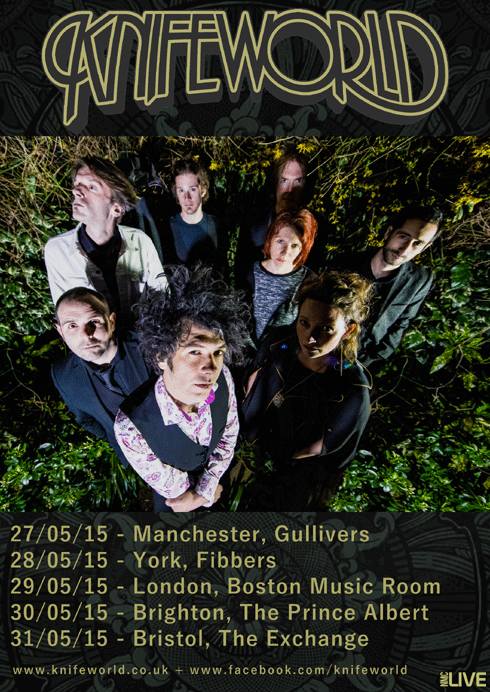
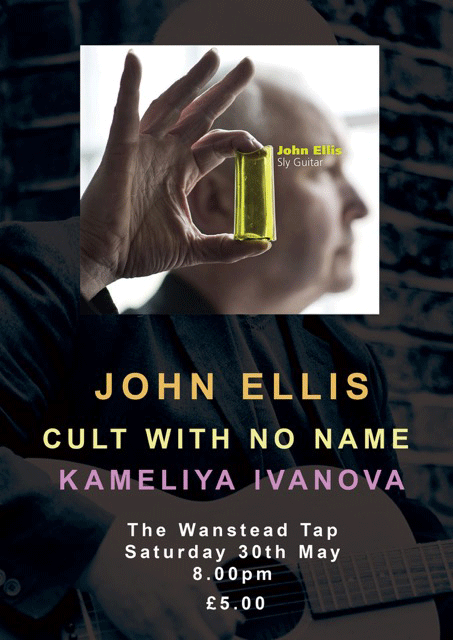
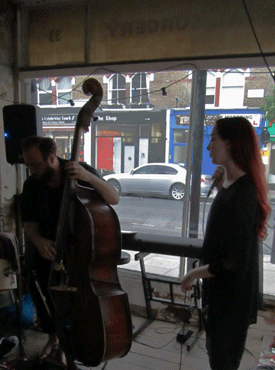

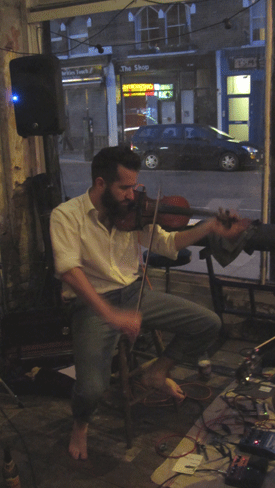
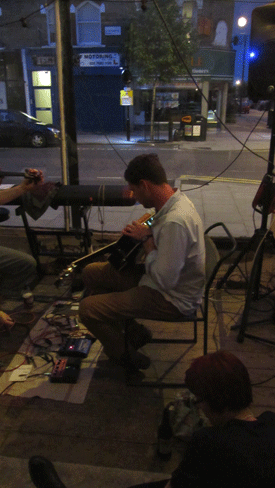
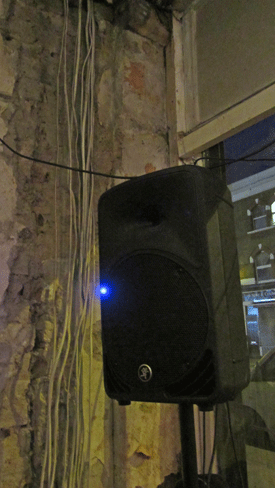
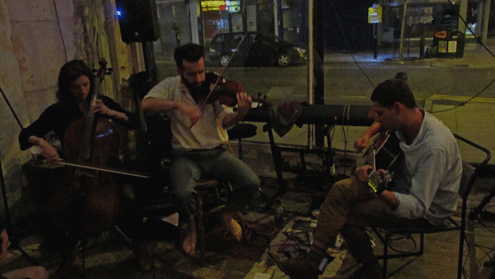
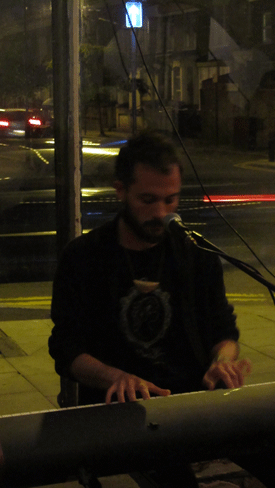
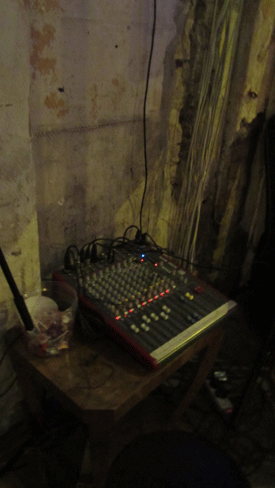



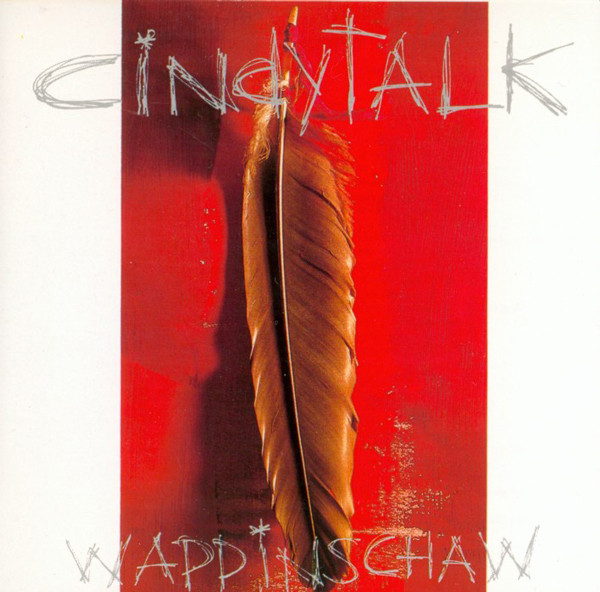


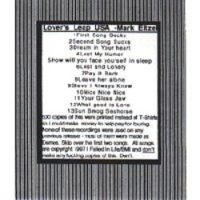


 Misfit City