Archive | sound collage RSS feed for this section

February 2019 – upcoming London eclectic/multicultural gigs at Poplar Union – Grand Union Orchestra (22nd February); Mishti Dance (23rd February) with Conspirators of Pleasure, The Tuts, Kapil Seshasayee and Soundar Ananda

15 Feb

I don’t go down to Poplar that often, but despite its more confusing aspects – the hurtling convergence of the eastern motorway routes out of London; that strange dislocated/disassociated/dispossessed neighbour’s relationship which it has with the glittering towers of Docklands to the south – the place has always felt welcoming; from the wry hardiness of its shopkeepers to the gentle courtesy of the djellaba-clad pair of Muslim brothers (one twentysomething lad, one eight-year-old kid) who spotted me wandering (a lost, bald, bearded middle-aged white bloke) all nonplussed by the Limehouse Cut, and were kind enough to redirect me to Poplar Union.

PU still feels like a beacon for the area’s future – enthusiastically aspirational in its bright, clean, modern bookishness but also happily embedded in the area’s colourful swirl of cultures; decidedly unshabby but also entirely inclusive. Here are another couple of gigs coming up there this coming week.

* * * * * * * *
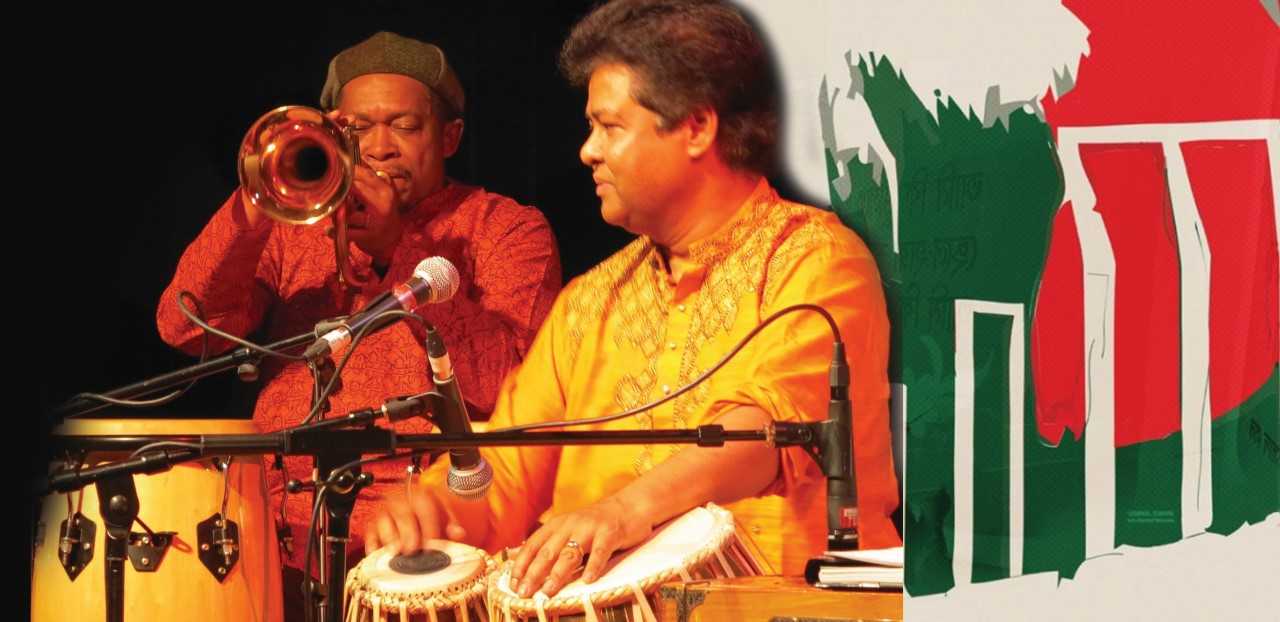
Grand Union Orchestra, 22nd February 2019

Sporting a thirty-plus roster of musicians from all across the world, Grand Union Orchestra have spent two decades playing and personifying an ethic of joyous multicultural cooperation onstage. With a tradition of creative diasporan work, and with an additional set of roots in left-wing community theatre, they’re a living rebuttal to British insularity. Usually there’s about eighteen of them on stage, drawn from a flexible roster of around thirty top-flight musicians from a variety of cultures and generations. You’ll see Bangladeshi, Chinese, English, Turkish, Caribbean, Roma, Bulgarian, Mozambiquian people and more, from striplings to grandmothers, all playing together, long accustomed to assembling rolling caravans of sound into which assorted musics – Carnatic and Bangladeshi classical, salsa, jazz – can be folded.

 
You can pick out the various components (even a quick dip will turn up players like Jazz Warriors trumpet veteran Claude Deppa, Carnatic violin virtuoso Claude Deppa, Roma accordionist Ionel Mandache, guzheng star Zhu Xiao Meng and a poly-hued battery of singers with backgrounds including fado, jazz, opera and Bengali classical) but you’re better off just enjoying the sweeping palette. Just looking at their gig flyers reminds me of the happy, souped-up neighbourly multiculture festivals in and around my primary school. It makes me want to bare my teeth against the chilly white monocultural wind that’s blowing from the future, from Brexit and from the surly side of Englishness; or – if I can’t do anything else – to at least turn up my collar, turn my angry back against the freeze and head for the lights, the warmth and the rhythms.

GUO’s current, workshop-driven project – ‘Bengal, Bhangra and the Blues’ – is helmed by tabla ace Yousuf Ali Khan: it leans back towards the music of the Asian sub-continent with classical ragas, Bengali songs and the aforementioned bhangra at the heart of it. Various young participants, having already enjoyed the previous week’s free instrumental youth workshops incorporated into the project programme, will be joining the main band for the concert.

* * * * * * * *

Mishti Dance featuring Conspirators of Pleasure + The Tuts + Kapil Seshasayee + Soundar Ananda, 23rd February 2019

I know Grand Union Orchestra, but I’m less familiar with PU’s Mishti Dance evenings and their Asian club/dance initiative. The idea strikes a fond chord of memories stemming from the Talvin Singh Anokha nights I’d occasionally attend in the mid-‘90s, in which all of the sounds I’d been vaguely aware of during an upbringing in multicultural Haringey suddenly seemed to grow up and stream together. Anokha, though, had its road laid down for it by the bhangra grooves and post-rave dance culture of the times, and while you could skulk up to the chillout room to listen to Shakti if you wanted to, it was predominantly about immersing yourself in sub-bass, remix chops and tabla frenzy.

Mishi, however, looks like a much looser bag: admittedly hung on the same British Asian peg but more tenuously, with room for just about anything and anyone with a Asian connection and in particular those who are following their own path out of the immediate cultural confines and bringing their innate cultural qualities to question, alter and enrich other spaces. The closest Anokha-type dance exemplar in this month’s gig looks as if it’s DJ Soundar Ananda of Indigenous Resistance, a French-Asian “conscious beats” deliverer, promoter and compilation curator working with “cutting-edge, futuristic, nu-skool, Eastern electronic music influenced by dub, dubstep, d’n’b, breakbeat, jungle, reggae.”

 
The Tuts, on the other hand, are a long way from Anohka beat culture, although I think Talvin and co would have appreciated their ethic. A fiesty, witty, self-propelled female throw-forward from the all-too-brief days of ’70s post-punk inclusivity, they’re a young DIY pop-punk trio of “proud Caribbean, English and Indian/Pakistani origin” and an immediate, salty working-class attitude of immediate self-assertion and street wit. Full of chop-and-change musical sharpness and girl-group zest (they’ve happily covered Wannabe, though there’s as much Fuzzbox or Slits to their vigour as there is Spice Girlhood), they’ll be inspiring girl moshers and wallflowers alike from Wolverhampton to Leicester, with little for old white gits like me to do but gently get out of the way, smiling as we do so. Bluntly inspirational.


The remaining two acts take us into delightfully eclectic and weird experimental pop and noise terrain. Bringing the majority of the weird noises are headliners Conspirators Of Pleasure: multi-media artists Poulomi Desai (who’s been in here before a few times over the year, toting her polydisciplinary stage shows and their festoonings of gizmos and collated contradictory content) and onetime Pop Group/Pigbag post-punk/funk/dub bassist Simon Underwood (once compared by Dennis Bovell to a white Robbie Shakespeare). Their adventures together have included helping to set Joyce’s ‘Finnegan’s Wake’ to music, and touring with Stewart Lee and other restless upsetters in the ‘Usurp Chance Tour’. Using repurposed tools of the cultural trade (Poulumi’s context-yanked sitar played with everything from an axe to a massage vibrator, Simon’s prepared bass guitar) plus assorted noisemakers, drone-sources, toys, stylophones and radios and a battery of makeshift audio-visual, they’ll spend their time onstage forking over textures and flotsam, touching on the industrial, on dance culture, on noisy improvised chaos and on the voices and ideas which emerge from this conflation.

 
Glaswegian-Asian singer-songwriter Kapil Seshasayee has parked himself on a junction where a variety of different ideas and approaches are coerced into meeting. He takes his beats from hardcore machine punk and Arca-ian experimental electropop; his guitar choices from a superimposition of Carnatic traditions and skinny-wire Hendrixian note-bending, crashes and hammer-on blues; his song structures from the kind of improvisational bardic rock which itself is drawing from griots or the ecstatic traditions which bubble away in various cultures despite having been vainly tarmac-ed over by Western rationalism.

His voice… well, I’m not entirely sure where that comes from. A beautiful Western/Indian rock clarion with hints of boy angel, Quwalli pronouncer and open-ended Beefheartian abstractioneer, it barrels up out of a position of assured strength only to lyrically splatter itself across parts of the landscape you’d not even noticed before. I could wave in Tim Buckley, Thom Yorke, Nick Harper and Van Morrison as whiter comparisons; I could point to some of the fiery ecstastic pitches and timbres of Nusrat Fateh Ali Khan, or toward youthful bluesmen with an axe to sharpen; but I still wouldn’t get it across to you or do it the right kind of justice.

Bald and impressively bearded (beating me on both counts, in fact), Kalil additionally decorates his wrenched-cable music with electronic fizz and spookings plus the eldritch acoustic wails he can scratch out of a waterphone. As for his songs, whether they’re upended experimental blues or club-leaning avant-pop abstractions (and often they’re both), they sound like distracted revelations in train marshalling yards, Kapil as a spasming, pointing Blakean figure continually spotting and sweeping the hidden numinous into his narratives and fracturing them into cracked landscapes. Somewhere inside Kalil there’s a bloke who wants to sing straightforward young-man songs about love gone wrong. Fortunately, his own brain continually waylays him in between impulse and expression.

 
* * * * * * * *

Dates:

Grand Union Orchestra: Bengal, Bhangra and the Blues
Poplar Union, 2 Cotall Street, Poplar, London, E14 6TL, England
Friday 22nd February 2019, 7.30pm
– information here and here

Mishti Dance presents:
Conspirators of Pleasure + The Tuts + Kapil Seshasayee + Soundar Ananda
Poplar Union, 2 Cotall Street, Poplar, London, E14 6TL, England
Saturday 23rd February 2019, 7.00pm
– information here and here
 

February 2019 – upcoming English folk-rock-but-not-just-folk-rock gigs – My Octopus Mind on tour (13th, 16th, 21st, 22nd February) with Jakabol, The Display Team, Lapis Lazuli and Malika Collective; Hexvessel and Arktau Eos in London (22nd February)

10 Feb

Flexible Bristol almost-acoustic trio My Octopus Mind occupy a pleasing position, settled in their own web of connections between a number of different influences but reliant upon none of them. There’s a jazzy rattle, predominantly via the gloriously noisy effected double bass of Izy Ellis (a growling, punchy, conversational art-box; upfront timber and raw electronic treatments). The whole band’s informed by post-Radiohead/Mars Volta art rock and by the mating of contrasts implicit in assorted culture collisions (such the Hindustani-classical meets New-York-loft-music teaming achieved in one particular favourite, Philip Glass and Ravi Shankar’s ‘Passages’). Frontman singer and guitarist Liam O’Connell cites the sonic and psychological crescendos of Jeff Buckley and Josh Homme’s mix of heaviness and irony, but also the restraint of Jose Gonzales. Ex-Lambhorneer Oliver Cocup adds refreshed drum bounce, and racing through the whole thing is a rivulet – or, more accurately, an unstoppable jet – of skittish Balkan folk.

 
With a debut album, ‘Maladyne Cave’, nearing release, My Octopus Mind are out on a brief English tour wriggle this month, taking in Manchester, Canterbury, London and their hometown. In part, it’s to celebrate the recent release of their debut single Elska, with its increasingly disturbing Coppelian dance video (in which a man wheels an impassive doll-woman around in a suitcase, engaging in secret and increasingly frustrated trysts with her).

While Manchester is an evening for the band on their own, various temporary tourmates slot in elsewhere – in London, it’ll be the accomplished Afro-Latin groove band Malika Collective. The Canterbury show sports an eclectic psychedelic edge with local jam band and “maximalist psych-prog heroes” Lapis Lazuli plus the convoluted Zappa-brass meets London-urchin-pop of The Display Team (see passim) and psych/prog/punk funk/soul/dub/afro combination DJ interludes from Professor Appleblossom. The Bristol tour launch show, meanwhile, also features Jakabol, a warm Bristolian instrumental band in which violin, harp, guitar and drums leap and lurch tunefully around a set pitched midway between post-rock gutter and country hoedown (perhaps a further extension of the rural post-rocking I’ve been hearing from Rumour Cubes and Apricot Rail).

https://soundcloud.com/jakabolbristol/goram-and-vincent
 
* * * * * * * *

Linkings between folk music and heavy rock go back pretty much all of the way to the start of the latter, especially in Europe. In plain sight, Led Zeppelin regularly immersed themselves in Welsh border hillsides and Janschian jangle; a little later, Jethro Tull brought in the jigs, liltings and mandolins while allying them to Ian Anderson’s witty, sardonic absolutely-in-the-moment songwriting voice (which swept in the eclectic interests and erudition of a restless, randy, contemporary urban boulevardier who could’ve make the idea of a leprechaun in your sitting room sound like something contemporary, adult and immediate rather than twee). In the ‘90s a swell of Celtic/Nordic folk metal and Gothic paganism via bands such as Skyclad led to a revival of mythic musical drama; in the Noughties, there was the feeling that the likes of Opeth were peering over their successive ramparts of black metal and prog in search of something offering more air and antiquity. Nowadays, you can hardly move for this sort of thing sprouting up from Ireland to Israel: driving a guitar through a hefty amp seems like one of the most effective ways to kick off an interest in your own folk history.

In many respects, latterday Anglo-Irish-Finnish heavy-folk-rockers Hexvessel hanker back to Tull – some of the lilts and jangles are there, as are the banging barn-door blurts of chunky electric guitar work – but they also trade in some of the dramatic minor keys and broody, nonconforming, subculture-meets-antiquity feel of Skyclad. Of course, this is probably incidental: it would be more constructive to reconsidering the swirling body of interests and philosophy surrounding singer and prime mover Mat McNerney. Despite Mat’s former black metal links (as “Kvohst”, he cavorted across stages with bands like Dødheimsgard and Code), Hexvessel avoid certain predictable pitfalls – no ludicrous demonic posturing; no arid hating; no polluted white-is-right old-Europe nationalism. This is primarily because under the corpse paint Kvohst always seems to have been a thoughtful and sensible chap with a well-calibrated bullshit detector, sorting the nourishing myths from the toxic ones.

 
Instead, Hexvessel explore a range of thinking stimuli – post-/pre-Catholic pagan magick; the connecting threads connecting contemporary Finnish woodland psych with the brooding kosmische stews of Amon Duul and the chatty verbal maximalism of early ‘70s British psych folk; comic book legendariums; and respectful pro-feminist reintegrations of women back into musical forms that have often wandered too far down macho paths. Later this month, they’re setting up camp at St Johns Bethnal Green; playing a London show as part of the European tour in support of brand new album ‘All Tree’, in which they’ve endeavoured to blend Mat’s memories of old ghost stories and other transmissions of folk culture with their own dramatic Samhain vibes and symbolic forest-folk musical experiments (including playing tree boughs with violin bows). Mat sees it as a way of connecting to Samhain’s liminal side; a time when ancestors, as spirits and memories, are that much closer.

Hexvessel’s tree-bowing was captured out by the band’s resident field recording/sound conjuring wizard Antti Haapapuro. In another incarnation – as half of sacking-masked ritual ambient/oneiric duo Arktau Eos – he and fellow Eosian Antti Litmanen open the show, rubbing the psychic gateways open with their primeval sounding drones, swells and invocation of significant spaces – simultaneously post-industrial and prehistoric, thrumming out of a green church, resonating nook or ancient gravehole like a stone-tape playback of ancient, dignified rites.

Steeped in hermetic philosophy and Apophatic theology, Arktau Eos come across as thoughtful ceremonial scholars in interviews such as this one in the ‘This Is Darkness’ ezine. Eloquent and courteous if you care to track them down for a respectful conversation, but unswayed by distractions from their business of the mining of the “ur-currents” of religious faith; the pull of site-specific mysteries, apprehending experience without attempting to stare it in the face or pin it down with sentences. In a similar spirit, I think I should just leave the descriptions there, as they stand. Essentially, it’s all in the sound and the placement, and the ceremonial use of the available moment. Understand them that way.


* * * * * * * *
Dates:

My Octopus Mind:

  • The Crofters Rights, 117-119 Stokes Croft, Bristol, BS1 3RW, England – Wednesday 13th February 2019, 7.30pm (with Jakabol) – information here and here
  • The Old Abbey Taphouse, Guildhall Close, Manchester, M15 6SY, England – Saturday 16th February 2019, 7.30pm – information here
  • UCA Bar Canterbury, New Dover Road, Canterbury, Kent, CT1 3AN, England – Thursday 21st February 2019, 7.30pm (with The Display Team + Lapis Lazuli) – information here
  • The Magic Garden, 231 Battersea Park Road, Battersea, London, SW11 4LG, England – Friday 22nd February 2019, 7.00pm (with Malika Collective) – information here and here

Old Empire proudly presents:
Hexvessel + Arktau Eos
St John on Bethnal Green, 200 Cambridge Heath Road, Bethnal Green, London, E2 9PA, England
Friday 22nd February 2019, 7.00pm
– information here and here
 

February 2019 – upcoming experimental gigs – Kammer Klang: Taylor Le Melle’s Afrodiasporic spectrum with Venus Ex Machina, Morgan Craft and Shenece Oretha (5th February)

31 Jan

Bah. I’ve got a swelling head cold and am consequently as thick as a cement omelette. Not the best time to try to preview a complicated experimental evening. Sorry for the vagueness in this post… even more than usual, this is hidden music to be sought out and learned from.

Kammer Klang: Venus Ex Machina + Morgan Craft + Shenece Oretha, 5th February 2019

The first Kammer Klang of the year unites various sonic experimentalists from the African diaspora under the curatorship of Taylor Le Melle. That’s probably the best way of putting it: the lack of a portentous event title means it’s not pinned down to any more specific narrative. Though predominantly a writer, Taylor spends a lot of time as a creative enabler (co-running independent publisher PSS and artist/workers’ audio-visual cooperative not/nowhere, and facilitating debate), and this isn’t her first Oto event. I’m assuming that it’s going to throw up ideas from across a broad spectrum of ideas and identities, some of which are outlined here.

Venus Ex Machina (a.k.a. Zimbabwean emigre Nontokozo F. Sihwa) is one of an ever-more visible number of interdisciplinary artists and computer coders eliding non-binary gender ideas into the worlds of music, games and visuals. Interested in “mythical and borderless” radio communication, she’ll be performing her own ‘Anno Lucis’ piece from 2018.

I’ve no idea whether this other Venus piece, ‘Paraquat’, is any reflection of what’s to be performed on the night; but here it is for illumination (with its mixture of Geiger counter industrial twists, ringing friction noise apparently siphoned from the bearings holding up the music of the spheres, and arrestingly vocal synth parts summoning up both heavenly European chapel choirs and complex African alarm whoops).

https://soundcloud.com/venusexmachina/paraquat
 
Attempting to place solo electric guitarist and sonic mystic/realist Morgan Craft involves multiple questions about geography, roots and discovery. A Minnesota-born African-American, he’s an escapee from the New York experimental scene of twenty years ago; but rather than questing directly into Africa he sought refreshment and new paths in the Tuscan mountains of Italy for over a decade (before settling in Amsterdam, where he works with Giulia “Mutamassik” Loli on the Circle of Light label and the Rough Americana project. Now he’s an “Afro-American Viking futurist”, whatever that means. Drawing on the classical legends and contemporary politics of African, European and American cultures alike, his essays sift and fold his multi-positional overview: an expatriate American black man querying his background, a critiquer of capitalist and street culture, a person with one eye on a new dawn due to rise over the muck.

Morgan’s textural guitar pieces are expansive and questioning personal monologues, abstracting manifold concerns into detailed shades. He will be performing his 2018 piece ‘Godel’: here are several earlier pieces from a big releasing burst in 2016.


Montserrat-born Shenece Oretha mostly concerns herself with polyvocality and immediate listening – as she puts it, “choreograph(ing) layers of music, voice, recordings and noise to shape moments of communion and ceremony.” Land-tilling metaphors of potential and nurturing pervade her definition of herself – “hypothetical gardener, future farmer, speculative horticulturalist.” Her sound work, or at least, that of it which I’ve heard so far, is much less pastoral; simultaneously dicing up and unifying strands of black experience from the wounded and fierce to the ecstatic and congregational, from the lone voice ululating to the whumphing in-your-face assertions of co-opted technology.

 
In addition to Oretha’s Fresh Klang performance – a piece called ‘to plot together, to breathe together’ – Testing Grounds (her “installation with multiple openings”) makes a temporary home at Oto for three days in advance of the show. With spaces for invited guests available (to “accompany the sound and participate in the sounding out”), it’s a live-performed sonic stew “present(ing) and incorporate(ing) her ongoing research project, black whole…, orchestrat(ing) a series of interruptions/interventions ‘in the breaks’.”

 
Kammer Klang presents:
Kammer Klang: Venus Ex Machina + Morgan Craft + Shenece Oretha
Café Oto, 18-22 Ashwin Street, Dalston, London, E8 3DL, England
Tuesday 5th February 2019, 7.30pm
– information here, here and here
(‘Testing Grounds’ – Saturday 2nd to Monday 4th February 2019, 5-9pm)
 

February 2019 – upcoming London experimental gigs – drone evenings – NYX & Iona Fortune plus Flora Yin-Wong (3rd February); Matthew Shaw, Anji Cheung and English Heretic (7th February)

29 Jan

A couple of evenings of drone and weird noise for you, here in the Smoke.

* * * * * * * *

 
Electronic drone choir NYX and Glaswegian electro-acoustic drone instrumentalist Iona Fortune join forces in Bethnal Green during the coming weekend, for what they’re calling “a liminal ceremony” based on an exploration of the I Ching. The latter’s a particular interest of Iona’s – she’s already released the first of a planned octet of releases on the subject. Live, she blends instrumental performance work on the gamelan percussion set and guzheng zither with vintage electronic textures generated by the EMS Synthi AKS (the same early-’70s suitcase synth that’s responsible for early Pink Floyd sequencing, mid-period radiophonics and various Enossifications), via a composition technique which “involves inner cultivation”. For their part, NYX (eight veiled women singing together from behind two tables strewn with vocal sound processors) stress “mindful experiences, psycho-acoustics and sound healing through an immersive exploration of ambient, noise and electronic music”. Expect a mixture of avant-garde eeriness and ancient intimations, then, mixed with a fat emollient smear of New Age healer atmospherics: something silkily psychoactive.

The focus on I Ching divinations might be Iona’s choice, but the sonic method is NYX’s, who are leading a series of similar concerts (this is the third of four, it seems) in which they coax a collaborator to let go of some of their own battery of electronics and/or field recordings and allow NYX to replace it with their own poly-chorused vocal blocks and twinings. A recent ‘If Only’ interview with NYX’s Sian O’Gorman has plenty of talk about mother principles and the like, but it does make them sound genuine: intrigued by the interaction of specific voices with specific bits of electronic kit, and well aware of different vocal practises delved into across hundreds of years and thousands of miles.

They’re also determined – and proud – to promote the female voice, skills and mindset. All performers in the concert series have been women: unsettling folktronica performance artist Gazelle Twin following operatic chanter Hatis Noit, with layering classical/noise minimalist Alicia Jane Turner scheduled for the next event.

Meanwhile here’s a little of Iona working on her own, plus a snippet of NYX working with Gazelle Twin. Chop, edit and remix in your mind’s eye as appropriate.

https://soundcloud.com/ionafortune/xu-5

 
As a kind of counterbalance to the concert’s Orientalist leanings (for all the sincerity, with this amount of New Agery it can feel as if it’s an act of looking in rather than belonging), the support slot goes to an actual Asian diasporan musician: electronicist Flora Yin-Wong, Chinese-Malaysian by roots but London-born. With an outright interest in club culture and dissonance, Flora seems to be more futurist than tourist but touches on the evening’s mystical tone via her use of field recordings from south-East Asian temples, re-brewed and teased within electronic processing and contemporary beat frameworks. Some of what she does twinkles, but other parts form arresting fields of explosive ritual noise right from the first note – see below.

https://soundcloud.com/floraytw/dispel-michael-speers-edit
 
* * * * * * * *

The following Thursday, up in Manor House, New River Studios plays host to the London launch event for Matthew Shaw‘s “debut” album ‘Among The Never Setting Stars’.

Calling it a debut is a little disingenous, since Matthew’s been putting out music for two decades now. At the turn of the century he sat somewhere between Bark Psychosis, Mojave 3 and a sedated Mike Oldfield, releasing soft-edged, deeply rural dream pop as Tex La Homa. At the start it was murmured acoustic-indie guitar folk – equal parts Drake and Velvets – expanded by synth rills, echo and field recordings; but gradually the singing diminished and the backing tracks became more interesting, the sounds took over and the local Dorset landscape (both physical and psychic, stone circles and solstices) impressed itself ever more deeply on the music. Though Matthew was also spending time helping to add sonic depth and audio subtext to folktronic pop band Sancho, in his own work the pop structures were dissolving away to allow the other ingredients to billow forwards.

By the middle of the decade Matthew was carrying out duo work: bizarre electrophonic ritual music with Nick Grey as 230 Divisadero and theosophical dronery with Andrew Paine as The Blue Tree. Since 2010, he’s run the limited-edition experimental label Apollolaan Recordings and issued a couple of Cornish/antiquarian-slanted location music releases in collaboration with Brian Lavelle as Fougou. Suggesting that he’s only officially going solo now is also a little disingenous – there have been releases under the Matthew Shaw name since he started Apollolaan, with a host of them still on Bandcamp. They’ve explored the usual territories of the recurring mystic tradition – alchemy and magick, psychogeography, cosmic astrology – but without the pomposity that’s usually bundled into the package.

Generally speaking, Matthew comes across as a listener rather than an imposer; travelling from temporary cottage to temporary cottage and from site to site with his guitars, sampler, KAOSS pad and electronics as an itinerant tinker would carry his tools. His work often sounds like an attempt to fuse an English pastoral tradition with spiritual/kosmische protractions and with occult/avant-garde post-punk aesthetics, blending in a folk-inspired interest in the cycles of seasons and life plus the rituals one makes to mark them. Typically New Weird Britain, then – and ‘Among The Never Setting Stars’, true to form, is apparently based around field recordings of “occult landscapes”. I would have expected the resulting pieces to have been more alarming, or at least more disorientating in the standard dark-ambient style (in which thunderheads mass like war in heaven and nature is overwhelmed by random electricity and ferociously foraging ants). On this occasion, however, Matthew seems to have been brought to a pitch of innocent (if slightly eerie) pastoral serenity – his source material buried to the point of absolute dilution or effective erasure beneath a gentle edgeless electrophonic skirl, like a cloud-organ recital in a roofless, open green church.


Also on board for the New River concert are the harsher drone-and-sample-scapes of Anji Cheung. Sometimes these are unnerving, frowning amplifier buzzes rolling over the listener like a gigantic clumsy wheel, with dramatically chopped/distorted/otherwise incomprehensible vocals implying pirate-radio-eavesdropping on a covert ritual. Sometimes they’re car-boot clatter under a lowering sky; sometimes they’re beautiful lost female murmur-melodies stalked by drainage-ditch fuzz. If Matthew’s work remains rural (and white), Anji’s is another aspect of NWB: ambiguously multicultural and urban, mixing and obscuring London and Chinese references, but sounding mostly as if it stems from a place where jerry-built tower blocks break up old fields around the city’s tired periphery and where unknown syncretic practises are carried out (perhaps only half-understood even by the people involved).


Playing hosts are English Heretic, the multimedia collective who for fifteen years have been self-appointed English psycho-historical curators, magickal Situationists and NWB forerunners. They’ve always carried their enthusiastic immersion in all things Britannic, eldritch and peculiar with warmth and wit, embracing the absurd without turning it into a cheap laugh; and putting a more inclusive and welcoming face onto the uncanny, sometimes belying the depth of their work. If I ever need an exorcism (or, more likely, some kind of psychic mediator) I’ll probably give them a call.

Plenty of music can be fed into the English Heretic stewpot – they’ve cited “psychedelic folk, ritual ethnographic recordings, electronica” as part of their fuel, and they’re very happy to drop into thrumming cusp-of-the-’70s psych rock at any opportunity, but in many respect the music’s secondary to the tales and the texts, the visual images and the intimations. Head Heritageur Andy Sharp has mentioned, in ‘The Quietus’, his tendency to extrapolate scraps and findings into something bardic and numimous – “reading around, something will catch your attention, and then I treat it in a magical context: taking the view that restless spirits or troubled souls inhabit the environment.” Sparks from hidden resonances (including those which are actually in plain sight and hearing) permeate the work.

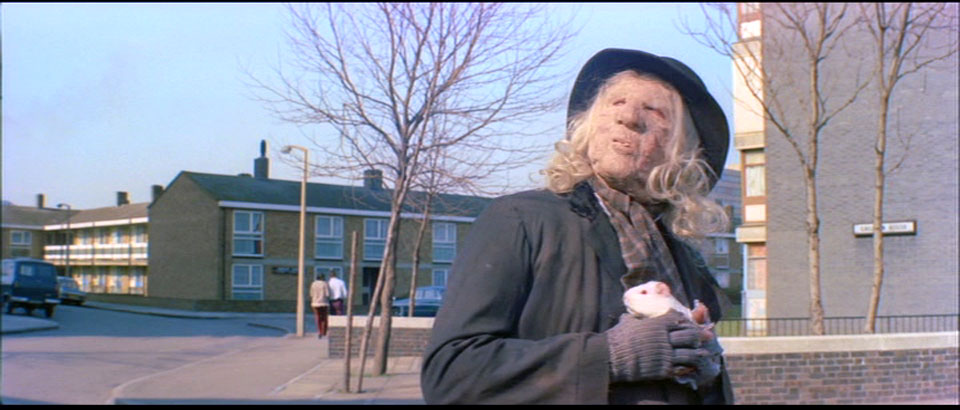
For this particular concert, English Heritage is airing part of the ongoing audio-visual project ‘London’s Imagined Dead: Cinematic Deaths in London’. The section they’ve picked takes its cues from the Brit-horror era of the late ‘60s and early ‘70s: the era which spawned ‘The Wicker Man’ and ‘The Blood on Satan’s Claw’, although they’re focussing on a lesser-known Hammer offering, ‘The Asphyx’. A 1972 tale of horribly botched Victorian research into the transmigration of souls, the film’s final sequence features the cadaverous, wandering-Jew meanderings of the story’s main character, still alive in the 1970s and condemned to a hateful, decrepit, guilt-ridden immortality. That last sequence was filmed at Battersea’s Winstanley Estate, later briefly notorious (in UK garage circles and in tabloid-land) as the home turf of So Solid Crew.

The finale of 'The Asphyx'. (Well, it was the early '70s and they'd run out of budget. Just concentrate on the concept...)

The finale of ‘The Asphyx’. (Well, it was the early ’70s and they’d run out of budget. Just concentrate on the concept…)

Visiting the present-day location, EH have taken note of the estate’s mysterious-looking murals (actually reliefs, carved into the Winstanley’s concrete walls) and have drawn from them to create new visual scores. Full of primal symbols and strange abstracted geometries, the carvings have an ancient air to them; but actually they’re early ‘60s commissions from William Mitchell Design Consultants, formally put up as part of the refurbishment during the estate’s post-war rebuild, and not even a decade old when ‘The Asphyx’ was filmed. English Heretic know this, of course, but are well aware that the ideas which places, objects and initial associations trigger off are at least as important as the actual truth. In this case, they’ve intersected film and building fabric to inspire literal musique concrète. Their pun, not mine. Not that I’m sulking about having been beaten to the punch…

* * * * * * * *

Dates:

comm-une presents:
NYX with Iona Fortune
The Pickle Factory, 13-14 The Oval, Bethnal Green, London, E2 9DT, England
Sunday 3rd February 2019, 6.30pm
– information here and here

English Heretic presents:
Matthew Shaw + Anji Cheung + English Heretic
New River Studios, Ground Floor Unit E, 199 Eade Road, Manor House, London, N4 1DN, England
Thursday 7th February 2019, 8.00pm
– information here
 

February 2019 – upcoming jazz gigs in London and Cambridge – Seed Ensemble (1st February); Warmer Than Blood (2nd February); Irreversible Entanglements and Matana Roberts (2nd February)

28 Jan

Cassie Kinoshi & SEED Ensemble, 1st February 2019

Perhaps there’s not a great deal that I need to say about Cassie Kinoshi. The most visible of the current generation of jazzwomen from the Tomorrow’s Warriors Female Collective, she’s clearly on the ascendant, working extensively across the jazz, classical, dance and drama worlds, and with her two-year-old SEED Ensemble now getting high-profile gigs. One of these is at Kings Place this Friday, in which SEED unveil their debut album ‘Driftglass’, showing off the end product of the multicultural London influences which inspire them: groove-based British jazz with strong flavour of West African and Caribbean diasporan music.

If that sounds a bit cuddly, then check out the title – and the combative, sarcastic thump – of the second of the two clips below. It’s a parodic, pointed Mingus-worthy musical representation of white people’s fear-driven misconceptions about black people, drawing on the wildness, grief and defiance of New Orleans funeral music and underpinned by the double-low-end honk-n’razz attack of Theon Cross’ tuba and Rio Kai’s double bass.

 
* * * * * * * *

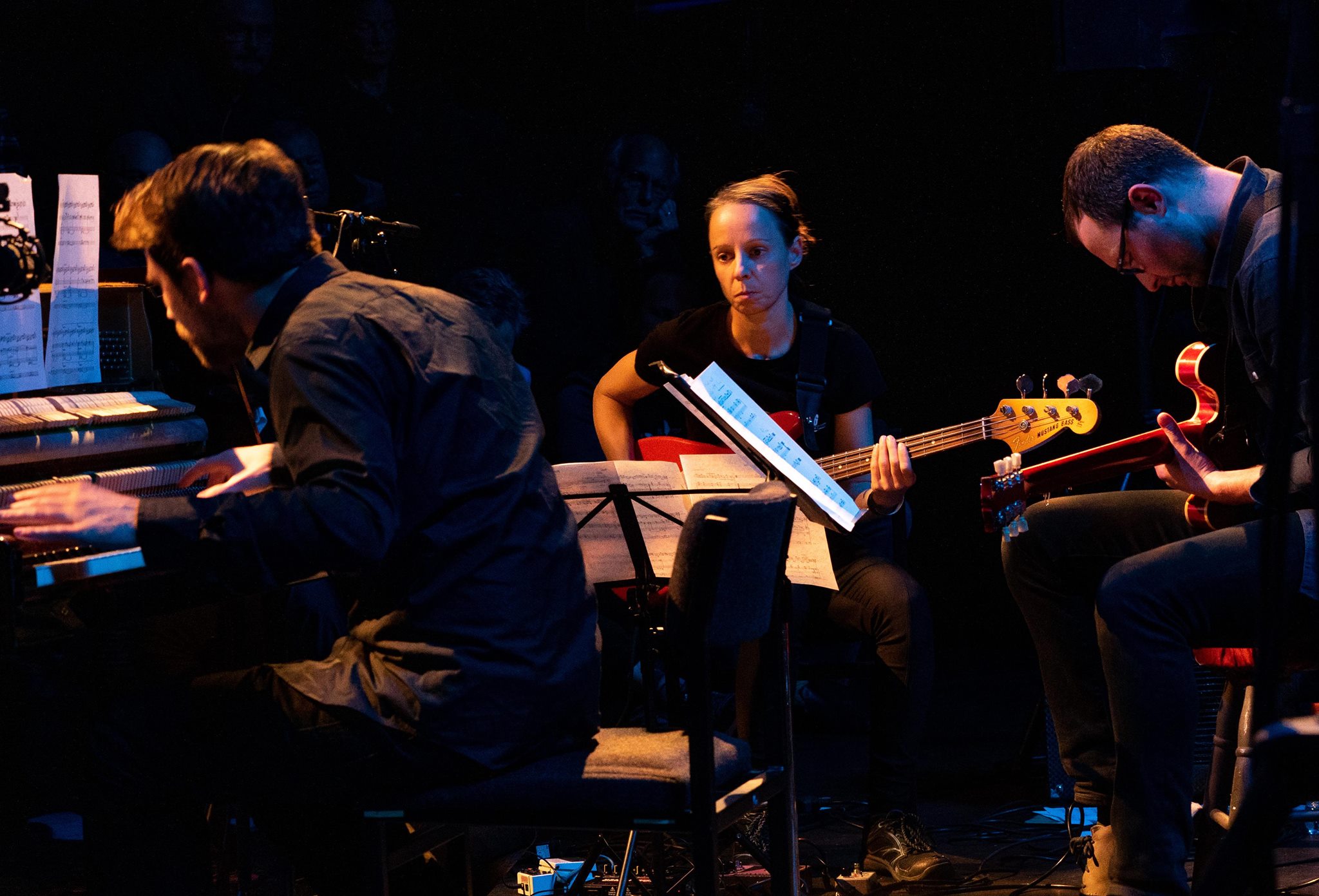
Up in Cambridge the following day, guitarist/composer Chris Montague (previously seen in here via his work with Alex Roth and Chris Sharkey in Future Currents) reveals his new project Warmer Than Blood. It’s a trio in which he combines with pianist Kit Downes (Troyka, F-IRE Collective) and bass guitarist Ruth Goller, whose pedigree takes in a host of projects from Acoustic Ladyland to Sephardim ballad revivers Sephiroth plus (amongst others) the manouche of Kamao Quintet, the punk jazz of Let Spin and rough-edged North African-influenced Melt Yourself Down, the Latin folk of Oriole and the up-in-the-air experimental indie-rock of Bug Prentice.

Warmer Than Blood, 2nd February 2019

All three are longtime friends and collaborators, seeking yet another new approach. They seem to have found it with Chris’ newest batch of compositions and improvisation-seeding situations, which he suggests consist of “intricate textures, dark pools of harmony, layered melodies, kinetic group improvisation and percussive prepared piano… fractious composed passages can inhabit the same sonic space as spare, ambient melodies, often described as melancholic and uplifting at the same time.”

Warmer Than Blood are a couple of months away from properly recording a debut album, but two live tracks on their homepage point the way in which they’re going. Introverted and ominous, their name-track’s a quiet etiolated piano exploration over a minimal pulsing guitar-chord cycle and locked-in bass rumble. The excerpt from a longer piece, FTM, is a gradual evolver in which Chris hovers in menacing sustain/volume-swell textural clouds and momentary dust-devils over ghost-Latin clicks and bass piano thuds (Kit muting the piano at both ends) before the trio expand into what’s partly a kind of haunted country music (like a Bill Frisell ensemble scoured to the bone by plains wind), and partly like a salsa band coming to terminal grief in a badlands dustbowl.

* * * * * * * *

Back in London, and also on the Saturday, the Barbican’s Milton Court hosts Brooklyn-based “liberation-minded free jazz collective” Irreversible Entanglements. If you’re after a jazz band to represent and reflect these increasingly ugly, stormy, oppressive times from the bottom up, you couldn’t find a better one – but be careful what you wish for. They aren’t an easy listen, and they’ve got no intention of being so.

Irreversible Entanglements, 2nd February 2019

Free jazz (especially, though not always, when it becomes a hand-me-down in the hands of white musicians) can often be a fussy, elitist abstraction. Irreversible Entanglements uncompromisingly return it to its roots in black radicalism and to an absolute connection to the injustices of society. In doing that, they’re stepping into the first-generation protest-jazz shoes of Archie Shepp, Joseph Jarman, Max Roach, Albert Ayler.

If you’ve been reading ‘Misfit City’ over the last couple of months, you may remember Elaine Mitchener reviving this tradition with her Vocal Classics Of The Black Avant Garde project last month. While operating in a similar field, Irreversible Entanglements have no interest in curating those impetus and protests as museum pieces. Instead, they create their own protest. It should go without saying that they’re tied deeply into the #BlackLivesMatter initiative. Originally forming the band four years ago to play at a Musicians Against Police Brutality event, saxophonist Keir Neuringer, bassist Luke Stewart and poet/proclaimer Camae Ayewa subsequently added trumpeter Aquiles Navarro and drummer Tcheser Holmes for more rhythm and flammability.

The resulting quintet sounds far bigger, far angrier and far more righteous than seems possible, jetting out sheets of rattling, scouring brass over gargantuan shifting rhythms like wrenched building piles. Key to it all is the fierce female voice at the core. Camae’s better known for her Moor Mother solo project, in which she declaims jarring, terrifying accounts of personal and cultural pain over a barrage of hip-hop/slamtronic sound. I’ve written previously about the way in which her deep drilling of psychic scar-tissue within the African-American experience turns her into time-traveller, authorative witness-bearer and angry documentarian. With Irreversible Entanglements, she taps into another heady well of black American cultural memory, this one passed down via saxophones, bop and overblown sheets of sound. It’s not the first time that a jazz band has been centred on a woman’s voice, but you’ll rarely, if ever, have heard it done this way, in which the texts and the delivery not only match the hurricane of music, but simultaneously drive and ride them. This is serious schooling.


In support at Milton Court is Chicago-born, New York-based saxophonist and sound experimentalist Matana Roberts. While it’s not unusual for a jazz player to appear on a record on post-rock spearhead label Constellation, it is unusual for one to be signed to the label. Matana, however, is not a standard jazzer (she prefers the term “sound adventurer”, considering herself to be a hybrid connected to multiple sonic approaches), and she was probably signed more because of her general experimental tendencies than because of her past collaborations with Silver Mt. Zion and with Tortoise members.

An orchestral clarinettist with a politicized background, Matana journeyed through punk, Riot Grrl and avant-garde music to where she is now. Though she seems quite capable of punching out Chicago post-bop/free sax on the stand, she doesn’t restrict herself to standard (though demanding) jazz forms. Instead, she treats music as a prime artistic unifier crossing over into dance, theatre, poetry…. not in itself unusual, but rather than just strapping standard music tropes onto other forms she allows those forms to wash in, dissolving and reforming her approach to her music.

Matana’s best known for her ongoing ‘Coin, Coin’ series, a projected twelve-album project started in 2005 and still in its relatively early stages (it’s about a third done). In this, whether working on her own or with others, she utilises a technique she originally dubbed “panoramic sound quilting”, joining together blocks of noise and scoring from a variety of sources but with an assemblage idea borrowed from rag-bag folk art. In particular when she’s recording alone, her pieces feature multiple Matanas – some rolling out saxophone lines, but many engaged in vocal chants or drones, or layered swatches of conversation. Some sing or scream, or hurtle along the arresting bloodied ribbon that separates the two: like Moor Mother, Matana takes pride in black history and resistance while establishing that it has to be represented via a certain sound of historical pain. The rawness there goes beyond filters of culture and into filters of humanness.”

Unsurprisingly, her performances have a reputation for being immersive experiences. Sounds like she’ll make the perfect gigmate for Irreversible Entanglements.

 
* * * * * * * *

Dates:

Jazz re:freshed present:
SEED Ensemble
Kings Place, 90 York Way, Kings Cross, London, N1 9AG, England
Friday 1st February 2019, 8.00pm
– information here and here

Listen! presents
Warmer Than Blood
Unitarian Church, 5 Emmanuel Road, Cambridge, CB1 1JW, England
Saturday 2nd February 2019, 7.30pm
– information here and here

Irreversible Entanglements + Matana Roberts
Milton Court Concert Hall @ Guildhall School of Music & Drama, Silk Street, Barbican, London, EC2Y 8DT, England
Saturday 2nd February 2019, 7.30pm
– information here and here
 

January 2019 – upcoming London experimental gigs – Armed With Bow & Portia van de Braam, Devon Loch and DJ Francesco Fusaro (30th January); UnicaZürn and Howlround (1st February)

27 Jan

Armed With Bow & Portia van de Braam + Devon Loch + Francesco Fusaro, 30th January 2019

As Armed With Bow, cellist and synth operator Will Langstone creates layered post-classical loop music with a psychedelic Moog-prog twist, exercising his fascination with cosmic planetarium visions, space voyaging and the like. The show he’s headlining at 93 Feet East this Wednesday will present his ‘First Encounter’ piece: a “four-part space odyssey conjured through cello, synthesizer, and four analog tape emulators” and a collaboration with dancer-choreographer Portia van de Braam.

 
Under his Devon Loch alias, Richard Greenan (founder of exotic miscellania label Kit Records) will play a set of his own. It’s touted as a “hybrid live/DJ performance, combining manipulated classical, field recordings and live electronics.” Presumably, it also draws on the sweetly warped ambience of his recorded work, with its protracted porcelain-tinkling post-Cluster synths, its Satie-citing frosted parlour-piano knots, its unexpected moments of gentle folk guitar and its subtle, surrealist-radio-inspired electronic disruptions.

 
On formal DJ duties, there’s Francesco Fusaro – journalist, broadcaster and co-curator of smart/knowingly bizarre Anglo-Italian mutant dance/post-classical label MFZ and the 19’40” “anti-classical” recording series and, as “Froz”, occasional trap techno-musician (something which he approaches with the same thoughtful dedication and whimsical wit as his other work).

* * * * * * * *

UnicaZürn + Howlround, 1st February 2019A couple of days later at IKLECTIK, UnicaZürn (the longstanding team-up between Arkkon/Shock Headed Peters guitarist David Knight and Coil/Cyclobe’s keyboards-and-reeds player Stephen Thrower) resurface to play music from their new album accompanied by one of their regular friends, Guapo percussionist Dave Smith.

There aren’t too many details, but I’m guessing that it continues the scenic but chilly slow-evolving boil of waterside atmospherics and psychedelic sound-painting which they’ve displayed on their previous albums ‘Transpandorem’, ‘Temporal Bends’ and ‘Dark Earth Distillery’: a lapping tidal cascade of heavily treated guitars and saxophones, stratified synth textures and ringing light patterns. It’s the sound that emerges when you’re charmed and transfixed by the water-and-light textures and presences of the sea and river scapes you live beside, but keep having them disrupted and transformed by feed-in from the third eye perspective you’ve also maintained.

 
Fellow Touch label artists Howlround (named after splurging patterns of electronic audio-visual feedback and centred on itinerant sound designers Robin “The Fog” Warren and Chris Weaver) are also performing. They’re happy to retrofit not just from old BBC Radiophonic Workshop concepts, but from a fair amount of the original technology. I can’t vouch for where all of their gear comes from (though they reject artificial reverb and computer processing), but they’re usually to be found manipulating a quartet of old reel-to-reel tape machines, to the extent that it’s a creative and performance trademark. Frequently, they produce site-specific sounds, on-the-spot film soundtracks and made-to-measure musique concrete.


Much of Howlround’s output sounds like studio offcuts – bleedthroughs and bloopings, bits of strange reverb, amplifier grumbles, signal chain malfunctions swept up from the floor. What’s surprising is how these elements are cleverly recombined into new pieces – not novelty cut-ups, as you might expect, but a pleasingly spooky chamber music which also sometimes shows off their ability to twine surprisingly sweet melodies into the noise. Both Simon Reynolds and ‘The Quietus’ reckon that they’re hauntological. If so, the haunts in question are beloved rooms where the ghosts of technicians and visionary tinkerers linger, prolonging the memories of three decades of sonic experimentation and the summoning of peculiar, arresting, inspiring aural landscapes.

(Re that last little flight of fancy – I think it’s worth mentioning that Robin actually did do something like this back in 2011 – prowling the corridors of onetime BBC World Service home Bush House, and first capturing and then reworking the ambience before the Beeb moved out for good.)


* * * * * * * *
Dates:

Distroed presents:
Armed With Bow & Portia van de Braam + Devon Loch + Francesco Fusaro
93 Feet East, 150 Brick Lane, Shoreditch, London, E1 6QL, England
Wednesday 30th January 2019, 7.30pm
– information here, here

Touch presents…
UnicaZürn + Howlround
IKLECTIK, Old Paradise Yard, 20 Carlisle Lane, Waterloo, London, SE1 7LG, England
Friday 1st February 2019, 7.30pm
– information here, here and here
 

December 2018 – upcoming London classical gigs – Shiva Feshareki’s turntablist ‘Firebird’ (6th December); a celebration of female choral composers for Christmas in Muswell Hill (8th December); Keith Burstein’s chamber music (14th December); Plus Minus play Armstrong, Franzson, Miller and Rodgers (18th December)

1 Dec

Some December classical manifestations of various kinds…

* * * * * * * *

'Shiva Feshareki: Late-Night Firebird', 6th December 2018

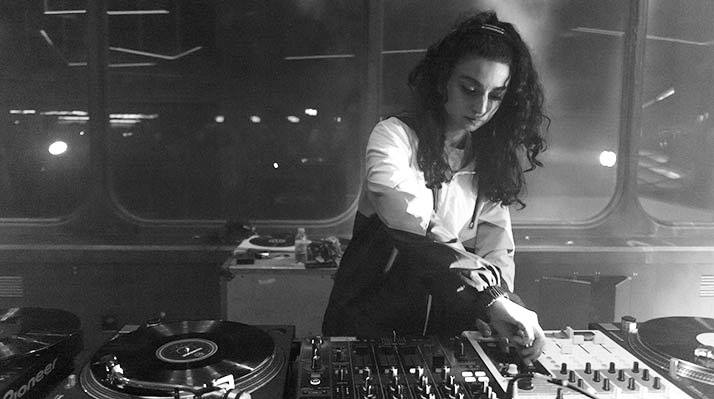
As part of the ongoing Spitalfields Music Festival, composer and turntablist Shiva Feshareki will be performing her own vinyl-manipulation rebuild of Stravinsky’s ‘Firebird’ in Bethnal Green on the 6th December- as “a live turntable composition that she forms in the moment. Using her trademark turntabling techniques, she deconstructs Stravinsky into new forms and perspectives, using nothing other than the original composition on vinyl. Expect sonic manipulations that bend time and play with space and perspective, transforming The Firebird into new shapes that reveal its sculptural depths.”

Here’s the woman at work on various projects over the last two years: there’s a clip from her saxophones, ensemble and turntables concerto about four minutes in…

 
* * * * * * * *

Fortismere Community Choir: 'Composed By Women & Christmas Carols', 8th December 2018

Fortismere Community Choir: ‘Composed By Women & Christmas Carols’, 8th December 2018

On the same night, in north London, Fortismere Community Choir will be performing a concert mingling standard Christmas carols with music composed by assorted female composers. Alongside the tunes about mangers and heralding angels, you can expect to hear a programme of music stretching (in varied leaps) across a thousand years, from the mediaeval carnal/spiritual chant of Hildegard von Bingen‘s ‘O quam mirabilis est’, the Romantic grace of Clara Schumann‘s ‘Abendfeier in Venedig’ and Ethel Smyth’s 1920s suffrage anthem ‘March of the Women’.

There are also latterday works – the reinvented English chorale influences of Cecilia McDowall‘s ‘Ave Maris Stella’; the fusion of African-American spirituals, American art songs and German/Italian choral music tradition in Rosephanye Powell‘s ‘Glory Hallelujah’; and the world premiere of ‘Women’s Rights’, a new composition by an emergent young British contemporary composer, Phoebe McFarlane.

Examples of most of the programme below:

 
* * * * * * * *

'Keith Burstein. Chamber Music. The Beauty Power.' Friday 14th December 2018On the 14th, composer Keith Burstein returns to Waterloo’s 1901 Club for another lunchtime concert featuring an hour’s worth of Burstein piano and chamber music.

Some new pieces will be making their debut, with the trio lineup of cellist Corinne Morris, clarinettist Peter Cigleris and Keith himself on piano joined by mezzo-soprano Sarah Denbee on the sarcastically-titled Northern Irish Backstop March, and Keith also presenting the live premieres of his piano preludes ‘The Beauty Power’, ‘Sonata’ and ‘Moto Perpetuo’. In addition, there’ll be the piano/clarinet/cello trio ‘Memories of Lithuania’, the ‘Wiosna’ cello sonata and a fourth piano prelude (‘The Ferryman’) while the concert will open with Keith and Sarah performing four songs for mezzo soprano and piano (‘Longing’ and ‘Heaven Riven’, both originally from the ‘Songs of Love and Solitude’ cycle, plus ‘Futility’ and ‘Atonement’).

This summer’s performances of Keith’s latest opera ‘The Prometheus Revolution’ seems to be contributing to pulling him out of the relative critical cold he’s often labored under. He’s now being hailed for the “sheer fertility” of his melodic instinct by ‘Planet Hugill’, and received approving notes from venerable critic Meiron Bowen regarding his revitalization of “the virtues of pre-twelve-tone music and all the techniques that have been explored since.” You can choose whether or not you buy into his vigorous philosophy of “super-tonalism” (within which Keith reasserts the tonal idiom which he considers to have been steamrollered out of credibility by the more cultish aspects of serialism and atonalism, while also aiming to blend in other musical lessons learned throughout the twentieth century). What isn’t in question is his connection to direct expression, and to creating music with an accessible human connection, as is evident from the pieces below. (You can read a longer summary of Burstein music in my preview of last year’s 1901 December chamber concert here.)

 
* * * * * * * *

Plus Minus: 'Armstrong, Franzson, Miller, Rodgers', 18th December 2018

On the 18th, the Plus Minus ensemble returns to its regular concert berth at City University for an evening of instrumental music with electronics by “four of the most refined and distinctive voices in contemporary music”, in a more straightforward form than their recent, more performative tour. Ensemble member Newton Armstrong provides two pieces (‘thread—surface’ and ‘the way to go out’), while his former student Georgia Rodgers provides one (‘St. Andrew’s Lyddington’). The remaining two pieces are ‘Traveller Song‘ by Cassandra Miller (whose compositional sense was described by ‘Musicworks’ as “the wryness of Samuel Beckett in combination with the whimsy of Italo Calvino”) and a new, as-yet-unrevealed work by New York-based Icelandic composer Davíð Brynjar Franzson (whose compositions are characterised by “an installation character, transporting the listener into some sort of temporal limbo, where a sense of the static is layered with delicate inner quickening…. exquisite tangible tension.”).

According to the programme notes, “each of these composers is concerned, albeit in different ways, with the fundaments of the compositional act and the manner in which sonic materials can be contextualised, processed, layered and transcribed. Plus Minus aims to present an evening of music that is strikingly contemporary without recourse to outside references, current technologies or multimedia. it is a focussed program that seeks to sonically take stock of where we are in new music today by stripping back the layers so that only the sound remains.” This is a free event with limited capacity, so book for it soon.

 
* * * * * * * *

Dates, times, places and links:

  • Shiva Feshareki: ‘Late-Night Firebird’ – St John on Bethnal Green, 200 Cambridge Heath Road, Bethnal Green, London, E2 9PA, England, Thursday 6th December 2018, 9.30pm – information here
  • Fortismere Community Choir: ‘Composed By Women & Christmas Carols’ – St Andrews Church, Church Crescent, Muswell Hill, London, N10 2DD, England, Saturday 8th December 2018, 7.30pm – information here and here
  • Keith Burstein/Corinne Morris/Peter Cigleris: ‘Keith Burstein. Chamber Music. The Beauty Power.’ – 1901 Club, 7 Exton Street, Waterloo, London, SE1 8UE, England, Friday 14th December 2018, 12.00pm – information here and here
  • Plus Minus: ‘Armstrong, Franzson, Miller, Rodgers’ – Performance Space, College Building @ City, University of London, St John Street, London, EC1V 4PB, England, Tuesday 18th December 2018, 7.00pm – information here and here
September 2018 – upcoming London experimental gigs – eight for WITCiH’s ‘The State of Gender?’ festival (26th to 28th September) – Bishi, Chagall, Miri Kat, Di Mainstone, Lia Mice, Vicky O’Neon, Rebekah Ubuntu and Gazelle Twin

17 Sep

 
Music tech initiative WITCiH (positive, feminist, genderfluid, multicultural) returns to its regular canalside home at the end of the month, for its first work as a full commissioning platform. ‘The State of Gender?’ is a full festival following several standalone WITCiH concerts over the past few years. While open to all genders, skin tones and persuasions, the three nights of the festival present, foreground and celebrate WITCiH’s central preoccupations – women, technology and creativity. In additional, they continue to promote WITCiH’s extended interest in teasing out and broadening (and, where necessary, seizing) opportunities generally only offered to the male, the straight and the white, and sharing them out across a wider community.

If this sounds like a revolution, it’s a charming and positive one. The people in and around WITCiH are unafraid to critique and push against orthodoxy, and are equally unafraid of their own strength and potential; but this is primarily a celebration rather than a catharsis. Enthusiastic about its geekery, revelling in dressing up and performance, it seems to call into being a place and time in which the worst of patriarchal glowering and rigidity has been dispelled or dissolved; where the culture wars have been won from dance and crafting studios, and from workshops and sheds where electronic components are used to reel in the future. A place and time in which people are just free to get on with open-ended, humanitarian tech-play.

As regards how to get there, there’s a good interview here, at ‘Wyldemag’, in which WITCiH co-founder (and living, walking, proactive “giant culture clash”) Bishi points out her cultural-creative ethos, and that of WITCiH. “People are deciding – especially women and people of colour – that the simple answer is that you have to invest. I mean, it’s great that there’s more awareness and blah blah blah, but it’s really simple, with the minority groups in society, it’s not just about building awareness; it’s the sustained investment that comes with that. And, of course, all the social media and stuff is helpful, but living in a city is so expensive, and politically, everything is so rough and uneven and uncertain, and there’s something powerful about a collective of people coming together physically.”

On this occasion, it’s eight women (or, to be more precise, seven women plus a non-binary person with a female name) coming together. In amongst the music, three of them are going to be providing lectures – physical-pop explorer Chagall, “movician” Di Mainstone and conceptual wildcard Gazelle Twin.

Amsterdam-born but London-based, Chagall is an electronic music singer-songwriter, producer, and performer inspired by a wide-ranging collective-culture range of influences including “nature, Greek poetry, Bjork, James Blake, Beethoven, Nina Simone, Erykah Badu, Joni Mitchell & Miriam Makeba.”. Her particular musical approach embraces gestural and reactive technology: she was an early adopter of a key gestural synth controller, the Mi.Mu Gloves, and her performances involve choreography and triggered interactive visuals.

 
Chagall’s interest in body-gestural sound sourcing is shared – and then some – by “movician” Di Mainstone: artist-in-residence for Queen Mary College at the University of London, and one of the “new generation visionaries” of the international digital arts scene (according to the ‘New York Times’). Working with researchers from QMC’s Centre for Digital Music and Media Arts & Technology, Di creates musical instruments as wearable technology for dancers: electronic extensions of the human body, triggered by movement. These include the Human Harp (which she uses to play suspension bridges), the spring-based Whimsichord, the squeeze’n’jig Hydrochordion, the limb-like “choreophonic prosthetic” Serendipitichord and – outside of music – the Scorpions (a set of kinetic garments with a life of their own). Di also coined the “movician” term – a name for a player of her devices, “a hybrid artist who explores and composes sound through movement.”

 
Earlier on, I suggested that WITCiH was predominantly utopian. The work of Gazelle Twin provides a hellish counterpoint indicating that there’s still plenty of struggles to go through, whether it’s from sinister social forces or our own unacknowledged darknesses.

Beneath her alarming/exciting dual skins of latex costumery and processed sound, Gazelle Twin is Elizabeth Bernholz – composer, producer, incantationeer, framework-overturner and time-traveller. Via loops, sampling and processing, her work jams and transforms acoustic and Early Music sources (recorder, harpsichord, female chorus) against found sounds and electronic “shades of ‘90s house and the once-thriving rural rave scene, albeit recalled as a watery, second-hand memory.” The results buck and bray, ripple and snarl; delivering disturbing, liberating dreamscapes and warning fables with a violently physical component. In her videos, we see hissing ferocious folk devils battling it out; or blank-masked hooded figures capering and proliferating, barking and twitching like dysfunctional maenads. Much of it comes across as mingled summoning, exorcism and terrible warning. There’s rather a lot of teeth, and an underlying exploration of specific modern sicknesses via primeval mythology (redressed in manmade synthetics).

Elizabeth’s lecture promises to unpack and reveal the complex vision of one of Britain’s most unsettling and unexpectedly timely artists: it will cover the creation of the latest Gazelle Twin audio-visual project ‘Pastoral‘, including the influences and ideas behind this year’s Hobby Horse single and video (the aforementioned devilfest). En route, it will branch out into related fields exploring “fascism and horror in the English landscape past and present, (Elizabeth’s) own creative process from writing to recording/production, and her identity as a working artist and mother.”

 
Other musicians will be performing newly commissioned audio-visual music pieces. Bishi herself is performing in the middle of the bill on all three nights. There’s no specific clues as to what she’s doing, but on past form expect a melange of some or all of the following:

  • interlocking pop forms (from classic English to Eurosynth to Hindi filmi songs).
  • a headlong, full-on involvement with the intersection of grand costume and high fashion.
  • sitars, ukeleles, extended voice and Ableton synth controllers.
  • traditional folk material from the Balkans to Bengal; classical ideas from Hindustani tradition to contemporary opera.
  • vocal inspirations from Meredith Monk and Yoko Ono.
  • fervent and earnest positive politics (including song cycles about immigration, and a long-standing loyalty to queer club culture).
  • and finally, Bishi’s own strong and self-willed musical identity, which never rules out a willingness to interact or integrate with anyone from Sean Lennon to the London Symphony Orchestra (and with anything from interactive wind-harps to Christina Rosetti poems and giant floating holograms of Tony Benn).

 
By day, Miri Kat works as a Novation Music engineer, designing and finessing electronic musical instruments. She’s also a combined audio-visual artist and music producer, interested in algorithmic music, webtech and generative visuals, with further interests in hacking, live coding and immersive multimedia in general. Mainly composed with Max/MSP Supercollider (and with found sounds live-coded from open ecosystems with open-source tools), her productions provide “hyperactive textures (and) ephemeral collages, in turns frenetic and and lyrical, in a unique brand of glitchy grindcore for a post-Internet age.”


https://vimeo.com/159042254
 
Lia Mice‘s work covers multiple bases: live electronic artist, producer, DJ and instrument designer. Sometimes she’s to be found applying her live analog sampling skills across “high energy vinyl-hybrid” DJ sets of electro, Italo, tech noir, acid and “weird-pop”. At other times she applies them to live sets of original music alongside “self-hacked” instruments and Max/MSP, while her recordings can stir in eight-track tape mangling alongside influences from Laurie Anderson, BBC Radiophonics and electronica across forty years from German pioneers to American outliers. Live sets also feature both live voice sampling and Lia’s own custom-designed tactile-interface instruments – such as the Delia Derbyshire-inspired Reeltime sound manipulator (based on a broken reel-to-reel tape recorder) and the suspended tap’n’tilt/swing/spin ChandeLIA (designed to blend the organic bell-like sound of tapping on a metal chandelier with the sound of the electricity powering its lights).

A major WITCiH supporter, Lia also designs sonic sculptures, is a contributor to the Augmented Instruments Lab in the Centre for Digital Music and is “forever taking refuge in the mysteries of the sonic universe.” Her third solo album, ‘The Sampler As A Time Machine’, is a selection of “experimental dance x wave-y industrial x parallel-dimension pop tracks”. For the festival, she’ll be presenting a lecture based on the album and its studio experiments (themselves inspired by time travel writings by philosophers, physicists, neurologists and psychologists from Mark Fisher to Oliver Sacks to Stephen Hawking).

 
An explosively enthusiastic character (and WITCHiH regular), Vicky O’Neon performs in a dazzle of beats plus shocking day-glo costumery and makeup. Born Vicky Österberg in Finland, she was originally a class-topping, award-winning drummer and percussionist at the British Institute of Modern Music. She went on to work around the world as sessioneer and tour-band member for the likes of Pharell Williams, Johnny Marr, Hans Zimmer and assorted live-set DJs. Since summer 2017, she’s gone solo, buoyed up by the success and positivity of her parallel work in tech/instrumental teaching and in co-founding girl-promoting music initiatives Girls Rock London, Rock Donna and Racuma.

Vicky characterises herself as a “relentlessly optimistic Riot Grrrl multi-instrumentalist, with fluoro-glowing intentions to inspire the masses with harmony, laughter and love … on a mission from a higher plane of consciousness, devoted to the elevation of human vibration.” Her one-woman show involves her making a delightful proactive racket via drum pads, loopstations, acoustic percussion, body-worn percussion triggers and MicroKorg synth, plus her own “tongue-in-cheek lyrics and visuals”. As the founder of the Electric Vegetable Orchestra she also mixes tech with vegetable husbandry, carving new instruments from fruit, tubers and other root vegetables, then playing them through loops and effects to create “catchy tunes and singalongs with the audience.” However she chooses to entertain you at WITCiH, she’s certainly got plenty of options to choose from.

 
Vicky’s fellow BIMM graduate Rebekah Ubuntu is a multimedia performance artist, musician and culture scholar experimenting with “ideas of futurism, rebellion, and paradoxes” filtered through queer, non-binary, black and feminist perspectives. Their work spans synthwave, glitch music, techno and various forms of Afro-futurism (including reference to black poets and writers such as Audre Lorde and Octavia Butler, black rock and punk statement, and Afro-orientated pop/house/trap/beat forms) as well as electronic soundscapes and vocal manipulations.

As with most of the other participants, Rebecca’s got a strong allegiance to (and grounding in) club culture, and they’ve recently played sets at black pride, queer and general futurist events from Berlin to Norwich and Birmingham’s FLUID festival. Outside of clubwork, previous work has included last year’s ‘trans.mission.Q’ sonic installation project for Tate Britain (in which Rebecca posed as an extra-terrestrial DJ encouraging gallery visitors to “add your voice(s) to the live soundscape as we broadcast our earthly messages to the remotest regions of outer space”. They also recently guest-edited new music webzine ‘The Sampler’, interviewing five queer, trans & non-binary sound-and-music artists about the intersection of their identities with their music.

 
* * * * * * * *

Full dates:

  • WITCiH presents ‘The State of Gender?’, evening 1: Chagall (lecture) + Bishi + Miri Kat – Wednesday 26th September 2018
  • WITCiH presents ‘The State of Gender?’, evening 2: Di Mainstone (lecture) + Bishi + Lia Mice + Vicky O’Neon – Thursday 27th September 2018
  • WITCiH presents ‘The State of Gender?’, evening 3: Gazelle Twin (lecture) + Bishi + Rebekah Ubuntu – Friday 28th September 2018

All events are at The Barge House, 46a De Beauvoir Crescent, De Beauvoir Town, London, N1 5RY, England at 7.00pm. Further information is here, here and here.

Note that on the evening of the 27th – the day before her appearance at the festival – Gazelle Twin will also be making a live in-store appearance at Rough Trade East off Brick Lane, performing tracks from ‘Pastoral’.
 

September 2018 – upcoming London experimental gigs – Merlin Nova, Bell Lungs and Inchindown at the Horse Hospital (21st September)

15 Sep

There’s an interesting show coming up at the Horse Hospital in Bloomsbury next week. A wilder, more countercultural echo of the ICA, and clinging onto the fringes of the university district and the gentrification around the Brunswick Centre, the place mostly features transgressive films, performance art and sundry esoterica, but it’s always worth keeping an eye on their music schedule. This particular gig is musical fringework: weird and beautiful urban and rural atmospherics, vocal hauntings, transformations of places and times, acoustic folk and electronic noise.

Am hurrying off to do something else right now, but I’ll just give you the press release before I go…

* * * * * * * *

Merlin Nova + Bell Lungs + Inchindown, 21st September 2018

“The Horse Hospital presents a night of expanded musical performance spanning adventures in sound, pop theatrics and psychedelia with Merlin Nova, Bell Lungs and Inchindown.

Merlin Nova is sound, song and movement. Ecstatic energy blast. Clear-cut. Quick fix. Immediate. Set scene sound. Landscape, temperature and feeling. Here with you, together.

“Her debut EP, ‘Protect Your Flame’, celebrates determination and life, a vast and colourful human emotional landscape that explores sounds ability to excite visualisation. Each track is a scene to exist within. Vocal delivery, stripped back instrumentation and use of sound effects convey a state of being as efficient as possible. This way of making music evolved out of her weekly radio show Nova Waves, which broadcasted from Subcity Radio: on the show Merlin would create music, soundscapes and use sound effects to build imagined worlds. It was not until she was asked to DJ at Subcity’s 20th Birthday Exhibition, ‘pure radio sex’, that she chose to combine her own soundscapes, poetry and song – thus beginning the assemblage of this music.


https://soundcloud.com/user-615512661/slow-mo-travel
https://soundcloud.com/user-615512661/live-subcity-sessions-291115
 
Bell Lungs is a one-woman band from Scotland, where she’s been building an excellent live reputation and carving out her unique post-folk sound using layered vocals, electric violin, guitar, tuned percussion, field recordings and effects pedals since 2016. Her music is atmospheric; a shifting soundscape incorporating snippets of songs with field recordings to create inherently transcendental experiences, musing upon rural idylls, post-industrial heartlands and online culture infused with psychedelic, drone, improvisational, jazz, dream pop and folk elements.


Inchindown is a collaboration between Tim Garratt (Moon Zero) & Matthew Heywood (Bruised Skies), whose self-titled debut album Inchindown is released by Blank Editions. Their self-titled debut album portrays a powerfully mournful, but beautifully stark work. The soundtrack to walking through a storm of ash, only to realise that the city is on fire and viewing this incredible spectacle from afar. It is a dark, yet somehow hopeful record and a focussed collaboration that expands upon their ambient solo work. Although named after a small industrial town in Scotland, the record grounds itself to their hometown of Hackney. The three-part ‘Ridley Road’, with its waves of distorted bass, metallic synths and detuned vocals could be heard as a tone poem for the rapid gentrification that threatens to engulf the historic market street, before authentic field recordings remind us of what we stand to lose.”


Merlin Nova + Bell Lungs + Inchindown
The Horse Hospital, Colonnade, WC1N1 London, United Kingdom
Friday 21st September 2018, 7.00pm
– information here and here
 

September 2018 – upcoming experimental electronica gigs in London – Pita plus Finlay Shakespeare and Nik Colk Void at Sutton House (7th & 8th September); Andrew Heath and Toby Marks at the Old Church (21st September)

31 Aug

A couple of interesting electronic music shows in historic buildings, coming up in various parts of Hackney during September…

* * * * * * * *

Pita (plus guests), 7th & 8th September 2018

Second-wave industrial/noise music star and extreme computer music pioneer Peter Rehberg (a.k.a. Pita) will be filling up the old Tudor space of the Great Chamber of Hackney’s Sutton House with sounds from his current modular analogue electronics work, on a double date postponed from May.

“Born in London, Rehberg has resided in Vienna for his adult life. It was here, in the early ’90s, that Rehberg harnessed aspects of noise, industrial, electro-acoustic and techno to develop a new approach to music. Whether constructing an album entirely from the recordings of a fridge, or harnessing the live electronic potential of laptops soon after they hit the market, Pita has always been at the forefront of contemporary radical music practice.

“Birthing the extreme computer music genre, scoring the works of controversial French theatre director Gisele Vienne, ongoing collaborations with Jim O’Rourke, Fennesz, Marcus Schmickler and Stephen O’Malley… all define Rehberg’s open ended approach to the creative act. As head of the influential Editions Mego family of labels, he has released albums by renowned artists like Fennesz, Heather Leigh, Klara Lewis, Kevin Drumm, Thomas Brinkmann, Florian Hecker, Bernard Parmegiani, Russell Haswell, KTL, Iannis Xenakis, Oren Ambarchi, Bill Orcutt, Mark Fell and many more.

“As Pita, Rehberg has produced over a dozen albums, covering an astonishing variety of experimental electronic styles. The ‘Get Out’/’Get Down’/’Get Off’ trilogy received broad international critical acclaim and helped define the radical underground experimental electronic scene of the 90’s. Pita has played numerous concerts all over the world including SONAR, ATP, CTM Berlin, MUTEK, Donaufestival, Le Guess Who?, Atonal etc. In 1999 he won the Prix Ars Electronica for Digital Musics & Sound Art.”

Pita’s most recent recorded offering is his 2016 album ‘Get In’, his first in twelve years and his first following a 2015 return to live work with a new modular setup. It’s a tremendously assured work, sometimes bullish, with none of the noncommittal airiness that often blights the EM and ambient genres.

Part of this is to do with scale – it’s a varied, huge-sounding record which sidesteps simple vulgar loudness for an impressive architectural dominance. Wherever Pita offers gently scintillating greenhouse meditations, they also happen to be the size of the Eden Project; his Galaxian blip-brainstorms, meanwhile, crack the game cabinet and head for great-hall pronouncements. With barely an obvious beat in sight, this is an urgently physical music which also puts the mind on sharp alert. There’s glitch and squelch; but there’s also grand romanticism which sternly punishes itself, and challenges the listener with passages of synthesized orchestral meditation penetrated by shrieks of solo noise and a frowning, compelled patina of distortion vandalism. This is exceptional stuff.

 
On each of his two Sutton House concerts, Pita will be joined by a guest musician.

On Friday 7th, it will be Finlay Shakespeare: analogue synth minder to the stars (via his work at the Moog Sound Lab) and also chief engineer and founder of Future Sound Systems, where he builds worryingly-named modular components including the Convulsion Generator, the Spectral Devastator and an updated version of Chris Carter’s Throbbing Gristle sound-processing unit, the Gristleizer (as used to unsettling effect throughout the original Gristle’s career).

Since last year, via his prolific series of ‘Housediet’ releases, Finlay has been creating his own passionate and evocative take on old-school experimental European synthpop, filled with flattened analogue blatters, skirling fanfares, cybernetic dance pulses and borderline-hysterical incantatory pop vocals.


On Saturday 8th, the guest will be Nik Colk Void. Twenty years ago (as Nikki Colk) she was running songblasts of pop-punk through dense effects-pedal work as frontwoman for Norwich experimental rockers KaitO. These days, she’s to be found as one-half of Factory Floor and one-third of post-Throbbing Gristle trio Carter Tutti Void.

Nik’s solo work leaves songcraft far behind in favour of wonderfully suggestive post-industrial sonic abstractions. Haunted factories, steam hisses and wheel-rim scrapes; neurotically-looped ventilation-duct eavesdroppings on unseen devices; or even something as simple as single-scratch passes (like bored, rolling marbles) paired with intermittent grain bag-rattles, like blank shamanic rituals played out on abandoned machine-shop benches.

 
I-D.A Projects & care in the community recordings present:
The New Arts & Music Programme at Sutton House: PITA
Sutton House, 2-4 Homerton High Street, Homerton, London, E9 6JQ, England
– Friday 7th September 2018, 7.30pm
(with Finlay Shakespeare) – information here and here
Saturday 8th September 2018, 7.30pm (with Nik Colk Void) – information here and here

* * * * * * * *

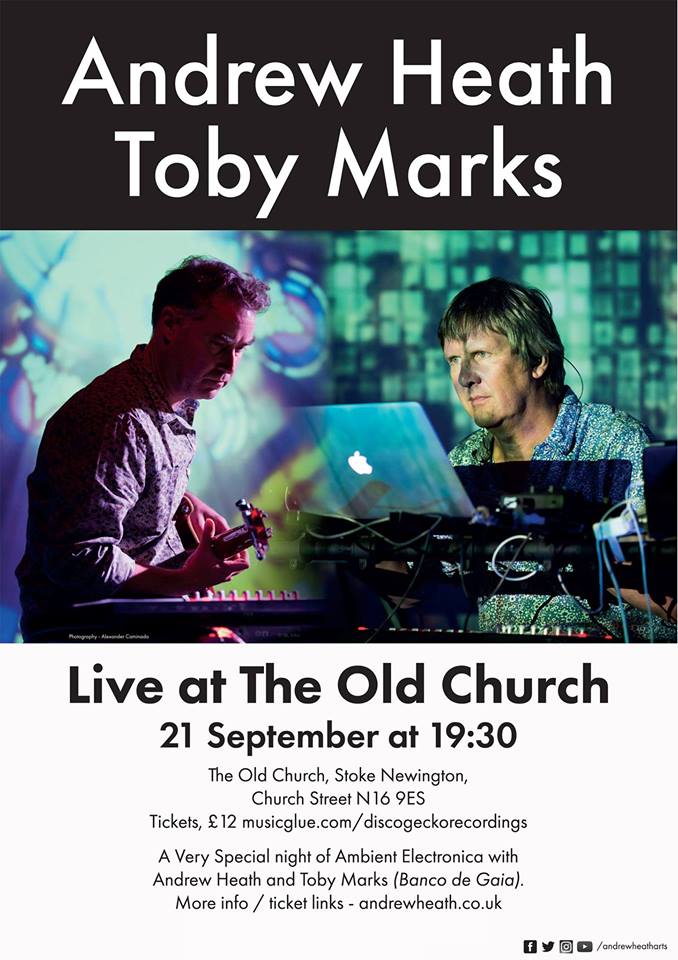
A fortnight later, and a mile or so northwest, Toby Marks and Andrew Heath are bringing a softer, spacier double bill of solo electronic music to London within the preserved Saxon confines of Stoke Newington’s Old Church. Full details below.

 
Andrew Heath + Toby Marks, 21st September 2018“A soundscape artist and composer, Andrew Heath creates quiet, ambient, lower-case music based around piano, electronics and field recordings, drawing inspiration from a simple piano motif, an electronic shimmer or a processed found sound. The work he produces blends piano, electronics and found sounds into a mix that on the surface sounds quite minimal and open, but on closer listening, contains detailed fragments, constantly shifting and changing place.

“Early collaborations using Fender Rhodes, piano and electronics with fellow musician, Felix Jay under the name Aqueous led to a partnership with the legendary Hans-Joachim Roedelius. Andrew went on to produce a number of video and site-specific, sound installations which re-introduced him to the technique of working with field recordings, often leaving in the sonic detritus that most would seek to eliminate as being “non-musical”.

“In performance, Andrew re-interprets his studio work weaving multiple layers of textural field recordings balanced with etherial whispers of electronic sound and half-glimpsed piano melodies. Recent performances have seen him add acoustic instruments to his palette – often bowed or e-bowed, but certainly not played conventionally. This is immersive, ambient music. It drifts. It constantly shifts as it charts new topographies, creating and following maps that are full of change.


Banco de Gaia’s Toby Marks will be exploring the gentler end of his catalogue, presenting ambient works old and new accompanied by live improvisation and manipulation. Ranging from cinematic grandeur through tender minimalism to otherworldly fantasies, this performance will take you to places of beauty rarely visited.


“Visuals will be provided by Patrick Dunn (currently touring with Tangerine Dream) who blends real world imagery and computer generated graphics to create a mesmerising, immersive world.”

Disco Gecko presents:
Andrew Heath + Toby Marks
The Old Church, Stoke Newington Church Street, Stoke Newington, London, N16 9ES, England
Friday 21st September 2018, 7.30pm
– information here and here
 

August 2018 – upcoming London eclectic gigs – strange and compelling folk, pop, and improvisatory strands from L’Ocelle Mare, Daniel O’Sullivan and Cucina Povera at the Dentist (28th August)

24 Aug

There’s an intriguing multi-genre show coming up at the Dentist in Homerton, spanning weird folk, experimental pop and some delicious electro-vocal soundscaping.

Promoter Theo is more than capable of collating and unfurling his own spiel, so here’s me passing it on with the minimum of grubby tinkering…

L'Ocelle Mare + Daniel O'Sullivan + Cucina Povera, 28th August 2018

“…”The instrumentation is composite, rustic, yet paradoxically sophisticated: piano, 6 string bass banjo, mechanical metronome, tuning forks, claves, hand and foot clapping and tapping, mini amps, amps, subwoofer, microphones, small mix desk, bells, mouth organ fragments, concertina, componiums, “stringin it”, audio ducker, drum skins, clockwork motors…” A rare performance of the astounding music of L’Ocelle Mare is perhaps best trailed by the above instrumental inventory and the promise that Thomas Bonvalet (Powerdove/Cheval Frise) will bring forth an intense, highly syncopated and ultra-focused music from the chattering sonic menagerie it might seem to suggest. The Dentist’s cup will overflow given that the above will be prefigured by a solo appearance by Daniel O’Sullivan (Grumbling Fur/Laniakaea/This Is Not This Heat) playing what can only be described as wabi-sabi or null rotation in six-dimensional whortleberry and friends; and (in a late addition, pushing the bill in to the realms of triple headline transcendence) a live set from fabulous Glasgow based Fenno-karelian producer Cucina Povera.

“Self-taught multi-instrumentalist Thomas Bonvalet commenced his vocation as a bassist and cemented it as a guitarist at the heart of the band Cheval de Frise (1998-2004). Progressively straying from the guitar, he began to integrate foot tapping and various wind and percussive instruments into his performance, incorporating mechanical elements and stray amped-up objects into the soundscape. This formed the guiding principle of his solo project, L’Ocelle Mare, initiated in 2005, and continues to form the core of his instrumentation. In recent years Bonvalet has collaborated – most notably with Powerdove, Arlt, Radikal Satan, Jean Luc Guionnet, Arnaud Rivière, Will Guthrie, Gaspar Claus, Daunik Lazro, Fred Jouanlong and Sylvain Lemètre. Without renouncing his solo work, his interruption from it has allowed a slower and more elastic evolution, permitting ancient shapes to gradually metamorphose. In this way new compositions successively articulated themselves in an almost self-determining manner.

“‘Temps En Terre’ is the fifth album release from L’Ocelle Mare, and the first to have been recorded in a studio. The preceding releases were characterised by a marked acoustic: the echoey reverberations inherent to ‘Serpentement’ were thanks to the Protestant temple it was recorded in; ‘Engourdissement’ was entirely recorded in forest expanses, upon ponds and enclosed within remote wood cabins; ‘Porte d’Octobre’ was recorded entirely in urban spaces; and his first, unnamed album was entirely recorded in caves and churches. The release of ‘Serpentement’ in 2012 marked the end of a cycle of four progressive stages, homogeneous but distinct from one another, released with successive regularity, proceeding with the elaboration of his singular set up, implicating the human body into a simultaneity of associated gestures and sonic tools and forming a commonality of timbres and tremors. This structure remained fluid and adaptable, finding a balance which lent itself quite naturally to collaborations, entering into the fields of improvisation, folk, rock and contemporary music. The pieces forming ‘Temps en Terre’ however, are recorded under a harsher gaze, presented in far cruder light, comparable to that of a live recording.

 
Daniel O’Sullivan is a London-based composer and multi-instrumentalist. Working across of range of musics and artistic platforms he has made a strong impact on the international avant community. Whether solo or in his varied collaborative projects, O’Sullivan’s work is remarkable in the way it infuses familiar everyday experience with traces of the uncanny, the secret and the magickal. Traces of his many projects all meet and mingle in his most recent album ‘VELD’: from his solo music as Mothlite to the lysergic songcraft and space-time vortices of Grumbling Fur and Laniakea, the reality-distorting zones of Æthenor and Ulver, the electronic pop of Miracle (with Zombi synth maestro Steve Moore), and his recent involvement with another pioneering London group, This Is Not This Heat.

“Released in June 2017 on Tim Burgess’ curated imprint O Genesis Recordings, ‘VELD’ is one of O’Sullivan’s most immediate and moving pop albums to date; yet one that’s strikingly dense and allusive, alive with enticing sonic diversions, hypnotic mantras and eerie biomechanical rhythms.


“Glasgow-based musician Maria Rossi, a.k.a. Cucina Povera, has named her project after a style of southern Italian traditional cooking associated with precarity and making-do; a philosophy of simplicity and stoicism that applies perfectly to the spare but beautiful music Rossi experiments with. Marrying minimal synth, field recordings and the hymnal dexterity of Rossi’s vocal performances, it creates a new language, sometimes literally, to be spoken in some mythological Fourth World we’ve yet to create.”

https://soundcloud.com/cucinapovera/sokerihyhma
https://soundcloud.com/cucinapovera/avainsyoppo
 
L’Ocelle Mare + Daniel O’Sullivan + Cucina Povera
The Old Dentist, 33 Chatsworth Road, Homerton, London, E5 0LH, England
Tuesday 28th August 2018, 7.30pm
– information here and here

August 2018 – husk, rime and lanterns – a double dose of Jack Hayter in a Gravesend lightship (18th August)

14 Aug

I like the idea of a mobile arts venue. A seabound one is even better. LV21, a forty-metre decommissioned former lightship, once kept other ships from foundering on the rocks along the Kentish coast. Now it’s a floating art space and performance facility, moving intermittently between Thames estuary towns. Although it’s been resting at a long-term Gravesend mooring since summer 2016, LV21 still fits the measure for art-on-the-move (while its sister vessel, LV18, performs a similar function at a similar mooring up the coast at Harwich).

International Lighthouse Lightship Weekend @ LV21, 18th August 2018

Wherever it happens to be at the time, LV21 opens up in full each summer for the overlapping International Lighthouse Lightship Weekend and International Lighthouse Heritage Weekend, allowing visitors to explore the vessel and immerse themselves in lightship and lighthouse history from around the world. Also on offer at the event this year – this weekend – are lessons in tying sailor’s knots, a soldering and radio workshop (build your own pocket amplifier and speaker) and Nicola Pollard of stripped-down drama company Up The Road Theatre inviting discussion for the next UTR production, ‘Peril At Sea’ (set to explore “stories, memories, myths and songs of smuggling, shipwrecks and survival” and to tour around English coastal towns including Lowestoft, Portsmouth and Wells-next-the-Sea).

Jack Hayter @ ILLW 2018, Gravesend, 18th August 2018Of course, it’s music rather than knots that’s attracting my interest. Also on hand is Jack Hayter – wandering multi-instrumentalist, onetime Hefner member, ex-Dollboy-er, Ralegh Long and Papernut Cambridge collaborator; the writer and performer of memorable contemporary folk songs and a relatively recent new Gravesend resident. He has two interesting – and very different – nautical music productions going on in the bowels of the ship.

The first of these is ‘Flashes & Occultations’, a sonic installation in the generator room comprising “a seventy-seven-minute-long sonic improvisation on lighthouse life.” It was originally released by London indie label Where It’s At Is Where You Are in 2017 as part of their ‘Seven@77‘ compilation, on which it loomed massively over the thirteen other pieces (each of them clocking in at a measly seventy-seven seconds). In typically dry and witty fashion, Jack describes it as a salvage job on a foolhardy, ambitious effort to sidestep the requested seventy-seven-minute pedal steel improvisation in favour of an attempt to make “a transient sound sculpture from the identification patterns of distant lighthouses, buoys and light vessels; to convert their flashes and occultations into small voltages using telescopes, light-sensitive resistors and photodiodes, then to use those derived signals to trigger samples and control analogue synths. I was overambitious and my experiments were largely a technical failure. I also got cold and muddy while recording foghorns. Worse still, those supposedly unique and exciting light patterns often turned out to be “one flash every twenty seconds” or “red occulting thrice every minute on a Tuesday. Then I ran out of time.”

Salvaging the project wreckage, Jack returned to the original brief – improvising on pedal steel around field recordings, stirring in documentary dialogue, eight-bit synth pads and calling in a few friends and favours to obtain further ingredients: poetry, wordless harmony singing, harmonium drones and electronic oscillator. Despite his disclaimers, he came up with an effective, charming piece – at different points lulling, humorous and lyrically haunting – which absolutely deserves its second life amongst the Gravesend solenoids and gauges, where Jack claims he might play along with it “from time to time” on live fiddle. Here’s a short excerpt with accompanying video (filmed up at the Firth of Forth) – also, if you’re curious but can’t make it down to LV21 this Saturday, here’s the whole piece in audio.


Jack’s second musical contribution of the day is the one-off free live gig he’s performing in the ship (on deck? in the hold?) during the evening, in which he’s going to be performing “a set of my songs and stories which will loosely follow the river from Deptford down to Gravesend finishing up at Margate, with diversions.” Here’s where you get to see Jack in the raw – a rangy, weatherbeaten feller with a voice as chewed-up and resilient as an ancient poster still clinging onto a seafront fence. His recent album, ‘Abbey Wood‘, is one of 2018’s under-the-radar triumphs, a compelling song collection recorded in defiantly threadbare folk fashion but with infusions of avant-garde turn-up-and-play instrumentation. Its ace in the hole, however, is Jack’s songwriter vision. As ever, he writes with a documentarian’s timing and eye for sparse, telling detail; with a poet’s knack for sifting detritus and forgotten trash to find significance; and with a determination to tell stories from those broad, deliberately ignored margins of society which actually make up its overlooked majority.

Jack’s songbook includes tales of post-war slump and of the rural working class swept into conflict; the hopes and dreams of sewage workers; the luckless POWs sunk with the SS Andora Star; the fumblings of early love under the shadow of the Cold War. Crucially – and despite his sharp, assured literacy – he always writes these from the inside and on the level, rather than as booky preachings from above. These are stories about people on lean means, living within strung-together moments: a compassionate, sometimes subtly angry cinema of life’s grain outside the slick and aspirational. They vouch and voice for the itinerate, the sidelined; the workers who just get on with it; the kids with foggy futures stirred and impelled by vast indifferent forces.

Jack’s delivery of these tales, meanwhile, is battered, warm, inclusive, strangely dignified, and mesmeric. Check out an earlier review I did of one of Jack’s previous live performances; or have a dip into the selection of tracks below.


Jack Hayter @ International Lighthouse Lightship Weekend 2018
Light Vessel 21, (currently moored at) St Andrews Quay, Royal Pier Road, Gravesend, Kent DA12 2BD, England
Saturday 18 August 2018
• ILLW full event duration: 12.00pm-11.00pm
• Flashes & Occultations installation: 12.00pm-4.00pm
• Jack Hayter free live set: 7.00pm-11.00pm

– free event – information here, here, here and here
 

August 2018 – upcoming London gigs – flexi-clectica at Apple Tree: The Live Lounge Vol II with Rudi Douglas, J. Aria, Awkward Ndure, DJ Sonikku, Martell O’Neill, Daryl Fox-Huxley and DJ Kevin Morosky (2nd August)

31 Jul

Apple Tree: The Live Loung Vol. II, 2nd August 2018Since its launch earlier this year, broad-based London music-and-performance event Apple Tree has set itself a bold framework. Curated by tireless promoter and club personality Mark-Ashley Dupé and by cross-disciplinary designer/film-maker Samuel Douek, its Live Lounge event is dedicated to celebrating LGBTQIA musicians and artists from across the city (that’s lesbian, gay, bisexual, trans, queer, intersex and asexual/allies, for those having trouble keeping up with those ever-burgeoning inclusive acronyms). It’s also happily intersectional in both intent and in entertainment. The convergence of queerness and blackness already seems to be a specialty, offsetting the compressive grinding of racism and the bristling aggression of homophobes by providing a stage for some fiery and assertive performers.

If this is starting to sound too specialised, too academic, or too much like a sexual/political cul-de-sac, I should reign things in a bit. In fact, the backbone of the debut Apple Tree evening back in June (which I only caught up and heard about recently, several months after the event) seems to have been electric/eclectic soul, provided by singer-songwriters Miggy Dela Rosa, Albert Gold and Awkward Ndure. Gay electro-acoustic composer Daniel McBride was also on hand, his work bridging that gap between the capital’s young classical scene, its queer-arts scene and the electronic music continuum which unites (in both work and play) pop, dance culture and high-art experimentalism. Bringing the words was topical poet and fervent discursor Black Ops Poetry; bringing the costumes and personae was queer cabaret sensation Rhys Holis (performer of Rhys’ Pieces and founder of Dalston cabaret night Queefy); and bringing damn near everything was operatic/discursive costumed electro-acoustic performance artist Oberon White (who considers himself “part of an eclectic tradition incorporating shamans, clowns, automata, cyborgs and drag artists”).

In other words, Apple Tree’s shaping up to be an event that’s equally comfortable with party pop and far-out high art concepts, unifying them through a flexible, diverse queer lens. There aren’t that many places where you can see a happy, possibly camp singalong immediately followed by a text-spouting man dressed as a mythical Greek bird-god.

The upcoming second Apple Tree Live Lounge show at the beginning of August is perhaps a tad less adventurous than the debut was, but it’s all part of the ebb and flow, and comes packaged with dinner care of Shoreditch’s Hoi Polloi brasserie and a DJ set from photographer/film director Kevin Morosky. As for the performers, Awkward makes a return from the launch event with her Latin-tinged folk-soul – at least I think it’s her, since some of the publicity suggests that it might be Evan Williams from MTV teen comedy ‘Awkward’ (which in turn makes me feel as if I’m slipping down some rabbit hole of an involved in-joke). Assuming that I do have the right Awkward, here’s a clip of her performing with guitarist Sim Chappelle a couple of years ago. I’m on more solid ground with the billing for accomplished soul’n’stage singer Martell O’Neil (whose past and current work includes the travelling Motown revue ‘How Sweet It Is’); and for Daryl Fox-Huxley, the current/former guitarist for house-tinged indie pop act The Hook, now concentrating on solo work with a folk-pop base, “his own East London twist and lyrics to match” and probably at least a few other hints and approaches brought in from his abiding love for reggae, techno and techhouse.

 
Headliner Rudi Douglas is a onetime ‘X Factor’ contestant (he was in the 2006 series when he was nineteen) but don’t hold that against him, or allow it to constrain him. Instead, take a look at and have a listen to this – ‘He Won’t Swim In My Ocean’, a four-year-old but evergreen song which proves that Rudi doesn’t need the Cowell circus to help him make grand heartbursting pop, with a gay theme but a universal touch.

 
For this session, the more experimental kudos is provided by DJ Sonikku (who mashes ‘80s house into chiptune with the aid of the purloined and repurposed guts of Sega Mega Drive consoles) and even more so by Jacob Aria – a.k.a non-binary soundscaper J. Aria. Interested in “tension, desolation, morbidity and eroticism”, J. creates intricate, absorbing musical washes, beats and tapestries via sampler, turntable and voice in which hauntology, psychedelic ambience and hints of house engage in a spectral, full-bodied mysterious dance: a ghostly neighbourhood of percolating histories for “a world of heterotopic ‘otherness’, pushing senses of horror and psychosis within queerdom and the incidental beauty of the fractured”.

https://soundcloud.com/j_aria/pigs
 
Apple Tree Live presents:
Apple Tree – The Live Lounge – Vol. 2: Rudi Douglas + Jacob Aria + Awkward Ndure + DJ Sonikku + Martell O’Neill + Daryl Fox-Huxley + DJ Kevin Morosky
Miranda @ Ace Hotel London Shoreditch, 100 Shoreditch High Street, Shoreditch, London, E1 6JQ, England
Thursday 2nd August 2018, 6.00pm
– information here and here
 

July 2018 – upcoming gigs – V Ä L V Ē, Stef Ketteringham and Lily Buchanan (of The Graphites) in Margate (29th July)

24 Jul

V A L V E + Stef Kettering + Lily of The Graphites, 29th July 2018Details on a show this coming Sunday in one of the smallest, most enchanting venues in Kent (Margate’s Tom Thumb Theatre), featuring an mostly-female bill with three different projects (all adventurous; all, in their way, visionary).

* * * * * * * *

I feel as if I’ve covered V Ä L V E what seems like innumerable times this year. Reedswoman/composer Chlöe Herington’s synaesthesia-slanted experimental music project has spent a year or so evolving into a live collective trio of herself, harpist Elen Evans and bass/synth player Emma Sullivan. Previously known for her bassoon, clarinet and saxophone contributions to Chrome Hoof and Knifeworld (and more recently to The Lindsay Cooper Songbook and Hirvikolari), Chlöe’s solo work has involved shed-tinkering as she builds unlikely instruments from scratch and scrap; and the pulling in of compositional ideas from medical charts, found patterns and (literal) rubbish.

On record, the results have percolated around the realms of electric art-rock experimentalism (post-Zappa, post-Henry Cow), parping chamber wind music intimacy, playfully baffling bouts of improv and bewildering schematics. Live, V Ä L V E has mutated further, drawn on by Chloe’s interest in finding out how to trigger her audience’s minds with an evolving toolkit of sensory input, and by the different dynamic of three women involved in discovery together (happy bouts of lateral thinking, plus moments when they combine in obliquely touching bouts of harmonizing song). It’s a winning combination that’s taken the band all the way to airplay on BBC Radio 3’s ‘Late Junction’ – care of ‘The Quietus’s John Doran – and to the Barn stage at the Supernormal festival.

 
Formerly with abstract noise-blues trio Shield Your Eyes, guitarist/bass-drum booter/occasional vocalist Stef Ketteringham now works alone. His improvised solo music is a guttering, chattering, restlessly emotive take on exploded electro-acoustic blues, integral to which is his brawling, brutal and fearless guitar technique.

Elastic and vocal, with a gutting-knife timbre, its passing similarities to the pitch-bend avant-howls and tremolo-purrs of Henry Kaiser and David Torn is probably pure coincidence. Stef’s wildly gestural guitar-playing sounds like an instinctive discovery: more punk than professorial, bursting from his gut via his heart to tell its shattered, hollered, mostly wordless stories and personal bulletins without the constraint of manners or moderation. For all that, it’s still got the skeleton of blues rules – the existential moan, the bent pitches and percussive protest that demand attention and serve notice of presence.

 
Guitar in hand, Scottish singer-songwriter Lily Buchanan usually fronts and voices interesting south London pop-punkers The Graphites (who in turn were formerly her solo project The Graphite Set). The Graphites’ lilting jig rhythms, their echoes of girl groups and Lily’s subtly unorthodox song-structures (recalling both Chrissie Hynde and Nico, but with an understated elliptical focus that’s all Lily’s own) put them several cuts above the competition.

This is hardly surprising: Lily’s work springs out of both folk music and a life spent painting. But while many art-school music spinoffs are happy to lose themselves in arrogant vagueness, vacuity and sonic scurf, Lily’s half-spoken songs make much of their clarity of line; their deceptive ability to digress and orbit while never truly losing sight of the core matter, casting new light on it with each pass.

All by herself this evening, Lily will be performing something new – “a series of folk songs inspired by her recent intrigue into collecting sea fauna.” She’s being billed here as “Lily Of The Graphites”. Such a shame that’s not the actual project name. There’s not enough courtly allotropic geology in the world.

Meanwhile, here are a couple of Graphites songs…


NFA presents:
V Ä L V Ē + Stef Ketteringham + Lily of The Graphites
Tom Thumb Theatre, 2 Eastern Esplanade, Cliftonville, Margate, Kent, CT9 2LB, England
Sunday 29th July 2018, 7:00 pm
– information here, here and here
 

July 2018 – upcoming London gigs – Multi-Storey’s cabinet of pop disorientations featuring Famous, The Guest, Wharfwhit, Bianca Scout and Great Dad (24th July)

18 Jul

Sometimes it’s particularly rewarding to see a new band emerge. I’m feeling that way about Great Dad. Springing from the chrysalis of genderqueer punk-poppers Worm Hears (who, however interesting their component people, pronouns and propositions may be, maintain an unsurprising musical approach), they are currently breaking out – humming, carolling, blurring – into something far more promising. They’re making journeys into avant-pop, approaching it with a thin-skinned sense of wonder and detournement via a multiplicity of FX-sculpted vocals and the implication of an identity whose fluidity moves even beyond gender, and by soundbuilding which flitters between different pop forms, different cultural tones.

I’ve previously tagged them as “electronic bricolage”, but they’re also like some kind of tiny relentless broadcast drone, flying precariously between much bigger, looming shapes ideas and experiences; crashing into them and rebounding, reporting back in half-processed bursts. Some day they’re going to land and clarify, even if it’s only for a moment. Until then, I’m enjoying the buffeting ride and what I also tagged as “free-associating mashups of love, political paranoia, consumer anomie, salty language and an ever-strange out-of-step physicality half-trapped between distress and wonder.”


Great Dad are appearing next week on the bill for a Multi-Storey show which makes a lot of noise about being one to attend “if you unashamedly love indie” or “if you want reckless, guitar-led, drum-heavy aural delight”. Unless there’s been some new shift in language and I’m too dull to pick up on it, Multi-Storey are wantonly taking the piss. This is an unabashed weird pop evening, collaged together out of DIY electronica and from increasingly pixellated and fluid performance identities. The guitars (when they’re present at all) are struggling their way through Ballardian refractions or assorted studio fuckery. If you’re out for mediocre-white-hope guitar rock, look elsewhere.

Famous + The Guest + Wharfwit + Bianca Scout + Great Dad, 24th July 2018

Headlining are post-disco/art pop/glam crooner sextet Famous fronted by blazer-sporting singer Jack Merrett. They’ve been gigging for at least a year and a half, but I don’t know much about them. Like the enigmatic Black MIDI (and like Sistertalk, Multi-Storey headliners from earlier in the week) they’re a band who save their promotional energies for their live shows, percolating a word-of-mouth campaign that pretty much relies on your ears being around the right mouths (which mine often aren’t).

Famous’ web presence is matter-of-fact, minimal – almost disdainful. Single videos pop up on Youtube and are whisked away; the Soundcloud page just features a ‘Fitter Happier’-esque four minutes of spoken-word manifesto delivered by the Fred speech synth. Odd bits of gig promo blurb have pegged Famous as “combining pop craftsmanship with a penchant for the theatrical”; and back in April, ‘Not Another Music Blog’ sketched them out as “stylistically look(ing) like six strangers that wouldn’t even talk at a bus stop” and as delivering a set of “Joy Division, disco, and punk-influenced indie-pop bangers”. So we’ve got a shape, we’ve got faces and we’ve got a peg… the rest you’ll need to discover for yourself.

One thing’s for certain: Famous are the straightest band on the bill by far – the cement that holds the other acts in place and provides a link to standard underground pop.

A while ago, Gus Lobban (one-third of up-and-coming bitpop/dancehall act Kero Kero Bonito) played a solo gig as Augustus. Now it’s the turn of his bandmate Jamie Bulled, who – for a while now – has also been writing and performing as Wharfwhit. Under this fresh alias, he gobs out waywardly explosive, dynamically physical digital pop stunts involving a variety of collaborators. A typical Wharfwit piece might features sampled body noises – motions, grunts, wheezes – plus a deliberately inconclusive/confused hank of rapping from some emergent South London MC, or a shrill cutesy barrage of Mandarin from an Asian underground pop act.


There’s something a little lightweight about Jamie’s post-vaporwave/post-chop-and-screw stunts, but that’s part of the point. They’re divorced from any concept of gravity. They’re meticulously giddy, apparently still in love with a coalescing teenaged mindset of consumer-tech connection and sensual disarray (Skype hook-ups, the fading narcotic contrail of purple-drank culture) while still being able to comment on it… inasmuch as there’s any comment apart from arranging these chunks of experience, connection and distraction together into one pumping track: the components of a spread of options too busy happening to invite analysis. Log on and go.

No less fractured are the works of spectral deconstructer Bianca Scout – loose, yawing things clinging onto the edge of pop by a casual fingertip. Beats struggle like cocooned insects; synthesizers billow slo-mo smoke-clouds and kitchen metals scrape like a knife-drawer ballet… it’s a kind of timeslip electronica, in which the listener always seems to be nodding out into split-second blackouts. Bianca’s own voice winds intermittently and erratically through the mix, sometimes sounding like a Raudive voice – an incomprehensible ghost on the wire or muttering in between radio stations, now slipping to the foreground. At other times, her narcotic girlsing piles up like sediment; her voice pillow-muffled, her message prolonged and complicated by fuzzy detailand disintegrating enunciation, sliding from her murmuring lips. Other tracks are swaying, tide-tossed arrays of new age atmospherics mingling with urban air currents and sounds drawn around tower blocks. Unpicking all of this will be a long job, like teasing out a knotted tangle you’ve found in the back of a forgotten drawer.


Also back from a couple of other earlier Windmill gigs is enigmatic cheapsynth narrator and electronicist The Guest, unspooling low-budget electro/techno and odd little faux-stream-of-consciousness stories and commentaries. A touch of blank, owlish humour to season the mysteries.

https://soundcloud.com/user-541493481/theme-from-failure-pt1
https://soundcloud.com/user-541493481/track-1
 

Multi-Storey presents:
Famous + The Guest + Wharfwhit + Bianca Scout + Great Dad
The Windmill, 22 Blenheim Gardens, Brixton, London, SW2 5BZ, England
Tuesday 24th July 2018, 7.30pm
– information here, here and here
 

July 2018 – upcoming avant-pop gigs – Liam Singer in New York and Catskill with Sontag Shogun, Alexander Turnquist and Tim Mislock (12th, 13th July)

6 Jul

Liam Singer, 2018Bar his efforts in assembling a performance of Terry Riley’s ‘In C’ under the Brooklyn Bridge last year, not enough has been heard from Liam Singer since he released his gorgeously limpid ‘Arc Iris’ album in 2013. In fact, he’s quit New York City and moved upstate to Catskill, where he’s now co-running HiLo – a combined cafe, bar, art gallery, and performance space. New responsibilities, however, haven’t stemmed his musical flow. Two imminent shows (one at HiLo and one in his old Brooklyn stomping grounds) mark this month’s release of his fifth album, ‘Finish Him‘, on Birdwatcher Records.

Centred on his piano and the sweet murmur of his voice, Liam’s previous records brought in strings, glass harmonicas and spectral studio reverb; the clink and clatter of gamelan and prepared instruments, Morton Feldman namedrops, and women’s voices shading into birdsong. They sketched out a sharply etched dreamworld which seemed to take place in and on the towns, roads and headlands of a permeable New England coastline – one in which ancient mythology and personal headspace interpenetrated, and danced their way up and down from the seabed to the constellations. Either that, or they evoked loft life in an idealised, slightly antiquated boho New York or upscale university town – Art Deco bannisters, rumpled stockings discarded by elusive free-spirited lovers; mannered speech, books on the Harlem Renaissance.

It was pop, but pop over which Steve Reich and the aforementioned Feldman presided as occasional guardian angels (as did Henry Cowell and Shaker music), amidst a papery flutter of old books and wallpaper witnessings, and of dust being blown off enthralling junk-shop discoveries. Longtime co-producer Scott Solter likes to link it to “Edward Gorey and the Brothers Quay“. The descriptions may sound precious, but the songs aren’t. No showboater, Liam is nonetheless one of those singers whose tones gently, subtly shift and refract between wonder, melancholy, wry self-deprecation and ecstacy: a caster of light upon things, rather than a hoarder or showcaser. The folding of literary and mythical references into his songs – and their subtly eclectic instrumentation – may bring him comparisons to Elliott Smith (especially in terms of the intimate delivery) and to Sufjan Stevens; but to me he’s a far more gentler character, bringing a human fragility and self-awareness to his steps in and out of a numinous music realm. A bit like an American William D. Drake, perhaps; though minus the occasional overt music-hall flourishes.

 
That said, ‘Finish Him’ (described as “a coming-out party”) sees Liam changing tack. Now he’s fully, publically embracing influences he’s previously only hinted at – predominantly colourful 1980s art pop “from a time when traces of the Baroque and avant-garde began to seep into the margins of the mainstream alongside the iconic synths, gated reverbs and big hair.” The science-fiction bacofoil-meets-CGI video, drum machine and layered synths of pilot single Test Tone determinedly sets out this new stall – like Wes Anderson simultaneously taking on ‘Tron’ or one of those Saturday afternoon space operas – and while new tracks like The Devil and I Want To See Sparks are less immediately brash, they’ve set aside some of the diaphanous sound of previously-on-Liam in favour of grander, brighter colourings, scrim-sweeps of noise, and bolder narratives about the struggle between selfishness and connection, the booting over of applecarts.


If there’s a new parallel, it’s the latterday work of Paddy McAloon – the revealing of extra bite and sharp points behind the musical meringue, the emergence of perspective and bone-deep feeling that comes with age and gravity taking more of a hold. The magic and mists are still there, just with a little more lightning.

Main support at both shows comes from Liam’s friends in the “lullanoise” project Sontag Shogun, who travel the world and bring back armfuls of noise and aural capturings of different places and times, only to re-knit them into ambiguous/meaningful post-minimalist mood pieces of piano and soundscape. Evoking or manufacturing memories filled with beauty and displacement, they produce music which is part hypnagogic tape, part four-dimensional postcard or souvenir.

For the Brooklyn show, the core Shogun trio (pianist Ian Temple, laptop/field recordings manipulator Jesse Perlstein and tapesman/oscillator operator/microphonist Jeremy Young) are “reformatting and outfitting” the band with a string quartet (thus forming the Sontag String Ensemble) and are playing “all new music, marrying improvisational and experimental sound with composed string arrangements by Ian.” For the Catskill show, they’re reverting to the trio format.

 
Each of the two shows will be bolstered by another instrumental set, each by a different guitarist/composer. In Brooklyn, it’s Alexander Turnquist, whose instrumental reflections on nature and philosophy blend virtuosic twelve-string acoustic fingerstyle with studio-based electronic noise aesthetics, producing a melodious state-shifting thunder of folk baroque/New Acoustic stringwork and reverberant processing which perhaps makes him the heart of an imaginary triangle between Michael Hedges, John Fahey and Jim O’Rourke.

Alexander’s counterpart at the Catskill show is Tim Mislock, whose use of simple electric figures and slow, ebbing ambient-country pulses… renders him more similar to Britain’s Rob Jackson or to a Nashville-saturated Robert Fripp, while also dipping into the lonesome romantic post-rock minimalism of Explosions In The Sky. His current album ‘Now Is The Last Best Time’ is “a heartfelt ode to (his) mother, who over the course of the past decade, has been the primary caregiver to her husband and Mislock’s stepfather; as he slowly fades into the ever-present silence of Alzheimer’s disease.” It’s a project encompassing love, regret, compassion and drift, and you can feel all of them in every note.

Dates:

  • Liam Singer + Sontag String Ensemble + Alexander Turnquist – Wonders Of Nature, 131 Grand Street, Williamsburg, Brooklyn, New York City, New York 11249, USA, Thursday 12th July 2018, 8.00pm – information here and here
  • Liam Singer + Sontag Shogun + Tim Mislock – HiLo Catskill, 365 Main Street, Catskill, New York 12414, USA, Friday 13th July 2018, 8.00pm – information here


July 2018 – upcoming London classical gigs – Jennifer Ames Alexander and Colin Alexander play new music by Eva-Maria Houben, James Luff, Alex Nikiporenko, Amanda Feery and Garrett Sholdice for viola and cello (7th July); the London Symphony Orchestra present new works by Robin Haigh, Lillie Harris, Yvonne Eccles and Nick Morrish Rarity at Soundhub Showcase Phase I (14th July)

30 Jun

Two more quick boosts for imminent concerts…

* * * * * * * *

London-based concert series 840 specialises in new experimental and minimal music. Here’s what they’re offering this month:

'840: New Music for Violin & Cello', 7th July 2018 “840 presents an evening of new music for viola and cello, performed by Jennifer Ames Alexander and Colin Alexander (Tre Voci). Showcasing the versatility of this duet format, the programme will feature intimate, resonant pieces from Eva-Maria Houben (Wandelweiser) and Marc Sabat alongside brand-new works from Colin Alexander and from 840 curators James Luff and Alex Nikiporenko.

“We are also excited to be featuring work by two wonderful Irish composers, with a piece from Amanda Feery in which disjointed fragments replace seamless transitions, and a newly-composed work from Garrett Sholdice, known for writing music of “exquisite delicacy” (‘The Irish Times’).”

840 presents:
840: New Music for Viola & Cello
St James’ Church Islington, Prebend Street, Islington, London, N1 8PF, England
Saturday 7th July 2018, 7.30pm
-information here, here and here

* * * * * * * *

And a week later, there’s this…

LSO Soundhub Showcase: Phase I, 14th July 2018

London Symphony Orchestra‘s Discovery’s Soundhub programme presents new music by first year composers, performed by LSO musicians and guests.

“Join us to hear ‘Twenty One Minute Pieces’, Robin Haigh’s survey of nine hundred years of musical language and instrumentation alongside Lillie Harris’ ‘My Last Duchess’ an interactive insight into coercion and control in a Gothic-Romantic monologue. Then take the fragile journey from sorrow to hope through music and dance with Yvonne Eccles’ ‘Towards hope’ before Nick Morrish Rarity explores ghostly sounds etched into the brittle grooves of shellac records in ‘the traces left behind’.”

Here’s the opening section of ‘My Last Duchess’:

https://soundcloud.com/lillieharris/my-last-duchess-wilt-please-you-sit-and-look-at-her
 
The evening’s ensemble includes Early Music recorder specialist Tabea Debus, flute and piccolo player Stuart McIlwham, flautist/bass flautist Carla Rees (who’s appeared plenty of times in here with her ), clarinettist Heather Roche, percussionist Paul Stoneman and viola player Anna Bastow. Broadening the sonic perspective, violinist Julian Gil Rodriguez and cellist Jennifer Brown will both also be playing Stroh versions of their respective instruments, and acoustician Aleksander Kolkowski will be playing a phonograph and an assortment of antique shellac discs for the Rarity piece. (Presumably, that’ll be Rarity played using rarities. Don’t all of you laugh at once, now.)

A quick note – this is one of the few times I’ve heard of Stroh string instruments being used in classical concerts, although a century ago they’d have been quite common. Late Victorian devices, they’re trimmed-down solid-body versions of acoustic instruments (mostly from the orchestral string section, but also sometimes guitars and lutes) with their sounds amplified by built-in metal resonators and horns, like early phonograms. Designed to replace traditional string instruments which might be drowned out in noisy environments, they were used in early recording studios before being killed off by amplification technology and better microphones.

These days the ones which aren’t in museums or the backs of cupboards are mostly used to lend antique sonic retrofitting to experimental rock and pop songs. My guess is that for this concert they’re being used alongside the shellac to add compression and metal plating to the Rarity piece…

London Symphony Orchestra presents:
LSO Soundhub Showcase: Phase I
LSO St Lukes, 161 Old Street, St Lukes, London, EC1V 9NG, England
Saturday 14th July 2018, 7.00pm
– information here, here and here
 

June 2018 – upcoming London experimental gigs – Run Logan Run, Il Santo Bevitore and Minus Pilots at Champion Version’s Edition 3 (21st June); Mother Disorder, Laurel Smith-Pardue, Lucia Naidu, Blanc Sceol with Richard Wilson plus sound installations and homemade instrumentation at Hackoustic (23rd June)

15 Jun

Two imminent IKLECTIK shows…

* * * * * * * *

Champion Version Edition 3, 21st June 2018

Champion Version-hosted three-in-one experimental music gig Edition returns to London on 21st June, hosting the usual trio of acts.

Run Logan Run are Andrew Neil Hayes (saxophones and effects pedals) and Dan Johnson (drum kit and percussion): inspired by spiritual jazz and heavy experimental improv, they’re tagged as “a head-on collision of pounding tribal drums and screaming guttural saxophone” and “architects of intense contrast.” They popped up in here a couple of years ago supporting Iyabe in Bristol, when I described them as “navigat(ing) by the brassy light of Colin Stetson (to whom they’ve played support), Pharoah Sanders, Can, Sons of Kemet and Lightning Bolt”, and have made a name and an underground murmur for themselves as a unit with remarkable powers of synchronisation and improvisation, a strong compositional sense, and a mastery of circular breathing and sound processing.

 
Sardinian drummer and percussionist Nicola Serra works under the name of IlSantoBevitore and investigates “ethnomusicological research on ethnic electronics.” Drawing on ancient shamanic ritual and its modern-day equivalents in dance and avant-garde electronic cultures, his music merges deep grating power-electronic sound-buzzes and drones with vivacious, purposeful Latin rhythms – a kind of industrial trance-samba aiming to “blur the distance between practitioner and listener”.


Bassist Adam Barringer and percussionist Matt Pittori, a.k.a. Minus Pilots, last featured in this blog while playing at the More News From Nowhere all-dayer in March Gentle souls, their lustrous and open-ended post-rock approach is filled with shuffling, sliding dream rhythms and murmuring tidal-surface guitar echo as well as sheen-clouds of softly visionary noise. While jazz, drone and psychedelia have all had their part to play in Minus Pilot music, more recent work has also incorporated string parts and a connection to the holy minimalist feel of certain contemporary classical pieces.


As with all Edition events, an exclusive to-the-event 7″ single in a limited edition of five, featuring music by the performing artists, will be given away via random draw as part of the evening.

Champion Version presents:
Edition 3: Run Logan Run + Il Santo Bevitore + Minus Pilots
IKLECTIK, Old Paradise Yard, 20 Carlisle Lane, Waterloo, London, SE1 7LG, England
Thursday 21st June 2018, 7.30pm
– information here and here

* * * * * * * *

Hackoustic, 23rd June 2018

I’ve not come across the regular Hackoustic evening before, which surprises me: its mixture of technology and body politics raises the kind of questions which interest me. It’s billed as “a night of hacked sound – experimental performances, instruments and installations featuring some of the most exciting makers, musicians and artists in London (with an) incredibly diverse array of artists performing and talking about their work, as well as some wonderful installations.”

Future-minded researcher, violinist and instrument builder Laurel Smith-Pardue (who made an appearance at IKLECTIK’s Augmented Instruments Lab last month) will be performing a set on augmented violin “using custom sensor arrangements to detect natural playing techniques and highlight musical and technical expression” while composer /electronics hobbyist/musical repurposer Lucia Naidu will be digging into her box of oddments and projects to play musical motors, computer fans, assorted sparking high voltage devices, and her work-in-progress as she builds towards a current ambition of creating a musical instrument based around neon oscillators.

 
“Psychosonographic” investigators and musicians Blanc Sceol (Hannah White & Stephen Shiell) “map spaces with sound” and improvise “performances of their experience of a place, using found objects and beautiful self-created acoustic instruments.”) For this Hackoustic evening, they’ll work as a improvising trio with sculptor/musician Richard Wilson, former founder member of ’80s performance ensemble Bow Gamelan (among Blanc Sceol’s spiritual precursors, thanks to their own yen for inventing and constructing their own instruments for use in their own sound/light/performance events).


There’ll be a talk by artist/coder Tim Murray-Browne about his own immersive/interactive work, which “often responds to the movement of the body and draws on embodied experience — preverbal sensations of place, significance and understanding (- and) looks for new contexts for human connection and creativity, places that challenge our assumptions of who we are and what we do.” Also on display will be ‘SoundObject’ by Random International collective member Shobhan Shah (a communication designer who also creates artworks) which “uses cameras, hands and colours for making different sounds”.

 
Probably the most challenging and unsettling performance (if you’re prepared to enter its world) is likely to be offered by genderfluid performer/enactor Laura/Frank Bowman – a.k.a. Mother Disorder – who creates live gestural compositions via “contact microphones incorporated onto the body, to merge performance art and improvised dark and ethereal electronic music”, often using crystals as a visual metaphor. Featuring themes and reflections on Laura/Frank’s own experiences of transsexuality, therapy and mental health disorders (and on the pressures to conform which they’ve undergone during the process), the Disorder set looks set to be ambiguous, painful and angry but with its own stubborn beauty. Current project ‘Crystalline’ (the most likely to be performed) involves attaching mics at “points of previous self harm” and acting out a process of rage, acceptance and re-formation; in the parallel (and dormant) project ‘Disoria’, Laura/Frank presents themselves as a crystalline avatar “drawing comparisons between the formation of crystals in the earth and the development of a mental disorder.”. Both projects form part of a literal body of work that aims to be “alien yet organic, pointed yet static, a subject of beauty and of horror… tying together the ephemeral and the visceral.”

 
In addition, instrument maker Tom Fox of Vulpestruments will be running a small pop-up workshop (allowing attendees to create something to take home with them and broaden the pool) and there’ll be a DJ set from #BarrysLounge.

 
Hackoustic presents:
Hackoustic: Tim Murray-Browne + Mother Disorder + Laurel Smith-Pardue + Blanc Sceol & Richard Wilson + Shobhan Shah + Lucia Naidu + Tom Fox workshop + DJ #BarrysLounge
IKLECTIK, Old Paradise Yard, 20 Carlisle Lane, Waterloo, London, SE1 7LG, England
Saturday 23rd June 2018, 7.30pm
– information here, here and here
 

July 2018 – upcoming London pop gigs – Pram at the Lexington (22nd July)

12 Jun

Expect a happy gathering of the original British post-rock tribes next month when this little gift to them starts up and starts whirring…

Pram, 22nd July 2018

Dictionary Pudding Promotions presents:
Pram
The Lexington, 96-98 Pentonville Road, Islington, London, N1 9JB, England
Sunday 22nd July 2018, 7.30pm
– information here, here and here

“Dictionary Pudding are hugely proud to welcome the long-awaited return of Kings Heath legends Pram. With a new album out shortly on Domino Recording Company – these are very exciting times for Pram, one of the most uniquely enthralling underground artists of the last 30 years – their return in these troubling times is extremely welcome!

“Birmingham’s Pram craft fairytales from concrete reality. The second city’s spin cycle of perpetual renovation, from the slum clearances to its current cosmetic upgrade, is etched in Pram’s restless groove, an endearing and gently refusenik mix encircling early Rough Trade innovators The Raincoats, astro jazz, sci-fi soundtracks, creepy Victoriana, tropical analogue and tumbledown funk.

“To say Pram have always ploughed their own furrow is to underestimate the breadth and scale of their music. To listen to this record is to hear a group who have learned to play together whilst teaching each other a new language. The Moving Frontier is Pram at their most widescreen, they’ve created a mysterious and wonderful landscape that’s sky-wide open.”

Pram: 'Under The Blossom That Hangs On The Bough', 3rd June 2017

And here’s a slightly trimmed version of what I wrote for when they resurfaced quietly for their British comeback almost exactly a year ago, back in Birmingham with the park installation ‘Under the Blossom that Hangs on the Bough’…

“This isn’t quite the same Pram that charmed us and subverted pop for a surprisingly long stint in the ’90s and noughties across a string of albums which included ‘Dark Island’ and ‘Sargasso Sea’ and a sound that seemed to be part child’s murmur, part clinking post-kosmische stroll and part friendly haunted house. Most obviously, singer and lyricist Rosie Cuckston (she who used to mount her keyboard on an ironing board at concerts) is absent, having moved on into academia and a more direct form of the social activism which the band’s eclectic inclusiveness and tendency to take philosophical side roads only hinted. That said, the rest of the band’s original creative core (multi-instrumentalists Matt Eaton, Sam Owen and Max Simpson) are all present, having spent the interim years of Pram downtime working with wonky loops as Two Dogs, creating film and theatre sound and making sonic art out of books with the Sound Book Project.

“This also isn’t the first time that the post-Rosie Pram’s reappeared. Earlier in May they made an appearance at Imaginary Musics in Switzerland, playing a “music for Kopfkino” audio-visual set in a festival dedicated to “cinematic, recomposed and fictional musics”, and it seems as if losing Rosie’s quiet reflective voice and cocooned lyrics has shifted them further over into the areas suggested by Matt’s sound design and by Sam and Max’s live sound art. On-spec, it seems as if they’ve succeeded in becoming a kind of “post-band”, with a foot in their old live work, song-structures and performance coherence, but leaning towards something far more abstract and ego-free. ‘Under the Blossom That Hangs On The Bough’ sounds as if it will be something fascinating to be immersed in – an urban psychedelic afternoon stroll with the family, an aural refraction of Birmingham through leaves, greenery and company.”

Here’s a minute or so of the ‘…Blossom…’ project:

 
And here are some more moments of Pram past: rattle-pop, glows and musings…

 
Pram, 2012
 

June 2018 – upcoming London gigs – Multi-Storey’s 1st Birthday Party with WorstWorldProblems, Augustus, Tony Njoku, Elsa Hewitt, The Mantis Opera and Socket; experimental choralists Haha Sounds Collective sing David Axelrod, with Blueprint Blue and Lætitia Sadier (both 9th June)

6 Jun

A couple of posts ago I was grumbling vaguely about ‘Misfit City’ getting too rarefied, cubbyholed and white. If I’m absolutely honest, that’s probably my default setting – the subcultural narrowness, that is, not the complaining. Part of the point of the blog is to expand my own musical education: it’s a process of broadening my outlook and involvement as a listener. Still, I’m well aware that I frequently travel and listen more like a toy fisherman in a novelty clock – rotating in a small circle around an established axis while flicking out a line for what must often seem more like show than anything else.

Gratifyingly, a new gig’s hoving into view at the end of the coming week involving two of the acts I’ve previously covered – one outright punk, the other convoluted RIO techprog – rubbing up against hip-hop, textured ‘tronica and avant-soul-pop. On the same day, an indie-slanted choral group duck the spell of Britpop-grunge covers by investigating David Axelrod alongside an Americana band and a showing by Gallo-Anglo lounge-pop queen Lætitia Sadier. Sometimes you don’t have to force or hanker after cross-pollination: sometimes it comes to you, unprompted.

* * * * * * * *

From promoters Multi-Storey:

“We’ve actually made it to our first birthday and it’s all down to the amazing people who have played, danced, and generally been friendly and encouraging at our shows! We’ve had an absolute pleasure meeting and listening to some of the most thrilling new bands both from London and further afield over the past 365 and a bit days, so we thought that a big monstrous party/gig/exhibition with some of our favourites would be the perfect way to round off a wonderful year. We want to say thanks to those who have been so helpful, say hi to some new friends, and toss ourselves around like a sentient salad. We’ll be joined at one of our favourite venues by an eclectic and spectacular line-up of our favourite and most exciting new acts, which we will be announcing over the next few weeks. Get yourself a ticket for a late night with unexpected levels to it, and some fantastic music that you never knew existed – stay tuned for announcements!”

Multi-Storey's First Birthday Party, 9th June 2018

Multi-Storey presents:
‘Multi-Storey’s 1st Birthday Party’ featuring Worst World Problems + Augustus + Tony Njoku + Elsa Hewitt + The Mantis Opera + Socket
Bethnal Green Working Men’s Club, 42-46 Pollard Row, Bethnal Green, London, E2 6NB, England
Saturday 9th June 2018, 9.00pm
– information here and here

Announcements have duly arrived. Up in the headliner slot, Worst World Problems are a new hip-hop collective. On the evidence of their mini-album ‘Tape One’ their sound’s a blend of chilly ‘80s synthpop nightscapes, data-bus drift and exhausted, hooded, sore-heeled rapping. Inevitable ‘Mezzanine’ and Drake comparisons ensue: there’s that same draggled, overcast feel in the sad ambient production billows and the flow, but WWP take it even further. Their raps feel like echoes around corners, anti-brags, collarbone murmurs from introspective three-quarters-broken boys feeling reamed out and deadened by romantic disintegrations. You feel that at some point they’re going to blow themselves out with a sigh.

 
Augustus is producer/drummer/keyboard player Gus Lobban, who for the past four years has mixed and dispensed cheery ice-cream-flavoured Anglo-J-pop with Kero Kero Bonito, more recently upping the fuzz-rock/stage-school urchin content. I’m not sure what he intends for this solo appearance, but here’s KKB’s recent Only Acting single: pick out his contributions if you can. Here, the breakdown sounds like a literal breakdown: he might still be surfing the shockwave.

 
Anglo/Nigerian/cosmic artiste Tony Njoku writes and sings eccentric, thread-fine, vulnerable electro/sort-of-soul, reflecting a young life spent mostly in “grey areas”. Beneath his papery falsetto, slide-clicking trap beats and silly-putty analogue synthwork align with lyrics about origami swans, seraphim and care-powered balloons. African tin-can beats are sideswiped by colossal dance drones and billowing symphonic modular-synth stackings. Pick-out piano fragments leans against rice-paper inserts of gospel tones. It’s psychedelic, but it’s a long way from the muscularity of P-Funk or The Temptations: Afrodelic in hue, it’s also untrammelled by cultural confines.

Imagine a set of constellatory echoes of David McAlmont and Arca; of Wayne Coyne and Frank Ocean; of Jackie Shane and Ahnoni; even bits of Jon Anderson and Arthur Russell. Gossamer and guts. As for Tony himself, his music comes with the feeling that he’s unhitching from as many enforced identities and narratives as he’s clambering onto: as if he’s escaping in plain sight.

 
“Electronic – lo-fi – avant garde – experimental – singer-songwriter – ambient – if there is one thing I am not, I know that it is pop… catchy nonetheless.” The releaser of a series of cassette albums (rising to a prolific swell in 2017), Elsa Hewitt creates assorted soft and mesmeric musical shapes on samplers, loopers, guitars or pianos; or on captured, folded sounds; or with banked and buried voices. It’s electronica of a kind, but without the matter-of-fact construction – this stuff sounds genuinely collaged and soft-sculptural, its cycles and processes and dream-pop sibilances ready for flexion or redeployment at any time. Some of her work is like chiming cartoon birdsongs, some of it like knitted cirrus or a cove-caught sea of whispering mouths. There are plenty of loopers and glitchers about, but few who can make their work sound so organic and subtly potent.


If you missed my original summary of The Mantis Opera late last month, I suggested that they “fused Henry Cow, Battles and early Scritti Politti…. Guitarist, singer and electronics meddler Allister Kellaway… delivers his stirring, challenging constructions via a full electro-experimental synth-rock band, voicing a collection of “avant-garde grumbles” via a multiplicity of synth sounds and colliding pop tones. If this sounds inaccessible and snooty, it isn’t. It’s just that the tunes arrive in complicated cascading splinters, many parts urging in parallel towards an out-of-sight coda, while a dreamily precise atmosphere prevails: avant-prog keeping watch from under a dream-pop veil.


“The pieces themselves display an ambitious, orchestral thinking – Reykjavik, for example, is less a guitar clang with lofty ambitions and more of a cerebral/visceral string quartet piece transposed for rock band. Allister’s winding, philosophical lyrics, meanwhile, are very reminiscent of Henry Cow and of Rock in Opposition preoccupations, dissecting as they do themes of resistance, logic, language and compliance with the air of a man trying to bring intellectual rigour to the pub, grabbing at the misty answers before the closing bell rings.”


As regards emergent punkers Socket, I’ve previously summed them up as “female-fronted firecrackers (who) don’t worry about anything like (angry, disenfranchised boredom and frustration), specialising in a hell-for-leather guitar pelt with capacious Lust For Life drumming and barely controlled chant-yelling.” That’s probably a bit reductive. For a start, they’re female-founded and female-focused as well as female-fronted (with unassuming, supportive drummer Morgan the only bloke in the lineup).

Read the ‘Beautiful Freaks’ interview here for more insight into the intertwining (or lack of it) of their band work with their assorted Fine Art and game music studies and the happy melding of schooled and unschooled musicality within the band. I suspect that you’ll get more out of that than you will out of this Bandcamp posting.


Adding to the texture, there’s offstage artwork, writings and chat from grassroots rock zines/nascent promoters ‘See You Mate – Yeah, See You Mate‘, and ‘Some Might Say‘, and from activist/theatre person Maya Harrison, with more to filter in in due course.

* * * * * * * *

Incredible Society For The Exploration Of Popular Song presents:
Haha Sounds Collective + Blueprint Blue + Laetitia Sadier
The Amersham Arms, 388 New Cross Road, New Cross, London, SE14 6TY, England
Saturday 9th June 2018, 8.00pm
– information here, here and here

HAHA Sounds Collective + Blueprint Blue + Lætitia Sadier, 9th June 2018Part of the broader HAHA musical empire operating out of central Hackney (also including a studio and an independent record label, HAHA Sounds Collective are a new, experimental choral project and supergroup of art-pop-moonlighters exploring avant-garde arrangements. Led by Victoria Hamblett (singer for NO CEREMONY///), and Cathy Lucas (singer for Vanishing Twin, Fanfarlo and Innerspace Orchestra) with input from Syd Kemp, the choir and fully integrated band also includes Lætitia Sadier (more on her later), Clémentine March, Iko Chérie and various unnamed “past and present” members of Ulrika Spacek, Pollyanna Valentine, Broadcast, Blue House, Viewfinder, and Younghusband.

Their first project is a songbook version of David Axelrod’s 1970 jazz-funk cantata ‘Earth Rot’… and when I say jazz-funk, I’m not talking slap-grooves and plastic synth burbles, but the close-harmony vocalising in swagged cadenzas, twang-pocketed funk basslines, a pushing saxophone backed by a battery of brass. Strangely overlooked at the time of its original release on record (apparently down to it being too much of a leap out of Axelrod’s existing groove), it’s a vaulting, stained-glass show of an album: an early venture into pop-culture ecology drawing on Old Testament text and Navajo legend, celebrating the planet and chiding humans for the mess they’re making of it. The music’s now been transcribed for voice, by ear, by Arthur Sajas of Gabelt, ÉPÉE and Syd Kemp (who also serves as HAHA’s conductor).

This will be the work’s second performance, following its debut outing at Servant Jazz Quarters in February – yes, that slipped my notice too. This one doesn’t have to slip yours. Here’s a brief clip of HAHA Sounds Collective warming up, plus a taste of the original album.

 
Ostensibly an Americana band, Blueprint Blue actually use Americana’s moods, tones and characteristics to add coloration to what are otherwise very British songs about weather, walking and mild disappointments – the kind which might appear on the mimsier kind of folk-pop album, or which would have been half-smothered in noise or feedback on first-generation shoegazer records a quarter-century ago. Like a mixed bag of British players before them (including Gomez and Mark Knopfler, but more recently Acadian Driftwood and Horatio James) they’ve certainly mastered the sonic signifiers of American roads and roadhouses; but that’s not enough to fully inhabit the form.

The trouble with Americana is that the further you are from the situations which shaped its tones and subjects (and an ocean’s breadth doesn’t help with this), the more it starts sounding like a tinkle in a hollowed-out theatre. If you’ve got to pay tribute you’ve also got to pay dues, or fake it more convincingly. Songwise, at least, Blueprint Blue need some more grease on their axles; some more heartache and heartstring damage; some more blown-away shacks and more chances to sit dripping angry tears into their johnnycakes. Otherwise, it’s going to be a life of striving to be just a bit more like Mojave 3.

 
There may come a time when Lætitia Sadier isn’t associated, first and foremost, with Stereolab. I hope so. It’s not that there wasn’t, or isn’t, plenty to admire about her former band – just to pick out a few things, there was their unabashed musicality and willingness to draw on broad varieties of tone or reference; their matter-of-fact bilinguality and ready play of ideas; and the fact that they actually managed to revisit their varied roots and to somehow advance and transmute them (something of a holy grail achievement for many musical projects, but rarely achieved). But I, for one, am glad that her post-‘Lab work (with Source Ensemble and others) has unshackled her from that post-Velvets/post-motorik/brainiac-garage pulse: the rhythm cliche that blights so many otherwise promising acts; presses them out into two unforgiving dimensions; makes those who should be innovators and developers into enmired followers.

Lætitia’s set is either an evening opener or a middle-of-the-bill event, so I don’t know whether she’s brought along the Source Ensemble for accompaniment (for all I know, many of them may be in HAHA), or whether this is going to be a chance to hear her alone and independent/unencumbered. Either way, I hope it offers us the chance to hear her as she truly is now – a belatedly great French folk singer, although one neither bonded to the obligations of traditions or the past, nor restricted from broader conceptual and textual pallettes. In effect, an embodiment of a folk impulse reborn into the current age – with all of its opportunities for research and reflection and fresher global instincts – and let loose to create.


June 2018 – upcoming London experimental gigs – Monkey Puzzle Trio and V Ä L V Ē (10th June); Laura Cannell’s ‘Modern Ritual’, with Charles Hayward, Hoofus, Jennifer Lucy Allan and Luke Turner (16th June); Ashley Paul & Tom James Scott, Glowering Figs and Ben Pritchard (22nd June)

4 Jun

 
Despite their increasing whirl of gigs over the past year, it’s difficult to find performance video of V Ä L V Ē besides these gnomic little fragments: glimpses of feet and harps, pedals and synths, shuffles and patch wires. They’ve been rapidly evolving far beyond their beginnings as Chlöe Herington’s vehicle for musical jokes, chance theory and post-Zappa woodwind patchworks and her experiments with samples and homemade instruments. Now, they’re a live, surprisingly accessible avant-everything trio with Elen Evans and Emma Sullivan – reeds and microsynth, melodica, harpstrings and bass, RIO/Raincoats-style vocals that inhabit both the forthright and the naïve – and they’re getting pieces in ‘The Quietus’ about how they’re expanding on synaesthesia and spacework and the disjunction of time, and mining the weird yet archetypal templates of Chlöe’s recurring dreams.

While we’re waiting for more evidence to emerge, here are a couple of pieces which represent a couple of V Ä L V Ē’s varied polarities – the avant-rock all-in wrestle match of Rhythm Strip (based on an EEG reading from Chlöe’s mum) and the warming songwork of the more recent Lights – plus one of those distracted fly-on-the wall videos (this time, of Chlöe negotiating a keyboard, pretty much literally).


V Ä L V Ē’s next show (just over a week before Chlöe pops up again with the Lindsay Cooper Songbook) is this coming Sunday, supporting the Monkey Puzzle Trio – which unites perpetually/perversely-journeying art-rock and improv drummer Charles Hayward, Pinski Zoo bassist Nick Doyne-Ditmas and longstanding sound-and-place voice artist Viv Corringham. It’s a post-jazz music of deformed rounds, ranging chatter and a kind of reimagined dub focus, via Charles’ assured yet regularly broken-up and disrupted drum cycles, Viv’s cavernous range of vocal effects (stippled by loop pedal and flexible larynx, augmented by mini-disc abuse) and Nick’s bass, which seems to be travelling at two-thirds of the thinking speed of the voice and drums but always knows where to settle and lean on the moving beat.

 
V Ä L V Ē and Charles Hayward present:
Monkey Puzzle Trio + V Ä L V Ē
Servant Jazz Quarters, 10a Bradbury Street, Dalston, London, N16 8JN, England
Sunday 10th June 2018, 7.00pm
– information here, here and here

* * * * * * * *

Charles Hayward shows up again just under a week later when he guests at Laura Cannell’s ‘Modern Ritual’ show at LSO St Lukes, performing a self-explanatory experimental piece called ‘30 Minute Snare Drum Roll’, an “improvisational piece that sees him develop a rudimental drum technique into something more complex, subtlety changing density, pressure and volume before our ears.” There are precedents for this kind of thing – people like Max Roach or Art Blakey keeping an audience enthralled by a quarter of an hour of carefully modulated hi-hat – but any excuse to see Charles thinking hard behind a drum kit is a good one.

In many respects, this is a revisitation of the ‘Memory Mapping’ show which Laura brought to Daylight Music in November 2016. More to the point, it also revives an event at Cafe Oto last March, with repeat appearances for Charles’ drum roll, for ‘Wire’/Resonance FM/Arc Light Editions mainstay Jennifer Lucy Allan and for Suffolk-based “edgelands” musician Andre “Hoofus” Bosman.

Hoofus’ experiments in FM overlaps, raw-formed percussion and drifting oscillators “(explore) the uncanny beauty of the intangible, the occult and the arcane seeping through into the post-industrial 21st century world of reason and corporate compliance” resulting in “music of eerie wonder, where oscillating melodic loops meld with distorted rhythms.” In contrast, Jennifer presents her combined talk and performance ‘Foulis’s Daughter: Social and Cultural History of the Foghorn in 30 Interrupted Acts’ accompanied by “the ghost of a long de-activated foghorn which is on a fifteen-second loop”: Jennifer’s history is narrated during the gaps between blasts, tracing “a rhythmic history of the foghorn at the edges of the Atlantic: along the fog-bound Labrador Coast; at a bend on the Firth of Clyde; on the tip of The Lizard and from the cliffs at the South Foreland in Kent.”

 
In keeping with this drift into New Weird Britain ambience, writer, filmmaker and ‘Quietus’ co-founder Luke Turner explores his own world of liminals with a talk on “urban forests, family, death and sexuality”. This is based around his forthcoming “spiritual memoir” ‘Out Of The Woods’ – a study of Luke’s own coming-to-terms with his bisexual identity and his past experiences with sexual abuse and a religious upbringing, alongside his investigations of “memory and experience in the context of landscape and the natural world”. It’s ​a journey framed by the trees and the history of Epping Forest, which for Luke seems to have become representative of an ur-forest which allows for the expression of “a wilder, truer, more spiritual self” (and brings those wood-woses, drones and leafery which have threaded through ‘The Quietus’ into fuller perspective). Laura, meanwhile, keeps up her own traditions of reinvention, refurbishment and recontextualising on double recorder and bow-threaded violin: generating eerie, often-violent sonic landscapes of folk melodies and sharp-minded post-classical noise, each calibrated to the particular place where it’s being performed.

 
The evening will be topped off by a large group collaboration involving all of the named performers plus additional guests.

Laura Cannell: ‘Modern Ritual’
LSO St Lukes, 161 Old Street, St Lukes, London, EC1V 9NG, England
Saturday 16th June 2018, 7.30pm
– information here and here
 
* * * * * * * *

More assorted improvisations and explorations come on the 22nd, when Ashley Paul​ and Tom James Scott team up as a duo at The Old Dentist in Homerton. Both have a fair amount in common, as multi-instrumentalists heading up small exploratory record labels (Ashley with Wagtail, Tom with Skire). Equally, there’s enough distinction between them to make for some interesting friendly frictions as Ashley’s American background, reeds leanings and free-form tastes interact with Tom’s Cumbrian background and the process that’s taken him from classical guitarist to experimental minimalist.


In support are improvising trio Glowering Figs, made up of venerable Ya Basta! free jazzers Ivor Kallin and Dave Fowler (on electric upright bass/vocals and drums, respectively), plus Ivor’s London Improvisers Orchestra comrade and ex-Astrakan member Jerry Wigens on guitar. Come for bilious, awkward avant-power-rock noodlings topped with Ivor’s authoritative stream-of-conscious rantings: here’s an example…

 
Opening the show is Ben Pritchard – not to be confused with the former Fall guitarist, he’s a London-based artist, songwriter, experimental musician and Ashley Paul bandmember who writes disintegrating-shack instrumentals for prepared acoustic guitar and percussion – strangely compelling pings, scrapes, rattles and string noise with an emotive visual quality as well as a knack for summoning in illusions. You can somehow hear impressions of ghost fiddles, a whittler’s workshop, or vocal chords tweaked by breeze gusts. When he wanders into song, it’s along the frail, fluttering-shirt lines of end-of-the-road Talk Talk, or the sparsest of Robert Wyatt: spontaneous-sounding experimental folk sketches with an undertone of parched, amnesiac blues.


Muckle Mouth presents
Ashley Paul & Tom James Scott + Glowering Figs + Ben Pritchard
The Old Dentist, 33 Chatsworth Road, Homerton, London, E5 0LH, England
Friday 22nd June 2018, 7.00pm
– information here and here

Ashley Paul & Tom James Scott + Glowering Figs + Ben Pritchard, 22nd June 2018
 

May/June 2018 – Long Fin Killie man Luke Sutherland’s new band Rev Magnetic on tour in Scotland and England (25th May to 1st June) with (variously) Superchunk, Erin Friel, Foolish Atoms, Helen Mort, Stonethrower, Salome Benidze, Nova Scotia The Truth, ILK, Caitlin Buchanan, The Honeyfarm, Jack Cheshire and winterThieves

22 May

Rev Magnetic on tour, 25th May to 1st June 2018

I’m rushing this one into post, since I’ve only just heard about it. No apologies for the excessive cut-and-paste here, nor for the absence of much personal insight (although I will say that when a shortage of information meant that I had to dig deeper, I found more).

“While touring the world as guest multi-instrumentalist with Mogwai, Luke Sutherland (Long Fin Killie, Bows, Music A.M.) used the downtime to sketch a bunch of songs. Once he got home, he wrote a handful more and recorded them with the help of a few friends at his cottage on the edge of the Scottish Highlands. The result was an album’s worth of material with references ranging from My Bloody Valentine to Teebs, Lemmy-era Hawkwind to ABBA, Vaughan Williams to Boulez.

“Keen to translate the radiant chaos of the recordings into a live setting, Luke put together Rev Magnetic, featuring Audrey Bizouerne (Gift Horse), Sam Leighton (Live w/ Prides, St MARTiiNS) and Gregor Emond who played with Luke in a band called Hynd, way back before the birth of the internet. Combining elements of dream pop, shoegaze, R&B, and post rock, their first single, Like No Girl That Ever Was/Don’t Let Joy Destroy You is the sound of summer at full pelt.”

 
Imminent Scottish and English tour dates are below:

  • Neu! Reekie @ St Andrew’s Church, 410-412 Easter Road, Leith, Edinburgh, EH6 8HT, Scotland, Friday 25th May 2018, 7.15pm (with Salome Benidze + Helen Mort + Erin Friel + The Honey Farm) – information here and here
  • Stereo, 22-28 Renfield Lane, Glasgow, G2 6PH, Scotland, Sunday 27th May 2018, 7.30pm (supporting Superchunk) – information here and here
  • The Hug & Pint, 171 Great Western Road, Glasgow, G4 9AW, Scotland, Tuesday 29th May 2018, 7.30pm (with Nova Scotia The Truth + Caitlin Buchanan) – information here and here
  • Paper Dress Vintage Bar & Boutique, 352a Mare Street, Hackney, London, E8 1HR, England, Wednesday 30th May 2018, 7.30pm (with ILK + Jack Cheshire) – information here, here and here
  • The New Adelphi Club, 89 De Grey Street, Kingston-upon-Hull, East Yorkshire, HU5 2RU, England, Thursday 31st May 2018, 8.00pm (with Foolish Atoms + others t.b.c.) – information here, here and here
  • Conroy’s Basement, 51-53 Meadowside, Dundee, DD1 1EQ, Scotland, Friday 1st June 2018, 8.00pm (with Stonethrower + winterThieves) – information here

It’s probably accidental, but when you take a look at the finer details of the tour, it’s almost like an exploded reflection of Luke’s influences and sympathies; the cultural and artistic breadth he’s shown throughout a career voyaging through books and music. Indie rock and dance chemistry, hip hop and poetry; filtered and transformed Scottish folk; literacy and blasting noise. The balancing of multiple cultures in one evening, or just in one person.

 
Regarding the Glasgow shows… if you’ve been hitting on indie-punk playlists and festival lineups for the past twenty years, you’ll need little introduction to Superchunk. Headlining over Luke and co. at Stereo, they’re early ‘90s favourites who helped define a Carolina DIY punk sound. They were all over the inkies back in the day more or less during the same time that Luke first was; they founded Merge Records, and have kept their place in indie rock affections ever since. On the other hand, the two support acts at the Hug & Pint show are still thrumming – just – under the radar.

Originally from Aberdeen, Caitlin Buchanan is an emerging acoustic singer-songwriter working towards her first EP and taking Angel Olsen, Laura Marling and Kate Bush as influences. Perhaps Angel’s the most obvious one – the slowcore tempos, the collapsing drapes of melody – but Caitlin has little of Angel’s narcotic slur. She also isn’t as propulsive or as easy-to-follow as Laura, and (despite her own musical theatre background) isn’t as brilliantly hammy as Kate.

That’s not actually a string of negatives. Rather, it’s a suggestion that, even at this early stage, Caitlin’s already sloughed off her initial inspirations and found a voice of her own: a folded, cleverly elusive literary one which makes you sit up and take notice, full of double-take lyrical moments. Nestled in strong hammocks of folk guitar, and in gorgeous transplanted curves of Scottish melody, her songcraft is often a series of strange elisions and non-sequiturs somehow coalescing into stories, delivered in a velvety softness which makes it all the more jolting when she drops a perfectly-enunciated precision F-bomb into the crook of a tune – “I fucked up your favourite song, and this is why I don’t do imitations. / Betrayed by the idea of God, we are her most hated creations / Dressed for the office but underqualified, / express my gratitude between her slender thighs…”

 
I suspected that Nova Scotia The Truth might have picked her name as a ScotNat political assertion. It seems that I was half right. A “queen of sample-based electronic music”, active in the Scottish hip hop scene since her teenage years (and now stretching out as a producer-performer), Nova might well be representing a rising strand of modern Scotland, but not necessarily one which will cradle comfortably in the old-school saltire. Her preoccupations are with feminism and of people of colour: a pavement-and-club engagement with embedded and intersectional inequalities, mapped out in whip-crack sonic edits and shifts.

Nova’s recent ‘Al-Haqq’ EP is a determined but bewildering mash of pointers and unrest. Cyber-mimetic R&B, corbies and round-chamberings; blasts of rap and dancehall chat; industrial-grime sound collage; all mixed in with found speech from black culture and protest and faith (some of it tweaked and repurposed, but much of it left free to run). The follow-up, Zoom, is a half-hour of rapid sonic cross-cuts in a similar vein: it’s intended as a backing track for a live rap story of love and talk gone wrong, ultimately, broadening out to a wider exploration about power imbalances in relationships, silencings and language. As with a lot of underground hip hop, there’s plenty packed in there: I’m guessing that onstage, this flies.


The Dundee show could have been created as a vast-contrast tribute to Luke’s own willingness to be broad in listening. Rev Magnetic aside, it’s a truly strange, rather brave pairing of opposites. “East coast ecossemo” band Stonethrower bring “monolithic slabs of lead-heavy riffage, angular rage-filled spiky melodies and frantic jazz-core arrangements to blast our faces off”; while Edinburgh/Dundee duo winterThieves are a sacramental ambient act “pool(ing) their varied musical backgrounds to craft a sound that is in equal measures melancholic and euphoric, featuring vast ambient swells, lush guitar and piano melodies, and crashing drums,”, playing wordless slow-reveal post-rock hymnals to an empty sky. The angry hammer and the lonely quilt.


South of the border, the London show features Ilk, whose “colourful and dreamy songs unravel against a collision of psych pop influences and scruffy, found sound warmth… the band’s songs and sketches are somehow both grandiose and playful, upbeat and melancholic” plus the “psychedelic jazz-infused” songwriting of rising folk-rock favourite Jack Cheshire in solo mode.

Supporting at Hull, Chris Norrison – a.k.a. Foolish Atoms – is a solo performer who “dreams up droning acoustic swamps in his sleep… creating music so delusional and pain numbing, audiences peacefully drown in the sweet rustic guitar tones and his strained vocals.” Other acts will be added at Hull over the course of the next few days: let’s see what the city’s recent pop-cultural renaissance has produced…

 
However, it’s the Edinburgh show which looks like the pick of the crop. It’s a packed-to-the-gills mass of words, music and beats put together by “Scotland’s favourite avant-garde noisemakers” and high/low art boundary-smashers Neu! Reekie, as a partial benefit for the Save Leith Walk community crowdfunder.

As well as Rev Magnetic, on hand for performance are poets Salome Benidze and Helen Mort and a couple of Scottish hip hop acts. Onetime Deadlife Crew member Erin Friel (part of a wave of Scottish hip hoppers who stick, refreshingly, to their own accents and cadences) recently opened for rapper/activist Loki at his sell out King Tuts event for Poverty Safari. The Honey Farm – Scotland’s only all-female rap crew – are self-confessed East Lothian rap bumpkins who “simultaneously skewer and celebrate rap stereotypes with their unapologetic, take no shit attitude” and whose recent debut release L.A.D.S. is “a dragged-up pussy-grabs-back takedown of laddish, bullshit behaviour.”

It’s not quite the fierce textured outrospection of Nova, and perhaps the Farm sometimes let their drama school backgrounds show a little, but it’s all fine. Wit over pose; and plenty of rap’s supposed to be accessible, youthful and funny, including the bit of cross-cast fun with which the Farm kick off the roll of verbiage below…


May/June 2018 – three peeks at the future – a WITCiH get-together featuring Hannah Peel (30th May); Yoshiki Ichihara, Sam Hostettler, Przemysław Trzaska at Synth 2.0 (7th June); the mysterious post-internet NowHere event at DIY Space (17th June)

20 May

Some interesting technological, electronic, sociological collisions are coming up in London this month and next month.

* * * * * * * *

If you’re fascinated by art and technology but find either or both too crowded by aggressive/patronizing male ownership and entitlement, or if you just like the idea of different viewpoints and identities being brought to bear on the world of geektech, you might find the following an interesting opportunity…

WITCiH, 30th May 2018WITCiH (Women In Technology Creative Industries Hub) is hosting a party to celebrate the making of its podcast pilot episode, featuring Irish composer/producer and “latterday Delia Derbyshire” Hannah Peel (whose work includes the Rebox musical box project, collaborations with John Foxx and membership of The Magnetic North, and whose analogue-synth-cum-brass-band project ‘Mary Casio: Journey to Cassiopeia’ recently headlined at the newly refurbished Queen Elizabeth Hall). There will also be an interactive audio-visual performance with AV duo Output Arts and WITCiH co-founder Bishi, featuring the former’s immersive installation Storm, which “recreates the thrill and excitement of watching a storm as it moves from dark and foreboding to booming explosions of light as the gale approaches” and which was previously seen at Enchanted Parks in Gateshead.

 
“This is an ideal opportunity to get together with artists and professionals in the creative tech industries. Science, technology, engineering & mathematics (STEM) have always had an intimate relationship with the arts; and WITCiH (Women In Technology Creative Industries Hub) aims to explore & expand our knowledge of women working at that intersection – past, present & future. WITCiH is female-focused but is gender inclusive, welcoming to all people throughout the spectrum of gender and identity.

“WITCiH aims to educate and inspire people through an understanding of women and non-binary people in tech, set in an historical context; and to highlight, celebrate and showcase women currently working in technology with a clear focus on creativity and the arts. Founded by interdisciplinary musician/artists and audio-visual performers Bishi and Matthew Hardern (a.k.a. Glamorre), WITCiH is an online and real world platform for ideas, research, performance, creation & networking.”

Previous WITCiH events in last year’s Winter Salon series have featured Bishi herself, Empress Stah (the aerial artist, cabaret performer, show producer/director and Peaches collaborator) and media artist Aphra Shemz, who “(seeks) to express herself through radical new technologies, abstraction, interactivity and light, (exploring) the way in which we might use these tools to imagine what the role of art could be in the future.” WITCiH are currently “looking for sponsorship to produce an entire series, so any ideas of how we could achieve this are very welcome.” If you’ve got any, get in touch and get stuck in.

 
WITCiH and Bishi present:
WITCiH Podcast Listening Party
The Barge House, 46a De Beauvoir Crescent, De Beauvoir Town, London, N1 5RY, England
Wednesday 30th May 2018, 8.00pm
– information here

* * * * * * * *

Synth 2.0: Yoshiki Ichihara + Sam Hostettler +  Przemysław Trzaska, 7th June 2018

A week later, a group of people led by space designer Tuo Lin are decking out Bloomsbury’s house-of-weird The Horse Hospital for what organiser Rica Zhu is claiming will be “a unique synth/electronic music show with a stunning visual journey. We bet it’s gonna be a magic time of synth electronic music you have never experienced before! Three musicians are ready to refresh your ears by using some special instruments with multiple synthesisers to take you to a neo synth world! The venue is also installed like a light-reflecting crystal especially for the interaction of the synth music and full of interesting experimental elements. So, what are you waiting for? Let’s fly to the electronic galaxy!”

That may sound a little gushy, perhaps even a tad huāpíng, but the music itself suggests otherwise. Handling the noises, textures and tunes are Yoshiki Ichihara (maker of jittery, bubbling cave/chemical tank music), “relaxed bass-focussed dance” specialist Sam Hostettler (who also creates immersive sub-bass rollscapes) and Przemysław Trzaska (who makes wombadelic firework electronica as Crowstep). Given the Horse Hospital’s already trippy architecture – rooms which burst off a set of long ramped floorways, originally built to lead horses to the upstairs section, and sharing space with a collection of archive fashion costumes – plus the promise of crazed crystallinity, you can expect a delightfully disorientating evening.

https://soundcloud.com/crowstep/130318duo

 
Rica Zhu presents:
Synth 2.0: Yoshiki Ichihara + Sam Hostettler + Przemysław Trzaska
The Horse Hospital, The Colonnade, Bloomsbury, London, WC1N 1JD, England
Thursday 7th June 2018, 7.30pm
– information here, here and here

* * * * * * * *

In the middle of June, down at the DIY Space, they’re sketching out something broad and absorbing which will investigate and defy interconnectivity and its impact on art and music-making. So far, only the bare bones of the concept have been made public. Here they are:

NowHere, 17th June 2018 “NowHere is an event series focusing on post-internet music and art. We invite emerging artists to collaborate together, creating one-off multimedia performances inspired by the internet but will not be shareable online. To do so, mobile phones won’t be allowed in this event.

“The Internet is a huge simulating machine through which everything is reproducible. Will the content of the performance and our experience still be original and valuable when it can be copied over and over again? We want to raise and discuss this question with our artists and audiences through this event. We want to create a commonplace in the middle of virtual and physical reality, bringing music and arts from nowhere on the internet to now here, a physical space where celebrating improvised performance emerged from the intimate connection between artists and audiences.”

No news on who’s creating and performing here yet – I’ll try to put up an update closer to the time. As with all DIY Space events, this is a members-and-guests only event, so if you’re going be sure to sign up for your two-quid annual membership deal here first.

Sadteabag Ltd. presents:
‘NowHere_0000000000000001’ (lineup t.b.c.)
DIY Space For London, 96-108 Ormside Street, South Bermondsey, London, SE15 1TF, England
Sunday 17th June 2018, 7.00pm
– information here and here
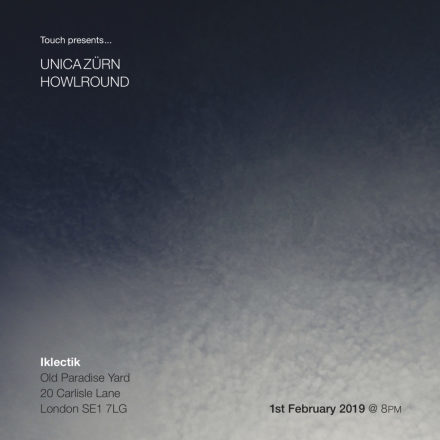
 

May 2018 – the start of the Daylight Music summer season in London – Green Seagull, respectfulchild and Twenty-Three Hanging Trees (12th May); Firestations, Seán Mac Erlaine and Hatchie (19th May); Vesperados, Guastalla Quartet and Marcus Corbett (26th May)

7 May

Although they were a ‘Misfit City’ mainstay for a number of years, it’s been a while since I’ve put up any previews for Daylight Music‘s free Saturday noontime concerts at the Union Chapel. Blame this on the slapdashery that passes for “method”, back here at ‘Misfit City’ HQ; blame concentration or distraction by other things, but for goodness’ sake don’t blame Daylight Music themselves.

I suppose that it might be possible for a regular attender to sometimes feel as if you’ve had enough of Daylight’s particular cosiness – that warm wooly-sweatered whimsicality, the cake stall, or the feeling that you might just crack if you see another community choir singing alt.pop cover versions. But ultimately it’s churlish to take swipes at them for the side trappings when what really counts is the musing intelligence and the well-honed curatorial instincts underneath the family-friendly fuzz. In the end, there are precious few regular gigs in London that can match Daylight for unassuming stealth education: few that will host a baroque quartet alongside rustling sampledelia, set guileless acoustica off against arch indie, season your ears with sudden rushes of Baltic sound or pipe organ interludes; introduce you to musicians and songwriters who leave you astonished and blinking about the fact that you’ve never heard of them before; and all the while balancing the kiddie-friendly with the uncompromising and actually pulling it off. There are few gigs that are just so plain generous.

So, without more ado, here’s a quick signal-boost for the first few gigs of their imminent summer season…

* * * * * * * *

Daylight Music 280: Green Seagull + respectfulchild + Twenty-Three Hanging Trees, 12th May 2018

“The 12th May show features Green Seagull, respectfulchild and Twenty Three Hanging Trees. Green Seagull are the latest band to burst out of London’s burgeoning neo-psych scene. Their harmony-laden baroque/freakbeat sound draws upon influences such as the Left Banke, the Kinks and the Association. respectfulchild is the solo instrumental project of Gan from Saskatoon on Treaty 6 Territory. Their music is electronic in nature while being acoustically created, building experimental ambient soundscapes through slow progressions of meticulous improvisation. Their sound has been likened to Brian Eno, Nils Frahm and Owen Pallett.


Twenty Three Hanging Trees is the meditative modular synth exploration project of Xavier Watkins (Fuzzy Lights/Violet Woods/Red Red Eyes.) The project’s progression from hazy guitar drones to electronic-based explorations with dusty, contemplative tonalities has been a transformative one. Learning to express himself with synthesis was like learning a new language, each step having to be carefully planned and executed so as to maintain the fragile equilibrium created. While 2016’s ‘Nocturne’, released on the Sacred Tapes label, had a contemplative, embryonic stillness, 2017’s ‘Prémonitions’ has a deeper, more emotional heart, tempered by subtle rhythmic buzzing, shimmering oceanic drones and solemn arcs of melody.

 
* * * * * * * *

Daylight Music 281: Firestations + Seán Mac Erlaine + Hatchie, 19th May 2018

“The 19th May show features Firestations, Seán Mac Erlaine and Hatchie. Firestations are an alt-pop band who write simple songs then paint over them with drones, vocal harmonies, electronica and unusual rhythms. Their second album ‘The Year Dot’ has recently released by Lost Map Records. Séan MacErlaine is a Dublin-based woodwind instrumentalist, composer and music producer, recognised as one of Ireland’s most forward-thinking creative musicians. His work intersects folk, free improvisation, jazz and traditional music.

 
Hatchie is the world of Harriette Pilbeam. To hear her music is to step inside her mind; a dreamy landscape where cascading synths, jangling guitars, propulsive rhythms and white noise undulate beneath undeniable and irresistible pop melodies. This will be a special acoustic set.

 
* * * * * * * *

Daylight Music 282: Vesperados + Guastalla Quartet + Marcus Corbett

“The 26th May show features Vesperados, Guastalla Quartet and Marcus Corbett. Award-winning composer and jazz musician James Brady first formed Vesperados in 2011, bringing together musicians to explore African, Caribbean and Latin American influences in jazz through original music. Formed in 2013, The Guastalla Quartet brings together musicians from the finest conservatoires in Europe to form a chamber music group dedicated to the exploration of the string quartet repertoire from its roots to as yet unwritten works. Between them, they have performed at world-famous venues including the Royal Albert Hall, Wigmore Hall, Konzerthaus Berlin, Katara Opera House and the National Concert Hall of Taiwan.

 
“The Guastalla Quartet will also join Vesperados for an octet set during their performance: the use of strings will allow the full expression of rich jazz harmony alongside the rhythmic engine of Vesperados’ Latin-infused grooves.

“Completing the lineup, Marcus Corbett is a singer, acoustic guitarist and composer based between the UK and Pune, Maharashtra, India. He has been studying Indian classical music and working with musicians in India for over 10 years, skillfully combining the worlds of Indian classical and British folk music and producing a string of albums. He will perform with one of his key Indian collaborators, Tabla maestro Nitin Gaikwad.”

 
* * * * * * * *
As ever, all gigs are at Union Chapel, 19b Compton Terrace, Islington, London, N1 2UN, England and are free, though it’s good form to donate a fiver on the way in or out. Dates below:

  • Daylight Music 280: Green Seagull, respectfulchild + Twenty-Three Hanging Trees, Saturday 12th May 2018, 12:00pminformation
  • Daylight Music 281: Firestations, Seán Mac Erlaine + Hatchie, Saturday 19th May 2018, 12:00pminformation
  • Daylight Music 282: Vesperados, Guastalla Quartet + Marcus Corbett, Saturday 26th May 2018, 12:00pminformation

May/June 2018 – gigs for Crayola Lectern in London and Brighton with Joss Cope, The Rt. Rev. Jennifer Husband and others t.b.c. (16th May, 1st June); ‘A Spring Symposium’ fundraiser for Tim Smith near Salisbury with Lake Of Puppies, Arch Garrison, Crayola Lectern, Bob Drake, Kemper Norton and Emily Jones (12th May)

1 May

Crayola Lectern + Joss Cope + The Rt. Rev. Jennifer Husband, 16th May 2018First things first: the murmuring, brass-dappled Crayola Lectern trio are making their way up for a rare London gig in the middle of May, followed by a Brighton launch show for the new Crayola Lectern album, ‘Happy Endings’, at the start of June. The vehicle for Chris Anderson’s tidal, sometimes melancholic, often softly funny songs – low-key dramas of reflection, resignation and not-quite acceptance – they’re powered by his piano, Al Strachan’s sleepy cornet and percussion and Brighton uberdrummer Damo Waters’ parallel skills on keyboards.

It’s not been confirmed yet who’s joining in at Brighton, though the whispers are that it’ll be someone – or several someones – drawn from Chris’ Brighton psychedelic circles, which includes driving psych-rock ensemble ZOFFF, Kemper Norton (more on whom shortly), CLOWWNS and Spratleys Japs. However, the London bill has its two support acts.

Psych-pop journeyman Joss Cope, armed with his strongest project yet (last year’s ‘Unrequited Lullabies’) will be along for the ride. I recently described the album as “a luscious living-room tranche of psych-pop with a sharp wit; dappled with dextrous pop guitars, carousel prog, fake horns and laps of Mellotron”. Live, you may get a little less of the texturing, but you’ll still get the songs: chatty, wry commentaries on a world wobbling off the rails. The Rt. Rev. Jennifer Husband also happens to be Nick Howiantz, who otherwise divides his time between running Brixton Hill Studios and fronting sporadic, noisy Brighton psych-pop rompers Ham Legion. I’ve no idea about what’s behind the genderswapping ecclesiastical mask, but he/she/they are being tagged as a “veritable modern day Syd Barrett”, so come along and see whether that’s a claim worth claiming or whether it falls interestingly wide of the mark.

 
Dates:

  • Servant Jazz Quarters, 10a Bradbury Street, Dalston, London, N16 8JN, England, Wednesday 16th May 2018, 7:30pm (with Joss Cope + The Rt. Rev. Jennifer Husband) – information here, here and here
  • The Rose Hill, 70-71 Rosehill Terrace, Brighton, BN1 4JL, England, Friday 1st June 2018, 8.00pm (support t.b.c.) – information here

* * * * * * * *

A Spring Symposium (for Tim Smith), 12th May 2018
I was talking about Crayola – and William D. Drake – only a few posts ago, as regards their Worthing fundraiser for Tim Smith on 19th May. A week before that, both of them (in various permutations) will be joining another Tim fundraiser – this one an all-dayer in Coombe Bissett, nestled in the Wiltshire chalk downs south-west of Salisbury.

‘A Spring Symposium’ is the brainchild – or heartchild – of onetime Cornish folkie Emily Jones, who’s now joined the cluster of Cardiacs family musicians living around Salisbury. Her own songs of seal-wives, haunted bungalows, witchery and other glimpses beyond the vale will be part of the event, alongside contributions from various other characters well-known to Cardiacs followers or to aficionados of certain weird-folk, Rock in Opposition and hauntological camps.


Emily’s near-neighbours, Craig and Sharron Fortnam of North Sea Radio Orchestra, will be taking part in various permutations. Craig will be bringing along his Arch Garrison duo with James Larcombe, singing soft songs (on gut-strung acoustic guitar and buzzing organs and monosynths) about long walks, lost brothers, ancient roads, dogs, death and bereavement and the various gentle tug-of-wars between family and necessary solitude, compromise and truthfulness, art and earning. Craig and Sharron will both be playing in a second reunion of Lake Of Puppies, the rollicking, affectionate acoustic-psychedelic folk-pop band they formed with avuncular ex-Cardiac and alternative keyboard virtuoso William D. Drake over twenty years ago. During the mid-‘90s they’d play regular small gigs around London; bobbing up with their bouncy songs of life, good humour and growing things, like a rosy apple in a tub. Sadly, they went their separate and amiable ways after only a few years and no more than a couple of rough demos. Having reconvened in the summer of 2013 (for a lovingly received appearance at the Alphabet Business Convention), they promptly disappeared again, but have been working out a long-delayed debut album on the quiet. Some of that ought to show up at this concert. See below for a couple of dashes of their particular flavour. Large Life might be billed as Bill’s, but it’s Puppies to the bone, and their 2013 set from Salisbury should give you an idea as to how they are now.

 
I’ve already mentioned the Crayola Lectern set; there’ll also be one from Bob Drake (the onetime 5uus and Thinking Plague guy currently bouncing around the country on a tour of his own). Sit at Uncle Bobby’s feet; listen to his electric guitar jangle, pop and change its mind every other mid-phrase; and take in some loveably bizarre constantly changing one-minute songs about sinister meerkats, experiments gone wrong, and the way in which assorted eldritch beasts from dark dimensions annoyingly disrupt your life, your shopping and your evening’s relaxation. If Ogden Nash, Fred Frith, Roald Dahl and Neil Young had all crept up to H.P. Lovecraft’s house one larky summer’s evening with a pint of moonshine and some tall tales – and really made him laugh – it would have sounded something like this.


While there may be a couple of extra guests showing up as a surprise, the Symposium roster is formally rounded off by Kemper Norton and by Libbertine Vale – the former an electro-acoustic folk-culture miner of music and landscapes, (armed with instruments, electronics and field recordings to remap both physical terrain and song terrains), the latter the Omnia Opera/7shades singer who’s revealed herself as a rebel Midlands folkie, digging deep into the more macabre corners of the folk-song catalogue and coming back with “uncomfortable songs about death, a capella sqwarking that will kill or heal your ears, dependent on your disposition.” It’s tough to track Libby down on the web, but here’s a bit of Kemper.

 
There’s only ten days to go ‘til the event, but there’s still time to arrange to get there. There’ll be cakes and ale, there’ll be vegetarian food; Tim Smith himself will probably be in attendance, and Emily’s suggested that you caravan-camp out on the chalk downs. If this English May makes its mind up (and settles for being a good springsummer), it all ought to be lovely.

Emily Jones presents:
A Spring Symposium: Lake of Puppies + Crayola Lectern + Arch Garrison + Bob Drake + Kemper Norton + Libbertine Vale + Emily Jones
Coombe Bissett Village Hall, Shutts Lane, Homington Road, Coombe Bissett, Salisbury, Wiltshire, SP5 4LU, England
Saturday 12th May 2018, 2.00pm
– information here, here and here
 

SWOONAGE

Swoon. /swo͞on/ A verb. To be emotionally affected by someone or something that one admires; become ecstatic. Here are some people and things that make me swoon. #swoon #swoonage

Post-Punk Monk

Searching for divinity in records from '78-'85 or so…

theartyassassin

...wandering through music...

Get In Her Ears

Promoting and Supporting Women in Music

Die or D.I.Y.?

...wandering through music...

Music Aficionado

Quality articles about the golden age of music

THE ACTIVE LISTENER

...wandering through music...

Planet Hugill

...wandering through music...

Listening to Ladies

...wandering through music...

ATTN:Magazine

Not from concentrate.

Xposed Club

improvised/experimental/music

The Quietus

...wandering through music...

I Quite Like Gigs

Music Reviews, music thoughts and musical wonderings

furia log

...wandering through music...

The Recoup

SINCE 2013: Books and books and books and books and occasionally other things

A jumped-up pantry boy

To say the least, oh truly disappointed

PROOF POSITIVE

A new semi-regular gig in London

Gapplegate Classical-Modern Music Review

...wandering through music...

When The Horn Blows

...wandering through music...

:::::::::::: Ekho :::::::::::: Women in Sonic Art

Celebrating the Work of Women within Sonic Art: an expanding archive promoting equality in the sonic field

Ned Raggett Ponders It All

Just another WordPress.com weblog

FLIPSIDE REVIEWS

...wandering through music...

Headphone Commute

honest words on honest music

The One-Liner Miner

...wandering through music...

Yeah I Know It Sucks

an absurdist review blog

Obat Kanker Payudara Ginseng RH 2

...wandering through music...

poplifer.wordpress.com/

Waiting for the gift of sound and vision

Good Music Speaks

A music blog written by Rich Brown

Do The Math

...wandering through music...

Archived Music Press

Scans from the Melody Maker and N.M.E. circa 1987-1996

The World's Worst Records

...wandering through music...

Soundscapes

...wandering through music...

OLD SCHOOL RECORD REVIEW

Where You Are Always Wrong
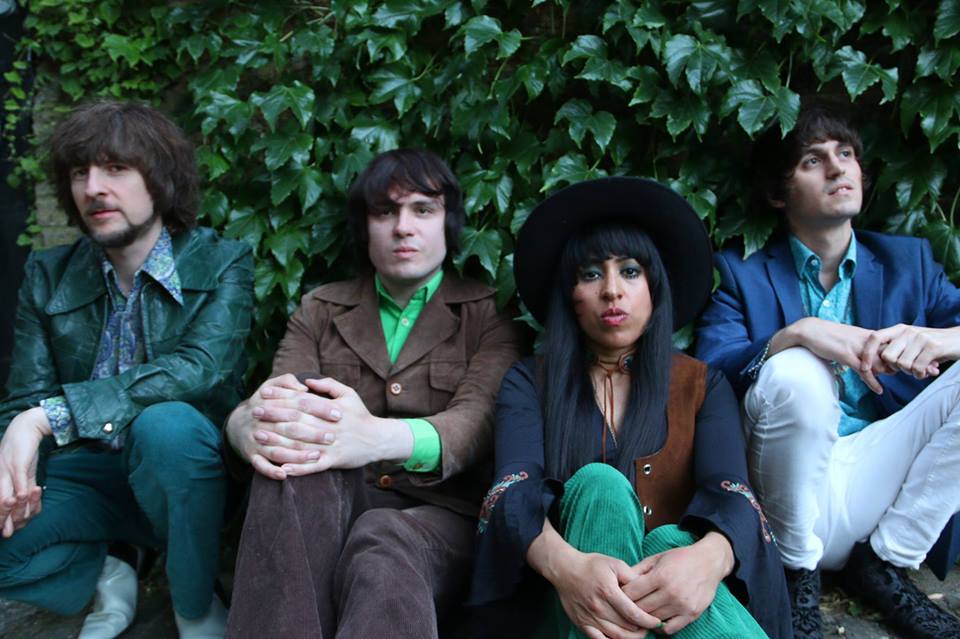
FRIDAY NIGHT BOYS

...wandering through music...

Fragile or Possibly Extinct

Life Outside the Womb

a closer listen

a home for instrumental and experimental music

Bird is the Worm

New Jazz: We Search. We Recommend. You Listen.

...wandering through music...

Life Just Bounces

...wandering through music...

Lucid Culture

JAZZ, CLASSICAL MUSIC AND THE ARTS IN NEW YORK CITY

Aquarium Drunkard

...wandering through music...

eyesplinters

Just another WordPress.com site

NewFrontEars

...wandering through music...

FormerConformer

Striving for Difference