Archive | electro-acoustic music RSS feed for this section

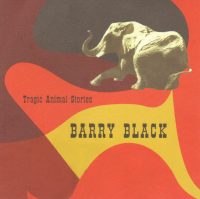
July 1997 – album reviews – Barry Black’s ‘Tragic Animal Stories’ (“playing off an all-American goofiness against a frowning European sternness”)

29 Jul
Barry Black: 'Tragic Animal Stories'

Barry Black: ‘Tragic Animal Stories’

When he’s not fronting the infamously shambolic noise merchants Archers of Loaf, Eric Bachmann is apparently found holed up in the practise rooms at North Carolina School of the Arts claiming he’s actually someone else. If ‘Tragic Animal Stories’ is anything to go by he is, in fact, several other people. But if they all want to call themselves “Barry Black” to save time, that’s fine by me. Hi, Barry. What’s in that box you’re clutching, then?

Originally just a collection of soundboard experiments – the sort of thing that’s invariably going to sprout up if you leave a couple of musicians in a room with a new toy – Barry Black has evolved into an after-hours mess-about-with-intent which has previously been graced by such wilful eccentrics as Ben Folds (another guy who thinks he’s three different people) or the Clodfelter brothers from Geezer Lake. For this second album, though, Eric Bachman’s instrumentation and samples are augmented by the enthusiastic mess of Chris Waibach’s drums and tuned percussion, and by Sebadoh producer Bob Weston’s guitar, trumpet and engineering.


Half of ‘Tragic Animal Stories’ is shambling takes on dark loungecore soundtrack cheese, with the other half a collection of sound-puzzles that seem to have been extracted from the gaps between instruments. Eric’s music leans as precariously like a tumbledown shack – as ramshackle and oddly comforting as the spattered bloops of Morse code keyboard that usher in and wave out the album – and floats in a kind of fluid dusky haze, in which movement in any direction is possible as long as you’re not hung up about how fast you get there.

It doesn’t take long for the cheerful schizophrenia of ‘Tragic Animal Stories’ to make itself felt. The Horrible Truth About Plankton goes from being hypnotic and enwebbed in the suffocating, shuddering dust of an organ straight out of a Czech horror film to being relieved by falling-apart slacker-jazz drums and sweet shambling melodies carried on Waibach’s cheerful vibes, and ends up as easy listening on a slight O.D of random tranquillisers. Chimps sounds like Startled Insects in gigglesome mood: mechanical pings and stringy high life guitar jostling with a cabaret wind band (brass and kazoo) and pushing it into ‘Threepenny Opera’ land, complete with wild skinny tremors of Jamie Muir-style xylophone.


The lovely, brave little tune of Slow Loris Lament clambers out of a shambling toybox orchestration, like a lo-fi Rick Wakeman among the Playpeople. A stylophone plays a fanfare over a radio whine. There are barking noises, ticklish steel drums and a bassoon. Don’t waste any time waiting for a hot guitar solo: Slash couldn’t make the session (and there’s a rumour that they’ve still got Joe Satriani locked up in a cupboard off the control room from the time when they opted to wipe off his lines in favour of a triangle track).


As expected, there’s a definite fuck-around element to all this, but thankfully without that wacky “nothing’s serious” sloppy buffoonery that hangs around many lo-fi groups like the gang joker’s B.O. It sounds as if Eric’s involved in a more serious game of his own, playing off an all-American goofiness against a frowning European sternness, arty soundtrack pretensions against musical jokes, flake against pose.


Duelling Elephants comes out like a darker sketch from ‘Carnival of the Animals’ that refused to take itself too seriously, and made a beeline for a cartoon Munich beerhall, dragging the remains of its menace behind it. The oompah bassline and trembling treble of the piano, mingled with close brass and bassoons has the sadistic comedy of Nickelodeon animation, but it also ripples as ominously as disturbed water. Drowning Spider emerges through an antique shellac crackle: walloped piano like Fats Waller having a nervous breakdown and careening off the edge of the recording reel. Iditarod Sleigh Dogs – a scratched rhythm from detuned banjos and tinkly, twitchy, plonky kiddie piano lines – sounds like Eric composed it with his head on upside-down. Cute.


Even with the playfulness, ‘Tragic Animal Stories’ always has its serious side. On When Sharks Smell Blood, dazed front-crawl piano swims and sways to shore, while rakes of ravenous solo and duo cellos wind around it and a deathly creak (a leaning rocking chair? a wind swing door? a murderer’s step on the verandah?) infiltrates the background. For the big picture, there’s the David Torn spaghetti western of Derelict Vultures, starting life with a harsh guitar scratch and limping Morricone melodies from a splitting, tortured, midrange electric guitar and a filtered swoosh of background, until harsh Russian horns take over the melody and pull it off the badlands onto the steppes.


Tropical Fish Revival sounds like Death approaching a lean-to in a Kingston shantytown. Eric’s mournful, indistinguishable sung words (his only vocal performance on the whole album) flutter above his clang of funereal piano, a shabby, heavy-footed drum loop and a fluting, buzzy keyboard flutter. A shimmer of vibrating steel pan reverbs off into the distance, and the light fades with it.


Snail Trail of Tears closes the album with the lullaby sound of a music-box vibraphone and an overdriven guitar drone melody like a stretchy harmonium. It sounds like Pram or Labradford revamping King Crimson‘s Starless on a heavy summer evening. The bass grumbles like a cello. An out-of-phase air extractor noise adds a layer of feathery sound like a heavenly choir, and then it drops away into those Morse bloops again. Over and out.


Small music from another place. I want to go there.

Barry Black: ‘Tragic Animal Stories’
Alias Records, A122 (0 93716 01222 1)
CD/vinyl album
Released:
29th July 1997
Get it from: Alias Records
Barry Black (Eric Bachmann) online:
Homepage Facebook Twitter Soundcloud Bandcamp Last FM Apple Music YouTube Pandora Spotify Tidal Instagram Amazon Music
 

May 1997 – album reviews – Ragga & The Jack Magic Orchestra’s ‘Ragga & The Jack Magic Orchestra’ (“music for Disney cartoon castles in the sky”)

24 May

Ragga & The Jack Magic Orchestra: 'Ragga & The Jack Magic Orchestra'

Ragga & The Jack Magic Orchestra: ‘Ragga & The Jack Magic Orchestra’

Do I have to do all the usual obvious journalistic crap about Iceland? Do I? Oh, if I must. They eat puffins, or something. They drink tons of cheap alcohol. It’s bloody cold there. It’s dark all winter, light all summer, or something. Magnus Magnússon. Mad elfin pixie Bjork… blah blah blah. Will this do?

Oh, and I have to act surprised that Iceland can produce such great music, and be really patronising about that in particular. Because we British love looking down on small nations, don’t we?

All that gone through, just because two-thirds of Ragga & The Jack Magic Orchestra are Icelandic. Ragga sang You Don’t on Tricky’s ‘Maxinquaye’ album – a track full of filmic strings, soloing flutes and slow shuffling beats -which casts some light on this album. Previously, Ragga and keyboardist Jakob Magnússon were in a successful Icelandic band together; when they ended up in London, Magnússon worked as Icelandic cultural attache while Ragga attended drama school. Later, they formed Ragga & The Jack Magic Orchestra with English sampling wizard Mark Davies from Voices Of Kwahn. With this debut, they bring all these diverse strands of experience together to produce a magical experience. Huge, colourful swathes of sound; music for Disney cartoon castles in the sky.


So – Fairy Godmother opens on a feather-bed of lapping sea, boat-horns, celeste chimes and toybox orchestra that scream “Disney”, before the trip-hop beats are introduced. But the JMO is always very natural, organic-sounding – no harsh electronica scraping here. And Ragga’s voice is a magical thing – Kate Bush in a lower register, with some of Bjork’s expressive stylings. Like Bjork, her lyrics tell strange stories, but she introduces Shot almost matter-of-factly: “I got shot in the head by a man / who had been aiming at me / for many days… / At the moment I got / the paper from my doorstep.” To an almost easy-listening palette of relaxing hues, jazzy woodwind and flutes, she philosophically concludes that “love can hurt…” Well, it would, wouldn’t it?

Daringly, styles keep shifting, track by track: somehow in keeping with the fairy-tale transformations of the lyrics and samples. Passion For Life has a soulful belted-out chorus (Ragga does brazen Broadway as easily as schmaltzy Hollywood), a slow, loping early-hours atmosphere of spooky keyboards and bone-rattles for beats, and brilliantly lifts an evocative passage from Samuel Barber’s ‘Adagio For Strings’ (the music from “Platoon”, if your imagination’s still settled in the cinema after those Disney references). In Where Are They Now? – to surging orchestral strings, keyboard arpeggios and sparse but powerful metallic percussion – Ragga sings a torch-song elegy to the lost children of wars. Even when no lyrics intrude, Ragga’s evocative harmonies over a battalion of drums and stabbing strings are just as emotional.


The mix of folky guitars and flutes, East European violin and pleasantly shuffling beats on Turn It Off remind one of Beth Orton’s marriage of bedsit folk and electronica. Deep Down also has a deceptively simple sound: alternately hushed and passionate vocals over shifting sands of decaying electronics and a barrage of junkshop percussion. It hits a groove and stays there – perfectly. With the fairy-tale assertion that “sometimes I can breathe underwater / Sometimes I can fly around the sky”, Underwater features more Disney-like wonderment: reverberating drones, slippery strings lilting through the melody and expert percussion care of a Steve Jansen/Rain Tree Crow sample fluidly weaving in and around the programmed beats.

Despite its title and distorted electro-beats, Beatbox Controller isn’t some ’90s ode to the DJ/mixer in the manner of Last Night A DJ Saved My Life. The “beatbox” referred to is the heart – “you are my beatbox controller / A telepathic mixer of emotion…” Ragga’s vocals are almost helium-light and, musically, the track sounds like twenty-first century reggae-lite. In an extended coda where he duets with Jacob Magnússon’s improvising keyboards, Mark Davies makes beautiful music out of sampled percussion – this man’s going to be a figure to watch in the world of electronica, to rank alongside DJ Shadow or Howie B.

Indeed, Two Kisses is built on a disconcerting, clattering rhythm track of samples of god-knows-what. Buzzes, radio waves, ghostly fluttering flutes and Eastern pipes are all jammed into the mix. Ragga sings a multi-tracked ethereal chorus and her voice is, at one point, treated to sound – well, er – exactly like a Smurf, to be honest. Weird, peculiar – Laurie Anderson jamming with The Art Of Noise produced by Tricky is about the closest comparison. Close, but nowhere near. So, yes, if weirdness to the point of absurdity overtakes them every so often (Man In The Moon overdoes the lyrics on the wrong side of Kate Bush kooky pop, and the overblown melody reminds one of… Christ! The Thompson Twins!) it’s a price worth paying for the trio’s musical vision.


Music for your fairy-tale nightmares. A perfect accompaniment to drifting away while watching “Fantasia” for the hundredth time, safe in the knowledge that the good witch now works her magic with a sampler.

Touched by the wand of the sorcerer’s apprentice.

(review by Vaughan Simons)

Ragga & The Jack Magic Orchestra: ‘Ragga & The Jack Magic Orchestra’
EMI Records Ltd., CDEMD 1107 (7243 8 56728 2 8)
CD/cassette album
Released: 19th May 1997

Get it from:
(updated 2018) buy original CD second-hand, or get the reissued download from Amazon or iTunes.

Ragga & The Jack Magic Orchestra online:
Soundcloud Last FM

March 1997 – album reviews – Jocelyn Pook’s ‘Deluge’ (“a suite of stunning invention and sheer beauty”)

1 Mar

Jocelyn Pook: 'Deluge'

Jocelyn Pook: ‘Deluge’

The elegant grace of tragedy is often linked with the splat of farce. This album’s major selling point (on some copies of the CD, it’s trumpeted by a sticker ‑ I kid you not) is that it features the music from last year’s TV ads for Orange mobile phones, namely Jocelyn Pook’s setting of “Blow The Wind Southerly” sung by Kathleen Ferrier.

Sigh. It’s sad but true that increasingly weird and wonderful music is getting picked up and co‑opted by advertising agencies for their campaigns. Your average ‘Coronation Street’ ad‑break may currently play to a soundtrack of Michael Nyman, Gavin Bryars, Aphex Twin, U‑Ziq, Cocteau Twins… and Pook. They’re selling their souls for the filthy lucre from red‑braced ad execs. Of course they are: rampant fucking capitalism is bringing us the best that post‑modern music has to offer. It’s art selling out!

But… Mr or Ms Normal Music Fan are going into Our Price and humming this music over the counter to Shop Assistant. Consequently, they’re getting turned on to (at least relatively) experimental music, er, man… And as Jocelyn Pook joins the hideous capitalist gravy train (look, I’m not being cruel: my tongue is in my cheek) from obscurity to the CD racks, the musos among us will smugly tell that Pook is widely known as the leader of the Electra Strings (along with Caroline Lavelle, Sonia Slaney and others), who have no doubt been rushed off their feet in the past couple of years as every British pop act decided they must show their serious side by having at least one strings‑based track in their repertoire (I think we call it “hiring in a touch of class”).

But here ‑ ably backed by the Electras, knife‑edged art‑scene soprano Melanie Pappenheim and a pocketful of exotic musicians and sounds ‑ Jocelyn Pook shows herself as being beyond simply a viola player. She’s a composer of emotion and invention and, in the best traditions of post‑modernism, introduces classical and traditional musics to the brave new world of samples and electronics. OK, so it has to be admitted that Dead Can Dance are an immediate and convenient comparison, but ‘Deluge’ is warmer, more emotional: less monumentally impressive, perhaps, but also nowhere near as harsh and Wagnerian.


The twelve tracks of ‘Deluge’ (germinating from a clutch of “post‑modern hymns” written for a Canadian dance‑theatre project) are best appreciated as one pre‑millennial suite with recurring themes (the emotions drawn from the year 1000, the methodology from 2000). Requiem Aeternam, like many elements of the other tracks, opens the album with solo and multitracked singing of a traditional requiem over one sustained root note. Post‑modern chamber plainsong, in other words, founded upon a sense of inevitability that’s unchanged by the impact of technology.


Technology, in fact, might even be hastening that grand inevitable. Oppenheimer is undoubtedly one of the central parts of ‘Deluge’. It opens with a disturbing sample of Robert Oppenheimer talking (he seems heavy with emotion, a man with the weight of his discovery of nuclear destruction bearing down upon him) surrounded by a foreboding nuclear wind: this merges into the poignant but more hopeful sound of the Jewish call to prayer and a dawn chorus of birds. As the central sung theme from the first track returns with a supporting string section, a haunting, heartbreaking elegy is created.

For Oppenheimer himself, this could be the emotions created by his dread and foresight at what he had created. More powerfully, however, this piece stands as a requiem for a world forever changed by the knowledge of possible nuclear annihilation. A post‑Cold War planet we may now be, but his music took me right back to the nervousness of the mid‑’80s and its accompanying, tangible dread of nuclear war.


Lightening the mood and returning to the music, Blow The Wind (subtitled Pie Jesu) does indeed feature that Orange ad music again. Heard without those connotations, however, this is a brilliant interweaving of samples and live sound, as Kathleen Ferrier’s familiar rendition of the traditional vocal is interspersed with Pappenheim and Pook’s plangent vocal counterpoint, the echoing sounds of children playing, and more soaring strings. As in hip‑hop, the form that originally used sampling to such great effect and historic importance, the sample of Ferrier is used as a basis to build other musical sequences, instrumentation and vocals. It’s humble, beautiful, and ends far too soon.


The lessons in the new technology of music Jocelyn Pook has gained will undoubtedly further influence the writing and performance of her music for her own instrument ‑ strings. The penultimate piece, La Blanche Traversée, appears to be a fairly standard chamber‑piece setting of words by Racine, but more remarkable is the subtle instrumental backing. Pook and the Electra Strings play a slightly off‑rhythm pattern of oscillating notes that, to any DJ or mixer who knows his decks, would be regarded as a loop. I feel that it is safe to assume that the original hip‑hop DJs never had this development in mind when they crafted scratching and looping. ‘Deluge’ is a long way from being electronica, but the ’90s cross‑pollination continues.


While music has broken all the boundaries of genre in the ’90s, the end products have resulted in albums of naked emotion or sonic inventiveness. But rarely both together. ‘Deluge’ is a suite of stunning invention and sheer beauty in its music, but with all the necessary emotion of a requiem for the post‑nuclear age. The wind blows cold, with the sound of ravens on the air, but it tugs your whole life right to the surface of your skin.

Never mind the politics of how you got to hear of Jocelyn Pook or ‘Deluge’. Open your mind to it.

(review by Vaughan Simons)

Jocelyn Pook: ‘Deluge’
Virgin Records, CDVE 933 7243 (7 24384 29632 2)
CD-only album
Released: 24th February 1997

Get it from:
(2018 update) long out-of-print, so best picked up second-hand. Most of the tracks on ‘Deluge’ were remixed and reissued on the ‘Flood’ album in 1999.

Jocelyn Pook online:
Homepage Facebook Twitter MySpace Soundcloud Tumblr Last FM YouTube Vimeo

November 1996 – EP reviews – Pram’s ‘Music for Your Movies’ (“profundity stretched over that soap-bubble surface”)

18 Nov

Pram: 'Music for Your Movies'

Pram: ‘Music for Your Movies’

A tangible relief. You know when you treasure a band whose very awkwardness is their spur to genius? And you dread the day when they inevitably develop, move on, make that breakthrough? How you torture yourself with wondering exactly how they’re going to sell out, which part of their off-the-wall wonder is going to be sloughed off like an old coat or an outgrown friend? And how wonderful (and how rare) it is, when they make that leap while still swinging all of that weird and precious baggage.

Over four albums and assorted spring showers of invention, Pram have made music which sounds like daydreams captured in rented rooms and played on dolls-house instruments. Tinkly, tiny and exquisite: beautifully fragile songs, with profundity stretched over that soap-bubble surface. Music recorded in the kitchen sink during those sparkling times an hour or so before noon or dusk sets in; dusted by trumpets and cobwebs, and licked by ebbtides of slide guitar. They’ve got only the flakiest of reference points – tranquillised ’50s lounge-music echoes, say; or the ferment of polycultural Birmingham nightclubs; or Can’s immersive and unlikely groove; or the deliquescing pop of Syd Barrett’s Pink Floyd on See Emily Play (it’s that sustained, wobbly organ, and that obstinate un-rock twitchiness to Daren Garratt’s drumming: free-jazz leanings, or dodgy-but-compelling technique?). They’ve none of the portentousness of yer Sylvians or Cures, and none of the slackitudes of post-rockers: nor the inhumanity of those ambient characters who sound as if they’re wearing their eyeballs back-to-front. Pram’s music has always been winningly human: frail, sensual, intimate, and very lovely.


The last time we heard from them (on ‘Sargasso Sea’), Pram had drifted aground and drew wonder even from that, rattling like a wind-harp as they moulded music out of disappointment, sleep and stranded hearts. On ‘Music for Your Movies’, they’ve kept their home-made clatter and every scrap of their inventiveness, but have tightened up their pop. Everything falls into place now instead of merely stumbling together, weaving in delicate threads of dub, drum’n’bass, cinema organ. Rosie’s voice, though still weary conversationalist rather than acrobatic diva, has a new bounce and a lilt to it. And her lyrics (while still existing in the reverie that the white page lends so many poems, crucially detaching them from registering as real life) have a new zest.


There’s something celebratory about these songs. The Sargasso that trapped is now a playground for her to transform with enchantment in Sea Jungle’s free-floating love song, while Silver Nitrate celebrates the transforming imaginative power of film as a feminist liberation: “The woman who discovered light / was dazzled by her ingenuity /…With silver nitrate she could make time wait / she could gather all of her hopes and her dreams and make them her destiny / …and spun her thoughts like spiders webs / and with these delicate chains was set free.” On Eggshells it might be Rosie who suffers, locked out from her lover by his own absorption in his past wounds, but she’s the stronger, the more loyal, despite her exposure. Only Carnival of Souls sees Rosie failing to escape the net of her own entrapments, with figures from her past parading through her sleeping head (“feels like I’m living / in a zombie movie”).


Pram have already made stagnation seductive. Now, wheels oiled, they’re rolling forward to explore the waking world. Lucky world.

Pram: ‘Music for Your Movies’
Duophonic Super 45s, DS45-CD15 (5024545032727)
CD/vinyl EP
Released:
18th November 1996
Get it from: (2020 update) Best obtained second-hand.
Pram online:
Homepage Facebook Twitter MySpace Bandcamp Last FM Apple Music YouTube Deezer Google Play Spotify Tidal Amazon Music
 

November 1996 – album reviews – Labradford’s ‘Labradford’ (“aural massage never sounded so nerve-wracking”)

15 Nov

Labradford: 'Labradford'

Labradford: ‘Labradford’

With two albums already behind them, it’s time to stop lumping Labradford in with Tortoise as the only two notable examples of American post-rock. Post-rock is an uncomfortable catch-all that can’t really adequately describe a spectrum that takes in the noisy Trans Am at one end and the classical minimalism of Rachel’s at the other. And where Tortoise approach from an obviously jazzy direction, Labradford’s methods are ice-cold developments on ambience that now seem to be reaching a creative peak.

When a known band suddenly gives, say, their third album the name of the band (the way one would usually do for a debut), you can generally guess that they’re making a pointed statement of identity and distancing themselves from much of what went before. And – appropriately – ‘Labradford’ is Labradford’s most fulfilling statement so far; showing a fully-developed band consolidating the intriguing (but ultimately frustrating and insubstantial) thumbnail sketches they provided on ‘Prazision’ and ‘A Stable Reference’.

Experiments like the deep sub-frequency bass – straight out of acid house – dropping into the chilling ambience of The Cipher or the dissonant tones that break up the background of Lake Speed are perhaps signs of ears being opened to electronica; although this also leads to a loss of the band’s shared interest in the ancient music and religious plainsong which influenced their earlier albums. And which kept me listening past the point where I’d gotten infuriated by their sheer collegiate lethargy, the way they sounded like something made by people who only got out of bed to turn their Neu! record over.

That spectral and distinctly European quality is missing from this year’s model to be replaced by more obviously technologically produced atmospherics, and better production has separated out the sounds from the claustrophobia of ‘A Stable Reference’. The addition of rhythms, albeit perfunctory and not necessarily conventional drum sounds, makes a big difference to the progress of the pieces. Where previously Labradford songs started, hung in stasis in a foggy air and then disappeared, there is now a definite propulsion, a moving forward. Reassuringly, though, we’re not talking 120 bpm…


For a group dealing in mainly instrumental ambient atmospheres, it comes as something of a joy to come across titles that, for once, bear some relation to the sounds being heard. The first track really does sound like a Phantom Channel Crossing – the most nightmarish vision imaginable of a midnight journey in a tin hulk of a ferry. The engines, the chains, the metallic resonances, the emptiness – all there. Maybe I’m imagining things. Painting my own picture for the sounds I’m hearing.

But if that’s not what Labradford’s all about, then there’s no point. This is a gallery of sound, rather than music. And yes, Midrange really does appear to exist all in that spectrum. It’s claustrophobic. While Mark Nelson’s voice mouths more of his usual indecipherable profundities over the group’s ghostly atmospherics, it is noticeable that more light is seeping into the sonic palette – distant violins and, most distinct from the usual swirling morass, a subtly tapped-out rhythm. It still ends with the growing unease of that Labradford noise, however – the closest description being the amplified sound of air ventilation.


Lake Speed is underpinned by a metronomic, surprisingly insistent bass drum rhythm, like a niggling thought tapping constantly on the wall of your brain. “Like a clock / In pieces / On the floor / I try to fix it fast / So I don’t lose too much time” – and as the clock ticks, all manner of worryingly gentle alarms go off in the background. It gives the impression of a David Lynch piece that is seeking to add to your feelings of paranoia. Aural massage never sounded so nerve-wracking. One of the track’s twisted and elongated effects sounds like a man giving vent to a low, painful scream. It’s buried deep in the mix… but it’s there. How appropriate.


Scenic Recovery retains much of the sound and atmosphere of Lake Speed. But still the thoughts keep churning away inside. The tap-tap-tapping rhythm has altered slightly – suddenly it’s the regular but ineffectual pulse of a coma patient. As the mire of sound envelops you, and tension hangs in the air, a solitary violin carries a melody through the ether. Pico is one of Labradford’s “songs”; rather than just shifting atmospheres. Almost hymnal in its simplicity – a sequence of heartbreaking chords, a melody that is played by a friendly alien on a space-age tin whistle, a barely-there whisper of a vocal and another minimalist, almost endearingly clumsy rhythm. The pace is processional, almost holy.


Oh God, how does one describe The Cipher? It is just there. It exists, like sounds exist even in the most silent of nights. Look, this is the sound of digital and analogue air rustling chains. Ghostly. Calming. It is all of these things. But mostly, it just is.


Battered, the closer, is almost eventful. Delicately balanced on a hesitant mandolin-like guitar, a brightly melodic riff, and with a beep providing the rhythm – coma patients again, nurse – it hits a Cocteaus-like bliss-out at the end. Perfect pop for Prozac people.


The last notes we hear are desert guitars drifting into the night. Death Valley, here we come…

(review by Col Ainsley)

Labradford: ‘Labradford’
Mute Liberation Technologies/Blast First Records, BFFP 136CD (5 016027 611360)
CD/download album
Released: 12th November 1996

Get it from:
(2018 update) CD best obtained second-hand, or download from Bandcamp.

Labradford online:
Homepage Facebook MySpace Bandcamp Last FM

October 1996 – live reviews – The Blue Nile + Sinéad Lohan @ The Palladium, London, 8th October

10 Oct

Wait in any given place for a long time and reckon up the odds. Which are you more likely to see passing by – Bigfoot, Lord Lucan, or a member of The Blue Nile? The chances are about equal each way.

In a business that thrives and surfeits on over-exposure, The Blue Nile only sidle into view when they absolutely have to. In fourteen years of tenuous existence, this reclusive biz-shy Glaswegian trio has offered up no more than three short albums of exquisite ambient Celtic soul; stripping away the armour of the heart with cheap drum machines, breathing synths and skeletal guitars, and the scalded, mournful grace of Paul Buchanan’s desperately romantic deep-tenor voice, leaving us flat on the floor and then departing so quietly we don’t hear the door shut.

While they’ve had stiff competition from Kate Bush and Scott Walker in the stakes for lying quietly in the long grass, sometimes The Blue Nile are out of view for so long that they seem no more than the shadows of our own heartbreaks. Three phantoms whom we can fill with the overflow of our ruined, hopeless good intentions and the agonising rush of a love with nothing and nowhere to ground itself on. Every now and then, though, they surface – as they have tonight – put out a record, and those shadows take on flesh.

But first we have Sinéad Lohan; a Cork lass with beaded hair, a salving murmur of a voice, and the composure of a marble Madonna figurine. From out of nowhere to the grandiosity of the Palladium, and still she’s not batting an eyelid as she delivers her soft thrumming folky songs to a warm reception. She even invites questions, and gets them. She has that atmosphere that some quietly private people have, the stillness that invites fascination.

From up here her eyes seem sleepy, focussed inwards, and her songs are the same, ripples of feeling reflected in still pools that make you feel like a privileged eavesdropper. All of this and the quietness makes her seem like an Irish Tanita Tikaram without the air of lazy resentment. After she’s left the stage, I realise I can’t actually remember what any of the songs were about, but the impressions of the emotions involved remain etched lightly on my imagination. She’s as subtle and strong a carver as smooth river water.

After seven years out of the public eye, most bands would return to the stage in a blaze of glory. The Blue Nile don’t even turn the lights out properly first as they slope onstage like reluctant supply teachers. I mistake them for roadies until I recognise Paul Buchanan’s pained, elegant features among the men fumbling to pick up the instruments, all but flinching at the applause and the eyes trained on them. But it’s something they’ll have to deal with.

For all of their heart-stricken loneliness, The Blue Nile carry a very special feeling of empathy and homecoming around with them. Literally, in some respects: tonight’s audience ripples with the voices of Glaswegian emigres. And when one Scots voice, brought to a pitch of excitement, calls out “Glasgow Celtic!” it’s followed as fast as a counterpunch by a Rangers fan’s disgusted “fuck off!” Rather than a slit face, this results in a ripple of laughter and recognition around the auditorium. There are wry, self-conscious chuckles from the band as they finally launch into the Van Morrison-gone-synth-pop chug’n’whoop of Body and Soul.

All of this civility (and this nod to a respectable musical touchstone) prompts the question. Have The Blue Nile, for all their cult status, ended up as another branch of hoary pop tradition for the impeccably adult? Certainly they shy away from sarky pop irony, and they’ve a sheepish but determined commitment to presenting their songs unvarnished by gimmicks. Don’t even try looking for Pet Shop Boys cleverness here.

And then there’s the impeccable cleanliness of their sound – the clipped white-gold ring of it, the slow stretch of the falling-evening keyboards, even the live drums compressed to stiff Linn thuds… Or, on the other hand, the occasional hints of country in the songs from the new ‘Peace At Last’ album and how Stay’s heartbroken synth pointillism develops from a Scottish electro-pop lament to a finale with suspicious hints of rockabilly or hoedown. And, of course, there’s the way Paul’s huge voice draws from Frank Sinatra’s warm cocooning sound, rather than any from any obvious rock source.

Sinatra, though, never sounded this touched; this blown through by overpowering feelings. Even behind the theatrics of his saddest songs there was a man preening in his power; the guy who was laughing now; the honorary Mob capo whose very tone was a muscle. Behind these songs are a man who winces; who knows the scuffed concrete in the buildings he walks past will outlive him. Who’s haunted by the moments where decisions rest before they fall into becoming facts, and who’s never short of melody but is often stripped of words. And who, on this occasion, is swigging Lemsip by the gallon to beat off a vicious cold. It brings the vulnerability of The Blue Nile’s songs into sharper focus.

But then they’ve never suggested that the business of being adult is supposed to be easy, or even make much sense. ‘Peace At Last’ made that as explicit as anything ever is in the Blue Nile universe – a middle-aged album (Paul Buchanan turned forty while recording it) which showed youthful, domestic and spiritual certainties past their flush and breaking down into a unflattering mirror of doubts and shaky illusions. A new testing ground after their landscapes of young men’s fears had slipped away back into the years. While The Blue Nile don’t go so far as to drag middle-aged trappings – such as chipped crucifixes or well-dusted-yet-unloved three-piece suites – onstage with them, they wouldn’t need them. The words to these songs swim to the surface in flashes; brief snatches and sketches of anguished images that settle into the heart’s eye as if their places had been waiting for them forever.

A couple of songs from 1989’s peerlessly lovelorn ‘Hats’ album illustrate this – Over The Hillside fumbles through the burden of day-to-day failure and the pull away from home; Headlights On The Parade sees Paul lose himself in night-haunted reverie, borne on by the serpentine romantic curve of the melody over the mechanistic drumming. Tonight’s rendition of Happiness, a song already riven by doubt (“Now that I’ve found peace at last, / tell me, Jesus, / will it last?”) has to replace the soaring black gospel chorus that boosts it on record with three uneasy white men murmuring into shared mikes. You wouldn’t have thought that it could reach the same hymnal level, but it does, albeit becoming more of a private prayer.

Another ‘Hats’ classic, The Downtown Lights, has the transcending, unresolved journey-feel of a crying fit; heart-stricken keyboard swells giving way to beautifully sad reflection and back again, rising to a frantic crescendo of loss. The atmospheric abstractions of A Walk Across The Rooftops don’t give away much in the way of clues, but they do give a night-time stroll a tint of darkest foreboding.

And Family Life just overwhelms – a mid-life crisis set to song. Echoes of Tom Waits, Randy Newman and crumbling Hollywood Christmases coming together in the heartbroken drunken pleas of a man whose marriage is unravelling, whose boyhood innocence is rising to ask bewildered questions. Paul, singing like a man suddenly and shockingly shrunken, plays the role to the hilt. But there’s no storytelling, no plot; just feelings and the alcohol dissolving reasoning down to more questions and a blurred, blundering comprehension. “Say, you know, / no honeymoons, / just separate chairs in separate rooms. / Jesus, please, / make us happy sometime – / no more shout, / no more fight…” As the last scraps of piano dissolve in the hush, the frenzied applause seems to spray tears of recognition and relief.

It’s still as un-showbiz as you can get. All of these emotions are being let off on a very tight leash. The magisterial Robert Bell doesn’t crack his stern kirkman’s expression all evening, whether he’s forcing compelling crabbed funk lines out of a bass, keening his rare backing vocals into Buchanan’s mike, or crouched cross-legged onstage beating out patterns from the tiny synth in his lap. Over on stage right, P.J. Moore plays with an abstracted serenity as the Blue Nile’s bare, effective colorations flood out from his keyboards. The supplemental three on drums, guitar and synths play with their heads slightly bowed – more quiet men. So it’s the hunched, embarrassed Buchanan that’s the reluctant centre of attention; muttering wry Glasgow “let’s-get-this-over-with” asides between the songs, but singing his heart out of his chest and punching it up at the sky every time the music rises.

I guess that even with embarrassment weighing at his coat-tails, he can’t help it. There’s often a desperate strand of hope-against-hope in The Blue Nile. The near-delirious Sentimental Man ascends out of a jumble of chippy funk facets to hit gospelly heights; the intently energised strum of Tomorrow Morning rushes towards the light as if Buchanan was trying to beat the pain off by hurtling towards hope. Tinseltown in the Rain – which belts along as if it was the peak of some uncompleted Glaswegian street-opera – bursts up to a plateau of emotion, aggressive certainty struggling with a sense of doom. (“do I love you? Yes, I love you! / Will we always be happy-go- lucky?… / But it’s easy come, and it’s easy go. / All this talking – / talking is only bravado”) before exploding in a carillon of stammering, tear-jerking guitar.

And on Saturday Night you can feel the blessed surge of relief at a simple romance – “an ordinary girl” hymned with a incredulous delight, an everyday date turned into a haven from the wracked, exhausting, damn-near-religious romantic angst of the Nile songbook – turning out right for once. As the last swooning joyous chimes mount the air, I hear a ecstatic voice screaming “Yes!”. It’s my own. I can’t help it either.

Later, Bell and Moore take up positions at the synths on each side of the stage, waiting to play Easter Parade. White-clad, calmly watching each other for the cue, they have the assured and tranquil air of surgeons waiting to lay on the hands and bring out the pain. Then the song comes – plangent clutchings of piano, gushes of night-breeze synth and Buchanan singing of being alone in a rapt crowd, carried along like a solitary bubble in their exhilaration. And the empathy is summoned up and floods through us like medicine.

They can still touch the pressure points of the soul like no-one else. In another few months they’ll be hiding from us again, but that touch is going to stay with us until they feel able to venture out into the world again, blinking with trepidation at the looming feelings waiting to catch them.

The Blue Nile online:
Homepage Facebook Twitter MySpace Soundcloud Last FM Apple Music YouTube Deezer Google Play Pandora Spotify Tidal Amazon Music

Sinéad Lohan online:
Facebook MySpace Last FM Apple Music YouTube Deezer Google Play Pandora Spotify Amazon Music
 

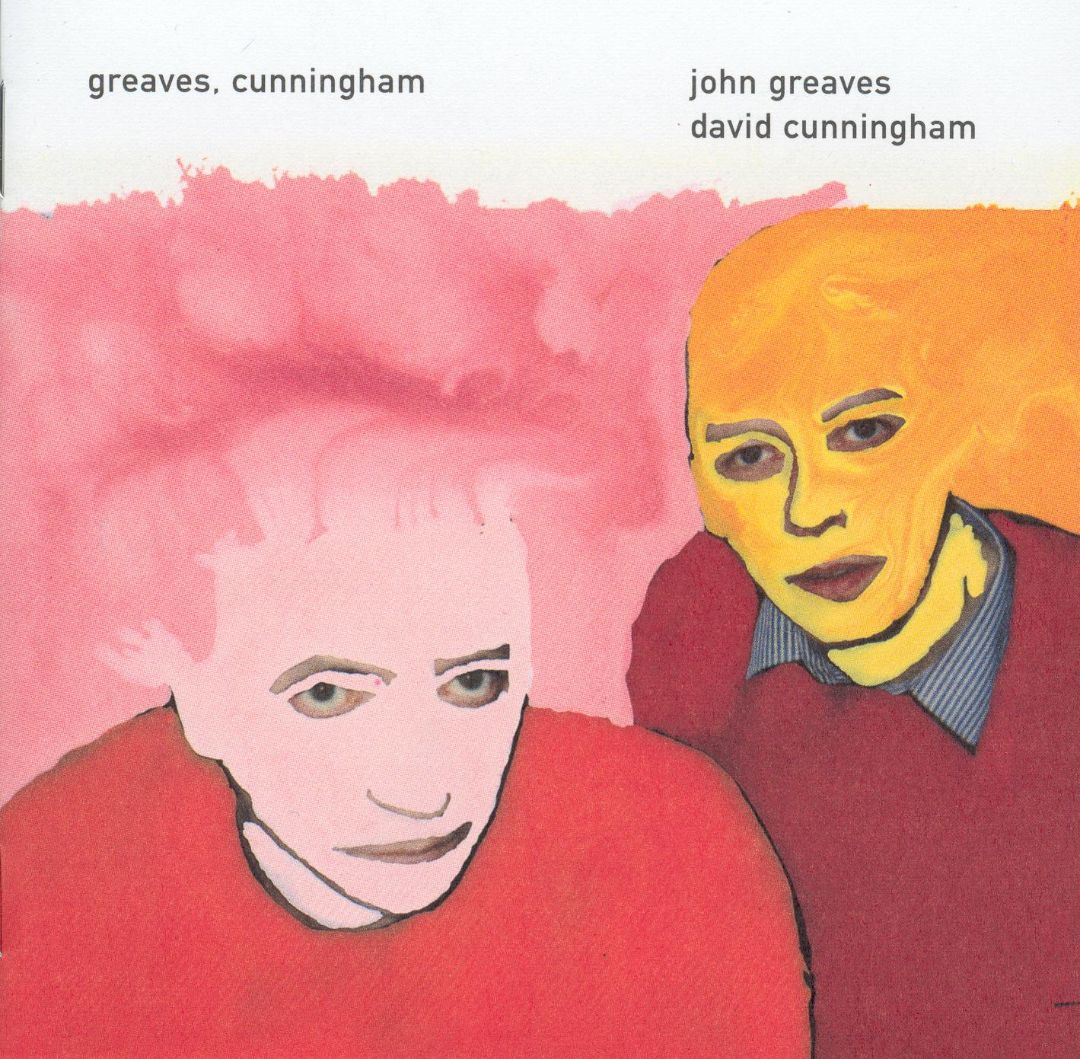
September 1996 – album reviews – John Greaves/David Cunningham’s ‘Greaves, Cunningham’ reissue (“a muted treasure”)

10 Sep

John Greaves, David Cunningham: 'Greaves, Cunningham'

John Greaves, David Cunningham: ‘Greaves, Cunningham’

Too much information.

I’ll own up to being the occasional sad muso, the sort of person who wants to know which guest musician banged the tambourine on the second (unused) take of The Beatles’ Revolution on June 24, 1968, and what colour trousers they were wearing. (Look, it’s a hypothetical. Don’t send your replies).

It’s refreshing, then, to be recommended an album and know little or nothing about the artist. David Cunningham I am familiar with as the person behind The Flying Lizards, purveyors of bizarre‑sounding kitchen‑sink electronics who had a surprise hit in the ’70s with a version of early Motown hit Money, and has since produced much of Michael Nyman’s work. John Greaves? Search me. My excellent editor will no doubt insert a knowledgeable mini‑biog here. I think John Greaves may have been in some way involved in prog. God help us… (Near enough. He used to be in Henry Cow ‑ an enthralling but demanding gang of ferociously complex Maoist art‑rockers in the ’70s ‑ playing bass on revolutionary stuff that was far too twisty to sing over. Perhaps as a reaction, he’s been a song‑albums man ever since. Prog by default, I guess: the difference isn’t as wide as some would like to imply ‑ ED.).

So I didn’t know what to expect. What I found is a delicate and intensely beautiful curio. Totally motionless. Ice cold. Pure electronics, free of the distortion and sampling that we so associate with the form now, and only occasionally breathed upon by natural sounds. And a voice that sings of emotion but remains, almost intriguingly, detached.

The Mirage is a less than promising opening, though. It almost justifies the accusation that much avant‑garde music is simply nice melodies and good singers ruined by someone working randomly through all the programs on their synth in the background. But one is immediately struck by the voice of John Greaves: somewhere between Dominic Appleton of Breathless (and, more famously, This Mortal Coil) and John Cale ‑ appropriately, Greaves is also a Welsh tenor. The sort of voice, frankly, that is only ever heard in art‑rock. It’s heard to great effect on one of the stand‑out tracks, The Magical Building. A beautiful melody and a peculiarly touching analogy ‑ “Oh darling, it’s all so mysterious / The magical building that is us” ‑ despite its unusually clinical feel. Cunningham’s stark, clean electronic backing evokes further This Mortal Coil comparisons.


One Summer allows about the most human emotion on this album. Regret. The harmonies are all‑too‑real in beautifully surrounding Greaves’ voice as he regrets: “Swimming all around and never getting closer / To the one damn thing you knew we needed most…/ In a way, we never happened / In a way, we were never there / In a way, we were phantoms / In a way, we were fish in air…/ In a way, we didn’t care / And there’s nobody left to tell the tale.” If that doesn’t get you weeping over summer love affairs long gone, you are truly heartless.


In between the longer vocal tracks, there are a number of short ambient pieces. Whilst all retain the icy atmosphere of the album, the vocals elsewhere are so stunning one longs for their return. Nevertheless, the instrumentals are arresting in their own way, several of them sharing similarities with the recent work of Jansen and Barbieri; particularly the final track, The Map Of The Mountains, where marimbas play a softly rhythmic motif over an evolving ambient sequence. The Red Sand is a rhythmic instrumental of pulsating piano, percussion, strange dislocated vocal snatches, parping saxes and clarinet. The Other World ‑ due to its instrumentation in particular ‑ proves to be a more substantial interruption to the flow of the songs. The acoustic guitars and saxophone bring a more laid‑back feel when the steel‑cold otherworldly electronics have just got you entranced. One big flaw, though ‑ the sax player is given far too many solos whilst suffering from avant‑garditis. He doesn’t so much play the tune so much as parp strange caterwauling noises. Cheers, mate ‑ do ruin the atmosphere. Anyway…


The Voice returns. The Inside, penned by Greaves alone, is (apart from a recurring, majestic‑bubblegum hook of “oh, baby, oh”) sung entirely in French. So, no, I have no idea what it’s about: suffice to say that it appears an unwritten rule of art‑rock albums that they must feature a track sung in French. Whatever the content, this is an achingly simple torch song, so standard in its verse‑chorus‑verse‑bridge structure that it emerges as a feat of understatement when the temptation to load on the sounds would have been all too easy. The Same Way, also a Greaves‑penned track, is another song about lost love, finding love, insecurity about love ‑ “You could say I’m way off course / You could say I love you.” Indeed, it ends in the same way it began.

This is an album, a muted treasure, to discover as autumn ends. Music for a midwinter morning ‑ intensely cold, but intensely beautiful.

(review by Vaughan Simons)

John Greaves/David Cunningham: ‘Greaves, Cunningham’
Piano, PIANO 506 (604388401024)
CD-only album reissue
Released: 1996

Get it from:
(2018 update) best obtained second-hand.

John Greaves online:
Homepage Facebook Soundcloud Last FM

David Cunningham online:
Homepage Last FM

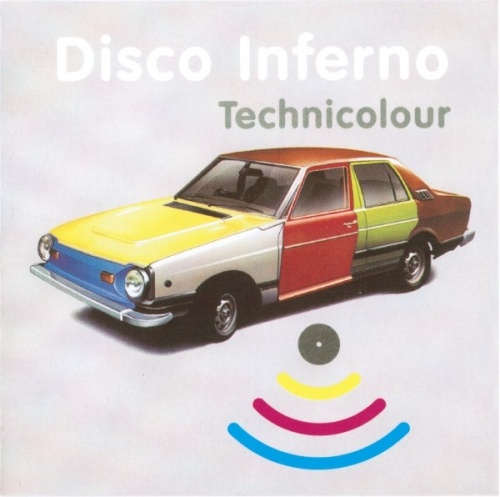
August 1996 – album reviews – Disco Inferno’s ‘Technicolour’ (“a poignant, if a touch unsatisfactory, monument to a band who did a most remarkable thing”)

5 Aug

Disco Inferno: 'Technicolour'

Disco Inferno: ‘Technicolour’

They were going to change the world with their world‑weary lyrics, noisy guitars and random artillery of samples.

As the USA brings us an ever more inventive and experimental range of post‑rock bands, it is sobering to reflect that, whether you like that all‑embracing genre‑heading or not, the UK could not sustain such a futuristic leap in pop music for long. Disco Inferno, Bark Psychosis, Seefeel, Insides and their ilk were just a temporary blip in the inexorable rise of ’60s revivalism.

Disco Inferno, in particular, had the cruellest of brief careers. Picked up and lauded by the likes of ‘The Wire’ and ‘Mixing It’, and used as a constant token of their superior musical taste by ‘NME’ and ‘Melody Maker’ journalists (a secret for them to keep and drop into reviews as an esoteric influence) Disco Inferno didn’t stand a chance of taking their unique vision to where they wanted it to be: the pop world.


This album nearly became the great “lost” work ‑ curtailed by the demise of the band, publishing difficulties made it uncertain if ‘Technicolour’ would ever see the light of day. Finally released months later, it stands as a poignant, if a touch unsatisfactory, monument to a band who did a most remarkable thing. Whilst producing truly “experimental” music, they didn’t forget the need for (well, it’s almost heresy to some chin‑stroking musical aesthetes) emotionally‑involving lyrics and a damn good melody.

So, for a sampladelic band, the opening two tracks scare the sheep with noisy guitar abandon. The title track, blasts in with a none‑more‑guitar‑and‑distortion start, but the unique invention soon creeps in ‑ a shuddering rhythm supplied by car horns, dog barks, shouts and breaking glass. A collision between The Art Of Noise and the glycerine melodies of The Lightning Seeds, with an end result comparable to late‑’80s Wire. Things Move Fast lives up to the title, and is a delirious noise‑guitar and beat‑fuelled rush through modern society. It ends with a sample of rapturous crowd noise. Truly, these guys lived in hope ’til the last.


I’m Still In Love reasserts DI’s passionate belief that a tender love song and futuristic sound could be combined: Ian Crause devoting himself to someone as they seal themselves away from the harsh iniquities of the world outside, with fireworks exploding and crackling during the exhilarating noise‑upon‑noise of the chorus. Lovely.

Sleight Of Hand is another hymn to the jaded view of the world as seen through Crause’s eyes ‑ “and once you see the sleight of hand / it’s never the same. / Once you see the cards are marked / it’s all in the game.” It’s the adult version of realising Santa Claus is actually your father dressed up in a red coat and cotton wool, pissed on cheap sherry. We’ve all been there. The feather cushion is provided by the swirling, tumbling harps, heavenly harmonies and chiming synth‑drums ‑ straight out of the ’70s ‑ in the chorus.


Don’t You Know is a sample sequel to Footprints In Snow from the band’s stunning 1994 album, ‘DI Go Pop’. This tine the rhythm is provided by the sound of heels on pavement, surrounded by the ethereal and enveloping electronica that features on so many of DI’s utterly entrancing slower tracks ‑ it really is best described by the contradictory term “acoustic sampledelia”. It’s a truly indefinable sound that I have only heard once before: in the unforgettable work of AR Kane in the late ’80s, another band who sounded like they were piecing together from the music and sound elements of a nuclear event. That is the spirit of Disco Inferno.


It’s A Kid’s World was the “big” single. That’s irony, by the way. It’s based on that Lust For Life drum intro. Kids’ TV themes ‑ ‘Doctor Who’, ‘Playschool’ ‑ are plundered for samples. There are even self‑referential samples from earlier DI tracks. It’s a veritable junkshop of found sounds. By any other standards, a triumph. By Ian Crause’s standards, this sounds like an attempt to produce what people expect post‑modern sampledelia to sound like ‑ knowingly ironic, dischordant brain music for ‘Wire’ readers and other musical eggheads.

But it lacks the tangible human emotions of most of the group’s material, unlike When The Story Breaks, which is perhaps the closest DI get to pop music for the twenty‑second century. The clattering synthetic drum breaks, harsh electronic ambience and (of all things) a sequence played on a touch‑tone telephone shows that some attention had undoubtedly been paid to the ten‑fledgling sound of drum’n’bass but applied to their melodic song‑based outlook.


Similarly, Can’t See Through It is almost a Blue Nile sound for the ’90s, a beautifully hushed marriage of natural acoustics and electronics. But more than anything, it is a song that sounds broken and exhausted. The lyrics state Crause’s dilemma at Disco Inferno’s situation: utter belief in the musical path they are following (“nothing can touch us / ‘cos everything in us / is digital cold”), but clear frustration that they’re not getting their vision across (“I can’t see through it / There’s no way back / I can’t get home…”).


It’s a lyrical concern that is developed in the final track. Devastating emotion soaked into its words, Over And Over is by far the most simply-recorded track Disco Inferno ever did ‑ just Crause’s voice, a guitar and a haunting drone in the background (more acoustic sampledelia…) It’s pure assumption, but it sounds like it was performed solo, after the split. The lyrics are undeniably concerned with the band’s demise ‑ “So many plans, so little time, / I can’t shake the feeling I’ve watched it all back from the end / Every missed chance and mistake / I hear when we’re playing / Forever in my head.” The man obviously lived for this project. It’s our loss that we didn’t sign up to it in droves.

I, for one, sincerely hope that Ian Crause and Disco Inferno soon find that they can’t bear not to present their music to the world, whether in a reformed group or a new set‑up (rumours abound of a new Crause band called Floorshow…). Perhaps the musical environment will be right this time ‑ more open minds, more adventurous listeners. Well, you live in hope. But it would be a tragedy for Disco Inferno to enter the files of Great Lost Hopes populated by Furniture, Kevin Rowlands, Bark Psychosis and… insert your own choice here.


Ian Crause’s last words on Over And Over are “it’s always, it’s always the same. / It’s never the way that you dream, / it’s never complete…” Disco Inferno, RIP.

(review by Vaughan Simons)

Disco Inferno: ‘Technicolour’
Rough Trade Records, R4102 (5022781204106)
CD‑only album
Released: 22nd July 1996

Get it from: (updated 2018) pick up the reissue (on vinyl and CD) from One Little Indian.

Disco Inferno online:
Homepage Facebook MySpace Last FM

August 1996 – EP reviews – Andrea Parker’s ‘The Rocking Chair’ (“sounds like the dark shadow of club culture”)

5 Aug

Andrea Parker: 'The Rocking Chair'

Andrea Parker: ‘The Rocking Chair’

The club’s gone cold and the dancing has come to a halt. Something’s lurking in the chill-out room, and the chill’s gone down several notches.

The word was that Andrea Parker‘s ‘The Rocking Chair’ was the missing link between Goldie, Mahler and Kate Bush. It’s not quite like that. You could think of Cranes at their most ornate and ambitious (and a couple of merciful octaves lower), you could think of a decidedly deeper Portishead or, at a pinch, Bjork’s Play Dead, but you’d have to add the loomingness of prime Dead Can Dance, or Gorecki’s weight of suffering. There’s no dance beat whatsoever, though the seismic bassiness sounds like the dark shadow of club culture. No trancey twinkles, even. Just that bleak blood-smudged thread of vocal. And the slow-motion-nightmare modern-classical strings, strings, strings, all swallowed up in a huge cavern of electronic space and suffocatingly close reverb.

Bloody moody. Bloody scary. Try playing this sucker to a crowd of E’d-up ravers at Heaven. Shivering wrecks four-deep on the floor, I think.

 
The Rocking Chair has an overwhelming horror-bound beauty. Like a swelling, building mushroom cloud, or the spume of the avalanche as it blots out your sun for good. But what’s it all about? Andrea is singing as if she was stretched flat on her back in a coffin, with an eerily drained and colourless calmness to her voice. It sounds like a paean to nothing; to a kind of amnesia where memories stay and it’s the present that’s blanked out. And only flashes of coherence seep from those lips: “so far in the distance, yet so close to my heart.” All I know is that what I can hear – quiet, and far off in the distance – are what sound like blades being sharpened. And Andrea’s singing “Behind you…”

I suppose I should tell you that you get a thirty-five-minute suite for your money. There are two remixes. Attica Blues‘ DR55 Mix drapes Andrea in drivelling pianos over runaway tango-tinsel techno and human-beatboxing. The Major Force West one adds twangs, sitars and ‘Doctor Who’ radiophonic burbles to take her off to one of those space-age batchelor pads. There’s a little spinback track to give another nod to the clubbers. There’s a strings-only version for the Michael Nyman fans. Quality control is at an all-time high, but none of them really alter the impact of the original.


If this is the reputed great club-generation comedown, I want to be watching from the other side of the room. The terrible beauty of something ending, and a genuine frightener. Who is this Ms. Parker? What huge, hungry night skies hang in her mind’s eye? Well, until I find out…

I want more. Now.

I demand my terminal tape loop.


Andrea Parker: ‘The Rocking Chair’
Mo’Wax Recordings/A&M Records. MW045CD/S (7 31458 15692 5)
CD/12-inch vinyl EP
Released:
5th August 1996
Get it from: (2020 update) Best obtained second-hand.
Andrea Parker online:
Homepage Facebook Twitter MySpace Soundcloud Bandcamp Last FM Apple Music YouTube Deezer Google Play Pandora Spotify Amazon Music
 

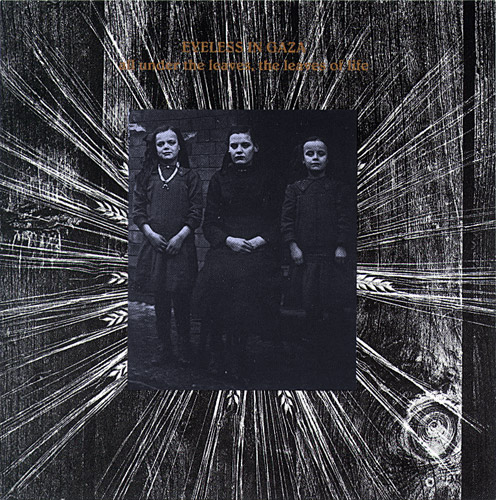
July 1996 – album reviews – Eyeless In Gaza’s ‘All Under The Leaves, The Leaves Of Life’ (“rings the sonic changes track by track”)

25 Jul

Eyeless In Gaza: 'All Under The Leaves, The Leaves Of Life'

Eyeless In Gaza: ‘All Under The Leaves, The Leaves Of Life’

Still undimmed after years of following a winding path from visionary post-punk to surreal pop, and through to a beautiful breed of semi-ambient outsider-folk, Eyeless In Gaza continue to blossom in their triumphant 1990s renaissance. They’re also as restless as ever – following soon after their ‘Bitter Apples‘ album (with its sustained autumnal mood) ‘All Under The Leaves, The Leaves Of Life’ rings the sonic changes track by track.

Indeed, Eyeless seem as happy to draw on their post-punk past as they are to explore the ghostly folk that’s left an impressive stamp on their recent music. Monstrous Joy opens the album and… God help us, it’s 1981 again! Joy Division bass rumbles, spindly single-note synths, buzzingly active electronic drums. Yet despite the timewarp, this is no Xerox copy of those years. Instrumentally, it’s a skilfully layered slice of pop atmospherics: lyrically, emotions are conveyed much more directly. Gone are the allusions to nature, but the atmosphere holds a definite frost in the air – “here is a sorrow that owns me, here is a sorrow that speaks.”


Struck Like Jacob Marley (despite the Dickensian title, a highly contemporary standout) does nothing to ease the chill. Led by rumbling bass guitar and defiantly noisy and distorted electric guitar, the lyrics are upfront advice to a friend consumed by cynicism – “it’s almost as though you have no positive view / and the old warmth is going, even though you don’t wish it to.” Hard words.

Meanwhile, the sonic adventures just keep on coming. Fracture Track is a mesmerising and bloody assault on the Eyeless sound. A violently struck, hypnotic rhythm guitar riff is blasted on all sides by discordant drones and buzzes: there are no drums, yet it sounds huge, and Martyn Bates pushes out a harsh-edged, ferocious vocal. “Blasted and blinded to chaos… / riding an animal hatred… / forcing such a numb and wasting path for you to blithely tread.” The violent and nihilistic imagery only adds towards making this the darkest, most fearsome track Eyeless In Gaza have ever recorded.

The traditional Leaves Of Life, as arranged by Eyeless, sounds like a less wasted Flying Saucer Attack turned on their heads. The vocals and spartan folk acoustics take place up close, whilst the unsettling ambience – provided mainly by startlingly severe treatment and distortion of electric guitars and other electrical interferences – scares the life out of you in the background. Gothic folk at its best. And trip-hop? Well, OK, nearly. Answer Song And Dance definitely possesses a dark, nervous trip-hop undercarriage, with a slow, menacing beat, cool electronic sheen and Martyn’s vocals relayed through digital effects and compression: more experiments in new sound are going on here.


Three Ships, another arrangement of a traditional piece, is perhaps the most reassuringly familiar Eyeless In Gaza track here, comprising a solo vocal over Peter Becker’s long churchy organ notes (“all the black keys”, as they once called it). Even here, though, the second part of the track becomes subject to the unsettling aural sculptures of pervasive otherworldly drones, sonic interferences and sinister electronic pulses. It sounds like a late 90’s version of one of the frankly peculiar little improvised instrumentals that have littered Eyeless B-sides and rarities in the past: but, satisfyingly, it’s an example of technology finally catching up with the duo’s ambitious musical vision, so that they can finally express their experimental sides to the full.


It’s tempting to see this album as the second side of the coin flipped by ‘Bitter Apples’ last year. If the former was the familiar world of acoustic alchemy, natural imagery and the avant-folk song, then ‘All Under The Leaves…’ sees Eyeless In Gaza striking out for new challenges: testing their own musical limits, and casting off the gauze of allusion and allegory to put forward sometimes difficult lyrical statements directly. And while, on ‘Bitter Apples’, vibrant colours were all around and there was a last gasp of summer’s warmth, ‘…Leaves…’ is winter-cold. Challenging, but ultimately beautiful when viewed in the harshest of frosts.

Since unexpectedly bursting back into life in 1993, Eyeless In Gaza have been immensely prolific. But as their continuing string of albums in the comeback sequence show, quality has remained high: and Bates and Becker’s desire to move forward and experiment – while retaining Eyeless’ essential character – remains intact and proud.

(review by Vaughan Simons)

Eyeless In Gaza: ‘All Under The Leaves, The Leaves Of Life’
Ambivalent Scale Recording, A‑SCALE 021 (5 021958 463025)
CD‑only album
Released: 19th July 1996

Get it from:
(2018 update) original CD and 2009 Cherry Red Records reissue best obtained second-hand.

Eyeless In Gaza online:
Homepage Facebook MySpace Soundcloud Tumblr Last FM

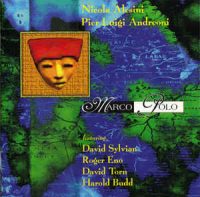
March 1996 – album reviews – Nicola Alesini & Pier Luigi Andreoni’s ‘Marco Polo’ (“like diving into a tapestry”)

24 Mar

Nicola Alesini & Pier Paulo Andreoni: 'Marco Polo'

Nicola Alesini & Pier Paulo Andreoni: ‘Marco Polo’

Listening to this album is like diving into a tapestry. Well, I guess a lot of prog and ambient-related music is, given its emphasis on the visual qualities of music and the proggy tendency (in particular) to fixate on the past; and that counts for even more at the crossover point. Nicola Alesini and Pier Luigi Andreoni, though, do it that much better. ‘Marco Polo’ – based loosely on the adventures of said merchant, explorer and diplomatic in the mediaeval Cathay of Kublai Khan – is a journey on the silkiest of roads, one on which you could really lose yourself in the billowing, drifting shapes which reality assumes.


Even while rising in the world of Italian jazz, saxophonist Alesini has also frequently been drawn into the world of art rock, kosmische music and ambient electronica. Andreoni’s already had a two-decade history as a multi-instrumentalist – starting out with Piacenzan comedy rockers La Pattona in the mid-’70s and passing through New Wave, experimental folk and minimalist synthing via The Doubling Riders and A.T.R.O.X. during the ’80s. Most recently, he’s been making a showing in the experimental ambient Andreolina duo during the ’90s. Much of the latter (with the exception of the comedy) leaves its mark on ‘Marco Polo’, although arguably the defining musical voice is Alesini’s upfront, intimate soprano sax – breathy, sweet and fragile, yet possessing a white-flame passion.


Andreoni, meanwhile, reveals himself to be a master of ambient keyboarding following the Brian Eno and Richard Barbieri path, using his instruments as subtle invisible chisels for sculpting electrons and the air into a colossal romantic spectrum of sound. Between the two of them they craft a set of compositions that phase slowly across the face of the world, colouring their own instrumental textures with the careful deployment of harmoniums and bouzoukis, cello and atmosphere guitar. This is an album of travelling, of seeing heartstopping landscapes for the first time, of releasing those feelings that the wanderer knows, of attempting to paint all of this in music.


This they do in glowing detail; the snake-charmer sax of Sumatra, the warped radio-chat and disassociated sway of Buchara, the metallophone Chinese chiming and fluting reeds of Quinsai, La Citta’del Cielo. With this type of thought being brought to bear on it, ‘Marco Polo’ is very much a deep-shaded ambient dreamscape album of the David Sylvian school, filled with sweeps of electronic space and shade, and immeasurably elevated when other musicians drift into the mix to stir up Alesini and Andreoni’s immaculate studies. David Torn‘s contribution of guitars, for instance, which bellow like yaks or hover like the promise of avalanches in Yangchow or M. Polo; or when Harold Budd places his sparse Himalayan points of piano into Samarca or The Valley of Pamir.


Roger Eno is on board as well, his less polished keyboard approach adding a wonderfully naïve human touch to the lambent, warmly aloof perfection (in particular on the aquamarine piano study of Il Libro dell’Incessante Accordo con Il Cielo). The pale vulnerable tones of his voice carry reedily through the twinkling spectral travel-songs of M. Polo and Samarca. Arturo Stalteri (the New Age keyboardist who originally made his name in progressive Italian folk duo Pierrot Lunaire) adds harmonium to the former, buried deep in the mix somewhere. The best moments come, though, when David Sylvian himself is brought in to sing on three tracks; his luminous baritone wreathing through the misty dawn-music of Come Morning (Stalteri’s bouzouki adding a glimmering coda), fluttering above the vague rattling sketches of Maya, or brooding (over cello, sax and a rippling ghost of electronic percussion) on dreamy images of god-games on The Golden Way.


And yet, in spite of all of the talent squeezed onto the album, somehow ‘Marco Polo’ doesn’t completely satisfy. It’s a little too remote, too self-contained and preoccupied with its own panoramic reveries. Behind the rich melodies and atmospheres, there’s only the vaguest engagement with the historical Marco Polo and Cathay; there’s not quite enough substance behind the shimmering surface of the album’s undeniable loveliness. Maybe it’s best viewed from the other end of a room, from a distance where the threads in the tapestry blue together into a captivating portrait which defies laws of time and space, where it can give such a convincingly four-dimensional performance that its audience can forget its two-dimensional thinness. But if you can live with that, ‘Marco Polo’ makes a wonderful tapestry.


Nicola Alesini & Pier Luigi Andreoni: ‘Marco Polo’
Materiali Sonori, MASO CD 90069 (8012957006921)
CD-only album
Released:
22nd March 1996
Get it from: (2020 update) Get CD from Materiali Sonori, or second-hand; stream from last.fm, Apple Music, Google Play or Spotify.
Nicola Alesini & Pier Luigi Andreoni online:
Last FM YouTube Google Play Amazon Music
Nicola Alesini online:
Facebook Last FM Apple Music Vimeo Deezer Amazon Music
Pier Luigi Andreoni online:
Homepage Facebook Last FM Apple Music YouTube Vimeo Deezer Google Play Spotify Amazon Music
 

December 1995 – live reviews – Anna Palm + Mandalay @ Upstairs at The Garage, Highbury, London, 20th December (“as full of explosive energy as a pan of popping corn… / …stately, kaleidoscopic and coolly hallucinatory”)

22 Dec

Oops. I’ve come to what I thought was a serious, arty gig to find exotic scarves hanging from the ceiling and a little green-nylon Christmas tree sitting in the corner. What with this, the candle-lit tables and the cheerful little greetings flyers under said tree, I get the feeling that I’ve crashed someone else’s Christmas party.

This particular party’s being thrown by violinist-turned-singer-songwriter Anna Palm, known for a journey that started with busking in Covent Garden and Chelsea and went on to a stint with acoustic punk-folkers Nyah Fearties, a handful of albums and singles on One Little Indian, and support contributions to a variety of artists from YesSteve Howe to New Wave synth poet Anne Clark, ascerbic dream-pop realists Kitchens of Distinction and avant-Goth experimentalist Danielle Dax. It’s an interesting resume. Well, I hate to bad-mouth my hostess, and maybe it’s unfair to judge an artist from an event coming across very much as a fun gig, but I’m decidedly underwhelmed. Despite an indie all-star band (with various members of The Farm, Loop Guru and Kitchens of Distinction taking time out to back her up) she fails to shine.

It’s not as if she doesn’t try: a Violet Elizabeth figure in a frilly little-girl party dress, she’s as full of explosive energy as a pan of popping corn, exhorting people onto the floor to dance, singing with verve (if not always great pitch) and sawing acrobatically at her violin. But the band is under-rehearsed and scrappy, falling apart much too often. Anna’s songs, too, lack individuality and the delivery to make them memorable. A shame, as when she sets bow to strings some spirited and slyly lovable playing emerges.

Anna’s obviously a good player, but as far as being a singer-songwriter goes she still doesn’t seem to know what to do with herself. File under “needs work” and leave it at that for now. However, the mess does yield up one unexpected delight – a dance-groove version of Kites, compelling and grin-inducing, with Anna’s riotous violin scurrying over an early-’90s style baggy beat and the whole thing carrying a strong hint of I Will Survive. A novelty, perhaps, but it’s good to see Simon Dupree’s old hippy hit hopping onto a modern groove and feeling right at home. These particular Kites really fly. I wonder if the Shulman brothers (who notoriously hated their early Dupree-ism despite its success) might ease up and grin and bop along if they were here to hear this.

The real reason why I’m here is a duo called Mandalay, hiding further down the bill: it’s the new project by multi-instrumentalist and electronica aceSaul Freeman, who used to perform a similar role as half of the band Thieves alongside stratospheric singer David McAlmont. Thieves are long (and acrimoniously) split now, with what would have been their debut album a little uncomfortably repackaged as the stunning McAlmont debut (and if you haven’t heard that, you missed one of the most vitally progressive pop records of 1994).

Now Saul is quietly rematerializing, in partnership with singer Nicola Hitchcock, to reclaim some of his lost thunder. But although it shares the glittering crystalline texture of Thieves’ songs, Mandalay’s music is nowhere near as easy. As with Thieves, Cocteau Twins should be mentioned (especially when listening to the effects-swallowed guitars of Enough Love); so too should the frozen sadness of Portishead (especially on the chilly trilling of Enough Love). but Mandalay is more involved and intricate than either. These are multi-dimensional songs, Nicola’s frail but enthralling vocal melodies elevated from the ground on staggeringly complex musical architecture courtesy of interlocking blurry sequencers, obsessively repeating samples and eerie guitar treatments. Saul stands impassively amongst his host of computers and effects racks, gazing absently down at his guitar and its network of pedals. Every now and again he’ll tap and flick at the strings and a second later a whole web of music will swell from the speakers.

Mandalay’s style – stately, kaleidoscopic and coolly hallucinatory – is best exemplified by the silvery net of sampled vocals, the stabbing kick drum and the harmonica-skank guitar of More Than Venus: Nicola’s whispering Bush-y enunciation gives the perky melody an awkward, appealing sensuality. Walk By the Sea rumbles by on an ominous 3/4 riff, double-looped spiral claustrophobia and panic-pitch piano plinking. The Waiting gives full reign to Saul’s subtle space-age guitar work: cunningly-placed “brang”s and attenuated bell-notes amongst the fabric of a languorous techno-warble.

There’s plenty of pop in this (and, despite the duo’s clear and ineluctable whiteness of manner as well as appearance, more than a helping of trip-hop) but Mandalay are also decidedly post-rock. They’re part of the astonishing movement which also includes Moonshake, Laika and the late-lamented Disco Inferno, and which junks the conventional hierarchies of rock instrumentation in favour of the uncanny textures of digital sampling and electronic ensemble processing. This might not sound appealing to the traditionalists out there, but believe me, Mandalay are much more than noodling experimentalists. Try to think of their songs as angst-under-amber, refracted into confusing multiples by an unearthly light. Unsettling but beautiful pop for an uncertain info-saturated future. You want progression? It’s happening here.

Anna Palm online:
Homepage Facebook MySpace Last FM YouTube Spotify Tidal Amazon Music

Mandalay online:
Last FM Apple Music YouTube Deezer Google Play Spotify Amazon Music

Additional notes: (2020 update) Anna Palm now lives and occasionally performs in Stroud. Mandalay recorded two albums for V2 Music before splitting in 2002: both Nicola Hitchcock and Saul Freeman have continued intermittent solo careers.

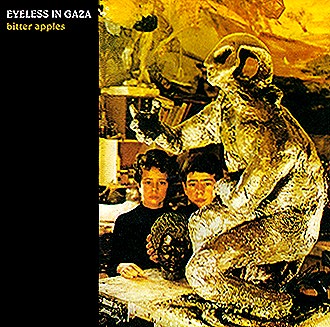
November 1995 – album reviews – Eyeless In Gaza’s ‘Bitter Apples’ (“an autumnal album in the most inspiring way”)

30 Nov

Eyeless In Gaza: 'Bitter Apples'

Eyeless In Gaza: ‘Bitter Apples’

After seventeen years on the wildest, furthest reaches of contemporary music, Eyeless In Gaza’s time may finally have come. With the British music scene proclaiming itself as boundary-free, cross-pollination of styles is the name of the game. Experimentation is the byword. Ears are open to new sounds.

Eyeless, of course, have been doing it for ages – from industrial electronics through early-80’s sparse electronic punk, bedsit acoustic folk, a stab at a big pop sound and experiments with mechanistic ambience. Then a seven-year abeyance followed by a shock return with the modern dance-pop of ‘Fabulous Library’ and by ‘Saw You In Reminding Pictures’ (an album of improvised, cinematic, ambient songs and atmospheres). Yet all, thanks to Martyn Bates’ distinctive, expressive voice and Peter Becker’s endlessly inventive musical collages, recognisably Eyeless In Gaza.

Much of Europe has been in on their greatness for years. Now that they have returned it is time that Britain listened in; particularly as, since Eyeless reformed, their career has been no nostalgic re-run of past styles, but a body of work that has engaged with the best of them in the camp marked “pre-millennial boundary-breaking zeitgeist experimentation”. Or something.


Following the head-expanding soundscape world of ‘Saw You In Reminding Pictures’, ‘Bitter Apples’ comes announced as a return to song structures and a live folk feel (acoustic guitars, bass, drums). The matured Eyeless In Gaza are now reinventing the brand of avant-folk song first heard on their Drumming The Beating Heart album over a decade ago. Lyrics such as those on Bushes And Briars immediately announce the folk influence – “through bushes and through briars / I lately made my way / all for to hear the young birds sing / and the lambs to skip and play.”

But any hint of preciousness about such a style is dispelled by the ghostly a-capella treatment of Bates’ voice, treated with vocal effects that make him sound like a possessed changeling, wrapped in his own tingling harmonies. Martyn Bates’ voice is unique – expressive in hushing to a sense of menace, or delicate and weary, or surging with the power to hit the rafters. He occasionally retains a slight rasp, an edge, to his voice from the first punk-inflected vocals of early Eyeless. A comparison? Impossible.


Year Dot demonstrates how Eyeless In Gaza can produce powerfully rhythmic, surging music from the basis of harsh acoustic riffs, Martyn letting his voice roam over the melodies with unfettered power. But technology is not anathema to such natural surroundings, though – the track closes in a sharp crescendo of electronic interference. Contemporary experimentation mixes it further with avant-folk on Jump To Glory Jane – zither passages are built upon bursts of white noise, klaxons, and improvised wordless vocal harmonies as just another instrument in the delicate construction. It’s a perfect demonstration of the duo’s implicit feel for building such atmospheres, and sets the tone for much of the rest of the album.

Perhaps the central track, though, is To Listen Across The Sands: powerful and urgent, built upon a crashing electronic drum pattern remorselessly pushing the rhythm forward and echoing the lyrical theme of listening to “all the mad, crashing waves.” The song would seem to be an allegory for a journey through a stormy life – “listen across the sands / to the waves drifting where you stand / and all their voices swallowing your life.” A theme that is returned to, lyrically and musically, on the title track. To an up-tempo soundtrack of syncopated guitar and percussion (plus a star appearance from a keyboard relic in Peter Becker’s armoury of sounds – the Wasp), nature’s imagery is once again summoned to describe the unpleasant aspects of life we sometimes have to wade through. “Such a bitter harvest, such a windfall falling that I can’t move… / all that I taste wastes me away – all that I’m succoured by and living on… / bitter apples…”

This is an autumnal album in the most inspiring way – new invigorating cooler winds provoking the falling leaves and scudding clouds. And Eyeless in Gaza are long-overdue for rediscovery, yet still ripe. Pluck.

(review by Vaughan Simons)

Eyeless In Gaza: ‘Bitter Apples’
Ambivalent Scale Recording, A‑SCALE 020 (5021958453026)
CD‑only album
Released: autumn 1995

Get it from:
(2018 update) original CD best obtained second-hand. There was a 2011 reissue on Hand/Eye Records which might be easier to find.

Eyeless In Gaza online:
Homepage Facebook MySpace Soundcloud Tumblr Last FM

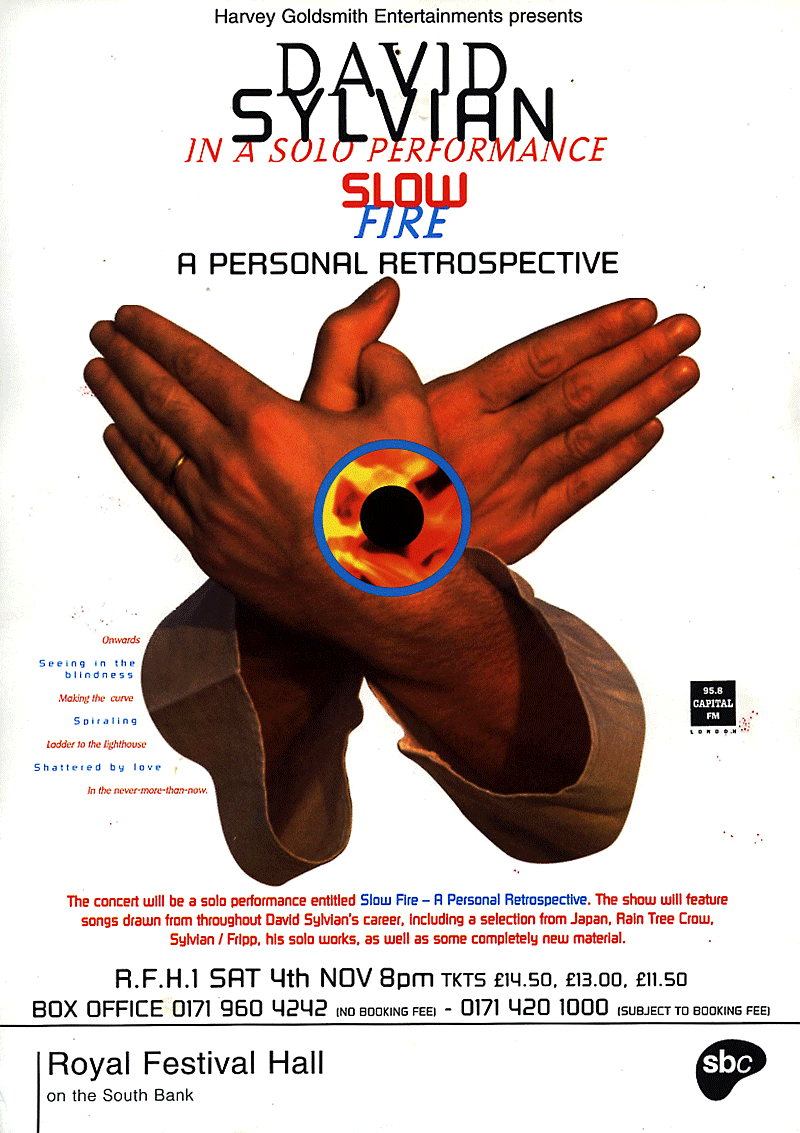
November 1995 – live reviews – David Sylvian’s ‘Slow Fire – A Personal Retrospective’ @ Royal Festival Hall, Southbank, London, 4th November (“self-effacing chameleonics”)

6 Nov

David Sylvian: 'Slow Fire - A Personal Retrospective' 4th November 1995

David Sylvian: ‘Slow Fire – A Personal Retrospective’ 4th November 1995

With former Japan leader David Sylvian, a show or an album is rarely as simple as being just a show or an album. Since 1983 he’s swum in and out of focus on a collection of artistic cross-fertilisations (sombrely beautiful songs albums, collaborative ambient vaguenesses, art installations): a shadowed, near-invisible chameleon with an enigmatic past ranging from over-exposed greasepaint-and-trash glamour to composer-effacing sound-sculpture. Tonight’s show – given extra weight by its ponderous title of ‘Slow Fire’ – is billed as a solo retrospective plus work in progress. Given Sylvian’s occasional tendency to enmire himself in inconsequential sound-tapestries, this could be grim. But the reality of ‘Slow Fire’ is more straightforward. Since we last saw him, touring with Robert Fripp, David Sylvian (like so many progressive artists) has decided to re-examine himself, unplugged.

With any contemporary electric musician, this is a risk: for Sylvian, much more so. The man now best known, post-Japan, for wall-to-wall electronic shrouding spends most of tonight perched on a stool behind a classical guitar. It’s the old rebirth scenario: once a travelling encrypter of decadent European and subtle Oriental sensibilities, Sylvian’s currently settled down into domestic bliss in America with a new wife (Prince protégé Ingrid Chavez), a new accent (decidedly transatlantic) and – judging by the credits on the appallingly pretentious programme – a guru. This would explain the brilliant white kaftan (has Jon Anderson missed any clothes recently?) and the four-cornered bowing as he takes the stage.

Though he’s dropped a few clues about an acoustic direction on recent recordings (on the Sylvian/Fripp B-side Endgame, for example), accepting Sylvian as an acoustic musician is not so easy. That marvellous voice, deep and rich as fortified honey, is still there, but over the years he’s made so much mileage out of his electrophonic atmospheres that his actual songs have been able to camouflage any flaws within the soundcraft.

The often disappointing collaboration with Fripp laid bare the aridity that Sylvian songs can often shrink into – tonight, Jean the Birdman is tricky and interesting but (even with a ludicrous attempt at scat singing) ultimately uninvolving, and there’s nothing like an acoustic performance for exposing juicelessness. Unsurprisingly, material from Sylvian’s song-centric 1987 album ‘Secrets of the Beehive’ fare well (the lilting menace in the folk-premonitions of The Boy with the Gun, a magnificent Orpheus and a hushed Waterfront) as do the few treasured songs from the Rain Tree Crow project: a reverberant Every Colour You Are, and a version of Blackwater which releases the song’s submerged country elements.

There are even one or two surprises during the guitar set, such as a rich rendition of Before the Bullfight and the shocking reinvention of keystone Japan hit Ghosts. From the beatless, icy original, Sylvian turns it into a wry Latin pop-inflected shrug of acknowledged doubt, Gilberto Gil meets Scott Walker. Even more shockingly, it works. But material from the schizophrenic ‘Brilliant Trees’ era has a tougher time making the jump to simple gut strings. Twitchy artiness such as Red Guitar and a limp Pulling Punches stumble out as embarrassing feynesses. Weathered Wall becomes a dull drone when denied the support of Jon Hassell‘s vaporous trumpet. With his shamanic atmospheric arrangements missing, too much of Sylvian’s once-epochal material is revealed as mere spectral verbiage, irresistibly crooned but superficially moodist. “Words with the charlatan,” mutters someone next to me, sarcastically.

It’s when he’s at the keyboard, with renewed access to a broader range of textures, that Sylvian delivers real magic – the rueful piano balladry in September and Earthbound Starblind, or the swathes of synth around the frozen pain and stone tears of Damage. When he allows himself the luxury of backing tapes, the dream deepens. A medley of Maria and Rain Tree Crow sees him keening over a wafting mist of chilling ambience punctuated by a ghostly chuckle. The First Day (graced with a wisp of taped Fripp skysaw) is as lushly majestic as ever. The deep dark indigo melancholy of Let the Happiness In acquires a meditative drum loop along with the shadowy orchestras of synth: it becomes hymnal, filling the great yearning emptiness at its heart with a sense of renewal, of return and redemption. It’s at moments like these that faith returns, and we can remember the subtle yet profound impact that Sylvian’s music has made in the past.

The trouble is that that was the past; and that the present is looking decidedly lumpen. The keyboard is also where Sylvian unveils his new material. For work in progress, it seems suspiciously complete… and already possesses a distinct form. A piano version of Tim Hardin’s It’ll Never Happen Again is the touchstone, with the interminable Ingrid’s Wheels and the rambling I Do Nothing (the latter most notable for its repeated, listless “alleluia”s) sketching Sylvian’s way forwards. Dusky, Americanised ballads with a strong element of that empty piano-bar pomposity that’s invariably damned with the kiss-of-death tag “quality songwriting”. Superficial sheen generating superficial applause. It’s difficult to escape the thought that David Sylvian’s self-effacing chameleonics have finally led him into a trap, a territory where he can no longer find his own face, where he will blur into a line of indistinguishable piano-song hacks whose albums will receive polite plaudits and gather dust on the lower shelves, where the fire will slow to a flicker.

The old Japan acolytes queue up tonight to touch the hem of King David’s gown. He smiles and bows like a bashful messiah. I can appreciate his showman’s smoothness… but I’ve lost my faith. I have a horrible suspicion that despite the handful of wonderful moments held to the light this evening, the shaman has swapped his books and his wisdom for a Cadillac, and the tin drum which once sounded out a musical challenge has just stopped beating.

David Sylvian online:
Homepage Facebook Twitter Soundcloud Last FM Apple Music YouTube Vimeo Deezer Google Play Pandora Spotify Tidal Amazon Music
Additional notes: While there’s no footage available for the London ‘Slow Fire’ show, you can get an approximation of it from footage of the Bari show from the same tour, in Italy, which is compiled here.
 

September 1995 – live reviews – B. J. Cole & The Transparent Music Ensemble + Billy Currie & Blaine L. Reininger @ Upstairs at the Garage, Highbury, London, 20th September (“a classical dissection of folk, like Irish airs meeting New York minimalism… / …a beautiful translucent sound”)

23 Sep

A definite whiff of conservatoire rock tonight. Viola player Billy Currie used to be in Ultravox,: nowadays he looks more like an Irish pub musician, but his music has taken a more interesting turn, as has his choice of collaborators. Former Tuxedomoon violinist and occasional singer Blaine L. Reininger – with his unnerving bespectacled stare, lugubrious ironic drawl, Zappa face-fuzz and impeccable suit – looks like a college professor whom you wouldn’t allow near the children, and draws most of the attention this evening.

This unlikely pair perform a set of serious brow-furrowed John Cale-y string duets with a flavour of compressed folk, using an endearingly cheap sequencer to expand the instrumentation: clave and sweep piano program on Bittersweet, digital string orchestra on Overcast. On The Reach of Memory, sparse piano clumps, drum program and synth bass kicks into Currie and Reininger’s apparent take on Appalachian mountain music. The Thin End of the Wedge sees Reininger on trashy art-rock guitar for a Velvet Underground feel.

Their music has a strange, detachedly astringent feel; a classical dissection of folk, like Irish airs meeting New York minimalism. A sense of towering expression repressed, amplified, by Reininger’s menacing suavity: the set highlight is The Green Door, in which Reininger sings words from a documentary on schizophrenia to a strong melody over sparse drum program and organ. Seems wholly appropriate. I’m impressed, but I feel a little queasy.

In contrast, pedal steel guitarist B.J. Cole is a ridiculously normal-looking guy with a peculiar past. Back in the ’70s he was the leader of Cochise (probably the only prog/psychedelic band based around pedal steel) and subsequently explored psychedelic country music in 1973 on his ‘New Hovering Dog’ album. Over the years since then, he’s been the ubiquitous sideman and sessioneer to everyone who wants an open-minded pedal steel approach, from The Orb to Björk to Procul Harum to Scott Walker, and in particular John Cale. Since 1989 he’s also been leading this occasional band; the Transparent Music Ensemble, an ambient-flavoured chamber music quintet also featuring keyboards, cello, percussion and violin prodigy Bobby Valentino, best known for his London country music stardom.

Cole’s Transparent Music is a sedate, relaxing experience, pleasantly beautiful and unfussy, far too laid-back to be pretentious. Reflective melodic strings tie in with his steel lines, keyboards support gently, percussion shades rather than impels. Some people point out Brian Eno as the inventor of ambient music: others such as Cole know that it goes back to the days of Satie and Debussy, both of whole expressed ambient intentions long before the days of synths and tape loops, wishing to create music that merged with the tinkle of cutlery. Works by both are played tonight, along with a version of Ennio Morricone’s Once Upon a Time in the West, a slow cloudy cover with Cole’s ringing pedal steel dreaming out the tune.

Transparent Music is unselfconsciously universal: if something fits in with that softly lustrous sound, Cole and co. play it and let someone else draw up the distinctions if they’ve got nothing better to do. The original pieces stream neatly into place alongside the classics: Indian Willow’s choppy subterranean strings, Promenade & Arabesque’s pizzicato accents. Throughout, Cole’s steel pines and slides gracefully. That is, when he hasn’t MIDI-processed it into another sound – sad film-noir saxophone on Adagio in Blue to contrast with Valentino’s passionate classical violin, or the fluting electronic sounds on Easter Cool counterpointing the piano and bass drum.

It isn’t exactly music to stir the blood. What it is is very accomplished classy atmosphere music, a beautiful translucent sound whose function is just to exist and to please. That may sound superficial, but if so it’s a refined and civilised pleasure of superficiality. Gentle classics stroked with electricity and with a sense of ambient context, reclaiming the sector where popular instrumental and classical cross, and with no hint of elevator music. Easy listening with a brain. Satie and Debussy would have approved.

B. J. Cole online:
Homepage Facebook MySpace Last FM Apple Music YouTube Deezer Spotify Tidal Amazon Music

Billy Currie online:
Homepage Facebook Twitter MySpace Last FM Apple Music YouTube Deezer Pandora Spotify Tidal Amazon Music

Blaine L. Reininger online:
Homepage Facebook Twitter MySpace Soundcloud Bandcamp Last FM Apple Music YouTube Vimeo Deezer Google Play Pandora Spotify Amazon Music
 

September 1995 – live reviews – Shriekback + Holly Penfield @ Upstairs at the Garage, Highbury, London, 6th September (“a few degrees different… / …madly danceable but bursting with wild and intriguing approaches”)

9 Sep

Holly Penfield, delayed by technical problems, is not having a great night. For those who haven’t previously seen the Diva of Dysfunction, this is maybe not an ideal introduction to her unnerving songbook of emotional explorations, cramped as it is into a shortened set-time opening for Shriekback.

Nonetheless, as she sings out her heart and wrings the notes out of her synth, her quality shines through as she leans on the more conventional songs of her standard set – the vulnerable unwindings of ‘Parts of My Privacy’; the clarion-blast of ‘Calling All Hearts’; the stormy tribute to city derelicts in ‘Over the Edge’. The long frozen yearn of ‘Stay with Me’ is as potent as over; the climactic anthem and disintegration of Misfit still jolting and captivating. Tonight she may seem only a few degrees different from most mainstream songwriting women; but they’re important degrees.

Shriekback may be familiar to those of you who’ve followed the career of XTC. Lubricious singer and frontman Barry Andrews was once part of that band, although now (shaven-headed and muscular in black singlet and leather trousers) he looks more like an escapee from Right Said Fred. Watchers of the ’80s alternative scene might also remember the band as being artily plastic white funkers – during the time when Dave Allen and Carl Marsh made up a fierce creative triumvirate alongside Andrews – but they’ve changed quite a bit since then. Thronging the stage like a post-civilisation white road tribe from ‘Mad Max’ or Circus Archaos (and always seeming to be twice as numerous as they actually are) Shriekback still play what could be described as funk, but it’s a mutated progressive variant: still madly danceable but bursting with wild and intriguing approaches.

The instrumentation has something to do with it. A vast array of percussion instruments played by the entire band, like a mongrelised salsa troupe, include – in addition to the standard kit, congas and bongos – giant mutant tambourines, Arabian dumbeks, Irish bodhrans, cymbal-clappers and what looks like an array of motor springs on a huge chunk of wood. Guitarist Lu Edmonds has dumped his six-string in favour of a couple of electrified Turkish instruments – the cümbüs (apparent bastard child of a banjo and a twelve-string guitar) and the saz (like a bouzouki with moveable frets) – chopping and rolling out subtly different parts. The bassist loops and taps on a full-toned fretless. Courtesy of Mark Raudva, didgeridoo and mandolin both make appearances during the evening. Barry himself plays accordion as if he’s wrestling with a giant python, and somehow manages to extract an eerie sound for a wired-up tree root.

Funky it may be, but “get down y’all” is not on the agenda. Shriekback are progressive funk barbarians with a cunning primitivist edge, as happy with a sort of savage pagan sea shanty or primal drum throb as with a Prince-ly groove. Stately, it isn’t. The wild percussive stomp that opens proceedings is as far from po-faced art seriousness as you can get, and they possess the super-greasy compulsive rhythms of the dirty end of prime funk. Their sheer enjoyment and eclectiveness in the ingredients they brew into their music marks them down as yet another oddball manifestation of the progressive spirit…. and who said barbarians had to be dumb? There’s a roiling intelligence in evidence throughout their set. Barry Andrews has always played the hooligan-intellectual card really well, and he’s not stopping now.

Shriekback follow a different and ever-so-slightly alien logic in the way that they look at the world. You can see this in the list of “un”-things in ‘Un-Sound’ (“unacceptable, unreliable, unheard”) or in the semiotic question/percussion barrage of ‘Signs’, in which traffic signs, car logos and football graffiti are all part of one great rush of urban information which you need to understand and to decode for survival. All of it comes to the fore on the didgeridoo-led nightmare parable ‘Captain Cook Said’, in which Barry narrates the story of Cook’s omen-ridden first meeting with indigenous Australians back in the eighteenth century and of the destructive force of the civilisation which he trailed behind him – “we’re here to transmit the virus called the future…” Some XTC cleverness emerges, too, in the wryly cynical ‘Pond Life’ and in the hard rhythm’n’blues/country-inspired wallop ‘Seething’, with its fierce accordion.

All of this plus the fact that you can dance to this band without having to leave your brain at home. On all counts, Shriekback deliver. If you occasionally need to let the smart barbarian out of yourself, there are few better bands available to help you do it.

Shriekback online:
Homepage Facebook MySpace Soundcloud Tumblr Last FM Apple Music YouTube Vimeo Deezer Google Play Pandora Spotify Tidal Instagram Amazon Music

Holly Penfield online:
Homepage Facebook Twitter Last FM Apple Music YouTube Deezer Google Play Spotify Tidal Instagram Amazon Music

October 1994 – mini-album reviews – King Crimson’s ‘VROOOM’ (“like a gigantic work-worn machine developing a telling fault”)

31 Oct

King Crimson: 'VROOOM'

King Crimson: ‘VROOOM’

The first new music from King Crimson in a whole decade rolls in with a yawn… or the sound of a hitman’s car tyres slithering quietly past your house. I don’t know. Whatever it is, it’s subliminal – a dark, stretching, barely audible ambient sound. Reverbed and resting right on the edge of the listener’s attention, it’s something which creeps in and cases the joint, maybe clears it of distractions. The last set of King Crimson albums, back in the ’80s, went straight in with clean, pealing, bell-like guitar patterns. Perhaps there’s a big clue to current Crimsonizing in that this one doesn’t.

Although the band’s known for its high turnover of disparate personnel and fresh starts, ‘VROOOM’ unexpectedly reunites that stable-against-the-odds 1980s Crimson lineup (Robert Fripp, Adrian Belew, Tony Levin and Bill Bruford) but augments them with two new members: Trey Gunn (a graduate of Fripp’s Guitar Craft course, doubling Levin’s 10-string Chapman Stick) and Pat Mastelotto (a jobbing, dextrous rock drummer best known for being part of American AOR act Mr Mister). Historically, when Crimson’s added members it’s been for as much for specific sonorities as much as personal approach. Perhaps a jazz or military saxophonist to break up a beat group, or a violinist to bring in classical textures. Maybe a Stick player to replace, fan out and reshape the bass chair; maybe, to upset the whole applecart and reboot the other players’ brains, an avant-garde improv percussionist with a thousand-yard stare and a junkyard armoury, or a master of cartoonish sound-effect guitar. Conversely, this is the first time Fripp’s apparently hired people mostly to thicken out the existing sound. This might be another clue.

What emerges – after that scouting roll – does and doesn’t sound like King Crimson. The New York brightnesses of the ’80s lineup (those circular Steve Reich and Talking Heads echoes which so thoroughly rebooted Crimson’s former Anglo-prog approach) have been banished. The title track is a descending, angry staircase of screech – simultaneously in synch and slightly ragged, like a gigantic work-worn machine developing a telling fault. If there’s a template for it, it’s the sound and structure of key ’70s Crimson track Red (the frowning, minimalist/totalitarian march which announced that Fripp had honed his once-florid instincts to a fine metallic economy).

The difference is that the big bare bones of this follow-up are fletched with additional details; disruptive flams and spurs, heavy digital processing resulting in analogue splurge, gears splintering but carrying on. A second huge instrumental track – THRaK – lurches forward in angry displacements, a blind giant hammering at a wall. In both tracks there are breathers which aren’t breathers – sighing passages where instruments fall back and Fripp’s misty ambient drones come in; or where a clambering bittersweet arpeggio makes a bed for a solo passage of wracked and pearly beauty before the hammers come down again. Throughout, there’s the sense of highly-stressed engineering precision just one slip away from disastrously throwing a rod, or a kind of hellish chamber music electrified to breaking point.

The band’s nervously sunny human face during the ’80s, Adrian Belew has been sucked backwards into this bigger, blurrier ensemble (predominantly providing a battery of guitar shrieks, leftfield lunges and rubbery solo lines). He still sings; is still the go-to song guy; but it’s clear that the songs have been almost entirely subverted by the new approach. On Sex Sleep Eat Drink Dream, King Crimson rattles through a bluesy lurch; Adrian sounding like an animatronic waiter covering John Lee Hooker, delivering sub-Dada wordplay in murmur-to-scream builds before the band explodes into barely contained passages of full-on percussive chaos.

A little of the ’80s Crimson is allowed into Cage, with Fripp’s cackling speed-arpeggios making it a close cousin to ‘Discipline’s breakneck Thela Hun Ginjeet. Like Thela, it’s a neurotic street cry, but what was once simply threatening has now turned actively murderous as Belew’s prissy paranoia is taken up to international level (“walking down the street, do you stare at your feet / and never do you let your eyes meet the freaks, / the deadbeat addicts, social fanatics, / they’re a dime a dozen and they carry guns. / Halloween every other day of the week… Holy smoke! somebody blew up the Pope!”) while didgeridoos yelp and Fripp provides a barrage of his most jarring, churning guitar disruptions.


A third instrumental – When I Say Stop, Continue – mingles both King Crimson’s old knack for doomy improvised sound-pictures and the band’s puckishly dry sense of humour. Over an ambient creeping horror of a Fripp Soundscape, the band knock, shrill, drill and build up a swelling industrial noiseuntil Belew yells “Ok, come to a dead stop. One, two, three, four!…” only for the band to wilfully drift on without him, trailing ghostly shrouds of presence, until the drummers slam and nail the doors shut.


Only with One Time do both King Crimson and Belew emerge from this deliberately uneasy fug. Here, the sextet drop delicately into perfect synch and sweet restraint, a softly-mutated post-bossa pulse and Levin’s springy bassline coaxing along Belew’s lapping reverse-rhythm guitar and gentle vocal melancholia. It’s a reminder that King Crimson also have a knack for the beautiful offbeat ballad alongside the harsh upheaval. This is no exception, grasping wistfully and tenderly after a fleeting sense of centredness, throwing what’s come before into a more human-scaled relief.

King Crimson: ‘VROOOM’
Discipline Global Mobile, DGM 0004 (5 028676 900016)
CD-only mini-album
Released:
31st October 1994
Get it from: (2020 update) some original copies still available from Burning Shed – also reissued, along with the material from its companion volume ‘The VROOOM Sessions’, as part of 2015’s 16-disc ‘THRAK BOX (King Crimson Live and Studio Recordings 1994-1997)’, also available from Burning Shed
King Crimson online:
Homepage Facebook Twitter MySpace Soundcloud Last FM Apple Music YouTube Vimeo Deezer Google Play Pandora Spotify Tidal Instagram Amazon Music
 

August 1994 – album reviews – Richard Barbieri/Tim Bowness’ ‘Flame’ (“the internal landscapes of the restless emotional mind… the indistinct visions of dreams and the hallucinatory moments of being in love”)

31 Aug

Richard Barbieri/Tim Bowness: 'Flame'

Richard Barbieri/Tim Bowness: ‘Flame’

There’s a common misconception going around which says that in order to be “experimental” you have to be noisy (viz. the many grinding guitar-noise bands clogging up many a Camden basement or American college-kid bar) – or, conversely, that you have to be utterly ambient, all empty space filled with electronic pulses, “ironic” hoover noises and nothing so anti-deconstructionist as the hint of a song. Theoretically a great idea, but in the end it produces little more than a big heap of CDs which you only play once plus another big heap of empty pseud criticism.

Alternatively, you could join that group of musicians whom Tim Bowness calls “the radical conservatives”; those people who take a long, wise look at both what’s going on and what’s worth retaining from the past, and then combine it with their own particular art of the possible, in the process creating memorable, lasting and demanding records (if not always incredibly famous ones – but so it goes, eh?) These people are also collaborators par excellence, linking up with a free-floating pool of like-minded musical allies to produce something greater.


In this context, the teaming of Bowness (the outspoken, intellectual No-Man singer) and synthesist Richard Barbieri (the quiet one in Japan) makes perfect sense. Both are associated with progressive synth-pop groups that stretch yearningly towards art and sensation; both fairly drip with musical and contextual knowledge; they’ve worked closely together in the past; and now they’ve produced an album as a duo which draws on considerable collaborative talent, including regular mates (fellow ex-Japan-ers Steve Jansen and Mick Karn, No-Man instrumental maverick Steven Wilson) and highly individual guns-for-hire (double bassist Danny Thompson, world-jazz drummer Gavin Harrison, textural guitarist Michael Bearpark). ‘Flame’ has emerged out of a mutual desire to create what Bowness calls “ambient torch songs”; moody late-night music with words summoning up the memories of love and heartwreck, sheathed in drapes and washes of unearthly sound. (There are, of course, precedents: Scott Walker, The Blue Nile, Julee Cruise and both men’s respective groups – Japan’s Ghosts being a particular blueprint.)


This objective is best realised on standout song Brightest Blue – Chris Maitland‘s delicate pattering drums wander around Danny Thompson’s deep woody jazz bass and Barbieri’s gentle piano chordings as Bowness unfolds the beautifully rapt love song of someone so engrossed in another person that they are virtually oblivious to the war going on outside their very windows. Distant swathes of Frippian textural guitar and blankets of electronic sound from Barbieri’s keyboards that settle on the listener like banks of soft snow add to the withdrawn, dreamlike theme of the song: a theme which becomes dominant over the course of an album which deals with the internal landscapes of the restless emotional mind, with the indistinct visions of dreams and the hallucinatory moments of being in love.


Bowness’ words touch on images of dying light and candles, sleeping and waking, hunger and falling, vegetation and rivers; and above all on memory, vision and communication obscured, whether this is beneficial or otherwise. Brightest Blue urges “forget the facts… I have to trust my own truth”; Song of Love and Everything cuts through its vague atmosphere of betrayal with “jump in the water / …swim in the dark to keep myself alive / …to shake myself awake”; the closing Feel rages quietly “I don’t know what it means / I try to surrender / I only know what I feel.”


This murky emotional obscurity means that ‘Flame’ tends to drift away from its initial premise into a hinterland of dimly-lit emotional set-pieces. Songs like A Night in Heaven and Trash Talk come across as expressionistic heart-sketches; their rains and rivers, their words of betrayal, stagnation and disaffection mingling to put across a particular mood. As such, ‘Flame’ fails as an ambient torch album. The title song is one of the few that emerges from the mists of imagination, with its portrait of a suffocating lover (“I will hear your calls, I will break your falls / …build your walls / because our love is strong / …I will share your life, / I will blind your sight…/ I will cover you / I will smother you”) and Bowness often seems to be providing tantalising clues rather than telling a story. (Unfortunately, the ambient-torch label is better applied to the work of David Sylvian, Barbieri’s former bandmate, whose own highly literate take on the form will be inevitably and somewhat unfairly compared to this album.)


Where ‘Flame’ does succeed, however, is as a marvellous dream album. A lot of this is down to Barbieri’s magnificent settings. Always a sculptor in sound rather than a keyboardist per se, he envelopes Bowness’ hallowed, reverent croon and enigmatic word-clues in delicate electronics – scouring sounds, breathy walls of soft noise, alien cellos and Chinese chimes, resonant aquatic flutters and twitters. On the solitary instrumental track, Torch Dance, he wraps undulating didgeridoo sounds with waves of flanged burbles and an unearthly guitar.

Throughout ‘Flame’, Barbieri creates an ocean of sound, always beautiful, never inflated by the self-important pomp that can sink keyboard-based albums. Other musicians float and mesh their own contributions into this sweet tapestry – Jansen’s featherlight percussive touch, Karn’s elastic bass and smears of treated sax, Steven Wilson’s guitars charting a course between psychedelia and spaghetti-western in contrast to Michael Bearpark’s distant blocks of Howe-cum-Frippian textures… all anchor the music to further dimensions of dreaming and organic emotion.


All of which adds up to a rich, seductive experience. Yes, ‘Flame’ can err too much on the side of obscurity a little too often, but it does so with such a consummate shadowy beauty that this becomes a positive virtue. Gorgeous, lazy, flowing melodies; a ghostly hint of melancholia; a rattle at the spirit cage… this is one flicker in the darkness that is well worth tracking down. Come catch the fire.

Richard Barbieri/Tim Bowness: ‘Flame’
One Little Indian Records, TPLP58CD (5 016958 023720)
CD/cassette album
Released:
29th August 1994
Get it from: (2020 update) Best obtained second-hand.
Richard Barbieri online:
Homepage Facebook Twitter MySpace Soundcloud Bandcamp Last FM Apple Music YouTube Deezer Google Play Pandora Spotify Tidal Amazon Music
Tim Bowness online:
Homepage Facebook Twitter Soundcloud Bandcamp Last FM Apple Music YouTube Vimeo Deezer Google Play Pandora Spotify Tidal Amazon Music
 

SWOONAGE

Swoon. /swo͞on/ A verb. To be emotionally affected by someone or something that one admires; become ecstatic. Here are some people and things that make me swoon. #swoon #swoonage

Post-Punk Monk

Searching for divinity in records from '78-'85 or so…

theartyassassin

...wandering through music...

Get In Her Ears

Promoting and Supporting Women in Music

Die or D.I.Y.?

...wandering through music...

Music Aficionado

Quality articles about the golden age of music

THE ACTIVE LISTENER

...wandering through music...

Planet Hugill

...wandering through music...

Listening to Ladies

...wandering through music...

ATTN:Magazine

Not from concentrate.

Xposed Club

improvised/experimental/music

The Quietus

...wandering through music...

I Quite Like Gigs

Music Reviews, music thoughts and musical wonderings

furia log

...wandering through music...

The Recoup

SINCE 2013: Books and books and books and books and occasionally other things

A jumped-up pantry boy

To say the least, oh truly disappointed

PROOF POSITIVE

A new semi-regular gig in London

Gapplegate Classical-Modern Music Review

...wandering through music...

When The Horn Blows

...wandering through music...

:::::::::::: Ekho :::::::::::: Women in Sonic Art

Celebrating the Work of Women within Sonic Art: an expanding archive promoting equality in the sonic field

Ned Raggett Ponders It All

Just another WordPress.com weblog

FLIPSIDE REVIEWS

...wandering through music...

Headphone Commute

honest words on honest music

The One-Liner Miner

...wandering through music...

Yeah I Know It Sucks

an absurdist review blog

Obat Kanker Payudara Ginseng RH 2

...wandering through music...

poplifer.wordpress.com/

Waiting for the gift of sound and vision

Good Music Speaks

A music blog written by Rich Brown

Do The Math

...wandering through music...

Archived Music Press

Scans from the Melody Maker and N.M.E. circa 1987-1996

The World's Worst Records

...wandering through music...

Soundscapes

...wandering through music...

OLD SCHOOL RECORD REVIEW

Where You Are Always Wrong

FRIDAY NIGHT BOYS

...wandering through music...

Fragile or Possibly Extinct

Life Outside the Womb

a closer listen

a home for instrumental and experimental music

...wandering through music...

Life Just Bounces

...wandering through music...

Lucid Culture

JAZZ, CLASSICAL MUSIC AND THE ARTS IN NEW YORK CITY

Aquarium Drunkard

...wandering through music...

eyesplinters

Just another WordPress.com site

NewFrontEars

...wandering through music...

FormerConformer

Striving for Difference