Archive | agit-pop RSS feed for this section

November 2016 – upcoming London gigs – Society Of Imaginary Friends’ ‘Time Saturated Soiree’ with The Astronauts, Taktylos, Beth Jones, Marius French and Nighmar Ascousky (4th); Revere, Alasdair Maclean and Colm Mac Con Iomair play Daylight Music (5th)

30 Oct

Those frowning former commercial and light industrial blocks in Wood Green have been enjoying a change of function in recent years as the area gradually, awkwardly morphs into a London art hub (while rents and avaricious developments continue to push the city artists and shoestring events out of the near-east-and-centre). I’m guessing that this will only accelerate, with the artier spaces around the backstreets near the library and the old gasometers acquiring glossier licks of gentrification as the money follows. At the moment, it’s hovering in the grey area between pop-up and plush: for now, slightly outré things can still happen.

One such thing has been happening for a few years now, with the astonishingly assured art-pop quartet Society Of Imaginary Friends running musical soirees at the high-rep vegan eaterie Karamel Café (as they do in other venues dotted around London – Soho, Clerkenwell, Kingston – and occasionally in the Orkney Islands). It’s taken me a while to catch up with them.
Time Saturated Soif Soiree, 4th November 2016

Society Of Imaginary Friends presents:
‘Time Saturated Soiree’: The Astronauts + Taktylos + Society Of Imaginary Friends + Beth Jones + Marius French + Nighmar Ascousky + Onjdrew DJ set
Kabaret @ Karamel Restaurant, The Chocolate Factory 2, 4 Coburg Road, Wood Green, London, N22 6UJ, England
Friday 4th November 2016, 8.00pm – free entry – information

Frequently tinged with some degree of rebel rhetoric and counterculture spirit (albeit dappled, in turn, by outright theatricality), on this occasion the Soiree makes a tongue-in-cheek grab for the occult aspects of British daylight saving. “As the clocks go back, we celebrate together the extraordinary gift of an extra hour of life from the God Chronos. Of course this means that not only do we have an extra hour in bed on Sunday but an extra hour is also available to enjoy our Time Saturated Soiree on 4th November. We will feature artists abundant in time and time signatures of the non linear variety.”

Society Of Imaginary Friends are curating from somewhere in the middle of the bill. I’m surprised that I haven’t found out about them before, since they’re right up my alley – dramatic song stories and glam-chanson-prog-folk operas which can be as smooth as mountain lakes or tossed around like cartoon galleons (that is, when they’ve not turned inwards and intimate, for creepy journeys into the shadowy nooks of the house or the cupboard under the stairs).

Orkney-born singer Louise Kleboe, (who recently wowed an audience at Organ Reframed in a teamup with William D. Drake) serves as powerful female voice and figurehead. The music (drawing on Orcadian lays and Balkan jags as much as it does English art pop and psychedelic folk) is underpinned by a constantly flexible electro-acoustic palette of piano, accordion, guitar and violin; plus sundry keyboard samplers which cough up sleight-of-eardrum aural tricks and tinkles to take us deeper into the band’s conceptual toybox. Kate Bush would be an obvious comparison; so, too, would a braver Goldfrapp; you could also stir in the Gothic intimations of Danielle Dax (if not so much of the thorny racket) and add shades of the overt theatrical danger which Holly Penfield has brought to both her singer-songwriter work and her cabaret shows.

Below are two Society songs – the smoothly rhapsodic The Moors (something to draw in and caress the New Agers) and The Easy Way (to grab them by the lapels and flip them over for a shakedown). The fact that the latter can slip into a video cut from footage of Elem Klimov’s harrowing war film ‘Come and See’ – and thrive there – speaks volumes about its own strident power.


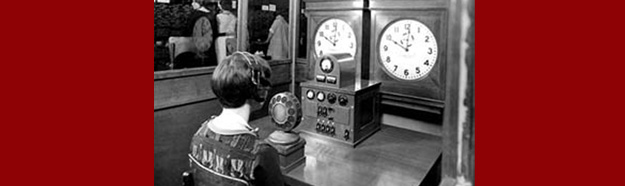
In line with the soiree theme, the Society will be presenting a miniature new temporal project of their own. “The briefest of rock operas – ‘On The Third Stroke’, based on the life and times of Ethel Jane Cain, the very first speaking clock, (‘glamorous and exact, the living embodiment of precision… she sat between the tick and the tock… swinging in the hammock strung between the Sun and the Moon…’, as ‘The Idler Magazine’ put it.” No preview samples are available, unfortunately, but here’s that original clock with that original voice…


Society guitarist Brian O’Lenehan puts in double duty on this concert, since he also plays in skeletal-spacey instrumental fusion band Taktylos. The Society hail them as “live from the event horizon”: a little more helpfully, the ‘Guardian’ describes them as “Philip Glass meets Soft Machine”.

It’s a fair description of a band in which a collection of London musicians – the others being journeying drummer Tom Cambata, wind-synther Rod Arran, German keyboard player Chris Bihlmaier and bass guitarist David Rees – seem to gingerly and painstakingly align their ingredients (squishy late-‘70s fusion tootles, pared-back guitar shapes, mathematical percussion arrangements) into place as if they were jellied blocks of unstable explosive, rather than chunks of musical conversation. I’m not sure whether the resulting minimalist leanings are the results of being tentative or of attempting to dab a tune into shape with the fewest and most economical strokes (like a Japanese ink drawing). Still, assuming that Taktylos don’t go roaring off down more standard bulked-up jazz-fusion lines in the future, they’ve got themselves a potentially interesting niche.


Topping the bill (I think) are the most recent iteration of The Astronauts – longstanding post-punk absurdists spun off from onetime new town Welwyn. Formed in 1981 (and, despite langours, never quite gone since then), they’ve sometimes had to singlehandedly hold up the town’s early ‘80s anarcho-punk reputation, standing defiant and crooked to the “affluent deadzone” qualities into which the place has sleepwalked. It’s kind of de rigeur to include ‘Rock & Reel’s description of front man/last man standing Mark Astronaut as “the post-punk Dylan of Welwyn Garden City” and add that certain people also risk a Prestwich verbal maiming by mentioning him in the same breath as Mark E. Smith.

He’s actually much more straightforward than either (perhaps “a kitchen-sink Robert Calvert” might be a better description). As for the band, while they never quite match the driving, morphing truculence of The Fall they’re accomplished post-punk chameleons – flicking between West Coast punks or hippies within the same few bars, suddenly huddling in dank subways with the young Paul Weller, or morphing into a studiously awkward Zombies as they back Mark’s singular satellite-town vision.


This particular evening may be bolstered with actor, autism ambassador and mordant performance poet Cian Binchy dropping by for a return appearance; meanwhile, Nighmar Ascousky (hyperactive polymath, Soiree evening regular, fantasy geek and friendly Laveyan Satanist) will be taking time out from his acting, modelling, painting, film-making and singing work in order to deliver some “shock and awe” poetry (and perhaps just take the opportunity to sit down for a while). Beyond that the evening starts to rampage further into the astrological and mystical, with returning “fabulously, beautiful, talented, rising star singer/songwriter Beth Jones representing the sun, and “supremely talented multi-instrumentalist Marius French covering the same task for the moon. There’s a chance of further off-the-list performers; and there’s a DJ set until the early morning.

Regarding Beth and Marius – they might be gigantic talents, or even catalysts for sympathetic magic; but I can’t find more information on either of them anywhere. Those glowing references could all be hype, or the Society could be lining up a genuinely impressive bill. The chances are that it’ll be the latter, since the roll-call of previous Soiree performers is a delightful array of present-and-correct, past-blasts and future shinings. Just to give a partial picture, past shows have included music contributions from William D. Drake (the endearing grand-and-gawky ex-Cardiac keyboard wizard); harpsinger Sheila Moyan; Virginia Plain (a.k.a Nick Watkinson, cross-dressing ex-frontman of late-’70s power-pop heroes The Jags); psychedelic keyboards warrior Kosmic Troubadour; Kirsten Morrison (rising folk-baroque queen and Lene Lovich ally); and woodwind player William Summers (who’s had Circulus, The Loki Broken Consort and Princes In The Tower in his bagful of bands). The same run of shows have had recitation, chats and rants from (among others) Camden rapper Lid Lid, poets Keleigh Wolf, Ernie Burns and Gabriel Moreno, and ‘New Internationalist’ artivist/activist/commentator Jamie Kelsey Fry.

Best to enjoy this kind of thing while it lasts. Who knows – it might not be long before occasions like this are pushed out by encroaching cash and a tidal wave of karaoke salsa; but even if that turns out to be so, I don’t think the Society will take it lying down. They’re irrepressible. We’d see them pop up somewhere else, soiree in tow; somewhere where they were least expected.

* * * * * * * *

Meanwhile, showing no signs of slowing down (and still in residence in long-gentrified central Islington), Daylight Music returns after its half-term break.
Daylight Music 237, 5th November 2016

Arctic Circle presents:
Daylight Music 237: Revere + Alasdair Maclean + Colm Mac Con Iomaire
Union Chapel, 19b Compton Terrace, Islington, London, N1 2UN, England
Saturday 5th November 2016, 12.00pm
– free event (suggested donation: £5.00) – information

Slightly tweaked press release:

“When it comes to influences, Revere has had a firmly open-door policy over their fifteen years of existence, incorporating chamber pop, dance music, post rock and progressive elements into their trademark wall of sound, garnering a great live reputation for their multi-layered wall of sound. After fifteen years, two albums, nine EPs and a clutch of singles (and with around fifty musicians having passed through the band), they’re amicably calling it quits, with the current and final six-piece choosing to play their last British show at Daylight Music.

(For fans of occasion, the actual last ever Revere show is a Dutch farewell at Vessel 11 in Rotterdam on 3rd December).


“In the middle of the bill is a set by Alasdair Maclean, singer, songwriter and guitarist for legendary band The Clientele, who formed a long time ago in the backwoods of suburban Hampshire (initially playing together as kids at school, later rehearsing in a thatched cottage remote from any kind of music scene but hypnotized by the magical strangeness of Galaxie 500 and Felt and the psych pop of Love and the Zombies). Alasdair still recalls a pub conversation where the band collectively voted that it was OK to be influenced by surrealist poetry but not OK to have any shouting or blues guitar solos. From that moment on, they put their stamp on a kind of eerie, distanced pure pop, stripped to its essentials and recorded quickly to four-track analogue tape.

Instantly identifiable, The Clientele sound like no one else, although they are cited as an influence by bands as diverse as Spoon, Panda Bear, The War on Drugs and the Fleet Foxes. It’s been said that the greatest bands always create their own individual sound; The Clientele have gone one further and created their own world.


“In a crowded field of outstanding Irish fiddle players and interpreters of traditional music Colm Mac Con Iomaire is unique. From school trad band Kila and street busking to wildly popular days playing fiddle with The Frames, his voice is unmistakably his own and his music bears distinctive creative hallmarks which have as much to do with his personality and character as with his impressive technical mastery, musical authority and exquisitely expressive playing. Almost twenty years ago Colm struggled to describe his early attempts at composition and made a distinction between
‘tunes’ and ‘music’. With his father’s people coming from the Irish-speaking Conamara Gaeltacht, Colm learned ‘tunes’ (the dance music which makes up much of the instrumental repertoire in Irish traditional music) and sean nós unaccompanied singing; on his mother’s side there was classical instrumental ‘music’ on the violin and piano. The creative tension between these two notions produced a player, composer and film score arranger who seems always to have been aware and inspired by the dualities in his musical and cultural world.


“During the late nineties Irish broadcaster TG4 offered Colm opportunities to write scores for film, allowing him to allowed him to progress and mature as an orchestrator of his own compositions. The compositions Colm made for these productions came from an interior place whose deep roots lay in traditional Irish music but also in an older way of life and thought, consciously mediated through his personal life lived out in the contemporary space. The title for Colm’s first solo album ‘The Hare’s Corner/Cúinne an Ghiorria’ signified not only an acknowledgement of the importance of that old culture but also an urgent plea for
‘the hare’s corner’ in contemporary culture… a still place where space and time are set aside for something beautiful for its own sake. The title of his second, ‘And Now the Weather’, refers to the introduction to the final item on radio and tv news bulletins, viewed as a means of keeping the distress of reality at bay: it is a title riven with irony.”

https://vimeo.com/142443347
 

November/December 2016 – upcoming gigs – more English dates for Billy Bottle & The Multiple’s ‘The Other Place’ (4th & 20th November, 10th December)

28 Oct

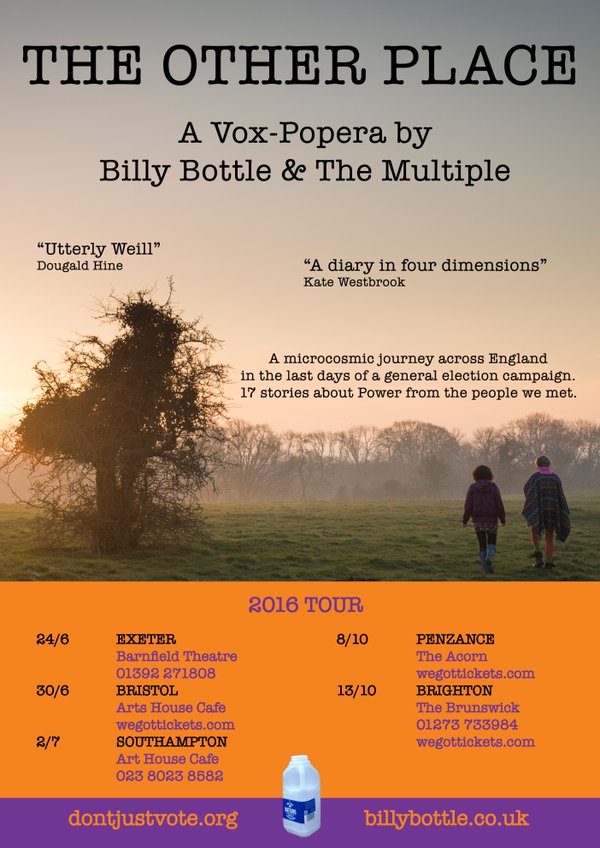
Billy Bottle & The Multiple - 'The Other Place' tour, 2016Mike Westbrook-affiliated pastoral Anglo-jazz explorers Billy Bottle & The Multiple have added more dates on their evolving, ongoing ‘The Other Place’ tour.

The show has its roots in a personal odyssey and serious socio-political stunt from band core Billy and Martine, who took advantage of their brief infamy as guests on ‘The Voice’ to run a whistle-stop free busking tour across southern and western England just prior to the 2015 election. In the process, they sounded out a disgruntled, despairing populace about what they thought about democracy and connection. Later, Billy and Martine put together this semi-theatrical vox-pop song-and-music roadshow on what they found, tracing a shadow of disaffection which culminated in the Brexit vote earlier this year.

For the full skinny on ‘The Other Place’, click back a few months. I’ve been slow off the mark again, and missed promoting their Margate and Brighton dates in September; but here are the rest of the dates between now and Christmas… unless they wangle a few more in the interim, which is entirely possible. For now, there are two shows in Cornwall (the first being the 4th November) and one in London.

As before, the band for ‘The Other Place’ consists of Billy Bottle (voice, keyboards, guitar), Martine Waltier (voice, violin, guitar, percussion), Roz Harding (alto saxophone, recorder, percussion), flautist/singer/percussionist Vivien Goodwin-Darke (flute, voice, percussion) and Lee Fletcher (synths, soundscapes, percussion).
 

October 2016 – upcoming gigs – this weekend’s Wakizashi music festival in Bristol – two days of underground allsorts (22nd, 23rd)

19 Oct

Wakizashi Festival, Bristol, 22nd & 23rd October 2016There may still be tickets left for the “glut of experimental and cross-genre artists” descending on Bristol this weekend for the two-day, twenty-band Wakizashi music festival.

The shared brainchild of two Bristolian gig engines – PROBO Titans (who incubate and deliver bi-monthly rock, pop and experimental gigs) and Harry “Iceman” Furniss (restless jazz cornetter and leading fringeman within the Avon jazz underground), Wakizashi offers an exciting, intimate and intelligent spill of psychedelia, noise, post-punk, math rock, jazz strains, electronica and much more.

PROBO Titans & Harry Iceman Furniss present:
Wakizashi Festival:
– Get The Blessing + Hysterical Injury + Twin + Iyabe + Iceman Furniss Quartet + Human Bones + Charivari + Luui + Saltings (Saturday)
– Knifeworld + Edward Penfold + Evil Usses + Milon + Halftone + Drone Soul + Rafael Dornelles Trio + Uther Modes + Perverts (Sunday)
The Old Malt House, Little Ann Street, Bristol, BS2 9EB, England
Saturday 22nd & Sunday 23rd October 2016 – starts 1.00pm, Saturday
– information here and here

Harry Furniss makes the most of his own involvement by appearing with his Iceman Furniss Quartet. His flowing cornet leads punk-art jazz moves over dogged springy bass rhythms and shuddering No Wave electric-curtain guitar (care of Danny Le Guilcher from Dynamite Pussy Club, whose other career as a printmaker seems to have literally rubbed off on his playing).


Further jazz directions are provided by Saturday’s headliners Get The Blessing (founded sixteen years ago over a mutual appreciation of Ornette Coleman,) provide rumbling, doomy trip-hop-tinged jazz-rock. They boast a rhythm section of art-rock/trip-hop/drum & bass go-to-men Clive Deamer and Jim Barr (who between them have kept the pulse going for Portishead, Radiohead, Hawkwind, Peter Gabriel and Roni Size) plus saxophonist Jake McMurchie (of Michelson Morley) and trumpeter Pete Judge (Eyebrow and Three Cane Whale), with another Portisheader, Adrian Utley, sometimes guesting on guitar. Their music brings along some of the flash and flair of jazz pioneers, but also the sense of being trapped in a small room with a lumbering, powerful inscrutable beast – with an equal chance of being either impressed or squashed.


Post-punk bass/drums/voice duo Hysterical Injury have a toe in the improv scene and a touch of folk. Their recent press tagging as some kind of “better version of Savages” belies the hovering thoughtfulness and the gentle dignity in their music beyond the softly roiling industrial bass textures. Singing bassist Annie Gardiner has a way with the writing and delivery of a surreal, conceptually suggestive lyric which baffles and entrances.


There’s something similarly compelling about the voice of Sophie Dawes, who sings for Iyabe further down the bill. As it was with missing-in-action Delicate AWOL singer Caroline Ross, Annie and Sophie’s voices and words are clear, weightless and elusive – keeping you listening while you try to figure out the messages and hidden narratives floating past in slow streams of isolated moment and fleeting detail.

Regarding Iyabe – considering that they’re a five-piece, they sound remarkably skeletal. Soft pings, drum clicks, bass shadows. At their most expansive, they’re a pencil-sketch ghost of Seefeel’s dub-rock dreaminess: other tracks are a hypnotic rain-drip of slowly growing consciousness. Recent moves towards alliances with remixers, further fleshing out the band’s sound, may point the way forward: but, as with Hysterical Injury, there’s already plenty in place.


Two more of Saturday’s bands provide further dispatches from rock’s dissolving, dreamier side. The mystery brainchild of Christelle Atenstaedt, Twin’s drawn-out one-woman Gothpop offers a wealth of detail in its hypnotic overlaid folk drones and its reverberant, tangled-roots guitar chug, which seems to reference both Cranes and Sandy Denny. With electric cello adding occasional extra texture to a droning, crashing armoury of blood-stained guitar fuzz, Bath-based post-rockers Charivari have a sombre lysergic depth; plus a repertoire of zurna-like Mediterranean melodies to add to their gloaming-murmurs, their evenstar twinkles and their post-Mogwai cascades of noise.


Begun as a solo project by Andrew Cooke (inspired by ancient ghost stories and the concept of the English eerie), Saltings has evolved into a three-piece drone collective. Andrew (plus string players Liz Muir and Caitlin Callahan) gradually unveil an occult soundtrack full of marine and maritime references, maybe as much inspired by Andrew’s origins in the port of Dublin as by the current trio’s Bristol harbouring. Sampler-moulded sounds (noise-grates, hull-knocks, whistles, water-throbs and motors) are enfolded with double bass and cello parts – whispered, minimal elegies for the undetermined; or baleful shadings; or queasy, discombobulated, John Adams-styled loops both shaken and slurred.


The sole hip hop representative on the bill, Luui, rolls out complex, constantly unfolding raps over seductively silky, time-flexed instrumental samples: slurred, narcotic Rhodes piano doodles, bits of glowing solo jazz guitar smeared into something blunted and sinister. Arced out in short, enveloping doses – most of his tracks are over and done in a couple of minutes – it’s both intimate and claustrophobic: a growing autumnal darkness, a slowly moiling confusion.


As Luui harmonises with himself (in subtle dischords), his flow folds over and over onto itself like piling lava, journeying from memories of childhood cheeriness into an increasing broody adult disaffection, shot with regrets, spiked with quick vicious jabs of obscenities and flashes of temper. As with the best, most unsettling confessional rap, you get a crooked window onto Luui’s unresolved world, see him wrestle with his conscience and his instincts and, though you see a little too much of him for comfort, for a while you’re matching breath with him too.


Initially known for upbeat Lou Reed drawls larded with guitar fuzz, Human Bones now seem to be moving towards a languorous cardboard-box take on Americana. Multi-instrumental looper Steve Strong, meanwhile, has set himself up as a one-man trip hop/math rock band, in which much of the emphasis seeming to be on the drum rhythm. See below for his Godspeedian live take on a grim, violent found story of road anarchy, in which his hopeful, orderly and dreamy guitar introduction gives way (under the growing brutality of the tale on tape) to the controlled heat of a drum beat through which he seems to be trying to slough off the increasing horror.


* * * * * * * *

It’s an odd festival indeed in which Knifeworld (Sunday’s headliners) are virtually the straightest act on the bill. That this is the case says plenty about Wakizashi, but it also says something about where Knifeworld are at the moment. Currently cruising on self-created, sunny psychedelic uplands, the London octet are enjoying a period of relative bliss and (for now) a more familial creative approach, as Kavus Torabi starts to share more of the writing with the crew of expert instrumental heads who make up his band. But if Knifeworld are the closest that the festival comes to pop, it’s still a zestfully spiked pop – brazen and crenellated, filled with monkey panache, their tunes still running exuberantly out of the ears with loopy spirals of melody and unexpected double-backs. If Henry Cow had woken up one morning and decided to steal a march on The Flaming Lips, they couldn’t have done much better than this.


More lysergic hints string through the day via the sleepy, lo-fi acidic pop of Edward Penfold, whose songs and instrumentals halo the everyday with a softly vibrating warmth. Sometimes they hint at a might-have-been Syd Barrett; one who ducked the madness and fled away to a healing West Coast hideaway, sending missives back to Cambridge in a rested, sprawling hand; faint blue ink on pale blue paper. On the other side of the coin are The Evil Usses – a deconstructive, fiercely humorous No Wave jazz-rock quartet, who share some of Knifeworld’s brassy exuberance but take it over the escarpment and down into a stomping, seven-league-booted Beefheart country.


As with Saturday, two fringe full-jazz groups will be taking the stage. Led by saxophonist Dino Christodoulou, Milon are a mostly acoustic quartet, edging into something more speaker-warping via Neil Smith’s electric guitar and Pasquale Votino’s judiciously over-amplified double bass: Eager Legs sounds like Charles Mingus being pursued down a stuck groove by a bounding ball of Sharrock/McLaughlin electric guitar grit, with Dino keeping one hand on the wheel by some riffling, ruffling Coltrane-ish sax lines. While the Rafael Dornelles Trio might have Brazilian roots, don’t expect samba or even Tropicália: electric guitar, bass and drums are aiming for somewhere far more heatedly lyrical and direct. Tunes like Slave’s Escape and Indigenous Mass grab you straight from the title and power off in muscular, quick-sprung directions, with a fierce and formidable vigour (plus a buccaneering hint of the knife).


Saltings’ double bass player Caitlin Callahan returns as one-quarter of part-improvising, part-compositional, female quartet Halftone, alongside two similarly-inclined Bristolians (violinist Yvonna Magda, flautist Tina Hitchens) and a London ally (cellist Hannah Marshall). Formed earlier this year, the foursome play an unsettling, absently beautiful post-classical music evoking wind in the trees, unresolved conversations and difficulties around corners.


Drone Soul boast about their “sheer bleak nihilism” and stake a claim to the abrasive post-punk heritage of The Pop Group. At least part of that’s true – the post-punk bit, anyway – but I’d bat away the nihilistic posturings. This music might be on the dark and cavernous side, but it’s illuminated with a vivid energy which belies the band’s collective grizzliness. If they’re bringing you news of falling buildings or collapsing people, they’re doing it with an exuberant dark snarl. Think of Iggy Pop in-yer-face, think Suicide’s assault-by-sine-wave; and also give a little credit to a lost Bristol band, Lupine Howl, whose gonzo millenial motorik finds a fresh echo here.


Rhodri Karim – the Welsh-Arabian heart of Uther Modes – used to be a mournful pop scientist, making his name with sepulchural computer-pop songs which bobbed gently at the juncture of philosophy, physics and bedsit soul. More recently he’s swapped this for a new kind of songcraft, strapping up a bass guitar and pulling in other musicians. Now he reels out shifting part-sombre part-jazzy mutters, winding slate-grey but sensual vocals around echoing guitar curlicues; like a fresh breed of post-rock which refuses to stagnate and instead flexes its muscles and goes haring around the park.


While he can sometimes be found paddling around in the warm, shallow pools of downtempo electronica, Traces will shake the drips off his feet once he’s warmed up enough. His studio recordings are fine, but it’s his live improvisations that show him at full strength. They’re heart-warmingly intimate and cheery stretches of pick-you-up synthery – like an enthusiastic half-drunken 2am conversation between Max Tundra and Guy Sigsworth, following which they track down Jean-Michel Jarre, drag him away from his pyramids and lasers and force him back into a kitchen full of analogue keyboards. From tabletop synth noodles to Pong blip and cheekily squirting techno, a cunning wonkiness prevails without diminishing the music’s straightforward ambition. Traces sometimes labels it “devotional”, and I’m not entirely sure that he’s joking.


Finally, there’s the fall-apart electronic gagpunk of Perverts, with their squalling songs about angry muppets and guilty onanists; their one-finger clickstab of synth drums; their beady-eyed sampler-shreddings of lachrymose film music. I guess that they’re there to remind musicians and punters alike not to take it all too seriously. It’s just that they’re staring me out a little too intently. On record, at least, Perverts deliver their spoofs and squibs with a crazed and chilly eye: a brattier Residents with a crappier laptop; a young digital Punch waiting to knock everything down.


July 2016 – upcoming gigs in London and Sunderland – end-of-the-season for Daylight Music with Cecil Sharp House Choir, Lisa Knapp, Hermes Experiment, David Julyan and John Potter (9th); the live-soundtracked premiere of Somme-and-Mackem documentary ‘Asunder’ with Field Music, Royal Northern Sinfonia, Warm Digits and The Cornshed Sisters (10th)

6 Jul

This weekend, in London, mostly-unplugged afternoon Daylight Music will bow out for the summer with a distinctly maritime-toned concert – and one which features another choir as the headlining act. I’ve been tempted to give Daylight’s organisers a bit of stick for their interest in choirs this season, but it makes no more sense than ribbing them for liking performers with acoustic guitars. While, for me, the scratch-choir-does-pop-hits musical meme gets too cosy too quickly, Daylight has done its level best to vary the choral diet, with this week’s headliners delving back into deeper folk roots (and the other acts on the bill ranging out across nautical atmospheres and underwater imaginings).

At the other end of the country, in Sunderland, film-makers have teamed up with art-rockers, bleepers, folk singers and community consciousness to create a picture of the First World War’s impact on a thriving north-eastern community. Keeping true to their inspirations, they’re premiering their work there. We Southerners will have to wait, and quite rightly too.

* * * * * * * *

Daylight Music 231

Daylight Music 231 – Cecil Sharp House Choir + Lisa Knapp + The Hermes Experiment + David Julyan & John Potter
Union Chapel, 19b Compton Terrace, Islington, London, N1 2UN, England
Saturday 9th July 2016, 12.00pm
– free/pay-what-you-like event (suggested donation: £5.00) – information

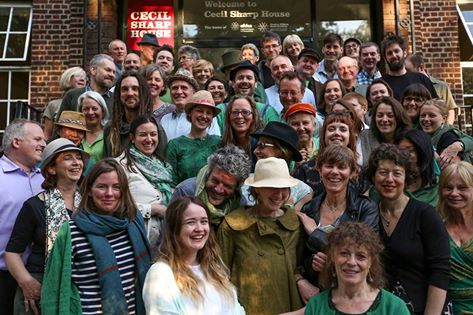
“Known for its unique, spirited and moving a cappella renditions of traditional songs from the British Isles (and occasionally beyond), Cecil Sharp House Choir is one to catch. Helmed by inspirational choir leader, Sally Davies (and open to any confident singer able to hold a tune, learn by ear and be keen to perform), the choir performs regularly at Cecil Sharp House and at a host of other venues and events including the Southbank Centre, the Roundhouse, the House of Commons and the Oslo Musikkfest.

“Singer and fiddle player Lisa Knapp burst onto the scene in 2007 with her much lauded debut album ‘Wild & Undaunted’, which contained refreshing interpretations of traditional folk songs peppered with highly distinctive original pieces. Numerous appearances across BBC Radio and BBC4’s Christmas TV folk song extravaganza followed, as well as a performance tribute to the late Lal Waterson for BBC Electric Proms. Further recordings (made in collaboration with her musician/producer husband Gerry Diver) have included the EP ‘Hunt The Hare – A Branch of May’ and 2013’s ‘Hidden Seam’ album. Lisa’s BBC work continued with Radio 4’s acclaimed ‘Shipping Songs‘ in 2015 (musing on the extraordinary sounds from far-off places on the Shipping Forecast), and it’s this which should inform her July Daylight appearance, which features a duo performance with Gerry Diver and a song sung with the Cecil Sharp House Choir.

“Park Lane Group Young Artists 2015/16 and winners of Nonclassical’s Battle of the Bands 2014, The Hermes Experiment is a contemporary classical music quartet comprising harpist Anne Denholm, clarinettist Oliver Pashley, soprano Héloïse Werner and double bass player Marianne Schofield. Their performance style has been hailed as “meticulously nuanced, witty and chic” by The Times, while The Evening Standard has acclaimed their “whole new expressive world.” Capitalising on their deliberately idiosyncratic combination of instruments, the ensemble regularly commissions new works, as well as creating their own innovative arrangements and venturing into live free improvisation. So far, the ensemble has commissioned thirty-one different composers at various stages of their careers. The ensemble also strives to create a platform for cross-disciplinary collaboration and they recently created a ‘musical exhibition’ with photographer Thurstan Redding. Future plans include a residency at Aldeburgh Music in September 2016 developing a new interpretation of Shakespeare’s The Winter’s Tale with director Nina Brazier and composer Kim Ashton.

“The Hermes Experiment’s Daylight performance this weekend will be a marine-themed set first performed in 2014 (and recently revived at a Park Lane Music Group concert at St John’s Smith Square earlier in the year), at which they performed Giles Swayne‘s ‘Chansons dévotes and poissonneuses (Devout and Fishy Songs)’, a setting of three piscatorial poems by French Symbolist Georges Fourest. Whether they’ve got time for some of the other songs for the St Johns set – Kate Honey‘s ‘Predator Fish’, Freya Waley-Cohen‘s ‘Oyster’, Josephine Stephenson‘s ‘tanka’ – remains to be seen.

“As the fourth act, David Julyan (a film composer best known for his collaborations with Christopher Nolan on Memento’ and ‘The Prestige’, as well as for horror movie ‘The Descent‘) will be teaming up with John Potter (of ambient project The Music Of What Happens) in order to create a live sea soundscape.”

* * * * * * * *

Field Music/The Royal Northern Sinfonia/Warm Digits + The Cornshed Sisters
‘Asunder’ – film premiere with live score
Sunderland Empire Theatre, High Street West, Sunderland, SR1 3EX, England
Sunday 10th July 2016, 2.30pm and 7.30pm
information

“Northumbrian art poppers Field Music (with the Royal Northern Sinfonia and electronic duo Warm Digits) are set to perform a newly commissioned live score to accompany ‘Asunder’, a film telling the tale of the North East’s involvement in the Battle of the Somme (one of the most horrific battles in World War One) through largely unknown personal experiences. The collaboration marks the Battle’s centenary. Royal Northern Sinfonia will be conducted by Hugh Brunt, Artistic Director of the London Contemporary Orchestra (and Radiohead collaborator). Sunderland folk quartet The Cornshed Sisters will also perform an a cappella rendition of traditional Wearside folk tune The Rigs of Sunderland Fair.


“‘Asunder’ brings together the stories and images of the past with music from the present to tell a poignant and relevant story of what happened to a typical British town during the First World War, with virtually all of the its men abroad fighting and all of its women and children left behind. The North East was in the front line, thanks to its shipyards and munitions factories.
Through the stories of half a dozen people from Tyneside and Wearside, ‘Asunder’ uncovers just what life was like on the home front – with bombs falling on Britain for the first time, conscientious objectors sentenced to death, and women working as doctors, tram conductors and footballers, some of them (God forbid) wearing trousers.

“The story begins in the pre-war Edwardian golden era when cricket, football and rugby boomed, and aeroplanes and cars pointed to a bright new future – only for this progress to be horrifically reversed through the early years of the war. This culminated on 1st July 1916 in the Battle of the Somme, when British, French and German forces began one of the most traumatic battles in military history. Over the course of just four months, more than one million soldiers were captured, wounded or killed in the Battle, a confrontation of unimaginable horror.

“The story is told through a beautiful film carefully crafted by documentarist Esther Johnson using archive and newly filmed footage, and narrated by Kate Adie (with Alun Armstrong as the voice of the ‘Sunderland Daily Echo & Shipping Gazette’). 

“‘Asunder’ will premiere at the Sunderland Empire on 10th July before touring at selected venues around the country (dates to be confirmed).

“Field Music’s David Brewis says of the commission:

“The chance to write something completely new and play it with an orchestra doesn’t come around very often. And as we heard about the plans for the film, the idea of telling a more complete story about our home town and how the war affected it was very appealing. There’s nothing quite like hearing a full orchestra right in front of you and if we get it right, then the balance between what you see and hear on screen and what you see and hear from the musicians should be spectacular. One of the other things which intrigued Peter (Brewis) especially about this project was our love of the orchestral music from that period. Stravinsky’s ‘The Rite of Spring’ premiered in 1913, Schoenberg’s ‘Pierrot Lunaire’ in 1912. Bela Bartok and Maurice Ravel were composing, as was Claude Debussy, so it was a time of huge change in harmony and composition and we’ve dipped into that period for inspiration a lot.”

“Writer and ‘Asunder’ creative director Bob Stanley comments:

“For me, ‘Asunder’ is an opportunity to work with a group I’ve admired from afar for years, Field Music, and one of my favourite documentary makers, Esther Johnson, as well as a group I only discovered last year but are one of the most thrilling electronic acts in the country, Warm Digits. The premiere will be a truly unique event – the combination of a live score to a new film featuring some incredible archive footage and fascinating local stories, along with the other events going on inside and outside the Empire should be a really memorable day, and I hope one that people will be talking about for years to come. I want everyone who sees it to take pride in the region’s unique history and to feel they can help to build its future.”


June/July/October 2016 – upcoming gigs – Billy Bottle & The Multiple tour ‘The Other Place – a Vox-Popera’ across the English South-West and South Coast

22 Jun

Whatever happens in the wake of this week’s Britain-in-Europe referendum, there are going to be plenty of questions asked about democracy, accountability and connection. Personally, I’m expecting most of them to be shouted or sworn rather than asked, so I’m not looking forward to it… especially if I’m going to be one of the people doing the swearing.

Last year, Billy Bottle & The Multiple were asking a few of those questions themselves. Since they’re heirs to the spirit of Daevid Allen rather than that of Jeremy Paxman, they were asking them in their own unorthodox way. This month, as part of an ongoing follow-up roadshow stretching into autumn (and perhaps beyond), they’re beginning to show us what they discovered.

* * * * * * * *

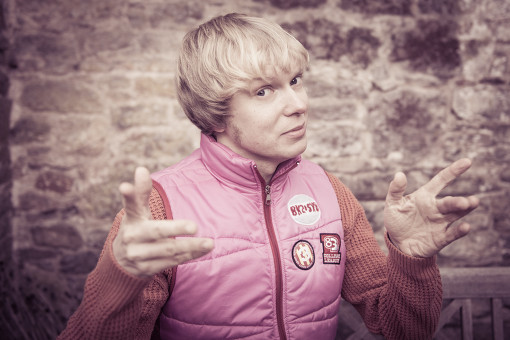
Billy Bottle, 2016

‘The Other Place – A Vox-Popera’

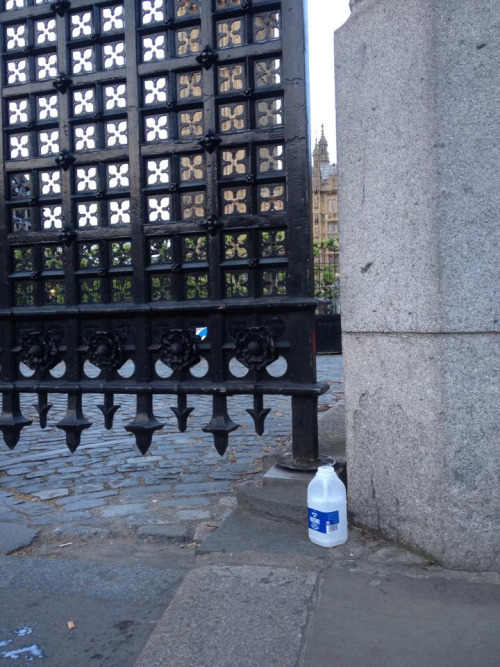
“On the evening of 7th May, 2015, a pint of milk mysteriously appears at the gates of Parliament.

Special delivery...

Special delivery…

“Set in the week running up to a UK general election, The Other Place tells the true story of two musicians from Devon as they make their way slowly to Westminster. On high streets, market squares and seafront promenades, they perform the same song, forty-nine times over, and at each stop they start conversations with whoever they meet, asking them ‘Who’s got the Power?’

At the end of a long and winding journey, they arrive at Parliament Square on a milk float to make their delivery: a symbolic reminder that the power doesn’t belong to the inhabitants of Westminster, it is given to them by the rest of us.

“This journey through the foundations of British democracy inspired a sequence of songs whose lyrics come from the words of the voters (and non-voters) that Billy and Martine met on their journey. It is a celebration of gentler kinds of power and an invitation to the audience to make their voices heard.

Billy Bottle & The Multiple - 'The Other Place' - on tour, 2016“The Multiple currently features Martine Waltier (voice, violin, guitar, percussion), Roz Harding (alto saxophone, recorder, percussion) and Billy Bottle (voice, keyboards, guitar), all of whom are mainstays of Mike Westbrook’s Uncommon Orchestra; plus flautist/singer/percussionist Vivien Goodwin-Darke (from the psychedelic rock band Magic Bus) and recording artist and producer Lee Fletcher (of Unsung Productions) on synths, soundscapes and percussion. Like the best art rock, they combine folk, jazz, pop and minimalism in an engaging and meaningful way.

Complete with wobbly camera footage and the sounds of the streets, this performance is a real democratic party in action!”

* * * * * * * *

As regards the delivery of the Power… it all began as a stunt, of sorts. In January 2015, a peak-time British TV audience was treated to the sight of Billy and Martine ripping into an acoustic busker-cover of Snap!’s old Eurodance chestnut as they competed in ‘The Voice’. Wrapped in pink quilting, flower-child swirl prints and a sunshine glow, chatty about their south Devon rural idyll (and their taste for naturism), they gave the impression of being only a couple of brow-stars away from the Age of Aquarius. They delighted the judges (and went down a storm with a supposedly-hippy-proof public) but their faces and demeanour didn’t fit the reality TV narrative, and they didn’t get any further in the contest. By popular demand the single was out that summer via Bandcamp and cottage industry: it sold nicely behind the scenes and away from the charts; and that might have been that.


However, painting the Bottle squad as talented, bright-eyed novelty hippies is to get no further than the colourful wrapping; to miss the bright, enquiring intelligence under the apparent sunny simplicity; and to mistake constructive, conscious choices for naivety and innocence. Before they’d even thought of stepping onto ‘The Voice’s stage, Billy and Martine had been longstanding Westbrook Band and Dave Sinclair associates, with urban roots in Darlington and London supplemented by dues paid in neo-progressive rock, indie, music teaching and circuses. Already able to tap and hold serious British musical talent, their 2013 album ‘Unrecorded Beam’ had been a triumph of pastoral ensemble jazz; scooping up the poetry of Thoreau and blowing new leaf-green life through it, zig-zagging through the soundfields like a tripping honeybee. ‘The Voice’ was a diversion – a game they were coaxed into. In turn it triggered another experiment in play, taking something apparently trivial and fluffy but using it to tap into a more serious undercurrent.

The busk pilgrimage that would eventually become ‘The Other Place’ started as an attempt at a “rolling conversational democratic jam session.” With no more than the violin, acoustic guitar, costumes and voices from the ‘Voice’ session, Billy and Martine flipped their brief brush with celebrity into an engagement with recognition and a much more down-to-earth version of meet’n’greet. They rode on the back of their ‘Voice’ platform not in order to achieve celebrity, but to set up a chat: a little conversation at the feet of the Big Society, where the bunions and the broken toes are. What they found and heard – and recorded en route – would eventually weave itself into the sonic fabric of ‘The Other Place’, fleshed out by jazz reeds and woodwind, and aided and abetted by production wizard Lee Fletcher (who’d done so much for the encompassing feel of ‘Unrecorded Beam’ and was co-opted into the Multiple once they’d realised the multimedia nature of the emerging new project).

In lieu of any sonic or visual teasers for the show (the Multiple are keeping their cards close to their chests on that one) here are some clipped’n’mixed reflections from the original voyage, all taken from their blog of the original roadtrip:

“We’re not pretending we’ve got any answers. We’re definitely not pretending that wearing fluorescent tights and playing a song in the street is a way to change things. But it’s a way in, a way to start meeting people, catching little snatches of a tune that this country is humming under its breath, that nobody’s quite remembered the words to yet…

“When you travel slower, the country gets larger. Stopping off at so many places along the way, Exeter is a really long way from Newton Abbot, Bristol is a really long way from Exeter. You realise that each of these places is a world, the world of the people who live here and do their best to make life work in the conditions in which they find themselves. Seeing news clips of the party leaders climbing out of helicopters or stepping off intercity trains, it feels like they are whizzing up and down a different country, a smaller country, a country where most of the places we are visiting don’t matter very much…

“Each time we get off the train at a new place, we find ourselves sniffing the air, sensing for clues as to what it is like to be getting on with your life in a place like this. And the clothes, the music, the harmless foolishness of our little gang seems to open up a line of contact, so that within twenty seconds people are talking to us about their lives….

“People start off curious and cautious. They see us coming a mile off, the technicolour outfits, the huge #dontjustvote stickers on our instrument cases. Sometimes they recognise us off ‘The Voice’. They want to know what we’re doing, why we’re doing it, and that means we have to keep asking ourselves those questions, figuring out the answers as we go along. They want to know what we’re selling, what we’re trying to persuade them of, and we tell them really we just want to start conversations, to meet people, to find out what’s going on in this country now, what this election actually means.

“When they start talking to us, they usually start with a flat statement, something definitive. ‘I never vote.’ ‘They’re all the same.’ ‘There’s no point, is there?’ But as they realise we’re actually interested, the way they talk changes, something else comes out. You can hear how much they care. Everyone we meet feels disillusioned, disengaged, disenfranchised. They all feel like they’re not being heard. A lot of them aren’t voting. Yet they also believe that we as people do have power, they just can’t see a route to change that goes through the ballot box…

“In Trowbridge, we started playing and police came running round the corner. There had been a theft of a piece of meat from a shop. A shopkeeper came running towards us, she thought we were just shouting in the street, shouting like a thief. Well, we were shouting in the street. A few minutes later, Bill was listening to the story of a man who had been homeless for twelve years as he talked about his father’s addiction and how he died. At the end, there would have been no point in words. The two of them stood there in the street, holding each other, crying.

“In Brighton and Lewes, the air smells green, and then we cross some unmarked threshold and in the next few towns another reality takes over. Listening to the way people talk, we find ourselves starting to understand why they are drawn to UKIP, not because the facts or the arguments add up, but because in this reality it could sound like they make sense.

“The song is the same in every place, but something changes, grows, deepens. Maybe what we’re doing is charging up the song, like we have to keep charging our phones whenever we get a few minutes near a socket. All of these encounters, conversations, stories are charging up this song we started out with and the song is carrying them.

“All along this journey, we’ve been feeling an aching gap between the cold anger, disillusionment, exhaustion that nearly everyone we talk to has when they talk about the political system and something else, something that doesn’t come so easily into words, but is a kind of faith in people, in people’s ability to muddle through, to somehow go on making life work, finding opportunities for kindness in the middle of all its absurdities.

“Maybe this all has something to do with what we mean by power? A friend of ours, Anthony McCann, talks about the idea of a ‘politics of gentleness’. Watching the news about this election, gentleness and politics don’t really seem like words that belong together. But what he says is that when we think about power, we usually think of it as the ability to manipulate, control or dominate other people. And since those are all pretty nasty ways of treating people, and since most of us don’t actually want to treat people in nasty ways, that way of thinking about power makes it something we wouldn’t want to have, which makes us powerless.


“So what if there were other ways of thinking about power? What if there were other kinds of power that exist, all the time, so much part of our everyday lives that we take them for granted? Anthony talks about power as ‘the ability to vary the experience of oneself or others’. As an example of this gentle power, he talks about what it’s like to be a parent holding a small child… And maybe it’s this kind of power that people feel, that they have some kind of trust in, even if it’s not easy to give it words?…”

We’re going to deliver The Power to Westminster.

“When we started saying that, it was a joke, but as we kept joking about it, the thought deepened on us. We’re still figuring all of this out as we go along, finding out what we’re doing by doing it, but it’s starting to seem like this journey culminates in an ironic ritual: the delivering of The Power to Westminster, to remind the politicians that The Power doesn’t belong to them, not really, not on polling day, or even on any other day.

“The Power is loaned to them by the people, and they can hardly dare to acknowledge how grudgingly that loan is made, how overdue the repayments have become. This is the other deficit, the one that no one is making pledges about, and someday the people may call in the loan.”
 
* * * * * * * *

Or, to put it another way (as another beloved couple did, in another time and another place):

“Are you serious?”
“About what I do, yes. Not necessarily the way I do it.”

Don't Just Vote
 

June 2016 – upcoming gigs – picking through BBC Music Day

29 May

BBC Music Day

The annual BBC Music Day comes up this year and this week on Friday 3rd June. It’s a generally beneficial nation-building exercise in typical BBC style, informed by magazine-style news, middle-range tastes and light entertainment. Much of what’s on is comfortably communal – plenty of light music choirs, familiar regional touches of brass and pipes.

In all fairness, there’s plenty here to like. There’s a scheme organising gentle live shows in hospitals throughout Scotland and England. There’s a focussing on church bell ringings around the country which is free of gimmick and simply lets the art speak for itself (emphasising both its national status and its localism). There’s the ‘Take It To The Bridge‘ programme, during which the nation’s bridges will be briefly overrun by symbolic musical meetings, community choirs, time-travelling orchestras and local songwriters.

Twelfth Doctor with guitar

Sadly not joining in with any time-travelling orchestras…(© BBC 2015)

There’s also a strong sense of that other nation – the one which the BBC still encourages in the face of rumbling political dissatisfaction, manipulation and discomfort. It might be a non-partisan wash of generic English, Scottish, Welsh and Irish decency which doesn’t offer much to scare the horses, doesn’t break a sweat breaking new ground, and doesn’t ultimately provide much event-by-event challenge; but it should still be applauded for at least trying to encourage common ground and (at a time when art is being squeezed out of schools) a culture of engagement with music. For the full programme – and for British readers who want to find out exactly what’s going on in their region – check the links above.

For what it’s worth, I’ve been sifting through the programme with my jaundiced, picky eye and selecting out what I feel are some of the more unusual or rewarding events dotted around the comfy musical quilt (more or less in order of occurrence), starting in the middle of another festival in Hay-on-Wye…

BBC Radio 3 Live/Hay Festival presents:
Hay Festival Guitar Jam with Morgan Szymanski
Friends Café @ Hay Festival Site, Dairy Meadows, Brecon Road, Hay-on-Wye, HR3 5PJ, Wales
Friday 3rd June 2016, 9.30am

BBC Music Day - Get Playing!“Prior to his Radio 3 Lunchtime Concert (a collaboration with the Cremona String Quartet at 1.00pm, and already sold out) classical guitar ace Morgan Szymanski will be inviting amateur guitarists to join him for a morning guitar jam. Help create and perform a brand new piece for a hundred guitarists to be featured in the concert. Morgan will lead you through the process, whatever your level, from beginner to advanced. The event includes a special master class from Nitin Sawhney on playing the guitar.”

Unlike the walk-up nature of most of the other events listed here, a Hay Festival ticket is required for this one.

In Cambridge…

BBC Radio Cambridgeshire presents:
English Pocket Opera vs. Imperial & K.I.N.E.T.I.K
Silver Street Bridge, Silver Street, Cambridge, CB24 5LF, England
Friday 3rd June 2016, 11.30am

English Pocket Opera will be performing on a punt through the waterways of Cambridge. As they approach Silver Street bridge the opera will be joined by a local ‘BBC Introducing’ hip-hop duo Imperial & K.I.N.E.T.I.K, on top of the bridge. Hip-hop and opera will merge to create a brand new sound.”

Christ, this one could be a car-crash in multiple senses. I mean, it’s hard enough to handle a Cambridge punt at the best of time – it’s an unhappy marriage of Newton and Zen – let alone try to synchronise it with anything else. Still, given the sunny, positive and playful nature of both sets of musicians involved (don’t expect a collision of ‘Wozzeck’ and Kanye), let’s give them the benefit of the doubt… and just to put it into perspective, I‘m an appalling puntsman and these guys know their music.


In Nottingham…

Afro Therapy, 3rd June 2016Can’t Stop Won’t Stop presents:
Afro Therapy: featuring Jourdan Pierre Blair + Ella Knight + Early Bird + Garton + D Dot + others tbc
Rough Trade Nottingham, 5 Broad Street, Nottingham, NG1 3AJ
Friday 3rd June 2016, 7.00pm

“Live music and DJs will be putting music of black origin in the spotlight. Unsigned and independent artists Ella Knight, beat maker Early Bird, and MCs Garton, D-Dot and Jourdan Pierre Blair (the last better known as Jah Digga) will represent a range of R’n’B and hip hop styles with a British stamp on global music. This free event is open to people over the age of 14.”

I’ve got to say that – for all of the community ethos being trumpeted elsewhere – this show is probably the most proactively street-level event on a day which needs to be about everyone in the country, not just people who like choirs and crumpets. (I’m not trying to bitch here; I just… noticed.) Here’s a run of video and soundclips for most of those involved.


Sheffield also deserves credit for working outside the comfy box…

A Law Unto Ourselves, 3rd June 2016

Yellow Arch Studios present:
A Law Unto Ourselves: The Eccentronic Research Council (featuring Maxine Peake) + The Death Rays of Ardilla + Sieben + The Third Half
Yellow Arch Studios, 30-36 Burton Road, Neepsend, Sheffield, S3 8BX, England
Friday 3rd June 2016, 7.30pm
– free event – more information

This is probably the most experimental event of the lot: an opportunistic but rewarding live spotlight on Sheffield’s unique independent music scene. There should have been more events like this dotted up and down the country – not necessarily with an experimental pop thrill, but emphasizing local current indigenous music which could only have happened in particular towns and at this particular time. All respect is due to Sheffield musicians, to the Yellow Arch venue and to curator Sophie Toes for taking the trouble to spot this challenge and rise to it.

Probably the biggest draw for A Law Unto Ourselves are the headliners – The Eccentronic Research Council, barbed and crafty exponents of their own scenic and sample-heavy “library/soundtrack, experimental, folkloric/non-populist pop”. They’ll be accompanied by their own established muse and mouthpiece – Maxine Peake (actress, declaimer, proud overturner of complacent applecarts) – and are the most questioning act across Music Day, bringing a touch of dissent, argument and the British radical tradition into its general cosiness. In support are spaced-out and (literally) brotherly garage-rock duo The Death Rays of Ardilla, Sieben (a.k.a. beater, plucker, tickler and layerer of voice and violin Matt Howden) and The Third Half (a duo who combine and alternate harp, celeste, guitar and voice in “twenty-first century neo-pastoral rare groove”).

ERC


There will also be DJ sets from representatives of some of Sheffield’s other interesting underground or experimental bands – spooky lysergic-child-song folksters Antique Doll, progtronicians I Monster, psychedelic country-and-western band The Cuckoo Clocks – plus one from Sophie Toes herself. There’s limited capacity for this show, so early arrival is recommended to avoid disappointment.

* * * * * * * *

In Bristol…

Charles Hazlewood and the British Paraorchestra
Colston Hall, Colston Street, Bristol, BS1 5AR, England
Friday 3rd June 2016, 8.00pm

“After the success of last year, the ground-breaking British Paraorchestra, the world’s first professional ensemble of disabled musicians, return to Colston Hall to perform for BBC Music Day. The group is headed up by Charles Hazlewood, a genuine pioneer and innovator in the world of classical music. In a unique show, the Paraorchestra will be joined on-stage by performers from Extraordinary Bodies, the professional integrated circus company and partnership between Cirque Bijou and Diverse City. The combined effect of The British Paraorchestra and Extraordinary Bodies playing ‘In C’ by composer Terry Riley, promises to be cathartic and uplifting. The aural equivalent to climbing inside a giant lava lamp.”

On spec, this may sound like a case of worthiness over content – but while it’s true that (despite the Riley) the Paraorchestra plays its fair share of light-ent pop transcriptions to sugar the pill, albeit in its own way – it’s also worth noting that the ensemble isn’t just about the state of bodies. The Paraorchestra also explodes a lot of ideas about how an orchestra might work, in terms of instrumentation and approach: likewise, Extraordinary Bodies has plenty of challenges and delight to offer. See below:


…and finally…

Shaun the Sheep

Aardman Animation/Colston Hall/Bristol Museums present:
Shaun the Sheep’s Vegetable Orchestra
Studio 2, The M Shed, Princes Wharf, Wapping Rd, Bristol BS1 4RN, England / Colston Hall, Colston Street, Bristol, BS1 5AR, England
Friday 3rd June 2016
Workshops and rehearsals at Studio 2: 10.15am, 11.15am & 12.15pm (tel: 0117 352 6600 for details)
Veg Orchestra Finale! featuring Shaun the Sheep and his Vegetable Orchestra at Colston Hall: 1.40pm

“In celebration of BBC Music Day and Aardman’s 40th anniversary, children are invited to join Shaun the Sheep and become part of his Vegetable Orchestra for a live performance at Colston Hall. (There will also be an Aardman birthday singalong and cake presentation.) There will also be pre-performance workshops at M Shed to decorate your veg instruments and learn how to play your part, all set to the ‘Shaun The Sheep’ theme tune. Workshops presented by Farmer characters & Shaun himself, it’s ‘flock ‘n’ roll’ for all ages and all set on Mossy Bottom Farm!”

Sorry. For a variety of reasons (parenthood, humour, a taste for experimentalism and a love of everything Aardman-esque) I just couldn’t bloody resist that last one… and it turns out that the foremost practitioners of the vegetable orchestral art are as cheerfully experimental and conceptual as anything else I tend to feature in here…


May-into-June 2016 – upcoming gigs – Andrew Howie’s new album/video and shows, plus Refuweegee songwriter/spoken word concert in Glasgow, Carol Laula in Stirling and Yvonne Lyons in Birmingham

26 May

Andrew Howie, 2016

As part of a recent burst of activity, Andrew Howie (who for many years released his beautiful skeletal balladry and scuds of tingling noise as Calamateur before reverting to his own name), has recently released ‘Scars Are Like A Beacon’, a companion album to last year’s ‘The Great Divide’. He describes it as “a completely instrumental re-imagining of (‘The Great Divide’) but it sounds nothing like that record. Instead, it’s full of dark, ambient, textural soundscapes that are sometimes reminiscent of the more left-field music I used to make as Calamateur. The feedback I’ve had from listeners so far has been really encouraging, so if you’re tempted to think this one might be too weird for you then please do give it a listen – you might be surprised! This album is only available to stream and download from my Bandcamp shop (for a tempting mere £3!), where you can also buy it on cassette – my first! So if retro analogue tape is your thing, then just click here. I’ve also made a short series of black & white films to accompany some of the songs. Here’s the first – ‘Tremble’…”


An enthusiastic performer of house concerts, Andrew has two British ones coming up in June – one on Saturday 4th June in Westerton, Glasgow and one on Saturday 11th June in London (tickets available from his live page, with further information). In addition, he’s making appearances at three other shows between late May and mid-June, as follows:

* * * * * * * *

Carol Laula + Andrew Howie
The Tolbooth, Jail Wynd, Stirling, FK8 1DE, Scotland
Friday May 27th 2016, 8.00pm
more information

Carol Laula has been dear to Glasgow’s heart ever since her song Standing Proud was picked as the anthem for its year as European City of Culture in 1990. Her eight albums to date have continued to showcase Laula’s vibrant voice and soulful folk-pop songwriting, interwoven with strands of country and blues. 2016 heralds the release of Carol’s latest offering, ‘The Bones of It’ (produced and engineered by her longtime friend and colleague Marco Rea, who plays on the record along with many others including Ken McCluskey and Davie Scott). Her live performances are warm, embracing, intimate and engaging. Stirling based singer-songwriter Andrew Howie will open the evening, with a selection of his most recent songs.”


* * * * * * * *

Refuweegee and raukarna present:
A Night of Notes: Ross Clark + Kim Edgar + Dave Frazer + Lucy Cathcart Froden + Andrew Howie + Nicolette Macleod + Jamie Robert Ross + Tiff Griffin + Martin Cathcart Froden + others tbc
Kelvinside Hillhead Parish Church, Observatory Road, Glasgow, G12 9AG, Scotland
Friday 3rd June 2016, 7.30 pm
more information

“Refuweegee is a new initiative aiming to welcome refugees and asylum seekers to Glasgow in style, with welcome packs that include ‘letters fae the locals’, and return envelopes so that recipients can respond with their own words and stories. Join us for a night of new songs inspired by these amazing letters. Note that five pounds from the eight pound face value of every ticket sold will be donated to Refuweegee, and that asylum seekers and refugees will be admitted for free.”

Songwriters performing include Ross Clark (of hillbilly rock’n’rollers Three Blind Wolves), Kim Edgar (a provocative solo artist as well as a member of both Scottish/Canadian alt-folk supergroup The Burns Unit and German/Irish trad-folk band Cara), alt.country-tinged Dave Frazer, literary song-siren Lucy Cathcart Froden (of raukarna), Andrew Howie, looping folk vocalist Nicolette Macleod and upside-down-guitarist Jamie Robert Ross. There will also be spoken word contributions from Tiff Griffin and Martin Cathcart Froden, and from some of the brand new Glaswegians who’ve benefited from the project.

Here are some examples of what’s on offer:


* * * * * * * *

Finally…

Lobelia’s Lazy Sundays presents:
Yvonne Lyon + Andrew Howie + Lobelia Lawson
Tower of Song, 107 Pershore Road South, Kings Norton, Birmingham B30 3EL, England
Sunday 12th June 2016, 7:30am
more information

“Come one come all to the Tower of Song to see the best touring singer songwriters in the UK and beyond! This month we’ve got Yvonne Lyon, among the best and brightest talent currently emerging from the UK. She has consistently stirred audiences across the UK and beyond with her emotive performances, combining poignant lyrics with creative melodies and demonstrating a voice that can be both fragile and intense. Yvonne was among the winners of the Burnsong International Songwriting Competition and performed her winning song All Is Not Lost at the Scottish Parliament in Edinburgh. Support comes from the amazing Andrew Howie, and a few songs to start from host Lobelia Lawson.”


March 2016 – upcoming gigs – London murk and sarcasm – an industry-baiting evening of 30-second songs by the Pocket Gods and mystery buddies; plus noise rock from Arabrot, Shitwife and Godzilla Black at Corsica Studios

15 Mar

Two London gigs for Thursday…

* * * * * * * *

Pocket Gods @ Zigfrid von Underbelly, 17th March 2016

The Pocket Gods (’30 Second Song Set’) + tbc
Zigfrid von Underbelly, 11 Hoxton Square, Hoxton, London, N1 6NU, England
Thursday 17th March 2016, 7.00pm
– free event – more information

Here’s the chirp – ”London lo-fi indie popsters The Pocket Gods play a free St Patrick’s Day gig in Hoxton, London to promote their groundbreaking album ‘100×30’ – which features one hundred songs, all of which are thirty seconds long and some of which will be featured. Free entry and some great support bands!“

Sweet, isn’t it?

Here’s the rest of the story.

‘100×30’ was released last December. It’s a sharp, timely yet self-mocking broadside aimed at the music industry as a whole, and also at the amorphous greed’n’gratification culture that’s gulping down what remains of it. Masterminding this collection of half-minute jabs are The Pocket Gods – shabby knowing masters of multiple styles, mix’n’matching shreds of chart pop, punk, synth-blurb, soggy psych and outright pisstakes (including Blur, and Dappy from N-Dubz). Sometimes they sound like a back-bedroom Zappa Band operating on cheapjack equipment from a small-town branch of Argos, and sometimes like a more eclectic Half Man Half Biscuit aiming more of their jokes at the towers of power.

Threaded through the whole album is a sense of indignation at the implosion of music as a workable career (“my royalty statement is a thing of wonder, and keeps me in a state of permanent hunger”) and the dismissal of artists who can no longer be counted as fresh and malleable meat. One lyric points out, with sardonic but righteous indignation, “I can write songs about anything, because I’ve lived a little longer”; and there’s quite a bit of moping about the prospect of a future which involves little more than making unwanted music on a laptop. Across the tracks, the subject matter paints a scathing, resolutely unimpressed picture of vulgarity and short-termisms. Songs attack the rent hikes which force music venue closures; lampoon the encroachment of multinational corporate interests into independent business (the entwinement of Orchard and Sony takes a pounding, which – since Orchard is releasing the album – is a particularly fanged move); and pour sarcasm onto side topics like the sorry parade of boss-pleasing reality-TV contestants, the cluelessness of A&R men and the ludicrous table prices at the Brits (apparent sideshows which point towards the bigger problem). The Gods even slag off laptop music and mount a harpsichord-driven assault on the memory of Steve Jobs. So much for the individual being independently empowered by technology.

With the proven flexibility of the Pocket Gods, it’s tempting to assume that the brace of performers elsewhere on the album are just pseudonyms. Not a bit of it. Some – including oddball pop mutterer Michael Panasuk and fuzz-guitar flourisher Brian Heywood – appear to be rogue film, television and library music composers. Two more are former chart stars (Owen Paul and Mungo Jerry’s Ray Dorset, each damn near unrecognisable).Some veer towards cabaret (the semi-genteel, character-vocalled acoustipop of The Low Countries) or sarky contrarian Scottish dolour (Bill Aitken). Others even sound like glossy successes in waiting, including power-popper Katy Thorn, gobby R&B-er Tricey R, immaculate faux-Californian rockers Dead Crow Road, countrified Elvis-alike Osborne Jones, twinkling white-boy hip hoppers Foxgrease and full-bore electropop drama queens Hands Of Industry. The burnished countrified chart-pop of Heywood Moore even sounds as if it could make a killing in the American Bible Belt (sweeping out of the same CCM radio playlists as the likes of Lexi Elisha – not bad for a band that’s actually from Dunstable). None of this seems to stop any of them from joining in. Some of them may be taking a long-delayed, heartfelt chomp at the hand that feeds so grudgingly, or refuses to feed at all; or which they see starving others, from audience to artist, both fiscally and spiritually.

Despite all of this justifiable resentment, it could all turn precious and self-righteous were it not for the jabs of anti-pomposity which the Gods and their friends turn in on themselves (the musician-skewering of ‘Small Town Musos’ and ‘Mac Book Ho’ made me laugh out loud, as did a song about the natural progression from ambitious Radio 1 listener to experienced Radio 2 couch-fogey). There are also the other moments – the flip side to the flipness – in which the half-minute song limit becomes a lesson in how much can be achieved in a short time. John Rowland’s plunderphonics and piano instrumentals; upROAR’s quick echo-laden harp passage, Orb collaborator Another Fine Day’s gorgeous burst of echo-soused kalimba; or when writer and narrator Michael Hingston (who’s already spent two tracks guesting with the Pocket Gods, bidding goodbye to the swelling ranks of closed-down London music venues in a hardbitten wise-barfly drawl) gently blows thirty seconds of tentative, unaccompanied saxophone.

Finally, there’s the persistent realist-absurdist wit of The Pocket Gods themselves – party hosts, project backbone and the only act formally confirmed as performing at the Hoxton gig on Thursday (yes, I was going to get back to that…) Come along to see who else makes it. Meanwhile, you can play through the whole album below; and even buy it (if you feel that that won’t somehow spoil either the joke or the protest).

https://soundcloud.com/thejacula/sets/100×30
 

* * * * * * * *

Baba Yaga’s Hut presents:
Arabrot + Shitwife + Godzilla Black
Corsica Studios, 4-5 Elephant Road, Elephant & Castle, London, SE17 1LB, England
Thursday 17th March 2016, 8.00pm
more information

Arabrot + Shitwife +Godzilla Black @ Baba Yaga's Hut, 17th March 2016Norwegian noise-rockers Arabrot have spent a decade and a half feeding classical, Biblical, existential and surreal tropes through a grand and gothic avant-rock mangle. As you can imagine from this, both their gigs and records have had an immediate raw-lifed, raw-liver feel to them, despite what ‘The Quietus’ describes as the band’s “velveteen grace”. More recently, group leader Kjetil Nernes spent two years recovering from throat cancer, during which he’s fought off and defeated encroaching death not just via hospital treatment and homestay but by hurling himself back into Arabrot recording and touring. Having admitted that the experience was “as close to real physical and psychological hell as you can go”, Kjetil has spun his reactions into Arabrot’s latest album, ‘The Gospel’, which is suffused with spectres of death, illness and his own defiance.

Shitwife have possibly the most discouraging band name in history – an evil grunt of a handle, a surly trucker’s growl of a monicker. We last encountered them in the listings for a Christmas gig, in which they were described as an “astonishingly brutal drums/laptop/electronics juggernaut fusing rave, death metal, noise and post-hardcore.” As far as I know, they’ve had no reason to mess with that formula in the intervening three months. Here’s a clip of them in action at a different gig last September (just a short walk away from ‘Misfit City’ HQ, not that I knew it) plus a more recent video showing laptop/keyscruncher Wayne Adams engaged in a painting session (and looking far sweeter than he ought to, given that his other band’s called Ladyscraper).


As I’ve said before, Godzilla Black seem to have made themselves into London noise-rock favourites while not actually having much to do with noise-rock at all. Most of the latter’s in the brawling muscle which they apply to their John-Barry-writes-for-Ruins-or-King-Crimson tunes; and in the garnish of hiss and fry lying on top of that muscle, adding a pitch and pinch of disintegration to their drums-and-horns pimp-roll. Otherwise what I’m hearing is spy-movie glamour all the way, albeit gone slightly weird: extra panicky descends and clangings, sax stranglebursts and sampler squeals. Brand new single ‘First Class Flesh’ sounds as if its about some kind of disassociative disorder: singer John McKenzie boggling, all glazed and juicy, about body parts but not actually about bodies (ending up neither sexy nor creepy, but away in a skewed and disfocussed branch-off of both).


* * * * * * * *

More March gig previews shortly…
 

December 2015 – the last of the Christmas gigs, part 3 – a Yuletide math rock growler with Axes, Shitwife, Vasa and Wot Gorilla); Kavus Torabi rides with mummers in Deptford; and Café Oto sees in the New Year with Hieroglyphic Being

17 Dec

Back to the centre of London for some no-nonsense math rock, post-hardcore and brainwork with knuckles… and what could be more festive and seasonal than a band called Shitwife?

TINJR Xmas Party with Axes, Shitwife, Vasa & Wot Gorilla (This is Not Revolution Rock/Jebs Presents @ The Borderline, Orange Yard, off Manette Street, London, W1D 4JB, England, Saturday 19th December 2015, 7.00pm) – £8.50-£9.60 – informationtickets

“Absolutely buzzing for this show. Not only will this be the Xmas party for This Is Not Revolution Rock / Jebs Presents, it marks Del’s 30th birthday and 200th show as a promoter. So we’re really pushing the boat out and there might be some free mince pies. Please spread the word and let’s pack the venue out from start to finish for this, the last show we’re putting on in 2015!”

(They’re so carried away by the occasion that they didn’t really introduce the bands… or assumed that everyone reading would know them. I’m in a hurry, so here’s the one-line version.

Axes – brash and playful mathrockers with a Foo Fighter pop vigour.
Shitwife – astonishingly brutal drums/laptop/electronics juggernaut fusing rave, death metal, noise and post-hardcore. Side project of musicians in bands with equally tasteful names.
Vasa – noisy synesthesic post-rock package.
Wot Gorilla? – how to noodle away at prog-inspired math rock and not alienate people.


* * * * * * * *

Here’s Knifeworld’s frontman (and eccentric broadcaster, in every sense) heading over to Deptford to dig up something old for the end of the year…

Dear Boss, 20th December 2015

Dear Boss: Kavus Torabi and others (The Bird’s Nest, 32 Church Street, Deptford, London, SE8 4RZ, England, Sunday 20th December 2015, 4.00pm) – free entry – information

It’s Chri-i-i-i-i-i-i-i-i-istma-a-a-a-as! Join us as we are joined by avant-psych-rock multi-instrumentalist and all round Interesting Alternative guy Kavus Torabi (Knifeworld/Guapo)…(Mr. Steve Davis sadly can’t join us, as he’s gone skiing). And… come early to witness one of England’s strangest and most resilient midwinter traditions – ‘The Christmas Champions’ (a.k.a ‘The Mummers Play’). Our team of Jolly Boys and Guisers will offer up some seasonal shambols – preparing to entertain you with a short performance featuring William the Great, St George, Bull Slasher, The Doctor and old Beelzebub himself – with original music from James Larcombe (Stars in Battledress/North Sea Radio Orchestra). We’ll be doing it around 7-ish, I expect.

Boss. Wassail!

Beyond all of the throaty bombast I think that most of what’s beyond the mummery is DJ sets, although anyone who’s tuned in to Kavus on the Interesting Alternative Show will know that he can slap together some of the most extraordinarily eclectic sets you could ever hope to hear, featuring plenty of names you’d never heard, while telling cheerful lies about other cult artists who don’t actually exist. Fun to catch, in other words.

* * * * * * * *
On the subject of DJ sets, here’s one last one…

Hieroglyphic Being

Café Oto NYE Party with Hieroglyphic Being 6-hour DJ set) (Café Oto, 18-22 Ashwin Street, Dalston, London, E8 3DL, UK, 31st December 2015, 10.00pm) – £20.00-£30.00 – informationtickets

We’re ecstatic to be welcoming in the New Year with Jamal Moss (a.k.a. Hieroglyphic Being), who will be flying in especially to Café Oto for a bumper 6 hour DJ set.

Jamal is one of the most unhinged and adventurous artists working in electronic music today; born in Chicago and raised in the heyday of the city’s house music scene, he has gone on to blur the lines between various forms of dance music, free jazz and industrial music, releasing countless singles and LPs, and even recently collaborating with the likes of Marshall Allen and Daniel Carter. His infamously unpredictable DJ sets have gardened considerable praise over the years, so we’re delighted to have him here for this very special occasion.

* * * * * * * *

And that’s it – although there’ll be a ramble through 2015 sometime between now and the end of January, and I may sneakily shuffle a few previously-incompleted posts back into the dates when I intended to publish them.

See you later.

December 2015 – the last of the Christmas gigs, part 2 – in London, a Momentum Arts Xmas Fundraiser (with The Marzec Group, Mariela of Venus on the Radio, Maz O’Connor and Keith Burstein); a spill of art-punk-psych-rock bands and a shamisen at the Firstivus; and a Christmas Cabareilidh in Stoke Newington

17 Dec

Back in London, Momentum Arts are setting themselves going with a Christmas gig tomorrow. They’ve got roots in, and are closely associated with, the Jeremy Corbyn movement, so the politically averse/committed should expect speeches and some familiar political faces to be included in the package along with the music. You can find out exactly who’s speaking, and in some cases what about) by following the information link). Personally, I share quite a few of their sympathies; but here’s what they have to say:

Momentum Arts Xmas Fundraiser with The Marzec Group + Mariela of Venus on the Radio + Maz O’Connor + Keith Burstein + others (Momentum Arts @ POW/The Prince of Wales, 467-469 Brixton Road, Brixton, London, SW9 8HH, England, Friday 18th December 2015, 7.00pm) – £6.00-£7.00 – informationtickets

Momentum Arts is an open network where creative people from all walks of life and lovers of the arts can unite through a shared passion for contemporary progressive, socially democratic politics. We are very proud of this and always aim (as far as possible) to create organising spaces which are safe for all. For this reason we’ll be operating on a zero tolerance policy for homophobia, racism, classism, transphobia and misogyny. We’re excited to present the first Momentum Arts event upstairs at the Prince Of Wales in Brixton! Get down to hear our excellent speakers, some inspiring music or just have a bit of a dance.

Performing:

The Marzec Group‘s appreciation for the club culture and electronic music genres brings back a reality to jazz; a grit long forgotten. Channelling these influences through a fresh and sophisticated combination of jazz, soul, blues and electronic music, their intense and improvisatory grooves are tailor made for the dancefloor.

Mariela is a girl of many hats; a musician and published author influenced by the likes of Jeff Buckley, Nina Simone, Jack White, Sergio Moroder and many others. With longtime collaborator Anthony she formed Venus on the Radio, a band which after recording in Abbey Road studios, was featured in BBC Introducing.

Maz O’Connor is a gifted singer of traditional and self-penned songs. Influenced by the folk songwriters of the 1960s; Bob Dylan, Joni Mitchell, Nick Drake, Neil Young along with her literary leanings make for a varied and intriguing body of work.


Keith Burstein is a composer whose work includes controversial operas which have provoked much comment and indignation from the right-wing press for daring to question the political establishment. Most notable among these is ‘Manifest Destiny’ (co-written with Dic Edwards) which portrays would-be suicide bombers who renounce violence and trigger a peace movement across the world. Keith will be performing two songs on piano, with a guest singer.


DJs Dr Punkenstein and Calvin De Kline will also be playing sets.

* * * * * * * *

In Deptford, something a little more straightforwardly musical:

Firstivus (The Bird’s Nest, 32 Church Street, Deptford, London, SE8 4RZ, England, Friday 18th December to Sunday 20th December 2015, 5.00pm onwards) – free – information & tickets

Firstivus 2015

Two Deptford gig-scene lynchpins, Sinema City and Tom Moody –join forces for this year’s Firstivus – “a fun-filled weekend that will likely proved to be just a little too rhythmically-challenging for the whole family.”

Friday 18th opens, appropriately, with First (about whom no-one seems to know anything), followed by a pair of noisy drum-and-guitar duos (Charles Hayward‘s Bass Drum project with his son Riley Hayward, then the more secretive No One You Know). The music continues with garage-grungers Black Plastic Cardiacs/Bungle/Zappa-inspired progressive punk tanglers The Display Team, Gong-esque jazz-rock collisionists Psychoyogi, and finally by Ted Milton’s veteran schizo-disco art-punks Blurt (who are informed by poetry and puppeteering as much as by rock and roll).


Saturday 19th sports another diverse roster – stoner rockers The Cortège, the ”post-punk/alt-pop/awkward friendliness” of Dead Arm, The All New Greatest Hits Band (in which event organiser Tom Moody fronts the rhythm section of The Display Team), an acoustic Japanese interlude with shamisen player Hibiki Ichikawa and Champagne Dub, a new teaming of established friends: polydiscipline drummer Max Hallett (of A Scandal In Bohemia/Super Best Friends’ Club) and bassist Ruth Goller (Acoustic Ladyland, Oriole, Bug Prentice, many others), who’ve previously worked together in the encym trio. The evening rounds off with Afrobeat-ing Leeds post-punk trio Azores and headliners Boss Terror (who bring “drone, punk, spaced-and-motorway funk” as well as “Cockney tropical surf”).


* * * * * * * *

To be honest, I’ve got little idea of what’s going to happen with this next one, especially since it’s at The Others – but all of the clues point to a fusion of music, theatre and audience, and what time of year is better for that?

The Christmas Cabareilidh 2015

The Christmas Cabareilidh (Troupe @ The Others, 6-8 Manor Road, Stoke Newington, London, N16 5SA, UK, Saturday 19th December 2015, 8.00pm) – £8.00 – information & tickets

A brand new night out that fuses the fabulous fun of cabaret with the gaiety of a good old fashioned ceilidh. Fresh from the success of our last sell-out event, Troupe presents another Christmas Cabareilidh that promises to be even more delightful than the evening’s portmanteau. You’re invited to sit under the glowing haze of fairy lights, as our hilarious cabaret performers fill you with festive cheer. Dance with giddy abandon to the live folk music of our Cabareildih band and fill your stomachs and hearts with mulled wine, minced pies and cheery Christmas carols. Join us at The Others for an evening of irreverent yuletide song and dance- because nothing says Christmas quite like a Cabareilidh!

* * * * * * * *

More shortly…

June 2015 – upcoming gigs – Imminent shows at the Hope & Ruin in Brighton (Liebezeit & Irmler, Prolapse & Slum of Legs), plus the tours they belong to

11 Jun

If I was a Brightonian, I suspect that I’d be spending quite a lot of evenings at the Hope & Ruin. Not only does it host some of the town’s most interesting gigs, its interior décor – patched together in a pack-rat/caddis-fly jumble of enthusiasm – makes it feel like the vessel   of some spacegoing carny out of ‘Firefly’ or ‘Doctor Who’.

I’m guessing that most people who’ve read the post title will already know all about these – since cult art, Brighton and a gossip grapevine make a happy mash – but two upcoming Hope & Ruin gigs have caught my attention. One features two leading lights of the original Krautrock/kosmische/German experimental rock scene (something else that’s become as Brightonian as the Pavilion). The other one sees the return of one of Britain’s more interesting wrangle-rock rackets from the 1990s: on this occasion, backed up by a more than worthy heir from the current decade. Both are stops on longer UK tours – I’ll include details on those as well.

Jaki Liebezeit & Hans Joachim Irmler @ The Hope & Ruin, 11-12 Queens Road, Brighton, BN1 3WA, UK, Thursday 17th June (doors 8.00pm)

The former Can drummer Jaki Liebezeit is one of the great beat stylists of experimental rock. Described as “a master of the pause and the stop”, he plays cutting, lean and propulsive rhythms from a small kit: alongside Neu!’s Klaus Dinger, he pioneered the mechanistic motorik beat which you’ll hear behind half a hundred nouveau-Krautrock bands. Hans Joachim Irmler () has had various multi-instrumental and production role in and around Faust over the years, but predominantly plays organ (a highly customisable transistor model which he built himself over forty years ago) and boxes-of-tricks (having created or co-created most of Faust’s unusual noise processors). Longstanding collaborators, Irmler and Liebezeit released the ‘FLUT’ album in 2014 featuring a “hypnotic maelstrom” of organ and drum improvisations. I’ve not reviewed it, but the ever-reliable ‘Quietus’ did – and it’s this vein of music which they’ll be performing.

More details here – although if you’re a fan, all of this will be old news and you’ll already have your tickets. If the Krautrock galaxy is still relatively new and obscure to you – and you’re within grabbing distance of Brighton – this sounds like the perfect opportunity to immerse yourself in the cult. (If recent rumblings about Liebezeit’s retirement are true, it might also be one of your last opportunities to taste the original flavour). If you’re not in Brighton, note that there are also tour dates in London, Fife and Glasgow (beginning on Friday) as listed below:

    Sunday 14th June 2015 – Platform, The Bridge, 1000 Westerhouse Road, Glasgow, G34 9JW, UK – details here.
    Tuesday 16th June – Cafe OTO, 18-22 Ashwin Street, Dalston, London E8 3DL, UK – details here.

Prolapse + Slum Of Legs @ The Hope & Ruin, 11-12 Queens Road, Brighton, BN1 3WA, UK, Tuesday 23rd June (doors 8.00pm)

Art-punks who emerged in the 1990s, Prolapse came up with a much more assured and individual take on the form than most, apparently by accident. The dual vocal frontline of Linda Steelyard and Mick Derrick (the former singing and the latter ranting,) often came across as disruptive theatre, a performance partnership which veered dramatically between combative duologues, utter disjunction or play-fights. Meanwhile the band behind them pegged brutally away on Krautrockian/Fall-esque rhythms, riffs and noises, like a Dada Hummvee worn down to its wheel-rims. The members have tended to claim that it all happened spontaneously and in general was a muckaround, but this was a band that was smart enough to work out when not to think – if you dug deep enough into them you found Master’s degrees, archaeologists, ceramicists and future journalists.

In 1999, after three albums and enough touring to wear them down, Prolapse very sensibly split up just before the point when it all became too frustrating. This year, having been enticed back from various locations and interesting jobs by Mogwai (who’ve invited them to play support at the latter’s 20th anniversary shows) they’ve opted to play a six-date UK tour, for which the other remaining dates are:

    Friday 19th June – The Maze, 257 Mansfield Road, City Centre, Nottingham, NG1 3FT, UK, 19th June (supported by Grey Hairs and Hot Shorts) – buy tickets here.

Playing support at the Brighton gig are Slum of Legs – an inspirational, instrument-swapping, all-female travelling brainstorm of a band. Although they have roots in Raincoats-style post-punk and Riot Grrl (and more than a few similarities to the spontaneous inventiveness of Prolapse) Slum Of Legs have a particular approach to lyric writing which is all their own – intricate, irreverent, literate and broad-ranging. So even if the musical style doesn’t altogether appeal to you, go for the sake of the words and see what else falls into place. (Again, I’m late to the table for this one, so I’ll refer you to this spray of enthusiasm from ‘Collapse Board’, which sets out a view of the Slum Of Legs stall in a way that’s far better, and probably far closer to their pulse, than I could right now.) More info on the gig is here.

October 1999 – album reviews – Des de Moor’s ‘Water of Europe’ (“a cherubic smart bomb of chanson”)

1 Oct
Des de Moor: 'Water Of Europe'

Des de Moor: ‘Water Of Europe’

Like a cherubic smart bomb, Des de Moor has popped up whenever London needs a sniff of wicked European song. In his time, he’s helmed the Pirate Jenny’s cabaret club, fought for chanson and acidic cabaret old and new, or made a public case for tying together songwriters as diverse as Boris Vian, Georges Brassens, Martin Jacques of The Tigerlillies, David Bowie and The Magnetic Fields maestro of puckish gloom, Stephen Merritt.

When Des can fit in an album of his own, it’s recorded in bursts of enthusiasm in between all these other burst of enthusiasm. As with everything else he does, it bears the stamp of that sweep of songcraft and resistance he’s devoted himself to, as he elbows his way into his own niche and into the history of chanson. When “fuck you, I won’t do what you tell me” has become our most famous protest lyric, and our concept of resistance-in-song is measured by the PC-baiting and broody solipsism of Eminem, Marilyn Manson or Wu-Tang Clan, it’s good to hear a dash of genuinely sharp social writing – even if it comes couched in a musical language nearly a century old (which in turn suggests that we might have been missing a lot since we cut those particular stylings out of the popular consciousness).

‘Water Of Europe’ must’ve been recorded for tuppence, and sometimes sounds as if it was lashed together with parcel string. No Dagmar Krause big-budget political cabaret job this, all respectably outrageous and state-concert-hall friendly. It’s sealed and sold on the vigorous punky pocket-orchestra enthusiasm of the players – bumped guitars, cellos, pianos, snapping percussion, Daniel “Boum!” Teper’s accordion.

Des’ voice is the common key – a florid, unusual mixture of madrigal tenor and soapbox preacher; or a grown-up, apostate choirboy in the political thick of a pub argument. It sits at the heart of the de Moor way of working, and is as pugnacious and theatrical as his barbed lyrics. Each word is bitten into shape and flung out with flair. Although most of his music could’ve easily have strolled straight out of the 1930s (Des might have drawn on punk’s assertive spirit of questioning, but he clearly finds more verve and expressiveness in a mix of jazz, folk and cafe singalong), his lyrics are less time-locked. They dig into the dirt and humanity of yesterday, today and tomorrow, exploring themes of exploitation and injustice, politics and deception, war and its wounds, gay life and its hauntings.

Des de Moor: ‘Dirty Pictures’ (preview)

Skidding and acerbic, the punchy accordion tango of Dirty Pictures tears into public figures embroiled in the noisy scams of censorship and social decency, taking forthright aim at their implicit hypocrisy, their encroaching voyeurism and their lust for personal exhibition (“You’ve seen the camera, it’s seen you… / you’ve wanked in front of mirrors too.”) With a sarcastic zest, Des savages the double standard of class and education – “Let middle classes get their kicks: / subtitled sex in foreign flicks / can’t cause infection. / The masses, couch potatoes all, / whose dishes sprout from every wall: / they need protection.” He also spotlights broader horrors for which there’s less willpower for banning (“Pot-bellied children / rooting in rubbish / as food mountains rot; / The obscene, often-seen, / ultimate snuff scene / between have and have-not.”)

Des de Moor: ‘Heart Of A Heartless World’ (preview)

On a more mythological scale, Heart Of A Heartless World (which sounds something like a state-of-the-world take on Fairytale Of New York) takes on the compromised cultures of colonialism, famine relief and the points where they intertwine. Retelling a sweep of human history as a journey from a lost African paradise into a famine filled by suspicious prophets and priests (“vultures that pick at the corpse of the poor”), Des suggests that the journey has bequeathed us a present-day of false hearts, superstition and moralistic humbug where “priests and prime ministers pray for our sins / and mystics on telly guess lottery wins.”

Des de Moor: ‘Margins’ (preview)

Des’ words spit and crackle even when – Germanically – they cluster, fight and split the envelope of the tune. The magnificent Margins (just waspish accordion, Des in marvellously stroppy voice and the bitter backdrop of the Bosnian conflict) jumps out at you, laying waste to the complicity of media and state interests in the parceling-up and selective suppressions of a world in conflict. “Believe what you hear and believe what you’re willing: / a severed head here, and there a mass killing. / We’ll print it provided / it’s clearly one-sided / and something is left to the margins, / at the bottom of the page in the margins.” In this song, little escapes the de Moor tonguelashing – not the journalists who “roam far and wide collecting tales of atrocities / from regular soldiers and mercenaries” and not the conferences that re-order things, ratifying the mess the way the biggest powers want it. Certainly not the scapegoating stories that thrive “so long as they’re hearsay, undated, / uncorroborated / and blame the right side… / We’ve forgot the Ustashe and found the new Nazis / in Belgrade this time.”

A debt to the history of chanson and folk is paid via a handful of gutsy covers and interpretations. Terry Callier’s Ordinary Joe is one, boasting gloriously hooded trombone from Dave Keech and a guarded, evasive street philosophy – “Down here on the ground, / when you find folks are giving you the runaround, / keep your game uptight / – and if you must, just take your secrets underground.” A rough’n’ready, guitar’n’free-verse declamation of Brecht and Eisler’s To Those Born After (An Die Nachtboren) is another, exploring the crummier details of toiling in the revolution. “I ate my dinners between the battles, / I lay down to sleep among the murderers, / I didn’t care for much for love / and for nature’s beauties I had little patience… / Oh we, who wished to lay for the foundations for peace and friendliness, / could never be friendly ourselves… / In the future, when no longer / do human beings still treat themselves as animals, / look back on us with indulgence.”

Des de Moor: ‘To Those Born After’ (preview)

Most impressively, a new translation of Jacques Brel’s My Father Said polishes Des’ claim to be the best English-speaking Brel interpreter – in either sense of the word. The song explicitly links Britain and Europe: a legend of kinship, of severance by high North winds and high water (both brought to musical life by Kev Hopper’s magnificent solo on musical saw), and of humanity blown before the rough and beautiful forces of nature. “The earth was rent / between Zeebrugge and the cliffs of Kent: / and London’s left cut loose and free, / with the Bruges headland taunting the sea. / And London’s left to forever be / a suburb of Bruges, lost in the sea.”

Des de Moor: ‘My Father Said’ (preview)

My Father Said stands as a counterweight to Des’ own Water Of Europe itself – another exploration of kinship. Here, Des places himself on a fantastical odyssey of his own, sending his thoughts out from Britain and around Europe. He finds first an island, and then a continent, locked in a common defensiveness and an ugly sense of purity. Each exploits “the Other” but denies them harbourage – “If they desire a water of Europe / it is the cold grey sea that divides. / Or the deep and inviolable water / taking and making sides.” Against this he calls on the forces and floods of history, hoping for the day when “truth decontaminates water supplies”, and “the fracturing chains of the workers of Europe / have strangled the boy with his thumb in the dijk.” Whips snap, castanets rattle, accordions and guitars throw punches. There’s going to be a party out there when the storm breaks.

Des de Moor: ‘Water Of Europe’ (preview)

Some of Des’ gestures aren’t carried nearly so well. However musical he is, he’s a man of words first and foremost, and this can mean that in his forthright sincerity the songs scramble across an imbalance of text and melody, like a flapping banner dragged by the wind. In the squabbling, tricky surveillance satire of Big Sister, for instance, his voice drowns in his densely-packed lyric: “More cameras than Hollywood, more tape than Scotch, / more logs than Canada, much more to watch… /I am your friend in the fight against crime. / Won’t you be safe when I’m there all the time – / minding your kitchen and minding your bed, / and, for extra security, / minding your head?”

Des de Moor: ‘Big Sister’

The Fairground Attraction swing of Grandmother Was A Hero, with its perceptive picture of human flaws, also should have been better as a standalone song. Over-pressured by words, it lacks smoothness and poise. Yet if you can accept that Des’ prime aim is to get his tales across, it has a lot to offer. Weighing up his monstrous grandmother’s peacetime behaviour, Des offsets it against her tireless protection and concealment of refugee Jews during wartime. “She didn’t have much wit or grace, / nor brains in large amounts. / But Grandmother was a human / and being human counts.” In telling her story, in a voice and lyric that build, ebb and resurge through a complex knot of anger, admiration and pity, Des finally arrives at solidarity, and presents his memorial:

“Just think how it must have been / as a hausfrau in poor Holland when the Wehrmacht goose-stepped in / With a husband that you hate, but there is nothing you can do: / It’s an emergency situation, and your man’s your comrade too. / In that fearful hunger winter when all your two kids have to eat / is potato peelings, pea pods and the snow from off the street – / and they’re handing out the yellow stars that one by one blink out, / and you know you have to help them, and there is no time for doubt. / Until the Gestapo knock on your door, and you find yourself alone / and in the settled dust you’re just a German widow / far from home.”

Des de Moor: ‘Grandmother Was A Hero’

Elsewhere, a loose trilogy about workers in London merges a realist’s acceptance with the strong protest of an angry survivor. In Avocado, Des examines the gritty detail of the kitchen worker’s desperate struggle between hopes and exhaustion – memories crumpled in the heat and hubbub, but not yet devoid of the sting of style. In doing so, he etches a picture of life of triumphs and traps. “Choose a plump, ripe avocado, just like on your first exam / at a college back in Glasgow. Stop the memories if you can. / Take that plump, ripe avocado, slice it with the sharpest knife, / Smile and summon your bravado: it’s a cold, raw kind of life.”

Des de Moor: ‘Avocado’

In Joey’s Dreams, Des delivers a rock song turned back into seething left-wing folk ballad, the story of a gentle working bloke who’s gradually ground into resentment by hard times and defeat – “a beast that’s pacing in a pen / at the edge of a feast for rather richer men.” He goes on to trace how resentment leads to poison, and frustration to an ugly fall, shading it into a larger picture of a caste crushed down from honour into malevolence. “Joey’s cramped contractor’s terms, / that force his crawl among the worms, / create a breeding ground for germs: / opinions that the world confirms… The clots of rot clog up each bend, / the queues for casualty don’t end. / You can’t believe in your MP – now Joey’s voting BNP.”

Des de Moor: ‘Joey’s Dreams’ (preview)

Beyond these small fierce sketches, there’s the fractured battlement of Sleaze City. Des takes an uneasy stroll through his beloved south-east London, past strangled docks and thriving bailiffs, sniffing and frowning at the muggy wind of corruption shrouding Westminster even as homeless beggars huddle in sleeping bags, a stone’s throw away over in the Strand. Throughout, a sweep of history – compromise, an age-old London scrabble and a sense of loss – provides depth. “At Surrey Quays, saluting the seas / sets flags bobbing. Along the shores ex-stevedores / watch gulls mobbing… /The last leaking hulks have long furled their sheets / at Woodpecker, Evelyn, Crossfields and Pepys…. / There’s whole careers / in chasing arrears, still shivers / though shirts are soaking. / Sleaze City’s choking / in the ozone.”

Des de Moor: ‘Sleaze City’ (preview)

For more personal struggles, there’s Sharp Contradictions and Last Orders Please. On the former, Julia Doyle’s double bass and David Harrod’s needling piano pick out itchy broken harmonies like the stab of toothache. Des anatomises the terrifying wonder of a fall into love, like an attacking scalpel or virus winding to the very centre of a person. “Alive and kicking, awake, aware / with a billion lights that sparkle and flare / in the brain above. / But put in the knife and start to twist – / the lizard hisses and lashes a fist. / The world goes runny when you get pissed. / And then there’s love.” Surreal spiraling rhymes paint the upheaval, with a dark coda of sombre feeling – “And it is the time I spend sinking / that sharpens and tempers my thinking. / And it is this feeling you give / that reminds me just how much I live.”

Des de Moor:’Sharp Contradictions’ (preview)

In contrast, Last Orders Please is a death song of the kind you get only in cabaret, filled with defiance and fear. It’s also the only outright gay song which Des has allowed himself for the record; overshadowed by the horrific harvest of AIDS, the hollowing, slithering sense of time passing too fast and too hard, and of youth becoming a strange, sinister and heartless territory. “Now I’m older, Death is a young man, not the skull-faced spook from ‘The Seventh Seal’ / but a bronze Adonis with eyes as blank / as a half-filled diary’s empty pages.”

Des de Moor: ‘Last Orders Please’

Yet although the song starts in a rumble of melodrama, it bursts into a fiery salsa – “At close of day, there’s burning rages / for a hundred loose ends, / for the lovers and friends, / for the wind into which we were pissing / when we never knew what we were missing, / for the might-have-been, could-have-been, never-was life we’ve been living.” Des has the energy – and more – to spit out a last rallying call for the scared and threatened: “We’ve nothing to lose in the trying. / If life is a bitch unless you’re fucking rich, / no wonder we’re frightened of dying.”

The bloodstream of folk music also harbours germs of resistance. Des de Moor’s very much part of that particular flow, provocatively pumping heart and all.

Des de Moor: ‘Water Of Europe’
Irregular Records, IRR038 (5036265000078)
CD-only album
Released: 22nd September 1999

Buy it from:
Irregular Records (or Amazon).

Des de Moor online:
HomepageFacebookTwitterMySpaceLast FM

February 1996 – album reviews – Fruit’s ‘Hark At Her’ (“this bold, brash, noisy, fun, emotional tour‑de‑force”)

2 Feb

Fruit: 'Hark At Her'

Fruit: ‘Hark At Her’

Fruit is Patrick Fitzgerald (and friends). He, for those who care about such things, was the vocalist with the sadly underrated ‑ and sadly no more ‑ Kitchens Of Distinction, a trio of rather serious‑looking young men producing doomily arty, swirling guitar rock. (Digression: while Fruit is a terrific ‑ and more fun ‑ project, the Kitchens shouldn’t have been mercilessly dropped by One Little Indian. So much for the eclectic, egalitarian indies! OLI should get it together ‑ they dumped both No‑Man and Kitchens, unwilling to give them a little leeway to produce their own music. Basically, they now just exist to market Bjork. Idiots.)

So, as Kitchens Of Distinction… er… got out of the kitchen, Patrick set about producing this bold, brash, noisy, fun, emotional tour‑de‑force of (mainly) gay life. From the start, he was working against the prevailing musical current ‑ Fruit’s debut single, an evocation of gay life and death called The Queen Of Old Compton Street (not included here) came out in the same week as Oasis’ Live Forever. Such irony made me laugh until I choked.

Let Patrick educate you. Proceedings open with What Is Fruit?, sounding like one of The Fall’s chuck‑it‑all‑in‑the‑mix takes on crunchy guitar dance‑pop, but with a brighter sensibility from the start. Exotic voices and foreign tongues fly thick and fast with their interjections to that essential question. “Films, actors, addicts, vermin, / Friends, filth ‑ everyone I’ve ever met” ‑ out of the ghetto and all around us ‑ “not forgetting the two coppers in the kitchen.” This is gleeful and exuberant. Hell, the bright pop mix is even down to Pascal Gabriel.


Pleasure Yourself continues the fun, with much the same thrilling electric‑guitars‑plus‑electronics backing, as Patrick cheekily suggests: “Take my pleasure seriously / So come on baby and pleasure me / While you pleasure yourself.” Its wonderful directness can’t be avoided, and the same is true of Sally’s Car. To a ‘Diamond Dogs’‑era Bowie glam feel, Patrick remembers: “In Sally’s car we go too far… / lying on the back seat watching the meteors from Mars.” No, if you want subtlety, forget it. Then they drive away ‑ “put the roof down, turn the noise up.” Oh, come on! It’s corny, yes, but whoever your sexual partner, you’ve known that feeling.


But hey, if this is all getting too happy for you…

Starring Relationship ‑ featuring yet more dialogue, partly from Lush’s gleeful harpy Miki Berenyi ‑ is Patrick sounding as frankly pissed off as you always wish you could get when, at a party, you’ve got trapped into a corner with some misery of a person sitting on the stairs, bending your ear. “Don’t want to hear about your fucking relationship / The way you feel when he doesn’t think of you… / Just deal with it!” Patrick has got every whinging item of complaint in such talk nailed down and, to a soundtrack of suitably scratchy, edgy guitars, he’s spitting them all back at you ‑ with added bile.


The two central tracks of the album are not only the most musically dissimilar, but display the two sides of the gay experience. Prowler features the star‑shooting, to die‑for harmonies of David McAlmont: to a smooth late‑night soundtrack of lush acoustic guitars, husky organ and reedy trumpet, he and Patrick celebrate freedom and the opportunity to practice one’s desires without fear. It’s glorious. Through the music the sound of thunder breaks into the sweaty heat of a summer’s night outdoors. Such freedom is Shangri‑La…


The other side of the coin is Leather Jacket. To a Tricky‑ish soundtrack of kettle drums and nervously plucked guitars, Patrick relates an absolutely terrifying tale of gay‑bashing on the street. With increasing terror, he repeats the central line: “I hear the zip of his leather jacket / See the flashing of gun metallic…” The lads want to bash him up to impress their girlfriends, while he desperately prays to be spirited away by clicking his Doc Martened heels three times. Last time now: “I hear the…” Gunshot.


But there’s a reprise. Over the returning kettle drums, a certain Paul McGlone narrates his memories of a karate‑kicking and beating from two scum. Paul’s a survivor, though. He’s got the right idea. He wants justice ‑ to identify them in a police station‑‑and simple revenge ‑ the humane solution of a bullet through their heads. What with Lorne Burrell’s lethally camp, RuPaul‑ish delivery of a threat to kick the bully boys into paradise, the message is clear: the survivors are waiting…


The final track, Scatter Me, ends with death. Though these funerals of young men, AIDS victims, are now all too common – the same songs are sung, the same careful sideways looks to see who’s noticeably losing weight ‑ the proud defiance is still there: “The dead are so loud / Their monuments are so proud.” As he looks up to heaven and sees all the souls gazing down, Patrick’s naked, almost scarred voice surges with power and defiant strength, over a bare acoustic guitar and water effects.


So many voices and so many words, sung and spoken, populate this album that, at times, the music does rather take second place and search for a personality among many differing styles. But what the hell, this is such an amazing walk through relationships and experiences that such a criticism is unimportant for a fun project, a masterful achievement and a life‑defining catalogue of all those highs and lows.

(review by Vaughan Simons)

Fruit: ‘Hark At Her’
One Little Indian Records, TPLP75CD (5 016958 029524)
CD-only album
Released: January 1996

Get it from:
(2018 update) Out-of-print – best obtained second-hand, or downloaded from Bleep.

Fruit (Patrick Fitzgerald/Stephen Hero) online:
Homepage Facebook Twitter Soundcloud Bandcamp Last FM YouTube

September 1995 – live reviews – Shriekback + Holly Penfield @ Upstairs at the Garage, Highbury, London, 6th September (“a few degrees different… / …madly danceable but bursting with wild and intriguing approaches”)

9 Sep

Holly Penfield, delayed by technical problems, is not having a great night. For those who haven’t previously seen the Diva of Dysfunction, this is maybe not an ideal introduction to her unnerving songbook of emotional explorations, cramped as it is into a shortened set-time opening for Shriekback.

Nonetheless, as she sings out her heart and wrings the notes out of her synth, her quality shines through as she leans on the more conventional songs of her standard set – the vulnerable unwindings of ‘Parts of My Privacy’; the clarion-blast of ‘Calling All Hearts’; the stormy tribute to city derelicts in ‘Over the Edge’. The long frozen yearn of ‘Stay with Me’ is as potent as over; the climactic anthem and disintegration of Misfit still jolting and captivating. Tonight she may seem only a few degrees different from most mainstream songwriting women; but they’re important degrees.

Shriekback may be familiar to those of you who’ve followed the career of XTC. Lubricious singer and frontman Barry Andrews was once part of that band, although now (shaven-headed and muscular in black singlet and leather trousers) he looks more like an escapee from Right Said Fred. Watchers of the ’80s alternative scene might also remember the band as being artily plastic white funkers – during the time when Dave Allen and Carl Marsh made up a fierce creative triumvirate alongside Andrews – but they’ve changed quite a bit since then. Thronging the stage like a post-civilisation white road tribe from ‘Mad Max’ or Circus Archaos (and always seeming to be twice as numerous as they actually are) Shriekback still play what could be described as funk, but it’s a mutated progressive variant: still madly danceable but bursting with wild and intriguing approaches.

The instrumentation has something to do with it. A vast array of percussion instruments played by the entire band, like a mongrelised salsa troupe, include – in addition to the standard kit, congas and bongos – giant mutant tambourines, Arabian dumbeks, Irish bodhrans, cymbal-clappers and what looks like an array of motor springs on a huge chunk of wood. Guitarist Lu Edmonds has dumped his six-string in favour of a couple of electrified Turkish instruments – the cümbüs (apparent bastard child of a banjo and a twelve-string guitar) and the saz (like a bouzouki with moveable frets) – chopping and rolling out subtly different parts. The bassist loops and taps on a full-toned fretless. Courtesy of Mark Raudva, didgeridoo and mandolin both make appearances during the evening. Barry himself plays accordion as if he’s wrestling with a giant python, and somehow manages to extract an eerie sound for a wired-up tree root.

Funky it may be, but “get down y’all” is not on the agenda. Shriekback are progressive funk barbarians with a cunning primitivist edge, as happy with a sort of savage pagan sea shanty or primal drum throb as with a Prince-ly groove. Stately, it isn’t. The wild percussive stomp that opens proceedings is as far from po-faced art seriousness as you can get, and they possess the super-greasy compulsive rhythms of the dirty end of prime funk. Their sheer enjoyment and eclectiveness in the ingredients they brew into their music marks them down as yet another oddball manifestation of the progressive spirit…. and who said barbarians had to be dumb? There’s a roiling intelligence in evidence throughout their set. Barry Andrews has always played the hooligan-intellectual card really well, and he’s not stopping now.

Shriekback follow a different and ever-so-slightly alien logic in the way that they look at the world. You can see this in the list of “un”-things in ‘Un-Sound’ (“unacceptable, unreliable, unheard”) or in the semiotic question/percussion barrage of ‘Signs’, in which traffic signs, car logos and football graffiti are all part of one great rush of urban information which you need to understand and to decode for survival. All of it comes to the fore on the didgeridoo-led nightmare parable ‘Captain Cook Said’, in which Barry narrates the story of Cook’s omen-ridden first meeting with indigenous Australians back in the eighteenth century and of the destructive force of the civilisation which he trailed behind him – “we’re here to transmit the virus called the future…” Some XTC cleverness emerges, too, in the wryly cynical ‘Pond Life’ and in the hard rhythm’n’blues/country-inspired wallop ‘Seething’, with its fierce accordion.

All of this plus the fact that you can dance to this band without having to leave your brain at home. On all counts, Shriekback deliver. If you occasionally need to let the smart barbarian out of yourself, there are few better bands available to help you do it.

Shriekback online:
Homepage Facebook MySpace Soundcloud Tumblr Last FM Apple Music YouTube Vimeo Deezer Google Play Pandora Spotify Tidal Instagram Amazon Music

Holly Penfield online:
Homepage Facebook Twitter Last FM Apple Music YouTube Deezer Google Play Spotify Tidal Instagram Amazon Music