Here’s some more upcoming September shows in London – a musical setting of First World War poems down at the Horse Hospital courtesy of parts of the Crass family, and an all-star, all-female folk meet at Kings Place to celebrate the collective indigenous folk music of Scotland and England (nice to see some fellow feeling there).
Sadly, both of these concerts are on the same night, so choices will need to be made – unless you take a good look at the timings and figure that you can make the best of both, via a gruelling sprint or rapid Tube ride between Russell Square and the upper reaches of Kings Cross…
* * * * * * * *
Penny Rimbaud recites the Works of Wilfred Owen (with Kate Shortt & Liam Noble) The Horse Hospital, The Colonnade, Bloomsbury, London, WC1N 1JD, England
Friday 9th September 2016, 7.00pm – information
A couple of notes from the event blurb:
“As part of the exhibition ‘Under The Changing Light: The Landscapes of The Somme’ (consisting of photos by Toby Webster), Penny Rimbaud recites the works of Wilfred Owen with Kate Shortt (cello) and Liam Noble (piano).
Penny Lapsang Rimbaud was born in south-west London. He is a poet, writer, philosopher, painter, and musician. He was formally a part of the performance art groups Exit and Ceres Confusion. In 1977 he co-founded the anarchist punk band Crass with Steve Ignorant, which disbanded in 1984. From then up until 2000 he devoted himself to writing. He returned as a performance poet working with Australian saxophonist Louise Elliot, as well as a wide variety of other jazz musicians as the group L’Académie Des Vanités.”
Regarding Penny’s accompanists, both Kate Shortt and Liam Noble have previous Rimbaud form. Both have collaborated with him in L’Académie Des Vanités forebear Last Amendment – itself formerly the Crass Collective or Crass Agenda performance art group, set up as a post-split arrangement enabling former Crasseurs to work together without either over-commodifying their ex-band’s name or being restricted by its form.
Liam needs little introduction to those who’ve seen his spiky, droll playing across the British jazz scene over the last two decades (initially playing with Stan Sulzmann, John Stevens, Harry Beckett and Bobby Wellins, latterly leading his own projects or collaborating with Christine Tobin). So far, Kate is arguably less well-known; but her witty multi-instrumental singer-songwriter contributions to contemporary British cabaret have drawn comparisons to both Victoria Wood and Jim Tavares. Her Crass connections, continued membership of L’Académie Des Vanités and willingness to provide more sober aspects to events like this one demonstrate that she’s by no means cocooned in the cabaret box.
As for Penny himself – a lifelong anarcho-libertarian and punk hero who was initially inspired by an unlikely literary combination of Ernest Hemingway, Henrik Ibsen and Walt Whitman – there’s plenty to say on the varied subject of Crass and his work in and out of it. This is generally handled by better counter-culture historians than myself. If you’re new to Penny (or to Crassage in general), here’s a fairly good place to start, courtesy of ‘The Quietus’…
* * * * * * * *
Kings Place Festival 2016 presents:
‘Songs of Separation’: Eliza Carthy + Karine Polwart + Mary Macmaster + Kate Young + Hannah James/Hazel Askew/Rowan Rheingans (Lady Maisery) + Jenn Butterworth + Jenny Hill + Hannah Read
Hall One @ Kings Place, 90 York Way, Kings Cross, London, N1 9AG, England
Friday 9th September 2016 – 9:45pm – information
From the Festival promotional info:
“In June 2015, ten of Scotland and England’s leading female folk musicians joined forces to explore the rich musical, cultural and linguistic heritage of the two countries. What emerged is one of the landmark collaborative folk albums of recent years, Songs of Separation.
Various Artists: ‘Songs Of Separation’
“‘Songs of Separation’ is an outstanding collaboration between ten of Scotland and England’s leading female folk musicians. Devised and recorded in just six days, on the fairytale Hebridean Isle of Eigg, the musicians explored the rich musical heritage of the two countries, drawing on their respective and collective musical experiences and crafting something both new and very special.
“Celebrating the similarities and differences in our musical, linguistic and cultural heritage, and set in the context of a post-referendum world, the work aims to evoke emotional responses and prompt new thinking about the issue of separation as it occurs in all our lives. The collection of traditional and original songs aims to get to the heart of what we feel when we are faced with a separation; linking us both to previous generations who shared the same human experiences and responses to separation, and to generations that will follow. The horizons of the project are already evolving and speak as much about connection, as they do about separation.
“The album was launched in January 2016, with a sell-out tour and received exceptional reviews from the music press and musicians alike. Opportunities to experience ‘Songs of Separation’ performed live are rare… and unmissable.
“A richly evocative and quietly provocative collection of traditional and newly composed songs, the artists behind this album include two of the most celebrated contemporary voices on the UK folk scene, England’s Eliza Carthy (fiddle, percussion) and Scotland’s Karine Polwart (tenor guitar, Indian harmonium); two boundary-breaking Scots, Mary Macmaster of The Poozies (harp) and Kate Young (fiddle); Hannah James (accordion, percussion), Hazel Askew (flute, melodeon, harp) and Rowan Rheingans (banjo, fiddle, viola) from the award-winning English ensemble Lady Maisery; Jenn Butterworth (guitar) and Jenny Hill (double bass), brilliant backline players who have worked across both the English and Scottish trad scenes; and Hannah Read (fiddle, guitar), a New York-based musician and singer who spent much of her childhood on the Isle of Eigg.”
This is the last ‘Songs Of Separation’ concert of the year, with previous 2016 performances having occurred at assorted festivals (Celtic Connections, Dumfries and Galloway Festival of Arts, Cardiff’s Festival of Voice, the Cambridge Folk Festival) as well as shows in Edinburgh, Stroud, Didcot and Bury. The project is ongoing, with recent developments including onstage collaborations with schoolchildren and mythology-inspired plans for field recordings, among other ideas.
Quick news on an imminent (and free) immersive event coming up in central London, for anyone who likes the intersection of music, event and historical curiosity. It’s part of the month-long Totally Thames festival…
Totally Thames in partnership with Somerset House present:
‘The Singing Bridge’ by Claudia Molitor
Waterloo Bridge, London – starting at Somerset House (New Wing), Strand, London, WC2R 1LA, England)
Friday 9th to Sunday 25 September 2016, 4.00pm to 9pm (Wednesday to Friday) & 1.00pm to 6.00pm (Saturday & Sunday) – free event – information
“Fascinated by the rich and largely unearthed social history of Waterloo Bridge (and its rebuilding during World War II by a predominantly female workforce), composer and artist Claudia Molitor presents a brand new work comprising a musical response to the bridge: its history, its structure and its surrounding landscape. The work is available to experience in-situ on Waterloo Bridge itself during September.
“Collect a headset from Somerset House to begin your forty-minute musical experience that features new compositions by Molitor, with contributions from poet S.J. Fowler, London-based folk band Stick In The Wheel and drum-and-synth duo AK/DK. The Singing Bridge weaves you along Waterloo Bridge and its surrounding paths to give you time and space to consider your relationship to this bridge and its environs. As you drift through the piece, it evokes images of London’s urban landscape and the sprawling River Thames. The clunks and clicks of Claudia’s prepared piano, along with the wheezing drones and location recordings, give the piece an industrial feel. There is also a chance for reflection with the melancholic Below the Siren’s call; a nod to the past with traditional folk piece Sweet Thames, and to the present with AK/DK’s Electricity.
Regarding the participants:
Claudia Molitor is an Anglo-German conceptual composer, and half of the duo Lemon Drizzle (whose site-sensitive part-performance art works unravel the relationship and the perceived roles of composer and performer). Interested in the confluence of music and other media, she has also composed more traditionally-performed work for contemporary classical orchestras and ensembles such as Apartment House.
AK/DK (Graham Sowerby and Ed Chivers) use acoustic drums and a myriad of synthesizers to create complex and evolving music with layers of arpeggios, crashing drums and searing electronic sounds. Their largely improvised live shows are juxtaposed by more delicate compositions and commissions for theatre, film and installations.
Claudia Molitor: ‘The Singing Bridge’
Stick In The Wheel “rip apart the preconceptions surrounding folk music” (‘Clash Music’). Their abrasive delivery of both original and traditional tracks, is not empty nostalgia, but a voice linking now to then. Stripped-back songs speak for themselves, telling tales of everyday life. Four-times nominated for BBC Folk Awards and winners of ‘fRoots’ Album of the Year 2015.
S.J. Fowler is a poet and artist. He has published five collections of poetry and been commissioned by Tate Modern, BBC Radio 3, The British Council and the Wellcome Collection. His work has been translated into eighteen languages and performed at venues across the world from Mexico City to Erbil, Iraq. He is a lecturer at Kingston University and curator of the Enemies project.”
‘The Singing Bridge’ will also be available as an album from NMC Recordings, which includes “a downloadable ‘film poem’ that explores Waterloo Bridge and its surroundings with a soundtrack featuring some of the pieces from the album.”
A couple of imminent shows in or around jazz (and in or around London and Birmingham)…
* * * * * * * *
Way Out West presents:
The Mike Outram Trio The Bull’s Head, 373 Lonsdale Road, Barnes, London, SW13 9PY, England
Wednesday 7th September 2016, 8.30pm – information
Possessed of a boisterously convivial and adventurous set of guitar tones (as well as a spontaneous but eminently accessible creativity), Mike Outram is one of a number of contemporary electric guitarists who define themselves via the act of music rather than the reinforcement of genre. Although jazz enthusiasts will rightly admire him for his work with Nikki Iles, Tim Garland, Theo Travis’s Double Talk and Billy Bottle & The Multiple, Mike learns from and adds to whichever situation or artist he works with outside of jazz, be it soul pop with Carleen Anderson, latterday prog fusion with Steven Wilson or the classical/soundtrack work of composer Laura Rossi. As well as pursuing a serious, thoughtful sideline in bass guitar playing – something which he’s come to take as seriously as his guitar work – Mike’s a teaching professor at several eminent colleges, and the instigator of Electric Campfire, an online music course which has rapidly billowed into a musical community in its own right.
Though this gig is billed as being Mike’s trio, it actually stems from a partnership of equals, and predominantly from a 2010 album called ‘Invenzioni’, a set of improvised duets between Mike and eclectic alt.fusion bassist Steve Lawson. A committed solo performer since 2000, dedicated to presenting bass guitar as a standalone instrument, Steve has also been an enthusiastic and garrulous collaborator. His conversational fretless bass tones, Kaoss Pad rhythmic experiments and panoramic swathing loopscapes have meshed with a wide variety of partners from pianists, saxophonists, singers and drummers to electric kora players and a range of other amenable solo bassists. His own relaxed attitude to genre has resulted in a musical voice which strolls from place to place, touching on points from smooth-hipped jazz to art-rock, slick pop to noisy improv, dance electronica to ambient-aquatic sound painting, but never being tied down to any of them.
The final member of the trio is Emre Ramazanoglu, a multi-genre drummer, programmer, writer and producer who generally works (semi-invisibly) behind the scenes in the music industry, at the points where high-level musical chops, cunning production ideas and rapidly-evolving technology mesh with contemporary pop music production and bespoke event soundtracks. In between the demands of catwalk and chart, he fits in more esoteric, less overtly commercial work such as writing and shaping new records for reggae stalwarts Trojan, playing the Adrian Sherwood/remixological role on Martin France’s Spin Marvel jazztronica project, and co-running quirky sound design outfit Rattly’n’Raw. However, Emre originally came to London as a highly skilled jobbing drummer, and this gig gives him the opportunity to work with his original talents (although you can also expect him to blend in something of what he’s learned since that time, and probably to come armed to the teeth with portable rhythm and sound-shaping technology).
You can hear the basis of this particular strand of music – albeit minus Emre’s drumming – on the five tracks of ‘Invenzione’, in which Mike and Steve float thoughtfully down a stream of jazz-tinted ambient invention (echoing at points David Torn, John McLaughlin, Jeff Beck and perhaps a little Sonny Sharrock or Bill Frisell, but most often themselves) carrying out a loose, gently shaped conversation like two old buddies. I’m guessing that throwing Emre into the mix will probably pick up the relaxed rhythmic threads of this project, jerk them taut, and reign them back towards a purer jazz pulse; or something more along the lines of Mike’s skitter post-jazz-rock improv trio Snow Giants. The trio promise “an evening of world-class improvised music”: judging by the personalities involved, it’ll probably be laced with bonhomie, humour, informality and a general sense of being off the leash while not being too precious about it.
* * * * * * * *
A few nights later, Steve Lawson will be throwing an album launch show in his adopted hometown of Birmingham (and his adopted home venue Tower Of Song), and everyone’s invited.
Steve Lawson & guests Tower of Song, 107 Pershore Road South, Kings Norton, Birmingham B30 3EL, England
Sunday 11th September 2016, 8.00pm – information
The album in question is ‘The Surrender Of Time’ – Steve’s fifteenth work of bass, loops and effects, and his second of 2016 (following this summer’s defiant, sometimes heartbroken album of instrumental reflections on the EU referendum). Out on September 5th, early copies of ‘The Surrender Of Time’ will come with a download of a side project, a single twenty-two minute track called Colony Collapse Disorder, Judging by the ‘Surrender Of Time’ excerpt below, Steve’s music is getting ever more unclassifiable at the edges: in this case glitchier, his bass shrouded and layered with drum effects and hard-rock distortions, with elements of experimental techno pulled apart and deliquesced by his jazz instincts.
You could read various things into this, including Steve’s increasing and frequently voiced disquiet at the fissile, wasteful and irrational state of the world (away from his bass, and frequently while still holding it, he’s a broad and assertive social media commentator, a vocal soapboxer and an outspoken humanitarian). Given that Colony Collapse Disorder is named after an inexplicable disintegration of bee colonies (and is variously and speculatively blamed on various causes including long-term pesticide effects, habitat destruction or ill-advised changes in beekeeping practises) you could see some of this recent work as moving into angrier, more sorrowful metaphors. But I’m speculating – and you certainly shouldn’t attend the gig expecting to see a man collapsed and sobbing over his pedalboard. Judging by the tone of most Lawson gigs, this will be puckish, celebratory, familial and musically immersive: and, at root, based around shareable melodies.
Steve promises “a fun night, plenty of hang time, maybe a special guest or two.” I reckon that it’s a pretty safe bet that his singer-songwriter wife Lobelia Lawson will be among the latter, but since Steve’s address book and musical dance-partner card stretches across a wide range of people from Michael Manring to Kristin Hersh via Cleveland Watkiss, Jon Thorne, Theo Travis and Daniel Berkman (and since he’s generally happy to play alongside whichever instrument and musician comes onstage with sufficient skill plus an open mind), expect anything.
Here’s very quick news on another psychedelic, proggy, metallic Facemelter show in London at the end of the week… Since I’m in a hurry, all rushing, enthusiastic verbiage below is courtesy of Chaos Theory…
Chaos Theory Promotions presents:
The Facemelter: ANTA + Lords Of Bastard + Thumpermonkey The Black Heart, 2-3 Greenland Place, Camden Town, London, NW1 0AP, England
Friday 2nd September 2016, – information here and here
“A fantastic lineup for fans of modern and classic prog, with ’70s psychedelic twists, off-kilter melodies, seriously heavy bass, stoner rock riffs and heavy organ sounds.
“ANTA are a truly thunderous modern prog band, driven by heavy organ and bass sounds, vast soundscapes calling back to classic 70’s progressive rock, yet maintaining a distinctly modern sound that remains very much their own. We’ve been fans for many years, having seen them perform crushingly heavy sets at gigs in London and at ArcTanGent, and they’ve shared the stage with legends such as Mugstar, Trans Am, Chrome Hoof, Thought Forms and Bardo Pond. We continue to play their extraordinary albums ‘Centurionaut’ and ‘The Tree That Bears The Equine Fruit’ to this day, but they serve only as a reminder of the velvetine cosmic textures delivered as a hammer blow to the soul that ANTA are capable of when in front of you on stage. A genuine experience and we can’t wait to hear some new material that they’re recording as we speak…
“Lords Of Bastard are a four-piece heavy psychedelic rock band from Edinburgh, most recently described as “out of the box, out of your mind, psychedelic stoner sludge” as well as “Scottish”. Following the global success of their 2nd album, ‘Cuddles’ in 2012, they released an EP entitled ‘I’m Fun’ last year, to international rapture. As writing new material for their next album is going so well, they’re taking a break to travel down and play for you southerners.
“Thumpermonkey are a hugely acclaimed band who’ve spent years arguing between themselves about whether to play prog, punk or art-rock, and never seem to have quite settled. After a hugely successful show with them supporting The Display Team during their album launch, we are super uber mega stoked to have them grace the stage of The Facemelter.
“We’ve been waiting a long time to get these people down to The Facemelter, and their live shows are rare, so this is a great chance to catch all three bands together in a spectacular show.”
Here’s news on four upcoming shows in London during early September, two of which are brought to us by flute-centred ensemble rarescale…
* * * * * * * *
Crasmusicas presents:
Julian Elvira presents ‘Blowing’ The Barge House, 46a De Beauvoir Crescent, De Beauvoir Town, London, N1 5RY, England
Thursday 1st September 2016, 7.00pm – information
Spanish musician Julián Elvira is the principal flautist with Banda Sinfónica Municipal de Madrid. He’s also the developer of the Pronomos flute – a carefully considered redesign of the existing orchestral instrument, designed to improve its ability to cope with the microtonal and enhanced timbral demands being brought to bear on it by contemporary music. His solo show, ‘Blowing’, is “a unique performance of improvised music exploring the sonic qualities of different flutes and pipes. The sounds of the traditional instruments are manipulated and transformed, creating a music experience that moves from ancient to ultra modern sonorities.”
* * * * * * * *
rarescale: “Falling Out Of Cars” The Forge, 3-7 Delancey Street, Camden Town, London, NW1 7NL, England
Tuesday 6th September 2016, 7.30pm – information
Direct blurb from the press release:
“In the final concert of its 2016 season, rarescale presents new chamber works for flutes (including low flutes and baroque flute) with piano, guitar and electronics. New works by Steve Kilpatrick, Jonathan Pitkin and Yfat Soul Zisso receive their first performances, and pianist extraordinaire Xenia Pestova presents solo works by Ailis Ni Riain and Ed Bennett. This programme promises a broad range of repertoire, from the simple elegance of Laurence Crane’s ‘Erki Nool’ to the extended techniques of Scott Miller’s ‘The Frost Performs its Secret Ministry’.”
The new Pitkin composition is “a short but wide-ranging piece (which) pushes both instruments in unexpected directions in order to play with conventional expectations of foreground and background, melody and accompaniment, and monody and polyphony.” I couldn’t find any information on the new Daniela Fantechni piece, and rarescale haven’t specified which Ní Ríain item might be on the list, but I’ve made a few educated guesses below (as well as including an Yfat Soul Zisso flute piece which might point the way towards her new one).
IKLECTIK presents:
Scott Miller & Carla Rees with Julian Elvira & Katsuya Nonaka IKLECTIK, Old Paradise Yard, 20 Carlisle Lane, Waterloo, London, SE1 7LG, England
Saturday 10th September, 6.30pm – information
Scott Miller‘s ‘Anterior Exterior’ – see above – is one of the pieces which might be being performed at the Forge show. This particular performance is taken from ‘Devices and Desires‘, the album which he and rarescale partner Carla Rees released in 2012.
This side of their music will be reflected in the week’s second rarescale-related gig, down in Lambeth at IKCLECTIK. A combined sponsor’s sales pitch and evening of spontaneous creation (put together in association with Kingma System Flutes and Kyma Electronics), the show will provide “a demonstration of contemporary and traditional flutes, electronics improvisation systems and their potential for collaboration and innovation”. This will incorporate a “Devices and Desires” set in which Carla and Scott improvise with two special guests.
The first of these guests is Julián Elvira, still around following his solo show earlier in the week. The second guest, Katsuya Nonaka, is a particularly diverse creative character. A traditionally trained player of the shakuhachi flute, he’s also a member of The Seppuku Pistols, whose gimmick (playing alleged “Edo era” punk on traditional Japanese instruments while toying with Japanese ultra-nationalist imagery) might make them a broad-batingly provocative art project… or might not.
Outside of such stunts, Katsuya’s polymathic approach spills over into his other jobs and occupations – rice farming, translation, skateboarding, cartooning and illustrating, and film directing. He has happily combined three of these – the skating, the shakuhachi and the filmwork – in his short ‘Future Is Primitive‘ documentary investigating his view of the connections between and shared pressures brought to bear on both ‘board and bamboo flute (which will be receiving its London premiere the same week, on 9th September at House of Vans, in the tunnels beneath Waterloo station).
* * * * * * * *
IKLECTIK presents:
Katsuya Nonaka & Ute Kanngiesser IKLECTIK, Old Paradise Yard, 20 Carlisle Lane, Waterloo, London, SE1 7LG, England
Sunday 11th September, 8.30pm – information
In fact, it’s a particularly busy week for Katsuya Nonaka. As well as the previous two events of his that I’ve mentioned (plus the follow-up screening of ‘Future is Primitive’ at Dalston’s Doomed Gallery on 13th September) he will be playing another IKLECTIC show on the 11th, this time with London-based German improvising cellist and sometime AMM member Ute Kanngiesser, whose musical approach is devoted to “unscripted” music and who specialises in a “layered” approach.
As far as I know this is a first musical meeting for this particular pairing. I’m not sure that there are that many embeddable samples which I can treat you too as a preview; but here’s a clip of Ute’s eerie prolonged cello harmonics for the curious…
Here’s some info on various upcoming shows from London to Leeds, with hip hop as the binding element in common. (Though what you’ll actually get stretches as far as ambient bass guitar soundscapes, spoken word and – on one occasion – some suspect sweary bird impressions.)
* * * * * * * *
Following a stint at the Edinburgh fringe, left-field rapper-poets Sage Francis and B. Dolan start to take their ‘Strange Speech, Famous Development’ spoken-word show on tour around selected venues in England. Roll the blurb:
“Sage Francis and B. Dolan are two internationally renowned hip-hop lyricists & spoken word poets – dynamos touted for their lyricism, activism, humour & performance art – with oddly parallel stories. Without prior knowledge of each other, both were born & raised in Rhode Island, where they developed an unlikely love of hip hop music. Although they grew up only one town apart from each other, they didn’t cross paths until 2002 via the Providence Poetry Slam. Each moved to New York City in search of the art-form, stumbled into the spoken word scene and developed a knack for razor sharp lyricism and stagecraft.
“Noted as one of the most articulate and broad-focussed of underground MCs, Sage came to widespread media attention in 2001 after his song ‘Makeshift Patriot’(which critiqued the behaviour and language of American media during, and immediately following, the September 11 attacks) became an internet hit. Though he’s released records on labels including Epitaph and Anti, he’s also seen his own Strange Famous Records grow from a late-’90s tape label releasing his own less obviously commercial material to a full-fledged fifteen artist independent.
“B. Dolan has made his own name via more than a decade’s worth of continually shapeshifting presentation, outsider perspective, and masterful execution. He enjoyed wide-spread attention for his activism in addressing homophobia in hip hop, and notably for his video single/campaign ‘Film The Police’ (which Russell Brand explored in a highly entertaining episode of ‘The Trews’.
“Although B. has been releasing records on Strange Famous since 2008 – when he made his career breakthough with the lo-fi, apocalyptic concept record ‘The Failure’ – he and Sage were working on music together as early as 2005. Several world tours later, their platonic life partnership was made official by forging a rap group called Epic Beard Men. ‘Strange Speech/Famous Development’ is the debut show that brings two legends of underground rap together on a very intimate stage. They’ll trade poems, songs, vivid stories and their now signature blend of offensive and insightful content. From personal to political and back again, the duo promise an inspiring performance.”
And here they are, drumming up business in Edinburgh…
Dates below:
The Deaf Institute, 135 Grosvenor Street, Manchester, M1 7HE, England, Monday 29th August 2016, 7.30pm – information
Mid-month, various spurs and outcrops of British hip hop make a showing in London at the Underworld for a night of rhymes, beats, and gimmicks-turned-triumphs.
Nightshift Promotions presents:
The Four Owls vs Virus Syndicate + Mr Woodnote & Lil Rhys + Bellatrix The Underworld, 174 Camden High Street, Camden Town, London, NW1 0NE, England Saturday 17 September 2016, 5.30pm – information
Headlining London crew The Four Owls might look like trim, slightly self-conscious lucha libre wrestlers lurking behind bird masks, but come out bating and striking. More lairy, scruffy hawk than owl, they certainly make a racket. A supergroup of High Focus Records solo rappers Leaf Dog, Fliptrix, BVA & Verb T, they specialise in souped-up, combative, old-school-cum-gang-surreal battle flow, echoing tumbling Wu-Tang semi-sequiturs and arcane/profane Kool Keith gabble, with additional British street lip and humour.
For the Owls, a shot of bad taste just adds to the juiciness of a spit. If you’ve got the stomach for the occasional nasty switchback, check out the outrageous braggy stack-ups and lyrical misbehaviour on ‘Much Too Much’ from back in 2011 (though its dips into shockery and the tacky sex-horror-in-the-woodz video ain’t for all tastes, to put it mildly.) But if it gets you riled up about hip hop misogyny squashing or sidelining women, the presence of Bellatrix on the bill provides a fine corrective. A onetime Boxette and award-winning world-champion beatboxer, she’s since been revealing multiple further talents – fine, jazz-inspired double bass playing; off-the-wall singer-songwriter tactics which make her sound like a West Country Björk; a knack for burbling textural synth loops and choral layering. All done live and solo, interwoven in real time, without a net. And she’s still talking about it as if it’s baby steps. What’ll she have proved herself capable of once she feels she’s fully up to speed?
Elsewhere on the bill, Manchester provides the dubstep/grime collective Virus Syndicate, who deliver claustrophobic, compelling narratives across chilly isolationist beats. In turn, Bristol offers the irresistibly peppy partnership of Lil Rhys and Mr Woodnote (the former a freestyle rapper who chatters like an engaging dancehall singer; the latter a saxophonist, EWI player and beatboxer who creates a smart-stepping one-man-band via loops and timing).
* * * * * * * *
A few weeks later, just down the road from the Underworld, Divinity Roxx will be slamming it out at the Jazz Café.
Divinity Roxx + Steve Lawson The Jazz Café, 5 Parkway, Camden Town, London, NW1 7PG, England
Tuesday 27th September 2016, 7.00pm – information
If I were to say that Divinity was Beyoncé’s bassist and musical director for two world tours, some might think that was the most interesting thing about her. I think that it isn’t. Being taken seriously as a player is good; for a female player, even more so. Being handed the MD-ship on one of the biggest shows in the business is even more of an honour – but there are plenty of yo-cat session players around who can handle that kind of thing, including plenty of female ones. Biz-wise, Divinity might be a bass player’s bass player, but there’s more to her than that, and it rolls out best in her solo work.
Playing flexible and diverse basslines, leading bands, delivering complex and confident live raps on top of her grooves, and possessing generous star quality of her own, Divinity can own a stage every bit as well as her erstwhile employer. With a repertoire already mining jazz, R&B, fusion, rock and hip hop, she can even deliver potential hits. In 2012’s ‘Get Here’, she swung old-school MC braggadocio around funk rock and a raw look-at-me stance; in last year’s ‘We Are’ she changed tack to wrap some flower-child hippy optism and civil-rights march vibes up with slick CCM-friendly gospel pop. Live, however, is where to catch her; and this month you can see her up-close before more people really start to cotton on to her. It’s only going to be a matter of time now.
For the Jazz Café show, Divinity will be joined by her musical buddy and fellow bass ace Steve Lawson. Steve’s otherworldly cinematic soundscapes, improvised live with nothing but a bass guitar, a MIDI controller and a bewildering array of pedals, have helped make him the most celebrated solo bassist in the UK. Since he’s also willing and eager to chat the legs of a fieldful of donkeys, it’ll be interesting to see what his daffy, teasing wit (and glammy dress sense) bring to the occasion. It’ll probably be like Ross Noble crashing a Neneh Cherry gig… assuming that Ross then went on to treat you to a set of tunes like Bootsy Collins, Pat Metheny and Boards of Canada all playing a convivial pass-the-parcel with Robert Fripp’s stage rig.
Steve has another couple of British gigs earlier in the month, which I’ll plug during the next jazz gig update in a few days’ time. If you can’t wait until then, click here to get the info direct from the source, and click here to read more about Steve from what’s been splashed across this blog over the years. Meanwhile, here he is busking in Frankfurt – in a jazzy mood, and without his usual wall of effects.
I’m not even going to pretend that there’s a connecting thread within this post – it’s just a roundup of Friday and Saturday gigs while I try to fit some more updates into what’s going to be a busy August outside of the blog.
It seems that my rant about ersatz brass bands and the appropriation of Northern British folk forms earlier in the month has borne some fruit, or at least generated some kind of knock-on effect. I’ve just been emailed about Dennis, an eight-piece “folk pit-pop & colliery brass band” from Hetton-le-Hole in the minelands of County Durham, who claim heirdom to “a working class cultural heritage and community spirit.” and who are playing a free gig in London on Friday. In many ways they’re a sugared-tea version of ascerbic ‘80s Hullensians The Housemartins – a soul-touched ‘60s guitar pop, with the soul horn section transmogrified into the distinctively mournful, dusty sound of a pit head brass ensemble.
While some of that comparison’s on point – they’ve certainly got the tunes, and spring even more directly from the culture, with even the guitarists learning pit brass back in primary school prior to an apprenticeship in indie – Dennis do lack the Housemartins’ explicit political bite. There’s little of the gadfly lyrical attacks, or an equivalent to Paul Heaton’s upfront socialism and targeting of privilege and exploitation. Instead, much of their ethos is expressed via their visual identity. Artwork and videos are festooned with mining and trade union banners and footage of workers’ marches, while some clips make use of elderly retirees in mining town social clubs (notably, the latter are invited to join in with the singing, instead of being treated either as craggy scenery or as crushing embarrassments).
Outwardly, Dennis seem to deal in softer topics – more personal, adolescent or universal, or more diffuse folky sing-alongs – but a quick closer look reveals an undercurrent of glowingly nostalgic communalism (the band are veterans of fundraisers and community support events), and lyrics which hanker back, obliquely, to community spirit and mutual help. Perhaps more will be revealed on their debut album ‘Open Your Eyes’, due at the start of September when they’ll be playing on home turf at Northumberland’s Coquetfest.
Over in the North-West, Lancaster psych-punk five piece Three Dimensional Tanx are playing a hometown gig on Saturday. With Stooges, Can and Velvet Underground comparisons in the bag, they’re following a pretty clear lineage: personally, I’m also hearing Question Mark and the Mysterians plus the garage rock end of the Sy Barrett Floyd; while other songs beat relentlessly at the forehead like Suicide or embark on long, stewed musical journeys.
What I like about this band is the dogged way in which they conduct themselves, and the way in which they seem to have colonised this particular Lancaster pub – circling around in its schedule like a persistently returning comet and playing several sets each time, as if pushing themselves through an arts lab. Turning the show into a five-decker lysergic sandwich, North-Western vinyl archivist Sie Norfolk (Sunstone Records/Psych Fest) will take slots before and after the band as well as during a break between sets, playing a “psychedelic dance party” from his record collection. If they’re going to continue to make this thing a regular event, I hope that they succeed in turning it into a psychedelic node, feeding more mindstretcher bands into and through Lancaster and beyond.
Three Dimensional Tanx + DJ Sie Norfolk The Golden Lion, 33 Moor Lane, Lancaster, LA1 1QD, England
Saturday 20th August 2016, 9.00pm – information
* * * * * * * *
Staying in choppy psychedelic waters, the Rocket Recordings label has an eight-band concert back down in London, hosted (inevitably) by those persistent stewards of noise at Baba Yaga’s Hut. Many of the names are familiar – certainly to the dedicated noisies who follow the Hut and swing hard with ‘The Quietus’ – but for those who might not know them so well, here’s a quick primer.
As Baba Yaga favourites, Teeth Of The Sea keep popping up in here: a craggy yet celebratory electro-psychedelic throb from a full-band rock lineup embracing techno, polytextured brass, analogue synthwarp, tough corners of metal, and dance imperatives that span Chicago clubs and mud-sodden English field parties. Meanwhile, Necro Deathmort were among the electro-industrialists running rampant at at Cafe Oto last October: an all-out banger project which swings like a macabre wrecking ball across the borders of hard techno, blootered industrial electronica and doom metal. This year’s album ‘The Capsule’ takes a step into the scuzzy pack-ice of dark ambience: glowering, and majestically dour.
An explicitly magickal Anglo-French-Swiss trio of Mark Wagner, Heloise Zamzam and Olmo Uiutna, the spiritually/psi-ritually-inclined H.U.M. played at April’s Gnod Weekender. Back then I described them as a “psychic cross-cultural art coven”, creating consciousness-expanding installation-cum-ritual sound performances via chants, drones and drums, with both the music and Mark’s improvised narratives drawing on cybernetics, the occult, sound visualisations, and ancient alchemical ideas. They also like Rimbaud, Artaud, Colombian shamans and the Gallic pop of Francois Hardy, which makes for one hell of an art-sprawl.
Both Housewives and Anthroprophh showed up in ‘Misfit City’ only the other day, as participants in the current Sax Ruins/Massicot tours – the former an amelodic No Wave-inspired noise quartet, the latter a trio led by a sludge-guitar hero balancing “fifty years of psychedelic culture and esoteric art” on his shoulders.
That leaves Gum Takes Tooth, Kuro and Coldnose. Two of these, at least, are two-person teamings. Gum Takes Tooth are drummer Thomas Fuglesang and singer/synth-player/electronoise generator Jussi Brightmore, who pursue a rhythmic communion with their audiences inspired by psychedelic rituals and sound-system block parties (their recent single, Bone Weapon, sounds like a choral mass conducted inside a floor polisher). Kuro is a new project uniting bass guitarist Gareth Turner (an Anthroprophh contributor and half of Big Naturals) with French amplified violinist Agathe Max (a classical music escapee who’s been making improvised sonic textural music for two decades). As for who Coldnose are, nobody seems to know. Perhaps they’re just an idea to fill up the poster. Perhaps they’ll simply coalesce on the day.
Baba Yaga’s Hut presents:
Rocket Recordings All Dayer (featuring Teeth Of The Sea + Gum Takes Tooth + Necro Deathmort + Housewives + Anthroprophh + H.U.M + Kuro + Coldnose) Corsica Studios, 4-5 Elephant Road, Elephant & Castle, London, SE17 1LB, England
Saturday 20th August 2016 – information
There’ll also be barbeques and beer, the latter an Intergalactic Pale Ale devised by Rocket label people in collaboration with London hopsmasters Brewage à Trois. Yep, there’s a signature beer for psych-happy London heads now…
I was only intending this post and the last one to be brief… I was going to quickly cover the upcoming Kiran Leonard tour and a couple of avant-prog dates in Yorkshire and London, but looking deeper into the latter meant that a whole lot of other dates and bands came springing out at me, as if I’d hit a tripwire.
Such are the ways of digging around for live previews for ‘Misfit City’ without a map or all of the details… I often come back with information on artists and venues I’ve never heard of before. (It’s exhilarating, and an education in itself, but it plays hell with my schedule.)
Anyway…
* * * * * * * *
Following their last UK visit (in October last year), Sax Ruins return for another go. The most active current version of the Ruins project (an ever-altering minimal-maximal mash-up of jazz, prog and avant-rock ideas centred, for three decades, around Japanese drummer and vocalist Tatsuya Yoshida) Sax Ruins features Tatsuya alongside Ryorchestra saxophone improviser Ryoko Ono in a spilling, furious, brassy power duo augmented by a battery of effects pedals, covering all bases from skronk to Rock In Opposition and big-band jazz across written and improvised material of baffling complexity.
The London show also features a set by what’s billed as “Ruins” – this is most probably a “Ruins-alone” drums-and-tapes set by Tatsuya rather than a spontaneous revival of the band’s original bass-and-drums lineup (unless a secret call’s gone out for ambitious London bass guitarists to step up and cover).
Exchange, 72-73 Old Market Street, Bristol, BS2 0EJ, England, Wednesday 17th August 2016, 7.30pm (with Barberos + Big Naturals & Anthroprophh) – information
Delius Arts & Cultural Centre, 29 Great Horton Road, Bradford, BD7 1AA, England, Thursday 18th August 2016, 7.00pm (with Barberos + a.P.A.t.T. + That Fucking Tank) – information here and here
The Car Park Space, 45-51 Duke Street, Liverpool, L1 5AP, England, Friday 19th August 2016, time t.b.c. (with Barberos) – information
Doune The Rabbit Hole Festival, Cardross Estate, Port of Menteith, Doune, FK8 3JY , Scotland, Saturday 20th August 2016 (with Barberos)
Islington Mill Arts Centre, James Street, Salford, M3 5HW, England, Sunday 21st August 2016, 5.00pm (with Barberos + a.P.A.t.T. + Massicot) – information
Along the tour, Sax Ruins are embracing and encouraging a set of post-Ruins bands. Support on all dates comes from Barberos – drumtronic electro-noise experimentalists from Liverpool. Live (and they’re very much a live concern), they resemble a trio convocation of nuclear power station workers and fetish gimps. A pair of kit drummers, swathed in or vacformed into latex bodysuits and full-head masks, batter away in parallel like wrestling brain hemispheres. A single begoggled head-nodding keyboard player exploits a baffling range of electronic organ sounds. Any or all of them can suddenly burst into cloth-muffled shouting. The sound varies from full-clog percussive noise-traps (the kind that’ll have you wondering whether the band’s deliberately using the wrong definition of “jam”), through to passing plateaux of psychedelic reflection and still points of droning, delicate hush.
In Bristol, both bands are joined by Big Naturals & Anthroprophh – a two-plus-one alliance featuring the noise-rock duo team of bass/electronic warper Gareth Turner and motorik-attack drummer Jesse Webb (Big Naturals) and rogue psychedelic sludge player Paul Allen from longstanding Bristolian psych-stoners The Heads. While it’s ostensibly Paul who travels under the Anthroprophh solo moniker, it’s increasingly unclear where the boundary lies between Anthroprophh and the partner duo, or whether there’s a boundary at all. Best to treat all three as a collective entity delivering a frowning fuzzed wall of experimental psychedelia: a ritual of heavy bricking.
Chipping in at Bradford and Salford (though, oddly enough, not at the Car Park show) are a.P.A.t.T., the deft and enigmatic gang of Liverpudlians who deliver a rolling multi-media extravaganza best described as “serious pranking”, and who skip around multiple musical styles in a boiling froth of play. Via their loose collective membership, they have family connections with a host of other Liverpool bands (including Barberos) but no-one ever seems to have sat down and laid out who’s who behind the pseudonyms and lab coats, the puffs of suspect facial hair and the occasional maskwork. Perhaps refraining to pin them down and pull them apart counts as a mark of respect.
Similarly, it’s difficult to summarise or bottle a.P.A.t.T. via anything that’s definitely representative, although tagging them as a Scouse spin on the methodology of The Residents is perhaps as good as anything. However, if you take a quick delve into the plinketting synth-pop minimalism and jazz operatics of Give My Regards To Bold St (with its playful am-dram video of everyday banality set against urban terrorism), their atmosphere/installation piece Seachimes or the Devo-esque Yes… That’s Positive (the last of which displays the punchy musicianship behind the art-school stunts) you might get an idea of how they work.
Also playing at the Bradford show are deafeningly loud drumkit-and-baritone-guitar duo That Fucking Tank, whose abrasive DIY noise rock has quaked venues from Yorkshire to China for nearly a decade and a half now. As with plenty of contemporary bass-end-plus-drums rock twosomes, you can track down a bit of Ruinous DNA in their work (alongside that of Nomeansno and Lightning Bolt), though they seem to be as much inspired by the nodding insouciant momentum of electronic dance as they do by any Rock In Opposition or post-hardcore ideas.
* * * * * * * *
At the Salford show, the Sax Ruins tour collides with (and briefly joins forces with) a different one by Genevan art-punks Massicot. Named after an electric paper cutter, the latter are a loose and twitchy four-woman array of scratch and propulsion. They pump out charming sophisti-primitive rhythmic instrumentals in which slice-happy guitar and lunging sproings of toy bass are decorated by squeaky violin and barky vocals, all of it bouncing atop a mattress of intricate drumming which apparently prides itself on a blend of “Krautrock and tropicalia”. All of the members draw on shared backgrounds of fine-art schooling and years of instinctive, untutored pre-Massicot bandwork (which, in drummer Colline Grosjean, has resulted in the creation of at least one accidental virtuoso).
Massicot’s music relies on maintaining and capturing the open-minded approach of the original improvisations which generate it, avoiding polish or emblandening; as a result, it keeps its instinctive, childlike sense of motion and immediacy. This kind of restless work – fizzing in a fug of assertive, iconoclastic female spontaneity – always gets the Slits and Raincoats names chucked at it, as well as that of No Wave: Massicot, however, pull off the trick or the triumph of making it sound like a fresh oblique discovery. For the curious, their first two albums – plus a demo – are available for free/pay-what-you-like at their Bandcamp site.
Here are the Massicot dates:
Wharf Chambers, 23-25 Wharf Street, Leeds, LS2 7EQ, England, Thursday 18th August 2016, 2.00pm (with Guttersnipe + t.b.c.)- information
Islington Mill Arts Centre, James Street, Salford, M3 5HW, England, Sunday 21st August 2016, 5.00pm (with Sax Ruins + Barberos + a.P.A.t.T.) – information
Rammel Club @ The Chameleon Arts Cafe, Newcastle Chambers, 17A Angel Row, City Centre, Nottingham NG1 6HL, England, Monday 22nd August 2016, 8.00pm (with Rattle + Negative Midas Touch) – information
Exchange, 72-73 Old Market Street, Bristol, BS2 0EJ, England, Tuesday 23rd August 2016, 7.30pm – information
Cafe Oto, 18-22 Ashwin Street, Dalston, London, E8 3DL, England, Wednesday 24th August 2016, 8.00pm (with Housewives) – information
The Cavern, 83-84 Queen Street, Exeter, EX4 3RP, England, Saturday 26th August 2016, 8.00pm (with Housewives) – information
The Blue Moon, 2 Norfolk Street, Cambridge, CB1 2LF, England, Sunday 27th August 2016, 7.00pm (with Housewives + The Furious Sleep) – information
As with Sax Ruins, Massicot will be trailed and complemented by fellow travellers of one kind or another up and down the land. At London, Brighton, Exeter and Cambridge, the support comes from powerful, broody London four-piece Housewives. Noise-rock favourites since their formation in 2013, playing dissonant tectonic music with a future-chaos tinge on home-made guitars, the band mingle their rumbling No-Wave/no certainties approach and surging, forbidding dynamics with an adaptive and pragmatic artistic practicality, making drawbacks and serendipity a strong part of the process.
For instance, when their 2015 recording sessions at a remote country farm in France ran into trouble, Housewives salvaged them with a site-specific ingenuity entirely in tune with their musical ethos. With interference from the farm’s electric fence preventing proper recording of electric guitars and basses, the band postponed those particular tasks for another time and place and switched instead to working with the farm’s fabric rather than against it – making spontaneous field recordings; generating feedback models of the farm architecture by looping its ambient sounds; interacting with agricultural machinery by layering found items for percussion or playing reverberant drumkit parts from inside silage tanks. (The end results, with the guitars added from later and elsewhere, can be heard on their 2015 album ‘Work’. All this and a hint of Samuel Beckett, too.)
At Cambridge, there’ll be extra support from windstripped local post-punk ranters The Furious Sleep and at Brighton from Soft Walls, the psychedelic echo-pop/“Krauty bedroom noise” solo project by Cold Pumas/Faux Discx man Dan Reeves (which played at this year’s Lewes Psychedelic Festival).
In Leeds, Massicot will be joined by two bands. The only one that’s actually confirmed right now are mysterious local noiseniks Guttersnipe, who seem to have blown up (in all senses) this year. Consisting of cuddly, pseudonymously-frenzied couple Xyloxopa Violaxia and Bdallophytum Oxylepis, they’re a desperate lash-together of fragmenting volcanic drums, edge-of-unbearable guitar, flaying-knife electronics and blind, screeching, ranting vocals. In interviews, they talk up a cheery storm about black-metal fandom and deconstructive anti-technique. In action, they sound like a violent and querulous nervous breakdown, being bounced to pieces down an endless set of spiral staircases.
At Nottingham, two gigmates have been confirmed. Rattle are a warm, post-punkified union of double drum-set and conversational, exploring anti-pop vocal from Kogumaza‘s Katharine Eira Brown and Fists‘ Theresa Wrigley, whose air of distracted discovery belies their strategic percussive planning. (Read more details on both that and the Rattle mindset here.) Also on board is the writhing, sibilant, whispering one-woman power-electronics concern Negative Midas Touch, completing a lineup which renders the Notts gig an all-female experimentation zone.
Wildly experimental Oldham songwriter and multi-instrumental pop wizard Kiran Leonard (who comes across on record as a latterday Todd Rundgren, but who shows more of his affinity with loose-limbed avant-garde noise rock when playing live) is out on another English mini-tour towards the end of the month.
As before, Kiran’s taking out his freeform power-pop quartet of himself, Dave Rowe, Dan Bridgwood Hill and Andrew Cheetham, but he also seems to be expanding his touring circus of Manchester music, as burbled below…
“Boy am I excited for this… If that wasn’t enough to make me grin like a fool from ear to ear, we’ll be joined by Manchester’s finest Nick Ainsworth, almost known as Secret Admirer! accompanied by some sort of incomprehensible supergroup (“the stunning Cheeseman” logging two sets a night behind the kit, Edwin Stevens aka Irma Vep on bass I think, Aldous RH on keys, the legendary Jon Collin on guitar!? what!?! and that’s not all ! Sweet Williams w/ us in Brighton ! Early Ghost w/ us in LDN! DUDS w/ us in Manchester! Mint jamz wall to wall woooowwwwww. Alright? So come and see!”
Full tour dates:
The Louisiana, Wapping Road, Bathurst Terrace, Bristol, BS1 6UA, England, Monday 22nd August 2016, 7.30pm (with Secret Admirer) – information
The 100 Club, 100 Oxford Street, Soho, London, W1D 1LL, England, Wednesday 24th August 2016, 7.30pm (with Secret Admirer + Early Ghost) – information
The Deaf Institute, 135 Grosvenor Street, Manchester, M1 7HE, England, Friday 25th August 2016, 7.00pm (with Secret Admirer + DUDS) – information
The Trades Club, Holme Street, Hebden Bridge, HX7 8EE, England, Sunday 27th August 2016, 8.00pm (with Secret Admirer + Felka) – information
I’ve dredged up some of the usual support band aural evidence below –
the faux-West-Coast post-punk surfings of DUDS (complete with bobbing reminders of Syd Barrett and Link Wray), a little of Sweet Williams’ deep-blues/dream pop hybrid (from their upcoming new album in September), a delightful twangy chunk of Early Ghost’s grand and well-made pop, and a shot of the bewildered/bewildering world of Secret Admirer.
Possibly due to late scheduling, Kiran hasn’t mentioned Felka, the striking young Keighley-based folk duo who are joining in at the Hebden Bridge show. Here are a couple of videos of Felka’s Rose and Tanisha at work, showing off their sharp-witted folk storytelling with its dips into country, blues, and even Elizabethan catches.
I think I’ve previously described the Boston Music Room – one of my own local venues – as London’s current home of prog. If so, the Lexington, down in the hinterlands between Kings Cross and Angel, is making a good showing as a second home. Two imminent shows reinforce that reputation, making next week a good one for London’s prog village.
* * * * * * * *
Resonance, in association with Prog Magazine and Orange Amplification present
The Gift + We Are Kin + Tiger Moth Tales The Lexington, 96-98 Pentonville Road, Islington, London, N1 9JB, England
Sunday 7th August 2016, 6.30pm – information here and here
The name that’s missing from the promoters’ line-up above is Bad Elephant Music: London’s ever-industrious cottage label for various types of prog, and home for two of the acts on the bill. In some respects, this is a shuffled and re-run of a similar gig back in February, in which The Gift’s mix of symph/prog/folk grandeur plus flashy AOR (and We Are Kin’s exploration of art rock shapes and northern English socialism) lined up with a pair of one-man bands in the shape of steampunk balladeer Tom Slatter and troubadour rocker jh. Now The Gift are back, and so are We Are Kin, with only the choice of one-man-band changed. Here’s the official blurb from the Elephant:
“The Gift, fresh from their triumphant performance at An Evening Of Bad Elephant Music, will be headlining the event, bringing their own particular brand of symphonic progressive rock on stage. The band is currently working on the followup to 2014’s ‘Land of Shadows’, and may well be previewing a song or two here.
“Making the journey down to ‘that London’ all the way from Manchester, We Are Kin will be playing a selection of songs from their new album, ‘The Waiting Room’, as well as from their acclaimed debut, ‘Pandora’. Their twin vocal lineup wowed the audience at Abel Ganz’s Christmas party last year, and is sure to be a highlight of this event.
“Tiger Moth Tales is the brainchild of Pete Jones, who will be performing solo for this event. His live shows have been widely acclaimed for their virtuosity, emotion and huge sense of fun. Pete’s two album releases ‘Cocoon’ and ‘Storytellers Part One’ will both be represented in his performance, and he may well throw in one or two cover versions of the prog classics!”
Just one final note – the gig’s a fundraiser for Macmillan Cancer Trust, emphasising a community that’s broader than just the prog one.
* * * * * * * *
The David Cross Band (with special guest David Jackson) + Richard Palmer-James The Lexington, 96-98 Pentonville Road, Islington, London, N1 9JB, England
Tuesday 9th August 2016, 7:30 pm – information here and here
Despite nearly five decades in music, David Cross is still best known for his contributions to three albums at the start of his career. During a two-year early-‘70s stint with King Crimson (incorporating ‘Starless And Bible Black’, ‘Larks’ Tongues In Aspic’ and ‘Red’) David added “delicacy, and wood” to what some consider to be the band’s finest incarnation – part proto-punk-Mahavishu Orchestra, part stately electric-classical chamber group, and part droning/clattering/blaring building site. In its relatively brief and always restless lifespan, this particular Crimson lineup lay athwart the path of progressive rock, heavy metal and European improvisation like a splinter-ridden sleeper across the tracks: innovative, stern and ornery.
David’s amplified violin was a key part of the band’s powerful Euronoise, bringing in evocative melodies and moods which varied between Roma scurries, fall-of-Rome dramatics, foggy drones and angry squeals. As was the case with many of the departures from Crimson, David’s was passionate, painful and galling: progressively swamped by the band’s incremental climb towards avant-rock brutality, he was eventually forced out by its bruising, bristling volume and the implacable battering of its rhythm section. It took a few decades for him to salvage a more cordial relationship with Crimson leader Robert Fripp: nonetheless, the reconciliation has led to a return to the large extended Crimson family including guest spots and latterday Soundscape duets as well as recent “electric chamber music” with Crim-connected composer Andrew Keeling.)
Immediately after Crimson, though, David had to follow a different winding path of his own. From mid-‘70s work with trans-Manche psych/prog/fusioneers Clearlight (and experiments with big-band improv whilst leading the sadly undocumented Ascend) he went on to a long learning process during which, by his own admission, he failed at jazz. On the other hand, he successfully honed an affinity with alternative improvisation and with other forms. Theatre, in particular, proved to be a natural home, with David working up on stage and behind the scenes as well as in the pit band or composer’s slot. Theatricality also bled through into his other musical work. A trio he formed with keyboard player Sheila Maloney and saxophonist Pete McPhail took to the arts centres to perform musical interpretations of Samuel Beckett plays, while from the turn of the 1980s David was carrying out interdisciplinary performances with dancers, painters and the like (something he’s continued up until the present day).
After a decade away, a return to fusion and avant-rock in the late 1980s saw David becoming a keystone of Geoff Serle’s Radius band; an interesting, if airlessly pastoral, British answer to Material’s electro-funk. He was also a quarter of one-shot project Low Flying Aircraft, in which he joined forces with Crimson-orbit jazz pianist Keith Tippett, drummer Dan Maurer and budding teenaged guitar whiz Jim Juhn in a leaf-storm of nervy electroacoustic frenzy and scattered early sampler sputters. (For my money, it’s probably his most interesting post-Crimson bandwork to date.). He’s stayed busy ever since – this year, for instance, saw the release of violin-and-electronica duo album with Sean Quinn of Tiny Magnetic Pets, plus a live album from Japanese dates in which he guested with Crimson spinoff trio Stick Men.
All of this suggests the work of a musician whose reputation should be broader and better respected. It’s probably only the taint of grand prog – and of the “wrong kind” of fusion – which keeps him from it. In experimental rock (or, more accurately, in the media commentary which covers it, particularly on the British side) there still seem to be very clear, if dubious and snobbish, rules about who’s allowed credibility, and why. It’s not easy to escape from those fencings; and without this side of his history, David might have had his due.
For better or for worse, David’s most enduring project has been his own David Cross Band. Anchored since the mid-’90s by cohorts and co-composers Mick Paul (bass) and Paul Clark (guitars), it displays his electric violin – by turns stately, romantic, gnarled or locustlike – coursing fluently over a grandiose, detailed bed of prog pomp, deep metal, and flaring jazz-rock gestures. This year, however, the band’s taken an intriguing and strategic left-turn. With their latest album ‘Sign Of The Crow’ barely out of the gate, they’ve unexpectedly replaced keyboard player Alex Hall with veteran avant-prog sax hero David Jackson, once of Van Der Graaf Generator.
David Jackson in full 1970s effect (photographer unknown)
Musically adventurous and visually iconic, Jackson spent his Van Der Graaf years festooned with multiple instruments, blowing double-horn brass sections through brain-buggering electronics and being described as “a Third Reich bus conductor”. Since then, he’s spent much of his time working on the gesture-to-MIDI Soundbeam electronic project (bringing out the musicality of disabled children) while sometimes venturing out for gigs on the strength of his experimental rock reputation. Since crossing paths with David Cross at one such gig in Verona years ago, Jackson has been one of his frequent improvisation partners, making him an overdue natural fit for something like this. Regarding their chemistry, here’s a lengthy fly-on-the-wall video of the two of them playing (alongside Yumi Hara and Tony Lowe) at a release show for the Cross/Fripp ‘Starless Starlight’ album of Crimson-inspired Soundscape duets. Covering the show from rehearsal to performance, it hints at some of what the Cross/Jackson duo might be bringing to bear on the band shows; something which might well be transformational, pulling the band up and out of its shiny prog-metal box and perhaps delivering David Cross some of the broader respect he deserves.
The new Cross Band lineup, completed by Space Cowboys singer Jinian Wilde and by poly-disciplinary drummer Craig Blundell (who displays a heartening taste for post-dubstep playing when people let him off the prog leash), made their live debut in Wolverhampton last month. While no videos have emerged from this, there have been enthusiastic reports; and as King Crimson tours as a grand septet with a long-denied, fervently-delivered battery of archived ’70s classics, the Cross band are studding their own set with live deliveries of 21st Century Schizoid Man and Starless.
The London gig’s also intriguing in that it features a rare-as-rocking-horse-shit British solo slot from Richard Palmer-James. Originally the embattled first guitarist and wordsmith for Supertramp (a long time before they hit big at the American breakfast bar), Richard was the long-distance lyricist for King Crimson during David’s tenure and has subsequently carried out the same favour for twenty years of various Cross bands. Based in Bavaria for forty-odd years, he’s spent most of it embedded in production and writing work for German pop: since the turn of the century, however, he’s revived his original love for playing blues and country guitar. Most likely it will be this side of him that we’ll see at the Lexington on Tuesday. Still, who knows what the sense of occasion might bring out?
Some news on a couple of pieces of music drama showing in London and Edinburgh this month – one a fully-fledged conceptual solo piece (involving original contemporary classical compositions and diverse performance techniques), the other a more conventional theatrical play themed around the wartime exile of Benjamin Britten.
Here’s a little more information about each of them (combed, shaped and styled in a hurry, from the press releases).
“Héloïse’s increasing interest in the dramatic potential of the unaccompanied voice has led her to experiment with a wide range of more contemporary techniques. ‘Scenes from the End’ is a fully staged, physical drama that combines classical and operatic vocal techniques, as well as improvisation, acting and body percussion. In it, Héloïse aims to confront the audience with the uncomfortable themes of death and grief, challenging them to reevaluate their own attitudes towards these difficult issues.
‘Scenes from the End’ is a collaboration with young composer Jonathan Woolgar (a previous award-winner of the BBC Proms Young Composers’ Competition) and with director Emily Burns. Using a colourful array of vocal and theatrical means, the show paints historic, comic and tragic pictures of “the end”, from the heat-death of the universe to the end of an individual life. This is virtuoso music theatre on a scale that is both cosmic and intimate.”
‘Scenes From The End’ is being performed at the Edinburgh Fringe Festival, with a couple of preview performances in London a week and a half beforehand. There’ll be a further run of London performances in December.
Tristan Bates Theatre, 1A Tower St, Covent Garden, London, WC2H 9NP
Tuesday 6th December 2016 to Saturday 10th December 2016, 7.30pm (plus one 3pm performance on the 10th) – no information online yet
Although Héloïse is someone I’d like to catch up with for a chat at some point, for the moment I’d better point you in the direction of this recent interview she’s done (freshly published today!) with the LaLaLa Records vocal music homepage, covering ‘Scenes From The End’ and several of her other projects.
* * * * * * * *
“Based on true events, the world premiere of Zoe Lewis‘s passionate and thought-provoking play ’Britten In Brooklyn’ takes place in the beautiful and unique setting of Wilton’s Music Hall. Starring Sadie Frost and directed by Oli Rose, it plays for a strictly limited season of 21 performances.
“New York City, 1940. A dilapidated house in Brooklyn Heights. The bohemian lifestyle of Benjamin Britten, WH Auden, Carson McCullers and Gypsy Rose Lee in the artistic community at 7 Middagh Street starts to unravel as World War II becomes a brutal reality. Exiled in America for his beliefs and a national disgrace, Benjamin Britten must decide which way his conflicted political ideals lie but the constant parties, doomed affairs and John Dunne, the mysterious stranger, provide an easy distraction.”
‘Britten in Brooklyn’ Wilton’s Music Hall, 1 Graces Alley, Whitechapel, London, E1 8JB, England
Wednesday 31st August 2016 to Saturday 17th September 2016, 7.30pm (plus 2.30pm matinee performance on Wednesdays and Saturdays) – information
This week sees the start of a short British tour featuring two of the most inventive and self-propelled women in alternative rock.
Of the two, headliner Carina Round is inevitably the best known. A self-starter at seventeen, she’d made her first album by 2001 when she was twenty-two. The subsequent fifteen years have seen her carve out her own space as a persistently creative stylistic reinventor in a way that’s somewhere between Beck and Madonna, but with a gutsier and murkier undertow than either. Her songs often explore dark flashes of mind and temperament alongside wrenching declarations of desire and entanglement, which in turn have led to assorted comparisons to PJ Harvey which might have done as much harm as good.
In truth, Carina is her own woman, guiding each transformation and collaboration, and shopping from producer to producer in search of the right noise and effect for each stage. Her profile and image haven’t exactly been hurt by her additional work in recent years – helping Tool’s Maynard James Keenan to write and tour his raunchy electro-rock project Puscifer project, and exploring alt.country with the Early Winters supergroup. Five albums and various EPs into her own work has given her enough of a hoard of her own material to spread out in this year’s ‘Deranged to Divine’ compilation: touring and promoting it gives her and us the opportunity to take stock and chew it all over.
Many of the same inspirations which drive Carina also seem to drive Laura Kidd, the woman behind She Makes War. There’s a similar determination to explore and to control her work, a similar attraction to dark and brooding material with a driving alt.rock motor. If anything, Laura’s determination runs faster and harder – gaining even more control over her work by her continued cottage-industry approach (mastering as many instruments as she can in order to make the music, self-releasing her albums, directing her own videos) and gaining the admiration of the likes of Belly’s Tanya Donnelly and Levellers’ Mark Chadwick (both of whom show up on her latest record, ‘Direction Of Travel’) as well as Portishead/Radiohead drummer Clive Deamer. But I’m not trying to set these tourmates up against each other: it’s enough to be able to celebrate this solid and worthwhile pairing, and to catch what looks like a powerful no-apologies show.
Tour dates:
The Globe, 125 Albany Road, Cardiff, CF24 3NS, Wales, Wednesday 3rd August 2016, 7.30pm – information
The Hare & Hounds, 106 High Street, Kings Heath, Birmingham, B14 7JZ, England, Thursday 4th August 2016, 7.30pm – information
The Lexington, 96-98 Pentonville Road, Islington, London, N1 9JB, England, Friday 5th August 2016, 7:30 pm – information
The Louisiana, Wapping Road, Bathurst Terrace, Bristol, BS1 6UA, England, Monday 9th August 2016, 7.30pm – information
The Craufurd Arms, 59 Stratford Road, Wolverton, Milton Keynes MK12 5LT, England, Tuesday 10th August 2016, 7.30pm – information
The Green Door Store, 2-4 Trafalgar Arches, Lower Goods Yard, Brighton Train Station, Brighton BN1 4FQ, England, Wednesday 11th August 2016, 7.30pm – information
* * * * * * * *
In London, the Borderless concert series at Battersea Arts Centre continues with sadcore kings Money. In a few short years, this band have become the darlings of Britain’s wasted, romantic, beautiful people… or at least of people who wallow in fourth-generation Rimbaud and Bukowski paperbacks and flirt with the transgressive but well-worn glamours of wastrel addiction. That said, they’ve calmed down since their grand beginnings in Manchester, when they were bards of any given counterculture. Back then they were a tense four-man alliance, staging gigs which moved from celestial installations to caged cells and with Jamie Lee, their hard-drinking human-hangnail of a frontman, regularly stripping naked (as he also did on the sleeve art for their debut single – his arms straining to raise a rifle above his head, his penis spilling below, like a demented hillbilly patriarch in a final fit).
If this makes Money sound like another round of trash-kings, I’m giving you the wrong impression. Although their songs do stumble along the hinterlands of addiction and self-harm, and are frequently soaked by loss and squalor, they’re neither a straight confessional band nor a dirty-laundry act. Even when their songs toy with penny-dreadful Burroughs names such as A Cocaine Christmas And An Alcoholic’s New Year, much of the squalor is happening offstage. As both life-liver and songwriter, Jamie’s very much in the Mark Eitzel mode – a man steeped in art and literacy and perverse to a fault; too bright, skeptical and doubting to ever find a comfortable compromise. He’s simultaneously consumed by self-deprecation but blazing with bullish talent and the ruthless desire to perfect and broadcast his art. The nakedness (mostly retired by now) is simply a flag of intent, a signifier of honesty.
A Money song is usually a mixture of the skeletal and the uncontainable, couched in warm and surprisingly delicate musicality. While the band’s second album, ‘Suicide Songs’, has added extra trappings – choral parts, string sections, Indian dilruba drones – usually there’s just a starveling, swaying acoustic guitar strum or a paper-thin, stumbling piano part allied to Jamie’s edge-of-the-ladder voice: raw and gawkily romantic, explosively frail. What’s remained consistent is the band’s alcoholic lucidity and welling, rumpled romanticism.
I’ve mentioned Eitzel and Burroughs, but there are also echoes of Jacques Brel, of the declamatory cries of Mike Scott with the early Waterboys; of Daniel Johnston’s fall-apart songs; of Anthony Reynolds’ bohemian booze bleakness or Fyfe Dangerfield’s crane-fly sprawl. Also somewhere in the mix are Irish balladry (whether via pure routes or Shane McGowan’s backstreets), the post-Cure Gothic romance of Arcade Fire; of The Blue Nile’s blend of crooner romance with hints at terrible emotional damage. Like the latter’s Paul Buchanan, Jamie sometimes seems to be trying to sing songs of love and faith against an encroaching, dissolving darkness. Unlike Buchanan, he doesn’t deliberately wring through the inadequate rags of pop clichés, desperate to squeeze out the juice of real inarticulate feelings; instead he sifts through detailed layers of metaphor, memory and bleak reality to create a fragmented composite of how life is in the dark corners which he frequents.
The Borderless gig features “special guests” who, a few days before the event, still haven’t been formally confirmed. It’s tempting to think that Money will fill this ominous gap by trawling up some terrifying fellow spirits at the last minute, via chance encounters at a random pub…. but let’s wait and see.
GOAT Music and Battersea Arts Centre present:
Borderless: Money + tbc Battersea Arts Centre, Lavender Hill, Battersea, London, SW11 5TN, England
Wednesday 3rd August 2016, 8.00pm – information
In between appearances at the WOMAD and Supernormal festivals, Georgian saz player and singer Aşıq Nargile is embarking on a three-date British microtour in August, calling in at points in Scotland, Yorkshire and London.
In case you’re looking at the picture and thinking (lazily) “another girl folk singer”, it’s worth noting that “Aşıq” is an honorific, not a forename. It denotes a particular type of traditional Georgian bard, multilingual and mobile, who travels through the country’s diverse regions as vessels for music, news, concepts and culture both old and new. (A little like a Caucasian version of a West African griot, although perhaps without the satirical upsetter elements).
Originally from the Georgian capital of Tbilisi, Nargile Mehtiyeva has carried the cosmopolitan traditions of her home town with her, but has chosen to base herself in the southern Borcali region. For the moment, she’s the only female aşıq at work there. A trilingual singer and player of the saz lute since her mid-teens, she’s now both a teacher of the traditional forms and (via the Sayat Nova initiative) an ambassador for Georgian culture. Her concerts involve interlocking musicality and literacy – a “vocal recital of epic folk poetry (in) Azerbaijani, Georgian, and Russian… by turns ecstatic and deeply expressive… interspersed with bursts of virtuosic, highly ornamented saz.” in the shape of “moving laments or upbeat folk dances.” For those who don’t speak any of those languages, the shows are still musically sensual experiences – propulsive and silvery cascades of wiry stringwork, accompanied by a vocal like an elastic lassoo and the stately assurance of someone backed up by a couple of thousand years of heritage.
Tour dates are as follows:
The Old Hairdressers, 23 Renfield Lane, Glasgow G2 6PH, Scotland, Tuesday 2nd August 2016, 7.30pm (supported by Tut Vu Vu + Muldoon’s Picnic) – information
Delius Arts & Cultural Centre, 29 Great Horton Road, Bradford, BD7 1AA, England, Wednesday 3rd August 2016…. (+ support act t.b.c.) – information here and here
The Forge, 3-7 Delancey Street, Camden Town, London, NW1 7NL, England, Thursday 4th August 2016, 7.30pm (with Heather Leigh) – information
While the Bradford gig is solo, the Glasgow show sees Nargile playing as part of a splendidly adventurous and diverse triple bill alongside two very different Glaswegian groups who have next to nothing in common bar their musicality.
Despite their cosy and informal appearance, a name that comes from drunken Irish misadventure, a repertoire reaching from “the sublime to the ridiculous” and their emphasis on fun and friendship in singing, acapella group Muldoon’s Picnic unites a number of very dedicated and talented Glasgow-based singer and scholars. Its six or seven regular members (not least in-house arranger Katy L. Cooper) have already made their mark in a brace of other vocal ensembles – Trembling Bells spin-off Crying Lion, Glasgow Madrigirls, The Four Hoarse Men, Voicebeat, Voicemale, Sang Scule, and “barbershop-prog” group Honey & The Herbs – plus more church, chapel, cathedral, workplace and community choirs than you could shake a stave at. As for that repertoire, it embraces gospel, shanties, Scots ballads, English carols, Afro-American spirituals, sacred harp songs, Victorian parlour music and music hall songs and assorted pieces cast up and circulated by the world music movement. Where other choral groups dabble, this one delves. The songs are sung not just in English but in other tongues of the British Isles (Scots Gaelic, Cornish, Manx and Welsh) and further afield: Breton, southern African Sotho, Ugandan Luganda and eastern European languages (Bulgarian, Croatian and Georgian – in the latter’s polyphonic music, they touch base with Nargile.)
The third act on the Glasgow bill, Tut Vu Vu, play their dark-browed and looming electrophonic instrumentals in a cloud of disinformation. When someone compares them to Anaïs Nin and David Lynch and they claim that it’s all a misunderstanding; someone else mentions musique concrète and they respond with askance, amused looks. When given the chances to set things straight, they deliver misleading mission statements filled with science fiction technogabble about phased plasma and hydrogen sulphide. What’s demonstrably true is that they’re an alliance of Glasgow art-punks who’ve already been around a decade’s cycle of experimental groups – Iban Perez in The Sparkling Shadazz, Rags & Feathers and A Rhythmtic) Raydale Dower, Matthew Black and Jamie Bolland in rattling theatricalists Uncle John & Whitelock.
Expect something of an oblique and inscrutable wall between the quartet’s current work and their previous brainy trash-lungings. A band apparently in search of a new dialect (while drawing on assorted shredded utterances from Krautrock, Beefheart, ‘90s rave or ‘80s arsequake) a typical TVV track can be a bizarre collage of muffled falsetto wails and feedback drones, of layered tribal toms and analogue-synth bass-farts, of approaching-horns guitar shapes; all of which is cunningly and immediately sculpted for maximum enigmatic impact, rather than being tossed out of the speakers for someone else to sweep up.
In London, Nargile is playing a double header gig with Heather Leigh. One of the most unconventional pedal steel guitarists in contemporary music, Heather belies her traditional country music heritage (a West Virginia birth, a descent from coal miners) and instead reinvents both her instrument and her voice as a conduit for strange and ghostly improvisations. Aided by cruel amplifier tones and strange, skittering, instinctive hand techniques, her compositions emerge like spectral possessions of strings, pedals, larynx and language. Often touching on themes of trauma, abuse and hidden, subjective experience, Heather’s eerie and disturbing work has already led her to collaborations with Peter Brötzmann, Jandek, Thurston Moore and plenty of others since her emergence in the 1990s.
* * * * * * * *
August also sees the start of Borderless, a delightfully rambling live music series at Battersea Arts Centre running roughly parallel to the Olympic Games in Rio. Run in collaboration with GOAT Music (set up last year by former Roundhouse music bosses David Gaydon and Lou Birkett) it aim to showcase “the UK’s best homegrown talent and unique artists from around the globe, in the intimate and beautiful setting of the Council Chamber… Borderless will provide an alternative cross-cultural celebration. Samba to tropical beats, dance to Afrobeat legends, skank to reggae and let the new generation of jazz take you to another place. Break down the borders and shuffle your feet to global rhythms to hear the biggest tunes from all over the planet. We’ll also provide a platform for the freshest artists and exciting talent currently taking the UK by storm. Hear the artists sound tracking the underground scene, dominating the airwaves and paving the way for the alternative UK music scene.”
Glad to hear it. Bring it on. What do you have?
GOAT Music and Battersea Arts Centre present:
Borderless: Hackney Colliery Band + Bring Your Own Brass Battersea Arts Centre, Lavender Hill, Battersea, London, SW11 5TN, England
Tuesday 2nd August 2016, 8.00pm – information
Hearing about Hackney Colliery Band initially caught me between hackles and chuckles. For a moment, I thought it was about taking the piss out of a great and still-living industrial British art form while cynically attempting to replace it. After all, when there are still genuine colliery bands maintaining the tradition across old mining heartlands from Tyneside to Derbyshire, Shropshire to Leicestershire and the Rhondda Valley (and dotted across the Yorkshire pitscape from Grimethorpe to Dinnington, Frickley to Queensbury) why would you want to substitute them with a slick London parody? On the other hand, my sense of the absurd soon kicked in – since Hackney’s been sprouting all kinds of cartoonish artisan features for the past decade (from craft beer to boutique muffins and shoes), why not an ersatz coal mine?
As it happens, HCB have got little to do with any of this. The name’s a little dab of post-modern British showbiz and the band (excellent, by the way) don’t stick to the grand dignity and mournfulness of colliery music, being more of an omnivorous brass beast immersed in and rejigging a variety of horn-party traditions from jazz, r&b, funk and others, including New Orleans tunes from both fun and funerals. Much the same can be said of the support act, Bring Your Own Brass – a band who, as “up-and-coming brass hip-hop ripsnorters”, have been known to parp out a Rakim cover or two. If this makes them sounds like a novelty act, they aren’t. Sound and vision reveal them to be well-scrubbed, well-studied white disciples of a wide span of styles, clambering over Afrobeat, rap, funk and marching-band ideas with head-bopping panache.
Recently, both bands seem to have cornered the market in boutique festivals and showbiz event (between them they’ve got Olympic Games and Brit/Mercury award appearances under their belts, as well as shows at Ally Pally, with slots at Wilderness, Stow and Meatopia to come later in August for BYOB and a hefty European tour for HCB). HCB’s previous set at the MOBO awards suggests that they can impress at a formal roots level as well, unless it was a case of contacts trumping authenticity. Just as long as bands like these aren’t crowding out bands like Kokoroko; although BYOB’s teamup with Bristolian rapper and slam poet Solomon O.B (see below) suggests that, as far as fellow musicians are concerned, there aren’t any practical or philosophical problems.
It’s nice to have a ‘Misfit City’ premiere once in a while. This is the brand new video clip for The British Road, North Sea Radio Orchestra‘s cover version of a Robert Wyatt song. It’s from NSRO’s new album ‘Dronne’ which is coming out on the band’s own label The Household Mark on 9th September. The song itself will be out as a download single on August 5th: the video’s another genius pocket production by Chaos Engineers.
Singalong time:
Those foreigners are at it again
When will they learn to fight like our men?
There’s nothing new under the mirror
And it’s time for one more bedtime story
Get beauty sleep for morning glory
How can I rise if you don’t fall?
Robert Wyatt originally recorded The British Road for his 1985 album ‘Old Rottenhat’: it’s also on the ‘Mid Eighties’ compilation. It’s part of a set of songs composed in “a conscious attempt to make un-misusable music” which was done in the face of covertly (or nakedly) aggressive right-wing politics appropriating or co-opting songs for cheerleading or for broadcast padding. The song itself is a typically cryptic Wyatt threading of oblique satire and Dada-jazz playfulness over a friendly, ever-so-slightly plaintive melody, taking glancing swipes at petty nationalism and irritable torpor as it rolls along. (If you’re weary of all of the recent Brexit sabre-rattling and bottlecough, it’s a real restorative.)
North Sea Radio Orchestra: ‘Dronne’
The NSRO take on The British Road immediately bears their own stamp. Elements are blended in from early English airs to Germanic-electronic organ haze; there are dewdrop metallophones and passionate bird-flight string parts; there’s budding pastoralism charged with bursts of motoric minimalism; and there’s a kernelled heart in Craig and Sharron Fortnam’s softened everyperson vocals, ever-so-slightly shaded by a touch of Wyatt Cockney. It originally stems from a 2014 concert night performance of Wyatt’s music for the Nuits de Fourviere Festival in Lyon, which Craig was invited to direct and arrange. As well as producing both this and other NSRO arrangements of assorted Wyattisms, the event had a profound effect on Craig’s approach to the rest of ‘Dronne’:
“Being the composer and producer has led to me having total control over all aspects of making NSRO records. This way of working is, of course, a double-edged sword, as spontaneity and inspiration can be lost under all that control. Robert Wyatt seems to tread the line between the two with great skill, incorporating lots of elements of chance into his albums. Re-working his songs while trying to maintain freedom within the arrangements has been a great inspiration while making ‘Dronne’. This record features lots of improvising which I have edited and manipulated; certain accidents within have been left intact – these elements of chance are a real antidote to the necessary microscoping and control-freakery needed to create NSRO records.”
If you’re interested, French experimentalist Pascal Maupeu recorded another version of this song six years ago, under his Mop Meuchiine alias – part grinding industrial underpass music, part Krautrock ice-cream van, part rough-edged chamber ensemble (while still finding space for a banjo). Here it is.
At short notice, here’s some quick news of a London jazz gig:
Jazz Nursery presents:
Dave Storey Trio + Rob Barron Trio IKLECTIK, Old Paradise Yard, 20 Carlisle Lane, Waterloo, London, SE1 7LG, England
Thursday 28th July 2016, 7.30pm – information
Pianist Rob Barron specializes in piano-led hard bop in the Wynton Kelly, Cedar Walton and George Shearing tradition. On this occasion, his trio is completed by double bass player Calum Gourlay and drummer Joshua Morrison: while I’ve not got anything by the trio which I can play you, here’s the showreel for Rob’s quartet (featuring himself and Joshua).
The other trio on the bill is headed by dynamic, constantly occupied London drummer Dave Storey, whose busy CV includes work with Ivo Neame, Chris Batchelor, Hannes Riepler and Mike Outram (plus, oddly enough, a stint with symphonic proggers The Enid). He leads the psychedelic-leaning woodwind player James Allsopp (Fraud, Golden Age of Steam) and the nimble young bass guitarist Conor Chaplin through a wide repertoire of jazz from ballads to driven up-tempo pieces, with an emphasis on “interaction, intensity and playfulness”. Here’s a clip of them running their way through Giant Steps.
* * * * * * * *
Last year I did a fairly exhaustive (and exhausting rundown) of the Manchester Jazz Festival. This year I didn’t (there wasn’t enough time available, and not enough people read the last post to make it worthwhile – this blog seems to work better if I’m writing about smaller events with less existing promotional push behind them). However, I thought I’d mention that a particular ‘Misfit City’ favourite is playing the festival early on Thursday afternoon.
Despite her deft improvising skills, Laura Moody‘s dynamic voice-and-cello songs don’t exactly count as jazz – they’re more of a bridge between folk music, 20th century classical technique and the complex, experimental baroque pop exemplified by other hugely talented women such as Joanna Newsom or Kate Bush. However, her inventiveness, musical excellence and sense of adventure make her a prime fit for the fringes of the festival: a sometimes vigorous, sometimes agonizingly soulful performer. Her MJF appearance is an hour-long set in the open air in the middle of town, which will at least give her the opportunity to shake the chamber out of her chamber pop. (For what it’s worth, Laura’s also playing at Wilderness Festival on Saturday 5th August, but unless you’ve already bought the package deal for that one, you’ll not get to see her, so pull a sickie and head into Manchester this week instead…)
Manchester Jazz Festival presents:
Laura Moody
Hobgoblin Festival Pavilion, Albert Square, Manchester, M2 5DB
Thursday 28th July 2016, 2.30pm – information
* * * * * * * *
Lastly, here’s me taking a moment to sidestep away from plugging gigs so that I can forward a plea on behalf of the kind of place that puts them on. A great venue, or even just a good one, isn’t necessarily the making of a town or a neighbourhood, but they make profound contributions to the fabric of a place: the sense that there’s life there instead of just grind and torpor (or, in “nicer” neighbourhoods, just a vacuous gentility). There are plenty of potential threats to places like this, many of them stemming from the fact that many of them don’t fit developers’ idea of an economic footprint (and gentrification/profiteering doesn’t only crush arts venues – see the recent righteous ‘Organ’ blast about the predatory-rent-rise-backed eviction of repair shops from the London Fields railway arches) but sometimes it’s just damn bad luck and unfriendly weather.
Arch1, a beacon of arts endeavour and local involvement in the unloved and sidelined London district of Canning Town, fell victim to the latter last month. Thankfully the venue is down rather than out – and here’s someone running a crowdfunder to help it get back up:
“Arch1 is one of the few small independent arts venues left in London and for eight years it has been nurturing new talent in music, comedy, film and theatre. We were saddened to hear that on the 22nd June this year the club was decimated by the floods, forcing this cherished venue to close its doors and depriving London of this champion of independence.
A crowdfunder campaign has been set up to raise the £20,000 needed to completely refurbish and refit Arch1. Please support new talent in the arts by contributing to this appeal, and help save one of London’s most unique and irreplaceable venues. For more information and how to donate, please click here.”
(Update, later in the day)
Ah. Um.
The bad news…
I’m late in picking up on and posting this. The crowdfunder closed on Friday last week. Embarrassing for me, but…
The good news…
They made the funding target. The venue’s been saved. Well, that’s a sparkle in the darkness.
Notwithstanding my preview of that Refuweegee concert in Glasgow some time ago, I don’t do enough in contributing to the coverage of the ongoing refugee diaspora. So for now I thought I’d share this story from ‘Folk Radio UK’ about an initiative to cover and offer a platform for those among the refugees who happen to be musicians (not least in offering them the chance to earn money while in transit).
Calais Field Music is a project I recently came across which was set up by Dublin based Isolda Heavey to help the refugees in the ‘Jungle’ camp at Calais. To date they have released five albums via Bandcamp which features field recordings of musicians from the camp – each covering a different region. In each she reveals…
I shouldn’t let it bother me, but I was worried that the recent slew of clean acoustic nu-folk gigs which I’ve been covering were making this blog look a bit too cosy. It’s perversely comforting to find that the electronic ends of things can be just as cute.
Eden Grey presents:
CV FREQS London New River Studios, Ground Floor Unit E, 199 Eade Road, Manor House, London, N4 1DN, England
Sunday 31st July 2016, 2:00 pm to 11:00 pm – free event (suggested donation: £5.00) – information here, here and here
Hosted by Eden Grey (a budding classical composer whose life changed when she fell in love with electro and dubstep), CV FREQS appears to be a globetrotting all-day modular synth meet. Since Eden’s move to London, it’s begun to base itself more in the city: the last one, back in May, was down on the south bank at IKLECTIK, while this month it’s pitching up in a different riverbank locale in the north. CV FREQS starts off by defining itself as covering “innovations in modular synthesis design, focusing on Eurorack format, custom synthesisers and embracing the DIY spirit” but rapidly gets excited and starts enthusing about being “a wonderfully cacophonous event focusing on the tools that are ideal for sound design and music creation.” and ends up frothing about “a carnival of soundwaves and control voltages”. As if it were a soundclash – or a picnic – attendees are invited to bring their own synths and speakers along.
Apparently, it would also be nice if you could bring a table. Never mind soundclashes. This is starting to sound like a church jumble sale in Hampshire, albeit one that’s about to go all sonic-bacchanalia.
At root, this is part encounter group and part informal trade show in which hardened or nascent electronicians can wander around, trying out and picking up those innocuous-looking, technoporn-titled hardware or software plugins which bring joy to a sound-masher’s heart (and a battery of warped noises to their woofers). This is where to get previews and demonstrations of convulsion generators, wavefolders, stargigglers, deflector shields, quantimators, proton gabblers, spectral devastators, squishmagogs and source-of-uncertainty modules plus all of the other gizmos that sound as if they’ve sprouted from a game of ‘Elite’ back in 1983 along with a starship cargo of Ceti rabbits and Baltah’sine Vacuum Krill. Yes, really – I only made a couple of those names up.
Cheap geek-to-geek shots aside, CV FREQS is the kind of event which quietly – and effectively – changes a musician’s life. Wandering around in the crowds at the show there’ll be at least one nascent electronic musician about to finally finds the device, devices or piece of advice which unlock the doors to a new technique: the key to making them sound or work like themselves rather than a follower. Gaining the right implement, the right process, the right move – it’s probably more important than gaining a hero. That’s something to remember the next time I’m tempted to make a smutty joke about ring modulators.
As a bonus that’s far more than a simple sideshow, attendees have the chance to see a range of modular synth performers in action, beyond the straight demos. The range available might not compete with a festival in terms of numbers, but would easily match one in terms of sonic breadth. This is heightened by the fact that many of these players aren’t just end-users but genuine solder-and-code sonic innovators, building or programming the tools which they use.
Finlay Shakespeare from Future Sound Systems offers spacey zap-crackle-and-pop dancetronica, while Colloid (the performance alter-ego of Ginko Synthese’s Jan Willem Hagenbeek) pursues “an ongoing search for noises, clicks and evolving sounds… deep drones with uplifting arpeggios and cut up beats.” Jan doesn’t mention the squiggling, lapping clouds of avant-garde piano (perhaps because they don’t fit the twangy modular remit), but they’re a significant part of the puzzle as well. The rapid-fire music of Gregg Wilson is stimulating, cheeky and mischievous: a typical piece sounds like an argument between at least eight bits of blipping, boing-ing minimalism, and is likely to turn into a massed affectionate chiptune brawl-cum-pub singalong.
Dedicated improviser, software-synth guru and former Ticklish man Phil Durrant will be bringing along his Sowari Modular project for its debut live performance. A spinoff from his Trio Sowari (in which he usually plays with saxophonist Bertrand Denzler and percussion/device-fiddler Burkhard Beins), this setup sees Phil experiment with Sowari ideas alone with his synth. Also playing is Iran-born, London-based polydisciplinary artist Pouya Ehsaei, for whom music is one of a number of interlocking forms (among other qualification, he’s got a music doctorate for the University of York, a prime training ground for contemporary classical and experimental musicians). On 2014’s ’There’ – his first record under his own name – Pouya analysed and reflected both the ancient and recent history of his birth country by processing and pulverising samples of traditional Iranian music (including two Ahmad Shamloo prison poems) to tap into culture and repression, melancholia and rage. On this occasion, however, he’s more likely to be playing as his Seated Figure project – ambiguous analogue techno which juxtaposes an eerie mix of springiness, queasy pitch-and-key shifts, and a baleful solitary tone.
It’s not entirely clear who Deep Learning are, but the clues point towards a full or partial teamup of two trios – the Sydney-based electronic/noise/pop/“fantasy beat” band PVT (whose Richard Pike recently relocated to Britain), the London-based Hrím (singer Ösp Eldjárn, programmer/Brian Eno sidekick Cherif Hashizume, and singer/multi-instrumentalist Anil Sebastian of London Contemporary Voices and assorted Imogen Heap projects)- and Merkaba Macabre (a.ka. Steven McInerney, founder of the Hackney Film Festival and the Psyché Tropes experimental record label). The three tracks below will either point the way towards the collaboration, or completely misguide us.
Throughout the event, Newport audio-visualist duo Form Constants (Ginko‘s synth tinkerer and circuit-bender Aidan R. Taylor and video artist Kim Da Costa, who call themselves “a plethora of electrified grit for the senses”) will be using their self-built video synths to run “hypnotic light bands” around the venue. As for Eden Grey, there’s no evidence that she’s going to be actually performing at the party she’s throwing, but my guess is that she won’t be able to resist. Whether or not that’s true, here’s a taste of some of her recent work (in the techno vein, though she’s also been known to put a post-Wendy Carlos spin on Erik Satie).
Cockpit Productions present:
Jazz In The Round: Ant Law Trio + Cassie Kinoshi’s Seed + Zoe Rahman The Cockpit Theatre, Gateforth Street, Lisson Grove, London, NW8 8EH, England
Monday 25th July 2016, 7.00pm – information
I’ve just caught up with The Cockpit Theatre’s regular monthly jazz extravaganza (which is pretty good going on my part, since it’s only been happening for four-and-a-half years already…) This month, the 2016 summer season concludes with a triple bill of London jazz acts, plus the usual warm-up DJ set from Jazz FM’s Jez Nelson and Chris Philips (‘Somethin’ Else’, ‘The Blueprint’, ‘Chris’ Starpoint Radio’). As ever, the audience is positioned around the band in a thrust-stage setting, allowing a different sonic perspective and sense of involvement.
A member of Tim Garland’s all-star Lighthouse quartet, guitarist Ant Law uses bop jazz, folk-rock and Carnatic music as part of his musical palette (which also includes modern jazz, heavy metal and M-Base-inspired rhythmatism). A onetime Edinburgh University physics graduate and Berklee College alumni, he also works with Paul Riley and Trio HLK (with Richards Kass and Harold), with “proggish” fusion quartet Project DSB, plays as a regular sideman with Camille O’Sullivan and leads his own quintet. On this occasion, he’s performing with his trio – completed by drummer Asaf Sirkis and bass player Matt Ridley – delivering fluid rapid compositions in a constant state of teasing upheaval.
Led by alto saxophonist and Tomorrow’s Warrior Cassie Kinoshi, Seed are a ten-piece band combining jazz with inner-city London, West African and Caribbean influenced grooves. The stellar line-up of some of London’s most up-and-coming young jazz musicians also features Miguel Gorodi and Sheila Maurice-Grey (trumpets), Joe Bristow (trombone), Theon Cross (tuba), Chelsea Carmichael (tenor sax), Joe Armon-Jones (piano), Oscar Laurence (guitar), Rio Kai (bass) and Patrick Boyle (drums). An alumnus of all-female TW band Nérija, Cassie is a diverse, inquisitive composer whose own music takes inspirations from jazz and black cultural history but also delves into lighthearted chiptunes, classical chamber music inspired by subjects as diverse as Chaucer and Tetris, and sombre electronic soundscapes.
British/Bengali pianist and composer Zoe Rahman creates music formed by her mixed heritage, her initial training as a classical musician, and her very broad musical taste, with her love for contemporary jazz as the binding agent. On this occasion, she’ll be playing solo.
* * * * * * * *
Countermeasure: 14 Characters A Cappella The Forge, 3-7 Delancey Street, Camden Town, London, NW1 7NL, England
Sunday 31st July 2016, 2.00pm – information
Fourteen-piece Canadian vocal troupe Countermeasure make a visit to London at the month’s end, as part of their European tour. I could mine the press release for details on the prizes they’ve won and the other groups they’ve collaborated with; but the truth is that, when talking about vocal groups, somehow that mass of information always seems to mean less. Maybe one’s just impatient to be seduced by the voices… so here they are, delivering a multilayered take on Cole Porter’s I Got You Under My Skin; working in tricks and tips from close-harmony, contemporary R&B, jazz vocalese and broken beats.
* * * * * * * *
Back at the Cockpit, there’s a production of Pasek & Paul’s ‘Edges’. …
CC Productions present:
‘Edges: A Song Cycle Following Coming-Of-Age Questions’ The Cockpit Theatre, Gateforth Street, Lisson Grove, London, NW8 8EH, England
Saturday 30th July 2016, 7.30pm
Sunday 31st July 2016, 5.00pm
– information
Part theatre musical and part song cycle, ‘Edges’ was originally written by Benj Pasek and Justin Paul while they were still students at the University of Michigan, many years before they were conquering Broadway with ‘Dogfight’, ‘James and the Giant Peach’ and ‘A Christmas Story’ and being hailed as the heirs to Rodgers and Hammerstein. The piece has been described as “a witty and honest look at the choices we make and what happens when we are on the edge of our lives. Covering such issues as love, commitment, identity and meaning, ‘Edges’ follows four adults escaping expectations and their complicated relationships.”
This production of the show features musical actors Adam Bailey, Peter Cumins, Laura Mansell and Catherine Mort. Here’s a clip featuring a montage of songs and moments from a previous production at the Capital Repertory Theatre in Albany, New York State.
Classical/electronica fusion composer Roger Goula will be performing at two London shows this month in order to promote his upcoming new album ‘Overview Effect’ – the first full-length release on the new Cognitive Shift record label (a joint venture between experimental pop label One Little Indian Records and commercial soundtrack music publishers Manners McDade).
Cognitive Shift & Foyles Bookshop present:
Roger Goula
The Auditorium @ Foyles, 107 Charing Cross Road, London, WC2H 0DT, England
Wednesday 20th July 2016, 7.00pm – information
On both occasions, Roger will be performing material from both ‘Overview Effect’ (due in September) and from the preceding limited edition EP ‘Something About Silence’ (which came out in March and featured remixes by Christian Löffler and Phaeleh). ‘Overview Effect’ is inspired by “the psychological phenomenon experienced by astronauts when viewing Earth from a distance, allowing them to see the entire planet surrounded by the endless black void of space. This can cause a cognitive shift in the minds of the astronauts, giving them a completely new perspective on life, Earth and humanity.”
Here are soundclips of the original and remixed versions of Roger’s piece ‘Awe’, as featured on ‘Something About Silence’ – nearly nine minutes of grand minimalist adagio conflating the methodology of sophisticated dance electronica with the slow, sparse development and atmospherics of the post-Morton Feldman California school (as exemplified by the work of composers such as Jim Fox), the gradual looped layering of Gavin Bryars (on works like ‘Jesus’ Blood Never Failed Me Yet’) and the holy minimalism of Henryk Górecki. Its growing arrangement steers simple modular elements towards a greater elegiac nature. Building upwards from sub-bass and clarinet and string harmonics, it adds strata of violas, then violins; developing a faster pulse and a skitter of electronic rhythm at the midpoint, with minimalist cross rhythms from the higher strings. The end sees a return of cone-rattling sub-bass, and a sudden jerk into silence as if waking.
It’s true that the latterday minimalist film scorer’s tricks are all in place; but those moving musical blocks are weighty, and the visual suggestions arresting and entirely in tune with the orbital view of the album concept. Placed back into the electronic dance world (remixed and transmogrified by classically-trained house/dubstep/electronica musician Phaelah) it becomes a stately, velvety downtempo effort; more mechanical; its squiggling monophonic crenellations stamped out as sequenced mirror-glints and chinking trance parts.
The Auditorium show is a full public event, while the Servant Jazz Quarters show is predominantly a music industry showcase (although there are twenty places available to the general public.
* * * * * * * *
On the subject of more mechanised forms of composition…
‘The Machines Of John White’: Dedalus Ensemble + guests Cafe Oto, 18-22 Ashwin Street, Dalston, London, E8 3DL, England
Wednesday 20th July 2016, 8.00pm – information
John White had to wait until the mid-1960s to really make his name as a composer and conceptualist. Originally emerging in the late 1950s, with a powerful traditional-classical pedigree behind him, he was a student-turned-professor at the Royal College of Music he’d studied under Elizabeth Lutyens and Bernard Stevens and, from early childhood, had been on the end of a chain of person-to-person musical tutelage which he could trace back to Brahms. Already a fluent composer (and moonlighting as the conductor of various West End musicals) his growing involvement with the British avant-garde led to his development of “machines”. These were small and charming compositions based on various ordering systems (such as change-ringing patterns or numerical arrays), which, like industrial-age technology, performed considered and deliberately-limited functions.
While John’s described these works as “the result of a fully thought-out process rather than (something) subject to the changeabilities of inspiration” that doesn’t wholly capture their nature. Process-based they may be (a domestic English response to New York minimalism), but they also capture some of his personal qualities including the crucial leavening effects of his gentleness and humour (qualities which came in handy while sidestepping some of the more dour, Marxist/Maoist preoccupations of his avant-garde colleagues).
From the duets to the larger chamber works, there’s a sense of amiable workplace conversation to the White’s machines – like workmates managing to express both affection and connection despite their limited repertoire of gestures, tropes and local cliches; or like the chat of cartoon engines (it’s enjoyable to compare his compositions to the artful tootling of Vernon Elliott’s children’s TV scores.) Humour and irreverence certainly permeated pieces like “Drinking & Hooting Machine” (a text based score for musicians sipping from and blowing across bottles of “a favourite drink”, in which the potential for cheery drunken chaos increases depending on rehearsal time, length of cycle and opportunities for encore). John’s involvement with the Promenade Theatre Orchestra (the 1969 ensemble he formed with Hugh Shrapnel, Christopher Hobbs and Alex Hill) provided the opportunity to perform complex music on toy devices and outdated instruments, folding modernism back in on itself with Dada-ist irreverence and mischievous English whimsy while channelling serious intent through the fun.
“The PT Orchestra! The Orchestra YOU can afford for that extra special occasion! Restful reed-organs, tinkling toy pianos, soothing psalteries, suave swanee whistles, jolly jaw harps – NO noisy electronics! (Just the job for that lazy Sunday afternoon!) All musical material guaranteed thru-composed – NO hit-or-miss improvisation!” – Michael Nyman
Celebrating John’s eightieth birthday, Montpellier ensemble Dedalus Ensemble will be performing a selection of the machines at Café Oto. A collective in which every musician collaborates in the orchestration and interpretation, they specialise in flexible scores from across the United States and in European New Music from the 1960s to today. Noted champions of contemporary American experimental music, the Ensemble has premiered works by Tom Johnson, Christian Wolff, Alvin Lucier, Phill Niblock, Frederic Rzewski, James Tenney before French audiences.” (Here’s a clip of them performing James Saunders’ ‘things you must do, rather than must not do’ at the ‘Coïncidences – Music we’d Like to Hear’ festival at The Forge back in 2012.)
For what it’s worth, I’ve got my own John White memory. He once turned up at Alquimia’s Electronicage concert series at the Spitz in 1999, a time when I had no idea when he was. Young-old elderly, besuited, neat and tidy, he had the amiable, comfortable air of a specialist on a home visit. He was carrying a medium sized suitcase, which he opened up and laid out to reveal a set of little readymade devices. He wound them up, pressed their buttons, set them off, and watched benignly as they ticked, clonked and squeaked through a small machine work of their own; then closed up the suitcase, waved and departed – a genteel, dining-room carney. Here’s twenty further minutes covering his world and his history.
To close, here’s a clip of a John White piano sonata in performance. If anything in what I’ve written above suggests that he’s a playful charlatan who threw his original skills away for art-prankery, this will prove otherwise. One of the hundred-plus sonatas he’s written (in addition to many more pieces of music in many other fields) it’s an enthusiastically busy, tuneful and melodically sophisticated romp in which both his humour and his extensive musical ancestry are fully to the fore.
A very quick post regarding an upcoming free London show from the Fidelio Trio – sadly, they’re not playing any of the original repertoire which they’ve commissioned over the years, but if you’re interested in hearing them take on music from the established canon from classical to Romantic through to the brink of chromatic modernism, and if you’re interesting in getting a formal chance to conversing with the kind of small ensemble which does invite commissions, this might suit you.
Rhinegold LIVE presents:
The Fidelio Trio Conway Hall, 25 Red Lion Square, Bloomsbury, London, WC1R 4RL, London
Tuesday 19th July 2016, 6:15 pm – free event – information here and here
“The ‘virtuosic Fidelio Trio’ (Sunday Times) are Darragh Morgan, violin, Adi Tal, cello and Mary Dullea, piano. Shortlisted for the 2016 Royal Philharmonic Society Music Awards – one of the highest recognitions for live classical music-making in the UK – they perform diverse repertoire internationally, broadcast regularly on BBC Radio 3, RTÉ Lyric FM, WNYC, NPR and in 2010 were featured in a Sky Arts documentary.
Champions of classical and contemporary alike (and with a string of new commissions to their name), this recital will explore some of the trio’s favourite repertoire. Join us and experience the on-stage chemistry which caught the attention of this year’s RPS Ensemble Award jury.
The evening starts with a drinks reception at 6.15pm, with the concert starting at 7.00pm. The concert is followed by an informal Q&A which will be conducted by Kimon Daltas, editor of Classical Music magazine.”
Programme:
Ludwig van Beethoven: Piano Trio in D major Op. 70 No. 1 ‘Ghost’ – I. Allegro vivace e con brio
Antonín Dvořák: Piano Trio No. 4 in E minor Op. 90 ‘Dumky’ – I. Lento maestoso – Allegro quasi doppio movimento
Arnold Schoenberg (arr. Eduard Steuermann): Verklärte Nacht
If you’re interested in hearing how the trio take on brand new repertoire, here are some clips of them in action, presenting debut live premieres of John Buckley’s 2014 ‘Piano Trio’ (from 2014) and Scott Wilson’s ‘Head Neck Chest Four Five Six Thing’ (from March this year).
Minesweeper Collective presents:
Classwar Karaoke Mini Festival
A secret location in Greenwich, London, England
Saturday 16 & Sunday 17th July 2016, time t.b.c. – information
Experimental music and short-film label Classwar Karaoke celebrates its eighth year of existence and collective-based “unambiguous meritocracy” by assembling a host of improvisers and audio-visualisers for the third in its series of underground mini-festivals. The event will be embedded somewhere deep in the London Borough of Greenwich along with the laser-limned meridian line, the maritime history and the stand-up comedy. We’re told we can “expect such things as improv, free jazz, avant-rock, jokes, theatre, noise, audio-visuals, absurdism, spoken word.”
The first of the two days features a sixteen-strong lineup of Murmurists, the project which coalesces around the work – if not precisely the leadership – of Anthony Donovan (composer, musician, poet, filmmaker and Classwar Karaoke founder). Murmurists date back to 1991 and use varied lineups to realize Anthony’s compositions in live situations. Over the years, these have moved from being small and predominantly improvisational line-ups to becoming larger and more meticulously-directed ensembles which employ graphic scores and timing instructions to deliver Anthony’s written material. Latterday Murmurist ensembles – both on and off record – use speech, narrative and foley work (spontaneous live sound effects) as key components alongside the musical ones; while live performances employ film projections and dance.
foley performers/vocalists Annie Dee (Destroyevsky) and Michael Clough
percussionists/vocalists/electronics operators Lawrence Casserley (a frequent Evan Parker/Bob Cobbing collaborator) and David Cunliffe (Spidey Agutter, Igor’s Roomy Labcoat and Coffin Boffin)
Geoff Leigh on flute/soprano sax/voice (best known as an early Henry Cow member, but also for Ex-Wise-Heads, The Artaud Beats, Black Sheep, and many others)
Mark Browne on soprano sax/percussion/ voice (a three-and-a-half-decade veteran of multiple projects and collaborations including Cockpit Improvised Music, Conspiracy, The Fanatics Of Disaster and The Fastidious Amateurs Of Grief)
The large Murmurist group will be supported by small-group improv work from various Murmurists members – lineups to be drawn from a hat.
* * * * * * * *
The second day of the festival, July 17th, features a wider lineup of individual projects.
Lewisham-based improvising trio LOFE describe themselves thus, in lapping wordplay: “driving beats, driven words. jewel carriageway chords. It’s got that biodynamic, organic whole grain texture and that lively lambic yeasty rhythm. It hits 260°C, when it’s baking.” The man who’s probably guilty of scribbling that account is their performance-poet/fractal-rapper vocalist Zolan Quobble (a Deptford Urban Free Festival founder who’s also voiced One True Dog, Rabbidog and Dodmen). Other involved parties are bass guitarist Elwell (a multi-instrumentalist whom at various times has played with Brain of Morbius, Bert Shaft Orchestra, One True Dog, Foul Geese and South East London Music Collective) and one-man keyboard-and-Ableton orchestra NikTheDeks (see also NakeDBeatZ Radio, Furby-Core, Gabber-Karaoke and others)
Warrior Squares is a Hastings-based free improvising electronic/acoustic four piece comprising Geoff Leigh (flute, sax, voice, electronics) James Weaver (electronics, guitar), Paul Gardner (iPad, percussion) and Nick Weekes (bass, sticks, found items).
Adam Bohman improvises sounds from “stuff we ignore – toast racks, clothes pegs, styrofoam, upholstery springs, you name it” as well as making tape collages (read some more about him here).
Harmergeddon is the duo of audio-visual performance artists Nathan and Fae Harmer, who since 2010 have been creating performance material from mongrelised data sources, physical oddments and information detritus (mangled VHS cassettes, bar code check outs, etc), crossing it over from one format to another. They build instruments and performances from “the unwanted, unheard and unseen… rebuilt from the ground up with whatever comes to hand” and present “sound pieces and visuals improvised as a feedback loop between gesture and combined consciousness.” A Harmergeddon performance is usually a collation of profound industrial drones, haunting sounds, voice snatches and found-object noises with lights which interact with signal sources or body movements, plus abstractions on TV screens. (See below.)
Jeffersubstanshall Helicopter is most probably another version of whoever’s behind Oblivian Substanshall, the anti-novelist/performance poet/absurdist contributor to various Klasswar and Deptford events of the past. With those pseudonymic hat-tilts to both the Bonzo Dog Band and West Coast psychedelia, expect some late-‘60s-inspired counterculture/cut-up lunacy. Here’s something of what he did under the original moniker:
Phil Durrant & Kev Hopper will provide a duo performance from two very different and complementary masters of a musical continuum stretching from avant-garde to pop and dance. A classical music graduate who plays violin, synth, electronics and (increasingly) state-of-the-art software instruments, Phil has been composing, improvising and performing since 1977 over a career that’s spanned over sixty albums, almost as many collaborations and probably thousands of improvised gigs. His work has included being the third leg of an influential trio with John Butcher and John Russell, sundry ensembles (including Secret Measures, Quatuor Accorde, Lunge, Beinhaltung, Assumed Possibilities and the international electronic orchestra Mimeo), 1990s house/breakbeat work with Fabio, Grooverider and Shut Up And Dance, and exploits into dance-theatre music, site-specific installations and sound design. Kev first came to attention as the fretless bassist whose rubberband playing style anchored early ‘90s popsurdists Stump. Subsequent adventures have involved various avant-garde improviser lineups, albums of musical saw playing, and most recent the delightful improv-rock quartet Prescott. He and Phil previously played together in ’90s improvising quartet Ticklish.
This Saturday sees a couple of interesting pocket festivals taking place in the west and north-west of England – there’s still a chance for last-minute tickets or walk-ups for each of them.
The fifth in the series of EppyFests is happening this Saturday in Stroud, Gloucestershire. As with the previous four, it’s the brainchild of Stroud-based psychologist and music enthusiast Ian Fairholm and is a spinoff of his well-respected Epileptic Gibbon music podcast, whose remit rambles enthusiastically across “prog rock, art rock, post rock, prog metal, jazz rock, folk rock, math rock, downtempo, chill-out, ambient electronica, IDM, chamber pop, folktronica, psychedelia , neo-classical , film and TV soundtracks and experimental/avant garde music”.
EppyFest is an attempt at translating the podcast’s flavour into live music and live socializing. A well-run, self-starting pocket occasion (complete with its own T-shirts and integral dinner options) its previous events have featured ferocious British post-prog (Thumpermonkey, The Fierce & The Dead, Trojan Horse), latter prog/jazz-rock/jam acts (Sanguine Hum, Schnauzer, Henry Fool, Unto Us, Flutatious and Andy Pickford) and (in the case of Stackridge and The Korgis), a 70s prog outfit and a band of Britpop precursors sharing a last hurrah in the same body. Also in the mix has been loop guitar (Matt Stevens), classical/world chamber-fusion (Firefly Burning) and folk performers with extra ingredients stretching from neo-Celticana to chalkhill psychedelia, European electronica or Balkan jazz (Sheelanagig, I Am Your Autopilot, Tinker’s Cuss, Arch Garrison). As you might expect from a thoughtful curator married to an accomplished female musician, Eppyfest has also featured a healthy proportion of women players including bandleaders and solo artists (such as Becky Rose, Candythief and She Makes War).
Assuming that you’re not already committed to attending the Felix M-B gig down the road on the same day, EppyFest 5 looks set to carry on the tradition in fine form. (I’m jealous. I wouldn’t mind running something like that myself. It’s time to start thinking about empire, or benevolent despotry…)
The Epileptic Gibbon Podcast presents:
‘EppyFest 5’: William D. Drake + Judy Dyble & Her Band of Perfect Strangers + Marvyn B. Naylor + Darkroom (with Elif Yalvac) + Tom Slatter + Sirkis/Bialas International Quartet Lansdown Hall, Lansdown, Stroud, GL5 1BB, England
Saturday 16th July 2016 , 4.00pm to 11.00pm – information & tickets
Over the years, I’ve said plenty about this year’s EppyFest headliner William D. Drake over the years, and will probably say more. Woody-throated singer and former Cardiac; the organic keyboard wizard who turns television sets into organs; the man you might find if you went looking for the place where baroque pop meets Punch-and-Judy professor. Bill’s songs suggest a parallel English music: one in which antique pop songs on crackling wax cylinders mingle seamless with both Henry Purcell and Frank Zappa.
In his mid-fifties, and with the release of his fifth album ‘Revere Reach’, Bill’s reached a crucial point in his career, in which the jolly avuncular eccentricities of his earlier work have finally given way to the blossoming kernel of beauty within his compositions. He’s probably far too rounded a person and songwriter to entirely give into it, though. Expect the full range of glorious pastoralism and bouncy humour from a full chamber pop band including members of Stars In Battledress and North Sea Radio Orchestra.
I’ve also said plenty about Darkroom , the textural electro-morphic partnership of sometime No-Man/Samuel Smiles/Henry Fool guitarist Michael Bearpark and loop/synth/woodwind/patch-man Andrew Ostler. Over two decades Darkroom have delivered a massively underrated body of work straddling gigantic cosmic soundscapes like deliquescing Hubble images, intricate cerebral dance rhythms, broodingly beautiful guitar tones and (recently) cryptic bass clarinet and flute strands, touching upon influences as diverse as OMD, Autechre, Robert Fripp, Neil Young, Delia Derbyshire, Can and Bennie Maupin.
For this concert their polyglot electronica is augmented by a special guest, Turkish electronic guitarist Hazal Elif Yalvaç an Istanbul-based composer, musician and linguist. We’ll have to see whether Elif’s work (much of it glitching, grumbling guitartronic abstractions) brings out Darkroom’s more abstract instincts; or whether Os and Michael’s knack for direct expressiveness brings out that proggier aspect which Elif’s threatening to reveal in her forthcoming Light Curve project.
Show opener Tom Slatter also shows up in ‘Misfit City’ quite often. He’s a Victorian town-crier with a guitar and a slew of fantastical tales about monsters of air, land and sea, strange goings on in laboratories, haunted gentlemen and master criminals loose on the railways. On record he’s a multi-instrumental steampunk proggie, building himself instrumental Rube Goldberg machines (and occasionally collaborating with one). Live, he’s mostly unplugged and solo, letting his charm make up for the shortfall in instrumentation. One day he will build himself a bicycle-powered, bat-winged portable orchestrion out of old tuba piping and traction engine spares, to allow him to merge both situations. It will probably go off course and fly him somewhere horrible.
One of the prime strengths of jazz players is that they can come from anywhere in the world, meet each other for the first time and immediately speak a common improvising language of immediate flexibility. The four musicians who make up the Sirkis/Bialas International Quartet – Asaf Sirkis (drums, Israeli, Londoner), Sylwia Bialas (voice, Polish, currently a Londoner but only recently a Würzburg resident), Kevin Glasgow (bass guitar, a Scottish Londoner via Ireland, but Invernessian rather than actual Glaswegian, replacing an Englishman who originally reached the band via Australia, Scotland and the United States) and Frank Harrison (keyboards, English, surprising lack of other complications) – make more of their scattered nature than most.
With all of that in mind, you’d expect a riotous mix of cultures, making hay out of clashes. What you actually get is aquamarine almost-acoustic jazz, cupped and propelled by Asaf’s winds-of-the-forest percussion subtleties, sung in Polish or vocalese, sheathed in softness and in smoothly-flowing instrumental gestures. The lightness of touch and the Northern hemisphere reserve hearken towards both Pacific Northwestern new age and ECM atmospherics; the light-as-a-feather scatting, twirling Rhodes piano and lissom six-string electric bass suggests a hushed Kurpie version of Flora Purim’s time with Return to Forever.
While the pure, piping soprano tones of co-headliner Judy Dyble might distract you from her full story, they do tie her firmly to the 1960s folk revival. It’s a true tie, as well – teenage friendships with Ashley Hutchings and Richard Thompson led her to spend a year as the singer for the original lineup of Fairport Convention. This auspicious start was followed by a brief, obscure stint in King Crimson prelude band Giles, Giles & Fripp, a more celebrated year as half of much-touted psychedelic folk duo Trader Horne; and finally a handful of gigs in the company of Canterbury characters Lol Coxhill, Steve Miller and Phil Miller.
A gentle, often reticent character, Judy’s musicality wasn’t enough to keep her comfortably engaged with the bruising demands of the music business; and in 1973, after six years of flitting nervously in and out of the spotlight, she retired from music into a quiet life of family and library work while still barely into her twenties. Perhaps it wasn’t as mysterious or dramatic a withdrawal as that of peers such as Anne Briggs or Vashti Bunyan, but it was enough to reduce her reputation to a shadow for all except those who dug up her handful of recordings in search of half-forgotten treasure and found something that didn’t deserve to be overshadowed.
Bar a couple of flitting, fitful Fairport reengagements at Cropredy in the early ‘80s, little was heard from Judy for three decades until – widowed and empty-nested – she was inveigled back into recording by Astralasia’s Mike Swordfish in 2002. Since then she’s pursued a quiet but exploratory revival of her musicality, working in fields fromfolk-rock to trancetronica and experimental art pop, and with collaborators including Dodson & Fogg, Tim Bowness, Sand Snowman, Joxfield Projex, Fuxa and Thee Faction. Her regular home, however, is with her Perfect Strangers ensemble (mostly drawn from co-writer Alistair Murphy’s Cromerzone project) with whom she’ll be performing at EppyFest. Throughout all of this, Judy’s signature tone has remained intact – the folk sweetness, the subliminal hint at hesitancy and tremble which betrays the nerviness and unsurety which has both interrupted her career and given her work its humanity and honesty. As she heads towards her seventies, both tone and temperament have become allied to a longer perspective of value, loss and change – something which, strengthened and deepened by time, she’s grown into and fleshed out with natural experience.
Completing the bill is another, even less well-known hidden treasure. Winchester singer-songwriter Marvyn B. Naylor has been delivering music for twelve underappreciated years now. His mixture of intricate, allusive psychedelic pop songs and pulsating 12-string guitar folk instrumentals tip nods to and shake hands with inspirations including the early David Bowie, Edward Elgar, the Beatles, Joyce Kilmer, Frank Sinatra, Francisco Tarrega and Guy de Maupassant: but he’s a whole meal in himself.
* * * * * * * *
There’s just one former Cardiac on the bill at EppyFest. Technically speaking – unless it’s true that Kavus Torabi is DJ-ing – there are no former Cardiacs at The Whole World Window, which takes place on the same day as EppyFest but five counties up (in Lancashire). In spite of this the bill, spread across two stages, is suffused with Cardiacs enthusiasm. Unsurprising, since it’s the latest in a series of benefits for the band’s stroke-felled leader Tim Smith.
Greg Braysford presents:
‘The Whole World Window – A Benefit for Tim Smith’: Britney + All Hail Hyena + 7Shades + The Scaramanga Six + Sweet Deals On Surgery + Sterbus + Trojan Horse + Adam Shaw + The Jackpot Golden Boys + Sean Keefe + Ahsa + others tbc (or fibbed about) The New Continental, South Meadow Lane, Preston PR1 8JP, England
Saturday 16th July 2016, 2.00pm – information here – tickets here and here
Bellowing Scots Britney are as garish and hardcore as a fairground teddy-grabber covered in backstreet tattoos. They’re given to one-and-a-half-minute bursts of earsplitting rock numbers plastered with crumpled ice-cream-van melodies. The latter trait, something of a Cardiacs stock-in-trade, tinkles through several of the other bands on the bill – be they outright disciples 7Shades (who lovingly pillage the ornate Cardiacs style wholesale) or pyjama-clad Burley power-pop trio All Hail Hyena(who sound like Bo Diddley rocking an birthday-cake castle).
Something more grandiose is offered by Huddersfield rock bullies The Scaramanga Six. They’ve devoted twenty-one years and enormous musical flair to hammering out poperatic tunes and bursts of garage gonzo, providing tragicomic insight into the flawed and unsettled ethics of everyday men (all carried out with assured baroque brutality and gallows humour). Self-styled “noisy prog rock bastards” Trojan Horse might not be returning to EppyFest this year, but they are bringing their omnivorous Salfordian rock cocktail to Preston: a catalogue of work which plunges into swaggering ‘70’s funk, belting avant-garage moments, broad-spectrum Beatles-pop and audacious psychogeographic experiments. Power-poppers Sweet Deals On Surgery lean towards the punkier side, bucketing towards the end of a song as if it were a race, but distractedly bursting into different versions halfway. For God’s sake, keep them off the Haribos…
All the way from Italy, Sterbus (Smith/Fripp/Zappa obsessive and noblest-Roman-of-them-all) will be coming to either yomp through some of his triple-jointed proggy power pop or to play leafy psychedelic summer-lounge acoustica (which may or may not include some of his takes on Cardiacs, Spratleys Japs and other limbs of Smithiana). If he doesn’t hold up the acoustic end, rest assured that Ivan Campo frontman Adam Shaw will, as he brings along his light-touch, thoughtful folk pop for us to unravel.
The rest of the bill’s made up of bands which predominantly reflect the humour (if not necessarily the horse-laughs and art-punk prankery) of the Cardiacs world. Silly-goodtime pop culture obsessives The Jackpot Golden Boys throw assorted metal, pop and funk chops at things from TV theme tunes to geek topics and hope that a few of them stay embedded. Militant hat wearer, slide guitarist, Strumstick player, comedy yarner and genre-mash novelist Sean Keefe – brings along his own version of honky-tonk Americana.
The (known) lineup is completed by acapella singer Asha Hewitt (seen below performing with Gummo Cleyre and Alex Dickinson as Yorkshire Latin pop band Solana). Asha might be the last kind of musician you’d expect to see getting up at a Smith benefit gig; but her presence is proof positive that the happy skewed tastes of the Cardiacs audience let in all kinds of light. Once they’ve stopped cheerfully bawling for their mashed-up chord sequences, that is…
…And in the middle of the week it’s about dream pop, folk music and the margin in between…
* * * * * * * *
Our Friends Eclectic presents:
A.R. Kane + Plastic Flowers The Good Ship, 289 Kilburn High Road, Kilburn, London, NW6 7JR, England
Wednesday 13th June 2016, 8.00pm – information
This Wednesday, resurrected dream pop pioneers A.R. Kane play one of only two small, indoors British gigs while they ride the wave of worldwide summer festivals. This little London show is the guaranteed best opportunity to see them for the foreseeable future, especially if you missed their Manchester gig at the Soup Kitchen back in May (an event which, I’ll admit, I myself was too disorganised to even flag up) and especially since ’Kane leader Rudy Tambala has been enthusiastic about his preference for “a small crowd loving it, getting it” (as opposed to a fieldful of musical floating voters).
The original A.R.Kane were many things before those things became more commonplace – Afropean art-culture swaggerers, dissolvers of rock and pop’s hierarchical structures, sound-melters in whom dancefloor politics met punk threshing, electronic upsetters who played equally with roots and the bewilderingly synthetic. Rudy formed the band in 1986 with his childhood friend Alex Ayuli – two east London black kids with family roots in west or south-east Africa; a pair of eclectic clubgoers and self-confessed cocky chancers with broad listening habits, enough gab to make their brainwaves sound seductive (notably, Alex’s day job was in advertising), and a post-post-punk whim for running with ideas rather than technique. The idea of A.R. Kane was conceived as a backfiring party boast that Rudy and Alex felt obliged to follow up. Citing Cocteau Twins, the Velvet Underground, Miles Davis and Joni Mitchell as a range of influences might have been a handful of arty clichés then – it would certainly become so later. For two men who approached music as something envisaged rather than something played, however, it was a recipe for building a project from the ground up.
A.R. Kane’s work is often cited as pop reinvention. In fact, it’s more of a sprawl of jouissance – anti-formalism, a dab of abstract expressionism, and a joy in capturing moments on the fly. All of this should have been in the air when (early on in the journey) they joined forces with experimental dance duo Colourbox for the M|A|R|R|S sessions, leading to a number one hit via the British house classic ‘Pump Up The Volume’. As it happened, an experience that should have felt like a triumph of creative opportunity ended up as a bruising, short-lived encounter with hit factory frenzy, mutual intransigence and a blizzard of copyright litigation. These days Rudy dismisses ‘Pump Up The Volume’ as straight cultural theft from black and gay American club culture, but keeps a soft spot for the flipside – ‘Anitina’ (a confection of careening, planing guitar feedback and joyous narcotic pop vocal over hammering Colourbox industrial drums).
It’s this track that exemplifies ‘Kanework, rather than the pulsing plunderphonics of ‘Pump Up The Volume’. When Rudy and Alex played pop, it sounded like toy music or a process of on-the-spot discoveries. Nurtured along the way by the production suss of Cocteau Twin Robin Guthrie and Gentle Giant’s Ray Shulman (with the latter’s post-prog bass often adding a subtle touch of spine and structure to the core cavortings), A.R. Kane seemed to achieve their aims by recreating music from around its edges rather than heading up through the centre. Paradoxically, they deracinated while remembering exactly where the roots were grounded, as if rock music was a complicated hairstyle which they were ripping the pins out of, sending them rattling onto the floor.
Sometimes they’d sound like what would happen if someone had had the gall to strip all of the blues out of Hendrix’s ‘Third Stone From The Sun’, leaving just the cosmic frizz, fragmentary whippling stringwork and mind-opening vocal fragments; like a disembodied, chromatically-dappled sci-fi Afro. Ecstatic hollers might chase sleepy narratives over chamber strings. Gnarly Guthrie-esque guitar noise, hell-gate heartbooms and refracting-knife feedback would bob around dashes of funk and house (which Alex and Rudy were onto long before the Madchester boom). From Jamaica, they gleaned dub-echo bursts of clipped piano or high snare. From American psychedelia, they drew jelly-baby lyrics that bobbed around dancing synth basslines (as if ‘60s acid casualties were making healing pilgrimages to New York electro clubs). From the underground currents of their hometown, they took their conceptual irreverence, their underlying cheek and their mix-and-match mercantilism. (It’s also where they gained their hard-knocks guile and ingenuity, that second-or third generation immigrant pluck that Western city racism forces back onto even the smartest of its homeboys).
Despite all of this sonic ensorcelment, on the early albums you could (if you wanted to) cock your head, peek underneath the noise and find a couple of guys who could barely play or sing; who were keeping it all afloat via acts of will, wit and weather. Most of the time, you’d wink back at them, then return to the bliss and forget the slender mechanisms holding it together. However, by the time of their sun-kissed swansong album, ‘New Clear Child’, A.R. Kane had skilled up and drifted towards a more coherent pop music. Apparently inspired by Alex’s move to California, the later songs meandered up to both Love and Talk Talk via West Coast funk, with daisy petals matted into their nappy hair. As was only appropriate for a band driven by an elusive and amorphous ingenuity, the more A.R. Kane solidified, the more they dissolved. Alex went solo; Rudy teamed up with his sister Maggie (an occasional ‘Kane backing singer) in Sufi and for twenty-odd years, that was that.
As is often the case, the band were finally tempted back into action via the nostalgia engine which fuels pop festivals. Last year Rudy was coaxed into weaving A.R. Kane back into existence, although he had to do it without his erstwhile partner (apparently busy with his own perspective on dream pop, Alex Ayuli opted to sit this one out). 2015’s ambitious Alex-free septet has now been trimmed to the core trio of Rudy and Maggie Tambala plus new cohort Andy Taylor; a mess of three guitars, three voices, computers and synths. While they originally billed themselves as “#A.R.Kane”, with Rudy optimistically explaining that “should Alex come out-to-play, we can easily drop the ‘#’..”, they’ve subsequently dropped the hashtag anyway, along with the distinctions and (it seems) the hope that Ayuli’s “said no, gave no reasons” refusal wouldn’t be permanent.
The flipside of this disappointment is that the band’s new lease of life has inspired and toughened them into a more committed playing unit fired up by contact with both fans and heirs. Back in the ‘80s, few bands used A.R. Kane’s methodology and thinking. Nowadays you could pull together a huge, snaking, intercontinental conga line of the fuckers. One of them’s playing at the Good Ship alongside Rudy and co. – Plastic Flowers, the London-based dream pop project of Thessaloniki-born George Samaras, whose grand skeletal lushness (bare-bones drumbox echo, threaded vocal and towering ripcurls of melodic guitar noise) is an almost pure mainlining of the ‘Kane lineage.
Now a revitalized Rudy is talking, with giddy enthusiasm, about future recordings and about the new material he apparently brought to the Soup Kitchen gig the other month. (I’ve checked for reviews of that, but found nothing unless it’s been reduced to telegrammatic burbles on Facebook – being off-‘book at the moment, I wouldn’t know). We’ll have to see how his intentions pan out. With planned American coastal tours cancelled (due to date and commitment clashes rather than lack of interest), there are still a couple of showings at the Siren and Half Die festivals in Italy later in the month; and then back home for On Blackheath in September. After that, the future’s both blank and open – which, in a way, is where A.R. Kane came in in the first place.
* * * * * * * *
If vindicated dream pop discombobulation doesn’t float your boat for Wednesday, then perhaps you’d prefer a free event at Battersea’s delightful acoustic playground on the same night…
Jausmė (with Nicole Collarbone) + Sian Magill The Magic Garden, 231 Battersea Park Road, Battersea, London, SW11 4LG, England
Wednesday 13th July 2016, 9:00 pm – free event – information
Transplanted Lithuanian singer-songwriter Jausmė – Vilnius-born, but Milton-Keynes-based – will be performing a set of her own material accompanying herself on the kanklės (a twenty-nine string Lithuanian zither with a sparkling sound) and aided by Liverpudlian cross-disciplinary cellist Nicole Collarbone (whose myriad projects and collaborations include the Neil Campbell Collective and folk ensemble Sonnenberg).
Jausmė describes her work as “urban etherealism”. Translated, this seems to mean a half-invented, half-archaeological folk music (like a less grandiose, less Gothic, closer-to-the-source Dead Can Dance), and one in which the focus is shifted thirteen hundred miles northwest to the Baltic states; it also means that Jausmė listens to, and can slip into, the work of sub-bass, garage and techno producers. On this occasion, though, it’s all wood and no electronics, and the roots are northern. For evidence of what Jausmė and Nicole can do together (and of Jausmė’s skills on her own), see below.
In support is another no-less-impressive Milton Keynesian, Sian Magill, who honed her subtly immersive, highly literary folk songs at venues both there and at Oxford, where she studied English Literature at degree level. If the latter suggests someone whose work’s likely to wear its intelligence as clever English hauteur, think again. Sian’s songs draw on more distant traditions, coming across as a more Irish-toned echo of the dense, individual American song-tales of someone like Dayna Kurtz, although she sounds less likely to venture to bars on the wrong side of the tracks, or to lean quite so much into the urban blues. Instead, Sian makes her own way into a story through a quiet and continuous flow of detailed observation and consideration, atop a busy, depth-inducing weave of fingerpicked guitar (see below).
* * * * * * * *
Appalachian 100: Cecil Sharp House Choir (with Alice Cade + Pete Cooper + Ed Hicks) Cecil Sharp House, 2 Regent’s Park Road, London, NW1 7AY, England
Thursday 14th July 2016, 7.30pm – information
If you missed the Cecil Sharp Choir at the Union Chapel last Saturday (singing songs for a Daylight Music marine afternoon), they’re back on home turf at Cecil Sharp House for another show on Thursday. This time, they’re celebrating the centenary of musicologist Sharp’s first folk-song-collecting visit to the Appalachian Mountains of America, a region replete with influences from sixteenth-century England and from the tough feuding culture of the Scottish Borders, as well as (at least in the Ozark region) a great line in dirty stories.
I don’t know whether any cheerful smut is going to be reeled out at the concert (in song or in asides), but the choir are promising “a selection of glorious a capella harmony arrangements of traditional songs, including some collected in the Mountains”, in new arrangements by leader Sally Davies. Three special guests will be adding to the show- flatfoot dancer Alice Cade, fiddle master Pete Cooper and multi-instrumentalist Ed Hicks (banjo, fiddle, guitar, mandolin, Anglo concertina and voice).
Some notes previewing a Tigmus acoustic tour passing through England this coming week…
* * * * * * * *
Still only eighteen, Derby singer-songwriter Felix Mackenzie-Barrow – better known as Felix M-B – is already tipped as a future star of acoustic rock, and it’s not difficult to see why. The Jeff Buckley comparisons have come flocking, as they always do for good-looking young-white-male hopes with an acoustic guitar and a way with a commanding falsetto when they need it.
For me, though, the comparisons are a little off beam. Felix is by no means enslaved to the wail; not another in the line of anxious high-tenor clones aiming for its flaming hoops. If he has to be Jeffified, let it be for his boiling post-Page rhythm guitar with its flint-and-harps tone; for the way he can dance that guitar, like an elegant fencer, around some of the shifting, bullish meters within his songs. As a singer, he’s slightly – and thankfully – short of that assertive, archangelic (and to me, sometimes cold) Buckley edge. Under its smooth edges, it’s warmer and less elevated, closer at times to the incantatory yearnings and yelps of a Mike Scott or Van Morrison, or (whenever a little country seeps in) to Gram Parsons; or to a less pickled take on Chris Thompson of The Bathers. Whenever Felix wraps his melodic threads in a rippling transported melisma, he’s also much more reminiscent of Tim Buckley than of his gilded son.
As for the songs, so far they’re remarkably mature – involved, ruminative and harmonically adventurous explorations of love, connection and conscience rather than the gawky narcissistic three-chord blasts you’d expect from a teenage early starter. As of yet, it’s unclear where this surprising depth comes from. Perhaps it’s self-demurral at play, but Felix’s backstory doesn’t seem much more than “nice boy learns piano for many years, picks up guitar in mid-teens and two years later makes a record”. Perhaps he’s just one of those diffident, delightful natural songwriters, able to pick up on stories and ideas from elsewhere and magically transform them without letting himself get in the way.
Perhaps the answer lies in other background textures. Felix grew up with parents who ran the self-sufficient mobile theatre company Oddsocks (who used to tour Britain on the back of a transforming, swiss-army-knife of a cart which doubled as transport and ever-morphing play set), while he himself is a thoughtfully precocious alumnus of Derby Youth Theatre. It might be this that’s made him such a canny transmuter of tradition and style; such a promising inhabiter of diverse stories.
Felix’s current Tigmus-boosted tour dates are as follows:
The Crofters Rights, 117-119 Stokes Croft, Bristol, BS1 3RW, England, Sunday 10th July 2016 (with Lorkin O’Reilly + Lewis Barfoot) – information
The Library, 182 Cowley Rd, Oxford OX4 1UE, England, Tuesday 12th July 2016
(with Lorkin O’Reilly) – information
The Slaughtered Lamb, 34-35 Great Sutton Street, Clerkenwell, London, EC1V 0DX, England, Thursday 14th July 2016 (with Lorkin O’Reilly) – information
The Marwood, 52 Ship Street, Brighton BN1 1AF, England, Friday 15th July 2016 (with Lorkin O’Reilly) – information
The Prince Albert, Rodborough Hill, Stroud, GL5 3SS, England, Sunday 17th July 2016 (with Lorkin O’Reilly) – information
As noted above, Felix is teaming up with other young songwriters en route – so here’s some more about them.
22 year old Lorkin O’Reilly released his debut EP, ‘After The Thaw’, last year. Nominally Scottish, with a youth spent on one side or the other of the Borders (with rangings into the Highlands plus a stint down in Brighton), he’s now made a home and a marriage in Poughkeepsie, New York State.
It’s difficult not to notice how Lorkin’s peripatetic shifting life (partly brought on by an unsettled and shifting adolescence) has fed into his music, which is partly inspired by that of John Martyn (another songwriter divided between Scotland and England to traumatic effect and artistic impact). His song Alba explores his ambivalence about the recent deepening schism between the two countries: he describes and delivers it more as an abstract “storm warning” than a rallying call or hand-wringing tract. Nick Drake, Phil Cook, American country-blues and British folk also inform his work, in which his softly mesmeric voice and lone guitar move through slow, Scottish moodclouds at a slithering, sliding pace, sometimes gently gilded by slide and resonator.
Despite her own Irish/English background, there don’t appear to be similar complexities in the work of Lewis Barfoot. On spec and on evidence, her debut EP ‘Catch Me’ is singer-songwriter fare pitched at an assured soft and wholesome level – not bland as such, but undeniably comfortable in itself. She works with an uncomplicated loveliness of sound that’s smoothly crafted, waxed and finished, and which follows an unruffled mood (lightly decorated by its Irish roots and, on one occasion by some throw-rug drapings of Maori choir). As edgeless as a high-street cafe-latte, it also makes the ideal soundtrack to one. There’s an underlying murmur of stability in these songs, whether they’re dealing with love or landscape,
A little more delving reveals that Lewis is more substantial than these songs suggests. A busy polymath, she’s self-propelled and organised enough to have her own “summer of Sundays” tour dovetailing into this one. Before going solo three years ago, she was a member of Gaelic a cappella quintet Rún; and like Felix, she’s also got a theatrical background, maintaining a parallel career as an actress on film, television and fringe theatre (using the latter to fertilise her theatrical writing and conceptualising). With all of this behind her, it seems a shame that what she’s currently offering is lovely but cosy acoustic-evening entertainment with a high-boutique gloss to it: certainly these initial songs lack the playful wit and sense of enquiry which goes into her original stage work.
For now, go along for the sleek craft and gently-cupped warmth, and hope that more of Lewis unfolds into her music over time. Here are her remaining summer dates beyond this tour:
The Horniman Museum, 100 London Road, Forest Hill, London, SE23 3PQ, England, Sunday 10th July 2016, 12.00 pm(noontime show, following which she’ll sprint to Bristol to catch up with Felix and Lorkin for the evening gig)
The Bicycle Shop, 17 St Benedicts Street, Norwich, NR2 4PE, England, Sunday 17th July 2016
The Blue Man, 8 Queens Road, Brighton, BN1 3WA, England, Sunday 24th July 2016
* * * * * * * *
It was a shame to see that Silva Kay has had to pull out of the tour… but it would also be a shame to waste what I wrote about her before she dropped off the billing.
A singer, guitarist, looper and occasional drummer, Sylva has been creating songs since childhood, growing up as she did in the bosom of an artistic family (and being encouraged by writers, photographer and crafters of all stripes). A self-taught self-producer and a youthful veteran of several bands on both sides of the Atlantic and on both coasts of America (including Ra Ra Rabbit, IC and American City), she performs songs which touch on the territories of Joanna Newsom, Ash Ra Tempel, Dayna Kurtz and the dream-permeable moods of My Bloody Valentine. Often performing while surrounded by an arc of miscellaneous percussion, pedals, sound sources and electronics, her music remains centred around her voice and guitar, changing the moods and patterns within its dreamy folktronic format, using cunning loop-pedal work to establish a folk chorale of spontaneous backing vocals and to shift back and forth into trance-like psychedelic moods, moments of skipping indie-pop and stretches of acoustic soul/r’n’b grooves.
Unusually for a latterday loop musician, there’s plenty of space in the performance. The looped parts sound as if they’ve been thought out architecturally on the fly; a semi-spontaneous foundation on which Silva can mount wandering explorations of situations, reflections and reaction. Within the space of a single song, she can sound both independent and love-lorn, interiorised and reaching out, mysterious and readable.
The good news is that, like Lewis, Sylva is determinedly self-propelled, touring out in monthly ripples from her Oxford base: so despite her having withdrawn from this tour, it won’t be too long before there’s an opportunity to see her again.
This weekend, in London, mostly-unplugged afternoon Daylight Music will bow out for the summer with a distinctly maritime-toned concert – and one which features another choir as the headlining act. I’ve been tempted to give Daylight’s organisers a bit of stick for their interest in choirs this season, but it makes no more sense than ribbing them for liking performers with acoustic guitars. While, for me, the scratch-choir-does-pop-hits musical meme gets too cosy too quickly, Daylight has done its level best to vary the choral diet, with this week’s headliners delving back into deeper folk roots (and the other acts on the bill ranging out across nautical atmospheres and underwater imaginings).
At the other end of the country, in Sunderland, film-makers have teamed up with art-rockers, bleepers, folk singers and community consciousness to create a picture of the First World War’s impact on a thriving north-eastern community. Keeping true to their inspirations, they’re premiering their work there. We Southerners will have to wait, and quite rightly too.
* * * * * * * *
Daylight Music 231 – Cecil Sharp House Choir + Lisa Knapp + The Hermes Experiment + David Julyan & John Potter Union Chapel, 19b Compton Terrace, Islington, London, N1 2UN, England
Saturday 9th July 2016, 12.00pm – free/pay-what-you-like event (suggested donation: £5.00) – information
“Known for its unique, spirited and moving a cappella renditions of traditional songs from the British Isles (and occasionally beyond), Cecil Sharp House Choir is one to catch. Helmed by inspirational choir leader, Sally Davies (and open to any confident singer able to hold a tune, learn by ear and be keen to perform), the choir performs regularly at Cecil Sharp House and at a host of other venues and events including the Southbank Centre, the Roundhouse, the House of Commons and the Oslo Musikkfest.
“Singer and fiddle player Lisa Knapp burst onto the scene in 2007 with her much lauded debut album ‘Wild & Undaunted’, which contained refreshing interpretations of traditional folk songs peppered with highly distinctive original pieces. Numerous appearances across BBC Radio and BBC4’s Christmas TV folk song extravaganza followed, as well as a performance tribute to the late Lal Waterson for BBC Electric Proms. Further recordings (made in collaboration with her musician/producer husband Gerry Diver) have included the EP ‘Hunt The Hare – A Branch of May’ and 2013’s ‘Hidden Seam’ album. Lisa’s BBC work continued with Radio 4’s acclaimed ‘Shipping Songs‘ in 2015 (musing on the extraordinary sounds from far-off places on the Shipping Forecast), and it’s this which should inform her July Daylight appearance, which features a duo performance with Gerry Diver and a song sung with the Cecil Sharp House Choir.
“Park Lane Group Young Artists 2015/16 and winners of Nonclassical’s Battle of the Bands 2014, The Hermes Experiment is a contemporary classical music quartet comprising harpist Anne Denholm, clarinettist Oliver Pashley, soprano Héloïse Werner and double bass player Marianne Schofield. Their performance style has been hailed as “meticulously nuanced, witty and chic” by The Times, while The Evening Standard has acclaimed their “whole new expressive world.” Capitalising on their deliberately idiosyncratic combination of instruments, the ensemble regularly commissions new works, as well as creating their own innovative arrangements and venturing into live free improvisation. So far, the ensemble has commissioned thirty-one different composers at various stages of their careers. The ensemble also strives to create a platform for cross-disciplinary collaboration and they recently created a ‘musical exhibition’ with photographer Thurstan Redding. Future plans include a residency at Aldeburgh Music in September 2016 developing a new interpretation of Shakespeare’s The Winter’s Tale with director Nina Brazier and composer Kim Ashton.
“The Hermes Experiment’s Daylight performance this weekend will be a marine-themed set first performed in 2014 (and recently revived at a Park Lane Music Group concert at St John’s Smith Square earlier in the year), at which they performed Giles Swayne‘s ‘Chansons dévotes and poissonneuses (Devout and Fishy Songs)’, a setting of three piscatorial poems by French Symbolist Georges Fourest. Whether they’ve got time for some of the other songs for the St Johns set – Kate Honey‘s ‘Predator Fish’, Freya Waley-Cohen‘s ‘Oyster’, Josephine Stephenson‘s ‘tanka’ – remains to be seen.
“As the fourth act, David Julyan (a film composer best known for his collaborations with Christopher Nolan on Memento’ and ‘The Prestige’, as well as for horror movie ‘The Descent‘) will be teaming up with John Potter (of ambient project The Music Of What Happens) in order to create a live sea soundscape.”
* * * * * * * *
Field Music/The Royal Northern Sinfonia/Warm Digits + The Cornshed Sisters
‘Asunder’ – film premiere with live score Sunderland Empire Theatre, High Street West, Sunderland, SR1 3EX, England
Sunday 10th July 2016, 2.30pm and 7.30pm – information
“Northumbrian art poppers Field Music (with the Royal Northern Sinfonia and electronic duo Warm Digits) are set to perform a newly commissioned live score to accompany ‘Asunder’, a film telling the tale of the North East’s involvement in the Battle of the Somme (one of the most horrific battles in World War One) through largely unknown personal experiences. The collaboration marks the Battle’s centenary. Royal Northern Sinfonia will be conducted by Hugh Brunt, Artistic Director of the London Contemporary Orchestra (and Radiohead collaborator). Sunderland folk quartet The Cornshed Sisters will also perform an a cappella rendition of traditional Wearside folk tune The Rigs of Sunderland Fair.
“‘Asunder’ brings together the stories and images of the past with music from the present to tell a poignant and relevant story of what happened to a typical British town during the First World War, with virtually all of the its men abroad fighting and all of its women and children left behind. The North East was in the front line, thanks to its shipyards and munitions factories.
Through the stories of half a dozen people from Tyneside and Wearside, ‘Asunder’ uncovers just what life was like on the home front – with bombs falling on Britain for the first time, conscientious objectors sentenced to death, and women working as doctors, tram conductors and footballers, some of them (God forbid) wearing trousers.
“The story begins in the pre-war Edwardian golden era when cricket, football and rugby boomed, and aeroplanes and cars pointed to a bright new future – only for this progress to be horrifically reversed through the early years of the war. This culminated on 1st July 1916 in the Battle of the Somme, when British, French and German forces began one of the most traumatic battles in military history. Over the course of just four months, more than one million soldiers were captured, wounded or killed in the Battle, a confrontation of unimaginable horror.
“The story is told through a beautiful film carefully crafted by documentarist Esther Johnson using archive and newly filmed footage, and narrated by Kate Adie (with Alun Armstrong as the voice of the ‘Sunderland Daily Echo & Shipping Gazette’).
“‘Asunder’ will premiere at the Sunderland Empire on 10th July before touring at selected venues around the country (dates to be confirmed).
“Field Music’s David Brewis says of the commission:
“The chance to write something completely new and play it with an orchestra doesn’t come around very often. And as we heard about the plans for the film, the idea of telling a more complete story about our home town and how the war affected it was very appealing. There’s nothing quite like hearing a full orchestra right in front of you and if we get it right, then the balance between what you see and hear on screen and what you see and hear from the musicians should be spectacular. One of the other things which intrigued Peter (Brewis) especially about this project was our love of the orchestral music from that period. Stravinsky’s ‘The Rite of Spring’ premiered in 1913, Schoenberg’s ‘Pierrot Lunaire’ in 1912. Bela Bartok and Maurice Ravel were composing, as was Claude Debussy, so it was a time of huge change in harmony and composition and we’ve dipped into that period for inspiration a lot.”
“Writer and ‘Asunder’ creative director Bob Stanley comments:
“For me, ‘Asunder’ is an opportunity to work with a group I’ve admired from afar for years, Field Music, and one of my favourite documentary makers, Esther Johnson, as well as a group I only discovered last year but are one of the most thrilling electronic acts in the country, Warm Digits. The premiere will be a truly unique event – the combination of a live score to a new film featuring some incredible archive footage and fascinating local stories, along with the other events going on inside and outside the Empire should be a really memorable day, and I hope one that people will be talking about for years to come. I want everyone who sees it to take pride in the region’s unique history and to feel they can help to build its future.”
Swoon. /swo͞on/ A verb. To be emotionally affected by someone or something that one admires; become ecstatic. Here are some people and things that make me swoon. #swoon #swoonage

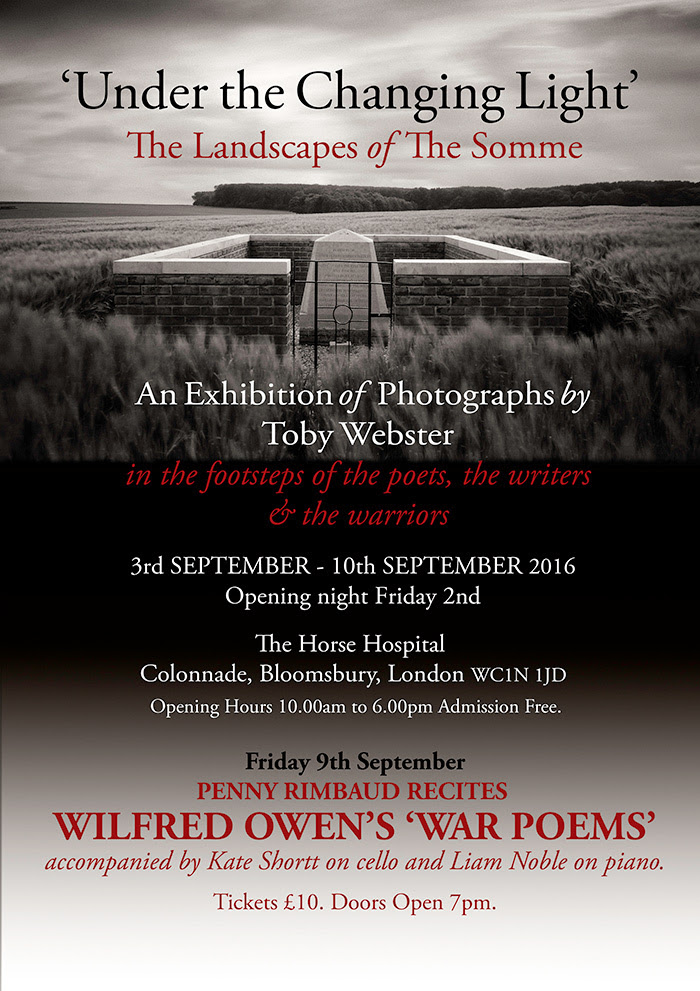 Penny Rimbaud recites the Works of Wilfred Owen (with Kate Shortt & Liam Noble)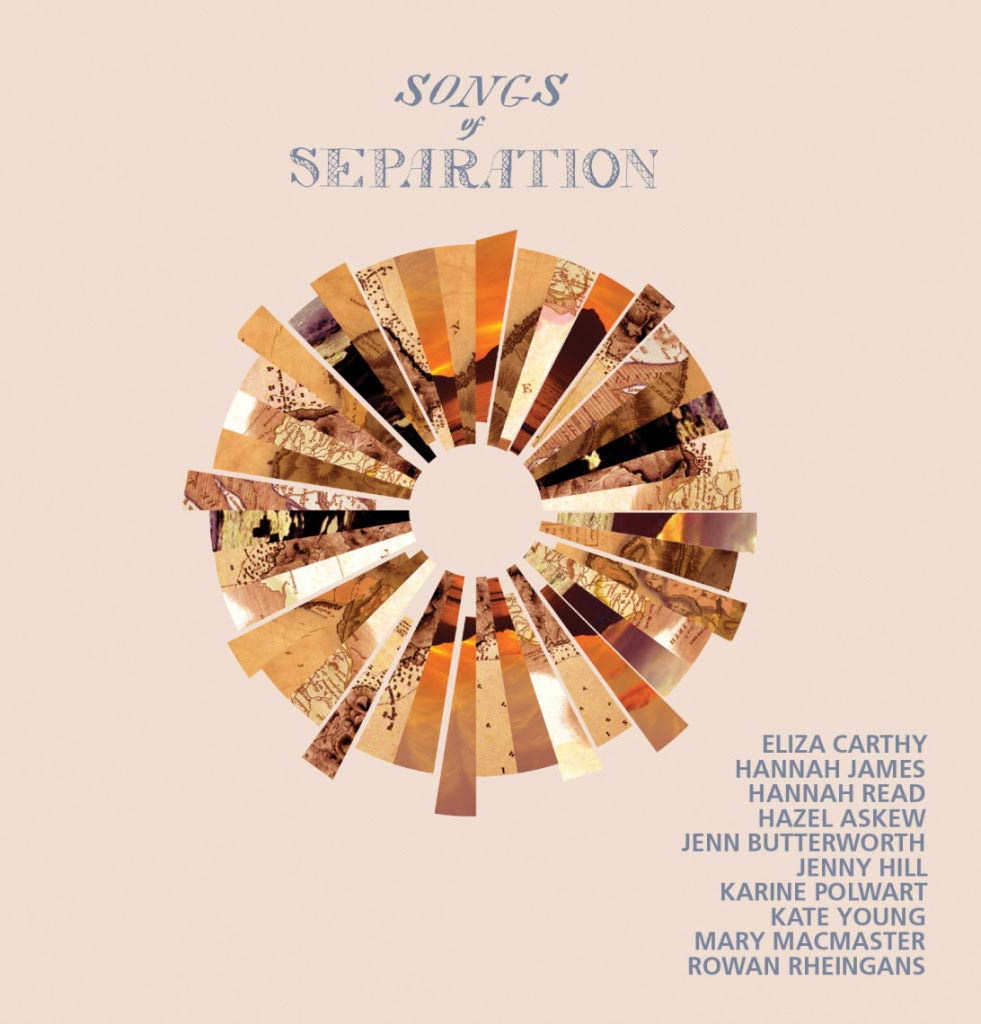
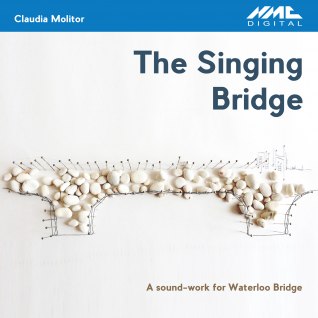


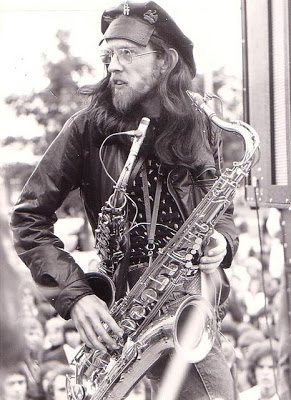
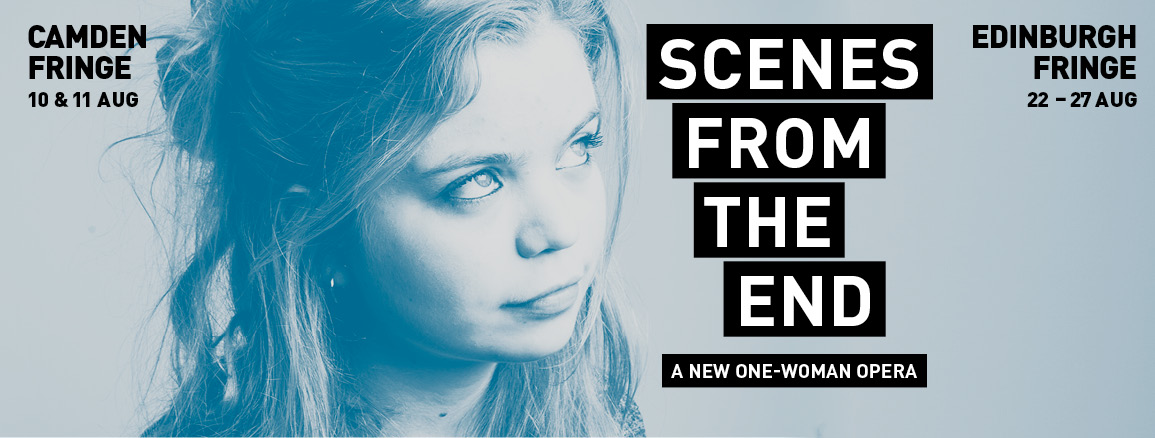
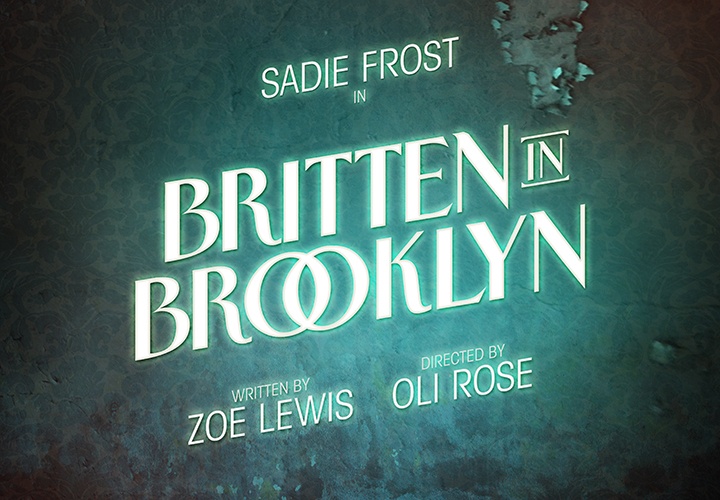
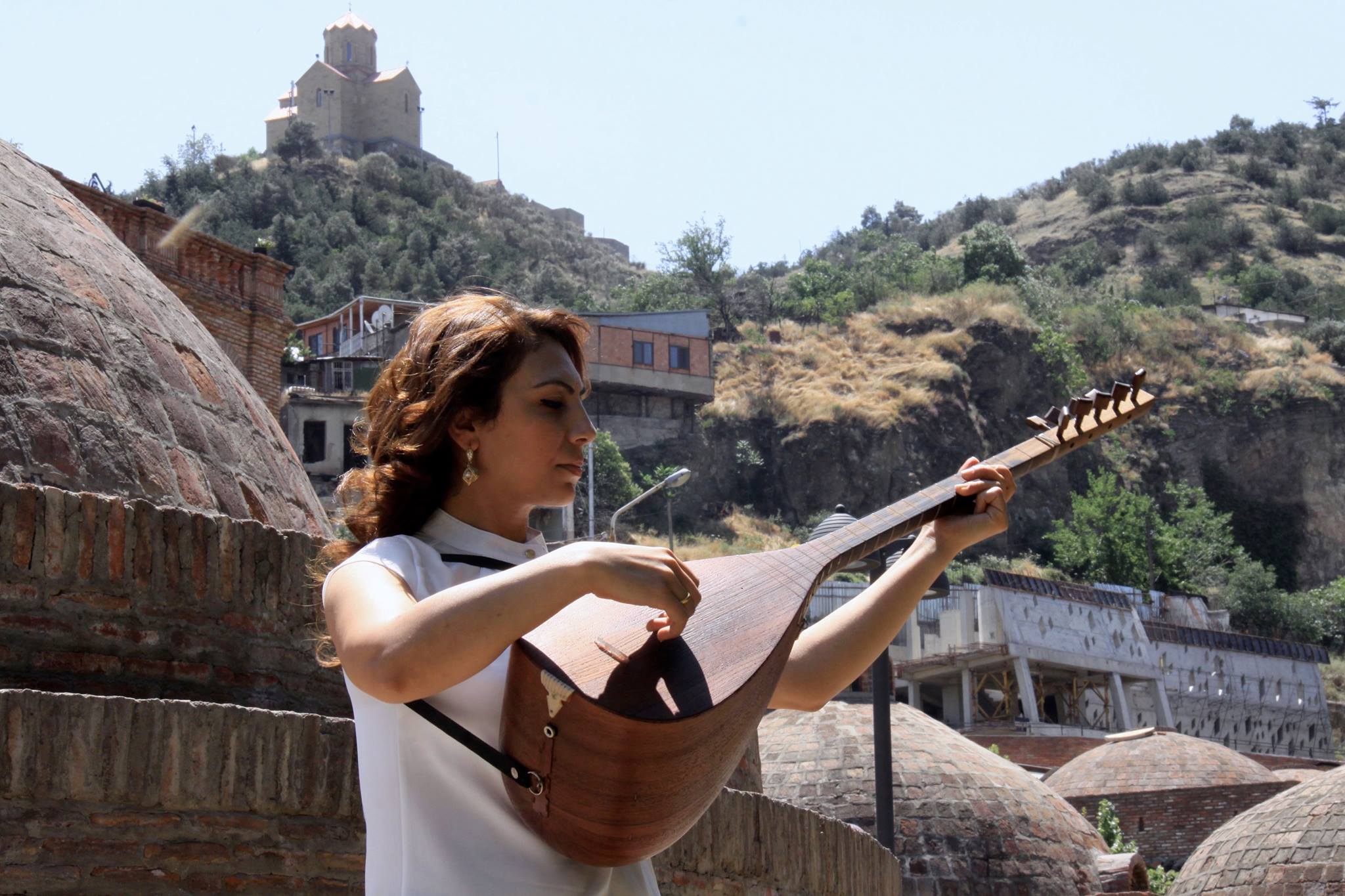
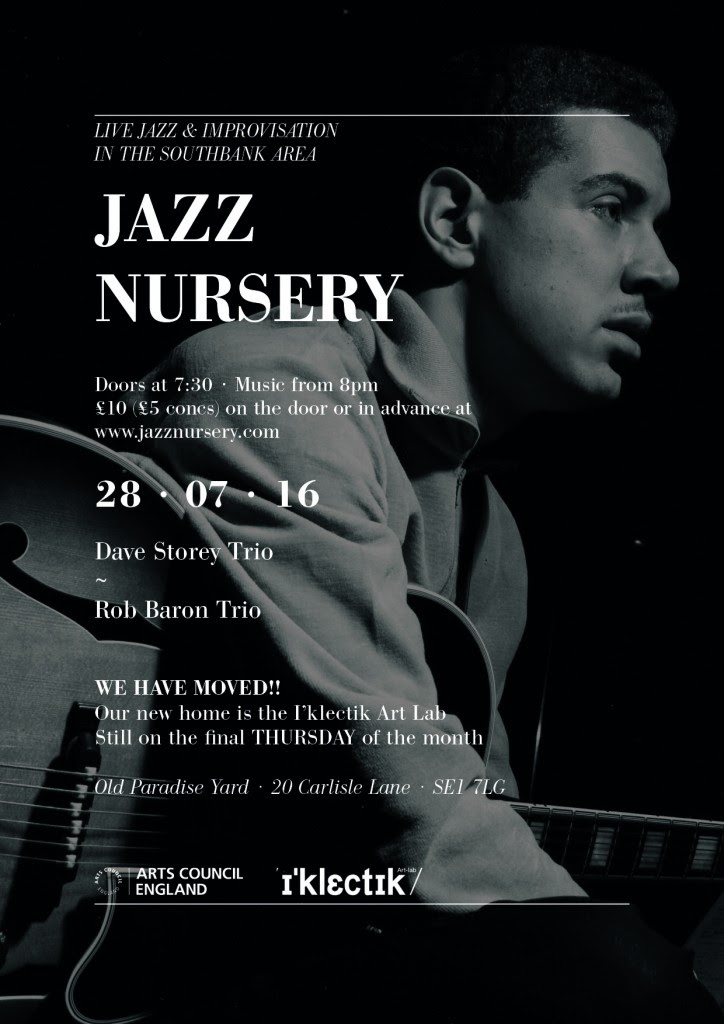

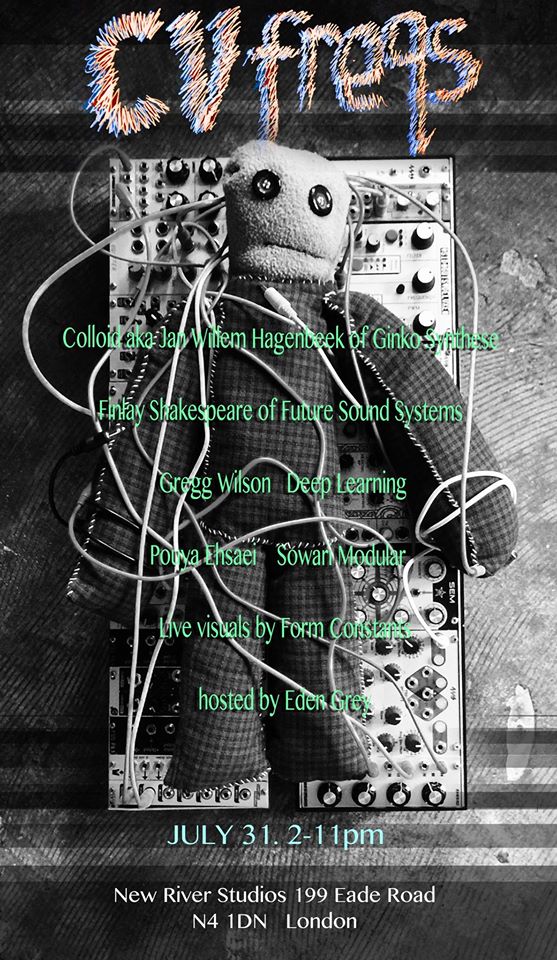
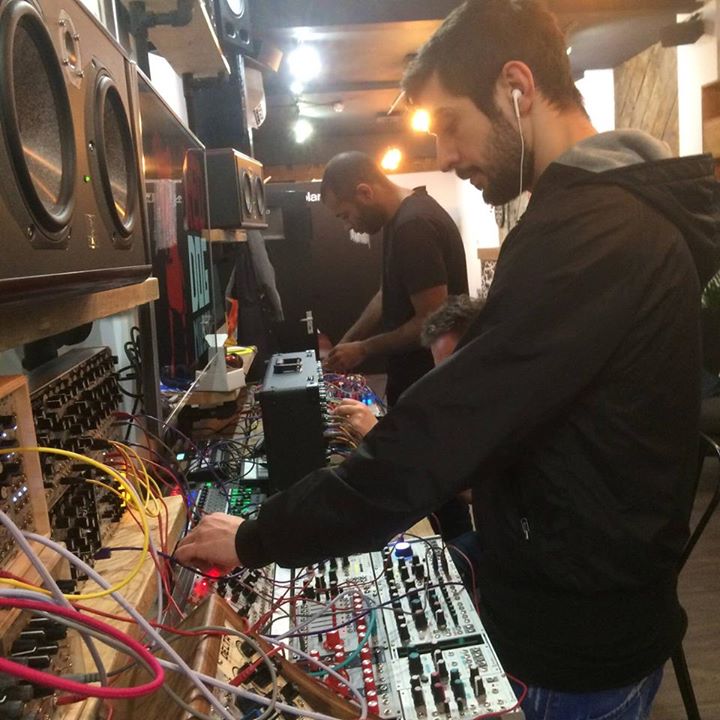


 Misfit City