Here are details on some more interesting concerts coming up later this month. These run the gamut from soft psychedelic world-folk atmospherics to jabbering electric art-punk noise and sprechtstimme via dream-folk, caustic love songs and extended-technique art-rock instrumentals. (It was a shame to hear about the cancellation of the Charles Hayward gig in London on the 23rd – taking its ANTA, Gnob and Kavus Torabi support slots with it – but I’m sure that something similar will be rescheduled for anyone in need of their art-mash/stoner/prog/psych/metal salad…)
Dave Sturt presents An Evening of Dreams & Absurdities (Upstairs @ The Red Lion, Market Place, Wirksworth, Matlock, Derbyshire, DE4 4ET, UK, 23rd September 2015, 8.00pm) – £8.00
As part of the Wirksworth Festival Fringe, Dave Sturt (bass guitarist with Gong, Bill Nelson, Steve Hillage and Jade Warrior, as well as being half of Cipher) showcases tracks from his forthcoming solo album ‘Dreams & Absurdities’ in an evening of world-class all-instrumental musicianship featuring beautiful eclectic music, soundscapes and various field recordings from Gong tours and elsewhere. The music is “mostly mellow and ambient – somewhere between melancholy and elation.”
For the performance, Dave will be accompanied by three guests. Chris Ellis (guitar and piano) is a multi-instrumentalist/singer-songwriter/actor, an ex-member of Anglesey band Ghostriders, and an award-winning soundtrack composer – he’s also a collaborator with Dave on the Past Lives Project (which recreates the recent ancestral histories of British communities by resurrecting their old cinefilm recordings and setting them to new music). Brian Boothby (low whistle, djembe) is an acclaimed folk musician, dramatist and writer and a member of the Derbyshire mixed-arts collective Genius Loci. Jeff Davenport (drums, percussion, HandSonic pad) has worked with jazz musicians Andy Sheppard and Phil Robson, pop artists James Morrison and Laura Mayne, and currently collaborates regularly with “Silent Pianist” Neil Brand providing soundracks to silent films, as well as working in Europe and the Far East on various projects with all manner of musicians.
On the last post, I plugged a London double event on the 19th – a day with a Daylight Music concert at midday and a noisier rock gig in the evening (both events which are still about to happen as I post this). In another week’s time, history’s repeating (fortunately not as farce, though anyone familiar with the bands in the evening show can expect some twists and jabs of humour) so here’s what’s coming up on September 26th…
Daylight Music 200: Ex-Easter Island Head + French For Rabbits + Louis Barabbas, plus a photo exhibition (Union Chapel, Compton Terrace, Islington, London, N1 2UN, UK – Saturday 26th September 2015, 12.00pm-2.00pm) – free entry, suggested donation £5.00
An extra special event to celebrate the 200th Daylight Music, featuring some of the most popular acts from the last six years (643 performances by 530 different acts; 15,254 cups of tea or coffee drunk; 9,863 slices of cake scoffed; 5,003 pieces of quiche devoured) and during which we’ll be raising funds for Daylight Music in 2016.
Ex-Easter Island Head are a Liverpool based musical collective composing and performing music for solid-body electric guitar, percussion and other instruments. They have performed their original compositions solo, as a duo, trio, quartet and as a large ensemble across a wide variety of events from site-specific installation works to live film scores. They create a sensation whenever they play. If you’ve never seen musicians hitting electric guitars with mallets before, then cancel all other plans for the day and head down.
French For Rabbits hail from the remote natural setting of Waikuku Beach, in New Zealand’s South Island. Vocalist Brooke Singer expresses intimate narratives against the cast of the damp colonial cold; her voice delicately steeled against winsome guitar lines and the eerie instrumentation of her bandmates. It’s a weather-beaten dreamscape, nostalgic for warmth and hopefully lilting towards sunnier climes.
Louis Barabbas is a writer, performer and label director, best known for caustic love songs and energetic stage shows that leave you pumped up and breathless.
The icing on the cake this week is an instrumental soundscape provided by Irish singer-songwriter and multi-instrumentalist Adrian Crowley, who (over his six-album career) has been described by the Independent as “a master of understatement” and cited by Ryan Adams as the answer to the question “who’s the best songwriter that no one’s heard of?”
To celebrate the fantastic photography taken throughout the lifespan of Daylight Music by a very talented bunch of volunteer photographers, there will be a lo-fi photo exhibition consisting of 200 postcards on the pews of the chapel for people to take away; plus there will be a limited numbers of brochures to buy featuring all of the photographs.
In the evening, there’s a change of pace and milieu over in Hackney as post-hardcore rubs up against a bit of playful English Dada. I’ve got a liking for those occasions when rock music drives itself up against persistent, wayward speech and stubs its toes on it; and this gig will offer plenty of opportunities for that…
Blacklisters + Joeyfat + Himself (Pink Mist @ The Shacklewell Arms, 71 Shacklewell Lane, London, E8 2EB, UK, Saturday 26th September 2015, 8.00pm) – £8.00
Blacklisters’ aggressive, confrontational and darkly humorous performances have earned them a reputation as one of the best acts on the UK underground, drawing comparisons to the likes of The Jesus Lizard and Pissed Jeans. Their debut album ‘BLKLSTRS’ was released in 2012 to critical acclaim, landing them supports with Scratch Acid, Pig Destroyer, Future of the Left and Big Business, as well as a live session at Maida Vale studios for the Radio 1 Rock Show. Tonight’s special show is in support of their fearsome new record ‘Adult’ on Smalltown America. Produced by Matt Johnson (aka MJ of Hookworms) the album is a clear progression for the band and sees them fuse abstract art-noise with the brutally minimalist riffs that first put them on the radar.
Also playing are amorphous cult stalwarts Joeyfat, a band who’ve been defying conventions of “band logic” longer than most of us have been able to get into shows at all. Their sinewy math-inspired spoken-word has seen them share stages with the likes of Bilge Pump, S*M*A*S*H, Clearlake, Lords, Dartz, Art Brut, Trencher and Green Day, obviously. Catch them at this rare London show.
Direct from Leeds (unless they stopped off some place on the way), Himself’s shouty/talky interactive noise rock has been winning them plaudits up and down the company, including from Radio’s Daniel P. Carter who invited them to record a live session for the Radio 1 Rock Show earlier this year.
Tickets for the Shacklewell Arms gig are available here and here. Note that this is an 18+ event.
More upcoming September gigs, from tomorrow through to Saturday 19th…
a.P.A.t.T. + Tom O.C. Wilson Ensemble + 4tRECk + Some of My Best Friends (The Windmill, 22 Blenheim Gardens, Brixton, London, SW2 5BZ, UK, Thursday 9th September 2015, 8.00pm) – £6.00/£7.00
a.P.A.t.T. , 2015
A Brixton evening of skewed and experimental pop, shading off into other directions including R’n’B, improvised instrumentals and assorted prankery. (Age restriction – 18 years minimum)
The a.P.A.t.T. of today take a skilled yet cheeky approach to playing progressive pop that owes as much to Kurt Schwitters and the Chapman Brothers as it does to ABBA and Zappa. In touring new album ‘Fun With Music’, a.P.A.t.T. have condensed their vision-quest into forty-five minutes of hooky, style-busting live band material, evading capture at every turn. This is the band that swaps instruments live mid-track and has even run its own small country for an evening: it’s a restless and relentless take on 21st century music and performance through a lens of knowing, winking, quintessentially British humour.
The Tom O.C Wilson Ensemble offers forward thinking pop music that combines classic songwriting values with boundless musical curiosity. Wilson describes himself as “a composer and performer driven by the desire to create music that doesn’t exist but should”, and his work (ranging from experimental pop albums to concert pieces for amateur orchestras) has won praise from Field Music, Michael Finnissy and Devendra Banhart among others.
The USSB of Hamburg-based Some Of My Best Friends is a Unit of Science, Socialism and Booty. Some Of My Best Friends use tunes and words. Some Of My Best Friends don’t approve of unnecessary effort. Some Of My Best Friends never travel with more than one case. Think psycho dub, garage soul, trap, and Karl Marx’s booty in sequin overalls.
In existence for years and years, Sam Callow’s 4tRECk project makes music based around spontaneous improvisation, chance, using various instruments (piano, guitar, violin, accordion, home-made stringed instruments, percussion, voice) the “wrong” way, ideas, and detailed composition. The results are broad, with a melancholic side.
Friday 11th sees the launch of a “new regular night, bringing you new sounds and non-traditional world music, folk, contemporary classical, trip hop and downtempo music. We start with some truly breathtaking bands…” This kind of blarney could be an attempt to heat up some very thin and bland material indeed, but the people behind Whispers & Hurricanes are Chaos Theory, who already sweat bullets to bring interesting jazz, post-prog, metal and post-hardcore into and out of London, so I think we can trust them. Here’s the bill:
Seven-piece band Mishaped Pearls are at the forefront of a very exciting new wave of UK folk. Their adventurous song combination of the ancient and the new finds an echo in their musical make up – banjo, saz baglama, bodhran, violin and mandolin mix with acoustic guitar, keyboards, electric bass and drums, all led by the mezzo-soprano voice of Manuela Schuette. Their music’s roots in tradition expand into progressive folk and rock, eastern modal music and shows elements of contemporary classical influence. Their most recent album ‘Thamesis’ has received outstanding reviews across the media.
Consisting of multi-instrumentalist and composer Caroline Jago and drummer Lesley Malone (both also of Sol Invictus) plus singing violinist Éilish McCracken, Seventh Harmonic are a neoclassical darkwave ensemble creating sensual euphoric epics that draw on a great diversity of influences. The music blends an intoxicating kaleidoscope of rhythmic intensity and soaring vocals with ethno-symphonic overtures, defying categorisation yet always beating with a dark romantic heart.
Forged amongst the hustle and bustle of North London’s folk scene, TEYR (“3” in the Cornish language) are a trio of formidable musicians who showcase the many sounds of the British Isles. With roots running from Ireland to Wales to Cornwall, James Gavin (guitar and fiddle), Dominic Henderson (uilleann pipes and whistles) and Tommie Black-Roff (accordion), the players thrive on close interplay and pushing the possibilities of acoustic music. Having met on the traditional music scene through late night sessions, each performer holds an intuitive sense of folk music, evident in their deft arrangements and compositions. The trio draws influence from neo-folk groups such as Lau, Kan and Lúnasa, whilst harnessing an innovative combination of strings, reeds and voices. With this distinct mix, TEYR strike an enigmatic path through the current folk wave.
Tickets from here – note that this is another 18-and-over event.
* * * * * * * *
Admittedly the following is late rather than early September, but if you look forward to Saturday 19th you can anticipate spending from noon until early afternoon admiring architecture to a soundtrack of chamber classical, contemporary folk and experimental pop, and then head into the fringes of south-west London for something a little scruffier and garage-friendly.
In conjunction with the Open House London Weekend (which takes in their home venue of the Union Chapel as well as a wealth of other fantastic London architecture – check it out), Daylight Music are doing a special double-length all-ages Saturday session. Details below…
Daylight Music 199: Sean O’Hagan, Ellie Lovegrove/Illumina, Pip Mountjoy + Elephant (Union Chapel, Compton Terrace, Islington, London, N1 2UN, UK – Saturday 19th September 2015, 10.00am-2.00pm) – free entry, suggested donation £3.50
Sean O’Hagan is a legend of the indie scene, initially from his work in Microdisney and latterly from his time in The High Llamas who have been following their own lights for the past eighteen years, making records and essentially occupying their own genre in doing so. Their music is timeless; elements of retro and modern share the space, creating a unique time and place that is outside the lines of history as we experience it. Today Sean will be providing a solo performance.
Consisting of Ellie Lovegrove (trumpets) and Richard Moore (church organ), classical chamber music duo Illumina were formed in 2012 for a bespoke private recital and enjoy performing a wide variety of music, including works by Handel, Bach, Purcell, Stanley, Elgar, Damase, Takemitzu, and Eben.
Up-and-coming singer-songwriter Pip Mountjoy has been championed by BBC Introducing. She has toured the UK extensively, supporting the likes of Ryan Adams, John Smith, Slow Club, playing festivals such as Glastonbury, Isle of Wight and Cambridge Folk, and leaving audiences “simultaneously entertained, depressed, amused, bemused and delighted.”
Elephant is an intriguing creature hand reared by Lymington-based Alex Hall. Armed with a laptop and a modest collection of instruments, he set forth in piecing together and recording a collection of material inspired by his love of experimental indie, ’60s surf pop and more contemporary lo-fi electronic music. This is the result.
Approximate timings:
10.00am Doors
10.30am Elephant
11.30am Illumina
12.30pm Pip Mountgrove
1.30pm Sean O’Hagan
In between, there are musical interludes by unsigned indie-folk duo Swallow & The Wolf (about whom there’s an ever-growing buzz) and by Jack Hayter (the multi-instrumentalist perhaps best known for work with Darren Hayman and Hefner, and on this occasion providing pedal steel improvisations similar to his Dollboy work plus “the odd jazz standard” though his solo performances of his own engagingly battered folk songs are also well worth seeing).
In the evening, in Kingston-upon-Thames, there’s a benefit gig: another in the ongoing series of support fundraisers for the cruelly-stricken Tim Smith of Cardiacs. Even if Cardiacs in the raw, uncompromising original isn’t quite your thing, if you’ve got any interest in slightly complicated, roughened pop and garage-band grit, go along anyway. These are among the warmest of gigs…
From The Pond: a benefit for Tim Smith featuring Redbus Noface + 7shades + Sterbus + t.b.c. (The Fighting Cocks, 56 Old London Road, Kingston-upon-Thames, London, KT2 6QA, UK, Saturday 19th September 2015, 7.00pm) – £10.00
“A multi-faceted psychedelic pop-punk benefit gig… four extraordinary bands (all Cardiacs-y), beautiful and exclusive merchandise… every penny raised goes to Tim.”
Redbus Noface is the band project from latterday recording engineer and long-ago Cardiac Mark Cawthra. The first Redbus Noface album, ‘#1 If It Fights The Hammer, It Will Fight The Knife’, was released in 2011 and represents many years of Cawthra songwriting and musical ideas – a sturdy, beautifully crafted art-pop gem in the tradition of assorted English mavericks such as XTC.
Led by Neil Spragg, 7shades are a musical project which “pays tribute to the music of Tim Smith and Cardiacs – but with all original music” – a sometimes-nine-piece band delivering vigorously convoluted pop and blurts of punky, proggy, psychedelic noise, all equipped with a fantastical and humorous edge and no fear of either looking or sounding ridiculous.
Sterbus is from Rome, but his musical heart is in the shaggier, dreamier end of 1990s Britpop and American indie rock (Blur and Cardiacs, Elliott Smith and Nirvana, Supergrass and Pavement) and also delves happily into prime prog (with King Crimson, Zappa, Porcupine Tree and the fuzzier rockier chunks of the Canterbury scene). Self-releasing – and working mainly solo – he’s mixed this menu into a series of albums of warm double-jointed oddpop. Returning to the Fighting Cocks for his second Smith benefit gig, he’s performing in duet with his regular band foil Dominique D’Avanzo (him on guitar, her on clarinet, recorder and mouth harp, and both of them singing) for what he describes as “something very Sea Nymph-y and full of chords that Tim would love.”
Sadly, one of the scheduled bands has had to pull out… but if you’re still interested in the garage-rocker sounds of The Spencers (who “make noises. Loud noises. Noises that make you all happy and sad and angry… and sometimes, all at the same time” via a grime of guitars, low-budget organs and rock-siren vocals, plus distinctly Cardiacs twists of wandering harmonies and attention-deficit mood‘n’pace changes) here’s a taste of them anyway.
The event will be compered by writer and comedian Robin Ince (he of ‘The Infinite Monkey Cage‘) who’s apparently “bringing a friend. And may be doing a little music.” There will also be visuals by South Coast animator Cyriak Harris, whose hilarious, playful and slightly disturbing videos have been a YouTube staple ever since he delivered a monster-movie ‘EastEnders’ tribute to the BBC nearly a decade ago…
Ongoing news regarding From The Pond (including any last-minute substitutes for The Spencers) is here and tickets are here.
More September gigs shortly, plus a look at October and further on.
Here’s the second of two previews for the first week of September, this one covering the weekend which has just arrived. Four gigs on Saturday (from post-classical to garage rock, from Afrobeat and kosmiche-influenced art pop to Canterbury-inspired lo-fi, from witty post-prog to Southern rock) and a chamber jazz gig on Sunday.
* * * * * * * *
After ten years of putting on post-classical club nights in east London, some way outside the heart of the British classical establishment, the Nonclassical organisation gets to play in the centre – a festival role, a high-profile corporate sponsorship, ads on the Tube and all. Come and judge whether they’re changing the game or being absorbed (beneficially or otherwise) into the belly of the beast. Whichever way this is going, the concert itself looks fascinating.
Nonclassical Club Night (Deloitte Ignite Festival @ Paul Hamlyn Hall, Royal Opera House, Covent Garden, London, WC2E 9DD, UK, Saturday 5th September 2015, 8.00pm) – £10.00
Nonclassical label leader Gabriel Prokofiev (a polystylist composer with a background in electroacoustic work whose works include a Concerto for Turntables & Orchestra, an “orchestral remix” of Beethoven’s Ninth and production work on hip hop, grime, and electro records) will be performing at the event, as will five-string-electric-cellist/composer/technologist Peter Gregson (whose adventures in sound include film soundtracking, multiple premieres of newly composed work plus three albums of original compositions, and a “data sonification” of Twitter).
Also performing will be the amplified prepared-piano artist Klavikon (a.k.a. Leon Michener, who uses various pickups, real time analogue processing and playing-mechanism inventions including a robot dog to fuse aleatoric ideas from Stockhausen and Cage with electronic dancefloor work including “cascading batteries of percussion, sub-basses and abstract soundscapes”); the “post-a-cappella” group Juice Vocal Ensemble (whose voicework encompasses everything from classical sources to hip hop, Irish folk, close-harmony vocal jazz and the experimental approaches of Meredith Monk and of Björk’s ‘Medúlla’), and Gabriel’s DJ collaborator Mr Switch.
There will also be a collaboration between classical soprano Sarah Dacey and the “Tendons” music theatre project initiated earlier this year by Holly Lowe and Nwando Ebizie. Based around harp, spoken word, performance art and electronics while mingling repertoire work with improvisation, this draws on and expands two modern classical pieces (Salvatore Sciarrino’s ‘L’addio a Trachis’ and John Cage’s ‘Dream’) plus the ‘Siciliano’ from Bach’s ‘Sonata in E flat’ and was premiered in June at the Nonclassical Downtown Loft Concert at The Russet in Shacklewell – one of the label’s ongoing attempts to encourage a London equivalent of the New York loft-music scene of the ‘70s and ‘80s.
* * * * * * * *
If you prefer to have your brain tickled by other means, Group Therapy are presenting what they call a night of “good ol’-fashioned noise rock” down at an east London art-rock stronghold.
Trojan Horse + Thumpermonkey + Godzilla Black (Group Therapy@ The Sebright Arms,33-35 Coate Street, London, E2 9AG, United Kingdom, Saturday 5th September 2015, 8.00pm) Entry £7 otd £5.50 advance
What this actually seems to be is a night mixing a sharp-minded self-aware take on post-progressive rock and a rollicking contemporary version of what my local library used to call “popular instrumental”, and would stick in a rack alongside James Last and The Shadows (from which, long ago, in the early days of my musical education, I’d pull out the likes of Mike Oldfield, Sky and Vangelis’ ‘Heaven and Hell’, and later the raging electric jazz raga of David Torn’s ‘Cloud About Mercury‘ – ten years later, I’d might been using it to catch the Deodato lounge revival). But if my comment makes the gig sound as if it’s in any way mild or lounge-friendly or mild, think again. This is very much a rock evening and it’s explicitly clear that this night’s crop of bands have soaked up Boredoms, Swans, Big Black, Sonic Youth and The Melvins alongside any Genesis or King Crimson which they might have imbibed. It’s just that it’s refreshing to be able to go along to one of those gigs, with that label, and not encounter yet another bunch of predictable art-punks posing with their distortion pedals and their feedback zones while reheating old daydreams about free jazz and No Wave…
I’m bitching. I don’t like doing that. Let’s have a look at the bands on the bill.
Manchester’s Trojan Horse are post-prog omnivores with tuneful hearts and a refreshing lack of shame. While their records pillage, digest and absorb a wide diet from Pink Floyd to James Brown to The Kinks to the 13th Floor Elevators, they also use their appetites to build their own muscle and identity – one through which they filter a broad, contemplative awareness of British and Mancunian history and how it soaks through into the lives of present-day people (although you don’t need to analyse that in order to enjoy one of their rambunctious gigs).
Simultaneously theatrical and punk-lean, Thumpermonkey can stake a claim to being one of the smartest British bands this side of Everything Everything (with whom they share a geeky brainiac quality driven home by vigorous, tuneful force). Couched in a crunching but colourful hard-rock vein with big pinches of post-hardcore and prog, their dramatic convoluted stalk-and-punch compositions are playful but melodious and rewarding. You can bang your head to a Thumpermonkey song, but you can also think to it. In Michael Woodman (a man like a knowing fusion of Peter Hammill, Nick Cave and Peter Blegvad) they’ve also got a frontman who’s one of the best singers and cleverest current lyricists in rock, delivering allusive and elusive barrages of sly wordplay in a resonant rock-operatic voice.
Finally, the big, bold, brazen sound of Godzilla Black lands precisely midway between No Wave and pin-sharp easy-listening film themes, or between James Black and the John Barry Seven, with rollicking drums, tight stunt brass (and yes, all right, distortion and computer sleet). They also play at a blistering, speaker-pummelling volume, so maybe there’s something in that noise rock description).
Headlining, Nottingham’s Canteloupe offer an omnivorous mix of pop, Krautrock, Afrobeat and disco. London’s Barringtone (featuring former Clor frontman Barry Dobbin) continue to pursue their motoric English art pop in the wake of the ‘Fever Head’ single. From Bradford, Gurglez blend what their neighbours Jumbo Records call “the power of prog, the drama of opera and the AOR grooves of the 70’s… poetic moments à la Terry Durham and free-jazz à la Nice” and “(turn) them on their head with a kind of left of field madness that Zappa would be proud of” (which, to these ears. also makes them sound more than a little like Sleepy People…) There should also be one more act to be added, which you can find out about in due course with the other gig information here and here.
* * * * * * * *
If you’d prefer something a little looser (or, as a clincher, something that was free to get into) for Saturday night, there’s this literally free-for-all concert taking place in the middle of Hackney and hosted by Sound Events Solutions, who have also provided the summary…
The Little Things + Alkatraz + Picturebox + Marianne Hyatt + Pit Ponies (Sound Events Solutions @ Bohemia Hackney, Unit 2, Bohemia Place, Mare Street, Hackney, London, E8 1DU, United Kingdom, Saturday 5th September 2015, 7.45pm) – free
With The Little Things it’s funk, and then it’s 70s New York new wave alt-rock, and then it’s pop, but it’s all seamless and it’s funky and cool as fuck – an uncanny indie-ish dance party band that just never suck no matter how much they flirt with mass appeal.
Alkatraz provide the psychotic reactions and spontaneous psychedelic combustions of trippin’ psychedelic garage rock.
Picturebox (centred around home-recordist Robert Halcrow) are leading lights (and probably the main constituents) of Canterbury Lo-Fi, a new clandestine pop movement encapsulating all the charm but none of the noodling of the legendary old Canterbury Scene. When Halcrow sings a song like Ruth Bakes A Cake, he is neither being ironic nor twee nor coquettishly kitchen-sink. There is a light-hearted, profoundly uncynical love for humanity running through his lyrics that can sometimes remind you of the way Syd Barrett used to sing about the lost idea of simple kindness. Special things don’t always hit you over the head with a mallet, and neither will Picturebox. But you just never know, sometimes a movement can start with an instrumental named in allusion to a little hi-fi shop next to a supermarket car-park in Canterbury, some heartfelt tributes to pop stars, and lots of tea and cake.
Frontwoman of (variously) Dragstripper, Temple of Sound, Anarchistwood and Country Dirt, MarianneHyatt is a London-based deep southern songstress from Austin Texas. She’s equal parts Patsy Cline, Janis Joplin and Jim Morrison, has sung with The Frogs at ATP, with Bill Callahan at Meltdown Festival and played a late-night pickup in Richard Linklater’s ‘Slacker’. She writes and plays platonic lovesongs to sexworkers, country reggae odes to schizophrenic madames and protest tunes to natural disasters… a walking triumph of lost causes and no-longer living legends.
Pit Ponies are renegades from Naughties rockney/post-punk/knees-up beer boys Corporal Machine & The Bombers, fusing ‘90s indie with pissed pub fights and ‘70s pub-rock. (In spite of this preamble, they’ll actually be playing an acoustic set.)
After all of this, on Sunday, there’s jazz via the return of the LUME evenings via the Vortex. Blurb for the first evening is below.
Mark Pringle’s A Moveable Feast & Rebecca Nash (LUME @ The Vortex Jazz Club, 11 Gillett Square, Dalston, London, N16 8AZ, UK, Sunday 6th September 2015, 7.30pm – £10.00
A Moveable Feast is a group led by jazz pianist Mark Pringle (a Peter Whittingham Award winner for the year 2015, following in the footsteps of previous recipients Gwilym Simcock, Trish Clowes and Elliot Galvin). Heavily inspired by time spent studying in Paris in 2013, the music draws on multiple cultural influences, containing themes of nature, wildlife, literature, the chaos of cities, the lives of people who inhabit them, woodland creatures and strange beasts… This autumn sees the group undertaking a national tour to promote the release of their album, ‘A Moveable Feast’, on Stoney Lane Records.
Featuring a twelvetet line up of strings, horns and rhythm section, the group explore Mark’s music with great freedom of approach, resulting in music that is eclectic, adventurous and highly unique. The band are Mark Pringle (piano), Percy Pursglove (trumpet), Chris Young (alto saxophone), Dan Searjeant (tenor and alto saxophones, flute), Alicia Gardener-Trejo (bass clarinet, baritone saxophone, alto flute), Ben Lee (electric guitar), James Banner (double bass) and Euan Palmer (drums), plus a string quartet of Christine Cornwell, Sarah Farmer, Megan Jowett and Lucy French.
Rebecca Nash‘s music, written with the intention of creating a new cohesive sound, blends together all the things she loves about music. Most important is a sense of purpose, identity and beauty. It is inspired by many musical influences which primarily include jazz musicians such as Pat Metheny and Wayne Shorter but also other styles too, such as electronica and folk music. Rebecca’s own style, rooted in the contemporary jazz genre, blends acoustic and electronic elements with strong melodies, underpinned by dense harmonies and unusual grooves with the aim of creating one overall soundscape.
This latest project is Rebecca’s first as a bandleader, and all of the music performed is original material from her forthcoming album, due to be recorded later this year. Tonight she leads a small group with herself on piano, Percy Pursglove on trumpet, Matt Fisher on drums, and Chris Mapp on bass guitar.
More information on the event is here, with tickets available here.
I got this through my feed this week – a Beach Boys cover done as Korean doo-wop.
This is The Barberettes, who’ve been singing together for three years and are in town next week, making their London debut. It’s also an audio visual flyer, of sorts, for this year’s London K-Music Festival. Presented by Serious (in association with the Korean Cultural Institute) this is a celebration of Korean music from “dynamic and energy-filled contemporary bands to eloquent and dignified traditional music” spread across some of the capital’s best venues during the course of September. Full details are below. (From here on down, it’s all press release.)
SU:M‘s name (pronounced “soom”) translates as “breath” and it expresses the physical connection of these two women to the music they create – sometimes a soft sigh, sometimes a cry, sometimes a silent holding of breath. Jungmin Seo plays the gayageum (a massive twenty-five-string zither) and Jiha Park plays wind instruments including the saenghwang (imagine the subtlest mouth organ, with seventeen bamboo pipes). They are an astonishing experience live – they’ve played Womex Cardiff and were seen at WOMAD last year. This opening concert of the K-Music festival of Korean music is their first London concert.
The evening will begin with a short solo set by Arthur Jeffes, leader of Penguin Cafe, who will play music by himself and his father Simon Jeffes inspired by their travels in Asia – and it will end with a short collaboration between Arthur and SU:M. Tickets available here.
The Barberettes (The Forge, 3-7 Delancey Street, Camden Town, London, NW1 7NL, UK, Friday 4th & Saturday 5th September 2015, 8:00PM) – £16.00
Formed for fun in 2012, The Barberettes are a spectacular vocal harmony trio, a timeslip girl group who turn classics of the ‘50s and ‘60s inside out as well as creating their own theatrical music with their close harmony covers and cute costumes. Singing doo-wop in Korean and English, they made their first album last year (in a retro homage to their inspirations, they called it The Barberettes Vol 1). This year they’ve already stormed SXSW in Texas and the K-Pop Night Out concert at Midem in Cannes – and now they’re bringing their unique style to the UK for the very first time. Tickets available here.
In England, we know a bit about Korean art music and hold some preconceptions about K-Pop – but we don’t know much about Korean rock music, and that’s where Seoul’s finest, No Brain, have built a huge following, playing over three thousand gigs across Korea in the last 15 years. Powered by raw vocals (Bull is the lead singer), razor guitars (Vovo plays guitar), sharp suits (Bogle plays bass) and a drummer called Dolly, they’ve won lots of Korean Music Awards, but never played London before. They’re playing an early set – support hits at 7.30, they play at 8.30pm. This is a standing show – tickets available here.
Jambinai are the next thrilling instalment in the tale of new Korean music. They sculpt sound in a way that’s drawn comparisons to Mogwai, Explosions In The Sky, Sonic Youth and the crystalline power of Sigur Ros – but they draw deep on Korean traditions. It’s not just a stage full of amazing instruments – Korean fiddles, massive zithers blended with glorious lyrical guitars – but also a conscious sense of using the tradition to create something thrillingly new. They’ve been seen at Womad and Glastonbury, but this is their first London show – catch them as Jambinai step out onto a world stage. Tickets available here.
There’s a theatrical strand to a lot of Korean music and, for more than twenty years, Noreum Machi have been creating a thrilling spectacle from virtuosic percussion, shamanic vocals and acrobatic dance. Powered by gongs, Samul Nori drums and wind instruments, they work within the framework of Korean traditional performance, with a commitment to communicate their music to audiences worldwide. Tickets available here.
The Pansori Night: Sang-il Nam + Aeri Park + ‘Poppin’ Hyunjoon + Bae Reon + Kye-youl Jun + Ji-sun Choi (Cadogan Hall, 5 Sloane Terrace, Belgravia, London, SW1X 9DQ, UK, Wednesday 23rd September 2015, 7:30pm) – free ticketed event
The Pansori Night will bring together six talented performers for an evening of music, dance and song with a contemporary twist. Pansori is a form of vocal story-telling that reaches back centuries — the stories sung are often comic, with a Chaucerian comedy to them, but they are also more than just bawdiness, and can be romantic, sad and emotional to boot.
Rising Pansori talent Sang-il Nam will be joined by Aeri Park, one of Korea’s leading female pansori performers. Aeri Park will also perform with ‘Poppin’ Hyunjoon, who takes breakdance moves and blends them with traditional rhythms. Our three stars will also be joined by Bae Reon, playing the ajaeng – a seven-stringed instrument, percussionist Kye-youl Jun accompanying the pansori with the janggu (Korean drum) and traditional dancer Ji-sun Choi. This event is free but ticketed. Click here for more information.
Korean National Gugak Centre (Lilian Baylis Studio @ Sadler’s Wells, Rosebery Avenue, London, EC1R 4TN, UK, Wednesday 30th September 2015, 7:30pm) – £15 + booking fee
The Korean National Gugak Centre is one of the great arts companies of Korea, and this performance concentrates on Sanjo – that’s a style of instrumental music accompanied by a drum and sometimes by dancers, starting slowly and gathering speed, with a structure that allows for virtuosic improvisation. This evening shows off some of the great traditional instruments of Korean traditional music such as the geomungo (large zither), daegeum (transverse flute) and haegeum (Korean fiddle). This is the last date on the group’s European tour, and provides a fitting conclusion to the K-Music Festival. More information here.
Tickets for all events can also be obtained from Serious.
One of the reasons that I’ve been posting so many concert previews recently is simply that (being mostly homebound at the moment) I miss going to gigs. Looking at the lineup and scope of the 2015 Manchester Jazz Festival (which starts today and runs rampant for ten days through until 9th August) reminds me that not only do I regret not attending the wealth of music that takes place here in London, but that I miss more freewheeling days of music elsewhere. Discovering unexpected, treasurable bands at random while on holiday in Brugge, for instance; or immersing myself in a week of concerts and more in Edinburgh or Leeds (such as the one I reviewed here, over a decade ago.)
We know that, as a British pop and dance city, Manchester punches well above its weight. Despite a bubbling undercurrent of improvised music, its reputation as a jazz town is hazier…. or, more probably, I’m just ignorant. The Festival’s been going for twenty years, long enough to gain enough gravity to generate its own traditions. (One such is ‘Surroundings’, a longer-form ensemble piece by Salford composer Neil Yates. Commissioned for the festival in 2010, it seems to have become the event’s unofficial signature – this year, it’s being revisited as a quartet performance in the Central Library Reading Room.)
Even a quick sift through this year’s programme reveals a jazz party that any city would be proud of – diverse, inclusive, inviting and multi-levelled, an exciting noise ranging from the stately to the vividly scraggled and all the better for it. With many tickets going at only four pounds, (with a ten-pound all-events daily ticket and free-entry deals if you stump up as a low-level event sponsor), they could hardly have made it any more inviting to the casual walker-upper. Excuse me for a moment while I strip-mine press releases and YouTube, and check Soundcloud pages and Bandcamp links.
Starting with the higher-end, bigger name events… Acclaimed Blue Note pianist Robert Glasper slips away from his experimentations with latterday R’n’B to get back to basics with an acoustic trio; John Surman re-teams with the Trans4mation String Quartet to revive the thoughtful, tidally-deep music from his ‘Coruscating’ and ‘The Spaces in Between’ albums. Norma Winstone, Klaus Gesing and Glauco Venier bring along their trans-European project Distances. Partisansbring their transatlantic swing storm; Christine Tobin her ‘Thousand Kisses Deep’ jazzification of Leonard Cohen songs. French Jazz Musician of the Year Airelle Besson makes an appearance with her Quartet for a set of “gently experimental songs animated by heartfelt lyrics, plaintive melodies and rolling harmonies.” backed with pinballing rhythms and punchy countersyncopations.
There are heavyweight two-headed summit performances by acclaimed British jazz talents – one by frequent quartet buddies Mike Walker andGwilym Simcock, another by the more recent pairing of Tori Freestoneand Alcyona Mick. Two further British scene fast risers – Stuart McCallum and Alice Zawadzki – bring string-enhanced performances of ongoing projects (the former offering contemporary soul jazz and bass-heavy electronica with surprise guest singers, the latter a fantastical Mancunian song cycle influenced by various shades of love and fairytale).
There are also several of those gentler, more literate projects which seem to blossom best in a festival atmosphere away from a hot core of gutsy brass. Andrew Woodhead and Holly Thomas’ Snapdragontrio specialize in chilled, ethereal song-settings of literature and poetry (Larkin and Bukowski-inspired) and bursts of vocalese. Mark Pringle‘s A Moveable Feast mates orchestral strings with a bold horn and rhythm section to explore “themes of wildlife, literature and city chaos.” The “fractured Anglicana” of Hugh Nankivell’s multi-instrumental/four-part vocal quartet Natural Causes means that they perform “curious compositions with improbable but poignant texts” including “psychedelic lullabies, pinprick-precise ballads, unpredictable group improvisation and brotherly harmony across the board”, and music which draws on classic and contemporary art pop (Robert Wyatt, XTC and Björk) as much as it does on jazz sources.
Elsewhere, much of the polyglot diversity of jazz today is celebrated. The Cuban tradition is represented by the Pepe Rivero Trio and Orquesta Timbala; the Congolese by Eddy Tshepe Tshepela‘s Afrika Jazz. Central and South American ideas are brought along byAgua Pasa (who, with Dudley Nesbit’s steel pan project Pan Jumby, also touch on the Caribbean). The Quarry Hillbillies (a teaming ofUlrich Elbracht, Ed Jones, Jamil Sheriff) from European contemporary jazz, while the frenetic whirl of Eastern European folk elements are covered by Makanitza. The Gorka Benítez Trio move between Basque-flavoured small group jazz and compelling free-form impressionism. David Austin Grey’s Hansu-Tori ensemble is inspired by natural, elemental and cinematic” ideas, as well as a fascination with Eastern world culture. Percussionist Felix Higginbottom’s Hans Prya provides genre-hopping jazz-dance and Jim Molyneux’s Glowrogues favour funk and hip-hop flavoured pieces. Trumpeter Lily Carassik‘s fusion group Yesa Sikyitake ideas from the ’50s and blend them with popular standards and soul arrangements; while The Stretch Trio include glossier elements from ’70s jazz rock, progressive rock and ’80s pop along with sinuous gusts of wind synth.
Those who prefer classic jazz – more traditional by-the-book American styles – might prefer Russell Henderson and Jamie Taylor’s Ellington-and-Strayhorn tribute ‘The Intimacy Of The Blues’, or the Dan Whieldon Trio‘s salute to Gershwin. The Dave Kane Quartet take inspiration from the knottier ambitions of Charles Mingus, John Zorn and Eric Dolphy. Two groups of students from the Royal Northern College of Music provide live celebrations of the history which they’ve been learning – the James Girling Quintet spans jazz, blues and funk from New Orleans roots through to the 1960s, while the Nick Conn Octet (a self-described “trombone choir”) interweaves re-arranged jazz classics with original material.
Fans of New Orleans jazz can check out genuine New Orleaners The Session (who offer a past-present take on their hometown’s music), or look out for the street sounds of the New York Brass Band (actually from old York, the cheeky buggers) or see how the Riot Jazz Brass Band dust up old New Orleans sounds with dancefloor, dubstep and drum-and-bass incursions. Hot jazz/Gypsy/jazz manouche aficionados can go for the loving recreations of 52 Skidoo (who promise you prohibition speakeasies, rent parties and Tin Pan Alley) or for Gypsies Of Bohemia, who manouche-ify latterday pop songs such as Heart Of Glass, Toxic and Hot In Herre. (Being Mancunian, they also do This Charming Man – I’ll bet that that high-life opening riff translates pretty well).
Of course, much of the fun of a jazz festival involves catching a lesser-known, or even unknown, band carving away at the edge, furiously discovering – and there are plenty of those here. Since they drew me into covering the festival in the first place, I’m going to put a particular word in for Jon Thorne’s Sunshine Brothers (playing at Matt & Phreds on 4th August) in which the double bass/laptop-wielding Jon teams up with drummer Rob Turner (of Blue Note-signed breakbeat jazz electronicists GoGo Penguin) and looping poly-genre bass guitarist Steve Lawson (a ‘Misfit City’ regular) for “a cutting-edge trio of genre-defying musicians mixing jazz, improvisation, electronic and filmic soundscapes to euphoric effect, evoking sounds far removed from their bass origins.”
However, you could just as easily catch a full performance by GoGo Penguin themselves; or by Lauren Kinsella’s Blue-Eyed Hawk, who offer “art-rock, jazz and electronic soundworlds: imaginative and emotive, from pindrop to powerhouse.” The Madwort Saxophone Quartet play intricate four-part math-jazz. “Power-jazz commando team”Taupe (a triple-city trio from Manchester, Newcastle and Edinburgh) punch around themes from jazz, hip hop and heavy metal. Craig Scott’s Lobotomy seem determined to take the cake for upfront experimental exhilaration this time around, delivering shout-outs to John Cage, Captain Beefheart and Frank Zappa, proclaiming a performance in which “experimental jazz rubs shoulders with electronica and DIY alternative rock in a bubbling cauldron of live and recorded sounds” and promising to sample and reconstruction their own improvisations live on stage. There’ll also be a improvised summit involving bands associated with Manchester’s Efpi Records and Paris’ Onze Heures Onze collective.
One way into discovery is to take advantage of the free showcases for emerging bands. Care of the BBC’s ‘Jazz On 3’, London offers three bands – Nérija ( the all-female creative septet from the Tomorrow’s Warriors jazz school), the award-winning piano jazz of the Ashley Henry Trio and the decidedly psychedelic Phaze Theory (a quartet of drums, tuba, voice and guitar dedicated to “exploring the vastness of the musical cosmos”).
But perhaps it’s Jazz North’s Northern Line series that you should be checking out, showcasing bands from the north and the Midlands. Manchester offers the Iain Dixon/Les Chisnall Duo (whose repertoire of self-defined standards stretches from Messaien to Gracie Fields) and the John Bailey Quintet (guitar-led, and similarly inspired by twentieth century classical music). Newcastle provides barrel-house blues and ballads from The Lindsay Hannon Plus and the tricky free jazz/folk/rock/dancefloor entwinings of the Graeme Wilson Quartet. Lancaster and Liverpool provide one act apiece – Andrew Grew’s “total improvisers”The Grew Quartet and the “gothic bebop” of Blind Monk Trio, who claim to fuse the spirit of Thelonius Monk with Persian traditional music and the heavy-rock attitude of Led Zeppelin and Nirvana’s heavy-rock attitude.
However, it’s Leeds (still underrated as a musical powerhouse despite the world-class output of its music college and the vigorous inventiveness of its bands) which dominates the Northern Line. As well as providing the previously-mentioned Pan Jumby, Leeds brings the Portuguese/African/Latin and Indian song-fusions of Manjula, the Django Reinhardt swing of the Matt Holborn Quartet, Cameron Vale‘s ferociously energetic melange of jazz, metal, electronica, Afrobeat and Klezmer and the semi-electric “extreme, eerie to comic” improvisations of Tipping Point (featuring perpetual bad-boy pianist Matthew Bourne). Friendly rivalry aside, there’s also co-operation: Leeds, Manchester and Liverpool all join forces in The Bugalu Foundation for a Latin barrio take on northern soul.
Around all of this jazz there’s the usual happy agglomeration of related music – not quite jazz in itself, but possibly sharing a drink or a roll-up somewhere along the way. The festival covers various popular outcropping such as soul (in assorted Northern, jazz and diva forms courtesy of The Juggernaut Love Band, Terry Shaltiel & The Soultroopers, Charlie Cooper & The CCs) but also ’60s/‘70s funk (Buffalo Brothers), ’70s Afrobeat and Ethiopian pop (Kalakuta), ska (Baked à la Ska) and mbalax (Mamadou & The Super Libidor Band). There’s even an alt-country act (Stevie Williams & The Most Wanted Band) sneaking in at the back door. As for rock’n’roll/folk/reggae/swing scavengers The Flat Cap 3… well, for starters, there’s only two of them, so you can be dubious about anything else you might read, but don’t let that put you off.
Three female songwriters are also bringing their bands, coming from a folk or world music zone and overlapping into jazz. Kirsty McGeeleads her Hobopop Collective through a “joyful, dirty” sound drawing from gospel, blues and a collection of found instruments (including musical saw, waterphone, Humber hubcaps and metal buckets). The constantly shifting song landscapes of the Zoe Kyoti Trio draw from their leader’s Armenian and Greek heritage (as well as Cajun, European and Indian ideas). Saluting home-brewed British polyculture, Shama Rahman‘s ensemble explore her London home, her Bangladeshi roots, and her childhood memories of Middle Eastern desert landscapes in a “sitar,stories and song” melange of jazz-inspired improvisation, classically-inspired melodies and folk-inspired storytelling accompanied by energetic rhythms of swing, funk, hip hop, bossa nova and drum’n’bass.
For parents of very young children, needing to balance a jazz fix with family responsibilities, there are a couple of fully interactive kids’ events with activities, storytelling and improvisations. The Living Story Music Ensemble and illustrator Ann Gilligan collaborate on ‘I Have A Duck Who Can Roar’; the blues-and-roots-tingedHillary Step Quartet work with storyteller Ursula Holden Gill and dancers from The Dalcroze Societyfor ‘How Monkey Found His Swing’. Once the kids are attended to, there are still interactive events for the grown-ups, whether you’re talking about the all-in jazz vinyl night, the mixed-genre dj sets by Mr Scruff, Franny Eubanks‘ open-door blues jam or (for the more technologically inquisitive) Rodrigo Constanzo‘s showcasing of his dfscore software. The latter’s a creative music tool, cueing improvisers via graphical, visual and written clues: on this occasion, anyone with an instrument and a connectible smartphone/tablet/pad should be able to roll up and join in with the roar, joining some leading improvisers in performing music in tandem with the system.
For those remaining soundclips which I’ve not already snatched and pasted, visit the MJF Soundcloud page here … but better yet, if you’re anywhere near Manchester over the next few weeks, drop in at the festival (it’s hard to miss, considering that it’s not just hiding behind club doors but has effectively taken over the town’s main square for a fortnight). Seeing something this impressive light up and roll on fills me with delight – even if on this occasion I’m also filled with rue at not being able to go myself. But never mind me…
More upcoming London gigs this week. Firstly, various kinds of jazz on Thursday…
Nick Costley-White & Bleep Test (LUME @ Long White Cloud, 151 Hackney Road, Hoxton, London, E2 8JL, UK, Thursday 16th July, 8.00pm
This week at LUME… original and improvised music. We’ve got a tasty double bill for you this Thursday with solo guitar explorations and an exciting new electronic jazz ensemble mixing beats and tunes. Should be a great evening of cutting edge new sounds. Entry is one Bank of England note of your choice. (£5, £10, £20… £50???!)
Bleep Test (Fraser Smith – tenor sax/effects; Joe Webb – synths; Lloyd Haines – drums; Matthew Read – bass) combine house, breaks, drum & bass and jazz. Analog synths, electric drums and a screaming saxophone tie this band to the growing scene of exciting, genre defying music groups emerging from London’s creative underground. Fiery grooves and memorable melodies push these musicians out of the traditional jazz improvisation realm and into another soundscape that hits hard.
Nick Costley-White is fast becoming one of the most in demand young guitarists in the London jazz scene. With a developed sound and individual voice on his instrument, Nick has had the opportunity to perform professionally with some of the country’s finest musicians including Stan Sulzmann, Jeff Williams, Gareth Lockrane, Tom Challenger, Martin Speake, Ivo Neame, Tommy Andrews, Jon Scott, Dave Hamblet and Josh Arcoleo.
Nick studied jazz and classical guitar at the Guildhall School of Music and Drama with Phil Robson, Colin Oxley and John Parricelli, graduating with first class honours and awarded the 2011 Yamaha Jazz Scholarship for Outstanding Musicians.
See you there!
On Saturday, there’s the last Daylight Music concert of the season, with definite sacred and classical tinges to it…
Daylight Music 197: The UCC Handbell Ringers + Ryan Teague + Ellie Lovegrove (Union Chapel, Compton Terrace, Islington, London, N1 2UN – Saturday 18th July, 12pm to 2pm)
A Bells and Bronze afternoon will ring out this season of Daylight in style.
The UCC Handbell Ringers are a select group of nineteen young people, ages fourteen to eighteen, from the University Christian Church in Fort Worth, Texas. This Church is situated across the street from the Texas Christian University School of Music and since its founding in 1873, the music ministry has been an integral part in the life of the church. The UCC Ringers ring one of the church’s two five-octave sets of English handbells cast by the Whitechapel Bell Foundry in London. The bell choirs have a long tradition of musical excellence and have been an integral part of the life of the church for many years. They have toured regularly. In addition to being the first bell choir to perform at Westminster Abbey, they have played in worship services and in concert at the Royal Festival Hall, York Minster, St. Mary Redcliffe Church in Bristol and the Collegiate Church of St. Mary in Warwick; and at Exeter, Bristol, Gloucester, Canterbury, Winchester, Salisbury, Christ Church Oxford and Coventry Cathedrals.
Ryan Teague is a composer, producer and multi-instrumentalist based in Bristol. His music combines acoustic instrumentation and arrangements with electronic and processed material, the results of which incorporate minimalist, ambient and electro-acoustic music. Ryan has released numerous albums and EPs on labels including Village Green, Sonic Pieces and Type Records. He also produces music and sound design for various film & TV productions and has spent an extended period of time in Indonesia studying Javanese gamelan music. This afternoon’s music will also feature a new and exclusive composition premiere ‘Storm Or Tempest May Stop Play’ by Ryan Teague with Gamelan Ensemble.
From a musical family in Ware, Hertfordshire, Ellie Lovegrove began learning the trumpet at school aged seven. She later played principal trumpet with the Hertfordshire County Youth Orchestra, joined the National Youth Orchestra at the Proms, and went on to study at the Royal College of Music, London. Here she received tuition from Paul Beniston, Neil Brough and Michael Laird, winning the Brass Ensemble Prize and the Brass Concerto Competition. Ellie continued her studies with Kristian Steenstrup and Mark David. Professionally, Ellie enjoys a varied freelance career. Her work as an orchestral player includes concerts and broadcasts with the BBC National Orchestra of Wales, BBC Scottish Symphony Orchestra, Orchestra of the Age of Enlightenment, RTÉ Concert Orchestra, Royal Ballet Sinfonia and the Britten Sinfonia. She has also deputised for the the Royal Shakespeare Company as the onstage trumpeter in their production of ‘The Roaring Girl’ and in their recent production of ‘Henry IV’ at the Barbican. As a chamber musician, Ellie has performed at The London Handel Festival on period instruments, and has enjoyed working with Chaconne Brass, including a commercial recording of a new work by Bob Chilcott with Wells Cathedral Choir. Her trumpet and organ duo Illumina have performed recitals at St Paul’s Cathedral, Fairfield Halls and Alexandra Palace, and have recently commissioned a new work from composer Paul Burke.
If that wasn’t enough magic then Angèle David-Guillou will plays some chiming melodies on the piano. Angèle is best known for a brace of critically acclaimed electro-acoustic dream-pop albums under the alias Klima, for her signature contributions to cult Anglo-French ensemble Piano Magic and for cameos on albums by the likes of The Go! Team, Peter Astor and Ginger Ale. In contrast to much of her oeuvre to date, Angèle’s debut album under her given name is a largely, if not exclusively, instrumental work, predominantly consisting of melodically opulent, emotionally compelling compositions for the grand piano (and, on three songs, a Wurlitzer electric piano), many of them emblazoned with vivid arrangements for strings, woodwind, musical saw and percussion.
Free entry, but donations are (as ever) encouraged.
This weekend you could choose some unorthodox transplanted Americana, or some equally unorthodox English nooks and crannies. Or (as long as you were somewhere around London or Brighton) you could feasibly enjoy both of them, given that you’ve got more than twenty-four hours to cover the fifty miles between the options. (It’s bright. It’s hot. Enjoy the weekend out. Go on…)
First, the Saturday show in London…
Daylight Music 196: Piney Gir + Rodney Branigan + Player Piano, with Gemma Champ (Union Chapel, Compton Terrace, Islington, London, N1 2UN – Saturday 4th July, 12pm to 2pm)
Blurb follows…
July brings an American Independence day special to Daylight Music.
Piney Gir hails from the American Midwest, home of wide-open plains with sunflowers that go on as far as the Earth curves. The “you’re not in Kansas anymore” jokes never wear thin, because Piney embraces her heritage bringing it with her to the UK, where she’s lived in London for over a decade now (yes, she does have a sparkly red shoe collection and yes, she wears a lot of gingham). She is celebrating the recent launch of her sixth album ‘mR hYDE’S wILD rIDE’, released on Damaged Goods Records on June 8th.
Texan guitar virtuoso Rodney Branigan is a multi-intrumentalist who learned to play in Austin, perform in Los Angeles, craft songs in Nashville and put it all together in London. His current album ‘Sketches.’ (written on the road in China, India, Europe, the US and the UK) reflects this diversity, combining laid-back blues and acoustic folk with undertones of rock, flamenco, classical, bluegrass and jazz. His lyrics have an abundance of imaginative substance to them that eclipse many of his songwriting peers. With vocals compared to Jeff Buckley and playing compared to Rodrigo Y Gabriela, the album has been written, arranged and recorded around his renowned ambidextrous live performance.
Player Piano is the musical vessel of Jeremy Radway, a refugee from Indianapolis, USA (home of Kurt Vonnegut, Jr., after whose first published book the group was named). On his previous EP ‘Into The Dark’ (released on the Fife-based Fence Records label), there was a mix of rich strings and glam-pop pomp, inspiring the ‘Sunday Times’ to write “evoking solo-Lennon string arrangements, the unfettered creativity of early Bowie and the Walker Brothers, and the vocal plangency of Chris Martin and Rufus Wainwright, it tugs at the heartstrings and ensnares you with the scope of its ambition.” Radway continues to explore new sounds and forms, trading strings for synths and moving in a more upbeat progressive direction, still staying grounded in melody and harmony. He’ll be releasing his new album ‘Radio Love’ this summer on State51 Records (home to gUiLLeMoTs and Psapp),
In between, Gemma Champ will play melodies jammed full of stars and stripes; and yes, there will be cookies!
Free entry, but donations are (as ever) encouraged.
********
On Sunday, down in Brighton, there’s this…
William D. Drake/Crayola Lectern/Heavy Lamb (Komedia Studio Bar, 44-47 Gardner Street, Brighton, BN1 1UN, UK, Sunday 5th July 2015, 7.30pm – £7.00)
Bill Drake (the onetime Cardiacs keyboard player turned baroque-solo singer-songwriter) celebrates the mid-June release of his new album ‘Revere Reach’ with what promises to be a typically joyous concert, unfolding new/old sounding original songs both complex and sweet, rampant keyboarding, hurdy-gurdys and assorted friends. A couple of examples are below.
In support is Crayola Lectern – Chris Anderson’s songwriting project which sweeps from solemn cellar melancholia to a flickering psychedelic noon via piano, trumpet and shimmering electronics. See these…
Also playing support are Heavy Lamb, a self-styled “loud demented pop” band. See below for a demo track and for a video of them playing a joyfully received Spratleys Japs cover at the Alphabet Business Convention earlier this year.
Usually I’ve got pin-sharp memories of where and when I saw a band play. The one occasion when I saw The Kenny Process Team is an exception. I’ve got next to nothing. A scruffy black cube of a room somewhere, with guitar leads and primary-colours gaffa on the floor; a small-kit drummer ticking away with a pair of bisected sticks. A guitarist and bass player sit on amplifiers or boxes, playing with the whiskery, matter-of-fact precision of master joiners shaping their umpteenth wooden cabinet. A second guitarist stands off to one side, with a flowing sheaf of dreadlocks. The lone black guy in an otherwise white quartet, he almost looks as if he’s been teleported in from a reggae backline but his eyes, wary and committed, tell a different story. Clearly engrossed in the music, he plays blunt, abbreviated questioning lines against the rolling machinery of his bandmates; their mixture of Fifties-twang and conversational Fred Frith art-rock arpeggios, of lean spare proggy lines a-tilt on the wave tube.
As regards the rest of it, I remember nothing. Not the stairs up or down to the venue, nor where it was. “Somewhere in London” is the best I can do. Otherwise, this little memory exists in a cell of its own – a room floating in a void, a space that existed purely as a setting for the music. I certainly wasn’t drunk, nor under the influence of anything stronger than a semiquaver. I may well have been slightly hypnotised by the Team’s cramped fluidity, the crystallising complexities jagging up from simple bases. Bar a single, rare record, the band themselves have sometimes seemed to have vanished down a black hole. Even the web only offers the smallest scraps on them. While I only encountered them once, they apparently played together for eighteen years. Perpetually on the sidelines? Deliberate masters of self-effacement, only really coalescing for gigs?
Seeing a different iteration of The Kenny Process Team pop up around a decade later for a Club Integral gig, therefore, is quite surprising, although everyone concerned has probably been hiding in plain sight. I guess that they won’t have been the invisible band to everyone (and, in particular, not the more knowledgeable people who are likely to make up a Club Integral audience) – but if, like me, you remember the Team as an oblique one-night encounter which snagged in your memory, here’s an opportunity to catch up.
Blurb follows…
Club Integral presents “A Thousand Butterfly Skeletons” featuring Bing Selfish & The Windsors, élan, Andrew Ford and Ragmatic (The Others, 6-8 Manor Road, Stoke Newington, London, N16 5SA, UK, Friday 26th June, 8.00 pm – price £5.00/£3.00 concession)
In an exciting one-off performance, fabled DIY pioneer and visionary misanthrope Bing Selfish is joined by micro-lounge minimalist rock quartet The Windsors. From the early eighties Bing Selfish has followed his own unique path, assisted on the journey by a plethora of maverick musicians from Jim Whelton, Rob Storey, through to Bill Gilonis and Chris Cornetto. Drawing from the well of European avant-garde sensibility, from the Symbolists to the Situationists, coupled with relentless punning and sardonic rhyming, Bing has built his own parallel world, defiantly in opposition to 21st century neo-conservative capitalism, and mainstream musical consurism. Many magazines, records, radio shows and films later he still stands upon the stage, and he’s still seriously pissed off. Chris Cutler has described him as “a phenomenon in the galaxy of songsters today” while ‘The Wire’ has hailed him as “an intuitively sharp lyricist with few peers.” More pungently, Options USA has imagined his character as “a self-pitying drunk, a self-loathing homosexual, a bitter poli-sci professor, or all of the above.”
The Windsors rose from the ashes of the legendary Kenny Process Team, described by Eugene Chadbourne as “forward-looking electric guitar music with a rock base, (stylistically) somewhere between the precision control of surf rock groups such as the Ventures and the almost classical compositions Captain Beefheart.” The new group (Simon King – guitar, Tom Murrow – drums, Matthew Armstrong – bass, and Phil Bartai – keyboards) play intricate, driving instrumentals composed by Kevin Plummer with the band. This is a one-off chance to hear them apply their genius for deftness, intricacy and dynamic arrangement to the anarchic poesy of Bing’s song catalogue.
élan is the kosmische muzik side-project of Dave Tucker (The Fall, London Improvisers Orchestra, Charm School) and friends. He is joined by Matt Chiltern (Spork) on bass, and Ed Lush (Test Dept. Spork) on drums and percussion. Expect krautrock.
Ragamatic is Reiner Heidhorn, a sitar-and-electronics musician from Weilheim in Germany. The music is a result of Reiner’s many years studying classical Hindustani music whilst simultaneously making electronic music. With an emphasis on ragas from northern India, played in the style of master sitar player Vilyat Khan, Reiner locates the natural meeting point between Indian classical music and contemporary electronics.”
Projections by Rudapinka, aka Inga Tillere.
Andrew Ford is also playing – details to be circulated later.
More information on the concert and on other Club Integral events is here.
If you’d prefer something a little more straightahead, then another option is to catch The Many Few playing on the same night, promising to “edify and exultate your earballs and eyedrums with our own original guitar-drum-and-vocal shenanigans… on an optimistically lovely Friday Juneful night coming soon, in the company of assorted fellow groovesters.”
(Headliners t.b.c.) + Purple Implosion + The Many Few + Halcyon Days (Bugbear @ The Dublin Castle, 94 Parkway, NW1 7AN, London, UK, Friday 26th June, 7.30pm – £7.00/£5.00)
I covered some early Many Few demos some years ago, offering assorted comments and insults on their witty, slightly wonky songcraft which the band still seems to remember with affection. As for other descriptions, Bugbear settles for “kitchen-sink lo-fi indie-pop with female/male harmonies and vocal sharings over some Smiths meets McCarthy C86 type backing. Some interesting twists and turns. A bit of The Monochrome Set, something of Yeah Yeah No and stuff like that.” (The Bugbears go on to quote a bit of the ‘Misfit City’ review a bit later on – or, rather, misquote it. It’s a bittersweet world, writing about indie-pop.)
Also on the bill are Halcyon Days (“hooky electro-pop with a nod to 80’s pop but with an electro interface more akin to New Order off-shoot Electronica”) and Purple Implosion (“another great band mixing spiky post-punking punk-funk with counter-cultural garage-birthed rock’n’roll featuring out-there frontman antics.. but always pretty damn danceable.”) In addition, there’s also an unconfirmed headline act. Probably Kate Bush again, or perhaps The Sonic Jewels. You’ll just have to go along and hope, I suppose.
A few options for London gig-going this coming Thursday night.
Birdeatsbaby + Gabby Young + Death In Texas, (The Black Heart, 2-3 Greenland Place, London NW1 0AP, UK, Thursday 18th June, 8.00pm)
There’s an invasion of Brightonian theatrics (with some honorary Londoners on board) at the Black Heart in Camden as the ambitious orchestral rockers/dark-cabaret pop stars Birdeatsbaby launch their new single – a cover of Muse’s Muscle Museum. The band promise “an unmissable launch party featuring some amazing live musicians, visuals and videos, new costumes and special guests!” Support comes from another showstopper – Gabby Young of Gabby Young & Other Animals fame (described by ‘The Guardian’ as “a gloriously cheerful live performer with an entertaining jumble of styles that match her flamboyant image. She has the power, clarity and precision of an opera diva but also an impressive jazz singer (with) thoughtful, sophisticated songs that continually switch direction,”) – and from the London-based Death In Texas, a dark and dreamy keyboards-and-drums drama-pop duo (whom we’ve encountered before). Tickets available here – priced £8.00. For a potential taste of the evening, have a look at the three videos below.
Alternatively, if you fancy something a little more interactive, there’s this:
The Jammin Society (The Others, 6-8 Manor Road, Stoke Newington, London, N16 5SA, UK, Thursday 18th June, 7.00pm) – free event
This is billed as “an alternative weekly vox, MC, muso, artist, dancer, poet, DJ, performer jam night. Bring your voice, your instrument or just your ears and get involved with the creation/appreciation of a unique sonic soundscape: KAOSS pads, Space Echoes, phasers, creative compression and homemade reverbs all have a role to play! All the gear provided: kit, amps, mics, conga, keys, lights, projectors, decks, dancefloor, bar, comfy sofas…” There’s a different house band providing the core of the music each week – I think that this week it’s Vibe Machine, but the Society season will also feature No Jam, Mana Wax and Playpen Playboys. More details here.
Some more early June gig previews for London – these would have been in the previous post if I’d picked up on them earlier.
Firstly, a Facemelter promotion (from the experimental rock/post-hardcore wing of the Chaos Theory organisation whose jazz gigs I’ve also enjoyed)…
Alright The Captain + Iran Iran + Porshyne @ The Facemelter (The Black Heart, 2-3 Greenland Place, Camden, London, NW1 0AP, Friday 5th June , 7.30pm
Three heroes of math rock, alternative and post-rock travel from different corners of the UK to unite and form this amazing lineup.
Derby-based trio Alright The Captain masterfully combine virtuosic instrumentalism with unabashed musical experimentation and have effortlessly established themselves as a sonic force to be reckoned with, thanks to their increasingly inimitable, uniquely imaginative brand of math-rock. Their sprawling and varied career has seen them sharing stages with post-rock luminaries including Mono, toe, 65daysofstatic, Pelican, Tera Melos, ASIWYFA, Maybeshewill, Adebisi Shank (RIP), This Will Destroy You, ZU and many more. Their new album ‘Contact Fix’ (which ‘Musical Mathematics’ describes as “div(ing) in and out of math rock, prog and post rock – but, at its heart, it’s different”) has gone down a storm.
Iran Iran are another supremely talented bunch of musicians who stunned and impressed all who saw them at ArcTanGent last year. With insanely complex rhythms and thunderously heavy riffs, the four-piece from Bristol have evolved since their excellent first EP ‘Crystal Math’ and are packing a punch. They’ve played with Future Of The Left, Cleft, Alright The Captain, This Town Needs Guns, You Slut!, Alpha Male Tea Party, Death Pedals and many others. Fans of complex musical wizardry or heavy riffs will love their new EP ‘Milk Time For Spiders’.
Brightoners Porshyne dance between ambient intervals and melodic vocals to intensely intricate, fantastically crunchy prog rock riffs. With just a few single releases and a session filmed by Small Pond Recordings, they already sold out their first headline show in Brighton. This is your chance to catch the band before their career takes off.
More info here and here, and tickets here (£5.00 advance, £7.00 on the door).
At the end of the same week, Georgina Brett’s Tuesdays Post event returns to Stoke Newington with another evening of ambient/progressive live music, including ‘Misfit City’ favourites Darkroom…
Minny Pops/Spaceheads/Darkroom/Georgina Brett & Hems @ Tuesdays Post, (The Others, 6 Manor Rd, London, N16 5SA, Friday 7th June, 7.00pm)
Formed by vocalist/band leader Wally van Middendorp in Amsterdam in 1978, Dutch electro pioneers Minny Pops took their name from a primitive Korg drum machine. The band released several singles and a debut album, Drastic Measures, Drastic Movement, on independent Dutch label Plurex before joining the legendary Manchester label Factory Records in 1980 (which resulted in them being produced by Martin Hannett, touring with both Joy Division and New Order, and becoming the first Dutch group to record a Peel Session). Singles including Dolphin’s Spurt, Secret Story and Time were followed by the acclaimed album ‘Sparks In A Dark Room’ in 1982. The band released two further albums (‘Poste Restante’ and ‘Fourth Floor’) before splitting in 1985. In 2012, the band reunited for a series of gigs in the UK, the Netherlands and Belgium and recorded a 7-inch single for Tim Burgess’ O Genesis label. After a pause to draw breath, 2014 has seen Minny Pops performing live once again.
Spaceheads are a cosmic duo of trumpet electronics and drums. Formed in 1990, they have developed a blend of electronics and sunshine fanfares over the course of ten albums, three EPs and much touring across Europe and the USA. Andy Diagram (also of James) plays trumpet with a mobile phone stuck to the top with a fish slice and Richard Harrison plays drums with big bendy metal sheets stuck to the top. They create live looped layers of brass driven by flurries of free flowing funky drums. Andy and Richard have achieved an intuition of what each is about to do next which makes their semi-improvised gigs a joy to behold. They release their first studio album in ten years – ‘A Short Ride On The Arrow of Time’ – this Autumn.
Darkroom – the UK-based duo of Michael Bearpark (guitars) and Andrew Ostler (synths)- expertly ride the line between luscious, old-school progressive rock and modern ambient electronics. At times reminiscent of early Tangerine Dream with hints of Fripp and Eno, they create clouds of sequenced synths, chewy grooves, and looped phrases to support a variety of acoustic and electric guitar melodies that twist and turn in surprising, occasionally aggressive, ways.
Hems Aka Henrique Matias will be playing live with Georgina Brett. Henrique is a multi-talented composer, programmer and DJ. He specialises in Multimedia programming (from internet things to Max/MSP and similars), although not all his live music and performances sounds like computer music (sometimes he takes his drum machines and crazy things out of the house). Georgina Brett’s music is created using her voice and effects pedals, creating instant choirs of sound, often in an hypnotic style. The point of this music is not only to captivate with extraordinary timing and melodic style but also to help the listener to relax in our ever-increasingly fast world.
Interactive visuals and multimedia projections are by Hanzo and Rucksack Cinema.
More information here – tickets £7.00 on the door.
By all accounts The Forge (in Camden Town) has spent the last few years becoming one of north London’s most interesting small venues for mixed music. I’ve yet to go there and see for myself: but in its full June calendar (also featuring funk, jazz, classical and Cuban music as well as assorted poetry) the following four concerts caught my interest:
Notus Winds & Eliza McCarthy (Wednesday 3nd June, 7.30pm)
Part of the classical monthly series Wednesdays at The Forge, this time featuring award-winning chamber ensemble Notus Winds and solo pianist Eliza McCarthy with a program of contemporary compositions (more information here). Tickets £10.00 to £12.00.
Programme:
Harrison Birtwistle – 5 Distances
György Ligeti – Ten Pieces
Arvo Pärt – Quintettino
Anders Hillborg – Six Pieces for Wind Quintet
Fenella Humphreys: Bach to the Future Part 1 (Tuesday 9th June, 7.30pm)
The first of three concerts presented by violinist Fenella Humphreys, featuring commissions of six new works by six of Britain’s leading composers to accompany Bach’s glorious 6 Sonatas and Partitas for unaccompanied violin. This first concert includes new works by Cheryl Frances-Hoad and Gordon Crosse alongside extraordinary music by Bach, Scott, Westhoff, Hindemith. Tickets £10.00 to £12.00.
Programme:
Cyril Scott – Bumble-Bees (1928)
Johann Paul von Westhoff – Suite no. 5 in D minor (1682)
Gordon Crosse – Orkney Dreaming (2014)
Fritz Kreisler – Recitativo and Scherzo-Caprice op. 6 (1911)
Paul Hindemith – Sonata op. 31 no. 2 ‘Es ist so schönes Wetter draussen’ (1924)
Johann Sebastian Bach – Partita no. 3 in E major BWV 1006 (c. 1720)
Cheryl Frances-Hoad – Suite no. 1 (2014)
Eugene Ysaye – 2nd Sonata op. 27 (1923)
Reciprocity: a new work by Daniel Patrick Cohen (Wednesday 10th June, 7.00pm)
Reciprocity is a 28 minute work for voice, taped narration, eight celli, piano, and percussion. The piece was composed by Daniel Patrick Cohen from six poems by the late Darya Farha, a Canadian poet, therapist, filmmaker and clothing designer. Darya was an extraordinary woman whose sharp intelligence, dry wit, distaste for orthodoxies and boundless empathy fuelled restless journey through her unfinished life. Darya died of breast cancer in 2011 when she was 46, and Reciprocity was commissioned by her sister Juliana Farha, who lives in London. Reciprocity is not about cancer, however. Instead, its human and universal themes of joy, pleasure, fear and anger, along with its intriguing instrumentation are sure to engage a broad audience. You can read more on the project here, and here. Tickets £6.00.
She’Koyokh & Veda Slovena Bulgarian Choir (Thursday 11th June, 8.00pm)
In a unique collaboration, She’Koyokh & Veda Slovena Bulgarian Choir combine the fiery panache of klezmer and Balkan music with the timeless beauty of Bulgarian voices, weaving Jewish, Turkish and Balkan music into the rich tapestry of the Bulgarian choral tradition. Read She’Koyokh’s piece on their Veda Slovena collaboration here. Tickets £10.00 to £12.00.
(All events taking place at The Forge, 3-7 Delancey Street, London, NW1 7NL)
Just because I’m likely to be stuck indoors for the next fortnight doesn’t mean that you have to be. Some interesting gigs are coming up in – mostly in London, I’m afraid – but just in case any of you are London-based, here are some ideas to see you through until June.
First of all, there are two free Daylight Music events over the weekend. Running eclectic free gigs that span from cosy to experimental, and from classical to folk to noise-pop, Daylight Music have been a Misfit City favourite for a long time. See here for reviews of previous events in September and October 2013 and in January 2014; and see below for details on the upcoming concerts…
Join us for a weekend of music with artist travelling from Los Angeles, Wales and Spain to dazzle you. And while you’re reading this, have a listen to a special mix by Ex-Easter Island Head.
Daylight Music 190: Winter Villains + Poppy Ackroyd + Jon DeRosa (Union Chapel – Saturday 23rd May, midday to 2pm)
The new Spring Season kicks off with a name to watch; Poppy Ackroyd is a classically trained pianist and violinist who weaves delicate, atmosphere music by manipulating and multi-tracking sounds from just those two instruments. On the same week, you can hear Cardiff’s Winter Villains and their intricate chamber pop music (the duo were nominated for the Welsh Music Prize in 2013) and Jon DeRosa from the USA, whose new album ‘Black Halo’ is out via Rocket Girl on 25 May. Hannah Lawrence plays some usual and some unusual melodies on the Henry Willis organ in between this week. Full details here.
Colleen with Ex-Easter Island Head (LSO St Luke’s – Sunday 24th May 7.30pm)
A double bill of musicians renowned for manipulating your expectations as much as they do their instruments; creating hypnotic minimalist music from simple arrays of strings, percussion and even just vocals. Colleen mixes acoustic instruments with electronic sampling techniques to create rhythmic, lyrical folk-pop songs. Her new album Captain of None will focus on a melodic repertoire, with fast-paced tracks rooted by prominent bass lines and her instruments of choice, the treble viola da gamba and her voice. Liverpool-based Ex-Easter Island Head turn the electric guitar on its head, to compose physical, droning soundscapes.
Next up, on Bank Holiday Monday there’s an afternoon-and-evening free concert in Bethnal Green, promoted by unplugged specialists Smile Acoustic (who are new to me, but seem very welcoming). Far too many different acts to summarize quickly – although I do recognise Matt Finucane, who first came to my attention doing anti-pop with Empty Vessels years ago and who’s now matured (though he probably wouldn’t use the word) into a sinister songwriter and a horror/science fiction writer. Read on…
SmileAcoustic: Tasting Menu Bank Holiday Special (Rich Mix – Monday 25th May, 4pm onwards)
Smile Acoustic has been making many friends, and all our friends seem to make great music… so we thought it high time for a get together. An extra long weekend requires extra entertainment after all! So we present a feast of flavours, in our first ever Tasting Menu. Full information here.
Yes we’re cramming in a ridiculous amount of talent into an additional late afternoon show, as well as our usual evening gig. An incredible array of original songsters will be gracing the stage, with a line up that takes us all the way from banjo to beatbox. Free entry as ever, as is the cake. See you there!
On Friday 29th May, in west London, UK Music for Nepal are putting on a classical music benefit aiming to raise ten thousand pounds for the victims of the earthquake. It’s mostly performances of Romantic and Baroque work (by Chopin, Rachmaninoff, Brahms, Bach, Liszt and Fauré), but with a few outbreaks of early twentieth century modernism via some Scriabin pieces, plus a world premiere of a new piano work by composer Keith Burstein (a onetime Romantic Futurist and still an ongoing champion of latterday tonal music – see here for a long-ago review of his first String Quartet). It’s also got a striking array of performance talent – see below…
Gala Concert for Nepal (St Barnabas Church, Ealing, London, Friday 29th May, 7.30pm)
Programme:
Johann Sebastian Bach – Chorale Prelude “Nun Komm die Heiden Heiland” BMV 659
Frédéric Chopin – Polonaise-fantaisie in A flat major, Op.61
Gabriel Fauré – Sicilienne, Op.78
Gabriel Fauré – Élégie, Op.24
Aleksandr Scriabin – Etude in D# minor Op.8 No12
Aleksandr Scriabin – Nocturne for Left Hand
Sergei Rachmaninov – Cello Sonata in G minor, Op.19
Franz Liszt – Consolations, S.172
Sergei Rachmaninov – Prelude in G minor Op. 23 No. 5
Johannes Brahms – Variations on a theme by Paganini (Book 1)
(and a world premiere by composer Keith Burstein)
Tickets available here – prices from £20.00 to £50.00.
Also on Friday 29th May there’s the latest London gig by Knifeworld, part of a five-date English tour also taking in Manchester, York, Bristol and Brighton (as mentioned a few posts back). Expect an evening of explosive, tuneful and corrugated art rock played with the vigour of a soul revue and the complexities of a ’70s prog band. For the York gig, they’re supported by motorik rockers Muttley Crew and for the London gig by bounding art-rockers Barringtone (ex-Clor) and Cesarians. The Brighton gig is a Tim Smith benefit gig at which they’re supported by prog-poppers Ham Legion, the mysterious M U M M Y (a brand new project by Cardiacs affiliates Jo Spratley and Bic Hayes) and self-styled bitter and twisted songwriter Stephen Evens (who says of himself that “the songs are beautiful and the words are horrible. I don’t know why you don’t think that’s a good thing…”).
Finally, on Saturday 30th May at 8pm there’s what’s billed as “a night of fun and frolics” at the Wanstead Tap (a craft beer shop in Forest Gate which doubles – or quadruples – as café, bar and performance space). The main attraction is John Ellis (the former Peter Hammill, Stranglers and Peter Gabriel guitarist whom ‘Misfit City’ last encountered via his ‘Sly Guitar‘ album). John’s solo gigs are rare, but he’s something of a master of post-punk art-rock guitar, so well worth seeing. Also on the bill are “post-punk electronic balladeers” Cult With No Name and Kamelia Ivanova (who’s either highly mysterious or needs to fix his or her Facebook page). See below for the flyer.
Looking for a little authority? I have as little as anyone.
However, in a year in which I personally failed to keep up with many things – developments, any number of fast-flying cutting edges, review promises – I can still offer a set of personal snapshots. I can’t tell you what was best, in terms of music – but I can tell you what I heard and saw, and how it affected me.
Embarrassingly, few of the recordings and events covered below actually made it into the blog on time as reviews. Many of them haven’t even made it in now. You can expect to see me working proper 2014 reviews into the blog during 2015, adding some belated tassels to the kite’s tail. For now, though, I hope that these retrospective mentions make up for my lack of effectiveness at the time; and there are so many playable tracks and videos embedded down there that it looks like a Tumblr account, or a drunken quilt. Enjoy.
* * * *
So… my 2014 as listener and attender, then…
Time-poor and money-poor in London, with heavy family commitments, I had to watch gig after gig slip by. In many respects the year has been defined by what I didn’t get to see. I missed Prince’s secret gig at the Electric Ballroom; I missed Steven Wilson, St Vincent, the Loose Tubes reunion and The Wolfhounds; I missed Henry Fool, Imogen Heap‘s Reverb, the Crimson ProjeKCt and the London Jazz Festival. I missed that shaky, defiant Henry Cow reunion at the Lyndsey Cooper memorial concert in November. I missed all of the TuesdaysPost gigs and the Drill Festival in Brighton. I missed #TORYCORE’s visceral jazz-doom-metal rage assault on the cruelties of government policy, a short bus ride away at the Camden People’s Theatre. Perhaps mostly painfully, I missed all of Kate Bush‘s ‘Before the Dawn’ shows. I missed the bands that I should have seen, and I probably missed the bands that you caught; and who knows how many classical concerts I didn’t even know about?
When I did have the money for a concert, it was generally one which was off at the sides, but disproportionately rewarding. For instance – in a side room at the glossied-up Roundhouse, sandwiched in between Stars in Battledress and Arch Garrison (more on whom later), I saw Prescott. An unholy and hugely enjoyable alliance of Rhodri Marsden (currently with Scritti Politti, previously everywhere), onetime Stump bassist Kev Hopper and South London experimental drummer Frank Byng, they played a rolling, feinting game of improv-rock handball, like a post-punk take on Miles Davis groove gumbo.
On another evening I hung out underground in Dalston down at the Servant Jazz Quarters, dodging stuffed weasels. Slicked in purple light, I watched cuddly misanthrope Benjamin Shaw lay into Prince George, his girlfriend, his job, himself and most of the world, and then – from out of his cloud of slaggings – give his chuckling audience the doe-eyes to make sure that we still loved him. Also on the bill, Jack Hayter and son whittled us keen, humane songs out of musical driftwood, and the Superman Revenge Squad turned detailed geek-angst into pin-sharp bedsit art.
In October, I had reason to thank the five-quid standing ticket tradition at the Proms. Having joining a shuffling ticket queue that snaked from the Albert Hall past the Royal College of Music and practically to Queen’s Gate, I got into the concert by the skin of my teeth (the very last ticket) in time to see the Leipzig Gewandhaus Orchestra deliver a performance of Beethoven’s Ninth which was so good that it made people in the audience literally scream with joy. Getting to hear Friedrich Cerha’s ‘Paraphrase’ (an eerie and nebulous deconstruction of the Ninth’s opening) as a companion piece was a delightfully sour cherry on the cake.
Out of sheer necessity, most of my journeys out into live music were via free gigs – generally, Ben Eshmade’s Daylight Music concerts at the Union Chapel on Saturday afternoons. This was a lifeline which I often shared with my wife and my three-year-old son Oscar, who continues to make his way into any resulting reviews as companion, unintentional critic and occasional disruptor (You’ll probably be hearing more from, or at least about, Oscar during 2015 – assuming that he gets over his current hatred of live music before I disown him). Yet I shouldn’t complain too much about being stuck with Daylight Music as a default destination. Every one of their gigs featured at least one act which traipsed out of Ben’s address book and won me over.
As a result, I have plenty of Daylight memories. It was a good place to see instrumentalists (such as Dean McPhee and his smoky Yorkshire-via-Morocco loop guitar) and if you wanted to see a harp mixing it with a laptop or a percussionist moving from steel drum to typewriter – but still expected a tune – it was the gig to go to. The Ida Y Vuelta Ensemble offered explosive London flamenco and brought on a live, quick-changing dancer whose heels hammered hell out of a tabletop. The immaculately arty odd-couple duo Bitch ‘n’ Monk came with Yoko Ono’s endorsement, sang soprano, screamed flute, and offered us a melange of Colombian punk-jazz and beatboxing. Cross-cultural, mixed-instrumental families Flux and Digitonal took assorted cinematic, acoustic and electronic elements and blew them up into glowing paper lanterns, or drowned them five enchanted fathoms deep.
Daylight was also a great place for songwriters – Clémence Freschard, keeping a chapelful of fans happy with a still, small, studiously cool performance; Daniel Marcus Clark telling us song-stories, muffing up a third of the verses, corpsing with rue and being warmly forgiven; Rachael Dadd skipping and clapping her band onstage and then capering from instrument to instrument to play her skittery folk. Via a soft-breathing, barely-there chamber-pop vision of strings and tantalisingly unfinished stories, Emily Scott unrolled her introspective vistas and promenades of solitude and reflection, like a James Joyce belle with a ukelele. Johnny Lynch of The Pictish Trail shed his lo-fi blip-boxes and courted us with a chalk-and-cheese mix of stand-up comedy and terrifying folk songs. Anchored by deep Pentangle-esque double bass, the Vespers trio offered three separate songwriter’s takes on the perils of loving.
Louis Barrabas plays Santa…
And there was more… Robert Glover from epic45 turned up with his Field Harmonics side project, drowning pop songs in a bushy welter of chiming electronica. The Middle Ones travelled from separate ends of the country to gush, clang guitar, giggle, squeeze an accordion and deliver smart, unorthodox kitchen-sink songs of commitments, bicycles, romantic flutters and the interweaving of different generations. Franky & The Jacks charmed with smart suits, great barbering and a hot-jazz/Southern balladeer take on rockabilly; and while Crayola Lectern weren’t new to me (their debut album was a humble highlight of 2013), it was here that I first got to hear their waterlogged, beautiful Edwardian-esque melancholy in the flesh for the first time, complete with cornets, whispers and gentle lysergia.
Still, my attendance record was nowhere near perfect. I missed Bird to Beast‘s acid folk, Richard James, the classical triple-whammy of Oliver Coates, James McVinnie and Liam Byrne (complete with viol da gamba), Showman’s Wagon, and I’m sure that my old ‘Misfit City’ mate Vaughan Simons will be disappointed that I missed Louis Barabbas’ Christmas show – although I’ve now seen Louis’ Santa photos, and reckon that Oscar will probably thank me for not dragging him along to that one.
Back in the world of pick-up, plug-in-and-play music, I paid little attention to mainstream releases, but occasionally some things did get through to me. With ‘Unrepentant Geraldines’, Tori Amos left behind much of the heraldic esoterica that’s swarmed in of her work in recent years and turned out her most intimate and engaging collection of songs for ages. Back at the tail end of 1991, she’d made me cry, gasp, yearn and fall over myself when I first heard Silent All These Years: in 2014, she did the same thing with Invisible Boy. Another album which I’d looked forward to inexplicably failed to connect. Usually, Elbow’s Guy Garvey can sing about middle-aged men strolling through Manchester suburbs and make it sound numinous and heartfilling. Fuelled by the foundering of a long-term romance and by Guy’s inspirational sojourn in New York, ‘The Take Off and Landing of Everything’ took Elbow to the top of the British charts. Yet even as Guy sang about the magic of Manhattan, and invited us into dark metaphorical dreams of a coracle-frail love swallowed up in the Atlantic, all I could think about was how flat and grey these grand emotions sounded – and how Elbow’s gift for illustrating the extraordinary wonder of ordinary sights (and driving them up into the hearts and singing voices of arena crowds) seemed to have deserted them.
This was odd, considering the fact that quite a number of the albums which did touch me also mirrored my own greying state and the sometimes unsettling rollout of new perspectives that comes with it. Building workable compromises with age – or simply fucking it all off and being as honest as possible in what’s no longer, in truth, just a young man’s game – clearly had its own dignity, even its own triumphs. With ‘Double Chorus’, Michigan punk-poppers Kenny & The Swordfish delivered a semi-autobiographical record from hard giggers turned to compromised family men. Still holding to their noisy guitars and ska chops (like a two-man fusion of Fishbone and The Clash) they raged against the loss of youth’s freedom, shivered with the chill of fading targets and opportunities, and struck uneasy bargains with the new state of affairs, but never gave up.
A little extra gristle and grizzle also suited The Scaramanga Six and their ‘Scenes of Mild Peril’ DVD. Banged out rough and filmed live in a Brixton studio and in a commandeered Bridlington golf lodge, their cartoon-limned, carefully overblown tales of brooding everyday fury, murderous emotion and self-inflicted bruises were stripped of the elaborate visual wit of the band’s promo videos. Instead, they were gifted with an extra, claustrophobic grain; and as ever, the band kept up their reputation as the other kind of Yorkshire Gothic.
On a similar tip, as well as nursing a reissue of 1987’s ‘Unseen Ripples From a Pebble’ reformed C86 post-punk survivors The Wolfhounds slung out their first new album in twenty-four years called (with a sour, proud prod and a wink) ‘Middle Aged Freaks’. If I’m going to listen to clanging, sneering garage rock, I’m going to listen to some that’s been made by weathered old dogs like these: men with plenty of miles on their clocks, a bloody-minded attention to texture and the world’s complications, and a collective bellyful of acid-dipped wit whether they’re turning out disturbing precises of current day morality, mocking their own deluded shadow-selves (“you’re a tough old tenderised piece of meat / and your sage advice is on repeat… / A line of charlie while the kid’s asleep. / A chopped hog Harley with a baby seat,”) or soothing the frustrations with sympathy and stoicism. (“Sometimes in each life we all must fail – / but those weren’t the words of your father. / And into each life must fall some hail. / You know – like rain, but harder.”) Amongst the harsh punchy guitars, a whisper of samples even recalled front Wolfhound David Callahan’s other old band, Moonshake (another of my ‘90s favourites).
Moving into his fifties and making the best of an enforced band hiatus, no-man singer Tim Bowness pulled together some of the project’s stalled work as well as sundry other personal musings and ideas and come up with ‘Abandoned Dancehall Dreams, an album of brilliantly-lit and beautifully played art-pop spanning muscular to delicate and dealing with personal histories, mid-life stock taking and the choices and chokes which go to form people’s lives. Many of the songs (while not quite Morrissey-esque tirades) had an underlying seethe of north-west English non-conformance and grit: a quality which perhaps had lain a little too softly on his previous work, and which now finally put the lie to the recurring (and unfair) Bowness reputation as a solipsistic crooner. Beyond these more plangent stabs, there was space for moments of peerless spiralling romance and even a spot of Northern classical-fusion collaboration with Andrew Keeling.
‘Abandoned Dancehall Dreams’ also spawned a brace of animated videos, including this one for rattling lead-in track The Warm-Up Man Forever. (For me, it suggests that in later life that skinny little candy-striped computer-graphic guy from Dire Straits’ old Money for Nothing video thickened into an embittered and flat-capped folkie; his polygons bloated, and Pixar never returning his calls. See what you think…)
I might have ignored – or simply missed – the pop music which most people were listening to this year but I found in other places. Bailey Cremeans – a teenaged keyboard balladeer from Missouri – offered me rapturously sad songs on ‘Celestial City’. On ‘Two Magpies’, hyperventilating clink-and-murmur Londoners Quimper burrowed into the toybox and assembled a manic play of fairy-tale shadows, fuzzy-felt and sexual menace. Stretched between America’s East and West Coasts, New York roots-polystylist Mama Crow and Ecuadorian player-producer Daniel Lofredo Rota teamed up as Liminal Digs – arriving with the playful and slightly scary ‘Dragonfly’ EP, which flitted between Latina acoustic acid-folk and electronica with wantonness, a wandering and salty female wit, and an occasional flash of teeth.
Two bands from Brooklyn, in particular, caught and held my enthusiasm. With a song called High Time, from their debut EP, Legs earwormed their way into my affections. It wasn’t that they were particularly new-sounding. That celebratory-sounding disco-pop – packed full of skatting, singable keyboard hooks – was pure ‘80s; part Prince, part Talking Heads, partly smooth Donald Fagen awkwardness (circa ‘The Nightfly’). So too, was their preppy shirt-and-tie look. But their songs were adorably infectious and cleverly layered, with lead singer Tito Ramsey sketching out a picture of a New York party scene raddled by insecurities, uptight resentful dancing, panic attacks, and unstable summer romances eaten away by drug habits.
Elsewhere in the borough, Trevor Wilson maintained his rickety, compelling psych-folk Vocal Ensemble by transforming them into a partnership of equals called Anawan although it was still his startling, deer-nervy songs that propelled them. If the renamed and, slightly repurposed band lost a little of their eerie incantatory fall-apart quality, they made up for it by strengthening their West Coast-inspired harmonies and sun-spattered glint. Imagine Syd Barrett directing The Mamas & The Papas and you’re partway there, though Anawan’s joyous mewl and trip-triggering song swerves are entirely their own.
One strand of music that I particularly enjoyed in 2014 was the sound of women, looping. There was Howlet, illustrating grand and dreamy obsessions on ‘Afraidarck’ by draping cavernous recording space with layered but minimal spider-silk vocal lines and the barest of beats. There was Georgina Brett, working with voice only to improvise spiralling spring-paths of call, response and return or detailed masses of counterpoint on-the-fly. Yasmyn Hendrix pursued the same method to decorate and festoon a capella pop songs, whether she was creating her own or working out a clever, rainy-day cover of Massive Attack’s ‘Teardrop’.
Possibly the most outstanding for me was the spellbinding singer-songwriter-cellist Laura Moody, equally skilled at daredevil string playing and pyrotechnic performance-art vocal. She didn’t actually make use of looping technology; but her meticulous wreathing patterning, embedded minimalism and elastic poise suggested that it had had a strong impact on her anyway. Surprisingly, Laura’s ‘Acrobats’ album (released quietly in November) didn’t go for the same witty, barnstorming élan as her earlier work, condensing and reining in those extraordinary performance skills in favour of elliptical nu-folk songs: innerspatial and introspective, no less compelling.
In Seattle, the remarkable Kye Alfred Hillig pumped out two albums for free (‘Real Snow’ and ‘The Buddhist’), adding to an ever-growing catalogue coursing from genre to genre (this year it was synth-pop, alt.country and bare-bones sadcore). Unlike many of his sloppily prolific contemporaries, all of his work emerged diamond-clear, fully-formed and packed with striking, pungently-emotional songs. A better blogger than me would have been yelling about him all year: I suppose that I’d better be that better blogger in 2015.
On another tack, it was good to see one of 2013’s lesser-known losses (that of promising Belgian art-punk Floky Pevée) commemorated and soothed by the multi-artist album ‘Ceci N’Est Pas Un Disque’. Here, the five songs which Floky recorded with his band Kabul Golf Club were restored and then revisited, turned inside out by eight different bands and a host of different treatments: indie-country, hardcore, electropunk, sludge metal, funk and post-rock. There was humour, but no cheap laughs; there was craft, but no sanctimonious genre purity. Instead, everyone involved did their best to show how far Floky might have gone, and just how much diverse potential already existed in the songs beyond the pummel and screams. It was the best of tombstones.
As has often been the case with ‘Misfit City’, much inspiration came from English psychedelic rock. Not in the shallow, easily-hyped mould of TOY or Temples (with their skinny young limbs, cloaking haircuts and by-the-book cribs of The Stooges, Hawkwind and Can) but in the high-and-low, the sidelines under the radar, the semi-secret pockets. Often, it came from men and women who’d already done several decades of growing-up away from the general public.
With little more than a nylon-strung guitar, a pair of archaic-sounding keyboards and a soft cracked voice, Arch Garrison’s ‘ I Will Be A Pilgrim’ delved into folk-baroque and folkways simultaneously. With equal amounts of airy beauty it unearthed and merged ancient English journey-ritual and personal soul-searching, its warm psychogeographic songcraft leaving the listener with nourished heart and aching feet.
Arch Garrison’s rarely-spotted cousins, Stars in Battledress, also broke cover; emerging under their own name for the first time in over a decade. With ‘In Droplet Form’ they provided an engaging, sometimes sombre record of pre-weathered, fully committed Englishiana, knitted together from the sound of antique wireless songs, bell-rounds, the water-dampened mustiness of old institutions, and eerie garden-shed-drones. Richard Larcombe’s cunning and tragicomic lyrics were the weft in the weave – feinting, bleeding, mystifying, bitingly literate and frequently hilarious.
Descending from the same psychedelic cloud, Knifeworld’s ‘The Unravelling’ delivered flagrant horn-drenched excitements of guitars, tingling Rhodes and double-jointed rock punch, but was also drenched in hauntings and mournings which stayed with you long after the fadeout. One of Knifeworld’s members, Emmett Elvin (already a journeyman for innumerable other projects including Chrome Hoof) went on to build on the triumph of ‘The Unravelling’ with his own audacious ‘Bloody Marvels’ album, in which his own dazzling compositions built monkey-ladders to the stars and back. No less ambitious was Trojan Horse‘s ‘World Turned Upside Down’, in which four musically ravenous young Salfordians baked themselves a gigantic layer-cake of prog, psychedelia, hi-concept funk and Northern rock, laced it with history and hallucinogens, shared it around and then ate the rest, all with noisy gusto and generosity.
If after all that you really and truly just wanted the motorik, you could always opt for the big, bluff, quaking noise of ZOFFF (a late-in-the-year Brightonian supergroup of grizzled sprites and younger heads with assorted Crayola Lectern/Dark Star/Electric Soft Parade connections). And having seen him spend much of the previous year creating an exciting, crabbed and roaring punk-prog with The Fierce & The Dead, it was still good to see that irrepressible loop-strummer Matt Stevens back in the solo saddle with ‘Lucid’, maintaining his upward progress with a set of instrumentals peppered by multiple looped-and-lashed guitars and with guest stars and influences drawing from black metal, prog and jazz. With ‘Curious Yellow’, airy Bristolians Hi Fiction Science delivered a near-perfect Krautrock-blended approximation of West Coast acid rock and English acid folk (not to mention being a big hit with Oscar, who’s dubbed the entire band ‘Ladyhorse’ on the strength of their cover artwork). From Rome, still pegging away at his winning fusion of light-touch prog and fuzzy Britpop, Sterbus offered a little in-between-albums grab-bag in the shape of ‘A Wonderful Distrust’. From Florida, Scott Miller and Anjie Skaya sent over ‘Liquid Days’, a spontaneous song-album of cracked, wonder-struck voice, wandering guitar and Russian violin which (in its own humble, crumpled-loons way) evoked the Incredible String Band, Van Morrison and The Bathers. A compulsive scattershot releaser of albums, Scott reckoned that he was onto something better with this one; and he was right.
Two revenant records from another psychedelic hero loomed in the background. Six years gone from music, and still an invalid, Tim Smith continues to command a tremendous love from the surprising number of musicians who continue to claim him as a key influence. His presence haunted several of my favourite albums of this year; those by Knifeworld and Arch Garrison in particular. Two opportunities to listen back to the fatherlode came with a reissue of ‘Extra Special Oceanland World’ (Tim’s lone, wounded-sounding solo project from the early ‘90s) and with a grand double vinyl reissue of Cardiacs’ multiple-personality magnum opus ‘Sing To God’ (in all of its kaleidoscopic, childish inspiration).
Apart from my encounter with Beethoven and Cerha at the Proms, my dips into classical music were few and far between. However, they were often pretty memorable. They began with Keith Burstein‘s evening at the Lithuanian Embassy on January 29th, at which the stubborn, stalwart neo-tonal iconoclast (veteran of numerous spats with both the musical establishment and the press) played and discussed the new Naxos recording of his ‘Elixir’ symphony and ‘Songs of Love & Solitude’ cycle. Despite ‘Elixir’s initial roots as a lambently romantic London concerto, Keith eventually had to make a long train journey to Lithuania and an appointment with the Kaunus City Symphony Orchestra in order to get the two works performed and recorded in full. He was rewarded for it. The KCSO’s velvety sound brought out fresh depth in the symphony’s lush nerviness (a nostalgic Brahms-in-Vienna majesty undercut and expanded by more contemporary slithering tonal planes and disruptive rhythmic upheavals) and the lingering, opulent reveries of the song-cycle (for the latter, see below). Keith Burstein’s life and work tend to be filled with metaphysical rumblings, whether sought out and attracted. This Lithuanian voyage, too, was suffused with both wonder and shadows as Keith reconnected with his own Baltic Jewish family history while stepping carefully around the last vestigial snags of Stalinism which once engulfed Lithuania, still haunt some of its old guard, and may have added to the darker tones in the recording.
More metaphysics were stirred up in May when Olga Stezhko released her ‘Eta Carinae’ album. The Belarusian pianist’s performance of idiosyncratic early-twentieth-century works by Alexander Scriabin and Ferruccio Busoni wasn’t just a set of vigorous and individual interpretation: it was a philosophical exercise, and a multi-layered education in itself. Olga’s programmatic intent (and her intriguing sleevenote essay) mapped the pieces onto the explosion of knowledge at the time of their composition, from mysticism to astrophysics, from the development of human reason to the first pryings into the heart of the atom.
Another marriage of the scientific and the numinous arrived in June, when Markus Reuter (best known as an art-rocker who makes evanescent experiments on electric touch guitar) asserted his own entry into orchestral composing. ‘Todmorden 513’ (performed by the Colorado Chamber Orchestra) was at root a cycling, shifting, algorhythmic curtain of mathematical haunts and oblique manipulations. Emerging into the concert hall, it transformed into something greater; far more moving and psychologically suggestive than this dry, blackboard summary I’m offering here.
It was also wonderful to see a long-overdue release compiling music by Richard Causton, whose underrated, thoughtful and mercurial composer’s catalogue remains treasurable to a growing number of music directors but still mostly secret to the public. It deserves more. On the NMC release of ‘Millennium Scenes’, some of this imbalance was redressed. The Hallé Orchestra and the Birmingham Contemporary Music Group provided stunning interpretations of selected Causton works – the queasy alarm and anger of the title piece (which offered a stern critique of millennial triumphalism even as it set the cat amongst the party pigeons), the dense vigour of the Chamber Symphony, the nightscapes of Notturno, the suspended fever-dream of The Persistence Of Memory and the bright-flickering septet colourings of Kingfishers Catch Fire. It was an overdue reminder that (especially when set against the sleight-of-hand of much modern classical composition) Richard Causton’s vivid, surprising compositions have both a rare accessibility and a rare integrity.
On an even more personal note as regards classical music… in October I was best man at the Anglo-Irish-Japanese wedding of Michael O’Callaghan and Yukiko Kondo, which sprawled happily across north London between Islington, Holloway and Highgate. On its own, this would have been an ambitious and inclusive event. The reception made it even more of a remarkable occasion, becoming a loose-limbed, semi-spontaneous classical concert (with various incursions from pop, ukulele cabaret and jazz). Assorted guests, most of them members of The Learning Orchestra, stepped up and played – taking turns to deliver assorted solos, duets and trios by composers including Borodin, Elgar, Mozart, Puccini, Fred Godfrey and Swedish traditional sources. It was a welcome jolt – a reminder to me (so often the lone, semi-detached listener) that music is not just something which we purchase, drip-feed into our ears by speaker or bud or sit in front of; but something that lives and lifts in our own hands, a natural expression of community. Part soiree and part shebeen, the evening’s final coda was a nifty and playful French horn solo by Jim Rattigan in which he fused Charlie Parker, Wagner and Miles Davis, with Donna Lee merging into the Siegfried Horn Call.
Jim Rattigan’s own gigs (with variously-sized ensembles) were apparently one of the joys of London jazz life over the past year. Sadly, I played far too little attention to jazz in 2014. I was delighted to hear about the return of Loose Tubes (reconvening to blow up a juicy brass noise for the first time since 1990) but that was yet another one of the gigs I missed. A particular highlight on record was Billy Bottle & The Multiple‘s ‘Unrecorded Beam’ – a sumptuous, slightly Canterbury-flavoured extrapolation from Henry David Thoreau poems which drew on an inspired, solid-yet-shifting ensemble including Kate Westbrook, Mike Outram and Roz Harding (Producer-engineer Lee Fletcher added a stunning extra dimension to the album, weaving and whirling the listener’s perspective into and around the band, as if he’d fitted his microphones to a darting bee). Other than that, my encounters with jazz were fitful. There were downloaded dates with the cinematic torchy musings of Slowly Rolling Camera, and with the bouncing vocalese and spilling piano salad of the Lauren Lee Jazz Project‘s ‘Makebeliever’, but otherwise it was all about old records, or appreciated stolen licks appearing in other genres. I should have done better.
I prefer hip hop when it questions, weaves and converses rather than just constantly retreading a set of brags. With the megalomania and Renaissance man posturings of the main players reaching delirous levels this year (and consequently leaving me cold), my hip hop experience was sidelined. In spite of that, I had my favourites here as well. I enjoyed Ice Cold Sophist; and El-P and Killer Mike’s second album as their continuing Run the Jewels team-up, in which their occasional lyrical brutality was counterbalanced by their quick-shifting skill and invention. Animator and DJ JayMcQ‘s ‘Tales From My Parent’s Spare Bedroom’ was another hit for me: a cheeky turntable mash-up from behind a Philadelphian white-picket fence.
Surprisingly, assorted efforts by Christian rap collective Humble Beast also rode high. Speaking as an atheist (however gentle) if anyone had told me that one of my favourite rap albums of 2014 would be Propaganda’s ‘Crimson Cord’ I’d never have believed them. Still, there it was: a wise, profound, slam-poetic album in which Propaganda’s religious faith never snagged his flow, articulacy or questioning mind but proved to be an integral part of his compassion, positivity, social responsibility and outspokenness. Beautiful Oddity’s lively, omnivorous production style (from shimmering respiring ambience to rock-guitar-edged corner-slams) proved to be the perfect frame.
Overall, however, I didn’t pay enough attention to hip hop. Similarly, although the density and discursive potential of contemporary R&B genuinely appeals to me I heard little that I actually liked this year. As with jazz, I heard a few things bubbling away in assorted underground strata, a world away from perfume-deal hyper-commerciality or from the constipated melismae being squeezed out on TV talent shows… but all those songs were from before 2014. I’m clearly not listening in the right places yet. I must do better this year.
In contrast to shortfalls in my hip hop and R&B listening, I did get to hear and engage with plenty of noise music, ambient material and post-rock. Although I’m not convinced that ‘Misfit City’’s avant-garde credentials are that predominant, I did receive a lot of music submitted from those areas, containing its fair share of gems. From Trondheim, there was the ferocious cosmic mood-rock of SVK’s ‘Avernus’; from Helsinki, the jazz-noise duo-roar of Good Romans’ ‘Open This Door, Never Look Back’. The far-flung Sontag Shogun collective made a virtue of each of its members being footloose on different continents; on ‘Tale’, they offered an aural world trek piecing together field recordings and accompaniments into a collection of pieces which pursued their playful “lullanoise” concept and also offered an essay on listening.
From New York, Sufjan Stevens revisited 2001 and reissued his extraordinarily diverse album of poached’n’tossed electronica, ‘Enjoy Your Rabbit’. Back in Britain, Darkroom steered their flowing, beautifully etiolated landscapes of eerie guitar and airflecking synths into film soundtracking, via ‘Rhombus’.
If you were after purer noise experimentation, you could look to the overwhelming nuclear blatter and power electronics of Cthulhu Detonator ’s ‘Sucking The Blood Of Celestial Bodies’, the fuzz, breath, dazed piano and radiophonic space echoes of Con Rit‘s ‘Drawing Down Of The Moon’. One slice of noisiness which particularly appealed to me was the Herhalen label’s triple-artist cassette ‘Bourgeois Kerb Stomp’, which was split between the bouncing distortions, little mechanisms and samples of Splashy the Blame-Shifter, the torrential drum-machines-and-feedback onslaught of Lenina, and the downbeat Salford dole-life sound-paintings of Ship Canal (one of which was a lo-fi, dirty-Proustian ramble through the artist’s old takeaway food bills).
The enthusiasm and productivity of certain labels was inspiring. The longstanding wing-and-a-prayer avant-gardeners Silber Media were heroically popping out a little gallery of albums every month, of which ‘Absolut Gehör’ (Origami Arktika’s collection of scutter-and-drone Norwegian psych-folk) was a standout. So too was the gigantic ‘QRD – The Guitarists’ four-hour virtual box set, with no less than fifty-five tracks of experimental cross-genre players buzzing, strumming, droning, looping and mashing their instruments, accompanied by nearly two thousand four hundred pages of interview. (Talk about writing the book on something.)
Fluttery Records bombarded me with assorted post-rock promos during the year, including the expansive Anglo-Scandinavian sonic portraiture of Row Boat‘s ‘In Between’ and the mongrelised techno-rock of AL_X’s ‘Shunt’. Hidden Shoal continued to stake their claim to be releasers of some of the broadest, most accessible art-pop and avant-garde recordings. Some of my favorites were Markus Mehr’s ‘Binary Rooms’ (assorted interferences floating over majestic found sound) and Chloë March’s ‘Nights Bright Days’ (an art-pop songwriter cycle with a Eurydice twist).
The label-less and the isolated continued to prove themselves at least as good as the feted and celebrated. From deep in Sussex, Coriaplex offered an ice-dewed trip into space-rock with ‘One Way To Forever’. Perpetually unappreciated outside of certain small arty enclaves in Poland, David Hurn continued to prove himself much more than a London sadcore murmurer. His ‘Museum of You’ EP might not have contained a single syllable of his disillusioned and waspishly compassionate songwriting, but its eerie spacious chamber instrumentals impressed in other ways. Dank with air-driven keyboards, rattles, distant cellos and musique concrete samples, they rumbled like late Talk Talk or Bark Psychosis struck voiceless. Maybe it’s a coincidence that David lives in the East London regions, north of the Thames and east of the Lea, that spawned some of the best British post-rock in the late ‘80s and early ‘90s; or maybe something’s rubbing off.
Another graduate of those particular times and places (former Redbridgian Ian Crause, once the creative force behind Disco Inferno) turned out one of the most outstanding experimental records of the year. Inexplicably snubbed by indie labels and small art endeavours alike, battling indifference and occasional homelessness, he gritted his teeth and completed ‘The Song of Phaethon’. We’d heard an early version of this piece back in 2012, but 2014 saw the whole uncompromising vision flood out as an EP. Like Chloë March, Ian drew on Greek myth, but in a far more immersive way. Using the legend of Apollo’s bastard son (whose sense of entitlement saw him wresting control of the sun-god’s chariot and carelessly scorching the earth before a thunderbolt brought him down) he wove it into a scathing metaphorical critique of neo-liberalism and the Iraq war. His “picturesound” technique melded a trudging bardic chant with a flooding rush of illustrative samples, the biting lyrical fable illustrated and orchestrated by the sound of screaming jets, whinnying horses, munitions, news broadcasts, snatches of other musics from Greece and the Gulf. The artful,vicious coda (Phaethon, lying prone and dying in the wreckage he’d created, still blithely justifying himself) was spiced with samples of Blair bluster. Slap. (Incidentally, right at the end of the year, and just when he seemed to have burnt himself out for a long time, Ian unexpectedly resurfaced with a couple of bright-sounding muttery pop singles, one of them in Spanish…)
* * * *
I seem to have started my look back across the year with a sense of shrunkenness and frustration. Getting to the end of it, I find that even in my own small subjective sliver of 2014 there’s a remarkable richness – and that’s comforting. All things considered, it was a surprisingly good year for music. Frequently, the only thing that really seemed to be missing was me. But more about that next time…
Despite the underlying wildness of her songwriting, Marika Hackman appreciates and makes use of the power of restraint. Previous songs such as Bath Is Black and Itchy Teeth have revealed a compelling songwriter with a cool fascination for messy play, for psychological dirt and guilt and the wracked physicality of the uneasy soul. That she doesn’t scream these things out adds to her power. Her cool, polished folk tones deliver her surreal, slithering insights and her deft, subtle analyses with the same thoughtful poise, whether she’s chiding or sharing, empathizing or emphasizing.
Underneath the spooky Latinesque folktronica groove of ‘Animal Fear’ (full of Shankar-ish string wails and spaghetti western gunshots) a menstrual werewolf subtext is swirling. Part ‘Ginger Snaps’ and part ‘Being Human’, it embraces blood and feminity, bandages, and the helpless stink of male terror. “I’ve been weeping silent like a wound. / Would you stitch me up or let the blood soak through, / watching my world turn from white to blue?” She sings as if she might be dying; she sings as if to a lover or a brother; but she’s never really pleading, never wholly dependent. She sits inside her transforming body and watches the changes come; watches the fumblings of her companion with the same half-resigned curiosity. “Look into my eyes and convince us both that I’ll last through the night; / I could land on my feet if I tried. / I’ve never jumped a chasm so wide / and made it to the opposite side. / Even now as we’re standing here, / I can see the doubt in your eyes, / I can smell the animal fear.”
The song is a tender, chiding mixture of vulnerability and disappointment, but its observations are shot through with self-awareness. “I was not a heavenly child,” admits Marika, “savage, with a temperament wild.” As the song travels through the changes, it blends into acceptance, a new understanding bleeding through in flashes (“oh, my body trembling… / and teeth… / I won’t bite.. / Sweet too soon, treacherous night.”) We don’t get to find out how this ends, but even as Marika (now more initiate than invalid) murmurs “she calls my name” you’re left with her finely-honed sense of self. Under the fur and nipples, under the wracking pain, an image emerges of a woman who may wander but will never be truly lost.
* * * *
Tanya Tagaq – a Canadian Inuit throat singer – also seems to have some empathy with this kind of lycanthropic humanity. She’s recently delivered a forthright cover of Pixies’ ‘Caribou’ like a tundra bolero with violins and horns, picking up on its occult hints and dreams of a changed, more animal life outside the city and slinging it back with an Inuit twist and the bloody-minded wit of a hard-bitten outdoorswoman. Tanya first came to broader attention a decade ago (thanks to her four-song turn on Björk’s ‘Medúlla’), and has continued to work her way into Western musical awareness via work with the Kronos Quartet and Mike Patton. This kind of collaborator choice suggests a determination to broaden and involve her music rather than dilute it. With last year’s award-winning Canadian success for her ‘Animism’ album, she’s pitched to continue making breakthroughs on her own terms.
‘Uja’ confirms this. A trailer single for a broader overseas release of ‘Animism’, it has something in common with previous deeply-involved folktronic endeavours such as or Foxout! and Mouth Music. It might mate and merge with electronic beats in longstanding worldbeat fashion, but rather than pandering to easy tastes it’s a stirring textural affair, deliberately pitched between ritual and pounding. It feels like an Arctic club night with all of the technology freezing round the edges and only kept functional by fierce body-warmth.
Log-clock ticks, harsh electronic reverb, and a ragged fabric of synth-noise and incisive drumming make up a base and a blanket. Over, under and around this Tanya works in multiple layers of percussive hum-grunts, drawls, gasps, seal barks and harmonic growls. Occasional shamanic interjections in Inuit (sliding in over the top like a wake-up call filtering through sleep) might be terse warnings, defiant fuck-you statements or camouflaged jokes at the expense of Anglo monolinguals. With Tanya being an assertively political artists and performer, they could be any or all. If I’m the butt of the joke, though, I can take it this time. ‘Uja’ made the blood jump in my feet and in my temples.
* * * *
London/Angeleno good-time band Swim Mountain retrofits, but in an easier, breezier way. They cover Beyoncé’s ‘Love On Top’ like someone flirting under a blanket, musical lines and instrumental parts wriggling under the surface like coy, excited limbs. As he showed on the debut Swim Mountain EP last autumn, head Swimmer Tom Skyrme is very good at disguising fairly limitd resources under a swelling, lucid-dream production style. He claims to have put this one together on a whim, belatedly falling in love with the song’s bravura modulations and ‘80s-inspired peppiness.
Personally, the Beyoncé diva-juggernaut leaves me cold. Despite her well-honed skills and precision vocals, much of what I see is branded, sub-Madonna acquisition and media powder-puffing (if she is the twenty-first century Madonna, we’ve all gone beige) so it’s interesting to hear the song outside her wind-tunnel of glamour. Tom’s lightly buttered, lysergic popcorn-soul take makes no attempt to match the ceiling-bumping, helium balloon assertiveness of the original. The pace is agreeable ‘70s midtempo; the wah-guitar plays peekaboo; the boinking bass comes sheathed in a tight reverb. The phaser button adds a gentle, sexy yawn; Tom’s warm nasal drawl (just on the likeable side of bland) dawdles amiably on the swooping paths Beyoncé cut, making no attempt to match her commanding calisthenics. A cloudy puff of keyboards fills the gaps, like a lazy pink smoke-bomb.
Previous Swim Mountain stylings have mostly recalled the stoned, sleeting Byrds guitar of ‘Five Miles High’: this one sounds like what Arnold Layne might have become if Syd Barrett had drunk deep on Memphis soul before he rolled another one, or like a more nappy-headed tie-dyed version of the Clarke/Duke Project. It’s all a little throwaway (despite the unexpected ending, which scrambles down an unexpected dip and clunks like a plastic lyre) but it’s lovingly crafted throwaway; a sugar basket which takes less time to eat than it does to admire. Plus I do like the way that Tom’s mix rolls out individual delicate moments for our attention, as if his faders were the sliding drawers in a jeweller’s desk.
Marika Hackman: ‘Animal Fear’
Dirty Hit Records (no barcode or catalogue number)
Download-only single (released 9th January 2015)
Tanya Tagaq: ‘Uja’
Six Shooter Records (no barcode or catalogue number
Stream-only single (released 6th January 2015)
Swim Mountain: ‘Love On Top’
Swim Mountain (no barcode or catalogue number)
Stream-only single (released 7th January 2015)
Both as year and as song, ‘2015’ is another fitful emergence for Enfield polymath Glen Byford – poet, photographer, digital trinketer, small-time maker and on-off DJ. In the past, he’s put out his original music (anxious water-tank electronica, skinny-wistful glitch tunes, poppy plunderphonics and disillusioned spoken-word bedsit blurts) under the cover names of Hunchbakk or Giles Babel. As of this year, all projects seem to have merged under the Babel label and shrunk down to their most skeletal: or perhaps that’s just how it feels under a January hangover.
Peeling off and discarding his usual quilt of samples, the perpetually uncomfortable Glen distractedly slung this one together on an iPad app while reading and watching television – as if he was working behind his own back and didn’t want to catch himself at it. It’s downbeat, clipped and telegrammatic – budget-tronica pows and zips; a knocking and near-undanceable beat; minimal decoration. Rather than opting for best hopes and public drive, he chooses to sit back and take the poison pill – “Another new year, and another January of good intentions. / Another January of new perceptions, misconceptions that things could change.”
The music, though, seems to disagree – glitching and flipping into a rumble of double-time, or shoving the voice to the back of the drawer like an unwanted sock. Meanwhile, Glen fidgets between hope and cynicism (“This year will be my year – / yeah, just like last year, / and just like every year,”)and represents that year with a brief collage of Playstation chip music, pings and trills, mutters, and incongrous hip hop samples of block party shouts and cheering crowds (“we have a party, right?… I tell you what we do…” Uncertain inspirations reign. Glen pads, tentative and barefoot, around his room.
* * * *
Shot of Hornets: ‘Elvis is Dead?’
In the time that Glen would take to roll over twice and go back to sleep, Shot of Hornets would have squeezed five quick changes into a song. Apparently not much older than 2014’s Christmas wrapping-paper, this band’s blocky, power-oozing pounce-and-trap tones suggests a much longer-established band: they mingle math-metal’s block-feints with hot funk spaces, thrash riffs with anthemic grunge righteousness, but never entirely pin themselves to anything. When he’s not bursting into hardcore screams, the soulful wreck of singing drummer Conor Celahane’s vocals are reminiscent of gospel-tinged hard-rock heroes King’s X (as are the clotted, meaty guitar wails of his brother Dan), but there’s just as much of Megadeth’s grand irritation in the stew as well.
Elvis is Dead? is a shape-changing dust-off about nothing more specific than uncertainty, vague disappointment and finding the pieces to pick up. The King himself only shows up in a desultory moan about Spotify (so I’m guessing that there’s something being said about the commodification and shrinkage of cultural heroes here), but generally the song sees the band gathering together their compass-bearings and firing off the odd sarcastic broadside. “So here we are now, / no better and no worse off, / in the same world as everyone else,” notes Conor, going on to confess “I have a number of doubts.”
The music is sinewy and jumpy beneath the roaring guitar, and every couple of minutes, there’s a change – a glide of softer melody, a shift into death growls, a barrage of bouncing swipes and screams. “The first prize for gift of the gab / goes straight to you / how d’you feel about that?” Conor yells before the song turns anthemic, finding both the funk and its final feet. (“Turning my back on ignorance, turning my back on selfish people, turning my back on ignorance and lies.”) In a final riff-bout, the rhythm hurtles and rebounds like an evil-minded squash ball. Promising. Let’s see what they do when their concentration settles.
* * * *
Even compared to the other prog juggernauts of the ’70s, King Crimson aren’t given much credit for contributing to the classic songbook. Given the various song-gems lurking in their back catalogue, this is unfair. It probably owes more to Robert Fripp’s unfortunate (and somewhat unfair) reputation as a lofty demon headmaster, verbally withering casual listeners from his lectern before immolating them with sprays of burning guitar sludge – an image which does his Bowie collaborations no harm, but which drags his main band down like a concrete overcoat. The fact remains that outside of slavish interpretations from neo-prog bands, as far as Crimson cover versions go there’s been little more than a speckling.
In the past few years, though, this has changed significantly. In 2011, The Unthanks transformed Crimson’s Starless into a haunting Northumbrian chorale. The year before, Symbolyc One ripped 21st Century Schizoid Man to ominous ribbons and recombined them for Kanye West’s ‘Power’. A year before that, Maynard James Keenan of Tool snarled his way through a pure Schizoid Man cover for The Human Experimente (It was impressive, in an art-metal way, although personally I’m keener on Johnny G’s lo-fi delta-blues version from 1982).
I Talk to the Wind, however, is probably the closest King Crimson has to a standard. A ghostly, semi-existential folk song from their first album, it’s already attracted several reinterpretations. Italian new-wavers Violet Eves did a respectfully mournful and elegant cover in 1985; Camper Van Beethoven and Eugene Chadbourne tore up a hilarious country-punk version in 1987. Probably the most famous version is Opus III’s techno-house take from 1992 (complete with New Romantic Gilliam-cum-Dali fantasy video, mashing up ‘Dune’, ‘Logopolis’ and ‘The Man Who Fell to Earth’ as Kirsty Hawkshaw’s androgynous glam-waif stalks, slinks and smoulders her way around a desert lodge).
For their own version, Heylel have chosen to recapture some of the original Crimson’s sumptuousness. Serving as a coda to the Red Giant sequence on the epic prog/folk/metal of their ‘Nebulae’ album, their take on I Talk To The Wind is solemn and sealed. The ceremonial pace, the full-scale orchestral tremble, the fathoms of shoegaze-guitar shudder and the solemn, Gilmourian guitar solo render it inter-generationally grand: touching on the string-swoons of Craig Armstrong or Sinatra’s orchestras, the stadium turbulence of ‘The Wall’ and the mournful psychedelic drones of Spiritualized or Slowdive. The video suggests that they’re heading up the live sessions in the Black Lodge from ‘Twin Peaks’.
Yet the original song is a small, lonesome beast – lyrical flute, a gentle fug of guitar, a pre-ELP Greg Lake singing the melancholy words with a vulnerable humility that he’d never show again. Heylel singer Ana Batista keeps this in mind. Her vocal might be full of assured, implicit soul-pop power, but she’s never tempted to let rip, never loses sight of that original restraint: and, restored to a waking dream, the song’s allowed to settle over us once again.
Giles Babel: ‘2015’
Hunchbakk (no catalogue number or barcode)
Download-only single (released 1st January 2015)
Shot of Hornets: ‘Elvis is Dead’
Shot of Hornets (no catalogue number or barcode)
Download-only single (released 1st January 2015)
Heylel: ‘I Talk To The Wind’
Heylel (no catalogue number or barcode)
Download/streaming single (released 7th January 2015)
Get them from:
Giles Babel: ‘2015’ – Bandcamp (pay-what-you-want)
Shot of Hornets: ‘Elvis is Dead’ – Bandcamp (pay-what-you-want)
Heylel: ‘I Talk To The Wind’ – Bandcamp or iTunes (as part of ‘Nebulae’ album)
As I get off the bus in Clapton, the midsummer evening sun is giving the neighbourhood a lingering kiss. It brushes across the Clapton Portico (a bewildered, disinherited classical remnant, grafted onto a school at the end of an abbreviated road), takes away its sadness and helps it in its lonely loom. It limns the shopfronts of convenience stores and barbers and closed-down shops, and perks them up. It lends soft glows and sends little licks of shadow chasing around the stonework of the Round Chapel, and it brings out the last sleepy cheeps of the day from the local sparrows as I head down Glenarm Road towards Homerton.
Waiting for someone to sing..
Thirteen years ago – when I was living a lengthy stone’s-throw to the west, over in Stoke Newington – this part of east London was a soured inner suburb with a brooding, bullet-ridden reputation. The length of Clapton Road was tagged as Murder Mile – an edgy and angry place beset by resentments, drive-by shootings and unprovoked beatings. Flickers of anger sometimes still plague it. Almost two years ago, the second night of the 2011 London riots kicked off just a few minutes walk from here: a churn of flames, looting and outright war between police and estate kids. Barely a block away in Clarence Road, Pauline Pearce delivered the impassioned harangue which would establish her as a Hackney heroine. Now though, all is peaceful: and it gives me the chance to reflect that, as with people, the hair-raising reputations of many places come only from their occasional spasms.
The biggest fuck-you I get tonight comes from a house painted in a shocking purple and gesturing out from an otherwise cream-and-beige Victorian terrace, like some kind of bolshy architectural remix. As I’ve come to know in recent years, this part of London is a place where a very diverse set of people get on with living: it’s also the kind of area where people get out of doors not to go hunting but to break that pesky London reserve and meet their neighbours. Pubs become sitting rooms; sitting rooms and armchairs spill onto streets – another embedded global village. While people are a little thin on the ground tonight, this late-June evening (just beginning to show the mottlings of dusk) is suffused with an easy warmth. Later in the evening, Liam Singer will chuckle from behind his keyboard and gift the neighbourhood with a more welcome tag than it’s had in years. “It’s like Brooklyn, but if everyone was really friendly.”
Lampshading.
Sitting on the border of Clapton and Homerton, The Dentist is nothing if not hopeful. A former drop-in surgery a little north of the hospital, it’s a genial wreck of a building. Crumbled, scarified and grime-smeared, it stands like a worn, chewed tooth in a shopping parade halfway between old London main drag and international souk. An enterprising guy called Phil calls the upstairs home, while using the downstairs for pop-up gigs, shoestring theatre, and scratch-and-strike art gallery exhibits. The back garden is full of splintered wood and earth hummocks, plus a makeshift tabletop bar. The wine is rolled up from the cellar via a scary ravine. The whole place thrums with friendliness.
Inside, crowded into the front room and sharing its atmosphere of ravage and reclaim, we’re part of a show. In a place this small, within breathing or patting range of the musicians, it’s hard not to feel that way. Behind the players, the curving plate-glass façade of the old shopfront runs across and around: over their shoulders, we look out at the street life. It looks right back at us, sometimes with suspicious flicks of the eyes (a man in a shalwar kameez, hurrying past to the makeshift mosque next door), sometimes with a bemused acceptance (a local geezer ambling along to the chippy) and sometimes with outright delight (younger locals on a stroll, pointing and celebrating on their way to and from the Hackney bars further into town).
Sealionwoman – Tye and Kitty as the daylight fades.
To them, this must look like a gig in a bottle – the audience in full view, the musicians upfront but backs turned, the music bleeding out in faint enticing vapours. Speaking of which… cue musicians.
Tye McGivern slumps over a double bass, plucking, bowing and sometimes wrenching his notes: a man with strong, thoughtful butchers hands and the face of a weary rabbi. To his right, Kitty Whitelaw sways barefoot – grubby toes, blue nails, a jazz pulse, a little black dress and a feel for the taut sinews of a song. There’s no-one else. About five years ago Tye and Kitty were two-thirds of Kitty & The Drowning Bag, were a lot noisier, and had a drummer. For the couple of years that they’ve been Sealionwoman they’ve been drummer-less and bring their own extra noise in their pockets.
Sealionwoman deal in blurred versions of jazz and torch, and they’re perfectly suited to the smear of dusk that’s coming on as they begin to play. As influences, they’ll cite the crepuscular – Nick Cave and Morphine – but also cite the vivid, iconoclastic enactments and reinterpretations of jazz songs as carried off by Mina Agossi. There’s something in that. While they deal with plenty of old jazz standards – passed from hand to hand, worn smooth like wooden heirlooms – Sealionwoman share a trace of that Agossi rebellion against jazz performance manners and form, preferring to draw out song essence and perhaps a thread of history along with it.
Sealionwoman – Kitty Whitelaw possesses another standard.
However, what I’m hearing is something which shades Peggy Lee with Patti Smith. It’s partially that everything they do sounds a little bit like Fever – songs carried entirely and by necessity on the honk, creak and slide of Tye’s bass and the teasing dance-around of Kitty’s voice. It’s partly the lazily assured flutter of Kitty’s demeanour, and the way that it can quickly shift and escalate to an incantatory yell.
What they do has little to do with straightforward theatrics, and still less to do with diva drama. In his hands and on her lips, the songs turn as wayward as blown smoke: dip in and out of ritual; become stretched-out, yammering versions of themselves; go from breezy cool to swimming, waking dream. Sometimes Tye leans over to prod at a laptop or a fuzz pedal, furring up those woody bass notes to turn them into air-horns, or a sweep across concrete. Sometimes he drums with a pair of brushes on boxes and chairs. At other times his hands drum vigorously on the wood of the bass, booming out ritual and conversation, a vigorous and physical lover teetering on the border of tenderness and violence. Kitty sways, stands on tiptoe; brushes against the songs as if stretching for a passing kiss. Her voice folds around the melody line and uses it as a jumping off point, springing into the air, hanging, returning. Every so often a familiar tune and lyric slides through the circling murk. I spot Night And Day.
Mostly, though, it’s all about mood. Strangely blissful, narcoleptic – although by the end of the set and the dip of the late sunset they’ve risen in a slow heat, culminating in a Dionysiac frenzy of bass-drumming and banshee wails. It’s probably enough to put the wind up the Muslim congregation next door, praying their way through Asr. If they’re as Hackneyfied as everyone else around here, though, they’ll just shrug it off.
Foxout! ‘s Daniel Merrill, bowing against the dusk.
The gloaming has well and truly arrived as Foxout! settle down and begin. Perched opposite each other on a couple of stools, Daniel Merrill and Jeremy Young hunch over a network of effects pedals and rummage through what looks like a box of yellowed prehistoric teeth: these they mouth and mumble, blowing into a microphone to build up a warm, rambling noisescape of notes, feedback and harmonic buzz before they even pick up an instrument.
In fact, the teeth are reed tubes gutted from an old harmonium. Foxout! enjoy rejigging bits and pieces of antique musicality, and they’re extraordinarily good at it. Some more history might be useful, before we go any further. Essex-raised but with feet made for journeying, Daniel is the fiddler in Dead Rat Orchestra. Despite his youthful looks, he already has a decade of improvised folk music behind him, plus tours all over the globe (some of which were in the company of Godspeed You! Black Emperor (from whom he may have filched Foxout!’s abrupt exclamation mark). Another young veteran, Jeremy’s from Brooklyn music – he once played bleakly beautiful post-Godspeed chamber music with [the] slowest runner [in all the world] and limpid post-rock atmospherics with Sontag Shogun before moving on to solo experimental tonescapes and spoken word as szilárd. Both men wander; both men curate the work of others. Both men mingle.
Foxout! – Jeremy Young.
Right now, both men are studying here in London. As their orbits have converged, Foxout! has emerged – immersed in the tributaries of Celtic folk but flowing through some crafty filters as it contributes to the journey. Certainly the prime stamp and weft of the music is Celtic – reels and pibrochs; plangent, sad melodies. Yet it’s Celtic music folded back over itself, cross-cut with experimental sounds and processing, and by strands of improvisation from elsewhere.
Daniel is one of those musicians who looks extraordinarily sad while he plays. Concentration renders his long, bearded face into a subtle mask of tragedy until you expect lock-gates to burst and for three hundred years of folk laments to come pouring out of him. His fiddle is the main melodic phrasing voice, with Jeremy’s acoustic guitar serving as a taut, bounding dodging rhythm source. Jeremy himself is constantly watchful and supportive, his eyes fixed on Daniel, holding up his partner’s passionate forays.
Speaker.
What emerges is remarkable, not least for the way in which it shape-shifts between different disciplines, experiments and sound-art tricks with neither seam nor strain. At times Foxout! broil with a heated minimalism or take on a grain of compulsive, systematic Futurist patterning. At others, a flexing bough or current of history catches at them and pulls them back to direct expression. One piece is a sensitive plucked-and-bowed air-ballad played (for half its length), over the sound of a draining straw, but with neither bathos nor disruption. Strips of noise sometimes bluster through the wood and strings, like another conversation passing through. Another gorgeous ballad tune sounds as if it could have be minted yesterday, simultaneously fresh and ancient. In the latter, there’s a moment of perfect meshing as Daniel and Jeremy briefly sweep into lockstep, rolling out a near-telepathic unison of notes before dancing away from each other again.
Night begins to settle in properly. Shades of indigo, of dulled London brick and of gaudy shop-front neon sift in through the window. The Dentist’s front room starts to take on something of the air of an Irish lock-in – nothing rowdy, but with the same sense of deep involvement in the music. As Daniel announces “a new ditty”, a couple of guests step up. Usually, Laura Moody’s a mischievous classical renegade or an acrobatic singer-songwriter when she’s not a fizzing cocktail of both. Right now, though, she and her cello are demure and thoughtful – the sober and quiet accompanist providing deep, cloudy strings while Liam Singer (just a few minutes away from his headlining set), sits in to sing.
Foxout! – strings against the dying light.
The song all four share with us in semi-darkness- which may or may not be called As The Wind Turns Away – is a perfect closer. Sombre and gripping, there may not be too much too it (certainly Liam’s softly yearning tenor seem to be making much with fragmentary, cycling sentences) but they make a virtue of that.The song builds softly and inexorably with the dying of the light: a folky threnody for something a little out of focus, something over your shoulder, waiting to be picked up on. Listening to Foxout! gives you the dreamy and welcome impression that if you didn’t have roots before, you’re growing some now.
Liam Singer – songs against the sirens.
Sat behind a borrowed piano, and minus the sophisticated ornamentations that colour his chamber pop and detailed modern-classical minatures on record (those strings, mandolins and marimbas; those sundry twists and shifts of sound), Liam Singer runs his own set on a shoestring, and runs it well. As the delicate instrumental fantasia of On Earth A Wandering Stranger Was I Born unspools itself, it’s tenebrous but increasingly shot with hopeful illumination. While Liam performs, police cars occasionally sail up Chatworth Road in search of trouble, passing behind him in a quick welter of blue-and-red lights and siren-wail. They rock his soft resilient bubble of song, but don’t burst it.
Easygoing and enthusiastic in person, Liam ripples his own depths when he sits down to sing. Even when stripped down to piano-and-voice, his songs grow their own bosky Edenic atmosphere, filling out his excursions into classical minimalism with deeper shadings. I’ve noticed, previously, how he dips into American antiquity and draws it up up like well-water. His high, open tenor brings freshness and a glow of innocence, but older things lie in wait in the shade to snatch that away. At times, Liam’s like a young scholar running assured, fascinated fingers over the scuffed and scraped covers of ancient leather-bound books; but when the mood deepens and takes him, he sings like the man who’s been spat back out of the faery mound – fully aware and alive, but displaced, crucially out-of-joint with his times.
Still life at The Dentist – mixing desk, lollipops and scarification.
This is not just down to the tinge of Edwardian parlour song within Liam’s work, nor yet the occasional antiquarian “thou” or “thee” in his lyrics. There’s a mildly febrile quality to his songwriting, a flicker of Blakeian hallucination to add to the forays into classical piano and the Tennyson tint of mediaeval inflections. His song world is notable for its permeability – the mythic or the supernatural soak through into it, adding piquancy to his sharply edged portraits of involvement and solitude. On The Brief Encounter, Liam can bump into swarms of gentle slacker ghosts, massing there to comfort him as he heads up the coastal road. In the middle of Oh Endless Storm he can cite a rock-chained Andromeda, looming spectrally above him and disdaining rescue as he veers towards a break-up.
Liam immerses himself in the story-swirls, homing in on the core as he sings, “Love is a wind, rips through our hearts, that takes control / We long for a language to lose ourselves, / or for a way to let go.” Later on – as his piano notes spiral in a stately, panicking dance on One Breath Out – he’ll clutch after disappearing chances. “Never could I know as each one passed, / that the last would be the last… / Just one breath out and the world grows colder; / fight the war, but not the soldier. / And one hand moves to protect the other now – / but we’re falling anyhow.” Yet none of this is mawkish or precious – in between songs, Liam is relaxed, gently self-mocking and friendly. Two songs played with Laura Moody on cello (a snatched opportunity before she catches the train back to West London) become affectionate tickles and tussles, ranging from childlike warmth to a rousing gamelan jig.
Liam Singer
Even his solo piano miniatures, potentially an excuse for indulgence, carefully balance their romantic invention with a pucker of thoughtful modesty. The Dance of Cupid and Psyche pays subtle passing visits to Chopin, Satie and Air On The G-String, flushing its economy with a dash of vigour. On Hannah’s Dance (a lone flash from his decade-old debut, ‘The Empty Heart Of The Chameleon’) Liam displays a Tori Amos drive and fluidity but rounds it off within a single minute. The sweet cascading single, Stranger I Know, slips out of its crafty Shaker-gamelan arrangement and breathes easier, now less of a revelation than a relaxed celebration: “suckers, speeches, they can keep ’em all.”
In one week’s time, Liam’s new album – ‘Arc Iris‘ – is released, yet already he’s moving on from it. Half of the set is songs so new that they’re not on any record, and at least one of them – Three Songs – is fresh out of the notebook. “I’ll fuck it up tastefully,” promises Liam, shuffling his sheet music into place.
What emerges suggests that the drift away from Liam’s earlier experimentalism into fully-fledged romance (as promised by much of ‘Arc Iris’) is accelerating. Here is a beautiful but unnerving love-song, holding strong on the edge of wreck; swimming with gas-masks and cruelty and an unsettling Saint Sebastian gasp. “Someday I’ll see you sideways, / your pretty words are opening like arrows in the middle of my chest / ’til petals fall from my mouth / and I, I gasp for air / ‘cos something inside is pressurized… / When you feel it, you will know / that I was not crazy when I had to let it go.” Running through the words are hints of fairytale transmogrifications; always restlessness. Liam’s heading east after this concert, travelling over to play more gigs in France and Belgium. In another new song, with a vocal line like a perilous descent down crags and scree, he muses “from one skin to another we slide endlessly.” Perhaps he’d like to keep wandering on, heading to the edge of the world.
Ceiling.
Sitting beside the mixing desk is a jar of lollipops. By now, the contents are making the rounds among the audience and consequently Liam’s playing is being punctuated by furtive, respectful cellophane rustles, which he takes in good heart. Someone else is passing around a copy of ‘Paradise Lost’, which seems more appropriate, as the prowling monsters name-checked back in Oh Endless Storm are resurfacing in Love Me Today (“”There are dark things in the earth / soon they’ll be twisted / up for air /… as the ground gives way.”) Maybe I’m a being little suggestible, but it seems to me that there are also shadings of the twenty-first century ghosts which haunt Liam’s adopted hometown of New York. For over a decade the city’s romantic signifiers, once brash and confident, have been haunted by the shock of sudden and brutal dissolution. While Liam’s not one for hammer-blow songcraft, much of what he sings enfolds an onset of loss, from the counting to (ominously) the banking aircraft. “In the shadow of the moon, as our planes spin away / You know my eyes may tell you lies, but love me today.”
Under the cheerful coloured bulbs strung across The Dentist’s battered ceiling, he offers us a last dance. This’ll be to Unhand Me (You Horrid Thing), from ‘Arc Iris’, a brief, deliciously rueful song which sketches out the mixture of hope, awkward embarrassment and careful blundering steps that make up an ordinary, flakey relationship – prickles and all. “They’re playing our favourite song, the one that makes us both dance for a dare / ’til our feet turn to air / and our hands come apart, / as the guitar solo starts. / And that is the part / that breaks my heart.” It’s a different, generous note to end on, for a gig that’s felt like a cosy but inspiring house party. As I say my goodbyes and slip out of The Dentist, it looks as if the party will be going on for a while longer. Not only sound carries. Warmth does, too.
Ironically, we often record cover versions to find out – or to show – who we are.
Markus Reuter, for instance, would prefer it if other people could stop telling him who he is. Too many of them are telling him that he’s obliged to be the twenty-first century’s Robert Fripp. They can’t get past his Frippic virtuosity on touch guitar, his past as a Fripp student, or his work with the man’s former King Crimson colleagues (in Stick Men and Tuner). They can’t even get over the fact that these days he plays all of the Fripp parts in the Crimson ProjeKCt…
Ah. Well, all right, but Markus’ vivid success in the sprawling latterday Crimson family shouldn’t have to box in a musician as stubbornly wide-ranging as he is. Yet it does, even though you don’t have to scratch him too deeply to discover that he’s not as enFrippened as he seems. When it comes to willful and wayward yet methodical 1970s virtuosi, Mike Oldfield is kernelled deeper in Markus’ heart than Fripp is. Hence this unexpected and open-armed cover of a long-forgotten Oldfield song, recorded by Markus in cahoots with long-term collaborators Lee and Lisa Fletcher, and demonstrating that Markus deals with more musical colours than just ‘Red’ ones.
A few sketchy parallels can be drawn here. When Oldfield released the original Islands single (back in 1987, towards the uglier end of his Virgin Records contract), he wasn’t entirely sure who he was. Though he’d made his name via intricate, acclaimed confections of multi-instrumental experimental rock, spatial Celtic folk and classical minimalism, by the mid-’80s Virgin had talked him into writing hit-and-miss pop songs dressed up with fat blobs of Fairlight, gated reverb and arena grease. The ‘Islands’ album floundered to cover both poles – a side of lengthy neoclassical fare (heavily spiced with chants, electric flourishes and whirring jazz flute) counterweighted a side of echoing pomp-rock (with straining guest singers and drums like torpid cannons). Even back then, this didn’t age well, despite spawning a vapid video album in which Bonnie Tyler and Kevin Ayers (in ‘Miami Vice’ regalia and power-frosted hairdos) sang and jostled their way through pastel-misted virtual realities and through corny CGI blizzards of New Age totems, ducking flying Tutankhamuns as they went.
At that point Mike Oldfield was pretty lost. Though he’d only stick the situation out for one more album (before rebelling and revitalizing himself via the inspired slice-and-dice music of ‘Amarok’) in 1987 he seemed beached. Islands – the song – ended up a little lost as well. Uniting strands of John Donne, Celtic Big Music and Dream Academy oboe, it could have triumphed over the crash of reverb: with its lyric of loneliness unclenching it could have become one of the decade’s all-join-hands power ballads. It even had Bonnie Tyler singing it, all sandpaper and yodels. What actually happened is that it floated round the middle of various European charts for a while and then sank.
In contrast to the lacquered, divided and ultimately stranded figure that Oldfield cut in the late ’80s, Lee Fletcher comes to Islands knowing himself and knowing what he’s doing. After a decade of quiet self-apprenticeship and networking, the Fletcher sound has blossomed into a rich pool of talented instrumentalists and instrumentation – digital blips to rattling jazz, frosty-fanged art-rock guitars to keening folk and glowing chamber music, choreographed with a mixture of precise delicacy and expansive flair. His auteur-producer take on Islands doesn’t just restore the song’s appeal. As a string quartet jumps from scratchy shellac recording to full live presence alongside uillean pipes and whistle – and as Markus rides happily at the centre of the song, his touch guitar chords and slithers fanning out like a nerve map – it restores the song’s lost Oldfield-ness. This could be as much rebuke as tribute. Either way, there’s the feel of setting things right as well as respecting the source.
There’s a little of the undulant Saharan patter of a Peter Gabriel song (reinforced by Tony Levin’s prowling spring of a bass part). There’s the spirit of an Irish pub session, too (Alan Burton’s pipework recalls other Oldfield moments, such as the haunted morning chills of ‘Ommadawn’ or Paddy Moloney’s warmer dip-ins on ‘Five Miles Out’ and ‘Amarok’). Finally, there’s the third side of the Fletcher|Fletcher|Reuter team – Lisa Fletcher. Compared to Lee or to Markus, it’s less clear whether she knows who she is, musically. More to the point, it’s not even clear whether she thinks its important. She’s the only member of the F|F|R trio who’s got form for actual impersonation (if you don’t believe me, check out her startling Sinead O’Connor impression from an old series of ‘Stars In Their Eyes’) and for now, she’s keeping up that sensuous and welcoming vocal persona with which she helmed Lee’s ‘Faith In Worthless Things‘ last year – a flushed, de-gushed and beautifully controlled Kate Bush mezzo which slips supple invisible fingers round the lyrics, caresses them, and passes on by.
It’s a low-key take compared to Bonnie’s hearts-and-guts original. What matters, though, is that it works: a vocal and a sentiment that’s a welling rather than a sobbing, and far better at catching the quickening thaw that’s being voiced in Oldfield’s lyrics. Beyond the beautiful sound, Lisa remains something of an enigma as a singer and as an adept interpreter – still playing a game of veils in which flashes of other singers, other sentiments distract our curiosity, and behind which she’s drawing out other people’s words and launching them with the subtlest of spins. It makes me wonder what she’ll sound like when she’s singing her own songs. For now, she’s transformed Islands into a shimmering welcome rather than an emotive wrack, and has kept her own mystery as she does it. No easy trick.
Fletcher|Fletcher|Reuter: ‘Islands’
Unsung Records (no catalogue number or barcode)
Download-only single
Released: 10th June 2013
A skilled and flexible working guitarist since the early 1970s (travelling through punk, post-punk, pub rock, rhythm-and-blues and progressive rock in no particular order), John Ellis has never curdled as a musician. What he’s avoided doing up to now is making a player’s album. Generally he’s been content to tweak a song’s architecture as a team member (in The Vibrators and the mark two Stranglers) or as a flexible, innovative sideman (delivering fanged electric churn for Peters Hammill and Gabriel, or airship noises and roaring-Twenties fanfares for Judge Smith). Even when left to his own devices, he’s stayed away from guitar heroics – often, away from the guitar itself. He’s fermented semi-ambient hubbub for art galleries, filtered Victorian Japonisms through electronica, and taken strides into multimedia, but left the protracted strutting and soloing alone.
On ‘Sly Guitar’, however he returns to (and lays into) his main instrument with a sharp-clawed and swaggering stylishness. It’s the kind of performance that suggests he’s ripped the tail-fin off a 1950s Cadillac and carved a new guitar from it. Things are different this time. In some respects, the key to appreciating ‘Sly Guitar’ is knowing about John’s participation in a 2007 art prank, when he helped to fake a lost Hendrix rendition of the Welsh national anthem. While this particular stunt got his playing onto ‘Newsnight‘ – and was originally a joke about co-opting celebrities into random causes – viewed from here, it’s as much about the puckish and gleeful enjoyment which John gets out of playing guitar. Aspects of Ellis wit might show up on the records he’s worked on (qv. the intuitive bite of those Hammill albums, his thoughtful tricks with Smith, or the raw horse-laughs in his own rare solo songs), but a sense of liberated fun doesn’t always make it across. On ‘Sly Guitar’ it does.
I said “player’s album” – I’m also suggesting that this is the record on which John Ellis finally lets it all hang out. That’s a little misleading. Discreetly virtuosic yet always understated, John’s technique is marked out by the lean, sharp economy he’s learned from years of punk and art-rock. There are also plenty of examples of his taste for bouncing around inside delay units, and for the blocky synthwork and drum loops explored on 2008’s ‘Map of Limbo’. The music’s also liberally slathered with John’s beloved EBow sustainer, transforming notes into assorted hoots and stuttering violin chugs, or pulling them out into taffee-lengths.
These in turn blend in with ideas from all over the place. Fun notwithstanding, John’s art-school training consistently underlies his current approach (one track, with all irony intact, is called I Remember Futurism). He picks up odds-and-ends from the fashions and fads he’s seen pass by and reinterprets them with a playful magpie interest. The results blend an edgy and brittle flair with fastidious design, offset with a mischievous, practical form of musical adapt-and-reclaim.
Many of the tunes on ‘Sly Guitar’ have much in common with old pop-instrumental albums. There are tinges of Joe Meek and of perky surf-guitar capsules from the ’60s; and of those meticulous prog-tinged jingles from the ’70s. But this is just part of an overall collage effect which plucks inspiration from Hendrix, Hank Marvin and John Williams, from Robert Fripp and John Martyn; even from the likes of Fred Frith and Henry Kaiser. It also suggests that over the years John has copped a listen to everything from ‘No Pussyfooting’ and ‘Temple Head’ to On-U Sound and Moby. At the least, he’s caught their echoes as they’ve seeped through airwaves or were circulated alongside technology.
Certainly John’s thinking hard about latterday pop and accessibility; insistent club beats and nods to old crowd-pleasers drive much of the album. Pieces like Levitation and the eleven-minute title track sit on funk grooves with sleek flicks of rhythm guitar and curved, humming chromium lead lines. Snappily and space-ily rendered, the latter are recorded close enough to hear the speaker cones jumping and flattening while wellings of EBow sustain stack up behind like a pile of moonlit clouds. In the chop’n’chat of Farud Gets Electricity, John mixes a Latin loop and a dash of Stray Cats rockabilly into the recipe. Futuro’s leisurely boom-bat, wood-clack beat and clipped industrial framing recall a slimline version of Tackhead’s industrial hip-hop. Making the most of the album’s pop-up digital production sheen, it’s fleshed out by jawharp synth boings and fake horn stabs; its smoulder-point guitar lines hanging in the middle distance like burning ropes.
The beats may be familiar, but the tweaked and ruffled electrophonic timbres which John uses to build up the tunes are less so. Pedalo is as rhythmic as anything else on the record (gliding atop a cavernous trip-hop loop and cracking dub snare) but its body is made up of a mongrel set of slotted-in guitar voices – fanfare tones of firefly and conch; power-growls of distorted fuzz; a pitch-shifted shrill of parade melody teetering on top. All of these come together in spite of themselves, an ill-matched platoon who’ve learned to march in step. Under a skywriting blast of EBow sustain, I Remember Futurism interweaves a rippling set of arpeggios, passing them between a calm sky-blue organ and a guitar which sounds like a harp made of iron girders.
Embedded deep in the mix of the latter are the tinkling, caught-up accents of Brazilian cymbals and bells, and other pieces probe even deeper into worldbeat. Walking in the footsteps of Jon Hassell’s Fourth World Music, and of Transglobal Underground, John brews up vividly staged polycultural blends in which the frowning lines between ethnology and fraudulence, sympathy and exploitation might perhaps blur into irrelevance. His cyborg guitar tones counterpoint the eerie ornamented leaps of the Middle Eastern music he sources, undercutting its spiritual passion with impressionist sound-builds recalling insect swarms, oppressive heat, or the spine-crawling sense of secret surveillance. Hollowing out a Nile processional (on Don’t Be Misled By Your Eyes), he repacks it with drilling mosquito sounds, duetting Arabian slide lines and choral synths. The leisurely Levantine trip-hop of Flies elevates a souk-call vocal sample like a dreamy kite, but then subtly pollutes it with hovering swarms of static guitar buzz.
These last are much like the withering drones employed by Robert Fripp on ‘Exposure’ back in 1979, painting threatening sonic portraits of decaying industrial landscapes. You could only speculate as to whether John’s applying these same ominous atmospherics to the torn cities of the Arab spring; the idea hangs heavy. Initially The Bowl Maker of Lhasa (framed by temple bells and further baleful Frippish insect buzzes and pitch-collapses) sounds as if it’s going to do something similarly politicized for Tibet. However, it rapidly returns to clear hip-hop and funk sources – the sleek dancing duel between stinging clean guitar and EBow whistle, the playful way it lifts and reshapes a sly quote from ‘Freddie’s Dead’ in the middle of its drum-machine swing. While there are a few left-field touches (such as a timbral shift which refracts the familiar street beats into something with a twist of copper and stained glass), perhaps it’s better just to enjoy the imaginative, enthusiastic sound-painting; and not to over-freight the pieces with too much extra meaning.
The remaining tracks, though, bypass the club beats for a deeper exploration of John’s textural art-rock side. The brief roundabout of Echoplexing presents a bone-and-wood clatter of choppily-strummed flamenco guitar: echoing off to the sides of the soundfield, it joins stinging treble guitar lines and zipping insect sounds, stitched together by a child-chant organ part. The loop-and-splay Infanta shows John at his purest both as player and as music processor. Dialling up a sparkling silvery electric guitar tone, he begins the tune with Spanish classical inflections nestled in a sharp snappy reverb before abruptly leaving them to pulse and circle inside a loop-hang while he gets on with other business. He goes on to juggle a section of Hendrix jinks and transfigured rock’n’roll quotes; a countrified oud tone; elegant touches of shading, slurring and EBow elisions; a razor buzz bouncing in the background.
Elsewhere, March Of The Kitchen Taps floats a cluster of hovering, uneasy guitar parts (floats, wails and squeals) against swishing electronics like ventilation fan-blades, and against massed samples of metallic taps and bangs which flutter, slice and nail the pulse down. Cue jokes about everything-and-the-kitchen-sink: Crow On A Dying Dog eggs these on further, blending even more twiddling kitchen metals with a bagful of plastic electronics – bass twangs, burbling random-pitched vocalise, synthesized big-band swing and blaring horn-guitar parts. As a flight of sampled rooks flap past, it sounds like a weird and wilful collision between suitcase synth-pop and bleak mediaeval soundtracks.
It’s these particular pieces, in fact, that seal both the fate and triumph of ‘Sly Guitar’. Forks and taps aside, it is a kitchen-sink album: one which flea-jumps enthusiastically between slick beats and toy noises, easy funk and experimental chop-suey, clippable music and idiosyncratic personal sketches. John may have finally turned in his “player’s” album, but even this far along in the game he refuses to play it straight. Dipping in and out of formalism and fooling around, coursing around plug-ins and unravellings, he’s turned in an album which celebrates and fans out his plurality as a musician. Having mastered a humble, low-key chameleonic wilfulness – in which the appropriate art and the immediate idea directly shapes the method – he’s let it become part of him, even when he’s flexing free.
John Ellis: ‘Sly Guitar’
Chanoyu Records, CHA002
CD/download album
Released: 6th May 2013
Having pursued his studies from his native Chile to Denmark and then to the UK (he currently teaches at the University of Lancaster), electro-acoustic musician Felipe Otondo has already made himself a world traveler. The cosmopolitan sourcing of his music ensures that he travels even further afield, even while sitting at his computer. The four pieces on his debut album ‘Tutuguri’ draw on concepts, patterns, sounds and language from India, Java and Mexico as well as from European and American sound-labs.
This reminds me that, like bats, human beings use sound to find where we are. We often remain unaware of this, or even dismiss it. In cities, for example, we tend to think in terms of filtering out the extraneous noise – the rumbling press of traffic, the too-close babble of our neighbours on public transport or through the thin walls of apartment blocks; the persistent layering of unwanted music as ambient features for shopping or working. In spite of this, we’ll still use sounds to judge our way and to establish our place in a shifting world. Recurring sounds in the subway tell us that the service is regular, or when we need to change direction. Changing accents in voices and even birdsong rachet our subliminal paranoia up or down. Subtle switches in the quality of sound moving through the air tell us about weather, and about the places we move through. Some newly-blind people even report developing an echo-location sense, measuring the presence of oncoming pedestrians, lamp-posts and corners by the minute changes in echo and sound positioning.
Most importantly, we associate the places we know with an arrangement of sound. Wind will be shaped around a building in a particular way, the patterns of dialogue and intonation spoken in and around particular shops and café. Traffic lights and contraflows generate their own rhythms and exchanges. Blindfolded, I’d still be able to recognise the back-street where I currently live from its specific sound patterns: cars nudging the speed-bumps with a particular speed and duration, the toss and bend of the trees in the wind paths, the pitches of children’s voices in the school half-way along, the frequency of slow buses creeping to the nearby bus garage. These recognitions surprise us, often in ways which we don’t even consider until the connections occur to us.
To me (being less of a traveler than many) Felipe’s sound sources are more exotic, initially implying spatial journeys or international visits. The complex and beautifully-packaged CD sleeve for ‘Tutuguri’ enhances this, opening up like an origami flower (or like the jaws of a concealed alligator). The four intent and deceptively challenging pieces within the album are designed to shuffle the consciousness rather than soothe it. They divert the listener along other paths: associative, temporal, historical; hallucinatory or sacramental. When Felipe cites them as being “meditative”, he doesn’t mean relaxing, or lazy. Listening care is required. At a distance – at a point of detachment or reduction to background – Felipe’s pieces will sound like a fluttery wallpaper of treated sound effects. Up close, turned up, or simply heard on headphones, the craft is evident: Felipe’s years studying spatial sound and timbral perception have been well spent. He’ll set you down in the middle of a set of beautifully recorded instruments or noises – or as an offset, slightly distanced observer – and then gradually alter that sound-world in increments, or in sudden dartings.
The oldest piece on offer here, Ciguri, takes Native Mexican bell and gong sounds and cuts them loose from root time. This isn’t as straightforwardly surgical, or as uninvolved, as it might read. Felipe is open about the inspiration he’s drawn from the Mexican peyote ceremony (and from Antonin Artaud’s writings on it). In particular, he’s interested in the time-distortion effect experienced when ingesting mescaline (which he recreates here via digital editing). On the way, he also explores inharmonicity – the additional non-harmonic tones created within a sound, via variations in the source material’s state of rigidity and elasticity. Strictly speaking, this is a physical exploration, but if you’re talking ritual – if you’re talking metaphysics – the same idea might be extended to the participants in the ceremony. As in any sacrament, each of their experiences will be shaped by their willingness, and by how their own histories and attitudes impact on how their brain works and how their world is conceived.
On Ciguri, Felipe doesn’t make matters quite that explicit, but he does his very best to remind us of how subjective an experience this can be. Sound-wise, he places us in the heart of a slow heat of hanging metals, and we listen (over nine minutes) as they alter. During this time, different parts of the surrounding structure take turns to transmute while others remain still. Gently struck tones blur from a simple ping to a fluttering hummingbird drill: the substance of the metals themselves seem to move restlessly between solid resonant bronze, a whispering foil, or a mere shining hiss of elements. The reasons behind this may be all in the math, but it doesn’t feel that way. As the numbers race through their patterns, the world around us changes and we’re hypnotized by what feels like the universe breathing.
Another piece, Irama, draws directly on Javanese gamelan orchestra music (using manipulated recordings of the Sekar Petak ensemble at the University of York). Irama’s title comes from a flexible gamelan term – one that can be used to define the time between two notes, or the time between two actions; or the rhythmic relationships between parts of the composition; or tempo in general. Drawing all of these meanings together under one conceptual net suggests a substantial and integral connection between all of them, much as each of the Indonesian gongs, flutes, pots and zithers in a specific gamelan orchestra is honed and tuned to fit only with instruments from the same orchestra. Of course, digital electro-acoustic processing means that any relationship between notes, pitches or rhythms which didn’t already exist can be first conceived and then molded into shape: and Felipe flexes and reshapes the gamelan sounds according to his own design.
Irama’s gong sounds range from the familiar bronze boom to the kind of light dry patterings and tight-hide raps which you’d expect to hear bounding from frame drums. Over a particularly deep gong sound, a metallophone texture is stretched into a soft drone: when the broader percussion section returns, it’s joined by soft struck pings and an oceanic flutter. At crucial points, particular gong chimes cut through to suggest changes of intent and mood. Apart from these, all of the sounds which lope through Irama reinforce themselves, subtly adding to an arrangement which becomes denser and denser, shifting to a jazzier pulses before (nearly four minutes in) rising to flood-rate and then dispelling into nothing. A second section begins – sterilized pings and rings, more German laboratory than Javanese ritual. Drilling echoes are buried inside it, ringing edge-tones place themselves above it. At six minutes, the frame-drums return; at seven, the pulse has multiplied again to the point of flooding; at eight, softened rings are the dominant sound as the piece diminishes into calmness. As with Ciguri, there seems to be more than the mathematics at work here; but beyond the calculations, all of Irama could itself be an illustration of time as human experience – its repetitions, its bewildering multiplicity of voices; its moments of collective intensity and its sudden rapid lulls.
As a listener, attempting to put narratives (however clumsy) onto more elusive or abstract pieces of music is a common strategy. Thankfully, the mixed instrumental/vocal piece Teocalli already comes with a narrative. It’s based on ‘The Night Face Up’, a short story by the Argentine writer Julio Cortázar, whose surreal-modernist approach (creatively disrupting his plots and chances of resolution via a shifting, subjective consciousness and by the restless straw-shuffling of jazz) is well suited to the cut/paste/reshuffle of Felipe’s compositional tools.
The original tale is about an injured, hospitalized motorcyclist: delirious, and dreaming that he’s a man hunted by the ancient Aztecs and targeted for sacrifice. Location and context come adrift in the dreamer’s mind, but are carefully deployed by the writer – here, Felipe steps carefully into the latter role, guiding his strips and layers of sound into place. Hunters’ drums roll in the background, sometimes scooping up in an enormous glottal curl of extreme echo, swooped by fierce panning and sound-fielding. At times, they run backwards, creating great ominous bowls of sound-space. In a recurring cut-up, a little choir of men sing what sounds like a Mexican popular tune. This moves in and out of Teocalli like a radio which can’t stay fixed on the station, just as the injured man in the story can’t stay fixed within his own time or his own experience. Watchful silences bead within the piece, within the drum-slides; filled with tiny arrested hangs of reverberation.
Through these silences (but also often in the midst of great surging wrenches of drums, as they wrestle for our attention) women’s voices speak. Zapotec women, from a pre-Spanish civilization that lives alongside and intertwined with modern Mexico. They converse and chat, presumably about ordinary human matters – these are interview snippets, not field recordings. But as these women are separated from listeners like us by their language (and by our own crude knowledge, and cruder guesses, about their culture), they innocently become part of the sinister hallucinatory sound environment which Felipe creates. As drums sweep and skirl around our heads, so too does a whole jungle of suggestions – brief clusters of crickets, digitally squeezed and timeslid; bird calls, as of hunters hidden in the undergrowth. When one of the women speaks again, her unconcerned and easy voice is shaded into callousness. When, at one point, she suddenly laughs, easy and confident, the dense paranoia and wilderness swirling around her conspires to render her cruel.
There’s no final outcome to Teocalli – no cathartic slaughter, no rescue. Eventually Felipe’s piece just blows away into the shadows, like the memory of ugly wings pressed around you. The fever dream is over. With the passing sweat those eerie vicious terrors go with them. The deep-rooted fear (part-humble, part-racist) of an ancient, incipient otherness. The fear of comfort and security crumpling and allowing the past to pluck you away; a raw, helpless morsel.
In its way, the final ‘Tutuguri’ piece – Sarnath – is as ritualistic as the others, yet it doesn’t rely so much on recreating states of mind. Instead, it attempts to sculpt suggestions of place, history and connections. It’s based on Francis Booth’s Indian location recordings of places associated with the story of the Buddah (and is named after the deer park in which Buddhist Dharma was first taught). In a sense, Sarnath is both site-specific and displaced, bringing the noises of Buddah-touched locations to wherever its soundfiles are played. Concert venue. Boom box. Perhaps even a trekker’s smartphone, being carried on a pilgrimage of its own.
As Felipe switches between recordings (clicking up one-by-one the sonic capturess of different geographical stops on the Buddah journey), Sarnath itself seems to be moving from place to place in search of something. Literally, a footprint? Literally, an echo? Felipe toys with the field recordings: folding them on themselves, stretching them over time. A bell might sound, swell hugely, then drop away. Chants may be heard. On a half-distant road, a procession of ecstatically banging drums may wind its way to a shrine. Behind these, birds and animals twitter. Away from the devotions, there are the soft chips and scrapes of human work being carried on regardless. Here, Felipe’s notes most obviously cite the intense, subtle states of mind connected with meditation: here, with whispers of Buddha making their presence felt, it’s a traditional part of the tale. Here, too, are the tiny sounds to focus meditation; the small sonic flakes of the natural world around which attention can be wound.
‘Tutuguri’ is four pieces; four stories. None of them conclusive; and despite the sleevenotes and the substantial clues, at least part of the stories I’ve recounted here have been dreamed up by me. The solo listener – the sound moulded by careful hands around my ears, yes; some of the intimations perhaps patted into place. But in other cases this music is just process doing what process does: forming channels for their own sake, numbers making shapes and illusions as part of the pattern comes into view, and only part of that’s actually recognized. Much of the purely technical side of Felipe Otondo’s music escapes me: instead, I experience much of it as the psychological backwash, like the vapour trails after the plane has passed. Still, if I’m creating my own ideas for what Felipe’s music might entail or might intimate, there’s clearly enough extra substance there for me to build on. That’s what humans do: we use sound to find out where we are. Finding places we know: judging our way through what’s being presented to us; sometimes, the recognitions surprise us.
Working blind, but guided by sound, I travel too.
Felipe Otondo: ‘Tutuguri’ Sargasso Records, SCD28070 (5065001338700)
CD/download album
Released: 25th March 2013
Still in his early thirties, Joe De Vita’s musical passport is worn and battered, with plenty of stamps and double-backs on it. Previously, this was nothing unusual for a jazz musician, but these days many of them seem to travel smoothly from college to first hire, and then band by band through the swing machine.
Joe’s route-map suggests a more uneven history: checking into and dropping out of music schools across America; mysterious flits from assorted cities; travels through various non-jazz settings (singer-songwriter backup gigs, grindcore bands) en route. Whether he’s releasing music as Shuttlecock or under his own name, Joe’s recordings tend to find him all alone with his guitars, his Casio keyboards and his electronic sound-kit. Is this down to a reluctance to settle into a long-term slot, or perhaps deeper trouble? Time was when this kind of thing was a hallmark of particularly creative jazz musicians: but as Joe’s happy to make the most of it in his own bio, embracing a misfit jazz-punk status, it could just as easily be spin. (Although any musician who’s irreverent enough to release consecutive albums called ‘Reflect’ and ‘Punk Rock Abs’ is worth checking out).
Ancestral Language – a promo single from Joe’s third album ‘Evolution’ – isn’t providing an answer. In itself, it’s pretty accessible – it looks back around forty years to the impressionistic, anticipatory grooves of the late ’60s and early ’70s when Miles Davis, Teo Macero and Weather Report were pushing aside bebop and cool jazz in order to open out a kind of multicultural cosmic funk. Kicking off with a twang of berimbau, it layers up: the patter and slap of frame drums and shakers, the sidelong clunk of a jazz bass, holding its anchor-and-push carefully in reserve; the glint and jags of electric keyboard, restlessly shifting its grip and shifting the chords. If there’s a real band in here, then Joe’s less of the uncomfortable lone gunman than he suggests. If there isn’t, and it’s all software trickery, then at least he has a knack for knowing where all the parts ought to go – at the very least, there’s a full live feel here.
From initial swells of wall-hanging chords, Joe’s guitar eventually takes the lead while staying back. Lurking deep in the mix, distant and bluesy, it has that saxophone-in-a-subway sound: not subdued, but a little cagey. As the tune moves on, more punctuation is worked into the structure – tonks of ever-steadier electric piano, keystroke clinks looped as a digital-age percussion touch. Two-thirds of the way in, Joe begins to wrench gently at his own melodic line, with a promise of further squalls in the evening, but (teasingly) Ancestral Language fades out before we can get that far. A passing curlicue, sprayed onto the wall. Promising.
Joe De Vita: ‘Ancestral Language’ Daddy Tank Records (no catalogue number or barcode)
Download-only single
Released: 25th June 2012
Buy it from:
Free download from Soundcloud. The parent album ‘Evolution’ is available from Daddy Tank Records (CD, limited edition of 100) or Amazon (download)
History can catch at things and mess them around. Take the theremin – a serious instrument, reduced to a circus trick, with a story that reads like a map of twentieth-century aspirations and follies. Early days were heady: born from Russian security research, Léon Theremin’s electronic instrument was quickly diverted to more high-minded classical music uses: mostly summoning up the sounds of the ethereal spheres for mystically-minded intellectuals. Now? The gimmick tray. Its “woo-woo” glissandi are used to evoke gimcrack spookiness, or as a quick and flashy shorthand for psychedelic derangement.
Worse – on half of those occasions when you’re assured that you’re actually hearing a theremin (Good Vibrations, the original ‘Star Trek’ theme, early Portishead) what you’re actually hearing is a forgery. Based on motion detectors and on hands that aren’t allowed to touch anything, the genuine instrument is tougher to play than a greased fiddle. Hence (for those who want a quick route to the theremin sound without the sweat, physicality and sheer involvement of playing one) the slew of knock-off devices and plug-ins available for faking the flitter.
It’s all a little sad. Despite the efforts of a distinguished handful of composers (not least Shostakovich and Miklós Rózsa) the theremin passed quickly from being the sound-of-the-future to becoming a sonic trinket and a source of freaky icing – all via pop culture, counterfeitery and the Cold War. You could scarcely blame Léon Theremin if he were spinning in his grave (sounding a heavenly wavering burble of rage as he did so). Hearing a theremin played in a way that’s even slightly close to the original intent is something of a rarity these days. While he’s not exactly a purist, Cihan Gülbudak (better known as Meczûp) clearly takes his own theremin seriously enough to steer it back to roots-level.
On ‘Hanging From The Purgatory’s Pendulum’, Meczûp’s theremin is accompanied only by its own looped signals, and sometimes by a gauzy, delicate brushing of fuzz-noise shrouding the pure tone in a gentle, finely-milled distortion. Mostly, though, Meczûp suspends the instrument in wide space, sending its sliding, sustained tones out as a majestic keen. His control is exemplary, mastering the air-shaping swoops and pinches necessary to pull away from plain electronic tone and towards intimations of strings, pipes and carefully torn air. Where a little more flex is required there’s a whammy-pedal available, heaving the pitches up and down in tidal zooms, and giving the music the apocalyptic boom of a Messaien organ-blast.
Besides the skill of Meczûp’s fingertips, the other key ingredient in his work is locale. Based in Istanbul, he sits at the historic conceptual crossroads of East and West. Seemingly setting aside contemporary blendings of globalization and cyberculture, his music taps into older frictions and fertilizations. There’s an old-fashioned sense of discovery here. Geographies slide across each other and voices strain to mingle, from the earnestly mangled English of the song titles to the cross-sifting of the musical impulses. Throughout the album, echoes of the classical European yearn-to-order meet intimations of Eastern devotional. Despite Meczûp’s classic theremin technique his musical lines don’t have the chilly ethereality of the original approach. They sound more like ney flutes, duduks or zurnas – Middle Eastern wind instruments with their own connection to Sufi, shamanism and oral histories; to the angelic and diabolic aspects of spiritual experience; or the difficult memories of the region’s blood-mottled sway between the heights of civilization and the depths of brutality and pain. There are notes of beauty and agony here, calling up more than a few old ghosts.
Meczûp: ‘Hanging From The Purgatory’s Pendulum’ (previous cover)
At its most basic, Meczûp’s music sounds predominantly Eastern (the brief Arabic piping of Shadow: A Parable) but the musical crossings-over are far more interesting. Beneath the long whining melodies that cap and guide A Tale For Lancinant Screws, a kind of slender and abbreviated suggestion of Renaissance counterpoint emerges. It’s less an outright structure than a kind of haunting, like the image of a face flattened out across an endless carpet. A similar device haunts The Ribald Genie, ghosting underneath a lonely melody which gradually alters from pure keen to distorted scream and finally to a melancholy sarangi moan. For the brief but wide-ranging Garoun A, more of these suggestions blur into whalesong glissandi: a succession of theremin voices from teetering soprano to slithering sub-bass chase each other before tailing off into echoes.
Meczûp’s sharp appreciation of lines of beauty dominates the record, although at points this is deliberately overstretch to the point of breakdown. On Puriest Morning of All Times, baroque intimation destroys its own bounds: a vaulting lead melody (first soprano, then alto) strides downwards into echo-space before more parts build into a looping, uneasy fugue. As it moves on, the theremin sound begins to rip and degrade, eventually becoming a mass of gargling sharp-edged rattles like a rockslide or a Geiger counter. Blossoming in Cemetery sits between Bach liturgy and Armenian lament, maintaining an ache and yearn for six minutes before the theremin’s translucent cloak of distortion cracks and dissolves, and the melody starts to reiterate as a scabrous insect buzz.
In spite of his austere tendencies, Meczûp allows a little fantasy into the mix for a couple of pieces, drawing on and transforming pinches of popular culture. The first of these is Kwaidan, rooted in Japanese ghost tales via Lafcadio Hearn and cinema. Relinquishing the counterpoint which informs the rest of the record, it brings out more of the Eastern melodies while walls of looped theremin churn in the background, fluttering and stuttering on a grand scale.
The second is The Bridge of Khazad-dûm – an etiolated isolationist drone which becomes perhaps the most powerful work on an album already full of grand-scale intimations. It takes its inspiration from Tolkien: specifically, that chasm-spanning subterranean stone bridge which (at a key point in ‘Lord of the Rings’) becomes a locus for death, despair and ruin. Meczûp interprets another aspect, capturing something of Tolkien usually drowned under torrents of merchandising: his valedictory quality, the way his stories shuffle and re-deal the racked old bones of history, romance and inevitable decay for one final mournful hurrah. Meczûp’s vision of the bridge is of an ancient, significant place deserted. Plangent teary layers of theremin fuse together, cold spaces emerge in the music, and entwined senses of antiquity and abandonment are caught in broad view.
In fact, this sense of stricken grandeur applies equally to the rest of the album. Meczûp’s eerie, assertive picking-over and teasing-out of elements within of his music feels like a week spent immersed in history. It has the same tasting of triumphs and fleeting beauty; the same dawning feeling that one somehow fits into something so much broader and complicated. Through it all, the theremin rises triumphant. Survival and vindication.
Meczûp: ‘Hanging From The Purgatory’s Pendulum’ BFW Recordings, BFW038 (no barcode)
Download-only album
Released: 1st March 2010
Outside it’s a dark and rainy night in Highgate. Random and forceful, the wind lashes a miserable drizzle against the Highgate Lit and Sci’s bright white rational walls and skylighted roof. Sometimes, nature just cues you in.
Initially it seems perverse for the Bochmann Quartet to sandwich Keith Burstein’s new composition between two gems of classical string assurance (Mozart’s Quartet In G, K387 and Beethoven’s Quartet In F Opus 18 No. 1). As a latterday composer, surely Burstein’s work belongs with the moderns… whoever they are in these days of “post”s and “quasi”s.
But maybe not. Burstein’s “post-atonal” compositions are far from the deconstructed chance/hazard/subjective strategy of the varied Cage and Stockhausen traditions, from the shocking trills and tangles of Peter Maxwell Davies and Harrison Birtwistle (one British compositional generation up) or even from the complex, angry clash of his near-contemporary Mark-Anthony Turnage. Also, his passionate defense of a renewed respect for traditional tonality suggests he’s spinning back towards the arms of classical music, where the breadth of human emotion can be represented in harmonious, resolvable tone colours; and where every piece contains all the pointers to a final flourish, a final satisfying closure of emotion before the dignified applause.
Well… not quite. The actual separation is made explicit by the Bochmanns’ assured navigation of Mozart’s enlightened equations beforehand, and by their stately walkthrough of Beethoven’s forest moods afterwards: each of them eminently satisfying. It’s not just the qualities of musicianship from all four players – committed and graceful throughout. It’s the way that those familiar pieces, rich in harmony and involvement, leave a pure satisfaction in their wake. In the face of jagged modernist upheaval and playful post-modernist scatter, our educated, structured culture still prizes its rationality: the patterns of classical music run through this, reassuring us that whatever emotions we go through, all will pass to resolution. Of all compositions, string quartets (as Bochmann cellist Peter Adams reminds us) were once considered the pinnacle of composed music – that which implies an ideal for living, for feeling.
Burstein’s String Quartet No. 1 (which sports, with an antique and near-mediaeval directness, the subtitle of “Dance Of Death/Dream Of Love”) reflects this particular ideal and its associated duty far more than does the dissonance and overt chaos of modernity and post-modernity. Yet as a composer Burstein remains too honest to simply copy the balance of classical music’s ideals. Marked by different times (when ideals are less easy to envisage, let alone achieve) this string quartet is rooted in an earlier Burstein composition – ‘This Year’s Midnight”, a choral meditation on the Holocaust. It draws on the bitter nourishment of bereavement; and of the splintered confusion when the rudder of faith snaps and incomprehensible chaos seems to have moved in for good. Contained in a shell of formal behaviour and formal tonality, it illustrates disturbance with diffident, insinuating elegance.
Movement 1 (Farewell) builds out of gently interleaving, swelling tonal planes – each instrument alternating through slow arcs of intensity, circulating restlessly. An elegy, for certain, but one in which decorum and dissension mix like the conflicting undercurrents of grief at a death. Complex emotions are hauled up skittering into the open; a disagreeing family protesting mutely and piecemeal at the funeral speeches, their disagreement only in betrayed by the shifting of tense shoulders and the blur of lips. Similar in its morbid beauty to the disturbed vigil-music of Billy Strayhorn’s Blood Count, Farewell is tolled to silence by Adams’ tense cello before Burstein conjures an aspirant, wounded passage with a translucent John Taverner frugality. Launched achingly upwards, it’s kept airborne by the Bochmann Quartet’s gritted bowing: both composition and performance feeling like the heroic efforts of straining birds’ wings.
As a counterweight – a celebration of ongoing lives and commitments in the face of loss – Movement 2 (Paradiso) is a wedding dedication. Filled with serenity, lofted on a bluesy cello arpeggio, its aspirational qualities are still shaded by rich, dissenting harmonies. Here, Burstein seems to have captured the discolorations of love. He illustrates its small perversities, the need for steering, the impossibility of a pure love in a troubled world, but the sheer necessity of striving towards it.
The third movement, Animato Nervosa, seems to show the alternative – or what happens if loss and fear are allowed to overshadow life. Distracted and lonely, it suggests a neurotic correctness forever threatened by worry. The vivid spectre of collapse tugs constantly at its order and structure, the disturbance led by Adams’ increasingly aggressive cello lines. More brittle than the preceding movements, it’s also more obvious in its violence. The title is as much medical as musical – the dissension hovering in Farewell is ingrained here. It’s more personal, more destructive in the fierce shying of the melodies; and it’s here that the Bochmann Quartet show a darker mettle in the broken, conflicting string lines. As Adams delivers a final growling, twisted stab, there’s a tense pause; then Helen Roberts replies – and seals the movement – with a vicious snap of viola strings.
The fourth and final movement (Totentanz/Liebestraum) sees Burstein draw more sharply on the Jewish music in his background and on the collective bereavement which informed The Year’s Midnight. The nervous jazzy energy and cartoonish structures of Kletzmer folk music simultaneously energize the piece and seem to set it up for wreckage. In the rush of the dance, Michael Bochmann and Mark Messenger deliver bold violin strokes which grow gradually more and more frantic, almost leaping backwards onto each other’s toes. All is suddenly cut off, leaving all four musicians rocking precariously on the brink of a void. From here, the Quartet seem to be picking up pieces of music and attempting fearfully to rethread them on a sobre spine of cello. At last, love’s dream melody arrives – but as comforting as it is, it’s also shot through with trauma (not least by the return of the tolling cello from the first movement).
Burstein’s work is more tuneful and more polite than much of what we’re accustomed to from today’s abrasive, bullishly challenging concert-hall premieres. But in its mannered English way, it’s just as confrontational about the fears that beset us.
For almost fourteen years now, Cindytalk have been forging a lonely path through the ever-changing styles of modern music. Despite the soft pink flush of their name, Cindytalk’s music has always been so out-there, so much a music of violent extremes, that they have (more or less by default – how much could you change when you touch both ends of the spectrum?) stayed the same – no bad thing – while refining their sound on each album.
Gordon Sharp, the mainstay of Cindytalk’s many line-ups, is perhaps best known as the voice of three haunting tracks on the first album by 4AD art-collective This Mortal Coil, which also spawned Elizabeth Fraser’s honey-drenched version of Tim Buckley’s Song To The Siren in 1983. Yet 4AD-ethereal was never really Sharp’s bag. Cindytalk operate in the same dark areas that Michael Gira and Swans did before they transformed into doom-laden acoustic hippies (no more titles like Raping A Slave, then, Michael? cheers, love!), or The Birthday Party before Nick Cave mellowed out into Satan’s crooner.
They’ve wilfully, awkwardly, pursued music of extremes. Their first album, ‘Camouflage Heart’, must rank somewhere alongside Lou Reed’s ‘Metal Machine Music’ for sheer unlistenable music for (dis)pleasure, that has to be owned simply to piss people off. And the mammoth ‘In This World’ was a double album of contradictions – one record of near-industrial rock with razor-sharp guitar sounds (varying between tooth- extraction by electric power drill or sheet-metal white noise), and one record of near-ambient instrumentals and songs, mostly played on very soft piano like Erik Satie on Mogadon.
But it’s been a long time since any new Cindytalk material; perhaps because of artistic reclusiveness, perhaps through being a true cult act. Having already had a protracted recording between 1990 and 1992, this album took a further two years to emerge on a record label in 1994. A lone concert aside, we’ve heard nothing from them since (that’s what y-o-u think.. – ED.). Hence this five-years-after-the-event review: cults can always do with getting bigger while they wait for the resurrection.
So, ‘Wappinschaw’; one of 1994’s most intense, perverse and unusual lost albums…
It opens deceptively simply, with an a-capella reworking of Ewan MacColl’s The First Time Ever I Saw Your Face, reflecting Gordon Sharp’s interest in folk idioms (especially his own native Scots). He’s singing solo, without echo or reverb, up close, right there in your darkened room. His voice – one of the most expressive at conveying rage, pain, fear – displays power here yet, somehow, also insecurity. A Song Of Changes is leaden-paced at first, but David Ros’ guitars are more blurry and hazed than previous industrial strength Cindytalk noise. Suddenly the guitars hit an almost bright riff around which Sharp fluctuates and soars. A song of changes, indeed – light is breaking into Cindytalk’s dark world: “Within the heart of everything, there is you…”
It doesn’t last, though. Return To Pain (hah!) lurches in on a mix of barely-scrubbed electric and slide guitars, creating an empty and menacing atmosphere as Sharp emotes through wordless high vocals. It’s nightmare swamp music, midnight in the Mississippi plains accompanied by the scariest of companions, before the tension explodes into a barrage of noise. Drums, shotgun guitars, and Sharp wailing that “everybody is Christ.” Y-e-e-es; whatever you say, Gordon.
Whichever expectations are set for them, Cindytalk trump them on this record. Wheesht is introduced by a tape of Alisdair Gray reading an extract from his mammoth Scottish psycho-epic ‘Lanark’: a story of a young boy dreaming about what lies beyond the clouds. Recorded over the sound of a ticking clock and a ghostly musical box, this exercise in unsettling atmospherics chills the spine and sets us up for Wheesht itself: a brutally short, non- musical violent collage of bass drones, sonic interferences, sampled voices, blood-curdling screams and other genuinely unnerving sounds.
To the looping, echoed scrapings of a low-tuned violin, Snowkiss restores some sense of calm with more of Cindytalk’s music for winter nights – Gordon’s vocals imploding out of their rage into delicate lines and wordless harmonies sung over the gentlest of chiming, raindrop pianos. The lyrics of Disappear evoke a painfully trapped life: “You’re in heaven now, / Inside your head. / No thoughts of flight, / Your wings are clipped…”, while a strongly martial beat provides the tracks only propulsion as guitars and sampled interference compete with each other in a swirling eddy of sound. The lively, echoing trumpet on Traumlose Nacht, mingled with delicate piano and evocative waves of rolling drums, provide some relief and a different sonic vocabulary – it sounds like incidental music for the dark magic and oppressive heat of ‘Angel Heart’.
The final track, Hush, starts as an guitar-and-solo-vocal acoustic lament (back to the folk singing of the opening track) but then gives way to influential voices from the heavens (including samples of Orson Welles and Joseph Beuys) before everything fades to leave a long passage of bagpipe music that is, after the tumult of Cindytalk in action, strangely beguiling and soothing… but wait. After a long pause, a final hidden track, Muster. An incendiary, veritably Napalm-Death’s- worth battery of hideous thrash-noise, over which Sharp’s passionate ragged voice issues forth evocations to notable spirits: “The Wappinschaw is an invocation of the spirits of Shiva: Rise, William Wallace, rise! Rise, Arthur Rimbaud, rise!” He goes on to summon the spirits of Pasolini, Sitting Bull, Che Guevara and Ho Chi Minh, amongst others. So unearthly does Sharp sound, so compelling, that I have no doubt that the spirits responded. Quite the most disturbing sound heard on CD for some time.
I wouldn’t like to hazard too close a guess at what kind of emotional traumas Gordon Sharp purges from himself to make this music; all razor blades, blizzards and crow feathers. It’s enough to say that, after fourteen years on the extremes, Cindytalk demand your rapt attention, your horrified fascination…
A cloud chamber is a device for measuring the existence of the intangible. Physicists use them – mapping out the paths that subatomic particles trace through a vapour, studying nuclear reactions and inferring the presence of other particles. There’s something about that last bit I particularly like: inferring the existence of something. Something you can only detect, or believe in, by seeing how it affects something else.
Cloud Chamber (with the capitals) is an improvising group allowing the convergence of several other exotic particles – these being guitarist Barry Cleveland, space-age bass guitarist Michael Manring, cellist Dan Reiter, percussionist Joe Venegoni and Michael Masley, who coaxes sounds out of a more esoteric set of instruments (panpipes, gobek, gobeon and the cymbalom dulcimer). Having come together as part of the Lodge improv evenings in Oakland, California following stints with employers as diverse as Michael Hedges, the Oakland Symphony Orchestra, Ry Cooder and Garbage (plus exploits in journalism and dance theater), Cloud Chamber’s collective past suggests that what they’re likely to condense together will be suckling blissfully on an inspiration of mind and music, devoid of barriers.
More accurately, outside of barriers. When listening to improvised music you’re all too often shoved back on your arse by the force of several musicians protesting their individuality as forcefully as possible, and playing off each other with all the subtlety of dodgem cars. Cloud Chamber, on the other hand, have nothing to do with ego. The fivesome’s music emerges like the interplay of ocean currents; a process of continual organic movement to which the musicians respond as if they’re no more than implements of a guiding force.
And that’s how it needs to be – the compound music that Cloud Chamber produce is as precarious and demanding as improv demands, but to release the life in that music it’s necessary for the musicians to let it play through them. Manring (a driving and devastatingly gifted bassist, as his solo records and work with Sadhappy testifies) keeps any hero-glitter under a bushel of humility here. He takes a step back, becoming just one of many element in the condensate: no more dominant then Reiter’s troubled, graceful cello or Venegoni’s poised rattlebag. Cleveland lurks in the background with his chameleonic guitar (playing a skeletal pattern of notes, a swarm of bees, a steel-shack sound, or an unknown language). Masley strokes and strikes gorgeously glassy shard-notes out of his cymbalom with his bowhammers and thumb-picks.
Patterns and presences take shape out of nothingness, drift around on the edge of perception, then suddenly and deeply solidify, impressing themselves on you as if they’ve been there for years. Half-familiar fragments of music (bits of Eastern European string quartet, Chinese and Asian music, a riff from King Crimson’s The Talking Drum) reveal themselves with an enigmatic smile while they’re well on the way to becoming something new.
This is also very beautiful music: though it’s a strung-out, unsettling beauty with an element of wild, joyous fear. The exquisite Blue Mass manifests itself like light twisting through a stained-glass prism, anchored on Reiter’s perplexing, precariously emotional cello calls above which the group fashion a soft, high night-sky of singing steel sounds. Radiant Curves is all looping contrails.
On Solar Nexus, singing bass guitar and cello interweave as Masley plucks and bows his cymbalom overhead: Cleveland’s guitar flies in out of left-field over popping, sliding, shadowy bass shapes, and everything ends in glittering, mirror-surfaced screams. As a listener, you become increasingly spooked and enchanted at the presences these sounds suggest. It feels like being stalked by the Easter Island statues in a swirling fog; or like hearing the sudden ring of an unknown voice in the haunted wind that cuts through high-tension wires overhead.
This disquietude doesn’t come from conflict. These musicians don’t battle each other. The thoughtful interview they provide in the booklet, and the watchful grace they exhibit in their interaction, amply proves the opposite. But something in the music that comes out of their alliance seems to suggest a rapt, fearful awe at the size and diversity of the cosmos; and that’s not just in the astronomer’s titles which the pieces sport.
Some music changes the way you see the world, and this is a full hour’s helping. Not so much a Big Music as a small music, something retreating into the details and filaments of unconfirmed suspicions. This could be in the rhythmic imperative of the baleful four-note Pink Floyd-ian riff in The Call, worried at by the rat-scurrying strings, space-gypsy fiddling and Manring’s anxious Jaco-in-retreat fingerwork. Or it could be in the cat’s-cradle of scrapes and rockets on cello, mingling with cymbalom mantras, on Full of Stars. Here, a tangle of miscellaneous alien squawks is surrounded by collapsing glassy percussion, fractured-tree bass noises and Cleveland’s guitar-talk, finally washing up on the shores of Chinese classical music.
The most obvious Cloud Chamber ever get is on the sketchy world-funk of Dithyramb. This is like an exploded version of the fake ethnography crafted by Byrne and Eno on ‘My Life in the Bush of Ghosts’, or by Rain Tree Crow, and passes into a high, stretched-out passage of cello and bass sustain. Travelling alongside, Cleveland’s mounting guitar journeys from sketching out cirrus cloud to lovely Vini Reilly-esque pointwork. But this is a rare moment of innocence and cheer. Much more characteristic is the air-on-a-G-string improv that bedrocks Ursa Minor, setting up tensions between pluck and sustain, between the percussive cello and phased, rapping bass; between the ominous restlessness of free open passages and the querulous, demanding blue notes of the cello solo.
The final (and untitled) experiment leaves no tone resolved – winding cello, seagull distortions and an irregular, antsy wash of noise. You’re left feeling that Cloud Chamber have dismantled the scenery between us and the infinite, leaving us losing track of time, of solidity. Falling through the world. Suddenly turning around to find the whole colossal starry wonder of the universe at your back, and thrilling with a terrible flinch of delight.
Somehow Cloud Chamber are picking up on something that most of us miss: revealing something unseen by reacting to it. Hearing ‘Dark Matter’, you feel as if you’ve been allowed to watch the ambiguous wonder of something changing, and changing decisively – a presence inferred – and that you’ve been allowed to be part of it.
Science, or magic? Doesn’t matter. Live within it.
Cloud Chamber: ‘Dark Matter’
Supersaturated Records, SUPERSATURATED 001
CD/download album
Released: 11th November 1998
On ‘Marks On The Air’ (an album of live recordings from concerts in London and Wiltshire), the eccentricity and affections of British experimental guitarist G.P. Hall is presented wide open and unashamed.
To make the record, Hall teamed up with binaural recording whiz Mike Skeet. It’s Skeet’s voice you can hear bookending the concert – running up stairs and heading down in lifts, describing his surroundings with the nattering enthusiasm of a ‘Playschool’ presenter, and popping any remaining hopes of arty detachment. Still, it somehow adds to the warmth of the atmosphere which Hall’s live playing induces. Apart for the oddly truncated applause and the removal of Hall’s shy, uncontrived audience chat, it’s as close to one of his concerts as you’re going to get without leaving your home. Skeet’s superb recording techniques (his binaural miking technology directly mimicking the listening experience of ears on a human head) presents this music in the enveloping, directly tactile environment it requires.
Compared to the more assured sonic constructions you’ll find on a Hall album, ‘Marks On The Air’ is less sophisticated and more risky, but it’s equally ambitious. Skeet’s interjections aside, this is a one-man show. It relies entirely on how much Hall can get out of his hands and his immediate music loops while still keeping an audience entertained. With four separate speaker stacks, an assorted collection of guitars and effects pedals, and the armoury of unorthodox guitar-abusing sundries which he uses as playing implements (bows and battery fans, crocodile clips and Velcro, toy cars and electric razors), Hall is at least well-armed to do that, Even the clean, dated, digital rattle-and-thunk of his 1980s rhythm box lends the enterprise an endearing extra dimension of naivety.
Hall’s pictorial – even painterly – approach to music is consistent throughout. New England Woods is cut from the same lambent aural cloth which Hall made his own with Spirit Sky Montana – swelling curtains of sounds midway between country steel guitar and cello parts strolling and dallying in a soft adagio. Docklands attempts to recreate the brazenly lively colourfulness of a polluted industrial sunset – the shambling drums falling lopsided, the whooshing saw-sounds and lemon-sharp guitar echoes pressing out the shape of the skyline.
Live, however, Hall can be tempted away from his more elegant pastoral confections and into heavier statements. The impressionistic heavy metal of City Signals and Uncharted Territory both offer searing and swaggering chromium-blue lead lines, plenty of echoed backings and slow rolling pummels of drum-sound. Rippling, prolonged ambient humming and field recordings of indistinct conversation fill the gaps, like smog pouring into a heat-haze. For the tremendous scrunch of Flying Ants, Hall turns to his six-string bass and his flamenco knowledge. The result sounds like an over-scaled Gypsy guitar played with helicopter blades for fingernails. A delightfully yobbish take on the form, it flicks between tremendous chocolate-y gurgles of sound and (when Hall kicks in the distortion pedal) impenetrable hedges of distorted overload.
Much of this music is punctuated by clipped and plunking programmed synth-bass lines. Outside of mid-’80s chart hits, these ought to sound cheap and unpleasant. Instead, they fit surprisingly well into Hall’s musical sketches of the grubbier side of cities. They can be as brash and tacky as scattered burger boxes at your feet; as the failing neon signs and fly-by-night minicab firms gummed onto and into frowning old brickwork. On Flying Ants, they’re just appealingly cyborg. On Figments Of Imagination – where they’re working alongside metallic wails, hand-pumped stutters of echo and the rattle of crocodile clips – they add to the rough’n’ready homemade ethos of the music.
The hypnotic On Every Life (A Little Rain Must Fall) goes further into the wilderness. Nodding to Native American rhythm patterns, it calls up the feel of a parched Arizonan desert view. The delicate whine and rush of the guitar patterns swap between impressions of the dry, red heat and dust and of the shocking whiteness and colours of the tasselled fragments of cloud. Notes call and repeat, tranced out. Towards the end there’s a moment when it all stops. All but a faint swirling echo, as if the whole desert was looking upwards; and then the mass of sound crams back in again, like a cloudburst.
Best of all, perhaps, is the build- up of The Lonely Road, coalescing sustained, sorrowful coats of sound and small factory noises. Tinges of ambient-blues embrace a tired old worker’s knotted muscles at the end of the day. Part of the human focus comes in via the twanging, Frisell pluck’n’pang of Hall’s guitar. It’s capped, however, by the endearingly rough burst of busker’s harmonica which he wafts over the floating sorrow. Brave and defiant, it’s answered in kind by the elephant-trumpet of a rotary-saw sound.
Despite the odd bit of bluster, ‘Marks On The Air’ goes further towards expressing Hall’s gently appealing emotional nakedness as player and creator. What he sometimes loses in the grace stakes, he gains back in honesty and sympathy. There are a couple of unselfconscious, winning little cameos of “tiny music” which could have come from a children’s theatre. Drum sounds pop and clatter against the clipped melody and zither-blues intonation of Chinese Firecrackers. Suvi’s Little Crickets is built out of simple yet exquisite acoustic child-song patterns, which regularly rests while Hall circles a boxful of mechanical insects, chirping peacefully, around his microphone. Further hints into the private man are suggested by the deep pulsing chant of Alcharinga (in which guitars are abandoned altogether, in favour of throat-singing through an old answering machine mike). Marks On The Air itself is a long, mournful study on classical guitar – swept back and forth in eddies of echo, resigning itself beautifully to its own impermanence.
G.P. Hall manages to be many things. The garage player amongst the avant-garde; the warm-hearted soft touch among the arthouse players. The naive wonderstruck kid in the crowd of post-adolescent posers, the transfigurer of the straight, and the benevolent ghost in the machinery. Not a bad set of credentials, at that.
G.P. Hall: ‘Marks On The Air’ Future Music Records, FMR CD46-V0997 (7 86497 26442 1)
CD-only album
Released: 15th July 1998
Despite the luminous loveliness of much of his music, the career of style-hopping guitarist G.P. Hall hasn’t been smooth (even by the uneven standards of the experimental music he dips in and out of). Regardless, ‘Steel Storms & Tender Spirits’ shows that he’s still up for taking a gamble.
A trust-risking double-album package, clearly intended to emphasize his dynamic musical dialectic, it also highlights the tension between his experimental side and his taste for romantic melody. There’s one disc of rough treatment (industrial noise-layering, screaming electricity) and one of ear-stroking pastoralism (the natural sound of wood and air, tickled by occasional breaths of spectral electronics). However, with Hall being who he is, the two ideas tend to bleed back together: in some cases, maybe more than was intended.
The ‘Steel Storms’ half of the set features a wealth of Hall’s “industrial sound sculptures”. Layered compositions played on his stock of prepared-and-processed guitars (via plectrum, fingertips, battery fans, velcro and more), they also make cunning use of assorted noise-makers ranging from scavenged autoharps and scrap metal to oven racks and household bricks. Texture is the predominant element in the music, but a surprising tunefulness and dark melodies often penetrate in the form of solemn classical adagios. It’s these which underpin the clattering chains, metallic rasps and harmonics of Industrial Sights, or the billowing clouds of rolling fragmented piano and wrenching distortion in Eye Saw It 2.
There’s an impressive documentary flamboyance at hand, too. When the insistently ringing, collapsing-steel groan-tones of Tsunami blend with both close-up atonal jangles of autoharp and with distant, skinny guitar-string shivers, the visual qualities of Hall’s music are particularly clear. Some of his work here wanders out to a distant edge. Two tracks in particular, Steel Storms and Steel Landscape, are almost wholly abstract – musical testaments to metal fatigue and the disorientating feel of post-industrial spaces. Grumbling, malignant loops and glittering boils of guitar drown in swills of rattling shard-metal and bass-drum booms. The pieces are laced with elephantine bursts of distortion; and with brief, dying surfacings of chemical-corroded blues playing.
Throughout, Hall’s grand painterly instincts tug the sound closer towards beauty – however twisted – than towards flat and impersonal horror. A whole album of such Hall industrialisms would be something to treasure. Unfortunately, ‘Steel Storms’ is continually gate-crashed by other sides of his musical personality. On River Flow, he revives one of his signature approaches: fluent Spanish guitar over detailed rolls of textural soundscaping. It’s as lovely as ever, but it’s misplaced here; and it’s anybody’s guess as to what Gypsy Gathering (a virtually straight piece of flamenco) is doing on the record.
In cases like these, Hall’s distracted eclecticism undermines the original intent of ‘Steel Storms’. Worse comes when that willing, stubborn naivety which lies at the heart of his music (giving it both its emotional strength and its core of idealism) becomes diluted into reproducing other people’s cliches. Since the mid-’90s, Hall has been an enthusiastic miner of his past work, dicing up his out-of-print albums to recombine their contents in new sequences. Often this has worked out well, juxtaposing his newer, tuneful solo tapestries with older, intriguing avant-jazz duets, trios and quartets (often featuring sundry members of Isotope, Gilgamesh or Nucleus). Unfortunately, on this occasion he’s pulled up some dross along with the gems.
Perhaps Hall’s work in library music during the lean years is to blame. He’s too interesting a musician to produce stock blandness (and even his failures have moments of interest) but on a record with a purpose, these lesser scraps should have stayed on the shelf. Yet several ‘Steel Storms’ tracks come from this lifeless batch, splotched with anonymous moves and tinny keyboard presets. No Man’s Land is drab robotic cop-chase stuff, the kind of thing a particularly cheesed-off Mark Knopfler might clunk out at the dull end of a soundtrack contract. The less said about the appalling Barbed Wire Bop (brittle ‘Seinfeld’ plastic-funk with the tones of a dodgy synth-demo) the better.
Happily, other ‘Steel Storms’ approaches are much more successful, toying fruitfully with the tight blare of fiesta horns, or with a kind of impressionistic stadium rock held together with paper-clips. The rainy-night drive of City Signals funnels determined loose-jointed funk elements through cascades of drumming, a marching-call trumpet leading the tune above Hall’s steel-saw guitar chops. On Docklands, an acoustic guitar explores and ranges over washing licks of soundscape; electric guitars swipe between factory-machine screeches and trumpet blasts; an echoing hip-hop beat – blind, gigantic and mechanical – stumbles through the landscape beyond.
Sometimes, everything comes together. Though centered on the aggressive, questioning rawness of an up-close flamenco guitar, B-E-trayed provides a discreet light-industrial twist to its traditional base, dragging its intermittent sheath of noises back into the realm of the personal. Already bouncing off tricky drumbox beats, it heads into more sinister areas when swarming, echoing drones and bitter laughter flicker across the speakers. At one point, Hall yells cathartically into the soundhole of his guitar.
All interesting, but the industrial theme becomes increasingly tenuous over the course of the record, though it does rally at points. Heavily overdriven cutting-blade sounds return for Fiya, in which blurred polluted riffs meet mournfully defiant Latin horns and gut-strung guitar. On Dancing On Cracking Ice the guitar plays a supporting role to mariachi horns (and to Sam Brown’s exploratory world-rock rattle of percussion), as Hall’s chopping slashing echoes and metal-fatigue string groans lead off into a leisurely Latin funk stretch. Funk is also one of the central elements of Battery Charger, colliding with big-band horns and space-rock as Hall’s snappy twang-melodies and jittering string harmonics are bounced through some serious Ash Ra Tempel echo.
While there’s no shortage of ideas and impressiveness on ‘Steel Storms’, as an album it’s a missed opportunity – too bitty, too unstructured, and not quite ruthless enough to do justice to its theme. You can dive in for the more thrilling patches – and hold your nose at the bad points – but at times it’s the wrong kind of bumpy ride. Fortunately, its companion album compensates for the missteps by being an experience of unqualified and perfectly integrated beauty.
Where ‘Steel Storms’ shows Hall straining after too many things at once, ‘Tender Spirits’ showcases a beautifully focused vision. Dominated by his acoustic playing and by the subtler side of his electrophonic treatments (sometimes heightened by softly resonant brass and drums), it sounds as if it was recorded under a great cool bowl of night sky. It also proves that, however much energy he puts into his experimentalism, he remains a superbly expressive guitarist once the trickery is removed. Here, the wise simplicity and romance at the center of his music come into their own, in full.
Judging by many of the pieces here, classical music lost a fine player and interpreter in Hall when he went left-field, not to mention a fine folk-fusion composer. Listen to those Spanish arpeggios (mournfully meditative on Love Lies Bleeding, restless and subtly unresolved on Slipstreams) or to the singing Irish ballad inflections of Patricia O’Leary. Alternatively, enjoy Hall’s subtle reunion with electricity on Shooting Stars, Ember or Dandelion Clocks. The first two are slow astral wheelers, their notes stroked into long, long, beautifully smudged trails and pining crystalline tubes of sound; the last is chuckling child-music, clean notes bubbled through a sparkling halo of echo.
Hall’s more multi-tracked and constructed compositions fit just as seamlessly into the mood. Some are familiar – here’s another outing for the thrumming bowed-bass winter scenery of Miles From No-Where (White Wilderness), a piece which Hall continually revisits. Similarly, there’s a new version of another favourite, Spirit Sky Montana, in which David Ford’s sleepy flugelhorn and Sam Brown’s slow swish of cymbal pull Hall’s stretched-bell guitar layers and church-music structure up to further heights of passionate serenity. A more ambiguous moment is granted on Incandescence, where a baroque six-string bass is smeared into dark and swollen horn sounds, voicing in shifting minor-key planes, searching for a place to settle.
However, it’s the magnificent Lonely Road which shows Hall at his very best. Loose, hanging drapes of luscious sound, distant detonating percussion, his Spanish guitar upfront again with a heart-tugging melody, and a final DIY touch – this time, a lonely and beautifully frail harmonica part. This is music you could live in. There’s a direct, emotional involvement in G.P. Hall’s work that’s rarely found among experimental musicians – probably because in spite of his gizmos and his taste for modernist expression he connects far deeper with the earthy roots of music than with the narrowed, exclusive intellectual demands of music as a science.
Ultimately, the main reason that ‘Tender Spirits’ is stronger than ‘Steel Storms’ is that in spite of Hall’s fascination with the impact of industrialism on our lives and senses, he knows it’s merely a part of our experience of the world: a relatively recent human-scale derangement overlaying much older terrain and themes. The two superb acoustic pieces which open and close ‘Tender Spirits’ could easily predate the factories, machinery and artefacts that inspire his industrial sound sculptures; both being intimately concerned with human survival within the simpler, starker hostilities of nature itself.
For the majestic impressionist-flamenco study of Sandstorm, Hall’s fingers slither out whips of string noise among the sharp and fluttering notes, conjuring up the flying dust. Sea Sorrow (Lament Of Lewis) is at the other end of the scale: a paean to shipwrecked souls in which Spanish guitar technique merges with a plaintive Celtic air. Within it, bitter bereavement struggles with acceptance and an awareness of continuance. Those who live with the sea are sustained by it and robbed by it, and this feeling lives in the music. As visual as anything Hall comes up with via loops and layers and implements, the plangent tones of this naked acoustic piece shape an image of someone alone and bleak on the headland, staring out at the ambiguous and often-merciless ocean which they must ultimately come to terms with.
It’s true that G.P. Hall’s road is, ultimately, a lonely one – sometimes assured, sometimes erratic, always marginalised. Yet it’s always one which he treads with a stubborn faith – wrong steps and slip-ups notwithstanding – and one that makes him all the more unique.
G.P. Hall: ‘Steel Storms & Tender Spirits’ Future Music Records, FMR CD46-V0997 (786497264421)
CD/download double album
Released: 31st March 1998
Swoon. /swo͞on/ A verb. To be emotionally affected by someone or something that one admires; become ecstatic. Here are some people and things that make me swoon. #swoon #swoonage





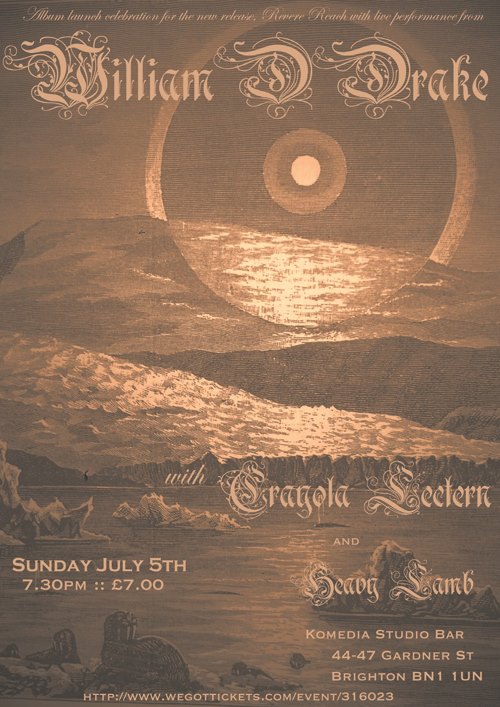
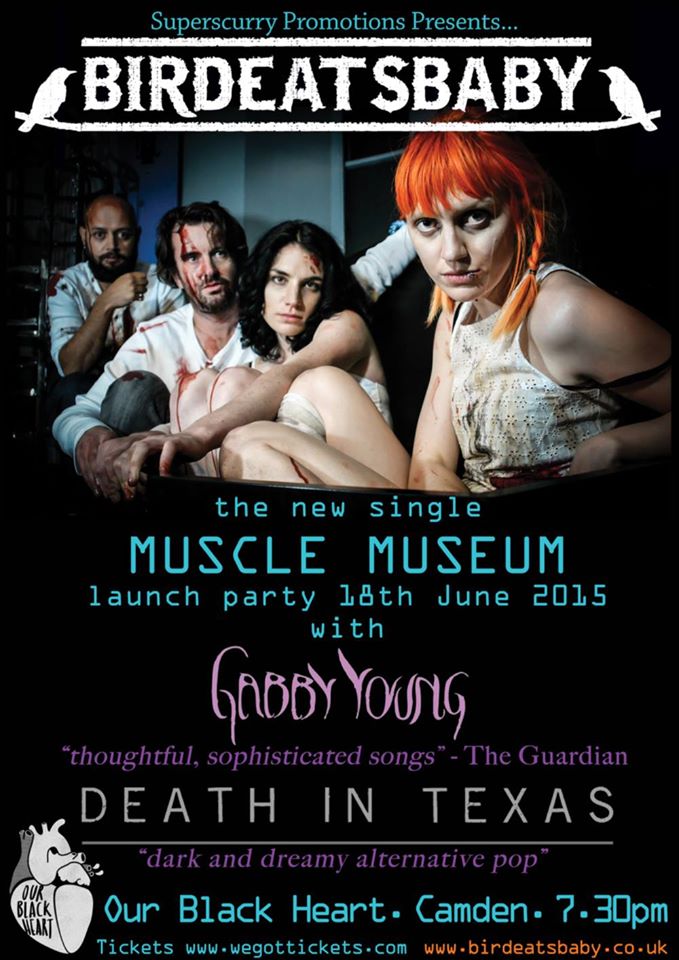
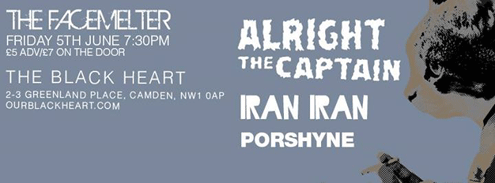
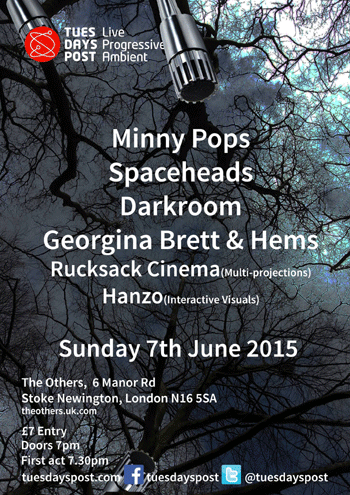

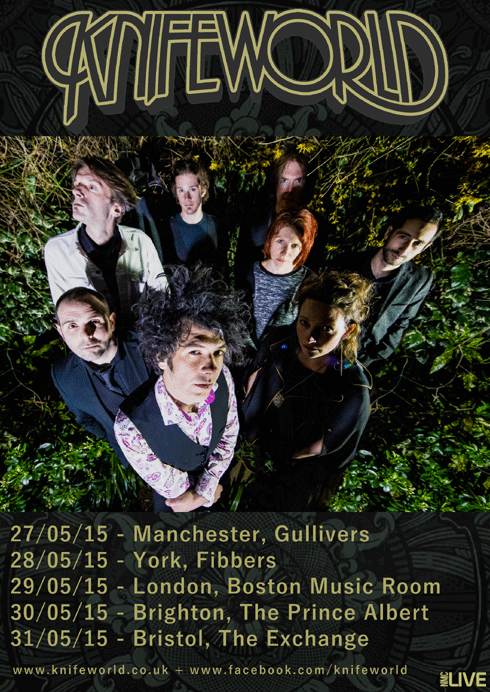
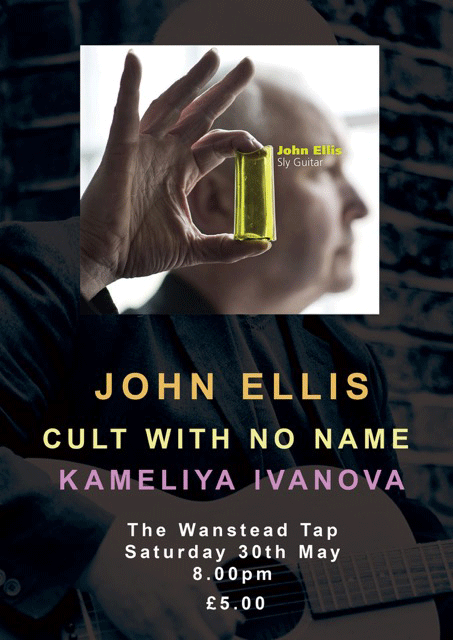

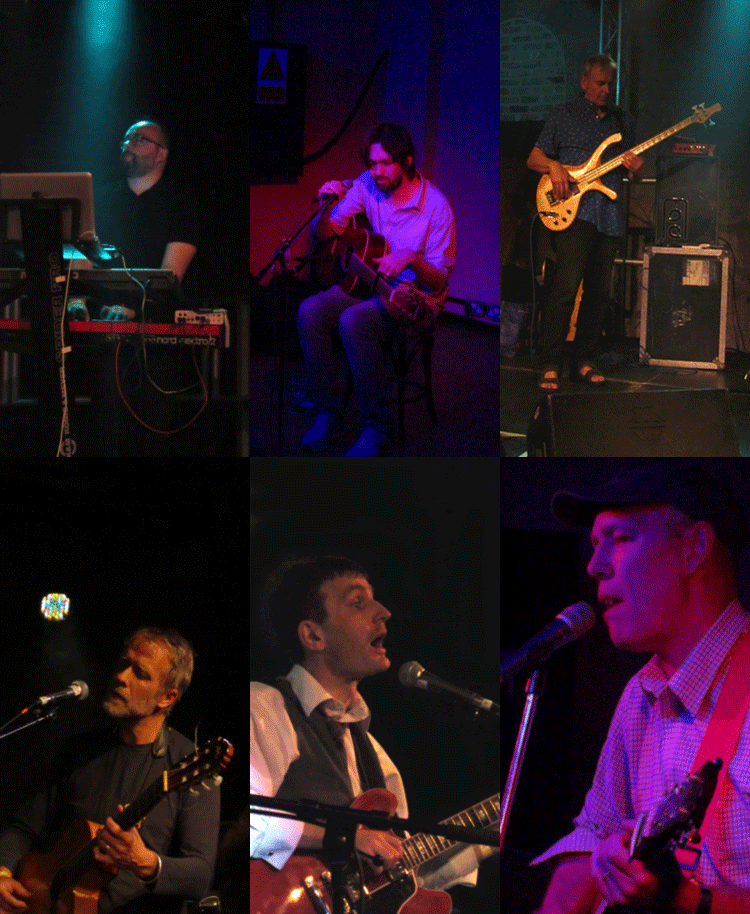

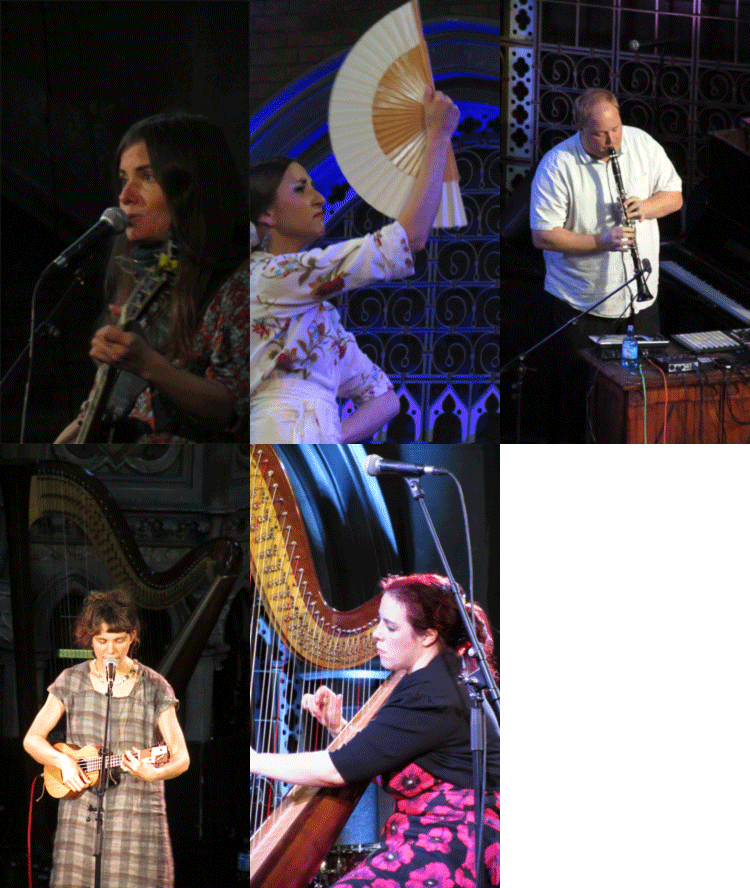
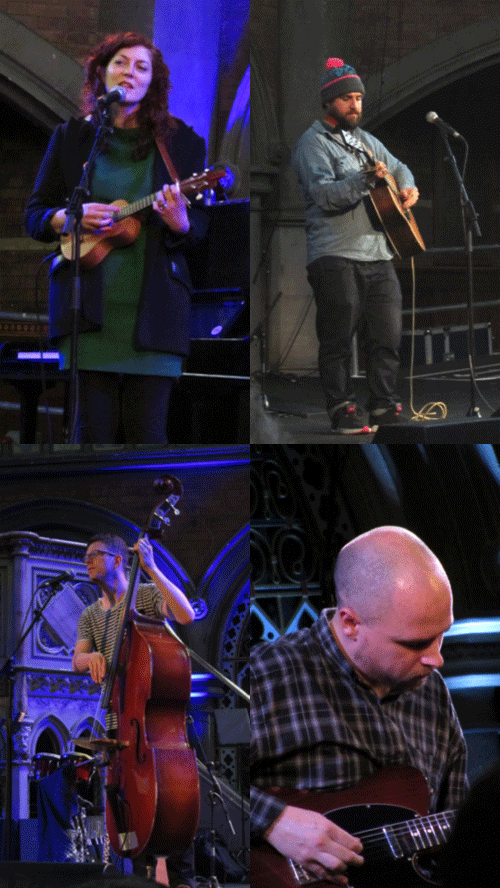
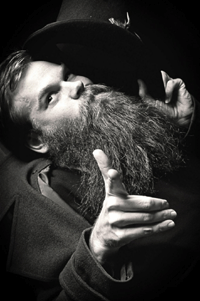





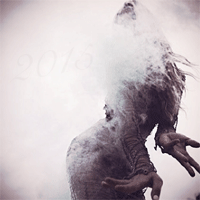


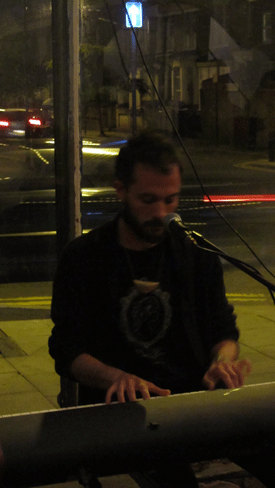






 Misfit City