Towards the middle of the month, there are opportunities to see a German kosmische pioneer playing up in the quiets of Gloucestershire, and to catch the return of Daylight Music semi-acoustica to London. Read on…
* * * * * * * *
Stroud Valleys Artspace/Resound presents
Hans-Joachim Roedelius + Andrew Heath + Christopher Chaplin The Brunel Goods Shed, Station Approach, Stroud, GL5 3AP
Thursday 15th September 2016, 8.00pm – information here and here
“Resound presents a fantastic opportunity to see a true pioneer. Hans-Joachim Roedelius – the Godfather of Ambient – is a pioneer in the field of the exploitation of electrically generated tones, sounds and noises. One of the founders of contemporary popular electronic music, he was a key player at the birth of kosmische, Krautrock, synthpop and ambient music. Onetime collaborator Brian Eno describes him as “one of the true originals of modern music. His delicate and wistful compositions seem to come from some long and secret musical tradition – like the meditations of Sufi poets, or the haikus of Zen monks.”
Hans-Joachim Roedelius
Roedelius’ collaborations with Eno, Dieter Moebius, Michael Rother and many others (in groups such as Cluster, Harmonia, Geräusche and PlusMinus) are at least the equal of the more well-known innovations of German cohorts Tangerine Dream, Kraftwerk and Can. His forty-plus solo albums are just as radical in seeking an unlikely reconciliation with the past – cross-wiring Krautrock’s brutalist modernism with an earlier strain of Teutonic enquiry, melding weird improvised electronica with folk, jazz and classical sounds to often stunning effect.
Roedelius has also worked as nurse, physiotherapist, masseur, escort of the dying, writer, poet, photo-collage-artist, producer and curator.”
Playing at Stroud’s Goods Shed for the second time (the first was in 2012), Roedelius will be joined by two of his latterday collaborators.
Andrew Heath initially came to attention as half of the ’90s ambient keyboard duo Aqueous (who recorded 1997’s ‘Meeting The Magus‘ with Roedelius) in which he was the digitally-inclined partner of quixotic analogue player Felix Jay. Following Felix’s retirement, Andrew has continued various aspects of the Aqueous project in both visual and musical forms, seeking to “introduce both the listener and the viewer, to a sonic and visual hinterland… a dreamlike state that lies somewhere between sleeping and waking.”
Christopher Chaplin spent most of his early career as an actor (in keeping with his family heritage – he’s one of the sons of Charlie Chaplin). However, his personal artistic roots are as a pianist – having studied, as a young man, under Irène Dénéréaz in Vevey. In 2005, Christopher reorientated towards work as a composer and musician, working variously on theatre music and orchestral string pieces, but also with Viennese electronic musician Kava. In 2011, he was personally chosen by Roedelius to record and remix one of the latter’s live piano sets: the results led to further collaborations including the ‘King Of Hearts’ album in 2012 and further concerts played around the world. In October 2016, he releases his solo album debut, ‘Je suis le Ténébreux’.
* * * * * * * *
A couple of days later, in London, ‘Misfit City’ favourite Daylight Music starts up its autumn season of pop, acoustica, classical crossover and electrophonic treats, all packaged up for the Saturday lunchtime crowd.
Arctic Circle presents:
Daylight Music 232: Michele Stodart + Alright Gandhi + Alev Lenz + Joli Blon Union Chapel, 19b Compton Terrace, Islington, London, N1 2UN, England
Saturday 17th September 2016, 12.00pm – free event (suggested donation: £5.00) – information
What they’ve told us, so far, about the lineup…
“Michele Stodart has taken temporary leave of The Magic Numbers to release her second solo album. Brushed with country and blues, her beautiful, intimate music will hold you close while breaking your heart.
“Alright Gandhi came together in 2014, meeting and meshing during chaotic underground jam sessions in Berlin; rather than making experimental music, they claim they’re making music that likes to experiment.
“Alev Lenz is a remarkable songwriter, composer and singer, whose music fuses filmic, world and classical influences. Her bittersweet voice and utterly personal lyrics combine with inspiring hooks that take you by surprise.
“Joli Blon are a British Cajun band, who’ll have you tapping your toes with traditional Louisiana dance tunes.”
Here’s some more upcoming September shows in London – a musical setting of First World War poems down at the Horse Hospital courtesy of parts of the Crass family, and an all-star, all-female folk meet at Kings Place to celebrate the collective indigenous folk music of Scotland and England (nice to see some fellow feeling there).
Sadly, both of these concerts are on the same night, so choices will need to be made – unless you take a good look at the timings and figure that you can make the best of both, via a gruelling sprint or rapid Tube ride between Russell Square and the upper reaches of Kings Cross…
* * * * * * * *
Penny Rimbaud recites the Works of Wilfred Owen (with Kate Shortt & Liam Noble) The Horse Hospital, The Colonnade, Bloomsbury, London, WC1N 1JD, England
Friday 9th September 2016, 7.00pm – information
A couple of notes from the event blurb:
“As part of the exhibition ‘Under The Changing Light: The Landscapes of The Somme’ (consisting of photos by Toby Webster), Penny Rimbaud recites the works of Wilfred Owen with Kate Shortt (cello) and Liam Noble (piano).
Penny Lapsang Rimbaud was born in south-west London. He is a poet, writer, philosopher, painter, and musician. He was formally a part of the performance art groups Exit and Ceres Confusion. In 1977 he co-founded the anarchist punk band Crass with Steve Ignorant, which disbanded in 1984. From then up until 2000 he devoted himself to writing. He returned as a performance poet working with Australian saxophonist Louise Elliot, as well as a wide variety of other jazz musicians as the group L’Académie Des Vanités.”
Regarding Penny’s accompanists, both Kate Shortt and Liam Noble have previous Rimbaud form. Both have collaborated with him in L’Académie Des Vanités forebear Last Amendment – itself formerly the Crass Collective or Crass Agenda performance art group, set up as a post-split arrangement enabling former Crasseurs to work together without either over-commodifying their ex-band’s name or being restricted by its form.
Liam needs little introduction to those who’ve seen his spiky, droll playing across the British jazz scene over the last two decades (initially playing with Stan Sulzmann, John Stevens, Harry Beckett and Bobby Wellins, latterly leading his own projects or collaborating with Christine Tobin). So far, Kate is arguably less well-known; but her witty multi-instrumental singer-songwriter contributions to contemporary British cabaret have drawn comparisons to both Victoria Wood and Jim Tavares. Her Crass connections, continued membership of L’Académie Des Vanités and willingness to provide more sober aspects to events like this one demonstrate that she’s by no means cocooned in the cabaret box.
As for Penny himself – a lifelong anarcho-libertarian and punk hero who was initially inspired by an unlikely literary combination of Ernest Hemingway, Henrik Ibsen and Walt Whitman – there’s plenty to say on the varied subject of Crass and his work in and out of it. This is generally handled by better counter-culture historians than myself. If you’re new to Penny (or to Crassage in general), here’s a fairly good place to start, courtesy of ‘The Quietus’…
* * * * * * * *
Kings Place Festival 2016 presents:
‘Songs of Separation’: Eliza Carthy + Karine Polwart + Mary Macmaster + Kate Young + Hannah James/Hazel Askew/Rowan Rheingans (Lady Maisery) + Jenn Butterworth + Jenny Hill + Hannah Read
Hall One @ Kings Place, 90 York Way, Kings Cross, London, N1 9AG, England
Friday 9th September 2016 – 9:45pm – information
From the Festival promotional info:
“In June 2015, ten of Scotland and England’s leading female folk musicians joined forces to explore the rich musical, cultural and linguistic heritage of the two countries. What emerged is one of the landmark collaborative folk albums of recent years, Songs of Separation.
Various Artists: ‘Songs Of Separation’
“‘Songs of Separation’ is an outstanding collaboration between ten of Scotland and England’s leading female folk musicians. Devised and recorded in just six days, on the fairytale Hebridean Isle of Eigg, the musicians explored the rich musical heritage of the two countries, drawing on their respective and collective musical experiences and crafting something both new and very special.
“Celebrating the similarities and differences in our musical, linguistic and cultural heritage, and set in the context of a post-referendum world, the work aims to evoke emotional responses and prompt new thinking about the issue of separation as it occurs in all our lives. The collection of traditional and original songs aims to get to the heart of what we feel when we are faced with a separation; linking us both to previous generations who shared the same human experiences and responses to separation, and to generations that will follow. The horizons of the project are already evolving and speak as much about connection, as they do about separation.
“The album was launched in January 2016, with a sell-out tour and received exceptional reviews from the music press and musicians alike. Opportunities to experience ‘Songs of Separation’ performed live are rare… and unmissable.
“A richly evocative and quietly provocative collection of traditional and newly composed songs, the artists behind this album include two of the most celebrated contemporary voices on the UK folk scene, England’s Eliza Carthy (fiddle, percussion) and Scotland’s Karine Polwart (tenor guitar, Indian harmonium); two boundary-breaking Scots, Mary Macmaster of The Poozies (harp) and Kate Young (fiddle); Hannah James (accordion, percussion), Hazel Askew (flute, melodeon, harp) and Rowan Rheingans (banjo, fiddle, viola) from the award-winning English ensemble Lady Maisery; Jenn Butterworth (guitar) and Jenny Hill (double bass), brilliant backline players who have worked across both the English and Scottish trad scenes; and Hannah Read (fiddle, guitar), a New York-based musician and singer who spent much of her childhood on the Isle of Eigg.”
This is the last ‘Songs Of Separation’ concert of the year, with previous 2016 performances having occurred at assorted festivals (Celtic Connections, Dumfries and Galloway Festival of Arts, Cardiff’s Festival of Voice, the Cambridge Folk Festival) as well as shows in Edinburgh, Stroud, Didcot and Bury. The project is ongoing, with recent developments including onstage collaborations with schoolchildren and mythology-inspired plans for field recordings, among other ideas.
A couple of imminent shows in or around jazz (and in or around London and Birmingham)…
* * * * * * * *
Way Out West presents:
The Mike Outram Trio The Bull’s Head, 373 Lonsdale Road, Barnes, London, SW13 9PY, England
Wednesday 7th September 2016, 8.30pm – information
Possessed of a boisterously convivial and adventurous set of guitar tones (as well as a spontaneous but eminently accessible creativity), Mike Outram is one of a number of contemporary electric guitarists who define themselves via the act of music rather than the reinforcement of genre. Although jazz enthusiasts will rightly admire him for his work with Nikki Iles, Tim Garland, Theo Travis’s Double Talk and Billy Bottle & The Multiple, Mike learns from and adds to whichever situation or artist he works with outside of jazz, be it soul pop with Carleen Anderson, latterday prog fusion with Steven Wilson or the classical/soundtrack work of composer Laura Rossi. As well as pursuing a serious, thoughtful sideline in bass guitar playing – something which he’s come to take as seriously as his guitar work – Mike’s a teaching professor at several eminent colleges, and the instigator of Electric Campfire, an online music course which has rapidly billowed into a musical community in its own right.
Though this gig is billed as being Mike’s trio, it actually stems from a partnership of equals, and predominantly from a 2010 album called ‘Invenzioni’, a set of improvised duets between Mike and eclectic alt.fusion bassist Steve Lawson. A committed solo performer since 2000, dedicated to presenting bass guitar as a standalone instrument, Steve has also been an enthusiastic and garrulous collaborator. His conversational fretless bass tones, Kaoss Pad rhythmic experiments and panoramic swathing loopscapes have meshed with a wide variety of partners from pianists, saxophonists, singers and drummers to electric kora players and a range of other amenable solo bassists. His own relaxed attitude to genre has resulted in a musical voice which strolls from place to place, touching on points from smooth-hipped jazz to art-rock, slick pop to noisy improv, dance electronica to ambient-aquatic sound painting, but never being tied down to any of them.
The final member of the trio is Emre Ramazanoglu, a multi-genre drummer, programmer, writer and producer who generally works (semi-invisibly) behind the scenes in the music industry, at the points where high-level musical chops, cunning production ideas and rapidly-evolving technology mesh with contemporary pop music production and bespoke event soundtracks. In between the demands of catwalk and chart, he fits in more esoteric, less overtly commercial work such as writing and shaping new records for reggae stalwarts Trojan, playing the Adrian Sherwood/remixological role on Martin France’s Spin Marvel jazztronica project, and co-running quirky sound design outfit Rattly’n’Raw. However, Emre originally came to London as a highly skilled jobbing drummer, and this gig gives him the opportunity to work with his original talents (although you can also expect him to blend in something of what he’s learned since that time, and probably to come armed to the teeth with portable rhythm and sound-shaping technology).
You can hear the basis of this particular strand of music – albeit minus Emre’s drumming – on the five tracks of ‘Invenzione’, in which Mike and Steve float thoughtfully down a stream of jazz-tinted ambient invention (echoing at points David Torn, John McLaughlin, Jeff Beck and perhaps a little Sonny Sharrock or Bill Frisell, but most often themselves) carrying out a loose, gently shaped conversation like two old buddies. I’m guessing that throwing Emre into the mix will probably pick up the relaxed rhythmic threads of this project, jerk them taut, and reign them back towards a purer jazz pulse; or something more along the lines of Mike’s skitter post-jazz-rock improv trio Snow Giants. The trio promise “an evening of world-class improvised music”: judging by the personalities involved, it’ll probably be laced with bonhomie, humour, informality and a general sense of being off the leash while not being too precious about it.
* * * * * * * *
A few nights later, Steve Lawson will be throwing an album launch show in his adopted hometown of Birmingham (and his adopted home venue Tower Of Song), and everyone’s invited.
Steve Lawson & guests Tower of Song, 107 Pershore Road South, Kings Norton, Birmingham B30 3EL, England
Sunday 11th September 2016, 8.00pm – information
The album in question is ‘The Surrender Of Time’ – Steve’s fifteenth work of bass, loops and effects, and his second of 2016 (following this summer’s defiant, sometimes heartbroken album of instrumental reflections on the EU referendum). Out on September 5th, early copies of ‘The Surrender Of Time’ will come with a download of a side project, a single twenty-two minute track called Colony Collapse Disorder, Judging by the ‘Surrender Of Time’ excerpt below, Steve’s music is getting ever more unclassifiable at the edges: in this case glitchier, his bass shrouded and layered with drum effects and hard-rock distortions, with elements of experimental techno pulled apart and deliquesced by his jazz instincts.
You could read various things into this, including Steve’s increasing and frequently voiced disquiet at the fissile, wasteful and irrational state of the world (away from his bass, and frequently while still holding it, he’s a broad and assertive social media commentator, a vocal soapboxer and an outspoken humanitarian). Given that Colony Collapse Disorder is named after an inexplicable disintegration of bee colonies (and is variously and speculatively blamed on various causes including long-term pesticide effects, habitat destruction or ill-advised changes in beekeeping practises) you could see some of this recent work as moving into angrier, more sorrowful metaphors. But I’m speculating – and you certainly shouldn’t attend the gig expecting to see a man collapsed and sobbing over his pedalboard. Judging by the tone of most Lawson gigs, this will be puckish, celebratory, familial and musically immersive: and, at root, based around shareable melodies.
Steve promises “a fun night, plenty of hang time, maybe a special guest or two.” I reckon that it’s a pretty safe bet that his singer-songwriter wife Lobelia Lawson will be among the latter, but since Steve’s address book and musical dance-partner card stretches across a wide range of people from Michael Manring to Kristin Hersh via Cleveland Watkiss, Jon Thorne, Theo Travis and Daniel Berkman (and since he’s generally happy to play alongside whichever instrument and musician comes onstage with sufficient skill plus an open mind), expect anything.
Here’s some info on various upcoming shows from London to Leeds, with hip hop as the binding element in common. (Though what you’ll actually get stretches as far as ambient bass guitar soundscapes, spoken word and – on one occasion – some suspect sweary bird impressions.)
* * * * * * * *
Following a stint at the Edinburgh fringe, left-field rapper-poets Sage Francis and B. Dolan start to take their ‘Strange Speech, Famous Development’ spoken-word show on tour around selected venues in England. Roll the blurb:
“Sage Francis and B. Dolan are two internationally renowned hip-hop lyricists & spoken word poets – dynamos touted for their lyricism, activism, humour & performance art – with oddly parallel stories. Without prior knowledge of each other, both were born & raised in Rhode Island, where they developed an unlikely love of hip hop music. Although they grew up only one town apart from each other, they didn’t cross paths until 2002 via the Providence Poetry Slam. Each moved to New York City in search of the art-form, stumbled into the spoken word scene and developed a knack for razor sharp lyricism and stagecraft.
“Noted as one of the most articulate and broad-focussed of underground MCs, Sage came to widespread media attention in 2001 after his song ‘Makeshift Patriot’(which critiqued the behaviour and language of American media during, and immediately following, the September 11 attacks) became an internet hit. Though he’s released records on labels including Epitaph and Anti, he’s also seen his own Strange Famous Records grow from a late-’90s tape label releasing his own less obviously commercial material to a full-fledged fifteen artist independent.
“B. Dolan has made his own name via more than a decade’s worth of continually shapeshifting presentation, outsider perspective, and masterful execution. He enjoyed wide-spread attention for his activism in addressing homophobia in hip hop, and notably for his video single/campaign ‘Film The Police’ (which Russell Brand explored in a highly entertaining episode of ‘The Trews’.
“Although B. has been releasing records on Strange Famous since 2008 – when he made his career breakthough with the lo-fi, apocalyptic concept record ‘The Failure’ – he and Sage were working on music together as early as 2005. Several world tours later, their platonic life partnership was made official by forging a rap group called Epic Beard Men. ‘Strange Speech/Famous Development’ is the debut show that brings two legends of underground rap together on a very intimate stage. They’ll trade poems, songs, vivid stories and their now signature blend of offensive and insightful content. From personal to political and back again, the duo promise an inspiring performance.”
And here they are, drumming up business in Edinburgh…
Dates below:
The Deaf Institute, 135 Grosvenor Street, Manchester, M1 7HE, England, Monday 29th August 2016, 7.30pm – information
Mid-month, various spurs and outcrops of British hip hop make a showing in London at the Underworld for a night of rhymes, beats, and gimmicks-turned-triumphs.
Nightshift Promotions presents:
The Four Owls vs Virus Syndicate + Mr Woodnote & Lil Rhys + Bellatrix The Underworld, 174 Camden High Street, Camden Town, London, NW1 0NE, England Saturday 17 September 2016, 5.30pm – information
Headlining London crew The Four Owls might look like trim, slightly self-conscious lucha libre wrestlers lurking behind bird masks, but come out bating and striking. More lairy, scruffy hawk than owl, they certainly make a racket. A supergroup of High Focus Records solo rappers Leaf Dog, Fliptrix, BVA & Verb T, they specialise in souped-up, combative, old-school-cum-gang-surreal battle flow, echoing tumbling Wu-Tang semi-sequiturs and arcane/profane Kool Keith gabble, with additional British street lip and humour.
For the Owls, a shot of bad taste just adds to the juiciness of a spit. If you’ve got the stomach for the occasional nasty switchback, check out the outrageous braggy stack-ups and lyrical misbehaviour on ‘Much Too Much’ from back in 2011 (though its dips into shockery and the tacky sex-horror-in-the-woodz video ain’t for all tastes, to put it mildly.) But if it gets you riled up about hip hop misogyny squashing or sidelining women, the presence of Bellatrix on the bill provides a fine corrective. A onetime Boxette and award-winning world-champion beatboxer, she’s since been revealing multiple further talents – fine, jazz-inspired double bass playing; off-the-wall singer-songwriter tactics which make her sound like a West Country Björk; a knack for burbling textural synth loops and choral layering. All done live and solo, interwoven in real time, without a net. And she’s still talking about it as if it’s baby steps. What’ll she have proved herself capable of once she feels she’s fully up to speed?
Elsewhere on the bill, Manchester provides the dubstep/grime collective Virus Syndicate, who deliver claustrophobic, compelling narratives across chilly isolationist beats. In turn, Bristol offers the irresistibly peppy partnership of Lil Rhys and Mr Woodnote (the former a freestyle rapper who chatters like an engaging dancehall singer; the latter a saxophonist, EWI player and beatboxer who creates a smart-stepping one-man-band via loops and timing).
* * * * * * * *
A few weeks later, just down the road from the Underworld, Divinity Roxx will be slamming it out at the Jazz Café.
Divinity Roxx + Steve Lawson The Jazz Café, 5 Parkway, Camden Town, London, NW1 7PG, England
Tuesday 27th September 2016, 7.00pm – information
If I were to say that Divinity was Beyoncé’s bassist and musical director for two world tours, some might think that was the most interesting thing about her. I think that it isn’t. Being taken seriously as a player is good; for a female player, even more so. Being handed the MD-ship on one of the biggest shows in the business is even more of an honour – but there are plenty of yo-cat session players around who can handle that kind of thing, including plenty of female ones. Biz-wise, Divinity might be a bass player’s bass player, but there’s more to her than that, and it rolls out best in her solo work.
Playing flexible and diverse basslines, leading bands, delivering complex and confident live raps on top of her grooves, and possessing generous star quality of her own, Divinity can own a stage every bit as well as her erstwhile employer. With a repertoire already mining jazz, R&B, fusion, rock and hip hop, she can even deliver potential hits. In 2012’s ‘Get Here’, she swung old-school MC braggadocio around funk rock and a raw look-at-me stance; in last year’s ‘We Are’ she changed tack to wrap some flower-child hippy optism and civil-rights march vibes up with slick CCM-friendly gospel pop. Live, however, is where to catch her; and this month you can see her up-close before more people really start to cotton on to her. It’s only going to be a matter of time now.
For the Jazz Café show, Divinity will be joined by her musical buddy and fellow bass ace Steve Lawson. Steve’s otherworldly cinematic soundscapes, improvised live with nothing but a bass guitar, a MIDI controller and a bewildering array of pedals, have helped make him the most celebrated solo bassist in the UK. Since he’s also willing and eager to chat the legs of a fieldful of donkeys, it’ll be interesting to see what his daffy, teasing wit (and glammy dress sense) bring to the occasion. It’ll probably be like Ross Noble crashing a Neneh Cherry gig… assuming that Ross then went on to treat you to a set of tunes like Bootsy Collins, Pat Metheny and Boards of Canada all playing a convivial pass-the-parcel with Robert Fripp’s stage rig.
Steve has another couple of British gigs earlier in the month, which I’ll plug during the next jazz gig update in a few days’ time. If you can’t wait until then, click here to get the info direct from the source, and click here to read more about Steve from what’s been splashed across this blog over the years. Meanwhile, here he is busking in Frankfurt – in a jazzy mood, and without his usual wall of effects.
Wildly experimental Oldham songwriter and multi-instrumental pop wizard Kiran Leonard (who comes across on record as a latterday Todd Rundgren, but who shows more of his affinity with loose-limbed avant-garde noise rock when playing live) is out on another English mini-tour towards the end of the month.
As before, Kiran’s taking out his freeform power-pop quartet of himself, Dave Rowe, Dan Bridgwood Hill and Andrew Cheetham, but he also seems to be expanding his touring circus of Manchester music, as burbled below…
“Boy am I excited for this… If that wasn’t enough to make me grin like a fool from ear to ear, we’ll be joined by Manchester’s finest Nick Ainsworth, almost known as Secret Admirer! accompanied by some sort of incomprehensible supergroup (“the stunning Cheeseman” logging two sets a night behind the kit, Edwin Stevens aka Irma Vep on bass I think, Aldous RH on keys, the legendary Jon Collin on guitar!? what!?! and that’s not all ! Sweet Williams w/ us in Brighton ! Early Ghost w/ us in LDN! DUDS w/ us in Manchester! Mint jamz wall to wall woooowwwwww. Alright? So come and see!”
Full tour dates:
The Louisiana, Wapping Road, Bathurst Terrace, Bristol, BS1 6UA, England, Monday 22nd August 2016, 7.30pm (with Secret Admirer) – information
The 100 Club, 100 Oxford Street, Soho, London, W1D 1LL, England, Wednesday 24th August 2016, 7.30pm (with Secret Admirer + Early Ghost) – information
The Deaf Institute, 135 Grosvenor Street, Manchester, M1 7HE, England, Friday 25th August 2016, 7.00pm (with Secret Admirer + DUDS) – information
The Trades Club, Holme Street, Hebden Bridge, HX7 8EE, England, Sunday 27th August 2016, 8.00pm (with Secret Admirer + Felka) – information
I’ve dredged up some of the usual support band aural evidence below –
the faux-West-Coast post-punk surfings of DUDS (complete with bobbing reminders of Syd Barrett and Link Wray), a little of Sweet Williams’ deep-blues/dream pop hybrid (from their upcoming new album in September), a delightful twangy chunk of Early Ghost’s grand and well-made pop, and a shot of the bewildered/bewildering world of Secret Admirer.
Possibly due to late scheduling, Kiran hasn’t mentioned Felka, the striking young Keighley-based folk duo who are joining in at the Hebden Bridge show. Here are a couple of videos of Felka’s Rose and Tanisha at work, showing off their sharp-witted folk storytelling with its dips into country, blues, and even Elizabethan catches.
I think I’ve previously described the Boston Music Room – one of my own local venues – as London’s current home of prog. If so, the Lexington, down in the hinterlands between Kings Cross and Angel, is making a good showing as a second home. Two imminent shows reinforce that reputation, making next week a good one for London’s prog village.
* * * * * * * *
Resonance, in association with Prog Magazine and Orange Amplification present
The Gift + We Are Kin + Tiger Moth Tales The Lexington, 96-98 Pentonville Road, Islington, London, N1 9JB, England
Sunday 7th August 2016, 6.30pm – information here and here
The name that’s missing from the promoters’ line-up above is Bad Elephant Music: London’s ever-industrious cottage label for various types of prog, and home for two of the acts on the bill. In some respects, this is a shuffled and re-run of a similar gig back in February, in which The Gift’s mix of symph/prog/folk grandeur plus flashy AOR (and We Are Kin’s exploration of art rock shapes and northern English socialism) lined up with a pair of one-man bands in the shape of steampunk balladeer Tom Slatter and troubadour rocker jh. Now The Gift are back, and so are We Are Kin, with only the choice of one-man-band changed. Here’s the official blurb from the Elephant:
“The Gift, fresh from their triumphant performance at An Evening Of Bad Elephant Music, will be headlining the event, bringing their own particular brand of symphonic progressive rock on stage. The band is currently working on the followup to 2014’s ‘Land of Shadows’, and may well be previewing a song or two here.
“Making the journey down to ‘that London’ all the way from Manchester, We Are Kin will be playing a selection of songs from their new album, ‘The Waiting Room’, as well as from their acclaimed debut, ‘Pandora’. Their twin vocal lineup wowed the audience at Abel Ganz’s Christmas party last year, and is sure to be a highlight of this event.
“Tiger Moth Tales is the brainchild of Pete Jones, who will be performing solo for this event. His live shows have been widely acclaimed for their virtuosity, emotion and huge sense of fun. Pete’s two album releases ‘Cocoon’ and ‘Storytellers Part One’ will both be represented in his performance, and he may well throw in one or two cover versions of the prog classics!”
Just one final note – the gig’s a fundraiser for Macmillan Cancer Trust, emphasising a community that’s broader than just the prog one.
* * * * * * * *
The David Cross Band (with special guest David Jackson) + Richard Palmer-James The Lexington, 96-98 Pentonville Road, Islington, London, N1 9JB, England
Tuesday 9th August 2016, 7:30 pm – information here and here
Despite nearly five decades in music, David Cross is still best known for his contributions to three albums at the start of his career. During a two-year early-‘70s stint with King Crimson (incorporating ‘Starless And Bible Black’, ‘Larks’ Tongues In Aspic’ and ‘Red’) David added “delicacy, and wood” to what some consider to be the band’s finest incarnation – part proto-punk-Mahavishu Orchestra, part stately electric-classical chamber group, and part droning/clattering/blaring building site. In its relatively brief and always restless lifespan, this particular Crimson lineup lay athwart the path of progressive rock, heavy metal and European improvisation like a splinter-ridden sleeper across the tracks: innovative, stern and ornery.
David’s amplified violin was a key part of the band’s powerful Euronoise, bringing in evocative melodies and moods which varied between Roma scurries, fall-of-Rome dramatics, foggy drones and angry squeals. As was the case with many of the departures from Crimson, David’s was passionate, painful and galling: progressively swamped by the band’s incremental climb towards avant-rock brutality, he was eventually forced out by its bruising, bristling volume and the implacable battering of its rhythm section. It took a few decades for him to salvage a more cordial relationship with Crimson leader Robert Fripp: nonetheless, the reconciliation has led to a return to the large extended Crimson family including guest spots and latterday Soundscape duets as well as recent “electric chamber music” with Crim-connected composer Andrew Keeling.)
Immediately after Crimson, though, David had to follow a different winding path of his own. From mid-‘70s work with trans-Manche psych/prog/fusioneers Clearlight (and experiments with big-band improv whilst leading the sadly undocumented Ascend) he went on to a long learning process during which, by his own admission, he failed at jazz. On the other hand, he successfully honed an affinity with alternative improvisation and with other forms. Theatre, in particular, proved to be a natural home, with David working up on stage and behind the scenes as well as in the pit band or composer’s slot. Theatricality also bled through into his other musical work. A trio he formed with keyboard player Sheila Maloney and saxophonist Pete McPhail took to the arts centres to perform musical interpretations of Samuel Beckett plays, while from the turn of the 1980s David was carrying out interdisciplinary performances with dancers, painters and the like (something he’s continued up until the present day).
After a decade away, a return to fusion and avant-rock in the late 1980s saw David becoming a keystone of Geoff Serle’s Radius band; an interesting, if airlessly pastoral, British answer to Material’s electro-funk. He was also a quarter of one-shot project Low Flying Aircraft, in which he joined forces with Crimson-orbit jazz pianist Keith Tippett, drummer Dan Maurer and budding teenaged guitar whiz Jim Juhn in a leaf-storm of nervy electroacoustic frenzy and scattered early sampler sputters. (For my money, it’s probably his most interesting post-Crimson bandwork to date.). He’s stayed busy ever since – this year, for instance, saw the release of violin-and-electronica duo album with Sean Quinn of Tiny Magnetic Pets, plus a live album from Japanese dates in which he guested with Crimson spinoff trio Stick Men.
All of this suggests the work of a musician whose reputation should be broader and better respected. It’s probably only the taint of grand prog – and of the “wrong kind” of fusion – which keeps him from it. In experimental rock (or, more accurately, in the media commentary which covers it, particularly on the British side) there still seem to be very clear, if dubious and snobbish, rules about who’s allowed credibility, and why. It’s not easy to escape from those fencings; and without this side of his history, David might have had his due.
For better or for worse, David’s most enduring project has been his own David Cross Band. Anchored since the mid-’90s by cohorts and co-composers Mick Paul (bass) and Paul Clark (guitars), it displays his electric violin – by turns stately, romantic, gnarled or locustlike – coursing fluently over a grandiose, detailed bed of prog pomp, deep metal, and flaring jazz-rock gestures. This year, however, the band’s taken an intriguing and strategic left-turn. With their latest album ‘Sign Of The Crow’ barely out of the gate, they’ve unexpectedly replaced keyboard player Alex Hall with veteran avant-prog sax hero David Jackson, once of Van Der Graaf Generator.
David Jackson in full 1970s effect (photographer unknown)
Musically adventurous and visually iconic, Jackson spent his Van Der Graaf years festooned with multiple instruments, blowing double-horn brass sections through brain-buggering electronics and being described as “a Third Reich bus conductor”. Since then, he’s spent much of his time working on the gesture-to-MIDI Soundbeam electronic project (bringing out the musicality of disabled children) while sometimes venturing out for gigs on the strength of his experimental rock reputation. Since crossing paths with David Cross at one such gig in Verona years ago, Jackson has been one of his frequent improvisation partners, making him an overdue natural fit for something like this. Regarding their chemistry, here’s a lengthy fly-on-the-wall video of the two of them playing (alongside Yumi Hara and Tony Lowe) at a release show for the Cross/Fripp ‘Starless Starlight’ album of Crimson-inspired Soundscape duets. Covering the show from rehearsal to performance, it hints at some of what the Cross/Jackson duo might be bringing to bear on the band shows; something which might well be transformational, pulling the band up and out of its shiny prog-metal box and perhaps delivering David Cross some of the broader respect he deserves.
The new Cross Band lineup, completed by Space Cowboys singer Jinian Wilde and by poly-disciplinary drummer Craig Blundell (who displays a heartening taste for post-dubstep playing when people let him off the prog leash), made their live debut in Wolverhampton last month. While no videos have emerged from this, there have been enthusiastic reports; and as King Crimson tours as a grand septet with a long-denied, fervently-delivered battery of archived ’70s classics, the Cross band are studding their own set with live deliveries of 21st Century Schizoid Man and Starless.
The London gig’s also intriguing in that it features a rare-as-rocking-horse-shit British solo slot from Richard Palmer-James. Originally the embattled first guitarist and wordsmith for Supertramp (a long time before they hit big at the American breakfast bar), Richard was the long-distance lyricist for King Crimson during David’s tenure and has subsequently carried out the same favour for twenty years of various Cross bands. Based in Bavaria for forty-odd years, he’s spent most of it embedded in production and writing work for German pop: since the turn of the century, however, he’s revived his original love for playing blues and country guitar. Most likely it will be this side of him that we’ll see at the Lexington on Tuesday. Still, who knows what the sense of occasion might bring out?
This week sees the start of a short British tour featuring two of the most inventive and self-propelled women in alternative rock.
Of the two, headliner Carina Round is inevitably the best known. A self-starter at seventeen, she’d made her first album by 2001 when she was twenty-two. The subsequent fifteen years have seen her carve out her own space as a persistently creative stylistic reinventor in a way that’s somewhere between Beck and Madonna, but with a gutsier and murkier undertow than either. Her songs often explore dark flashes of mind and temperament alongside wrenching declarations of desire and entanglement, which in turn have led to assorted comparisons to PJ Harvey which might have done as much harm as good.
In truth, Carina is her own woman, guiding each transformation and collaboration, and shopping from producer to producer in search of the right noise and effect for each stage. Her profile and image haven’t exactly been hurt by her additional work in recent years – helping Tool’s Maynard James Keenan to write and tour his raunchy electro-rock project Puscifer project, and exploring alt.country with the Early Winters supergroup. Five albums and various EPs into her own work has given her enough of a hoard of her own material to spread out in this year’s ‘Deranged to Divine’ compilation: touring and promoting it gives her and us the opportunity to take stock and chew it all over.
Many of the same inspirations which drive Carina also seem to drive Laura Kidd, the woman behind She Makes War. There’s a similar determination to explore and to control her work, a similar attraction to dark and brooding material with a driving alt.rock motor. If anything, Laura’s determination runs faster and harder – gaining even more control over her work by her continued cottage-industry approach (mastering as many instruments as she can in order to make the music, self-releasing her albums, directing her own videos) and gaining the admiration of the likes of Belly’s Tanya Donnelly and Levellers’ Mark Chadwick (both of whom show up on her latest record, ‘Direction Of Travel’) as well as Portishead/Radiohead drummer Clive Deamer. But I’m not trying to set these tourmates up against each other: it’s enough to be able to celebrate this solid and worthwhile pairing, and to catch what looks like a powerful no-apologies show.
Tour dates:
The Globe, 125 Albany Road, Cardiff, CF24 3NS, Wales, Wednesday 3rd August 2016, 7.30pm – information
The Hare & Hounds, 106 High Street, Kings Heath, Birmingham, B14 7JZ, England, Thursday 4th August 2016, 7.30pm – information
The Lexington, 96-98 Pentonville Road, Islington, London, N1 9JB, England, Friday 5th August 2016, 7:30 pm – information
The Louisiana, Wapping Road, Bathurst Terrace, Bristol, BS1 6UA, England, Monday 9th August 2016, 7.30pm – information
The Craufurd Arms, 59 Stratford Road, Wolverton, Milton Keynes MK12 5LT, England, Tuesday 10th August 2016, 7.30pm – information
The Green Door Store, 2-4 Trafalgar Arches, Lower Goods Yard, Brighton Train Station, Brighton BN1 4FQ, England, Wednesday 11th August 2016, 7.30pm – information
* * * * * * * *
In London, the Borderless concert series at Battersea Arts Centre continues with sadcore kings Money. In a few short years, this band have become the darlings of Britain’s wasted, romantic, beautiful people… or at least of people who wallow in fourth-generation Rimbaud and Bukowski paperbacks and flirt with the transgressive but well-worn glamours of wastrel addiction. That said, they’ve calmed down since their grand beginnings in Manchester, when they were bards of any given counterculture. Back then they were a tense four-man alliance, staging gigs which moved from celestial installations to caged cells and with Jamie Lee, their hard-drinking human-hangnail of a frontman, regularly stripping naked (as he also did on the sleeve art for their debut single – his arms straining to raise a rifle above his head, his penis spilling below, like a demented hillbilly patriarch in a final fit).
If this makes Money sound like another round of trash-kings, I’m giving you the wrong impression. Although their songs do stumble along the hinterlands of addiction and self-harm, and are frequently soaked by loss and squalor, they’re neither a straight confessional band nor a dirty-laundry act. Even when their songs toy with penny-dreadful Burroughs names such as A Cocaine Christmas And An Alcoholic’s New Year, much of the squalor is happening offstage. As both life-liver and songwriter, Jamie’s very much in the Mark Eitzel mode – a man steeped in art and literacy and perverse to a fault; too bright, skeptical and doubting to ever find a comfortable compromise. He’s simultaneously consumed by self-deprecation but blazing with bullish talent and the ruthless desire to perfect and broadcast his art. The nakedness (mostly retired by now) is simply a flag of intent, a signifier of honesty.
A Money song is usually a mixture of the skeletal and the uncontainable, couched in warm and surprisingly delicate musicality. While the band’s second album, ‘Suicide Songs’, has added extra trappings – choral parts, string sections, Indian dilruba drones – usually there’s just a starveling, swaying acoustic guitar strum or a paper-thin, stumbling piano part allied to Jamie’s edge-of-the-ladder voice: raw and gawkily romantic, explosively frail. What’s remained consistent is the band’s alcoholic lucidity and welling, rumpled romanticism.
I’ve mentioned Eitzel and Burroughs, but there are also echoes of Jacques Brel, of the declamatory cries of Mike Scott with the early Waterboys; of Daniel Johnston’s fall-apart songs; of Anthony Reynolds’ bohemian booze bleakness or Fyfe Dangerfield’s crane-fly sprawl. Also somewhere in the mix are Irish balladry (whether via pure routes or Shane McGowan’s backstreets), the post-Cure Gothic romance of Arcade Fire; of The Blue Nile’s blend of crooner romance with hints at terrible emotional damage. Like the latter’s Paul Buchanan, Jamie sometimes seems to be trying to sing songs of love and faith against an encroaching, dissolving darkness. Unlike Buchanan, he doesn’t deliberately wring through the inadequate rags of pop clichés, desperate to squeeze out the juice of real inarticulate feelings; instead he sifts through detailed layers of metaphor, memory and bleak reality to create a fragmented composite of how life is in the dark corners which he frequents.
The Borderless gig features “special guests” who, a few days before the event, still haven’t been formally confirmed. It’s tempting to think that Money will fill this ominous gap by trawling up some terrifying fellow spirits at the last minute, via chance encounters at a random pub…. but let’s wait and see.
GOAT Music and Battersea Arts Centre present:
Borderless: Money + tbc Battersea Arts Centre, Lavender Hill, Battersea, London, SW11 5TN, England
Wednesday 3rd August 2016, 8.00pm – information
In between appearances at the WOMAD and Supernormal festivals, Georgian saz player and singer Aşıq Nargile is embarking on a three-date British microtour in August, calling in at points in Scotland, Yorkshire and London.
In case you’re looking at the picture and thinking (lazily) “another girl folk singer”, it’s worth noting that “Aşıq” is an honorific, not a forename. It denotes a particular type of traditional Georgian bard, multilingual and mobile, who travels through the country’s diverse regions as vessels for music, news, concepts and culture both old and new. (A little like a Caucasian version of a West African griot, although perhaps without the satirical upsetter elements).
Originally from the Georgian capital of Tbilisi, Nargile Mehtiyeva has carried the cosmopolitan traditions of her home town with her, but has chosen to base herself in the southern Borcali region. For the moment, she’s the only female aşıq at work there. A trilingual singer and player of the saz lute since her mid-teens, she’s now both a teacher of the traditional forms and (via the Sayat Nova initiative) an ambassador for Georgian culture. Her concerts involve interlocking musicality and literacy – a “vocal recital of epic folk poetry (in) Azerbaijani, Georgian, and Russian… by turns ecstatic and deeply expressive… interspersed with bursts of virtuosic, highly ornamented saz.” in the shape of “moving laments or upbeat folk dances.” For those who don’t speak any of those languages, the shows are still musically sensual experiences – propulsive and silvery cascades of wiry stringwork, accompanied by a vocal like an elastic lassoo and the stately assurance of someone backed up by a couple of thousand years of heritage.
Tour dates are as follows:
The Old Hairdressers, 23 Renfield Lane, Glasgow G2 6PH, Scotland, Tuesday 2nd August 2016, 7.30pm (supported by Tut Vu Vu + Muldoon’s Picnic) – information
Delius Arts & Cultural Centre, 29 Great Horton Road, Bradford, BD7 1AA, England, Wednesday 3rd August 2016…. (+ support act t.b.c.) – information here and here
The Forge, 3-7 Delancey Street, Camden Town, London, NW1 7NL, England, Thursday 4th August 2016, 7.30pm (with Heather Leigh) – information
While the Bradford gig is solo, the Glasgow show sees Nargile playing as part of a splendidly adventurous and diverse triple bill alongside two very different Glaswegian groups who have next to nothing in common bar their musicality.
Despite their cosy and informal appearance, a name that comes from drunken Irish misadventure, a repertoire reaching from “the sublime to the ridiculous” and their emphasis on fun and friendship in singing, acapella group Muldoon’s Picnic unites a number of very dedicated and talented Glasgow-based singer and scholars. Its six or seven regular members (not least in-house arranger Katy L. Cooper) have already made their mark in a brace of other vocal ensembles – Trembling Bells spin-off Crying Lion, Glasgow Madrigirls, The Four Hoarse Men, Voicebeat, Voicemale, Sang Scule, and “barbershop-prog” group Honey & The Herbs – plus more church, chapel, cathedral, workplace and community choirs than you could shake a stave at. As for that repertoire, it embraces gospel, shanties, Scots ballads, English carols, Afro-American spirituals, sacred harp songs, Victorian parlour music and music hall songs and assorted pieces cast up and circulated by the world music movement. Where other choral groups dabble, this one delves. The songs are sung not just in English but in other tongues of the British Isles (Scots Gaelic, Cornish, Manx and Welsh) and further afield: Breton, southern African Sotho, Ugandan Luganda and eastern European languages (Bulgarian, Croatian and Georgian – in the latter’s polyphonic music, they touch base with Nargile.)
The third act on the Glasgow bill, Tut Vu Vu, play their dark-browed and looming electrophonic instrumentals in a cloud of disinformation. When someone compares them to Anaïs Nin and David Lynch and they claim that it’s all a misunderstanding; someone else mentions musique concrète and they respond with askance, amused looks. When given the chances to set things straight, they deliver misleading mission statements filled with science fiction technogabble about phased plasma and hydrogen sulphide. What’s demonstrably true is that they’re an alliance of Glasgow art-punks who’ve already been around a decade’s cycle of experimental groups – Iban Perez in The Sparkling Shadazz, Rags & Feathers and A Rhythmtic) Raydale Dower, Matthew Black and Jamie Bolland in rattling theatricalists Uncle John & Whitelock.
Expect something of an oblique and inscrutable wall between the quartet’s current work and their previous brainy trash-lungings. A band apparently in search of a new dialect (while drawing on assorted shredded utterances from Krautrock, Beefheart, ‘90s rave or ‘80s arsequake) a typical TVV track can be a bizarre collage of muffled falsetto wails and feedback drones, of layered tribal toms and analogue-synth bass-farts, of approaching-horns guitar shapes; all of which is cunningly and immediately sculpted for maximum enigmatic impact, rather than being tossed out of the speakers for someone else to sweep up.
In London, Nargile is playing a double header gig with Heather Leigh. One of the most unconventional pedal steel guitarists in contemporary music, Heather belies her traditional country music heritage (a West Virginia birth, a descent from coal miners) and instead reinvents both her instrument and her voice as a conduit for strange and ghostly improvisations. Aided by cruel amplifier tones and strange, skittering, instinctive hand techniques, her compositions emerge like spectral possessions of strings, pedals, larynx and language. Often touching on themes of trauma, abuse and hidden, subjective experience, Heather’s eerie and disturbing work has already led her to collaborations with Peter Brötzmann, Jandek, Thurston Moore and plenty of others since her emergence in the 1990s.
* * * * * * * *
August also sees the start of Borderless, a delightfully rambling live music series at Battersea Arts Centre running roughly parallel to the Olympic Games in Rio. Run in collaboration with GOAT Music (set up last year by former Roundhouse music bosses David Gaydon and Lou Birkett) it aim to showcase “the UK’s best homegrown talent and unique artists from around the globe, in the intimate and beautiful setting of the Council Chamber… Borderless will provide an alternative cross-cultural celebration. Samba to tropical beats, dance to Afrobeat legends, skank to reggae and let the new generation of jazz take you to another place. Break down the borders and shuffle your feet to global rhythms to hear the biggest tunes from all over the planet. We’ll also provide a platform for the freshest artists and exciting talent currently taking the UK by storm. Hear the artists sound tracking the underground scene, dominating the airwaves and paving the way for the alternative UK music scene.”
Glad to hear it. Bring it on. What do you have?
GOAT Music and Battersea Arts Centre present:
Borderless: Hackney Colliery Band + Bring Your Own Brass Battersea Arts Centre, Lavender Hill, Battersea, London, SW11 5TN, England
Tuesday 2nd August 2016, 8.00pm – information
Hearing about Hackney Colliery Band initially caught me between hackles and chuckles. For a moment, I thought it was about taking the piss out of a great and still-living industrial British art form while cynically attempting to replace it. After all, when there are still genuine colliery bands maintaining the tradition across old mining heartlands from Tyneside to Derbyshire, Shropshire to Leicestershire and the Rhondda Valley (and dotted across the Yorkshire pitscape from Grimethorpe to Dinnington, Frickley to Queensbury) why would you want to substitute them with a slick London parody? On the other hand, my sense of the absurd soon kicked in – since Hackney’s been sprouting all kinds of cartoonish artisan features for the past decade (from craft beer to boutique muffins and shoes), why not an ersatz coal mine?
As it happens, HCB have got little to do with any of this. The name’s a little dab of post-modern British showbiz and the band (excellent, by the way) don’t stick to the grand dignity and mournfulness of colliery music, being more of an omnivorous brass beast immersed in and rejigging a variety of horn-party traditions from jazz, r&b, funk and others, including New Orleans tunes from both fun and funerals. Much the same can be said of the support act, Bring Your Own Brass – a band who, as “up-and-coming brass hip-hop ripsnorters”, have been known to parp out a Rakim cover or two. If this makes them sounds like a novelty act, they aren’t. Sound and vision reveal them to be well-scrubbed, well-studied white disciples of a wide span of styles, clambering over Afrobeat, rap, funk and marching-band ideas with head-bopping panache.
Recently, both bands seem to have cornered the market in boutique festivals and showbiz event (between them they’ve got Olympic Games and Brit/Mercury award appearances under their belts, as well as shows at Ally Pally, with slots at Wilderness, Stow and Meatopia to come later in August for BYOB and a hefty European tour for HCB). HCB’s previous set at the MOBO awards suggests that they can impress at a formal roots level as well, unless it was a case of contacts trumping authenticity. Just as long as bands like these aren’t crowding out bands like Kokoroko; although BYOB’s teamup with Bristolian rapper and slam poet Solomon O.B (see below) suggests that, as far as fellow musicians are concerned, there aren’t any practical or philosophical problems.
It’s nice to have a ‘Misfit City’ premiere once in a while. This is the brand new video clip for The British Road, North Sea Radio Orchestra‘s cover version of a Robert Wyatt song. It’s from NSRO’s new album ‘Dronne’ which is coming out on the band’s own label The Household Mark on 9th September. The song itself will be out as a download single on August 5th: the video’s another genius pocket production by Chaos Engineers.
Singalong time:
Those foreigners are at it again
When will they learn to fight like our men?
There’s nothing new under the mirror
And it’s time for one more bedtime story
Get beauty sleep for morning glory
How can I rise if you don’t fall?
Robert Wyatt originally recorded The British Road for his 1985 album ‘Old Rottenhat’: it’s also on the ‘Mid Eighties’ compilation. It’s part of a set of songs composed in “a conscious attempt to make un-misusable music” which was done in the face of covertly (or nakedly) aggressive right-wing politics appropriating or co-opting songs for cheerleading or for broadcast padding. The song itself is a typically cryptic Wyatt threading of oblique satire and Dada-jazz playfulness over a friendly, ever-so-slightly plaintive melody, taking glancing swipes at petty nationalism and irritable torpor as it rolls along. (If you’re weary of all of the recent Brexit sabre-rattling and bottlecough, it’s a real restorative.)
North Sea Radio Orchestra: ‘Dronne’
The NSRO take on The British Road immediately bears their own stamp. Elements are blended in from early English airs to Germanic-electronic organ haze; there are dewdrop metallophones and passionate bird-flight string parts; there’s budding pastoralism charged with bursts of motoric minimalism; and there’s a kernelled heart in Craig and Sharron Fortnam’s softened everyperson vocals, ever-so-slightly shaded by a touch of Wyatt Cockney. It originally stems from a 2014 concert night performance of Wyatt’s music for the Nuits de Fourviere Festival in Lyon, which Craig was invited to direct and arrange. As well as producing both this and other NSRO arrangements of assorted Wyattisms, the event had a profound effect on Craig’s approach to the rest of ‘Dronne’:
“Being the composer and producer has led to me having total control over all aspects of making NSRO records. This way of working is, of course, a double-edged sword, as spontaneity and inspiration can be lost under all that control. Robert Wyatt seems to tread the line between the two with great skill, incorporating lots of elements of chance into his albums. Re-working his songs while trying to maintain freedom within the arrangements has been a great inspiration while making ‘Dronne’. This record features lots of improvising which I have edited and manipulated; certain accidents within have been left intact – these elements of chance are a real antidote to the necessary microscoping and control-freakery needed to create NSRO records.”
If you’re interested, French experimentalist Pascal Maupeu recorded another version of this song six years ago, under his Mop Meuchiine alias – part grinding industrial underpass music, part Krautrock ice-cream van, part rough-edged chamber ensemble (while still finding space for a banjo). Here it is.
At short notice, here’s some quick news of a London jazz gig:
Jazz Nursery presents:
Dave Storey Trio + Rob Barron Trio IKLECTIK, Old Paradise Yard, 20 Carlisle Lane, Waterloo, London, SE1 7LG, England
Thursday 28th July 2016, 7.30pm – information
Pianist Rob Barron specializes in piano-led hard bop in the Wynton Kelly, Cedar Walton and George Shearing tradition. On this occasion, his trio is completed by double bass player Calum Gourlay and drummer Joshua Morrison: while I’ve not got anything by the trio which I can play you, here’s the showreel for Rob’s quartet (featuring himself and Joshua).
The other trio on the bill is headed by dynamic, constantly occupied London drummer Dave Storey, whose busy CV includes work with Ivo Neame, Chris Batchelor, Hannes Riepler and Mike Outram (plus, oddly enough, a stint with symphonic proggers The Enid). He leads the psychedelic-leaning woodwind player James Allsopp (Fraud, Golden Age of Steam) and the nimble young bass guitarist Conor Chaplin through a wide repertoire of jazz from ballads to driven up-tempo pieces, with an emphasis on “interaction, intensity and playfulness”. Here’s a clip of them running their way through Giant Steps.
* * * * * * * *
Last year I did a fairly exhaustive (and exhausting rundown) of the Manchester Jazz Festival. This year I didn’t (there wasn’t enough time available, and not enough people read the last post to make it worthwhile – this blog seems to work better if I’m writing about smaller events with less existing promotional push behind them). However, I thought I’d mention that a particular ‘Misfit City’ favourite is playing the festival early on Thursday afternoon.
Despite her deft improvising skills, Laura Moody‘s dynamic voice-and-cello songs don’t exactly count as jazz – they’re more of a bridge between folk music, 20th century classical technique and the complex, experimental baroque pop exemplified by other hugely talented women such as Joanna Newsom or Kate Bush. However, her inventiveness, musical excellence and sense of adventure make her a prime fit for the fringes of the festival: a sometimes vigorous, sometimes agonizingly soulful performer. Her MJF appearance is an hour-long set in the open air in the middle of town, which will at least give her the opportunity to shake the chamber out of her chamber pop. (For what it’s worth, Laura’s also playing at Wilderness Festival on Saturday 5th August, but unless you’ve already bought the package deal for that one, you’ll not get to see her, so pull a sickie and head into Manchester this week instead…)
Manchester Jazz Festival presents:
Laura Moody
Hobgoblin Festival Pavilion, Albert Square, Manchester, M2 5DB
Thursday 28th July 2016, 2.30pm – information
* * * * * * * *
Lastly, here’s me taking a moment to sidestep away from plugging gigs so that I can forward a plea on behalf of the kind of place that puts them on. A great venue, or even just a good one, isn’t necessarily the making of a town or a neighbourhood, but they make profound contributions to the fabric of a place: the sense that there’s life there instead of just grind and torpor (or, in “nicer” neighbourhoods, just a vacuous gentility). There are plenty of potential threats to places like this, many of them stemming from the fact that many of them don’t fit developers’ idea of an economic footprint (and gentrification/profiteering doesn’t only crush arts venues – see the recent righteous ‘Organ’ blast about the predatory-rent-rise-backed eviction of repair shops from the London Fields railway arches) but sometimes it’s just damn bad luck and unfriendly weather.
Arch1, a beacon of arts endeavour and local involvement in the unloved and sidelined London district of Canning Town, fell victim to the latter last month. Thankfully the venue is down rather than out – and here’s someone running a crowdfunder to help it get back up:
“Arch1 is one of the few small independent arts venues left in London and for eight years it has been nurturing new talent in music, comedy, film and theatre. We were saddened to hear that on the 22nd June this year the club was decimated by the floods, forcing this cherished venue to close its doors and depriving London of this champion of independence.
A crowdfunder campaign has been set up to raise the £20,000 needed to completely refurbish and refit Arch1. Please support new talent in the arts by contributing to this appeal, and help save one of London’s most unique and irreplaceable venues. For more information and how to donate, please click here.”
(Update, later in the day)
Ah. Um.
The bad news…
I’m late in picking up on and posting this. The crowdfunder closed on Friday last week. Embarrassing for me, but…
The good news…
They made the funding target. The venue’s been saved. Well, that’s a sparkle in the darkness.
This Saturday sees a couple of interesting pocket festivals taking place in the west and north-west of England – there’s still a chance for last-minute tickets or walk-ups for each of them.
The fifth in the series of EppyFests is happening this Saturday in Stroud, Gloucestershire. As with the previous four, it’s the brainchild of Stroud-based psychologist and music enthusiast Ian Fairholm and is a spinoff of his well-respected Epileptic Gibbon music podcast, whose remit rambles enthusiastically across “prog rock, art rock, post rock, prog metal, jazz rock, folk rock, math rock, downtempo, chill-out, ambient electronica, IDM, chamber pop, folktronica, psychedelia , neo-classical , film and TV soundtracks and experimental/avant garde music”.
EppyFest is an attempt at translating the podcast’s flavour into live music and live socializing. A well-run, self-starting pocket occasion (complete with its own T-shirts and integral dinner options) its previous events have featured ferocious British post-prog (Thumpermonkey, The Fierce & The Dead, Trojan Horse), latter prog/jazz-rock/jam acts (Sanguine Hum, Schnauzer, Henry Fool, Unto Us, Flutatious and Andy Pickford) and (in the case of Stackridge and The Korgis), a 70s prog outfit and a band of Britpop precursors sharing a last hurrah in the same body. Also in the mix has been loop guitar (Matt Stevens), classical/world chamber-fusion (Firefly Burning) and folk performers with extra ingredients stretching from neo-Celticana to chalkhill psychedelia, European electronica or Balkan jazz (Sheelanagig, I Am Your Autopilot, Tinker’s Cuss, Arch Garrison). As you might expect from a thoughtful curator married to an accomplished female musician, Eppyfest has also featured a healthy proportion of women players including bandleaders and solo artists (such as Becky Rose, Candythief and She Makes War).
Assuming that you’re not already committed to attending the Felix M-B gig down the road on the same day, EppyFest 5 looks set to carry on the tradition in fine form. (I’m jealous. I wouldn’t mind running something like that myself. It’s time to start thinking about empire, or benevolent despotry…)
The Epileptic Gibbon Podcast presents:
‘EppyFest 5’: William D. Drake + Judy Dyble & Her Band of Perfect Strangers + Marvyn B. Naylor + Darkroom (with Elif Yalvac) + Tom Slatter + Sirkis/Bialas International Quartet Lansdown Hall, Lansdown, Stroud, GL5 1BB, England
Saturday 16th July 2016 , 4.00pm to 11.00pm – information & tickets
Over the years, I’ve said plenty about this year’s EppyFest headliner William D. Drake over the years, and will probably say more. Woody-throated singer and former Cardiac; the organic keyboard wizard who turns television sets into organs; the man you might find if you went looking for the place where baroque pop meets Punch-and-Judy professor. Bill’s songs suggest a parallel English music: one in which antique pop songs on crackling wax cylinders mingle seamless with both Henry Purcell and Frank Zappa.
In his mid-fifties, and with the release of his fifth album ‘Revere Reach’, Bill’s reached a crucial point in his career, in which the jolly avuncular eccentricities of his earlier work have finally given way to the blossoming kernel of beauty within his compositions. He’s probably far too rounded a person and songwriter to entirely give into it, though. Expect the full range of glorious pastoralism and bouncy humour from a full chamber pop band including members of Stars In Battledress and North Sea Radio Orchestra.
I’ve also said plenty about Darkroom , the textural electro-morphic partnership of sometime No-Man/Samuel Smiles/Henry Fool guitarist Michael Bearpark and loop/synth/woodwind/patch-man Andrew Ostler. Over two decades Darkroom have delivered a massively underrated body of work straddling gigantic cosmic soundscapes like deliquescing Hubble images, intricate cerebral dance rhythms, broodingly beautiful guitar tones and (recently) cryptic bass clarinet and flute strands, touching upon influences as diverse as OMD, Autechre, Robert Fripp, Neil Young, Delia Derbyshire, Can and Bennie Maupin.
For this concert their polyglot electronica is augmented by a special guest, Turkish electronic guitarist Hazal Elif Yalvaç an Istanbul-based composer, musician and linguist. We’ll have to see whether Elif’s work (much of it glitching, grumbling guitartronic abstractions) brings out Darkroom’s more abstract instincts; or whether Os and Michael’s knack for direct expressiveness brings out that proggier aspect which Elif’s threatening to reveal in her forthcoming Light Curve project.
Show opener Tom Slatter also shows up in ‘Misfit City’ quite often. He’s a Victorian town-crier with a guitar and a slew of fantastical tales about monsters of air, land and sea, strange goings on in laboratories, haunted gentlemen and master criminals loose on the railways. On record he’s a multi-instrumental steampunk proggie, building himself instrumental Rube Goldberg machines (and occasionally collaborating with one). Live, he’s mostly unplugged and solo, letting his charm make up for the shortfall in instrumentation. One day he will build himself a bicycle-powered, bat-winged portable orchestrion out of old tuba piping and traction engine spares, to allow him to merge both situations. It will probably go off course and fly him somewhere horrible.
One of the prime strengths of jazz players is that they can come from anywhere in the world, meet each other for the first time and immediately speak a common improvising language of immediate flexibility. The four musicians who make up the Sirkis/Bialas International Quartet – Asaf Sirkis (drums, Israeli, Londoner), Sylwia Bialas (voice, Polish, currently a Londoner but only recently a Würzburg resident), Kevin Glasgow (bass guitar, a Scottish Londoner via Ireland, but Invernessian rather than actual Glaswegian, replacing an Englishman who originally reached the band via Australia, Scotland and the United States) and Frank Harrison (keyboards, English, surprising lack of other complications) – make more of their scattered nature than most.
With all of that in mind, you’d expect a riotous mix of cultures, making hay out of clashes. What you actually get is aquamarine almost-acoustic jazz, cupped and propelled by Asaf’s winds-of-the-forest percussion subtleties, sung in Polish or vocalese, sheathed in softness and in smoothly-flowing instrumental gestures. The lightness of touch and the Northern hemisphere reserve hearken towards both Pacific Northwestern new age and ECM atmospherics; the light-as-a-feather scatting, twirling Rhodes piano and lissom six-string electric bass suggests a hushed Kurpie version of Flora Purim’s time with Return to Forever.
While the pure, piping soprano tones of co-headliner Judy Dyble might distract you from her full story, they do tie her firmly to the 1960s folk revival. It’s a true tie, as well – teenage friendships with Ashley Hutchings and Richard Thompson led her to spend a year as the singer for the original lineup of Fairport Convention. This auspicious start was followed by a brief, obscure stint in King Crimson prelude band Giles, Giles & Fripp, a more celebrated year as half of much-touted psychedelic folk duo Trader Horne; and finally a handful of gigs in the company of Canterbury characters Lol Coxhill, Steve Miller and Phil Miller.
A gentle, often reticent character, Judy’s musicality wasn’t enough to keep her comfortably engaged with the bruising demands of the music business; and in 1973, after six years of flitting nervously in and out of the spotlight, she retired from music into a quiet life of family and library work while still barely into her twenties. Perhaps it wasn’t as mysterious or dramatic a withdrawal as that of peers such as Anne Briggs or Vashti Bunyan, but it was enough to reduce her reputation to a shadow for all except those who dug up her handful of recordings in search of half-forgotten treasure and found something that didn’t deserve to be overshadowed.
Bar a couple of flitting, fitful Fairport reengagements at Cropredy in the early ‘80s, little was heard from Judy for three decades until – widowed and empty-nested – she was inveigled back into recording by Astralasia’s Mike Swordfish in 2002. Since then she’s pursued a quiet but exploratory revival of her musicality, working in fields fromfolk-rock to trancetronica and experimental art pop, and with collaborators including Dodson & Fogg, Tim Bowness, Sand Snowman, Joxfield Projex, Fuxa and Thee Faction. Her regular home, however, is with her Perfect Strangers ensemble (mostly drawn from co-writer Alistair Murphy’s Cromerzone project) with whom she’ll be performing at EppyFest. Throughout all of this, Judy’s signature tone has remained intact – the folk sweetness, the subliminal hint at hesitancy and tremble which betrays the nerviness and unsurety which has both interrupted her career and given her work its humanity and honesty. As she heads towards her seventies, both tone and temperament have become allied to a longer perspective of value, loss and change – something which, strengthened and deepened by time, she’s grown into and fleshed out with natural experience.
Completing the bill is another, even less well-known hidden treasure. Winchester singer-songwriter Marvyn B. Naylor has been delivering music for twelve underappreciated years now. His mixture of intricate, allusive psychedelic pop songs and pulsating 12-string guitar folk instrumentals tip nods to and shake hands with inspirations including the early David Bowie, Edward Elgar, the Beatles, Joyce Kilmer, Frank Sinatra, Francisco Tarrega and Guy de Maupassant: but he’s a whole meal in himself.
* * * * * * * *
There’s just one former Cardiac on the bill at EppyFest. Technically speaking – unless it’s true that Kavus Torabi is DJ-ing – there are no former Cardiacs at The Whole World Window, which takes place on the same day as EppyFest but five counties up (in Lancashire). In spite of this the bill, spread across two stages, is suffused with Cardiacs enthusiasm. Unsurprising, since it’s the latest in a series of benefits for the band’s stroke-felled leader Tim Smith.
Greg Braysford presents:
‘The Whole World Window – A Benefit for Tim Smith’: Britney + All Hail Hyena + 7Shades + The Scaramanga Six + Sweet Deals On Surgery + Sterbus + Trojan Horse + Adam Shaw + The Jackpot Golden Boys + Sean Keefe + Ahsa + others tbc (or fibbed about) The New Continental, South Meadow Lane, Preston PR1 8JP, England
Saturday 16th July 2016, 2.00pm – information here – tickets here and here
Bellowing Scots Britney are as garish and hardcore as a fairground teddy-grabber covered in backstreet tattoos. They’re given to one-and-a-half-minute bursts of earsplitting rock numbers plastered with crumpled ice-cream-van melodies. The latter trait, something of a Cardiacs stock-in-trade, tinkles through several of the other bands on the bill – be they outright disciples 7Shades (who lovingly pillage the ornate Cardiacs style wholesale) or pyjama-clad Burley power-pop trio All Hail Hyena(who sound like Bo Diddley rocking an birthday-cake castle).
Something more grandiose is offered by Huddersfield rock bullies The Scaramanga Six. They’ve devoted twenty-one years and enormous musical flair to hammering out poperatic tunes and bursts of garage gonzo, providing tragicomic insight into the flawed and unsettled ethics of everyday men (all carried out with assured baroque brutality and gallows humour). Self-styled “noisy prog rock bastards” Trojan Horse might not be returning to EppyFest this year, but they are bringing their omnivorous Salfordian rock cocktail to Preston: a catalogue of work which plunges into swaggering ‘70’s funk, belting avant-garage moments, broad-spectrum Beatles-pop and audacious psychogeographic experiments. Power-poppers Sweet Deals On Surgery lean towards the punkier side, bucketing towards the end of a song as if it were a race, but distractedly bursting into different versions halfway. For God’s sake, keep them off the Haribos…
All the way from Italy, Sterbus (Smith/Fripp/Zappa obsessive and noblest-Roman-of-them-all) will be coming to either yomp through some of his triple-jointed proggy power pop or to play leafy psychedelic summer-lounge acoustica (which may or may not include some of his takes on Cardiacs, Spratleys Japs and other limbs of Smithiana). If he doesn’t hold up the acoustic end, rest assured that Ivan Campo frontman Adam Shaw will, as he brings along his light-touch, thoughtful folk pop for us to unravel.
The rest of the bill’s made up of bands which predominantly reflect the humour (if not necessarily the horse-laughs and art-punk prankery) of the Cardiacs world. Silly-goodtime pop culture obsessives The Jackpot Golden Boys throw assorted metal, pop and funk chops at things from TV theme tunes to geek topics and hope that a few of them stay embedded. Militant hat wearer, slide guitarist, Strumstick player, comedy yarner and genre-mash novelist Sean Keefe – brings along his own version of honky-tonk Americana.
The (known) lineup is completed by acapella singer Asha Hewitt (seen below performing with Gummo Cleyre and Alex Dickinson as Yorkshire Latin pop band Solana). Asha might be the last kind of musician you’d expect to see getting up at a Smith benefit gig; but her presence is proof positive that the happy skewed tastes of the Cardiacs audience let in all kinds of light. Once they’ve stopped cheerfully bawling for their mashed-up chord sequences, that is…
…And in the middle of the week it’s about dream pop, folk music and the margin in between…
* * * * * * * *
Our Friends Eclectic presents:
A.R. Kane + Plastic Flowers The Good Ship, 289 Kilburn High Road, Kilburn, London, NW6 7JR, England
Wednesday 13th June 2016, 8.00pm – information
This Wednesday, resurrected dream pop pioneers A.R. Kane play one of only two small, indoors British gigs while they ride the wave of worldwide summer festivals. This little London show is the guaranteed best opportunity to see them for the foreseeable future, especially if you missed their Manchester gig at the Soup Kitchen back in May (an event which, I’ll admit, I myself was too disorganised to even flag up) and especially since ’Kane leader Rudy Tambala has been enthusiastic about his preference for “a small crowd loving it, getting it” (as opposed to a fieldful of musical floating voters).
The original A.R.Kane were many things before those things became more commonplace – Afropean art-culture swaggerers, dissolvers of rock and pop’s hierarchical structures, sound-melters in whom dancefloor politics met punk threshing, electronic upsetters who played equally with roots and the bewilderingly synthetic. Rudy formed the band in 1986 with his childhood friend Alex Ayuli – two east London black kids with family roots in west or south-east Africa; a pair of eclectic clubgoers and self-confessed cocky chancers with broad listening habits, enough gab to make their brainwaves sound seductive (notably, Alex’s day job was in advertising), and a post-post-punk whim for running with ideas rather than technique. The idea of A.R. Kane was conceived as a backfiring party boast that Rudy and Alex felt obliged to follow up. Citing Cocteau Twins, the Velvet Underground, Miles Davis and Joni Mitchell as a range of influences might have been a handful of arty clichés then – it would certainly become so later. For two men who approached music as something envisaged rather than something played, however, it was a recipe for building a project from the ground up.
A.R. Kane’s work is often cited as pop reinvention. In fact, it’s more of a sprawl of jouissance – anti-formalism, a dab of abstract expressionism, and a joy in capturing moments on the fly. All of this should have been in the air when (early on in the journey) they joined forces with experimental dance duo Colourbox for the M|A|R|R|S sessions, leading to a number one hit via the British house classic ‘Pump Up The Volume’. As it happened, an experience that should have felt like a triumph of creative opportunity ended up as a bruising, short-lived encounter with hit factory frenzy, mutual intransigence and a blizzard of copyright litigation. These days Rudy dismisses ‘Pump Up The Volume’ as straight cultural theft from black and gay American club culture, but keeps a soft spot for the flipside – ‘Anitina’ (a confection of careening, planing guitar feedback and joyous narcotic pop vocal over hammering Colourbox industrial drums).
It’s this track that exemplifies ‘Kanework, rather than the pulsing plunderphonics of ‘Pump Up The Volume’. When Rudy and Alex played pop, it sounded like toy music or a process of on-the-spot discoveries. Nurtured along the way by the production suss of Cocteau Twin Robin Guthrie and Gentle Giant’s Ray Shulman (with the latter’s post-prog bass often adding a subtle touch of spine and structure to the core cavortings), A.R. Kane seemed to achieve their aims by recreating music from around its edges rather than heading up through the centre. Paradoxically, they deracinated while remembering exactly where the roots were grounded, as if rock music was a complicated hairstyle which they were ripping the pins out of, sending them rattling onto the floor.
Sometimes they’d sound like what would happen if someone had had the gall to strip all of the blues out of Hendrix’s ‘Third Stone From The Sun’, leaving just the cosmic frizz, fragmentary whippling stringwork and mind-opening vocal fragments; like a disembodied, chromatically-dappled sci-fi Afro. Ecstatic hollers might chase sleepy narratives over chamber strings. Gnarly Guthrie-esque guitar noise, hell-gate heartbooms and refracting-knife feedback would bob around dashes of funk and house (which Alex and Rudy were onto long before the Madchester boom). From Jamaica, they gleaned dub-echo bursts of clipped piano or high snare. From American psychedelia, they drew jelly-baby lyrics that bobbed around dancing synth basslines (as if ‘60s acid casualties were making healing pilgrimages to New York electro clubs). From the underground currents of their hometown, they took their conceptual irreverence, their underlying cheek and their mix-and-match mercantilism. (It’s also where they gained their hard-knocks guile and ingenuity, that second-or third generation immigrant pluck that Western city racism forces back onto even the smartest of its homeboys).
Despite all of this sonic ensorcelment, on the early albums you could (if you wanted to) cock your head, peek underneath the noise and find a couple of guys who could barely play or sing; who were keeping it all afloat via acts of will, wit and weather. Most of the time, you’d wink back at them, then return to the bliss and forget the slender mechanisms holding it together. However, by the time of their sun-kissed swansong album, ‘New Clear Child’, A.R. Kane had skilled up and drifted towards a more coherent pop music. Apparently inspired by Alex’s move to California, the later songs meandered up to both Love and Talk Talk via West Coast funk, with daisy petals matted into their nappy hair. As was only appropriate for a band driven by an elusive and amorphous ingenuity, the more A.R. Kane solidified, the more they dissolved. Alex went solo; Rudy teamed up with his sister Maggie (an occasional ‘Kane backing singer) in Sufi and for twenty-odd years, that was that.
As is often the case, the band were finally tempted back into action via the nostalgia engine which fuels pop festivals. Last year Rudy was coaxed into weaving A.R. Kane back into existence, although he had to do it without his erstwhile partner (apparently busy with his own perspective on dream pop, Alex Ayuli opted to sit this one out). 2015’s ambitious Alex-free septet has now been trimmed to the core trio of Rudy and Maggie Tambala plus new cohort Andy Taylor; a mess of three guitars, three voices, computers and synths. While they originally billed themselves as “#A.R.Kane”, with Rudy optimistically explaining that “should Alex come out-to-play, we can easily drop the ‘#’..”, they’ve subsequently dropped the hashtag anyway, along with the distinctions and (it seems) the hope that Ayuli’s “said no, gave no reasons” refusal wouldn’t be permanent.
The flipside of this disappointment is that the band’s new lease of life has inspired and toughened them into a more committed playing unit fired up by contact with both fans and heirs. Back in the ‘80s, few bands used A.R. Kane’s methodology and thinking. Nowadays you could pull together a huge, snaking, intercontinental conga line of the fuckers. One of them’s playing at the Good Ship alongside Rudy and co. – Plastic Flowers, the London-based dream pop project of Thessaloniki-born George Samaras, whose grand skeletal lushness (bare-bones drumbox echo, threaded vocal and towering ripcurls of melodic guitar noise) is an almost pure mainlining of the ‘Kane lineage.
Now a revitalized Rudy is talking, with giddy enthusiasm, about future recordings and about the new material he apparently brought to the Soup Kitchen gig the other month. (I’ve checked for reviews of that, but found nothing unless it’s been reduced to telegrammatic burbles on Facebook – being off-‘book at the moment, I wouldn’t know). We’ll have to see how his intentions pan out. With planned American coastal tours cancelled (due to date and commitment clashes rather than lack of interest), there are still a couple of showings at the Siren and Half Die festivals in Italy later in the month; and then back home for On Blackheath in September. After that, the future’s both blank and open – which, in a way, is where A.R. Kane came in in the first place.
* * * * * * * *
If vindicated dream pop discombobulation doesn’t float your boat for Wednesday, then perhaps you’d prefer a free event at Battersea’s delightful acoustic playground on the same night…
Jausmė (with Nicole Collarbone) + Sian Magill The Magic Garden, 231 Battersea Park Road, Battersea, London, SW11 4LG, England
Wednesday 13th July 2016, 9:00 pm – free event – information
Transplanted Lithuanian singer-songwriter Jausmė – Vilnius-born, but Milton-Keynes-based – will be performing a set of her own material accompanying herself on the kanklės (a twenty-nine string Lithuanian zither with a sparkling sound) and aided by Liverpudlian cross-disciplinary cellist Nicole Collarbone (whose myriad projects and collaborations include the Neil Campbell Collective and folk ensemble Sonnenberg).
Jausmė describes her work as “urban etherealism”. Translated, this seems to mean a half-invented, half-archaeological folk music (like a less grandiose, less Gothic, closer-to-the-source Dead Can Dance), and one in which the focus is shifted thirteen hundred miles northwest to the Baltic states; it also means that Jausmė listens to, and can slip into, the work of sub-bass, garage and techno producers. On this occasion, though, it’s all wood and no electronics, and the roots are northern. For evidence of what Jausmė and Nicole can do together (and of Jausmė’s skills on her own), see below.
In support is another no-less-impressive Milton Keynesian, Sian Magill, who honed her subtly immersive, highly literary folk songs at venues both there and at Oxford, where she studied English Literature at degree level. If the latter suggests someone whose work’s likely to wear its intelligence as clever English hauteur, think again. Sian’s songs draw on more distant traditions, coming across as a more Irish-toned echo of the dense, individual American song-tales of someone like Dayna Kurtz, although she sounds less likely to venture to bars on the wrong side of the tracks, or to lean quite so much into the urban blues. Instead, Sian makes her own way into a story through a quiet and continuous flow of detailed observation and consideration, atop a busy, depth-inducing weave of fingerpicked guitar (see below).
* * * * * * * *
Appalachian 100: Cecil Sharp House Choir (with Alice Cade + Pete Cooper + Ed Hicks) Cecil Sharp House, 2 Regent’s Park Road, London, NW1 7AY, England
Thursday 14th July 2016, 7.30pm – information
If you missed the Cecil Sharp Choir at the Union Chapel last Saturday (singing songs for a Daylight Music marine afternoon), they’re back on home turf at Cecil Sharp House for another show on Thursday. This time, they’re celebrating the centenary of musicologist Sharp’s first folk-song-collecting visit to the Appalachian Mountains of America, a region replete with influences from sixteenth-century England and from the tough feuding culture of the Scottish Borders, as well as (at least in the Ozark region) a great line in dirty stories.
I don’t know whether any cheerful smut is going to be reeled out at the concert (in song or in asides), but the choir are promising “a selection of glorious a capella harmony arrangements of traditional songs, including some collected in the Mountains”, in new arrangements by leader Sally Davies. Three special guests will be adding to the show- flatfoot dancer Alice Cade, fiddle master Pete Cooper and multi-instrumentalist Ed Hicks (banjo, fiddle, guitar, mandolin, Anglo concertina and voice).
Some notes previewing a Tigmus acoustic tour passing through England this coming week…
* * * * * * * *
Still only eighteen, Derby singer-songwriter Felix Mackenzie-Barrow – better known as Felix M-B – is already tipped as a future star of acoustic rock, and it’s not difficult to see why. The Jeff Buckley comparisons have come flocking, as they always do for good-looking young-white-male hopes with an acoustic guitar and a way with a commanding falsetto when they need it.
For me, though, the comparisons are a little off beam. Felix is by no means enslaved to the wail; not another in the line of anxious high-tenor clones aiming for its flaming hoops. If he has to be Jeffified, let it be for his boiling post-Page rhythm guitar with its flint-and-harps tone; for the way he can dance that guitar, like an elegant fencer, around some of the shifting, bullish meters within his songs. As a singer, he’s slightly – and thankfully – short of that assertive, archangelic (and to me, sometimes cold) Buckley edge. Under its smooth edges, it’s warmer and less elevated, closer at times to the incantatory yearnings and yelps of a Mike Scott or Van Morrison, or (whenever a little country seeps in) to Gram Parsons; or to a less pickled take on Chris Thompson of The Bathers. Whenever Felix wraps his melodic threads in a rippling transported melisma, he’s also much more reminiscent of Tim Buckley than of his gilded son.
As for the songs, so far they’re remarkably mature – involved, ruminative and harmonically adventurous explorations of love, connection and conscience rather than the gawky narcissistic three-chord blasts you’d expect from a teenage early starter. As of yet, it’s unclear where this surprising depth comes from. Perhaps it’s self-demurral at play, but Felix’s backstory doesn’t seem much more than “nice boy learns piano for many years, picks up guitar in mid-teens and two years later makes a record”. Perhaps he’s just one of those diffident, delightful natural songwriters, able to pick up on stories and ideas from elsewhere and magically transform them without letting himself get in the way.
Perhaps the answer lies in other background textures. Felix grew up with parents who ran the self-sufficient mobile theatre company Oddsocks (who used to tour Britain on the back of a transforming, swiss-army-knife of a cart which doubled as transport and ever-morphing play set), while he himself is a thoughtfully precocious alumnus of Derby Youth Theatre. It might be this that’s made him such a canny transmuter of tradition and style; such a promising inhabiter of diverse stories.
Felix’s current Tigmus-boosted tour dates are as follows:
The Crofters Rights, 117-119 Stokes Croft, Bristol, BS1 3RW, England, Sunday 10th July 2016 (with Lorkin O’Reilly + Lewis Barfoot) – information
The Library, 182 Cowley Rd, Oxford OX4 1UE, England, Tuesday 12th July 2016
(with Lorkin O’Reilly) – information
The Slaughtered Lamb, 34-35 Great Sutton Street, Clerkenwell, London, EC1V 0DX, England, Thursday 14th July 2016 (with Lorkin O’Reilly) – information
The Marwood, 52 Ship Street, Brighton BN1 1AF, England, Friday 15th July 2016 (with Lorkin O’Reilly) – information
The Prince Albert, Rodborough Hill, Stroud, GL5 3SS, England, Sunday 17th July 2016 (with Lorkin O’Reilly) – information
As noted above, Felix is teaming up with other young songwriters en route – so here’s some more about them.
22 year old Lorkin O’Reilly released his debut EP, ‘After The Thaw’, last year. Nominally Scottish, with a youth spent on one side or the other of the Borders (with rangings into the Highlands plus a stint down in Brighton), he’s now made a home and a marriage in Poughkeepsie, New York State.
It’s difficult not to notice how Lorkin’s peripatetic shifting life (partly brought on by an unsettled and shifting adolescence) has fed into his music, which is partly inspired by that of John Martyn (another songwriter divided between Scotland and England to traumatic effect and artistic impact). His song Alba explores his ambivalence about the recent deepening schism between the two countries: he describes and delivers it more as an abstract “storm warning” than a rallying call or hand-wringing tract. Nick Drake, Phil Cook, American country-blues and British folk also inform his work, in which his softly mesmeric voice and lone guitar move through slow, Scottish moodclouds at a slithering, sliding pace, sometimes gently gilded by slide and resonator.
Despite her own Irish/English background, there don’t appear to be similar complexities in the work of Lewis Barfoot. On spec and on evidence, her debut EP ‘Catch Me’ is singer-songwriter fare pitched at an assured soft and wholesome level – not bland as such, but undeniably comfortable in itself. She works with an uncomplicated loveliness of sound that’s smoothly crafted, waxed and finished, and which follows an unruffled mood (lightly decorated by its Irish roots and, on one occasion by some throw-rug drapings of Maori choir). As edgeless as a high-street cafe-latte, it also makes the ideal soundtrack to one. There’s an underlying murmur of stability in these songs, whether they’re dealing with love or landscape,
A little more delving reveals that Lewis is more substantial than these songs suggests. A busy polymath, she’s self-propelled and organised enough to have her own “summer of Sundays” tour dovetailing into this one. Before going solo three years ago, she was a member of Gaelic a cappella quintet Rún; and like Felix, she’s also got a theatrical background, maintaining a parallel career as an actress on film, television and fringe theatre (using the latter to fertilise her theatrical writing and conceptualising). With all of this behind her, it seems a shame that what she’s currently offering is lovely but cosy acoustic-evening entertainment with a high-boutique gloss to it: certainly these initial songs lack the playful wit and sense of enquiry which goes into her original stage work.
For now, go along for the sleek craft and gently-cupped warmth, and hope that more of Lewis unfolds into her music over time. Here are her remaining summer dates beyond this tour:
The Horniman Museum, 100 London Road, Forest Hill, London, SE23 3PQ, England, Sunday 10th July 2016, 12.00 pm(noontime show, following which she’ll sprint to Bristol to catch up with Felix and Lorkin for the evening gig)
The Bicycle Shop, 17 St Benedicts Street, Norwich, NR2 4PE, England, Sunday 17th July 2016
The Blue Man, 8 Queens Road, Brighton, BN1 3WA, England, Sunday 24th July 2016
* * * * * * * *
It was a shame to see that Silva Kay has had to pull out of the tour… but it would also be a shame to waste what I wrote about her before she dropped off the billing.
A singer, guitarist, looper and occasional drummer, Sylva has been creating songs since childhood, growing up as she did in the bosom of an artistic family (and being encouraged by writers, photographer and crafters of all stripes). A self-taught self-producer and a youthful veteran of several bands on both sides of the Atlantic and on both coasts of America (including Ra Ra Rabbit, IC and American City), she performs songs which touch on the territories of Joanna Newsom, Ash Ra Tempel, Dayna Kurtz and the dream-permeable moods of My Bloody Valentine. Often performing while surrounded by an arc of miscellaneous percussion, pedals, sound sources and electronics, her music remains centred around her voice and guitar, changing the moods and patterns within its dreamy folktronic format, using cunning loop-pedal work to establish a folk chorale of spontaneous backing vocals and to shift back and forth into trance-like psychedelic moods, moments of skipping indie-pop and stretches of acoustic soul/r’n’b grooves.
Unusually for a latterday loop musician, there’s plenty of space in the performance. The looped parts sound as if they’ve been thought out architecturally on the fly; a semi-spontaneous foundation on which Silva can mount wandering explorations of situations, reflections and reaction. Within the space of a single song, she can sound both independent and love-lorn, interiorised and reaching out, mysterious and readable.
The good news is that, like Lewis, Sylva is determinedly self-propelled, touring out in monthly ripples from her Oxford base: so despite her having withdrawn from this tour, it won’t be too long before there’s an opportunity to see her again.
This weekend, in London, mostly-unplugged afternoon Daylight Music will bow out for the summer with a distinctly maritime-toned concert – and one which features another choir as the headlining act. I’ve been tempted to give Daylight’s organisers a bit of stick for their interest in choirs this season, but it makes no more sense than ribbing them for liking performers with acoustic guitars. While, for me, the scratch-choir-does-pop-hits musical meme gets too cosy too quickly, Daylight has done its level best to vary the choral diet, with this week’s headliners delving back into deeper folk roots (and the other acts on the bill ranging out across nautical atmospheres and underwater imaginings).
At the other end of the country, in Sunderland, film-makers have teamed up with art-rockers, bleepers, folk singers and community consciousness to create a picture of the First World War’s impact on a thriving north-eastern community. Keeping true to their inspirations, they’re premiering their work there. We Southerners will have to wait, and quite rightly too.
* * * * * * * *
Daylight Music 231 – Cecil Sharp House Choir + Lisa Knapp + The Hermes Experiment + David Julyan & John Potter Union Chapel, 19b Compton Terrace, Islington, London, N1 2UN, England
Saturday 9th July 2016, 12.00pm – free/pay-what-you-like event (suggested donation: £5.00) – information
“Known for its unique, spirited and moving a cappella renditions of traditional songs from the British Isles (and occasionally beyond), Cecil Sharp House Choir is one to catch. Helmed by inspirational choir leader, Sally Davies (and open to any confident singer able to hold a tune, learn by ear and be keen to perform), the choir performs regularly at Cecil Sharp House and at a host of other venues and events including the Southbank Centre, the Roundhouse, the House of Commons and the Oslo Musikkfest.
“Singer and fiddle player Lisa Knapp burst onto the scene in 2007 with her much lauded debut album ‘Wild & Undaunted’, which contained refreshing interpretations of traditional folk songs peppered with highly distinctive original pieces. Numerous appearances across BBC Radio and BBC4’s Christmas TV folk song extravaganza followed, as well as a performance tribute to the late Lal Waterson for BBC Electric Proms. Further recordings (made in collaboration with her musician/producer husband Gerry Diver) have included the EP ‘Hunt The Hare – A Branch of May’ and 2013’s ‘Hidden Seam’ album. Lisa’s BBC work continued with Radio 4’s acclaimed ‘Shipping Songs‘ in 2015 (musing on the extraordinary sounds from far-off places on the Shipping Forecast), and it’s this which should inform her July Daylight appearance, which features a duo performance with Gerry Diver and a song sung with the Cecil Sharp House Choir.
“Park Lane Group Young Artists 2015/16 and winners of Nonclassical’s Battle of the Bands 2014, The Hermes Experiment is a contemporary classical music quartet comprising harpist Anne Denholm, clarinettist Oliver Pashley, soprano Héloïse Werner and double bass player Marianne Schofield. Their performance style has been hailed as “meticulously nuanced, witty and chic” by The Times, while The Evening Standard has acclaimed their “whole new expressive world.” Capitalising on their deliberately idiosyncratic combination of instruments, the ensemble regularly commissions new works, as well as creating their own innovative arrangements and venturing into live free improvisation. So far, the ensemble has commissioned thirty-one different composers at various stages of their careers. The ensemble also strives to create a platform for cross-disciplinary collaboration and they recently created a ‘musical exhibition’ with photographer Thurstan Redding. Future plans include a residency at Aldeburgh Music in September 2016 developing a new interpretation of Shakespeare’s The Winter’s Tale with director Nina Brazier and composer Kim Ashton.
“The Hermes Experiment’s Daylight performance this weekend will be a marine-themed set first performed in 2014 (and recently revived at a Park Lane Music Group concert at St John’s Smith Square earlier in the year), at which they performed Giles Swayne‘s ‘Chansons dévotes and poissonneuses (Devout and Fishy Songs)’, a setting of three piscatorial poems by French Symbolist Georges Fourest. Whether they’ve got time for some of the other songs for the St Johns set – Kate Honey‘s ‘Predator Fish’, Freya Waley-Cohen‘s ‘Oyster’, Josephine Stephenson‘s ‘tanka’ – remains to be seen.
“As the fourth act, David Julyan (a film composer best known for his collaborations with Christopher Nolan on Memento’ and ‘The Prestige’, as well as for horror movie ‘The Descent‘) will be teaming up with John Potter (of ambient project The Music Of What Happens) in order to create a live sea soundscape.”
* * * * * * * *
Field Music/The Royal Northern Sinfonia/Warm Digits + The Cornshed Sisters
‘Asunder’ – film premiere with live score Sunderland Empire Theatre, High Street West, Sunderland, SR1 3EX, England
Sunday 10th July 2016, 2.30pm and 7.30pm – information
“Northumbrian art poppers Field Music (with the Royal Northern Sinfonia and electronic duo Warm Digits) are set to perform a newly commissioned live score to accompany ‘Asunder’, a film telling the tale of the North East’s involvement in the Battle of the Somme (one of the most horrific battles in World War One) through largely unknown personal experiences. The collaboration marks the Battle’s centenary. Royal Northern Sinfonia will be conducted by Hugh Brunt, Artistic Director of the London Contemporary Orchestra (and Radiohead collaborator). Sunderland folk quartet The Cornshed Sisters will also perform an a cappella rendition of traditional Wearside folk tune The Rigs of Sunderland Fair.
“‘Asunder’ brings together the stories and images of the past with music from the present to tell a poignant and relevant story of what happened to a typical British town during the First World War, with virtually all of the its men abroad fighting and all of its women and children left behind. The North East was in the front line, thanks to its shipyards and munitions factories.
Through the stories of half a dozen people from Tyneside and Wearside, ‘Asunder’ uncovers just what life was like on the home front – with bombs falling on Britain for the first time, conscientious objectors sentenced to death, and women working as doctors, tram conductors and footballers, some of them (God forbid) wearing trousers.
“The story begins in the pre-war Edwardian golden era when cricket, football and rugby boomed, and aeroplanes and cars pointed to a bright new future – only for this progress to be horrifically reversed through the early years of the war. This culminated on 1st July 1916 in the Battle of the Somme, when British, French and German forces began one of the most traumatic battles in military history. Over the course of just four months, more than one million soldiers were captured, wounded or killed in the Battle, a confrontation of unimaginable horror.
“The story is told through a beautiful film carefully crafted by documentarist Esther Johnson using archive and newly filmed footage, and narrated by Kate Adie (with Alun Armstrong as the voice of the ‘Sunderland Daily Echo & Shipping Gazette’).
“‘Asunder’ will premiere at the Sunderland Empire on 10th July before touring at selected venues around the country (dates to be confirmed).
“Field Music’s David Brewis says of the commission:
“The chance to write something completely new and play it with an orchestra doesn’t come around very often. And as we heard about the plans for the film, the idea of telling a more complete story about our home town and how the war affected it was very appealing. There’s nothing quite like hearing a full orchestra right in front of you and if we get it right, then the balance between what you see and hear on screen and what you see and hear from the musicians should be spectacular. One of the other things which intrigued Peter (Brewis) especially about this project was our love of the orchestral music from that period. Stravinsky’s ‘The Rite of Spring’ premiered in 1913, Schoenberg’s ‘Pierrot Lunaire’ in 1912. Bela Bartok and Maurice Ravel were composing, as was Claude Debussy, so it was a time of huge change in harmony and composition and we’ve dipped into that period for inspiration a lot.”
“Writer and ‘Asunder’ creative director Bob Stanley comments:
“For me, ‘Asunder’ is an opportunity to work with a group I’ve admired from afar for years, Field Music, and one of my favourite documentary makers, Esther Johnson, as well as a group I only discovered last year but are one of the most thrilling electronic acts in the country, Warm Digits. The premiere will be a truly unique event – the combination of a live score to a new film featuring some incredible archive footage and fascinating local stories, along with the other events going on inside and outside the Empire should be a really memorable day, and I hope one that people will be talking about for years to come. I want everyone who sees it to take pride in the region’s unique history and to feel they can help to build its future.”
While I missed the chance to plug the Sin Eater Festival a few weeks ago, I’m just about in time for the modest fireworks which herald the Frome Festival in Wiltshire.
I’m too late to plug the opening party (in which Frome’s own electro-poppers Sweet Machine shared a bill with psychedelic synth-cabarettier, rock biographer and all-round performance character Alan Clayson); I don’t have much to say about the festival’s big-draw act Reef (currently enjoying a new revival of their original ‘90s revival of 70s blues-rock); and I feel sorry that the free gig by “ukular fusion” band The Mother Ukersdoesn’t involve furious Mahavishnukulele jazz shredding (instead of being a variation on banjo-happy rockgrass covers). But there’s plenty more on offer, so here are a few other things picked out from the billing.
It’s by no means everything on offer (the festival’s full of visual art, talks and theatre; there’s plenty more jazz and classical; and there’s a show by Billy Bragg which will probably take care of itself) but these represent the bits-between-the-bits which are closest to ‘Misfit City’s natural constituency (if such a thing exists).
At the upstairs room at the Archangel pub, The Magical Folk Garden continues to turn itself into an annual institution with a series of cushion-strewn/standing-room-only unplugged gigs, creating a “euphonious forest of folk and contemporary acoustic music from some of the UK’s finest talents.” It’s all pretty well-scrubbed and tasteful – there’s nothing to scare the horses here. That said, a few of the performers might own horses, and some might whisper them; while a few might go all ‘Poldark’ and ride off on one, bareback and bare-chested, a honey-coloured guitar bouncing up and down on the withers (it all probably depends on the state of the booze and the pollen count).
The Tuesday show features two Bath acts – lit-pop cello-and-guitar duo The Bookshop Band and romantic solo-balladeer Tom Corneill – plus the sunny pure-pop/psychedelic fizz of Trowbridge’s The Pigeons.
The Wednesday show has a band-backed performance from Frome’s Al O’Kane (a gravel-and-honey country-blues-folker who, with his mix of rolling American roots guitar and British mysticism, can come across as a one-man ‘Led Zeppelin III’). Also playing are Alex Taylor (bouncy, jazz-and-funk-tinged, broadening his sound and filling out his pockets with pedals and loops) and young songwriter Emma Shoosmith, whose output has ranged from thoughtful folkified Taylor Swift covers to the lilting ska-tinted song shown below.
The Thursday show has a chamber-folk air. Bookshop Band multi-instrumentalist Beth Porter returns with her own augmented-string quartet band The Availables and her own clutch of intricate literary songs. Also on board are the strings, percussion rustles and detailed guitar of Rivers Of England (fronted by Rob Spaulding) who, although they take on some pretty familiar modern folk tropes, land them in an interesting marginal territory in which the early-’70s John Martyn and the early-’80s Julian Cope sit down to exchange lines and tips. The bill’s completed by the lost-boy charm of Avebury singer-songwriter (and Nick Harper protégé) George Wilding with his warm, abstracted songs of distraction and heartbreak (simultaneously soothing and haunting).
The Friday folk-final involves wayward Bristol-and-Bath folk septet The Cedar. Beth Porter makes her third Magical Folk Garden appearance of the week as the band’s cellist, alongside five other musicians. Playing a variety of instruments and implements (from guitar, glockenspiel, viola, organ and ukulele to calculator, screwdriver, musical and tri-square) they weave Neil Gay’s slightly distracted songs into a musical fabric that’s sometimes Belle-&-Sebastian communal, sometimes music-school precise, and sometimes as frayed as a scrap-basket oddment.
The rest of the evening gently mixes Western with Western. Accompanying herself on guitar, baritone ukulele, harmonium or shruti box, Bradford-on-Avon’s Jess Vincent delivers a set of original country-folk songs with a sound and demeanour that’s seen her compared to both Iris DeMent and Kate Bush. Evening openers Ali George and Ruby Brown do their own take on Gram-and-Emmylou duets, filtered through Ali’s trunkful of original English folk/clawhammer guitar songs.
* * * * * * * *
The town’s Rook Lane Chapel arts centre is hosting plenty of events. These two in particular caught my ear:
Snowapple Rook Lane Chapel, Bath Street, Frome, BA11 1DN, England
Thursday 7th July 2016, 7:30pm – information
“Snowapple is an outstanding female harmony trio from Amsterdam who draw on folk, classical and chanson influences, in unique, charming and beautiful arrangements of original songs. Having sold out the Granary for the last two years, Snowapple have earned a reputation all over Europe and the US, and this year appear in the perfect setting of Rook Lane Arts.”
Praying For The Rain Rook Lane Chapel, Bath Street, Frome, BA11 1DN, England
Friday 8th July 2016, 8.00pm – information
From the blurb: “Known for their dynamic and compelling live performances, Praying For The Rain blend contemporary folk, Celtic and world music with irresistible rhythms, memorable melodies, beautifully crafted vocals and inspired musicianship. Their music brings to mind a modern blend of Crosby, Stills and Nash, Robert Plant, to Fleet Foxes and the Dave Matthews Band, creating a truly uplifting experience. Following last year’s sell out concert, Praying for the Rain return to Rook Lane for Frome Festival 2016. Expect an exhilarating night of high energy, movement and wonderfully engaging songs.“
I’m sure I remember Praying For The Rain from when I was a regular at Martyn Swain’s wonderful Dreamhouse acoustic nights, a refuge of warm bohemian chic and unplugged music alongside the Splash Club in scuzzy mid-’90s Kings Cross. These were the same shows at which I was delighted by up-close performances from Marcy Detroit, Simons Warner and Whitaker and many more… there’s a little bit about Dreamhouse here, since someone’s been writing a crowdfunded book about the Splash years (and you can still pitch in to help it). Dreamhouse was the kind of night where you could expect table candles and belly dancing interludes most weeks; but during their own slot, Praying For The Rain completely overflowed the little Water Rats stage with finger-cymbals, accordions, cellos, cirrus-band harmonies and what seemed like about ten people on whispering percussion, temporarily transforming the place to a full-on New Age folk temple.
Although they seem rather more bluesy and straightforward-rootsy than I remember through the gauzes of memory, it’s good to see that they’ve lasted the twenty-year distance and garnered themselves a new up-to-date list of comparisons.
* * * * * * * *
Over at the Granary, there’s a semi-unplugged triple bill and a visit from a ‘Misfit City’ favourite.
Three Is The Magic Number presents:
Three Corners + Molly Ross + Gum Girl The Granary @ The George Hotel, 4 Market Place, Frome, BA11 1AF, England
Friday 8th July 2016, 8.00pm – free/pay-what-you-like
Regular Frome-and-Wiltshire unplugged night Acoustic Plus takes on a new identity for this three-act bill of “original songs, haunting vocals, mesmeric music” celebrating a diversity of approach via three different acts. Molly Ross offers fledgling piano pop touches on folk and R&B; Three Corners (with their roots in 1980s new-wavers The Impossible Dreamers, and featuring ex-Dreamers Nick Waterhouse and Caroline Radcliffe) play sparse, questing songs around more of a loose blues-and-jazz-informed tip; but the one I find most interesting is the dreamy beat’n’texture pop of Gum Girl.
As Arch Garrison, North Sea Radio Orchestra mastermind Craig Fortnam and Stars In Battledress‘ James Larcombe explore gentle, intricate psychedelic folk: partly gentle clean chapel tones, partly kosmische textures, partly chalk-ridge geomancy. A duo of Craig’s nylon-strung acoustic guitar and James’ assorted keyboards (organ, monosynth, harmonium and piano), their two albums’ worth of songs have enabled Craig to bring the smaller and more personal songs he writes to life, when they don’t fit the grander feel of NSRO. Their ‘Will Be A Pilgrim‘ album was one of my favourites of 2014 – an unexpected gem of small voice and thinking space. Support comes from local favourites Dexter’s Extra Breakfast, playing Dave Clark’s soft-petalled and “Weltschmerzian” songs of middle-aged reflection.
* * * * * * * *
John D Revelator The Griffin, 25 Milk Street, Frome, BA11 3DB, England
Saturday 9th July 2016, 8.00pm – free event
At the Griffin, John D Revelator will be bringing along their dark-tinged acoustic swamp-pop for a free show. Even if there’s not actually such a thing as the “Somerset Levels delta”, they’ll lie to their last tooth and their last busted guitar string trying to persuade you that it does exist.
* * * * * * * *
Towards the end of the festival, the second of Frome’s two substantial concert halls is offering two very different performances on the same day. One is a post-lunchtime concert of vividly Catalonian Spanish classical music from the twentieth century; the other is an evening show of polymusical fusion from an all-star collective trio.
Elena Riu & Clara Sanabras: ’A Taste Of Spain’ Cooper Hall @ Selwood Manor, Jacks Lane, Frome, BA11 3NL, England
Saturday 9th July 2016, 1.00pm – information
Pianist Elena Riu and singing multi-instrumentalist Clara Sanabras (the latter on voice, harp, oud, charango and guitar) perform selections from the ‘Songs & Dances’ of Catalan impressionist/miniaturist composer Federico Mompou and the ‘Spanish Dances’ of his compatriot Enrique Granados, interspersed with Clara’s performances of the original Catalan folk songs on which Mompou drew.
“Birdworld is made up of musicians Adam Teixeira (drums/percussion), Gregor Riddell (cello/electronics); and Alex Stuart (guitar). The project came about when Gregor and Adam met during self-directed Banff Creative Residencies where they discovered a shared interest in blending electronic and acoustic sounds. Since Adam moved to the UK in 2014 they have continued to develop BirdWorld, adding Alex along the way. Combining their artistic voices as both instrumentalists and composers, the trio will showcase each members original compositions arranged specifically for this unique musical exchange. Creating a unified sound that blends the inspirations of modern jazz, world music, contemporary classical, rock and electronic music in a rare concert setting.”
Here’s a video of the original two-piece in action, to give you two-thirds of an idea of what might be on offer.
Three more upcoming shows in the Smoke, with various degrees of artiness…
* * * * * * * * Arctic Circle presents:
Daylight Music 230: Douglas Dare + Left With Pictures + Stranger Stranger + Joel Clayton Union Chapel, 19b Compton Terrace, Islington, London, N1 2UN, England
Saturday 2nd July 2016, 12.00pm – free event (suggested donation: £5.00) – information
Erased Tapes piano balladeer Douglas Dare has been labelled as “one to watch” by Mary Anne Hobbs. His Daylight Music debut appearance gives those of us who’ve missed out on his music over the last three years an opportunity to judge for ourselves. See below is a song from his 2013 debut EP ‘Seven Hours’, followed by a sixteen-minute small-room performance from Paris, showcasing a live blend of shimmer-rolling neo-classical keyboard work, jazz-weather cymbals and occasional threads of electronica. His delivery (full of emotional focus and rising intensity) involves heartbreaking folk swoops, edgings of Celtic soul and what at first sounds like a stream of post-Radiohead angst: it ultimately reveals itself as being more akin to a Schubert lieder with a window on both James Blake and ‘Astral Weeks’.
A classically-trained trio of Stuart Barter, Rob Wicks and Toby Knowles, London pop ensemble Left With Pictures operate in a similar area, offer a rippling chamber pop with solemn, cavernous grand piano, strands of ecstatic electronic dance and folk instrumentation. Along the way, they manoeuvre along a line which divides the crowd-pleasing piano-pop of Keane, the weightless swoon of a momentary Morrissey and the compelling ancient-futurist folk of Eyeless In Gaza (Stuart’s lovely edge-of-the-ritual vocal often coming across like a gentler, more pop-polished take on of EIG’s Martyn Bates). I’m not absolutely sure what to make of them, and sometimes feel that they’re a little too polite for their own good – but, if so, they also sound like politeness briefly overwhelmed and catching its breath, revelling in the moment of freefall.
What’s known (or spun) about Stranger Stranger is that they’re the husband-and-wife duo of Philip Solari and Marinda Lavut, that they’re Canadian, that “they have bossa, they have jazz”, and that they were plucked from a life of pavement busking after being discovered outside the Montreal Jazz Festival by two of its owners. They immediately won a place at the following year’s festival on the strength of their musical skills. It’s like a reality TV rags-to-fame fairytale, done right. This year, they’ve been resident in London while recording their debut album with Laura Mvula’s producer Steve Brown, and it looks as if they’re going to be playing a whirl of low-key-but-hot-ticket gigs around the capital, for which this is an early taste.
Stranger Stranger also seem to be one of those increasingly rare entities – a growing word-of-mouth sensation, eschewing multimedia methods. They seem to have entirely avoided the latterday rash of Youtube cellphone footage; they’ve not engaged in teaser campaigns of embedding tracks in superblogs: they don’t even seem to have any kind of a homepage. I’ve got no clips, I’ve got no video, so I’ve got little choice other than to simply add to the growing wordpile. The buzz around them seems to be entirely made up of speech and text, as if we’d all headed back to the ’60s or the days of print’n’paste fanzines… and it’s strangely refreshing.
As ever, there’s a Daylight interval act as well – this time, it’s the return of Sunday Driver’s Joel Clayton on sitar, providing “Eastern sounds with a grungy twang.”
* * * * * * * *
Tuesday’s Post presents:
Georgina Brett:”The Eclipse Collaborations” launch party New River Studios, Ground Floor Unit E, 199 Eade Road, Manor House, London, N4 1DN, England
Sunday 3rd July 2016, 6.00pm – information
‘The Eclipse Collaborations’ is a thirty-minute video accompanying voice-looper Georgina Brett‘s new album. Although the video made its formal debut when it was played online and transnationally back in June (as part of the 2016 Solstice event) the formal launch party is taking place at New River Studios (the new home for Georgina’s ambient/progressive Tuesday’s Post night). It includes a full screening of the video, a bar and DJs, interactive visuals provided by Tuesday’s Post regulars Hanzo and Rucksack Cinema, and an appearance by speculative writer Greg Sams (who amongst other things has presented the idea that our sun is a “conscious, providing entity…”).
Club Integral presents:
Yuki Kaneko + Naomi Motomura + Yumi Hara + Poulomi Desai IKLECTIK, Old Paradise Yard, 20 Carlisle Lane, Waterloo, London, SE1 7LG, England
Wednesday 6th July 2016, 8.00pm – information
Descriptions taken from the Club Integral press release, with additions and augmentations from me…
“A one-off Club Integral event featuring four of the finest women contemporary improvisers working today.
“In the late 1990s, Nagoya musican Yuki Kaneko was a psychedelic rock guitarist working with Acid Mothers Temple associates Floating Flower. A decade-and-a-half ago, she changed tack to retrain as a violinist and now plays both acoustic and electric instruments in a mixture of styles. Initially training and working in Indian Hindustani and Carnatic violin styles, Yuki has since incorporated synthesizer and laptop into her musical resources: she’s also reincorporated her psychedelic roots in order to explore ambient music, electronica and improvisation. Yuki’s recent projects have included a duo with fellow experimental violinist Yuji Katsui and recurring work with an ensemble led by former Taj Mahal Travellers vocalist Tokio Hasegawa.
“At around the same time that Yuki was becoming involved with Floating Flower, Naomi Motomura was playing guitar with the final 1990s lineup of the long-lived Japanese band Zelda, an all-female new wave/multi-genre group which drew on multiple approaches (including punk, funk, reggae, roots and experimentalism) to form their particular brand of pop. During the twenty years since the end of Zelda, Naomi absorbed various other musics. She resurfaced in 2013 with a solo album, ‘Whole’, which displayed her undiminished guitar skills, her mastery of looping pedals and her knack for a melodic and experimental reshaping of her earlier rock ideas.
“Tokyo-born but a longtime London resident, singer and multi-instrumentalist Yumi Hara has been performing improvised jazz based/prog-tinged/eclectic-experimental music for many years, with her work drawing on everything from Terry Riley and Rock In Opposition to funk and Japanese lullabies. Once a member of cult-pop favourites Frank Chickens, she established herself in the mid-’90s as a determined art-music curator by helming the Bonobo’s Ark music evenings (which drew in contributors including Charles Hayward, Roger Cawkwell, Clive Bell, Kazuko Hohki and many others.).
Yumi has since gone on to work in a variety of situations with a variety of musicians. Her collaborators have included Canterbury/Henry Cow/Faust veterans such as Hugh Hopper, Daevid Allen, Jean-Herve Peron, Geoff Leigh, Chris Cutler, John Greaves, Fred Frith and Tim Hodgkinson; bands and projects which have sprung out of these associations have included the trio you me & us, post-Cow quartet The Artaud Beats, Faust/Cow hybrid Jump For Joy! and the Lindsay Cooper repertoire band Half The Sky. Yumi is also active in plenty of other projects – both solo and in collaborative duos and ensembles – and is an established experimental composer in her own right.
“A self-taught outsider/multi-media artist since 1980, Poulomi Desai has spent nearly four decades exploring different kinds of work from her London hometown, Born in Hackney and an early practitioner of street theatre, she’d set up the Hounslow Arts Co-op before she’d turned fifteen and has gone on to divide her time between graphic design, curation (she’s run Usurp Art in Harrow since 2010) and multimedia performance art. The latter incorporates text, photography, live electronics and a sitar played with bows, kitchen knives, axes and massage tools, augmented by distortion pedals, modified cassette decks playing field recordings, circuit bent toys, optikinetic instruments, slide projectors and broken banjos.
Poulomi’s live work embraces elements of noise and industrial sounds as well as complex explorations of chance, challenge and subversion; with the sitar playing in particular being a conscious response and reaction to the idea of ‘authenticity’ (seeking to break the rules and expectations of how a ‘sacred’ instrument should be played, including the strictures and assumptions put upon the player and her identity).
“The evening will feature performances by two duos (a violin-and-electric guitar performance by Yuki and Naomi; a set combining Yumi on piano/harp/vocals and Poulomi on sitar and electronics) followed by a quartet performance of all four musicians together.”
Open Music Archive with Leafcutter John The Foundling Museum, 40 Brunswick Square, St Pancras, London, WC1N 1AZ, England
Thursday 30th June 2016, 6.00pm – information
From the Museum’s press release, with tweaks:
“Join artists Eileen Simpson and Ben White, whose work is featured in our current exhibition ‘Found‘, for a mesmerising musical performance with electronic musician Leafcutter John.
“Eileen and Ben work at the intersection of art, music and information networks, seeking to challenge default mechanisms for the authorship, ownership and distribution of art. Their ongoing collaborative project Open Music Archive is an initiative to source, digitise and distribute out-of-copyright sound recordings (ranging from jazz and blues to folk and instrumental) and use these as a vehicle for collaborative projects exploring the material’s potential for reuse. The archive aims to distribute these recordings freely, form a site of exchange of knowledge and material, and be a vehicle for future collaborations and distributed projects.
“The artists found this long-forgotten vinyl in the personal collection of architect Luis Barragán, whilst on an artists’ residency in Mexico City, 2012. Treating it as a found object to be excavated, Simpson and White extracted and separated copyright-expired sounds from within the original recording, creating a public sonic inventory of thousands of samples. This has been pressed onto vinyl for inclusion in ‘Found’ and can be heard by visitors as they explore the exhibition. It has also been released into the public domain for re-use, as part of the Open Music Archive’s aim to initiate creative collaboration through the music of the past. You can hear it by clicking on the link below:
“For this event, Eileen and Ben will provide an audiovisual introduction to the archive, followed by a live Leafcutter John remix of Carl Orff and Gunild Keetman’s 1958 record ‘Music for Children’ – effectively, an exclusive live set assembled from samples of xylophones, glockenspiels, drum hits, crashing cymbals and fragments of children’s voices. The live performance will be recorded for future copyleft release.”
Some examples of a similar previous Leafcutter John/Sound Music Archive project follow:
“Regarding the ‘Found‘ exhibition in general, it’s the result of the Museum’s Foundling Fellow Cornelia Parker inviting sixty outstanding artists from a range of creative disciplines to respond to the theme of “found”, reflecting on the Museum’s heritage. Combining new and existing work with found objects kept for their significance, this major exhibition unfolds throughout the Museum, interacting with historic works in the Collection and with each other. Parker’s inspiration has in part been taken from the Museum’s eighteenth-century tokens – small objects left by mothers with their babies as a means of identification should they ever return to the Foundling Hospital to claim their child.
“Other artists participating in ‘Found’ include: Ron Arad RA, Phyllida Barlow RA, Jarvis Cocker, Richard Deacon RA, Tacita Dean RA, Jeremy Deller, Edmund de Waal, Brian Eno, Antony Gormley RA, Mona Hatoum, Thomas Heatherwick RA, Christian Marclay, Mike Nelson, Laure Prouvost, David Shrigley, Bob and Roberta Smith RA, Wolfgang Tillmans RA, Marina Warner, Gillian Wearing RA and Rachel Whiteread.”
‘Untitled’ by Rachel Whiteread, 2016 (for ‘Found’ exhibition at the Foundling Museum, London)
* * * * * * * *
Further up country:
Gawain Hewitt & Steve Lawson: ‘Beneath the Waves’ mac birmingham, Cannon Hill Park, Birmingham, B12 9QH, England
Sunday 3rd July 2016, 7.30pm – information
“Sound artist Gawain Hewitt presents a live improvisation combining water processed with live electronics and field recordings he has made of water in London, Norway and Bangladesh, three places where water – and ice – are at the very core of both their history and their future.
“Gawain will be performing for the first time with Birmingham resident, bassist/improvisor Steve Lawson, internationally renowned for his innovative use of processing and looping to create emotive, melodic soundscapes. This will be a unique performance showcasing two musicians exploring both the sonics of water and electronic/acoustic collaboration in real time.”
There’s not much more background information out there on ‘Beneath The Waves’ (it’s sounding as if it’s the kind of gig you really need to attend and discover). However, anyone who’s interested in music technology (and who liked the concept of the Mi.Mu. glove instruments used as part of the Whispers & Hurricanes gig earlier in the month) might be interested to hear that Gawain leads research and development for Drake Music, one of the Mi.Mu. project contributors.
As for Steve, longtime ‘Misfit City’ readers will recognise him as a frequently-appearing name: newer readers and those who don’t know about him can find plenty of posts here covering some of his polymathic, melodious and deeply textured musical work from the past decade-and-a-half.
Whatever happens in the wake of this week’s Britain-in-Europe referendum, there are going to be plenty of questions asked about democracy, accountability and connection. Personally, I’m expecting most of them to be shouted or sworn rather than asked, so I’m not looking forward to it… especially if I’m going to be one of the people doing the swearing.
Last year, Billy Bottle & The Multiple were asking a few of those questions themselves. Since they’re heirs to the spirit of Daevid Allen rather than that of Jeremy Paxman, they were asking them in their own unorthodox way. This month, as part of an ongoing follow-up roadshow stretching into autumn (and perhaps beyond), they’re beginning to show us what they discovered.
* * * * * * * *
‘The Other Place – A Vox-Popera’
“On the evening of 7th May, 2015, a pint of milk mysteriously appears at the gates of Parliament.
Special delivery…
“Set in the week running up to a UK general election, The Other Place tells the true story of two musicians from Devon as they make their way slowly to Westminster. On high streets, market squares and seafront promenades, they perform the same song, forty-nine times over, and at each stop they start conversations with whoever they meet, asking them ‘Who’s got the Power?’
At the end of a long and winding journey, they arrive at Parliament Square on a milk float to make their delivery: a symbolic reminder that the power doesn’t belong to the inhabitants of Westminster, it is given to them by the rest of us.
“This journey through the foundations of British democracy inspired a sequence of songs whose lyrics come from the words of the voters (and non-voters) that Billy and Martine met on their journey. It is a celebration of gentler kinds of power and an invitation to the audience to make their voices heard.
“The Multiple currently features Martine Waltier (voice, violin, guitar, percussion), Roz Harding (alto saxophone, recorder, percussion) and Billy Bottle (voice, keyboards, guitar), all of whom are mainstays of Mike Westbrook’s Uncommon Orchestra; plus flautist/singer/percussionist Vivien Goodwin-Darke (from the psychedelic rock band Magic Bus) and recording artist and producer Lee Fletcher (of Unsung Productions) on synths, soundscapes and percussion. Like the best art rock, they combine folk, jazz, pop and minimalism in an engaging and meaningful way.
Complete with wobbly camera footage and the sounds of the streets, this performance is a real democratic party in action!”
Art House Cafe, 178 Above Bar Street, Southampton SO14 7DW, Saturday 2nd July 2016, 7.30pm – information
The Acorn Theatre, Parade Street, Penzance, TR18 4BU, Saturday 8th October 2016
The Brunswick, 1-3 Holland Road, Hove, East Sussex, BN3 1JF, Thursday 13th October 2016 – information
* * * * * * * *
As regards the delivery of the Power… it all began as a stunt, of sorts. In January 2015, a peak-time British TV audience was treated to the sight of Billy and Martine ripping into an acoustic busker-cover of Snap!’s old Eurodance chestnut as they competed in ‘The Voice’. Wrapped in pink quilting, flower-child swirl prints and a sunshine glow, chatty about their south Devon rural idyll (and their taste for naturism), they gave the impression of being only a couple of brow-stars away from the Age of Aquarius. They delighted the judges (and went down a storm with a supposedly-hippy-proof public) but their faces and demeanour didn’t fit the reality TV narrative, and they didn’t get any further in the contest. By popular demand the single was out that summer via Bandcamp and cottage industry: it sold nicely behind the scenes and away from the charts; and that might have been that.
However, painting the Bottle squad as talented, bright-eyed novelty hippies is to get no further than the colourful wrapping; to miss the bright, enquiring intelligence under the apparent sunny simplicity; and to mistake constructive, conscious choices for naivety and innocence. Before they’d even thought of stepping onto ‘The Voice’s stage, Billy and Martine had been longstanding Westbrook Band and Dave Sinclair associates, with urban roots in Darlington and London supplemented by dues paid in neo-progressive rock, indie, music teaching and circuses. Already able to tap and hold serious British musical talent, their 2013 album ‘Unrecorded Beam’ had been a triumph of pastoral ensemble jazz; scooping up the poetry of Thoreau and blowing new leaf-green life through it, zig-zagging through the soundfields like a tripping honeybee. ‘The Voice’ was a diversion – a game they were coaxed into. In turn it triggered another experiment in play, taking something apparently trivial and fluffy but using it to tap into a more serious undercurrent.
The busk pilgrimage that would eventually become ‘The Other Place’ started as an attempt at a “rolling conversational democratic jam session.” With no more than the violin, acoustic guitar, costumes and voices from the ‘Voice’ session, Billy and Martine flipped their brief brush with celebrity into an engagement with recognition and a much more down-to-earth version of meet’n’greet. They rode on the back of their ‘Voice’ platform not in order to achieve celebrity, but to set up a chat: a little conversation at the feet of the Big Society, where the bunions and the broken toes are. What they found and heard – and recorded en route – would eventually weave itself into the sonic fabric of ‘The Other Place’, fleshed out by jazz reeds and woodwind, and aided and abetted by production wizard Lee Fletcher (who’d done so much for the encompassing feel of ‘Unrecorded Beam’ and was co-opted into the Multiple once they’d realised the multimedia nature of the emerging new project).
In lieu of any sonic or visual teasers for the show (the Multiple are keeping their cards close to their chests on that one) here are some clipped’n’mixed reflections from the original voyage, all taken from their blog of the original roadtrip:
“We’re not pretending we’ve got any answers. We’re definitely not pretending that wearing fluorescent tights and playing a song in the street is a way to change things. But it’s a way in, a way to start meeting people, catching little snatches of a tune that this country is humming under its breath, that nobody’s quite remembered the words to yet…
“When you travel slower, the country gets larger. Stopping off at so many places along the way, Exeter is a really long way from Newton Abbot, Bristol is a really long way from Exeter. You realise that each of these places is a world, the world of the people who live here and do their best to make life work in the conditions in which they find themselves. Seeing news clips of the party leaders climbing out of helicopters or stepping off intercity trains, it feels like they are whizzing up and down a different country, a smaller country, a country where most of the places we are visiting don’t matter very much…
“Each time we get off the train at a new place, we find ourselves sniffing the air, sensing for clues as to what it is like to be getting on with your life in a place like this. And the clothes, the music, the harmless foolishness of our little gang seems to open up a line of contact, so that within twenty seconds people are talking to us about their lives….
“People start off curious and cautious. They see us coming a mile off, the technicolour outfits, the huge #dontjustvote stickers on our instrument cases. Sometimes they recognise us off ‘The Voice’. They want to know what we’re doing, why we’re doing it, and that means we have to keep asking ourselves those questions, figuring out the answers as we go along. They want to know what we’re selling, what we’re trying to persuade them of, and we tell them really we just want to start conversations, to meet people, to find out what’s going on in this country now, what this election actually means.
“When they start talking to us, they usually start with a flat statement, something definitive. ‘I never vote.’ ‘They’re all the same.’ ‘There’s no point, is there?’ But as they realise we’re actually interested, the way they talk changes, something else comes out. You can hear how much they care. Everyone we meet feels disillusioned, disengaged, disenfranchised. They all feel like they’re not being heard. A lot of them aren’t voting. Yet they also believe that we as people do have power, they just can’t see a route to change that goes through the ballot box…
“In Trowbridge, we started playing and police came running round the corner. There had been a theft of a piece of meat from a shop. A shopkeeper came running towards us, she thought we were just shouting in the street, shouting like a thief. Well, we were shouting in the street. A few minutes later, Bill was listening to the story of a man who had been homeless for twelve years as he talked about his father’s addiction and how he died. At the end, there would have been no point in words. The two of them stood there in the street, holding each other, crying.
“In Brighton and Lewes, the air smells green, and then we cross some unmarked threshold and in the next few towns another reality takes over. Listening to the way people talk, we find ourselves starting to understand why they are drawn to UKIP, not because the facts or the arguments add up, but because in this reality it could sound like they make sense.
“The song is the same in every place, but something changes, grows, deepens. Maybe what we’re doing is charging up the song, like we have to keep charging our phones whenever we get a few minutes near a socket. All of these encounters, conversations, stories are charging up this song we started out with and the song is carrying them.
“All along this journey, we’ve been feeling an aching gap between the cold anger, disillusionment, exhaustion that nearly everyone we talk to has when they talk about the political system and something else, something that doesn’t come so easily into words, but is a kind of faith in people, in people’s ability to muddle through, to somehow go on making life work, finding opportunities for kindness in the middle of all its absurdities.
“Maybe this all has something to do with what we mean by power? A friend of ours, Anthony McCann, talks about the idea of a ‘politics of gentleness’. Watching the news about this election, gentleness and politics don’t really seem like words that belong together. But what he says is that when we think about power, we usually think of it as the ability to manipulate, control or dominate other people. And since those are all pretty nasty ways of treating people, and since most of us don’t actually want to treat people in nasty ways, that way of thinking about power makes it something we wouldn’t want to have, which makes us powerless.
“So what if there were other ways of thinking about power? What if there were other kinds of power that exist, all the time, so much part of our everyday lives that we take them for granted? Anthony talks about power as ‘the ability to vary the experience of oneself or others’. As an example of this gentle power, he talks about what it’s like to be a parent holding a small child… And maybe it’s this kind of power that people feel, that they have some kind of trust in, even if it’s not easy to give it words?…”
We’re going to deliver The Power to Westminster.
“When we started saying that, it was a joke, but as we kept joking about it, the thought deepened on us. We’re still figuring all of this out as we go along, finding out what we’re doing by doing it, but it’s starting to seem like this journey culminates in an ironic ritual: the delivering of The Power to Westminster, to remind the politicians that The Power doesn’t belong to them, not really, not on polling day, or even on any other day.
“The Power is loaned to them by the people, and they can hardly dare to acknowledge how grudgingly that loan is made, how overdue the repayments have become. This is the other deficit, the one that no one is making pledges about, and someday the people may call in the loan.”
* * * * * * * *
Or, to put it another way (as another beloved couple did, in another time and another place):
“Are you serious?”
“About what I do, yes. Not necessarily the way I do it.”
Quick snapshots of three more shows for the week – a spiky south London rock gig, a warm/eclectic Daylight event, and an Americana/art-busk evening at MAP…
* * * * * * **
New Cross Inn presents:
Horsefight + Godzilla Black + HVMAN New Cross Inn, 323 New Cross Road, New Cross, London, SE14 6AS, England
Thursday 23rd June 2016, 7.00pm – information
Tight as fuck, gonzoid and with Berlin, Brisbane and London in their veins, Horsefight let their glam-prog/psychobilly/New Wave songs pogo about on giant spidery legs. They sound like a superimposition of The Fall, King Crimson and The Cramps, call themselves “obnoxious bounce music” and deliver songs on the verge of seizure, twitching over the Fall from Eden and going into near-hysterics about Derren Brown. A band up for hurling themselves into the heat of any given moment, they’ll eyeball it for a second and wet their lips before assembling a rapid strategy. They exist somewhere between spontaneity, rapid brainwork and the magnesium flare which upsets it all.
Still establishing themselves as one of the capital’s sharpest and wittiest propositions, Godzilla Black bring their snappy blare to New Cross, sounding like a horns-and-swagger big band that’s been carved up in a Peckinpah shootout and come out of it both crazed and leaner. Part sharp-dressed schizoid men, part lysergic spy movie cocktail, with an edging of amplifier hiss and flesh frenzy: the neurotic beast in the impeccable suit.
Up against these guys, and promising “big brash pop tunes with a sharp-edged alternative rock aftertaste”, HVMAN used to write glam-punk songs about beautiful people and E-numbers, full of blipping synths, dry songspiel asides and strutting guitar. They’ve now stirred in a deeper, rougher, and more yearning tone, some hurt-child dramatics, and the odd garnishing of bluesy resonator guitar. They’ve also added a new singer, Kane, who fits in with this sudden injection of classic-rock melodrama: although exactly how he bounces off the insouciant detachment of the band’s other singer, Louise, remains to be seen. For now, HVMAN (while citing Imagine Dragons, YYYs, Hurts and Talking Heads) suggest a clash of Ultrasound and The Flying Lizards over a few Eddie Vedder daydreams.
* * * * * * * *
On the other side of the fuzz pedal, Daylight Music are striving even harder than usual this week to merge community music, pop experimentation, and wood/string/space acoustica. Since this is the third or fourth time this season that they’ve put a scratch-choir singing pop hits on the bill (and the first time they’ve had one as the headliner), I was about to complain about a Daylight cosiness epidemic. Having had a look further down the list of the weekend’s acts I’d rather applaud them for their guile, their stealth and their soft-power persuasiveness. I shouldn’t have doubted them.
Arctic Circle presents:
Daylight Music 229 – Midsummer Madness: Victoria Park Singers, Kemper Norton + Settembre + Paul Reynolds Union Chapel, 19b Compton Terrace, Islington, London, N1 2UN, England
Saturday 25th June 2016, 12.00pm free event (suggested donation: £5.00) – information
“Obviously Daylight Music should hail the solstice; it’s the most Daylight possible!
“The Victoria Park Singers are a big community choir, singing a special selection of summer melodies, including songs by Stevie Wonder, Chaka Khan and Marvin Gaye.
“The ‘coastal slurtronic folk’ of Cornishman-turned-Brightonian Kemper Norton uses digital and analogue hardware and software, acoustic instruments , field recordings and traditional song to explore neglected or original areas of landscape and folklore. His most recent album, ‘Loor’, was inspired by real and imagined cities from childhood, bathed in traditional folk, found sounds and community chants, celebrations and invocations. ‘Loor’ (which is Cornish for moon) represents the next ambitious transmission in the expanding audio landscape that Kemper Norton is creating. The songs on the album are a loose trilogy of nocturnal encounters, searches and awakenings, often with Kemper Norton revisiting old foes from previous albums and encouraging new treacherous encounters. Today he also performs his solstice inspired songs.
“Settembre is a duo formed in 2015 by London-based Italian musicians Angela Cicchetti (vocals) and Ivan Imperiali (guitar). They take the essence of Italy’s songwriting tradition, and reshape it with elements from the great Brazilian, Spanish and Portuguese schools, creating a delightful combination of delicate singing and classical guitar informed by cantautori, fado, bossa and choro forms amongst others.
“Also this week, Paul Reynolds (usually to be found as the guitarist of Vespers) will be at the piano, weaving his chilled improvisations and atmospheric melodies through Daylight’s Summer celebration.”
* * * * * * * *
Copperhead Lucy + Boy And A Balloon MAP Studio Café, 46 Grafton Road, Kentish Town, London, NW5 3DU, England
Sunday 26th June 2016, 8.00pm – information
Further north in Camden, Map Studio Cafe continues the live sessions from local bands with a show by Americana quartet Copperhead Lucy. As they describe themselves, Copperhead Lucy were “formed after a chance encounter in a cello shop in Camden and based around the delicate voice and songs of Abigail Newis… (their) songs describe lives sometimes tragic, sometimes humorous, often morbid, set to a backdrop of junkyard drums, double bass and smoking hot guitar lines. Taking inspiration from the likes of Leonard Cohen, Tom Waits, Portishead and PJ Harvey, the songs run from ethereal whispers to raucous, tantrumic shouts.”
Here are a couple of videos, the second being a recording of the band’s first gig, back at Kentish Town’s Abbey in 2011 (a short, drunken stagger away from Map).
In support is Adam Hall, otherwise known as Boy And A Balloon (who played a Daylight Music show earlier in the month). Bringing his experience both as street musician and soul/pop session man to bear on a growing aesthetic of spontaneous roughness, Adam plays his own deliberately simple songs through a battered three-quarters-scale nylon-string guitar and a scratchy-toned broken-signalled busker’s amp, pursuing a philosophy of “songwriting will shine through roughness”, drawing on his own thirty-year span choice of pop music (from the ’40s to the ’70s) and musing on “the innocent and inevitable loss of something human, precious and innocent – so apparent in today’s fast paced and overwhelming technological world.”
Fresh off their appearance at the remarkable Sin Eater Festival (which I’ll really have to pay some better attention to, next year), psychedelic folk duo Rusalnaia embark on a short English tour this coming week.
A sisterly alliance of acclaimed Anglo-American dark-folkster Sharron Kraus and prog/neopsych-influenced American folkie Gillian Chadwick (of Ex Reverie and Woodwose), the duo originally took shape while both women were neighbours in Fishtown, Philadelphia. Named after a placatory festival for mischievous, tickling and murderous Slavic water-nymphs, citing such touchstones as Comus, Trees, Mellow Candle, Ingar Bergman and Jefferson Airplane as influences, and self-described as “a luminously pagan witches brew”, the project is a close-bound duet of voices and (mostly) acoustic guitars. Softly-sung, it limns its lovely and carefully-crafted songs with a halo of harmonies and a mood of anticipation (and, on record at least, dashes of electric acid lead guitar, dulcimer, penny whistles and goat’s-nail shakers).
The imminent second Rusalnaia album ‘Time Takes Away’ is a rockier affair than the debut. In order to perform it live, Gill and Sharron will be backed by Sheffield drummer Guy Whittaker (Magpies, Big Eyes Family Players, Sarah Smout) and by Nottingham acoustic/electric guitarist Nick Jonah Davis (an acclaimed modal player in a mingled Bert Jansch/Nick Drake/John Fahey tradition, who usually plays either solo or as a member of the Fains duo alongside violinist Jo Cormack). Between them, Sharron and Nick will also be covering most of the tour’s support slots as solo performers.
Tour dates are as follows:
The Booth Hall, 3 East Street Hereford, Hereford, HR1 2LW, England, Monday 20th June 2016 (with Sproatly Smith + Jus-Jay DJ set) – information here and here
Dulcimer, 567 Wilbraham Rd, Chorlton, Manchester, M21 0AE, England, Wednesday 22nd June 2016 (with Sharron Kraus solo slot + Nick Jonah Davis) – information
Tor Bookings @ The Golden Lion, Fielden Square, Todmorden, OL14 6LZ , England, Thursday 23rd June 2016 (with Nick Jonah Davis + Fuzzy Hell + Frances Chang) – information
Nottingham, Friday 24th June 2016 (possible gig – venue details and support t.b.c. – keep checking Sharron’s Facebook page)
There will also be two further Rusalnaia festival appearances – at the free Leigh Folk Festival, Leigh-on-Sea, on Saturday 25th June; and at the SoL Party event near Hawkhurst in Kent (some time between Friday 8th and Sunday 10th July, during which time Sharron will be performing another solo set).
* * * * * * * *
En route, Rusalnaia will be linking up with some other, fascinating folk performers. The Hereford show features (in addition to a DJ set by Jus-Jay) Sproatly Smith, a self-propelled Welsh Borders institution led by guitarist and sonic visionary Ian Smith and multi-instrumentalist Matt King. This acoustic/electric collective create enthralling music inspired by rural life, ancient landscape, sundry traditional piecings (they draw on all manner of British Isles folk), Anglican metaphysics (they’ve written a whole album of Thomas Traherne poetry settings) and transitional psychedelic experiences.
The Sproatly sound is that of hilltop trips, in either sense – they sound like wide-open rural receivers, drawing in feelings, events and memories across multiple times and from multiple simultaneous perspectives. They spin out booming resonant instrumentals; hums and fragments and drones; tangles of spidery guitar and banjo; drifting childlike backward-reverbed vocals, nursery rhymes and field recordings, while still touching the earth with one toe (via singer Sarah’s anchoring of words and melody). Sitting at the heart of a growing Hereford scene of exploratory traditional musicians; they’ve redubbed their home country “Weirdshire”. When you listen to what their surroundings have inspired in their music, you can entirely empathize.
At the Sheffield show – dedicated to the summer solstice – one of the event organisers, Rob Lee, will be adding a DJ set drawing on “ethnographic recordings, velvet-clad Canterbury scenesters, private-press vanity folk, analogue madrigals and pagan jazz.” The folk remit is expanded even further with the addition of performance artist Arianne Churchman, who explores British folk traditions and rituals and reinterprets the same into modern life. Not a musician per se, she uses film, sound sculpture and costumed dancing in her works; so expect something a little immersive which won’t necessarily stay on the stage. Here are a couple of videos – one dealing with her Metal Harvest project and one recording a previous collaboration with Sharron Kraus.
Possibly encouraged by promoters Tor Press (who’ve already got a reputation for presenting and championing interesting music in and around their Yorkshire fastness) the Todmorden show teams up the travelling Rusalnaia circus with a couple of artists from New York State’s DIY label Life On An Island.
I’m not sure of the identity of the woman who travels under the name of Fuzzy Hell, nor of where she parks her guitar: the information which I can pick up suggests Long Island beginnings but a possible self-chosen, on/off exile in rural Ireland. All I can go on are the songs, which are wonderful. Sharply observant, witty, detached and sometimes sad; their spare, precise fingerpicking seasoned with sonic reversals, sound-aura or tape warble, their tone lies somewhere between Liz Phair and Dorothy Parker, dipping into classical legend, contemporary barlife and timeless personal complications with an equal and universal aplomb and without floundering self-indulgence. The kind of bird-bright-eyed songwriter whom you’d yearn to meet, but would be terrified of making a fool of yourself in front of.
Frances Chang is currently best known as the co-fronter of New York neo-shoegaze band Giant Peach, whose insouciant guitar-fuzzed alt.rock songs have garnered them plenty of praise in recent years. Her work as songwriter, however, started around a decade ago with her own bedroom solo project Neato Fleets (which apparently informs this current solo outing). Sonically, these songs can travel quite a distance from traditional or even psychedelic folk – electric from the off, the technique often a lo-fi indie scrub, the presentation sometimes undergoing casual, almost unconscious intensifications into deafening distortion. But the underpinnings are folk, and are evidence of the sensibilities of a born singer-songwriter – melodic, open lyrical examinations and sharings of intense, expanding feelings, and of making sense of the inrush of sensation when you seem to be missing a thicker skin. It’d be interesting to see what she makes of this different live setting – a thousand miles from home, in an English market town, in a mostly acoustic milieu.
An interesting London Saturday is coming up, with music ranging from shattering electronic jazz to faintly worrying lounge music and psychedelic pop; pipe organ explorations to Inuit vocalese; transfigured electropop to sing-alongs and drone-strumentals… with the odd dancing gorilla and shocking pink hairpiece showing up too.
More below…
* * * * * * * *
Arctic Circle presents:
Daylight Music 228 (‘Electric Dreams’): Glass + Matthew Bourne + Darren Morris + The Leaf Library Union Chapel, 19b Compton Terrace, Islington, London, N1 2UN, England
Saturday 18th June 2016, 12.00pm – free event (suggested donation – £5.00) – information
“Daylight Music goes electronic this week with three superb acts.
“Rising pop duo Glass are set for big things in 2016. Their spectacularly roaring body of work and captivating live shows have seen them hotly tipped as ‘ones to watch’ by The Maccabees, Huw Stephens and Tom Robinson. Jessica Winter’s haunting, enunciated vocals and Scott Rimington’s other-worldly guitar break-outs meet to create a language all of its own, underpinned with pummeling grooves, meticulous synth lines and addictive ear-worm hooks. Today they’ll be playing an acoustic set.
“With a reputation as a fearlessly unpredictable pianist and composer, multi-award-winning musician Matthew Bourne is a passionate explorer of sound, possessed of a burning desire to make music on anything old, broken or infirm. Renowned for his intensely personal and sometimes confrontational solo work, his uncanny ability to balance delicacy and virtuosity – while establishing a close affinity with his audience – have become hallmarks of his concert performances. He has his fingerprints on a huge number of projects, having worked with artists as diverse as John Zorn, Annette Peacock, Nils Frahm, Nostalgia 77, Broadway Project, and Amon Tobin.
In the last year, Matthew set up a studio in his rural West Yorkshire home in order to capture the spontaneous moments of inspiration his concerts have become famed for. With a nod to the pioneering work of Annette Peacock and Paul Bley, he has turned his considerable talents to the world of analogue synthesisers; arming himself with an arsenal of vintage electronics, tape delays and a creaky harmonium alongside his trusty piano and cello, and preparing for a period of intense and varied activity in his own name after many years of collaboration. Growing from improvised live performances, new compositions have taken shape in the studio as Bourne explored and moulded the vast sonic possibilities of voltage-controlled oscillators.
“The seed for this project was planted when Matthew acquired an uncooperative 1982 Memorymoog, having it painstakingly modified and upgraded by Rudi Linhard in Germany. Created without the use of computers or sequencers, ‘moogmemory’ is the first album to be recorded using only the Lintronics Advanced Memorymoog. This process also served as a pathway to another of his current projects, ‘Radioland: Radio-Activity Revisited’, a visceral live audio/visual experience created to mark the 40th anniversary of Kraftwerk’s seminal Radio-Activity album. In collaboration with electronic composer Franck Vigroux and installation artist Antoine Schmitt, ‘Radioland…’ sees him pushing his work with synthesisers into uncompromising new territory, as earth-shattering bass frequencies are contrasted with moments of eerie near-silence.
“The intriguing Darren Morris worked as a producer and musician for twenty years (with the likes of David Holmes, Tim Goldsworthy, Ashley Beedle) and he’s currently touring with former Beta Band-er Steve Mason. He’s been performing live as a professional musician for over fifteen years, playing keyboards, synths, and bass with a variety of artists including Gabrielle, Sugardaddy (side project of Groove Armada’s Tom Findlay), and Robin Hitchcock. He has a background in improvisation, working alongside many well-respected and influential players on the London improv scene such as Veryan Weston, Hugh Metcalfe, Sibyl Madrigal, Lol Coxhill, Gail Brand, Jon Edwards and Mark Sanders. Today, Darren will be playing the Chapel’s glorious 125-year old Henry Willis organ.”
Just noting that Darren isn’t a stranger to this particular instrument… Here’s the outcome of one of his previous encounters, plus an explanation:
“(This) started out as a ninety-minute improvisation, performed on the amazing organ that lives in the Union Chapel Islington. I was just zoning into the instrument and the building it breathes in, traveling through various pockets of 20th century western concert music, modal ’50s jazz, glimpses of Sun Ra, Terry Riley, daydreaming of space and psychedelic films here and there. The recording wasn’t anything special but it was easy to get sucked back in on listening back. I haven’t been able to leave it alone. For a few weeks I’ve been chipping away at it, adding a sort of electronic orchestra of synthesizers and string machines. I hope this album can make you believe it was all there at that moment, being recorded and witnessed. Maybe I’ll get this space orchestra together one day and return to the Union Chapel for a rather extraordinary gig. Hope you can be there!”
Back to the press release:
“There’ll also be improvised electronics from The Leaf Library, whose drone-pop love songs are particular Daylight favourites. If that wasn’t enough watch out for a special appearance by The Action Men who will bring their EU-topian roboto dance vision to our stage.”
* * * * * * * *
Tigmus and The Nest Collective present:
Tanya Tagaq in concert with ‘Nanook of the North’ The Forge, 3-7 Delancey Street, Camden Town, London, NW1 7NL, England
Saturday 18th June 2016, 7.30pm – information here and here
“Award-winning Inuit vocalist Tanya Tagaq, known for her intense, evocative style based on traditional throat singing, performs a live accompaniment to Robert Flaherty’s controversial 1922 silent film Nanook of the North. Joined by percussionist Jean Martin and violinist Jesse Zubot, Tagaq reclaims the film’s images of life in an early twentieth-century Inuit community in Northern Quebec. This is not an experimental performance to be missed.
“Commissioned by the Toronto Film Festival, Tagaq’s work with Nanook began with a sonic exploration of the film’s imagery. With her own sense of the sounds of places shown in the film, she transforms its images, adding feeling and depth to what is a complex mix of poignant representations and racially charged clichés. The film, one of the world’s first major works of non-fiction filmmaking, is rife with contradictions. Flaherty lived and worked with Inuit communities for many years, and yet he included staged scenes of buffoonery and feigned Inuit ignorance of modern technology and accoutrements.”
Tanya’s own comments on the project:
“Everyone will take what they want from it. I have no intention of spoon feeding people what they need to know. Yet, hopefully, via coaxing and innuendo and emotion, I can elevate people’s consciousness of Inuit culture, and of culture in general. I can take a small bite out of the underground racism against Inuit and Aboriginal people. I have faith that if people are educated about what’s actually happening, and if people believe, it can be fixed. But you have to acknowledge the bad to sprout the good.”
* * * * * * * *
Rock Candy Management present:
MAP Live Lounge: Rock Candy Girlz + Malcolm Bruce MAP Studio Café, 46 Grafton Road, Kentish Town, London, NW5 3DU, England
Saturday 18th June 2016, 7.30pm
Saturday Live Lounge at MAP Café is a regular night of eclectic live music. It’s hosted by Rock Candy Girlz, a three-piece West London band featuring members of ‘90s charting band Amazulu who do “quirky interpretations of classic songs” in a lively glammed-up fashion. I’m usually left cold by this kind of Scissor Sisters thing – the crowd-pleasing cover versions, the high-camp glow, the pink wigs etc (although I’m a secret slut for dressing up) – but the Girlz’ wit and roguery win me over. Here they are doing a Kylie Minogue cover. Underneath that is a trailer for the first Live Lounge, sans glad rags, which shows that some people aren’t remotely slowed, subdued or suppressed by middle age. Good on them. If I could muster half of this kind of charisma, people would be falling over themselves to read the blog.
Their special guest this week is multi-instrumentalist and classic rock scion Malcolm Bruce, son of Cream’s Jack Bruce and grafter in a number of different musical zones (rock, jazz-rock, folk) since his mid-teens. It’s hard not to talk about Malcolm without reference to his dad, since Malcolm’s musicality reveals some of the genetic and cultural debt he owes to Jack. They share a similar singing voice (a forceful high-rise tenor which ranges from pugnacious to yearning), and Malcolm paid some of his dues as the guitarist in Jack’s band. Also, he can – and sometimes does – work some of the same musical seams that his father did.
However, Malcolm’s Soundcloud page reveals him as a softer, more intimate songwriter and interpreter than Jack was – touched by a more lucent strand of Celtic romanticism (as with Brian Kennedy, Van Morrison, Paul Buchanan), annealed by a touch of the sensibilities of another great ’60s white rhythm-and-blues star (Steve Winwood) and counterbalanced with judicious dashes of technical smarts and abilities (an accomplished acoustic folk guitarist, he’s also a lyrical, Satriani-esque electric hard rock player with arena sensibilities). Here are a couple of tracks from an EP he’s putting together for a Pledge Music crowdfunder goodie, as an enticement to help record his forthcoming album. One’s a straight folk lovesong, another’s a version of Purcell’s ‘Dido’s Lament’.
Regarding the latter, it’s tough to go up against some of the existing pop versions which this beautiful tune has spawned over the years (including grand, soaring counter-tenor renditions from Klaus Nomi and Jeff Buckley, and the heart-melting voice-and-piano folk version Barbara Dickson and Troy Donockley performed on ‘Full Circle’) but Malcolm approaches his own arrangement with pluck and honesty. It’s also a tricky task to switch between baroque lute elegance and full-blooded pomp rock – let alone fold a brand new anti-war song into the second half – without resulting in a hamfisted mess. Yet somehow Malcolm manages to pull it off and cover all of the necessary bases.
“The Pussywarmers bring you a lively mixture of music from the dope’n’glory jazz era of the mid-1920s. With horns, upright bass banjo and many more acoustic instruments, they have a wild and dusty character… plus trumpets. Cosmically bound to their Hungarian ladyfriend Réka, spasmodically accompanied on their travels by unpredictable trumpeters, The Pussywarmers – originally from the Mediterranean district of Switzerland – have spread their credo all over the continent. Indeed, audiences of all ages have fallen under their spell – a charming and obscure concoction of melodies that stubbornly eludes all attempts at a definition but which is leaving ever more gig-goers indefinably warmhearted.”
This doesn’t actually cover the half of it. What it doesn’t mention is this band’s teasing, wayward unknowability; their honey-sliding psychedelic atmospheres (like a half-cut Mamas & The Papas if they’d been woozily rebounding from the Haight); their playful lack of embarrassment and their apparent attachment to the Dada of their hometown. All of this can be seen in the video for their song ‘Young Men Living’, which blends Freud, Godard and Melanie Klein into three minutes and forty-three second of messy-play picnic.
If you’d prefer something less psychosexual, the video for Sunrise sees the band dancing blankly across Swiss hilltops in colour-bleached film stock; which, to a Brit, is going to look like a teasing ’70s memory from childhood forays onto BBC2. (Then again, if you’re not wanting something psychosexual, perhaps you shouldn’t be checking out a group called The Pussywarmers…)
The band is appearing as part of the tenth Babel Festival of Literature & Translation, described as “(a) unique border-crossing event (with) its own special brand of linguistic hospitality… a celebration of voices, rhythms, linguistic diversity, creolisation and hybridisation.” Usually based in Switzerland, it’s celebrating its decennial in London and at Wilton’s instead, bringing a day of “readings from writers and translators spanning China, Mexico, Poland, Bosnia, Switzerland and the USA.” . Full info on the whole event is here if you fancy making a fuller day of it.
Being a Londoner might well give a person readier access to a wider day-to-day world than someone in a smaller British town (and you can read the same for anyone in a world city anywhere), but it also allows that person to become ignorant in the finer closer details, closed off from the simple knowledge that people in quieter places still come up with, or strive towards, interesting things. Part of what I’m doing with myself this year is actively trying to shed some of those blinkers, looking around outside the slew of London gigs I post about to find out what’s going on elsewhere.
Despite hearing about a longstanding enmity between “town” and “gown” in the city, I hadn’t made the necessary connections between Durham, economic poverty, commercial collapse and underground culture; probably because I’ve only previously swept through the town on the East Coast Main Line en route to Newcastle or Edinburgh, admiring the cathedral and the university castle from the insulation of the viaduct. (Like I told you. Londoner. Just plain ignorant.) If at some point I’d got my complacent arse down to street level and asked around, I might have found out more. Behind the mediaeval heritage prettiness and pleasant prospects there are indeed the same kind of economic problems which worm through the country as a whole and gnaw the north-east in particular. There are businesses failing and boarding up, and people becoming reduced to relying on food banks; there’s a sense of community which might dissolve under hunger and the decay of opportunity and moribundity; there are people whose lives might just peter out into a broke greyness; and none of this can be solved simply by proximity to a couple of World Heritage sites.
This is where the Empty Shop organization have come in during the last decade, making a local attempt to address the problems. They’re non-profit, aiming to make enough money to sustain a lively local arts culture and provide the platform for it to thrive. They also aim to make a thrifty, practical use of existing facilities instead of splurging on showcase showoff developments: their concerts, theatre and film shows, exhibitions and other events are housed in buildings which have fallen silent or empty, thereby ensuring that those places don’t fall into decay or become a town centre like a strip of dead teeth. Their gig calendar, too, is littered with events which raise collections for food banks: benefit shows which don’t sell themselves as such, since benefits don’t have to be special events but can be living, breathing regular exchanges of community resources, part of the fabric of being connected.
I’ve got three of this week’s upcoming Empty House gigs listed below – a punky sandwich with a surprisingly plush pop middle. I’m sure they’ll be the first of many which I’ll be flagging up in the future. For what it’s worth, both of the Equestrian Collective shows (the punkier ones, with perhaps a broader DIY communitarian ethic to suit) are food-bank all-age events.
* * * * * * * *
Equestrian Collective presents:
As Ondas + Year Of Birds + t.b.c. Empty Shop HQ, 35c Framwellgate Bridge, Durham, DH1 4SJ, England
Tuesday 14th June 2016, 7:30 pm – more information here and here
As Ondas‘ press release is essentially just a mass of pop-culture fibs, which tells me that they don’t take a complicated reputation seriously and that they’ve got one eye on the possibility of jamming themselves into evenings of campery and frills. Buried in the waffle is the phrase “no-wave-surf, trilingual indie band”, which will do, although it doesn’t convey their touch of fun. They’ve got a little lava-lamp shimmy as well as clean punky lines and a surfboard twang; they’re bouncy and lounge-y in the same way that Os Mutantes were, with an elusive, mercurial intelligence in their approach.
Middlesbrough punks Year Of Birds make a few fibbing pop claims of their own (they wrote a third of the songs on Gabrielle’s ‘Rise’… yeah, hmmm…), Instead I can hear bits of West Coast pop, German motorik and a broader psychedelia in their short-order songs. There’s the cyclic two-chord pulse of early Teardrop Explodes for instance (albeit a Teardrops who gave their work a couple of extra spins in a dirty cement mixer) and there’s Syd Barrett – or Robyn Hitchcock – in their precise English diction behind their frontman’s faraway, heavy-lidded baritone and its megaphone distortions. On top of that, they sometimes slip into a discoloured version of that chromium early-Neu! chug and have fluctuating taste for cosmic synth twitters. While none of that makes them Gong-family caperers or dedicated autobahnauts there’s no way that they could hold a bored English punk anomie for more than a few seconds without cracking an eye-twinkle. Their cover of Donna Summers’ I Feel Love (delivered in what’s best described as an ecstatic tannoy monotone) is a small piece of smogged-up Yorkshire wit and Space Dusted joy.
There’s another band on, apparently. There’s no word on who they are. There are rumblings about them having invented fuzzy-felt. If that’s a clue, it belongs to a story or a joke which I’m not in on. Sorry. Show up and see for yourselves.
* * * * * * * *
Empty Shop presents:
Heir + Rebekah Fitch Empty Shop HQ, 35c Framwellgate Bridge, Durham, DH1 4SJ, England
Wednesday 15th June 2016, 7.30 pm – information
How long have Heir been hiding in Leeds, and where did they find a place to hide and do their growing up so secretly? Their debut EP’s only been out since March, their debut single’s barely a year old; but it seems as if they’ve arrived fully matured.
Heir are one of those enviable pure pop bands that covers virtually all bases. Accomplished sophisti-pop recombiners, they’re universal enough to hit Radio 2 playlists, to soundtrack summer picnics and sell bucketloads of records in supermarkets, but they’re still tuneful and dynamic enough to disarm and win over sharper tastes. There’s plenty of quiet-storm emotiveness in those finely-crafted, deceptively simple songs; clever feather-soft steals of space and atmosphere from trip-hop; and there are lessons well-learned from upper-drawer pop-soul, with hints of both Smokey Robinson or Commodores. Best of all are the gorgeous fraternal bursts of bell-like man-harmonies which back up and refract Tom Hammond’s sweet-and-sore lead vocal, right when they’re needed. (Think the Finn Brothers, or Francis Dunnery; but always bring it back to that soul source, of men stretching and basking in the sweet spot between church and itch.)
Sure, enough, the support slots and the BBC Radio plays are already coming their way. Of course, it could all go horribly wrong. Heir might follow a substantial path along the past lines of Elbow (the band whom they most resemble in their gusty Northern blueness) or Deacon Blue. On the other hand we could be seeing them at an early peak before rapid success and co-opting buffs or Barlowises that clear edge and talent; drives it down into frictionless sleekness, into something transient to lube the gaps between acts on ‘The X-Factor’. They might end up putting out no more than a couple of albums before going their separate ways, following many a fine performer in slipping invisibly behind the scenes to write toplines for anonymous r&b stars.
Right now, though, Heir are honed and treasurable. This will be an intimate acoustic show (fine with me, as long as they cheat and keep the Rhodes switched on) and at this point you can still get close enough and persuasive enough to reassure them that they should never swap the joy of singing to people for the staleness of singing to a demographic. Or, if you’re aiming to be a bitter old git, you could go in order to stockpile memories of that time you saw Heir when they still really had it.
Taking the support slot, Rebekah Finch (originally established in Belfast, but developing in Durham) offers her own pop songs. Though she cites Lana Del Rey and Florence + The Machine as influences, both her Hosanna single and various demos suggest a talent that’s both more slippery and more direct, pitched as it is between airy flights of positivity and the quick jabs of doubts and home truths. Well, that often worked pretty well for Stevie Nicks, whose mixture of tenderness and steely force Rebekah seems to be leaning towards; and whose gravel-and-honey tones she sometimes echoes amidst the dabs of soul and gospel. Promising.
* * * * * * * *
Equestrian Collective presents:
Captain Chaos + Chrissy Barnacle + Mama Lips Empty Shop HQ, 35c Framwellgate Bridge, Durham, DH1 4SJ, England
Monday 20th June 2016, 7:30 pm – more information here and here
On the second of the two Equestrian nights, Captain Chaos –a.k.a Plan It X records boss Chris Clavin – headlines. A folk-punk legend, he’s played in more bands than it’s fruitful to list and his particular talent has outlasted all of them.
As he always does, he’s hauled a battered acoustic guitar, a hatful of gawk and a bag of witty, off-kilter songs all the way from his Indiana home and over state lines and seas, to touch down somewhere where he knows he’ll have an audience to share and play with. His songs are shaggy dog tales, or carefully honed stand-up routines in melody and verse with little zingers at the end, or comically gonzoid rearrangements of personal quirks. You’ll laugh at him and with him; you’ll want to buy him bar snacks; you’ll want him to come back.
Glasgow “song weaver”Chrissy Barnacle is still young enough to be showing plenty of influences – in particular Bob Dylan in the propulsive clawhammer fingerpicking and the densely worded lyrical shambles, and early Joanna Newsom in both the efflorescent femininity of her tumbling trains of thought and that yawp in her voice. But give her some more time – starting with some of your own. From what I can hear, she’s still a talent in development; taking a little longer to shake off her first roots, a bud who’s pushing hard to emerge in full.
What’s emerged already, though, already impressive. I just think that there’s going to be a moment in which all of those influences finally come into alignment, something clicks into place and they become integrated rather than transparent. That moment might even be this coming Monday. I guess that I’ll have to keep checking in.
Durham’s own Mama Lips sometimes went under the name of Andrew and mostly writes comics; but she also pens and performs upfront, supportive anti-folk songs for the queer of all kinds and especially the transgendered (as well as for those who empathise with them). Her brand new “Fairy Godmother’ EP is about “surviving in our identities, and our fairy godmothers who take care of us,” and she clearly doesn’t give a fuck about anyone who might sneer at her failure to prioritise bitchiness, snark and irony, since there are more urgent things to concentrate on first. Apparently she has other, raunchier songs in the bag, and if we’re good she’ll teach us about the hanky code. (I was impatient, so I cheated…)
* * * * * * * *
As I said, I’m sure that I’m going to be looking up more Empty House Durham gigs in the future, but there’s enough here already to make me wish that I’d gotten off that train earlier.
In 1999 Merz popped up, apparently out of nowhere, with the Many Weathers Apart single. It was delightfully bizarre – there were deck scratches, a warbling rubber-guitar lick, a screaming soul sample. Merz himself was a crowy, androgynous pop squawk riding on a reverbed conga boom as big as the circling horizon. A hippy priest with a boombox, plugged into the metaphysical mainline, he sang in fluttering scraps about separation, connection and rainstorms and somehow tied them all together. The equally out-there follow-up, Lovely Daughter, was a sideswipe at subjugation and exploitation – ostensibly about young brides, but perhaps also about outflanked cultures. It sounded like Anthony Newley trapped in a tropical aviary, sprinkled with reggae-dust while tussling with Prince and Beck. Refreshingly, both songs were modest hits.
A bold debut album followed, on a Sony subsidiary. Merz surrounded the darting, hummingbird heart of his songcraft with paper-chain folk guitar, string orchestras and rain-dewed colliery brass bands, as well as what sounded like tips of the hat to Public Enemy, Sinatra and Van Morrison. He also added psychedelic flourishes, looted with elan, from a range of sources (be they worldbeat, Eurodance, the buccaneering edges of late-‘90s club culture, or acid-fuzzed corners of the Incredible String Band’s cottage). Unfortunately, 1999 wasn’t the best year for innovative eclectic-pop. However unfairly, Merz seemed to be at the tail end of a wave of experimentalists riding in Björk’s cooling wake. In the face of a much bigger wave of Latin disco and lighter entertainment, the hoped-for bigger hits didn’t happen for him. The album sold indifferently, the record deal foundered, and Merz walked. In music business terms that should have been the end of a familiar and often-repeated story. A&R takes a punt on something unusual; it rapidly runs out of steam; and the pet eccentric promptly drops back into obscurity, a footnote for geeks.
For Merz, in fact, all of this was simply one chapter of work; and it hadn’t even been the first chapter. Under his real name, Conrad Lambert, he’d been recording and releasing songs for over a decade before Many Weathers Apart broke cover. Even though that stage monicker turns out to have been a chance appropriation (rather than a nod to Kurt Schwitters), Merz had, from an early age, followed the connective prompts of a Bahá’í upbringing and a personal artistic bent (which had had him picking up the bagpipes as a first instrument at the age of six). His own restless nature spurred him on to early travelling, and would later drive the adult Conrad to make homes from town to town and from country to country. Ultimately, parting company with Sony and with an audience of turn-of-the-millennium hipsters just seems to have been another thing to shrug off. Merz had different things to do. Even if he didn’t quite know what they were yet. Then, as now, open possibilities beckoned… and security was a straitjacket.
As for the obscurity, that’s a matter of perspective. Merz seems to been quietly and steadily embraced by continental Europe (perhaps one of the reasons why he now makes his home in the Swiss Alps). His albums – including last year’s ‘Thinking Like A Mountain’ – are persistently and publically hailed across magazines and online review sites as the welcome surfacings of an inventive, tuneful and touching mind. If, in spite of this, he still remains cult it’s partly because it seems to suit him. Musically, he’s mellowed without slackening. As with Geddy Lee, what was once a strident corvine vocal has matured into a warmer, more human sound without losing its fundamental chirp. Across time he’s delivered songs which might only rarely touch the earth but which flutter and roost in stray corners of the mind for years; from the Northern-brass love-call of Lotus to the offset rhythms and flamenco fairing of Goodbye My Chimera, the melding of baroque harpsichord waltz and bubbling phuture-pop on Dangerous Heady Love Scheme, and the melding of Buckleylalia with blootering, breakneck industrial techno in the recent Ten Gorgeous Blocks.
At the core, today’s Merz is a roaming twenty-first century folk troubadour – centred around voice, a keyboard or laptop and a single fingerpicked guitar, making the most of both local ingredients and things intercepted en route. He’s based around instinctive heart rather than roots, and around spontaneous initiative rather than the solidity of tradition; spurred on by intuitive choices of collaborators, such as British electro-concrète producer Matthew Herbert. His current musical foil, wingman and licensed disruptor is Swiss drummer and sound artist Julian Sartorius, whom Merz met while recording his ‘No Compass Will Find Home’ album, and whom he subsequently allowed to strip out and repurpose his songs to form a further album’s-worth of startling drum-and-vocal renditions
As for his tours, they manage to be both quietly exhilarating and easy to miss. Ducking around and under the radar, they mount a clear challenge to the business of tired pop promotion. He seeks to make concerts – like live art works – unique and permanently memorable to the attendees, taking care over matters like time, place and involvement. In addition to fairly familiar arty venue types (picture galleries, music churches and house concerts), last year’s ‘In Intimate’ tour took in a village chapel, a working-men’s club and an Air Force Legion hall: even a cow barn, a Scottish castle, a yurt, a forest clearing, a railway arch, and a snooker club. This season’s tour isn’t quite as unusual, although it returns to a couple of In Intimate venues (in Middlesbrough and Oswestry). Elsewhere, Merz seems to have gone where he was invited… and made sure that it was either somewhere interesting or somewhere that strives (sprouting rock clubs in transient locations, or the sites of hopeful songwriter nights).
The Green Door Store, 2-4 Trafalgar Arches, Lower Goods Yard, Brighton Train Station, Brighton BN1 4FQ, England, Wednesday 15th June 2016, 7.00pm (with Hayley Ross + Julian Sartorius) – information here and here
Cafe Kino, 108 Stokes Croft, Bristol, BS1 3RU, England, Thursday 16th June 2016, 7.00pm (with Julian Sartorius) – information
Hermon Chapel Arts Centre, Chapel Street, Oswestry, SY11 1LF, England, Friday 17th June 2016, 7.30pm (with Julian Sartorius + The Sound Book Project) – information here and here
The Cumberland Arms, James Place Street, Byker, Newcastle-upon- Tyne, NE6 1LD, England, Sunday 19th June 2016, time t.b.c. (with Julian Sartorius + Christopher Anderson) – information
For many of the shows Merz will be playing as a duo alongside Julian Sartorius, who’ll also be playing a solo drumkit set to open the concert. On some evenings, support acts will be drawn from more straightforward singer-songwriter turf – in Hinckley, sixteen-year-old local open-mic promoter Megan Carlile; in Newcastle, local acoustic bard-of-observations Christopher Anderson; in Brighton, Hayley Ross (who leans towards a classic ‘70s style and expression but with a darker, cruel-hinting edge and occasional bursts of garage rock).
To counterbalance, at Oswestry support comes from the altogether stranger Sound Book Project, a sextet of multimedia artists and musicians (including a pair of Pram members) who use books as noisemakers and instruments – “wound, sprung, strummed, slapped and thrown” as well as being modified or miked-up – in an experimental, slightly fetishistic celebration of the sensuality of bound text as opposed to digital media, and the way in which sounds trigger memories and associations.
Similarly, the opening show at Middlesbrough’s MIMA is somewhat different from the others: it marks the closure of ‘When Now Becomes Then: Three Decades’, MIMA’s exhibition of the work of British abstract/gestural painter and printmaker Basil Beattie. Over two hours spread across the ground floor galleries, Merz will play songs from his repertoire which “allude to Beattie’s paintings both from a visual and spiritual point of view” and promises “a roving and impressionistic solo set.”
The continued association shared by the former members of Henry Cow (and their ceaseless inspiration to work either collectively and individually) remains a gift that keeps on giving. Over the course of a single week in London this month, Henry Cow reeds-and-keyboard player Tim Hodgkinson (arguably the band’s most prolific and rigorously avant-garde member) plays at two shows at the Iklectik Arts Lab, one of which also features his old Cow sparring partner John Greaves as well as two vigorously creative women from the younger generation of the ever-broadening Cow/Faust/Rock In Opposition avant-rock circles. In between, he’s launching a book and delivering a talk on his own concept of musicality, complete with another live musical performance.
* * * * * * * *
The Horse Improvised Music Club presents:
Gus Garside/Dan Powell/Tom White/Rob Lye + Zinc Trio (Tim Hodgkinson/Hannah Marshall/Paul May) IKLECTIK, Old Paradise Yard, 20 Carlisle Lane, Waterloo, London, SE1 7LG, England
Tuesday 14th June 2016, 8.45pm – more information
At this evening for Lambeth experimental night The Horse Improv Club, Tim Hodgkinson plays clarinet in spontaneous free-jazz team Zinc Trio, which also features Hannah Marshall on cello and Paul May on drums. Paul is the most recent member of the trio, which previously saw Tim and Hannah working with another drummer – English improv legend Roger Turner. The earlier trio can be seen here, scurrying and forging through a full-torrent 2009 improvisation.
Also on the bill are a new and possibly one-off quartet. Brighton duo The Static Memories, made up of Arc/In Sand/Safehouse collective member Gus Garside (double bass player, educator and National Arts Development Manager for Mencap) and Dan Powell (guitar and electronics, also a member of mischievous Brighton performance duo Nil and one of the people behind Brighton’s Spirit of Gravity experimental night) team up with the London duo of Tom White and Rob Lye (who work with electronics and reel-to-reel tape recorder). Here’s a Static Memories clip to clue you in, along with a White/Lye one: soundclash them together all on your own.
CPAD (Centre of Performing Arts Development) at School of Arts and Digital Industries, University of East London, presents:
UEL Practice as Research event Series #1: ‘Music and the Myth of Wholeness’ talk and performance by Tim Hodgkinson (hosted by Yumi Hara and Guy Harries)
US.3.02 (Studio 3) University Square Stratford, University of East London,
1 Salway Road, Stratford London, E15 1NF, England
Thursday 16th June 2016, 7.00 pm – free ticketed event with very limited space – tickets here
This is a launch event for Tim’s latest book, in which he “proposes a theory of aesthetics and music grounded in the boundary between nature and culture within the human being. His analysis discards the conventional idea of the human being as an integrated whole in favor of a rich and complex field in which incompatible kinds of information — biological and cultural—collide… As a young musician, Hodgkinson realized that music was, in some mysterious way, ‘of itself’ —not isolated from life, but not entirely continuous with it, either. Drawing on his experiences as a musician, composer, and anthropologist, Hodgkinson shows how when we listen to music a new subjectivity comes to life in ourselves. The normal mode of agency is suspended, and the subjectivity inscribed in the music comes toward us as a formative ‘other’ to engage with. But this is not our reproduction of the composer’s own subjectivation; when we perform our listening of the music, we are sharing the formative risks taken by its maker.”
Tim will be expounding on this in a lecture including passing examinations of “three composers who have each claimed to stimulate a new way of listening: Pierre Schaeffer, John Cage, and Helmut Lachenmann.”. In addition, there’ll be a music performance in which Tim is joined by University of East London lecturers and musicians Yumi Hara (voice, harp and found objects) and Guy Harries (flute and found objects). Both are experienced and diverse musicians – as well as being a perpetually active solo performer and serial collaborator, Yumi is a member of various Henry Cow/Faust related projects (The Artaud Beats, Jump for Joy!, Lindsay Cooper repertoire band Half the Sky), was a former Frank Chickens member, and was the driving force behind London’s ‘Bonobo’s Ark’ events (at which ‘Misfit City’ spent a number of intriguing evenings in the late ’90s); while Guy’s work spans singer-songwriter projects, experimental multimedia musicals and opera, and assorted collectives (Bodylab Arts Foundation, the POW Ensemble, Live Hazard) across multiple genres.
* * * * * * * *
Iklectik Arts Lab presents:
‘Other, Of Itself’: Yumi Hara + Tim Hodgkinson + Geraldine Swayne + John Greaves IKLECTIK, Old Paradise Yard, 20 Carlisle Lane, Waterloo, London, SE1 7LG, England
Friday 17th June 2016, 8.30pm – more info
Yumi (on voice, harp and piano) and Tim (on bass clarinet and pedal steel guitar) reunite the very next evening for another concert. For this one, they’ll be joined on keyboards, electronics and voice by Geraldine Swayne (fine artist, film maker and – as musician – a member of both Faust and …bender) and by Tim’s old Henry Cow sparring partner John Greaves (voice, bass guitar, piano). It’s a loosely-structured quartet evening during which the four musician will work in various combinations including a Hodgkinson/Hara duet and a John Greaves solo set on voice and piano (performing selections from his own song repertoire).
In addition, Marina Organ (‘Organ‘, ‘The Other Rock Show‘) will be contributing a DJ set.
It’s been two years now since the death of Roger Lloyd Pack. Though the eulogies flooded in at the time, hailing his work as actor, pop-culture hero (he played Trigger in ‘Only Fools and Horses’ and Owen in ‘The Vicar of Dibley’) and longstanding man of the people, one of the finest tributes to Roger only surfaced earlier this year when his widow (Jehane Markham) and son (Hartley Lloyd Pack) finally completed ‘Sixteen Sunsets’, an album project which they’d conceived together to help them work through their grief at the loss of Roger, and to raise money to fight the pancreatic cancer that felled him.
‘Sixteen Sunsets’ is one of the most touching records I’ve heard this year, or any year. It might have been a portrait of everyday heroism, or an obituary column with a mawkish soundtrack. It’s neither of these things. At root, it’s a fertile absence: an aching space into which layer of memories and flashes of emotion drift, to be woven into a portrait of love for a partner and father, of the hard-won acceptance of loss, and an exploration of how the recalling of things lost and a new reality of life without those things settle together. It’s a mixture of vigil notes and valediction played out under a wan London sky, simultaneously unfixed in time and subject to its relentless onward push.
Sixteen Sunsets: ‘Sixteen Sunsets’
The words and music (a mixture of Hartley’s organic hip hop delivery and Jehane’s stark poetry, plus voices and traces from r&b, folk, drone music and blues) gradually sketching out the shape of bereavement: sometimes dry and blank, sometimes aching or angry; and sometimes a source of pride and substance, a building block for the future. On hand to help put a shape to things are Kill Light’s Tom Vella and Richard Day, singers Sam Lee and Janai, singing cellist Natalie Rosario and crossover harmony group Trills: also in attendance are jazzmen Patrick Naylor and Michael Storey plus classical composer Keith Burstein (the last making an unaccustomed foray into tack piano and barbed, Weillian cabaret swing).
This is not the first time that Sixteen Sunsets’ songs have surfaced live – some were played at a cancer fundraiser at Wilton’s Music Hall at the end of January this year, while Map Studio Café hosted the project’s formal album launch in mid-February. This show, however, might have been particularly close to Roger’s heart: this particular library on the fringe of Camden (a bracing walk’s distance from the Lloyd Pack family home in Kentish Town, and a mere stone’s throw from his resting place in Highgate Cemetery) was one of his several cause celebres and a place which he vigorously defended in the face of government cuts and economic neglect. It’s not absolutely clear if everyone involved in the project is performing, although it seems that most of them will be (Hartley, Jehane, Natalie Rosario and Trills have all tweeted announcement about their own participation, and I may have missed news from the others.) It’s nominally a free event, but you’re encouraged to make a cash donation to Pancreatic Cancer UK on the door, in Roger’s memory.
* * * * * * * *
Later in the week, there are some more touches of folk, rhythm and community music at the usual Daylight shindig:
Arctic Circle presents:
Daylight Music 227: Nat & The Noise Brigade + Ellie Ford + The Pop-Up Choir Union Chapel, Compton Terrace, Islington, London, N1 2UN, England
Saturday 11th June 2016, 12.00pm – free/pay-what-you-like event (suggested donation: £5.00) – more information
“Grabbing anything they can get their hands on – brass, flutes, violins and even saucepans and biscuit tins – Nat & The Noise Brigade will be storming the stage. They’re a ten-piece band from East London, with songs ranging from politically charged grooves to anthems about poor punctuality via some unique cover versions (fancy some “ska Mozart” or “doo-wop Radiohead”?).
Ellie Ford‘s music is both thought provoking and utterly absorbing. Her songs are enchanting with harp and guitar parts underpinning sultry vocals. As a solo performer Ellie Ford is captivating, but she also fronts a five-piece band of multi-instrumentalists who play a mix of modern and classical instrumentation (harp, violin, clarinet, guitar and drums). Taking influence from a range of genres, Ellie Ford has an edge and variation that cements her uniqueness in the alt-folk world.
“There’s also a chance to enjoy south London’s fabulous Pop-Up Choir; a cappella ensemble of twenty-five singers who delight and surprise with their playful arrangements.”
Swoon. /swo͞on/ A verb. To be emotionally affected by someone or something that one admires; become ecstatic. Here are some people and things that make me swoon. #swoon #swoonage

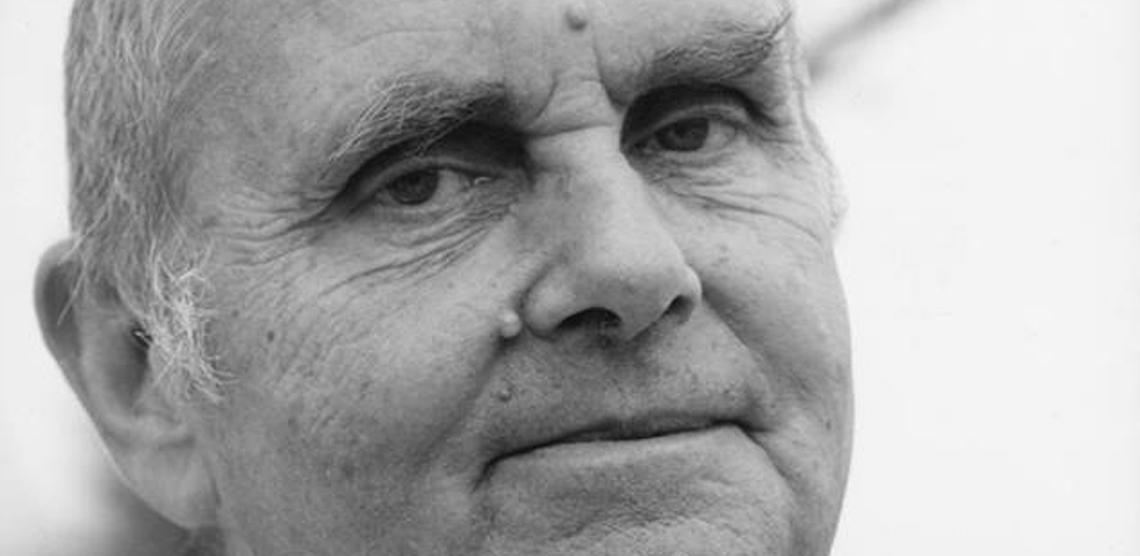
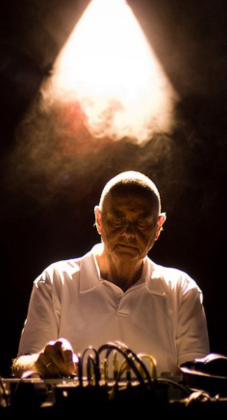
 A couple of days later, in London, ‘Misfit City’ favourite Daylight Music starts up its autumn season of pop, acoustica, classical crossover and electrophonic treats, all packaged up for the Saturday lunchtime crowd.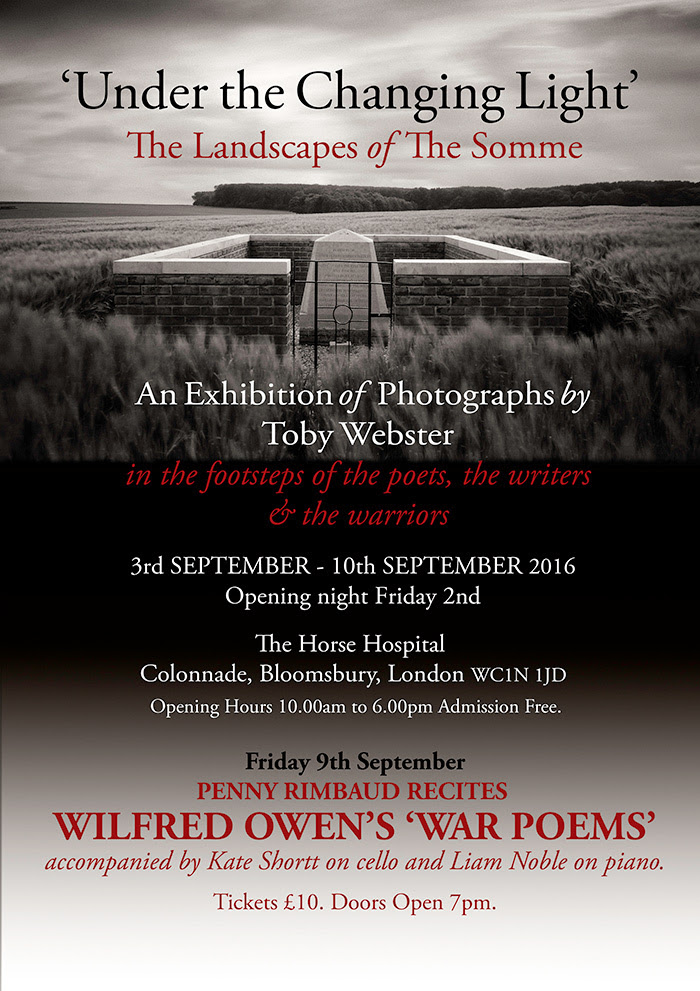
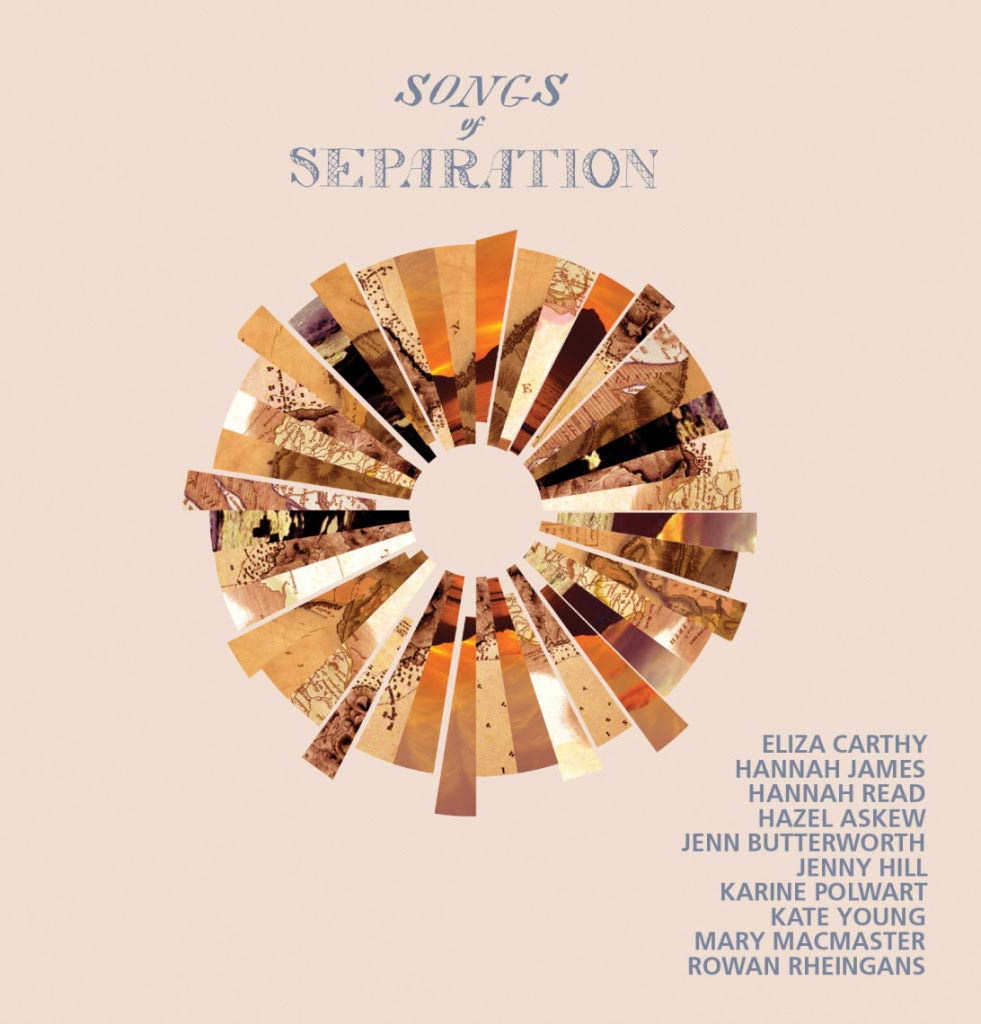


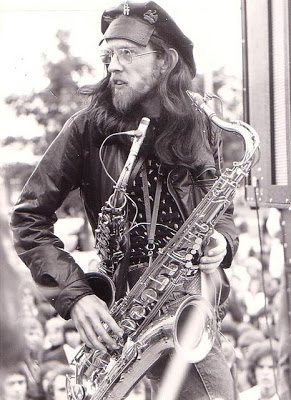
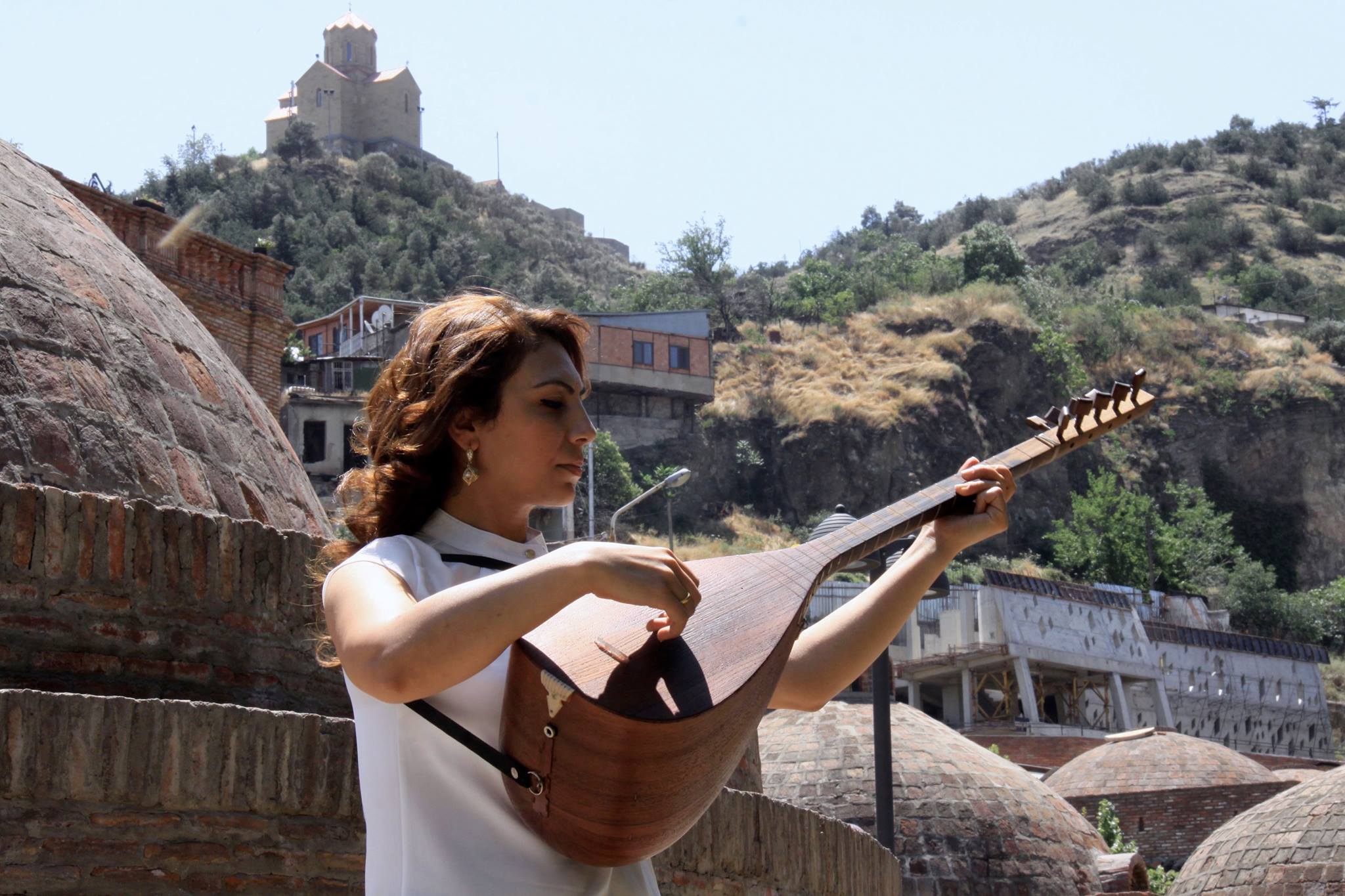
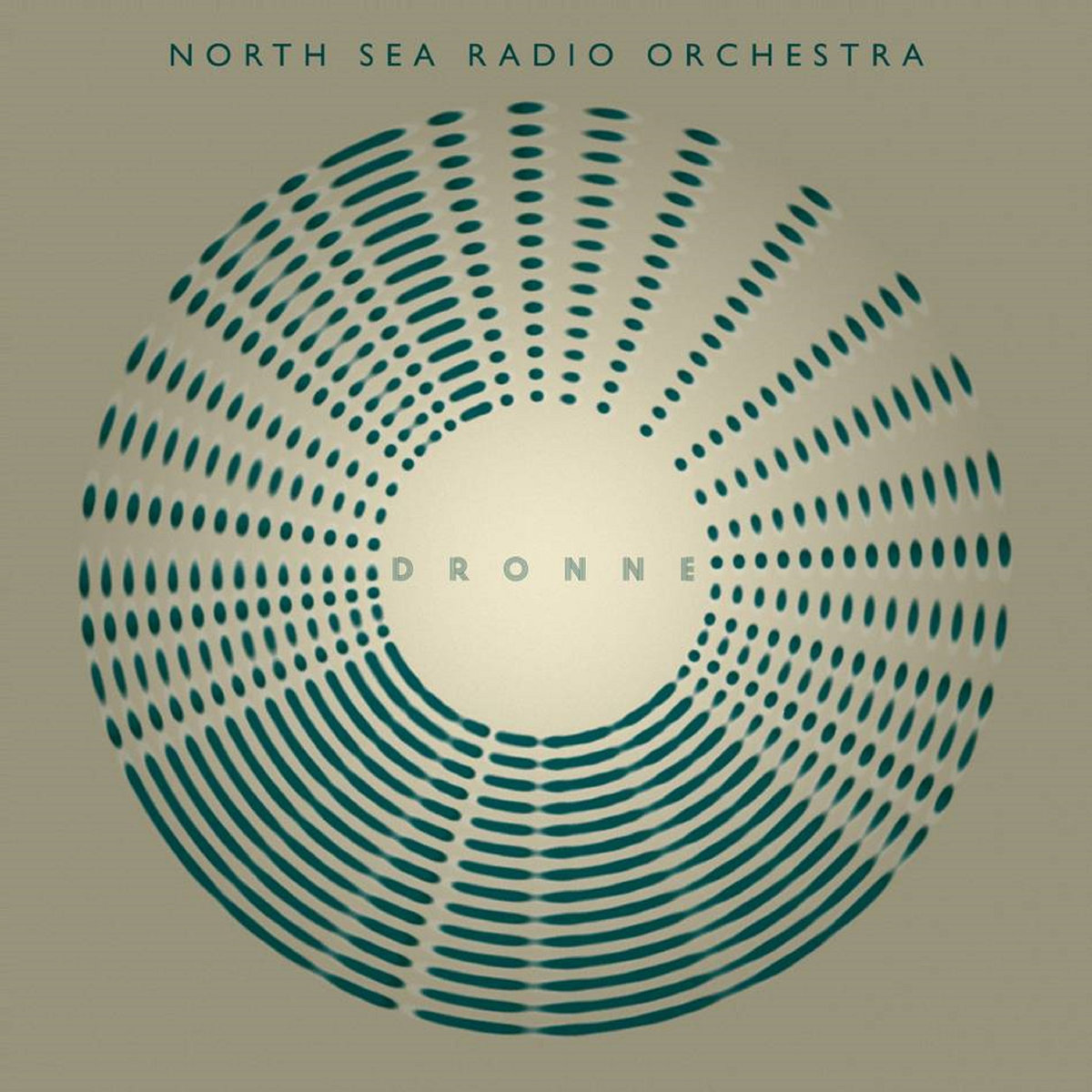
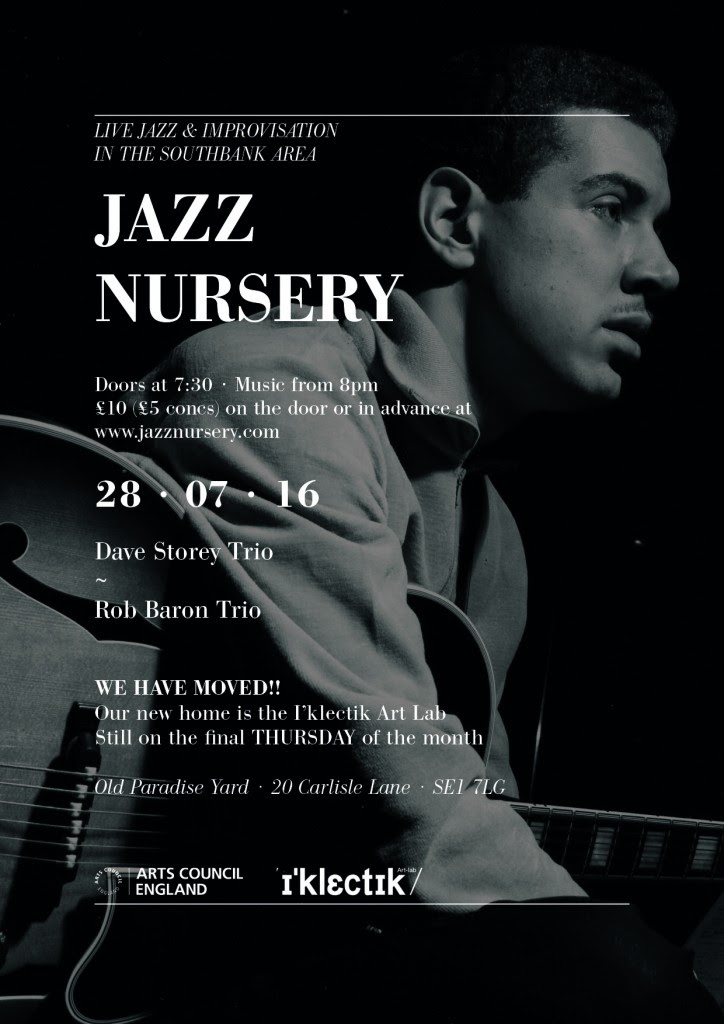
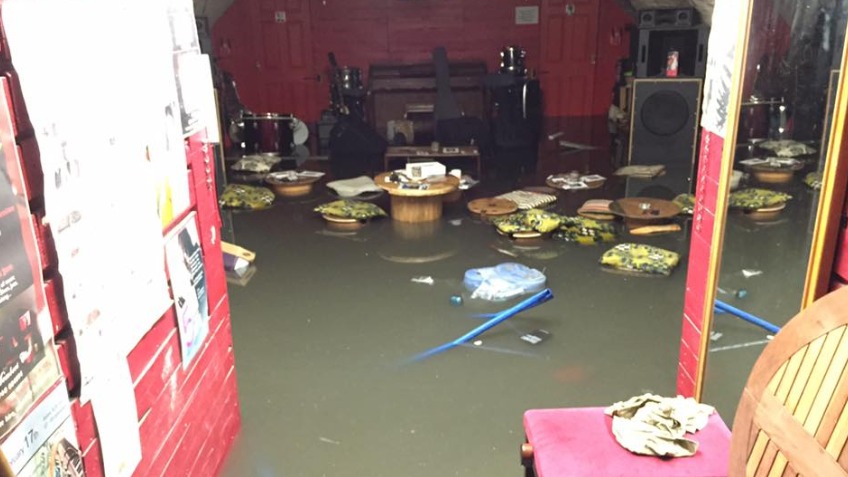



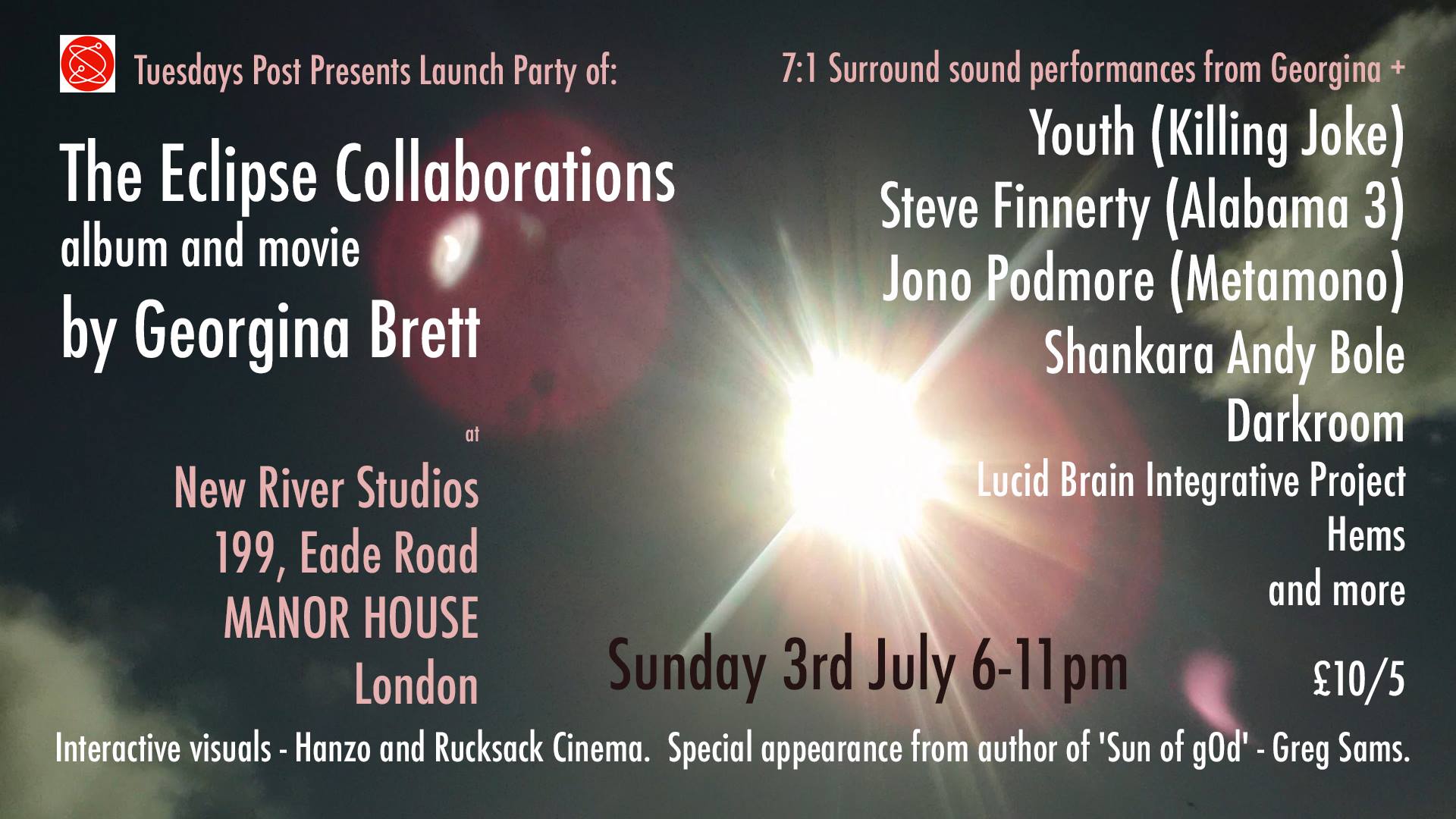



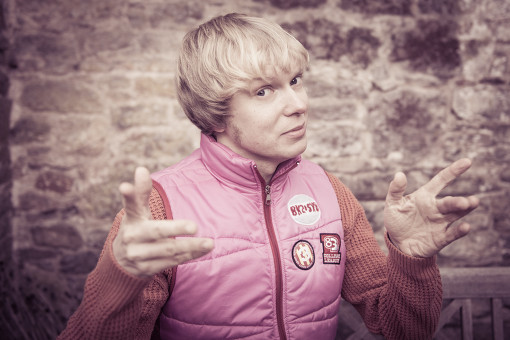
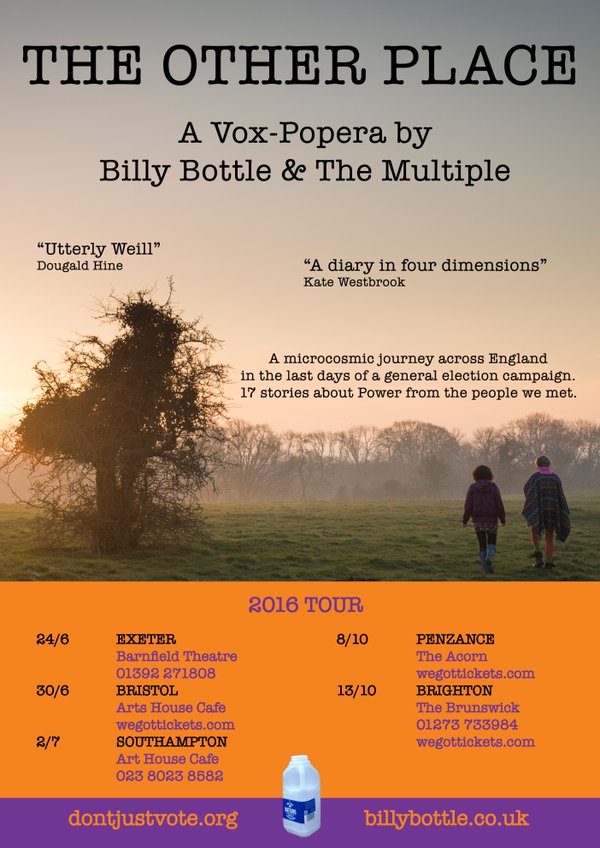

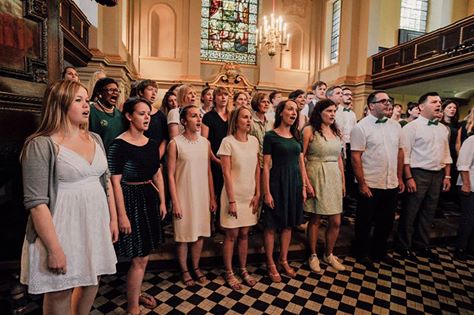
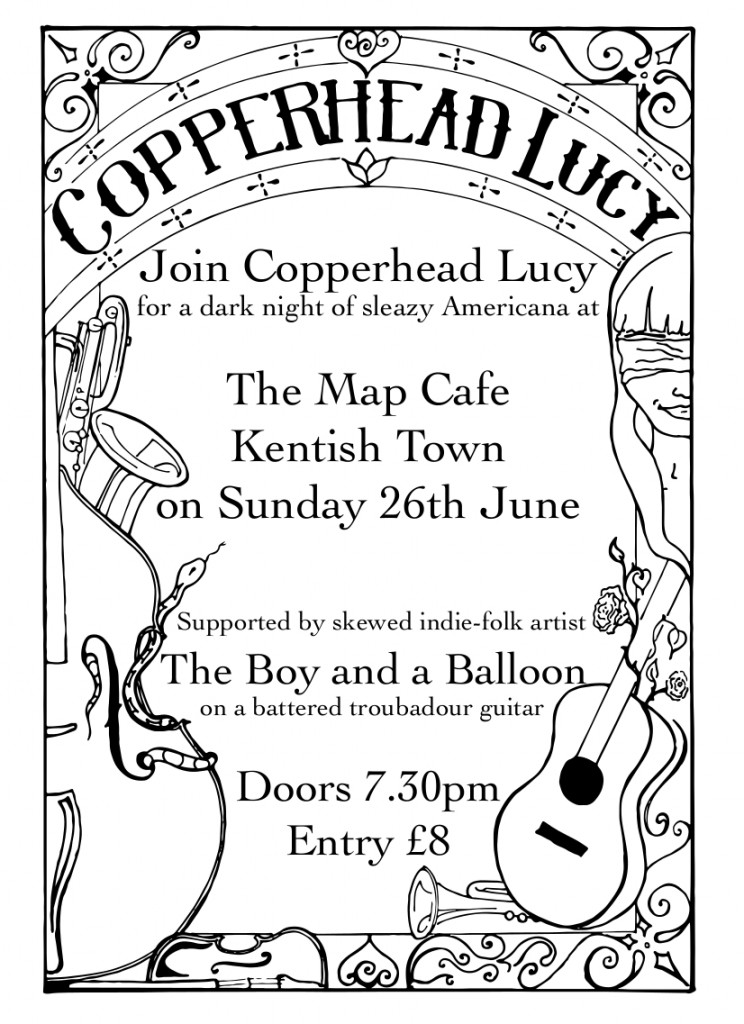


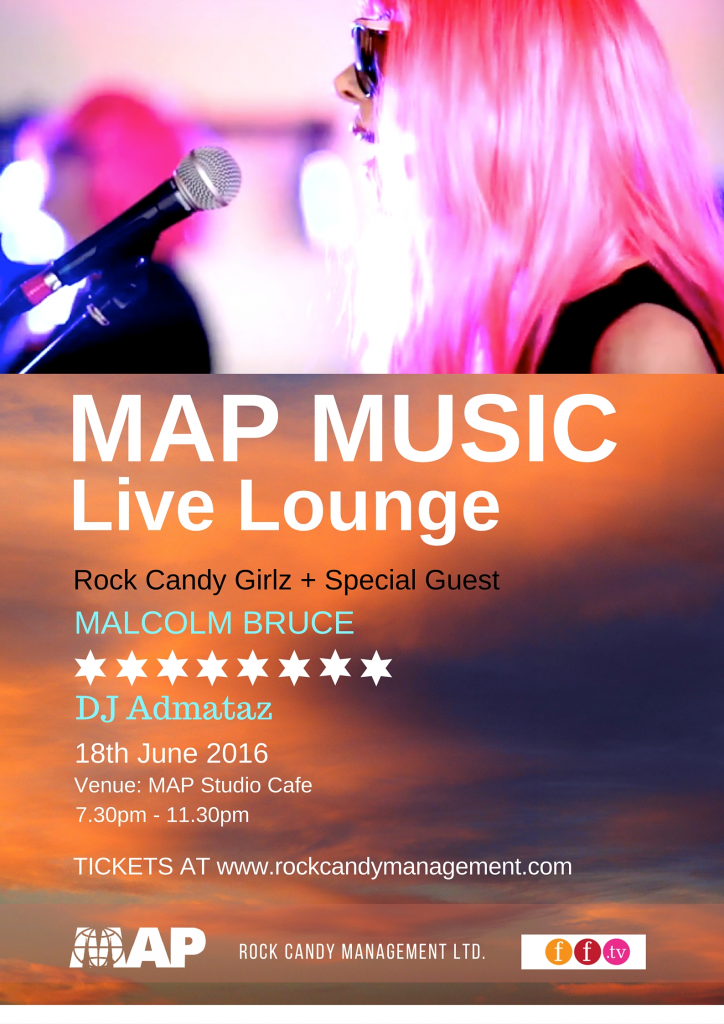



 Misfit City