Wildly experimental Oldham songwriter and multi-instrumental pop wizard Kiran Leonard (who comes across on record as a latterday Todd Rundgren, but who shows more of his affinity with loose-limbed avant-garde noise rock when playing live) is out on another English mini-tour towards the end of the month.
As before, Kiran’s taking out his freeform power-pop quartet of himself, Dave Rowe, Dan Bridgwood Hill and Andrew Cheetham, but he also seems to be expanding his touring circus of Manchester music, as burbled below…
“Boy am I excited for this… If that wasn’t enough to make me grin like a fool from ear to ear, we’ll be joined by Manchester’s finest Nick Ainsworth, almost known as Secret Admirer! accompanied by some sort of incomprehensible supergroup (“the stunning Cheeseman” logging two sets a night behind the kit, Edwin Stevens aka Irma Vep on bass I think, Aldous RH on keys, the legendary Jon Collin on guitar!? what!?! and that’s not all ! Sweet Williams w/ us in Brighton ! Early Ghost w/ us in LDN! DUDS w/ us in Manchester! Mint jamz wall to wall woooowwwwww. Alright? So come and see!”
Full tour dates:
The Louisiana, Wapping Road, Bathurst Terrace, Bristol, BS1 6UA, England, Monday 22nd August 2016, 7.30pm (with Secret Admirer) – information
The 100 Club, 100 Oxford Street, Soho, London, W1D 1LL, England, Wednesday 24th August 2016, 7.30pm (with Secret Admirer + Early Ghost) – information
The Deaf Institute, 135 Grosvenor Street, Manchester, M1 7HE, England, Friday 25th August 2016, 7.00pm (with Secret Admirer + DUDS) – information
The Trades Club, Holme Street, Hebden Bridge, HX7 8EE, England, Sunday 27th August 2016, 8.00pm (with Secret Admirer + Felka) – information
I’ve dredged up some of the usual support band aural evidence below –
the faux-West-Coast post-punk surfings of DUDS (complete with bobbing reminders of Syd Barrett and Link Wray), a little of Sweet Williams’ deep-blues/dream pop hybrid (from their upcoming new album in September), a delightful twangy chunk of Early Ghost’s grand and well-made pop, and a shot of the bewildered/bewildering world of Secret Admirer.
Possibly due to late scheduling, Kiran hasn’t mentioned Felka, the striking young Keighley-based folk duo who are joining in at the Hebden Bridge show. Here are a couple of videos of Felka’s Rose and Tanisha at work, showing off their sharp-witted folk storytelling with its dips into country, blues, and even Elizabethan catches.
I think I’ve previously described the Boston Music Room – one of my own local venues – as London’s current home of prog. If so, the Lexington, down in the hinterlands between Kings Cross and Angel, is making a good showing as a second home. Two imminent shows reinforce that reputation, making next week a good one for London’s prog village.
* * * * * * * *
Resonance, in association with Prog Magazine and Orange Amplification present
The Gift + We Are Kin + Tiger Moth Tales The Lexington, 96-98 Pentonville Road, Islington, London, N1 9JB, England
Sunday 7th August 2016, 6.30pm – information here and here
The name that’s missing from the promoters’ line-up above is Bad Elephant Music: London’s ever-industrious cottage label for various types of prog, and home for two of the acts on the bill. In some respects, this is a shuffled and re-run of a similar gig back in February, in which The Gift’s mix of symph/prog/folk grandeur plus flashy AOR (and We Are Kin’s exploration of art rock shapes and northern English socialism) lined up with a pair of one-man bands in the shape of steampunk balladeer Tom Slatter and troubadour rocker jh. Now The Gift are back, and so are We Are Kin, with only the choice of one-man-band changed. Here’s the official blurb from the Elephant:
“The Gift, fresh from their triumphant performance at An Evening Of Bad Elephant Music, will be headlining the event, bringing their own particular brand of symphonic progressive rock on stage. The band is currently working on the followup to 2014’s ‘Land of Shadows’, and may well be previewing a song or two here.
“Making the journey down to ‘that London’ all the way from Manchester, We Are Kin will be playing a selection of songs from their new album, ‘The Waiting Room’, as well as from their acclaimed debut, ‘Pandora’. Their twin vocal lineup wowed the audience at Abel Ganz’s Christmas party last year, and is sure to be a highlight of this event.
“Tiger Moth Tales is the brainchild of Pete Jones, who will be performing solo for this event. His live shows have been widely acclaimed for their virtuosity, emotion and huge sense of fun. Pete’s two album releases ‘Cocoon’ and ‘Storytellers Part One’ will both be represented in his performance, and he may well throw in one or two cover versions of the prog classics!”
Just one final note – the gig’s a fundraiser for Macmillan Cancer Trust, emphasising a community that’s broader than just the prog one.
* * * * * * * *
The David Cross Band (with special guest David Jackson) + Richard Palmer-James The Lexington, 96-98 Pentonville Road, Islington, London, N1 9JB, England
Tuesday 9th August 2016, 7:30 pm – information here and here
Despite nearly five decades in music, David Cross is still best known for his contributions to three albums at the start of his career. During a two-year early-‘70s stint with King Crimson (incorporating ‘Starless And Bible Black’, ‘Larks’ Tongues In Aspic’ and ‘Red’) David added “delicacy, and wood” to what some consider to be the band’s finest incarnation – part proto-punk-Mahavishu Orchestra, part stately electric-classical chamber group, and part droning/clattering/blaring building site. In its relatively brief and always restless lifespan, this particular Crimson lineup lay athwart the path of progressive rock, heavy metal and European improvisation like a splinter-ridden sleeper across the tracks: innovative, stern and ornery.
David’s amplified violin was a key part of the band’s powerful Euronoise, bringing in evocative melodies and moods which varied between Roma scurries, fall-of-Rome dramatics, foggy drones and angry squeals. As was the case with many of the departures from Crimson, David’s was passionate, painful and galling: progressively swamped by the band’s incremental climb towards avant-rock brutality, he was eventually forced out by its bruising, bristling volume and the implacable battering of its rhythm section. It took a few decades for him to salvage a more cordial relationship with Crimson leader Robert Fripp: nonetheless, the reconciliation has led to a return to the large extended Crimson family including guest spots and latterday Soundscape duets as well as recent “electric chamber music” with Crim-connected composer Andrew Keeling.)
Immediately after Crimson, though, David had to follow a different winding path of his own. From mid-‘70s work with trans-Manche psych/prog/fusioneers Clearlight (and experiments with big-band improv whilst leading the sadly undocumented Ascend) he went on to a long learning process during which, by his own admission, he failed at jazz. On the other hand, he successfully honed an affinity with alternative improvisation and with other forms. Theatre, in particular, proved to be a natural home, with David working up on stage and behind the scenes as well as in the pit band or composer’s slot. Theatricality also bled through into his other musical work. A trio he formed with keyboard player Sheila Maloney and saxophonist Pete McPhail took to the arts centres to perform musical interpretations of Samuel Beckett plays, while from the turn of the 1980s David was carrying out interdisciplinary performances with dancers, painters and the like (something he’s continued up until the present day).
After a decade away, a return to fusion and avant-rock in the late 1980s saw David becoming a keystone of Geoff Serle’s Radius band; an interesting, if airlessly pastoral, British answer to Material’s electro-funk. He was also a quarter of one-shot project Low Flying Aircraft, in which he joined forces with Crimson-orbit jazz pianist Keith Tippett, drummer Dan Maurer and budding teenaged guitar whiz Jim Juhn in a leaf-storm of nervy electroacoustic frenzy and scattered early sampler sputters. (For my money, it’s probably his most interesting post-Crimson bandwork to date.). He’s stayed busy ever since – this year, for instance, saw the release of violin-and-electronica duo album with Sean Quinn of Tiny Magnetic Pets, plus a live album from Japanese dates in which he guested with Crimson spinoff trio Stick Men.
All of this suggests the work of a musician whose reputation should be broader and better respected. It’s probably only the taint of grand prog – and of the “wrong kind” of fusion – which keeps him from it. In experimental rock (or, more accurately, in the media commentary which covers it, particularly on the British side) there still seem to be very clear, if dubious and snobbish, rules about who’s allowed credibility, and why. It’s not easy to escape from those fencings; and without this side of his history, David might have had his due.
For better or for worse, David’s most enduring project has been his own David Cross Band. Anchored since the mid-’90s by cohorts and co-composers Mick Paul (bass) and Paul Clark (guitars), it displays his electric violin – by turns stately, romantic, gnarled or locustlike – coursing fluently over a grandiose, detailed bed of prog pomp, deep metal, and flaring jazz-rock gestures. This year, however, the band’s taken an intriguing and strategic left-turn. With their latest album ‘Sign Of The Crow’ barely out of the gate, they’ve unexpectedly replaced keyboard player Alex Hall with veteran avant-prog sax hero David Jackson, once of Van Der Graaf Generator.
David Jackson in full 1970s effect (photographer unknown)
Musically adventurous and visually iconic, Jackson spent his Van Der Graaf years festooned with multiple instruments, blowing double-horn brass sections through brain-buggering electronics and being described as “a Third Reich bus conductor”. Since then, he’s spent much of his time working on the gesture-to-MIDI Soundbeam electronic project (bringing out the musicality of disabled children) while sometimes venturing out for gigs on the strength of his experimental rock reputation. Since crossing paths with David Cross at one such gig in Verona years ago, Jackson has been one of his frequent improvisation partners, making him an overdue natural fit for something like this. Regarding their chemistry, here’s a lengthy fly-on-the-wall video of the two of them playing (alongside Yumi Hara and Tony Lowe) at a release show for the Cross/Fripp ‘Starless Starlight’ album of Crimson-inspired Soundscape duets. Covering the show from rehearsal to performance, it hints at some of what the Cross/Jackson duo might be bringing to bear on the band shows; something which might well be transformational, pulling the band up and out of its shiny prog-metal box and perhaps delivering David Cross some of the broader respect he deserves.
The new Cross Band lineup, completed by Space Cowboys singer Jinian Wilde and by poly-disciplinary drummer Craig Blundell (who displays a heartening taste for post-dubstep playing when people let him off the prog leash), made their live debut in Wolverhampton last month. While no videos have emerged from this, there have been enthusiastic reports; and as King Crimson tours as a grand septet with a long-denied, fervently-delivered battery of archived ’70s classics, the Cross band are studding their own set with live deliveries of 21st Century Schizoid Man and Starless.
The London gig’s also intriguing in that it features a rare-as-rocking-horse-shit British solo slot from Richard Palmer-James. Originally the embattled first guitarist and wordsmith for Supertramp (a long time before they hit big at the American breakfast bar), Richard was the long-distance lyricist for King Crimson during David’s tenure and has subsequently carried out the same favour for twenty years of various Cross bands. Based in Bavaria for forty-odd years, he’s spent most of it embedded in production and writing work for German pop: since the turn of the century, however, he’s revived his original love for playing blues and country guitar. Most likely it will be this side of him that we’ll see at the Lexington on Tuesday. Still, who knows what the sense of occasion might bring out?
This Saturday sees a couple of interesting pocket festivals taking place in the west and north-west of England – there’s still a chance for last-minute tickets or walk-ups for each of them.
The fifth in the series of EppyFests is happening this Saturday in Stroud, Gloucestershire. As with the previous four, it’s the brainchild of Stroud-based psychologist and music enthusiast Ian Fairholm and is a spinoff of his well-respected Epileptic Gibbon music podcast, whose remit rambles enthusiastically across “prog rock, art rock, post rock, prog metal, jazz rock, folk rock, math rock, downtempo, chill-out, ambient electronica, IDM, chamber pop, folktronica, psychedelia , neo-classical , film and TV soundtracks and experimental/avant garde music”.
EppyFest is an attempt at translating the podcast’s flavour into live music and live socializing. A well-run, self-starting pocket occasion (complete with its own T-shirts and integral dinner options) its previous events have featured ferocious British post-prog (Thumpermonkey, The Fierce & The Dead, Trojan Horse), latter prog/jazz-rock/jam acts (Sanguine Hum, Schnauzer, Henry Fool, Unto Us, Flutatious and Andy Pickford) and (in the case of Stackridge and The Korgis), a 70s prog outfit and a band of Britpop precursors sharing a last hurrah in the same body. Also in the mix has been loop guitar (Matt Stevens), classical/world chamber-fusion (Firefly Burning) and folk performers with extra ingredients stretching from neo-Celticana to chalkhill psychedelia, European electronica or Balkan jazz (Sheelanagig, I Am Your Autopilot, Tinker’s Cuss, Arch Garrison). As you might expect from a thoughtful curator married to an accomplished female musician, Eppyfest has also featured a healthy proportion of women players including bandleaders and solo artists (such as Becky Rose, Candythief and She Makes War).
Assuming that you’re not already committed to attending the Felix M-B gig down the road on the same day, EppyFest 5 looks set to carry on the tradition in fine form. (I’m jealous. I wouldn’t mind running something like that myself. It’s time to start thinking about empire, or benevolent despotry…)
The Epileptic Gibbon Podcast presents:
‘EppyFest 5’: William D. Drake + Judy Dyble & Her Band of Perfect Strangers + Marvyn B. Naylor + Darkroom (with Elif Yalvac) + Tom Slatter + Sirkis/Bialas International Quartet Lansdown Hall, Lansdown, Stroud, GL5 1BB, England
Saturday 16th July 2016 , 4.00pm to 11.00pm – information & tickets
Over the years, I’ve said plenty about this year’s EppyFest headliner William D. Drake over the years, and will probably say more. Woody-throated singer and former Cardiac; the organic keyboard wizard who turns television sets into organs; the man you might find if you went looking for the place where baroque pop meets Punch-and-Judy professor. Bill’s songs suggest a parallel English music: one in which antique pop songs on crackling wax cylinders mingle seamless with both Henry Purcell and Frank Zappa.
In his mid-fifties, and with the release of his fifth album ‘Revere Reach’, Bill’s reached a crucial point in his career, in which the jolly avuncular eccentricities of his earlier work have finally given way to the blossoming kernel of beauty within his compositions. He’s probably far too rounded a person and songwriter to entirely give into it, though. Expect the full range of glorious pastoralism and bouncy humour from a full chamber pop band including members of Stars In Battledress and North Sea Radio Orchestra.
I’ve also said plenty about Darkroom , the textural electro-morphic partnership of sometime No-Man/Samuel Smiles/Henry Fool guitarist Michael Bearpark and loop/synth/woodwind/patch-man Andrew Ostler. Over two decades Darkroom have delivered a massively underrated body of work straddling gigantic cosmic soundscapes like deliquescing Hubble images, intricate cerebral dance rhythms, broodingly beautiful guitar tones and (recently) cryptic bass clarinet and flute strands, touching upon influences as diverse as OMD, Autechre, Robert Fripp, Neil Young, Delia Derbyshire, Can and Bennie Maupin.
For this concert their polyglot electronica is augmented by a special guest, Turkish electronic guitarist Hazal Elif Yalvaç an Istanbul-based composer, musician and linguist. We’ll have to see whether Elif’s work (much of it glitching, grumbling guitartronic abstractions) brings out Darkroom’s more abstract instincts; or whether Os and Michael’s knack for direct expressiveness brings out that proggier aspect which Elif’s threatening to reveal in her forthcoming Light Curve project.
Show opener Tom Slatter also shows up in ‘Misfit City’ quite often. He’s a Victorian town-crier with a guitar and a slew of fantastical tales about monsters of air, land and sea, strange goings on in laboratories, haunted gentlemen and master criminals loose on the railways. On record he’s a multi-instrumental steampunk proggie, building himself instrumental Rube Goldberg machines (and occasionally collaborating with one). Live, he’s mostly unplugged and solo, letting his charm make up for the shortfall in instrumentation. One day he will build himself a bicycle-powered, bat-winged portable orchestrion out of old tuba piping and traction engine spares, to allow him to merge both situations. It will probably go off course and fly him somewhere horrible.
One of the prime strengths of jazz players is that they can come from anywhere in the world, meet each other for the first time and immediately speak a common improvising language of immediate flexibility. The four musicians who make up the Sirkis/Bialas International Quartet – Asaf Sirkis (drums, Israeli, Londoner), Sylwia Bialas (voice, Polish, currently a Londoner but only recently a Würzburg resident), Kevin Glasgow (bass guitar, a Scottish Londoner via Ireland, but Invernessian rather than actual Glaswegian, replacing an Englishman who originally reached the band via Australia, Scotland and the United States) and Frank Harrison (keyboards, English, surprising lack of other complications) – make more of their scattered nature than most.
With all of that in mind, you’d expect a riotous mix of cultures, making hay out of clashes. What you actually get is aquamarine almost-acoustic jazz, cupped and propelled by Asaf’s winds-of-the-forest percussion subtleties, sung in Polish or vocalese, sheathed in softness and in smoothly-flowing instrumental gestures. The lightness of touch and the Northern hemisphere reserve hearken towards both Pacific Northwestern new age and ECM atmospherics; the light-as-a-feather scatting, twirling Rhodes piano and lissom six-string electric bass suggests a hushed Kurpie version of Flora Purim’s time with Return to Forever.
While the pure, piping soprano tones of co-headliner Judy Dyble might distract you from her full story, they do tie her firmly to the 1960s folk revival. It’s a true tie, as well – teenage friendships with Ashley Hutchings and Richard Thompson led her to spend a year as the singer for the original lineup of Fairport Convention. This auspicious start was followed by a brief, obscure stint in King Crimson prelude band Giles, Giles & Fripp, a more celebrated year as half of much-touted psychedelic folk duo Trader Horne; and finally a handful of gigs in the company of Canterbury characters Lol Coxhill, Steve Miller and Phil Miller.
A gentle, often reticent character, Judy’s musicality wasn’t enough to keep her comfortably engaged with the bruising demands of the music business; and in 1973, after six years of flitting nervously in and out of the spotlight, she retired from music into a quiet life of family and library work while still barely into her twenties. Perhaps it wasn’t as mysterious or dramatic a withdrawal as that of peers such as Anne Briggs or Vashti Bunyan, but it was enough to reduce her reputation to a shadow for all except those who dug up her handful of recordings in search of half-forgotten treasure and found something that didn’t deserve to be overshadowed.
Bar a couple of flitting, fitful Fairport reengagements at Cropredy in the early ‘80s, little was heard from Judy for three decades until – widowed and empty-nested – she was inveigled back into recording by Astralasia’s Mike Swordfish in 2002. Since then she’s pursued a quiet but exploratory revival of her musicality, working in fields fromfolk-rock to trancetronica and experimental art pop, and with collaborators including Dodson & Fogg, Tim Bowness, Sand Snowman, Joxfield Projex, Fuxa and Thee Faction. Her regular home, however, is with her Perfect Strangers ensemble (mostly drawn from co-writer Alistair Murphy’s Cromerzone project) with whom she’ll be performing at EppyFest. Throughout all of this, Judy’s signature tone has remained intact – the folk sweetness, the subliminal hint at hesitancy and tremble which betrays the nerviness and unsurety which has both interrupted her career and given her work its humanity and honesty. As she heads towards her seventies, both tone and temperament have become allied to a longer perspective of value, loss and change – something which, strengthened and deepened by time, she’s grown into and fleshed out with natural experience.
Completing the bill is another, even less well-known hidden treasure. Winchester singer-songwriter Marvyn B. Naylor has been delivering music for twelve underappreciated years now. His mixture of intricate, allusive psychedelic pop songs and pulsating 12-string guitar folk instrumentals tip nods to and shake hands with inspirations including the early David Bowie, Edward Elgar, the Beatles, Joyce Kilmer, Frank Sinatra, Francisco Tarrega and Guy de Maupassant: but he’s a whole meal in himself.
* * * * * * * *
There’s just one former Cardiac on the bill at EppyFest. Technically speaking – unless it’s true that Kavus Torabi is DJ-ing – there are no former Cardiacs at The Whole World Window, which takes place on the same day as EppyFest but five counties up (in Lancashire). In spite of this the bill, spread across two stages, is suffused with Cardiacs enthusiasm. Unsurprising, since it’s the latest in a series of benefits for the band’s stroke-felled leader Tim Smith.
Greg Braysford presents:
‘The Whole World Window – A Benefit for Tim Smith’: Britney + All Hail Hyena + 7Shades + The Scaramanga Six + Sweet Deals On Surgery + Sterbus + Trojan Horse + Adam Shaw + The Jackpot Golden Boys + Sean Keefe + Ahsa + others tbc (or fibbed about) The New Continental, South Meadow Lane, Preston PR1 8JP, England
Saturday 16th July 2016, 2.00pm – information here – tickets here and here
Bellowing Scots Britney are as garish and hardcore as a fairground teddy-grabber covered in backstreet tattoos. They’re given to one-and-a-half-minute bursts of earsplitting rock numbers plastered with crumpled ice-cream-van melodies. The latter trait, something of a Cardiacs stock-in-trade, tinkles through several of the other bands on the bill – be they outright disciples 7Shades (who lovingly pillage the ornate Cardiacs style wholesale) or pyjama-clad Burley power-pop trio All Hail Hyena(who sound like Bo Diddley rocking an birthday-cake castle).
Something more grandiose is offered by Huddersfield rock bullies The Scaramanga Six. They’ve devoted twenty-one years and enormous musical flair to hammering out poperatic tunes and bursts of garage gonzo, providing tragicomic insight into the flawed and unsettled ethics of everyday men (all carried out with assured baroque brutality and gallows humour). Self-styled “noisy prog rock bastards” Trojan Horse might not be returning to EppyFest this year, but they are bringing their omnivorous Salfordian rock cocktail to Preston: a catalogue of work which plunges into swaggering ‘70’s funk, belting avant-garage moments, broad-spectrum Beatles-pop and audacious psychogeographic experiments. Power-poppers Sweet Deals On Surgery lean towards the punkier side, bucketing towards the end of a song as if it were a race, but distractedly bursting into different versions halfway. For God’s sake, keep them off the Haribos…
All the way from Italy, Sterbus (Smith/Fripp/Zappa obsessive and noblest-Roman-of-them-all) will be coming to either yomp through some of his triple-jointed proggy power pop or to play leafy psychedelic summer-lounge acoustica (which may or may not include some of his takes on Cardiacs, Spratleys Japs and other limbs of Smithiana). If he doesn’t hold up the acoustic end, rest assured that Ivan Campo frontman Adam Shaw will, as he brings along his light-touch, thoughtful folk pop for us to unravel.
The rest of the bill’s made up of bands which predominantly reflect the humour (if not necessarily the horse-laughs and art-punk prankery) of the Cardiacs world. Silly-goodtime pop culture obsessives The Jackpot Golden Boys throw assorted metal, pop and funk chops at things from TV theme tunes to geek topics and hope that a few of them stay embedded. Militant hat wearer, slide guitarist, Strumstick player, comedy yarner and genre-mash novelist Sean Keefe – brings along his own version of honky-tonk Americana.
The (known) lineup is completed by acapella singer Asha Hewitt (seen below performing with Gummo Cleyre and Alex Dickinson as Yorkshire Latin pop band Solana). Asha might be the last kind of musician you’d expect to see getting up at a Smith benefit gig; but her presence is proof positive that the happy skewed tastes of the Cardiacs audience let in all kinds of light. Once they’ve stopped cheerfully bawling for their mashed-up chord sequences, that is…
…And in the middle of the week it’s about dream pop, folk music and the margin in between…
* * * * * * * *
Our Friends Eclectic presents:
A.R. Kane + Plastic Flowers The Good Ship, 289 Kilburn High Road, Kilburn, London, NW6 7JR, England
Wednesday 13th June 2016, 8.00pm – information
This Wednesday, resurrected dream pop pioneers A.R. Kane play one of only two small, indoors British gigs while they ride the wave of worldwide summer festivals. This little London show is the guaranteed best opportunity to see them for the foreseeable future, especially if you missed their Manchester gig at the Soup Kitchen back in May (an event which, I’ll admit, I myself was too disorganised to even flag up) and especially since ’Kane leader Rudy Tambala has been enthusiastic about his preference for “a small crowd loving it, getting it” (as opposed to a fieldful of musical floating voters).
The original A.R.Kane were many things before those things became more commonplace – Afropean art-culture swaggerers, dissolvers of rock and pop’s hierarchical structures, sound-melters in whom dancefloor politics met punk threshing, electronic upsetters who played equally with roots and the bewilderingly synthetic. Rudy formed the band in 1986 with his childhood friend Alex Ayuli – two east London black kids with family roots in west or south-east Africa; a pair of eclectic clubgoers and self-confessed cocky chancers with broad listening habits, enough gab to make their brainwaves sound seductive (notably, Alex’s day job was in advertising), and a post-post-punk whim for running with ideas rather than technique. The idea of A.R. Kane was conceived as a backfiring party boast that Rudy and Alex felt obliged to follow up. Citing Cocteau Twins, the Velvet Underground, Miles Davis and Joni Mitchell as a range of influences might have been a handful of arty clichés then – it would certainly become so later. For two men who approached music as something envisaged rather than something played, however, it was a recipe for building a project from the ground up.
A.R. Kane’s work is often cited as pop reinvention. In fact, it’s more of a sprawl of jouissance – anti-formalism, a dab of abstract expressionism, and a joy in capturing moments on the fly. All of this should have been in the air when (early on in the journey) they joined forces with experimental dance duo Colourbox for the M|A|R|R|S sessions, leading to a number one hit via the British house classic ‘Pump Up The Volume’. As it happened, an experience that should have felt like a triumph of creative opportunity ended up as a bruising, short-lived encounter with hit factory frenzy, mutual intransigence and a blizzard of copyright litigation. These days Rudy dismisses ‘Pump Up The Volume’ as straight cultural theft from black and gay American club culture, but keeps a soft spot for the flipside – ‘Anitina’ (a confection of careening, planing guitar feedback and joyous narcotic pop vocal over hammering Colourbox industrial drums).
It’s this track that exemplifies ‘Kanework, rather than the pulsing plunderphonics of ‘Pump Up The Volume’. When Rudy and Alex played pop, it sounded like toy music or a process of on-the-spot discoveries. Nurtured along the way by the production suss of Cocteau Twin Robin Guthrie and Gentle Giant’s Ray Shulman (with the latter’s post-prog bass often adding a subtle touch of spine and structure to the core cavortings), A.R. Kane seemed to achieve their aims by recreating music from around its edges rather than heading up through the centre. Paradoxically, they deracinated while remembering exactly where the roots were grounded, as if rock music was a complicated hairstyle which they were ripping the pins out of, sending them rattling onto the floor.
Sometimes they’d sound like what would happen if someone had had the gall to strip all of the blues out of Hendrix’s ‘Third Stone From The Sun’, leaving just the cosmic frizz, fragmentary whippling stringwork and mind-opening vocal fragments; like a disembodied, chromatically-dappled sci-fi Afro. Ecstatic hollers might chase sleepy narratives over chamber strings. Gnarly Guthrie-esque guitar noise, hell-gate heartbooms and refracting-knife feedback would bob around dashes of funk and house (which Alex and Rudy were onto long before the Madchester boom). From Jamaica, they gleaned dub-echo bursts of clipped piano or high snare. From American psychedelia, they drew jelly-baby lyrics that bobbed around dancing synth basslines (as if ‘60s acid casualties were making healing pilgrimages to New York electro clubs). From the underground currents of their hometown, they took their conceptual irreverence, their underlying cheek and their mix-and-match mercantilism. (It’s also where they gained their hard-knocks guile and ingenuity, that second-or third generation immigrant pluck that Western city racism forces back onto even the smartest of its homeboys).
Despite all of this sonic ensorcelment, on the early albums you could (if you wanted to) cock your head, peek underneath the noise and find a couple of guys who could barely play or sing; who were keeping it all afloat via acts of will, wit and weather. Most of the time, you’d wink back at them, then return to the bliss and forget the slender mechanisms holding it together. However, by the time of their sun-kissed swansong album, ‘New Clear Child’, A.R. Kane had skilled up and drifted towards a more coherent pop music. Apparently inspired by Alex’s move to California, the later songs meandered up to both Love and Talk Talk via West Coast funk, with daisy petals matted into their nappy hair. As was only appropriate for a band driven by an elusive and amorphous ingenuity, the more A.R. Kane solidified, the more they dissolved. Alex went solo; Rudy teamed up with his sister Maggie (an occasional ‘Kane backing singer) in Sufi and for twenty-odd years, that was that.
As is often the case, the band were finally tempted back into action via the nostalgia engine which fuels pop festivals. Last year Rudy was coaxed into weaving A.R. Kane back into existence, although he had to do it without his erstwhile partner (apparently busy with his own perspective on dream pop, Alex Ayuli opted to sit this one out). 2015’s ambitious Alex-free septet has now been trimmed to the core trio of Rudy and Maggie Tambala plus new cohort Andy Taylor; a mess of three guitars, three voices, computers and synths. While they originally billed themselves as “#A.R.Kane”, with Rudy optimistically explaining that “should Alex come out-to-play, we can easily drop the ‘#’..”, they’ve subsequently dropped the hashtag anyway, along with the distinctions and (it seems) the hope that Ayuli’s “said no, gave no reasons” refusal wouldn’t be permanent.
The flipside of this disappointment is that the band’s new lease of life has inspired and toughened them into a more committed playing unit fired up by contact with both fans and heirs. Back in the ‘80s, few bands used A.R. Kane’s methodology and thinking. Nowadays you could pull together a huge, snaking, intercontinental conga line of the fuckers. One of them’s playing at the Good Ship alongside Rudy and co. – Plastic Flowers, the London-based dream pop project of Thessaloniki-born George Samaras, whose grand skeletal lushness (bare-bones drumbox echo, threaded vocal and towering ripcurls of melodic guitar noise) is an almost pure mainlining of the ‘Kane lineage.
Now a revitalized Rudy is talking, with giddy enthusiasm, about future recordings and about the new material he apparently brought to the Soup Kitchen gig the other month. (I’ve checked for reviews of that, but found nothing unless it’s been reduced to telegrammatic burbles on Facebook – being off-‘book at the moment, I wouldn’t know). We’ll have to see how his intentions pan out. With planned American coastal tours cancelled (due to date and commitment clashes rather than lack of interest), there are still a couple of showings at the Siren and Half Die festivals in Italy later in the month; and then back home for On Blackheath in September. After that, the future’s both blank and open – which, in a way, is where A.R. Kane came in in the first place.
* * * * * * * *
If vindicated dream pop discombobulation doesn’t float your boat for Wednesday, then perhaps you’d prefer a free event at Battersea’s delightful acoustic playground on the same night…
Jausmė (with Nicole Collarbone) + Sian Magill The Magic Garden, 231 Battersea Park Road, Battersea, London, SW11 4LG, England
Wednesday 13th July 2016, 9:00 pm – free event – information
Transplanted Lithuanian singer-songwriter Jausmė – Vilnius-born, but Milton-Keynes-based – will be performing a set of her own material accompanying herself on the kanklės (a twenty-nine string Lithuanian zither with a sparkling sound) and aided by Liverpudlian cross-disciplinary cellist Nicole Collarbone (whose myriad projects and collaborations include the Neil Campbell Collective and folk ensemble Sonnenberg).
Jausmė describes her work as “urban etherealism”. Translated, this seems to mean a half-invented, half-archaeological folk music (like a less grandiose, less Gothic, closer-to-the-source Dead Can Dance), and one in which the focus is shifted thirteen hundred miles northwest to the Baltic states; it also means that Jausmė listens to, and can slip into, the work of sub-bass, garage and techno producers. On this occasion, though, it’s all wood and no electronics, and the roots are northern. For evidence of what Jausmė and Nicole can do together (and of Jausmė’s skills on her own), see below.
In support is another no-less-impressive Milton Keynesian, Sian Magill, who honed her subtly immersive, highly literary folk songs at venues both there and at Oxford, where she studied English Literature at degree level. If the latter suggests someone whose work’s likely to wear its intelligence as clever English hauteur, think again. Sian’s songs draw on more distant traditions, coming across as a more Irish-toned echo of the dense, individual American song-tales of someone like Dayna Kurtz, although she sounds less likely to venture to bars on the wrong side of the tracks, or to lean quite so much into the urban blues. Instead, Sian makes her own way into a story through a quiet and continuous flow of detailed observation and consideration, atop a busy, depth-inducing weave of fingerpicked guitar (see below).
* * * * * * * *
Appalachian 100: Cecil Sharp House Choir (with Alice Cade + Pete Cooper + Ed Hicks) Cecil Sharp House, 2 Regent’s Park Road, London, NW1 7AY, England
Thursday 14th July 2016, 7.30pm – information
If you missed the Cecil Sharp Choir at the Union Chapel last Saturday (singing songs for a Daylight Music marine afternoon), they’re back on home turf at Cecil Sharp House for another show on Thursday. This time, they’re celebrating the centenary of musicologist Sharp’s first folk-song-collecting visit to the Appalachian Mountains of America, a region replete with influences from sixteenth-century England and from the tough feuding culture of the Scottish Borders, as well as (at least in the Ozark region) a great line in dirty stories.
I don’t know whether any cheerful smut is going to be reeled out at the concert (in song or in asides), but the choir are promising “a selection of glorious a capella harmony arrangements of traditional songs, including some collected in the Mountains”, in new arrangements by leader Sally Davies. Three special guests will be adding to the show- flatfoot dancer Alice Cade, fiddle master Pete Cooper and multi-instrumentalist Ed Hicks (banjo, fiddle, guitar, mandolin, Anglo concertina and voice).
This weekend, in London, mostly-unplugged afternoon Daylight Music will bow out for the summer with a distinctly maritime-toned concert – and one which features another choir as the headlining act. I’ve been tempted to give Daylight’s organisers a bit of stick for their interest in choirs this season, but it makes no more sense than ribbing them for liking performers with acoustic guitars. While, for me, the scratch-choir-does-pop-hits musical meme gets too cosy too quickly, Daylight has done its level best to vary the choral diet, with this week’s headliners delving back into deeper folk roots (and the other acts on the bill ranging out across nautical atmospheres and underwater imaginings).
At the other end of the country, in Sunderland, film-makers have teamed up with art-rockers, bleepers, folk singers and community consciousness to create a picture of the First World War’s impact on a thriving north-eastern community. Keeping true to their inspirations, they’re premiering their work there. We Southerners will have to wait, and quite rightly too.
* * * * * * * *
Daylight Music 231 – Cecil Sharp House Choir + Lisa Knapp + The Hermes Experiment + David Julyan & John Potter Union Chapel, 19b Compton Terrace, Islington, London, N1 2UN, England
Saturday 9th July 2016, 12.00pm – free/pay-what-you-like event (suggested donation: £5.00) – information
“Known for its unique, spirited and moving a cappella renditions of traditional songs from the British Isles (and occasionally beyond), Cecil Sharp House Choir is one to catch. Helmed by inspirational choir leader, Sally Davies (and open to any confident singer able to hold a tune, learn by ear and be keen to perform), the choir performs regularly at Cecil Sharp House and at a host of other venues and events including the Southbank Centre, the Roundhouse, the House of Commons and the Oslo Musikkfest.
“Singer and fiddle player Lisa Knapp burst onto the scene in 2007 with her much lauded debut album ‘Wild & Undaunted’, which contained refreshing interpretations of traditional folk songs peppered with highly distinctive original pieces. Numerous appearances across BBC Radio and BBC4’s Christmas TV folk song extravaganza followed, as well as a performance tribute to the late Lal Waterson for BBC Electric Proms. Further recordings (made in collaboration with her musician/producer husband Gerry Diver) have included the EP ‘Hunt The Hare – A Branch of May’ and 2013’s ‘Hidden Seam’ album. Lisa’s BBC work continued with Radio 4’s acclaimed ‘Shipping Songs‘ in 2015 (musing on the extraordinary sounds from far-off places on the Shipping Forecast), and it’s this which should inform her July Daylight appearance, which features a duo performance with Gerry Diver and a song sung with the Cecil Sharp House Choir.
“Park Lane Group Young Artists 2015/16 and winners of Nonclassical’s Battle of the Bands 2014, The Hermes Experiment is a contemporary classical music quartet comprising harpist Anne Denholm, clarinettist Oliver Pashley, soprano Héloïse Werner and double bass player Marianne Schofield. Their performance style has been hailed as “meticulously nuanced, witty and chic” by The Times, while The Evening Standard has acclaimed their “whole new expressive world.” Capitalising on their deliberately idiosyncratic combination of instruments, the ensemble regularly commissions new works, as well as creating their own innovative arrangements and venturing into live free improvisation. So far, the ensemble has commissioned thirty-one different composers at various stages of their careers. The ensemble also strives to create a platform for cross-disciplinary collaboration and they recently created a ‘musical exhibition’ with photographer Thurstan Redding. Future plans include a residency at Aldeburgh Music in September 2016 developing a new interpretation of Shakespeare’s The Winter’s Tale with director Nina Brazier and composer Kim Ashton.
“The Hermes Experiment’s Daylight performance this weekend will be a marine-themed set first performed in 2014 (and recently revived at a Park Lane Music Group concert at St John’s Smith Square earlier in the year), at which they performed Giles Swayne‘s ‘Chansons dévotes and poissonneuses (Devout and Fishy Songs)’, a setting of three piscatorial poems by French Symbolist Georges Fourest. Whether they’ve got time for some of the other songs for the St Johns set – Kate Honey‘s ‘Predator Fish’, Freya Waley-Cohen‘s ‘Oyster’, Josephine Stephenson‘s ‘tanka’ – remains to be seen.
“As the fourth act, David Julyan (a film composer best known for his collaborations with Christopher Nolan on Memento’ and ‘The Prestige’, as well as for horror movie ‘The Descent‘) will be teaming up with John Potter (of ambient project The Music Of What Happens) in order to create a live sea soundscape.”
* * * * * * * *
Field Music/The Royal Northern Sinfonia/Warm Digits + The Cornshed Sisters
‘Asunder’ – film premiere with live score Sunderland Empire Theatre, High Street West, Sunderland, SR1 3EX, England
Sunday 10th July 2016, 2.30pm and 7.30pm – information
“Northumbrian art poppers Field Music (with the Royal Northern Sinfonia and electronic duo Warm Digits) are set to perform a newly commissioned live score to accompany ‘Asunder’, a film telling the tale of the North East’s involvement in the Battle of the Somme (one of the most horrific battles in World War One) through largely unknown personal experiences. The collaboration marks the Battle’s centenary. Royal Northern Sinfonia will be conducted by Hugh Brunt, Artistic Director of the London Contemporary Orchestra (and Radiohead collaborator). Sunderland folk quartet The Cornshed Sisters will also perform an a cappella rendition of traditional Wearside folk tune The Rigs of Sunderland Fair.
“‘Asunder’ brings together the stories and images of the past with music from the present to tell a poignant and relevant story of what happened to a typical British town during the First World War, with virtually all of the its men abroad fighting and all of its women and children left behind. The North East was in the front line, thanks to its shipyards and munitions factories.
Through the stories of half a dozen people from Tyneside and Wearside, ‘Asunder’ uncovers just what life was like on the home front – with bombs falling on Britain for the first time, conscientious objectors sentenced to death, and women working as doctors, tram conductors and footballers, some of them (God forbid) wearing trousers.
“The story begins in the pre-war Edwardian golden era when cricket, football and rugby boomed, and aeroplanes and cars pointed to a bright new future – only for this progress to be horrifically reversed through the early years of the war. This culminated on 1st July 1916 in the Battle of the Somme, when British, French and German forces began one of the most traumatic battles in military history. Over the course of just four months, more than one million soldiers were captured, wounded or killed in the Battle, a confrontation of unimaginable horror.
“The story is told through a beautiful film carefully crafted by documentarist Esther Johnson using archive and newly filmed footage, and narrated by Kate Adie (with Alun Armstrong as the voice of the ‘Sunderland Daily Echo & Shipping Gazette’).
“‘Asunder’ will premiere at the Sunderland Empire on 10th July before touring at selected venues around the country (dates to be confirmed).
“Field Music’s David Brewis says of the commission:
“The chance to write something completely new and play it with an orchestra doesn’t come around very often. And as we heard about the plans for the film, the idea of telling a more complete story about our home town and how the war affected it was very appealing. There’s nothing quite like hearing a full orchestra right in front of you and if we get it right, then the balance between what you see and hear on screen and what you see and hear from the musicians should be spectacular. One of the other things which intrigued Peter (Brewis) especially about this project was our love of the orchestral music from that period. Stravinsky’s ‘The Rite of Spring’ premiered in 1913, Schoenberg’s ‘Pierrot Lunaire’ in 1912. Bela Bartok and Maurice Ravel were composing, as was Claude Debussy, so it was a time of huge change in harmony and composition and we’ve dipped into that period for inspiration a lot.”
“Writer and ‘Asunder’ creative director Bob Stanley comments:
“For me, ‘Asunder’ is an opportunity to work with a group I’ve admired from afar for years, Field Music, and one of my favourite documentary makers, Esther Johnson, as well as a group I only discovered last year but are one of the most thrilling electronic acts in the country, Warm Digits. The premiere will be a truly unique event – the combination of a live score to a new film featuring some incredible archive footage and fascinating local stories, along with the other events going on inside and outside the Empire should be a really memorable day, and I hope one that people will be talking about for years to come. I want everyone who sees it to take pride in the region’s unique history and to feel they can help to build its future.”
Whatever happens in the wake of this week’s Britain-in-Europe referendum, there are going to be plenty of questions asked about democracy, accountability and connection. Personally, I’m expecting most of them to be shouted or sworn rather than asked, so I’m not looking forward to it… especially if I’m going to be one of the people doing the swearing.
Last year, Billy Bottle & The Multiple were asking a few of those questions themselves. Since they’re heirs to the spirit of Daevid Allen rather than that of Jeremy Paxman, they were asking them in their own unorthodox way. This month, as part of an ongoing follow-up roadshow stretching into autumn (and perhaps beyond), they’re beginning to show us what they discovered.
* * * * * * * *
‘The Other Place – A Vox-Popera’
“On the evening of 7th May, 2015, a pint of milk mysteriously appears at the gates of Parliament.
Special delivery…
“Set in the week running up to a UK general election, The Other Place tells the true story of two musicians from Devon as they make their way slowly to Westminster. On high streets, market squares and seafront promenades, they perform the same song, forty-nine times over, and at each stop they start conversations with whoever they meet, asking them ‘Who’s got the Power?’
At the end of a long and winding journey, they arrive at Parliament Square on a milk float to make their delivery: a symbolic reminder that the power doesn’t belong to the inhabitants of Westminster, it is given to them by the rest of us.
“This journey through the foundations of British democracy inspired a sequence of songs whose lyrics come from the words of the voters (and non-voters) that Billy and Martine met on their journey. It is a celebration of gentler kinds of power and an invitation to the audience to make their voices heard.
“The Multiple currently features Martine Waltier (voice, violin, guitar, percussion), Roz Harding (alto saxophone, recorder, percussion) and Billy Bottle (voice, keyboards, guitar), all of whom are mainstays of Mike Westbrook’s Uncommon Orchestra; plus flautist/singer/percussionist Vivien Goodwin-Darke (from the psychedelic rock band Magic Bus) and recording artist and producer Lee Fletcher (of Unsung Productions) on synths, soundscapes and percussion. Like the best art rock, they combine folk, jazz, pop and minimalism in an engaging and meaningful way.
Complete with wobbly camera footage and the sounds of the streets, this performance is a real democratic party in action!”
Art House Cafe, 178 Above Bar Street, Southampton SO14 7DW, Saturday 2nd July 2016, 7.30pm – information
The Acorn Theatre, Parade Street, Penzance, TR18 4BU, Saturday 8th October 2016
The Brunswick, 1-3 Holland Road, Hove, East Sussex, BN3 1JF, Thursday 13th October 2016 – information
* * * * * * * *
As regards the delivery of the Power… it all began as a stunt, of sorts. In January 2015, a peak-time British TV audience was treated to the sight of Billy and Martine ripping into an acoustic busker-cover of Snap!’s old Eurodance chestnut as they competed in ‘The Voice’. Wrapped in pink quilting, flower-child swirl prints and a sunshine glow, chatty about their south Devon rural idyll (and their taste for naturism), they gave the impression of being only a couple of brow-stars away from the Age of Aquarius. They delighted the judges (and went down a storm with a supposedly-hippy-proof public) but their faces and demeanour didn’t fit the reality TV narrative, and they didn’t get any further in the contest. By popular demand the single was out that summer via Bandcamp and cottage industry: it sold nicely behind the scenes and away from the charts; and that might have been that.
However, painting the Bottle squad as talented, bright-eyed novelty hippies is to get no further than the colourful wrapping; to miss the bright, enquiring intelligence under the apparent sunny simplicity; and to mistake constructive, conscious choices for naivety and innocence. Before they’d even thought of stepping onto ‘The Voice’s stage, Billy and Martine had been longstanding Westbrook Band and Dave Sinclair associates, with urban roots in Darlington and London supplemented by dues paid in neo-progressive rock, indie, music teaching and circuses. Already able to tap and hold serious British musical talent, their 2013 album ‘Unrecorded Beam’ had been a triumph of pastoral ensemble jazz; scooping up the poetry of Thoreau and blowing new leaf-green life through it, zig-zagging through the soundfields like a tripping honeybee. ‘The Voice’ was a diversion – a game they were coaxed into. In turn it triggered another experiment in play, taking something apparently trivial and fluffy but using it to tap into a more serious undercurrent.
The busk pilgrimage that would eventually become ‘The Other Place’ started as an attempt at a “rolling conversational democratic jam session.” With no more than the violin, acoustic guitar, costumes and voices from the ‘Voice’ session, Billy and Martine flipped their brief brush with celebrity into an engagement with recognition and a much more down-to-earth version of meet’n’greet. They rode on the back of their ‘Voice’ platform not in order to achieve celebrity, but to set up a chat: a little conversation at the feet of the Big Society, where the bunions and the broken toes are. What they found and heard – and recorded en route – would eventually weave itself into the sonic fabric of ‘The Other Place’, fleshed out by jazz reeds and woodwind, and aided and abetted by production wizard Lee Fletcher (who’d done so much for the encompassing feel of ‘Unrecorded Beam’ and was co-opted into the Multiple once they’d realised the multimedia nature of the emerging new project).
In lieu of any sonic or visual teasers for the show (the Multiple are keeping their cards close to their chests on that one) here are some clipped’n’mixed reflections from the original voyage, all taken from their blog of the original roadtrip:
“We’re not pretending we’ve got any answers. We’re definitely not pretending that wearing fluorescent tights and playing a song in the street is a way to change things. But it’s a way in, a way to start meeting people, catching little snatches of a tune that this country is humming under its breath, that nobody’s quite remembered the words to yet…
“When you travel slower, the country gets larger. Stopping off at so many places along the way, Exeter is a really long way from Newton Abbot, Bristol is a really long way from Exeter. You realise that each of these places is a world, the world of the people who live here and do their best to make life work in the conditions in which they find themselves. Seeing news clips of the party leaders climbing out of helicopters or stepping off intercity trains, it feels like they are whizzing up and down a different country, a smaller country, a country where most of the places we are visiting don’t matter very much…
“Each time we get off the train at a new place, we find ourselves sniffing the air, sensing for clues as to what it is like to be getting on with your life in a place like this. And the clothes, the music, the harmless foolishness of our little gang seems to open up a line of contact, so that within twenty seconds people are talking to us about their lives….
“People start off curious and cautious. They see us coming a mile off, the technicolour outfits, the huge #dontjustvote stickers on our instrument cases. Sometimes they recognise us off ‘The Voice’. They want to know what we’re doing, why we’re doing it, and that means we have to keep asking ourselves those questions, figuring out the answers as we go along. They want to know what we’re selling, what we’re trying to persuade them of, and we tell them really we just want to start conversations, to meet people, to find out what’s going on in this country now, what this election actually means.
“When they start talking to us, they usually start with a flat statement, something definitive. ‘I never vote.’ ‘They’re all the same.’ ‘There’s no point, is there?’ But as they realise we’re actually interested, the way they talk changes, something else comes out. You can hear how much they care. Everyone we meet feels disillusioned, disengaged, disenfranchised. They all feel like they’re not being heard. A lot of them aren’t voting. Yet they also believe that we as people do have power, they just can’t see a route to change that goes through the ballot box…
“In Trowbridge, we started playing and police came running round the corner. There had been a theft of a piece of meat from a shop. A shopkeeper came running towards us, she thought we were just shouting in the street, shouting like a thief. Well, we were shouting in the street. A few minutes later, Bill was listening to the story of a man who had been homeless for twelve years as he talked about his father’s addiction and how he died. At the end, there would have been no point in words. The two of them stood there in the street, holding each other, crying.
“In Brighton and Lewes, the air smells green, and then we cross some unmarked threshold and in the next few towns another reality takes over. Listening to the way people talk, we find ourselves starting to understand why they are drawn to UKIP, not because the facts or the arguments add up, but because in this reality it could sound like they make sense.
“The song is the same in every place, but something changes, grows, deepens. Maybe what we’re doing is charging up the song, like we have to keep charging our phones whenever we get a few minutes near a socket. All of these encounters, conversations, stories are charging up this song we started out with and the song is carrying them.
“All along this journey, we’ve been feeling an aching gap between the cold anger, disillusionment, exhaustion that nearly everyone we talk to has when they talk about the political system and something else, something that doesn’t come so easily into words, but is a kind of faith in people, in people’s ability to muddle through, to somehow go on making life work, finding opportunities for kindness in the middle of all its absurdities.
“Maybe this all has something to do with what we mean by power? A friend of ours, Anthony McCann, talks about the idea of a ‘politics of gentleness’. Watching the news about this election, gentleness and politics don’t really seem like words that belong together. But what he says is that when we think about power, we usually think of it as the ability to manipulate, control or dominate other people. And since those are all pretty nasty ways of treating people, and since most of us don’t actually want to treat people in nasty ways, that way of thinking about power makes it something we wouldn’t want to have, which makes us powerless.
“So what if there were other ways of thinking about power? What if there were other kinds of power that exist, all the time, so much part of our everyday lives that we take them for granted? Anthony talks about power as ‘the ability to vary the experience of oneself or others’. As an example of this gentle power, he talks about what it’s like to be a parent holding a small child… And maybe it’s this kind of power that people feel, that they have some kind of trust in, even if it’s not easy to give it words?…”
We’re going to deliver The Power to Westminster.
“When we started saying that, it was a joke, but as we kept joking about it, the thought deepened on us. We’re still figuring all of this out as we go along, finding out what we’re doing by doing it, but it’s starting to seem like this journey culminates in an ironic ritual: the delivering of The Power to Westminster, to remind the politicians that The Power doesn’t belong to them, not really, not on polling day, or even on any other day.
“The Power is loaned to them by the people, and they can hardly dare to acknowledge how grudgingly that loan is made, how overdue the repayments have become. This is the other deficit, the one that no one is making pledges about, and someday the people may call in the loan.”
* * * * * * * *
Or, to put it another way (as another beloved couple did, in another time and another place):
“Are you serious?”
“About what I do, yes. Not necessarily the way I do it.”
The continued association shared by the former members of Henry Cow (and their ceaseless inspiration to work either collectively and individually) remains a gift that keeps on giving. Over the course of a single week in London this month, Henry Cow reeds-and-keyboard player Tim Hodgkinson (arguably the band’s most prolific and rigorously avant-garde member) plays at two shows at the Iklectik Arts Lab, one of which also features his old Cow sparring partner John Greaves as well as two vigorously creative women from the younger generation of the ever-broadening Cow/Faust/Rock In Opposition avant-rock circles. In between, he’s launching a book and delivering a talk on his own concept of musicality, complete with another live musical performance.
* * * * * * * *
The Horse Improvised Music Club presents:
Gus Garside/Dan Powell/Tom White/Rob Lye + Zinc Trio (Tim Hodgkinson/Hannah Marshall/Paul May) IKLECTIK, Old Paradise Yard, 20 Carlisle Lane, Waterloo, London, SE1 7LG, England
Tuesday 14th June 2016, 8.45pm – more information
At this evening for Lambeth experimental night The Horse Improv Club, Tim Hodgkinson plays clarinet in spontaneous free-jazz team Zinc Trio, which also features Hannah Marshall on cello and Paul May on drums. Paul is the most recent member of the trio, which previously saw Tim and Hannah working with another drummer – English improv legend Roger Turner. The earlier trio can be seen here, scurrying and forging through a full-torrent 2009 improvisation.
Also on the bill are a new and possibly one-off quartet. Brighton duo The Static Memories, made up of Arc/In Sand/Safehouse collective member Gus Garside (double bass player, educator and National Arts Development Manager for Mencap) and Dan Powell (guitar and electronics, also a member of mischievous Brighton performance duo Nil and one of the people behind Brighton’s Spirit of Gravity experimental night) team up with the London duo of Tom White and Rob Lye (who work with electronics and reel-to-reel tape recorder). Here’s a Static Memories clip to clue you in, along with a White/Lye one: soundclash them together all on your own.
CPAD (Centre of Performing Arts Development) at School of Arts and Digital Industries, University of East London, presents:
UEL Practice as Research event Series #1: ‘Music and the Myth of Wholeness’ talk and performance by Tim Hodgkinson (hosted by Yumi Hara and Guy Harries)
US.3.02 (Studio 3) University Square Stratford, University of East London,
1 Salway Road, Stratford London, E15 1NF, England
Thursday 16th June 2016, 7.00 pm – free ticketed event with very limited space – tickets here
This is a launch event for Tim’s latest book, in which he “proposes a theory of aesthetics and music grounded in the boundary between nature and culture within the human being. His analysis discards the conventional idea of the human being as an integrated whole in favor of a rich and complex field in which incompatible kinds of information — biological and cultural—collide… As a young musician, Hodgkinson realized that music was, in some mysterious way, ‘of itself’ —not isolated from life, but not entirely continuous with it, either. Drawing on his experiences as a musician, composer, and anthropologist, Hodgkinson shows how when we listen to music a new subjectivity comes to life in ourselves. The normal mode of agency is suspended, and the subjectivity inscribed in the music comes toward us as a formative ‘other’ to engage with. But this is not our reproduction of the composer’s own subjectivation; when we perform our listening of the music, we are sharing the formative risks taken by its maker.”
Tim will be expounding on this in a lecture including passing examinations of “three composers who have each claimed to stimulate a new way of listening: Pierre Schaeffer, John Cage, and Helmut Lachenmann.”. In addition, there’ll be a music performance in which Tim is joined by University of East London lecturers and musicians Yumi Hara (voice, harp and found objects) and Guy Harries (flute and found objects). Both are experienced and diverse musicians – as well as being a perpetually active solo performer and serial collaborator, Yumi is a member of various Henry Cow/Faust related projects (The Artaud Beats, Jump for Joy!, Lindsay Cooper repertoire band Half the Sky), was a former Frank Chickens member, and was the driving force behind London’s ‘Bonobo’s Ark’ events (at which ‘Misfit City’ spent a number of intriguing evenings in the late ’90s); while Guy’s work spans singer-songwriter projects, experimental multimedia musicals and opera, and assorted collectives (Bodylab Arts Foundation, the POW Ensemble, Live Hazard) across multiple genres.
* * * * * * * *
Iklectik Arts Lab presents:
‘Other, Of Itself’: Yumi Hara + Tim Hodgkinson + Geraldine Swayne + John Greaves IKLECTIK, Old Paradise Yard, 20 Carlisle Lane, Waterloo, London, SE1 7LG, England
Friday 17th June 2016, 8.30pm – more info
Yumi (on voice, harp and piano) and Tim (on bass clarinet and pedal steel guitar) reunite the very next evening for another concert. For this one, they’ll be joined on keyboards, electronics and voice by Geraldine Swayne (fine artist, film maker and – as musician – a member of both Faust and …bender) and by Tim’s old Henry Cow sparring partner John Greaves (voice, bass guitar, piano). It’s a loosely-structured quartet evening during which the four musician will work in various combinations including a Hodgkinson/Hara duet and a John Greaves solo set on voice and piano (performing selections from his own song repertoire).
In addition, Marina Organ (‘Organ‘, ‘The Other Rock Show‘) will be contributing a DJ set.
The annual BBC Music Day comes up this year and this week on Friday 3rd June. It’s a generally beneficial nation-building exercise in typical BBC style, informed by magazine-style news, middle-range tastes and light entertainment. Much of what’s on is comfortably communal – plenty of light music choirs, familiar regional touches of brass and pipes.
In all fairness, there’s plenty here to like. There’s a scheme organising gentle live shows in hospitals throughout Scotland and England. There’s a focussing on church bell ringings around the country which is free of gimmick and simply lets the art speak for itself (emphasising both its national status and its localism). There’s the ‘Take It To The Bridge‘ programme, during which the nation’s bridges will be briefly overrun by symbolic musical meetings, community choirs, time-travelling orchestras and local songwriters.
There’s also a strong sense of that other nation – the one which the BBC still encourages in the face of rumbling political dissatisfaction, manipulation and discomfort. It might be a non-partisan wash of generic English, Scottish, Welsh and Irish decency which doesn’t offer much to scare the horses, doesn’t break a sweat breaking new ground, and doesn’t ultimately provide much event-by-event challenge; but it should still be applauded for at least trying to encourage common ground and (at a time when art is being squeezed out of schools) a culture of engagement with music. For the full programme – and for British readers who want to find out exactly what’s going on in their region – check the links above.
For what it’s worth, I’ve been sifting through the programme with my jaundiced, picky eye and selecting out what I feel are some of the more unusual or rewarding events dotted around the comfy musical quilt (more or less in order of occurrence), starting in the middle of another festival in Hay-on-Wye…
BBC Radio 3 Live/Hay Festival presents:
Hay Festival Guitar Jam with Morgan Szymanski
Friends Café @ Hay Festival Site, Dairy Meadows, Brecon Road, Hay-on-Wye, HR3 5PJ, Wales
Friday 3rd June 2016, 9.30am
“Prior to his Radio 3 Lunchtime Concert (a collaboration with the Cremona String Quartet at 1.00pm, and already sold out) classical guitar ace Morgan Szymanski will be inviting amateur guitarists to join him for a morning guitar jam. Help create and perform a brand new piece for a hundred guitarists to be featured in the concert. Morgan will lead you through the process, whatever your level, from beginner to advanced. The event includes a special master class from Nitin Sawhney on playing the guitar.”
Unlike the walk-up nature of most of the other events listed here, a Hay Festival ticket is required for this one.
In Cambridge…
BBC Radio Cambridgeshire presents:
English Pocket Opera vs. Imperial & K.I.N.E.T.I.K
Silver Street Bridge, Silver Street, Cambridge, CB24 5LF, England
Friday 3rd June 2016, 11.30am
“English Pocket Opera will be performing on a punt through the waterways of Cambridge. As they approach Silver Street bridge the opera will be joined by a local ‘BBC Introducing’ hip-hop duo Imperial & K.I.N.E.T.I.K, on top of the bridge. Hip-hop and opera will merge to create a brand new sound.”
Christ, this one could be a car-crash in multiple senses. I mean, it’s hard enough to handle a Cambridge punt at the best of time – it’s an unhappy marriage of Newton and Zen – let alone try to synchronise it with anything else. Still, given the sunny, positive and playful nature of both sets of musicians involved (don’t expect a collision of ‘Wozzeck’ and Kanye), let’s give them the benefit of the doubt… and just to put it into perspective, I‘m an appalling puntsman and these guys know their music.
In Nottingham…
Can’t Stop Won’t Stop presents:
Afro Therapy: featuring Jourdan Pierre Blair + Ella Knight + Early Bird + Garton + D Dot + others tbc Rough Trade Nottingham, 5 Broad Street, Nottingham, NG1 3AJ
Friday 3rd June 2016, 7.00pm
“Live music and DJs will be putting music of black origin in the spotlight. Unsigned and independent artists Ella Knight, beat maker Early Bird, and MCs Garton, D-Dot and Jourdan Pierre Blair (the last better known as Jah Digga) will represent a range of R’n’B and hip hop styles with a British stamp on global music. This free event is open to people over the age of 14.”
I’ve got to say that – for all of the community ethos being trumpeted elsewhere – this show is probably the most proactively street-level event on a day which needs to be about everyone in the country, not just people who like choirs and crumpets. (I’m not trying to bitch here; I just… noticed.) Here’s a run of video and soundclips for most of those involved.
Sheffield also deserves credit for working outside the comfy box…
Yellow Arch Studios present:
A Law Unto Ourselves: The Eccentronic Research Council (featuring Maxine Peake) + The Death Rays of Ardilla + Sieben + The Third Half Yellow Arch Studios, 30-36 Burton Road, Neepsend, Sheffield, S3 8BX, England
Friday 3rd June 2016, 7.30pm – free event – more information
This is probably the most experimental event of the lot: an opportunistic but rewarding live spotlight on Sheffield’s unique independent music scene. There should have been more events like this dotted up and down the country – not necessarily with an experimental pop thrill, but emphasizing local current indigenous music which could only have happened in particular towns and at this particular time. All respect is due to Sheffield musicians, to the Yellow Arch venue and to curator Sophie Toes for taking the trouble to spot this challenge and rise to it.
Probably the biggest draw for A Law Unto Ourselves are the headliners – The Eccentronic Research Council, barbed and crafty exponents of their own scenic and sample-heavy “library/soundtrack, experimental, folkloric/non-populist pop”. They’ll be accompanied by their own established muse and mouthpiece – Maxine Peake (actress, declaimer, proud overturner of complacent applecarts) – and are the most questioning act across Music Day, bringing a touch of dissent, argument and the British radical tradition into its general cosiness. In support are spaced-out and (literally) brotherly garage-rock duo The Death Rays of Ardilla, Sieben (a.k.a. beater, plucker, tickler and layerer of voice and violin Matt Howden) and The Third Half (a duo who combine and alternate harp, celeste, guitar and voice in “twenty-first century neo-pastoral rare groove”).
ERC
There will also be DJ sets from representatives of some of Sheffield’s other interesting underground or experimental bands – spooky lysergic-child-song folksters Antique Doll, progtronicians I Monster, psychedelic country-and-western band The Cuckoo Clocks – plus one from Sophie Toes herself. There’s limited capacity for this show, so early arrival is recommended to avoid disappointment.
* * * * * * * *
In Bristol…
Charles Hazlewood and the British Paraorchestra Colston Hall, Colston Street, Bristol, BS1 5AR, England
Friday 3rd June 2016, 8.00pm
“After the success of last year, the ground-breaking British Paraorchestra, the world’s first professional ensemble of disabled musicians, return to Colston Hall to perform for BBC Music Day. The group is headed up by Charles Hazlewood, a genuine pioneer and innovator in the world of classical music. In a unique show, the Paraorchestra will be joined on-stage by performers from Extraordinary Bodies, the professional integrated circus company and partnership between Cirque Bijou and Diverse City. The combined effect of The British Paraorchestra and Extraordinary Bodies playing ‘In C’ by composer Terry Riley, promises to be cathartic and uplifting. The aural equivalent to climbing inside a giant lava lamp.”
On spec, this may sound like a case of worthiness over content – but while it’s true that (despite the Riley) the Paraorchestra plays its fair share of light-ent pop transcriptions to sugar the pill, albeit in its own way – it’s also worth noting that the ensemble isn’t just about the state of bodies. The Paraorchestra also explodes a lot of ideas about how an orchestra might work, in terms of instrumentation and approach: likewise, Extraordinary Bodies has plenty of challenges and delight to offer. See below:
…and finally…
Aardman Animation/Colston Hall/Bristol Museums present:
Shaun the Sheep’s Vegetable Orchestra
Studio 2, The M Shed, Princes Wharf, Wapping Rd, Bristol BS1 4RN, England / Colston Hall, Colston Street, Bristol, BS1 5AR, England
Friday 3rd June 2016 Workshops and rehearsals at Studio 2: 10.15am, 11.15am & 12.15pm (tel: 0117 352 6600 for details)
Veg Orchestra Finale! featuring Shaun the Sheep and his Vegetable Orchestra at Colston Hall: 1.40pm
“In celebration of BBC Music Day and Aardman’s 40th anniversary, children are invited to join Shaun the Sheep and become part of his Vegetable Orchestra for a live performance at Colston Hall. (There will also be an Aardman birthday singalong and cake presentation.) There will also be pre-performance workshops at M Shed to decorate your veg instruments and learn how to play your part, all set to the ‘Shaun The Sheep’ theme tune. Workshops presented by Farmer characters & Shaun himself, it’s ‘flock ‘n’ roll’ for all ages and all set on Mossy Bottom Farm!”
Sorry. For a variety of reasons (parenthood, humour, a taste for experimentalism and a love of everything Aardman-esque) I just couldn’t bloody resist that last one… and it turns out that the foremost practitioners of the vegetable orchestral art are as cheerfully experimental and conceptual as anything else I tend to feature in here…
Two shows for the Saturday that’s coming up – both donation-based, both community-minded, both flexibly soft around the edges. And both well worth attending.
* * * * * * * *
Arctic Circle presents:
Daylight Music 225: Bouche + A. Dyjecinski + The Kindling + Gemma Champ Union Chapel, Compton Terrace, Islington, London, N1 2UN, England
Saturday 28th May 2016, 12.00pm – free/pay-what-you-like event (suggested donation: £5.00) – more information
The summer return of London’s Daylight Music sessions continues with this triple-bill-plus-piano-guest afternoon.
“Bouche is the deeply emotive and beguilingly timeless music of double bass player and singer Rebekah Bouche, accompanied by trumpet /flugelhorn and electric guitar. The songs are a kind of ‘blue-jazz hymnal’; the honesty and rawness of the blues, with melodic salutes to early jazz and a sense of pathos and drama that nods in the direction of 18th/19th century hymns and British folk. The unusual instrumentation makes for a delicate, tantalisingly sparse sound that winds prettily around the lyrical themes which, though mostly melancholic, are often delivered with a wink and a smile. The debut Bouche album, ‘So Long Solemn’, was released this spring.
“A. Dyjecinski (if you’re wondering, it’s pronounced “EH-DEE-YEAH-CHIN-SKI”) is a Canuck from the Ontario woods who currently lives in London, making gritty, raw and vulnerable music (usually with his “scuzzy garage rock” band Dracula Legs). This year he released his debut solo album ‘The Valley Of Yessiree’ which saw him compared to Nick Cave, Lambchop’s Kurt Wagner (and dis-compared to Sinatra) by ‘Folk Radio‘, who also praised him for “epiglottal drunkenness” and for a “spectacularly assured debut album that, for all its minimal aesthetic, is brimming with ideas.”
“Cinematic songs, fireside percussion, ghostly harmonies, and T.V. static dreams: The Kindling make sad, strange and beautiful music, like the crack in the window that makes a rainbow, a dark, dusty corner or the last wave that takes her initials with yours from the sand. Presenting widescreen, blissed-out melancholy London alt.folk (and drawing influence from the guerrilla recording spirit of Sparklehorse, Mount Eerie, and Tom Waits), they were formed in 2011 to breathe life into the acoustic songs of Guy Weir. Their introductory EP ‘From Out Of The Wreckage’ was followed by a second EP, ‘Half Light’, in 2013. Their latest release is the 2015 full album ‘By Morning’.
“Weaving through the show on the piano and improvising a mix of funk, jazz and pop will be Daylight regular Gemma Champ.”
* * * * * * * *
On the evening of the same day, on the other side of the Atlantic…
Rokenri/Hannah Edmunds Gardens/Gowanus Canal Conservancy Group present:
Rokenri
Fort Briscoe Studios, 73 Sackett Street, Red Hook, Brooklyn, New York, NY 11231, USA
Saturday 28th May 2016, 7.00pm – pay-what-you-like (suggested donation: $10.00) – more information
Rokenri – the free-floating, free-associating art-pop team-up of sound artist Ethan Woods (guitar, keyboards, noise, vocals), multi-faceted percussionist Matt Evans (drums, keyboards, vocals, noise) and protean Anawan singer-songwriter Trevor Wilson (bass, keyboards, penny whistle, percussion, vocals, noise) – are launching their ‘Donkey Donkey’ album at their DIY space in Red Hook, prior to Trevor’s imminent departure for North Carolina. Expect “a bit of a hang at first, but only one hour of performance… accompanied by dancers, video, and more.”
There’s a horticultural/preservational feel to the evening, with half of the door proceeds going to the Gowanus Canal Conservancy Group (working on and for the polluted and contested Brooklyn canal which neighbours the venue, with the aim of turning its shores into a public park).
‘Donkey Donkey’ (also featuring contributions from Rokenri’s Bennington College/Brooklyn pals Stephen Markow, J.J. Beck and Michael Chinworth) is available to download now, with the vinyl edition following in mid-June. Here’s the recent single – Sullied Tied – one of my own album favourites (Love Takes Time), and a clip of the band rehearsing another ‘Donkey Donkey’ track (Your Arms Are Real) at Briscoe.
Smart, talkative Canadian pop band The Burning Hell are playing a UK tour for most of the month, in support of their new album ‘Public Library’. The vehicle for songwriter Mathias Kom, they deliver engaging and melodious indie/folk/pop tunes about building enthusiasms, about making connections and conversations, and about the small absurdities of serious life, all with a delightful rapid-patter lyrical delivery. Recent examples are below, as are the tour dates:
The Hope & Ruin, 11-12 Queens Road, Brighton, BN1 3WA, England, Wednesday 25th May 2016
Moshi Moshi @ Tom Thumb Theatre, 2a Eastern Esplanade, Cliftonville, Margate, CT9 2LB, England, Thursday 26th May 2016
* * * * * * * *
Starting at around the same time, Knifeworld will be performing a quick four-date English tour, promoting their new album ‘Bottled Out Of Eden’. Regular readers will need little introduction to the band, whose ornate and crenellated puzzle-box psychedelia has been featuring in here for years; newcomers should definitely check out their wanton, decorative, brass-rich tunes which span a web of influences and comparisons from Syd Barrett, Mercury Rev, Steve Reich, Cardiacs and XTC while maintaining the distinctive and complex songwriting vision of leader Kavus Torabi. Support on all dates will be from string-and-horn-drenched art-rockers The Cesarians, whose tunes run the gamut from lush pop to flea-itching rap scrapes.
The Musician, 42 Crafton Street West, Leicester, LE1 2DE, England, Monday 9th May 2016
Brudenell Social Club, 17 Brudenell Road, Leeds, LS6 1HA, England, Tuesday 10th May 2016
The Green Door Store, Lower Goods Yard, Brighton Train Station, Brighton BN1 4FQ, England, Wednesday 11th May 2016
Bush Hall, 310 Uxbridge Road, Shepherds Bush, London, W12 7LJ, England, Thursday 12th May 2016
* * * * * * * *
It’s also worth mentioning that Knifeworld bassoonist/saxophonist/occasional singer Chlöe Herington (also known for her work as part of Chrome Hoof) will be taking her experimental project V A L V E out again later in the month. The project – which has been known to make music from diagrammatic sources including transposed ECG readings and fragmentary notation found in skips, as well as Chloe’s own instrumentation (which extends beyond reeds to guitar and sampler) – makes an live soundtrack contribution to feminist-slanted arts-meet A Mysterical Day.
Serpentine Galleries present:
A Mysterical Day The Cockpit Theatre, Gateforth Street, Lisson Grove, London, NW8 8EH, England
Saturday 14th May 2016, 1.00pm– more information here and here
“Inspired by the life and work of Hilma af Klint, as well as the exhibition of DAS INSTITUT, this session brings together artists, writers and historians to explore mysticism, feminism and performance. Participants include Saelia Aparicio, Clodagh Emoe, Florence Peake, Zina Saro-Wiwa, Tai Shani, V A L V E (Chlöe Herington/Elen Evans) and more. Programmed in collaboration with artist Tai Shani.”
All I know re the V A L V E contribution is that Chlöe is being joined by harpist Elen Evans for the performance, that she’ll be working with various invented instruments of her own devising, and that pieces will include “FEM – a five-note ‘automated’ cycle – and Futures, in which the melodic structure is determined by a tarot card score.” Meanwhile, here are a couple of V A L V E soundclips, plus one of a tinkling, echoing new instrument which Chlöe built recently out of contact microphones and sundry rubble.
I’m still recovering from the aftermath of moving house, but here are another couple of gig posts for shows later in the week. There’s one classical-piano fundraiser just outside London (following up the recent one by Olga Stezkho, and for the same cause) plus an evening of marginal-yet-melodic pop in Brighton (for those who thought the town was all about counterculture…)
* * * * * * * *
Alexander Ardakov
The Spinney Theatre, The Beacon School, 15 Amersham Road, Chesham Bois, Amersham, HP6 5PF, England
Thursday 28th April 2016, 7.00pm – more information here
and here
“A graduate of the Moscow Conservatoire and a prizewinner at the Viotti International competition in Italy, Alexander Ardakov has been living in England where, in addition to his performing career throughout the world, he is a Professor of Piano at Trinity Laban Conservatoire of Music & Dance. The move to Britain and to Trinity where he has taught since 1991 has enabled him to develop as an international recitalist of exceptional versatility and musical integrity. Among his notable radio recordings are those for BBC Radio 3 and Classic FM. Alexander feels at home not only with the Russian classics but also with the composers of the romantic period such as Chopin, Liszt and Schumann. Indeed, Alexander’s audiences are never left indifferent, they are swept up in the sensitivity, intensity and passion of his playing that takes them on a journey from the most tender and intimate perceptions to the dramatic peaks of life’s greatest moments. Each meeting with him is a virtuoso performance that leaves the hearer emotionally sated yet still thirsty for more. Alexander’s extensive discography includes Rachmaninov’s Second Piano Concerto with the Royal Philharmonic Orchestra conducted by Sir Alexander Gibson. Further CD recordings are planned.”
Programme:
Johann Sebastian Bach – Ferruccio Busoni (1685-1760, 1866-1924)
Johann Sebastian Bach – Chorale Prelude “Ich ruf zu Dir”
Pyotr Ilyich Tchaikovsky – Nocturne op 19 no 4
Pyotr Ilyich Tchaikovsky – Romance op 5
Pyotr Ilyich Tchaikovsky – Meditation op 72 no 5
Sergei Rachmaninoff – Melodie op 3 no 3 in E major
Sergei Rachmaninoff – Elegie op 3 no 1 in E flat minor
Sergei Rachmaninoff – Musical Moment op 16 no 3 in B major
Christoph Willibald Gluck – Sgambati (1714-1787, 1841-1914)
Christoph Willibald Gluck – Dance of the blessed spirits
Robert Schumann – Warum (Why?)
Robert Schumann – Aufschwung (Upswing)
Ludwig van Beethoven – Seven Variations on the Theme ‘God Save the King’
Frédéric Chopin – Ballade op 23 no 1 in G minor
Frédéric Chopin – Ballade op 38 no 2 in A minor
Frédéric Chopin – Ballade op 47 no 3 in A flat major
Frédéric Chopin – Ballade op 52 no 4 in F minor
* * * * * * * *
Chord Orchard presents
CO.2 featuring The Fiction Aisle + Crayola Lectern + Lutine (+ DJs & Innerstrings lightshow)
Wagner Hall @ St Paul’s Church, West Street, Brighton, BN1 2RQ, England
Saturday 30th April 2016, 7.30pm – more information
The project of Chord Orchard leader Thomas White, The Fiction Aisle is “big, cinematic music that’s hewn in the shadow of John Barry, John Grant, Lloyd Cole and the Last Shadow Puppets, yet is very much its own creature. Much of it is a delicious investigation of old-fashioned pre-rock songwriting, but done from the heart rather than for kitsch kicks…a gorgeous surprise.” (‘The Arts Desk’)
Crayola Lectern released his debut double album, “The Fall and Rise of…” to great critical acclaim in 2013. The work and muse continue apace with the second album nearing completion and the third underway. Piano-oriented songs and adventures which affect people greatly, forming a unique musical world, all of its own, in thrall to nobody, best described as “what psychedelic music would have sounded like had the Edwardians invented it.”
Lutine“occupy the shifting, elemental space of their songs – a space that is sometimes airy, sometimes watery – in a way that is both effortlessly minimal and somehow whole. The result is a beautiful lucid dream of a record.” (‘Folk Radio’)
Two British tours start this week, reflecting – in their way – very different aspects of British folk music.
Recently celebrated by ‘Mojo’, Michael Chapman isn’t just one of the sturdiest and most independent of the singer-songwriters coming out of the homegrown British folk revival of the 1960s: he’s also one of the last acoustic guitar masters standing from the generation which included Bert Jansch, Davy Graham and John Renbourne (all of whom are now gone). His playing reveals a fascination with Southern blues, folk, slide and ragtime jazz styles (all of which he’s mastered), while his pursuit of sound and setting has drawn him towards drones, delay, and loop effects (all of which he’s used as an adjunct to his unadorned playing, rather than as a replacement or distraction). As a singer and songwriter, there are parallels with J.J. Cale; and, rightly or wrongly, I can also hear echoes or anticipations of fellow Cale devotee Mark Knopfler in there, in terms of the husk, the fingerpicking clarity and the unprecious observational skills. (For what it’s worth, the two are connected by time in Leeds and both shared, however fleetingly, original Dire Straits drummer Pick Withers, whose jazz-influenced drummer kept the band both grounded and textured in the days before stadiums and weariness).
Here’s the press release for the upcoming tour:
“2016 marks noted guitarist & songwriter Michael Chapman’s 75th birthday and fifty years since he went on the road professionally in 1966. To coincide with the celebrations, Michael’s new instrumental album, ‘Fish’ has just been released on US imprint Tompkins Square & is already gathering much praise. To mark this important milestone in his life and career Michael Chapman tours in the UK as part of a stripped-back trio also featuring two longstanding allies – pedal steel guitarist BJ Cole (whose association with Chapman goes back a long, long way to the early 1970s) and Sarah Smout on cello (Chapman’s favourite musical instrument, which many fans will recall featured strongly on his classic 1970 album ‘Fully Qualified Survivor’.). The trio will be playing material from Michael’s incredible five-decade performing history as well as some new and experimental music.”
Octagon Chapel, Colgate, Norwich, NR3 1BN, England, Friday 29th April 2016(duo performance by Michael Chapman and BJ Cole only) – more information
Hanover Community Centre, 33 Southover Street, Brighton, BN2 9UD, England, Saturday 30th April 2016 – more information(which suggests that the event has moved to West Hill Hall)
Café Oto, 18-22 Ashwin Street, Dalston, London, E8 3DL, England, Wednesday 4th May 2016 – more information
A diverse set of interesting support acts are showing up at points during the tour, reflecting both the breadth of Michael’s musical references and the way in which venue promoters feel that they can successfully fit others around him on a bill. At Blackburn, the evening will be opened by Richard Moss: Lancashire singer-songwriter, fingerstyle guitarist, mandolin player and member of Anglo-Malaysian guitar duo Squirrels In Space, Irish music band Drop The Floor and the Union Street Country Dance & Ceilidh Band. At the Sinderhope show, support comes from hardcore punk escapee turned folk-baroque guitarist Steve Malley, otherwise known as The Horse Loom.
At the first gig of the tour (up in Hull), it’s Bristolian post-punk/psych/jazz band The Brackish who sound like an artfully spilled bookshelf of three decades worth of vinyl. Their muscly, slightly boggled tone mixes in urban blues, Ventures-tinged surf tunes, Frank Zappa air-sculptures and a few of Captain Beefheart’s broader brushstrokes (plus a tooth-in-the wind guitar edge which recalls the rawest work of Adrian Belew, at his analogue-screaming decennial point midway between Zappa and King Crimson).
* * * * * * * *
Although they’re also a product of the British folk tradition, Moulettes come from a different angle – one which is more fanciful and playful, in which authenticity is less the Holy Grail and more of a switchable ingredient. Like Rose Kemp, their take on folk draws on heavier sounds and on nearly fifty years of extraordinary, fanciful rock music. A Moulettes song comes at you like a dose of multi-instrumental chamber prog, adding cello, bassoon and autoharp to the guitars, bass and drums and the triple-decker lead vocals. Their storytelling itch, sense of mischief and enjoyment of each other’s company just glows out of both of these video clips below:
Dates are as follows:
The Brook, 466 Portswood Rd, Southampton, SO17 3SD, England, Thursday 21st April 2016
The Cellar, Frewin Court, Oxford, OX1 3HZ, England, Friday 22nd April 2016
Islington Assembly Hall, Upper Street, London, N1 2UD, England, Saturday 23rd April 2016, 7.00pm(with United Sounds Of Joy)
Exchange, 72-73 Old Market Street, Bristol, BS2 0EJ, England, Sunday 24th April 2016
The Apex, 1 Charter Square, Bury Saint Edmunds, IP33 3FD, England, Tuesday 26th April 2016
The Dark Horse, Alcester Road, Moseley, Birmingham, B13 8JP, England, Wednesday 27th April 2016, 7.00pm(with Marcus Bonfanti + The Dirty Old Folkers) – more information
The Musician, 42 Crafton St West, Leicester, LE1 2DE, England, Thursday 28th April 2016
The Mash House, Hastie’s Close, 37 Guthrie Street, Edinburgh, EH1 1JQ, Scotland, Friday 29th April 2016(with Colour Trap) – more information
The Duchess, Stonebow House, The Stonebow, York, YO1 7NP, England, Tuesday 3rd May 2016 (support tbc) – more information
The Greystones, Greystones Road, Sheffield, S11 7BS, England, Wednesday 4th May 2016
Band On The Wall, 25 Swan Street, The Northern Quarter, Manchester, M4 5JZ, England, Thursday 5th May 2016 (support t.b.c.) – more information
As with Michael Chapman, the support slot arrangements fan out over a diverse range of styles: in fact, even more diverse than the Chapman tour. The London gig features United Sounds Of Joy, the slow-burn sensual pop-noir duo reuniting Michael J. Sheehy and Alex Vald (who, during the 1990s, alternately spat savage vindictive rock filth or crooned a creased and seedy London romanticism with Dream City Film Club).
At Birmingham, support comes from straightahead London blues guitarist Marcus Bonfanti and from wisecracking locals The Dirty Old Folkers (who describe themselves as “a Viz comic, being narrated by the Pogues” and deliver a raucous, sometimes smutty set which might be good-time but which still draws heavily on bad times and working-class resilience).
In Edinburgh, Moulettes are joined by local trad-indie rockers Colour Trap, who look back to golden-age British rock and Britpop scenes of the ‘60s and ‘90s.
The folk running the Birds’ Nest in deepest Deptford are wildly, inordinately excited about whom they’ve got to fill their postage-stamp-sized stage at the start of this week, but they won’t tell us who it is…
Birds Nest TV presents:
(extra special guest band) + Nøught + First + The Kill Raimis The Birds Nest, 32 Church Street, Deptford, London, SE8 4RZ, England
Tuesday 19th April 2016, 8.00pm – free entry – more information
“A marvellous occasion is about to happen at the Birds Nest pub, Deptford. We cannot express the sheer excitement at being able to host a night of great local bands and international legends: music conceptualists that have inspired countless bands and still continue to inspire generations of new talent. This is the event we have been waiting for. Get down early to this one as once the venue is full we won’t be letting any more people in.”
We do know that Nøught are playing. After years of being mostly out of the picture while leader James Sedwards ran around playing with everyone bar his main band – including work with shapeshifting prog confounders Guapo, improv blaster Alex Ward, Country Teasers spin-off The Devil, and Thurston Moore (…hmmm?…) – Nøught plunged back into action earlier this year with a Café Oto headliner and a Lydia Lunch support slot, continuing to demonstrate their one-band-fits-all approach of wedding classically precise John McLaughlin/King Crimson-esque jazzprog riffage to blocks of Sonic Youth/Big Black/post-hardcore noise, and how it bridges a stylistic credibility gap which others founder at or don’t even dare to take on.
Filling out the bill are two Deptfordian power trios. First are a third-decade third crack at warm, crunchy Bolanesque grunge-pop by former Stony Sleep/Serafin singer-songwriter Ben Fox Smith (a.k.a. “Young Sawbones”), while The Kill Raimi’s last showed up in here as part of a Thumpermonkey support in December. First’s drummer Jim Devese also happens to play guitar for The Display Team, which ties nicely into events later in the week… read on…
* * * * * * * *
Knifeworld (acoustic set) Flashback Records, 131 Bethnal Green Road, Shoreditch, London, E2 7DG, England
Friday 22nd April 2016, 7.00pm – more information
Knifeworld: ‘Bottled Out Of Eden’
I hardly need to introduce Knifeworld these days. They’ve never been strangers to this blog (ever since their first releases, and further back if you’re counting coverage of head Knifer Kavus Torabi’s 1990s work as half of the mainspring of The Monsoon Bassoon), but an ever-building profile is beginning to make them, if not a household name, at least not the kind of name which you end up repeating to a succession of nonplussed faces. The world seems to be waking up to the cartwheels and streamers of their music, their meticulous complexity and at least some of the elusive substance lurking behind Kavus’ daffy freak-flag charm.
To celebrate this week’s release of ‘Bottled Out Of Eden’ – their third album proper, and the first to be group-composed – Knifeworld are playing a special acoustic gig at the Shoreditch branch of Flashback Records: perhaps a nod, in part, to Flashback’s role in nurturing that effusive London psychedelic rock tradition in which Knifeworld swim (and which they themselves have a strong role in promoting and sustaining). For plenty of bands, an acoustic session is an excuse to steal a little bit of Proms respectability – some string quartet garnishing, a dig at some previously scorned rootsiness. For Knifeworld, it’s simply a matter of bringing forward what’s integral to the group already. Effectively an electrified chamber octet transfixed by a flaming psychedelic spear, they’re already half-acoustic with their three-line, reeds’n-air whip of saxophones, clarinet and bassoon, with Ben Woolacott’s spacious airy drumming and with their chatty, ever-expanding cloud of harmony vocals. It’ll be interesting to see how full acoustica works on recent tracks like High Aflame, but I can already imagine how it might add a new glint to older songs like The Prime Of Our Decline…
* * * * * * * *
For the fleet-footed, there might be a chance to catch both the Knifeworld show and part of this next one, which is just in the next neighbourhood over on the same night. Knifeworld finish at 8pm, so the chances are high (as are the chances that you’ll be racing the band – fans themselves – along Bethnal Green Road and Squirries Street to get to the second gig).
Chaos Theory presents:
The Display Team + Thumpermonkey + A Formal Horse The Sebright Arms, 33-35 Coate Street, Bethnal Green, London, E2 9AG, England, Friday 22nd April 2016, 7.30pm – more information
Over to the Chaos Theory publicity factory:
“A frenzied night of prog, punk, ska and rock madness, with bands hiding immense technical prowess under gloriously unhinged music,
Local heroes The Display Team are a band we’ve loved for years but found really hard to place on a lineup! Sounding like a cross between The Specials and Mr Bungle, this prog-punk orchestra create a heavy assault of surprisingly upbeat, melodic nonsense. They’ve impressed DIY audiences all over the UK and beyond with their riotous live shows and their last album ‘Drones’, so after seven years it’s high time for their latest sounds to be captured on another album – ‘Shifts’, which they’re launching this evening.
Thumpermonkey are a hugely-acclaimed band who’ve spent years arguing between themselves about whether to play prog, punk or art-rock, and never seem to have quite settled. This creative process somehow produces music that is heavy, delicate, classically and dramatically influenced, sardonic and divisive.
Nominated for a Progressive Music Award, A Formal Horse are a progressive quartet hailing from Southampton with a thoroughly uplifting rock sound, playing dense instrumental passages inspired by the sonic worlds created by Mahavishnu Orchestra and Queens Of The Stone Age, whilst still taking cues and colours from twentieth-century art music.”
* * * * * * * *
Next time, some latecoming news on various folk-related tours in England which kick off this week…
Tomorrow – two cities, two gigs. In Paris, people will be filing into the mediaeval cellars, all serious and attentive, fascinated by texture and the warp and weft of sound. In London, it looks as if they’ll be torn between wanting to be handsome psychotic brutes in sharp suits or shabby, demented hermits in bird masks.
* * * * * * * *
3ieme Festival Ambient de Paris Crypt du Martyrium de Saint-Denis, 11 rue Yvonne Le Tac, 75018 Paris, France
Saturday 16th April 2016, 4.00pm – more information here and here
From the organisers…
”Crypt du Martyrium is the most mystic and secret of Paris crypts (the head of the first bishop Denis was found here in 300 AD, and it was also the birthplace of the Jesuit Society). For one night only, artists from Paris and its suburbs will enchant this unique historical place with the kind of music you will hardly hear anywhere else in France.
The festival welcomes :
Ujjaya – an French ethno-ambient veteran, deeply influenced by Robert Rich, Steve Roach, Jon Hassell and Jorge Reyes. With his new found interest in suspended gamelan (which he’ll be enchanting the crypt with tonight), Loren Nerell has become another point of reference for his ongoing work. (For more information, try one or both of his two free-to-download albums: ‘De Retour’ and ‘The Master of Crossroads’.)
Onde Poussière – an experimental duo specializing in hypnotic minimalism and controlled chaos, and featuring Doedelzak (synth) and Kecap Tuyul (table-top prepared guitar). Think an ambient version of Jim O’Rourke , Taku Sugimoto or even Autechre.
Patrick Wiklacz – also known as Prats – is influenced by Terry Riley, Klaus Schulze and Bernard Parmeggiani. He will unleash his own electronic universe on synth and MIDI controller – a mix of repetitive minimalism, ambient and electro-acoustic music.
Archetype – an heir to Oöphoi, Alio Die and Mathias Grassow (and performing on guitar, synth, voice and table harp)Archetype makes deep listening music and also plays some ethno-ambient music not unlike Dead Can Dance.
Asmorod – the founder of the Snowblood label, synth/keyboard player Asmorod is both very discreet and very influential in the dark ambient scene (he’s an acknowleged influence on Kammarheit’s ‘Hysope’ album).
* * * * * * * *
Godzilla Black + Bobbie Peru + Punching Swans + Mashiro The Hope & Anchor, 207 Upper Street, Islington, London, N1 1RL, England
Saturday 16th April 2016, 7.00pm – more information
“Godzilla Black have been unsettling ears since 2006 with their own personal brand of depraved heaviness. This is the official launch party for their new album, ‘Press The Flesh’, which was released on 1st April through Quisling Records. ‘Press The Flesh’ is the most ‘normal’ Godzilla Black record to date, drawing on influences such as Cardiacs, Liars and The Jesus Lizard, underscored by feeling of sensuality in all the wrong places. ACCEPT NO IMITATIONS.”
I may have to revise that “James-Barry-in-a-sleetstorm” description with which I always saddle Godzilla Black. Listening through to ‘Press The Flesh’ reveals the band in all of their romping glory, sometimes sounding like gonzo-industrial hero Foetus hijacking a soul revue, sometimes like late Cardiacs channelling early Roxy. Glam-descends meet blaring beefhorns, with lyrics full of dark jokes and carnivorous, cannibalistic disassociation. They’re flowering into something sharky and vivid. Clips below for album opener ‘The Other Other White Meat’ and the first ‘Press The Flesh’ single, ‘First Class Flesh’ (note that there’s a theme developing here…)
In support are Bobbie Peru, whose music is heavily influenced by punk, post-punk, rockabilly and 60’s garage; and who offer “an abrasively grooving electric live show with a vibe somewhere between Sonic Youth, Nomeansno and Groop Dogdrill.” Currently recording their third full-length album in Manchester (and constantly playing live around the north-west of England), the band are something of a fixture in the world of indie and post-punk tours, having racked up road support slots with Black Francis, Buzzcocks, Spear Of Destiny, Killing Joke and The Fall since their own emergence in the mid-2000s.
Medway convulsers Punching Swans are self-described as “thrilling dischordance for fans of Future Of The Left and Fugazi”, although I can hear hints of The Residents lurking in their threshing pop-savvy upending of rituals, and when they’re not hammering alarmingly at a darker idea they’re out on the whoop chasing the spirit of ‘Song 2’. It’s the cryptic strangeness that makes them special, though – they’ve recently brought out a concept album about “a man cast out from society and taking on the habits and compulsions of a depraved bird, gone to seed,”, and are making the woodsbound videos to match. There’s a peek into this particular world below.
Oxford abstract mathcore metallists Masiro bring “heaviness, other-wordly atmosphere and headfuck grooves. Touching on Pelican, Isis and Battles. Don’t expect a singalong.” All right, then. Evidence of their jabbing attention-deficit methods is here:
In some respects Gnod – who are curating, and playing at, an extended gig in London this weekend – are a dubby Salfordian reflection of Godspeed You! Black Emperor. They share certain working methods – a collective, leaderless initiative springing from communal warehouse living; a passionate ethos of anti-establishment, anti-authoritarian feeling expressed in vast, cavernous and primarily instrumental musicscapes; an atmosphere sourced from circulating cultural-economic ghosts of deprivation and stagnation.
As regards the music itself, the parallels shift a little. Though both bands use drones and scattered, marginal snippets of speech, Gnod’s approach is a good deal broader and looser than Godspeed’s blend of classical/minimal string austerity and wind-tunnel punk rage, seeding itself from a variety of persistently underground forms. In the stew are industrial dance music, noise rock and anarchic dub; mystical hippy staples of overtone chanting and psychedelic ritual music (stripped of their frivolous navel-gazing associations and brought back to their mind-opening sources); free jazz; and a swathe of aural art-punk collagery (the latter of which, in Gnod form, recalls apocalyptic Godspeedian end-of-days graffiti, an approving response to Linder Sterling’s sharp visual comments on consumerism, and diary notes from besieged squats and hermit bedsits).
Other information is there if you choose to dig it up. We know that Gnod are from the other Islington – that liminal corner of Salford in the elbow of the River Irwell between the rails, the university and the skeletons of light industry, where the Islington Mill Arts Centre (in which the band live and work) has flourished since the mid-‘90s. We know that multi-instrumentalists and producer-theorists Chris Haslam and Paddy Shine have been in the band from the start: we know that the other two current members happen to be Marlene Ribeiro and Alex Macarte. We know that what seems to be dozens of others (but might be the same six people in a constant shuffle of personae) phase in and out of the band according to need, whim and inspiration; and that these include Manchester improv saxophonist David McLean, journeyman keyboard player John Paul Moran and drummer Chris Morley (once of Welsh experimental rockers Klaus Kinski, now propelling no-wave’d punk-funkers target=”_blank”>Queer’d Science).
We also know that the hybrid steam of subcultural influences and spirit of resistance that boils off from all of these ingredients is winning Gnod awestruck acclaim. ‘The Quietus’ (increasingly the British tastemaker as regards bands negotiating that slippery margin between absolute chthonic obscurity and cultural penetration) has not only sung their praises but been seduced into actually recording with them; while digging into Gnod’s web of ongoing connections and activities shakes up all kinds of other possibilities. The Gnod network of fellowship stretches across Europe and encompasses ever-roving Can singer Damo Suzuki, billowing gonzoid sample-psych from the late ‘80s (revived arsequake veterans Terminal Cheesecake sport former Gnoddist Neil Francis as their current frontman), classic British post-punk (via The Monochrome Set and The Blue Orchids), Louise Woodcock’s multi-media feminist art and a Catalonian psychedelic scene which gives a new meaning to Spanish castle magic (a few years ago, Gnod teamed up with Barcelona’s Black Bombaim as “Black Gnod”).
Having been casting out recordings since 2009, Gnod came up to speed with the beefy-but-spectral ecclesiastic dubgrind of 2011’s ‘INGNODWETRUST’ (following up with 2012’s ‘Science & Industry’, a sort of post-industrial ‘Sketches of Spain’ for trumpet, drones, ironscrape guitar haze and indistinct female declamations). They’re currently best known for 2014’s mammoth 110-minute ‘Infinity Machines’, in which their instincts for mood and social challenge came into focus. For that album, Gnod returned to (scorched) earth and conjured up a classic post-war Mancunian landscape of bones, threat and concrete; marrying a bleak Joy Division grind and deadzone chimes with knell-beating Rhodes piano, distorted boomings like rusting gasholders being beaten into dub drums, and aghast chemtrails of free sax which sounded like black-sailed galleons creeping up the Ship Canal and advancing into the Irwell. Amidst the grindings and slithering drones and the pollutant-smeared sleet, vocal samples of resistance and disquiet gave shape to a dawning and outspoken atmosphere of scepticism; in Breaking The Hex, they finally unleashed an eleventh-hour blast of dub/punk/sax/noise rebellion, while the title track was a harmonium keen over dark sonic bubbles.
While it didn’t wear its manifesto in the shape of a set of placardable lyrics, ‘Infinity Machines’ was a work of Salford shamanism, spitting the city’s ongoing gentrification back into its own face. Since then, Gnod have refused to simply rework it – instead they’ve allowed the feelings that inspired it to lead them naturally into new forms. Last year’s ‘Mirror’ album was written on tour in a slew of traveller’s energy and impacted by destructive mental turbulence within the Gnod circle: inspired in part by rage at government austerity programs which apparently declared war on the poor) propelled the band away from grand studioscapes and into a raw, live feel. It’s more personalised, its anger and alienation borne on pendulous and discombobulated noise-punk anti-grooves. Hands slam onto instruments and slip beats; the music flares into outright rage rather than stern painterly stews. Amidst the overtone vocals and chants, there’s persistent raw yelling; while the soundscapes have shifted towards slowed sirens, and a dragging, coshing pace: a clear early Swans influence.
Baba Yaga’s Hut presents:
Gnod Weekender, part 1: Gnod + Blood Sport The Lexington, 96-98 Pentonville Road, Islington, London, N1 9JB, England
Saturday 9th April 2016, 8.00pm – more information – tickets Gnod Weekender part 2: Locean + Water + Futuro de Hierro + H.U.M + Dwellings + Negra Branca + Arkh Wagner + Ayn Sof The Lexington, 96-98 Pentonville Road, Islington, London, N1 9JB, England
Sunday 10th April 2016, 3.00pm to 11.00pm – more information – tickets
Much of all of the above is going to come together over the course of this weekend, in which Gnod and a host of like-minded friends bring their collective approach to the current homestead of quirky London rock.
Saturday sees a full Gnod performance, supported by Sheffield trio Blood Sport, whose spindly and aggressive style is a ghostly, glassy-toned, black-sun approximation of Afrobeat and soukous. As for what Gnod themselves might be doing, the grind and gnarl of ‘Mirror’ might be their current output but they have a history of changing state and presenting an expectant audience with something unexpected: so be prepared for anything which reflects their history and their potentials (up to and including party blowers, possibly).
Sunday’s afternoon-to-late-night show features Gnod side projects and assorted friends in an eight-hour orgy. Some feature current Gnod members. Paddy Shine’s immersive “tantric vocal loop” project Ayn Sof will be opening the show; Dwellings is founder and bass player Chris Haslam doing hard-beat industrial electronica – dull-thud compulsive flesh beats, like the woody rattle of an early S&M loom, played in tandem with dank gothic synth drones. Negra Branca is a Marlene Ribeiro project, expanding on the “melodic and tonal dreamscapes” which she plays as part of the main band, full of squashy analogue synth shapes and temple-goddess vocals.
In Arkh Wagner, Alex Macarte (one of the more directly mystical Gnod members, if his online talk is anything to go by) teams up with Mark Wagner, a London-based multi-disciplinary artist and cybernetic mysticist, whose working practices are steeped in “cymagick” (a visualization of sound which takes in invisible and occult connections and “the vibratory nature of all things”). Their track Turn Off Your Mind (a narrative backed by a deepening pulse-chime in a confusion of noise surf) is a meditation on staring into the void, and on going too far out.
Mark Wagner’s also taking the stage as one-third of H.U.M. (or “Hypnotic Ultrasonic Magick”), a merging with two similarly shamanic noisemakers from Bristol’s ZamZam Records (these being the enigmatic surnameless H, or “Heloise”, who slipped into Bristol six years ago from a French fine arts background and has since been bewitching audiences with gigs that fall somewhere between installation and ritual and take place in caves, swimming pools and sundry found space, and fellow émigré and ambient droner Uiutna, originally from Switzerland but making her own way in the Bristolian avant-garde). H and Uiutna relocated to France recently but return to England for this event. H.U.M. present themselves as a kind of psychic cross-cultural art coven, citing “alchemical practice, incantation, chanting, drones, ritual drumming, French variété” as both inspiration and activity… although “French variété” is also on the list, so either a showbiz tinge or a sliver of hidden humour has been worked deep into the atmospheres. Here’s a clip of them in action:
Over in Barcelona, multi-instrumentalist, producer and happeneer Víctor Hurtado is the core of a “magic-inspired” scene of ritual psychedelic music. First coming to notice as the man behind acid-assemblage unit Qa’a (a richly detailed stew of lysergic rock and Nurse With Wound noise-and-texture garnishing), he’d soon diversify into a greater spontaneity with Huan (a project which he describes as “animalistic pulsations… almost like a living organism, that is at times sick, dying or excited”). Having collaborated with Jochen Arbeit, Steven Stapleton and more recently with Chris Haslam in the “monolithic, rhythmic, repetitive”Ordre Etern, Victor is bringing his Futuro de Hierro project to London for the Gnod Weekender. His latest musical pathway, it’s an outgrowth of his interest in more extreme and violent forms of electronic dance (such as speedcore and gabba) fused with techno, music concrete and a heightened psychedelic sensibility, featuring “disjointed rhythms” and “destroyed sounds, sonic detritus and live sound manipulation.”
All-female “art-carnage” troupe Water are another part of the Venn diagram which Gnod inhabit. Specifically, they represent the circles which intersect Manchester’s visual arts and multimedia, and the Devi Collective which coalesced around the Mill to commemorate and interpret last year’s William Burroughs centenary. Citing Throbbing Gristle, Wu-Tang Clan’s Rza and “well-witch horror scores” as creative spurs, they’re currently a five piece of multi-media “queen bee” Louise Woodcock, spoken-word poet/noise-guitarist Laura Bolger, visual artists Amy Horgan and Rachel Goodyear, and Emma Thompson (usually encountered as a DIY/punk/experimental gig promoter).
Soundcloud clips reveal something sounding like post-industrial Maenads: eerie threadlike female choruses and Laura’s dub-echo declamations seeping through a freeform background of womb-bass, malfunctioning engine drones, clanks and whistles, piston hisses, machine scrapes and tekiah blasts. The involvement of at least three women from a visual arts background – plus some striking photos – suggests that there’s a spectacle involved. Evidence of lengthy Water performances inspired by Aleister Crowley, by séances and by water rituals suggest that they’re fascinated with rite, summoning and form in a way which spans primordiality, Greek legend and map-fixes on esoterica ranging from Renaissance art to the present day. All of it slips through the fingers if seized on second-hand: it seems as if Water are an experience best soaked up live.
Laura Bolger reappears to add smeared, dreamlike vocals and narrations to the final act on the bill, Locean – another full-on Irwellian music collective in the Gnod and Devi orbit (sharing both Louse Woodcock and sometime Gnod tapesman/ranter Neil Francis). Offering another queasy grinding ride of driving punk-psych, noise improvisations and punk wail, their mantric sound binds The Velvet Underground, Mother Gong, Bauhaus and an abrasive Fall-esque groove in with bass-echo and wheel-rim guitar. As with Gnod and Water, they’re technically minimal but build up to a grand scale with their scratching, multiplying sonic detail: Laura’s words and musings, floating on the sound-wash like scraps of diaries and manifestos, ranges from odd and oblique polemics to numinous childhood memories.
As I post this, tickets are still available. If you’re spending most of your time trapped in London’s gravity well, this might be your best chance for a while to get something of that Islington Mill atmosphere and inspiration, and to beat along with Gnod’s dark-toned, troubled yet committed heart.
If you’re quick on your feet between Brixton and Shoreditch this coming Saturday, you could catch the following Facemelter gig just after the hip hop show mentioned in the last post… As with said last post, I’m rushed and just regurgitating promoter blurb this time – sorry about that…
* * * * * * * *
Chaos Theory presents:
The Facemelter: Poly-Math + Theo + evillookingbird The Old Blue Last, 38 Great Eastern Street, Shoreditch, London, EC2A 3ES, England
Saturday 2 April 2016, 10.30pm – free event – more information
“It’s a no-brainer really – a late-night, free entry math-rock party.
“Brighton band Poly-Math are an absolute belter of a trio, who have mastered walking the line between complex polyrhythmic math rock and head-noddingly bouncy riffs. In only few short years, they’ve independently amassed a huge following across Europe’s prog and math rock scenes with the release of a few blindingly good early singles, hugely anticipated debut EP ‘Reptiles’, and some carefully chosen gigs, including an early slot at the first ever ArcTanGent, where we discovered them by accident. With new mini-album ‘Melencolia‘ coming out soon via Superstar Destroyer Records, we can expect some new sounds from the Brighton trio.
“Theo is a one-man riff factory, known for setting up in the middle of the audience, laying down incredible math rock guitar riffs and looping them on top of each other, before sitting down at his drum kit and banging out some incredible rhythms. The fact that he manages to do this, create extraordinary dynamic changes, crescendos and down-tempo sections, while never letting the pace slack too much, explains why his name has rippled across the underground math rock scene all over Europe.
“evillookingbird are an instrumental project from Belgium, who combine classical music, post-rock, noise and psych, to end up sounding a bit like Mogwai, Chopin and Battles are all fighting over the keys. This may be their first trip out of their home country, but evillookingbird are no stranger to familiar names in the European math rock scene, having supported the likes of Alright The Captain, Bear Makes Ninja, Mannheim, Hibagon, Celestial Wolves and more, as well as having been asked to perform at one of Europe’s biggest street festivals Gentse Feesten. They’ll be heading into the studio to record some new material, which we’ll get to hear at the show, but check out their EP ‘Labyrinth’ for now.
“Afterwards Chaos Theory curator Kunal will DJ post-hardcore and math rock riffs, and Chaos Theory photographer Magda will DJ classic rock, power ballads, and anything you’ll love dancing to after a few beers at 3am.”
* * * * * * * *
LUME presents:
Dave Kane Quartet + Corey Mwamba/Cath Roberts/Olie Brice The Vortex Jazz Club, 11 Gillett Square, Dalston, London, N16 8AZ, England
Sunday 3rd April 2016, 7.30pm – more information here and here
“The Dave Kane Quartet – Dave Kane (double bass), James Allsopp (saxophones and clarinet), Alex Bonney (trumpet) and Joost Hendrickx (drums) – will be playing music from their forthcoming album, to be released on Two Rivers Records later this year.
“Dave says ‘This music is my own personal reflection and dedication to the jazz lineage, all of the music that I have listened to and the music that has influenced me the most. Each track on the record is a dedication to a composer/person that has influenced me greatly throughout my career. There are tracks dedicated to the following people: Charles Mingus, John Zorn, Hamid Drake, Eric Dolphy and Henry Threadgill. For me “the jazz lineage” means the records that are in my collection… my own personal lineage to the tradition, and my resulting music as a composer influenced and shaped by the music. Most people think of the jazz tradition as jazz standards, etc. This is not what I do, or what I am interested in. I have always listened to more adventurous composers & musicians who always pushed the music forward. This is what I have achieved with my new record. Although this music is still on the contemporary/avant garde side of jazz… I would say it is some of the most accessible music I have ever written.’
“The improvising trio of Corey Mwamba (vibraphone), Cath Roberts (baritone saxophone) and Olie Brice (double bass) first played together in 2014, bringing together three musicians active on the UK jazz and improvised music scene. Olie Brice leads his own quartet as well as playing in numerous other collaborations including a trio with Toby Delius and Mark Sanders; BABs with Alex Bonney and James Allsopp; Nick Malcolm Quartet; Loz Speyer’s Inner Space Music; and Alex Ward Quintet/Sextet. Cath Roberts leads two groups playing her compositions, Sloth Racket and Quadraceratops, as well as writing and improvising new music with guitarist Anton Hunter as Ripsaw Catfish. She is a member of the Madwort Sax Quartet, Anton Hunter’s Article XI, the eight-piece improvising saxophone group Saxoctopus and the collaborative quartet Word Of Moth. Corey Mwamba leads his own trio, Yana, and is involved in a variety of other groups including Sonsale; duos with Rachel Musson, Orphy Robinson and Robert Mitchell; Martin Archer’s large ensemble Engine Room Favourites; and Nat Birchall’s quintet. He is recognised as a highly creative improviser and composer working across a wide range of jazz and contemporary music, as well as a programmer of forward-looking music in his home city of Derby.”
* * * * * * * *
More shortly on the upcoming Gnod weekender – or on anything else that flits across my radar.
Baba Yaga’s Hut presents:
The Lucid Dream + Vena Cava + Fragments of Space Hex
Electrowerkz @ Islington Metal Works, 5 Torrens Street, Islington, London, EC1V 1NQ, England
Saturday 26th March 2016, 8.00pm – more information
The first of two Baba Yaga gigs for the weekend stretches its fingers out across psychedelia, noise and spacetronica.
The Lucid Dream meld a variety of factors into their sound. A Seeds-style, garage-rock sense of the groove; mechanistic drums which flail like a dogged threshing machine with an ‘Unknown Pleasures’ fixation, pinning the sound to the ground; spacious, folded-over guitar contrails which travel from chilly vapour to scalding smoke in a couple of heartbeats. They sound as if they spring from a West Coast town that’s swapped its soul with the most blasted Motown-less end of Detroit or the frowning shadow-Philadelphia of ‘Eraserhead’. They’re actually from the relatively unravaged streets of Carlisle.
Bristol-based Vena Cava are “a noise rock band that enjoys frequent flirtations with shoegaze, space rock and no wave” Well, that covers most of the hang-out-and-rattle scenes. They also call themselves “sludgegaze”, which more or less nails it – guttering mantra-riffs which start out like Lush or Cranes taking on ‘Set The Controls For The Heart of The Sun’ and end up pulping themselves against a grille in a welter of grinding distortion.
Fragments of Space Hex flitted across these pages late last year when they played More News From Nowhere up in Walthamstow. An electronic confabulation of dub-techno musician Ciaran Mackle (Ashplant) and drone-kosmischian Andrew Nixon (Deathcount In Silicone Valley), they’re part BBC radiophonic, part Germanic oscillators and part Bakelite space-age, layering in bits of antique broadcast and hands-on synth lines in their rippling, lapping, pulsescapes.
* * * * * * * *
Baba Yaga’s Hut presents:
Hypochristmutreefuzz + Warren Schoenbright + Anji Cheung Birthdays, 33-35 Stoke Newington Road, Dalston, London, N16 8BJ, England
Sunday 27th March 2016, 7.00pm – free event – more information
To round off the week, Baba Yaga offers a free show featuring “three fantastic bands.”
Ghent art-punk fivesome Hypochristmutreefuzz headline, folding together sturdily uncomfortable but compelling riffs and musical figures (in the King Crimson/Les Savy Fav vein), punk drawls and a space-rocking burble of echoing synth. The music’s smart, bright, cheeky and oblique: like some mocking street-genius eating an ice-cream cone at you. I can also hear some of the clanging swagger of long-lost ‘90s art-hooligans Campag Velocet (although rather than dropping names, puns and flakes of Nadsat, this band tend to yank ideas from the floating debris at the top of the mind). I’m intrigued.
London-based noise/improv duo Warren Schoenbright are Daniel McClennan on drumkit, Matthew Pastkewicz on electronics and a shuffled deck of noises. When I listen to them, they remind me of the hackle-raising anticipatory stillness of Bark Psychosis on ‘Scum’, or of the eerie King Crimson sextet improvs from the mid-‘90s (murky, pulmonary, oft-detonating free-instrumental ghost-rides – once described by ‘Q’ as “ambient music for giants”, which is a phrase that’s far too good not to steal when you need it). Hissing, spitting drum improvisations and head-slithers from a jazz corner combine with boiling brewing ambient vapours from the electronic side to form spectacular instrumental illuminations.
Dynamically speaking, it can go from all-out drum hammering and scourscreech to tense gaps and lacunae in which the sound withdraws and poises. Often it sounds like slow-motion night trains caught in a series of stretched-out near misses, watched from the goods-yard shadows by a pair of twitchy, punchy hobos. Here’s fourteen minutes of live set from 2014, to show you what I mean.
Multi-instrumentalist and sound-sculptress Anji Cheung might make unsettling ritual drones out of frantically overdriven noise and subterranean bass frequencies, but she also murmurs sensual, semi-comprehensible fragmentary monologues on top; or brings in other women to add their own voices. It’s a compelling mix, and one which adds body – often a literal and living impression of thinking, human body – to the often deliberate alienating and dehumanising world of noise music. Some of Anji’s pieces sound like Raudive experiments (capturing a dead voice on bared electrical wires), or like an encounter with an occult ritual caught in the kink of a broadband cable. Some explore cruelty and subjugation, others the vulnerability of natural environments; some end in hypnotic folk songs. This noise may have been shaped by industry and electronics; but its exploring roots continue to grow deeper and downwards.
* * * * * * * *
Next up – more news on Piano Day around the world…
Details on two London shows from a packed upcoming weekend: but first, an extended British tour from a major talent…
* * * * * * * *
Tomorrow, explosively gifted singer-songwriter Kiran Leonard charges off on another British tour with his all-star quartet of Manchester art rock luminaries (completed by Dan Bridgwood Hill, Dave Rowe, and Andrew Cheetham – see the note on his previous tour for their credentials). Support on most of the tour comes from dark-glam Manchester pop act Irma Vep, although some dates feature folk musicians Richard Dawson and Salvation Bill (in Newcastle and Oxford respectively) and Bristolian “jazz/rock/post-op pop” quartet The Evil Usses (who fill the bill in Bath), with other acts to be confirmed (though they might have been added to the individual gig pages by now…)
Georgian Theatre, Green Dragon Yard, Stockton-On-Tees, TS18 1AT, England, Saturday 26th March 2016 (as part of ‘Stockton Calling‘ festival (with Dutch Uncles, The Vyrll Society, Avalanche Party, Inheaven, Cellar Door, Bernaccia, Medics) – more information
The Cumberland Arms, James Place Street, Newcastle-Upon-Tyne, NE6 1LD, England, Sunday 27th March 2016 (with Richard Dawson & Irma Vep) – more information
The Bullingdon, 162 Cowley Road, Oxford, OX4 1UE, England, Friday 1st April 2016, 7.00pm (with Irma Vep & Salvation Bill) – more information
RMT Music @ The Nest, 7 Bladud Buildings, Bath, BA1 5LS, England, Saturday 2nd April 2016, 7.00pm (with Irma Vep + The Evil Usses + Bodysnatchers DJ set) – more information
Rockfeedback @ The Lexington, 96-98 Pentonville Road London, (or Roundhouse) UK Monday 04 April 2016, 7.30pm – more information here and here
Dim Swn Festival, Cardiff, Wales, Saturday 9th April 2016 – more information here (although Kiran seems to be missing from the lineup at the moment…)
Meanwhile, here’s Kiran’s brand-new nine-and-a-half-minute single – a terrific and spontaneous-sounding interweaving of otherworldly folk baroque, chamber prog, post-hardcore racket and kitchen-warrior percussion. The parent album, ‘Grapefruit’, is out on Moshi Moshi on Friday.
* * * * * * * *
In London, at the weekend, there’s a third-outing triple bill for Whispers & Hurricanes (the quieter wing of Chaos Theory Promotions, for when they fancy putting on an act that doesn’t sound like a giant metallic jazz centipede in manga boots)…
“A five-piece London based band, fronted by charismatic singer-songwriter and composer Sukie Smith, Madam create nocturnal, intricate-yet-cinematic soundscapes showcasing songs that are at once confessional and a call to arms, and have been compared to both Mazzy Star and Cat Power. The band has amassed a loyal legion of fans at home and abroad, showcasing their smoky sound at intimate gigs and packed venues across Europe. Tonight they will launch their haunting single When I Met You, taken from their upcoming album ‘Back To The Sea’.” (Meanwhile, here’s an earlier track from their previous album, ‘Gone Before Morning’; plus their darned slinky cover of Oscar Brown’s tale of treachery, ‘The Snake’ – a welcome antidote to the song’s recent co-opting by Donald Trump.)
“After many years we are reunited with the extraordinary singer-songwriter Kat May, who is inspired by the melancholy of Scandinavia, the urban textures of her base in London and the literary song-writing of her native France. Her atmospheric indie folk-pop has been hailed by France’s biggest music magazine, ‘Les InRocks’, as “cathartic and elegant”, and by ‘Lomography’ as “visually dreamy, melancholic and emotionally arresting all at the same time.” We caught the launch of her debut album ‘Beyond The North Wind’ at St Pancras Old Church back in 2014, and it’s still a regular feature on our playlists. Tonight she will perform her music on piano and voice, with violin and cello accompaniments.
Robin Jax’s exploits as RobinPlaysChords have been built on a slow but steady sonic development. Hailing from his remote country abode near Leamington Spa, the solitary songwriter uses his guitar and loopstation to create percussion, shimmering ambience and distorted hooks for him to place his honest lyrics over. Garnering comparisons to David Bowie and Patrick Wolf, RobinPlaysChords has previously won over audiences when opening for The Irrepressibles, Larsen, Thomas Truax and others, as well as undertaking his first shows in continental Europe in 2015.”
* * * * * * * *
Finally for now, a doubled gig of textured, looped and echoed guitar, but with a pastoral edge…
Dean McPhee + Seabuckthorn The Slaughtered Lamb, 34-35 Great Sutton Street, Clerkenwell, London, EC1V 0DX, England
Saturday 26th March 2016, 8.30pm – more information
“West Yorkshire based solo electric guitarist Dean McPhee plays a Fender Telecaster through a valve amp and effects pedals, combining clean, chiming melodic lines with deep layers of decaying delay and cavernous echo. Over years of improvisation and experimentation he has developed a unique style of playing which draws together influences from British folk, dub, kosmische, post-rock, Mali blues and modal jazz. His releases on the Blast First Petite, Hood Faire and World in Winter labels have been critically acclaimed by ‘The Wire’, ‘Uncut’, ‘Record Collector’, ‘Music OMH’, ‘Dusted’, ‘Brainwashed’, ‘The Out Door’, ‘Drowned in Sound’ and ‘The Quietus’ amongst others. He has supported artists/bands including Thurston Moore (as UK tour support), Acid Mothers Temple, Wolf People, James Blackshaw, Emeralds, Josh T Pearson, The Magic Band, Sharon Van Etten, Michael Hurley, Josephine Foster, Meg Baird, Bohren and der Club of Gore and Charalambides. Dean is currently working on a new album which uses a kick drum pedal to introduce a pulsing, percussive undercurrent to his most recent compositions,
Seabuckthorn is the solo project of UK acoustic guitarist Andy Cartwright. Releasing 6 albums since 2008 he explores alternative terrains on six to twelve strings, often with minimal layered accompaniments to form musical landscapes. Cartwright uses the techniques of finger picking & bowing combined with various open tunings to create a well curated mixture of approaches. Falling into the cinematic and soundtrack genres, his music is evident of influences ranging from the traditional styles of Robbie Basho and Jack Rose, to more modern players like Ben Chasny, Zak Riles, and Gustavo Santaolalla with whom Cartwright shares an emphasis on atmospheric and multi-instrumental compositions. Sometimes quietly ambient, often powerfully expressive. As well as live performances around the UK, Cartwright has performed in numerous shows & festivals all over France & the southern deserts of Tunisia.
Dean McPhee and Seabuckthorn are recording a split 7″ single to be released later this year.”
* * * * * * * *
News on more London weekend shows are coming up next time…
A quick reminder of a midweek London gig featuring an art-music legend in his mid-sixties (who’s currently in the midst of one of the biggest burst of creativity in his career) and a collection of unknowns nudging at the start of their twenties, if that…
Westking Music present:
Charles Hayward + support The Harrison, 28 Harrison Street, Kings Cross, London, WC1H 8JF, England
Wednesday 23rd March 2016, 7.30pm – more information
Some background info follows (the usual mash-up of press release bolstered by web dredgings):
“Westking Music welcome back the wonderful Charles Hayward to the intimate setting of the Harrison. Ever-evolving and hugely innovative, Charles never fails to delight at his shows. This will be a lovely opportunity to see him perform in the close confines of a little basement in Kings Cross.
Hailed by ‘The Wire’ for his “unwavering belief in the power of the groove and an uncanny facility for generating one riff after another” and by ‘The Sound Projector’ for his “telepathic magic”, Charles has been active since the early 1970s. First coming to notice as a member of Phil Manzanera’s pre-Roxy jazz-prog outfit Quiet Sun, he went on to spend the second half of the ‘70s as the drummer with pioneering experimental rockers This Heat and most of the 1980s in avant-prog quartet Camberwell Now (both of which, in their work with dissonant complicated riffs, tape techniques and deconstructions laid significant groundwork for a host of experimental musicians including Sonic Youth, Swans and Animal Collective. Charles and his onetime This Heat collaborator Charles Bullen finally returned to full collaboration this year via their This Is Not This Heat ensemble, in which they’ve been joined by Thurston Moore, Chris Cutler, Daniel O’Sullivan of Guapo/Ulver/Grumbling Fur etc., James Sedwards of Nøught, Hot Chip’s Alexis Taylor and a shifting cast of plug-in musicians. Having launched with a couple of concerts at Café Oto in February, they’re performing again in June at the Barbican with a ensemble of up to eighteen players.
“Other band work involving Charles (who sings and plays clarinet, keyboards and tapes as well as drums, sometimes in tandem) includes stints with Massacre alongside Bill Laswell and Fred Frith, with Blurt and – very briefly – with Crass, as well as key post-punk recording sessions with Lora Logic, The Raincoats and Everything but the Girl. As a free agent, he has been the progenitor of an ever-growing list of solo albums and concerts CDs plus a multitude of special collaborations. Throughout the ‘90s up until the present day he has initiated a bewildering array of events and performances, including the widely acclaimed series ‘Accidents + Emergencies’ at the Albany Theatre; Out of Body Orchestra; appearances at Yumi Hara’s Bonobo’s Ark evenings; music derived from the sound of the new Laban dance centre under construction which was then choreographed for the building’s official opening; music for a circus (part of the National Theatre’s ‘Art of Regeneration’ initiative); and the full-on installation/performance Anti-Clockwise (conceived with Ashleigh Marsh and David Aylward for multiple strobes, a maze structure of diverse textures, two drummers, synthesizers and the listener’s own nervous system).”
Support will be in the form of three up and coming young musicians: Chadrak Masenga (an accomplished “acrobat drummer”), rapper/songwriter Will Campos, and rapper/singer LawrenceJCP (who specializes in gospel and Afrobeat). All three musicians have church music backgrounds, and all three are finalists on the Westminster Kingsway College music course: their performance slots (in which they’re backed by their own bands) are counting as solo performance assessments towards their course marks.
Looking back at those details again, this does seem like one of the oddest gigs I’ve previewed on this blog. There’s nothing unusual in a concert bill full of complicated art-music upsets, or in graduation shows, and there’s nothing unusual in a bill of smoother music topped by a well-polished guest of honour. Mashing the three situations together, however, is not so predictable. I wonder what they’ll all be learning from each other?
* * * * * * * *
More gig news to follow as we move towards the end of March…
The first of the three gigs I’m posting about here features music that’s mostly new enough not to have any videos or soundclips available… If I’m wrong about this, I’ll post a few up later, but since I’m putting the original post up on the day of the gig, if you’re going you’ll just have to go on faith…
Academy Composers at The Forge: a concert of new works by composers from the Royal Academy of Music The Forge, 3-7 Delancey Street, Camden Town, London, NW1 7NL, England
Wednesday 9th March 2016, 7.30pm – more information here and here
“Join us for an exciting evening of new music and film! The concert will showcase a selection of new works by young composers, performed by the Royal Academy of Music‘s talented student ensembles and soloists. The evening will also feature a screening of new animation shorts, created during the annual collaborative project between the Royal Academy of Music and the Bristol School of Animation.”
Daylight Music’s offering for this coming Saturday shows their knack for promoting and harbouring music which walks a line between the intriguingly arty and the lunchtime cosy. This week, they’re putting on a young singer-songwriter who melds the sex-kitten rasp of Eartha Kitt with the sinous, sensuous spiritual dissolve of a latterday Kate Bush piano ballads; plus one of those energetic pop choirs which specializes in indie hits; and finally, a band which merges indie-rock and jazz (falling somewhere between Duke Ellington, South African township jazz, the easygoing Anglo-romanticism of Perfect Houseplants and string-shredding Mogwai-ish post rock).
Daylight Music presents:
Daylight Music 219 – King Capisce + Jam Tarts Choir + Grace Lightman Union Chapel, Compton Terrace, Islington, London, N1 2UN, England
Saturday 12th March 2016, 12.00pm – free/pay-what-you-want event (suggested donation: £5.00) – more information
Over to the Daylight word-of-mouth machine…
King Capisce is a five-piece from Sheffield have been moving from strength to strength in recent years, gathering praise from ‘The Guardian’ and ‘Drowned in Sound’. Tom Robinson at BBC 6Music, claims they’re “an exciting cross-genre talent, fusing jazz with other influences to create a sound that is unmistakably their own”.
The current set for 60-piece Brighton indie choir Jam Tarts Choir includes barnstorming interpretations of songs by artists as diverse as The Cure, Goldfrapp, Arcade Fire and Lambchop.
There’s something timeless about Grace Lightman. Maybe it’s that honeyed voice that ever so gently tugs at your heartstrings. Perhaps it’s those careful and considered nods to the iconic moments, faces and places of musical history….”
* * * * * * * *
The third gig rounds up jazz, prog, noise, grandeur and chaos and flings them all at the wall…
Nøught + Golden Oriole + Dead Days Beyond Help (with Alan Wilkinson) Cafe Oto, 18-22 Ashwin Street, Dalston, London, E8 3DL, England
Sunday 13th March 2016, 7.00pm – more information
“A killer, high-voltage line-up…
“Nøught is a synthesis of the experimental, avant-punk, jazz-prog and noise-rock credos, distilled into the paradoxical confines of a musically volatile, instrumental power-quartet. Originally formed in Oxford in the late 90’s by eminent guitarist James Sedwards (also of Thurston Moore Group, Guapo ,The Devil), the current line-up has been based in London since 2002. Their music is profoundly exhilarating when encountered and often provokes an hypnotic sensation from an audience as their incendiary live performances can easily entice and captivate a listener, due to the highly artful, polished and demanding compositions. Pieces span the extremes of short, catchy, three minute eruptions to long, dense and evolving half-hour incantations. Nøught’s music provides an uncommonly refreshing, non-derivative sensibility and approach, and they continually astound as they develop, invoke and deliver their singularly potent blend of sonic diabolism.
“Featuring members of Norwegian noise-rock bands Staer and of Tralten Eller Utpult, skull-twisting face-melters Golden Oriole produce abstract and minimal music – musique pommes frites meets funky concrète.
“Dead Days Beyond Help (Alex Ward and Jem Doulton) take the physical assault of rock and the free-wheeling exploration of post-idiomatic improvisation to new levels of power and density, while Alan Wilkinson comes blazing out of a saxophone tradition that includes the likes of Albert Ayler, Roscoe Mitchell, Mike Osborne, Evan Parker and Casper Brötzmann with a highly vocalized and personal style. DDBH’s most recent album (2014’s “Severance Pay” on Believers Roast Records), was described by ‘The Wire’ as “a reminder that there are still thrills aplenty to be gained from the pursuit of complexity”; and Stewart Lee has called Alan Wilkinson’s trio with John Edwards and Steve Noble “as powerful as The Stooges and as fluid as John Coltrane”. Given their collective pedigree of collaborations with such luminaries of free music and avant-rock as Derek Bailey, Thurston Moore, Tatsuya Yoshida, Talibam!, Weasel Walter and Chris Corsano, it is no surprise that when the three musicians join forces the results are brutally intense, deliriously virtuosic, and utterly untrammelled by stylistic constraints.”
In a few days time, Swiss avant-rock trio Schnellertollermeier begin a tour of Ireland and England. The group’s mellifluous name cutely overlaps and portmanteaus those of each of its members – bass guitarist Andi Schnellmann, guitar player Manuel Troller and drummer David Meier – but also mirrors their working method. Their music, too, is an overlap – a mosaic of small obsessive note-figures either written or improvised, which all three pick up on and play with almost neurologically tight collective timing. They’re also masters of dynamics, able to play each fragment at clean moth-wing softness or biting punk fuzz-roar at will and in sync as the moment demands.
They’re not quite rock, despite the electric power-team lineup and the locked, riffing minimalism. They’re not quite jazz, although they function on a similar level of technical assurance, small-group telepathy and potentially mutative rhythm. They describe themselves as “a little about quiet, and a lot about anger, silliness and precision,” which is one way of drawing a loose line around their bag of impetus.If they’re anything, Schnellertollermeir are an unconstrained cellular dance – fizzing on what’s initially a fixed grid of possibilities, then working around it at ever-smaller, ever-more-complex levels of detail and option; using slivers of math-rock, post-hardcore and free-jazz idiom to get themselves there.
The other quote they toss out is that the group “sounds like classic literature, where you have to keep on re-reading a sentence until you understand. But when you have finally understood, you understand a lot more.” Listening to them myself, they’re more like a tremendously extended Peter Blegvad palindrome – clever, obscurely arch, coasting on the brink of tumbledown nonsense but staying in place and in grace by a touch of sheer skill and a hinting at a good deep-level joke to share.
Dulcimer Bar, 567 Wilbraham Road, Chorlton-cum-Hardy, Manchester, M21 0AE, England, Saturday 19th March 2016 (with Shatner’s Bassoon) – more information
While most of the tour appears to be one-act concerts for Schnellertollermeir alone, at points it sweeps up interesting local bands as well. Unfortunately I can’t find out much about the Darwen support act Tasmin A – apart from the fact that she’s a tourmate and backing singer for JD Meatyard (a.k.a. John Donaldson of Levellers 5) – but the Dublin gig features ReDiviDeR, an anagram-fixated two-horns-no-chords quartet led by drummer/composer Matt Jacobson with Derek Whyte (bass) and Nick Roth (alto sax) and Colm O’Hara (trombone), playing “downtown grooves , catchy melodies and collective improves” and taking inspiration from Charles Mingus, Steve Coleman, Deerhoof and Phil Ivey. In support at the Bristol gig are the “instrumental surf prog” band Lambhorn, while the London gig features Taupe (the hip hop and heavy metal-quoting “power-jazz commando team” who first showed up on my radar at last year’s Manchester Jazz Festival).
Surprisingly for a Manchester show, the gig at the Dulcimer Bar doesn’t feature any of the masses of experimental projects which throng the city. Instead, “six-piece madcap surrealists”Shatner’s Bassoon (a double-drum pile-on of jazz and wayward electronics barely containing Michael Bardon, Ollie Dover, Joost Hendrickx, Andrew Lisle, Johnny Richards and Craig Scott) hop across the Pennines from Leeds. The Leeds gig itself features Motherese – a teamup of vocalist/violist Aby Vulliamy, pianist/singer Laura Cole (of Metamorphic) and improvising singer Maria Jardardottir. Motherese aren’t even playing their first gig for a couple of days yet, so I’ll feature more about them in the next post.
* * * * * * * *
Steve Lawson (bass guitar virtuoso, loop musician, occasional avant-garde teddy bear and unstoppable Twittergob) can generally be relied upon to conceive, or latch onto, interesting gigs. With his own work spanning from textural ambience and tasteful but outgoing songwriter accompaniment to New Age, multi-collaborator jazz fusion and even political death metal (and since he’s a man who’s perpetually enthused by new contexts to explore) he’s naturally going to be drawn to more unorthodox events… and, generally speaking, not the standard type of unorthodox events either. This month he has two of them in southern England.
“As a synaesthetic, abstract artist/jeweller Poppy Porter has a visual response to sound – she specialises in making jewellery inspired by the abstract shapes and colours of her synaesthetic inner landscape, and her art is mostly object-centred (as she puts it, “sound goes into my ears and art comes out of my hands”). Steve Lawson is a solo bassist who is best known for his improvised music and whose art is almost solely performed.
The duo perform in a collaboration that follows the evolving process of the work between them. Steve plays, building a layered, improvised sonic landscape to which Poppy responds by drawing what she “sees” synaesthesically (shape, colour, movement). Steve then reacts to what has been drawn, using the fresh drawings as a visual score and improvises further. A feedback loop is created between them. Although Poppy and Steve’s individual art forms are different, there is a meeting of minds that pushes beyond the physical object or sonic creation giving rise to a visual, musical, aural and performance element in the work.
Following the performance, the audience will have an opportunity to have a go at drawing the music themselves. The idea of this workshop is to get the audience to try looking at the world in a different way. Rather than drawing an object, Poppy and Steve ask the audience to have a go at expressing how the music affects them. Paper and pencils will be provided and the audience can then listen to Steve play and express what the music is telling them in whatever way they choose with the art materials. We hope that the audience will be inspired to look at creating art in unusual ways and become aware of how we all think and express ourselves differently.”
For the precise performance time, it’s probably best to check on Steve’s Facebook or Twitter accounts closer to the time. This event is part of a larger one-day festival of imagination and practical application taking place in Guildford over the course of a day. Further details and a promo video are below:
“Innovate Guildford will ignite the imaginations of young and old through a stunning showcase of innovation taking place in Guildford – from cutting-edge research to a sneak preview into the future. Our free festival is for everyone and will particularly appeal to young people – to inspire and nurture the scientists, engineers, artists and innovators of tomorrow.”
* * * * * * * *
Steve’s second March event is more familiar territory for him, since it’s what’s described as “a night of genre-defying solo bass performances from some of the most innovative bass players around.” Pretty much a plural version of the day-job, then.
Gigs In The Gallery presents:
“Sorry To Hear You’re a Bassist!” – Steve Lawson + BassDbler + Grant Sharkey + A Ninja Slob Drew Me + Greyum May (DJ sets) The Art House, 178 Above Bar Street, Southampton, SO14 7DW, England
Thursday 17th March 2016, 7.30pm – more information
J.D. Short, a.k.a. BassDbler, grew up playing alternative rock and hardcore in Chicago, Nashville, Indianapolis, and Louisville before studying music formally and moving on to build guitars for Rickenbacker. It was only on his relocation to New Zealand that he developed an affinity for electronic music and realised that it held a similar DIY ethic to the music of his youth. The resulting approach also partially inspired by science fiction (specifically Frank Herbert’s ‘Dune’ saga) described by Aquarius Records as “bass-heavy dubstep electro-prog ambience” has been revealed on a pair of albums: ‘Slow Blade Penetrates The Shield’ and its slightly-more-acoustic follow-up ‘Machine & Ghola’. When not working on BassDbler projects J.D. creates film scores and works as music director for the Giant Fire Breathing Robot website and podcasts.
In 2013 singing/songwriting/double-bass-playing Grant Sharkey (previously a member of Southampton drum-and-two-basses absurdists Toupé) pledged to independently record and release an album every six months over a period of twenty years. Now it’s 2016 and he’s up to six albums – one of which is a single forty-five-minute song (dealing with “how amazing live music is compared to a life of television”), while another he wrote while recovering from Carpal Tunnel Syndrome surgery on both wrists.Usually the albums are recorded around Grant’s bass and voice with drums and assorted guest vocals added later, although ukelele and other sounds aren’t unknown.
Grant’s most recent effort is the combined album/political concept ‘Ignoramus’, which was released into the wild last November and which is (depending on how you look at it) either a set of double-bass-plus-voice songs or a philosophical/political manifesto for a new nation based on questioning our current course as a species, or probably both. It follows up and inverts some of the portrayals in his previous, nationalism-inspired album ‘Goon’ – “the five-part life-cycle of someone that doesn’t ask any questions about their situation.”
Another Southampton act – A Ninja Slob Drew Me – is extended-range seven-string bass player Daniel James, who since 2007 has created “moody, mostly instrumental albums” of finger-tapped ambience and distortion, citing post-rock, film soundtracks and trip hop as influences. After four albums as a solo act, Daniel introduced violinist and vocalist Jo Stevens into the project last year as a full partner, with their first album as a duo due to arrive later this year.
Former Ozric Tentacles/Firebird bass player Greyum May (more recently occupied with his own psychedelic/progressive project Keepers Brew) will be playing host but (as far as I know) will be staying off the bass himself in favour of playing a DJ set of “the best in bass-heavy tunes.”
Headlining, Steve Lawson will presumably be offering what he usually offers – deftly melodic bass playing which he’ll simultaneously loop, layer, warp, e-bow and KAOSS-Pad into semi-improvised minimal-maximal solo orchestrations which mingle jazz tunefulness, crowd-pleasing rock directness, and the textured rhythmic detail of prime electronica. Half of the time it won’t sound like a bass, and a third of the time it’ll sound like nothing on earth; with the added bonus being that you won’t necessarily need to be a hardened avant-gardener to appreciate it.
In London, there are two upcoming evenings of 1980s indie nostalgia this week, plus one evening of metallic futurism. Read on…
* * * * * * * * *
Adrian Gibson Music Productions presents:
The Monochrome Set + Bob Collins & The Full Nelson + The Wimmins Institute 100 Club, 100 Oxford Street, Soho, London W1D 1LL, England
Friday 4th March 2016, 7.30pm – more information
Originally springing from late ‘70s London post-punk (within which they shared, in the early stages, connections and members with the similarly stagey but far cruder Adam & The Ants) The Monochrome Set blossomed in the early ’80s, presenting a very different take on New Wave. Surrounded by clipped and speedy back-to-basics bands, their singer and creative core Bid took an ostensibly fusty and intellectual approach but shook the dust out of it; deploying oblique wordplay and bricolage guitarwork as the tools for delivering his witty, wandering songs. A young Julian Cope once dismissed the band as being too English, too uptight and a little too prog. Bid might have countered by citing his Velvet Underground influences (including the mysterious, ambiguous film projections which were a Monochrome Set live trademark and established them as one of the most committed multi-media rock bands) and his preference for “avant-garde beat-group juddering” over either four-square rock’n’roll or prog frills.
Unsurprisingly The Monochrome Set’s legacy includes bands at the artful and overtly theatrical end of the spectrum. Direct descendants include Scarlet’s Well (Bid’s post-Set bid to marry antique weird fiction with Anglican post-punk and a girl’s-boarding-school vibe) and David Devant & His Spirit Wife (whose startling mixture of clever glam and music-hall stage magic was anchored by formet Set guitarist Foz). Less directly, the band provided the requisite blueprint of archness, wit and fine-art guitar stylings for the nascent Smiths, and for the oblique literate cleverness of Franz Ferdinand and the capering-yet-serious surrealism of Sleepy People. The brain aneurysm and stroke that Bid suffered in 2010 might have put an end to many musicians’ creative careers. In that typically out-of-step Monochrome Set fashion, it actually cemented the band’s then-recent return to action, with a recovered Bid still a strong creative force and (if anything) fascinated and inspired by his post-illness physiological rewiring and subconscious changes, especially when they manifest in the band’s music.
Bob Collins & The Full Nelson draw on the Medway lineage of pop, psychedelia, indie-rock and punk-blues. The band reunites a number of the key members of The Dentists – jangling, pre-Britpop Chatham absurdists who first walked their elongated wobbly line between pop and art pranks in 1983. Despite formally splitting in 1995, the band has never entirely gone away. Onetime lead guitarist Bob has already worked with assorted former partners in Fortress Madonna and The Great Lines; for The Full Nelson he teams up with Dentists drummer Rob Grigg and bass player Mark Aitken (a former bandmate from Bob’s time with Ascoyne d’Ascoyne).
Although the Full Nelson got it together in 2007, they’ve waited eight years to make an actual album: a long time, especially by the fertile DIY rock standards of the Medway scene. Their debut album ‘Telescopic Victory Kiss’ broke the drought last year, drawing on Bob’s years as a solo acoustic act and Medway Scene historian, its bucketing melodicism recalling The Who and Bob Mould’s Sugar as well as its Kent garage forebears.
They’ve been described by ex-Chumbawamban Boff Whalley as “wonderfully, tunefully, angrily unprofessional“, but with winning insouciance, pop-punkers The Wimmins Institute describe themselves as simply “a bunch of wimmins with instruments”, demystifying both their bandwork and their feminism at an offhand stroke. It sits well with what they actually are. There’s history and ties with a number of political music movements here, including Riot Grrl, Ladyfest and broad-left-wing campaigning. Of the four members, Jen Denitto and Deb van der Geugten (Americans abroad, initially caught up in 1990s London punk meshings) were both members of Linus (while Jen has also passed through both The Monochrome Set and Scarlet’s Well). Cassie Fox and Melissa Reardon are part of libertarian socialist rhythm-and-blues band Thee Faction.
In this case, though, history is a distant section to the immediate present; and the Institute’s main purpose seems to be to remind us that feminism can often be about women engaging with fun constructive skepticism and visibly enjoying themselves while doing it. Onstage and on record, singing and instrumental roles are swapped around at will and without regard to hierarchy, trumpets are tootled and any messages are put across in a sprawling scrap of noisy uncomplicated play. The single ‘Mansplaining’ encapsulates the band’s punky irreverence and their lippy but unmalicious spirit of resistance.
Playing on the same bill this week, returning veterans The June Brides and The Wolfhounds have a number of things in common. Both formed in or around London within a few years of each other in the mid-‘80s; both released their first material on the ill-fated Pink label. They even played together long ago, to the point where Wolfhounds frontman David Callahan can comment (with sardonic affection) that this week’s show “replicat(es) the Ambulance Station in 1985, except this time The Wedding Present are so late they’re not even on the bill.” Both also took a long fifteen to twenty-three year break before their twenty-first century comebacks – The Wolfhounds first tentatively reunited tentatively in 2005, The June Brides in 2009 and (after intermittent one-offs and occasionals) both bands returned to regular action in 2012.
What’s most likely to be cited is that both the Brides and the ‘Hounds are associated – for better or for worse – with NME’s legendary ‘C86’ compilation cassette. Thirty years old this year, C86 serves as both inspiration and albatross. Still a touchstone for indie jangle-pop as genre, history and (effectively) way of life, it’s long since generated its own shower of clichés about a shared guitar-pop ethos, mostly white and slightly fey (and some of it, by implication, fighting a rearguard action in the face of oncoming hip hop), More recently another, more attractive ‘C86’ trope has been gaining traction, remembering the project as a celebration of recording and songwriting initiative; cottage labels and scenes ignored by and detached from the glut of London yet coming together in a common purpose.
I’ve got to admit that I can’t add a new twist to that summary: nor to the one which suggests that ‘C86’ was also a marriage of convenience between assorted bands which actually differed widely. Beyond their shared intelligence, a little practical and cultural geography and the sympathies that come with both bands having fed their inspiration (and taken their lumps) at the same point in time and culture) there’s not so much to link The June Brides and The Wolfhounds. The Brides released comparatively little – just four singles and the mini-album “There Are Eight Million Stories’, although the latter topped the British indie charts for a month. In contrast, the more prolific Wolfhounds managed four albums and a clutch of additionals across four years (while evolving from a skewed pop/rock act into a noisy brutally textured art-rock band) but never quite hit the same commercial heights. The Brides gently post-punkified a version of early ‘60s Anglo-pop, simultaneously undercutting and underpinning their upbeat verdigrised trumpet lines with deft, flint-chipping rhythm guitar (as if Anthony Newley had temporarily poached Will Sergeant from Echo & The Bunnymen). While you could discern traces of ‘60s beat-pop in The Wolfhounds, the band were a rawer and leaner beast: straightahead guitars shading, over time, into art-noise.
Thoughtful and articulate though The Wolfhounds were, Callahan’s tense wiry voice (always on the brink of a ripping sneer) perpetually hinted at something nastier, or at least at being on the brink of a withering analysis of the world around him. With the June Brides, Phil Wilson sang pillow-soft and easy, letting his astute, observational lyrics work around the friendly puff and wheeze of the tunes. Callahan’s were more likely to hit you on the bridge of the nose and wake you up. The June Brides would write the blueprint for Belle & Sebastian. It’s a little less easy to trace those who explicitly followed the path the Wolfhounds hacked out; although the excellence of Callahan’s prickly, visionary subsequent work with the sampler-crazed Moonshake makes at least as good a legacy.
Now reunited as individual bands and as tourmates, the two bands aren’t hitting the nostalgia circuit as hard as some of their peers; but they’re playing as if it mattered, under their own terms, to people who also think it mattered. It’s dignified, it’s consistent; and if you think that such words are coffins then perhaps you never picked up on the integrity of each band’s work. They might not have been pompous about it, but these guys were always about craft and smarts. Thirty years on, they still are.
In support are soft-voiced young Brightonians Clipper, who are still too new to have much up online; or, indeed, to have much written about them yet. Ask me again in 2046…
* * * * * * * * *
The sludge-rock and math-rock evening is provided by the ever-reliable Facemelter. From here on in, the words are theirs…
Chaos Theory presents The Facemelter:
A Horse Called War + Wren + The Broken Oak Duet The Black Heart, 2-3 Greenland Place, Camden Town, London, NW1 0AP, England
Thursday 4th March 2016, 7.30pm – more information
A Horse Called War are crusty sludge heroes from a backward town in Norfolk, who formed ten years ago, released an EP, played shows with bands like Raging Speedhorn and Weedeater, got some rave reviews in Terrorizer, Sludgelord and the like, then broke up in 2010. After a few of them had stints in other bands, including William English, they reformed last year and the UK metal community rejoiced! They’re back for their first London show in 2016 after playing to a rammed Devonshire Arms last year. Will be brutal.
After a stonking show supporting Bad Guys at Baba Yaga’s Hut’s Christmas show last year, a tour with Empress, and a slot with EARTHMASS and OHHMS at The Facemelter the year before, hardcore/sludge hybrid Wren are back to play new music from their upcoming sledgehammer of an EP ‘Host’, the follow up to 2015’s split with noise rock three-piece Irk. Featuring members of Facemelter favourites obe, Wren have moved beyond the post-metal leanings of their previous work and have taken a step into a darker, rawer, and more experimental realm of tonal vastness, demonstrating previously unheard elements within their repertoire. Utilising a core framework of Neurosis-inspired industrial sludge-metal and the biting noise-rock morass of The Jesus Lizard, Wren spawn a sonic alchemy that is both ambitiously referential, and jarringly unique.
The Broken Oak Duet are a progressive heavy-math-rock duo, featuring baritone guitarist Thomas Morgan and drummer Howard James Kenny. Having blown people’s minds last year when supporting bands like Raketkanon and playing at ArcTanGent, Handmade and Tramlines festivals, they’ve conducted a Kickstarter campaign in order to produce their debut album ‘Terrain’ and will be launching it at this gig.”
* * * * * * * *
More March gigs shortly… plenty of jazz, plus some nation-building events…
As some of you may have guessed already, I’m treating this blog – including the long stretches during which I’m only posting up about live dates – as an ongoing education. Plenty of the musicians I’m covering I’ve only learned about shortly before covering them; in other cases, in pursuing their tour dates around Britain or elsewhere in the world, I’m learning about places, projects and initiatives which I might otherwise have been ignorant about.
I’ve posted plenty about Laura Cannell since the start of the year. Her slightly psychedelic yet deeply-rooted improvisations on early, mediaeval and imagined tunes and ideas (played on standard or overbowed fiddle or on double recorder) span and spark across several of my musical interests. As she makes her way across Britain this year in a meandering voyage from high-profile festival to half-hidden venue to multi-genre bill, I’m following along behind (at least with the gig news). Here’s where she is this week:
Playing in support is the Colchester experimental musician and sound artist Phil Mill, whose work “focuses on the use of field recordings and digital DIY softwares made for processing sound. He has recently been recording in a variety of locations in Europe, often associated with or identifiable as a territory or boundary between places and their sonic signatures. Phil’s music is often improvised, and he is currently developing software that reflects on this process – enabling the process of composition to reflect on the nature of the sound environment and the unpredictability of the soundscape.”
Below are videos of Laura in concert and one of ‘The Drifters’, a film soundtrack by Phil using only sounds from sea/environmental field recordings, which was commissioned for Colchester’s Lightbulb Festival in 2015.
* * * * * * * * *
In London, there’s another gig by one of the finest, most rubbery (and recently augmented) instrumental bands out there at the moment, playing hand-in-hand with some special guests in one of the city’s snuggest venues…
Prescott + Charles Hayward “begin anywhere” + Kavus Torabi (DJ) Servant Jazz Quarters, 10a Bradbury Street, Dalston, London, N16 8JN, England
Tuesday 2nd March 2016, 8.00pm – more information
“It’s the North London debut of a new-look, four-piece Prescott, featuring Keith Moliné (Pere Ubu, Two Pale Boys) alongside Kev Hopper (Stump), Rhodri Marsden (Scritti Politti) and Frank Byng (Snorkel, Crackle, many others). A mesmerising collection of new tunes featuring soaring melodies, nagging riffs and explosive sounds. Also, the legendary Charles Hayward (of This Heat and many other endeavours, including the recently resurgent This Is Not This Heat) will be at the piano with his (begin anywhere) project: “A solo song cycle sequence of betrayal, paranoia, subterfuge, as well as sound events, spoken word and percussion pieces, stark, minimal arrangements; an unexpected departure.” And binding the whole thing together from the safety of the DJ booth will be Kavus Torabi (Knifeworld, Gong, Cardiacs).”
I’ll just add this quote of my own here, from the last time Prescott played London:
“ a percolating musical alliance… According to The Harrison’s blurb, the band deliver “a curious mix of the melodic and discordant with syncopated funky, skewed beats and lopsided, sometimes jabbing riffs that emerge from a complex web of musical interactions and expand or contract like sections of a stuck record.”< The band themselves talk about "jabbing heteroclite riffs, circular rhythmic patterns, vibrating harmonic clashes, irregular note intervals, all contrasted with pockets of beautiful melody" and their trick of "microriffing" – repeating the same tiny melodic segment for “as long as they can hold their nerve” (out of a sense of persistence, a zest for irritancy or a desire to pay homage to loop culture) . I’ll add that while these descriptions make Prescott sound like a set of ticks on a battered art-music bingo card, they’re actually one of the most entertaining and even danceable bands I’ve seen in recent years; pumping out a surprisingly melodious batch of hiccups, peculiar grooves and inventive colours, and sometimes seeming to plug into a monstrous late-Miles Davis synth-fusion groove (entirely by mistake).”
There, that should do it – but here’s some video of the new-look Prescott quartet…
* * * * * * * * *
Lastly for now, something mixing classical drama, classical music and folk work…
Shakespeare400 presents:
Barbican Shakespeare Weekender – Play On…
‘A Hum About Mine Ears’: Clara Sanabras/Chorus Of Dissent/Vox Holloway/Britten Sinfonia, conducted by Harvey Brough
Barbican Hall @ Barbican Arts Centre, Silk Street, City of London, London, EC2Y 8DS, England
Sunday 6th March 2016, 6.00pm – more information here and here
“Shakespeare’s ‘The Tempest’ is set in new surroundings in this performance of vocalist and composer Clara Sanabras’s new album ‘A Hum About Mine Ears’. More than a simple soundtrack to the play, ‘A Hum About Mine Ears’ takes some of the ideas and themes in ‘The Tempest’ – loss and retrieval, exile and reunion – and relates them to Sanabras’s own experiences as an emigrant.
While some songs lift direct passages from the play, surrounding these in Britten Sinfonia’s soaring strings and the swirling vocals of choirs Chorus of Dissent and Vox Holloway, conducted by Harvey Brough, others place the characters in more modern settings – Sanabras’s powerful soprano solos casting Ariel as a festival-crazed free-loving spirit, or Miranda as a free and independent woman, emancipated from Prospero. Drawing on elements of everything from blues and jazz to European folk, see one of Shakespeare’s most famous works unravelled in a performance as deep, mysterious and expansive as ‘The Tempest’ itself.
This concert takes place as a part of Shakespeare400 – a year of celebrations in 2016 to mark the 400th anniversary of Shakespeare’s death.”
“Making its Southbank Centre debut in quartet form, players from Project Instrumental invite you to greet Friday evening sipping on the sonorities of some 21st-century string quartets. Described as “simply knockout” (Alex Julyan, Wellcome Trust Fellow) and selected as a Time Out London Critic’s Choice, Project Instrumental brings thrilling performances to unbounded audiences. Instrument-inspired, rather than genre-led, the group evolves around a core of strings and what can be done with them, across genres and instrumental combinations, to create truly enlivening performances, for anyone. Bold, imaginative and boundary defying, this virtuosic group strips back the peripherals with their straightforward contemporary approach to, to create not just concerts, but experiences.”
Programme:
Thomas Seltz: String Quartet No.1
Joby Talbot: String Quartet No.2
Nico Muhly: Diacritical Marks
Bryce Dessner: Tenebre
Though Project Instrumental haven’t made this explicit, all of the contemporary classical composers whose quartets are being played either originally stem from, or confidently dip into, a broad field of popular music. Nico Muhly has long been a byword for latterday classical/pop crossovers, balancing operas and contemporary music ensemble commissions with arrangements and co-writes for Grizzly Bear, Björk, Antony and the Johnsons and Philip Glass. Joby Talbot spent nine years playing on and expanding Neil Hannon’s chamber-pop songs for The Divine Comedy before moving on to a diverse compositional career of ballets, concerti, orchestral and choral works and madrigals (while still doing film scores and arrangement works relating to pop, such as his reworking of songs by The White Stripes for choreographer Wayne McGregor). Bryce Dessner is still best known as half of the guitar/compositional team for Brooklyn indie-rock darlings The National, but balances this against a powerfully prolific output of orchestral, percussion, film and installation-based instrumental works, as well as classical improvisation with the Clogs quintet and work curating Cleveland’s MusicNOW New Music festival for ten years.
Even the most obscure of the four, Thomas Seltz, spent his teenage years recording and touring as a rock guitarist and songwriter with French rock bands (most notably TORO) before making the shift to classical composition at the University of Edinburgh from 2006. Since then, he’s maintained his interest in the classical/popular faultline, writing an electric bass guitar concerto (for the Scottish Chamber Orchestra and John Patitucci), ‘Awesome X’ (a comic opera about reality TV) and ‘Mandarin’ (a concerto written for Chinese erhu player Peng Yueqiang and Edinburgh crossover-chamber ensemble Mr McFall’s Chamber).
All four composers refuse to be pigeonholed either by their established classical reputations or by their current or past roots/impingements upon pop and rock, seeing it all as a set of disciplines between which they can step as they choose. Seltz’s quartet (completed only last year) documents and honours his musical history, in particular his transition from rock musician to contemporary composer, via rock-inspired “strong dynamic, rhythmic and melodic elements”. Talbot’s possesses a wheeling dovelike softness in its graceful minimal approach, while Dessner’s takes tips from Reich, Adams and Glass but explodes them with a hoedown vigour. Sidestepping his confessed anxieties regarding the emotional exposure of the form, Muhly’s is bookended by an emphasis on lively ticking mechanisms and accents, counterbalanced by a more rhapsodic (and possibly concealing) middle section.
It seems as if this Project Instrumental set (or most of it) will be repeated at a National Portrait Gallery Late Shift appearance on April 1st (PI have been performing versions of it since at least last November). I’ll repost details closer to the time. Also in April, look out for a Britten Sinfonia mini-tour featuring a Bryce Dessner premiere.
* * * * * * * *
Eddie Parker’s Mister Vertigo The Vortex Jazz Club, 11 Gillett Square, Dalston, London, N16 8AZ, England
Friday 26th February 2016, 8.00pm – more information
Ever since I was a teenager I’ve been crossing paths with Eddie Parker on record, in concert and (on a few occasions) in person. Back in the ‘80s he was a key member of the raucous, expansive yet deceptively deep-thinking jazz band Loose Tubes, holding his own as both player and composer alongside Django Bates, Steve Berry, Chris Batchelor and many others who went on to shape both pre-millennial British jazz and what came afterwards. While Loose Tubes may always be Eddie’s best-known gig (he also went on to play and write in the sequel band Delightful Precipice), like most jazz musicians he has form elsewhere; having worked as part of John Stevens’ Freebop and as an outstanding soloist and collaborator in the band of South African pianist Bheki Mseleku, as well as leading various groups including the “quartet of twenty instruments” Twittering Machine. In all of these projects, he’s known predominantly for the assured brilliance of his flute playing. Elegant and assertive, full-toned and flexible without ever being forced, it’s an expression of a supple mind-muscle which can shape-shift from tripping lightness to pooling shade in a single graceful motion.
Eddie should, however, be at least as well regarded for his skill as an all-in composer. Drawn from his early training in avant-garde classical, fleshed out by his immersion in jazz, and characterized by both an egalitarian ethos and a sophisticated-magpie taste for eclectic listening, his compositions draw on a vast array of ideas, influences and traditions. Around jazz touchstones such as Gil Evans, Mahavishnu, Eric Dolphy and Weather Report swim disparate seasonings and elements – South Africa, Stravinsky and Debussy; Elizabethan chamber music; salsa and progressive rock; mantras and mediaevalism; Bartok, Berg, Berio and Brazilian – but never in a mere showy and dyspeptic jam of ideas.
Many composers (jazz or otherwise) turn out music which seems to be disassociated from their day-to-day personality, or which is at least canted towards a slightly different space or a stand-alone ideal. This is not the case with Eddie. His tunes and arrangements are a clear reflection of the man himself – by turns committed, kind, cheeky, bucolic and fiery; all with a glittering riverine current of lively intelligence and an eye on the small details of the world. He’s also pretty lucid as regards talking about them – his own blog comments on early and recent material that he’s written for Loose Tubes are well worth reading.
These skills haven’t gone unrecognised, and commissions for Eddie from the Apollo Saxophone Quartet and Ensemble Bash are just part of it: but there’s also been immensely valuable community composing, promotion and guidance work from Eddie, such as his efforts with with Impro Integrated and his ongoing children’s educational project Groove On. His 2001 endeavour ‘People Symphony’ picked up on the human and cultural complexity of London, sprawling via public performance and collective practise across four London boroughs and thirty pro musicians plus students of all ages, abilities and disabilities, joining in a rich stew of Indian, Brazilian, African and Turkish-inspired music mingled with jazz, rock and pop. All of this is memorable – still, in the process of digging up information for this news post, it struck me how little information on it survives. Perhaps much of Eddie’s work is like most jazz performances – a collision of opportunity and uniqueness tied to a particular time and place, a particular coming-together of people which (especially on a good night) results in a grand flare of cooperation and shared memory, echoing on in the minds and the rolled-out histories of those who were there, but forever unknown to everyone who was outside that room on that night. Maybe there’s something precious in that, but I can’t help but feel that there should be more memory, more awareness… a fuller appreciation of what’s gone down and soared up.
Rather than go on in this vein, instead I’ll be a little more positive and draw the attention to Eddie’s longest-running concern: his Mister Vertigo sextet, who play in London this weekend. Eddie’s longterm cohorts Steve Watts (double bass, another Loose Tuber), Julian Nicholas (saxophone) and Mike Pickering (drums) have been in the band since its mid-‘90s inception, while the newest recruits are up-and-coming guitarist Rob Luft (replacing John Parricelli) and pianist Matt Robinson, who follows in the footsteps of Troyka’s Kit Downes and the band’s long-standing original piano maverick Pete Saberton (who died in 2012). As a unit, Mister Vertigo is a light-footed, easily accessible ensemble whose apparent breeziness subtly disguises the opportunity to experience Eddie’s compositional work up close and intimate. Expect fine playing, a warm chamber of illuminated discourse and wide-ranging thought.
Embeddable examples of Eddie’s work are thin on the ground, but here’s a brief video of Mister Vertigo in action (albeit with Eddie leading from keyboard rather than flute) plus a Debussy-inspired piano piece from Groove Music…
Incidentally, Eddie’s occasional keyboard work has developed into a fuller occupation in recent years, due not least to his work as one of a battalion of keyboard players in the vintage analogue synth group The Will Gregory Moog Ensemble, for which he also composes. He’s just released an album of synth compositions called ‘The Exoplanets Suite’, which will be launched at the Mister Vertigo gig (copies should be available there for about £12.00, but can also be ordered via Eddie’s Facebook page).
* * * * * * * *
The following evening, there’s a Daylight Music afternoon with no particular theme… or, to put it another, an afternoon of their own free eclectica.
Daylight Music presents:
Daylight 217: Stick In The Wheel + No Cars + Alabaster dePlume Union Chapel, Compton Terrace, Islington, London, N1 2UN, England
Saturday 27th February 2016, 12.00pm – free/pay-what-you-like event (£5.00 donation suggested) – more information
Stick In The Wheel are a folk band from East London. Championed by John Kennedy (Radio X/Mercury judge) and fresh from winning fRoots Magazine’s 2015 Album of the Year, they’re “ripping apart the preconceptions surrounding folk music to retrieve the tender, beating heart at the centre of traditional English culture” (CLASH Music) – as the band themselves put it, “this is our culture, our tradition.”
No Cars is a Japanese pop band formed and based in Hackney, London UK – a mixture of rock, garage, gipsy, swing, jazz, calypso, punk, Punjabi etc. with a Japanese pop twist.
Alabaster dePlume (Gus Fairbairn), is a performer, writer and musician. Since 2011 he has produced three albums on Manchester label Debt Records, toured Europe as a solo performer, produced short films, and written/performed a play with circus-aerial in Dublin. He has also presented a series of combined-arts events, and his recordings are played on national radio, most recently described as “cheerfully uneasy” on Radio 3.
Joel Clayton – from Indo-Anglo folk-fusioneers (and unlikely steampunk-scene heroes) Sunday Driver, and sometimes known as trappedanimal – joins us on sitar in our fourth/in-between slot this week.
The third and last of a stream of Baba Yaga gigs this week dips us into dub, dub poetry and eerie electronica stews…
Baba Yaga’s Hut presents:
Roger Robinson & disrupt + School House Cafe Oto, 18-22 Ashwin Street, Dalston, London, E8 3DL, England
Saturday 27th February 2016, 8.00pm – more information
In recent years, Hackney-born/Trinidad-raised poet and vocalist Roger Robinson has probably been best known for his work as one-third of King Midas Sound (in which he works with eclectic dub/jazzcore/dancehall/grime producer Kevin Martin and Japanese artist/singer Kiki Hitomi). However, he’s led a peripatetic solo career since the early ‘90s: starting out as a spoken-word performer, he’s written and performed a number of acclaimed one-man shows, toured the world on behalf of the British Council and released books of poetry. Since 2004 there have been solo musical releases and mixtapes including the spoken-folk album ‘Illclectica’ and collaborations with or reworkings of music by Oneohtrix Point Never, Ryuichi Sakamoto, William Basinski and Alva Noto.
Roger’s most recent work (set in 2011 at the time of the London riots, and partially achieved by lone walks around his sometime base of Brixton, improvising dub poetry into a dictaphone) is last year’s ‘Dis Side ah Town’ album – a detailed work of study and reportage on the impact, distortions and erasures of change and gentrification, with Brixton observed both in its own right and as a signifier for similar distortions in London and the rest of the world (read Neil Kulkarni’s recent ‘Quietus’ interview with Roger for more background on this).
Production work on the album was handled by disrupt – a.k.a. Jan Gleichmar, an East German computer-music whizz who grew up on the Soviet side of the Berlin Wall and progressed through assorted home-made dance stylings (variously Detroit techno, digital hardcore, gabba and electronica) before settling on digital dub as his expression of choice. Co-boss of the Leipzig-based dub/reggae netlabel Jahtari for over a decade, Jan started off on a cheap laptop but currently achieves his sound with homemade electronic gear, being interested in the textural and process effects of antique microchips and manual voltage control.
Tonight, Jan and Roger will be performing together in London for the first time, delivering live material from or informed by ‘Dis Side ah Town’ and bringing Roger’s observations and warnings back home.
The support act is School House, a solo project by Manchester composer Peter James Taylor (once the baritone guitar player for Bletchley noise-rock project Action Beat, now known for his distortion-rich, Branca-esque massed-guitar works exploring custom tunings, extended techniques and graphic notation).
School House provides Peter with opportunities to explore other areas. Although the project’s first release, ‘Soft Focus’, explored a spooky, textured minimalism using customised Yuri Landman guitars, last year’s ‘Herd’ album moved into electronic instrumentation, concentrating on glitch-rhythms and software drones while keeping some of the layers of guitar texture for what Peter describes as “roiling, gaseous and slow-moving nocturnal dread.” It’s this latter side of School House which will be on display tonight, accompanied by suitable visuals.
* * * * * * * *
Here’s news from east London on “an eclectic night of math rock, experimental rock and progressive rock”…
Most of the text below is by the promoter or other people, so links are provided where they’re due:
Theo is Sam Knight, a one-man-band from London who puts on an astonishing performance. His Soundcloud bio says “taut, chugging guitar loops layer up with frenetic tapping patterns that interweave in spiralling complexity before near sub-atomically precise, powerhouse drumming clatters and builds each song into juggernaut of riffs and rhythms. To achieve something like this recorded is one thing, but to see Theo perform live is quite another as each song blurs into the next and the dazzling guitar and drum acrobatics leave jaws sagging on the faces of all who bear witness to the talent on offer.”
Battleship Grey are an experimental rock four-piece from London who combine highly melodic, powerful vocal melodies with innovative, forward-thinking rhythms and sounds. Drama-rock threesome Ex Libras(who’ve shared a bill with them) have commented “they toy with experimental ideas in a way that is the opposite of pretentious because they always seem to be about the groove or the way the music pulsates. It is music after all right? It isn’t an equation, it isn’t a painting, yet they are math and art-rock and dance-y all at the same time. Head. Explode.”
Olympians describe themselves as “a band that lives half in Norwich and half in London. We have two guitars, a bass, some drums, a glockenspiel, two keyboards and a trumpet. The next instrument we plan to buy is a vibraphone. We hope you like our songs.” A few years ago, multimedia obscure-music platform ‘Rightchordmusic‘ said “their sound is hard to pin down, with math rock roots, fused with barber-shop ‘Spring Offensive’ esque harmonies and plenty of instrumentation and experimentation. It’s a soaring piece of harmonious yet downbeat melancholic pop that gets better with ever listen. We’re smitten.”
Sounds and visions provided above. Draw your own conclusions.
* * * * * * * *
More shortly – Eddie Parker, Project Instrumental, and an even-more-typically-loose-than-usual Daylight Music show…
Swoon. /swo͞on/ A verb. To be emotionally affected by someone or something that one admires; become ecstatic. Here are some people and things that make me swoon. #swoon #swoonage


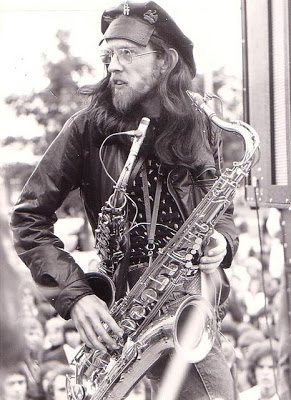


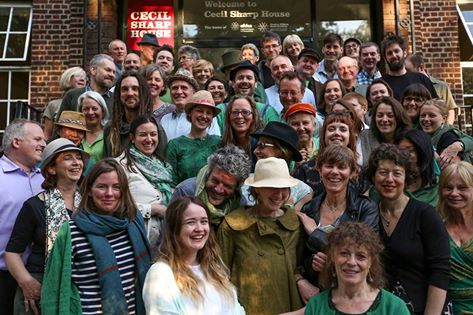
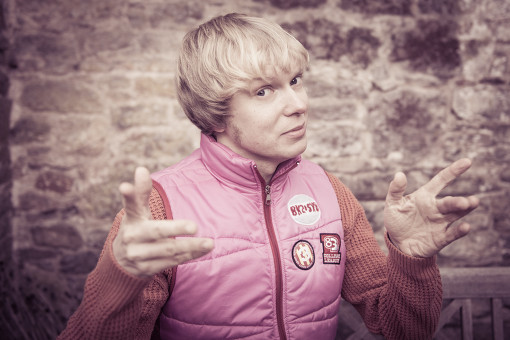
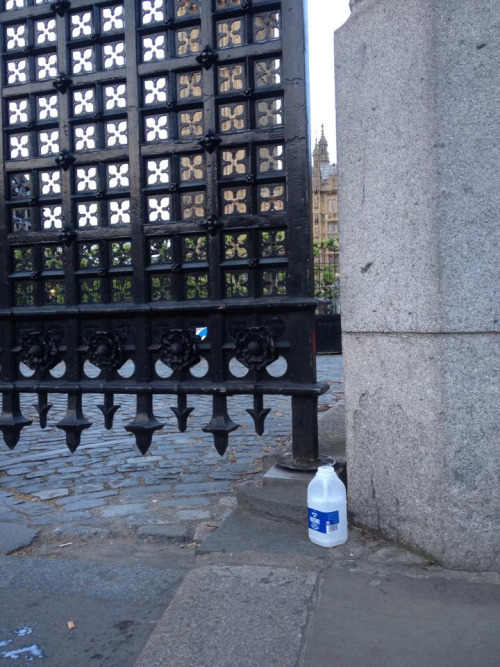
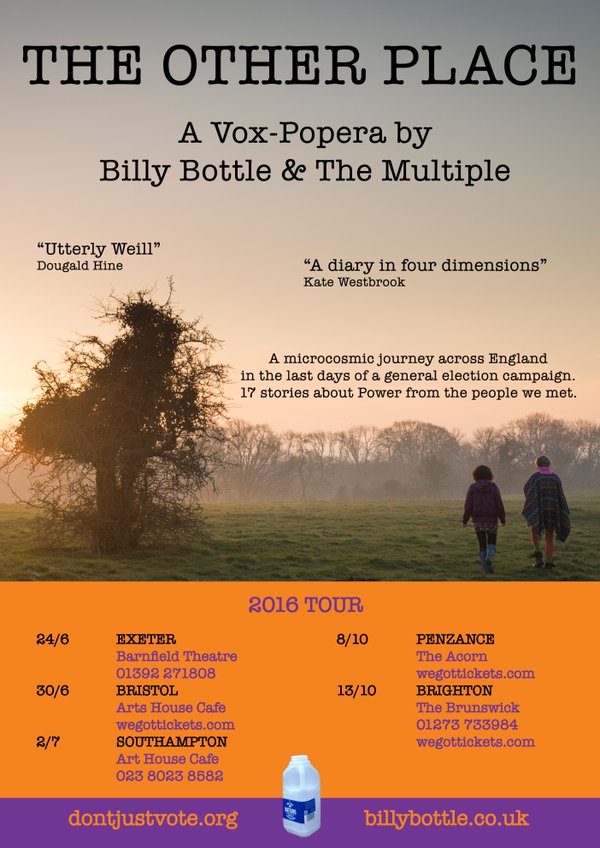

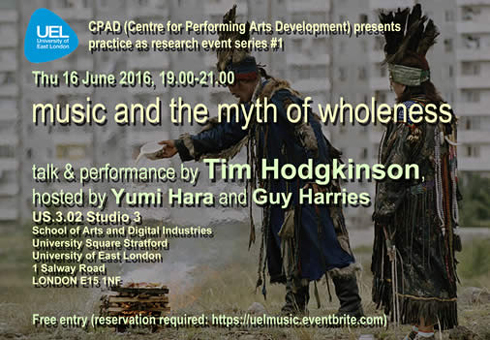





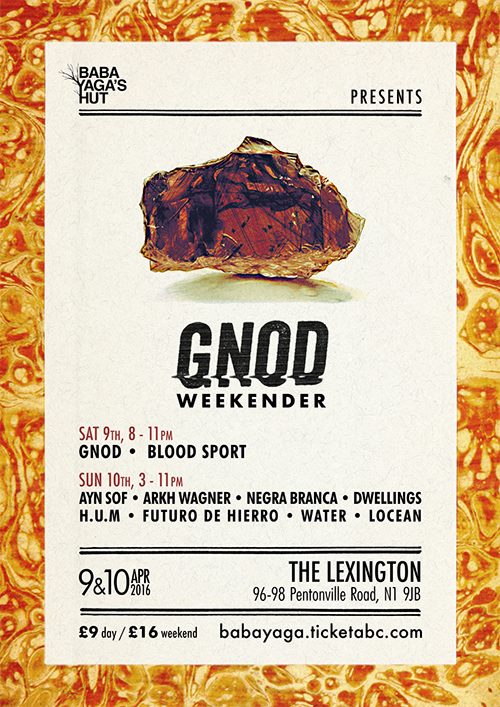








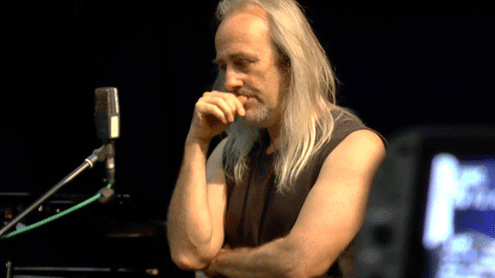
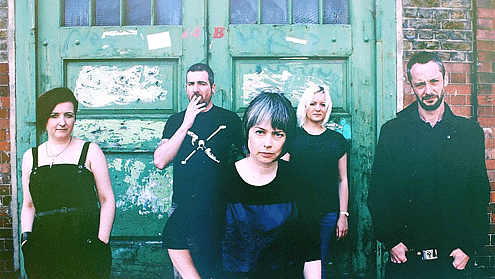
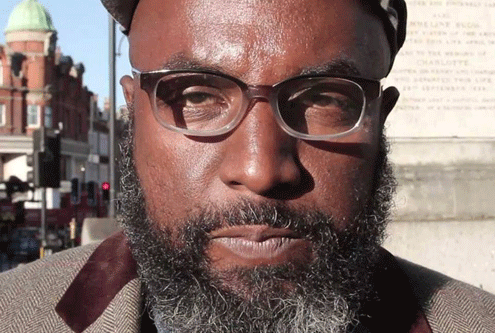

 Misfit City