If you want to keep doom in your pop, you need a trade-off. For every reverberating song of blasted hopes, naked disaster and dramatic plummets into death, there must be a moment when the naked emotion cuts loose: beyond taste, beyond the little voice of reason and logic, and straight into the sweet spot. It’s the same emotional pornography that you’ll find in an overcooked opera, and it works like a charm. If you’re writing deep in the vein of Southern Gothic (in itself, a kind of blue-collar grand opera), this can be the only trick which makes that long black coat billow like it should.
For Never, this point comes about halfway in. Up until then, Kev Craig has been riding a majestic groundswell of piano, bass and anticipatory gushes of cymbal. He’s been singing, obliquely, of love’s fears; of chances lost under blushes, of words becoming “wingless birds.” The guitars and drums have been biding their time, creeping in and out, hinting at heart-crashes.
Now, as all but the piano slips away, here comes the payoff – an invisible gusher, with only Kev’s voice here to ride it. What, up until now, has been a fruity Johnny Cash-cum-Nick Cave impression summons up an even deeper Americana accent, rears high and (as Kev’s lover takes his hand) joyfully bursts its banks: “You told me this truth – / that lovers, unafraid, should open up their graves / and just jump in…”
It’s a tremendous spit in the face of futility; twisting off the sting of death while accepting that it will, one day, be back for its dues. The celebratory boom of instruments that follows could be Arcade Fire or the Waterboys. The blanketing, poisoned romanticism recalls Australia’s great lost desolation band, The Triffids. The weight – ultimately, the whole towering and fruity triumph – is all Last Harbour’s. From here on, the rest of the song is a view down the mountain, but no less grand for that.
There’s more hand-holding on The Heath. This time Kev is sunk deep in a fug of baritone foreboding, with a lone chamber organ looming through the murk to keep him company. There’s a pallid sun, and a gunshot. All else is blurs of detail: coldness, a sense of struggling and drowning, a need for escape. Sometimes the game tilts the other way. Sometimes the view just doesn’t come clear. Sometimes the long black coat just hangs – just like that, just fine.
Last Harbour: ‘Never’ Little Red Rabbit Records, LRR030 CD/download single released: 30th January 2012
“There are no constants, / even if we want them.” Perhaps it’s the shift of moving around, splitting apart. Chicago chamber pop duo T & The Wonder are Chicago-based no longer. Now based on separate sides of the States (singer Tavis Balkin is on the West Coast, multi-instrumentalist Patrick McCormack in Vermont) they remain a duo by an effort of will, affinity and determination. Sometimes long-distance relationships do work out…
I digress. Perhaps it’s the shift of moving around, splitting apart, but this post-move single (recorded in snatched December sessions around other practical commitments) sees T & The Wonder swapping between hope and despondency as if soberly walking a coin over their knuckles. The live drums and strings which they used to use might have been surrendered to budgeting and lack of opportunity (swapped for synthetic equivalents); but their bookish, light-touch ascerbity remains. Corsage is, in more ways than one, a withering bouquet of sympathy. Over ticking guitar, and a trapped tinkle of piano Tavis addresses a woman’s disappointment as she ages – lonely, stifled and perpetually stranded. “Is the corsage dried out? / the one that was packed away / with the empathetic gestures / and the tired old clichés?”
As to where Tavis himself stands, that’s not so clear. Sometimes he’s attuned to the pain of the woman he’s addressing – “Does the future disturb you / now that all you have left is the sound / of a lot of empty talking / and the legs that keep walking?” At other times, a growing frustration renders him cruel. “Can you depend on people, or are you just a misanthrope? / When all your lost love makes it impossible to cope,” he sings, softly, like wet leaves massing up heartlessly in the driveway. “You are a shell of a person, / a portrait of depression.” Patrick’s surge of guitar solo – a fuzzy taillight – pulls up a little swirl of blackening anger; but it hangs in the air, as if unsure of whom to fall on.
It sometimes feels as if Tavis’ own involvement in the story can be called into question. Is that a hint of guilt in his ashy, passive whisper, as if he himself might take some blame for this disaffection? “You write me, I call you, / what more can I say?” he murmurs, a little lamely. “These goddamn words only fill space.” He waxes and wanes, cold and kind, over the course of the song, without ever settling anywhere. Maybe it’s difficult to leave the scene of the accident. Maybe he doesn’t want to. Old debts, never paid? Old wishes that never resolved, but still ache on a chilly day?
The b-side, Vespa, flips the situation here – youth yearnings rather than fading middle-age, and this time it’s Tavis sitting in the role of the person about to slide down the lip of disappointment. The song itself sounds gently rapturous, both motorik and rain-dappled: a blurry cushioned wobble of electric piano, a plastic drum splat and a subliminal driving pulse. Just for the moment the daydream is blooming and Tavis can bask in it. “If I had a Vespa I would drive up to your house, / and I could kiss you on the cheek, / and we’d then hang out for the weekend – / but I don’t.” The road throws up its first little jolt, but Tavis is already smothering himself in the romance. “I can feel your hands, your hands around my waist / Your hair, your hair – it’s all across your face.”
You could get caught up in the fervent dreaminess, until you realise how evasive it is. “We could talk about how I had / changed my life direction / and just moved out of the city to a / place where things are pretty. / I don’t know…” Then you notice that as American road-movie songs go, it’s a pretty soft-edged one. Patrick’s fey touches of fluting synth and Kraftwerk buzzes: mimsy soft drinks; staying well under the speed limit. It’s not that Vespa lacks grand passion. It’s just that it’s been filtered down and compacted, firing up that diffident teetering hope with quiet fire and aching to make it real. “Living in the moment we would forge a life together – / and we’d send our loved ones letters, / every day a little better than before.” But the letdown is coming a little closer all the time, and that haunts the song. Weaving through the chorus is a second, nagging vocal line. “When I think it’s not a possibility / I want to leave, I want to leave.” Then you start wondering whether it’s less of a grand passion, and more of a grand, shy, unspoken crush. An entire world bubble-blown from a single fancy.
Two songs of apartness. Two men divided by most of a continent; linked by an ongoing sympathy, writing subtle bruised-petal songs about how the world often lacks such mutual feeling. There’s probably something more to draw out of that, but I’m not going to try. I have the feeling that if I try to describe it any more it will burst, softly, under my fingers.
T & The Wonder: ‘Corsage’
T & The Wonder (no catalogue number or barcode)
Download-only single
Released: 28th January 2012
Holy shit. Yes. Why reform without true purpose, and how much better when you’ve grasped it? In the wake of a riot-torn English August (and twelve years after imploding into a cloud of soiled tinsel) Ultrasound burst back into life, their idiot-savant knack of transmuting outsider vanity and navel-gazing into shared Britpop anthems now regenerated with a vengeance.
If they’re still harking back to the ’70s with their punk-raw attack, their epic classic-rock scale and their dirty storms of psychedelic sleet, that’s fine. It’s not as if the worst parts of the 1970s aren’t already washing back to us: the flailing economy, the strikes, the embezzlements and resentments. Rudely uncoupled from the lives we expected, shoved back to childish helplessness, punch-drunk with the rage simmering under our good behaviour… perhaps we need some growling mongrel ’70s spirit to grab onto.
It seems appropriate that it should come from these guys; the tangle of scraggy-looking oddballs who, back in 1998, briefly seemed to be stumbling into the role of people’s band – flaws, delusions and all. Back then their hulking singer Tiny broke all of the rules for being a pop frontman (too old, too weird and unpretty, too gloriously fat). Yet he played both Peter Pan and Pied Piper to a slice of teenaged music fans, who found inspiration in the way he stood stubbornly in the heart and guts of his long-past adolescence and sang out its fear and wonder. Then the band imploded and died in a welter of recriminations, self-indulgence and selfishness; and as their collective corpse bounced chin-first down every hard concrete step they’d climbed up, we watched them crash from inspiration to sorry memory, from joke to obscurity to lonely pub quiz question.
Several pop generations on, they’ve picked themselves up, casually blinked away a decade, and returned in full flush with a double single concentrating everything that made them great in the first place. Welfare State (vulgar, inspirational, coming in like The Who carpet-bombing ‘The X-Factor’) is a rallying call for Tiny’s army of “filthy, fly-blown fools.” It’s also a celebration of the band’s return to action and a two-fingered statement of dole-culture entitlement. It resonates eerily with the grand smash-and-grab which blighted the English summer of 2011, especially when a burglar alarm bleeds into the psychedelic stew midway though.
Don’t expect consistency – only a few breaths away from eulogizing heroic working mums, Tiny can exult “we’ve never done a day’s work in our lives” as the band cook up a flaring riff behind him. But as they rage at suppression and disappointment, and as the song turns into a sweeping cavalcade of outcast celebration (“We are the greasy unwashed scum, we are the paupers on the run”) it’s hard not to be carried along.
It makes more sense set against its parallel flipside, the Dennis Potter-inspired anthem Sovereign: here, Ultrasound expose a mucky vegetable heart in a soup of soiled aspiration and strayed Catholic imagery. In comparison to Welfare State’s foolhardy confidence, it starts in shit and sins and only gradually grows roses. Initially stars, notes and shame all melt downwards out of a vast gloomy sky while Tiny pleads for hope – “All this mess and grime and snail-slime / makes life…” By the climax (with volatile bassist Vanessa Best adding her magnificent soul howl, and the sky lit up with blazing guitars), it’s somehow turned into the Ascent of Man: transfigured out of guilt into an invigorating, painful rush of honesty.
There’s still no sign that Ultrasound have grown up – that, I suspect, would be missing the point – but their desire to simply grow, like a gnarled defiant tree, has never been stronger.
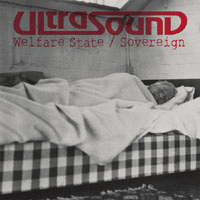
ULTRASOUND: ‘Welfare State/Sovereign’
Label Fandango, ULTRA001t
7-inch vinyl/download single
Released: 29th August 2011
Thinking drummers are to be treasured. Not just the sparky virtuosi cast up by jazz and progressive rock – clear and plain equals to anyone whom they share a stage with. Nor even just those examples of drummer-plus such as Levon Helm or Gary Husband, for whom drumming is just a part of their all-round musicianship, and hence nourishes (and is nourished by) everything else they strum, press, blow or sing.
Here and now, I’m talking about the drummers who get so involved with the idea of pure sound in itself that they down sticks (in some cases permanently), and sail away to pursue it. Mick Harris, for example, who quit Napalm Death and thrash metal in order to explore deep industrial noise and beatless drones with Scorn and Lull. Drummers’ projects in this vein don’t seem to have the half-hearted taint of similar work by guitarists or keyboard players. Maybe the physical immediacy of drumming, from big bangs to stroked whispers, breed a special restraint and particular listening skills – a sensitivity to how air moves and responds to touch.
Within Houston’s underground music scene, Lance Higdon is best known for driving various math rock, improvisation, noisecore and psychedelic projects via superb kit-work. With Soaring on Their Pinions, his musical imagination moves him away from the drums – though probably not permanently. As Harris did in his ‘Murder Ballads’ collaboration with Martyn Bates, Higdon has turned to reworking traditional folk and liturgical songs via beatless ambient electronics. Where his method differs is that his electronics are, in effect, inaudible. Unlike the dark, low wind-noise of Harris’ machines, Higdon’s can only be detected by the imprints and embossing which they leave in other sounds. Specifically, he’s sifting and sampling the unaccompanied singing voices of women, getting deep into the grain in search of textures and fragments which he can then build back to the song. In some ways, it’s a nod back to the 1950s and the electro-acoustic methods of musique concrete, but it has a particular purity. No other sound sources – just the singing and what can be teased out of it.
At the heart of this debut single is the first of his guests-cum-raw-material – Atlantan mezzo-soprano Whitney Drury. She sings the Advent hymn ‘O Come, O Come, Emmanuel’. The original Latin title is kept, but the sung words are English. Drury’s delivery is sung straight and beautifully, with a lone candle-flame clarity. It’s also thoroughly American, with a creamy Southern curve to her “r”s. and “o”s. Is that relevant? Perhaps – if you consider that Soaring on Their Pinions is about layering, and that even before Higdon begins his own work on this particular song he is dealing with a long tradition of accretion.
As a song, ‘O Come, O Come, Emmanuel’ can look back over a thousand years of travel: from Hebrew and Latin antiphon through Franciscan hymn to the muscular piety of Victorian Anglicans. Anyone taking it on is joining a lengthy queue of interpretations. A Christian favourite, the song has almost become a cliché, with everyone getting in on the act: robed Episcopalians, clean-shaven New Agers with check shirts and acoustic guitars, even Whitney Houston (who gospelled up a version with Take 6 in 2003). It’s hardly less popular to secular ears, sparking (or surviving) multiple interpretations even recently (by Enya, North Sea Radio Orchestra and even metalcore heroes August Burns Red).
Perhaps mindful of this, Higdon’s treatment doesn’t make any attempt to dig into or smooth over tradition. Instead he rediscovers the song from the base level of Drury’s vocal. The latter may start off clean and polished and contemporary (like air-conditioning and throat-care capsules). Yet as Higdon shaves, clones and reattaches fragments from it, he shapes and reveals something more ancient: something which could have wafted from a lonely hermit’s cell. He buoys the vocal up on cellular flutters of transposed echo – first arresting it, later turning it into a kind of slipped, arrested madrigal. He enshrines it in a subtle crypt of reverb. He steals and multiplies Drury’s sibilants, feeding them back past her in fuzzy air-serpents of susurration. Later on, distorted shreds of voice, crushed beyond recognition, waft through the song like smuts: while higher shreds tap out a shattered, stuttering Morse.
Yet ultimately Higdon’s a gatherer, not a harrower – respecting the song and the singer even as he refracts it. Such is the serene melodic beauty of the original that it’s easy to miss that it’s actually a desperate prayer for deliverance: a call for a Messiah to revitalise law, to destroy tyranny and captivity, to open up Heaven. In other words, it’s a spiritual protest song… or just a spiritual. Higdon’s treatment returns it to that level, while rendering it vulnerable to collapse or corruption. His sound-sculpting surrounds that beauty with loneliness, threat and uncertainty (via loop hazard and eeriness) while retaining its core of beleaguered faith.
Soaring on Their Pinions (featuring Whitney Drury): ‘Veni, Veni, Emmanuel’
self-released (no catalogue number or barcode)
Download-only single
Released: 20th December 2010
As you might have expected if you’d already heard his ‘Spinning the Compass’ album, Tom Slatter’s ‘Seven Curses’ plays as if plucked straight from an Edwardian hardback or for an early Hammer horror short. It all rarely rises above tale-telling folk dynamics, but Tom’s voice creaks with hammy foreboding, while the music is draped with spooky death-strings and apprehensive guitar cadences.
His patronising English explorer (for which read “tomb-robber”) gets punished when he walks straight into a crossfire of malignant defensive spells, rendering him a disaster magnet spilling misfortune and death onto people around. It’s the other ‘Get Carter’. Tom sort of plays it straight, but fireside-storyteller straight, more than willing to bug his eyes and make spooky gestures of voice and arm if it helps the tale roll along. In the end, it’s a fragment of weird-camp, its plot unresolved, its narrator muttering evasively about a “compulsion” which might be his determination to tough it out or a coded admission of responsibilities for the series of mysterious deaths which are beginning to blot his passage through life.
‘Lines in the Dirt’, on the flipside, shuffles its sorcerous signifiers like Tarot cards. “Geoglyphs and pyramids, / the voices of the aliens. / Mashing up the holy root. / The feathers sprouting from your skin, / shaping babies’ skulls.” Again, there are witchy metal bands out there who’d play this straight, lurking by bookcases and growling out of the depths of their trench coats, drawing sigils with one hand and, with the other, fingering mysterious objects deep in their pockets. Tom, by comparison, sings it almost like a lounge song, despite the encroaching minor-key darkness of his chord voicings. A coda of droning, low-heat psychedelic guitars and Moog-y squeals restores some mystique, but it still feels as if Tom’s teasing us by flapping a book cover at us. Both songs feel like preludes, not quite satisfying in themselves: dainty bait to pull us into a full Slatter show with all of the invisible strings, stage-winks and poltergeist cupboard-flutters.
Zoo Kid has a similar home-made feel to his music, although on the evidence of ‘A Lizard State’, he favours boudoir soul rather than cosy weird-fic. As with the Slatterisms above, you can see mechanisms and levers being exposed within the songs, but in Zoo Kid’s case it seems to be because he can’t help those songs from starting to fall apart. ‘A Lizard State’ starts off like a soul record with a strong splash of doo-wop, but very quickly begins to warp. Literally. The rhythm guitar licks are off-kilter; the bass popping like yeast-bubbles from a dodgy batch. It’s increasingly unclear what’s coming from futzed samples and turntables and what’s coming from crooked live instruments.
Zoo Kid himself seems to be trying to embark on an Isaac Hayes-ian, blues-shaded song-rap about love and frustrations, but keeps baring fangs and throwing moodies, continually sabotaging himself with bursts of bitter insults and hip hop disses. As the song wobbles along, the feeling grows of being both pissed and pissed off while huddled up in the corner of some lounge club, losing control of the playlist. I’m guessing that what we’ve got here is a carefully-orchestrated live car-crash – lo-fi and saboteur-minded, ramshackle but clever, with Zoo thumbing his nose at conventional storytelling songcraft while embracing chaotic moods and sour, jittery emotional stews. I want to hear more of these messes.
Madvillain: ‘Papermill’
Combining the densely threaded raps of MF Doom with the broad sonic curiosity and production suss of Madlibz, hip hop groundbreakers Madvillain have been pretty quiet since their dazzling 2004 debut: various remixes and placeholders have kept things humming on a protracted low rumble while the two members pursue separate paths. Abrupt and deliberately inconclusive, a sudden slap out of nowhere, ‘Papermill’ breaks up the silence and moves things along.
Jerking loudly into life with no warning, as if woken with a cattle prod, it seems to be pretending that there’s been no hiatus, no interim questions. A deep-funk scat-and-guitar loop stolen from an obscure German band wobbles like a stack of pancakes. Doom freestyles over it in a blizzard of surreal sentence fragments, bits of loopy hustler aggrandisement scattering across flashes of lucidity and poet boasts – “stirred not shaken, / absurd verbs since word to hot bacon. / Wrote this rhyme on standard sandpaper, / worked out the plan and plot for grand caper.” There seems to be an underlying theme of conning the curious, and of baiting chaos in order to keep sharp. “Any bent ‘cept, idle threats all irrelevant. / Get your man’s wallet, tell him “found it”, and sell him it… / Forest Gump chumps get clumps of nuttin’ for nuttin’ / Tourist, show ’em where the shore is where the shark’s at. / Hold up, spark that, park rat… / Hand in the jar, got stuck, took it.”
There’s a Koranic quote near the end which translates as “you have your religion, while I have mine”. In true MC style, Doom’s positioning himself as being better, but it seems just as important that he’s different; building himself a portable compound of words and schemes, all too oblique to let himself be pinned down by anyone. There’s no attempt to build anything with clarity. You get a peek into the moment and that’s it, sucker. You’ll just have to wait until the next time that they swing over. Six more years? Perhaps, if you’re lucky.
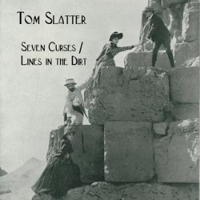
Tom Slatter: ‘Seven Curses/Lines in the Dirt’ self-released (no catalogue number or barcode) Download/streaming single Released: 23rd May 2010
Get/stream it from: (2022 update) Currently unavailable; might be reissued at some point as part of Tom Slatter’s Immoral Supporters club content.
Zoo Kid: ‘A Lizard State’ self-released (no catalogue number or barcode) Download/streaming single Released: 23rd May 2010
Get/stream it from: (2022 update) Soundcloud, YouTube. Original download single was later made available on Zoo Kid’s ‘U.F.O.W.A.V.E.’ album. Currently reissued on the Kid Krule album ‘6 Feet Below the Moon’, streamable/downloadable from Apple Music, Deezer, Tidal, Spotify and Amazon Music.
Madvillain: ‘Papermill’ [adult swim](no catalogue number or barcode) Download/streaming single Released: 26th May 2010
Get/stream it from: (2022 update) Original download no longer available; still streamable via YouTube. Track was briefly available on the download-only Various Artists compilation ‘Adult Swim Singles Program’.
On his own, Matt Stevens is a contemporary guitar virtuoso and solo looper. Buzzing and rebounding (in the space he’s carved out somewhere between Graham Coxon, John Martyn and Robert Fripp), he shreds his way through dramatic, heavily rhythmic acoustic improvs and echo-pedal tickling. He’s not generally the kind of person who needs to beef himself up as part of a trio – for players of his kind, they’re often restrictive – but for The Fierce & The Dead he does just that, accepting those restrictions along with anything else that comes along.
For their first statement (and for nearly nineteen minutes) Stevens, Kev Feazey and Stuart Marshall pour out a continuous stream of low-key improvised space-rock – all pared down to a sparse math-rock or post-rock aesthetic, but peering backward to earlier times when it was OK to showboat a little more. The general feel is of musicians keeping a careful foot in both camps while trying to surreptitiously rub their ankles together and fray a few escape tunnels. For instance, Matt’s impressive guitar skills are still present, but slowed down and judicious. They make themselves felt in a shimmying ring against the strings; in curled and rising fragments of blues like scraps of burning paper; or in retrenchments of tempestuous noise leashed back to a distant roar.
The rhythm section, meanwhile, provides the bulk of the band’s math-rocking. Kev’s grumbling, economical bass sits close up against Stuart’s discreet, spacious drum patterns. Avoiding outright grooves in favour of careful pulses, they soften the mathematical edges, leave rhythms as suggestions. Left free to explore, Matt plays against the mechanisms. His own melodies, textures and double-backs add the human element – questioning, pushing back, and wandering loosely into various styles from minimal clanging to careful soloing to low-key jazz chording.
Over those nineteen minutes, the band takes a long lowering drive through close-linked moods. Sometimes they’re meditating, sometimes decorating; sometimes they’re passing into drones of steel-wool guitar, synthesizer-scour or glowering bass-pedal. It’s part indie-rock jam-band; and part David Gilmour cruise, filtered through Slint. It’s also by no means complete. This is just a dip in the water, a thoughtful flexing of instruments. It noodles along thoughtfully, slyly upturning post-rock aims along the way, implying and wheedling that there’s room for a old-school guitar-slinging power-trio in that strict church of ego-melt and anti-rock-posturing. Some purists are probably going to consider that reactionary treason, or at least a backward step too far. I suspect that with the prog-fanciers who’ve always migrated into post-rock zones, this is a battle well lost long ago.
Yet there are hints that The Fierce & The Dead may have more to offer than being a cautious Groundhogs for post-rock brainiacs. For example, there’s Stuart’s digression into breakbeat crunch at the halfway point, or the unsettling final minute: a coda of skirling and looping up the scale via feedback, microtones and cheap electronics, ending with an abrupt slam into silence. I’m guessing that they’re not intending to stay on cruise control forever: Part 1 is, after all, just the start of any story… But more proof and less scribbling next time, please.
The Fierce & The Dead: ‘Part 1’ EP
The Fierce & The Dead (no catalogue number or barcode)
Download-only EP
Released: 3rd January 2010
“Well, you got so down you went to town and bought a brand-new top. / They can take your will to live but not your will to shop. / Try to eat more ‘cos you’re hungry, and less because you’re lonely, / and don’t let that feeling fade away…”
Oxford pop pixies Holy Roman Empire seem cheerful to sell themselves as being crap. Their press-kit is full of reviews slating their appalling clothes, their mimed performances, their (allegedly) pitiful singing and their clunky tape recorders hidden inexpertly under keyboard stands. Yet they don’t half shoot themselves in the foot by coming up with such good songs.
Bloody hell – if this had shown up in 1989 it would have swept all before it. Not every song blends – so successfully – lyrics like a playful junior Morrissey with mock-pomp Carter USM Casio orchestrations and rounds it off with the cruising freeway feel of Chris Isaak’s Wicked Game. Back then this would have been a small Holy Grail for student radio, ghosting through every university bar across the land. Here and now it can only settle for being classic, timeless pop – whatever the clothing.
In case I’ve not made my point yet – Dante’s Inferno is marvellous. It’s one of those rare songs which fey critics, hung-up on the sublime disposability of pop, always whiffle on about. Well aware of the ludicrousness that lies at the heart of obsessive passion – and of the dramatic pretensions of pop music – it still goes at it full-tilt because it knows that that’s all that matters. (As a bonus, I can still believe in the song even as I reel off this kind of posturing shite… that’s high camp for you.)
Holy Roman Empire ‘s Ste Fleming and his two foils sigh as milkily as Prefab Sprout and deftly nail the paradox of all-consuming unrequited love. “You go to the doctor, and the doctor feeds you pills. / You know you need them, but you need the pain they kill. / All because you lost somebody, but never lost the feeling, / and daren’t let that feeling fade away.” Inevitably the other two songs are anticlimactic after this glorious Moulin Rouge gesture. After all, how do you follow up a song which has a ringmaster on the chorus?
Still, Holy Roman Empire can quick-march a long way on what they’ve got. What they’ve got happens to be a batch of cheesy keyboard puffs, an upbeat chirp of melody, a vocal style best compared to a pomp version of Rod, Jane & Freddy, and some of the sharpest lyrics this side of Paddy McAloon’s teenage-fluff drawer. I Bleed Petrol (punctuated by cute car-crash sound effects) could almost be a children’s singalong. Then again, there are lines like “city kids with sicknesses, and flowers placed by roads, / melting polar icecaps and the flooded southern coasts”, suggesting that the trio have made a noose out of a skipping rope and are trotting out in search of a symbolic motorist to lynch.
No Tomorrow is a bizarrely happy-sounding love song about… yes… everything turning out shit in the end. It’s a fiddling-about with goodbye ribbons as the city burns. “I was sort of wishing – yeah, I was kind of hoping, / as the ground got closer, that my parachute would open (but no…) / ‘You have to be strong now: you have to let me go,’ / so it’s off with my head and it’s on with the show.”
You have to reckon that as long as that tinselly backcloth is still there, Ste Fleming will stay happy. Supercheese wins out, then – and mighty tasty it is too.
Holy Roman Empire: ‘Dante’s Inferno’
Bluefire Records, BLU017
CD single
Released: 2001
For someone with such a reputation for being ramshackle, unpredictable, accidental, awkward (insert your favourite anti-star adjective here) and so on, that there Badly Drawn Boy doesn’t half make polished pop records when he wants to.
The Boy – Darren Gough, when he’s out of uniform – positively thrives on that kind of early Beck slacker/random “just rolled out of bed and made this record” image that wins over the crowds of reluctant punka-monkeys, for whom professionalism’s a suspicious word at best. Doesn’t change the fact that his last single (Once Around the Block) sounded suspiciously like that Latino swing that used to punctuate ‘Sesame Street’ and made you want to check if he had an Astrid Gilberto LP hidden under his battered old mixing desk underneath all the crumpled tape and cigarette butts. Most of the similarly-touted Manc alt-rockers Doves back him up on this one, and guess what? it does sound like a slightly crumpled take on mid-’70s soul-pop. Sort of like Hall & Oates refried for that crate-digger’s Latin funk angle plus a New York thrift-shop feel.
I like it – it’s hard not to enjoy all those vintage sounds bouncing up and down together like a smiling, sweaty block party – but it’s becoming a little difficult not to see Badly Drawn Boy as a lovable cottage-industry faker of slightly worn urban folk. Or as someone who likes smudging his own messy fingerprints on the records in a ‘Mojo’ buried-treasure box. OK, perhaps I’m being a little unfair. Bottle of Tears seems to restore your faith in the boy Gough’s image – a slightly Beta Band-style stoned skiffle, loaded up with boo-bams and other things that go clonk and with all the recording levels cheekily whacked up to a crunchily chewable wall of treble. There’s a bit of hoodlum science on the menu too. Wrecking the Stage is a yobbish rockabilly riff slamming headfirst into some sampler boffin’s cut-up experiment, so you get to hear big stoopid guitar and drums duking it out with primitive electronic froth and a colossal roll of psychedelic bell tones.
There is some kind of split genius here – on the one hand, for postmodern pop pastiche; on the other, for mating cheery tunes with outrageously back-to-front “who gives a fuck?” production. But as regards that carefully-constructed image of the lovable neighbourhood eccentric stumbling brilliantly into music, the game’s well and truly up. There’s a mainstream pop talent here dressing down for effect; and if he’s trying to disguise that with silly hats and goofy chuckles, methinks the Boy doth protest too much.
Inter: ‘Radio Finland’
It’s been a long time since Inter‘s ‘National Paranoia’ showed up (with its coltish Wonder Stuff-y bite), but here comes the follow-up single, straight down the turnpike. ‘Radio Finland’ is slyly anthemic: smoother, laced with chimey Celt-rock chords, stronger on the skat hooks and harmonies, but it’s another “we’ve already discovered that rock delusions suck” songs, worldly-wise behind the “da doo da da dit”s. As lines like “every hour of every day / I’ve got a direct line into your brain” lock horns with self-referential gibes like “what a show, but you’re nothing new”, Inter seem to be deconstructing and sending themselves up before they’re even under scrutiny.
The venomous sideswipe of You Lose shows they can still muster simple brat bile when they want to: perhaps when they hit the big time they’ll’ve gone full circle and gotten all naive and sellably arrogant again. But You Can Always Depend On Me, brazening out the confessions of a self-aware blunderer, suggests there’s fat chance of that – “I’ve wasted my potential trying hard to sound too sincere / and I don’t wanna get myself in deeper saying things you don’t want to hear / …I’m way too shameless to ever get it right.” In Inter’s songs, pop bursts out in tuneful flash-flowers of ballsy resistance. The good new is that even if they have rooted their sound in The Wonder Stuff, they’ve also matched the Stuffies’ tuneful urchin aggression and cracklingly sharp lyrics too. Nice to see a set of heirs that don’t let the old firm down for once.
Porcupine Tree: ‘4 Chords That Made a Million’
A side effect of Porcupine Tree‘s inexorable rise to the forefront of British psych-rock has been the consensus that’s set into their previously unbounded music. But they can still surprise us. Last year it was the dry wit of the ‘Piano Lessons’ single: this year it’s something less subtle, but still a jump away from the strummed ’70s friendly psych-anthems which Steven Wilson comes up with on an average day.
At the root, ‘4 Chords That Made A Million’ still stomps along with big mainstream boots on. But the sound is something new for them: aggressive raga-rock riffs with guitar wails like huge bloodstained battle-axes and a brutally cynical adventurist swagger to it that’s more ‘Definitely Maybe’ than ‘Wish You Were Here’. The effect’s a sort of explosive post-Anokha heavy metal: laden with tabla lines and drones, and with Richard Barbieri spurting out dirty synth lines like someone spunking up into a pot of orchids. The subject matter’s the one thing that unites arena-rock and punk lurkers – that standard disaffection with the biz. “Another moron with a chequebook / will take you out to lunch, who knows? / He will tell you you’re the saviour / and then he’ll drop you like a stone.” Mind you, what does it mean when you’re writing lyrics about the futility and emptiness of arena-rock and you then do your level best to set them in a full-on mosher of an arena-rock crowd pleaser? Has Wilson gone all Manic Street Preachers “we’ll have our cake but claim we’re dieting” on us, all of a sudden?
The B-sides are more familiar Tree twiglets. Disappear is almost unplugged, Wilson’s lazy swirl of flyaway harmonies, licks of luscious sombre wah and the blissful final surge of organ, Mellotron and drums notwithstanding. And it’s another fame story, this time the tale of someone wilfully giving up on the threshold: “I gatecrashed parties and just stood and stared / I moved to London and stayed in all year… / You’ll be famous and I’ll disappear. / I erase myself again.”
In Formaldehyde sounds like one of Radiohead’s disintegrating nearly-ballads fed through Camel: a lovely, helpless, descending Wilson melody to match the boring, frustrating pain of a decaying love. The sonic decorations, an enchanting swirl of dulcimer scratches and NASA blips, enhance a prime piece of trademark Porcupine Tree gliss-guitaring sky-glide. But while back in the ’70s this kind of psychedelic lament would’ve accompanied spliffed-out stargazing, here it’s soundtracking the miserable chill that settles into comfy middle-class apartments as they crumble into broken homes and even the drugs become unsatisfying toys. “Dust in the kitchen – coffee pot, microdot. / Now we are constant: / talking less, breeding stress.”
Perhaps it shows just how everyday the psychedelic has become today (with an acid trip in every other advert), but it also shows that, whatever spaceman noises and Big Rock Issues Porcupine Tree want to play with, they can still bring themselves off the spangly podium and home to the heart when they need to.
Badly Drawn Boy: ‘Disillusion’
XL Recordings/Twisted Nerve, TNXL005CD (6 34904 10052 0)
CD/10″ vinyl single
Released: 3rd May 2000 Get it from:(2020 update) Original single best obtained second-hand; Disillusion appears on the debut Badly Drawn Boy album ‘The Hour of Bewilderbeast’. Badly Drawn Boy online:
Inter: ‘Radio Finland’
Yoshiko Records, YR 002 CDS002
CD/7-inch vinyl single
Released: 8th May 2000 Get it from:(2020 update) Original single best obtained second-hand; Radio Finland appears on the lone Inter album ‘Got My Nine’. Inter online:
Porcupine Tree: ‘4 Chords That Made A Million’
Snapper Music/K-Scope, SMASCD111/SMAXCD111/SMAS7111 (6 36551 21112 3)
CD/7-inch vinyl single
Released: 2nd May 2000 Get it from:(2020 update) Original single best obtained second-hand: ‘4 Chords That Made a Million’ is included on Porcupine Tree’s ‘Lightbulb Sun’ album, while the others made it onto the ‘Recordings’ compilation. Porcupine Tree online:
Forty Shades Of Black rear up with the dirty, sticky, galumphing riffs of Belisha – an elephantine math-rock construction with stubble somewhere that’s annoying it. It lumbers around, red-eyed and furious, tearing a few trees up in fits of fiery rage. It also provides a way for the spiky London post-rockers Delicate AWOL to let off steam (Forty Shades Of Black is basically a handy alter-ego for them when they don’t want to sing).
We’ve met Belisha before, on Delicate AWOL’s ‘Random Blinking Lights‘ EP. Put centre-stage, its grind’n’chop, Mogwai-meets-Ruins sardine-can shapes bang aggressively against your eardrums, and look set to dominate. That is, until the band unveil the smudged and ever-so-slightly stifling sound-painted dreams of the other tracks. These reveal themselves gradually, like disintegrating lacework peeling off an old dressmaker’s dummy.
The soft explorations of Sidings are a post-rocker’s picture of a shunting yard being swallowed by the encroaching dark. Intermittent bass throbs mutter alongside shivering guitar. Caroline’s quiet moans float past alongside feathery passes of brushes on drumskins. Notes slide by, softly massive and indifferent – red lanterns looming out of the darkness. Much less of a reverie, Advanced Formula is as fragile and awkwardly stretched as a crane fly. Spidery math-rock chording scratches out a place to sit: an E-Bowed solo paints a long wavering strip of electric-blue Bill Nelson light across the cloud cover, while the shapes give way to a relaxed out-of-synch swing.
I’ve mentioned before how Delicate AWOL seem hung up on disintegration. This time, watching things decay and fall apart seems somehow satisfying – the return of something to its disassociated elements, instead of the fraying of desires. Whichever is your favourite collapse, inside or out, this band can orchestrate both.
Forty Shades Of Black: ‘Belisha’
day Release Records Ltd., DR102 (no barcode)
7-inch vinyl-only single
Released: 1999
Buy it from:
Long-deleted – try to find this second-hand.
The Nazgul – shadowy figures from the most obscure Krautrock fringes of the ’70s – are back. And lurking in full public view. They’ve been occasional housemates of Tom Waits, and probably got the chance to have a gnaw on his bone machine. They’ve been studio ghouls scratching atmospheres out of trash and implements down in the Turkish quarter of Cologne in the mid-’70s, and they’ve been people who don’t just seem to coax sound out of the most unlikely sources, but draw it out via seance. The rumour is that they’ve even developed a way of recording ghost voices from over-amplifying the signals impinging on bare wires. And these two tracks – crouching malignantly on a new slice of black vinyl – were recorded using only voice, twenty-foot drainpipe and 270 feet of microphone cable. Oh, plus an accordion, for that homely folk edge. As if.
Forget the motorik aspects of Krautrock; forget the shapes it scratches and growls, whatever its texture. The Nazgul have taken it to a point where there’s almost nothing but texture: a rhythmless, frighteningly impure cloud of sound shot through with disturbing noises. Plujectories is a thick worm of static hiss, whirring compressor grind and bass-bin hum, scratching through your ears like a fibreglass cotton swab. Lunging ghostlike through the centre are flattened steam-whistle screeches, the shrill treble songs of nerve-fibres being burnt through, sometimes a barely-recognisable voice stretched in a submerged roar. It’s the sort of sound you’re scared to imagine a microphone collecting, because of what that implies about the world it’s listening to. You close your eyes, and imagine the solar flares burning through your house.
Habitually is more accessible. Hmmm. As if that mattered at this stage of the game. Although as soon as it’s let you in, you feel as if something dark has closed in behind you and cut you off. It’s an experience, a sound picture of an unsteady walk along a polluted foreshore. The crunching and crackling noises that slide around you could be the sand crumbling beneath your feet and dissolving under the dirty water, could be the stone and mortar of the old dock wall disintegrating like perished rubber; could even be the air frying and corroding under the malignant fumes emanating from that squat, broad, frightening factory over the estuary. Distant boats slither past on the sullen greying surface of the water, no faces showing on deck. Occasionally harsh dark chords and dischords blow out, looming up to enormous foghorn dimensions – something to flinch at. There are slammings, as of giant train doors: and, always around, the barely-there voices. Whistling, rustling, wheezing and gasping, part of the architecture of this corner of nowhere good.
But The Nazgul somehow seem to make all of this sound like… just another dark day, ugly things going about their business as the world slowly chokes on the last polluted shreds of its poisoned lifetime. One of the scariest things to consider is the fact that people can get used to anything. The Nazgul are up on the harbour wall watching you as you come to realise this, while you’re knee-deep and imperceptibly sinking in the dull sand. And they’re wraithed in smiles.
The Nazgul: ‘Plujectories/Habitually’
day Release Records Ltd., DR103
12-inch vinyl-only single
Released: July 1999
Buy it from:
Best looked for second-hand.
The Nazgul online:
No dedicated websites available.
It’s an inviting idea. Anna Schulte and Lisa Eriksson sit around in a room in Liverpool with a couple of detuned guitars and some basic looping gear (plus a pair of rhythm-section men borrowed from Mersey psychedelics The Living Brain) to see what happens. They hum out songs and snatches of conversation in a way that’s always on the verge of crumbling to bits, but still holds together, like the immortality of crudded-up cobwebs – lots of interesting little fragments bound up in a tenuous snaggle.
Listening to the bits and pieces of lo-fi invention which they’ve kept on tape shows that Schulte/Eriksson have something in their music like the wobbly stagger of Captain Beefheart’s bloodshot jamming. Or like the scratchier bits of German science-rock that get played at you during music parties (the ones where the competitive art-freak boys are trying to uber-weird each other). But Anna and Lisa seem totally unconcerned with any of these fixations on pointers and signifiers. They’re an offbeat double act, sounding simultaneously bizarre and totally natural. It’s not just their German and Swedish accents as they bounce off English ears. When one of them asks the other “if I say the word ‘sexuality?’ to you, what do you think about that?” she’s met with an incredulous giggle (as if she’d asked “what sound does bread make?”) and neither of them come up with anything.
There’s something warm and alien about these women. Likeable but unreachable – like the futile task of trying to make a cat explain itself, trying to get beyond that affectionate and satisfied manner that displays nothing you can recognise and use for leverage. Interviews have (so far) revealed a pair of women totally detached from earnestness, preciousness or any other self-conscious qualities, and with a simple and unconcerned desire to just let music come.
The music, scribbling and swerving across the grooves of their single like a loose cluster of stoned bees, seems happy to oblige. The straightest that Schulte/Eriksson ever get is the bizarre jazz-train lurch of For The Sake Of Clarity. Their guitar (tuned with a kind of hummingbird logic) hop and pump ahead of the beat; their voices play up and down in stretchy harmonies. “Henry Kaiser playing a samba” is one possible description. I’m also wondering whether Sonic Youth might have produced something shaped like this, in the sweet muzziness after a Brazilian bender.
In Answering Machine the blokes from the Brain bash and stumble away manfully to give the song a bone structure, but in vain. All of the attention goes to the way Lisa and Anna’s voices tug up at their dismal otherworldly sag of guitar chords and take it to somewhere else. For the queasy First Ear Reset/Schaller/Riff, they sound like they’ve turned their guitars upside down: more perturbing jazz-punk chords and steam-whistle tweets yanked off the strings. A violent riff smashes in from another tape and shuts everything down. Their serene smiles probably didn’t drop a notch. But they were obviously laughing when they stuck a phony dance-pop title onto Bassline Loop/No. 1 Hit – it’s about a minute of drunken, tarry slide guitar and murmuring voices which are suddenly exposed as the instruments fall silent and intersect in lovely arcs like a tiny choir of mediaeval nuns… just as the tape runs out.
Scratching cheerfully at the join of subconscious and curiosity, Schulte/Eriksson might use a disorienting private language to run the dig – but you still feel invited to perch nearby. If you’ve ever felt like sitting in on the beginnings of music, here’s a chance to do it.
Schulte/Eriksson: ‘For the Sake of Clarity/Answering Machine’ Org Records, ORG 054
7-inch vinyl-only single
Released: 1999
Buy it from: Org Records, or look for it second-hand.
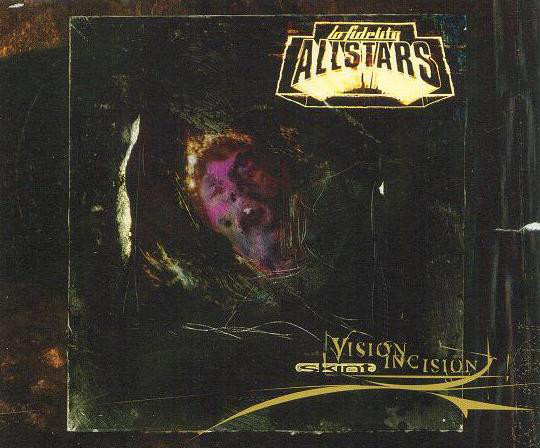
Lo Fidelity Allstars: ‘Vision Incision’ maxi-single
I had this lot down all wrong at first, I admit it. From the bragging “we’re the greatest” interviews, and the “dance music with real instruments” tag, even the look of the group, I had them down as (god forbid) the new baggy. I was fully prepared to go out and shoot them so I didn’t have to live through the horror that was baggy yet again. But a couple of odd tracks here and there have persuaded me to save my bullets… for now.
Sure, there’s a “real band” sound at the heart of the Lo Fidelity Allstars, but they can manage to make their take on turn‑of‑the‑millennium genre‑defying dance culture a gloriously uplifting thing. Their baggy forerunners (Happy Mondays, Stone Roses) always sounded like they were prevented from gliding to a higher musical plane by having their feet firmly stuck in the field of mud labelled “indie”. The Lo Fi’s, firmly centred on the sampler and decks, don’t have the same problem as they reel off ribbons and streams of sound, rather than chug doggedly away like an old pro dealing with a new fad. But…
Oh, the senseless waste. Vision Incision promises to blow our minds wide open, but falls well short of the promise. Good start, mind. Smooth beats, hedonistic keyboard riff, an infectious soul-diva backing hook, and the matter of the live band sound becomes irrelevant as the track lifts and soars smoothly like the most uplifting house or techno, boasting “As we travel at magnificent speeds around the universe…” At which point the Lo-Fi-s prime weak spot is revealed: Dave The Wrekked Train’s bland Speak’n’Spell vocals. Mashing up randomised texts, as he does on other Lo-Fi-s sonic collisions, they work fine. Faced with actual poetry, they creak like a ground axle. Please, if this is the way he carries on all the time, sack him. He has delusions of being a more hip Mark E. Smith, but ends up just sounding like a London cabbie – a monotone mumble grating over the divine music and pointing up the dreadful rhymes in some of his lyrics.
Perhaps he reckons he’s aiming at the street-level psychedelic lyricism of hip-hoppers like the Wu-Tang Clan: the thing is, those guys sound like they believe the weed-fuelled surreal-o-vision they’re raving about. Dave just sounds embarrassed, as if he’d rather have stayed in his siding and chatted to Thomas The Tank Engine this time around. Consequently, I can’t decide whether this is a successor to Orbital’s Chime for the genre‑busting, cross‑pollinating late ’90s dance scene, or just OMD meeting The Orb in a spot of megalomaniac galactic synthpop. Or, alternatively, the KLF doing Spinal Tap.
The remix is referred to as a “12” mix” ‑ how bloody Eighties. I suspect that, in homage to their record label, this is the Lo‑Fi-s’ attempt at the Big Beat remix. The Late Train has mutated (oh god!) into the slower‑talking brother of The Shamen’s Mr C. for the first part of this extended work‑out. Wisely, they quickly dispense of his services and crank up the heavy beats to provide a real tour de force instrumental for the band. Proving that if you like your beats big and bouncy, then this dissipated bunch can turn their devious minds to that too. The Midfield General Shorter mix is the sparse techno‑electronica version. A mechanistic, simple beat, overlaid by electronic squelches and interferences, as the original track is ripped to shreds and rebuilt, as elements and sequences of the original drift in and out of the mix. Oh, and Train-In-Vain is just a distant, distorted presence, way back in the ether. Wise move, guys.
By this stage, frankly, it’s difficult to tell whether Gringo’s Return To Punk Paste is, in fact, a new track, or yet another radical remix of the original. What it does prove, yet again, is that the Lo‑Fi-s can also turn their hands (deep breath) to a ’90s version of the sounds of early ’80s rap and electro. Skeletal beats and distorted, squelching basslines set the parameters for that unmistakeable sound, aided by some nifty no‑nonsense American speech samples.
Cunning remixes or no, even if feted as the best new band in Britain by ‘Melody Maker’ and handed The Future on a giant silver platter to play with, the Lo Fi’s are still going to bellyflop if they keep expecting that stuff like Vision Incision’s going to justify that reputation. It’s not that they’re talentless rip-off merchants. On the contrary, their sampledelic experimentation – when they’ve taken all the sounds of the world, scrunched them up and run with them – is at least as heart-jumpingly astounding as any other visionary pop cut-ups around, if not more so. Hype or no hype, they can bring the noise with a vengeance. This is a real Quality Street of a band – whatever your favourite tribe in the current cross‑cultural collision, there’s music for you here. And if this is the sort of open‑minded group that all the mess of sounds in the ’90s can produce, then the future is wearing some very cool shades.
But compared to their own mighty One Man’s Fear (the world being slowly and gloriously wrenched to sticky bits by Jim Morrison’s psychotic baby grandchild), this ain’t so much a vision incision as a mere blink. Someone had their eye on nothing more noble than a chart placing when they knocked this lot together. Just cut it out, OK? Show me stars, not hot gas.
(review by Col Ainsley)
Lo Fidelity Allstars: ‘Vision Incision’ Skint Records, SKINT 33CD (5025425503320)
CD/cassette/7- & 12-inch maxi single
Released: 23rd March 1998
Get it from: (2018 update) best obtained second-hand.
Swoon. /swo͞on/ A verb. To be emotionally affected by someone or something that one admires; become ecstatic. Here are some people and things that make me swoon. #swoon #swoonage












 Misfit City