Archive | synth pop RSS feed for this section

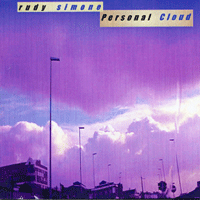
May 1999 – mini-album reviews – Rudy Simone’s ‘Personal Cloud’ (“contradictory shards and half-formed knots of feeling”)

14 May

Rudy Simone: 'Personal Cloud'

Rudy Simone: ‘Personal Cloud’

“I wrap my lips around a cigarette / instead of you,” mourns Rudy Simone on the title track of ‘Personal Cloud’. Her voice pipes and teeters on a precipice of reproach. It’s gently, perpetually, pulled back by beautiful harp-like guitars and throaty bass synth. Here’s a lullaby for the betrayed, somewhere between the sweet hyper-conscious dissolve of a Jane Siberry ballad and a Rose Royce disco symphony. Clasping heartbreak to itself, like an addict in recovery, and gently rocking to soothe; while allowing all of the contradictory shards and half-formed knots of feeling to swim free for a moment, a float of voices and words knocking against each other.

“I thought I was drowning, it was only rain./ Thought I felt fire, it was only smoke. / Never leave me… / Oh, will this world take you from me? / I tried, I tried to leave it alone…”

‘Personal Cloud’ is all about this kind of mixed, eddying feeling. Intensities and unravellings. Throwing vitriol and clinging to loyalty. The need to stab the same person you might be begging to pick you up off the floor two hours later. And if it wavers dramatically – both in its musicality and in its consistency – that’s only in keeping with what it’s about, as Rudy explores her emotional devastation using various forms of music. Club elements invade baggily-hanging acoustic confessionals. Wobbly jazz singing gatecrashes trance-dance. Free association yanks a tune bloodily from its roots. Throughout, moods swing like road-signs in a gale, confusing direction.

 “I swear sometimes I wish an alien will take you from this planet / then I turn around, y’know, / I never meant it,” frets Rudy on Velvet, an all-over-the place straggle of guitar, cello and drums where jealousy, need and pride disrupt each other. At one moment, she’s showing the lover her boot and the door  (“Go on out / take your place and find the one who does it all for you,”). At the next, she’s turned the full blowtorch of greedy sexuality onto him to melt him back down again (“It don’t fit into your plans to be so selfish / when all that velvet is waiting for your kiss…”).

Puppet strings yank themselves; kissing lips bruise on gritted teeth. A foot slides, caressing, up a lover’s calf. The same foot turns and hammers a heel, hard, into his instep.

This kind of tense no-man’s land is a stressful place to be. Sometimes there’s a wordless protest, as expressed in Galactica – cosmic trance-techno, where the lonely cry of a star-burned keening synth is cheered up by a flamboyant crash of bells and bucked up by a roguish, tarry bubble of club bassline. Alternatively, Stronger Than You Know meanders along on its skinny guitar and string synths, changing its shape, like a girl dancing drunkenly across treacherous ground, knowing where to put her feet but lurching dangerously close to disaster. It seems fey, but only because it’s discovered a different kind of resistance, dissolving again to escape damage – “Oh, you’re kicking light, / you’re punching air.”

The militaristic Bjork-ish beat of Glimmer Of Hope, the tension of guitar and listing punchdrunk voice, belies its positivity – “I see a glimmer of hope in the clouds / and it’s all I need to see my way out of this.”  On Feel Like I Belong, the club electronics bang and bubble under one of Rudy’s sweetest bluesiest sighs, and bloody experience is weighed up – “memories can drown if you let them – / just because you can it doesn’t mean that you should.” Only the drunken brooding of surly fuzz-guitar suggests there’s something wrong behind this particular attempt at finding peace.

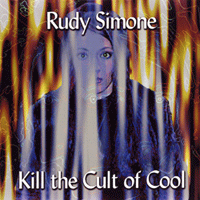
record-rudysimone-ktcocFar more satisfying (in terms of comfort, anyway) is the spooky guitar and spiralling trip-hop of the haunted single Kill The Cult Of Cool – remarkable in any context, particularly moving here, it sounds like a night’s spiritual battle committed to tape. On the single cover Rudy, visibly haunted, stared down fear out of a circle of tall, slender flames, and the song’s occult, speaking-in-tongues feel is still immediate. Over Gothic movie keyboards, Rudy delivers a Buffy-esque putdown in a cool, girl-with-a-mission voice – “I’ve got nothing but derision for your apocalyptic vision. / Anti-amorous, not glamorous. / Time to kill the cult of cool,” – before rolling off into a weird, syncopated mixture of American indie, sampledelia and trip-hop in which everything seems to slide gracefully in and out of time. Ruminative, sandpapery hip-hop beats do the slippery shuffle-and-collapse in the basement. Frail raga-trance vocal melodies drape themselves in irregular folds over the roof. White noise, static radio fizz and heart-monitor bleeps struggle in and out of the mix: a dreamy staircase of guitars (including a spaghetti-Western dobro) twangs at the heart of the chorus.

The rest is a weave of lost-girl chant and coos, a multiplicity of voices flipping backwards and forwards, a narcotic nuzzle towards solace. “Help up, I shall bless,” keens one line. “Ooh yes, honour – there’s no-one there…” murmurs another. Rudy duels weightlessly with other wounded voices (“I was the quiet one in school, never made any trouble…”) and absentee gods before declaring with quiet assurance, “I don’t care what you say, I’m not crazy.” The fact that this happens at the beginning of ‘Personal Cloud’ – and not as a tidy resolution at the end – suggests that this isn’t the first time she’s had to take up arms against her own crowded inner sea of troubles.

Uneven, unsettling, and mixing awkward un-coordination with gliding grace, ‘Personal Cloud’ reveals the wayward talent of a potential cult heroine – unafraid to grasp at the chaos and trash of the battered heart.

Rudy Simone: ‘Personal Cloud’
Phat Lady Records (no catalogue number or barcode)
CD-R-only mini-album
Released: 1999

Buy it from:
Extremely rare – best found second-hand.

Rudy Simone online:
Homepage Facebook Twitter Bandcamp Last FM YouTube

October 1998 – live reviews – Holly Penfield’s ‘Fragile Human Monster Show’, Downstairs @ The Washington, Belsize Park, London, sometime in 1998 (“calling back the family”)

3 Oct

Usually, the stage is festooned with objects. Antique candlesticks, mutilated dolls, little aliens and masks and stuffed rats. Inflatable replicas of Munch’s ‘Scream’; drapes and toy guitars and candles and mirrors. A travelogue of places been, of people touched and gifts given and received. It’s like walking into a voodoo shrine when you go to one of Holly Penfield’s shows, with a Kurzweil keyboard synth as the altar and a most singular priestess creating sympathetic magic.

Tonight, though, it’s not like that – and, to tell you the truth, it hasn’t been for some time.

When I knew it in the early ’90s, the ‘Fragile Human Monster’ Show had set itself up as a Kilburn cult: blazing and guttering as a shredded star in the Black Lion’s lofty function room, an intense piece of performance art sitting oddly on the schedule among the jazz nights and the inevitable country and Irish bands. I used to be a regular, travelling an ungainly “v”-shape by Tube from Highgate to Kilburn via Charing Cross every few weeks to take in this precarious celebration of the outsider’s turmoil. I’d be hearing new audience members mutter “I’m absolutely fucking gobsmacked!” and “she’s a shaman, that’s what she is!” as Holly hauled her exhausted self offstage after the climax of every show, to meet the cluster of new converts. Or watching others sitting bolt-upright in their seats, uncertain as to whether they should move or breathe yet.

Kilburn has a long-standing reputation for nurturing street-fighters, poets and geniuses, but no-one was ever entirely prepared for the sheets of tumultuous emotion that blasted off that stage, winding the audience in out of their cloistered London selves. It was no crowd-pleasing assemblage of easy pieces. It was an exorcism, sung out of the psyche of an unstable California songwriter come to earth and berth as North London’s answer to Tori Amos, whose self-appointed mission was to celebrate the glorious awkwardness of being alive and being human.

She did it in style and with her whole heart, exploring our contradictory and troubled natures with her bag of striking songs and her full-on keyboards and singing. Part synth-pop diva, part 1970s rock siren, she came across like a full-throttle Stevie Nicks or Grace Slick invading and overwhelming a Laurie Anderson show-and-tell, and she brought a brace of personas with her. At times she was the enigmatic seductress, at others the knowing child or the wise fool, the little girl lost who sees with the clearest eye. Sometimes – especially in the wilder second half of the show – she was the liberating hysteric, encouraging the whole pub into primal screaming with her, or delving into the world of the compulsively needy in the sonic barrage of Cuddle Me.

Being a member of Holly’s audience meant being enticed into shedding those cloaks of cynicism and reserve we use to insulate ourselves, and opening your heart up to the rawest kind of sympathy and honesty. The show became a part of us, as much as we were a part of it, the church of the misfits she embraced. We dropped our guard, she sang: a voice for our odd angles and our visceral fears. OK, it wasn’t always successful. If you didn’t buy into her stylings and sounds, or suspected her for the years she’d clearly spent grinding away and trapped in the Los Angeles pop factory, you’d have been left cold from the start. Holly’s whimsical song-stories of peculiar goings-on down at the ranch burbled where they should enlighten. Her savage onslaughts on her inflatable Scream dolls did look like kids’ TV for psychos; and some songs fell across the line dividing the inspired from the self-indulgent. If you led with your sense of cool, or your cynicism, there was no chance.

But at full tilt, it was unmatchable. Banners unfurling, defining the nature of the misfit – and, years later, inspiring the name of this blog. The keyboard was caressed and hammered, abused and enchanted, responding with waves and roars of sound, chimes and ripples as those melodies cascaded out of it. Inevitably, the show would climax in a crash of sound and fury as Holly’s rage and passion reached a colossal peak and she smashed at keyboard and walls with terrifying fervour. Some evenings she’d pull herself up from the floor to let us off the hook with a song of redemption. Some evenings she’d given out so much that she couldn’t…

And eventually, it died a death. The show’s welcoming inclusiveness coagulated, and shrank to one woman’s neurosis replayed again and again on stage as a stubborn loop. Locked into her ritual of combat and confrontation, Holly became unapproachable: stopped listening. People, reduced from being family to being just punters, felt that; they stopped listening themselves; drifted away. Eventually, one evening (watching Holly run through a show that had become no more than a process, a jukebox for the disturbed) I realised that everything that had drawn me to attend the Fragile Human Monster Show – to be a part of the show – had slid out of Holly’s hands as they contorted on her keyboard, and drained away.

Quietly, and unmissed, I left. I heard that it ground on for maybe half a year longer – until Holly’s compulsion to keep performing it had finally ebbed – and then faded out. Radio silence.

That was then. Now… a tentative return to action. Holly’s show is no longer a monkey on her back, no longer a vampiric therapy devouring its own subject. And – by word of mouth, by phone – she’s calling back the family. There’s a new, one-off venue, in a more genteel neighbourhood. And there’s a gentler, shorter ‘Fragile Human Monster Show’. Less of a pitched battle this time. Testing the waters, for sharks and for soothing.

So… no decoration tonight. No Screams either. Just the keyboard, and Holly: still wand-slim, wispily blonde, petite; still looking as if you could break her between a couple of fingers. And, tonight, apprehensive as she works her way back into performing the show. When she takes the stage, however, she’s anything but insubstantial. That voice, that playing, those songs… are still intact. Little miracles of warmth and tension, instantly memorable as her astoundingly expressive voice curves little bluesy, jazzy curves round heartbreaking corners.

Penfieldia is a place to hide and be inspired, inhabited by characters like the homeless poet living in a box in Over The Edge or the unravelling lovers in the hollow urban landscape of City Of Lights. There’s familiarity to them, yes. These songs could conceivably have sat in the charts – or in piano bars. But, just as it all seems to be getting too straight, Holly twists it and it’s off in a different direction, or barbed with something unexpected that sneaks in and turns your heart like a doorknob.

Parts Of My Privacy unwraps the fears of the distrusting recluse. In Stay With Me slow coils of piano reach into the depths of loneliness, still the sound of a woman slowly sliding into the dark. Sea Of Love offers us respite with a slow sated love ballad and Don’t Hide sends out a rousing percussion call to faith. And Voices – a slow, winding sleepy version in which Holly leans on every note to push it home into the air – has the audience gently thrumming, always on the edge of a breath.

The clincher was always going to be the climactic ‘Misfit’ finale, the explosion which always blew the cork out of the frustration raging in the original shows. It still has that drama, that rage and stubbornness… but now it seems content to rest on its own worth, not to burst into hysteria and hallucinations. She’s keeping us guessing. Or, maybe, questioning herself about what her misfit resistance should be doing now and how its battle cry should sound, now that it’s escaped from the torments of the hall of mirrors.

Tonight, though, was something more important than just songs. It was the night that this most involving of shows gave itself back to the people who’d buoyed it up and who’d lived it as much as Holly Penfield herself. A collection of fragile human monsters found themselves, once again, with the sweet shared ache along the same shared faultlines.

No matter how much she could’ve dressed the show up, it would have been immeasurably poorer without that.

Holly Penfield online:
Homepage Facebook Twitter Last FM Apple Music YouTube Deezer Google Play Spotify Tidal Instagram Amazon Music

The Washington, Belsize Park online:
HomepageTwitter

July 1998 – EP reviews – Darkroom’s ‘Carpetworld’ (“swathed in contradiction… one long, haunting slab of sonic terrorism”)

15 Jul

Darkroom: 'Carpetworld' EP

Darkroom: ‘Carpetworld’ EP

Darkroom come swathed in contradiction: daytime shoppers on the sleeve, savage nightlife in the music. And no credits, though apparently it’s another one of those confounded No-Man offshoots ‑ don’t these bloody people ever sleep or anything? Evidently not, if the tracks on this single serve as an example of the sounds pulsating through their brains.

Carpetworld itself breaks all the rules ‑ the rules that say you can’t put vocals and lyrics recalling Soft Cell‑era Marc Almond over churning, vicious Frippish guitar ambience and hard‑as‑nails mechanoid beats falling somewhere between jungle and hardcore techno. A knife in the side of the rave generation’s blissout, it’s elegant in its brutality (“taking a twirl with your best friend’s girl, while the rest of the gang torch Carpetworld”), hovering in tatty clubs and observing the rituals of nihilism unfold as the backwash of bad E and the not-so-gentle ’90s poison the clubbers’ dreams.

Dance darkhorse it might be (it doesn’t run with any obvious scene, and fuck knows which playlist it’ll fit on in the increasingly segregated world of dance radio) but this is still cutting‑edge contemporary, with absolutely no fluffiness and Tim Bowness spitting out lyrics the likes of which we’ve never heard fall from his previously poetic mouth ‑ “Have useless sex with your ugly ex… / You velvet‑sneakered chancer, you broken-fist romancer…” as the beats flutter like a death’s head moth trapped in the throat. I’ll stay well out of the disturbing urban nightmare Darkroom are living in, but I’ll happily live it vicariously through their warped imaginings. Dante’s disco inferno.

After that, the Carpetwarehouse reworking does lacks a certain spontaneity. The original sounds like it’s literally fallen together in a paranoid improv session after a thoroughly unpleasant experience: This – apart from simply not being different enough – simply sounds like Darkroom have tried too hard at the atmospherics. OK, the beats are even more frenetic and Bowness achieves something he’s previously never managed in previous recordings: i.e., sounding fucking terrifying as his distorted voice rasps out the repeated mantra “I’m coming after you!” If you ever thought, from listening to No-Man’s work, that you could have that Bowness chap in a fight ‑ think again… Nonetheless, one does yearn for a battering, bloody remix from the diseased mind of Jim ‘Foetus’ Thirlwell, or Aphex Twin.

But, hell, Darkroom’s maverick genius still encompasses enough space for much more roaming, ambient trips. Daylight, in particular. Tim Bowness (like Martyn Bates) has always had one of those voices that are perfect to use as an instrument integral to a piece such as this, weaving magical wordless nothings in and around underwater tones and splashes of electronica. Anchoring this thoughtful pause from drifting off into inconsequentiality, a beautifully melodic bass riff and eerily clattering percussion ‑ like the echoing sound of camera shutters ‑ keep proceedings somewhere near planet Earth.

Ardri, though (nonsensical title ‑ always a bad sign), reeks too much of late ’70s/early ’80s ambient ‑ the kind of stuff the BBC would choose to soundtrack beautiful nature footage. Look, it’s a personal thing ‑ until someone out there finds even a slightly new direction with ambient (and I would certainly not rule Darkroom out of this), then the only sounds that interest me are the ones that either completely chill me out, or those that make the hairs on the back of my neck rise. This final track (like too much else in the field) gets my mind wandering after the first minute and thinking “So? What’s next?”

So, a downbeat end to a marvellous debut from Darkroom. Buy it for the title track and (whatever my gripes) for the remix, and just treat them as one long, haunting slab of sonic terrorism. Brilliant.

(review by Col Ainsley)

Darkroom: ‘Carpetworld’
3rd Stone Ltd./The Halloween Society, HAL 8001CD (5023693800158)
CD-only EP
Released: 6th July 1998

Buy it from:
(2018 update) This is now one of the rarest Darkroom releases – best obtained second-hand or from iTunes.

Darkroom online:
Homepage Facebook Twitter MySpace Soundcloud BandcampLastFM

March 1998 – album reviews – Handsome Poets’ ‘Rebirth: The Best of the Handsome Poets’ (“sharp geeky wisdom with a trace of… clear, sparkling melancholy”)

26 Mar

Handsome Poets: 'Rebirth: The Best of the Handsome Poets'

Handsome Poets: ‘Rebirth: The Best of the Handsome Poets’

A lot of successful bands are made up of people who hunger towards grabbing the whole huge meaning of things and singing it out in 4/4, but who are too stupid to manage it by thinking it out. With the physical route mapped out in their bodies and nerves, they blunder there by blunt instinct, turning their brains off and shouting their way there.

Over in the cult corner, people like Californian popheads Handsome Poets (based around British ex-pats Stephen Duffy and Dale Ward) work in a slightly different way. Again, it’s their bodies that are the idiot savant side of the partnership: sneaking away from lofty pursuits to listen to pure pop, chew up chart singles and turn out chirpy tunes. It’s just that in this case Duffy and Ward have brains which tingle with too many possibilities, too many unsureties for them ever to believe in any one big shouty meaning. And in these cases instinct isn’t completely trusted: the brains feel a need to come down from their ivory condos and do something about what instinct has created.


To get to the point… on a superficial listen, ‘Rebirth’ (a compilation of the best of Handsome Poets’ cassette albums) seems to be a late resurgence of that strain of carefully crafted, earnest MTV pop rock that flourished in the early ’80s before getting nuked by dance, pop metal, rap and cynicism. The sort of airy, medium-sized, studio-tanned songs you’d get from guilelessly musical pop musicians – tidy white-funk guitars, shiny synth riffs and clear, breezy vocals. The occasional Latin drum loop. Soft-soul saxophone solos and argumentative violins pop up on occasion. Songs display painstaking intelligence, craft, and the other double-edged nouns used as weapons by the kangaroo courts of British rock journos who’d condemn this sort of stuff to death without a second thought.

Ah, but underneath…


Those brains have been getting to grips with what the bodies have cooked up. And are settling down like a large and decorative bird on a small nest. Some of it is as earnest as it appears. Both Gotta Get Up and Hope are pure synth pop for clean people, with enough billowing to enchant and enough boy-next-door humility to avoid plummeting into New Romantic pomposity. But much of the rest of ‘Rebirth’ sounds more like what Thomas Dolby’s lab techs might pull out of their lockers and work on quietly, once the Professor had packed up and gone home for the night.

Even as they pursue the naive thrill of a good old-fashioned song, the Poets’ brains are tinkering away at the workings like a pair of compulsive mechanics. Unusual instruments are factored in (kalimba, psaltery, tuba and didgeridoo all make their presence felt amongst the sequencers and loops), as are odd contrasts (the sprightly classical strings which bookend Drumsong, the tuba oompahs and tinkly metal percussion on Waiting For The Sun). Samples expand the sounds and themes. Bits of glazed-eye plastic gospel pop up. It’s clean cut ’80s. but gingerly dipping its perfect hairstyle in ’90s water. The journey wiggles away from the freeway and explores what’s going on in more out-of-the-way streets.


Like another set of transparently faux-naifs before them – Steely Dan – Handsome Poets cast a skeptical eye on American smoothness and vitality. While they’ve little of Steely Dan’s poisonous wit (being more like a melancholy Men At Work), they’re definitely dark horses under the light’n’polite pop funkiness. Handsome Poets’ pop cocktail is a mixture of sharp geeky wisdom with a trace of the clear, sparkling melancholy that Love let flow through ‘Forever Changes’: fed through squeaky-clean electronics it might be, but it’s there.


Take Everybody Knows, which sees Duffy haunting the edges of gatherings, nursing drinks in resentful, camouflaged desperation. “Everybody loves a party, but there’s always one who never leaves. / And it’s me…” Samples of cheerful party chatter swim through the mix as he reflects “one day I have the world in my hands, then it’s a downpour of lost souls. / And I occasionally belong. / In all honesty, I wonder, how often do I tell me lies? / Why not choose exhilaration, why not choose to see the light?”


Handsome Poet’s California (never specified, but unmistakeable) is a place that still brings bemusement to these transplanted and pop-bitten Brits. So Often’s savage catalogue of rip offs and scams (musically, Danny Wilson meets Prince with a touch of Japan’s arty, pernickety precision) stalks angrily through a rogue’s gallery of lifestyle conmen: “Watch out for the buggers in designer tie dye. / Grunge hippies dressed in black, eating souls for dinner, / incense burning sharks who cannot look you in the eye.” The atmosphere’s perfect for breeding phoneys (“your faded genius, one they’ll remember when you’re dead and gone. / My tongue’s in cheek, can’t you see?”).


On the uninhibited jazzy swing of Drumsong it’s difficult to make out whether they’re embracing the instinctive rhythms and redemptive power of dance, or lampooning its nouveaux hippy pretensions. By the fifth time those sunshiny choruses swing round and a muffled, earnest voice starts mumbling about “the song of the green rainbow”, you get the impression that Duffy’s gently puncturing someone’s mystical balloon. And what about Stephen Twist, who’s opted to reinvent himself in cult land? “No salt, no sugar, no coffee, no meat, no fun / Mmm… but the garden looked so good. / Would the real Stephen Twist please stand up? / Would the old Stephen Twist please stand down?”


In amongst these sketches of the parade of folly, small and genuine human stories still run. Too Much is a straightforward boy-loses-girl-and-gripes-about-it-in-a-bar scenario, but given an Eyeless in Gaza big-pop edge by Duffy’s arch upfront singing over a bath of rapid strumming, electrowashes and cushioning voices. Undersea’s opportunistic coward – slippery and suspect, beset by drones, baby cries and mirages – swims through an ocean in his dreams, flailing at his responsibilities and searching for isolation. Prez Bill hides under the acoustic bluffness of the ’80s political tub-thumper, but curls up at the edges to reveal a sharp (and very British) distrust of campaign gladhanding (“He shakes my hand and kissed my daughter. / Grin your grin, that’s our reward. / There’s just one thing I’d like to ask you – do you know me?”) and sarcastically asks “Is he all things to all men? Well, you tell me.” Sitting By the Ocean is a lonely beach vignette: a resigned stretch of slide guitar curves like the arc of pebbles chucked into the sea, as two people (one gently accepting, one hung up on being acceptable) utterly fail to make their connection – “I said “it doesn’t matter who they are, it’s who you are that really matters.” / She said “I want to come inside.”…”


With a name like Handsome Poets, you expect a gang of mumbling poseurs concentrating on perfecting the fall of their curls and couplets, or at least cultivating some Richard Ashcroft cheekbones. You actually get a couple of very human characters who’re more likely to blow their cool with an explosive (but compassionate) snigger at the ludicrousness of it all. You’d like them.

Handsome Poets: ‘Rebirth: The Best of the Handsome Poets’
Splendid Music, SPLENDID 005
CD-only album
Released:
23rd March 1998
Get it from: (2020 update) Original CD best obtained second-hand, although I’ve found quite a lot of them on Amazon.
Handsome Poets online:
Facebook MySpace YouTube Vimeo Google Play Spotify Amazon Music
Additional notes: (2020 update) This particular Handsome Poets shouldn’t be confused with the Dutch pop band of the same name, founded in 2009. Stephen Duffy (still not to be confused with the bloke with the same name out of The Lilac Time and Duran Duran) now plays with That Man Fantastic.
 

October 1997 – album reviews – Saro Cosentino’s ‘Ones and Zeros’ (“a swirl of poly-cultural textures and emotive adult pop”)

15 Oct

Saro Cosentino: 'Ones and Zeros'

Saro Cosentino: ‘Ones and Zeros’

Saro Cosentino – an art-rocker with a knack for cinematic arrangement – sees himself as the musical equivalent of a film director. This seems to be more humble than it’d suggest: it means that he masterminds the writing and production for his songs but stays in the background, passing the final responsibility for voices and lyrics to selected singers and instrumentalists.

As he puts it, “a director coordinates and selects the roles for the actors… I chose the singers and musicians for the pieces”. Perhaps a rather precious way of saying “I wrote outlines of songs for various kinds of singers, then went looking for them”, but it does give us the opportunity to play around with his metaphor.

OK. Let’s do that.

Saro, if viewed as The Great Director, reminds me of one of those European cinema auteurs – one of those talents whose childhood was inspired by Hollywood, whose initial own-language triumphs were led by a highly personal vision; but who’s now working uneasily between Hollywood and home. His true drive seems to be towards smoky, luxurious romance. Long pans across emotive vistas filled with meticulous detail, where the very light that flickers off the faces and corners of the camera’s subjects has a tangible element; the creation of bank-busting sets and tableaux to call new environments into existence, against which romantic protagonists play out their personal dramas as the world smoulders behind them.

However, at the same time he’s tempted and pressured (by studio heads? by test groups?) to go for something brasher, more obvious. Hence the same album that can boast 9:47 PM Eastern Time (twelve minutes of trading ambient loops with the Chapman Stick of King Crimson‘s Trey Gunn) can also boast the FM blare of Bite the Bullet, in which Karen Eden power-bleats the sort of hand-wringing, state-of-the-world pop hogwash that Tears for Fears cornered when they went shit in the late ’80s. Harrumph.


Well, whatever else one might find fault with, it can’t be disputed that Saro has assembled a high-powered instrumental cast to flesh out his own detailed wash of synths and guitars. Cellos and Anglo-Indian percussion (from Dizrhythmia’s Pandit Dinesh and Gavin Harrison) join with the works a whole crowd of Peter Gabriel regulars. There’s David Rhodes’ unorthodox, chameleonic art-guitar; the eerie wails Shankar gets from both his double electric violin and his voice; there’s the watery keen of Kudsi Erguner’s Turkish ney flute, and John Giblin’s extraordinarily vocal fretless bass – as well as the presence of regular Gabriel engineer Richard Blair to help with programming and holding it all together.

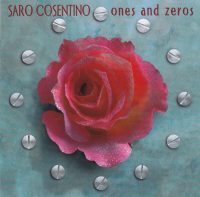
Perhaps inevitably, ‘Ones and Zeros’ emerges as a less wracked, less personal, poppier echo of Gabriel’s ‘Us’, or of Kate Bush’s ‘Sensual World’. It’s a swirl of poly-cultural textures and emotive adult pop, with a profound love of instrumental colorations and orchestrated with sounds of the human condition taken from all over the globe. And it does sound lovely, meticulously embroidered in luminescent glittering threads of melody.


Enter the Saro Multiplex, then. Pay the elegantly cropped man on the door, who’s thumbing through the Italian Art Rock Quarterly. Pick up your packet of art-popcorn from Mozo ‘n’ Rael’s Snack Shack, and take your look at the choices on offer on the different screen. I think you can assume that Bite the Bullet is the second-string drama: the one with the C-list hairdo-actress in peril, the sort that’s been sold as nail-biting but is actually more nail-varnishing. (Hear Karen Eden twitter about TV and dreamlife, wince at her gooey harmonies, dodge the pretty bomb: note the fleeting brilliance of the arrangement, and stroll out halfway through.) Go on to calculate that 9:47 PM Eastern Time is the slow-moving ‘Koyaanisquatsi’-type visual study – it’ll be playing in the room with the art students, shots tracking up skyscrapers and speculating upon the bright streak of dawn. Set aside some time to see that one right the way through. And look at the posters again.

Well, with cellos at the ready, you’ve got the choice of a slightly superior mainstream drama (maybe a maverick cop film, maybe a Joe-Bloke-in-peril job) with Defying Gravity. The one forged from the stuff of determination (“Just for an instant / of our forever, / this beggar would be King…”) and the refusal to give up, the one where you can share, for a moment, the pain of the trouper. Art-rock journeyman Jakko Jakszyk delivers one of his trademark tight, passionate vocals – the most immediate performance on the album, full of regret and a simmering outrage, the last flare of anger before resignation sets in.


Give Karen Eden a chance to wipe out many of the feeble memories of Bite the Bullet with Behind the Glass, on which she sounds more like Briana Corrigan than Stevie Nicks, and feels more like Juliette Binoche in ‘Three Colours: Blue’ than Sandra Bullock in a straight-to-video. Here she’s a lone, withdrawn observer, near-impassive, watching the injustices the world deals out but this time refraining from protesting. Merely letting the reaction flow out silent and free from the core of her, like a long stream of cigarette smoke. Strings poise; Giblin’s bass growls, a peril held in check and lurking. The moment passes by. Beat; cut; quick fade into black.


As accomplished as they are, those are the studio money-spinners, the comparative rush jobs. If you want to go for something a little more rhapsodic, you’ll have to move up a level; up to what’s showing in the smaller cinemas, where the eyes fixed on the screens are more intent.


When, as in these, ‘Ones and Zeros’ is good, it’s seriously good. Peter Hammill (playing against a reputation as abrasive art-rock bruiser via one of two appearances as romantic lead) offers an extraordinarily moving performance on From Far Away. You can even picture the close-up – eyes wide and bright, awestruck with the force of his own passion, breathing sheer faith into the well-worn love words; an English Sinatra without the arrogance. On Days of Flaming Youth, Shankar’s spooky keen and bright Japan-styled flecks of guitar and electronics gust in slo-mo circles while Tim Bowness takes time out from No-Man to sigh tenderness all over a song of the betrayals of younger days. It prowls and flickers, disturbing piles of trash in the corners of your memory as his voice rises to a throaty howl and gasp: “It feels so real, it feels so true, / the theft of the world that you knew / by slaves of flaming youth…”


Or you can enter Saro’s cinematic visions by the most inspirational way. You can just walk in off the street, numbed by loss and cradling a broken heart in hands gone suddenly cold (as I’ve just done) and find the core of your predicament captured and held, mirrored, onscreen. This is Phosphorescence – a ‘Brief Encounter’ for the art-rock set, and the album’s crowning glory. Hammill again, under a black velvet dome of sky, afloat on a sea of reflected starlight and rippling fluorescent eel-trails with reed-flutes undulating past, a thrill and a breeze on the cheek. And a lyric of something almost unbearably affecting. A love that hits in one slow flash (“this moment lasts a thousand years, this look is longer than our lives…”), changes you irrevocably then passes on, never to be caught or held again. “We will never pass this way again / But we’ll always feel each other’s presence… Ships pass in the night, / and in their wake they leave just phosphorescence…”


And you’re left stunned in the dark as the credits roll, unable to move from your seat for the things that are crowding up in you. Hit to the heart. Light-struck.

Saro Cosentino: ‘Ones and Zeros’
Resurgence, RES 129CD (604388203222)
CD-only album
Released:
13th October 1997
Get it from: (2020 update) Original album best obtained second-hand. ‘Ones and Zeros’ was reissued in 2015 in remixed and remastered form as ‘Ones and Zeros Reloaded’: all videos included in this review are from the ‘Reloaded’ version.
Saro Cosentino online:
Facebook MySpace YouTube Spotify Amazon Music
 

September 1997 – album reviews – R.O.C.’s ‘Virgin’ (“from the surreal and experimental to pure pop and simple emotion”)

8 Sep
R.O.C.: 'Virgin'

R.O.C.: ‘Virgin’

Cut‑ups are wonderful things. TV samples. Answering machines. Category‑defying noises. Harsh vocals. Scattershot free associations. Beautiful vocals. Hazy guitars. Clattering electro‑rhythms. A sense of the surreal. A sense of the melodic. Glorious eclecticism. The perfect post‑modern pop group.

Hallelujah! R.O.C. are back.

And against the odds, too. The debut album of this transatlantic trio (Fred Browning, Karen Sheridan and Patrick Nicholson, with roots in American, Ireland and Britain) welded pop music with a wilfully obscure grab‑bag of eclectic styles. Spookily emerging out of nowhere, it was critically hailed as the pinnacle of the ’90s zeitgeist, but the record‑buying public remained resolutely silent. Yet, here are R.O.C. ‑ back! ‑ on a new major record label deal (Good on you, Virgin, I take back everything I’ve ever said about the majors… well, almost…)

Dada opens the album with a statement of intent akin to the surreal art movement of the same name. Grasshoppers and various indecipherable speech samples give way to pounding, discordant and (very definitely) tuneless harsh electronica, accompanied by sinister laughter. Jeez, they’re such awkward people that you almost get the feeling that this is the spirit of ROC laughing at you for not understanding it, not getting it. Not very welcoming, either musically or emotionally. Thus, not for nothing does the oh‑so‑English conversation (too formal, too well‑accented to call rap) of the next track (Dis)Count Us In begin with the question “Are you still with me?” before Fred Browning relates a tale of watching a woman across a crowded room, to a backing of post‑modern electro‑pop.


All change. Mountain is R.O.C. as a slightly less comatose Mazzy Star performing to acoustic guitar and warm This Mortal Coil‑style atmospherics. Karen’s lyrics detail her observations ‑ highly emotional but somehow dispassionate ‑ of someone whose life has no direction and is spinning out of their control ‑ “Here we go again, / You’re going to take another rollercoaster ride through hell” ‑ in a beautifully recorded wash of womb‑like electronics.

Cheryl is a pop Suicide for the ’90s, an almost cheesy pop melody set to gleaming pulsating electronics and interludes of demolition percussion. Karen sings (Cheryl’s?) lyrics of a big fuck‑off to a man (antiquated sexist attitudes, thinks he’s God’s gift) and states her own terms for independence; “If it’s all the same / I think I’ll move on up… / I’m gonna get myself some dedication.”

Ever Since Yesterday starts as an acoustic‑guitar based lament to the departure of Fred Browning’s lover before all manner of randomly‑emitting Disco Inferno‑ish sampledelia and phased electronica makes its presence felt, distorting the whole sonic collage and moving it out into the realms of post‑rock. Instead of fading out, it collapses in on itself as the tape mangles. Gorgeous.

25 Reasons To Leave Me features Browning returning to his husky Shaun Ryder vocal style, set to a loping laid‑back musical backing not unlike a more uptight Happy Mondays; whilst K.C is a dry disconcerting, upfront recording, led by a simple and affecting sequence of organ chords, later joined by a soloing trumpet and brass accompanying a vocal of more third‑person observation from Sheridan. It’s no criticism to say that this track resembles late‑night bedsit pop at its best. Kind of a meeting between Prefab Sprout and The Cure, if you will.

Cold Chill Just Lately details the crossed wires, cross‑currents, accusations and arguments of a relationship break‑up. This rather harrowing subject is carried by the track’s broken, exhausted vocals. He’s not happy, but there is a certain black humour typical of R.O.C.: “But I guess it’s just a fucked‑up world we’re living in, / and you know it couldn’t get much worse. / But then it turns you over and fucks you in the ass… / She only cares about herself / She never cared about me.” Such bile is performed to an incongruous accompaniment of smoothly enveloping, ebbing waves of sound, a lurching rhythm, and throbbing strings adding a chamber‑pop element.

The final track, Ocean And England, opens with the sound of thunder and rain, and a bare strummed guitar‑‑the poignant musical lead is then swapped to a ringing electric piano and harpsichord before a huge sampled orchestra swoons in. Like many bravely experimental acts, ROC always remember that, sometimes, all one needs is a song and an affecting melody. “Ocean And England” is just that, and even includes a lovelorn lyric: “Hey you, / the ocean and England are so far away. / Won’t you consider coming home / to be with me again?”

Ultimately, though, this album lacks a little of the debut album’s magical Wonderland atmosphere ‑ swapping the feeling that anything could happen within the space of the next track for the feeling that yes, plenty will happen, but it will be more regimented and organised. Yet how many bands would have the sense of vision to travel, in one album, from the surreal and experimental to pure pop and simple emotion?

R.O.C. Still utterly beguiling.

R.O.C.: ‘Virgin’
Virgin Records, CDV 2829 (7 24384 29472 4)
CD-only album
Released: 8th September 1997

Get it from:
(2018 update) quite a rare release these days, best obtained second-hand.

R.O.C. online:
Homepage Facebook

May 1997 – album reviews – Ragga & The Jack Magic Orchestra’s ‘Ragga & The Jack Magic Orchestra’ (“music for Disney cartoon castles in the sky”)

24 May

Ragga & The Jack Magic Orchestra: 'Ragga & The Jack Magic Orchestra'

Ragga & The Jack Magic Orchestra: ‘Ragga & The Jack Magic Orchestra’

Do I have to do all the usual obvious journalistic crap about Iceland? Do I? Oh, if I must. They eat puffins, or something. They drink tons of cheap alcohol. It’s bloody cold there. It’s dark all winter, light all summer, or something. Magnus Magnússon. Mad elfin pixie Bjork… blah blah blah. Will this do?

Oh, and I have to act surprised that Iceland can produce such great music, and be really patronising about that in particular. Because we British love looking down on small nations, don’t we?

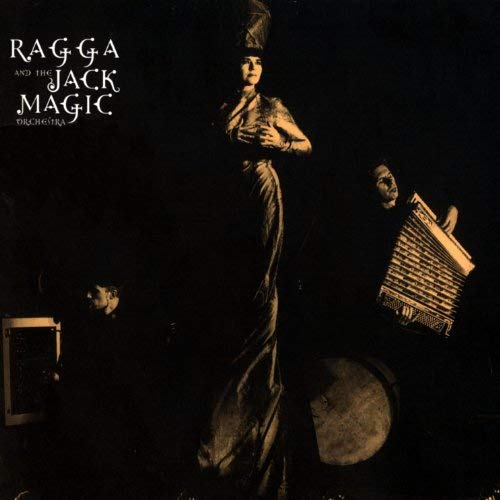
All that gone through, just because two-thirds of Ragga & The Jack Magic Orchestra are Icelandic. Ragga sang You Don’t on Tricky’s ‘Maxinquaye’ album – a track full of filmic strings, soloing flutes and slow shuffling beats -which casts some light on this album. Previously, Ragga and keyboardist Jakob Magnússon were in a successful Icelandic band together; when they ended up in London, Magnússon worked as Icelandic cultural attache while Ragga attended drama school. Later, they formed Ragga & The Jack Magic Orchestra with English sampling wizard Mark Davies from Voices Of Kwahn. With this debut, they bring all these diverse strands of experience together to produce a magical experience. Huge, colourful swathes of sound; music for Disney cartoon castles in the sky.


So – Fairy Godmother opens on a feather-bed of lapping sea, boat-horns, celeste chimes and toybox orchestra that scream “Disney”, before the trip-hop beats are introduced. But the JMO is always very natural, organic-sounding – no harsh electronica scraping here. And Ragga’s voice is a magical thing – Kate Bush in a lower register, with some of Bjork’s expressive stylings. Like Bjork, her lyrics tell strange stories, but she introduces Shot almost matter-of-factly: “I got shot in the head by a man / who had been aiming at me / for many days… / At the moment I got / the paper from my doorstep.” To an almost easy-listening palette of relaxing hues, jazzy woodwind and flutes, she philosophically concludes that “love can hurt…” Well, it would, wouldn’t it?

Daringly, styles keep shifting, track by track: somehow in keeping with the fairy-tale transformations of the lyrics and samples. Passion For Life has a soulful belted-out chorus (Ragga does brazen Broadway as easily as schmaltzy Hollywood), a slow, loping early-hours atmosphere of spooky keyboards and bone-rattles for beats, and brilliantly lifts an evocative passage from Samuel Barber’s ‘Adagio For Strings’ (the music from “Platoon”, if your imagination’s still settled in the cinema after those Disney references). In Where Are They Now? – to surging orchestral strings, keyboard arpeggios and sparse but powerful metallic percussion – Ragga sings a torch-song elegy to the lost children of wars. Even when no lyrics intrude, Ragga’s evocative harmonies over a battalion of drums and stabbing strings are just as emotional.


The mix of folky guitars and flutes, East European violin and pleasantly shuffling beats on Turn It Off remind one of Beth Orton’s marriage of bedsit folk and electronica. Deep Down also has a deceptively simple sound: alternately hushed and passionate vocals over shifting sands of decaying electronics and a barrage of junkshop percussion. It hits a groove and stays there – perfectly. With the fairy-tale assertion that “sometimes I can breathe underwater / Sometimes I can fly around the sky”, Underwater features more Disney-like wonderment: reverberating drones, slippery strings lilting through the melody and expert percussion care of a Steve Jansen/Rain Tree Crow sample fluidly weaving in and around the programmed beats.

Despite its title and distorted electro-beats, Beatbox Controller isn’t some ’90s ode to the DJ/mixer in the manner of Last Night A DJ Saved My Life. The “beatbox” referred to is the heart – “you are my beatbox controller / A telepathic mixer of emotion…” Ragga’s vocals are almost helium-light and, musically, the track sounds like twenty-first century reggae-lite. In an extended coda where he duets with Jacob Magnússon’s improvising keyboards, Mark Davies makes beautiful music out of sampled percussion – this man’s going to be a figure to watch in the world of electronica, to rank alongside DJ Shadow or Howie B.

Indeed, Two Kisses is built on a disconcerting, clattering rhythm track of samples of god-knows-what. Buzzes, radio waves, ghostly fluttering flutes and Eastern pipes are all jammed into the mix. Ragga sings a multi-tracked ethereal chorus and her voice is, at one point, treated to sound – well, er – exactly like a Smurf, to be honest. Weird, peculiar – Laurie Anderson jamming with The Art Of Noise produced by Tricky is about the closest comparison. Close, but nowhere near. So, yes, if weirdness to the point of absurdity overtakes them every so often (Man In The Moon overdoes the lyrics on the wrong side of Kate Bush kooky pop, and the overblown melody reminds one of… Christ! The Thompson Twins!) it’s a price worth paying for the trio’s musical vision.


Music for your fairy-tale nightmares. A perfect accompaniment to drifting away while watching “Fantasia” for the hundredth time, safe in the knowledge that the good witch now works her magic with a sampler.

Touched by the wand of the sorcerer’s apprentice.

(review by Vaughan Simons)

Ragga & The Jack Magic Orchestra: ‘Ragga & The Jack Magic Orchestra’
EMI Records Ltd., CDEMD 1107 (7243 8 56728 2 8)
CD/cassette album
Released: 19th May 1997

Get it from:
(updated 2018) buy original CD second-hand, or get the reissued download from Amazon or iTunes.

Ragga & The Jack Magic Orchestra online:
Soundcloud Last FM

May 1997 – album reviews – State of Grace’s ‘Everyone Else’s Universe’ (“an oozing of tepid ambience”)

3 May

State Of Grace: 'Everyone Else's Universe'

State Of Grace: ‘Everyone Else’s Universe’

And this is 1997?

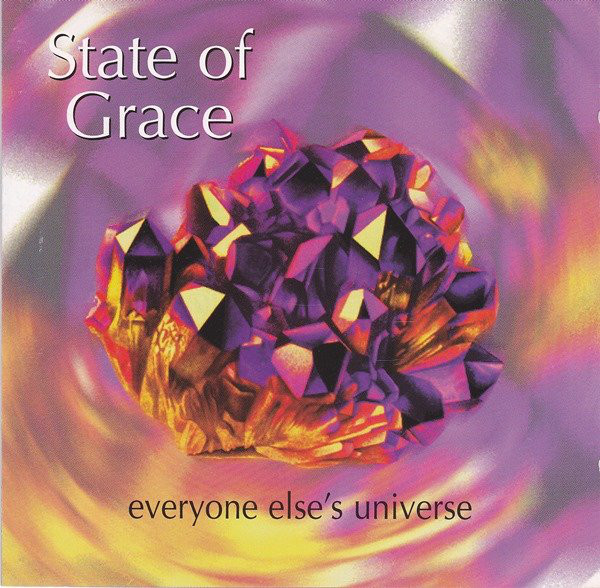
In the world of contemporary pop music, I thought ‑ hell, we all thought ‑ we had the equation worked out. Electronica = The Future. Trad Guitar Rock (Oasis + Kula Shaker + Cast + Ocean Colour Scene) = The Past. But State Of Grace, a Northampton electro‑ambient quartet now on their third album, are here to prove otherwise. It’s electronic, yes, but it’s also as retro and dated as Noel Gallagher’s Beatles pastiches.

Conspiracy is a six‑part concept track… or rather, it’s an obvious way to become immediately suspicious about an album just by looking at the track listing. (Six‑part concept tracks issue a subliminal message to me. That message is “run away!”). Part 1, Forest Fields Forever is horribly slick‑sounding trance, complete with weedy female vocal and obligatory ethnic voice sample. The parts seem often to be linked by ambient wind and water effects… oh no, sorry, that was Part 2. I dozed off for a moment. Part 3 (Single Spies) tries to be Dubstar, but with Sarah Simmond’s ultra‑forgettable voice and gibberish lyrics, plus powder‑puff electronics, it makes Dubstar sound like Nine Inch Nails. Part 4, Noel Street Blues, ups the tempo to a sleek techno and, by including the sampled combination of a warbling operatic diva, more generic‑ethnic wailing and an accordion, momentarily arouses some interest. But by this point I didn’t know which part I was listening to. It all continued in this insipid vein for a number of years, by which time I’d lost the will to live.

Perfect And Wild is more suffocatingly polite techno‑pop, with the joyful addition of a twee slide guitar. Still, as so often on this album, the awful lyrics offer a laugh. “And when love is calling / Like an open book” ‑ look, I’m sorry, but books don’t call; they’re inanimate objects! So innocuous and bland is this music that you could walk round supermarkets to its accompaniment.

Now where was I? I need a dozen eggs, some margarine, a packet of mini chicken kievs… oh, sorry. Right, then. Er, Sea‑Saw. Oh, mild trip‑hop. Sarah tries to sing with a lazy, underwater vibe, but only ends up sounding as disinterested as I am, like she’s about to drop off to sleep. And will somebody please alter that bloody drum machine pattern! Now! (If you think I’m losing patience, you’re right).


Be afraid. Be very afraid, for there are three versions of the track Hello on this album (they obviously place great faith in the song‑‑poor, deluded souls). This version, subtitled Fall Out The Lions (eh? Your guess is as good as mine…), is musically somewhat engaging: mournful violins and a rising/falling keyboard sequence over brushed electronic drums. But the words are more sixth-form gobbledegook: “In the silence / the colour is an island. / Fall out the lions, / take everybody with you.” What? Still, the chorus is one to join in on – “Is it so? Hello, hello. / Is it so? / Hello, hello.” Poetry, utter poetry.

Version two of Hello is a remix by Jack Dangers of Meat Beat Manifesto. To a clattering beat and a phased dub keyboard, plus Meat‑treated vocal, it all manages to sound at least vaguely contemporary, whilst hardly essential. Version three (gosh, you can have too much of a good thing, can’t you?) is an Aphex Twin‑style remix‑‑it dismisses all the elements of the original track save for a ghost of the vocals, and constructs a stomping bass‑heavy techno track. By now, it is so far from State Of Grace’s original that it hardly belongs to them at all. Consequently, it’s the best thing on the album.


Rose II begins and ends in an oozing of tepid ambience, but would potentially be an affecting minor‑chord‑laden melody if it hadn’t been subjected to another sheen of bland synthesizers and, worst of all, whining treated electronic guitar. By now, lost somewhere in a maddening nightmare, praying for this album to end, I suddenly sense a name appearing before me. M…? M…? M… M‑… M‑Mike Oldfield?! Jesus, it does ‑ it sounds like bleedin’ Mike Oldfield!! (Worse than that, Vaughan. It sounds like late ’80s Mike Oldfield, the stuff that not even Oldfield fans seem to have any more… ‑ PROG ED.)

State Of Grace are awfully, horribly dated. They are trying to be some sort of combination of modern ambient techno ‑ for which the music sounds simply too out‑of‑date‑‑and the pristine machine pop of, say, Propaganda… yet lacking that group’s excellent song constructions. The lyrics are abysmal, too. The hip new title State Of Grace would like to have conferred on them ‑ electronica ‑ is redundant. This is, being as kind as possible, what used to be known in the pop world as “electronic music”, which would firmly date it as being pre‑1987’s acid‑house revolution.

But let’s not be kind. Let’s be unkind. This is out‑of‑date, bad europop, bad trance, bad electro‑prog… get the idea?

I don’t want it in my universe.

(review by Vaughan Simons)

State Of Grace: ‘Everyone Else’s Universe’
3rd Stone Ltd., STONE 028CD (5023693002828)
CD‑only compilation album
Released: 28th April 1997

Get it from:
(2018 update) best obtained second-hand.

State Of Grace/Fatal Charm online:
Homepage Facebook Soundcloud Last FM YouTube

February 1997 – album reviews – James’ ‘Whiplash’ (“dabbles in new styles, mostly unsatisfactorily”)

25 Feb
James: 'Whiplash'

James: ‘Whiplash’

When a band have made it, are popular, and their songs are heard in every commercial outlet, a person is simply playing a game of pathetic one‑upmanship if they smugly proclaim: “Oh, I liked them when they were a cult band. They’ve gone all pop now!” These are very sad people.

Ahem. Now…

I liked James when they were a cult band. They’ve gone all pop now. Yes, I admit it. I am a sad person and I claim my five pounds.

In truth, I lost touch with James after ‘Gold Mother’, when they entered the pop stratosphere and those T‑shirts became ubiquitous. My attitude to Sit Down exemplifies my attitude to ‘Whiplash’. Sit Down started life as a strumalong of identification with those who felt alone or slightly dispossessed, insecure. It was re‑released as an epic soundtrack which seemed to command “You WILL Sit Down!!”. And whilst every baggy‑shirted indie kid and raver performed the increasingly meaningless charade of plonking their arses on the stage, that song (and James themselves) sounded, to these ears, like a New Age, slightly more subtle Simple Minds. When my mother chose Sit Down as her favourite song, opined that Tim Booth was “a nice young man” and started asking me which one in the band was “James”, my interest in the band as a pop entity virtually evaporated. (You none‑more‑punk, you! ‑ ED.)


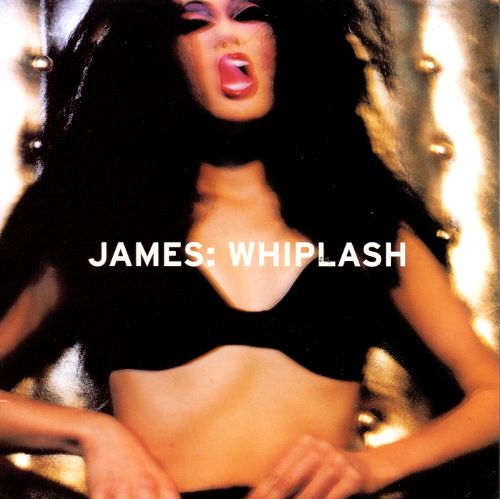
‘Whiplash’ promises much. It is heralded as “a return to form”. For old James fans, this is a pronouncement we’ve heard before. But the opening track, Tomorrow, has the pulsing rhythm, the simplicity and directness, the expanding layers of sound that I so remember were classic James; and so it is better to forget, perhaps, that this song is about three years old and first appeared in embryonic form on ’94’s experimental excursion ‘Wah Wah’. Elsewhere, Lost A Friend features verses with a skeletal musical backing and Booth returning to hitting all those strange half‑note harmonies of old, before breaking into the obligatory big chorus. It’s still James’ version of their Big Music, but it no longer lumbers like an over‑produced fabrication as in recent years. Sadly, trite lyrics like “my TV’s telling me / that all of our money goes into the military” and “I see some soldiers with guns / they are killing for fun / they are killing to entertain me” do not raise my political consciousness one iota. May I call you Bono, Tim?


This album’s biggest problems come where the much‑vaunted contemporary feel exerts itself. There is always an awful doubt when a band returns from a long break saying that they’ve been listening to techno/trip‑hop/drum’n’bass/ambient (or whatever; delete as applicable), and the new masterpiece is produced under these influences. Eighty per cent of ‘Whiplash’ features these dabbles in new styles, mostly unsatisfactorily.

The album’s first single, She’s A Star, is the most startling and perhaps most successful, sounding like Suede-lite. But it lacks Brett Anderson’s detailing of urban degeneration, suburbia and glamorous smack habits. With Suede, She’s A Star would be blackly ironic ‑ she would be a lonely girl in a dead commuter belt, or a wasted junkie. But Tim means it ‑ she really is a “star”. That’s lovely for him and her (whoever she may be), but ultimately rather naive for us.


Go To The Bank is roughly the third song on the album that mentions TVs, so James have obviously spent their time away wisely. Seemingly a diatribe against the evils of money, the lyrics leave a bad taste in the mouth with the repeated line “it all belongs to Caesar…” Is someone rather peeved about recently having to settle a large bill for unpaid taxes, eh? This track and the next, Play Dead, are full of techno effects that ultimately do not go far enough. They dabble in electronica, but still align themselves to typical James nervy strumalongs. But the two styles don’t gel, and they’d be more satisfying as one or the other. Play Dead, in particular, could be one of James’ truly haunting acoustic numbers if it dropped the excess techno zeitgeist baggage: it is one of the few obviously beautiful melodies here.


Greenpeace (oh Tim, do you have to be so fucking obvious? What next? Veggie? ’90s Hippie? Beanbag?) is a dark, slightly rockier take on trip‑hop, alternating between distorted vocals and ambience in the verses and a chorus that feels like it’s built on the bassline of Massive Attack’s Safe From Harm. It is leaden, and rather desperate to show how contemporary it is. Where James once had that aura of being a band of weird but pleasant loners down the end of the corridor, they now come across more like insufferably tedious born‑again Christians; but, as Greenpeace shows, ones who are desperate to prove to the church elders that they are hip and rebellious, and that “this is what the kids are into.”


It’s all so frustrating when elsewhere there’s such a blatant demonstration of the simple, peculiar emotional alchemy that James can muster so well. I’m talking about Blue Pastures, a quiet, near‑acoustic whisper of a coda to ‘Whiplash’s technophilic sprawl. Jim Glennie’s bass rings like a sleepy bell, guitars fill out dark clouds in the sky, and James’ old Patti Smith influences are evoked once more as Booth unwinds the story: someone quietly putting things to rights, then walking out into the snow to die. Their thoughts slow, the ground gets closer. Snow covering. Peace arriving. Fade‑out. Perfection ‑ for once, we respond with tears of compassion and recognition rather than of frustration.


But in the reckoning, this album is a disappointment after the marvellous and underrated ‘Wah Wah’. Which proved that, in the right laid‑back conditions and with the right production influence from Brian Eno (who part‑produced and “interfered” with this one, but evidently not enough), James could come up with the post‑modern experimental pop they so desperately seek on ‘Whiplash’. Chained, often rather clumsily, to the typical James of old, the two styles pull against each other. U2 have managed to cling to the bandwagon by enlisting the best technoheads around. If James want to do likewise, they’d better get someone who can do a better job at improving the rather leaden attempts at electronica on here. Or they can forget the zeitgeist and return to being the pre‑pomposity weirdo folkies still to be glimpsed occasionally.

Which way, Tim?

(review by Col Ainsley)

James: ‘Whiplash’
Mercury Records/Fontana Records, 534 354‑2 (731453435421)
CD/cassette album
Released: 24th February 1997

Get it from:
on general release.

James online:
Homepage Facebook Twitter MySpace Soundcloud Last FM YouTube

October 1996 – live reviews – The Blue Nile + Sinéad Lohan @ The Palladium, London, 8th October

10 Oct

Wait in any given place for a long time and reckon up the odds. Which are you more likely to see passing by – Bigfoot, Lord Lucan, or a member of The Blue Nile? The chances are about equal each way.

In a business that thrives and surfeits on over-exposure, The Blue Nile only sidle into view when they absolutely have to. In fourteen years of tenuous existence, this reclusive biz-shy Glaswegian trio has offered up no more than three short albums of exquisite ambient Celtic soul; stripping away the armour of the heart with cheap drum machines, breathing synths and skeletal guitars, and the scalded, mournful grace of Paul Buchanan’s desperately romantic deep-tenor voice, leaving us flat on the floor and then departing so quietly we don’t hear the door shut.

While they’ve had stiff competition from Kate Bush and Scott Walker in the stakes for lying quietly in the long grass, sometimes The Blue Nile are out of view for so long that they seem no more than the shadows of our own heartbreaks. Three phantoms whom we can fill with the overflow of our ruined, hopeless good intentions and the agonising rush of a love with nothing and nowhere to ground itself on. Every now and then, though, they surface – as they have tonight – put out a record, and those shadows take on flesh.

But first we have Sinéad Lohan; a Cork lass with beaded hair, a salving murmur of a voice, and the composure of a marble Madonna figurine. From out of nowhere to the grandiosity of the Palladium, and still she’s not batting an eyelid as she delivers her soft thrumming folky songs to a warm reception. She even invites questions, and gets them. She has that atmosphere that some quietly private people have, the stillness that invites fascination.

From up here her eyes seem sleepy, focussed inwards, and her songs are the same, ripples of feeling reflected in still pools that make you feel like a privileged eavesdropper. All of this and the quietness makes her seem like an Irish Tanita Tikaram without the air of lazy resentment. After she’s left the stage, I realise I can’t actually remember what any of the songs were about, but the impressions of the emotions involved remain etched lightly on my imagination. She’s as subtle and strong a carver as smooth river water.

After seven years out of the public eye, most bands would return to the stage in a blaze of glory. The Blue Nile don’t even turn the lights out properly first as they slope onstage like reluctant supply teachers. I mistake them for roadies until I recognise Paul Buchanan’s pained, elegant features among the men fumbling to pick up the instruments, all but flinching at the applause and the eyes trained on them. But it’s something they’ll have to deal with.

For all of their heart-stricken loneliness, The Blue Nile carry a very special feeling of empathy and homecoming around with them. Literally, in some respects: tonight’s audience ripples with the voices of Glaswegian emigres. And when one Scots voice, brought to a pitch of excitement, calls out “Glasgow Celtic!” it’s followed as fast as a counterpunch by a Rangers fan’s disgusted “fuck off!” Rather than a slit face, this results in a ripple of laughter and recognition around the auditorium. There are wry, self-conscious chuckles from the band as they finally launch into the Van Morrison-gone-synth-pop chug’n’whoop of Body and Soul.

All of this civility (and this nod to a respectable musical touchstone) prompts the question. Have The Blue Nile, for all their cult status, ended up as another branch of hoary pop tradition for the impeccably adult? Certainly they shy away from sarky pop irony, and they’ve a sheepish but determined commitment to presenting their songs unvarnished by gimmicks. Don’t even try looking for Pet Shop Boys cleverness here.

And then there’s the impeccable cleanliness of their sound – the clipped white-gold ring of it, the slow stretch of the falling-evening keyboards, even the live drums compressed to stiff Linn thuds… Or, on the other hand, the occasional hints of country in the songs from the new ‘Peace At Last’ album and how Stay’s heartbroken synth pointillism develops from a Scottish electro-pop lament to a finale with suspicious hints of rockabilly or hoedown. And, of course, there’s the way Paul’s huge voice draws from Frank Sinatra’s warm cocooning sound, rather than any from any obvious rock source.

Sinatra, though, never sounded this touched; this blown through by overpowering feelings. Even behind the theatrics of his saddest songs there was a man preening in his power; the guy who was laughing now; the honorary Mob capo whose very tone was a muscle. Behind these songs are a man who winces; who knows the scuffed concrete in the buildings he walks past will outlive him. Who’s haunted by the moments where decisions rest before they fall into becoming facts, and who’s never short of melody but is often stripped of words. And who, on this occasion, is swigging Lemsip by the gallon to beat off a vicious cold. It brings the vulnerability of The Blue Nile’s songs into sharper focus.

But then they’ve never suggested that the business of being adult is supposed to be easy, or even make much sense. ‘Peace At Last’ made that as explicit as anything ever is in the Blue Nile universe – a middle-aged album (Paul Buchanan turned forty while recording it) which showed youthful, domestic and spiritual certainties past their flush and breaking down into a unflattering mirror of doubts and shaky illusions. A new testing ground after their landscapes of young men’s fears had slipped away back into the years. While The Blue Nile don’t go so far as to drag middle-aged trappings – such as chipped crucifixes or well-dusted-yet-unloved three-piece suites – onstage with them, they wouldn’t need them. The words to these songs swim to the surface in flashes; brief snatches and sketches of anguished images that settle into the heart’s eye as if their places had been waiting for them forever.

A couple of songs from 1989’s peerlessly lovelorn ‘Hats’ album illustrate this – Over The Hillside fumbles through the burden of day-to-day failure and the pull away from home; Headlights On The Parade sees Paul lose himself in night-haunted reverie, borne on by the serpentine romantic curve of the melody over the mechanistic drumming. Tonight’s rendition of Happiness, a song already riven by doubt (“Now that I’ve found peace at last, / tell me, Jesus, / will it last?”) has to replace the soaring black gospel chorus that boosts it on record with three uneasy white men murmuring into shared mikes. You wouldn’t have thought that it could reach the same hymnal level, but it does, albeit becoming more of a private prayer.

Another ‘Hats’ classic, The Downtown Lights, has the transcending, unresolved journey-feel of a crying fit; heart-stricken keyboard swells giving way to beautifully sad reflection and back again, rising to a frantic crescendo of loss. The atmospheric abstractions of A Walk Across The Rooftops don’t give away much in the way of clues, but they do give a night-time stroll a tint of darkest foreboding.

And Family Life just overwhelms – a mid-life crisis set to song. Echoes of Tom Waits, Randy Newman and crumbling Hollywood Christmases coming together in the heartbroken drunken pleas of a man whose marriage is unravelling, whose boyhood innocence is rising to ask bewildered questions. Paul, singing like a man suddenly and shockingly shrunken, plays the role to the hilt. But there’s no storytelling, no plot; just feelings and the alcohol dissolving reasoning down to more questions and a blurred, blundering comprehension. “Say, you know, / no honeymoons, / just separate chairs in separate rooms. / Jesus, please, / make us happy sometime – / no more shout, / no more fight…” As the last scraps of piano dissolve in the hush, the frenzied applause seems to spray tears of recognition and relief.

It’s still as un-showbiz as you can get. All of these emotions are being let off on a very tight leash. The magisterial Robert Bell doesn’t crack his stern kirkman’s expression all evening, whether he’s forcing compelling crabbed funk lines out of a bass, keening his rare backing vocals into Buchanan’s mike, or crouched cross-legged onstage beating out patterns from the tiny synth in his lap. Over on stage right, P.J. Moore plays with an abstracted serenity as the Blue Nile’s bare, effective colorations flood out from his keyboards. The supplemental three on drums, guitar and synths play with their heads slightly bowed – more quiet men. So it’s the hunched, embarrassed Buchanan that’s the reluctant centre of attention; muttering wry Glasgow “let’s-get-this-over-with” asides between the songs, but singing his heart out of his chest and punching it up at the sky every time the music rises.

I guess that even with embarrassment weighing at his coat-tails, he can’t help it. There’s often a desperate strand of hope-against-hope in The Blue Nile. The near-delirious Sentimental Man ascends out of a jumble of chippy funk facets to hit gospelly heights; the intently energised strum of Tomorrow Morning rushes towards the light as if Buchanan was trying to beat the pain off by hurtling towards hope. Tinseltown in the Rain – which belts along as if it was the peak of some uncompleted Glaswegian street-opera – bursts up to a plateau of emotion, aggressive certainty struggling with a sense of doom. (“do I love you? Yes, I love you! / Will we always be happy-go- lucky?… / But it’s easy come, and it’s easy go. / All this talking – / talking is only bravado”) before exploding in a carillon of stammering, tear-jerking guitar.

And on Saturday Night you can feel the blessed surge of relief at a simple romance – “an ordinary girl” hymned with a incredulous delight, an everyday date turned into a haven from the wracked, exhausting, damn-near-religious romantic angst of the Nile songbook – turning out right for once. As the last swooning joyous chimes mount the air, I hear a ecstatic voice screaming “Yes!”. It’s my own. I can’t help it either.

Later, Bell and Moore take up positions at the synths on each side of the stage, waiting to play Easter Parade. White-clad, calmly watching each other for the cue, they have the assured and tranquil air of surgeons waiting to lay on the hands and bring out the pain. Then the song comes – plangent clutchings of piano, gushes of night-breeze synth and Buchanan singing of being alone in a rapt crowd, carried along like a solitary bubble in their exhilaration. And the empathy is summoned up and floods through us like medicine.

They can still touch the pressure points of the soul like no-one else. In another few months they’ll be hiding from us again, but that touch is going to stay with us until they feel able to venture out into the world again, blinking with trepidation at the looming feelings waiting to catch them.

The Blue Nile online:
Homepage Facebook Twitter MySpace Soundcloud Last FM Apple Music YouTube Deezer Google Play Pandora Spotify Tidal Amazon Music

Sinéad Lohan online:
Facebook MySpace Last FM Apple Music YouTube Deezer Google Play Pandora Spotify Amazon Music
 

January 1996 – mini-album reviews – Andrew Booker’s ‘Ahead’ (“a psychological night journey through a cold city”)

15 Jan

Andrew Booker: 'Ahead'

Andrew Booker: ‘Ahead’

If you know the sound of the wind of doubt whipping around tower blocks and insinuating itself through your double glazing, you’ll know this. Andrew Booker‘s twenty-three minute suite of cold lights chills you through your protection in just that way.

Despite the persuasive depth of the production, the simple sound-palette of ‘Ahead’ could have worked against it. The music is little more than chilly sequenced waterfalls of keyboards, restless prog-rock drums, and a voice which blends a boyish purity with the swelling sadness of a man who’s grown up just enough to look over the wall and see the void beyond it. Andrew knows precisely what he’s doing, though, and he leans into it with a passion and honesty that transcends the sonic limitations. With this limited arsenal he etches out the thoughts of a man hermetically sealed into the sterile environment of his car, trapped on a psychological night journey through a cold city, with his stiff English upper lip trembling as he slowly starts going to pieces.

There is tenderness (a moment of open romance on the shy, beguilingly lovely Dreaming Of a Night in Winter) but mostly this is a testament to loneliness: a soundtrack to empty e-mail servers, abandoned urban showcases, untouchable ghost-town neighbourhoods. As the dusk folds around the teeming city blocks in No Fit State, Andrew can find no place to welcome him, no place to shelter from the grind: “there are no more places left for me to fill…”

Walk sees love whip past and away, like a leaf batting a motorway windshield only to be snatched by the slipstream. Vague, disassociated expressions clutch at the tail-end of an affair that’s come apart like a cheap plastic furnishing: “We fought, and we touched, and we hardly met… / The touch of your love chills my jellified flesh… / Don’t lose your mind, a terrible waste…” And the scene is set for a swing away into midnight driving on Run – thrumming with lonesome muzak harmonies, tumbling vocal melodies, a chorus of freezing pilgrims in the background marking time as Andrew journeys on. It’s a case of travel hopefully… but only just.

If motion seems to provide no answers, neither does stasis. Airports has Andrew at the mercy of arbitrary forces: stuck in life’s queue and seething with frustration at the proscribed directions and hold-ups, he flings sarcasm at the consumer sedatives thrust at him in an attempt to shut him up and keep him out of trouble. Twinkling tunes and spooky Latin pop riffage sugar up the stifling messages put forward by “ground control”, but mock where they should soothe.

And by Waiting, Andrew’s rebelling with a howl (talk to me!”) as the live drums thunder and stab at the limits of the sequencers: but his plea for communication gets swallowed up in a tide of garbage, junk mail, and the continuous running (and little close-downs) of the world machine. The little man puts up a fight, steps out and speaks, but can’t escape from his role as a cog. His passionate voice, though, reminds you how urgent it is to make the stand and fight the fight. You get the feeling here of someone who’ll never give up, who one of these days will hurl himself against the imprisoning wall and break it down.

For something so short, ‘Ahead’ is many things. It’s a tribute to cottage industry (Andrew wrote, arranged and produced ‘Ahead’, played every note except for one guitar line, handled all the artwork and only stopped short of refining the plastic to make the CD). It’s an uptight English answer to The Blue Nile; it’s Buggles minus the whimsy. It’s Jon Anderson with his head pulled out of the stars and his heart thrumming with an urban panic attack. It’s the missing link between Tubeway Army’s immaculate electropop, Underworld’s motorway pulse and the fears in Nick Drake’s Black- Eyed Dog.

But above all, it’s very wonderful: hymns to an urban, urbane alienation. A head full of doubt rarely sounded this good.

Andrew Booker: ‘Ahead’
EA Records, EARCD1 (no barcode )
CD-only mini-album
Released:
January 1996
Get it from: (2020 update) Best obtained second-hand.
Andrew Booker online:
Homepage Facebook Bandcamp Last FM
 

December 1995 – live reviews – Anna Palm + Mandalay @ Upstairs at The Garage, Highbury, London, 20th December (“as full of explosive energy as a pan of popping corn… / …stately, kaleidoscopic and coolly hallucinatory”)

22 Dec

Oops. I’ve come to what I thought was a serious, arty gig to find exotic scarves hanging from the ceiling and a little green-nylon Christmas tree sitting in the corner. What with this, the candle-lit tables and the cheerful little greetings flyers under said tree, I get the feeling that I’ve crashed someone else’s Christmas party.

This particular party’s being thrown by violinist-turned-singer-songwriter Anna Palm, known for a journey that started with busking in Covent Garden and Chelsea and went on to a stint with acoustic punk-folkers Nyah Fearties, a handful of albums and singles on One Little Indian, and support contributions to a variety of artists from YesSteve Howe to New Wave synth poet Anne Clark, ascerbic dream-pop realists Kitchens of Distinction and avant-Goth experimentalist Danielle Dax. It’s an interesting resume. Well, I hate to bad-mouth my hostess, and maybe it’s unfair to judge an artist from an event coming across very much as a fun gig, but I’m decidedly underwhelmed. Despite an indie all-star band (with various members of The Farm, Loop Guru and Kitchens of Distinction taking time out to back her up) she fails to shine.

It’s not as if she doesn’t try: a Violet Elizabeth figure in a frilly little-girl party dress, she’s as full of explosive energy as a pan of popping corn, exhorting people onto the floor to dance, singing with verve (if not always great pitch) and sawing acrobatically at her violin. But the band is under-rehearsed and scrappy, falling apart much too often. Anna’s songs, too, lack individuality and the delivery to make them memorable. A shame, as when she sets bow to strings some spirited and slyly lovable playing emerges.

Anna’s obviously a good player, but as far as being a singer-songwriter goes she still doesn’t seem to know what to do with herself. File under “needs work” and leave it at that for now. However, the mess does yield up one unexpected delight – a dance-groove version of Kites, compelling and grin-inducing, with Anna’s riotous violin scurrying over an early-’90s style baggy beat and the whole thing carrying a strong hint of I Will Survive. A novelty, perhaps, but it’s good to see Simon Dupree’s old hippy hit hopping onto a modern groove and feeling right at home. These particular Kites really fly. I wonder if the Shulman brothers (who notoriously hated their early Dupree-ism despite its success) might ease up and grin and bop along if they were here to hear this.

The real reason why I’m here is a duo called Mandalay, hiding further down the bill: it’s the new project by multi-instrumentalist and electronica aceSaul Freeman, who used to perform a similar role as half of the band Thieves alongside stratospheric singer David McAlmont. Thieves are long (and acrimoniously) split now, with what would have been their debut album a little uncomfortably repackaged as the stunning McAlmont debut (and if you haven’t heard that, you missed one of the most vitally progressive pop records of 1994).

Now Saul is quietly rematerializing, in partnership with singer Nicola Hitchcock, to reclaim some of his lost thunder. But although it shares the glittering crystalline texture of Thieves’ songs, Mandalay’s music is nowhere near as easy. As with Thieves, Cocteau Twins should be mentioned (especially when listening to the effects-swallowed guitars of Enough Love); so too should the frozen sadness of Portishead (especially on the chilly trilling of Enough Love). but Mandalay is more involved and intricate than either. These are multi-dimensional songs, Nicola’s frail but enthralling vocal melodies elevated from the ground on staggeringly complex musical architecture courtesy of interlocking blurry sequencers, obsessively repeating samples and eerie guitar treatments. Saul stands impassively amongst his host of computers and effects racks, gazing absently down at his guitar and its network of pedals. Every now and again he’ll tap and flick at the strings and a second later a whole web of music will swell from the speakers.

Mandalay’s style – stately, kaleidoscopic and coolly hallucinatory – is best exemplified by the silvery net of sampled vocals, the stabbing kick drum and the harmonica-skank guitar of More Than Venus: Nicola’s whispering Bush-y enunciation gives the perky melody an awkward, appealing sensuality. Walk By the Sea rumbles by on an ominous 3/4 riff, double-looped spiral claustrophobia and panic-pitch piano plinking. The Waiting gives full reign to Saul’s subtle space-age guitar work: cunningly-placed “brang”s and attenuated bell-notes amongst the fabric of a languorous techno-warble.

There’s plenty of pop in this (and, despite the duo’s clear and ineluctable whiteness of manner as well as appearance, more than a helping of trip-hop) but Mandalay are also decidedly post-rock. They’re part of the astonishing movement which also includes Moonshake, Laika and the late-lamented Disco Inferno, and which junks the conventional hierarchies of rock instrumentation in favour of the uncanny textures of digital sampling and electronic ensemble processing. This might not sound appealing to the traditionalists out there, but believe me, Mandalay are much more than noodling experimentalists. Try to think of their songs as angst-under-amber, refracted into confusing multiples by an unearthly light. Unsettling but beautiful pop for an uncertain info-saturated future. You want progression? It’s happening here.

Anna Palm online:
Homepage Facebook MySpace Last FM YouTube Spotify Tidal Amazon Music

Mandalay online:
Last FM Apple Music YouTube Deezer Google Play Spotify Amazon Music

Additional notes: (2020 update) Anna Palm now lives and occasionally performs in Stroud. Mandalay recorded two albums for V2 Music before splitting in 2002: both Nicola Hitchcock and Saul Freeman have continued intermittent solo careers.

September 1995 – live reviews – Shriekback + Holly Penfield @ Upstairs at the Garage, Highbury, London, 6th September (“a few degrees different… / …madly danceable but bursting with wild and intriguing approaches”)

9 Sep

Holly Penfield, delayed by technical problems, is not having a great night. For those who haven’t previously seen the Diva of Dysfunction, this is maybe not an ideal introduction to her unnerving songbook of emotional explorations, cramped as it is into a shortened set-time opening for Shriekback.

Nonetheless, as she sings out her heart and wrings the notes out of her synth, her quality shines through as she leans on the more conventional songs of her standard set – the vulnerable unwindings of ‘Parts of My Privacy’; the clarion-blast of ‘Calling All Hearts’; the stormy tribute to city derelicts in ‘Over the Edge’. The long frozen yearn of ‘Stay with Me’ is as potent as over; the climactic anthem and disintegration of Misfit still jolting and captivating. Tonight she may seem only a few degrees different from most mainstream songwriting women; but they’re important degrees.

Shriekback may be familiar to those of you who’ve followed the career of XTC. Lubricious singer and frontman Barry Andrews was once part of that band, although now (shaven-headed and muscular in black singlet and leather trousers) he looks more like an escapee from Right Said Fred. Watchers of the ’80s alternative scene might also remember the band as being artily plastic white funkers – during the time when Dave Allen and Carl Marsh made up a fierce creative triumvirate alongside Andrews – but they’ve changed quite a bit since then. Thronging the stage like a post-civilisation white road tribe from ‘Mad Max’ or Circus Archaos (and always seeming to be twice as numerous as they actually are) Shriekback still play what could be described as funk, but it’s a mutated progressive variant: still madly danceable but bursting with wild and intriguing approaches.

The instrumentation has something to do with it. A vast array of percussion instruments played by the entire band, like a mongrelised salsa troupe, include – in addition to the standard kit, congas and bongos – giant mutant tambourines, Arabian dumbeks, Irish bodhrans, cymbal-clappers and what looks like an array of motor springs on a huge chunk of wood. Guitarist Lu Edmonds has dumped his six-string in favour of a couple of electrified Turkish instruments – the cümbüs (apparent bastard child of a banjo and a twelve-string guitar) and the saz (like a bouzouki with moveable frets) – chopping and rolling out subtly different parts. The bassist loops and taps on a full-toned fretless. Courtesy of Mark Raudva, didgeridoo and mandolin both make appearances during the evening. Barry himself plays accordion as if he’s wrestling with a giant python, and somehow manages to extract an eerie sound for a wired-up tree root.

Funky it may be, but “get down y’all” is not on the agenda. Shriekback are progressive funk barbarians with a cunning primitivist edge, as happy with a sort of savage pagan sea shanty or primal drum throb as with a Prince-ly groove. Stately, it isn’t. The wild percussive stomp that opens proceedings is as far from po-faced art seriousness as you can get, and they possess the super-greasy compulsive rhythms of the dirty end of prime funk. Their sheer enjoyment and eclectiveness in the ingredients they brew into their music marks them down as yet another oddball manifestation of the progressive spirit…. and who said barbarians had to be dumb? There’s a roiling intelligence in evidence throughout their set. Barry Andrews has always played the hooligan-intellectual card really well, and he’s not stopping now.

Shriekback follow a different and ever-so-slightly alien logic in the way that they look at the world. You can see this in the list of “un”-things in ‘Un-Sound’ (“unacceptable, unreliable, unheard”) or in the semiotic question/percussion barrage of ‘Signs’, in which traffic signs, car logos and football graffiti are all part of one great rush of urban information which you need to understand and to decode for survival. All of it comes to the fore on the didgeridoo-led nightmare parable ‘Captain Cook Said’, in which Barry narrates the story of Cook’s omen-ridden first meeting with indigenous Australians back in the eighteenth century and of the destructive force of the civilisation which he trailed behind him – “we’re here to transmit the virus called the future…” Some XTC cleverness emerges, too, in the wryly cynical ‘Pond Life’ and in the hard rhythm’n’blues/country-inspired wallop ‘Seething’, with its fierce accordion.

All of this plus the fact that you can dance to this band without having to leave your brain at home. On all counts, Shriekback deliver. If you occasionally need to let the smart barbarian out of yourself, there are few better bands available to help you do it.

Shriekback online:
Homepage Facebook MySpace Soundcloud Tumblr Last FM Apple Music YouTube Vimeo Deezer Google Play Pandora Spotify Tidal Instagram Amazon Music

Holly Penfield online:
Homepage Facebook Twitter Last FM Apple Music YouTube Deezer Google Play Spotify Tidal Instagram Amazon Music

August 1994 – album reviews – Richard Barbieri/Tim Bowness’ ‘Flame’ (“the internal landscapes of the restless emotional mind… the indistinct visions of dreams and the hallucinatory moments of being in love”)

31 Aug

Richard Barbieri/Tim Bowness: 'Flame'

Richard Barbieri/Tim Bowness: ‘Flame’

There’s a common misconception going around which says that in order to be “experimental” you have to be noisy (viz. the many grinding guitar-noise bands clogging up many a Camden basement or American college-kid bar) – or, conversely, that you have to be utterly ambient, all empty space filled with electronic pulses, “ironic” hoover noises and nothing so anti-deconstructionist as the hint of a song. Theoretically a great idea, but in the end it produces little more than a big heap of CDs which you only play once plus another big heap of empty pseud criticism.

Alternatively, you could join that group of musicians whom Tim Bowness calls “the radical conservatives”; those people who take a long, wise look at both what’s going on and what’s worth retaining from the past, and then combine it with their own particular art of the possible, in the process creating memorable, lasting and demanding records (if not always incredibly famous ones – but so it goes, eh?) These people are also collaborators par excellence, linking up with a free-floating pool of like-minded musical allies to produce something greater.


In this context, the teaming of Bowness (the outspoken, intellectual No-Man singer) and synthesist Richard Barbieri (the quiet one in Japan) makes perfect sense. Both are associated with progressive synth-pop groups that stretch yearningly towards art and sensation; both fairly drip with musical and contextual knowledge; they’ve worked closely together in the past; and now they’ve produced an album as a duo which draws on considerable collaborative talent, including regular mates (fellow ex-Japan-ers Steve Jansen and Mick Karn, No-Man instrumental maverick Steven Wilson) and highly individual guns-for-hire (double bassist Danny Thompson, world-jazz drummer Gavin Harrison, textural guitarist Michael Bearpark). ‘Flame’ has emerged out of a mutual desire to create what Bowness calls “ambient torch songs”; moody late-night music with words summoning up the memories of love and heartwreck, sheathed in drapes and washes of unearthly sound. (There are, of course, precedents: Scott Walker, The Blue Nile, Julee Cruise and both men’s respective groups – Japan’s Ghosts being a particular blueprint.)


This objective is best realised on standout song Brightest Blue – Chris Maitland‘s delicate pattering drums wander around Danny Thompson’s deep woody jazz bass and Barbieri’s gentle piano chordings as Bowness unfolds the beautifully rapt love song of someone so engrossed in another person that they are virtually oblivious to the war going on outside their very windows. Distant swathes of Frippian textural guitar and blankets of electronic sound from Barbieri’s keyboards that settle on the listener like banks of soft snow add to the withdrawn, dreamlike theme of the song: a theme which becomes dominant over the course of an album which deals with the internal landscapes of the restless emotional mind, with the indistinct visions of dreams and the hallucinatory moments of being in love.


Bowness’ words touch on images of dying light and candles, sleeping and waking, hunger and falling, vegetation and rivers; and above all on memory, vision and communication obscured, whether this is beneficial or otherwise. Brightest Blue urges “forget the facts… I have to trust my own truth”; Song of Love and Everything cuts through its vague atmosphere of betrayal with “jump in the water / …swim in the dark to keep myself alive / …to shake myself awake”; the closing Feel rages quietly “I don’t know what it means / I try to surrender / I only know what I feel.”


This murky emotional obscurity means that ‘Flame’ tends to drift away from its initial premise into a hinterland of dimly-lit emotional set-pieces. Songs like A Night in Heaven and Trash Talk come across as expressionistic heart-sketches; their rains and rivers, their words of betrayal, stagnation and disaffection mingling to put across a particular mood. As such, ‘Flame’ fails as an ambient torch album. The title song is one of the few that emerges from the mists of imagination, with its portrait of a suffocating lover (“I will hear your calls, I will break your falls / …build your walls / because our love is strong / …I will share your life, / I will blind your sight…/ I will cover you / I will smother you”) and Bowness often seems to be providing tantalising clues rather than telling a story. (Unfortunately, the ambient-torch label is better applied to the work of David Sylvian, Barbieri’s former bandmate, whose own highly literate take on the form will be inevitably and somewhat unfairly compared to this album.)


Where ‘Flame’ does succeed, however, is as a marvellous dream album. A lot of this is down to Barbieri’s magnificent settings. Always a sculptor in sound rather than a keyboardist per se, he envelopes Bowness’ hallowed, reverent croon and enigmatic word-clues in delicate electronics – scouring sounds, breathy walls of soft noise, alien cellos and Chinese chimes, resonant aquatic flutters and twitters. On the solitary instrumental track, Torch Dance, he wraps undulating didgeridoo sounds with waves of flanged burbles and an unearthly guitar.

Throughout ‘Flame’, Barbieri creates an ocean of sound, always beautiful, never inflated by the self-important pomp that can sink keyboard-based albums. Other musicians float and mesh their own contributions into this sweet tapestry – Jansen’s featherlight percussive touch, Karn’s elastic bass and smears of treated sax, Steven Wilson’s guitars charting a course between psychedelia and spaghetti-western in contrast to Michael Bearpark’s distant blocks of Howe-cum-Frippian textures… all anchor the music to further dimensions of dreaming and organic emotion.


All of which adds up to a rich, seductive experience. Yes, ‘Flame’ can err too much on the side of obscurity a little too often, but it does so with such a consummate shadowy beauty that this becomes a positive virtue. Gorgeous, lazy, flowing melodies; a ghostly hint of melancholia; a rattle at the spirit cage… this is one flicker in the darkness that is well worth tracking down. Come catch the fire.

Richard Barbieri/Tim Bowness: ‘Flame’
One Little Indian Records, TPLP58CD (5 016958 023720)
CD/cassette album
Released:
29th August 1994
Get it from: (2020 update) Best obtained second-hand.
Richard Barbieri online:
Homepage Facebook Twitter MySpace Soundcloud Bandcamp Last FM Apple Music YouTube Deezer Google Play Pandora Spotify Tidal Amazon Music
Tim Bowness online:
Homepage Facebook Twitter Soundcloud Bandcamp Last FM Apple Music YouTube Vimeo Deezer Google Play Pandora Spotify Tidal Amazon Music
 

SWOONAGE

Swoon. /swo͞on/ A verb. To be emotionally affected by someone or something that one admires; become ecstatic. Here are some people and things that make me swoon. #swoon #swoonage

Post-Punk Monk

Searching for divinity in records from '78-'85 or so…

theartyassassin

...wandering through music...

Get In Her Ears

Promoting and Supporting Women in Music

Die or D.I.Y.?

...wandering through music...

Music Aficionado

Quality articles about the golden age of music

THE ACTIVE LISTENER

...wandering through music...

Planet Hugill

...wandering through music...

Listening to Ladies

...wandering through music...

ATTN:Magazine

Not from concentrate.

Xposed Club

improvised/experimental/music

The Quietus

...wandering through music...

I Quite Like Gigs

Music Reviews, music thoughts and musical wonderings

furia log

...wandering through music...

The Recoup

SINCE 2013: Books and books and books and books and occasionally other things

A jumped-up pantry boy

To say the least, oh truly disappointed

PROOF POSITIVE

A new semi-regular gig in London

Gapplegate Classical-Modern Music Review

...wandering through music...

When The Horn Blows

...wandering through music...

:::::::::::: Ekho :::::::::::: Women in Sonic Art

Celebrating the Work of Women within Sonic Art: an expanding archive promoting equality in the sonic field

Ned Raggett Ponders It All

Just another WordPress.com weblog

FLIPSIDE REVIEWS

...wandering through music...

Headphone Commute

honest words on honest music

The One-Liner Miner

...wandering through music...

Yeah I Know It Sucks

an absurdist review blog

Obat Kanker Payudara Ginseng RH 2

...wandering through music...

poplifer.wordpress.com/

Waiting for the gift of sound and vision

Good Music Speaks

A music blog written by Rich Brown

Do The Math

...wandering through music...

Archived Music Press

Scans from the Melody Maker and N.M.E. circa 1987-1996

The World's Worst Records

...wandering through music...

Soundscapes

...wandering through music...

OLD SCHOOL RECORD REVIEW

Where You Are Always Wrong

FRIDAY NIGHT BOYS

...wandering through music...

Fragile or Possibly Extinct

Life Outside the Womb

a closer listen

a home for instrumental and experimental music

...wandering through music...

Life Just Bounces

...wandering through music...

Lucid Culture

JAZZ, CLASSICAL MUSIC AND THE ARTS IN NEW YORK CITY

Aquarium Drunkard

...wandering through music...

eyesplinters

Just another WordPress.com site

NewFrontEars

...wandering through music...

FormerConformer

Striving for Difference