Kiran Leonard’s already an established teenage wunderkind – a bedroom-industry frenzy act who’s rapidly gummed together a string of homemade albums and slung them out, via Soundcloud and Bandcamp, to a surprised and unsuspecting world. When he’s not doing that, he’s charging round his family’s Oldham house waving a caiman head, or shooting his own scratch videos on a budget of tuppence. He plays most of the instruments he needs, wrestling tunes out of pianos, drums and guitars; ukuleles, laptops, screwdrivers and radiators. While his music’s just about ramshackle -raw enough to avoid trouble with the indie-rock police, his ambitions and application have leaned closer to prog and to a grandiose psychedelia. In 2012, for instance, he cooked up a rambling, apocalyptic single about the Mayan doomsday prophecy. It topped out at around 24 minutes long and tied together the wilder bits of ‘Cloud Atlas’ and the paranoid, grinding Pink Floyd of 1977.
It’ll still be three years before Kiran turns twenty. I could wonder what he’s going to do when he grows up, but I almost hope that he doesn’t.
Dear Lincoln is something different for Kiran – much lighter and more immediate. Traveling backwards as he goes forwards, Kiran seems to have suddenly discovered pop in all of its concise hooks, blind momentum and smart throwaway logic. Actually, he’s rediscovered it – Dear Lincoln was written some time ago, while he was a ripe 14 – but now seems to be the perfect time to unveil it. Its a bust-out. It sounds like a joyride through the Day of the Dead. Kiran, hammering away at a tack piano and squawking like a glammed-up crow, drives the gauges into the red and embraces Bolan swagger, a swaying Robyn Hitchcock playfulness, some of the wild euphoria of Guillemots and even a needling tinge of Kevin Coyne. Earlier in 2013, there was the ‘Oakland Highball’ EP, which showed that he was getting interested in snappier, noisier forms. Dear Lincoln nails it. If we could work out what he was singing, it’d even be singalong.
What’s it about? God knows. The words are a babbling wodge of mondegreens-in-waiting about suit-crevices and moonlight, thrown out at us as Kiran carries out his lyrical handbrake turns. “Murderous plain,” he protests, in passing, but it certainly isn’t. Not unless he’s talking about death again. The song could be about gunned-down Presidents, it could just be about missing the family cat, but one thing Dear Lincoln does do is blur the lines between the living and the dead – a rollicking Halloween dance, or a resurrection day stomp. Even that long-croaked, ranting old herald of the Übermensch, Friedrich Nietzche, has a ghostly cameo; prowling the English parishes as a witness before succumbing to anxiety, melting away and vanishing. In the chopped froth of the lyrics, Kiran playfully juggles around ideas of resurrection, rousing, and where he’ll be standing when it all comes to pass; but constantly swats away any navel-gazing with onomatopoeic streams of Little Richard-isms. “Praying for the bodies to assemble and wake… / Come back today, bou-la-ray / oh, ta-hoo-lay.”
Don’t get the idea that this is all a casual throw-together. Anyone keeping half an eye on how Kiran thinks will know that he’s meticulous; that he worries like crazy about getting things right. But Dear Lincoln’s explosive delivery – its immediacy, its ability to swing round the story without stopping to count the words – suggest that he’s finally able to harness his particular genius and to let it live in the moment. This is by no means the first we’ve seen of Kiran Leonard, but it feels like the start of him.
Kiran Leonard: ‘Dear Lincoln’ Hand of Glory Records (catalogue number & barcode t.b.c.)
Vinyl/streamed single
Released: 16th May 2013 (streamed), 2nd September 2013 (vinyl)
That’s a repulsive title for a single. Then again, Dutch Uncles have always been something of an irritant. I mean that in a good way, as it happens. Some of my favourite bands are irritants. Too many bands just want to be stimulants – crude and obvious, they roar in with a snort and a thump, hammering hard on the most obvious buttons. After a while, you just need more and more of it to elicit even a small buzz, and you end up bored and bloated.
An irritant, on the other hand – that does its job of stirring up a reaction in a different way. You can’t ignore it. It focuses the attention, often by making you aware of sensitivities that you didn’t even know you had. Dutch Uncles have always been happy to spike the necessary nerve and keep feeding a pulse into it. If you’re familiar with those dancing, sidestepping cycles of guitar riff which festooned and hiccuped all over their earlier singles (Fragrant, The Ink, Face In) then Fester will sound halfway familiar. If you persuaded Steve Reich to write around eleven Disco Phases, then stacked them up on top of each other, you’d have the basic bones already. It rotates like a carousel full of drunk mathematicians, with Duncan Wallis’ warm alto hoot (still a butter-toffee in a world of cheap smokes) muttering and musing atop the pile.
What’s new for Dutch Uncles is a delightful infusion of art-rock colourings – that bass guitar which thunks like a piano; that bony clink of marimba hook; the guitar which blows and bloozes like a sleepy horn solo. There’s a delicious feeling of confusion and clothes-swapping wrapped into the song: it’s reminiscent of early Roxy Music and their upsetting of texture, of the otherworldly kink of Associates. With Duncan’s tone of repressed and airy hysteria, there’s also got something of the closeted wildness of Sparks (albeit in one of their mellower moods). Dutch Uncles have that nervy theatrical cleverness to them, as if they’re delicately stepping along a rail with ideas dropping out of their pockets and with tell-tales twitching at the corners of their eyes.
I mentioned a song, didn’t I? It’s built into the jittery mosaic of instruments; and it’s a protest, of sorts. “There’s a time to hide everything – the way that you are; where you’ve been. / And the feeling I’ve tried to fight, / pieces I’m left in inside.” In a genteel way, Duncan’s pissed off; chanting “takes me to the bone” as he swats, distractedly, at a lingering pain. Fractured syntax dribbling in his wake, he argues his position and tells his story like a hungover man struggling with a jigsaw. “And the times you cry at everything / for reasons we don’t mean anything. / And the times I hide behind a smile / that says you were right, you were always right.” By the end of his efforts, he’s trying to strip-mine his way into sense by plunging headlong into tongue-twisters (“The worst is hardly, hardly known, / I trust the worst is hard to know. / The worst is hardly, hardly known, / I know the worst is hard to know,”) as the band pound delicately around him. Irritation confuses, scatters against structure: but few things are better at making you feel.
Dutch Uncles: ‘Fester’ Memphis Industries, MI0250D/MI0250S vinyl 7″/download single released: 20th September (download) & 12th November (vinyl) 2012
Although they’re young enough to be touching down for a 2012 debut, what Tonochrome ultimately resemble are a gaggle of 1970s rockers: ones who’ve been lucky enough to see the future only to then forget three-quarters of it, but who are doing their best to catch up regardless.
A scattered glut of pop knowledge and ambition is their fuel. From the central framework of Andres Razzini’s guitar and buttery soft-soul-inspired vocals, they hang a succession of overlapping musical approaches. Each of these is played with vigour while it’s in place, but is tossed aside as soon as a song’s over, or even before. The wardrobe in Tonochrome’s memory palace must be bursting – every visit there would be a swan dive into the mental equivalent of a mass of silks, jeans, capes and feather boas. This layering of ideas and styles (and the band’s restlessness as regards taking a final form) ensures that Tonochrome fit right in with the swarm of post-progressive rock bands that are currently rising to attention: but while they do share a member with Knifeworld, they have little in common with that band’s tumultuous and knotty psychedelia. Similarly, they’re not a band who wear their diversity like a fuck-you T-shirt. In spite of their restlessness, they never play with grate-and-chop disruptiveness.
Instead, they’re a much smoother proposition, like a slightly proggier Tears For Fears. Not in terms of Orzabal and co’s melodramatically distressed New Wave beginnings; Tonochrome are more in tune with the confident, eclectomaniac soul-pop version which came later. It’s the flair, or the flare; the way that Tonochrome (all of whom play beautifully and bring plenty of ideas to the party) can flickeringly recall both Bolan and the Buckleys, blur into a Beatles singalong by way of both Genesis and Alexander O’Neal, or take flight over a pulse of Spanish-flavoured funk. Whatever’s going on with that wardrobe, there’s also a feeling of curtains sweeping up and away and down; theatrically introducing new ideas, new burnishings.
Theatre – that’s appropriate. At root, Tonochrome’s songs are about performance and the battle with fear, that way that “time moves on, / slaps in the face.” Andres sings about launching, about halting, about taking or surrendering control: Let It Begin is a personal call to arms and activity, shuffling a lyric full of shows and races, walls and spectators, push-buttons and puppet-strings. Musically, it’s the ’70s as seen though the ’80s. Andres and Charlie Cawood chop out a hairy chug of hard-rock guitars, Steve Holmes’ kinked synth lines find common ground between P-Funk and Marillion, and Andres enjoys a luxuriant soul-man sprawl across the choruses. A soul song realised with prog methods, it settles into a lively stew of pop. Mike Elliott plunks his bass like a funky cello and sings along: someone else plays water percussion. From the clapalong riff that adds wiggle to the rhythms, to the squishy breakdown in the middle and the carnival-drumming finish, there’s enough on here to front a parade.
It’s a fine and confident opening; but that nagging sense of unease remains, however many musical layers the band run through their busy fingers. Eerie swerving Ebow lines cry whalesong trails through Waiting To Be Unveiled (a leaner, gliding cousin to the long-lost bewitchment of Levitation’s Even When Your Eyes Are Open). This time, Andres sings quietly and with trepidation: “The unknown may be terrifying, but it’s got such a pretty face. / No one can predict the future, / but I’ve got an ace…” The payoff, however, is pure heart-on-sleeve ’80s pop, vocals melting and caroling around a resolution: “I will abdicate my kingdom / for a chance to see the world.”
Starts And Ends sees Andres stripped of his band’s protection. Alone and shivering, he creates a haunting drape of melody with a lonely echoing electric guitar, a slow-falling ladder of jazzy chords and a rattlesnake breath of percussion. He sings of self-reliance (“on this road I’ve known / those who wait for signs and cues. / Trudging on, stones in their shoes… / By the side of the road / let go of heavy loads – / all you need is here,”) but the wound in his voice belies it. Throughout the EP, he works around the paradoxes of hope and fear. Necessary spurs, or killers of initiative? Blinding deceivers, or inspirations?
Andres is still puzzling it out over the Buckleyesque minor-key figures on Gods and Demons, wrestling with conflicting directions even as crunchy Jefferson Airplane choruses and slithering Spanish rhythms kick in alongside a fax-machine witter of noise guitar. On Punctuation Marks, he protests “I’m half-way and see no starting line” over a zip-and-dodge acoustic guitar as the rest of the band pass a swirl of r’n’b, prog-synth and shimmer-pop ideas through a storm of psychedelic noise. These doubts fit into Tonochrome’s world like their own teeth; like all of the varied influences the band’s spread of members weave into their tight and poppy rope of songcraft; just as this EP could be the harbinger of a solid career of eclectic rock if Tonochrome hold it together, or an early omen for a set of promising solo careers if they don’t. We may doubt, we’ll certainly hope. We’ll see.
Tonochrome: ‘Tonochrome’
Andres Razzini/Daniel Imaña, AR001 (610370590232)
CD/download EP
Released: 31st July 2012
Less than a week ago, the House of Stairs label put on their Camden launch gig at the Underworld: Max Tundra DJ-ed, filling the gaps with a spicy and witty mix of art-rock, prank techno and pop buzz. But tonight we’re out east in the pizza, pine and paintings environment of the Arts Café for the second, “quiet” gig – and Richard Larcombe is de-facto man-on-the-muzak, even as he bustles about setting up for his turns in two of tonight’s bands. Eerie shapes and twists of music waft through the busy air: the chatter at the bar is underscored by the filtering eeriness of Messiaen and the swooping rattling studio gulps of Boulez. East End might mean left-field tonight.
Miss Helsinki, bless them, display more pop bones in their body. Popping up from the wreck of the much-lamented Monsoon Bassoon, they feature both of the Bassoon’s singing guitarists (Dan Chudley and Kavus Torabi) plus the increasingly ubiquitous Larcombe on bass and harmonies. But they’ve lost both a drummer and Kavus’s keyboard-playing brother Bobak in the last month: and so it’s a stripped-down-and-unplugged Helsinki trio playing for us tonight, both aided and hindered by a backing tape. It’s only their third live appearance.
Frustratingly, they’re still lolling like a tall layer cake whipped out of the oven too soon. There’s something to be said for a bit of engaging pop roughness; and for Torabi’s endearing habit of boggling like Tom Baker at the end of a tricky lick. But although Miss Helsinki’s ambitions are clear, they’re still struggling to reach them. They have a tough act to follow, of course. One of the few bands to unite the approval of both London proggies and the NME, The Monsoon Bassoon wrapped a broad spectrum of ingredients (including Naked City, King Crimson and Shudder to Think) into their explosive, racing psychedelic rock.
Though Miss Helsinki retain some of those flavours, they’ve pastoralised them: the bursts of unusual chording and rampant arpeggiating are still there, but the thrashing intensity has been replaced by a sunny warmth and they’ve obviously settled on Andy Partridge as their guardian angel. But Helsinki music is a good deal more complex and demanding than XTC’s, straining the abilities of Chudley and Torabi’s affable, unvirtuosic boy-next-door voices as they hop over the cheerfully convoluted melodies like tap-dancing cats on a hot tin roof.
Despite this – and despite the fluffed notes and stumbles over the over-detailed backing tapes – ‘I Felt Your Arms Around Me’ is a bright little gem of spiky-haired art-pop, powered by the same giddy celebration of the best Monsoon Bassoon songs. Kavus (air-punching and doing triumphant kicks from his guitar stool) obviously knows it. ‘Surf’s Up’ – featuring a repeated chant of “silhouettes you know from fire” – takes them to places last touched by the psychedelic folk-science of Gastr del Sol; and the romping cowboy-pop of ‘Rodeo’ (“the world seems drunk, with a stetson in place”) ensures that they finish on a note of charm and enthusiasm. Miss Helsinki are a long way from filling the Bassoon’s busy shoes, but the signs are good.
With Miss Helsinki, Richard Larcombe is a deft, understated bass player. With his own band Defeat the Young – backed up by brother James – he steps up to become a witty, elegant frontman with tales of social absurdity and romantic scrapes. But tonight, for Stars in Battledress (an equal-partnership duo of both Larcombe brothers), he takes a step sideways. Up onstage, he cuts a quieter, more sober figure than he does with Defeat the Young. His sophisticated social-jester persona is mostly absent. His ready wit is intact, but here it’s diffused – more musing in its nature, leaning on subtle insinuations and surreal impressions rather than crackling wordplay. It’s also tinted with a peculiar, guarded English melancholy, and there’s an unsettling sense of loss and submission behind Richard’s refined and aristocratic drawl. “Blessed are all with vision unswerving. / Don’t watch me weep – go back to sleep…”
On Richard’s guitar – round about where people usually paste their dude-rock logos or political slogans – there’s a beautifully executed painting of a mallard duck, apparently snipped from a spotter’s guide. It’s appropriate. Stars in Battledress’ drifting tapestries of songscape take place in a watery never-land England of ponds and rivers and thin blue children, posh academies and school gymnasiums, the rituals of government offices and the embarrassments of public speaking; Cambridge water-meadows distorted by a lysergic autumnal haze. Someone in the audience mutters that Stars in Battledress are the best argument he’s ever witnessed against a public school education. I think he’s failing to press past the immaculate antique sheen of their surface. Theirs is a ghostly watercolour world of ruefully suppressed emotions with a tidal tendency to seep back up. Part Evelyn Waugh, part Syd Barrett and part Sea Nymphs.
James – strumming and fondling snowfall arpeggios from his piano and contributing apple-bright harmonies – provides most of Stars in Battledress’ colours, picking up on his brother’s words and extending them outwards in rippling classically-inspired musical inventions. Richard plays some understated, skeletal guitar and trundles a harmonium through the queasy distress signal of ‘Haunted Hotel’, but mostly he stays out at the front, clasping the mike stand like a sad, dapper figurehead. There’s a break from this in the roaring-’40s guitar-waltz of ‘Hollywood Says So’, as Richard delves hilariously into ludicrous showbiz gaudiness (“drive fast cars, play guitars, win prizes / – girls in every port, in all five sizes”) but ends up spat out in a wad of comic bitterness. (“I’ve been over-directed, I’ve been cut in one take. / I’m a dated two-reeler that no-one will make.”) Their cryptic finale – the hummed, valedictory ‘Women from the Ministry’ – hovers in the mind like the flicker of antique cinema light, images of lost houses, withered photographs.
Cheval de Frise are… plain remarkable. Bare to the waist and sporting Trotsky glasses, Vincent Beysselance studies his drumkit with a jazz warrior’s eye, his lean expression and sculpted moustachios lending him the air of a razor-sharp beatnik. Guitarist Thomas Bonvalent looks as if the Taliban have booted him out for excessive zeal. Sporting an enormous bushy chest-length beard, battered clothes and an expression of sincerely crazed intensity, he’s twitching visibly even before he plays a note. His nylon-string acoustic guitar has been modified – or de-modified, with both the sound-hole and the pre-amp controls crudely and defiantly smothered with duct tape. As he plays, biting on a pick, his face seethes beneath his beard.
“Pastoral acoustic mathcore” was what someone wrote on the Cheval de Frise packet. Ah ha, ha, ha – I don’t think so. Pastoral acoustic mathcore would be very nice – perhaps a Guitar Craft picking exercise, pared down by post-punk minimalism and softened by visions of green fields. Are Cheval de Frise like that? No. For the first seven minutes or so, Cheval de Frise seem absolutely demented. After that – and once the broken seizures of drumming and the intricate splatterwork of guitar has had time to get to work on your brain and your reflexes – you start to understand. Although your body will make the connection before your mind does.
Right from the off, Bonvalent’s playing is disturbingly wild; slamming down obsessively on a single note or isolated interval, or spasming music up, down or across the neck of the guitar. Beysselance’s drumming is a boiling whirl of ideas and instincts, acted out with a brinksman’s forcefulness, with enough breakneck substance both to keep the duo’s momentum and to craze it with brilliant stress fractures. People cram to the edge of the Arts Café’s tiny stage, swaying like a wheatfield in a whirlwind, and yelping approval.
Behind the apparent free-scene chaos, Cheval de Frise have serious intentions. The drums have their melodies as well as their upheavals, and although Bonvalent’s open-mouthed drooling visage suggests a man in terminal acid psychosis, he frequently rips into hyperspeed, hypertonal spirals of intense picking which John McLaughlin would be proud of. Every now and again, in the midst of a free section, the two Friseurs exchange a quick cue-ing glance and then slam into perfect alignment, calling a rigorous Zappa-style composed music module up out of memory. Bonvalent’s playing might often parallels the spewing, disjointed clicking noises of the post-Derek Bailey improv school, but the musician he’s really closest to is the iconoclastic lo-fi jazz rebel Billy Jenkins. Deliberately or not, Cheval de Frise ‘s music is a hyperactive flamencoid strain of Jenkins’ “spass” approach – a slew of intense musicality in which ugly sounds, wrong notes, anti-technique and smash-ups in timing and phrasing are as part of the great spontaneous inspiration as skill, structure, complex ambition or the beautiful moment.
It is, also, an intensely devotional music, as burningly thrilling as Nusrat Fateh Ali Khan’s qu’waali shriek, a gospel choir tearing the roof off the sucker, or the closer-to-God whirling of a Sufi dervish. Bonvalent’s physical abandonment (at points close to ecstatic convulsions) is religious in its intensity. As pieces skid to a halt, he bobs his head thankfully to the audience, smiling and almost moved to tears. If it’s like that onstage, it’s not that much less intense down here. Being up close to music this inspirationally driven raises the hairs on the back of the neck. When Cheval de Frise finally peel off their instruments and stumble into the crowd, the feel of the audience unclipping themselves from their joyful tenterhooks is like a dam bursting.
I don’t envy William D. Drake – a onetime Cardiac songwriter with a joyous genteel-gone-berserk keyboard style – for having to follow that. But I’m going to have to leave him to it, as I’m double-booked for gigs this evening; and so I have to slip out of the Arts Café to stride the Spitalfields half-mile or so over to 93 Feet East, to see Delicate AWOL on a rare London visit. I’ll just have to promise to catch up with the Drakey magic next time he plays… I will, really…
93 Feet East turns out to be an over-pleased-with-itself Brick Lane bar, milking the wobbly momentum of trendy Shoreditch Twattery while it still lasts. It also has the rudest security staff I’ve ever met. Not five minutes after the music stops, they’re in your face; all but digging their chins into your shoulders, dangling heavy barrier chains in one hand with the bored and arrogant stance of animal stockmen, yelling at you to move out. Regular punters must really want to come back to this place.
It’s a sorry way to end an evening, especially after Delicate AWOL have been exercising their luminous charm on you. Walking in on the band mid-flow, the first thing I see is Caroline Ross joyfully bouncing tiny beaters off the keys of her little glockenspiel. Its fairy tingles resound in the air as the rest of the band keep up a stiff-swung groove behind her. Delicate AWOL have been drawing connections between Latinate ’70s fusion and limpid Tortoise-school indie art-rock for a few years now. These days – extended from a guitar-rock indie four-piece to a more ambitious sextet featuring Ben Page’s swishing textural synths, Jo Wright’s Chet Baker-ish trumpet commentary and Ross’ own multi-instrumental enthusiasm – they’re in a much better position to cook up their jazzified stew.
Inevitably, the enchantingly gamine Ross is the focus, smiling beatifically from beneath her shaggy russet bob and swapping between percussion, flute and thoughtful slide guitar. There’s also her soft spring-thaw of a voice: a gentle but commanding stroke to soothe the ruffling from the craggier guitar of husband Jim Version and the dogged Can-ish rhythm-section circling of Michael Donelly and Tom Page. Rising above the hum and the wind-rattle of ‘That Terminal’s Down’, brushing against the reedy melancholia of a melodica, drawling through a sleepy-lidded chant of “your breath goes slow”, she’s hypnotic, bringing a hint of Scottish lullaby into Delicate AWOL’s sleepy mix. Alongside the Pram-like tinkles and kitchen-table craftsmanship, the woozy instrumental Americana of ‘The China-Green Prairie Tribunal’, the southern-border dance-steps of ‘Broken Window in a Mexican Bank’ and the doughnut-bulging space-groove they hop into for ‘The Rolling Year’.
One of Delicate AWOL’s greatest strengths is their ability to wander open-armed between these varied inspirations without ever inducing the suspicion that they’re simply trying to fill their basket with crowd-pleasing nuggets. Their intelligence is of the gentle kind – simply enjoying their explorations rather than ticking them off on a list and practising their traveller’s poses afterwards. Surprising, this takes them further than a ruthless musical ambition would – as does the way they flit disarmingly between other-worldliness and neighbourly charm, most evident in Version’s professorial enthusiasm and Ross’ affectionate, amused handling of fans and hecklers alike.
Even in the grubby concrete shell of an average indie-circuit venue, Delicate AWOL can get a campfire atmosphere going. A rewarding thing on a cold February night, especially with the impatient rattle of a chain behind you. If I ended up being treated like cattle, at least I got to spend half-an-hour home on the range beforehand.
Well-worn jokes about “first steps” line up at my door, to be kicked aside. Let’s not goof about. As the House of Stairs label throws its musical launch party, the Underworld fills with familiar London pronk and math-rock faces, fans and musicians grinning at each other as if it was the first day of a school trip. The still-friendly fragments of The Monsoon Bassoon, the occasional Cardiac, plus those particular paying punters who materialise like the genie of the lamp at the faintest hint of a twitchy rhythm or a whole-tone scale blasted out of a loud guitar.
For once, the records being played between the bands nudge and tickle the audience’s mind rather than simply provide aural cud to chew in the interval. When you’re lucky enough to have avant-prog, lo-fi techno wunderkind Max Tundra on hand to do your DJ-ing for you, you get more than the usual jukebox package – Peter Gabriel songs mingle with prank cut-ups of Tony Blair speeches, hilarious jungle-electronica renditions of ’80s pop hits, and ear-opening art-rock oddities whipped from rare vinyl. Priceless from any perspective.
Defeat the Young are the most literate – or literary – members of the House of Stairs stable by a country mile. They’re also the most demanding listen. Richard Larcombe‘s wit is complex and arch; his melodies are crenellated and mediaevalesque, pumped out of harmoniums, sharp-fingered guitars and hurdy-gurdies. Also, while there’s a distinctly proggy kink to his music (like Kevin Ayers cuddling up with Gentle Giant or William D. Drake), he’s drawn more to Havelock Ellis and Groucho Marx than to Tolkien or Carlos Castenada. Thank God for that. A faux-Edwardian English Zappa with highbrow kinks might not be to everyone’s taste. But it’s infinitely better than being subjected to another charlatan wrapped in suspect mysticism and stale denim.
Like a skilful card-trick, Larcombe’s wicked sense of humour also works best up close. In the cavernous rock cellar of The Underworld, he seems out of place – squinting against dim lighting in a venue more accustomed to thrash-metal and ska-punk than to his own rampantly sophisticated English stylings. I always seem to come up with flower metaphors whenever I try reviewing Defeat the Young. Tonight, the phrase is “hothouse flowers”. With two nouveau-metal bands roaring up from behind them, I’m worrying over whether the rarified and sophisticated humour in DTY’s music will wilt in this blunter setting. But they try hard, displaying a determined refusal to compromise. A long, scene-setting introduction (involving virtually the entire plot of The Marx Brothers’ ‘Duck Soup’) sprinkles conceptual theatrics back into the agenda, while (at the other end of preciousness) Jodie Scott’s feedback-heavy guitar adds some belligerent beef to the sound.
Still, it’s not until ‘Nothing from Something’ that things really get moving, as Larcombe gets to grips with his maze-y rake’s progress, bringing some deceptively drawling wit to bear. By ‘Natural Cash’ he’s in ebullient form, punching the air while his feet cycle his pedal harmonium and his lime-tinted vocal quicksteps adroitly through the tricky pitches. Propelled by his perverse and wayward imagination, he guides us through a risque world of sepia photos, elegant penmanship, social theorising and sexual quirks, all couched in a shower of beautiful golden language. Tonight wasn’t really quite his night, but Richard Larcombe is undoubtedly a major talent. He’s already way out there in that field where the erudite spectre of Oscar Wilde grabs the twisty bones of art-rock for a feverish waltz (and for a good snog, if it’s lucky).
The gap between Defeat the Young and the harder-rocking shapes of the rest of the evening should have been bridged by the violent, mordantly comical dada-metal of Lapsus Linguae, but for reasons unknown, they’ve had to stay in Glasgow. The evil smirks and the transmogrified Iron Maiden t-shirts remain north of the border tonight, to infest the queasy nightmares of pub-rockers who’d rather be dreaming of Joe Elliott. So it’s straight on to Foe – whose drummer Paul Westwood hardly gets a break from his turn on the drums and hammer dulcimer for Defeat the Young before he’s clambering back behind the kit for his main band.
If a change really is as good as a rest, he doesn’t need the break – the light percussive touch he uses for Defeat the Young has no place in Foe. Pop-eyed, Westwood lashes his way through this set like an escaped convict desperately hurdling fences. Jason Carty and Crawford Blair thread the gaps in his drumming with rapid intricacies of guitar and bass – a constantly shifting and jerking formation, pouncing in multiple directions. They’re not so much a power trio as a pared-down swarm. One part Don Caballero, one part double-duo King Crimson, and one part higher mathematics, Foe’s music sounds as if it’s been threshed out in cold areas of the brain until it finally lost its temper and exploded. Yet – Westwood’s controlled, wide-eyed intensity aside – Foe themselves are calm, observing their music and keeping it ticking busily until the time comes to dive in with all six feet for a burst of sudden violence.
Sounds familiar? Consciously or otherwise, the all-instrumental Foe parallel the current Crimson’s cerebral-metal approach, apart from refusing to sweeten it with the occasional pop tune. Blair’s grinding bass is as brutal and pitiless as a giant clock ticking, but also carries their complex whole-tone melodies up and down the scale and across the contorting tempi. Carty’s metallic creative/disruptive guitar acts as dissector and illustrator – raiding the harmony and timing of each piece and asking the tricky questions before rocking out into triumphant predatory riffs, pulling the whole band into line with it. Sometimes Foe hurtle like speed-metal Rock in Opposition; sometimes they spend a couple of seconds pinging and pulsing like free-jazzers; sometimes they slam into unyielding hardcore for a few bars.
“How do I play this again?”, yells a mock-baffled Carty, during a break in the action. He’s chuckling – he does remember it, but it’d be easy to get lost in the wanton folds and traps of this music. It’s a real lark’s tongue-twister; more Cuneiform than uniform. In spite of that, there’s a woman dancing in the front row. Incredibly, she’s performing a delighted bump and grind to Foe’s music – her pelvis and body twirls and undulates in perfect time to their constantly altering rhythms. So much for this being brain-only music.
She turns out to be the girlfriend of Nøught‘s drummer. Which explains a lot. Nøught themselves emerge onstage shadowed by conflicting reputations. They’re not actually a House of Stairs band at the moment, but they could be so easily. For evolutionary rockers, grumbling hopefully over their CD players, Nøught are a beacon band – assimilating the instrumental ideas of King Crimson, John McLaughlin and R.I.O., then marrying them to the urgency and directness of punk, grunge and hardcore. But their constant line-up and instrumentation changes (perhaps driven by James Sedwards’ need to bring a variety of tools and voices to his music) have tended to scupper the band and dip it into inactivity rather then renew its energy. Today’s Nøught are a conventional rock power trio plus keyboards, dispending with the second guitarists or Theremins of past live outings. They could be an octet with triangles, euphoniums and bagpipes next week and it wouldn’t surprise me too much. I’d just be happy so long as they kept playing, and stopped disappearing.
Sedwards himself is surrounded by guitars. Two of them are impeccably-finished Les Pauls mounted on flat racks, their strings prepared with objects and blocks (as if John Cage had infiltrated Yes ‘ road crew.) But his guitar of choice is the trashy, rhomboid Fender Jaguar: a Kurt Cobain favourite. It tells you a lot about his approach. Yes, Nøught do like to make a lot of noise. Sedwards’ reticent, un-rocking look (like a young Rowan Atkinson) belie his talents as a fierce, assertive guitarist. And then some. Nøught’s music leaps out of his guitar in a series of bucketing, challenging jumps: a boggling harmonic steeplechase, leaving few notes untouched. Imagine quickfire origami, performed with steel sheets, and you get some idea of how Nøught work.
Their raciness also brings to mind King Crimson’s ‘Red’ gone mutant mariachi. There’s constructive dissonance a-plenty – Sedwards revels in throwing flamboyant, startling chords into his majestic grand designs, catching us off guard. On record, Sedwards revels in the use of choppy strings and blazing big-band brass, and though there’s nothing of that here, there’s been a renaissance in the keyboards department. That muscular undercurrent of organ (triumphant chords supporting the widening paths of guitar and wiry, driven bass) brings an unexpected rhythm’n’blues feel back to the music. Touches of Hendrix or Muddy Waters roots to blend in with the Fripp roars, the John McLaughlin jumps and the Sonic Youth smashes, bringing a different grittiness to Nøught’s aggressive playing. The band has never sounded so human, so assured – and it’s a good balance to those industrial moments when Sedwards assaults his flat-mounted guitars with drumsticks or runs the screams of whirling power-drill chucks through the pickups. Whatever else Nøught’s downtime has provided, it’s brought them a sense of roots and placement that was so lacking in the wall-of-noise incarnation that rattled the walls of venues a year or so ago.
This is an undersung gig, to be sure – a half-full (though comfortable) Underworld suggests that half of the art-rock community in London haven’t even heard about the concert – but there’s a definite sense of homecoming heroes to this one. Good foundations for a strong new house of deserving players, I hope.
Various Artists: ‘House of Stairs Vol. 1 – Useless in Bed’
Placing yourself on faultlines, rather than easily marketable turf, brings risks but inspiration – ask a San Franciscan. That the three London art-rock bands who originally set up the House of Stairs label (The Monsoon Bassoon, Geiger Counter, and Ursa) have all now split or mutated into something else is perhaps proof of both.
Regardless, ‘Useless In Bed’ – the first House of Stairs release – is a declaration of brotherhood. Compiling the work of musicians dwelling on various faultlines (though still mostly centred on London art-rock, it also takes in music from Chicago, Atlanta and Bordeaux), it both defines the edges of prog, jazz, art-rock, hardcore, electronica, folk, improv and noise rock, or encourages people to spill across them.
Hard-rocking math-proggers Foe – sprung from the wreckage of Geiger Counter – offer the most urgent track. ‘Triangulator’ is full of furious refracting guitar lines over Crawford Blair’s piano-growl of bass. For six minutes it swings, chops, drops down trapdoors, executes perverse King Crimson leaps between mordantly grim chords, and savages minor keys like The 5uu’s on far too much coffee. Geiger Counter’s posthumous statement is ‘Drink Your Milk’ – less obviously wired than ‘Triangulator’, it still carves up its grunge-y math riffs with heavy enthusiasm, embracing sweeter interludes of short-lived luminous peace as it does so. Nouveau Metal is spreading…
The Monsoon Bassoon‘s own posthumous offering is a explosive and complicated song from when their mingling of Henry Cow and gamelan-Crimson art-rock ran full tilt into their love of American alt.rockers like Shudder To Think. The psychedelic squeal of guitars on ‘Stag’ marches from plateau to jagged plateau in a skirl of trippy flute and meshing riffs, held together by the band’s tight discipline.
These days various Bassooners have regrouped in Miss Helsinki, who deliver a sparkling piece of progressive pop called ‘I Felt Your Arms Around Me’. Less surreal than most Bassoon confections, it’s still an acid-flavoured love song whose rattling good XTC jangle and tootling clarinets don’t stop it hurtling delightedly into a complex, storm-tossed middle section in which they see just how much you can rock the train without slinging it off the rails.
If you’d prefer to stick with the Bassoon’s skronkier legacy, Chicago’s Sweep the Leg Johnny are still juggling that torch. With the superb ‘Only in a Rerun’, they’re obviously on a roll – it’s a rich mixture of harsh Schizoid Man tones and flamboyant jazz-metal attack from the raw husky wail of Steve Sostak’s alto sax and Chris Daly’s bloodthirsty roar of guitar, tossing Sostak’s airy vocal like a bull tossing a skinny matador. Slewing between dEUS busyness and violent post-Slint minimalism, this is a rough bareback ride to put a wicked smile on your face.
Manic Glaswegian pranksters Lapsus Linguae provide ‘Olestra (There’s Only One Drinking Fountain in Heaven)’. A stab of theatrical art-metal somewhere between Faith No More and Beck (with a Resident eyeballing it from the director’s chair) it has all you need to storm the castle of pomp. There’s a man called Penelope Collegefriend singing in a rampant bellow like a punk Freddie Mercury; there’s an inexplicable strings break and a rolling piano line continually chopped off with guillotine precision; there are namechecks for Hermann Hesse and Charlton Heston, and choicely bizarre lyrics like “More I eat, the hungrier I feel – / I lick menus, ignore the meals.”
Holding up the genteel-er proggie end are the whimsical and witty projects of the Larcombe brothers. With ‘Sand (Blowing About)’, Stars in Battledress provide a beautiful dance of fluent piano and autoharp: but beyond the divertimento prettiness, James Larcombe leads the duo through eddies of suggestive Debussyan chords.
Richard Larcombe goes on to turn in a conceptual tease on Defeat the Young‘s wonderful ‘I’m Ruining Something’ – an absurdist essay on the corruptions of power which blends Gentle Giant with Lewis Carroll and Stravinsky. Larcombe greets his ensemble of actors, trombone, and full-blown operatic chorus as a lounge-lizard lord of misrule, sighing a manifesto of playful destruction in his arch, refined tones. “I’m recognised as your one sovereign Lord Protector / Trust me – I’ve learned of your country by tape and slide projector. / Each day I’ll go out of my way to spoil, deface and tarnish, / like he who ruins carpentry by swapping glue for varnish.” Oboe, piano and hammer dulcimer float in a dreamy arrangement like an August haze. Apparently there’s a whole album’s worth of this story in the Larcombe shed – ‘The Golden Spike’ – and it’s only one of their dastardly plans.
Both of House Of Stairs’ lo-fi electronica boffins seem to grab inspiration from bargain-bucket electrical goods. Desmotabs create an appealing Stylophone fanfare buzz on ‘Gaseous Exchange at the Alveoli’, let their drum machine go nuts and assault a heart monitor, and squiggle some demented Mini-Moog solos before the entire track melts like a Dali model. Max Tundra (the Frank Zappa of the techno world) continues his marvellous and bizarre mission to fuse hardcore dance music with prog rock. ‘Life in a Lift Shaft’ equals Desmotabs buzz-for-buzz while festooning tough and hilariously uptight Tundra beats with jittery robot piano and fat sub-bass from the tar-pits. Alarm-clocks fly past on tiny wings trying to take bites out of the zany, sunny tune.
The free-er bands – as usual – have a harder time. Gnarly bass-and-drums duo Guapo can be the missing link between ‘Red’ and Ruins when they want to be. However, their grinding ‘Pharoah’ – despite Dave Smith’s excellent Brufordian snarework – is mostly as subtle as a flying breezeblock. Dragging large chunks of pyramid across the desert and insisting that you appreciate each tortuous step, they occasionally snap, shoot off the flywheel and go ape with some fearsome tattoo riffs. Hardcore acoustic fusioneers Cheval de Frise hop up and down with impatience on ‘Chiendents’, banging their heads against their own lo-fi envelope, manically coiling up tighter and tighter acoustic guitar scrabbles against the tussling drums. Compression to destruction, breaking out in wild slashes.
And finally there’s the hardcore department, with the recently defunct Ursa demonstrating why they’ll be a sad loss to the British heavy scene. Avoiding hardcore’s usual fixed, deafening riffage and reductive howling, ‘The Blooding’ begins with a studied ponderousness and heaviness which gives way to an inspiring controlled demolition. Galloping punked-up Iron Maiden guitar runs charge under giant toppling riffs, the band dodging falling masonry via nifty turn-on-a-dime spins while losing none of their brute power. American Heritage, likewise, execute proggie timeswitches with rapid and brutal thrash flair, their sound a bleak, bare cliff of thick guitar noise. It’s anyone’s guess as to why they’ve called their track ‘Phil Collins’ – it’s an unlikely tribute, whether it’s aimed square at the Genesis drumstool or at the white-soul crowdpleaser.
Anyhow… here’s a house of many doors, happily balanced on the rougher brinks and fringes and demonstrating the breadth of personalities camped out in even one small part of today’s art-rock community. Admirable.
Various Artists: ‘House of Stairs Volume 1: Useless in Bed’
House of Stairs, HOS001 (5030094077829)
CD-only compilation album
Released: 2nd December 2002
Get it from: (2020 update) best obtained second-hand
Porcupine Tree have had a funny time of it in their decade of existence. Maybe they asked for it: psych-rock underground heroes with a pipeline to rave, then prog hopefuls loudly damning the prog scene, then heading determinedly towards an indie sector that’s unprepared (to put it mildly) for music and musicians of their ilk. But their journey’s maintained its upward curve free of busts and inner bust-ups; and the sidelines and brother projects thronging round them – No-Man and Jansen Barbieri Karn’s art-pop, Bass Communion‘s ambient electronic gubbins, Ex-Wise-Heads’ world music, even IEM’s scraggly Krautrock and plunderphonic cut-ups – show that Porcupine Tree are no stick-in-the-mud rockers, and that between them they’ve got a mind that flies far and wide across the musical landscape.
I reckon, though, that were you to cut the Porkies’ headman Steve Wilson open right down to the core and take a look at his heart, you’d find “songs” written on it in flowing, joined-up writing. And for ‘Lightbulb Sun’ (as with its equally song-heavy predecessor ‘Stupid Dream’), Wilson’s made a pronounced effort to finally yank his band clear of that neo-Pink Floyd, instrumental tag that’s dogged them for years. The extended melodic jams of old have taken a back seat to sharply-wrought melodic pop songs; and the rackety Hillage/Khan riffery of that abrasive 4 Chords That Made a Million single sits oddly on an album that’s as distinctively English as cucumber sandwiches. By the river. In Winchester. Plus with Dave Gregory welcomed into the production proceedings (mostly for string arrangements but, one suspects, in general spirit as well) large parts of ‘Lightbulb Sun’ harken towards XTC’s English pastoralism.
Although any XTC guile which might’ve adhered to these wistful songs of love and lost summers has been filtered out en route. Last Chance To Evacuate Planet Earth Before It Is Recycled plays at mixing the first stirrings of adolescent love with the grandiose deathwish of the Heaven’s Gate cult, but it gets no more ambitious than that. Directness is the hallmark of ‘Lightbulb Sun’ – perhaps the title track (about a sick schoolboy coddled and recuperating in bed, enthralled with the unreality of fever vision) has a drug subtext with lines like “I’ll only take medicine if it’s followed by sweets”, but it’s just as likely to be no more than it seems.
Episodes of childhood that stick in the memory are as much part of the thoughtful nostalgia anchoring the album as the retrospective daydreaming of Where We Would Be (ending on a bewildered-but-wiser note of “strange how you never become / the person you see when you’re young”). Or the lover’s angst in songs like Feel So Low; in which our Steven, playing that “who breaks the wounded silence first?” game, loses outright (although it was probably worth it to hear that string quartet cry with you, Steve).
And though it has its dark side, ‘Lightbulb Sun’ is a record that welcomes little gushes of warmth. The sound’s warmer than anything Porcupine Tree have tried before: with a big fresh drum sound plus acoustic guitars, banjos and hammer dulcimers to change the previous clean space-rock to something more homespun. Wilson’s electric guitar heroism’s not as overwhelming as before, though reaching new expressive peaks. There’s room for Turkish and African lutes from bassist Colin Edwin‘s collection, and the infamous Richard Barbieri spends more time on classic keyboards like the Rhodes, Hammond and Mellotron than he does on cooking up his unearthly synth textures. Also, with Wilson’s urges towards futurism and post-rock held back this time, the band concentrate on banging out songs that’ll move people instead of just critics (ahem).
The late flowering of Steve Wilson’s pure songwriting (in strong evidence on ‘Stupid Dream’, a hard fact on this follow-up) is producing gentle gems. Like the immaculate acceptance of love’s end on Shesmovedon, an acoustics-driven sigher with a chorus harmony (over which any of our neo-classic British rock bands would bite their fingers off rather than admit they couldn’t do it themselves – hello Ocean Colour Scene! hello Noel!) Or the majestic yet soft-sung healing touch of The Rest Will Flow, sweeping along on a flood of heart-gladdening strings. At the other end, the snakey and resentful undertones of Hatesong (a polite pissed-off English hiss, evil fretless bass and eardrum punches being swung nearby) and the eerie, let’s-pretend-things-are-better fairground tune of How Is Your Life Today?, rotating on carousels of piano and Barbieri calliope effects. On these, Wilson sounds spooked and heartsick – deserted in the yawning void of an empty house and too stricken to even pick up the mail.
Songs like these seem far more rewarding than backsliders like the lengthy Russia On Ice, which risks catapulting the band straight back into the “baby Floyd” box: being a bit of a ‘Mope On You Sulky Diamond’, long prog touches and all. Porcupine Tree are beyond this wielding of obvious weightiness now. Singing about houses and failing handholds instead of stars and corrupted sermons often means the songs go deeper, and if this means Wilson and co are domesticated and lost to the cosmic fraternity, so be it. I prefer them like this, under the changing sun rather than swirling in inner space chasing a dubious light up their own navels.
Porcupine Tree: ‘Lightbulb Sun’
Snapper Music/K-Scope, SMASCD827 (6 36551 28272 7)
CD-only album
Released: 22nd May 2000 Get it from:Burning Shed Porcupine Tree online:
From 1970 to 1972, King Crimson existed as a kind of fragile invalid’s-cat’s-cradle between its two ideas men (guitarist/composer Robert Fripp and lyricist/lights man/presentation polymath Peter Sinfield), with one faithful and exceptionally talented sax’n’flute player (Mel Collins) hanging on philosophically to the bouncing threads.
Perhaps it was a comedown for the band who, only a couple of years previously, had single-handedly redefined British rock music and almost stolen Hyde Park from the Rolling Stones in concert. However, this was still a time when they produced prolifically. Matters weren’t helped by internal conflict and a regular turnover of personnel (lead singers in particular). But despite having already lost key members to ELP (magisterial manchild singer Greg Lake), the sessions world (dazzling but personally wayward drummer Michael Giles) and Foreigner (composer and jack-of-all-instruments Ian McDonald, though strictly speaking he wouldn’t help form the AOR collossi for another few years yet), Crimson soldiered on. And, in the process, came up with some of their most surprising – yet most neglected – music.
King Crimson: ‘Lizard’
Psychologically, ‘Lizard’ has always felt like the oddest King Crimson album. Hurtling out at the tail-end of 1970 (less than a year after ‘In the Wake of Poseidon‘) and with a shroud of silence surrounding its making, it’s like a black hole in King Crimson’s history. No-one involved in the making of ‘Lizard’ seems to talk about it much. The fact that the band started recordings with a brand new vocal/rhythm section (singing bassist Gordon Haskell from Fleur De Lys and ex-Manfred Mann drummer Andy McCulloch), and ended the sessions with both men shot out of the saddle and vanishing before even playing a note onstage, has given the album’s reputation more than a tinge of sulphur and daggers drawn. Haskell still doesn’t talk to Fripp, and his contributions have been ostentatiously removed from Crimson compilations ever since. Silent prickles. Ooh, nasty.
The new remaster provides few clues to the musical politics behind ‘Lizard’, but does throw its obsessive ambition into sharp relief. It’s a remarkable record – the most panoramic thing Robert Fripp ever attempted until he blew up ambient music with his Soundscapes twenty years later. And it’s also the most anti-rock record he’s released to this day; as far from being a “band” album as this particular Crimson were from being a live band.
The music comes in floods of cryptic decoration, riding on the back of Fripp’s dark and abrasive chordal imagination. Both leaders are on intriguingly different form: Fripp mostly leaving his Les Paul untouched and playing devilishly tricky acoustic guitar, Sinfield throwing away most of his clotted Gothic lyric totems in favour of shifting psychedelic parlour tricks. But pride of place goes to semi-detached piano player Keith Tippett, a jazz guerilla who constantly refused Fripp’s offers of joint musical leadership of King Crimson but (for ‘Lizard’, anyhow) seems to have taken it on anyway.
Fripp had produced and played with Tippett’s band Centipede; and the jazzer returns the favour in full measure here, bringing along oboe player Robin Millar, trombonist Nick Evans and cornet player Mark Charig (all reknowned for Soft Machine contributions) to join Mel Collins and himself in expanding King Crimson’s musical voicings. Consequently ‘Lizard’ jangles and loons with a bright, big-band free-jazz sound as the horn section and Tippett’s fulsomely unpredictable pianos joust with Fripp’s gargantuan Mellotron sounds and the blooping cartoon synthesizers. Certain songs – Happy Family in particular, seem to abandon the rigorous Crimson discipline altogether and worry themselves to bits, with Tippett keeping a relaxed but steady grip on the anarchic play.
Peter Sinfield, for his part, stays in an almost domestic realm for the first half of the album. His lyric for the perky Indoor Games is a bizarre Bunuel-meets-Doctor-Seuss poke at the pretentions of bourgeois bohemians, his protagonist barely keeping himself afloat in the showy menagerie of his household. The Cirkus which opens the album is reached in a dream-voyage, a gaudy cruel entertainment which immediately succumbs to stampede and peril. Happy Family is one of the acts which could’ve been performed there – an impossibly tortuous metaphorical tribute to the sorry end of The Beatles. Throughout, Tippett tops every surreal word-twist with another kink in his piano playing.
Tippett, in fact, is far more at home than half of the official Crimsons. Gordon Haskell’s a great bluesy singer; but while sunk in this whirling confection of oboes and exploding pianos, drowning in Sinfield’s crossword puzzle wordplay, he struggles even to be heard (let alone draw meaning out of the songs). Andy McCulloch copes better with music that requires him to jump between drum approaches from jazz hiss to orchestral percussion and military rattle. Still, you can almost hear him furrowing his brow and wondering what the hell all this has got to do with headlining the Marquee Club.
Poor old Haskell – a good guy in a bad position – gets some respite on Lady of the Dancing Waters where they give him a wistful tune with a trombone and a little English clearing to serenade in… only for him to be upstaged by the beautifully husky choirboy vocals of Yes singer Jon Anderson for the next song. At the conclusion of Indoor Games he unleashes one of the most fascinating laughs in rock history – a demented, yelping hiccup of crazed, fearful mirth which the engineer picks up and slaps back and forth across the speakers. It’s all in keeping with the chamber-jazz-on-laughing-gas feel of ‘Lizard’. But it also sounds like a helplessly honest reaction to the horribly sinister undercurrent beneath the playfulness – the oily black saw of Mellotron, the thousand little knives in Fripp’s clean cross-picking and Tippett’s electric piano jabs.
The second half – the Lizard suite itself – is King Crimson’s most ambitious conception up until that point, in which chamber symphonics and iconic mediaeval imagery return to the band’s music again. Prince Rupert Awakes opens the suite with a tragic cryptic ballad: a heraldic Anderson singing over Tippett’s rippling piano, tension intruding from the wind-chimes which ripple the surface of the beauty and from the deliberately discordant Mellotron which flicks ghastly shadows across the daylight.
Although Sinfield’s overcooked poetry is almost impenetrable, there’s substance here. Near-suffocated beneath rococo imagery of temple wax, peacocks and “tarnished devil’s spoons” is a small saga of civilisations clashing in a profitless war. Rather than a tale of heroism, it represents the fear, frenzied mood swings and devastation that war visits on human beings. Bolero (anchored on McCulloch’s half-march/half-dance drumming) starts with a long, lyrically sad oboe line bidding farewell to peace, but soon moves into a jagged desperate revelry, the partying before the fight. Slurring, drunken trombone and sax grab the oboe theme and o roaring off with it as Tippett’s piano becomes steadily more impressionistic and jumpy and Fripp’s Mellotron infuses an uneasy, compromised warmth.
Dawn Song is the morning after: Haskell sings softly and haltingly, to sparse piano and oboe, of broken ploughs and spokeless wheels, and of soldiers “burnt with dream and taut with fear” waiting for the inevitable reckoning of spears and armour. Which duly arrives in Last Skirmish with brutally knotted jazz snare and more typically Frippish minor key riffs, stately and dark – initially on Mellotron, then taken up by harsh baritone sax with a petrified overblown flute dipping and waving above. As battle commences in earnest, bluesier saxes and an enraged elephantine trombone wail alongside a resurgent Fripp guitar and Tippett’s increasingly shattered piano attack.
In the background, Fripp jacks up an initially sweet and civilised Mellotron string part until the pitch is tortured beyond endurance. Then there’s a brief respite (glimmering lucid guitar and distant rills of piano) before the sound of a hue and cry, galloping brass and hunting horn clamour in the most frantic moment yet. Finally, Prince Rupert’s Lament, the wreckage of bodies and hopes on the battlefield afterwards. A tolling bass ostinato, exhausted kettle drum rolls and a distant bagpipe shriek of Fripp guitar, utterly bereft and angry. ‘Lizard’ is over.
Abstract, absurdist and oblique it may be, but if you avoid involving yourself too literally in Sinfield’s wordplay and just allow the music to speak into you, ‘Lizard’ is an album which has plenty to offer. The game-playing cast of its music only adds to its power, puncturing prog pomposity and adding new dimensions of conceptual menace which the band had never previously achieved. At times, it’s like observing a particularly venomous orgy.
As the last part of ‘Lizard’ fades away, Big Top careens out of the silence – a quease-inducing carousel of circus music in which the pitch spirals further up and out of control than ever before, snagging the ensemble players like a Kansas tornado and dragging them off into the unknown skies, still squiggling out treacherous silvery worms of music.
King Crimson: ‘Islands’
Although the ever-underrated ‘Lizard’ now jumps out of the speakers with renewed animation and significance, the real rediscovery from King Crimson’s current reissue phase is 1971’s ‘Islands’.
Long-unavailable on CD, this album was recorded by those Crimsoneers who’d survived the latest falling out (Sinfield, Collins and Fripp) with two new full-time recruits – Boz Burrell and Ian Wallace.
The new boys were grounded in rootsy jazz and rhythm’n’blues. Boz, in particular, seems antithetical to the perceived Way Of Crimson – a brash and commanding singer with scatting tendencies, and perhaps suspicious of Crimson’s grand designs as hatched on prog touchstone ‘In the Court of the Crimson King’ and further honed on ‘In the Wake of Poseidon’ and the formal dementia of ‘Lizard’.
In spite of this, ‘Islands’ is the King Crimson album that’s furthest from the roots heartlands. There is one exception – Ladies of the Road, in which Sinfield turns in a salacious lyric of international groupie action that allows the band to engage in their dirtiest and most gleeful playing ever. Collins roars boozily on dick-grabbing tenor sax; Fripp plays as if his guitar’s strung with Mississippi baling wire and slams down some gloriously sloppy, sleazy little solos; and Boz revels in the rampant bluesy shouting. Even the flute and the fragrant Paul McCartney harmonies in the chorus can’t shake the sweat off this one.
It’s certainly a sharp contrast to The Letters. This is the album’s main sticking point, with aggressively stilted music rescued from Crimson’s early days and a lyric of pure antiquated Jacobean melodrama (poison pens, adultery, madness and suicide) in which sex is the engine of betrayal and degradation.
However, neither of these pieces fairly represent the unprecedented warmth and clarity of intent on ‘Islands’. If the preceding ‘Lizard’ was perhaps Tippett and Sinfield’s album – liberally dusted with the excitement and lawlessness of free jazz and untrammeled purple poetry – ‘Islands’ is most definitely Fripp’s, its scope narrowed down with superb clarity. It’s King Crimson’s simplest album by far, one in which the tunes and the placing of changes and instruments are far more important than complexity or the thrill of clash.
Several ‘Lizard’ buddies – jazz pianist Keith Tippett, Marc Charig on cornet and Robin Millar on oboe – are all along for the album sessions, and ‘Islands’ is also suffused with the warmth, light and mesmeric relaxing qualities of the Mediterranean and Aegean seas, inspired by Sinfield’s travelling. After the demented rush of ‘Lizard’ it’s a much more contemplative work, with Tippett returning to a reflective supporting role and with that Crimson intensity redirected towards knowledge and timing instead of flamboyant theatre. Formentera Lady (introduced by fluttering flute, romantic swirls of piano and the deep bowed chording of Harry Miller’s double bass) sees Sinfield “shadowed by a dragon fig tree’s fan, /rRinged by ants and musing over man”, and that’s to be the central flavour of the album.
Ian Wallace was the perfect drummer for this music – well aware of the jazz and rock heat needed for the Crimson repertoire, but equally capable of the delicate timekeeping needed for the gentler pace of the new material. Formentera Lady ticks along on his hushed bass drum and cymbals, his trickles of wind chime and seed-pod percussion, and Boz’s gentle two-note bass riff. And whatever Boz’s feelings for the material might have been (he’s the prime suspect for having described much of ‘Islands’ as “airy-fairy shit”) he sings Sinfield’s contented landlocked reveries in a nostalgic, light tenor with a surprisingly humble and innocent charm. The gentle pulse of Fripp’s supportive acoustic guitar arrives four-and-a-half minutes in. Greek strings hum in trapezoidal shapes, and when King Crimson’s first familiar slip into the texture of legend arrives it happens seamlessly, cued by “here Odysseus charmed for dark Circe fell”, when guest soprano Paulina Lucas opens her throat for prolonged eerie siren singing, merging with Collins’s explorations on tenor sax.
Equally seamlessly, it gives way – on the rising heat of Wallace’s ride cymbal – to Sailor’s Tale, Fripp’s musical portrait of Odysseus’ doomed navigation between the parallel forces of destruction, Scylla and Charybdis. If Formentera Lady is King Crimson entranced in siesta time, Sailor’s Tale is a slow awakening to peril. Not the Gothic nightmares that the band used to specialise in. This time, what’s central to the piece’s power is the sheer excitement it generates.
Fripp and Collins (the former back on his rich drone of overdriven guitar) play prolonged horn notes off each other above Wallace’s rapid triple-time jazz pulse, reaching a peak at which they split off and howl their own paths – Collins squalling like Ayler or Coltrane, while Fripp prepares to deliver the most colossally dirty solo of his career. Played on a shattering echo like a deranged banjo, it passes through a maelstrom crescendo of hellish Mellotron and frantic cymballing out into free space, disintegrates spectacularly and falls into nothingness. Only the dark primeval bass of Sinfield’s prolonged oceanic synthesizer chords to witness its passing. The hairs don’t settle on the back of the neck for a good few minutes.
The rest of the album returns to the sun- and sea-warmed peace of Formentera Lady. The Song of the Gulls prelude is a small Fripp-written study for Robin Millar’s oboe and polite strings: no more than a serene intro to the album’s title-track finale, bridging the huge stylistic gap between Ladies of the Road and the final resolution of Sinfield’s escape. Islands itself is a subtle compositional triumph: King Crimson’s own miniature ‘Sketches of Spain’, finally proving that they can sustain a gentle and nourishing rhapsody without tweeness or needing to pounce back into violence. Wallace is almost invisible but for a few lightly brushed cymbals, letting Collins’s miraculously tender bass flute and Tippett’s delicately shaded Bill Evans-ish piano set the atmosphere. Fripp abandons guitar altogether to quietly pump a small harmonium (you can hear his feet patiently working the pedals).
Boz sings alone and unaffected, again displaying a surprising empathy for Sinfield’s lyric of separateness yielding to inclusion over time – “grain after grain love erodes / the high weathered walls which fend off the tide… / Equal in love, bound in circles. / Earth stream and tree return to the sea. / Waves sweep the sand from my island, / from me.” Mark Charig’s jazzy, sleepy cornet plays a crucial part, taking up the melody and soaking it in acceptance and the weary joy of homecoming, before a softly swelling finale where sedate and harmonious Mellotron strings lift the ensemble to resolution. “Beneath the wind turned wave, / infinite peace. / Islands join hands / ‘neath heaven’s sea.”
But for a brief hidden track (in which we hear a burst of studio tune-ups and Fripp’s soft Dorset burr patiently instructing the oboe and string players) that’s the end. Incidentally, it was also the end of King Crimson’s “grand design” phase. The core five-piece would briefly tour and squabble (with Peter Sinfield’s departure forever closing the early Crimson songbook) and the rootsy bar-band which lurked in the ‘Islands’ line-up would then honk its way across the States, jettisoning all the Debussy and fragrance of the album as it went.
It would all end in tooth-sucking enmity and anger, with everyone but Fripp abandoning King Crimson in favour of rhythm’n’blues. Boz would even end up thumping bass for Bad Company, which evidently pleased him musically and financially but seems a sorry waste of talent after his showing on ‘Islands’. The next time that Fripp surfaced, he’d be leading a far louder, far more cryptic improvisatory band, which would immediately overshadow his work here. This period of King Crimson’s existence is always outshone by the horns and flurries of the band’s debut years, by the bold and bitter brute minimalism of ‘Red’, by the stalking menace of the European improv years or the poppy art-rock of their New Wave era.
But both ‘Islands’ and its companion ‘Lizard’ – two of the most unusual to emerge from the body of rock – contain some of King Crimson’s best-planned, best executed and most intricately beautiful work, with a unified conceptual scope the bands would never really match again. These reissues bring that buried treasure back to light, revealing an exciting early ’70s meeting point between musical forms that’s been poorly served by an increasing suspect official history. It’s time to put it back on the chart. If more of today’s bands had the same open-minded determination – stumbles and all – that King Crimson exhibit here, we’d be better served ourselves.
King Crimson: ‘Lizard’
Virgin Records Ltd., CDVKCX3 (7243 8 48947 2 6)
King Crimson: ‘Islands’
Virgin Records Ltd., CDVKCX4 (7243 8 48949 2 4 )
CD-only reissue albums
Released: 6th March 2000 Get them from:(2020 update) Both records have now been superseded by 40th Anniversary Editions with new remastering and additional tracks. Current or former versions can be obtained from the King Crimson stores at Burning Shed and the Schizoid Shop. King Crimson online:
What can one say about a legendary record? Well, just have a look at the magazine racks in any record store and you’ll find that everyone’s got something to say about ‘Astral Weeks’, ‘Sergeant Pepper’, ‘Marquee Moon’, ‘Innervisions’… Dealing with the legend of King Crimson‘s debut is different, though. Partly because its impact is perpetually obscured by the revisionism of punk and current Americana; and partly because overtly literary qualities of legend are already there, squatting in the barbs of the flamboyant lyrics and present in every razz of saxophone.
King Crimson: ‘In the Court of the Crimson King’
There are various legends about the making of ‘In the Court of the Crimson King’. Collapsing producers. Good fairies with a taste for evil-sounding music, marching out of the astral plane to guide the compositions and performances. Even painter Barry Godber’s sudden death shortly after creating the distorted face that yells, horrified, from the cover. But then, few albums have engaged so flagrantly with the mythic straight from the first moment.
For better or for worse, ‘…Court…’ is the prog wellspring, responsible for all the dark castles, capering grotesques and mediaeval garments that’ve festooned its followers ever since. Whatever your expectations, you’ll find that it still sounds amazing. Remastering gives more savour to the feast, of course, but ‘…Court…’ has always been a record that jumps out and grabs you by the scruff of the ears.
No surprise here: that feverish pitch of attention has just been made a few inches larger all round, a bigger take on a picture that was big to begin with. It took, as its frame, a strongly European perspective – mediaeval-to-modern cities rubbed in the blood, flags and dirt of history and repeating cruelties, in which all that Tennysonian mooning around sundials and gardens is an integral, complementary part of that world. Later proggies fell in love with the idyll alone. Few besides Crimson had the capacity to engage with the violence that maintained that idyll, to relate it to modern-day realities so effectively, or to represent in music the confusing threads of history that made up that picture.
In the band’s sound you can hear the haughty, ghostly artificiality of Mellotron orchestras, the angry saxophone protest of Civil Rights jazz, and the squall of avant-garde chaos. However, it draws equally on hotel dance-bands from the wilderness of ’50s England and from the stormy wildness of Stravinsky, Bartok and the troubled classicism of the Eastern Frontier, with all the elements bound together by the expansive rock sensibility ruling the revolutionary roost at the time. And although Peter Sinfield‘s words are chock-a-block with excessively mannered Gothic metaphor and allusion, at their best they evoke plenty of the monstrosities that hung over the late ’60s. Spectres of Vietnam war trauma, twisted agriculture, political manipulation and malignant science all dance alongside his tarot-card shuffles of yellow jesters and purple pipers.
Although it’s guitar strategist Robert Fripp who’s forever seen as the boss of King Crimson, it was Ian McDonald who was the major player at this point. He’s the only musician listed on every single song credit, and he who left the band within a year because he felt (amongst other things) that Fripp was butchering his music. Standing between classical formality and jazz passion, he could leap readily into either with the intelligence to know just what to use. His fiery saxophones, elegant flutes and assured keyboards shaped King Crimson into the full-soundtrack monster they were, even now putting the lie to the idea that prog’s ornamentations were a flabby irrelevance. Michael Giles’s jazzy drumming is a masterclass in compressed percussive thinking: and as for Fripp, even this early glimpse of his playing displays a unique balance between cerebral focus and emotional demands – at least as intent as it is intense, from the humming wail of his electric solos to the spidery precision of his hooded acoustics.
The music itself has sustained pretty well across the album and across history. Perhaps its claws seem fussily manicured compared to the raw filth’n’fury The Stooges would unleash a few years later, and which would ultimately leave a stronger mark on today’s underground. But then again, the Stooges never flung their ideas as wide as Crimson did. 21st Century Schizoid Man remains among the most accurate and nasty rock pieces ever laid down on tape, as ferocious as any punk body-blow. McDonald’s brass-knuckled horn attack and the ugly strands of distortion add a raucous streetfighter’s edge, Sinfield contributes a tearing sketch of distress and conflict, and the entire band roar off across a delicious violent staccato charge like a murderous hunt closing in on the prey.
In contrast, Epitaph is a theatrical, lushly orchestrated anthem of doubt and foreboding – mannered by the standards of the bombast that’s followed (from Yes to Oasis), but universal enough for any era of coming trouble. Mellotron strings and kettle drums lumber into the darkness like the Flying Dutchman. While the young Greg Lake’s impeccably enunciated singing (still a year or two away from his ringmaster swagger with Emerson, Lake & Palmer) might’ve always been too formal, too educated to make him a real rock’n’roller, the apprehensive angst of his delivery here is perfect – “If we make it we can all sit back and laugh / But I fear tomorrow I’ll be crying…”
Perhaps it was inevitable that ‘…Court…’ would be touched by the flower-strewn, Anglo-Celtic folk impressions that were also sweeping through pop music at the time – and this is possibly the album’s Achilles’ heel. I Talk to the Wind (midway between McCartney and Donovan, dominated by McDonald’s dusky flutes) ultimately proved universal enough to be reinvented for the ’90s dance crowd by Opus III, and the original still sounds as lovely today, a more melancholy existential take on Fool On The Hill. But Moonchild risks sending new Crimson initiates away snarling. Only Fripp’s eldritch vacuum-draining howl of guitar raises any question of a world outside this bubble of mediaeval English hippydom, winsomely sucking in its cheeks and playing at courtly love; its talk of silver wands and milk-white gowns only a whisker away from a simper.
And the excessively muted free improv that follows – broken whispers, pings and shuffles between guitar, drums and vibraphone – is guaranteed to piss off anyone who was fired up by Schizoid Man’s driven nerve or Epitaph’s towering romantic majesty. If you listen hard, though, the remaster reveals in full the telepathy of the Fripp/Giles/McDonald interplay, allowing you almost to hear the thoughts that kick out each nimble, abbreviated scurry of sub-audible notes… But you’ll need to listen. Even then, King Crimson could be uncompromising about the value of all of their music; and however much perspective thirty-odd years may have given us on their intentions, the consequent imbalances on their debut remain as frustrating to the floating musical voter as they ever did.
The title track of ‘In the Court of the Crimson King’ – also the finale – sets the seal on the album. For good or ill, it leaves us with another slab of McDonald/Sinfield orchestral folk balladry, closing the record with a mediaeval flavour (tootling pipe organs, choirs of monks, thunderheads of Early Music strings) and without a hint of the alchemical rock momentum to counterweight Sinfield’s Gothic metaphors of palaces and fire-witches.
‘In the Court of the Crimson King’ is an indisputable classic, but one which sits uncomfortably in the role: forever pulling at the seamless stylistic joins that hold it together, as if to test them to destruction. It’s one that forever splits the voters. As they watch the music pounce from peak to dissimilar peak, many realise that it suffers from the way it never entirely resolves the band’s magnificent talents for more than nine minutes at any one time.
King Crimson: ‘In the Wake of Poseidon’
It’s odd to find that King Crimson’s second album ‘In The Wake Of Poseidon’ – recorded with a depleted band and a floating pool of guests, and usually seen as the debut’s feebler brother – should solve many of these problems. But solve them it does. Remastering, like the cleaning of an oil painting, has restored plenty of the innate presence of an album which always seemed to suffer from the whispers in between the shouts. It’s subdued compared to the brazen ambition of ‘…Court…’, with the recurring acoustic Peace theme sounding apologetic compared to former roarings.
There is, admittedly, a sense of people arranging things tidily before they leave. Ian McDonald – then seen as King Crimson’s heart – had already vanished by that point, off to fashion a lighter, more summery pastoral prog elsewhere. Mike Giles would shortly be off to join him, but – drumming on ‘…Poseidon…’ as a goodbye favour – he turns in a tremendously sympathetic farewell performance of subtlety and fire, far outshining his work on ‘…Court…’. Greg Lake, too, has his own hand on the doorknob, waiting to depart to the ‘Top Gun’ frolics of ELP (meaning that Gordon Haskell‘s soft bumblebee tones take over lead vocals for ‘Cadence And Cascade’). Only Fripp and Sinfield – guitar and lyrics’n’lights respectively – would still be travelling in Crimson once the tape reels stopped moving.
Whatever the weaknesses of a splitting band, though, they are countered by the strengths of the guest players. Peter Giles (the remaining part of the pre-Crimson Giles, Giles & Fripp trio) provides rich, intuitive bass playing. Mel Collins‘ saxophones and flutes are bold and assured in interpretation; and while most of the expansive ensemble keyboards on ‘…Court…’ departed with McDonald, the inspired British jazz pianist Keith Tippett provides perfect contributions wherever needed (with Fripp picking gamely up on Mellotron and celeste).
Ironically, King Crimson as enforced studio project recorded more convincingly on album than King Crimson as gigging band. The textures are fuller, the dynamics subtler and more secretive (check out Fripp’s near-inaudible fretboard sighs on the midsection of Pictures of a City). And although McDonald’s absence is felt, and his musical imprint haunts ‘…Poseidon…’ from beginning to end, King Crimson were learning more about consistent balance.
They were also learning about how to reconcile their taste for baroque fantasy with a closer reflection of reality. Pictures of a City, rejoicing in a delectably nasty jazz-horn vamp and razor-wire Fripp guitar, reinvents New York as an overground circle of Dante’s Inferno in which Sinfield runs wild with information overload (“bright light, scream, beam, brake and squeal / Red, white, green, white, neon wheel”). Cadence and Cascade’s sleepy song of groupie courtship sees Tippett and Fripp trading glimmers of piano and celeste beyond an atypically gentle acoustic guitar, anticipating Nick Drake’s riverside reveries by several years. And even if the huge title song’s laden with yet more layers of Mellotron and Edgar Allen Poe imagery (harlequins, hags, midnight queens, chains and madmen all jostled together), Greg Lake – in a last burst of empathy – cuts right through to the heart of Sinfield’s overwrought symbolism, and delivers it as a magnificently poignant galactic swan song.
The first half of ‘…Poseidon…’ might mirror that of the previous album (matching the violent/pastoral/symphonic alternation of Schizoid Man, I Talk to the Wind and Epitaph) but the second half is a very different story. There’s Cat Food, for instance – one of the few Crimson singles, and as tuneful and as cheeky as anything on ‘The White Album’. This pulls out all the stops so far left untouched. In one lateral-thinker’s spring, Tippett advances from sensitive accompanist to aggressive frontline collaborator, hammering out explosive scrambles of piano notes and barrelhouse staccato. Lake hollers an absurdist Sinfield supermarket tale, Fripp toots and yelps jazzily and the Giles brothers jump in and out of each others’ syncopated footprints. It winds down in an animated mixture of excited jazz stutter and beautiful Debussian piano flourish, having blown apart King Crimson’s po-faced reputation for a few minutes. At the same time, it’s given them access to pop’s wonderful holy-fool zone, where playful silliness cracks open a reservoir of sheer joyous inspiration.
Matters turn far more serious when Fripp – whose musical responsibilities were doubled and weighed heavy on him after McDonald’s departure – takes over the remainder of the album. For The Devil’s Triangle he’s left pretty much to his own devices, putting his guitar aside to lean heavily on occult Mellotron and keyboard textures. Although the initial results draw heavily on Crimson’s infamous live interpretation of Gustav Holst’s ‘Mars’, they go far beyond it and into the dark shadows of avant-garde sound-sculpting and musique concrète.
Dark, trapped minor-key harmonies hover on the edge of terrifying dissonance, a constantly pitched battle march is suddenly hideously yanked up in pitch as Fripp assaults the tape speed, and found sounds (bits of orchestra, samples from the previous album) glint in the fog. Tippett contributes butcher’s piano, like a sledgehammer through glassware. At one point, hot wind scours the studio of all other sounds save that of an interrupted metronome. The full band return for an unresolved finale, surrounded by shrieks, whistles and a baroque circus melody on a tinny keyboard playing scratchily over the top of them, before Mel Collins’ cloud of flutes cast down the tension and bring it to a close as the Peace theme returns for a hushed (if ultimately unresolved) finale.
If the mark of a classic is tight conceptual continuity, then ‘In the Wake of Poseidon’ fares little better than ‘In the Court of the Crimson King’. But in a quieter way, it achieves its ambitions with greater consistency, taking on King Crimson’s multi-levelled world view and presenting it with less arriviste flash and a more mature grip on its latent chaos – something which Fripp and Sinfield would pursue further on the next album.
Beyond that, both albums still remain as another high-water mark (flaws notwithstanding) in rock’s assimilation of other musical forms. Held together, they’re a fascinating (if frequently stiff) European counterpart to the multi-media explorations of The Velvet Underground or Miles Davis’ polychromatic meltdown music on ‘Bitches’ Brew’. This music still sounds mythic, enrobed, and somehow atavistic; as if it was made for Old English giants to knock down the world’s cities to.
King Crimson: ‘In the Court of the Crimson King”
Virgin Records Ltd., CDVKCX1 (7243 8 48099 2 8)
King Crimson: ‘In the Wake of Poseidon”
Virgin Records Ltd., CDVKCX2 (7243 8 48948 2 5)
CD-only reissue albums
Released: 14th September 1999 Get them from:(2020 update) Both records have now been superseded by 40th Anniversary Editions with new remastering and additional tracks. Current or former versions can be obtained from the King Crimson stores at Burning Shed and the Schizoid Shop. King Crimson online:
Cardiacs/Camp Blackfoot: ‘Cardiacs Meet Camp Blackfoot’ EP
You already know Cardiacs, or you ought to. They’re that gang of besuited gentlemen from Chessington, Kingston and Milton Keynes – upsetters of pop rules known for busting out of tight waistcoats, with a sound like an explosion in a fairground repair shop. And who specialise in hatefully brilliant singles midway between masochism and ecstacy, as pleasurable as scratching a really luxurious, pestilential itch.
‘Sleep All Eyes Open’ doesn’t let that line of guilty pleasures down, tying knots in Super Furry Animals and The Glitter Band to make a glammy mess of noisy guitars and monkey-gland logic. Here’s something that really enjoys how gloriously dumb-to-the-max it is – listen to those handclaps, and that dum-dum riff bouncing its knuckles along the ground. Yet it evolves fast, ideas yomping around, running off into ever-more crowded angles and arguments while Tim Smith yelps like a circusful of trampolining dogs. Cardiacs always cram their songs to bursting point but never lose any of it to blind alleys or prog meandering. And if I still haven’t a clue what they’re singing about, I think there’s something in the back of my head which does, whooping and waving a flag whenever I hear them let something like this out of the box.
The five-year-old bonus tracks (from the mind-boggling ‘Sing to God’ album) haven’t worn badly either. ‘Dirty Boy’ hammers and claws through seven minutes of huge black-metal guitars and ends up flailing against the wall in an ecstatic stuck groove of wailing choir and electric-shock organ. Foundling is a mediaeval creak of sleep, death and aching men’s feet, worthy of Robert Wyatt. Finally, there’s a celebratory, singalongaTim instrumental mix of ‘Insect Hooves on Lassie’ – and that’s so tuneful it could get a corpse up and idiot-dancing within seconds. These guys are old enough to be Blur’s granddads, for God’s sake – how come they still make almost any other British rock group sound half-hearted and half-asleep?
Camp Blackfoot, hanging onto the other half of this EP, grab the challenge with both hands and a ravening mouthful of teeth. It says here that they’ve chewed their way out of the corpse of Thirteen Ghosts (Oxford’s finest in thrash-improv… hmmm), and they don’t bother with all that business of the dichotomy between social discipline and chaotic emotions. They just hit the record button and scream. A belting mixture of howling-for-vengeance free-jazz saxes, prog-from- hell and hardcore trash-blues comes tumbling out onto the carpet and burns a huge hole in it. Somewhere, Lester Bangs is laughing his head off.
If you wanted to hear serious avant-garde psychobilly locked into a no-holds-barred deathmatch with art-noise, you’ve come to the right place. Ruins forcibly manhandling the Blues Explosion into a blender wouldn’t even come close to the shredding monster-movie music of ‘The Blue Hood’; while ‘The Other Giaconda’ is what might’ve happened had King Crimson ever really exploded onstage in squalling Stooges style, neurotic precision blowing the safety valve a foot deep into the ceiling. And ‘The Red Mist’ tops the lot- squiggly Morricone noises that burst into enormous barbed- wire riffing and an epically hallucinating murder song, a weird doomed narrative which sees a desperate man’s mutter rising to a horrified scream: “The street melts under my feet… I’m drowning in a boiling sea of salt,/ faces are ugly / I – Mother of God!”
Songs to crash your car to, and the soundtrack to strutting away from the blaze looking cooler than ever. Not really something that works with Coldplay, I think.
Cardiacs/Camp Blackfoot: ‘Cardiacs Meet Camp Blackfoot’
Org Records, ORG 056CD (5 028151 010568)
CD-only EP
Released: 12th July 1999 Get it from:(2020 update) Limited edition of 1,000 – best obtained second-hand. Cardiacs online: Camp Blackfoot online:
Compare and contrast. A while ago, Bowie – in a last-ditch attempt to prove he’s still relevant, still the musical chameleon of old – clambered aboard the drum’n’bass gravy train. That music’s normally made by lone bedsit technoheads; Bowie tried to do it with a bloated old rock band. Oops. Still, being Bowie, he could always pick up the phone and request the services of Goldie or some other jungle luminary. The end result sounded clumsy and desperate and – pointedly – as if Bowie had no real interest in drum’n’bass, since he kept dragging the music back towards the ever-more-familiar Bowierock. Not good.
On the other hand… Bill Nelson, him from ’70s Bowie contemporaries Be Bop Deluxe (and a man who mostly holed up in an ambient hermitage in Wakefield during the ’80s and ’90s) has also discovered drum’n’bass. A year before Bowie, too, with 1996’s rattlin’ good ‘After The Satellite Sings’, which sounded – unlike Bowie’s studied “so-how-do-I-do-jungle?” approach – like it had been a revelation and release to him, and without surrendering his own musical personality. Call me romantic, but I could imagine the middle-aged Nelson huddled over his radio each evening, tuning through the FM jungle pirate stations, listening in awe to the complex rhythms and then rushing to his music room to apply what he heard.
‘…Satellite…’ was a suave salvo of smartly retrofitted ’50s-accented art-pop with a bloodstream of “quintessentially English” drum’n’bass, if you can imagine such a thing – Nelson’s laid-back vocals (like a cross between David Sylvian and Cabaret Voltaire’s Stephen Mallinder) topping a very compacted sound, curiously lacking bass oomph but loaded with frenetic drum patterns, beatbox-assaulting jungle snares, burbling electronics and witty speech samples, including someone sounding suspiciously like Maggie Thatcher exclaiming “absolutely dazzled!” over the rush of beats. It was cheeky, it was damn cool, and it had a heart beating under its sharp starched creases.
‘Atom Shop’ is the follow-up; a boxload of demos that failed to get enough funding for the full studio treatment. All the better, ‘cos we know that that way lies ‘Earthling’, Bowie lumbering into a clumsy three-point turn and spilling his load. This album’s rougher edges help – not enough to convert a hardcore junglist, but evading the slickness of most crossover efforts. And it continues ‘…Satellite…’s so-quaint-it’s-cool eccentricity, from Nelson’s memories of being in hock to American glamour during his ’50s childhood and art-college ’60s in Yorkshire.
Pulp fiction, Beat writers, cartoons, natty bebop and cars with silver fins are all part of Atom Shop’s dream fabric. It kicks off with Wild & Dizzy’s swirl of trumpet mixups, dry drum’n’bass pulse, chill synths and blue guitar, peppered with ’50s dude voices. And one of the other songs is called Viva Le Voom-Voom, baby. There’s a lot of fanboy energy here: he’s knocking on 50, but Bill Nelson still sounds naïve and sparkling with enthusiasm, bless the old goat.
Though one thing you notice pretty fast is that ‘Atom Shop’ doesn’t have the hurtling clubby drive of ‘After the Satellite Sings’. Train With Fins looks back towards the more drum’n’bassed ‘…Satellite…’ songs like Flipside – fast and clattering upfront snare drum patterns, with a techno twang and banks of horn-like guitars calling up the ghosts of Stax – but, though speedy, it never breaks much of a sweat. Which is also true of Rocket Ship’s sliding jazz/d’n’b snake rattle and Trevor Horn stabs, or Popsicle Head Trip’s Ferry smooch and tight heavy-metal riffs – all mingling through the drum’n’bass dryness, but the beats ain’t so obvious as they could’ve been.
Magic Radio has a light d’n’b push to it, but ends up like The Orb doing Somewhere Over The Rainbow. ‘Atom Shop’ sounds more touched deeply in passing by drum’n’bass, rather than grabbed by it; as if it’s freefalling away with the breakbeat imprint stamped onto the songs, a teacher’s kiss. Here you’ll more often feel the pathways of d’n’b rather than the punch; the points where space has been prepared, the dynamics of the beat, waiting for the kick that never quite comes.
Oddly, though, ‘Atom Shop’s a much blacker album than its predecessor, even if it does sound less like a session on Massive FM. ‘…Satellite…’s most awkward point – the strafing, Fripp-like guitar solos – have been phased out for a bluesier approach. Nelson’s guitar is busy everywhere, and if there’s some of B.B.D.’s fluid finickiness to it, he can also sound like a sample-era John Lee Hooker, or the subtler detailing Hendrix of Little Wing and Up From The Sky. All this is dovetailed into the minimal trip-hop feel taken to the top of the charts by Garbage, Sneaker Pimps et al (especially for the more ominous Girlfriend With Miracles), but Nelson’s got a more developed musical sense.
So everywhere you look, there are things going on: elements of electronica, samples and live instruments in a complex, but never fussy or muso, interweaving. Dobros and slides are all over Pointing At The Moon’s sleepiness, little bits of rural blues and gospel organs jostle into the arrangements; and so do probably all the “s”s in Mississippi too, if you can find ’em. And jazz dances wherever there’s room; trippy Dizzy Gillespie trumpet cascades, cheeky clarinets, even a bit of scat. Bill Nelson’s found, and gone into, the future we’re starting to guess at from our Portishead records and big-beat singles. A glittering, malleable, disorienting wonderland built out of chewed-up scraps of our past and ghosts in the record players. Something which he pins down in the sizzling hip-hop/jazz hybrid of Spinning Dizzy On the Dial when he sings “I’ve seen the luminous stuff of dreams, / I know what’s going down… Awake to all eternity / with the jazziest ghosts in town.”
It’s about a sensibility, I guess, a feeling. Which leaves us with the preoccupations of Nelson’s sighed, sometimes stoned vocals through an album of songs that are mostly poised in dreaminess. ‘…Satellite…’ celebrated the liberation Nelson’s kinetic d’n’b exploits offered him, poked fun at those who thought he might be a little old to join the jungle massive (“I had my sonic youth / When you were lost in ether… / I’ve got nothing to say, and I’m saying it. / Yeah, that’s the stuff for me.”) and had an undercurrent of suspicion at the American dream (“Whither thou goest, America, in thy shiny car in the night?”). But ‘Atom Shop’s more content to bask in sighs about “the way things swing”, “moving stars spun from mirror ball”, “Chet Baker on the lo-hi-fi”, trippy kittens, glamour girls from Mars, and Kerouac’s Dharma Bums. Perhaps he made his point the first time around.
Rest assured that it stays on the right side of Austin Powers, thanks to things like the Beat-rapping on Billy Infinity, the shuffling shoe-drag balladry and springy guitars of She Gave Me Memory, and the way in which My World Spins cooks everything together best – gospel emphasis, lucid little guitar and electric piano strums, pitter-pat drum’n’bass velocity, a Cars-style creaky hipness and Nelson’s determination to keep his head clear: “now everybody’s got their information / but none of it matches mine. / Saints preserve my reputation and keep my thoughts sublime.” The sense of a mind open to new sounds and influences pervades. Before the closing Jetsons-style supermarket jingle, Nelson’s declared himself to be “sending signals and leaving clues / from the hymns of history to the far-future blues.”
And aside from the excitement for the listener, part of the greatness of Nelson’s current trajectory is hearing a rejuvenated art-rocker enjoying exploring startlingly new musical forms and weaving them into his history. Doing it for himself, without a style guru or scenester shoving a batch of 12-inch white labels into his hands, saying “Sample some breaks from this – it’s what the kids are into.” Keep flicking through those FM stations, Mr Nelson…
(review by Col Ainsley)
Bill Nelson: ‘Atom Shop’ Discipline Global Mobile, DGM 9806 (633367980625)
CD-only album
Released: 15th September 1998
This pops into my head because (a) Magnilda are so proudly chunky, beefy and muscular, especially Connon MacRae’s assured and dextrous lead guitar; and because (b) they’re ever-so-slightly deranged, weaving together pop that merges the wistful and the sly, the romantic and the easily distracted via a series of songs which build up like houses of cards, complex and always teetering on the edge of a tumble. Which leads us to (c) – the fact that their nutty drawing-room demeanour warrants a suitably Olde English exclamation. As with The Divine Comedy, these are songs best listened to while wearing a monocle and attempting to playfully clobber someone with a croquet mallet. In the library. With Miss Scarlet to hold your gloves for you.
Magnilda’s music has a particularly British ancestry. A strong flavour of XTC’s mischievous kaleidoscopic power-pop. Some of Blur’s Britpop-era mix of cheeriness over melancholy. More than a smidgin of Cardiacs’ preoccupation with Victorian and Edwardian imagery, plus their taste for an itchy riff. A love of metaphysical metaphors. And, perhaps somewhere, a bit of Freddie Mercury’s taste for cabaret pop? Or perhaps not: although Richard Larcombe’s amused, mellow drawl certainly suggests smoking jackets, cigarette holders and launching shafts of wit like paper darts across panelled rooms. But this is getting far too Merchant Ivory. Time to stop and take a look at the three songs ‘Clocks Are Like People’ offers us.
There’s She’s The Queen. A love song that’s Squeeze through finishing school, constantly undermining itself with sly bathos: rocketing guitars, handclaps, and a Poet Laureate lyrical approach that’s more ‘Blackadder II’ than Clapham bedsit. “And so, my Camden monarch, my defender / in true ultramarine. / Your manner and your aromatic splendour / live in me now, my Queen.” More and more courtly compliments slip over the top. It’s like being assaulted by garlands. Yet with all the playfulness there’s a pointed seducer’s agenda, however politely turned. “Your Highness, I stand humbled at your beauty. / Admit me, if you please.”
But at the other end of the flirtation you’ll find Loving The Way, in which Magnilda’s cleverness crumbles before their genuine pangs of heartache. However sophisticated Larcombe’s narrator is (“I’m posh, discreet, / I hate to compete. / Such stuff offends me greatly”), he’s still snagged on love’s rich, hard-to-swallow leftovers. And he spends the whole song trying to come to terms with that, without success. “To kiss her neck, her hands, / and stand where she stands: / I can’t see how it’s stealing…” Smart enough to be wise to himself – “Although the passion was strong, there, / I didn’t belong there,” – he’s only smart enough to be wise after the event, and is only capable now that it’s impossible to be so. “I’d have to die to forget her: I know when I met her / I was much too young, and I wasted her. / And now I can’t stop, can’t stop loving the way we were…” It dawdles reluctantly along, with a sour burr to MacRae’s guitars; hoping to delay the imploding, anticlimactic inevitable two years too late. The eccentric, well-dressed smoothie’s already showing crumples and the odd tearstain.
Somewhere in between, What’ll We Do In The Winter? fidgets with anticipation, halfway through the affair and already dreading the challenges to come. “Late September / finds me living with a reason. / But tell me, / will your eyes not be my guide / as we move into another season?” Panicky choruses struggle with angular guitars and paranoia over the fact that even nature seems to be dropping heavy hints that it’s all over: “Now I’m curtain-drawing early, / the light is fading fast, / my spirit fading too / The lamps have started burning / – they’re not the only ones. / I can’t live without you.” By the end it’s become the John Donne hit parade; metaphysics, quaint metaphors and all, as they carol “Oh, leaves are falling.. / the ladybird to her grave crawling. / Oh, tell me what’ll we do in the winter?”
Magnilda are dark horses: slightly more mad cow-ards than Noel Cowards, but only slightly. However much Richard Larcombe delivers his elegant lyrics off a frayed cuff with an arch wink, there’s something compulsively wrong here, something tragically composed and brittle in Magnilda’s poise. Like the guy with immaculate clothes and quips, living out of the unloved flat filled with dust and old tins. Why does Larcombe reckon clocks are like people? Too much studied marking of time, without ever being able to claim it, to live it?
For all the easy jokes, the recent history of British beef has been a tragedy inextricably mingled with pungent, helpless farce. Magnilda – rolling their eyes with exaggerated abandon – would probably appreciate that better than most.
Magnilda: ‘Clocks Are Like People’
Magnilda (no catalogue number or barcode)
Cassette-only demo EP
Released: summer 1998
Magnilda online: (2018 update – there never was a Magnilda web presence, but visit the following links for ongoing Richard Larcombe projects)
Saro Cosentino – an art-rocker with a knack for cinematic arrangement – sees himself as the musical equivalent of a film director. This seems to be more humble than it’d suggest: it means that he masterminds the writing and production for his songs but stays in the background, passing the final responsibility for voices and lyrics to selected singers and instrumentalists.
As he puts it, “a director coordinates and selects the roles for the actors… I chose the singers and musicians for the pieces”. Perhaps a rather precious way of saying “I wrote outlines of songs for various kinds of singers, then went looking for them”, but it does give us the opportunity to play around with his metaphor.
OK. Let’s do that.
Saro, if viewed as The Great Director, reminds me of one of those European cinema auteurs – one of those talents whose childhood was inspired by Hollywood, whose initial own-language triumphs were led by a highly personal vision; but who’s now working uneasily between Hollywood and home. His true drive seems to be towards smoky, luxurious romance. Long pans across emotive vistas filled with meticulous detail, where the very light that flickers off the faces and corners of the camera’s subjects has a tangible element; the creation of bank-busting sets and tableaux to call new environments into existence, against which romantic protagonists play out their personal dramas as the world smoulders behind them.
However, at the same time he’s tempted and pressured (by studio heads? by test groups?) to go for something brasher, more obvious. Hence the same album that can boast 9:47 PM Eastern Time (twelve minutes of trading ambient loops with the Chapman Stick of King Crimson‘s Trey Gunn) can also boast the FM blare of Bite the Bullet, in which Karen Eden power-bleats the sort of hand-wringing, state-of-the-world pop hogwash that Tears for Fears cornered when they went shit in the late ’80s. Harrumph.
Well, whatever else one might find fault with, it can’t be disputed that Saro has assembled a high-powered instrumental cast to flesh out his own detailed wash of synths and guitars. Cellos and Anglo-Indian percussion (from Dizrhythmia’s Pandit Dinesh and Gavin Harrison) join with the works a whole crowd of Peter Gabriel regulars. There’s David Rhodes’ unorthodox, chameleonic art-guitar; the eerie wails Shankar gets from both his double electric violin and his voice; there’s the watery keen of Kudsi Erguner’s Turkish ney flute, and John Giblin’s extraordinarily vocal fretless bass – as well as the presence of regular Gabriel engineer Richard Blair to help with programming and holding it all together.
Perhaps inevitably, ‘Ones and Zeros’ emerges as a less wracked, less personal, poppier echo of Gabriel’s ‘Us’, or of Kate Bush’s ‘Sensual World’. It’s a swirl of poly-cultural textures and emotive adult pop, with a profound love of instrumental colorations and orchestrated with sounds of the human condition taken from all over the globe. And it does sound lovely, meticulously embroidered in luminescent glittering threads of melody.
Enter the Saro Multiplex, then. Pay the elegantly cropped man on the door, who’s thumbing through the Italian Art Rock Quarterly. Pick up your packet of art-popcorn from Mozo ‘n’ Rael’s Snack Shack, and take your look at the choices on offer on the different screen. I think you can assume that Bite the Bullet is the second-string drama: the one with the C-list hairdo-actress in peril, the sort that’s been sold as nail-biting but is actually more nail-varnishing. (Hear Karen Eden twitter about TV and dreamlife, wince at her gooey harmonies, dodge the pretty bomb: note the fleeting brilliance of the arrangement, and stroll out halfway through.) Go on to calculate that 9:47 PM Eastern Time is the slow-moving ‘Koyaanisquatsi’-type visual study – it’ll be playing in the room with the art students, shots tracking up skyscrapers and speculating upon the bright streak of dawn. Set aside some time to see that one right the way through. And look at the posters again.
Well, with cellos at the ready, you’ve got the choice of a slightly superior mainstream drama (maybe a maverick cop film, maybe a Joe-Bloke-in-peril job) with Defying Gravity. The one forged from the stuff of determination (“Just for an instant / of our forever, / this beggar would be King…”) and the refusal to give up, the one where you can share, for a moment, the pain of the trouper. Art-rock journeyman Jakko Jakszyk delivers one of his trademark tight, passionate vocals – the most immediate performance on the album, full of regret and a simmering outrage, the last flare of anger before resignation sets in.
Give Karen Eden a chance to wipe out many of the feeble memories of Bite the Bullet with Behind the Glass, on which she sounds more like Briana Corrigan than Stevie Nicks, and feels more like Juliette Binoche in ‘Three Colours: Blue’ than Sandra Bullock in a straight-to-video. Here she’s a lone, withdrawn observer, near-impassive, watching the injustices the world deals out but this time refraining from protesting. Merely letting the reaction flow out silent and free from the core of her, like a long stream of cigarette smoke. Strings poise; Giblin’s bass growls, a peril held in check and lurking. The moment passes by. Beat; cut; quick fade into black.
As accomplished as they are, those are the studio money-spinners, the comparative rush jobs. If you want to go for something a little more rhapsodic, you’ll have to move up a level; up to what’s showing in the smaller cinemas, where the eyes fixed on the screens are more intent.
When, as in these, ‘Ones and Zeros’ is good, it’s seriously good. Peter Hammill (playing against a reputation as abrasive art-rock bruiser via one of two appearances as romantic lead) offers an extraordinarily moving performance on From Far Away. You can even picture the close-up – eyes wide and bright, awestruck with the force of his own passion, breathing sheer faith into the well-worn love words; an English Sinatra without the arrogance. On Days of Flaming Youth, Shankar’s spooky keen and bright Japan-styled flecks of guitar and electronics gust in slo-mo circles while Tim Bowness takes time out from No-Man to sigh tenderness all over a song of the betrayals of younger days. It prowls and flickers, disturbing piles of trash in the corners of your memory as his voice rises to a throaty howl and gasp: “It feels so real, it feels so true, / the theft of the world that you knew / by slaves of flaming youth…”
Or you can enter Saro’s cinematic visions by the most inspirational way. You can just walk in off the street, numbed by loss and cradling a broken heart in hands gone suddenly cold (as I’ve just done) and find the core of your predicament captured and held, mirrored, onscreen. This is Phosphorescence – a ‘Brief Encounter’ for the art-rock set, and the album’s crowning glory. Hammill again, under a black velvet dome of sky, afloat on a sea of reflected starlight and rippling fluorescent eel-trails with reed-flutes undulating past, a thrill and a breeze on the cheek. And a lyric of something almost unbearably affecting. A love that hits in one slow flash (“this moment lasts a thousand years, this look is longer than our lives…”), changes you irrevocably then passes on, never to be caught or held again. “We will never pass this way again / But we’ll always feel each other’s presence… Ships pass in the night, / and in their wake they leave just phosphorescence…”
And you’re left stunned in the dark as the credits roll, unable to move from your seat for the things that are crowding up in you. Hit to the heart. Light-struck.
Saro Cosentino: ‘Ones and Zeros’
Resurgence, RES 129CD (604388203222)
CD-only album
Released: 13th October 1997 Get it from:(2020 update) Original album best obtained second-hand. ‘Ones and Zeros’ was reissued in 2015 in remixed and remastered form as ‘Ones and Zeros Reloaded’: all videos included in this review are from the ‘Reloaded’ version. Saro Cosentino online:
From the moment he first strides gawkily on stage, grinning from ear to ear, Francis Dunnery radiates joyful energy. On last year’s low-profile British acoustic tours he was cautiously sticking his head up over the parapet to find out, to his surprise and delight, that he hadn’t been forgotten. This year it’s different. Perhaps it’s the success he’s finally been garnering in other corners of the world, or perhaps the reasons are closer to the heart, but Frank’s gotten a second wind and new fire. With a vengeance.
There’s less of the jokes this time around. Now, he’s bursting at the seams with music, so much that there’s less time for chat. As before, he’s armed with just an acoustic guitar (plus a cheap fuzzbox for those moments when only a dirty burst of distortion will do) but he makes both of them deliver as much as any full band would as he blasts straight into the positivity avalanche of I Believe I Can Change My World to kick off an evening drawing mostly from the new ‘Tall Blonde Helicopter’ album, his simplest and most joyous work to date.
Although he’s started playing fluent solos again – with a newly haphazard glee – the irrepressible energy with which he once drove It Bites is now harnessed to less cosmic, more essential ends and powered by faith rather than amplifier wattage. So are the songs. The raucous, overdriven joy-and-salvation of The Way Things Are; Grateful and Thankful’s humble confessional folk; the breezy Latin-flavoured pop of Rain or Shine; and the brand new Crazy Little Heart of Mine which has everyone yelping along to the scatting chorus like a pack of blissed-out Muppets.
True, there’s one moment of comparative darkness: Frank’s raw, stormy lament for his father, Feel Like Kissing You Again. As he dives into a wrenching, angry acoustic solo, shredding savagely at his own technique, he parades through trademark Dunnery riffs and those infamous looping fretboard licks, but now with a scalding discontent. It’s as if he’s saying “all of this skill… but still I couldn’t do anything to save him.” For a moment, some of the old pain comes through, and I find myself holding my breath…
For the most part, though, the concert is given over to the positivity spilling from Frank’s mouth in the “universal laws” which he’s declaiming from the stage – part Californian New Age-ery, but several more parts blunt northern-English honesty. Somehow he manages to restore faith in those old positive-thinking clichés; perhaps this is because, in this little subterranean music club, they don’t come across as corny arena-rock “put-cha-hands-tu-getha” sentiment, but as the testament of a man who’s won the war against his own dark side, making the pinwheeling, euphoric In My Dreams and the fragile unconditional devotion of Sunshine ring all the truer.
But it’s not just the smaller venues that are making Dunnery shows more intimate. It’s three-hundred-odd people packing the floor and clogging the stairs, still singing along to the anthemic moments like Everyone’s a Star and Still Too Young to Remember… but as if they were at a front-room party rather than a football stadium. It’s smaller things, like people filling in missing vocal harmonies. Or Frank extending his guitar audience-ward to let a fan strum a final chord; asking our opinion on a new riff; or bringing a child onstage (his nephew Charlie) to help out with singing Little Snake. It’s the wistful generosity of Good Life. It’s the people who, to Frank’s astonishment, already know the brand-new single B-side Just a Man and can sing along with its family-of-man message, joining him in flicking the finger at the bigots.
Most of all, though, it’s the new feeling that Francis Dunnery exudes: the feeling that he and all of us no longer have to be imprisoned in guilt and sin, that we can all be forgiven. Homegrown has somehow lost its sourness and emphasises freedom. He delivers the sly have-your-cake-and-eat-it self-portrait of The Johnny Podell Song with such a disarming mix of laddish swagger and rueful self-awareness that its roguishness is more irresistible, more forgivable then before. Conversely, its savagely witty and acerbic flipside Too Much Saturn is played much more gently than expected.
Perhaps it’s this same sense of redemption which induces Frank to perform a sparkling, beautifully appropriate cover of Peter Gabriel‘s Solsbury Hill – one of the several moments tonight that suggests a rapprochement with his proggie days. More It Bites material is being woven back into his setlist, too. Here’s a snatch of the old Tapboard extravaganza Reprise popping up in American Life in the Summertime; there’s a brief snippet of I’ll Meet You in the Spring sneaking into Still Too Young to Remember. More obvious and touching is a complete version of the acoustic version of Yellow Christian, which surfaced on a couple of dates last year; although the biggest surprise of the evening is Frank’s brief resurrection, out of the blue, of Once Around the World. Even if, in the end, he goes no further than the pastoral intro… to gleeful yells of “chicken!” from an audience that still remembers all the words. He grins. No problem – it’s all his music now, and if it feels right, why not play it?
And it does feel right. Francis Dunnery’s stubborn sticking to his guns, through right and wrong, is finally beginning to pay off both inside and out. He’s practically glowing up there. “Absolutely fuckin’ refuse to go under,” he exhorts from the stage, “and you can do absolutely anything you want to.” Another simple message. And – tonight at least – worth much more than a fifteen-minute suite.
Another little banquet of progressive strangeness is being laid on for us by those fine people at ‘Organ’ – unusual nourishment, as usual.
Newcastle’s Sleepy People are another from the expanding pool of bands under the giddy influence of Cardiacs. Those beloved warning signs are present: bizarre stares, a manic focus on the sort of music that ransacks your brain while it entertains you, frantic stop-start rhythms, and an obsessive love of cramming: cramming enough melodics for forty songs into the space of one, squeezing a whole orchestra’s-worth of sound into the kitchen-sinker of a rock band’s line-up. They don’t exactly look like your average clutch of prog-rockers, either. Two sane-looking people handling the rhythm section, some unholy cross between Bernard Cribbins and Sparks’ Ron Mael on synth, two impassive women doubling-up flutes and backing vocals, a singer who looks like the monster under Suede’s bed and a dead ringer for Uncle Fester Addams chopping away on guitar. More tea, Vicar?
The music itself starts out as Hammer Horror prog-punk and veers off to uncharted places: foggy treated flutes, yelping digressions, hallucinated carousel tunes, folk-classical suites composed by crazed cartoonists. I try and fail to write down coherent descriptions. The closest analogy to Sleepy People’s music is the glorious noise which you get when you knock over the music cupboard and everything falls out. If you can imagine that full-tilt chaos with intent and lunatic melodies, you’re halfway there. They announce songs with cheery, cosy titles like Home is Where Your Telly Is and Mr Marconi and His Unusual Theory, and they could write about paint drying and make it sound like the most fantastically surreal thing in the world. A band to cure the terminally bored.
We’re not out of Hammer Horror territory yet. Accompanied by hymnal keyboard invocations, a trio of fearsome skeletal masks take the stage and grin out at us. Poisoned Electrick Head have materialised. The singer (whom, for reasons best known to himself, chooses to travel under the name of Pee) comes skipping up through the audience in a devil mask, a sprightly little Old Scratch in a business suit. But although the masks may be other-worldly, the music is less so.
In contrast to Sleepy People’s cut’n’paste barrage of demented chops, Poisoned Electrick Head stick to a more familiar recipe of chunky geometric hard rock (not too far from prog metal, but light on the flashy virtuoso posing and stronger on the roughneck oil and grime), flavoured with a spicing of Hawkwind space rock and topped off with the kind of hooky, brassy keyboard spurts favoured by Devo (or by Asia, if they’d ever had a sense of humour). It’s diesel-powered music, sometimes close to biker territory, but always with wild colour and imagination spinning it clear of grease-pit stodgery and into far more delightful zones. The odd thrash-cello sound, thundering piano ostinato or blazing Marillion-style keyboard lick doesn’t hurt, either.
Just ask the people romping away down at the front. Poisoned Electrick Head are sturdily and definitely rock: but they’re also marvellously, bewilderingly poppy and absurdly danceable. Pee’s manic, acrobatic presence and cunning, theatrical vocals are a major part of the appeal. Even with the devil mask off, he may look a little Satanic; but this is a sly friendly off-duty Mephistopheles, here to give us a conspiratorial wink in a bar after working hours, and to tell us exactly how much we’ll be swindled in the end when we sell our souls.
Some such diabolical bargain might have gotten PEH their excellent songbook, though; packed with raucous intelligent liveliness and sardonic strangeness. Angular stalks through Amsterdam nightlife, songs about doublespeak or the infiltrations of technology. Crowd hysteria is reserved for the scathing Snobs, an urban class-driven savaging of privilege and pretention along the cartwheeling lines of Marillion’s Garden Party, complete with an assortment of silly noises of the patent Zappa kind.
As a genre, contemporary prog can get so humourless sometimes that it’s a rare delight to discover a band that can be funny, smart, sexy and a bit prog. If Poisoned Electrick Head were a motorbike, they’d be one of those sinister James Bond practical joke-machines – faster, brighter and gleamier than the competition, yet full of all sorts of deadly surprises; capable of dealing out mayhem with impeccable comic timing. Unmissable stuff.
Just across the road, the great decaying wheel of the Roundhouse is housing Cirque Surreal and Wakeman with Wakeman. Over here, in the less salubrious surroundings of the Monarch, a collection of various punks, proggies and other wonderful low-lifers (including myself) are cramped together to check out some rather lower-profile musicians. Somehow, I think we’ve got the better deal.
This is ‘Organ’ Night, so we’re guaranteed a rich feast of music from all directions, as exemplified by opening act Fear of Fear, whose Metallica-meets-PJ-Harvey take on the punk/funk thing is tight and excellent. But judging by the overwhelming number of Alphabet Business Concern T-shirts filling the room, plus Bic Hayes hanging around near the bar, it’s a pretty safe bet that tonight is going to have a strong Cardiacs flavour. And yes, those unjustifiably obscure prog/punk/music-hall eccentrics do have a lot to answer for as regards the shape of this evening. Some of the seeds they’ve sown during their lunatic nine-album career are springing up with a vengeance in this little Camden pub.
The Monsoon Bassoon are a real brain-skewing treat, and a demanding one. Their music has those Cardiacs components of mind-boggling tempo changes, raucous crashing melodies and cheerful gibberish in Cockney/Estuarine English (although they’re originally from Plymouth, so my ear must be out of tune). The War Between Banality and Interest is a fine example, a Cardiacs-type tossed rhythmic salad so perkily crazed that it makes ‘Larks’-period King Crimson sound like James Last. Aside from Cardiacs and King Crimson, The Monsoon Bassoon show an affinity with the wilder American side of things: the “anything goes” spirit of Captain Beefheart and (to pick a more recent example) Mercury Rev. The double voice-and-guitar team of Kavus and Dan, Sarah’s voice, flute and clarinet, and the rhythm section of Laurie and Jim offer us song titles to die for and music to spin the brain like a top.
How is it that they can play songs so insanely complex yet so insanely catchy? Five hundred hooks and time changes in each four-minute burst, it seems. And how can they play it with such unflappable cheerfulness, Kavus in particular finding the time for some Who-style scissor jumps? Forget it… just stand back and have your mind tickled… Oh, comparisons? well, if I must…
Some simplified examples: Bullfight in a China Shop is a stretchy boogie in 5/4 with Mercury Rev flute, Leyline PLA is like a crunchy thrashy Schizoid Man played by an unholy alliance of The Buzzcocks and Ian Anderson with the odd lick of harmonised Queen guitar. Bright Lucifer goes from a cataclysmic snare-roll opening to Cardiacs-meets-‘Thrak’ mayhem, while Aladdin mates Frame by Frame with Living in the Past. Tokmeh has elements of that wandering Frippy gamelan sound of the ’80s, but ends up as the sound of five instruments dancing separate dances to a common end – a freaky fugue. And that’s where The Monsoon Bassoon are at. A pure, wild, Dionysiac musicality with a roguish five-fold intelligence kicking it into gear: hung up on no scene, naturally sparking and kinking. Let them into your life and watch your world take on brighter, loopier colours.
Headlines Lake of Puppies have a more direct link to Cardiacs – they’re led by William D. Drake, who was formerly Cardiacs’ keyboard player, And yes, it does show – although the anarchic musical mayhem which is one of the central Cardiacs characteristics is absent here, Drake’s new band share that specifically English eccentricity. In fact, they take it down a few notches and on a few steps. If Cardiacs’ Tim Smith is the intense, slightly scary motormouth maniac on the rural bus, Bill is his refined elder cousin who restricts his own lunacy to deranged sessions on the tennis court. Lake of Puppies are like Cardiacs exhuming the ghost of Noel Coward for tea on the lawn: all summery waltzes, genteel harmonies from Bill and from singing bassist Sharron, easy-going nylon-string guitar (from Craig) and the cosy burr of baritone sax and clarinet. Kevin Ayers could get a mention on the influences list, as could the Kate Bush of Coffee Homeground.
All of this is not as harmlessly cuddly as it sounds. Although the lyrics are difficult to make out amidst the weaving melodies, I get the impression that Lake of Puppies are singing about trickier subjects than crustless sandwiches. There’s the occasional burst of noise when Bill abandons his piano for fuzzy organ and the band launch into gutsy cyclonic roaring, and the music is just too complex and cerebral to be entirely cosy. But in the prog environment of today – where bands tend to be either sickly, prissy and pompous or thrashily confrontational and noisy – Lake of Puppies stick out as a sunnily listenable and enjoyable alternative. And I wouldn’t be surprised if all of that gentility was a Trojan horse for something gloriously warped… definitely one to check out again.
Keep it up, ‘Organ’!
Lake of Puppies online:
The Monsoon Bassoon online:
Fear of Fear online: (no online presence)
Additional notes:(2020 update) Lake of Puppies didn’t last very long, with various bandmembers going on to The Shrubbies, North Sea Radio Orchestra and Quickspace while William D. Drake eventually started a solo career. There have been a couple of Lake of Puppies concert reunions over the years, with the latest one being at 2018’s ‘Spring Symposium‘. The Monsoon Bassoon lasted until 2001, with Kavus Torabi moving on to a multitude of projects including Knifeworld, Guapo, Cardiacs, Gong, The Utopia Strong and a solo career, while Laurie Osborne moved into dubstep with Appleblim. Daniel Chudley Le Corre also has an intermittent solo career. Several former Monsoon Bassoon members occasionally reunite in sea-shanty band Admirals Hard. I have no idea what happened to Fear of Fear.
The former frontman of It Bites stands before a packed house, nervous and naked. In musical and personal terms, at least – this is a stripped-down gig, just Francis Dunnery and accomplice Ashley Reaks on acoustic guitars in an ‘Unplugged’-style attempt to relaunch Dunnery in the UK after a four-year absence. It’s also an opportunity for Dunnery, without the constraints or comforts of a band, to confront his British audience with utter honesty about who he is.
We get his new songs, but we also get a fair dose of confessional, thankfully laced with warm, wry humour. At times, the atmosphere is like that of a stand-up comedy performance; Dunnery regaling a warm, welcoming and adoring audience with tales of his drunken days, the horrors of becoming one of the “rock arseholes” whom he detests, the pros and cons of sobriety and how it relates to the choosing of curtains, and the ups and downs of romance. (He also claims, implausibly, to have a werewolf’s cock, but probably the less said about that the better…)
So he’s back. It’s an intimate homecoming, really, with none of the posturing one associates with a rock gig. I mean, when was the last time you saw someone opening their show, as Dunnery does, by making a cup of tea? Then again, he never had the self-importance of the average proggie, even when he was twisting out great looping spirals of glossy pin-sharp progressive pop with It Bites in their heyday; and when he seemed to be trying to reconcile his own friendly Cumbrian bluntness and plainspeaking with the musical tightrope act he was pursuing at that time. The present-day Dunnery is a troubadour, a man who’s returned to the basic portable song that can still enchant even when cut down to the most skeletal arrangements.
He’s older, wiser and a touch more cynical (as evidenced on the wry precis of the music industry that is American Life in the Summertime, blessed with a compulsive tune plus satirical lyrics about the Californian stardom dream, and dedicated tonight to the record company girls), but his sense of compassion and honesty sees him through. Much of tonight’s set comes from his recent second solo album ‘Fearless’, in which he moves into smooth (but indisputably off-beat) pop-rock, much of which is quite suited to tonight’s format. The beautifully poignant Good Life, executed solo, is a perfect goodbye song. Painful, celebratory, tantalisingly unresolved, and making the most of Dunnery’s high soul-grained vocal tone, it gets one of the biggest cheers of the night, leaves wistful echoes in the heart, and ranks with the best of any of his past work.
Recent, neglected single What’s He Gonna Say certainly gains added sleepy poignance of its own by being stripped down. It’s spoilt, however, by Dunnery throwing in a twiddly accelerating solo line in an inappropriate bit of technical flash: a rare lapse of taste meaningless to the song and to the evening. Fade Away and Heartache Reborn fare better; sad in a joyous kind of way, filled with rue, warmth and self-realisation, little chronicles of the interweaving of life and love.
A superb electric player, Frank has yet to find his own voice on acoustic guitar. He solos throughout the evening in a bizarre, terse, hybrid style of blues and Spanish classical with a heavy attack. Sometimes the results are striking, occasionally they’re just pointless. But then, he has recently reinvented himself from being a guitar hero who sings to a singer who plays guitar. On this tour, his songs mean infinitely more than his guitar playing.
The mournfully jaunty Homegrown and the resurrected It Bites strutter Underneath Your Pillow both work surprisingly well, surviving the loss of their skilful arrangements on record and given a more intimate tinge by the simple interplay of guitars. Feel Like Kissing You Again, now revealed as a tribute to Dunnery’s late father, is a vertiginous blanket of strumming; unsettling and bleak, Frank delivering a heartfelt, keening vocal and pulling off a harsh, minimal and twangingly abstract solo with impossible note-bends shooting off like snapping heartstrings.
To close, there are a few more lookbacks at It Bites. A quick nugget of the acoustic flourish The Big Lad in the Windmill, and a final acoustic benediction of wonky-lyric’d rock ballad Still Too Young to Remember (roared back at him by a clubful of joyous voices); and then Dunnery’s gone. No encores, despite the roaringly enthusiastic calls that carry on long after the club plays loud funk music at us in an effort to cue us into getting the hell out of there. Still, we can but hope that we won’t have to wait four years until the next gig. And we can marvel at the fact that even when all of the gloriously flashy musical settings of the It Bites era are removed, we’re still left with a fine songwriter.
The first new music from King Crimson in a whole decade rolls in with a yawn… or the sound of a hitman’s car tyres slithering quietly past your house. I don’t know. Whatever it is, it’s subliminal – a dark, stretching, barely audible ambient sound. Reverbed and resting right on the edge of the listener’s attention, it’s something which creeps in and cases the joint, maybe clears it of distractions. The last set of King Crimson albums, back in the ’80s, went straight in with clean, pealing, bell-like guitar patterns. Perhaps there’s a big clue to current Crimsonizing in that this one doesn’t.
Although the band’s known for its high turnover of disparate personnel and fresh starts, ‘VROOOM’ unexpectedly reunites that stable-against-the-odds 1980s Crimson lineup (Robert Fripp, Adrian Belew, Tony Levin and Bill Bruford) but augments them with two new members: Trey Gunn (a graduate of Fripp’s Guitar Craft course, doubling Levin’s 10-string Chapman Stick) and Pat Mastelotto (a jobbing, dextrous rock drummer best known for being part of American AOR act Mr Mister). Historically, when Crimson’s added members it’s been for as much for specific sonorities as much as personal approach. Perhaps a jazz or military saxophonist to break up a beat group, or a violinist to bring in classical textures. Maybe a Stick player to replace, fan out and reshape the bass chair; maybe, to upset the whole applecart and reboot the other players’ brains, an avant-garde improv percussionist with a thousand-yard stare and a junkyard armoury, or a master of cartoonish sound-effect guitar. Conversely, this is the first time Fripp’s apparently hired people mostly to thicken out the existing sound. This might be another clue.
What emerges – after that scouting roll – does and doesn’t sound like King Crimson. The New York brightnesses of the ’80s lineup (those circular Steve Reich and Talking Heads echoes which so thoroughly rebooted Crimson’s former Anglo-prog approach) have been banished. The title track is a descending, angry staircase of screech – simultaneously in synch and slightly ragged, like a gigantic work-worn machine developing a telling fault. If there’s a template for it, it’s the sound and structure of key ’70s Crimson track Red (the frowning, minimalist/totalitarian march which announced that Fripp had honed his once-florid instincts to a fine metallic economy).
The difference is that the big bare bones of this follow-up are fletched with additional details; disruptive flams and spurs, heavy digital processing resulting in analogue splurge, gears splintering but carrying on. A second huge instrumental track – THRaK – lurches forward in angry displacements, a blind giant hammering at a wall. In both tracks there are breathers which aren’t breathers – sighing passages where instruments fall back and Fripp’s misty ambient drones come in; or where a clambering bittersweet arpeggio makes a bed for a solo passage of wracked and pearly beauty before the hammers come down again. Throughout, there’s the sense of highly-stressed engineering precision just one slip away from disastrously throwing a rod, or a kind of hellish chamber music electrified to breaking point.
The band’s nervously sunny human face during the ’80s, Adrian Belew has been sucked backwards into this bigger, blurrier ensemble (predominantly providing a battery of guitar shrieks, leftfield lunges and rubbery solo lines). He still sings; is still the go-to song guy; but it’s clear that the songs have been almost entirely subverted by the new approach. On Sex Sleep Eat Drink Dream, King Crimson rattles through a bluesy lurch; Adrian sounding like an animatronic waiter covering John Lee Hooker, delivering sub-Dada wordplay in murmur-to-scream builds before the band explodes into barely contained passages of full-on percussive chaos.
A little of the ’80s Crimson is allowed into Cage, with Fripp’s cackling speed-arpeggios making it a close cousin to ‘Discipline’s breakneck Thela Hun Ginjeet. Like Thela, it’s a neurotic street cry, but what was once simply threatening has now turned actively murderous as Belew’s prissy paranoia is taken up to international level (“walking down the street, do you stare at your feet / and never do you let your eyes meet the freaks, / the deadbeat addicts, social fanatics, / they’re a dime a dozen and they carry guns. / Halloween every other day of the week… Holy smoke! somebody blew up the Pope!”) while didgeridoos yelp and Fripp provides a barrage of his most jarring, churning guitar disruptions.
A third instrumental – When I Say Stop, Continue – mingles both King Crimson’s old knack for doomy improvised sound-pictures and the band’s puckishly dry sense of humour. Over an ambient creeping horror of a Fripp Soundscape, the band knock, shrill, drill and build up a swelling industrial noiseuntil Belew yells “Ok, come to a dead stop. One, two, three, four!…” only for the band to wilfully drift on without him, trailing ghostly shrouds of presence, until the drummers slam and nail the doors shut.
Only with One Time do both King Crimson and Belew emerge from this deliberately uneasy fug. Here, the sextet drop delicately into perfect synch and sweet restraint, a softly-mutated post-bossa pulse and Levin’s springy bassline coaxing along Belew’s lapping reverse-rhythm guitar and gentle vocal melancholia. It’s a reminder that King Crimson also have a knack for the beautiful offbeat ballad alongside the harsh upheaval. This is no exception, grasping wistfully and tenderly after a fleeting sense of centredness, throwing what’s come before into a more human-scaled relief.
King Crimson: ‘VROOOM’
Discipline Global Mobile, DGM 0004 (5 028676 900016)
CD-only mini-album
Released: 31st October 1994 Get it from:(2020 update) some original copies still available from Burning Shed – also reissued, along with the material from its companion volume ‘The VROOOM Sessions’, as part of 2015’s 16-disc ‘THRAK BOX (King Crimson Live and Studio Recordings 1994-1997)’, also available from Burning Shed King Crimson online:
There’s a common misconception going around which says that in order to be “experimental” you have to be noisy (viz. the many grinding guitar-noise bands clogging up many a Camden basement or American college-kid bar) – or, conversely, that you have to be utterly ambient, all empty space filled with electronic pulses, “ironic” hoover noises and nothing so anti-deconstructionist as the hint of a song. Theoretically a great idea, but in the end it produces little more than a big heap of CDs which you only play once plus another big heap of empty pseud criticism.
Alternatively, you could join that group of musicians whom Tim Bowness calls “the radical conservatives”; those people who take a long, wise look at both what’s going on and what’s worth retaining from the past, and then combine it with their own particular art of the possible, in the process creating memorable, lasting and demanding records (if not always incredibly famous ones – but so it goes, eh?) These people are also collaborators par excellence, linking up with a free-floating pool of like-minded musical allies to produce something greater.
In this context, the teaming of Bowness (the outspoken, intellectual No-Man singer) and synthesist Richard Barbieri (the quiet one in Japan) makes perfect sense. Both are associated with progressive synth-pop groups that stretch yearningly towards art and sensation; both fairly drip with musical and contextual knowledge; they’ve worked closely together in the past; and now they’ve produced an album as a duo which draws on considerable collaborative talent, including regular mates (fellow ex-Japan-ers Steve Jansen and Mick Karn, No-Man instrumental maverick Steven Wilson) and highly individual guns-for-hire (double bassist Danny Thompson, world-jazz drummer Gavin Harrison, textural guitarist Michael Bearpark). ‘Flame’ has emerged out of a mutual desire to create what Bowness calls “ambient torch songs”; moody late-night music with words summoning up the memories of love and heartwreck, sheathed in drapes and washes of unearthly sound. (There are, of course, precedents: Scott Walker, The Blue Nile, Julee Cruise and both men’s respective groups – Japan’s Ghosts being a particular blueprint.)
This objective is best realised on standout song Brightest Blue – Chris Maitland‘s delicate pattering drums wander around Danny Thompson’s deep woody jazz bass and Barbieri’s gentle piano chordings as Bowness unfolds the beautifully rapt love song of someone so engrossed in another person that they are virtually oblivious to the war going on outside their very windows. Distant swathes of Frippian textural guitar and blankets of electronic sound from Barbieri’s keyboards that settle on the listener like banks of soft snow add to the withdrawn, dreamlike theme of the song: a theme which becomes dominant over the course of an album which deals with the internal landscapes of the restless emotional mind, with the indistinct visions of dreams and the hallucinatory moments of being in love.
Bowness’ words touch on images of dying light and candles, sleeping and waking, hunger and falling, vegetation and rivers; and above all on memory, vision and communication obscured, whether this is beneficial or otherwise. Brightest Blue urges “forget the facts… I have to trust my own truth”; Song of Love and Everything cuts through its vague atmosphere of betrayal with “jump in the water / …swim in the dark to keep myself alive / …to shake myself awake”; the closing Feel rages quietly “I don’t know what it means / I try to surrender / I only know what I feel.”
This murky emotional obscurity means that ‘Flame’ tends to drift away from its initial premise into a hinterland of dimly-lit emotional set-pieces. Songs like A Night in Heaven and Trash Talk come across as expressionistic heart-sketches; their rains and rivers, their words of betrayal, stagnation and disaffection mingling to put across a particular mood. As such, ‘Flame’ fails as an ambient torch album. The title song is one of the few that emerges from the mists of imagination, with its portrait of a suffocating lover (“I will hear your calls, I will break your falls / …build your walls / because our love is strong / …I will share your life, / I will blind your sight…/ I will cover you / I will smother you”) and Bowness often seems to be providing tantalising clues rather than telling a story. (Unfortunately, the ambient-torch label is better applied to the work of David Sylvian, Barbieri’s former bandmate, whose own highly literate take on the form will be inevitably and somewhat unfairly compared to this album.)
Where ‘Flame’ does succeed, however, is as a marvellous dream album. A lot of this is down to Barbieri’s magnificent settings. Always a sculptor in sound rather than a keyboardist per se, he envelopes Bowness’ hallowed, reverent croon and enigmatic word-clues in delicate electronics – scouring sounds, breathy walls of soft noise, alien cellos and Chinese chimes, resonant aquatic flutters and twitters. On the solitary instrumental track, Torch Dance, he wraps undulating didgeridoo sounds with waves of flanged burbles and an unearthly guitar.
Throughout ‘Flame’, Barbieri creates an ocean of sound, always beautiful, never inflated by the self-important pomp that can sink keyboard-based albums. Other musicians float and mesh their own contributions into this sweet tapestry – Jansen’s featherlight percussive touch, Karn’s elastic bass and smears of treated sax, Steven Wilson’s guitars charting a course between psychedelia and spaghetti-western in contrast to Michael Bearpark’s distant blocks of Howe-cum-Frippian textures… all anchor the music to further dimensions of dreaming and organic emotion.
All of which adds up to a rich, seductive experience. Yes, ‘Flame’ can err too much on the side of obscurity a little too often, but it does so with such a consummate shadowy beauty that this becomes a positive virtue. Gorgeous, lazy, flowing melodies; a ghostly hint of melancholia; a rattle at the spirit cage… this is one flicker in the darkness that is well worth tracking down. Come catch the fire.
Richard Barbieri/Tim Bowness: ‘Flame’
One Little Indian Records, TPLP58CD (5 016958 023720)
CD/cassette album
Released: 29th August 1994 Get it from:(2020 update) Best obtained second-hand. Richard Barbieri online: Tim Bowness online:
This is a quick glimpse at the sort of might-have-been that’ll get ’80s pop-heads sighing. Although it’s been put out under the name of cult songwriter/smart-popper Jakko Jakszyk, ‘Kingdom Of Dust’ was salvaged from his collaboration with ex-Japan characters Jansen, Barbieri and Karn (an attempt at an album, regretfully abandoned due to a lack of space in schedules).
For all of the exploratory excellence of the Rain Tree Crow era that’s informed JBK’s current work, making them a progressive instrumental dream team for the likes of No-Man, didn’t some of you miss the pop glint of the old Japan? ‘Kingdom of Dust’ might be an answer to those particular prayers, as it draws the trio away from their current ambient-world influences to revisit the ’80s. In the process, it coaxes out some of JBK’s most memorable, poppy and immediate post-Japan work. The trio’s moody and textured music, and the precise yet vulnerable preoccupations of the songwriting which Jakko has grafted onto it, lock together as smoothly and silkily as if the four of them had been a band for years.
The outcome is something like Japan’s own ‘Visions of China’ meeting an idealistic Steely Dan, with (a whisper of) Stax strut and (whisper it) the impeccable pop craftsmanship from the peak-period of Jakko’s old employers Level 42. In other words, literate adult pop with more than a sprinkle of luscious art-rock atmosphere, and graced with some cracking tunes as well. Four blasts, then, of “Jakkopan”, in which Jakko’s passionate earnestness gets a enigmatic art-gloss makeover.
The Hands of Che Guevara’s foray into prog-soul is a tale of romance, suspicion and sabotage explored over brassy, precisely-pointed keyboard blasts, sinously solid Karn bass, and Jansen’s rotating curves of drumming: like Rain Tree Crow’s Big Wheels in Shanty Town rubbing up against the more energetic moments of ‘Innervisions’. Jakko sings sharply about deception and delivers stinging protesting guitar lines, continually blurring personal interaction with zooming metaphysics and political shadow-game metaphors. “She had a face from memory, I wore a disguise. / She lived the burning questions while I ran out of replies. / I fumbled for safety in an empty box of lies – / she stole the map of all the places I could hide.” On The Judas Kiss the JBK stylings are more muted: it all comes together as frozen mourning and angry grief, coiling feelings wrapped in an icy light. “Next time it comes to this, / the frozen lips of the Judas kiss, I’ll be gone. / Next time it won’t exist, / the bleeding hearts of another twist in my tongue.” A slow, wounded but determined walk away from disappointment.
Pop is the trigger here, and pop is the result. Drowning in My Sleep steals the crisp, spacious rhythms of swingbeat away from rent-a-beat R&B and mixes them with Barbieri’s electronic buzz-sawing and celestial swooshes. Jakko sings nightmares of failed communication – “Drowning in my sleep, every time I try to speak / words go overboard and silence drags me down. / Another dream admits defeat, leaves its wreckage on the reef. / Who wants survivors without language run aground?” – and lets rip with full-throated lyrical guitar. Best of all, there’s a lush but quietly heartbreaking ballad, It’s Only the Moon – a delicate, intimate story of a neglected and suppressed child driven ever-deeper into himself. “No one dared slay the silence with laughter… / Each trace of memory gagged and bound / and left to drown… / In the absence of words I would whisper away to myself / saying prayers for an end, or just simply pretend / to be sleeping. / And the palms of my hands read stranger than fiction.” A slow journey into silence, cool and distant as starlight, with Karn and Jansen’s rhythms whispering past like a late-night train.
Four tracks on which Jakko’s teaming with JBK is fertile, graceful and inspired. A shame that time and fate didn’t allow any more of it, since what there is is marvellous, but at least we have this.
Jakko: ‘Kingdom of Dust’
Resurgence, RESCD101 (5 020522 398329)
CD-only EP
Released: 6th June 1994 Get it from:(2020 update) Best obtained second-hand. A download version was made available by Burning Shed in 2010, featuring the bonus track Fly. Jakko online:
Swoon. /swo͞on/ A verb. To be emotionally affected by someone or something that one admires; become ecstatic. Here are some people and things that make me swoon. #swoon #swoonage





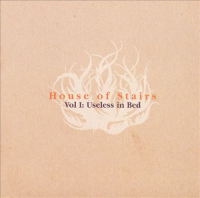


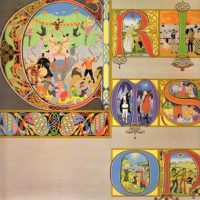
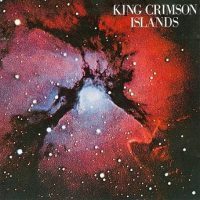

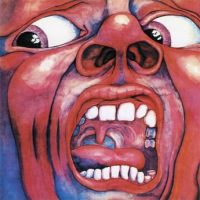
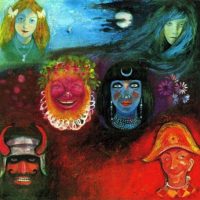

 Misfit City