Archive | chamber pop RSS feed for this section

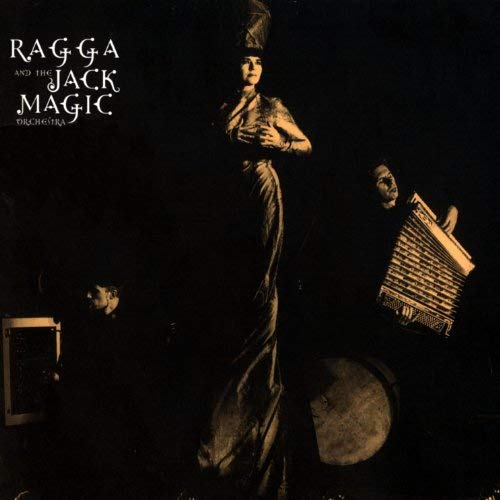
May 1997 – album reviews – Ragga & The Jack Magic Orchestra’s ‘Ragga & The Jack Magic Orchestra’ (“music for Disney cartoon castles in the sky”)

24 May

Ragga & The Jack Magic Orchestra: 'Ragga & The Jack Magic Orchestra'

Ragga & The Jack Magic Orchestra: ‘Ragga & The Jack Magic Orchestra’

Do I have to do all the usual obvious journalistic crap about Iceland? Do I? Oh, if I must. They eat puffins, or something. They drink tons of cheap alcohol. It’s bloody cold there. It’s dark all winter, light all summer, or something. Magnus Magnússon. Mad elfin pixie Bjork… blah blah blah. Will this do?

Oh, and I have to act surprised that Iceland can produce such great music, and be really patronising about that in particular. Because we British love looking down on small nations, don’t we?

All that gone through, just because two-thirds of Ragga & The Jack Magic Orchestra are Icelandic. Ragga sang You Don’t on Tricky’s ‘Maxinquaye’ album – a track full of filmic strings, soloing flutes and slow shuffling beats -which casts some light on this album. Previously, Ragga and keyboardist Jakob Magnússon were in a successful Icelandic band together; when they ended up in London, Magnússon worked as Icelandic cultural attache while Ragga attended drama school. Later, they formed Ragga & The Jack Magic Orchestra with English sampling wizard Mark Davies from Voices Of Kwahn. With this debut, they bring all these diverse strands of experience together to produce a magical experience. Huge, colourful swathes of sound; music for Disney cartoon castles in the sky.

 
So – Fairy Godmother opens on a feather-bed of lapping sea, boat-horns, celeste chimes and toybox orchestra that scream “Disney”, before the trip-hop beats are introduced. But the JMO is always very natural, organic-sounding – no harsh electronica scraping here. And Ragga’s voice is a magical thing – Kate Bush in a lower register, with some of Bjork’s expressive stylings. Like Bjork, her lyrics tell strange stories, but she introduces Shot almost matter-of-factly: “I got shot in the head by a man / who had been aiming at me / for many days… / At the moment I got / the paper from my doorstep.” To an almost easy-listening palette of relaxing hues, jazzy woodwind and flutes, she philosophically concludes that “love can hurt…” Well, it would, wouldn’t it?

Daringly, styles keep shifting, track by track: somehow in keeping with the fairy-tale transformations of the lyrics and samples. Passion For Life has a soulful belted-out chorus (Ragga does brazen Broadway as easily as schmaltzy Hollywood), a slow, loping early-hours atmosphere of spooky keyboards and bone-rattles for beats, and brilliantly lifts an evocative passage from Samuel Barber’s ‘Adagio For Strings’ (the music from “Platoon”, if your imagination’s still settled in the cinema after those Disney references). In Where Are They Now? – to surging orchestral strings, keyboard arpeggios and sparse but powerful metallic percussion – Ragga sings a torch-song elegy to the lost children of wars. Even when no lyrics intrude, Ragga’s evocative harmonies over a battalion of drums and stabbing strings are just as emotional.

 
The mix of folky guitars and flutes, East European violin and pleasantly shuffling beats on Turn It Off remind one of Beth Orton’s marriage of bedsit folk and electronica. Deep Down also has a deceptively simple sound: alternately hushed and passionate vocals over shifting sands of decaying electronics and a barrage of junkshop percussion. It hits a groove and stays there – perfectly. With the fairy-tale assertion that “sometimes I can breathe underwater / Sometimes I can fly around the sky”, Underwater features more Disney-like wonderment: reverberating drones, slippery strings lilting through the melody and expert percussion care of a Steve Jansen/Rain Tree Crow sample fluidly weaving in and around the programmed beats.

Despite its title and distorted electro-beats, Beatbox Controller isn’t some ’90s ode to the DJ/mixer in the manner of Last Night A DJ Saved My Life. The “beatbox” referred to is the heart – “you are my beatbox controller / A telepathic mixer of emotion…” Ragga’s vocals are almost helium-light and, musically, the track sounds like twenty-first century reggae-lite. In an extended coda where he duets with Jacob Magnússon’s improvising keyboards, Mark Davies makes beautiful music out of sampled percussion – this man’s going to be a figure to watch in the world of electronica, to rank alongside DJ Shadow or Howie B.

Indeed, Two Kisses is built on a disconcerting, clattering rhythm track of samples of god-knows-what. Buzzes, radio waves, ghostly fluttering flutes and Eastern pipes are all jammed into the mix. Ragga sings a multi-tracked ethereal chorus and her voice is, at one point, treated to sound – well, er – exactly like a Smurf, to be honest. Weird, peculiar – Laurie Anderson jamming with The Art Of Noise produced by Tricky is about the closest comparison. Close, but nowhere near. So, yes, if weirdness to the point of absurdity overtakes them every so often (Man In The Moon overdoes the lyrics on the wrong side of Kate Bush kooky pop, and the overblown melody reminds one of… Christ! The Thompson Twins!) it’s a price worth paying for the trio’s musical vision.

 
Music for your fairy-tale nightmares. A perfect accompaniment to drifting away while watching “Fantasia” for the hundredth time, safe in the knowledge that the good witch now works her magic with a sampler.

Touched by the wand of the sorcerer’s apprentice.

(review by Vaughan Simons)

Ragga & The Jack Magic Orchestra: ‘Ragga & The Jack Magic Orchestra’
EMI Records Ltd., CDEMD 1107 (7243 8 56728 2 8)
CD/cassette album
Released: 19th May 1997

Get it from:
(updated 2018) buy original CD second-hand, or get the reissued download from Amazon or iTunes.

Ragga & The Jack Magic Orchestra online:
Soundcloud Last FM

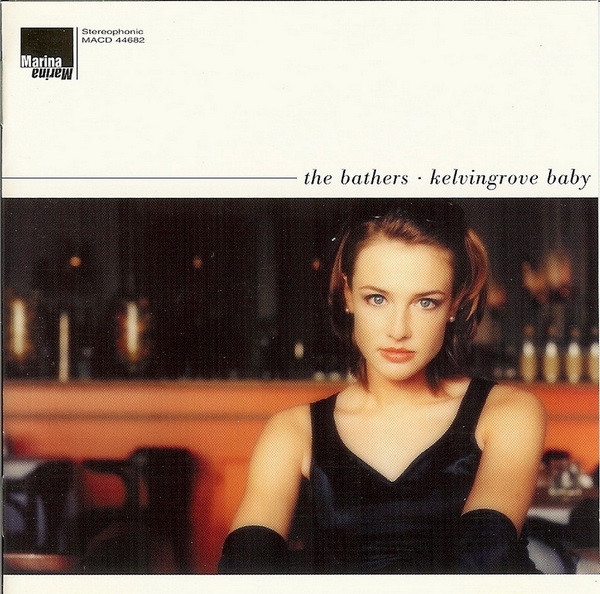
February 1997 – album reviews – The Bathers’ ‘Kelvingrove Baby’ (“full of Celtic soul histrionics, surging choruses and delicate instrumental interludes”)

24 Feb
The Bathers: 'Kelvingrove Baby'

The Bathers: ‘Kelvingrove Baby’

Oh, but I do worry about Chris Thomson.

Chris Thomson is The Bathers. He’s been ploughing his lonely furrow for ten years, since the break up of the seminal Glasgow group Friends Again (who also featured James Grant of Love And Money ‑ no, me neither…). This is The Bathers’ fifth album ‑ it will doubtless be received with the same resounding silence as all the others, save for the tiny devoted following who will think manna has descended from heaven. So why was I worried? Well, the sleeve to the last album, ‘Sunpowder’, contained the desperately insecure messages “Support the Arts ‑ Hug A Musician” and “The Dream Is Over ‑ Long Live The Dream”. Sob.

Now you’ll have to take The Bathers to your hearts, surely…?

https://youtu.be/h6JwcH4NllQ

In truth, the first three or so tracks are a touch disconcerting by normal Bathers standards. The (frankly pretentious, but marvellous) European‑influenced titles are absent; the credits show a preponderance of Wurlitzer, Rhodes and electric pianos rather than the normally ever‑present ethereal strings and chiming classical piano lines. And while Van Morrison has often been an undoubted influence, on this album the influence is perhaps too pervasive, and it verges at times on sounding like an avant‑garde Hothouse Flowers. The trio of Girlfriend, If Love Could Last Forever and East Of East Delier ‑ whilst gloriously late‑night ‑ can make them sound like a barely‑audible, zonked‑out but musically polite cafe band. At one point, I half expected Thomson to slur: “Ladeez and gennelmen, we’re your band this evening. Gonna take a little ol’ break now. See you at the bar, which is now open.”.

But for East Of East Delier, the European outlook (“I dreamed she’d come from Copenhagen…”) is back, serenaded by Thomson’s 2 a.m‑feel, decidedly tipsy, highly emotional display, and the album twitches into life with No Risk No Glory. With a sparse acoustic base to the verse, and sympathetic soul‑style backing vocals (by, of all people, Del Amitri’s Justin Currie ‑ bang goes the indie cred) that echo Thomson’s lyric, the chorus rises to breast‑beating Celtic soul and a lyric full of self‑awareness ‑ “I was born to suffer.”

And after a slightly hazy start to the album, Once Upon A Time On The Rapenburg restores my faith. It’s like an old friend, and you should never change an old friend. All the signature Bathers motifs are there ‑ the classical piano, the strings, the over‑emotional vocals, the continental cool. And the lyrical concern is a familiar one about kissing a girl under starlit skies in various exotic European locations. What a guy…

Kelvingrove Baby itself is the album’s central epic ‑ there’s always one, full of Celtic soul histrionics, surging choruses and delicate instrumental interludes. It begins as a simple piano motif before bursting into life with haunting voices and an operatic diva weaving in and out of Thomson’s lyrics ‑ which could be corny, but instead sends a shiver down the spine. He’s expectantly waiting for a girl again, and dedicating his overflowing paean of love to her hometown. The music regularly builds, swells and bursts like a raincloud, as Thomson reaches ecstatic preacherly heights of inspiration: “when your girl looks at you, and she sighs, / when she moves beside you, you want the moment touched with magic and immortality. / You want rain, / you want soft music, / and the last words to be about love!” Pianos and drums explode. The song ends, soaked to the skin and smiling.

On a quieter tip, Girl From The Polders is a good example of what Thomson does so well: taking a standard, timeless melody (you know the tune already, from the first notes onwards) and drawing out of it something haunting and emotional. He seems to be waiting through the seasons, until summer, for her this time. (Hands up if you see a lyrical theme emerging…)

The one unforgivable track ‑ the first real blot on Thomson’s copy book I’ve heard in ages, is Dial. More cafe band music; too mellow, man. Lots of filmic guitar, elongated major‑7th chords, treacle‑smooth backing vocals and an irredeemably cringeworthy chorus ‑ “Caller, you’re divine.” Ugh. But Hellespont In A Storm (yes! titles! titles!) wins us back: a late‑night lament guided by an accordion, acoustic guitar and violin. Although, gorgeous as it is, Thomson’s way with a familiar melody takes a tumble in the verses, where echoes of Unchained Melody can be clearly heard. Oh, never mind…

The final track, Twelve, finds Thomson devoting himself to a girl in the most poetic and tangible of ways; “I’ll love you ’til the roses lose their perfume… / until the poets run out of rhymes… / ’til the twelfth of never. / And, baby, you know / that’s a long, long time…” Then that “Bathers moment” appears ‑ distant voices appear and disappear through snatches of ghostly telephone conversations, string passages shoot up at the back of the recording like incense rushing up the dome of St Peter’s. The callers hang up.

https://youtu.be/5cndoHOhF0E

Chris Thomson will be waiting for you, bottle of red wine in hand in the late‑night rain, under the street lamp’s orange glow. He’ll be singing quietly to himself.

Goodbye, Chris. See you at the same place next time.

(review by Vaughan Simons)

The Bathers: ‘Kelvingrove Baby’
Marina Records, MA 22/MACD 4468‑2 (4 015698 446821)
CD-only album
Released: 24th February 1997

Get it from:
(2018 update) the original Marina pressing of this album has long since sold out, so is best obtained second-hand. The 2000 reissue on Wrasse Records is still available.

The Bathers online:
Facebook MySpace Bandcamp Last FM Apple Music Deezer Google Play YouTube Spotify Amazon Music

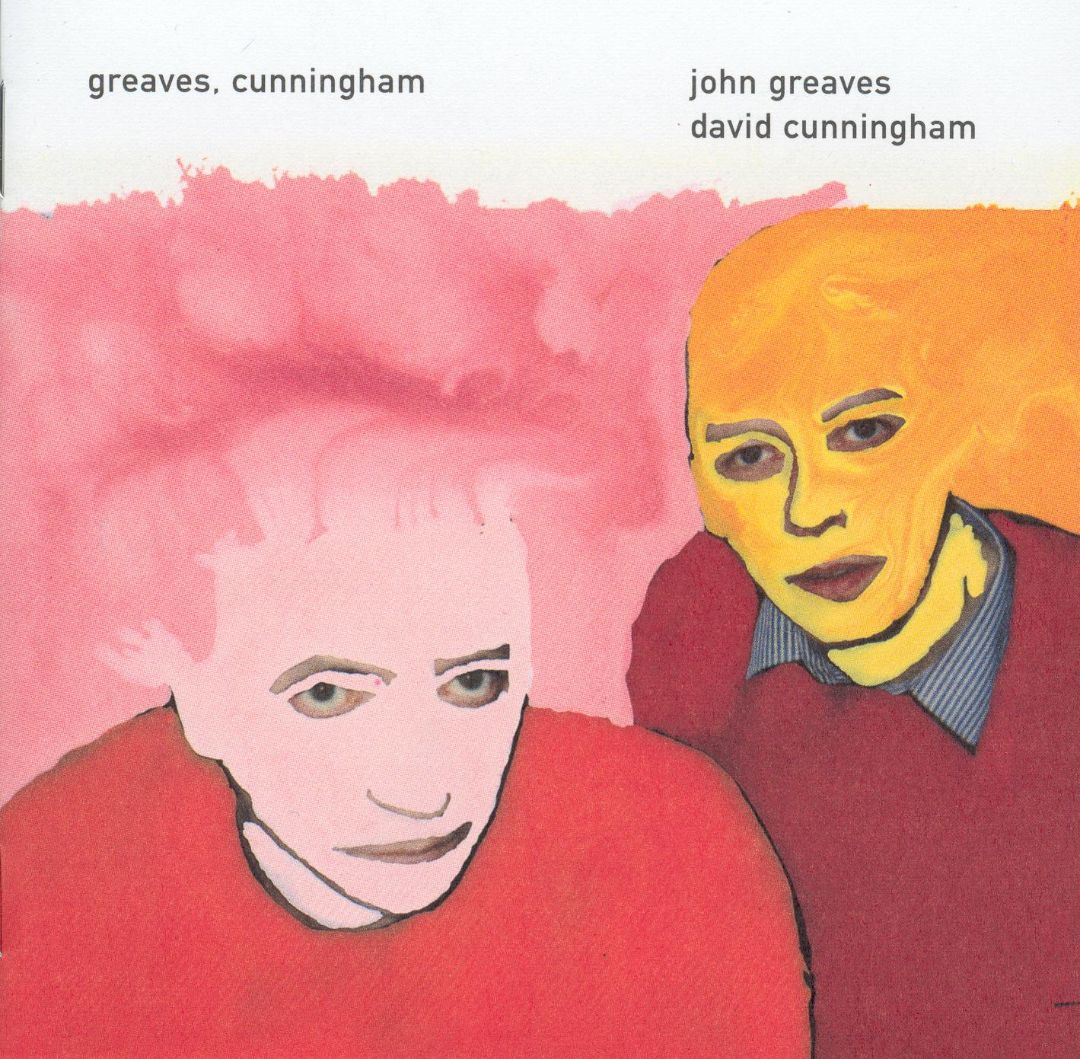
September 1996 – album reviews – John Greaves/David Cunningham’s ‘Greaves, Cunningham’ reissue (“a muted treasure”)

10 Sep

John Greaves, David Cunningham: 'Greaves, Cunningham'

John Greaves, David Cunningham: ‘Greaves, Cunningham’

Too much information.

I’ll own up to being the occasional sad muso, the sort of person who wants to know which guest musician banged the tambourine on the second (unused) take of The Beatles’ Revolution on June 24, 1968, and what colour trousers they were wearing. (Look, it’s a hypothetical. Don’t send your replies).

It’s refreshing, then, to be recommended an album and know little or nothing about the artist. David Cunningham I am familiar with as the person behind The Flying Lizards, purveyors of bizarre‑sounding kitchen‑sink electronics who had a surprise hit in the ’70s with a version of early Motown hit Money, and has since produced much of Michael Nyman’s work. John Greaves? Search me. My excellent editor will no doubt insert a knowledgeable mini‑biog here. I think John Greaves may have been in some way involved in prog. God help us… (Near enough. He used to be in Henry Cow ‑ an enthralling but demanding gang of ferociously complex Maoist art‑rockers in the ’70s ‑ playing bass on revolutionary stuff that was far too twisty to sing over. Perhaps as a reaction, he’s been a song‑albums man ever since. Prog by default, I guess: the difference isn’t as wide as some would like to imply ‑ ED.).

So I didn’t know what to expect. What I found is a delicate and intensely beautiful curio. Totally motionless. Ice cold. Pure electronics, free of the distortion and sampling that we so associate with the form now, and only occasionally breathed upon by natural sounds. And a voice that sings of emotion but remains, almost intriguingly, detached.

The Mirage is a less than promising opening, though. It almost justifies the accusation that much avant‑garde music is simply nice melodies and good singers ruined by someone working randomly through all the programs on their synth in the background. But one is immediately struck by the voice of John Greaves: somewhere between Dominic Appleton of Breathless (and, more famously, This Mortal Coil) and John Cale ‑ appropriately, Greaves is also a Welsh tenor. The sort of voice, frankly, that is only ever heard in art‑rock. It’s heard to great effect on one of the stand‑out tracks, The Magical Building. A beautiful melody and a peculiarly touching analogy ‑ “Oh darling, it’s all so mysterious / The magical building that is us” ‑ despite its unusually clinical feel. Cunningham’s stark, clean electronic backing evokes further This Mortal Coil comparisons.

https://youtu.be/xn7EoPl9Zbw
 
One Summer allows about the most human emotion on this album. Regret. The harmonies are all‑too‑real in beautifully surrounding Greaves’ voice as he regrets: “Swimming all around and never getting closer / To the one damn thing you knew we needed most…/ In a way, we never happened / In a way, we were never there / In a way, we were phantoms / In a way, we were fish in air…/ In a way, we didn’t care / And there’s nobody left to tell the tale.” If that doesn’t get you weeping over summer love affairs long gone, you are truly heartless.

https://youtu.be/RHiK02Da1cA
 
In between the longer vocal tracks, there are a number of short ambient pieces. Whilst all retain the icy atmosphere of the album, the vocals elsewhere are so stunning one longs for their return. Nevertheless, the instrumentals are arresting in their own way, several of them sharing similarities with the recent work of Jansen and Barbieri; particularly the final track, The Map Of The Mountains, where marimbas play a softly rhythmic motif over an evolving ambient sequence. The Red Sand is a rhythmic instrumental of pulsating piano, percussion, strange dislocated vocal snatches, parping saxes and clarinet. The Other World ‑ due to its instrumentation in particular ‑ proves to be a more substantial interruption to the flow of the songs. The acoustic guitars and saxophone bring a more laid‑back feel when the steel‑cold otherworldly electronics have just got you entranced. One big flaw, though ‑ the sax player is given far too many solos whilst suffering from avant‑garditis. He doesn’t so much play the tune so much as parp strange caterwauling noises. Cheers, mate ‑ do ruin the atmosphere. Anyway…

 
The Voice returns. The Inside, penned by Greaves alone, is (apart from a recurring, majestic‑bubblegum hook of “oh, baby, oh”) sung entirely in French. So, no, I have no idea what it’s about: suffice to say that it appears an unwritten rule of art‑rock albums that they must feature a track sung in French. Whatever the content, this is an achingly simple torch song, so standard in its verse‑chorus‑verse‑bridge structure that it emerges as a feat of understatement when the temptation to load on the sounds would have been all too easy. The Same Way, also a Greaves‑penned track, is another song about lost love, finding love, insecurity about love ‑ “You could say I’m way off course / You could say I love you.” Indeed, it ends in the same way it began.

This is an album, a muted treasure, to discover as autumn ends. Music for a midwinter morning ‑ intensely cold, but intensely beautiful.

(review by Vaughan Simons)

John Greaves/David Cunningham: ‘Greaves, Cunningham’
Piano, PIANO 506 (604388401024)
CD-only album reissue
Released: 1996

Get it from:
(2018 update) best obtained second-hand.

John Greaves online:
Homepage Facebook Soundcloud Last FM

David Cunningham online:
Homepage Last FM

December 1995 – live reviews – Anna Palm + Mandalay @ Upstairs at The Garage, Highbury, London, 20th December (“as full of explosive energy as a pan of popping corn… / …stately, kaleidoscopic and coolly hallucinatory”)

22 Dec

Oops. I’ve come to what I thought was a serious, arty gig to find exotic scarves hanging from the ceiling and a little green-nylon Christmas tree sitting in the corner. What with this, the candle-lit tables and the cheerful little greetings flyers under said tree, I get the feeling that I’ve crashed someone else’s Christmas party.

This particular party’s being thrown by violinist-turned-singer-songwriter Anna Palm, known for a journey that started with busking in Covent Garden and Chelsea and went on to a stint with acoustic punk-folkers Nyah Fearties, a handful of albums and singles on One Little Indian, and support contributions to a variety of artists from YesSteve Howe to New Wave synth poet Anne Clark, ascerbic dream-pop realists Kitchens of Distinction and avant-Goth experimentalist Danielle Dax. It’s an interesting resume. Well, I hate to bad-mouth my hostess, and maybe it’s unfair to judge an artist from an event coming across very much as a fun gig, but I’m decidedly underwhelmed. Despite an indie all-star band (with various members of The Farm, Loop Guru and Kitchens of Distinction taking time out to back her up) she fails to shine.

It’s not as if she doesn’t try: a Violet Elizabeth figure in a frilly little-girl party dress, she’s as full of explosive energy as a pan of popping corn, exhorting people onto the floor to dance, singing with verve (if not always great pitch) and sawing acrobatically at her violin. But the band is under-rehearsed and scrappy, falling apart much too often. Anna’s songs, too, lack individuality and the delivery to make them memorable. A shame, as when she sets bow to strings some spirited and slyly lovable playing emerges.

Anna’s obviously a good player, but as far as being a singer-songwriter goes she still doesn’t seem to know what to do with herself. File under “needs work” and leave it at that for now. However, the mess does yield up one unexpected delight – a dance-groove version of Kites, compelling and grin-inducing, with Anna’s riotous violin scurrying over an early-’90s style baggy beat and the whole thing carrying a strong hint of I Will Survive. A novelty, perhaps, but it’s good to see Simon Dupree’s old hippy hit hopping onto a modern groove and feeling right at home. These particular Kites really fly. I wonder if the Shulman brothers (who notoriously hated their early Dupree-ism despite its success) might ease up and grin and bop along if they were here to hear this.

The real reason why I’m here is a duo called Mandalay, hiding further down the bill: it’s the new project by multi-instrumentalist and electronica aceSaul Freeman, who used to perform a similar role as half of the band Thieves alongside stratospheric singer David McAlmont. Thieves are long (and acrimoniously) split now, with what would have been their debut album a little uncomfortably repackaged as the stunning McAlmont debut (and if you haven’t heard that, you missed one of the most vitally progressive pop records of 1994).

Now Saul is quietly rematerializing, in partnership with singer Nicola Hitchcock, to reclaim some of his lost thunder. But although it shares the glittering crystalline texture of Thieves’ songs, Mandalay’s music is nowhere near as easy. As with Thieves, Cocteau Twins should be mentioned (especially when listening to the effects-swallowed guitars of Enough Love); so too should the frozen sadness of Portishead (especially on the chilly trilling of Enough Love). but Mandalay is more involved and intricate than either. These are multi-dimensional songs, Nicola’s frail but enthralling vocal melodies elevated from the ground on staggeringly complex musical architecture courtesy of interlocking blurry sequencers, obsessively repeating samples and eerie guitar treatments. Saul stands impassively amongst his host of computers and effects racks, gazing absently down at his guitar and its network of pedals. Every now and again he’ll tap and flick at the strings and a second later a whole web of music will swell from the speakers.

Mandalay’s style – stately, kaleidoscopic and coolly hallucinatory – is best exemplified by the silvery net of sampled vocals, the stabbing kick drum and the harmonica-skank guitar of More Than Venus: Nicola’s whispering Bush-y enunciation gives the perky melody an awkward, appealing sensuality. Walk By the Sea rumbles by on an ominous 3/4 riff, double-looped spiral claustrophobia and panic-pitch piano plinking. The Waiting gives full reign to Saul’s subtle space-age guitar work: cunningly-placed “brang”s and attenuated bell-notes amongst the fabric of a languorous techno-warble.

There’s plenty of pop in this (and, despite the duo’s clear and ineluctable whiteness of manner as well as appearance, more than a helping of trip-hop) but Mandalay are also decidedly post-rock. They’re part of the astonishing movement which also includes Moonshake, Laika and the late-lamented Disco Inferno, and which junks the conventional hierarchies of rock instrumentation in favour of the uncanny textures of digital sampling and electronic ensemble processing. This might not sound appealing to the traditionalists out there, but believe me, Mandalay are much more than noodling experimentalists. Try to think of their songs as angst-under-amber, refracted into confusing multiples by an unearthly light. Unsettling but beautiful pop for an uncertain info-saturated future. You want progression? It’s happening here.

Anna Palm online:
Homepage Facebook MySpace Last FM YouTube Spotify Tidal Amazon Music

Mandalay online:
Last FM Apple Music YouTube Deezer Google Play Spotify Amazon Music

Additional notes: (2020 update) Anna Palm now lives and occasionally performs in Stroud. Mandalay recorded two albums for V2 Music before splitting in 2002: both Nicola Hitchcock and Saul Freeman have continued intermittent solo careers.

September 1995 – live reviews – Organ Night: Lake of Puppies + The Monsoon Bassoon + Fear of Fear @ The Monarch, Chalk Farm, London, 19th September (“music to spin the brain like a top”)

24 Sep

Just across the road, the great decaying wheel of the Roundhouse is housing Cirque Surreal and Wakeman with Wakeman. Over here, in the less salubrious surroundings of the Monarch, a collection of various punks, proggies and other wonderful low-lifers (including myself) are cramped together to check out some rather lower-profile musicians. Somehow, I think we’ve got the better deal.

This is ‘Organ’ Night, so we’re guaranteed a rich feast of music from all directions, as exemplified by opening act Fear of Fear, whose Metallica-meets-PJ-Harvey take on the punk/funk thing is tight and excellent. But judging by the overwhelming number of Alphabet Business Concern T-shirts filling the room, plus Bic Hayes hanging around near the bar, it’s a pretty safe bet that tonight is going to have a strong Cardiacs flavour. And yes, those unjustifiably obscure prog/punk/music-hall eccentrics do have a lot to answer for as regards the shape of this evening. Some of the seeds they’ve sown during their lunatic nine-album career are springing up with a vengeance in this little Camden pub.

The Monsoon Bassoon are a real brain-skewing treat, and a demanding one. Their music has those Cardiacs components of mind-boggling tempo changes, raucous crashing melodies and cheerful gibberish in Cockney/Estuarine English (although they’re originally from Plymouth, so my ear must be out of tune). The War Between Banality and Interest is a fine example, a Cardiacs-type tossed rhythmic salad so perkily crazed that it makes ‘Larks’-period King Crimson sound like James Last. Aside from Cardiacs and King Crimson, The Monsoon Bassoon show an affinity with the wilder American side of things: the “anything goes” spirit of Captain Beefheart and (to pick a more recent example) Mercury Rev. The double voice-and-guitar team of Kavus and Dan, Sarah’s voice, flute and clarinet, and the rhythm section of Laurie and Jim offer us song titles to die for and music to spin the brain like a top.

How is it that they can play songs so insanely complex yet so insanely catchy? Five hundred hooks and time changes in each four-minute burst, it seems. And how can they play it with such unflappable cheerfulness, Kavus in particular finding the time for some Who-style scissor jumps? Forget it… just stand back and have your mind tickled… Oh, comparisons? well, if I must…

Some simplified examples: Bullfight in a China Shop is a stretchy boogie in 5/4 with Mercury Rev flute, Leyline PLA is like a crunchy thrashy Schizoid Man played by an unholy alliance of The Buzzcocks and Ian Anderson with the odd lick of harmonised Queen guitar. Bright Lucifer goes from a cataclysmic snare-roll opening to Cardiacs-meets-‘Thrak’ mayhem, while Aladdin mates Frame by Frame with Living in the Past. Tokmeh has elements of that wandering Frippy gamelan sound of the ’80s, but ends up as the sound of five instruments dancing separate dances to a common end – a freaky fugue. And that’s where The Monsoon Bassoon are at. A pure, wild, Dionysiac musicality with a roguish five-fold intelligence kicking it into gear: hung up on no scene, naturally sparking and kinking. Let them into your life and watch your world take on brighter, loopier colours.

Headlines Lake of Puppies have a more direct link to Cardiacs – they’re led by William D. Drake, who was formerly Cardiacs’ keyboard player, And yes, it does show – although the anarchic musical mayhem which is one of the central Cardiacs characteristics is absent here, Drake’s new band share that specifically English eccentricity. In fact, they take it down a few notches and on a few steps. If Cardiacs’ Tim Smith is the intense, slightly scary motormouth maniac on the rural bus, Bill is his refined elder cousin who restricts his own lunacy to deranged sessions on the tennis court. Lake of Puppies are like Cardiacs exhuming the ghost of Noel Coward for tea on the lawn: all summery waltzes, genteel harmonies from Bill and from singing bassist Sharron, easy-going nylon-string guitar (from Craig) and the cosy burr of baritone sax and clarinet. Kevin Ayers could get a mention on the influences list, as could the Kate Bush of Coffee Homeground.

All of this is not as harmlessly cuddly as it sounds. Although the lyrics are difficult to make out amidst the weaving melodies, I get the impression that Lake of Puppies are singing about trickier subjects than crustless sandwiches. There’s the occasional burst of noise when Bill abandons his piano for fuzzy organ and the band launch into gutsy cyclonic roaring, and the music is just too complex and cerebral to be entirely cosy. But in the prog environment of today – where bands tend to be either sickly, prissy and pompous or thrashily confrontational and noisy – Lake of Puppies stick out as a sunnily listenable and enjoyable alternative. And I wouldn’t be surprised if all of that gentility was a Trojan horse for something gloriously warped… definitely one to check out again.

Keep it up, ‘Organ’!

Lake of Puppies online:
Homepage Facebook Last FM

The Monsoon Bassoon online:
MySpace Soundcloud Last FM YouTube Spotify Amazon Music

Fear of Fear online:
(no online presence)

Additional notes: (2020 update) Lake of Puppies didn’t last very long, with various bandmembers going on to The Shrubbies, North Sea Radio Orchestra and Quickspace while William D. Drake eventually started a solo career. There have been a couple of Lake of Puppies concert reunions over the years, with the latest one being at 2018’s ‘Spring Symposium‘. The Monsoon Bassoon lasted until 2001, with Kavus Torabi moving on to a multitude of projects including Knifeworld, Guapo, Cardiacs, Gong, The Utopia Strong and a solo career, while Laurie Osborne moved into dubstep with Appleblim. Daniel Chudley Le Corre also has an intermittent solo career. Several former Monsoon Bassoon members occasionally reunite in sea-shanty band Admirals Hard. I have no idea what happened to Fear of Fear.
 

September 1995 – live reviews – Kate St. John @ DreamHouse @ The Water Rats, Kings Cross, London, 5th September (“like finding a pearl in the Sunday teacups”)

8 Sep

Kate St. John is best known as reedsperson to the stars: whenever someone wants a solo oboe on a rock record, she’s usually the one who gets the call. In her time, she’s been a member of The Ravishing Beauties, of Dream Academy and of the collective Channel Light Vessel (which also boasted Bill Nelson and Roger Eno). Now there’s the solo project – an apparently gorgeous album called ‘Indescribable Night’ and a four-piece acoustic band in which her voice and reeds are joined by guitar, viola and fretless bass.

What with her past work and the sessions for the likes of Julian Cope, we’d expect her to launch into a crazy and beautiful atmosphere project. But what Kate seems to be into right now is a featherlight fusion of classical, lounge jazz and blues – ‘Green Park Blues’ being the most obviously successful example tonight. A love of the French chanson tradition shows itself as well, in the summery ‘Paris Skies’ and in Kate’s choice of cover version tonight (Francoise Hardy’s ‘Le Premiere Bonheur de Toujours’).

This comes as quite a surprise (positioned as it is in the midst of a DreamHouse evening of intense contemporary rock singer-songwriters with guitars, but Kate and co. are unfailingly tasteful: beautiful arrangements played impeccably to form a sort of mildly fusion-flavoured chamber music. One can’t help thinking, though, that it’s a pretty tame world for such musicians to be installing themselves in. It all just floats along gracefully on leisurely viola shapes and restrained guitar, with Kate’s wispily pretty voice bathing in nostalgic warmth. And then she places an oboe, a cor anglais or an alto sax in her mouth, and out comes this phenomenally beautiful sound which stops you dead in your tracks and sets hunger in your soul…

It’s like finding a pearl in the Sunday teacups: sheer beauty reduced by finely-crafted but over-genteel surroundings. Kate St. John’s musicality needs a more passionate setting than this, a possibility hinted at by the ethereal mediaeval vocalising of ‘There is Sweet Music’ with its heart-stoppingly lovely cor anglais. But until then, at least we have this fine quartet. Many of you may be intrigued by this tasteful breed of crossover music: if so, I’d advise you to seek out the album. I myself am left wondering what it would take for such a phenomenal thread of music to be allowed freedom from the cosiness of café memories and to fly liberated, soaring to the heights that each and every one of tonight’s reed solos hints at.

Kate St. John online:
Homepage Facebook MySpace Bandcamp Last FM YouTube Deezer Pandora Spotify Instagram Amazon Music
Additional notes: (2020 update) Kate St. John spends most of her time supervising film music these days – if you want to listen to the album which this music came from, it’s available on Bandcamp.

SWOONAGE

Swoon. /swo͞on/ A verb. To be emotionally affected by someone or something that one admires; become ecstatic. Here are some people and things that make me swoon. #swoon #swoonage

Post-Punk Monk

Searching for divinity in records from '78-'85 or so…

theartyassassin

...wandering through music...

Get In Her Ears

Promoting and Supporting Women in Music

Die or D.I.Y.?

...wandering through music...

Music Aficionado

Quality articles about the golden age of music

THE ACTIVE LISTENER

...wandering through music...

Planet Hugill

...wandering through music...

Listening to Ladies

...wandering through music...

ATTN:Magazine

Not from concentrate.

Xposed Club

improvised/experimental/music

The Quietus

...wandering through music...

I Quite Like Gigs

Music Reviews, music thoughts and musical wonderings

furia log

...wandering through music...

The Recoup

SINCE 2013: Books and books and books and books and occasionally other things

A jumped-up pantry boy

To say the least, oh truly disappointed

PROOF POSITIVE

A new semi-regular gig in London

Gapplegate Classical-Modern Music Review

...wandering through music...

When The Horn Blows

...wandering through music...

:::::::::::: Ekho :::::::::::: Women in Sonic Art

Celebrating the Work of Women within Sonic Art: an expanding archive promoting equality in the sonic field

Ned Raggett Ponders It All

Just another WordPress.com weblog

FLIPSIDE REVIEWS

...wandering through music...

Headphone Commute

honest words on honest music

The One-Liner Miner

...wandering through music...

Yeah I Know It Sucks

an absurdist review blog

Obat Kanker Payudara Ginseng RH 2

...wandering through music...

poplifer.wordpress.com/

Waiting for the gift of sound and vision

Good Music Speaks

A music blog written by Rich Brown

Do The Math

...wandering through music...

Archived Music Press

Scans from the Melody Maker and N.M.E. circa 1987-1996

The World's Worst Records

...wandering through music...

Soundscapes

...wandering through music...

OLD SCHOOL RECORD REVIEW

Where You Are Always Wrong

FRIDAY NIGHT BOYS

...wandering through music...

Fragile or Possibly Extinct

Life Outside the Womb

a closer listen

a home for instrumental and experimental music

Bird is the Worm

New Jazz: We Search. We Recommend. You Listen.

...wandering through music...

Life Just Bounces

...wandering through music...

Lucid Culture

JAZZ, CLASSICAL MUSIC AND THE ARTS IN NEW YORK CITY

Aquarium Drunkard

...wandering through music...

eyesplinters

Just another WordPress.com site

NewFrontEars

...wandering through music...

FormerConformer

Striving for Difference