Archive | Latin dance RSS feed for this section

June 2016 – upcoming London gigs – Horsefight, Godzilla Black and HVMAN in New Cross (23rd); Victoria Park Singers, Kemper Norton, Settembre and Paul Reynolds take Daylight Music (25th); Copperhead Lucy and Boy And A Balloon play MAP Studio Cafe (26th)

20 Jun

Quick snapshots of three more shows for the week – a spiky south London rock gig, a warm/eclectic Daylight event, and an Americana/art-busk evening at MAP…

* * * * * * **

Horsefight/Godzilla Black/HVMAN @ New Cross Inn, 23rd June 2016

New Cross Inn presents:
Horsefight + Godzilla Black + HVMAN
New Cross Inn, 323 New Cross Road, New Cross, London, SE14 6AS, England
Thursday 23rd June 2016, 7.00pm
information

Tight as fuck, gonzoid and with Berlin, Brisbane and London in their veins, Horsefight let their glam-prog/psychobilly/New Wave songs pogo about on giant spidery legs. They sound like a superimposition of The Fall, King Crimson and The Cramps, call themselves “obnoxious bounce music” and deliver songs on the verge of seizure, twitching over the Fall from Eden and going into near-hysterics about Derren Brown. A band up for hurling themselves into the heat of any given moment, they’ll eyeball it for a second and wet their lips before assembling a rapid strategy. They exist somewhere between spontaneity, rapid brainwork and the magnesium flare which upsets it all.


Still establishing themselves as one of the capital’s sharpest and wittiest propositions, Godzilla Black bring their snappy blare to New Cross, sounding like a horns-and-swagger big band that’s been carved up in a Peckinpah shootout and come out of it both crazed and leaner. Part sharp-dressed schizoid men, part lysergic spy movie cocktail, with an edging of amplifier hiss and flesh frenzy: the neurotic beast in the impeccable suit.


Up against these guys, and promising “big brash pop tunes with a sharp-edged alternative rock aftertaste”, HVMAN used to write glam-punk songs about beautiful people and E-numbers, full of blipping synths, dry songspiel asides and strutting guitar. They’ve now stirred in a deeper, rougher, and more yearning tone, some hurt-child dramatics, and the odd garnishing of bluesy resonator guitar. They’ve also added a new singer, Kane, who fits in with this sudden injection of classic-rock melodrama: although exactly how he bounces off the insouciant detachment of the band’s other singer, Louise, remains to be seen. For now, HVMAN (while citing Imagine Dragons, YYYs, Hurts and Talking Heads) suggest a clash of Ultrasound and The Flying Lizards over a few Eddie Vedder daydreams.


* * * * * * * *

On the other side of the fuzz pedal, Daylight Music are striving even harder than usual this week to merge community music, pop experimentation, and wood/string/space acoustica. Since this is the third or fourth time this season that they’ve put a scratch-choir singing pop hits on the bill (and the first time they’ve had one as the headliner), I was about to complain about a Daylight cosiness epidemic. Having had a look further down the list of the weekend’s acts I’d rather applaud them for their guile, their stealth and their soft-power persuasiveness. I shouldn’t have doubted them.
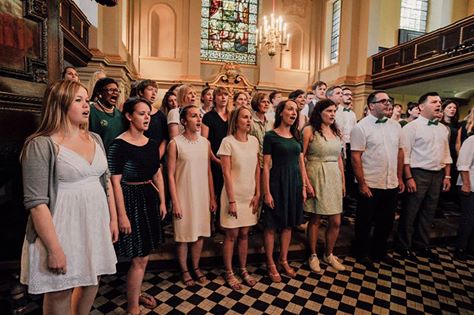
Daylight Music 229, 25th June 2016

Arctic Circle presents:
Daylight Music 229 – Midsummer Madness: Victoria Park Singers, Kemper Norton + Settembre + Paul Reynolds
Union Chapel, 19b Compton Terrace, Islington, London, N1 2UN, England
Saturday 25th June 2016, 12.00pm
free event (suggested donation: £5.00) – information

“Obviously Daylight Music should hail the solstice; it’s the most Daylight possible!

The Victoria Park Singers are a big community choir, singing a special selection of summer melodies, including songs by Stevie Wonder, Chaka Khan and Marvin Gaye.

“The ‘coastal slurtronic folk’ of Cornishman-turned-Brightonian Kemper Norton uses digital and analogue hardware and software, acoustic instruments , field recordings and traditional song to explore neglected or original areas of landscape and folklore. His most recent album, ‘Loor’, was inspired by real and imagined cities from childhood, bathed in traditional folk, found sounds and community chants, celebrations and invocations. ‘Loor’ (which is Cornish for moon) represents the next ambitious transmission in the expanding audio landscape that Kemper Norton is creating. The songs on the album are a loose trilogy of nocturnal encounters, searches and awakenings, often with Kemper Norton revisiting old foes from previous albums and encouraging new treacherous encounters. Today he also performs his solstice inspired songs.


Settembre is a duo formed in 2015 by London-based Italian musicians Angela Cicchetti (vocals) and Ivan Imperiali (guitar). They take the essence of Italy’s songwriting tradition, and reshape it with elements from the great Brazilian, Spanish and Portuguese schools, creating a delightful combination of delicate singing and classical guitar informed by cantautori, fado, bossa and choro forms amongst others.

“Also this week, Paul Reynolds (usually to be found as the guitarist of Vespers) will be at the piano, weaving his chilled improvisations and atmospheric melodies through Daylight’s Summer celebration.”


* * * * * * * *
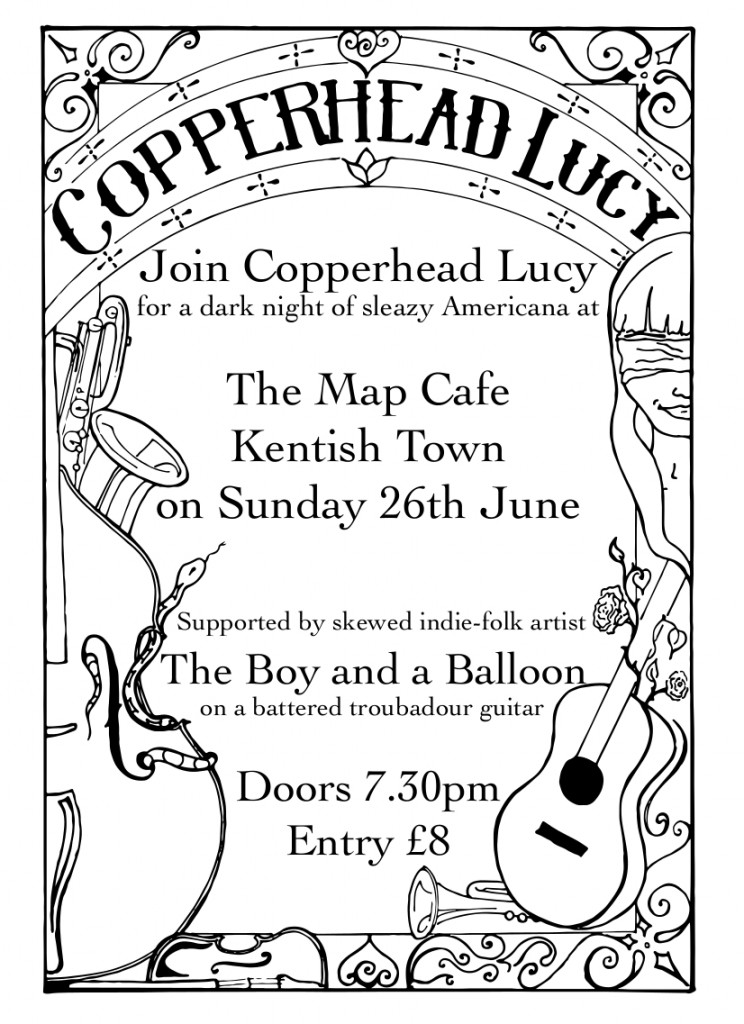
Copperhead Lucy + Boy And A Balloon @ MAP Studio Cafe, 26th June 2016Copperhead Lucy + Boy And A Balloon
MAP Studio Café, 46 Grafton Road, Kentish Town, London, NW5 3DU, England
Sunday 26th June 2016, 8.00pm
information

Further north in Camden, Map Studio Cafe continues the live sessions from local bands with a show by Americana quartet Copperhead Lucy. As they describe themselves, Copperhead Lucy were “formed after a chance encounter in a cello shop in Camden and based around the delicate voice and songs of Abigail Newis… (their) songs describe lives sometimes tragic, sometimes humorous, often morbid, set to a backdrop of junkyard drums, double bass and smoking hot guitar lines. Taking inspiration from the likes of Leonard Cohen, Tom Waits, Portishead and PJ Harvey, the songs run from ethereal whispers to raucous, tantrumic shouts.”

Here are a couple of videos, the second being a recording of the band’s first gig, back at Kentish Town’s Abbey in 2011 (a short, drunken stagger away from Map).


In support is Adam Hall, otherwise known as Boy And A Balloon (who played a Daylight Music show earlier in the month). Bringing his experience both as street musician and soul/pop session man to bear on a growing aesthetic of spontaneous roughness, Adam plays his own deliberately simple songs through a battered three-quarters-scale nylon-string guitar and a scratchy-toned broken-signalled busker’s amp, pursuing a philosophy of “songwriting will shine through roughness”, drawing on his own thirty-year span choice of pop music (from the ’40s to the ’70s) and musing on “the innocent and inevitable loss of something human, precious and innocent – so apparent in today’s fast paced and overwhelming technological world.”

 

February 2016 – upcoming gigs – from electro-salsa sizzle to cinema cello to sorry sighs with Daylight Music (Arcadio, Michael Price & Peter Gregson, Dakota Suite & Quentin Sirjacq); LUME give us improvising strings, Fauré jazz and a female bandleader summit (Njanas, Percy Pursglove’s Far Reaching Dreams Trio, En Bas Quartet)

4 Feb

More assorted crossovers and team-ups via Daylight Music…

Daylight Music 214

Daylight Music 214: Arcadio + Michael Price & Peter Gregson + Dakota Suite & Quentin Sirjacq
Union Chapel, Compton Terrace, Islington, London, N1 2UN, England
Saturday 6th February 2016, 12.00pm
– free/pay-what-you-like event – more information

Arcadio brings together London’s finest improvisers and percussionists to create a nomadic exploration of rhythm and movement. Led by composer Andrew Hall (also known as trumpeter for the vLookup Trio and Mak Murtic’s Balkan folk-futurist ensemble Mimika), Arcadio also features double bass player J.J. Stillwell, soundmangler Phil Maguire, woodwinder Rob Milne, multi-instrumentalist Ben Zucker, vLookup drummer Tom Atherton and several Mimika members (saxophonists Mak Murtic, Seb Silas and John Macnaughton; percussionist Paul Love). The band defines itself as the point where “electro-salsa meets free improvisation.” This will be their debut gig.

Michael Price is one of the UK’s most sought after composers and arrangers. His work for film and television includes ‘Sherlock’ and ‘Jekyll & Hyde’ (both of which he co-scores with David Arnold), ‘Unforgotten’, ‘Hot Fuzz’, ‘Tinker, Tailor, Soldier, Spy’, ‘Casino Royale’ and ‘Quantum of Solace’. Michael’s first film experience was as musical assistant, co-producer and arranger to the late Michael Kamen, with whom he collaborated for five years, working on a number of exciting projects including ‘X-Men’, ‘Band of Brothers’, ”The Iron Giant’, and ‘Metallica – S&M’. Having begun his career as a pianist and composer for contemporary dance, he has now established the Michael Price Trio and Ensemble to perform his own work in diverse venues across the world. His critically acclaimed debut album ‘Entanglement’ (on Erased Tapes Records, released in April 2015) was described as “gorgeous” by Rolling Stone.

On this occasion, Michael will be performing with New Music cellist and composer Peter Gregson, who has recently premiered works by composers including Daníel Bjarnason, Max Richter, Jóhann Jóhannsson and Steve Reich.

Now approaching its twentieth anniversary, Dakota Suite is not so much a band, more the brainchild of Chris Hooson. While holding down a full-time job as a social worker in Leeds, Chris produces affecting sadcore music under the Dakota Suite monicker, usually working in collaboration with multi-instrumentalist David Buxton, but sometimes with Italian ambient composer Emanuele Errante and American composer-cellist David Darling.

Since 2009, another regular Dakota Suite collaborator has been Parisian composer and pianist Quentin Sirjacq – improviser, New Music performer and composer of music for film, theater and radio. A musician who has performed as part of rock groups, big bands, symphony orchestras and avant-garde ensembles, Quentin has also worked Fred Frith, whose music he has performed (alongside that of James Tenney and Frederic Rzewski and José Maceda) as part of his continuing explorations of the avant-garde and its relationship with older traditions. Quentin’s other recent collaborations have included work with Akira Kosemura and Shin Kikuchi, leading to releases on the Japanese label Schole Records.

Current collective Dakota Suite/Sirjacq plans include an upcoming studio record featuring the Hooson/Buxton/Sirjacq trio and the release of a live album featuring the Hooson/Sirjacq duo, some of which may be touched on at this gig.”

* * * * * * * *

There are two more upcoming jazz’n’improv gigs from the LUME organisation:

Njanas + Far Reaching Dreams Trio @ LUME, Vortex Jazz Bar, 8th February 2016

LUME presents:
Njanas + Far Reaching Dreams Trio
The Vortex Jazz Club, 11 Gillett Square, Dalston, London, N16 8AZ, England
Sunday 7th February 2016, 7.30pm
< – more information here and here

Njanas is a brand new project consisting of four female musician/composers – Laura Cole (piano), Filomena Campus (vocals), Tori Handsley (harp) and Ruth Goller (bass) – who are all band leaders in their own right. The ensemble, which celebrates women’s art and music, started more than a year ago.

Njanas state “we often feel under-represented as women in the worlds of jazz and art, and in this project all compositions are inspired by a female artist (such as Frida Kahlo, Niki de Saint Phalle, Gertrude Stein, Franca Rame and many more) or written by a female composer. The name Njanas is an encounter between the gigantic sculptures called ‘Nanas’, created by painter and sculptor Niki de Saint Phalle, and ‘Janas’, ancient legendary female figures and fairies/witches that relate to the myth of the Sardinian Goddess-Mother.”

Following the critically-acclaimed success of his ambitious nine-part jazz suite ‘Far Reaching Dreams Of Mortal Souls’, multi-instrumentalist and composer Percy Pursglove now debuts the music as re-interpreted by his fascinating new Far Reaching Dreams Trio, featuring himself on trumpet, Paul Clarvis on drums and Ivo Neame on piano and accordion.

Percy composed the original suite during 2013 and 2014, working with the support of a Jazzlines Fellowship. The multi-lingual piece (including sung texts referring to Anne Frank, Nelson Mandela, Aung San Suu Kyi, Malala Yousafzai, Charles Darwin, Leonardo da Vinci, Galileo Galilei, Benjamin Franklin and Joan of Arc) was originally arranged for a nine-piece ensemble, conductor and eight-piece choir for its October 2014 premiere. Percy describes ‘Far Reaching Dreams Of Mortal Souls’ as “a project that has been in the back of my mind for a few years now. I had some wonderful experiences singing in choirs at an early age and the sound of and purity of massed voices has always drawn my ear. I wanted to find a way to access that broad spectrum of possible textures that Gabriel Faure had introduced me to all those years ago, but within a chamber ensemble setting that has the scope to offer another layer of unforeseen spontaneity.”

En Bas Quartet @ LUME, London Review Bookshop, 18th February 2016

LUME presents:
En Bas Quartet
London Review Bookshop, 14 Bury Place, Bloomsbury, London, WC1A 2JL, England
Thursday 18th February 2016, 7.00pm
more information

En Bas Quartet are string-section improvisers. In order of rising pitch, they are Seth Bennett (double bass and group leader), Alice Eldridge (cello), Benedict Taylor (viola) and Aby Vulliamy (viola).

Seth comments “I’d long been interested in contemporary chamber music, and wanted to investigate that aesthetic in an improvised context. A ‘low’ quartet also allows me to join in – the bass part in a quartet is usually taken by the cello – and write music for a chamber ensemble, with all the interaction and rhythmic subtlety they use. I find the parallel between a small jazz ensemble and a string quartet very interesting; both groups will stretch time, allow the music to breathe and pause, and find a way to play as a single unit. I chose three of the best string improvisers in the country to form the rest of the ensemble, and was lucky enough that they all agreed to take part in the project.”

Here’s what they do:

According to LUME, at this gig the Quartet “will be playing Seth’s quartet for improvising low strings, based on the Northumberland folk song tune Sair Fyeld Hinny, and exploring various settings and provocations for group and solo improvisation. Inspired by the quartets of Shostakovich, Beethoven and Bartok, as well as more contemporary jazz ensembles like Arcado String Trio, the Masada string trio and contemporary British free improvisation, En Bas Quartet weave their disparate influences into a compelling whole.”

July 2001 – EP reviews – A Girl Called Eddy’s ‘Tears All Over Town’ (“torch songs set to low glow, fanned into sudden flares by a crack in control”)

31 Jul
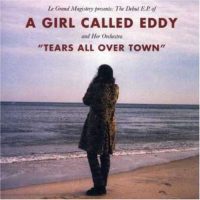
A Girl Called Eddy: 'Tears All Over Town' EP

A Girl Called Eddy: ‘Tears All Over Town’ EP

One of my small daydreams of alternate pop history involves Clare Torry. Having raised the hairs on the back of my neck with her ecstatic singing on Pink Floyd’s ‘Great Gig in the Sky’, she wouldn’t have slipped away anonymously. She’d’ve gone into the studio with songs for herself and produced at least one album with that voice, that understanding set free. When (on Francis Dunnery‘s ‘Close My Door‘) I first heard Eddy Moran’s arresting wordless vocal soaring skywards – twisting, keening, cracking and surging – I felt that same hair-raising chill. Flashed straight back to the same daydream.

I’m luckier in my dreaming sometimes. Although, for her debut EP as A Girl Called Eddy, she’s not repeating the magnificent Torry-esque splendour that turned my head the first time, Eddy has found other ways to chill me. Her songs could’ve waltzed out of the ’30s, or the ’60s: torch songs set to low glow, fanned into sudden flares by a crack in control. Cool heartbreak in her voice, she’s like a more ambiguous Tracey Thorn. Not someone who’ll glut her despair centre stage: she’s more like someone who you might catch staring at you piercingly from beside the bar, quiet, wise and intent.

‘Fading’ does its bit to draw back the curtains of sorrow. A fragment of Blue Nile lushness, slurs and fake orchestra, it revolves like a ferris wheel trailed by a puff of New Orleans trumpet. Cinematic, but less so than ‘Soundtrack of Your Life’; which – set on capturing the swinging ’60s side of Eddy’s imagination with its bossa lilt and breezy “bah-bah” chorus – doesn’t follow the torch course so closely. But beyond its cigarettes, its memories from film and old photos, its gushes of grand Mellotron and sitars, it has its centre of bereftness. “If ignorance is bliss, then seal it with a kiss, / but it was never supposed to end like this.”

‘Heartache’ – eased along with upright bass, a mascara-slur of brush drums and soft dips of weary piano – brings out the real phantoms of loss. “You’ve seen his face somewhere before. / Now you know for sure / that you can call him heartache – yeah, you can call him that,” Eddy breathes. “Yeah, you can call him heartache – you’ll never get it back.” Ragged memories and the force of erotic imagination are where these particular ghosts live, and Eddy’s well aware of it.

A ghost of another kind haunts ‘Girls Can Really Tear You Up Inside’ – the spectre of a vanished, never-known father. Like the bewildered girl in the song, Eddy simply pieces together scraps. Yet the result is a reverie carrying its own kind of romantic longing – “she’s heard you sing / and that your eyes are very, very, very blue…” In this web of connections and betrayal, there’s as much lurking passion, fear and anticipation as there is in any straight love song. Eddy reveals this, trace by trace, as she rides an elliptical path to its frightened heart, addressing the vanished man as she does so. “Why do you run, / why do you hide / from all you are?” Eddy muses, a dreamy voice of conscience and excitement amongst the traffic noise and the strums of an almost blues-y harpsichord. “You’re just a man, but she could tear you up inside.”

The greatest crack in the cool comes with her take on Stephen Bishop’s ‘The Same Old Tears’, recorded in her Greenwich Village kitchen in a flash of inspiration, with just an acoustic guitar and a divine echo. “Seeing you as an old photograph, it hurts too much to laugh,” Eddy sings, midway between croon, tears and laughter, before soaring off into a beautiful blue plate-cracking keen – “But I’m all right, I’m all right…”

Just for a flash, you see to the knot of the problem, and need know no more. Wanting more is different, of course. Eddy knows this – and, listening to this EP, so do I, now.

A Girl Called Eddy: ‘Tears All Over Town’
Le Grand Magistery, HRH-021 (6 16656 00212 3)
CD-only EP
Released:
31st July 2001
Get it from: (2020 update) Le Grand Magistery; or stream via Deezer, Apple Music or Spotify. Different versions of Heartache and Girls Can Really Tear You Up Inside appear on the eponymous debut album by A Girl Called Eddy.
A Girl Called Eddy online:
Homepage, Facebook, Myspace, Soundcloud, Bandcamp, Last.fm, Apple Music, YouTube, Deezer, Spotify, Tidal, Instagram, Amazon Music

May 2000 – single & track reviews – Badly Drawn Boy’s ‘Disillusion’; Inter’s ‘Radio Finland’; Porcupine Tree’s ‘4 Chords That Made a Million’

8 May

Badly Drawn Boy: 'Disillusion'

Badly Drawn Boy: ‘Disillusion’

For someone with such a reputation for being ramshackle, unpredictable, accidental, awkward (insert your favourite anti-star adjective here) and so on, that there Badly Drawn Boy doesn’t half make polished pop records when he wants to.

The Boy – Darren Gough, when he’s out of uniform – positively thrives on that kind of early Beck slacker/random “just rolled out of bed and made this record” image that wins over the crowds of reluctant punka-monkeys, for whom professionalism’s a suspicious word at best. Doesn’t change the fact that his last single (Once Around the Block) sounded suspiciously like that Latino swing that used to punctuate ‘Sesame Street’ and made you want to check if he had an Astrid Gilberto LP hidden under his battered old mixing desk underneath all the crumpled tape and cigarette butts. Most of the similarly-touted Manc alt-rockers Doves back him up on this one, and guess what? it does sound like a slightly crumpled take on mid-’70s soul-pop. Sort of like Hall & Oates refried for that crate-digger’s Latin funk angle plus a New York thrift-shop feel.


I like it – it’s hard not to enjoy all those vintage sounds bouncing up and down together like a smiling, sweaty block party – but it’s becoming a little difficult not to see Badly Drawn Boy as a lovable cottage-industry faker of slightly worn urban folk. Or as someone who likes smudging his own messy fingerprints on the records in a ‘Mojo’ buried-treasure box. OK, perhaps I’m being a little unfair. Bottle of Tears seems to restore your faith in the boy Gough’s image – a slightly Beta Band-style stoned skiffle, loaded up with boo-bams and other things that go clonk and with all the recording levels cheekily whacked up to a crunchily chewable wall of treble. There’s a bit of hoodlum science on the menu too. Wrecking the Stage is a yobbish rockabilly riff slamming headfirst into some sampler boffin’s cut-up experiment, so you get to hear big stoopid guitar and drums duking it out with primitive electronic froth and a colossal roll of psychedelic bell tones.


There is some kind of split genius here – on the one hand, for postmodern pop pastiche; on the other, for mating cheery tunes with outrageously back-to-front “who gives a fuck?” production. But as regards that carefully-constructed image of the lovable neighbourhood eccentric stumbling brilliantly into music, the game’s well and truly up. There’s a mainstream pop talent here dressing down for effect; and if he’s trying to disguise that with silly hats and goofy chuckles, methinks the Boy doth protest too much.

Inter: 'Radio Finland'

Inter: ‘Radio Finland’

It’s been a long time since Inter‘s ‘National Paranoia’ showed up (with its coltish Wonder Stuff-y bite), but here comes the follow-up single, straight down the turnpike. ‘Radio Finland’ is slyly anthemic: smoother, laced with chimey Celt-rock chords, stronger on the skat hooks and harmonies, but it’s another “we’ve already discovered that rock delusions suck” songs, worldly-wise behind the “da doo da da dit”s. As lines like “every hour of every day / I’ve got a direct line into your brain” lock horns with self-referential gibes like “what a show, but you’re nothing new”, Inter seem to be deconstructing and sending themselves up before they’re even under scrutiny.


The venomous sideswipe of You Lose shows they can still muster simple brat bile when they want to: perhaps when they hit the big time they’ll’ve gone full circle and gotten all naive and sellably arrogant again. But You Can Always Depend On Me, brazening out the confessions of a self-aware blunderer, suggests there’s fat chance of that – “I’ve wasted my potential trying hard to sound too sincere / and I don’t wanna get myself in deeper saying things you don’t want to hear / …I’m way too shameless to ever get it right.” In Inter’s songs, pop bursts out in tuneful flash-flowers of ballsy resistance. The good new is that even if they have rooted their sound in The Wonder Stuff, they’ve also matched the Stuffies’ tuneful urchin aggression and cracklingly sharp lyrics too. Nice to see a set of heirs that don’t let the old firm down for once.

Porcupine Tree: '4 Chords That Made a Million'

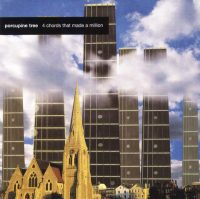
Porcupine Tree: ‘4 Chords That Made a Million’

A side effect of Porcupine Tree‘s inexorable rise to the forefront of British psych-rock has been the consensus that’s set into their previously unbounded music. But they can still surprise us. Last year it was the dry wit of the ‘Piano Lessons’ single: this year it’s something less subtle, but still a jump away from the strummed ’70s friendly psych-anthems which Steven Wilson comes up with on an average day.

At the root, ‘4 Chords That Made A Million’ still stomps along with big mainstream boots on. But the sound is something new for them: aggressive raga-rock riffs with guitar wails like huge bloodstained battle-axes and a brutally cynical adventurist swagger to it that’s more ‘Definitely Maybe’ than ‘Wish You Were Here’. The effect’s a sort of explosive post-Anokha heavy metal: laden with tabla lines and drones, and with Richard Barbieri spurting out dirty synth lines like someone spunking up into a pot of orchids. The subject matter’s the one thing that unites arena-rock and punk lurkers – that standard disaffection with the biz. “Another moron with a chequebook / will take you out to lunch, who knows? / He will tell you you’re the saviour / and then he’ll drop you like a stone.” Mind you, what does it mean when you’re writing lyrics about the futility and emptiness of arena-rock and you then do your level best to set them in a full-on mosher of an arena-rock crowd pleaser? Has Wilson gone all Manic Street Preachers “we’ll have our cake but claim we’re dieting” on us, all of a sudden?

 
The B-sides are more familiar Tree twiglets. Disappear is almost unplugged, Wilson’s lazy swirl of flyaway harmonies, licks of luscious sombre wah and the blissful final surge of organ, Mellotron and drums notwithstanding. And it’s another fame story, this time the tale of someone wilfully giving up on the threshold: “I gatecrashed parties and just stood and stared / I moved to London and stayed in all year… / You’ll be famous and I’ll disappear. / I erase myself again.”


In Formaldehyde sounds like one of Radiohead’s disintegrating nearly-ballads fed through Camel: a lovely, helpless, descending Wilson melody to match the boring, frustrating pain of a decaying love. The sonic decorations, an enchanting swirl of dulcimer scratches and NASA blips, enhance a prime piece of trademark Porcupine Tree gliss-guitaring sky-glide. But while back in the ’70s this kind of psychedelic lament would’ve accompanied spliffed-out stargazing, here it’s soundtracking the miserable chill that settles into comfy middle-class apartments as they crumble into broken homes and even the drugs become unsatisfying toys. “Dust in the kitchen – coffee pot, microdot. / Now we are constant: / talking less, breeding stress.”


Perhaps it shows just how everyday the psychedelic has become today (with an acid trip in every other advert), but it also shows that, whatever spaceman noises and Big Rock Issues Porcupine Tree want to play with, they can still bring themselves off the spangly podium and home to the heart when they need to.

Badly Drawn Boy: ‘Disillusion’
XL Recordings/Twisted Nerve, TNXL005CD (6 34904 10052 0)
CD/10″ vinyl single
Released:
3rd May 2000
Get it from: (2020 update) Original single best obtained second-hand; Disillusion appears on the debut Badly Drawn Boy album ‘The Hour of Bewilderbeast’.
Badly Drawn Boy online:
Homepage Facebook Twitter MySpace Soundcloud Last FM Apple Music YouTube Vimeo Deezer Google Play Pandora Spotify Tidal Instagram Amazon Music

Inter: ‘Radio Finland’
Yoshiko Records, YR 002 CDS002
CD/7-inch vinyl single
Released:
8th May 2000
Get it from: (2020 update) Original single best obtained second-hand; Radio Finland appears on the lone Inter album ‘Got My Nine’.
Inter online:
Facebook MySpace Amazon Music

Porcupine Tree: ‘4 Chords That Made A Million’
Snapper Music/K-Scope, SMASCD111/SMAXCD111/SMAS7111 (6 36551 21112 3)
CD/7-inch vinyl single
Released:
2nd May 2000
Get it from: (2020 update) Original single best obtained second-hand: ‘4 Chords That Made a Million’ is included on Porcupine Tree’s ‘Lightbulb Sun’ album, while the others made it onto the ‘Recordings’ compilation.
Porcupine Tree online:
Homepage Facebook Twitter MySpace Soundcloud Bandcamp Last FM Apple Music YouTube Vimeo Deezer Google Play Pandora Spotify Tidal Instagram Amazon Music
 

October 1996 – album reviews – Eddie Parker Group’s ‘Everything You Do to Me’ (“while the warmth of Parker’s compositional personality remains consistent, here the group is cat-stepping through traps”)

4 Oct

Eddie Parker Group: 'Everything You Do to Me'

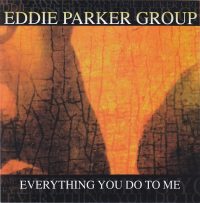
Eddie Parker Group: ‘Everything You Do to Me’

When they’re performing, flute players always look as if they’ve got a small, mysterious smile on their lips. Perhaps it just comes with the technique, but it’s an expression which seems to sit more appropriately on the faces of certain flautists than on others.

On the face of Eddie Parker, for instance: one of Django Bates‘ circle of contemporary British jazzers, and therefore an affable, witty maverick able to call on the services of a whole gang of other affable, witty mavericks. He’s spent time with Bates in the gloriously rowdy Loose Tubes (where he first made his mark as a writer) and in Delightful Precipice, contributing to a wealth of exuberant, contortionistic musical moments. Outside of the Loose Tubes alumni circle he’s blown away hardened New York jazz execs as the secret weapon on Bheki Mseleku’s ‘Celebration’, and has notched up work with Jazz Umbrella and with John Stevens’ Freebop along the way.

His 1994 solo debut, ‘Transformations of the Lamp’, brought his effervescent writing skills and bandleader’s warmth to the fore in a group partnering him with a couple of animated yet unsung heroes of the British new jazz crowd (journeyman pianist Pete Saberton and Perfect Houseplants drummer Mike Pickering) and two of his fellow Loose Tubes (saxophonist Julian Nicholas and double bassist Steve Watts). This follow-up – adding guitarist John Parricelli, a third ex-Tube – takes the celebratory warmth and involvement of Parker’s music even further.

If there’s one image that an Eddie Parker tune (usually blending Latin-American liveliness and township jazz celebration with a gently mischievous, cheeky British disrespectfulness) tends to bring to mind, it’s a picture of the Thames Valley suffused by bright Brazilian light and carnival energy. As perfectly illustrated on Mystery in Three: an opening of swimming, dreamy ringing melting with a airborne swish into Saberton’s animated, bunny-hopping piano and Parricelli’s sliding Larry Carlton guitar swells, while Parker and Nicholas trade off sprightly, interlocking, chatty dialogues of flute and soprano sax.

But with Parker’s background, you can’t expect even music this breezy to stay altogether straight, and part of the group’s skill is to mix up the virtuoso complexity of the tunes with a reckless, teasing sense of ridiculous good humour. Wonky Chorino – an animated, loose limbed Brazilian frolic, ambling back and forth like a seven legged donkey loose in the town square – lurches teasingly towards parody while always, laughingly, pulling itself back on the lifeline of its own breezy wit. It’s paired with Twerp, a bouncing bop disguised as light elevator funk continually landing on the wrong foot: sunny, carefree, fool on the hill flute leads, an alto sax nattering cheerfully to itself, and Parricelli’s soft interjections on wah-wah guitar. Lovably bewildered, like one of those endearingly clumsy guys who survive life by means of their unconscious, innocent charm.

But beyond this bubbling vivacity there’s a new quality to Parker’s work. Much of his previous writing seems to have rushed along with a crowded yet joyful clarity, but half of ‘Everything You Do to Me’ slips off sideways into a much less sturdy, unstable region fraught with deadfalls, pits, tricky space. While the warmth of Parker’s compositional personality remains consistent, here the group is cat-stepping through traps, delighting in their own agility, yet disorientated by the vanishing of landmarks.

Brocken Spectre emerges from a spiky snaggled mass of intersecting bebop melody ettes; mountaineering via long, leaping polyangular flute runs, taking the lead over staggered piano and ride cymbal and Parricelli’s distractedly comping guitar. It’s named after a high-altitude illusion, and sounds like it, with the music breaking down into instrumental doppelganging piano ornaments, crash cymbal swells, eerie flickery unisons of flute, tenor sax and guitar; a battle between abstract spikiness and propulsive swing. A tumble of sax leads to a crash, and then silence. Finally, a bass flute breathing fractured, forgetful waltz patterns, lilting back and forward in mirror images over spurts of confused piano.

It gets odder. Variable Geometry is a perilous quicksand of shifting rhythms, accents and tempos, Parker’s flute cautiously peeping out into a landscape of terse guitar blares and edgy piano. Mike Pickering (an excellent yet strangely self effacing presence throughout the album) works and manipulates the band with subtly sadistic tricks of timing and rogue beats as the band flit between free jazz games of chicken and acerbic electric keyboard workouts (like a cut-up Headhunters or Stevie Wonder in one of his occasional bouts of synth rage).

Auster, named after the Greek god of the south west wind, moves like fresh green leaves in a swirl of gently disturbed, randomised air. A free time feel, a cryptic ‘I Sing the Body Electric’ bass clarinet; Frisell-style yawns of guitar, disconnected piano; Parker drawing out high, shut eye musings over the top. Gradually it gets more involved and intense, finally clenching down to Derek Bailey guitar clicks and high tom skitters.

At last the flirtation with confusion becomes a full-blown affair on Delirium, which you can trace as you listen to it. The initial dazed Wayne Shorter pronouncements of Nicholas’ sax, sitting at the centre of the music, while flutes and arpeggiated guitar reel dizzily around it. The entry of the piano, displacing the drums: Parricelli’s guitar working away with the disorientated determination of John McLaughlin staggering away from a whirling carousel. The tripping melody establishing itself on the wind instruments as piano and guitar take up the reeling duties. A few moments of unified group arpeggios. Then a halt, then delirium transforming into vision as Parker gently soars lark like over Saberton’s floridly romantic piano, eventually joined by Nicholas’ sober tenor, resting from its delirium. A return to the melody, this time led by a forthright, exuberantly overdriven Parricelli. Finally a triumphant and conclusive unified chord, as the haze clears and resolution’s achieved.

After these journeys through chaotic freedom there’s a return to security, solidity, and faith, handled with as much sensitivity and control as all of Parker’s previous brinkmanship. Everything You Do to Me’s title track is a soft, wondering expression of utter love; a John Coltrane ballad refracted through Django Bates at his most delicate, up there with A Remark You Made as a modern classic. The sleepy, post-coital embrace of Parricelli’s guitar and the tender, barely-there burr of Nicholas’ tenor mingle with Parker’s gently lyrical piano lines, like a feathery caress of the fingertips along the back of a sleeping lover.

Music that embraces you, yes… but look out for that small enigmatic smile on its lips.

Eddie Parker Group: ‘Everything You Do to Me’
Future Music Records, FMR CD29 E0496 (7 86497 18202 2)
CD-only album
Released:
1st October 1996
Get it from: (2020 update) CD best obtained second-hand.
Eddie Parker online:
Homepage Facebook Twitter Last FM YouTube Vimeo Google Play Amazon Music
 

SWOONAGE

Swoon. /swo͞on/ A verb. To be emotionally affected by someone or something that one admires; become ecstatic. Here are some people and things that make me swoon. #swoon #swoonage

Post-Punk Monk

Searching for divinity in records from '78-'85 or so…

theartyassassin

...wandering through music...

Get In Her Ears

Promoting and Supporting Women in Music

Die or D.I.Y.?

...wandering through music...

Music Aficionado

Quality articles about the golden age of music

THE ACTIVE LISTENER

...wandering through music...

Planet Hugill

...wandering through music...

Listening to Ladies

...wandering through music...

ATTN:Magazine

Not from concentrate.

Xposed Club

improvised/experimental/music

The Quietus

...wandering through music...

I Quite Like Gigs

Music Reviews, music thoughts and musical wonderings

furia log

...wandering through music...

The Recoup

SINCE 2013: Books and books and books and books and occasionally other things

A jumped-up pantry boy

To say the least, oh truly disappointed

PROOF POSITIVE

A new semi-regular gig in London

Gapplegate Classical-Modern Music Review

...wandering through music...

When The Horn Blows

...wandering through music...

:::::::::::: Ekho :::::::::::: Women in Sonic Art

Celebrating the Work of Women within Sonic Art: an expanding archive promoting equality in the sonic field

Ned Raggett Ponders It All

Just another WordPress.com weblog

FLIPSIDE REVIEWS

...wandering through music...

Headphone Commute

honest words on honest music

The One-Liner Miner

...wandering through music...

Yeah I Know It Sucks

an absurdist review blog

Obat Kanker Payudara Ginseng RH 2

...wandering through music...

poplifer.wordpress.com/

Waiting for the gift of sound and vision

Good Music Speaks

A music blog written by Rich Brown

Do The Math

...wandering through music...

Archived Music Press

Scans from the Melody Maker and N.M.E. circa 1987-1996

The World's Worst Records

...wandering through music...

Soundscapes

...wandering through music...

OLD SCHOOL RECORD REVIEW

Where You Are Always Wrong

FRIDAY NIGHT BOYS

...wandering through music...

Fragile or Possibly Extinct

Life Outside the Womb

a closer listen

a home for instrumental and experimental music

...wandering through music...

Life Just Bounces

...wandering through music...

Lucid Culture

JAZZ, CLASSICAL MUSIC AND THE ARTS IN NEW YORK CITY

Aquarium Drunkard

...wandering through music...

eyesplinters

Just another WordPress.com site

NewFrontEars

...wandering through music...

FormerConformer

Striving for Difference