Yesterday it was upcoming classical concerts; today it’s close relations of various kinds…
I’ve previously covered, in passing, the Labyrinths series of international live music events (presented by Thirtythree Thirtythree – the team behind St John Sessions – and Nawa Recordings) which are taking place throughout 2015 across Beirut, Cairo and London. Here’s another one, featuring music spanning Palestine, France, the Ukraine and Sussex and mingling Western and Eastern classical, jazz, folk baroque and Arabic forms.
Lubomyr Melnyk + Kamilya Jubran & Sarah Murcia + James Blackshaw (St John Sessions @ St John at Hackney Church, Lower Clapton Road, Clapton, London, E5 0PD, UK, Tuesday 3rd November 2015, 6.30pm) – £16.50
Lubomyr Melnyk is a Ukrainian composer and pianist who has pioneered ‘Continuous Piano Music’. Classically trained and greatly affected by the minimalist movement in the early 1970s, he has developed his own unique language for the piano, named after the principle of maintaining a continuous, unbroken stream of sound. The rapid sequences, coupled with Melnyk’s awe-inspiring ability of playing up to 19 notes per second with each hand simultaneously create a tapestry of sound that transcends sonic waves into a very tangible, physical experience. Having spent much of his artistic life in obscurity, Lubomyr Melnyk’s work was recently rediscovered by a whole new generation of music lovers, offering the piano virtuoso a well-deserved renaissance with world-wide tours.
Kamilya Jubran (Palestinian singer and oud player) and Sarah Murcia (French jazz double bassist and composer) will present the UK debut of their ‘Nhaoul’ project as a quintet also featuring Régis Huby (violin), Guillaume Roy (viola) and Atsushi Sakai (cello). Kamilya and Sarah’s first meeting dates back to 1998, when Sarah joined Sabreen – an innovative Palestinian group whose lead singer was Kamilya – for an album and concert tour of Europe and the Middle East. ‘Nhaoul’ (Arabic for “loom”) was first created together as a duo as a result of a profound exchange around their respective musical interests.
The basis of their duet rests on an amazing musical and aesthetic convergence which has solidified through delving deeper into several compositions by Kamilya based on prose poems, so as to give to the oud a total rhythmic and melodic freedom. Sarah has approached them in a vertical way in adding her harmonies. Her string arrangements, cast against Arabic music, deal with the economy, colours, matter. Kamilya Jurban, on the other hand, comes from a highly melodic and modal culture and thinks her music horizontally.
Over several years of reflection and mutual learning, the two musicians worked to create a common language: Sarah made a point of learning to play the quarter-tones of oriental scales and memorize long labyrinthine sentences – of the oral tradition – which are the rule in Arab music. Kamilya Jubran, in turn, began to internalise the methods of limited transposition and complex rhythmic structures (asymmetry, polyrhythm), following Sarah’s suggestions. The texts selected for setting are chosen from the work of contemporary poets; or are, for ‘Suite Nomade’, excerpts from Bedouin poems from the deserts of the Sinai and Negev published by Clinton Bailey in his collection ‘Bedouin Poetry’ (Saqi Books, reissued in 2002). Kamilya Jubran sings them in dialect remembering the Bedouin women she came across in her childhood.
Hastings-based guitarist and pianist James Blackshaw primarily plays an acoustic 12-string guitar in fingerstyle fashion (for which he has grown long pick-like fingernails on his right hand). A musician blending ideas from assorted folk cultures around the world and from the classical concert hall, James has been compared to cross-genre guitar explorers such as Bert Jansch, Robbie Basho, John Fahey, Jack Rose and Leo Kottke. He has released albums on the labels Celebrate Psi Phenomenon, Static, Digitalis Industries, Important Records, Tompkins Square, and Young God Records.
James has previously collaborated with Lubomyr Melnyk on ‘The Watchers’, a 2013 collection of improvised duets recorded at the Vortex Jazz Club. It’s possible that they might repeat the engagement at this gig.
Several things have drawn me toward central and south American music recently. One of these things is Alex Ross’ fascinating history (in ‘Listen To This’) of the journey of the chaconne from Africa to south America, and from there to Spain, moving on through Europe and feeding into Monteverdi, the emerging baroque music atmosphere at Versailles, and Bach (there’s a version the whole story at Alex’ blog, here).
The other is the Harp Consort’s wonderful 2002 album, ‘Missa Mexicana‘, which carefully constructs an impression of a Spanish colonial church service in Baroque-era Puebla City, threading secular dances through a Juan Gutiiérez de Padilla mass, with African, traditional Spanish and fresh Mexican musical ideas intertwined.
With both of these in my mind, it was intriguing to see this advertised…
London Philharmonic Orchestra/Jaime Martín/Arturo Chacón-Cruz perform Mexican Magic (Royal Festival Hall @ Southbank Centre, Belvedere Road, Waterloo, London, SE1 8XX, UK, Friday 6th November 2015, 7.30pm) – £9.00 to £65.00
Experience a dazzling programme of Mexican classical music as we celebrate The Year of Mexico in the UK. Mexican classical music is about more than folklore and colour. Eclectic and sophisticated, it spans a broad spectrum of musical possibilities and embodies the spirit of Mexico in all its richness and diversity. Join London Philharmonic Orchestra and conductor Jaime Martín for the slithering sounds of Revueltas’ ‘Sensemayá’, Ibarra’s ear-teasing ‘Sinfonía No. 2 ‘and Márquez’ toe-tapping ‘Danzón No.2’ alongside a selection of popular songs from Mexico (sung by tenor Arturo Chacón-Cruz).
Programme:
Ricardo Castro – Intermezzo from ‘Atzimba’
Charles Gounod – L’amour… Ah! lève-toi, soleil (from ‘Roméo et Juliette’)
Federico Ibarra – Sinfonía No.2 (Las Antesalas des sueño)
Various – Mexican Songs
Leonard Bernstein – Symphonic Dances from ‘West Side Story’
Silvestre Revueltas – Sensemayá
Arturo Márquez – Danzón No.2
As the opening concert of the South East Asian Festival 2015, there’s a performance at the Forge by My Tricksy Spirit, a new musical project which fuses the shimmering sounds of gendér wayang – Balinese gamelan instruments – with dub, electronic, ambient, trip-hop, and psychedelic rock. The Forge’s writeup is below (tweaked a little by me).
My Tricksy Spirit (The Forge , 3-7 Delancey Street, Camden Town, London, NW1 7NL, UK, Monday 26th October 2015, ) – £10.00
Performed on the bronze-and-bamboo “gendér” metallophones which gives the music its name – and featuring intricate, interlocking melodies played with mallets and damped with the wrists – gendér wayang is a subset of Balinese gamelan music. Involving between two and four players (a small number for a gamelan ensemble) it is used in the island’s Hindu rituals including life-cycle ceremonies, temple festivals, purification rituals and cremations (as well as in the sacred wayang kulit shadow-puppet dramas, based on ancient Indian epics).
The My Tricksy Spirit project was started by Nick Gray, who teaches south-east Asian music at the School of Oriental and African Studies at University of London, and who runs the gendér group that forms the basis of the band. Using Ableton Live, several synths and effects, guitar, bass and drums, the music is played through a mixing desk – much like dub – to create an intense psychedelic journey through sound.
Tonight’s band features Nick Gray (violin and vocal), Paula Friar and Rachel Wilcox (gendérs) and four other musicians: Tomoya Forster of Pumarosa (bass guitar, effects, mixing desk), Julian Vickary of General Skank (synthesizer and effects), Charlie Cawood of Knifeworld (bass guitar, sitar, guitar) and Rob Shipster of Buttress Root Drumming (electronics, drums), who also produced My Tricksy Spirit’s upcoming album.
Support comes from electronica/world-house act Wax Wings and from another of Nick Gray’s SOAS gendér wayang ensembles, Segara Madu (who mostly play repertoire pieces from the Balinese village of Sukawati, as taught by the late I Wayan Loceng). More information and gig tickets are here, with the Facebook event page here.
* * * * * * * *
Arguably, there’s not been enough pop or R&B in here recently. Let’s set that straight.
Kill J + Loveless + Maasai (Ja Ja Ja @ The Lexington, 96-98 Pentonville Road, Islington, London, N1 9JB, UK, Thursday 29th October 2015,) – £5.00/£7.00
Straight from the publicity:
Founded in 2009, Ja Ja Ja is the definitive Nordic website and club night celebrating the very best new music emerging from Sweden, Finland, Iceland, Norway and Denmark. Each month at London’s The Lexington, Ja Ja Ja hand-picks the finest emerging talent from the Nordic countries, making sure that only the best music is filtered through to your ears.
KIll J (a.k.a. Julie Aagaard) has been turning heads the past two years with her signature blend of dark experimental pop. A devastating one-two-punch with debut singles Phoenix and Bullet set the blogosphere buzzing, also catching the keen eye of ‘The Guardian’, ‘Indie ‘, ‘Stereogum’, ‘Pigeons and Planes’ and landing airplay on BBC Radio 1 and BBC Radio 6music. Deliciously diverse, the sugary sweet Cold Stone revealed a more innocent and naive side of KIll J, whilst Propaganda burst forth as “a bombastic, fangs-bared snarl at sexism” (‘Stereogum’). There’s more to come too, with an EP promised this fall.
Prominent identities in their own right, Eirik Tillerli and Filip Kollsete teamed up late 2013 to form Norwegian beat crooners Loveless. Following back-to-back remixes, debut single How To Love You was instantly added to national radio. Clocking in excess of 500K streams last year, their music has picked up attention from blogs, magazines and DJs all over the world; also landing them on some of the biggest festivals in Norway, not to mention their own club night in Oslo, Klubb Loveless (where guests include Artful/Artful Dodger and NVOY). New single They Don’t Know was recently hailed Record of the Week on BBC Radio 1xtra, serving the first taste of upcoming project ‘Relationships’.
Maasai is a Stockholm-based duo consisting of Dominique Teymouri and Zackarias Ekelund. Together they create soulful sound landscapes with a cinematic touch and lyrical depths. The pair broke on to the scene with debut single Memories, pulling inspiration from varied and abstract constructs – places, people, surroundings and everywhere in between. Follow-up tracks The Healer and Forgive Me have since held a captive audience; also hinting to the fearless, fragile and all-the-while dreamy atmosphere inhabited by MAASAI’s upcoming debut album – set for release later this year.
Resident DJs Project Fresh Socks are along for the ride in October; having also spun up a storm at Ja Ja Ja’s first club night of the season last week at The Lexington with CHINAH (Denmark), The Fjords (Norway) and Axel Flovent (Iceland).
Up to date information for this particular Ja Ja Ja night is here and tickets are here.
* * * * * * * *
Flapping-in-the-wind time… here’s what looks like a very interesting gig, but the colourful cloud of information around it keeps changing shape. Here we go..
Subterfuge presents Samhain Special/Labiatory New Year’s Eve Party with Rude Mechanicals + NiMBUL + Bad Suburban Nightmare + We Are A Communist + Jane Ruby + Milky Sugar (Subterfuge @ The Others, 6-8 Manor Road, Stoke Newington, London, N16 5SA, UK, Friday 30th October 2015, 7.00pm) – £3.00 to £6.00 and upwards
Run by arch, arty but heartful prank-rockers anarchistwood (whose own ingredients span post-punk cantatas, skeletal lo-fi garage pop, silly voices and quickfire sampler collages), this is the last Subterfuge club night of the year (hence the split between a Halloween/Samhain night and a New Year’s Eve shindig) and promises a fabulous musical sprawl – a right old grab-bag of this and that, in the best way. anarchistwood themselves are playing, though at the moment it’s unclear whether or not they’re teaming up with dysfunctional Chatham polymath and Stuckist art brute Sexton Ming (as the anti-supergroup called Nimbul), or playing as themselves. I guess that whichever way it goes you could expect a roughly equal mix of distracted behaviour, political protest, self-absorbed memory jigsaws and détournements with echoes of Beefheart, Crass, The Raincoats and the high point of a Pride parade. But that’s all it is – a guess.
Compared to Earth and Neil Young at their most dogged and noisy, Dan Hrekow – a.k.a Bad Suburban Nightmare – plays “impossibly slow and melancholic” grunge-drone instrumentals on a minimal setup of distorted guitar and pedals. In violent contrast, Rude Mechanicals play party music for paranoid schizophrenics, fronted by the peroxide-beehive rantings of Miss Roberts (who looks like a doubled-back-drag-queen version of Patsy Stone, and speak-sings like a collision between Dagmar Krause and Holly Penfield), Their songs are rattling hallucinatory-jam sandwiches about sinister neighbours, stand-up arguments and alien mice on the Tube, mixing jazz, punk and cabaret together in equal measures and played with both needle-sharp precision and full glamour oomph.
Of the rest, We Are A Communist provide “trashy guitar-laden sci-fi surf music, with stylophones to boot – a must for Man or Astroman? fans”; onetime Naked Ruby frontwoman (and current Deptford Beach Babes member) Jane Ruby turns up to sing her solo mixture of torch, garage rock’n’roll, flamenco and blues songs with twists of Spanish & Arabic flavours; and Milky Sugar performs “punk go go”… but that’s where I run out of information.
I’ve no actual idea about the order in which everyone’s going on, as the various info and flyers seem to contradict each other: either that or the whole event is morphing too fast for me to keep up with it. Presumably they’re working to some functional anarchist or I Ching method to establish it, or you just turn up and see what happens. Perhaps that’s what they’re doing. Either/and/or DJ Sugarlump SS, DJ KG Lumphead and MC Sadogasm provide some extra noises, punkvertery & Kodek provide visuals, and they’ve got a proactive but generous door price policy – three quid if you’re unwaged, four quid if you’re a student with an NUS card, and six quid if you’re neither but have shown enough commitment to arrive before 9pm. After that, they charge more. More information is here; keep track of developments as best you can on Facebook here; and there’s the usual array of tasters below.
Pausing only to remind you that the last week of October includes two of the Pierre Bensusan acoustic gigs at the Half Moon in Putney (which I mentioned in the previous post), here come the last of my selected London gigs for the month, and the first for the start of November. As ever, it’s just a small sampling of what’s on in town, but it’s what’s caught my attention.
* * * * * * * *
Bitchin’ Bajas + Tomaga + Demian Castellanos (Baba Yaga’s Hut & Hands in the Dark @ Cafe Oto, 18-22 Ashwin Street, Dalston, London, E8 3DL, UK, Monday 26th October 2015, 8.00pm) – £9.00
I’ve heard Chicago trio Bitchin’ Bajas described as “psychedelic easy listening” – presumably by someone who insists on being shouted at in conversation. Despite that swaggering faux-dumb name (the one that makes them sound as if they play manic Tejano to be drowned out by fist-fighting oil workers) they’re more ‘Bitches Brew’ than cathouse. They spin out protracted rhapsodic instrumentals drawing on a variety of introspective, mindful influences and parallels, looking back to the hallowed bucolic trance of Harmonia and Cluster, the ecstatic modular pulses of Terry Riley, the breezy but depthless Pacific cool of West Coast jazz, and perhaps the dissolving pastoralism of Talk Talk. Though they’re multi-instrumentalists, they wear their skills lightly, working wind instruments and mallet percussion into their mists of keyboard and workhorse organ and their landscape of lively rolling, rilling glissandi and drone chords. Sometimes overlapping into ambient electronica, they’re never quite dilute enough to fit into it: even at their most vaporous and transparent, they’re the smoke that never quite fades, the tang that holds your attention. As the clip below shows, they’re perhaps a little too diffuse to work at an open air festival: embraced by the Oto space, they should do just fine.
Synth/sounds looper Tom Relleen and drummer Valentina Magaletti keep in step – just about – as Tomaga, an impressionistic improvising duo drawing on drone music, free jazz and modular synth work hanging off the edge of rock. Simple oscillating melodies percolate loosely over a syncopated jazz lope with hanging coffee-can taps and rattles and shortwave radio whines; sometimes a synth organ hangs by itself, burbling, while the percussion sways and alarms like an approaching freight train. It’s music of preoccupation, with brief flashes of bright sunlight through the pressing focus.
Best known as the figure behind London psychedelic/kosmische projects The Orichalc Phase and The Oscillation, Cornish-born loop guitarist Demian Castellanos steps out under his own name for his most personal work so far. Like Fred Frith or G.P. Hall, Demian’s had a history of playing guitar with implements – paper, cutlery or whatever else came to hand – and feeding the sounds through volume swells and sundry pedals: like Hall, he’s also possessed of a nature-inspired, painterly view of music. For this current work, he’s going back to his formative years of woodshedding as a cottage-bound teenager at the isolated southernmost tip of the British coast; creating rich, portentous and melodious sound layers drawing on early-‘90s shoegaze, on raga and drone, and on echoing, guttering British, Indian, American and German psychedelic influences.
More gig info is here, and tickets are available here.
* * * * * * * *
On the first day of November, there’s a double bill of Japanese heaviness at Corsica Studios.
Zeni Geva (or Zeni Gaiva, depending on how you translate the phonetics – conceptually, it translates as “money violence”) have been around since 1987. Led by guitarist/singer/noise-chopper KK Null, and currently backed up solely by drummer Tatsuya Yoshida to make a quake-strength power duo, they have initial links to legendary noise-Dadaists The Boredoms (and even the venue-destroying pre-Boredoms chaos act Hanatarash, which featured Mitsuru Tabata, until relatively recently Zeni Geva’s second guitarist). You’d expect them to have an abrasive side, and you’d be right. Their default musical setting is one of boiling, barking aggression, with tight and furious knots of threshing machine guitar; their records have savage, sadistic titles like ‘Total Castration’ and ‘Desire For Agony’; their progressive hardcore approach takes assorted forms hostage (aside from the obvious, there’s math and noise rock, psychedelia and death metal in the tangle) and makes them jump like puppets.
And yet, in spite of this, there’s a world of difference between Zeni Geva and your average long-lived heavy-thunderfuck band. It’s mostly in the way they use calm – little, perfectly-formed lacunae of space in between the blurs and blows, bringing their bursts of frenzy into focus (Steve Albini is both fan and sometime collaborator, and you can see why). It’s a terrible cliché to compare Japanese musicians to martial artists, but in this case there’s some substance to it. The brutality is sheer craft rather than an end in itself, every movement seems considered and purely executed; and live, in between each flurry of songblows and each ugly song name, they seem enormously humble, friendly and pleased to be there.
Acid Mothers Temple have taken twenty years to set themselves up as a revered psychedelic institution, but it seems as if they’ve been doing it for much longer, such is leader Makoto Kawabata’s talent for back-engineering himself into the culture. Part of this is down to the way he and his cohorts have mastered the ingredients, including the tearing metallic squalls, mellow blues tracery and starry smears of Hendrixian guitar, the whispering lapping Gong synths, the Pink Floyd mantra riffs and Zappa-esque air sculpture solos, and the zoned-out post-James Brown grooves (with the addition of Japanese chanting and noise-squalls). Much of the rest of it is to do with AMT’s open, overlapping community approach. Their musical impetus has utilised multiple faces and names, from their own simpler reconfigurations (the heavier trippier playing of Acid Mothers Temple & the Cosmic Inferno, the Sabbath-y sludge of Acid Mothers Temple & Space Paranoid) to the friendly absorption or co-opting of contemporaries (Acid Mothers Temple SWR, with Ruins, and Acid Mothers Afrirampo) and of heroes from the original psychedelic generation (the team-up with Daevid Allen and Gilli Smyth as Acid Mothers Gong, and with Mani Neumeier as Acid Mothers Guru Guru). If old heroes are unavailable or disinclined to pool resources, AMT have simply shrugged and continued anyway (such as when they took up hurdy-gurdys and acid folk and briefly became Acid Mothers Temple & the Incredible Strange Band).
If this makes Kawabata and co sound like slick chancers (and even if AMT album titles like ‘Starless and Bible Black Sabbath’ do suggest both avid, nerdy fandom and piss-taking on a Julian Cope level), I’m selling them short. Acid Mothers Temple might be a brand as much as an ethos, but that hasn‘t stopped their project and record-releasing ethics being continually dedicated to possibilities and continuance,rather than simply banking a following (or colonizing someone else’s). Their communal origins may have been two decades behind those of their inspiration but were hardly any less sincere; and their exploration of less obvious musical areas en route (including opera, Terry Riley minimalism, Nepalese folk and southern European Occitan culture) have led them into interesting places and opened further doors to anyone following them.
First and foremost, anyone who’s seen AMT play will vouch to their talent of both mastering their sources and creating music which lives, thrills and involves in the moment. This week’s London concert features the more space-rock inclined Acid Mothers Temple & the Melting Paraiso U.F.O. lineup – probably the easiest entry point to an increasingly rewarding musical world. See below for a full-length concert clip of the band in action.
More gig info is here, and tickets are available here.
* * * * * * * *
Also on the Sunday, it’s time for the monthly LUME gig: more jazz in Dalston…
Tom Taylor/Rob Luft and Cath Roberts/Seth Bennett/Andrew Lisle (LUME @ The Vortex Jazz Club, 11 Gillett Square, Dalston, London, N16 8JH, UK, Sunday 1st November 2015, 7.30pm) – £10.00
For our November Vortex gig, we welcome a duo and a trio to the stage, for a night of improvised music.
Tonight sees the first meeting of a new improvising trio featuring LUME’s co-director Cath Roberts (baritone saxophone), Seth Bennett (double bass) and Andrew Lisle (drums). Andrew is known for being one of the drummers in heavyweight Leeds anarcho-sextet Shatner’s Bassoon, and as a prolific improviser working with a multitude of musicians on the free scene (Colin Webster, Alex Ward, Daniel Thompson, Tom Wheatley and more). Seth leads his own ensembles Nut Club and En Bas Quartet, as well as being involved in many other projects across musical styles including Fragments Trio, Metamorphic and The Horse Loom. He and Cath play together as a duo, as well as in Word of Moth and Cath’s quintet Sloth Racket. In addition to this and her LUME work, Cath also leads Quadraceratops (a septet) and has a duo with guitarist Anton Hunter, Ripsaw Catfish.
The new duo featuring Tom Taylor and Rob Luft is a recent collaboration borne out of a mutual love of improvised music. The music draws attention to the many common features of the two instruments, and mixes high-intensity improvisation with more tender and reflective textures.
A former award-winning classical piano graduate at the Royal Northern College of Music in Manchester, Tom is now a rising British jazz star, having transferred to London in 2009 to pursue a Masters in jazz piano at Trinity College of Music (studying with Simon Purcell, Liam Noble and Nick Weldon). Since then he’s played the main jazz festivals in Manchester and London and Kongsberg Jazz Festival in Norway. He’s a member of the Jack Davies Big Band and of Southbound (both of whom have recorded for V&V Records) and also plays in the collaborative electro-acoustic trio duck-rabbit with saxophonist Joe Wright and double bass player James Opstad. Rob began his career as a jazz guitarist in Sevenoaks, where he took lessons from Mike Outram and turned professional at 15. He has been a mainstay of the National Youth Jazz Orchestra for many years, having been its guitarist since 2010 and having played in the associated NYJO Nonet. He currently co-leads the band Organism and plays with various groups on the London jazz circuit; including positions with Nigel Hitchcock, Gareth Lockrane and the Callum Au Big Band.
During the middle of next week, there’s a set of new or rare contemporary classical pieces being performed in Camden Town.
Picking Up The Pieces: Darragh Morgan & Mary Dullea (The Forge, 3-7 Delancey Street, Camden Town, London, NW1 7NL, UK, Wednesday 14th October 2015, 7.30pm) – £10.00/£12.00
Here’s what the Forge has to say about it:
Described by BBC Music Magazine as ‘agile, incisive and impassioned’ violinist Darragh Morgan and pianist Mary Dullea are renowned soloists of new music as well as members of The Fidelio Trio, one of the UK’s leading chamber ensembles. ‘Picking up the Pieces’ explores new and recent repertoire, much of it written for this duo, by a diverse selection of composers. Among the program items, Richard Causton’s ‘Seven States of Rain’ (dedicated to Mary and Darragh) won the first ever British Composers’ Award; while Gerald Barry’s ‘Midday’ receives its world premiere alongside other London premieres from Camden Reeves and Benedict Schlepper-Connolly.
Here’s the original premiere recording of Darragh and Mary playing ‘Seven States of Rain’.
Tickets and up-to-date information are here. This concert is being recorded by BBC Radio for future transmission on Hear & Now.
* * * * * * * *
On the Saturday following, there’s a triple bill of Bills at Daylight Music. Now that’s cute, even for them. Here are the words, direct from the top…
Daylight Music 203: William D. Drake + Bill Pritchard + Bill Botting (Union Chapel, Compton Terrace, Islington, London, N1 2UN, UK – Saturday 17th October 2015, 12.00pm-2.00pm) – free entry, suggested donation £5.00
For his fifth solo excursion, former Cardiacs keysmith William D Drake takes us on a serpentine path through the inner regions of ‘Revere Reach’, a part-imagined landscape composed of memory and fantasy. At once heart-felt, hearty and absurd, its heady reveries blend ancient-seeming modal folk melody with an obliquely-slanted rock thrust.
Bill Pritchard is a beloved cult British-born singer/songwriter. You may remember. You may not. He started writing songs for various bands at school but it wasn’t until he spent time in Bordeaux as part of a college degree that his style flourished. He did a weekly show with two friends on the radio station La Vie au Grand Hertz (part of the burgeoning ‘radio libre’ movement) and was introduced to a lot of French artists from Antoine to Taxi Girl. In 2014 Bill released – Trip to the Coast (Tapeste Records). He’s recently resurfaced with a cracking new album, the songs of which are classic Bill Pritchard. Guitar pop, hooky chorus’, melodic ballads and personal everyday lyrics about love, loss, and Stoke-On-Trent.
Our final Bill is Bill Botting – best known as the bass player from Allo Darlin with the encouraging face, or as one half of indie electro wierdos Moustache of Insanity. Bill returned to playing his own music sometime in 2014. What started as a solo act has now grown into a complete band featuring members of Owl and Mouse, Allo Darlin and The Wave Pictures. A 7-inch single out later in the year on the wiaiwya label has a country slant but an indie heart.
Up-to-date info on this particular Daylight Music afternoon is here.
* * * * * * * *
Laura Moody’s captivating cello-and-voice songcraft (which edges along the boundary lines of avant-garde classical, art pop and heart-on-sleeve folk music, while demonstrating a daunting mastery of both vocal and instrument) has been a favourite of mine for a while. On this particular week, she’s performing as part of the Match&Fuse Festival in London on 17th October, which I’d have made more of a noise about had I cottoned on to it earlier. She’ll be following up her London show with a date on 20th October at Leeds College of Music: unfortunately, this concert (which also features a talk) is only for LCM students/staff, but if you happen to be attending the college, grab the chance to go along.
There’ll be more on Laura shortly, as she’s embarking on a brief British tour next month which dovetails quite neatly with some other brief tours I’d like to tie together in a post. Watch this space.
Meanwhile, I might as well provide a quick rundown of the Match&Fuse events. This will be a short and scrappy cut’n’paste’n’link, since I’m honouring my own last-minute pickup (and, to be honest, because I exhausted myself listing out all the details of the Manchester Jazz Festival events earlier in the year).
By the sound of it, though, the festival deserves more attention than I’m providing. Even just on spec, it’s a delightful bursting suitcase of British and European music; much of which consists of various forms of jazz and improvisation, but which also takes in electronica, math rock, accordion-driven Tyrolean folk-rap, vocalese, glam punk, the aforementioned Ms. Moody and what appears to be a huge scratch ensemble closing the events each night. It’s spread over three days including a wild triple event on the Saturday. Tickets are starting to sell out; so if you want to attend, be quick.
Committed to the composers and bands who propel, compel and challenge, Match&Fuse turns it on and ignites the 4th London festival in October. Dissolving barriers between genres and countries, it’s a rare chance to hear a spectrum of sounds from underground European and UK artists. On Saturday 17th October our popular wristband event will give you access to three Dalston venues and about thirteen artists and bands. Strike a match…
The Vortex Jazz Club, 11 Gillett Square, London, N16 8AZ, UK, Thursday 15th October 2015, 7.30pm – £9.90
Midnight – The Eirik Tofte Match&Fuse Orchestra (Europe)
00.30am – Soccer 96 (UK) party – stripped-down, amped-up analogue synth vs. live drum assault
Full details of Match&Fuse London 2015 are here and here, with tickets (including wristbands) available here. There’s also a playlist available – see below.
* * * * * * * *
More October gig previews coming up shortly, plus some more for November…
Here’s the second of two previews for the first week of September, this one covering the weekend which has just arrived. Four gigs on Saturday (from post-classical to garage rock, from Afrobeat and kosmiche-influenced art pop to Canterbury-inspired lo-fi, from witty post-prog to Southern rock) and a chamber jazz gig on Sunday.
* * * * * * * *
After ten years of putting on post-classical club nights in east London, some way outside the heart of the British classical establishment, the Nonclassical organisation gets to play in the centre – a festival role, a high-profile corporate sponsorship, ads on the Tube and all. Come and judge whether they’re changing the game or being absorbed (beneficially or otherwise) into the belly of the beast. Whichever way this is going, the concert itself looks fascinating.
Nonclassical Club Night (Deloitte Ignite Festival @ Paul Hamlyn Hall, Royal Opera House, Covent Garden, London, WC2E 9DD, UK, Saturday 5th September 2015, 8.00pm) – £10.00
Nonclassical label leader Gabriel Prokofiev (a polystylist composer with a background in electroacoustic work whose works include a Concerto for Turntables & Orchestra, an “orchestral remix” of Beethoven’s Ninth and production work on hip hop, grime, and electro records) will be performing at the event, as will five-string-electric-cellist/composer/technologist Peter Gregson (whose adventures in sound include film soundtracking, multiple premieres of newly composed work plus three albums of original compositions, and a “data sonification” of Twitter).
Also performing will be the amplified prepared-piano artist Klavikon (a.k.a. Leon Michener, who uses various pickups, real time analogue processing and playing-mechanism inventions including a robot dog to fuse aleatoric ideas from Stockhausen and Cage with electronic dancefloor work including “cascading batteries of percussion, sub-basses and abstract soundscapes”); the “post-a-cappella” group Juice Vocal Ensemble (whose voicework encompasses everything from classical sources to hip hop, Irish folk, close-harmony vocal jazz and the experimental approaches of Meredith Monk and of Björk’s ‘Medúlla’), and Gabriel’s DJ collaborator Mr Switch.
There will also be a collaboration between classical soprano Sarah Dacey and the “Tendons” music theatre project initiated earlier this year by Holly Lowe and Nwando Ebizie. Based around harp, spoken word, performance art and electronics while mingling repertoire work with improvisation, this draws on and expands two modern classical pieces (Salvatore Sciarrino’s ‘L’addio a Trachis’ and John Cage’s ‘Dream’) plus the ‘Siciliano’ from Bach’s ‘Sonata in E flat’ and was premiered in June at the Nonclassical Downtown Loft Concert at The Russet in Shacklewell – one of the label’s ongoing attempts to encourage a London equivalent of the New York loft-music scene of the ‘70s and ‘80s.
* * * * * * * *
If you prefer to have your brain tickled by other means, Group Therapy are presenting what they call a night of “good ol’-fashioned noise rock” down at an east London art-rock stronghold.
Trojan Horse + Thumpermonkey + Godzilla Black (Group Therapy@ The Sebright Arms,33-35 Coate Street, London, E2 9AG, United Kingdom, Saturday 5th September 2015, 8.00pm) Entry £7 otd £5.50 advance
What this actually seems to be is a night mixing a sharp-minded self-aware take on post-progressive rock and a rollicking contemporary version of what my local library used to call “popular instrumental”, and would stick in a rack alongside James Last and The Shadows (from which, long ago, in the early days of my musical education, I’d pull out the likes of Mike Oldfield, Sky and Vangelis’ ‘Heaven and Hell’, and later the raging electric jazz raga of David Torn’s ‘Cloud About Mercury‘ – ten years later, I’d might been using it to catch the Deodato lounge revival). But if my comment makes the gig sound as if it’s in any way mild or lounge-friendly or mild, think again. This is very much a rock evening and it’s explicitly clear that this night’s crop of bands have soaked up Boredoms, Swans, Big Black, Sonic Youth and The Melvins alongside any Genesis or King Crimson which they might have imbibed. It’s just that it’s refreshing to be able to go along to one of those gigs, with that label, and not encounter yet another bunch of predictable art-punks posing with their distortion pedals and their feedback zones while reheating old daydreams about free jazz and No Wave…
I’m bitching. I don’t like doing that. Let’s have a look at the bands on the bill.
Manchester’s Trojan Horse are post-prog omnivores with tuneful hearts and a refreshing lack of shame. While their records pillage, digest and absorb a wide diet from Pink Floyd to James Brown to The Kinks to the 13th Floor Elevators, they also use their appetites to build their own muscle and identity – one through which they filter a broad, contemplative awareness of British and Mancunian history and how it soaks through into the lives of present-day people (although you don’t need to analyse that in order to enjoy one of their rambunctious gigs).
Simultaneously theatrical and punk-lean, Thumpermonkey can stake a claim to being one of the smartest British bands this side of Everything Everything (with whom they share a geeky brainiac quality driven home by vigorous, tuneful force). Couched in a crunching but colourful hard-rock vein with big pinches of post-hardcore and prog, their dramatic convoluted stalk-and-punch compositions are playful but melodious and rewarding. You can bang your head to a Thumpermonkey song, but you can also think to it. In Michael Woodman (a man like a knowing fusion of Peter Hammill, Nick Cave and Peter Blegvad) they’ve also got a frontman who’s one of the best singers and cleverest current lyricists in rock, delivering allusive and elusive barrages of sly wordplay in a resonant rock-operatic voice.
Finally, the big, bold, brazen sound of Godzilla Black lands precisely midway between No Wave and pin-sharp easy-listening film themes, or between James Black and the John Barry Seven, with rollicking drums, tight stunt brass (and yes, all right, distortion and computer sleet). They also play at a blistering, speaker-pummelling volume, so maybe there’s something in that noise rock description).
Headlining, Nottingham’s Canteloupe offer an omnivorous mix of pop, Krautrock, Afrobeat and disco. London’s Barringtone (featuring former Clor frontman Barry Dobbin) continue to pursue their motoric English art pop in the wake of the ‘Fever Head’ single. From Bradford, Gurglez blend what their neighbours Jumbo Records call “the power of prog, the drama of opera and the AOR grooves of the 70’s… poetic moments à la Terry Durham and free-jazz à la Nice” and “(turn) them on their head with a kind of left of field madness that Zappa would be proud of” (which, to these ears. also makes them sound more than a little like Sleepy People…) There should also be one more act to be added, which you can find out about in due course with the other gig information here and here.
* * * * * * * *
If you’d prefer something a little looser (or, as a clincher, something that was free to get into) for Saturday night, there’s this literally free-for-all concert taking place in the middle of Hackney and hosted by Sound Events Solutions, who have also provided the summary…
The Little Things + Alkatraz + Picturebox + Marianne Hyatt + Pit Ponies (Sound Events Solutions @ Bohemia Hackney, Unit 2, Bohemia Place, Mare Street, Hackney, London, E8 1DU, United Kingdom, Saturday 5th September 2015, 7.45pm) – free
With The Little Things it’s funk, and then it’s 70s New York new wave alt-rock, and then it’s pop, but it’s all seamless and it’s funky and cool as fuck – an uncanny indie-ish dance party band that just never suck no matter how much they flirt with mass appeal.
Alkatraz provide the psychotic reactions and spontaneous psychedelic combustions of trippin’ psychedelic garage rock.
Picturebox (centred around home-recordist Robert Halcrow) are leading lights (and probably the main constituents) of Canterbury Lo-Fi, a new clandestine pop movement encapsulating all the charm but none of the noodling of the legendary old Canterbury Scene. When Halcrow sings a song like Ruth Bakes A Cake, he is neither being ironic nor twee nor coquettishly kitchen-sink. There is a light-hearted, profoundly uncynical love for humanity running through his lyrics that can sometimes remind you of the way Syd Barrett used to sing about the lost idea of simple kindness. Special things don’t always hit you over the head with a mallet, and neither will Picturebox. But you just never know, sometimes a movement can start with an instrumental named in allusion to a little hi-fi shop next to a supermarket car-park in Canterbury, some heartfelt tributes to pop stars, and lots of tea and cake.
Frontwoman of (variously) Dragstripper, Temple of Sound, Anarchistwood and Country Dirt, MarianneHyatt is a London-based deep southern songstress from Austin Texas. She’s equal parts Patsy Cline, Janis Joplin and Jim Morrison, has sung with The Frogs at ATP, with Bill Callahan at Meltdown Festival and played a late-night pickup in Richard Linklater’s ‘Slacker’. She writes and plays platonic lovesongs to sexworkers, country reggae odes to schizophrenic madames and protest tunes to natural disasters… a walking triumph of lost causes and no-longer living legends.
Pit Ponies are renegades from Naughties rockney/post-punk/knees-up beer boys Corporal Machine & The Bombers, fusing ‘90s indie with pissed pub fights and ‘70s pub-rock. (In spite of this preamble, they’ll actually be playing an acoustic set.)
After all of this, on Sunday, there’s jazz via the return of the LUME evenings via the Vortex. Blurb for the first evening is below.
Mark Pringle’s A Moveable Feast & Rebecca Nash (LUME @ The Vortex Jazz Club, 11 Gillett Square, Dalston, London, N16 8AZ, UK, Sunday 6th September 2015, 7.30pm – £10.00
A Moveable Feast is a group led by jazz pianist Mark Pringle (a Peter Whittingham Award winner for the year 2015, following in the footsteps of previous recipients Gwilym Simcock, Trish Clowes and Elliot Galvin). Heavily inspired by time spent studying in Paris in 2013, the music draws on multiple cultural influences, containing themes of nature, wildlife, literature, the chaos of cities, the lives of people who inhabit them, woodland creatures and strange beasts… This autumn sees the group undertaking a national tour to promote the release of their album, ‘A Moveable Feast’, on Stoney Lane Records.
Featuring a twelvetet line up of strings, horns and rhythm section, the group explore Mark’s music with great freedom of approach, resulting in music that is eclectic, adventurous and highly unique. The band are Mark Pringle (piano), Percy Pursglove (trumpet), Chris Young (alto saxophone), Dan Searjeant (tenor and alto saxophones, flute), Alicia Gardener-Trejo (bass clarinet, baritone saxophone, alto flute), Ben Lee (electric guitar), James Banner (double bass) and Euan Palmer (drums), plus a string quartet of Christine Cornwell, Sarah Farmer, Megan Jowett and Lucy French.
Rebecca Nash‘s music, written with the intention of creating a new cohesive sound, blends together all the things she loves about music. Most important is a sense of purpose, identity and beauty. It is inspired by many musical influences which primarily include jazz musicians such as Pat Metheny and Wayne Shorter but also other styles too, such as electronica and folk music. Rebecca’s own style, rooted in the contemporary jazz genre, blends acoustic and electronic elements with strong melodies, underpinned by dense harmonies and unusual grooves with the aim of creating one overall soundscape.
This latest project is Rebecca’s first as a bandleader, and all of the music performed is original material from her forthcoming album, due to be recorded later this year. Tonight she leads a small group with herself on piano, Percy Pursglove on trumpet, Matt Fisher on drums, and Chris Mapp on bass guitar.
More information on the event is here, with tickets available here.
From 1970 to 1972, King Crimson existed as a kind of fragile invalid’s-cat’s-cradle between its two ideas men (guitarist/composer Robert Fripp and lyricist/lights man/presentation polymath Peter Sinfield), with one faithful and exceptionally talented sax’n’flute player (Mel Collins) hanging on philosophically to the bouncing threads.
Perhaps it was a comedown for the band who, only a couple of years previously, had single-handedly redefined British rock music and almost stolen Hyde Park from the Rolling Stones in concert. However, this was still a time when they produced prolifically. Matters weren’t helped by internal conflict and a regular turnover of personnel (lead singers in particular). But despite having already lost key members to ELP (magisterial manchild singer Greg Lake), the sessions world (dazzling but personally wayward drummer Michael Giles) and Foreigner (composer and jack-of-all-instruments Ian McDonald, though strictly speaking he wouldn’t help form the AOR collossi for another few years yet), Crimson soldiered on. And, in the process, came up with some of their most surprising – yet most neglected – music.
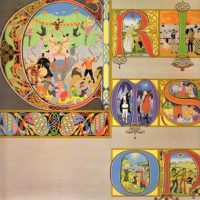
King Crimson: ‘Lizard’
Psychologically, ‘Lizard’ has always felt like the oddest King Crimson album. Hurtling out at the tail-end of 1970 (less than a year after ‘In the Wake of Poseidon‘) and with a shroud of silence surrounding its making, it’s like a black hole in King Crimson’s history. No-one involved in the making of ‘Lizard’ seems to talk about it much. The fact that the band started recordings with a brand new vocal/rhythm section (singing bassist Gordon Haskell from Fleur De Lys and ex-Manfred Mann drummer Andy McCulloch), and ended the sessions with both men shot out of the saddle and vanishing before even playing a note onstage, has given the album’s reputation more than a tinge of sulphur and daggers drawn. Haskell still doesn’t talk to Fripp, and his contributions have been ostentatiously removed from Crimson compilations ever since. Silent prickles. Ooh, nasty.
The new remaster provides few clues to the musical politics behind ‘Lizard’, but does throw its obsessive ambition into sharp relief. It’s a remarkable record – the most panoramic thing Robert Fripp ever attempted until he blew up ambient music with his Soundscapes twenty years later. And it’s also the most anti-rock record he’s released to this day; as far from being a “band” album as this particular Crimson were from being a live band.
The music comes in floods of cryptic decoration, riding on the back of Fripp’s dark and abrasive chordal imagination. Both leaders are on intriguingly different form: Fripp mostly leaving his Les Paul untouched and playing devilishly tricky acoustic guitar, Sinfield throwing away most of his clotted Gothic lyric totems in favour of shifting psychedelic parlour tricks. But pride of place goes to semi-detached piano player Keith Tippett, a jazz guerilla who constantly refused Fripp’s offers of joint musical leadership of King Crimson but (for ‘Lizard’, anyhow) seems to have taken it on anyway.
Fripp had produced and played with Tippett’s band Centipede; and the jazzer returns the favour in full measure here, bringing along oboe player Robin Millar, trombonist Nick Evans and cornet player Mark Charig (all reknowned for Soft Machine contributions) to join Mel Collins and himself in expanding King Crimson’s musical voicings. Consequently ‘Lizard’ jangles and loons with a bright, big-band free-jazz sound as the horn section and Tippett’s fulsomely unpredictable pianos joust with Fripp’s gargantuan Mellotron sounds and the blooping cartoon synthesizers. Certain songs – Happy Family in particular, seem to abandon the rigorous Crimson discipline altogether and worry themselves to bits, with Tippett keeping a relaxed but steady grip on the anarchic play.
Peter Sinfield, for his part, stays in an almost domestic realm for the first half of the album. His lyric for the perky Indoor Games is a bizarre Bunuel-meets-Doctor-Seuss poke at the pretentions of bourgeois bohemians, his protagonist barely keeping himself afloat in the showy menagerie of his household. The Cirkus which opens the album is reached in a dream-voyage, a gaudy cruel entertainment which immediately succumbs to stampede and peril. Happy Family is one of the acts which could’ve been performed there – an impossibly tortuous metaphorical tribute to the sorry end of The Beatles. Throughout, Tippett tops every surreal word-twist with another kink in his piano playing.
Tippett, in fact, is far more at home than half of the official Crimsons. Gordon Haskell’s a great bluesy singer; but while sunk in this whirling confection of oboes and exploding pianos, drowning in Sinfield’s crossword puzzle wordplay, he struggles even to be heard (let alone draw meaning out of the songs). Andy McCulloch copes better with music that requires him to jump between drum approaches from jazz hiss to orchestral percussion and military rattle. Still, you can almost hear him furrowing his brow and wondering what the hell all this has got to do with headlining the Marquee Club.
Poor old Haskell – a good guy in a bad position – gets some respite on Lady of the Dancing Waters where they give him a wistful tune with a trombone and a little English clearing to serenade in… only for him to be upstaged by the beautifully husky choirboy vocals of Yes singer Jon Anderson for the next song. At the conclusion of Indoor Games he unleashes one of the most fascinating laughs in rock history – a demented, yelping hiccup of crazed, fearful mirth which the engineer picks up and slaps back and forth across the speakers. It’s all in keeping with the chamber-jazz-on-laughing-gas feel of ‘Lizard’. But it also sounds like a helplessly honest reaction to the horribly sinister undercurrent beneath the playfulness – the oily black saw of Mellotron, the thousand little knives in Fripp’s clean cross-picking and Tippett’s electric piano jabs.
The second half – the Lizard suite itself – is King Crimson’s most ambitious conception up until that point, in which chamber symphonics and iconic mediaeval imagery return to the band’s music again. Prince Rupert Awakes opens the suite with a tragic cryptic ballad: a heraldic Anderson singing over Tippett’s rippling piano, tension intruding from the wind-chimes which ripple the surface of the beauty and from the deliberately discordant Mellotron which flicks ghastly shadows across the daylight.
Although Sinfield’s overcooked poetry is almost impenetrable, there’s substance here. Near-suffocated beneath rococo imagery of temple wax, peacocks and “tarnished devil’s spoons” is a small saga of civilisations clashing in a profitless war. Rather than a tale of heroism, it represents the fear, frenzied mood swings and devastation that war visits on human beings. Bolero (anchored on McCulloch’s half-march/half-dance drumming) starts with a long, lyrically sad oboe line bidding farewell to peace, but soon moves into a jagged desperate revelry, the partying before the fight. Slurring, drunken trombone and sax grab the oboe theme and o roaring off with it as Tippett’s piano becomes steadily more impressionistic and jumpy and Fripp’s Mellotron infuses an uneasy, compromised warmth.
Dawn Song is the morning after: Haskell sings softly and haltingly, to sparse piano and oboe, of broken ploughs and spokeless wheels, and of soldiers “burnt with dream and taut with fear” waiting for the inevitable reckoning of spears and armour. Which duly arrives in Last Skirmish with brutally knotted jazz snare and more typically Frippish minor key riffs, stately and dark – initially on Mellotron, then taken up by harsh baritone sax with a petrified overblown flute dipping and waving above. As battle commences in earnest, bluesier saxes and an enraged elephantine trombone wail alongside a resurgent Fripp guitar and Tippett’s increasingly shattered piano attack.
In the background, Fripp jacks up an initially sweet and civilised Mellotron string part until the pitch is tortured beyond endurance. Then there’s a brief respite (glimmering lucid guitar and distant rills of piano) before the sound of a hue and cry, galloping brass and hunting horn clamour in the most frantic moment yet. Finally, Prince Rupert’s Lament, the wreckage of bodies and hopes on the battlefield afterwards. A tolling bass ostinato, exhausted kettle drum rolls and a distant bagpipe shriek of Fripp guitar, utterly bereft and angry. ‘Lizard’ is over.
Abstract, absurdist and oblique it may be, but if you avoid involving yourself too literally in Sinfield’s wordplay and just allow the music to speak into you, ‘Lizard’ is an album which has plenty to offer. The game-playing cast of its music only adds to its power, puncturing prog pomposity and adding new dimensions of conceptual menace which the band had never previously achieved. At times, it’s like observing a particularly venomous orgy.
As the last part of ‘Lizard’ fades away, Big Top careens out of the silence – a quease-inducing carousel of circus music in which the pitch spirals further up and out of control than ever before, snagging the ensemble players like a Kansas tornado and dragging them off into the unknown skies, still squiggling out treacherous silvery worms of music.
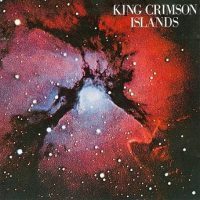
King Crimson: ‘Islands’
Although the ever-underrated ‘Lizard’ now jumps out of the speakers with renewed animation and significance, the real rediscovery from King Crimson’s current reissue phase is 1971’s ‘Islands’.
Long-unavailable on CD, this album was recorded by those Crimsoneers who’d survived the latest falling out (Sinfield, Collins and Fripp) with two new full-time recruits – Boz Burrell and Ian Wallace.
The new boys were grounded in rootsy jazz and rhythm’n’blues. Boz, in particular, seems antithetical to the perceived Way Of Crimson – a brash and commanding singer with scatting tendencies, and perhaps suspicious of Crimson’s grand designs as hatched on prog touchstone ‘In the Court of the Crimson King’ and further honed on ‘In the Wake of Poseidon’ and the formal dementia of ‘Lizard’.
In spite of this, ‘Islands’ is the King Crimson album that’s furthest from the roots heartlands. There is one exception – Ladies of the Road, in which Sinfield turns in a salacious lyric of international groupie action that allows the band to engage in their dirtiest and most gleeful playing ever. Collins roars boozily on dick-grabbing tenor sax; Fripp plays as if his guitar’s strung with Mississippi baling wire and slams down some gloriously sloppy, sleazy little solos; and Boz revels in the rampant bluesy shouting. Even the flute and the fragrant Paul McCartney harmonies in the chorus can’t shake the sweat off this one.
It’s certainly a sharp contrast to The Letters. This is the album’s main sticking point, with aggressively stilted music rescued from Crimson’s early days and a lyric of pure antiquated Jacobean melodrama (poison pens, adultery, madness and suicide) in which sex is the engine of betrayal and degradation.
However, neither of these pieces fairly represent the unprecedented warmth and clarity of intent on ‘Islands’. If the preceding ‘Lizard’ was perhaps Tippett and Sinfield’s album – liberally dusted with the excitement and lawlessness of free jazz and untrammeled purple poetry – ‘Islands’ is most definitely Fripp’s, its scope narrowed down with superb clarity. It’s King Crimson’s simplest album by far, one in which the tunes and the placing of changes and instruments are far more important than complexity or the thrill of clash.
Several ‘Lizard’ buddies – jazz pianist Keith Tippett, Marc Charig on cornet and Robin Millar on oboe – are all along for the album sessions, and ‘Islands’ is also suffused with the warmth, light and mesmeric relaxing qualities of the Mediterranean and Aegean seas, inspired by Sinfield’s travelling. After the demented rush of ‘Lizard’ it’s a much more contemplative work, with Tippett returning to a reflective supporting role and with that Crimson intensity redirected towards knowledge and timing instead of flamboyant theatre. Formentera Lady (introduced by fluttering flute, romantic swirls of piano and the deep bowed chording of Harry Miller’s double bass) sees Sinfield “shadowed by a dragon fig tree’s fan, /rRinged by ants and musing over man”, and that’s to be the central flavour of the album.
Ian Wallace was the perfect drummer for this music – well aware of the jazz and rock heat needed for the Crimson repertoire, but equally capable of the delicate timekeeping needed for the gentler pace of the new material. Formentera Lady ticks along on his hushed bass drum and cymbals, his trickles of wind chime and seed-pod percussion, and Boz’s gentle two-note bass riff. And whatever Boz’s feelings for the material might have been (he’s the prime suspect for having described much of ‘Islands’ as “airy-fairy shit”) he sings Sinfield’s contented landlocked reveries in a nostalgic, light tenor with a surprisingly humble and innocent charm. The gentle pulse of Fripp’s supportive acoustic guitar arrives four-and-a-half minutes in. Greek strings hum in trapezoidal shapes, and when King Crimson’s first familiar slip into the texture of legend arrives it happens seamlessly, cued by “here Odysseus charmed for dark Circe fell”, when guest soprano Paulina Lucas opens her throat for prolonged eerie siren singing, merging with Collins’s explorations on tenor sax.
Equally seamlessly, it gives way – on the rising heat of Wallace’s ride cymbal – to Sailor’s Tale, Fripp’s musical portrait of Odysseus’ doomed navigation between the parallel forces of destruction, Scylla and Charybdis. If Formentera Lady is King Crimson entranced in siesta time, Sailor’s Tale is a slow awakening to peril. Not the Gothic nightmares that the band used to specialise in. This time, what’s central to the piece’s power is the sheer excitement it generates.
Fripp and Collins (the former back on his rich drone of overdriven guitar) play prolonged horn notes off each other above Wallace’s rapid triple-time jazz pulse, reaching a peak at which they split off and howl their own paths – Collins squalling like Ayler or Coltrane, while Fripp prepares to deliver the most colossally dirty solo of his career. Played on a shattering echo like a deranged banjo, it passes through a maelstrom crescendo of hellish Mellotron and frantic cymballing out into free space, disintegrates spectacularly and falls into nothingness. Only the dark primeval bass of Sinfield’s prolonged oceanic synthesizer chords to witness its passing. The hairs don’t settle on the back of the neck for a good few minutes.
The rest of the album returns to the sun- and sea-warmed peace of Formentera Lady. The Song of the Gulls prelude is a small Fripp-written study for Robin Millar’s oboe and polite strings: no more than a serene intro to the album’s title-track finale, bridging the huge stylistic gap between Ladies of the Road and the final resolution of Sinfield’s escape. Islands itself is a subtle compositional triumph: King Crimson’s own miniature ‘Sketches of Spain’, finally proving that they can sustain a gentle and nourishing rhapsody without tweeness or needing to pounce back into violence. Wallace is almost invisible but for a few lightly brushed cymbals, letting Collins’s miraculously tender bass flute and Tippett’s delicately shaded Bill Evans-ish piano set the atmosphere. Fripp abandons guitar altogether to quietly pump a small harmonium (you can hear his feet patiently working the pedals).
Boz sings alone and unaffected, again displaying a surprising empathy for Sinfield’s lyric of separateness yielding to inclusion over time – “grain after grain love erodes / the high weathered walls which fend off the tide… / Equal in love, bound in circles. / Earth stream and tree return to the sea. / Waves sweep the sand from my island, / from me.” Mark Charig’s jazzy, sleepy cornet plays a crucial part, taking up the melody and soaking it in acceptance and the weary joy of homecoming, before a softly swelling finale where sedate and harmonious Mellotron strings lift the ensemble to resolution. “Beneath the wind turned wave, / infinite peace. / Islands join hands / ‘neath heaven’s sea.”
But for a brief hidden track (in which we hear a burst of studio tune-ups and Fripp’s soft Dorset burr patiently instructing the oboe and string players) that’s the end. Incidentally, it was also the end of King Crimson’s “grand design” phase. The core five-piece would briefly tour and squabble (with Peter Sinfield’s departure forever closing the early Crimson songbook) and the rootsy bar-band which lurked in the ‘Islands’ line-up would then honk its way across the States, jettisoning all the Debussy and fragrance of the album as it went.
It would all end in tooth-sucking enmity and anger, with everyone but Fripp abandoning King Crimson in favour of rhythm’n’blues. Boz would even end up thumping bass for Bad Company, which evidently pleased him musically and financially but seems a sorry waste of talent after his showing on ‘Islands’. The next time that Fripp surfaced, he’d be leading a far louder, far more cryptic improvisatory band, which would immediately overshadow his work here. This period of King Crimson’s existence is always outshone by the horns and flurries of the band’s debut years, by the bold and bitter brute minimalism of ‘Red’, by the stalking menace of the European improv years or the poppy art-rock of their New Wave era.
But both ‘Islands’ and its companion ‘Lizard’ – two of the most unusual to emerge from the body of rock – contain some of King Crimson’s best-planned, best executed and most intricately beautiful work, with a unified conceptual scope the bands would never really match again. These reissues bring that buried treasure back to light, revealing an exciting early ’70s meeting point between musical forms that’s been poorly served by an increasing suspect official history. It’s time to put it back on the chart. If more of today’s bands had the same open-minded determination – stumbles and all – that King Crimson exhibit here, we’d be better served ourselves.
King Crimson: ‘Lizard’
Virgin Records Ltd., CDVKCX3 (7243 8 48947 2 6)
King Crimson: ‘Islands’
Virgin Records Ltd., CDVKCX4 (7243 8 48949 2 4 )
CD-only reissue albums
Released: 6th March 2000 Get them from:(2020 update) Both records have now been superseded by 40th Anniversary Editions with new remastering and additional tracks. Current or former versions can be obtained from the King Crimson stores at Burning Shed and the Schizoid Shop. King Crimson online:
It’s nice, for a change, not to have to do anything except sit back and listen.
Listening to Martin Taylor is like a breath of fresh air after a particularly sticky storm. He stands alone on a little white block of a stage with only his guitar and gently tapping foot, and gently unravels a long flowing river of melody to soothe the heart and to excite the brain. Pure and simple music. After a surfeit of analysis, a slew of post-modern criticism, a stew of eclecticism and image, it’s nice to get back to that once in a while.
Listening to Martin Taylor allows you to rediscover a love of the old tunes. He’s not a composer; his strength lies in the re-interpretation of classic standards, but rather than murdering them by pouring on strings and pallid flutes to make them ripe for serving up in the air conditioning, he offers you the chance to hear him dust down an oldie, hold it up to the light and then skilfully polish it, smiling as he shows it to you again and points out a hundred little details which you never saw before, a source of fresh wonder.
Because listening to Martin Taylor is like hearing crystallised music. You can distinguish the original tune somewhere in the glittering web of notes which his fingers are drawing out of the guitar – maybe it’s a ballad from ‘West Side Story’, maybe Duke Ellington’s Just Squeeze Me or a Hoagy Carmichael piece – but it’s been reflected and amplified through so many harmonies, echoes and byways along the way that what finally emerges bears as much resemblance to the original as a cut diamond does to glass. Old tunes turned corny and worn down by their own familiarity re-emerge as multi-faceted gems, cut and refined by a master’s technique, multi-layered and ornate.
If you stop listening to Martin Taylor for a moment, you might be able to hear the sharp clicks as the jaws of the guitarists in the audience drop smartly onto the floor. This crystalline music – richly syncopated melody and harmony played together, simultaneously with swooping basslines – is, after all, being played by one man without even the whiff of an effects pedal. During the interval, people are overheard wondering if there are four other guitarists concealed under the stage or behind the curtains. But there’s no denying that this music is being played by a human being; no pristine technician, Taylor’s impeccable skill is shaped as much by punchy string snaps and fretboard noise as it is by his carefully considered polyphony and his vertical, dense approach to arrangement. He’s as likely to use a violent slide up the bass strings as he is to tease out a gentle classic jazz chord in the treble; and, as the most exciting musicians do, he lets you hear him stretching towards his objective rather than simply delivering it ready-packed and icily perfect.
Listening to Martin Taylor when he stops playing and talks for a while is, in its way, no less of a joyful experience. Here we have one of the world’s greatest and most underrated jazz guitarists and he turns out to be a warm, humble and self-effacing guy with a nice line in gentle humour and a shy manner, as if tonight was his first gig. Taylor is possibly also one of the world’s first motherable jazzmen. No guitar god here: even when he speaks of his sessions with the legendary likes of Joe Pass and Chet Atkins, he makes it sound like a comfy jam session after an evening at the pub. Very British. I’m not sure if these isles can produce a legend of their own these days – we’re just no good at mystical PR…
No matter. Who needs a legend or the cartoon padding of a star, anyway? Taylor’s music is possessed of enough to soothe, stun, stimulate, delight and relax without recourse to tortured artistry, space-cadet communion or outlaw chic. And if he prefers to continue playing gorgeously low-key and intimate gigs, just one man and a warm-toned guitar, then I for one will continue to turn up to listen to Martin Taylor.
Because listening to Martin Taylor makes you remember just how wonderful listening can be.
Swoon. /swo͞on/ A verb. To be emotionally affected by someone or something that one admires; become ecstatic. Here are some people and things that make me swoon. #swoon #swoonage







 Misfit City