A couple of imminent shows in or around jazz (and in or around London and Birmingham)…
* * * * * * * *
Way Out West presents:
The Mike Outram Trio The Bull’s Head, 373 Lonsdale Road, Barnes, London, SW13 9PY, England
Wednesday 7th September 2016, 8.30pm – information
Possessed of a boisterously convivial and adventurous set of guitar tones (as well as a spontaneous but eminently accessible creativity), Mike Outram is one of a number of contemporary electric guitarists who define themselves via the act of music rather than the reinforcement of genre. Although jazz enthusiasts will rightly admire him for his work with Nikki Iles, Tim Garland, Theo Travis’s Double Talk and Billy Bottle & The Multiple, Mike learns from and adds to whichever situation or artist he works with outside of jazz, be it soul pop with Carleen Anderson, latterday prog fusion with Steven Wilson or the classical/soundtrack work of composer Laura Rossi. As well as pursuing a serious, thoughtful sideline in bass guitar playing – something which he’s come to take as seriously as his guitar work – Mike’s a teaching professor at several eminent colleges, and the instigator of Electric Campfire, an online music course which has rapidly billowed into a musical community in its own right.
Though this gig is billed as being Mike’s trio, it actually stems from a partnership of equals, and predominantly from a 2010 album called ‘Invenzioni’, a set of improvised duets between Mike and eclectic alt.fusion bassist Steve Lawson. A committed solo performer since 2000, dedicated to presenting bass guitar as a standalone instrument, Steve has also been an enthusiastic and garrulous collaborator. His conversational fretless bass tones, Kaoss Pad rhythmic experiments and panoramic swathing loopscapes have meshed with a wide variety of partners from pianists, saxophonists, singers and drummers to electric kora players and a range of other amenable solo bassists. His own relaxed attitude to genre has resulted in a musical voice which strolls from place to place, touching on points from smooth-hipped jazz to art-rock, slick pop to noisy improv, dance electronica to ambient-aquatic sound painting, but never being tied down to any of them.
The final member of the trio is Emre Ramazanoglu, a multi-genre drummer, programmer, writer and producer who generally works (semi-invisibly) behind the scenes in the music industry, at the points where high-level musical chops, cunning production ideas and rapidly-evolving technology mesh with contemporary pop music production and bespoke event soundtracks. In between the demands of catwalk and chart, he fits in more esoteric, less overtly commercial work such as writing and shaping new records for reggae stalwarts Trojan, playing the Adrian Sherwood/remixological role on Martin France’s Spin Marvel jazztronica project, and co-running quirky sound design outfit Rattly’n’Raw. However, Emre originally came to London as a highly skilled jobbing drummer, and this gig gives him the opportunity to work with his original talents (although you can also expect him to blend in something of what he’s learned since that time, and probably to come armed to the teeth with portable rhythm and sound-shaping technology).
You can hear the basis of this particular strand of music – albeit minus Emre’s drumming – on the five tracks of ‘Invenzione’, in which Mike and Steve float thoughtfully down a stream of jazz-tinted ambient invention (echoing at points David Torn, John McLaughlin, Jeff Beck and perhaps a little Sonny Sharrock or Bill Frisell, but most often themselves) carrying out a loose, gently shaped conversation like two old buddies. I’m guessing that throwing Emre into the mix will probably pick up the relaxed rhythmic threads of this project, jerk them taut, and reign them back towards a purer jazz pulse; or something more along the lines of Mike’s skitter post-jazz-rock improv trio Snow Giants. The trio promise “an evening of world-class improvised music”: judging by the personalities involved, it’ll probably be laced with bonhomie, humour, informality and a general sense of being off the leash while not being too precious about it.
* * * * * * * *
A few nights later, Steve Lawson will be throwing an album launch show in his adopted hometown of Birmingham (and his adopted home venue Tower Of Song), and everyone’s invited.
Steve Lawson & guests Tower of Song, 107 Pershore Road South, Kings Norton, Birmingham B30 3EL, England
Sunday 11th September 2016, 8.00pm – information
The album in question is ‘The Surrender Of Time’ – Steve’s fifteenth work of bass, loops and effects, and his second of 2016 (following this summer’s defiant, sometimes heartbroken album of instrumental reflections on the EU referendum). Out on September 5th, early copies of ‘The Surrender Of Time’ will come with a download of a side project, a single twenty-two minute track called Colony Collapse Disorder, Judging by the ‘Surrender Of Time’ excerpt below, Steve’s music is getting ever more unclassifiable at the edges: in this case glitchier, his bass shrouded and layered with drum effects and hard-rock distortions, with elements of experimental techno pulled apart and deliquesced by his jazz instincts.
You could read various things into this, including Steve’s increasing and frequently voiced disquiet at the fissile, wasteful and irrational state of the world (away from his bass, and frequently while still holding it, he’s a broad and assertive social media commentator, a vocal soapboxer and an outspoken humanitarian). Given that Colony Collapse Disorder is named after an inexplicable disintegration of bee colonies (and is variously and speculatively blamed on various causes including long-term pesticide effects, habitat destruction or ill-advised changes in beekeeping practises) you could see some of this recent work as moving into angrier, more sorrowful metaphors. But I’m speculating – and you certainly shouldn’t attend the gig expecting to see a man collapsed and sobbing over his pedalboard. Judging by the tone of most Lawson gigs, this will be puckish, celebratory, familial and musically immersive: and, at root, based around shareable melodies.
Steve promises “a fun night, plenty of hang time, maybe a special guest or two.” I reckon that it’s a pretty safe bet that his singer-songwriter wife Lobelia Lawson will be among the latter, but since Steve’s address book and musical dance-partner card stretches across a wide range of people from Michael Manring to Kristin Hersh via Cleveland Watkiss, Jon Thorne, Theo Travis and Daniel Berkman (and since he’s generally happy to play alongside whichever instrument and musician comes onstage with sufficient skill plus an open mind), expect anything.
Here’s some info on various upcoming shows from London to Leeds, with hip hop as the binding element in common. (Though what you’ll actually get stretches as far as ambient bass guitar soundscapes, spoken word and – on one occasion – some suspect sweary bird impressions.)
* * * * * * * *
Following a stint at the Edinburgh fringe, left-field rapper-poets Sage Francis and B. Dolan start to take their ‘Strange Speech, Famous Development’ spoken-word show on tour around selected venues in England. Roll the blurb:
“Sage Francis and B. Dolan are two internationally renowned hip-hop lyricists & spoken word poets – dynamos touted for their lyricism, activism, humour & performance art – with oddly parallel stories. Without prior knowledge of each other, both were born & raised in Rhode Island, where they developed an unlikely love of hip hop music. Although they grew up only one town apart from each other, they didn’t cross paths until 2002 via the Providence Poetry Slam. Each moved to New York City in search of the art-form, stumbled into the spoken word scene and developed a knack for razor sharp lyricism and stagecraft.
“Noted as one of the most articulate and broad-focussed of underground MCs, Sage came to widespread media attention in 2001 after his song ‘Makeshift Patriot’(which critiqued the behaviour and language of American media during, and immediately following, the September 11 attacks) became an internet hit. Though he’s released records on labels including Epitaph and Anti, he’s also seen his own Strange Famous Records grow from a late-’90s tape label releasing his own less obviously commercial material to a full-fledged fifteen artist independent.
“B. Dolan has made his own name via more than a decade’s worth of continually shapeshifting presentation, outsider perspective, and masterful execution. He enjoyed wide-spread attention for his activism in addressing homophobia in hip hop, and notably for his video single/campaign ‘Film The Police’ (which Russell Brand explored in a highly entertaining episode of ‘The Trews’.
“Although B. has been releasing records on Strange Famous since 2008 – when he made his career breakthough with the lo-fi, apocalyptic concept record ‘The Failure’ – he and Sage were working on music together as early as 2005. Several world tours later, their platonic life partnership was made official by forging a rap group called Epic Beard Men. ‘Strange Speech/Famous Development’ is the debut show that brings two legends of underground rap together on a very intimate stage. They’ll trade poems, songs, vivid stories and their now signature blend of offensive and insightful content. From personal to political and back again, the duo promise an inspiring performance.”
And here they are, drumming up business in Edinburgh…
Dates below:
The Deaf Institute, 135 Grosvenor Street, Manchester, M1 7HE, England, Monday 29th August 2016, 7.30pm – information
Mid-month, various spurs and outcrops of British hip hop make a showing in London at the Underworld for a night of rhymes, beats, and gimmicks-turned-triumphs.
Nightshift Promotions presents:
The Four Owls vs Virus Syndicate + Mr Woodnote & Lil Rhys + Bellatrix The Underworld, 174 Camden High Street, Camden Town, London, NW1 0NE, England Saturday 17 September 2016, 5.30pm – information
Headlining London crew The Four Owls might look like trim, slightly self-conscious lucha libre wrestlers lurking behind bird masks, but come out bating and striking. More lairy, scruffy hawk than owl, they certainly make a racket. A supergroup of High Focus Records solo rappers Leaf Dog, Fliptrix, BVA & Verb T, they specialise in souped-up, combative, old-school-cum-gang-surreal battle flow, echoing tumbling Wu-Tang semi-sequiturs and arcane/profane Kool Keith gabble, with additional British street lip and humour.
For the Owls, a shot of bad taste just adds to the juiciness of a spit. If you’ve got the stomach for the occasional nasty switchback, check out the outrageous braggy stack-ups and lyrical misbehaviour on ‘Much Too Much’ from back in 2011 (though its dips into shockery and the tacky sex-horror-in-the-woodz video ain’t for all tastes, to put it mildly.) But if it gets you riled up about hip hop misogyny squashing or sidelining women, the presence of Bellatrix on the bill provides a fine corrective. A onetime Boxette and award-winning world-champion beatboxer, she’s since been revealing multiple further talents – fine, jazz-inspired double bass playing; off-the-wall singer-songwriter tactics which make her sound like a West Country Björk; a knack for burbling textural synth loops and choral layering. All done live and solo, interwoven in real time, without a net. And she’s still talking about it as if it’s baby steps. What’ll she have proved herself capable of once she feels she’s fully up to speed?
Elsewhere on the bill, Manchester provides the dubstep/grime collective Virus Syndicate, who deliver claustrophobic, compelling narratives across chilly isolationist beats. In turn, Bristol offers the irresistibly peppy partnership of Lil Rhys and Mr Woodnote (the former a freestyle rapper who chatters like an engaging dancehall singer; the latter a saxophonist, EWI player and beatboxer who creates a smart-stepping one-man-band via loops and timing).
* * * * * * * *
A few weeks later, just down the road from the Underworld, Divinity Roxx will be slamming it out at the Jazz Café.
Divinity Roxx + Steve Lawson The Jazz Café, 5 Parkway, Camden Town, London, NW1 7PG, England
Tuesday 27th September 2016, 7.00pm – information
If I were to say that Divinity was Beyoncé’s bassist and musical director for two world tours, some might think that was the most interesting thing about her. I think that it isn’t. Being taken seriously as a player is good; for a female player, even more so. Being handed the MD-ship on one of the biggest shows in the business is even more of an honour – but there are plenty of yo-cat session players around who can handle that kind of thing, including plenty of female ones. Biz-wise, Divinity might be a bass player’s bass player, but there’s more to her than that, and it rolls out best in her solo work.
Playing flexible and diverse basslines, leading bands, delivering complex and confident live raps on top of her grooves, and possessing generous star quality of her own, Divinity can own a stage every bit as well as her erstwhile employer. With a repertoire already mining jazz, R&B, fusion, rock and hip hop, she can even deliver potential hits. In 2012’s ‘Get Here’, she swung old-school MC braggadocio around funk rock and a raw look-at-me stance; in last year’s ‘We Are’ she changed tack to wrap some flower-child hippy optism and civil-rights march vibes up with slick CCM-friendly gospel pop. Live, however, is where to catch her; and this month you can see her up-close before more people really start to cotton on to her. It’s only going to be a matter of time now.
For the Jazz Café show, Divinity will be joined by her musical buddy and fellow bass ace Steve Lawson. Steve’s otherworldly cinematic soundscapes, improvised live with nothing but a bass guitar, a MIDI controller and a bewildering array of pedals, have helped make him the most celebrated solo bassist in the UK. Since he’s also willing and eager to chat the legs of a fieldful of donkeys, it’ll be interesting to see what his daffy, teasing wit (and glammy dress sense) bring to the occasion. It’ll probably be like Ross Noble crashing a Neneh Cherry gig… assuming that Ross then went on to treat you to a set of tunes like Bootsy Collins, Pat Metheny and Boards of Canada all playing a convivial pass-the-parcel with Robert Fripp’s stage rig.
Steve has another couple of British gigs earlier in the month, which I’ll plug during the next jazz gig update in a few days’ time. If you can’t wait until then, click here to get the info direct from the source, and click here to read more about Steve from what’s been splashed across this blog over the years. Meanwhile, here he is busking in Frankfurt – in a jazzy mood, and without his usual wall of effects.
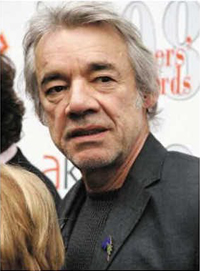
It’s been two years now since the death of Roger Lloyd Pack. Though the eulogies flooded in at the time, hailing his work as actor, pop-culture hero (he played Trigger in ‘Only Fools and Horses’ and Owen in ‘The Vicar of Dibley’) and longstanding man of the people, one of the finest tributes to Roger only surfaced earlier this year when his widow (Jehane Markham) and son (Hartley Lloyd Pack) finally completed ‘Sixteen Sunsets’, an album project which they’d conceived together to help them work through their grief at the loss of Roger, and to raise money to fight the pancreatic cancer that felled him.
‘Sixteen Sunsets’ is one of the most touching records I’ve heard this year, or any year. It might have been a portrait of everyday heroism, or an obituary column with a mawkish soundtrack. It’s neither of these things. At root, it’s a fertile absence: an aching space into which layer of memories and flashes of emotion drift, to be woven into a portrait of love for a partner and father, of the hard-won acceptance of loss, and an exploration of how the recalling of things lost and a new reality of life without those things settle together. It’s a mixture of vigil notes and valediction played out under a wan London sky, simultaneously unfixed in time and subject to its relentless onward push.
Sixteen Sunsets: ‘Sixteen Sunsets’
The words and music (a mixture of Hartley’s organic hip hop delivery and Jehane’s stark poetry, plus voices and traces from r&b, folk, drone music and blues) gradually sketching out the shape of bereavement: sometimes dry and blank, sometimes aching or angry; and sometimes a source of pride and substance, a building block for the future. On hand to help put a shape to things are Kill Light’s Tom Vella and Richard Day, singers Sam Lee and Janai, singing cellist Natalie Rosario and crossover harmony group Trills: also in attendance are jazzmen Patrick Naylor and Michael Storey plus classical composer Keith Burstein (the last making an unaccustomed foray into tack piano and barbed, Weillian cabaret swing).
This is not the first time that Sixteen Sunsets’ songs have surfaced live – some were played at a cancer fundraiser at Wilton’s Music Hall at the end of January this year, while Map Studio Café hosted the project’s formal album launch in mid-February. This show, however, might have been particularly close to Roger’s heart: this particular library on the fringe of Camden (a bracing walk’s distance from the Lloyd Pack family home in Kentish Town, and a mere stone’s throw from his resting place in Highgate Cemetery) was one of his several cause celebres and a place which he vigorously defended in the face of government cuts and economic neglect. It’s not absolutely clear if everyone involved in the project is performing, although it seems that most of them will be (Hartley, Jehane, Natalie Rosario and Trills have all tweeted announcement about their own participation, and I may have missed news from the others.) It’s nominally a free event, but you’re encouraged to make a cash donation to Pancreatic Cancer UK on the door, in Roger’s memory.
* * * * * * * *
Later in the week, there are some more touches of folk, rhythm and community music at the usual Daylight shindig:
Arctic Circle presents:
Daylight Music 227: Nat & The Noise Brigade + Ellie Ford + The Pop-Up Choir Union Chapel, Compton Terrace, Islington, London, N1 2UN, England
Saturday 11th June 2016, 12.00pm – free/pay-what-you-like event (suggested donation: £5.00) – more information
“Grabbing anything they can get their hands on – brass, flutes, violins and even saucepans and biscuit tins – Nat & The Noise Brigade will be storming the stage. They’re a ten-piece band from East London, with songs ranging from politically charged grooves to anthems about poor punctuality via some unique cover versions (fancy some “ska Mozart” or “doo-wop Radiohead”?).
Ellie Ford‘s music is both thought provoking and utterly absorbing. Her songs are enchanting with harp and guitar parts underpinning sultry vocals. As a solo performer Ellie Ford is captivating, but she also fronts a five-piece band of multi-instrumentalists who play a mix of modern and classical instrumentation (harp, violin, clarinet, guitar and drums). Taking influence from a range of genres, Ellie Ford has an edge and variation that cements her uniqueness in the alt-folk world.
“There’s also a chance to enjoy south London’s fabulous Pop-Up Choir; a cappella ensemble of twenty-five singers who delight and surprise with their playful arrangements.”
And another inevitable January gig update, as expected…
* * * * * * * *
(Baba Yaga’s Hut presents)
Emanative & Collocutor Duo featuring Earl Zinger + Sarathy Korwar + Sealionwoman (+ more tbc) Cafe Oto, 18-22 Ashwin Street, Dalston, London, E8 3DL, England
Friday 29th January 2016, 8.00pm – more information
Baba Yaga’s Hut bring us an evening of cosmic jazz explorations.
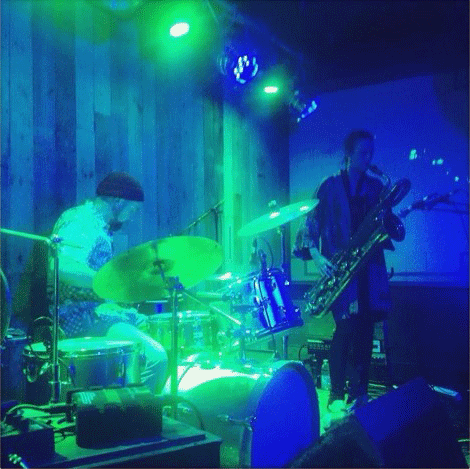
Emanative & Collocutor Duo is a teamup between saxophonist/flautist Tamar Osborn and drummer/mixologist Nick Woodmansey. Tamar’s history includes work with Africa Express, Dele Sosimi and The Fontanelles: she currently leads eclectic, hypnotic modal septet Collocutor (with Josephine Davies, Simon Finch, Marco Piccioni, Suman Joshi, Maurizio Ravalico and Afla Sackey) which mixes jazz and minimalism with Afrobeat and Ethiopian ideas, Indian classical and polyphonic choral music. In recent years, Nick’s work as leader of the Emanative project has seen him take the helm for British cosmic jazz. The Duo allows Nick and Tamar to take and blend aspects and ideas from both projects in a slimmer, tighter context. Guesting with the Duo on chants and vocals is Earl Zinger, the reggae-toaster-inspired alter ego of acid-jazz veteran and former Galliano frontman Rob Gallagher (whose post-Galliano work has included jazz band Two Banks Of Four and who’s also currently working as William Adamson).
Three tastes of the project are below – a duo version of Albert Ayler/Mary Maria Parks’ ‘Music Is The Healing Force Of The Universe’;an Emanative remix of a Collocutor track; and an Emanative track from last year with strong Collocutor contributions.
This is (I think) the second gig for the Duo – there’s been at least one other well-received show in July 2015, at The Waiting Room in Stoke Newington). That gig also featured Sealionwoman, the playful, driving voice-and-double-bass duo whose shape-changing jazz and blues songs have enchanted ‘Misfit City’ for several years now. They’re making a return appearance at this gig too. (Here’s my my 2013 eyewitness account of them, again; plus a chunk of video from the very same show.)
In between Sealionwoman and the Duo comes Indian classical/fusion percussionist Sarathy Korwar. Dividing his time between London and Pune, Sarathy trained as both tabla and drum kit player and specialises in applying Indian classical rhythmic ideas to non-Indian percussion instruments, blending in aspects of improvisation and intuition.
More people may be added to the bill at the last moment…
* * * * * * * *
On the following evening, there are shades of garage, mod, Parisiana and spooky folk.
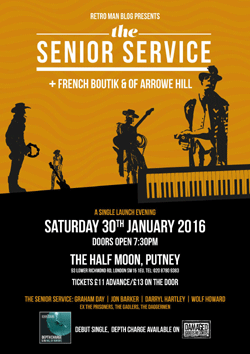
Playing ‘60s-styled instrumentals, The Senior Service feature four musicians who, between them, have moved through many of the garage bands from the Medway scene – including The Prisoners, The James Taylor Quartet, The Solarflares, The Masonics, and assorted Billy Childish bands. Jon Barker (Hammond organ), Graham Day (guitar), Darryl Hartley (bass guitar) and Wolf Howard (drums) are inspired by John Barry/Ennio Morricone/Barry Gray soundtracks, Stax rhythm’n’blues (Booker T & The MGs) and early Mod (Small Faces). Damaged Goods Records release their debut single, Depth Charge, this month (with a full album to follow).
In support are French Boutik, who (inspired by their Paris home) blend ideas from 1960s French pop such as Serge Gainsbourg and Yé-yé with classic Motown and Burt Bacharach, all with a modernist pop twist.
Opening the evening are Of Arrowe Hill – Adam Easterbrook’s “hauntological” rock group who are now midway through their second decade of work. Expect their usual mix of country blues and acid folk with lo-fi psychedelia, with Adam backed by ex-Aardvarks rhythm section Ian O’Sullivan and Jason Hobart.
* * * * * * * *
Finally, further north (much further north) there’s this:
(Marpexke Productions presents)
Nerve Toy Trio The Saracen’s Head, 381 Wilderspool Causeway, Warrington, WA4 6RS, England
Saturday 30th January 2016, 9.00pm
Nerve Toy Trio (guitarist Tony Harn, bass player/pedalist David Jones and drummer Howard Jones) are playing their first gig of the year, back in their hometown.
Although I’ve posted about Tony before (covering his first three albums as a solo player – start here and work backwards) I don’t think I’ve posted about the Trio before. All are veterans of an underrated and overlooked Warrington art-rock scene of the 1980s which (although notable for launching Tim Bowness) was squeezed between and overshadowed by neighbouring ferments in Manchester and Liverpool. They spin out an echoed, textured fusion-rock which spans from delightfully airy to tight-and-bumptious, and which thrives on understated juxtapositions which are always earnest, cheeky or interesting, – setting a pinch of Hendrix squall against Cheshire pastoralism; Pat Metheny harmonic glitter alongside romantic Steve Hackett peals; Rush power riffage in alternation with Robin Guthrie spangle.
With their melodic, rococo flourishes and outright proggy roots, sometimes the Trio come across as uncertain time travellers – hopping and picking across four decades of art rock and fusion while still ultimately homesick for the treasures of their teenage listening – but for me that just adds to their charm. The clip below shows their mellower side and a flash of their muscle: the gig’s in aid of Macmillan Cancer Support if that’s any more of a draw. Nerve Toy Trio still seem like a band who’ve not quite found their audience yet. If you’ve read this far and are still interested, perhaps it’s you they’re looking for.
This should be the last of the January gig updates, though I always speak too soon… Don’t forget that The Bleeding Hearts Club Winter Escape is still on in Brighton on the 23rd.
* * * * * * * *
(Daylight Music presents)
Daylight Music 212 – Orchestra of the Age of Enlightenment Experience Ensemble + Roger Doyle + Ok Bertie! + Jim Bishop Union Chapel, Compton Terrace, Islington, London, N1 2UN, England
Saturday 23rd January 2016, 12.00pm – free entry – more information
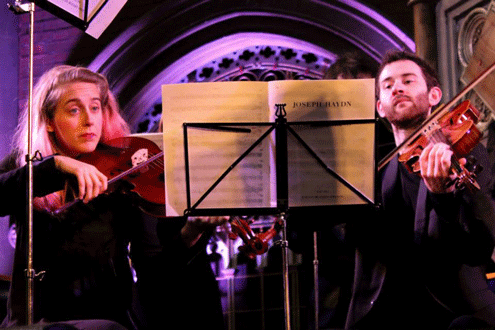
“Three decades ago, a group of London musicians took a good look at that curious institution we call the Orchestra of the Age of Enlightenment, and decided to start again from scratch. The Ann & Peter Law Experience Scheme gives talented young musicians a chance to perform with the Orchestra. In this concert the musicians on the scheme perform together, by themselves, for the first time, just a few weeks after finishing at the OAE Academy. It looks as if we’re going to be treated to some Haydn (Symphony No. 85 ‘La Reine’, the nickname originating because the work was a favorite of Marie Antoinette) plus the Romance written by his original London sponsor, Johann Peter Salomon.
Roger Doyle is known for his pioneering work as composer of electronic music. He has worked extensively in theatre, film and dance, in particular with the music-theatre company Operating Theatre, which he co-founded.
Ok Bertie is the moniker of Robert Szymanek, a singer-songwriter, composer, and visual artist living in London. Bertie’s debut album of songs is called ‘Music From A Crowded Planet’, and is due for release in 2016. It’s accompanied by the ground breaking Crowded Planet iOS app, created in collaboration with developer Matthew Hasler.
Sonic Brute mainstay Jim Bishop will also join us to take the Henry Willis organ out for a spin and bring us some time travel themed melodies: it’s time to go Bach to the Future!”
…or in my case, back to the past. Jim Bishop was at University with me long ago, and set some of my words to music for a body-issues revue at the Edinburgh Fringe. Jaunty.
More Daylight news further down…
* * * * * * * *
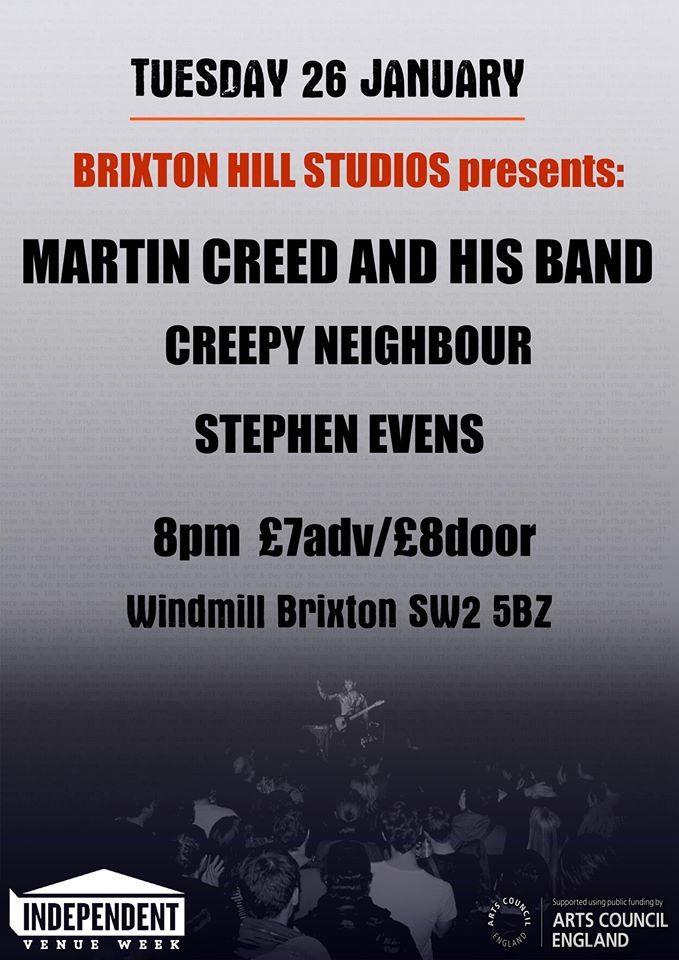
(Brixton Hill Studios presents)
Martin Creed & His Band + William D. Drake + Stephen Evens
The Windmill, 22 Blenheim Gardens, Brixton, London, SW2 5BZ, England
Tuesday 26th January 2016, 8.00pm – more information
Perhaps best known for winning the Turner Prize back in 2001, Martin Creed has been actively making music since the early ’90s. Creed writes direct, compelling songs with the ability to both perturb and amuse. Think the rhythmic punk of Ian Dury and the wit and pop nous of Glasgow’s Postcard Records. He has released records on both Moshi Moshi and his own Telephone Records label.
William D. Drake is a keyboardist, pianist, composer and singer-songwriter. He is best known as a former member of the cult English rock band Cardiacs, whom he played with for nine years between 1983 and 1992. He has also been a member of The Sea Nymphs, North Sea Radio Orchestra, Nervous, Wood, Lake of Puppies and The Grown-Ups, as well as pursuing a career as a solo artist. His fifth album ‘Revere Reach’ came out in summer 2015.
Armed with a battered guitar, a Casiotone and a few pedals, Stephen Evens (better known as Steve “Stuffy” Gilchrist, erstwhile leader of Stuffy/The Fuses and drummer with Graham Coxon, Cardiacs, Charlotte Hatherley and The Scaramanga Six) presents songs that mix the likes of Yo La Tengo & Ivor Cutler with broken friendships and human error.”
* * * * * * * *
(Daylight Music & The Hangover Lounge present)
Daylight Music 213: The Wave Pictures, The Leaf Library + Citizen Helene Union Chapel, Compton Terrace, Islington, London, N1 2UN, England
Saturday 30th January 2016, 12.00pm – free entry – more information
“The Wave Pictures will be launching their brand new, vinyl-only album ‘A Season In Hull’ at the Union Chapel on 30th January. The album was recorded on acoustic guitars in one room, with a bunch of their friends, live in to one microphone on singer Dave Tattersall’s birthday, January 28th, 2015. The songs were written as quickly as possible and the recording captures that specific moment in all its spontaneous, thrilling and immediate glory. As Tattersall elaborates: ‘That’s what this is – a one-microphone happy birthday recording.’
London quintet The Leaf Library (who create “droney, two-chord pop that’s stuck halfway between the garage and the bedroom, all topped with lyrical love songs to buildings, stationery and the weather”) have just released their debut full-length album ‘Daylight Versions’. The record is full of wonderfully woozy, drone-pop tunes about meteorology, the seasons and the incoming sea; from songs about the ghostly Suffolk coastline to the slowly rising waters of London marshes.
Citizen Helene is a singer, songwriter and guitarist from London whose blend of sunshine pop, psychedelic folk and jazz has been described as ‘baroque and beautiful’ by Darian Sahanaja (of the Brian Wilson band) and ‘like the love child of Karen Carpenter and Brian Wilson’ by ‘Word’ magazine.”
One of the reasons that I’ve been posting so many concert previews recently is simply that (being mostly homebound at the moment) I miss going to gigs. Looking at the lineup and scope of the 2015 Manchester Jazz Festival (which starts today and runs rampant for ten days through until 9th August) reminds me that not only do I regret not attending the wealth of music that takes place here in London, but that I miss more freewheeling days of music elsewhere. Discovering unexpected, treasurable bands at random while on holiday in Brugge, for instance; or immersing myself in a week of concerts and more in Edinburgh or Leeds (such as the one I reviewed here, over a decade ago.)
We know that, as a British pop and dance city, Manchester punches well above its weight. Despite a bubbling undercurrent of improvised music, its reputation as a jazz town is hazier…. or, more probably, I’m just ignorant. The Festival’s been going for twenty years, long enough to gain enough gravity to generate its own traditions. (One such is ‘Surroundings’, a longer-form ensemble piece by Salford composer Neil Yates. Commissioned for the festival in 2010, it seems to have become the event’s unofficial signature – this year, it’s being revisited as a quartet performance in the Central Library Reading Room.)
Even a quick sift through this year’s programme reveals a jazz party that any city would be proud of – diverse, inclusive, inviting and multi-levelled, an exciting noise ranging from the stately to the vividly scraggled and all the better for it. With many tickets going at only four pounds, (with a ten-pound all-events daily ticket and free-entry deals if you stump up as a low-level event sponsor), they could hardly have made it any more inviting to the casual walker-upper. Excuse me for a moment while I strip-mine press releases and YouTube, and check Soundcloud pages and Bandcamp links.
Starting with the higher-end, bigger name events… Acclaimed Blue Note pianist Robert Glasper slips away from his experimentations with latterday R’n’B to get back to basics with an acoustic trio; John Surman re-teams with the Trans4mation String Quartet to revive the thoughtful, tidally-deep music from his ‘Coruscating’ and ‘The Spaces in Between’ albums. Norma Winstone, Klaus Gesing and Glauco Venier bring along their trans-European project Distances. Partisansbring their transatlantic swing storm; Christine Tobin her ‘Thousand Kisses Deep’ jazzification of Leonard Cohen songs. French Jazz Musician of the Year Airelle Besson makes an appearance with her Quartet for a set of “gently experimental songs animated by heartfelt lyrics, plaintive melodies and rolling harmonies.” backed with pinballing rhythms and punchy countersyncopations.
There are heavyweight two-headed summit performances by acclaimed British jazz talents – one by frequent quartet buddies Mike Walker andGwilym Simcock, another by the more recent pairing of Tori Freestoneand Alcyona Mick. Two further British scene fast risers – Stuart McCallum and Alice Zawadzki – bring string-enhanced performances of ongoing projects (the former offering contemporary soul jazz and bass-heavy electronica with surprise guest singers, the latter a fantastical Mancunian song cycle influenced by various shades of love and fairytale).
There are also several of those gentler, more literate projects which seem to blossom best in a festival atmosphere away from a hot core of gutsy brass. Andrew Woodhead and Holly Thomas’ Snapdragontrio specialize in chilled, ethereal song-settings of literature and poetry (Larkin and Bukowski-inspired) and bursts of vocalese. Mark Pringle‘s A Moveable Feast mates orchestral strings with a bold horn and rhythm section to explore “themes of wildlife, literature and city chaos.” The “fractured Anglicana” of Hugh Nankivell’s multi-instrumental/four-part vocal quartet Natural Causes means that they perform “curious compositions with improbable but poignant texts” including “psychedelic lullabies, pinprick-precise ballads, unpredictable group improvisation and brotherly harmony across the board”, and music which draws on classic and contemporary art pop (Robert Wyatt, XTC and Björk) as much as it does on jazz sources.
Elsewhere, much of the polyglot diversity of jazz today is celebrated. The Cuban tradition is represented by the Pepe Rivero Trio and Orquesta Timbala; the Congolese by Eddy Tshepe Tshepela‘s Afrika Jazz. Central and South American ideas are brought along byAgua Pasa (who, with Dudley Nesbit’s steel pan project Pan Jumby, also touch on the Caribbean). The Quarry Hillbillies (a teaming ofUlrich Elbracht, Ed Jones, Jamil Sheriff) from European contemporary jazz, while the frenetic whirl of Eastern European folk elements are covered by Makanitza. The Gorka Benítez Trio move between Basque-flavoured small group jazz and compelling free-form impressionism. David Austin Grey’s Hansu-Tori ensemble is inspired by natural, elemental and cinematic” ideas, as well as a fascination with Eastern world culture. Percussionist Felix Higginbottom’s Hans Prya provides genre-hopping jazz-dance and Jim Molyneux’s Glowrogues favour funk and hip-hop flavoured pieces. Trumpeter Lily Carassik‘s fusion group Yesa Sikyitake ideas from the ’50s and blend them with popular standards and soul arrangements; while The Stretch Trio include glossier elements from ’70s jazz rock, progressive rock and ’80s pop along with sinuous gusts of wind synth.
Those who prefer classic jazz – more traditional by-the-book American styles – might prefer Russell Henderson and Jamie Taylor’s Ellington-and-Strayhorn tribute ‘The Intimacy Of The Blues’, or the Dan Whieldon Trio‘s salute to Gershwin. The Dave Kane Quartet take inspiration from the knottier ambitions of Charles Mingus, John Zorn and Eric Dolphy. Two groups of students from the Royal Northern College of Music provide live celebrations of the history which they’ve been learning – the James Girling Quintet spans jazz, blues and funk from New Orleans roots through to the 1960s, while the Nick Conn Octet (a self-described “trombone choir”) interweaves re-arranged jazz classics with original material.
Fans of New Orleans jazz can check out genuine New Orleaners The Session (who offer a past-present take on their hometown’s music), or look out for the street sounds of the New York Brass Band (actually from old York, the cheeky buggers) or see how the Riot Jazz Brass Band dust up old New Orleans sounds with dancefloor, dubstep and drum-and-bass incursions. Hot jazz/Gypsy/jazz manouche aficionados can go for the loving recreations of 52 Skidoo (who promise you prohibition speakeasies, rent parties and Tin Pan Alley) or for Gypsies Of Bohemia, who manouche-ify latterday pop songs such as Heart Of Glass, Toxic and Hot In Herre. (Being Mancunian, they also do This Charming Man – I’ll bet that that high-life opening riff translates pretty well).
Of course, much of the fun of a jazz festival involves catching a lesser-known, or even unknown, band carving away at the edge, furiously discovering – and there are plenty of those here. Since they drew me into covering the festival in the first place, I’m going to put a particular word in for Jon Thorne’s Sunshine Brothers (playing at Matt & Phreds on 4th August) in which the double bass/laptop-wielding Jon teams up with drummer Rob Turner (of Blue Note-signed breakbeat jazz electronicists GoGo Penguin) and looping poly-genre bass guitarist Steve Lawson (a ‘Misfit City’ regular) for “a cutting-edge trio of genre-defying musicians mixing jazz, improvisation, electronic and filmic soundscapes to euphoric effect, evoking sounds far removed from their bass origins.”
However, you could just as easily catch a full performance by GoGo Penguin themselves; or by Lauren Kinsella’s Blue-Eyed Hawk, who offer “art-rock, jazz and electronic soundworlds: imaginative and emotive, from pindrop to powerhouse.” The Madwort Saxophone Quartet play intricate four-part math-jazz. “Power-jazz commando team”Taupe (a triple-city trio from Manchester, Newcastle and Edinburgh) punch around themes from jazz, hip hop and heavy metal. Craig Scott’s Lobotomy seem determined to take the cake for upfront experimental exhilaration this time around, delivering shout-outs to John Cage, Captain Beefheart and Frank Zappa, proclaiming a performance in which “experimental jazz rubs shoulders with electronica and DIY alternative rock in a bubbling cauldron of live and recorded sounds” and promising to sample and reconstruction their own improvisations live on stage. There’ll also be a improvised summit involving bands associated with Manchester’s Efpi Records and Paris’ Onze Heures Onze collective.
One way into discovery is to take advantage of the free showcases for emerging bands. Care of the BBC’s ‘Jazz On 3’, London offers three bands – Nérija ( the all-female creative septet from the Tomorrow’s Warriors jazz school), the award-winning piano jazz of the Ashley Henry Trio and the decidedly psychedelic Phaze Theory (a quartet of drums, tuba, voice and guitar dedicated to “exploring the vastness of the musical cosmos”).
But perhaps it’s Jazz North’s Northern Line series that you should be checking out, showcasing bands from the north and the Midlands. Manchester offers the Iain Dixon/Les Chisnall Duo (whose repertoire of self-defined standards stretches from Messaien to Gracie Fields) and the John Bailey Quintet (guitar-led, and similarly inspired by twentieth century classical music). Newcastle provides barrel-house blues and ballads from The Lindsay Hannon Plus and the tricky free jazz/folk/rock/dancefloor entwinings of the Graeme Wilson Quartet. Lancaster and Liverpool provide one act apiece – Andrew Grew’s “total improvisers”The Grew Quartet and the “gothic bebop” of Blind Monk Trio, who claim to fuse the spirit of Thelonius Monk with Persian traditional music and the heavy-rock attitude of Led Zeppelin and Nirvana’s heavy-rock attitude.
However, it’s Leeds (still underrated as a musical powerhouse despite the world-class output of its music college and the vigorous inventiveness of its bands) which dominates the Northern Line. As well as providing the previously-mentioned Pan Jumby, Leeds brings the Portuguese/African/Latin and Indian song-fusions of Manjula, the Django Reinhardt swing of the Matt Holborn Quartet, Cameron Vale‘s ferociously energetic melange of jazz, metal, electronica, Afrobeat and Klezmer and the semi-electric “extreme, eerie to comic” improvisations of Tipping Point (featuring perpetual bad-boy pianist Matthew Bourne). Friendly rivalry aside, there’s also co-operation: Leeds, Manchester and Liverpool all join forces in The Bugalu Foundation for a Latin barrio take on northern soul.
Around all of this jazz there’s the usual happy agglomeration of related music – not quite jazz in itself, but possibly sharing a drink or a roll-up somewhere along the way. The festival covers various popular outcropping such as soul (in assorted Northern, jazz and diva forms courtesy of The Juggernaut Love Band, Terry Shaltiel & The Soultroopers, Charlie Cooper & The CCs) but also ’60s/‘70s funk (Buffalo Brothers), ’70s Afrobeat and Ethiopian pop (Kalakuta), ska (Baked à la Ska) and mbalax (Mamadou & The Super Libidor Band). There’s even an alt-country act (Stevie Williams & The Most Wanted Band) sneaking in at the back door. As for rock’n’roll/folk/reggae/swing scavengers The Flat Cap 3… well, for starters, there’s only two of them, so you can be dubious about anything else you might read, but don’t let that put you off.
Three female songwriters are also bringing their bands, coming from a folk or world music zone and overlapping into jazz. Kirsty McGeeleads her Hobopop Collective through a “joyful, dirty” sound drawing from gospel, blues and a collection of found instruments (including musical saw, waterphone, Humber hubcaps and metal buckets). The constantly shifting song landscapes of the Zoe Kyoti Trio draw from their leader’s Armenian and Greek heritage (as well as Cajun, European and Indian ideas). Saluting home-brewed British polyculture, Shama Rahman‘s ensemble explore her London home, her Bangladeshi roots, and her childhood memories of Middle Eastern desert landscapes in a “sitar,stories and song” melange of jazz-inspired improvisation, classically-inspired melodies and folk-inspired storytelling accompanied by energetic rhythms of swing, funk, hip hop, bossa nova and drum’n’bass.
For parents of very young children, needing to balance a jazz fix with family responsibilities, there are a couple of fully interactive kids’ events with activities, storytelling and improvisations. The Living Story Music Ensemble and illustrator Ann Gilligan collaborate on ‘I Have A Duck Who Can Roar’; the blues-and-roots-tingedHillary Step Quartet work with storyteller Ursula Holden Gill and dancers from The Dalcroze Societyfor ‘How Monkey Found His Swing’. Once the kids are attended to, there are still interactive events for the grown-ups, whether you’re talking about the all-in jazz vinyl night, the mixed-genre dj sets by Mr Scruff, Franny Eubanks‘ open-door blues jam or (for the more technologically inquisitive) Rodrigo Constanzo‘s showcasing of his dfscore software. The latter’s a creative music tool, cueing improvisers via graphical, visual and written clues: on this occasion, anyone with an instrument and a connectible smartphone/tablet/pad should be able to roll up and join in with the roar, joining some leading improvisers in performing music in tandem with the system.
For those remaining soundclips which I’ve not already snatched and pasted, visit the MJF Soundcloud page here … but better yet, if you’re anywhere near Manchester over the next few weeks, drop in at the festival (it’s hard to miss, considering that it’s not just hiding behind club doors but has effectively taken over the town’s main square for a fortnight). Seeing something this impressive light up and roll on fills me with delight – even if on this occasion I’m also filled with rue at not being able to go myself. But never mind me…
All right, they suckered me. I thought that What?! were starting a gimmick tradition of rolling out cute singles named after foodstuffs. A natural suspicion – their debut single had the crowd-pleasing title of Tikka Masala. Actually, it turns out that “schwaffelen” is Dutch slang, and refers to a man repeatedly bouncing his semi-erect penis off assorted objects (ranging from someone else’s cheekbone to the side of the Taj Mahal). Handy phrase – consider me educated. I’ve been saved some embarrassment the next time I’m snacking in Amsterdam, but have been left with a delightful image of waffles-and-cream that I now need to bleach from my mind. Thanks for that.
What?! remain the kind of supple instrumental trio that gives slick a good name – guitar, bass guitar, drums and a thorough versing in everything out there which grooves. They also own a not-so-secret knowledge of plenty of things which don’t groove but which do lurk, puzzle over things and then jump out at you. But they’ve yet to really show their other teeth: those rougher, odder inspirations they claim to get from Zappa, Dub Trio and Mr Bungle. So far, they’ve been more about delicate sunlit jazzy chords and walks, clean deft swing, and plenty of space. You get the feeling that they could do anything with their material – as soon as they wanted to – and that they’re fencing with expectations. It’s just that it’s still not clear when they’re going to stop fencing and start carving.
As much as you might want them to get nastier, Schwaffelen doesn’t show What?! chucking away any of their finesse in favour of skronk or sludge. If they’re stepping towards a spikier direction, they’re starting subtle – taking some sour art-rock patterns and passing them back and forth through the smooth-jazz filter. As with Tikka Masala, there’s a hint of Take 5 in the gently precise stops and feints as a bossa nova is displaced and reshuffled into math-rock spikes. But the truth is that, in spite of the cock-bouncing title, What?! keep their all-things-to-all-men decorum throughout – even when hitting the distortion pedals.
If you’re hoping for some upheaval – something like the obsessive rhythmic knotting of Battles, say, or the disruptive slice-and-dice of Naked City – you’re in the wrong place. Schwaffelen’s flexing sections do include a flawless switch into driving rock as guitarist Niels Bakx starts blasting away and Agostino Collura’s nimble bass drops its funky slither and locks down into root-note pummeling. But this is more an exercise in clever distraction. Even as Raphael Lanthaler drums along at motorway-punk velocity, the whole band are keeping an eye on the little loping twists of the original rhythm: as it ghosts on underneath, they’ll lock seamlessly back into it whenever they choose. Even the texture phase (in which Niels seems to be channeling the sparse echo-spangled touch of Andy Summers) adds some extra breadth but no questioning depth or disruption.
Perhaps it doesn’t matter – whatever else they might or might not do, What?! remain supremely elegant puzzlers. But it still feels as if there’s much more to them. The Key Ness remix of Schwaffelen is barely half the length of the original, but during its stay it chops, rewinds and pans the original riffs around a gastric roller-coaster of sub-bass and boiling P-Funk synth. Along the way, it twirls past Alice Coltrane harp cascades, brief bursts of classical soul orchestras, wind-tossed shouts from hip-hop MCs and gutsy flowerings of Spanish guitar. It sounds more like what must go on in the trio’s heads – what they must listen to on iPods, gulp down from session to session, or coast by on the bus.
One last thing, going back to the original track… As it snaps to a halt and telescopes away, with a quick twist-and-growl, those push-pulling rhythms leave you in a state of expectation. There’s a moment of hover. Then there’s several messy, prolonged seconds of the most horrendous splurging musical spoff-noise you can imagine. Maybe it’s a surprise, a pancaked blast-beat hurled out by Raphael to be crushed flat in the mix. Whatever it is, it’s a Zappa-style kiss-off. Perhaps I’ve been unfair to What?!. They did finally deliver that dirty splatter.
What?!: ‘Schwaffelen’
What?! (self-released) (no catalogue number or barcode)
Download-only single
Released: 1st April 2013
Sometimes you can come across simple treasures hiding in the backroom. Dutch guitarist Niels Bakx, Sicilian drummer Raphael Lanthaler and Tyrolean bass player Agostino Collura are part of that under-appreciated swirl of humble, talented international musicians who fly in, settle down and quietly underpin bands in London, as in many big cities. People like these plug away behind the people with the big ideas and the knack for fronting. They’re the ones who finesse the roughness, who add the musical depth and the polish which brings shine and sophistication to performance. And sometimes, they secretly bring more.
Individually, each of these three have clearly got the chops and the temperament to keep themselves in demand with songwriters (Agostino plays with Anna Waldmann’s band The Cry Baby, Niels and Raphael back Charlotte Eriksson in The Glass Child), embedded in soul collectives (Agostino’s work with Retrospective For Love) and driving mixed groove-band (Raphael’s Snail Trail). Together, though, Niels, Raphael and Agostino are something else.
As What?!, they’re an assured and formidable unit; an airy, confident groove-trio audibly revelling in their flexibility and their knack for carefully-sprung timing. On spec, there’s nothing particularly unusual in what they do. Enough years spent plugging away at sessions and keeping punters happy with funk, soul, jazz and reggae tunes have made them experts in warm, sunny, foot-moving musicality: but it’s what’s beyond the blueprint that’s interesting.
Their debut single Tikka Masala (named, consciously or not, after a meal made up on the spot to keep British customers happy) is a sweet-natured hall-of-mirrors groove, light and slinky. There’s reggae in it, thanks to Raphael’s displaced bass drum taps, his tight-tuned tom rattles and Niel’s skinny-supple rhythm guitar. There’s funk in the warm spaces between strokes and beats. There’s jazz in everything, from the little golden runs of licks to the turnarounds to the feel that the rhythms are to be flung from hand to hand, danced over, teased and tag-teamed around. There are subtle refractions, interruptions of rhythm and key, that make you think briefly of progressive rock at its least bombastic and most aware. There are also flares of hard rock when all three musicians line up under a suddenly roaring guitar and suddenly start jabbing together ahead of the beat.
What’s really special about it is their complete control over the music. Their discipline is absolute but relaxed, with the feel that at any time they could shift rhythm, speed, genre back and forth in a moment, and yet not drop a single thing along the way. There are no self-conscious cut-ups in What?!’s music – no need to deconstruct. Why should there be when they’re masters of structure? – so much that if you flipped Tikka Masala around and spun it backwards it would keep every bit of its symmetry and bounce. For a demonstration of this, play the bonus track Alasam Akkit as that’s exactly what that is – a backwards-play of the A-side which sounds almost as good as the forwards version. A backwards-play which you can still dance to. Remarkable.
Exactly what this leads to, I’m not sure. Perhaps the outcome is that What?! set themselves up as a twenty-first century Sly and Robbie-plus-one. Perhaps they remain a supremely-accomplished hobby band, something which the trio engage in when they’re not otherwise employed keeping other people happy. Or do they push ahead as self-sufficient instrumentalists, seeing how far they can push, stretch and double-feint their masterful musicality? The only thing I can be sure of is that, whenever they do get together, all ways – for those moments – are open; and it’s tremendously refreshing.
What?!: ‘Tikka Masala’
What?! (self-released) (no catalogue number or barcode)
Download-only single
Released: 11th October 2012
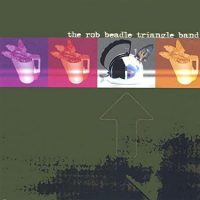
The Rob Beadle Triangle Band: ‘A Different Kettle of Fish’
Duck past the appalling name and the two obvious sub-Goodies joke tracks on here, and you’ll find there’s more to The Rob Beadle Triangle Band than their comedy-schtick image.
Yes, they’re student types from the University of Bath, laden down with flash gear and a taste for laddish zaniness that’s very British, very ’70s. No, that’s not all. Like Barenaked Ladies, the Bonzos and Frank Zappa (or Prince, if he’d had slapstick leanings), they’re musically skilled and canny enough to leap seamlessly between pop styles and come up with songs which can exist both as piss-takes and as serious efforts; regardless of the goofy laughter which comes with them.
If you picked key comparisons, they’d be the “belly-laughs, angst-quirks, ‘n’ serious playing” ethic of the long-lost 64 Spoons, or 10cc’s keen and unerring collective ear for tunes and parody filtered through studiedly cheesy wit – hence the near-perfect Bee Gees disco pastiche on The Face. Embarrassment, misadventures and eccentric desires are the Beadle boys’ main obsession. Nude gardening, suddenly finding your mum’s the star player in the porn film your friends are watching – that sort of thing.
The Bitch Grated My Thumb jumps between Jeff Lynne wussiness and panicky thrash; a tale of picking up a deranged bag-lady (“come to me, picture of beauty – lying in the gutter’s no place to be”) and of subsequently suffering assault by kitchenware. She Had No Teeth kicks off with ‘Mission Impossible’ kettledrums and rampaging funk-wah guitar, and deals with the horror of waking up next to the woman you’ve pulled and discovering her gums are as bare as Patrick Stewart’s scalp. As the band clatter on, whooping away on their Theremin synths, glassy jazz-funk organ riffs and Funkadelic party racket, a girl-group chorus airily sings “Things were different last night – she looked like a siren, he had his beer-goggles on” – while an anguished muffled voice yelps “Why me? Why me?”.
It’s all delivered with crisp production and flashes of superb musicianship (Hendrix/Hazel/Isleys-styled guitar, expert polyrhythmic drumming and keyboard swirls, Kristian Wood’s crucially light touch on voice and bass), and taking care not to let the silliness derail the winning flutter of pop. Thankfully, they’re closer to Space or Poisoned Electrick Head than to Barron Knights. The wiggly You Are Confusing Me sounds like the young Julian Cope spouting gibberish Gong lyrics, giggling his socks off in front of OMD synth overload.
And something better is hinted at by the quite lovely Strawberries and Cream. With flowing Spanish guitar, dancing flute lines and puffs of tremulous falsetto harmonies, it sounds like pastoral-period XTC and – in mischievous Andy Partridge tradition – is a lyrical love-song for food-fetishists, Kristian delicately murmuring “you, you’re the sweetest thing I’ve seen – / let me cover you with cream (and strawberries). / We could find new ways of keeping clean, / let me lick you til you gleam (and sparkle).”
A pocket 10cc, then, with an even more warped sense of humour, writing songs for a cleaned-up ‘Viz’.
The Rob Beadle Triangle Band; ‘A Different Kettle of Fish’
Teeth Records, RBTB 9901 (Barcode)
CD-only EP
Released: 2nd August 1999 Get it from:(2020 update) Original EP best obtained second-hand; stream via Spotify The Rob Beadle Triangle Band online:
In jazz, things move on, and Blowpipe are no exception to this. Father-and-son brass-and-reed players Robin and Andrew Blick joined forces last year, making a mark for themselves last year at the point between hips and heads for their own spin on jazz-meets-clubland, sliding in alongside acid jazz with something a little more sophisticated and challenging.
The enthralling ‘First Circle‘ was the outcome: a rich and rewarding chill-out-and-expand intertwining of busily-bubbling electronica with old-school jazz conversation. Alongside guitarist Paul Reeson and the remarkable electronic sound-weaver Stephen Watkins, the Blicks set up a heartfelt and fertile union of jazz expression and latter-day dance-floor pulse, a tapestry of burbling intelligent techno, deft horn dialogue and fluent electro-acoustic textures. It was a joy to listen to, and its success has been recognised in one direction, at least.
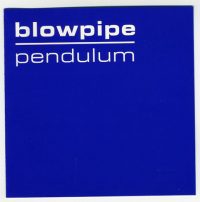
‘Pendulum’ (a hot-on-the-heels follow up to ‘First Circle’) comes after Blowpipe’s deeper welcome into the ongoing club revolution – they’ve played on the new album by drum’n’bass pioneer Grooverider – and a big line-up shake-up. Whether burnt, inquisitive or disillusioned, the Blicks have opted to change the band’s instrumental chemistry. Blowpipe’s armoury of blowables (which already featured the Blicks’ trumpets, saxes, assorted horns and abused pipework) has been expanded by the addition of Nick Reynolds’ harmonica; they’ve also added a steady bass player in Tom Harrison; and there are frequent guest appearances (and stronger links to the jazz world) from saxophonist/flautist John Burgess of the Harry Beckett band and the Tom Bancroft Orchestra. But most crucially, both Reeson and Watkins are now out of the picture (apparently, halfway through recording). Consequently, while half of ‘Pendulum’ is given over to Blowpipe’s previous acoustic/ambient/electronica grace, the other half is shaped by a new and more aggressive club attack.
Of the old school stuff, Airport Woman is the most graceful: a mass of beat-free, blurring big spaces: back-and-forth cello loops, rainy-night muted trumpets, glows of soprano sax and a brief return from Paul Reeson. The Spell is Broken is wrapped in a backwards bassy ostinato (padded up by Tycho Andrews’ wah-guitar) like an orchestra in a North Sea fog, thick hazy air through which Andrew Blick’s trumpet clarion cuts like a lone lighthouse beam. Muting down and vague-ening in the heavy atmosphere, it gently illuminates (above the clanking guitar rhythm and the creak-crunching sonics).
However, this album’s signature is definitely made by the harder breed of Blowpipe pieces, by the post-Grooverider drum’n’bass influences. This could have been a good thing, given that music’s ferociously intelligent, toppy rhythmic attack: the bebop of the club scene. But in practice? Um… maybe not.
The main problem is a loss of that crucial Blowpipe balance. Neither of Stephen Watkins’ on/off successors (Patrick Mosley and Mike Servent) possess any of his subtlety, meaning that the detailed electronic textures of ‘Full Circle’ have been overturned in favour of synth washes and more blatant beats. And while the Blicks remain as eloquent as ever, Nick Reynolds’ harmonica virtuosity is of the tinny, bullying breed: a soulless Mark Feltham cop. Sometimes the new marriage is a happy one, as on Avanti’s drowsy harmonica patina and cloudy brass blankets, mixing it up with breakbeats, Harrison’s Bootsy bass, and Andrew’s cold trumpet motif. But when it’s at its worst, the Blicks seem sidelined within their own project, locked down in the cages of snare drum.
The analogue gut gurgles and video games blippery of Usurper work quite well, as Reynolds’ sharp harmonica riffs mingle with fluent fluttering sax and muted trumpet. But Unravel’s tight fast rattle and saurian bass quakes are overcome by the belting raucous harmonica and brass. Robin Blick’s soprano scribbles too frantically, Andrew’s echoed trumpet sounds busy and sour. The raw power of Scorched Earth’s distorted breakbeat and Harrison Wobble-y bassline can’t make up for the yammering, overbearing harmonica overkill: Reynolds blowing flatulently all over the Blicks’ bitty chips of sax and trumpet and Katherine Blake’s skidding tremolo violin. And School Disco (working title or what?) is just clodhopping: a flatfooted stomp which sounds like it was recorded in an underpass. John Burgess’ guesting flute fights to keep grace going against the dirty swathes of distorted harmonica.
When Reynolds is kept on a tighter leash, things work out much better. On the climactic Phoenix, for example, where Burgess’ bass clarinet and Andrew’s dawning trumpet lines repeatedly criss-cross each other over didgeridoo droning and Robin’s sax hangings. Or on Pendulum itself, which uses power without clumsiness. Rising off a big Bonham-y stomp with overdriven trumpet and giant floppy bass, Robin laces in some ascending saxes and curtains of brass. There’s a guest tenor scrawl from John Burgess: then, amid the whale-song trumpets, an incongruous Scott Walker sample pops up to breathe in bluer air. “The little clocks stop ticking now…” Everything does stop ticking. Everything kicks off again. Marvellously perverse, and a particular highlight on an album which sometimes fails to live up to Blowpipe’s initial promise, reminding us of how good they can be once they’re back in focus.
Blowpipe: ‘Pendulum’
Robot Records, ROB 001 (5019148617297)
CD-only album
Released: 15th May 1998 Get it from:(2020 update) Best obtained second-hand, or streamed. Blowpipe online: Additional notes: Robin Blick now leads Blick Trio; Andrew Blick leads Gyratory System.
The voice on the telephone chuckles. “Sure, it all made sense to me. You just burn it out, past the pain. / Sure it’s all toxin: you just work it out of your system.” Somewhere between a Berklee College education, an Olympia punk statement and the world of woodshed ravings you’ll find this – rolling down a quiet highway like a fatal fog-wall.
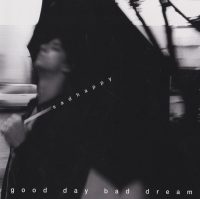
For their fourth album, the alliance of drummer/sample mangler Evan Schiller and bassist/spoken-word freak Paul Hinklin has convulsed yet again to install a new Sadhappy lineup. Out goes eccentric Critters Buggin/Tuatara sax player Skerik. In comes Michael Manring, ’90s bass guitar genius, for a very different approach to the power trio. Two basses might sound like a recipe for disaster – ‘Jazz Odyssey’ doubled up, or cheesy slap-funk duels. Sadhappy get around this by realising the implicit power in the timbre of the bass guitar: the added resonance, the volcanic rumble it’s impossible to ignore, the sheer booty-shaking body. And they go for it full-bloodedly. In the resulting low-end carnage, saxes and guitars are not missed.
A lot of this is to do with Manring, who’s rivalled only by Tony Levin, Victor Wooten and Doug Wimbish as a contemporary redefiner of bass guitar. Not content with just a jaw-droppingly dextrous technique (whether grooving fingerstyle, slapping, tapping, or picking), he’s as liable to mutate melodies by abrading them with an EBow and/or in-flight retuning. And, as you’d expect, ‘Good Day Bad Dream’ is a treasure box of bass sounds – the levitational noises on Lost in Bass; the chainsaw punk rumble on Maintenance Pissed and Chronic Subsonic Tonic; the multitracked interplay of worming harmonics, chunky strums, and wolf-wails on The Kitchen Sink. But it’s no mere technique-fest.
Yes, for the most part it’s instrumental. And at its most basic (Home Lobotomy Kit, Honeymoon Deathbed) it tugs us through a darker edged and more credible fusion revamp via Hinklin’s brutally precise twanging, growling basslines, Schiller’s clattering, tight as a mantrap drums, and Manring’s distorted, storming, articulate leads. And there’s a strong element of the roaring hybrid of thrash, fusion and left field virtuosics that fuelled Manring’s last album ‘Thonk’, recorded as an attempt to escape his inconvenient reputation as a jazz-leaning New Age muso. But in meeting the streetwise intelligence of Schiller’s drumming and Hinklin’s sardonic New Music/punk’n’sarcasm influences, Manring’s restless and complex musicality has completed its journey away from the New Age racks.
‘Good Day Bad Dream’ emerges from this as an album blending multiple strands of modern electric music with surprising success. It’s an overlapping low end approach of eerie smoggy textures, wrapping up art punk, weird funk, jazz, dark ambience, sampledelia, progressive rock, sound massage, and a dash of psychological sewage. The trio nod to Mingus, the smouldering dark star of modern jazz, with a strutting and dextrous cover of his sarcastic II b.s. With the fifteen minutes of deathly textures and world-swallowing bass oceanics on The Death of Webern, they’ve got that scary isolationist-ambient game sown up too.
Evan Schiller’s light touch throughout ensures that the band are never bogged down. Within The Kitchen Sink’s light-fingered ostinatos, King Crimson riff choirs and E bow calls, his precise percussion approach rings, swooshes, crashes and drops out to leave perilous canyons in the texture of the music. On SBD, he shines with an array of sparse metallic taps and lethally timed buzz-rolls under a lowering cloud of bass, a dark canopy of wails and murmurs through which Manring winds skeletal insect-trails of overdriven bass, twisting and skirling like cyborg bagpipes.
……………………………………..
But the key to Sadhappy’s success in reaching out beyond the fusion ghetto is Paul Hinklin’s acidic humour, which lurks somewhere in the triangle between Tom Waits, Frank Zappa and Bill Hicks. In the recurring, repulsive figure of Oscar (a forty-nine-year-old backwoods Beavis with a voice like a plastics bonfire), he gives Sadhappy their own all-American idiot guide, a lottery sweepstake winner with “money comin’ out of his ass” swaggering over a racket of bellowing grunge-garage art rock riffs. His new rich man’s horizons lead him only as far as the porn racks at the general store, or to the bar; a coarsened American Dreamer content to do nothing more than wallow in his own filth and boast about it (“Yeah, you gotta work for the rest of your life: I own the streets I piss in!”).
On False Information – a sort of post-Laswell take on a ‘Remain in Light’ groove, burrowing through post-rock and hip hop en route – Hinkler offers us a lighter look at the aches and absurdities of the modern human condition. “All the guilt, all the shames, all the blames, / all the payments that you pay for crimes you never even committed, / never even thought of – what’s up with that?”. Schiller’s pin-sharp sample-heavy beats jab and dodge like a lethal flyweight boxer as Hinklin’s sardonic voice chuckles at enlightenment: “You see past everything and you say, this is just me plus garbage. Hell, if I couldn’t see the garbage, then I would be the garbage. Thank God I can tell I’m not the garbage. “‘Scuse me, honey. I have to take myself out to the trash. What is truly me will come back to dinner. It’ll just be me minus garbage.””
Sometimes though, the humour goes darker. In the harsh fable of Hammering Man, the townsfolk turn out to watch the unveiling of a statue: “a testament to the nameless brave, to the unselfish, the holy slaves. The ones who gave their bodies and minds to the army, the ones that gave themselves to the might of the all powerful industrial machine. The ones that had made America strong, the ones that had made America beautiful. The ones that, through no fault of their own, had turned it into a wasteland.” Small wonder that the statue crumbles, toppling to pin the spectators to the earth.
In the brooding dusky groovescape of Oscar Gets Laid, we get to see a younger Oscar, callow and innocent, rubbing up for the first time against the world that’s going to corrupt him. Manring’s mixture of rattling ominous echoes and scritching, coppery industrial harmonics send a shiver down the spine, as Hinklin’s murmured vocals explore paranoia and fascination down the back alleyways of the mean streets – malevolent shadows, and the breath of heroin ghosting out of the skins of hookers. At last: a contemporary progressive group that’s unafraid to mingle technique, horror, street-smarts and a mordant, lethal wit.
It’s also one that’s firmly rooted in the present, soaking up the lessons of grunge, dance, and sampler culture, while still playing the arse off all comers. Even if ‘Good Day Bad Dream’ sometimes strains the limits of its excellence by being just a little too diffuse, too dependent on fusion fallback, Sadhappy move through their music with assurance, imagination, presence and a brutal vigour. And that’s an all too rare combination.
The smile on the face of a charming, constructive killer.
Sadhappy: ‘Good Day Bad Dream’
Periscope Recordings, PERISCOPE RECORDINGS CD04 (7 96873 00042 0)
CD/download album
Released: 2nd July 1997 Get it from: (2020 update) Original CD printed in a run of 1,000 – CD and download best obtained from Bandcamp. Sadhappy online:
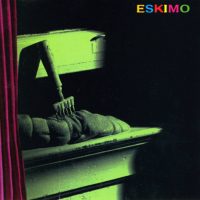
San Francisco’s Bay Area still seems to be a hotbed for particularly off-the-wall musical artistry. The headquarters of hippydom in the ’60s is now the place where players’ players (Joe Satriani, Fred Frith, Michael Manring) make their homes, and bands like Primus and Faith No More forged their scrambled mongrel funk/punk/metal in the same neighbourhoods. It’s also the place from which a secrecy-shrouded band called The Residents sent out a series of sharply clever and mischievous recordings during the ’70s, analysing, deconstructing and parodying popular music in all of its manifestations. One of these was a concept album called ‘Eskimo’, a fanciful reconstruction of Inuit life and lifestyles. Even now, no-one’s absolutely sure whether it was a joke or not.
You’d guess that a band taking their name from that Residents album is gonna be just as difficult to pin down. Apparently Eskimo did start off as a joke band, set up by a collection of shaggy undergraduates from UC Berkeley with a penchant for party dresses. They’d hang out on campus corners busking frenetic, eccentric acoustic sets – stabs at TV theme tunes; Springsteen parodies; Who medleys. To an extent, you could say that they’ve never really grown out of those days of unbridled silliness. Eskimo still have wacky and zany written all over them in giant red fifty-foot letters, and anyone who finds the absurdist lunacy of the current Californian freak-muso scene unbearable would be advised to steer well clear.
Those not put off by that rubbery sense of humour will probably have a field day. Adding Tom Yoder’s trombone and David Cooper’s marimba and vibraphone to the standard guitar, bass and drums, Eskimo have a lounge-jazz element to their sound that’s got a lot in common with that other late, great, wise Californian eccentric Frank Zappa. A lot of ‘…Der Shrimpkin’ could have come from the same barn as Montana and One Size Fits All. That said, there’s at least as much of Primus slap-bass Muppet silliness in Eskimo as there is of the Mother of Freaks.
But like both Zappa and Les Claypool, the band have a love of American popular culture with all of its attendant and hugely enjoyable junk music. Their masterful playing (switching styles, moods, and tempos at the drop of a dime, and as happy with modal jazz charts as with playtime funk) is offset by their complete lack of concern about serious subject matter or, indeed, sense. With most of the twenty-four tracks on ‘…Der Shrimpkin’ clocking in at under two minutes, the album’s a tossed salad of circus music, playground chants, nursery rhymes, gibberish gospel, scuzz-metal and drunken jazz trombone exuberance, all mixed up in a freak-rock pudding. A sort of comedic musical lucky dip.
It could all be unbridled silliness but for the fact that ‘…Der Shrimpkin’ never quite loses the aura of anarchic menace that hangs around each of its ingredients. One of the few remaining covers on here – a faithful version of Snakefinger’s Residents collaboration ‘Kill the Great Raven’ – is (despite its kiddie vocals and campy haunted-house bellowing) a bloody ceremony of ritual murder and resurrection. ‘Babykins’ flavours a police siege with infantile fears. ‘The You’re So Slender’ is a Disney cartoon from Dali-Hell, while the jolly slap-funking ‘Bughead’ (sung in musing tones by guitarist John Shiurba) babbles about the sadistic rituals kids develop for the playground. ‘Oops’ (once you can decipher it) seems to be about the divine right of extermination; and ‘Ribbit’ sounds like Mark Twain taking on the princess-and-frog legends, complete with yelling hick farmer and squirming vocals.
What with many of the other tracks being short snippets of surreally twisty, dark-toned vibe-jazz (the sort that accompanies swaying cameras creeping around the Bates Motel) Eskimo may initially come across as a comedy band, but they re definitely no joke. A child’s nightmare with a big red pasted-on grin, perhaps. Coco the Clown fingering a cleaver. A set of practical jokes for the damned.
Eskimo seem intent on nailing jokey voices and songs onto the menacing shadows of the subconscious, as they do in the exuberant nonsense words of ‘Dado Peru’s hop-skip-and-jumping Dada/Beefheart-jazz, or in the restaurant full of freaks in ‘Electric Acid Pancake House’, all happily hallucinating about Elvis’ return as a serial killer. What with that, plus a cheerful stab at Duke Ellington’s ‘Blue Pepper’ and the odd spiritual song about tacos, they re probably perfect for the enjoyably warped. Give Eskimo a try next time you re having one of those gratuitously loony, twisted days… but watch out for the backwards messages.
Eskimo: ‘The Further Adventures of Der Shrimpkin’
Mammoth Records/Prawn Song Records, MR0102-2 (0 35498-0102-2 4)
CD/download album)
Released: 21st March 1995 Get it from:(2020 update) Original CD best obtained second-hand; or download album from Bandcamp. Eskimo online:
Swoon. /swo͞on/ A verb. To be emotionally affected by someone or something that one admires; become ecstatic. Here are some people and things that make me swoon. #swoon #swoonage













 Misfit City