Archive | trip hop RSS feed for this section

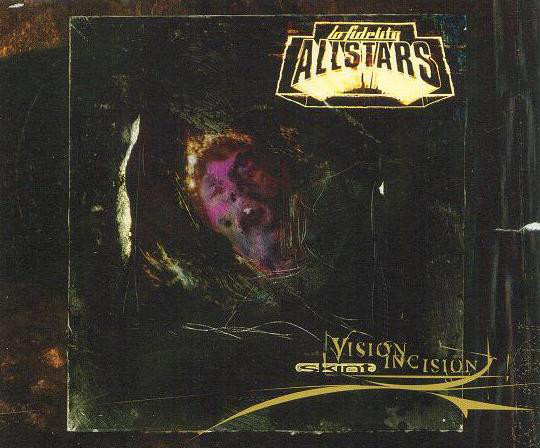
March 1998 – maxi-single reviews – Lo Fidelity Allstars’ ‘Vision Incision’ (“promises to blow our minds wide open, but falls well short of the promise”)

26 Mar

Lo Fidelity Allstars: 'Vision Incision' maxi-single

Lo Fidelity Allstars: ‘Vision Incision’ maxi-single

I had this lot down all wrong at first, I admit it. From the bragging “we’re the greatest” interviews, and the “dance music with real instruments” tag, even the look of the group, I had them down as (god forbid) the new baggy. I was fully prepared to go out and shoot them so I didn’t have to live through the horror that was baggy yet again. But a couple of odd tracks here and there have persuaded me to save my bullets… for now.

Sure, there’s a “real band” sound at the heart of the Lo Fidelity Allstars, but they can manage to make their take on turn‑of‑the‑millennium genre‑defying dance culture a gloriously uplifting thing. Their baggy forerunners (Happy Mondays, Stone Roses) always sounded like they were prevented from gliding to a higher musical plane by having their feet firmly stuck in the field of mud labelled “indie”. The Lo Fi’s, firmly centred on the sampler and decks, don’t have the same problem as they reel off ribbons and streams of sound, rather than chug doggedly away like an old pro dealing with a new fad. But…

 
Oh, the senseless waste. Vision Incision promises to blow our minds wide open, but falls well short of the promise. Good start, mind. Smooth beats, hedonistic keyboard riff, an infectious soul-diva backing hook, and the matter of the live band sound becomes irrelevant as the track lifts and soars smoothly like the most uplifting house or techno, boasting “As we travel at magnificent speeds around the universe…” At which point the Lo-Fi-s prime weak spot is revealed: Dave The Wrekked Train’s bland Speak’n’Spell vocals. Mashing up randomised texts, as he does on other Lo-Fi-s sonic collisions, they work fine. Faced with actual poetry, they creak like a ground axle. Please, if this is the way he carries on all the time, sack him. He has delusions of being a more hip Mark E. Smith, but ends up just sounding like a London cabbie – a monotone mumble grating over the divine music and pointing up the dreadful rhymes in some of his lyrics.

Perhaps he reckons he’s aiming at the street-level psychedelic lyricism of hip-hoppers like the Wu-Tang Clan: the thing is, those guys sound like they believe the weed-fuelled surreal-o-vision they’re raving about. Dave just sounds embarrassed, as if he’d rather have stayed in his siding and chatted to Thomas The Tank Engine this time around. Consequently, I can’t decide whether this is a successor to Orbital’s Chime for the genre‑busting, cross‑pollinating late ’90s dance scene, or just OMD meeting The Orb in a spot of megalomaniac galactic synthpop. Or, alternatively, the KLF doing Spinal Tap.

 
The remix is referred to as a “12” mix” ‑ how bloody Eighties. I suspect that, in homage to their record label, this is the Lo‑Fi-s’ attempt at the Big Beat remix. The Late Train has mutated (oh god!) into the slower‑talking brother of The Shamen’s Mr C. for the first part of this extended work‑out. Wisely, they quickly dispense of his services and crank up the heavy beats to provide a real tour de force instrumental for the band. Proving that if you like your beats big and bouncy, then this dissipated bunch can turn their devious minds to that too. The Midfield General Shorter mix is the sparse techno‑electronica version. A mechanistic, simple beat, overlaid by electronic squelches and interferences, as the original track is ripped to shreds and rebuilt, as elements and sequences of the original drift in and out of the mix. Oh, and Train-In-Vain is just a distant, distorted presence, way back in the ether. Wise move, guys.

 
By this stage, frankly, it’s difficult to tell whether Gringo’s Return To Punk Paste is, in fact, a new track, or yet another radical remix of the original. What it does prove, yet again, is that the Lo‑Fi-s can also turn their hands (deep breath) to a ’90s version of the sounds of early ’80s rap and electro. Skeletal beats and distorted, squelching basslines set the parameters for that unmistakeable sound, aided by some nifty no‑nonsense American speech samples.

 
Cunning remixes or no, even if feted as the best new band in Britain by ‘Melody Maker’ and handed The Future on a giant silver platter to play with, the Lo Fi’s are still going to bellyflop if they keep expecting that stuff like Vision Incision’s going to justify that reputation. It’s not that they’re talentless rip-off merchants. On the contrary, their sampledelic experimentation – when they’ve taken all the sounds of the world, scrunched them up and run with them – is at least as heart-jumpingly astounding as any other visionary pop cut-ups around, if not more so. Hype or no hype, they can bring the noise with a vengeance. This is a real Quality Street of a band – whatever your favourite tribe in the current cross‑cultural collision, there’s music for you here. And if this is the sort of open‑minded group that all the mess of sounds in the ’90s can produce, then the future is wearing some very cool shades.

But compared to their own mighty One Man’s Fear (the world being slowly and gloriously wrenched to sticky bits by Jim Morrison’s psychotic baby grandchild), this ain’t so much a vision incision as a mere blink. Someone had their eye on nothing more noble than a chart placing when they knocked this lot together. Just cut it out, OK? Show me stars, not hot gas.

(review by Col Ainsley)

Lo Fidelity Allstars: ‘Vision Incision’
Skint Records, SKINT 33CD (5025425503320)
CD/cassette/7- & 12-inch maxi single
Released: 23rd March 1998

Get it from:
(2018 update) best obtained second-hand.

Lo Fidelity Allstars online:
Twitter MySpace Soundcloud Tumblr Bandcamp Last FM

August 1997 – album reviews – Ramshackle’s ‘Chin On the Kerb’ (“rocking and poised on the balls of their heels, preparing to take the blow and meet the challenge whenever it snakes out of nowhere to catch them”)

18 Aug
Ramshackle: 'Chin On the Kerb'

Ramshackle: ‘Chin On the Kerb’

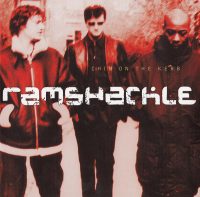
Ramshackle‘s second album amply displays the fact that they’re stars in waiting. Or straining at the starting gate, perhaps; as ‘Chin On the Kerb’ feels like someone pacing in anticipation, winding up in order to lash out, someone containing so much but unsure of their moment.

Steve Roberts, Johnson Somerset and Ben Chapman make up Ramshackle. With their previous album ‘Depthology’ they sent admiring ripples through the midground of the blues and soul scene, yet so far they’ve eclipsed by the Bristol superstars on one hand and the steamroller marketing of American R&B on the other. A pity – because the longer you listen to this album the more impressive Ramshackle sound. Compare it to the successive waves of smug, self-satisfied vocal stars that carpet-bomb our soul shelves. It’s like the difference between listening to the shouts of a bandstanding actor and eavesdropping on an intense conversation in the corner of a bar. This band are smooth, but they never sound like they’re big-E Entertainment paste.

The central axis is Roberts’ British/Caribbean voice, bowled in somewhere between the edgy sweetness of Horace Andy, Austin Howard’s lushly muscular prowl and the testifying tenor roar of Doug Pinnick. And Ramshackle seem to have their initial foundations on whatever boundary lines there may be between Massive Attack, On-U Sound and Ellis, Beggs & Howard, but let themselves roam a good deal further. The ranked and sussed electro-acoustic instrumentation touches on trip-hop, on U2 Big Music rock and on techno, on soul and R&B, on church singing, Jamaica dub-juice and slow funk shakedown. Ramshackle are letting it all come to them, nourished by the convergence of those rich streams similar to the all-embracing muse of their Brit-soul contemporary Lewis Taylor, or – in intent, if not manner – to the Prince of The Cross or Symbol.

Certainly they’ve sheathed their black-pop instincts in richly crafted clothing. From My Mind emerges from cloudy electronic shapes to a sweet spartan R&B groove and tiny, intent piano kisses. Works of Devotion lounges on the dubbier ingredient of padded bass, high echoing Jericho trumpet flickers and bouncy toasting; Roberts blazes with quiet righteousness, balancing out the snaky threat of the industrial synth that slides through the song like the worm in the apple. And they’ve got a knack with uplifting ballad pop. The acoustic strum and sweet-rocking sway of Don’t Turn Me Away; the bluesy plaint of (What About) Tomorrow with its hip-hop beats and train-whistle wastelands; the joyous, sunny gospel sighs and carnival brass that ripple through the blissed-out single, Freshly Rained-On Grass; or Eden’s gospelly piano’n’beats, laden with dangling glittery sounds like harmonica memories and a family of chorus vocals.

But ‘Chin On the Kerb’ is shadowed by palpable alarm – “Let me tell you / I smell blood in the water.” Even when they’re taking the air and laughing into the sunlight on Freshly Rained-On Grass, there’s a sense of Ramshackle rocking and poised on the balls of their heels, preparing to take the blow and meet the challenge whenever it snakes out of nowhere to catch them. Granted, it’s no ‘Mezzanine’ – it lacks the spookiness, the seductive alienation, the naked rage Massive Attack are allowing themselves. And what darkness exists in this album happens to Roberts’ protagonists, it’s not of them. But there’s a religious sense of right and wrong driving this, which sets up a particular tension in Ramshackle’s tales of life on the rough edge. Just as Roberts can flick lightly between street-sly patois and preacher pomp, Ramshackle’s moods are volatile beneath the smoothness.

If there’s anything you take away from the album, it’s the impression of a hot-headed and contrary man paying a loyal personal tribute to the resilience of the beleaguered black experience. The pomp-rock-tinged Temple – piano and bass from house music meeting a Tackhead-style forcefulness, Roberts’ voice fracturing into sweet choruses and torn-up foreboding roars – warns of hostile worlds outside the church doors. No Touchi”s tales of a crime-ridden community on the last scraps of its pride (“I see less clearly in these advancing years.. / No touchi’ rock, combat bad intentions”) touch on Gaye’s Inner City Blues, ragga inflections dodging the drilling whine of synth and the discreet knife-play of scratching.

Though the above is mild compared to the vengeful slash at brotherhood betrayed on Broken Soul. Or to the vipers-nest atmosphere of the album’s loping title track, where the guitars clot and loom like hangovers, and the synths gleam like yellowed morning-after teeth: “The Judas kiss / of cold glass to my lips / tells me I’m gonna keep doing this all of the time.” Roberts sounds as if he’s washed up against a pissed-on wall, torn pants fouled and down round bruised thighs, surfacing into one of those horrible moments of absolute truth when there’s nothing between you and the raddled wound that you called your soul before you got lost on the dirty side.

Still, even while lying in the gutter, the old line about looking at the stars still applies. In the end, it’s about the determination of faith-under-fire, as in the hymnal, luscious-as-tears Let Em Go and in the way the devotional vision in Lament bears as much witness to the devastation of black communities by alcoholism and self-hating violence as it does to the landscape of promised redemption; Roberts’ voice embracing all of this.

The closer, Safe (with its unexpected crest of sumptuous weeping violas), is a soldier’s song. Fraternal and distressing as a lost harmonica left on a torn battlefield, and acknowledging the brutalisation of young boys into fighting men – “and when I met the enemy / it was just a boy’s eyes, cold and distant. / Such savagery / coming from a man like me.” But when the last words come, they aren’t just a plea for support, but a resolution to find one’s way back to truth: “I wish to be safe in the arms of the Lord / I want to be faithful in deeds and words.”

They might believe that love will triumph over rage, but they don’t treat that rage lightly. Ramshackle? Anything but. Rich and rewarding.

Ramshackle: ‘Chin On the Kerb’
Edel UK Records/Whatever… Records, EDEL 098602WHE (4009880986028)
CD-only album
Released:
18th April 1997
Get it from: (2020 update) Best obtained second-hand.
Ramshackle online:
Last FM Amazon Music

May 1997 – album reviews – Mark Eitzel’s ‘Lovers’ Leap USA’ (“contains some of Eitzel’s best songs and some previously unseen directions for his art… a half-baked masterpiece”)

30 May

Mark Eitzel: 'Lover's Leap USA'

Mark Eitzel: ‘Lover’s Leap USA’

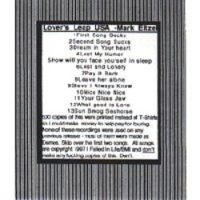
Culled and scraped up from Mark Eitzel‘s demo drawer in order to finance touring, ‘Lovers’ Leap USA’ is not exactly the album we’re hoping the former American Music Club frontman will make. In fact, most of it is apparently outtakes from Eitzel’s actual forthcoming album (which rejoices in the catchy, cheery title of ‘Caught in a Trap and I Can’t Back Out ‘Cause I Love You Too Much, Baby‘) plus what sounds like his final San Francisco demos (with AMC’s multi-instrumentalist Bruce Kaphan fleshing out the sound). Not always to Eitzel’s satisfaction, as he’s urged us to skip the first two “really awful” tracks. Well, he’s always been his own best publicist.

In spite of Eitzel’s deprecations and the album’s unpolished, occasionally sullen state (effectively, it’s a scrappy bootleg), ‘Lovers Leap USA’ contains some of Eitzel’s best songs and some previously unseen directions for his art, making it something of a half-baked masterpiece. Some songs – What Good is Love, The Big House, Have No Words – are little more than straight acoustic skeletons, on which Eitzel’s singing is either mesmeric or painfully flat and jumbled. Some (such as Leave Her Alone) sound more like exhausted Arab Strap trudges, with a drawerful of industrial grind muddying the atmosphere. In others, Eitzel drifts off into trip-hop atmospherics – easy- listening string loops, opiated piano touches, giant slow shadowy drums. And on the expansive feel of Lost and Lonely, Eitzel’s whispers sound uncannily like Chris Isaak, floating above the swish of passing cars and birdsong like a dawn haze.

‘Lovers Leap USA’ also shows that Eitzel remains in touch with the majestic tunes that floated or roared through American Music Club’s angst. How Will You Face Yourself in Sleep takes us back to the delicate traceries of fear that graced Gratitude Walks or Laughingstock. Red velvet curtains haunt the lyrics and the sounds of a song set in a hotel full of unspecified performers and travellers, restless “under a thin blanket, ’cause when you’re on the move you don’t need to be warm – / you pull another dark flood over your hidden form.” These people are worn down enough to see the machinery (“you can see through every plot, you know how they end… / Always said you would quit before you got fired. / Now you’re treading water, forgotten and tired…”) and trudge through their roles, only consoled by knowing which strings will pull on them.

Dream in Your Heart, with its dark burning fuzz of angry guitars, could’ve been one of AMC’s more aggressive moments, replete with classic Eitzel runaway metaphors (“the bitterness wears me like a chain, since I’m too Mark Eitzel vain for the Man of Steel I’ve become”) and the choruses which clasp frantically at elusive hopes (“I saw a dream in your heart / for a beauty beyond your eyes”). If people still sung protest songs at the enemy, you’d imagine a phalanx of indignant American feminists roaring Leave Her Alone at Pat Robertson. As it is, here we have a battle-scarred Eitzel limping defiantly across a bloodied drag of guitar and churned-up trash-noise to stick pins into a bigot. “You’re God’s little soldier, making sure his thunderbolts get thrown… / I just want to bang nails in your cross, I want to drive those nails home.” He’s never sung out with such positive pride before – “My sister never got credit for anything; / her life was just a constant second-guessing. / She doesn’t need your holy undressing, / and most of all, she doesn’t need your blessing.”

Two suspicious meditations on fame, The Big House and Nice Nice Nice, might have sprung from the bitter backwash of AMC’s brief encounter with the big time. The first, in cranky acoustic cynicism, strips the glitz from the glittering bubble at the top of the pile (“antique paintings from across the pond, chandeliers and porcelain figurines / an island in the calm of the storm, scattered meaningless shouted words and bored security guards,”), and sees Eitzel as spectator in a backstage zone “as hollow as King Tut’s womb”, munching cheerlessly on bar snacks and watching “this treadmill… moving the river of green, / …freedom slipping through the cracks.” It’s someone else in the spotlight this time, atop a fortress of speaker stacks, kidding himself he’s empowered; but Eitzel’s disgust is the scorn of a man who’s been close enough to get stained himself. “Let ’em weigh you and judge you, let ’em use you as their tool. / You give it away, you fool, you fool, you fool.”

Even more cuttingly, Nice Nice Nice deals with the artistic failure-turned-self-promoter – “This is the wall you broke your head on, / the one you’ve lied about so many times. / And now you’ll display a marvel for the ages, / a masterpiece of grace and design / with a meaning that no-one really finds.” Here mass acceptance comes with the price of knowing “you’re just like them, deep down”, but it’s impossible to know which side the alienated but notoriously anti-precious Eitzel’s really on.

There are some glimpses of a starker personal honesty. The spindly blues of What Good is Love (in which Eitzel’s clacking metronome sounds as if it’s snipping strips from his life) is an agnostic’s sleepless night, dismantling the articles of faith one by one and feeling the emptiness grow. “All my chicken-bone dreams left on a windowsill too long, / so easy to pull them apart… / And if it won’t set us free, and there’s nothing above, / then what good are we, and what good is love?”

Steve I Always Knew is Eitzel’s first open acknowledgement in song of his own bisexuality. But that’s less of a revelation than the way in which he strips himself bare in it. In the upfront world of gay pickups, he’s hard-put to swagger: “I guess all this means we’re going to sleep together – / outside I’m hard as a brick, inside I’m like a feather… / I guess in bed I was kind of a sweet nothing – / and for your money, you could’ve done much better.” Although Eitzel’s the one who’s first dumped, then denied (“You moved to New York to clean up, and came back married to a cop. / And when I saw you on the street, I could tell you didn’t want to stop,”) he ends up the strong one, able to face what his erstwhile lover recognises but can’t deal with. “You said the only way through fear is to give in, / and you were right, you were right.”

 
The most fascinating songs here are the ones where the borders of the problem are lost to view. In Lost and Lonely, Eitzel’s walking from dawn ’til dusk “like the ghost of a man… beyond the blessing of women and the shadow of doubt”, under “cruel summer starlight on a dark street.” The song unravels in murmuring drunken thought, a fumbling of fleeting images (“measure the life in miles forgotten”; “why hold a seance? I know you won’t call”; “who would chain the stars too heavy to walk?”) and a repeating mumble of “thought you were lonely as me.” Towards the end, Eitzel mutters a barely audible “thank you”, like a sleepwalking Fat Elvis.

It’s that particular Elvis who seems to haunt the remaining pieces, which are Eitzel’s hypnotically dissolving forays into trip hop. Like the narcotic but impenetrable lushness of Your Glass Jaw, in which strings, vibes and congas seem to be buoying up a deadweight singer “high in a bright light” who only sloughs off more of those cryptic, disconnected mumbles – “dissolve bright eyes”; “mosquito hunger, the blood of saints.” It might be the collapse of a champion, the same pulverised resistance that Scott Walker evoked on ‘Tilt’.

Pay It Back loops satellite chatter and rumbling gongs around Eitzel’s skinny strums, an irretrievably distant and uncaring brushoff from a frozen heart. “Do I owe you my soul for your heartbeat to inhabit? / Well you can have it… / Buried alive, better off dead. /… Whatever it is I owe you, I’ll pay you back.” And in Lost My Humor, Eitzel returns to double-bass’n’piano torch-song sounds, but submerges them in an obscuring post-rock drone. Likewise, his voice is a half- buried baritone whisper like gutter-trodden velvet, repeating “I lost my humor” as a cynical mantra, trailing it with clinchers from the self-mockingly spiteful (“I was bored to death by your song, and the rest of popular culture”) to the philosophical (“it means I give up any claim to being a voice for tomorrow”), to the cold (“don’t assume that they see you, don’t assume that they like you”) through to post-modern fatalism – “I’m doomed to live without – negotiate your sorrow.”

So far, so Zombie-David Byrne, the Prisoner of Vegas. But what gives this its frightening depth is the way in which, by the end, he’s trying to rouse himself. The chant has become “I lost my spirit”, and he’s casting around trying to make sense of it again “like the mirror I smashed, trying to fit it back together,” and realising what’s been lost: “I lost my spirit – someone put it in your pocket… / I lost my spirit…”

In the end, wherever Mark Eitzel goes, he’s lost. But no-one sends letters from the wilderness like he can.

 
Mark Eitzel: ‘Lovers Leap USA’
self-released, ME 1001 (no barcode)
CD-only album
Released:
May 1997
Get it from: (2004 update) Extremely rare and best obtained second-hand. ‘Lover’s Leap USA’ was sold exclusively by Mark Eitzel himself during his 1997 touring – only 500 copies were made and it has never been reissued.
Mark Eitzel online:
Homepage Facebook Twitter MySpace Soundcloud Bandcamp Last FM Apple Music YouTube Vimeo Deezer Google Play Pandora Spotify Tidal Instagram Amazon Music
 

May 1997 – album reviews – Ragga & The Jack Magic Orchestra’s ‘Ragga & The Jack Magic Orchestra’ (“music for Disney cartoon castles in the sky”)

24 May

Ragga & The Jack Magic Orchestra: 'Ragga & The Jack Magic Orchestra'

Ragga & The Jack Magic Orchestra: ‘Ragga & The Jack Magic Orchestra’

Do I have to do all the usual obvious journalistic crap about Iceland? Do I? Oh, if I must. They eat puffins, or something. They drink tons of cheap alcohol. It’s bloody cold there. It’s dark all winter, light all summer, or something. Magnus Magnússon. Mad elfin pixie Bjork… blah blah blah. Will this do?

Oh, and I have to act surprised that Iceland can produce such great music, and be really patronising about that in particular. Because we British love looking down on small nations, don’t we?

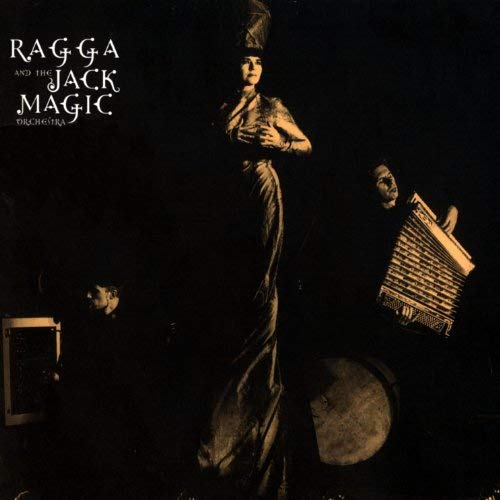
All that gone through, just because two-thirds of Ragga & The Jack Magic Orchestra are Icelandic. Ragga sang You Don’t on Tricky’s ‘Maxinquaye’ album – a track full of filmic strings, soloing flutes and slow shuffling beats -which casts some light on this album. Previously, Ragga and keyboardist Jakob Magnússon were in a successful Icelandic band together; when they ended up in London, Magnússon worked as Icelandic cultural attache while Ragga attended drama school. Later, they formed Ragga & The Jack Magic Orchestra with English sampling wizard Mark Davies from Voices Of Kwahn. With this debut, they bring all these diverse strands of experience together to produce a magical experience. Huge, colourful swathes of sound; music for Disney cartoon castles in the sky.

 
So – Fairy Godmother opens on a feather-bed of lapping sea, boat-horns, celeste chimes and toybox orchestra that scream “Disney”, before the trip-hop beats are introduced. But the JMO is always very natural, organic-sounding – no harsh electronica scraping here. And Ragga’s voice is a magical thing – Kate Bush in a lower register, with some of Bjork’s expressive stylings. Like Bjork, her lyrics tell strange stories, but she introduces Shot almost matter-of-factly: “I got shot in the head by a man / who had been aiming at me / for many days… / At the moment I got / the paper from my doorstep.” To an almost easy-listening palette of relaxing hues, jazzy woodwind and flutes, she philosophically concludes that “love can hurt…” Well, it would, wouldn’t it?

Daringly, styles keep shifting, track by track: somehow in keeping with the fairy-tale transformations of the lyrics and samples. Passion For Life has a soulful belted-out chorus (Ragga does brazen Broadway as easily as schmaltzy Hollywood), a slow, loping early-hours atmosphere of spooky keyboards and bone-rattles for beats, and brilliantly lifts an evocative passage from Samuel Barber’s ‘Adagio For Strings’ (the music from “Platoon”, if your imagination’s still settled in the cinema after those Disney references). In Where Are They Now? – to surging orchestral strings, keyboard arpeggios and sparse but powerful metallic percussion – Ragga sings a torch-song elegy to the lost children of wars. Even when no lyrics intrude, Ragga’s evocative harmonies over a battalion of drums and stabbing strings are just as emotional.

 
The mix of folky guitars and flutes, East European violin and pleasantly shuffling beats on Turn It Off remind one of Beth Orton’s marriage of bedsit folk and electronica. Deep Down also has a deceptively simple sound: alternately hushed and passionate vocals over shifting sands of decaying electronics and a barrage of junkshop percussion. It hits a groove and stays there – perfectly. With the fairy-tale assertion that “sometimes I can breathe underwater / Sometimes I can fly around the sky”, Underwater features more Disney-like wonderment: reverberating drones, slippery strings lilting through the melody and expert percussion care of a Steve Jansen/Rain Tree Crow sample fluidly weaving in and around the programmed beats.

Despite its title and distorted electro-beats, Beatbox Controller isn’t some ’90s ode to the DJ/mixer in the manner of Last Night A DJ Saved My Life. The “beatbox” referred to is the heart – “you are my beatbox controller / A telepathic mixer of emotion…” Ragga’s vocals are almost helium-light and, musically, the track sounds like twenty-first century reggae-lite. In an extended coda where he duets with Jacob Magnússon’s improvising keyboards, Mark Davies makes beautiful music out of sampled percussion – this man’s going to be a figure to watch in the world of electronica, to rank alongside DJ Shadow or Howie B.

Indeed, Two Kisses is built on a disconcerting, clattering rhythm track of samples of god-knows-what. Buzzes, radio waves, ghostly fluttering flutes and Eastern pipes are all jammed into the mix. Ragga sings a multi-tracked ethereal chorus and her voice is, at one point, treated to sound – well, er – exactly like a Smurf, to be honest. Weird, peculiar – Laurie Anderson jamming with The Art Of Noise produced by Tricky is about the closest comparison. Close, but nowhere near. So, yes, if weirdness to the point of absurdity overtakes them every so often (Man In The Moon overdoes the lyrics on the wrong side of Kate Bush kooky pop, and the overblown melody reminds one of… Christ! The Thompson Twins!) it’s a price worth paying for the trio’s musical vision.

 
Music for your fairy-tale nightmares. A perfect accompaniment to drifting away while watching “Fantasia” for the hundredth time, safe in the knowledge that the good witch now works her magic with a sampler.

Touched by the wand of the sorcerer’s apprentice.

(review by Vaughan Simons)

Ragga & The Jack Magic Orchestra: ‘Ragga & The Jack Magic Orchestra’
EMI Records Ltd., CDEMD 1107 (7243 8 56728 2 8)
CD/cassette album
Released: 19th May 1997

Get it from:
(updated 2018) buy original CD second-hand, or get the reissued download from Amazon or iTunes.

Ragga & The Jack Magic Orchestra online:
Soundcloud Last FM

August 1996 – EP reviews – Andrea Parker’s ‘The Rocking Chair’ (“sounds like the dark shadow of club culture”)

5 Aug

Andrea Parker: 'The Rocking Chair'

Andrea Parker: ‘The Rocking Chair’

The club’s gone cold and the dancing has come to a halt. Something’s lurking in the chill-out room, and the chill’s gone down several notches.

The word was that Andrea Parker‘s ‘The Rocking Chair’ was the missing link between Goldie, Mahler and Kate Bush. It’s not quite like that. You could think of Cranes at their most ornate and ambitious (and a couple of merciful octaves lower), you could think of a decidedly deeper Portishead or, at a pinch, Bjork’s Play Dead, but you’d have to add the loomingness of prime Dead Can Dance, or Gorecki’s weight of suffering. There’s no dance beat whatsoever, though the seismic bassiness sounds like the dark shadow of club culture. No trancey twinkles, even. Just that bleak blood-smudged thread of vocal. And the slow-motion-nightmare modern-classical strings, strings, strings, all swallowed up in a huge cavern of electronic space and suffocatingly close reverb.

Bloody moody. Bloody scary. Try playing this sucker to a crowd of E’d-up ravers at Heaven. Shivering wrecks four-deep on the floor, I think.

 
The Rocking Chair has an overwhelming horror-bound beauty. Like a swelling, building mushroom cloud, or the spume of the avalanche as it blots out your sun for good. But what’s it all about? Andrea is singing as if she was stretched flat on her back in a coffin, with an eerily drained and colourless calmness to her voice. It sounds like a paean to nothing; to a kind of amnesia where memories stay and it’s the present that’s blanked out. And only flashes of coherence seep from those lips: “so far in the distance, yet so close to my heart.” All I know is that what I can hear – quiet, and far off in the distance – are what sound like blades being sharpened. And Andrea’s singing “Behind you…”

I suppose I should tell you that you get a thirty-five-minute suite for your money. There are two remixes. Attica Blues‘ DR55 Mix drapes Andrea in drivelling pianos over runaway tango-tinsel techno and human-beatboxing. The Major Force West one adds twangs, sitars and ‘Doctor Who’ radiophonic burbles to take her off to one of those space-age batchelor pads. There’s a little spinback track to give another nod to the clubbers. There’s a strings-only version for the Michael Nyman fans. Quality control is at an all-time high, but none of them really alter the impact of the original.

 
If this is the reputed great club-generation comedown, I want to be watching from the other side of the room. The terrible beauty of something ending, and a genuine frightener. Who is this Ms. Parker? What huge, hungry night skies hang in her mind’s eye? Well, until I find out…

I want more. Now.

I demand my terminal tape loop.

 
Andrea Parker: ‘The Rocking Chair’
Mo’Wax Recordings/A&M Records. MW045CD/S (7 31458 15692 5)
CD/12-inch vinyl EP
Released:
5th August 1996
Get it from: (2020 update) Best obtained second-hand.
Andrea Parker online:
Homepage Facebook Twitter MySpace Soundcloud Bandcamp Last FM Apple Music YouTube Deezer Google Play Pandora Spotify Amazon Music
 

December 1995 – live reviews – Anna Palm + Mandalay @ Upstairs at The Garage, Highbury, London, 20th December (“as full of explosive energy as a pan of popping corn… / …stately, kaleidoscopic and coolly hallucinatory”)

22 Dec

Oops. I’ve come to what I thought was a serious, arty gig to find exotic scarves hanging from the ceiling and a little green-nylon Christmas tree sitting in the corner. What with this, the candle-lit tables and the cheerful little greetings flyers under said tree, I get the feeling that I’ve crashed someone else’s Christmas party.

This particular party’s being thrown by violinist-turned-singer-songwriter Anna Palm, known for a journey that started with busking in Covent Garden and Chelsea and went on to a stint with acoustic punk-folkers Nyah Fearties, a handful of albums and singles on One Little Indian, and support contributions to a variety of artists from YesSteve Howe to New Wave synth poet Anne Clark, ascerbic dream-pop realists Kitchens of Distinction and avant-Goth experimentalist Danielle Dax. It’s an interesting resume. Well, I hate to bad-mouth my hostess, and maybe it’s unfair to judge an artist from an event coming across very much as a fun gig, but I’m decidedly underwhelmed. Despite an indie all-star band (with various members of The Farm, Loop Guru and Kitchens of Distinction taking time out to back her up) she fails to shine.

It’s not as if she doesn’t try: a Violet Elizabeth figure in a frilly little-girl party dress, she’s as full of explosive energy as a pan of popping corn, exhorting people onto the floor to dance, singing with verve (if not always great pitch) and sawing acrobatically at her violin. But the band is under-rehearsed and scrappy, falling apart much too often. Anna’s songs, too, lack individuality and the delivery to make them memorable. A shame, as when she sets bow to strings some spirited and slyly lovable playing emerges.

Anna’s obviously a good player, but as far as being a singer-songwriter goes she still doesn’t seem to know what to do with herself. File under “needs work” and leave it at that for now. However, the mess does yield up one unexpected delight – a dance-groove version of Kites, compelling and grin-inducing, with Anna’s riotous violin scurrying over an early-’90s style baggy beat and the whole thing carrying a strong hint of I Will Survive. A novelty, perhaps, but it’s good to see Simon Dupree’s old hippy hit hopping onto a modern groove and feeling right at home. These particular Kites really fly. I wonder if the Shulman brothers (who notoriously hated their early Dupree-ism despite its success) might ease up and grin and bop along if they were here to hear this.

The real reason why I’m here is a duo called Mandalay, hiding further down the bill: it’s the new project by multi-instrumentalist and electronica aceSaul Freeman, who used to perform a similar role as half of the band Thieves alongside stratospheric singer David McAlmont. Thieves are long (and acrimoniously) split now, with what would have been their debut album a little uncomfortably repackaged as the stunning McAlmont debut (and if you haven’t heard that, you missed one of the most vitally progressive pop records of 1994).

Now Saul is quietly rematerializing, in partnership with singer Nicola Hitchcock, to reclaim some of his lost thunder. But although it shares the glittering crystalline texture of Thieves’ songs, Mandalay’s music is nowhere near as easy. As with Thieves, Cocteau Twins should be mentioned (especially when listening to the effects-swallowed guitars of Enough Love); so too should the frozen sadness of Portishead (especially on the chilly trilling of Enough Love). but Mandalay is more involved and intricate than either. These are multi-dimensional songs, Nicola’s frail but enthralling vocal melodies elevated from the ground on staggeringly complex musical architecture courtesy of interlocking blurry sequencers, obsessively repeating samples and eerie guitar treatments. Saul stands impassively amongst his host of computers and effects racks, gazing absently down at his guitar and its network of pedals. Every now and again he’ll tap and flick at the strings and a second later a whole web of music will swell from the speakers.

Mandalay’s style – stately, kaleidoscopic and coolly hallucinatory – is best exemplified by the silvery net of sampled vocals, the stabbing kick drum and the harmonica-skank guitar of More Than Venus: Nicola’s whispering Bush-y enunciation gives the perky melody an awkward, appealing sensuality. Walk By the Sea rumbles by on an ominous 3/4 riff, double-looped spiral claustrophobia and panic-pitch piano plinking. The Waiting gives full reign to Saul’s subtle space-age guitar work: cunningly-placed “brang”s and attenuated bell-notes amongst the fabric of a languorous techno-warble.

There’s plenty of pop in this (and, despite the duo’s clear and ineluctable whiteness of manner as well as appearance, more than a helping of trip-hop) but Mandalay are also decidedly post-rock. They’re part of the astonishing movement which also includes Moonshake, Laika and the late-lamented Disco Inferno, and which junks the conventional hierarchies of rock instrumentation in favour of the uncanny textures of digital sampling and electronic ensemble processing. This might not sound appealing to the traditionalists out there, but believe me, Mandalay are much more than noodling experimentalists. Try to think of their songs as angst-under-amber, refracted into confusing multiples by an unearthly light. Unsettling but beautiful pop for an uncertain info-saturated future. You want progression? It’s happening here.

Anna Palm online:
Homepage Facebook MySpace Last FM YouTube Spotify Tidal Amazon Music

Mandalay online:
Last FM Apple Music YouTube Deezer Google Play Spotify Amazon Music

Additional notes: (2020 update) Anna Palm now lives and occasionally performs in Stroud. Mandalay recorded two albums for V2 Music before splitting in 2002: both Nicola Hitchcock and Saul Freeman have continued intermittent solo careers.

SWOONAGE

Swoon. /swo͞on/ A verb. To be emotionally affected by someone or something that one admires; become ecstatic. Here are some people and things that make me swoon. #swoon #swoonage

Post-Punk Monk

Searching for divinity in records from '78-'85 or so…

theartyassassin

...wandering through music...

Get In Her Ears

Promoting and Supporting Women in Music

Die or D.I.Y.?

...wandering through music...

Music Aficionado

Quality articles about the golden age of music

THE ACTIVE LISTENER

...wandering through music...

Planet Hugill

...wandering through music...

Listening to Ladies

...wandering through music...

ATTN:Magazine

Not from concentrate.

Xposed Club

improvised/experimental/music

The Quietus

...wandering through music...

I Quite Like Gigs

Music Reviews, music thoughts and musical wonderings

furia log

...wandering through music...

The Recoup

SINCE 2013: Books and books and books and books and occasionally other things

A jumped-up pantry boy

To say the least, oh truly disappointed

PROOF POSITIVE

A new semi-regular gig in London

Gapplegate Classical-Modern Music Review

...wandering through music...

When The Horn Blows

...wandering through music...

:::::::::::: Ekho :::::::::::: Women in Sonic Art

Celebrating the Work of Women within Sonic Art: an expanding archive promoting equality in the sonic field

Ned Raggett Ponders It All

Just another WordPress.com weblog

FLIPSIDE REVIEWS

...wandering through music...

Headphone Commute

honest words on honest music

The One-Liner Miner

...wandering through music...

Yeah I Know It Sucks

an absurdist review blog

Obat Kanker Payudara Ginseng RH 2

...wandering through music...

poplifer.wordpress.com/

Waiting for the gift of sound and vision

Good Music Speaks

A music blog written by Rich Brown

Do The Math

...wandering through music...

Archived Music Press

Scans from the Melody Maker and N.M.E. circa 1987-1996

The World's Worst Records

...wandering through music...

Soundscapes

...wandering through music...

OLD SCHOOL RECORD REVIEW

Where You Are Always Wrong

FRIDAY NIGHT BOYS

...wandering through music...

Fragile or Possibly Extinct

Life Outside the Womb

a closer listen

a home for instrumental and experimental music

Bird is the Worm

New Jazz: We Search. We Recommend. You Listen.

...wandering through music...

Life Just Bounces

...wandering through music...

Lucid Culture

JAZZ, CLASSICAL MUSIC AND THE ARTS IN NEW YORK CITY

Aquarium Drunkard

...wandering through music...

eyesplinters

Just another WordPress.com site

NewFrontEars

...wandering through music...

FormerConformer

Striving for Difference