Archive | funk RSS feed for this section

August 2015 – upcoming gigs – the Manchester Jazz Festival (31st July to 9th August)

31 Jul

One of the reasons that I’ve been posting so many concert previews recently is simply that (being mostly homebound at the moment) I miss going to gigs. Looking at the lineup and scope of the 2015 Manchester Jazz Festival (which starts today and runs rampant for ten days through until 9th August) reminds me that not only do I regret not attending the wealth of music that takes place here in London, but that I miss more freewheeling days of music elsewhere. Discovering unexpected, treasurable bands at random while on holiday in Brugge, for instance; or immersing myself in a week of concerts and more in Edinburgh or Leeds (such as the one I reviewed here, over a decade ago.)

We know that, as a British pop and dance city, Manchester punches well above its weight. Despite a bubbling undercurrent of improvised music, its reputation as a jazz town is hazier…. or, more probably, I’m just ignorant. The Festival’s been going for twenty years, long enough to gain enough gravity to generate its own traditions. (One such is ‘Surroundings’,  a longer-form ensemble piece by Salford composer Neil Yates. Commissioned for the festival in 2010, it seems to have become the event’s unofficial signature – this year, it’s being revisited as a quartet performance in the Central Library Reading Room.)

Even a quick sift through this year’s programme reveals a jazz party that any city would be proud of – diverse, inclusive, inviting and multi-levelled, an exciting noise ranging from the stately to the vividly scraggled and all the better for it.  With many tickets going at only four pounds, (with a ten-pound all-events daily ticket and free-entry deals if you stump up as a low-level event sponsor), they could hardly have made it any more inviting to the casual walker-upper. Excuse me for a moment while I strip-mine press releases and YouTube, and check Soundcloud pages and Bandcamp links.

Starting with the higher-end, bigger name events…  Acclaimed Blue Note pianist Robert Glasper slips away from his experimentations with latterday R’n’B to get back to basics with an acoustic trio;  John Surman re-teams with the Trans4mation String Quartet to revive the thoughtful, tidally-deep music from his ‘Coruscating’ and ‘The Spaces in Between’ albums. Norma Winstone, Klaus Gesing and Glauco Venier bring along their trans-European project DistancesPartisans bring their transatlantic swing storm; Christine Tobin  her ‘Thousand Kisses Deep’ jazzification of Leonard Cohen songs. French Jazz Musician of the Year Airelle Besson makes an appearance with her Quartet for a set of “gently experimental songs animated by heartfelt lyrics, plaintive melodies and rolling harmonies.” backed with pinballing rhythms and punchy countersyncopations.

There are heavyweight two-headed summit performances by acclaimed British jazz talents – one by frequent quartet buddies Mike Walker and Gwilym Simcock, another by the more recent pairing of Tori Freestone and Alcyona Mick.  Two further British scene fast risers – Stuart McCallum and Alice Zawadzki – bring string-enhanced performances of ongoing projects (the former offering contemporary soul jazz and bass-heavy electronica with surprise guest singers, the latter a fantastical Mancunian song cycle influenced by various shades of love and fairytale).

There are also several of those gentler, more literate projects which seem to blossom best in a festival atmosphere away from a hot core of gutsy brass.  Andrew Woodhead and Holly Thomas’ Snapdragon trio specialize in chilled, ethereal song-settings of literature and poetry (Larkin and Bukowski-inspired) and bursts of vocalese. Mark Pringle‘s A Moveable Feast mates orchestral strings with a bold horn and rhythm section to explore “themes of wildlife, literature and city chaos.”  The “fractured Anglicana” of Hugh Nankivell’s multi-instrumental/four-part vocal quartet Natural Causes means that they perform “curious compositions with  improbable but poignant texts” including “psychedelic lullabies, pinprick-precise ballads, unpredictable group improvisation and brotherly harmony across the board”, and music which draws on classic and contemporary art pop (Robert Wyatt, XTC and Björk) as much as it does on jazz sources.

Elsewhere, much of the polyglot diversity of jazz today is celebrated. The Cuban tradition is represented by the Pepe Rivero Trio and Orquesta Timbala; the Congolese by Eddy Tshepe Tshepela‘s Afrika Jazz. Central and South American ideas are brought along by Agua Pasa (who, with  Dudley Nesbit’s steel pan project Pan Jumby,  also touch on the Caribbean).  The Quarry Hillbillies (a teaming of Ulrich Elbracht, Ed Jones, Jamil Sheriff) from European contemporary jazz, while the frenetic whirl of Eastern European folk elements are covered by Makanitza.  The Gorka Benítez Trio move between Basque-flavoured small group jazz and compelling free-form impressionism. David Austin Grey’s Hansu-Tori ensemble is inspired by natural, elemental and cinematic” ideas, as well as a fascination with Eastern world culture.  Percussionist Felix Higginbottom’s Hans Prya  provides genre-hopping jazz-dance and Jim Molyneux’s Glowrogues favour funk and hip-hop flavoured pieces. Trumpeter Lily Carassik‘s fusion group Yesa Sikyi take ideas from the ’50s and blend them with popular standards and soul arrangements; while The Stretch Trio include glossier elements from ’70s jazz rock, progressive rock and ’80s pop along with sinuous gusts of wind synth.

Those who prefer classic jazz – more traditional by-the-book American styles – might prefer Russell Henderson and Jamie Taylor’s Ellington-and-Strayhorn tribute ‘The Intimacy Of The Blues’, or the Dan Whieldon Trio‘s salute to Gershwin. The Dave Kane Quartet take inspiration from the knottier ambitions of Charles Mingus, John Zorn and Eric Dolphy. Two groups of students from the Royal Northern College of Music provide live celebrations of the history which they’ve been learning – the James Girling Quintet  spans jazz, blues and funk from New Orleans roots through to the 1960s, while the Nick Conn Octet (a self-described “trombone choir”) interweaves re-arranged jazz classics with original material.

Fans of New Orleans jazz can check out genuine New Orleaners The Session (who offer a past-present take on their hometown’s music), or look out for the street sounds of the New York Brass Band (actually from old York, the cheeky buggers) or see how the Riot Jazz Brass Band dust up old New Orleans sounds with dancefloor, dubstep and drum-and-bass incursions. Hot jazz/Gypsy/jazz manouche aficionados can go for the loving recreations of 52 Skidoo (who promise you prohibition speakeasies, rent parties and Tin Pan Alley) or for Gypsies Of Bohemia, who manouche-ify latterday pop songs such as Heart Of Glass, Toxic and Hot In Herre. (Being Mancunian, they also do This Charming Man – I’ll bet that that high-life opening riff translates pretty well).

Of course, much of the fun of a jazz festival involves catching a lesser-known, or even unknown, band carving away at the edge, furiously discovering – and there are plenty of those here. Since they drew me into covering the festival in the first place, I’m going to put a particular word in for Jon Thorne’s Sunshine Brothers (playing at Matt & Phreds on 4th August) in which the double bass/laptop-wielding Jon teams up with drummer Rob Turner (of Blue Note-signed breakbeat jazz electronicists GoGo Penguin) and looping poly-genre bass guitarist Steve Lawson (a ‘Misfit City’ regular) for “a cutting-edge trio of genre-defying musicians mixing jazz, improvisation, electronic and filmic soundscapes to euphoric effect, evoking sounds far removed from their bass origins.”

However, you could just as easily catch a full performance by GoGo Penguin themselves; or by Lauren Kinsella’s Blue-Eyed Hawk, who offer “art-rock, jazz and electronic soundworlds: imaginative and emotive, from pindrop to powerhouse.” The Madwort Saxophone Quartet play intricate four-part math-jazz. “Power-jazz commando team” Taupe (a triple-city trio from Manchester, Newcastle and Edinburgh) punch around themes from jazz, hip hop and heavy metal. Craig Scott’s Lobotomy seem determined to take the cake for upfront experimental exhilaration this time around, delivering shout-outs to John Cage, Captain Beefheart and Frank Zappa, proclaiming a performance in which “experimental jazz rubs shoulders with electronica and DIY alternative rock in a bubbling cauldron of live and recorded sounds” and promising to sample and reconstruction their own improvisations live on stage.  There’ll also be a improvised summit involving bands associated with Manchester’s Efpi Records and Paris’ Onze Heures Onze collective.

One way into discovery is to take advantage of the free showcases for emerging bands. Care of the BBC’s ‘Jazz On 3’, London offers three bands – Nérija ( the all-female creative septet from the Tomorrow’s Warriors jazz school), the award-winning piano jazz of the Ashley Henry Trio and the decidedly psychedelic Phaze Theory (a quartet of drums, tuba, voice and guitar dedicated to “exploring the vastness of the musical cosmos”).

But perhaps it’s Jazz North’s Northern Line series that you should be checking out, showcasing bands from the north and the Midlands. Manchester offers the Iain Dixon/Les Chisnall Duo (whose repertoire of self-defined standards stretches from Messaien to Gracie Fields) and the John Bailey Quintet  (guitar-led, and similarly inspired by twentieth century classical music). Newcastle provides barrel-house blues and ballads from The Lindsay Hannon Plus and the tricky free jazz/folk/rock/dancefloor entwinings of the Graeme Wilson Quartet. Lancaster and Liverpool provide one act apiece – Andrew Grew’s “total improvisers” The Grew Quartet and the “gothic bebop” of Blind Monk Trio, who claim to fuse the spirit of Thelonius Monk with Persian traditional music and the heavy-rock attitude of Led Zeppelin and Nirvana’s heavy-rock attitude.

However, it’s Leeds (still underrated as a musical powerhouse despite the world-class output of its music college and the vigorous inventiveness of its bands) which dominates the Northern Line. As well as providing the previously-mentioned Pan Jumby, Leeds brings the Portuguese/African/Latin  and Indian song-fusions of Manjula, the Django Reinhardt swing of the Matt Holborn Quartet, Cameron Vale‘s ferociously energetic melange of jazz, metal, electronica, Afrobeat and Klezmer and the semi-electric “extreme, eerie to comic” improvisations of Tipping Point (featuring perpetual bad-boy pianist Matthew Bourne).  Friendly rivalry aside, there’s also co-operation: Leeds, Manchester and Liverpool all join forces in The Bugalu Foundation for a Latin barrio take on northern soul.

Around all of this jazz there’s the usual happy agglomeration of related music – not quite jazz in itself, but possibly sharing a drink or a roll-up somewhere along the way. The festival covers various popular outcropping such as soul (in assorted Northern, jazz and diva forms courtesy of The Juggernaut Love Band, Terry Shaltiel & The Soultroopers, Charlie Cooper & The CCs) but also ’60s/‘70s funk (Buffalo Brothers), ’70s Afrobeat and Ethiopian pop (Kalakuta), ska (Baked à la Ska) and mbalax (Mamadou & The Super Libidor Band). There’s even an alt-country act (Stevie Williams & The Most Wanted Band) sneaking in at the back door. As for rock’n’roll/folk/reggae/swing scavengers The Flat Cap 3… well, for starters, there’s only two of them, so you can be dubious about anything else you might read, but don’t let that put you off.

Three female songwriters are also bringing their bands, coming from a folk or world music zone and overlapping into jazz. Kirsty McGee leads her Hobopop Collective through a “joyful, dirty” sound drawing from gospel, blues and a collection of found instruments (including musical saw, waterphone, Humber hubcaps and metal buckets). The constantly shifting song landscapes of the Zoe Kyoti Trio draw from their leader’s Armenian and Greek heritage (as well as Cajun, European and Indian ideas). Saluting home-brewed British polyculture, Shama Rahman‘s ensemble explore her London home, her Bangladeshi roots, and her childhood memories of Middle Eastern desert landscapes in a “sitar,stories and song” melange of  jazz-inspired improvisation, classically-inspired melodies and folk-inspired storytelling accompanied by energetic rhythms of swing, funk, hip hop, bossa nova and drum’n’bass.

For parents of very young children, needing to balance a jazz fix with family responsibilities, there are a couple of fully interactive kids’ events with activities, storytelling and improvisations.  The Living Story Music Ensemble and illustrator Ann Gilligan collaborate on ‘I Have A Duck Who Can Roar’; the blues-and-roots-tinged Hillary Step Quartet work with storyteller Ursula Holden Gill and dancers from The Dalcroze Society for ‘How Monkey Found His Swing’. Once the kids are attended to, there are still interactive events for the grown-ups, whether you’re talking about the all-in jazz vinyl night, the mixed-genre dj sets by Mr Scruff, Franny Eubanks‘ open-door blues jam or (for the more technologically inquisitive)  Rodrigo Constanzo‘s showcasing of his dfscore software. The latter’s a creative music tool, cueing improvisers via graphical, visual and written clues: on this occasion, anyone with an instrument and a connectible smartphone/tablet/pad should be able to roll up and join in with the roar, joining some leading improvisers in performing music in tandem with the system.

For those remaining soundclips which I’ve not already snatched and pasted, visit the MJF Soundcloud page here … but better yet, if you’re anywhere near Manchester over the next few weeks, drop in at the festival (it’s hard to miss, considering that it’s not just hiding behind club doors but has effectively taken over the town’s main square for a fortnight). Seeing something this impressive light up and roll on fills me with delight – even if on this occasion I’m also filled with rue at not being able to go myself.  But never mind me…

June 2015 – upcoming London gigs – Jim Lampi plays in Balham tonight, Putney at the end of the month

15 Jun

A quick note, since this is at very short notice. Jim Lampi, singer-songwriter and arguably the world’s best Chapman Stick player, is surfacing for two rare gigs in London this month… one of them tonight. Jim Lampi The Chapman Stick is often known as a technician’s instrument – studied polyphony, smooth jazz, fingertapping extravaganzas. While Jim’s more than capable of all that there’s also a rootsy joy to his musicality, born from curiosity, a subtle musical restlessness and a diverse if low-key career. He’s played with people as diverse as Michael Manring, Courtney Pine and in particular the late John Martyn, for whom he was an occasional bandmember. The latter looms large in Jim’s own recent songwriting, which is full of dreamy slurs and elastic timing and sung in a weathered voice that’s part Martyn and part Leon Redbone. Watching him play, even in short bursts, is a joyous experience.

Live @ The Bedford, The Bedford, 77 Bedford Hill, Balham, SW12 9HD – Monday 15th June – 8.00pm, free event.

Jim plays at the resident singer-songwriter night, alongside three other singer-songwriters: Brendan Cleary, Josh McCartney and Robert Kennedy – full details here.

The Half Moon, 93 Lower Richmond Road, Putney, London, SW15 1EU, UK, Monday 29th June – 8.00pm, £8.00-£10.00.

Jim plays a support slot for the acclaimed John Martyn tribute band The Glorious Fools. More details here, and get tickets here.

January 2015 – singles & track reviews – Nocturne Blue’s ‘Bottle Rocket Butterfly’; Doldrums’ ‘Hotfoot’; We Are Kin’s ‘Home Sweet Home’

14 Jan

In the sensual slo-mo video for ‘Bottle Rocket Butterfly’ a long-limbed, model-glossy woman rotates on a rope swing, or inside a net. Circus glamour, catwalk slink, passive heat – Nocturne Blue is clearly aiming for all of these things. The musical sideline of video artist Dutch Rail, it curves and strokes its own well-toned musical hips, a perfect solipsistic pearl. I don’t know whether to admire its sheen or to stay quiet and watch it stalk – slap-bang – straight into a doorframe.

Though it’s honed for club play, there’s a strong affinity for the more polished, aloof side of art-pop here – and despite Nocturne Blues’ Los Angeles origins, the project rapidly settles into a European home. All is textural – there’s a sultry, light-stepping beat; there’s bass rumble, silk-vapours and distant, tearing fuzz. Left to themselves, parts build and crystallise. A lone, calculated antique synth pyrographs a wheeling electronic line – a ‘70s nod to psychedelic German sequencing, or to Pink Floyd’s ‘On The Run’. There’s a little echo of centrozoon’s evasive, bumpy pop phase in here: appropriate, as Markus Reuter guests on stacked layers of touch guitar, building himself a stepped, dissolving tower of bluesy bass growls, ambient hums and looped Europop trills. There’s a pinch of Summer-and-Moroder disco trance, as well as a dash of Bowie’s Berlin.

‘Bottle Rocket Butterfly’ also bears a passing, slowed-down resemblance to ‘Only Baby’, no-man‘s criminally-ignored dance-floor symphony from 1993. Yet where no-man blazed with an urgent sexual heat beneath their violins-and-cream sophistication, Dutch prefers to sit alone crushing grapes against his palate and murmuring rapturously to us about the taste. Both songs sing about breath and imply transcendence; both involve a shadowy other around which to wrap emotion (in one of his purpler patches, Dutch asserts “the sweetest flowers bloom late at night / but you and I were born to break free into the light..”). Ultimately, however, the Nocturne Blue trail is a solo journey, with Dutch dreaming of an explosive transformation while describing slow, langorous circles around his own stalled obsession. “My eyes may never see the sun / Paper-thin, don’t know where I’ve been / Sleepwalking circles into what I might become,”, he murmurs.“My darkest deeds, my secret needs / A thousand fingers feeling every possibility. / I was crawling down, digging around, / diving deep to dreams within my dreams.” But he emotes so softly, with so much of an immaculate and poised façade, that he makes any dirt and frustration feel as smooth as patent leather.

* * * *

Doldrums are equally club-bound, but far more ostentatiously fucked-up. Their sound is twentieth-century pre-millennial angst of the kind that just won’t go away and get smoothed down – a Montreal hybrid of dirty warehouse techno, KAOSS pad tangents and the spattering, visual-art-inspired synth-pop of Grimes and co. ‘Hotfoot’ is a knocking bit of electronic rabble-rousing, filled with splurging ripped-speaker synth-bass, sundry distortions and barking vocals. A couple of tussling rhythm tracks battle it out in stop-time. The main riff sounds like a plastic bottle, tuned to baritone, being kicked around in an elevator. Rather than an elevating rush, the breakdown is a numbing blurt of hooting overload. In its dull, hopeless tyranny, it could be the klaxon announcing that another reactor has just hit meltdown.

Meanwhile, tousle-topped frontman/turntablist/sound-smearer Airick Woodhead drawls on about “keeping up an unnatural pace”, “sleeping in, in the age of unrest,” and “vampires who can’t compete.” Watch your back. While ‘Hotfoot’ does send you careening around the room in a wild spurt of dance energy, flailing your elbows and heels, it’s also manic and asocial. “If I can’t pull myself back up, I’m gonna go deeper down in the mud,” warns Airick, scribbling himself notes which he immediately shreds and tosses. “Hey problem, spin around. / Don’t stop smiling ’til you hit the ground.”

It’s not just his punky sneer which gives the song its edge. It’s the death-disco sentiments: a party gone sour, nihilistic, borderline cannibalistic as Airick spits “my best friends all see me drown / my best friends all – c’mon – talk about it.” Halfway through, he’ll implore “Lady, won’t you come and swallow me?”, as if he’s courting Death for a final blowjob. Certainly he seems resigned to the fatal gravity well he’s worked himself into. “Guess I can’t pull myself back up, / I couldn’t grow deeper down any further / Fit right in, make some friends…/ fall asleep in the deep end.” He’s going to go down dancing, or nodding, or with some kind of hopeless swagger.

* * * *

After that, it’s something of a relief to change gears with some elegant Manchester progressive rock, courtesy of We Are Kin. Though it’s easier to be prog now than it used to be, those bad old off-the-peg snarkings about adolescent hang-ups on fairies and hobbits still sometimes hang around like a bad smell. I’d argue that what prog (especially British prog) actually tends to get hung up on is Victoriana. Shuddering flamboyantly on the cusp of romanticism and modernism, it often lolls back into the former, taking comfort in or shape from the trappings of an industrious imperial world in which even the mass-produced now seems to have to hearkened back to hand-craftsmanship, and in which running your hand over an antique street railing in the here-and-now triggers a kind of time-travel.

We Are Kin seem to fit into the same latterday Britprog school as Big Big Train – nostalgic for a history drawn from dips into books and museums and bits of folk history while quietly assembling its meaning on their own; building flesh around paper skeletons and guide pamphlets and tales handed down from elderly relatives. This isn’t as immediately credible as rattling history’s cage with upfront arguments about the present, but although it’s a gentler approach it’s not automatically naïve. Emblems and preoccupations of Victorian times still wash back and forth through the Western psyche in slicks of gold leaf or grime – empires of one kind or another, ideas about the deserving or unworthy poor, innovations and the turnover of new elites.

Prog musicians, like novelists, sometime lie on the wash of this wave and see where it takes them. ‘Home Sweet Home’ seems to be an overture to just this kind of journey. We Are Kin’s superstructure might be 1970s antique (a stately, tuneful Genesis sway of velvet-curtain Mellotrons, small bridges of jazz chording, the bowed and angular interplay of shifting time signatures and guitar escapements) but their intent might not be. Over three brief, lilting verses, singer Hannah Cotterill and lyricist Dan Zambas are describe three settlements – plains village, sea town, valley city – each with its own character and rhythm, its own buildings and way of life. In another sense, they might be describing the same place, or at least the same culture, swelling as history passes. Its buildings grow larger, casting greedy looming shadows. The ease of sustainable trade metastasises into a grotesque over-stimulated scrabble.

All right, the language is, ever-so-slightly, fairytale Gothic – but fairytales and fables work because they pare down the vital into simple, memorable lines. Through the fountains and courtyards (and the stone houses, with their “dwellers”) you can still see us, you can still see now, rocked by the same currents and the same shocks. If twenty-first century austerity really is 1930s repression revisited, and we’re sleepwalking back into repeating old history, prog’s retrofitted antiquarian stylings might have a place in telling the old stories and delivering the new warnings. If this is a taste of a longer tale, I’d like to hear more of it.

Nocturne Blue: ‘Bottle Rocket Butterfly’
Nocturne Blue (no barcode or catalogue number)
Stream-only single (released 12th January 2015)

Doldrums: ‘Hotfoot’
Sub Pop Records (no barcode or catalogue number)
Download/stream single (released 13th January 2015)

We Are Kin: ‘Home Sweet Home’
Bad Elephant Music (no catalogue number or barcode)
Download-only single (released 12th January 2015)

Get them from:

Nocturne Blue: ‘Bottle Rocket Butterfly’ – Bandcamp or iTunes.
Doldrums: ‘Hotfoot’ – Bandcamp; stream-only audio at Soundcloud, stream-only video at YouTube; or order from Sub Pop as part of ‘The Air Conditioned Nightmare’ album.
We Are Kin: ‘Home Sweet Home’ – Bandcamp (pay-what-you-like download).
Swim Mountain: ‘Love On Top’ – stream-only at Soundcloud.

Nocturne Blue online:
Homepage Facebook MySpace Soundcloud Tumblr Bandcamp YouTube

Doldrums online:
Facebook Twitter Soundcloud Tumblr Bandcamp Last FM

We Are Kin online:
Facebook Twitter Bandcamp Last FM YouTube

REVIEW – What?!: ‘Schwaffelen’ single, 2013 (“it’s still not clear when they’re going to stop fencing and start carving”)

9 May
What?!: 'Schwaffelen'

What?!: ‘Schwaffelen’

All right, they suckered me. I thought that What?! were starting a gimmick tradition of rolling out cute singles named after foodstuffs. A natural suspicion – their debut single had the crowd-pleasing title of Tikka Masala. Actually, it turns out that “schwaffelen” is Dutch slang, and refers to a man repeatedly bouncing his semi-erect penis off assorted objects (ranging from someone else’s cheekbone to the side of the Taj Mahal). Handy phrase – consider me educated. I’ve been saved some embarrassment the next time I’m snacking in Amsterdam, but have been left with a delightful image of waffles-and-cream that I now need to bleach from my mind. Thanks for that.

What?! remain the kind of supple instrumental trio that gives slick a good name – guitar, bass guitar, drums and a thorough versing in everything out there which grooves. They also own a not-so-secret knowledge of plenty of things which don’t groove but which do lurk, puzzle over things and then jump out at you. But they’ve yet to really show their other teeth: those rougher, odder inspirations they claim to get from Zappa, Dub Trio and Mr Bungle. So far, they’ve been more about delicate sunlit jazzy chords and walks, clean deft swing, and plenty of space. You get the feeling that they could do anything with their material – as soon as they wanted to – and that they’re fencing with expectations. It’s just that it’s still not clear when they’re going to stop fencing and start carving.

As much as you might want them to get nastier, Schwaffelen doesn’t show What?! chucking away any of their finesse in favour of skronk or sludge. If they’re stepping towards a spikier direction, they’re starting subtle – taking some sour art-rock patterns and passing them back and forth through the smooth-jazz filter. As with Tikka Masala, there’s a hint of Take 5 in the gently precise stops and feints as a bossa nova is displaced and reshuffled into math-rock spikes. But the truth is that, in spite of the cock-bouncing title, What?! keep their all-things-to-all-men decorum throughout – even when hitting the distortion pedals.

If you’re hoping for some upheaval – something like the obsessive rhythmic knotting of Battles, say, or the disruptive slice-and-dice of Naked City – you’re in the wrong place. Schwaffelen’s flexing sections do include a flawless switch into driving rock as guitarist Niels Bakx starts blasting away and Agostino Collura’s nimble bass drops its funky slither and locks down into root-note pummeling. But this is more an exercise in clever distraction. Even as Raphael Lanthaler drums along at motorway-punk velocity, the whole band are keeping an eye on the little loping twists of the original rhythm: as it ghosts on underneath, they’ll lock seamlessly back into it whenever they choose. Even the texture phase (in which Niels seems to be channeling the sparse echo-spangled touch of Andy Summers) adds some extra breadth but no questioning depth or disruption.

Perhaps it doesn’t matter – whatever else they might or might not do, What?! remain supremely elegant puzzlers. But it still feels as if there’s much more to them. The Key Ness remix of Schwaffelen is barely half the length of the original, but during its stay it chops, rewinds and pans the original riffs around a gastric roller-coaster of sub-bass and boiling P-Funk synth. Along the way, it twirls past Alice Coltrane harp cascades, brief bursts of classical soul orchestras, wind-tossed shouts from hip-hop MCs and gutsy flowerings of Spanish guitar. It sounds more like what must go on in the trio’s heads – what they must listen to on iPods, gulp down from session to session, or coast by on the bus.

One last thing, going back to the original track… As it snaps to a halt and telescopes away, with a quick twist-and-growl, those push-pulling rhythms leave you in a state of expectation. There’s a moment of hover. Then there’s several messy, prolonged seconds of the most horrendous splurging musical spoff-noise you can imagine. Maybe it’s a surprise, a pancaked blast-beat hurled out by Raphael to be crushed flat in the mix. Whatever it is, it’s a Zappa-style kiss-off. Perhaps I’ve been unfair to What?!. They did finally deliver that dirty splatter.

What?!: ‘Schwaffelen’
What?! (self-released) (no catalogue number or barcode)
Download-only single
Released: 1st April 2013

Get it from:
Bandcamp.

What?! online:
FacebookTwitter Bandcamp SoundcloudYouTube

May 2013 – album reviews – John Ellis’ ‘Sly Guitar’ (“a playful magpie interest”)

8 May

John Ellis: 'Sly Guitar'

John Ellis: ‘Sly Guitar’

A skilled and flexible working guitarist since the early 1970s (travelling through punk, post-punk, pub rock, rhythm-and-blues and progressive rock in no particular order), John Ellis has never curdled as a musician. What he’s avoided doing up to now is making a player’s album. Generally he’s been content to tweak a song’s architecture as a team member (in The Vibrators and the mark two Stranglers) or as a flexible, innovative sideman (delivering fanged electric churn for Peters Hammill and Gabriel, or airship noises and roaring-Twenties fanfares for Judge Smith). Even when left to his own devices, he’s stayed away from guitar heroics – often, away from the guitar itself. He’s fermented semi-ambient hubbub for art galleries, filtered Victorian Japonisms through electronica, and taken strides into multimedia, but left the protracted strutting and soloing alone.

On ‘Sly Guitar’, however he returns to (and lays into) his main instrument with a sharp-clawed and swaggering stylishness. It’s the kind of performance that suggests he’s ripped the tail-fin off a 1950s Cadillac and carved a new guitar from it. Things are different this time. In some respects, the key to appreciating ‘Sly Guitar’ is knowing about John’s participation in a 2007 art prank, when he helped to fake a lost Hendrix rendition of the Welsh national anthem. While this particular stunt got his playing onto ‘Newsnight‘ – and was originally a joke about co-opting celebrities into random causes – viewed from here, it’s as much about the puckish and gleeful enjoyment which John gets out of playing guitar. Aspects of Ellis wit might show up on the records he’s worked on (qv. the intuitive bite of those Hammill albums, his thoughtful tricks with Smith, or the raw horse-laughs in his own rare solo songs), but a sense of liberated fun doesn’t always make it across. On ‘Sly Guitar’ it does.

I said “player’s album” – I’m also suggesting that this is the record on which John Ellis finally lets it all hang out. That’s a little misleading. Discreetly virtuosic yet always understated, John’s technique is marked out by the lean, sharp economy he’s learned from years of punk and art-rock. There are also plenty of examples of his taste for bouncing around inside delay units, and for the blocky synthwork and drum loops explored on 2008’s ‘Map of Limbo’. The music’s also liberally slathered with John’s beloved EBow sustainer, transforming notes into assorted hoots and stuttering violin chugs, or pulling them out into taffee-lengths.

These in turn blend in with ideas from all over the place. Fun notwithstanding, John’s art-school training consistently underlies his current approach (one track, with all irony intact, is called I Remember Futurism). He picks up odds-and-ends from the fashions and fads he’s seen pass by and reinterprets them with a playful magpie interest. The results blend an edgy and brittle flair with fastidious design, offset with a mischievous, practical form of musical adapt-and-reclaim.

Many of the tunes on ‘Sly Guitar’ have much in common with old pop-instrumental albums. There are tinges of Joe Meek and of perky surf-guitar capsules from the ’60s; and of those meticulous prog-tinged jingles from the ’70s. But this is just part of an overall collage effect which plucks inspiration from Hendrix, Hank Marvin and John Williams, from Robert Fripp and John Martyn; even from the likes of Fred Frith and Henry Kaiser. It also suggests that over the years John has copped a listen to everything from ‘No Pussyfooting’ and ‘Temple Head’ to On-U Sound and Moby. At the least, he’s caught their echoes as they’ve seeped through airwaves or were circulated alongside technology.

Certainly John’s thinking hard about latterday pop and accessibility; insistent club beats and nods to old crowd-pleasers drive much of the album. Pieces like Levitation and the eleven-minute title track sit on funk grooves with sleek flicks of rhythm guitar and curved, humming chromium lead lines. Snappily and space-ily rendered, the latter are recorded close enough to hear the speaker cones jumping and flattening while wellings of EBow sustain stack up behind like a pile of moonlit clouds. In the chop’n’chat of Farud Gets Electricity, John mixes a Latin loop and a dash of Stray Cats rockabilly into the recipe. Futuro’s leisurely boom-bat, wood-clack beat and clipped industrial framing recall a slimline version of Tackhead’s industrial hip-hop. Making the most of the album’s pop-up digital production sheen, it’s fleshed out by jawharp synth boings and fake horn stabs; its smoulder-point guitar lines hanging in the middle distance like burning ropes.

The beats may be familiar, but the tweaked and ruffled electrophonic timbres which John uses to build up the tunes are less so. Pedalo is as rhythmic as anything else on the record (gliding atop a cavernous trip-hop loop and cracking dub snare) but its body is made up of a mongrel set of slotted-in guitar voices – fanfare tones of firefly and conch; power-growls of distorted fuzz; a pitch-shifted shrill of parade melody teetering on top. All of these come together in spite of themselves, an ill-matched platoon who’ve learned to march in step. Under a skywriting blast of EBow sustain, I Remember Futurism interweaves a rippling set of arpeggios, passing them between a calm sky-blue organ and a guitar which sounds like a harp made of iron girders.

Embedded deep in the mix of the latter are the tinkling, caught-up accents of Brazilian cymbals and bells, and other pieces probe even deeper into worldbeat. Walking in the footsteps of Jon Hassell’s Fourth World Music, and of Transglobal Underground, John brews up vividly staged polycultural blends in which the frowning lines between ethnology and fraudulence, sympathy and exploitation might perhaps blur into irrelevance. His cyborg guitar tones counterpoint the eerie ornamented leaps of the Middle Eastern music he sources, undercutting its spiritual passion with impressionist sound-builds recalling insect swarms, oppressive heat, or the spine-crawling sense of secret surveillance. Hollowing out a Nile processional (on Don’t Be Misled By Your Eyes), he repacks it with drilling mosquito sounds, duetting Arabian slide lines and choral synths. The leisurely Levantine trip-hop of Flies elevates a souk-call vocal sample like a dreamy kite, but then subtly pollutes it with hovering swarms of static guitar buzz.

These last are much like the withering drones employed by Robert Fripp on ‘Exposure’ back in 1979, painting threatening sonic portraits of decaying industrial landscapes. You could only speculate as to whether John’s applying these same ominous atmospherics to the torn cities of the Arab spring; the idea hangs heavy. Initially The Bowl Maker of Lhasa (framed by temple bells and further baleful Frippish insect buzzes and pitch-collapses) sounds as if it’s going to do something similarly politicized for Tibet. However, it rapidly returns to clear hip-hop and funk sources – the sleek dancing duel between stinging clean guitar and EBow whistle, the playful way it lifts and reshapes a sly quote from ‘Freddie’s Dead’ in the middle of its drum-machine swing. While there are a few left-field touches (such as a timbral shift which refracts the familiar street beats into something with a twist of copper and stained glass), perhaps it’s better just to enjoy the imaginative, enthusiastic sound-painting; and not to over-freight the pieces with too much extra meaning.

The remaining tracks, though, bypass the club beats for a deeper exploration of John’s textural art-rock side. The brief roundabout of Echoplexing presents a bone-and-wood clatter of choppily-strummed flamenco guitar: echoing off to the sides of the soundfield, it joins stinging treble guitar lines and zipping insect sounds, stitched together by a child-chant organ part. The loop-and-splay Infanta shows John at his purest both as player and as music processor. Dialling up a sparkling silvery electric guitar tone, he begins the tune with Spanish classical inflections nestled in a sharp snappy reverb before abruptly leaving them to pulse and circle inside a loop-hang while he gets on with other business. He goes on to juggle a section of Hendrix jinks and transfigured rock’n’roll quotes; a countrified oud tone; elegant touches of shading, slurring and EBow elisions; a razor buzz bouncing in the background.

Elsewhere, March Of The Kitchen Taps floats a cluster of hovering, uneasy guitar parts (floats, wails and squeals) against swishing electronics like ventilation fan-blades, and against massed samples of metallic taps and bangs which flutter, slice and nail the pulse down. Cue jokes about everything-and-the-kitchen-sink: Crow On A Dying Dog eggs these on further, blending even more twiddling kitchen metals with a bagful of plastic electronics – bass twangs, burbling random-pitched vocalise, synthesized big-band swing and blaring horn-guitar parts. As a flight of sampled rooks flap past, it sounds like a weird and wilful collision between suitcase synth-pop and bleak mediaeval soundtracks.

It’s these particular pieces, in fact, that seal both the fate and triumph of ‘Sly Guitar’. Forks and taps aside, it is a kitchen-sink album: one which flea-jumps enthusiastically between slick beats and toy noises, easy funk and experimental chop-suey, clippable music and idiosyncratic personal sketches. John may have finally turned in his “player’s” album, but even this far along in the game he refuses to play it straight. Dipping in and out of formalism and fooling around, coursing around plug-ins and unravellings, he’s turned in an album which celebrates and fans out his plurality as a musician. Having mastered a humble, low-key chameleonic wilfulness – in which the appropriate art and the immediate idea directly shapes the method – he’s let it become part of him, even when he’s flexing free.

John Ellis: ‘Sly Guitar’
Chanoyu Records, CHA002
CD/download album
Released: 6th May 2013

Get it from:
Chanoyu Records.

John Ellis online:
Homepage Facebook Twitter MySpace Soundcloud

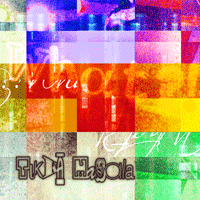
REVIEW – What?!: ‘Tikka Masala’ single, 2012 (“a sweet-natured hall-of-mirrors groove”)

19 Mar
What?!: 'Tikka Masala' single

What?!: ‘Tikka Masala’ single

Sometimes you can come across simple treasures hiding in the backroom. Dutch guitarist Niels Bakx, Sicilian drummer Raphael Lanthaler and Tyrolean bass player Agostino Collura are part of that under-appreciated swirl of humble, talented international musicians who fly in, settle down and quietly underpin bands in London, as in many big cities. People like these plug away behind the people with the big ideas and the knack for fronting. They’re the ones who finesse the roughness, who add the musical depth and the polish which brings shine and sophistication to performance. And sometimes, they secretly bring more.

Individually, each of these three have clearly got the chops and the temperament to keep themselves in demand with songwriters (Agostino plays with Anna Waldmann’s band The Cry Baby, Niels and Raphael back Charlotte Eriksson in The Glass Child), embedded in soul collectives (Agostino’s work with Retrospective For Love) and driving mixed groove-band (Raphael’s Snail Trail). Together, though, Niels, Raphael and Agostino are something else.

As What?!, they’re an assured and formidable unit; an airy, confident groove-trio audibly revelling in their flexibility and their knack for carefully-sprung timing. On spec, there’s nothing particularly unusual in what they do. Enough years spent plugging away at sessions and keeping punters happy with funk, soul, jazz and reggae tunes have made them experts in warm, sunny, foot-moving musicality: but it’s what’s beyond the blueprint that’s interesting.

Their debut single Tikka Masala (named, consciously or not, after a meal made up on the spot to keep British customers happy) is a sweet-natured hall-of-mirrors groove, light and slinky. There’s reggae in it, thanks to Raphael’s displaced bass drum taps, his tight-tuned tom rattles and Niel’s skinny-supple rhythm guitar. There’s funk in the warm spaces between strokes and beats. There’s jazz in everything, from the little golden runs of licks to the turnarounds to the feel that the rhythms are to be flung from hand to hand, danced over, teased and tag-teamed around. There are subtle refractions, interruptions of rhythm and key, that make you think briefly of progressive rock at its least bombastic and most aware. There are also flares of hard rock when all three musicians line up under a suddenly roaring guitar and suddenly start jabbing together ahead of the beat.

What’s really special about it is their complete control over the music. Their discipline is absolute but relaxed, with the feel that at any time they could shift rhythm, speed, genre back and forth in a moment, and yet not drop a single thing along the way. There are no self-conscious cut-ups in What?!’s music – no need to deconstruct. Why should there be when they’re masters of structure? – so much that if you flipped Tikka Masala around and spun it backwards it would keep every bit of its symmetry and bounce. For a demonstration of this, play the bonus track Alasam Akkit as that’s exactly what that is – a backwards-play of the A-side which sounds almost as good as the forwards version. A backwards-play which you can still dance to. Remarkable.

Exactly what this leads to, I’m not sure. Perhaps the outcome is that What?! set themselves up as a twenty-first century Sly and Robbie-plus-one. Perhaps they remain a supremely-accomplished hobby band, something which the trio engage in when they’re not otherwise employed keeping other people happy. Or do they push ahead as self-sufficient instrumentalists, seeing how far they can push, stretch and double-feint their masterful musicality? The only thing I can be sure of is that, whenever they do get together, all ways – for those moments – are open; and it’s tremendously refreshing.

What?!: ‘Tikka Masala’
What?! (self-released) (no catalogue number or barcode)
Download-only single
Released: 11th October 2012

Get it from:
Bandcamp.

What?! online:
FacebookTwitter Bandcamp SoundcloudYouTube

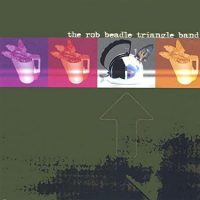
August 1999 – EP reviews – The Rob Beadle Triangle Band’s ‘A Different Kettle of Fish’ (“embarrassment, misadventures and eccentric desires “)

2 Aug

The Rob Beadle Triangle Band: 'A Different Kettle of Fish'

The Rob Beadle Triangle Band: ‘A Different Kettle of Fish’

Duck past the appalling name and the two obvious sub-Goodies joke tracks on here, and you’ll find there’s more to The Rob Beadle Triangle Band than their comedy-schtick image.

Yes, they’re student types from the University of Bath, laden down with flash gear and a taste for laddish zaniness that’s very British, very ’70s. No, that’s not all. Like Barenaked Ladies, the Bonzos and Frank Zappa (or Prince, if he’d had slapstick leanings), they’re musically skilled and canny enough to leap seamlessly between pop styles and come up with songs which can exist both as piss-takes and as serious efforts; regardless of the goofy laughter which comes with them.

 
If you picked key comparisons, they’d be the “belly-laughs, angst-quirks, ‘n’ serious playing” ethic of the long-lost 64 Spoons, or 10cc’s keen and unerring collective ear for tunes and parody filtered through studiedly cheesy wit – hence the near-perfect Bee Gees disco pastiche on The Face. Embarrassment, misadventures and eccentric desires are the Beadle boys’ main obsession. Nude gardening, suddenly finding your mum’s the star player in the porn film your friends are watching – that sort of thing.

 
The Bitch Grated My Thumb jumps between Jeff Lynne wussiness and panicky thrash; a tale of picking up a deranged bag-lady (“come to me, picture of beauty – lying in the gutter’s no place to be”) and of subsequently suffering assault by kitchenware. She Had No Teeth kicks off with ‘Mission Impossible’ kettledrums and rampaging funk-wah guitar, and deals with the horror of waking up next to the woman you’ve pulled and discovering her gums are as bare as Patrick Stewart’s scalp. As the band clatter on, whooping away on their Theremin synths, glassy jazz-funk organ riffs and Funkadelic party racket, a girl-group chorus airily sings “Things were different last night – she looked like a siren, he had his beer-goggles on” – while an anguished muffled voice yelps “Why me? Why me?”.

 
It’s all delivered with crisp production and flashes of superb musicianship (Hendrix/Hazel/Isleys-styled guitar, expert polyrhythmic drumming and keyboard swirls, Kristian Wood’s crucially light touch on voice and bass), and taking care not to let the silliness derail the winning flutter of pop. Thankfully, they’re closer to Space or Poisoned Electrick Head than to Barron Knights. The wiggly You Are Confusing Me sounds like the young Julian Cope spouting gibberish Gong lyrics, giggling his socks off in front of OMD synth overload.

 
And something better is hinted at by the quite lovely Strawberries and Cream. With flowing Spanish guitar, dancing flute lines and puffs of tremulous falsetto harmonies, it sounds like pastoral-period XTC and – in mischievous Andy Partridge tradition – is a lyrical love-song for food-fetishists, Kristian delicately murmuring “you, you’re the sweetest thing I’ve seen – / let me cover you with cream (and strawberries). / We could find new ways of keeping clean, / let me lick you til you gleam (and sparkle).”

A pocket 10cc, then, with an even more warped sense of humour, writing songs for a cleaned-up ‘Viz’.

The Rob Beadle Triangle Band; ‘A Different Kettle of Fish’
Teeth Records, RBTB 9901 (Barcode)
CD-only EP
Released:
2nd August 1999
Get it from: (2020 update) Original EP best obtained second-hand; stream via Spotify
The Rob Beadle Triangle Band online:
Last FM YouTube Spotify Amazon Music
 

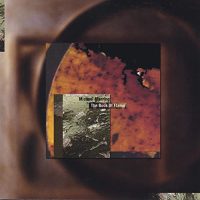
October 1998 – album reviews – Michael Manring’s ‘The Book of Flame’ (“to get on the good foot while booting great clusters of noise about with the other”)

15 Oct

Michael Manring: 'The Book of Flame'

Michael Manring: ‘The Book of Flame’

If you’re already at the top of the tree, technique-wise – as Michael Manring is – you risk losing yourself in the skill, reheating old ideas with the energy you should be using to take yourself somewhere new. Thankfully, Manring’s smarter than that.

The meticulous, mellifluous bass guitarist who flowed his way through graceful jazz/New Age composites a decade ago has evolved into a much broader musician. His central playing style (a clean blend of Jaco Pastorius’ near-vocal virtuosity and the late Michael Hedges’ percussive contrapuntal bounce) remains intact, as do his harmonically dense tapping skills and fondness for stretching things out with the EBow sustainer. But having evolved a wider arsenal of bass noises – giant distorted trunks of feedback, fretboard noise, infinite-sustain drones, occasional On-U-Sound-a-like dub effects – he’s put them to compositional use, pushing out the envelope that way.

‘The Book of Flame’ continues the process begun on 1994’s ‘Thonk’: despite its good points, essentially a reaction record jumping vigorously into noisy heavy-metal fusion to ensure Manring wasn’t tagged with the “dextrous-wimp” label. Subsequent band work – dystopian prog-funk with Sadhappy, jazz-metal with Attention Deficit, more spacious experimental improv with Cloud Chamber – has seen Manring developing the side of his playing that looks towards “why” rather than “how”.

Though ‘The Book of Flame’ uses familiar colleagues (Michael Masley; Tim Alexander; Oregon reedsman Paul McCandless) as well as a few unfamiliar ones, it’s emphatically a solo album, with two-thirds of the tracks exclusively Manring-performed. And it’s his timeliest album to date, the one best attuned to its contemporary contexts. Although he hasn’t abandoned playing for computers and pure beat-science, Manring has discovered samplers, dance methodology and loop-culture with a vengeance, and battened onto them ravenously.

 
Having said that, there are enough real-time bass solos to satisfy technique-junkies: as usual with Manring, extending the instrument’s parameters. The Fire Sermon – executed on Manring’s ten-string bass, each string individually tuned – sounds like a squad of Terminators tap-dancing down a Busby Berkeley stairway, red eyes twinkling, chromium top hats waggling aloft. La Sagrada Familia hangs slippery fretless shapes in tuneful, trapeze-act harmonics patterns; and blurs from sustained notes to clusters of aggressive tapping (similar to Red Right Returning from 1992’s ‘Drastic Measures’). And there’s an echo of Stanley Clarke’s pluck’n’pop on No Wontons for Elvis, mingling athletic bluesiness with impossible tangles of contrapuntal squeaks.

Best of all is The Book of Living and Dying, a beautiful memorial and tribute to the late Hedges in the shape of a mournful lilting tune which shoots off to Hedges’ aspirant, meteor-popping celestial heights but then pulls itself back with a lump in its throat. But these are pretty much a sideline to the real business of ‘The Book of Flame’, which is to get on the good foot while booting great clusters of noise about with the other.

 
While there’s a lot of sonic experimentation on hand, this is also Manring’s most danceable record yet, with a set of busy tunes that shake their booties over cheeky, compressed, Prince-flavoured funk grooves with that tight, offhanded boom-blat rhythm. Adult Content/Brief Nudity has that, when it’s not breaking step into narcotic stumble-shuffling trip-hop ambience. Manring’s gang of basses converse with each other and McCandless’s bass clarinet, which explores and comments like Johnny Hodges taking the air in Paisley Park. Theseus in the Rains never entirely loses its hand-clappy purple groove-chat, even when Manring brings in skirling EBowed whines, percussive string bangs like abused filing-cabinets, and an assemblage of scrapes, pops and whines like an ailing flying saucer.

 
The approach goes furthest on Your Ad Here, which sets out like Adhan from ‘Thonk’ (high and low EBow drones like pipes and ney-flutes), but soon develops the legs of a tinny hip-hop beat. Manring exchanges singing Prince-y riffettes (descending from high plucked bass) and sharp, contrasting beat-science breakdowns – earthquake-wobbles, psychedelic space-echoes, drum shadows and computer noise. Closer to Tackhead than to Stu Hamm, anyhow, and with a similar dystopian flavour to its irresistible dance impulses.

 
‘The Book of Flame’ also sees Manring’s compositional and arranging diversity at its peak. Most misleading track award goes to The Adamski Photographs, both straight and twisted. Dave Tweedie’s violent heavy-Cobham drumming and the belligerent Allan Holdsworth-ish choruses could’ve tied it down to mainstream fusion, but Manring’s bass attacks (sputtering, clattering, playing a solo like someone molding tarmac) and the jarring groove (centred on Barry Gurley’s lurching, Thelonious Monk piano) ensure otherwise. In contrast, Ephemeris is a clean, almost inhumanly perfect two-minute phase of cyclical process music. A duo of basses playing in rolling, cascading minimalist harmony: each moving in and out, in-step, in a build-and-fade composition like a jazzed-up take on Philip Glass.

 
Booming swells of sustained cosmos-bass open The Book of Lies: an undulating atmospheric weave of drillbit melodies, tight clusters of clipped Jaco harmonics and thrumming prayer-like vocal groans before Alexander’s thunderous upfront drumming drags in Manring’s distorted heavy-metal lead bass, spluttering into all kinds of squealing feedback. And eventually it falls to Dromedary to bridge all the previous directions together: a framework of heavy funk and kitchen-sink-contents percussion regularly kicked in by distorted noisecore riffs and outer-space sample weirdness, around which Manring darts bubbling, talkative solo lines.

 
Accessible, yet challenging – and far too open-ended/minded to settle into the role of self-conscious masterpiece – ‘The Book of Flame’ is the best evidence yet of Michael Manring’s importance. Juggling high art and down-to-earth fun, he’s evolved from a rarified treasure into a broader pleasure, and seems set on the road to continue that way for a long time.

Michael Manring: ‘The Book of Flame’
Alchemy Records Ltd., ALCD 1015 (607387101520)
CD-only album
Released:
13th October 1998
Get it from: (2020 update) CD best obtained from large online dealers or second-hand.
Michael Manring online:
Homepage Facebook Twitter MySpace Bandcamp Last FM Apple Music YouTube Vimeo Deezer Google Play Pandora Spotify Instagram Amazon Music
 

October 1998 – live reviews – ‘The Sound Of Satellite’ (featuring Sand, Lucha Libre, Yossarian, Karamazov, Heavy Q) @ Notre Dame Hall, London, Friday 9th October (“The Young Gods meet ‘Rugrats’…”)

13 Oct

This time, I’ve done it.

For once, I’ve arrived on time… and Notre Dame Hall is so empty that I reckon I’m going to be outnumbered by the bands. Above me, a glitterball spins very, very slowly. Off to stage-right, a slide is projected onto the wall back-to-front. Smoke drifts across from the other side of the stage, as if one of the boxes of gear has quietly caught fire. Horace Andy plays over the sound system. I’ve never noticed that squirmy edge to the sweetness of his voice; or how well it suits embarrassment.

No. It doesn’t go on like that. In fact, and independently of tonight’s acts, it ends up as one of the friendliest concerts I’ve been to in ages. But that first half-hour – of me as the lone non-label person in the house – gives me an idea of the risk which labels like Satellite take on whenever they put a night like this together. If you’re a mainstream label with a nice little crop of pushable guitar pop bands, and you want to hire out some dedicated pub for a concert party: well, fine, you’re probably onto a winner. If, alternatively, you’re a small label best known for fringe electronica such as Fridge, Rothko, and Add N To X (one of whom is DJ-ing tonight) and you’re hiring this big cinematic ballroom… then you must be trying not to sneak nervous, sidelong glances into the looming face of failure.

When I befriend Pete, the Satellite house photographer, he tells me that as soon as tonight is finished they’re taking the whole thing – lock, stock and barrel – over to Paris, to repeat the concert. Within the day. Gluttons for punishment. Or people who believe in what they have to offer.

* * * * * * * *

What they offer (or unleash) first is Heavy Q, whom I know from a single truly bizarre piece of experimental vinyl. He/she/it/they?… He. One Japanese guy, Lee Young Sin, in a glitterscaled wrestlers mask, hunched over a pair of samplers as if preparing to split them in half by sheer willpower (one of them, appropriately, is labelled “Quasimidi”). We’ll see him later as part of Lucha Libre, the other members of whom are tracing his every move with Handycams.

What he’s up to right now is squeezing out slice’n’dice anti-dance music as the hall begins to fill up; a scary dead-funk cyborg strop interspersed with cut-ups of Japanese telly chatter and cheering. At one point a sampled announcer burbles a bit of plain English – “breaking the earth for us tonight” – with the cheesy enthusiasm of someone who knows the next bit of hype which they can stick in their arm will be along in another few minutes. That same hysterically enthusiastic announcer will be weaving in and out of Lee’s music like a persistent hiccup; a glassy, untrustable ringmaster to his sonic circus.

Heavy Q’s second piece is a randomised assault of backbreaking drum sounds; drum’n’bass minus the calming balance of the bass. His third is a children’s chant, slapped up against a deathly brutal industrial tom rattle. As he moves over to rummage on his table of electronic debris, the sound runs on without him, mutating into Bollywood singsong, strangled by tortured electronics. By the end of it, Lee has turned himself into a vast, vulgar techno-god statue on top of the table. Arching back and moaning a deep thick bass vocal into his microphone, he’s almost at one with his sampler. He drinks from a sparkle ray-gun; he adjusts his electronics like he’s tying his shoelaces. Throwing a sarcastic cock-rock pose, he waves a theremin aerial around at phallus height.

Is this the answer to the problem of the personality void in electronica? Living up to the gigantic sonics by taking onto yourself the aspects of a monster movie?

* * * * * * * *

Talking of the personality void… things are working out contrary to expectations. At any given unpretentious, good-time indie gig, I’ll be out in the cold, a blip on the doorlist among self-satisfied strangers. Here, on a night that ought to smack of exclusive club, a night which you’d expect to exclude, I’m making ceaseless cheerful conversation. Buoyed by camaraderie, I and my new friends agree that, in contrast to Heavy Q’s theatrics, Karamasov have the slightly bored, stiff look of too many art-scene bands.

Perhaps it’s that old cliche of Teutonic cool: half of the band is genuinely German (guitarist/cellist Johannes von Weizsacker and stately blonde percussionist Berit Immig), while the London half (bassist Harry Rambaut and synth player Adam Stewart) aren’t exactly Essex ravers. Certainly their music’s lodged in European post-rock cool rather than Pacific rim commercial frenzy, their set opener wheeling along on Harry’s sproingy pre-jazz bass, Jonathan’s phased guitar scrub, and a lonely, farting-Dalek riff on Moogbass. They look at each other as if they’re setting up lab equipment; or preparing John Cage’s piano, like good little acolytes. Their second piece is something from the chillier end of Stereolab‘s science school, albeit with a few sniffs of quiet humanity appended. Echo-slapping cello effects, and skinny Moog squirts something like Philly soul strings, sketched and autopsied. The cello scrapes like a worn wheel; Berit’s oddly heavy-metal drumming is rookie-tense, but snaps tight regardless. On the beady-eyed Roadsnack, she switches to spiky organ against Jonathan’s piano-ping guitar.

Out on the floor, meanwhile, we’re waiting for them to enjoy themselves. I know, I know; there’s a certain credibility to that kind of icily unmoved, Euro-scientific music creation. But… Karamasov come across so much better when they drop it, hang out, and just play. It’s probably not intentional, but Uneven Surface sounds something like Genesis’ Watcher Of The Skies filtered through Faust. Hmmm. ‘The Wire’ would have a fit; but the bass stabs and drum riffs are received with joy by the Satellite audience. Happy Hour ain’t the Housemartins (which would’ve been interesting, come to think of it), but sounds more like Neu! reinventing lounge music, as Berit tinkles out melodies on the vibraphone. Most welcome of all is a piece I didn’t catch the name of, in which the increasingly impressive Berit sings in a detached Nico murmur (not unlike Elizabeth K.’s interjections for Eyeless In Gaza) over a tune not unlike a relaxed cross between Levitation and A.R. Kane (with a bit of the brisk arty hoppiness of a warmer German band, F.S.K).

During the next interval, the DJ plays Egg and Soft Machine rather than some fearsome tranche of blunt improv. A definite feeling of thaw is in the air.

* * * * * * * *

Yossarian turns out to be both a band (two keyboardists out of a ’50s B-movie and a drummer) and a bald mad-scientist character, looking not unlike Alan McGee. This is Tim London – Yossarian’s prime human body. In a previous life, he was the slightly warped pop brains behind Soho (if you remember the Smiths-sampling ‘Hippychick’, not that there was much else).
These days he’s wrapping his cortex round far artier pop shapes. One piece – all drones, cymballine drums and organ – sounds like Mark Hollis knitting together Labradford and Spiritualized; a chorus of “I will call, and you will come” and an unexpected blaze of harmonica. Other pieces sound like late ‘60s Scott Walker sitting down hard on late ‘80s Pet Shop Boys, and others…

Vocoders, yet! Those pained machine voices are back, along with Air-style pretty melodies served with an avant-garde hiss and a cheesy Bontempi beat under the flagrant detail. What is this nut trying to morph into and sell to us now? E.L.P.? The Glitter Band? By the time I’ve decided that it’s a sort of electronica ‘Parklife’ with car-crash keyboards, he’s exploring bleak Bowie ‘Low’-ies and hitching them up onto Prodigy-style wall-of-fire beatoramas like an erupting Las Vegas volcano.

All of a sudden, I see Tim London revealed as electronic art’s own John Shuttleworth, and relax a bit. It’s an impression carried in his archness, in his taste for a classically creaky lounge-pop tune, his self- conscious anti-cool (“I’ve never played in that time signature before”, he drawls), his total deadpan approach to the ridiculous or to any intimations of hubris, and most of all in the way that, having thrown electronics at us all evening, he encores by – get this – playing the spoons. Respect is due. My old man’s a Cyberman an’ all that.

* * * * * * * *

Osakan noisefreak-fusioneers Lucha Libre have bigger hats than anyone else. They also have bigger presence, taking the stage like EMF used to do. They possess a double-brass frontline – one capering trombonist leader (Teruhiko Heima) in a Kiss ‘Destroyer’ T-shirt; one surreally dignified sax player (Akifumi Minamimoto). There’s also a transplanted heavy metal core in the shape of Takashi Sakuma, a sampler-wielding guitarist with long tartan shorts, a serious Van Halen fixation, and one of those hilariously literal Japanese sweatshirts. This one reads “Pretty Tough Sport”. Finally, they have a digital heart on frantic overdrive – everyone except drummer Jun Tsutusui seems to be doubling on synth.

By their seventh number their bassist (Lee Young Sin, back in a different guise) is walking on his hands and playing the synth with his head amidst a hurricane of Coltrane-meets-Black-Sabbath saxophone. Before that, we’ve been privy to a Donington’s-worth of heavy-metal axe abuse; a swelter of industrial goofing and salsa horns; and a stage act best described as The Young Gods meet ‘Rugrats’. We’ve also, as a responsible audience, totally turned around received notions about arty label nights by absolutely loving it to bits and yelling for more, as the twit from ‘Melody Maker’ shakes his head and frets about missing ‘Friends’. Lucha Libre continue their delightful murder of cool regardless.

Now they sound like ships coming into a drunken docking on Mars – big trombone blurts, the rattle and squiggle of electronic timepieces, and phenomenal yowls and divebombs from the metal kid. Now they’re on a big, spacious, tricky funk beat: Akifumi an oasis of reedy calm as a funky harpsichord riff pops up from keyboardist Soichi Murota and the band head into the slabby, tottering, Theremin-ized jazz-funk of the ‘We Have No Our Groove’ single. Next, they pull out in order to plait Led Zeppelin into the ‘Mission Impossible’ theme.

By the encore, Teruhiko is hammering out a torn tom tattoo on a commandeered chunk of Jun’s drumkit. Stuck horn drones giggle at him; the sax thrashes – squalling and wailing – in a cauldron of frenzied bop, and Takahashi fires Heavy Q’s abandoned raygun into his guitar pickups. It’s like seeing a particularly extrovert software virus trash your screen, in blazes of grinning colour. As they settle into a long final lope, razzing trombone carrying the melody over the clipped sax and Durutti guitar picking, the air inexplicably fills with a powdery scent of flowers. This is some sort of Lucha Libre Japanese magic, I guess: the sort of thing which that passionately confused nation throws up so well.

* * * * * * * *

With a massive wall of dry-ice fog and a sound like Satan belching (it’s some sort of conch, in fact), Sand prepare to close the evening. A massive mound of frizzy dreadlocks hoves into view and starts growling Andean death-metal at us. Crops wither within a three-mile radius.

This thing is – to stretch the Trades Description Act a little – Sand’s singer. Whether it’s possible to declare a force of nature part of your band is a matter for Sand and their lawyers. They used to be called Germ, which is an understatement and a half. They should have been Epidemic. To put Sand into perspective, they are something of a return to normality after Lucha Libre’s mad playground display, even if they do both feature upfront trombone. Sand are also, by far, the most assured band on tonight – elastic harmonic bass from John Edwards, the precise touches on Rowan Oliver’s looping drums, the wash of ravishing electro-gale off Tim Wright’s keyboards: a bit like Rain Tree Crow with a trombone, but only if they’d been fronted by David Sylvian’s monster-from-the-Id. This is something which the Sonic Youth-style drumsticked drone guitar and the ‘Bitches Brew’ mute on Hilary Jeffery’s trombone only accentuates.

The monster on vocals – whose name is, apparently, George – evidently knows harmonic overtone chanting. His reverberating rasp blends in with the trombone’s blare, the slipping geological sample and the Bruford threes which Rowan is now shooting off the top of his kit. The mike slips deeper into that mane of dreads. From the unseen mouth the Devil pukes noise, sprawling and rolling: echoes of Diamanda Galas, balled’n’bassed up, or of Magma. If many of the smooth dream-rock tones of Sand suggest a vigorous muscle-flexing tone-up, that voice feels like being rolled hard in the gravel afterwards. Among other things, Sand offer a crushing world-music for the ever-so-slightly masochistic.

“You can dance to the next one,” comments band spokesman Hilary, draining the spit from his trombone as John brings on a double bass to play… well, some salsa from hell; the guitar and keyboard filling up the spaces in the music with an inspired patina of drone-trash. As another Sand piece forms (a reedy melodica, skullclick percussion, a lost wail from Mr Mountain as the band traverses a flat, disturning plain of atonal movement) you wonder whether this band would ever really make you want to dance. Why should you want them to, when instead you can suffer the perverse enjoyment of feeling Sand twitch the crust of the earth from under your feet?

* * * * * * * *

I don’t care. The liberating, socialising force of dance was the one aspect of electronic music that was ignored tonight; possibly because it was redundant. In between writing my notes I’ve filled my ears, had a doughnut, leafed through vinyl stalls, and spent an evening in the belly of the art-beast, chatting away to some of the nicest people I’ve met in ten years of making up gig numbers.

I finally let my tired eyelids swell, and turn my weary ankles homewards. Satellite are packing up, engrimed with cigarette smoke and fired up on the warmth of the evening, making ready to ship it all across the Channel to the City of Light.

This time, I don’t fear for them.

Sand online:
Homepage

Lucha Libre online:
Homepage

Yossarian online:
Homepage

Karamazov online:
Homepage

Heavy Q Connection online:
Homepage

Satellite Records online:
Homepage

(2018 update – after twenty years, it’s no surprise that most of those bands and projects have long since ended. Post-2001, Satellite Records was mostly reabsorbed into its ongoing parent label, Soul Jazz; and the Satellite, Yossarian, Lucha Libre and Heavy Q links above connect only to discographies. Yossarian’s Tim London (a.k.a. Tim Brinkhurst) now works as a film-maker, as a music lecturer at the British & Irish Modern Music Institute in Birmingham, and as producer, most notably with Young Fathers. The members of Karamazov are still friends and collaborators, working together in various combinations in The Chap and Omo. Sand also continues in various forms and names, generally helmed by Tim Wright and Hilary Jeffery. It’s unclear what’s become of the members of Lucha Libre, although saxophonist Akifumi Minamimoto did also put some time in with “jazz/R.I.O. progsters” Djamra. Meanwhile, Notre Dame Hall ended four decades of musical history covering beat pop to punk to avant-gardery in 2001, when it became first the Venue theatre and then the Leicester Square Theatre.

Oh – and sorry about the lack of pictures. When I got friendly with Satellite’s photographer, it clearly didn’t include me blagging post-concert photos out of him.)

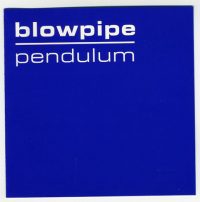
May 1998 – album reviews – Blowpipe’s ‘Pendulum’ (“half given over to Blowpipe’s previous grace, half to a new and more aggressive club attack”)

18 May

Blowpipe: 'Pendulum'

Blowpipe: ‘Pendulum’

In jazz, things move on, and Blowpipe are no exception to this. Father-and-son brass-and-reed players Robin and Andrew Blick joined forces last year, making a mark for themselves last year at the point between hips and heads for their own spin on jazz-meets-clubland, sliding in alongside acid jazz with something a little more sophisticated and challenging.

The enthralling ‘First Circle‘ was the outcome: a rich and rewarding chill-out-and-expand intertwining of busily-bubbling electronica with old-school jazz conversation. Alongside guitarist Paul Reeson and the remarkable electronic sound-weaver Stephen Watkins, the Blicks set up a heartfelt and fertile union of jazz expression and latter-day dance-floor pulse, a tapestry of burbling intelligent techno, deft horn dialogue and fluent electro-acoustic textures. It was a joy to listen to, and its success has been recognised in one direction, at least.

‘Pendulum’ (a hot-on-the-heels follow up to ‘First Circle’) comes after Blowpipe’s deeper welcome into the ongoing club revolution – they’ve played on the new album by drum’n’bass pioneer Grooverider – and a big line-up shake-up. Whether burnt, inquisitive or disillusioned, the Blicks have opted to change the band’s instrumental chemistry. Blowpipe’s armoury of blowables (which already featured the Blicks’ trumpets, saxes, assorted horns and abused pipework) has been expanded by the addition of Nick Reynolds’ harmonica; they’ve also added a steady bass player in Tom Harrison; and there are frequent guest appearances (and stronger links to the jazz world) from saxophonist/flautist John Burgess of the Harry Beckett band and the Tom Bancroft Orchestra. But most crucially, both Reeson and Watkins are now out of the picture (apparently, halfway through recording). Consequently, while half of ‘Pendulum’ is given over to Blowpipe’s previous acoustic/ambient/electronica grace, the other half is shaped by a new and more aggressive club attack.

Of the old school stuff, Airport Woman is the most graceful: a mass of beat-free, blurring big spaces: back-and-forth cello loops, rainy-night muted trumpets, glows of soprano sax and a brief return from Paul Reeson. The Spell is Broken is wrapped in a backwards bassy ostinato (padded up by Tycho Andrews’ wah-guitar) like an orchestra in a North Sea fog, thick hazy air through which Andrew Blick’s trumpet clarion cuts like a lone lighthouse beam. Muting down and vague-ening in the heavy atmosphere, it gently illuminates (above the clanking guitar rhythm and the creak-crunching sonics).

However, this album’s signature is definitely made by the harder breed of Blowpipe pieces, by the post-Grooverider drum’n’bass influences. This could have been a good thing, given that music’s ferociously intelligent, toppy rhythmic attack: the bebop of the club scene. But in practice? Um… maybe not.

The main problem is a loss of that crucial Blowpipe balance. Neither of Stephen Watkins’ on/off successors (Patrick Mosley and Mike Servent) possess any of his subtlety, meaning that the detailed electronic textures of ‘Full Circle’ have been overturned in favour of synth washes and more blatant beats. And while the Blicks remain as eloquent as ever, Nick Reynolds’ harmonica virtuosity is of the tinny, bullying breed: a soulless Mark Feltham cop. Sometimes the new marriage is a happy one, as on Avanti’s drowsy harmonica patina and cloudy brass blankets, mixing it up with breakbeats, Harrison’s Bootsy bass, and Andrew’s cold trumpet motif. But when it’s at its worst, the Blicks seem sidelined within their own project, locked down in the cages of snare drum.

The analogue gut gurgles and video games blippery of Usurper work quite well, as Reynolds’ sharp harmonica riffs mingle with fluent fluttering sax and muted trumpet. But Unravel’s tight fast rattle and saurian bass quakes are overcome by the belting raucous harmonica and brass. Robin Blick’s soprano scribbles too frantically, Andrew’s echoed trumpet sounds busy and sour. The raw power of Scorched Earth’s distorted breakbeat and Harrison Wobble-y bassline can’t make up for the yammering, overbearing harmonica overkill: Reynolds blowing flatulently all over the Blicks’ bitty chips of sax and trumpet and Katherine Blake’s skidding tremolo violin. And School Disco (working title or what?) is just clodhopping: a flatfooted stomp which sounds like it was recorded in an underpass. John Burgess’ guesting flute fights to keep grace going against the dirty swathes of distorted harmonica.

When Reynolds is kept on a tighter leash, things work out much better. On the climactic Phoenix, for example, where Burgess’ bass clarinet and Andrew’s dawning trumpet lines repeatedly criss-cross each other over didgeridoo droning and Robin’s sax hangings. Or on Pendulum itself, which uses power without clumsiness. Rising off a big Bonham-y stomp with overdriven trumpet and giant floppy bass, Robin laces in some ascending saxes and curtains of brass. There’s a guest tenor scrawl from John Burgess: then, amid the whale-song trumpets, an incongruous Scott Walker sample pops up to breathe in bluer air. “The little clocks stop ticking now…” Everything does stop ticking. Everything kicks off again. Marvellously perverse, and a particular highlight on an album which sometimes fails to live up to Blowpipe’s initial promise, reminding us of how good they can be once they’re back in focus.

Blowpipe: ‘Pendulum’
Robot Records, ROB 001 (5019148617297)
CD-only album
Released:
15th May 1998
Get it from: (2020 update) Best obtained second-hand, or streamed.
Blowpipe online:
MySpace Amazon Music
Additional notes: Robin Blick now leads Blick Trio; Andrew Blick leads Gyratory System.
 

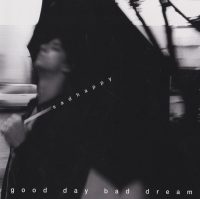
July 1997 – album reviews – Sadhappy’s ‘Good Day Bad Dream’ (“a contemporary progressive group that’s unafraid to mingle technique, horror, street-smarts and a mordant, lethal wit”)

4 Jul

Sadhappy: 'Good Day Bad Dream'

Sadhappy: ‘Good Day Bad Dream’

The voice on the telephone chuckles. “Sure, it all made sense to me. You just burn it out, past the pain. / Sure it’s all toxin: you just work it out of your system.” Somewhere between a Berklee College education, an Olympia punk statement and the world of woodshed ravings you’ll find this – rolling down a quiet highway like a fatal fog-wall.

For their fourth album, the alliance of drummer/sample mangler Evan Schiller and bassist/spoken-word freak Paul Hinklin has convulsed yet again to install a new Sadhappy lineup. Out goes eccentric Critters Buggin/Tuatara sax player Skerik. In comes Michael Manring, ’90s bass guitar genius, for a very different approach to the power trio. Two basses might sound like a recipe for disaster – ‘Jazz Odyssey’ doubled up, or cheesy slap-funk duels. Sadhappy get around this by realising the implicit power in the timbre of the bass guitar: the added resonance, the volcanic rumble it’s impossible to ignore, the sheer booty-shaking body. And they go for it full-bloodedly. In the resulting low-end carnage, saxes and guitars are not missed.


A lot of this is to do with Manring, who’s rivalled only by Tony Levin, Victor Wooten and Doug Wimbish as a contemporary redefiner of bass guitar. Not content with just a jaw-droppingly dextrous technique (whether grooving fingerstyle, slapping, tapping, or picking), he’s as liable to mutate melodies by abrading them with an EBow and/or in-flight retuning. And, as you’d expect, ‘Good Day Bad Dream’ is a treasure box of bass sounds – the levitational noises on Lost in Bass; the chainsaw punk rumble on Maintenance Pissed and Chronic Subsonic Tonic; the multitracked interplay of worming harmonics, chunky strums, and wolf-wails on The Kitchen Sink. But it’s no mere technique-fest.


Yes, for the most part it’s instrumental. And at its most basic (Home Lobotomy Kit, Honeymoon Deathbed) it tugs us through a darker edged and more credible fusion revamp via Hinklin’s brutally precise twanging, growling basslines, Schiller’s clattering, tight as a mantrap drums, and Manring’s distorted, storming, articulate leads. And there’s a strong element of the roaring hybrid of thrash, fusion and left field virtuosics that fuelled Manring’s last album ‘Thonk’, recorded as an attempt to escape his inconvenient reputation as a jazz-leaning New Age muso. But in meeting the streetwise intelligence of Schiller’s drumming and Hinklin’s sardonic New Music/punk’n’sarcasm influences, Manring’s restless and complex musicality has completed its journey away from the New Age racks.


‘Good Day Bad Dream’ emerges from this as an album blending multiple strands of modern electric music with surprising success. It’s an overlapping low end approach of eerie smoggy textures, wrapping up art punk, weird funk, jazz, dark ambience, sampledelia, progressive rock, sound massage, and a dash of psychological sewage. The trio nod to Mingus, the smouldering dark star of modern jazz, with a strutting and dextrous cover of his sarcastic II b.s. With the fifteen minutes of deathly textures and world-swallowing bass oceanics on The Death of Webern, they’ve got that scary isolationist-ambient game sown up too.


Evan Schiller’s light touch throughout ensures that the band are never bogged down. Within The Kitchen Sink’s light-fingered ostinatos, King Crimson riff choirs and E bow calls, his precise percussion approach rings, swooshes, crashes and drops out to leave perilous canyons in the texture of the music. On SBD, he shines with an array of sparse metallic taps and lethally timed buzz-rolls under a lowering cloud of bass, a dark canopy of wails and murmurs through which Manring winds skeletal insect-trails of overdriven bass, twisting and skirling like cyborg bagpipes.
……………………………………..


But the key to Sadhappy’s success in reaching out beyond the fusion ghetto is Paul Hinklin’s acidic humour, which lurks somewhere in the triangle between Tom Waits, Frank Zappa and Bill Hicks. In the recurring, repulsive figure of Oscar (a forty-nine-year-old backwoods Beavis with a voice like a plastics bonfire), he gives Sadhappy their own all-American idiot guide, a lottery sweepstake winner with “money comin’ out of his ass” swaggering over a racket of bellowing grunge-garage art rock riffs. His new rich man’s horizons lead him only as far as the porn racks at the general store, or to the bar; a coarsened American Dreamer content to do nothing more than wallow in his own filth and boast about it (“Yeah, you gotta work for the rest of your life: I own the streets I piss in!”).


On False Information – a sort of post-Laswell take on a ‘Remain in Light’ groove, burrowing through post-rock and hip hop en route – Hinkler offers us a lighter look at the aches and absurdities of the modern human condition. “All the guilt, all the shames, all the blames, / all the payments that you pay for crimes you never even committed, / never even thought of – what’s up with that?”. Schiller’s pin-sharp sample-heavy beats jab and dodge like a lethal flyweight boxer as Hinklin’s sardonic voice chuckles at enlightenment: “You see past everything and you say, this is just me plus garbage. Hell, if I couldn’t see the garbage, then I would be the garbage. Thank God I can tell I’m not the garbage. “‘Scuse me, honey. I have to take myself out to the trash. What is truly me will come back to dinner. It’ll just be me minus garbage.””


Sometimes though, the humour goes darker. In the harsh fable of Hammering Man, the townsfolk turn out to watch the unveiling of a statue: “a testament to the nameless brave, to the unselfish, the holy slaves. The ones who gave their bodies and minds to the army, the ones that gave themselves to the might of the all powerful industrial machine. The ones that had made America strong, the ones that had made America beautiful. The ones that, through no fault of their own, had turned it into a wasteland.” Small wonder that the statue crumbles, toppling to pin the spectators to the earth.


In the brooding dusky groovescape of Oscar Gets Laid, we get to see a younger Oscar, callow and innocent, rubbing up for the first time against the world that’s going to corrupt him. Manring’s mixture of rattling ominous echoes and scritching, coppery industrial harmonics send a shiver down the spine, as Hinklin’s murmured vocals explore paranoia and fascination down the back alleyways of the mean streets – malevolent shadows, and the breath of heroin ghosting out of the skins of hookers. At last: a contemporary progressive group that’s unafraid to mingle technique, horror, street-smarts and a mordant, lethal wit.


It’s also one that’s firmly rooted in the present, soaking up the lessons of grunge, dance, and sampler culture, while still playing the arse off all comers. Even if ‘Good Day Bad Dream’ sometimes strains the limits of its excellence by being just a little too diffuse, too dependent on fusion fallback, Sadhappy move through their music with assurance, imagination, presence and a brutal vigour. And that’s an all too rare combination.

The smile on the face of a charming, constructive killer.

Sadhappy: ‘Good Day Bad Dream’
Periscope Recordings, PERISCOPE RECORDINGS CD04 (7 96873 00042 0)
CD/download album
Released: 2nd July 1997

Get it from: (2020 update) Original CD printed in a run of 1,000 – CD and download best obtained from Bandcamp.
Sadhappy online:
Homepage Bandcamp Last FM YouTube Vimeo
Google Play Spotify Amazon Music
 

October 1996 – live reviews – The Blue Nile + Sinéad Lohan @ The Palladium, London, 8th October

10 Oct

Wait in any given place for a long time and reckon up the odds. Which are you more likely to see passing by – Bigfoot, Lord Lucan, or a member of The Blue Nile? The chances are about equal each way.

In a business that thrives and surfeits on over-exposure, The Blue Nile only sidle into view when they absolutely have to. In fourteen years of tenuous existence, this reclusive biz-shy Glaswegian trio has offered up no more than three short albums of exquisite ambient Celtic soul; stripping away the armour of the heart with cheap drum machines, breathing synths and skeletal guitars, and the scalded, mournful grace of Paul Buchanan’s desperately romantic deep-tenor voice, leaving us flat on the floor and then departing so quietly we don’t hear the door shut.

While they’ve had stiff competition from Kate Bush and Scott Walker in the stakes for lying quietly in the long grass, sometimes The Blue Nile are out of view for so long that they seem no more than the shadows of our own heartbreaks. Three phantoms whom we can fill with the overflow of our ruined, hopeless good intentions and the agonising rush of a love with nothing and nowhere to ground itself on. Every now and then, though, they surface – as they have tonight – put out a record, and those shadows take on flesh.

But first we have Sinéad Lohan; a Cork lass with beaded hair, a salving murmur of a voice, and the composure of a marble Madonna figurine. From out of nowhere to the grandiosity of the Palladium, and still she’s not batting an eyelid as she delivers her soft thrumming folky songs to a warm reception. She even invites questions, and gets them. She has that atmosphere that some quietly private people have, the stillness that invites fascination.

From up here her eyes seem sleepy, focussed inwards, and her songs are the same, ripples of feeling reflected in still pools that make you feel like a privileged eavesdropper. All of this and the quietness makes her seem like an Irish Tanita Tikaram without the air of lazy resentment. After she’s left the stage, I realise I can’t actually remember what any of the songs were about, but the impressions of the emotions involved remain etched lightly on my imagination. She’s as subtle and strong a carver as smooth river water.

After seven years out of the public eye, most bands would return to the stage in a blaze of glory. The Blue Nile don’t even turn the lights out properly first as they slope onstage like reluctant supply teachers. I mistake them for roadies until I recognise Paul Buchanan’s pained, elegant features among the men fumbling to pick up the instruments, all but flinching at the applause and the eyes trained on them. But it’s something they’ll have to deal with.

For all of their heart-stricken loneliness, The Blue Nile carry a very special feeling of empathy and homecoming around with them. Literally, in some respects: tonight’s audience ripples with the voices of Glaswegian emigres. And when one Scots voice, brought to a pitch of excitement, calls out “Glasgow Celtic!” it’s followed as fast as a counterpunch by a Rangers fan’s disgusted “fuck off!” Rather than a slit face, this results in a ripple of laughter and recognition around the auditorium. There are wry, self-conscious chuckles from the band as they finally launch into the Van Morrison-gone-synth-pop chug’n’whoop of Body and Soul.

All of this civility (and this nod to a respectable musical touchstone) prompts the question. Have The Blue Nile, for all their cult status, ended up as another branch of hoary pop tradition for the impeccably adult? Certainly they shy away from sarky pop irony, and they’ve a sheepish but determined commitment to presenting their songs unvarnished by gimmicks. Don’t even try looking for Pet Shop Boys cleverness here.

And then there’s the impeccable cleanliness of their sound – the clipped white-gold ring of it, the slow stretch of the falling-evening keyboards, even the live drums compressed to stiff Linn thuds… Or, on the other hand, the occasional hints of country in the songs from the new ‘Peace At Last’ album and how Stay’s heartbroken synth pointillism develops from a Scottish electro-pop lament to a finale with suspicious hints of rockabilly or hoedown. And, of course, there’s the way Paul’s huge voice draws from Frank Sinatra’s warm cocooning sound, rather than any from any obvious rock source.

Sinatra, though, never sounded this touched; this blown through by overpowering feelings. Even behind the theatrics of his saddest songs there was a man preening in his power; the guy who was laughing now; the honorary Mob capo whose very tone was a muscle. Behind these songs are a man who winces; who knows the scuffed concrete in the buildings he walks past will outlive him. Who’s haunted by the moments where decisions rest before they fall into becoming facts, and who’s never short of melody but is often stripped of words. And who, on this occasion, is swigging Lemsip by the gallon to beat off a vicious cold. It brings the vulnerability of The Blue Nile’s songs into sharper focus.

But then they’ve never suggested that the business of being adult is supposed to be easy, or even make much sense. ‘Peace At Last’ made that as explicit as anything ever is in the Blue Nile universe – a middle-aged album (Paul Buchanan turned forty while recording it) which showed youthful, domestic and spiritual certainties past their flush and breaking down into a unflattering mirror of doubts and shaky illusions. A new testing ground after their landscapes of young men’s fears had slipped away back into the years. While The Blue Nile don’t go so far as to drag middle-aged trappings – such as chipped crucifixes or well-dusted-yet-unloved three-piece suites – onstage with them, they wouldn’t need them. The words to these songs swim to the surface in flashes; brief snatches and sketches of anguished images that settle into the heart’s eye as if their places had been waiting for them forever.

A couple of songs from 1989’s peerlessly lovelorn ‘Hats’ album illustrate this – Over The Hillside fumbles through the burden of day-to-day failure and the pull away from home; Headlights On The Parade sees Paul lose himself in night-haunted reverie, borne on by the serpentine romantic curve of the melody over the mechanistic drumming. Tonight’s rendition of Happiness, a song already riven by doubt (“Now that I’ve found peace at last, / tell me, Jesus, / will it last?”) has to replace the soaring black gospel chorus that boosts it on record with three uneasy white men murmuring into shared mikes. You wouldn’t have thought that it could reach the same hymnal level, but it does, albeit becoming more of a private prayer.

Another ‘Hats’ classic, The Downtown Lights, has the transcending, unresolved journey-feel of a crying fit; heart-stricken keyboard swells giving way to beautifully sad reflection and back again, rising to a frantic crescendo of loss. The atmospheric abstractions of A Walk Across The Rooftops don’t give away much in the way of clues, but they do give a night-time stroll a tint of darkest foreboding.

And Family Life just overwhelms – a mid-life crisis set to song. Echoes of Tom Waits, Randy Newman and crumbling Hollywood Christmases coming together in the heartbroken drunken pleas of a man whose marriage is unravelling, whose boyhood innocence is rising to ask bewildered questions. Paul, singing like a man suddenly and shockingly shrunken, plays the role to the hilt. But there’s no storytelling, no plot; just feelings and the alcohol dissolving reasoning down to more questions and a blurred, blundering comprehension. “Say, you know, / no honeymoons, / just separate chairs in separate rooms. / Jesus, please, / make us happy sometime – / no more shout, / no more fight…” As the last scraps of piano dissolve in the hush, the frenzied applause seems to spray tears of recognition and relief.

It’s still as un-showbiz as you can get. All of these emotions are being let off on a very tight leash. The magisterial Robert Bell doesn’t crack his stern kirkman’s expression all evening, whether he’s forcing compelling crabbed funk lines out of a bass, keening his rare backing vocals into Buchanan’s mike, or crouched cross-legged onstage beating out patterns from the tiny synth in his lap. Over on stage right, P.J. Moore plays with an abstracted serenity as the Blue Nile’s bare, effective colorations flood out from his keyboards. The supplemental three on drums, guitar and synths play with their heads slightly bowed – more quiet men. So it’s the hunched, embarrassed Buchanan that’s the reluctant centre of attention; muttering wry Glasgow “let’s-get-this-over-with” asides between the songs, but singing his heart out of his chest and punching it up at the sky every time the music rises.

I guess that even with embarrassment weighing at his coat-tails, he can’t help it. There’s often a desperate strand of hope-against-hope in The Blue Nile. The near-delirious Sentimental Man ascends out of a jumble of chippy funk facets to hit gospelly heights; the intently energised strum of Tomorrow Morning rushes towards the light as if Buchanan was trying to beat the pain off by hurtling towards hope. Tinseltown in the Rain – which belts along as if it was the peak of some uncompleted Glaswegian street-opera – bursts up to a plateau of emotion, aggressive certainty struggling with a sense of doom. (“do I love you? Yes, I love you! / Will we always be happy-go- lucky?… / But it’s easy come, and it’s easy go. / All this talking – / talking is only bravado”) before exploding in a carillon of stammering, tear-jerking guitar.

And on Saturday Night you can feel the blessed surge of relief at a simple romance – “an ordinary girl” hymned with a incredulous delight, an everyday date turned into a haven from the wracked, exhausting, damn-near-religious romantic angst of the Nile songbook – turning out right for once. As the last swooning joyous chimes mount the air, I hear a ecstatic voice screaming “Yes!”. It’s my own. I can’t help it either.

Later, Bell and Moore take up positions at the synths on each side of the stage, waiting to play Easter Parade. White-clad, calmly watching each other for the cue, they have the assured and tranquil air of surgeons waiting to lay on the hands and bring out the pain. Then the song comes – plangent clutchings of piano, gushes of night-breeze synth and Buchanan singing of being alone in a rapt crowd, carried along like a solitary bubble in their exhilaration. And the empathy is summoned up and floods through us like medicine.

They can still touch the pressure points of the soul like no-one else. In another few months they’ll be hiding from us again, but that touch is going to stay with us until they feel able to venture out into the world again, blinking with trepidation at the looming feelings waiting to catch them.

The Blue Nile online:
Homepage Facebook Twitter MySpace Soundcloud Last FM Apple Music YouTube Deezer Google Play Pandora Spotify Tidal Amazon Music

Sinéad Lohan online:
Facebook MySpace Last FM Apple Music YouTube Deezer Google Play Pandora Spotify Amazon Music
 

Sometime in 1995 – album reviews – Dayna Kurtz’s ‘Footprints’ (“venturing into the faultlines between lovers which lurk in the most private places”)

30 Nov
Dayna Kurtz: 'Footprints'

Dayna Kurtz: ‘Footprints’

I’m not a stranger to heartbreak (either my own or that of others), but in all my experience of it, there are many things I haven’t done. I’ve never sat nursing a coffee in an all-night cafe as the dawn breaks, rearranging the cracked facets of my bitter smile. I’ve never composed the ultimate understanding kiss-off, writing the shapes and sentences to slide into a failed lover’s heart, to pat on the shoulder and slap upside the head with the same motion. I’ve never climbed the stairs of a Manhattan walk-up, trying to listen hard enough to trace the voices of memory infiltrating the walls and carrying memories of bitter love affairs, and of angry hearts temporarily exorcised at 3 a.m. But ‘Footprints’ – a collection of songs from Dayna Kurtz, whom I first saw breathing a blue glow of melody in front of a transfixed DreamHouse audience at the Water Rats – gives me an idea of what it might have felt like if I had.

Dayna explores the long deep pain of thwarted love with the same sort of delicious tension between voice and guitar as you get with Tuck & Patti or Jose Feliciano, but more raw, more direct, less decorated. Her voice is an aching, defiant, yearning thing, sharing breath with both Billie Holiday and Joni Mitchell. Her guitar is terse, bluesy, jazzy, but with a stubborn bluntness that refuses to flow smooth and to comfort; choosing instead to smack the hooks of wounded desire further into the heart, to bleed out the regret and anguish or to force the protective badges of scars and knowledge into being. Her songs clap and fold about you like a Coltrane solo bouncing jaggedly off the walls of a tiny club; or slip into you like short stories that sink to the depths of the heart, then rise like surfacing mines, meaning expanding in soft slow explosions.

Pick almost any song on here and you’re drawn into a story of bitter tangles; of embracing arms that end in helplessly clenched fists; of awkward, looming personal baggage that blocks the way into shared rooms. Perhaps the brittle R&B, funk and electricity that amplify the two full-band songs on ‘Footprints’ (‘The Road You’re On’, the title track) blunt the impact of Dayna’s writing. But catch her solo and you’re let in on something personal, painful, profound and beautifully defiant: “I threw my thoughts around, just for you to trip on.” She’s no fool: she’ll see through sentiment to the truth of the immediate (“once in a lifetime, this time – that’s what they sold me. / I don’t believe that, but it’s holy, holy,”) and she’s wise to vainglorious bullshit (“I got your picture at home: / you’re looking kinda cocky, with this wistful undertone, / like some cover has almost blown.”). Still, she seems ultimately to gravitate towards tension and friction in love.

In ‘Lay Me Down’ a relationship starts in a healing calm – “help me remember my liquid heart, and the open mouth of painful parting… / I’m moved, I confess, by a heart that seems calmer than mine.” Yet it swallows its own tail, hung up on the suspicions that both lovers have brought to the bed. “I hover above some something you said, / ’til I can’t feel you at all.”

In ‘Something/Nothing’ she attempts to immerse herself in a clasping at protection: “lost in the dark outside, I took your room to breathe, / and then I sealed all the cracks in me / then choked off my heart so cold and quick / and thought ‘it’s better this way’.” This, too, ends up in an indefinable and unexpected loss. “I lost my faith in something that I couldn’t name. / I thought you left with nothing… but I’m not the same.”

Dayna’s great songwriter’s gift – raising her above the usual horde of self-important dirty-linen washers – is the strength she brings to the table. A sense not of victimhood or self-righteousness, but of a strong woman of heart and mind, venturing into the faultlines between lovers which lurk in the most private places, and reporting back with full, proud honesty. “In my most helpless of hearts, I’ve been tearing up pictures of you,” she flares on Nowhere, made bloody-minded by another partner’s calculating shallowness and cowardice. “I gave my heart, an ocean; / showed you my soul to see. / And you just skimmed along the surface – but you’d swear you’d drowned in me… / When we’re good, we’re very good; / but when we’re bad, you’re nowhere.” On ‘This Side of Eve’ (a live duet with South African singer Tsidii Le Loka, whose shivering, passionate vocals coil round Dayna’s like smoke trails on a winter’s night) she’s set her face forward, to move on: “This place doesn’t know me, so there’s nothing to leave.”

Yet, appropriately, it’s the broken, free-time lick and gentle licking of old wounds on ‘Touchstone’ which I keep coming back to. A lonely, solo memory song (“I think of you, I think of you,”) surging and ebbing with the questions and longings that come too late (“Remember me? / I curve like a question mark. / And I’m lying home alone, / and I can almost hear you calling / like a saxophone…”). All the disappointments, yet couched in tenderness (“Remember me? / I came to you washed clean / and soft as a peach. / I said ‘let’s climb’, / but all you did was reach for me,”) and the frail wisps of old hopes, still held and treasured long after the hope has winked out of them – “I knew you’d be my touchstone, / I could see us getting old.”

Some old ghosts are now sitting with me. I think we’ll wait together, silently, until the sun comes up.

Dayna Kurtz: ‘Footprints’
self-released (no catalogue number or barcode)
Cassette-only album
Released:
1995
Get it from: (2020 update) Best obtained second-hand; this album is never likely to be reissued (since Dayna considers it to be juvenilia, or at the very least material recorded before she’d found her songwriting identity). There’s a live version of ‘Touchstone’ on Dayna’s ‘Otherwise Luscious Life‘ album.
Dayna Kurtz online:
Homepage Twitter MySpace Bandcamp Last FM YouTube Spotify Amazon Music

September 1995 – live reviews – Organ Night: Lake of Puppies + The Monsoon Bassoon + Fear of Fear @ The Monarch, Chalk Farm, London, 19th September (“music to spin the brain like a top”)

24 Sep

Just across the road, the great decaying wheel of the Roundhouse is housing Cirque Surreal and Wakeman with Wakeman. Over here, in the less salubrious surroundings of the Monarch, a collection of various punks, proggies and other wonderful low-lifers (including myself) are cramped together to check out some rather lower-profile musicians. Somehow, I think we’ve got the better deal.

This is ‘Organ’ Night, so we’re guaranteed a rich feast of music from all directions, as exemplified by opening act Fear of Fear, whose Metallica-meets-PJ-Harvey take on the punk/funk thing is tight and excellent. But judging by the overwhelming number of Alphabet Business Concern T-shirts filling the room, plus Bic Hayes hanging around near the bar, it’s a pretty safe bet that tonight is going to have a strong Cardiacs flavour. And yes, those unjustifiably obscure prog/punk/music-hall eccentrics do have a lot to answer for as regards the shape of this evening. Some of the seeds they’ve sown during their lunatic nine-album career are springing up with a vengeance in this little Camden pub.

The Monsoon Bassoon are a real brain-skewing treat, and a demanding one. Their music has those Cardiacs components of mind-boggling tempo changes, raucous crashing melodies and cheerful gibberish in Cockney/Estuarine English (although they’re originally from Plymouth, so my ear must be out of tune). The War Between Banality and Interest is a fine example, a Cardiacs-type tossed rhythmic salad so perkily crazed that it makes ‘Larks’-period King Crimson sound like James Last. Aside from Cardiacs and King Crimson, The Monsoon Bassoon show an affinity with the wilder American side of things: the “anything goes” spirit of Captain Beefheart and (to pick a more recent example) Mercury Rev. The double voice-and-guitar team of Kavus and Dan, Sarah’s voice, flute and clarinet, and the rhythm section of Laurie and Jim offer us song titles to die for and music to spin the brain like a top.

How is it that they can play songs so insanely complex yet so insanely catchy? Five hundred hooks and time changes in each four-minute burst, it seems. And how can they play it with such unflappable cheerfulness, Kavus in particular finding the time for some Who-style scissor jumps? Forget it… just stand back and have your mind tickled… Oh, comparisons? well, if I must…

Some simplified examples: Bullfight in a China Shop is a stretchy boogie in 5/4 with Mercury Rev flute, Leyline PLA is like a crunchy thrashy Schizoid Man played by an unholy alliance of The Buzzcocks and Ian Anderson with the odd lick of harmonised Queen guitar. Bright Lucifer goes from a cataclysmic snare-roll opening to Cardiacs-meets-‘Thrak’ mayhem, while Aladdin mates Frame by Frame with Living in the Past. Tokmeh has elements of that wandering Frippy gamelan sound of the ’80s, but ends up as the sound of five instruments dancing separate dances to a common end – a freaky fugue. And that’s where The Monsoon Bassoon are at. A pure, wild, Dionysiac musicality with a roguish five-fold intelligence kicking it into gear: hung up on no scene, naturally sparking and kinking. Let them into your life and watch your world take on brighter, loopier colours.

Headlines Lake of Puppies have a more direct link to Cardiacs – they’re led by William D. Drake, who was formerly Cardiacs’ keyboard player, And yes, it does show – although the anarchic musical mayhem which is one of the central Cardiacs characteristics is absent here, Drake’s new band share that specifically English eccentricity. In fact, they take it down a few notches and on a few steps. If Cardiacs’ Tim Smith is the intense, slightly scary motormouth maniac on the rural bus, Bill is his refined elder cousin who restricts his own lunacy to deranged sessions on the tennis court. Lake of Puppies are like Cardiacs exhuming the ghost of Noel Coward for tea on the lawn: all summery waltzes, genteel harmonies from Bill and from singing bassist Sharron, easy-going nylon-string guitar (from Craig) and the cosy burr of baritone sax and clarinet. Kevin Ayers could get a mention on the influences list, as could the Kate Bush of Coffee Homeground.

All of this is not as harmlessly cuddly as it sounds. Although the lyrics are difficult to make out amidst the weaving melodies, I get the impression that Lake of Puppies are singing about trickier subjects than crustless sandwiches. There’s the occasional burst of noise when Bill abandons his piano for fuzzy organ and the band launch into gutsy cyclonic roaring, and the music is just too complex and cerebral to be entirely cosy. But in the prog environment of today – where bands tend to be either sickly, prissy and pompous or thrashily confrontational and noisy – Lake of Puppies stick out as a sunnily listenable and enjoyable alternative. And I wouldn’t be surprised if all of that gentility was a Trojan horse for something gloriously warped… definitely one to check out again.

Keep it up, ‘Organ’!

Lake of Puppies online:
Homepage Facebook Last FM

The Monsoon Bassoon online:
MySpace Soundcloud Last FM YouTube Spotify Amazon Music

Fear of Fear online:
(no online presence)

Additional notes: (2020 update) Lake of Puppies didn’t last very long, with various bandmembers going on to The Shrubbies, North Sea Radio Orchestra and Quickspace while William D. Drake eventually started a solo career. There have been a couple of Lake of Puppies concert reunions over the years, with the latest one being at 2018’s ‘Spring Symposium‘. The Monsoon Bassoon lasted until 2001, with Kavus Torabi moving on to a multitude of projects including Knifeworld, Guapo, Cardiacs, Gong, The Utopia Strong and a solo career, while Laurie Osborne moved into dubstep with Appleblim. Daniel Chudley Le Corre also has an intermittent solo career. Several former Monsoon Bassoon members occasionally reunite in sea-shanty band Admirals Hard. I have no idea what happened to Fear of Fear.
 

September 1995 – live reviews – Shriekback + Holly Penfield @ Upstairs at the Garage, Highbury, London, 6th September (“a few degrees different… / …madly danceable but bursting with wild and intriguing approaches”)

9 Sep

Holly Penfield, delayed by technical problems, is not having a great night. For those who haven’t previously seen the Diva of Dysfunction, this is maybe not an ideal introduction to her unnerving songbook of emotional explorations, cramped as it is into a shortened set-time opening for Shriekback.

Nonetheless, as she sings out her heart and wrings the notes out of her synth, her quality shines through as she leans on the more conventional songs of her standard set – the vulnerable unwindings of ‘Parts of My Privacy’; the clarion-blast of ‘Calling All Hearts’; the stormy tribute to city derelicts in ‘Over the Edge’. The long frozen yearn of ‘Stay with Me’ is as potent as over; the climactic anthem and disintegration of Misfit still jolting and captivating. Tonight she may seem only a few degrees different from most mainstream songwriting women; but they’re important degrees.

Shriekback may be familiar to those of you who’ve followed the career of XTC. Lubricious singer and frontman Barry Andrews was once part of that band, although now (shaven-headed and muscular in black singlet and leather trousers) he looks more like an escapee from Right Said Fred. Watchers of the ’80s alternative scene might also remember the band as being artily plastic white funkers – during the time when Dave Allen and Carl Marsh made up a fierce creative triumvirate alongside Andrews – but they’ve changed quite a bit since then. Thronging the stage like a post-civilisation white road tribe from ‘Mad Max’ or Circus Archaos (and always seeming to be twice as numerous as they actually are) Shriekback still play what could be described as funk, but it’s a mutated progressive variant: still madly danceable but bursting with wild and intriguing approaches.

The instrumentation has something to do with it. A vast array of percussion instruments played by the entire band, like a mongrelised salsa troupe, include – in addition to the standard kit, congas and bongos – giant mutant tambourines, Arabian dumbeks, Irish bodhrans, cymbal-clappers and what looks like an array of motor springs on a huge chunk of wood. Guitarist Lu Edmonds has dumped his six-string in favour of a couple of electrified Turkish instruments – the cümbüs (apparent bastard child of a banjo and a twelve-string guitar) and the saz (like a bouzouki with moveable frets) – chopping and rolling out subtly different parts. The bassist loops and taps on a full-toned fretless. Courtesy of Mark Raudva, didgeridoo and mandolin both make appearances during the evening. Barry himself plays accordion as if he’s wrestling with a giant python, and somehow manages to extract an eerie sound for a wired-up tree root.

Funky it may be, but “get down y’all” is not on the agenda. Shriekback are progressive funk barbarians with a cunning primitivist edge, as happy with a sort of savage pagan sea shanty or primal drum throb as with a Prince-ly groove. Stately, it isn’t. The wild percussive stomp that opens proceedings is as far from po-faced art seriousness as you can get, and they possess the super-greasy compulsive rhythms of the dirty end of prime funk. Their sheer enjoyment and eclectiveness in the ingredients they brew into their music marks them down as yet another oddball manifestation of the progressive spirit…. and who said barbarians had to be dumb? There’s a roiling intelligence in evidence throughout their set. Barry Andrews has always played the hooligan-intellectual card really well, and he’s not stopping now.

Shriekback follow a different and ever-so-slightly alien logic in the way that they look at the world. You can see this in the list of “un”-things in ‘Un-Sound’ (“unacceptable, unreliable, unheard”) or in the semiotic question/percussion barrage of ‘Signs’, in which traffic signs, car logos and football graffiti are all part of one great rush of urban information which you need to understand and to decode for survival. All of it comes to the fore on the didgeridoo-led nightmare parable ‘Captain Cook Said’, in which Barry narrates the story of Cook’s omen-ridden first meeting with indigenous Australians back in the eighteenth century and of the destructive force of the civilisation which he trailed behind him – “we’re here to transmit the virus called the future…” Some XTC cleverness emerges, too, in the wryly cynical ‘Pond Life’ and in the hard rhythm’n’blues/country-inspired wallop ‘Seething’, with its fierce accordion.

All of this plus the fact that you can dance to this band without having to leave your brain at home. On all counts, Shriekback deliver. If you occasionally need to let the smart barbarian out of yourself, there are few better bands available to help you do it.

Shriekback online:
Homepage Facebook MySpace Soundcloud Tumblr Last FM Apple Music YouTube Vimeo Deezer Google Play Pandora Spotify Tidal Instagram Amazon Music

Holly Penfield online:
Homepage Facebook Twitter Last FM Apple Music YouTube Deezer Google Play Spotify Tidal Instagram Amazon Music

Video

March 1995 – album reviews – Eskimo’s ‘The Further Adventures of Der Shrimpkin’ (“a sort of comedic musical lucky dip”)

24 Mar
Eskimo; 'The Further Adventures of Der Shrimpkin'

Eskimo; ‘The Further Adventures of Der Shrimpkin’

San Francisco’s Bay Area still seems to be a hotbed for particularly off-the-wall musical artistry. The headquarters of hippydom in the ’60s is now the place where players’ players (Joe Satriani, Fred Frith, Michael Manring) make their homes, and bands like Primus and Faith No More forged their scrambled mongrel funk/punk/metal in the same neighbourhoods. It’s also the place from which a secrecy-shrouded band called The Residents sent out a series of sharply clever and mischievous recordings during the ’70s, analysing, deconstructing and parodying popular music in all of its manifestations. One of these was a concept album called ‘Eskimo’, a fanciful reconstruction of Inuit life and lifestyles. Even now, no-one’s absolutely sure whether it was a joke or not.

You’d guess that a band taking their name from that Residents album is gonna be just as difficult to pin down. Apparently Eskimo did start off as a joke band, set up by a collection of shaggy undergraduates from UC Berkeley with a penchant for party dresses. They’d hang out on campus corners busking frenetic, eccentric acoustic sets – stabs at TV theme tunes; Springsteen parodies; Who medleys. To an extent, you could say that they’ve never really grown out of those days of unbridled silliness. Eskimo still have wacky and zany written all over them in giant red fifty-foot letters, and anyone who finds the absurdist lunacy of the current Californian freak-muso scene unbearable would be advised to steer well clear.

Those not put off by that rubbery sense of humour will probably have a field day. Adding Tom Yoder’s trombone and David Cooper’s marimba and vibraphone to the standard guitar, bass and drums, Eskimo have a lounge-jazz element to their sound that’s got a lot in common with that other late, great, wise Californian eccentric Frank Zappa. A lot of ‘…Der Shrimpkin’ could have come from the same barn as Montana and One Size Fits All. That said, there’s at least as much of Primus slap-bass Muppet silliness in Eskimo as there is of the Mother of Freaks.

But like both Zappa and Les Claypool, the band have a love of American popular culture with all of its attendant and hugely enjoyable junk music. Their masterful playing (switching styles, moods, and tempos at the drop of a dime, and as happy with modal jazz charts as with playtime funk) is offset by their complete lack of concern about serious subject matter or, indeed, sense. With most of the twenty-four tracks on ‘…Der Shrimpkin’ clocking in at under two minutes, the album’s a tossed salad of circus music, playground chants, nursery rhymes, gibberish gospel, scuzz-metal and drunken jazz trombone exuberance, all mixed up in a freak-rock pudding. A sort of comedic musical lucky dip.

It could all be unbridled silliness but for the fact that ‘…Der Shrimpkin’ never quite loses the aura of anarchic menace that hangs around each of its ingredients. One of the few remaining covers on here – a faithful version of Snakefinger’s Residents collaboration ‘Kill the Great Raven’ – is (despite its kiddie vocals and campy haunted-house bellowing) a bloody ceremony of ritual murder and resurrection. ‘Babykins’ flavours a police siege with infantile fears. ‘The You’re So Slender’ is a Disney cartoon from Dali-Hell, while the jolly slap-funking ‘Bughead’ (sung in musing tones by guitarist John Shiurba) babbles about the sadistic rituals kids develop for the playground. ‘Oops’ (once you can decipher it) seems to be about the divine right of extermination; and ‘Ribbit’ sounds like Mark Twain taking on the princess-and-frog legends, complete with yelling hick farmer and squirming vocals.


What with many of the other tracks being short snippets of surreally twisty, dark-toned vibe-jazz (the sort that accompanies swaying cameras creeping around the Bates Motel) Eskimo may initially come across as a comedy band, but they re definitely no joke. A child’s nightmare with a big red pasted-on grin, perhaps. Coco the Clown fingering a cleaver. A set of practical jokes for the damned.

Eskimo seem intent on nailing jokey voices and songs onto the menacing shadows of the subconscious, as they do in the exuberant nonsense words of ‘Dado Peru’s hop-skip-and-jumping Dada/Beefheart-jazz, or in the restaurant full of freaks in ‘Electric Acid Pancake House’, all happily hallucinating about Elvis’ return as a serial killer. What with that, plus a cheerful stab at Duke Ellington’s ‘Blue Pepper’ and the odd spiritual song about tacos, they re probably perfect for the enjoyably warped. Give Eskimo a try next time you re having one of those gratuitously loony, twisted days… but watch out for the backwards messages.

Eskimo: ‘The Further Adventures of Der Shrimpkin’
Mammoth Records/Prawn Song Records, MR0102-2 (0 35498-0102-2 4)
CD/download album)
Released:
21st March 1995
Get it from: (2020 update) Original CD best obtained second-hand; or download album from Bandcamp.
Eskimo online:
Homepage MySpace Bandcamp Last FM Pandora

June 1994 – EP reviews – Jakko’s ‘Kingdom of Dust’ (“the sort of might-have-been that’ll get ’80s pop-heads sighing”

8 Jun

Jakko: 'Kingdom of Dust'

Jakko: ‘Kingdom of Dust’

This is a quick glimpse at the sort of might-have-been that’ll get ’80s pop-heads sighing. Although it’s been put out under the name of cult songwriter/smart-popper Jakko Jakszyk, ‘Kingdom Of Dust’ was salvaged from his collaboration with ex-Japan characters Jansen, Barbieri and Karn (an attempt at an album, regretfully abandoned due to a lack of space in schedules).

For all of the exploratory excellence of the Rain Tree Crow era that’s informed JBK’s current work, making them a progressive instrumental dream team for the likes of No-Man, didn’t some of you miss the pop glint of the old Japan? ‘Kingdom of Dust’ might be an answer to those particular prayers, as it draws the trio away from their current ambient-world influences to revisit the ’80s. In the process, it coaxes out some of JBK’s most memorable, poppy and immediate post-Japan work. The trio’s moody and textured music, and the precise yet vulnerable preoccupations of the songwriting which Jakko has grafted onto it, lock together as smoothly and silkily as if the four of them had been a band for years.

The outcome is something like Japan’s own ‘Visions of China’ meeting an idealistic Steely Dan, with (a whisper of) Stax strut and (whisper it) the impeccable pop craftsmanship from the peak-period of Jakko’s old employers Level 42. In other words, literate adult pop with more than a sprinkle of luscious art-rock atmosphere, and graced with some cracking tunes as well. Four blasts, then, of “Jakkopan”, in which Jakko’s passionate earnestness gets a enigmatic art-gloss makeover.

 
The Hands of Che Guevara’s foray into prog-soul is a tale of romance, suspicion and sabotage explored over brassy, precisely-pointed keyboard blasts, sinously solid Karn bass, and Jansen’s rotating curves of drumming: like Rain Tree Crow’s Big Wheels in Shanty Town rubbing up against the more energetic moments of ‘Innervisions’. Jakko sings sharply about deception and delivers stinging protesting guitar lines, continually blurring personal interaction with zooming metaphysics and political shadow-game metaphors. “She had a face from memory, I wore a disguise. / She lived the burning questions while I ran out of replies. / I fumbled for safety in an empty box of lies – / she stole the map of all the places I could hide.” On The Judas Kiss the JBK stylings are more muted: it all comes together as frozen mourning and angry grief, coiling feelings wrapped in an icy light. “Next time it comes to this, / the frozen lips of the Judas kiss, I’ll be gone. / Next time it won’t exist, / the bleeding hearts of another twist in my tongue.” A slow, wounded but determined walk away from disappointment.

Pop is the trigger here, and pop is the result. Drowning in My Sleep steals the crisp, spacious rhythms of swingbeat away from rent-a-beat R&B and mixes them with Barbieri’s electronic buzz-sawing and celestial swooshes. Jakko sings nightmares of failed communication – “Drowning in my sleep, every time I try to speak / words go overboard and silence drags me down. / Another dream admits defeat, leaves its wreckage on the reef. / Who wants survivors without language run aground?” – and lets rip with full-throated lyrical guitar. Best of all, there’s a lush but quietly heartbreaking ballad, It’s Only the Moon – a delicate, intimate story of a neglected and suppressed child driven ever-deeper into himself. “No one dared slay the silence with laughter… / Each trace of memory gagged and bound / and left to drown… / In the absence of words I would whisper away to myself / saying prayers for an end, or just simply pretend / to be sleeping. / And the palms of my hands read stranger than fiction.” A slow journey into silence, cool and distant as starlight, with Karn and Jansen’s rhythms whispering past like a late-night train.

Four tracks on which Jakko’s teaming with JBK is fertile, graceful and inspired. A shame that time and fate didn’t allow any more of it, since what there is is marvellous, but at least we have this.

Jakko: ‘Kingdom of Dust’
Resurgence, RESCD101 (5 020522 398329)
CD-only EP
Released:
6th June 1994
Get it from: (2020 update) Best obtained second-hand. A download version was made available by Burning Shed in 2010, featuring the bonus track Fly.
Jakko online:
Homepage Facebook Twitter MySpace Last FM YouTube Deezer Google Play Spotify Instagram Amazon Music
 

SWOONAGE

Swoon. /swo͞on/ A verb. To be emotionally affected by someone or something that one admires; become ecstatic. Here are some people and things that make me swoon. #swoon #swoonage

Post-Punk Monk

Searching for divinity in records from '78-'85 or so…

theartyassassin

...wandering through music...

Get In Her Ears

Promoting and Supporting Women in Music

Die or D.I.Y.?

...wandering through music...

The Music Aficionado

Quality articles about the golden age of music

THE ACTIVE LISTENER

...wandering through music...

Planet Hugill

...wandering through music...

Listening to Ladies

...wandering through music...

ATTN:Magazine

Not from concentrate.

Xposed Club

improvised/experimental/music

The Quietus

...wandering through music...

I Quite Like Gigs

Music Reviews, music thoughts and musical wonderings

furia log

...wandering through music...

The Recoup

SINCE 2013: Books and books and books and books and occasionally other things

A jumped-up pantry boy

To say the least, oh truly disappointed

PROOF POSITIVE

A new semi-regular gig in London

Gapplegate Classical-Modern Music Review

...wandering through music...

When The Horn Blows

...wandering through music...

:::::::::::: Ekho :::::::::::: Women in Sonic Art

Celebrating the Work of Women within Sonic Art: an expanding archive promoting equality in the sonic field

Ned Raggett Ponders It All

Just another WordPress.com weblog

FLIPSIDE REVIEWS

...wandering through music...

Headphone Commute

honest words on honest music

The One-Liner Miner

...wandering through music...

Yeah I Know It Sucks

an absurdist review blog

Obat Kanker Payudara Ginseng RH 2

...wandering through music...

poplifer.wordpress.com/

Waiting for the gift of sound and vision

Good Music Speaks

A music blog written by Rich Brown

Do The Math

...wandering through music...

Archived Music Press

Scans from the Melody Maker and N.M.E. circa 1987-1996

The World's Worst Records

...wandering through music...

Soundscapes

...wandering through music...

OLD SCHOOL RECORD REVIEW

Where You Are Always Wrong

FRIDAY NIGHT BOYS

...wandering through music...

Fragile or Possibly Extinct

Life Outside the Womb

a closer listen

a home for instrumental and experimental music

Bird is the Worm

New Jazz: We Search. We Recommend. You Listen.

...wandering through music...

Life Just Bounces

...wandering through music...

Lucid Culture

JAZZ, CLASSICAL MUSIC AND THE ARTS IN NEW YORK CITY

Aquarium Drunkard

...wandering through music...

eyesplinters

Just another WordPress.com site

NewFrontEars

...wandering through music...

FormerConformer

Striving for Difference