This weekend you could choose some unorthodox transplanted Americana, or some equally unorthodox English nooks and crannies. Or (as long as you were somewhere around London or Brighton) you could feasibly enjoy both of them, given that you’ve got more than twenty-four hours to cover the fifty miles between the options. (It’s bright. It’s hot. Enjoy the weekend out. Go on…)
First, the Saturday show in London…
Daylight Music 196: Piney Gir + Rodney Branigan + Player Piano, with Gemma Champ (Union Chapel, Compton Terrace, Islington, London, N1 2UN – Saturday 4th July, 12pm to 2pm)
Blurb follows…
July brings an American Independence day special to Daylight Music.
Piney Gir hails from the American Midwest, home of wide-open plains with sunflowers that go on as far as the Earth curves. The “you’re not in Kansas anymore” jokes never wear thin, because Piney embraces her heritage bringing it with her to the UK, where she’s lived in London for over a decade now (yes, she does have a sparkly red shoe collection and yes, she wears a lot of gingham). She is celebrating the recent launch of her sixth album ‘mR hYDE’S wILD rIDE’, released on Damaged Goods Records on June 8th.
Texan guitar virtuoso Rodney Branigan is a multi-intrumentalist who learned to play in Austin, perform in Los Angeles, craft songs in Nashville and put it all together in London. His current album ‘Sketches.’ (written on the road in China, India, Europe, the US and the UK) reflects this diversity, combining laid-back blues and acoustic folk with undertones of rock, flamenco, classical, bluegrass and jazz. His lyrics have an abundance of imaginative substance to them that eclipse many of his songwriting peers. With vocals compared to Jeff Buckley and playing compared to Rodrigo Y Gabriela, the album has been written, arranged and recorded around his renowned ambidextrous live performance.
Player Piano is the musical vessel of Jeremy Radway, a refugee from Indianapolis, USA (home of Kurt Vonnegut, Jr., after whose first published book the group was named). On his previous EP ‘Into The Dark’ (released on the Fife-based Fence Records label), there was a mix of rich strings and glam-pop pomp, inspiring the ‘Sunday Times’ to write “evoking solo-Lennon string arrangements, the unfettered creativity of early Bowie and the Walker Brothers, and the vocal plangency of Chris Martin and Rufus Wainwright, it tugs at the heartstrings and ensnares you with the scope of its ambition.” Radway continues to explore new sounds and forms, trading strings for synths and moving in a more upbeat progressive direction, still staying grounded in melody and harmony. He’ll be releasing his new album ‘Radio Love’ this summer on State51 Records (home to gUiLLeMoTs and Psapp),
In between, Gemma Champ will play melodies jammed full of stars and stripes; and yes, there will be cookies!
Free entry, but donations are (as ever) encouraged.
********
On Sunday, down in Brighton, there’s this…
William D. Drake/Crayola Lectern/Heavy Lamb (Komedia Studio Bar, 44-47 Gardner Street, Brighton, BN1 1UN, UK, Sunday 5th July 2015, 7.30pm – £7.00)
Bill Drake (the onetime Cardiacs keyboard player turned baroque-solo singer-songwriter) celebrates the mid-June release of his new album ‘Revere Reach’ with what promises to be a typically joyous concert, unfolding new/old sounding original songs both complex and sweet, rampant keyboarding, hurdy-gurdys and assorted friends. A couple of examples are below.
In support is Crayola Lectern – Chris Anderson’s songwriting project which sweeps from solemn cellar melancholia to a flickering psychedelic noon via piano, trumpet and shimmering electronics. See these…
Also playing support are Heavy Lamb, a self-styled “loud demented pop” band. See below for a demo track and for a video of them playing a joyfully received Spratleys Japs cover at the Alphabet Business Convention earlier this year.
If you’re in central London, there’ll be assorted noises in Fitzrovia this Friday evening… and so, over to the Orchestra Pit’s blurb-roll…
Gagarin + Hamilton Yarns + Gold Vox + Lisa Jayne + Bobby Barry + Bad Moth @ The Orchestra Pit‘s “ Scaledown #110” (The King & Queen, 1 Foley Street, London, W1W 6DL, UK, Friday 26th June 2015, 7.00pm – free)
Mrs June Sunshine rises and climbs majestically up the wooden staircase, gliding along the corridor until Mrs June Sunshine rests and shines her golden spotlight in the scaledown room. She shines upon each scaledown invited artist in no particular order:
Gagarin – also known for his work with Ludus, Nico, John Cale and Pere Ubu, but best loved around these parts for being one half of both Roshi (featuring Pars Radio and Low Bias), and the whole of Gagarin; Graham ‘Dids’ Dowdall is a masterful musician, whose latest album ‘AOTICP’ continues to mine and define “that sonic interface when nature comes back into the city”.
Hamilton Yarns come from Brighton and they create beautifully hand-crafted musical packages on their own hark! recordings imprint. They are Hamilton Yarns, and we are delighted to welcome them back after a five year absence.
Gold Vox are an elegant exciting recorder duo. Close undulating harmonies, mediaeval, modern, trilling and thrilling. Be blown into another dimension.
Lisa Jayne is a poet, artist, life model and one half of Map 71 (the words/drums + noise combo).
Firstly, here’s the newest video from Tim Bowness, promoting the lead single from next month’s ‘Stupid Things That Mean The World’ album. The Great Electric Teenage Dream features a cut’n’paste scratch effort built up from fragments from the Prelinger archive.
While I’m limbering up for a big William D. Drake catchup (reviews of this month’s ‘Revere Reach’ album and its predecessor ‘The Rising Of The Lights’), here’s the uproarious Chaos Engineers video from the former’s lead single. ‘Distant Buzzing’ features appearances, on- or off-video, from assorted Drake associates – the Larcombe Brothers (from Stars In Battledress), Dug Parker (from North Sea Radio Orchestra), Stuffy Gilchrist and many others…including a certain sordid, waxy tyrant from the 1980s. And a donkey.
Finally, do you ever hear anyone complaining bitterly that all of the artistry has gone out of rock vocals? If so, play them this video of Thumpermonkey‘s Woody recording voicework for the band’s upcoming album, and watch a grin breaking like sunrise across their face. (I don’t cover Thumpermonkey enough in this blog. That’s going to change.)
I’m really out of the loop – I didn’t even know that Gryphon were playing, let alone touring. If I’d known, I’d have blogged about it earlier (and perhaps saved up for a ticket).
Gryphon are a wonderful band – a serious-minded but no-bullshit bassoon-and-crumhorn-toting electric folk/prog oddity with a perfect and elegant focus. They seemed to come about almost by accident in the early ’70s, as if a group of matter-of-fact mediaeval music scholars had suddenly been caught up on a lolling tongue of rock and taken off for a ride for a few years. I’ve not seen them play since 2009, when after thirty-one years they finally put on a reunion at the Queen Elizabeth Hall. In a lone concession to rock theatre, reed player Brian Gulland turned up in a Wild Man of Borneo barnet and matching beard, and had the latter shaved off with a straight razor during the encore. Otherwise it was a straight demonstration that it was Gryphon’s music which had always mattered – inclusive, always choosing the deft path over the clotted, as clear as a bell and never overblown. They promised us a new album, but went quiet about that very quickly: at least they’re still up for playing.
If you’ve not already committed to something else for tomorrow’s London evening (and I know I’ve already pitched you two other options in the past week) do go along, but don’t just take my word for it. Here’s Organ’s typically gonzo-rapturous take on the band and the tour. I couldn’t agree with them more.
Gryphon are on tour, this is a very very good thing, Gryphon are gloriously beautiful, they’re like Bagpuss or strawberry jam on toast, they’re like every good thing from back there when all was good, pipe organs and tank engines and crumhorn-wielding and jousting and as cool as f. And tomorrow is the final night of their rather unexpected current tour – It has been a long time coming and so it is with enormous pleasure that we announce the Gryphon “None the Wiser” tour. – Gryphon bring their unique blend of English prog, refined folk and mediaeval warmth to London’s Union Chappel
Gryphon is the oldest and the newest thing – a legendary British band that’s as exhilarating, energetic, unpredictable and addictive now as it was when the band last toured, in the 1970s. At that time, no-one could pigeonhole Gryphon. The band appeared on BBC Radios 1, 2…
Crest the ridge, now. Slow down at the sitting-stone, park your bones and aching muscles there, and take stock. Look at the way the landscape spreads out from up here – all of the fields and rills and, beneath, the skeleton of the land, the rocks and water, the things which give it shape. Moving back up a few layers, there’s the earth and grass and moving animals; the places lived in; the crows’ feet, the salt-and-pepper…
First, let’s look at the shapes which are closest to hand. Pick them up; have a squint.
On his second album of latter-day folk-baroque at the head of Arch Garrison, Craig Fortnam moulds and reworks diverse old and new traditions to delightful effect. His dexterous fingers strip webworks of notes from his acoustic guitars – nylon and steel, telegraph and gut. Within these, home-grown (or at least home-brewed) elements travel from song to song in a loose continuum, stretching from Elizabethan lute ballads through Celtic-American folk to Davey Graham’s flowing Anglo-Arab fingerstyle and the febrile reinventions of John Fahey. Elsewhere, the slides and clinks of change-ringing rows are smuggled from English church bells onto keys and strings.
Other specks and strains within the music seem to have been picked up from other parts of the world. A vellum-dry recording and a staccato attack nod to Ali Farka Touré’s Malian folk-blues, with the debt explicit on two lilting instrumental vamps. That elegant lilting baroque figure which opens the record initially steps out like something broader (a koto flourish, or a banjo beginning) and is returned to for the coda; this time built upon by bobbing, sliding, Cluster-esque layers of electronic organ, the drift of stained-glass shadows on flagstones. Across the album, while Craig sings the songs into life in his thin hopeful straw of a voice, a feathering of psychedelic burr hangs in the air like the faint memory of a benign, long-ago acid trip – a touch of the Barretts.
While Arch Garrison aren’t quite as numerous as they once were, Craig isn’t alone on his voyage. Over at his right hand, James Larcombe plays buzzing monosynths and gently teetering Philicorda, fusing the meticulous discipline of a classical organ scholar with a blend of Krautrock tangents. His playing can carry hints of wilful trance and of conscious airy detachment, but he also has the focus to draw an assured bead on what the moment requires and to nail it. On ‘I Will Be A Pilgrim’s title track, the duo reach a pinnacle of mutual intricacy and involvement. James builds up a musing Philicorda fanfare (part kosmische, part chapel) amongst strands of piano, synth and swirling cymbal. Craig’s screw-threaded clawhammer guitar bursts through this massing kaleidoscope of psychedelic refractions to launch the song proper, whereupon Arch Garrison twirl deftly through knotwork prog breaks, rough-dancing harmonised vocals and capering mediaeval percussion (constantly pinned to a kind of Gothic lysergia via glimmering, echoed guitar counter-melodies).
The business of unpicking this intricate little treasure-box of an album can be fascinating: you can lay out its gears and bones, and marvel at how Appalachia, Forst, Tombouctou and Wiltshire can be encouraged to dance together. But getting distracted by the spread of ingredients on show would be missing the deeper points. On this set of songs, skilled fingerwork and compositional complexity sit in support of finer gravities of heart and of belonging. On Arch Garrison’s previous album, ‘King Of The Down’, Craig sketched the opening lines of a personal landscape – stretches and twinges, journeys and feelings, embraces and aches. It was even there in the album title, which encompassed Craig’s beloved southern English hills and his own wounded doubts. But it’s only now, with ‘I Will Be A Pilgrim’, that he’s fully realised the craft of mapping these outer and inner geographies together, growing deeper into his own voice as he does so.
Craig has spent much of his musical history in the charismatic, ever-present shadow of his wife and bandmate Sharron. In their teamwork within The Shrubbies and North Sea Radio Orchestra (as with briefer work with the fFortingtons and Lake of Puppies), his writing set out most of the musical substance, but it was her striking vocal and personal anneal of post-punk bounce, classical soprano and folk chirp which set the tone. Voluntary as all of this was, in recent years the balance has shifted, with Craig singing several NSRO pieces in a smaller version of the band. While Sharron initially came along for Arch Garrison on bass guitar and harmonies, it was Craig who took the vocal lead. Now the Garrison trio’s reduced to a duo, and the older alliance is temporarily severed. Sharron is on leave-of-absence, away on the same maternity break that has currently put NSRO into mothballs. Although James provides conversational hums of backup vocal as well as his multi-jointed keyboards, Craig’s singing alone as he never has before.
Serendipitously, this has happened at the perfect time. ‘I Will Be A Pilgrim’ is the album on which both Craig’s songwriting and his growing hunger (after NSRO’s sculpted Edwardianisms) for direct expression fully mature. Fragile tones notwithstanding, you can’t imagine anyone else singing these songs, let alone singing them better. Just as Craig’s voice has come into focus, so too have his lyrics, with every song now an open, expanding kernel of idea and a signpost for an open road. The picture that emerges is of the restlessness that beats and tugs at men in the middle passage of life, turning them into helpless sails for every fearful yaw or sneaking gust of emotion.
Over the course of eight songs and three instrumentals, ‘I Will Be A Pilgrim’ explores parenthood, competition, faith, engagement with art and the ambivalence of loneliness. Its core – both symptoms and solutions – is centred round the act of walking. Propelled by his sinewy melodies and striding harmonic progressions, which roll across the album the way old wire fences roll across hills, Craig is constantly journeying, pressing currents of angst and uncertainty underfoot. From being a fragmented and distracted modern man, he strides back into connection, rediscovering himself in subconscious acceptance of history and place. Here and there, from song to song, a line recurs – “chalk under the bone” – as Craig acknowledges and encourages this strata of belonging. When he sings “never more known” he’s talking about both the hidden and the savoured.
Two river songs roll the point home. On The Oldest Road Craig has a full-on metaphysical vision of the Downs hills in a state of historical flux, and explores them in tones that echo William Blake and Edward Thomas as well as his old mentor Tim Smith. “Chalk arises overhead, up above alluvial. / Is it true what you said, chalk springs the fluvial? – / flows into town, / scatters people all around. / Do they feel it, do they know / chalk under the bone?” While landscape offers him escapism (“disappear into the haze – / happy days,”) he also greets the growing sense of heritage that it brings to him (“I was born with flint in hand, / write my name upon the land,”) and ends up celebratory, an open-ended bounds-walker freed from linear time altogether. “It only takes an hour, / even in an hour / feel the time unwind, boy… / I have walked the open road, made ten thousand years ago. / And when the earth explodes, / atomise the oldest road, never more known.”
On the title track (amidst James’ stitchwork of keyboards and the rattling percussion) Craig begins another journey – this time in London, tracing his beloved River Thames outwards “from the Cheap to the Fleet to the Strand, / then up to the fields, / then over the land, the grey-green and brown. / Oh the city, city wide, / beautiful river rolling by.” A former Londoner himself, perhaps he starts off by retracing his own path; but as soon as the city falls behind him the song opens out into more universal territories. Specific details and place-names dissolve; the journey becomes as permeable as dreams and as material as aching feet. Sadness and inspiration, solitude and engagement alternate and counterbalance each other. “In the morning, don’t be low. / There’s a ribbon of road. / Early morning – the giant stride. / The steeper the hill, then the faster walk I. / I will never, never tire.”
Eventually, Craig’s progress becomes open-ended; a pick-up-the-pace walk song in which he threads in and out of other people’s lives – ever the visitant. “I spring out of the sun, feel sigh. / Oh, people ringing… / In a pilgrim’s high… / oh pilgrim, wander by… / Oh, the lonely, lonely road. / Chalk under the bone.” Running alongside this wandering engagement is a sense of displacement; of letting oneself fall loose from the world of family and neighbours, tugging at the lead, tempted to drift away under a vague compulsion and never knowing whether it’s the right thing to do. “By the evening, don’t be low, there’s a light in a window,” Craig sings softly, grasping after a sense of home and fulfilment in the midst of wandering.
In contrast, the album’s opening song – Where The Green Lane Runs – sees him preparing to set it all aside. It’s more than a little unsettling to open your record with a vision of your own death, but that’s what this is. In a careful picking-out of parts and purposes (part march, part folk dance, meticulously lined on nylon-string guitar and a thin wheedle of organ) Craig sets out his exit. “I’ll make my own bed when the time comes / under a tree where the green lane runs. / You’ll never find me, I hope you wouldn’t look. / I’ll leave our home without a jacket on, / head to the west and the setting sun… / I’ll do a Captain Oates and step outside, / checking out the great divide.” If the river songs placed him on the landscape, this one sees him finally merging with it, plotting out a resting place which echoes his own increasingly blurred position between modernity and antiquity: “where the green lane divides… / between the A road and the river that flows.” There’s much to mull over here, not least the uneasy mixture of feelings – defiance (with a flicker of warrior spirit in the pledge to “look for high ground, / there I’ll make my stand,”), self-sacrifice (the evocation of the wounded Oates, wandering away to die alone rather than bring others down with him) and the underlying course of loneliness; the hooded, blurred reason for the walking-away and that final solitary end.
Meanwhile, while still earthbound, there’s still the business of living and of making day-to-day sense. Three songs deal with the frustrations of making art and the fluctuations of faith. On Everything All (a flourishing blues-y hop, with James blending in crayon synth and cheerful monkey-bar clamberings of piano) Craig’s reflections are weary, beaten by the grind and by other people’s indifference. They tend towards sadness and hints of retirement. “Sometimes it’s everything all / moving the air in a room or a hall / Trying to explain what I don’t understand, / The song is a mirror / I’m taking it down.” Other People, a tickling float of flamenco plucking resolving into a more classical structure, casts an uneasier look at competition and the perils of letting life slip out of your grasp. “You’re not other people – / if you were, they’d look you in the eye, / but they’re active, pushing along the road, / and you’re passive with the flow… / We used to live together, but they’re active – up the ladder, watch them go.”
As with the rest of the record, Craig keeps us guessing as to where he’s aiming his reflections. His gentle chiding could be a nudge at a torpid friend, or a dialogue with himself – a dose of pragmatism while stuck somewhere along the road. “You’re not undeserving of course, but there’s something you should know. / Life’s out selling, and you’re passive with the flow – / you go, go, go – / and the world is active – look, the spinning globe.” By the time he gets to Six Feet Under Yeah, he’s cemented some resolution. Accompanied by beautiful Tudoresque chording (festooned with joyfully quilled keyboard lines and fugues atop a sliding bass) he prods and encourages, and finally celebrates the struggle in a rousing gain-in-spite-of-pain anthem. “You don’t appreciate / the beauty of what you make… / Don’t be dissatisfied / keep your eye on the prize / Create it, then get it out – / yeah, get it out. / It ain’t over / ‘til it’s over.”
In spite of the darker veins that cross its vision (those vagabond drifts away from home, the spectre of lonely death, the cracks which erode confidence), ‘I Will Be A Pilgrim’ ultimately emerges onto the uplands of optimism. It’s not just about Six Feet Under Yeah’s concluding reclamations of course and momentum: in Bubble, Craig sets aside solitary thoughts and immerses himself in a simple celebration of parenthood. A squiggled bass riff boinks, a busy trio of guitars stand for family, and while James floats streamers of monosynth over everything (like a playful uncle) Craig sings unguardedly of little hats and tiny hands, chuckling over the chaos of cheerful, burgeoning family life – “we’ve skidded again… Blessed are we now, we’ll never be the same.”
All of this is capped, as it should be, by Craig’s reunion with Sharron on So Sweet Tomorrow; an old fFortingtons country tune turned nursery-rhyme on which the two harmonise, take turns and all but curtsey to each other. A soft mule-trudge rhythm, dappled with deceptively Christmassy bells, it has some of their old wide-eyed Shrubbies feel to it (“after today / we’ll ring a true bell, / when all is well”), but its heady couple-sung doggerel taps into older rituals of season and celebrations of survival. “Oh come along you, to light a spire, / wash out the mire, and raise the shadow, / dig under belly-o.” Spectres still flit around the edges, but the overall flavour is one of resilience. “Bring out your dying, and near-to-dead, / but still the final breath is left.”
Pull back and reflect. If there’s a final form to that psychic landscape – the one which we were scouting out from that hill-brow, back then when we first sat down, and the one which Craig’s been limning throughout the record – it’s here. Ghost-thoughts and dark loomings might protrude through the weak points, but the weak points aren’t everything; nor are they the defining features, just as a walk isn’t entirely defined by the blisters it raises. Walks are terrain, no less. Smoothnesses disrupted; routes which are more difficult and more revealing than the maps which you started with; stumbles leading to unexpected vistas. ‘I Will Be A Pilgrim’ is a record which (in its soft-spoken revealings and sway-back moods) ultimately embraces those stones in the shoes, the crows-feet and skiddings and the salt-and-pepper, the simple actions which maybe ache a little more than they used to. While it doesn’t make a meal of the fact, it’s also a record which absorbs something important – the point that pilgrimage isn’t just the journey or the destination, it’s the chance to discover yourself along the way.
All right, now. Rest-time is over, and there are roads to tread. Come on – ease yourself up. Put your pack back on; check your shoes. Comfortable enough. You’ll make it. Go.
Arch Garrison: ‘I Will Be A Pilgrim’
The Household Mark, THM003
CD/download album
Released: 19th May 2014 Get it from: Amazon or iTunes or Wayside Music. Arch Garrison online:
In a faithless world (in my own faithless world, anyway) one of the few things that can substitute for a religious experience is finding a place where sound can be transfigured. This could be as simple as a random encounter with a naturally-shaped space that has a whisper, or as calculated as deliberately finding somewhere in a newer concrete structure where the right note in a scale suddenly booms like amplified doo-wop. It might explain why there’s a primal pleasure about singing in the shower – that embrace of the feeling that you’re in the right location for the ritual of sound to run its course.
Toby Hay (the brother of Tomorrow We Sail’s Tim Hay) made full use of this feeling when recording this debut EP of acoustic guitar. It helped that Tim’s own stairwell, at home in Leeds, provided the ideal sound. One evening – while Tim, all ears, manned the console – Toby sat down on the stairs and recorded then and there. Still only 21, his guitar technique is already fully formed and his playing strikingly visual (it’s hardly surprising to find that he also works as a filmmaker). That sense of placement and location stretches further than his choice of where to sit down and hear the natural reverb, and into the fabric of his music.
The inspirations are immediately recognisable. A fingerstyle player, Toby’s music is firmly in the ornate British folk-baroque approach, continuing a line begun by Davy Graham, Bert Jansch and Martin Carthy in the ’60s and continued, over the years, by players including Michael Hedges and Martin Simpson. The EP aligns Toby’s own compositions alongside his variations on and extrapolations of standards, to the point where only the familiarity of a tune separates them.
For Variations On O’Carolans’ Dream, Toby immerses himself in the world of Irish baroque harp music, reworked through the guitar. While here he’s following in the footsteps of the likes of Duck Baker, his performance is confident, revelling in the guitar sonorities which add spice to the transposition. His thumbwork in the bass is strong – especially in the second section, where he chops toothily into the bassline – and the riffling harp-like flourishes which he brings to his fingerwork offer something back to the original. By the third section, the baroque structures have melded seamlessly with an Indian-inflected pulsealong.
As you might have guessed from the title, And We’ll Take A Cup Of Kindness Yet is Toby’s extrapolation of Auld Lang Syne. In some respects it’s the most straightforward piece on the EP, travelling from a sleepy, breezy statement of the original melody before running away into double-time. From its start as a song of sitting down, drinking and remembering, it’s transmuted into a fast-flowing travelling piece, heavy on the double-stopping and the thumbing of bass notes, before slowing again into a classical inspired study which doesn’t so much recapitulate the original tune as revive it.
Of the three Hay originals, Platform 16 is another travelling song. Its intro bounces and rings out on high harmonics: as the music wheels onwards, Toby’s sliding, percussive attack on the notes as they’re made out is so sharp that it sounds like pickwork. Night Terror Blues is another demonstration of quiet excellence. Winding up out of hushed beginnings, it becomes a strong-stepping baroque blues. Stabbing in the treble, there’s a slithering in the bass range – like a slipping foot on the run.
The remaining original – Where The River’s All Rain And Roses – takes its title from Jack Kerouac. More explicitly, it comes from a dusktime description of swishing across the Mississippi river on the bridge at Port Allen, Louisiana in “a misty pinpoint darkness.” Kerouac’s original passage is an undulant swirl of description – a journey through foglight and dropping evening captured in smudged yellows and purples, in the swings of a sharply curving drive. Yet Toby’s own piece has none of the arresting jazz stimulus which one might expect from a Kerouac tribute. Nor does it try to recapture that American freeway motion; of driving through the astonishing scenery and through the liberty of the rolling roads into revelation.
Instead, Toby seems to be taking his cue not from the motion or the self-absorption, but from Kerouac’s descriptions of what he passes through en route – the textures of the mists, the way he hails the Mississippi as “a washed clod in the rainy night… a dissolving, a riding of the tide down the eternal waterbed, a contribution to brown foams, a voyaging past endless vales and trees and levees…” For once, the music hovers rather than drives. Over a billowing airblown shruti box drone (the EP’s lone overdub), Toby picks out an elegant Gymnopedie-via-Ralph Towner progression, its melody carried in the bass and midrange. Stepping back and forth, it maintains its chords via high, clipped double-stopping. When a new sequence emerges midway and, chord by chord, rides up to a sparse and ecstatic point of grace, it does so with the same pointillistic pacing. Droplets in the fog, light snagged in vapour, or moments of eternity seen through movement – whatever this brings to the mind, it captures a position in time and in space that’s mystifying. For a moment, just like that moment when the sound in the stairwell deepens to a subtle boom.
Toby Hay: ‘Guitar I (the stairwell sessions)’
Toby Hay (self-released, no catalogue number or barcode)
CD/download EP
Released: 13th December 2012
Mark Mulholland & Craig Ward: ‘Waiting For The Storm’
Two guitars, two hushed voices, a looming double bass and a room that moves. That’s all that’s needed.
Mark Mulholland and Craig Ward go way back. In the 1980s, both were ungrizzled Scottish freshmen; teenaged guitarists coming up through roots music gigs in Glasgow and Edinburgh. Their paths have intersected many a time since then, while both clocked up the years and the experience – Mark with a brace of projects including the Berlin Americana band Two Dollar Bash, Craig most famously with dEUS (and spinoffs like The Love Substitutes), While this fuller collaboration was mooted in 2007, it wasn’t recorded until 2010 and 2011, and then went unreleased for a further year. In the meantime the intent hasn’t gone stale. If anything, it’s aged like a good whisky. This album might have been a while in coming, but it’s happily unstuck from the demands of time – just like any long friendship of the kind where a phone call and a kept date in a bar wipes away the years of separation.
Mark and Craig are upfront about their intentions. They’re reviving that strand of British “folk baroque” as played solo in the ’60s by Davy Graham and Bert Jansch, developed by John Renbourn and Danny Thompson in Pentangle, and performed in a shroud of mystique and withdrawal by Nick Drake. ‘Waiting For The Storm’ utterly recaptures that Witchseason glimmer – timeless, intimate and immediate, with the air listening in and the feeling that the songs are at the forefront of a push of story and message.
As guitarists and as singers, Craig and Mark are perfectly matched. Acoustic fingerpicking styles knit together in a generous skein of give-and-take, with each man providing varied electric textures as and where needed. Their quiet, rough-finished voices blur and separate in sighed harmonies, tinged with weariness, a little foreboding and some scarred-knuckle gentleness. Between them, Hannes d’Hoine plays double bass as if it were a straining mast, conjuring up deep thrums, solid gutsy plucking and ghostly bowed atmospherics. It’s very much a three-cornered exchange – almost telepathic in the players’ instinct to play just what is needed and no more.
As for the roots of the record, they drift – and no wonder. Though Mark and Craig are Scottish by origin, they’re wanderers by nature. The stoic discomfort blues of A Strange Place traces lightly over the angst of this lifestyle; the menacing weightlessness of its temporary, torn-up settlings. “Anyone entering this place they might say, / a strange place in which we belong…/ It’s a strange place we do run to, / a strange place to which we do run.” The slithering folk riffs and Simon & Garfunkel harmonies of Something On The Breeze raise up something more of home, via a Lowlands song of roaming and departure. (“Blowing through the open door that I have just walked through, / blowing me along to something new… / Looking forward to looking back on the things I’ve left behind, / somewhere a little further down the line.”)
Under even the dreamier-sounding songs, there’s a Scottish feel of hard lines: an undercurrent of poverty and menace dealt with stoically (“I see the cops on every corner, / people waiting ready to run. / Blue lights flashing out a warning – / someone’ll get hurt before the morning comes.”) Yet most of the underpinnings of the record come from one particular location: Mark’s current home of Port-au-Prince, in Haiti. Throughout ‘Waiting For The Storm’, Haiti breathes itself steamily into the mood and the music – mountains and stagnant creeks; tin roofs, heat and restlessness. There’s an occult foreboding here too, perhaps brought in by the business of living under the threat of capricious flooding, of drumming rain, or of violent passions swelling out of control. The answers flicker through the songs, half-seen, or viewed full in the face for an uneasy moment.
Some of it’s more relaxed; simply sketches and shadings of place and time. The winding sea currents of All The Doors Are Open (with Hannes’ grasping bass anchoring the surges of meter) invoke summer-struck stupor and an urge for motion. “All the doors are open, cars go past outside. / Won’t you take me with you, take me for a ride?… / I gulp down the icy water, drowning in the heat. / Hills lean over the hazy sea, wheels turning to the beat.” The instrumental Black Sail travels in a wave-roll and a dark minor key, telling a wordless story: moods shift weather-wise like bands of sunset and lowering clouds, the accelerations and slowings of the guitars tracked point-by-point by Hanne’s bowed bass.
With the title track, however, more threatening moods gather. “See the vinyl spinning its strange pattern in my head / and I can’t help thinking about something somebody said…” Like a brooding canvas, Waiting For The Storm uses the old expressionist motif of threatening weather to illustrate roils in the spirit, but leaves us hanging and expectant. “The sky is getting darker and the glass begins to fall. / The flicker of the candle’s throwing shadows on the wall… / Siren in the distance, the evening air is cool. / The bottle’s almost empty and the ashtray’s nearly full. / Waiting for a moment when it all begins to spin – / voices in the darkness, waiting for the storm to begin.”
Although the Haitian setting offers ravaged scenery and wild elements aplenty, Mark and Craig are ultimately too subtle just to use it as an exotic stage. In their lean words, they imply that most of the trouble a nomad might find in places like these might actually have been brought along in his own baggage. Secret Places, certainly, is caught up in its own space – one of obsessive passion, affirming “there’s no after, no before, /each time we pass through this door. / Nothing matters anymore – / each moment burns more fiercely than the last.”
Haiti gets to speak for itself as well. Amid arco bass rumbles and a stew of electric guitar atmospherics and acoustic webbing, Les Belles Promesses sees Mark, Craig and Hanne take a step back so that Haitian laureate Frankétienne can take centre stage. Working in smouldering wreathes of text from his own ‘Voix Marassa’, the old man recites and declaims in an impassioned, mesmeric French Creole like a voudoun Baudelaire, calling out razors and toadstones, sickness and fire, rocks and struck matches. “L’acidite de l’ombre… l’obsession des long voyage impermanences au bout du sexe, la passion du danger dans le sang, la fascination de riske… au-dessus du desastre.” Even at its height it remains honest, clear about the swings of raw fraught instinct.
So it is that the remaining two songs are left to their own devices. Icy Shivers comes from the armpit of a bad night – a circling lick; scribbling, edgy double bass harmonics; and moonlight-drop electric guitar, both ominous and omen-ous. “Things that crawl and things that bite / my thoughts as black as the sky tonight – / oh, it’s a long, long time until the dawn… / Dead of night the city sleeps – / waters still, a bargain deep.” Elsewhere, in Watching You Sleep, the devils are scratching away at a hard-won peace. Mark sings, as soft as anything, the pillow talk of a devoted lover – “you, your head lying on my shoulder, hear you breathing soft and clear. / I don’t care about tomorrow just as long as you are here,” – but hints at darker things abandoned in order to find and keep this haven. Even if they’re not stalking after him, there’s still a haunting. “I put the key in my pocket / and walked away from what came before. / A tune was running through my head / a song I can’t remember anymore. / I heard the sounds that go round the valley / hints of something far behind. / Something I wasn’t aware of losing / now I keep on trying to find.”
As other people’s violence stirs in the street, Mark’s narrator feels the pull of it and with a quiet, heartbreaking determination he asserts his love over rage. “I don’t want to go and get in a fight / I just want to stay with you tonight… / Don’t want to make nobody cry, / I just want to watch you where you lie.” The words are simple or even banal on the surface. The sentiments behind them, as sung, are subtly devastating. A reedy fuzz of electric guitar solo, one of the only ones on the record, seals the deal with hulking, sweating fingers.
There is an eventual respite from this darkness. Full of chuckling mandolins, The Six O’Clock Whistle is a jaunty folk instrumental with a hint of a reel (plus a nod and a wink to the childhood innocence of ‘Chigley‘). Sitting at the end of the record, it lifts the pressing atmosphere of the rest of the songs, drawing you away from the mesmeric night of memories, fancies, booze and shadows. Still, it’s the latter that remains with you: a baroque spell of sketchy lines, disquiet and stirred emotions, with some lines flapping free and others coiled too tight. A magical listen.
Mark Mulholland & Craig Ward: ‘Waiting For The Storm’ Cannery Row Records, CRR 1217(826863121627) Jezus Factory Records JF034 (826863121627)
CD/download album
Released: 3rd September 2012
Once you’ve found it (tucked away in the cramped, confusing whorls of buildings and alleyways near the Monument) the diminutive Christopher Wren church of St Clement Eastcheap is like an old-fashioned kid’s treasure-box, hidden in a chest-of-drawers. Small but perfectly-formed (and bearing the decorous marks of its mid-Victorian refurbishment), it perches pertly between two well-known architectural schools – “enchanting” and “cute”. Tidy pillars spring up hopefully at the sides of its nave. That creamy yellow tint in the immaculate plasterwork of the walls sets off the lovingly-worn mahogany of choir stalls, pews and the massive pulpit. It’s tiny enough for a smallish art-rock audience to squeeze into and feel cosy: and there’s a nursery-rhyme connection too, if you know your oranges and your lemons.
Really, the North Sea Radio Orchestra couldn’t have picked a more appropriate venue. For the music of this retrofitted, romantic-progressive chamber ensemble, St Clements fits like a glove. It shares those hints of modestly-mingled English eras of scaled-down splendour, the atmosphere of nostalgic time travel and aan affectionate polish of traditional heritage. Once you’re inside, both of them also tempt you to blissfully engulf yourself in a luxurious dream of old England – open fields, spinneys, bright stars, sunlight and green thoughts – while all around you the ruthlessness, frenetic urban pace and concrete encroachment looms and sprawls. This may all be an imaginary, selective stance. On a superficial level, you could also get suspicious of well-spoken contemporary white musicians in London warding off angst by cooking up a hand-crafted pre-industrial daydream. But this does the NSRO a disservice. You could accuse them of forcing their innocence – and maybe yours as well – but whatever else they’re doing here is done entirely without malice.
Twenty people settle onstage and get a grip on their violas, cellos, trombones, bass clarinets or whatever. Familiar London art-rock faces abound. Conductor-composer Craig Fortnam and the ensemble’s soprano singer Sharron Saddington used to bob up and down on the fringes of the Cardiacs scene, first in the psychedelic tea-party of William D. Drake’s short-lived Lake Of Puppies and then in the bumptiously charming folk-pronk of The Shrubbies. James Larcombe (Stars In Battledress’ elegantly-tailored smoothie of a keyboard player) is soberly fingering a chamber organ. His brother and bandmate Richard is boosting the numbers in the eight-strong choir, right next to the wild Persian afro of onetime Monsoon Bassoon-er (and current Cardiac) Kavus Torabi. Out in the audience, the aforementioned Mr Drake sits next to Tim Smith, his old friend and former boss in Cardiacs. Across from them, there are various Foes and Ursas and Sidi Bou Saids. There’s a sense of occasion. We get a beautifully designed arts-and-crafts-styled programme to take home. It’s a long way from Camden pub gigs.
This isn’t solely because of the surroundings. North Sea Radio Orchestra might carry their assorted historical splinters of psychedelic rock, folk, and even punk along with them, but they are unabashedly classical in intent. Even the twistiest and most abrasive of the art-rockers in the lineup are sporting the sober concentration of churchgoers, and Sharron has traded her former outfit of cosy specs and jumpers (though not her artlessly warm smile) for a modest diva gown. Craig, his back turned, conscientiously conducts the ensemble. When he sits aside to strum a little polite guitar, he has to crane his neck round anxiously, making sure that the music is still running smoothly.
He needn’t worry. Despite the shades of complex tonality which inform the NSRO’s compositions (Frank Zappa, Benjamin Britten and Tim Smith have all left their mark on Craig’s inspiration), the music flows readily. Sometimes it’s a simple organ drone as a base for Dan Hewson’s trombone expositions. At the other end of the measure, there’s the rollicking Occasional Tables: a dancing interplay between clarinets with a gloriously drunken, attention-switching Frank Zappa/Henry Cow approach. With its mediaeval echoes, and an additional infusion of the peculiar darkness of post-Morton Feldman Californian conservatoire music, it’s given an edge by the astringent, atonal vibraphone shiver (and by Craig’s strict, almost military turn on bongos).
Intriguing as these are, it’s the NSRO’s orchestration of poems which connect deepest with the audience. Mostly these are Tennyson settings (with a sprinkling of Thomas Hardy and other contemporaries) but even Daniel Dundas Maitland’s modern Sonnet looks back to ornate Victoriana. So does Craig’s music, swirling its Early Music and contemporary classical influences together to meet halfway in a polished Victorian never-never land of intricate miniatures and toymaker’s details. Sharron’s vocals – sometimes piping, sometimes emoting in keen, theatrical wails – make for exquisitely brittle sugar-sculpture shapes, while rivulets of strings and woodwind launch themselves from the melody.
The heavenly sway of Move Eastward Happy Earth sets Sharron’s winsome soprano against the lazy, streaming clarinet of Nick Hayes and against Ben Davies’ slow waltz of trimmed-down piano. The choir (with a hearty, clever enthusiasm that reminds me of nothing so much as Gentle Giant) leaps in for stepped, skipping choruses and glorious vocal resolutions. For The Flower, drifts of strings slip from the vocal line and weave busily like something out of Schubert’s Trout Quintet. Onstage, everyone who isn’t smiling looks happily dazed, as if drunk on the sunny harmonies.
And so it continues, with parts of the NSRO dropping in and out to suit the music. For Thumb Piano, Craig trims it down to a revolving arpeggio of guitar harmonics in trio with the blues-tinged fluting of Hayes’ sweet’n’wild clarinet and Katja Mervola’s pizzicato viola. Harry Escott provides a cello improvisation, impressively-voiced chordal melodies sliding on top of a slithering bass drone. James Larcombe sketches out a collage of beady, kaleidoscopic chord progressions in his studious organ solo. The chorus, for their part, sing lustily in a London melting-pot of diverse accents. For the canon setting of Yeats’ He Wishes For The Cloths Of Heaven, the whole orchestra sings its way through Craig’s pop-folk melodies.
When the whole ensemble is running at full strength, St Clement brightens with music. Shelley’s Skylark, in particular, is profoundly ambitious – semi-connected cello lines swing like foghorns, thick Michael Byron-ish string parts disgorge dominant melodies, and the chorus is a rich blur of voices, pumping resolution into Hardy’s words. But best of all is a generous Fortnam orchestration of a piece by his former bandleader William D. Drake – a setting of William Johnson Cory’s Mimnermus In Church. With Richard Larcombe stepping out from the chorus to duet with Sharron, and the North Sea Radio Orchestra performing at its fullest stretch, the results are captivating. The voices of Sharron and Richard move around each other in dusty, reedy, yearning harmonies (he floating up to countertenor) while strings, piano, clarinets and brass open out like a delicate night-bloomer, fragrantly illustrating Cory’s salute to flawed and transient life in the face of a perfect yet chilly heaven. “All beauteous things for which we live by laws of time and space decay. / But O, the very reason why I clasp them is because they die.”
Yes, in pop culture terms it is music for an ivory tower, or for a detached oasis where you can secrete yourself away from the world. Only a mile or two to the west, I’m sure that electric guitars are roaring out rock, garage clubs are spinning off beats and bling, and someone’s delivering tonight’s definitive urban hymn. But emerging into the City of London – all higgledy-piggledy with glass skyscrapers, Renaissance guildhalls and mediaeval street names, a ragbag of congealed history in parallels – I couldn’t care less.
Like the best musicians, North Sea Radio Orchestra tap into timeless things (beauty, transient joys, the shift of seasons). But like the stubbornest, they also know the colours and shades of the times which they’ll want to employ, finding a way to make them mean something whenever and wherever they’re played. And though an antique church and a Victorian altar cloth made a beautiful frame tonight, this music – at its peak – would’ve sounded good even if the whole ensemble had been balanced atop a Docklands trash-heap.
Less than a week ago, the House of Stairs label put on their Camden launch gig at the Underworld: Max Tundra DJ-ed, filling the gaps with a spicy and witty mix of art-rock, prank techno and pop buzz. But tonight we’re out east in the pizza, pine and paintings environment of the Arts Café for the second, “quiet” gig – and Richard Larcombe is de-facto man-on-the-muzak, even as he bustles about setting up for his turns in two of tonight’s bands. Eerie shapes and twists of music waft through the busy air: the chatter at the bar is underscored by the filtering eeriness of Messiaen and the swooping rattling studio gulps of Boulez. East End might mean left-field tonight.
Miss Helsinki, bless them, display more pop bones in their body. Popping up from the wreck of the much-lamented Monsoon Bassoon, they feature both of the Bassoon’s singing guitarists (Dan Chudley and Kavus Torabi) plus the increasingly ubiquitous Larcombe on bass and harmonies. But they’ve lost both a drummer and Kavus’s keyboard-playing brother Bobak in the last month: and so it’s a stripped-down-and-unplugged Helsinki trio playing for us tonight, both aided and hindered by a backing tape. It’s only their third live appearance.
Frustratingly, they’re still lolling like a tall layer cake whipped out of the oven too soon. There’s something to be said for a bit of engaging pop roughness; and for Torabi’s endearing habit of boggling like Tom Baker at the end of a tricky lick. But although Miss Helsinki’s ambitions are clear, they’re still struggling to reach them. They have a tough act to follow, of course. One of the few bands to unite the approval of both London proggies and the NME, The Monsoon Bassoon wrapped a broad spectrum of ingredients (including Naked City, King Crimson and Shudder to Think) into their explosive, racing psychedelic rock.
Though Miss Helsinki retain some of those flavours, they’ve pastoralised them: the bursts of unusual chording and rampant arpeggiating are still there, but the thrashing intensity has been replaced by a sunny warmth and they’ve obviously settled on Andy Partridge as their guardian angel. But Helsinki music is a good deal more complex and demanding than XTC’s, straining the abilities of Chudley and Torabi’s affable, unvirtuosic boy-next-door voices as they hop over the cheerfully convoluted melodies like tap-dancing cats on a hot tin roof.
Despite this – and despite the fluffed notes and stumbles over the over-detailed backing tapes – ‘I Felt Your Arms Around Me’ is a bright little gem of spiky-haired art-pop, powered by the same giddy celebration of the best Monsoon Bassoon songs. Kavus (air-punching and doing triumphant kicks from his guitar stool) obviously knows it. ‘Surf’s Up’ – featuring a repeated chant of “silhouettes you know from fire” – takes them to places last touched by the psychedelic folk-science of Gastr del Sol; and the romping cowboy-pop of ‘Rodeo’ (“the world seems drunk, with a stetson in place”) ensures that they finish on a note of charm and enthusiasm. Miss Helsinki are a long way from filling the Bassoon’s busy shoes, but the signs are good.
With Miss Helsinki, Richard Larcombe is a deft, understated bass player. With his own band Defeat the Young – backed up by brother James – he steps up to become a witty, elegant frontman with tales of social absurdity and romantic scrapes. But tonight, for Stars in Battledress (an equal-partnership duo of both Larcombe brothers), he takes a step sideways. Up onstage, he cuts a quieter, more sober figure than he does with Defeat the Young. His sophisticated social-jester persona is mostly absent. His ready wit is intact, but here it’s diffused – more musing in its nature, leaning on subtle insinuations and surreal impressions rather than crackling wordplay. It’s also tinted with a peculiar, guarded English melancholy, and there’s an unsettling sense of loss and submission behind Richard’s refined and aristocratic drawl. “Blessed are all with vision unswerving. / Don’t watch me weep – go back to sleep…”
On Richard’s guitar – round about where people usually paste their dude-rock logos or political slogans – there’s a beautifully executed painting of a mallard duck, apparently snipped from a spotter’s guide. It’s appropriate. Stars in Battledress’ drifting tapestries of songscape take place in a watery never-land England of ponds and rivers and thin blue children, posh academies and school gymnasiums, the rituals of government offices and the embarrassments of public speaking; Cambridge water-meadows distorted by a lysergic autumnal haze. Someone in the audience mutters that Stars in Battledress are the best argument he’s ever witnessed against a public school education. I think he’s failing to press past the immaculate antique sheen of their surface. Theirs is a ghostly watercolour world of ruefully suppressed emotions with a tidal tendency to seep back up. Part Evelyn Waugh, part Syd Barrett and part Sea Nymphs.
James – strumming and fondling snowfall arpeggios from his piano and contributing apple-bright harmonies – provides most of Stars in Battledress’ colours, picking up on his brother’s words and extending them outwards in rippling classically-inspired musical inventions. Richard plays some understated, skeletal guitar and trundles a harmonium through the queasy distress signal of ‘Haunted Hotel’, but mostly he stays out at the front, clasping the mike stand like a sad, dapper figurehead. There’s a break from this in the roaring-’40s guitar-waltz of ‘Hollywood Says So’, as Richard delves hilariously into ludicrous showbiz gaudiness (“drive fast cars, play guitars, win prizes / – girls in every port, in all five sizes”) but ends up spat out in a wad of comic bitterness. (“I’ve been over-directed, I’ve been cut in one take. / I’m a dated two-reeler that no-one will make.”) Their cryptic finale – the hummed, valedictory ‘Women from the Ministry’ – hovers in the mind like the flicker of antique cinema light, images of lost houses, withered photographs.
Cheval de Frise are… plain remarkable. Bare to the waist and sporting Trotsky glasses, Vincent Beysselance studies his drumkit with a jazz warrior’s eye, his lean expression and sculpted moustachios lending him the air of a razor-sharp beatnik. Guitarist Thomas Bonvalent looks as if the Taliban have booted him out for excessive zeal. Sporting an enormous bushy chest-length beard, battered clothes and an expression of sincerely crazed intensity, he’s twitching visibly even before he plays a note. His nylon-string acoustic guitar has been modified – or de-modified, with both the sound-hole and the pre-amp controls crudely and defiantly smothered with duct tape. As he plays, biting on a pick, his face seethes beneath his beard.
“Pastoral acoustic mathcore” was what someone wrote on the Cheval de Frise packet. Ah ha, ha, ha – I don’t think so. Pastoral acoustic mathcore would be very nice – perhaps a Guitar Craft picking exercise, pared down by post-punk minimalism and softened by visions of green fields. Are Cheval de Frise like that? No. For the first seven minutes or so, Cheval de Frise seem absolutely demented. After that – and once the broken seizures of drumming and the intricate splatterwork of guitar has had time to get to work on your brain and your reflexes – you start to understand. Although your body will make the connection before your mind does.
Right from the off, Bonvalent’s playing is disturbingly wild; slamming down obsessively on a single note or isolated interval, or spasming music up, down or across the neck of the guitar. Beysselance’s drumming is a boiling whirl of ideas and instincts, acted out with a brinksman’s forcefulness, with enough breakneck substance both to keep the duo’s momentum and to craze it with brilliant stress fractures. People cram to the edge of the Arts Café’s tiny stage, swaying like a wheatfield in a whirlwind, and yelping approval.
Behind the apparent free-scene chaos, Cheval de Frise have serious intentions. The drums have their melodies as well as their upheavals, and although Bonvalent’s open-mouthed drooling visage suggests a man in terminal acid psychosis, he frequently rips into hyperspeed, hypertonal spirals of intense picking which John McLaughlin would be proud of. Every now and again, in the midst of a free section, the two Friseurs exchange a quick cue-ing glance and then slam into perfect alignment, calling a rigorous Zappa-style composed music module up out of memory. Bonvalent’s playing might often parallels the spewing, disjointed clicking noises of the post-Derek Bailey improv school, but the musician he’s really closest to is the iconoclastic lo-fi jazz rebel Billy Jenkins. Deliberately or not, Cheval de Frise ‘s music is a hyperactive flamencoid strain of Jenkins’ “spass” approach – a slew of intense musicality in which ugly sounds, wrong notes, anti-technique and smash-ups in timing and phrasing are as part of the great spontaneous inspiration as skill, structure, complex ambition or the beautiful moment.
It is, also, an intensely devotional music, as burningly thrilling as Nusrat Fateh Ali Khan’s qu’waali shriek, a gospel choir tearing the roof off the sucker, or the closer-to-God whirling of a Sufi dervish. Bonvalent’s physical abandonment (at points close to ecstatic convulsions) is religious in its intensity. As pieces skid to a halt, he bobs his head thankfully to the audience, smiling and almost moved to tears. If it’s like that onstage, it’s not that much less intense down here. Being up close to music this inspirationally driven raises the hairs on the back of the neck. When Cheval de Frise finally peel off their instruments and stumble into the crowd, the feel of the audience unclipping themselves from their joyful tenterhooks is like a dam bursting.
I don’t envy William D. Drake – a onetime Cardiac songwriter with a joyous genteel-gone-berserk keyboard style – for having to follow that. But I’m going to have to leave him to it, as I’m double-booked for gigs this evening; and so I have to slip out of the Arts Café to stride the Spitalfields half-mile or so over to 93 Feet East, to see Delicate AWOL on a rare London visit. I’ll just have to promise to catch up with the Drakey magic next time he plays… I will, really…
93 Feet East turns out to be an over-pleased-with-itself Brick Lane bar, milking the wobbly momentum of trendy Shoreditch Twattery while it still lasts. It also has the rudest security staff I’ve ever met. Not five minutes after the music stops, they’re in your face; all but digging their chins into your shoulders, dangling heavy barrier chains in one hand with the bored and arrogant stance of animal stockmen, yelling at you to move out. Regular punters must really want to come back to this place.
It’s a sorry way to end an evening, especially after Delicate AWOL have been exercising their luminous charm on you. Walking in on the band mid-flow, the first thing I see is Caroline Ross joyfully bouncing tiny beaters off the keys of her little glockenspiel. Its fairy tingles resound in the air as the rest of the band keep up a stiff-swung groove behind her. Delicate AWOL have been drawing connections between Latinate ’70s fusion and limpid Tortoise-school indie art-rock for a few years now. These days – extended from a guitar-rock indie four-piece to a more ambitious sextet featuring Ben Page’s swishing textural synths, Jo Wright’s Chet Baker-ish trumpet commentary and Ross’ own multi-instrumental enthusiasm – they’re in a much better position to cook up their jazzified stew.
Inevitably, the enchantingly gamine Ross is the focus, smiling beatifically from beneath her shaggy russet bob and swapping between percussion, flute and thoughtful slide guitar. There’s also her soft spring-thaw of a voice: a gentle but commanding stroke to soothe the ruffling from the craggier guitar of husband Jim Version and the dogged Can-ish rhythm-section circling of Michael Donelly and Tom Page. Rising above the hum and the wind-rattle of ‘That Terminal’s Down’, brushing against the reedy melancholia of a melodica, drawling through a sleepy-lidded chant of “your breath goes slow”, she’s hypnotic, bringing a hint of Scottish lullaby into Delicate AWOL’s sleepy mix. Alongside the Pram-like tinkles and kitchen-table craftsmanship, the woozy instrumental Americana of ‘The China-Green Prairie Tribunal’, the southern-border dance-steps of ‘Broken Window in a Mexican Bank’ and the doughnut-bulging space-groove they hop into for ‘The Rolling Year’.
One of Delicate AWOL’s greatest strengths is their ability to wander open-armed between these varied inspirations without ever inducing the suspicion that they’re simply trying to fill their basket with crowd-pleasing nuggets. Their intelligence is of the gentle kind – simply enjoying their explorations rather than ticking them off on a list and practising their traveller’s poses afterwards. Surprising, this takes them further than a ruthless musical ambition would – as does the way they flit disarmingly between other-worldliness and neighbourly charm, most evident in Version’s professorial enthusiasm and Ross’ affectionate, amused handling of fans and hecklers alike.
Even in the grubby concrete shell of an average indie-circuit venue, Delicate AWOL can get a campfire atmosphere going. A rewarding thing on a cold February night, especially with the impatient rattle of a chain behind you. If I ended up being treated like cattle, at least I got to spend half-an-hour home on the range beforehand.
Well-worn jokes about “first steps” line up at my door, to be kicked aside. Let’s not goof about. As the House of Stairs label throws its musical launch party, the Underworld fills with familiar London pronk and math-rock faces, fans and musicians grinning at each other as if it was the first day of a school trip. The still-friendly fragments of The Monsoon Bassoon, the occasional Cardiac, plus those particular paying punters who materialise like the genie of the lamp at the faintest hint of a twitchy rhythm or a whole-tone scale blasted out of a loud guitar.
For once, the records being played between the bands nudge and tickle the audience’s mind rather than simply provide aural cud to chew in the interval. When you’re lucky enough to have avant-prog, lo-fi techno wunderkind Max Tundra on hand to do your DJ-ing for you, you get more than the usual jukebox package – Peter Gabriel songs mingle with prank cut-ups of Tony Blair speeches, hilarious jungle-electronica renditions of ’80s pop hits, and ear-opening art-rock oddities whipped from rare vinyl. Priceless from any perspective.
Defeat the Young are the most literate – or literary – members of the House of Stairs stable by a country mile. They’re also the most demanding listen. Richard Larcombe‘s wit is complex and arch; his melodies are crenellated and mediaevalesque, pumped out of harmoniums, sharp-fingered guitars and hurdy-gurdies. Also, while there’s a distinctly proggy kink to his music (like Kevin Ayers cuddling up with Gentle Giant or William D. Drake), he’s drawn more to Havelock Ellis and Groucho Marx than to Tolkien or Carlos Castenada. Thank God for that. A faux-Edwardian English Zappa with highbrow kinks might not be to everyone’s taste. But it’s infinitely better than being subjected to another charlatan wrapped in suspect mysticism and stale denim.
Like a skilful card-trick, Larcombe’s wicked sense of humour also works best up close. In the cavernous rock cellar of The Underworld, he seems out of place – squinting against dim lighting in a venue more accustomed to thrash-metal and ska-punk than to his own rampantly sophisticated English stylings. I always seem to come up with flower metaphors whenever I try reviewing Defeat the Young. Tonight, the phrase is “hothouse flowers”. With two nouveau-metal bands roaring up from behind them, I’m worrying over whether the rarified and sophisticated humour in DTY’s music will wilt in this blunter setting. But they try hard, displaying a determined refusal to compromise. A long, scene-setting introduction (involving virtually the entire plot of The Marx Brothers’ ‘Duck Soup’) sprinkles conceptual theatrics back into the agenda, while (at the other end of preciousness) Jodie Scott’s feedback-heavy guitar adds some belligerent beef to the sound.
Still, it’s not until ‘Nothing from Something’ that things really get moving, as Larcombe gets to grips with his maze-y rake’s progress, bringing some deceptively drawling wit to bear. By ‘Natural Cash’ he’s in ebullient form, punching the air while his feet cycle his pedal harmonium and his lime-tinted vocal quicksteps adroitly through the tricky pitches. Propelled by his perverse and wayward imagination, he guides us through a risque world of sepia photos, elegant penmanship, social theorising and sexual quirks, all couched in a shower of beautiful golden language. Tonight wasn’t really quite his night, but Richard Larcombe is undoubtedly a major talent. He’s already way out there in that field where the erudite spectre of Oscar Wilde grabs the twisty bones of art-rock for a feverish waltz (and for a good snog, if it’s lucky).
The gap between Defeat the Young and the harder-rocking shapes of the rest of the evening should have been bridged by the violent, mordantly comical dada-metal of Lapsus Linguae, but for reasons unknown, they’ve had to stay in Glasgow. The evil smirks and the transmogrified Iron Maiden t-shirts remain north of the border tonight, to infest the queasy nightmares of pub-rockers who’d rather be dreaming of Joe Elliott. So it’s straight on to Foe – whose drummer Paul Westwood hardly gets a break from his turn on the drums and hammer dulcimer for Defeat the Young before he’s clambering back behind the kit for his main band.
If a change really is as good as a rest, he doesn’t need the break – the light percussive touch he uses for Defeat the Young has no place in Foe. Pop-eyed, Westwood lashes his way through this set like an escaped convict desperately hurdling fences. Jason Carty and Crawford Blair thread the gaps in his drumming with rapid intricacies of guitar and bass – a constantly shifting and jerking formation, pouncing in multiple directions. They’re not so much a power trio as a pared-down swarm. One part Don Caballero, one part double-duo King Crimson, and one part higher mathematics, Foe’s music sounds as if it’s been threshed out in cold areas of the brain until it finally lost its temper and exploded. Yet – Westwood’s controlled, wide-eyed intensity aside – Foe themselves are calm, observing their music and keeping it ticking busily until the time comes to dive in with all six feet for a burst of sudden violence.
Sounds familiar? Consciously or otherwise, the all-instrumental Foe parallel the current Crimson’s cerebral-metal approach, apart from refusing to sweeten it with the occasional pop tune. Blair’s grinding bass is as brutal and pitiless as a giant clock ticking, but also carries their complex whole-tone melodies up and down the scale and across the contorting tempi. Carty’s metallic creative/disruptive guitar acts as dissector and illustrator – raiding the harmony and timing of each piece and asking the tricky questions before rocking out into triumphant predatory riffs, pulling the whole band into line with it. Sometimes Foe hurtle like speed-metal Rock in Opposition; sometimes they spend a couple of seconds pinging and pulsing like free-jazzers; sometimes they slam into unyielding hardcore for a few bars.
“How do I play this again?”, yells a mock-baffled Carty, during a break in the action. He’s chuckling – he does remember it, but it’d be easy to get lost in the wanton folds and traps of this music. It’s a real lark’s tongue-twister; more Cuneiform than uniform. In spite of that, there’s a woman dancing in the front row. Incredibly, she’s performing a delighted bump and grind to Foe’s music – her pelvis and body twirls and undulates in perfect time to their constantly altering rhythms. So much for this being brain-only music.
She turns out to be the girlfriend of Nøught‘s drummer. Which explains a lot. Nøught themselves emerge onstage shadowed by conflicting reputations. They’re not actually a House of Stairs band at the moment, but they could be so easily. For evolutionary rockers, grumbling hopefully over their CD players, Nøught are a beacon band – assimilating the instrumental ideas of King Crimson, John McLaughlin and R.I.O., then marrying them to the urgency and directness of punk, grunge and hardcore. But their constant line-up and instrumentation changes (perhaps driven by James Sedwards’ need to bring a variety of tools and voices to his music) have tended to scupper the band and dip it into inactivity rather then renew its energy. Today’s Nøught are a conventional rock power trio plus keyboards, dispending with the second guitarists or Theremins of past live outings. They could be an octet with triangles, euphoniums and bagpipes next week and it wouldn’t surprise me too much. I’d just be happy so long as they kept playing, and stopped disappearing.
Sedwards himself is surrounded by guitars. Two of them are impeccably-finished Les Pauls mounted on flat racks, their strings prepared with objects and blocks (as if John Cage had infiltrated Yes ‘ road crew.) But his guitar of choice is the trashy, rhomboid Fender Jaguar: a Kurt Cobain favourite. It tells you a lot about his approach. Yes, Nøught do like to make a lot of noise. Sedwards’ reticent, un-rocking look (like a young Rowan Atkinson) belie his talents as a fierce, assertive guitarist. And then some. Nøught’s music leaps out of his guitar in a series of bucketing, challenging jumps: a boggling harmonic steeplechase, leaving few notes untouched. Imagine quickfire origami, performed with steel sheets, and you get some idea of how Nøught work.
Their raciness also brings to mind King Crimson’s ‘Red’ gone mutant mariachi. There’s constructive dissonance a-plenty – Sedwards revels in throwing flamboyant, startling chords into his majestic grand designs, catching us off guard. On record, Sedwards revels in the use of choppy strings and blazing big-band brass, and though there’s nothing of that here, there’s been a renaissance in the keyboards department. That muscular undercurrent of organ (triumphant chords supporting the widening paths of guitar and wiry, driven bass) brings an unexpected rhythm’n’blues feel back to the music. Touches of Hendrix or Muddy Waters roots to blend in with the Fripp roars, the John McLaughlin jumps and the Sonic Youth smashes, bringing a different grittiness to Nøught’s aggressive playing. The band has never sounded so human, so assured – and it’s a good balance to those industrial moments when Sedwards assaults his flat-mounted guitars with drumsticks or runs the screams of whirling power-drill chucks through the pickups. Whatever else Nøught’s downtime has provided, it’s brought them a sense of roots and placement that was so lacking in the wall-of-noise incarnation that rattled the walls of venues a year or so ago.
This is an undersung gig, to be sure – a half-full (though comfortable) Underworld suggests that half of the art-rock community in London haven’t even heard about the concert – but there’s a definite sense of homecoming heroes to this one. Good foundations for a strong new house of deserving players, I hope.
North Sea Radio Orchestra: ‘North Sea Radio Orchestra’ demo EP
Though it isn’t a patch on their ornately gilded live performances, there’s still much on the North Sea Radio Orchestra’s debut recording to give you an idea of their fledgling fragility and freshness.
Making strikingly pretty voyages into English chamber music, the NSRO are a vehicle for the Frank-Zappa-meets-Benjamin-Britten compositions of the former Shrubbies/Lake Of Puppies guitarist Craig Fortnam. They feature a cross section of classical musicians and serious moonlighters from latter-day London art-rock bands like Cardiacs and Stars In Battledress; and they mingle a palpable innocence of intent with a taste for engagingly convoluted melodic decoration. All this plus eminent Victorian poetry too. At this rate, Craig will wake up one day to find out that the National Trust has staked him out.
He could use some backup, to tell the truth. This time, budget constraints mean that the NSRO’s flexible little company of clarinets, piano, violin, organ, cello and harmonium (plus Craig’s own nylon-strung electric guitar) gets squeezed into a recording vessel too small to give them justice. It’s a measure of the music’s innate charm that it transcends these cramped conditions, aided in part by the loving assistance of head Cardiac Tim Smith at the console.
Music For Two Clarinets And Piano, in particular, strides out in delicious pulsating ripples as it evolves from a folky plainness to an increasingly brinksman-like disconnection. The clarinets hang off the frame of the music like stunt-riders, chuckling and babbling cheerfully at each other, held up by bubbling piano. The keyboard trio of Nest Of Tables also overcomes the plinking tones of the necessarily-synthesized vibraphone and harp to embark on a long, waltzing journey over a stack of tricky chords: leaning on the piano, the benevolent spectres of Tim Smith and Kerry Minnear nod approval in the background like a pair of proud godfathers. Organ Miniature No. 1 (written and delivered by Stars In Battledress’ James Larcombe) manages to find a convincing meeting point for relaxed Messiaen, strict chapel and the better-groomed end of Zappa.
For many it’ll be the three Alfred Lord Tennyson settings which encapsulate the heart of the North Sea Radio Orchestra’s appeal. Featuring the soprano vocals of Sharron Saddington (Craig’s longtime musical and romantic partner), they’re as tart and sweet as freshly pressed apple juice. Somehow they manage to dress the poems up in artful, beautifully-arranged chamber flounces and frills without swamping them in too much chintz. It’s a fine line, which the NSRO tread by matching Tennyson’s blend of mellifluous personal introspection and cosmological scenery with similarly perfumed and illuminated music. Soft but increasingly detailed puffs of chamber organ gently rock Sharron’s summertime lament on The Lintwhite, from where it’s cradled in its bed of harmonium. Perhaps it’s no coincidence that Craig chooses to orchestrate The Flower (a fable of beauty, nurture and prejudice which conceals a sharp judgmental barb) with a muted brass arrangement reminiscent of another sharp musical fabulist, Kurt Weill.
The crowning glory is Move Eastward Happy Earth, where Sharron sings a hymnal wedding waltz over joyfully welling piano. Refusing to sing in either classical bel canto or pure pop, Sharron comes up with her own tones in a full sweep of approaches between urchin, candyfloss and diva: here, she carols in a kind of beautifully-mannered choirboy ecstasy. She’s backed up by an exuberant miniature chamber choir who sweep between yo-ho-ho-ing madrigal accompaniment and full-throated burst festive celebration via a set of boldly harmonised canons. It’s a little trek through the bluffness and friendly beauty of English music – all clotted cream and cider.
Perhaps that last idea is as fancifully romantic of me as is Tennyson’s own image of the spinning planet, racing him on towards his marriage day. Or perhaps underneath it all I’m being as phoney as John Major, last decade, waxing corny about a vintage Albion of cycling spinsters and cricket whites on the village green. Dreams of English innocence and cleanliness can end up trailing their roots through some pretty murky places unless you’re careful. Nonetheless, for three-and-a-half minutes North Sea Radio Orchestra could restore your faith in its well-meaningness – all without a trace of embarrassment, or recourse to snobbery. They earn their right to their genuine dreamy innocence, and (for all of their blatant nostalgia) to their sincerity too.
Shoebox recording or not, here’s a little piece of wood-panelled chamber magic for you.
North Sea Radio Orchestra: ‘North Sea Radio Orchestra’ demo EP
North Sea Radio Orchestra (no catalogue number or barcode)
CD-only EP
Released: late November 2002
Buy it from: (Updated, 2016) Best obtained second-hand – although it’s as rare as hen’s teeth.
Various Artists: ‘House of Stairs Vol. 1 – Useless in Bed’
Placing yourself on faultlines, rather than easily marketable turf, brings risks but inspiration – ask a San Franciscan. That the three London art-rock bands who originally set up the House of Stairs label (The Monsoon Bassoon, Geiger Counter, and Ursa) have all now split or mutated into something else is perhaps proof of both.
Regardless, ‘Useless In Bed’ – the first House of Stairs release – is a declaration of brotherhood. Compiling the work of musicians dwelling on various faultlines (though still mostly centred on London art-rock, it also takes in music from Chicago, Atlanta and Bordeaux), it both defines the edges of prog, jazz, art-rock, hardcore, electronica, folk, improv and noise rock, or encourages people to spill across them.
Hard-rocking math-proggers Foe – sprung from the wreckage of Geiger Counter – offer the most urgent track. ‘Triangulator’ is full of furious refracting guitar lines over Crawford Blair’s piano-growl of bass. For six minutes it swings, chops, drops down trapdoors, executes perverse King Crimson leaps between mordantly grim chords, and savages minor keys like The 5uu’s on far too much coffee. Geiger Counter’s posthumous statement is ‘Drink Your Milk’ – less obviously wired than ‘Triangulator’, it still carves up its grunge-y math riffs with heavy enthusiasm, embracing sweeter interludes of short-lived luminous peace as it does so. Nouveau Metal is spreading…
The Monsoon Bassoon‘s own posthumous offering is a explosive and complicated song from when their mingling of Henry Cow and gamelan-Crimson art-rock ran full tilt into their love of American alt.rockers like Shudder To Think. The psychedelic squeal of guitars on ‘Stag’ marches from plateau to jagged plateau in a skirl of trippy flute and meshing riffs, held together by the band’s tight discipline.
These days various Bassooners have regrouped in Miss Helsinki, who deliver a sparkling piece of progressive pop called ‘I Felt Your Arms Around Me’. Less surreal than most Bassoon confections, it’s still an acid-flavoured love song whose rattling good XTC jangle and tootling clarinets don’t stop it hurtling delightedly into a complex, storm-tossed middle section in which they see just how much you can rock the train without slinging it off the rails.
If you’d prefer to stick with the Bassoon’s skronkier legacy, Chicago’s Sweep the Leg Johnny are still juggling that torch. With the superb ‘Only in a Rerun’, they’re obviously on a roll – it’s a rich mixture of harsh Schizoid Man tones and flamboyant jazz-metal attack from the raw husky wail of Steve Sostak’s alto sax and Chris Daly’s bloodthirsty roar of guitar, tossing Sostak’s airy vocal like a bull tossing a skinny matador. Slewing between dEUS busyness and violent post-Slint minimalism, this is a rough bareback ride to put a wicked smile on your face.
Manic Glaswegian pranksters Lapsus Linguae provide ‘Olestra (There’s Only One Drinking Fountain in Heaven)’. A stab of theatrical art-metal somewhere between Faith No More and Beck (with a Resident eyeballing it from the director’s chair) it has all you need to storm the castle of pomp. There’s a man called Penelope Collegefriend singing in a rampant bellow like a punk Freddie Mercury; there’s an inexplicable strings break and a rolling piano line continually chopped off with guillotine precision; there are namechecks for Hermann Hesse and Charlton Heston, and choicely bizarre lyrics like “More I eat, the hungrier I feel – / I lick menus, ignore the meals.”
Holding up the genteel-er proggie end are the whimsical and witty projects of the Larcombe brothers. With ‘Sand (Blowing About)’, Stars in Battledress provide a beautiful dance of fluent piano and autoharp: but beyond the divertimento prettiness, James Larcombe leads the duo through eddies of suggestive Debussyan chords.
Richard Larcombe goes on to turn in a conceptual tease on Defeat the Young‘s wonderful ‘I’m Ruining Something’ – an absurdist essay on the corruptions of power which blends Gentle Giant with Lewis Carroll and Stravinsky. Larcombe greets his ensemble of actors, trombone, and full-blown operatic chorus as a lounge-lizard lord of misrule, sighing a manifesto of playful destruction in his arch, refined tones. “I’m recognised as your one sovereign Lord Protector / Trust me – I’ve learned of your country by tape and slide projector. / Each day I’ll go out of my way to spoil, deface and tarnish, / like he who ruins carpentry by swapping glue for varnish.” Oboe, piano and hammer dulcimer float in a dreamy arrangement like an August haze. Apparently there’s a whole album’s worth of this story in the Larcombe shed – ‘The Golden Spike’ – and it’s only one of their dastardly plans.
Both of House Of Stairs’ lo-fi electronica boffins seem to grab inspiration from bargain-bucket electrical goods. Desmotabs create an appealing Stylophone fanfare buzz on ‘Gaseous Exchange at the Alveoli’, let their drum machine go nuts and assault a heart monitor, and squiggle some demented Mini-Moog solos before the entire track melts like a Dali model. Max Tundra (the Frank Zappa of the techno world) continues his marvellous and bizarre mission to fuse hardcore dance music with prog rock. ‘Life in a Lift Shaft’ equals Desmotabs buzz-for-buzz while festooning tough and hilariously uptight Tundra beats with jittery robot piano and fat sub-bass from the tar-pits. Alarm-clocks fly past on tiny wings trying to take bites out of the zany, sunny tune.
The free-er bands – as usual – have a harder time. Gnarly bass-and-drums duo Guapo can be the missing link between ‘Red’ and Ruins when they want to be. However, their grinding ‘Pharoah’ – despite Dave Smith’s excellent Brufordian snarework – is mostly as subtle as a flying breezeblock. Dragging large chunks of pyramid across the desert and insisting that you appreciate each tortuous step, they occasionally snap, shoot off the flywheel and go ape with some fearsome tattoo riffs. Hardcore acoustic fusioneers Cheval de Frise hop up and down with impatience on ‘Chiendents’, banging their heads against their own lo-fi envelope, manically coiling up tighter and tighter acoustic guitar scrabbles against the tussling drums. Compression to destruction, breaking out in wild slashes.
And finally there’s the hardcore department, with the recently defunct Ursa demonstrating why they’ll be a sad loss to the British heavy scene. Avoiding hardcore’s usual fixed, deafening riffage and reductive howling, ‘The Blooding’ begins with a studied ponderousness and heaviness which gives way to an inspiring controlled demolition. Galloping punked-up Iron Maiden guitar runs charge under giant toppling riffs, the band dodging falling masonry via nifty turn-on-a-dime spins while losing none of their brute power. American Heritage, likewise, execute proggie timeswitches with rapid and brutal thrash flair, their sound a bleak, bare cliff of thick guitar noise. It’s anyone’s guess as to why they’ve called their track ‘Phil Collins’ – it’s an unlikely tribute, whether it’s aimed square at the Genesis drumstool or at the white-soul crowdpleaser.
Anyhow… here’s a house of many doors, happily balanced on the rougher brinks and fringes and demonstrating the breadth of personalities camped out in even one small part of today’s art-rock community. Admirable.
Various Artists: ‘House of Stairs Volume 1: Useless in Bed’
House of Stairs, HOS001 (5030094077829)
CD-only compilation album
Released: 2nd December 2002
Get it from: (2020 update) best obtained second-hand
Should I name a shrub? Probably a blackberry bush on this occasion. Convoluted, stubborn, furnished with tricky little thorns so that you have to be careful how you approach it… but also blessed with tangy little knots of piquant fruit which make the effort and the odd scratch worthwhile.
The Shrubbies are yet another branch of the Cardiacs family tree. Here, Sharron Saddington and Craig Fortnam (both of whom have done time in Lake of Puppies, William D. Drake‘s genteel “acoustiCardiacs” band) are joined by two bona fide ex-Cardiacs, Dominic Luckman and Sarah Smith. Unsurprisingly, the influence of Cardiacs (or their original acoustic Sea Nymphs alter-ego) has left its mark on the music. Here are four complex and leaping songs, swinging through an adventure playground of sophisticated eccentric harmony based around Craig’s dextrous gut-strung acoustic guitars and Sharron’s fluffy chirrup – although it’s Sarah’s sax and keyboard riffs, as fat and jolly as laughing Buddhas, that you tend to remember.
But Cardiacs music is clenched, neurotic, compulsively driven. Listening to the Shrubbies is much more of a relaxing activity: more like bouncing up and down on a deep springy pile of autumn leaves. This is sort of like The Sundays might sound if Kevin Ayers was in the driving seat: innocent but wise as a tuned-in child listening to the wind, with a dollop of Caravan/Canterbury breeziness stirred in alongside a seasoning of Early Music and kitchen-folk singalong. It reminds me of nothing so much, though, as great lost London hopes The Wise Wound, some of whose visionary acoustic/psychedelic outlook they share.
Excepting the surreal, Barrett-ised Sabled Fur, these songs tap directly into nature, caught up in the passage of seasons (Carefree Clothes) while mainlining jumpy sap for hormones, and fascinated by the moment (Perfect Present, with its mariachi keyboards and sax). Most of all, they’re driven by the sheer animal spark of life, in particular on the intricate spiny Body Cried Alive with its dark stretchy Mellotron riffs and epiphany of survival: “spiral down to the ground / like a seed that flies through the air / and affix myself to the ground / crying I am alive! alive!”
Small and marvellous; like the delicious shudder in the daylight when the sun and the clouds do their dance-of-the-seven-veils thing.
The Shrubbies: ‘The Shrubbies’ Merlin Audio, MER97028CD (no barcode)
CD-only EP
Released: 20th September 1997 Get it from: (2020 update – original EP is best picked up second-hand; all tracks reappeared on The Shrubbies’ lone 1999 album ‘Memphis in Texas’, from which all of the soundclips here are taken and which you can still download or order from Bandcamp). The Shrubbies online:
Kate St. John is best known as reedsperson to the stars: whenever someone wants a solo oboe on a rock record, she’s usually the one who gets the call. In her time, she’s been a member of The Ravishing Beauties, of Dream Academy and of the collective Channel Light Vessel (which also boasted Bill Nelson and Roger Eno). Now there’s the solo project – an apparently gorgeous album called ‘Indescribable Night’ and a four-piece acoustic band in which her voice and reeds are joined by guitar, viola and fretless bass.
What with her past work and the sessions for the likes of Julian Cope, we’d expect her to launch into a crazy and beautiful atmosphere project. But what Kate seems to be into right now is a featherlight fusion of classical, lounge jazz and blues – ‘Green Park Blues’ being the most obviously successful example tonight. A love of the French chanson tradition shows itself as well, in the summery ‘Paris Skies’ and in Kate’s choice of cover version tonight (Francoise Hardy’s ‘Le Premiere Bonheur de Toujours’).
This comes as quite a surprise (positioned as it is in the midst of a DreamHouse evening of intense contemporary rock singer-songwriters with guitars, but Kate and co. are unfailingly tasteful: beautiful arrangements played impeccably to form a sort of mildly fusion-flavoured chamber music. One can’t help thinking, though, that it’s a pretty tame world for such musicians to be installing themselves in. It all just floats along gracefully on leisurely viola shapes and restrained guitar, with Kate’s wispily pretty voice bathing in nostalgic warmth. And then she places an oboe, a cor anglais or an alto sax in her mouth, and out comes this phenomenally beautiful sound which stops you dead in your tracks and sets hunger in your soul…
It’s like finding a pearl in the Sunday teacups: sheer beauty reduced by finely-crafted but over-genteel surroundings. Kate St. John’s musicality needs a more passionate setting than this, a possibility hinted at by the ethereal mediaeval vocalising of ‘There is Sweet Music’ with its heart-stoppingly lovely cor anglais. But until then, at least we have this fine quartet. Many of you may be intrigued by this tasteful breed of crossover music: if so, I’d advise you to seek out the album. I myself am left wondering what it would take for such a phenomenal thread of music to be allowed freedom from the cosiness of café memories and to fly liberated, soaring to the heights that each and every one of tonight’s reed solos hints at.
Kate St. John online: Additional notes:(2020 update) Kate St. John spends most of her time supervising film music these days – if you want to listen to the album which this music came from, it’s available on Bandcamp.
There’s a common misconception going around which says that in order to be “experimental” you have to be noisy (viz. the many grinding guitar-noise bands clogging up many a Camden basement or American college-kid bar) – or, conversely, that you have to be utterly ambient, all empty space filled with electronic pulses, “ironic” hoover noises and nothing so anti-deconstructionist as the hint of a song. Theoretically a great idea, but in the end it produces little more than a big heap of CDs which you only play once plus another big heap of empty pseud criticism.
Alternatively, you could join that group of musicians whom Tim Bowness calls “the radical conservatives”; those people who take a long, wise look at both what’s going on and what’s worth retaining from the past, and then combine it with their own particular art of the possible, in the process creating memorable, lasting and demanding records (if not always incredibly famous ones – but so it goes, eh?) These people are also collaborators par excellence, linking up with a free-floating pool of like-minded musical allies to produce something greater.
In this context, the teaming of Bowness (the outspoken, intellectual No-Man singer) and synthesist Richard Barbieri (the quiet one in Japan) makes perfect sense. Both are associated with progressive synth-pop groups that stretch yearningly towards art and sensation; both fairly drip with musical and contextual knowledge; they’ve worked closely together in the past; and now they’ve produced an album as a duo which draws on considerable collaborative talent, including regular mates (fellow ex-Japan-ers Steve Jansen and Mick Karn, No-Man instrumental maverick Steven Wilson) and highly individual guns-for-hire (double bassist Danny Thompson, world-jazz drummer Gavin Harrison, textural guitarist Michael Bearpark). ‘Flame’ has emerged out of a mutual desire to create what Bowness calls “ambient torch songs”; moody late-night music with words summoning up the memories of love and heartwreck, sheathed in drapes and washes of unearthly sound. (There are, of course, precedents: Scott Walker, The Blue Nile, Julee Cruise and both men’s respective groups – Japan’s Ghosts being a particular blueprint.)
This objective is best realised on standout song Brightest Blue – Chris Maitland‘s delicate pattering drums wander around Danny Thompson’s deep woody jazz bass and Barbieri’s gentle piano chordings as Bowness unfolds the beautifully rapt love song of someone so engrossed in another person that they are virtually oblivious to the war going on outside their very windows. Distant swathes of Frippian textural guitar and blankets of electronic sound from Barbieri’s keyboards that settle on the listener like banks of soft snow add to the withdrawn, dreamlike theme of the song: a theme which becomes dominant over the course of an album which deals with the internal landscapes of the restless emotional mind, with the indistinct visions of dreams and the hallucinatory moments of being in love.
Bowness’ words touch on images of dying light and candles, sleeping and waking, hunger and falling, vegetation and rivers; and above all on memory, vision and communication obscured, whether this is beneficial or otherwise. Brightest Blue urges “forget the facts… I have to trust my own truth”; Song of Love and Everything cuts through its vague atmosphere of betrayal with “jump in the water / …swim in the dark to keep myself alive / …to shake myself awake”; the closing Feel rages quietly “I don’t know what it means / I try to surrender / I only know what I feel.”
This murky emotional obscurity means that ‘Flame’ tends to drift away from its initial premise into a hinterland of dimly-lit emotional set-pieces. Songs like A Night in Heaven and Trash Talk come across as expressionistic heart-sketches; their rains and rivers, their words of betrayal, stagnation and disaffection mingling to put across a particular mood. As such, ‘Flame’ fails as an ambient torch album. The title song is one of the few that emerges from the mists of imagination, with its portrait of a suffocating lover (“I will hear your calls, I will break your falls / …build your walls / because our love is strong / …I will share your life, / I will blind your sight…/ I will cover you / I will smother you”) and Bowness often seems to be providing tantalising clues rather than telling a story. (Unfortunately, the ambient-torch label is better applied to the work of David Sylvian, Barbieri’s former bandmate, whose own highly literate take on the form will be inevitably and somewhat unfairly compared to this album.)
Where ‘Flame’ does succeed, however, is as a marvellous dream album. A lot of this is down to Barbieri’s magnificent settings. Always a sculptor in sound rather than a keyboardist per se, he envelopes Bowness’ hallowed, reverent croon and enigmatic word-clues in delicate electronics – scouring sounds, breathy walls of soft noise, alien cellos and Chinese chimes, resonant aquatic flutters and twitters. On the solitary instrumental track, Torch Dance, he wraps undulating didgeridoo sounds with waves of flanged burbles and an unearthly guitar.
Throughout ‘Flame’, Barbieri creates an ocean of sound, always beautiful, never inflated by the self-important pomp that can sink keyboard-based albums. Other musicians float and mesh their own contributions into this sweet tapestry – Jansen’s featherlight percussive touch, Karn’s elastic bass and smears of treated sax, Steven Wilson’s guitars charting a course between psychedelia and spaghetti-western in contrast to Michael Bearpark’s distant blocks of Howe-cum-Frippian textures… all anchor the music to further dimensions of dreaming and organic emotion.
All of which adds up to a rich, seductive experience. Yes, ‘Flame’ can err too much on the side of obscurity a little too often, but it does so with such a consummate shadowy beauty that this becomes a positive virtue. Gorgeous, lazy, flowing melodies; a ghostly hint of melancholia; a rattle at the spirit cage… this is one flicker in the darkness that is well worth tracking down. Come catch the fire.
Richard Barbieri/Tim Bowness: ‘Flame’
One Little Indian Records, TPLP58CD (5 016958 023720)
CD/cassette album
Released: 29th August 1994 Get it from:(2020 update) Best obtained second-hand. Richard Barbieri online: Tim Bowness online:
Swoon. /swo͞on/ A verb. To be emotionally affected by someone or something that one admires; become ecstatic. Here are some people and things that make me swoon. #swoon #swoonage


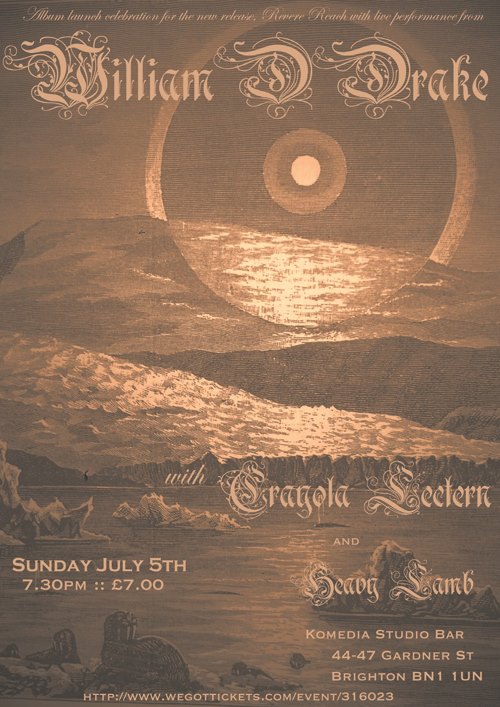






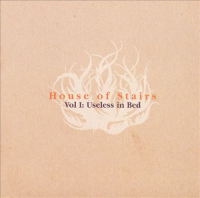


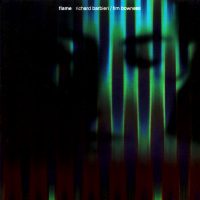


 Misfit City