Archive | chaos music RSS feed for this section

April 2013 – mini-album reviews – Alex’s Hand’s ‘This Cat is a Genius (A B-Sides Compilation)’ (“mostly tarry, and it sticks to things”)

17 Apr
Alex's Hand: 'This Cat Is A Genius'

Alex’s Hand: ‘This Cat Is A Genius’

Sometimes barrel scrapings are as much part of the meal as anything else from the barrel. In the brewing industry, that’s how you get sludgy yeast spreads like Marmite. Yum. Or not.

Meanwhile… we’ve met Alex’s Hand before. They’re yomping Seattle-ites from the scruffiest, carney-est end of American Gothic; something like a junior Primus, Zappa and Residents rolled into one, abruptly zombified, and crammed into the fustiest old suit in Abraham Lincoln’s trunk of hand-me-downs. This EP of B-sides (so they call them – they’ve only ever put out one EP) certainly seems like barrel scrapings. It’s mostly tarry, and it sticks to things. It’s shapeless, it’s distinctly umami, and you might not like it.

That, of course, is the point. Alex’s Hand tend to revel in everything they do, both their moments of genuine artistry and their dumbest chunks of musical blubber. ‘This Cat Is A Genius’ is a pre-release teaser of off-cuts from their debut album (‘Albatross Around The Neck’). It shows off (if that’s the right word) their sludgier leanings; their most precipitous rants; their Melvins side. It sounds as if while the goofy fuckers were messing around in rehearsal, some vicious bastard poisoned their coffee – but they enjoyed it so much that they sent out for more and left the tape running.

What the band’s actually doing is dealing with the departure of Slurrp, their ontime lead guitarist and horn-razzler. Drummer Nic Barnes and bass-bothering microphone pest Kellen Mills drop their stage-names, pick up the pieces and tumble onwards; various buddies help Kellen out with the guitar parts; but it’s clearly been a blow. You can all but hear Alex’s Hand bouncing off the ropes. However, they’re not ones to miss out on a dark chortle, even at their own expense. Nor are they scared of turning a setback into a challenge. If they have to have a period of floundering, they’re damn well going to get something out of it, even if they have to milk it ’til it bleeds. Rolling away from a relatively tight rock stance towards something doomier (or at least more rubbery), they’re taking the opportunity to map the underside of their development as they go.

One of the last two tracks from Slurrp’s last stand – ConserveNow! – is six-and-a-half near-atonal minutes of Melvins-style strain: a lurch-along instrumental of fuzzed grunge bass and wobbly guitar, like a sick freight train careening along a lost stretch of railway. The other, Ants, is a collapsing shack-load of wreckage-guitar and free-form word association. While Slurrp sifts through sluggish, raging clumps of feedback in the background, Kellen’s schizophrenic basslines jump and ebb between laid-back mooch and irritated attack. He also mutters beady-eyed, half-cut stuff into your ear – mostly about giants and UFOs, although at one point he does complain “words are stale, empty – they lack a certain sensuality.” Much of the ‘This Cat Is A Genius’ shares this playful pissed-off stance – a complaining laughter; clever-dumb; slumming in drunken despondency and enjoying a grump. Kellen plays the role of educated-and-unravelling to the hilt, offering flashes of self-mockery through the filter of booze vapours and the pinch of bad shoes.

Dear Me’s clench of lumbering punk disgruntlement mingles King Crimson feedback skitters with a collapsing, anti-play perversity. Inside itself, the song’s at war – halfway through, Kellen grabs a guitar and launches doggedly down a different tunnel and into a different tune. On the headache blunder of Train, he’s scouting for empty bars in order to avoid conversation, moping about insincerity like a touchy teenager: “wish I was happy listening to people with nothing to say. / Lying assholes with so much money / really are dead inside – / they pick my brains as they lie.” Longtime ally Ben Reece (of Step Daddy) drops in again to add wracked, protesting electric guitar and some needling ‘Marquee Moon’ edge as Kellen’s drunken soliloquy heads ever further downhill and then kinks back up shit creek, screaming about “blackest diamonds” and falling into the sea.

While the odd glancing zinger falls out of this kind of lyrical mess, Kellen’s verbal squalls and cracked mumbling are generally just another bit of colour. What he says is less important than how he says it; or just how the words hit the wall. Impression (featuring another temporary guitarist, Shadough Williams) sounds like a lobotomized David Byrne tripping over Black Sabbath. Nic drums on bottles while the music flinches between runaway bursts of samba and foot-dragging sludge-metal. Kellen dismisses another waster in smudges of sardonic detail: “he smokes his cigarettes, douses them with side-effects… / Stand to deliver, his parents used to say – / started out rich and pissed it all away.”

On Penticide, the band paddle around in a splatter of sprained, detuned instruments – piano, melodicas, glockenspiels – while Kellen’s rambling narration casts a cockeyed look downtown. Scribbling a vicious political cartoon of a “crack-whore free-market” full of hapless fools pushing “shit-stained zombie shopping carts”, he also rips himself and his peers ragged. “Welcome to the half-baked bistro… / conspiracy countdown coffee-shop collective,” he husks, before tagging himself as “a dying maverick with a bad attitude… / like Merce Cunningham took a shit in a wine glass.” Mocking his trashed, anti-heroic slide from high culture to garbage, the band break into sarcastic applause.

Confounding all this sarcasm, the final moments come close to delicacy. Sad Little Skeletons is slender, thoughtful and melancholy; initially, it’s not much more than distant birdsong and overheard chat, accompanied by lonely bass melody and shavings of rhythm guitar. For once, Kellen sings gently, setting aside the drunken howls and the scatter-shot smartarsery. Clarity renders his conclusions even bleaker. “Thoughts will come / then fly away. / These emotions are so thick, / like this life just makes me sick. / These piddly little humans, driving their cars / on the freeway… / Sad little skeletons; broken, but don’t realize they’re lost.” The rise towards a tangled noisy fanfare and the drowning of the words in yell and distortion initially comes as a relief. Then you go back and listen to it again, hearing the weary breathing and the tiredness that smacks of reality.

Part-broken, smeared, and devilled by little gouts of waspishness, this isn’t the easiest collection of songs and slurs to get along with. But there’s plenty to scoop out anyway, especially if you like hearing the wilful awkwardness of a band who enjoy stretching themselves out of shape and balance, and who can fit that in with the big boots and barfly lunges. If you enjoy feeling as if you’ve been dipped in an uncomfortable goo, that’s a bonus.

Alex’s Hand: ‘This Cat Is A Genius’
Alex’s Hand (no catalogue number or barcode)
Download-only mini-album
Released: 15th April 2013

Get it from:
Bandcamp.

Alex’s Hand online:
Facebook Twitter Bandcamp LastFM

March 2013 – album reviews – The JazzFakers’ ‘Here is Now’ (“accumulates itself out of loose particles of imagination; like a rogue dust-bunny”)

27 Mar
The JazzFakers: 'Here Is Now'

The JazzFakers: ‘Here Is Now’

I guess that any full-on free improvising band that makes it through to their third album must have become something of a fixture. Rolling and roiling within the Brooklyn branch of the New York improv scene, The JazzFakers probably also qualify via assorted free-music spillages (Brooklyn’s Experimental Music Meet-Ups, the Experi-MENTAL Festival) since their 2008 inception. Their humming, grappling music still suggests nothing particularly fixed.

Two of the four ‘Fakers, David Tamura and Robert L. Pepper, are certainly well-established promiscuous players and upsetters. Lynchpins of the Brooklyn multimedia collective PAS, they’ve placed themselves firmly into a matrix of oppositional noise, construction and deconstruction. All of their multi-instrumental noise-cramming in The JazzFakers has been nourished by multiple collaborations with a long train of musicians (soundtrack layerist Philippe Pettit, improv veterans Kidd Jordan and Charles K. Noyes, the spontaneous composers Ron Anderson and Grady Gerbracht). The other two ‘Fakers are maybe less ubiquitous – and less space-filling – but they certainly bring their own vitality. The anxious rubbery bass lines of Raphael Zwyer add a restless, nervy sproing. Drummer Steve Orbach has turned up bright and eager to the sessions, his sticks a-quiver like bug antennae, ready to prod and feel their way into the music.

The album name, ‘Here Is Now’ suggests fresh, bright immediacy – improvisation without worry. The individual track names (a set of successive anagrams, all worked out from the album title) suggest playfulness and an enjoyment of structure games. The dirty kerb, torn binbags and scattered garbage – tied-off shirts, food fragments – of the cover shot tell a different story, and a more truthful one. JazzFakers are about debris and disparity, not consonance. There’s little about them that suggests structure apart from the swarming, disturbing liveliness of their intent.

Instead, their music accumulates itself out of loose particles of imagination; like a rogue dust-bunny. Or, more accurately, like a gigantic hairball – something rolling restlessly around the band members’ Brooklyn rooms and lofts, accreting a body from discarded bits of living and usefulness. Any given JazzFakers piece is a cannibal mass, crammed with china plate-shards, snapped pencils, and the sparking remnants of semi-dismantled technology; given extra lift by rolled-in springy fibres and by jazz-honk air-pockets. Runaway guitars, violins and reeds tussle with sundry distortions and tangled-up masses of electronic blips, and with a collection of synth voices which range from the raw to the deliberately corny.

While David Tamura is responsible for plenty of overdriven splintery electric guitar lines (rolling around furiously on the floors of the compositions, like injured scorpions), he’s also the band’s saxophone player. Unusually, this also means he’s often the band’s main link to more conventional structures. Certainly it’s him that provides the powdery, blues-rich tenor melody that boards the loose-boned march of Oh Rise New, adding a recognizable jazz voice to the restless buzz-keyboard swirls and mosquito-drill guitar, the rambling bass tune and the childlike organ which hangs and fidgets on a single disruptive chord. On Horse Wine, it’s his smartly turned-out tenor sax that moves in to converse calmly with Robert’s chorused violin saws and Raphael’s panicky bass, trembling and muttering on the upper harmonics. Steve’s subtle drumming adds some calming authority to the occasion, a taste of West African skintalk to offset the balloon-scraping sense of fear elsewhere.

On the other hand, David’s not to be relied on to provide anchors and grip all the time. Weise Horn, rising out of a wobble of shortwave synth whines, sees him let rip on free tenor: Robert responds with scrapescapes of violin, Raphael with a bass performance like a surprised bear. More than any other on the album, the piece becomes a free blow, but one struggling with a sense of being trapped. Led by David’s frantically wiggling sax, it’s claustrophobic, filled with screeches and frantic prison drumming in background sounding like someone drumming up a riot on a cooking-oil can.

There’s more free-sax contortions on Her Woe Sin (this time on alto) while a trepidatious, intense organ harmonic squeezes the band into a single trapped pitch cluster. Here, it feels as if they’re all being forced out through the neck of a bottle. As they reach a peak of compression, the piece becomes a revolving oscillation of guitar rub and smudged noises; trapped on a machine wheel, while Steve keeps a slow walking drum time at the rear.

Like David’s easy slips into conversational sax, that walking rhythm is another old-school jazz touch that comes rising up to reassure us through various JazzFakers confusions. There’s a brief, loose touch of it at the end of Nowhere Is – David and Steve bobbing along together in a moment of drums and sax companionship. Earlier it’s been a game of tack-blows, with Raphael’s rubber-mallet bass rebounding off curving chunks of organ, water-bottle tocks and flits of synth. As this moves into a more abrasive grind of free noise, David’s bluesy touch on sax makes a return, holding the band together with a stitch of melody. Ever-so-slightly wild, it sits in with the pugnacious racket like an old guy bantering with youths, laughing as his own wiles are tickled by their random energy.

Whine Rose reminds us that New York (like other cosmopolitan homes of music) isn’t just full of its own stylings, but also winds immigrant memories into its fabric. This piece sounds like an impression of the docks in Istanbul. Robert’s violin lines toy with a flaring, challenging Turkish-trumpet attack. Raphael’s bass strings scrape and creak like cargo cables: Steve drums like a longshoreman slinging and bumping crates across a quay. Every so often a long scraping drone in a reverberant arch will overwhelm the chatter and noise, push through the dirt and air-flashes from the band’s electronics and come in to rest, like a giant ship harbouring. At the end another jazz walk falls into place, free and swaggering, but trying to get back into comradely step. For a moment, the ‘Fakers sound like a cluster of dockers going off-shift, strutting out of the yard in search of a bar and perhaps a bit of trouble to bond the team together.

But while hints of jazz tradition, diasporan memory and other bits of cultural consonance may surface briefly through the matted fabric of their musical hairball, the JazzFakers are always predominantly about shredding sound – grabbing and shaking it into rag and rampage. Bar a brief breather in the middle (an interlude of silence, broken by gentle koto plucks), Where’s Ion gathers up raw hanks of sound to stretch and shear. Morse-blipping electronics and flinders of keyboard fight their way through a seesawing murky gale of playing. Robert’s abrasive, distorted violin wrenches back and forth, overdriven to the point where its melody fissures and cracks; time pulled and flexed too far out of shape to cling to. The second part entirely and willingly overwhelms itself: a shitstorm onslaught of scribbling guitar and a mass of excited electronic buzzing and whooping meets Steve’s drums and percussion head on, as they rattle like an upended ship’s galley.

The cheerful Whee Irons has its share of noisy Tamura guitar tangles and collapsing Pepper electronics, but also seems to be toying with broken bits of 1980s pop (trying on the hairstyles and waving around some of the sonic tropes). A bouncing, pulsing vocoder patch promises some kind of hook before becoming just something to squish and pulp against a jittering music box. Raphael (briefly in the spotlight) visits the upending, cunning-stunt territory of Tony Levin or Mick Karn. His bass jolts out high squeets, tap-and-hold skids, talkative burbles; on one occasion, a game-changing downward slide before slipping comfortably back into freestyle wandering for the second stretch. More elements tossed hopefully into the mix include some double-speed Zappa saxophone rushes and some corny, choral angel-voice keyboard, mocking at the huffing, bellowing drums and the drilling lead guitar.

At the end, with the twelve minutes of Hero We Sin, the band don’t so much tie up the record as relax the tangles. While free, it’s less furious. There’s less jostling and more listening, from the fake sci-fi theremin intro (echoing over lightly-struck and watchful cymbals) to the final saxophone-argues-with-egg-slicer fadeout. Along the way, the quartet shuffles a handful of musical cards: the edge-stalking Miles Davis fusion of 1971 (both invoked and undermined by little stings of toy piano); the undulant glissando guitar-wave of Syd Barrett; even a hint of the Sugar Plum Fairy. Clearer solos emerge. An aggressively awake guitar (swelling large over grinding distorted drum crunches like rusty clockwork being forcibly wound); cloudy, floating high toms and cymbals over a gastric electronic splatter; a vibraphone over a phased electronic phase buzz, deep pitches, sanding noises and high birdlike twitters, which in turn give way to a cradling bulk-photocopier slide and clunk.

Towards the close, while electronic percussion boils and rattles like popcorn at the side, Robert’s scratch violin is caught in debate with David’s saxophone – the one complaining and cramping, the other remonstrating and stretching. The work’s ending. Time for sense. Time to flex the remaining knots out.

The JazzFakers: ‘Here Is Now’
Alrealon Musique, ALRN043
CD/download album
Released: 25th March 2013

Get it from:
Bandcamp.

Artist online:
Facebook MySpace Soundcloud

May 2012 – album reviews – centrozoon’s ‘Boner’ (“a palette of capriciously shifting noises and sonic pounces”)

16 May

Centrozoon: 'Boner'

Centrozoon: ‘Boner’

Testing to destruction. For some, this isn’t a harsh and necessary process, but a judicious way of life. For the floating, ever-mutating alliance of centrozoon (magisterial touch-guitarist Markus Reuter and synth-bumping/pad-thumping lateral thinker Bernard Wöstheinrich) it seems to be a shrug of nature. Either that, or a compulsion. As centrozoon add to their body of work over the years, they’ve studiously avoided clinging to previous methods. Instead, they function as a kind of art-rock Laputa – hovering briefly over various musical terrains, dropping down tendrils to slurp up flavours and approaches. Despite their bone-dry sense of humour, they’ve always remained a little detached and aloof.

At the same time, centrozoon are driven hard by cryptic fascinations of their own, including their vigorous collision of schooled technical approaches and wild, derailing instinct. Their music has always been bipolar and simultaneous. Crude synth presets are embedded into beautifully-fashioned electric textures; ravening, artful touch-guitar solos play off the blunt wallop of electric whack-pads. En route, centrozoon have explored majestic dark-ambient drift music, ridden the clattering back of gabba techno (while flaying it to within a microtonal inch of its life) and spent time as rhapsodic prog-inspired melody men. In the early 2000s, they borrowed the lissom voice and hooded lyrics of Tim Bowness (on furlough from No-Man) to slide smoothly into a song-driven world of art-pop. Equally smoothly, Markus and Bernhard subsequently hit the eject button in order to reform as an introverted chamber electronics duo. Every time centrozoon go public, they’re different. Every time they seem to settle on a final format, they discreetly blow it up and start again.

Ultimately, centrozoon navigate their increasingly risky game of de-build and re-build by trimming back everything that they’d otherwise need to defend. They explode their identities as musicians to become a diffuse spray of wandering cells. They reduce themselves, once again, to enigmatic minds on the prowl; and now they’ve delivered the most abstract and challenging record of their career.

Emerging after a period of diversion, scatter and relative silence, ‘Boner’ suggests that it’s becoming increasingly pointless to define centrozoon‘s work as a clear interplay of individuals. Instead, their work has become a kind of willing entanglement into which each man – somehow – disappears at full volume. Suitably, the contributions of the band’s current third man Tobias Reber are mostly sonic collage (drastic laptop sound-mangling, heavily processed field recordings, occasional blurts of absurdist lo-fi vocal). With both Markus and Bernhard now enthusiastically jumbling up their own sounds, the band creates an intense and murky improvised electrophonic soup – extreme, exaggerately processed and roaming balefully across unstable tonal centres. It’s both utterly fragmentary and utterly involved. If anything, those interim years spent on other projects have only added to the creative centrozoon seethe, bringing the musicians and sounds closer together.

Where ‘Boner’ stands in the wider scheme of music isn’t clear. Not jazz – there’s no swing here, few melodic rushes or pursuits of harmony, no acknowledgement of pop moves. Not ambient as such – despite the atmospheric swishes of sustained texture, there’s little solid order and continuance, and precious little commitment to minimalism. Something in the drive and stance of the music links it to the far fringes of experimental rock. If so, it’s clinging on by a fingernail.

These new, uncomfortable compositions hang in the air like spasming irises or like nested Venetian blinds: multi-layered, periodically flexing open and shut to reveal new textures and patterns. Ever restless, centrozoon shuffle each and every one of these layers, flying in further sound-fields in the blink of an eye. A dribble of coffee-maker noise jump-cuts to a rumble of bass strings. A radiophonic pot-swoop is overwhelmed by a ringing metallic chord or an imperative percussion thump. In the arrhythmic wander of La Waltz of Kirk, hints of Zawinul tropicalia well through the gaps. On Cervus, ominous and dissonant passages in a classical-minor form recur first as vaporous synth pads, then as overdriven bassy touch-guitar lines.

You could try to cite assorted chaotic improvisers, plunderphonic artists and mixing-desk contrarians as close cousins to this music. However, what remains clearest (most evidently on the rumbles, quick body-blows and Mellotron hangings of Knock Outs) is centrozoon‘s familial relationship with King Crimson. More particularly, with that band’s most left-field improvisations – the atonal busyness of the ProjeKCts; the poly-everything lurch and creak of the ’90s Double Trio (spattering pulped MIDI all over the stage on ‘THRaKaTTak’) and the spidery skitter of ‘Starless and Bible Black’. The post-modern stomp of Markus’ work with another Crimson spin-off – Tuner – is also present. Both Tuner and ‘Boner’ share a hypnotic mixture of harshness and disorientation; an over-arching, out-of-focus beauty; and a grate-and-chop, channel-surfing mixture of signals to pour into your ears. Like Crimson, centrozoon also possess a rigid skeleton of stateliness which glides serenely through even their most chaotic improvised scrambles.

While attempting to make sense of this scattered map, it’s equally important to point out that centrozoon are also exploding the idea of what a commercial music album ought to be. Generally, such things are self-contained musical statements – linked to a point in time, a specific intent and a clearly-defined sales package. In making ‘Boner’, the band embraced as many constructive (and deconstructive) possibilities of chance, reinterpretation and creative dissension as they could. Hundreds of initial hours of free trio improvisation were cut and pasted into new compositions; then a third layer of process was added via two outside remixers, each of whom independently cloned and mixed down the finished sessions.

The result is two twinned but different takes on the final album, with different mixes and track sequences (the Marziano Fontana version emphasising those dramatic cuts and layering, the Adrian Benavides mix more spacious, smooth and chilly). Additionally, centrozoon sell ‘Boner’ in a bewildering variety of packages (via its “Bonestarter” campaign), with diverse extras plugging into the deal like bonus phone apps. Options now include one or both album versions; further choices of formats and downloads; signatures; custom clothing; original artwork; even personal access via one-to-one conversations or touch-guitar lessons.

It’s not that these moves, in themselves, are new. Alternate mixes and reinventions are commonplace, and compositions via mixing desk and improv have been around at least since Zappa. Jane Siberry has offered special-purchase deals with souvenirs and judicious personal access for years. What is new is centrozoon‘s audacity in coupling all of this to such a demanding, avant-garde musical package.

Even without the bonuses, ‘Boner’ may prove to be an incomprehensible palimpsest for many listeners – a palette of capriciously shifting noises and sonic pounces. For others, these same qualities will be a selling point. With colossal chutzpah and confidence – and a disregard of risk – centrozoon are selling the album with all of the confidence of arena rockers touting a singalong blockbuster. Bold, yes – and also pretty funny.

But ultimately, buying one of these bonus-laden ‘Boner’ arrays is rather more significant than buying a box-set edition of a rock album. Those who go for the full-deal set of clothing, decoration and tuition won’t just be grabbing nick-nacks, but buying into a whole centrozoon artistic method: effectively, into a way of life. As a consumer, how can you be sure that you truly own and understand the bewilderments of ‘Boner’ unless you have the Grand Deal with all of the trappings and the chance to press flesh with its creators? Alternatively: if you just own your preferred single recording of ‘Boner’, have you identified its core source, and swept aside all of those commercial refractions; all of those fetish fruits to sweeten the pill?

All of this casts up more questions than answers… as does the album itself. Those who don’t want to embrace the whole Bonestarter frenzy (and ultimately, even those who do) will ultimately find that their involvement will boil down to whether or not they find ‘Boner’s relentlessly abstract, unaccommodating music worth the investment.

Cautiously, I’d say that it is… although I’d add the warning that this music will never be quite what you expect it to be, or what you try to force it to be. Material of this nature is tough to understand, as such – you need to intuit instead, working your way into it. As you’ve seen, ‘Boner’ has already spun over a thousand analytical words out of me as I try to get to grips with its multiple paths and detonated form. Yet my primary reaction to the album is visceral and instinctive.

Beyond the chopped-up structures and the modular marketing, I’m listening to a trio persistently and inexorably falling into the realms of utter abstraction, only to pull themselves back out by their fierce musicality as players and editors. What I’m hearing through the hundreds of shifts and swaps is their determination to plot a course through this humming chaos. The cautious and catlike way in which they place their feet, while otherwise convulsing their music so utterly. The manner in which they orbit and flirt with musical collapse, like a capsule orbiting a threatening black hole.

It’s these things that I remember, past the sing-song AutoTuned rants in Bright Meowing and Smoked Info Monster; past the pocket-calculator seizures of Weak Spelling; even past the jigsaw-puzzle Bonestarter sale of mixed music, time and trophies. It’s this determination that links those fleeting glimpses – around jump-cut corners – of fingers hammering down on strings, keys and mouse buttons before vanishing into the edit.

centrozoon: ‘Boner’
Unsung Records,
CD/download album (plus assorted packages)
Released: 9th May 2012

Buy it from:
Centrozoon directly (includes various Bonestarter packages as mentioned in review), Burning Shed or Bandcamp

centrozoon online:
Homepage Facebook Twitter MySpace Bandcamp Last FM

February 2012 – EP reviews – Kabul Golf Club’s ‘Le Bal du Rat Mort’ EP, 2012 (“brutal flying bricks of riffage”)

15 Feb

Kabul Golf Club: 'Le Bal Du Rat Mort' EP

Kabul Golf Club: ‘Le Bal Du Rat Mort’ EP

A self-styled “pretty young Belgian band” with a penchant for wearing carnival heads, Kabul Golf Club aren’t quite your standard hardcore punk outfit. It’s not just the occasional headgear – even on their debut EP, they butt against the limitations of the form, just as any free-thinking punk should, but not enough do. With Shellac in their lineage of long term influences (and with Lightning Bolt and Blood Brothers in the more recent set) we should expect no less.

Admittedly, they’re not reinventing everything. Singer Floky is still restricted to three degrees of the same top-of-the-lungs hardcore screech. To give him credit, he does manage to inject a little more character into it than most: mastering a tinge of despairing vertigo or the horrified yell of a man falling off the sun. But in many respects his voice is just another rhythmic instrument, its verbal interjections of frustration, resistance and bellowing introspection functioning like an additional cymbal hit or another blind-corner snarl of snaggy bass. The rhythm section of Mattes and Sweeckhoorn pin down the rest of the hardcore content – the jumps and sallies of rhythm, the brutal flying bricks of riffage.

This leaves Floky and the band’s other guitarist, Jeandana, free to charge into a wallowing thresh of disjointed, expressive guitars. It’s here that Kabul Golf Club excel, flinging around a series of wails, roars and hardware noises reminiscent of a lusty scuffle between Hendrix and Tom Morello (or between Sonic Youth and Adrian Belew). While bass and drums hold the band together, the guitars stretch it like taffy, and it’s this that provides the interest. Over the machine-gun riff and buzz-bass of Bits of Freedom they squeal and nose into places they shouldn’t go, shaking the song ever more feverishly as the pace becomes more and more frenetic.

Fast Moving Consumer Goods is a King Crimson-ish march along an atonal scale, minimal in conception, maximal in juddering aggression. Occasionally a Floky vocal becomes intelligible – “just let it go… rats on a sinking ship… wasteground… love has left, love has left.” Beyond his jerky codes the whole story is in the guitars as they scream and fold, balanced precariously on the jouncing riff like surfers in an earthquake. Floky may screech “no sense of urgency” in Minus 45; but everything in the song belies this, from the precision bounce of the ever-changing, ever-dodging rhythms to the warping screeches of the instrumental lines. Somewhere in the middle there’s even a robotic burst of Autotune, before the final collapse into chaos: a grumbling sagging bass drone, plus jingles and swerves of broken-down guitar. Even after the song’s tumbled off its own pulse to lie twisted and sprawled on the ground, an inventive fury continues to twitch the corpse.

If anything, the music gets even more frantic as the EP progresses. 5 Minutes 2 Midnight sprains its own time count, loses itself in a grinding, spasming bounce and inflammatory sprays of noise. By the time we arrive at Demon Days, it’s as if the guitars are sprawling in sheer resistance: Jeandana and Floky yank them violently off-pitch to hit the mood. The resulting trapped riff screams across the soundfield like a gutted tin can, wrapped around the ear.

Assuming that you can take noise rock, ‘Le Bal Du Rat Mort’ is full of rewarding, jagged surprises, and becomes more and more intriguing every time you replay it.

Kabul Golf Club: ‘Le Bal Du Rat Mort’
Uproar for Veneration, UVF007 (5419999105439)
CD/download EP
Released: 10th February 2012

Buy it from:
CD from Rough Trade Benelux: download via iTunes.

Kabul Golf Club online:
Homepage Facebook TwitterSoundcloudTumblr

March 2011 – mini-album reviews – Playing with Nuns’ ‘Wave Equation’ (“a fly’s-ear perspective of a Zeppelin crash”)

15 Mar
Playing With Nuns: 'Wave Equation'

Playing With Nuns: ‘Wave Equation’

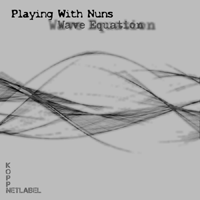
With hundreds of releases in the bag already, it’s difficult to even summarise the dark-ambient work of Playing With Nuns (alias D.I.Y. Argentine noiseworker Ariel Chapuis), let alone sort it through item by item. However, a few things are apparent for ‘Wave Equation’. One is that (by the usual Playing With Nuns standards) it presents a gentler face. The titles of the recording and of the individual songs are more reflective than usual: the elegant mathematical graph-shot on the cover art is devoid of the forthright challenge of other releases, No huge and tilting cranes, no feral cartoons. No naked women wrapped up in hazard tape.

By the bullish, confrontational standards of some avant-noise artists this might be taken as signs of a cop-out; or at least a digression into mathematical navel-gazing. That’s not the case. To my ears, this recording’s sound world is one of giganticism – everyday objects ramped up to a stunning blur of over-scaled, colliding sound. At particular points, it’s borderline unbearable (which Chapuis would probably take as a sober compliment). It might not have you fretting over dysfunctional anger, but it might make you too scared to catch the bus.

On the other hand, there’s little here in the way of avant-garde theatrics. Everything is matter-of-fact. There’s no attempt to make an obvious wall of aural assault, or to engage in shock tactics for the sake of it. Chapuis simply lets his noises off the leash, and lets them take their course.

In Advertising For Lizards, plunderphonics are writ large against a dirty-celestial skirl of feedback. Scraps of conversation are distorted and giganticised into enormous blurred wind instruments and furniture drags. These roll and scrape, as if being pulled along the inside of a vast balloon, while Chapuis cunningly pans them around the sound-field.

I Let You Tools is a little more traditionally concrète, making a clear play of sampling construction devices, power drills and saws. It also deliberately deforms samples of other noises (including voices) into sounding like power tools before it collages everything that it’s found. The final result is a sandwich of technological interactions: almost a cartoon. A set of cheery telephone pulse-codes are sandwiched into it, trapped between a barrage of tool noises on one side and a rumbling wall of power-electronics on the other. The latter sails up to loom large and demanding, like an particularly needy cruise liner.

On Sequences of Lost Children, the clearest sound is two alternating organ notes. The dominant sound, however, is microphone-fry; sizzling and crackling around the clunk of struck pipework and the playful vocal grumbles of synthesizer. Throughout, there’s the crunch of an abused pickup, crushed and buffeted underwater. Unpleasant aural suggestions swim into place – a polluted zone for drownings, filled with ominous and suspicious objects. It’s immersive, threatening, possibly death-haunted. Perversely, all of this busy sonic activity inflates it with an uncomfortable life-force.

Initially, Wave Equation itself offers the closest thing to a let-up. A loop of pleased-with-itself electronic hum, waver-pulse and munching static chews the cud. For about a minute, it’s joined by a radio voice of crunched, compressed Spanish. This relative calm doesn’t last. After one-and-a-half minutes, the idiot noise arrives – an inflated shrieking grind which bounces and rolls over the static, over the percolating electronics, over everything.

Nine-and-a-half minutes long, the spectacularly queasy Decline & Fall is the album centrepiece. It sounds like dynamic travel sickness – a soundscape of hugely magnified stomach flutters, aircraft propellers and groaning feedback. Meanwhile, something is continually crashing and bouncing along the ground, ploughing up colossal waves and furrows of static. Imagine a fly’s-ear perspective of a Zeppelin crash… yet even that doesn’t communicate the terrifying, carefree attitude to the sound.

That’s the key to the unease in this record. Picture a world run out of control and shrunk down to the clatter of a battered and juddering gearbox; and picture ourselves, in turn, shrunk down to ant-scale and trapped inside it. There’s the feel that the grinding forces and crunch of object (in particular, Decline & Fall’s perpetually prolonged ongoing crash) is just business as usual – a humdrum and relentless process of clumsy mechanical brutality while machines plough and scrape their way between destinations and across targets, indifferent to the rattled and fragile animals within and around them. Whatever happens, happens. If it’s brutal, that’s simply the nature of things. It’s like that power-lathe which doesn’t mean to deafen you, but which certainly will deafen you if you sit next to it. It’s nothing personal.

Playing With Nuns: ‘Wave Equation’
Kopp Netlabel, KOPP.17
Download-only mini-album (free)
Released: 6th March 2011

Buy it from:
Free download from Kopp Netlabel (rightclick) or Archive.org

Playing With Nuns online:
Homepage Facebook MySpace Soundcloud

October 1998 – EP reviews – Dark Star’s ‘Graceadelica’ (“a fistful of brilliant flares criss-crossed with human fragility”)

28 Oct

Dark Star: 'Graceadelica' EP

Dark Star: ‘Graceadelica’ EP

Hallelujah. David Francolini, Laurence O’Keefe and Christian “Bic” Hayes – refugees from the indie/prog/psych collision of Levitation – have quietly regrouped as Dark Star. Listening to their superb debut EP somehow makes the whole painful Levitation saga (all those spats, frustrations and blown hopes) worthwhile. But while Levitation ran, jumped, shook rooms, dazzled, and finally shattered, Dark Star – a power’n’glory trio that’ll rip off your head and return it to you all lit up and twice the size – take every bit of that energy, aim it, and channel it on course.

So what would happen if someone took British underground psych-rock as a foundation, then scanned the heights of British ’90s indie for what it had to offer? If they took Primal Scream’s panoramic hallucinatory peak, the funky drummer grace of The Stone Roses on ‘Fool’s Gold’, Radiohead’s lacerating skill and intensity, Spiritualized‘s on-off blinks of revelation, the waves of transporting guitar frenzy The Verve dealt in when Ashcroft cut out the rock-god schtick, and then fused it all together? And – unbelievably – got it right? They’d get this.

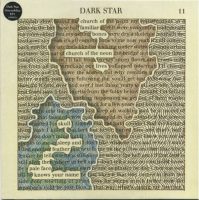
‘Graceadelica’ itself storms right out at you full-tilt, laced with detail, power and adrenalin quakes. Bic’s ghostly guitars are everywhere – chittering in the midground, weaving sensuous smoky patterns and Cocteaus star-clusters beyond, sketching spare cascading melodies upfront, then suddenly exploding into your ear in a storm of shocked echo over Francolini’s immaculate power-funk drumming. And it’s about memory barbed and refracted by mystery: someone stalking the city with a incredible secret to recover. “I must have hit the floor, / some dark uncertain hours before /…Those half familiar streets / were swimming underneath my cobwebbed feet. / My aching bones were dry, / a skeleton beneath the lead-grey sky. / Yeah, it’s all coming back to me now… maybe too late.” Pounding the pavement, finding a pathway to the key. “Feels like I’m walking over water, / subhuman urban messiah. / Slow-bound for church of the neon, / my resurrection’s in a glass on the bar…”

 
The title track carries off the prize for grace and scope, but the whole EP is a fistful of brilliant flares criss-crossed with human fragility. The heavy-metal bullet of ‘Crow Song’ – like PJ Harvey fucking Ted Hughes on Metallica’s drum riser – is haunted, a hapless killer’s nightmare. O’Keefe’s supple, astonishing basswork oozes power, but the song itself is flinching from guilt (“Hope you don’t mind, but if I let you in – no-one must know, no-one must know”) and the unfolding of terrible rituals: “You see, he speaks to me in sleep: and I don’t like what he says. And when I wake I find another feather, just next to me on the pillow…”

On ‘New Model Worker’, Bic’s voice is both tannoy-sneer and humble plea, the guitars a cataclysmic swing between grinding industrial filth and tiny, tender, praying filaments. “Season’s cycle’s turning overtime, and I’m a new model worker with too much on the mind. / There’s nothing to decide, there’s nowhere here to hide. / And just to breath in; the future becomes what’s left behind.” ‘Solitude Song’, hovering over a huge depressive plunge, refuses to deny anything – “There’s nothing wrong with you / (“I’m sorry, Doctor”) / You’re acting like a fool (“Well, someone’s got to…”) “. Instead, it’s braved out, and they jerk your tears out while they howl for strength “until the cloud’s gone, and we’re through… / Laugh when it’s over.”

Dark Star have only just started, and already they’re way better than Levitation ever were. Unless they blow out that revealing light again. Like Levitation, Dark Star are possessed of such power that they could as easily shake the world or tear the muscles off their own bones. Top marks for effort and promise, lads, but don’t let the frenzy buck you off this time. ‘Gracedelica’, at least, is an object lesson in how to ride the bastard over the horizon and back.

Dark Star: ‘Gracedelica’
EMI Records Ltd/Harvest Records, CDEM523/10EM523 (724388615822)
CD/vinyl EP
Released: 26th October 1998
Get it from:
(2020 update – best obtained second-hand)
Dark Star online:
Facebook MySpace Last FM Apple Music YouTube Deezer Spotify Amazon Music
 

SWOONAGE

Swoon. /swo͞on/ A verb. To be emotionally affected by someone or something that one admires; become ecstatic. Here are some people and things that make me swoon. #swoon #swoonage

Post-Punk Monk

Searching for divinity in records from '78-'85 or so…

theartyassassin

...wandering through music...

Get In Her Ears

Promoting and Supporting Women in Music

Die or D.I.Y.?

...wandering through music...

Music Aficionado

Quality articles about the golden age of music

THE ACTIVE LISTENER

...wandering through music...

Planet Hugill

...wandering through music...

Listening to Ladies

...wandering through music...

ATTN:Magazine

Not from concentrate.

Xposed Club

improvised/experimental/music

The Quietus

...wandering through music...

I Quite Like Gigs

Music Reviews, music thoughts and musical wonderings

furia log

...wandering through music...

The Recoup

SINCE 2013: Books and books and books and books and occasionally other things

A jumped-up pantry boy

To say the least, oh truly disappointed

PROOF POSITIVE

A new semi-regular gig in London

Gapplegate Classical-Modern Music Review

...wandering through music...

When The Horn Blows

...wandering through music...

:::::::::::: Ekho :::::::::::: Women in Sonic Art

Celebrating the Work of Women within Sonic Art: an expanding archive promoting equality in the sonic field

Ned Raggett Ponders It All

Just another WordPress.com weblog

FLIPSIDE REVIEWS

...wandering through music...

Headphone Commute

honest words on honest music

The One-Liner Miner

...wandering through music...

Yeah I Know It Sucks

an absurdist review blog

Obat Kanker Payudara Ginseng RH 2

...wandering through music...

poplifer.wordpress.com/

Waiting for the gift of sound and vision

Good Music Speaks

A music blog written by Rich Brown

Do The Math

...wandering through music...

Archived Music Press

Scans from the Melody Maker and N.M.E. circa 1987-1996

The World's Worst Records

...wandering through music...

Soundscapes

...wandering through music...

OLD SCHOOL RECORD REVIEW

Where You Are Always Wrong

FRIDAY NIGHT BOYS

...wandering through music...

Fragile or Possibly Extinct

Life Outside the Womb

a closer listen

a home for instrumental and experimental music

...wandering through music...

Life Just Bounces

...wandering through music...

Lucid Culture

JAZZ, CLASSICAL MUSIC AND THE ARTS IN NEW YORK CITY

Aquarium Drunkard

...wandering through music...

eyesplinters

Just another WordPress.com site

NewFrontEars

...wandering through music...

FormerConformer

Striving for Difference