Archive | electro-acoustic music RSS feed for this section

September-November 2019 – upcoming post-folk, electrop, electronica gigs – tAngerinecAt on tour across Britain (5th/7th/14th/20th September, 17th/18th/26th October, 16th November) with Flange Zoo, DIANE, Experimental Sonic Machines, Ed Dowie, La Rissa, Yorkshire vs. Essex, Factory Acts, Slow Knife, Harbingers Drum Crew, Tin Mole, Clusterfuck, Hallulugenia, SIN/RED, Hypnotique, Otis Jordan, Saint Bernadette and She Robot

2 Sep

“At three I learned what sex was; /at five – death; / at seven – fascism and violence; /at ten – poverty, labour and hunger…” – tAngerinecAt, I Don’t Want To Be A White Master

Despite best intentions, a lot of folktronica can come across as… well, a bit polite and prissy; as something made by a particular breed of tech-headed enthusiasts, scholars and longtime culture-vultures who wear their tidiness and their geekiness openly. Crinkling synths, and flowery linen, kitchen musings and country walks; deep culture filtered through a tiny screen. It’s not that this invalidates it, as such. Folk culture has been, and remains, a broad cauldronful, as fit for constant renewing as it is for drawing from – and upfront electronics have been part of the tools of the trade for three decades now. It’s just that, as subgenres, folktronica and electrofolk seem particularly prone to diluting message with medium, sacrificing bite for texture; in essence, getting so involved with clubfloor, chillout or culture lab that they lose touch with bones, bothy or battlefield.

https://youtu.be/tSzKbWmycw8
 
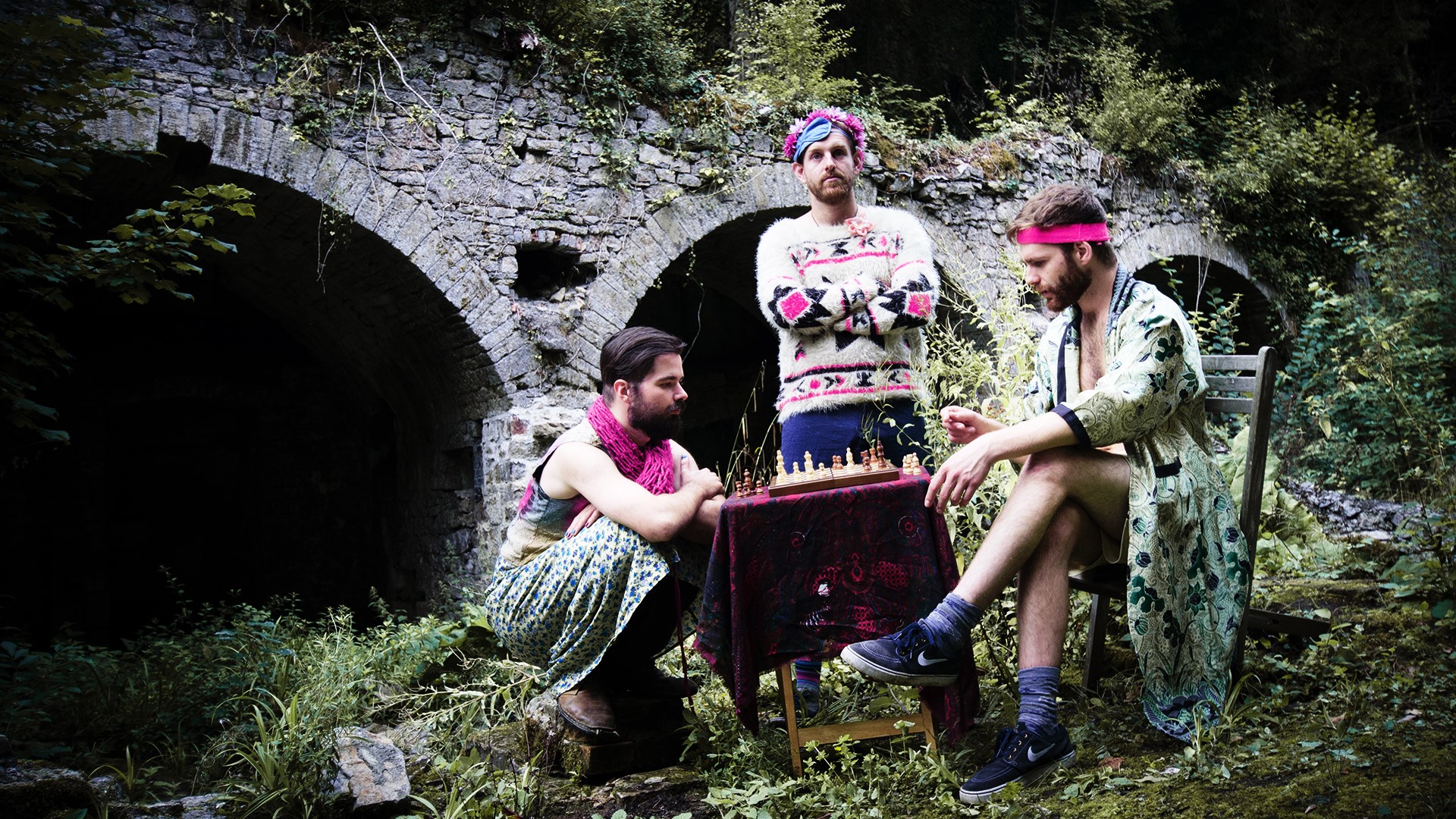
Fortunately, none of this applies to Anglo-Ukrainian duo tAngerinecAt, who sweep through England, Scotland and Wales for assorted dates across the stretch of autumn this year. After ten years cruising through the underground (five of them under the name of Dark Patrick), androgynous singer/hurdy-gurdy player Eugene Purpurovsky and tin whistle/bagpipe-toting electronicist Paul Chilton are still a constantly creative, intelligent and contrary force. Calling them folktronic, or electrofolk, involves upending the term… or stripping it back to the starting point.

Not that tAngerinecAt wear the label with much comfort themselves. They buck at the “folktronica” tag and, as Paul asserts “we don’t associate ourselves as folk, ever, and there is a good reason for that. We don’t play folk music, we compose our own music – not always based on Western scales but that doesn’t make it folk and neither does our choice of instruments. We often get labelled as this, but it’s a stereotype we are trying to get away from. We are only folk in the broader sense that all music is folk. Also, there isn’t one folk festival that would put us on their lineup…”

Certainly compared to most acts under the name, they’re on another level of impact altogether. An embrace of industrial sound (small keyboards and boxes which shout like giants, plus the rippling scathe of take-no-prisoners effects pedals which they add to their armoury and feed their acoustic instrumentation through) gives them the sonic presence of a no-wave or heavy metal act. They dip into frowning Carpathian mountain culture and various wiry varieties of British heath music, but stir in doses of anarchism, industrial sound and swipes at patriarchal violence. At any given time, in addition to the swirling bare-bones rootsiness you can hear echoes of sounds as diverse as Edith Piaf; the electrogoth stadium boom of Depeche Mode or the targeted upsetter-rants of Crass; the skycracking maximalism of The Young Gods and the angry historical weight of Towering Inferno’s ‘Kaddish’. Bizarrely enough, they also manage to capture elements of both ends of Swans – the booming pallet-drag of the early industrial years, the droning neo-folk of the contemporary band.


Then there’s the queer aspect. It’s not brought to the forefront of the band’s publicity, but it ripples through the grain of what they do. Eugene was born Eva, and identified as such in the band’s earlier years; the current tAngerinecAt has a genderfluid air in terms of clothing, movement and expression; and between them Paul and (particularly) Eugene summon up a variety of unexpected vocal characterisations which jolt and yell through the songs, upsetting standard ideas about power structures, protest, sources of ideas and about who might actually be singing. That name, too, queerifys and neonises the concept of a wandering animal spirit as band mascot, inspiration and reflection. tAngerinecAt have already won over gender-studies conferences, folk audiences, experimental-loft huddlers and, strangely enough, prog audiences (who might have a reputation for stolidity, but know and appreciate a good use of musical colouring and form-busting when they encounter it).

Despite the uncompromising drama and starkness inherent in their music, tAngerinecAt exhibit a different aspect when they’re acting as promoters, having run their own Cute Owl evenings and tours for several years now. Maybe it comes from the flexibility of vision and the teamwork ethos which Eugene built up from years of theatre work, but Cute Owl is extraordinarily welcoming to a variety of different acts, approaches and mannerisms when it comes to bringing in gigmates and support acts. It seems that as long as you have a yen for electronics and are sincere in what you do, that you’re part of the family. Hence, a Cute Owl event can encompass calls for revolution, playtime events, glamour stances, inclusive-spirited DIY tinkering and frosted electropop introspection; and hence the pleasing, unexpected diversity of the upcoming tour.

The first of the two London dates, on 14th September, is a relatively straightforward headliner but with a performance art buildup. One of the two supports is a previous Cute Owl gig act called Diane (A Walk Through Twin Peaks), in which two musically omnivorous DJs (NikTheDeks from electrobeat punks LOFE, and Andy “Dumb Blonde” McKinna) put down their record crates in order to team up on electronics, devices and effects-laden double bass for a dream-jazz/cryptronic David Lynch tribute (the solo Nik track below might provide a clue or two). The other is “crypto-zoological” animal-masked performance troupe Flange Zoo. Persistently theatrical creators of dank, humming, psychedelic-radiophonic draggings (within which synths rub up against finger bells, zithers, stylophones, turntable tricks and portentous narratives), at the moment they’re concentrating on their Edgar Allen Poe project: a séance-cum-tribute twisted in on itself. Sonorous readings of Poe short stories swim in ponds of improvised electronic twitchings and meditational pings; ritual resurrections turn into mutual back-slapping sessions.

 
The second London date, on 26th October, is a five-act Cute Owl Festival night. Here, tAngerinecAt are joined by flexible and beloved indie/experimental-pop balladeer Ed Dowie (whose 2017 debut album, ‘The Uncle Sold’ involves “a continually evolving, dream-like journey around a non-specified city (and) paints a picture of a range of characters struggling for certainty in a metropolis beset by continually changing forces, be they political, personal or financial”); by Nottingham “eccentronica chansonneuse” Hypnotique (theremins, clarinet and songs about “the apocalypse, post-feminism, erotic narrative and the banality of everyday life”). Also playing is Peter Rollings’ none-more-DIY project in which he ringmasters a clunking song-riot via his own makeshift/make-do invented instruments, robots and other musical machines while dressed in striking homemade ceremonial horned helms, robes and halberds (as if Moondog had been dressed by Mr Maker).

In addition to Peter’s own ESM set, he’ll be sponsoring and guiding another set by ESM’s robot drummer Ernie, a spindly foil-wrapped automaton who plays like a nervous fork-lift truck attempting a Mexican wave and looks like a 1970s primary school project about Martians.

 
The tour’s opening date, in Leeds, features the ominous ’80s synthpop/post-punk revivalist chimes and buzzes of La Rissa, made by “two misfits… in a dim little attic in Leeds” (originator/singing half Larissa Drozd sounding like a Stevie Nicks avatar entirely blanked out by black lipstick) who surface to carry out “dark, spooky” shows wrapped in crepuscular video art.

Also on board, Yorkshire vs. Essex (named not after a north/south feud, but from the founders’ surnames) offer chugging guitars, bass and white-noise synth garlands interrupted by trombones and flutes, all providing rumpled bedding for Simon Yorkshire’s eccentric songspiels on subjects ranging from “fictional toymakers to Sheffield murderers”, as captured on the recent ‘Dismembered Tales’ album. Shades of Peter Blegvad or Tom Slatter as well as YvE’s cited inspiration list of “Robert Wyatt, Current 93, Scott Walker, Miles Davis, Nick Cave, The Residents, Bjork, Death Grips and Iannis Xenakis.”

https://youtu.be/HIZtcQ76EFk

 
In Manchester, more dark-toned synthpop nostalgia comes from Factory Acts (who sound like Nico fronting a late ‘80s electro-dance outfit). There’s also a prime example of erudite Manc gobbiness on show via Slow Knife’s spoken-word-over-jazzpop- indie scuffle. Initially sounding like The Fall stranded in New Orleans and trying to get in step with the local pimp walk, they finally come across like a sleeker take on short-lived ‘90s beat-dadaists Campag Velocet: Daniel Tasker’s beat-poet outpourings have a similar (though more focussed) effect as he enounces over a cavalcade of horns, double bass, and slack-skinned drums/slide guitar which call up echoes of Can, The The and Dr John while lapsing occasionally into shrieking interludes of tonal and textural anarchy.

 
In Bristol, live-looper Suzy Condrad – under her She Robot alias – pulls together glockenspiel tinkles, mbira, bottle clinks, live beatboxing, passing sounds and layered banks of girlpop doo-wop and then weaves them into the bones of pre-written fully-formed guitar songs. Consequently, the looping comes across as more of a kind of graduated scratch arrangement, honed to a high level. A lot of loop songs can sound wispy, or hung up on their own polyphony: but with Suzy’s work, the song is paramount without the embellishments feeling forced. She’s managed to hold onto that spun-spontaneously-out-of-the-air feeling of loopsong while allying it to a penetrating, literate lyrical sense which challenges with questions and sharp observations rather than getting lost in the atmospherics.

Also at Bristol is ruminative electro-balladeer Luca Macchi, a.k.a Hallelugenia, whose material seems to stem from late-night chillout tunes which take a firm left turn, eschewing delta-wave blandouts in favour of expanding, talkative thought-paths sung in chamois-soft tones across shifting, subtly disruptive harmonic changes.

 
Another two acts are lined up for the Cardiff show, the first being agit-minded techno-pop quintet Clusterfuck who (despite the uncompromising hardcore name) spin out a tuneful, smoothly quaking ravepop sound inspired by and birthed within the current free-festival scene, laced with raps and DJ moves, and frequently graced by guest contributors. The second is Saint Bernadette, the latest in a string of projects from cross-genre voyager Francesca Murphy, a mainstay of ebullient Cardiff female music collective Ladies Of Rage and a singer who’s taken in punk, prog, country, jazz-pop, blues, spoken word and hip hop along her way. There are no clues yet as to what form Saint Bernadette will be taking, but Francesca’s Soundcloud page provides mostly-acoustic singer-songwriter-y examples from her recent past as well as a chance to hear her rich, welcoming voice.


The final show, at Edinburgh, features celebratory drumcore industrialists Harbingers Drum Crew – an aggregation of twenty or more assorted drummers inspired by “dance music, drum ‘n’ bass, dubstep and industrial metal” and emerging as being somewhere between a taiko squad, a British marching band, a samba party and a crew of No-Wave warehouse threateners. Meanwhile, Jo Hill’s SIN/RED, brings the electronica-spectrum cycle of support acts back to something resembling tAngerinecAt themselves: it’s not a precise comparison, but Jo’s foreboding mixture of noir-ballad pop, synth drone and cloister-echo raises similar anticipatory hackles and hints at skin-terror, raw feeling and ancient stirrings.

https://soundcloud.com/harbingersdrumcrew/riders
 
* * * * * * * *

Full tour dates:

  • Lending Room @ The Library, 229 Woodhouse Lane, Leeds, West Yorkshire, LS2 3AP, England – Thursday 5th September 2019, 7.00pm (with La Rissa + Yorkshire vs Essex) – information here and here
  • Gullivers NQ, 109 Oldham Street, Northern Quarter, Manchester, M4 1LW, England – Saturday 7th September 2019, 7.30pm (w/ Slow Knife + Tin Mole + Factory Acts + Otis Jordan) – information here, here and here
  • The Raven, 218 Tower Bridge Road, Bermondsey, London, SE1 2UP, England – Saturday 14th September 2019, 7.30pm (with DIANE + Flange Zoo) – information here and here
  • Equinox Festival 2019, Chalk Farm, Salters Lane, Wyham, Lincolnshire, DN36 5RS, England – Friday 20th September 2019, 12.00am – information here, here and here
  • The Thunderbolt, 124 Bath Road, Arnos Vale, Bristol, BS4 3ED, England – Thursday 17th October 2019, 7.30pm (with She, Robot + Hallulugenia) – information here and here
  • The Big Top, 11 Church Street, Cardiff, CF10 1BG, Wales – Friday 18th October 2019, 7.00pm (with Clusterfuck + Saint Bernadette) – information here and here
  • Cute Owl Festival @ The Courtyard Theatre, Bowling Green Walk, 40 Pitfield Street, Hoxton, London, N1 6EU, England – Saturday 26th October 2019, 6.00pm (with Ed Dowie + Hypnotique + Experimental Sonic Machines + Ernie) – information here and here
  • Cabaret Voltaire, 36 Blair Street, Old Town, Edinburgh, EH1 1QR, Scotland (with Harbingers Drum Crew + SIN/RED) – Saturday 16th November 2019, 7.00pm – information here and here
September/November 2019 – upcoming rock/folk/psychedelic gigs – My Octopus Mind on tour in Bristol, London and Lille (5th & 6th September, 27th November), Daniel O’Sullivan and Brigid Mae Power in London (13th September)

29 Aug

My Octopus Mind

Now with a debut album behind them (‘Maladyne Cave‘, which popped out last month), propulsive, eclectic, electro-acoustic Bristolians My Octopus Mind are revving up for another handful of dates in England and France for early and mid-autumn.

As I’ve mentioned before, the band “occupy a pleasing position, settled in their own web of connections between a number of different influences but reliant upon none of them.” ‘Maladyne Cave’ reveals how they’ve worked through those inspirations to the full and springboarded to something more urgent and stirring in its own right– strings, twitches and harmonic jumps from Balkan folk and Indian raga; influxes of shifting-terrain jazz rhythms from the interplay of double bass and drumkit, a post-minimalist precision, and surges of distorted amplifier-frying art rock allied to prog atmospherics and dynamics (from acoustic shoegazery to Zeppelin electric-folk drone). Overall, though, it’s about the way all of this is enabled by the mushrooming complexity of Liam O’Connell’s songwriting, a set of shifting organic moods and associations which package up personal restlessness, jokes, retributive snarls (about exploitation and bad politics), Patton-esque character vocals and more.

Other close cousins to what My Octopus Mind currently do would be the psychedelic garlandings of Knifeworld or the more out-there voyagings of The Verve, the protracted lilting commentaries of Damien Rice, and whatever Fyfe Dangerfield’s up to these days; while MOM themselves cite Radiohead, Josh Homme, the Buckleys, Jose Gonzalez and raga/Tagore song specialist Rajeswar Bhattacharya (there’s a version of the latter’s Anundena on ‘Maladyne Cave’). Ultimately, though, the band are already establishing their own identity: a strong debut firming out what should be a lively career. Hopefully they’ll bring out their string section on tour this time. If not, the sinewy acoustic power trio at the heart of the band (with Isaac Ellis taking a bow to his resonantly booming, textured double bass when needs must) has already proved itself well capable of holding an audience rapt.

 
While there doesn’t seem to be anyone else playing at Bristol, the London gig features a set from past-pop masher-upper-in-chief/swing & bass pioneer DJ Fizzy Gillespie. Playing both host and support at Lille are local latterday heavy/alt.rock trio Paranoid, fronted by émigré Matthew Bush, billed as grunge and citing an undying loyalty to Smashing Pumpkins and Nirvana (as well as to Radiohead and newer Biffy Clyro, to whom their driving, punchy, quick-raid songs arguably have the most similarities).

 
* * * * * * * *

Although his Westminster Kingsway College gig in in June was cancelled at the last minute, Daniel O’Sullivan is back playing live in London mid-September. Since it seems a shame for what I wrote last time round to get buried, here it is again:

Daniel O-Sullivan + Brigid Mae Power, 13th September 2019

“It’s easy enough to own a varied music collection; to shuffle quickly and smoothly between folk music, noise, synthtronica, experimental psychedelia, arthouse sound design, prog, proto-punk, pseudo-Zeuhl and the rest. It’s quite another to work, as a creative musician, across all of these: inevitably some purist will call you out as a fraud or a daytripper. Daniel, however, has made a name for himself as one of the few people who can apparently flit and slide between the scenes without being stalled by suspicion or rejection. Formidable multi-instrumental skills help, as does his apparent willingness to be a utility man as often as a leader. Over two decades, he’s piled up a pyramid of projects – his own Mothlife and Miasma & the Carousel of Headless Horses; duo work with Miracle or Grumbling Fur; a stint effectively directing Guapo; contributions to live and studio work with Ulver, Sunn O))) and This Is Not This Heat; plus sound installations and soundtracks in the fine art and cinema worlds. During the course of this, no-one’s fingered him as an interloper; no-one seems to have frozen him out. It’s a rare talent to be so ubiquitous, so flexible – or so insidious.


“Daniel’s most recent album, ‘Folly’, is the second one he’s released under his own name, pursuing something more intimate and personal. Written around the death of a friend and the birth of a son, it sees him continuing to tack away from the experimental rock he made his reputation with in favour of hushed, rich-textured chamber folk, burnished like a picture window by the warm depth of Thighpaulsandra’s production. Still ,a psychedelic perspective follows in its wake, like a contrail of blossom; easily found in the swirl of instrumentation and in the way that Daniel dips in and (more often) out of straightforwardness like a flying fish, offering transient reveals and kaleidoscopic digressions. Live, he’ll be performing solo and won’t be able to dodge behind the arrangements, but will be inviting up a couple of special guests to play along.”

In contrast to the solo gig that was planned for Westminster Kingsway, the Lexington gig will feature Daniel’s full electro-acoustic Dream Lyon Ensemble octet, featuring frequent collaborators Peter Broderick, Thighpaulsandra and Knut Sellevold (of Elektrofant, King Knut), Astrud Steehouder of Paper Dollhouse, dronester Christos Fanaras, Frank Byng on drums and Chlöe Herington on reeds.


Supporting Daniel (and probably with Peter Broderick helping out) is Irish singer-songwriter Brigid Mae Power, whose multi-instrumental, multi-layered contemporary folk songs have been causing a stir since the release of her debut album in 2016. Her second album, ‘The Two Worlds’ brings more of them into the world: dark-toned, literate, dreamy, deceptively calm but gradually revealing undercurrents of hope, strength and survival set against sinister depths of intimation.

 
* * * * * * * *
Dates:

My Octopus Mind on tour:

  • The Canteen, 80 Stokes Croft, Bristol, BS1 3QY, England – Thursday 5th September 2019, 9.00pm – information here
  • The Magic Garden, 231 Battersea Park Road, Battersea, London, SW11 4LG, England – Friday 6th September 2019, 9.00pm (with DJ Fizzy Gillespie)– information here
  • La Rumeur, 57 rue de Valenciennes, 59000 Lille, France – Wednesday 27th November 2019, 8.00pm (with Paranoid + guest) – information here

Upset the Rhythm presents:
Daniel O’Sullivan (octet) + Brigid Mae Power
The Lexington, 96-98 Pentonville Road, Islington, London, N1 9JB, England
Friday 13 September 2019, 7.30pm
– information here and here
 

June to November 2019 – upcoming London jazz gigs – Greg Foat Band and Neue Grafik Ensemble at Church of Sound (20th June); Niechęć, High Definition Quartet, EABS and trios with Marcin Masecki and Kuba Więcek for the Polish Jazz London Series (4th July, 16th August, 19th September, 18th October, 21st November)

16 Jun

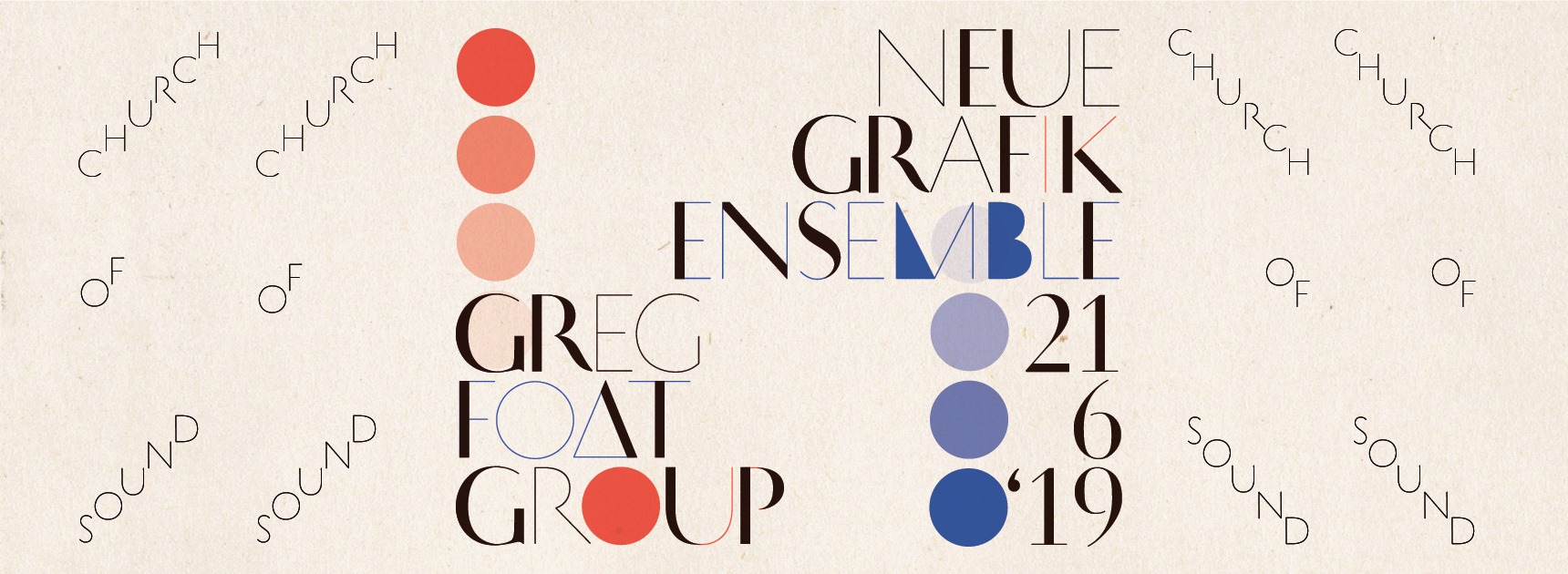
An imminent show at the Church of Sound in Clapton showcases British and French artists – the Greg Foat Band and the Neue Grafik Ensemble. Both play a contemporary take on ’70s soul jazz as it moved on a mystically airy arc away from earthiness and into the more fantastical zones of funk and psychedelia: in Greg’s case laced with tidal Radiophonic electronica via antique suitcase synth, and in NGE’s case celestial Rhodes keying.

Greg Foat Group + Neue Grafik Ensemble, 21st June 2019

More from the Church:

Greg Foat’s latest album ‘The Mage’ threads lineage between the past and future of British jazz, enlisting the talents of jazz/library/soundtrack legends Duncan Lamont, Art Themen, Ray Russell and Clark Tracey to collaborate with their modern contemporaries, Greg Foat, Moses Boyd and Heliocentric’s drummer Malcolm Catto. Something undeniably British but outward-looking and global has been created. Greg’s compositions and arrangements showcase the old and new, downtempo folkscapes, free jazz with notes of hip-hop and soul from the young team flavouring the mix. The album is a testament to the versatility and pure musicality of all those involved and Greg Foat’s ability to bring artists together to record beautiful, timeless music.

“Personnel on the night: Greg Foat (piano, EMS Synthi AKS), Clark Tracey (drums), Eric Young (congas), Phil Achille (bass), Trevor Walker (trumpet), Rob Mach (saxophones), Hugh Harris (guitar) with special guest Duncan Lamont (tenor saxophone).

 
“Parisian-born producer Fred “Neue Grafik” N’Thepe formed his Ensemble last year, consisting of trumpet player Emma-Jean Thackray, Vels Trio’s drummer Dougal Taylor, bassist Matt Gedrych and of course Fred himself on keyboards. Grafik’s sound is a hybrid of jazz, house and hip hop, all with his unique geographical tones of African ethnicity, Parisian roots and a love for London sounds (like broken beat and grime) thrown into the mix. For this session, they will be joined by rapper and poet Brother Portrait who is omnipresent on NGE’s forthcoming EP.”

 
Representing the Church of Sound DJ resources, half of the CoS diumvirate (and Total Refreshment Centre founder) Lex Blondin will be manning the decks, and there’ll be an aftershow party over at Tottenham’s Five Mile club.

* * * * * * * *

Polish Jazz London Series, July-November 2019

Further north-east, the Polish Jazz London Series is opening up in Waltham Forest. It’s a handshake between a borough celebrating its current status as London Borough of Culture (and pushing hard not to be overshadowed by the existing momentum of Hackney and Tottenham), the Polish Cultural Institute, B Side Events and the Music Halls Project which is opening up church spaces in Walthamstow and Leytonstone as high-quality music performance venues.

Poland isn’t the first place that springs to mind when jazz is mentioned. Cognoscenti, however, are aware of it as an incubator of high-end music with typical Polish determination. Five monthly concerts starting in the summer and leading into the autumn – each featuring some outstanding talent – demonstrate how productive this can be.

The first, on 4th July, features Warsaw avant-fusioneers Niechęć – saxophonist Maciej Zwierzchowski, drummer Michał Kaczorek, guitarist Rafal Błaszczak, keyboard player Michał Załęski and double bassist Maciej Szczepański stir ominous misty shifts of chord-tones and atmospherics into spinning jagged cyclones. Theirs is a frictional engagement with the air, although one which embraces a tight mothership of form rather than a straight free-jazz explosion.

Szczepański’s fondness for arco bowing, Zwierzchowski’s for caustic, cryptic Shorterish sax commentary and the band’s readiness to pursue whistling psychedelic rockscapes close to that of ‘Saucerful’-era Pink Floyd (as well as touching on the tweaked, ring-modulated open-ended fierceness of early electric Miles and the initially freeforming argumentation of Weather Report) pin them as spirit brothers to the permeable explorers of the ’70s cusp. Translated from the Polish, their name means “dislike”; and sometimes their music’s a growling frown, a diet of harsh and undying embers. Despite that, it’s never withdrawn or surly, never dull – it constantly takes you along with its dark and challenging moods.

 
The August concert features a new trio led by pre-eminent young Polish polymath Marcin Masecki. Not new in that his keyboard playing is augmented by his regular project cohorts (Jerzy Rogiewicz on drums and Piotr Domagalski on double bass) but new in that he’s apparently not looked into the possibilities of a classic trio since his schooldays. Since then, he’s been busy mastering and promoting a dizzying variety of projects and musical applications (the program lists it all as “big bands, brass orchestras, classical symphony orchestras, choirs, alternative pop bands, electric quintets, acoustic duets, sextets and nonets, composing for film and theatre, giving masterclasses, classical chamber musicking, and a vast body of solo work”).

It took an extended moment alone to trigger this new project – a jogging session during which Marcin became fascinated by both the bodily mechanics of respiration, extension, heart-rate (and so forth) and the mental changes and separation of mind which occur during the strictures of exercise. He opted to translate this across into music. In this clip, you can see how the post-bop pulse motors away while Marcin plays a succession of complex, diversifying ideas on top of it, maintaining both independence and integration while also sustaining perfect stability and authority.

 
The September gig features the bony, peppery rhythmic work of the Kuba Więcek Trio, whose paradoxical music (authoratively skittish; cerebrally frenzied; making overpowering gestures within a small and disciplined space) has been noted by uber-critic and fellow countryman Piotr Metz for combining the Polish post-bop of the late ‘50s and early ‘60s with knowingly neurotic Manhattanisms. More specifically, “the melody, which seems straight from Komeda songs, also has the noise of the New York traffic.” Each member doubles, musically – bass player Michał Barański spits and mutters konnakol (Carnatic drum-talk vocals), drummer Łukasz Żyta rattles out additional melodies on glockenspiel, and Kuba himself swaps between saxophone and dropped-in synth or electronics.

Packed into the music are funk and marches, transposed tabla burrs, Birdland boptalk and strains of eastern European folk dance. The trio’s also capable of periods of delicate sweetness, but always with a febrile watchfulness and staccato undercurrent; as if they’re tiptoeing precisely over a tough streetscape of broken glass and stray syringes even as they chat or serenade.

 
The October gig features High Definition Quartet, who come with sky-high praise from Randy Brecker: but if, from that, you’re expecting them to fit into his American fusion tradition, you’d be surprised. While this collectively-run quartet are second-to-no-one in hoarding and firing out classic chops, they’re also continual polyreferential box-busters, moving through multiple styles . It’s not just a case of tricksy polystylism, though: not something carried out as a joke. Instead, Piotr Orzechowski (who also rejoices in the nickname of “Pianohooligan”) and his allies (double bassist Alan Wykpisz, saxophonist Mateusz Śliwa and drummer Grzegorz Pałka) come across more as people whose brains process at double-speed: simultaneously and voraciously riffing and developing from anything which flits across their attention or their synapses.

For their current project, Piotr and the quartet have created jazz rearrangements of ‘Bukoliki’, a set of short piano pieces (originally string duets) by Witold Lutosławski – which he, in turn, derived by old Polish folk songs from the distinct Kurpie forest culture of north-east Poland (whose music also inspired Górecki). A second-generation mutation, then; and one which the HDQ deliver with breathtaking speed, precision and invention, respecting the source material by stepping deeply into it and refusing to do anything less than give it and gift it every scrap of their own intuition.

 
The last show (as far as I know) is in November, in the grand Art Nouveau surroundings of Leyton’s Great Hall, sponsored by LVE Foundation. Signing us out is Wrocław septet Electro-Acoustic Beat Sessions, or EABS – a Polish answer to the current club-culture reinvigorations of jazz forms as demonstrated by Shabaka Hutchings, Kamasi Washington and others. Via their technological wildcard Spisek Jednego, EABS merge sampling and looping into their instrumentation in a “reconstruction from deconstruction” approach. The rest of the band consists of Marek Pędziwiatr (on piano, synths and voice), guitarist Vojto Monteur, drummer Marcin Rak, bass player Paweł Stachowiak and a doubled brass line of Jakub Kurek (trumpet) and Olaf Węgier (tenor sax); merging a profoundly lyrical sensibility and a taste for European conceptual landscapery, while pulling in and transforming strong strands of hip hop, jungle, funk, gospel and electronic music.

As with many jazz acts, EABS build into a developing future while looking deeply into a specific cultural past. Among their preoccupations are the ideas of “Slavic melancholy” and the culture’s tendency to have favoured oral transmission over literacy: something reflected in the examination of Polish demonology and general Slavic mythology in their most recent recording, ‘Slavic Spirits’, drawing on accounts from “musicians, historians, journalists, writers and even psychotherapists.”

 
* * * * * * * *

Dates:

Church of Sound presents:
Greg Foat Group + Neue Grafik Ensemble + Church of Sound DJ set
St James the Great, 188 Lower Clapton Road, Clapton, London, E5 8EG, England
Friday 21st Jun 2019, 7.30pm
– information here and here

Polish Jazz London Series:

  • Niechęć – St Mary’s Music Hall, 8 Church End, Walthamstow, London, E17 9RL, England – Thursday 4th July 2019, 6.30pm – information here and here
  • Marcin Masecki’s Jazz Trio – St John’s Music Hall, High Road, Leytonstone, London, E11 1HH, England – Friday 16th August 2019, 6.30pm – information here
  • Kuba Więcek Trio – St Mary’s Music Hall, 8 Church End, Walthamstow, London, E17 9RL, England – Thursday 19th September 2019, 6.30pm – information here and here
  • High Definition Quartet – St John’s Music Hall, High Road, Leytonstone, London, E11 1HH, England – Friday 18th October 2018, 6.30pm – information here
  • EABS – Leyton Great Hall, 1 Adelaide Road, Leyton, London, E10 5NN – Thursday 21st November 2019, 6.30pm – information here


June 2019 – assorted upcoming London gigs – Block4 and Lynda Beckett’s multi-media recorder concert (15th), Arch Garrison, Charles Bullen and Kavus Torabi play Clapham Library (15th); cellotronics-and-percussion improv with BirdWorld at Wigmore Hall (18th June); North Sea Radio Orchestra, John Greaves, Annie Barbazza and others reinvent Robert Wyatt in ‘Folly Bololey’ (27th)

11 Jun

Classical/experimental recorder quartet Block4 (featuring Emily Bannister, Lucy Carr, Katie Cowling and Rosie Land on a variety of instruments from bass to sopranino) are offering a mingled kids’ workshop and multi-media live concert – ‘The Art Of Sound’ – this coming Saturday down in Lewisham. Exploring links between music and visual art, the ‘Stargazing’ concert is a live collaboration with line artist Lynda Beckett, who’ll be creating spontaneous artwork (pursuing “sensual, the rhythmic and the non-binary” via line art in which “the glitch and the eternal return are welcome”) during the course of the show.

Block4 & Lynda Beckett: 'The Art of Sound' - 15th June 2019

While I’ve not got much info in terms of a programme, the music will be in keeping with Block4’s wide-spanning approach to genre, which in the past has mixed Renaissance and Baroque music with reinterpretations of Jimi Hendrix, “contemporary consort” ideas involving electronics, and more. It will include a new piece by Andrew Crossley, a composer whose inspirations include Zen Buddhism and a sheaf of hybrid forms of criticism (so expect something with plenty of silences and digressions, perhaps). Here’s an earlier electro-acoustic minimalist piece which Andrew wrote for sub-great bass recorder (travelling from borderline-subliminal low register to a resonant temple-horn call and back again), along with a couple of examples from Block4’s existing repertoire.

https://soundcloud.com/andrewcrossley/koan-4-recorder
 

The workshop, taking place in the morning, ties in with the concept – allowing kids (from six-year-olds upwards) to “explore music performance, composition, drawing, and (to) creat(e) their own unique work of art to take home.” Best to book early for that one.

* * * * * * * *

Arch Garrison + Charles Bullen + Kavus Torabi, 15th June 2019The timing of the Block4 events also gives you time to slip across London (from the south-east to the south-west) on the same day, in order to take in one of the Lambeth Readers & Writers Festival gigs taking place in the atrium at Clapham Library. Back in April, they hosted the Peter Blegvad Quintet. This month, even as Craig Fortnam limbers up his North Sea Radio Orchestra for an upcoming Café Oto show, he and fellow NSRO-er James Larcombe slip on their guise as the Arch Garrison duo and head down Clapham-wards.

Arch Garrison take the implied baroque in folk baroque and draw it fully out into the light. Craig’s amplified gut-strung fingerstyle acoustic guitar playing has as much Spanish classical to it as it does bullish John Martyn counterpoint (though he’ll more readily cite African-Arabic inspirations like Ali Farka Touré), while James’ dextrous post-classical work on vintage-sounding monosynths makes joyously assured connections between chapel organ studies, progtronic flourishes and psychedelic sound webbings. The Garrison have sometimes been compared to Robyn Hitchcock and Nick Drake, and draw from Tim Smith’s eccentric, unlikely folk wellspring, but they don’t sound like anyone nearly as much as they sound like themselves. The songs, sung in Craig’s soft demotic Wyatt-esque sprawl, start with a lone walking man and travel downwards into conceptual strata of history, geography, familial relationships, art and ageing.

 
There will also be sidestepping solo support sets from Gong/Knifeworld expostulator Kavus Torabi (continuing to mine the unsettled psychedelic angst of his dark-sun guitar-and-harmonium solo EP ‘Solar Divination’ and a related upcoming solo album) and from Charles Bullen, one of the triumvirate behind Camberwell proto-punk experimentalists This Heat during the late ‘70s and early ‘80s (and, more recently, behind the band’s recently-retired latter-day reimagining This Is Not This Heat). I’ve no idea whether Charles will be singing; whether he’ll be playing along with guitar, viola, a mess of programmed samples or his clarinet: whether and how the music will connect to This Heat’s experimental jazz-prog collage polemics, the pocket-dub work he explored with Lifetones or the bright and mellow synth-rock sparkle of his Circadian Rhythms project; or even whether he’s going to be starting anew with a completely fresh slate. Anticipate anything.

* * * * * * * *

North Sea Radio Orchestra/John Greaves/Annie Barbazza, 27th June 2019

Returning to Craig Fortnam – and indeed, to Robert Wyatt – his North Sea Radio Orchestra concert is on 27th June. It’s the live British debut of the NSRO’s ‘Folly Bololey‘ project, which also incorporates Henry Cow bassist/art-rock chansonnier John Greaves and rising prog/art-ensemble singer Annie Barbazza.

North Sea Radio Orchestra/John Greaves/Annie Barbazza, 27th June 2019‘Folly Bololey’ has been around in one shape or form for half a decade, being played at arts concert and Rock In Opposition events in continental Europe, but has only just now crossed the Channel to be performed in Britain. Gently picking up, re-arranging and re-performing various Wyatt works (centring on a complete performance of the ‘Rock Bottom’ song cycle), it sets Wyatt’s flowing, unspooling songs of love, grief, plaintive nonsense and recovery against the pastoral raincloud tug of NSRO’s alt.crossover sensibilities. The results are an interesting blending of Wyatt’s mouth-music jazzing and his deliquescing, playfully vulnerable search for meaningfulness against NSRO’s own softly-yielding Anglo-pastoral formalism (which in turn echoes the open-to-all concert music of another Fortnam forebear, David Bedford).

With Craig acting as master of ceremonies on guitar and Farfisa organ, rounding out the ensemble are NSRO reed and cello regulars Nicky Baigent, Luke Crookes and Harry Escott plus Greaves band member Laurent Valero on strings and recorders and William D. Drake (the former Cardiacs keyboard wizard who turned into a touchingly surreal, avuncular chamber-folkster). Handling the tuned and untuned percussion are Gong drummer Cheb Nettles and vibraphonist Tommaso Franguelli (from Piacenza percussion group Tempus Fugit).

 
* * * * * * * *

On Tuesday 18th, cello/electronics/percussion duo BirdWorld are playing an informal set at the Wigmore Hall’s Bechstein Bar. (When I last touched on them here, they were playing the Frome Festival three years back – too long ago.)

BirdWorld, 18th June 2019

Migrating between twin home-bases of London and Oslo, BirdWorld are cellist/effects twiddler Gregor Riddell and drummer/percussionist Adam Teixeira. For a while, guitarist Alex Stuart was also in the picture; but it’s always been about the core duo, who met in Canada, discussed electronic/acoustic blendings and built from there. Aspects of improvisation, jazz, field recordings and cross-cultural music – plus experimental rock and classical and a battery of kalimbas – wing lightly in and out of their work, which has included film scoring and radio work; and (as of this year) their five-year-delayed debut EP ‘TING TAR TID’, released (in keeping with BirdWorld’s folkloric leanings) on the vernal equinox.

 
* * * * * * * *

All dates:

Block4 & Lynda Beckett: ‘The Art Of Sound’
St Mary the Virgin Parish Church, 346 Lewisham High Street, Lewisham, London, SE13 6LE, England
Saturday 15th June 2019 – children’s workshop 10.00am, concert 3.00pm
(concert free for under-18 year olds) – information here

Lambeth Readers & Writers Festival presents:
Arch Garrison + Charles Bullen + Kavus Torabi
Clapham Library, 91 Clapham High Street, Clapham, London, SW4 7DB, England
Saturday 15th June 2019, 7.00pm
– information here and here
BirdWorld
Bechstein Bar @ Wigmore Hall, 36 Wigmore Street, Marylebone, London, W1U 2BP, England
Tuesday 18th June 2019, 6.15pm
– information here and here

North Sea Radio Orchestra/John Greaves/Annie Barbazza play ‘Folly Bololey’ (Robert Wyatt’s ‘Rock Bottom’)
Café Oto, 18-22 Ashwin Street, Dalston, London, E8 3DL, England
Thursday 27th June 2019, 7.30pm
– information here and here
 

June 2019 – Daylight Music’s summer season in London, continued – ‘From Call to Choir’ with Dominic Stichbury, Ben See, Esmeralda Conde Ruiz, Archie and a clutch of chorals (15th June), Piney Gir, She Choir and Oly Ralfe (22nd June); Xenia Pestova Bennett, Ligeti Quartet, Snowpoet, Muted Summer Landscape and the magnetic resonator piano (29th June)

9 Jun

Daylight Music 10, 2019

The choral ideas touched on earlier in Daylight Music‘s new season of Saturday lunchtime gigs are developed further with the ‘Call to Choir’ event, including a chance for you to join in…

Daylight Music 309: 'From Call To Choir' with Dominic Stichbury & Ben See with Esmeralda Conde Ruiz + Archie (plus members of Chaps Choir, Bellow Fellows, Electric Belles and the Grandmother project) - 15th June 2019

“What happens when the call of one voice captures the imagination of others? Starting with one singer and finishing with hundreds, this edition of Daylight Music will see numbers of voices grow to fill every corner of the Union Chapel.

Dominic Stichbury (Chaps Choir, Bellow Fellows) and Ben See (La La La Records) are exploring the themes of expansion, commonalty and togetherness through the human voice; and are gathering singers together to celebrate its infectious power. The performance will include an eclectic mix of singers and songs, including new material written especially for the event, featuring female folk/jazz vocal quartet Archie, Ben See, Esmeralda Conde Ruiz and the GrandMother project, Chaps Choir, Bellow Fellows and Brixton-based “all girl, all awesome” close-harmony choir Electric Belles.

“Would you like to join the biggest ever choir to sing at Daylight Music? All welcome. No choir/performing experience is required, just fill in the online form, turn up for the preparation sessions (on Friday 14th) and take part in the final event. You will learn some short songs in harmony by ear and prepare to sing them with hundreds of other voices in the wonderful acoustics of the chapel.”

* * * * * * * *

More choral covers blend with pianos, pop and psychedelia on the 22nd when Piney Gir gets her hands on the reins…

Daylight Music 310: Piney Gir's 'Midsummer Madness' with She Choir + Oly Ralfe - 22nd June 2019

“Piney Gir’s perfect pop music is dipped in sunshine, so she was an obvious choice to curate a special event inspired by the Summer Solstice as part of our 10th Year celebration. She wants you to get playful, be creative, and come along for summertime inspiration and maybe even do a little white witchy spell with her in honour of The Longest Day.

“Originally hailing from Kansas, but having lived in London for many years, Piney is a prolific and prodigious musician. She has been touring with Gaz Coombes around the UK, Europe and America and is also one of Gaz’s backing singers. She has recently been singing with Noel Gallagher and Danny Goffey, and supported Ride on tour around the UK just before Christmas. She’s gearing up to release her seventh album, ‘You Are Here’, which is a celebration of analogue gear with a sound that nods back to when music was on the cusp of change, just before synth pop and just after punk rock.

“Her allies on this afternoon will be London women’s SHE Choir who sing their technicolour version of songs from Destiny’s Child to Fleetwood Mac.

Oly Ralfe (Ralfe Band) will present music from his debut solo instrumental piano album. Sitting somewhere between the oscillating patterns of Philip Glass and the reflectiveness of Gavin Bryars, the album ‘Notes from Another Sea’ sounds like music for a film that has yet to be made.

http://youtube.com/watch?v=40nTda6-d_k


“Finally, Piney presents a special acoustic set from Premium Leisure (a.k.a. Chris Barker) who has honed his own sound: a mix of experimental guitars and undulating rhythms reminiscent of late ’60s English psychedelic rock with a bit of early Tame Impala or White Denim thrown in.”

* * * * * * * *

The last of June’s gigs is a typically Daylight fusion of accessible classical and experimental ideas…

Daylight Music 311: 'Magnetic String Resonance' with Xenia Pestova Bennett + Ligeti Quartet + Snowpoet + Muted Summer Landscape - 29th June 2019

“What if you could play a note on the piano and have it last forever? Pianist, composer and improviser Xenia Pestova Bennett will curate a special afternoon featuring the Magnetic Resonator Piano, an exciting new instrument designed by the radical inventor Andrew McPherson. A grand piano will be completely transformed into a stunning acoustic cyborg with electromagnets suspended above the strings, allowing for control of minute details of shimmering resonance and gorgeous sustained tones. (Click here for an article on the instrument, from ‘Keyboard Perspectives’, and here for a ‘World Piano News’ article on its use in the soundtrack for last year’s film ‘Christopher Robin’…)

“Also performing will be string ensemble Ligeti Quartet who, since their formation in 2010, have established a reputation for breaking new ground through innovative programming and championing of today’s most exciting composers and artists.

“Completing this afternoon line-up, Xenia presents Snowpoet‘s debut at Daylight. The London-based band, led by “mesmerising” vocalist Lauren Kinsella and bassist Chris Hyson, have released two critically acclaimed albums to date, with the most recent being ‘Thought You Knew’ on Edition Records. Blending sweet hook-laden vocal lines with warm and lush arrangements, the music is infectious, delicate and tasteful.

http://www.youtube.com/watch?v=Ia0YtHdcHUU


“Joining the dots this week between the other artists is something a little bit special. We’re pleased to welcome Muted Summer Landscape, an audio/visual collaboration between electronic music composer Brian Robinson and visual artist Steve Lee who transform and shape their audio/visual field recordings, melodies and rhythms into delicate electronic portraits that often reflect the natural environments that surround them. Inspired by the simple and complex patterns that present themselves when manipulating source material, msl create immersive narratives that evoke emotions, stimulate imagination and provoke thought. Taking into account the architectural surroundings and the nature of this event, Brian will deliver a solo performance of live ambient/spectral transformations based on material taken from MSL’s forthcoming audio/visual release, expected later this summer.”

* * * * * * * *

All gigs are at the usual place – Union Chapel, 19b Compton Terrace, Islington, London, N1 2UN, England – with a suggested donation of five pounds (as ever, an absolute bargain). Dates below:

  • Daylight Music 309: ‘From Call To Choir’ with Dominic Stichbury & Ben See with Esmeralda Conde Ruiz + Archie (plus members of Chaps Choir, Bellow Fellows, Electric Belles and the Grandmother project) – Saturday 15th June 2019, 12:00pm – information here and here
  • Daylight Music 310: Piney Gir’s ‘Midsummer Madness’ with She Choir + Oly Ralfe – Saturday 22nd June 2019, 12:00pm – information here and here
  • Daylight Music 311: ‘Magnetic String Resonance’ with Xenia Pestova Bennett + Ligeti Quartet + Snowpoet + Muted Summer Landscape – Saturday 29th June 2019, 12:00pm – information here and here

Details on July’s Daylight concerts to follow in due course…

June 2019 – upcoming experimental/eclectic gigs – post-classical noise/audio-visualists Ariadne play New York and tour Europe (7th, 12th-28th various) with all manner of contributions from Carl Stone, Dasychira, Salaċ, Lazy Bones, Wolf Scarers, Julia Dyck, Anna Peaker, Ideal, Java Java Wetware, Sound Situation and Ariel Kalma

3 Jun

Long past the point when its cultural context receded into antiquity, mediaeval plainsong remains a ready grab for musicians seeking to bridge classical ideas with (in the broadest sense) pop ones. It’s easy to recall the Gregorian chants stapled to dance loops and succubus exotica pioneered by Enigma at the start of the ‘90s, in the wake of which waddled a million chillout chant albums: though to pick some more inspiring examples from past ‘Misfit City’ coverage, there’s also the post-plague requiem of Jocelyn Pook’s ‘Deluge’ and the acapella-versus-disintegrating-granular-noise of Soaring On Their Pinions.

Perhaps plainsong’s draw is in its sparseness, its directness – the way in which its emphasis on a soloist (or at least a monophonic group line) initially seems like a direct personal meditation or plea, a kind of ecclesiastic monastic blues. It could also be the way in which that sense of vulnerability mixes with a sense of ancient history (the early steps of Christianity, with the classical Hebrew and Greek temple music sources still evident, unobscured by the later agglutinating harmonies of the Renaissance). Or, to be a little more cynical, maybe it’s just that that same sparseness and built-in antique provenance has made it an easier cold sell to an audience in the age of recordings.


Ariadne could probably provide a better and more interesting explanation than I can. They’ve certainly got the background to enable them to understand it – electronicist/visual specialist Benjamin Forest and fellow electronicist and mezzo-soprano Christine Papania first formed an allegiance at the music school of the University of Indiana: and Christine also explores various strands of classical in her solo voiceloop project Lanx as well as singing for the Manhattan Chorale. Since around 2015, Ariadne have been investigating and altering plainsong and its relations in a succession of albums, EPs, concerts and installations.

Their 2015 album ‘Tsalal’ was based around Hebrew texts and was about plummeting into darkness, physical and psychological; the same year’s ‘Ex Tempore’ was a psalmic “dialogue between the physical and the ethereal in a languished and dense atmosphere.” Their newest work, ‘Stabat Mater’ is a “twenty-movement cycle of audio/visual ecstatic visions, heavily inspired by the visions of female Christian mystics Hildegard von Bingen and Teresa of Ávila.” The latters’ writings are rearranged and transmuted for the sung texts, with a third source coming via text from the surrealist poet Aase Berg.

Hildegard’s work, of course, has regularly blended in nicely with contemporary concerns of spirituality, pain and the female perspective: only last year her work was programmed in underground New York/London arthouse concerts by Daisy Press and Filthy Lucre, juxtaposed against Bowie, Byrne, Charlie Looker’s anguished hard-rock analyses of toxic masculinity and fascism, and the morbid queer romanticism of Claude Vivier… all of which I’m sure is just the tip of an associative iceberg. Hildegard’s ecstasies were paralleled by the rather more masochistic ones of Teresa (who also suffered a particularly grotesque fate-of-a-saint post-death postscript as her corpse was gradually disassembled and traded about by quarrelling groups of nuns, dukes, Popes and priests for open mercantile advantage).

As for Aase, still very much alive, she’s an often-bewildering overturner of expectations with a marked disdain for the “patriarchal… male sexuality” restrictions which she sees applying to standard chronology (“time passes and things have to happen and there has to be a narrative”). Her own work upends this in favour of polymathic siftings of “science, math, probability, string theory, etc.” in weird-fiction settings of post-environmental catastrophes and reconstructed worlds in which standard human perspectives are slipping away, being superseded or disintegrated by impassive, inevitable processes of change. Notably, Aase has also worked as a translator for the horror-struck, pessimistic fantasy texts of H.P. Lovecraft which, though they have an empurpled baroque verbosity which her texts avoid, often operate in similarly blasted philosophical territories.

 
While I’m sure that Ariadne too are paying plenty of attention to all of this, text is secondary to what they’re putting it through sonically. While experimenting with eerie pitchshifting, reverberation and sound chopping, their earlier work backgrounded it in favour of the traditional purity of Christine’s voice. Now they’re bolder, more assured and disruptive: while delivering perverse auto-destructive lyrics like “put my fist through my mouth and pull the roots out of the ground”, Christine’s voice retains its classical beauty but also negotiates its way through a far more confrontational path of distortions, subversions, doppelganger mockings and simple sequences of compline giving ways to gorgeous vomitations like a hopelessly poisoned Kate Bush. The electronically-generated sound, too, keeps its previous haunted/spinning chapterhouse atmosphere while rearing up like a briar thicket destroying a pathway, with distressing organic splatters, acidic treble rills, liquid-sword shatterwhooshes and nightmare distortion-belfry sounds breaking things up; plus vocal capture/turns like the obscene Pachucho squelch that chokes through Burning Sphere.

Like the last-act works of Scott Walker, though, ‘Stabat Mater’ manages to be disturbing and ear-opening without relying on shock-schlock. It hints at and flickeringly reveals dysfunction, confusion and horror without quashing or sneering at the beauty, structure or aspiration of the source materials. Benjamin’s video work, too, makes mesmerically beautiful optical scapes out of disruption, data corruption, trippy fetish hints and perspective explosions.

 
An upcoming Ariadne tour takes ‘Staber Mater’ around selected spots in America and Europe – as well as assorted arts centres, venues include an avant-garde-sympathetic bar at home in New York; an accommodating church crypt in Bristol with a patience for the heretical; a preserved grand Tudor chamber in London; and the marine guts of a permanently harbour-bound Hamburg merchant ship.

That New York hometown concert is taking place at metal/experimental hangout bar Saint Vitus, accompanied by Ideal and Dasychira (with records spun by DJ Clone). Dasychira is a platform for some brilliantly inventive experimental dance music from transplanted, intriguingly alienated South African sound artist Adrian Martens. Adrian explores and celebrates his own psychological vulnerability and resilience via industrial detonations and scatters of mbira chops, alarming darkwave pop interjections and bursts of monastic chorale. Scurrying underneath are thematic undertows of insect regeneration, building new lives from nothing. He debuted with 2017’s ‘Immolated’ EP, while last year saw the ‘Razor Leaf’ single and the ‘Haptics’ EP consolidate his work. The gig’s worth attending for his sake alone. As to whom Ideal are, I’m less sure. I’m assuming that they’re not these German New Wavers from 1982, but within the ever-refreshing and surprising Brooklyn ferment, I probably shouldn’t assume anything.


In Bristol, there’ll be slots featuring a pair of duos from the town’s Avon Terror Corps underground label, whose artists draw their loose inspirations and guidelines from“”medieval visions of the future, breakcore, ‘Westworld’ (the original film), industrial, the psychogeography of Castlemead, the legacy of shoegaze, the legend of Goram and Vincent, the total destruction of “deconstructed club”…” Both are best judged by their contributions to the ‘Avon Is Dead’ compilation, which amasses sundry ATC cloud uploads from 2018.

Salaċ – bewildering, serious-playful aural occultists – create long-spooling jump-cut soundscape ceremonials, the outcome of their “sculpting séances of sound with tape machines.” These are aggressive dirtbass rumbles, spasms of object-rolling across metal sheets, complaining recitations of disassociation, punctuated by watertank booms, data-screech waterfalls and a certain amount of dry psycho-geographist’s humour (as in fucked-up cheesy drum machine beats they occasionally summon up and put through the soiling chamber). So far, it’s best to judge Bokeh Edwards and Jade Hybou, a.k.a. “esoterrorists” Java Java Wetware by their track Even Cowgirls Get The Blues – a fragmentary aural story via a dreamy harmonica-assisted trudge through ruined domes and shattered glass, set further off-kilter by lapping folk soprano vocals and ending with secretive whispers and a handful of reverb-muffled gunshots.


In Manchester, support acts include obscure local psych/alt.folker and “veteran astral wanderer” Lazy Bones. Whether solo meanderer or journeying band, he/they have been at it for at least a decade and a half, coming up with “gentle melodies hid(ing) strange shadows, hidden yearnings and the promise of the transcendental” with a “whimsical ’70s edge” following the lysergic thicketry of Cope, Barrett and Jansch: some of it may be found on this cobwebbed MySpace site, if you can find your way in. Working in a similar vein (but easier to track down) is the bouzouki-driven power pop and stoner beat of The Peace Pipers, enthusiastic ’60s hippy-punk throwbacks with a taste for dressing up and dancing down the garden paths of The Move, early Pink Floyd and Dave Mason. The evening’s real wildcard is sometime ILL member Sadie Noble, a.k.a. Nummo Twin: generator of woody, baffling dream pop and abstracted yet covertly clever chucking-mud-at-the-wall collages of glitchy electronics, woodworking noises, and half-heard vocal mumbles.


The Todmorden show features raffishly arty tenor sax duo Wolf Scarers (Simon Prince and Keith Jafrate) and thrumming audio-visualizer Anna Peaker. With printmaking, DJing and gig promotion as part of her activity alongside the sound and graphics designer (and with an eye on branching out into dressmaking and ceramics.) Anna is an impressive DIY/do-anything character. Across her artwork she takes inspiration from Yorkshire weaving mills, witchcraft, old record sleeves and film posters; from ancient pathways and the millennia-spanning architectural layers of her base in Leeds. By itself, her music is skirling Yorkshire-Germanic variations on assorted psychedelic-chapel organ drones, billowing in and out of focus and sometimes including autoharp and field recordings – for the full effect, though, it’s tied into the cascade of her live visuals.

With Wolf Scarers, Simon and Keith blow a free-brewed stewing of various ingredients and inspirations from the multiple genres each has played individually (and sidestepping the temptations to baffle the acoustic tones any further with computer processing). The results range from “gentle meditations that almost become chamber music across to full-blown shout-ups in the true tenor sax tradition, via, possibly, messed-up marching band funk and deconstructed jazz strut.” Larger Wolfscaring lineups are rolled out when the music necessitates, but on this occasion it’ll be the core duo at work.


https://soundcloud.com/anna-peaker/waking-the-witch

 
In Berlin, Ariadne are slotting in at the bottom of a mixed bill in the Kiezsalon series run by Michael Rosen. At the top is American sampling-and-computer-music pioneer Carl Stone, whose 1970s loops and repurposing of library records drew a kind of academic-based parallel to hip hop’s turntablism, and who’s subsequently kept pace with technological collaging possibilities while maintaining an accessible sense of found/captured/manipulated melody, plus a continually expanding taste for incorporating suggestions and content from other cultures’ music (in particular Asian cultures) and a disarmingly bonkers vocal quality. In the middle is French wind instrumentalist/synthesist Ariel Kalma, who’s been dwelling on the borderlines of process music, Paris experimentalism, New Age and electrophonic minimalism since the mid-‘70s.

 
Over at Prague’s Punctum venue, the first of two listed support acts is the acousmatic Sound Situation trio: domestic New Music exponents with electronicist Michal Rataj (electronics), Jan Trojan (more electronics, plate-bashing) and Ivan Boreš (prepared guitar) Veterans of academic music and live improv, as definition they spit out a host of word associations as definition: “sound design, freshly baked bottle in the fridge, movie soundtracks, radio art, pieces of sheet metal, flamenco, sirens, spectral transformations, Kvok!, teaching at the university… Ostrava new music days, abandoned sea beach, Contempuls, Noise Assault Agency Budweiss, BERG Orchestra, Gride”.

 
Unpick and reassemble that little lot if you wish; but note that Punctum have spent far less time expounding on who second Prague support Julia Dyck might be. To be frank, they’ve spent no time at all on it so far… but evidence points towards it being this woman. If so, you can expect to see or hear anything pulled from a bewildering, inspiring rack of potential directions and from a mind seething with forma drawn from feminist/queer/gender theory, from technological awareness and from Julia’s formidable polymathic curiosity about the world. It might be radiophonics, or synth minimalism, or voice-and-fx constructions, or ambient noise; it might be ideas drawing from her time as radio producer, writer and broadcast media artiste; or general conceptual experiments like the miked-up fruit-and-body performance she recorded for a batch of film festivals earlier in the year.

There are a few tasters below – the krautrock-in-the-frying-pan of Passenger, the ambient goo of Changes Made – but there’s too much to Julia to summarise in a paragraph or two or a handful of audio clips. Even briefly looking into what she does is like cracking an eggshell and finding an expansive, challenging pocket universe within, which then maps inexorably back onto your own and changes it behind your back.

 
* * * * * * * *

Full tour dates and details are still being assembled, but here are the ones I know about so far:


  • Saint Vitus Bar, 1120 Manhattan Avenue, Greenpoint, Brooklyn, New York City, NY 11222, USA – Friday 7th June 2019 (with Ideal and Dasychira) – information here, here, here and here
  • Blah Blah, via Po 21, 10124 Torino, Italy – Wednesday 12th June 2019, 8.00pm – information here
  • Le Brin de Zinc, 3 ZA Route de la Peysse, Chambery, 73000 Barberaz, France – Thursday 13th June 2019, 8.30pm – information here
  • St Paul’s Church Southville, 2 Southville Road (junction with Coronation Road), Bristol, BS3 1DG, England – Saturday 15th June 2019, 7.00pm (with Salaċ + Java Java Wetware) – information here and here
  • The Golden Lion, Fielden Square, Todmorden, OL14 6LZ, England – Sunday 16th June 2019, 7.30pm (with Wolf Scarers + Anna Peaker) – information here
  • The Peer Hat, 14-16 Faraday Street, Manchester, M1 1BE, England – 17th June 2019, 7.30pm (with Lazy Bones + The Peace Pipers + Nummo Twin) – information here
  • Sutton House, 2-4 Homerton High Street, Homerton, London, E9 6JQ, England – Tuesday 18th June 2019, 7.00pm – information here and here
  • Muziekcentrum Kinky Star, Vlasmarkt 9, 9000 Ghent, Belgium – Wednesday 19th June 2019, 8.00pm – information here
  • MS Stubnitz, HafenCity, Kirchenpauerkai 26, Umfahrung Versmannstraße, Baakenhafen/Baakenhöft, 20457 Hamburg, Germany – Friday 21st June 2019, 8.00pm – information here, here and here
  • Komplex, Zietenstr. 32, 09130 Chemnitz, Germany – 22nd June 2019, 8.00pm – information here
  • Punctum, Krásova 27, Žižkov, 13000 Prague, Czech Republic – Sunday 23rd June 2019, 7.00pm (with Michal Rataj/Ivan Boreš/Jan Trojan + Julia Dyck) – information here and here
  • Wolskie Centrum Cultury, Wolskie Centrum Kultury, ul. Obozowa 85, 01-425 Warszawa, Poland – Monday 24th June 2019, 8.00pm – information here
  • Kiezsalon, Greifswalder Strasse 23a, 10407 Berlin, Germany – Wednesday 26th June 2019, 8.00pm (with Carl Stone + Ariel Kalma) – information here and here
  • Macao, Viale Molise 68, 20137 Milan, Italy – 28th June 2019, time t.b.c.


June 2019 – the start of Daylight Music’s summer season in London – The Slowest Lift, Laura Jurd & Chris Batchelor, ORE and Jim Bishop (1st June); Jam Tarts Choir, Independent Country and Sarah Gonputh (8th June)

28 May

Daylight Music 10, 2019

Currently in the process of celebrating a remarkable ten years of bringing cuddly/eclectic pay-what-you-can family music events to London (or, more accurately, of encouraging inspiring music to happen with the minimum of cynical compromises while ensuring that there’s a family-friendly space for it to happen in), Daylight Music is back for another season of Saturday lunchtime gigs with all manner of different people playing.

* * * * * * * *

The summer season launch gig, on 1st June, focusses on experimental brass-themed acts:

Daylight Music 307: The Slowest Lift + Laura Jurd & Chris Batchelor + ORE - 1st June 2019

“West Yorkshire’s The Slowest Lift (Sophie Cooper and Julian Bradley), present a new chapter in the long-running tradition of radical English music duos. Cooper (an accomplished solo performer and collaborator) and Bradley (from frequent VHF delinquents Vibracathedral Orchestra) play a kind of gentle post-industrial psychedelia, a ghostly tapestry of earthen whirring, phantasmal resonances, sheets of textured skree and touching, hazy vocals. The songs are a blend of straightforward performance and eccentric bricolage, with rude electronic interjections sitting comfortably alongside delicate guitar and keyboard melodies.


Laura Jurd and Chris Batchelor will perform as a duo. Laura is a London-based, award-winning trumpet player and composer, currently a BBC New Generation Artist for 2015-2017: an active improviser playing regularly in the UK and more recently in Europe, she specialises in writing for hand-picked musicians in her own projects and ensembles. Her band Dinosaur has performed throughout the UK and Europe. Chris is an innovative and creative trumpet player and composer based in London: as well as leading several projects, including the avant-trad band Pigfoot, he is also featured as a sensitive and versatile soloist in many highly regarded groups on the European jazz scene, and is a prominent soloist and composer in the re-formed Loose Tubes.

ORE is the drone/doom brass sound of tuba player Sam Underwood and baritone horn/trombone player Beck Baker. The pair create weighty dronescapes that evolve at a glacial pace. ORE’s sound rewards the patient listener as their dissonant tones rub together; enhanced by the use of two custom-built resonant gong speakers. The audience slowly becomes awash with the sound of ORE.

https://www.youtube.com/watch?v=BjBKUXfNCsM

“We’re happy to announce that Jim Bishop will return to play the chapel’s own Gothic synth – the Henry Willis organ, joining the dots between the other main performers. Jim came to Daylight as part of all-male 60’s dance troupe The Action Men, who have returned a couple of times since. He plays in Ancient Egyptian instrumental group The Mirage Men, The Band Who Fell To Earth (who play Bowie in the style of Booker T. and The MGs) and The Fay Hallam Group, alongside another Daylight performer, Andy Lewis.”

* * * * * * * *

The ‘Come As You Are’ concert on 8th June sees the series dive into comfy covers again…

“Daylight Music goes to the indie disco in its own inimitable fashion with the Jam Tarts Choir and Independent Country, who will be teaming up for an unforgettable rendition of the Nirvana song of the event title, and expect a surprise or two on the Chapel’s organ…

“Independent Country, a six-piece band from Birmingham, play your favourite indie hits in a country music style. Here are songs originally by the Happy Mondays, the Smiths, Blur, Jesus and Mary Chain, Pulp and Oasis as you’ve never heard them before.

“Now into their fifteenth barnstorming year, Brighton’s Jam Tarts are an indie choral collective who perform unique and shimmering arrangements of post-punk, electro, Britpop and artrock classics. Four (or five or even eight) part harmonies, sixty pairs of mighty lungs and six degrees of celebration. Think choirs aren’t your cup of tea? You’ve never heard your favourite songs quite like this before…Their set is likely to include big choral versions of songs by Ezra Furman, The Stone Roses, Tom Waits, Jesus and Mary Chain and Arcade Fire. Hungover commuters on the 8.18 from Brighton can expect the train to be packed with singing Tarts, complete with trumpeters and cellist!

“Indie and alternative music was the natural choice for the choir after director and musical arranger Li Mills bribed John Peel with chocolate to help write her music degree finals thesis on punk, obliterating her early teenage record collection of Dire Straits and Phil Collins albums. Praise be to the late Mr Peel, or Jam Tarts might be singing Another Day in Paradise arranged for sixty voices…

Sarah Gonputh is a London-based keyboard player for Green Seagull, Manuela, Twink and The Lysergics. She has a special love for vintage organs such as the Vox Jaguar, Vox Continental, Farfisa Compact, The Philacorda and the Hammond Organ. Her keyboard-playing heroes include: Ray Mazareck of The Doors, Steve Winwood and Garth Hudson of The Band. Having performed several times at past Daylight Music events with Green Seagull, Manuela and playing piano for the “in-between” bits last year for The Left Outsiders, this will be Sarah’s Union Chapel Organ playing debut, pumping out some indie hits.”

* * * * * * * *

All gigs are at the usual place – Union Chapel, 19b Compton Terrace, Islington, London, N1 2UN, England – with a suggested donation of five pounds (as ever, an absolute bargain). Dates below:

  • Daylight Music 307: The Slowest Lift + Laura Jurd & Chris Batchelor + ORE – Saturday 1st June 2019, 12:00pm – information here and here
  • Daylight Music 308: ‘Come As You Are’ with Jam Tarts Choir + Independent Country – Saturday 8th June 2019, 12:00pm – information here and here

Details on June’s continuing Daylight concerts to follow in due course…

May/June 2019 – upcoming pop/rock gigs – VLMV and Thomas Stone (30th May); Daniel O’Sullivan and Tega Mendes (4th June); The Cesarians and The Silver Field (6th June), Thumpermonkey, Lost Crowns and Kavus Torabi (31st May)

27 May

VLMV + Thomas Stone, 30th May 2019

Purveyors of a limpid and extroverted dream pop, Pete Lambrou and Ciaran Morahan previously operated as ALMA. Now, since the advent of a certain “BBC-Sound-of-2018-nominated green-haired Finnish pop star, they’re known as VLMV. Apparently it’s pronounced much the same way, but murmured through hushed lips, presumably to sneak it past the lawyers (just because your lips are compressed, it doesn’t mean that you can’t thumb your nose at the same time).

At the tail-end of a European tour, VLMV are playing a London show at the Rosemary Branch Theatre. A former music hall (currently slanted towards hosting comedy and improv), within its recent history it’s frequently been the home of passionate gay drama, or of chansons – so, loosely speaking, there’s some kindred resonance with VLMV’s epicene falsetto romances; the kind of resonance you might not get at the Water Rats or the Underworld.

To be fair, you need theatres for this kind of music. No matter how many slo-mo/light-show pianos, loops and strings they pile under Pete’s voice, this is blushing drama-pop at root. If you’re taking in one of the Tim Bowness gigs this coming fortnight but suspect it still might not entirely slake your appetite for stricken empathetic romance, maybe you should give these guys a try too.


In support, Thomas Stone also serves as a signifier and reminder of VLMV’s experimentalist sympathies. An increasing presence on the London avant-instrumental scene (in which he won NonClassical Records’ Battle Of The Bands in 2015), he creates strong but delicate slow-reveal improvisations for contrabassoon, loop pedals, backup samples and (occasionally) bass guitar; tapping into the grace of classical chamber music and threnodic jazz, and stirring in noise, incidental distortion and other dysfidelities.

 
* * * * * * * *

Westking Music & Performing Arts, who are putting on next Wednesday’s ‘Overlaps‘ concert, are bookending it with a couple of other gigs as part of their Summer Series (which also includes performance showcases for various graduates).

On 4th June, it’s Daniel O’Sullivan supported by Westking alumna Tega Mendes.

Daniel O'Sullivan + Tega Mendes, 4th June 2019

It’s easy enough to own a varied music collection; to shuffle quickly and smoothly between folk music, noise, synthtronica, experimental psychedelia, arthouse sound design, prog, proto-punk, pseudo-Zeuhl and the rest. It’s quite another to work, as a creative musician, across all of these: inevitably some purist will call you out as a fraud or a daytripper. Daniel, however, has made a name for himself as one of the few people who can apparently flit and slide between the scenes without being stalled by suspicion or rejection. Formidable multi-instrumental skills help, as does his apparent willingness to be a utility man as often as a leader. Over two decades, he’s piled up a pyramid of projects – his own Mothlife and Miasma & the Carousel of Headless Horses; duo work with Miracle or Grumbling Fur; a stint effectively directing Guapo; contributions to live and studio work with Ulver, Sunn O))) and This Is Not This Heat; plus sound installations and soundtracks in the fine art and cinema worlds. During the course of this, no-one’s fingered him as an interloper; no-one seems to have frozen him out. It’s a rare talent to be so ubiquitous, so flexible – or so insidious.


Daniel’s most recent album, ‘Folly’, is the second one he’s released under his own name, pursuing something more intimate and personal. Written around the death of a friend and the birth of a son, it sees him continuing to tack away from the experimental rock he made his reputation with in favour of hushed, rich-textured chamber folk, burnished like a picture window by the warm depth of Thighpaulsandra’s production. Still ,a psychedelic perspective follows in its wake, like a contrail of blossom; easily found in the swirl of instrumentation and in the way that Daniel dips in and (more often) out of straightforwardness like a flying fish, offering transient reveals and kaleidoscopic digressions. Live, he’ll be performing solo and won’t be able to dodge behind the arrangements, but will be inviting up a couple of special guests to play along.

There’s some tie-in between Daniel’s work and Tega’s; they currently share a taste for a dreamy sheathing of instrumentation, but rather than chamber folk Tega follows on from the quiet storm soul-pop currently exemplified (in Britain, at least) by Lianne La Havas and Laura Mvula, and previously in the States by Roberta Flack and Minnie Riperton. On record, she displays a knack for deepening re-harmonisations of established songs; live, she works on a nourishing and playful full-band exploration of the assorted moods and genres that she touches on. It’s still early days for her, with not much more than a handful of Soundcloud songs to show yet, but even with her musicality still on a slow stir there’s a lot of promise here.

https://soundcloud.com/tegaamendes/22052019-tega-mendes-forward
 
On 6th of June, The Cesarians are supported by The Silver Field.

The Cesarians + The Silver Field, 6th June 2019The musical love-child of onetime trash-rocker Charlie Finke (who sang sleaze with Penthouse in the mid-90s) and Justine Armatage (formerly pianist, composer and violinist with ill-fated ’90s theatrical indie types Gretchen Hofner), The Cesarians are virtually ambassadors for the hope of “older, wiser, sexier and funnier”. A loose troupe centred around houseboat life on the River Lea, they encompass showband horns, cabaret, puckish and sometimes self-deprecating wit, via enormous pop hooks which sweep glam, art-punk, chanson and singalong onto the table. They somehow manage to be down-to-earth while still being splendidly glamorous, by dint of turning their lives into theatre: following their songwriting inquisitiveness wherever it leads them and inviting you along.

For today’s crop of twentysomething band players, The Cesarians could (and should) be like anarchically cool uncles and aunts – the kind that zoom in and out of the family on their own orbits, winking as they swing past; cheerfully using inappropriate language and carrying handfuls of intrigue. They’re people whom you feel you could learn from: learn how to be naughty and to be wise; how to smoke and to make mistakes, but also how to become yourself. For us older dogs closer to their age, they’re more about an irrepressible spark persistently pushing up; there’s something luminous about them, as if they’d thrived on misspent youths and come through it all broader and happier as people. For what it’s worth, I get bored by musicians who embrace or act out too much debauchery, but occasionally I meet some whose mental vividness transcends the partying, and when I do I can’t stop talking to them; and generally, they turn out to be a lot like The Cesarians.

The songs? Well, the songs sound a bit like this…

https://youtu.be/VNgHi8kM6Hg

 
The rural post-folk compositions for The Silver Field start off in Coral Rose’s bedroom. A digital delay inherited from her musician father serves as the cauldron for her own multi-instrumental inventiveness on a cupboardful of instruments, within which guitar, harmonica, mandolin, small drums and harmonium make room for cello, double bass, bagpipe chanter and electronics, plus loops captured on a rackety antique reel-to-reel tape recorder bought for a quid at a car boot sale. Assisted on occasion by Vanishing Twin’s Cathy Lucas and by Kiran Bhatt of Red River Dialect, It’s a kind of rough-edged chamber-folk shunting yard, in which plangent instrumental melodies are nudged by noise interference and spatial effects woven in from smartphone field recordings.

Live, Coral calls in more instrumentalist friends (Kiran again, plus Rachel Horwood from Bamboo and Trash Kit, Rachel Margetts from Yr Lovely Dead Moon) to help her recreate and reconsider her work: not absolute reproductions of what’s on record, but pickings-up and hand-ons, the instrumentation and looping shuffled under the requirements of necessity and community and of keeping the music as a living thing. Her debut album ‘Rooms’, meanwhile, comes complete with its own sonic metaphor of growing up, moving on and moving out; of both dispensing of childhood homes and coming to terms with departing from them.

 
* * * * * * * *

Closing off May, there’s a triple-threat art-rock show from Thumpermonkeyc, Lost Crowns and Kavus Torabi – all of whom I’ve already written about so frequently in here that I’m constantly, increasingly in danger of repeating myself. So I’m going to pre-empt myself by collaging some of the things I’ve already said into a new mashup, for the benefit of any of you who might be new readers or just new to any of these people…

Thumpermonkey + Lost Crowns + Kavus Torabi, 31st May 2019Thumpermonkey – “mordant, tricksy brilliance… the missing link between Mastodon and China Miéville (or perhaps between Peter Hammill and Neal Stephenson)… One of Britain’s most ambitious rock bands, deftly striding and shifting between different musical kernels from prog, dark pop or experimental metal to a kind of science-fiction cabaret, languidly licking up and stirring in any intriguing nugget or story fragment they birth or encounter… A latterday Thumpermonkey song’s more like a contemporary classical song: protracted, a lyric-driven musical wandering from thought to thought, but always with that solid rock foundation, that return to purpose… Michael Woodman’s voice (is) pure theatrical cordon bleu hambone, from the bottom of its ominous deep-tenor declamations to the top of its horror-struck falsetto…

“The music, meanwhile, is an ever-flexing full-spectrum crunch and hush, full of stalking shapes and hovering convoluted melodies… Unpacking their decade-plus back catalogue of recordings is like getting trapped in one of those clever-dick contemporary polymath novels written about everything and anything, stitched together with a little magic and mystique – they’ve sung about computer games, Nigerian fraudsters, Mexican acid westerns and strange diseases and made it sound as if it were all part of the same complex semi-submerged story… Game-playing geeks for sure, and clearly ones who are proud of their astonishingly broad armoury of sly references, veiled jokes and fantastical imagery; but also geeks who revel in their absolute mastery of those most un-geeky of rock qualities – muscle and poise… The particular genius of Thumpermonkey is that they can unroll these kind of parodic slipstream plots without ever toppling into cute whimsy.”

 
Lost Crowns – “a barrage of word-dense songs overflowing with full-on prismatic structures and outright rock drive, as if Lewis Carroll and Flann O’Brien had called on the massed forces of Henry Cow to help them hijack Battles… A vortex of influences funnel around (Lost Crowns leader) Richard Larcombe, including Chicago math, witty Daevid Allen psych rampage, contemporary classical music and skipping, tuneful folk singalongs. Shaped by his particular persona and thought processes – as well as his innate Englishness – it all emerges as a kind of prog, but one in which the fat and the posturing has all been burned off by the nerves and the detail, and in which his dry, melodious wit winds around the work playing mirror-tricks, theatrical feints, and the conspiratorial winks of a master boulevardier…

“If he is icing his work with gags, it’s partially because something so musically demanding needs a little judicious sugaring… Imagine a cocktail which didn’t dilute as you built it up, but instead made all of its ingredients stronger, brighter and brasher… A rich, unfolding master-craftsman’s confection… complex, artfully-meandering songs built from delightfully byzantine chords and arpeggios that cycle through ever-evolving patterns like palace clockwork; accompanied by rich, lazy clouds of hilarious, hyper-literate, wonderfully arcane lyrics; all sealed by an arch, out-of-time English manner which (in tone and timbre) falls into a never-was neverworld between Richard Sinclair, Stephen Fry, Noel Coward and a posh, Devonian Frank Zappa.”

 
Kavus Torabi – ” (His) dusky psych-folk EP ‘Solar Divination’…. perhaps draw(s) some influence from (his) other lives in Gong, Cardiacs, Guapo and others, but not nearly as much as it draws from ominous imagined dusk rituals and mysterious old ghosts on the darker hippy trails… A darker, more agrarian take on his psychedelic homeground, this time it’s drumless, bassless, hornless – rinsed clear of the capering squirrel energy he’s shown for twenty-odd years, in order to reveal muted, angsty bones… (It’s) a holiday from the jewelled and roaring intricacies of his main gig with Knifeworld, but it’s certainly not an escape from the psychedelic shadows which nightwing their way through the band’s apparently celebratory rainbow arcs.

“For this isolated, darker, more grinding work, Kavus strips the flash-bangs away and leaves us with the droning echoes: the meditative bruises, fears and queries, many of which nonetheless contain their own seeds of determination and a kind of celebratory acceptance…. Mostly based around slow, smoky-lunged harmonium stretches and sparse flotsam drags of guitar chording, this is a more foreboding turn of song, haunted by deaths, loss and disintegrations… (It’s a) sullen, trepidatious, post-nova ember-glow… trawling through shimmering webs of harmonium, effected drones and knell-clangs of acoustic guitar, exploring a forbidding hinterland of vulnerability and permeable spirit-space… the gravel-grain in Kavus’ voice welling up from deeper, ghostlier territories than before.”


* * * * * * * *

Dates:

VLMV & Nice Weather For Airstrikes present:
VLMV + Thomas Stone
The Rosemary Branch Theatre, 2 Shepperton Road, De Beauvoir Town, London, N1 3DT, England
Thursday 30th May 2019, 7.30pm
– information here, here and here

Thumpermonkey + Lost Crowns + Kavus Torabi
The Victoria, 186 Hoe Street, Walthamstow, London, E17 4QH, England
Friday 31st May 2019, 7.00pm
– information here and here

Daniel O’Sullivan (& special guests) + Tega Mendes
Westminster Kingsway College, 211 Gray’s Inn Road, Kings Cross, London, WC1X 8RA, England
Tuesday 4th June 2019, 6.30pm
– information here

The Cesarians + The Silver Field
Westminster Kingsway College, 211 Gray’s Inn Road, Kings Cross, London, WC1X 8RA, England
Thursday 6th June 2019, 6.30pm
– information here
 

May/June 2019 – upcoming experimental gigs – ‘Towards A Progressive Magic” at the Horse Hospital with Amy Hale and Hawthonn (30th May); ‘Overlaps’ #2 with Kay Grant, Keith Moliné, Jasmine Pender, Tim Hodgkinson, Frank Byng and Chlöe Herington (5th June); the Sonic Electronics Festival at IKLECTIK (30th May to 2nd June)

26 May

At a time when our politics are tangibly darkening with currents of bigotry and nationalism and vicious, exclusionary stories, you might consider that looking at fascism within magic is a frivolous exercise.

Anthropologist Dr. Amy Hale (Atlanta, US) would disagree with you. She’s delivering the spoken-word part of an upcoming “night of magical resistance” at the Horse Hospital (London’s home of esoterica, underground cinema, public magick and wild frocks) for which the musical aspect’s being provided by Leeds-based Hawthonn, made up of “dual star daemons” Layla and Phil Legard, who specialise in “twenty-first century moon musick… underground spectralism meets edgeland herbalism…”

'Towards A Progressive Magic': Amy Hale + Hawthonn, 30th May 2019

This isn’t necessarily a new thing. Plenty of the frowning white-nativist movements in Europe and the States force parasitic roots into ideas about submerged culture, or ideas of a purity predating Christianity, liberalism and rationalism, into which disappointed or indignant people drift in the hope of finding and defining themselves. If you’ve dabbled in Nordic revivalism, for example, you may well have brushed up against it: racism smudging the runes. Similarly, some sonic pagans have always pushed back (having always associated their own musical explorations with a live-and-let-live freedom or a rejection of the controlling homegenisations of fascism), and even more of them are pushing back now.

Amy’s lecture, ‘Is A Progressive Magick Even Possible?’, examines what happens when “as the world takes an awkward lurch towards right wing authoritarianism, underground and fringe cultures, organisations and scenes are becoming increasingly attuned to the attempts by radical right wing groups to infiltrate and coerce their members… Modern occult practice, for many, relies on structures, ideas, values, and aesthetics that are inherently linked to conservative and reactionary thought. Examples of this are the valorisation of tradition, the idea of an initiated spiritual elite and the notion of a highly-ordered Neoplatonic universe, where everything is in its right place – including people and cultures.

“These conservative traits create opportunities for activists to use the social mechanisms of occult subcultures – for example festivals and conferences, book publishing, the music and fashion industries – to promote radical political and cultural agendas without people even noticing that it has happened. Tonight’s presentations discuss how, and why, contemporary magical cultures have become attractive territories for recruitment and expansion by far right organisations… I will discuss how ideas of tradition and “nature” are exploited, and how the discourses of “free speech” are deployed to create and justify platforms for radical, intolerant politics in an occult milieu… We will also learn to recognise such entryism in action, and how to stop it.”

As for Hawthonn, this is their first London appearance; their first live musical ritual within the M25; and their first chance to present their particular stance to the capital. Delving (in the tradition of Coil) into post-industrial esoteric drones and vocalisations, their work has so far embraced edgeland/feminist associations on ‘Red Goddess’ and implied erotic ritualisations on ‘The Well Head’, with more associations and purposes evolving. I don’t know what they’ll be coming up with on this occasion; but I’m assuming that it’s going to pull on their increasing conviction that ritual needs to engage (if not necessarily with materialism) with the fabric of daily practical necessities and practical history.


To quote them – “as esotericists we often believe that we have stepped beyond ‘mere politics’ – that our minds are turned to a higher world, which has little relation to the mundane – despite, paradoxically, believing that our magical actions influence the phenomenal world. Yet many contemporary scholars of esotericism and religion analyse the currents of occultism, paganism and the New Age as socially constructed phenomena: elaborate mythic structures enforcing certain norms, beliefs and practices, while justifying themselves through appeals to authority, lineage and experience, even science and rationality. Such historiographic or sociological approaches have been accused by many practitioners of base reductionism, undermining the authority of their particular traditions.

“Yet, what if practitioners of esotericism were to accept – or at least entertain for a moment – a constructivist, rather than transcendentalist, paradigm? We posit that such an acceptance can lead to another form of practice, which acknowledges the way in which esotericism is inseparable from the historical, social and economic fabric of our lives and which – rather than denying the viscerality of ritual and experience – uses them as tools to question the traditions and assumptions of the esoteric worldview, leading to a fluid and reflexive ‘critical magick’.”

 
* * * * * * * *

Drifting through Kings Cross – away from the cosy confines of the Harrison and back to its spiritual home at Westminster Kingsway College – and still driven by joint organisers Chlöe Herington (V A L V E, Knifeworld, Lindsay Cooper Songbook, Hirvikolari) and Keith Moliné (Pere Ubu, Prescott), the Overlaps “six musicians on the spot” concert series continues to burnish its particular niche. Improvising, but outside of the usual free-jazz grammar; perhaps owing something to art rock, but tearing one end wide open. Assimilating injections of the wilder shaggier side of experimental pop. Tag-teaming, but with a little friendly risk; part-prepared, but mostly of the moment.

'Overlaps 2', 5th June 2019

In addition to Chlöe’s avant-rock reeds and home-made noiseboxes and Keith’s startling bricolage guitarwork, the debut Overlaps evening back in January also featured jazz/art-rock-toned drum-and-bass artist Farz and fringe-pop experimenter/spoken-word persona shifter Merlin Nova; plus another British art rock guitar mainstay in Chloe’s Knifeworld bandmate Kavus Torabi and creative sideslip drumming from Keith’s Prescott bandmate Frank Byng (also of Snorkel and This Is Not This Heat). Chlöe, Keith and Frank are all back for round two, with the remaining three players coming in from other assorted corners of noisework, avant-garde and New Classical – often simultaneously.

While performing her dramatic, noisy electric cello soundscapes, Jasmine Pender usually goes under the alias of Rotten Bliss, sousing her sound in effects and singing along with a terrifying gorgeousness: storm-strings and surreal marine tales. For Overlaps, though, she’s performing under her own name. Perhaps it’s in solidarity with the other, unmasked performers not hiding behind their project names or band tags; or perhaps it means she’s going to be trying something a little different. You’ll need to turn up and see.

 
Originally coming up through the New York downtown arts, in her time Kay Grant has sung pop, jazz, rock, choral classical and opera (and built the ranges for each). She still touches on several of them today – most notably the jazz, with her own vocalise-based Kay Grant All-four and song duo Living Standards, and via guestings with the more standards-slanted Cyril Bass Quartet and Big Swing Big Band. But when she gives herself full improvisatory range her voice is an untethered exploratory device – coasting, feinting and arcing with the full subliminal structural knowledge of her training, but completely free to embrace a scattering palate of noise, tones and intimations.

 
Tim Hodgkinson, of course, is best known for his 1970s work as a founder and consistent member of Henry Cow: foundational art-rock radicalism within which he and his bandmates pursued a continuous course of questioning, dissonance, learning and overturning. Since then (usually armed with reed instruments, tapes, lap steel guitar and keyboards), he’s maintained a core Cow method: exploring, playing and composing via a cerebral and committed musicality which initially challenges and overwhelms his own technical skills but constantly forces him to advance. He’s equally likely to be found at work in art-house shows worldwide or in ferociously experimental British pub gigs, stretching his skills between improvised blowings, committed collaging or the conduction of post-classical chamber music which sounds like the skitterings of unruly ghost feet pursuing an unfinished argument.

Again, I’ve little idea of what he’ll be doing – it could be solo clarinet, it could be something with tapes and counterpoint, it could be something which bridges his interest in shamanic music and cultural anthropology.


* * * * * * * *

Sonic Electronic Festival, 30th May to 2nd June 2019There’s also time to mention (in brief) the concerts and chat around the sprawling Sonic Electronics Festival coming up at IKLECTIK and straddling late May and early June. Fascinated by coding and by digital evolution, the event’s as much academic as it is instinctive and will contain far too many ideas, implications and theory to be easily abridged and listed here. So this is a quick sketch of what’s lined up rather than a definitive description.

On 31st May, the evening concert is a London live AV performance incorporating toys/scrabbles/tapeloops collective Morphogenesis (bolstered by audio sculptor John Wall and electro-acoustic/noise performer Mark Durgan), the electronic-junk-assisted dronescapes of raxil4, woodwinder-turned-synth minimalist Bernhard Living and masked audio-visual circuit-building ritualists Isn’tses (the last of whom will also be running a Fort processor building workshop on the morning of Saturday 1st June). The Saturday evening is a pass-it-on event of international live audiovisual performance with VJ and visual/sonics encoder Chris Speed, videomapping performance artists Blanca Regina, extended vocal/multimedia performer Alessandra Eramo and feminine-industrial explorers Slow Slow Loris

The show on the evening of 2nd June involves the 4.1 Soundsystem. Here you can hear and watch a teaming of sound foleyist Rebecca Glover and the squelchy Fritha Jenkins (who’s inspired by shorelines of sand and mud);
spacial-stereo sound artist Bioni Samp (whose work and subject matter is informed by his own beekeeping and by concerns about bee extinction); the “theogynous” industrial/classical polyphonic vocals of Vera Bremerton; “grainyl”-ist Tony James Morton (who takes the cut’n’plunder techniques of hip hop DJs and feeds them through the alterations of granular synthesis); and the deep-listening drones of Johannes de Silentio (a.k.a. Lucius Works Here, a.k.a. Barcelonan sound art DJ Shak Benavides).

If you want to immerse yourself in theory, debate and other verbals, you’ll be wanting to go along to the event launch on the evening of 30th May. Here, there will be talks from Lucia Farinati, Nina Power and Giles Greenaway (about the intersections, overlaps and interferences of audiovisual technology with philosophy and live culture, and about process patterns taken from living creatures). There’ll also be a live AV performance of experimental electromagnetic power noise from Laura Netz, using hand-built technology.

* * * * * * * *

Dates:

Strange Attractor presents:
‘Towards a Progressive Magic’ (featuring Dr. Amy Hale + Hawthonn)
The Horse Hospital, The Colonnade, Bloomsbury, London, WC1N 1JD, England
Thursday 30th May 2019, 7.00pm
– information here and here

Sonic Electronics Festival: Digital Arts & Analogue Devices
IKLECTIK, Old Paradise Yard, 20 Carlisle Lane, Waterloo, London, SE1 7LG, England
Thursday 30th May 2019 to Sunday 2nd June 2019, various times
– information here, here, here, here, here and here

Westking Music and Performing Arts presents:
‘Overlaps’ #2: Kay Grant + Keith Moliné + Jasmine Pender + Tim Hodgkinson + Frank Byng + Chlöe Herington
Westminster Kingsway College, 211 Gray’s Inn Road, Kings Cross, London, WC1X 8RA, England
Wednesday 5th June 2019, 6.30pm
– information here
 

May 2019 – upcoming experimental gigs – Maryanne Amacher Focus in London featuring Ensemble Contrechamps, Ensemble Zwischentöne, Bill Dietz and Amy Cimini (30th & 31st)

17 May

The last Kammer Klang concert of the current season is slipping its usual moorings, forsaking its usual London home at Café Oto in favour of the ICA, and staging a reconstruction (and UK premiere) of ‘GLIA’, Maryanne Amacher’s work for seven instruments and electronics.

Maryanne Amacher at the Institute of Contemporary Arts, 30th-31st May 2019

As a fully-formed artist slipping into the realms of avant-garde composition, Amacher was best known for installation work and psychoacoustic ideas… although that’s a little dry and reductive. She was interested in exploring the ways in which humans perceive sound (including ways in which a listener can be subtly deceived by its manipulation and displacement), and in particular the perceptions induced by sounds generated within the ear. She’d use particular high-frequency sounds, volumes and sonic displacements to excite unusual tonal responses within the physical structure of the inner ears of her listeners; in effect, she benevolently transformed them into part of the sonic ensemble (or, perhaps more accurately, into instruments who could perceive themselves being played).

This from the archives at the ZKM (Center for Art and Media) in Karlsruhe:

“The work bearing the title ‘GLIA’ (named after the glial cells in the brain that control the transmission of stimuli between the synapses) was performed once in the Berlin multimedia centre TESLA. This first exhibition was (still) instructed and supervised by Amacher herself in collaboration with the former director of Ensemble Zwischentöne, Peter Ablinger, as well as with current director Bill Dietz.

“In ‘GLIA’, Amacher imagines the audience as a kind of glial cell representing the interface between the electronic and acoustic-instrumental elements of the work. In a narrower sense, she imagined the “otoacoustic emissions” (the sounds within the ear radiating once again from the electronic devices and instruments as if “by magic”) emerging in the audience’s ears as precisely this “neural interface”. This corresponds to the same approach Amacher had previously intended with her piece for the Kronos Quartet in the 1990s which was never performed (and probably never completed). In fact, the material for this string quartet had been partly newly arranged for ‘GLIA’. After the Berlin premier, Amacher returned to Kingston, New York, and took home with her all the material for the performance of this work. In 2009, the Zwischentöne ensemble invited Amacher to return to Berlin to further develop ‘GLIA’. Unexpectedly, Amacher tragically died shortly before this planned reencounter.”

‘GLIA’ has been performed at least twice since then (with Zwischentöne performing it twice in 2012, at ZKM and at Berlin’s Hamburger Bahnhof-Museum für Gegenwart), but this will be the British premiere; with members of Zwischentöne joining another Swiss New Music ensemble, Ensemble Contrechamps and with Bill Dietz returning to direct. The performance will be preceded by ‘Ghost Written Scenarios & Unnamed Sensibilities’, a discussion between Bill and Amy Cimini, the contemporary music performer and academic historian Amy Cimini whose book ‘Listening in the Future Tense’ “examines the use of biological and ecological sound sources in late 20th century experimental music circles.”

It’s no coincidence that this subject overlaps with Amacher’s work: Amy was a friend and collaborator, as well as being part of the ongoing Supreme Connections collective which reengages with Amacher’s legacy and her back catalogue of music and ideas. Amy’s also a defender against over-casual summings-up of her friend’s intentions and achievements: “(Listeners are) like: ‘O.K., I totally get what this music is about — it’s about this crazy inner-ear sensation, she understood that intuitively, end of story. And that’s not the story, actually.” OK… I stand corrected…)

The concert and discussion will be preceded the previous day with a screening of Charles Atlas’ ‘Torse’ documentary from 1977 – a multiple-camera study of the choreography of Merce Cunningham’s ‘Torse’ dance piece, performed to Amacher’s composition Remainder (1976). As with the performance of ‘GLIA’, there’ll be a pre-screening conversation between Bill Dietz and Amy Cimini.

* * * * * * * *

Kammer Klang/Ensemble Contrechamps/Institute of Contemporary Arts presents:
‘Maryanne Amacher at the Institute of Contemporary Arts, 30th-31st May 2019’

  • Screening of ‘Torse’ (plus pre-screening conversation between Bill Dietz and Amy Cimini) – Thursday 30th May 2019, 6.30pm
  • ‘Ghost Written Scenarios & Unnamed Sensibilities’ (Bill Dietz and Amy Cimini in conversation) – Friday 31st May 2019, 7.00pm
  • Maryanne Amacher Focus (featuring Ensemble Contrechamps, members of Ensemble Zwischentöne and Bill Dietz) – Friday 31st May 2019, 8.00pm

All events at Institute of Contemporary Arts, The Mall, St James’s, London, SW1Y 5AH, England.

More/ongoing information here, here and here
 

May 2019 – upcoming jazz gigs – Kalpadruma at the Guildhall School (23rd), Maisha visit the Village Underground (27th)

16 May

Quick notes/blurb repostings on a pair of upcoming London jazz events:

* * * * * * * *

Kalpadruma present 'Trigger', 23rd May 2019“Named after a wish-fulfilling and divine tree in Hindu mythology, Kalpadruma is an exciting 12-piece mixed ensemble that also functions as a jazz quintet. It was recently formed to explore connections between contemporary, jazz, Indian, Arabic, Turkish and flamenco musics. It’s a culturally and stylistically diverse band (jazz quintet, flute, bass clarinet, trumpet, saxophone feature alongside a string quartet with occasional bansuri flute).

“Kalpadruma comprises some of the finest emerging players from Guildhall, the Royal Academy of Music and the Royal College of Music. The core quintet features 2018 BBC Young Jazz Musician finalist Reuben Goldmark on piano, Joe Parks on cajon and percussion, Charlie Heywood on guitar, Harry Pearce on bass guitar and Asha Parkinson on alto, tenor and soprano saxophones, and has played at venues ranging from the 100 club to the Union Chapel. The unorthodox line-up goes with the group’s unusual sonic identity, offering what’s been described as “a fiery feast of additive rhythms and Messaienesque harmonies and “feel-good” melodies”. The ‘Kalpadruma Suite’ is a six-movement work bringing together all these influences.

“‘Triggers’ is the title of a new three-movement saxophone concerto for soprano and alto saxophone and chamber orchestra, conducted by Noah Max and written and performed by Asha, whose work regularly crosses the boundaries between traditions. Described as a “fiery tenor saxophonist”, she was twice semi-finalist in the BBC Young Jazz Musician competition and was shortlisted in 2016 BBC Inspire Composers Competition. Additionally she was one of twenty young people internationally to win the Diana Legacy Award for her initiative Voices Beyond Divisions. Currently in her third year at the Guildhall School of Music and Drama, Asha has studied with the likes of Mark Lockheart, Iain Ballamy, Trish Clowes, Matthew King, Gareth Lockrane and Christian Forshaw.

“The narrative of the piece reflects the all-too-human struggle to quell negative emotions and establish a very practical and and effective “inner” peace in order to improve our relationship with the world around us. The starting point for which is becoming aware of and then “breaking” the “triggers” of negative emotions. The saxophone undergoes a transformation that parallels this change in dialogue with the orchestra, incorporating both improvisation and prepared composition.”

 
OK, this is a little unclear even after being carefully sifted and welded together from two different sources. I’m not quite sure whether this is a two-work bonanza for the price of one – but as regards price, it’s free; and as regards content, it’s intriguing.

I’d also urge a closer look at the Voices Beyond Divisions project. Initiated by Asha while she was still in her mid-teens, it’s a cross-faith singing project bringing Christian, Jewish and Muslim children together to perform music stressing the shared values of peacefulness and responsibility which feature in parallel in all of said faiths, drawing on passages from the Q’uran, the Talmud and the Bible. The finished performances involve schoolchildren, rising teenaged singers and instrumentalists and professional oud and ney players (representing instrumental traditions from the Middle East) and are based on quotations on a theme of peace from the Q’uran, the Talmud and the Bible. A little obvious, perhaps; but at a time when militant differences and brutal wedges driven between communities are being stressed and fostered so much, we need our do-gooding and our worldwide conscience drives even more than ever.

* * * * * * * *

Maisha, 27th May 2019

Also available – the last tickets for the imminent Village Underground show by Maisha, drummer Jake Long’s sextet collective featuring anointed sax star Nubya Garcia on saxophone, her Tomorrow’s Warrior colleague Shirley Tetteh on guitar, double bassist Twm Dylan, Amané Suganami on piano/Wurlitzer, and doubled percussion provision care of Yahael Camara-Onono and Tim Doyle. As a band, they’re in the growing diasporan-sensitive vein that’s been characterising London jazz for a while now, “channeling the lineage of spiritual jazz, taking inspiration from Pharoah Sanders, Alice Coltrane and Idris Mohammad, (and) fus(ing) their jazz influences with West African and Afro-beat rhythms.”

In support (and pointing up the same scene’s cofraternity with dance music) is Tim Doyle’s electronic dance alter ego Chiminyo, for which his live drumming triggers synthetic cascades of percussive and harmonic exotica. Also around is Arabian/West African slanted double bassist Ben Hayes, this time plying his skills as a DJ.


* * * * * * * *

Dates:

Kalpadruma presents:
‘Triggers: The Music Of Change’
Guildhall School of Music & Drama, Silk Street, Barbican, London, EC2Y 8DT, England
Thursday 23rd May 2019, 7.00pm
– free event – information here and here

Maisha + Chiminyo + DJ Ben Hayes
Village Underground, 54 Holywell Lane, Shoreditch, London, EC2A 3PQ, England
Monday 27th May 2019, 7.30pm
– information here, here and here
 

May/June 2019 – wayward experimental rock wunderkind Kiran Leonard on tour in England, bumping into Du Blonde, Kermes, Caroline, Humint, Mora Telsnake, Peacetime Romances, Squid, Ichabod Wolf, Don Du Sang and Margate Social Singing Choir en route (5th-10th May); plus a support slot with Soccer Mommy in Berlin (23rd May)

3 May

 
When he first emerged, as a dazzling teenager, out of a Saddlesworth bedroom (singing, drawing on an entire library of exploratory pop and playing every instrument he could get his hands on, as well as drafting in any object that made a useable noise), Kiran Leonard looked set to turn into a latterday Todd Rundgren, or a man hot on the eclectic heels of Fyfe Dangerfield… or, given his self-releasing teething period within homemade experimental electronica, perhaps a second-generation Steven Wilson. His formal debut release, ‘Bowler Hat Soup’ confirmed this: a bursting jumble-sale of home-orchestrated pop treasures, it framed a talent ready for anything from sweaty pub gigs to festival mainstages, and a singer, songwriter, bandleader capable of thrilling anyone from a freshly-hatched indie enthusiast to a committed psychedelic tripper to a long-in-the-tooth Van Morrison fan. It’s not often that someone so universal emerges, still less from such homely beginnings.

As it turned out, Kiran’s instinct for steering means that he’s no less active, no weaker in potential, but less likely to climb the straightforward rungs. Now based in the revived creative ferment of south London (after a spell in Portugal), in many respects, he’s become like the present-day Thurston Moore or the ever-shifting Mike Scott, with his career path now resembling a looping spirograph pattern as he spins from inspiration to inspiration and format to format and back again – ever refreshed, never burned. That melodiousness is still there, but it’s subordinate to (and subverted by) an ecstatically heterogenous enthusiasm for digging into whatever musical shape or form takes his fancy. On record, he’ll turn out simultaneously tight-and-sprawling rock songs packed with loose-limbed cultural critique; looping lo-fi Buckley-esque folk carolling recorded on the hoof between Manchester, Oxford and Portugal; assorted experimental voicings as Advol, Pend Oreille or Akrotiri Poacher; solo acoustic guitar improvisations; themed literary adventures for voice, piano and string trio.

Live, he tends to work as part of a rough-edged four-piece waltzing on the lip of art-rock but playing within the moment, with slick precision utterly sidelined in favour of immediate inspiration or a fringe of incantatory noisepop. Tricky to pigeonhole, at the still-tender age of twenty-three Kiran remains one of our most promising talents while continuing to embrace his own cottage industry rather than sit in the lap of big labels. He’s still working his way around small venues (as he is this month) on a circuit which you’d think was too little to hold him; but which, in many ways, is an ideal continuous crucible for his art, bringing him up close to an audience which fires him up and catches his thrown sparks.


In Margate, Kiran and band are part of the third day entertainments of the Caring Is Creepy festival, a new venture between two Margate musical fixtures (promoters Art’s Cool and erstwhile hip London label Moshi Moshi Records, who’ve had an outpost in the town for a while). They’re playing in a bill topped by Beth Jeans Houghton’s Du Blonde, in all of its scuzzy bedsit-punk-blues reflectiveness and its shades of self-aware dysfunction. Also featured are Margate Vocal Studio’s Social Singing Choir, and Brighton/London “underwater boy band” Squid (who add synths, cornet and cello to the usual indie art-rock guitars, drums, bass and sighmurmur vocals to create something stretched-out and oceanic for Margate sunsets); it’s all topped off with DJ work from Rock Solid (Laura Barton and Teri Olins)


In Sheffield, they’re on a bill with Midlands singer-songwriter Kieran Smith – a.k.a. Ichabod Wolf – who sings displaced, deracinated Americoustica like Leon Redbone oscillating on the end of an elastic rope. Also on hand are Humint; a brand-new offshoot from jazzy Manchester art-punkers DUDS playing “post-post-robowave” (which translates as choppy noisepop sounding like the young Sonic Youth and the young Devo pecking each other around during an argument over flatpack furniture).


In Bristol, they’ll be playing alongside the gently simmering, downbeat-minimal, violin-and-guitar humstrums of London post-rock septet Caroline (through which ghostly inconclusive threads of pemmican-country balladry seep, like a distant campfire duet heard down a winding canyon). There’ll also be dobro-folk from transplanted Frenchwoman Mora Telsnake, who (drawing on ‘60s-to-‘70s solo folk and “80s cheese” and singing in both French and English) delivers an alternating melange of Gallic-accented American Plains music and spindly, blues-infused chansonnerie.

 
In a Berlin date later in the month, the band will be supporting American singer-songwriter Sophie Allison, better known as Soccer Mommy and for the string of Bandcamp releases which eventually led to last year’s full-blown debut album ‘Clean’ with its tales of assorted yearnings and emotional jumbles amongst the young and stoned. Her work’s a peculiar but affecting mixture of detached musicality with feelings spiralling and jagging inside it; thoughts too active and too pointed – too much in need of saying out loud – to submit to the dull rumble of low expectations.

 
The London and Manchester shows are Kieran-and-band only; and the Nottingham one’s a lone Kieran solo appearance, sans band. I’m not sure whether this is due to logistics or to personal choice: I rather hope that it’s the latter, the fervour of the other bands on the bill inspiring him to a more naked and liberated statement than he might have otherwise delivered. Local wonk-poppers Don Du Sang provide murmuring cut-up dance songs with a pleasing wobble, part-sourced from stolen snatches of vinyl, but are rather overshadowed by the political and personal fervour of the two bands providing the rest of the evening’s music.

Outright queerpunk man/woman duo Peacetime Romances actually offer up a kind of broiling, rediscovered underground folk music; toasted with drum clatter and electric guitar wire-rattle, and drawing on twenty years of “every kind of close”, their relationship and perspective has resulted in a batch of songs about “bad men” of all kinds, emotional threshings tinged with nightmare and redolent of resistance. Leicester power/punk-poppers Kermes are even more ferocious, a muscular roil of a band broadcasting a storm of noisy, melodious flechettes showcasing the belligerent, angry stubbornness of trans singer Emily Rose Teece as she wrestles with the weight of heteronormativity, of other people’s boorishness, of struggling to establish her own space while being crushed and bumped by the crude blocks of expectation and restriction.

With Sleater-Kinney and Spook School already floating in the pool of musical comparisons, Kermes’ debut album ‘We Choose Pretty Names’ is also striking in its literary articulacy (inspired by immersion in writers such as Maggie Nelson and Imogen Binnie). In a recent interview with ‘The Four-Oh-Five’, Emily’s described the prime drivers of the album’s songs as “feeling ugly, feeling like a freak, and peacefully existing in a way that make people viscerally hate you.” That’s as may be, but the music Kermes creates is far from lachrymose, whiny or martyrish. It’s constantly buzzing and blurring between dysfunction and self-assurance, with Emily increasingly emerging as someone to follow rather than pity; a tough, tattered-banner leader with dried tear-tracks and a set jaw.


* * * * * * * *

Dates:

  • Caring is Creepy Festival 2019 @ Elsewhere, 21-22 The Centre, Margate, Kent, CT9 1JG, England – Sunday 5th May 2019, 6.30pm (with Du Blonde + Squid + Margate Social Singing Choir + Rock Solid DJs) – information here and here
  • Paper Dress Vintage Bar & Boutique,, 352a Mare Street, Hackney, London, E8 1HR, England – Monday 6th May 2019, 7.30pm – information here, here and here
  • The Old England, 43 Bath Buildings, Bristol, BS6 5PT, England – Tuesday 7th May 2019, 8.30pm (with Caroline + Mora Telsnake) – information here and here
  • Gullivers NQ, 109 Oldham Street, Northern Quarter, Manchester, M4 1LW, England – Wednesday 8th May 2019, 7.30pm – information here, here and here
  • Delicious Clam Records, 12 Exchange Street, Sheffield, S2 5TS, England – Thursday 9th May 2019, 7.00pm (with Humint + Ichabod Wolf) – information here and here
  • JT Soar, 2 Aberdeen Street, Nottingham, NG3 1JB, England – Friday 10th May 2019, 8.00pm (solo, with Kermes + Peacetime Romances + Don Du Sang) – information here and here
  • Musick & Freiden, Falkensteinstrasse 48, 10997 Berlin, Germany – Thursday 23rd May 2019 2019, 7.30pm (supporting Soccer Mommy) – information here, here and here


May/July 2019 – upcoming classical/experimental gigs – multimedia string quartet work – Solem Quartet in London, Liverpool and Manchester (2nd, 9th, 10th May); Kronos Quartet & Trevor Paglen’s ‘Sight Machine’ in London (11th July)

29 Apr

Some quick signal-boosing for those of you who might enjoy augmented string quartet music…

* * * * * * * *

Solem Quartet, 2nd/9th/10th May 2019“In the first of a brand new series, Solem Lates, the Solem Quartet present ‘batózeyal’: a night of music for string quartet and electronics.

“Excitingly, ‘batózeyal’ will feature two specially commissioned premieres, from Larry Goves and Aaron Parker, alongside Anna Meredith‘s ‘Tuggemo’ (a dance-inspired romp mixing the sounds of live string quartet with synth electronics), and other exhilarating recent works from Jonathan Dove (‘Quite Fast’ from his 2001 string quartet ‘Out of Time’) and Paul Zaba (‘Sidechains’, a dizzying musical incarnation of the electronic effect of the same name).

“In the context of this contemporary music, we will also be performing Bartók’s 3rd Quartet which sounds as fresh and visceral as it did at its conception, almost one hundred years ago.

“The title of the night shares its name with the piece by Aaron Parker, which responds to and interacts with the Bartók Quartet (while incorporating electronics and film). So come and join us for sparkling new music and a masterpiece of twentieth-century chamber music!”

There were no initial details for what the Goves piece was called, but talk on Twitter has confirmed that it’s a nine-minute composition called ‘Two-Way Mirror’. Meanwhile, here’s the Solem playing the Bartók (along with a Paul Zaba Soundcloud clip of ‘Sidechains’ and a performance of ‘Quite Fast’ by the Eurasia Quartet).

https://youtu.be/nbz9fSCibFE

 
* * * * * * * *

“Artist Trevor Paglen and the ever-inventive Kronos Quartet present Sight Machine, a multimedia performance putting a string quartet under the gaze of machine-vision and artificial intelligence.

Kronos Quartet/Trevor Paglen: ' Sight Machine', 11th July 2019We live in a data-driven world, but is it really possible to quantify human emotion? This concert puts that question under surveillance. While the Kronos Quartet perform works by Terry Riley, Laurie Anderson, Steve Reich, Egyptian electronic musician Islam Chipsy and others, the musicians are monitored by cameras feeding into a suite of artificial intelligence algorithms. The software turns this abstracted information back into images, which are then projected onto the screen behind the performers, showing us how machines and their algorithms perceive what we are seeing.

“Utilising algorithms ranging from consumer-grade facial detection to advanced surveillance systems and even guided missiles, ‘Sight Machine’ is a fascinating and unsettling illustration of the discrepancy between what we experience as human beings and what machines ‘see’.

“This is part of Life Rewired – the 2019 Barbican season exploring what it means to be human when technology is changing everything.”


This work was originally performed in New York back in 2017 – read some more about that here. No extra details on the setlist yet…

* * * * * * * *

Dates:

Solem Quartet: ‘batózeyal’

  • The CLF Art Café, Block A, Bussey Building, 133 Copeland Road, Peckham, London, SE15 3SN, England – Thursday 2nd May 2019, 8.00pm – information here, here and here
  • The Invisible Wind Factory, 25 Carlton Street, Liverpool, L3 7BX, England – Thursday 9th May 2019, 8.00pm – information here and here
  • Soup Kitchen, 31-33 Spear Street, Northern Quarter, Manchester, M1 1DF, England – Friday 10th May 2019, 7.00pm – information here and here


Serious presents:
Kronos Quartet & Trevor Paglen: ‘Sight Machine’
Barbican Hall @ Barbican Arts Centre, Silk Street, City of London, London, EC2Y 8DS, England
Thursday 11th July 2019, 8.30pm
– information here and here

* * * * * * * *

Also, I guess it’s worth mentioning that the Markus Reuter string quartet record I previewed back in February is now out. Here are some promotional clips for those of you who missed out on the previous post…


May 2019 – upcoming gigs – theatrical rock and weirdtronica from Major Parkinson, Alwanzatar and Army Of Moths in London (2nd, 3rd); simmering avant-rock angles from Thumpermonkey and A Formal Horse in Southampton (2nd); eclectic music From My Octopus Mind and Daniel Inzani in Bristol plus a dance video premiere by Bethany Stenning (2nd)

23 Apr

Major Parkinson + Alwantazar + Army Of Moths, 2nd & 3rd May 2019The last time that Bergen rock dramatists Major Parkinson came to England, they amazed and were amazed – bringing an evening of dark-tinged theatrical music, and leaving grateful and a little thunderstruck at the attention they’d received and the energy and loyalty they’d stirred up. It had something to do with the fact that they’d unexpectedly tapped into the interests of Cardiacs fans, known for their family loyalty and their generally un-English zest for manic expressiveness and musical complexity. A perfect match, really. Fronted by Jon Ivar Kollbotn and massing up an armoury of violins, guitars and keyboards, Major Parkinson are a Jägerbomb of a band. Rich, heady, a little reminiscent of Cardiacs’ turbulent complexity, but with plenty of other things in the brew – a dash of Nick Cave’s Gothic cabaret, the huge dark orchestral-pop airs of Cousteau, the shipwreck timbers of black metal, the ambitions that come from staring at a shelfload of out-there music while still pawing over your childhood copy of ‘Sgt. Pepper’.

They’re back in England at the beginning of next month to play a London double – an official show at Tufnell Park’s Dome, plus (for Dome ticket holders) a pre-Dome warm-up at a secret location. No idea where the latter is. They’re selling it as some kind of thieves’ kitchen or secret cupboard, in which you’ll come as an audience member but helplessly spill onto the stage, presumably becoming one of the characters in a Parkinson tale. It’s all a mystery. Pick up a Dome ticket and be prepared to make an early weekend of it.

 
At the Dome show, there’s support from Alwanzatar, a solo “extraterrestrial world music” project from Krizla (who plays with Norwegian prog-psych-folkers Tusmørke). Founded around electronics, flute, synth gloop and incantations, it sounds a little like a reanimated Popul Vuh, raised up by dark rites and dragged into the world of bedroom electronica. Also on hand are Army Of Moths: usually a similarly theatre’lectrical racket to Major Parkinson themselves, playing an unhinged kind of power pop (great brick arches of song with a definite Cardiacs-y clamberosity involved, plus vocals scurrying around them like woozy wayward ivy or clamouring like a young Bowie). This time they’re playing in acoustic format.

https://soundcloud.com/cunt-krizlakh/enden-av-gangen-live-from-karlsoy-festival-2017
https://soundcloud.com/cunt-krizlakh/supermane


https://youtu.be/ZvDwMFbwfqM
 
* * * * * * * *

It’s going to be a busy Thursday for this kind of tuneful, extravagant fringe rock. Also on the 2nd – balefully powerful London avant-prog band Thumpermonkey up sticks for an evening and roll their dark laughter, their constantly shapeshifting compositions and their baffling, brainiac-surreal perspective out of London, taking the road down to Southampton to play for the determined diehards at Solent Area Prog.

Thumpermonkey + A Formal Horse, 2nd May 2019Like Major Parkinson, Thumpermonkey are a heady brew of ideas and drama. In their way, they’re one of Britain’s most ambitious rock bands, deftly striding and shifting between different musical kernels from prog, dark pop or experimental metal to a kind of science-fiction cabaret, languidly licking up and stirring in any intriguing nugget or story fragment they birth or encounter. Unpacking their decade-plus back catalogue of recordings is like getting trapped in one of those clever-dick contemporary polymath novels written about everything and anything, stitched together with a little magic and mystique – they’ve sung about computer games, Nigerian fraudsters, Mexican acid westerns and strange diseases and made it sound as if it were all part of the same complex semi-submerged story. Their most recent album, ‘Make Me Young, etc.’ is a surprisingly sober banking-down of the usual playful creative fires: a crepuscular meditation on the end of the world as observed through dreams, portents, reality and intimations.

 
Once a concoction of pointy elbows and sudden shifts, Southampton avant-rockers A Formal Horse (playing in support) are growing up, out and a little away from their post-prog beginnings, powered by Hayley McDonnell’s strong carolling tones. More recent songs (like 2018’s Bird) yearn toward a kind of florid dream-folk, even as the drumming nails mozaics into the floor and the guitar describes steely math-rock machinery forms. A couple of years ago, I described them as “a bounding conceptual glitterball”. In some respects, they’ve calmed down a little since then, but only in order to apply more considered forms of straining at their genre. At the moment, they’re like a muscle developing – over-straining, gently tearing, but with the intention and ability to rebuild and go further.

 
* * * * * * * *

 
In contrast to the journeys being carried out by Major Parkinson and Thumpermonkey next week, My Octopus Mind are staying happily at home in Bristol for their own 2nd May gig. Following their jaunt around the country back in February (and a brief vigorous five-date sizzle through France and Belgium earlier this month) this time they’re choosing to draw the wider world over to themselves.

Here’s what I wrote about them last time, which they’ve liked enough to quote themselves, and which I might as well requote myself – “My Octopus Mind occupy a pleasing position, settled in their own web of connections between a number of different influences but reliant upon none of them. There’s a jazzy rattle, predominantly via the gloriously noisy effected double bass of Izy Ellis (a growling, punchy, conversational art-box; upfront timber and raw electronic treatments). The whole band’s informed by post-Radiohead/Mars Volta art rock and by the mating of contrasts implicit in assorted culture collisions (such the Hindustani-classical meets New-York-loft-music teaming achieved in one particular favourite, Philip Glass and Ravi Shankar’s ‘Passages’). Frontman singer and guitarist Liam O’Connell cites the sonic and psychological crescendos of Jeff Buckley and Josh Homme’s mix of heaviness and irony, but also the restraint of Jose Gonzales. Ex-Lambhorneer Oliver Cocup adds refreshed drum bounce, and racing through the whole thing is a rivulet – or, more accurately, an unstoppable jet of skittish Balkan folk.”

While going out on tour, My Octopus Mind are a trio. On home turf, they’re a sextet. They’ve had an extra pair of plug-in string players for a while, but the sixth member remains a mystery for the moment. The other thing they’ll be unveiling at this gig is their second video release: a “magical” piece of stop-motion animation by Roos Mattaar, part of Bristol’s crop of world-class animators, and the woman previously responsible for most of the video for Father John Misty’s Things It Would Have Been Helpful To Know Before The Revolution.

 
More music visuals come from Bethany Stenning, whose “tender genderless, measureless, dimensionless” Stanlæy project has migrated between Paris, Ireland and Bristol in various shapes and forms since 2016 (with Bethany constantly at the core of the catherine wheel, throwing off strands of violin, piano, guitar, voice, synth and found sound). As musician and multi-instrumentalist, Bethany starts from a perspective of “ethereal gypsy punk-pop” and moves outwards from there into the kind of neverland/neverwas experimental folk music that we used to hear from Joanna Newsom; with her fey, unusual, offbeat-beautiful voice and lyrics exploring “human life in the modern world…our ancient relationships to nature… contemplations about consciousness and free will” while nestling in sparse yet evocative post-classical, free-sounding arrangements.

Stanlæy’s current incarnation (a spacious acoustic quartet) would fit right into the night’s gig lineup; but instead we’re getting a look at Bethany’s broader artistic concerns and abilities. Her involvement tonight has more to do with her visual art side and her passion for painting, illustrating, observing and questioning the human body via story and dance. In collaboration with cinematographer Rob Ellis, she scripts and directs video art, something which first came substantially together in 2017’s ‘The Human Project’ (“seven elements embodied within seven sonic visuals… seven hues, revealing the body as a canvas to represent natural elements as a metaphor for cognitive states of mind, and the evolution of the body. The human body transforms itself into a real life canvas.”) On this occasion, she’s presenting ‘Wear The Line’, a twenty -minute short film that’s “a thought-provoking and uncannily realised representation of the current climate of gender roles and their ambiguity. Set in a universe much like our own where one word or concept can have as many meanings as there are people, the film explores the formula of femininity. It features lead performances by Flora Whitmarsh, Taylor Young and Phoebe Hopwood.” Bethany also provided the music for the film – from what I’ve heard, a hypnotic and open-ended chamber-classical ambience.

 
Also on board for the evening is Daniel Inzani, playing a mid-bill set of piano pieces. Though he’s perhaps best known at the moment for the classical/jazz/folk chamber fusion music (simultaneously luxuriant, ghostly and sprightly) which he composes for his Spindle Ensemble quartet, Daniel’s work has also embraced vigorously visual Ethopian jazz fusion with his Tezeta octet; the performance of ska, rocksteady and Mahavishnu Orchestra music; and support work in a pair of Bristolian psychedelic assemblages (Graeme Smith’s blues-reggae-meets-lounge project Dubi Dolczek and Conrad Singh’s buzz/drone Americana folk-pop array Cloudshoes). His piano solos catch up and rework bits of his own compositions, rearrangements for different spaces.

https://youtu.be/4eVOFQTGeg0
 
* * * * * * * *

Dates:

Major Parkinson:

  • (secret location, London) – Thursday 2nd May 2019, time t.b.c. – special warm-up gig available to ticketholders for the Dome show
  • The Dome, 2a Dartmouth Park Hill, Tufnell Park, London, NW5 1HL, England – Friday 3rd May 2019, 7.00pm – information here, here and here

Solent Area Prog presents:
Thumpermonkey + A Formal Horse
The Joiners, 141 St Mary Street, Southampton, SO14 1NS, England
Thursday 2nd May 2019, 8.00pm
– information here, here and here

My Octopus Mind + Daniel Inzani + Bethany Stenning’s ‘Wear The Line’ (video premiere)
Cube Microplex, 4 Princess Row, Bristol, BS2 8NQ, England
Thursday 2nd May 2019, 7.30pm
– information here, here and here
 

April 2019 – upcoming experimental/jazz gigs in London and Cambridge – Rotten Bliss, Seven-Headed Raven, Alex McKenzie and Nnja Riot in ‘Classical Enemy in Noise Waters’ (26th); Ensemble Entropy with Loré Lixenberg (26th, 28th); and Rotten Bliss back for the Laura Cannell album launch (30th)

15 Apr

 
Baeutifully abrasive experimental noise cellist Jasmine Pender – better known as Rotten Bliss – is the linking factor between two London gigs towards the end of the month.

'Classical Enemy In Noise Waters', 26th April 2019For the first one, she joins a crew of classically-slanted avant-gardistes ensconced for an evening on board The Golden Hinde, the London-docked reconstruction of Francis Drake’s sixteenth-century global circumnavigating galleon. Also below decks for the occasion are experimental flautist Alex McKenzie, experimental violinist Nnja Riot and sacred-pagan-minded, multi-national experimental folk ensemble Seven-Headed Raven (led by Chrome Hoof-er Tim Bowen on cello and vocals and singing multi-instrumentalist Catherine Gerbrands of Valerie & Her Week of Wonders/An Infernal Contraption, incorporating bowed saw, Latvian dulcimer, choral vocals and whatever else performers have to hand).

“While on board The Golden Hinde, artists will collectively interbreed two species: noise music and classical music. How can a classical instrument be noise? Find out by watching three different noise classical crossover projects within the heart of a ship drenched in history and mystery. For those of you already familiar with noise we will add to your already well developed misconceptions, and for those of you who are less familiar with noise we may surprise you with where the music travels.

“With experimentation at the heart of the music, the artists performs music as a gesture, the essence of live performance. The ship itself is seeping with memory, making it the noise-perfect host for this cross over to take place. Artists will bring together the cello, violin, flute and a choir in one evening. We will welcome sound waves resonating creatures of the sea, wood spirits and nautical murder ballads on this very special evening on board The Golden Hinde.

“’Fair Isle’ is a special collaboration between noise cellist Rotten Bliss and international folk choir Seven-Headed Raven. Created especially to haunt The Golden Hinde, ‘Fair Isle’ is inspired by our enduring fascination with the sea in art and folklore and draws from 16th century poetry, nautical murder ballads, and ship diaries, told through fragile and beautiful vocal harmonies, panoramic cello drones, and electronics.

 
“Alex McKenzie’s work evokes a landscape of sound using the flute and electronics. The flute will echo the wooden quality of the ship in a concoction of resonating wood spirits and electronic sound waves. Alex’s performances are semi-improvised using a mix of analog and digital electronics alongside the flute.”


“Event curator Lisa McKendrick (a.k.a. Nnja Riot) will deliver a violin noise piece which is improvised using the violin and a series of effects, loops and vocals. The performance evokes an interaction between noise elements in the live electronic set up, vocals and violin sounds. By listening to the sounds of the instrument interacting with live effects this noise becomes the second instrument. Utilising this interaction she will build textured layers of sound and deep echoing violin; conjuring mythical creatures of the sea. Expect elements of a witch-craftian and song-craftian nature.”

 
* * * * * * * *

Laura Cannell + Rotten Bliss, 30th April 2019Four days later, Jasmine returns as Rotten Bliss to join the bill at IKLECTIK which launches ‘The Sky Untuned‘, the new album by Laura Cannell.

“‘The Sky Untuned’ takes as its starting point the theory of ‘the music of the spheres’, in which the universe is constantly making sound that humans cannot hear. The music is teased out of the land and sky and performed using Cannell’s signature minimalist chamber sounds, utilising extended instrumental techniques of overbowed violin (with deconstructed bass viol bow wrapped around the violin to produce drone and melody), scordatura violin tunings and double recorders (inspired by medieval stone carvings).

“She comments “it is not the result of one commission but a performance drawn from the ideas that have travelled in my thoughts wherever I’ve been over the past 18 months. The ones which wouldn’t leave my… heart and head, the ones which demanded to be played over and over through internal speakers, the ones which need to be explored and performed as if it’s the first time every time.”

“The album was recorded in one take at St Andrew’s Church, Raveningham, Norfolk, UK on 10th December 2018; while the seven tracks were composed and developed during a hectic period of commissions, tours and musical adventures including: York Mediale Festival & The National Centre for Early Music, Laura Cannell’s ‘Modern Ritual’ UK tour, Huddersfield Contemporary Music Festival, Bergen Kunsthall in Norway and The Cut Arts Centre in Suffolk.”


* * * * * * * *

For a couple of dates in Cambridge and London, adventurous mezzo-soprano Loré Lixenberg collaborates with Ensemble Entropy, presenting “imaginative music by established and emerging living composers, exploring the space between contemporary composed music and free mprovisation.”

Ensemble Entropy with Loré Lixenberg, 26th & 28th April 2019

Led by composer saxophonist Matt London (a 2018 British Composers’ Award nominee), Ensemble Entropy blends music from composed contemporary music and free improvisation. With the core lineup completed by Georgia Cooke (flute), Rebecca Raimondi (violin), Seth Bennett (double bass) and Mark Sanders (drums), they are accustomed to working with prominent, showcased guests (previous examples have included assertive polygenre pianist Matthew Bourne and electrophonic inventor/composer Jenn Kirby). In February 2018 an expanded ten-piece Orchestra Entropy playing at IKLECTIK incorporated improvisers Sarah Gail Brand, Seb Silas, Benedict Taylor, Tom Ward and Joel Bell.

 
A former Theatre de Complicite performer (and a voice student to many vocal stars including Galina Vishnevskaya) with a startling presence, Loré Lixenberg made her mark as the obscenity-spewing heckler-killing act ‘Tourettes Soprano’ (in association with Richard Thomas, for whom she also performed in ‘Jerry Springer: The Opera’). In formal opera circles she’s sung work by a host of contemporary composers (Georges Aperghis, Bent Sørensen, Helmut Oehring, Mark-Anthony Turnage, György Ligeti, Karlheinz Stockhausen, Beat Furrer, Harrison Birtwistle, Peter Maxwell Davies, Earle Brown, Luc Ferrari, Frederic Acquaviva and Gerald Barry), often working closely with the composers themselves. She has also performed audio-visual and installation work with Stelarc, Bruce Mclean and David Toop.

An accomplished composer in her own right, Loré makes her long-term base in Berlin in order to pursue more of her own projects, including her album ‘The Afternoon Of A Phone’, her +raum projects series with Frederic Acquaviva and her artist book ‘Memory Maps’. Since the start of 2018, she’s declared her body of work to be “an extension of her voice and singing practice… therefore to be considered an extended vocal.”


In addition to original music by Matt, Loré and Seth, the ensemble will be playing material by Barry Guy, Lola de la Mata, Joanna Ward and sometime Entropy trumpeter James B. Wilson.

* * * * * * * *

Dates:

Classical Enemy in Noise Waters: Rotten Bliss with 7 Headed Raven + Alex McKenzie + Nnja Riot
The Golden Hinde, St Mary Overie Dock, Bankside, London, SE1 9DE, England
Friday 26th April 2019, 7.00pm
– information here and here

Ensemble Entropy featuring Loré Lixenberg:

  • Memorial Unitarian Church, 5 Emmanuel Road, Cambridge, CB1 1JW, England – Friday 26th April 2019, 7.30pm – information here, here and here
  • Café Oto, 18-22 Ashwin Street, Dalston, London, E8 3DL, England – Sunday 28th April 2019, 7.30pm – information here and here

Baba Yaga’s Hut presents:
Laura Cannell + Rotten Bliss
IKLECTIK, Old Paradise Yard, 20 Carlisle Lane, Waterloo, London, SE1 7LG, England
Tuesday 30th April 2019, 8.00pm
– information here, here and here
 

April/May 2019 – upcoming jazz gigs – a massive Barbican celebration of London jazz from the Total Refreshment Centre (13th April); the Steam Down collective hit Shoreditch (24th April); Warmer Than Blood in London and Cardiff (22nd April, 21st May)

10 Apr

When landlords and developers mark a city building for extra, blander profit – and when they put the squeeze on an existing tenant – they don’t only change and narrow the future, they can also asphyxiate the past. I don’t mean that they somehow delete what’s come before, it’s more that they pinch it off and remove its potential for continuance. The meaning that’s associated with a building and what goes on inside it, its history, becomes obscured to people who’ve not had the chance to discover it yet; or to people who might, in the future, grow up nearby never knowing what used to take place there.

For myself, I feel pretty damn ignorant for not having known about Hackney music space Total Refreshment Centre until, ooh, last year. It seems that, in various forms, it harboured and encouraged music for at least half of my lifetime, curating the historical while encouraging the current and never losing touch of the ethos that music should be inherent to and conversant with its community rather than being a little rarified enclave. The fact that sometime, quietly, last summer, the TRC was forced to shut down (presumably to make way for luxury flats or something which can generate a greater ground rent) makes me angry. Fortunately, the place is resilient enough as an idea – effectively, as a movement – not to rely entirely on bricks and mortar. Scheduled gigs have continued (still run by the existing team but moved to other venues), the programs still run; the concept of the place still has legs.

In some respects the people involved with the TRC are making a virtue of their new and more itinerant existence, using it to spread the word a little wider; extending their ongoing work in what ‘Clash Music’ has called “a means of pursing social engineering, a way to build communities up at a time when the political establishment seem content to break communities apart… Music can be used to re-imagine your surroundings, to transform concrete, glass, and brick into something magical.” Still, it must make life a little tougher, a little more challenging, that much more of a forced hack at a time when it’s already pretty exhausting.

With that in mind, it’s good to see that the TRC gets its own jazz tribute – more accurately, its own self-propelled celebratory showcase – this coming weekend at one of London’s more inviolable culture fortresses, the Barbican. There’s an opportunity here to carp about centralization, or about how certain establishments are protected while others are not (and for distasteful reasons – race and class also have a role to play here), but let’s just sound the obvious note here and move on. Better to bounce back and roll on as the TRC are doing; better to celebrate the recognition and cooperation which such a show also represents.

There are still a few tickets available for what’s promising to be one of the events of the London jazz year. Blurb follows:

“Total Refreshment Centre is part and parcel of east London’s recent music history. The building’s musical journey started as a Caribbean social club and studio and evolved into the musical hub that it is today. On April 13th, the Barbican Centre will host Dreaming The City, celebrating a previously untold story in east London’s music history. To mark nearly thirty years of influential music in the building, TRC has teamed up with Boiler Room – the revered global music broadcasting platform – who will broadcast the gig live.

“The concept of the show is a live mixtape exploring three decades of musical excellence that took place inside an Edwardian warehouse in Hackney. The building began life as a confectionary factory and by the 1990s had become Mellow Mix, a Caribbean social club and rehearsal space. In 2012 it began running as Total Refreshment Centre, an influential studio and venue that has played an integral role in the upsurge of new London jazz, which is now gathering worldwide attention. The narrative of ‘Dreaming The City’ is inspired by the history of this building, made special by the communities that inhabited it over the years. This story, researched by writer Emma Warren, is explored fully in her new book, ‘Make Some Space: Tuning Into Total Refreshment Centre (And All Places Like It)‘.

“Over thirty musicians from the thriving jazz scene (including Cassie Kinoshi and her Seed Ensemble, drummer-producer Kwake Bass, Jazz Warrior Orphy Robinson, Tom Skinner’s Wildflower, folk-crossover artists Rozi Plain, Alabaster DePlume and Joshua Idehen) will team up to perform. Also on the bill – Chelsea Carmichael, Cherise Adams-Burnett, Crispin Spry Robinson, Deschanel Gordon, Donna Thompson, Dylema Amadie, Emma-Jean Thackray, Idris Rahman, James Howard, Joe Bristow, Leon Brichard, Maria Osuchowska, Miguel Gorodi, Mutale Chashi, Noriko Okaku, Oscar Jerome, Patrick Boyle, Rai Wong, Rio Kai, Sheila Maurice-Grey, Shirley Tetteh, Tyrone Isaac-Stuart, Yael Camara Onono, Yohan Kebede and more special secret guests to come. This milestone event will unfold over five chapters, blurring the lines of what jazz is and creating new, exclusive and unexpected collaborations.

“There’s a strong link between club culture and live music in today’s vibrant music scene – what some have called ‘jazz-rave’ – and Dreaming The City will offer an energetic journey through time, space and London’s rich culture. The evening will start with a celebration of Caribbean sounds, recognising the community that first established the space as a musical hub. Following this, we trace the contemporary lineage of jazz music between inner-city London, West Africa, the Caribbean and continental Europe. Expect a session showcasing household names premiering new outfits, dropping old classics and brand new tunes. The music will reflect the diversity of sounds that have been danced to at TRC, from reggae and dub, to Krautrock via jazz and West African grooves.”

Some glimpses…

 
…and here’s a short film about the state of London jazz (with plenty of TRC-ing) which was released into the wild a few months ago in January…

 
* * * * * * * *

Back in January I did some praise singing for Steam Down, the south London jazz collective who bring regular African-inspired but London-cooked communal music events to Deptford. For the benefit of those north and east Londoners who for some reason never cross the river, they’re playing Shoreditch’s Village Underground towards the end of the month.

Steam Down, 24th April 2019“Join Steam Down as they take over Village Underground, with members on the decks and some very special guests joining them on stage. Jumping off from the sonic springboard of Afrofuturism, grime and future soul, all fused together with the fearless spontaneity of jazz, Steam Down is an arts collective comprised of Ahnanse, Alex Rita, Brother Portrait, Sawa-Manga, Theon Cross, Nadeem Din-Gabisi, Benjamin Appiah, Dominic Canning and “Nache. The collective congregates mid-weekly for a live performance where healing vibes and compulsive dancing are just as important as the music. Previous sessions have included guest appearances from Kamasi Washington, Sampa The Great, Nubya Garcia, members of Ezra Collective, SEED Ensemble and Sons of Kemet. Every week proves to be a co-creative piece of magic where everyone’s participation matters.”

 
There’s a new Village Underground interview with Steam Down here, but below is part of what I wrote about them three months ago:

“(An) African-inspired collective ethos… a diverse, voluntary hive mind, their individualities fused and encouraged by common purpose… a simmering pot of phuture soul, West African rhythms and cheerful Afrofuturism, the rapid offset breakbeat-splash and electrophonic edge of grime and broken-beat, and (in particular) spiritual jazz. That said, they’re well aware that they should steer clear of romantic oversimplifications about roots. As Ahnanse remarked in an interview with ‘The Vinyl Factory’ last year, “the roots of what we are creating starts outside of that context, jazz is not the only source of improvised music in the world. It happens in many forms and many cultures, we all come from different spaces and cultures, and it isn’t black American culture, none of us were born there, so actually we are bringing all of those other experiences into this… In a society that is so hegemonic and monotonous it’s nice to surprise yourself and be surprised, by people that you know well.” More than anything else, Steam Down work is inspired by the interlocking of Afro-diasporan culture with week-by-week London life – the information-rich bustle and challenges of a world city made up of people from everywhere, many of them sometimes pushing (or knocking heads) against half-invisible restrictions and oppressions as well as providing broad-mindedness and opportunity.”

https://youtu.be/5Rh29k7MYmc
 
* * * * * * * *

Also this spring, guitarist/composer Chris Montague revs up his jazz trio Warmer Than Blood (with bass guitarist Ruth Goller and pianist Kit Downes) for a couple of month-apart gigs in London and Cardiff. As I noted when I wrote about them in February, between them they can draw on a massive range of potential influences (including Sephardic music, manouche, punk jazz, Latin folk and Maghrebian sounds, the bouncing imagined world-jazz of the F-IRE Collective, Chris’ six-string avant-mapping in Future Currents) but in practise tend to go somewhere else – somewhere more uprooted and peril-flecked. Compared to the broad communality of Steam Down or the TRC community, they’re coming from a different place – tenser, more abstract and (if we’re being honest) whiter – but it’s still a collective communal effort, just shrunk down to a smaller chamber and a slender triangular format.

Warmer Than Blood, 22nd April/21st May 2019

As I wrote last time, “all three are longtime friends and collaborators, seeking yet another new approach. They seem to have found it with Chris’ newest batch of compositions and improvisation-seeding situations, which he suggests consist of “intricate textures, dark pools of harmony, layered melodies, kinetic group improvisation and percussive prepared piano… fractious composed passages can inhabit the same sonic space as spare, ambient melodies, often described as melancholic and uplifting at the same time…” Introverted and ominous, their name-track’s a quiet etiolated piano exploration over a minimal pulsing guitar-chord cycle and locked-in bass rumble. The excerpt from a longer piece, FTM, is a gradual evolver in which Chris hovers in menacing sustain/volume-swell textural clouds and momentary dust-devils over ghost-Latin clicks and bass piano thuds (Kit muting the piano at both ends) before the trio expand into what’s partly a kind of haunted country music (like a Bill Frisell ensemble scoured to the bone by plains wind), and partly like a salsa band coming to terminal grief in a badlands dustbowl.”

Here’s a rare recent live recording and an album taster for their imminent debut…

 
* * * * * * * *

Dates:

Boiler Room and Total Refreshment Centre present:
BR x Total Refreshment Centre: ‘Dreaming The City’
Barbican Hall @ Barbican Arts Centre, Silk Street, City of London, London, EC2Y 8DS, England
Saturday 13th April 2019, 8.00pm
– information here and here

Warmer Than Blood:

Steam Down
Village Underground, 54 Holywell Lane, Shoreditch, London, EC2A 3PQ, England
Wednesday 24th April 2019, 7.30pm
– information here, here and here
 

April 2019 – upcoming English experimental/pop gigs – Joe Snape on tour in Birmingham, Brighton, London, Bristol and Newcastle with Laurie & Suze, plus guest spots from Maya Verlaak, Blood Stereo, O Yama O, Orxid, Competition and Gwilly Edmondez (11th, 13th, 17th, 18th and 19th April)

9 Apr

Usually busy in New York or Berlin, multimedia musician and performer Joe Snape drops back into England this week and next week for a five-date tour of his ‘Joyrobix’ project – “a suite of nimble, polychrome post-pop songs” which “(pay) weird homage to a musical America that doesn’t quite exist. Part soft-rock guitars, part gospel grooves, part Broadway aria, this is music that’s resolutely strange and oddly familiar at once.”

 
Amen to that. I might not hear much Hall & Oates or Mahalia Jackson in what he does, but ‘Joyrobix’ is an enchanting experience – pitch-bent fragmentary experimental pop arranged in a jaunty shatter. Joe sings wordlessly in a gentle, sensual welter of jazzy, Autotuned melisma amidst a cavalcade of perky noises and thumbed guitar, echoes of doo-wop and looming noise clouds, kinked brass and woodwind and broken-beat invention. Stemming from “a danceable refix of pieces for chamber ensemble”, its final form is apparently inspired by how his move to America went wrong: a crisped-up experience of “dislocation and burnout… dejection and displacement” which resulted in a sheaf of pieces which are as uplifting as their inspirations were sad.

Consequently, ‘Joyrobix’ is part musical diary, part therapeutic bounceback and part meander: too elusive to pin down easily, but a kaleidoscopic tapestry of complicated feelings expressed through pop tunes which wink and beckon at you around extra-dimensional twists. You’ll find yourself humming along even as you get lost. Live, the music’s being performed by a trio of Joe plus Jethro Cooke (electric guitar, electronics) and Louise Snape (trumpet and vocals), and Joe has collaborated with witty Swiss video absurdist Leonie Brandner to provide a set of ten short films as backdrops.


On all five dates Joe is headlining an evening of mingled multi-media music and performance art. At each gig, he’s joined by Laurie Tompkins and Suze Whaites – a.k.a. simply Laurie & Suze, two of the three co-directors of Newcastle’s hybrid electronic/improvised music label Slip (which is both promoting the tour and releasing much of the music involved in it). As a performing duo, they’re presenting their ‘Coop’ project, a first substantial step into collaboration (though I’m not sure whether that should be ‘Coop’ as in “co-operative” or as in “chicken”). Laurie deals with the music, Suze the visuals, with ‘Coop’ offing “a meshing of Tompkins’ sonic negotiations of pop cultural trauma, ritual self-abasement, and gunky funk, with Whaites’ illusive video renderings of the alien, microscopic, and fleshy.”.

The third act on the bill varies from city to city. In Birmingham, it’s Belgian experimental composer and former Acid Police Noise Ensemble member Maya Verlaak. I’ve heard nothing about what (or how) she’s going to perform, but previous live outings have had her picking and choosing from an arsenal of voice, melodica, keyboards, recorder, light sources, self-built electronics, cow horns, nail violin and bicycle. This – plus her preference for creating contextual compositions around factors of “place, musician, instrument, etiquette, conventions, history” – suggest that she’ll have scoped out the venue (Digbeth’s Vivid Projects space) and created something enigmatically appropriate.

In Brighton, battle is joined by local dark-space “electro-acoustic muck” noiseniks Blood Stereo, who base their disturbing atmospherics around “feral hissing and rumbling tape loops” including field recordings and home conjurings, plus electronics and objects. The object is to voice – or suggest – deep disturbances and anxieties seeping to the surface of the psyche and from there out into the broader world. Should rattle and chip a few teacups over in Hove.


In London it’s performance duo O Yama O, within which a “micro-orchestra” of small domestic objects, toys and mechanisms manipulated by Rie Nakajima ally with the body and voice performance of Keiko Yamamoto. They probe and map a (very) Japanese landscape of everyday life and noises, underlaid and informed by myth, tradition and national folk music, attempting a philosophical marriage of “the non-spectacular and the sublime”; a soundtrack for friendly or indifferent spirits floating across the tatami in a danchi apartment.

On album, O Yama O tend to incorporate more instrumentation and melody in a kind of skittering avant-garde Noh-dub. Live, it’s a strangely matter-of-fact immersive affair, domestic, dramatic and keyed to the performance space, with Keiki alternately tiptoeing, romping and stamping around using a full range of vocalisations (“chanting, incanting, thundering, whispering”).

 
In Bristol, it’s Orxid, a spinoff of visually-triggered, immediate-response Glaswegian rhythmic randomists Still House Plants, who finesse garage rock and Fine Art influences into something which sounds like neither (and who were once cheeky enough to release a live album consisting solely of them being introduced onstage before a cut to the aftershow chatter: check here for a long breakdown of their complex ethos).

Orxid is a solo project for SHP singer Jessica Hickie-Kallenbach, who adds the tattered fragments of song expression to their clangs, hisses and staggers. What she does on her own is less clear, but you could glean some clues from her general art-mission statement of “being concerned with value in the immaterial and everyday… the translation of experience” and by her summary of the project as “Orxid is, Jessica Hickie-Kallenbach is, triumphant when barking, flirting with misdirection, with weak knees, malfunctioning. All brushed up when just-heard through bedroom doors.”

Update, 11th April – I’ve just noticed that there’s a fifth date, in Newcastle, so am adding it in a hurry while I’m supposed to be doing something else… and it looks as if I missed two earlier Bradford and Manchester dates as well… Nuts.. oh well, here’s what’s left. Ripping the Newcastle support acts’ blurbs here…

Competition (a.k.a. Craig Pollard) makes (mild) pop music and performs live with a sampler and voice. The songs think about smallness and vulnerability, and build hooks from within their own limited means. Most recent tape ‘You Turned Into A Painting’ was released by Slip in November 2018.”

 
Gwilly Edmondez is a person-project forced into a pop packaging that inevitably gets mangled up by person-to-person cataclysmics. Because Gwilly is influenced by anybody you can possible think of (Billy Joel, Coil, Lucinda Williams, Laurie Anderson, AIDS Wolf…) there’s no point trying to categorise… Abstract Exhibitionism? Troubled Intimacy? Wild Pop… Gwilly Edmondez represents a coagulation of multiple character strands derived out of one private/public individual whose corporeal manifestation carries it through live shows, albums, videos and numerous collaborations in improvised music. Born in Lake Fear, Pen-Y-Bont, Gwilly has returned. Other incarnations include Radioactive Sparrow co-founder Bill Bargefoot, JRMY PAXMN out of YEAH YOU and the writer/composer/artist Gustav Thomas which is probably his real name. In all guises he is a purveyor of reaLFake Wild Pop, tearing open the terrified quotidian regimes of colonized consciousness (through, and in, his own brain) in order to plunge intensities between the cracks exposed. This doesn’t actually, necessarily, work – per se – but it’s the in engagement of attempts where the drama takes place.”

 
Finally, Mariam Rezaei is a turntablist and vocalist with a yen for making electronic theatre soundtracks: she’s part of Gateshead DJ-haunt turned mixed-arts incubator TOPH (or The Old Police House). Below is a taste of her esoteric clubtronica, although on this occasion I think she’s just playing other people’s music…


And while I’m making additions, here’s a Snape video from ‘Joyrobix’…

 
* * * * * * * *

Dates:

Joe Snape’s Joyrobix + Laurie & Suze’s ‘Coop’:

  • Vivid Projects, 16 Minerva Works, Eastside, Birmingham, B5 5RS, England – Thursday 11th April 2019, 7.30pm (with Maya Verlaak) – information here and here
  • The Rose Hill, 70-71 Rosehill Terrace, Brighton, BN1 4JL, England – Saturday 13th April 2019, 7.30pm (with Blood Stereo) – information here and here
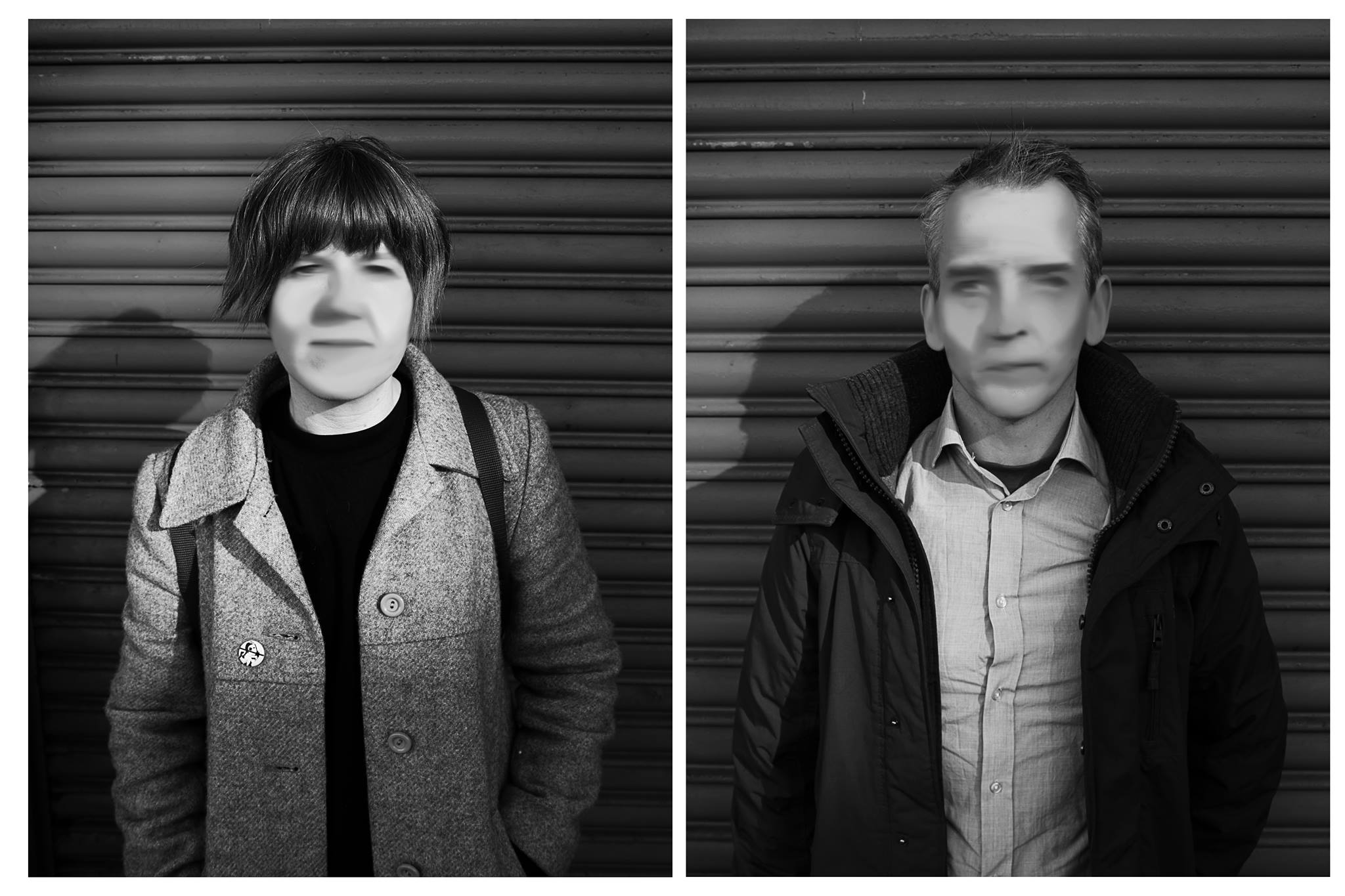
  • Stour Space, 7 Roach Road, Fish Island, Bow, London, E3 2PA, England – Wednesday 17th April 2019, 7.30pm (with O Yama O) – information here, here and here
  • Café Kino, 108 Stokes Croft, Bristol, BS1 3RU – Thursday 18th April 2019, 7.30pm (with Orxid) – information here and here
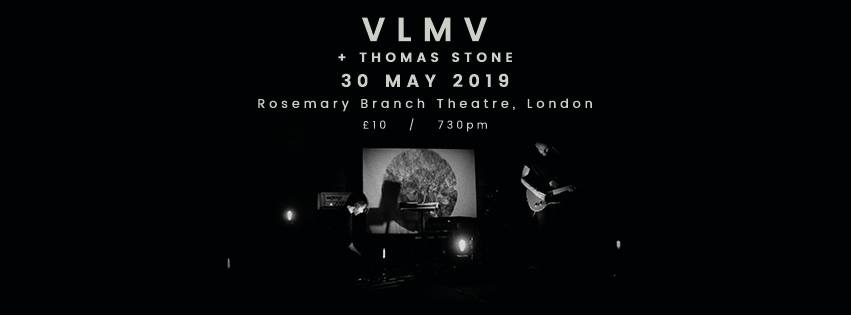
  • Star & Shadow Cinema, Warwick Street, Newcastle-upon-Tyne, NE2 1BB, England – Friday 19th April 2019, 7.30pm (with Competition + Gwilly Edmondez + DJ Mariam Rezaei) – information here, here and here


April 2019 – upcoming London experimental gigs – Kammer Klang celebrates Annea Lockwood with Xenia Pestova Bennett, Nate Wooley, Jennifer Lucy Allan, Diffusions and the Cafe Oto Experimental Choir, plus Evie Hilyer and Amalia Young performing Chiyoko Szlavnics, Laura Cannell performing Peter Hannan and CRiSAP students performing EVOL and Yoshi Wada (6th & 7th)

2 Apr

Kammer Klang, 6th & 7th April 2019

Another Kammer Klang in Dalston provides a two-day weekend residency for Annea Lockwood; the New Zealand-born composer who started her career in the ferment of 1960s summer-schools at Darmstadt (with their focus on organised electronic composition) but who rapidly went far beyond that. Curated by former ‘Wire’ online editor Jennifer Lucy Allan, the weekend features various Lockwood European premieres alongside work by Chiyoko Szlavnics, EVOL, Yoshi Wada and Peter Hannan.

* * * * * * * *

For the Saturday event, Jennifer will be reading from ‘Annea Lockwood – Sound Streams’, an essay written by The Wire’s Louise Gray (for the Edition Festival for Other Music) which explores Annea’s ethos through from her early Darmstadt days to the present. En route, it touches on her playful Fluxus-influenced piano stunts, such as floating a tiny, tinkling musical box, attached to a bright childlike bunching of helium balloons, out of the body of a grand and into a the space of formal concert hall; or kitting out an old upright with integrated, foregrounded toys which not only made avant-garde noises but also visibly kept their toy nature.

The essay also delves into Annea’s later approach of mapping sound and space as a listener, mapper and translator – having ditched electronic sound-sources as master tone generators (while retaining electronics for processing), she moved to reconfiguring and (crucially) interacting sympathetically with natural environmental sounds. Even while imposing her own will on those sounds as recordings and as material, she’s consistently respected and illuminated their original sources and context, including the functions which they represent and the continuance which they embody.

There will be audio playbacks of two entirely electroacoustic Lockwood pieces. 2012’s ‘Dusk’ presents a mixture of “low frequency sounds generated by seafloor black smoker hydrothermal vents, transposed bat calls, and percussionist William Winant playing a tamtam”. Initially, 2013’s ‘Bouyant’ seems to travel from the pastoral to the sinister to comfortingly aural wit, as dipping, paddling water noises alternate with sinister low-frequency drones, haunting frictional creaks and indistinct faraway howls, which in turn give way to cheerful, pastoral farmyard animals bleating and babbling in the middle distance. It’s as if a canoeing trip (filmed in rapid disassociated jumps between panoramic scene shots and extreme close-ups, and between air and underwater) had started out being stalked by eldritch forest monsters and emerged in the millflow beside Old McDonald’s farm.

https://soundcloud.com/recitalprogram/annea-lockwood-buoyant
 
I’ve just read that last bit back and am laughing at myself again for the splats of fancy that I came up with. Maybe I’m just too trapped in a habit of floridly verbalising what I hear, as I try to shift my impressions from incoming sound to outflowing text. I suspect that in doing so I’m missing the point of what Annea does with her compositional process and what her intentions are when she brings it out of the sound lab and to the listener. Jamming a corny, boyish narrative of external horror-movie threat and cartoon silliness onto what I’m hearing isn’t the right approach. What I should be doing is dropping the whimsy and listening to the sounds as they were made and processed, without my input. It’s probably more accurate to interpret ‘Buoyant’ as a full-range representation of a segmented river journey passing through inscrutable wildernesses and the managed densities of rural agriculture (each of them with their differing environments and functionality) while realising that my listening human ears impose subjective meaning and story onto what they hear; as those of any listener might.

If you’re interested in the purest end of Annea’s interpretations of field-recordings, her four-channel sound installation, ‘A Sound Map of the Housatonic River’ will be open to the public at Cafe Oto Project Space throughout the weekend. It’s another water piece – extracted from a hundred-and-fifty-mile stretch of New England waterway via recordings made at points from river source to river mouth, both underwater and on the surface. Subsequently, it’s been formed into a polyphonic tricklerushflow of noises, crafted to capture the character of a river made up from the sum of its users, denizens, dynamics and fluid functions: a character which available to the ears if you know how to sit back and absorb it. You can listen to a downloadable excerpt here.

Saturday also provides the opportunity to listen to another strand of Annea’s music: two piano pieces performed by Xenia Pestova Bennett which are closer to the concert hall, building on bedrock conceptual carvings more akin the deconstructions of John Cage and the rumbles of James Tenney. In 1993’s ‘Red Mesa’ clustered drips of piano notes, gently sophisticated chordings and zither-strums inside the case result in something (to these misleadable ears, at least) strangely close to a Bill Evans jazz romance. 2001’s ‘RCSC’ takes the same principles and techniques but pursues them somewhere much darker and more reverberant, where the piano body becomes a roiling haunted canyon of clangs, stutters and trapped lashing stiflings, or perhaps just an objective map of unforgiving terrain. There’s an earlier interpretation of ‘RCSC’ below:

 
Supporting the Lockwood work will be a pair of duets played by emerging violinists Evie Hilyer and Amalia Young. ‘This Is Only Here’ and ‘HC91’ are both composed by electroacoustic specialist Chiyoko Szlavnics, who devises her pieces (in part) through drawings, and whose work has a focus on the “beating” phenomenon which occurs when two imperfectly tuned pitches interact with each other in an oscillating throb.

The Fresh Klang contribution for Saturday will be ‘Three hundred grams of latex and steel in one day‘: a 2011 spatial performance piece being restaged by students from the CRiSAP program (Creative Research into Sound Arts Practice, at the University of the Arts London). Using groupings of balloons and hex nuts at varied distances from the observer, it was originally composed/conceived by EVOL (the dual-composing, music-squashing, party-hooligan-cum-research-science team of Roc Jiménez de Cisneros and Stephen Sharp) as a way of exploring a modelled algorithmic process in perverse, potentially frustrating real-world terms. In practise, it’s mostly about EVOL’s fondness for deformatory music, and about the inspiring, embraceable awkwardness and randomness of trying to get an avant-garde composition off the ground by molesting blown-up latex. Squu-u-u-u-u-arr-r-r-r-r-kk-k-k….

* * * * * * * *

The Sunday event starts with a free afternoon Q&A session with both Annea Lockwood and composer/improviser Nate Wooley. During the evening concert, Nate will be performing the European premiere of his 2018 co-composition with Annea, ‘Becoming Air’, on trumpet and tamtam. It made its debut at Nate’s own FOR/WITH festival, and uses circular breathing, an effects pedal and a constantly-fiddled-with miked-up trumpet to capture overtones: it’s been noted for “using much of his improvising electro-acoustic vocabulary (while being) absolutely an Annea Lockwood composition: performative, shamanic, and with an attention to the naturalness of sound that makes the audience rethink their aural surroundings.” as well as containing sounds which (as ‘The Information Superhighway‘ put it) are “suggestive of a sprinkler system that’s gained consciousness.”

The other Lockwood composition for the evening will be the vocal piece ‘Water & Memory’, again receiving a European premiere. Based around hums and reiteration of water-words in Hindi, Thai and Hebrew and spacing a group of voice performers all around the venue, it’s conceived for amateur musicians and requires audience participation. This is billed as being performed by the “Cafe Oto Experimental Choir”. In practise – and on the night – I guess that that means you as well.

In addition to the evening’s Lockwoodia, there’ll be a visit from iterant Early/avant-music specialist Laura Cannell (see passim), interpreting ‘Rsrch 4/83’ by electro-acoustic orientated composer Peter Hannan; himself a former recorder player who wrote the ‘Rsrch’ series to explore, express and comment on musical and technical problems with the instrument. For this one, the recorder and the performer’s voice go through electronic delay system to pursue and realise “a rich texture of overtones” resulting in an incantatory buzzing reminiscent of throat singing.

More overtone work is provided by the CRiSAP students, returning for another Fresh Klang piece. This time they’re reviving ‘Lament for the Rise and Fall of Handy-Horn’, a (probably) deafening 1990s composition by Japanese Fluxus/drone composer Yoshi Wada. For this one, a set of nautical air horns are triggered and left to blare until all the compressed air has blown out of their tanks.

The impact of ‘Lament’ has relatively little to do with planned pitches, and everything to do with other factors such as the oppressive volume (which helps with the overtones), the sense of situational alarm (springing up even in a prepared audience), and the increased air pressure in the room (which comes with the discharging of the horns). I just hope that the performance of ‘Little Miss Sunshine’ next door at the Arcola Theatre will already be particularly noisy, rowdy and oblivious…

* * * * * * * *

Dates:

Kammer Klang presents:
Jennifer Lucy Allan/Diffusions/Xenia Pestova Bennett perform Annea Lockwood / Evie Hilyer and Amalia Young perform Chiyoko Szlavnics / CRiSAP students perform EVOL
Café Oto, 18-22 Ashwin Street, Dalston, London, E8 3DL, England
Saturday 6th April, 7.30pm
– information here, here and here

Kammer Klang presents:
Annea Lockwood/Nate Wooley/Cafe Oto Experimental Choir perform Annea Lockwood / Laura Cannell performs Peter Hannan / CRiSAP students perform Yoshi Wada
Café Oto, 18-22 Ashwin Street, Dalston, London, E8 3DL, England
Sunday 7th April 2019, 7.30pm
– information here, here and here
 

April 2019 – upcoming London experimental gigs – Sonic Imperfections at Telegraph Hill Festival with Darkroom, Handäoline, Jo Thomas and Minus Pilots (5th) and your chance to jump into some more of their Festival work yourself (13th)

1 Apr

Having inveigled their way into a second home in a hilltop church a stone’s throw from New Cross (and half a klick away from their usual home at the Montague Arms), south London experimental evening Sonic Imperfections are presenting an early April sound’n’space gig at the end of the coming week, continuing their ongoing work with the Telegraph Hill festival. It features various contributions from Darkroom, Handäoline, Jo Thomas and Minus Pilots, all endeavouring to fill up the nave and the arch with reverberance of one kind or another.

Sonic Imperfections, 5th April 2019

Despite now being geographically split between Hertfordshire (where guitarist Michael Bearpark lives) and Edinburgh (where synthesist and reedsman Andrew Ostler is making solo inroads into the Scottish improvisation scene), the Darkroom duo remain tightly loyal to each other even as they stay conceptually loose, artistically inscrutable and absolutely in command of their vivid, grand scale abstractions after twenty years of making them. The boiling, heavy-ambience starstuff of the early years (with its post-prog wails, stepped pyramids of piled-up textures and the pulses which snaked alongside club music while never being shackled to it) has long since given way to something different: Darkroom now sound woody, or deep-carved and ancient, even as their music takes place behind winking lights and modular plug-ins.

Still underrated as one of Britain’s top guitarists in that rarified field where commanding emotion meets marvellous texturology, Michael’s playing exudes both confidence and a broadminded framework; sometimes stirring up a broody hauntological fog, sometimes exuding a cobweb of ominous data, sometimes licking at the music with the fiery tongue of a melodic soloist on a tight leash. Os (increasingly drawn to his bass clarinet booms and voicings) brings the wind through the bracings and the horns to the shoreline even as he runs Darkroom’s complex instinctive sonic architecture through his custom preamps and plugins. Any Darkroom performance is an ear-opener, and this should be no exception.


Handäoline is a new-ish familial teaming of Death In Vegas founder-turned-experimental sonics journeyman Steve Hellier, ‘Late Junction’-eer Freya Hellier and (in a sense) Steve’s late great-uncle Wally, a soldier killed in action during the World War II offensive in Italy. The inspiration is Wally’s old melodeon (rescued from his possessions after his death and kept in the family) and his handwritten notes for a piece of 1940s pop called ‘The Chocolate Soldier’s Daughter’. On accordion, Freya recreates and acknowledges some of this history while Steve passes her playing through sound processors and adds his own contributions via laptop and mixing: laced with further sound samples from the Hellier family archives, it’s a different kind of album project, surrealizing and loosening familial memory and once-or-twice-removed community history.

It’s all new enough to stop me from being able to bring you a soundclip or two, so you’ll just have to imagine your own way into this one. As compensation, here’s the original version of Wally’s old favourite…

 
Freeforming with “raw and sensitive sonic matter” (and working mostly from her own processed voice, tabletop electronics, found sounds and a Chapman Stick), electronic instrumentalist Jo Thomas explores the world around herself in a matter-of-fact manner which emerges as suggestive, obliquely sensual abstractions. By this I don’t mean erotic-sensual (although that shouldn’t be entirely ruled out). I mean that she records her impressions of atmospherics, situational weight and association, weighs them and returns them to us transformed or blanketed in evocative, unearthly, sometimes confrontational noise.

By some distance the most experimental act on the bill, Jo’s an abstract expressionist of sound. Her music takes varied shapes – the slow-evolve fluting-organ drones of 2017’s ‘Random Feathers’ (electrophonically realising her reflections on Emily Dickinson); the conglomerations of large-scale equipment hiss and rumble from a particle accelerator, as recorded and reworked on 2011’s Crystal Sounds Synchrotron; the recent Radiophonic inspirations of Natures Numbers (in which Jo follows in the blip-and-ghost-ridden footsteps of Delia Derbyshire and Daphne Oram, and adds a few of her own, a fellow traveller). At the input stage, her inspirations are clues: by the output stage, they’ve become mysteries.


Minus Pilots are bassist Adam Barringer and percussionist Matt Pittori: post-rockers who’ve drifted far from rock. Their sounds are gentle, post-industrial, even a little reverent. They’re the kind of holy minimalism you might get from an allegedly reformed psych-rocker sitting quietly and shaggily among the congregation towards the back of the church, secretly tonguing a decal of blotter acid as he eyes the rose window and daydreams of the ruins of an old chocolate factory. Expect hum and crackle, expect frayed fences and distant boom; expect the sound of a parched-out spiritual rinse; expect, too, the shatter of free jazz as Matt cuts a little loose.


* * * * * * * *

Sonic Imperfections, 13th April 2019

Continuing their Telegraph Hill Festival work this month, Sonic Imperfections are also running a sign-up and turn-up immersive event for improvisers in Telegraph Hill Park on 13th April, as part of the Festival’s 25th Anniversary Spectacular. This involves a shifting, spontaneous play-along to a silent film or two as well as providing the sonic backdrop to an audience being led around the park. If you’re interested in playing, you can put your name down here on the Facebook page.

* * * * * * * *

Dates:

Sonic Imperfections presents:
Darkroom + Handäoline + Jo Thomas + Minus Pilots
St Catherine’s Church, 102a Pepys Road, Telegraph Hill, London, SE14 5SG, England
Friday 5th April 2019, 8.00pm
– information here

Sonic Imperfections presents:
Sonic Imperfections @ Telegraph Hill Festival 2019 – 25th Anniversary Spectacular
Telegraph Hill Park (Lower Park), Pepys Road, Telegraph Hill, London, SE14 5TJ, England
Saturday 13th April 2019, 8.30pm
– information here
 

April/May 2019 – upcoming folk/experimental gigs – Sam Lee’s ‘Singing With Nightingales’ season

30 Mar

Details on the upcoming season of Sam Lee’s ‘Singing With Nightingales’ – slightly massaged press text follows…

'Singing With Nightingales', April/May 2019

“Join folk singer, song collector and nature lover Sam Lee in the forest, sit by the fireside and listen to intoxicating song, as some of the finest musicians in the land duet with the sweet sound of the nightingale. Immerse yourself in the folklore and ways of our native birds, savour the music of world-renowned guest artists from folk, classical, world music, and jazz arenas. Join us in a rare and thrilling journey as darkness falls upon the springtime woodlands of Kent, Sussex and Gloucestershire from 18th April to 26th May.

“Each year, for a few months from mid-April, a few thousand nightingales fly to the southern UK from Africa. They can be heard in just a small number of special locations, taking up songful residence after dusk. The territorial males serenade loyally each night for no more than six weeks among the blackthorn and forest margins, giving unbelievable privilege to those who know where to go. Inspired by infamous recordings of cellist Beatrice Harrison playing with nightingales as far back as 1924, Sam has been hosting reverent celebrations of this endangered bird each spring since 2014. These events have spanned multiple events at four different sites, a ‘Pick of The Year’ BBC Radio 4 documentary, a critically acclaimed adaptation for theatres and concert halls, and many broadcasts on BBC Radio 3.

“As well as the outdoor night shows, you can also enjoy the sound of the nightingales’ song in the comfort of concert halls across the UK from 14th April. After a hugely popular run in 2018, our ‘Singing With Nightingales: Live’ tour is back, bringing you diverse musicians in relaxed, low-lit settings improvising in collaboration with live birdsong via live broadcast feed from the countryside. Joining Sam on stage will be a duo (depending on the date) of either violin-playing jazz world/folk singer Alice Zawadzki plus kora-playing Senegalese Griot Kadialy Kouyate, or Welsh folk-singer/songwriter/harpist Georgia Ruth plus Bristolian post-jazz trumpeter/multi-instrumentalist Pete Judge. In addition, an abridged version of ‘Singing With Nightingales: Live’ will feature at London’s South Bank as the late show in the ‘Absolute Bird’ concert (a night of classical music inspired by birdsong).

 
“Brand new for this year, we are launching a mini festival experience with the nightingales at Fingringhoe Wick , Essex, on 27th April. Hosted by Sam, the night will feature three performances from Irish 10-string drone fiddler Caoimhin O’Raghallaigh and from experimental songwriters and instrumentalists Serafina Steer and Cosmo Sheldrake, all joined in song with the nightingale.

We’re offering return travel from London for selected events; and we’re very happy to say that we have received some funding from Arts Council England which means we’re able to put a number of concessions tickets on sale for selected events. These are strictly for people on low income. We also have a number of concession tickets available for our Singing With Nightingales Festival event at Fingringhoe Wick nature reserve, Essex on April 27th.”

Other musicians involved in the open air concerts come from a variety of different genres. There are classical and jazz flautists (Paul Cheneour; and Marsyas Trio‘s Helen Vidovich) and assorted polygenre players (eclectic South African cellist Abel Selaocoe, post-classical/post-folk chamberist Kate St John, Globe Theatre music director Bill Barclay, multi-instrumental composer Christo Squier). There are singers from various strands of contemporary folk (Lisa Knapp, Furrow Collective’s Lucy Farrell, ESKA) and soul-jazz singer-cellist Ayanna Witter-Johnson. There’s the choral work of vocal trio Blood Moon Project (featuring Heloise Tunstall Behrens, Tanya Auclair and Luisa Gerstein). There are also representatives of music from further afield (Zimbabwean singer/mbira master Chartwell Dutiro, travelling shakuhachi-ist Adrian Freedman, Afghan music specialists John Baily & Veronica Doubleday and Dublin vocalist Fergus “Faró” Cahillane, the latter known for Irish and Irish/Viking acappella folk work with Anúna and M’anam).

 
Update, 13th April – in the latest development, ‘Singing With Nightingales’ is linking up in London with the Extinction Rebellion movement, on 29th April, for a “peaceful sit down intervention” in central London, called ‘A Nightingale Sang in Berkeley Square‘:

“In the midst of the heightened attention to climate change and environmental catastrophe we want to bring people together in celebration of the musical beauty of the natural world. Poets, musicians and nature lovers will join together to perform the most romantic rebellion.

“Written in 1939, the renowned ballad tells of the impossible moment when a now critically endangered nightingale (Luscinia megarhynchos) sings in Mayfair’s famous garden square. Nightingales have not been heard in Central London, let alone Mayfair, for several hundred years. However, through the magical power of people and technology this April 29th, XR, Sam Lee, The Nest Collective and a pop-up flash mob of nature enthusiasts, musicians and supporters will gather to rewild nightingale song back into Berkeley Square.

“Through synchronised streaming of the nightingale’s mesmeric yet seldom heard courtship song via mobile phones and mobile speakers, our pop-up action will fill the park and surrounding streets with the song of a creature nearing extinction on this island. The birdsong will be accompanied by offerings from musicians, singers, poets and anyone who wants to collaborate with the finest singer in the world. This central London rewilding action aims to bring poetic focus to the shocking demise of our own native species and give Londoners the opportunity to hear a once ubiquitous songbird, now near extinct in the UK, in its mythic notional home.”

* * * * * * * *

Full dates for everything:

Open-air shows at Green Farm Kent, Church Lane, Shadoxhurst, Kent, TN26 1LS, England

  • Friday 19th April 2019, 6.30pm (featuring Sam Lee & Bill Barclay) – information here and here
  • Saturday 20th April 2019, 6.30pm (featuring Sam Lee & Paul Cheneour) – information here and here
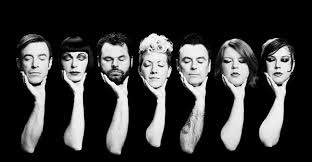
  • Sunday 21st April 2019 (featuring Sam Lee & Christo Squier) – information here and here
  • Friday 17th May 2019, 6.30pm (featuring Sam Lee & Helen Vidovich) – information here and here
  • Saturday 18th May 2019, 6.30pm (featuring Sam Lee & Abel Selaocoe) – information here and here
  • Sunday 19th May 2019, 6.30pm (featuring Sam Lee & Blood Moon Project) – information here and here

Open-air shows at a secret location near Spithurst, Lewes, Sussex, BN8 5EF, England

  • Thursday 25th April 2019, 6.30pm (featuring Caoimhin O’Raghallaigh) – information here and here
  • Friday 26th April 2019, 6.30pm (featuring Caoimhin O’Raghallaigh) – information here and here
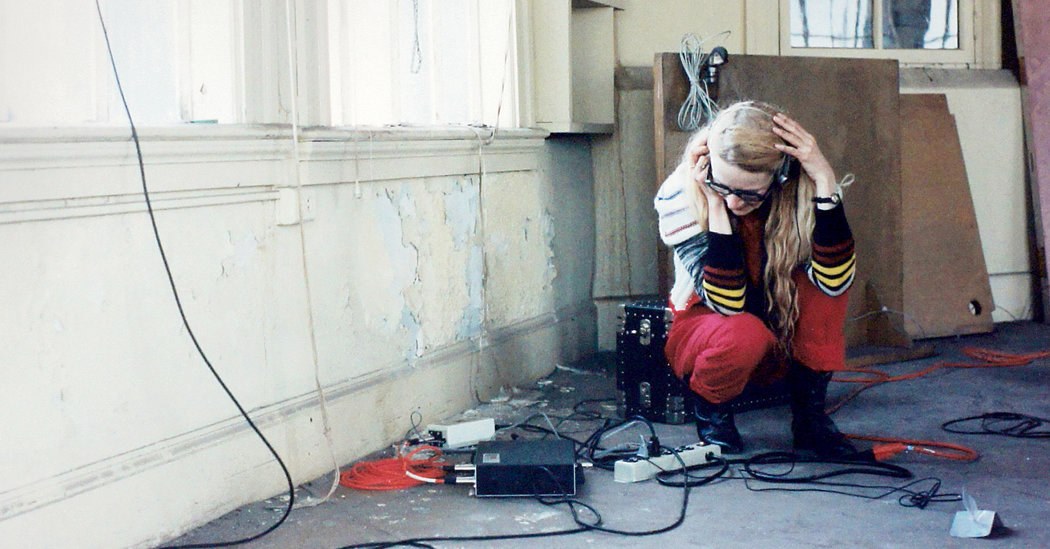
  • Friday 3rd May 2019, 6.30pm (featuring Sam Lee & Lisa Knapp) – information here and here
  • Saturday 4th May 2019, 6.30pm (featuring Sam Lee & Kate St John) – information here and here
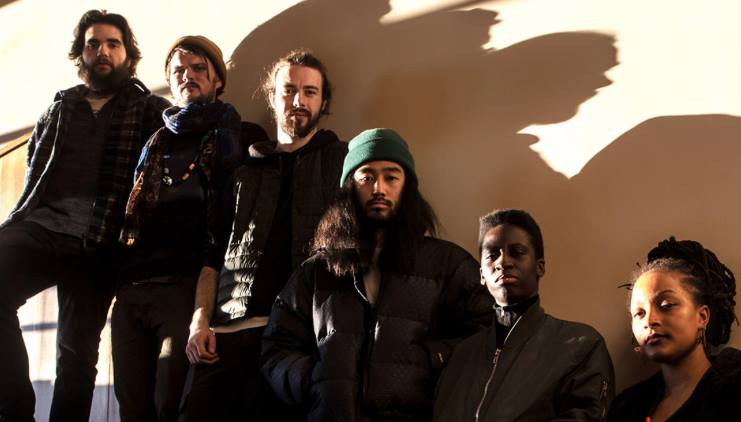
  • Sunday 5th May 2019, 6.30pm (featuring Ayanna Witter-Johnson) – information here and here
  • Monday 6th May 2019, 6.30pm (featuring Sam Lee & Lucy Farrell) – information here and here
  • Saturday 25th May 2019, 6.30pm (featuring Sam Lee + ESKA + John Baily & Veronica Doubleday) – information here and here
  • Sunday 26th May 2019, 6.30pm (featuring Sam Lee & Fergus Cahillane) – information here and here

Open-air shows at Highnam Woods, Highnam, Gloucestershire, GL2 8AA, England

  • Thursday 9th May 2019, 6.30pm (featuring Sam Lee & Pete Judge) – information here and here
  • Friday 10th May 2019, 6.30pm (featuring Sam Lee & Chartwell Dutiro) – information here and here
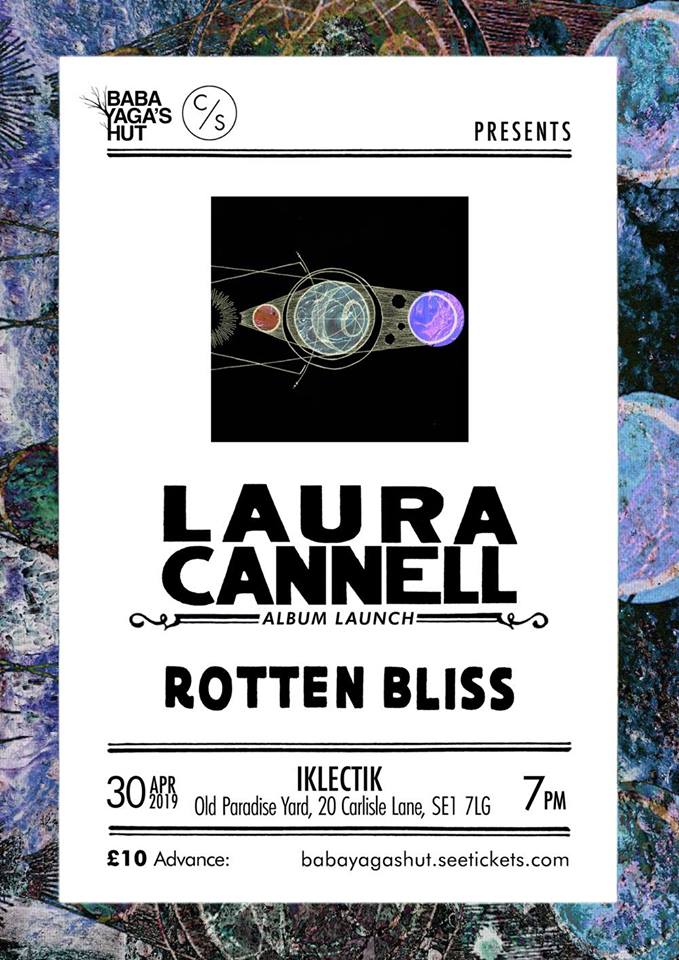
  • Saturday 11th May 2019, 6.30pm (featuring Sam Lee & Adrian Freedman) – information here and here

‘Singing With Nightingales: Live’ (indoor concerts)

  • Ropetackle Arts Centre, Little High Street, Shoreham-by-Sea, West Sussex, BN43 5EG, England – Sunday 14th April 2019, 8.00pm (featuring Sam Lee + Alice Zawadzki + Kadialy Kouyate) – information here and here
  • The Old Fire Station, 40 George Street, Oxford, OX1 2AQ, England – Tuesday 23rd April 2019, 8.00pm (featuring Sam Lee + Alice Zawadzki + Kadialy Kouyate) – information here and here
  • Warwick Arts Centre, University Road, Coventry, CV4 7AL, England – Wednesday 24th April 2019, 8.00pm (featuring Sam Lee + Alice Zawadzki + Kadialy Kouyate) – information here and here
  • Dartington Hall, Totnes, Devon, TQ9 6EL, Tuesday 30th April 2019, 8.00pm (featuring Sam Lee + Alice Zawadzki + Kadialy Kouyate) – information here and here
  • Wyeside Arts Centre, Castle Street, Builth Wells, LD2 3BN, Wales – Wednesday 8th May 2019, 8.00pm (featuring Sam Lee + Pete Judge + Georgia Ruth) – information here and here
  • St Laurence’s Church, Church Street, Stroud, GL5 1JL, England – Wednesday 15th May 2019, … (featuring Sam Lee + Pete Judge + Georgia Ruth) – information here and here.
  • Gulbenkian Theatre, University of Kent, Canterbury, Kent, CT2 7NB, England – Wednesday 22nd May 2019, 8.00pm (featuring Sam Lee + Pete Judge + Georgia Ruth) – information here and here
  • Junction II @ Cambridge Junction, Clifton Way, Cambridge, CB1 7GX, England – Thursday 23rd May 2019, 8.00pm (featuring Sam Lee + Pete Judge + Georgia Ruth) – information here and here
  • ’Absolute Bird: Translating Nature’ Queen Elizabeth Hall @ Southbank Centre, Belvedere Road, Waterloo, London, SE1 8XX, England – Friday 24th May 2019, 8.00pm (featuring Sam Lee, Alice Zawadzki plus selected members of City of London Sinfonia) – information here and here.

Singing With Nightingales: Festival (with Sam Lee + Serafina Steer + Caoimhin O’Raghallaigh + Cosmo Sheldrake)
Visitor Centre @ Fingringhoe Wick Nature Reserve, South Green Road, Colchester, Essex, CO5 7DN, England
Saturday 27th April 2019, 8.00pm
– information here, here and here

Extinction Rebellion: ‘A Nightingale Sang in Berkeley Square’
Berkeley Square, Mayfair, London, W1J, England
Monday 29th April 2019, 6.00pm
– information here
 

March/April 2019 – upcoming British experimental gigs – Sarah Angliss’ eerie Air Loom on tour in Britain (26th March to 8th April, various) – also featuring Noize Choir, Kate Arnold, Thomas Stone, Embla Quickbeam, Good News From The Future, Ben Gwilliam and Cath & Phil Tyler

23 Mar

The Air Loom project is on tour across England (with appearances in Scotland and Wales) during the end of March and early April.

Headed up by electro-acoustic composer and inventor Sarah Angliss, the project also features soprano vocalist Sarah Gabriel and Ensemble Bash percussionist Stephen Hiscock; but the vision is entirely an Angliss one: one of “phantasmagoria” and “electrical mysticism” which can incorporate“robotic carillons, telephonic counterpoint and a new instrument made from the salvaged parts of a Welsh chapel organ.” A former folk-club performer, Sarah is steeped and classically trained in the music of the baroque and Renaissance eras, and spends much of her time constructing and delivering music for theatre and for live film soundtracks. She’s also part of a generation of composer-performers who re-examine the archaic and antique from both a present-day perspective and a feeling of questing connection.

 
This kind of thing doesn’t always work out (folktronica’s a fine idea but often gets reduced to the cliché of just playing folk music on synths), but Sarah’s approach is a fresh one – folding the process over with technological visions which themselves are deliberately selected for their own innate antiquity in order to explore “resonances between English folklore and early notions of sound and machines.” Possessing traditional Early Music instrumental skills (on recorder and ancestral keyboards), she mates them with contemporary jiggery-pokery: the latter covering the kind of twentieth-century technology now acquiring a museum patina (theremins, analogue telephones, radiophonic devices) and more virtual twenty-first century tech such as current custom MAX patches and apps.

 
Backed up by Stephen and by Sarah G, the Air Loom tour and album features Sarah performing on a mixture of recorders, electronics, theremin and the clavisimbalum (a “sonorous, fourteenth-century Latvian cousin of the harpsichord” – in this case one that’s been connected to custom synth processing). The other things to mention are the eerie, enchanting robotic instruments which she conceives, designs and then brings on tour to operate, building them out of bits of abandoned acoustic instruments and sundry homely/associative objects. Some are more anthropomorphic and animatronic – a drum-playing 1960s shop mannequin; a handbag playing triple duty as a heart and a drumbox; a theremin-playing doll called Clara; a disembodied ventriloquist’s-dummy head operating as a spycam; a robot crow. Others present more clearly as machines, such as the automated, radiation-sensitive, hyperspeed bell carillion built with technologist Dan Stowell which was the centrepiece of her previous ‘Ealing Feeder’ album and the “wheezing, robotic Shruti box” that’s the centrepiece of ‘Air Loom’.

 
The resulting music is enthralling and a little displaced. Rumbles, chimes and airs adding up to hauntology-in-the-machine stuff; all of it in line with Sarah’s desire to create work which captures the “disquieting and uncanny” and “the crackle of the galvanic on the telephone wire.” While there isn’t currently any grabbable Air Loom work online for me to show you, here’s something a little similar – Sarah in the grand baroque Hawksmoor space of St Anne’s Limehouse two years ago, performing her ‘Ealing Feeder’ piece A Wren In The Cathedral along with Stephen Hiscock, Colin Utley and her animatronics. Echoes of the unearthly, the mundane and the dignified run through the performance: summonings, weaving, the patience of listening, the trances of spaces.

 
As you’d expect, a tour like this draws in interesting supports.

In Brighton and in London, Kate Arnold from Fear Of The Forest will open the Air Loom shows with a solo hammer-dulcimer-and-voice set of the kind with which she’s been tremendously busy over the past year (see passim). Looping full-range contrabassoonist and sound-triggerer Thomas Stone supports at Bristol, providing his usual slow-evolve sonic immersion from reed tones, beat and hiss.

 
At the Yorkshire art-nexus of Todmorden, Air Loom are joined by a couple of field-recording and sound collage artists – Embla Quickbeam (who opts for a naturalistic approach, overlaying and engraining recordings of places with homemade sonics) and Ben Gwilliam, who prefers to affect and manipulate similar recordings via open tape reels, magnets and a mingling of technical performance art with a kind of deconstructive electrophonic storytelling which can vary from absolute obliqueness to narrative snagging. This time he’s working with “super 8 projectors, ice and homemade electronics in an attempt to amplify the space between microphone and medium.”

 
At Newcastle, support comes from local avant-garde vocal performance collective Noize Choir, who wield an extended human-voice approach “free of the traditional restraints of typical choral settings, language or musical notation” in which singing, breathing, coughing, wailing, humming or any other vocal excursion has equal merit. They also investigate and reflect on the venues which they perform at via “phenomenological explorations (or) imaginings of our geological past” while pegging themselves firmly to a very North-East England post-industrial perspective in which science, landscape and culture merge. On this particular evening everyone’s performing in an award-winning conversion of a former carpet warehouse, now housing an independent cinema company first based on the quayside and then in a squatted abandoned prop store, and with an eye on delivering a future community spirit in ominous times…. so they’ll have all that to unpack with a click and a whoop. Anyhow, here’s them vocalising Lindisfarne (the holy island and bird sanctuary, not the folk rockers).

 
At the Swansea date (for Welsh art-music initiative NAWR) there’s another double support. The first is Newcastle folk duo Cath & Phil Tyler, latter-day exponents of traditional folk narratives, American mountain banjo and full-voiced Sacred Harp singing, which they strip down to its most minimal and concentrated folk, able to bewitch anything from the most cramped little folk club to the vast arena of the Albert Hall. The second is Welsh music-and-movement project Good News From The Future, a collective of mature performers (in their fifties or older) co-ordinated by Mike Pearson (once of 1980s Cardiff avant-garde site-specific theatre company Brith Gof, now emeritus professor of performance studies at the University of Aberystywth). It’s unclear about exactly what they’re doing this time around: some sources say a spoken-word piece, others a movement piece. By all accounts they’re equally skilled at telling a story either way. Here’s something of what – and how – they performed a few years ago at Cardiff’s Chapter venue.

 
* * * * * * * *

Air Loom dates:

  • The Marlborough Pub & Theatre, 4 Princes Street, Brighton, BN2 1RD, England – Tuesday 26th March 2019, 8.00pm (with Kate Arnold) – information here, here and here
  • Kings Place, 90 York Way, Kings Cross, London, N1 9AG, England – Saturday 30th March 2019, 8.00pm (with Kate Arnold) – information here and here
  • The Glad Café C.I.C, 1006A Pollokshaws Road, Glasgow, G41 2HG, Scotland – Wednesday 3rd April 2019, 7.30pm – information here and here
  • Star & Shadow Cinema, Warwick Street, Newcastle Upon Tyne, NE2 1BB, England – Thursday 4th April 2019, 7.30pm (with Noize Choir) – information here and here
  • The International Anthony Burgess Foundation, Engine House, Chorlton Mill, 3 Cambridge Street, Manchester, M1 5BY, England – Friday 5th April 2019, 7.30pm – information here and here
  • The Golden Lion, Fielden Square, Todmorden, OL14 6LZ, England – Saturday 6th April 2019, 8.00pm (with Embla Quickbeam and Ben Gwilliam) – information here
  • The Cube, Dove Street South (off top-left of King Square), Kingsdown, Bristol, BS2 8JD, England – Sunday 7th April 2019, 7.30pm (with Thomas Stone) – information here and here
  • NAWR#35 @ BBC Hall at Swansea Studios, 32 Alexandra Road, Swansea, SA1 5DT, Wales – Monday 8th April 2019, 7.00pm (with Good News from The Future and Cath & Phil Tyler) – information here, here, here and here

…and here’s Sarah’s robot carillon again, this time transmitting bird song (to the audible delight of a baby)…


March 2019 – music and theatre as ‘The Marchlands Arms’ takes over London’s transmigrational pub Ye Olde Mitre for a couple of evenings of border culture (23rd & 24th March)

19 Mar

A little way into the western edge of the City of London, between the jewellers’ quarter of Hatton Gardens and the gated enclave of Ely Place, there’s an inviting little alleyway – a tuckaway court still marked by Victorian streetlights, a little like an urban Narnia portal. As you wend your way up it, negotiating the gentle kink in the middle, a pub appears – a pub which gives the damnedest impression of having materialised from elsewhere and wedged itself into the cut-through.

Ye Olde Mitre (photographer unknown)

Ye Olde Mitre (photographer unknown)

This pub, Ye Olde Mitre, has actually been around in some shape or form since the middle of the sixteenth century – and for a long time it was perhaps London’s only example of a place which was in another place. Specifically, it was legally a part of Cambridgeshire. The beneficiary of a legal agreement regarding land jurisdiction set up around the London estate of the Bishop of Ely, it was the drinking establishment for his London servants. There are tall tales about people on the run from the City of London coppers claiming sanctuary in there, and arguing that the City police had no jurisdiction within the pub walls; no more than the Met did either.

Obviously this is a quirk of law, power and accommodation – mostly a long-standing in-joke for pint-supping conveyancers dropping in from the Inns of Court. Nonetheless, visiting Ye Olde Mitre always feels like taking a step into another kingdom, one which disregards standard unities of time and place in favour of fashioning its own. There’s the mythic touch added by the resident cherry tree, of course (which dates back to Elizabethan times and comes complete with its own Queen Elizabeth legend); but even when you’re not looking for magical signifiers – and long before you’ve become swimmy-headed on beer – the pub has the relaxed, self-contained air of somewhere entirely separate from the London bustle. Many pubs strive to become places in their own right; friendly drop-in nations. Content as its own little capsule of peace, Ye Olde Mitre manages it much better than almost anywhere else I know.

The Marchland Arms, 23rd & 24th March 2019

It’s unsurprisingly that such a place – one that flaunts and celebrates its quirky liminality – has drawn the attention of Marchland, the music-and-theatre production alliance which fixes and thrives on ideas of history and borderlines (as evidenced in their previous festival at the Bridewell a year ago.). This coming weekend, they’ll be taking over the pub, recasting it as “The Marchland Arms” and filling it with nine performances in three separate sections, turning the different spaces within the pub into murmuring, discursive rooms within which performance, music and song will gently ricochet.

* * * * * * * *

Marchland Arms - 'Once & Future Europe'

Marchland Arms – ‘Once & Future Europe’

Three pieces make up the ‘Once And Future Europe’ section, triggered by Marchland’s “fascinat(ion with) the cultural history of the legendary states that once straddled Europe’s borders. For the three shows that make up this session we asked the artists involved to, in the words of Rimbaud, remember Europe and her ancient ramparts. This is work that explores the influence of those half-imaginary places on the European psyche, and how their legacy continues to influence our notions of identity and belonging.”

The first of these pieces, ‘Lyonesse’, appears to be (at root) a conceptual celebration and exploration of the mythical drowned kingdom between Cornwall and Brittany – in other words, the sunken link in the geographical continuity of the broader Celtic nation. On spec, that sounds like a dusty old disinterral of Edwardian romanticism; but judging by the participants and their preoccupations, it won’t be. Poet-ecologist Dom Bury will, I guess, be mingling Lyonessean legend from his own West Country roots with contemporary concerns about flooding and dissolution, bolstered interjections and engagements from Katharina Engel, a German academic and theatre director whose preoccupation with hills and climbing may also feed into the work. The two will be accompanied by music from singer Sophia Brumfitt and veteran percussionist/hammer dulcimer player Dhevdhas Nair in a rich blend of European Early Music, Indian subcontinental music, jazz and African elements: Euromyth interfolding with full-world diaspora.

 
The pub snug will house ‘The Capital of Europe’ in which Charles Webber – whose two-decade-plus career as a sound artist has seen him write multimedia sound/light-and-music operas (he’s the artistic director of operaNCV), plus work with Crass’ Eve Libertine and innumerable experimental musicians and theatre companies – and Strasbourgian poet/Théâtre Volière co-director Mick Wood collaborate on “an installation of treated sound, found objects, and cut up poetry”, providing “an unguided tour through the abandoned corners, quiet squares and restless banlieues of an ideal, unreal city on the Rhine.” Sounds delightfully like an old pub story, but one which unfolds into multiple additional dimensions and textures; like that European flaneur’s collaboration between Johnny Morris and China Miéville which never actually happened.

Transforming the lounge, the last of the three ‘Once And Future Europe’ pieces – ‘Ionic’ – asks us to reimagine the space as“a café in fin de siècle Alexandria” in which a new dance theatre piece will play out. Rambert School graduate Janacek Wood choreographs an episode of interweaving texts and movements based around the work of Cairo-based, Alexandria-born Egyptian-Greek poet Constantin Cavafy, whose early life saw his family relocate between France, England and Constantinople in their own mournful, economically-driven private diaspora.

Cavafy himself ended up writing a body of work that’s a Hellenistic re-examination of what Wiki summarises as “uncertainty about the future, sensual pleasures, the moral character and psychology of individuals, homosexuality, and a fatalistic existential nostalgia.” The best-known of these poems is the sardonic Waiting For The Barbarians, in which an external exotic threat serves as both spice and hollowing-out of a moribund politics: I can’t think what that reminds me of now. Music comes from two Greek musicians – singer Savina Yannatou and classical guitarist Nikos Baroutsakis – and from electric guitarist/composer/personal ethnologist Alex Roth, who’s recently been pursuing his own Jewish diasporan heritage on a three-cornered journey that’s taken in Manchester, London and his current dwelling place of Warsaw.

* * * * * * * *

Marchland Arms - 'Customs & Duty'

Marchland Arms – ‘Customs & Duty’

Three more pieces make up ‘Customs & Duty’, “a session of shows exploring the interaction between folk culture and high art, and how identities shift when the lines between arbitrarily imagined communities are blurred… Must we declare our customs at the customs post? Is it our duty to pay duty on them? To whom do they belong? Who decides what they’re worth? What will they cost us when they’re taken away, dissected, repackaged, and sold back to us?”

For this, there’ll be a variation on the ‘Before and After Schengen’ piece which was one of last year’s Marchland centrepieces: Hungarian-born poet George Szirtes responses to Spanish photographer Ignacio Evangelista’s photos of border facilities, with guests and actors from the Marchland Arms Company contributing to a staging of the outcome, making the room “the Kafka-esque border post of a once or future East-European regime.”

Last time around at Marchland, Carneval String Trio’s viola player Shiry Rashkovsky contributed the ‘Shengen’ music. This year, she’s reviving a nineteenth-century middle-European tale with storyteller James Peacock in the shape of ‘Fritz and the Bohemian’ a tale of kindness, cyclic events and wanderings (“each year, on the first day of Spring, an itinerant musician comes to play beneath Fritz Kobus’ window…”).

Rounding off this section is a new Théâtre Volière play, ‘Goethe in Alsace’ – a one-act historical tale of cultural enrichment, “careless play-acting (and) casual cruelty” set around the border region of France and Germany, and questioning the assumptions and entitlements surrounding nascent male artists and the women whom they select as muses.

* * * * * * * *

Marchland Arms - 'The Northern Marches'

Marchland Arms – ‘The Northern Marches’

The three final Marchland Arms pieces comprise ‘The Northern Marches’ and focus specifically on the Scottish and English border country “(a) region, rich with the history of the Border Reivers of the debatable lands, the Roman garrisons of Hadrian’s Wall, and dramatic elopements to Gretna Green, has other, fresher stories to tell. How does its often romanticised past inform the Scottish borders’ present, and to whom do its stories old and new actually belong?” For this section, there’s a play (of sorts), a talk and a musical session.

Théâtre Volière return – teamed with poet Katie Hale and singing, fiddle-playing Scottish music specialist Lori Watson – to deliver a preview of ‘Gretna’: an actors/reciter/musician performance and ongoing project “exploring the culture of the region from the perspective of the women so often written out of its history.”

On the trail of linguistics and naming, University of Glasgow professor Eila Williamson provides ‘The Meaningful Merse’; throwing a little light on her REELS project work (Recovering the Earliest English Language in Scotland) in “a fascinating look at how history’s great, long term shifts in ethnic and cultural identity are often written in to the localised place-names, folk memory and dialects of Europe’s border regions.”

Finally, Lori Watson returns with her own set, performing in duo and bringing Scottish coastal and border folk music to close out the section in “a haunting collision between traditional music and found, ambient sound, in a performance ranging from the intimate to the epic.”

* * * * * * * *

There’s a general preview here:

 
Dates and times:

Marchland presents:
‘The Marchland Arms’
Ye Olde Mitre, Ely Court, off Ely Place/Hatton Garden, Holborn, London, EC1N 6SJ, England

February/March/April/May 2019 – upcoming English experimental/rock gigs – Markers and Haress on tour with appearances by Tom House, Anji Cheung, Caius Burns and Aby Vulliamy; plus later dates with Jaye Jayle and Motes

23 Feb

One of the connections which particularly intrigues me (for which read “always baffles me and induces me to go over it again”) is the one between folk music and hardcore punk. Apparently it’s a love based on a number of things – the inclination towards keeping to the basics, the austerity which is fostered both by that and by a distrust of commercialism and toys, a sense of political purity and of dodging corruption… It’s perhaps a little one-sided – punk tends to love folk more, although you’ll get some acknowledgement coming back the other way, increasingly so as more young folkies grow up with punk. Regardless of the relative exchange, you’ll see quite a bit of traffic moving around here. An upcoming British tour looks into this particular dynamic and feel, at the stripped-down point where the genres meet: along the way, there are more overlappings and enfoldings.

Markers on tour, February-May 2019Markers’ Jodie Cox always seemed like a gifted guy that strolled into hardcore with a positive attitude, rather than hunching or raging his way into it. Even when he was blitzing and shrieking away at the front of short-lived London seedbedders Ursa during the late ‘90s, he seemed cheerfully unlimited by the constraints of form. Ever since then (via transatlantic journeys through Earth, Narrows, Bullet Union, Sex Swing, Exes and others) he’s always seemed to be where he wanted to be rather than being forced into it: a sunny, enthusiastic character who’s helped humanise and hearten any project he’s been in. Jodie’s bandmate, contemporary and friend Jason Carty began his career in the same time and place. Stubborn, meticulous and sometimes anxious, he twitched and reeled various fluent post-rock/prog/post-metal guitar complexities through Geiger Counter and Foe like a ferocious engraver, then threw all of that aside to play blattering post-hardcore doom bass in Art Of Burning Water before embracing silence for a number of years.

Now reunited and united, Jason and Jodie’s all-instrumental work as Markers sees the two of them eschewing other musicians and hairy-arsed distortion in order to see what they can get out of two (mostly) clean electric guitars. Their debut album ‘Heaven In The Dark Earth’ is a beautifully executed thing. As Jodie’s put it elsewhere, rather than roaring easily through fuzz they’re now aiming for something “tonally heavy” (Even if they have covered Jesus Lizard, they went for one of that gonzo band’s rarer gentle tunes, and it came out sounding like late lamented bass frowners Rothko.)

Markers’ music is immediately atmospheric, recorded at a larger-than-life scale in which the listener feels as if they’re about a foot high, wandering around the duo’s feet and their suddenly gargantuan amplifiers. When processing does turn up it’s mostly in the form of encompassing shivers of reverb, or discreet echo – wider brushstrokes and spongeings to complement delicate penwork. Apart from that it’s wood, wire, pickups and an intuitive, space-filled musical marriage between the two players, pursuing a fluid sparseness and a sombre/passionate flaring of arpeggios and arabesques, flotsam folk figures and fragments rubbed smooth enough for their provenance to stay ambiguous. It’s a kind of post-industrial classical guitar, making the most of sparse resources and close-mouthedness, mysterious conversations through fingers and dusty speaker-cones. These buggers always had a lot more depth than previous circumstances have allowed them to show: or perhaps, more than they allowed themselves to make clear. In Markers, they no longer have either of these problems.


Following their recent showing at a mid-February gig in Brighton (hands up, I admit that I missed it) Markers are setting out on tour with kindred spirits Haress. Hailing from arty market town Bishop’s Castle in Shropshire, Haress are fundamentally the guitar duo of David Hand and Elizabeth Still. Mantric, minimalist, low-hanging and close-knit, theirs is a music in which several tight and lowering musical disciplines meets. Art-rock, hardcore edge, meditational post-rock and American electric folk fragments emerge via very loud, mostly clean electric guitars (on the lip of distortion and at the precarious peak of electromagnetic responsiveness) and meet shruti and amp drones plus delicate percussion tingles. Below are a couple of clips of David and Elizabeth meeting inside and outside:

 
Haress sometimes expand for live dates. The current ones see them augmented by a third guitarist (Chris Summerlin of dubby Notts psych/noise-ians Kogumaza, accelerated post-Beefheart screamers Wolves of Greece, and bluescore trio Lord), by a singer (Tom House, best known as the frontman for a pair of Brighton bands, hollering post-hardcore act Charlottefield and its more tender-fleshed followup Sweet Williams) and by drummer David Smyth of Liverpudlian synthcore/space-punks Kling Klang. No clips for that, I’m afraid…

At the London show (also the Markers album launch, with ticket/LP/download bundles available for those who want them), Anji Cheungprovides “audio intermissions”. She was in here earlier this month being previewed at the Matthew Shaw/English Heretic show, sandwiched between rural synth ambience and psychogeographic audio-visual. I can’t immediately improve much on what I said about her back then, so here it is again – “unnerving, frowning amplifier buzzes rolling over the listener like a gigantic clumsy wheel, with dramatically chopped/distorted/otherwise incomprehensible vocals implying pirate-radio-eavesdropping on a covert ritual… car-boot clatter under a lowering sky… beautiful lost female murmur-melodies stalked by drainage-ditch fuzz…. Another aspect of New Weird Britain: ambiguously multicultural and urban, mixing and obscuring London and Chinese references, but sounding mostly as if it stems from a place where jerry-built tower blocks break up old fields around the city’s tired periphery and where unknown syncretic practises are carried out (perhaps only half-understood even by the people involved).”


In Nottingham, Kagoule’s frontman Caius Burns will be bolstering the evening: sidestepping the noisy fantastical post-hardcore of his main band to deliver an acoustic voice-and-guitar set of his own songs, all in an old-school folk baroque form complete with slippery Jantschian fingerpicking. (And here he is in transient mode, halfway between folk and electropop…)

https://soundcloud.com/caius-burns/blues-run-the-game
 
The Shipley show is the most extensive on the mini-tour: a four-act event with Tom House stepping forward out of the Haress lineup to perform a set of his own queasy, sludgy, draggy-pop slowcore. Hometown girl Aby Vulliamy is also joining the evening. A multi-instrumentalist (piano, viola, flute, musical saw, accordion) and singer/composer across a remarkable range of genres, she was covered in here a few years ago via her part-written/part-improvised Mothercore project, in which she teamed up with established musicians Laura Cole and Maria Jardardottir plus an ever-shifting cast of local musician/mothers who joined in whenever the main trio rolled into their town. Mothercore was inspired by, and triggered by, the ambiguous experience of motherhood, and appears to have led into last year’s long-overdue Aby solo album, ‘Spin Cycle’.

If Mothercore thrived on solidarity, ‘Spin Cycle’ places itself, sometimes unnervingly, on “mother alone yet not alone”: its songs tracing their way across a webwork of maternal experience (broader voicings of political anger at the forcing of roles onto women of childbearing age; the claustrophobic vortex of love, fear and exhaustion surrounding breastfeeding; an awareness of the greater female timespan of girl baby to young woman, watched over by mother all the way). Depending on your gender, your situation and where you are in your own lifespan, it’ll either shed light onto a much generalised-over, much-misunderstood state of being, or simultaneously rue and celebrate what’s one of the greatest and most turbulent tasks, all to a DIY backing of diverse, intimate floating-folk instrumentation.


The final tour show, in Liverpool, is just Haress and Markers on their own. I can’t tell you where the Old Brazilian Embassy is, although longstanding Liverpudlians might be able to hazard a guess, while the organisers appear to be a collective who throw concerts at home and overlap with avant-garde rock ensemble Ex-Easter Island Head (so now you know who to chase up and pester if you really want to come). Apparently this isn’t the only show these guys are putting on, although the proximity of neighbours and license issues means that they’ve got to keep the volume down… Merseyside art musicians who operate at the quiet end of things, here’s a new place to beat a pathway to (if you can find it yourself).

Outside the tour, Haress and Tom House will also be plying their trade at a mid-March gig in Bristol, for which they’re joined by obscure Somersetters Motes, who come bearing the priceless label of “drunk-minimal/hypnotist-un-rock based at the ventriloquistic intersection of Barrow Gurney and Old Market”. There’s no way I can better that sentence – it’s its own short film, all by itself – but here they are, playing a couple of their lo-fi guitar-and-drum, barn-under-the-motorway scrambles:


San Haress, Markers go on to play a couple of dates in Brighton and Leeds on the cusp of April and May with American “dark-indie” band Jaye Jayle. Formed in Louisville around onetime Young Widows songwriter Evan Patterson and with other personnel sporting a history including The For Carnation, Freakwater, and Phantom Family Halo, Jay Jayle connect American roots music and Southern Gothic musical sensibilities with drone, garage rock, and bits of kosmische analogue-tronic drive (much of it brought by Corey Smith’s “auxiliary instrumentation”). They’re an exciting thrumble of Velvets-y deathmarch, down-home fucked-up country backroads, factory sirens, momentary blackouts and haunted, incoherent confessionals. They sing the songs of drifters on long, dark trips; of people in back-prickling situations; and of people who’ve picked at the scabs of guarded obscure places just enough to show you why you shouldn’t pick at any more of them. Jay Jayle are compelling. I think I’ll be back to give them another listen.


Also on hand at the first of those two shows – the one in Brighton – is Nick Hudson’s own home-grown take on the “psychedelic dystopian gnostic-Gothic post-punk” approach, The Academy Of Sun. Some overlap with Jay Jayle’s sound, perhaps, but quite a bit more verbose and self-consciously literary, to be honest. Somewhere between Johnny Cash and dark cabaret, with a dash of biting chanson – but then as Brightoneers they’re not much more than a stone’s throw away from either the sea or Nick Cave (and, judging by the sound of this, from a mouldering salt-stained stack which when pulled apart bursts into a sprawl of old Furniture records and bright West Coast glad-rags).


* * * * * * * *

Dates:

Markers & Haress on tour:

  • Servant Jazz Quarters, 10a Bradbury Street, Dalston, London, N16 8JN, England – Tuesday 26th February 2019, 8.00pm(Markers album release gig, also featuring Anji Cheung) – information here, here and here
  • JT Soar, 2 Aberdeen Street, Nottingham, NG3 1JB, England – Friday 15th March 2019, 7.30pm(also featuring Caius Burns) – information here
  • The Triangle, 47 Bradford Road, Shipley, Bradford, West Yorkshire, BD18 3DS, England – Saturday 16th March 2019, 7.00pm (also featuring Tom House + Aby Vulliamy) – information here
  • The Old Brazilian Embassy, somewhere in Liverpool, England – Sunday 17th March 2019 – ask around for information

Haress + Tom House + Motes
The Old England, 43 Bath Buildings, Bristol, BS6 5PT, England
Thursday 14th March 2019, 8.00pm
– information here

Jay Jayle and Markers:


February/March 2019 – upcoming British folk/experimental gigs – Bell Lungs on tour with Raiments (20th February to 2nd March, various) with appearances by Despicable Zee, Michael Clark, The Nature Centre, Halcyon Jane, Tara Clerkin Trio and various DJs. Plus sundry other Bell Lungs shows in March including a København evening with Hugh Tweedie and Tanja Vesterbye Jessen, a show with David Toop and Rashad Becker, a date with Gaze Is Ghost.

16 Feb

Working with a multi-instrumental, device-heavy palette which includes guitar, harmonium, Omnichord, electric violin, lyre, bouzouki, saz, voice and a host of effects pedals, avant-folk singer/writer/sometime promoter Ceylan Hay (a.k.a. Bell Lungs) sits at the middle of a host of possible routes. Her sound incorporates post-folk and drone, dream pop, noise and free improv, psychedelia and site-specific realisations, while her psychohistorian subject matter takes in the ancient, the near-ancient and the presently numinous: probing prehistoric spaces, the ghosts of the industrial age, day-to-day feelings and the slide into a new virtual existence space via online culture.

Reflecting these overlaid levels (and what might be, at different perspective points, either shockingly near or completely occluded), her vocal delivery steps between ornamental trad-folk crenellations, feathery ambient warbles and horrific screams. You can never quite tell whether she’s going to lull you or scare you, but you know she cares about what she’s ferrying across to you.

With a new EP, the wintry ‘Wolves Behind Us‘, to promote (apparently it’s a return to folk and landscapes after recent science fiction/site-specific digressions, and is “Joan Aiken’s ‘Wolves of Willoughby Chase’, Olaf Stapledon’s ‘Last and First Men’, caravan living in the Highlands and the ancient cosmology idea of dividing the year into two halves; the opening and closing of the wolf’s mouth”), Bell’s embarking on five weeks of touring (primarily alongside Raiments) through Scotland, England, Wales, followed up by other Raiments-less shows in Scotland, England and Denmark. (She’ll also be playing in Wales next month, but more on that later…)


Before taking a look at the tour, let’s take a look at her tourmates. Formed on the Berlin avant-garde scene, Raiments are fronted by sing-murmurer/left-field guitarist Mano Camatsos, and they sound like a soft-stepping muttering blend of Lou Reed and Momus fronting a band that mixes lurking dark-jazz styling (hardwood clarinet burr and groove-pattering trashdrums) with the DIY rattle of Pram and the dark throb of Morphine. Mano’s wildcard guitar is a clinking noisemaker and pulse generator taking note of hip hop, of avant-garde classical extended techniques and of mysterious instruments and methods gleaned from ethnological recordings. His songwriting voice is a oddball surreal instinct leading inexorably towards songs about ants or baffling seductions.

 
Tracing their upcoming footsteps on the tour is a joy, like following a plough which turns up small treasures as it reveals what’s in the earth. It’s partly the succession of intriguing off-the-beaten-path venues – squatty art-pubs, recovered eighteenth-century coal basins, pocket cinemas and art centres, diehard folk rooms and out-of-the-way sipperys – but also the revealing of similarly off-the-wall musical talents and enthusiasts they join up with en route.

In Edinburgh, Bell and Raiments are playing with Claquer – previously three-piece improvisers Claque until they spun off their American drummer an unspecified time ago. Now it’s just the Edinburgh contingent: free/experimental guitarist Jer Reid and viola player/speaker Lisa Fannen. They deal in lo-fi clangs, loopings and scrapes and spoken word: momentary moment-music.


In Newcastle, the main support comes from the soft melody murmurs and drowsy, cushioned keens of ambient/improv folk duo Halcyon Jane, a Tyneside/Humberside teamup. Upfront with the voice, guitar and devices is Newcastle performance art polymath Jayne Dent, better known via her own electronic/noisy folk project Me Lost Me, in which she buffers and buffets her singing with concertinas and samplers: when she played Hull back in December, support came from local ambient electronic beatsman Halcyon Neumann, who’s worked with The Body Farmers and with Sarah Shiels and who carries out sonic explorations of “the technological vs. the archaic/the spiritual vs. the scientific/the supernatural vs. the psychological.” Together they tease out a semi-improvised border music, part weird electro-folk and part post-shoegaze wisp.

Also playing is Michael Clark, providing slurred, wise, trepidatious and crepuscular folk music with fogrolls of noise behind an acoustic guitar. Despite being a Londoner, he sounds more like a moor-dweller; or like someone who lives in the kind of port city London used to be, one in which strange tales and intimation billow up the streets with the dock mist: this time out, his strange tales are backed up by a full band.

https://soundcloud.com/michaelclarkmusic/trails-of-ice-1
 
I’ve encountered The Nature Centre before. Headlining the Club Integral-hosted Birmingham show above Bell Lung and Raiments, they’re an affable rural/suburban pop quartet like a four-person one-man band, sprouting banjos and clarinets and found percussion alongside their drum kit and guitars. Drawn to playing at weirder gigs, they’ve shared bills with people like Bob Drake and have their own batchful of three-minute pop songs avidly reflecting the off-kilter visions of previous English songwriter eccentrics (the Syd Barretts, Robyn Hitchcocks and Tim Smiths). Handling the in-between-bands slot is someone new to me but not new to Brum’s vinyl-istas: Moseley Folk Festival’s house DJ and Moseley Record Fair co-organiser DJ Rome, promising his own selection of crate-dug oddities and inspirations.

 
In Bristol, the DJ backup comes from “bleary-eyed staggerer” Siegfried Translator of the Grey Area radio show (another haven for intriguingly weird music from all over the globe), but the gig predominantly features the Tara Clerkin Trio: the DIY musical brainchild of a ceramicist who also seems to have a yen for gamelan/minimalist-sounding pattern tinkling sprinkled with voiceloops, friendly saxophonic intrusions and other pitch-ins from whichever musical friends she can rope in for the occasion. (At other times, she creates her own slumberous take on experimental countrified pop.)

 
The Oxford show (promoted by Divine Schism) is primarily a launch event for the second EP by Zahra Haji Fath Ali Tehrani, a.k.a. Despicable Zee – a live-looper, improviser and conscious patterner of fifteen years standing, mixed Anglo/Irish/Iranian heritage, and a history of drumming in Oxford bands since her teens. Now the drums (plus loopstations and recordings) are used to create live solo tracks in which Zee employs a lo-fi, lo-technique approach to overlapping rhythm garlands and triggered conversations. As an artist (as well as an educator and mother), Zee’s increasingly conscious of the female lines she carries within her: the patched-in samples which wobble her current project along feature the voices of her mother and grandmother, mingling with Zee’s own sing-speak-raps as if they’ve dropped by for some kind of experimental music cross-cultural kaffee klatsch.


The London show (at Paper Dress Vintage) is an evening of music and spoken word put together by promoters Spilt Milk in order to raise money and awareness for North London Action for the Homeless. Shapeshifter experimental pop poet Alabaster dePlume comperes: also in the corner is Jenny Moore’s Mystic Business, who showed up in ‘Misfit City’ a little over a year ago.

Jenny’s another artist whose field extends from the visual and situational into action and music: the Mystic Business involves pulling together friends and strangers into a collective performance event that’s part communal clapalong choir, part percussion workshop and good-natured culture-jamming protest (with food). Guileless and charming, but nonetheless political and détournementational, it’s an attempt to get collective conscience back into the body, containing and encouraging a cheerful but insistent protest.


The Conventry and Brighton gigs appear to feature just Bell Lungs and Raiments on their own, but news just coming in re. the Liverpool date (at dockside art-pub Drop the Dumbulls) says that support there comes from Merseyside “synthwhisperer” and outsider synthpopper Claire Welles. She’s been rolling out her contrary songs for over a decade now, singing increasingly unsettling lyrics in a deep deadpan tone with a sarcastic medicated edge, while the backings deliquesce from elegant ageless Europop into something a little misshapen. It all becomes something like those conversations during which you wake up a third of the way in, not quite sure how you got into them, not quite believing that you’re stuck in there and will just have to ride it out.


* * * * * * * *

Following the Raiments tour, Bell heads off separately for other shows. A mid-March showing at Manchester’s Peer Hat is a solo gig, but there’s also an Argyll event (in the enchanting recording-studio-as-art-nook surroundings of St Marys Space) at which she’s supporting baroque poptronic project Gaze Is Ghost: itinerant Northern Irish singer/songwriter/post-classical composer Laura McGarrigle, noted for “spectral vocals and impressionist piano playing” as well as drifts into harmonium and ambient atmospherics. In recent years Laura’s let Zed Penguin drummer/artist Casey Miller into the project and (following a number of pre-Casey singles), Gaze Is Ghost are finally readying a debut album as a duo.

 
A return to Glasgow on 28th March sees Bell performing on a talk’n’play bill with musicologist and audio culturer David Toop and Berlin sonicist Rashad Becker (who, having polished over a thousand records by other people spanning noise to techno, has begun stepping out into music creation of his own with the resonant faux-ethnological synthwork of ‘Traditional Music of Notional Species, Vol. I’).

On the 30th she’s back in Edinburgh to support another experimental folker, looper and performance artist: David Thomas Broughton, whose brilliantly wayward path has included looping his own heckles, blurring the line between song performance and experimental theatre. Along the way he’s released eight albums of accessible, tremulous, oddly haunting alt.folk delivered in an arresting genderless vocal tone a little reminiscent of Anthony/Anohni, and won the respect and collaborative contributions of (among others) Beth Orton, Sam Amidon, and Aidan Moffat. David will be in the early stages of his own tour, which I really should cover on its own.


Before any of these, though, she’s crossing the North Sea to perform at an experimental folk event in København. Part of the city’s Fanø Free Folk Festival, it’s hosted by local label Dendron Records, specializers in “small runs of abstract electronics, ghostly folk songs and surprisingly hummable tunes.” The concert will also feature two København-based British emigres Hugh Tweedie and Tanja Vesterbye Jessen. Hugh’s been operating for years under various names including The Weave And The Weft and Taiga Taiga, creating shadowy understated mostly-acoustic songs with a literary bent, and he regularly helps out with David Folkmann Drost’s homemade folk project Moongazing Hare. Previously known as a radical electric guitarist in Vinyl Dog Joy, Amstrong and Distortion Girls, Tanja recently struck out on her own with a solo debut, ‘Feeling Love’ in which she embraces and deconstructs pop songs, writing them acoustically before bringing assorted damaged amplification and effects-pedal interference to bear on them, resulting in songscapes covering a field from heavy-lidded noise-folk to cataclysmic “drone-metal disco”.


* * * * * * * *
Dates:

Bell Lungs & Raiments tour:

  • Henry’s Cellar Bar, 16A Morrison Street, Edinburgh EH3 8BJ – Wednesday 20th February 2019, 7.00pm (with Claquer) – information here
  • Cobalt Studios, 10-16 Boyd Street, Newcastle-upon-Tyne, NE2 1AP, England – Thursday 21st February 2019, 7.00pm(with Michael Clark + Halcyon Jane) – information here
  • The Edge, 79-81 Cheapside, Digbeth, Birmingham, B12 0QH, England – Friday 22nd February 2019, 8.00pm (with The Nature Centre + DJ Rome) – information here and here
  • Cube Cinema, Dove Street South (off top-left of King Square), Kingsdown, Bristol, BS2 8JD, England – Sunday 24th February 2019, 8.00pm(with Tara Clerkin Trio + The Grey Area DJs) – information here and here
  • Fusion Arts, 44b Princes Street, Cowley Road, Oxford, OX4 1DD, England – Monday 25th February 2019, 7.30pm(with Despicable Zee) – information here
  • Paper Dress Vintage Bar & Boutique, 352a Mare Street, Hackney, London, E8 1HR, England – Tuesday 26th February 2019. 7.30pm (with Jenny Moore’s Mystic Business + Alabaster dePlume) – information here and here
  • The Rose Hill Tavern, 70-71 Rose Hill Terrace, Brighton, West Sussex, BN1 4JL, England – Thursday 28th February 2019, 7.00pm – information here
  • The Tin @ The Coal Vaults, Unit 1-4 Coventry Canal Basin, St. Nicholas Street, Coventry, CV1 4LY, England – Friday 1st March 2019, 8.00pm – information here and here
  • Drop the Dumbulls @ The Bull, 2 Dublin Street, Liverpool, L3 7DT, England – Saturday 2nd March 2019, 7.00pm (with Claire Welles) – information here

Bell Lungs standalone dates with various others (tbc):

  • Fanø Free Folk Festival @ Alice, Norre Alle 7, DK-2200 København N, Norway – Monday 4th March 2019, 7.00pm(with Hugh Tweedie + Tanja Vesterbye Jessen) – information here
  • St Marys Space, Fasnacloich, Argyll, Scotland, PA38 4BJ – Saturday 9th March 2019, 7.00pm(supporting Gaze Is Ghost) – information here
  • The Peer Hat, 14-16 Faraday Street, Manchester M1 1BE – Thursday 14th March 2019, 7.00pm – information here and here
  • Stereo/The Old Hairdressers, 20-28 Renfield Lane, Glasgow, G2 5AR, Scotland – Thursday 28th March 2019, 7.00pm (with David Toop + Rashad Becker) – information here and here
  • The Waverley, 3-5 St. Mary’s Street, Edinburgh, EH1 1TA, Scotland – Saturday 30th March 2019, 9.00pm (supporting David Thomas Broughton) – information here

February 2019 – upcoming London eclectic/multicultural gigs at Poplar Union – Grand Union Orchestra (22nd February); Mishti Dance (23rd February) with Conspirators of Pleasure, The Tuts, Kapil Seshasayee and Soundar Ananda

15 Feb

I don’t go down to Poplar that often, but despite its more confusing aspects – the hurtling convergence of the eastern motorway routes out of London; that strange dislocated/disassociated/dispossessed neighbour’s relationship which it has with the glittering towers of Docklands to the south – the place has always felt welcoming; from the wry hardiness of its shopkeepers to the gentle courtesy of the djellaba-clad pair of Muslim brothers (one twentysomething lad, one eight-year-old kid) who spotted me wandering (a lost, bald, bearded middle-aged white bloke) all nonplussed by the Limehouse Cut, and were kind enough to redirect me to Poplar Union.

PU still feels like a beacon for the area’s future – enthusiastically aspirational in its bright, clean, modern bookishness but also happily embedded in the area’s colourful swirl of cultures; decidedly unshabby but also entirely inclusive. Here are another couple of gigs coming up there this coming week.

* * * * * * * *

Grand Union Orchestra, 22nd February 2019

Sporting a thirty-plus roster of musicians from all across the world, Grand Union Orchestra have spent two decades playing and personifying an ethic of joyous multicultural cooperation onstage. With a tradition of creative diasporan work, and with an additional set of roots in left-wing community theatre, they’re a living rebuttal to British insularity. Usually there’s about eighteen of them on stage, drawn from a flexible roster of around thirty top-flight musicians from a variety of cultures and generations. You’ll see Bangladeshi, Chinese, English, Turkish, Caribbean, Roma, Bulgarian, Mozambiquian people and more, from striplings to grandmothers, all playing together, long accustomed to assembling rolling caravans of sound into which assorted musics – Carnatic and Bangladeshi classical, salsa, jazz – can be folded.

 
You can pick out the various components (even a quick dip will turn up players like Jazz Warriors trumpet veteran Claude Deppa, Carnatic violin virtuoso Claude Deppa, Roma accordionist Ionel Mandache, guzheng star Zhu Xiao Meng and a poly-hued battery of singers with backgrounds including fado, jazz, opera and Bengali classical) but you’re better off just enjoying the sweeping palette. Just looking at their gig flyers reminds me of the happy, souped-up neighbourly multiculture festivals in and around my primary school. It makes me want to bare my teeth against the chilly white monocultural wind that’s blowing from the future, from Brexit and from the surly side of Englishness; or – if I can’t do anything else – to at least turn up my collar, turn my angry back against the freeze and head for the lights, the warmth and the rhythms.

GUO’s current, workshop-driven project – ‘Bengal, Bhangra and the Blues’ – is helmed by tabla ace Yousuf Ali Khan: it leans back towards the music of the Asian sub-continent with classical ragas, Bengali songs and the aforementioned bhangra at the heart of it. Various young participants, having already enjoyed the previous week’s free instrumental youth workshops incorporated into the project programme, will be joining the main band for the concert.

* * * * * * * *

Mishti Dance featuring Conspirators of Pleasure + The Tuts + Kapil Seshasayee + Soundar Ananda, 23rd February 2019

I know Grand Union Orchestra, but I’m less familiar with PU’s Mishti Dance evenings and their Asian club/dance initiative. The idea strikes a fond chord of memories stemming from the Talvin Singh Anokha nights I’d occasionally attend in the mid-‘90s, in which all of the sounds I’d been vaguely aware of during an upbringing in multicultural Haringey suddenly seemed to grow up and stream together. Anokha, though, had its road laid down for it by the bhangra grooves and post-rave dance culture of the times, and while you could skulk up to the chillout room to listen to Shakti if you wanted to, it was predominantly about immersing yourself in sub-bass, remix chops and tabla frenzy.

Mishi, however, looks like a much looser bag: admittedly hung on the same British Asian peg but more tenuously, with room for just about anything and anyone with a Asian connection and in particular those who are following their own path out of the immediate cultural confines and bringing their innate cultural qualities to question, alter and enrich other spaces. The closest Anokha-type dance exemplar in this month’s gig looks as if it’s DJ Soundar Ananda of Indigenous Resistance, a French-Asian “conscious beats” deliverer, promoter and compilation curator working with “cutting-edge, futuristic, nu-skool, Eastern electronic music influenced by dub, dubstep, d’n’b, breakbeat, jungle, reggae.”

 
The Tuts, on the other hand, are a long way from Anohka beat culture, although I think Talvin and co would have appreciated their ethic. A fiesty, witty, self-propelled female throw-forward from the all-too-brief days of ’70s post-punk inclusivity, they’re a young DIY pop-punk trio of “proud Caribbean, English and Indian/Pakistani origin” and an immediate, salty working-class attitude of immediate self-assertion and street wit. Full of chop-and-change musical sharpness and girl-group zest (they’ve happily covered Wannabe, though there’s as much Fuzzbox or Slits to their vigour as there is Spice Girlhood), they’ll be inspiring girl moshers and wallflowers alike from Wolverhampton to Leicester, with little for old white gits like me to do but gently get out of the way, smiling as we do so. Bluntly inspirational.


The remaining two acts take us into delightfully eclectic and weird experimental pop and noise terrain. Bringing the majority of the weird noises are headliners Conspirators Of Pleasure: multi-media artists Poulomi Desai (who’s been in here before a few times over the year, toting her polydisciplinary stage shows and their festoonings of gizmos and collated contradictory content) and onetime Pop Group/Pigbag post-punk/funk/dub bassist Simon Underwood (once compared by Dennis Bovell to a white Robbie Shakespeare). Their adventures together have included helping to set Joyce’s ‘Finnegan’s Wake’ to music, and touring with Stewart Lee and other restless upsetters in the ‘Usurp Chance Tour’. Using repurposed tools of the cultural trade (Poulumi’s context-yanked sitar played with everything from an axe to a massage vibrator, Simon’s prepared bass guitar) plus assorted noisemakers, drone-sources, toys, stylophones and radios and a battery of makeshift audio-visual, they’ll spend their time onstage forking over textures and flotsam, touching on the industrial, on dance culture, on noisy improvised chaos and on the voices and ideas which emerge from this conflation.

 
Glaswegian-Asian singer-songwriter Kapil Seshasayee has parked himself on a junction where a variety of different ideas and approaches are coerced into meeting. He takes his beats from hardcore machine punk and Arca-ian experimental electropop; his guitar choices from a superimposition of Carnatic traditions and skinny-wire Hendrixian note-bending, crashes and hammer-on blues; his song structures from the kind of improvisational bardic rock which itself is drawing from griots or the ecstatic traditions which bubble away in various cultures despite having been vainly tarmac-ed over by Western rationalism.

His voice… well, I’m not entirely sure where that comes from. A beautiful Western/Indian rock clarion with hints of boy angel, Quwalli pronouncer and open-ended Beefheartian abstractioneer, it barrels up out of a position of assured strength only to lyrically splatter itself across parts of the landscape you’d not even noticed before. I could wave in Tim Buckley, Thom Yorke, Nick Harper and Van Morrison as whiter comparisons; I could point to some of the fiery ecstastic pitches and timbres of Nusrat Fateh Ali Khan, or toward youthful bluesmen with an axe to sharpen; but I still wouldn’t get it across to you or do it the right kind of justice.

Bald and impressively bearded (beating me on both counts, in fact), Kalil additionally decorates his wrenched-cable music with electronic fizz and spookings plus the eldritch acoustic wails he can scratch out of a waterphone. As for his songs, whether they’re upended experimental blues or club-leaning avant-pop abstractions (and often they’re both), they sound like distracted revelations in train marshalling yards, Kapil as a spasming, pointing Blakean figure continually spotting and sweeping the hidden numinous into his narratives and fracturing them into cracked landscapes. Somewhere inside Kalil there’s a bloke who wants to sing straightforward young-man songs about love gone wrong. Fortunately, his own brain continually waylays him in between impulse and expression.

 
* * * * * * * *

Dates:

Grand Union Orchestra: Bengal, Bhangra and the Blues
Poplar Union, 2 Cotall Street, Poplar, London, E14 6TL, England
Friday 22nd February 2019, 7.30pm
– information here and here

Mishti Dance presents:
Conspirators of Pleasure + The Tuts + Kapil Seshasayee + Soundar Ananda
Poplar Union, 2 Cotall Street, Poplar, London, E14 6TL, England
Saturday 23rd February 2019, 7.00pm
– information here and here
 

SWOONAGE

Swoon. /swo͞on/ A verb. To be emotionally affected by someone or something that one admires; become ecstatic. Here are some people and things that make me swoon. #swoon #swoonage

Post-Punk Monk

Searching for divinity in records from '78-'85 or so…

theartyassassin

...wandering through music...

Get In Her Ears

Promoting and Supporting Women in Music

Die or D.I.Y.?

...wandering through music...

Music Aficionado

Quality articles about the golden age of music

THE ACTIVE LISTENER

...wandering through music...

Planet Hugill

...wandering through music...

Listening to Ladies

...wandering through music...

ATTN:Magazine

Not from concentrate.

Xposed Club

improvised/experimental/music

The Quietus

...wandering through music...

I Quite Like Gigs

Music Reviews, music thoughts and musical wonderings

furia log

...wandering through music...

The Recoup

SINCE 2013: Books and books and books and books and occasionally other things

A jumped-up pantry boy

To say the least, oh truly disappointed

PROOF POSITIVE

A new semi-regular gig in London

Gapplegate Classical-Modern Music Review

...wandering through music...

When The Horn Blows

...wandering through music...

:::::::::::: Ekho :::::::::::: Women in Sonic Art

Celebrating the Work of Women within Sonic Art: an expanding archive promoting equality in the sonic field

Ned Raggett Ponders It All

Just another WordPress.com weblog

FLIPSIDE REVIEWS

...wandering through music...

Headphone Commute

honest words on honest music

The One-Liner Miner

...wandering through music...

Yeah I Know It Sucks

an absurdist review blog

Obat Kanker Payudara Ginseng RH 2

...wandering through music...

poplifer.wordpress.com/

Waiting for the gift of sound and vision

Good Music Speaks

A music blog written by Rich Brown

Do The Math

...wandering through music...

Archived Music Press

Scans from the Melody Maker and N.M.E. circa 1987-1996

The World's Worst Records

...wandering through music...

Soundscapes

...wandering through music...

OLD SCHOOL RECORD REVIEW

Where You Are Always Wrong

FRIDAY NIGHT BOYS

...wandering through music...

Fragile or Possibly Extinct

Life Outside the Womb

a closer listen

a home for instrumental and experimental music

Bird is the Worm

New Jazz: We Search. We Recommend. You Listen.

...wandering through music...

Life Just Bounces

...wandering through music...

Lucid Culture

JAZZ, CLASSICAL MUSIC AND THE ARTS IN NEW YORK CITY

Aquarium Drunkard

...wandering through music...

eyesplinters

Just another WordPress.com site

NewFrontEars

...wandering through music...

FormerConformer

Striving for Difference