Archive | DIY music RSS feed for this section

September 1998 – album reviews – Bill Nelson’s ‘Atom Shop’ (“freefalling away with the breakbeat imprint stamped onto the songs”)

20 Sep
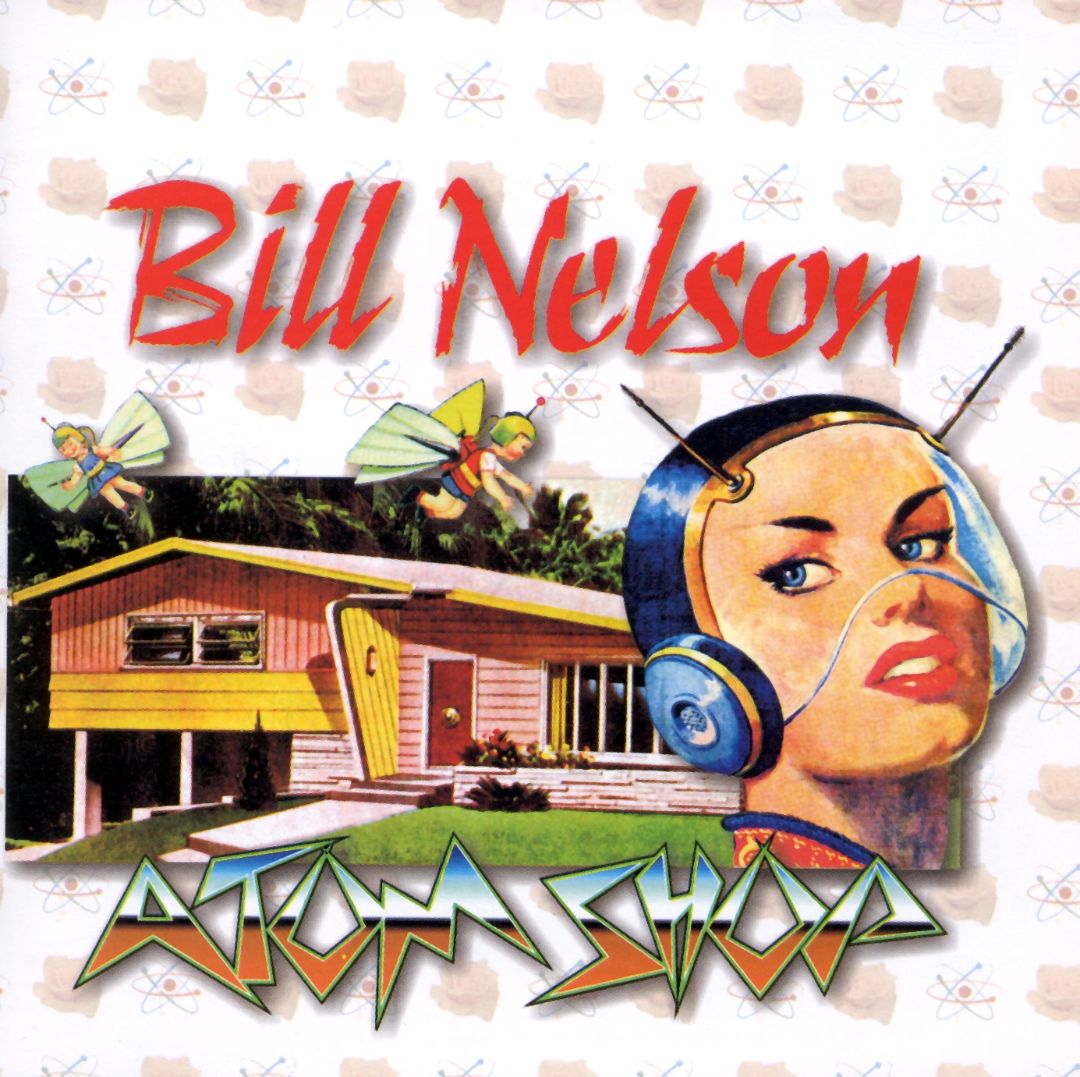
Bill Nelson: 'Atom Shop'

Bill Nelson: ‘Atom Shop’

Compare and contrast. A while ago, Bowie – in a last-ditch attempt to prove he’s still relevant, still the musical chameleon of old – clambered aboard the drum’n’bass gravy train. That music’s normally made by lone bedsit technoheads; Bowie tried to do it with a bloated old rock band. Oops. Still, being Bowie, he could always pick up the phone and request the services of Goldie or some other jungle luminary. The end result sounded clumsy and desperate and – pointedly – as if Bowie had no real interest in drum’n’bass, since he kept dragging the music back towards the ever-more-familiar Bowierock. Not good.

On the other hand… Bill Nelson, him from ’70s Bowie contemporaries Be Bop Deluxe (and a man who mostly holed up in an ambient hermitage in Wakefield during the ’80s and ’90s) has also discovered drum’n’bass. A year before Bowie, too, with 1996’s rattlin’ good ‘After The Satellite Sings’, which sounded – unlike Bowie’s studied “so-how-do-I-do-jungle?” approach – like it had been a revelation and release to him, and without surrendering his own musical personality. Call me romantic, but I could imagine the middle-aged Nelson huddled over his radio each evening, tuning through the FM jungle pirate stations, listening in awe to the complex rhythms and then rushing to his music room to apply what he heard.

‘…Satellite…’ was a suave salvo of smartly retrofitted ’50s-accented art-pop with a bloodstream of “quintessentially English” drum’n’bass, if you can imagine such a thing – Nelson’s laid-back vocals (like a cross between David Sylvian and Cabaret Voltaire’s Stephen Mallinder) topping a very compacted sound, curiously lacking bass oomph but loaded with frenetic drum patterns, beatbox-assaulting jungle snares, burbling electronics and witty speech samples, including someone sounding suspiciously like Maggie Thatcher exclaiming “absolutely dazzled!” over the rush of beats. It was cheeky, it was damn cool, and it had a heart beating under its sharp starched creases.

‘Atom Shop’ is the follow-up; a boxload of demos that failed to get enough funding for the full studio treatment. All the better, ‘cos we know that that way lies ‘Earthling’, Bowie lumbering into a clumsy three-point turn and spilling his load. This album’s rougher edges help – not enough to convert a hardcore junglist, but evading the slickness of most crossover efforts. And it continues ‘…Satellite…’s so-quaint-it’s-cool eccentricity, from Nelson’s memories of being in hock to American glamour during his ’50s childhood and art-college ’60s in Yorkshire.

Pulp fiction, Beat writers, cartoons, natty bebop and cars with silver fins are all part of Atom Shop’s dream fabric. It kicks off with Wild & Dizzy’s swirl of trumpet mixups, dry drum’n’bass pulse, chill synths and blue guitar, peppered with ’50s dude voices. And one of the other songs is called Viva Le Voom-Voom, baby. There’s a lot of fanboy energy here: he’s knocking on 50, but Bill Nelson still sounds naïve and sparkling with enthusiasm, bless the old goat.


Though one thing you notice pretty fast is that ‘Atom Shop’ doesn’t have the hurtling clubby drive of ‘After the Satellite Sings’. Train With Fins looks back towards the more drum’n’bassed ‘…Satellite…’ songs like Flipside – fast and clattering upfront snare drum patterns, with a techno twang and banks of horn-like guitars calling up the ghosts of Stax – but, though speedy, it never breaks much of a sweat. Which is also true of Rocket Ship’s sliding jazz/d’n’b snake rattle and Trevor Horn stabs, or Popsicle Head Trip’s Ferry smooch and tight heavy-metal riffs – all mingling through the drum’n’bass dryness, but the beats ain’t so obvious as they could’ve been.


Magic Radio has a light d’n’b push to it, but ends up like The Orb doing Somewhere Over The Rainbow. ‘Atom Shop’ sounds more touched deeply in passing by drum’n’bass, rather than grabbed by it; as if it’s freefalling away with the breakbeat imprint stamped onto the songs, a teacher’s kiss. Here you’ll more often feel the pathways of d’n’b rather than the punch; the points where space has been prepared, the dynamics of the beat, waiting for the kick that never quite comes.

Oddly, though, ‘Atom Shop’s a much blacker album than its predecessor, even if it does sound less like a session on Massive FM. ‘…Satellite…’s most awkward point – the strafing, Fripp-like guitar solos – have been phased out for a bluesier approach. Nelson’s guitar is busy everywhere, and if there’s some of B.B.D.’s fluid finickiness to it, he can also sound like a sample-era John Lee Hooker, or the subtler detailing Hendrix of Little Wing and Up From The Sky. All this is dovetailed into the minimal trip-hop feel taken to the top of the charts by Garbage, Sneaker Pimps et al (especially for the more ominous Girlfriend With Miracles), but Nelson’s got a more developed musical sense.


So everywhere you look, there are things going on: elements of electronica, samples and live instruments in a complex, but never fussy or muso, interweaving. Dobros and slides are all over Pointing At The Moon’s sleepiness, little bits of rural blues and gospel organs jostle into the arrangements; and so do probably all the “s”s in Mississippi too, if you can find ’em. And jazz dances wherever there’s room; trippy Dizzy Gillespie trumpet cascades, cheeky clarinets, even a bit of scat. Bill Nelson’s found, and gone into, the future we’re starting to guess at from our Portishead records and big-beat singles. A glittering, malleable, disorienting wonderland built out of chewed-up scraps of our past and ghosts in the record players. Something which he pins down in the sizzling hip-hop/jazz hybrid of Spinning Dizzy On the Dial when he sings “I’ve seen the luminous stuff of dreams, / I know what’s going down… Awake to all eternity / with the jazziest ghosts in town.”


It’s about a sensibility, I guess, a feeling. Which leaves us with the preoccupations of Nelson’s sighed, sometimes stoned vocals through an album of songs that are mostly poised in dreaminess. ‘…Satellite…’ celebrated the liberation Nelson’s kinetic d’n’b exploits offered him, poked fun at those who thought he might be a little old to join the jungle massive (“I had my sonic youth / When you were lost in ether… / I’ve got nothing to say, and I’m saying it. / Yeah, that’s the stuff for me.”) and had an undercurrent of suspicion at the American dream (“Whither thou goest, America, in thy shiny car in the night?”). But ‘Atom Shop’s more content to bask in sighs about “the way things swing”, “moving stars spun from mirror ball”, “Chet Baker on the lo-hi-fi”, trippy kittens, glamour girls from Mars, and Kerouac’s Dharma Bums. Perhaps he made his point the first time around.


Rest assured that it stays on the right side of Austin Powers, thanks to things like the Beat-rapping on Billy Infinity, the shuffling shoe-drag balladry and springy guitars of She Gave Me Memory, and the way in which My World Spins cooks everything together best – gospel emphasis, lucid little guitar and electric piano strums, pitter-pat drum’n’bass velocity, a Cars-style creaky hipness and Nelson’s determination to keep his head clear: “now everybody’s got their information / but none of it matches mine. / Saints preserve my reputation and keep my thoughts sublime.” The sense of a mind open to new sounds and influences pervades. Before the closing Jetsons-style supermarket jingle, Nelson’s declared himself to be “sending signals and leaving clues / from the hymns of history to the far-future blues.”


And aside from the excitement for the listener, part of the greatness of Nelson’s current trajectory is hearing a rejuvenated art-rocker enjoying exploring startlingly new musical forms and weaving them into his history. Doing it for himself, without a style guru or scenester shoving a batch of 12-inch white labels into his hands, saying “Sample some breaks from this – it’s what the kids are into.” Keep flicking through those FM stations, Mr Nelson…

(review by Col Ainsley)

Bill Nelson: ‘Atom Shop’
Discipline Global Mobile, DGM 9806 (633367980625)
CD-only album
Released: 15th September 1998

Get it from:
Best obtained second-hand.

Bill Nelson online:
Homepage Facebook Twitter Soundcloud Bandcamp Last FM

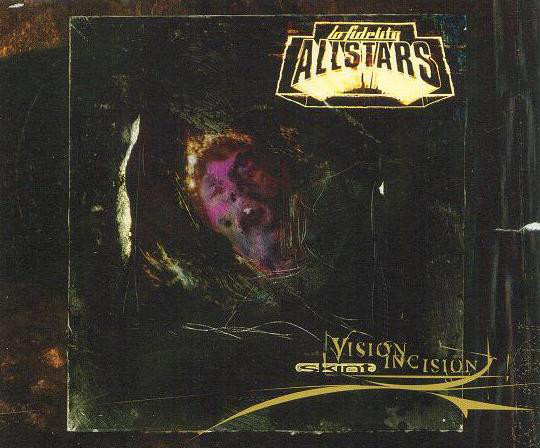
March 1998 – maxi-single reviews – Lo Fidelity Allstars’ ‘Vision Incision’ (“promises to blow our minds wide open, but falls well short of the promise”)

26 Mar

Lo Fidelity Allstars: 'Vision Incision' maxi-single

Lo Fidelity Allstars: ‘Vision Incision’ maxi-single

I had this lot down all wrong at first, I admit it. From the bragging “we’re the greatest” interviews, and the “dance music with real instruments” tag, even the look of the group, I had them down as (god forbid) the new baggy. I was fully prepared to go out and shoot them so I didn’t have to live through the horror that was baggy yet again. But a couple of odd tracks here and there have persuaded me to save my bullets… for now.

Sure, there’s a “real band” sound at the heart of the Lo Fidelity Allstars, but they can manage to make their take on turn‑of‑the‑millennium genre‑defying dance culture a gloriously uplifting thing. Their baggy forerunners (Happy Mondays, Stone Roses) always sounded like they were prevented from gliding to a higher musical plane by having their feet firmly stuck in the field of mud labelled “indie”. The Lo Fi’s, firmly centred on the sampler and decks, don’t have the same problem as they reel off ribbons and streams of sound, rather than chug doggedly away like an old pro dealing with a new fad. But…


Oh, the senseless waste. Vision Incision promises to blow our minds wide open, but falls well short of the promise. Good start, mind. Smooth beats, hedonistic keyboard riff, an infectious soul-diva backing hook, and the matter of the live band sound becomes irrelevant as the track lifts and soars smoothly like the most uplifting house or techno, boasting “As we travel at magnificent speeds around the universe…” At which point the Lo-Fi-s prime weak spot is revealed: Dave The Wrekked Train’s bland Speak’n’Spell vocals. Mashing up randomised texts, as he does on other Lo-Fi-s sonic collisions, they work fine. Faced with actual poetry, they creak like a ground axle. Please, if this is the way he carries on all the time, sack him. He has delusions of being a more hip Mark E. Smith, but ends up just sounding like a London cabbie – a monotone mumble grating over the divine music and pointing up the dreadful rhymes in some of his lyrics.

Perhaps he reckons he’s aiming at the street-level psychedelic lyricism of hip-hoppers like the Wu-Tang Clan: the thing is, those guys sound like they believe the weed-fuelled surreal-o-vision they’re raving about. Dave just sounds embarrassed, as if he’d rather have stayed in his siding and chatted to Thomas The Tank Engine this time around. Consequently, I can’t decide whether this is a successor to Orbital’s Chime for the genre‑busting, cross‑pollinating late ’90s dance scene, or just OMD meeting The Orb in a spot of megalomaniac galactic synthpop. Or, alternatively, the KLF doing Spinal Tap.


The remix is referred to as a “12” mix” ‑ how bloody Eighties. I suspect that, in homage to their record label, this is the Lo‑Fi-s’ attempt at the Big Beat remix. The Late Train has mutated (oh god!) into the slower‑talking brother of The Shamen’s Mr C. for the first part of this extended work‑out. Wisely, they quickly dispense of his services and crank up the heavy beats to provide a real tour de force instrumental for the band. Proving that if you like your beats big and bouncy, then this dissipated bunch can turn their devious minds to that too. The Midfield General Shorter mix is the sparse techno‑electronica version. A mechanistic, simple beat, overlaid by electronic squelches and interferences, as the original track is ripped to shreds and rebuilt, as elements and sequences of the original drift in and out of the mix. Oh, and Train-In-Vain is just a distant, distorted presence, way back in the ether. Wise move, guys.


By this stage, frankly, it’s difficult to tell whether Gringo’s Return To Punk Paste is, in fact, a new track, or yet another radical remix of the original. What it does prove, yet again, is that the Lo‑Fi-s can also turn their hands (deep breath) to a ’90s version of the sounds of early ’80s rap and electro. Skeletal beats and distorted, squelching basslines set the parameters for that unmistakeable sound, aided by some nifty no‑nonsense American speech samples.


Cunning remixes or no, even if feted as the best new band in Britain by ‘Melody Maker’ and handed The Future on a giant silver platter to play with, the Lo Fi’s are still going to bellyflop if they keep expecting that stuff like Vision Incision’s going to justify that reputation. It’s not that they’re talentless rip-off merchants. On the contrary, their sampledelic experimentation – when they’ve taken all the sounds of the world, scrunched them up and run with them – is at least as heart-jumpingly astounding as any other visionary pop cut-ups around, if not more so. Hype or no hype, they can bring the noise with a vengeance. This is a real Quality Street of a band – whatever your favourite tribe in the current cross‑cultural collision, there’s music for you here. And if this is the sort of open‑minded group that all the mess of sounds in the ’90s can produce, then the future is wearing some very cool shades.

But compared to their own mighty One Man’s Fear (the world being slowly and gloriously wrenched to sticky bits by Jim Morrison’s psychotic baby grandchild), this ain’t so much a vision incision as a mere blink. Someone had their eye on nothing more noble than a chart placing when they knocked this lot together. Just cut it out, OK? Show me stars, not hot gas.

(review by Col Ainsley)

Lo Fidelity Allstars: ‘Vision Incision’
Skint Records, SKINT 33CD (5025425503320)
CD/cassette/7- & 12-inch maxi single
Released: 23rd March 1998

Get it from:
(2018 update) best obtained second-hand.

Lo Fidelity Allstars online:
Twitter MySpace Soundcloud Tumblr Bandcamp Last FM

November 1997 – album reviews – Labradford’s ‘Mi Media Naranja’ (“the sound of dust with blues”)

22 Nov

Labradford: 'Mi Media Naranja'

Labradford: ‘Mi Media Naranja’

Last year’s self-titled, scheme-solidifying Labradford album saw the Virginian post-rock doyens – as I put it at the time, playing “perfect pop for Prozac people” via “desert guitars drifting into the night.” As I also said, we seemed all set for a slide into Death Valley, Oops. Except we didn’t end up there after all.

Somewhere on the road along the way, Labradford seem to have pulled in at this little deserted Tex-Mex place called ‘Mi Media Naranja’, where they’ve ambled into the cobwebbed bar, dusted off some country band’s abandoned instruments and decided to record another album, just so that the year’s release schedules won’t forget them in a hurry. And suddenly classic rock seems to be on the agenda. Tunes are heard. Mark Nelson’s picked up a slide guitar, Carter Brown adds electric pianos to his armoury, two string players are brought in. To keep up that arty enigmatic quality, songs are given one- or two-letter titles (a strategy only topped by The Aphex Twin’s use of calx symbols a few years ago) to remove any hint of presupposition on our part. And we’re rolling.


And… it’s not the Allman Brothers (well, do surprise me). But this time, although the funereal pace remains a Labradford constant, the music mostly sounds like Ennio Morricone revamping Pink Floyd’s ‘Obscured By Clouds’, under Michael Nyman’s instructions. S being the perfect example – melancholy Pacific twang-guitar, chilly organ, sobre violas in a Rachel’s manner, and the definitive Labradford touch of a coldly beautiful and crystalline short-wave radio whine (off on the edge of hearing and pinking the edge of the ears, insinuating indifferent, mindless, slightly dysfunctional technology into the sound of the human players). Tinny-edged strings duet with a piquant, ever-so-slightly discoordinated accordion, EQ-ed up for subtle discomfort.


If ‘Mi Media Naranja’ could be summed up in one phrase, it’d be “the sound of dust with blues”: inertia melding with the memory of sadness. Spiritualized might be a handy comparison. But then, so’s Fleetwood Mac’s Albatross – that same tragically sad yet detached Peter Green-style slide guitar shows up on G, as a milk-bottle jingle melds with tinkly Gameboy morse-code squirts, lonely and insulated footsteps scuff in the background, and a Spanish guitar plays like a mantric harp. Nelson’s voice (when it makes an appearance) sounds like it’s travelling through half a mile of cupboard fluff. C is more like Angelo Badalamenti under heavy sedation: an excursion of subterranean Rhodes piano, prayer-bell clinking, and papery flutter.


Compared to the unquiet dreamscapes of ‘Labradford’ , there’s something almost domestic about ‘Mi Media Naranja’: something like the drowse of an abandoned family home during a pollen-y summer. A tinny spinning-top rattle rolls hollowly through I’s midground above watery organ and tides of static, as narcotic sleigh bells nod against four-note guitar. There are distant kiddie voices and sterile, fragile electric strings on WR; and guitar dust-bunnies on V, set against the reverberant pulse of a metal bowl while Nelson whispers a trickle of unsurety through the comforting lap of sound. “Too many give… / These insights will see right through your plans. / At the mouth of the highway tunnel, the decision waits for your next command… / Secret candles still can burn: / is it deep enough? / did you make it deep enough?” In the near-hush, Brown’s piano sketches in what remains of the still air.


P finally closes the sojourn with a dose of Harold Budd meets Hank B. Marvin. Low, sweet Rhodes and three- note piano-note, sustained, furry, quivering organ drones in a shimmery haze, with the dislocated thrummmm of bass against the slow rise of a second organ. You start listening to the album in an abandoned bar. You end it back among the coma patients, in the suffocatingly pure-white sheets of a hospital bed.


Compared to the beautiful frozen grimness of ‘97’s eponymous album, Labradford’s work on ‘Mi Media Naranja’ is a pretty fuzzy, lazy business. But, after a while, it becomes something that makes just as much introverted emotional sense as its predecessor. With these two albums Labradford have floated forwards, pinned between miraculous, lucidly speechless visions… and being lost in the cradle of their own inner fog.

(review by Col Ainsley)

Labradford: ‘Mi Media Naranja’
Mute Liberation Technologies/Blast First Records, BFFP 144CD (5 016027 611445)
CD/download album
Released: 19th November 1997

Get it from:
(2018 update) CD best obtained second-hand, or download from Bandcamp.

Labradford online:
Homepage Facebook MySpace Bandcamp Last FM

September 1997 – EP reviews – The Shrubbies’ ‘The Shrubbies’ (“bouncing up and down on a deep springy pile of autumn leaves”)

24 Sep

The Shrubbies: 'The Shrubbies' EP

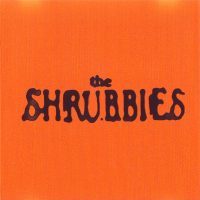
The Shrubbies: ‘The Shrubbies’ EP

Should I name a shrub? Probably a blackberry bush on this occasion. Convoluted, stubborn, furnished with tricky little thorns so that you have to be careful how you approach it… but also blessed with tangy little knots of piquant fruit which make the effort and the odd scratch worthwhile.

The Shrubbies are yet another branch of the Cardiacs family tree. Here, Sharron Saddington and Craig Fortnam (both of whom have done time in Lake of Puppies, William D. Drake‘s genteel “acoustiCardiacs” band) are joined by two bona fide ex-Cardiacs, Dominic Luckman and Sarah Smith. Unsurprisingly, the influence of Cardiacs (or their original acoustic Sea Nymphs alter-ego) has left its mark on the music. Here are four complex and leaping songs, swinging through an adventure playground of sophisticated eccentric harmony based around Craig’s dextrous gut-strung acoustic guitars and Sharron’s fluffy chirrup – although it’s Sarah’s sax and keyboard riffs, as fat and jolly as laughing Buddhas, that you tend to remember.


But Cardiacs music is clenched, neurotic, compulsively driven. Listening to the Shrubbies is much more of a relaxing activity: more like bouncing up and down on a deep springy pile of autumn leaves. This is sort of like The Sundays might sound if Kevin Ayers was in the driving seat: innocent but wise as a tuned-in child listening to the wind, with a dollop of Caravan/Canterbury breeziness stirred in alongside a seasoning of Early Music and kitchen-folk singalong. It reminds me of nothing so much, though, as great lost London hopes The Wise Wound, some of whose visionary acoustic/psychedelic outlook they share.


Excepting the surreal, Barrett-ised Sabled Fur, these songs tap directly into nature, caught up in the passage of seasons (Carefree Clothes) while mainlining jumpy sap for hormones, and fascinated by the moment (Perfect Present, with its mariachi keyboards and sax). Most of all, they’re driven by the sheer animal spark of life, in particular on the intricate spiny Body Cried Alive with its dark stretchy Mellotron riffs and epiphany of survival: “spiral down to the ground / like a seed that flies through the air / and affix myself to the ground / crying I am alive! alive!


Small and marvellous; like the delicious shudder in the daylight when the sun and the clouds do their dance-of-the-seven-veils thing.

The Shrubbies: ‘The Shrubbies’
Merlin Audio, MER97028CD (no barcode)
CD-only EP
Released: 20th September 1997

Get it from: (2020 update – original EP is best picked up second-hand; all tracks reappeared on The Shrubbies’ lone 1999 album ‘Memphis in Texas’, from which all of the soundclips here are taken and which you can still download or order from Bandcamp).
The Shrubbies online:
MySpace Bandcamp Last FM YouTube Amazon Music
 

September 1997 – album reviews – R.O.C.’s ‘Virgin’ (“from the surreal and experimental to pure pop and simple emotion”)

8 Sep
R.O.C.: 'Virgin'

R.O.C.: ‘Virgin’

Cut‑ups are wonderful things. TV samples. Answering machines. Category‑defying noises. Harsh vocals. Scattershot free associations. Beautiful vocals. Hazy guitars. Clattering electro‑rhythms. A sense of the surreal. A sense of the melodic. Glorious eclecticism. The perfect post‑modern pop group.

Hallelujah! R.O.C. are back.

And against the odds, too. The debut album of this transatlantic trio (Fred Browning, Karen Sheridan and Patrick Nicholson, with roots in American, Ireland and Britain) welded pop music with a wilfully obscure grab‑bag of eclectic styles. Spookily emerging out of nowhere, it was critically hailed as the pinnacle of the ’90s zeitgeist, but the record‑buying public remained resolutely silent. Yet, here are R.O.C. ‑ back! ‑ on a new major record label deal (Good on you, Virgin, I take back everything I’ve ever said about the majors… well, almost…)

Dada opens the album with a statement of intent akin to the surreal art movement of the same name. Grasshoppers and various indecipherable speech samples give way to pounding, discordant and (very definitely) tuneless harsh electronica, accompanied by sinister laughter. Jeez, they’re such awkward people that you almost get the feeling that this is the spirit of ROC laughing at you for not understanding it, not getting it. Not very welcoming, either musically or emotionally. Thus, not for nothing does the oh‑so‑English conversation (too formal, too well‑accented to call rap) of the next track (Dis)Count Us In begin with the question “Are you still with me?” before Fred Browning relates a tale of watching a woman across a crowded room, to a backing of post‑modern electro‑pop.


All change. Mountain is R.O.C. as a slightly less comatose Mazzy Star performing to acoustic guitar and warm This Mortal Coil‑style atmospherics. Karen’s lyrics detail her observations ‑ highly emotional but somehow dispassionate ‑ of someone whose life has no direction and is spinning out of their control ‑ “Here we go again, / You’re going to take another rollercoaster ride through hell” ‑ in a beautifully recorded wash of womb‑like electronics.

Cheryl is a pop Suicide for the ’90s, an almost cheesy pop melody set to gleaming pulsating electronics and interludes of demolition percussion. Karen sings (Cheryl’s?) lyrics of a big fuck‑off to a man (antiquated sexist attitudes, thinks he’s God’s gift) and states her own terms for independence; “If it’s all the same / I think I’ll move on up… / I’m gonna get myself some dedication.”

Ever Since Yesterday starts as an acoustic‑guitar based lament to the departure of Fred Browning’s lover before all manner of randomly‑emitting Disco Inferno‑ish sampledelia and phased electronica makes its presence felt, distorting the whole sonic collage and moving it out into the realms of post‑rock. Instead of fading out, it collapses in on itself as the tape mangles. Gorgeous.

25 Reasons To Leave Me features Browning returning to his husky Shaun Ryder vocal style, set to a loping laid‑back musical backing not unlike a more uptight Happy Mondays; whilst K.C is a dry disconcerting, upfront recording, led by a simple and affecting sequence of organ chords, later joined by a soloing trumpet and brass accompanying a vocal of more third‑person observation from Sheridan. It’s no criticism to say that this track resembles late‑night bedsit pop at its best. Kind of a meeting between Prefab Sprout and The Cure, if you will.

Cold Chill Just Lately details the crossed wires, cross‑currents, accusations and arguments of a relationship break‑up. This rather harrowing subject is carried by the track’s broken, exhausted vocals. He’s not happy, but there is a certain black humour typical of R.O.C.: “But I guess it’s just a fucked‑up world we’re living in, / and you know it couldn’t get much worse. / But then it turns you over and fucks you in the ass… / She only cares about herself / She never cared about me.” Such bile is performed to an incongruous accompaniment of smoothly enveloping, ebbing waves of sound, a lurching rhythm, and throbbing strings adding a chamber‑pop element.

The final track, Ocean And England, opens with the sound of thunder and rain, and a bare strummed guitar‑‑the poignant musical lead is then swapped to a ringing electric piano and harpsichord before a huge sampled orchestra swoons in. Like many bravely experimental acts, ROC always remember that, sometimes, all one needs is a song and an affecting melody. “Ocean And England” is just that, and even includes a lovelorn lyric: “Hey you, / the ocean and England are so far away. / Won’t you consider coming home / to be with me again?”

Ultimately, though, this album lacks a little of the debut album’s magical Wonderland atmosphere ‑ swapping the feeling that anything could happen within the space of the next track for the feeling that yes, plenty will happen, but it will be more regimented and organised. Yet how many bands would have the sense of vision to travel, in one album, from the surreal and experimental to pure pop and simple emotion?

R.O.C. Still utterly beguiling.

R.O.C.: ‘Virgin’
Virgin Records, CDV 2829 (7 24384 29472 4)
CD-only album
Released: 8th September 1997

Get it from:
(2018 update) quite a rare release these days, best obtained second-hand.

R.O.C. online:
Homepage Facebook

July 1997 – album reviews – Barry Black’s ‘Tragic Animal Stories’ (“playing off an all-American goofiness against a frowning European sternness”)

29 Jul
Barry Black: 'Tragic Animal Stories'

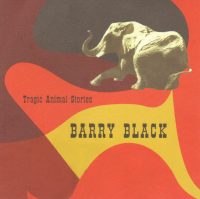
Barry Black: ‘Tragic Animal Stories’

When he’s not fronting the infamously shambolic noise merchants Archers of Loaf, Eric Bachmann is apparently found holed up in the practise rooms at North Carolina School of the Arts claiming he’s actually someone else. If ‘Tragic Animal Stories’ is anything to go by he is, in fact, several other people. But if they all want to call themselves “Barry Black” to save time, that’s fine by me. Hi, Barry. What’s in that box you’re clutching, then?

Originally just a collection of soundboard experiments – the sort of thing that’s invariably going to sprout up if you leave a couple of musicians in a room with a new toy – Barry Black has evolved into an after-hours mess-about-with-intent which has previously been graced by such wilful eccentrics as Ben Folds (another guy who thinks he’s three different people) or the Clodfelter brothers from Geezer Lake. For this second album, though, Eric Bachman’s instrumentation and samples are augmented by the enthusiastic mess of Chris Waibach’s drums and tuned percussion, and by Sebadoh producer Bob Weston’s guitar, trumpet and engineering.


Half of ‘Tragic Animal Stories’ is shambling takes on dark loungecore soundtrack cheese, with the other half a collection of sound-puzzles that seem to have been extracted from the gaps between instruments. Eric’s music leans as precariously like a tumbledown shack – as ramshackle and oddly comforting as the spattered bloops of Morse code keyboard that usher in and wave out the album – and floats in a kind of fluid dusky haze, in which movement in any direction is possible as long as you’re not hung up about how fast you get there.

It doesn’t take long for the cheerful schizophrenia of ‘Tragic Animal Stories’ to make itself felt. The Horrible Truth About Plankton goes from being hypnotic and enwebbed in the suffocating, shuddering dust of an organ straight out of a Czech horror film to being relieved by falling-apart slacker-jazz drums and sweet shambling melodies carried on Waibach’s cheerful vibes, and ends up as easy listening on a slight O.D of random tranquillisers. Chimps sounds like Startled Insects in gigglesome mood: mechanical pings and stringy high life guitar jostling with a cabaret wind band (brass and kazoo) and pushing it into ‘Threepenny Opera’ land, complete with wild skinny tremors of Jamie Muir-style xylophone.


The lovely, brave little tune of Slow Loris Lament clambers out of a shambling toybox orchestration, like a lo-fi Rick Wakeman among the Playpeople. A stylophone plays a fanfare over a radio whine. There are barking noises, ticklish steel drums and a bassoon. Don’t waste any time waiting for a hot guitar solo: Slash couldn’t make the session (and there’s a rumour that they’ve still got Joe Satriani locked up in a cupboard off the control room from the time when they opted to wipe off his lines in favour of a triangle track).


As expected, there’s a definite fuck-around element to all this, but thankfully without that wacky “nothing’s serious” sloppy buffoonery that hangs around many lo-fi groups like the gang joker’s B.O. It sounds as if Eric’s involved in a more serious game of his own, playing off an all-American goofiness against a frowning European sternness, arty soundtrack pretensions against musical jokes, flake against pose.


Duelling Elephants comes out like a darker sketch from ‘Carnival of the Animals’ that refused to take itself too seriously, and made a beeline for a cartoon Munich beerhall, dragging the remains of its menace behind it. The oompah bassline and trembling treble of the piano, mingled with close brass and bassoons has the sadistic comedy of Nickelodeon animation, but it also ripples as ominously as disturbed water. Drowning Spider emerges through an antique shellac crackle: walloped piano like Fats Waller having a nervous breakdown and careening off the edge of the recording reel. Iditarod Sleigh Dogs – a scratched rhythm from detuned banjos and tinkly, twitchy, plonky kiddie piano lines – sounds like Eric composed it with his head on upside-down. Cute.


Even with the playfulness, ‘Tragic Animal Stories’ always has its serious side. On When Sharks Smell Blood, dazed front-crawl piano swims and sways to shore, while rakes of ravenous solo and duo cellos wind around it and a deathly creak (a leaning rocking chair? a wind swing door? a murderer’s step on the verandah?) infiltrates the background. For the big picture, there’s the David Torn spaghetti western of Derelict Vultures, starting life with a harsh guitar scratch and limping Morricone melodies from a splitting, tortured, midrange electric guitar and a filtered swoosh of background, until harsh Russian horns take over the melody and pull it off the badlands onto the steppes.


Tropical Fish Revival sounds like Death approaching a lean-to in a Kingston shantytown. Eric’s mournful, indistinguishable sung words (his only vocal performance on the whole album) flutter above his clang of funereal piano, a shabby, heavy-footed drum loop and a fluting, buzzy keyboard flutter. A shimmer of vibrating steel pan reverbs off into the distance, and the light fades with it.


Snail Trail of Tears closes the album with the lullaby sound of a music-box vibraphone and an overdriven guitar drone melody like a stretchy harmonium. It sounds like Pram or Labradford revamping King Crimson‘s Starless on a heavy summer evening. The bass grumbles like a cello. An out-of-phase air extractor noise adds a layer of feathery sound like a heavenly choir, and then it drops away into those Morse bloops again. Over and out.


Small music from another place. I want to go there.

Barry Black: ‘Tragic Animal Stories’
Alias Records, A122 (0 93716 01222 1)
CD/vinyl album
Released:
29th July 1997
Get it from: Alias Records
Barry Black (Eric Bachmann) online:
Homepage Facebook Twitter Soundcloud Bandcamp Last FM Apple Music YouTube Pandora Spotify Tidal Instagram Amazon Music
 

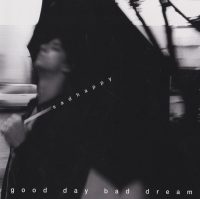
July 1997 – album reviews – Sadhappy’s ‘Good Day Bad Dream’ (“a contemporary progressive group that’s unafraid to mingle technique, horror, street-smarts and a mordant, lethal wit”)

4 Jul

Sadhappy: 'Good Day Bad Dream'

Sadhappy: ‘Good Day Bad Dream’

The voice on the telephone chuckles. “Sure, it all made sense to me. You just burn it out, past the pain. / Sure it’s all toxin: you just work it out of your system.” Somewhere between a Berklee College education, an Olympia punk statement and the world of woodshed ravings you’ll find this – rolling down a quiet highway like a fatal fog-wall.

For their fourth album, the alliance of drummer/sample mangler Evan Schiller and bassist/spoken-word freak Paul Hinklin has convulsed yet again to install a new Sadhappy lineup. Out goes eccentric Critters Buggin/Tuatara sax player Skerik. In comes Michael Manring, ’90s bass guitar genius, for a very different approach to the power trio. Two basses might sound like a recipe for disaster – ‘Jazz Odyssey’ doubled up, or cheesy slap-funk duels. Sadhappy get around this by realising the implicit power in the timbre of the bass guitar: the added resonance, the volcanic rumble it’s impossible to ignore, the sheer booty-shaking body. And they go for it full-bloodedly. In the resulting low-end carnage, saxes and guitars are not missed.


A lot of this is to do with Manring, who’s rivalled only by Tony Levin, Victor Wooten and Doug Wimbish as a contemporary redefiner of bass guitar. Not content with just a jaw-droppingly dextrous technique (whether grooving fingerstyle, slapping, tapping, or picking), he’s as liable to mutate melodies by abrading them with an EBow and/or in-flight retuning. And, as you’d expect, ‘Good Day Bad Dream’ is a treasure box of bass sounds – the levitational noises on Lost in Bass; the chainsaw punk rumble on Maintenance Pissed and Chronic Subsonic Tonic; the multitracked interplay of worming harmonics, chunky strums, and wolf-wails on The Kitchen Sink. But it’s no mere technique-fest.


Yes, for the most part it’s instrumental. And at its most basic (Home Lobotomy Kit, Honeymoon Deathbed) it tugs us through a darker edged and more credible fusion revamp via Hinklin’s brutally precise twanging, growling basslines, Schiller’s clattering, tight as a mantrap drums, and Manring’s distorted, storming, articulate leads. And there’s a strong element of the roaring hybrid of thrash, fusion and left field virtuosics that fuelled Manring’s last album ‘Thonk’, recorded as an attempt to escape his inconvenient reputation as a jazz-leaning New Age muso. But in meeting the streetwise intelligence of Schiller’s drumming and Hinklin’s sardonic New Music/punk’n’sarcasm influences, Manring’s restless and complex musicality has completed its journey away from the New Age racks.


‘Good Day Bad Dream’ emerges from this as an album blending multiple strands of modern electric music with surprising success. It’s an overlapping low end approach of eerie smoggy textures, wrapping up art punk, weird funk, jazz, dark ambience, sampledelia, progressive rock, sound massage, and a dash of psychological sewage. The trio nod to Mingus, the smouldering dark star of modern jazz, with a strutting and dextrous cover of his sarcastic II b.s. With the fifteen minutes of deathly textures and world-swallowing bass oceanics on The Death of Webern, they’ve got that scary isolationist-ambient game sown up too.


Evan Schiller’s light touch throughout ensures that the band are never bogged down. Within The Kitchen Sink’s light-fingered ostinatos, King Crimson riff choirs and E bow calls, his precise percussion approach rings, swooshes, crashes and drops out to leave perilous canyons in the texture of the music. On SBD, he shines with an array of sparse metallic taps and lethally timed buzz-rolls under a lowering cloud of bass, a dark canopy of wails and murmurs through which Manring winds skeletal insect-trails of overdriven bass, twisting and skirling like cyborg bagpipes.
……………………………………..


But the key to Sadhappy’s success in reaching out beyond the fusion ghetto is Paul Hinklin’s acidic humour, which lurks somewhere in the triangle between Tom Waits, Frank Zappa and Bill Hicks. In the recurring, repulsive figure of Oscar (a forty-nine-year-old backwoods Beavis with a voice like a plastics bonfire), he gives Sadhappy their own all-American idiot guide, a lottery sweepstake winner with “money comin’ out of his ass” swaggering over a racket of bellowing grunge-garage art rock riffs. His new rich man’s horizons lead him only as far as the porn racks at the general store, or to the bar; a coarsened American Dreamer content to do nothing more than wallow in his own filth and boast about it (“Yeah, you gotta work for the rest of your life: I own the streets I piss in!”).


On False Information – a sort of post-Laswell take on a ‘Remain in Light’ groove, burrowing through post-rock and hip hop en route – Hinkler offers us a lighter look at the aches and absurdities of the modern human condition. “All the guilt, all the shames, all the blames, / all the payments that you pay for crimes you never even committed, / never even thought of – what’s up with that?”. Schiller’s pin-sharp sample-heavy beats jab and dodge like a lethal flyweight boxer as Hinklin’s sardonic voice chuckles at enlightenment: “You see past everything and you say, this is just me plus garbage. Hell, if I couldn’t see the garbage, then I would be the garbage. Thank God I can tell I’m not the garbage. “‘Scuse me, honey. I have to take myself out to the trash. What is truly me will come back to dinner. It’ll just be me minus garbage.””


Sometimes though, the humour goes darker. In the harsh fable of Hammering Man, the townsfolk turn out to watch the unveiling of a statue: “a testament to the nameless brave, to the unselfish, the holy slaves. The ones who gave their bodies and minds to the army, the ones that gave themselves to the might of the all powerful industrial machine. The ones that had made America strong, the ones that had made America beautiful. The ones that, through no fault of their own, had turned it into a wasteland.” Small wonder that the statue crumbles, toppling to pin the spectators to the earth.


In the brooding dusky groovescape of Oscar Gets Laid, we get to see a younger Oscar, callow and innocent, rubbing up for the first time against the world that’s going to corrupt him. Manring’s mixture of rattling ominous echoes and scritching, coppery industrial harmonics send a shiver down the spine, as Hinklin’s murmured vocals explore paranoia and fascination down the back alleyways of the mean streets – malevolent shadows, and the breath of heroin ghosting out of the skins of hookers. At last: a contemporary progressive group that’s unafraid to mingle technique, horror, street-smarts and a mordant, lethal wit.


It’s also one that’s firmly rooted in the present, soaking up the lessons of grunge, dance, and sampler culture, while still playing the arse off all comers. Even if ‘Good Day Bad Dream’ sometimes strains the limits of its excellence by being just a little too diffuse, too dependent on fusion fallback, Sadhappy move through their music with assurance, imagination, presence and a brutal vigour. And that’s an all too rare combination.

The smile on the face of a charming, constructive killer.

Sadhappy: ‘Good Day Bad Dream’
Periscope Recordings, PERISCOPE RECORDINGS CD04 (7 96873 00042 0)
CD/download album
Released: 2nd July 1997

Get it from: (2020 update) Original CD printed in a run of 1,000 – CD and download best obtained from Bandcamp.
Sadhappy online:
Homepage Bandcamp Last FM YouTube Vimeo
Google Play Spotify Amazon Music
 

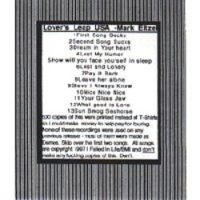
May 1997 – album reviews – Mark Eitzel’s ‘Lovers’ Leap USA’ (“contains some of Eitzel’s best songs and some previously unseen directions for his art… a half-baked masterpiece”)

30 May

Mark Eitzel: 'Lover's Leap USA'

Mark Eitzel: ‘Lover’s Leap USA’

Culled and scraped up from Mark Eitzel‘s demo drawer in order to finance touring, ‘Lovers’ Leap USA’ is not exactly the album we’re hoping the former American Music Club frontman will make. In fact, most of it is apparently outtakes from Eitzel’s actual forthcoming album (which rejoices in the catchy, cheery title of ‘Caught in a Trap and I Can’t Back Out ‘Cause I Love You Too Much, Baby‘) plus what sounds like his final San Francisco demos (with AMC’s multi-instrumentalist Bruce Kaphan fleshing out the sound). Not always to Eitzel’s satisfaction, as he’s urged us to skip the first two “really awful” tracks. Well, he’s always been his own best publicist.

In spite of Eitzel’s deprecations and the album’s unpolished, occasionally sullen state (effectively, it’s a scrappy bootleg), ‘Lovers Leap USA’ contains some of Eitzel’s best songs and some previously unseen directions for his art, making it something of a half-baked masterpiece. Some songs – What Good is Love, The Big House, Have No Words – are little more than straight acoustic skeletons, on which Eitzel’s singing is either mesmeric or painfully flat and jumbled. Some (such as Leave Her Alone) sound more like exhausted Arab Strap trudges, with a drawerful of industrial grind muddying the atmosphere. In others, Eitzel drifts off into trip-hop atmospherics – easy- listening string loops, opiated piano touches, giant slow shadowy drums. And on the expansive feel of Lost and Lonely, Eitzel’s whispers sound uncannily like Chris Isaak, floating above the swish of passing cars and birdsong like a dawn haze.

‘Lovers Leap USA’ also shows that Eitzel remains in touch with the majestic tunes that floated or roared through American Music Club’s angst. How Will You Face Yourself in Sleep takes us back to the delicate traceries of fear that graced Gratitude Walks or Laughingstock. Red velvet curtains haunt the lyrics and the sounds of a song set in a hotel full of unspecified performers and travellers, restless “under a thin blanket, ’cause when you’re on the move you don’t need to be warm – / you pull another dark flood over your hidden form.” These people are worn down enough to see the machinery (“you can see through every plot, you know how they end… / Always said you would quit before you got fired. / Now you’re treading water, forgotten and tired…”) and trudge through their roles, only consoled by knowing which strings will pull on them.

Dream in Your Heart, with its dark burning fuzz of angry guitars, could’ve been one of AMC’s more aggressive moments, replete with classic Eitzel runaway metaphors (“the bitterness wears me like a chain, since I’m too Mark Eitzel vain for the Man of Steel I’ve become”) and the choruses which clasp frantically at elusive hopes (“I saw a dream in your heart / for a beauty beyond your eyes”). If people still sung protest songs at the enemy, you’d imagine a phalanx of indignant American feminists roaring Leave Her Alone at Pat Robertson. As it is, here we have a battle-scarred Eitzel limping defiantly across a bloodied drag of guitar and churned-up trash-noise to stick pins into a bigot. “You’re God’s little soldier, making sure his thunderbolts get thrown… / I just want to bang nails in your cross, I want to drive those nails home.” He’s never sung out with such positive pride before – “My sister never got credit for anything; / her life was just a constant second-guessing. / She doesn’t need your holy undressing, / and most of all, she doesn’t need your blessing.”

Two suspicious meditations on fame, The Big House and Nice Nice Nice, might have sprung from the bitter backwash of AMC’s brief encounter with the big time. The first, in cranky acoustic cynicism, strips the glitz from the glittering bubble at the top of the pile (“antique paintings from across the pond, chandeliers and porcelain figurines / an island in the calm of the storm, scattered meaningless shouted words and bored security guards,”), and sees Eitzel as spectator in a backstage zone “as hollow as King Tut’s womb”, munching cheerlessly on bar snacks and watching “this treadmill… moving the river of green, / …freedom slipping through the cracks.” It’s someone else in the spotlight this time, atop a fortress of speaker stacks, kidding himself he’s empowered; but Eitzel’s disgust is the scorn of a man who’s been close enough to get stained himself. “Let ’em weigh you and judge you, let ’em use you as their tool. / You give it away, you fool, you fool, you fool.”

Even more cuttingly, Nice Nice Nice deals with the artistic failure-turned-self-promoter – “This is the wall you broke your head on, / the one you’ve lied about so many times. / And now you’ll display a marvel for the ages, / a masterpiece of grace and design / with a meaning that no-one really finds.” Here mass acceptance comes with the price of knowing “you’re just like them, deep down”, but it’s impossible to know which side the alienated but notoriously anti-precious Eitzel’s really on.

There are some glimpses of a starker personal honesty. The spindly blues of What Good is Love (in which Eitzel’s clacking metronome sounds as if it’s snipping strips from his life) is an agnostic’s sleepless night, dismantling the articles of faith one by one and feeling the emptiness grow. “All my chicken-bone dreams left on a windowsill too long, / so easy to pull them apart… / And if it won’t set us free, and there’s nothing above, / then what good are we, and what good is love?”

Steve I Always Knew is Eitzel’s first open acknowledgement in song of his own bisexuality. But that’s less of a revelation than the way in which he strips himself bare in it. In the upfront world of gay pickups, he’s hard-put to swagger: “I guess all this means we’re going to sleep together – / outside I’m hard as a brick, inside I’m like a feather… / I guess in bed I was kind of a sweet nothing – / and for your money, you could’ve done much better.” Although Eitzel’s the one who’s first dumped, then denied (“You moved to New York to clean up, and came back married to a cop. / And when I saw you on the street, I could tell you didn’t want to stop,”) he ends up the strong one, able to face what his erstwhile lover recognises but can’t deal with. “You said the only way through fear is to give in, / and you were right, you were right.”


The most fascinating songs here are the ones where the borders of the problem are lost to view. In Lost and Lonely, Eitzel’s walking from dawn ’til dusk “like the ghost of a man… beyond the blessing of women and the shadow of doubt”, under “cruel summer starlight on a dark street.” The song unravels in murmuring drunken thought, a fumbling of fleeting images (“measure the life in miles forgotten”; “why hold a seance? I know you won’t call”; “who would chain the stars too heavy to walk?”) and a repeating mumble of “thought you were lonely as me.” Towards the end, Eitzel mutters a barely audible “thank you”, like a sleepwalking Fat Elvis.

It’s that particular Elvis who seems to haunt the remaining pieces, which are Eitzel’s hypnotically dissolving forays into trip hop. Like the narcotic but impenetrable lushness of Your Glass Jaw, in which strings, vibes and congas seem to be buoying up a deadweight singer “high in a bright light” who only sloughs off more of those cryptic, disconnected mumbles – “dissolve bright eyes”; “mosquito hunger, the blood of saints.” It might be the collapse of a champion, the same pulverised resistance that Scott Walker evoked on ‘Tilt’.

Pay It Back loops satellite chatter and rumbling gongs around Eitzel’s skinny strums, an irretrievably distant and uncaring brushoff from a frozen heart. “Do I owe you my soul for your heartbeat to inhabit? / Well you can have it… / Buried alive, better off dead. /… Whatever it is I owe you, I’ll pay you back.” And in Lost My Humor, Eitzel returns to double-bass’n’piano torch-song sounds, but submerges them in an obscuring post-rock drone. Likewise, his voice is a half- buried baritone whisper like gutter-trodden velvet, repeating “I lost my humor” as a cynical mantra, trailing it with clinchers from the self-mockingly spiteful (“I was bored to death by your song, and the rest of popular culture”) to the philosophical (“it means I give up any claim to being a voice for tomorrow”), to the cold (“don’t assume that they see you, don’t assume that they like you”) through to post-modern fatalism – “I’m doomed to live without – negotiate your sorrow.”

So far, so Zombie-David Byrne, the Prisoner of Vegas. But what gives this its frightening depth is the way in which, by the end, he’s trying to rouse himself. The chant has become “I lost my spirit”, and he’s casting around trying to make sense of it again “like the mirror I smashed, trying to fit it back together,” and realising what’s been lost: “I lost my spirit – someone put it in your pocket… / I lost my spirit…”

In the end, wherever Mark Eitzel goes, he’s lost. But no-one sends letters from the wilderness like he can.


Mark Eitzel: ‘Lovers Leap USA’
self-released, ME 1001 (no barcode)
CD-only album
Released:
May 1997
Get it from: (2004 update) Extremely rare and best obtained second-hand. ‘Lover’s Leap USA’ was sold exclusively by Mark Eitzel himself during his 1997 touring – only 500 copies were made and it has never been reissued.
Mark Eitzel online:
Homepage Facebook Twitter MySpace Soundcloud Bandcamp Last FM Apple Music YouTube Vimeo Deezer Google Play Pandora Spotify Tidal Instagram Amazon Music
 

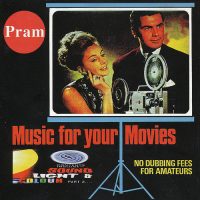
November 1996 – EP reviews – Pram’s ‘Music for Your Movies’ (“profundity stretched over that soap-bubble surface”)

18 Nov

Pram: 'Music for Your Movies'

Pram: ‘Music for Your Movies’

A tangible relief. You know when you treasure a band whose very awkwardness is their spur to genius? And you dread the day when they inevitably develop, move on, make that breakthrough? How you torture yourself with wondering exactly how they’re going to sell out, which part of their off-the-wall wonder is going to be sloughed off like an old coat or an outgrown friend? And how wonderful (and how rare) it is, when they make that leap while still swinging all of that weird and precious baggage.

Over four albums and assorted spring showers of invention, Pram have made music which sounds like daydreams captured in rented rooms and played on dolls-house instruments. Tinkly, tiny and exquisite: beautifully fragile songs, with profundity stretched over that soap-bubble surface. Music recorded in the kitchen sink during those sparkling times an hour or so before noon or dusk sets in; dusted by trumpets and cobwebs, and licked by ebbtides of slide guitar. They’ve got only the flakiest of reference points – tranquillised ’50s lounge-music echoes, say; or the ferment of polycultural Birmingham nightclubs; or Can’s immersive and unlikely groove; or the deliquescing pop of Syd Barrett’s Pink Floyd on See Emily Play (it’s that sustained, wobbly organ, and that obstinate un-rock twitchiness to Daren Garratt’s drumming: free-jazz leanings, or dodgy-but-compelling technique?). They’ve none of the portentousness of yer Sylvians or Cures, and none of the slackitudes of post-rockers: nor the inhumanity of those ambient characters who sound as if they’re wearing their eyeballs back-to-front. Pram’s music has always been winningly human: frail, sensual, intimate, and very lovely.


The last time we heard from them (on ‘Sargasso Sea’), Pram had drifted aground and drew wonder even from that, rattling like a wind-harp as they moulded music out of disappointment, sleep and stranded hearts. On ‘Music for Your Movies’, they’ve kept their home-made clatter and every scrap of their inventiveness, but have tightened up their pop. Everything falls into place now instead of merely stumbling together, weaving in delicate threads of dub, drum’n’bass, cinema organ. Rosie’s voice, though still weary conversationalist rather than acrobatic diva, has a new bounce and a lilt to it. And her lyrics (while still existing in the reverie that the white page lends so many poems, crucially detaching them from registering as real life) have a new zest.


There’s something celebratory about these songs. The Sargasso that trapped is now a playground for her to transform with enchantment in Sea Jungle’s free-floating love song, while Silver Nitrate celebrates the transforming imaginative power of film as a feminist liberation: “The woman who discovered light / was dazzled by her ingenuity /…With silver nitrate she could make time wait / she could gather all of her hopes and her dreams and make them her destiny / …and spun her thoughts like spiders webs / and with these delicate chains was set free.” On Eggshells it might be Rosie who suffers, locked out from her lover by his own absorption in his past wounds, but she’s the stronger, the more loyal, despite her exposure. Only Carnival of Souls sees Rosie failing to escape the net of her own entrapments, with figures from her past parading through her sleeping head (“feels like I’m living / in a zombie movie”).


Pram have already made stagnation seductive. Now, wheels oiled, they’re rolling forward to explore the waking world. Lucky world.

Pram: ‘Music for Your Movies’
Duophonic Super 45s, DS45-CD15 (5024545032727)
CD/vinyl EP
Released:
18th November 1996
Get it from: (2020 update) Best obtained second-hand.
Pram online:
Homepage Facebook Twitter MySpace Bandcamp Last FM Apple Music YouTube Deezer Google Play Spotify Tidal Amazon Music
 

November 1996 – album reviews – Labradford’s ‘Labradford’ (“aural massage never sounded so nerve-wracking”)

15 Nov

Labradford: 'Labradford'

Labradford: ‘Labradford’

With two albums already behind them, it’s time to stop lumping Labradford in with Tortoise as the only two notable examples of American post-rock. Post-rock is an uncomfortable catch-all that can’t really adequately describe a spectrum that takes in the noisy Trans Am at one end and the classical minimalism of Rachel’s at the other. And where Tortoise approach from an obviously jazzy direction, Labradford’s methods are ice-cold developments on ambience that now seem to be reaching a creative peak.

When a known band suddenly gives, say, their third album the name of the band (the way one would usually do for a debut), you can generally guess that they’re making a pointed statement of identity and distancing themselves from much of what went before. And – appropriately – ‘Labradford’ is Labradford’s most fulfilling statement so far; showing a fully-developed band consolidating the intriguing (but ultimately frustrating and insubstantial) thumbnail sketches they provided on ‘Prazision’ and ‘A Stable Reference’.

Experiments like the deep sub-frequency bass – straight out of acid house – dropping into the chilling ambience of The Cipher or the dissonant tones that break up the background of Lake Speed are perhaps signs of ears being opened to electronica; although this also leads to a loss of the band’s shared interest in the ancient music and religious plainsong which influenced their earlier albums. And which kept me listening past the point where I’d gotten infuriated by their sheer collegiate lethargy, the way they sounded like something made by people who only got out of bed to turn their Neu! record over.

That spectral and distinctly European quality is missing from this year’s model to be replaced by more obviously technologically produced atmospherics, and better production has separated out the sounds from the claustrophobia of ‘A Stable Reference’. The addition of rhythms, albeit perfunctory and not necessarily conventional drum sounds, makes a big difference to the progress of the pieces. Where previously Labradford songs started, hung in stasis in a foggy air and then disappeared, there is now a definite propulsion, a moving forward. Reassuringly, though, we’re not talking 120 bpm…


For a group dealing in mainly instrumental ambient atmospheres, it comes as something of a joy to come across titles that, for once, bear some relation to the sounds being heard. The first track really does sound like a Phantom Channel Crossing – the most nightmarish vision imaginable of a midnight journey in a tin hulk of a ferry. The engines, the chains, the metallic resonances, the emptiness – all there. Maybe I’m imagining things. Painting my own picture for the sounds I’m hearing.

But if that’s not what Labradford’s all about, then there’s no point. This is a gallery of sound, rather than music. And yes, Midrange really does appear to exist all in that spectrum. It’s claustrophobic. While Mark Nelson’s voice mouths more of his usual indecipherable profundities over the group’s ghostly atmospherics, it is noticeable that more light is seeping into the sonic palette – distant violins and, most distinct from the usual swirling morass, a subtly tapped-out rhythm. It still ends with the growing unease of that Labradford noise, however – the closest description being the amplified sound of air ventilation.


Lake Speed is underpinned by a metronomic, surprisingly insistent bass drum rhythm, like a niggling thought tapping constantly on the wall of your brain. “Like a clock / In pieces / On the floor / I try to fix it fast / So I don’t lose too much time” – and as the clock ticks, all manner of worryingly gentle alarms go off in the background. It gives the impression of a David Lynch piece that is seeking to add to your feelings of paranoia. Aural massage never sounded so nerve-wracking. One of the track’s twisted and elongated effects sounds like a man giving vent to a low, painful scream. It’s buried deep in the mix… but it’s there. How appropriate.


Scenic Recovery retains much of the sound and atmosphere of Lake Speed. But still the thoughts keep churning away inside. The tap-tap-tapping rhythm has altered slightly – suddenly it’s the regular but ineffectual pulse of a coma patient. As the mire of sound envelops you, and tension hangs in the air, a solitary violin carries a melody through the ether. Pico is one of Labradford’s “songs”; rather than just shifting atmospheres. Almost hymnal in its simplicity – a sequence of heartbreaking chords, a melody that is played by a friendly alien on a space-age tin whistle, a barely-there whisper of a vocal and another minimalist, almost endearingly clumsy rhythm. The pace is processional, almost holy.


Oh God, how does one describe The Cipher? It is just there. It exists, like sounds exist even in the most silent of nights. Look, this is the sound of digital and analogue air rustling chains. Ghostly. Calming. It is all of these things. But mostly, it just is.


Battered, the closer, is almost eventful. Delicately balanced on a hesitant mandolin-like guitar, a brightly melodic riff, and with a beep providing the rhythm – coma patients again, nurse – it hits a Cocteaus-like bliss-out at the end. Perfect pop for Prozac people.


The last notes we hear are desert guitars drifting into the night. Death Valley, here we come…

(review by Col Ainsley)

Labradford: ‘Labradford’
Mute Liberation Technologies/Blast First Records, BFFP 136CD (5 016027 611360)
CD/download album
Released: 12th November 1996

Get it from:
(2018 update) CD best obtained second-hand, or download from Bandcamp.

Labradford online:
Homepage Facebook MySpace Bandcamp Last FM

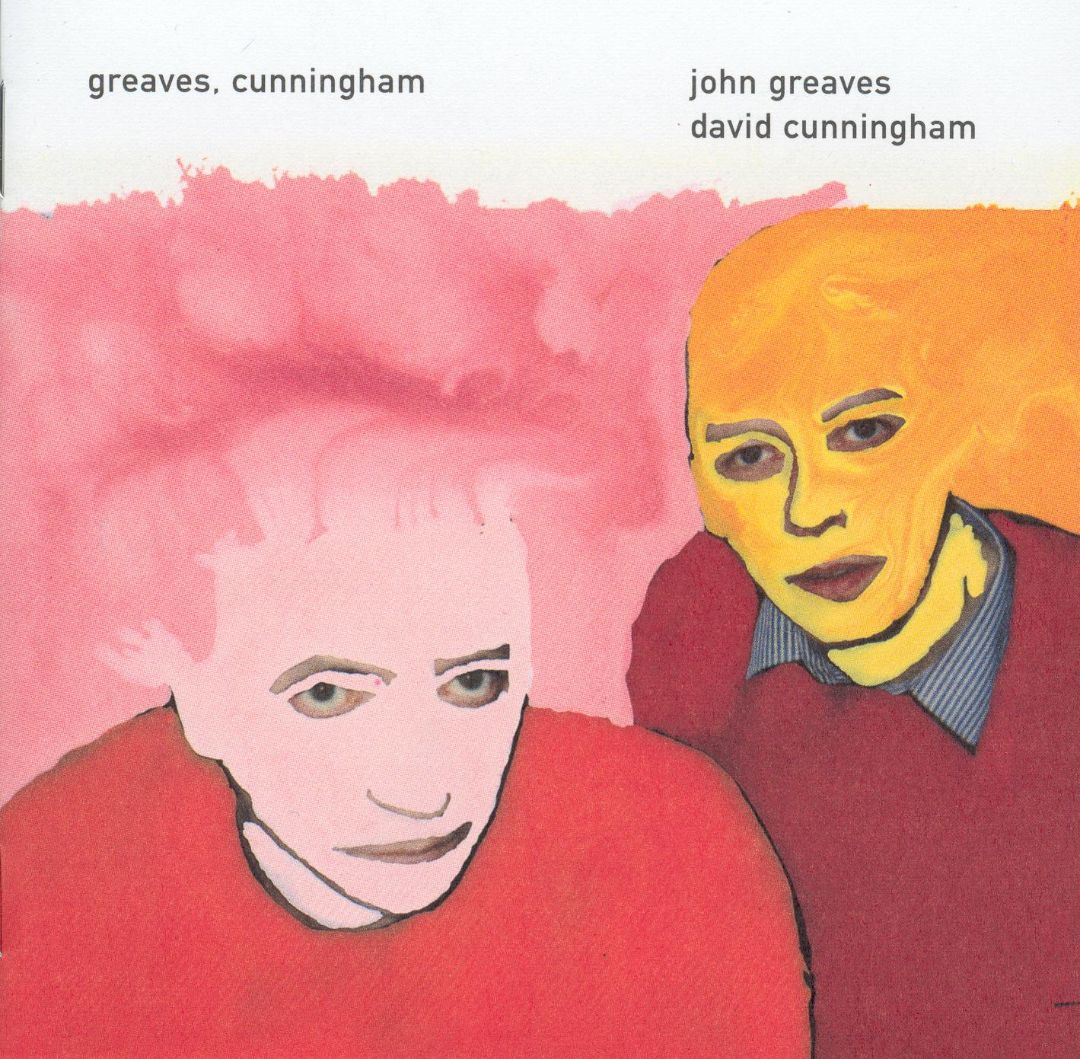
September 1996 – album reviews – John Greaves/David Cunningham’s ‘Greaves, Cunningham’ reissue (“a muted treasure”)

10 Sep

John Greaves, David Cunningham: 'Greaves, Cunningham'

John Greaves, David Cunningham: ‘Greaves, Cunningham’

Too much information.

I’ll own up to being the occasional sad muso, the sort of person who wants to know which guest musician banged the tambourine on the second (unused) take of The Beatles’ Revolution on June 24, 1968, and what colour trousers they were wearing. (Look, it’s a hypothetical. Don’t send your replies).

It’s refreshing, then, to be recommended an album and know little or nothing about the artist. David Cunningham I am familiar with as the person behind The Flying Lizards, purveyors of bizarre‑sounding kitchen‑sink electronics who had a surprise hit in the ’70s with a version of early Motown hit Money, and has since produced much of Michael Nyman’s work. John Greaves? Search me. My excellent editor will no doubt insert a knowledgeable mini‑biog here. I think John Greaves may have been in some way involved in prog. God help us… (Near enough. He used to be in Henry Cow ‑ an enthralling but demanding gang of ferociously complex Maoist art‑rockers in the ’70s ‑ playing bass on revolutionary stuff that was far too twisty to sing over. Perhaps as a reaction, he’s been a song‑albums man ever since. Prog by default, I guess: the difference isn’t as wide as some would like to imply ‑ ED.).

So I didn’t know what to expect. What I found is a delicate and intensely beautiful curio. Totally motionless. Ice cold. Pure electronics, free of the distortion and sampling that we so associate with the form now, and only occasionally breathed upon by natural sounds. And a voice that sings of emotion but remains, almost intriguingly, detached.

The Mirage is a less than promising opening, though. It almost justifies the accusation that much avant‑garde music is simply nice melodies and good singers ruined by someone working randomly through all the programs on their synth in the background. But one is immediately struck by the voice of John Greaves: somewhere between Dominic Appleton of Breathless (and, more famously, This Mortal Coil) and John Cale ‑ appropriately, Greaves is also a Welsh tenor. The sort of voice, frankly, that is only ever heard in art‑rock. It’s heard to great effect on one of the stand‑out tracks, The Magical Building. A beautiful melody and a peculiarly touching analogy ‑ “Oh darling, it’s all so mysterious / The magical building that is us” ‑ despite its unusually clinical feel. Cunningham’s stark, clean electronic backing evokes further This Mortal Coil comparisons.


One Summer allows about the most human emotion on this album. Regret. The harmonies are all‑too‑real in beautifully surrounding Greaves’ voice as he regrets: “Swimming all around and never getting closer / To the one damn thing you knew we needed most…/ In a way, we never happened / In a way, we were never there / In a way, we were phantoms / In a way, we were fish in air…/ In a way, we didn’t care / And there’s nobody left to tell the tale.” If that doesn’t get you weeping over summer love affairs long gone, you are truly heartless.


In between the longer vocal tracks, there are a number of short ambient pieces. Whilst all retain the icy atmosphere of the album, the vocals elsewhere are so stunning one longs for their return. Nevertheless, the instrumentals are arresting in their own way, several of them sharing similarities with the recent work of Jansen and Barbieri; particularly the final track, The Map Of The Mountains, where marimbas play a softly rhythmic motif over an evolving ambient sequence. The Red Sand is a rhythmic instrumental of pulsating piano, percussion, strange dislocated vocal snatches, parping saxes and clarinet. The Other World ‑ due to its instrumentation in particular ‑ proves to be a more substantial interruption to the flow of the songs. The acoustic guitars and saxophone bring a more laid‑back feel when the steel‑cold otherworldly electronics have just got you entranced. One big flaw, though ‑ the sax player is given far too many solos whilst suffering from avant‑garditis. He doesn’t so much play the tune so much as parp strange caterwauling noises. Cheers, mate ‑ do ruin the atmosphere. Anyway…


The Voice returns. The Inside, penned by Greaves alone, is (apart from a recurring, majestic‑bubblegum hook of “oh, baby, oh”) sung entirely in French. So, no, I have no idea what it’s about: suffice to say that it appears an unwritten rule of art‑rock albums that they must feature a track sung in French. Whatever the content, this is an achingly simple torch song, so standard in its verse‑chorus‑verse‑bridge structure that it emerges as a feat of understatement when the temptation to load on the sounds would have been all too easy. The Same Way, also a Greaves‑penned track, is another song about lost love, finding love, insecurity about love ‑ “You could say I’m way off course / You could say I love you.” Indeed, it ends in the same way it began.

This is an album, a muted treasure, to discover as autumn ends. Music for a midwinter morning ‑ intensely cold, but intensely beautiful.

(review by Vaughan Simons)

John Greaves/David Cunningham: ‘Greaves, Cunningham’
Piano, PIANO 506 (604388401024)
CD-only album reissue
Released: 1996

Get it from:
(2018 update) best obtained second-hand.

John Greaves online:
Homepage Facebook Soundcloud Last FM

David Cunningham online:
Homepage Last FM

March 1996 – live reviews – Robert Fripp’s South Bank Soundscapes @ Queen Elizabeth Hall foyer, South Bank, London, 10th March (“more challenging abstractions than Fripp’s ever attempted before”)

12 Mar

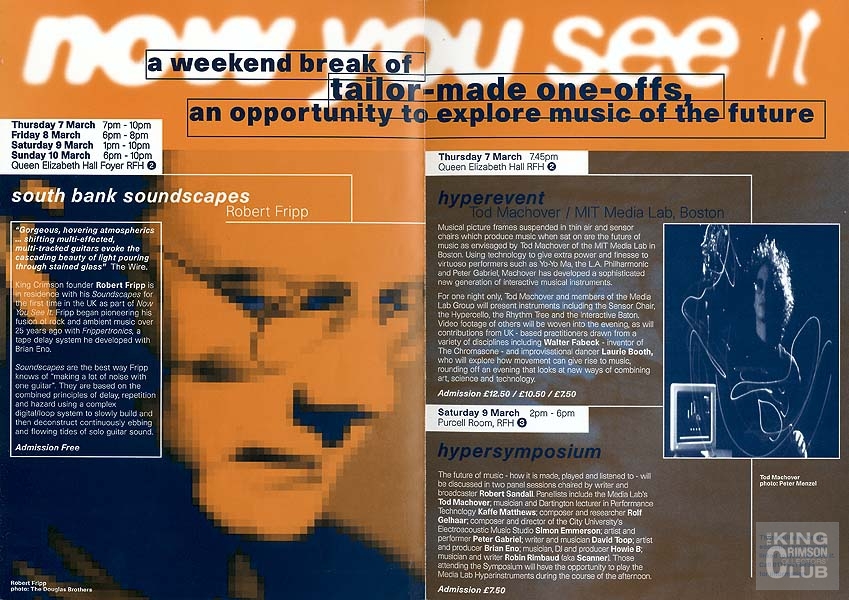
'Now You See It...':  Robert Fripp Soundscapes, 10th March 1996

‘Now You See It…’: Robert Fripp Soundscapes, 10th March 1996

Tucked against a curving concrete wall, under a sweep of plate-glass windows, there’s the familiar stool with a beautiful rock-fetishist’s dream of a Les Paul guitar, flanked by rack-mounted gizmos like a gaggle of worshipful Artoo Detoos and a flat henge of volume pedals and multi-purpose stomp-boxes. Over to the right, David Singleton sits at the mixing desk, quite the portrait of the calm fixer for the artist’s determined leaps. Arranged in a long staggered curve in front of the opposite wall, lining the long walk between the entrance and the Purcell Room, are at least eight tall speaker cabinets. Occasionally in residence is the sleek, compact form of Wimborne’s most formidable musical son.

These Soundscapes are part of the ‘Now You See It…’ season of contemporary performance art, sharing the building with the Hypermusic Symposium (in which Peter Gabriel, Brian Eno, David Toop and others debate the future of music, and people nervously finger such unorthodox instruments as literally musical chairs and picture frames or the Interactive Baton) while avant-garde dance groups hijack the Purcell Room and stick the audience on the stage, and (less happily) over at the Lyric Theatre in Hammersmith an appallingly pretentious bunch of Euro-thespians do a vandalistic mixed-media Schubert performance.

In these surroundings, Robert Fripp‘s increasingly out-there journeys in solo sound fit in surprisingly well, both physically and intellectually. When a squadron of incredibly young women in bare feet and little black dresses trot busily past (every quarter of an hour, on the dot) to meet their cues in a back-to-front theatre piece next door, it seems inexplicably appropriate. Tonight – Sunday 10th – is the fourth of Fripp’s residencies, a mere four-hour performance compared to the rear-numbing six- and even ten-hour marathons he’s performed earlier in the week. Some people have returned, regardless. Within that length of time, anything could happen: the music that Fripp claims to channel rather than compose could lead him anywhere.

Soundscapes, the successor to the layered sound-loops of Frippertronics, is a major leap forwards, sideways, anyways from its progenitor: the digital technology stores his patterns and transforms his tones to the point where there isn’t a single recognisable Crimsonic guitar sound to be heard all evening. In effect, Fripp and Singleton are playing a wholly new collective instrument, a community of speakers, desk, guitar and digital cyberspace. The end results are a swathe of overlapping, opposing electrophonic voices, sometimes beautiful and sometimes disturbing – polytextural hums; a sound like a seventy-foot high piece of glass being torn like cloth; wailing, spectral swells like American freight trains blowing a blue whistle into a desert of ghosts; aquatic, gem-faceted calls of a Loch Ness Monster; tingling pianistic or xylophonic ringing; squiggling crystal-bat chitters. It emerges as a sound that’s on the brink of being recognisable, somewhere deep down in the soul… but not quite.

As it rolls on, evolving like strata, burying what’s come before like the march of ages, you may find it impossible to concentrate on (four hours is a long time) but it saturates your mind regardless: you’ll sure as hell be thinking differently. While I’m here, I meet somebody who ascribes near-mystical powers to the first Soundscapes album, ‘A Blessing of Tears’ – “any pain you have, any problem, it will heal it…” Even on the basis of what I’m personally experiencing in the music tonight (the rollers, breakers, capricious tides and immense flickering lulls of an alien sea under a midnight-blue sky, occasionally rent by sheets of violet lightning and mile-wide twists in the current… I think I’m in for a night on the ocean wave) I can believe him. This isn’t New Age pretty-stuff.

And so the Soundscapes are installed, piece by lambent unsettling piece, more challenging abstractions than Fripp’s ever attempted before. But most of the people here seem to have missed the point – sitting deferentially in the arc of chairs facing Robert and his little cliffs of winking lights, watching him silently manipulate his gold-top Les Paul or peer into his effects racks, they pay a silent tribute. This isn’t how to do it. When Fripp calls what he does “Soundscapes”, he means it literally. There’s a fifth element in that communal instrumentation: three-dimensional space. Each of the eight speakers arranged in an arc behind the audience is fed by a slightly different sound source. Walking slowly back and forth across the foyer, one passes in and out of phase with the sounds: a different listening angle provides a different piece, an ability and opportunity to concentrate on a different section of the Fripp orchestra. Music to literally explore.

I feel a bit of a fool, though, pacing up and down the floor to curious glances from the audience; it’s not quite the same as hanging around, in gig-approved fashion, with a drink in your hand and lunging up and down gently to your favourite song. Mind you, the rest of the audience are behaving exactly in the way you’d expect at a Fripp-related gig or an art installation. Here are a couple snogging vigorously, French-kissing amidst the unsettling washes of the music; three rows in from the front, a man appears to have passed out, lolling over the back of his chair with his wide-open mouth pointing wetly at the ceiling. Music to intoxicate? Perhaps: it ignores standard musical dimensions in a way that one only otherwise hears in the most deliriously spaced-out Lee Perry dubscapes, although the notoriously drug-free Fripp looks more composed than I’ve even seen him before.

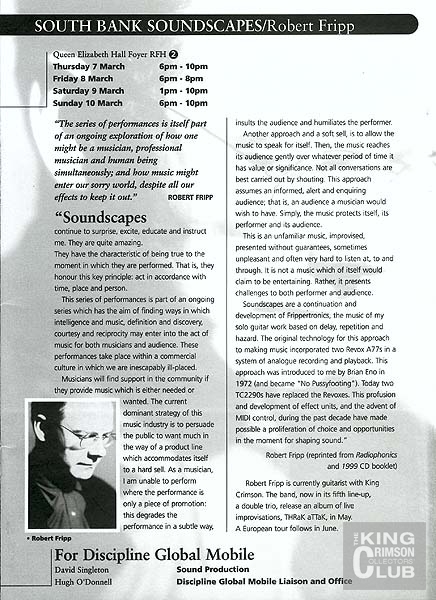
'Now You See It...':  Robert Fripp Soundscapes, 10th March 1996 (programme)

‘Now You See It…’: Robert Fripp Soundscapes, 10th March 1996 (programme)

But then perhaps once the music slips beyond the control of his fretting fingers, flexing feet and console-fondling fingers, it ceases to be his responsibility anyway. The nature of Soundscapes is such that Fripp’s very presence can become little more than a trigger. Turn away at the wrong time and you’ll turn back to find the guitar leaned against the stool and Fripp gone, sipping at a cup of coffee over by the mixing desk as the music wreathes onwards without him, or wandering out through the audience to check a corner of the sound. It’s a little disturbing when, conversing quietly and walking around the circuit of speakers to experience the different sounds, one comes within six inches of Fripp padding lightly in the opposite direction, close enough for you to sense the implacability of his will, pushing at the realms of the possible like a smooth arrowhead.

The element of hazard plays its role too. Sometimes, amongst the layers of harmonic tissue that Fripp is laying down, a mismatch occurs. Or a part decays too soon, or a speaker refuses to cooperate with the vision, and the musical organism is deformed, loses balance, develops cancer. At such times Fripp shrugs in frustration and looks over to Singleton, or out to the audience in the only acknowledgement he ever gives them, lets go of the guitar with palms turned upwards in the universal gesture of helplessness. The music thins out and he begins to build his organism again.

This continues for four hours: time to get several drinks, chat quietly in the background, arrange assignations with other musicians and writers, even formulate whole arguments about what we’re seeing (in other words, make our own contributions to the Soundscape ambience), and still not miss out on the crystallising veils of sound that drift around the foyer, perplexing this evening’s Mozart concertgoers, putting thoughtful expressions on the faces of the cloakroom attendants as it numbs their resistance. At the end, Fripp puts the guitar down, as he’s done so many times before during the evening, and walks slowly away to vanish down the passageway leading to the dressing rooms. The applause that follows his retreating back is sincere, but oddly unfocussed, as if the audience is unsure whether they should be applauding him or the air that’s been buoying up the music and carrying it around like a whispered ritual, I catch the train home, as I usually do; things seem just a touch sharper than normal. Soundscapes don’t so much take you to another world as grant you a shimmering new lens to experience this one through.

Robert Fripp online:
Homepage Facebook Twitter MySpace Soundcloud Bandcamp Last FM Apple Music YouTube Vimeo Deezer Google Play Pandora Spotify Tidal Instagram Amazon Music
 

February 1996 – album reviews – Fruit’s ‘Hark At Her’ (“this bold, brash, noisy, fun, emotional tour‑de‑force”)

2 Feb

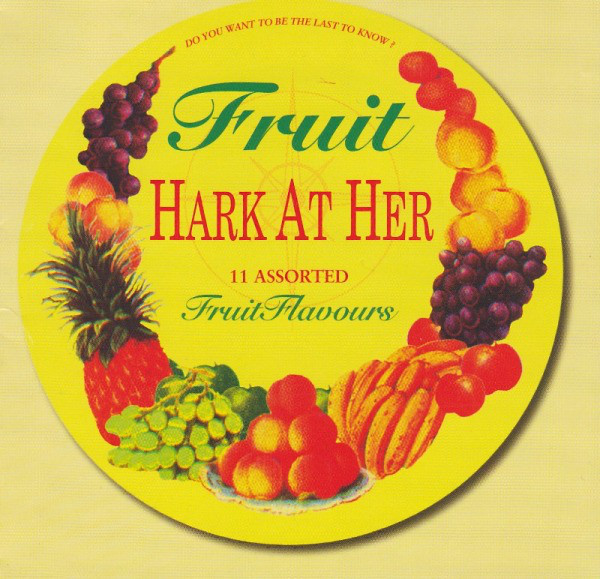
Fruit: 'Hark At Her'

Fruit: ‘Hark At Her’

Fruit is Patrick Fitzgerald (and friends). He, for those who care about such things, was the vocalist with the sadly underrated ‑ and sadly no more ‑ Kitchens Of Distinction, a trio of rather serious‑looking young men producing doomily arty, swirling guitar rock. (Digression: while Fruit is a terrific ‑ and more fun ‑ project, the Kitchens shouldn’t have been mercilessly dropped by One Little Indian. So much for the eclectic, egalitarian indies! OLI should get it together ‑ they dumped both No‑Man and Kitchens, unwilling to give them a little leeway to produce their own music. Basically, they now just exist to market Bjork. Idiots.)

So, as Kitchens Of Distinction… er… got out of the kitchen, Patrick set about producing this bold, brash, noisy, fun, emotional tour‑de‑force of (mainly) gay life. From the start, he was working against the prevailing musical current ‑ Fruit’s debut single, an evocation of gay life and death called The Queen Of Old Compton Street (not included here) came out in the same week as Oasis’ Live Forever. Such irony made me laugh until I choked.

Let Patrick educate you. Proceedings open with What Is Fruit?, sounding like one of The Fall’s chuck‑it‑all‑in‑the‑mix takes on crunchy guitar dance‑pop, but with a brighter sensibility from the start. Exotic voices and foreign tongues fly thick and fast with their interjections to that essential question. “Films, actors, addicts, vermin, / Friends, filth ‑ everyone I’ve ever met” ‑ out of the ghetto and all around us ‑ “not forgetting the two coppers in the kitchen.” This is gleeful and exuberant. Hell, the bright pop mix is even down to Pascal Gabriel.


Pleasure Yourself continues the fun, with much the same thrilling electric‑guitars‑plus‑electronics backing, as Patrick cheekily suggests: “Take my pleasure seriously / So come on baby and pleasure me / While you pleasure yourself.” Its wonderful directness can’t be avoided, and the same is true of Sally’s Car. To a ‘Diamond Dogs’‑era Bowie glam feel, Patrick remembers: “In Sally’s car we go too far… / lying on the back seat watching the meteors from Mars.” No, if you want subtlety, forget it. Then they drive away ‑ “put the roof down, turn the noise up.” Oh, come on! It’s corny, yes, but whoever your sexual partner, you’ve known that feeling.


But hey, if this is all getting too happy for you…

Starring Relationship ‑ featuring yet more dialogue, partly from Lush’s gleeful harpy Miki Berenyi ‑ is Patrick sounding as frankly pissed off as you always wish you could get when, at a party, you’ve got trapped into a corner with some misery of a person sitting on the stairs, bending your ear. “Don’t want to hear about your fucking relationship / The way you feel when he doesn’t think of you… / Just deal with it!” Patrick has got every whinging item of complaint in such talk nailed down and, to a soundtrack of suitably scratchy, edgy guitars, he’s spitting them all back at you ‑ with added bile.


The two central tracks of the album are not only the most musically dissimilar, but display the two sides of the gay experience. Prowler features the star‑shooting, to die‑for harmonies of David McAlmont: to a smooth late‑night soundtrack of lush acoustic guitars, husky organ and reedy trumpet, he and Patrick celebrate freedom and the opportunity to practice one’s desires without fear. It’s glorious. Through the music the sound of thunder breaks into the sweaty heat of a summer’s night outdoors. Such freedom is Shangri‑La…


The other side of the coin is Leather Jacket. To a Tricky‑ish soundtrack of kettle drums and nervously plucked guitars, Patrick relates an absolutely terrifying tale of gay‑bashing on the street. With increasing terror, he repeats the central line: “I hear the zip of his leather jacket / See the flashing of gun metallic…” The lads want to bash him up to impress their girlfriends, while he desperately prays to be spirited away by clicking his Doc Martened heels three times. Last time now: “I hear the…” Gunshot.


But there’s a reprise. Over the returning kettle drums, a certain Paul McGlone narrates his memories of a karate‑kicking and beating from two scum. Paul’s a survivor, though. He’s got the right idea. He wants justice ‑ to identify them in a police station‑‑and simple revenge ‑ the humane solution of a bullet through their heads. What with Lorne Burrell’s lethally camp, RuPaul‑ish delivery of a threat to kick the bully boys into paradise, the message is clear: the survivors are waiting…


The final track, Scatter Me, ends with death. Though these funerals of young men, AIDS victims, are now all too common – the same songs are sung, the same careful sideways looks to see who’s noticeably losing weight ‑ the proud defiance is still there: “The dead are so loud / Their monuments are so proud.” As he looks up to heaven and sees all the souls gazing down, Patrick’s naked, almost scarred voice surges with power and defiant strength, over a bare acoustic guitar and water effects.


So many voices and so many words, sung and spoken, populate this album that, at times, the music does rather take second place and search for a personality among many differing styles. But what the hell, this is such an amazing walk through relationships and experiences that such a criticism is unimportant for a fun project, a masterful achievement and a life‑defining catalogue of all those highs and lows.

(review by Vaughan Simons)

Fruit: ‘Hark At Her’
One Little Indian Records, TPLP75CD (5 016958 029524)
CD-only album
Released: January 1996

Get it from:
(2018 update) Out-of-print – best obtained second-hand, or downloaded from Bleep.

Fruit (Patrick Fitzgerald/Stephen Hero) online:
Homepage Facebook Twitter Soundcloud Bandcamp Last FM YouTube

September 1995 – live reviews – B. J. Cole & The Transparent Music Ensemble + Billy Currie & Blaine L. Reininger @ Upstairs at the Garage, Highbury, London, 20th September (“a classical dissection of folk, like Irish airs meeting New York minimalism… / …a beautiful translucent sound”)

23 Sep

A definite whiff of conservatoire rock tonight. Viola player Billy Currie used to be in Ultravox,: nowadays he looks more like an Irish pub musician, but his music has taken a more interesting turn, as has his choice of collaborators. Former Tuxedomoon violinist and occasional singer Blaine L. Reininger – with his unnerving bespectacled stare, lugubrious ironic drawl, Zappa face-fuzz and impeccable suit – looks like a college professor whom you wouldn’t allow near the children, and draws most of the attention this evening.

This unlikely pair perform a set of serious brow-furrowed John Cale-y string duets with a flavour of compressed folk, using an endearingly cheap sequencer to expand the instrumentation: clave and sweep piano program on Bittersweet, digital string orchestra on Overcast. On The Reach of Memory, sparse piano clumps, drum program and synth bass kicks into Currie and Reininger’s apparent take on Appalachian mountain music. The Thin End of the Wedge sees Reininger on trashy art-rock guitar for a Velvet Underground feel.

Their music has a strange, detachedly astringent feel; a classical dissection of folk, like Irish airs meeting New York minimalism. A sense of towering expression repressed, amplified, by Reininger’s menacing suavity: the set highlight is The Green Door, in which Reininger sings words from a documentary on schizophrenia to a strong melody over sparse drum program and organ. Seems wholly appropriate. I’m impressed, but I feel a little queasy.

In contrast, pedal steel guitarist B.J. Cole is a ridiculously normal-looking guy with a peculiar past. Back in the ’70s he was the leader of Cochise (probably the only prog/psychedelic band based around pedal steel) and subsequently explored psychedelic country music in 1973 on his ‘New Hovering Dog’ album. Over the years since then, he’s been the ubiquitous sideman and sessioneer to everyone who wants an open-minded pedal steel approach, from The Orb to Björk to Procul Harum to Scott Walker, and in particular John Cale. Since 1989 he’s also been leading this occasional band; the Transparent Music Ensemble, an ambient-flavoured chamber music quintet also featuring keyboards, cello, percussion and violin prodigy Bobby Valentino, best known for his London country music stardom.

Cole’s Transparent Music is a sedate, relaxing experience, pleasantly beautiful and unfussy, far too laid-back to be pretentious. Reflective melodic strings tie in with his steel lines, keyboards support gently, percussion shades rather than impels. Some people point out Brian Eno as the inventor of ambient music: others such as Cole know that it goes back to the days of Satie and Debussy, both of whole expressed ambient intentions long before the days of synths and tape loops, wishing to create music that merged with the tinkle of cutlery. Works by both are played tonight, along with a version of Ennio Morricone’s Once Upon a Time in the West, a slow cloudy cover with Cole’s ringing pedal steel dreaming out the tune.

Transparent Music is unselfconsciously universal: if something fits in with that softly lustrous sound, Cole and co. play it and let someone else draw up the distinctions if they’ve got nothing better to do. The original pieces stream neatly into place alongside the classics: Indian Willow’s choppy subterranean strings, Promenade & Arabesque’s pizzicato accents. Throughout, Cole’s steel pines and slides gracefully. That is, when he hasn’t MIDI-processed it into another sound – sad film-noir saxophone on Adagio in Blue to contrast with Valentino’s passionate classical violin, or the fluting electronic sounds on Easter Cool counterpointing the piano and bass drum.

It isn’t exactly music to stir the blood. What it is is very accomplished classy atmosphere music, a beautiful translucent sound whose function is just to exist and to please. That may sound superficial, but if so it’s a refined and civilised pleasure of superficiality. Gentle classics stroked with electricity and with a sense of ambient context, reclaiming the sector where popular instrumental and classical cross, and with no hint of elevator music. Easy listening with a brain. Satie and Debussy would have approved.

B. J. Cole online:
Homepage Facebook MySpace Last FM Apple Music YouTube Deezer Spotify Tidal Amazon Music

Billy Currie online:
Homepage Facebook Twitter MySpace Last FM Apple Music YouTube Deezer Pandora Spotify Tidal Amazon Music

Blaine L. Reininger online:
Homepage Facebook Twitter MySpace Soundcloud Bandcamp Last FM Apple Music YouTube Vimeo Deezer Google Play Pandora Spotify Amazon Music
 

SWOONAGE

Swoon. /swo͞on/ A verb. To be emotionally affected by someone or something that one admires; become ecstatic. Here are some people and things that make me swoon. #swoon #swoonage

Post-Punk Monk

Searching for divinity in records from '78-'85 or so…

theartyassassin

...wandering through music...

Get In Her Ears

Promoting and Supporting Women in Music

Die or D.I.Y.?

...wandering through music...

Music Aficionado

Quality articles about the golden age of music

THE ACTIVE LISTENER

...wandering through music...

Planet Hugill

...wandering through music...

Listening to Ladies

...wandering through music...

ATTN:Magazine

Not from concentrate.

Xposed Club

improvised/experimental/music

The Quietus

...wandering through music...

I Quite Like Gigs

Music Reviews, music thoughts and musical wonderings

furia log

...wandering through music...

The Recoup

SINCE 2013: Books and books and books and books and occasionally other things

A jumped-up pantry boy

To say the least, oh truly disappointed

PROOF POSITIVE

A new semi-regular gig in London

Gapplegate Classical-Modern Music Review

...wandering through music...

When The Horn Blows

...wandering through music...

:::::::::::: Ekho :::::::::::: Women in Sonic Art

Celebrating the Work of Women within Sonic Art: an expanding archive promoting equality in the sonic field

Ned Raggett Ponders It All

Just another WordPress.com weblog

FLIPSIDE REVIEWS

...wandering through music...

Headphone Commute

honest words on honest music

The One-Liner Miner

...wandering through music...

Yeah I Know It Sucks

an absurdist review blog

Obat Kanker Payudara Ginseng RH 2

...wandering through music...

poplifer.wordpress.com/

Waiting for the gift of sound and vision

Good Music Speaks

A music blog written by Rich Brown

Do The Math

...wandering through music...

Archived Music Press

Scans from the Melody Maker and N.M.E. circa 1987-1996

The World's Worst Records

...wandering through music...

Soundscapes

...wandering through music...

OLD SCHOOL RECORD REVIEW

Where You Are Always Wrong

FRIDAY NIGHT BOYS

...wandering through music...

Fragile or Possibly Extinct

Life Outside the Womb

a closer listen

a home for instrumental and experimental music

...wandering through music...

Life Just Bounces

...wandering through music...

Lucid Culture

JAZZ, CLASSICAL MUSIC AND THE ARTS IN NEW YORK CITY

Aquarium Drunkard

...wandering through music...

eyesplinters

Just another WordPress.com site

NewFrontEars

...wandering through music...

FormerConformer

Striving for Difference