Archive | downtempo RSS feed for this section

July 2016 – upcoming London gigs – Roger Goula at Foyles’ and Servant Jazz (20th, 28th); Dedalus Ensemble play the Machines of John White (20th)

18 Jul

Classical/electronica fusion composer Roger Goula will be performing at two London shows this month in order to promote his upcoming new album ‘Overview Effect’ – the first full-length release on the new Cognitive Shift record label (a joint venture between experimental pop label One Little Indian Records and commercial soundtrack music publishers Manners McDade).

Cognitive Shift & Foyles Bookshop present:
Roger Goula
The Auditorium @ Foyles, 107 Charing Cross Road, London, WC2H 0DT, England
Wednesday 20th July 2016, 7.00pm
information

Cognitive Shift & Chaos Theory Promotions present:
Roger Goula
Servant Jazz Quarters, 10a Bradbury Street, Dalston, London, N16 8JN, England
Thursday 28th July 2016, 7.30pm
information


On both occasions, Roger will be performing material from both ‘Overview Effect’ (due in September) and from the preceding limited edition EP ‘Something About Silence’ (which came out in March and featured remixes by Christian Löffler and Phaeleh). ‘Overview Effect’ is inspired by “the psychological phenomenon experienced by astronauts when viewing Earth from a distance, allowing them to see the entire planet surrounded by the endless black void of space. This can cause a cognitive shift in the minds of the astronauts, giving them a completely new perspective on life, Earth and humanity.”

Here are soundclips of the original and remixed versions of Roger’s piece ‘Awe’, as featured on ‘Something About Silence’ – nearly nine minutes of grand minimalist adagio conflating the methodology of sophisticated dance electronica with the slow, sparse development and atmospherics of the post-Morton Feldman California school (as exemplified by the work of composers such as Jim Fox), the gradual looped layering of Gavin Bryars (on works like ‘Jesus’ Blood Never Failed Me Yet’) and the holy minimalism of Henryk Górecki. Its growing arrangement steers simple modular elements towards a greater elegiac nature. Building upwards from sub-bass and clarinet and string harmonics, it adds strata of violas, then violins; developing a faster pulse and a skitter of electronic rhythm at the midpoint, with minimalist cross rhythms from the higher strings. The end sees a return of cone-rattling sub-bass, and a sudden jerk into silence as if waking.


It’s true that the latterday minimalist film scorer’s tricks are all in place; but those moving musical blocks are weighty, and the visual suggestions arresting and entirely in tune with the orbital view of the album concept. Placed back into the electronic dance world (remixed and transmogrified by classically-trained house/dubstep/electronica musician Phaelah) it becomes a stately, velvety downtempo effort; more mechanical; its squiggling monophonic crenellations stamped out as sequenced mirror-glints and chinking trance parts.


The Auditorium show is a full public event, while the Servant Jazz Quarters show is predominantly a music industry showcase (although there are twenty places available to the general public.

* * * * * * * *

On the subject of more mechanised forms of composition…

Dedalus Ensemble

‘The Machines Of John White’: Dedalus Ensemble + guests
Cafe Oto, 18-22 Ashwin Street, Dalston, London, E8 3DL, England
Wednesday 20th July 2016, 8.00pm
information

John White had to wait until the mid-1960s to really make his name as a composer and conceptualist. Originally emerging in the late 1950s, with a powerful traditional-classical pedigree behind him, he was a student-turned-professor at the Royal College of Music he’d studied under Elizabeth Lutyens and Bernard Stevens and, from early childhood, had been on the end of a chain of person-to-person musical tutelage which he could trace back to Brahms. Already a fluent composer (and moonlighting as the conductor of various West End musicals) his growing involvement with the British avant-garde led to his development of “machines”. These were small and charming compositions based on various ordering systems (such as change-ringing patterns or numerical arrays), which, like industrial-age technology, performed considered and deliberately-limited functions.

 
While John’s described these works as “the result of a fully thought-out process rather than (something) subject to the changeabilities of inspiration” that doesn’t wholly capture their nature. Process-based they may be (a domestic English response to New York minimalism), but they also capture some of his personal qualities including the crucial leavening effects of his gentleness and humour (qualities which came in handy while sidestepping some of the more dour, Marxist/Maoist preoccupations of his avant-garde colleagues).


From the duets to the larger chamber works, there’s a sense of amiable workplace conversation to the White’s machines – like workmates managing to express both affection and connection despite their limited repertoire of gestures, tropes and local cliches; or like the chat of cartoon engines (it’s enjoyable to compare his compositions to the artful tootling of Vernon Elliott’s children’s TV scores.) Humour and irreverence certainly permeated pieces like “Drinking & Hooting Machine” (a text based score for musicians sipping from and blowing across bottles of “a favourite drink”, in which the potential for cheery drunken chaos increases depending on rehearsal time, length of cycle and opportunities for encore). John’s involvement with the Promenade Theatre Orchestra (the 1969 ensemble he formed with Hugh Shrapnel, Christopher Hobbs and Alex Hill) provided the opportunity to perform complex music on toy devices and outdated instruments, folding modernism back in on itself with Dada-ist irreverence and mischievous English whimsy while channelling serious intent through the fun.

“The PT Orchestra! The Orchestra YOU can afford for that extra special occasion! Restful reed-organs, tinkling toy pianos, soothing psalteries, suave swanee whistles, jolly jaw harps – NO noisy electronics! (Just the job for that lazy Sunday afternoon!) All musical material guaranteed thru-composed – NO hit-or-miss improvisation!” – Michael Nyman


Celebrating John’s eightieth birthday, Montpellier ensemble Dedalus Ensemble will be performing a selection of the machines at Café Oto. A collective in which every musician collaborates in the orchestration and interpretation, they specialise in flexible scores from across the United States and in European New Music from the 1960s to today. Noted champions of contemporary American experimental music, the Ensemble has premiered works by Tom Johnson, Christian Wolff, Alvin Lucier, Phill Niblock, Frederic Rzewski, James Tenney before French audiences.” (Here’s a clip of them performing James Saunders’ ‘things you must do, rather than must not do’ at the ‘Coïncidences – Music we’d Like to Hear’ festival at The Forge back in 2012.)


For what it’s worth, I’ve got my own John White memory. He once turned up at Alquimia’s Electronicage concert series at the Spitz in 1999, a time when I had no idea when he was. Young-old elderly, besuited, neat and tidy, he had the amiable, comfortable air of a specialist on a home visit. He was carrying a medium sized suitcase, which he opened up and laid out to reveal a set of little readymade devices. He wound them up, pressed their buttons, set them off, and watched benignly as they ticked, clonked and squeaked through a small machine work of their own; then closed up the suitcase, waved and departed – a genteel, dining-room carney. Here’s twenty further minutes covering his world and his history.


To close, here’s a clip of a John White piano sonata in performance. If anything in what I’ve written above suggests that he’s a playful charlatan who threw his original skills away for art-prankery, this will prove otherwise. One of the hundred-plus sonatas he’s written (in addition to many more pieces of music in many other fields) it’s an enthusiastically busy, tuneful and melodically sophisticated romp in which both his humour and his extensive musical ancestry are fully to the fore.


June 2016 – upcoming gigs – Merz’s English tour with Julian Sartorius (12th-19th) plus The Sound Book Project, Hayley Ross, Megan Carlile and Christopher Anderson

9 Jun

In 1999 Merz popped up, apparently out of nowhere, with the Many Weathers Apart single. It was delightfully bizarre – there were deck scratches, a warbling rubber-guitar lick, a screaming soul sample. Merz himself was a crowy, androgynous pop squawk riding on a reverbed conga boom as big as the circling horizon. A hippy priest with a boombox, plugged into the metaphysical mainline, he sang in fluttering scraps about separation, connection and rainstorms and somehow tied them all together. The equally out-there follow-up, Lovely Daughter, was a sideswipe at subjugation and exploitation – ostensibly about young brides, but perhaps also about outflanked cultures. It sounded like Anthony Newley trapped in a tropical aviary, sprinkled with reggae-dust while tussling with Prince and Beck. Refreshingly, both songs were modest hits.

A bold debut album followed, on a Sony subsidiary. Merz surrounded the darting, hummingbird heart of his songcraft with paper-chain folk guitar, string orchestras and rain-dewed colliery brass bands, as well as what sounded like tips of the hat to Public Enemy, Sinatra and Van Morrison. He also added psychedelic flourishes, looted with elan, from a range of sources (be they worldbeat, Eurodance, the buccaneering edges of late-‘90s club culture, or acid-fuzzed corners of the Incredible String Band’s cottage). Unfortunately, 1999 wasn’t the best year for innovative eclectic-pop. However unfairly, Merz seemed to be at the tail end of a wave of experimentalists riding in Björk’s cooling wake. In the face of a much bigger wave of Latin disco and lighter entertainment, the hoped-for bigger hits didn’t happen for him. The album sold indifferently, the record deal foundered, and Merz walked. In music business terms that should have been the end of a familiar and often-repeated story. A&R takes a punt on something unusual; it rapidly runs out of steam; and the pet eccentric promptly drops back into obscurity, a footnote for geeks.

Merz (photo by Tabea Hubeli)

For Merz, in fact, all of this was simply one chapter of work; and it hadn’t even been the first chapter. Under his real name, Conrad Lambert, he’d been recording and releasing songs for over a decade before Many Weathers Apart broke cover. Even though that stage monicker turns out to have been a chance appropriation (rather than a nod to Kurt Schwitters), Merz had, from an early age, followed the connective prompts of a Bahá’í upbringing and a personal artistic bent (which had had him picking up the bagpipes as a first instrument at the age of six). His own restless nature spurred him on to early travelling, and would later drive the adult Conrad to make homes from town to town and from country to country. Ultimately, parting company with Sony and with an audience of turn-of-the-millennium hipsters just seems to have been another thing to shrug off. Merz had different things to do. Even if he didn’t quite know what they were yet. Then, as now, open possibilities beckoned… and security was a straitjacket.

As for the obscurity, that’s a matter of perspective. Merz seems to been quietly and steadily embraced by continental Europe (perhaps one of the reasons why he now makes his home in the Swiss Alps). His albums – including last year’s ‘Thinking Like A Mountain’ – are persistently and publically hailed across magazines and online review sites as the welcome surfacings of an inventive, tuneful and touching mind. If, in spite of this, he still remains cult it’s partly because it seems to suit him. Musically, he’s mellowed without slackening. As with Geddy Lee, what was once a strident corvine vocal has matured into a warmer, more human sound without losing its fundamental chirp. Across time he’s delivered songs which might only rarely touch the earth but which flutter and roost in stray corners of the mind for years; from the Northern-brass love-call of Lotus to the offset rhythms and flamenco fairing of Goodbye My Chimera, the melding of baroque harpsichord waltz and bubbling phuture-pop on Dangerous Heady Love Scheme, and the melding of Buckleylalia with blootering, breakneck industrial techno in the recent Ten Gorgeous Blocks.

At the core, today’s Merz is a roaming twenty-first century folk troubadour – centred around voice, a keyboard or laptop and a single fingerpicked guitar, making the most of both local ingredients and things intercepted en route. He’s based around instinctive heart rather than roots, and around spontaneous initiative rather than the solidity of tradition; spurred on by intuitive choices of collaborators, such as British electro-concrète producer Matthew Herbert. His current musical foil, wingman and licensed disruptor is Swiss drummer and sound artist Julian Sartorius, whom Merz met while recording his ‘No Compass Will Find Home’ album, and whom he subsequently allowed to strip out and repurpose his songs to form a further album’s-worth of startling drum-and-vocal renditions

As for his tours, they manage to be both quietly exhilarating and easy to miss. Ducking around and under the radar, they mount a clear challenge to the business of tired pop promotion. He seeks to make concerts – like live art works – unique and permanently memorable to the attendees, taking care over matters like time, place and involvement. In addition to fairly familiar arty venue types (picture galleries, music churches and house concerts), last year’s ‘In Intimate’ tour took in a village chapel, a working-men’s club and an Air Force Legion hall: even a cow barn, a Scottish castle, a yurt, a forest clearing, a railway arch, and a snooker club. This season’s tour isn’t quite as unusual, although it returns to a couple of In Intimate venues (in Middlesbrough and Oswestry). Elsewhere, Merz seems to have gone where he was invited… and made sure that it was either somewhere interesting or somewhere that strives (sprouting rock clubs in transient locations, or the sites of hopeful songwriter nights).

For many of the shows Merz will be playing as a duo alongside Julian Sartorius, who’ll also be playing a solo drumkit set to open the concert. On some evenings, support acts will be drawn from more straightforward singer-songwriter turf – in Hinckley, sixteen-year-old local open-mic promoter Megan Carlile; in Newcastle, local acoustic bard-of-observations Christopher Anderson; in Brighton, Hayley Ross (who leans towards a classic ‘70s style and expression but with a darker, cruel-hinting edge and occasional bursts of garage rock).

 
To counterbalance, at Oswestry support comes from the altogether stranger Sound Book Project, a sextet of multimedia artists and musicians (including a pair of Pram members) who use books as noisemakers and instruments – “wound, sprung, strummed, slapped and thrown” as well as being modified or miked-up – in an experimental, slightly fetishistic celebration of the sensuality of bound text as opposed to digital media, and the way in which sounds trigger memories and associations.

Similarly, the opening show at Middlesbrough’s MIMA is somewhat different from the others: it marks the closure of ‘When Now Becomes Then: Three Decades’, MIMA’s exhibition of the work of British abstract/gestural painter and printmaker Basil Beattie. Over two hours spread across the ground floor galleries, Merz will play songs from his repertoire which “allude to Beattie’s paintings both from a visual and spiritual point of view” and promises “a roving and impressionistic solo set.”
 

June 2016 – upcoming London experimental gigs – spiritual improv with Firefly at IKLECTIK (8th); electronic research-pop with ALMA, worriedaboutsatan, and Chagall at Whispers & Hurricanes (9th)

4 Jun

Here are a pair of imminent shows showcasing various directions in experimentation (from spiritual politics and improvisation to pop soundscaping and music technology) at two of London’s most undersung but exciting current venues.

* * * * * * * *

Firefly, 8th June 2016

IKLECTIK Arts Lab presents:
Firefly
IKLECTIK, Old Paradise Yard, 20 Carlisle Lane, Waterloo, London, SE1 7LG, England
Wednesday 8 June 2016, 8.00pm
more information

Firefly is an improvising project led by Barcelona-born singer Cristina Carrasco, whose past work includes jazz, rock, soul and bossa nova. For the past five years Cristina has been working in free improvisation and experimental sound (she’s a recent alumnus of Cleveland WatkissStardust People’s Choir project, and also studied with voice improvisers Víctor Turull and Inés Lolago) and aims to combine this work with her other career in community arts and education, working towards promoting “equality and social integration, prioritising the idea of music and its benefits as a main element to heal any kind of society.

Cristina describes ‘Firefly’ as “a tribute to the surrender of human capacity. When we connect with our inner sound we are part of the universal vibration, we are in the present moment opening new channels of communication and creating expression. So, welcome to a free improvisation and experimental sound trip, where our soul leads the musical journey.” For this Firefly evening, Cristina will be joined by composer and broadcaster Daniel James Ross (Roddart, Mega Trio, ‘Beethoven Was Wrong‘) on electronics, former Goldie collaborator Justina “J Eye” Curtis on piano, and the remarkable arts-and-culture polymath Ansuman Biswas on percussion.

No soundclips for this one – you’ll just have to guess and attend…

* * * * * * * *


Chaos Theory Promotions presents: present:
Whispers & Hurricanes: Alma + worriedaboutsatan + Chagall
New River Studios, 199 Eade Road, Manor House, London, N4 1DN, England
Thursday 9th June 2016, 7.30pm
more information

Whispers & Hurricanes, 9th June 2016“We take our night of weirdly wonderful new downtempo sounds to one of London’s best new artist community venues, New River Studios. This month sees artists blending electronic production, post-rock and brand new technology.

“Alternative post-rock/pop duo ALMA – a project from Codes In The Clouds members Pete Lambrou and Ciaran Morahan (the former also of Monsters Build Mean Robots) – deploy a loop station, multiple delay pedals, a piano and strings to create a slow-moving, high-flying soundscape of luscious gravitas. Their sound has grasped the heartstrings of many, and led to them recently completing an extremely successful UK tour with Nordic Giants as well as a slot at Mutations Festival alongside Lightning Bolt, Metz, John Talabot and Chelsea Wolfe. At this gig, they’ll be launching their new double A-side single The Lighthouse/While Nothing, featuring remixes by maybeshewill and Message To Bears.


worriedaboutsatan are a Manchester-based electronica band made up of Thomas Ragsdale and Gavin Miller (also known for their other project Ghosting Season). They incorporate swirling ambient melancholia, skyscraping post-rock guitar atmospherics, dark house and pounding slo-mo techno. Since starting life as a bedroom project back in 2006, the band has always retained a strong DIY ethos, and pride themselves on being very much a live band, rather than just another electronic project with a laptop. They’ve so far shared stages on tours and supports with a diverse array of musicians, such as Ólafur Arnalds, Clark, Dälek, Apparat, Errors, Pantha du Prince, HEALTH, Vessels, and many more.


Chagall (Chagall van den Berg) is a multimedia vocalist, songwriter and producer from Amsterdam. Singing live, she creates and triggers her rich electronic production, vocal effects and visuals by moving, bending and swaying her mi.mu gloves – wearable “gestural” technology developed with a team including Imogen Heap). Having spent some time on Universal/EMI’s roster, Chagall decided to quit the major label life and now prefers to make her way through Europe’s independent and underground music scene. Her live performance is unlike anything you’ll have witnessed.”


REVIEW – Dead Hippie Squadron: ‘Chilling Spree’ single, 2014 (“thumbing his nose at the chillout stations”)

24 May

Dead Hippie Squadron: 'Chilling Spree'

Dead Hippie Squadron: ‘Chilling Spree’

Skittering through electronic dance music like a grinning cartoon centipede, Julian Michal Zembrowski (a.k.a. Dead Hippie Squadron) has remained tongue-in-cheek so far. He’s dabbled with pranky plunderphonics (as in the George Bush Jr.-baiting Skull And Bones). He’s teased and celebrated dance culture’s mongrelised New Age aesthetics via tracks like Dubsteppenwolf and Interstellar Transhuman Psyche (and via 2013’s ‘Black Magic’ album, a skimming sample-heavy techno grimoire). Most of his artwork consists of spooky, crudely-Photoshopped snapshots of his dog; or of himself posing next to pet-food displays, wearing a kitten mask.

However much he pisses about with themes and imagery, his music has been seriously solid: a more successful mongrelisation. No matter how flighty or parodic their names might be, DHS tracks are filled with cunning, tickling complexity and multiple levels. Power-dive pitch-shifts, plenty of real instrumentation (including throaty ping-bass and glitched-up piano studies), an argumentative bricolage of vocal samples and Julian’s own mumbling lo-fi intrusions. Spliced references abound – a Club Dog take on the Bomb Squad, silly Zappa voices, minglings of Art Of Noise mischief with Meat Beat Manifesto drive, spooked ambient drift and IDM clatter.

Though it’s a good deal breezier than what’s gone before, Chilling Spree is as much of a witty DHS mash-up as ever. I’m guessing that Julian had his radio on and was both cocking his ear to and thumbing his nose at the chillout stations when this one rolled off his mind. Downtempo and smoothly textured, it shimmers around on ever-so-slightly theatrical accordion musings (like an airy Joe Zawinul jazz track at a long-ago summer festival) before rising up to a silvery, tinselly synth-pop crest. The drums sound mostly Lebanese: those jazzy, ahead-of-the-beat Stewart Copeland rattles, the furry rills. Humming in the background, Joe makes his best approximations of a Bollywood chorus.

A lot of those little citizen-of-the-world, coffee shop boxes seem to be being ticked… but the boxes are collapsing under the pen-strokes. That occasional blurting stutter of bass drum stupidity is straight out of electro; the tunefulness is cunningly crumpled. Meanwhile, we’re hearing part of an argument in the next apartment. “I want you to get mad,” burbles a man’s voice – aggressive in a slightly fruity way, and convinced of its own righteousness. “All I know is that first you’ve got to get mad.” Someone’s not really getting along with the chillout programme – there will be splintered knick-knacks soon. Over in his corner, Julian takes a long cool sip of a dark-amber drink with a complicated name and a couple of ditzy umbrellas, and treats himself to a long, low chuckle.

Dead Hippie Squadron: ‘Chilling Spree’
Dead Hippie Squadron (self-released, no catalogue number or barcode)
Download-only single
Released: 30th April 2014

Get it from:
Free download from Soundcloud

Dead Hippie Squadron online:
Homepage Facebook MySpace Soundcloud Bandcamp YouTube

March 2002 – album reviews – Ovahead’s ‘Sound Venture’ (“more comfortable in their new terrain of eclectic groove and friendly soundclashes than they are with guitar rock”)

18 Mar
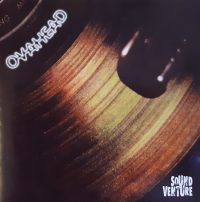
Ovahead: 'Sound Venture'

Ovahead: ‘Sound Venture’

Deprived of their singer Chris Joyce (apparently drawn away by some cryptic act of God), Norwich genre-malcontents Ovahead have rethought their music since “A Perfect View of Everybody Else”. The mixed flavours of their follow-up suggest that perhaps they’re enjoying the process more than the conclusions.

A good third of ‘Sound Venture’ suggests that, rather than replacing Joyce outright, Ovahead are sidling away from the constrictive demands of indie songwriting in order to tackle the other options offered by their taste for eclectic musicianship. Although keyboard player Mark Jennings now contributes have-a-go (albeit uninspiringly mumbled) vocals, it’s rarely with the conviction of a committed singer. And although half the songs are still thick with guitars, ‘Sound Venture’ eventually owes more to the layered pop sound-building of music like mid-period Beastie Boys or Disco Inferno as it does to guitar-whacking moments from Ovahead’s Norfolk contemporaries like Magoo (although the latter’s Owen Taylor presided over the album mix).

There’s not much bad news for trad-indie fans, who’ll be appeased by the chunks of the album which fall back on reliable indie-pub staples. Ovahead can still churn out the wind-tunnel rock of ‘Timely Strike’, the acoustic dreampop mumble of ‘Comfy’ (decidedly more woolly jumper than crystal cathedral) or the scruffy Creation Records psychedelia of ‘The Sky is Lowering’, and they can still sing through a scuffed lens of memory about clouds and summer days, companionship and unspoken change. They can also grease up for the Hawkwind biker-art grind of ‘dy/dx’; which cops some disturbed moods from the ghost of Slint, jiggling in disoriented fashion between math-rock and faith-rock on top of its urgent, pummelling single-note riff.

But given the choice between lazy psychedelic mutterings like “the little boy with golden hair turned out to be the enemy” on one hand, or Ovahead’s friend/occasional sound provider Claire S. caught on voicemail enthusing “I blasted a bit of steel – now that is a wicked noise!” on the other, I’m more tempted to go for the one which sounds Powerbook instead of by-the-book. And I suspect that the band share the same temptations, given that even the most predictable of their “new Ovahead” excursions (the pleasant, rustically organic rare-groove-trip-hop of ‘Palmist on Bronco’, complete with well-aged cinema organ and sweet cascades of Bittersweet Symphony string pomp) seems far fresher than anything they’ve cooked up for ‘Sound Venture’ with two guitars in a room.

Ovahead are, if anything, more comfortable in their new terrain of eclectic groove and friendly soundclashes than they are with guitar rock. Quiet yet animated snatches of studio chat swim in the mix, apparently fascinated with instruction manuals and the drop-in/drop-out possibilities of DJ culture. ‘Me and My Headphones’ has them embracing the world of laptop-pop, cranking some rich moodies and techno leanings out of their technology like a shyer Super Furry Animals, with some sweet naive strums of acoustic guitar frisking along in its wake.

On ‘Ill Descent’, they’ve discovered how to feed their psychedelic leanings through a squash of mix’n’match processes. Another would-be trip hop groove blends with a sampleadelic intro of blurred, folded brass straight from Jon Hassell’s Fourth World. A booming twist of noise (either extreme guitar or a massively-amplified turntable scratch) haunts the background like a malformed Moebius strip or like ice scoring the Titanic’s hull; while swimming incursions of out-of-phase clocks and double-speed jungle loops tease and stretch at Ovahead’s portrayal of time.

Some of this is pulled back with them whenever the tides of their motivation return them to guitar rock. The powerfully atmospheric ‘Shadow of the Sun’ might owe a few conceptual dues to New Order for its verses, Husker Du for its choruses, and Mogwai for its ferocious gloom. But the fluttering soprano and G-funk whine are all Ovahead, as is the way all these ingredients pull together to feed the bad-acid intensity (“I wanna pay you back for all I couldn’t say. / The simple facts so hard to explain / a momentary lapse in a chemist’s brain.”).

‘Analogue vs. Digital’ is steeped from title to root in their new awareness of dance manoeuvres, but deliberately undercut, its uneasy and drunken guitar distortion and queasy unbalanced funk somehow lending it a powerful homesickness. “These instruments fight because they can’t decide” puzzles Mark as the band for a moment resemble Bark Psychosis arm-wrestling Ray Manzarek, though the Numan-esque analogue synths buzzing over the blue beats at the end sign the song off in a strangely perky and faux-confident manner.

Decisiveness – between tracks at least – isn’t the best quality of ‘Sound Venture’. But the widening loop of Ovahead’s thinking certainly is.

Ovahead: ‘Sound Venture’
Fire Records, FIRECD075 (8 092361 007523)
CD-only album
Released:
18th March 2002
Get it from: (2020 update) Best obtained second-hand, or streamed via Spotify.
Ovahead online:
YouTube Spotify Amazon Music
Additional notes: (2020 update) Ovahead’s Mark Jennings is now half of Broads.

March 1998 – maxi-single reviews – Lo Fidelity Allstars’ ‘Vision Incision’ (“promises to blow our minds wide open, but falls well short of the promise”)

26 Mar

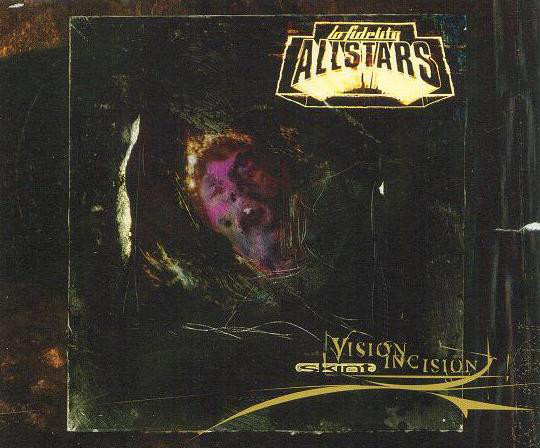
Lo Fidelity Allstars: 'Vision Incision' maxi-single

Lo Fidelity Allstars: ‘Vision Incision’ maxi-single

I had this lot down all wrong at first, I admit it. From the bragging “we’re the greatest” interviews, and the “dance music with real instruments” tag, even the look of the group, I had them down as (god forbid) the new baggy. I was fully prepared to go out and shoot them so I didn’t have to live through the horror that was baggy yet again. But a couple of odd tracks here and there have persuaded me to save my bullets… for now.

Sure, there’s a “real band” sound at the heart of the Lo Fidelity Allstars, but they can manage to make their take on turn‑of‑the‑millennium genre‑defying dance culture a gloriously uplifting thing. Their baggy forerunners (Happy Mondays, Stone Roses) always sounded like they were prevented from gliding to a higher musical plane by having their feet firmly stuck in the field of mud labelled “indie”. The Lo Fi’s, firmly centred on the sampler and decks, don’t have the same problem as they reel off ribbons and streams of sound, rather than chug doggedly away like an old pro dealing with a new fad. But…

 
Oh, the senseless waste. Vision Incision promises to blow our minds wide open, but falls well short of the promise. Good start, mind. Smooth beats, hedonistic keyboard riff, an infectious soul-diva backing hook, and the matter of the live band sound becomes irrelevant as the track lifts and soars smoothly like the most uplifting house or techno, boasting “As we travel at magnificent speeds around the universe…” At which point the Lo-Fi-s prime weak spot is revealed: Dave The Wrekked Train’s bland Speak’n’Spell vocals. Mashing up randomised texts, as he does on other Lo-Fi-s sonic collisions, they work fine. Faced with actual poetry, they creak like a ground axle. Please, if this is the way he carries on all the time, sack him. He has delusions of being a more hip Mark E. Smith, but ends up just sounding like a London cabbie – a monotone mumble grating over the divine music and pointing up the dreadful rhymes in some of his lyrics.

Perhaps he reckons he’s aiming at the street-level psychedelic lyricism of hip-hoppers like the Wu-Tang Clan: the thing is, those guys sound like they believe the weed-fuelled surreal-o-vision they’re raving about. Dave just sounds embarrassed, as if he’d rather have stayed in his siding and chatted to Thomas The Tank Engine this time around. Consequently, I can’t decide whether this is a successor to Orbital’s Chime for the genre‑busting, cross‑pollinating late ’90s dance scene, or just OMD meeting The Orb in a spot of megalomaniac galactic synthpop. Or, alternatively, the KLF doing Spinal Tap.

 
The remix is referred to as a “12” mix” ‑ how bloody Eighties. I suspect that, in homage to their record label, this is the Lo‑Fi-s’ attempt at the Big Beat remix. The Late Train has mutated (oh god!) into the slower‑talking brother of The Shamen’s Mr C. for the first part of this extended work‑out. Wisely, they quickly dispense of his services and crank up the heavy beats to provide a real tour de force instrumental for the band. Proving that if you like your beats big and bouncy, then this dissipated bunch can turn their devious minds to that too. The Midfield General Shorter mix is the sparse techno‑electronica version. A mechanistic, simple beat, overlaid by electronic squelches and interferences, as the original track is ripped to shreds and rebuilt, as elements and sequences of the original drift in and out of the mix. Oh, and Train-In-Vain is just a distant, distorted presence, way back in the ether. Wise move, guys.

 
By this stage, frankly, it’s difficult to tell whether Gringo’s Return To Punk Paste is, in fact, a new track, or yet another radical remix of the original. What it does prove, yet again, is that the Lo‑Fi-s can also turn their hands (deep breath) to a ’90s version of the sounds of early ’80s rap and electro. Skeletal beats and distorted, squelching basslines set the parameters for that unmistakeable sound, aided by some nifty no‑nonsense American speech samples.

 
Cunning remixes or no, even if feted as the best new band in Britain by ‘Melody Maker’ and handed The Future on a giant silver platter to play with, the Lo Fi’s are still going to bellyflop if they keep expecting that stuff like Vision Incision’s going to justify that reputation. It’s not that they’re talentless rip-off merchants. On the contrary, their sampledelic experimentation – when they’ve taken all the sounds of the world, scrunched them up and run with them – is at least as heart-jumpingly astounding as any other visionary pop cut-ups around, if not more so. Hype or no hype, they can bring the noise with a vengeance. This is a real Quality Street of a band – whatever your favourite tribe in the current cross‑cultural collision, there’s music for you here. And if this is the sort of open‑minded group that all the mess of sounds in the ’90s can produce, then the future is wearing some very cool shades.

But compared to their own mighty One Man’s Fear (the world being slowly and gloriously wrenched to sticky bits by Jim Morrison’s psychotic baby grandchild), this ain’t so much a vision incision as a mere blink. Someone had their eye on nothing more noble than a chart placing when they knocked this lot together. Just cut it out, OK? Show me stars, not hot gas.

(review by Col Ainsley)

Lo Fidelity Allstars: ‘Vision Incision’
Skint Records, SKINT 33CD (5025425503320)
CD/cassette/7- & 12-inch maxi single
Released: 23rd March 1998

Get it from:
(2018 update) best obtained second-hand.

Lo Fidelity Allstars online:
Twitter MySpace Soundcloud Tumblr Bandcamp Last FM

May 1997 – album reviews – State of Grace’s ‘Everyone Else’s Universe’ (“an oozing of tepid ambience”)

3 May

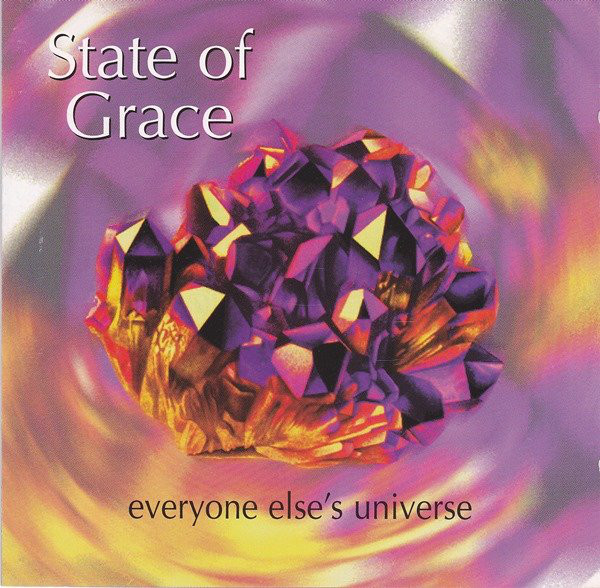
State Of Grace: 'Everyone Else's Universe'

State Of Grace: ‘Everyone Else’s Universe’

And this is 1997?

In the world of contemporary pop music, I thought ‑ hell, we all thought ‑ we had the equation worked out. Electronica = The Future. Trad Guitar Rock (Oasis + Kula Shaker + Cast + Ocean Colour Scene) = The Past. But State Of Grace, a Northampton electro‑ambient quartet now on their third album, are here to prove otherwise. It’s electronic, yes, but it’s also as retro and dated as Noel Gallagher’s Beatles pastiches.

Conspiracy is a six‑part concept track… or rather, it’s an obvious way to become immediately suspicious about an album just by looking at the track listing. (Six‑part concept tracks issue a subliminal message to me. That message is “run away!”). Part 1, Forest Fields Forever is horribly slick‑sounding trance, complete with weedy female vocal and obligatory ethnic voice sample. The parts seem often to be linked by ambient wind and water effects… oh no, sorry, that was Part 2. I dozed off for a moment. Part 3 (Single Spies) tries to be Dubstar, but with Sarah Simmond’s ultra‑forgettable voice and gibberish lyrics, plus powder‑puff electronics, it makes Dubstar sound like Nine Inch Nails. Part 4, Noel Street Blues, ups the tempo to a sleek techno and, by including the sampled combination of a warbling operatic diva, more generic‑ethnic wailing and an accordion, momentarily arouses some interest. But by this point I didn’t know which part I was listening to. It all continued in this insipid vein for a number of years, by which time I’d lost the will to live.

Perfect And Wild is more suffocatingly polite techno‑pop, with the joyful addition of a twee slide guitar. Still, as so often on this album, the awful lyrics offer a laugh. “And when love is calling / Like an open book” ‑ look, I’m sorry, but books don’t call; they’re inanimate objects! So innocuous and bland is this music that you could walk round supermarkets to its accompaniment.

Now where was I? I need a dozen eggs, some margarine, a packet of mini chicken kievs… oh, sorry. Right, then. Er, Sea‑Saw. Oh, mild trip‑hop. Sarah tries to sing with a lazy, underwater vibe, but only ends up sounding as disinterested as I am, like she’s about to drop off to sleep. And will somebody please alter that bloody drum machine pattern! Now! (If you think I’m losing patience, you’re right).

 
Be afraid. Be very afraid, for there are three versions of the track Hello on this album (they obviously place great faith in the song‑‑poor, deluded souls). This version, subtitled Fall Out The Lions (eh? Your guess is as good as mine…), is musically somewhat engaging: mournful violins and a rising/falling keyboard sequence over brushed electronic drums. But the words are more sixth-form gobbledegook: “In the silence / the colour is an island. / Fall out the lions, / take everybody with you.” What? Still, the chorus is one to join in on – “Is it so? Hello, hello. / Is it so? / Hello, hello.” Poetry, utter poetry.

Version two of Hello is a remix by Jack Dangers of Meat Beat Manifesto. To a clattering beat and a phased dub keyboard, plus Meat‑treated vocal, it all manages to sound at least vaguely contemporary, whilst hardly essential. Version three (gosh, you can have too much of a good thing, can’t you?) is an Aphex Twin‑style remix‑‑it dismisses all the elements of the original track save for a ghost of the vocals, and constructs a stomping bass‑heavy techno track. By now, it is so far from State Of Grace’s original that it hardly belongs to them at all. Consequently, it’s the best thing on the album.

 
Rose II begins and ends in an oozing of tepid ambience, but would potentially be an affecting minor‑chord‑laden melody if it hadn’t been subjected to another sheen of bland synthesizers and, worst of all, whining treated electronic guitar. By now, lost somewhere in a maddening nightmare, praying for this album to end, I suddenly sense a name appearing before me. M…? M…? M… M‑… M‑Mike Oldfield?! Jesus, it does ‑ it sounds like bleedin’ Mike Oldfield!! (Worse than that, Vaughan. It sounds like late ’80s Mike Oldfield, the stuff that not even Oldfield fans seem to have any more… ‑ PROG ED.)

State Of Grace are awfully, horribly dated. They are trying to be some sort of combination of modern ambient techno ‑ for which the music sounds simply too out‑of‑date‑‑and the pristine machine pop of, say, Propaganda… yet lacking that group’s excellent song constructions. The lyrics are abysmal, too. The hip new title State Of Grace would like to have conferred on them ‑ electronica ‑ is redundant. This is, being as kind as possible, what used to be known in the pop world as “electronic music”, which would firmly date it as being pre‑1987’s acid‑house revolution.

But let’s not be kind. Let’s be unkind. This is out‑of‑date, bad europop, bad trance, bad electro‑prog… get the idea?

I don’t want it in my universe.

(review by Vaughan Simons)

State Of Grace: ‘Everyone Else’s Universe’
3rd Stone Ltd., STONE 028CD (5023693002828)
CD‑only compilation album
Released: 28th April 1997

Get it from:
(2018 update) best obtained second-hand.

State Of Grace/Fatal Charm online:
Homepage Facebook Soundcloud Last FM YouTube

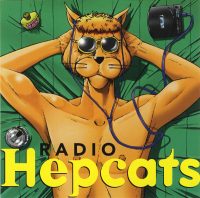
November 1996 – album reviews – Various Artists’ ‘Radio Hepcats’ compilation (“a strong whiff of dark-toned, filigreed, 4AD style introspection… heady, winning underground music”

26 Nov
Various Artists: 'Radio Hepcats'

Various Artists: ‘Radio Hepcats’

Can you can imagine a sort of cross between ‘Friends’ and a pre-job-market ‘This Life’, in which all the characters appear to be played by close relatives of those odd, unclassifiable, button nosed mammals (what the hell were they, then? bear/possum crossbreeds? doughboys?) who got perpetually stuck with the supporting roles in Disney Club comics?

If so, then you’ll have a fair (if reductionist) idea of Martin Wagner’s ongoing graphic novel ‘Hepcats’. Along with its darker and more tragic sister strip ‘Snowblind’, this warm, witty, compassionate and beautifully drawn adult strip – set on the campus of the University of Texas – follows the fortunes of a small group of students (Erica, Joey, Gunther, and Arnie) and their perpetual struggle of balancing friendships and growing maturity with an acceptable level of fun and the freedom to make mistakes. Sounds familiar? In Martin’s hands it’s both recognisable and sparkling.

Currently celebrating a new linkup with Antarctic Press and the consequent release from the headaches and pitfalls of self publishing, Martin’s just expanded the “Hepcats” world by releasing the first in a set of companion CDs: not so much a ‘Hepcats’ soundtrack as just a set of, as Martin puts it, “damn good songs that seem right at home with Erica and the gang.” But if you’re expecting another college beerkeg singalong album, think again.

Despite the tendency of the Hepcats cast to engage in animated chat as opposed to holing up in their bedrooms brooding over a Walkman, there’s a strong whiff of dark-toned, filigreed, 4AD style introspection to this compilation. It’s the tendency of the bands involved to spice their music with a little darkness, a little ornateness: and as a result ‘Radio Hepcats’ is generally closer to the sombre and unsettling shades of ‘Snowblind’ than the lively sun-washed tints of ‘Hepcats’ itself. Green Day’s pogo party this ain’t: it’s more like Ivo Watts-Russell’s children coming home to roost.

 
Explicitly, sometimes. The Curtain Society‘s waltzing Ferris Wheel has that familiar sound of twangling Cocteau Twins bass and grumbling spiky washes of guitar under the melancholic push-and-pull vocals. More of those queasy, giggling, Robin Guthrie-ish guitars show up on Siddal‘s Secrets of the Blind, a two parter that swings unexpectedly from chirpy drunken-fairy pop into one of those Cocteaus alien piano ballads that dislocate you from your own consciousness.

And if you’ve ever wondered what a troubled hermit’s answer to the arresting, barren grandeur of Dead Can Dance might be like, look no further than Soul Whirling Somewhere. Unhittable – utterly isolated and beautiful darkwave – drifts up as if from the bottom of a well: Michael Planter’s ashy, yearning voice floating out from its shrouds of tolling Joy Division bass and dark persuasive ambience, which caress and pull it down like water saturating the clothes of a drowner. It lulls you with sepulchral beauty while draining the warmth out of the room: you can all but see ice forming on the speakers.

 
But let’s not nit-pick. Even if the 4AD pointers can sometimes be pretty self evident, this is – at the very least – an album of heady, winning underground music. They might have some obvious forebears, but the bands on ‘Radio Hepcats’ also possess persuasive and seductive sounds, which are especially welcome in the current atmosphere of half asleep indie and heritage Britpop. With The Red Dots, An April March plunge down into their own thunderous take on guitar heavy dream pop with enough force to squish any of their British shoegazer ancestors (Chapterhouse, Slowdive). This stuff rides on a natural internal dynamic as much as on any phaser pedal setting, and coasts in on a dark thrum of guitar as impersonal and unstoppable as a typhoon.

 
Martin’s offered us the odd surprise, too. Visible Shivers have the sort of name to suggest more of the same chilly darkwave as Soul Whirling Somewhere but prove, in fact, to have the same sort of Southern States nerviness as their near brothers in name, Shudder to Think. Lo-fi country-flavoured twelve-string jangle pop, complete with plaintive harmonica and plonky bass, which on After Glory prances closer to the Appalachian chirp of Robbie Robertson, Dr Hook or ‘Fables…’-era REM than to the stonecarved artiness of much of the rest of the ‘Radio Hepcats’ broadcast. Then there’s William McGinney‘s ‘Hepcats’-themed snatch of filmic lo-fi piano and synthwork, halfway between ‘Knotts Landing’ and Angelo Badalamenti. And to silence any remaining doubts, there’s two more bands on here – the shimmeringly lovely Mistle Thrush and the ever-magnificent No-Man – who transcend genrework altogether.

 
Mistle Thrush open the CD with a soulful seduction, giving us Wake Up (The Sleep Song). First it curls into our hearts like a gorgeously soporific Julee Cruise ballad, and then suddenly expands into a huge cathedralline Bark Psychosis space where Valerie Fargione’s voice strips itself of anxious sugar and powers up into a huge, majestic Patsy Cline alto, as if the lump in our throats has finally gulped them into a place more fit for their bewitching talents. Further on, No-Man provide two wildly different and divergent contributions: the industrial, near incomprehensible clatter pop of Infant Phenomenon (which powers along on a rattling log drum beat, offensively dirty guitars and gasped, abstract lyrics), and the all embracing Steve Reich-ian trance funk of Heaven Taste; a sweetly slumbering twenty plus minute ambient monster with a bellyful of twinkling lights, sky tickling violin, leviathan Mick Karn bass and perhaps a couple of bites of Chartres Cathedral.

 
Martin Wagner’s not only compiled a beautifully-paced compilation album, he’s also given much deserved space to a clutch of very under-regarded bands. And the latest activity on the ‘Hepcats’ site suggests that an even more captivating follow-up compilation is on the way. The whole ‘Hepcats’ affair, both on and off record, is looking like a series well worth tuning in to. Cool for cats and everyone else.

Various Artists: ‘Radio Hepcats’
Antarctic Press, RHCD1 (no barcode)
CD-only album
Released:
November 1996
Get it from: (2020 update) Long out of-print, rare, and best obtained second-hand. Originally came free with deluxe edition of “Hepcats” #0.
Hepcats online:
Martin Wagner’s Hepcats blog, and online reprints of the original comic at Comic Genesis.
Additional notes: (2020 update) Of the artists on this album, The Curtain Society and No-Man are both still active; Visible Shivers enjoyed a ten year career between 1990 and 2000; Mistle Thrush’s Valerie Forgione was later in Van Elk, while Soul Whirling Somewhere’s Michael Plaster resurfaced in Yttriphie and An April March’s Danella Hocevar later worked as Danellatron. William McGinney has divided his time between film music and academia.
 

SWOONAGE

Swoon. /swo͞on/ A verb. To be emotionally affected by someone or something that one admires; become ecstatic. Here are some people and things that make me swoon. #swoon #swoonage

Post-Punk Monk

Searching for divinity in records from '78-'85 or so…

theartyassassin

...wandering through music...

Get In Her Ears

Promoting and Supporting Women in Music

Die or D.I.Y.?

...wandering through music...

Music Aficionado

Quality articles about the golden age of music

THE ACTIVE LISTENER

...wandering through music...

Planet Hugill

...wandering through music...

Listening to Ladies

...wandering through music...

ATTN:Magazine

Not from concentrate.

Xposed Club

improvised/experimental/music

The Quietus

...wandering through music...

I Quite Like Gigs

Music Reviews, music thoughts and musical wonderings

furia log

...wandering through music...

The Recoup

SINCE 2013: Books and books and books and books and occasionally other things

A jumped-up pantry boy

To say the least, oh truly disappointed

PROOF POSITIVE

A new semi-regular gig in London

Gapplegate Classical-Modern Music Review

...wandering through music...

When The Horn Blows

...wandering through music...

:::::::::::: Ekho :::::::::::: Women in Sonic Art

Celebrating the Work of Women within Sonic Art: an expanding archive promoting equality in the sonic field

Ned Raggett Ponders It All

Just another WordPress.com weblog

FLIPSIDE REVIEWS

...wandering through music...

Headphone Commute

honest words on honest music

The One-Liner Miner

...wandering through music...

Yeah I Know It Sucks

an absurdist review blog

Obat Kanker Payudara Ginseng RH 2

...wandering through music...

poplifer.wordpress.com/

Waiting for the gift of sound and vision

Good Music Speaks

A music blog written by Rich Brown

Do The Math

...wandering through music...

Archived Music Press

Scans from the Melody Maker and N.M.E. circa 1987-1996

The World's Worst Records

...wandering through music...

Soundscapes

...wandering through music...

OLD SCHOOL RECORD REVIEW

Where You Are Always Wrong

FRIDAY NIGHT BOYS

...wandering through music...

Fragile or Possibly Extinct

Life Outside the Womb

a closer listen

a home for instrumental and experimental music

Bird is the Worm

New Jazz: We Search. We Recommend. You Listen.

...wandering through music...

Life Just Bounces

...wandering through music...

Lucid Culture

JAZZ, CLASSICAL MUSIC AND THE ARTS IN NEW YORK CITY

Aquarium Drunkard

...wandering through music...

eyesplinters

Just another WordPress.com site

NewFrontEars

...wandering through music...

FormerConformer

Striving for Difference