Archive | club music RSS feed for this section

January 2015 – single & track reviews – Marika Hackman’s ‘Animal Fear’; Tanya Tagaq’s ‘Uja’; Swim Mountain’s ‘Love on Top’

9 Jan

Despite the underlying wildness of her songwriting, Marika Hackman appreciates and makes use of the power of restraint. Previous songs such as Bath Is Black and Itchy Teeth have revealed a compelling songwriter with a cool fascination for messy play, for psychological dirt and guilt and the wracked physicality of the uneasy soul. That she doesn’t scream these things out adds to her power. Her cool, polished folk tones deliver her surreal, slithering insights and her deft, subtle analyses with the same thoughtful poise, whether she’s chiding or sharing, empathizing or emphasizing.

Underneath the spooky Latinesque folktronica groove of ‘Animal Fear’ (full of Shankar-ish string wails and spaghetti western gunshots) a menstrual werewolf subtext is swirling. Part ‘Ginger Snaps’ and part ‘Being Human’, it embraces blood and feminity, bandages, and the helpless stink of male terror. “I’ve been weeping silent like a wound. / Would you stitch me up or let the blood soak through, / watching my world turn from white to blue?” She sings as if she might be dying; she sings as if to a lover or a brother; but she’s never really pleading, never wholly dependent. She sits inside her transforming body and watches the changes come; watches the fumblings of her companion with the same half-resigned curiosity. “Look into my eyes and convince us both that I’ll last through the night; / I could land on my feet if I tried. / I’ve never jumped a chasm so wide / and made it to the opposite side. / Even now as we’re standing here, / I can see the doubt in your eyes, / I can smell the animal fear.”

The song is a tender, chiding mixture of vulnerability and disappointment, but its observations are shot through with self-awareness. “I was not a heavenly child,” admits Marika, “savage, with a temperament wild.” As the song travels through the changes, it blends into acceptance, a new understanding bleeding through in flashes (“oh, my body trembling… / and teeth… / I won’t bite.. / Sweet too soon, treacherous night.”) We don’t get to find out how this ends, but even as Marika (now more initiate than invalid) murmurs “she calls my name” you’re left with her finely-honed sense of self. Under the fur and nipples, under the wracking pain, an image emerges of a woman who may wander but will never be truly lost.

* * * *

Tanya Tagaq – a Canadian Inuit throat singer – also seems to have some empathy with this kind of lycanthropic humanity. She’s recently delivered a forthright cover of Pixies’ ‘Caribou’ like a tundra bolero with violins and horns, picking up on its occult hints and dreams of a changed, more animal life outside the city and slinging it back with an Inuit twist and the bloody-minded wit of a hard-bitten outdoorswoman. Tanya first came to broader attention a decade ago (thanks to her four-song turn on Björk’s ‘Medúlla’), and has continued to work her way into Western musical awareness via work with the Kronos Quartet and Mike Patton. This kind of collaborator choice suggests a determination to broaden and involve her music rather than dilute it. With last year’s award-winning Canadian success for her ‘Animism’ album, she’s pitched to continue making breakthroughs on her own terms.

‘Uja’ confirms this. A trailer single for a broader overseas release of ‘Animism’, it has something in common with previous deeply-involved folktronic endeavours such as or Foxout! and Mouth Music. It might mate and merge with electronic beats in longstanding worldbeat fashion, but rather than pandering to easy tastes it’s a stirring textural affair, deliberately pitched between ritual and pounding. It feels like an Arctic club night with all of the technology freezing round the edges and only kept functional by fierce body-warmth.

Log-clock ticks, harsh electronic reverb, and a ragged fabric of synth-noise and incisive drumming make up a base and a blanket. Over, under and around this Tanya works in multiple layers of percussive hum-grunts, drawls, gasps, seal barks and harmonic growls. Occasional shamanic interjections in Inuit (sliding in over the top like a wake-up call filtering through sleep) might be terse warnings, defiant fuck-you statements or camouflaged jokes at the expense of Anglo monolinguals. With Tanya being an assertively political artists and performer, they could be any or all. If I’m the butt of the joke, though, I can take it this time. ‘Uja’ made the blood jump in my feet and in my temples.

* * * *

London/Angeleno good-time band Swim Mountain retrofits, but in an easier, breezier way. They cover Beyoncé’s ‘Love On Top’ like someone flirting under a blanket, musical lines and instrumental parts wriggling under the surface like coy, excited limbs. As he showed on the debut Swim Mountain EP last autumn, head Swimmer Tom Skyrme is very good at disguising fairly limitd resources under a swelling, lucid-dream production style. He claims to have put this one together on a whim, belatedly falling in love with the song’s bravura modulations and ‘80s-inspired peppiness.

Personally, the Beyoncé diva-juggernaut leaves me cold. Despite her well-honed skills and precision vocals, much of what I see is branded, sub-Madonna acquisition and media powder-puffing (if she is the twenty-first century Madonna, we’ve all gone beige) so it’s interesting to hear the song outside her wind-tunnel of glamour. Tom’s lightly buttered, lysergic popcorn-soul take makes no attempt to match the ceiling-bumping, helium balloon assertiveness of the original. The pace is agreeable ‘70s midtempo; the wah-guitar plays peekaboo; the boinking bass comes sheathed in a tight reverb. The phaser button adds a gentle, sexy yawn; Tom’s warm nasal drawl (just on the likeable side of bland) dawdles amiably on the swooping paths Beyoncé cut, making no attempt to match her commanding calisthenics. A cloudy puff of keyboards fills the gaps, like a lazy pink smoke-bomb.

Previous Swim Mountain stylings have mostly recalled the stoned, sleeting Byrds guitar of ‘Five Miles High’: this one sounds like what Arnold Layne might have become if Syd Barrett had drunk deep on Memphis soul before he rolled another one, or like a more nappy-headed tie-dyed version of the Clarke/Duke Project. It’s all a little throwaway (despite the unexpected ending, which scrambles down an unexpected dip and clunks like a plastic lyre) but it’s lovingly crafted throwaway; a sugar basket which takes less time to eat than it does to admire. Plus I do like the way that Tom’s mix rolls out individual delicate moments for our attention, as if his faders were the sliding drawers in a jeweller’s desk.

Marika Hackman: ‘Animal Fear’
Dirty Hit Records (no barcode or catalogue number)
Download-only single (released 9th January 2015)

Tanya Tagaq: ‘Uja’
Six Shooter Records (no barcode or catalogue number
Stream-only single (released 6th January 2015)

Swim Mountain: ‘Love On Top’
Swim Mountain (no barcode or catalogue number)
Stream-only single (released 7th January 2015)

Get them from:

Marika Hackman: ‘Animal Fear’ – Soundcloud stream or iTunes (as part of ‘We Slept At Last’ album)
Tanya Tagaq: ‘Uja’ – Youtube stream; or Six Shooter Records store or iTunes (as part of ‘Animism’ album)

Swim Mountain: ‘Love On Top’ – stream-only at Soundcloud.

Marika Hackman online:
Homepage Facebook Twitter Soundcloud Last FM YouTube

Tanya Tagaq online:
Homepage Facebook Twitter MySpace

Swim Mountain online:
Facebook Twitter Soundcloud

January 2015 – single & track reviews – Giles Babel’s ‘2015’; Shot of Hornets’ ‘Elvis is Dead’; Heylel’s ‘I Talk to the Wind’

7 Jan
Giles Babel: '2015'

Giles Babel: ‘2015’

Happy new year. How’s your irresolution?

Both as year and as song, ‘2015’ is another fitful emergence for Enfield polymath Glen Byford – poet, photographer, digital trinketer, small-time maker and on-off DJ. In the past, he’s put out his original music (anxious water-tank electronica, skinny-wistful glitch tunes, poppy plunderphonics and disillusioned spoken-word bedsit blurts) under the cover names of Hunchbakk or Giles Babel. As of this year, all projects seem to have merged under the Babel label and shrunk down to their most skeletal: or perhaps that’s just how it feels under a January hangover.

Peeling off and discarding his usual quilt of samples, the perpetually uncomfortable Glen distractedly slung this one together on an iPad app while reading and watching television – as if he was working behind his own back and didn’t want to catch himself at it. It’s downbeat, clipped and telegrammatic – budget-tronica pows and zips; a knocking and near-undanceable beat; minimal decoration. Rather than opting for best hopes and public drive, he chooses to sit back and take the poison pill – “Another new year, and another January of good intentions. / Another January of new perceptions, misconceptions that things could change.”

The music, though, seems to disagree – glitching and flipping into a rumble of double-time, or shoving the voice to the back of the drawer like an unwanted sock. Meanwhile, Glen fidgets between hope and cynicism (“This year will be my year – / yeah, just like last year, / and just like every year,”)and represents that year with a brief collage of Playstation chip music, pings and trills, mutters, and incongrous hip hop samples of block party shouts and cheering crowds (“we have a party, right?… I tell you what we do…” Uncertain inspirations reign. Glen pads, tentative and barefoot, around his room.

* * * *

Shot of Hornets: 'Elvis is Dead?'

Shot of Hornets: ‘Elvis is Dead?’

In the time that Glen would take to roll over twice and go back to sleep, Shot of Hornets would have squeezed five quick changes into a song. Apparently not much older than 2014’s Christmas wrapping-paper, this band’s blocky, power-oozing pounce-and-trap tones suggests a much longer-established band: they mingle math-metal’s block-feints with hot funk spaces, thrash riffs with anthemic grunge righteousness, but never entirely pin themselves to anything. When he’s not bursting into hardcore screams, the soulful wreck of singing drummer Conor Celahane’s vocals are reminiscent of gospel-tinged hard-rock heroes King’s X (as are the clotted, meaty guitar wails of his brother Dan), but there’s just as much of Megadeth’s grand irritation in the stew as well.

Elvis is Dead? is a shape-changing dust-off about nothing more specific than uncertainty, vague disappointment and finding the pieces to pick up. The King himself only shows up in a desultory moan about Spotify (so I’m guessing that there’s something being said about the commodification and shrinkage of cultural heroes here), but generally the song sees the band gathering together their compass-bearings and firing off the odd sarcastic broadside. “So here we are now, / no better and no worse off, / in the same world as everyone else,” notes Conor, going on to confess “I have a number of doubts.”

The music is sinewy and jumpy beneath the roaring guitar, and every couple of minutes, there’s a change – a glide of softer melody, a shift into death growls, a barrage of bouncing swipes and screams. “The first prize for gift of the gab / goes straight to you / how d’you feel about that?” Conor yells before the song turns anthemic, finding both the funk and its final feet. (“Turning my back on ignorance, turning my back on selfish people, turning my back on ignorance and lies.”) In a final riff-bout, the rhythm hurtles and rebounds like an evil-minded squash ball. Promising. Let’s see what they do when their concentration settles.

* * * *

Even compared to the other prog juggernauts of the ’70s, King Crimson aren’t given much credit for contributing to the classic songbook. Given the various song-gems lurking in their back catalogue, this is unfair. It probably owes more to Robert Fripp’s unfortunate (and somewhat unfair) reputation as a lofty demon headmaster, verbally withering casual listeners from his lectern before immolating them with sprays of burning guitar sludge – an image which does his Bowie collaborations no harm, but which drags his main band down like a concrete overcoat. The fact remains that outside of slavish interpretations from neo-prog bands, as far as Crimson cover versions go there’s been little more than a speckling.

In the past few years, though, this has changed significantly. In 2011, The Unthanks transformed Crimson’s Starless into a haunting Northumbrian chorale. The year before, Symbolyc One ripped 21st Century Schizoid Man to ominous ribbons and recombined them for Kanye West’s ‘Power’. A year before that, Maynard James Keenan of Tool snarled his way through a pure Schizoid Man cover for The Human Experimente (It was impressive, in an art-metal way, although personally I’m keener on Johnny G’s lo-fi delta-blues version from 1982).

I Talk to the Wind, however, is probably the closest King Crimson has to a standard. A ghostly, semi-existential folk song from their first album, it’s already attracted several reinterpretations. Italian new-wavers Violet Eves did a respectfully mournful and elegant cover in 1985; Camper Van Beethoven and Eugene Chadbourne tore up a hilarious country-punk version in 1987. Probably the most famous version is Opus III’s techno-house take from 1992 (complete with New Romantic Gilliam-cum-Dali fantasy video, mashing up ‘Dune’, ‘Logopolis’ and ‘The Man Who Fell to Earth’ as Kirsty Hawkshaw’s androgynous glam-waif stalks, slinks and smoulders her way around a desert lodge).

For their own version, Heylel have chosen to recapture some of the original Crimson’s sumptuousness. Serving as a coda to the Red Giant sequence on the epic prog/folk/metal of their ‘Nebulae’ album, their take on I Talk To The Wind is solemn and sealed. The ceremonial pace, the full-scale orchestral tremble, the fathoms of shoegaze-guitar shudder and the solemn, Gilmourian guitar solo render it inter-generationally grand: touching on the string-swoons of Craig Armstrong or Sinatra’s orchestras, the stadium turbulence of ‘The Wall’ and the mournful psychedelic drones of Spiritualized or Slowdive. The video suggests that they’re heading up the live sessions in the Black Lodge from ‘Twin Peaks’.

Yet the original song is a small, lonesome beast – lyrical flute, a gentle fug of guitar, a pre-ELP Greg Lake singing the melancholy words with a vulnerable humility that he’d never show again. Heylel singer Ana Batista keeps this in mind. Her vocal might be full of assured, implicit soul-pop power, but she’s never tempted to let rip, never loses sight of that original restraint: and, restored to a waking dream, the song’s allowed to settle over us once again.

Giles Babel: ‘2015’
Hunchbakk (no catalogue number or barcode)
Download-only single (released 1st January 2015)

Shot of Hornets: ‘Elvis is Dead’
Shot of Hornets (no catalogue number or barcode)
Download-only single (released 1st January 2015)

Heylel: ‘I Talk To The Wind’
Heylel (no catalogue number or barcode)
Download/streaming single (released 7th January 2015)

Get them from:
Giles Babel: ‘2015’ – Bandcamp (pay-what-you-want)
Shot of Hornets: ‘Elvis is Dead’ – Bandcamp (pay-what-you-want)
Heylel: ‘I Talk To The Wind’ – Bandcamp or iTunes (as part of ‘Nebulae’ album)

Giles Babel/Hunchbakk online:
Homepage Facebook Twitter MySpace Soundcloud Bandcamp

Shot of Hornets online:
Facebook Bandcamp

Heylel online:
Homepage Facebook Bandcamp YouTube

February 2013 – mini-album reviews – Lee Fletcher’s ‘The Cracks Within: FiWT Remixes’ (“unstitched, re-embroidered, re-folded”)

9 Feb
Lee Fletcher: 'The Cracks Within: FiWT Remixes'

Lee Fletcher: ‘The Cracks Within: FiWT Remixes’

‘Faith In Worthless Things’ was one of 2012’s surprise pleasures. Lee Fletcher’s debut album was the late-blossoming distillation of years of work as engineer and confidant to assorted art-rock musicians, and of even more years absorbing influences and refining them in a budding songwriter’s heart.

What emerged was a sleek, assured and finely-honed planned-patchwork of an album. It pulled in sounds from touch guitars, Uillean pipes, crunchy rhythm loops, ukeleles, powdered trumpets and silky synthesizers; it mused on betrayals, work, bewitchment and people in general; and it drew on a wide but surprising coherent blend of string-quartet chamber pop, soul and trip hop, 1970s Scott Walker, King Crimson-flavoured progressive rock, electronica and Anglo-folk.

While Lee’s firm and expansive vision gave the album both shape and finish, it was also very much a group effort, achieved hand in hand with his singer wife Lisa plus the chameleonic touch guitarist/soundscaper Markus Reuter and a small battalion of interested musicians from around the world. This short album of follow-up remixes keeps that spirit, with a couple of returning collaborators and new reinventors let loose on the tracks.

Only two songs from ‘Faith In Worthless Things’ make it to this particular phase. There’s the title track – originally a humble state-of-the-world address sung by Lisa but dispatched by Lee, people-watching at the railway station in his Devon hometown, and sampling a picture of humanity from its wandering fragments on an ordinary morning. There’s also The Inner Voice, in which Lisa soars on a rich carpet of soul-inspired smoothness; delicately and beadily picking apart matters of confidence and collaboration, while unhitching – scuffed, but quietly determined – from a dragging entanglement. The latter was the album’s obvious single, so it’s interesting to see three different remixers work three different shades of pop out of it.

Of these, Brazilian proggers-turned-clubbers Worldengine offer perhaps the most satisfying reinvention – a slink-and-roll electronica take full of whispering creep, voice fuzz and closed-eye pulse beats. The smooth soul of the original is pared back in favour of odd, gently challenging chording and textures: as if Lisa’s vocal line has been gently unwound from its original branch and wrapped carefully around a new one. Imagine what might happen if David Torn had as much pop clout as Madonna does, and you’ll have some idea of where Worldengine take this.

Two other remixers take The Inner Voice further out, but perhaps with less originality. The mix from German DJ Ingo Vogelmann battles and switches restlessly between its whispering electronic-ambient chamber intro, heavily synthesized cyberpop and a naked acoustic strum. The onetime 4hero cohort Branwen Somatik offers a similarly morphing dance switchback – initially a slightly dubby hip-hop take with an eerie twist, then a transformation to minimally-sheathed soul-pop, finally melting away in a dubby whisper of liquefying beats.

There are no fewer than six versions of Faith In Worthless Things, including a return for Ingo Vogelmann who offers a mix replete with Orb/Jean Michel Jarre-flavoured electronica (strong on the breezy minimalism, and dappled with bits of dub and techno). Adrian Benavides has honed himself an industrial pop version full of collapsing sheet metal and drill bits. Fabio Trentini provides an ambient pop take with an art-pop tweak – part Japan (if the ‘Gentlemen Take Polaroids’ era took precedence) and part Crafty Guitarist. Lee’s words and Lisa’s sweet-but-stately vocals sit, unfazed, in these new cradles.

Having said that, this particular song is less suited to being strapped into dance, and other approaches are preferable. Under his Hollowcreature alias, David Picking seems to realise this; he keeps and highlights the train-swish from the intro, brings Lee’s own warm and pleasant guide vocals to the forefront for half of the time, and comes up with a subtly dubby version of the song’s English pastoral feel. The latter quality is something which Tim Motzer appears to have picked up on too, as he moves Faith In Worthless Things into a more British progressive rock area. This he does via a number of changes – jazz vibraphone, the ghost of a hard-rock riff and eventually a build up into a Pink Floyd blaze replete with Gilmourian guitar. It seems obvious, but there’s some clever sleight-of-hand here: Lisa is metamorphosed cunningly by the new arrangement into a leathered-up rock goddess, all without a change to her vocal part.

Tobias Reber, on the other hand, manages to be both daring and successful in his own mix, taking an unexpected creative risk and pulling it off. He contributes the best of the remixes on offer, as well as the most original. His reconstructive take on the songs sees it unstitched and re-embroidered, re-folded. The song is re-imagined over an uneasy sea-roll of structure. New chording, constructed from the components of the original piece, produces a striking new perspective; a different place from which Lee, through Lisa, can watch the world and see its unsettling currents ripple past and under him.

Each remix, though, gently unbuttons ‘Faith In Worthless Things’ again and reminds us of that collaborative feeling which suffused it. The rolling and friction between Lee’s ideas and where his accomplished collaborators took them – a journey in motion.

Lee Fletcher: ‘The Cracks Within: FiWT Remixes’
Unsung Records (no catalogue number or barcode)
Download-only mini-album
Released: 5th February 2013

Get it from:
Bandcamp

Lee Fletcher online:
Homepage Facebook TwitterBandcamp

January 2001 – mini-album reviews – The Servant’s ‘With the Invisible’ (“art gets made, covertly, in rush-hour”)

22 Jan
The Servant: 'With the Invisible'

The Servant: ‘With the Invisible’

On last year’s ‘Mathematics’, Dan Black (the voice, face and most of the limbs of The Servant) lifted the lid on a peculiar pop world, fascinated by the chasms between reality and imagination and between formal order and animal madness. ‘Mathematics’ was a dance of numbers, monkeys and peculiar people-watching, jamming in suspicions of murder, deranged Bunuel-ish aristocrats and shopping mall alienation. Unusually, its sonic palette was just as wild as its subject matter. It was as chopped-up and mercurial as it was catchy and danceable, emphasising Dan’s omnivorous sampler as much as his peculiar sneer (thin and venomous, but in its way the wildest and most devil-may-care British pop vocal this side of Billy Mackenzie).

With Chris Burrows now recruited to the project to beef up the guitars, ‘With the Invisible’ hints at being a more conventional follow-up to ‘Mathematics’. In many ways, it is. It’s less extreme, more aligned towards the needs of a guitar band: the sounds are much less wild and varied, with less cunningness required to ensure the gelling of the musical ingredients. Hell, it could almost be Britpop; albeit at the Pulp end as opposed to the Shed Seven end. But I’m not convinced that this means Dan Black has shot his artistic wad. In fact, I’ve a suspicion that where ‘Mathematics’ rattled the cage of the fantastical, ‘With the Invisible’ (right down to the title) documents Dan’s interaction with the everyday – the office jobs, adverts, commuter rushes, conspicuous consumption and car ownership that most of us take on continually and take for granted.

Certainly ‘Biro’ is about sulking in an office, your mind scrabbling desperately for escape either in desk-based sculpture, the limited options of the office party (“wet-look in my hair?”) or violent fantasies – “I just killed my new boss / shut that cock up, with a rock, / non-stop in his face, / and what a smug face.” Inevitably, it concludes “it’s plain to you and it’s plain to me, / there’s nothing for you and there’s nothing for me,” but it has a colourful time getting there.

With that admitted, the next question is how to live under those circumstances, if at all. The brass-pumping ‘Milk Chocolate’ is a rebellion, which finds Dan capering under the motorway next to a blazing bonfire. Systematically, he’s burning all of his possessions from hi-fi to furniture right down to his clothes, trying to shake off the packaging of the modern world. But with “milk chocolate pumping through my heart” the contamination of consumption has already reached to the core of him, leaving him with the logical conclusion of joining his own trash on the fire.

Or not. The bodypopping, Prince-like, bubblegum funk of ‘In a Public Place’ suggests an accommodation, even a brainwave to slake that thirst for stimulation. Art gets made, covertly, in rush-hour. “Among stumbling commuters / I think about each step, / not where I’m trying to get.. / In a limited space, / I try to find a cube for me. / With suble changes of pace, / I move through various densities.” There’s even peace to be found – “watching people move, / they appear to groove / with the invisible.”

For a while, our man seems happy in a formal suit and in step with this world. By the time the White Town-ish synth pop of ‘Driving at Night’ shows up – deliberately tidy – he’s possibly taken it too far. “I try hard to be like I’m in an advert / as we descend upon upon the M1.” Before long, though, The Servant are back to poking holes in the fabric of the world again, trying to expose the workings. In the Jam-versus-hip-hop bust of ‘The Entire Universe’, this happens via rampant, tongue-in-cheek paranoia. “How can I trust my own memory? / Did what I thought I saw before occur?” yammers Dan, almost with relief, as flute shrieks and silvery Indian strings zing off the barking guitars. “How can I trust my own family? / Maybe they’ve lied for years to me.”

By the finale, ‘She Cursed Me’, the music is heading back towards the heady mix of sounds that characterised ‘Mathematics’: ironic tinges mixing with intimate pastiche, music box interludes, bright dreamy shifts of mood and texture with a sharp mind manipulating them. And Dan’s narration has moved well clear of city rules, looking backwards to villagey beginnings, the first stirrings of curiosity (“she cursed me with impatience / and I need to follow clouds,”) and the repercussions of actions (“our conversations by the pond / I wonder if they’re still going on – / swimming on the gluey pool, / around the church and up to the school.”)

The Servant are still marching to their own inner promptings; still bouncing on the shock of impulse. Still the colourful alien probe that’s embedded in the mundane. Keep watching.

The Servant: ‘With the Invisible’
Splinter Recordings, SP003CD (5 038622 102326)
CD-only mini-album
Released:
22nd January 2001
Get it from: (2020 update) CD best obtained second-hand; stream from last.fm.
The Servant online:
Homepage Last FM Apple Music YouTube Deezer Google Play Pandora Spotify Amazon Music
Additional notes: (2020 update) The Servant split up in 2007. Dan Black moved on to a solo career; Trevor Sharpe has played in Deadcuts.

April 2000 – mini-album reviews – The Servant’s ‘Mathematics’ (“cleverly constructed songs which nonetheless loll open like burgled cupboards, disarranged and pried into”)

24 Apr
The Servant: 'Mathematics'

The Servant: ‘Mathematics’

To realise just how good The Servant are, you have to look back a few years and see just how bad they could have been. Back to 1990s Swinging London and the age of the Young British Artists: paint, press and garbage flying everywhere while Damien Hirst, Tracy Emin and co. latched onto the multi-media cow and deliriously milked it for all it was worth. Restaurant tie-ins, TV shows, crappy crazy-golf designs… Anything which took the piss, got attention, built the empire.

British pop – siamese-twinned to art-school anyway – didn’t escape this cross-media surge. A slew of appalling artist/band tie-ins tumbled into the world. Big Bottom, Fat Les (or anything else in which Alex James cosied up to fellow Goldsmiths’ alumni). Various one-of/fuck-offs with conceptual artists barging onstage, messing around or just singing badly in the name of deconstruction or situationism. The original spark for this was Minty, the performance-art-cum-pop band assembled by the late Leigh Bowery – a genius costumier, an infamous artist’s model, an indispensable link between conceptual art and gay clubbing, portraiture and pop trash.

Minty, though, was his one ignominious failure, remaining better known for Nicola Chapman’s transparent dresses (and for Bowery literally shitting on his audience at one fateful concert) than for music or vision. Noisomely cheesy in their calculated obscenity, their attention-grabbing stunts and their sherbety gargling squeak-pop, they left a couple of singles (the childish shock-pop stream of sneering abuse on Useless Man and the paper-thin, bored-with-it-all drone of That’s Nice) which still sometimes pop up in arty DJ sets to remind us all of what was putrid even before it was dead and buried. Two fatal errors doomed Minty. One was their assumption that calling themselves “artists” ensured that art (rather than amplified fads) would come through them; and the other was attempting to plaster conceptual art’s whims onto the surface of pop, like cheap multicoloured cladding.

Servant leader Dan Black – who, like his bandmates Matt Fisher and Trevor Sharpe, was once part of the Minty circus – has obviously learnt from this. With The Servant, Black is smart enough to work from the other way around this time: writing scratchy, catchy songs which actually work, and then twisting their vision from within. Certainly The Servant avoids Minty’s sub-Wildean, cripplingly trashy desire to celebrate the trivial and superficial. Instead of sloppy art-to-pop, ‘Mathematics’ is full of shrewd Bowie’n’Devo-esque pop-to-art. Cleverly constructed songs which nonetheless loll open like burgled cupboards, disarranged and pried into.

It’s constructive criminality, though. Vandalising pop with creative intent, layering it with pop-up samples, buggering about with the implications, enjoying the theatrical interplay of sounds. It’s also the truest British parallel to Beck yet. Dan slithers in and out of sketchy transparent personas; paralleling Beck’s American easiness with his own Home Counties fussiness, Beck’s quirky patchwork of ideas and soul-revue showmanship with a violent jarring of public and private universes and with arch music-hall wit.

Dan himself seems to be constantly hovering, saturnine, above the songs. He’s just that little bit smarter than the music – involved in it but not quite of it. Although his thin nasal sneer of a voice recalls his previous band, this time he’s made sure that his irony has something substantial to grip onto. Teased for his eccentric dancing skills (“an orang-outan body-popping… a monkey who is rocking”), he gleefully makes himself the butt of an old Darwinian joke. “Look darling, it’s our cousins. / Come in and meet the family. / We are eating. / Well, you must join us. / Come on dear, lay another place for the apes and the chimpanzees,” he sings, to the accompaniment of brittle white soul-funk as monkeys cackle feverishly behind him, and broken pianos spin into the breaks.

It’s not just the supercilious servility of the band’s name that’s suspicious. Messing around with perceptions is The Servant’s stock-in-trade. Tuneful and catchy the songs may be, but each one is a mass of elaborately layered confusion in sound and text. Instruments and sounds appear in the wrong places, or squeezed into unusual forms by hip-hop-era sonic tinkering; and airy lyrics are jostled by intrusive sounds. It seems right that Dripping On Your Maths (popper-fuelled disco rhythms mixed up with a particularly wilful string quartet) makes jumpy little attacks on correctness and rationality. “Hunched up poring over graphs – / don’t blink, / just think / of all things and their link,” sings Dan sardonically, like a rebel maths tutor watching his sweating pupil’s tidy equations succumb to chaos. “Is this what you studied for? / A kind of mime, from nought to nine…”

The Servant’s music is a colourful, disturbingly surreal puppet show, in Dan plays the role of head marionette as well as that of chief string- puller. At the same time, he’s violently shaking the scenery with whichever limb is free, in order to reveal the workings of this enclosed world. The masterstroke in this approach is Conversation. It rips off and flips over the infamous Kashmir riff as a starter, but that isn’t all that it flips over. Initially, a kitchen-sink drama (illicit love, a girl making secret trips to a payphone, the delaying of a promised call) promises to develop into a classic little story. Then Dan starts to dismantle it with a cool, sadistic science. “The girl from verse one / Does not exist / Sure, you can feel her hands, but she’s just an idea.”

Toying with both our impatience and that of the luckless, fictional heroine (“Don’t you find the waiting tough / Even when occupied by love / and all that kind of stuff?”), he’s also dropping heavy hints to us that he’s not only the narrator, but the feckless love interest. “The tragedy is that Gary’s me / and it’s 7.40…” When he brazenly admits “If you feel any pain, / well, I’m to blame,” it’s a multiple confession. It’s also a superbly heartless one, with the air of a man pushing models around on a strategy board, or an author invading his own story for reasons of control or revenge. Yet it also pokes hard at our own complicity in the tale, as readers; while helping everything along via a smashing, seductively slithery tune.

More authorial meddling comes free with the supermarket voyeurism of Tangled Up in Headphone Lead. Lazily people-watching from a mall cafe, Dan attempts to divine the personalities of strangers from disconnected clues and cues (rubber marks left by hot shoes, hands running pinlike across tins, peculiar walks). The result’s a distracted, disassociated love song in which the lovers never even meet, and in which affection, confusion and atmospherics become hopelessly intermingled. There’s romantic, summery acoustic guitar, yes; but there’s also alien booms of Scuba breath. Heavenly swells of synth jab jaggedly as Dan’s latest persona meanders from thought to dysfunctional thought: “I wonder how you feel. / I struggle with complex food.” Obviously, he’s a stranger here himself.

The other thrust in ‘Mathematics’ is the creation of artfully sinister images of England. This makes Dan Black the evil quad to the three other recent self-conscious bards of Blighty: Neil Hannon, Richard Larcombe and (the pre-’13’) Damon Albarn. Too Late is an effete-yet-violent English nightmare. It drowses in cello sounds and summery meanders, but it’s also encircled by thunderstorms and by Miranda Sex Garden’s gently menacing backing vocals. “I imported horses from Dubai,” drones the aristocratic narrator. “Like great white sharks, we rode around the local park.. / Like spraying paint we flew across pedestrians…” It’s a decorous rampage with a sticky end; a final fall that’s heralded by a genteel waltz.

If that’s macabre, Walking Through Gardens is positively disturbing. Any song that claims “when my wife died I was happy” (and which talks about a corpse buried in the backyard with the same concern that it shows regarding the installation of a barbeque) is never going to make it onto Our Tune. Blending with echoes of Fred West’s psychotic house-proud callousness and with the pomp of English gardening culture, chaos and horror break through the herbaceous borders. “We’re finally going to get a patio!” announces our hero. Triumphally sweet orchestras and brave trumpet greet the joyful news, but other music is also worming up to meet it: violent surges of drum’n’bass, claustrophobically oppressive bass synths, metallic dripping noises and a meat-mincer of a mix. It’s ‘Ground Force’ versus ‘Blue Velvet’, with Foetus as referee. Guess who’s winning.

Life’s what you make it, and The Servant make it decidedly strange. But it’s been a long time since we’ve had anyone in British pop toying with the paper moons, mining the flutters and lunges of the subconscious, with such wit and danger or with such cunning artfulness.

The Servant: ‘Mathematics’
Splinter Recordings, SP001CD (5 038622 101626)
CD-only mini-album
Released:
24th April 2000
Get it from: (2020 update) CD best obtained second-hand; stream from last.fm.
The Servant online:
Homepage Last FM Apple Music YouTube Deezer Google Play Pandora Spotify Amazon Music
Additional notes: (2020 update) The Servant split up in 2007. Dan Black moved on to a solo career; Trevor Sharpe has played in Deadcuts.

May 1998 – album reviews – Blowpipe’s ‘Pendulum’ (“half given over to Blowpipe’s previous grace, half to a new and more aggressive club attack”)

18 May

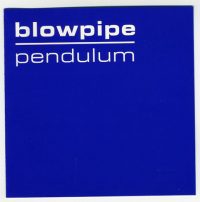
Blowpipe: 'Pendulum'

Blowpipe: ‘Pendulum’

In jazz, things move on, and Blowpipe are no exception to this. Father-and-son brass-and-reed players Robin and Andrew Blick joined forces last year, making a mark for themselves last year at the point between hips and heads for their own spin on jazz-meets-clubland, sliding in alongside acid jazz with something a little more sophisticated and challenging.

The enthralling ‘First Circle‘ was the outcome: a rich and rewarding chill-out-and-expand intertwining of busily-bubbling electronica with old-school jazz conversation. Alongside guitarist Paul Reeson and the remarkable electronic sound-weaver Stephen Watkins, the Blicks set up a heartfelt and fertile union of jazz expression and latter-day dance-floor pulse, a tapestry of burbling intelligent techno, deft horn dialogue and fluent electro-acoustic textures. It was a joy to listen to, and its success has been recognised in one direction, at least.

‘Pendulum’ (a hot-on-the-heels follow up to ‘First Circle’) comes after Blowpipe’s deeper welcome into the ongoing club revolution – they’ve played on the new album by drum’n’bass pioneer Grooverider – and a big line-up shake-up. Whether burnt, inquisitive or disillusioned, the Blicks have opted to change the band’s instrumental chemistry. Blowpipe’s armoury of blowables (which already featured the Blicks’ trumpets, saxes, assorted horns and abused pipework) has been expanded by the addition of Nick Reynolds’ harmonica; they’ve also added a steady bass player in Tom Harrison; and there are frequent guest appearances (and stronger links to the jazz world) from saxophonist/flautist John Burgess of the Harry Beckett band and the Tom Bancroft Orchestra. But most crucially, both Reeson and Watkins are now out of the picture (apparently, halfway through recording). Consequently, while half of ‘Pendulum’ is given over to Blowpipe’s previous acoustic/ambient/electronica grace, the other half is shaped by a new and more aggressive club attack.

Of the old school stuff, Airport Woman is the most graceful: a mass of beat-free, blurring big spaces: back-and-forth cello loops, rainy-night muted trumpets, glows of soprano sax and a brief return from Paul Reeson. The Spell is Broken is wrapped in a backwards bassy ostinato (padded up by Tycho Andrews’ wah-guitar) like an orchestra in a North Sea fog, thick hazy air through which Andrew Blick’s trumpet clarion cuts like a lone lighthouse beam. Muting down and vague-ening in the heavy atmosphere, it gently illuminates (above the clanking guitar rhythm and the creak-crunching sonics).

However, this album’s signature is definitely made by the harder breed of Blowpipe pieces, by the post-Grooverider drum’n’bass influences. This could have been a good thing, given that music’s ferociously intelligent, toppy rhythmic attack: the bebop of the club scene. But in practice? Um… maybe not.

The main problem is a loss of that crucial Blowpipe balance. Neither of Stephen Watkins’ on/off successors (Patrick Mosley and Mike Servent) possess any of his subtlety, meaning that the detailed electronic textures of ‘Full Circle’ have been overturned in favour of synth washes and more blatant beats. And while the Blicks remain as eloquent as ever, Nick Reynolds’ harmonica virtuosity is of the tinny, bullying breed: a soulless Mark Feltham cop. Sometimes the new marriage is a happy one, as on Avanti’s drowsy harmonica patina and cloudy brass blankets, mixing it up with breakbeats, Harrison’s Bootsy bass, and Andrew’s cold trumpet motif. But when it’s at its worst, the Blicks seem sidelined within their own project, locked down in the cages of snare drum.

The analogue gut gurgles and video games blippery of Usurper work quite well, as Reynolds’ sharp harmonica riffs mingle with fluent fluttering sax and muted trumpet. But Unravel’s tight fast rattle and saurian bass quakes are overcome by the belting raucous harmonica and brass. Robin Blick’s soprano scribbles too frantically, Andrew’s echoed trumpet sounds busy and sour. The raw power of Scorched Earth’s distorted breakbeat and Harrison Wobble-y bassline can’t make up for the yammering, overbearing harmonica overkill: Reynolds blowing flatulently all over the Blicks’ bitty chips of sax and trumpet and Katherine Blake’s skidding tremolo violin. And School Disco (working title or what?) is just clodhopping: a flatfooted stomp which sounds like it was recorded in an underpass. John Burgess’ guesting flute fights to keep grace going against the dirty swathes of distorted harmonica.

When Reynolds is kept on a tighter leash, things work out much better. On the climactic Phoenix, for example, where Burgess’ bass clarinet and Andrew’s dawning trumpet lines repeatedly criss-cross each other over didgeridoo droning and Robin’s sax hangings. Or on Pendulum itself, which uses power without clumsiness. Rising off a big Bonham-y stomp with overdriven trumpet and giant floppy bass, Robin laces in some ascending saxes and curtains of brass. There’s a guest tenor scrawl from John Burgess: then, amid the whale-song trumpets, an incongruous Scott Walker sample pops up to breathe in bluer air. “The little clocks stop ticking now…” Everything does stop ticking. Everything kicks off again. Marvellously perverse, and a particular highlight on an album which sometimes fails to live up to Blowpipe’s initial promise, reminding us of how good they can be once they’re back in focus.

Blowpipe: ‘Pendulum’
Robot Records, ROB 001 (5019148617297)
CD-only album
Released:
15th May 1998
Get it from: (2020 update) Best obtained second-hand, or streamed.
Blowpipe online:
MySpace Amazon Music
Additional notes: Robin Blick now leads Blick Trio; Andrew Blick leads Gyratory System.
 

August 1997 – album reviews – Ramshackle’s ‘Chin On the Kerb’ (“rocking and poised on the balls of their heels, preparing to take the blow and meet the challenge whenever it snakes out of nowhere to catch them”)

18 Aug
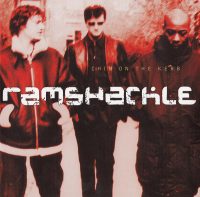
Ramshackle: 'Chin On the Kerb'

Ramshackle: ‘Chin On the Kerb’

Ramshackle‘s second album amply displays the fact that they’re stars in waiting. Or straining at the starting gate, perhaps; as ‘Chin On the Kerb’ feels like someone pacing in anticipation, winding up in order to lash out, someone containing so much but unsure of their moment.

Steve Roberts, Johnson Somerset and Ben Chapman make up Ramshackle. With their previous album ‘Depthology’ they sent admiring ripples through the midground of the blues and soul scene, yet so far they’ve eclipsed by the Bristol superstars on one hand and the steamroller marketing of American R&B on the other. A pity – because the longer you listen to this album the more impressive Ramshackle sound. Compare it to the successive waves of smug, self-satisfied vocal stars that carpet-bomb our soul shelves. It’s like the difference between listening to the shouts of a bandstanding actor and eavesdropping on an intense conversation in the corner of a bar. This band are smooth, but they never sound like they’re big-E Entertainment paste.

The central axis is Roberts’ British/Caribbean voice, bowled in somewhere between the edgy sweetness of Horace Andy, Austin Howard’s lushly muscular prowl and the testifying tenor roar of Doug Pinnick. And Ramshackle seem to have their initial foundations on whatever boundary lines there may be between Massive Attack, On-U Sound and Ellis, Beggs & Howard, but let themselves roam a good deal further. The ranked and sussed electro-acoustic instrumentation touches on trip-hop, on U2 Big Music rock and on techno, on soul and R&B, on church singing, Jamaica dub-juice and slow funk shakedown. Ramshackle are letting it all come to them, nourished by the convergence of those rich streams similar to the all-embracing muse of their Brit-soul contemporary Lewis Taylor, or – in intent, if not manner – to the Prince of The Cross or Symbol.

Certainly they’ve sheathed their black-pop instincts in richly crafted clothing. From My Mind emerges from cloudy electronic shapes to a sweet spartan R&B groove and tiny, intent piano kisses. Works of Devotion lounges on the dubbier ingredient of padded bass, high echoing Jericho trumpet flickers and bouncy toasting; Roberts blazes with quiet righteousness, balancing out the snaky threat of the industrial synth that slides through the song like the worm in the apple. And they’ve got a knack with uplifting ballad pop. The acoustic strum and sweet-rocking sway of Don’t Turn Me Away; the bluesy plaint of (What About) Tomorrow with its hip-hop beats and train-whistle wastelands; the joyous, sunny gospel sighs and carnival brass that ripple through the blissed-out single, Freshly Rained-On Grass; or Eden’s gospelly piano’n’beats, laden with dangling glittery sounds like harmonica memories and a family of chorus vocals.

But ‘Chin On the Kerb’ is shadowed by palpable alarm – “Let me tell you / I smell blood in the water.” Even when they’re taking the air and laughing into the sunlight on Freshly Rained-On Grass, there’s a sense of Ramshackle rocking and poised on the balls of their heels, preparing to take the blow and meet the challenge whenever it snakes out of nowhere to catch them. Granted, it’s no ‘Mezzanine’ – it lacks the spookiness, the seductive alienation, the naked rage Massive Attack are allowing themselves. And what darkness exists in this album happens to Roberts’ protagonists, it’s not of them. But there’s a religious sense of right and wrong driving this, which sets up a particular tension in Ramshackle’s tales of life on the rough edge. Just as Roberts can flick lightly between street-sly patois and preacher pomp, Ramshackle’s moods are volatile beneath the smoothness.

If there’s anything you take away from the album, it’s the impression of a hot-headed and contrary man paying a loyal personal tribute to the resilience of the beleaguered black experience. The pomp-rock-tinged Temple – piano and bass from house music meeting a Tackhead-style forcefulness, Roberts’ voice fracturing into sweet choruses and torn-up foreboding roars – warns of hostile worlds outside the church doors. No Touchi”s tales of a crime-ridden community on the last scraps of its pride (“I see less clearly in these advancing years.. / No touchi’ rock, combat bad intentions”) touch on Gaye’s Inner City Blues, ragga inflections dodging the drilling whine of synth and the discreet knife-play of scratching.

Though the above is mild compared to the vengeful slash at brotherhood betrayed on Broken Soul. Or to the vipers-nest atmosphere of the album’s loping title track, where the guitars clot and loom like hangovers, and the synths gleam like yellowed morning-after teeth: “The Judas kiss / of cold glass to my lips / tells me I’m gonna keep doing this all of the time.” Roberts sounds as if he’s washed up against a pissed-on wall, torn pants fouled and down round bruised thighs, surfacing into one of those horrible moments of absolute truth when there’s nothing between you and the raddled wound that you called your soul before you got lost on the dirty side.

Still, even while lying in the gutter, the old line about looking at the stars still applies. In the end, it’s about the determination of faith-under-fire, as in the hymnal, luscious-as-tears Let Em Go and in the way the devotional vision in Lament bears as much witness to the devastation of black communities by alcoholism and self-hating violence as it does to the landscape of promised redemption; Roberts’ voice embracing all of this.

The closer, Safe (with its unexpected crest of sumptuous weeping violas), is a soldier’s song. Fraternal and distressing as a lost harmonica left on a torn battlefield, and acknowledging the brutalisation of young boys into fighting men – “and when I met the enemy / it was just a boy’s eyes, cold and distant. / Such savagery / coming from a man like me.” But when the last words come, they aren’t just a plea for support, but a resolution to find one’s way back to truth: “I wish to be safe in the arms of the Lord / I want to be faithful in deeds and words.”

They might believe that love will triumph over rage, but they don’t treat that rage lightly. Ramshackle? Anything but. Rich and rewarding.

Ramshackle: ‘Chin On the Kerb’
Edel UK Records/Whatever… Records, EDEL 098602WHE (4009880986028)
CD-only album
Released:
18th April 1997
Get it from: (2020 update) Best obtained second-hand.
Ramshackle online:
Last FM Amazon Music

SWOONAGE

Swoon. /swo͞on/ A verb. To be emotionally affected by someone or something that one admires; become ecstatic. Here are some people and things that make me swoon. #swoon #swoonage

Post-Punk Monk

Searching for divinity in records from '78-'85 or so…

theartyassassin

...wandering through music...

Get In Her Ears

Promoting and Supporting Women in Music

Die or D.I.Y.?

...wandering through music...

Music Aficionado

Quality articles about the golden age of music

THE ACTIVE LISTENER

...wandering through music...

Planet Hugill

...wandering through music...

Listening to Ladies

...wandering through music...

ATTN:Magazine

Not from concentrate.

Xposed Club

improvised/experimental/music

The Quietus

...wandering through music...

I Quite Like Gigs

Music Reviews, music thoughts and musical wonderings

furia log

...wandering through music...

The Recoup

SINCE 2013: Books and books and books and books and occasionally other things

A jumped-up pantry boy

To say the least, oh truly disappointed

PROOF POSITIVE

A new semi-regular gig in London

Gapplegate Classical-Modern Music Review

...wandering through music...

When The Horn Blows

...wandering through music...

:::::::::::: Ekho :::::::::::: Women in Sonic Art

Celebrating the Work of Women within Sonic Art: an expanding archive promoting equality in the sonic field

Ned Raggett Ponders It All

Just another WordPress.com weblog

FLIPSIDE REVIEWS

...wandering through music...

Headphone Commute

honest words on honest music

The One-Liner Miner

...wandering through music...

Yeah I Know It Sucks

an absurdist review blog

Obat Kanker Payudara Ginseng RH 2

...wandering through music...

poplifer.wordpress.com/

Waiting for the gift of sound and vision

Good Music Speaks

A music blog written by Rich Brown

Do The Math

...wandering through music...

Archived Music Press

Scans from the Melody Maker and N.M.E. circa 1987-1996

The World's Worst Records

...wandering through music...

Soundscapes

...wandering through music...

OLD SCHOOL RECORD REVIEW

Where You Are Always Wrong

FRIDAY NIGHT BOYS

...wandering through music...

Fragile or Possibly Extinct

Life Outside the Womb

a closer listen

a home for instrumental and experimental music

Bird is the Worm

New Jazz: We Search. We Recommend. You Listen.

...wandering through music...

Life Just Bounces

...wandering through music...

Lucid Culture

JAZZ, CLASSICAL MUSIC AND THE ARTS IN NEW YORK CITY

Aquarium Drunkard

...wandering through music...

eyesplinters

Just another WordPress.com site

NewFrontEars

...wandering through music...

FormerConformer

Striving for Difference