Renewing his Cold Blue Music label for the millennium, Californian composer Jim Fox has set himself up as its figurehead, although not in a triumphal manner. Pomp and flamboyance wouldn’t sit well with Cold Blue’s explorations in New Music, and this first new release out of the Cold Blue bag doesn’t need to grab attention, anyway. The two Fox compositions on this album (slow-moving, implicatory, atmospheric and deliciously disturbing) surround you instead, like floodwater in the night.
With distractedly moving electronic traces making up the bulk of the music, ‘The Copy of the Drawing’ is rooted in chopped, diced and rearranged texts from letters sent to Mount Wilson Observatory between 1915 and 1955 while Los Angeles swelled from backwater to metropolis. These fragments are recited by Janyce Collins in an ice-queen whisper. Her cold lips brush your ear with a beautifully cool eroticism, its detachment only increasing its power. Often phrases are followed by glassy, ratcheting harmonic sound: as if a telescope, smoothly rotating on gimbals, is trying to take a fix on the target the words imply.
Slithering passes of moth-soft electronics slide around the words as if they’re unimportant, part of the ambient backchat in any place of science. Occasionally almost-vocal smudges of transparent noise ring up in (and fall away from) the foreground: although in some respects there is no foreground, just a slow sub-zero swirl of ambient hints, briefly smeared, like time-exposure photographs. Scrapes and subliminal swarms, jump-starting drifting thoughts in the narration; quick-drowning sounds like disturbances in ice-water or the imprints of decaying viola counterpoint and dying Gregorian chant.
Allegedly, ‘The Copy of the Drawing’ is non-dramatic. But Fox’s placement of these words, the stop/start fragments and interrupted clauses (“a jumbled mess – enough to give you an idea”) suggest otherwise. The phenomena of observed and notated science are often invoked with the reverence with which scientists replace religious awe, but sometimes as a kind of anchor (“light is always the same – water is H2O…”) against the misgivings whispered in brief passes elsewhere. “Self-deficient – diffused self – applied phenomena – name – danger lies in the abstract…” Before long we’ve heard statements of meticulous preparations (“I have put it in three different envelopes – airproof, fireproof, waterproof”) and chilly accounts of emotional hallucinations. “I still heard talking – I have heard babies crying and screaming – like in a photo – babies can hear me writing this – the pictures can talk to me – they’re not lonely – and it won’t stop…”
Explicit disturbance is rare, and Collins’ voice remains uniformly glacial whatever the content of her script. Nonetheless, anxiety and revelation are blended throughout, with the prismatic narrative musing on thoughts such as “No-one may ever have the same knowledge – everything running up and in and out.” Certainly there’s disintegration here – a loss of assurance, causality dissolving into “a possibility – there was such a thing – invisibility… before that – all history – it doesn’t seem possible… / it’s closer if you draw a line – on that line – all depends.” At one point, Collins recites a list which explicitly fails to reduce events, phenomena and states of existence to anything tidy. “Stuff – factors – motion – the perpendicularity – the process – the parts of things – the female principles of nature – etcetera – quite incomprehensible due to its invisibility – something that is true – close by – far…”
Covertly, Fox seems to be attempting to reconcile the cosmological with the personal. Collins’ narration of astronomers’ notes seem to take on revealingly intimate suggestions (“thousands of small pushes a second – inertia is very great”) and equates the paths of cosmic debris with those of people (“one of the incoming pieces of matter – there may be more – they may travel together…”) Maybe it’s a reflection of the gravity of cities like Los Angeles – pulling in immigrants, the lost and wandering, accreting mass as it does so. Maybe it’s an idea about scientists allowing the unsettling parallels of poetry and metaphor to sneak into their notebooks and resound in those working lives which they’ve obediently sealed away from personal concerns. This is observatory music, for certain. But the question of exactly what is being observed here is an open question. It’s one which ultimately leaves you without an answer; although perhaps it does leave you with a cold, indifferently sensuous kiss.
With ‘Last Things’ itself, the sky is lowering. An ominous drop, as Fox conjures up not so much a drone of bass synth as a faraway envelope of it (massed over our heads like apocalyptic cloud) and then rings us round with a distant thunderous fence of bass-register piano, rumbling tectonically and eerily, like the harbinger of the great Californian earthquake. Trapped between stooping sky and unquiet ground, we bear witness to a passionate, wordless pieta in which the dominant instrumental voice (Marty Walker‘s brilliantly tortuous bass clarinet) sounds famished, and as oppressed as we are by the press of sound. Walker’s control is remarkable – he travels between delicate, near-inaudible quivers of notes; great wide splits of sound that crack with emotion; and magnificent mournful coyote calls, summoning up visions of friendless desert vistas.
Relief, of a sort, comes from Chas Smith‘s pedal steel guitar. Almost choral in its breadth, it’s the one truly calming element in Fox’s musical painting. It’s a Pacific palliative which voices itself as distant balm to Walker’s painful questioning, or as a glimmer of light on the crack of the horizon. At around the eight-and-a-half minute mark, sounds like distant foghorns appear in the murk to add their own skein of warning and disquiet. More ethereal, less hungry, but hardly less of a disturbing portent are the rubbing glass rods on Rick Cox‘s treated guitar, hanging dying trails of luminescence in the middle distance.
When ‘Last Things’ fades out, the hope of things resolved has given way to a kind of acceptance. We’ve come to terms with the fearsome displacement and anxiety in Fox’s California soundscapes to such a degree that we’ve probably failed to notice that he’s finally resolved the music with a chordal and dynamic shift so subtle as to almost escape notice – like life settling itself in, a warm beast, around the jags, harshnesses and daily warnings of a threatening environment.
Jim Fox: ‘Last Things’ Cold Blue Music, CB0001 (800413000129)
CD/download album
Released: 19th March 2001
Buy it from: Cold Blue Music (CD) – various downloads available from Amazon and similar.
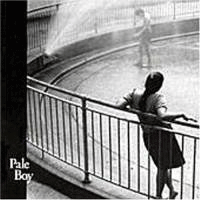
Apparently what fires Seth Geltman up is Astor Piazolla – fiery, complex, challenging music, stirring feet into instinctive dance. But it’s a stiller, smaller flame that Piazolla has lit in Geltman’s heart. His own songwriting is a more reserved thing altogether. You could compare what Seth Geltman and Thomas Blomster do with Pale Boy to what Stephen Merritt does with Magnetic Fields: “from the brain straight through the heart – the shortest distance”, as Geltman puts it.
Although not as accessible (or Broadway-bound) as Merritt’s, Geltman’s songwriting is similarly sophisticated. It’s cerebral, and sometimes difficult for ears attuned to pure pop. Dark closeted harmonies abound; melodies fade into shadowy doubts rather than aspiring. An air of introversion and dry, wounded carefulness is always present. If Spice Girls had Geltman’s number, they wouldn’t call it. If Stephen Sondheim had it, he might.
Pale Boy’s delicate and mannered debut is loaded with thought and detail. Life is constantly being breathed in by Blomster’s exquisite arrangements: a chamber-orchestra palette of fluttering jazz and flamenco guitars, violins, reeds and brass plus Blomster’s own piano, ever-crisp drumming and knack for tuned percussion. Drawing on latter-day classical, jazz, and the area where the two blend together, this is music fleshed out with the same kind of light, miniaturist detail as Penguin Cafe Orchestra. Seth handles most of the singing himself – his light bloodless voice as untouchable and inflection-free as Leonard Cohen’s and as transparent as blown newsprint.
Although Pale Boy are Denver-based, their spiritual home is European – either an autumnal and imaginary Paris of skating rinks, cafe culture and falling leaves, or the ascerbic Germany that Brecht and Weil knew. Or, perhaps, a hundred points between Moscow and San Francisco where dispossessed Old Worlders with shabby coats and battered instrument cases laid down their baggage and played for a while… Think that. Then factor in a touch of Smog, with trailer parks, shitty hotels and bad teeth replaced by faded, once-grand apartments and battered books. That nails the Pale Boy world as closely as anything.
The other occasional touchstone is Love’s ‘Forever Changes’ – intricate folk strumming, surging orchestras, and dreamy heads running up against barriers. Just A Thought (in which Seth, up to his knees in toil, casts his mind free over slinking brass and woodwind) hints at Aloneagainor in its mingled innocence and frustration – “There’s so much more than the grind every day – / there’s the blue, and the cats, and the letter K. / Far from the chatter and the money hunt, / there’s a thought of an autumn afternoon.”
A darker taste of Love, mingled with twelve-tone operetta, enters Promise Me, shading into a moody resignation: “Promise me obscurity / Turn out the spotlight… / Come and go but never leave. / Let me make my best guess how to ride your slippery lines, / you fleeting joking prayer.” Best of all are the sweet express-train violins, budding trumpets and John Adams throb of It’s Good, the point where Pale Boy succumb to instinct (“Over all this sprawling mess, / rising slow in the abdomen, / taking hold of what we know. / Is this another fine mess / or an opulent waltz in the wrong direction?”) and where a new note of assurance enters Seth’s voice: “Yes, it’s good. / Just sit tight, / wait for light…”
Here and everywhere in this painstakingly adult music you can sense the presence of those cracks and draughts which betray us each time we succumb to the unexpected currents and shamings that toy with stable lives and clean ambitions. “Facts march all over an ordinary day / Paper’s got nothing to say except scandals, sports, atrocities… / Scattered friction everywhere.” The understated title track might bury itself under a forgettable melody, but its vivid lyric (of lost directions, of a hectoring young man engulfed by a stifling fence) penetrates deeper. Acrobat is cutting and unforgiving, a bored audience turning away from a “gaudy little crackpot showing off with all his might” and ignoring him as he heads into his fatal fall. Bossa-nova and muted brass line the music of October Hat, a surreal ballet of a song in which one scribbled sonnet, lost to the sea, signifies one man’s misdirected attempt to capture and circumscribe the sense of his own life.
“Well, you made your point, / and the only audience that mattered never showed up” Geltman murmurs pointedly on Hum In The Clouds. Storm-tossed lounge jazz rolls around him, wrestling with a Reich-ian xylophone, and the debris of divorce bangs into both. “What did you think would happen? Why did you leave so soon? / Do you know how much was missed and lost on those Saturday afternoons?” Throughout the record, mixed feelings and shifting views struggle for dominance; as in Wearing Your Time Out, when patient drudgery gives way to “the corner of your eye / going suddenly awry / after getting lost on lines of reason.”
This ambiguity is best caught in the trio of songs sung by Jeana Dodge. Her restrained classical soprano lends them an affectingly uptight and anxious yearning. The light, mournful marriage waltz of Almost illustrates profoundly thankful love, yet ever-so-slightly sullied by restlessness and defensiveness – “Almost a connection that couldn’t exist. / Almost all I need to subsist.” On Underside Of A Terrible Thought, an unspecified angst is picked apart with determination, disgust and fascination – “Hold it high in the muddy light… / Hold your nose and hold it very tight… / It warms your brain and quickens your blood… / this twisted tangled orphan.” The polite cadences and lullaby-vibraphone of All We’re Left With show compressed resentment seeping from the civilised rubble of a relationship – “Kept my patience, bought the flowers, went to college, put out fires… / brought home bacon, / scrubbed the windows… / and I followed the rules.”
Less successful are attempts at straightforward anger, which only sap Pale Boy of both spirit and tunes. I Hate You greys out into dull minimalism (in spite of precise, venomous lyrics (and Blomster’s poignant arrangement of funeral reeds), and while Ton Of Blue gropes at the lovelorn existential dread of the deepest blues, it only ends up sulking, morose and snappish, in its conservatoire setting. No – Pale Boy’s understated emotions fare better with subtler, yet more complex bonds and empathies. An endearing, awkward eroticism nibbles at the floating, detached spring-dream of Shy Beast. The wistful, tear-jerking strings and muffled brass of I Know What You’re Thinking make it a Scott Walker fall-apart thing. Here, Seth singing at his gentlest. “I know you’ve been drinking / from the oldest hope that ever was. Rising up through your spine, / flowing through the brain and through the heart, the part glowing… / And I know what you’re thinking – / ‘Get me through this jagged night’.”
At the end, Stay Hidden makes a quiet and wary bid for intimacy, with Seth pursuing truth with all the extra senses of the once-bitten. “It leaks its news through unsuspecting clues, / it lies in wait for all of us.” By this time, those cracks and gaps have been assuaged by something. Perhaps it was the still, small sound of a hopeful trumpet. This album’s not for everyone; but if you’ve silently burned, quietly frayed or seen something dear to you stretch out of your gentle grasp, it’ll strike up a little chord in you.
Pale Boy: ‘Pale Boy’
Kale Music, ERG82299 (no barcode)
CD-only album
Released: 18th April 2000
From 1970 to 1972, King Crimson existed as a kind of fragile invalid’s-cat’s-cradle between its two ideas men (guitarist/composer Robert Fripp and lyricist/lights man/presentation polymath Peter Sinfield), with one faithful and exceptionally talented sax’n’flute player (Mel Collins) hanging on philosophically to the bouncing threads.
Perhaps it was a comedown for the band who, only a couple of years previously, had single-handedly redefined British rock music and almost stolen Hyde Park from the Rolling Stones in concert. However, this was still a time when they produced prolifically. Matters weren’t helped by internal conflict and a regular turnover of personnel (lead singers in particular). But despite having already lost key members to ELP (magisterial manchild singer Greg Lake), the sessions world (dazzling but personally wayward drummer Michael Giles) and Foreigner (composer and jack-of-all-instruments Ian McDonald, though strictly speaking he wouldn’t help form the AOR collossi for another few years yet), Crimson soldiered on. And, in the process, came up with some of their most surprising – yet most neglected – music.
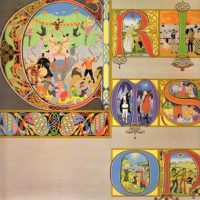
King Crimson: ‘Lizard’
Psychologically, ‘Lizard’ has always felt like the oddest King Crimson album. Hurtling out at the tail-end of 1970 (less than a year after ‘In the Wake of Poseidon‘) and with a shroud of silence surrounding its making, it’s like a black hole in King Crimson’s history. No-one involved in the making of ‘Lizard’ seems to talk about it much. The fact that the band started recordings with a brand new vocal/rhythm section (singing bassist Gordon Haskell from Fleur De Lys and ex-Manfred Mann drummer Andy McCulloch), and ended the sessions with both men shot out of the saddle and vanishing before even playing a note onstage, has given the album’s reputation more than a tinge of sulphur and daggers drawn. Haskell still doesn’t talk to Fripp, and his contributions have been ostentatiously removed from Crimson compilations ever since. Silent prickles. Ooh, nasty.
The new remaster provides few clues to the musical politics behind ‘Lizard’, but does throw its obsessive ambition into sharp relief. It’s a remarkable record – the most panoramic thing Robert Fripp ever attempted until he blew up ambient music with his Soundscapes twenty years later. And it’s also the most anti-rock record he’s released to this day; as far from being a “band” album as this particular Crimson were from being a live band.
The music comes in floods of cryptic decoration, riding on the back of Fripp’s dark and abrasive chordal imagination. Both leaders are on intriguingly different form: Fripp mostly leaving his Les Paul untouched and playing devilishly tricky acoustic guitar, Sinfield throwing away most of his clotted Gothic lyric totems in favour of shifting psychedelic parlour tricks. But pride of place goes to semi-detached piano player Keith Tippett, a jazz guerilla who constantly refused Fripp’s offers of joint musical leadership of King Crimson but (for ‘Lizard’, anyhow) seems to have taken it on anyway.
Fripp had produced and played with Tippett’s band Centipede; and the jazzer returns the favour in full measure here, bringing along oboe player Robin Millar, trombonist Nick Evans and cornet player Mark Charig (all reknowned for Soft Machine contributions) to join Mel Collins and himself in expanding King Crimson’s musical voicings. Consequently ‘Lizard’ jangles and loons with a bright, big-band free-jazz sound as the horn section and Tippett’s fulsomely unpredictable pianos joust with Fripp’s gargantuan Mellotron sounds and the blooping cartoon synthesizers. Certain songs – Happy Family in particular, seem to abandon the rigorous Crimson discipline altogether and worry themselves to bits, with Tippett keeping a relaxed but steady grip on the anarchic play.
Peter Sinfield, for his part, stays in an almost domestic realm for the first half of the album. His lyric for the perky Indoor Games is a bizarre Bunuel-meets-Doctor-Seuss poke at the pretentions of bourgeois bohemians, his protagonist barely keeping himself afloat in the showy menagerie of his household. The Cirkus which opens the album is reached in a dream-voyage, a gaudy cruel entertainment which immediately succumbs to stampede and peril. Happy Family is one of the acts which could’ve been performed there – an impossibly tortuous metaphorical tribute to the sorry end of The Beatles. Throughout, Tippett tops every surreal word-twist with another kink in his piano playing.
Tippett, in fact, is far more at home than half of the official Crimsons. Gordon Haskell’s a great bluesy singer; but while sunk in this whirling confection of oboes and exploding pianos, drowning in Sinfield’s crossword puzzle wordplay, he struggles even to be heard (let alone draw meaning out of the songs). Andy McCulloch copes better with music that requires him to jump between drum approaches from jazz hiss to orchestral percussion and military rattle. Still, you can almost hear him furrowing his brow and wondering what the hell all this has got to do with headlining the Marquee Club.
Poor old Haskell – a good guy in a bad position – gets some respite on Lady of the Dancing Waters where they give him a wistful tune with a trombone and a little English clearing to serenade in… only for him to be upstaged by the beautifully husky choirboy vocals of Yes singer Jon Anderson for the next song. At the conclusion of Indoor Games he unleashes one of the most fascinating laughs in rock history – a demented, yelping hiccup of crazed, fearful mirth which the engineer picks up and slaps back and forth across the speakers. It’s all in keeping with the chamber-jazz-on-laughing-gas feel of ‘Lizard’. But it also sounds like a helplessly honest reaction to the horribly sinister undercurrent beneath the playfulness – the oily black saw of Mellotron, the thousand little knives in Fripp’s clean cross-picking and Tippett’s electric piano jabs.
The second half – the Lizard suite itself – is King Crimson’s most ambitious conception up until that point, in which chamber symphonics and iconic mediaeval imagery return to the band’s music again. Prince Rupert Awakes opens the suite with a tragic cryptic ballad: a heraldic Anderson singing over Tippett’s rippling piano, tension intruding from the wind-chimes which ripple the surface of the beauty and from the deliberately discordant Mellotron which flicks ghastly shadows across the daylight.
Although Sinfield’s overcooked poetry is almost impenetrable, there’s substance here. Near-suffocated beneath rococo imagery of temple wax, peacocks and “tarnished devil’s spoons” is a small saga of civilisations clashing in a profitless war. Rather than a tale of heroism, it represents the fear, frenzied mood swings and devastation that war visits on human beings. Bolero (anchored on McCulloch’s half-march/half-dance drumming) starts with a long, lyrically sad oboe line bidding farewell to peace, but soon moves into a jagged desperate revelry, the partying before the fight. Slurring, drunken trombone and sax grab the oboe theme and o roaring off with it as Tippett’s piano becomes steadily more impressionistic and jumpy and Fripp’s Mellotron infuses an uneasy, compromised warmth.
Dawn Song is the morning after: Haskell sings softly and haltingly, to sparse piano and oboe, of broken ploughs and spokeless wheels, and of soldiers “burnt with dream and taut with fear” waiting for the inevitable reckoning of spears and armour. Which duly arrives in Last Skirmish with brutally knotted jazz snare and more typically Frippish minor key riffs, stately and dark – initially on Mellotron, then taken up by harsh baritone sax with a petrified overblown flute dipping and waving above. As battle commences in earnest, bluesier saxes and an enraged elephantine trombone wail alongside a resurgent Fripp guitar and Tippett’s increasingly shattered piano attack.
In the background, Fripp jacks up an initially sweet and civilised Mellotron string part until the pitch is tortured beyond endurance. Then there’s a brief respite (glimmering lucid guitar and distant rills of piano) before the sound of a hue and cry, galloping brass and hunting horn clamour in the most frantic moment yet. Finally, Prince Rupert’s Lament, the wreckage of bodies and hopes on the battlefield afterwards. A tolling bass ostinato, exhausted kettle drum rolls and a distant bagpipe shriek of Fripp guitar, utterly bereft and angry. ‘Lizard’ is over.
Abstract, absurdist and oblique it may be, but if you avoid involving yourself too literally in Sinfield’s wordplay and just allow the music to speak into you, ‘Lizard’ is an album which has plenty to offer. The game-playing cast of its music only adds to its power, puncturing prog pomposity and adding new dimensions of conceptual menace which the band had never previously achieved. At times, it’s like observing a particularly venomous orgy.
As the last part of ‘Lizard’ fades away, Big Top careens out of the silence – a quease-inducing carousel of circus music in which the pitch spirals further up and out of control than ever before, snagging the ensemble players like a Kansas tornado and dragging them off into the unknown skies, still squiggling out treacherous silvery worms of music.
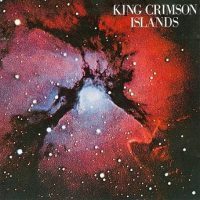
King Crimson: ‘Islands’
Although the ever-underrated ‘Lizard’ now jumps out of the speakers with renewed animation and significance, the real rediscovery from King Crimson’s current reissue phase is 1971’s ‘Islands’.
Long-unavailable on CD, this album was recorded by those Crimsoneers who’d survived the latest falling out (Sinfield, Collins and Fripp) with two new full-time recruits – Boz Burrell and Ian Wallace.
The new boys were grounded in rootsy jazz and rhythm’n’blues. Boz, in particular, seems antithetical to the perceived Way Of Crimson – a brash and commanding singer with scatting tendencies, and perhaps suspicious of Crimson’s grand designs as hatched on prog touchstone ‘In the Court of the Crimson King’ and further honed on ‘In the Wake of Poseidon’ and the formal dementia of ‘Lizard’.
In spite of this, ‘Islands’ is the King Crimson album that’s furthest from the roots heartlands. There is one exception – Ladies of the Road, in which Sinfield turns in a salacious lyric of international groupie action that allows the band to engage in their dirtiest and most gleeful playing ever. Collins roars boozily on dick-grabbing tenor sax; Fripp plays as if his guitar’s strung with Mississippi baling wire and slams down some gloriously sloppy, sleazy little solos; and Boz revels in the rampant bluesy shouting. Even the flute and the fragrant Paul McCartney harmonies in the chorus can’t shake the sweat off this one.
It’s certainly a sharp contrast to The Letters. This is the album’s main sticking point, with aggressively stilted music rescued from Crimson’s early days and a lyric of pure antiquated Jacobean melodrama (poison pens, adultery, madness and suicide) in which sex is the engine of betrayal and degradation.
However, neither of these pieces fairly represent the unprecedented warmth and clarity of intent on ‘Islands’. If the preceding ‘Lizard’ was perhaps Tippett and Sinfield’s album – liberally dusted with the excitement and lawlessness of free jazz and untrammeled purple poetry – ‘Islands’ is most definitely Fripp’s, its scope narrowed down with superb clarity. It’s King Crimson’s simplest album by far, one in which the tunes and the placing of changes and instruments are far more important than complexity or the thrill of clash.
Several ‘Lizard’ buddies – jazz pianist Keith Tippett, Marc Charig on cornet and Robin Millar on oboe – are all along for the album sessions, and ‘Islands’ is also suffused with the warmth, light and mesmeric relaxing qualities of the Mediterranean and Aegean seas, inspired by Sinfield’s travelling. After the demented rush of ‘Lizard’ it’s a much more contemplative work, with Tippett returning to a reflective supporting role and with that Crimson intensity redirected towards knowledge and timing instead of flamboyant theatre. Formentera Lady (introduced by fluttering flute, romantic swirls of piano and the deep bowed chording of Harry Miller’s double bass) sees Sinfield “shadowed by a dragon fig tree’s fan, /rRinged by ants and musing over man”, and that’s to be the central flavour of the album.
Ian Wallace was the perfect drummer for this music – well aware of the jazz and rock heat needed for the Crimson repertoire, but equally capable of the delicate timekeeping needed for the gentler pace of the new material. Formentera Lady ticks along on his hushed bass drum and cymbals, his trickles of wind chime and seed-pod percussion, and Boz’s gentle two-note bass riff. And whatever Boz’s feelings for the material might have been (he’s the prime suspect for having described much of ‘Islands’ as “airy-fairy shit”) he sings Sinfield’s contented landlocked reveries in a nostalgic, light tenor with a surprisingly humble and innocent charm. The gentle pulse of Fripp’s supportive acoustic guitar arrives four-and-a-half minutes in. Greek strings hum in trapezoidal shapes, and when King Crimson’s first familiar slip into the texture of legend arrives it happens seamlessly, cued by “here Odysseus charmed for dark Circe fell”, when guest soprano Paulina Lucas opens her throat for prolonged eerie siren singing, merging with Collins’s explorations on tenor sax.
Equally seamlessly, it gives way – on the rising heat of Wallace’s ride cymbal – to Sailor’s Tale, Fripp’s musical portrait of Odysseus’ doomed navigation between the parallel forces of destruction, Scylla and Charybdis. If Formentera Lady is King Crimson entranced in siesta time, Sailor’s Tale is a slow awakening to peril. Not the Gothic nightmares that the band used to specialise in. This time, what’s central to the piece’s power is the sheer excitement it generates.
Fripp and Collins (the former back on his rich drone of overdriven guitar) play prolonged horn notes off each other above Wallace’s rapid triple-time jazz pulse, reaching a peak at which they split off and howl their own paths – Collins squalling like Ayler or Coltrane, while Fripp prepares to deliver the most colossally dirty solo of his career. Played on a shattering echo like a deranged banjo, it passes through a maelstrom crescendo of hellish Mellotron and frantic cymballing out into free space, disintegrates spectacularly and falls into nothingness. Only the dark primeval bass of Sinfield’s prolonged oceanic synthesizer chords to witness its passing. The hairs don’t settle on the back of the neck for a good few minutes.
The rest of the album returns to the sun- and sea-warmed peace of Formentera Lady. The Song of the Gulls prelude is a small Fripp-written study for Robin Millar’s oboe and polite strings: no more than a serene intro to the album’s title-track finale, bridging the huge stylistic gap between Ladies of the Road and the final resolution of Sinfield’s escape. Islands itself is a subtle compositional triumph: King Crimson’s own miniature ‘Sketches of Spain’, finally proving that they can sustain a gentle and nourishing rhapsody without tweeness or needing to pounce back into violence. Wallace is almost invisible but for a few lightly brushed cymbals, letting Collins’s miraculously tender bass flute and Tippett’s delicately shaded Bill Evans-ish piano set the atmosphere. Fripp abandons guitar altogether to quietly pump a small harmonium (you can hear his feet patiently working the pedals).
Boz sings alone and unaffected, again displaying a surprising empathy for Sinfield’s lyric of separateness yielding to inclusion over time – “grain after grain love erodes / the high weathered walls which fend off the tide… / Equal in love, bound in circles. / Earth stream and tree return to the sea. / Waves sweep the sand from my island, / from me.” Mark Charig’s jazzy, sleepy cornet plays a crucial part, taking up the melody and soaking it in acceptance and the weary joy of homecoming, before a softly swelling finale where sedate and harmonious Mellotron strings lift the ensemble to resolution. “Beneath the wind turned wave, / infinite peace. / Islands join hands / ‘neath heaven’s sea.”
But for a brief hidden track (in which we hear a burst of studio tune-ups and Fripp’s soft Dorset burr patiently instructing the oboe and string players) that’s the end. Incidentally, it was also the end of King Crimson’s “grand design” phase. The core five-piece would briefly tour and squabble (with Peter Sinfield’s departure forever closing the early Crimson songbook) and the rootsy bar-band which lurked in the ‘Islands’ line-up would then honk its way across the States, jettisoning all the Debussy and fragrance of the album as it went.
It would all end in tooth-sucking enmity and anger, with everyone but Fripp abandoning King Crimson in favour of rhythm’n’blues. Boz would even end up thumping bass for Bad Company, which evidently pleased him musically and financially but seems a sorry waste of talent after his showing on ‘Islands’. The next time that Fripp surfaced, he’d be leading a far louder, far more cryptic improvisatory band, which would immediately overshadow his work here. This period of King Crimson’s existence is always outshone by the horns and flurries of the band’s debut years, by the bold and bitter brute minimalism of ‘Red’, by the stalking menace of the European improv years or the poppy art-rock of their New Wave era.
But both ‘Islands’ and its companion ‘Lizard’ – two of the most unusual to emerge from the body of rock – contain some of King Crimson’s best-planned, best executed and most intricately beautiful work, with a unified conceptual scope the bands would never really match again. These reissues bring that buried treasure back to light, revealing an exciting early ’70s meeting point between musical forms that’s been poorly served by an increasing suspect official history. It’s time to put it back on the chart. If more of today’s bands had the same open-minded determination – stumbles and all – that King Crimson exhibit here, we’d be better served ourselves.
King Crimson: ‘Lizard’
Virgin Records Ltd., CDVKCX3 (7243 8 48947 2 6)
King Crimson: ‘Islands’
Virgin Records Ltd., CDVKCX4 (7243 8 48949 2 4 )
CD-only reissue albums
Released: 6th March 2000 Get them from:(2020 update) Both records have now been superseded by 40th Anniversary Editions with new remastering and additional tracks. Current or former versions can be obtained from the King Crimson stores at Burning Shed and the Schizoid Shop. King Crimson online:
Reluctantly, as the music finally dissipates into quiet, I surface for facts – and here they are.
Philip Sheppard is cellist with the Composers’ Ensemble and with The Smith Quartet (a London answer to New Music ensembles like Kronos Quartet). He’s taken on the knotty work of Michael Tippett and Oliver Knussen: his list of close collaborators outside the classical world have included Abdullah Ibrahim and Jeff Buckley. Freed from the demands of repertoire and support roles, his own music for solo cello leads into meditative, overlapping multi-tracked soundscapes.
That’s the definition, the bare bones of it. A modern-classical musician, as composer-performer, looping or patterning processed sounds in the path followed by Terry Riley, Steve Reich and Gavin Bryars, and by Robert Fripp and Brian Eno.
This doesn’t convey how far beyond the plain facts of the process Philip Sheppard gets – how he’s boiled down the structure of classical expression to small and beautiful hints in a sustained electrophonic atmosphere. The captivating and wonderfully played music on ‘The Glass Cathedral’ is close, in its way, to the devotional reachings of Fripp’s ‘A Blessing of Tears’: but it’s more abstract, a music of suggestions and amnesia. Philip manages to suggest vistas of embracing vastness with simple and delicately executed elements gradually mixed into an ever-expanding palette of cello textures, running from a discordant plumbing-scrape to an overwhelming snatch of piercing, striving melody. There are only two pieces on here, both vastly different, both extraordinary.
‘Harrison’s Chronometer’ uses Philip’s electric cello – a custom-built five-string cyborg which readily sinks itself into an evanescent minor-chord drone, gradually resolving and passing through moods; a Mahler trance in multi-track. The name’s taken from the 18th century timepiece designed to revolutionise navigation and safety at sea; providing a fixed, reliable timekeeping process, aiding judgement of distance, mapping and location. Inspired by this, the music sounds like a steady, resolute voyage through half- known climes, as Philip fills the air with the sounds of beasts and uncertainties. String snarls slide and slink away, high harmonics keen and shiver. Low, rumbling deep sea monsters scrape away in the bass registers.
Living but impersonal detail builds up, as gorgeously and inhumanly hostile as a crystal jungle; and into this comes tentative tracings of order. There’s a high pulse; a sawing Greek riff of chorused cellos; snap-and-lock ostinatos in the bass recalling the clipped Mediterranean funk of Mick Karn. A melody materialises in the alto range, cleanly distorted – to the point where it finds a rough perfection – but it tails out. Nothing is resolved; eventually the music fades away into the dark, although its recognisable touches are still isolated within the surrounding chaos. Expressive to the last, they sit like lonely markers; or like humans in a small, fragile boat on brutally indifferent seas that have hardly even begun to yield their perilous secrets.
Compared to ‘Harrison’s Chronometer’, the title track of The Glass Cathedral is sublimely peaceful: though in its own way it’s just as deliquescent, just as much part of that territory where post- classical meets post-rock and where both begin to blend with the subtle dissolutional anarchy that is drift. It’s played on a vintage cello with a history implied rather than certain: a mid- 8th century instrument possessed of a rich verdant tone and traced back to an anonymous London craftsman. Whether its ambiguous story is true or false, I’d like to think it informs the piece, which has hints of more intimate John Taverner compositions but links back to the past via a quote from Monteverdi’s ‘Orfeo’ which coalesces and dissolves throughout the composition.
Here, the music seems to wake itself in sensual, melodic stretches of cello, in exquisite glass-harmonica deviations of sound. It is like drowsing inside a translucent sacred building, allowing a whole day to become a time-exposure. Overdubbed drones and harmonies acting like light beams, branching off at odd angles, allowing the corners of the church to be lit gently and briefly before the source slides off somewhere else. A solo cello establishes itself in centre with a contemplative, yearning changing theme. It gives dominance over to the light angles and the Monteverdi fragment… then, as if shot through a prism, a whole chamber of cellos are swimming off in a new direction, embarking on a related theme, only to dissolve out gently in loosely woven trios.
I’d say more, but I’m already spewing too many abstractions. It’s enough to say that if it’s true that architecture is frozen music, then this is (just as equally) a beautiful, dissolving architecture.
Philip Sheppard: ‘The Glass Cathedral’
Blue Snow, BSNCD1 (no barcode)
CD/download mini-album
Released: 5th July 1999
Get it from:
CD version best obtained second-hand: download available via Bandcamp.
I could take the easy route first and say that if you’ve heard ‘No Pussyfooting’, you’ve more or less heard ‘Thin Air’. But that’d be a weaselling statement: technically correct but still untrue, and also of neither use nor value to you. As if I said that the most important defining characteristic of an apple was that it was round and green, and thought that that was all there was to it.
Yes – it is true that the Bearpark/Chilvers album is very Fripp & Eno (or a close musical cousin to Richard Pinhas). Its five tracks (titled, without fuss, One to Five) make up a little under an hour of droning, buzzing, looped Les Paul guitar textures and minimal synth. It comes in scraping waves and langorous tides, sometimes broken by a tightly-controlled welling of overdriven melody. The Frippertronics comparison is more than appropriate: it’s exact. Here is the same methodology, and similar equipment – although Peter Chilvers’ digital keyboards and hard-drive recording are far removed from Eno’s primitive VCS3 and Revoxes back in 1972.
But with that said, we can move on to the distinctions. It’s the same methodology, yes – but with a different intent. Fripp & Eno were taking a vacation from disciplined, cunningly constructed early ’70s art-rock when they made ‘No Pussyfooting’. While they’ll have absorbed the same influences second-hand (not least through Fripp and Eno themselves), Bearpark and Chilvers’ active roots lie in the lusher ambient fields of the ’80s, the small home thoughts of the ’90s, and elsewhere. For feeding grounds there’s been the avant-garde songwriter croon of Samuel Smiles (of which, together, they make up half the line); the ethereal, tranquillised nu-folk of Chilver’s Alias Grace project; and the remarkable extended electrophonic improvising of Darkroom in which Michael coaxes and abuses guitar, and in which Peter occasionally guests on subliminal bass noises.
Consequently, ‘Thin Air’ simply doesn’t have the same flavour as ‘No Pussyfooting’ – although there’s a case to be made for its relationship with the subsequent ‘Evening Star’ centerpiece Wind On Water, or indeed with David Sylvian’s Fripp-starring Gone To Earth. The music here is more accepting of meditative flows and of fallings-into-place than Fripp & Eno’s passive-aggressive merger of science and chance, where the tones bristled like affronted scholars even as they delivered their assertions. New Age it’s not, though; finding a rich and revealing depth as it surrenders to the floating moment. As One progresses, Peter’s keyboards become more predominant as well as more sacramental in tone; swelling in sermon-ish washes or setting out tiny, meditative piano lines like an English Roedelius. Three sees him levitate a celestial synth in a bathe of high, light sounds over a sawing, working guitar loop, ending in what feels oddly like a High Church benediction.
Michael Bearpark – though he’s a Fripp-ish soundpainter for sure – has a very different musical personality. Dirtier, more repressed and seething than Fripp’s near-religious passion and pilgrim’s drive to grace, his slow-hand playing is actually more bloody-handed; sometimes leaning on notes as if he was trying to crush them, or to push their heads underwater and drown them. And there’s a strong element of filtered, chemically refined blues welling through the music; an ultra-distilled moan of frustration and clenched force, adding an extra human bite to the industrial friction sounds that gnaw gently in the background. All of the above makes his ultimate surrender to the trance more affecting.
What’s most revealing is what the two musicians give to each other in this context. Michael’s drawn-out, demanding focus draws Peter away from his tendencies to sober prettiness. In turn, Peter’s thoughtful but assertive calm (the pastor to the guitarist’s restless congregation) helps Michael to allay his own wayward illbient tendencies. And fortunately the result’s a compound of the two, rather than a dilution. If Two has the tightest discipline (a deep comforting growl of a bass loop, a starlit synth chord journeying from space to space in the stretched weave of guitar patterns), Four is a fall-apart – a dissolving narcosis of disintegrating guitar arpeggios over the looping waft of a nearly-was organ. Five is an absent farewell, looped up and down like a slow-motion roller coaster at midnight. The attention is elsewhere, but it’s gently captivating.
Yes, in terms of equipment lists and step-by-step instructions, this is something you’ve heard before. But one thing Michael Bearpark and Peter Chilvers prove on ‘Thin Air’ is that, whatever the gear and gizmos, this kind of process music is formed first and foremost by personalities – not by equations, function maps or manuals.
Michael Bearpark/Peter Chilvers: ‘Thin Air’
PeopleSound, 270370 (no barcode)
CD-R-only album
Released: 1999
Get it from:
The original PeopleSound CD-R is now long-deleted and best obtained second-hand. The album has been reissued as a CD-R by Burning Shed.
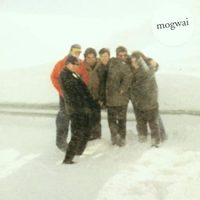
Mogwai: ‘No Education=No Future (Fuck the Curfew)’ EP
Mogwai – Glasgow’s “young team” of guitar noise-puppies – are just drawing out of their teens, but they’re already two-and-a-half albums old, and tour veterans. The name’s appropriate – in the sleeve photos they may look a little cute and fresh-faced to an twenty-seven-year-old codger like me, but if ‘No Education…’ is any indication, they do change into something far scarier at night. (They beat Hanson’s burbling Ewoks, anyway).
The punch-card stabs of guitar are pure Slint, but whereas Slint would lay muttered, emotional stories over their six-stringed dots and dashes, Mogwai are vocal-free and rely on pure, bullish emotion as walloped out by plectrum and drumstick. The explicit political rage of the EP’s title isn’t spat out in teen-punk slogan songs, nor in Prodigy chants. It’s carried in the rushing up against the front of the beat: it’s in their surges against the decay of sound. It’s in the faith (which they share with Sonic Youth and My Bloody Valentine) in big dirty noise over a mediocre world. The politics are in the sound.
Perhaps it’s because of the sparse, distant, classical-in-rebellion melodies from Luke Sutherland’s guesting violin, but Xmas Steps carries an odd resemblance to King Crimson‘s Larks Tongues In Aspic. It emerges from a soft interlocking hush of irregular rolls of bass and barely-there guitars (similar to the tension-gatherings of Bark Psychosis) then rises – nerves preparing for the clench – to a building, slashing crescendo and an eventual scrubbing, screeching roar of amp-shredding overdrive and machine-gun spurts of snare, before unclenching its fists and subsiding down into peace again, calmed by the mothering voice of the violin. It nods to Neu!’s jerky rhythms of robot-thrash as much as to Slint or Crimson, but, crucially, it’s warmer than any of them. You can hear the exact moment when strummed guitars, under growing pressure, begin to rebel and distort. Towards the end there’s a papery bang of noise; perhaps an amp blowing up from suppressed rage and cutting across the quiet wind-down.
After Xmas Steps the other two tracks seem like little brothers, but maintain the interest. Rollerball’s a sort of classical Krautrock etude. Soft guitar figures, sub-audible tinkles of piano off on the fringes, rough points of drum decoration: the final sound is of the lads downing instruments and strolling out of the studio, and it’s as much a part of the piece as any of the notes were. Small Children in the Background lays its sleepy guitar glints over a glassy fuzz-trail. It rises, almost orchestral, to an emotional peak, then cuts out to small and precious ensemble playing as sensitive as an eyelash. Whispers of voice lap back and forth at the front of the mix.
Without words, without direct vocals, without even an individual signature to each player, Mogwai’s music is oddly impersonal… but still, somehow, powerfully emotional. As they glower out from behind their clanking guitars, they might place themselves among the Glasgow arties, but in fact they’re in another place altogether. They’ll hate me for mentioning the “prog” word, but – in the best sense – it’s there in the music already. They’re already far closer to the intensely shaped, angular expressionism of Rothko, Henry Cow or The Monsoon Bassoon than they are to The Delgados’ Velvet Undergound impressions or to Bis’ synthesised pogo-sticking.
At the moment, they’ve got all the dynamics, all the expressive intensity they need – all they need now is the technique, and they’ll break through to that level their music is yearning towards. Expect great things from them by the time they hit twenty-five. ‘Til then, the least we can do is to lift the curfew on them.
Mogwai: ‘No Education=No Future (Fuck the Curfew)’ Chemikal Underground Ltd., CHEM026CD (5 020667 342652)
CD-only EP
Released: 29th June 1998 Get it from:(2020 update) Original EP best obtained second-hand; download available from Chemikal Underground Mogwai online:
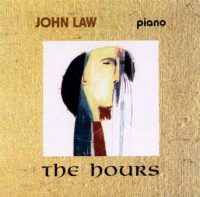
“This music is dedicated to the spirit that moved the first humans to speak the unspeakable, and thus to sing”. Thus spake John Law, improvising pianist and British free-scene eminence gris. And the audience did open their ears, with a subtle flip of their hopeful hearts, and did prepare to receive his wisdom.
As Law explains in the liner notes, this is the third of a trio of recordings for which he’s written piano music in the form of plainchant. On this occasion, inspired by the ‘Liber Usualis’ devotional prayer-chants of Benedictine monks, he’s adapted and extrapolated a set of vocal melodies to correspond with the eight hours of prayer the monks observe. So, in effect, he’s set himself the task of portraying a whole community’s profoundest expression in music. Moreover, a community who’ve secluded themselves from the world specifically to perform that expression. Tall order.
‘The Hours’ is split into two eight-section parts. Firstly, an exposition of eight “chants”, all but one under a minute in length, each a single melody line or parallel harmony with minimal chordal support. Secondly, ‘The Hours’ proper: eight extrapolations of the preceding chants in which Law’s freed up to add his own interpretations and textures. So for the first half, we get a lone piano in the middle distance playing (with heavy use of the muting pedal) dutifully uninflected melodies with all the emotion of a canning plant: the beauty of the lines frosted over, clean as an abandoned cloister. For the second, the piano’s intended to take on a life of its own, expounding off the original melodies.
In the first of the improvising pieces, Matins/Vigilae, this doesn’t amount to much more besides the odd syncopated jazz twitch, surprisingly crass after the sterile beauty of the naked themes. For the superior Lauds it’s the decoration of the theme of Chant II by a sprinkle of high treble notes from the top of the piano, a subtly emotive sea-swell of tenor phrasing from below. For Prime, a Keith Jarrett-y stroll during which Law transmutes Chant III into a whirling spiral of shifting arpeggios that tumble somewhere between György Ligeti and Allan Holdsworth. Terce (one of the most successful pieces) staggers echoes of Chant IV – vibraphone-like – with occasional flashes of beauty when Law lets his guard down: then moves into peculiar John Cage mutes as he interferes with the strings in the piano frame, letting buzzes and flutters distort with the fluttering trills.
The problems really start to arise after this, when Sext’s boogie-woogie serialism (which moves into more of those acrobatic arpeggios) sounds a little too comical to take seriously, and the stomp of Nones has taken the feel so far from the original source that you’ll have forgotten you began this recording ostensibly listening to chants in an abbey. Vespers turns its own source, inexplicably, into stammered staccato pseudo-stride piano with spurts of hammering, constrained exploration. None of which would matter were it not for Law’s efforts in the liner notes to link his music to the devotional, whereas what he’s actually done is link it to the architectural. Like it or not, plainchant ain’t gospel, and its beauty doesn’t survive the transition into jazz unless – as Jan Garbarek proved with the Hilliard Ensemble on ‘Officium’ – you allow the jazz to meet it on its own territory and terms.
Compline makes some belated amends by being a gentle Bill Evans-style study of the final chant, but it’s the necessary little coming far too late. ‘The Hours’ is just too academic, too dryly sophisticated, too damn measured in its intent to take to heart. Law’s sophisticated, he avoids corniness, he has discipline. Oh God, does he have discipline. That, in itself, is what sinks this fine but soulless recording. Finally, for all the concentration, seriousness and cleverness of ‘The Hours’ it leaves you with no vision of God, no vision even of devotion; just a vision of a musician dissecting an act of faith for its structure alone. What it also leave you with is the impression that John Law – rather like the monks he’s allegedly saluting with this music – should really get out more often.
John Law: ‘The Hours’ Future Music Records, FMR CD41-V0697 (7 86497 26352 3)
CD-only album
Released: September 1997 Get it from:(2020 update)Cornucopia Recordings. John Law online:
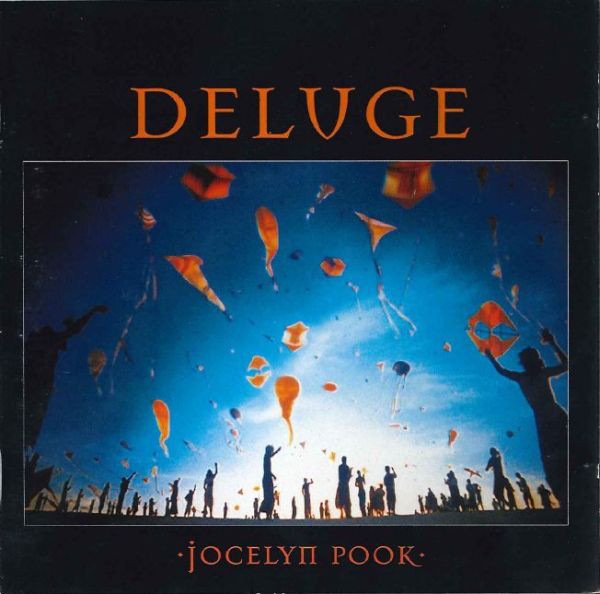
The elegant grace of tragedy is often linked with the splat of farce. This album’s major selling point (on some copies of the CD, it’s trumpeted by a sticker ‑ I kid you not) is that it features the music from last year’s TV ads for Orange mobile phones, namely Jocelyn Pook’s setting of “Blow The Wind Southerly” sung by Kathleen Ferrier.
Sigh. It’s sad but true that increasingly weird and wonderful music is getting picked up and co‑opted by advertising agencies for their campaigns. Your average ‘Coronation Street’ ad‑break may currently play to a soundtrack of Michael Nyman, Gavin Bryars, Aphex Twin, U‑Ziq, Cocteau Twins… and Pook. They’re selling their souls for the filthy lucre from red‑braced ad execs. Of course they are: rampant fucking capitalism is bringing us the best that post‑modern music has to offer. It’s art selling out!
But… Mr or Ms Normal Music Fan are going into Our Price and humming this music over the counter to Shop Assistant. Consequently, they’re getting turned on to (at least relatively) experimental music, er, man… And as Jocelyn Pook joins the hideous capitalist gravy train (look, I’m not being cruel: my tongue is in my cheek) from obscurity to the CD racks, the musos among us will smugly tell that Pook is widely known as the leader of the Electra Strings (along with Caroline Lavelle, Sonia Slaney and others), who have no doubt been rushed off their feet in the past couple of years as every British pop act decided they must show their serious side by having at least one strings‑based track in their repertoire (I think we call it “hiring in a touch of class”).
But here ‑ ably backed by the Electras, knife‑edged art‑scene soprano Melanie Pappenheim and a pocketful of exotic musicians and sounds ‑ Jocelyn Pook shows herself as being beyond simply a viola player. She’s a composer of emotion and invention and, in the best traditions of post‑modernism, introduces classical and traditional musics to the brave new world of samples and electronics. OK, so it has to be admitted that Dead Can Dance are an immediate and convenient comparison, but ‘Deluge’ is warmer, more emotional: less monumentally impressive, perhaps, but also nowhere near as harsh and Wagnerian.
The twelve tracks of ‘Deluge’ (germinating from a clutch of “post‑modern hymns” written for a Canadian dance‑theatre project) are best appreciated as one pre‑millennial suite with recurring themes (the emotions drawn from the year 1000, the methodology from 2000). Requiem Aeternam, like many elements of the other tracks, opens the album with solo and multitracked singing of a traditional requiem over one sustained root note. Post‑modern chamber plainsong, in other words, founded upon a sense of inevitability that’s unchanged by the impact of technology.
Technology, in fact, might even be hastening that grand inevitable. Oppenheimer is undoubtedly one of the central parts of ‘Deluge’. It opens with a disturbing sample of Robert Oppenheimer talking (he seems heavy with emotion, a man with the weight of his discovery of nuclear destruction bearing down upon him) surrounded by a foreboding nuclear wind: this merges into the poignant but more hopeful sound of the Jewish call to prayer and a dawn chorus of birds. As the central sung theme from the first track returns with a supporting string section, a haunting, heartbreaking elegy is created.
For Oppenheimer himself, this could be the emotions created by his dread and foresight at what he had created. More powerfully, however, this piece stands as a requiem for a world forever changed by the knowledge of possible nuclear annihilation. A post‑Cold War planet we may now be, but his music took me right back to the nervousness of the mid‑’80s and its accompanying, tangible dread of nuclear war.
Lightening the mood and returning to the music, Blow The Wind (subtitled Pie Jesu) does indeed feature that Orange ad music again. Heard without those connotations, however, this is a brilliant interweaving of samples and live sound, as Kathleen Ferrier’s familiar rendition of the traditional vocal is interspersed with Pappenheim and Pook’s plangent vocal counterpoint, the echoing sounds of children playing, and more soaring strings. As in hip‑hop, the form that originally used sampling to such great effect and historic importance, the sample of Ferrier is used as a basis to build other musical sequences, instrumentation and vocals. It’s humble, beautiful, and ends far too soon.
The lessons in the new technology of music Jocelyn Pook has gained will undoubtedly further influence the writing and performance of her music for her own instrument ‑ strings. The penultimate piece, La Blanche Traversée, appears to be a fairly standard chamber‑piece setting of words by Racine, but more remarkable is the subtle instrumental backing. Pook and the Electra Strings play a slightly off‑rhythm pattern of oscillating notes that, to any DJ or mixer who knows his decks, would be regarded as a loop. I feel that it is safe to assume that the original hip‑hop DJs never had this development in mind when they crafted scratching and looping. ‘Deluge’ is a long way from being electronica, but the ’90s cross‑pollination continues.
While music has broken all the boundaries of genre in the ’90s, the end products have resulted in albums of naked emotion or sonic inventiveness. But rarely both together. ‘Deluge’ is a suite of stunning invention and sheer beauty in its music, but with all the necessary emotion of a requiem for the post‑nuclear age. The wind blows cold, with the sound of ravens on the air, but it tugs your whole life right to the surface of your skin.
Never mind the politics of how you got to hear of Jocelyn Pook or ‘Deluge’. Open your mind to it.
(review by Vaughan Simons)
Jocelyn Pook: ‘Deluge’ Virgin Records, CDVE 933 7243 (7 24384 29632 2)
CD-only album
Released: 24th February 1997
Get it from: (2018 update) long out-of-print, so best picked up second-hand. Most of the tracks on ‘Deluge’ were remixed and reissued on the ‘Flood’ album in 1999.
The club’s gone cold and the dancing has come to a halt. Something’s lurking in the chill-out room, and the chill’s gone down several notches.
The word was that Andrea Parker‘s ‘The Rocking Chair’ was the missing link between Goldie, Mahler and Kate Bush. It’s not quite like that. You could think of Cranes at their most ornate and ambitious (and a couple of merciful octaves lower), you could think of a decidedly deeper Portishead or, at a pinch, Bjork’s Play Dead, but you’d have to add the loomingness of prime Dead Can Dance, or Gorecki’s weight of suffering. There’s no dance beat whatsoever, though the seismic bassiness sounds like the dark shadow of club culture. No trancey twinkles, even. Just that bleak blood-smudged thread of vocal. And the slow-motion-nightmare modern-classical strings, strings, strings, all swallowed up in a huge cavern of electronic space and suffocatingly close reverb.
Bloody moody. Bloody scary. Try playing this sucker to a crowd of E’d-up ravers at Heaven. Shivering wrecks four-deep on the floor, I think.
The Rocking Chair has an overwhelming horror-bound beauty. Like a swelling, building mushroom cloud, or the spume of the avalanche as it blots out your sun for good. But what’s it all about? Andrea is singing as if she was stretched flat on her back in a coffin, with an eerily drained and colourless calmness to her voice. It sounds like a paean to nothing; to a kind of amnesia where memories stay and it’s the present that’s blanked out. And only flashes of coherence seep from those lips: “so far in the distance, yet so close to my heart.” All I know is that what I can hear – quiet, and far off in the distance – are what sound like blades being sharpened. And Andrea’s singing “Behind you…”
I suppose I should tell you that you get a thirty-five-minute suite for your money. There are two remixes. Attica Blues‘ DR55 Mix drapes Andrea in drivelling pianos over runaway tango-tinsel techno and human-beatboxing. The Major Force West one adds twangs, sitars and ‘Doctor Who’ radiophonic burbles to take her off to one of those space-age batchelor pads. There’s a little spinback track to give another nod to the clubbers. There’s a strings-only version for the Michael Nyman fans. Quality control is at an all-time high, but none of them really alter the impact of the original.
If this is the reputed great club-generation comedown, I want to be watching from the other side of the room. The terrible beauty of something ending, and a genuine frightener. Who is this Ms. Parker? What huge, hungry night skies hang in her mind’s eye? Well, until I find out…
I want more. Now.
I demand my terminal tape loop.
Andrea Parker: ‘The Rocking Chair’
Mo’Wax Recordings/A&M Records. MW045CD/S (7 31458 15692 5)
CD/12-inch vinyl EP
Released: 5th August 1996 Get it from:(2020 update) Best obtained second-hand. Andrea Parker online:
A definite whiff of conservatoire rock tonight. Viola player Billy Currie used to be in Ultravox,: nowadays he looks more like an Irish pub musician, but his music has taken a more interesting turn, as has his choice of collaborators. Former Tuxedomoon violinist and occasional singer Blaine L. Reininger – with his unnerving bespectacled stare, lugubrious ironic drawl, Zappa face-fuzz and impeccable suit – looks like a college professor whom you wouldn’t allow near the children, and draws most of the attention this evening.
This unlikely pair perform a set of serious brow-furrowed John Cale-y string duets with a flavour of compressed folk, using an endearingly cheap sequencer to expand the instrumentation: clave and sweep piano program on Bittersweet, digital string orchestra on Overcast. On The Reach of Memory, sparse piano clumps, drum program and synth bass kicks into Currie and Reininger’s apparent take on Appalachian mountain music. The Thin End of the Wedge sees Reininger on trashy art-rock guitar for a Velvet Underground feel.
Their music has a strange, detachedly astringent feel; a classical dissection of folk, like Irish airs meeting New York minimalism. A sense of towering expression repressed, amplified, by Reininger’s menacing suavity: the set highlight is The Green Door, in which Reininger sings words from a documentary on schizophrenia to a strong melody over sparse drum program and organ. Seems wholly appropriate. I’m impressed, but I feel a little queasy.
In contrast, pedal steel guitarist B.J. Cole is a ridiculously normal-looking guy with a peculiar past. Back in the ’70s he was the leader of Cochise (probably the only prog/psychedelic band based around pedal steel) and subsequently explored psychedelic country music in 1973 on his ‘New Hovering Dog’ album. Over the years since then, he’s been the ubiquitous sideman and sessioneer to everyone who wants an open-minded pedal steel approach, from The Orb to Björk to Procul Harum to Scott Walker, and in particular John Cale. Since 1989 he’s also been leading this occasional band; the Transparent Music Ensemble, an ambient-flavoured chamber music quintet also featuring keyboards, cello, percussion and violin prodigy Bobby Valentino, best known for his London country music stardom.
Cole’s Transparent Music is a sedate, relaxing experience, pleasantly beautiful and unfussy, far too laid-back to be pretentious. Reflective melodic strings tie in with his steel lines, keyboards support gently, percussion shades rather than impels. Some people point out Brian Eno as the inventor of ambient music: others such as Cole know that it goes back to the days of Satie and Debussy, both of whole expressed ambient intentions long before the days of synths and tape loops, wishing to create music that merged with the tinkle of cutlery. Works by both are played tonight, along with a version of Ennio Morricone’s Once Upon a Time in the West, a slow cloudy cover with Cole’s ringing pedal steel dreaming out the tune.
Transparent Music is unselfconsciously universal: if something fits in with that softly lustrous sound, Cole and co. play it and let someone else draw up the distinctions if they’ve got nothing better to do. The original pieces stream neatly into place alongside the classics: Indian Willow’s choppy subterranean strings, Promenade & Arabesque’s pizzicato accents. Throughout, Cole’s steel pines and slides gracefully. That is, when he hasn’t MIDI-processed it into another sound – sad film-noir saxophone on Adagio in Blue to contrast with Valentino’s passionate classical violin, or the fluting electronic sounds on Easter Cool counterpointing the piano and bass drum.
It isn’t exactly music to stir the blood. What it is is very accomplished classy atmosphere music, a beautiful translucent sound whose function is just to exist and to please. That may sound superficial, but if so it’s a refined and civilised pleasure of superficiality. Gentle classics stroked with electricity and with a sense of ambient context, reclaiming the sector where popular instrumental and classical cross, and with no hint of elevator music. Easy listening with a brain. Satie and Debussy would have approved.
Kate St. John is best known as reedsperson to the stars: whenever someone wants a solo oboe on a rock record, she’s usually the one who gets the call. In her time, she’s been a member of The Ravishing Beauties, of Dream Academy and of the collective Channel Light Vessel (which also boasted Bill Nelson and Roger Eno). Now there’s the solo project – an apparently gorgeous album called ‘Indescribable Night’ and a four-piece acoustic band in which her voice and reeds are joined by guitar, viola and fretless bass.
What with her past work and the sessions for the likes of Julian Cope, we’d expect her to launch into a crazy and beautiful atmosphere project. But what Kate seems to be into right now is a featherlight fusion of classical, lounge jazz and blues – ‘Green Park Blues’ being the most obviously successful example tonight. A love of the French chanson tradition shows itself as well, in the summery ‘Paris Skies’ and in Kate’s choice of cover version tonight (Francoise Hardy’s ‘Le Premiere Bonheur de Toujours’).
This comes as quite a surprise (positioned as it is in the midst of a DreamHouse evening of intense contemporary rock singer-songwriters with guitars, but Kate and co. are unfailingly tasteful: beautiful arrangements played impeccably to form a sort of mildly fusion-flavoured chamber music. One can’t help thinking, though, that it’s a pretty tame world for such musicians to be installing themselves in. It all just floats along gracefully on leisurely viola shapes and restrained guitar, with Kate’s wispily pretty voice bathing in nostalgic warmth. And then she places an oboe, a cor anglais or an alto sax in her mouth, and out comes this phenomenally beautiful sound which stops you dead in your tracks and sets hunger in your soul…
It’s like finding a pearl in the Sunday teacups: sheer beauty reduced by finely-crafted but over-genteel surroundings. Kate St. John’s musicality needs a more passionate setting than this, a possibility hinted at by the ethereal mediaeval vocalising of ‘There is Sweet Music’ with its heart-stoppingly lovely cor anglais. But until then, at least we have this fine quartet. Many of you may be intrigued by this tasteful breed of crossover music: if so, I’d advise you to seek out the album. I myself am left wondering what it would take for such a phenomenal thread of music to be allowed freedom from the cosiness of café memories and to fly liberated, soaring to the heights that each and every one of tonight’s reed solos hints at.
Kate St. John online: Additional notes:(2020 update) Kate St. John spends most of her time supervising film music these days – if you want to listen to the album which this music came from, it’s available on Bandcamp.
Swoon. /swo͞on/ A verb. To be emotionally affected by someone or something that one admires; become ecstatic. Here are some people and things that make me swoon. #swoon #swoonage




 Misfit City