Some quick news on an interesting-sounding concert tomorrow, which I’ve only just picked up on:
Irish Heritage presents:
Daire Halpin & Jean Kelly: David Wallace’s ‘London Irish Reflections’ The Forge, 3-7 Delancey Street, Camden Town, London, NW1 7NL, England
Monday 14th November 2016, 7.00pm – information
‘London Irish Reflections’ is a new song-cycle for soprano, acoustic and electric harps and electronics, which merges two distinct art music traditions – Western classical and traditional Irish – and which is based on the reflections and insights of the London Irish community. The piece came about through Cork-born cousins and musicians Daire Halpin (soprano) and Jean Kelly (harp) commissioning a piece from a Kilkenny-born musical polymath (composer, pianist, conductor and dancer David Wallace) in order to explore their interest in the diverse and sometimes contradictory experiences of those, like themselves, who’d emigrated from Ireland to London.
Thought up by a four-person creative team, all of them London Irish (with the fourth being ‘Guardian’ journalist and deputy business/consumer affairs editor Dan Milmo), the piece expanded into a communal musical reflection on the experience of Irish immigration to London within current living memory. Drawing on Dan’s interviews with attendees at the Southwark Irish Pensioners project, it was supplemented by similar discussions with family members and friends within the London Irish community, including Dan’s conversations with members of the Bloomberg group ‘Paddy Chat’ and a swathe of people ranging from working artists to manual labourers who laid the foundations of the London Tube train network to the chief executives of several major London firms.
The song cycle is structured around various themes – including displacement and belonging – which surfaced as common shared threads within Dan’s various interviews, with the words of the interviewees have been rearranged to both form and inform multi-perspective reflections throughout the piece. Dan comments “I found a lot of the discussions at the Pensioners Project very moving because the interviewees had so many fascinating stories to tell about themselves but they had never been recorded.”
Jean confesses that “we were moved by the tales of hardship endured by the audience members – a generation of Irish emigrants who arrived in London in the 1950s and ’60s. The comparison to our own trouble-free, racism-free experience of moving to London was shocking to me, and I came away feeling that I owed a huge debt to this group of people who contributed so much to change the attitude towards Irish people in Britain, and who allowed my transition from Cork to London to be so smooth.” However, ‘London Irish Reflections’ actively celebrates the community’s experience as much as dwelling on its hardships. Daire adds “being an emigrant myself, I found a lot of the literature focused on the darker, tragic side of life as an emigrant. I wanted to explore the experiences of other emigrants and find a way to share our stories so we can reach out to the many, many people whose lives have been touched by emigration.”
David Wallace adds: “I have tried to create a sound world for each of the bodies of text that allows the message behind the text to really shine through. Working with both concert and electric harps helped to create a contrast in sound world that the text seemed to contain, one where the old and the new collide with the same agenda: the sense of loss at having to relocate.”
* * * * * * * *
For something slightly similar and imminent – musically different but based around community vox pops (admittedly the pre-Brexit voices of depressed communities in southern England) – you could compare and contrast this with Billy Bottle & The Multiple’s ongoing roadshow ‘The Other Place‘, which rolls into London next Sunday. This has also reminded me of ‘I Could Read The Sky’, the 1999 Nichola Bruce film on the London Irish emigrant experience, which was soundtracked (with typically mournful rhapsody) by Iarla Ó Lionáird. I’ll have to dig that one out again…
More by chance than design, today’s preview post (for Saturday 15th) covers both sides of the Atlantic.
I’ve been following (and tracing back) the career of singer/songwriter Trevor Wilson for a while now – from his cross-genre experiments at Bennington College to his scatter of solo records and his more recent work steering the eerie/joyous glee-pop unit Anawan. Having opted to leave New York (after one last concert in his Brooklyn base), he’s now upped sticks to North Carolina and settled in the “art mecca” city of Asheville, where he’s wasted little time, not just putting down roots but making them work. Details on his first post-New York concert below:
Trevor Wilson + Jackson Emmer + Michael Chinworth
‘The Back 40’, 60 Craggy Avenue, Asheville, North Carolina, 28806, USA
Saturday 15th October 2016, 6.30pm – free event (donation suggested) – email for more details
Trevor says “after some months of finding my way around, I’m very excited to announce my first performance here. Remarkably, I will be joined by none other than Anawan members Ethan Woods and Michael Chinworth, as well as two new singing partners, Jeremiah Satterfield and Laura Franke. Michael will perform a set, and so will Jackson Emmer, one of my oldest and dearest friends. This will all happen in a backyard farm just through the woods from my house in West Asheville. It will be an outdoor, bonfire-style concert, and we’ll convene at 6:30 to chit chat and snack. I’ll be performing some Anawan material with Ethan and Michael, as well as some new material with Laura and Jeremiah.”
The new material may or may not relate to Trevor’s upcoming new album ‘Sour Songs’ which he describes as featuring “the most direct, pop-oriented, and fun tracks I have ever created. They’re based around the keyboard, and a lot of them feature electronic beats. It’s definitely a departure, but it feels honest, and really connected to where I am at right now. I truly can’t wait to share them with you.”
Meanwhile, here’s an appropriately rural clip from a few years ago, featuring Trevor singing in the fields (albeit up in Vermont), plus an Anawan video from around the same time.
* * * * * * * *
On the same Saturday, back in London, it’s another day and another Daylight Music show. Following last week’s organ-and-voice extravaganza, the Daylighters continue to happily mull over ten years of presenting everything from electronic bleeps to uke-toting folkies via unusual instruments and classical inroads. This week leans more towards the latter…
Arctic Circle presents:
Daylight Music 236: Emily Hall + Ryan Teague + Resina + Lucy Claire Union Chapel, 19b Compton Terrace, Islington, London, N1 2UN, England
Saturday 15th October 2016, 12.00pm – free event (suggested donation: £5.00) – information
Emily Hall writes contemporary and avant-pop-slanted takes on the classical song cycle, instrumental narrative and opera. This has led her into commissions for (among others) London Sinfonietta, London Symphony Orchestra, BBCNOW, the Brodsky Quartet and Opera North. It’s also led to collaborations with the likes of the English author Toby Litt (who co-wrote her song-cycle on the diverse “everyday wonder and lurking fear” nature of motherhood, ‘Life Cycle’ – see the excerpt above) and Icelandic poet/occasional Bjork lyricist Sjón, who crafted the words for her haunting trio opera ‘Folie à Deux’.
The latter begins with a man singing an awed paean of worship to an hillside electricity pylon and goes on to explore the consequence of a religious frenzy being transmitted from one person to another, and a relationship in isolation succumbing to the weight of a wild delusion. It’s scored for two singers and a pair of harps (one acoustic, the other electromagnetic) and you can listen to it in full below.
There’ll probably be samples of these plus Emily’s other works in the Daylight showcase. She will be accompanied by Khoros Choir and by classically-inclined singer-songwriter Ana Silvera. Emily has also helped to invent a triggering instrument-cum-mobile, which fits in a suitcase, so with any luck she might be bringing that along too.
Bristolian multi-instrumental composer/producer Ryan Teague has followed a gradually developing path from his minimalist electronic roots which has incorporated classical, electronic, acoustic and soundtrack work and approaches learned from all these fields (as well as from gamelan, a form which informed his ‘Storm Or Tempest May Stop Play’ piece premiered last year at Daylight Music).
Ryan’s upcoming album, ‘Site Specific’ features full-band music pulling in influences from impressionistic early-’70s electric jazz. His performance on Saturday sees him accompanied by bass clarinettist Gareth Davis, electric pianist/synthesizer player Dan Moore and drummer Mark Whitlam.
Karolina Rec is an Warsaw-based cellist and composer working with improvisation and texture under the project name of Resina. In addition to her own work, she’s been involved with several Polish bands and projects including Kings of Caramel, Cieslak and Princess, Nathalie And The Loners, and Anthony Chorale. Here’s a little of her textured post-classical performance looping:
There will also be contributions by composer-performer Lucy Claire. She’s a late addition and there’s not much news on exactly what she’ll be doing. Her work stretches from soundscapes and soundtrack to deeper and more involved contemporary classical works, so she might be performing anything from a between-acts soundscape to a tape-and-keyboard piece to stints on the in-house pipe organ and piano. Here’s a taste of some of what Lucy does:
* * * * * * * *
In the evening, Lithuanian-born singer-songwriter/kanklės player Jausmė and novelistic folkie Sian Magill return to south London’s Magic Garden, following up their show back in July.
Jausmė + Sian Magill
Heavenly Sunday Folk @ The Magic Garden, 231 Battersea Park Road, Battersea, London, SW11 4LG, England
Sunday 16th November, 9.00pm – free event – information
The last time Jausmė was here, she was duetting with cellist Nicole Collarbone. This time, she’s on her own. Although she usually labels her songcraft and instrumentalism (voice and kanklės, plus the occasional effects pedal) as “urban etherealism”, and generally lets it fall somewhere between its Baltic roots and her adopted home of Milton Keynes (when she’s not guesting on other people’s techno and sub-bass tracks), she’s billing this Saturday’s music as “soul, jazz and folklore”. This either means that she’s found a new smoothed-out direction for her psaltery songs, or uncovered a new twist. Come and see. Meanwhile, here are two of her songs played out on the grasslands. (The second one might provide some explanation…)
Building on what looks like a fruitful gig friendship with Jausmė, Sian Magill brings more of her detailed folk songs into play – immaculate and quietly smouldering; modern-traditional; emotion-soused but steeped in intelligence.
Some news on a couple of pieces of music drama showing in London and Edinburgh this month – one a fully-fledged conceptual solo piece (involving original contemporary classical compositions and diverse performance techniques), the other a more conventional theatrical play themed around the wartime exile of Benjamin Britten.
Here’s a little more information about each of them (combed, shaped and styled in a hurry, from the press releases).
“Héloïse’s increasing interest in the dramatic potential of the unaccompanied voice has led her to experiment with a wide range of more contemporary techniques. ‘Scenes from the End’ is a fully staged, physical drama that combines classical and operatic vocal techniques, as well as improvisation, acting and body percussion. In it, Héloïse aims to confront the audience with the uncomfortable themes of death and grief, challenging them to reevaluate their own attitudes towards these difficult issues.
‘Scenes from the End’ is a collaboration with young composer Jonathan Woolgar (a previous award-winner of the BBC Proms Young Composers’ Competition) and with director Emily Burns. Using a colourful array of vocal and theatrical means, the show paints historic, comic and tragic pictures of “the end”, from the heat-death of the universe to the end of an individual life. This is virtuoso music theatre on a scale that is both cosmic and intimate.”
‘Scenes From The End’ is being performed at the Edinburgh Fringe Festival, with a couple of preview performances in London a week and a half beforehand. There’ll be a further run of London performances in December.
Tristan Bates Theatre, 1A Tower St, Covent Garden, London, WC2H 9NP
Tuesday 6th December 2016 to Saturday 10th December 2016, 7.30pm (plus one 3pm performance on the 10th) – no information online yet
Although Héloïse is someone I’d like to catch up with for a chat at some point, for the moment I’d better point you in the direction of this recent interview she’s done (freshly published today!) with the LaLaLa Records vocal music homepage, covering ‘Scenes From The End’ and several of her other projects.
* * * * * * * *
“Based on true events, the world premiere of Zoe Lewis‘s passionate and thought-provoking play ’Britten In Brooklyn’ takes place in the beautiful and unique setting of Wilton’s Music Hall. Starring Sadie Frost and directed by Oli Rose, it plays for a strictly limited season of 21 performances.
“New York City, 1940. A dilapidated house in Brooklyn Heights. The bohemian lifestyle of Benjamin Britten, WH Auden, Carson McCullers and Gypsy Rose Lee in the artistic community at 7 Middagh Street starts to unravel as World War II becomes a brutal reality. Exiled in America for his beliefs and a national disgrace, Benjamin Britten must decide which way his conflicted political ideals lie but the constant parties, doomed affairs and John Dunne, the mysterious stranger, provide an easy distraction.”
‘Britten in Brooklyn’ Wilton’s Music Hall, 1 Graces Alley, Whitechapel, London, E1 8JB, England
Wednesday 31st August 2016 to Saturday 17th September 2016, 7.30pm (plus 2.30pm matinee performance on Wednesdays and Saturdays) – information
It’s nice to have a ‘Misfit City’ premiere once in a while. This is the brand new video clip for The British Road, North Sea Radio Orchestra‘s cover version of a Robert Wyatt song. It’s from NSRO’s new album ‘Dronne’ which is coming out on the band’s own label The Household Mark on 9th September. The song itself will be out as a download single on August 5th: the video’s another genius pocket production by Chaos Engineers.
Singalong time:
Those foreigners are at it again
When will they learn to fight like our men?
There’s nothing new under the mirror
And it’s time for one more bedtime story
Get beauty sleep for morning glory
How can I rise if you don’t fall?
Robert Wyatt originally recorded The British Road for his 1985 album ‘Old Rottenhat’: it’s also on the ‘Mid Eighties’ compilation. It’s part of a set of songs composed in “a conscious attempt to make un-misusable music” which was done in the face of covertly (or nakedly) aggressive right-wing politics appropriating or co-opting songs for cheerleading or for broadcast padding. The song itself is a typically cryptic Wyatt threading of oblique satire and Dada-jazz playfulness over a friendly, ever-so-slightly plaintive melody, taking glancing swipes at petty nationalism and irritable torpor as it rolls along. (If you’re weary of all of the recent Brexit sabre-rattling and bottlecough, it’s a real restorative.)
North Sea Radio Orchestra: ‘Dronne’
The NSRO take on The British Road immediately bears their own stamp. Elements are blended in from early English airs to Germanic-electronic organ haze; there are dewdrop metallophones and passionate bird-flight string parts; there’s budding pastoralism charged with bursts of motoric minimalism; and there’s a kernelled heart in Craig and Sharron Fortnam’s softened everyperson vocals, ever-so-slightly shaded by a touch of Wyatt Cockney. It originally stems from a 2014 concert night performance of Wyatt’s music for the Nuits de Fourviere Festival in Lyon, which Craig was invited to direct and arrange. As well as producing both this and other NSRO arrangements of assorted Wyattisms, the event had a profound effect on Craig’s approach to the rest of ‘Dronne’:
“Being the composer and producer has led to me having total control over all aspects of making NSRO records. This way of working is, of course, a double-edged sword, as spontaneity and inspiration can be lost under all that control. Robert Wyatt seems to tread the line between the two with great skill, incorporating lots of elements of chance into his albums. Re-working his songs while trying to maintain freedom within the arrangements has been a great inspiration while making ‘Dronne’. This record features lots of improvising which I have edited and manipulated; certain accidents within have been left intact – these elements of chance are a real antidote to the necessary microscoping and control-freakery needed to create NSRO records.”
If you’re interested, French experimentalist Pascal Maupeu recorded another version of this song six years ago, under his Mop Meuchiine alias – part grinding industrial underpass music, part Krautrock ice-cream van, part rough-edged chamber ensemble (while still finding space for a banjo). Here it is.
While I missed the chance to plug the Sin Eater Festival a few weeks ago, I’m just about in time for the modest fireworks which herald the Frome Festival in Wiltshire.
I’m too late to plug the opening party (in which Frome’s own electro-poppers Sweet Machine shared a bill with psychedelic synth-cabarettier, rock biographer and all-round performance character Alan Clayson); I don’t have much to say about the festival’s big-draw act Reef (currently enjoying a new revival of their original ‘90s revival of 70s blues-rock); and I feel sorry that the free gig by “ukular fusion” band The Mother Ukersdoesn’t involve furious Mahavishnukulele jazz shredding (instead of being a variation on banjo-happy rockgrass covers). But there’s plenty more on offer, so here are a few other things picked out from the billing.
It’s by no means everything on offer (the festival’s full of visual art, talks and theatre; there’s plenty more jazz and classical; and there’s a show by Billy Bragg which will probably take care of itself) but these represent the bits-between-the-bits which are closest to ‘Misfit City’s natural constituency (if such a thing exists).
At the upstairs room at the Archangel pub, The Magical Folk Garden continues to turn itself into an annual institution with a series of cushion-strewn/standing-room-only unplugged gigs, creating a “euphonious forest of folk and contemporary acoustic music from some of the UK’s finest talents.” It’s all pretty well-scrubbed and tasteful – there’s nothing to scare the horses here. That said, a few of the performers might own horses, and some might whisper them; while a few might go all ‘Poldark’ and ride off on one, bareback and bare-chested, a honey-coloured guitar bouncing up and down on the withers (it all probably depends on the state of the booze and the pollen count).
The Tuesday show features two Bath acts – lit-pop cello-and-guitar duo The Bookshop Band and romantic solo-balladeer Tom Corneill – plus the sunny pure-pop/psychedelic fizz of Trowbridge’s The Pigeons.
The Wednesday show has a band-backed performance from Frome’s Al O’Kane (a gravel-and-honey country-blues-folker who, with his mix of rolling American roots guitar and British mysticism, can come across as a one-man ‘Led Zeppelin III’). Also playing are Alex Taylor (bouncy, jazz-and-funk-tinged, broadening his sound and filling out his pockets with pedals and loops) and young songwriter Emma Shoosmith, whose output has ranged from thoughtful folkified Taylor Swift covers to the lilting ska-tinted song shown below.
The Thursday show has a chamber-folk air. Bookshop Band multi-instrumentalist Beth Porter returns with her own augmented-string quartet band The Availables and her own clutch of intricate literary songs. Also on board are the strings, percussion rustles and detailed guitar of Rivers Of England (fronted by Rob Spaulding) who, although they take on some pretty familiar modern folk tropes, land them in an interesting marginal territory in which the early-’70s John Martyn and the early-’80s Julian Cope sit down to exchange lines and tips. The bill’s completed by the lost-boy charm of Avebury singer-songwriter (and Nick Harper protégé) George Wilding with his warm, abstracted songs of distraction and heartbreak (simultaneously soothing and haunting).
The Friday folk-final involves wayward Bristol-and-Bath folk septet The Cedar. Beth Porter makes her third Magical Folk Garden appearance of the week as the band’s cellist, alongside five other musicians. Playing a variety of instruments and implements (from guitar, glockenspiel, viola, organ and ukulele to calculator, screwdriver, musical and tri-square) they weave Neil Gay’s slightly distracted songs into a musical fabric that’s sometimes Belle-&-Sebastian communal, sometimes music-school precise, and sometimes as frayed as a scrap-basket oddment.
The rest of the evening gently mixes Western with Western. Accompanying herself on guitar, baritone ukulele, harmonium or shruti box, Bradford-on-Avon’s Jess Vincent delivers a set of original country-folk songs with a sound and demeanour that’s seen her compared to both Iris DeMent and Kate Bush. Evening openers Ali George and Ruby Brown do their own take on Gram-and-Emmylou duets, filtered through Ali’s trunkful of original English folk/clawhammer guitar songs.
* * * * * * * *
The town’s Rook Lane Chapel arts centre is hosting plenty of events. These two in particular caught my ear:
Snowapple Rook Lane Chapel, Bath Street, Frome, BA11 1DN, England
Thursday 7th July 2016, 7:30pm – information
“Snowapple is an outstanding female harmony trio from Amsterdam who draw on folk, classical and chanson influences, in unique, charming and beautiful arrangements of original songs. Having sold out the Granary for the last two years, Snowapple have earned a reputation all over Europe and the US, and this year appear in the perfect setting of Rook Lane Arts.”
Praying For The Rain Rook Lane Chapel, Bath Street, Frome, BA11 1DN, England
Friday 8th July 2016, 8.00pm – information
From the blurb: “Known for their dynamic and compelling live performances, Praying For The Rain blend contemporary folk, Celtic and world music with irresistible rhythms, memorable melodies, beautifully crafted vocals and inspired musicianship. Their music brings to mind a modern blend of Crosby, Stills and Nash, Robert Plant, to Fleet Foxes and the Dave Matthews Band, creating a truly uplifting experience. Following last year’s sell out concert, Praying for the Rain return to Rook Lane for Frome Festival 2016. Expect an exhilarating night of high energy, movement and wonderfully engaging songs.“
I’m sure I remember Praying For The Rain from when I was a regular at Martyn Swain’s wonderful Dreamhouse acoustic nights, a refuge of warm bohemian chic and unplugged music alongside the Splash Club in scuzzy mid-’90s Kings Cross. These were the same shows at which I was delighted by up-close performances from Marcy Detroit, Simons Warner and Whitaker and many more… there’s a little bit about Dreamhouse here, since someone’s been writing a crowdfunded book about the Splash years (and you can still pitch in to help it). Dreamhouse was the kind of night where you could expect table candles and belly dancing interludes most weeks; but during their own slot, Praying For The Rain completely overflowed the little Water Rats stage with finger-cymbals, accordions, cellos, cirrus-band harmonies and what seemed like about ten people on whispering percussion, temporarily transforming the place to a full-on New Age folk temple.
Although they seem rather more bluesy and straightforward-rootsy than I remember through the gauzes of memory, it’s good to see that they’ve lasted the twenty-year distance and garnered themselves a new up-to-date list of comparisons.
* * * * * * * *
Over at the Granary, there’s a semi-unplugged triple bill and a visit from a ‘Misfit City’ favourite.
Three Is The Magic Number presents:
Three Corners + Molly Ross + Gum Girl The Granary @ The George Hotel, 4 Market Place, Frome, BA11 1AF, England
Friday 8th July 2016, 8.00pm – free/pay-what-you-like
Regular Frome-and-Wiltshire unplugged night Acoustic Plus takes on a new identity for this three-act bill of “original songs, haunting vocals, mesmeric music” celebrating a diversity of approach via three different acts. Molly Ross offers fledgling piano pop touches on folk and R&B; Three Corners (with their roots in 1980s new-wavers The Impossible Dreamers, and featuring ex-Dreamers Nick Waterhouse and Caroline Radcliffe) play sparse, questing songs around more of a loose blues-and-jazz-informed tip; but the one I find most interesting is the dreamy beat’n’texture pop of Gum Girl.
As Arch Garrison, North Sea Radio Orchestra mastermind Craig Fortnam and Stars In Battledress‘ James Larcombe explore gentle, intricate psychedelic folk: partly gentle clean chapel tones, partly kosmische textures, partly chalk-ridge geomancy. A duo of Craig’s nylon-strung acoustic guitar and James’ assorted keyboards (organ, monosynth, harmonium and piano), their two albums’ worth of songs have enabled Craig to bring the smaller and more personal songs he writes to life, when they don’t fit the grander feel of NSRO. Their ‘Will Be A Pilgrim‘ album was one of my favourites of 2014 – an unexpected gem of small voice and thinking space. Support comes from local favourites Dexter’s Extra Breakfast, playing Dave Clark’s soft-petalled and “Weltschmerzian” songs of middle-aged reflection.
* * * * * * * *
John D Revelator The Griffin, 25 Milk Street, Frome, BA11 3DB, England
Saturday 9th July 2016, 8.00pm – free event
At the Griffin, John D Revelator will be bringing along their dark-tinged acoustic swamp-pop for a free show. Even if there’s not actually such a thing as the “Somerset Levels delta”, they’ll lie to their last tooth and their last busted guitar string trying to persuade you that it does exist.
* * * * * * * *
Towards the end of the festival, the second of Frome’s two substantial concert halls is offering two very different performances on the same day. One is a post-lunchtime concert of vividly Catalonian Spanish classical music from the twentieth century; the other is an evening show of polymusical fusion from an all-star collective trio.
Elena Riu & Clara Sanabras: ’A Taste Of Spain’ Cooper Hall @ Selwood Manor, Jacks Lane, Frome, BA11 3NL, England
Saturday 9th July 2016, 1.00pm – information
Pianist Elena Riu and singing multi-instrumentalist Clara Sanabras (the latter on voice, harp, oud, charango and guitar) perform selections from the ‘Songs & Dances’ of Catalan impressionist/miniaturist composer Federico Mompou and the ‘Spanish Dances’ of his compatriot Enrique Granados, interspersed with Clara’s performances of the original Catalan folk songs on which Mompou drew.
“Birdworld is made up of musicians Adam Teixeira (drums/percussion), Gregor Riddell (cello/electronics); and Alex Stuart (guitar). The project came about when Gregor and Adam met during self-directed Banff Creative Residencies where they discovered a shared interest in blending electronic and acoustic sounds. Since Adam moved to the UK in 2014 they have continued to develop BirdWorld, adding Alex along the way. Combining their artistic voices as both instrumentalists and composers, the trio will showcase each members original compositions arranged specifically for this unique musical exchange. Creating a unified sound that blends the inspirations of modern jazz, world music, contemporary classical, rock and electronic music in a rare concert setting.”
Here’s a video of the original two-piece in action, to give you two-thirds of an idea of what might be on offer.
An interesting London Saturday is coming up, with music ranging from shattering electronic jazz to faintly worrying lounge music and psychedelic pop; pipe organ explorations to Inuit vocalese; transfigured electropop to sing-alongs and drone-strumentals… with the odd dancing gorilla and shocking pink hairpiece showing up too.
More below…
* * * * * * * *
Arctic Circle presents:
Daylight Music 228 (‘Electric Dreams’): Glass + Matthew Bourne + Darren Morris + The Leaf Library Union Chapel, 19b Compton Terrace, Islington, London, N1 2UN, England
Saturday 18th June 2016, 12.00pm – free event (suggested donation – £5.00) – information
“Daylight Music goes electronic this week with three superb acts.
“Rising pop duo Glass are set for big things in 2016. Their spectacularly roaring body of work and captivating live shows have seen them hotly tipped as ‘ones to watch’ by The Maccabees, Huw Stephens and Tom Robinson. Jessica Winter’s haunting, enunciated vocals and Scott Rimington’s other-worldly guitar break-outs meet to create a language all of its own, underpinned with pummeling grooves, meticulous synth lines and addictive ear-worm hooks. Today they’ll be playing an acoustic set.
“With a reputation as a fearlessly unpredictable pianist and composer, multi-award-winning musician Matthew Bourne is a passionate explorer of sound, possessed of a burning desire to make music on anything old, broken or infirm. Renowned for his intensely personal and sometimes confrontational solo work, his uncanny ability to balance delicacy and virtuosity – while establishing a close affinity with his audience – have become hallmarks of his concert performances. He has his fingerprints on a huge number of projects, having worked with artists as diverse as John Zorn, Annette Peacock, Nils Frahm, Nostalgia 77, Broadway Project, and Amon Tobin.
In the last year, Matthew set up a studio in his rural West Yorkshire home in order to capture the spontaneous moments of inspiration his concerts have become famed for. With a nod to the pioneering work of Annette Peacock and Paul Bley, he has turned his considerable talents to the world of analogue synthesisers; arming himself with an arsenal of vintage electronics, tape delays and a creaky harmonium alongside his trusty piano and cello, and preparing for a period of intense and varied activity in his own name after many years of collaboration. Growing from improvised live performances, new compositions have taken shape in the studio as Bourne explored and moulded the vast sonic possibilities of voltage-controlled oscillators.
“The seed for this project was planted when Matthew acquired an uncooperative 1982 Memorymoog, having it painstakingly modified and upgraded by Rudi Linhard in Germany. Created without the use of computers or sequencers, ‘moogmemory’ is the first album to be recorded using only the Lintronics Advanced Memorymoog. This process also served as a pathway to another of his current projects, ‘Radioland: Radio-Activity Revisited’, a visceral live audio/visual experience created to mark the 40th anniversary of Kraftwerk’s seminal Radio-Activity album. In collaboration with electronic composer Franck Vigroux and installation artist Antoine Schmitt, ‘Radioland…’ sees him pushing his work with synthesisers into uncompromising new territory, as earth-shattering bass frequencies are contrasted with moments of eerie near-silence.
“The intriguing Darren Morris worked as a producer and musician for twenty years (with the likes of David Holmes, Tim Goldsworthy, Ashley Beedle) and he’s currently touring with former Beta Band-er Steve Mason. He’s been performing live as a professional musician for over fifteen years, playing keyboards, synths, and bass with a variety of artists including Gabrielle, Sugardaddy (side project of Groove Armada’s Tom Findlay), and Robin Hitchcock. He has a background in improvisation, working alongside many well-respected and influential players on the London improv scene such as Veryan Weston, Hugh Metcalfe, Sibyl Madrigal, Lol Coxhill, Gail Brand, Jon Edwards and Mark Sanders. Today, Darren will be playing the Chapel’s glorious 125-year old Henry Willis organ.”
Just noting that Darren isn’t a stranger to this particular instrument… Here’s the outcome of one of his previous encounters, plus an explanation:
“(This) started out as a ninety-minute improvisation, performed on the amazing organ that lives in the Union Chapel Islington. I was just zoning into the instrument and the building it breathes in, traveling through various pockets of 20th century western concert music, modal ’50s jazz, glimpses of Sun Ra, Terry Riley, daydreaming of space and psychedelic films here and there. The recording wasn’t anything special but it was easy to get sucked back in on listening back. I haven’t been able to leave it alone. For a few weeks I’ve been chipping away at it, adding a sort of electronic orchestra of synthesizers and string machines. I hope this album can make you believe it was all there at that moment, being recorded and witnessed. Maybe I’ll get this space orchestra together one day and return to the Union Chapel for a rather extraordinary gig. Hope you can be there!”
Back to the press release:
“There’ll also be improvised electronics from The Leaf Library, whose drone-pop love songs are particular Daylight favourites. If that wasn’t enough watch out for a special appearance by The Action Men who will bring their EU-topian roboto dance vision to our stage.”
* * * * * * * *
Tigmus and The Nest Collective present:
Tanya Tagaq in concert with ‘Nanook of the North’ The Forge, 3-7 Delancey Street, Camden Town, London, NW1 7NL, England
Saturday 18th June 2016, 7.30pm – information here and here
“Award-winning Inuit vocalist Tanya Tagaq, known for her intense, evocative style based on traditional throat singing, performs a live accompaniment to Robert Flaherty’s controversial 1922 silent film Nanook of the North. Joined by percussionist Jean Martin and violinist Jesse Zubot, Tagaq reclaims the film’s images of life in an early twentieth-century Inuit community in Northern Quebec. This is not an experimental performance to be missed.
“Commissioned by the Toronto Film Festival, Tagaq’s work with Nanook began with a sonic exploration of the film’s imagery. With her own sense of the sounds of places shown in the film, she transforms its images, adding feeling and depth to what is a complex mix of poignant representations and racially charged clichés. The film, one of the world’s first major works of non-fiction filmmaking, is rife with contradictions. Flaherty lived and worked with Inuit communities for many years, and yet he included staged scenes of buffoonery and feigned Inuit ignorance of modern technology and accoutrements.”
Tanya’s own comments on the project:
“Everyone will take what they want from it. I have no intention of spoon feeding people what they need to know. Yet, hopefully, via coaxing and innuendo and emotion, I can elevate people’s consciousness of Inuit culture, and of culture in general. I can take a small bite out of the underground racism against Inuit and Aboriginal people. I have faith that if people are educated about what’s actually happening, and if people believe, it can be fixed. But you have to acknowledge the bad to sprout the good.”
* * * * * * * *
Rock Candy Management present:
MAP Live Lounge: Rock Candy Girlz + Malcolm Bruce MAP Studio Café, 46 Grafton Road, Kentish Town, London, NW5 3DU, England
Saturday 18th June 2016, 7.30pm
Saturday Live Lounge at MAP Café is a regular night of eclectic live music. It’s hosted by Rock Candy Girlz, a three-piece West London band featuring members of ‘90s charting band Amazulu who do “quirky interpretations of classic songs” in a lively glammed-up fashion. I’m usually left cold by this kind of Scissor Sisters thing – the crowd-pleasing cover versions, the high-camp glow, the pink wigs etc (although I’m a secret slut for dressing up) – but the Girlz’ wit and roguery win me over. Here they are doing a Kylie Minogue cover. Underneath that is a trailer for the first Live Lounge, sans glad rags, which shows that some people aren’t remotely slowed, subdued or suppressed by middle age. Good on them. If I could muster half of this kind of charisma, people would be falling over themselves to read the blog.
Their special guest this week is multi-instrumentalist and classic rock scion Malcolm Bruce, son of Cream’s Jack Bruce and grafter in a number of different musical zones (rock, jazz-rock, folk) since his mid-teens. It’s hard not to talk about Malcolm without reference to his dad, since Malcolm’s musicality reveals some of the genetic and cultural debt he owes to Jack. They share a similar singing voice (a forceful high-rise tenor which ranges from pugnacious to yearning), and Malcolm paid some of his dues as the guitarist in Jack’s band. Also, he can – and sometimes does – work some of the same musical seams that his father did.
However, Malcolm’s Soundcloud page reveals him as a softer, more intimate songwriter and interpreter than Jack was – touched by a more lucent strand of Celtic romanticism (as with Brian Kennedy, Van Morrison, Paul Buchanan), annealed by a touch of the sensibilities of another great ’60s white rhythm-and-blues star (Steve Winwood) and counterbalanced with judicious dashes of technical smarts and abilities (an accomplished acoustic folk guitarist, he’s also a lyrical, Satriani-esque electric hard rock player with arena sensibilities). Here are a couple of tracks from an EP he’s putting together for a Pledge Music crowdfunder goodie, as an enticement to help record his forthcoming album. One’s a straight folk lovesong, another’s a version of Purcell’s ‘Dido’s Lament’.
Regarding the latter, it’s tough to go up against some of the existing pop versions which this beautiful tune has spawned over the years (including grand, soaring counter-tenor renditions from Klaus Nomi and Jeff Buckley, and the heart-melting voice-and-piano folk version Barbara Dickson and Troy Donockley performed on ‘Full Circle’) but Malcolm approaches his own arrangement with pluck and honesty. It’s also a tricky task to switch between baroque lute elegance and full-blooded pomp rock – let alone fold a brand new anti-war song into the second half – without resulting in a hamfisted mess. Yet somehow Malcolm manages to pull it off and cover all of the necessary bases.
“The Pussywarmers bring you a lively mixture of music from the dope’n’glory jazz era of the mid-1920s. With horns, upright bass banjo and many more acoustic instruments, they have a wild and dusty character… plus trumpets. Cosmically bound to their Hungarian ladyfriend Réka, spasmodically accompanied on their travels by unpredictable trumpeters, The Pussywarmers – originally from the Mediterranean district of Switzerland – have spread their credo all over the continent. Indeed, audiences of all ages have fallen under their spell – a charming and obscure concoction of melodies that stubbornly eludes all attempts at a definition but which is leaving ever more gig-goers indefinably warmhearted.”
This doesn’t actually cover the half of it. What it doesn’t mention is this band’s teasing, wayward unknowability; their honey-sliding psychedelic atmospheres (like a half-cut Mamas & The Papas if they’d been woozily rebounding from the Haight); their playful lack of embarrassment and their apparent attachment to the Dada of their hometown. All of this can be seen in the video for their song ‘Young Men Living’, which blends Freud, Godard and Melanie Klein into three minutes and forty-three second of messy-play picnic.
If you’d prefer something less psychosexual, the video for Sunrise sees the band dancing blankly across Swiss hilltops in colour-bleached film stock; which, to a Brit, is going to look like a teasing ’70s memory from childhood forays onto BBC2. (Then again, if you’re not wanting something psychosexual, perhaps you shouldn’t be checking out a group called The Pussywarmers…)
The band is appearing as part of the tenth Babel Festival of Literature & Translation, described as “(a) unique border-crossing event (with) its own special brand of linguistic hospitality… a celebration of voices, rhythms, linguistic diversity, creolisation and hybridisation.” Usually based in Switzerland, it’s celebrating its decennial in London and at Wilton’s instead, bringing a day of “readings from writers and translators spanning China, Mexico, Poland, Bosnia, Switzerland and the USA.” . Full info on the whole event is here if you fancy making a fuller day of it.
After a four-year hiatus (punctuated only by a brief 2014 showing at a Robert Wyatt tribute evening in France) North Sea Radio Orchestra – the pocket alt.chamber ensemble formed by husband-and-wife art-rock refugees Craig and Sharron Fortnam – are returning to action with a couple of warm, low-key English shows in London and Salisbury during June.
North Sea Radio Orchestra, 2016
Based around Craig’s aerial compositions (propelled by a fine lattice of nylon-string guitar or gestural piano) and fronted by Sharron’s grand, pealing mezzo-soprano, NSRO emerged fifteen years ago via a series of church concerts in the City of London. A familial, twenty-strong English-gala-on-legs, sporting a rugged/ragged choral section, they blended the feel of a market-town classical festival with the more omnivorous preoccupations of world-city musicians flitting between concert halls, experimental rock clubs and eclectic podcasts.
Notoriously, Craig’s tune-sense drew on a romantic-futurist melding of Britten, Zappa, Vaughan Williams, Peter Warlock, traditional and psychedelic folk, Victorian poetry and the bassoon-laden locomotional soundtracks of Smallfilms’ Vernon Elliott: while the musician-and-singer pool drew not only on moonlighting classical and film-score people, but also on London art-rockers with broad skills and wide-open ears. In retrospect, there are some superficial similarities not just between the NSRO and one of their clearest equivalents – the Penguin Cafe Orchestra, who enjoyed a comparable tidy balance between cosmopolitan genres and methods – but also between the NSRO and that ongoing wave of enjoyable pop-up community choirs who roll around with Beach Boys, Bjork and Pulp songs stuffed in their pockets. Certainly both of the latter share a “get-up-and-do-it” communal warmth which endear them to audience, plus a pleasing lack of collegiate polish (the NSRO’s choral parts managed to be disciplined and soaring and loveably rough’n’baggy, while Sharon’s lead singing has muscled in on uncolonized areas between classical diva, ’60s coffee-house folk and Yorkshire punk).
Having said that, the NSRO have always been a more serious endeavour, treating their inspirations and ongoing creative paths with a discreet and earnest gravity; something typified by their third album’s pre-hiatus digression into a more compacted style, in which minimalist and Krautrock influences subsumed their initial romanticism (and in which self-penned lyrics of connection, loss and retreat replaced their earlier settings of Tennyson and Blake).
Today’s NSRO are a more streamlined affair than they once were: a compact mostly-instrumental nonet with Sharron’s voice still to the fore. Many members may have gently fallen away (if not too far away), but most of the original players remain in place alongside the Fortnams. Percussionist Hugh Wilkinson, organist/monosynther James Larcombe, string players Harry Escott and Brian Wright, and Luke Crooks and Nicola Baigent on reeds are still all on board, Despite being absent for these shows (he’ll be back in the autumn) the ensemble’s newest recruit, percussionist and viola player Stephen Gilchrist, fulfils the usual NSRO criteria of strolling or scrambling across genre lines: as “Stuffy” Gilchrist, he’s best known for thrashing the drums behind Graham Coxon or Art Brut, or for doling out his pop-eyed alt.rock as Stuffy/the fuses or Stephen Evens.)
These new shows should contain material from the NSRO’s upcoming fourth album ‘Dronne’, due out in early September. The first signs of the album came from a minute-and-a-half of dreamy domestic phase music uploaded to their Facebook page back in January (see above). Various other hints which have seeped out suggest a further change of course, perhaps influenced by the inspired psychedelic folk course which Craig and James Larcombe have been following with their parallel project Arch Garrison . In James’ words: “the new NSRO album’s amazing – in my opinion rather further down the psychedelic avenue, particularly the long instrumental title track. The song we’ve recently done a video for (‘Vishnu Schist’) is without a doubt my new favourite NSRO song… I’ve been listening to it loads. There’s a Robert Wyatt cover on it too, which is lovely.”
Regarding the gigs…
Tigmus presents
North Sea Radio Orchestra + Daisy Chute The Forge, 3-7 Delancey Street, Camden Town, London, NW1 7NL, England
Sunday 12th June 2016, 1.30pm – more information here and here
In support at the Forge is Daisy Chute. Though she’s undoubtedly best known as one-quarter of glossy-teen pop/classical fusion queens All Angels, Daisy vigorously and actively pursues a broad sweep of additional music including theatre, education and modern folk. In addition to her frontline work as a singer, she’s an accomplished composer, arranger, orchestrator and multi-instrumentalist (guitar, piano, ukelele, banjo and pixiphone), and a member of varied other bands including Camberwell folk-pop quartet threeandme. On this occasion she’s going out under her own name, singing a set of self-penned folk-and-jazz inspired songs and fronting a quartet of Tristan Horne (cello), Will Collier (double bass) and Zara Tobias (harmonium and backing vocals).
* * * * * * * *
Salisbury Arts Centre presents:
Transplant Music Night: North Sea Radio Orchestra + William D. Drake + special guests Salisbury Arts Centre, Bedwin Street, Salisbury, SP1 3UT, England
Sunday 26th Jun 2016, 8.00pm – more information
This one’s billed as “a special night of music to accompany Salisbury Arts Centre’s ‘Transplant’ exhibition” (more on that in a moment…) For this show, the support act is onetime Cardiacs member William D. Drake, who forged his own belated solo career alongside NSRO’s (simultaneously putting in time in the latter as both choir singer and occasional composer/pianist). Building on from his interest in Early Music, his stint as the classically-inspired keyboard wildcard amongst Cardiacs’ polystylistic punk tumult and his subsequent immersion in rootsier work, Bill has developed his own idiosyncratic approach to songwriting: baroque, playful and soulful. It’s culminated in his latest – and greatest – album, ‘Revere Reach’, which lovingly threads folk, rock, classical and mythic elements together in a compelling and timeless act of musical bridging.
There are also additional “special guests” mentioned on the bill. This could mean anything; but it’s worth speculating on location, on confirmed attendees and on similar associations including the ‘Transplant’ exhibition itself:
“Celebrating the interconnectedness between art forms emerging from the festival scene and the joy of being outdoors in nature, ‘Transplant’ brings together sculpture, image, music, poetry and living plants. Forming the heart of the exhibition, Matt Cutts’ wooden sculptures sit in ‘fields’ of wild flowers and trees. Accompanying them are huge batik paintings by Sarah Jones reflecting the beauty of trees. A soundtrack for the exhibition has been created from new music and field recordings by Sarah Jones and William D. Drake. The exhibition opens on Midsummers Eve (Tuesday 21st June) for a 6-8pm viewing, prior to the exhibition proper running from the 22nd to the 25th.”
Citing the fond connections between the world of Cardiacs and that of Salisbury is a pretty easy game. Not only have many former Cardiacs members and affiliates (the Fortnams included) ended up living around Salisbury, but the band recorded their reknowned ‘All That Glitters Is A Mare’s Nest’ concert film in the Arts Centre itself seventeen years ago. Bill Drake’s contributions to both Transplant concert and exhibition further binds the worlds together, but a closer look reveals yet more links. A long time ago (before the batiks), Sarah Jones was Sarah Smith, blowing a puckish saxophone and frail silvery backing vocals in Cardiacs. Before that, she was Sarah Cutts; born into an artistic Forest of Dean family and sister to Matthew Cutts, who himself put in a long stint as a Cardiacs roadie before returning to his sculpting work.
Sarah Jones
Whatever the main intentions, it’s clear that a nodding, benevolent Cardiacs spectre looms over the whole event, sealed by the nature-saturated green-fuse inspirations which collectively permeate the artworks of Transplant, North Sea Radio Orchestra’s pastoral heart, and the undergrowth of Cardiacs songs (with their fascination with life and damp and greenery). It could, in fact, be part of one of the ever-more regular waves of Cardiacs-related activity which ripple through English crannies and corners each year in the band’s absence, keeping alive their loving and cheerfully prickly approach to music, friendship and existence (see also the upcoming ‘Whole World Window’ benefit gig in Preston next month, which I’ll flag up again later in the summer). It may give some clues as to who else might turn up; or it might not.
However, I’ll leave any speculation there. Moving back to certainties, here are a few video clips of NSRO in the past – from their choral triumphs to their airborne or churchbound meditations – to pave the way for whatever they’ve got ready for us now.
As some of you may have guessed already, I’m treating this blog – including the long stretches during which I’m only posting up about live dates – as an ongoing education. Plenty of the musicians I’m covering I’ve only learned about shortly before covering them; in other cases, in pursuing their tour dates around Britain or elsewhere in the world, I’m learning about places, projects and initiatives which I might otherwise have been ignorant about.
I’ve posted plenty about Laura Cannell since the start of the year. Her slightly psychedelic yet deeply-rooted improvisations on early, mediaeval and imagined tunes and ideas (played on standard or overbowed fiddle or on double recorder) span and spark across several of my musical interests. As she makes her way across Britain this year in a meandering voyage from high-profile festival to half-hidden venue to multi-genre bill, I’m following along behind (at least with the gig news). Here’s where she is this week:
Playing in support is the Colchester experimental musician and sound artist Phil Mill, whose work “focuses on the use of field recordings and digital DIY softwares made for processing sound. He has recently been recording in a variety of locations in Europe, often associated with or identifiable as a territory or boundary between places and their sonic signatures. Phil’s music is often improvised, and he is currently developing software that reflects on this process – enabling the process of composition to reflect on the nature of the sound environment and the unpredictability of the soundscape.”
Below are videos of Laura in concert and one of ‘The Drifters’, a film soundtrack by Phil using only sounds from sea/environmental field recordings, which was commissioned for Colchester’s Lightbulb Festival in 2015.
* * * * * * * * *
In London, there’s another gig by one of the finest, most rubbery (and recently augmented) instrumental bands out there at the moment, playing hand-in-hand with some special guests in one of the city’s snuggest venues…
Prescott + Charles Hayward “begin anywhere” + Kavus Torabi (DJ) Servant Jazz Quarters, 10a Bradbury Street, Dalston, London, N16 8JN, England
Tuesday 2nd March 2016, 8.00pm – more information
“It’s the North London debut of a new-look, four-piece Prescott, featuring Keith Moliné (Pere Ubu, Two Pale Boys) alongside Kev Hopper (Stump), Rhodri Marsden (Scritti Politti) and Frank Byng (Snorkel, Crackle, many others). A mesmerising collection of new tunes featuring soaring melodies, nagging riffs and explosive sounds. Also, the legendary Charles Hayward (of This Heat and many other endeavours, including the recently resurgent This Is Not This Heat) will be at the piano with his (begin anywhere) project: “A solo song cycle sequence of betrayal, paranoia, subterfuge, as well as sound events, spoken word and percussion pieces, stark, minimal arrangements; an unexpected departure.” And binding the whole thing together from the safety of the DJ booth will be Kavus Torabi (Knifeworld, Gong, Cardiacs).”
I’ll just add this quote of my own here, from the last time Prescott played London:
“ a percolating musical alliance… According to The Harrison’s blurb, the band deliver “a curious mix of the melodic and discordant with syncopated funky, skewed beats and lopsided, sometimes jabbing riffs that emerge from a complex web of musical interactions and expand or contract like sections of a stuck record.”< The band themselves talk about "jabbing heteroclite riffs, circular rhythmic patterns, vibrating harmonic clashes, irregular note intervals, all contrasted with pockets of beautiful melody" and their trick of "microriffing" – repeating the same tiny melodic segment for “as long as they can hold their nerve” (out of a sense of persistence, a zest for irritancy or a desire to pay homage to loop culture) . I’ll add that while these descriptions make Prescott sound like a set of ticks on a battered art-music bingo card, they’re actually one of the most entertaining and even danceable bands I’ve seen in recent years; pumping out a surprisingly melodious batch of hiccups, peculiar grooves and inventive colours, and sometimes seeming to plug into a monstrous late-Miles Davis synth-fusion groove (entirely by mistake).”
There, that should do it – but here’s some video of the new-look Prescott quartet…
* * * * * * * * *
Lastly for now, something mixing classical drama, classical music and folk work…
Shakespeare400 presents:
Barbican Shakespeare Weekender – Play On…
‘A Hum About Mine Ears’: Clara Sanabras/Chorus Of Dissent/Vox Holloway/Britten Sinfonia, conducted by Harvey Brough
Barbican Hall @ Barbican Arts Centre, Silk Street, City of London, London, EC2Y 8DS, England
Sunday 6th March 2016, 6.00pm – more information here and here
“Shakespeare’s ‘The Tempest’ is set in new surroundings in this performance of vocalist and composer Clara Sanabras’s new album ‘A Hum About Mine Ears’. More than a simple soundtrack to the play, ‘A Hum About Mine Ears’ takes some of the ideas and themes in ‘The Tempest’ – loss and retrieval, exile and reunion – and relates them to Sanabras’s own experiences as an emigrant.
While some songs lift direct passages from the play, surrounding these in Britten Sinfonia’s soaring strings and the swirling vocals of choirs Chorus of Dissent and Vox Holloway, conducted by Harvey Brough, others place the characters in more modern settings – Sanabras’s powerful soprano solos casting Ariel as a festival-crazed free-loving spirit, or Miranda as a free and independent woman, emancipated from Prospero. Drawing on elements of everything from blues and jazz to European folk, see one of Shakespeare’s most famous works unravelled in a performance as deep, mysterious and expansive as ‘The Tempest’ itself.
This concert takes place as a part of Shakespeare400 – a year of celebrations in 2016 to mark the 400th anniversary of Shakespeare’s death.”
Here’s some news on a brief three-date set of Italian shows by William D. Drake. Approximate blurb translation follows:
“Cristiano Roversi (in collaboration with Arci Tom, Pietro Rubini & Guido Bellachioma ) is happy and proud to announce the William D. Drake Italian 2016 Minitour. One of the most exciting acts on the contemporary London underground music scene, the amazing virtuoso songwriter, keyboardist and piano artist (reknowned for having been both keyboard player and co-composer in Cardiacs) presents songs from his latest studio album ‘Revere Reach’ plus a selection of old numbers. William will share the stage with Mr.James Larcombe (keyboards, backing vocals & hurdy-gurdy, from Stars In Battledress) and Mrs. Nicola Baigent (clarinet, from North Sea Radio Orchestra).”
Dates:
Arci Tom, Piazza Tom Benetollo, 1, 46010 Mantova MN, Italy, Friday 19th February 2016 – more information here
Metricubi, Campiello delle Erbe 2003 San Polo 30125 Venezia, Saturday 20th February 2016 – more information here
Italian musician and songwriter Sterbus (whose ‘Smash The Sun Alight‘ mini-album features in one of ‘Misfit City’s most-read reviews) will be playing a support slot at the Rome date. Promising a mixture of originals plus “some familiar surprises”, he’s fielding a semi-unplugged trio of himself on voice and guitar, regular sidekick Dominique D’Avanzo on vocals, clarinet and harmonica and Noel Storey (of St Albans lo-fi indie pop band The Pocket Gods) on piano and synth.
Three video clips (two Drakes, plus a Sterbus) are below. The first is a full-band Drake recording – live in the studio – of To My Piano, capturing the folk, Early English and chapel-songbook aspects of his baroque pop songwriting to full effect (as well as some of the warmth of his live shows). The second is a recording of him playing his solo piano study The Moth Surrenders To The Flame, a deeper immersion in his classical side.
The third is Sterbus’ recent cover of the Cardiacs song Gina Lollabridgida, which eases away the original’s frenetic New Wave rush in favour of a summery acoustic coo while keeping all of its intricacies intact. Sterbus unveiled this version of the song at a London fundraiser for Tim Smith last autumn, while the video itself is a mash-up of some of the finest visual moments from Gina herself on film… so that’s three or four layers of tribute right there. Enjoy.
* * * * * * * *
The perpetual vigour and drive of theatrical, multi-disciplinary songwriter Louis Barabbas has seen him dubbed “the hairy Bez of blues harp”, put him to work with Dr. Dog and John Otway, and made him busy with mentoring developing artists, running a record label, and fronting radio shows plus at least three simultaneous bands. He’s currently engaged in a long and winding British tour over the next few months, spattering through spring and into a few bigger summer dates.
For now, here are the dates for Louis’ February shows, all of which take place in Scotland and the north of England and all of which are solo (although some subsequent dates will see Louis playing with his Bedlam Six and Ceaseless Horror Band projects).
Dates:
The Doghouse Cellar Jazz Bar, Kay Brow Yard, Kay Brow, Ramsbottom, BL0 9AY, England, Friday 19th February 2016 – free event
Stacoustic @ The Star Inn, 2 Back Hope Street, Salford, M7 2FR, England, Saturday 20th February 2016 – more information
The Ferret, 55 Fylde Road, Preston, PR1 2XQ, England, Tuesday 23rd February 2016
Siempre Bicycle Café, 162 Dumbarton Road, Glasgow, G11 6XE, Scotland, Thursday 25th February 2016
St Andrews Sessions @ St Andrews Church, Church Street, Innerleithen, EH44 6JA, Scotland, Friday 26th February, 2016, 8.00pm – more information
Heaton Perk, 103-105 Heaton Park Road, Newcastle-upon-Tyne, NE6 5NR, England, Monday 29th February 2016
Since most of these are café gigs, check at the venues for more information on times, prices etc or check via Louis’ homepage. The tour will continue into March and April, with further summer gigs to come. I’ll post information about those shows closer to the time. Meanwhile, here’s the man himself, in action…
* * * * * * * *
There’s a wealth of shows on Saturday 20th February, but for now I’ll just mention the acoustic one which comes with 1930s arrangements and voice-dancing…
Daylight Music presents:
Daylight Music 216: Alex Mendham & His Orchestra, Ben See + Rory McVicar + Gemma Champ Union Chapel, Compton Terrace, Islington, London, N1 2UN, England
Saturday 20th February 2016, 12.00pm – free/pay-what-you-like event (suggested donation £5.00) – more information
“Alex Mendham & His Orchestra are a truly authentic Golden Age 1920s and 1930s British dance band formed in 2010. These young musicians have been stunning audiences all across Europe, as they perform with boundless passion and energy, with impeccable attention to period detail not only in their music and vocals, but in everything from their original instruments to their hair and attire.
Ben See is a singer and composer from London. He specialises in vocal music, and more specifically contemporary a cappella. Ben’s musical influences range from the scores of Benjamin Britten to the ever-eccentric Björk, with a small detour via the beautiful song-writing of Brian Wilson and the vocal wizard Bobby McFerrin.
Rory McVicar is a musician and songwriter who has been releasing music under his own name since 2005. His first demo found its way into Radio One’s Festive Fifty after heavy rotation on the Huw Stephens and Rob da Bank shows. Since then, he’s released two long players and a clutch of singles, splits and EPs on various indie labels.
This week Gemma Champ will return to provide the matinee music in-between on the piano.”
Increasingly, Sunday night in these listings seems to be the night for jazz – or near-jazz. Something accessible’s going on in Crouch End, just down the road from ‘Misfit City’; something spikier’s in preparation at the Vortex over in Dalston; and a thousand miles away in Warsaw, an old favourite’s taking a new step.
In order of proximity, then..
The Chris Laurence Quartet with guest Henry Lowther (Sunday Night Jazz @ The Supper Room, Hornsey Town Hall Arts Centre, The Broadway, Crouch End, London, N8 9JJ, UK, Sunday 6th December 2015, 8.00pm) – £11.00 – information – tickets
For several decades, Chris Laurence has skilfully straddled the worlds of British jazz, British classical and British popular music without compromising his artistry in any of them. He’s played double bass on tracks by Elton John, Sting or David Gilmour and spent many years as principal double bassist with the Academy of St. Martin in the Fields and the London Bach Orchestra; but the prime outlet for his melodic, propulsive playing has always been jazz, whether he’s been working in controlled explosions with free-jazz drummer Tony Oxley or in more measured compositional jazz space with Kenny Wheeler, John Taylor or John Surman.
His own Chris Laurence Quartet has been active since the mid-2000s, with the other three members being vibraphonist Frank Ricotti (a longtime Laurence collaborator and bandleader in his own right, as well as being a British percussion-session legend) and past/present Loose Tubes players John Parricelli (guitar) and Martin France (drums). Their lone album to date – 2007’s ‘New View’ – includes Laurencian takes on compositions by Wheeler, Surman, Taylor, Stan Sulzmann, Joni Mitchell and Andy Laverne. As well as featuring guest appearances from Norma Winstone, it also showcases the interplay of Chris’ vigorous bass playing and the subtle implicatory musicianship of his cohorts.
For this particular concert, Henry Lowther (whose five-decades-plus career of playing has seen him grace work by Mike Westerbrook, Gil Evans, Talk Talk, John Dankworth and many others including various jazz orchestras) will be guesting on trumpet. The Quartet is playing as part of a brief Three Sundays of Inspirational Music season at Hornsey Town Hall, which concludes on the 6th and features various jazz, baroque and classical performances.
Deemer + Survival Skills (LUME @ The Vortex Jazz Club, 11 Gillett Square, Dalston, London, N16 8AZ, UK, Sunday 6th December 2015, 7.30pm) – £11.00 – information – tickets
The next concert’s billed as “a special evening of improvised music with electronics” and hangs onto whatever jazziness it has by its fingertips alone: but if you’re interested in creative spontaneous music, don’t let that put you off in the slightest.
Deemer is the brain-child of Merijn Royaards and Dee Byrne. Deemer started life in 2006 as a weekly improvisation/electronics session in a warehouse in Hackney Wick. The project has since evolved into an installation/performance based electro-acoustic two-piece orchestra, whose aural narratives are created within fluid frameworks that map a trajectory in time, but leave the sonic textures and compositions entirely free and undetermined. Deemer employ, among other things, alto saxophone, analogue electronics, tape, transducer microphones/speakers to instantly compose, activate space, and blur the boundaries between free jazz and sound installation. They are releasing their debut album ‘Interference Patterns’ on Monday 7th December on the new LUME record label, Luminous.
Survival Skills is the solo project of Chris Sharkey (trioVD, Acoustic Ladyland, Shiver). It has no fixed instrumentation but the music is often comprised of various processed layers created in real time by hardware including synths, sequencers, cassette recordings, vocals and guitar – the results have been described as “a lo-fi vision of mangled techno, where beats cluster and stumble in their fight for dominance; a highly intriguing piece of noise art…” (‘Data Transmission‘).
Noise of Wings (Staromiejski Dom Kultury, Rynek Starego Miasta 2, 00-272 Warsaw, Poland, Sunday 6th December 2015, 7.00pm) – 20 zł – information – tickets on the door, one hour before concert
Saxophonist Ray Dickaty has travelled a long way in twenty-odd years – both geographically (Liverpool and London, via assorted world tours, to Warsaw) and musically (British avant/alt-rock with Spiritualized, Moonshake and Gallon Drunk, then the brutal jazzpunk of Solar Fire Trio, and his current work as an improviser). Now embedded deep in experimental jazz (plus a host of projects around the Warszawa Improvisers Orchestra) he’s stepping out as a frontline composer. For Noise Of Wings, Ray twins his tenor sax with that of Maciej Rodakowski, adding avant-garde double bass player Wojtek Traczyk and polygenre drummer Hubert Zemler to form a quartet playing “inside and outside” Ray’s own written pieces.
Though the project’s influences and ingredients come from Terry Riley, Ornette Coleman, “mediaeval darkness”, drone culture and Albert Ayler free-forming, Ray claims that the final results“are not free jazz blowout music; this is a carefully considered sonic palette… It may be considered dark ambient jazz, with a hint of contemporary classical: melodic and yet full of interesting twists and turns… The saxes are pushed to their limits sonically and all the time the volume is kept down.” The project is still too young for me to be able to provide any sonic evidence, but this December gig at Warsaw’s Staromiejski Dom Kultury is being pitched as “a very special concert in a very special sounding room” and will be recorded live for rapid release.
* * * * * * * *
Bringing up that last Warsaw gig reminds me that I’ve been trying to look further afield than London for news on interesting concerts, in attempts to escape the complacent gravity of the capital and my own complacence as a born-and-bred Londoner. The results can be rewarding, and although I don’t want to spend all my time as a gig-advertising service, there’s definitely some satisfaction involved in supporting people’s efforts to foster and promote interesting music away from the biggest cities and media hubs. The flipside, though, is an occasional feeling that I’ve started doing this too late.
Take this Was Ist Das? concert, for instance – the latest effort by an enthusiastic promoter and instigator of rare noise in West Yorkshire, but also the final effort. The story might not have quite such a sad ending – this thing’s coming to an end not due to disillusionment but because of the promoter emigrating – but it’s still a shame to see a gig series wink out of existence in a place where it will be missed. All the more reason to catch this particular concert before the end…
Skullflower + Tor Invocation Band (Was Ist Das? @ Inkfolk @ Machpelah Mill, Station Road, Hebden Bridge, HX7 8AU, UK, Sunday 6th December 2015, 8.00pm) – price t.b.c – information – tickets on the door
The final Was Ist Das? gig before I emigrate to America and there’s only one way to go out….with a bang.
Formed in 1987, Skullflower emerged from the Broken Flag noise scene but with a sound far more guitar-driven than most of their peers. Their intense sonic assaults have been influential on such bands as Bardo Pond and Godflesh. Band leader Matthew Bower has worked with many of the leading lights of the UK underground such as Vibracathedral Orchestra, Richard Youngs, Ramleh and Colin Potter.
Tor Invocation Band is a nebulous, international unit of seasoned improvisers. As given to the light as to the dark, their exploration of space, sound, noise and sacred spaces. The exact line-up is yet to be completely confirmed but if it is what I hear it is… Well, don’t turn up late. It seems like the perfect way to end it all, with our ears ringing!
Further information – this gig’s part of the Inkfolk December gathering, sprawling from 3rd 6th December. I think that the Tor Invocation Band may have something to do with the group of improvising musicians associated with Tor Press (who run various psychedelic.drone.folk.metal.noise Tor Bookings events in Todmorden Unitarian Church a few miles from Hebden Bridge, but I can’t be sure. Meanwhile, Skullflower have the following comment on the whole affair – “On the Sixth of December we will descend on Hebden Bridge to evoke the Dakshini Force and build altars of Set/Guedhe in the Werewolf Universe with that shadow stuff that their bible calls ‘the Darkness of Aegypt’. Driving over the moors to the Calder Valley, I have seen, the world cloaked in mist below me, and only a few plateaus, like islands, left, as if the world were drowned, cleansed.” With the minimum of tweaking, that’s the band’s Christmas card written too.
Glib jokes apart, publicizing this last gig has made me feel both sad and inspired. I’m increasingly feeling that this kind of concert (not in terms of genre, but in terms of hope and pluck – small and hopeful endeavours) is what I should be plugging more. So – best of luck to the mysterious Was Is Das person as he sets up again in America, and an open and obvious invitation to everyone else: if any of you are reading this and trying to run small, committed gigs of interesting music somewhere, please get in touch.
There were too many gigs this week to fit into the last post – go back there for details on assorted chamber music, folk, sample pop and the Anawan gigs in New York (one of which spills over into the weekend). For my usual erratic pick of what’s on over this coming weekend, keep reading.
* * * * * * * *
Daylight Music 209 – James McVinnie, Mara Carlyle, Liam Byrne + HART (Union Chapel, Compton Terrace, Islington, London, N1 2UN, UK,12.00pm) – free (suggested donation £5.00) – information
World famous organist James McVinnie makes the perfect partner for the Union Chapel’s 200-year-old Henry Willis organ. In the spirit of Christmas, James has invited his closest musical chums to share the stage with him: Mara Carlyle, Liam Byrne and HART. Together, they’ll be presenting some of their own music and doing arrangements of hidden gems and forgotten carols.
Organist James McVinnie was Assistant Organist at Westminster Abbey between 2008 and 2011 (playing for both regular and special services as well as directing the Abbey’s world-famous choir) and has held similar positions at St Paul’s and St Albans Cathedral. He appears on numerous recordings of vocal and choral music and, as a continuo player, he has appeared at most European early music festivals. In parallel to this, he is internationally renowned both as a soloist and a collaborator in new music whose boundless approach to music has lead him to collaborations with some of the world’s leading composers and performers. David Lang (winner of the 2008 Pulitzer Prize in music), Martin Creed (winner of the 2001 Turner Prize), Richard Reed Parry (Arcade Fire), Shara Worden (My Brightest Diamond), Pee Wee Ellis, Max de Wardener, Mara Carlyle and Bryce Dessner (The National) have all written works for him. He is a member of Bedroom Community, the Icelandic record label and close-knit collective comprising like-minded, yet diverse musicians from different corners of the globe. ‘Cycles’, his debut release of music written for him by Nico Muhly was released on this label in 2013 to widespread critical acclaim. 2016 will see releases of music for organ by J S Bach and Philip Glass.
Originally from Shropshire and now living in London, Mara Carlyle is a singer-songwriter, an arranger and electronic orchestrator, and a player of both ukelele and musical saw. The child of musical parents (with whom she played in assorted folk projects from childhood) and the product of classical training, she’s also the possessor of an eclectic taste as much enthused by A-Ha and Amerie as by Henry Purcell.Initially known as a guest singer on a succession of Plaid albums between 1997 and 2001, she released her first solo album in 2004. Mara’s own work blends her operatic voice with classical structures, torch jazz and electronic flourishes. In addition to her own original material, she specialises in interpretations and adaptations from the classical, baroque, Romantic and modern-classical canon including works by Handel, Purcell (Dido’s Lament), Robert Schumann (whose Ich Grolle Nicht was the basis of her single I Blame You Not), Walford Davies and Jacques Offenbach. Since 2014 she’s been part of the presenting team on Late Junction. Mara is currently in the process of recording her third album.
Liam Byrne divides his time between playing very old and very new music on the viol. With the firm belief that baroque music can be vibrant and expressive on its own terms, Liam’s solo work regularly explores lesser known corners of the 16th and 17th century repertoire. For several years he was a member of Fretwork, and has also toured and recorded with the Dunedin Consort, The Sixteen, Le Concert d’Astrée, i Fagiolini, Concerto Caledonia, and the viol consorts Phantasm and Concordia, among many others. Liam’s interpretative curiosity has also led him to work increasingly with living composers, and he has had new solo works written for him by Edmund Finnis, Nico Muhly, Valgeir Sigurðsson and others. Beyond the realm of classical music, he has worked with a wide variety of artists including Nils Frahm, Matthew Herbert, Martin Parker and The Hidden Cameras. He has played a significant musical role in the creation of several large-scale operatic works: Damon Albarn’s ‘Dr Dee’, Shara Worden’s ‘You Us We All’ , and Valgeir Sigurðsson’s ‘Wide Slumber’ . In 2015 he will undertake a new project with Belgian ensemble Baroque Orchestration X and Icelandic musician Mugison. Liam plays a 7-string bass viol by John Pringle, a 6-string bass by Marc Soubeyran, and a treble viol by Dietrich Kessler, which is graciously on loan from Marc Soubeyran.
Described as possessing “one of the most noteworthy male voices of the last twenty years,” (‘For Folk’s Sake‘), singer/songwriter Daniel Pattison trades under the project name of HART. Featuring elements of dream-pop, folk, avant-garde psychedelic rock, electronica and contemporary classical songcraft, his debut EP ‘Songs Of The Summer’ (featuring string arrangements from Nico Muhly) was released in October this year).
Playing in-between on this weeks festive edition will be singer songwriter Harry Strange, a singer-songwriter from London currently working on his first EP.
If all of that sounds too genteel, the same evening brings this triple-legend concert of experimental and industrial music heroes (also in a church). Putting this one on is a real point of pride for the organisers, who describe it as “a dream line up for us as we are all very heavily influenced by each of these artists. It will be an amazing show and the last one of 2015 from us.” I’ve just seen that tickets for the concert are selling out even as I post this – so move fast.
Roadmaking equipment onstage, self-invented instruments, performers who refuse to conform even to standard roles of getting onstage and playing…if any or all of this sounds familiar (or even the kind of thing that’s mentioned in ‘Misfit City’ every other week) it’s because Faust set the blueprints at the start of the 1970s, or at least brought them into the world of popular music. An inspiration for innumerable questioning music-makers for over forty years, the band (or, more accurately, the collective event which calls itself Faust) have maintained the same sense of spontaneity, constructive pranking, rude assertion and open-ended possibilities throughout an erratic and frequently interrupted existence.
Initially assembled and pitched (by record producer/journalist-philosopher Uwe Nettelbeck) as a counter-cultural boy band for the lucrative but conservative German record market in 1970 – as if they were a Hamburg take on The Monkees – Faust showed their true avant-garde colours immediately and deliberately. Only a rock band in the very loosest sense of the word (perhaps only their electric instrumentation, amplification, time of emergence and love of rough immediacy really plugs them into the genre), their music has combined free improvisation, garage-band jamming, a pre-punk inspiration-over-technique aesthetic and a distinctly Dada perspective. Stories about perverse, inspired experimentation and behaviour in the face of an increasingly bewildered and irritated music industry have passed into legend: rebellions which seem, for once, to have been essential and genuinely inseparable from the band’s music creation (even from their very existence). Today’s Faust may be mining a tradition rather than breaking new ground, but even as the original members pass through their sixties and into their seventies they retain their commitment to the methodology they unearthed.
To be honest with you, I’ve got only the faintest idea about which of the parallel current incarnations of Faust (each featuring various different original members) is playing in London this coming week, although the evidence is pointing towards a grouping of Zappi W. Diermaier/Jean Herve Péron/Maxime Manac’h/Uwe Bastiansen). The members themselves seem particularly unconcerned: Péron has never much concerned himself with rules and (in an eminently readable interview with ‘The Quietus’) founding organist/noise-marshaller Hans Joachim Irmler from the other main faction has confessed “our idea was that all six original members could be Faust but there should never be two Fausts at the same time. It was an agreement but the version of Faust based around Diermaier, Péron and [Amaury] Cambuzat broke the rules, in a way. It took a little while for me to get used to it but now I think… ‘Why not?!'” If they don’t mind, maybe we shouldn’t either. Increasingly, Faust is of more an idea than a band, per se – or perhaps it’s best to call them a travelling opportunity, an open mind; a self-contained performance space.
For three decades and over fifty releases, sonic collage project and “purveyor of sinister whim to the wretched” Nurse With Wound (predominantly the work of Steven Stapleton) has been drawing directly on nearly every musical genre imaginable, mixing them up via tape loops, samples and whichever methods work to illustrate Stapleton’s curiosity and sense of humour, itself influenced by surrealism, Dada and absurdism (which explains why John Cage, filched easy-listening and snatches of kosmiche could be rubbing shoulders on any given NWW track). The project’s music is also informed by Stapleton’s keen visual and fine-art sensibilities, reflecting his other work as painter and sculptor.
Originally the key figure in transgressive 1980s power electronics band Whitehouse, William Bennett has been exploring “Afro-noise” under the Cut Hands moniker since 2008. The project is heavily inspired by William’s fascination with Haitian vaudou, deploying Central African percussion in radical new ways and generating an intense sound unrivalled in its physical and emotional intensity. In a recent interview with ‘Self Titled‘, William has commented “with Cut Hands, one of the original intents was to try and achieve the same kinds of emotional transformation through polyrhythmic percussion where once words were used… I confess there is a bit of a crazy, beardy New Age composer trying desperately to break free.”
* * * * * * * *
If you’re in Winchester that night, rather than in London, and you fancy a bit of budget-imaginarium fun, I can point you towards this…
Tom Slatter (Heart Of Saturday Night @ The Art Café, 2 De Lunn Buildings, Jewry Street, Winchester, Hampshire, SO23 8SA, UK, Saturday 5th December 2015, 7.30pm) – free (donations encouraged) – information
This is Tom’s last gig of the year (although he’s got a few lined up for both London and Brighton in early 2016) and it’s free entry, though a hat might be passed around at some point for donations – possibly the topper which Tom is famous for wearing while he delivers his Victoriana prog songs.
I might as well requote my quick description of Tom from a few months ago, since he’s cheerfully seized on at least part of it for himself – “Tom describes his work as “the sort of music you’d get if Genesis started writing songs with Nick Cave after watching too much ‘Doctor Who'”, while one of his occasional collaborators, Jordan Brown of airy London prog-poppers The Rube Goldberg Machine, calls him “a sci-fi storyteller with a penchant for odd time signatures and soundscapes.” Both descriptions ring true but fail to pinpoint the cheerfully pulpy weird-fiction exuberance of Tom’s work as a one-man band. He’s a man not just happily out of his time, but making a virtue of it – a latter-day Victorian street-theatre barker with a guitar promising tales of mystery, imagination, ‘orrible murders and bloody great waving tentacles.”
For a second opinion, try this from ‘The Progressive Aspect‘ – “Tom is an engaging singer with a resonant voice and an unorthodox songwriter whose songs push the boundaries of what can be expected from the solo acoustic guitar troubadour, straying into the darkest of corners. There is a strange mind at work here but one that makes for a compelling and fascinating listen.”
Recorded and live tasters below…
* * * * * * * *
Meanwhile, over in Brighton, there’s something for the psychedelic crew:
The Real Music Club is delighted to present an intimate night of highly eclectic music.
Within Inspiral Trio, three current members of Gong explore their harmonious musical synergy. Dave Sturt (bass guitarist and composer) has worked with Gong, Bill Nelson, Steve Hillage, Jade Warrior and Cipher. His solo album ‘Dreams & Absurdities’ will be released on Esoteric Antenna on October 30th. Ian East (sax/woodwinds player and composer) has worked in multiple genres, from Gong to Balkanatics. Ian is currently producing a solo album to be released in 2016. Kavus Torabi (guitarist, singer and composer) has worked with Cardiacs, Gong, Knifeworld, Guapo and Mediavel Baebes – much of his work can be found on his own label, Believers Roast. Solo sets from each man (with Kavus promising some acoustic renditions of tunes from the forthcoming Knifeworld album in his one) will be followed by an improvised set from all three players together. Come and enjoy a tasteful melange of solo and triadic creations from these unique musicians.
The Fibroid Nebulae was formed by Damned/Sumerian Kyngs keyboardist Monty Oxymoron after opening the Real Music Club’s ‘Drones4Daevid’ gig in February 2015. The band consists of Monty (keyboards and vocals), Francesca Burrow (vocals, sax, clarinet and keyboards), Dave Berk (of Jonny Moped) on drums and vocals, Andy Power (Sumerian Kyngs) on bass and the Real Music Club’s own Gregg McKella (Paradise 9/Glissando Guitar Orchestra/Peyote Guru/Gregg & Kev) on synthy bits, vocals, guitar and glissando guitar. The Fibroid Nebulae play offbeat tracks and fuse their own styles and quirks with some lo-fi groove psychedelia, ambient sounds and Krautrock – taking in Soft Machine, Gong, Neu! and Pink Floyd along the way!
For anyone who’s interested in contemporary classical song, here are details on two London afternoon concerts taking place this week and next week…
Voiceworks Song Recitals:
Concert 1 – St Olave Hart Street, 8 Hart Street, London, EC3R 7NB, UK, Thursday 25th June, 1.05pm
Concert 2 – St Stephen Walbrook, 39 Walbrook, London, EC4N 8BN, UK, Tuesday 30th June, 1.05pm
Senior Guildhall School of Music musicians are giving free lunchtime concerts in churches across the City as part of the City of London Festival 2015. In the Voiceworks concerts, postgraduate singers and pianists perform in two programmes of twentieth & twenty-first century repertoire curated by soprano Jane Manning (in conjunction with ‘New Vocal Repertory For The 21st Century’, her forthcoming book for Oxford University Press).
Once you’ve found it (tucked away in the cramped, confusing whorls of buildings and alleyways near the Monument) the diminutive Christopher Wren church of St Clement Eastcheap is like an old-fashioned kid’s treasure-box, hidden in a chest-of-drawers. Small but perfectly-formed (and bearing the decorous marks of its mid-Victorian refurbishment), it perches pertly between two well-known architectural schools – “enchanting” and “cute”. Tidy pillars spring up hopefully at the sides of its nave. That creamy yellow tint in the immaculate plasterwork of the walls sets off the lovingly-worn mahogany of choir stalls, pews and the massive pulpit. It’s tiny enough for a smallish art-rock audience to squeeze into and feel cosy: and there’s a nursery-rhyme connection too, if you know your oranges and your lemons.
Really, the North Sea Radio Orchestra couldn’t have picked a more appropriate venue. For the music of this retrofitted, romantic-progressive chamber ensemble, St Clements fits like a glove. It shares those hints of modestly-mingled English eras of scaled-down splendour, the atmosphere of nostalgic time travel and aan affectionate polish of traditional heritage. Once you’re inside, both of them also tempt you to blissfully engulf yourself in a luxurious dream of old England – open fields, spinneys, bright stars, sunlight and green thoughts – while all around you the ruthlessness, frenetic urban pace and concrete encroachment looms and sprawls. This may all be an imaginary, selective stance. On a superficial level, you could also get suspicious of well-spoken contemporary white musicians in London warding off angst by cooking up a hand-crafted pre-industrial daydream. But this does the NSRO a disservice. You could accuse them of forcing their innocence – and maybe yours as well – but whatever else they’re doing here is done entirely without malice.
Twenty people settle onstage and get a grip on their violas, cellos, trombones, bass clarinets or whatever. Familiar London art-rock faces abound. Conductor-composer Craig Fortnam and the ensemble’s soprano singer Sharron Saddington used to bob up and down on the fringes of the Cardiacs scene, first in the psychedelic tea-party of William D. Drake’s short-lived Lake Of Puppies and then in the bumptiously charming folk-pronk of The Shrubbies. James Larcombe (Stars In Battledress’ elegantly-tailored smoothie of a keyboard player) is soberly fingering a chamber organ. His brother and bandmate Richard is boosting the numbers in the eight-strong choir, right next to the wild Persian afro of onetime Monsoon Bassoon-er (and current Cardiac) Kavus Torabi. Out in the audience, the aforementioned Mr Drake sits next to Tim Smith, his old friend and former boss in Cardiacs. Across from them, there are various Foes and Ursas and Sidi Bou Saids. There’s a sense of occasion. We get a beautifully designed arts-and-crafts-styled programme to take home. It’s a long way from Camden pub gigs.
This isn’t solely because of the surroundings. North Sea Radio Orchestra might carry their assorted historical splinters of psychedelic rock, folk, and even punk along with them, but they are unabashedly classical in intent. Even the twistiest and most abrasive of the art-rockers in the lineup are sporting the sober concentration of churchgoers, and Sharron has traded her former outfit of cosy specs and jumpers (though not her artlessly warm smile) for a modest diva gown. Craig, his back turned, conscientiously conducts the ensemble. When he sits aside to strum a little polite guitar, he has to crane his neck round anxiously, making sure that the music is still running smoothly.
He needn’t worry. Despite the shades of complex tonality which inform the NSRO’s compositions (Frank Zappa, Benjamin Britten and Tim Smith have all left their mark on Craig’s inspiration), the music flows readily. Sometimes it’s a simple organ drone as a base for Dan Hewson’s trombone expositions. At the other end of the measure, there’s the rollicking Occasional Tables: a dancing interplay between clarinets with a gloriously drunken, attention-switching Frank Zappa/Henry Cow approach. With its mediaeval echoes, and an additional infusion of the peculiar darkness of post-Morton Feldman Californian conservatoire music, it’s given an edge by the astringent, atonal vibraphone shiver (and by Craig’s strict, almost military turn on bongos).
Intriguing as these are, it’s the NSRO’s orchestration of poems which connect deepest with the audience. Mostly these are Tennyson settings (with a sprinkling of Thomas Hardy and other contemporaries) but even Daniel Dundas Maitland’s modern Sonnet looks back to ornate Victoriana. So does Craig’s music, swirling its Early Music and contemporary classical influences together to meet halfway in a polished Victorian never-never land of intricate miniatures and toymaker’s details. Sharron’s vocals – sometimes piping, sometimes emoting in keen, theatrical wails – make for exquisitely brittle sugar-sculpture shapes, while rivulets of strings and woodwind launch themselves from the melody.
The heavenly sway of Move Eastward Happy Earth sets Sharron’s winsome soprano against the lazy, streaming clarinet of Nick Hayes and against Ben Davies’ slow waltz of trimmed-down piano. The choir (with a hearty, clever enthusiasm that reminds me of nothing so much as Gentle Giant) leaps in for stepped, skipping choruses and glorious vocal resolutions. For The Flower, drifts of strings slip from the vocal line and weave busily like something out of Schubert’s Trout Quintet. Onstage, everyone who isn’t smiling looks happily dazed, as if drunk on the sunny harmonies.
And so it continues, with parts of the NSRO dropping in and out to suit the music. For Thumb Piano, Craig trims it down to a revolving arpeggio of guitar harmonics in trio with the blues-tinged fluting of Hayes’ sweet’n’wild clarinet and Katja Mervola’s pizzicato viola. Harry Escott provides a cello improvisation, impressively-voiced chordal melodies sliding on top of a slithering bass drone. James Larcombe sketches out a collage of beady, kaleidoscopic chord progressions in his studious organ solo. The chorus, for their part, sing lustily in a London melting-pot of diverse accents. For the canon setting of Yeats’ He Wishes For The Cloths Of Heaven, the whole orchestra sings its way through Craig’s pop-folk melodies.
When the whole ensemble is running at full strength, St Clement brightens with music. Shelley’s Skylark, in particular, is profoundly ambitious – semi-connected cello lines swing like foghorns, thick Michael Byron-ish string parts disgorge dominant melodies, and the chorus is a rich blur of voices, pumping resolution into Hardy’s words. But best of all is a generous Fortnam orchestration of a piece by his former bandleader William D. Drake – a setting of William Johnson Cory’s Mimnermus In Church. With Richard Larcombe stepping out from the chorus to duet with Sharron, and the North Sea Radio Orchestra performing at its fullest stretch, the results are captivating. The voices of Sharron and Richard move around each other in dusty, reedy, yearning harmonies (he floating up to countertenor) while strings, piano, clarinets and brass open out like a delicate night-bloomer, fragrantly illustrating Cory’s salute to flawed and transient life in the face of a perfect yet chilly heaven. “All beauteous things for which we live by laws of time and space decay. / But O, the very reason why I clasp them is because they die.”
Yes, in pop culture terms it is music for an ivory tower, or for a detached oasis where you can secrete yourself away from the world. Only a mile or two to the west, I’m sure that electric guitars are roaring out rock, garage clubs are spinning off beats and bling, and someone’s delivering tonight’s definitive urban hymn. But emerging into the City of London – all higgledy-piggledy with glass skyscrapers, Renaissance guildhalls and mediaeval street names, a ragbag of congealed history in parallels – I couldn’t care less.
Like the best musicians, North Sea Radio Orchestra tap into timeless things (beauty, transient joys, the shift of seasons). But like the stubbornest, they also know the colours and shades of the times which they’ll want to employ, finding a way to make them mean something whenever and wherever they’re played. And though an antique church and a Victorian altar cloth made a beautiful frame tonight, this music – at its peak – would’ve sounded good even if the whole ensemble had been balanced atop a Docklands trash-heap.
North Sea Radio Orchestra: ‘North Sea Radio Orchestra’ demo EP
Though it isn’t a patch on their ornately gilded live performances, there’s still much on the North Sea Radio Orchestra’s debut recording to give you an idea of their fledgling fragility and freshness.
Making strikingly pretty voyages into English chamber music, the NSRO are a vehicle for the Frank-Zappa-meets-Benjamin-Britten compositions of the former Shrubbies/Lake Of Puppies guitarist Craig Fortnam. They feature a cross section of classical musicians and serious moonlighters from latter-day London art-rock bands like Cardiacs and Stars In Battledress; and they mingle a palpable innocence of intent with a taste for engagingly convoluted melodic decoration. All this plus eminent Victorian poetry too. At this rate, Craig will wake up one day to find out that the National Trust has staked him out.
He could use some backup, to tell the truth. This time, budget constraints mean that the NSRO’s flexible little company of clarinets, piano, violin, organ, cello and harmonium (plus Craig’s own nylon-strung electric guitar) gets squeezed into a recording vessel too small to give them justice. It’s a measure of the music’s innate charm that it transcends these cramped conditions, aided in part by the loving assistance of head Cardiac Tim Smith at the console.
Music For Two Clarinets And Piano, in particular, strides out in delicious pulsating ripples as it evolves from a folky plainness to an increasingly brinksman-like disconnection. The clarinets hang off the frame of the music like stunt-riders, chuckling and babbling cheerfully at each other, held up by bubbling piano. The keyboard trio of Nest Of Tables also overcomes the plinking tones of the necessarily-synthesized vibraphone and harp to embark on a long, waltzing journey over a stack of tricky chords: leaning on the piano, the benevolent spectres of Tim Smith and Kerry Minnear nod approval in the background like a pair of proud godfathers. Organ Miniature No. 1 (written and delivered by Stars In Battledress’ James Larcombe) manages to find a convincing meeting point for relaxed Messiaen, strict chapel and the better-groomed end of Zappa.
For many it’ll be the three Alfred Lord Tennyson settings which encapsulate the heart of the North Sea Radio Orchestra’s appeal. Featuring the soprano vocals of Sharron Saddington (Craig’s longtime musical and romantic partner), they’re as tart and sweet as freshly pressed apple juice. Somehow they manage to dress the poems up in artful, beautifully-arranged chamber flounces and frills without swamping them in too much chintz. It’s a fine line, which the NSRO tread by matching Tennyson’s blend of mellifluous personal introspection and cosmological scenery with similarly perfumed and illuminated music. Soft but increasingly detailed puffs of chamber organ gently rock Sharron’s summertime lament on The Lintwhite, from where it’s cradled in its bed of harmonium. Perhaps it’s no coincidence that Craig chooses to orchestrate The Flower (a fable of beauty, nurture and prejudice which conceals a sharp judgmental barb) with a muted brass arrangement reminiscent of another sharp musical fabulist, Kurt Weill.
The crowning glory is Move Eastward Happy Earth, where Sharron sings a hymnal wedding waltz over joyfully welling piano. Refusing to sing in either classical bel canto or pure pop, Sharron comes up with her own tones in a full sweep of approaches between urchin, candyfloss and diva: here, she carols in a kind of beautifully-mannered choirboy ecstasy. She’s backed up by an exuberant miniature chamber choir who sweep between yo-ho-ho-ing madrigal accompaniment and full-throated burst festive celebration via a set of boldly harmonised canons. It’s a little trek through the bluffness and friendly beauty of English music – all clotted cream and cider.
Perhaps that last idea is as fancifully romantic of me as is Tennyson’s own image of the spinning planet, racing him on towards his marriage day. Or perhaps underneath it all I’m being as phoney as John Major, last decade, waxing corny about a vintage Albion of cycling spinsters and cricket whites on the village green. Dreams of English innocence and cleanliness can end up trailing their roots through some pretty murky places unless you’re careful. Nonetheless, for three-and-a-half minutes North Sea Radio Orchestra could restore your faith in its well-meaningness – all without a trace of embarrassment, or recourse to snobbery. They earn their right to their genuine dreamy innocence, and (for all of their blatant nostalgia) to their sincerity too.
Shoebox recording or not, here’s a little piece of wood-panelled chamber magic for you.
North Sea Radio Orchestra: ‘North Sea Radio Orchestra’ demo EP
North Sea Radio Orchestra (no catalogue number or barcode)
CD-only EP
Released: late November 2002
Buy it from: (Updated, 2016) Best obtained second-hand – although it’s as rare as hen’s teeth.
The elegant grace of tragedy is often linked with the splat of farce. This album’s major selling point (on some copies of the CD, it’s trumpeted by a sticker ‑ I kid you not) is that it features the music from last year’s TV ads for Orange mobile phones, namely Jocelyn Pook’s setting of “Blow The Wind Southerly” sung by Kathleen Ferrier.
Sigh. It’s sad but true that increasingly weird and wonderful music is getting picked up and co‑opted by advertising agencies for their campaigns. Your average ‘Coronation Street’ ad‑break may currently play to a soundtrack of Michael Nyman, Gavin Bryars, Aphex Twin, U‑Ziq, Cocteau Twins… and Pook. They’re selling their souls for the filthy lucre from red‑braced ad execs. Of course they are: rampant fucking capitalism is bringing us the best that post‑modern music has to offer. It’s art selling out!
But… Mr or Ms Normal Music Fan are going into Our Price and humming this music over the counter to Shop Assistant. Consequently, they’re getting turned on to (at least relatively) experimental music, er, man… And as Jocelyn Pook joins the hideous capitalist gravy train (look, I’m not being cruel: my tongue is in my cheek) from obscurity to the CD racks, the musos among us will smugly tell that Pook is widely known as the leader of the Electra Strings (along with Caroline Lavelle, Sonia Slaney and others), who have no doubt been rushed off their feet in the past couple of years as every British pop act decided they must show their serious side by having at least one strings‑based track in their repertoire (I think we call it “hiring in a touch of class”).
But here ‑ ably backed by the Electras, knife‑edged art‑scene soprano Melanie Pappenheim and a pocketful of exotic musicians and sounds ‑ Jocelyn Pook shows herself as being beyond simply a viola player. She’s a composer of emotion and invention and, in the best traditions of post‑modernism, introduces classical and traditional musics to the brave new world of samples and electronics. OK, so it has to be admitted that Dead Can Dance are an immediate and convenient comparison, but ‘Deluge’ is warmer, more emotional: less monumentally impressive, perhaps, but also nowhere near as harsh and Wagnerian.
The twelve tracks of ‘Deluge’ (germinating from a clutch of “post‑modern hymns” written for a Canadian dance‑theatre project) are best appreciated as one pre‑millennial suite with recurring themes (the emotions drawn from the year 1000, the methodology from 2000). Requiem Aeternam, like many elements of the other tracks, opens the album with solo and multitracked singing of a traditional requiem over one sustained root note. Post‑modern chamber plainsong, in other words, founded upon a sense of inevitability that’s unchanged by the impact of technology.
Technology, in fact, might even be hastening that grand inevitable. Oppenheimer is undoubtedly one of the central parts of ‘Deluge’. It opens with a disturbing sample of Robert Oppenheimer talking (he seems heavy with emotion, a man with the weight of his discovery of nuclear destruction bearing down upon him) surrounded by a foreboding nuclear wind: this merges into the poignant but more hopeful sound of the Jewish call to prayer and a dawn chorus of birds. As the central sung theme from the first track returns with a supporting string section, a haunting, heartbreaking elegy is created.
For Oppenheimer himself, this could be the emotions created by his dread and foresight at what he had created. More powerfully, however, this piece stands as a requiem for a world forever changed by the knowledge of possible nuclear annihilation. A post‑Cold War planet we may now be, but his music took me right back to the nervousness of the mid‑’80s and its accompanying, tangible dread of nuclear war.
Lightening the mood and returning to the music, Blow The Wind (subtitled Pie Jesu) does indeed feature that Orange ad music again. Heard without those connotations, however, this is a brilliant interweaving of samples and live sound, as Kathleen Ferrier’s familiar rendition of the traditional vocal is interspersed with Pappenheim and Pook’s plangent vocal counterpoint, the echoing sounds of children playing, and more soaring strings. As in hip‑hop, the form that originally used sampling to such great effect and historic importance, the sample of Ferrier is used as a basis to build other musical sequences, instrumentation and vocals. It’s humble, beautiful, and ends far too soon.
The lessons in the new technology of music Jocelyn Pook has gained will undoubtedly further influence the writing and performance of her music for her own instrument ‑ strings. The penultimate piece, La Blanche Traversée, appears to be a fairly standard chamber‑piece setting of words by Racine, but more remarkable is the subtle instrumental backing. Pook and the Electra Strings play a slightly off‑rhythm pattern of oscillating notes that, to any DJ or mixer who knows his decks, would be regarded as a loop. I feel that it is safe to assume that the original hip‑hop DJs never had this development in mind when they crafted scratching and looping. ‘Deluge’ is a long way from being electronica, but the ’90s cross‑pollination continues.
While music has broken all the boundaries of genre in the ’90s, the end products have resulted in albums of naked emotion or sonic inventiveness. But rarely both together. ‘Deluge’ is a suite of stunning invention and sheer beauty in its music, but with all the necessary emotion of a requiem for the post‑nuclear age. The wind blows cold, with the sound of ravens on the air, but it tugs your whole life right to the surface of your skin.
Never mind the politics of how you got to hear of Jocelyn Pook or ‘Deluge’. Open your mind to it.
(review by Vaughan Simons)
Jocelyn Pook: ‘Deluge’ Virgin Records, CDVE 933 7243 (7 24384 29632 2)
CD-only album
Released: 24th February 1997
Get it from: (2018 update) long out-of-print, so best picked up second-hand. Most of the tracks on ‘Deluge’ were remixed and reissued on the ‘Flood’ album in 1999.
Swoon. /swo͞on/ A verb. To be emotionally affected by someone or something that one admires; become ecstatic. Here are some people and things that make me swoon. #swoon #swoonage


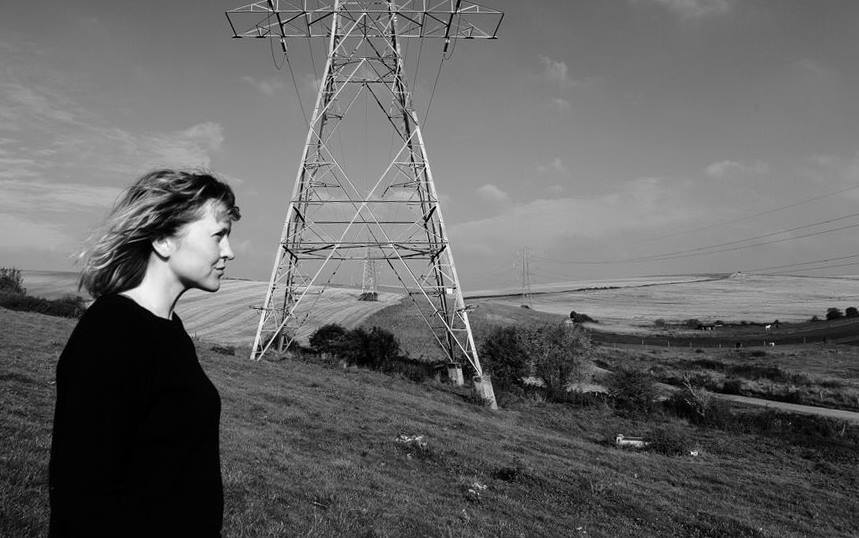
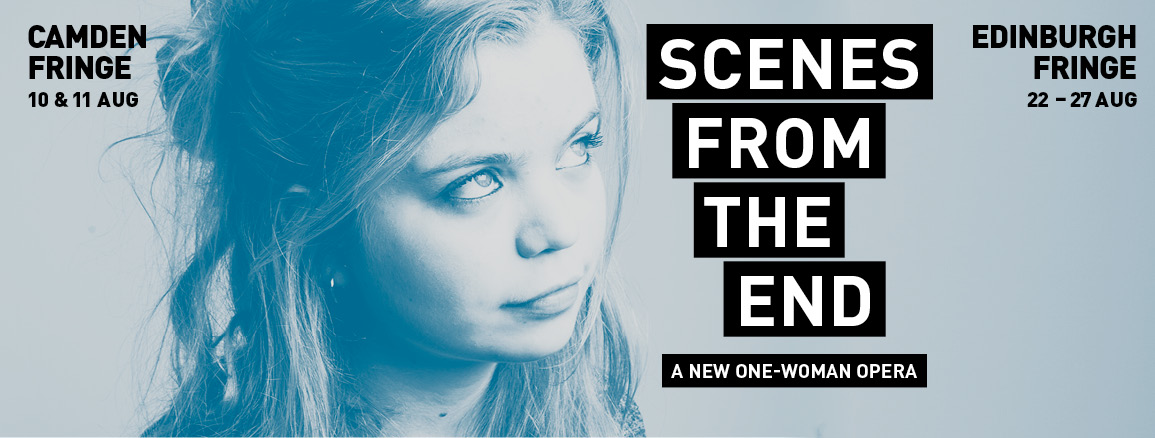
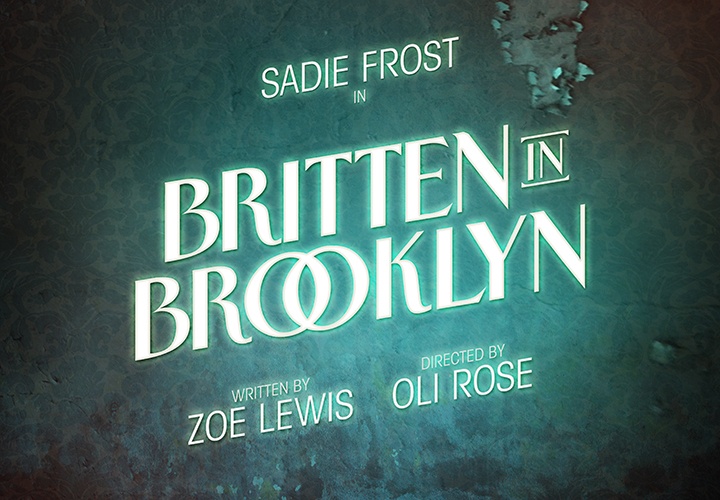
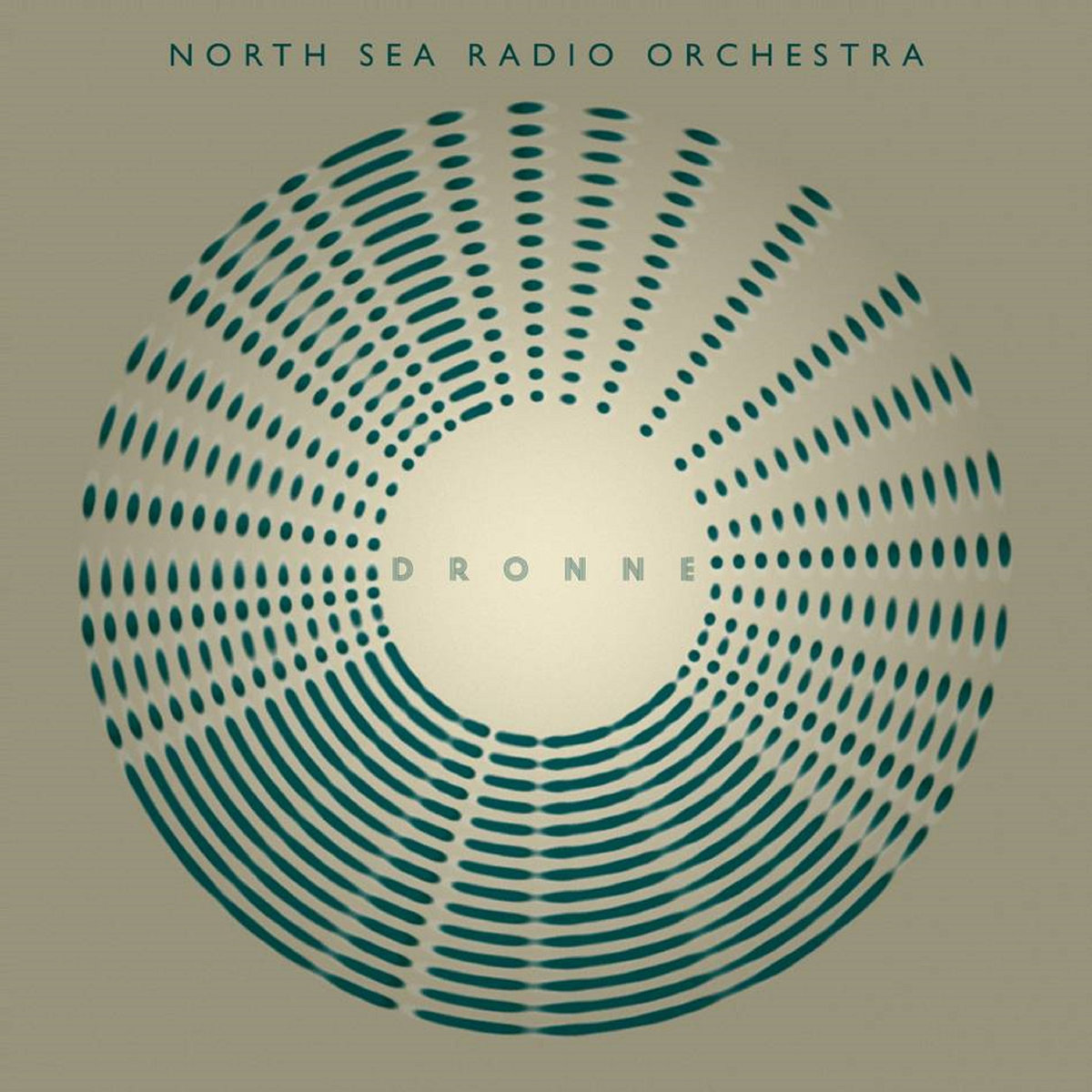


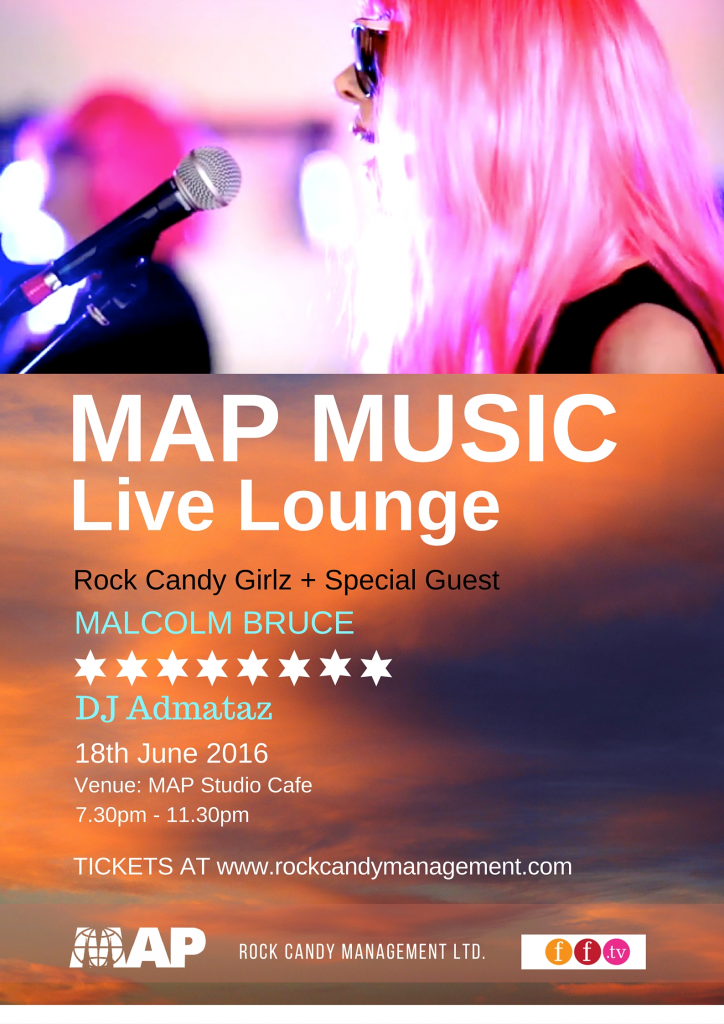


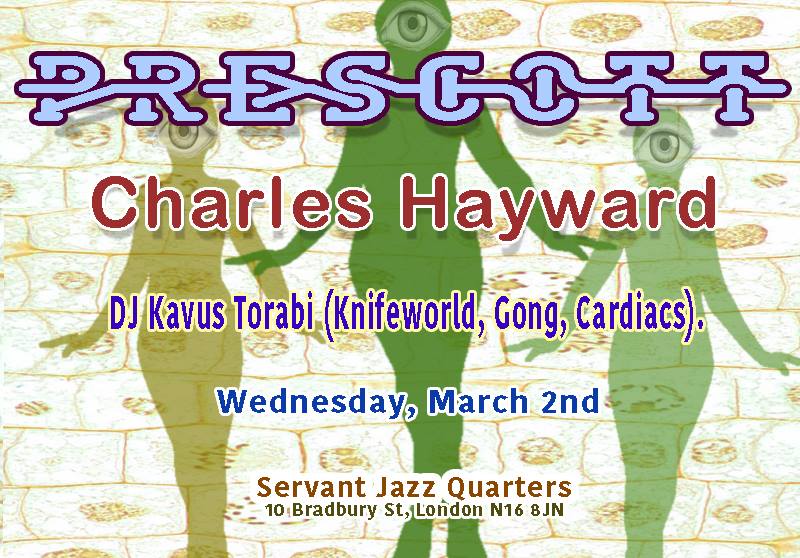


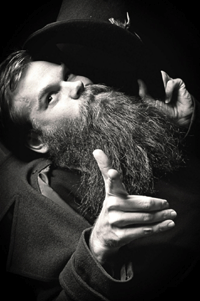

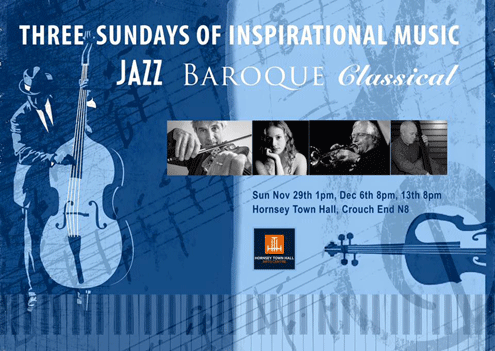
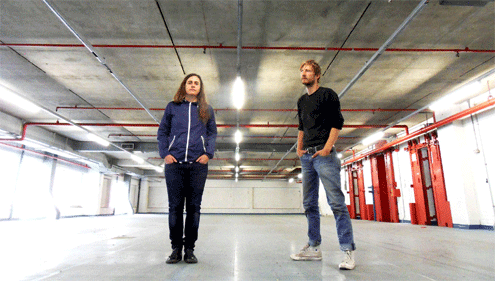


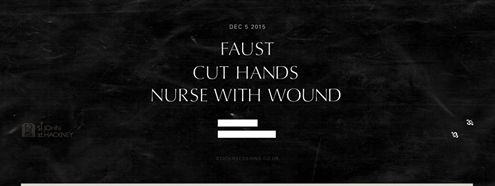


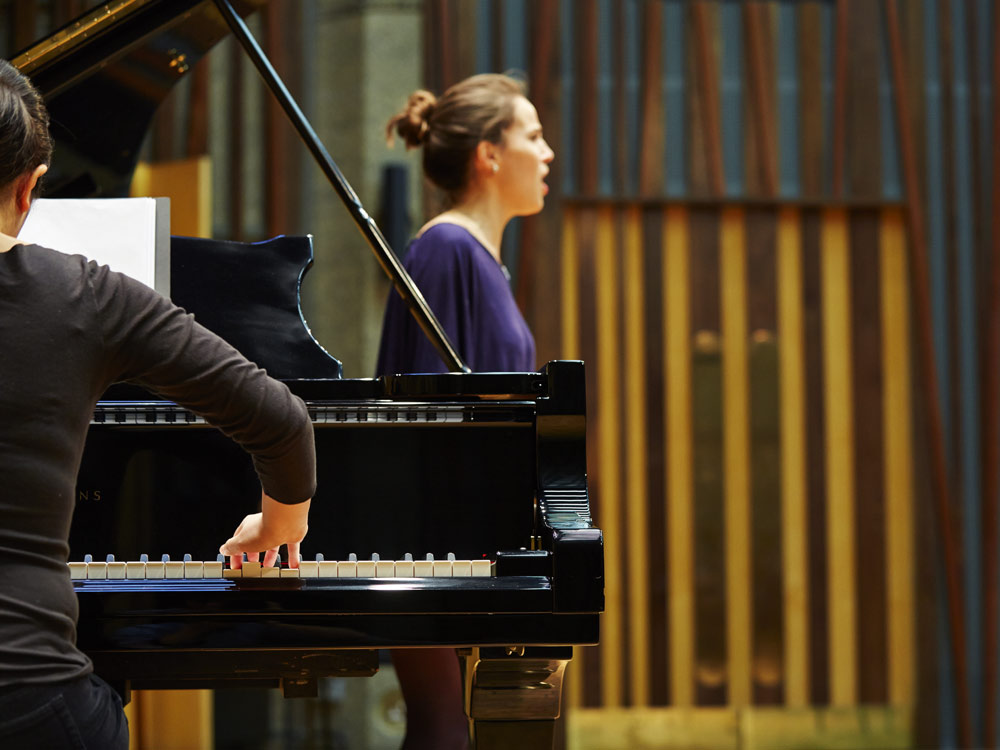


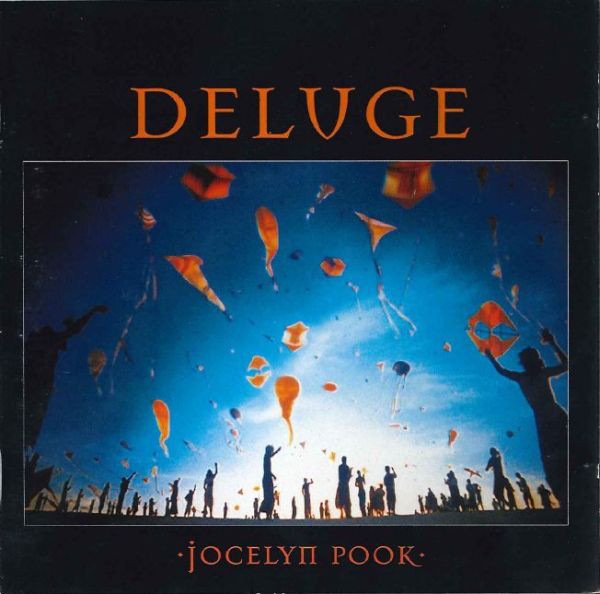


 Misfit City