Bah. I’ve got a swelling head cold and am consequently as thick as a cement omelette. Not the best time to try to preview a complicated experimental evening. Sorry for the vagueness in this post… even more than usual, this is hidden music to be sought out and learned from.
The first Kammer Klang of the year unites various sonic experimentalists from the African diaspora under the curatorship of Taylor Le Melle. That’s probably the best way of putting it: the lack of a portentous event title means it’s not pinned down to any more specific narrative. Though predominantly a writer, Taylor spends a lot of time as a creative enabler (co-running independent publisher PSS and artist/workers’ audio-visual cooperative not/nowhere, and facilitating debate), and this isn’t her first Oto event. I’m assuming that it’s going to throw up ideas from across a broad spectrum of ideas and identities, some of which are outlined here.
Venus Ex Machina (a.k.a. Zimbabwean emigre Nontokozo F. Sihwa) is one of an ever-more visible number of interdisciplinary artists and computer coders eliding non-binary gender ideas into the worlds of music, games and visuals. Interested in “mythical and borderless” radio communication, she’ll be performing her own ‘Anno Lucis’ piece from 2018.
I’ve no idea whether this other Venus piece, ‘Paraquat’, is any reflection of what’s to be performed on the night; but here it is for illumination (with its mixture of Geiger counter industrial twists, ringing friction noise apparently siphoned from the bearings holding up the music of the spheres, and arrestingly vocal synth parts summoning up both heavenly European chapel choirs and complex African alarm whoops).
Attempting to place solo electric guitarist and sonic mystic/realist Morgan Craft involves multiple questions about geography, roots and discovery. A Minnesota-born African-American, he’s an escapee from the New York experimental scene of twenty years ago; but rather than questing directly into Africa he sought refreshment and new paths in the Tuscan mountains of Italy for over a decade (before settling in Amsterdam, where he works with Giulia “Mutamassik” Loli on the Circle of Light label and the Rough Americana project. Now he’s an “Afro-American Viking futurist”, whatever that means. Drawing on the classical legends and contemporary politics of African, European and American cultures alike, his essays sift and fold his multi-positional overview: an expatriate American black man querying his background, a critiquer of capitalist and street culture, a person with one eye on a new dawn due to rise over the muck.
Morgan’s textural guitar pieces are expansive and questioning personal monologues, abstracting manifold concerns into detailed shades. He will be performing his 2018 piece ‘Godel’: here are several earlier pieces from a big releasing burst in 2016.
Montserrat-born Shenece Oretha mostly concerns herself with polyvocality and immediate listening – as she puts it, “choreograph(ing) layers of music, voice, recordings and noise to shape moments of communion and ceremony.” Land-tilling metaphors of potential and nurturing pervade her definition of herself – “hypothetical gardener, future farmer, speculative horticulturalist.” Her sound work, or at least, that of it which I’ve heard so far, is much less pastoral; simultaneously dicing up and unifying strands of black experience from the wounded and fierce to the ecstatic and congregational, from the lone voice ululating to the whumphing in-your-face assertions of co-opted technology.
In addition to Oretha’s Fresh Klang performance – a piece called ‘to plot together, to breathe together’ – Testing Grounds (her “installation with multiple openings”) makes a temporary home at Oto for three days in advance of the show. With spaces for invited guests available (to “accompany the sound and participate in the sounding out”), it’s a live-performed sonic stew “present(ing) and incorporate(ing) her ongoing research project, black whole…, orchestrat(ing) a series of interruptions/interventions ‘in the breaks’.”
Kammer Klang presents:
Kammer Klang: Venus Ex Machina + Morgan Craft + Shenece Oretha Café Oto, 18-22 Ashwin Street, Dalston, London, E8 3DL, England
Tuesday 5th February 2019, 7.30pm – information here, here and here (‘Testing Grounds’ – Saturday 2nd to Monday 4th February 2019, 5-9pm)
A couple of evenings of drone and weird noise for you, here in the Smoke.
* * * * * * * *
Electronic drone choir NYX and Glaswegian electro-acoustic drone instrumentalist Iona Fortune join forces in Bethnal Green during the coming weekend, for what they’re calling “a liminal ceremony” based on an exploration of the I Ching. The latter’s a particular interest of Iona’s – she’s already released the first of a planned octet of releases on the subject. Live, she blends instrumental performance work on the gamelan percussion set and guzheng zither with vintage electronic textures generated by the EMS Synthi AKS (the same early-’70s suitcase synth that’s responsible for early Pink Floyd sequencing, mid-period radiophonics and various Enossifications), via a composition technique which “involves inner cultivation”. For their part, NYX (eight veiled women singing together from behind two tables strewn with vocal sound processors) stress “mindful experiences, psycho-acoustics and sound healing through an immersive exploration of ambient, noise and electronic music”. Expect a mixture of avant-garde eeriness and ancient intimations, then, mixed with a fat emollient smear of New Age healer atmospherics: something silkily psychoactive.
The focus on I Ching divinations might be Iona’s choice, but the sonic method is NYX’s, who are leading a series of similar concerts (this is the third of four, it seems) in which they coax a collaborator to let go of some of their own battery of electronics and/or field recordings and allow NYX to replace it with their own poly-chorused vocal blocks and twinings. A recent ‘If Only’ interview with NYX’s Sian O’Gorman has plenty of talk about mother principles and the like, but it does make them sound genuine: intrigued by the interaction of specific voices with specific bits of electronic kit, and well aware of different vocal practises delved into across hundreds of years and thousands of miles.
They’re also determined – and proud – to promote the female voice, skills and mindset. All performers in the concert series have been women: unsettling folktronica performance artist Gazelle Twin following operatic chanter Hatis Noit, with layering classical/noise minimalist Alicia Jane Turner scheduled for the next event.
Meanwhile here’s a little of Iona working on her own, plus a snippet of NYX working with Gazelle Twin. Chop, edit and remix in your mind’s eye as appropriate.
As a kind of counterbalance to the concert’s Orientalist leanings (for all the sincerity, with this amount of New Agery it can feel as if it’s an act of looking in rather than belonging), the support slot goes to an actual Asian diasporan musician: electronicist Flora Yin-Wong, Chinese-Malaysian by roots but London-born. With an outright interest in club culture and dissonance, Flora seems to be more futurist than tourist but touches on the evening’s mystical tone via her use of field recordings from south-East Asian temples, re-brewed and teased within electronic processing and contemporary beat frameworks. Some of what she does twinkles, but other parts form arresting fields of explosive ritual noise right from the first note – see below.
The following Thursday, up in Manor House, New River Studios plays host to the London launch event for Matthew Shaw‘s “debut” album ‘Among The Never Setting Stars’.
Calling it a debut is a little disingenous, since Matthew’s been putting out music for two decades now. At the turn of the century he sat somewhere between Bark Psychosis, Mojave 3 and a sedated Mike Oldfield, releasing soft-edged, deeply rural dream pop as Tex La Homa. At the start it was murmured acoustic-indie guitar folk – equal parts Drake and Velvets – expanded by synth rills, echo and field recordings; but gradually the singing diminished and the backing tracks became more interesting, the sounds took over and the local Dorset landscape (both physical and psychic, stone circles and solstices) impressed itself ever more deeply on the music. Though Matthew was also spending time helping to add sonic depth and audio subtext to folktronic pop band Sancho, in his own work the pop structures were dissolving away to allow the other ingredients to billow forwards.
By the middle of the decade Matthew was carrying out duo work: bizarre electrophonic ritual music with Nick Grey as 230 Divisadero and theosophical dronery with Andrew Paine as The Blue Tree. Since 2010, he’s run the limited-edition experimental label Apollolaan Recordings and issued a couple of Cornish/antiquarian-slanted location music releases in collaboration with Brian Lavelle as Fougou. Suggesting that he’s only officially going solo now is also a little disingenous – there have been releases under the Matthew Shaw name since he started Apollolaan, with a host of them still on Bandcamp. They’ve explored the usual territories of the recurring mystic tradition – alchemy and magick, psychogeography, cosmic astrology – but without the pomposity that’s usually bundled into the package.
Generally speaking, Matthew comes across as a listener rather than an imposer; travelling from temporary cottage to temporary cottage and from site to site with his guitars, sampler, KAOSS pad and electronics as an itinerant tinker would carry his tools. His work often sounds like an attempt to fuse an English pastoral tradition with spiritual/kosmische protractions and with occult/avant-garde post-punk aesthetics, blending in a folk-inspired interest in the cycles of seasons and life plus the rituals one makes to mark them. Typically New Weird Britain, then – and ‘Among The Never Setting Stars’, true to form, is apparently based around field recordings of “occult landscapes”. I would have expected the resulting pieces to have been more alarming, or at least more disorientating in the standard dark-ambient style (in which thunderheads mass like war in heaven and nature is overwhelmed by random electricity and ferociously foraging ants). On this occasion, however, Matthew seems to have been brought to a pitch of innocent (if slightly eerie) pastoral serenity – his source material buried to the point of absolute dilution or effective erasure beneath a gentle edgeless electrophonic skirl, like a cloud-organ recital in a roofless, open green church.
Also on board for the New River concert are the harsher drone-and-sample-scapes of Anji Cheung. Sometimes these are unnerving, frowning amplifier buzzes rolling over the listener like a gigantic clumsy wheel, with dramatically chopped/distorted/otherwise incomprehensible vocals implying pirate-radio-eavesdropping on a covert ritual. Sometimes they’re car-boot clatter under a lowering sky; sometimes they’re beautiful lost female murmur-melodies stalked by drainage-ditch fuzz. If Matthew’s work remains rural (and white), Anji’s is another aspect of NWB: ambiguously multicultural and urban, mixing and obscuring London and Chinese references, but sounding mostly as if it stems from a place where jerry-built tower blocks break up old fields around the city’s tired periphery and where unknown syncretic practises are carried out (perhaps only half-understood even by the people involved).
Playing hosts are English Heretic, the multimedia collective who for fifteen years have been self-appointed English psycho-historical curators, magickal Situationists and NWB forerunners. They’ve always carried their enthusiastic immersion in all things Britannic, eldritch and peculiar with warmth and wit, embracing the absurd without turning it into a cheap laugh; and putting a more inclusive and welcoming face onto the uncanny, sometimes belying the depth of their work. If I ever need an exorcism (or, more likely, some kind of psychic mediator) I’ll probably give them a call.
Plenty of music can be fed into the English Heretic stewpot – they’ve cited “psychedelic folk, ritual ethnographic recordings, electronica” as part of their fuel, and they’re very happy to drop into thrumming cusp-of-the-’70s psych rock at any opportunity, but in many respect the music’s secondary to the tales and the texts, the visual images and the intimations. Head Heritageur Andy Sharp has mentioned, in ‘The Quietus’, his tendency to extrapolate scraps and findings into something bardic and numimous – “reading around, something will catch your attention, and then I treat it in a magical context: taking the view that restless spirits or troubled souls inhabit the environment.” Sparks from hidden resonances (including those which are actually in plain sight and hearing) permeate the work.
For this particular concert, English Heritage is airing part of the ongoing audio-visual project ‘London’s Imagined Dead: Cinematic Deaths in London’. The section they’ve picked takes its cues from the Brit-horror era of the late ‘60s and early ‘70s: the era which spawned ‘The Wicker Man’ and ‘The Blood on Satan’s Claw’, although they’re focussing on a lesser-known Hammer offering, ‘The Asphyx’. A 1972 tale of horribly botched Victorian research into the transmigration of souls, the film’s final sequence features the cadaverous, wandering-Jew meanderings of the story’s main character, still alive in the 1970s and condemned to a hateful, decrepit, guilt-ridden immortality. That last sequence was filmed at Battersea’s Winstanley Estate, later briefly notorious (in UK garage circles and in tabloid-land) as the home turf of So Solid Crew.
The finale of ‘The Asphyx’. (Well, it was the early ’70s and they’d run out of budget. Just concentrate on the concept…)
Visiting the present-day location, EH have taken note of the estate’s mysterious-looking murals (actually reliefs, carved into the Winstanley’s concrete walls) and have drawn from them to create new visual scores. Full of primal symbols and strange abstracted geometries, the carvings have an ancient air to them; but actually they’re early ‘60s commissions from William Mitchell Design Consultants, formally put up as part of the refurbishment during the estate’s post-war rebuild, and not even a decade old when ‘The Asphyx’ was filmed. English Heretic know this, of course, but are well aware that the ideas which places, objects and initial associations trigger off are at least as important as the actual truth. In this case, they’ve intersected film and building fabric to inspire literal musique concrète. Their pun, not mine. Not that I’m sulking about having been beaten to the punch…
* * * * * * * *
Dates:
comm-une presents:
NYX with Iona Fortune The Pickle Factory, 13-14 The Oval, Bethnal Green, London, E2 9DT, England
Sunday 3rd February 2019, 6.30pm – information here and here
English Heretic presents:
Matthew Shaw + Anji Cheung + English Heretic New River Studios, Ground Floor Unit E, 199 Eade Road, Manor House, London, N4 1DN, England
Thursday 7th February 2019, 8.00pm – information here
Perhaps there’s not a great deal that I need to say about Cassie Kinoshi. The most visible of the current generation of jazzwomen from the Tomorrow’s Warriors Female Collective, she’s clearly on the ascendant, working extensively across the jazz, classical, dance and drama worlds, and with her two-year-old SEED Ensemble now getting high-profile gigs. One of these is at Kings Place this Friday, in which SEED unveil their debut album ‘Driftglass’, showing off the end product of the multicultural London influences which inspire them: groove-based British jazz with strong flavour of West African and Caribbean diasporan music.
If that sounds a bit cuddly, then check out the title – and the combative, sarcastic thump – of the second of the two clips below. It’s a parodic, pointed Mingus-worthy musical representation of white people’s fear-driven misconceptions about black people, drawing on the wildness, grief and defiance of New Orleans funeral music and underpinned by the double-low-end honk-n’razz attack of Theon Cross’ tuba and Rio Kai’s double bass.
* * * * * * * *
Up in Cambridge the following day, guitarist/composer Chris Montague (previously seen in here via his work with Alex Roth and Chris Sharkey in Future Currents) reveals his new project Warmer Than Blood. It’s a trio in which he combines with pianist Kit Downes (Troyka, F-IRE Collective) and bass guitarist Ruth Goller, whose pedigree takes in a host of projects from Acoustic Ladyland to Sephardim ballad revivers Sephiroth plus (amongst others) the manouche of Kamao Quintet, the punk jazz of Let Spin and rough-edged North African-influenced Melt Yourself Down, the Latin folk of Oriole and the up-in-the-air experimental indie-rock of Bug Prentice.
All three are longtime friends and collaborators, seeking yet another new approach. They seem to have found it with Chris’ newest batch of compositions and improvisation-seeding situations, which he suggests consist of “intricate textures, dark pools of harmony, layered melodies, kinetic group improvisation and percussive prepared piano… fractious composed passages can inhabit the same sonic space as spare, ambient melodies, often described as melancholic and uplifting at the same time.”
Warmer Than Blood are a couple of months away from properly recording a debut album, but two live tracks on their homepage point the way in which they’re going. Introverted and ominous, their name-track’s a quiet etiolated piano exploration over a minimal pulsing guitar-chord cycle and locked-in bass rumble. The excerpt from a longer piece, FTM, is a gradual evolver in which Chris hovers in menacing sustain/volume-swell textural clouds and momentary dust-devils over ghost-Latin clicks and bass piano thuds (Kit muting the piano at both ends) before the trio expand into what’s partly a kind of haunted country music (like a Bill Frisell ensemble scoured to the bone by plains wind), and partly like a salsa band coming to terminal grief in a badlands dustbowl.
* * * * * * * *
Back in London, and also on the Saturday, the Barbican’s Milton Court hosts Brooklyn-based “liberation-minded free jazz collective” Irreversible Entanglements. If you’re after a jazz band to represent and reflect these increasingly ugly, stormy, oppressive times from the bottom up, you couldn’t find a better one – but be careful what you wish for. They aren’t an easy listen, and they’ve got no intention of being so.
Free jazz (especially, though not always, when it becomes a hand-me-down in the hands of white musicians) can often be a fussy, elitist abstraction. Irreversible Entanglements uncompromisingly return it to its roots in black radicalism and to an absolute connection to the injustices of society. In doing that, they’re stepping into the first-generation protest-jazz shoes of Archie Shepp, Joseph Jarman, Max Roach, Albert Ayler.
If you’ve been reading ‘Misfit City’ over the last couple of months, you may remember Elaine Mitchener reviving this tradition with her Vocal Classics Of The Black Avant Garde project last month. While operating in a similar field, Irreversible Entanglements have no interest in curating those impetus and protests as museum pieces. Instead, they create their own protest. It should go without saying that they’re tied deeply into the #BlackLivesMatter initiative. Originally forming the band four years ago to play at a Musicians Against Police Brutality event, saxophonist Keir Neuringer, bassist Luke Stewart and poet/proclaimer Camae Ayewa subsequently added trumpeter Aquiles Navarro and drummer Tcheser Holmes for more rhythm and flammability.
The resulting quintet sounds far bigger, far angrier and far more righteous than seems possible, jetting out sheets of rattling, scouring brass over gargantuan shifting rhythms like wrenched building piles. Key to it all is the fierce female voice at the core. Camae’s better known for her Moor Mother solo project, in which she declaims jarring, terrifying accounts of personal and cultural pain over a barrage of hip-hop/slamtronic sound. I’ve written previously about the way in which her deep drilling of psychic scar-tissue within the African-American experience turns her into time-traveller, authorative witness-bearer and angry documentarian. With Irreversible Entanglements, she taps into another heady well of black American cultural memory, this one passed down via saxophones, bop and overblown sheets of sound. It’s not the first time that a jazz band has been centred on a woman’s voice, but you’ll rarely, if ever, have heard it done this way, in which the texts and the delivery not only match the hurricane of music, but simultaneously drive and ride them. This is serious schooling.
In support at Milton Court is Chicago-born, New York-based saxophonist and sound experimentalist Matana Roberts. While it’s not unusual for a jazz player to appear on a record on post-rock spearhead label Constellation, it is unusual for one to be signed to the label. Matana, however, is not a standard jazzer (she prefers the term “sound adventurer”, considering herself to be a hybrid connected to multiple sonic approaches), and she was probably signed more because of her general experimental tendencies than because of her past collaborations with Silver Mt. Zion and with Tortoise members.
An orchestral clarinettist with a politicized background, Matana journeyed through punk, Riot Grrl and avant-garde music to where she is now. Though she seems quite capable of punching out Chicago post-bop/free sax on the stand, she doesn’t restrict herself to standard (though demanding) jazz forms. Instead, she treats music as a prime artistic unifier crossing over into dance, theatre, poetry…. not in itself unusual, but rather than just strapping standard music tropes onto other forms she allows those forms to wash in, dissolving and reforming her approach to her music.
Matana’s best known for her ongoing ‘Coin, Coin’ series, a projected twelve-album project started in 2005 and still in its relatively early stages (it’s about a third done). In this, whether working on her own or with others, she utilises a technique she originally dubbed “panoramic sound quilting”, joining together blocks of noise and scoring from a variety of sources but with an assemblage idea borrowed from rag-bag folk art. In particular when she’s recording alone, her pieces feature multiple Matanas – some rolling out saxophone lines, but many engaged in vocal chants or drones, or layered swatches of conversation. Some sing or scream, or hurtle along the arresting bloodied ribbon that separates the two: like Moor Mother, Matana takes pride in black history and resistance while establishing that it has to be represented via “a certain sound of historical pain. The rawness there goes beyond filters of culture and into filters of humanness.”
Unsurprisingly, her performances have a reputation for being immersive experiences. Sounds like she’ll make the perfect gigmate for Irreversible Entanglements.
* * * * * * * *
Dates:
Jazz re:freshed present:
SEED Ensemble Kings Place, 90 York Way, Kings Cross, London, N1 9AG, England
Friday 1st February 2019, 8.00pm – information here and here
Listen! presents
Warmer Than Blood Unitarian Church, 5 Emmanuel Road, Cambridge, CB1 1JW, England
Saturday 2nd February 2019, 7.30pm – information here and here
Irreversible Entanglements + Matana Roberts
Milton Court Concert Hall @ Guildhall School of Music & Drama, Silk Street, Barbican, London, EC2Y 8DT, England
Saturday 2nd February 2019, 7.30pm – information here and here
As Armed With Bow, cellist and synth operator Will Langstone creates layered post-classical loop music with a psychedelic Moog-prog twist, exercising his fascination with cosmic planetarium visions, space voyaging and the like. The show he’s headlining at 93 Feet East this Wednesday will present his ‘First Encounter’ piece: a “four-part space odyssey conjured through cello, synthesizer, and four analog tape emulators” and a collaboration with dancer-choreographer Portia van de Braam.
Under his Devon Loch alias, Richard Greenan (founder of exotic miscellania label Kit Records) will play a set of his own. It’s touted as a “hybrid live/DJ performance, combining manipulated classical, field recordings and live electronics.” Presumably, it also draws on the sweetly warped ambience of his recorded work, with its protracted porcelain-tinkling post-Cluster synths, its Satie-citing frosted parlour-piano knots, its unexpected moments of gentle folk guitar and its subtle, surrealist-radio-inspired electronic disruptions.
On formal DJ duties, there’s Francesco Fusaro – journalist, broadcaster and co-curator of smart/knowingly bizarre Anglo-Italian mutant dance/post-classical label MFZ and the 19’40”“anti-classical” recording series and, as “Froz”, occasional trap techno-musician (something which he approaches with the same thoughtful dedication and whimsical wit as his other work).
* * * * * * * *
A couple of days later at IKLECTIK, UnicaZürn (the longstanding team-up between Arkkon/Shock Headed Peters guitarist David Knight and Coil/Cyclobe’s keyboards-and-reeds player Stephen Thrower) resurface to play music from their new album accompanied by one of their regular friends, Guapo percussionist Dave Smith.
There aren’t too many details, but I’m guessing that it continues the scenic but chilly slow-evolving boil of waterside atmospherics and psychedelic sound-painting which they’ve displayed on their previous albums ‘Transpandorem’, ‘Temporal Bends’ and ‘Dark Earth Distillery’: a lapping tidal cascade of heavily treated guitars and saxophones, stratified synth textures and ringing light patterns. It’s the sound that emerges when you’re charmed and transfixed by the water-and-light textures and presences of the sea and river scapes you live beside, but keep having them disrupted and transformed by feed-in from the third eye perspective you’ve also maintained.
Fellow Touch label artists Howlround (named after splurging patterns of electronic audio-visual feedback and centred on itinerant sound designers Robin “The Fog” Warren and Chris Weaver) are also performing. They’re happy to retrofit not just from old BBC Radiophonic Workshop concepts, but from a fair amount of the original technology. I can’t vouch for where all of their gear comes from (though they reject artificial reverb and computer processing), but they’re usually to be found manipulating a quartet of old reel-to-reel tape machines, to the extent that it’s a creative and performance trademark. Frequently, they produce site-specific sounds, on-the-spot film soundtracks and made-to-measure musique concrete.
Much of Howlround’s output sounds like studio offcuts – bleedthroughs and bloopings, bits of strange reverb, amplifier grumbles, signal chain malfunctions swept up from the floor. What’s surprising is how these elements are cleverly recombined into new pieces – not novelty cut-ups, as you might expect, but a pleasingly spooky chamber music which also sometimes shows off their ability to twine surprisingly sweet melodies into the noise. Both Simon Reynolds and ‘The Quietus’ reckon that they’re hauntological. If so, the haunts in question are beloved rooms where the ghosts of technicians and visionary tinkerers linger, prolonging the memories of three decades of sonic experimentation and the summoning of peculiar, arresting, inspiring aural landscapes.
(Re that last little flight of fancy – I think it’s worth mentioning that Robin actually did do something like this back in 2011 – prowling the corridors of onetime BBC World Service home Bush House, and first capturing and then reworking the ambience before the Beeb moved out for good.)
* * * * * * * *
Dates:
Distroed presents:
Armed With Bow & Portia van de Braam + Devon Loch + Francesco Fusaro 93 Feet East, 150 Brick Lane, Shoreditch, London, E1 6QL, England
Wednesday 30th January 2019, 7.30pm – information here, here
Touch presents…
UnicaZürn + Howlround IKLECTIK, Old Paradise Yard, 20 Carlisle Lane, Waterloo, London, SE1 7LG, England
Friday 1st February 2019, 7.30pm – information here, here and here
The Yacht Club – playing a free show in east London this week – have been accused of sullying their math-rock beginnings. If so, that’s all for the better, especially since math-rock has only been one component in their racing musical engine. Listening back to their early recordings from 2013, it’s clear that the core has always been Marcus Gooda’s desire to express himself in tumbling, outrightly emotional pop songs: but ones which are often better suited to cascades of notes, harmonic busyness and pushbacks against rhythm.
Other people’s ideas of stylistic restriction don’t really suite The Yacht Club – their music might thrive on additional dimensions and complexity, but it doesn’t thrive on being tethered to anything in particular. Across their five year career, they’ve pushed against the grain. For a while – while transient guitarist Dale Robinson was still in the ranks – they even sounded like the early Prefab Sprout, back before Paddy McAloon’s hedge-literateur songwriting had been buffed to a glossy sheen by Thomas Dolby and he was still rolling along like a tumbleweed of Irish arguments on the way to a fine art degree, snagging against James Joyce and Captain Beefheart on the way.
Having said that, although Yacht Club arrangements have tingled and tangled – guitars following their own cunning little patterns, popping their heads out in unexpected places – Marcus has always been a more direct, less whimsical songwriter than Paddy. Rip away most of that sparkling guitar bricolage and you’re left with soft cries from the heart, a prolonged sweet-ache adolescence with uncertainties and tremulous reach-outs, but no particular questionings of self or stance. Perhaps that’s why people also sometimes slap the emo tag on them, though they’ve got little in common with bawling, punky heart-on-sleeve confessionals. Recent songs see the band very much secondary to the interplay of Marcus’ voice and acoustic guitar, with the project now sounding like a meeting point between Aztec Camera, Boo Hewerdine and Michael Hedges with a touch of latterday pop polish, occasionally crashing into melodious electric thunder.
In a number of respects, Deafpony resemble the headliners. Their bedrock is a crystalline-clean guitar pop sound in which even when the distortion comes sailing in for assorted breaks it sounds impeccably buffed. Theirs is a rebuilt classic guitar-pop model with a brushup, based around a studied clear melancholy and boy-gang harmonising.
This vein of songwriting tends to be full of Big Star copyists, but in Deafpony’s case they’re more like science-fiction movie clones – beautifully turned out and improved on the surface, with a slightly unsettling mannequin perfection that sets them apart from the original; several strides up the other slope of the uncanny valley. Even their hints of emo roots feel lab-tinkering, obscured by reconstruction. Similarly, their music sometimes feels like flying through an architectural model of feeling. Not phony, don’t get me wrong; but somehow they’re turning the idea of perfect pop into a kind of mysterious hinterland. If they burp onstage it’ll destroy everything.
Self-described as a “brand-spanking-new poppy rocky twiddly band”, Wild Tales are actually relative veterans who’ve given themselves what I can best describe as a “method facelift”. Stemming from two previous gangs of Guildford indie rockers (predominantly Trails, with some in Atiptoe) but now reshuffled and renamed, they take the rampant cavorting meanders of guitarist Iain Kerr’s original math-prog guitar lines, march them promptly into a song-forge, and hammer them briskly into slick chord-clambering new work (abundant with pop hooks, grab-riffs and frontman Adam Rains’ join-in lyrics).
As such, they’re a cheering and uplifting opening act in what looks set to be an evening of cleverness and cleanliness. You can vote amongst yourselves as to whether you’re annoyed at the cleanliness. Personally, I’m happy to take the cleverness.
Beth Shalom Records presents:
The Yacht Club + Deafpony + Wild Tales The Sebright Arms, 33-35 Coate Street, Bethnal Green, London, E2 9AG, England
Saturday 26th January 2019, 7.30pm – free event – information here
Not too long ago I was bitching about post-rock (probably not for the first time) and how it had been corralled – especially in its math rock iteration – by reductionists who turned it into something dour and clunking.
At the time, one of the bands I excluded from the griping was Rumour Cubes – a conglomeration of classical refugees and of malcontents from post-rock’s straighter/blander end, aiming to revitalise the genre via honesty regarding all influences. They attempted to engage audiences (rather than passively endure them), and continually shifted their expanded lineup around by agglutinizing with poets and visual artists. Back then I hymned the Cubes’ “slow-building pastoral ecstasy”, their seeking of “a sweet spot that’s more country and roots than graphs and laboratory”, their “delightful merge-point between the rustic and the highly technological”.
Looking back, I realise that this could have backfired in that I might be making Rumour Cubes sound like a self-regarding Anglo-Americana take on the form: musical humblebraggers with fake straws in their teeth. Certainly, if you’re coming from a Godspeed You Black Emperor! perspective of stern, black-flagged resistance to death-spiral capitalism and its dirty ops, there’s enough in their arts-and-crafts wholesomeness to annoy you.
Time, then, to acknowledge the fact that the Cubes are a political band too. They’ve persistently touched on hip hop with their inviting of guest rappers into the mix, and recently explicitly identified themselves with anti-right-wing resistance via two themed singles last autumn. While they might not be growling about black helicopters, horrible winds of death and dying governments pulling us all into the chasm, they’re currently trying to push back against “the hollow nationalism that has infected our politics and allowed far-right narratives to become normalised” and aim to highlight “the true face of Brexit and Trump: racist and fascist projects that threaten our values of tolerance, diversity and freedom of expression.”
A Flicker Of Empty Flags and ¡No Pasarán! – both of which you’ll hear at their London gig this coming Thursday – sound like the first gusts of a dirty, heralding wind blowing through a cosy latterday folk session: a bit of Godspeed-ing minus the concrete dankness and the permanent frowning dusk. Still a little cosy, perhaps, but this is an honest attempt to re-engage and to grasp the nettle.
In support, there’s a couple of singer-songwriters. Norwegian/Thai-rooted Londoner Brudini offers melodic noir-pop in the same darkened-crooner vein of Michael J. Sheehy or David Hurn, although he’s more conspicuously glam-dazzled than either: another loper down the boulevards of Baudelaire and Jim Morrison. Rolling funk/rare-groove rhythms, watchful piano and occasional brass frame his weary, distracted lover’s voice. Last year’s Reflections encapsulates his hooded Soho-boho obsessions and the dark romantic tropes he re-imbues with meaning (“out in the night, my beautiful machine, /in the depths of your eyes, an animal on its knees”). His earlier collaborations with Californian storyteller Chip Martin – wounded, picked-out soundtracks to doomed, unsettling romantic encounters which are as surreal as they’re anonymous – seal the deal.
Opening the evening, Silent Cities (Durham singer-songwriter Simon Maddison) creates spooky modern-day urban dream-folk in breathy whispers and heady falsetto, wreathing it with smoke-rings of gently but insistently effected guitar and gusting ambience as his songs manoeuvre themselves in and out of magical realms.
Lost In The Manor presents:
Rumour Cubes + Brudini + Silent Cities The Finsbury, 336 Green Lanes, Finsbury Park,London, N4 1BY, England
Thursday 24th January 2019, 7.30pm – information here, here and here
On 23rd January, Richard Causton’s new orchestral piece ‘Ik zeg: NU’ (‘I Say: NOW’) receives its debut performance courtesy of the BBC Symphony Orchestra. It’s in good company; sitting alongside a double bill of Brahms’s Third Symphony and Schumann’s heart-on-sleeve Cello Concerto, conceived to “celebrate the friendship and musical kinship between the two composers”, conducted by Sakari Oramo and with Stephen Isserlis doing the cello honours for the Schumann.
Richard Causton
But let’s focus on the Causton piece. A pleasantly humble, persistently thoughtful composer, he’s consistently delivered the goods for over twenty years now, coming up with carefully-conceived and intuitively shaped compositions. Rather too many contemporary composers hide behind their lofty concepts and allow the verbal summaries to make up for shortfalls in musical communication or audience connection. This isn’t the case here – Richard specialises not in the kind of pieces which provide concertgoer kudos without any particular joy and enlightenment, but the kind which gently, kindly set the intelligence humming. Regardless of your level of classical cultivation, you tend to leave a performance of a Causton piece feeling cleverer and more enthused than you did when you went in. It’s a rare gift, whether you’re talking about something wielded or something given.
In a recent interview with ‘Final Note’ magazine, Richard sheds some light on the new work, which is inspired by family history and the sudden sense of being set against larger, more confusing/difficult-to-process events, while also drawing comparisons between life and music. “…It’s always slipping through your fingers and if you’re lucky enough you might have some wonderful time, but you can never keep it… Music can do things with time that no other art form can… (it) can have a complex and oblique relationship with clock time; it can intensify or stretch it…. There’s a lot of fast music, which is also quite static; it’s like when you walk past a school playground you can hear so many different games, voices and conversations, and with all that going on it can still seem static – but at the same time playful and too rapid to grasp properly. We can stand back and listen to it as one big landscape. There are other parts of my piece that are extremely slow, but transform gradually over time, which can force us into a very slow place of listening. In the collision of these two kinds of music the ear is pulled in different directions.”
On 7th February, veteran Hungarian composer Peter Eötvös conducts his own new piece ‘Multiversum’ for the Philharmonia Orchestra. Written for orchestra, pipe organ (played by Iveta Apkalna) and – unusually – a Hammond organ to be played by László Fassang (and chosen as an instrument for its timbral ability to “continuously change colours” ), it’s a reiteration of space-age wonder which arrives at a time when awareness of space exploration and research is on the upturn.
It’s also an exploration of deep-level physics: Peter, who has previous form for experimenting with amplified instrument technology (not least during a lengthy spell as Stockhausen’s engineer, copyist, conductor and general utility man) and for investigating cosmically-slanted compositions, comments that “since Yuri Gagarin´s journey into space in 1961, technological advancements have caused us to marvel at the miracle of the cosmos. Research like Witten´s theory of the eleven dimensions and string theory has astounded us with its speculation on the nature of outer space, and has spurred me on in my compositional fantasy.”
In an interview this month on ‘Bachtrack’, Peter confesses that he’s been fascinated with the idea of creating a giant ambient cosmic sound since he was a teenager, and throws some more light on the conception and arrangement of the piece, including the unusual but carefully-considered positioning of the musicians onstage to provide the right kind of sonic wraparound.
‘Multiversum’ comprises the second half of a performance which also includes Schoenberg’s ‘Accompaniment to an Imaginary Film Scene’, Bartók’s ‘Dance Suite’ and Stravinsky’s ‘Symphony in Three Movements’, all chosen for their rhythmic charge and twitching nervous orchestral energy.
Obviously there are no advance clips for listening to, but here are a couple of previous Causton and Eötvös works for the curious…
* * * * * * * *
Dates:
BBC Symphony Orchestra/Sakari Oramo/Steven Isserlis: ‘Richard Causton, Schumann and Brahms’
Barbican Hall @ Barbican Arts Centre, Silk Street, Barbican, London, EC2Y 8DS, England
Wednesday 23rd January 2019, 7.30pm – information here
Philharmonia Orchestra/Peter Eötvös/Iveta Apkalna/László Fassang: ‘Bartók, Stravinsky & Eötvös’ Royal Festival Hall, Southbank Centre, Belvedere Road, Waterloo, London, SE1 8XX, England
Thursday 7th February 2019, 7.30pm – information here
A couple of gigs happening at Electrowerkz demonstrate that the noisy, beaty, psychedelic end of things is alive and in rude health in London. In such rude health, in fact, that I’m not even sure that they need me to provide this last-week/last-fortnight push, but I’ll just briefly go through the details anyway…
* * * * * * * *
Ripping the can open on the 25th January is Baba Yaga’s Hut’s Fun House show, an expansion of the launch of the third album by noise-band-cum-two-man-sound-system Gum Takes Tooth (keyboardist/vocalist Jussi Brightmore and percussionist Tom Fug). Preoccupied by the ravenous, toxic/intoxicated development frenzies which envelop contemporary cities (and not least the Aldgate neighbourhood where Jussi’s been working), ‘Arrow’ is a turnaround from GTT’s previous cosmic flights, dropping back to street level and to a more urgent, less indulgent headspace which they define as centring around “gentrification, uncertainty, self-empowerment” as well as meditations on the incitements to tribal violence and competition which become ever louder in the current environment.
More on all of that in this recent ‘Wire’ article; a sample of what’s to come is below.
Gum Takes Tooth, 2018
In support are growling, echoey sax-and-clang drone-rockers Sex Swing, whom I described last time around as “inhabit(ing) a post-Can, post-Suicide hinterland of hell, spring-echoed and tannoy-vocaled – a sinister quotidian landscape of blank anomie and oppression; a Los Alamos penal colony haunted by uranium ghosts, ancient Morse telegraphs, metal fatigue and the zombie husks of Albert Ayler and Ian Curtis.” (I must have been feeling a bit excitable.)
Also on hand are made-up-on-the-spot dirty-techno act Coldnose (acid house turned sharling acid factory), Factory Floor/Kaito/Carter Tutti Void person and cut-up industrial electronicist Nik Colk Void; plus the mysterious Michael (one of those unknown acts whom Baba Yaga regularly pluck out of the darkness which only they know about).
Over in the side room there’s a cluster of successive DJs from sympathetic bands and labels – Rocket Recordings’ own Chris Reeder, plus Rikard from Flowers Must Die, Valentina Magaletti from Tomaga, G&T (from Luminous Bodies / Melting Hand) and what may well be the whole of avant-techno rockers Teeth Of The Sea.
* * * * * * * *
On the 2nd February, noisejazzmetalprogfolkoustic promoters Chaos Theory (responsible for the Facemelter, Whispers & Hurricanes and Jazz Market) spend a day celebrating their nine-year-anniversary. Remarkable to think that they’ve been going that long without burnout – it must have something to do with the fact that main Chaosician Kumal Singh’s personal outlook seems to be as sunny as his bill choices are often gnarly, dark and/or earshredding. Loudness therapy, perhaps. At any rate, Chaos Theory has two rooms full of their favoured freaks; lit and otherwise illustrated by Emily Bailey, dotted with artwork by Sagui and also featuring a virtual reality installation by Nicola Plant.
Unsurprisingly, the fourteen-band lineup they’ve prepared feature a number of acts who’ve danced through previous ‘Misfit City’ posts. I’m already familiar with drums-and-noise “happenings” inciters Sly & The Family Drone (with their all-in approach to audience drumming participation), the triple-headed avant-garde women’s sketchpad V Ä L V Ē (with their scope running from reed-honking prog to post-punk glee singalongs to homemade instrumentation – see multiple posts passim), and convoluted Zappa-esque stunt-brass rockers The Display Team (who take the business of living up to their name pretty seriously, but don’t take much else very seriously). Among those I haven’t covered yet, I know that Medway post-rockers Upcdownc have been plying their grand noise since 2005: always looming on the sidelines. I also now know that although Cold In Berlin‘s name makes them sound as if they’re an earnest neoprog band trying to rip off John Le Carre, they’re actually grand-scale post-punkers adding hallucinatory body to their songs via textural guitar like a muezzin’s nightmare.
I’m less familiar with the knot of assorted metallics in the middle. Heavy Essex doomproggers Earthmass; cosmologically/geometrically-preoccupied Sheffield mathboys Body Hound (featuring former members of Rolo Tomassi and Antares); sludge-stoners Prisa Mata, female-fronted slowgrinder duo Bismuth; cross-country prog-metallers PSOTY. But for me, a little metal generally goes a long way, and I’m more interested in the other sounds spicing the mix. Enigmatic, theatrical electronic performer UKAEA (half of Gun Cleaner) seems to swing wildly between pelting techno dance sets on the one hand and ranting performance art (complete with masked violinists) on the other. Then there are the acts which have spilled in from acoustic-ish CT clubnight Whispers & Hurricanes – hammered-dulcimer-toting Fear Of The Forest frontwoman Kate Arnold and jazz harpist Tori Handley. Experimental mood cellist Jo Quail flits mysteriously between gigs in churches and disreputable art cellars like this one, has fairly recently put out a heavy-metal-influenced album called ‘Exsolve’ and will be working up a new project for the 9 Years show (although, given the involvement of various people from Wren, it will presumably be some kind of stately sludge-tone…)
Central to the occasion, though, is Gothic dream-pop siren Evi Vine, who’s using the occasion to launch her ‘Black/Light/White/Dark’ album (including contributions from various Cure men and Nephilim-ites, if you’re familiar with your hats’n’backcombing icons.)
A wall of Chaosnoise follows for those who wanted to keep up with the metal from earlier in the post…
* * * * * * * *
Dates:
Baba Yaga’s Hut presents:
Fun House: Gum Takes Tooth + Sex Swing + Nik Void + Michael + Coldnose + various DJs Electrowerkz, 7 Torrens Street, Islington, London, EC1V 1NQ, England
Friday 25th January 2019, 9.00pm – information here and here
Chaos Theory Promotions presents:
9 Years Of Chaos Festival Electrowerkz, 7 Torrens Street, Islington, London, EC1V 1NQ, England
Saturday 2nd February 2019, 2.00pm– information here, here and here
Nonclassical open their year with their annual Battle of the Bands at their live homebase in Hackney’s Victoria performance pub. Six competitors will be duking it out for industry attention and more Nonclassical gig opportunities. As usual, they’ve been chosen from the permeable space where contemporary classical touches on other musical forms, on other arts and on current concerns.
There will be two solo performers. Woodwind specialist James Hurst will be swapping between alto saxophone and alto recorder to perform his own ‘The Descent of Ishtar To The Underworld’, a guided, Bronze Age-inspired improvisation. Reylon Yount, a San Franciscan Chinese-American yangqin player and member of Yo-Yo Ma’s Silk Road Ensemble, will be performing the diasporan-influenced sound exploration ‘Rituals and Resonances for Solo Yangqin’ by Chinese-British composer Alex Ho, which “attempts to engage with the paradoxical sense of nostalgia one may feel for a place one did not grow up in” via “an exploration of the relationship between sound and its resonance.”
Three collectives are also competing. Chamber ensemble Scordatura Women’s Music Collective champion and perform the work of female composers, both living and dead: on this occasion, they’ll be performing ‘Las Sombras de los Apus’ by Gabriela Lena Frank, a cello quartet in which each instrument plays in a different tuning. The recently-formed New Music group 4|12 Collective will be playing James Saunders’ Instruments with Recordings (with a lineup of viola player Toby Cook, flautist Epsie Thompson, accordionist Giancarlo Palena, bassoonist Olivia Palmer-Baker, trombonist Benny Vernon and tuba player Stuart Beard).
Rita Says & The Jerico Orchestra (performing Paragraph 7 of ‘The Great Learning’ by Cornelius Cardew) have been around a little longer: over the past decade, they’ve been working at “defin(ing) a connection between fine art performance practise and the history of contemporary music”, exploring a spontaneous blend of physical action and visual interaction to create and conduct pieces.
Finally, there’s composer/performer and Filthy Lucre co-founder Joe Bates, who pitches his camp on the faultline between contemporary classical music and avant-rock, hip hop and electronics; and whose artistic interests include “desire at a remove” and “the decline of classical music’s social prestige and the possibilities for its future.” His music blends contemporary classical structures and instrumentation options with “intense, still, driven riffs” and harmonies from rock and other pop forms. On this occasion, he’ll be playing pieces from his microtonal synthesiser suite/EP ‘Flim Flam’.
If you’re sympathetic to Scordatura’s role as feminist music historians and curators, you might like to know that they’re popping up again in Abingdon, Oxfordshire in early February – as part of the Abbey Chamber Concerts series.
Their 3rd February gig, titled as “Celebrating Clara” (and utilising a shifting duo/trio/quartet formation of clarinettist Poppy Beddoe, violinist Claudia Fuller, cellist Rachel Watson and pianist Thomas Ang) ostensibly showcases Clara Schumann, the similarly talented but undervalued composer-pianist married to Robert Schumann. They’ll be playing one Schumann piece – the Piano Trio in G minor – and possibly some of her clarinet work, but the remaining programme slots are given over to the work of other female composers. Contemporary composer Cecilia McDowall’s chamber piece ‘Cavatina at Midnight’ is followed by the Victorian ‘Piano Suite in E major’ by Clara Schumann’s contemporary Ethel Smyth.
The last piece is by Fanny Hensel ( ‘Fantasia for Cello and Piano’) a.ka. Fanny Mendelssohn, whose life was a sometimes-uncomfortable reiterating mirror of Clara’s. Both were similarly talented intimates of established composers (one a wife, the other a sister); both had surprisingly encouraging husbands; both were also tutored and driven by demanding fathers who established excellence in them. Both, too, were ultimately constrained as composers by the discouragements and domestic responsibilities forced upon women of their times, with the men in their families often acting with a frustrating mixture of systematic positive pressure and patriarchal forbiddings. (Felix Mendelssohn, for instance, was a devoted, championing brother who found that he drew the line at Fanny entering the canon of published composers.)
* * * * * * * *
Overlapping these two concerts is a British/Irish mini-tour by Gyða Valtýsdóttir – still known as the former cellist for Iceland experimental pop band Múm even though she only played on two of their albums and has been out of the band for sixteen years.
Having immediately returned, post-Múm, to her classical roots (formally studying, graduating and applying herself to classical cello) Gyða’s spent the time since then in the genre-stepping world of the modern post-classical musician. Outside of the classical gigs, rent-paying but artistically respectable engagements adding stringwork to records or tours by Sigur Ros’ Jónsi, Damien Rice and Colin Stetson have alternated with assorted film, dance, theatre and installation music around the world, as well as bouts of free improvisation gigs. Allied with her twin sister and ex-Múm bandmate Kristín Anna, Gyða also added a “reciprocal twin” component to Aaron and Bryce Dessner’s 2015 song cycle ‘Forever Love’, conceived and delivered with performance artists Ragnar Kjartansson.
Although Gyða’s latest personal release (last year’s ‘Evolution’) features her own compositions and a return to her Múm-era multi-instrumentalism – and although some of those songs will get an airing – this tour focusses mostly on her 2017 solo debut ‘Epicycle‘, a two-millennia-spanning exercise in musical commonality and reconfiguration originally intended as “a gift for friends” on which Schubert, Schumann and Messiaen rub shoulders with Harry Partsch, George Crumb, Hildegard von Bingen and the nineteen-hundred year old Seikilos Epitaph. The album was an Icelandic smash hit and a talking point elsewhere: a classical debut recorded with the immediacy of a jazz record and with a broad-minded disregard for purity, bringing in upfront studio processing techniques and stylings/instrumental responses from other traditions from jazz to ancient folk to experimental post-rock.
On tour, she’s performing with her Epicycle trio, also featuring multi-instrumentalist Shahzad Ismaily (on guitar, synthesizer, percussion and anything else which needs playing) and drummer Julian Sartorius, both of whom played on the record.
* * * * * * * *
Dates:
Nonclassical presents:
Nonclassical: Battle of the Bands
The Victoria, 451 Queensbridge Road, E8 3AS London, United Kingdom
Wednesday 23rd January 2019, 8.00pm – information here, here and here
Abbey Chamber Concerts present:
Scordatura: Women’s Music Collective: ‘Celebrating Clara’
St Nicolas’ Church, Market Place, Abingdon-on-Thames, Oxfordshire OX14 3HF
Sunday 3rd February 2019, 3.00pm – information here, here and here
Gyða Valtýsdóttir – ‘Epicycle’ tour:
Norwich Arts Centre, 51 St. Benedicts Street, Norwich, NR2 4PG, England, Tuesday 29th January 2019, 8.00pm – information here, here and here
Kings Place, 90 York Way, Kings Cross, London, N1 9AG, England, Wednesday 30th January 2019, 7.30pm – information here and here
The Metropolitan Arts Centre, 10 Exchange St West, Belfast, BT1 2NJ, Northern Ireland, Thursday 31st January 2019 – no further information
Dublin Unitarian Church, 112 Saint Stephen’s Green, Dublin, D02 YP23, Ireland, Friday 1st February 2019, 8.00pm – information here and here
Summerhall, 1 Summerhall, Edinburgh, EH9 1PL, Scotland, Sunday 3rd February 2019, 8.00pm – information here and here
Since relocating to his ancestral Warsaw last summer, in search of greater connection with his Polish-Jewish roots, English jazz-plus guitarist Alex Roth has been busying himself with musical conceptual work around the concepts of “migration, identity and connection”. As you’d expect, it’s implicitly connected with his own personal mindset, as he lays out in his latest news update. “My great-great-grandfather Herschel Roth came to the UK around 1890 from Kalisz, an ancient town now in central Poland but then under Russian rule. Fleeing the pogroms against Jews that were sweeping across the region, Herschel ended up in London’s East End, adopting the Anglicised name Harris. Over a century later, I’m retracing a migratory path that he and many other Jewish families took; the difference (other than the direction of travel) is that they made the journey out of desperation and fear, whereas I came to Poland filled with curiosity and hope.”
Back home (if “home” really is England anymore) Alex is known for multiple projects. Perhaps the primary one is Blue-Eyed Hawk (the latterday Mancunian jazz quartet in which he rubs shoulders with Corrie Dick, Lauren Kinsella and Dinosaur leader Laura Jurd), but there’s also been his Future Currents avant-electric guitar trio (with Chris-es Montague and Sharkey) and the twenty-piece Chaos Orchestra supergroup (a kiln-and-delivery method for large-ensemble compositions from rising young British jazz composers). As a guitarist, he leans a little towards the methodology of Bill Frisell or David Torn, with a hint of John Scofield: he might be a master of general jazz technique and knowledge, but his personal musical voice pushes determinedly and painterly towards an urgent, individual electric sound (telling sustain-bolstered swellchime phrases, tearing minimal interjections or focussings on the single note or note-cluster considered, stretched and transformed by non-Western/non-Gentile perceptions of pitch and of meaning).
Having been steeping himself in Polish-Jewish life – both remembered and current – via personal research and a residency at Kraków’s Żydowskie Muzeum Galicja, Alex is about to reveal the fruits of his first efforts via imminent Kraków and London gigs for his new trio with two Polish avant-garde/experimental jazzers – clarinettist Wacław Zimpel and percussionist Hubert Zemler (both of whom have previously worked together in Wacław’s long-form improvising trio LAM, which covers broad terrain between drifting, ever-so-slightly apprehensive cloudwork to triumphal, pumping, upbeat locomotion).
In terms of musical breadth, Alex is more than matched by Wacław, a musician of lambent yet sturdily angelic tone who’s recently made a debut splash or two on the London experimental scene (via visits for gigs at the Rocket Recordings Twenty concert and at Café Oto) as half of Zimpel/Ziołek, in which he and singing guitarist Kuba Ziołek explore electronically-augmented folk-jazz and psychedelia. Folding American minimalism, jazz, contemporary classical and Indian music plus loop-pedal playing into his sheaf of influences, Wacław also has a Hildegard of Bingen project running, has worked as a fifth of Euro-Carnatic quintet Saagara, and has mastered a cross-continental array of reed instruments drawn from Laos and Latvia to Turkey and northern India. As for Hubert, beside the delicacy of his LAM work he’s drummed for prankish Polish alt/jazz/country rockers Mitch & Mitch (and their merry psychedelic/country/Krautrock spinoff Slalom). He’s established himself as one of Poland’s finest improvising percussionists, coming up with anything from precise avant-rock kit-hitting to shifting, galactic free playing with vibraphonists, harpsichordists and more.
Going on past work, this new trio should bundle together a promising mixture of ideas. It’s impossible to predict exactly what they’ll be doing, but it’s tempting to try anyway; evanescence and strength, diasporan motifs, attenuated notes and incidental discoveries along the way, a pick-up-and-make-work method reflecting the wanderings and resilence of Europe’s Jews. It’s not the first time Alex has worked with Jewish themes – they’ve always permeated his work, from the magical Sephardic folk-jazz ensemble Sefiroth (one of multiple Roth collaborations with Alice Zawadzski) to the Otriad project, which is in some ways a direct precursor to Alex’s current work (inspired, as it is, by three Jewish partisan brothers in World War 2 Poland). This is, however, perhaps the first time he’s gone so evidently to geographical source; to places of vivid historical memory.
There’s a scatter of previous, separate work’s below to provide pointers, or perhaps mistaken clues. Also attached is one of Alex’s “słucham” field recordings of Warsaw sounds: not in itself Jewish, but an indication of other possible shapers of the project.
* * * * * * * *
Slicker and groovier – though no less impressive – music is to be heard in London the following week at the Supreme Standards debut evening at Ghost Notes in Peckham (the first in a monthly small-venue extension of the Love Supreme concert initiative).
Led by saxophonist and flautist Edward “Tenderlonious” Cawthorne (the king in an already-winning pack containing keyboard player Aidan Shepherd, trumpeter Nick Walters, slinky bassist Fergus Ireland and the percussion duo of Eddie Hick and Joseph Deenmamode), Ruby Rushton are quiet-storming exemplars of taut but low-key jazz-funk grooves and spacious wind playing. Underneath the flowing, airy melodies, the sextet flick and phase between rhythms and style as if jumping between cousins. You’ll be looking for the gaps and joins, and finding none – Tenderlonious and co. not only make it sound natural, they make their grand plans simultaneously obvious and invisible.
As a group leader and composer, trumpeter and multi-instrumentalist Emma-Jean Thackray has specialised in cheeky, rollicking, lightly disruptive band-writing which doesn’t interfere with her knack for grooves, which seem mostly to be inspired by galumphing aquatic mammals. Her music’s wonky club-music feel – that shimmying, slightly drunken marching-band wobble – disguises the sly precision of the mapping mind behind it. She couldn’t cover it up forever, though. More recently she’s been working solo, with last year’s ‘Ley Lines’ EP revealed as a full solo effort – every composition or bit of production, every instrument, every vocal track, indeed every note handled by Emma herself. (It helps when you’re literally ambidextrous, although possessing huge strategic talent is clearly another bonus).
For her next trick, she’s going to deliver the thing live and alone: presumably a high-wire loop and tape act supplemented by her own remarkable skills. Hints below:
* * * * * * * *
Dates:
Alex Roth/Wacław Zimpel/Hubert Zemler – Żydowskie Muzeum Galicja, ul. Dajwór 18, 31-052 Kraków, Poland, Saturday 19th January 2019, 9.00pm – information here and here
Alex Roth/Wacław Zimpel/Hubert Zemler – Jazz Café POSK, 238-246 King Street, Hammersmith, London, W6 0RF, England, Saturday 26th January 2019, 7.30pm – information here and here
Supreme Standards: Ruby Rushton + Emma-Jean Thackray – Ghost Notes, 95a Rye Lane, Peckham, London, SE15 4ST, England, Thursday 31st January 2019, 7.30pm – information here, here and here
Next week, gloriously wayward singer-songwriter Francis Dunnery revisits his past with It Bites – in solo format – as he takes music from their 1986 debut album ‘The Big Lad In The Windmill’ out on an English micro-tour.
When pompous would-be music tastemakers like myself roll out their list of great pop and rock albums of the 1980s, ‘The Big Lad In The Windmill’ generally isn’t on there. That’s unsurprising. As a decade, the ‘80s sprawled into outspoken ideological polarisation, during which it sometimes seemed as if everyone in popular music was a purist poseur of some kind or other; whether they were swanning about on yachts sporting terrifying ozone-threatening hairstyles, acting out grimly righteous/reductionist salt-of-the-earth positionings, haute-couture megaphoning about The Future or (rather more constructively) hurtling around America in vans trying to build an alternative economy. Perhaps that’s over-simplifying, but it’s certainly true that it was an age of vivid stances, and that some terrible and reductive snobberies developed as a side-effect of said stances and manifestos. In such a time and in such a milieu, ‘The Big Lad’ was the kind of album that wasn’t supposed to happen… and many people seemed (and still seem) to think it shouldn’t have been allowed to happen.
It Bites: ‘The Big Lad In The Windmill’
Admittedly on spec it was also a little preposterous. A shotgun marriage of glutinous, glittery ‘80s pop with hard rock snorts and cartwheeling prog stunts, it was recorded by four self-confessed working-class hicks from England’s gorgeous, isolated Lake District, who also happened to be unfashionably virtuosic as musicians. Possessing a keen ear for pastiche and adaptation, they’d had a prehistory back home as a badly-behaved covers band. Plying the tough Cumbrian circuit of nightclubs and working men’s clubs, they’d mastered reams of contemporary pop hits (Level 42, Police, Haircut 100 and so on) while simultanously nursing a profound love for the 70’s complexity and flourishes of Genesis and Yes, UK and Weather Report. All of which showed by the time they came to write their own stuff. By the mid-‘80s (abetted by resident keyboard popinjay and arrangements genius John Beck), Dunnery was putting together original songs which played on both sets of preoccupations.
Some smartarse once tagged It Bites as “bubblegum prog”, which isn’t too bad a label. It encapsulates the band’s mastery of the kind of throwaway immediate pop tunes which prove to have a tenacious, sticky life of their own: it also takes into account their taste for florid illustrative musical passages. In addition, their playing had a layer of fantasy-funk and soul itch (due to admixtures of Steve Arrington and Prince, plus Dick Nolan’s stalking, slippery bass grooves), and some hard rock crunch (staunch, sturdy drummer Bob Dalton was a Led Zeppelin guy at heart). Collectively, It Bites aspired to the well-drilled, muscular “follow-this” ethic of a black showband; which seemed to be judged as less of a virtue when coming from a white British rock band of the times, where restrictive amateurism or beefy stiffness was the order of the day.
Bear in mind that this was years before white-boy eclecticism inveigled its way back into mainstream rock and pop. Ween were still only releasing home-made cassettes; Jellyfish wouldn’t show up for another three years, and while Frank Zappa stubbornly flew the flag for stylistic fluidity, he was an elder statesman turned cult artiste in a niche of his own. Even Queen had calmed down a bit. Had they slipped into a more parodic approach lyrical approach, It Bites might have suddenly woken up to find that their nearest British equivalents were The Barron Knights. Fortunately, they took themselves a little more seriously: there was silliness in their playful approach, but it was matched by an earnest bravado which won them affection from audiences even as it drew critical disdain.
Once signed by Virgin and given a shot at making a record, It Bites treated it as a once-in-a-lifetime opportunity to throw everything they had into the effort and stir it up like crazy. Throughout ‘The Big Lad’ they’re coltish and restless, latching onto impeccable mainstream pop-rock stylings only to suddenly career off into wildly played, cunningly constructed breaks. Turn Me Loose and I Got You Eating Out Of My Hand mercilessly run straightforward pop songs through a mill of transformational time and mood changes. Almost anything goes – heavy metal, jazz-fusion arrhythmia, Al di Meola flamenco, even the drum machine and Bontempi drone of a narcotized lounge act – although the band backtrack and flawlessly reconstruct the songs at the end.
Producer Alan Shacklock entered into the spirit of things with a vengeance. He kept a “riot track” free in the mix to capture the band’s raucous in-studio jabbering; he delivered a gleefully glittering plastic sound which revelled in every Japanese-digital synth chime, every start/stop noise-gate interruption and every over-exaggerated bit of sound-panning. He also accidentally sped up the master tape, resulting in the band sounding (according to Francis) “like Pinky and Perky.” The result was – and is – a record which feels like a sudden soda pop binge after months away from the stuff.
‘The Big Lad’ is generally remembered for a surprise Top Ten single. Cantering toytown hit Calling All The Heroes married the band’s musical deftness to old Republic serials, rocking cradles and boyhood cowboy games, fuelled by an earworm chorus and some sneaky false endings. (Presumably the Wild West schtick struck a chord with Shacklock – his own early ‘70s prog band Babe Ruth had recorded The Mexican, an Alamo-themed story with which Calling All The Heroes shares a number of passing musical similarities). For many people, this song is where It Bites have been permanently stuck: pegged to a couple of fanfaring pop hooks remembered by almost every Briton who lived through mid-‘80s chart pop. In the video a bleached’n’styled, cutesied-up Dunnery and co. bob nervously, like a loopier Go West, presaging the marketing problems which would plague them for the rest of their existence. Live, they’d pull out the full prog trickbag.
It’s a shame that the album’s glossy, hyperactive surfaces and loop-the-loop stunting make it easy to ignore the substance beneath. Fair enough: something like Wanna Shout mostly exists in order to run demented macho-guitar heroics over stuttering go-go synths, and All In Red does little more than throb like a fourteen-year-old boy’s heat dream of Zeppelin colliding with Level 42. This isn’t the kind of record you put on to remember angry alienation in pre-punk-era Manchester, or to recapture political struggles, or even to remember belonging to anything much (unless it was being part of the crowd which understood the band’s straightforward musical verve and the down-to-earth Cumbrian personalities which bedrocked it).
Yet elsewhere on ‘The Big Lad’, genuine stories about real people emerge from beneath Beck’s thunderous keyboard chimes and Dunnery’s barrel-roll guitar playing. The band’s follow-up single Whole New World is mostly forgotten. It’s actually a fine, agonised pop song, whose horn-assisted contortions marry dashes of dumped-bloke Motown and Memphis under the Christmas-tree synths. On first impressions, Cold Tired And Hungry might be a screamingly uncool rock-snortin’ melodrama, but on a second look its histrionics run parallel to the naked, hurt-boy stances Prince was trying on at the time (although it sounds more like Steve Marriott locked into a sobbing death spiral with Brian May).
Best, though, are a couple of tracks which embrace genuine personal memories rather than generic pop tropes. Under the bravado, Screaming On The Beaches is a flipside take on Calling All The Heroes’ daydream battles. Based on Dunnery’s teasing-out of traumatic wartime memories from his dad (who’d served as a soldier in the Burma Campaign), it’s tech-laden and roaring, screwing its disorientating picture of ordinary men coming apart under fire into a party mixture of twisted pop-metal riffing, jazz-funk cat pounces and Beck’s wailing keytar. Over the next few years, the band would polish it up into a stompingly danceable live highlight, demonstrating that they had almost as much in common with Trouble Funk as they did with Genesis. Conversely, You’ll Never Go To Heaven is one of the 1980s’ great lost lighters-aloft anthems. A heart-wringing Catholic-guilt ballad (capped with Philip Glass pulse-synths and angel choirs), it features a desperate, spiralling outro solo from Dunnery that sounds like Allan Holdsworth giving vent to a primal scream.
* * * * * * * *
Francis Dunnery’s come a long way from the nervous, bullish twenty-three-year-old he was when he recorded ‘The Big Lad’. Four years and two albums after its release, his restless nature (plus a much-confessed dip into a serious drink problem) split him away from his more stolid bandmates. While It Bites have gone on to have a belated second life without him, he’s spent the intervening time following a solo career demonstrating that he’s a rough diamond who decided that he prefers to stay a little rough.
At the time, the necessary polish and consistency required to play the pop game wasn’t right for him. It still isn’t, but he’s managed to turn it to his advantage. Now entirely independent, he follows his own particular muse, popping out records as and when it suits him, and building a relationship with his listeners which has the same mixture of generosity, conversationality and occasional cantankerousness as a genuine friendship. At fifty-six, Francis resembles that old lag with delightful hidden depths whom you might meet during stints on a building site: the one who retains his working-class saltiness, cracks wicked jokes and is still handy in a fist-fight, but likes to sit you down during lunchbreaks and talk about Jung, history and esoterica.
His records have run a similar lane-swapping gamut – the kind of tasteful fingerpicked adult pop which gives the genre a good name; acoustic meditations on life and wounds and healing; fanbase-bewildering dips into laptop R&B; reconstructive tributes to the gothic Cumbrian jazz-metal written by his late brother Barry, and so on. Psychology, astronomy, metaphysics, bite-backs and broad jokes litter his songs. Freed from the standard album-tour-album treadmill, a typical Dunnery gig is now a mixture of friendly encounter group and surreal pub talent night. As well as playing songs, he’ll be telling his audience stories, teasing them about prog cliches or dwarf porn, gleefully upending a performance with comedy and spontaneous competitions, or spicing things up with unexpected guest appearances from his capacious address book (could be a musical friend like Robert Plant, Theo Travis or Steve Hackett; could be an actual fucking pantomime horse…)
While they’ve kept much of the musicality, recent Francis reworkings of the ‘Big Lad’ songs (on his ‘Vampires‘ album) are a touch more sedate and patient – breezier, and partially shorn of their pyrotechnic plastic-synth fizz. In truth, while he’s still more than capable of wringing out the dazzling guitar flash and the singing, the years do make something of a difference: mostly because when set against later Dunnery work (with its accounts of mid-life bereavement, parenthood and the battles fought between a person’s ever-resistant roots and the idea of who they’re trying to be) ‘The Big Lad’ is a bit too callow and fizzy. It’ll always be a young man’s album – drunk on possibilities and grappling with the spirit of discovery while working out some of that immediate post-childhood angst; over-aware of its own muscles and energy; distractedly trying to jigsaw together a sense of history, background and its own place within it via song and allusion. Perhaps that’s part of the thinking behind retaining Francis’ onetime protégé Luke Machin (a former teen guitar prodigy-turned-twentysomething jazz/prog/metal ace) in a crack, hand-picked live band also including Tiger Moth Tales’ Peter Jones and Freak Kitchen drummer Björn Fryklund (plus fretless bassist Paul Brown, holding down the ever-underrated Dick Nolan role).
Regardless of this, even if ‘The Big Lad In The Windmill’ is two parts kiddie sherbet to one part brilliance – and even if you want to clobber it over the head as an example of undeniable ’80s excess – it still stands up. Looking back, it’s still recognisably Dunnery music, a handful of rough adolescent prisms through which his younger, fearful self blinks from underneath the dazzle. Catholic-rooted, disaster-prone but unstoppable; heartfelt and playful; naïve and wise; soft and noisy, driven and impulsive. The man Francis would become – the man he is now – is still waiting in those songs; waiting to be knocked into shape via further adventures, further bumps and arguments along the way. I bet that there are plenty of ’80s pop refugees who wish they’d written juvenilia like this: songs with heart, flash and legs.
Dates:
The Slade Rooms, 32-40 Broad Street, Wolverhampton, West Midlands, WV1 1HP, England, Friday 18th January 2019, 7. 00pm – information here, here and here
Manchester Academy, University Of Manchester Students’ Union, Oxford Road, Manchester, M13 9PR, England, Saturday 19th January 2019, 7.00pm – information here, here and here
Bush Hall, 310 Uxbridge Road, Shepherds Bush, London, W12 7LJ, England, Sunday 20th January 2019, 7.00pm – information here, here and here
As well as interlocking with the Southbank’s SoundState festival, next Thursday’s ‘Here and Now’ concert, performed by the London Philharmonic Orchestra and conducted by Marin Allsop, is part of the orchestra’s year-long ‘Isle of Noises’ series featuring three hundred and thirty years worth of “landmark classics inspired by the British Isles.”
While other concerts in the series are likely to feature Handel, Purcell, Vaughan Williams and other longstanding canon composers influenced (in some cases) by their migration to the islands or (in others) by their responses to its landscapes, this early-stages concert is packed with – read, entirely composed of – premieres of brand new pieces. On offer are the world premieres of Arne Gieshoff’s ‘Burr’, Helen Grime’s ‘Percussion Concerto’ (with Colin Currie as soloist) and Anders Hillborg’s new twenty-minute concerto-for-orchestra ‘Sound Atlas’ (also including a battery of percussion, from the more familiar timpani and tubular bells to Chinese opera gong, vibraslap and paint tin).
In addition, there’s the British premiere of Estonian composer Erkki-Sven Tüür’s ‘Solastalgia for piccolo and orchestra’ (featuring piccoloist Stewart McIlwham). There’s also the European premiere of Louis Andriessen’s ‘Agamemnon’, a kind of actorless, wordless instrumental opera composed by Andriessen for his own 80th birthday celebration concerts in New York last autumn, and described by him as “a war-like piece, full of fast music and nervous terror” constructed (as mythology usually is) by a babble of competing voices. Here’s a little snatch of it from the New York rehearsals…
Earlier in the evening, Marin Allsop will provide a free “Behind the Baton” discussion on the evening’s music and on her thoughts on classical music’s future.
* * * * * * * *
Over the next couple of weeks, there are two interesting free concerts in the City, University of London Concert Series at the City campus in Finsbury.
Morton Feldman
The first, on the evening of the 22nd, is a performance of Morton Feldman’s ‘Crippled Symmetry’ by percussionist Damien Harron, flautist Richard Craig and Philip Thomas on piano and celesta. One of the composer’s late works (from 1983), it’s “a haunting exploration of stillness, tonal and temporal ambiguities, and musical patterning.” As presented to players, it’s a slightly disassociated triple-part score: each individual part fully notated but deliberately not synchronized with the others (leading to fascinating opportunities for uncertainty and chance).
As with many Feldman pieces, ‘Crippled Symmetry’ is also a long, attenuated listening challenge, lasting an entire hour-and-a-half. Here’s the 1991 version recorded by Eberhard Blum, Jan Williams and Nils Vigeland from Feldman’s original ensemble:
The second concert – a week later on the 29th – features string-quartet-plus-collaborators Phaedra Ensemble. In this case, they’re performing a programme of New York- or London-composed string-based pieces inspired by the human voice.
From the American side, Roomful Of Teeth member, composer-violinist and sometime hip hop collaborator Caroline Shaw provides 2011’s ‘Entr’acte’: in part, a humorous deconstruction and reconstruction of Haydn in which his sublime classical-era tone shifts struggle to place and reassert themselves within the unruliness of twenty-first century music.
In parallel, NYC loft music veteran and intuitive voice music doyen Meredith Monk contributes her 2005 piece String Songs. Originally premiered in London by the Kronos Quartet almost exactly thirteen years ago, it’s the piece which she transposed and translated her idiosyncratic and individual vocal ideas into string quartet context for the first time. Examples below:
The first of the pieces from the British side – the crinkling, conversational ‘Taking a nap, I pound the rice’ (with its quinpartite nods to the compositions and thoughts of composers from the aforementioned Feldman and John Cage to Anton Webern and Thelonious Monk, and of transformative British nature writer/‘Peregrine’ author J.A. Baker – comes from Fred Thomas, one of F-IRE Collective’s multi-instrumentalist composers. Fred himself joins Phaedra for the piece on prepared piano, accompanied by percussionist Maurizio Ravalico. As with the previous performance of the piece – listen below – narration is provided on tape by rising black British actress Ronke Adekoleujo.
The last piece, ‘Remainder for vocalising string quartet’ is a world premiere from composer/mixed-media artist/Phaedra co-director Jamie Hamilton. It explores “the many techniques that were developed with him incorporating speech, singing and vocalisations with instrumental playing” and continues to pursue his interest in how humans use sound as a measuring medium.
* * * * * * * *
Dates:
London Philharmonic Orchestra presents:
London Philharmonic Orchestra/Marin Alsop: ‘Here and Now: Isle of Noises’ Royal Festival Hall, Southbank Centre, Belvedere Road, Waterloo, London, SE1 8XX, England
Wednesday 16th January 2019, 7.30pm – information here(‘Behind the Baton’ talk info here)
While she’s been active for much of the past two decades as an ubiquitous reed-blowing sidewoman, 2018 was something of a breakout year for Chlöe Herington in that she became more ubiquitous in her own right. Last year, her V A L V E project seemed to be popping up everywhere. Originally a solo effort (in which she worked her bassoons and saxophones around peculiar avant-garde musical concepts, and orchestrated by building Heath Robinson-meets-Hugh-Davies instruments out of tobacco tins, transistors and bits of shelving), it’s now an all-female singing/multi-instrumental trio with a post-punk/immediate-music ethos. Sporting concert harps, bass guitars and microsynths, it happily dances up what initially look like musical cul-de-sacs only to raucously redecorate them.
On top of that there’s been the regular work – helping to keep Lindsay Cooper’s music alive and performed; adding horn and woodwind razz (and a touch of glamour) to Knifeworld; and (most recently) joining brass-dappled techno outfit Hirvikolari to fatten up the hornwork. Meanwhile, Chlöe’s also been working behind the scenes as promoter and realiser for Westking Music, setting up assorted concerts and musical outlets at the Harrison in Kings Cross covering avant-pop, folk and more. The latest burst of the latter comes in the shape of the new ‘Overlaps’ evening she’s put together for the 17th this month with fellow Westminster Kingsway tutor and current Pere Ubu/Prescott guitarist Keith Moliné (whose own music sounds like a restless cross between a swamp musician, a distant train horn and a 1960s telephone exchange, when it’s not running off into morphing MIDI).
Apparently inspired by a circle of chairs they noticed in the Harrison one college lunchtime, ‘Overlaps’ is intended to be a dedicated experimental tag-team workout involving six different musicians joining up for improvisation, collaboration and the overlapping of work. For the first of these sessions, Chlöe and Keith themselves will be taking part.
Of the other players signed up for the launch gig, art-improv drummer Frank Byng usually works with Snorkel (both the band and the recording studio) and plays with Keith in Prescott. For two decades he’s driven, adjusted, pounced around and subverted the beat behind a host of playing projects from This Is Not This Heat to Crackle. Chlöe’s Knifeworld bandmate Kavus Torabi has spent the same two decades overturning rock applecarts as guitarist with Knifeworld, Guapo, Cardiacs and others. Depending on mood, he can sound like Fred Frith throwing it all up one illuminated lysergic evening to go hillbilly, or like a coffin-dragging psych-folk Django staggering home under a black sun.
The remaining two contributors are less well-known. Singer/ranter/sound manipulator/explorer Merlin Nova came into music-making via spoken word and radio soundcaping. Last year’s ‘Protect Your Flame’ EP is a happily unsettled beast which sees her travelling between batsqueak acapella songs, fractured megaphone poetics, experimental pop-bounce and strange devotional noise abstractions. Earlier work is a mixture of unsettling sonics and persona-shifting performance art.
Even less is known about the sixth musician, Farz, other than that he’s another shadowy figure from the Westgate Kingsway staff who released a debut EP on drum-and-bass label Peer Pressure last September. Whoever’s lurking behind the mononym, his music’s a dankly ornamental take on the d&b idea. In some ways, it’s reminiscent of the oft-overlooked ventures into art-dance by ex-Japan refugees Jansen Barbieri Karn from the tail end of the ’90s – deracinated from its direct origins (and losing a little of the context and directness), but gaining other context from its expansion elsewhere; carefully textured; occasionally yarping into digressions of curving, cirrus-tailed jazz-fusion synths.
If this evening works out then it’ll apparently develop into a gig series with a constantly shifting roster of players. I hope so.
* * * * * * * * *
The people behind another semi-experimental music evening, No-One’s Watching, have already managed to get to their fourth night before I got around to noticing them. Par for the course with me, unfortunately, but I think I’ll be keeping an eye on them in future. Tagging their latest event on 19th January as “three wonderfully surreal live acts topped off with a serious session of leftfield dancehall heaters”, they’re aiming for some kind of umami spot between basic pop appeal, beat impulse and avant-garde perspectives, happily seizing on the backdrop of new-ish Dalston art house SET with its mingled milieu of “the Twin Peaks Red Lodge (sic) and a northern working man’s club.”
Despite a name which reads like a Sussex pub folk session, headliner Ale Hop is Peruvian, currently working in Berlin after a spell in New York. Her early work was a strange wedding of discombobulated synthpop, psychedelic guitar sludge and vocal murmurs clinging together in fall-apart structures: sprawling, untethered songs moving sluggishly in drugged amber. Since then she’s been moving even further from formal areas, mostly using her effects-mangled guitar and voice as sonic sources. The results have a strange, off-the-wall drama to them: subterranean tunnelscape walkarounds in which ringing tones, distant treated guitars and scratchy rat-choir vocals are heard around corners and in which surprises lurk (synth-organ steamclouds, club kickdrums, computer register bleeps and sudden bursts of beat program). Her cover of the old black spiritual Sinnerman incarcerates it in a confounding, refracting trapfold of echoing guitar and voice (given additional heft by Caroline Araoz’ huge shofar-ish saxophone parts which rage in the background like natural disasters).
The other two live acts are gentle in comparison, but have their own charm and ambition. A recent transferee from Berlin to London, Gianna Gehlhar – or Jylda – strays along the line between a fairly conventional dreamy pop trip and more avant-garde distractions. Not much has been recorded/released beyond The Body, a slightly slurred, distractedly eroticised slice of distraction, with a narcotised drag weaving itself into a gloriously woozy climax of glockenspiel rainfall and synth tingles. Apparently the live show is where it’s at, with Jylda giving full reign to her vocals “constantly drift(ing) between extremes, from sounding high and soft, sometimes operatic and siren-like on the one hand, and keen and metallic on the other.” She won over a Paper Dress Vintage audience a while back, and now it’s Dalston’s turn.
No-One’s Watching house band Flies + Flies create their own unsettling pop that hovers that crucial two or three degrees of the normal. Admittedly it’s taken them a while to get there. Early material was bogged down in lead-footedness, but over four years though, they’ve evolved to the point where the interaction of Dan Griffis’ mellifluous vocal and Pet Rok’s subtly tussling instrumentation sounds like Jeff Buckley taking a wrong turn into a Mute-flavoured analogue-electrophonic dystopia. Chilly electronic skybuzzes and analogue bass, along with the clicks and clacks of old school drumboxes, frame a vocal sounding like a balladeer wrenched out of romantic simplicities and forced to navigate stranger dream-logic terrains. There’s a welcome hint of Robert Smith here too, albeit a Smith shorn of The Cure’s rolling, roiling rock traditions and given a tent, an incomplete map and some more interesting books.
Bringing some DJ culture to the night, Pet Rok will also be showing up on the decks in tandem with DJ PLS in order to play “weird bangers from across the globe”; while Swing Ting label DJ/producer Famous Eno brings a set of his own, touching on his work in grime, bashment, Afro-house and a host of other overlapping dance genres.
* * * * * * * * *
On the 23rd, Éna Brennan is quietly slipping away from the ongoing Bell X-1 tour, on which she’s providing the Irish indie-rockers with violin parts at the helm of her Dowry Strings quartet, and spending an evening simply as Dowry. As part of this, she’s hooking up again with Stephen Tiernan, a.k.a pop soloist Participant, with whom she went out on a successful double-header tour in Ireland last year. This month, London gets its own taste of this down in the basement at Servant Jazz Quarters, now well established as one of the best rough’n’ready showcase venues in town.
Dowry is Éna’s loop-fiddle project. While drawing on her experience as multi-instrumentalist, broadcaster and composer, it sits off on its own as a
kind of unification of Terry Riley systems music with the oft-sidelined traditions of Irish classical (generally overshadowed by the more readily exportable folk tradition, but offering its own Eirean essence of rainsoaked strings and staunch intransigent romance). In a typical piece, overlaid violin parts will pile up like slowing lava flows, increasingly hallucinatory and vertiginous. They’re like a growing conflation of idiosyncratic conversational voices; mutters both gentle and harsh, running increasingly out-of-sync and punctuated by actual subvocalisations and breath punctuations from Éna as she plays.
In comparison to Dowry’s heady confusions, Participant could hardly be clearer or sharper. A Dubliner, Stephen Tiernan’s been releasing assorted singles and EPs for four years now. A gawkily handsome presence, he’s an unlikely baby-voiced literalist who rides his intricately-worked-out songs from folk-cellar plucking to enormous, romantic Disney orchestral arrangements. Presumably he’s brought his arrangement dynamics along with him in a black box: otherwise, expect an unplugged hearthside show with trace-elements of other Irish songwriters in there (I can hear the ghostly solo work of Martin Furey, as well as a touch of Damien Rice) but Stephen’s understated precision is all his own.
* * * * * * * * *
Dates:
‘Overlaps’ (featuring Chlöe Herington + Keith Moliné + Frank Byng + Kavus Torabi + Merlin Nova + Farz) The Harrison, 28 Harrison Street, Kings Cross, London, WC1H 8JF, England
Tuesday 15th January 2019, 7.30pm – information here
No One’s Watching presents:
No One’s Watching #4: Ale Hop + Jylda + flies+flies + Famous Eno SET (Dalston Lane), 27a Dalston Lane, Dalston, London, E8 3DF, England
Saturday 19th January 2019, 9.00pm – information here and here
Dowry + Participant Servant Jazz Quarters, 10a Bradbury Street, Dalston, London, N16 8JN, England
Wednesday 23rd January 2019, 8.00pm – information here, here and here
On 9th January, tenor saxophonist Chelsea Carmichael (from SEED Ensemble/NYJO Jazz Messengers) jumps into a bigger spotlight at the Jazz Cafe, as part of Tastemakers Jazz’s ‘Sound of 2019’ evening. At twenty-five, the time’s right for her to step out; with recent apprenticeships with Terence Blanchard, Courtney Pine, and Etienne Charles (as well as work with Indo-jazz fusioneer Arun Ghosh and as right-hand reedswoman for SEED’s Cassie Kinoshi) helping to shape whatever she does now. This will apparently be the debut of her first project under her own name: so new that I don’t know who else is in it yet, nor anything bar the fact that it’ll be influenced by Chelsea’s “love of groove and intricate rhythms”, and probably isn’t the Mingus-flavoured quintet she brought to the City Beerfest last summer.
Meanwhile, here’s Chelsea blowing tenor with SEED…
In the middle of the bill is electro-acoustic quintet Nihilism – a tuneful cluster of post-bop hip hop, Grapelli hot jazz, funk, grime and Mahavishnu fusion flickering around a median age of twenty. At the core of it (but not restricting it) is a classic acoustic sound revitalised by latterday British dance music, bedrocked by soprano saxophonist Shango Ijishakin, Berklee-trained pianist Lorenz Okello-Osengor and drummer Benjamin Appiah. Lorenz also dabbles in synths, while bassist Christopher Luu juggles his time between acoustic upright and a batch of electronic devices. Their debut EP ‘Exposition’ surfaced in November 2018, a couple of years after they’d formed and honed themselves with frequent gigging.
Despite Lorenz’ Berklee crown, Nihilism’s true secret weapon appears to be their electric violinist and occasional singer/rapper Saskia Horton, a twenty-one-year-old ball of energy and onetime fiddler for FKA Twigs. With an extra double life in theatre and dance, she choreographs and performs in a variety of street and dance-club styles (including krumping and waacking), and brings an assertive physicality to the band’s music every time she bows a string.
Toting a “spiritual jazz-funk” tag, Vertaal are an open-socketed duo (keyboard player Theo Howarth and drummer Ajit Gill) perpetually plugging in a rich turnover of guest players. Here’s a taste of them, with the core duo augmented on that occasion by bassist Warren Woodcraft, saxophonist Loren Hignell and percussionist Simon Todd. Who knows who’ll be joining Ajit and Theo on the night?
* * * * * * * *
On 17th January, Jazz Herstory resume their staging of female-led jazz concerts over at Poplar Union. It kicks off this year with a performance by trumpeter and bandleader Alexandra Ridout – still only nineteen, but already packing awards for BBC Young Musician of the Year (in 2016) and as 2017 runner-up rising star in the Jazz Awards, as well as hirings by Clarke Tracy and Dave Holland and time spent with her two-generation family jazz band The Ridouts.
She’s bringing along a quintet of fellow teenagers. Pianist Noah Stoneman and guitarist Miles Mindlin are each a fresh-faced seventeen, while bassist Freddie Jensen and drummer Luca Caruso are both nineteen: fresh-faced they may be, but they have equal facility in classic swing, contemporary post-bop, funk and balladry. (Expect an audience with its fair share of middle-aged jazzers with mingled expressions of inspiration, chagrin and vague – or in some case, actual – parental pride.)
Here’s the quintet at work – admittedly with a Stoneman original rather than the sheaf of Ridout tunes which will be played on the night. Also attached is Alexandra’s Young Musician performance from three years ago.
Jazz HerStory continues over the next couple of months with performances by Rosie Turton and Ms. Maurice, but more on that nearer to February…
* * * * * * * *
On the 26th, interactively-minded Deptford crew Steam Down have invited everyone down to the Albany to help them record their first album. It’s going to be a live one, caught in full audio-visual with attendees and responders on an equal footing to the band. “There is no audience, we are all the music, everyone’s participation matters. The collective’s sessions are a co-creative experience between the audience and musicians. A mutual exchange of energy and vibes between the groovers and movers, the band and the crowd.”
All of this is in keeping with Steam Down’s African-inspired collective ethos. One-and-a-half years old now, the project was founded by saxophonist and multi-instrumentalist Ahnanse and they’ve already reached out beyond their south London base to light up gigs in Berlin, Paris, Amsterdam, Antwerp and Oslo. They’re a simmering pot of phuture soul, West African rhythms and cheerful Afrofuturism, the rapid offset breakbeat-splash and electrophonic edge of grime and broken-beat, and (in particular) spiritual jazz.
That said, they’re well aware that they should steer clear of romantic oversimplifications about roots. As Ahnanse remarked in an interview with ‘The Vinyl Factory’ last year, “the roots of what we are creating starts outside of that context, jazz is not the only source of improvised music in the world. It happens in many forms and many cultures, we all come from different spaces and cultures, and it isn’t black American culture, none of us were born there, so actually we are bringing all of those other experiences into this… In a society that is so hegemonic and monotonous it’s nice to surprise yourself and be surprised, by people that you know well.” More than anything else, Steam Down work is inspired by the interlocking of Afro-diasporan culture with week-by-week London life – the information-rich bustle and challenges of a world city made up of people from everywhere, many of them sometimes pushing (or knocking heads) against half-invisible restrictions and oppressions as well as providing broad-mindedness and opportunity. Occasionally the words “church” and “spiritual warfare” are used.
Steam Down’s shifting but family-loyal cloud of membership has included tuba boss Theon Cross, Maisha/Nérija saxophonist Nubya Garcia and keyboard player Dominic Canning (the latter also contributing at ‘Vocal Classics Of The Black Avant-Garde‘ on the 7th). In the rhythmatist corner are Sons Of Kemet/Nok Cultural Ensemble’s young drum-sage Edward Wakili “Nache” Hick and beatmaker Tilé “D’Vo” Gichigi-Lipere. There’s also a bevy of integral singer-poet-rappers in the shape of CarLi Adams, Norwegian-Philipino And Is Phi, Brother Portrait, sometime DJ/illustrator/maker Alex Rita, and the Afro-liminally-minded polymath Nadeem Din-Gabisi (DJ, artist, poet and broadcaster). Multiple talents are at play, with many members teaching and plenty of them producing. They’re a diverse, voluntary hive mind, their individualities fused and encouraged by common purpose, and there are sub-groups, independent familial endeavours and more (for instance, And Is Phi and D’vo work together as Sawa-Manga in a lineup including Saskia Horton from Nihilism).
This particular gig features a Steam Down line-up of Ahnanse, Alex, Dominic, Portrait, Theon, Nadeem, Nache and Sawa Manga plus Nihilism drummer Benjamin Appiah, singer Naima Adams and crunktronic Leeds beatmaker Wonky Logic. Also in the frame are a ton of integrated name guests from up and down the UK jazz scene – no details yet on who they’ll be, but rest assured they’ll be committed to their seat at the table..
* * * * * * * *
Dates:
Jazz re:freshed & Jazz Cafe present:
The Sounds of 2019 featuring Chelsea Carmichael + Nihilism + Vertaal The Jazz Café, 5 Parkway, Camden Town, London, NW1 7PG, England
Wednesday 9th January 2019, 7.00pm – information here, here and here
Jazz Herstory presents:
Alexandra Ridout Poplar Union, 2 Cotall Street, Poplar, London, E14 6TL, England
Thursday 17th January 2019, 7.30pm – information here and here
Steam Down: ‘The Live Album’ The Albany, Douglas Way, Deptford, London, SE8 4AG, England
Saturday 26th January 2019, 7.00pm – information here and here
I’ve got to admit, I like a complicated song. Blame all of that prog I grew up listening to; blame my interest in Sondheim and Flanders & Swann; or my time in choirs singing extended classical pieces… but whether it’s a case of stretching the lyrical format with streams of words or internal rhymes or of massing the music with variations, countermelodies or sundry intrusions, I like songs which develop quickly and boldly into something more extensive than a couple of riffs, a chorus and a bit of moon-in-june.
Marianne Schuppe, 2018
Encountering the kind of song which works at the other extreme, though, can be a real head-turner… and if it’s done right, it takes my breath away. The Swiss singer-composer Marianne Schuppe has been making a name for herself with this kind of song, this kind of singing, for about two decades now. It’s not the only thing she does (she’s a member of the Wandelweiser group of avant-garde composers, contributing instrumental and noise work, and she improvises with a variety of other musicians including Alfred Zimmerlin), but this particular aspect of her work stands out in its uncluttered boldness, its Zenlike simplicity and focus on only the necessary elements.
If you’re approaching this from a pop or avant-pop context, you could draw some comparisons with the more hovering, trepidatious interludes in modern-day Scott Walker, with Nico’s work on ‘The Marble Index’, or with the song whispers of Anja Garbarek’s ‘Smiling & Waving’. Aficionados of classical music could probably pick closer analogies – I could cite some aspects of Eleanor Armer‘s songcraft, for example – and a significant part of Marianne’s reputation comes from her dips into the indeterminate end of contemporary classical, making interpretations of the elusive, protracted song-murmurs of Morton Feldman and Giacinto Scelsi (with their minimal pitching, silences and opportunity to make every pared phrase count).
Yet for the most part Marianne’s own songs seem to bud out of the air spontaneously, any motivations or influences hidden within the moment. She’s stated that her prime interest as a composer-performer is “the voice’s ability to move between pure sound and words”; and while for many experimental vocalisers this is an excuse for splurging, showy explosions of babbling glossolalia, for her it’s an opportunity to slow liminal skating, shading almost imperceptibly between a lone, literally meaningful word and a lacuna of non-literal meaningful noise-tone, all within a low, minimal enclosure of soprano range like a deliquescing icicle. Marianne accompanies herself by placing an acoustic lute flat on a table top (a la Keith Rowe) and extracting notes from it via “uber-bows” – homemade bastard cousins of EBows, those hand-held electro-magnetic note inducers which add those sustained whooping tones to certain spacier rock songs (from Fade Away And Radiate, The Unforgettable Fire and Don’t Fear The Reaper to… oh, yes, R.E.M.’s Ebow The Letter) or the bookending humming halos to John Cage’s harp work ‘Postcard From Heaven’.
The sparse tonal wellings which result sound nothing like string plucks, and nothing like the accompaniments to a John Dowland lute lay. They’re amorphous bodies of tone, forced up like the first emergence of spring-waters, or the work of sine-tone generators. It’s a peculiar, unexpected use of an instrument with such an extensive body of associated work and history: like a kind of musical exorcism or automatic writing exercise, dipping below the surface of how the instrument functions in order to access a different expectation-disrupting voice. As for the songwords, they’re strange passes at impressions and impulses which might, if looked at too closely, disappear under the weight of logic. As text, they’re almost white-on-white – fragments of stories and encounters involving sunhats and deer, or studies of fingers – minimal anchors to latch onto slivers of ideas which Marianne can follow uninterrupted and undistracted, and let go whenever she sees fit.
Marianne’s slot next week at Café Oto showcases – or, more accurately, liberates – songs of these kind from two of her recent albums: 2015’s ‘slow songs’ and its 2018 cousin ‘nosongs’. In terms of vision and artistic platforming it ought to be very much an Oto show, although perhaps the venue’s friendly, expansive, post-industrial intellectual feel isn’t the perfect match. Ideally, these songs belong in the smallest, quietest space possible. A welcoming cellar somewhere, accessed by a winding symbolic stair; and with a silent, attentive, deep-listening audience hand-cupping songs and singer in a cell of absolute attention.
Marianne Schuppe: ‘slow songs, nosongs’ Café Oto, 18-22 Ashwin Street, Dalston, London, E8 3DL, England
Wednesday 9 January 2019, 7.30pm – information here
A free gig down in Peckham showcases four independent songwriters, with recent Goldsmiths graduate Monelise at the head of the bill. Positioning herself in the dreamy, arty end of pop, she tosses leading comparisons and tells around like chiffon scarves – David Lynch, Kate Bush, her own synaesthesia – and the talk-up seems to be working so far, with her videos being played in Topshop and a Pledgemusic campaign working hard at getting her debut EP completed (and her live shows up and running across a Mediterranean living-room tour and an Edinburgh Fringe fixture). She’s clearly as much a visual artist as a musical one, with her final degree show at the Deptford Albany last December already featuring screens, visuals and drifting snatches of 1920s opera shellac as well as a four-piece band.
I admire the ambition and industry, even if I’m not yet sold on the output. The influences Monelise is citing have the ability to reach down into your deep dreams and jar you. In comparison, she herself still seems content to drift along on the surface of a dusk dream, sounding pretty and basking in moonlight. I can only go by what I’m seeing. It’s possible that Monelise’s keeping her cards close to her chest as regards what she’s put out so far, and perhaps the live show’s the only current way of appreciating her in full. Available evidence shows two versions of her – the managed one (who releases slick spiritual-couture videos and tracks which blend contemporary pop and trip hop into seamless, depthless musings), and the far more interesting and unpolished live Monelise (who strives and juggles simultaneous singing, keyboards and theremin, and who might be shakier and more erratic at the moment but who also offers possibilities of growing, learning and interacting which her hermetically-sealed recorded persona currently doesn’t).
There are no such abstractions or evasions in the music of Laura Victoria. A onetime scion of Tyneside youth folk ensemble FolkESTRA North, she belts out punchy songs of life and love drawing from English folk, acoustic pop and Americana, accompanying herself on cello and leading a three-piece band featuring drummer Josh Wolfsohn and fiddler/banjoist Jo Cooper. Now up to her third album, and having been a regular presence on folk scene gigs up and down the country for twelve years, she’s confident and fully formed: what you see is what you get. I see sunniness, vigour and empathy in equal measure. In addition, she runs folk singing classes at Morley College and IKLECTIK, and has done at least one sprightly, ramshackle Joan Jett cover, if anyone’s interested…
Paul Go is another transplanted Northumbrian folkie, although of a very different order and style to Laura. His only available song so far is soft, shy and sweet – a gentle, momentary folk-pop sketch with brush drums, donkey-ride fingerpicking and fiddle contrasting awkward human reclusiveness with the unconscious confident grace of animals. Of the other two tracks he’s released, one’s a skittish, part-broken guitar improvisation designed to make use of the acoustic space of Ealing’s Vestry Hall. The other shows an unexpected interest in Chinese music, featuring the slithering sigh of an erhu fiddle, chimes and a guest narrative in Mandarin. Hopefully some of these other sides of Paul will bleed through in the concert: soft suburban musing and amiability are fine, but extra dimensions are better.
That’s something which already holds true for Paul Reynolds. Sometimes part of triple-threat modern folk trio Vespers, he plays bass for his own projects and for various other people, but graduates to piano for his own solo songs and for spacious, introverted instrumental improvisations (sometimes artfully jarred by odd tunings and by interspersed sound effects and electronics). I’m guessing that the songs will take preeminence this time around. Evidence so far suggests that they’re in the classic vein of chamber-folk touched with elements of classical and chanson, and thrumming behind a patina of English reserve: a mixture of craft and of carefully harboured emotion. Paul’s also got a sideline in little sonic experimental dramas such as The Brading Experience, suggesting a quietly uncontainable musician and aural imagination behind the meticulous skill.
All right – in advance of her spoken word/musical set at the Poetry Cafe, here’s Amy Balog‘s opening statement:
“The hungry vulture of feminism is circling in the grey sky above the dying Femme Fatale. She’s being tortured to death by girls who don’t understand her power, thinking it somehow makes them weaker. Her admirers are collecting her sweet, priceless blood in vintage crystal flasks, trying to preserve at least this one colour still left in a humourless and passionless world. But she’s still breathing, and it’s not too late to save her from a cruel demise…”
I’m not sure quite what to make of Amy yet. She’s a Hungarian Londoner infused with Gothic prose and horror erotica; a refugee from science journalism who carried out a moonlight flit into the world of speculative fiction and dream psychology. Having reinvented herself as a novelist and poet, she’s now (at the age of twenty-seven) standing up in front of audiences to deliver a performance-poetry manifesto exploring “the nature of femininity and feminine power from a perspective critical of contemporary feminism… other themes include political correctness, identity politics, religion and mental illness.” As part of the process, she’s struck up an alliance with jazz-psych guitarist Carlos Ferrao, who brings a splintery musical soundscape to her recitations – hollowbody chugs, echoes and grumbles, deliquescing now-you-see-them-now-you-don’t riffs.
Heh. I’ve never much trusted anyone who scorns and decries “political correctness” and uses that ire as a rallying call. Having watched or suffered losses and setbacks related to mental illness, I’m suspicious of anything which politicises or potentially celebrates madness; and the fact remains that if you’re a woman arguing against feminism, you’re basically aiming an axe at your own ankles. That said, there’s more to Amy than flashy reactionary advertising or self-indulgent apologism. By her own admission, there’s plenty of Camille Paglia in her work, plenty of Jung, Nietzsche, Poe and the Comte du Lautréamont – the bloodwork of surrealism, expressionism, contrarian thought, like a kind of Goth take on Lydia Lunch.
Don’t expect measured, objective consideration here. Amy’s interested in transformative apocalypses, irrational dream quests and night journeys, the truth implicit in the fluid and contradictory power balance between artist and muse, or about the flip side of objectification. Her female narrators may be thwarted or humiliated or imperilled, but they’re also resistant and strangely bulletproof, with a core of self-will: heroic archetypes determined to establish their own concept of femaleness. Core to this is Amy’s own perception of beauty as a force in its own right – it threads through her words, and her Gothic redhead looks and sensual witchy Tori Amos presence are an integral part of her work; the vessel for the wine.
Perhaps it’s best to allow for the fact that feminism, by its very nature, is a broad church with room for multiple perspectives and considerations; that there are many pathways to female assertion and that none of them should be readily shouted down; and that Amy’s still in the early stages of her night journey. Despite her determined stance, at the moment there are more questions and challenges in place than answers. It may be interesting to see where she goes.
* * * * * * * *
A heavier, more masculine psychedelia gets an airing up at the Black Heart, where record label Old Empire are putting on a night of darker and/or harder sounds, headed up by occult post-punk/progressive metal metallers The Osiris Club.
Originally formed with the intent of fusing horror film soundtracks with instrumental avant-metal, the OC has now swollen to a full-on song septet. The changes seem to be resulting in accessible, gloomily elegant tritone epics of tingling guitar and droning indie vocal; as if The House of Love had thrown their hands up in the air and confessed to having been fantasy comics fans all along (while various members of Fantômas grinned and egg them on in the background). That said, for epics such as A Winter’s Night On Sentinel Hill the Club pull out all of the Hawkwind oscillators and Van Der Graaf/Iron Maiden declamations, unveiling a Lovecraft-prog grandeur in full glorious/ghastly melodrama.
No such code-switching games for ANTA – described by Chaos Theory as the purveyors of “velvetine cosmic textures delivered as a hammer blow to the soul”, they open the show with their own enthusiastically convoluted, heavy-prog brain-tangling rock swing. Sandwiched in the middle is Kavus Torabi. Having recently exploded the Garage at the helm of his psychedelic prog octet Knifeworld, he returns to the sullen, trepidatious, post-nova ember-glow of his solo work; trawling through shimmering webs of harmonium, effected drones and knell-clangs of acoustic guitar, exploring a forbidding hinterland of vulnerability and permeable spirit-space.
* * * * * * * *
Dates:
Monelise + Laura Victoria + Paul Reynolds + Paul Go Rye Wax, 133 Rye Lane, Peckham, London, SE15 4ST, England
Wednesday, 9 January 2019, 7.30pm – information here
The Poetry Society presents:
Amy Balog: ‘The Dying Femme Fatale – An Evening of Poetry and Music’ The Poetry Cafe, 22 Betterton Street, Covent Garden, London, WC2H 9BX, England
Wednesday 9th January 2019, 7.00pm – information here and here
Old Empire presents:
The Osiris Club + Kavus Torabi + Anta The Black Heart, 2-3 Greenland Place, Camden Town, London, NW1 0AP, England
Wednesday 9th January 2019, 7.00pm – information here, here and here
This month, there are two very different opportunities to immerse yourself in historical music stemming from black resistance and the American civil rights struggle; the conflation of brutual oppression, storms, suffering and self-assertion which inform today’s #BlackLivesMatter movement.
One of these events is an edgy art-scream of vintage fighting classics, happening inside a rough-walled underground music stronghold. The other features music that’s barely seven years old, takes place in a lofty varnished orchestral concert hall at the heart of the British classical music world, comes varnished by a couple of Grammy nominations and represents the other end of the struggle: more well-spoken, staunchly dignified, talking back at the oppressor in something closer to his own language on his own terrain.
Would each of these efforts give the other house room? I’d like to think that they would.
* * * * * * * *
Tireless vocal/physical-movement improviser and conceptual explorer Elaine Mitchener returns to Café Oto with a revival of her ‘Vocal Classics of the Black Avant Garde’ project (originally compiled and performed for the London Festival of Contemporary Music at the end of 2017). Re-examining 1960s and 1970s works composed by Eric Dolphy, Archie Shepp, Joseph Jarman and Jeanne Lee, it studies and recreates “the overflow of experiment that occurred within improvised music, often springing directly from lived experiences of racial injustice… combin(ing) vocals and text with experimental jazz forms.”
Musical direction for the evening will come from reknowned saxophonist Jason Yarde – an improviser-composer who steps confidently between jazz and conservatoire culture. He’ll be at the head of a band consisting of pianist Dominic Canning, Elaine’s regular bassist Neil Charles, trumpeter and flautist Byron Wallen and the consistently staggering drummer/percussionist Mark Sanders. It’s a little unclear as to whether Elaine’s regular sparring partner Alexander Hawkins will be joining in on keyboards this time, but expat American poet Dante Micheaux is down to join Elaine on spoken/sung word.
Joseph Jarman
It’s safe to say that while this music’s around fifty years old now, the content’s not going to be cosy. Expect some old wounds, some revolutionaries’ pride and some old fire to be raked over and rekindled. As Elaine writes, “these works illuminate an occluded moment in American cultural history, when the avant-garde aesthetics of new jazz doubled as a metaphor for the imminent politics of civil rights.
“Composed in very specific response to the perilous condition of black people in America, the works’ synthesis of experimental sensibilities, radical political sentiment, and gutbucket expression cuts across boundaries of time and space to resonate universally in the here and now. In the era of #BlackLivesMatter, these works speak powerfully of the need for resistance and resilience, sound stark and original, their hypermodernism firmly rooted in vernacular tradition.”
It doesn’t seem that anything of the previous show’s been recorded (or if it has been, it’s not been released), so here’s a little from one of Elaine’s previous projects as an indicator; plus a little Shepp, Lee and Jarman.
* * * * * * * *
Reminding us that the politics of dignity and survival (and the business of conveying an urgent message) comes in many different forms and tones, African-American double bassist Rufus Reid is reviving his 2012 jazz orchestra suite ‘Quiet Pride’ in London later in January. A limber, elegant musician and composer with profound roots in classical trumpet and bass, Rufus (like Jason Yarde) also straddles the worlds of jazz and music education with equal enthusiasm, grace and fervour. He has been playing in both small and sizeable jazz groups since the late ‘60s and composing for about the same length of time, moving into the world of large-scale compositions in 2011 with his symphonic orchestral work ‘Mass Transit’.
‘Quiet Pride’ was written to honour and illustrate the work of late African–American sculptor and printmaker Elizabeth Catlett, and Rufus has taken it around the universities and culture halls of the USA whenever possible. This particular performance of the suite will be rendered by the Guildhall Jazz Orchestra under the direction of London jazz composer and educator Scott Stroman (with, I think, Rufus as conductor). While Rufus prefers to play alongside or surrounded by actual Catlett prints and sculptures for honour, reflection and continuity, there aren’t any to hand at the Guildhall and so the performance will be accompanied by projected Catlett images.
Set against the Oto show, it could be tempting to decry this as bourgeois slickness, a birch-and-beech art gallery indulgence co-opting jazz into the spaces of white power structures or celebrating some kind of house-Negro ethic. That would be unfair, shallow and revolting. To dispel that kind of wretched political preciousness, consider Elizabeth Catlett’s actual life; the source of her art and the ultimate inspiration for Rufus’ humming, quick-footed, assertive music in which (according to ‘All About Jazz’s Dan Bilawsky) “chamber-esque civility can give way to a feeling of uncertainty which, in turn, can morph into swing. Focus shifts from the textural to the rhythmic, the background to the foreground, and the subtle to the obvious. The music is mutable and multifaceted but that’s not really surprising; sculptures can take on different meaning when viewed from different angles so the music should certainly do the same.”
A pioneering presence as both a black and a female sculptor in America (at a time when few of either were to be found – or, more pertinently, allowed) Elizabeth perpetually fused art and activism, mostly through effort and moral choices. Flat-out rejected as a scholar by the Carnegie Institute of Technology due to her skin colour; struggling against direct, demoralising racist university policies while studying for a Masters in Iowa (and, later on, being stripped of her American citizenship as a result of her Communist associations and her gestures of solidarity with striking Mexican railway workers), hers is a story of personal industry, profound ethical responsibility, and effort against the odds.
Her time in Mexico (where she settled for much of her life, first learning and subsequently teaching) was also the catalyst for the crystallizing of her artistic vision, uniting her early influences of Henry Moore, Diego Rivera and pre-Columbian American sculpture with a commitment to combining aspirational concepts of strength and fierce dignity with representative figure forms. “I learned how you use your art for the service of people, struggling people, to whom only realism is meaningful” she’d assert, later. “I have always wanted my art to service my people — to reflect us, to relate to us, to stimulate us, to make us aware of our potential.”
Elizabeth’s figures and prints survive her and bear witness to her particular vision. Emblematic of black dignity, of powerful maternal femininity, of a refusal to be chained down by prejudices and programmes, they cradle their children; staunchly assert their curves; stand straight-backed, defiant and admirable; reveal the hidden or overlooked complexities of the black mind and sense of self; or punch the air as a simple, stark and meaningful mark of resistance. They’re already, in their way, as direct and as intricate as jazz: something which Rufus clearly understood from the start and has strived himself to bring across in music.
Dates:
Elaine Mitchener Projects presents:
Vocal Classics of the Black Avant Garde: Jason Yarde + Elaine Mitchener + Mark Sanders + Neil Charles + Dante Micheaux + Byron Wallen + Alexander Hawkins Café Oto, 18-22 Ashwin Street, Dalston, London, E8 3DL, England
Monday 7th January 2019, 7.30pm – information here and here
Guildhall Jazz Orchestra/Rufus Reid/Scott Stroman: ‘Quiet Pride – The Elizabeth Catlett Project’
Milton Court Concert Hall @ Guildhall School of Music & Drama, Silk Street, Barbican, London, EC2Y 8DT, England
Tuesday 29th January 2019, 7.30pm – information here, here and here
As regards classical music, this month appears to be opening with London’s second annual Baroque At The Edge festival across the 4th, 5th and 6th January. Dividing its time between the Clerkenwell classical-church venues of LSO St Lukes and St James Clerkenwell, it starts from a baroque basis but roughly postulates (as it did last year) along the genre-blurring lines of “imagine if Bach was a jazzman, Purcell a folk-fiddler, and Monteverdi a minimalist…”
Following on from 2018’s debut festival, there’ll be a return engagement with concert dramatist Clare Norburn. Having tackled the murderous guilt and glory of Carlo Gesualdo last time around, Clare’s new work ‘Burying The Dead’ (premiered in the West Country last May) is another deathbed dream drama: this time set in 1695 and focusing on the final protracted thoughts and hallucinations of Henry Purcell as “dream-like memories of the Plague, the Fire of London, family life and the vibrant Restoration stage merge seamlessly with his exquisite vocal and instrumental music.” Said music will be provided by London-based baroque ensemble Ceruleo, who commissioned the play, while actor Niall Ashdown features as Purcell.
There’s more Purcell-related goings-on via Cecil Sharp House choir director and Wing-It Singer leader Sally Davies, who with her chorally-minded pianist daughter Holly Cullen Davies is running an open-to-all English folksong workshop, focussing on the songs Purcell would have known and referred to. In a similar spirit, the festival’s closing concert features a team-up of Dipper Malkin (John Dipper on fourteen-string viola d’amore, Dave Malkin on guitar and vocals) and singing storyteller Nick Hennessy – all three keen folk-steeped reinventors, on this occasion exploring how “the sophistication of Purcell meets the soul of English folk.”
Several more cross-disciplinary players are taking part. Violist Liam Byrne promises a concert in which you can “expect anything, anyhow, from (Marin) Marais to (Nico) Muhly”, although he’s keeping schtum on whether he’s playing pure and acoustic or with the electronics or conceptual tricks which make up the other side of his playing. Path-forging post-classical singer Nora Fischer, accompanied by theorbo lutenist Mike Fentross, will delve into the world of seventeenth century song with “intimate and exquisite re-imaginings of works by Purcell, Peri, Monteverdi and others.”
Elsewhere in the festival, vigorous violinist Elicia Silverstein will join the dots between Bach and Biber (representing the baroque) and Luciano Berio and Salvatore Sciarrino (representing the contemporary), as demonstrated on her 2018 debut recording ‘The Dreams And Fables I Fashion’. Replacing a planned baroque piano concert from Gabriela Montero (after she had to drop out following surgery), her fellow pianist David Greilsammer provides his ‘Scarlatti:Cage:Sonatas’ dual keyboard programme which constantly interlaces the music of Domenico Scarlatti with the twentieth-century prepared piano compositions of John Cage (hardware, wood and rubber resonating and burring between the strings).
Less compressed information, plus full dates and ticket info, can be found at the festival’s homepage and Facebook page.
‘Baroque At The Edge’ LSO St Luke’s, 161 Old Street, St Lukes, London, EC1V 9NG, England St James Clerkenwell, Clerkenwell Close, Clerkenwell, London, EC1R 0EA, England
Friday 4th January to Saturday 6th January 2019 (various times) – information here and here
Premiering last month’s new album ‘Rasti’, heady world-folkers Laboratorium Pieśni make one of their regular returns to London at the start of the month, playing the grand octagonal space of the Union Chapel. Entering their sixth acclaimed year as a band, they’re an all-female seven-piece of polyphonic harmony singers and multi-instrumentalists from the Tri-City district of northern Poland, cooking up a stew of song with traditional material (initially from the Ukraine, but with a songbook now swollen to incorporate music from Poland, Belarus, Bulgaria and Turkey among others).
In keeping with the group’s identity as a “song laboratory” – as well as with their connection to instinctive responses and to healing processes – the songs which Laboratorium Pieśni play are festooned with flutes, violins, rebabs, shruti box drones and a web of tuned and untuned percussion (from chimes, gongs and rattles to shamanic drums), adding a mystical cosmic-feminine shimmer to the music’s existing roots. You can listen to an interview with the Laboratorium women (conducted by Canadian television station TVNR) here.
* * * * * * * *
Closer to home and further forward in time, propulsive electro-acoustic folk-pop trio Sincere Deceivers (with roots in Yorkshire but now resident in London) return to action via a new semi-live EP of original songs – their first in half a decade. ‘Hot Handed’ is the lead-off track – a yearning, Martin Furey-esque song of romantic obsession, full of chiming guitar and swirling cello.
For their Sebright Arms gig, Sincere Deceivers will be joined by another Yorkshire friend: emergent singer-songwriter Amy May Ellis. She’s touting last autumn’s debut EP ‘Weathered By Waves’: five dreamy ukelele-driven, water-fixated, altered-state song musings on youthful restlessness and the dislocation of emotion (orchestrated with shruti drones, harps and the soft echoing ghosts of guitar strings).
* * * * * * * *
A cornerstone figure of living English folk music is appearing at the Roundhouse at the end of the month, as part of the venue’s extensive In The Round concert season. Back in the mid-’60s Shirley Collins was one of the main exponents of the English folk revival: in her case, a revival drawing on a childhood fascination with the old folk songs which emerged from underneath the blanket of popular culture at times of stress or memory, as well as spells learning and researching alongside voracious American folk curator Alan Lomax and reconstructive British rule-setter Ewan MacColl (both of whom, to put it mildly, didn’t always credit or respect her for her own work, intelligence or contributions).
Beginning her career at the cusp of the ’50s and ’60s by taking Pete Seeger’s vocal-and-banjo American revival model of old and new work (and transmuting it into a more transatlantic mode), Shirley gradually worked her way deeper back into English forms. Along the way, she recorded the benchmark guitar-and-vocal album ‘Folk Routes, New Routes’ (with folk baroque guitarist Davy Graham) and a number of albums featuring the startling arrangements of her own keyboard-playing sister Dolly, plus foundational ’70s folk rock and Morris revival records with the Albion Country Band, the Morris On project and others.
Over the years she has inspired plenty of other musicians, be they the crop of folk-rockers who sprang up in her wake at the time, or more latterday disciples including alt.folk and alt.country explorers (such as Angel Olson and Josephine Foster), square-peg rock musicians with broad listening habits (such as Blur’s Graham Coxon and Radiohead’s Jonny Greenwood), off-beat songwriters who delightedly snag themselves onto folk ideas (such as Richard Larcombe of Lost Crowns and Stars In Battledress) or folk-tinged textural experimentalists like Current 93’s David Tibet and eclecti-ambient duo Cyclobe (the former of whom coaxed her back into musical work in 2006, and the latter of whom produced her 2016 comeback album ‘Lodestar’). Most recently, she’s been embraced by various exponents of the New Weird Britain musical movement, drawn to her songs by their archaeological texture and their frequent accounts of dark psychological swells, stark menace and human injustice.
Yet Shirley’s spiritual legacy resides most purely in anyone (particularly, any woman) who picks up the thread of folk archetypes, winnows out any temptations towards twee fluffery and glib romantic posturing, and returns to the unadorned human grain of the music. Her own personal commitment and connection to the work, and to living the work honestly, is absolute (for good or ill – assailed by a traumatic late ’70s divorce from the Albion Band’s Ashley Hutchings, the impact of which slipped in under her staunch guard, she was physically unable to sing for the best part of thirty years). Shorn of the halo of veneration, her recordings are sparse and matter-of-fact, her voice that of a neighbourhood teller of tales (many of them harsh) rather than some fluting bel canto feelgood exercise. The natural habitat and venue for her work would seem to be some stone-flagged kitchen or ancient pub space rather than a concert hall: perhaps the focussing-lens effect of the Roundhouse’s setting and seating will meet that need halfway.
* * * * * * * *
Dates as follows:
Laboratorium Pieśni Union Chapel, 19b Compton Terrace, Islington, London, N1 2UN, England
Saturday 5th January 2019, 8.00pm – information here and here
The Folkroom presents:
Sincere Deceivers + Amy May Ellis The Sebright Arms, 33-35 Coate Street, Bethnal Green, London, E2 9AG, England
Friday, 18 January 2019, 7.00pm – information here and here
Shirley Collins The Roundhouse, Chalk Farm Road, Camden Town, London, NW1 8EH, England
Thursday 31st January 2019, 7.00pm – information here and here
Swoon. /swo͞on/ A verb. To be emotionally affected by someone or something that one admires; become ecstatic. Here are some people and things that make me swoon. #swoon #swoonage


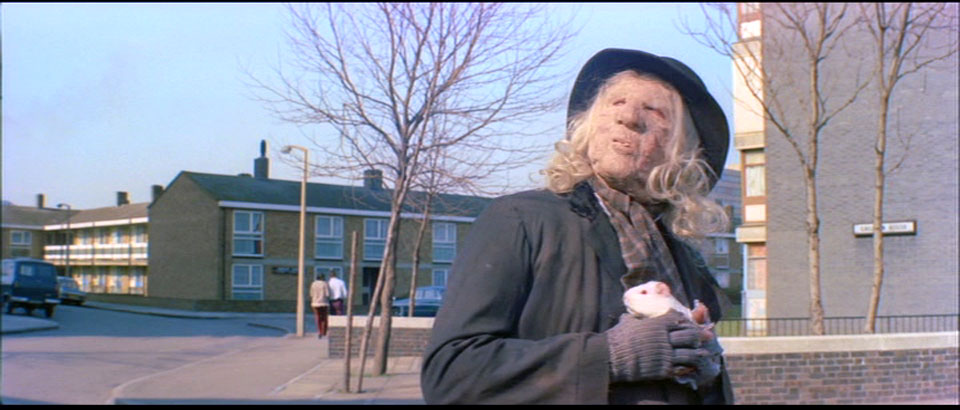

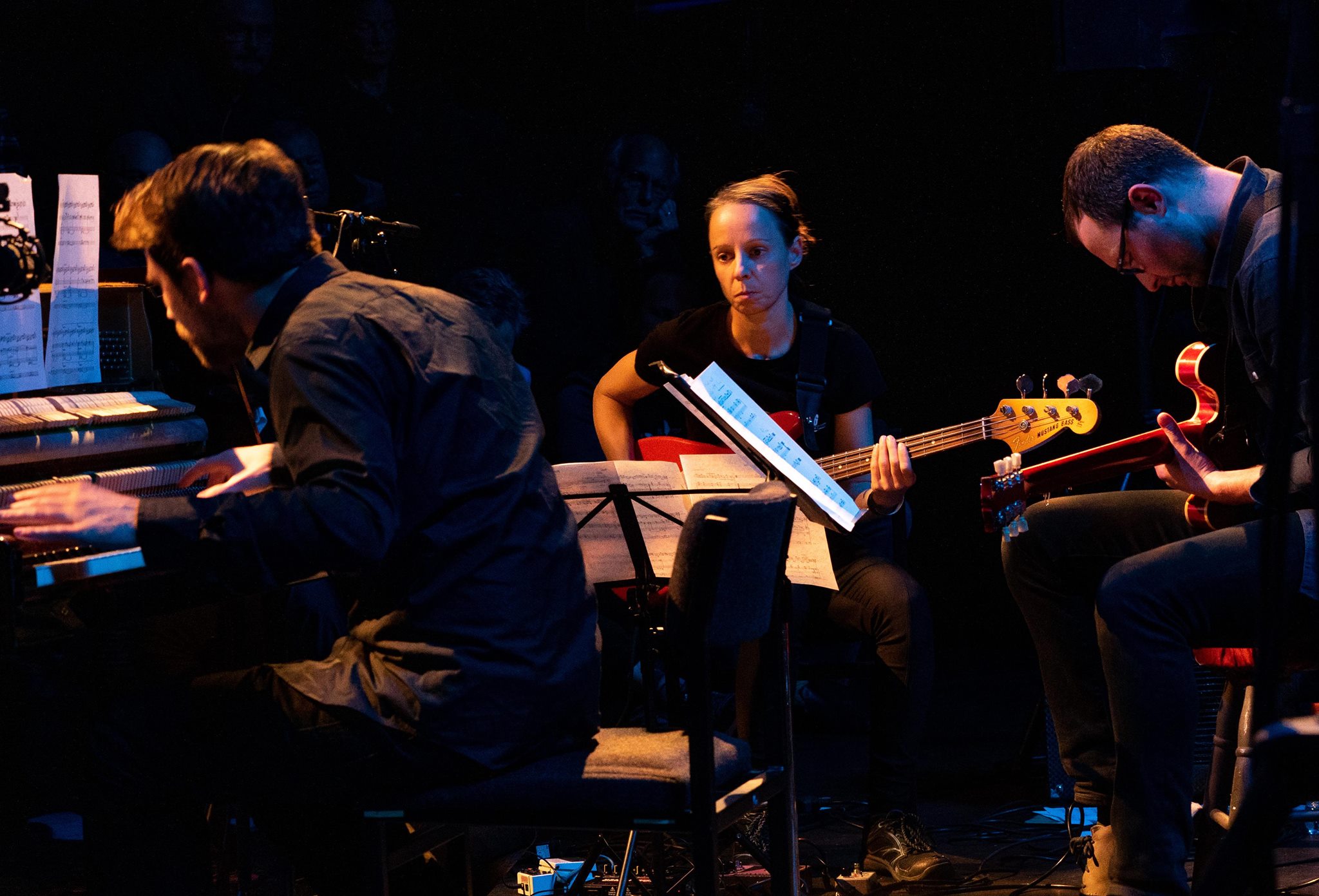
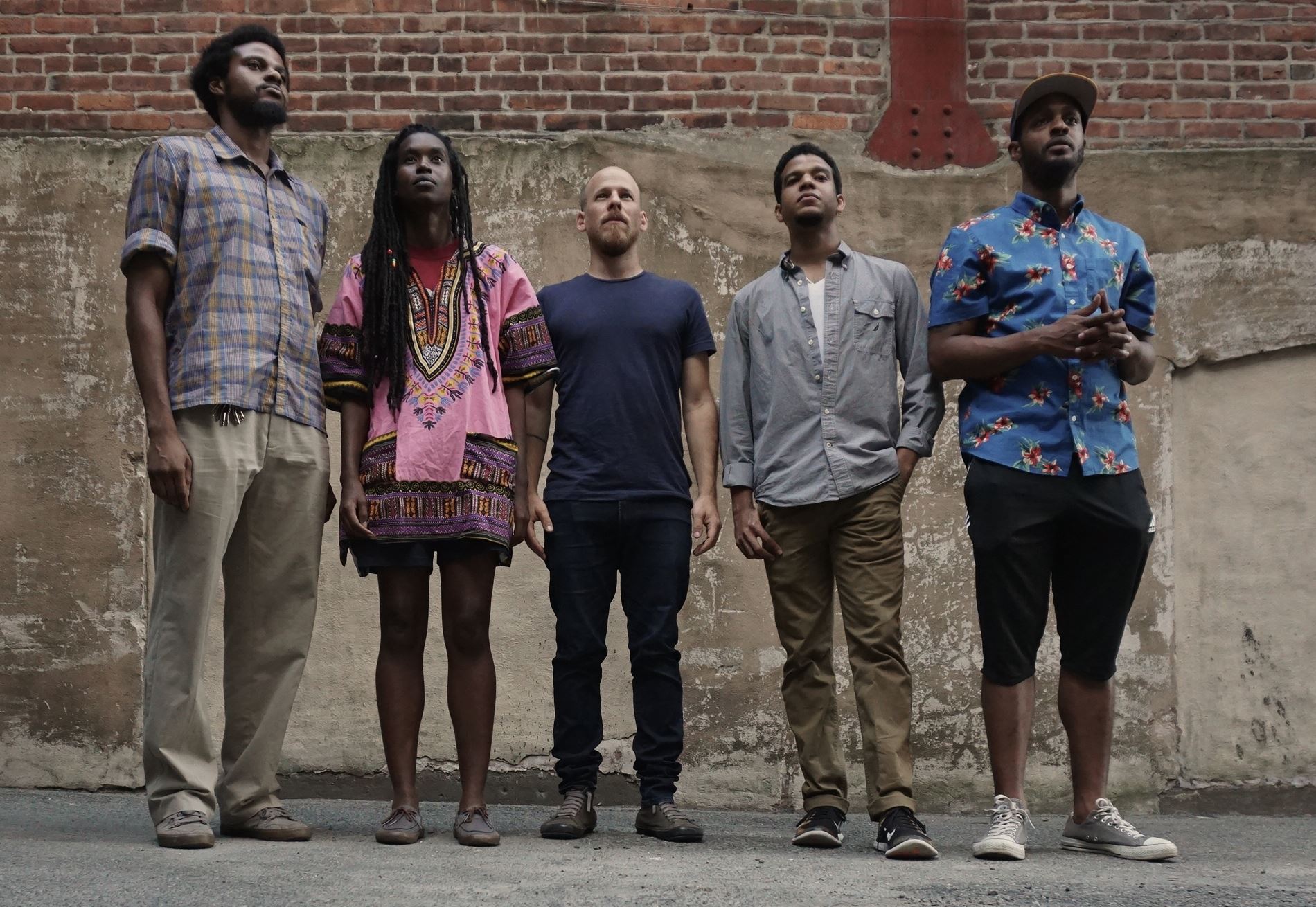

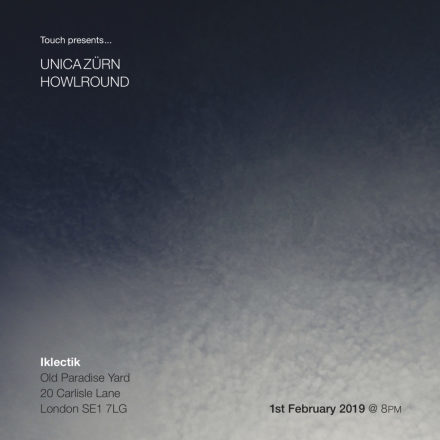




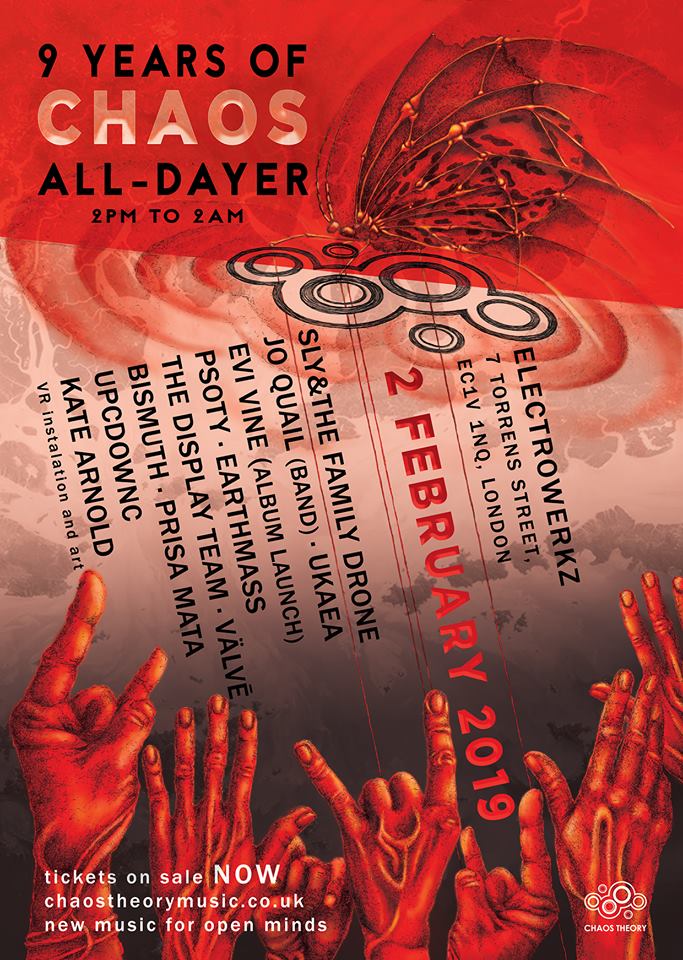
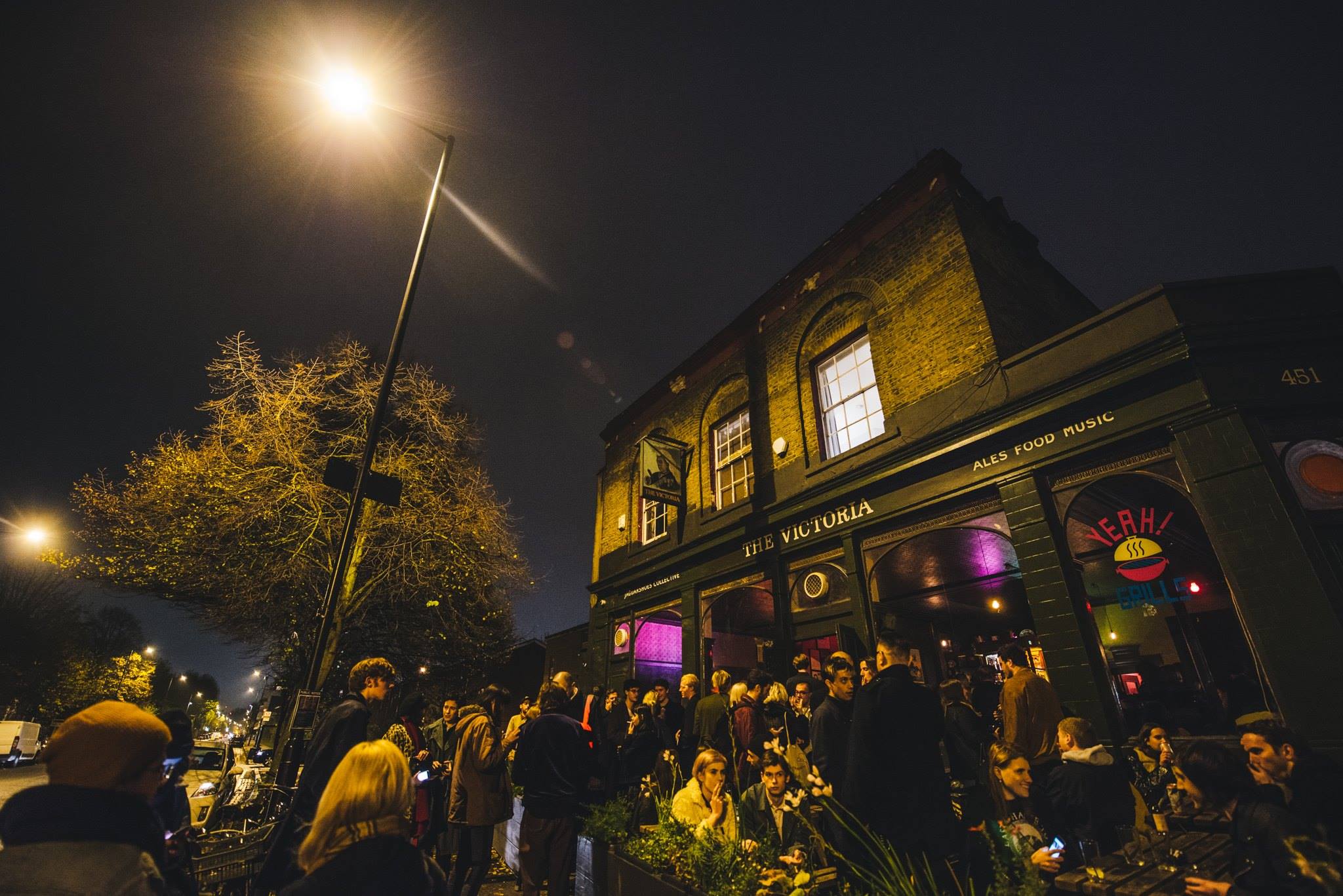


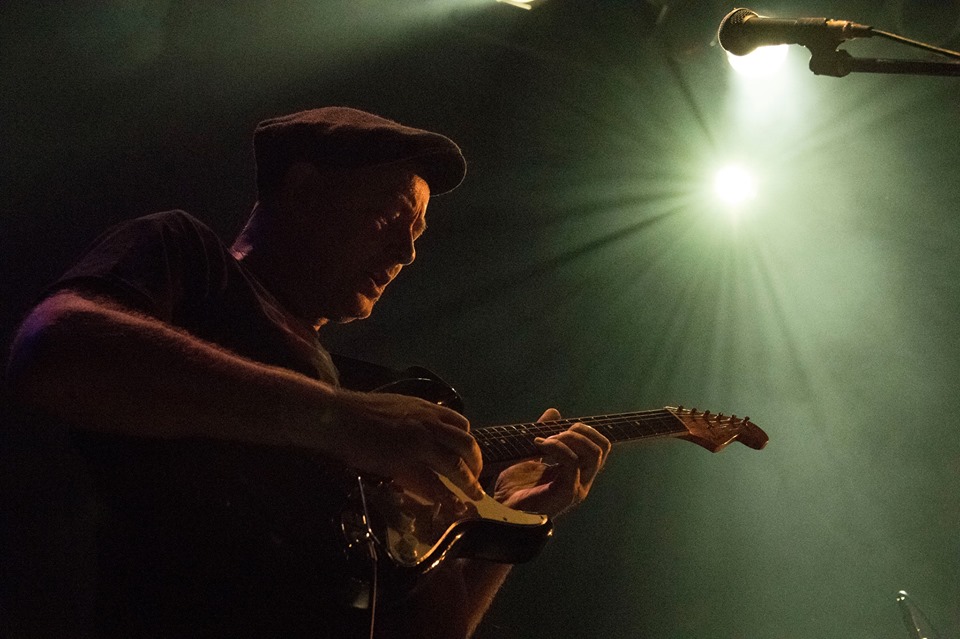
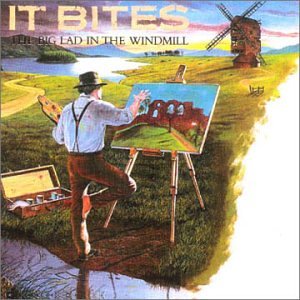


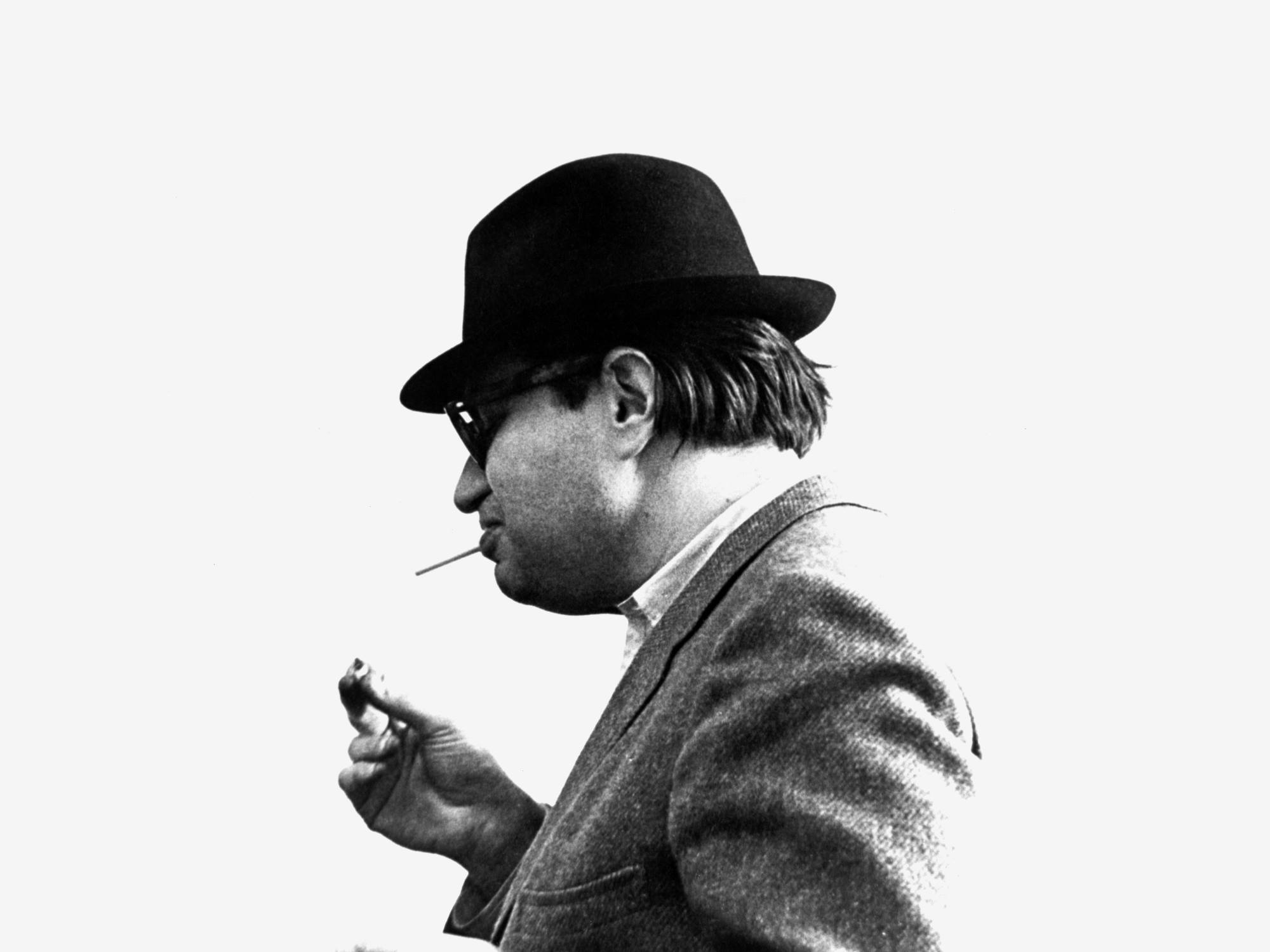



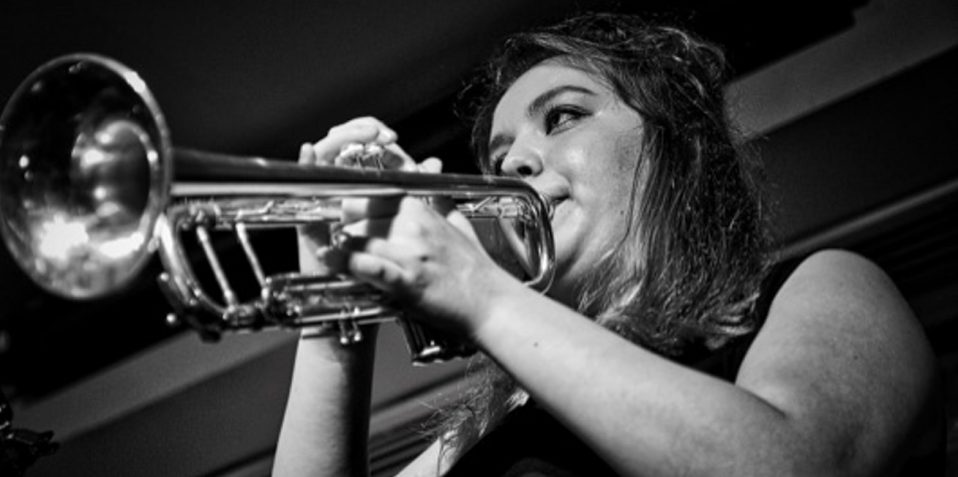
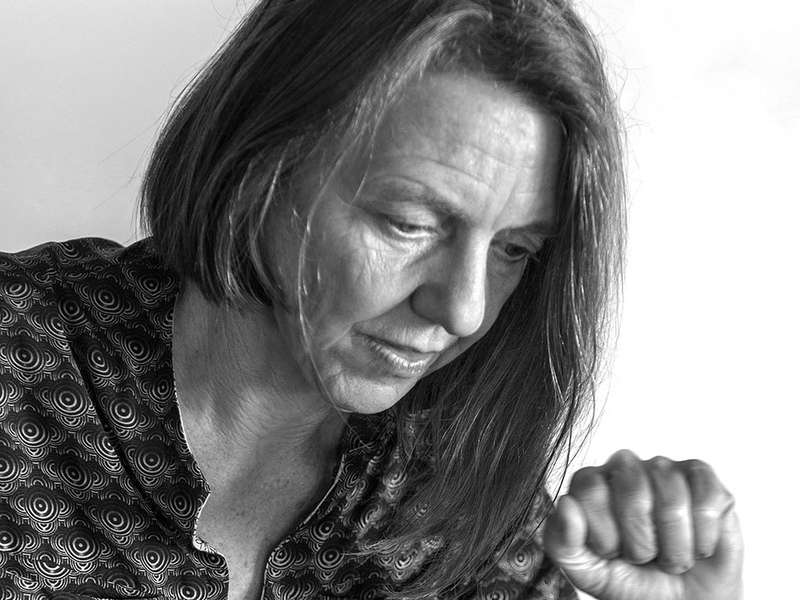




 Misfit City