Archive | April, 1998

April 1998 – album reviews – Bass Communion’s ‘Bass Communion’ (“things flirt round the edges of familiarity”)

29 Apr

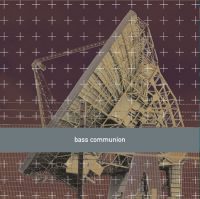
Bass Communion: 'Bass Communion' ('Bass Communion I')

Bass Communion: ‘Bass Communion’ (‘Bass Communion I’)

The potential for making noise, making our own personalised sound via brain, limb or breath, has always been with us. In the sampler age – where you can trap any sound in a digital jar and then play musical Darwin with it – the option range has hurtled up several levels in the space of half a generation, and the serious sound addict can now personalise any noise no matter who or what the source.

Which brings us to Bass Communion, the latest brainchild of studio wizard Steven Wilson. As if he weren’t busy enough psych-rocking with Porcupine Tree, cult- popping with No-Man, or working out his Kraut/post-rock urges with The Incredible Expanding Mindfuck. Let’s face it, few people are better qualified as a sound-addict.

Bass Communion (no thumpin’, pumpin’ house-music project, despite the suspicious name) is Wilson’s most direct attempt to date at riding this addiction. It’s also his most cryptic and esoteric, in which he rejects his usual battery of synthesizers in favour of the use of sounds “sampled, looped, transposed, layered, filtered, and processed into infinity” via electronic circuitry and sampler exploration. Wilson permits himself occasional real instruments (such as the skinny, echoing Bark Psychosis-style guitar on Drugged), but they sort of stand off to one side, like nervous uncles at parties. This isn’t really their show. For those who only skim the surface of Steven Wilson via the odd No-Man phuture-pop single, or hear the odd Porkies guitar blowout and maybe damn him as a wannabe Dave Gilmour, Bass Communion will come as a beautifully disorientating shock. This music shares secluded room-space with the work of Aphex Twin, Muslimgauze, Oval or Paul Schutze.

It might be a logical extension of Porcupine Tree’s ambient atmospherics or No-Man’s avant-garde leanings, but it’s also a giant leap of pure faith. There are no tunes, cheesy or otherwise. At all. And no attempts to please – there’s no equivalent to Aphex’s Come to Daddy on ‘Bass Communion’. Melodies, if they happen, seem to evolve almost by accident. Harmony is something that occurs occasionally when patterns coincide, rather than something that’s held to. Things flirt round the edges of familiarity, repeat and loop, but don’t so much hold the attention as massage it. When in doubt, it stays quiet. Actually, it’s always in doubt and always quiet, but never entirely at a loss about where to go. Bass Communion is profoundly experimental, but Wilson’s sharp, pop-attuned ear ensures that at least it never paints itself into a corner.


Shopping, the opener, deflects digital coldness from the off via its crackle and fluff of sampled vinyl noise: quiet, but almost drowning out the amnesiac wafts of melody which float, with disassociated loveliness, off to one side of the listening ear. They come in, they go; a wobbly snatch of Bach jumps out at you, trips over, cuts out. From then on, you’re on your own in Bass Communion’s subtly surreal electronic world.


Orphan Coal sounds like night in an abandoned telephone exchange. A clattering can drum pulses its elliptical way around and around. Echoing blips of voice trail after it – a hiccup in the system – and tones flicker irregularly like monitoring lights, going from ice to feather-stroke in seconds. Sheens of sound arch in ghostly fashion overhead: at peace, but disturbing yours. You almost expect HAL 9000 to be keeping a watchful red eye on it all. In which case the slow flood of Sleep Etc. is the digital limbo after the plugs are pulled and the lobotomy comes down, sending tides of electronic fluid trickling across the speakers, rising and implying a slow suffocation. Leafy rustles and long low scraping whale-like groans overlap deep subterranean booms and lost dizzy ringing sounds. Somewhere back in there there are hints of double basses, Rhodes pianos, and Mexican percussion – it could, conceivably, have started off as Wilson chopping up something like Weather Report and reducing it to sonic pulp for a new recipe. Whatever the source, now it sounds like icebergs having prolonged nightmares.


With all the experimentation going on, it’s almost a shame to admit that it’s the two versions of Drugged – apparently the first parts of an evolving sound series – that hit the spot best. How to define them? As “not-duets”, probably. Collaborations with live musicians that aren’t live, aren’t jams, weren’t composed, yet still sound like immediate and co-operative performances even though they’re manipulated and mutated bits of taped sound sent through Wilson’s cloud chamber. The effect is eerie: you feel that if you lent Steven Wilson your soul, he’d hand it back to you within days polished, cleaned and reconditioned, and with a few welcome surprises in the pockets.


On the first Drugged, Theo Travis‘ plaintive soprano saxophone replicates and proliferates, dozens of birdsinging reeds fluttering and fading over the warm upholstery of reverently pastoral organ chords. His playing is the most directly human and emotive on the record, yet here he sounds as if his personality is being melted down even as he makes his mark. There’s somehow something of the swan-song to what he’s doing, as if he and Wilson were carrying out a voluntary, luxuriant suicide pact.


The second Drugged, featuring the celestial guitar Soundscapes of Robert Fripp, is an especially inspired bit of audio piracy: a close cousin to the similar and marvellous Born Simple from No-Man’s ‘Flowermix’. Seven seconds of Fripp lifted from an old No-Man source tape, then refracted through Wilsonian concepts and gizmos for twenty-five minutes of protracted, blissful imagination. Frippophiles might notice that it equals about any genuine Soundscape they care to name: everyone else will be up with Steve ‘n’ Bob, nuzzling the starry skies.

A deep-down indulgence well worth sharing. Filter me another one, bass-boy.

Bass Communion: ‘Bass Communion’ (‘Bass Communion I’)
3rd Stone Ltd., STONE 036CD (Barcode)
CD-only album
Released:
April 1998
Get it from: (2020 update) Bandcamp, Burning Shed or Amazon
Bass Communion:
Homepage Facebook Twitter MySpace Soundcloud Bandcamp Last FM Apple Music YouTube Deezer Google Play Spotify Instagram Amazon Music

April 1998 – album reviews – Django Bates’ ‘Like Life’ (“placing his inquisitive, loopy and flamboyantly complex music in the hands of relative strangers”)

22 Apr
Django Bates: 'Like Life'

Django Bates: ‘Like Life’

When the most wilful, please-yourselves mavericks start winning awards, it ensures that – whether they like it or not – they can never again be quite the young turks they started out as. Whether you dismiss them or embrace them, awards ceremony transmute. They can chuck a bucket of seriousness over the winners, which can either damp them down or inflame them further. Smooth or savage, they’re plucked out of their milieu and put in a position where the loose and buoyant expectations which can hang on an artist will suddenly crystallise and weigh hard.

Django Bates won the Jazzpar Prize – jazz’s Nobel – in 1997. In some ways, dealing with that has been one of his biggest challenges. Bates’ career so far has been notable for his avoidance – mostly – of the company of international names. Instead he’s worked unhindered with his own London-based gang of congenial lunatics.

‘Like Life’ (documenting his Jazzpar performances) is different, placing his inquisitive, loopy and flamboyantly complex music in the hands of relative strangers. Though Bates’ usual quartet Human Chain travelled over with him (forming the core of the Jazzpar version of his Delightful Precipice big band) the remaining personnel were committed Danish jazzers. Fine players, but not in on the joke, if you know what I mean. At the height of Bates’ triumph he could’ve been sunk, had his music proved not to be the sort that can travel outside its own circle.

Happily, it works fairly well. This is most evidently when Bates is working with the fatter, more cohesive sound of the Danish Radio Jazz Orchestra, who’ve toured Gil Evans’ repertoire and lead with a muscular frontline of brash trumpets and an armoury of trombones. The DRJO get to debut most of the new material, displaying a flourishing cabaret flair on the big-Bates favourite Nights At the Circus. They also generally ensure that the album has a more jolly and easygoing tinge to it than was heard on previous Bates bouts.

The aggressive drive that stalks behind the affable cartoonish facade of Bates’ mutant jazz seems to have been mellowed by the experience. By the time he’s leading the big band in convivial pubby chants about tea (on The Importance of Boiling Water), he sounds as if he’s befriended the lot of them personally. This is at its most valuable when he allows his more meditative side to emerge on the reflective, restrained theme of Misplaced Swans. Slow and gawky brass figures emerge in a delightfully vulnerable indigo mood, as a quiet panic attack on guitar sets Bates’ own lyrical, chipped piano solo into sharper focus.


However, that quirky inclusive mischief continues to rule the roost. Once a Penguin, Always a Penguin is a rollicking big-band march, full of the blurp of tubas and invigorating yells of high brass egging them on, laced together by Bates’ gurgling fairground organ. It sounds like Charles Mingus laughing his head off on a helium overdose. The joyous, waltzing Like Life itself is equally enjoyable. It’s a cheerful Ellingtonian argument at the peak of a party, which also draws in Bates’ perennial affection for the pride, pomp and community humour of English pit-brass bands.

Topping the lot is The Strange Voyage of Donald Crowhurst, a twelve-minute Bates epic that pulses along and doubles back like Weather Report fighting over a squid. The real-life Crowhurst faked a round-the-world yacht journey, radio broadcasts and all. Bates was obviously tickled enough by the story to put his own fantastical spin on it. It’s busy and anxious music with a beautifully illustrated edge of self-importance and suppressed hysterical guilt, capturing the grabby energy and sheer panicky hard work that goes into forging. In some respects, it’s an ironic salute from one artist to another; and one which seems appropriate coming from the oddly rootless Bates. Morse-code synths fight the surf; seagulls fly past in chorus; and samples of excited press cameras chop up the earspace.

The Danish version of Delightful Precipice have the tougher job on ‘Like Life’. Shriller, emphasising reeds, flute and more of Bates’ subversive synth attack than their British counterpart, they’re dealing with established Bates repertoire and memories, warts-and-all. Although the pragmatic poise of the band is a novelty in Batesworld, their assured race through Tightrope’s tenterhook cascades (swoops, crowds, stops and quivering tensions) suggests they’re up to the job, but they do have a lot to keep under control.


At one extreme there’s the manic, beaming Irish jig of Peculiar Terms of Intimacy (recovered from the surrealist theatre score for ‘The Third Policeman’). At the other, there’s The Loneliness of Being Right; one of Bates’ most maddening tunes and dedicated to politicians with closed minds. In the latter, a rising, recurrent, hysterical phrase (buried in a thicket of strident and contradictory pointers) runs around like a rat trying to escape from an ever-shrinking maze of mirrors; and it never resolves except if it’s into yet another trap. Mid-way through, Iain Ballamy‘s soprano sax grapples with the unforgiving music, there’s a noise like a chicken being slaughtered, and you start to question the artistic value of irritation.

A warm journey through Armchair March (that catchy riffing tune that makes a virtue out of never getting properly started, but goes to any number of places around the starting blocks) settles things down after the indigestible. But there’s also a run through Bates’ infamously abrasive take on New York, New York. Memories of Sinatra are mugged and buried under an onslaught of cut-up expressionist jazz, hopscotching between melody and cacophony; laden with screaming twisted brass, cartoon sonics, jokes and Bates’ own musing bloke-in-the-shower vocal.


And it’s here that there’s a sudden flash of “what am I doing here?” in Bates’ invention: in the midst of the furious playing and the hard-handed humour, he suddenly sounds sheepish, as if he’s realised it’s time to leave this sort of thing behind. Rampant iconoclast and wag he may be, but winning the the Jazzpar sounds as if it has both changed and proved things for him. Perhaps it’s just the impact of the award, or perhaps the passage of time, but ‘Like Life’ sounds like some kind of turning-point for this brilliant jazz hooligan.

Django Bates: ‘Like Life’
Storyville Records, STCD 4221 (7 17101 42212 8)
CD-only album
Released:
20th April 1998
Get it from: (2020 update) get CD from Storyville Records; download from Apple Music and Google Play; stream from Deezer and Spotify.
Django Bates online:
Homepage, Facebook, Twitter, MySpace, Bandcamp, Last.fm, Apple Music, YouTube, Vimeo, Deezer,  Spotify, Tidal, Amazon Music

April 1998 – album reviews – G.P. Hall’s ‘Steel Storms & Tender Spirits’ (“grand painterly instincts”)

7 Apr

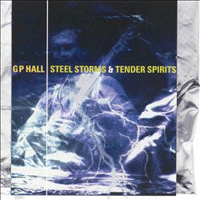
G.P. Hall: 'Steel Storms & Tender Spirits'

G.P. Hall: ‘Steel Storms & Tender Spirits’

Despite the luminous loveliness of much of his music, the career of style-hopping guitarist G.P. Hall hasn’t been smooth (even by the uneven standards of the experimental music he dips in and out of). Regardless, ‘Steel Storms & Tender Spirits’ shows that he’s still up for taking a gamble.

A trust-risking double-album package, clearly intended to emphasize his dynamic musical dialectic, it also highlights the tension between his experimental side and his taste for romantic melody. There’s one disc of rough treatment (industrial noise-layering, screaming electricity) and one of ear-stroking pastoralism (the natural sound of wood and air, tickled by occasional breaths of spectral electronics). However, with Hall being who he is, the two ideas tend to bleed back together: in some cases, maybe more than was intended.

The ‘Steel Storms’ half of the set features a wealth of Hall’s “industrial sound sculptures”. Layered compositions played on his stock of prepared-and-processed guitars (via plectrum, fingertips, battery fans, velcro and more), they also make cunning use of assorted noise-makers ranging from scavenged autoharps and scrap metal to oven racks and household bricks. Texture is the predominant element in the music, but a surprising tunefulness and dark melodies often penetrate in the form of solemn classical adagios. It’s these which underpin the clattering chains, metallic rasps and harmonics of Industrial Sights, or the billowing clouds of rolling fragmented piano and wrenching distortion in Eye Saw It 2.

There’s an impressive documentary flamboyance at hand, too. When the insistently ringing, collapsing-steel groan-tones of Tsunami blend with both close-up atonal jangles of autoharp and with distant, skinny guitar-string shivers, the visual qualities of Hall’s music are particularly clear. Some of his work here wanders out to a distant edge. Two tracks in particular, Steel Storms and Steel Landscape, are almost wholly abstract – musical testaments to metal fatigue and the disorientating feel of post-industrial spaces. Grumbling, malignant loops and glittering boils of guitar drown in swills of rattling shard-metal and bass-drum booms. The pieces are laced with elephantine bursts of distortion; and with brief, dying surfacings of chemical-corroded blues playing.

Throughout, Hall’s grand painterly instincts tug the sound closer towards beauty – however twisted – than towards flat and impersonal horror. A whole album of such Hall industrialisms would be something to treasure. Unfortunately, ‘Steel Storms’ is continually gate-crashed by other sides of his musical personality. On River Flow, he revives one of his signature approaches: fluent Spanish guitar over detailed rolls of textural soundscaping. It’s as lovely as ever, but it’s misplaced here; and it’s anybody’s guess as to what Gypsy Gathering (a virtually straight piece of flamenco) is doing on the record.

In cases like these, Hall’s distracted eclecticism undermines the original intent of ‘Steel Storms’. Worse comes when that willing, stubborn naivety which lies at the heart of his music (giving it both its emotional strength and its core of idealism) becomes diluted into reproducing other people’s cliches. Since the mid-’90s, Hall has been an enthusiastic miner of his past work, dicing up his out-of-print albums to recombine their contents in new sequences. Often this has worked out well, juxtaposing his newer, tuneful solo tapestries with older, intriguing avant-jazz duets, trios and quartets (often featuring sundry members of Isotope, Gilgamesh or Nucleus). Unfortunately, on this occasion he’s pulled up some dross along with the gems.

Perhaps Hall’s work in library music during the lean years is to blame. He’s too interesting a musician to produce stock blandness (and even his failures have moments of interest) but on a record with a purpose, these lesser scraps should have stayed on the shelf. Yet several ‘Steel Storms’ tracks come from this lifeless batch, splotched with anonymous moves and tinny keyboard presets. No Man’s Land is drab robotic cop-chase stuff, the kind of thing a particularly cheesed-off Mark Knopfler might clunk out at the dull end of a soundtrack contract. The less said about the appalling Barbed Wire Bop (brittle ‘Seinfeld’ plastic-funk with the tones of a dodgy synth-demo) the better.

Happily, other ‘Steel Storms’ approaches are much more successful, toying fruitfully with the tight blare of fiesta horns, or with a kind of impressionistic stadium rock held together with paper-clips. The rainy-night drive of City Signals funnels determined loose-jointed funk elements through cascades of drumming, a marching-call trumpet leading the tune above Hall’s steel-saw guitar chops. On Docklands, an acoustic guitar explores and ranges over washing licks of soundscape; electric guitars swipe between factory-machine screeches and trumpet blasts; an echoing hip-hop beat – blind, gigantic and mechanical – stumbles through the landscape beyond.

Sometimes, everything comes together. Though centered on the aggressive, questioning rawness of an up-close flamenco guitar, B-E-trayed provides a discreet light-industrial twist to its traditional base, dragging its intermittent sheath of noises back into the realm of the personal. Already bouncing off tricky drumbox beats, it heads into more sinister areas when swarming, echoing drones and bitter laughter flicker across the speakers. At one point, Hall yells cathartically into the soundhole of his guitar.

All interesting, but the industrial theme becomes increasingly tenuous over the course of the record, though it does rally at points. Heavily overdriven cutting-blade sounds return for Fiya, in which blurred polluted riffs meet mournfully defiant Latin horns and gut-strung guitar. On Dancing On Cracking Ice the guitar plays a supporting role to mariachi horns (and to Sam Brown’s exploratory world-rock rattle of percussion), as Hall’s chopping slashing echoes and metal-fatigue string groans lead off into a leisurely Latin funk stretch. Funk is also one of the central elements of Battery Charger, colliding with big-band horns and space-rock as Hall’s snappy twang-melodies and jittering string harmonics are bounced through some serious Ash Ra Tempel echo.

While there’s no shortage of ideas and impressiveness on ‘Steel Storms’, as an album it’s a missed opportunity – too bitty, too unstructured, and not quite ruthless enough to do justice to its theme. You can dive in for the more thrilling patches – and hold your nose at the bad points – but at times it’s the wrong kind of bumpy ride. Fortunately, its companion album compensates for the missteps by being an experience of unqualified and perfectly integrated beauty.

Where ‘Steel Storms’ shows Hall straining after too many things at once, ‘Tender Spirits’ showcases a beautifully focused vision. Dominated by his acoustic playing and by the subtler side of his electrophonic treatments (sometimes heightened by softly resonant brass and drums), it sounds as if it was recorded under a great cool bowl of night sky. It also proves that, however much energy he puts into his experimentalism, he remains a superbly expressive guitarist once the trickery is removed. Here, the wise simplicity and romance at the center of his music come into their own, in full.

Judging by many of the pieces here, classical music lost a fine player and interpreter in Hall when he went left-field, not to mention a fine folk-fusion composer. Listen to those Spanish arpeggios (mournfully meditative on Love Lies Bleeding, restless and subtly unresolved on Slipstreams) or to the singing Irish ballad inflections of Patricia O’Leary. Alternatively, enjoy Hall’s subtle reunion with electricity on Shooting Stars, Ember or Dandelion Clocks. The first two are slow astral wheelers, their notes stroked into long, long, beautifully smudged trails and pining crystalline tubes of sound; the last is chuckling child-music, clean notes bubbled through a sparkling halo of echo.

Hall’s more multi-tracked and constructed compositions fit just as seamlessly into the mood. Some are familiar – here’s another outing for the thrumming bowed-bass winter scenery of Miles From No-Where (White Wilderness), a piece which Hall continually revisits. Similarly, there’s a new version of another favourite, Spirit Sky Montana, in which David Ford’s sleepy flugelhorn and Sam Brown’s slow swish of cymbal pull Hall’s stretched-bell guitar layers and church-music structure up to further heights of passionate serenity. A more ambiguous moment is granted on Incandescence, where a baroque six-string bass is smeared into dark and swollen horn sounds, voicing in shifting minor-key planes, searching for a place to settle.

However, it’s the magnificent Lonely Road which shows Hall at his very best. Loose, hanging drapes of luscious sound, distant detonating percussion, his Spanish guitar upfront again with a heart-tugging melody, and a final DIY touch – this time, a lonely and beautifully frail harmonica part. This is music you could live in. There’s a direct, emotional involvement in G.P. Hall’s work that’s rarely found among experimental musicians – probably because in spite of his gizmos and his taste for modernist expression he connects far deeper with the earthy roots of music than with the narrowed, exclusive intellectual demands of music as a science.

Ultimately, the main reason that ‘Tender Spirits’ is stronger than ‘Steel Storms’ is that in spite of Hall’s fascination with the impact of industrialism on our lives and senses, he knows it’s merely a part of our experience of the world: a relatively recent human-scale derangement overlaying much older terrain and themes. The two superb acoustic pieces which open and close ‘Tender Spirits’ could easily predate the factories, machinery and artefacts that inspire his industrial sound sculptures; both being intimately concerned with human survival within the simpler, starker hostilities of nature itself.

For the majestic impressionist-flamenco study of Sandstorm, Hall’s fingers slither out whips of string noise among the sharp and fluttering notes, conjuring up the flying dust. Sea Sorrow (Lament Of Lewis) is at the other end of the scale: a paean to shipwrecked souls in which Spanish guitar technique merges with a plaintive Celtic air. Within it, bitter bereavement struggles with acceptance and an awareness of continuance. Those who live with the sea are sustained by it and robbed by it, and this feeling lives in the music. As visual as anything Hall comes up with via loops and layers and implements, the plangent tones of this naked acoustic piece shape an image of someone alone and bleak on the headland, staring out at the ambiguous and often-merciless ocean which they must ultimately come to terms with.

It’s true that G.P. Hall’s road is, ultimately, a lonely one – sometimes assured, sometimes erratic, always marginalised. Yet it’s always one which he treads with a stubborn faith – wrong steps and slip-ups notwithstanding – and one that makes him all the more unique.

G.P. Hall: ‘Steel Storms & Tender Spirits’
Future Music Records, FMR CD46-V0997 (786497264421)
CD/download double album
Released: 31st March 1998

Get it from:
Future Music Records (CD only) or Bandcamp (download-only, as two separate albums, ‘Steel Storms‘ and ‘Tender Spirits

G.P. Hall online:
Homepage Facebook Twitter MySpace Bandcamp YouTube

SWOONAGE

Swoon. /swo͞on/ A verb. To be emotionally affected by someone or something that one admires; become ecstatic. Here are some people and things that make me swoon. #swoon #swoonage

Post-Punk Monk

Searching for divinity in records from '78-'85 or so…

theartyassassin

...wandering through music...

Get In Her Ears

Promoting and Supporting Women in Music

Die or D.I.Y.?

...wandering through music...

Music Aficionado

Quality articles about the golden age of music

THE ACTIVE LISTENER

...wandering through music...

Planet Hugill

...wandering through music...

Listening to Ladies

...wandering through music...

ATTN:Magazine

Not from concentrate.

Xposed Club

improvised/experimental/music

The Quietus

...wandering through music...

I Quite Like Gigs

Music Reviews, music thoughts and musical wonderings

furia log

...wandering through music...

The Recoup

SINCE 2013: Books and books and books and books and occasionally other things

A jumped-up pantry boy

To say the least, oh truly disappointed

PROOF POSITIVE

A new semi-regular gig in London

Gapplegate Classical-Modern Music Review

...wandering through music...

When The Horn Blows

...wandering through music...

:::::::::::: Ekho :::::::::::: Women in Sonic Art

Celebrating the Work of Women within Sonic Art: an expanding archive promoting equality in the sonic field

Ned Raggett Ponders It All

Just another WordPress.com weblog

FLIPSIDE REVIEWS

...wandering through music...

Headphone Commute

honest words on honest music

The One-Liner Miner

...wandering through music...

Yeah I Know It Sucks

an absurdist review blog

Obat Kanker Payudara Ginseng RH 2

...wandering through music...

poplifer.wordpress.com/

Waiting for the gift of sound and vision

Good Music Speaks

A music blog written by Rich Brown

Do The Math

...wandering through music...

Archived Music Press

Scans from the Melody Maker and N.M.E. circa 1987-1996

The World's Worst Records

...wandering through music...

Soundscapes

...wandering through music...

OLD SCHOOL RECORD REVIEW

Where You Are Always Wrong

FRIDAY NIGHT BOYS

...wandering through music...

Fragile or Possibly Extinct

Life Outside the Womb

a closer listen

a home for instrumental and experimental music

...wandering through music...

Life Just Bounces

...wandering through music...

Lucid Culture

JAZZ, CLASSICAL MUSIC AND THE ARTS IN NEW YORK CITY

Aquarium Drunkard

...wandering through music...

eyesplinters

Just another WordPress.com site

NewFrontEars

...wandering through music...

FormerConformer

Striving for Difference