Archive | October, 1996

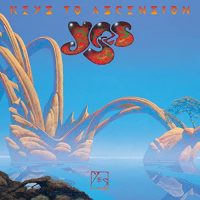
October 1996 – live album reviews – Yes’ ‘Keys to Ascension’ (“Yes have perpetrated their fair share of folly, but that’s not the whole story by any means.”)

30 Oct

Yes: 'Keys to Ascension'

Yes: ‘Keys to Ascension’

Bands are volatile, and when people form them they need to deal carefully with the possibility of a built in death sentence. It happens, and it can leave scars. All over the world, sitting quietly in little bedsits, are former musicians still shattered by the breakup of their first and only band.

Conversely, some bands seem to shrug off splits and explosions as if they’d been no more than sneezes. During their on again/off again three-decade career, Yes have been no strangers to such events. The fallout from the innumerable bust-ups and drop-outs now seems to obscure the band for three years out of every five, ensuring they don’t so much keep jumping on the reunion bandwagon as never being quite stable enough to get off the damn thing in the first place.

After years of mostly being stadium pop-rockers (albeit tremendously accomplished, envelope-pushing ones), as of 1995 Yes are back to the extraordinarily popular 1970s lineup which held sway in arenas and stadia. High-pitched Accrington-seraph singer Jon Anderson, epic bassist Chris Squire and heavy-deft drummer Alan White have brought two of the other ’70s members back into the fold (eclecti-guitarist Steve Howe and ultra-flamboyant keyboardist icon Rick Wakeman). Despite the lofty title, though, the ‘Keys to Ascension’ double album is basically a holding exercise while Classic Yes glue themselves back together again. It’s an attempt to catch up on whatever ground may have been lost during fifteen years enmired in a Los Angelis rocker’s honeytrap with one foot jammed firmly in the AOR arenas.

So… there’s (two and a half hours) of live Yes classics from the ’70s, taken from the San Luis Obispo concerts earlier this year in which Yes took it to a smaller-scale theatre stage. Give or take a bit of backdrop projections, these were devoid of the band’s previous synaesthesic live trappings of lasers, revolves, or Roger Dean crystal outcroppings – for the most part, Yes just let the music speak for itself. There’s also about half a disc of new music appended onto the end. The odds aren’t on the project being a classic, but what it does look like is a fine and overdue opportunity to re-evaluate Yes, after they’ve spent twenty years in the critical doghouse as the target for any stroppy reviewer with a chip on his shoulder about being a middle-class honky under all of his street talk. Yes have perpetrated their fair share of folly, but that’s not the whole story by any means.

If you’re already properly familiar with Yes music – complex, electric and revelatory when it hits its peak – then you’ll know what to expect, and you get it in spades. Fragile their alliance may be (Anderson has often compared the band to a football team of pushy talents needing to be marshalled, as opposed to a mythic rock gang or sentimental brotherhood) but they’re sounding better than they have for ages. Apart from Wakeman’s dodgy new digital keyboard sounds – if you’re going for that full-on classic-prog majesty, it’s essential that you should also go for some blurry 1970s warmth – the Yes sonic armoury has been reinvigorated. Squire’s grinding sinewy bass is roaring back with a vengeance, and Howe’s back in the saddle with his elegant yet fiery mongrelised guitar styles. The rhythms still kick and charge like a mule on a diet of angel dust and Dada; many of Anderson’s baffling lyrics and fluting vocals are still a mystical jumble of tossed salad word-sounds, and the whole band’s playing as a unit again at long last.

 
If you’re not familiar with Yes – or if you’ve been suckered by all of that self-righteous punk bullshit about the worthlessness of the prog bands – there’s enough wonder on here to make you reconsider their legacy. For a start, ‘Keys to Ascension’ is laden with blazing melodies even in its most convoluted moments. It confirms Yes’ love for a mighty pop tune, as evidenced in the resurrection of their driving, pinwheeling and elaborately vibrant cover of Paul Simon’s America or on the surprise revisitation of 1978’s hymnal ballad Onwards (drawn from Squire’s formative experiences as part of an English cathedral choir, and rearranged here as an acoustic display of Yes’ uplifting harmonies).

 
As ever, Yes’ musical peaks sound timeless. Despite their flashy/esoteric/unpalatable reputation, during their first wind, they were actually a mainstream band: ferociously musical pop lovers with a weird streak who were restless to blow open the envelope and expand the possibilities, but who were always too abstractly sensual and romantic to tie in with modernism or the politics of underground music culture. That said, they were busily transgressing musical boundaries in a way that the mainstream is only now daring to attempt again.

 
Siberian Khatru remains a bucketing roar of jazzy harmonies and of splintered time and space; Anderson’s welter of images spurt like one of J.G. Ballard’s crystallised rivers. In the soaring, furious ritual of Awaken, hovering pouncing piano leads into a stark sunrise ceremony dominated by Anderson’s ascending liturgies and Howe’s guitar hurling itself upwards in an assault on the mountains. An interlude of Wakeman’s sedate celestial church organ, before another push upwards by the ensemble leaves Anderson triumphant on the summit, singing his faith into a clear sky. Monolithic, esoteric fantasia perhaps, but it strikes as many complex emotional chord as it does musical ones. It might not work as clear literature or as the amplified folk music of the classic songwriters, but this is nonetheless spiritual music in its ambitions and effect, ultimately serving a greater aim than to merely showcase the virtuosity of Yes members.

 
Elsewhere, there’s the rhythm-and-blues-meets-skywatchers coil of Starship Trooper; and the inevitable Roundabout. The latter in particular is despatched with the usual Yes flair – glitteringly elegant classical guitar, corkscrewing Hammond organ, Anderson’s joyfully kaleidoscopic lyrics and the best bass line which no one’s yet ripped off for a dance track. There’s even a chunk of that infamous folly ‘Tales from Topographic Oceans’ which (even if it does sound far bittier than everything else on the record) has been reclaimed from an overcooked mush of windy symphonic chanting and has become a sort of wobbly musical dragon kite. It’s still unwieldy and inescapably over-ambitious (Yes attempted to net the whole world and its metaphysical forces with that particular album, and they didn’t succeed) yet now there’s an odd grace and buoyancy to it. And that’s something I never thought I’d catch myself saying.

 
So far so good. But if Yes are to be taken seriously as a contemporary creative force then current work’s got to be taken into account. And listening to the new tracks can’t help but set a few alarm bells ringing. For a start, it sounds as if Yes are attempting to arbitrarily erase the intervening seventeen years since this line-up last played together, and to go back to the glitzy tail-end-of-first-generation prog they were doing in 1979 just when the rot first set in (and when cocaine, disco and attempts to steal a march on New Wave first began to interfere).

 
Right now, they seem to be writing off the stadium rock years led by former guitarist (and broad-spectrum producer-pop enthusiast) Trevor Rabin as if they were a temporary embarrassment, while simultaneously ditching everything which they learnt from those years. Into the bin goes the multi-track layering, MTV rock hooks and chart-teasing love songs. Out of the setlist and onto the shelf goes their early ’80s mega-hit Owner of a Lonely Heart. Also, it also seems as if Yes have gone from attempting to please the commercial market to attempting to indulge the 1970s fanbase. (Yes, choose your own route to potential artistic death, lads. Well done.)

The new tracks are indubitably a stopgap to keep those fans happy, pulling out all of the expected Yes ingredients. Classical guitar web-work, tight ensemble soloing; a structure as convoluted and precariously balanced as an orchid, dashes of classical structures and jazz harmony and an exploded concept that’s at least five times as big and bright as the world around it.

The problem is that Yes no longer sound haunting: they sound haunted. By their own past, no less. Hearing them continual harking back to ‘Topographic’ ambitions (fucking hell, you’d’ve thought they’d’ve learnt their lesson the first time round), dredging up old circus tricks and even incestuously close cousins of old riffs, one’s forced to think of an old acrobat slathering himself with liniment to handwalk the high wire in front of a cheering audience of young rivals and comeback rubberneckers… and then forgetting to wipe his hands before he takes hold of the rope.

 
Be the One kicks off with all the peak Yes joyousness, but sinks rapidly into baroque burbling and inflated pomp, Anderson’s melodies stretched to breaking point over slabby slices of ’70s seriousness. At nineteen minutes and seven sections, That, That Is sets itself up to be today’s Yes epic: and it nearly succeeds, with Chris Squire’s slithery bass riff capturing the blazing driven rush of On The Silent Wings Of Freedom and the whole swishing along in a set of colourful swerves you’d never have imagined could’ve come from a bunch of fifty year olds. Taking on contemporary concerns of crack in the cities and gang warfare, as if they were conscious hip hoppers, Yes conspicuous fail to do anything more to dress them up in cosmic flash and hurl them into orbit along with all of their old giant fish props and Roger Dean spacecraft.

It’s a bit like watching the Pope and all his cardinals trying to wrest control of a street football match. Anderson’s probably sincere, but he should leave this sort of thing to the hip hop nation… or at least to people who don’t point to New Age therapy as the obvious solution. Much ado about something important, achieving nothing despite its densely packed music. “Disjointed, but with purpose…” Yeah, Jon. You wish. Trying to force this flimsy, gaudy conceptual sheath onto a much knottier and uglier problem comes across as foolish at best, and as actively insulting at worst.

 
A prime old mixed bag then. There’s enough wanton brilliance on here to remind us of just what, in their chequered past, made Yes such a fantastic band and such a strong fusion of musical forces. There’s also enough rancid old codswallop to remind us just what insufferable heights of folly they can reach when they turn off their bullshit detector. Same old story… and it’s worrying that the codswallop counter is pointing more at the new stuff than at the old. But Yes’ often-naïve but unashamedly, sometimes transformatively beautiful light is shining brighter these days; and that’s definitely something to be glad about.

Where now, though?

Yes: ‘Keys to Ascension’
Castle Communications/Essential Records, GAS 0000417 EDF (5 017615 841725)
CD-only double album
Released:
28th October 1996
Get it from: (2020 update) Best obtained second-hand.
Yes online:
Homepage Facebook Twitter MySpace Soundcloud Tumblr Last FM Apple Music YouTube Deezer Google Play Pandora Spotify Tidal Instagram Amazon Music
 

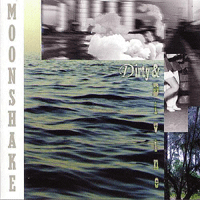
October 1996 – album reviews – Moonshake’s ‘Dirty and Divine’ (“like ghost trains – whistling and rattling across the room”)

10 Oct
Moonshake: 'Dirty And Divine'

Moonshake: ‘Dirty And Divine’

Even as a small chunk of mid-’90s London rediscovered how to swing and posed for Time Magazine, life carried on as usual for most of the rest of us. The weeks of quiet desperation, the litter in the corners, the urges and the grinds that don’t match up. While the Britpop scene whooped it up in the happening neighbourhoods, Moonshake were sitting up late with whitened knuckles in rented high-rise rooms, or prowling the mean streets spitting out stories.

Moonshake’s intensely visual songwriting and soundcraft always seemed born of hard-boiled cinematic overload. On 1994’s stunning ‘The Sound Your Eyes Can Follow’, lead ‘Shake Dave Callahan rubbed the unsparing urban soul-mining of The The up against The Young Gods’ overpowering walls of sampled sound, and beat both of them for sheer grit and presence. Determinedly guitar-free, taking their cornered-rat savagery from Callahan’s paint-stripping sneer and Raymond Dickaty’s ferocious arsenal of treated saxes and flutes, Moonshake’s harrowing street-literature songs were heavily sample-textured: but they travelled light and fast, drawing on tooth-rattling, uptight, Can-inflected dub grooves. They were twenty-first-century urban blues, as tough and unyielding as steel wire. Most importantly, sound was everywhere: cramming into the ears, surrounding the head with a blurred, terrifying out-of-scale world.

For some, the methodology of post-rock has served as an excuse to get lost, to unshackle yourself from precision, swallow your own guitar, womb yourself up in universal sonic tissue and drop out of language altogether. For Moonshake, it goes the other way. Callahan’s bitter, precise, dramatic language – shading his harsh sorties into hard-times lives with a poetic flair reminiscent of a punk Dickens, or of Brecht and Weill – is central. It’s just that rock instrumentation is too imprecise, too blunt to do it justice. Post-rock possibilities, and the overwhelming landscapes regurgitated by samplers is the only sensible framework for the way this band captures the world. Moonshake songs are like ghost trains – whistling and rattling across the room on forbidding, chilling loops of warped and mangled sampled sound, whirling you through a clatter of noise; dropping you into the thick of things; fucking with your sense of placement and angles, and thrusting gritty reality into your face.

‘Dirty And Divine’ is – at first hearing, anyway – more modest in its scope than ‘The Sound Your Eyes Can Follow’, That album lunged out of the speakers and went for your throat, both the epic stinking script and score for a vast, hideous film about the downside of the London experience. In comparison, ‘Dirty And Divine’ is more Mike Leigh to its predecessor’s Terry Gilliam. The ram-raided orchestra samples are pared back in favour of metallic whooshes and industrial-sump bubbling; Dickaty’s been given a free rein to mutate himself into an ensemble of mangled brass and breath. Centrally, Callahan’s songwriting emphasis has narrowed down. The clank and snap of Cranes sets the agenda, capturing the ebb and flow of a locked-down, clock-watching workforce in widescreen: “the builders are earning their daily bread / and they make sure they eat it every day at one o’clock… / The housewife’s dreams evaporate / as her husband’s nightshift ends at eight.”

Yet ‘Dirty And Divine’ also provides the backdrop for rebellions against the timeclock and the grind. Most of the album homes in on the stories of individuals. Where previous songs were a pageant of strain, entrapment and stagnation (a whore and her regulars, a protracted divorce) this record deals with what happens when frustration breaks out and escalates into quests for further, greater stimulation. The chance-addict of Gambler’s Blues gropes for a chance to be empowered, to face a challenge he can respect (“sometimes I pluck order out of the form – / I slack for a moment, the moment is gone”) but pays the price anyway: “I’m a gambler, and sometimes I lose, / but the kick’s in the playing, not paying the dues. / Always an offer I cannot refuse, / always a time-bomb I cannot defuse.”

In Exotic Siren Song, a young man hits the wide world for a perilous life of opium-dens, brothels and high stakes, keeping company with gun-runners and fraudsters, dodging pirates and police. Initially rejoicing at the chance to live by his wits, he ends up jaded, complaining “nothing now is really new.” The adrenalin-hooked petty crook on Up For Anything lives by his instincts and his appetites – “I’ll balance on the balcony, twenty-one floors high, / swinging from the vapour trails, ropes in the sky… / I can’t count the conquests and I can’t tell the time.” The buzz is still strong enough for him to dismiss the damage that will come, when “in ten year’s time I’ll be the boy with the mashed potato body. / All this champagne living on beer money, / out among the bumper-car people who never say sorry.” His counterpart, the elusive criminal in House On Fire (think Nine Inch Nails meets ‘Badlands’) has perfected the art of living on the edge. His wife may break under police questioning, his invisibility may evaporate and the law pounce on him, but he’s already working on plans for manipulating his fellow jailbirds.

He’s the exception – in most songs the downslide is never far away. Throughout the album, speed and appetite are portrayed as a drive that becomes a monkey on the back. Yet while it lasts it’s a hell of a ride. Another of Callahan’s savage stress-head characters snarls: “You’re too open, and you’re too easy. / When I’m out, I do as I damn well pleasey… / The only light I need sweeps through the window… / Keeping a monster comes in handy. / Hard candy…” To stop and think in this rolling, callous world is to invite despair.

To do him credit, Callahan unflinchingly represents this as well, offering up a couple of his most intimate songs. The make-or-break musings of Nothing But Time ponder the next step (“now I come to a fork in the road”) and weigh up possibilities: “Shall I cause some destruction that none shall understand, / undyke my finger and flood the whole land?… / I let you go and then you come back. / Shall I pick at your nature until you react?” Ultimately, plans are left perpetually hanging in weary, lonely resignation (“I’ve got my own design for something quite grand… / You can appreciate even if you don’t understand,”) all wrapped in rolling Arabian horns and the gonging sound of empty vessels.

Too late. The Taboo (swathed in flugelhorn and rippling harpstrings) surfaces at the end of the album: the last moment of awful drunken clarity before the final fall. It’s a lament for the loss of honesty – for the lost ability to be vulnerable and unveil the tender truth of yourself. Cards should be on the table, but no-one will make the move. “If I were to be really careful, / and take pride in everything I do, / I would show you what ‘really’ is – / and I can’t, ‘cos it’s taboo.” The seasick backing music swirls: vision flattens. The loved one recedes across the table, behind a wall of well- worn gambling chips and smeared shot-glasses. “If I were to show you how I feel, / would you call me blue? / If we could reach out and touch each other? / But we can’t, ‘cos it’s taboo.” Almost touching, but out of sight. House wins.

This album is a brutally compassionate mausoleum to burnout, made from raw words and cracked sinews. Lay those dusty dreams to rest.

Moonshake: ‘Dirty And Divine’
C/Z Records/World Domination Records, WDOM028CD (5032059002822)
CD-only album
Released: 4th October 1996

Buy it from:
Various suppliers, or second-hand.

Moonshake online:
Facebook MySpace Last FM

October 1996 – live reviews – The Blue Nile + Sinéad Lohan @ The Palladium, London, 8th October

10 Oct

Wait in any given place for a long time and reckon up the odds. Which are you more likely to see passing by – Bigfoot, Lord Lucan, or a member of The Blue Nile? The chances are about equal each way.

In a business that thrives and surfeits on over-exposure, The Blue Nile only sidle into view when they absolutely have to. In fourteen years of tenuous existence, this reclusive biz-shy Glaswegian trio has offered up no more than three short albums of exquisite ambient Celtic soul; stripping away the armour of the heart with cheap drum machines, breathing synths and skeletal guitars, and the scalded, mournful grace of Paul Buchanan’s desperately romantic deep-tenor voice, leaving us flat on the floor and then departing so quietly we don’t hear the door shut.

While they’ve had stiff competition from Kate Bush and Scott Walker in the stakes for lying quietly in the long grass, sometimes The Blue Nile are out of view for so long that they seem no more than the shadows of our own heartbreaks. Three phantoms whom we can fill with the overflow of our ruined, hopeless good intentions and the agonising rush of a love with nothing and nowhere to ground itself on. Every now and then, though, they surface – as they have tonight – put out a record, and those shadows take on flesh.

But first we have Sinéad Lohan; a Cork lass with beaded hair, a salving murmur of a voice, and the composure of a marble Madonna figurine. From out of nowhere to the grandiosity of the Palladium, and still she’s not batting an eyelid as she delivers her soft thrumming folky songs to a warm reception. She even invites questions, and gets them. She has that atmosphere that some quietly private people have, the stillness that invites fascination.

From up here her eyes seem sleepy, focussed inwards, and her songs are the same, ripples of feeling reflected in still pools that make you feel like a privileged eavesdropper. All of this and the quietness makes her seem like an Irish Tanita Tikaram without the air of lazy resentment. After she’s left the stage, I realise I can’t actually remember what any of the songs were about, but the impressions of the emotions involved remain etched lightly on my imagination. She’s as subtle and strong a carver as smooth river water.

After seven years out of the public eye, most bands would return to the stage in a blaze of glory. The Blue Nile don’t even turn the lights out properly first as they slope onstage like reluctant supply teachers. I mistake them for roadies until I recognise Paul Buchanan’s pained, elegant features among the men fumbling to pick up the instruments, all but flinching at the applause and the eyes trained on them. But it’s something they’ll have to deal with.

For all of their heart-stricken loneliness, The Blue Nile carry a very special feeling of empathy and homecoming around with them. Literally, in some respects: tonight’s audience ripples with the voices of Glaswegian emigres. And when one Scots voice, brought to a pitch of excitement, calls out “Glasgow Celtic!” it’s followed as fast as a counterpunch by a Rangers fan’s disgusted “fuck off!” Rather than a slit face, this results in a ripple of laughter and recognition around the auditorium. There are wry, self-conscious chuckles from the band as they finally launch into the Van Morrison-gone-synth-pop chug’n’whoop of Body and Soul.

All of this civility (and this nod to a respectable musical touchstone) prompts the question. Have The Blue Nile, for all their cult status, ended up as another branch of hoary pop tradition for the impeccably adult? Certainly they shy away from sarky pop irony, and they’ve a sheepish but determined commitment to presenting their songs unvarnished by gimmicks. Don’t even try looking for Pet Shop Boys cleverness here.

And then there’s the impeccable cleanliness of their sound – the clipped white-gold ring of it, the slow stretch of the falling-evening keyboards, even the live drums compressed to stiff Linn thuds… Or, on the other hand, the occasional hints of country in the songs from the new ‘Peace At Last’ album and how Stay’s heartbroken synth pointillism develops from a Scottish electro-pop lament to a finale with suspicious hints of rockabilly or hoedown. And, of course, there’s the way Paul’s huge voice draws from Frank Sinatra’s warm cocooning sound, rather than any from any obvious rock source.

Sinatra, though, never sounded this touched; this blown through by overpowering feelings. Even behind the theatrics of his saddest songs there was a man preening in his power; the guy who was laughing now; the honorary Mob capo whose very tone was a muscle. Behind these songs are a man who winces; who knows the scuffed concrete in the buildings he walks past will outlive him. Who’s haunted by the moments where decisions rest before they fall into becoming facts, and who’s never short of melody but is often stripped of words. And who, on this occasion, is swigging Lemsip by the gallon to beat off a vicious cold. It brings the vulnerability of The Blue Nile’s songs into sharper focus.

But then they’ve never suggested that the business of being adult is supposed to be easy, or even make much sense. ‘Peace At Last’ made that as explicit as anything ever is in the Blue Nile universe – a middle-aged album (Paul Buchanan turned forty while recording it) which showed youthful, domestic and spiritual certainties past their flush and breaking down into a unflattering mirror of doubts and shaky illusions. A new testing ground after their landscapes of young men’s fears had slipped away back into the years. While The Blue Nile don’t go so far as to drag middle-aged trappings – such as chipped crucifixes or well-dusted-yet-unloved three-piece suites – onstage with them, they wouldn’t need them. The words to these songs swim to the surface in flashes; brief snatches and sketches of anguished images that settle into the heart’s eye as if their places had been waiting for them forever.

A couple of songs from 1989’s peerlessly lovelorn ‘Hats’ album illustrate this – Over The Hillside fumbles through the burden of day-to-day failure and the pull away from home; Headlights On The Parade sees Paul lose himself in night-haunted reverie, borne on by the serpentine romantic curve of the melody over the mechanistic drumming. Tonight’s rendition of Happiness, a song already riven by doubt (“Now that I’ve found peace at last, / tell me, Jesus, / will it last?”) has to replace the soaring black gospel chorus that boosts it on record with three uneasy white men murmuring into shared mikes. You wouldn’t have thought that it could reach the same hymnal level, but it does, albeit becoming more of a private prayer.

Another ‘Hats’ classic, The Downtown Lights, has the transcending, unresolved journey-feel of a crying fit; heart-stricken keyboard swells giving way to beautifully sad reflection and back again, rising to a frantic crescendo of loss. The atmospheric abstractions of A Walk Across The Rooftops don’t give away much in the way of clues, but they do give a night-time stroll a tint of darkest foreboding.

And Family Life just overwhelms – a mid-life crisis set to song. Echoes of Tom Waits, Randy Newman and crumbling Hollywood Christmases coming together in the heartbroken drunken pleas of a man whose marriage is unravelling, whose boyhood innocence is rising to ask bewildered questions. Paul, singing like a man suddenly and shockingly shrunken, plays the role to the hilt. But there’s no storytelling, no plot; just feelings and the alcohol dissolving reasoning down to more questions and a blurred, blundering comprehension. “Say, you know, / no honeymoons, / just separate chairs in separate rooms. / Jesus, please, / make us happy sometime – / no more shout, / no more fight…” As the last scraps of piano dissolve in the hush, the frenzied applause seems to spray tears of recognition and relief.

It’s still as un-showbiz as you can get. All of these emotions are being let off on a very tight leash. The magisterial Robert Bell doesn’t crack his stern kirkman’s expression all evening, whether he’s forcing compelling crabbed funk lines out of a bass, keening his rare backing vocals into Buchanan’s mike, or crouched cross-legged onstage beating out patterns from the tiny synth in his lap. Over on stage right, P.J. Moore plays with an abstracted serenity as the Blue Nile’s bare, effective colorations flood out from his keyboards. The supplemental three on drums, guitar and synths play with their heads slightly bowed – more quiet men. So it’s the hunched, embarrassed Buchanan that’s the reluctant centre of attention; muttering wry Glasgow “let’s-get-this-over-with” asides between the songs, but singing his heart out of his chest and punching it up at the sky every time the music rises.

I guess that even with embarrassment weighing at his coat-tails, he can’t help it. There’s often a desperate strand of hope-against-hope in The Blue Nile. The near-delirious Sentimental Man ascends out of a jumble of chippy funk facets to hit gospelly heights; the intently energised strum of Tomorrow Morning rushes towards the light as if Buchanan was trying to beat the pain off by hurtling towards hope. Tinseltown in the Rain – which belts along as if it was the peak of some uncompleted Glaswegian street-opera – bursts up to a plateau of emotion, aggressive certainty struggling with a sense of doom. (“do I love you? Yes, I love you! / Will we always be happy-go- lucky?… / But it’s easy come, and it’s easy go. / All this talking – / talking is only bravado”) before exploding in a carillon of stammering, tear-jerking guitar.

And on Saturday Night you can feel the blessed surge of relief at a simple romance – “an ordinary girl” hymned with a incredulous delight, an everyday date turned into a haven from the wracked, exhausting, damn-near-religious romantic angst of the Nile songbook – turning out right for once. As the last swooning joyous chimes mount the air, I hear a ecstatic voice screaming “Yes!”. It’s my own. I can’t help it either.

Later, Bell and Moore take up positions at the synths on each side of the stage, waiting to play Easter Parade. White-clad, calmly watching each other for the cue, they have the assured and tranquil air of surgeons waiting to lay on the hands and bring out the pain. Then the song comes – plangent clutchings of piano, gushes of night-breeze synth and Buchanan singing of being alone in a rapt crowd, carried along like a solitary bubble in their exhilaration. And the empathy is summoned up and floods through us like medicine.

They can still touch the pressure points of the soul like no-one else. In another few months they’ll be hiding from us again, but that touch is going to stay with us until they feel able to venture out into the world again, blinking with trepidation at the looming feelings waiting to catch them.

The Blue Nile online:
Homepage Facebook Twitter MySpace Soundcloud Last FM Apple Music YouTube Deezer Google Play Pandora Spotify Tidal Amazon Music

Sinéad Lohan online:
Facebook MySpace Last FM Apple Music YouTube Deezer Google Play Pandora Spotify Amazon Music
 

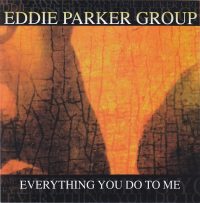
October 1996 – album reviews – Eddie Parker Group’s ‘Everything You Do to Me’ (“while the warmth of Parker’s compositional personality remains consistent, here the group is cat-stepping through traps”)

4 Oct

Eddie Parker Group: 'Everything You Do to Me'

Eddie Parker Group: ‘Everything You Do to Me’

When they’re performing, flute players always look as if they’ve got a small, mysterious smile on their lips. Perhaps it just comes with the technique, but it’s an expression which seems to sit more appropriately on the faces of certain flautists than on others.

On the face of Eddie Parker, for instance: one of Django Bates‘ circle of contemporary British jazzers, and therefore an affable, witty maverick able to call on the services of a whole gang of other affable, witty mavericks. He’s spent time with Bates in the gloriously rowdy Loose Tubes (where he first made his mark as a writer) and in Delightful Precipice, contributing to a wealth of exuberant, contortionistic musical moments. Outside of the Loose Tubes alumni circle he’s blown away hardened New York jazz execs as the secret weapon on Bheki Mseleku’s ‘Celebration’, and has notched up work with Jazz Umbrella and with John Stevens’ Freebop along the way.

His 1994 solo debut, ‘Transformations of the Lamp’, brought his effervescent writing skills and bandleader’s warmth to the fore in a group partnering him with a couple of animated yet unsung heroes of the British new jazz crowd (journeyman pianist Pete Saberton and Perfect Houseplants drummer Mike Pickering) and two of his fellow Loose Tubes (saxophonist Julian Nicholas and double bassist Steve Watts). This follow-up – adding guitarist John Parricelli, a third ex-Tube – takes the celebratory warmth and involvement of Parker’s music even further.

If there’s one image that an Eddie Parker tune (usually blending Latin-American liveliness and township jazz celebration with a gently mischievous, cheeky British disrespectfulness) tends to bring to mind, it’s a picture of the Thames Valley suffused by bright Brazilian light and carnival energy. As perfectly illustrated on Mystery in Three: an opening of swimming, dreamy ringing melting with a airborne swish into Saberton’s animated, bunny-hopping piano and Parricelli’s sliding Larry Carlton guitar swells, while Parker and Nicholas trade off sprightly, interlocking, chatty dialogues of flute and soprano sax.

But with Parker’s background, you can’t expect even music this breezy to stay altogether straight, and part of the group’s skill is to mix up the virtuoso complexity of the tunes with a reckless, teasing sense of ridiculous good humour. Wonky Chorino – an animated, loose limbed Brazilian frolic, ambling back and forth like a seven legged donkey loose in the town square – lurches teasingly towards parody while always, laughingly, pulling itself back on the lifeline of its own breezy wit. It’s paired with Twerp, a bouncing bop disguised as light elevator funk continually landing on the wrong foot: sunny, carefree, fool on the hill flute leads, an alto sax nattering cheerfully to itself, and Parricelli’s soft interjections on wah-wah guitar. Lovably bewildered, like one of those endearingly clumsy guys who survive life by means of their unconscious, innocent charm.

But beyond this bubbling vivacity there’s a new quality to Parker’s work. Much of his previous writing seems to have rushed along with a crowded yet joyful clarity, but half of ‘Everything You Do to Me’ slips off sideways into a much less sturdy, unstable region fraught with deadfalls, pits, tricky space. While the warmth of Parker’s compositional personality remains consistent, here the group is cat-stepping through traps, delighting in their own agility, yet disorientated by the vanishing of landmarks.

Brocken Spectre emerges from a spiky snaggled mass of intersecting bebop melody ettes; mountaineering via long, leaping polyangular flute runs, taking the lead over staggered piano and ride cymbal and Parricelli’s distractedly comping guitar. It’s named after a high-altitude illusion, and sounds like it, with the music breaking down into instrumental doppelganging piano ornaments, crash cymbal swells, eerie flickery unisons of flute, tenor sax and guitar; a battle between abstract spikiness and propulsive swing. A tumble of sax leads to a crash, and then silence. Finally, a bass flute breathing fractured, forgetful waltz patterns, lilting back and forward in mirror images over spurts of confused piano.

It gets odder. Variable Geometry is a perilous quicksand of shifting rhythms, accents and tempos, Parker’s flute cautiously peeping out into a landscape of terse guitar blares and edgy piano. Mike Pickering (an excellent yet strangely self effacing presence throughout the album) works and manipulates the band with subtly sadistic tricks of timing and rogue beats as the band flit between free jazz games of chicken and acerbic electric keyboard workouts (like a cut-up Headhunters or Stevie Wonder in one of his occasional bouts of synth rage).

Auster, named after the Greek god of the south west wind, moves like fresh green leaves in a swirl of gently disturbed, randomised air. A free time feel, a cryptic ‘I Sing the Body Electric’ bass clarinet; Frisell-style yawns of guitar, disconnected piano; Parker drawing out high, shut eye musings over the top. Gradually it gets more involved and intense, finally clenching down to Derek Bailey guitar clicks and high tom skitters.

At last the flirtation with confusion becomes a full-blown affair on Delirium, which you can trace as you listen to it. The initial dazed Wayne Shorter pronouncements of Nicholas’ sax, sitting at the centre of the music, while flutes and arpeggiated guitar reel dizzily around it. The entry of the piano, displacing the drums: Parricelli’s guitar working away with the disorientated determination of John McLaughlin staggering away from a whirling carousel. The tripping melody establishing itself on the wind instruments as piano and guitar take up the reeling duties. A few moments of unified group arpeggios. Then a halt, then delirium transforming into vision as Parker gently soars lark like over Saberton’s floridly romantic piano, eventually joined by Nicholas’ sober tenor, resting from its delirium. A return to the melody, this time led by a forthright, exuberantly overdriven Parricelli. Finally a triumphant and conclusive unified chord, as the haze clears and resolution’s achieved.

After these journeys through chaotic freedom there’s a return to security, solidity, and faith, handled with as much sensitivity and control as all of Parker’s previous brinkmanship. Everything You Do to Me’s title track is a soft, wondering expression of utter love; a John Coltrane ballad refracted through Django Bates at his most delicate, up there with A Remark You Made as a modern classic. The sleepy, post-coital embrace of Parricelli’s guitar and the tender, barely-there burr of Nicholas’ tenor mingle with Parker’s gently lyrical piano lines, like a feathery caress of the fingertips along the back of a sleeping lover.

Music that embraces you, yes… but look out for that small enigmatic smile on its lips.

Eddie Parker Group: ‘Everything You Do to Me’
Future Music Records, FMR CD29 E0496 (7 86497 18202 2)
CD-only album
Released:
1st October 1996
Get it from: (2020 update) CD best obtained second-hand.
Eddie Parker online:
Homepage Facebook Twitter Last FM YouTube Vimeo Google Play Amazon Music
 

SWOONAGE

Swoon. /swo͞on/ A verb. To be emotionally affected by someone or something that one admires; become ecstatic. Here are some people and things that make me swoon. #swoon #swoonage

Post-Punk Monk

Searching for divinity in records from '78-'85 or so…

theartyassassin

...wandering through music...

Get In Her Ears

Promoting and Supporting Women in Music

Die or D.I.Y.?

...wandering through music...

Music Aficionado

Quality articles about the golden age of music

THE ACTIVE LISTENER

...wandering through music...

Planet Hugill

...wandering through music...

Listening to Ladies

...wandering through music...

ATTN:Magazine

Not from concentrate.

Xposed Club

improvised/experimental/music

The Quietus

...wandering through music...

I Quite Like Gigs

Music Reviews, music thoughts and musical wonderings

furia log

...wandering through music...

The Recoup

SINCE 2013: Books and books and books and books and occasionally other things

A jumped-up pantry boy

To say the least, oh truly disappointed

PROOF POSITIVE

A new semi-regular gig in London

Gapplegate Classical-Modern Music Review

...wandering through music...

When The Horn Blows

...wandering through music...

:::::::::::: Ekho :::::::::::: Women in Sonic Art

Celebrating the Work of Women within Sonic Art: an expanding archive promoting equality in the sonic field

Ned Raggett Ponders It All

Just another WordPress.com weblog

FLIPSIDE REVIEWS

...wandering through music...

Headphone Commute

honest words on honest music

The One-Liner Miner

...wandering through music...

Yeah I Know It Sucks

an absurdist review blog

Obat Kanker Payudara Ginseng RH 2

...wandering through music...

poplifer.wordpress.com/

Waiting for the gift of sound and vision

Good Music Speaks

A music blog written by Rich Brown

Do The Math

...wandering through music...

Archived Music Press

Scans from the Melody Maker and N.M.E. circa 1987-1996

The World's Worst Records

...wandering through music...

Soundscapes

...wandering through music...

OLD SCHOOL RECORD REVIEW

Where You Are Always Wrong

FRIDAY NIGHT BOYS

...wandering through music...

Fragile or Possibly Extinct

Life Outside the Womb

a closer listen

a home for instrumental and experimental music

Bird is the Worm

New Jazz: We Search. We Recommend. You Listen.

...wandering through music...

Life Just Bounces

...wandering through music...

Lucid Culture

JAZZ, CLASSICAL MUSIC AND THE ARTS IN NEW YORK CITY

Aquarium Drunkard

...wandering through music...

eyesplinters

Just another WordPress.com site

NewFrontEars

...wandering through music...

FormerConformer

Striving for Difference