Archive | singer-songwriter RSS feed for this section

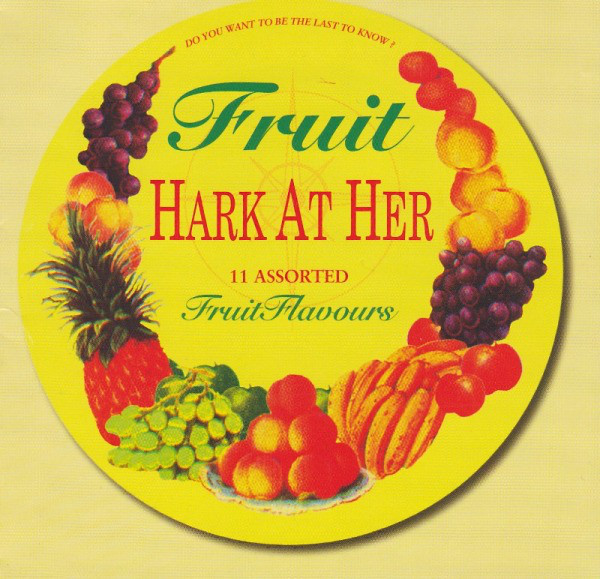
February 1996 – album reviews – Fruit’s ‘Hark At Her’ (“this bold, brash, noisy, fun, emotional tour‑de‑force”)

2 Feb

Fruit: 'Hark At Her'

Fruit: ‘Hark At Her’

Fruit is Patrick Fitzgerald (and friends). He, for those who care about such things, was the vocalist with the sadly underrated ‑ and sadly no more ‑ Kitchens Of Distinction, a trio of rather serious‑looking young men producing doomily arty, swirling guitar rock. (Digression: while Fruit is a terrific ‑ and more fun ‑ project, the Kitchens shouldn’t have been mercilessly dropped by One Little Indian. So much for the eclectic, egalitarian indies! OLI should get it together ‑ they dumped both No‑Man and Kitchens, unwilling to give them a little leeway to produce their own music. Basically, they now just exist to market Bjork. Idiots.)

So, as Kitchens Of Distinction… er… got out of the kitchen, Patrick set about producing this bold, brash, noisy, fun, emotional tour‑de‑force of (mainly) gay life. From the start, he was working against the prevailing musical current ‑ Fruit’s debut single, an evocation of gay life and death called The Queen Of Old Compton Street (not included here) came out in the same week as Oasis’ Live Forever. Such irony made me laugh until I choked.

Let Patrick educate you. Proceedings open with What Is Fruit?, sounding like one of The Fall’s chuck‑it‑all‑in‑the‑mix takes on crunchy guitar dance‑pop, but with a brighter sensibility from the start. Exotic voices and foreign tongues fly thick and fast with their interjections to that essential question. “Films, actors, addicts, vermin, / Friends, filth ‑ everyone I’ve ever met” ‑ out of the ghetto and all around us ‑ “not forgetting the two coppers in the kitchen.” This is gleeful and exuberant. Hell, the bright pop mix is even down to Pascal Gabriel.


Pleasure Yourself continues the fun, with much the same thrilling electric‑guitars‑plus‑electronics backing, as Patrick cheekily suggests: “Take my pleasure seriously / So come on baby and pleasure me / While you pleasure yourself.” Its wonderful directness can’t be avoided, and the same is true of Sally’s Car. To a ‘Diamond Dogs’‑era Bowie glam feel, Patrick remembers: “In Sally’s car we go too far… / lying on the back seat watching the meteors from Mars.” No, if you want subtlety, forget it. Then they drive away ‑ “put the roof down, turn the noise up.” Oh, come on! It’s corny, yes, but whoever your sexual partner, you’ve known that feeling.


But hey, if this is all getting too happy for you…

Starring Relationship ‑ featuring yet more dialogue, partly from Lush’s gleeful harpy Miki Berenyi ‑ is Patrick sounding as frankly pissed off as you always wish you could get when, at a party, you’ve got trapped into a corner with some misery of a person sitting on the stairs, bending your ear. “Don’t want to hear about your fucking relationship / The way you feel when he doesn’t think of you… / Just deal with it!” Patrick has got every whinging item of complaint in such talk nailed down and, to a soundtrack of suitably scratchy, edgy guitars, he’s spitting them all back at you ‑ with added bile.


The two central tracks of the album are not only the most musically dissimilar, but display the two sides of the gay experience. Prowler features the star‑shooting, to die‑for harmonies of David McAlmont: to a smooth late‑night soundtrack of lush acoustic guitars, husky organ and reedy trumpet, he and Patrick celebrate freedom and the opportunity to practice one’s desires without fear. It’s glorious. Through the music the sound of thunder breaks into the sweaty heat of a summer’s night outdoors. Such freedom is Shangri‑La…


The other side of the coin is Leather Jacket. To a Tricky‑ish soundtrack of kettle drums and nervously plucked guitars, Patrick relates an absolutely terrifying tale of gay‑bashing on the street. With increasing terror, he repeats the central line: “I hear the zip of his leather jacket / See the flashing of gun metallic…” The lads want to bash him up to impress their girlfriends, while he desperately prays to be spirited away by clicking his Doc Martened heels three times. Last time now: “I hear the…” Gunshot.


But there’s a reprise. Over the returning kettle drums, a certain Paul McGlone narrates his memories of a karate‑kicking and beating from two scum. Paul’s a survivor, though. He’s got the right idea. He wants justice ‑ to identify them in a police station‑‑and simple revenge ‑ the humane solution of a bullet through their heads. What with Lorne Burrell’s lethally camp, RuPaul‑ish delivery of a threat to kick the bully boys into paradise, the message is clear: the survivors are waiting…


The final track, Scatter Me, ends with death. Though these funerals of young men, AIDS victims, are now all too common – the same songs are sung, the same careful sideways looks to see who’s noticeably losing weight ‑ the proud defiance is still there: “The dead are so loud / Their monuments are so proud.” As he looks up to heaven and sees all the souls gazing down, Patrick’s naked, almost scarred voice surges with power and defiant strength, over a bare acoustic guitar and water effects.


So many voices and so many words, sung and spoken, populate this album that, at times, the music does rather take second place and search for a personality among many differing styles. But what the hell, this is such an amazing walk through relationships and experiences that such a criticism is unimportant for a fun project, a masterful achievement and a life‑defining catalogue of all those highs and lows.

(review by Vaughan Simons)

Fruit: ‘Hark At Her’
One Little Indian Records, TPLP75CD (5 016958 029524)
CD-only album
Released: January 1996

Get it from:
(2018 update) Out-of-print – best obtained second-hand, or downloaded from Bleep.

Fruit (Patrick Fitzgerald/Stephen Hero) online:
Homepage Facebook Twitter Soundcloud Bandcamp Last FM YouTube

January 1996 – mini-album reviews – Andrew Booker’s ‘Ahead’ (“a psychological night journey through a cold city”)

15 Jan

Andrew Booker: 'Ahead'

Andrew Booker: ‘Ahead’

If you know the sound of the wind of doubt whipping around tower blocks and insinuating itself through your double glazing, you’ll know this. Andrew Booker‘s twenty-three minute suite of cold lights chills you through your protection in just that way.

Despite the persuasive depth of the production, the simple sound-palette of ‘Ahead’ could have worked against it. The music is little more than chilly sequenced waterfalls of keyboards, restless prog-rock drums, and a voice which blends a boyish purity with the swelling sadness of a man who’s grown up just enough to look over the wall and see the void beyond it. Andrew knows precisely what he’s doing, though, and he leans into it with a passion and honesty that transcends the sonic limitations. With this limited arsenal he etches out the thoughts of a man hermetically sealed into the sterile environment of his car, trapped on a psychological night journey through a cold city, with his stiff English upper lip trembling as he slowly starts going to pieces.

There is tenderness (a moment of open romance on the shy, beguilingly lovely Dreaming Of a Night in Winter) but mostly this is a testament to loneliness: a soundtrack to empty e-mail servers, abandoned urban showcases, untouchable ghost-town neighbourhoods. As the dusk folds around the teeming city blocks in No Fit State, Andrew can find no place to welcome him, no place to shelter from the grind: “there are no more places left for me to fill…”

Walk sees love whip past and away, like a leaf batting a motorway windshield only to be snatched by the slipstream. Vague, disassociated expressions clutch at the tail-end of an affair that’s come apart like a cheap plastic furnishing: “We fought, and we touched, and we hardly met… / The touch of your love chills my jellified flesh… / Don’t lose your mind, a terrible waste…” And the scene is set for a swing away into midnight driving on Run – thrumming with lonesome muzak harmonies, tumbling vocal melodies, a chorus of freezing pilgrims in the background marking time as Andrew journeys on. It’s a case of travel hopefully… but only just.

If motion seems to provide no answers, neither does stasis. Airports has Andrew at the mercy of arbitrary forces: stuck in life’s queue and seething with frustration at the proscribed directions and hold-ups, he flings sarcasm at the consumer sedatives thrust at him in an attempt to shut him up and keep him out of trouble. Twinkling tunes and spooky Latin pop riffage sugar up the stifling messages put forward by “ground control”, but mock where they should soothe.

And by Waiting, Andrew’s rebelling with a howl (talk to me!”) as the live drums thunder and stab at the limits of the sequencers: but his plea for communication gets swallowed up in a tide of garbage, junk mail, and the continuous running (and little close-downs) of the world machine. The little man puts up a fight, steps out and speaks, but can’t escape from his role as a cog. His passionate voice, though, reminds you how urgent it is to make the stand and fight the fight. You get the feeling here of someone who’ll never give up, who one of these days will hurl himself against the imprisoning wall and break it down.

For something so short, ‘Ahead’ is many things. It’s a tribute to cottage industry (Andrew wrote, arranged and produced ‘Ahead’, played every note except for one guitar line, handled all the artwork and only stopped short of refining the plastic to make the CD). It’s an uptight English answer to The Blue Nile; it’s Buggles minus the whimsy. It’s Jon Anderson with his head pulled out of the stars and his heart thrumming with an urban panic attack. It’s the missing link between Tubeway Army’s immaculate electropop, Underworld’s motorway pulse and the fears in Nick Drake’s Black- Eyed Dog.

But above all, it’s very wonderful: hymns to an urban, urbane alienation. A head full of doubt rarely sounded this good.

Andrew Booker: ‘Ahead’
EA Records, EARCD1 (no barcode )
CD-only mini-album
Released:
January 1996
Get it from: (2020 update) Best obtained second-hand.
Andrew Booker online:
Homepage Facebook Bandcamp Last FM
 

December 1995 – live reviews – Anna Palm + Mandalay @ Upstairs at The Garage, Highbury, London, 20th December (“as full of explosive energy as a pan of popping corn… / …stately, kaleidoscopic and coolly hallucinatory”)

22 Dec

Oops. I’ve come to what I thought was a serious, arty gig to find exotic scarves hanging from the ceiling and a little green-nylon Christmas tree sitting in the corner. What with this, the candle-lit tables and the cheerful little greetings flyers under said tree, I get the feeling that I’ve crashed someone else’s Christmas party.

This particular party’s being thrown by violinist-turned-singer-songwriter Anna Palm, known for a journey that started with busking in Covent Garden and Chelsea and went on to a stint with acoustic punk-folkers Nyah Fearties, a handful of albums and singles on One Little Indian, and support contributions to a variety of artists from YesSteve Howe to New Wave synth poet Anne Clark, ascerbic dream-pop realists Kitchens of Distinction and avant-Goth experimentalist Danielle Dax. It’s an interesting resume. Well, I hate to bad-mouth my hostess, and maybe it’s unfair to judge an artist from an event coming across very much as a fun gig, but I’m decidedly underwhelmed. Despite an indie all-star band (with various members of The Farm, Loop Guru and Kitchens of Distinction taking time out to back her up) she fails to shine.

It’s not as if she doesn’t try: a Violet Elizabeth figure in a frilly little-girl party dress, she’s as full of explosive energy as a pan of popping corn, exhorting people onto the floor to dance, singing with verve (if not always great pitch) and sawing acrobatically at her violin. But the band is under-rehearsed and scrappy, falling apart much too often. Anna’s songs, too, lack individuality and the delivery to make them memorable. A shame, as when she sets bow to strings some spirited and slyly lovable playing emerges.

Anna’s obviously a good player, but as far as being a singer-songwriter goes she still doesn’t seem to know what to do with herself. File under “needs work” and leave it at that for now. However, the mess does yield up one unexpected delight – a dance-groove version of Kites, compelling and grin-inducing, with Anna’s riotous violin scurrying over an early-’90s style baggy beat and the whole thing carrying a strong hint of I Will Survive. A novelty, perhaps, but it’s good to see Simon Dupree’s old hippy hit hopping onto a modern groove and feeling right at home. These particular Kites really fly. I wonder if the Shulman brothers (who notoriously hated their early Dupree-ism despite its success) might ease up and grin and bop along if they were here to hear this.

The real reason why I’m here is a duo called Mandalay, hiding further down the bill: it’s the new project by multi-instrumentalist and electronica aceSaul Freeman, who used to perform a similar role as half of the band Thieves alongside stratospheric singer David McAlmont. Thieves are long (and acrimoniously) split now, with what would have been their debut album a little uncomfortably repackaged as the stunning McAlmont debut (and if you haven’t heard that, you missed one of the most vitally progressive pop records of 1994).

Now Saul is quietly rematerializing, in partnership with singer Nicola Hitchcock, to reclaim some of his lost thunder. But although it shares the glittering crystalline texture of Thieves’ songs, Mandalay’s music is nowhere near as easy. As with Thieves, Cocteau Twins should be mentioned (especially when listening to the effects-swallowed guitars of Enough Love); so too should the frozen sadness of Portishead (especially on the chilly trilling of Enough Love). but Mandalay is more involved and intricate than either. These are multi-dimensional songs, Nicola’s frail but enthralling vocal melodies elevated from the ground on staggeringly complex musical architecture courtesy of interlocking blurry sequencers, obsessively repeating samples and eerie guitar treatments. Saul stands impassively amongst his host of computers and effects racks, gazing absently down at his guitar and its network of pedals. Every now and again he’ll tap and flick at the strings and a second later a whole web of music will swell from the speakers.

Mandalay’s style – stately, kaleidoscopic and coolly hallucinatory – is best exemplified by the silvery net of sampled vocals, the stabbing kick drum and the harmonica-skank guitar of More Than Venus: Nicola’s whispering Bush-y enunciation gives the perky melody an awkward, appealing sensuality. Walk By the Sea rumbles by on an ominous 3/4 riff, double-looped spiral claustrophobia and panic-pitch piano plinking. The Waiting gives full reign to Saul’s subtle space-age guitar work: cunningly-placed “brang”s and attenuated bell-notes amongst the fabric of a languorous techno-warble.

There’s plenty of pop in this (and, despite the duo’s clear and ineluctable whiteness of manner as well as appearance, more than a helping of trip-hop) but Mandalay are also decidedly post-rock. They’re part of the astonishing movement which also includes Moonshake, Laika and the late-lamented Disco Inferno, and which junks the conventional hierarchies of rock instrumentation in favour of the uncanny textures of digital sampling and electronic ensemble processing. This might not sound appealing to the traditionalists out there, but believe me, Mandalay are much more than noodling experimentalists. Try to think of their songs as angst-under-amber, refracted into confusing multiples by an unearthly light. Unsettling but beautiful pop for an uncertain info-saturated future. You want progression? It’s happening here.

Anna Palm online:
Homepage Facebook MySpace Last FM YouTube Spotify Tidal Amazon Music

Mandalay online:
Last FM Apple Music YouTube Deezer Google Play Spotify Amazon Music

Additional notes: (2020 update) Anna Palm now lives and occasionally performs in Stroud. Mandalay recorded two albums for V2 Music before splitting in 2002: both Nicola Hitchcock and Saul Freeman have continued intermittent solo careers.

December 1995 – live reviews – Gordon Haskell @ The Unplugged Club, Bloomsbury, London, 7th December (“one mockingly rolled eye peering out to capture the madness and to look out for an escape route”)

9 Dec

Not even a minute into the show, and we hear it. He looks thoughtfully out at the mixed crowd and speaks. “I can usually tell whether an audience is going to be good or bad.” A pause. “Good night!” And then he lets it rip. That laugh – an untrammelled, hiccupping whoop of unbalanced joy, teetering on the edge of losing it. You may have heard in on King Crimson‘s ‘Lizard’, twitched into hysteria by studio electronics, a lone human voice in the sick, surreal circus. Twenty-five years on, in this intimate little acoustic club, it sounds like the redemptive, rueful peal of a free man, acknowledging the potholes of disaster that dog our footsteps in this world and cause some of us to drop into madness.

Strange to think that this grizzled and animated figure, eyes twinkling benevolently beneath a battered hat that’s the last word in Bohemian chic, is Gordon Haskell – singer with King Crimson for nine studio-bound months back in 1970. At an age where most ex-proggies are still squeezing themselves into the glad-rags and going through ever-more lifeless motions in small theatres, Haskell is donning comfortable clothes, picking up his acoustic guitar, playing tiny little places anywhere and enjoying himself. To tell the truth, the Crimson connection is misleading. All of that was a long time ago now. Gordon’s profile may have been lower than a bug’s belly since then, but now he’s swinging back into action with a vengeance… and he’s in better artistic shape than most of his more financially successful contemporaries.

Not only does he possess a brilliantly gutsy guitar style and a voice so rich and earthy that you could grow potatoes on it. but he has a bagful of excellent songs to offer. He now writes and plays like a combination of John Martyn and Leon Redbone, with a huge measure of the rawer joys of John Lee Hooker and Richard Thompson. He takes the vibrancy and gleeful survivor’s power of deep blues and blends it with an irreverent, eccentric, classically English strain of absurdism. Like the young Peter Gabriel, he takes his stand against the hostility of the world with a disarming, cunning humour, one mockingly rolled eye peering out to capture the madness and to look out for an escape route. It’s all as warm as a closely-held candle on a winter’s night… and as liable to suddenly scorch your fingers.

Thinking back to ‘Lizard’, one wonders what kind of more lively, organic record would have emerged had Robert Fripp and Peter Sinfield given Gordon a crack at the songwriting rather than just dovetailing his voice into their meisterwerk. There’s a vague hint of Sinfield’s verbal adventurousness in Haskell’s songs, although thankfully none of the attendant pretensions. The Hooker-like Wang Bang World captures life’s grim tendency to overrun us, but revels in a tumble of savagery and joking; conversely, Pelican Pie could be just a blur of absurdist imagery were it not for the beady-eyed thread of social critique running through it.

Haskell’s between-song banter may be a mixture of oddball wisdom and Eddie Izzard goofiness (“may you be blessed with many goats!”) but the humour in the songs is by no means pointless, pretentious silliness. Rather, Haskell’s a knowing jester holding his own and laughing in the face of life’s terrifying chaos. Hanging By a Thread (dedicated, tonight, to Fred West) is a mordantly hilarious parade of murderous, fatalistic comedy: “Gentle Jim got life for chopping up his wife / – said he needed warmth for the winter.”

The lack of preciousness is what really makes him great, though – he’s not out to prove to us what a clever musician he is. Sure, each song has enough teeth and gold to make us think about it, but it’s Gordon’s sheeer verve and ecstatic gutsiness that wins the audience over, captured in the luxuriant salaciousness of Chilli Chilli, the throbbing jungly blues of Test-Drive or the voodoo swamp-stomp of Alligator Man, a roaring clapalong portrait of the ruthless predatory wheeler-dealer, the sheepskin-coated hoodlum-salesman who’s becoming a spectre of the times.

Like those old bluesmen, Haskell knows how life and death, humour and horror walk side-by-side and share the same streets, and his work is not short of tenderness as well as carnality. The love song All My Life rasps like Louis Armstrong, and I Don’t Remember It Like This shows an Ian Anderson verve as it examines the misleading, misframed photos in the history of love: “whatever love is, it’s in the thrill of your kiss / and I don’t remember it like this.” There’s a real feel to the soulful sorrow of Tortured Heart and in the wry shrug of Mail Order Love, which mixes an organic bluesy swing with a handful of dissatisfied plastic metaphors, romance gone synthetic. The philosophical break-up song Go Tell Sarah is part goodbye, part lie, part promise.

In a dash of sheer music-hall, he tips his hat and beams at us with real pleasure, inviting us in to share both the fear and the laughter on his perspective on life. The return of Gordon Haskell is going to offer the scene a welcome dose of warmth, and 1996 could well be his year. A lost star is returning to dispense a special kind of mischievous twinkle.

Gordon Haskell online:
Homepage Facebook Twitter MySpace Soundcloud Last FM Apple Music YouTube Deezer Google Play Pandora Spotify Tidal Amazon Music
 

Sometime in 1995 – album reviews – Dayna Kurtz’s ‘Footprints’ (“venturing into the faultlines between lovers which lurk in the most private places”)

30 Nov
Dayna Kurtz: 'Footprints'

Dayna Kurtz: ‘Footprints’

I’m not a stranger to heartbreak (either my own or that of others), but in all my experience of it, there are many things I haven’t done. I’ve never sat nursing a coffee in an all-night cafe as the dawn breaks, rearranging the cracked facets of my bitter smile. I’ve never composed the ultimate understanding kiss-off, writing the shapes and sentences to slide into a failed lover’s heart, to pat on the shoulder and slap upside the head with the same motion. I’ve never climbed the stairs of a Manhattan walk-up, trying to listen hard enough to trace the voices of memory infiltrating the walls and carrying memories of bitter love affairs, and of angry hearts temporarily exorcised at 3 a.m. But ‘Footprints’ – a collection of songs from Dayna Kurtz, whom I first saw breathing a blue glow of melody in front of a transfixed DreamHouse audience at the Water Rats – gives me an idea of what it might have felt like if I had.

Dayna explores the long deep pain of thwarted love with the same sort of delicious tension between voice and guitar as you get with Tuck & Patti or Jose Feliciano, but more raw, more direct, less decorated. Her voice is an aching, defiant, yearning thing, sharing breath with both Billie Holiday and Joni Mitchell. Her guitar is terse, bluesy, jazzy, but with a stubborn bluntness that refuses to flow smooth and to comfort; choosing instead to smack the hooks of wounded desire further into the heart, to bleed out the regret and anguish or to force the protective badges of scars and knowledge into being. Her songs clap and fold about you like a Coltrane solo bouncing jaggedly off the walls of a tiny club; or slip into you like short stories that sink to the depths of the heart, then rise like surfacing mines, meaning expanding in soft slow explosions.

Pick almost any song on here and you’re drawn into a story of bitter tangles; of embracing arms that end in helplessly clenched fists; of awkward, looming personal baggage that blocks the way into shared rooms. Perhaps the brittle R&B, funk and electricity that amplify the two full-band songs on ‘Footprints’ (‘The Road You’re On’, the title track) blunt the impact of Dayna’s writing. But catch her solo and you’re let in on something personal, painful, profound and beautifully defiant: “I threw my thoughts around, just for you to trip on.” She’s no fool: she’ll see through sentiment to the truth of the immediate (“once in a lifetime, this time – that’s what they sold me. / I don’t believe that, but it’s holy, holy,”) and she’s wise to vainglorious bullshit (“I got your picture at home: / you’re looking kinda cocky, with this wistful undertone, / like some cover has almost blown.”). Still, she seems ultimately to gravitate towards tension and friction in love.

In ‘Lay Me Down’ a relationship starts in a healing calm – “help me remember my liquid heart, and the open mouth of painful parting… / I’m moved, I confess, by a heart that seems calmer than mine.” Yet it swallows its own tail, hung up on the suspicions that both lovers have brought to the bed. “I hover above some something you said, / ’til I can’t feel you at all.”

In ‘Something/Nothing’ she attempts to immerse herself in a clasping at protection: “lost in the dark outside, I took your room to breathe, / and then I sealed all the cracks in me / then choked off my heart so cold and quick / and thought ‘it’s better this way’.” This, too, ends up in an indefinable and unexpected loss. “I lost my faith in something that I couldn’t name. / I thought you left with nothing… but I’m not the same.”

Dayna’s great songwriter’s gift – raising her above the usual horde of self-important dirty-linen washers – is the strength she brings to the table. A sense not of victimhood or self-righteousness, but of a strong woman of heart and mind, venturing into the faultlines between lovers which lurk in the most private places, and reporting back with full, proud honesty. “In my most helpless of hearts, I’ve been tearing up pictures of you,” she flares on Nowhere, made bloody-minded by another partner’s calculating shallowness and cowardice. “I gave my heart, an ocean; / showed you my soul to see. / And you just skimmed along the surface – but you’d swear you’d drowned in me… / When we’re good, we’re very good; / but when we’re bad, you’re nowhere.” On ‘This Side of Eve’ (a live duet with South African singer Tsidii Le Loka, whose shivering, passionate vocals coil round Dayna’s like smoke trails on a winter’s night) she’s set her face forward, to move on: “This place doesn’t know me, so there’s nothing to leave.”

Yet, appropriately, it’s the broken, free-time lick and gentle licking of old wounds on ‘Touchstone’ which I keep coming back to. A lonely, solo memory song (“I think of you, I think of you,”) surging and ebbing with the questions and longings that come too late (“Remember me? / I curve like a question mark. / And I’m lying home alone, / and I can almost hear you calling / like a saxophone…”). All the disappointments, yet couched in tenderness (“Remember me? / I came to you washed clean / and soft as a peach. / I said ‘let’s climb’, / but all you did was reach for me,”) and the frail wisps of old hopes, still held and treasured long after the hope has winked out of them – “I knew you’d be my touchstone, / I could see us getting old.”

Some old ghosts are now sitting with me. I think we’ll wait together, silently, until the sun comes up.

Dayna Kurtz: ‘Footprints’
self-released (no catalogue number or barcode)
Cassette-only album
Released:
1995
Get it from: (2020 update) Best obtained second-hand; this album is never likely to be reissued (since Dayna considers it to be juvenilia, or at the very least material recorded before she’d found her songwriting identity). There’s a live version of ‘Touchstone’ on Dayna’s ‘Otherwise Luscious Life‘ album.
Dayna Kurtz online:
Homepage Twitter MySpace Bandcamp Last FM YouTube Spotify Amazon Music

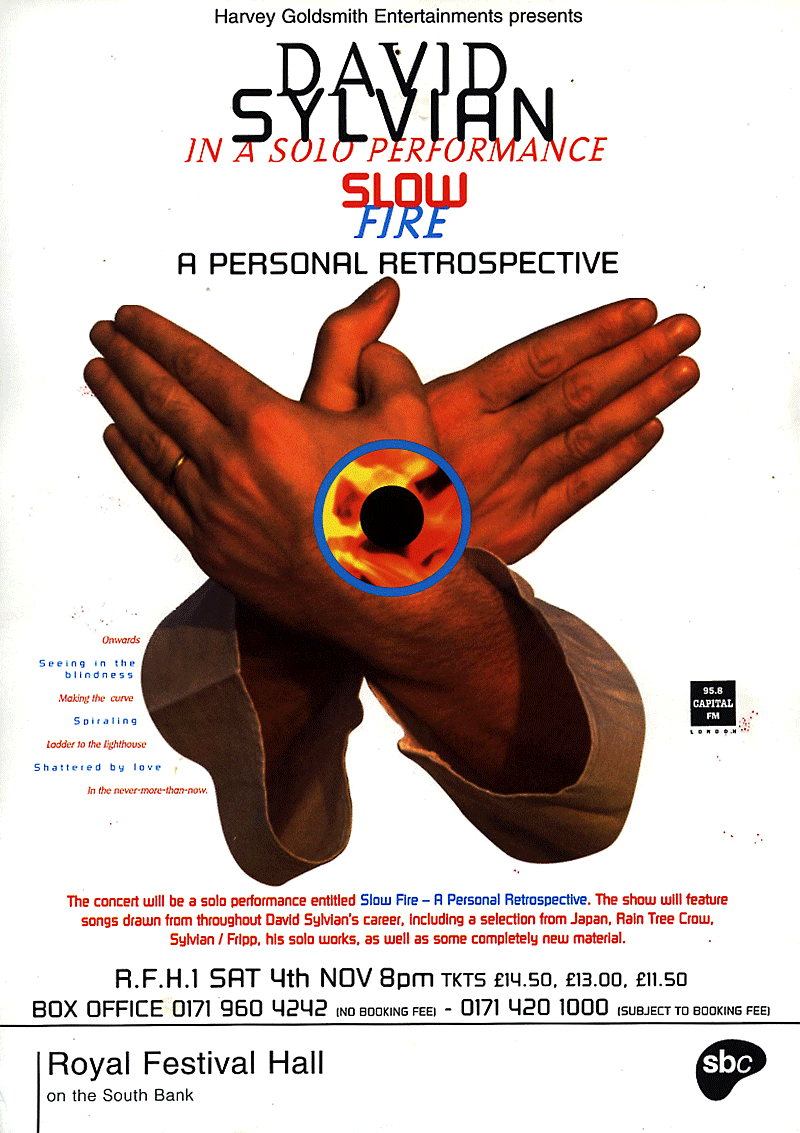
November 1995 – live reviews – David Sylvian’s ‘Slow Fire – A Personal Retrospective’ @ Royal Festival Hall, Southbank, London, 4th November (“self-effacing chameleonics”)

6 Nov

David Sylvian: 'Slow Fire - A Personal Retrospective' 4th November 1995

David Sylvian: ‘Slow Fire – A Personal Retrospective’ 4th November 1995

With former Japan leader David Sylvian, a show or an album is rarely as simple as being just a show or an album. Since 1983 he’s swum in and out of focus on a collection of artistic cross-fertilisations (sombrely beautiful songs albums, collaborative ambient vaguenesses, art installations): a shadowed, near-invisible chameleon with an enigmatic past ranging from over-exposed greasepaint-and-trash glamour to composer-effacing sound-sculpture. Tonight’s show – given extra weight by its ponderous title of ‘Slow Fire’ – is billed as a solo retrospective plus work in progress. Given Sylvian’s occasional tendency to enmire himself in inconsequential sound-tapestries, this could be grim. But the reality of ‘Slow Fire’ is more straightforward. Since we last saw him, touring with Robert Fripp, David Sylvian (like so many progressive artists) has decided to re-examine himself, unplugged.

With any contemporary electric musician, this is a risk: for Sylvian, much more so. The man now best known, post-Japan, for wall-to-wall electronic shrouding spends most of tonight perched on a stool behind a classical guitar. It’s the old rebirth scenario: once a travelling encrypter of decadent European and subtle Oriental sensibilities, Sylvian’s currently settled down into domestic bliss in America with a new wife (Prince protégé Ingrid Chavez), a new accent (decidedly transatlantic) and – judging by the credits on the appallingly pretentious programme – a guru. This would explain the brilliant white kaftan (has Jon Anderson missed any clothes recently?) and the four-cornered bowing as he takes the stage.

Though he’s dropped a few clues about an acoustic direction on recent recordings (on the Sylvian/Fripp B-side Endgame, for example), accepting Sylvian as an acoustic musician is not so easy. That marvellous voice, deep and rich as fortified honey, is still there, but over the years he’s made so much mileage out of his electrophonic atmospheres that his actual songs have been able to camouflage any flaws within the soundcraft.

The often disappointing collaboration with Fripp laid bare the aridity that Sylvian songs can often shrink into – tonight, Jean the Birdman is tricky and interesting but (even with a ludicrous attempt at scat singing) ultimately uninvolving, and there’s nothing like an acoustic performance for exposing juicelessness. Unsurprisingly, material from Sylvian’s song-centric 1987 album ‘Secrets of the Beehive’ fare well (the lilting menace in the folk-premonitions of The Boy with the Gun, a magnificent Orpheus and a hushed Waterfront) as do the few treasured songs from the Rain Tree Crow project: a reverberant Every Colour You Are, and a version of Blackwater which releases the song’s submerged country elements.

There are even one or two surprises during the guitar set, such as a rich rendition of Before the Bullfight and the shocking reinvention of keystone Japan hit Ghosts. From the beatless, icy original, Sylvian turns it into a wry Latin pop-inflected shrug of acknowledged doubt, Gilberto Gil meets Scott Walker. Even more shockingly, it works. But material from the schizophrenic ‘Brilliant Trees’ era has a tougher time making the jump to simple gut strings. Twitchy artiness such as Red Guitar and a limp Pulling Punches stumble out as embarrassing feynesses. Weathered Wall becomes a dull drone when denied the support of Jon Hassell‘s vaporous trumpet. With his shamanic atmospheric arrangements missing, too much of Sylvian’s once-epochal material is revealed as mere spectral verbiage, irresistibly crooned but superficially moodist. “Words with the charlatan,” mutters someone next to me, sarcastically.

It’s when he’s at the keyboard, with renewed access to a broader range of textures, that Sylvian delivers real magic – the rueful piano balladry in September and Earthbound Starblind, or the swathes of synth around the frozen pain and stone tears of Damage. When he allows himself the luxury of backing tapes, the dream deepens. A medley of Maria and Rain Tree Crow sees him keening over a wafting mist of chilling ambience punctuated by a ghostly chuckle. The First Day (graced with a wisp of taped Fripp skysaw) is as lushly majestic as ever. The deep dark indigo melancholy of Let the Happiness In acquires a meditative drum loop along with the shadowy orchestras of synth: it becomes hymnal, filling the great yearning emptiness at its heart with a sense of renewal, of return and redemption. It’s at moments like these that faith returns, and we can remember the subtle yet profound impact that Sylvian’s music has made in the past.

The trouble is that that was the past; and that the present is looking decidedly lumpen. The keyboard is also where Sylvian unveils his new material. For work in progress, it seems suspiciously complete… and already possesses a distinct form. A piano version of Tim Hardin’s It’ll Never Happen Again is the touchstone, with the interminable Ingrid’s Wheels and the rambling I Do Nothing (the latter most notable for its repeated, listless “alleluia”s) sketching Sylvian’s way forwards. Dusky, Americanised ballads with a strong element of that empty piano-bar pomposity that’s invariably damned with the kiss-of-death tag “quality songwriting”. Superficial sheen generating superficial applause. It’s difficult to escape the thought that David Sylvian’s self-effacing chameleonics have finally led him into a trap, a territory where he can no longer find his own face, where he will blur into a line of indistinguishable piano-song hacks whose albums will receive polite plaudits and gather dust on the lower shelves, where the fire will slow to a flicker.

The old Japan acolytes queue up tonight to touch the hem of King David’s gown. He smiles and bows like a bashful messiah. I can appreciate his showman’s smoothness… but I’ve lost my faith. I have a horrible suspicion that despite the handful of wonderful moments held to the light this evening, the shaman has swapped his books and his wisdom for a Cadillac, and the tin drum which once sounded out a musical challenge has just stopped beating.

David Sylvian online:
Homepage Facebook Twitter Soundcloud Last FM Apple Music YouTube Vimeo Deezer Google Play Pandora Spotify Tidal Amazon Music
Additional notes: While there’s no footage available for the London ‘Slow Fire’ show, you can get an approximation of it from footage of the Bari show from the same tour, in Italy, which is compiled here.
 

September 1995 – live reviews – B. J. Cole & The Transparent Music Ensemble + Billy Currie & Blaine L. Reininger @ Upstairs at the Garage, Highbury, London, 20th September (“a classical dissection of folk, like Irish airs meeting New York minimalism… / …a beautiful translucent sound”)

23 Sep

A definite whiff of conservatoire rock tonight. Viola player Billy Currie used to be in Ultravox,: nowadays he looks more like an Irish pub musician, but his music has taken a more interesting turn, as has his choice of collaborators. Former Tuxedomoon violinist and occasional singer Blaine L. Reininger – with his unnerving bespectacled stare, lugubrious ironic drawl, Zappa face-fuzz and impeccable suit – looks like a college professor whom you wouldn’t allow near the children, and draws most of the attention this evening.

This unlikely pair perform a set of serious brow-furrowed John Cale-y string duets with a flavour of compressed folk, using an endearingly cheap sequencer to expand the instrumentation: clave and sweep piano program on Bittersweet, digital string orchestra on Overcast. On The Reach of Memory, sparse piano clumps, drum program and synth bass kicks into Currie and Reininger’s apparent take on Appalachian mountain music. The Thin End of the Wedge sees Reininger on trashy art-rock guitar for a Velvet Underground feel.

Their music has a strange, detachedly astringent feel; a classical dissection of folk, like Irish airs meeting New York minimalism. A sense of towering expression repressed, amplified, by Reininger’s menacing suavity: the set highlight is The Green Door, in which Reininger sings words from a documentary on schizophrenia to a strong melody over sparse drum program and organ. Seems wholly appropriate. I’m impressed, but I feel a little queasy.

In contrast, pedal steel guitarist B.J. Cole is a ridiculously normal-looking guy with a peculiar past. Back in the ’70s he was the leader of Cochise (probably the only prog/psychedelic band based around pedal steel) and subsequently explored psychedelic country music in 1973 on his ‘New Hovering Dog’ album. Over the years since then, he’s been the ubiquitous sideman and sessioneer to everyone who wants an open-minded pedal steel approach, from The Orb to Björk to Procul Harum to Scott Walker, and in particular John Cale. Since 1989 he’s also been leading this occasional band; the Transparent Music Ensemble, an ambient-flavoured chamber music quintet also featuring keyboards, cello, percussion and violin prodigy Bobby Valentino, best known for his London country music stardom.

Cole’s Transparent Music is a sedate, relaxing experience, pleasantly beautiful and unfussy, far too laid-back to be pretentious. Reflective melodic strings tie in with his steel lines, keyboards support gently, percussion shades rather than impels. Some people point out Brian Eno as the inventor of ambient music: others such as Cole know that it goes back to the days of Satie and Debussy, both of whole expressed ambient intentions long before the days of synths and tape loops, wishing to create music that merged with the tinkle of cutlery. Works by both are played tonight, along with a version of Ennio Morricone’s Once Upon a Time in the West, a slow cloudy cover with Cole’s ringing pedal steel dreaming out the tune.

Transparent Music is unselfconsciously universal: if something fits in with that softly lustrous sound, Cole and co. play it and let someone else draw up the distinctions if they’ve got nothing better to do. The original pieces stream neatly into place alongside the classics: Indian Willow’s choppy subterranean strings, Promenade & Arabesque’s pizzicato accents. Throughout, Cole’s steel pines and slides gracefully. That is, when he hasn’t MIDI-processed it into another sound – sad film-noir saxophone on Adagio in Blue to contrast with Valentino’s passionate classical violin, or the fluting electronic sounds on Easter Cool counterpointing the piano and bass drum.

It isn’t exactly music to stir the blood. What it is is very accomplished classy atmosphere music, a beautiful translucent sound whose function is just to exist and to please. That may sound superficial, but if so it’s a refined and civilised pleasure of superficiality. Gentle classics stroked with electricity and with a sense of ambient context, reclaiming the sector where popular instrumental and classical cross, and with no hint of elevator music. Easy listening with a brain. Satie and Debussy would have approved.

B. J. Cole online:
Homepage Facebook MySpace Last FM Apple Music YouTube Deezer Spotify Tidal Amazon Music

Billy Currie online:
Homepage Facebook Twitter MySpace Last FM Apple Music YouTube Deezer Pandora Spotify Tidal Amazon Music

Blaine L. Reininger online:
Homepage Facebook Twitter MySpace Soundcloud Bandcamp Last FM Apple Music YouTube Vimeo Deezer Google Play Pandora Spotify Amazon Music
 

September 1995 – live reviews – Shriekback + Holly Penfield @ Upstairs at the Garage, Highbury, London, 6th September (“a few degrees different… / …madly danceable but bursting with wild and intriguing approaches”)

9 Sep

Holly Penfield, delayed by technical problems, is not having a great night. For those who haven’t previously seen the Diva of Dysfunction, this is maybe not an ideal introduction to her unnerving songbook of emotional explorations, cramped as it is into a shortened set-time opening for Shriekback.

Nonetheless, as she sings out her heart and wrings the notes out of her synth, her quality shines through as she leans on the more conventional songs of her standard set – the vulnerable unwindings of ‘Parts of My Privacy’; the clarion-blast of ‘Calling All Hearts’; the stormy tribute to city derelicts in ‘Over the Edge’. The long frozen yearn of ‘Stay with Me’ is as potent as over; the climactic anthem and disintegration of Misfit still jolting and captivating. Tonight she may seem only a few degrees different from most mainstream songwriting women; but they’re important degrees.

Shriekback may be familiar to those of you who’ve followed the career of XTC. Lubricious singer and frontman Barry Andrews was once part of that band, although now (shaven-headed and muscular in black singlet and leather trousers) he looks more like an escapee from Right Said Fred. Watchers of the ’80s alternative scene might also remember the band as being artily plastic white funkers – during the time when Dave Allen and Carl Marsh made up a fierce creative triumvirate alongside Andrews – but they’ve changed quite a bit since then. Thronging the stage like a post-civilisation white road tribe from ‘Mad Max’ or Circus Archaos (and always seeming to be twice as numerous as they actually are) Shriekback still play what could be described as funk, but it’s a mutated progressive variant: still madly danceable but bursting with wild and intriguing approaches.

The instrumentation has something to do with it. A vast array of percussion instruments played by the entire band, like a mongrelised salsa troupe, include – in addition to the standard kit, congas and bongos – giant mutant tambourines, Arabian dumbeks, Irish bodhrans, cymbal-clappers and what looks like an array of motor springs on a huge chunk of wood. Guitarist Lu Edmonds has dumped his six-string in favour of a couple of electrified Turkish instruments – the cümbüs (apparent bastard child of a banjo and a twelve-string guitar) and the saz (like a bouzouki with moveable frets) – chopping and rolling out subtly different parts. The bassist loops and taps on a full-toned fretless. Courtesy of Mark Raudva, didgeridoo and mandolin both make appearances during the evening. Barry himself plays accordion as if he’s wrestling with a giant python, and somehow manages to extract an eerie sound for a wired-up tree root.

Funky it may be, but “get down y’all” is not on the agenda. Shriekback are progressive funk barbarians with a cunning primitivist edge, as happy with a sort of savage pagan sea shanty or primal drum throb as with a Prince-ly groove. Stately, it isn’t. The wild percussive stomp that opens proceedings is as far from po-faced art seriousness as you can get, and they possess the super-greasy compulsive rhythms of the dirty end of prime funk. Their sheer enjoyment and eclectiveness in the ingredients they brew into their music marks them down as yet another oddball manifestation of the progressive spirit…. and who said barbarians had to be dumb? There’s a roiling intelligence in evidence throughout their set. Barry Andrews has always played the hooligan-intellectual card really well, and he’s not stopping now.

Shriekback follow a different and ever-so-slightly alien logic in the way that they look at the world. You can see this in the list of “un”-things in ‘Un-Sound’ (“unacceptable, unreliable, unheard”) or in the semiotic question/percussion barrage of ‘Signs’, in which traffic signs, car logos and football graffiti are all part of one great rush of urban information which you need to understand and to decode for survival. All of it comes to the fore on the didgeridoo-led nightmare parable ‘Captain Cook Said’, in which Barry narrates the story of Cook’s omen-ridden first meeting with indigenous Australians back in the eighteenth century and of the destructive force of the civilisation which he trailed behind him – “we’re here to transmit the virus called the future…” Some XTC cleverness emerges, too, in the wryly cynical ‘Pond Life’ and in the hard rhythm’n’blues/country-inspired wallop ‘Seething’, with its fierce accordion.

All of this plus the fact that you can dance to this band without having to leave your brain at home. On all counts, Shriekback deliver. If you occasionally need to let the smart barbarian out of yourself, there are few better bands available to help you do it.

Shriekback online:
Homepage Facebook MySpace Soundcloud Tumblr Last FM Apple Music YouTube Vimeo Deezer Google Play Pandora Spotify Tidal Instagram Amazon Music

Holly Penfield online:
Homepage Facebook Twitter Last FM Apple Music YouTube Deezer Google Play Spotify Tidal Instagram Amazon Music

September 1995 – live reviews – Kate St. John @ DreamHouse @ The Water Rats, Kings Cross, London, 5th September (“like finding a pearl in the Sunday teacups”)

8 Sep

Kate St. John is best known as reedsperson to the stars: whenever someone wants a solo oboe on a rock record, she’s usually the one who gets the call. In her time, she’s been a member of The Ravishing Beauties, of Dream Academy and of the collective Channel Light Vessel (which also boasted Bill Nelson and Roger Eno). Now there’s the solo project – an apparently gorgeous album called ‘Indescribable Night’ and a four-piece acoustic band in which her voice and reeds are joined by guitar, viola and fretless bass.

What with her past work and the sessions for the likes of Julian Cope, we’d expect her to launch into a crazy and beautiful atmosphere project. But what Kate seems to be into right now is a featherlight fusion of classical, lounge jazz and blues – ‘Green Park Blues’ being the most obviously successful example tonight. A love of the French chanson tradition shows itself as well, in the summery ‘Paris Skies’ and in Kate’s choice of cover version tonight (Francoise Hardy’s ‘Le Premiere Bonheur de Toujours’).

This comes as quite a surprise (positioned as it is in the midst of a DreamHouse evening of intense contemporary rock singer-songwriters with guitars, but Kate and co. are unfailingly tasteful: beautiful arrangements played impeccably to form a sort of mildly fusion-flavoured chamber music. One can’t help thinking, though, that it’s a pretty tame world for such musicians to be installing themselves in. It all just floats along gracefully on leisurely viola shapes and restrained guitar, with Kate’s wispily pretty voice bathing in nostalgic warmth. And then she places an oboe, a cor anglais or an alto sax in her mouth, and out comes this phenomenally beautiful sound which stops you dead in your tracks and sets hunger in your soul…

It’s like finding a pearl in the Sunday teacups: sheer beauty reduced by finely-crafted but over-genteel surroundings. Kate St. John’s musicality needs a more passionate setting than this, a possibility hinted at by the ethereal mediaeval vocalising of ‘There is Sweet Music’ with its heart-stoppingly lovely cor anglais. But until then, at least we have this fine quartet. Many of you may be intrigued by this tasteful breed of crossover music: if so, I’d advise you to seek out the album. I myself am left wondering what it would take for such a phenomenal thread of music to be allowed freedom from the cosiness of café memories and to fly liberated, soaring to the heights that each and every one of tonight’s reed solos hints at.

Kate St. John online:
Homepage Facebook MySpace Bandcamp Last FM YouTube Deezer Pandora Spotify Instagram Amazon Music
Additional notes: (2020 update) Kate St. John spends most of her time supervising film music these days – if you want to listen to the album which this music came from, it’s available on Bandcamp.

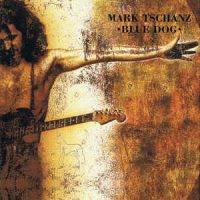
July 1995 – album reviews – Mark Tschanz’s ‘Blue Dog’ (“vast expressionistic tableaus”)

10 Jul
Mark Tschanz: 'Blue Dog'

Mark Tschanz: ‘Blue Dog’

It starts well: a dark slow maelstrom of synth choir nailed down by a harsh hammering drum, then synth double bass adding a steely spring over a tickle of menacing percussion. Pagan synth-brass blares force their way in: finally a brandy-soaked voice like the High Priest of the Temple of Dark Desires roars “this is the life!” and in come slamming techno beats and snarling, snorting metal guitars.

Vangelis jams with Nine Inch Nails? Well, there’s a few perceptions busted.

I first heard about Mark Tschanz from a chance encounter on a train, when someone described him to me as a Swiss Peter Gabriel. This was a little misleading. Mark Tschanz is in fact a Swiss Elvis Presley as orchestrated by Carl Orff and directed by Cecil B. De Mille, with words by Jim Morrison and spiritual guidance by Mephistopheles on mescalin. And while Gabriel mostly writes intimate and vulnerable psychological dramas, Tschanz always opts for vast expressionistic tableaus: angels, typhoons, and circuses casting stark shadows against deserts and discoloured skies.

His music is correspondingly epic – symphonic synthesized Euro-pomp and harsh Prokofiev pitches melded with steamy drum loops and biting guitars, and topped off with the stony intensity of the itinerant, isolated lone bluesman. He also has an ear for uncanny lyrics – unless it’s just the tricks of translation – with imagery ranging from the sharply poetic (“the white clown who blows great big bubbles full of screams”) to the plain bizarre (“I’ll be the heat inside your dog”). And he’s blessed with the kind of dark, monolithic baritone voice that sounds like the pronouncements of a huge pagan idol. It gives his brooding forays into colossitude an edge that rescues them from the “big-music” cliches they skirt.

Like his obvious antecedents – Dead Can Dance, for one – Mark Tschanz has enough sheer presence to justify the scale of his musical canvas. And it is on a huge scale: his dark meditations on the human spirit are swollen to Wagnerian proportions. ‘The Immortals’ broods thunderously on stagnation – “I am the church upon the hill, and I am full of infidels / As they are all trying to kill what of me still wants to rebel.” Both ‘Happy’ and ‘Rattlesnake’ charge off into darkly orchestrated funk-metal, sizzling dance loops wound around with metallic sheets of funk-wah guitar and scraping, rasping ba-a-a-d vocals – “the world takes us like a whirling wind, and it would be so good not to be wondering… / Something in you knows, baby, / whatever makes you happy is what will set you free.”

The stark loneliness in ‘Time’ is illustrated with an epically mournful rush of thunderously weeping cellos and guitars, as Tschanz ties himself together with starving dogs, swollen rivers and weeping women in a net of timeless patience and pain. And the apocalyptic forebodings of ‘Storm’ are medieval ones – the world, in half-conscious anticipation, slowing to a halt, angels and demons preparing for battle in the skies, and earthbound horses huddling close to fences in nameless dread and desire for human warmth. Tschanz hovers above all this with the sardonic air of someone who knows what sort of bill has to be paid: “one day you will turn around, / maybe only for a second, / and there will be no-one to call, / and there will be nothing at all.”

Yes. All right. At its worst it’s pumped-up goth pomp; and one might question why everything has to be so gigantic. Incubus, in particular, sounds like a cathedral hosting a black mass in full swing: screeching metal guitar, menacing choral stabs and deep belling synths as Tschanz roars and broods on the seductions of immortality (“Look at history unfold. / Are you sure time can’t grow old? / I’ve got something on my mind / that wants you to live forever.”), acknow,edging that such desires are rarely pure – “I hear it howling!”. Mr Crowley, they’re playing your tune.

Still, many of these songs somehow knit the existential dreads of Robert Johnson’s blues to the blood-soaked threads of Eastern European history that thrum through the music of Gorecki or Orff; as in Time, the blurred carnival blues of ‘Love Song’, or the tear-smudged ‘Rain’ which takes the striving and drama of human achievements, of wars good or bad, of systems that swallow and actions significant, and reduces them all to washed-away impermanence. And Tschanz knows when to skewer the pomp with humour: as ‘The Life’ peaks, he snarls “I drink to fiction and monsters and paradise, / I drink to the light, the out of sight – I drink a lot!”

The threatening, showy grandeur of ‘Blue Dog’ might not be for everyone, but if big-bastard stadium paganism is your bag then it’ll stalk you, grab you by the ankle and won’t let go. And if his musical world doesn’t implode under the weight of its own epicness, we can expect great things from Mark Tschanz’s savagely baroque imagination. The Wicker Man probably has this playing on his wicker headphones.

Mark Tschanz: ‘Blue Dog’
Warner Music UK, 0630-10606- 2
CD-only album
Released:
10th July 1995
Get it from: (2020 update) Best obtained second-hand.
Mark Tschanz online:
Homepage Facebook Twitter Last FM Spotify Amazon Music

January 1995 – live reviews – Francis Dunnery @ Jongleurs, Camden Town, London, 26th January (“a fair dose of confessional, thankfully laced with warm, wry humour”)

28 Jan

“My name is Francis, and I’m an alcoholic.”

The former frontman of It Bites stands before a packed house, nervous and naked. In musical and personal terms, at least – this is a stripped-down gig, just Francis Dunnery and accomplice Ashley Reaks on acoustic guitars in an ‘Unplugged’-style attempt to relaunch Dunnery in the UK after a four-year absence. It’s also an opportunity for Dunnery, without the constraints or comforts of a band, to confront his British audience with utter honesty about who he is.

We get his new songs, but we also get a fair dose of confessional, thankfully laced with warm, wry humour. At times, the atmosphere is like that of a stand-up comedy performance; Dunnery regaling a warm, welcoming and adoring audience with tales of his drunken days, the horrors of becoming one of the “rock arseholes” whom he detests, the pros and cons of sobriety and how it relates to the choosing of curtains, and the ups and downs of romance. (He also claims, implausibly, to have a werewolf’s cock, but probably the less said about that the better…)

So he’s back. It’s an intimate homecoming, really, with none of the posturing one associates with a rock gig. I mean, when was the last time you saw someone opening their show, as Dunnery does, by making a cup of tea? Then again, he never had the self-importance of the average proggie, even when he was twisting out great looping spirals of glossy pin-sharp progressive pop with It Bites in their heyday; and when he seemed to be trying to reconcile his own friendly Cumbrian bluntness and plainspeaking with the musical tightrope act he was pursuing at that time. The present-day Dunnery is a troubadour, a man who’s returned to the basic portable song that can still enchant even when cut down to the most skeletal arrangements.

He’s older, wiser and a touch more cynical (as evidenced on the wry precis of the music industry that is American Life in the Summertime, blessed with a compulsive tune plus satirical lyrics about the Californian stardom dream, and dedicated tonight to the record company girls), but his sense of compassion and honesty sees him through. Much of tonight’s set comes from his recent second solo album ‘Fearless’, in which he moves into smooth (but indisputably off-beat) pop-rock, much of which is quite suited to tonight’s format. The beautifully poignant Good Life, executed solo, is a perfect goodbye song. Painful, celebratory, tantalisingly unresolved, and making the most of Dunnery’s high soul-grained vocal tone, it gets one of the biggest cheers of the night, leaves wistful echoes in the heart, and ranks with the best of any of his past work.

Recent, neglected single What’s He Gonna Say certainly gains added sleepy poignance of its own by being stripped down. It’s spoilt, however, by Dunnery throwing in a twiddly accelerating solo line in an inappropriate bit of technical flash: a rare lapse of taste meaningless to the song and to the evening. Fade Away and Heartache Reborn fare better; sad in a joyous kind of way, filled with rue, warmth and self-realisation, little chronicles of the interweaving of life and love.

A superb electric player, Frank has yet to find his own voice on acoustic guitar. He solos throughout the evening in a bizarre, terse, hybrid style of blues and Spanish classical with a heavy attack. Sometimes the results are striking, occasionally they’re just pointless. But then, he has recently reinvented himself from being a guitar hero who sings to a singer who plays guitar. On this tour, his songs mean infinitely more than his guitar playing.

The mournfully jaunty Homegrown and the resurrected It Bites strutter Underneath Your Pillow both work surprisingly well, surviving the loss of their skilful arrangements on record and given a more intimate tinge by the simple interplay of guitars. Feel Like Kissing You Again, now revealed as a tribute to Dunnery’s late father, is a vertiginous blanket of strumming; unsettling and bleak, Frank delivering a heartfelt, keening vocal and pulling off a harsh, minimal and twangingly abstract solo with impossible note-bends shooting off like snapping heartstrings.

To close, there are a few more lookbacks at It Bites. A quick nugget of the acoustic flourish The Big Lad in the Windmill, and a final acoustic benediction of wonky-lyric’d rock ballad Still Too Young to Remember (roared back at him by a clubful of joyous voices); and then Dunnery’s gone. No encores, despite the roaringly enthusiastic calls that carry on long after the club plays loud funk music at us in an effort to cue us into getting the hell out of there. Still, we can but hope that we won’t have to wait four years until the next gig. And we can marvel at the fact that even when all of the gloriously flashy musical settings of the It Bites era are removed, we’re still left with a fine songwriter.

Welcome back, Mr Dunnery. We missed you, fella.

Francis Dunnery online:
Homepage Facebook Twitter MySpace Soundcloud Bandcamp Last FM Apple Music YouTube Vimeo Deezer Google Play Pandora Spotify Tidal Instagram Amazon Music
 

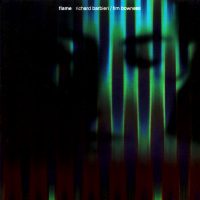
August 1994 – album reviews – Richard Barbieri/Tim Bowness’ ‘Flame’ (“the internal landscapes of the restless emotional mind… the indistinct visions of dreams and the hallucinatory moments of being in love”)

31 Aug

Richard Barbieri/Tim Bowness: 'Flame'

Richard Barbieri/Tim Bowness: ‘Flame’

There’s a common misconception going around which says that in order to be “experimental” you have to be noisy (viz. the many grinding guitar-noise bands clogging up many a Camden basement or American college-kid bar) – or, conversely, that you have to be utterly ambient, all empty space filled with electronic pulses, “ironic” hoover noises and nothing so anti-deconstructionist as the hint of a song. Theoretically a great idea, but in the end it produces little more than a big heap of CDs which you only play once plus another big heap of empty pseud criticism.

Alternatively, you could join that group of musicians whom Tim Bowness calls “the radical conservatives”; those people who take a long, wise look at both what’s going on and what’s worth retaining from the past, and then combine it with their own particular art of the possible, in the process creating memorable, lasting and demanding records (if not always incredibly famous ones – but so it goes, eh?) These people are also collaborators par excellence, linking up with a free-floating pool of like-minded musical allies to produce something greater.


In this context, the teaming of Bowness (the outspoken, intellectual No-Man singer) and synthesist Richard Barbieri (the quiet one in Japan) makes perfect sense. Both are associated with progressive synth-pop groups that stretch yearningly towards art and sensation; both fairly drip with musical and contextual knowledge; they’ve worked closely together in the past; and now they’ve produced an album as a duo which draws on considerable collaborative talent, including regular mates (fellow ex-Japan-ers Steve Jansen and Mick Karn, No-Man instrumental maverick Steven Wilson) and highly individual guns-for-hire (double bassist Danny Thompson, world-jazz drummer Gavin Harrison, textural guitarist Michael Bearpark). ‘Flame’ has emerged out of a mutual desire to create what Bowness calls “ambient torch songs”; moody late-night music with words summoning up the memories of love and heartwreck, sheathed in drapes and washes of unearthly sound. (There are, of course, precedents: Scott Walker, The Blue Nile, Julee Cruise and both men’s respective groups – Japan’s Ghosts being a particular blueprint.)


This objective is best realised on standout song Brightest Blue – Chris Maitland‘s delicate pattering drums wander around Danny Thompson’s deep woody jazz bass and Barbieri’s gentle piano chordings as Bowness unfolds the beautifully rapt love song of someone so engrossed in another person that they are virtually oblivious to the war going on outside their very windows. Distant swathes of Frippian textural guitar and blankets of electronic sound from Barbieri’s keyboards that settle on the listener like banks of soft snow add to the withdrawn, dreamlike theme of the song: a theme which becomes dominant over the course of an album which deals with the internal landscapes of the restless emotional mind, with the indistinct visions of dreams and the hallucinatory moments of being in love.


Bowness’ words touch on images of dying light and candles, sleeping and waking, hunger and falling, vegetation and rivers; and above all on memory, vision and communication obscured, whether this is beneficial or otherwise. Brightest Blue urges “forget the facts… I have to trust my own truth”; Song of Love and Everything cuts through its vague atmosphere of betrayal with “jump in the water / …swim in the dark to keep myself alive / …to shake myself awake”; the closing Feel rages quietly “I don’t know what it means / I try to surrender / I only know what I feel.”


This murky emotional obscurity means that ‘Flame’ tends to drift away from its initial premise into a hinterland of dimly-lit emotional set-pieces. Songs like A Night in Heaven and Trash Talk come across as expressionistic heart-sketches; their rains and rivers, their words of betrayal, stagnation and disaffection mingling to put across a particular mood. As such, ‘Flame’ fails as an ambient torch album. The title song is one of the few that emerges from the mists of imagination, with its portrait of a suffocating lover (“I will hear your calls, I will break your falls / …build your walls / because our love is strong / …I will share your life, / I will blind your sight…/ I will cover you / I will smother you”) and Bowness often seems to be providing tantalising clues rather than telling a story. (Unfortunately, the ambient-torch label is better applied to the work of David Sylvian, Barbieri’s former bandmate, whose own highly literate take on the form will be inevitably and somewhat unfairly compared to this album.)


Where ‘Flame’ does succeed, however, is as a marvellous dream album. A lot of this is down to Barbieri’s magnificent settings. Always a sculptor in sound rather than a keyboardist per se, he envelopes Bowness’ hallowed, reverent croon and enigmatic word-clues in delicate electronics – scouring sounds, breathy walls of soft noise, alien cellos and Chinese chimes, resonant aquatic flutters and twitters. On the solitary instrumental track, Torch Dance, he wraps undulating didgeridoo sounds with waves of flanged burbles and an unearthly guitar.

Throughout ‘Flame’, Barbieri creates an ocean of sound, always beautiful, never inflated by the self-important pomp that can sink keyboard-based albums. Other musicians float and mesh their own contributions into this sweet tapestry – Jansen’s featherlight percussive touch, Karn’s elastic bass and smears of treated sax, Steven Wilson’s guitars charting a course between psychedelia and spaghetti-western in contrast to Michael Bearpark’s distant blocks of Howe-cum-Frippian textures… all anchor the music to further dimensions of dreaming and organic emotion.


All of which adds up to a rich, seductive experience. Yes, ‘Flame’ can err too much on the side of obscurity a little too often, but it does so with such a consummate shadowy beauty that this becomes a positive virtue. Gorgeous, lazy, flowing melodies; a ghostly hint of melancholia; a rattle at the spirit cage… this is one flicker in the darkness that is well worth tracking down. Come catch the fire.

Richard Barbieri/Tim Bowness: ‘Flame’
One Little Indian Records, TPLP58CD (5 016958 023720)
CD/cassette album
Released:
29th August 1994
Get it from: (2020 update) Best obtained second-hand.
Richard Barbieri online:
Homepage Facebook Twitter MySpace Soundcloud Bandcamp Last FM Apple Music YouTube Deezer Google Play Pandora Spotify Tidal Amazon Music
Tim Bowness online:
Homepage Facebook Twitter Soundcloud Bandcamp Last FM Apple Music YouTube Vimeo Deezer Google Play Pandora Spotify Tidal Amazon Music
 

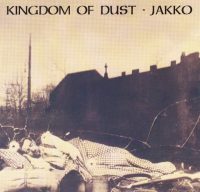
June 1994 – EP reviews – Jakko’s ‘Kingdom of Dust’ (“the sort of might-have-been that’ll get ’80s pop-heads sighing”

8 Jun

Jakko: 'Kingdom of Dust'

Jakko: ‘Kingdom of Dust’

This is a quick glimpse at the sort of might-have-been that’ll get ’80s pop-heads sighing. Although it’s been put out under the name of cult songwriter/smart-popper Jakko Jakszyk, ‘Kingdom Of Dust’ was salvaged from his collaboration with ex-Japan characters Jansen, Barbieri and Karn (an attempt at an album, regretfully abandoned due to a lack of space in schedules).

For all of the exploratory excellence of the Rain Tree Crow era that’s informed JBK’s current work, making them a progressive instrumental dream team for the likes of No-Man, didn’t some of you miss the pop glint of the old Japan? ‘Kingdom of Dust’ might be an answer to those particular prayers, as it draws the trio away from their current ambient-world influences to revisit the ’80s. In the process, it coaxes out some of JBK’s most memorable, poppy and immediate post-Japan work. The trio’s moody and textured music, and the precise yet vulnerable preoccupations of the songwriting which Jakko has grafted onto it, lock together as smoothly and silkily as if the four of them had been a band for years.

The outcome is something like Japan’s own ‘Visions of China’ meeting an idealistic Steely Dan, with (a whisper of) Stax strut and (whisper it) the impeccable pop craftsmanship from the peak-period of Jakko’s old employers Level 42. In other words, literate adult pop with more than a sprinkle of luscious art-rock atmosphere, and graced with some cracking tunes as well. Four blasts, then, of “Jakkopan”, in which Jakko’s passionate earnestness gets a enigmatic art-gloss makeover.


The Hands of Che Guevara’s foray into prog-soul is a tale of romance, suspicion and sabotage explored over brassy, precisely-pointed keyboard blasts, sinously solid Karn bass, and Jansen’s rotating curves of drumming: like Rain Tree Crow’s Big Wheels in Shanty Town rubbing up against the more energetic moments of ‘Innervisions’. Jakko sings sharply about deception and delivers stinging protesting guitar lines, continually blurring personal interaction with zooming metaphysics and political shadow-game metaphors. “She had a face from memory, I wore a disguise. / She lived the burning questions while I ran out of replies. / I fumbled for safety in an empty box of lies – / she stole the map of all the places I could hide.” On The Judas Kiss the JBK stylings are more muted: it all comes together as frozen mourning and angry grief, coiling feelings wrapped in an icy light. “Next time it comes to this, / the frozen lips of the Judas kiss, I’ll be gone. / Next time it won’t exist, / the bleeding hearts of another twist in my tongue.” A slow, wounded but determined walk away from disappointment.

Pop is the trigger here, and pop is the result. Drowning in My Sleep steals the crisp, spacious rhythms of swingbeat away from rent-a-beat R&B and mixes them with Barbieri’s electronic buzz-sawing and celestial swooshes. Jakko sings nightmares of failed communication – “Drowning in my sleep, every time I try to speak / words go overboard and silence drags me down. / Another dream admits defeat, leaves its wreckage on the reef. / Who wants survivors without language run aground?” – and lets rip with full-throated lyrical guitar. Best of all, there’s a lush but quietly heartbreaking ballad, It’s Only the Moon – a delicate, intimate story of a neglected and suppressed child driven ever-deeper into himself. “No one dared slay the silence with laughter… / Each trace of memory gagged and bound / and left to drown… / In the absence of words I would whisper away to myself / saying prayers for an end, or just simply pretend / to be sleeping. / And the palms of my hands read stranger than fiction.” A slow journey into silence, cool and distant as starlight, with Karn and Jansen’s rhythms whispering past like a late-night train.

Four tracks on which Jakko’s teaming with JBK is fertile, graceful and inspired. A shame that time and fate didn’t allow any more of it, since what there is is marvellous, but at least we have this.

Jakko: ‘Kingdom of Dust’
Resurgence, RESCD101 (5 020522 398329)
CD-only EP
Released:
6th June 1994
Get it from: (2020 update) Best obtained second-hand. A download version was made available by Burning Shed in 2010, featuring the bonus track Fly.
Jakko online:
Homepage Facebook Twitter MySpace Last FM YouTube Deezer Google Play Spotify Instagram Amazon Music
 

SWOONAGE

Swoon. /swo͞on/ A verb. To be emotionally affected by someone or something that one admires; become ecstatic. Here are some people and things that make me swoon. #swoon #swoonage

Post-Punk Monk

Searching for divinity in records from '78-'85 or so…

theartyassassin

...wandering through music...

Get In Her Ears

Promoting and Supporting Women in Music

Die or D.I.Y.?

...wandering through music...

Music Aficionado

Quality articles about the golden age of music

THE ACTIVE LISTENER

...wandering through music...

Planet Hugill

...wandering through music...

Listening to Ladies

...wandering through music...

ATTN:Magazine

Not from concentrate.

Xposed Club

improvised/experimental/music

The Quietus

...wandering through music...

I Quite Like Gigs

Music Reviews, music thoughts and musical wonderings

furia log

...wandering through music...

The Recoup

SINCE 2013: Books and books and books and books and occasionally other things

A jumped-up pantry boy

To say the least, oh truly disappointed

PROOF POSITIVE

A new semi-regular gig in London

Gapplegate Classical-Modern Music Review

...wandering through music...

When The Horn Blows

...wandering through music...

:::::::::::: Ekho :::::::::::: Women in Sonic Art

Celebrating the Work of Women within Sonic Art: an expanding archive promoting equality in the sonic field

Ned Raggett Ponders It All

Just another WordPress.com weblog

FLIPSIDE REVIEWS

...wandering through music...

Headphone Commute

honest words on honest music

The One-Liner Miner

...wandering through music...

Yeah I Know It Sucks

an absurdist review blog

Obat Kanker Payudara Ginseng RH 2

...wandering through music...

poplifer.wordpress.com/

Waiting for the gift of sound and vision

Good Music Speaks

A music blog written by Rich Brown

Do The Math

...wandering through music...

Archived Music Press

Scans from the Melody Maker and N.M.E. circa 1987-1996

The World's Worst Records

...wandering through music...

Soundscapes

...wandering through music...

OLD SCHOOL RECORD REVIEW

Where You Are Always Wrong

FRIDAY NIGHT BOYS

...wandering through music...

Fragile or Possibly Extinct

Life Outside the Womb

a closer listen

a home for instrumental and experimental music

...wandering through music...

Life Just Bounces

...wandering through music...

Lucid Culture

JAZZ, CLASSICAL MUSIC AND THE ARTS IN NEW YORK CITY

Aquarium Drunkard

...wandering through music...

eyesplinters

Just another WordPress.com site

NewFrontEars

...wandering through music...

FormerConformer

Striving for Difference