Archive | storytelling RSS feed for this section

May 2010 – single & track reviews – Tom Slatter’s ‘Seven Curses/Lines in the Dirt’; Zoo Kid’s ‘A Lizard State’; Madvillain’s ‘Papermill’

26 May
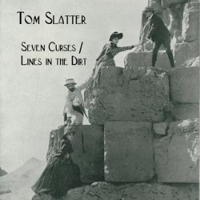
Tom Slatter: 'Seven Curses/Lines in the Dirt'
Tom Slatter: ‘Seven Curses/Lines in the Dirt’

As you might have expected if you’d already heard his ‘Spinning the Compass’ album, Tom Slatter’s ‘Seven Curses’ plays as if plucked straight from an Edwardian hardback or for an early Hammer horror short. It all rarely rises above tale-telling folk dynamics, but Tom’s voice creaks with hammy foreboding, while the music is draped with spooky death-strings and apprehensive guitar cadences.

His patronising English explorer (for which read “tomb-robber”) gets punished when he walks straight into a crossfire of malignant defensive spells, rendering him a disaster magnet spilling misfortune and death onto people around. It’s the other ‘Get Carter’. Tom sort of plays it straight, but fireside-storyteller straight, more than willing to bug his eyes and make spooky gestures of voice and arm if it helps the tale roll along. In the end, it’s a fragment of weird-camp, its plot unresolved, its narrator muttering evasively about a “compulsion” which might be his determination to tough it out or a coded admission of responsibilities for the series of mysterious deaths which are beginning to blot his passage through life.

‘Lines in the Dirt’, on the flipside, shuffles its sorcerous signifiers like Tarot cards. “Geoglyphs and pyramids, / the voices of the aliens. / Mashing up the holy root. / The feathers sprouting from your skin, / shaping babies’ skulls.” Again, there are witchy metal bands out there who’d play this straight, lurking by bookcases and growling out of the depths of their trench coats, drawing sigils with one hand and, with the other, fingering mysterious objects deep in their pockets. Tom, by comparison, sings it almost like a lounge song, despite the encroaching minor-key darkness of his chord voicings. A coda of droning, low-heat psychedelic guitars and Moog-y squeals restores some mystique, but it still feels as if Tom’s teasing us by flapping a book cover at us. Both songs feel like preludes, not quite satisfying in themselves: dainty bait to pull us into a full Slatter show with all of the invisible strings, stage-winks and poltergeist cupboard-flutters.

Zoo Kid has a similar home-made feel to his music, although on the evidence of ‘A Lizard State’, he favours boudoir soul rather than cosy weird-fic. As with the Slatterisms above, you can see mechanisms and levers being exposed within the songs, but in Zoo Kid’s case it seems to be because he can’t help those songs from starting to fall apart. ‘A Lizard State’ starts off like a soul record with a strong splash of doo-wop, but very quickly begins to warp. Literally. The rhythm guitar licks are off-kilter; the bass popping like yeast-bubbles from a dodgy batch. It’s increasingly unclear what’s coming from futzed samples and turntables and what’s coming from crooked live instruments.

Zoo Kid himself seems to be trying to embark on an Isaac Hayes-ian, blues-shaded song-rap about love and frustrations, but keeps baring fangs and throwing moodies, continually sabotaging himself with bursts of bitter insults and hip hop disses. As the song wobbles along, the feeling grows of being both pissed and pissed off while huddled up in the corner of some lounge club, losing control of the playlist. I’m guessing that what we’ve got here is a carefully-orchestrated live car-crash – lo-fi and saboteur-minded, ramshackle but clever, with Zoo thumbing his nose at conventional storytelling songcraft while embracing chaotic moods and sour, jittery emotional stews. I want to hear more of these messes.
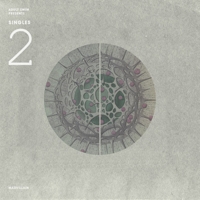
Madvillain: 'Papermill'
Madvillain: ‘Papermill’

Combining the densely threaded raps of MF Doom with the broad sonic curiosity and production suss of Madlibz, hip hop groundbreakers Madvillain have been pretty quiet since their dazzling 2004 debut: various remixes and placeholders have kept things humming on a protracted low rumble while the two members pursue separate paths. Abrupt and deliberately inconclusive, a sudden slap out of nowhere, ‘Papermill’ breaks up the silence and moves things along.

Jerking loudly into life with no warning, as if woken with a cattle prod, it seems to be pretending that there’s been no hiatus, no interim questions. A deep-funk scat-and-guitar loop stolen from an obscure German band wobbles like a stack of pancakes. Doom freestyles over it in a blizzard of surreal sentence fragments, bits of loopy hustler aggrandisement scattering across flashes of lucidity and poet boasts – “stirred not shaken, / absurd verbs since word to hot bacon. / Wrote this rhyme on standard sandpaper, / worked out the plan and plot for grand caper.” There seems to be an underlying theme of conning the curious, and of baiting chaos in order to keep sharp. “Any bent ‘cept, idle threats all irrelevant. / Get your man’s wallet, tell him “found it”, and sell him it… / Forest Gump chumps get clumps of nuttin’ for nuttin’ / Tourist, show ’em where the shore is where the shark’s at. / Hold up, spark that, park rat… / Hand in the jar, got stuck, took it.”

There’s a Koranic quote near the end which translates as “you have your religion, while I have mine”. In true MC style, Doom’s positioning himself as being better, but it seems just as important that he’s different; building himself a portable compound of words and schemes, all too oblique to let himself be pinned down by anyone. There’s no attempt to build anything with clarity. You get a peek into the moment and that’s it, sucker. You’ll just have to wait until the next time that they swing over. Six more years? Perhaps, if you’re lucky.

Tom Slatter: ‘Seven Curses/Lines in the Dirt’
self-released (no catalogue number or barcode)
Download/streaming single
Released:
23rd May 2010

Get/stream it from:
(2022 update) Currently unavailable; might be reissued at some point as part of Tom Slatter’s Immoral Supporters club content.

Tom Slatter online:
Homepage, Facebook, Twitter, Soundcloud, Instagram, Bandcamp, Last.fm, Apple Music, YouTube, Vimeo, Deezer, Spotify, Amazon Music

Zoo Kid: ‘A Lizard State’
self-released (no catalogue number or barcode)
Download/streaming single
Released:
23rd May 2010

Get/stream it from:
(2022 update) Soundcloud, YouTube. Original download single was later made available on Zoo Kid’s ‘U.F.O.W.A.V.E.’ album. Currently reissued on the Kid Krule album ‘6 Feet Below the Moon’, streamable/downloadable from Apple Music, Deezer, Tidal, Spotify and Amazon Music.

Zoo Kid (King Krule) online:
Homepage, Facebook, Twitter, Soundcloud, Instagram, online store, Bandcamp, Last.fm, Apple Music, YouTube, Deezer, Tidal, Spotify, Amazon Music 

Madvillain: ‘Papermill’
[adult swim] (no catalogue number or barcode)
Download/streaming single
Released:
26th May 2010

Get/stream it from:
(2022 update) Original download no longer available; still streamable via YouTube. Track was briefly available on the download-only Various Artists compilation ‘Adult Swim Singles Program’.

Madvillain online:
Homepage, Soundcloud, online store, Bandcamp, Last.fm, Apple Music, YouTube, Deezer, Tidal, Spotify, Amazon Music
May 2009 – album reviews – Tom Slatter’s ‘Spinning the Compass’ (“…the heart amongst the wheels…”)

1 May
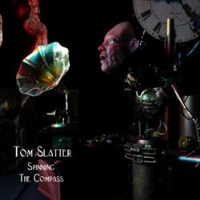
Tom Slatter: 'Spinning the Compass'
Tom Slatter: ‘Spinning the Compass’

Previously half of the obscure “post-apocalyptic quasi-acoustic indie-folk” duo Comrade Robot, Tom Slatter now marches off on his own, cogs a-whirring, with a short debut solo album mixing the macabre, the jolly and the poignant… all in the manner of a brainy kid’s puppet show. In part, the latter is down to the theatrical delivery: Tom’s ringmaster-next-door vocals, simultaneously declamatory and humble. In part, it’s due to the Cabaret Mechanical nature of the music itself – the lo-fi clack of programmed drums, the keyboards which are rarely far from stiff calliope posturing; the George Stephenson rattle of (mostly) acoustic guitar and piano; the steam-whistle synths. But a lot of it, frankly, is the robot-men.

Yes; lyrically, at least, ‘Spinning the Compass’ is a steampunk album: Victorian in tone, and riddled with altered, augmented characters who click and wheeze with gears, lenses, bellows and casements. Given the plumminess and the ambitions in the music, “steamprog” might be a better tag. The lone instrumental here pitches hooty synth against classical sounding guitarpeggios marching rapidly across a strange chord progression, disruptive but fluid.

What do you do with Tom Slatter: a man who leans towards the musical and lyrical complications of a Roy Harper, a Thomas Dolby or a Peter Hammill, but who also runs his scenarios like a cardboard pop-up theatre; and who could put a warm grin on the face of the ghost of Jim Henson? You settle back in your comfy chair and you listen to him, that’s what you do. You enjoy the jiggling figures. You laugh along with the stage whispers.

Regarding Tom’s song romps, the aforementioned Hammill is the easiest comparison to make. More specifically, the deliberately boyish songs Hammill (with fellow Van Der Graaf Generator alumnus Judge Smith) wrote about Vikings and airships on ‘Fool’s Mate’, with their whiff of yellowing comics pages and pulp ink. As with the more baroque Hammill moments, there’s a deliberate antiquity to this music. Tom, too, seems to love machines and dashing adventures, and the neurotic pomp of Empire. More accurately, as a storyteller he enjoys the twists and kinks and predicaments into which they place people. He’s got an interest in the way that the ponderous, increasingly amoral gravity of such things – of such seductive opportunities – warps both a person’s culture and their choices; even their ability, beyond a certain point, to choose at all.

Not all of ‘Spinning the Compass’ digs that deep. Some of it is simple, geeky fun. Aspects of Comrade Robot’s gleeful pulpiness remain in ‘Gaslight’, a triumphantly romantic love song which turns out to be set in a world plunged into eternal darkness – “even if they got on their knees and prayed for the dawn to come, / if they screamed to the heavens the night would never end / and you’d stay there beside me in the chill glow of the night.” A few other songs are straightforwardly robust Gothic nightmares, most obviously ‘Bad Dream’ with its flourishing Cardiacs-y guitar lines; and also the hammering ‘Lines Overheard at a Seance’ which builds its atmosphere of creepy weird-fiction madness while edging around the indescribable specifics. (“On a cold cold night I saw something evil – / turned the red, red walls a deep shade of grey, / and I’m not breaking down.”)

Throughout the album, Tom switches from hat to hat, playing individual characters in quirky situations or struggling, knowingly or otherwise, with their own moral choices and compromises. The balloon-riding Victorian hunter in the parlour-jazzy ‘Home’, for instance, lives a privileged, gun-toting ‘Boys’ Own’ life as one of the “kings of the great game, on top of the sky”, but he yearns to escape his macho, beast-slaughtering environment and reunite with his sweetheart. This, however, is a rare example of a ‘Spinning the Compass’ character choosing human-scaled love or humility over some form of devious power, or a hideous longevity. Most of Tom’s protagonists are sinking into (or already condemning themselves to) something far more horrible, whether they recognise it or not; and the further they commit themselves, the worse it gets.

For example, the triumphantly augmented Dickensian cyborg who narrates ‘Ingenious Devices’ is an oblivious monster; sardonic, and horribly selfish. As he watches lovers and family perish of old age, he himself revels in the engineering that keeps him alive (“My heart beats by pendulum. / I’ve filled grave with cogs and wheels, / so there’s no room.”) Ultimately his triumph resides in a post-human callousness, a reptilian dismissal – “I’ve seen them, with cracking skin, / greying hair, yellow teeth / and haunted eyes. / I’ll not be one of them. / I’ll fill my lungs with oil and steam /and never die.” In ‘I Still Smile’, Tom takes machine-man uncanniness to greater heights as (over a ghostly, stately, scintillating instrumental part) he plays the role of someone’s automated love-puppet, its memories and motivations mere shallow simulacrums of emotions and responsibilities – “My arms are always here / to make you feel complete / My face is fixed in a permanent grin / My latex skin never frowns / You bought me, to make you feel complete / And I’ll always be here. / Even when you’re crying, I still smile. /And your last touch of real skin hurt too much. / But I have all the time you need / My love never dies.”

As Tom warns elsewhere, though, “roses in the chains, / burning a pilot light / isn’t carrying a flame.” Even as early as the opening track, he’s flying the cautionary flags about how the mechanistic life dehumanises us all. “This mechanism, it’s driving us apart. / It shines a prism on the kind of love we share. / This mechanism is making passion spoil / It tastes of something, the cloying tang of wine and oil. /Our love relies on clockwork, / the careful use of gears and wheel – / this mechanism, it isn’t how we feel.” On a surface level, he’s playing that old trope of how horrible it is to become a Cyberman, or to be hijacked by the Maschinenmensch from ‘Metropolis’. On another, less geeky level, he’s singing about harbouring the wrong kind of awareness – analytics and risk assessments killing your spontaneity; cultivated programming replacing reactions, your arousals and your sympathies. Willingly importing programs into your mind can be as bad as literally forcing machinery into your flesh.

In the concluding song – the album’s title track – Tom addresses this while also ending up with the narrator’s role which is perhaps closest to himself. ‘Spinning the Compass’ is also his proggiest cut: ominous, wandering across assorted minor keys, and showing off his compositional strengths during a protracted acoustic guitar passage. The words, however, are what gives it its true core. Abandoning the previous metaphors of iron lungs and mannequin features, Tom sings about disintegrating crosswords and uncontrolled acceleration, about a gradual deterioration of sense and coherent structure.

At the end of the album, he’s placing himself as the human being now pinned (helplessly, and to his own horror) in the centre of an unbalanced and out-of-scale world, conned and gaslit into relinquishing his own corner of control within it. “Changing the rules while I was looking away, / five paths in the same dial. / Like living in a world of your own / all the time shrinking till all the roads meet. / White lines dashing past at speed / And up is left, east is west and no-one cares… / Like living in a mind not your own, / thinking thoughts you don’t understand… Do you get the feeling we’re running out time? / Have you heard the rumours of war planes in the skies? / With this spinning the end is surely nigh?” Apprehensive and pessimistic as it is, it’s a reaffirmation of the heart amongst the wheels, a shout out from the rose enmeshed in the chains.

Tom Slatter: ‘Spinning the Compass’
self-released (no catalogue number or barcode)
Download-only album
Released:
1st May 2009
Get/stream it from:
(2022 update) Currently available as remastered 2016 edition with two extra tracks – stream/download from Bandcamp, Apple Music, Deezer and Spotify 

Tom Slatter online:
Homepage, Facebook, Twitter, Soundcloud, Instagram, Bandcamp, Last.fm, Apple Music, YouTube, Vimeo, Deezer, Spotify, Amazon Music   

LOOKBACKS – album reviews – Cindytalk’s ‘Wappinschaw’, 1994 (“one of 1994’s most intense, perverse and unusual lost albums”)

30 Aug

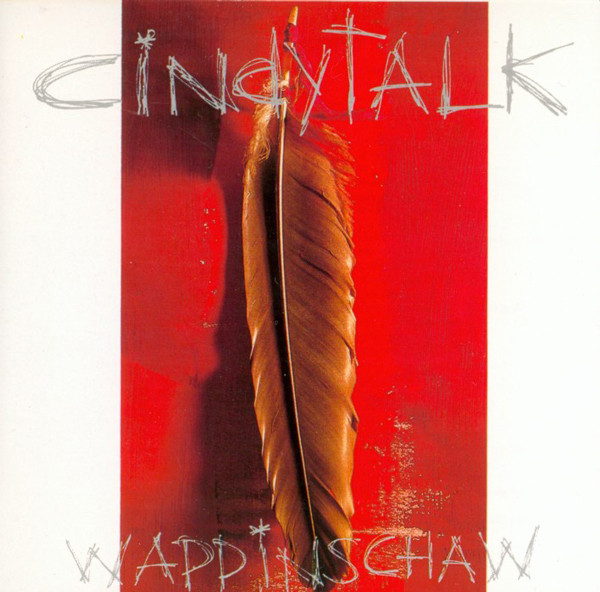
Cindytalk: 'Wappinschaw'

Cindytalk: ‘Wappinschaw’

For almost fourteen years now, Cindytalk have been forging a lonely path through the ever-changing styles of modern music. Despite the soft pink flush of their name, Cindytalk’s music has always been so out-there, so much a music of violent extremes, that they have (more or less by default – how much could you change when you touch both ends of the spectrum?) stayed the same – no bad thing – while refining their sound on each album.

Gordon Sharp, the mainstay of Cindytalk’s many line-ups, is perhaps best known as the voice of three haunting tracks on the first album by 4AD art-collective This Mortal Coil, which also spawned Elizabeth Fraser’s honey-drenched version of Tim Buckley’s Song To The Siren in 1983. Yet 4AD-ethereal was never really Sharp’s bag. Cindytalk operate in the same dark areas that Michael Gira and Swans did before they transformed into doom-laden acoustic hippies (no more titles like Raping A Slave, then, Michael? cheers, love!), or The Birthday Party before Nick Cave mellowed out into Satan’s crooner.

They’ve wilfully, awkwardly, pursued music of extremes. Their first album, ‘Camouflage Heart’, must rank somewhere alongside Lou Reed’s ‘Metal Machine Music’ for sheer unlistenable music for (dis)pleasure, that has to be owned simply to piss people off. And the mammoth ‘In This World’ was a double album of contradictions – one record of near-industrial rock with razor-sharp guitar sounds (varying between tooth- extraction by electric power drill or sheet-metal white noise), and one record of near-ambient instrumentals and songs, mostly played on very soft piano like Erik Satie on Mogadon.

But it’s been a long time since any new Cindytalk material; perhaps because of artistic reclusiveness, perhaps through being a true cult act. Having already had a protracted recording between 1990 and 1992, this album took a further two years to emerge on a record label in 1994. A lone concert aside, we’ve heard nothing from them since (that’s what y-o-u think.. – ED.). Hence this five-years-after-the-event review: cults can always do with getting bigger while they wait for the resurrection.

So, ‘Wappinschaw’; one of 1994’s most intense, perverse and unusual lost albums…

 
It opens deceptively simply, with an a-capella reworking of Ewan MacColl’s The First Time Ever I Saw Your Face, reflecting Gordon Sharp’s interest in folk idioms (especially his own native Scots). He’s singing solo, without echo or reverb, up close, right there in your darkened room. His voice – one of the most expressive at conveying rage, pain, fear – displays power here yet, somehow, also insecurity. A Song Of Changes is leaden-paced at first, but David Ros’ guitars are more blurry and hazed than previous industrial strength Cindytalk noise. Suddenly the guitars hit an almost bright riff around which Sharp fluctuates and soars. A song of changes, indeed – light is breaking into Cindytalk’s dark world: “Within the heart of everything, there is you…”

 
It doesn’t last, though. Return To Pain (hah!) lurches in on a mix of barely-scrubbed electric and slide guitars, creating an empty and menacing atmosphere as Sharp emotes through wordless high vocals. It’s nightmare swamp music, midnight in the Mississippi plains accompanied by the scariest of companions, before the tension explodes into a barrage of noise. Drums, shotgun guitars, and Sharp wailing that “everybody is Christ.” Y-e-e-es; whatever you say, Gordon.

 
Whichever expectations are set for them, Cindytalk trump them on this record. Wheesht is introduced by a tape of Alisdair Gray reading an extract from his mammoth Scottish psycho-epic ‘Lanark’: a story of a young boy dreaming about what lies beyond the clouds. Recorded over the sound of a ticking clock and a ghostly musical box, this exercise in unsettling atmospherics chills the spine and sets us up for Wheesht itself: a brutally short, non- musical violent collage of bass drones, sonic interferences, sampled voices, blood-curdling screams and other genuinely unnerving sounds.

 
To the looping, echoed scrapings of a low-tuned violin, Snowkiss restores some sense of calm with more of Cindytalk’s music for winter nights – Gordon’s vocals imploding out of their rage into delicate lines and wordless harmonies sung over the gentlest of chiming, raindrop pianos. The lyrics of Disappear evoke a painfully trapped life: “You’re in heaven now, / Inside your head. / No thoughts of flight, / Your wings are clipped…”, while a strongly martial beat provides the tracks only propulsion as guitars and sampled interference compete with each other in a swirling eddy of sound. The lively, echoing trumpet on Traumlose Nacht, mingled with delicate piano and evocative waves of rolling drums, provide some relief and a different sonic vocabulary – it sounds like incidental music for the dark magic and oppressive heat of ‘Angel Heart’.

 
The final track, Hush, starts as an guitar-and-solo-vocal acoustic lament (back to the folk singing of the opening track) but then gives way to influential voices from the heavens (including samples of Orson Welles and Joseph Beuys) before everything fades to leave a long passage of bagpipe music that is, after the tumult of Cindytalk in action, strangely beguiling and soothing… but wait. After a long pause, a final hidden track, Muster. An incendiary, veritably Napalm-Death’s- worth battery of hideous thrash-noise, over which Sharp’s passionate ragged voice issues forth evocations to notable spirits: “The Wappinschaw is an invocation of the spirits of Shiva: Rise, William Wallace, rise! Rise, Arthur Rimbaud, rise!” He goes on to summon the spirits of Pasolini, Sitting Bull, Che Guevara and Ho Chi Minh, amongst others. So unearthly does Sharp sound, so compelling, that I have no doubt that the spirits responded. Quite the most disturbing sound heard on CD for some time.

 
I wouldn’t like to hazard too close a guess at what kind of emotional traumas Gordon Sharp purges from himself to make this music; all razor blades, blizzards and crow feathers. It’s enough to say that, after fourteen years on the extremes, Cindytalk demand your rapt attention, your horrified fascination…

(review by Col Ainsley)

Cindytalk: ‘Wappinschaw’
Touched Recordings, TOUCH 1 (5 021958 432021)
CD-only album
Released: 1994

Get it from:
(2018 update) best obtained second-hand

Cindytalk online:
Homepage Homepage Facebook Twitter MySpace Soundcloud Bandcamp Last FM

January 1995 – live reviews – Francis Dunnery @ Jongleurs, Camden Town, London, 26th January (“a fair dose of confessional, thankfully laced with warm, wry humour”)

28 Jan

“My name is Francis, and I’m an alcoholic.”

The former frontman of It Bites stands before a packed house, nervous and naked. In musical and personal terms, at least – this is a stripped-down gig, just Francis Dunnery and accomplice Ashley Reaks on acoustic guitars in an ‘Unplugged’-style attempt to relaunch Dunnery in the UK after a four-year absence. It’s also an opportunity for Dunnery, without the constraints or comforts of a band, to confront his British audience with utter honesty about who he is.

We get his new songs, but we also get a fair dose of confessional, thankfully laced with warm, wry humour. At times, the atmosphere is like that of a stand-up comedy performance; Dunnery regaling a warm, welcoming and adoring audience with tales of his drunken days, the horrors of becoming one of the “rock arseholes” whom he detests, the pros and cons of sobriety and how it relates to the choosing of curtains, and the ups and downs of romance. (He also claims, implausibly, to have a werewolf’s cock, but probably the less said about that the better…)

So he’s back. It’s an intimate homecoming, really, with none of the posturing one associates with a rock gig. I mean, when was the last time you saw someone opening their show, as Dunnery does, by making a cup of tea? Then again, he never had the self-importance of the average proggie, even when he was twisting out great looping spirals of glossy pin-sharp progressive pop with It Bites in their heyday; and when he seemed to be trying to reconcile his own friendly Cumbrian bluntness and plainspeaking with the musical tightrope act he was pursuing at that time. The present-day Dunnery is a troubadour, a man who’s returned to the basic portable song that can still enchant even when cut down to the most skeletal arrangements.

He’s older, wiser and a touch more cynical (as evidenced on the wry precis of the music industry that is American Life in the Summertime, blessed with a compulsive tune plus satirical lyrics about the Californian stardom dream, and dedicated tonight to the record company girls), but his sense of compassion and honesty sees him through. Much of tonight’s set comes from his recent second solo album ‘Fearless’, in which he moves into smooth (but indisputably off-beat) pop-rock, much of which is quite suited to tonight’s format. The beautifully poignant Good Life, executed solo, is a perfect goodbye song. Painful, celebratory, tantalisingly unresolved, and making the most of Dunnery’s high soul-grained vocal tone, it gets one of the biggest cheers of the night, leaves wistful echoes in the heart, and ranks with the best of any of his past work.

Recent, neglected single What’s He Gonna Say certainly gains added sleepy poignance of its own by being stripped down. It’s spoilt, however, by Dunnery throwing in a twiddly accelerating solo line in an inappropriate bit of technical flash: a rare lapse of taste meaningless to the song and to the evening. Fade Away and Heartache Reborn fare better; sad in a joyous kind of way, filled with rue, warmth and self-realisation, little chronicles of the interweaving of life and love.

A superb electric player, Frank has yet to find his own voice on acoustic guitar. He solos throughout the evening in a bizarre, terse, hybrid style of blues and Spanish classical with a heavy attack. Sometimes the results are striking, occasionally they’re just pointless. But then, he has recently reinvented himself from being a guitar hero who sings to a singer who plays guitar. On this tour, his songs mean infinitely more than his guitar playing.

The mournfully jaunty Homegrown and the resurrected It Bites strutter Underneath Your Pillow both work surprisingly well, surviving the loss of their skilful arrangements on record and given a more intimate tinge by the simple interplay of guitars. Feel Like Kissing You Again, now revealed as a tribute to Dunnery’s late father, is a vertiginous blanket of strumming; unsettling and bleak, Frank delivering a heartfelt, keening vocal and pulling off a harsh, minimal and twangingly abstract solo with impossible note-bends shooting off like snapping heartstrings.

To close, there are a few more lookbacks at It Bites. A quick nugget of the acoustic flourish The Big Lad in the Windmill, and a final acoustic benediction of wonky-lyric’d rock ballad Still Too Young to Remember (roared back at him by a clubful of joyous voices); and then Dunnery’s gone. No encores, despite the roaringly enthusiastic calls that carry on long after the club plays loud funk music at us in an effort to cue us into getting the hell out of there. Still, we can but hope that we won’t have to wait four years until the next gig. And we can marvel at the fact that even when all of the gloriously flashy musical settings of the It Bites era are removed, we’re still left with a fine songwriter.

Welcome back, Mr Dunnery. We missed you, fella.

Francis Dunnery online:
Homepage Facebook Twitter MySpace Soundcloud Bandcamp Last FM Apple Music YouTube Vimeo Deezer Google Play Pandora Spotify Tidal Instagram Amazon Music
 

SWOONAGE

Swoon. /swo͞on/ A verb. To be emotionally affected by someone or something that one admires; become ecstatic. Here are some people and things that make me swoon. #swoon #swoonage

Post-Punk Monk

Searching for divinity in records from '78-'85 or so…

theartyassassin

...wandering through music...

Get In Her Ears

Promoting and Supporting Women in Music

Die or D.I.Y.?

...wandering through music...

Music Aficionado

Quality articles about the golden age of music

THE ACTIVE LISTENER

...wandering through music...

Planet Hugill

...wandering through music...

Listening to Ladies

...wandering through music...

ATTN:Magazine

Not from concentrate.

Xposed Club

improvised/experimental/music

The Quietus

...wandering through music...

I Quite Like Gigs

Music Reviews, music thoughts and musical wonderings

furia log

...wandering through music...

The Recoup

SINCE 2013: Books and books and books and books and occasionally other things

A jumped-up pantry boy

To say the least, oh truly disappointed

PROOF POSITIVE

A new semi-regular gig in London

Gapplegate Classical-Modern Music Review

...wandering through music...

When The Horn Blows

...wandering through music...

:::::::::::: Ekho :::::::::::: Women in Sonic Art

Celebrating the Work of Women within Sonic Art: an expanding archive promoting equality in the sonic field

Ned Raggett Ponders It All

Just another WordPress.com weblog

FLIPSIDE REVIEWS

...wandering through music...

Headphone Commute

honest words on honest music

The One-Liner Miner

...wandering through music...

Yeah I Know It Sucks

an absurdist review blog

Obat Kanker Payudara Ginseng RH 2

...wandering through music...

poplifer.wordpress.com/

Waiting for the gift of sound and vision

Good Music Speaks

A music blog written by Rich Brown

Do The Math

...wandering through music...

Archived Music Press

Scans from the Melody Maker and N.M.E. circa 1987-1996

The World's Worst Records

...wandering through music...

Soundscapes

...wandering through music...

OLD SCHOOL RECORD REVIEW

Where You Are Always Wrong

FRIDAY NIGHT BOYS

...wandering through music...

Fragile or Possibly Extinct

Life Outside the Womb

a closer listen

a home for instrumental and experimental music

Bird is the Worm

New Jazz: We Search. We Recommend. You Listen.

...wandering through music...

Life Just Bounces

...wandering through music...

Lucid Culture

JAZZ, CLASSICAL MUSIC AND THE ARTS IN NEW YORK CITY

Aquarium Drunkard

...wandering through music...

eyesplinters

Just another WordPress.com site

NewFrontEars

...wandering through music...

FormerConformer

Striving for Difference