Archive | August, 1997

August 1997 – album reviews – Ramshackle’s ‘Chin On the Kerb’ (“rocking and poised on the balls of their heels, preparing to take the blow and meet the challenge whenever it snakes out of nowhere to catch them”)

18 Aug
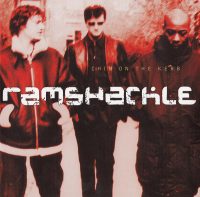
Ramshackle: 'Chin On the Kerb'

Ramshackle: ‘Chin On the Kerb’

Ramshackle‘s second album amply displays the fact that they’re stars in waiting. Or straining at the starting gate, perhaps; as ‘Chin On the Kerb’ feels like someone pacing in anticipation, winding up in order to lash out, someone containing so much but unsure of their moment.

Steve Roberts, Johnson Somerset and Ben Chapman make up Ramshackle. With their previous album ‘Depthology’ they sent admiring ripples through the midground of the blues and soul scene, yet so far they’ve eclipsed by the Bristol superstars on one hand and the steamroller marketing of American R&B on the other. A pity – because the longer you listen to this album the more impressive Ramshackle sound. Compare it to the successive waves of smug, self-satisfied vocal stars that carpet-bomb our soul shelves. It’s like the difference between listening to the shouts of a bandstanding actor and eavesdropping on an intense conversation in the corner of a bar. This band are smooth, but they never sound like they’re big-E Entertainment paste.

The central axis is Roberts’ British/Caribbean voice, bowled in somewhere between the edgy sweetness of Horace Andy, Austin Howard’s lushly muscular prowl and the testifying tenor roar of Doug Pinnick. And Ramshackle seem to have their initial foundations on whatever boundary lines there may be between Massive Attack, On-U Sound and Ellis, Beggs & Howard, but let themselves roam a good deal further. The ranked and sussed electro-acoustic instrumentation touches on trip-hop, on U2 Big Music rock and on techno, on soul and R&B, on church singing, Jamaica dub-juice and slow funk shakedown. Ramshackle are letting it all come to them, nourished by the convergence of those rich streams similar to the all-embracing muse of their Brit-soul contemporary Lewis Taylor, or – in intent, if not manner – to the Prince of The Cross or Symbol.

Certainly they’ve sheathed their black-pop instincts in richly crafted clothing. From My Mind emerges from cloudy electronic shapes to a sweet spartan R&B groove and tiny, intent piano kisses. Works of Devotion lounges on the dubbier ingredient of padded bass, high echoing Jericho trumpet flickers and bouncy toasting; Roberts blazes with quiet righteousness, balancing out the snaky threat of the industrial synth that slides through the song like the worm in the apple. And they’ve got a knack with uplifting ballad pop. The acoustic strum and sweet-rocking sway of Don’t Turn Me Away; the bluesy plaint of (What About) Tomorrow with its hip-hop beats and train-whistle wastelands; the joyous, sunny gospel sighs and carnival brass that ripple through the blissed-out single, Freshly Rained-On Grass; or Eden’s gospelly piano’n’beats, laden with dangling glittery sounds like harmonica memories and a family of chorus vocals.

But ‘Chin On the Kerb’ is shadowed by palpable alarm – “Let me tell you / I smell blood in the water.” Even when they’re taking the air and laughing into the sunlight on Freshly Rained-On Grass, there’s a sense of Ramshackle rocking and poised on the balls of their heels, preparing to take the blow and meet the challenge whenever it snakes out of nowhere to catch them. Granted, it’s no ‘Mezzanine’ – it lacks the spookiness, the seductive alienation, the naked rage Massive Attack are allowing themselves. And what darkness exists in this album happens to Roberts’ protagonists, it’s not of them. But there’s a religious sense of right and wrong driving this, which sets up a particular tension in Ramshackle’s tales of life on the rough edge. Just as Roberts can flick lightly between street-sly patois and preacher pomp, Ramshackle’s moods are volatile beneath the smoothness.

If there’s anything you take away from the album, it’s the impression of a hot-headed and contrary man paying a loyal personal tribute to the resilience of the beleaguered black experience. The pomp-rock-tinged Temple – piano and bass from house music meeting a Tackhead-style forcefulness, Roberts’ voice fracturing into sweet choruses and torn-up foreboding roars – warns of hostile worlds outside the church doors. No Touchi”s tales of a crime-ridden community on the last scraps of its pride (“I see less clearly in these advancing years.. / No touchi’ rock, combat bad intentions”) touch on Gaye’s Inner City Blues, ragga inflections dodging the drilling whine of synth and the discreet knife-play of scratching.

Though the above is mild compared to the vengeful slash at brotherhood betrayed on Broken Soul. Or to the vipers-nest atmosphere of the album’s loping title track, where the guitars clot and loom like hangovers, and the synths gleam like yellowed morning-after teeth: “The Judas kiss / of cold glass to my lips / tells me I’m gonna keep doing this all of the time.” Roberts sounds as if he’s washed up against a pissed-on wall, torn pants fouled and down round bruised thighs, surfacing into one of those horrible moments of absolute truth when there’s nothing between you and the raddled wound that you called your soul before you got lost on the dirty side.

Still, even while lying in the gutter, the old line about looking at the stars still applies. In the end, it’s about the determination of faith-under-fire, as in the hymnal, luscious-as-tears Let Em Go and in the way the devotional vision in Lament bears as much witness to the devastation of black communities by alcoholism and self-hating violence as it does to the landscape of promised redemption; Roberts’ voice embracing all of this.

The closer, Safe (with its unexpected crest of sumptuous weeping violas), is a soldier’s song. Fraternal and distressing as a lost harmonica left on a torn battlefield, and acknowledging the brutalisation of young boys into fighting men – “and when I met the enemy / it was just a boy’s eyes, cold and distant. / Such savagery / coming from a man like me.” But when the last words come, they aren’t just a plea for support, but a resolution to find one’s way back to truth: “I wish to be safe in the arms of the Lord / I want to be faithful in deeds and words.”

They might believe that love will triumph over rage, but they don’t treat that rage lightly. Ramshackle? Anything but. Rich and rewarding.

Ramshackle: ‘Chin On the Kerb’
Edel UK Records/Whatever… Records, EDEL 098602WHE (4009880986028)
CD-only album
Released:
18th April 1997
Get it from: (2020 update) Best obtained second-hand.
Ramshackle online:
Last FM Amazon Music

August 1997 – album reviews – G.P. Hall’s ‘Mar-Del-Plata’ (“ranges with restless compassion across a wide field”)

10 Aug
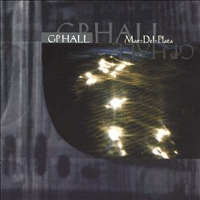
G.P. Hall: 'Mar-Del-Plata'

G.P. Hall: ‘Mar-Del-Plata’

Still clearing out the accumulated tapes of an inexplicably neglected career, Graham Peter Hall is continuing to come up with the goods. He’s been through thirty years of uneasy development on that rocky, unrewarding terrain between the simple sureties of the rock and roots instrumentalist and the often complacent indulgences of the full-on avant-garde blower. Marginalisation and bad luck might have ensured that he’s received little financial reward – nor has he gained the kind of brittle, precious reputation that marks out the darlings of the art-music intelligentsia – but it has resulted in a stock of lovely, emotive music in its own right.

Certainly Hall has managed to remain one of Britain’s most individual and complete guitarists over that time. Mastering a variety of styles from flamenco to rock to folk and blues, he’s also immersed himself in experimentation via technology – multiple speakers and pedal processors; vast, slow delay loops. Additionally, he draws on a repertoire of bizarre playing techniques and plectrum substitutes (involving battery fans, tiny psaltery bows, electric razors, toy cars and velcro, among others) which reflects the reinvention of guitar function explored by Fred Frith or Keith Rowe. With these methods in place, he’s explored sound through the textural suggestions of his “industrial sound sculptures”. Light industry, that is – Hall’s mimicry is closer to handsaws and governor motors rather than, say, Trent Reznor’s car-crushers and stamping presses.

Yet in amongst this, Hall has somehow never lost the ability to embrace expressive tunes; or to weave a handrail of familiarity into his sonic constructions. Perhaps that’s why ‘Wire’ types don’t seem to go for him; why he doesn’t have the kudos that the likes of Rowe, Frith, Eugene Chadbourne or Glenn Branca enjoy. He can get in your face – or wander off the usual path – with the best of them, but it’s generally in order to touch your sympathies. Ironically, in choosing to express his conservative and traditional side as equally important to (and entwined with) his avant-garde side, he’s gone too far for some.

‘Mar-Del-Plata’ is by far the most accessible and diverse of the compiled albums which Hall has been assembling this decade from deleted vinyl and assorted unreleased tapes. It’s a tour across a loose, but affecting, composing and performing imagination which ranges with restless compassion across a wide field. Sometimes you’re listening to a skittering, wilful flamenco performance. Sometimes it sounds like Cocteau Twins doing home improvements in the Mediterranean. Sometimes it’s the sort of individual, humanistic free improv/New Music result which you’d expect from Frith at his more lighthearted and relaxed, or from Simon H. Fell.

But though the record is full of experimentalism, Hall’s sense of melody is at the forefront – and the predominant voice on ‘Mar-Del-Plata’ is his masterfully expressive Spanish guitar playing. This can usually be found angling over long aching stretches of choral electronic humming, plangent violin and eerie ambient sounds called up from the industrial processors. In some ways it’s like a semi-unplugged take on a Robert Fripp Soundscape, in which guitar textures span out into infinity.

At other times, it takes on the simple directness of a folk tune: a dance of sparkling acoustic lights on Ionian Water, or the staccato accented Latin melodies of Mar-Del-Plata itself, underpinned by a geological murmur of bass. On the final hot gusting of Sierra Morena Dust Storm, the gut strings spit and scatter in rich melody, reaching new heights of sinewy passion. Here, Hall also bows some winnowing textures in his electric guitar accompaniment, using serrated steel bars from his box of implements.

Where technology plays a more direct role, Hall’s humanity doesn’t falter or go under. The hymnal swells of billowing electric warmth on Spirit Sky Montana (somewhere between Bill Frisell’s cinematic romance and David Torn’s eccentric string-warps) are the most beautiful and enveloping sound on the record, tapping deeply into church music and Romantic classical composing. The trickle of wind chimes, langorous piano, and enveloping sighs of Humidity Despair provide a gusting, luxurious impression of a sultry night: it’s lush enough to lean right back into.

Some tracks, fleshed out by Hall’s sound-loops and D.I.Y. treatments, are detailed, impressionistic oil-paintings in music and tone. Deep Blue sounds like someone chainsawing up a frozen Alpine lake, its jangling piano chords and thumping bass a mass of irregularities. The smear of bright spring-loaded colourflow on Charmouth Beach rings beautiful alarm bells. The menacing bass growl of Enigmatic is like a cave-bear thumping around in your dreams: squeaks and rattles from fingerboard and autoharp move around in slow disquiet, enclosed by knocking metal.

Plutonium Alert (in which Hall abandons guitar altogether in favour of soprano sax and the ring of auto-harps) treads similar territory to the ominous King Crimson improvisations from the mid-’70s. It goes for an all-out sensory mix of apocalyptic aftertones: angular bell-sounds and aggressive Grappelli violins entangling themselves with a spasmodically awkward funk rhythm. Weirdest (and most satisfying) of all is Fahrenheit 451 – juddering guitar, saw sounds, the shriek of a whistling kettle, and treble scratching all mix like toxic vapours under heavy pressure, pushing your head back against your rising hackles. Horribly enjoyable.

The scattered effects of the attempt to capture all of Hall’s ideas across a single CD does mean that ‘Mar-Del- Plata’ misses out on the cohesion which would render it excellent, but it’s a close-run thing. The centrepiece – a long-form creation called The Estates – pulls all the elements of the album together. A version of a 1975 long-form composition, it blends the chiming, restless clatter of its improv ensemble with Hall’s own quiveringly angry solo acoustic guitar. The brooding theme of The Estates is the crappiness and autocracy of post-war British urban programming. In thrall to modernism without being able to master it, its utopian vision (heartily botched and compromised) laid down a blight on communities, their architecture and their cohesion wrecked by the same tower blocks and support links designed to improve them.

Hall and co. express the disillusion and neurosis which resulted, with pulses of frustration and alienation hurl themselves against the confines of the music. Dulcimers, clarinets, and a huge array of percussion all seethe and pant over twenty-five minutes of desperate musical invocation; all overhung by the forbidding scrapes and alarm-clangs of two adapted metal piano frames (played like harps with assorted chains, wires, and implements). Hall’s panic-stricken guitar playing conjures the nightmare of a new, fatally-flawed sprawl of roads and buildings: swarming locust-like, unchecked and unconsidered, over beloved landscapes.

Incidentally, in the sleevenotes Hall gives a blood’n’guts description of the struggle it took to assemble and perform The Estates. Apparently, some of the manufactured instruments continue to drift through the art world with a life of their own. The piano frames – still counter-invading the architecture – were last seen as part of a “fire sculpture”. Meanwhile, the piece itself has an additional afterlife as a reflection on Hall’s own love/hate relationship with modernism; his own playing and arrangements echoing and championing the sounds of the traditional past even as they break them up in performance and execution.

As a body of work ‘Mar-Del-Plata’ has its faults – yet judged on its parts (and at its undisciplined best), it’s a touching, passionate and diverse album. Throughout, we get the sort of peek at Hall’s open heart (warts, gooey patches and all) which most experimental musicians, hard-wired into intellectual dryness, would never risk expressing.

G.P. Hall: ‘Mar-Del-Plata’
Future Music Records, FMR CD46-V0997 (7 86497 26442 1)
CD-only album
Released: 12 April 1997

Buy it from:
G.P. Hall homepage or Future Music Records

G.P. Hall online:
Homepage Facebook Twitter MySpace Bandcamp YouTube

SWOONAGE

Swoon. /swo͞on/ A verb. To be emotionally affected by someone or something that one admires; become ecstatic. Here are some people and things that make me swoon. #swoon #swoonage

Post-Punk Monk

Searching for divinity in records from '78-'85 or so…

theartyassassin

...wandering through music...

Get In Her Ears

Promoting and Supporting Women in Music

Die or D.I.Y.?

...wandering through music...

Music Aficionado

Quality articles about the golden age of music

THE ACTIVE LISTENER

...wandering through music...

Planet Hugill

...wandering through music...

Listening to Ladies

...wandering through music...

ATTN:Magazine

Not from concentrate.

Xposed Club

improvised/experimental/music

The Quietus

...wandering through music...

I Quite Like Gigs

Music Reviews, music thoughts and musical wonderings

furia log

...wandering through music...

The Recoup

SINCE 2013: Books and books and books and books and occasionally other things

A jumped-up pantry boy

To say the least, oh truly disappointed

PROOF POSITIVE

A new semi-regular gig in London

Gapplegate Classical-Modern Music Review

...wandering through music...

When The Horn Blows

...wandering through music...

:::::::::::: Ekho :::::::::::: Women in Sonic Art

Celebrating the Work of Women within Sonic Art: an expanding archive promoting equality in the sonic field

Ned Raggett Ponders It All

Just another WordPress.com weblog

FLIPSIDE REVIEWS

...wandering through music...

Headphone Commute

honest words on honest music

The One-Liner Miner

...wandering through music...

Yeah I Know It Sucks

an absurdist review blog

Obat Kanker Payudara Ginseng RH 2

...wandering through music...

poplifer.wordpress.com/

Waiting for the gift of sound and vision

Good Music Speaks

A music blog written by Rich Brown

Do The Math

...wandering through music...

Archived Music Press

Scans from the Melody Maker and N.M.E. circa 1987-1996

The World's Worst Records

...wandering through music...

Soundscapes

...wandering through music...

OLD SCHOOL RECORD REVIEW

Where You Are Always Wrong

FRIDAY NIGHT BOYS

...wandering through music...

Fragile or Possibly Extinct

Life Outside the Womb

a closer listen

a home for instrumental and experimental music

Bird is the Worm

New Jazz: We Search. We Recommend. You Listen.

...wandering through music...

Life Just Bounces

...wandering through music...

Lucid Culture

JAZZ, CLASSICAL MUSIC AND THE ARTS IN NEW YORK CITY

Aquarium Drunkard

...wandering through music...

eyesplinters

Just another WordPress.com site

NewFrontEars

...wandering through music...

FormerConformer

Striving for Difference